
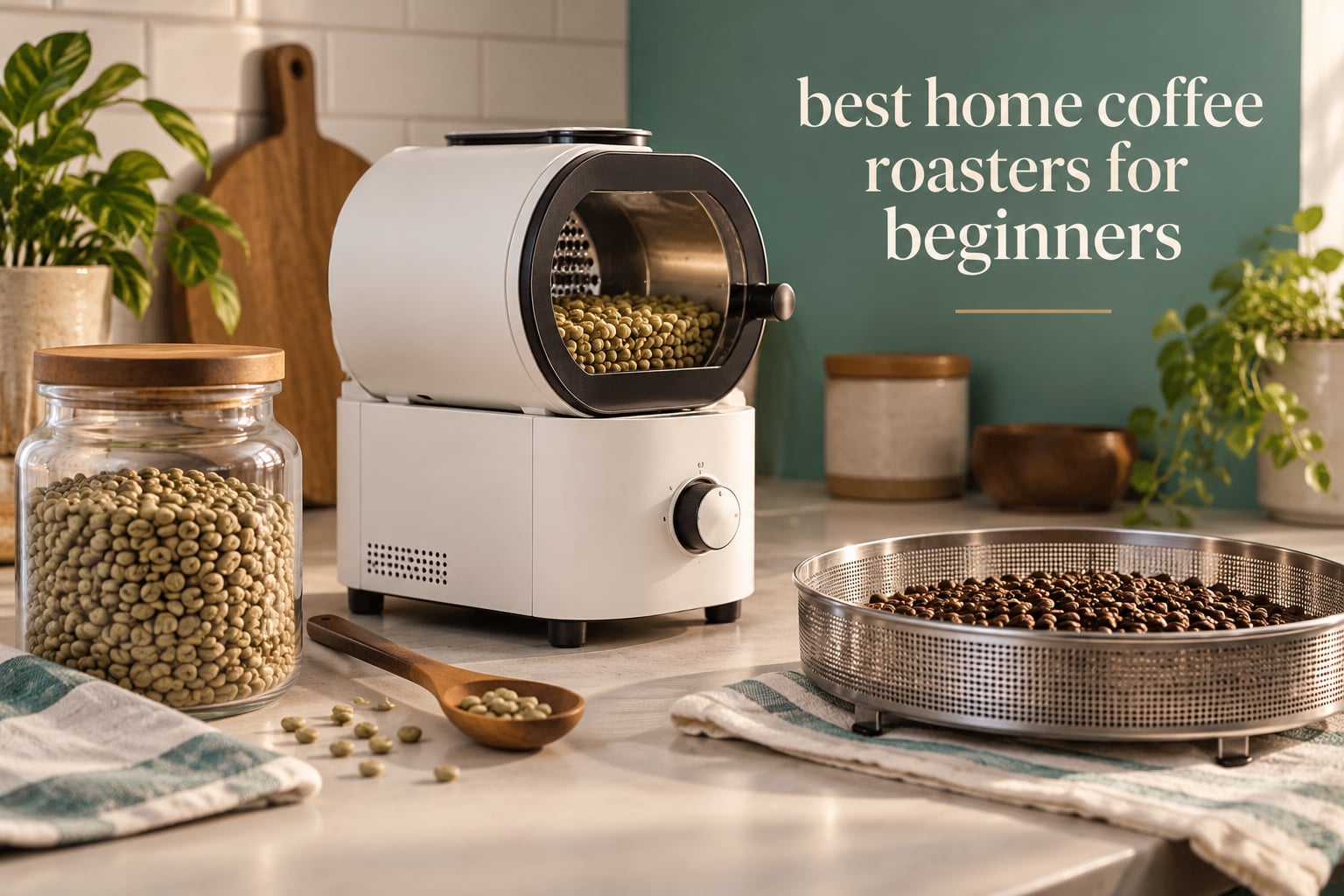
Roasting your own coffee sounds far more complicated than it is. A machine heats green coffee beans until they develop flavor, a fan or a rotating drum keeps them moving, and a cooling tray stops the process when you decide the roast is done. The hardest part is not learning it, it is resisting the urge to buy an expensive machine before you know what you like.
This guide covers the best home coffee roasters for beginners in 2026, and every machine here is one a new roaster can realistically learn on. I focused on whether the controls make sense on day one, whether repeat batches come out the same way, how much smoke and chaff you are signing up for, and whether the machine survives normal kitchen use.
One thing worth saying up front: a good burr grinder matters more to the finished cup than most people expect. I wrote a full guide on the best burr coffee grinders for home use, and you will want one of those on the counter before you start worrying about roast profiles. The machine below makes the bean, the grinder makes the cup.
Table of Contents
Top 3 Picks for Home Coffee Roasters for Beginners

Nuvo Eco Ceramic Handy Roaster
- 70g hand-roasted batches
- 100% ceramic body
- Cowhide grip
- No smoke or electricity

Fresh Roast SR800
- 170-226g per batch
- Nine heat levels plus fan control
- Digital temperature display
- Chaff basket included

Fresh Roast SR540
- 120g per batch
- Nine power settings
- Convection fan control
- Glass roasting chamber
The Nuvo wins this list because it solves the two problems that stop most beginners before they start: smoke and cost. It needs no electricity, no ventilation, and no cleanup, and with 901 owner reviews behind it you will find plenty of people who roast with it daily. If you want an electric machine with a real temperature display, the Fresh Roast SR800 is the stronger buy.
All 10 Home Coffee Roasters at a Glance in 2026
| Product | Specifications | Action |
|---|---|---|
| Nuvo Eco Ceramic Handy Roaster |
|
Check Latest Price |
| Fresh Roast SR540 |
|
Check Latest Price |
| Fresh Roast SR800 |
|
Check Latest Price |
 JIAWANSHUN Electric Roaster JIAWANSHUN Electric Roaster |
|
Check Latest Price |
 GIVEROO 500g Roaster GIVEROO 500g Roaster |
|
Check Latest Price |
 Mingfuxin Coffee Roaster Mingfuxin Coffee Roaster |
|
Check Latest Price |
 LUEUR Electric Roaster LUEUR Electric Roaster |
|
Check Latest Price |
 NIASIA 500g Roaster NIASIA 500g Roaster |
|
Check Latest Price |
 ZEVELOO 750g Roaster ZEVELOO 750g Roaster |
|
Check Latest Price |
 DYVEE Gas Burner Roaster DYVEE Gas Burner Roaster |
|
Check Latest Price |
Read the batch column before anything else. Several of these machines only roast evenly when loaded past a specific minimum, so a bigger drum is not a better roaster for a beginner, it is just a bigger one.
1. Nuvo Eco Ceramic Handy Roaster: The Easiest Possible Way to Start
- No electricity
- no smoke
- no ventilation needed
- Roasts tiny batches so nothing goes stale
- 100% ceramic means no metal touches the beans
- Compact and light enough to store in a drawer
- Manual technique takes practice to avoid scorching
- 70g is only enough for a few cups at a time
This is not a machine in the way the other nine are machines. It is a ceramic hand roaster with a waffle-patterned interior and a cowhide grip, and you hold it over your heat source and shake it. Owners rate it 4.4 out of 5 across 901 reviews, with 74% of those at five stars, by far the highest review volume of anything on this list.
What makes it interesting for a first-timer is how few ways it can go wrong. There is no smoke, no chaff sticking to a chamber, and no menu to learn. If you live in an apartment where roasting is basically not allowed, this is the only machine here that solves that problem outright.
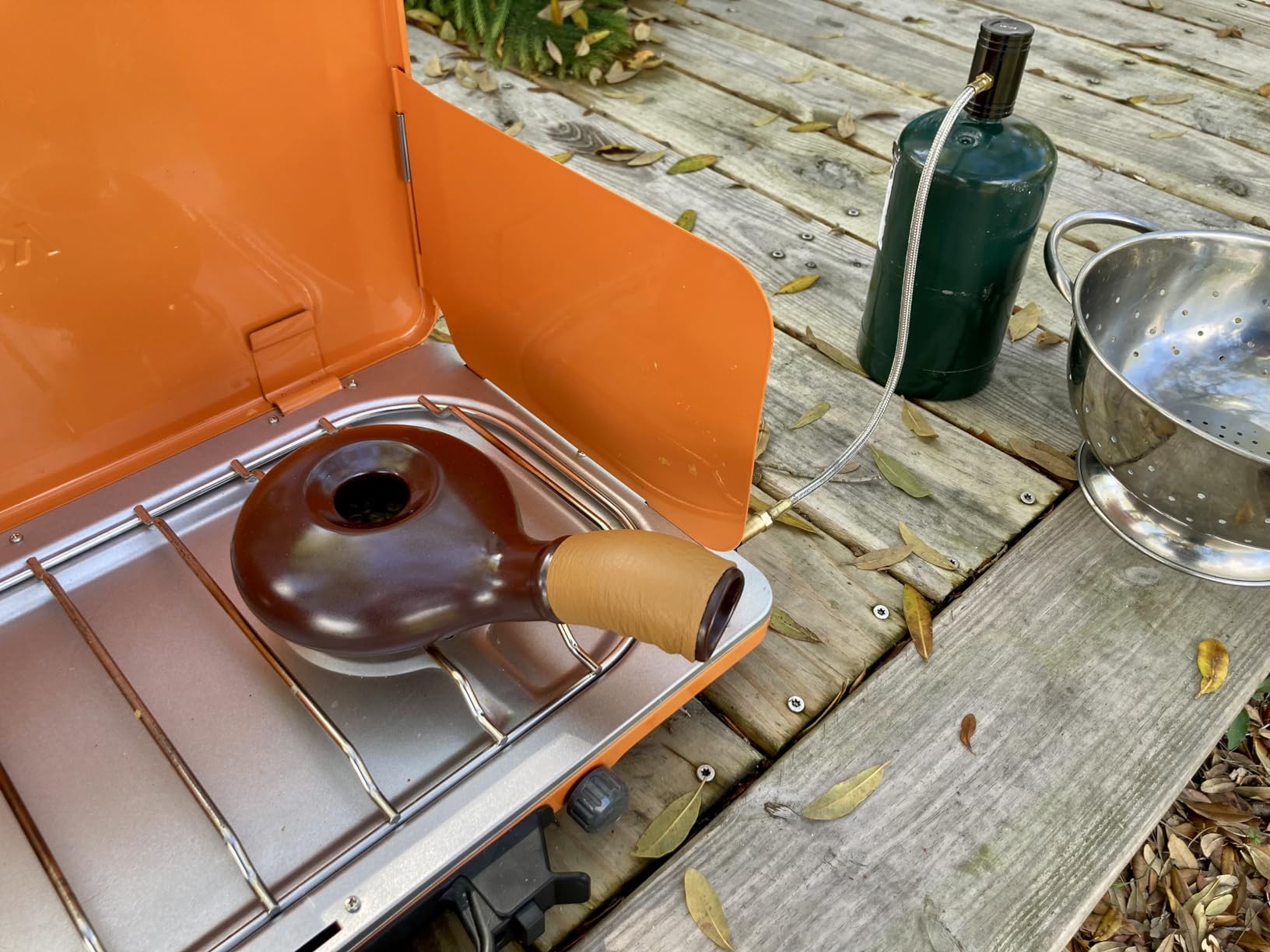
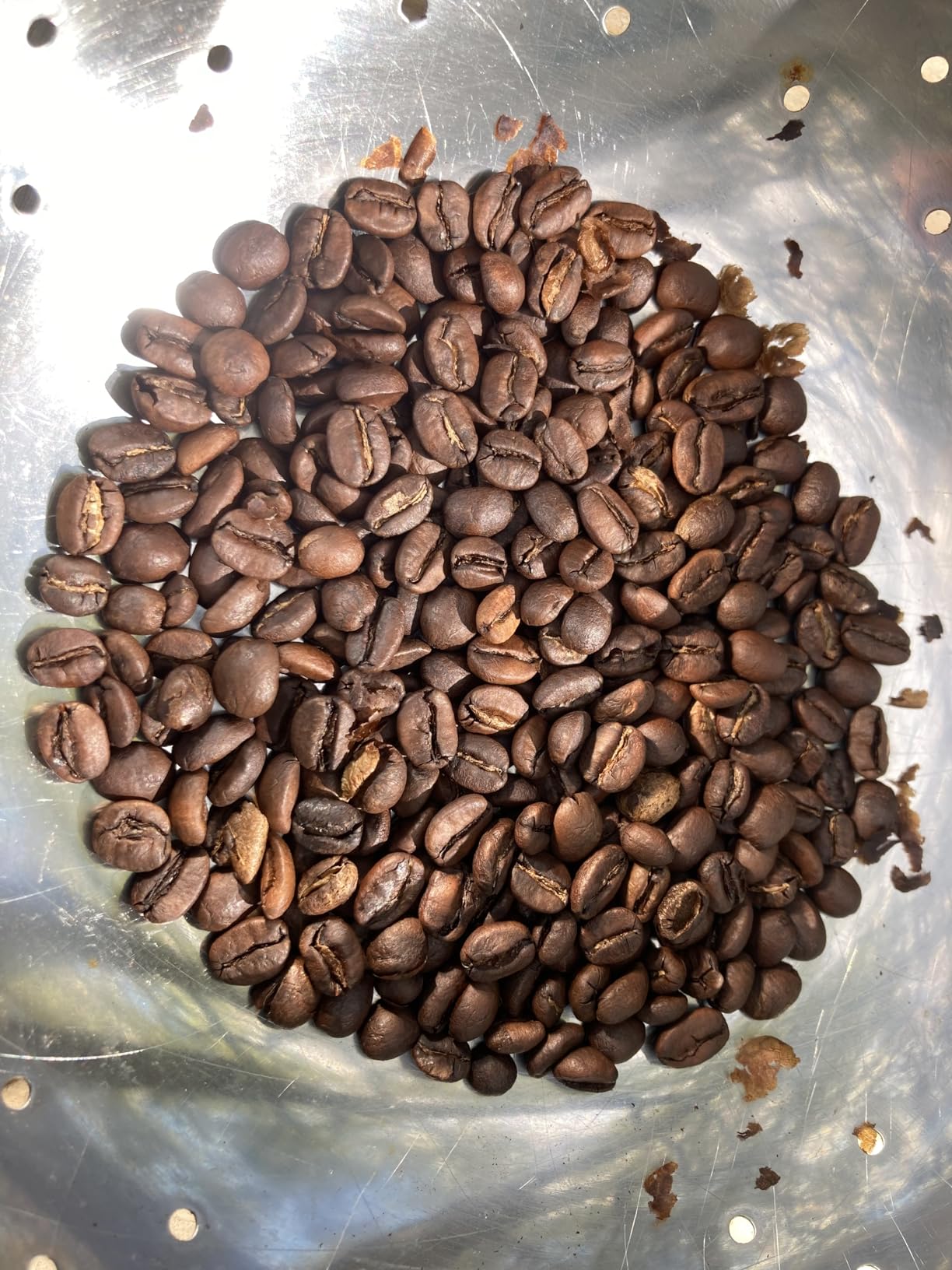
The design is more thoughtful than it looks. The waffle-like interior keeps beans in even contact with heat, and a small rear hole moves air through the chamber so you can hear first crack as it happens rather than only watching color change. Made in Korea, it is ceramic rather than coated metal, so there is no coating to flake into your beans.
The honest limit is capacity. Seventy grams is a few cups, which means roasting small and often rather than batching for the week. That suits learning, because you can taste several variables in a row.
Who the Nuvo hand roaster suits
It suits anyone who wants to learn the craft rather than press a button and wait. Handling beans by hand teaches heat, airflow, and timing in a way no automatic machine can, because the feedback loop is your own senses. It also suits renters, people with smoke sensitivity, and anyone who wants a weekend hobby with no running cost.
Who should skip it
Skip it if you drink more than about four cups a day, if you roast for espresso where consistency matters more than character, or if you want batch-to-batch results you can log and compare. A hand roaster gives you very little of that.
2. Fresh Roast SR540: Best Value Electric Roaster
- Real-time temperature display beginners can actually follow
- Roasts 7-14 cups in under 10 minutes
- Compact 8.5 x 8.5 x 13.5 inch footprint
- Chaff basket catches most chaff
- Analog knob can wear and become inaccurate
- Cannot reach true dark or French roast temperatures
- Noticeable smoke so roast outdoors or under a hood
- Terse instructions
The SR540 is the machine most beginner guides point at, and that is not accidental. It gives you a real-time temperature display, nine levels of power, and separate convection fan control, which is enough control to learn on without being so complex that you avoid it. Owners rate it 4.3 from 688 reviews, with 71% at five stars.
At 120 grams per batch it covers a household that drinks several cups a day, and the whole cycle finishes in under ten minutes. A roaster you will actually use beats a better roaster that sits on the counter. The speed roast fluid motion system keeps beans circulating so they do not scorch against the chamber wall.
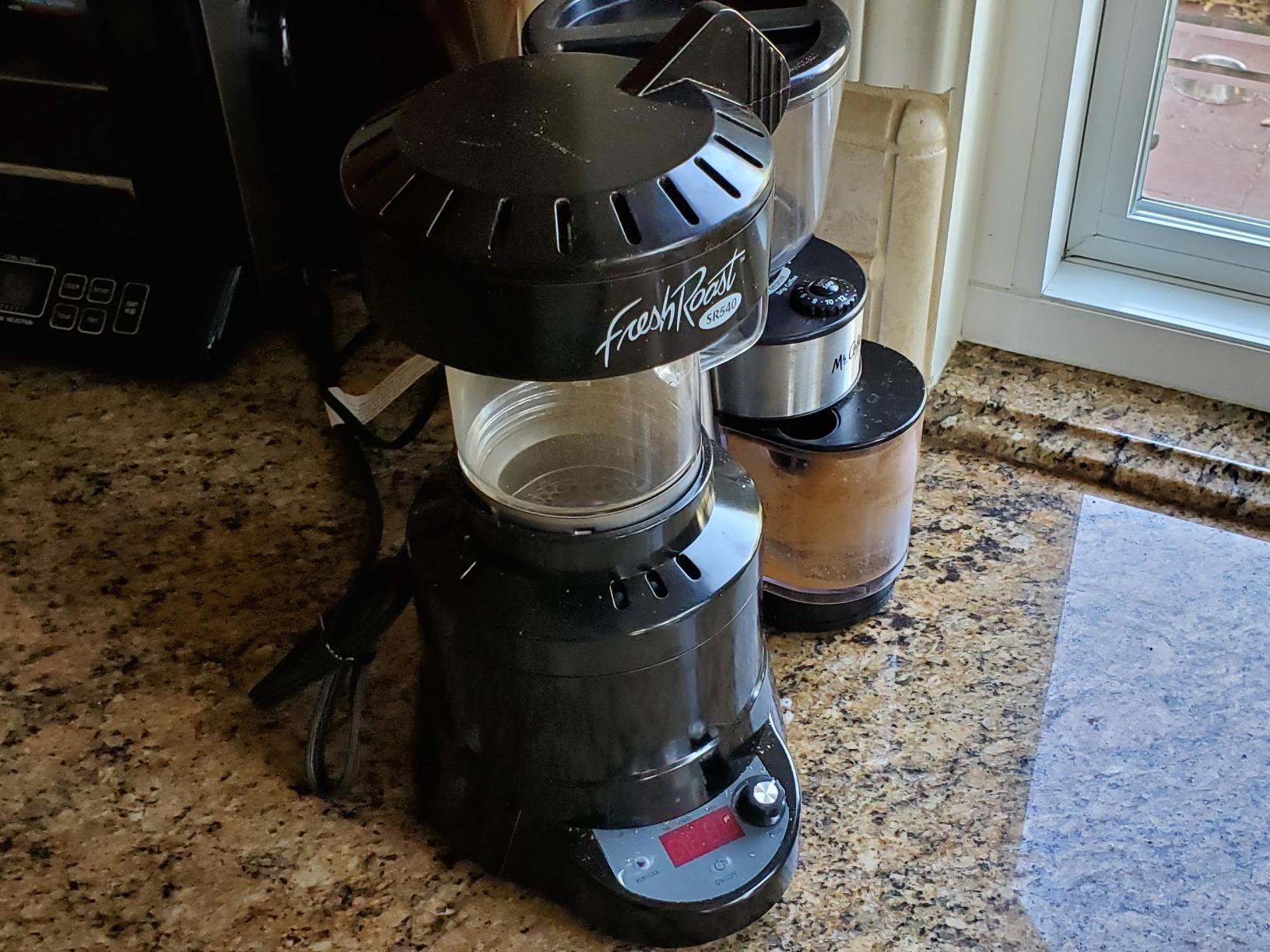
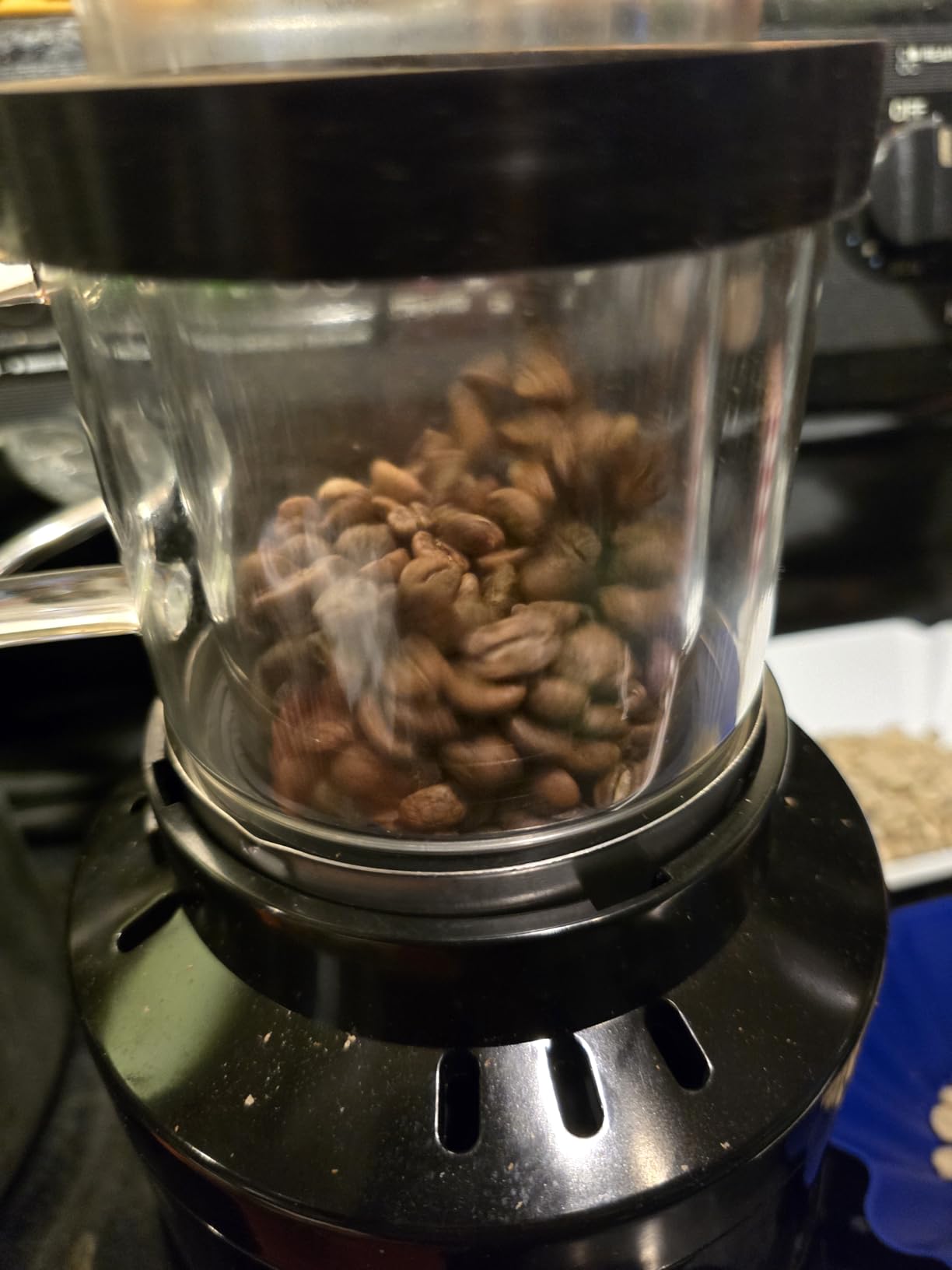
SeriouslyEats named the SR540 its best home coffee roaster specifically because the settings are easy to adjust, and r/roasting threads pair it with the Behmor as the ambitious-beginner tier most people land on. The chaff basket catches the bulk of the papery debris, the glass chamber shows bean color directly, and owners report a clear taste difference against store-bought beans within the first few batches.
The tradeoff is thermal mass. A 120-gram drum moves temperature quickly at first crack, so you have less room to slow the roast, which is why it tops out before a genuine dark roast.
Who the SR540 suits
It suits a beginner who wants a real appliance and can roast outside or under a range hood. It is also a good second machine for someone who started by hand and now wants to understand roast development, because the display and separate fan control give you enough feedback to stop guessing.
Who should skip it
Skip it if you want dark roasts, if you cannot ventilate, or if an analog knob wearing out over a few years would bother you. It is also the wrong choice if you plan to grow into roasting for a small cafe, since batch size and the roast darkness ceiling both become problems quickly.
3. Fresh Roast SR800: Most Versatile for Bigger Batches
- Roasts 170-226g per batch
- roughly double the SR540
- Improved board saves custom default start settings
- Digital display plus fan control aid repeatability
- 4.4 rating from 587 owners
- Costs more than the entry electric roasters
- Interface cannot load a full roast profile
The SR800 is the SR540 with more drum, and that is why it takes the premium slot. It roasts 6 to 8 ounces, or 170 to 226 grams per batch, enough for 14 to 28 cups in one under-ten-minute cycle. Owners rate it 4.4 from 587 reviews with 70% at five stars, the same satisfaction level as the smaller machine at nearly double the output.
The other meaningful upgrade is the control board. It supports editable default start settings, so once you find a heat level and fan speed that works for a particular bean you start from the same place every time. Saving a known-good start point is the cheapest route to repeatability without software.
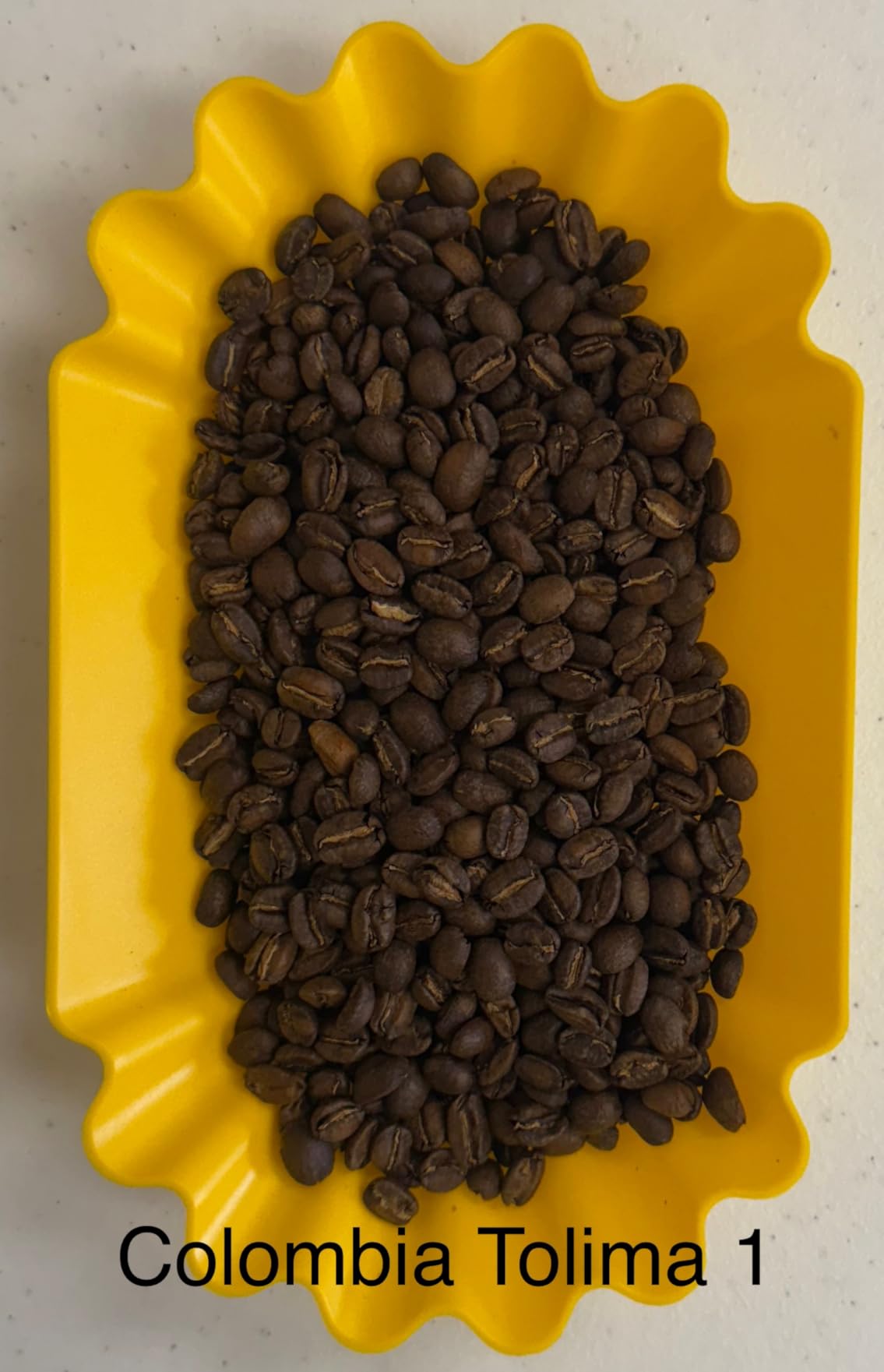
The physical design is the same idea as the SR540: a glass chamber, a convection fan, and a push-and-turn knob. At 6.2 pounds and 8 by 8 by 14 inches it fits a normal counter, and the larger batch gives the drum more thermal mass so the temperature steadies instead of swinging at first crack.
Being straight about the limit: the knob is not programmable with a roast profile. You can store start settings, but you cannot load a curve or log temperature data the way software-driven machines allow.
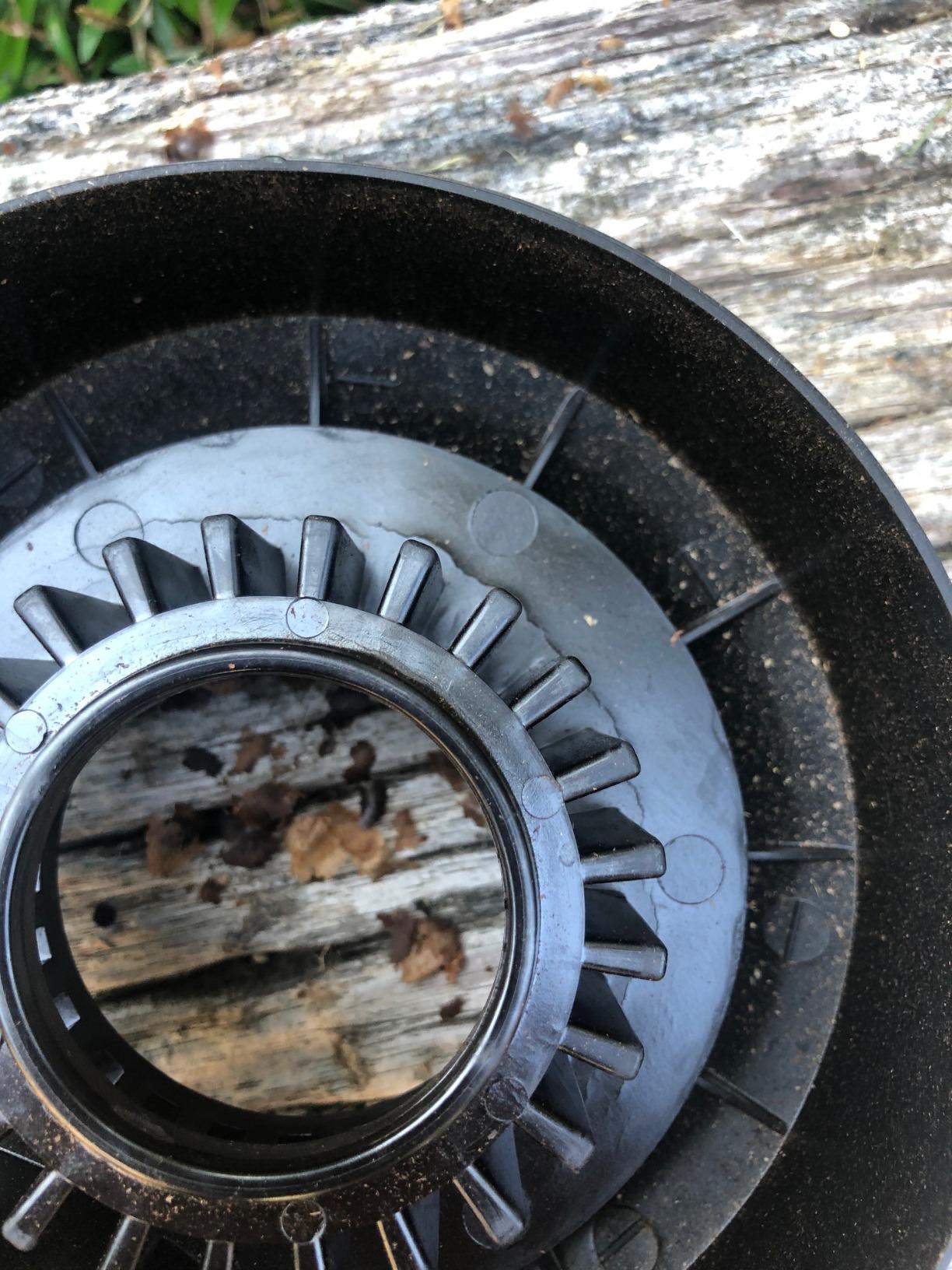
Who the SR800 suits
It suits households that drink more than a 120-gram drum covers, or a couple who roast together rather than separately. It is the one I would point to for roasting a few days of beans in one session, because running two 120-gram batches takes twice the effort for the same result.
Who should skip it
Skip it if one 120-gram batch already fills your week, and skip it if your real goal is software logging, because there is no path to that from the control board. For espresso, though, the extra mass gives you room to hold the beans through development.
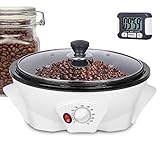
4. JIAWANSHUN 1.1lb Electric Roaster: Best for Large Home Batches
JIAWANSHUN Electric Coffee Bean Roaster Machine for Home Use,1.1lb Capacity
- Roasts 300-500g evenly
- a large useful load
- Automatic stirrer rotates beans for even heating
- Transparent vented glass lid lets you watch and smell
- Non-stick honeycomb interior wipes clean
- Small or defective beans can jam the stirring rod
- Flat pan chamber gives less control for dark roasts
- No roast-level guidance in the manual
JIAWANSHUN is a flat-pan roaster with a stirrer rather than a drum, and it handles one of the larger loads here in practical terms: 300 to 500 grams in a single cycle on 1200 watts. That is roughly four times the batch of the SR540, so it covers a heavy household or a weekend supply in one run.
The automatic mixing stirrer is what makes that load work. A stir rod keeps beans rotating so the ones on the bottom are not scorching while the ones on top are still pale, and the transparent lid with four ventilation holes lets you judge color and smell the roast as it goes.
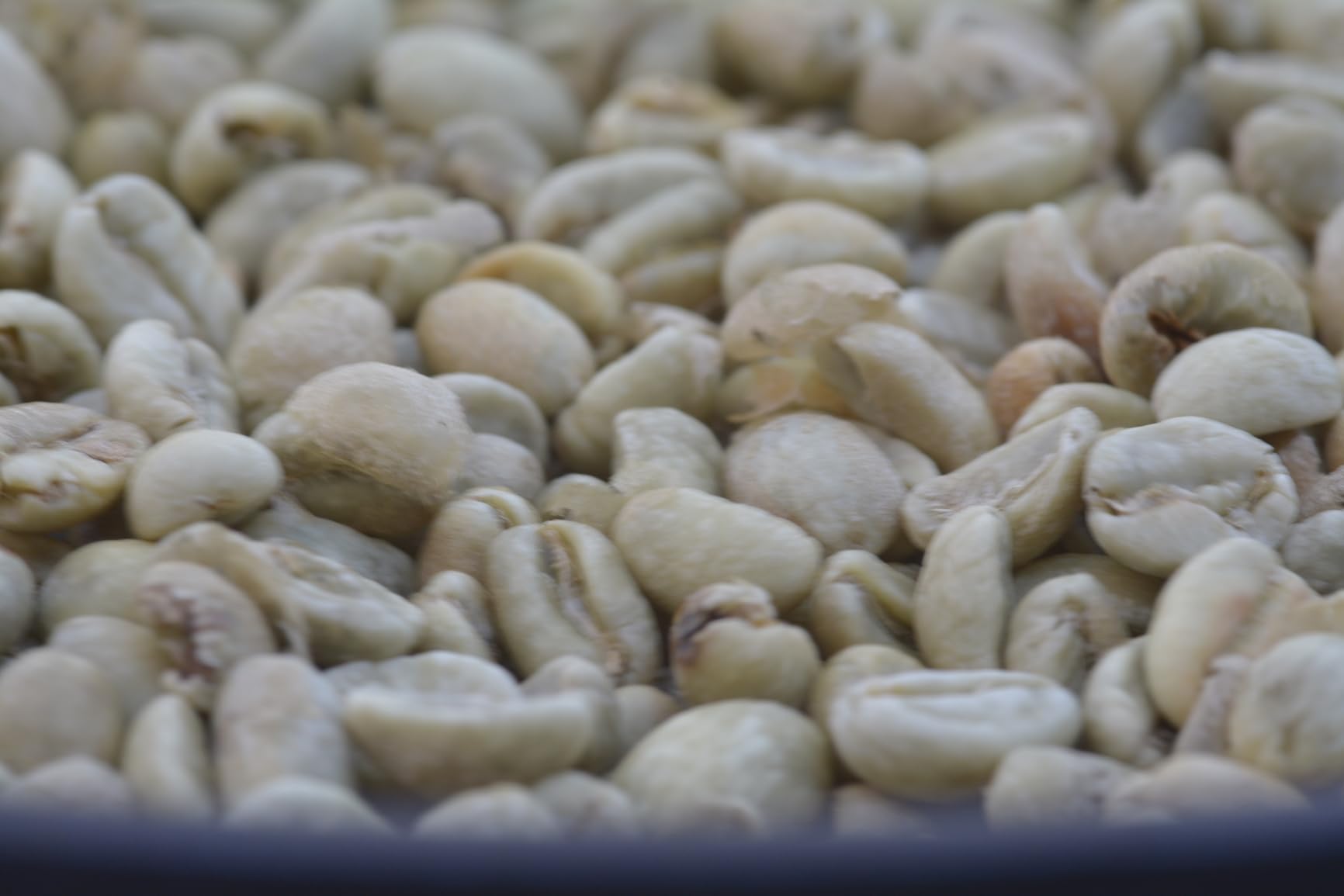
Temperatures run from 100 to 240 degrees C, a wide window covering light through dark in principle. Owners rate it 4.1 from 408 reviews, and the gap between top and mid ratings comes down to consistency and durability rather than flavor. The 59% five-star share reflects that split: plenty of people are happy with the flavor at a 400-gram load.
Others hit the same jam problem. A cracked or undersized bean wedges against the stir rod, the rotation stops, and beans over the element scorch. Sifting green beans before loading takes two minutes and prevents most of the complaints written about this machine.
Who the JIAWANSHUN suits
It suits high-volume home drinkers who want one session to cover several days, and anyone roasting for friends. The 1200-watt element heats quickly, the stirrer reduces babysitting, and the flat pan makes everything visible rather than hidden behind a drum window.
Who should skip it
Skip it if you roast fewer than about 300 grams at a time, because results get uneven below that load. Also skip it if precision matters to you: a pan roaster gives you no temperature reading and no logging.
5. GIVEROO 500g Roaster: Quiet With a Useful Auger Design
- Automatic auger keeps beans moving for even results
- Quiet operation suits a shared kitchen
- 400-500g optimum roasted in one pass
- Timer plus 0-240C control to track progress
- Under about 400g results become uneven
- Small or rotten beans can jam the auger
- Basic instructions leave timing entirely to you
The GIVEROO is a flat-pan machine with an auger rather than a stir rod, an 800-watt element, and a 45-degree scope design meant to distribute heat evenly. The useful thing for a beginner is the combination of quiet running and a timer, which is why it takes the quiet slot here. Owners rate it 4.2 from 237 reviews with 64% at five stars.
It roasts 400 to 500 grams per batch, close to the JIAWANSHUN but with a smaller element and a tighter footprint at 12.6 inches square. The listed capacity runs higher than the recommended load, and reviewers confirm the difference: loaded light, it gets uneven.
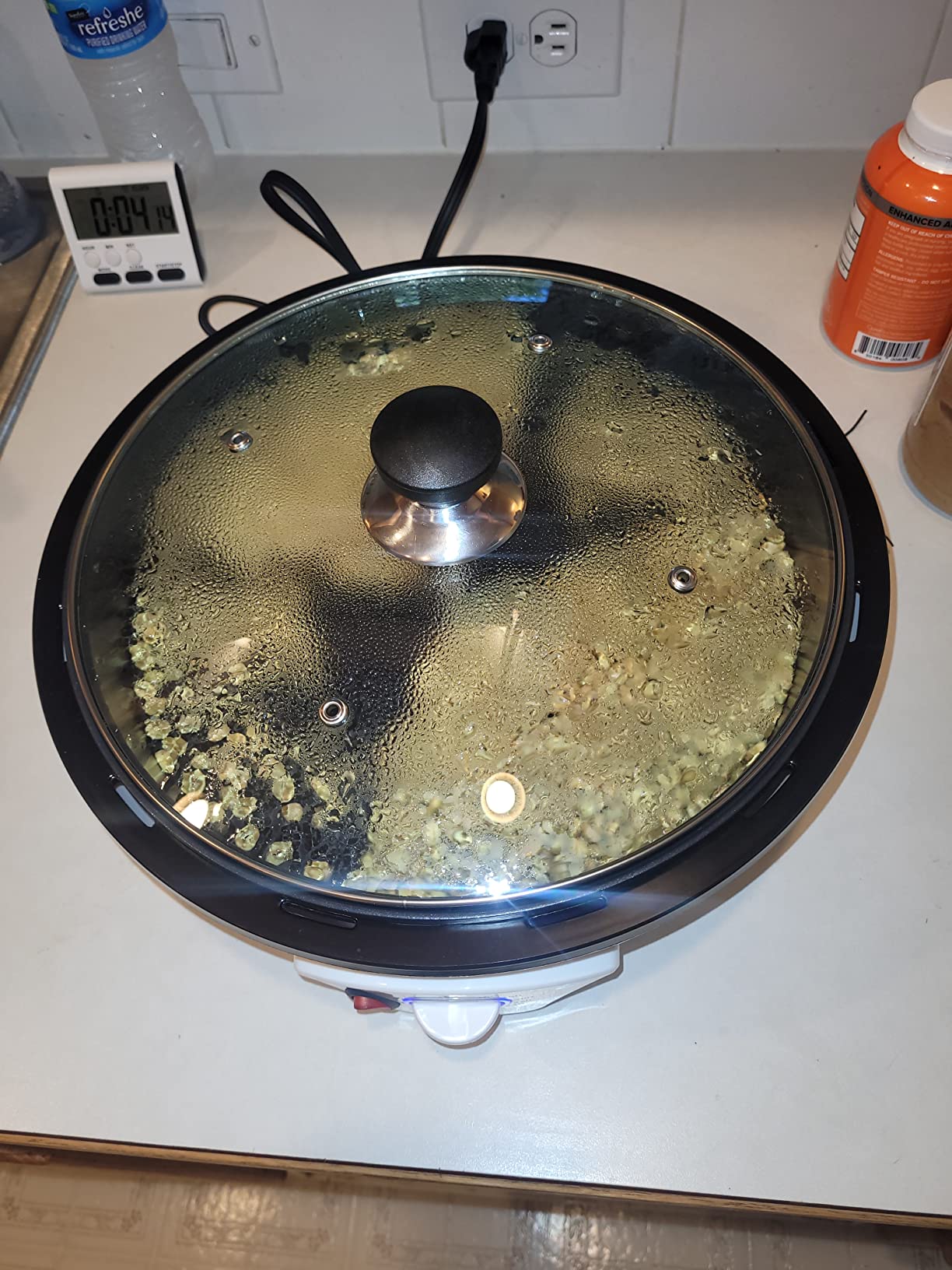
Chaff is a real consideration with any open pan, and this design has no dedicated chaff collector. Run it under a hood or near a window, and expect to wipe the lid and surrounding surfaces after each batch. The listed smoke reduction helps relative to other open pan designs but does not make this an indoor-clean machine.
Documentation is thin, so you work from color, smell, and first crack alone. Like the JIAWANSHUN, sift beans before loading or the auger can jam on a broken one.
Who the GIVEROO suits
It suits a shared apartment or a house where noise is a factor, since quiet running and a timer let you start a batch and step away briefly. It also suits anyone who wants a large batch from a compact machine, and it doubles as a roaster for peanuts, chestnuts, barley, dried fruit, and popcorn.
Who should skip it
Skip it if you plan to roast small batches, because anything under about 400 grams is where owners report uneven results. It is a poor fit for a very clean kitchen too, since there is no enclosed chamber and no chaff basket to clear afterward.
6. Mingfuxin 750g Electric Roaster: Built for Large Batches
Coffee Roaster Machine for Home Use, 110V Coffee Bean Roaster with Timer
- Roasts up to 750g in about 25 minutes
- Reversing stir rod alternates direction for even mixing
- Non-stick base wipes clean quickly
- Vented transparent lid for visual monitoring
- No printed instructions for first-time users
- Timer stops heat but not the stirring motor
- Beans can jam the rod and scorch
- Some machines stopped heating after about a year
- Roast times depend on bean type
The Mingfuxin is built for large batches finished fast. It handles up to 750 grams of green beans in roughly 25 minutes on a 1200-watt element, with 300 to 500 grams the optimum load, and that upper limit is the highest capacity of any machine on this list. A week of coffee for a household in a single session is a genuine advantage.
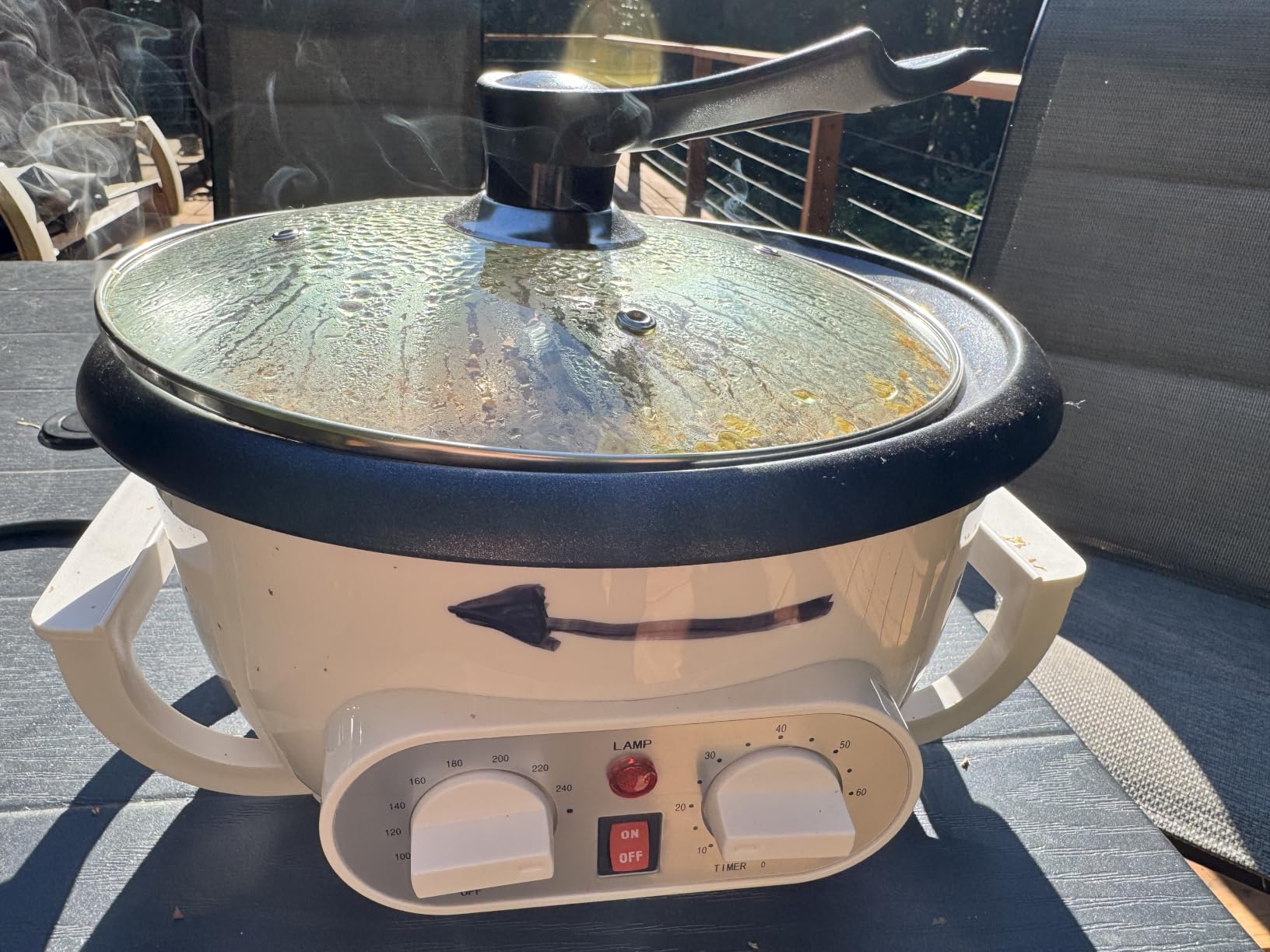
The detail that stands out is the reversing stirring rod. Instead of spinning one way continuously it alternates direction, which owners say gives more regular mixing at a 350 to 400 gram load. The transparent vented lid and non-stick base are both practical, and 100 to 240 degrees C covers light through dark attempts.
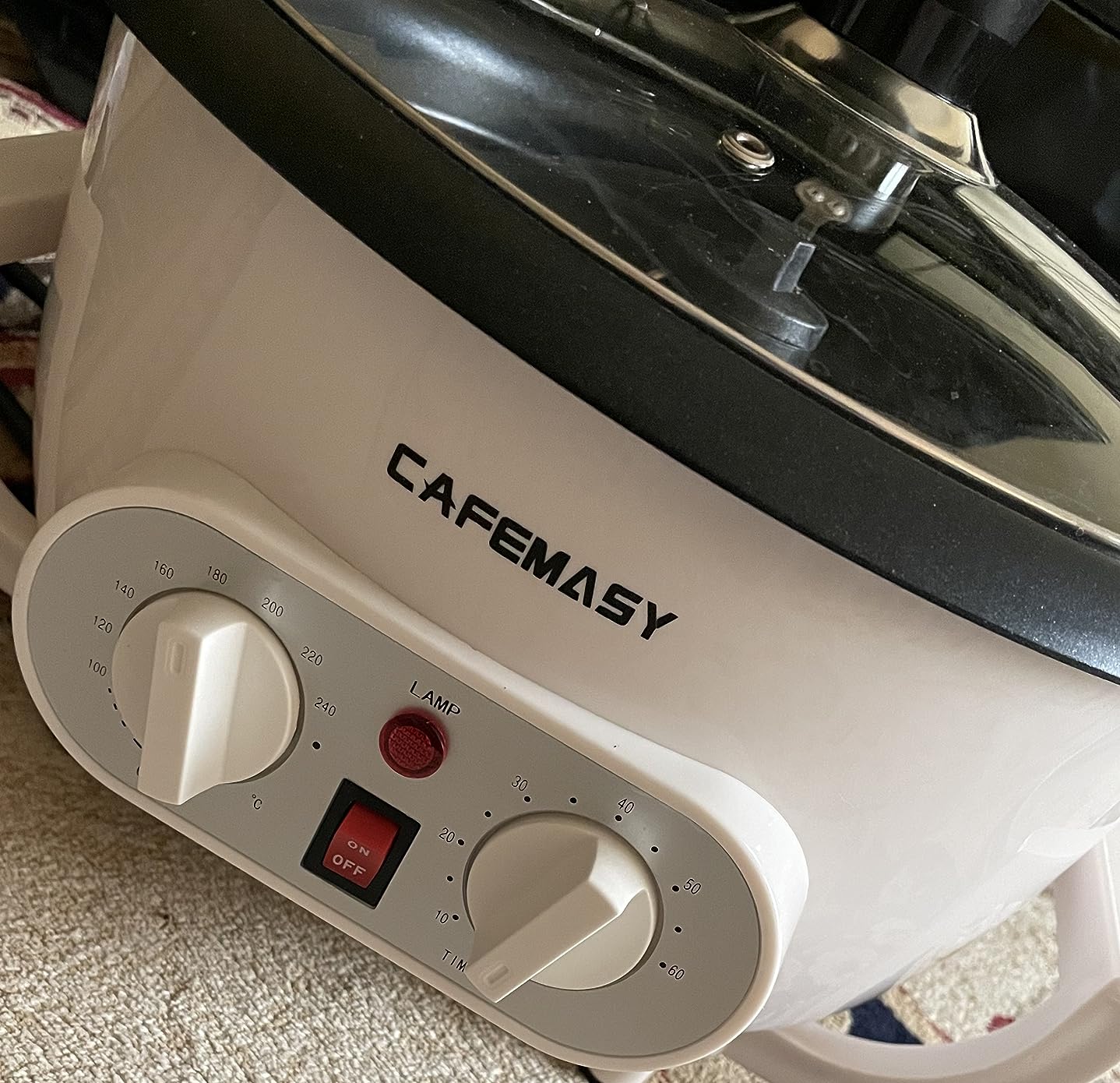
At 3.9 out of 5 from 206 reviews, this is the lowest-rated machine I am recommending, and I would rather be straight about why. There is no printed instructions, so first-time users research their own profiles. The timer cuts the heat but leaves the stirring motor running until you unplug it, and several owners report machines that stopped heating after about a year.
None of that makes it a bad machine for what it does. It roasts fast, it roasts evenly at a sensible load, and it is simple, which is why the speed and the 750-gram ceiling earn it a place here.
Who the Mingfuxin suits
It suits someone who wants a large batch finished fast and does not mind researching their own profiles. The reversing rod is worth having if you intend to roast regularly, because it is the feature that keeps batches consistent at practical loads. A household of four or a shared office can use one run to cover a day or two of coffee.
Who should skip it
Skip it if you are sensitive to durability risk, given the reports of units losing heat after about a year. Also skip it if you want clear instructions or want the stirring motor to stop when the timer ends, because neither is true here.
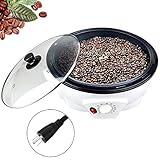
7. LUEUR Electric Roaster: Budget Machine with a Real Thermostat
LUEUR Electric Coffee Roasters For Home Use,Coffee Bean Roaster Machine Coffee Bean Roaster For Stovetop, Countertop, Commercial Coffee Bean Roasting Machine 110V
- Professional thermostat holds constant temperature
- Affordable way into electric roasting
- Honeycomb Teflon chamber is easy to wipe clean
- Transparent vented cover shows bean color
- Flat pan design uneven below 300g
- No light
- medium or dark profile guidance
- Some owners report units failing within a year
The LUEUR is an 800-watt flat-pan roaster with a professional-style thermostat, holding constant temperature rather than cycling on and off. That is the feature separating it from cheaper pan roasters, and for a beginner chasing consistent results it matters. Owners rate it 4.1 from 179 reviews, with 62% at five stars.
The honeycomb food-grade Teflon chamber is easy to keep clean, and the heat-resistant transparent cover with four ventilation holes shows color developing without opening anything. The 800-gram tank with a 300 to 500 gram recommended batch matches the other pan machines here, so treat that figure as a floor.
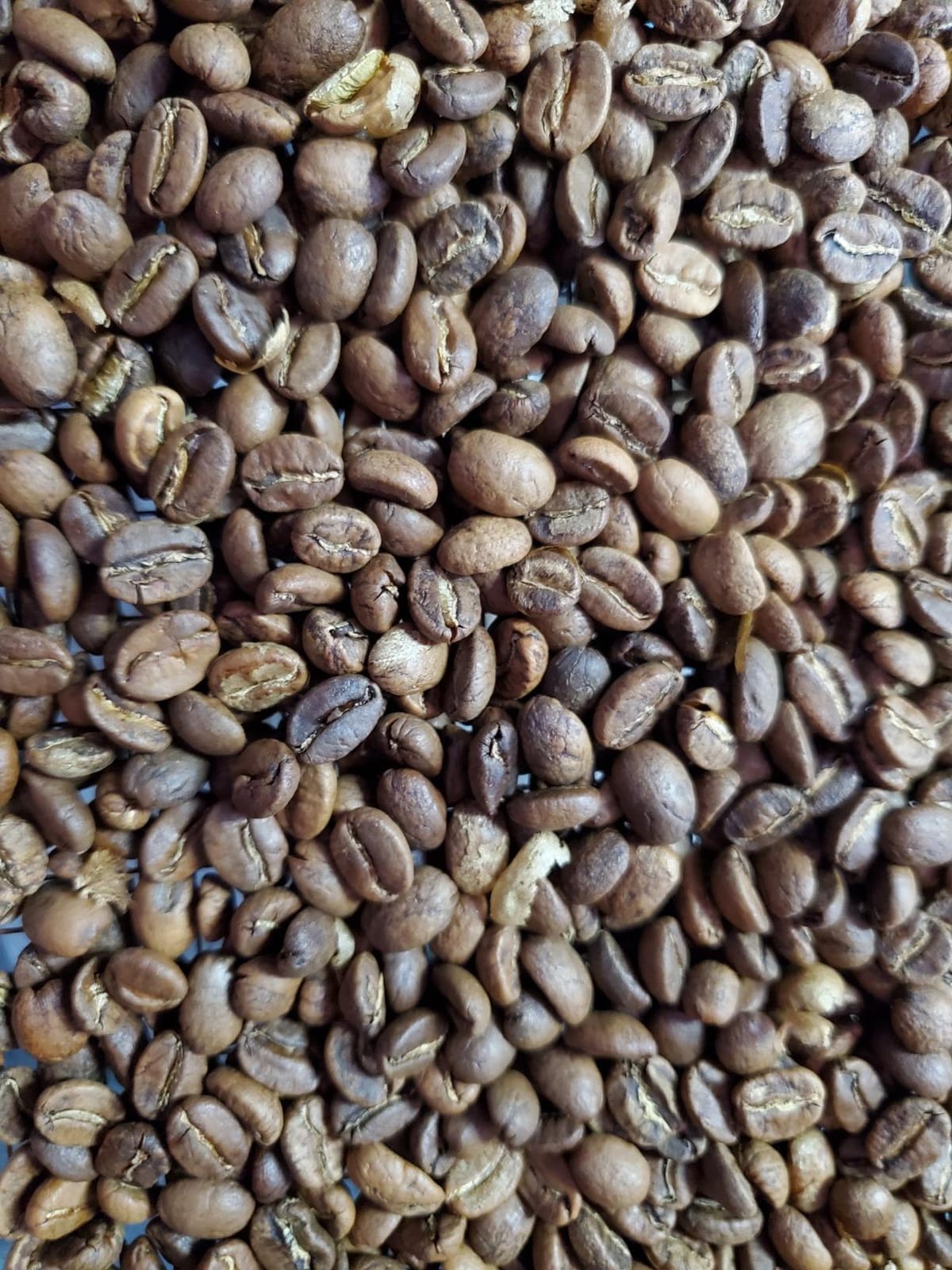
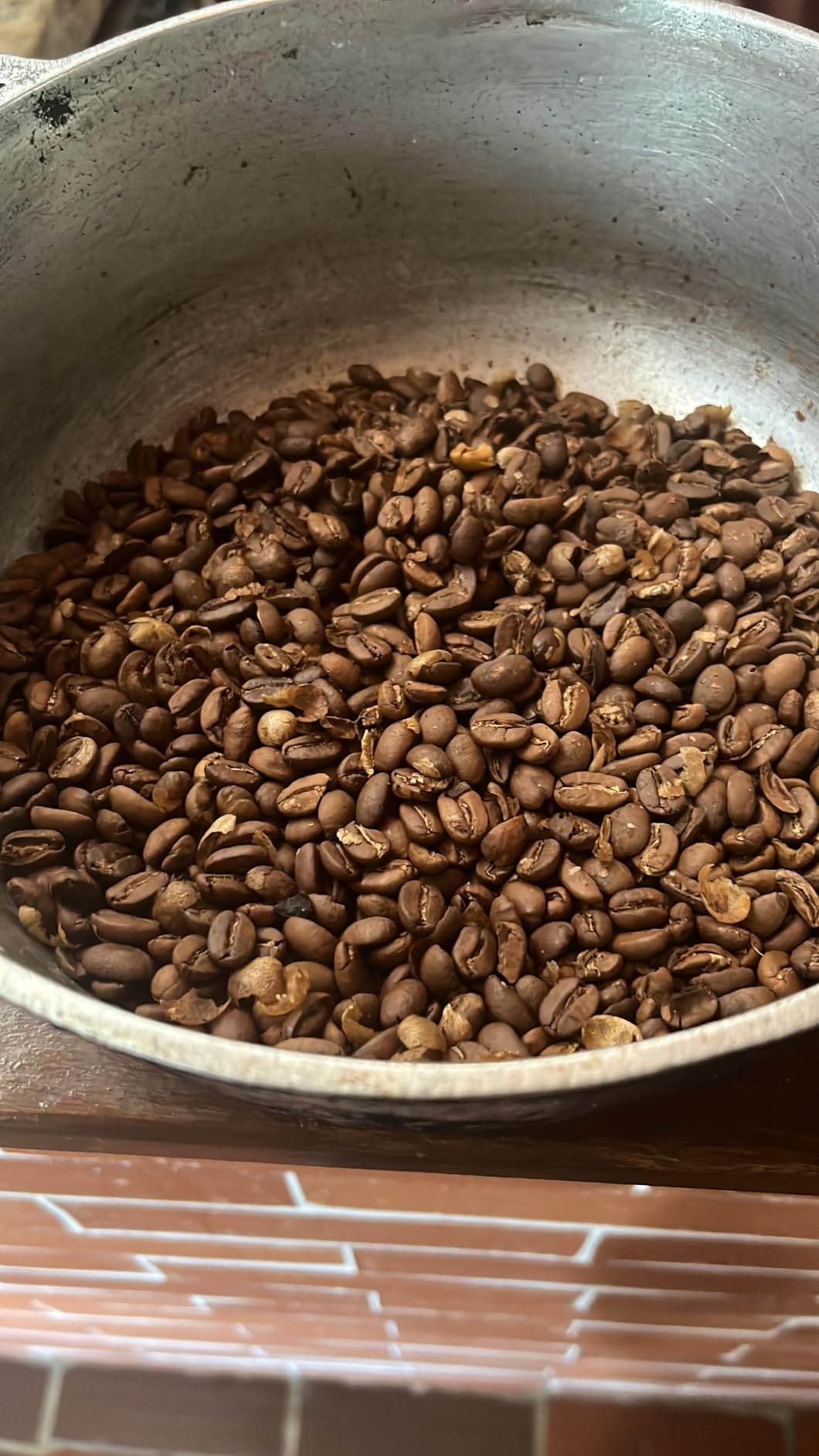
It is also a genuine multi-use appliance, roasting peanuts, chestnuts, barley, dried fruit, and popcorn alongside coffee, which changes the calculation if you would not otherwise buy a small appliance. At 6 pounds and 14 by 13.6 by 6 inches it is not compact, so plan counter space first.
The flat-pan limit applies as with the others. Below roughly 300 grams, results get uneven because beans are not spread across enough surface, and the machine reports no temperature at all, so you steer by smell and color.
Who the LUEUR suits
It suits a beginner on a limited budget who wants an electric machine rather than a stovetop improvisation. The thermostat gives a steadier roast than a machine with only an on-off element, and the transparent cover removes most of the guesswork from a first batch. It also suits people who will roast nuts or grains alongside coffee.
Who should skip it
Skip it if you care about long-term durability, since some owners in this class report machines failing within a year. It is the wrong choice for small batches and for anyone who wants temperature data rather than a color check.
8. NIASIA 500g Roaster: Best for Low-Smoke Indoor Roasting
- Built-in smoke purifier and two smoke pipes for lighter roasting
- Nine automatic profiles let a novice pick a program
- Stainless steel drum and probe give repeatable results
- High-speed cooling fan preserves flavor after roast
- Not built for commercial use at high frequency
- Defective beans can jam the drum
- Manual mode needs experience to hold airflow at first crack
Smoke is the complaint you will read most often in roasting forums, and the NIASIA is the only machine in this group built with the answer in mind. It ships with a smoke purifier for light roasting and two aluminum alloy smoke pipes for medium and dark, so you can route the exhaust instead of filling a room with it. That is why it takes the low-smoke slot.
The second beginner-friendly feature is automation. Nine built-in profiles cover light, medium, dark, and several process types including sun-dried, washed, and honey process beans, so a new roaster selects a program rather than guessing settings. Owners rate it 4.3 from 119 reviews with 73% at five stars.
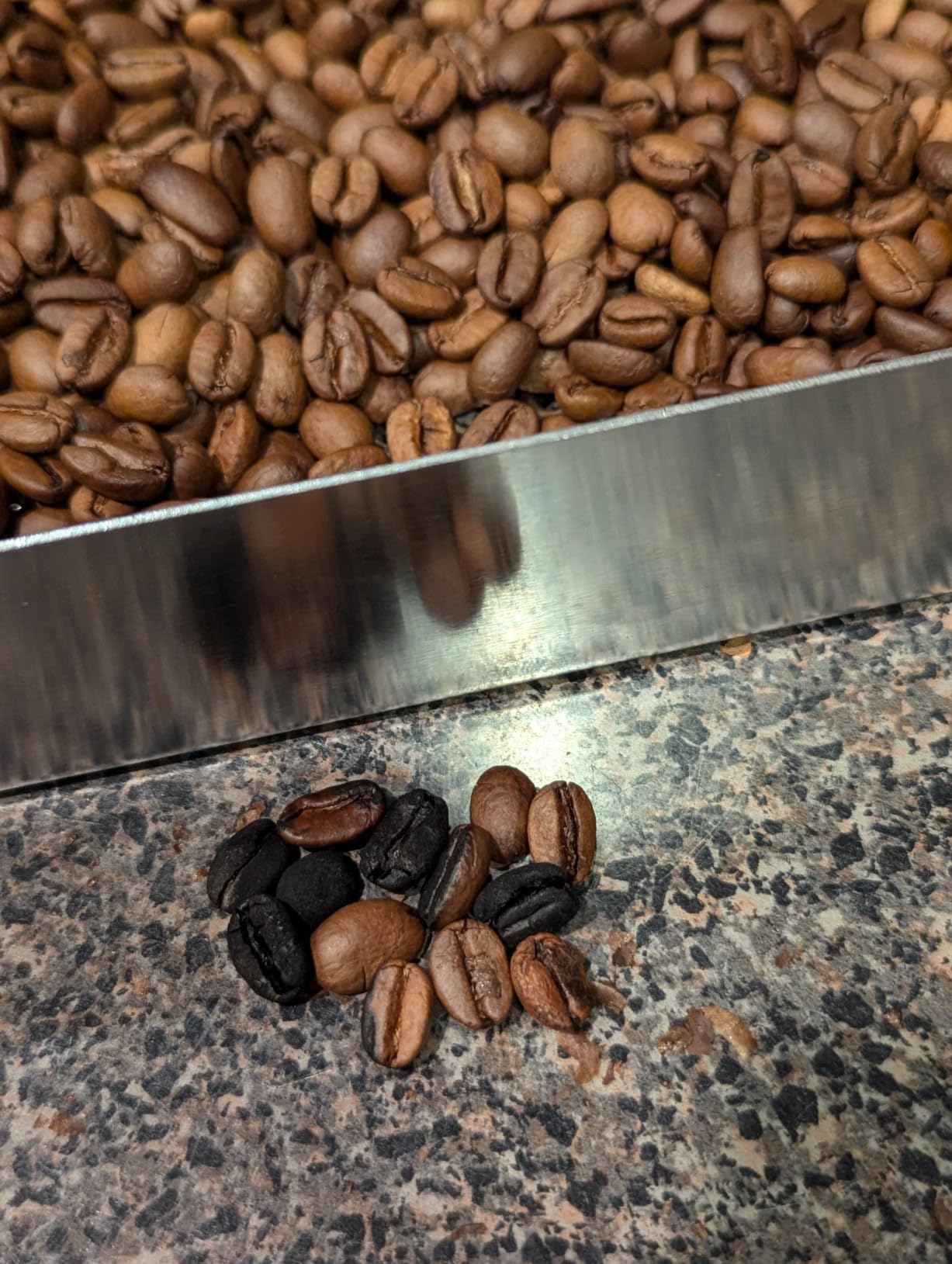
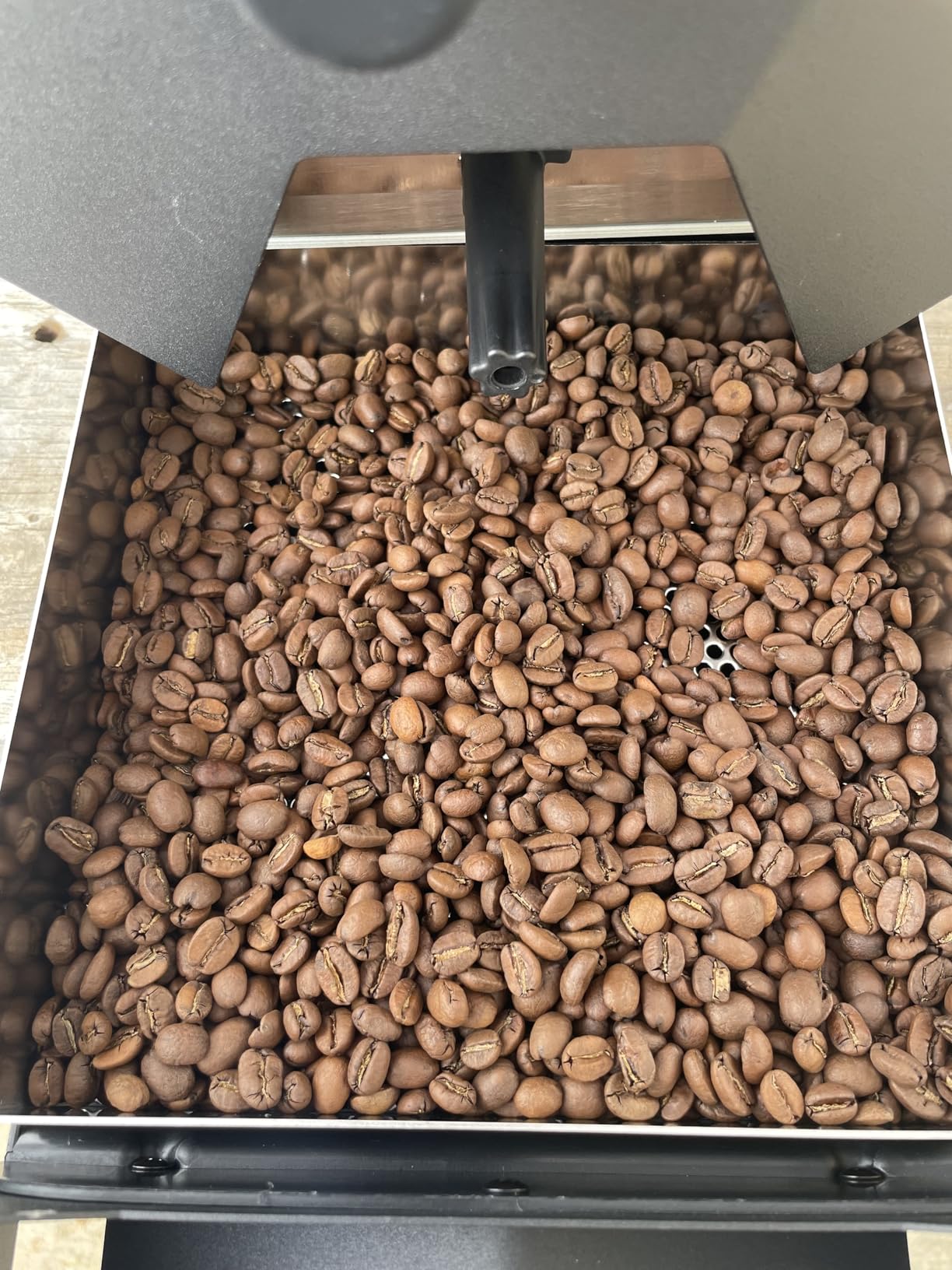
The core machine is a 500-gram stainless steel drum on a 1000-watt element, with 350 to 400 grams the optimal load. It adds a precise temperature probe with intelligent control, a high-speed cooling fan, and a separate cooling tray, which matters because beans still hot after roasting taste flat until they degas.
Manual mode exists for when you outgrow the programs, but owners are clear it takes experience, particularly around holding minimum airflow at first crack. The manufacturer also notes the machine is not intended for high-frequency use.
Who the NIASIA suits
It suits apartment dwellers and anyone roasting indoors who cannot rely on a range hood. Routing smoke through the included pipes is the difference between roasting in a kitchen and roasting in a garage, and this is the machine that makes the former realistic. The drum and probe also give a repeatable starting point the pan machines cannot match.
Who should skip it
Skip it if you want to roast many batches a day, since the manufacturer rules out high-frequency use. Also skip it if you have no plan to use the smoke hardware, because a 16 by 12 by 20 inch machine is a lot of counter to give up.
9. ZEVELOO 750g Electric Roaster: The Budget Way to Try Pan Roasting
ZEVELOO 750g Electric Coffee Roaster Machine Home Coffee Roaster Coffee Bean Roaster for Home Use 110V
- Inexpensive and easy to use with results better than store-roasted beans
- 300-500g batches with an automatic stirring rod
- Honeycomb non-stick base is easy to maintain
- Transparent lid for judging color and hearing first crack
- Flat design roasts unevenly above about 250g
- Temperature dial does not match internal temperature
- Reaching a dark roast takes roughly 28 minutes
- One owner reported heating failure after 5-6 uses
The ZEVELOO is an inexpensive machine with a real electric element, a stirring rod, and a transparent lid, which makes it a legitimate first purchase for someone who wants to try roasting without spending serious money. Owners rate it 4.2 from 91 reviews, with 58% at five stars, so treat that number as indicative rather than settled.
It handles 300 to 500 grams per batch from 100 to 240 degrees C, and the stirring rod keeps beans moving. The honeycomb Teflon base wipes clean easily, and it also handles soybeans, mung beans, rice, and popcorn. At 800 watts it is a modest element, which is both why it is affordable and why it is slow.
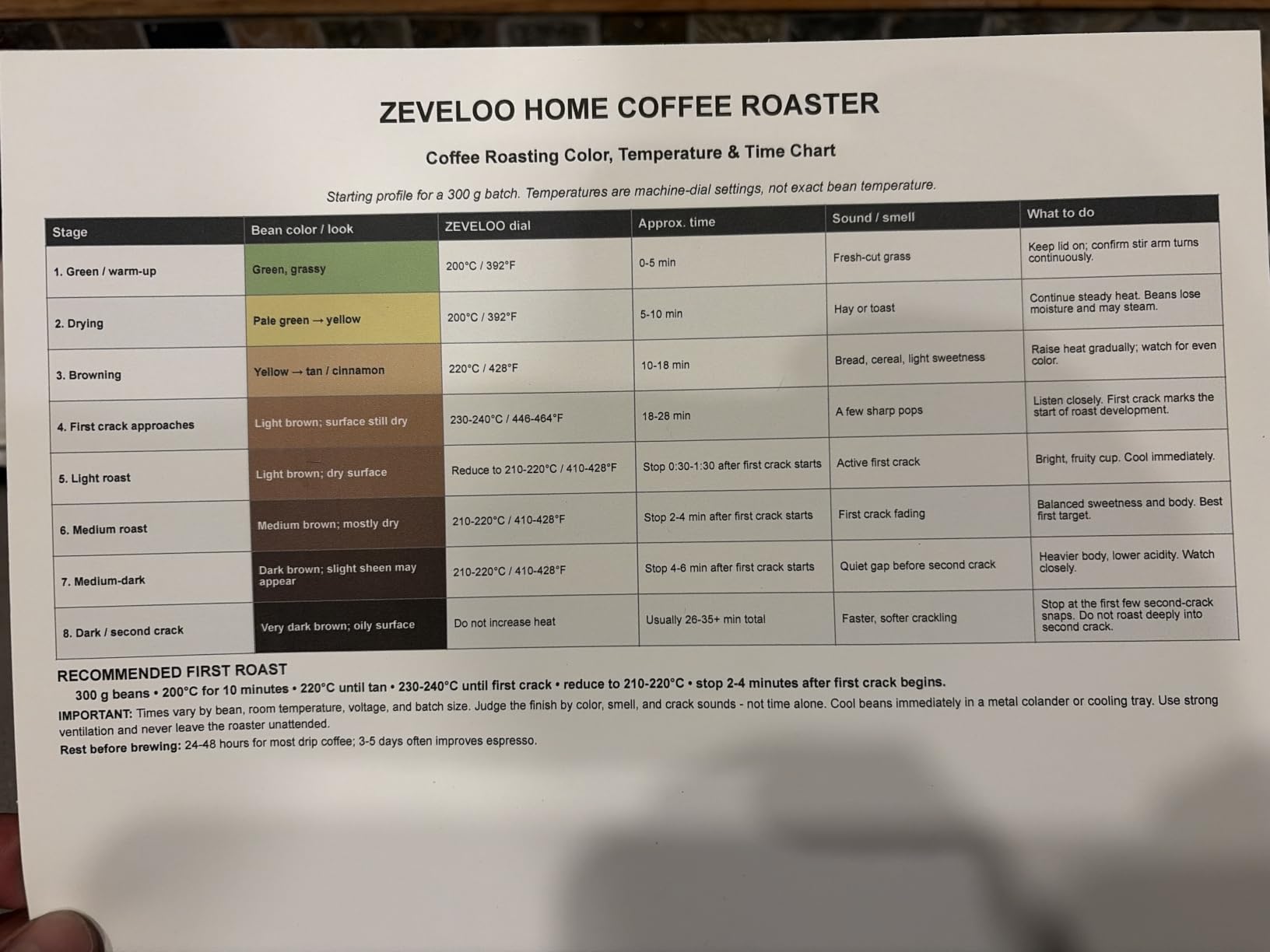
The key limitation is the flat chamber. Above roughly 250 grams, owners report uneven roasting, and the temperature dial does not reliably match internal temperature. Reaching a dark roast takes about 28 minutes of continuous running, which is a long time to sit beside a hot appliance when the top end is what you care about.
Documentation is thin, so you will build your own roast profile from color and first crack alone. One owner also reported a machine that stopped heating after five or six uses, though most of these limitations disappear once you accept that you are learning rather than producing.
Who the ZEVELOO suits
It suits someone genuinely uncertain whether roasting will become a hobby. The transparent lid lets you see and hear the roast without opening the chamber, which is the most useful feature for a first-timer working out what is happening, and it also handles grains and nuts alongside coffee.
Who should skip it
Skip it if you plan to roast dark, because 28 minutes to get there alongside uneven results is a poor trade. Also skip it if you want an accurate temperature reading or dependable temperature control, since the dial does not match reality.
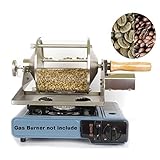
10. DYVEE Gas Burner Roaster: Best Heat Control of the Group
DYVEE Coffee Roaster Gas Burner Coffee Roasting Machine for Home Use, 400g Capacity, Quartz Glass Drum, Stainless Steel Frame, Peanut and Nut Roaster
- Highest rating here at 4.5 from 64 owners
- Quartz glass drum shows bean color for the whole roast
- Flame adjustment gives fast responsive control
- Durable 304 stainless frame with wooden handle
- Needs a gas burner and manual operation
- 17 pounds and 17 inches tall is a large footprint
- Recommended batch is only 200-300g
The DYVEE is a drum roaster heated directly by a gas flame, and it holds the highest average rating in this group at 4.5 out of 5 from 64 reviews, with 67% five stars and 3% one star. That is a small sample, but the consistency of it is notable. The quartz glass drum is the reason: you can watch bean color change for the whole roast, which the pan machines here do not allow.
Direct flame heat is also a very responsive form of control. You adjust the flame and the drum responds immediately, with no element ramp to wait out. A 12V low-voltage motor drives the stirrer, which owners single out as safer than higher-voltage alternatives, and the frame is 304 stainless steel.
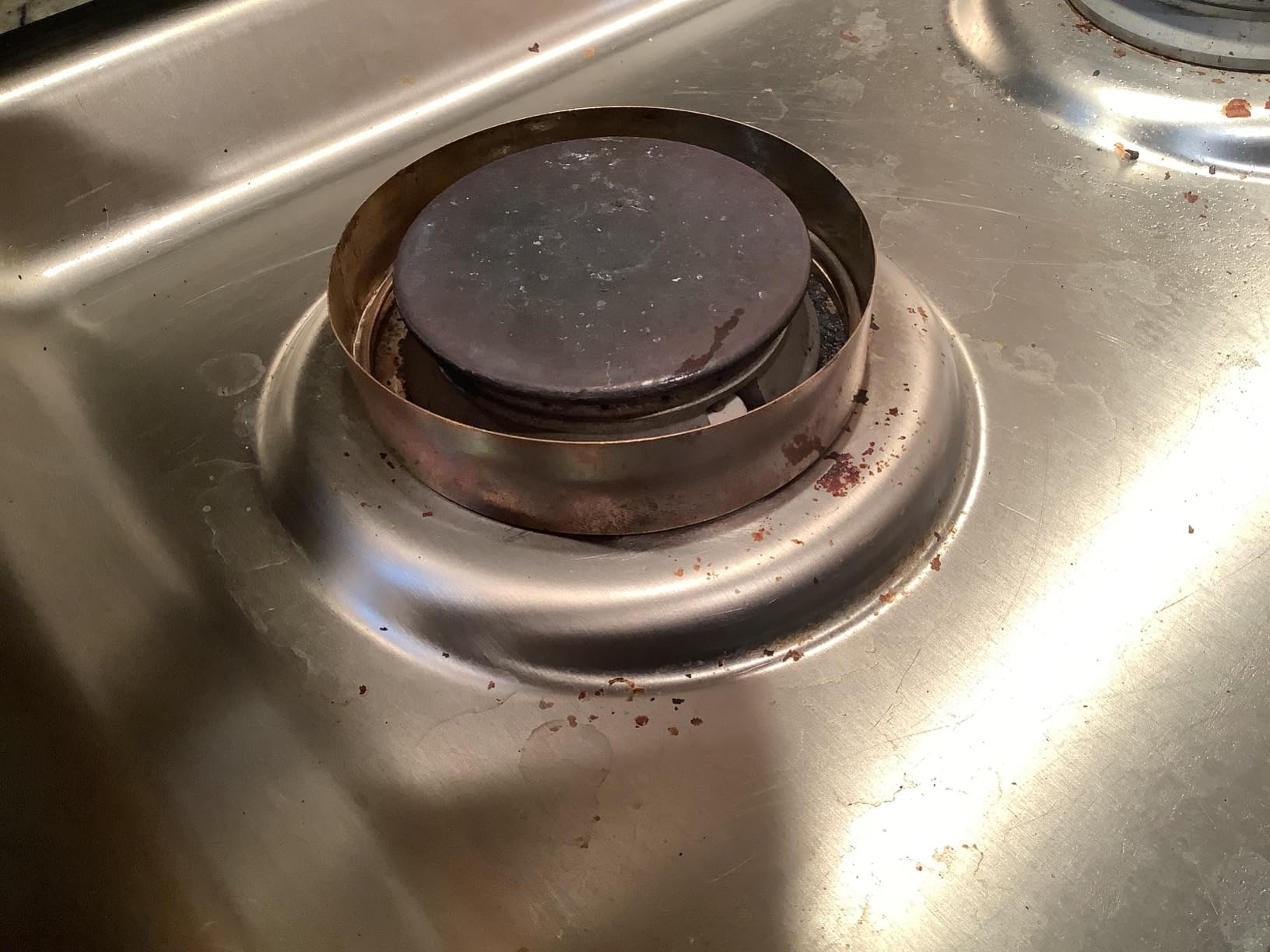
Capacity is 400 grams maximum with 200 to 300 recommended, so a real batch is a 200-gram one. The package includes the roaster set, a funnel, a power adapter, and a manual, and the process runs in four steps. It also handles peanuts and other nuts, though coffee is the reason to buy it.
The tradeoff is convenience. It needs a gas burner, so it lives on a patio or garage stove rather than a kitchen counter, and at 17 pounds and nearly 17 inches tall it is one of the larger machines here. You also cannot press start and walk away, which matters when you are learning in a small space.
Who the DYVEE suits
It suits someone who wants to learn roasting properly rather than automate it, and who has a gas burner or outdoor space already. Adjusting a flame is a more direct relationship with heat than turning a dial, and the visible drum suits anyone whose roast depends on watching color change in real time, including espresso.
Who should skip it
Skip it if you are in an apartment, if you have nowhere outdoors to burn gas, or if you want unattended convenience. It is also the wrong pick for a large household, because 200-300 grams per batch will not keep up with heavy consumption.
What Is the Best Type of Coffee Roaster for Beginners?
The best type of coffee roaster for beginners is an electric convection or fluid-bed machine with adjustable heat and fan control and a batch size close to what you personally drink, usually 100 to 250 grams. Those controls let you change one variable at a time, which is how you learn. A hand roaster teaches intuition but offers no repeatability, and a large drum roasts well but hides what is happening inside it.
There are three main designs. A drum roaster tumbles beans in a rotating cylinder over a flame or element. It gives the most heat and development potential but hides bean color, and a small drum has little thermal mass so temperature can swing hard at first crack. A fluid bed roaster suspends beans in a column of hot air, which roasts fast and evenly and blows chaff out easily, though it is less common at home sizes. Air roasters swirl beans in a stream of heated air, roasting fast with low smoke but harder to control late in a roast.
For a first machine, the practical answer is a small electric unit where you can see the beans and change heat and airflow. The Fresh Roast models here are the clearest example. A gas drum roaster is better if you already roast outdoors and want maximum control, and a hand roaster is better if smoke and storage space rule out everything else.
How to Choose a Home Coffee Roaster: 6 Factors
1. Match batch size to how much you drink. A single person needs roughly 100-250 grams. Anything above 500 grams is a commitment to roasting for other people, and several machines here only roast evenly near their maximum.
2. Look for heat and airflow control. Nine levels of power plus separate fan speed is the sweet spot. It gives you two independent variables to change, which is how you learn what a roast responds to. A single on-off switch gives you nothing to work with.
3. Decide how much temperature data you need. Almost no home roaster at accessible price points reports true bean mass temperature. You will be steering by environment temperature, color, smell, and first crack. A digital display helps, but it is rarely the deciding factor between two similar machines.
4. Check smoke and chaff against your kitchen. Open pan roasters produce the most smoke and the least chaff containment. Enclosed drum units with a chaff basket are better indoors. The real exception is a machine with piped exhaust, which changes the equation for an apartment. This is the factor beginners most underestimate.
5. Confirm the minimum load. Multiple machines here only produce even results above 300 or 400 grams. If you plan to roast 100 grams at a time, those are wrong for you. Check the recommended load, not the maximum capacity.
6. Budget for accessories, not just the machine. You also need a scale accurate to a gram, airtight storage cans with one-way valves, a cooling tray if the machine does not include one, and green beans. My guides to coffee makers for home use and beginner-friendly home equipment follow the same principle: accessories decide how good the result is.
What It Actually Costs to Start Roasting
The machine is the smallest part of starting. Beyond it you need a scale that reads to one gram, since most kitchen scales are not accurate enough for 100-gram batches. Airtight storage cans with one-way degassing valves matter more than beginners expect, because beans kept in open packaging after roasting lose aroma within days.
Green beans are the recurring cost and the part that catches people. Buy smaller bags at first. A home roaster only needs 200 to 500 grams a week for one or two people, so a large bag means storing coffee you will not reach for months, and roasted coffee is at its best within roughly two weeks of the roast date.
Two smaller purchases earn their place quickly: a chaff filter or brush if your machine does not collect chaff, and spare glass jars for a batch while it rests. Skip the profiling software, refractometer, and logbook until you have finished a few dozen roasts.
Safety, Smoke and Ventilation
Roasting fumes are not a gas leak or a chemical exposure, but they are a real irritant. Light roasts produce comparatively little smoke and dark roasts produce a great deal, so if you plan to roast dark regularly you need a plan before your first batch. The honest guidance: roast outside, under a range hood, or through an exhaust pipe, and never in a closed room with people in it. Forum concerns about roasting fumes are reasonable, particularly for anyone with asthma.
Chaff is the fire and housekeeping risk nobody expects. Those papery skins flake off beans as they expand, float, and land on every surface in the room. Chaff is not dangerous to drink in small quantities, and a fine-mesh filter over the cooling tray catches most of it, but chaff near a hot element is a real fire hazard. Never leave a roast unattended and wipe surfaces down while the machine is cool.
Two more rules cover most of the rest. Do not open a hot roasting chamber to stir, because the plume of chaff and hot air is exactly what you want to avoid. And with a gas roaster, never leave a flame unattended even if the drum is off. If a smoke alarm sits within a few feet of your roasting spot, move the roasting spot.
Your First Roast, Step by Step
Start with 100 to 200 grams of green beans, shaken and sorted so nothing is broken or undersized. Sifting matters most on the flat-pan machines, where one wedged bean can stop the stirrer and scorch a batch. Weigh the charge before it goes in and write the number down, because a second batch only means something if it matches the first.
Begin at a medium setting and stay there for the first several minutes. The goal of a first roast is not a good cup, it is learning what your machine does at one setting. Watch color, smell the chamber, and count time. When a sparse crackle becomes a rolling pop, you have reached first crack, where the bean releases moisture and steam and expands.
Do not stop at first crack. Stopping early or going dark too fast is the most common way home roasting earns a bad reputation. Push a little past first crack, watch the color, and pull the batch when the beans are the shade you enjoy in a cup. For espresso, roast further and longer than you think, since espresso wants more development than a quick filter roast.
Cool the beans fast and completely. A tray or high-speed fan drops them to safe temperature in a couple of minutes, and beans still hot when you stop moving them will taste flat. Then wait: roasted coffee needs roughly three to fourteen days to rest and degas before it tastes like itself, and brewing it the same afternoon is the most common beginner disappointment.
Two habits worth building from batch one: taste every roast the same way at the same ratio, and log everything. A starting ratio of about 15 grams of ground coffee to 250 grams of water is a common reference, so a 60-gram roasted batch yields roughly three cups. The roaster who remembers batch three went 90 seconds too long is learning, and the one who does not is just roasting.
Frequently Asked Questions
What is the best type of coffee roaster for beginners?
The best type for beginners is a small electric convection or fluid-bed machine with adjustable heat and fan speed, sized near what you personally drink, usually 100 to 250 grams per batch. Separate heat and airflow controls let a new roaster change one variable at a time and learn what the roast responds to. A hand roaster teaches intuition but gives no repeatability, and a large drum hides what is happening inside it.
What is the best coffee roasting machine for a beginner?
For most beginners the best choice is an electric machine with nine levels of power and separate convection fan control, because it is fast, visible, and forgiving. Among the machines here, the Fresh Roast SR540 suits a single drinker at 120 grams a batch and the SR800 suits a household at 170 to 226 grams. If you cannot ventilate, choose a machine with a piped smoke purifier.
Are coffee roasting fumes toxic?
Roasting fumes are not usually hazardous in the sense of a chemical exposure, but they are an irritant, and light roasts produce far less smoke than dark roasts. The real concern is an enclosed space: roasting repeatedly indoors without ventilation can trigger smoke alarms and aggravate asthma or sinus issues. Roast outside, under a range hood, or through an exhaust pipe, and never in a closed room with people in it.
Is coffee chaff safe to drink?
Chaff is the papery skin that flakes off coffee beans as they expand during roasting. Small amounts are harmless, so you do not need to discard a batch because of a little chaff in the cup. The bigger issue is that chaff is messy, floats through the air, and settles on counters and walls. Near a hot heating element it is also a genuine fire hazard, so a chaff basket or fine-mesh filter is worth having from your first roast.
What is the best way to roast coffee for a beginner?
Load 100 to 200 grams of sorted green beans, start at a medium heat setting, and stay there for the whole first roast so you can learn what your machine does. Listen for first crack, then roast a little past it rather than stopping immediately. Cool the beans fast on a tray, then wait roughly three to fourteen days before brewing so they can rest and degas. Write down the load, settings, and total time.
What size home coffee roaster do I actually need?
Size your roaster to how much coffee you drink, not to its maximum capacity. One person usually needs 100 to 250 grams per batch, a couple needs roughly 250 to 400 grams, and a family needs 400 to 500 grams. Check the recommended load rather than the stated capacity, because many flat-pan machines only roast evenly above 300 or 400 grams, and a machine that is too large is harder to cool down evenly.
Conclusion: Where to Start Roasting at Home
If you want one place to start, start with the Nuvo Eco Ceramic Handy Roaster. It needs no electricity, produces no smoke, and costs nothing to run, which means you can spend your first month learning the craft instead of learning a control panel. At 70 grams a batch you will be tasting small and often, which is the right way to build intuition.
When you are ready for an appliance, the Fresh Roast SR540 is the value pick for one or two people and the SR800 is the same idea with roughly double the batch for a household. If you cannot ventilate where you live, the NIASIA with its smoke purifier and built-in profiles is the only machine here that makes indoor roasting realistic. And if you would rather learn on something nearly free first, the general principle matches my other beginner equipment picks: start smaller than you think you need.
Whichever route you take, buy a scale, storage cans, and a small bag of green beans, then roast twenty batches before you change anything. In 2026 the machines above are all current enough to learn on for years, and the habit you build in the first month matters more than the model you start with.