
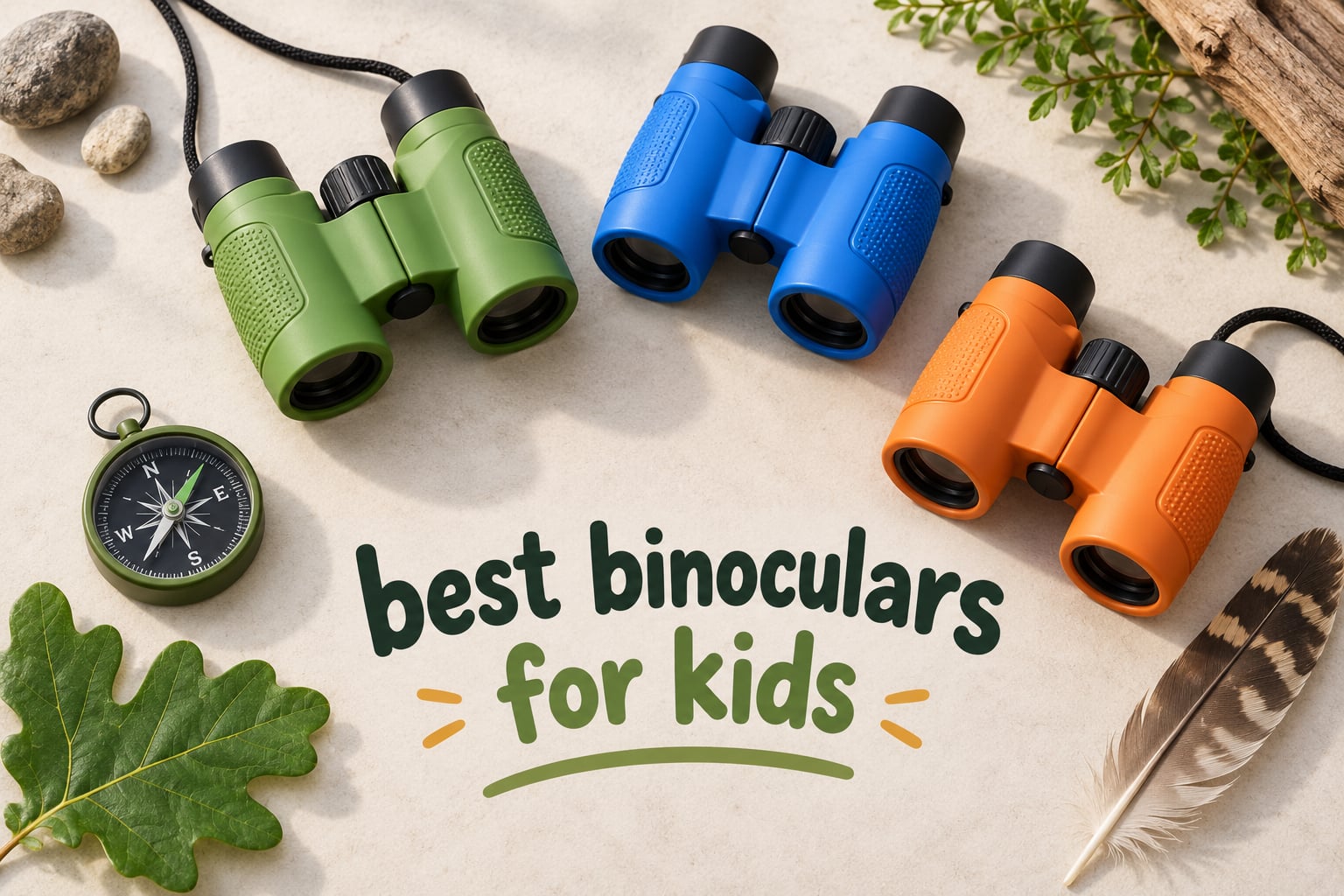
There is a very specific moment when a child decides binoculars are boring. They hold them up, they get two circles instead of one picture, or the view shakes so badly they cannot find the bird at all. That moment has almost nothing to do with image quality. It is usually fit.
The best binoculars for kids are the ones that fold narrow enough for a small face, weigh little enough for a small neck, and magnify just enough to make the world look closer. Get those three right and a child will carry the pair everywhere. Get them wrong and the same pair ends up in a drawer within a month.
We spent several weeks reading specifications, customer reviews and forum threads to build this roundup of 12 pairs, then sorted them by what they actually do rather than by marketing language. Our bird watching binocular guide covers the adult end of the market, and our hunting binocular picks cover the high-power end. This page is about the version that fits in a five-year-old’s hands.
If you only read one section, read the age and fit guide below. It answers the question that decides everything: will these binoculars actually fit your child?
Table of Contents
Top 3 Picks for the Best Binoculars for Kids in 2026

All 12 Picks Compared at a Glance
| Product | Specifications | Action |
|---|---|---|
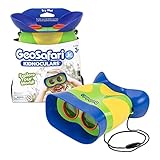
| GeoSafari Kidnoculars |
|
Check Latest Price |
 OBUBY 8×21 OBUBY 8×21 |
|
Check Latest Price |
 Scotamalone Kids Binoculars Scotamalone Kids Binoculars |
|
Check Latest Price |
 LET’S GO Waterproof 8×21 LET’S GO Waterproof 8×21 |
|
Check Latest Price |
| THINKPEAK Green 8×21 |
|
Check Latest Price |
 Little Experimenter Night Vision Little Experimenter Night Vision |
|
Check Latest Price |
 ESSENSON 4×30 ESSENSON 4×30 |
|
Check Latest Price |
 Promora 8×21 Set Promora 8×21 Set |
|
Check Latest Price |
 LET’S GO 4×30 Bird Manual LET’S GO 4×30 Bird Manual |
|
Check Latest Price |
 Noptix Real Kids 8×21 Noptix Real Kids 8×21 |
|
Check Latest Price |
 ARTOMIDE 5x with Compass ARTOMIDE 5x with Compass |
|
Check Latest Price |
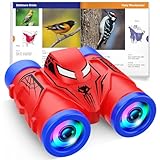 JovialToyz 4×30 Kit JovialToyz 4×30 Kit |
|
Check Latest Price |
Which Binoculars Fit Which Age
The single most useful fact about kids binoculars is that fit comes before optics. A binocular hinges in the middle so the two eyepieces can slide together until they match the distance between your child’s eyes. That distance is called the interpupillary distance, or IPD.
Most full-size binoculars bottom out at 55 to 56 mm, and plenty of adults sit comfortably at 60 mm or more. Many six-year-olds do not. When the eyepieces cannot close far enough, a child sees a black edge or two separate circles, decides the toy is broken, and hands it back.
That is why the models below that are built specifically for small faces are worth the extra few dollars. Age bands give you a fast starting point:
Ages 3 to 5: a focus-free fixed-focus pair. No knobs to adjust, nothing to line up, just point and look. The GeoSafari Kidnoculars and the LET’S GO! 4×30 are built this way.
Ages 6 to 9: low magnification with a single center focus knob and a narrow minimum IPD. The OBUBY 8×21, the THINKPEAK 8×21 and the Noptix Real Kids pair all land here.
Ages 10 to 12: real optics at 8x start to make sense, and close focus becomes useful for insects. Weight matters more now, so skip anything that feels heavy at the shop.
Teens: treat it like buying your own. Better coatings, wider field of view, a warranty that covers accidental damage, and a body that will survive a backpack.
How to check the fit in about 60 seconds
Have your child hold the binoculars up to their eyes without adjusting anything. If they see one clear circle with no dark border, the fit is right. If they see two circles, a crescent, or a black frame around the picture, the eyepieces are still too far apart.
If the eyepieces cannot close any further, the pair is too wide for that child. Nothing about better glass will fix it, and this is true of adult binoculars too, which is why forum threads on birdforum.net and CloudyNights keep circling back to the same advice: measure before you buy, and try it in person if you can.
Measuring interpupillary distance at home
You can measure it without buying a ruler made for the job. Sit your child at a table with a piece of paper taped flat, have them lean forward and look straight down at a pencil mark they make themselves, then slide the binocular barrels together until they match the mark.
Measure the distance between the centers of the two eyepieces with a ruler and write it down. Anything at or above the distance between the centers of your child’s pupils is a pair they can use. Repeat it a year later if you want to know whether they have outgrown the current pair.
1. Educational Insights GeoSafari Kidnoculars: Best Overall for Preschoolers
- Focus-free so no adjustments needed
- Lightweight for small hands
- Breakaway neck strap for safety
- Survives drops and throws
- Large review base of 24k+
- Only 2x magnification so not real optics
- Not water resistant
- Visuals soften at distance
This is the pair we recommend first for almost any child under six. There is nothing to set, nothing to line up, and nothing to break. A four-year-old can pick it up, point it at something, and see it.
The 2x magnification is the whole design. It is not a toy in the dismissive sense: it is a plastic body, a fully multi-coated lens set, and a breakaway neck strap, which is a safety feature most cheap straps skip.
It ranked as the number one listing in the Nature Exploration Toys category, and with more than 24k ratings it has the largest review base of any pair here. That volume matters, because it means the durability reports are consistent rather than anecdotal.
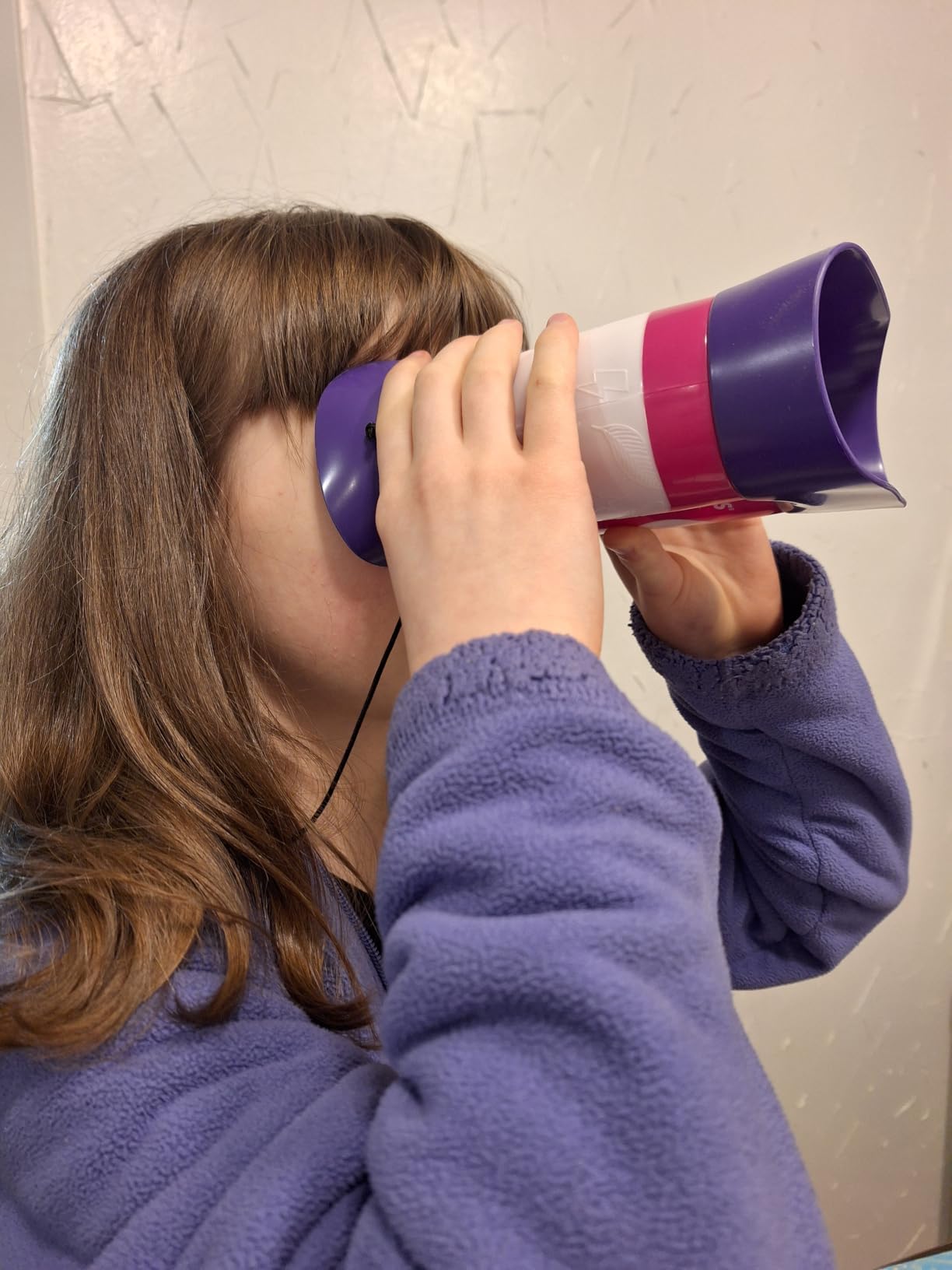
What surprised us was how well it holds up to being thrown. Parents report repeated drops onto grass, pavement and gravel with no damage, and the plastic shell does not flex or creak the way thin plastic usually does.
The focus-free design also means a child of any age can pick up a sibling’s pair and use it without an adult intervening. That convenience is the main reason it sells by the thousands.
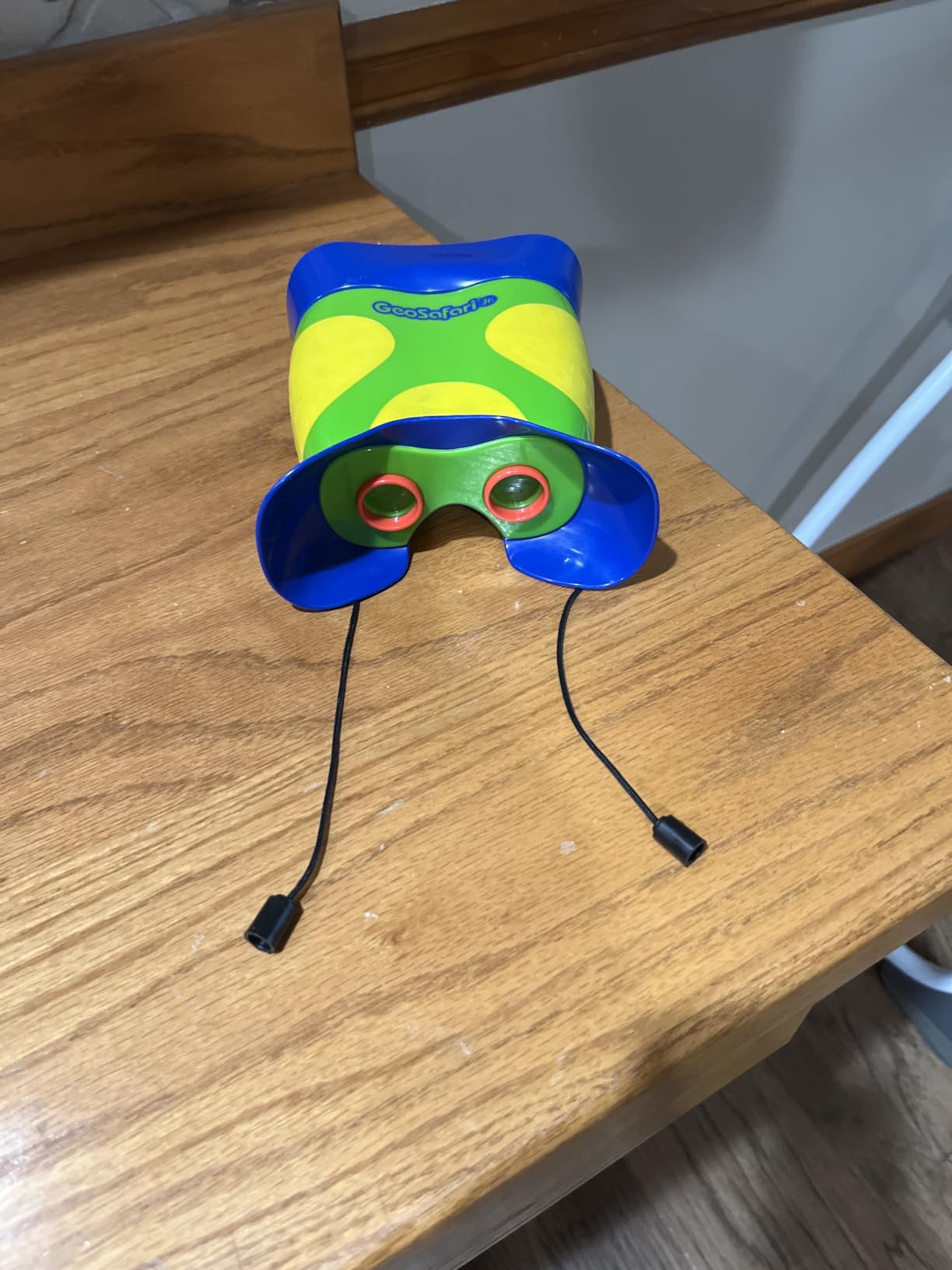
Good choice if you want a first pair that gets used daily
If your child is three, four or five, this is the safest bet and the one we have seen handed around the most. The screen-free outdoor play it encourages is worth more than any optical specification at this age.
It also works as a bridge pair. Plenty of families buy this at four or five and then move up to a real 8×21 glass at seven or eight.
Skip it if your child wants real distance viewing
At 2x, a bird at the far end of a garden looks about the same size as it does with the naked eye. Children who have already tried an adult pair and been disappointed are unlikely to be satisfied here.
It is also not water resistant. Water that reaches the eyepieces takes a long time to clear, so keep it out of rain splash and puddles.
2. OBUBY 8×21 Compact Binoculars: Best Value Real Optics
- Genuine BAK4 multi-coated optics at a low price
- Weighs only 6 ounces
- Rubber-armored body absorbs drops
- Includes case bag cloth and strap
- Soft rubber eyepieces protect the face
- Center focus is fiddly for younger children
- Optics soften at long range
- Not waterproof
This is the pair that convinces parents they do not need to keep buying toys. The optics are real: a BAK4 prism with green multi-layer broadband coating and 21 mm objective lenses at 8x.
At 6 ounces it is one of the lighter bodies in this roundup, and the barrels fold flat enough for a young face to line up both eyepieces. That combination of low weight and low magnification is exactly what the fit guidance above asks for.
The accessory kit is unusually generous for the money: a velvet pouch, a hard case, a cleaning cloth and instructions all come in the box.
Rubber armor around the body and soft rubber eyepieces take the sting out of drops, which is the main failure mode for a pair of glasses in a child’s hands. The grip is molded for small fingers rather than adult hands.
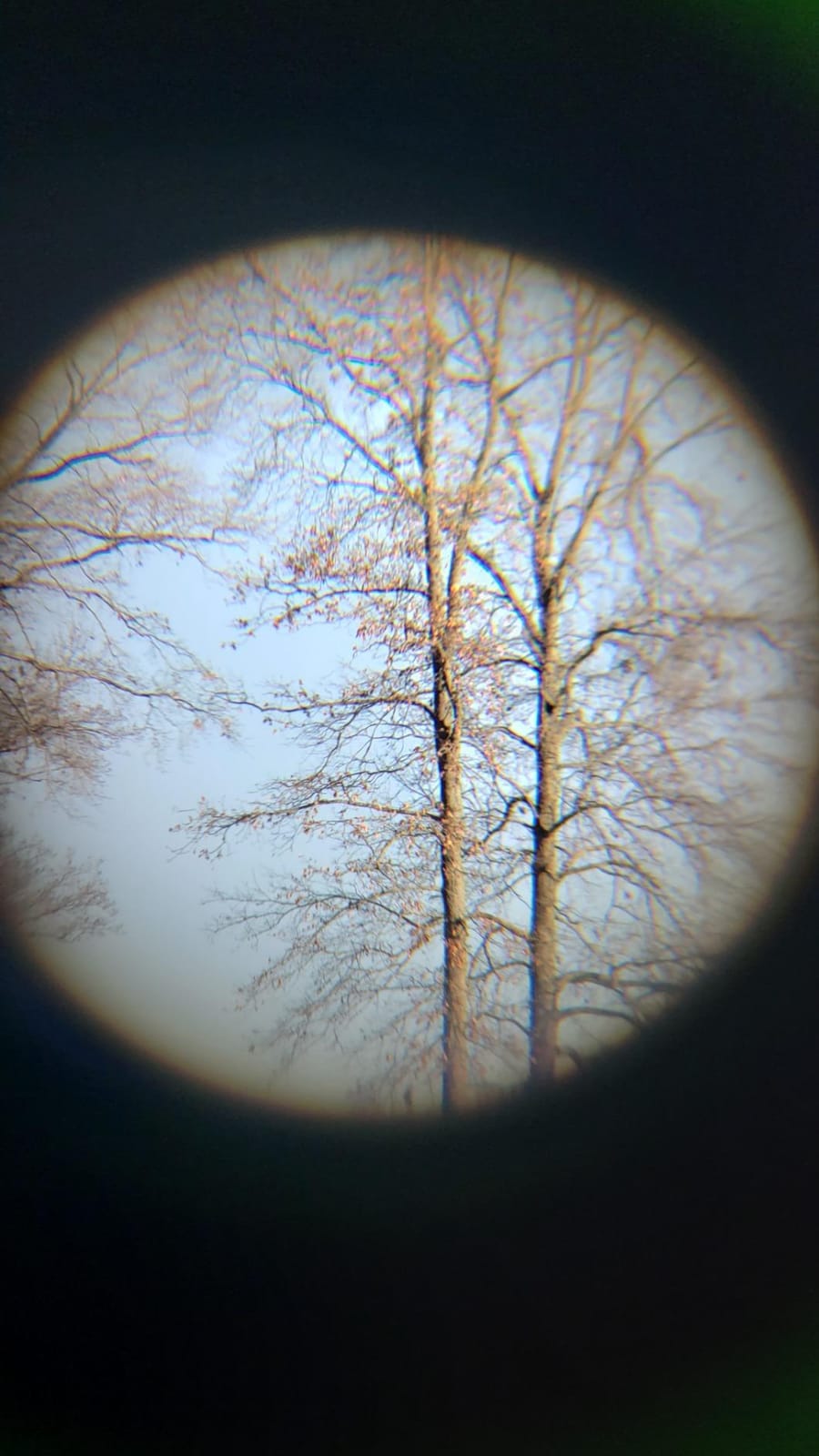
Reviewers consistently call the image colorful and clear for the category, though not crisp at distance. For backyard birds and general exploring that difference is hard to see.
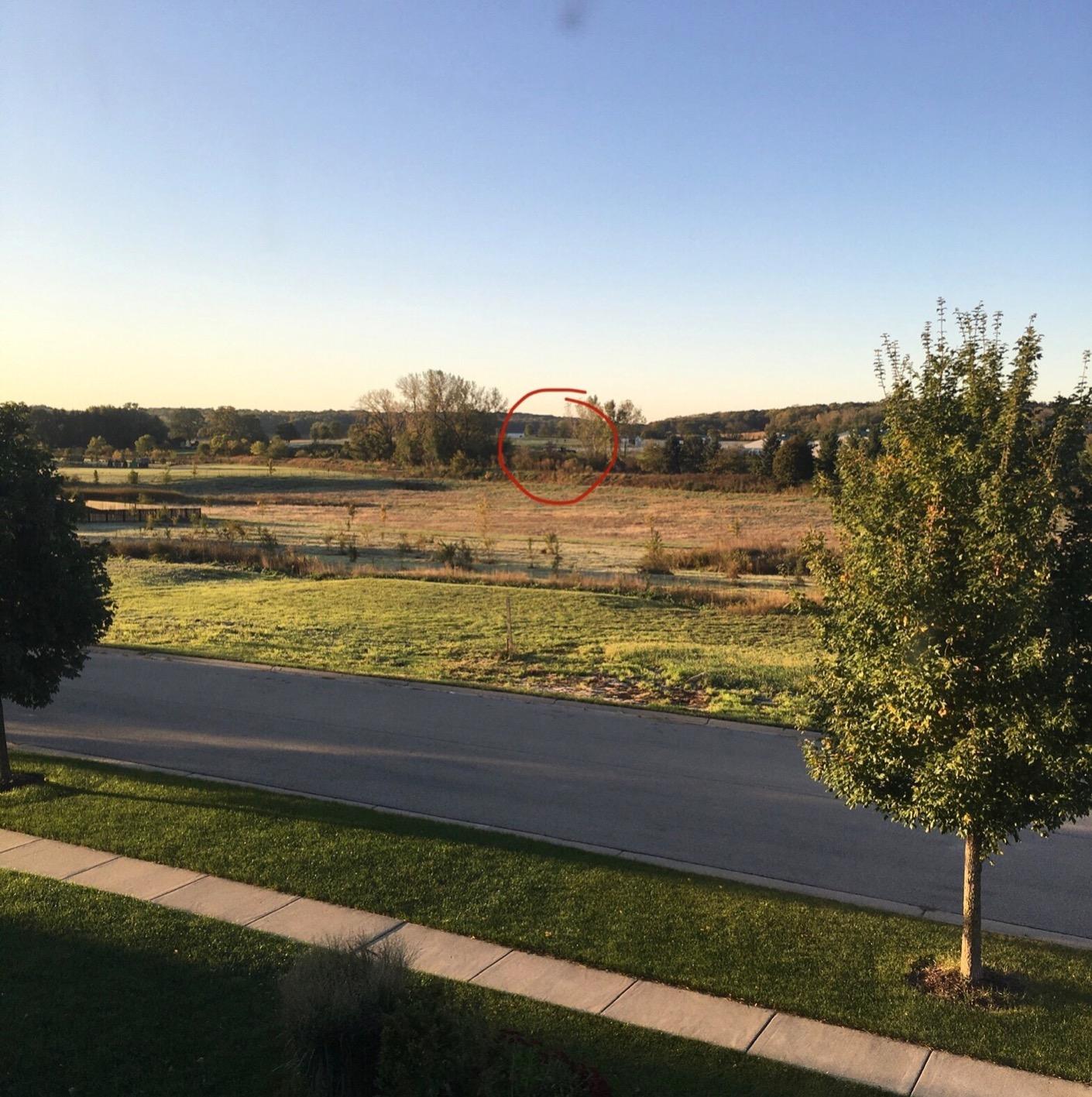
Good choice for ages six and up who want genuine magnification
This is the step-up point for a child who has outgrown a fixed-focus toy but is not ready for an adult binocular. Eight times is the ceiling we would recommend for a child anyway.
It suits a child who wants to hunt for birds on a walk, scan a sports field or follow a campfire at dusk.
Skip it if your child is under five
The center focus knob and the eye-distance adjustment both take practice. A three-year-old will tend to force them, and repeated forcing is how these bodies crack.
It also comes in a wide color range, so the color that arrives may not be the one pictured. For older kids who care about that, mention it in your expectations.
3. Scotamalone Kids Binoculars: Toughest Budget Pair
- Survives repeated drops onto concrete
- Pocket sized for small hands
- Smooth center focus for little fingers
- Includes bag strap and cloth
- Nontoxic natural rubber
- Only 2-3x effective magnification
- Average image clarity
- Build feels less sturdy over time
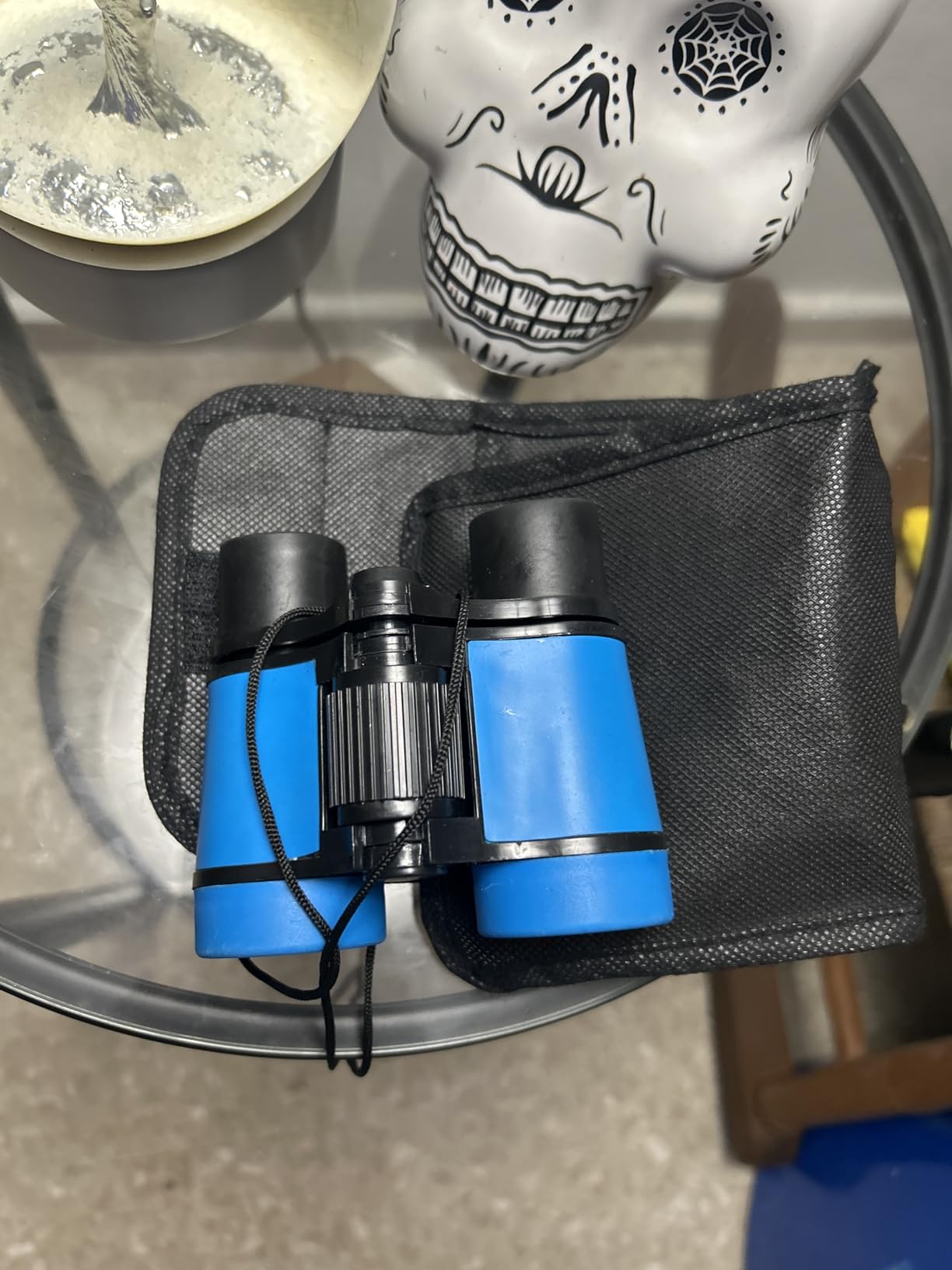
This is the pair to buy for a child who treats every possession like a projectile. The body is wrapped in rubber, the eyepieces are rubber-surrounded, and the construction is glue-free natural rubber rather than brittle plastic.
At 103 grams it sits comfortably in a small hand and disappears into a jacket pocket, which makes it the one most likely to come out on a walk rather than sit at home.
The center focus knob is smooth and light enough for small fingers to turn, and the eyepieces adjust to fit an eye distance.
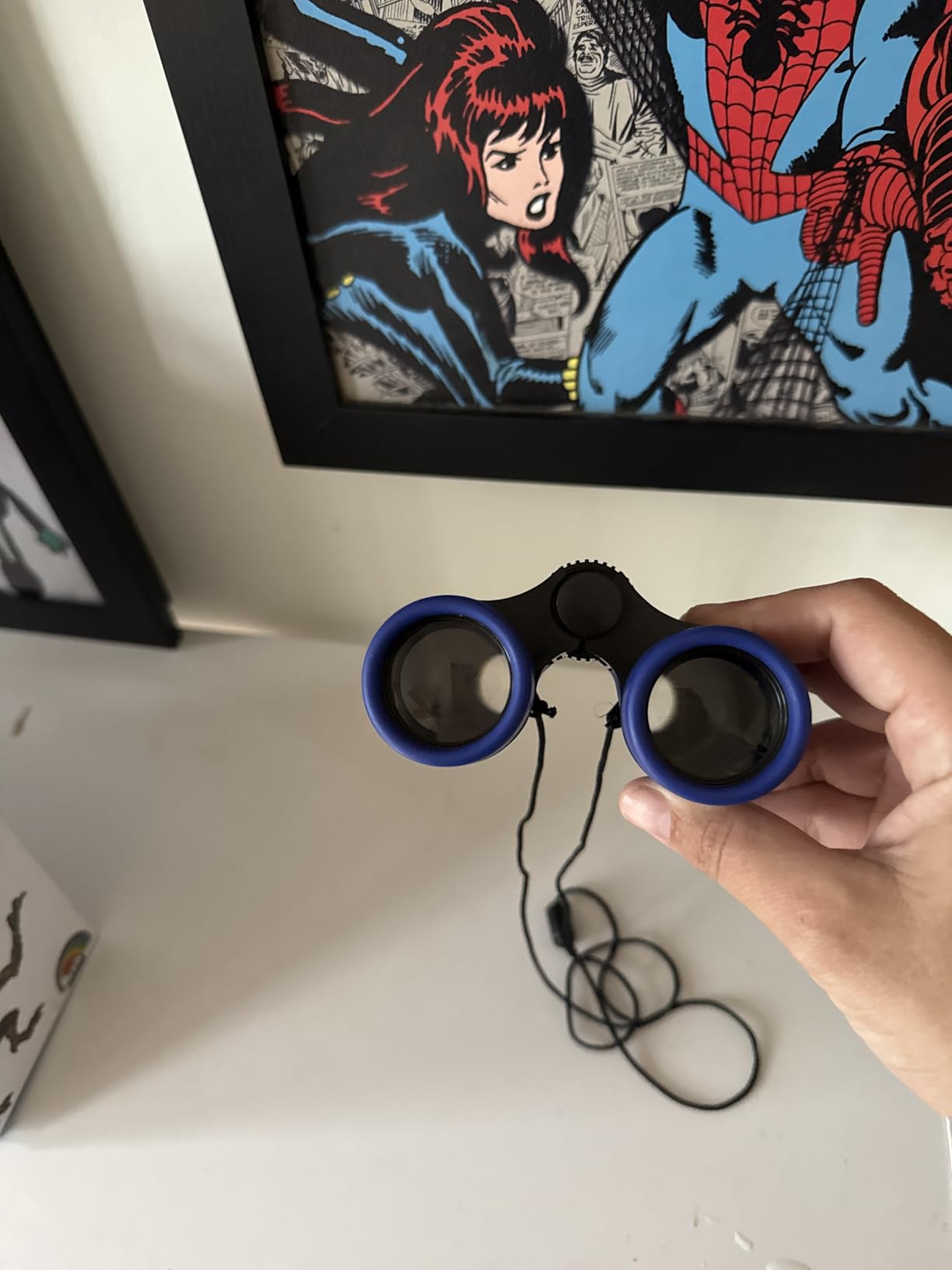
Drop reports are the strongest part of the feedback. Families describe repeated drops onto concrete and gravel with no visible damage, which for a cheap pair is unusual.
The included kit is a carrying bag, a neck strap and a lens cloth, so nothing needs buying separately before the first outing.
Good choice for a first pair on a tight budget
If the goal is a durable starter that survives a park or a schoolyard, this does the job at a low outlay and with a review base above 12k ratings.
It also suits a school-age child who wants their own pair rather than sharing with a sibling or parent.
Skip it if image quality matters to you
Reviewers report that the 4x label overstates what the pair delivers in practice, with effective magnification closer to 2 or 3x and only average clarity. Glare on the lenses is also mentioned often.
The listed age range extends into the tween years, but the styling reads young. A ten-year-old may find it babyish even when it still works.
4. LET’S GO! Waterproof 8×21: Best for Wet Weather
Boys Toys for Age 3-6, Binoculars for Kids New Popular Outdoor Easter Toys for 4-6 Year Old Boy Gifts for 3+ Years Old Boys Gift Toy for Kid Boy
- Fully waterproof for rain and splash
- Shock-absorbing rubber armor
- Simple controls a child can manage
- Sized for preschool and school ages
- Adjustment drifts out of position
- Heavier than other mini models
- One report of internal optics damage after a drop
If your outdoor time involves mud, splash or an unpredictable weather forecast, waterproofing is the spec that matters most, and this is the pair that states it plainly.
It uses an 8×21 configuration with a Porro prism and fully multi-coated green optics, giving a 7.2 degree viewing angle. The barrels adjust to fit both adult and child eye distances, which is rare in this category.
Soft rubber eyepieces protect the eyes and the lens during a fall, and the grip is coated to resist slipping when hands are damp.
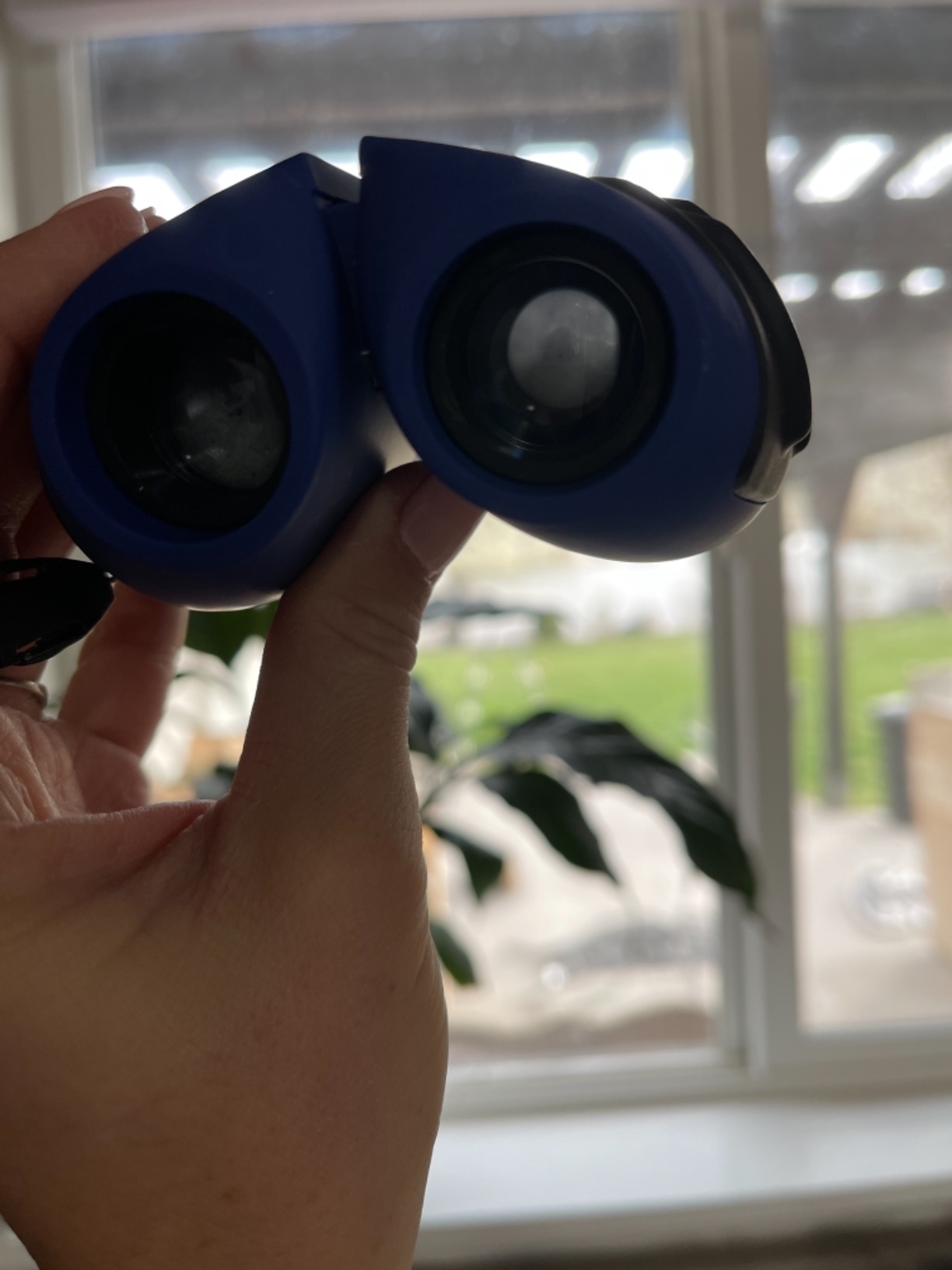
Parents buying for sibling groups often order more than one in different colors, which makes it easy to run a family bird session without sharing.
The controls are simple enough that children adjust them themselves rather than asking an adult for help every few minutes.
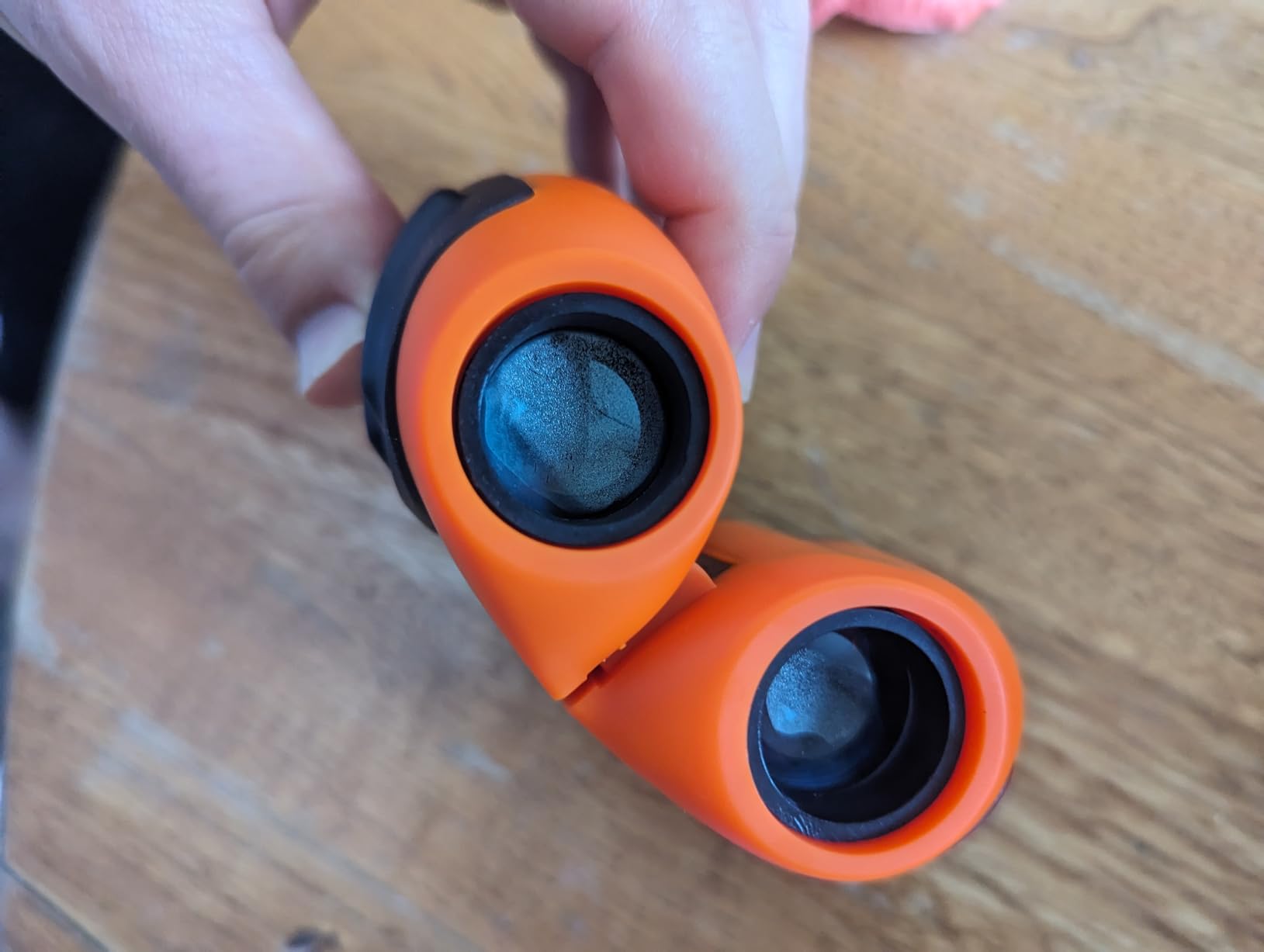
Good choice for camping, beach trips and rainy walks
Waterproofing means a child can use it in a downpour or near a puddle without you checking the forecast first. For many families that alone justifies the choice.
The stated age spread covers preschool through the early school years, so it works for a wide range of children in one household.
Skip it if your child is rough with adjustments
The most common complaint is that the focus and diopter settings slip out of position during use, which frustrates a child trying to keep a moving subject in view.
At 7 ounces it is a little heavier than the other mini models here, and one reviewer reported that the internal prism shifted after a drop, leaving only one side usable.
5. THINKPEAK Green 8×21: Premium Pick With Real Glass
- Genuine BAK4 glass rather than plastic optics
- Waterproof and shock resistant
- Lifetime free replacement warranty
- Compact 4 by 4 inch body
- Kits included with case strap and cloth
- Narrow eye spacing frustrates older users
- Rubber eye cups resist folding down
- Some reports of a missing strap
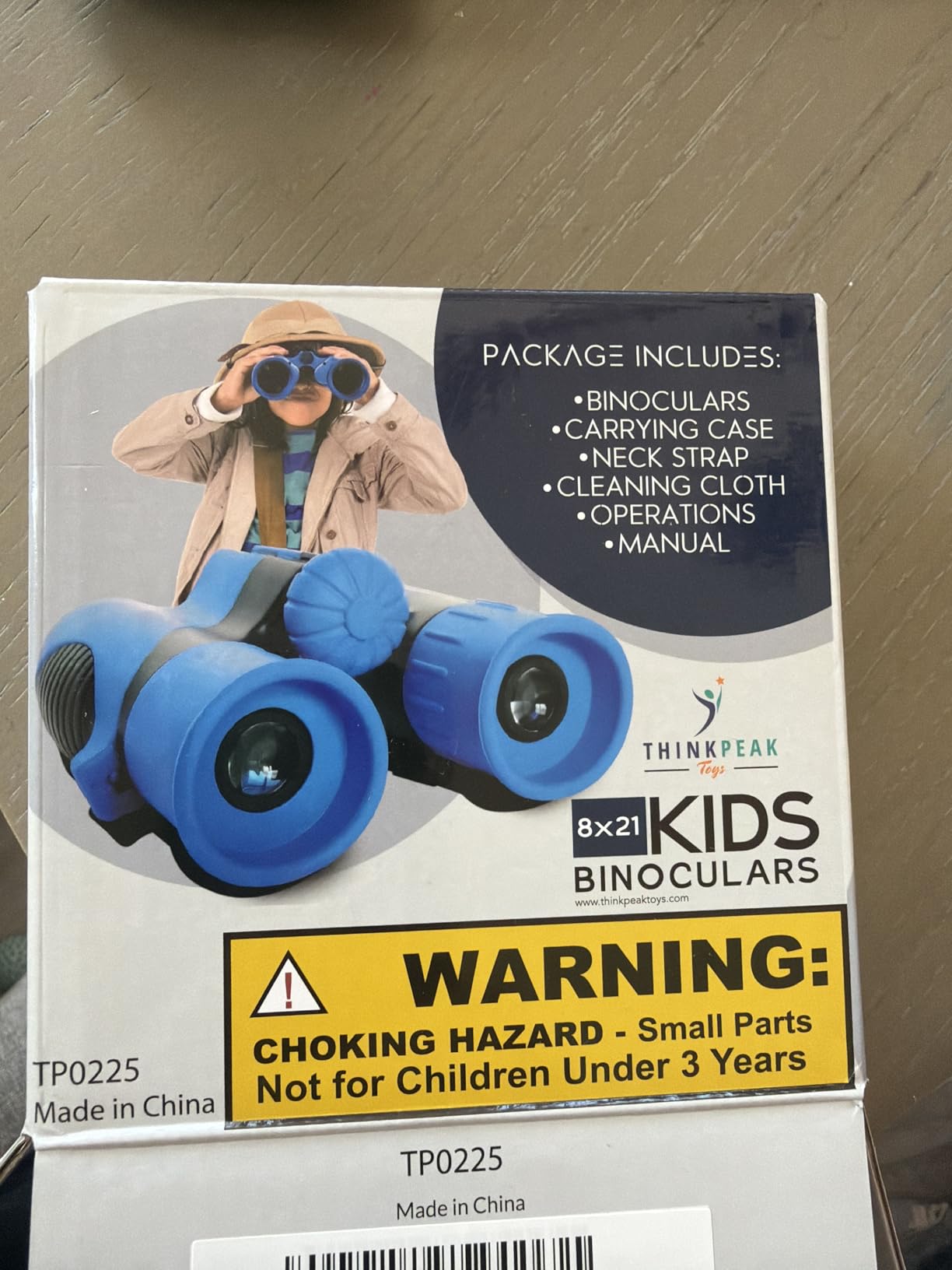
This is the most convincing step-up pair in the roundup for anyone who wants a child on real glass rather than molded plastic optics. The BAK4 lenses produce an image noticeably clearer than anything else in the under-ten-pound class.
The body is waterproof and shock resistant, and the neck strap is a breakaway design, which is the safety feature we would want on any pair given to a child under six.
At 4 by 4 inches with swiveling barrels, the whole thing is small enough for a car glove box and a school bag side pocket.
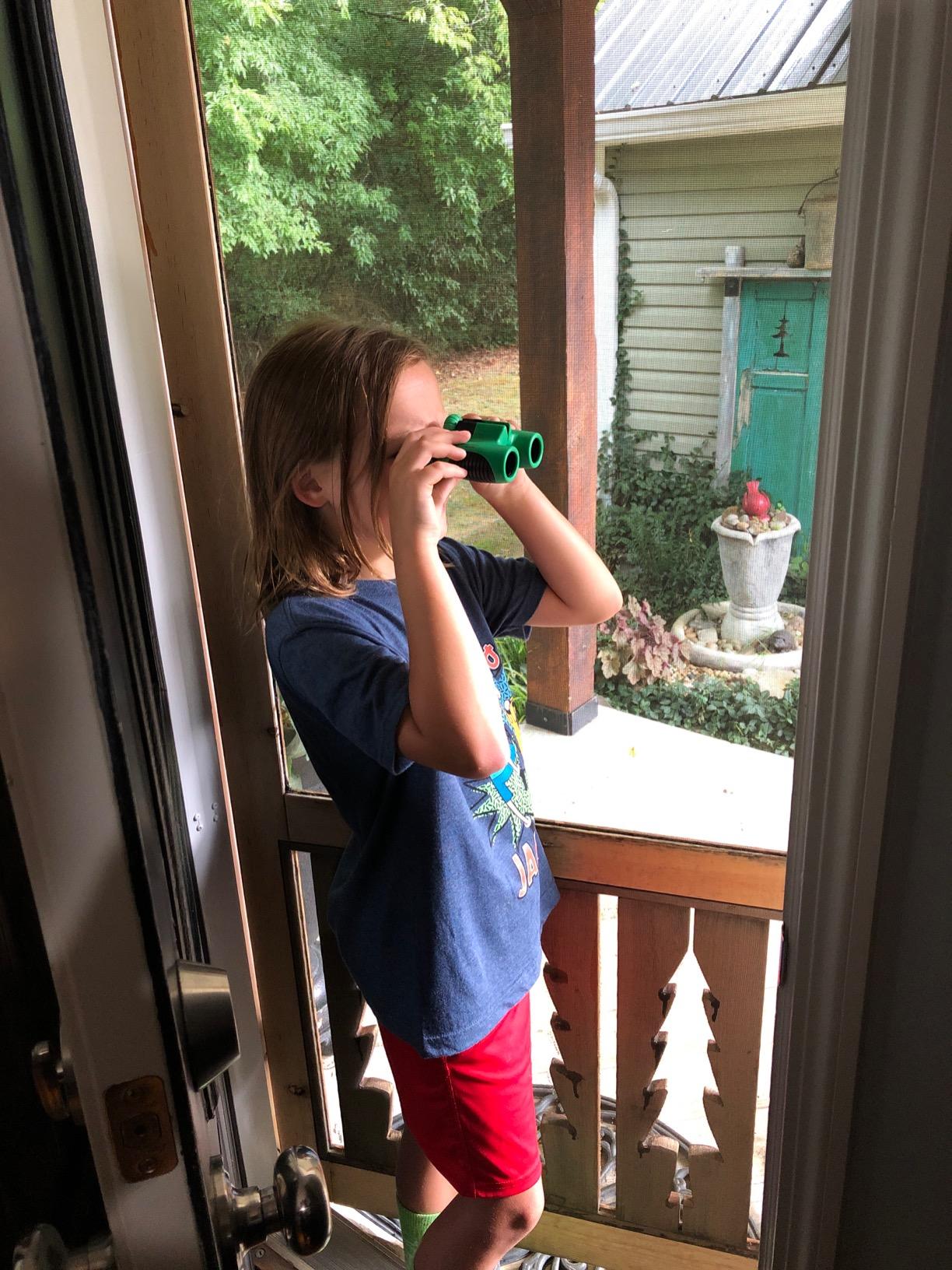
Adults reviewing on behalf of children describe it as the pair they wish they had bought first, because the optics hold up when a real subject is far enough away to matter.
The kit includes a carrying case, an adjustable strap and a lens cloth, with soft eye cups already fitted.
Good choice when your child is genuinely curious
If a child is asking questions about birds, insects or the night sky, this is the pair that answers those questions properly rather than approximately.
The lifetime free replacement warranty also takes pressure off the decision, since the usual objection to buying a child real optics is that they will be broken within a year.
Skip it if an older child or an adult will share the pair
The eye spacing is deliberately narrow for small faces, so older children and adults can struggle to see through both eyepieces at once. It is a child pair, not a family pair.
The rubber eye cups are also difficult to fold down for children who wear glasses, which is a common reason to look at a different model.
6. Little Experimenter Night Vision Binoculars: Best for Night Play
Little Experimenter Night Vision Binoculars for Kids, Flashlight, Ages 3-6
- Built-in flashlight adds real night-time play
- Focus-free so no adjustment is needed
- Eye cups mold to small faces
- Batteries included in the box
- Only 2x magnification
- Needs three LR44H batteries eventually
- Not water resistant
- Fixed focus cannot be tuned
Nothing on this list makes a child look up the hill faster at dusk. The built-in flashlight and the low-light function turn a bedtime walk into what feels like an expedition.
The viewing is focus-free, so there is no knob to hunt for, and the eye cups are shaped to mold against a small face so light does not leak in around the edges.
It is aimed squarely at ages three to six and is used mostly as imaginative play with a STEM angle rather than as an optical instrument.
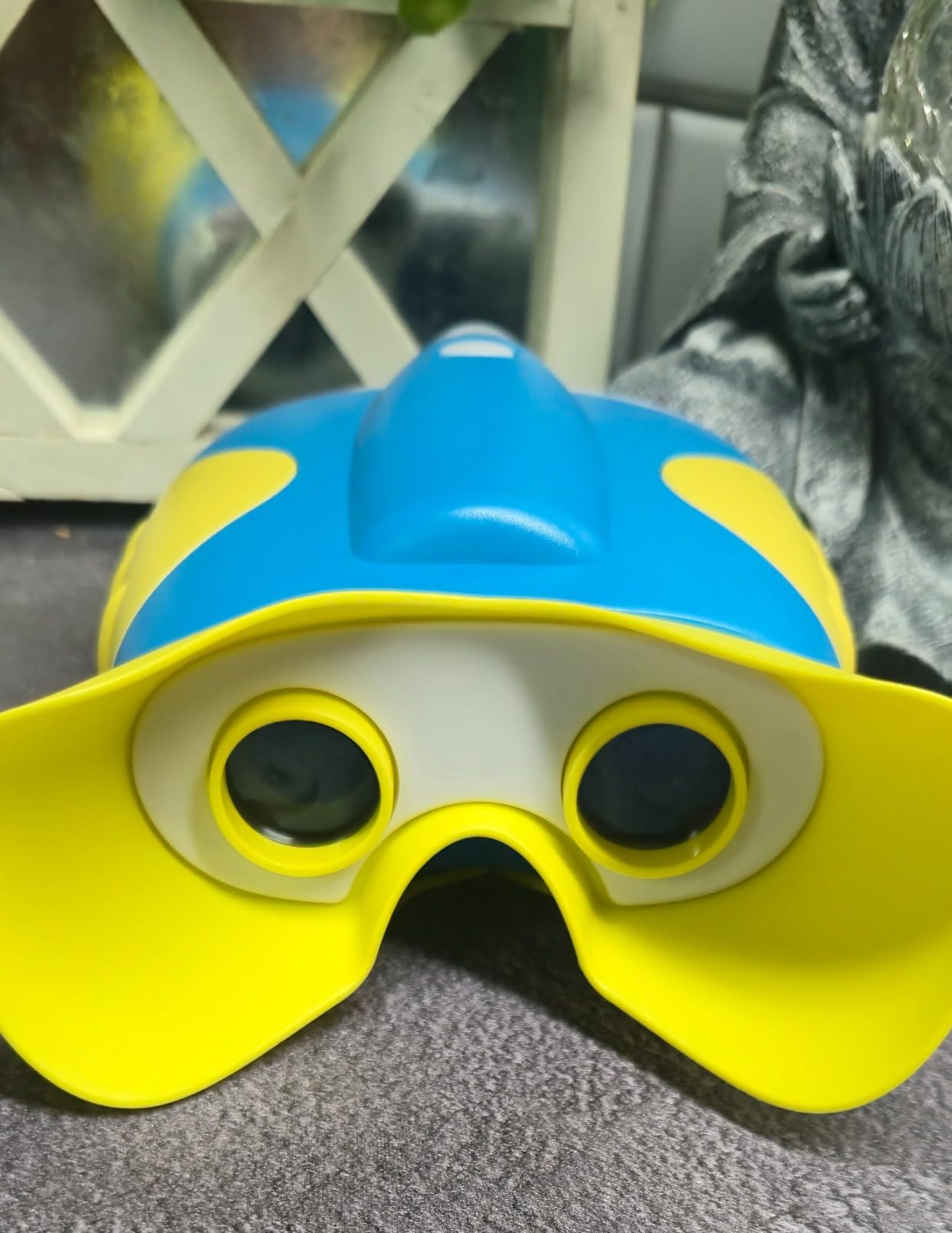
Three LR44H batteries come included, so it works out of the box on the day it arrives. Replacement cells are the one running cost, and they are a standard button cell found in most kitchen drawers.
The body is a mix of plastic and wood with an anti-reflective coating, and the shape is comfortable to hold for a long pretend expedition.
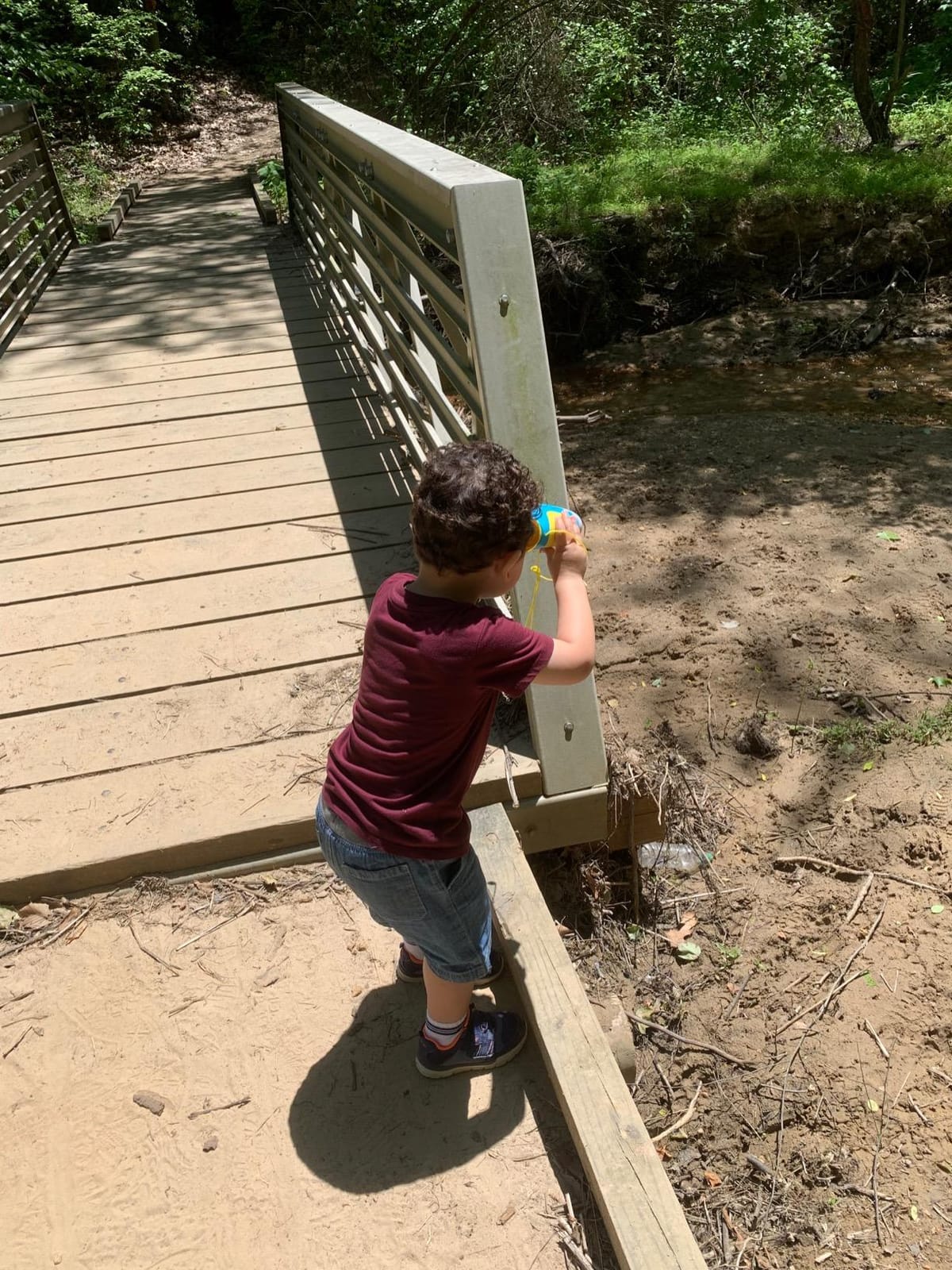
Good choice for imaginative play and camping trips
If your child is at the age where a flashlight is the most exciting object in the house, this turns that fascination into an activity that gets them outside after dark.
It pairs well with a campsite evening or a backyard glow-walk with a parent, where the safety question is settled by the adults present.
Skip it if you want real distance viewing
At 2x it is the same class of image as the GeoSafari pair, so anyone hoping to identify a bird across a field will be disappointed.
Fixed focus cannot be tuned for a near bug or a far bird, and the housing is not water resistant, so keep it away from wet grass.
7. ESSENSON 4×30 Binoculars: Lightweight Everyday Pick
- Very light body for a small neck
- Adjusts to any eye distance
- Rubber-surrounded eyepieces
- Includes bag strap and cloth
- Wide color choice
- Limited optical clarity
- Plastic body is less drop-resistant
- Basic focus is hard for young children
Weight is the reason this pair earns its place. At 5.28 ounces it is among the lightest bodies here, which matters more to a small neck than any coating or prism type.
The 4×30 setup with a 6.8 degree field of view is a short-range combination. It works for spotting things in a garden or across a playground, not for pulling detail out of distance.
Rubber-surrounded eyepieces keep the hard plastic edge away from a child’s face, and the center focus adjusts to any eye distance.
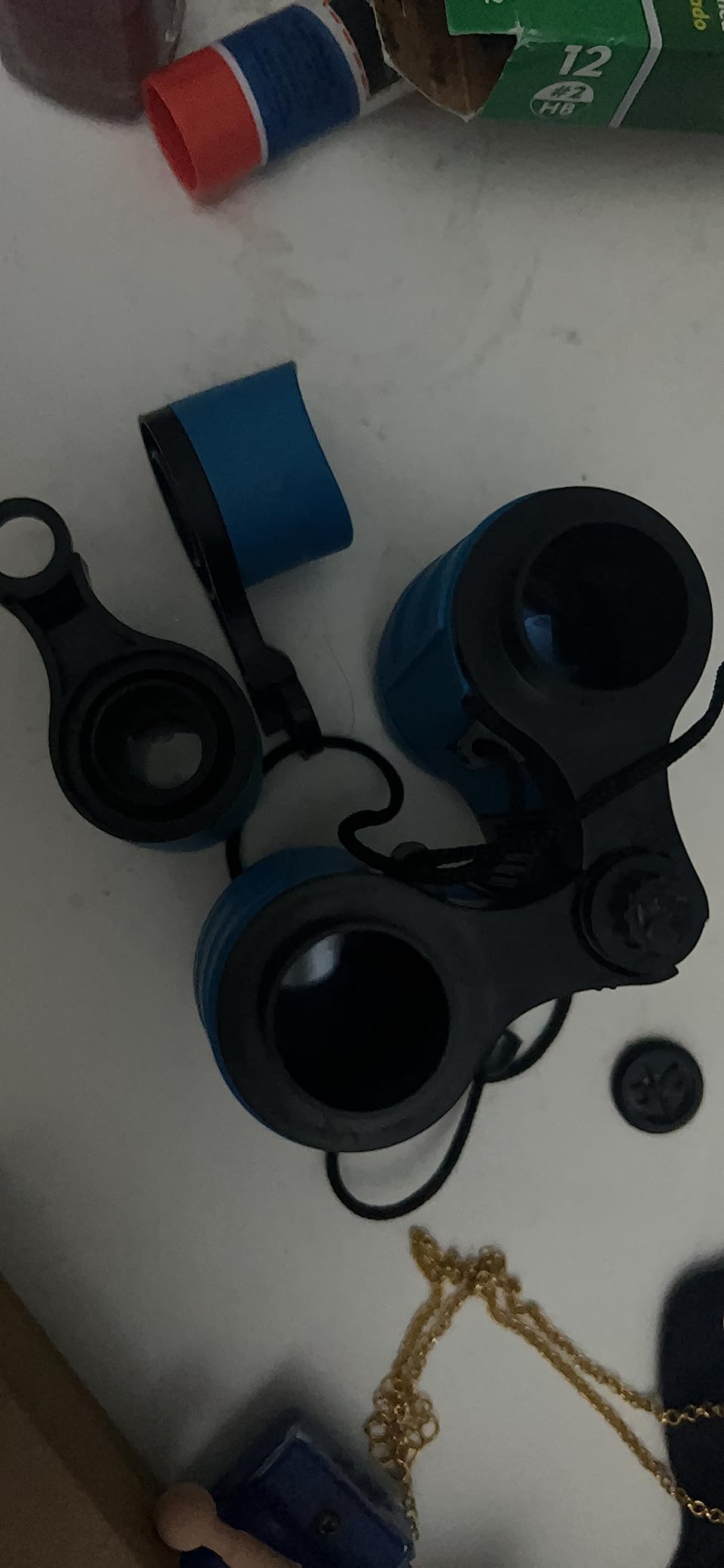
The kit includes a carrying canvas bag, a neck strap and a lens wiping cloth, so it is ready for a first outing immediately.
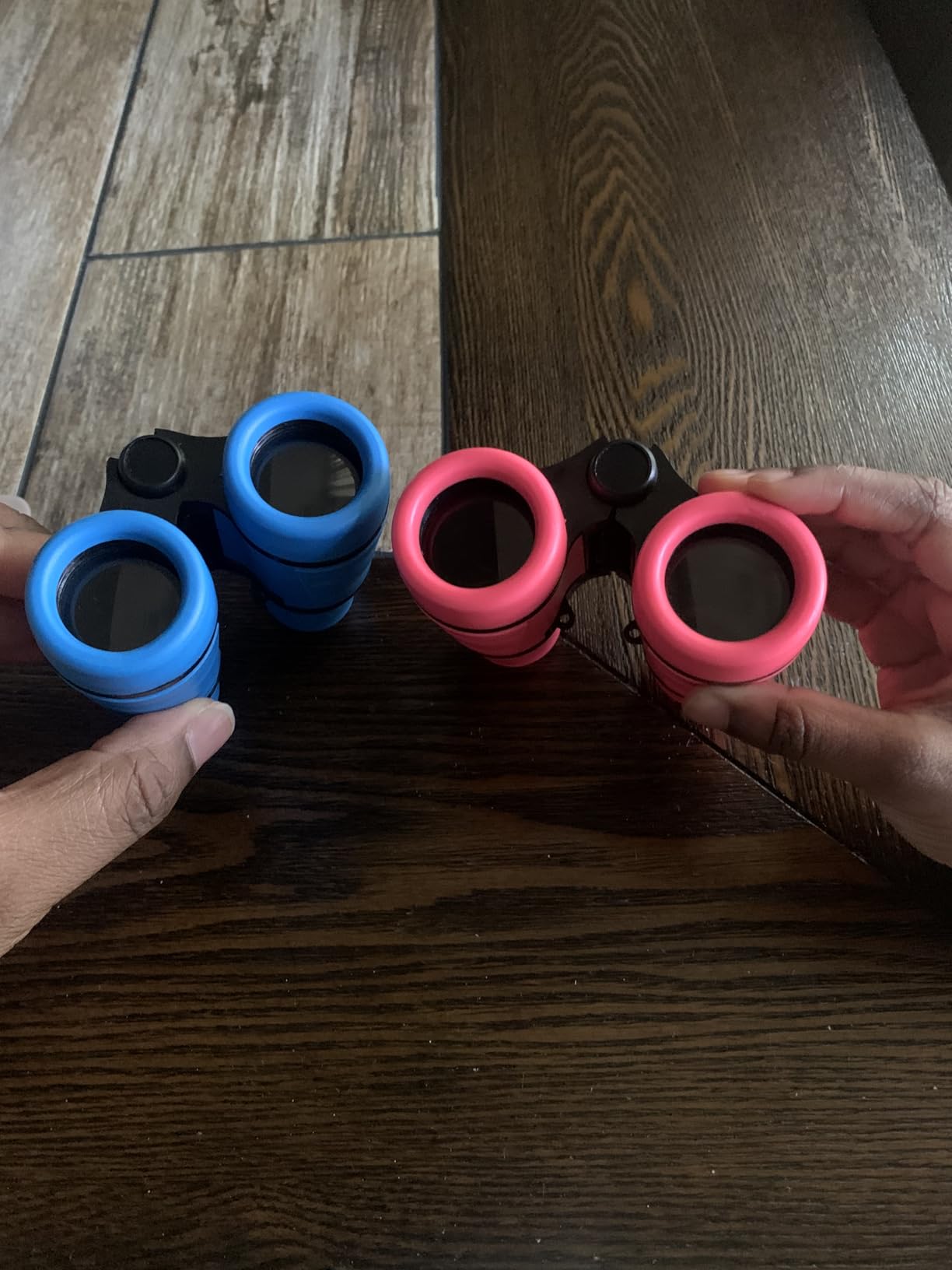
Fourteen color options are offered, including the pink model we looked at, which is often the deciding factor for a birthday gift.
Good choice when neck comfort is the priority
A child who complains about anything hanging around their neck will not use a heavier pair, no matter how good the glass is. This is the one we would put on a child who gets tired quickly.
It suits short-range spotting, which covers a lot of what young children actually do with binoculars in a park or on a garden path.
Skip it if you want sharp, bright images
This has the lowest average rating of the twelve, and the reason is consistent: optical clarity is limited. Reviewers treat it as a play toy rather than an optical instrument.
The plastic body is lighter than a rubber-armored model but offers less protection from drops, so it is a poor match for a child who drops things constantly.
8. Promora 8×21 Adventure Set: Best Gift Bundle
- Real adjustable 8x21 rather than fixed focus
- Working compass and magnifier extend play
- Rubber coating grips small hands
- Seven colors including pink and mint
- Some reports of breakage after drops
- Eyepiece can fog during use
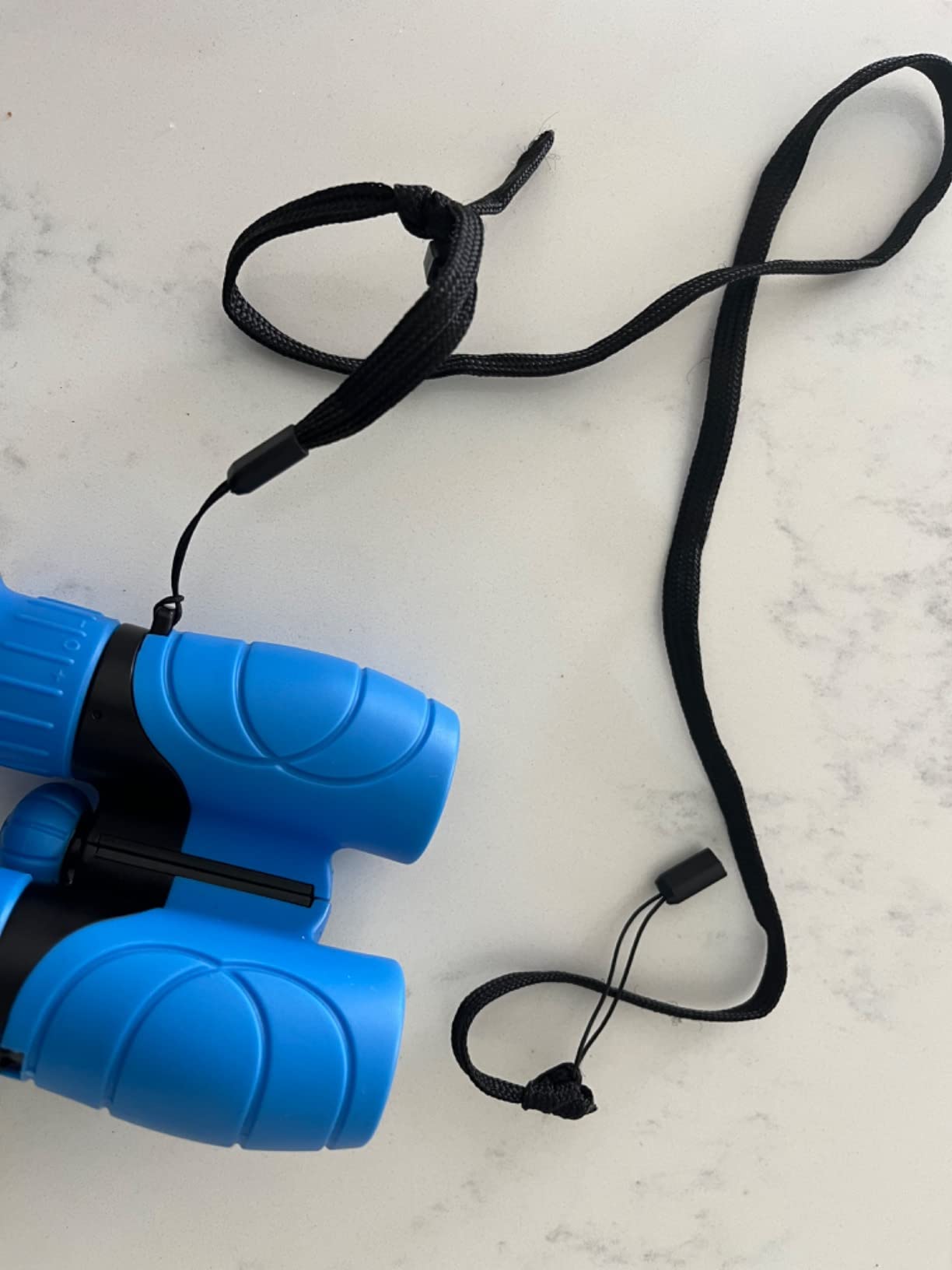
- Strap may be a wrist loop
This is the one to buy when the binoculars are part of a present rather than the whole present. The box contains a functioning compass, a magnifying glass, a cloth storage bag, a microfiber cloth and a strap.
The binoculars themselves are real: an 8×21 configuration with an adjustable diopter setting and a center focus wheel, which is closer in design to an adult pair than anything else in this roundup.
The diopter adjustment is the detail most often praised. It lets one pair serve a child whose two eyes see slightly differently, which fixed-focus toys cannot do.
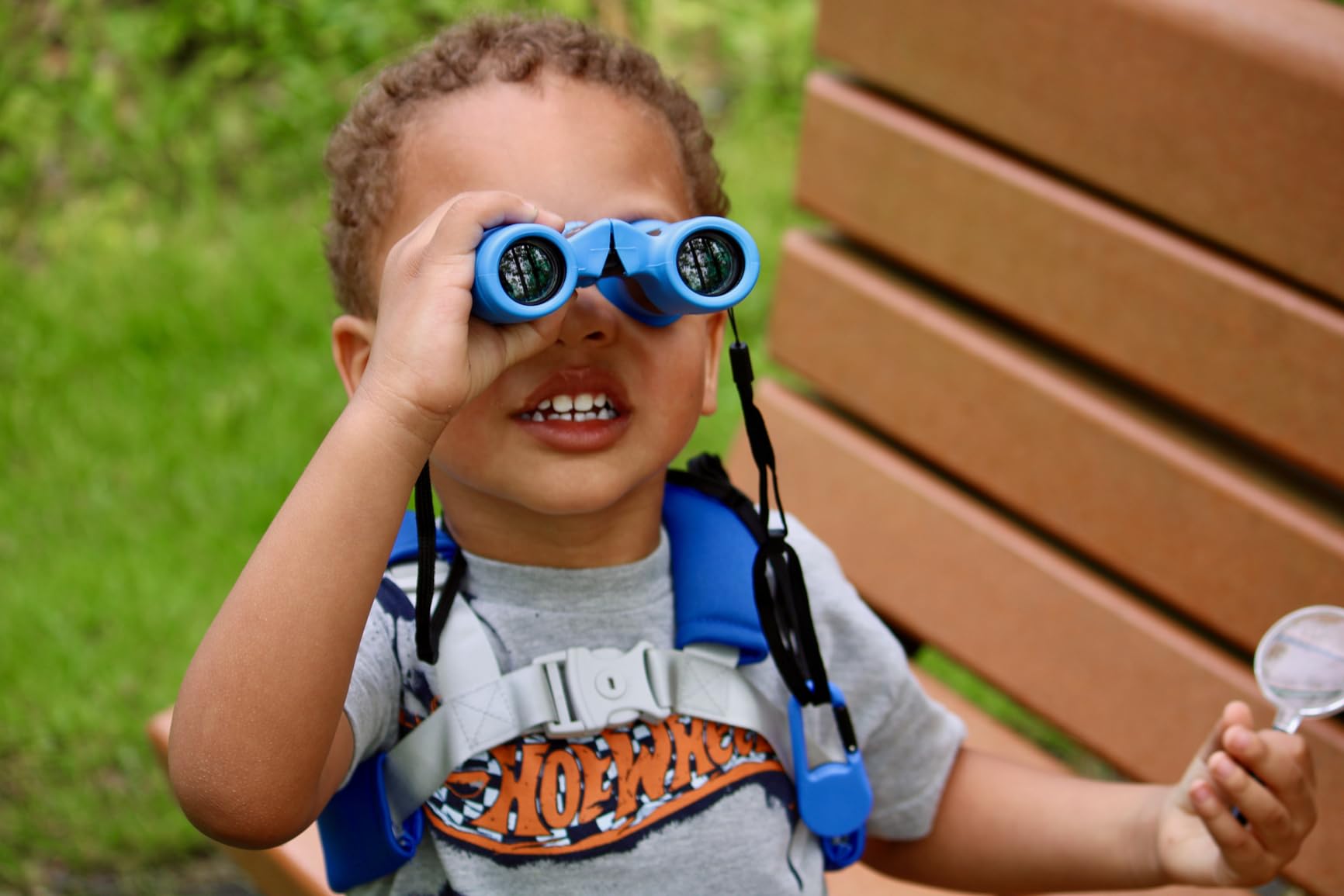
The rubber coating serves two purposes. It improves grip for small hands and it protects the shell against scratches and dampening falls.
A two year manufacturer warranty is longer than most competitors here offer, and the soft eyecups give some face protection.
Good choice as a birthday or holiday gift
A bundled compass and magnifier turn one toy into an activity set, which is useful when you are not sure what else a child will enjoy.
The magnifying glass also pairs naturally with insects and plant details, giving a reason to use the binoculars at close range.
Skip it if your child drops things constantly
Durability is the weak point in feedback, with several reviews reporting breakage after a short period of use following a drop. The plastic body is not rubber-armored.
The included strap may arrive as a wrist loop rather than a full neck strap, and the compass is smaller than product photos suggest.
9. LET’S GO! 4×30 with Bird Manual: Best for the Youngest Explorers
- Bird manual introduces 17 species
- Fixed focus needs no adjustment
- Very light at under 6 ounces
- Tolerates drops and bouncing
- Waterproof and complete kit
- Only 4x for close range
- Narrow 4 degree field of view
- Plastic body has less drop protection
The feature that makes this pair unusual is the manual. It introduces 17 common North American bird species, which turns a short walk into a simple identification game for a four to seven year old.
Everything else about the design is built around not frustrating a small child. The focus is fixed, so there is no adjustment to get wrong, and the weight is under 6 ounces.
It is also one of the few models in this roundup that is genuinely waterproof, which is a real advantage for a toy that will end up in a stroller bag.
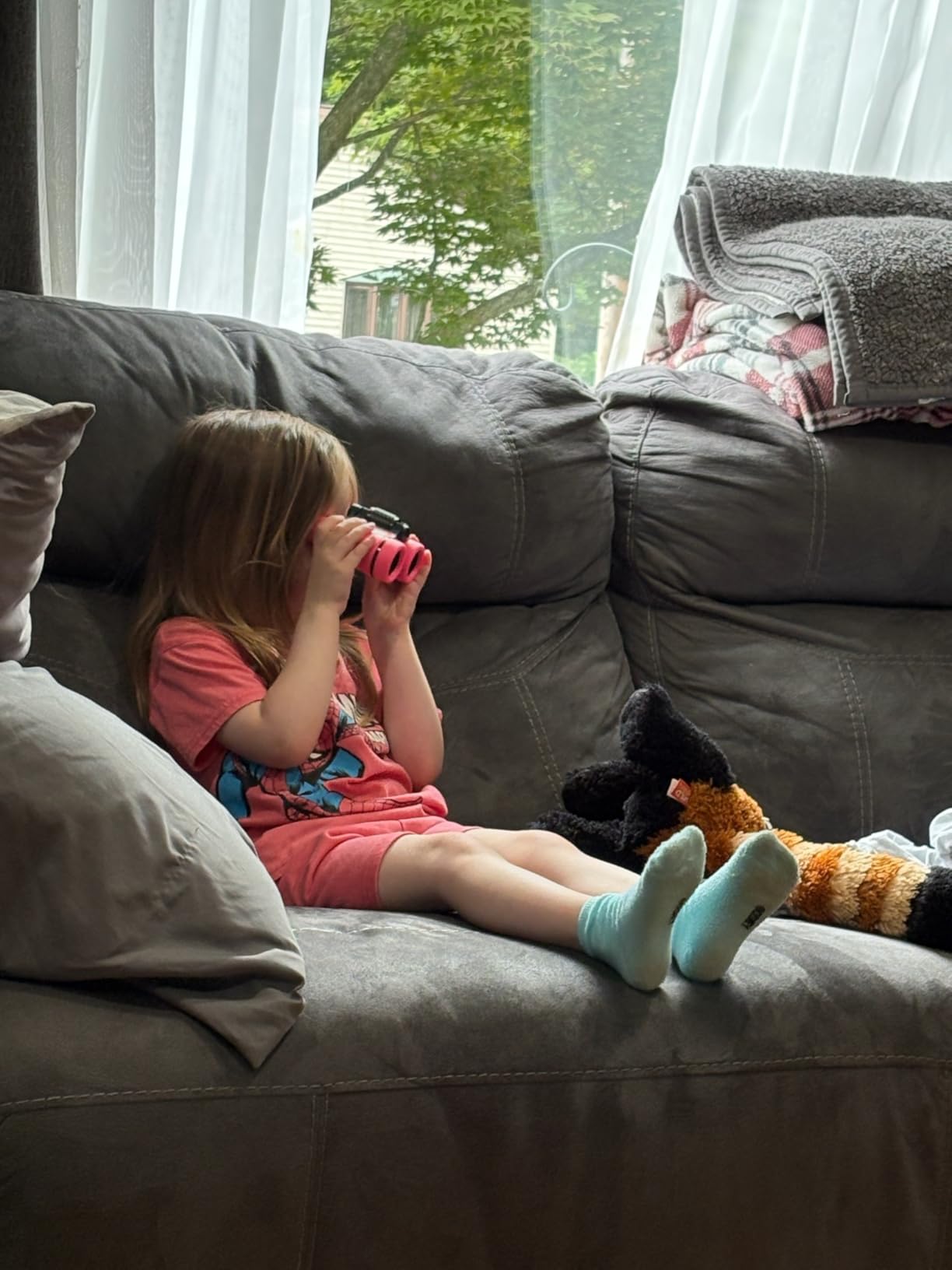
The non-slip handle is shaped for a small grip, and the materials are described as nontoxic, which matters for a product that ends up in a mouth as often as in a hand.
The box contains the binoculars, the manual, a carrying canvas bag, a neck strap and a lens cloth.
Good choice for a preschooler learning to look
The bird manual is the reason to pick this over another fixed-focus pair. It gives a parent something concrete to point at instead of an open-ended hunt.
Fixed focus also means no arguing at the start of a walk, which matters more than any specification when you have a tired four-year-old.
Skip it if you want a wide scanning view
The 4 degree field of view is narrow, so a child sees a small slice of the scene at a time and has to move the binoculars deliberately to scan.
At 4x it is close-range only. If your child is already asking about birds far off, look at an 8×21 model instead.
10. Noptix Real Kids 8×21: Best for Learning Birds
Binoculars for Kids – Vibrant Green Blue – Real Kids Binoculars Ages 4-8
- Genuine 8x21 roof prism optics
- Shockproof body with soft rubber grip
- Flexible eye cups safe from age three
- Includes a 40-bird sticker book
- Ranks in the adult binoculars category
- Manual focus needs more attention
- Rubber exterior adds weight
- Sticker book is a single-use extra
This pair sits in an unusual position. It is marketed to children but ranked in the main binocular listings rather than the toy listings, which reflects how reviewers treat its optical performance.
The roof prism construction and lens coatings give a clear image at 8x, and the body is waterproof and shockproof with a soft non-toxic rubber grip and flexible eye cups.
The included sticker book names more than 40 birds, which is a small version of the same manual that makes the LET’S GO! 4×30 pair worth considering.
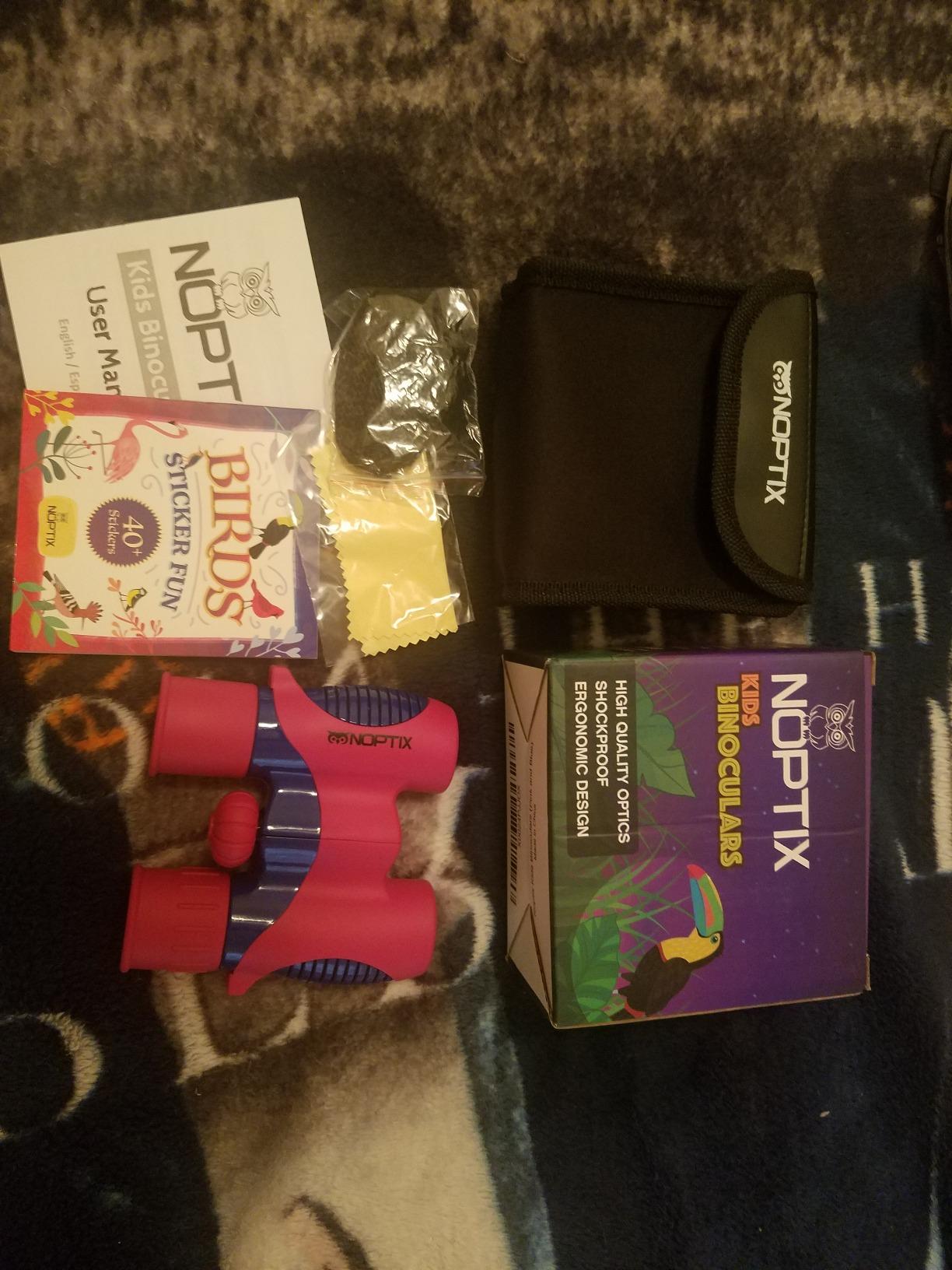
Ratings run above the kids-toy average because the optics and the shock protection are closer to what an adult pair offers, not because of the accessories.
The rubber exterior adds some weight compared with the light plastic models, but it is the reason the body survives drops.
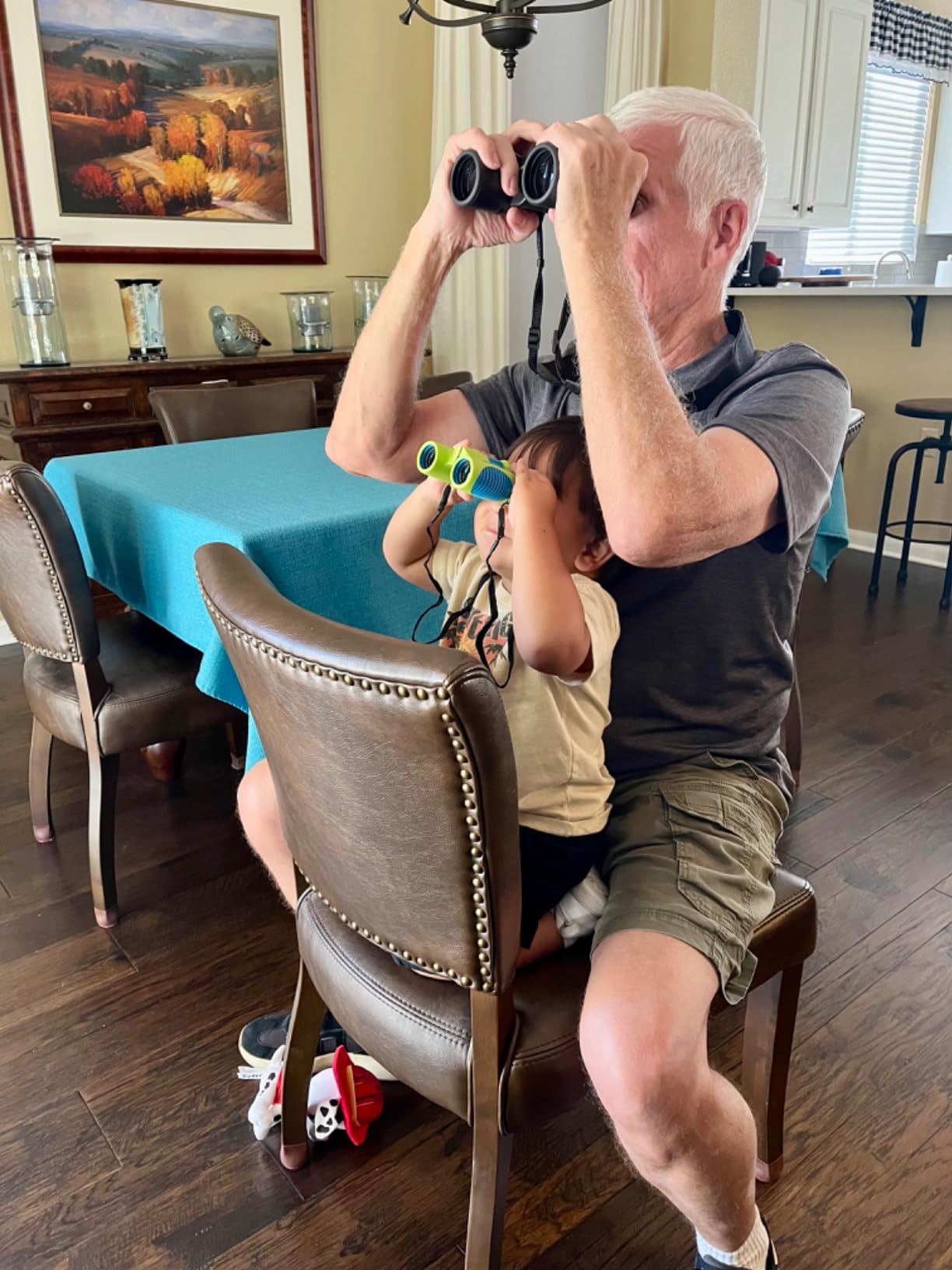
Good choice for a child ready for real viewing
If your child is six or older and you want them to start identifying species rather than just looking around, the sticker book gives them something to work toward.
The waterproof rating means it is equally usable indoors for a school play or a concert, where the light is poor and the child is stationary.
Skip it if your child needs instant focusing
The focus is manual, so it asks more of a young child than a fixed-focus pair. A three or four year old may need an adult to set it up first.
The sticker book is a novelty rather than a durable accessory, and it will not survive a long-term bird interest.
11. ARTOMIDE 5×38 with Compass and Whistle: Best Adventure Kit
- Folds to match a child's eye distance
- Compass and whistle included in the box
- Waterproof with rubber armor for drops
- Very light and child-shaped
- Large field of view for the power
- Range limited to roughly 328 to 492 feet
- Specification data lists an inconsistent zoom ratio
- Not suited to long-distance viewing
This pair earns its place because it folds down to match a child’s eye distance. That single design decision removes the most common reason a child gives up on a binocular.
The 5×38 configuration gives a large exit pupil and a 7.2 degree field of view, so the picture is bright and wide even at low power. The maker states a maximum useful range of roughly 328 to 492 feet.
A compass and a whistle come in the box, which makes it an instant adventure kit for a birthday or a nature walk.
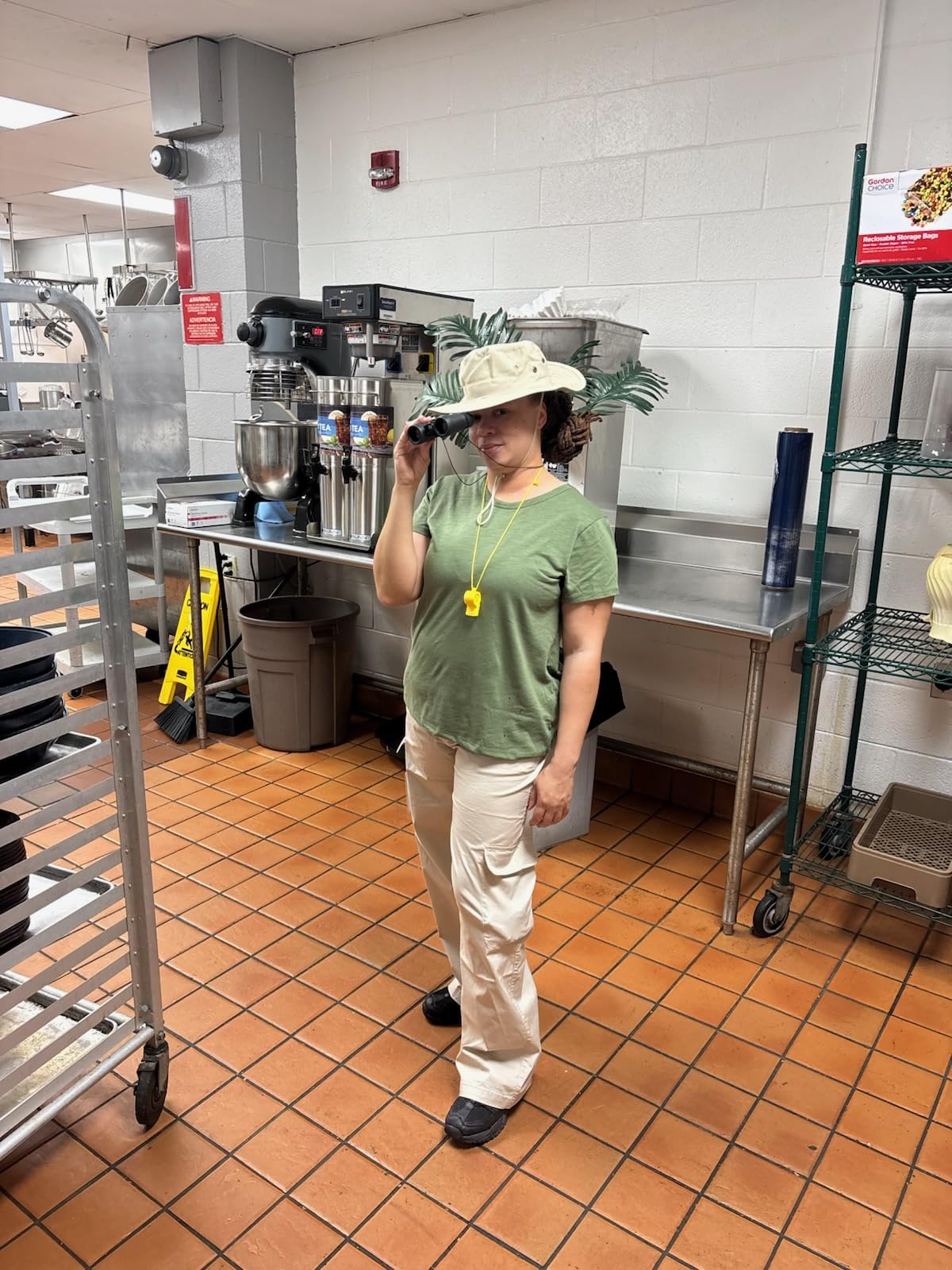
The body is polycarbonate plastic with rubber armor for shock absorption, and it is waterproof, which is unusual at this weight.
Soft rubber eyepieces sit close to the eye and protect a child’s face during an accidental knock.
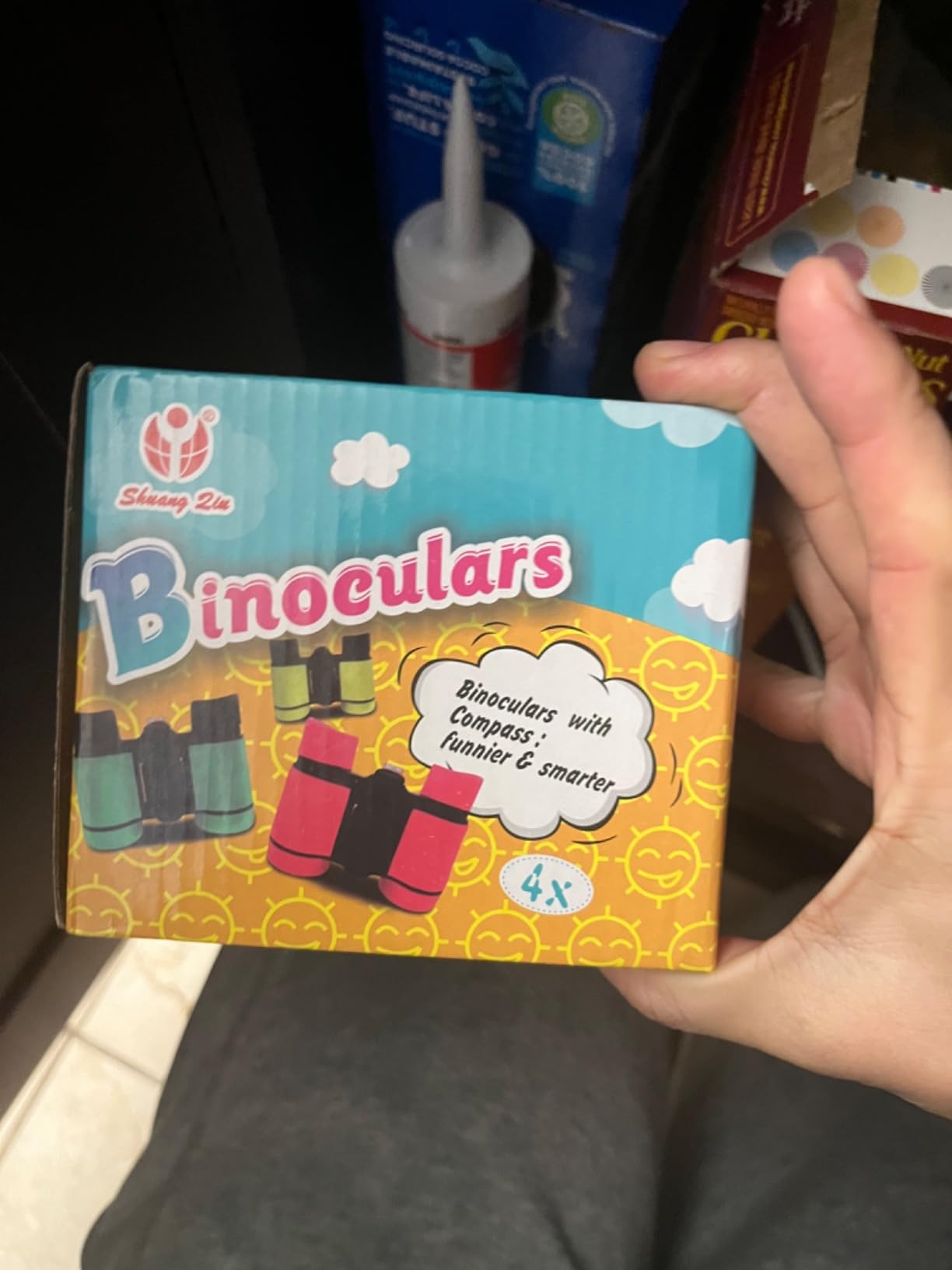
Good choice for close-to-medium range exploring
Five times with a wide field of view is forgiving for a beginner. A child can scan a garden or a playground without needing precise aim.
The included whistle is a genuine safety item on a walk, not just a gimmick, and the compass gives a reason to follow a bearing.
Skip it if your child wants to study distant wildlife
Nothing in this design reaches far. Anyone planning birding at a pond or watching aircraft at altitude will find the limit quickly.
The published specification data is also inconsistent about the zoom ratio, listing 4x in one field against the 5x claim elsewhere, so treat the power figure as approximate.
12. JovialToyz 4×30 Compass Kit: Best Starter Set
- Built-in compass teaches direction and navigation
- Non-slip handle gives a firm small grip
- Complete kit in the box
- Nontoxic materials
- Child-oriented design children respond to
- Smallest review base here at 760 ratings
- 4x30 is limited to close and mid range
- Manual operation adds complexity
This is a newer listing with a high average rating and a much smaller review base than the rest of the roundup, which is worth weighing before you buy. Durability data over years simply does not exist yet.
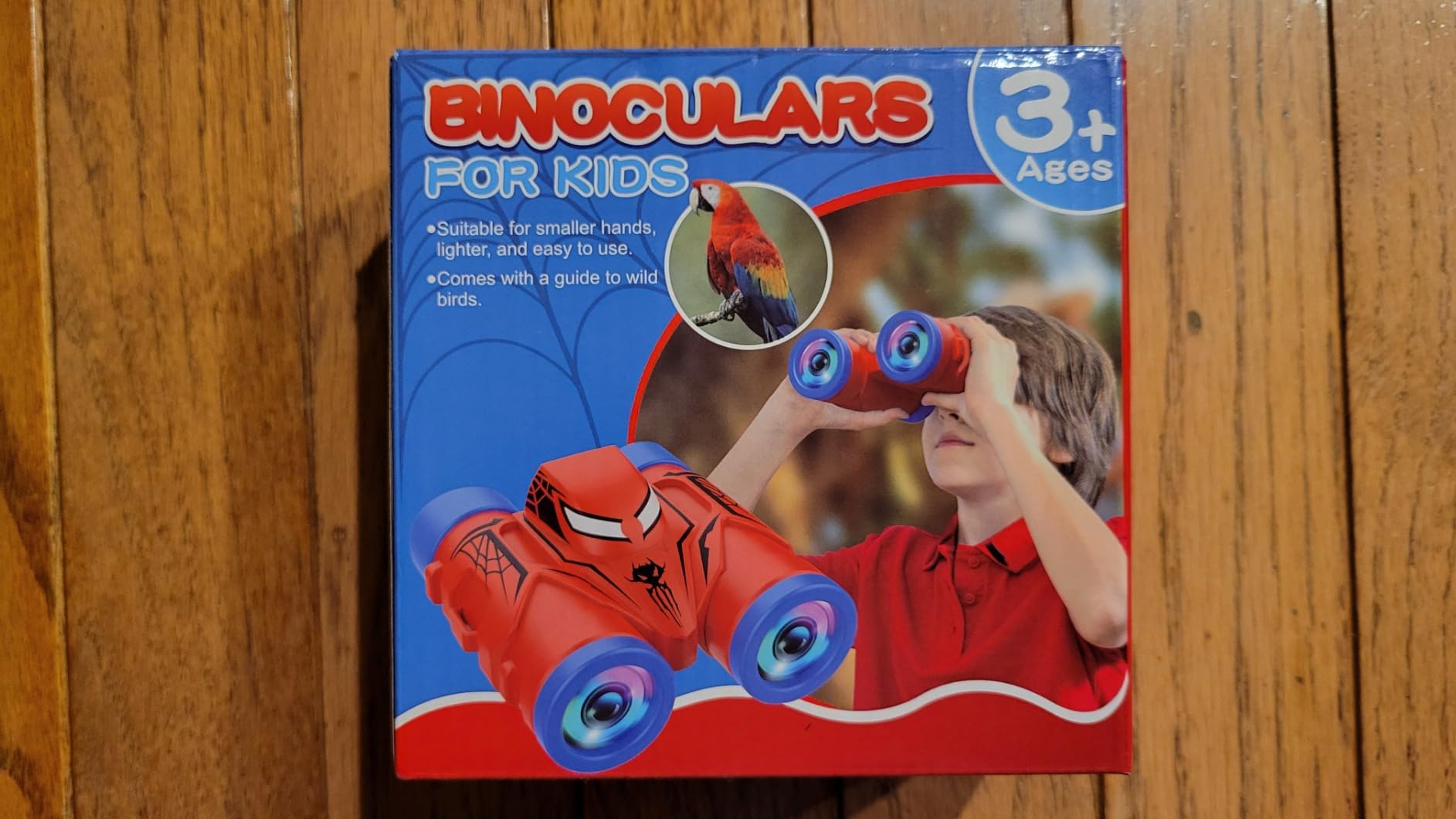
The design brief is clearly aimed at four to eight year olds. The package includes 4×30 binoculars with a compass, a carrying canvas bag, a neck strap and a lens cloth.
The compass is a sensitive type rather than a toy magnet, and it gives a genuine navigation activity rather than decoration.
The stated educational goal is developing direction sense, observation skills and concentration through exploration, and the non-slip handle is designed to keep the pair steady while a child walks.
Parents buying it tend to treat it as a birthday or holiday gift, and the red colorway is the most requested.
Good choice as an inexpensive birthday gift
For a child who has never had binoculars, this gives a complete first experience at a modest outlay, with an activity beyond simply looking.
The kit contents mean nothing extra needs buying before the first walk, which suits a gift for someone else.
Skip it if you want proven long-term durability
With 760 ratings, this is the least documented product here. We cannot tell you how it holds up after two years of daily handling.
At 4×30 the power is modest, and the manual operation adds a step for the youngest children in the stated age range.
What to Look for in Binoculars for Kids
Most buying guides lead with magnification. For a child, that is the wrong place to start. Here is the order we would use, based on what parents report when pairs work and when they fail.
1. Minimum interpupillary distance
Ask first how narrow the eyepieces can fold. A pair that bottoms out around 51 mm suits young children; one that stops at 55 or 56 mm suits older kids and adults. If the manufacturer does not publish it, treat that as a warning rather than an assumption.
You can check it at home in under a minute, using the procedure earlier in this guide. There is no substitute for that test.
2. Weight
Weight in ounces is the number parents filter by first. A body between 5 and 9 ounces covers most children from preschool upward without pressing on the neck. Anything much beyond that is an adult binocular with a child sticker on the box.
The forums are blunt about this. Parents on birdforum.net and CloudyNights repeatedly reject full-size compacts in the 470 to 485 gram range for a six-year-old, and weight ends up deciding the purchase more often than glass quality.
3. Magnification, and why 10x is too much
Between 4x and 8x is the useful range for a child. Above 10x the handshake multiplies, the field of view narrows, and a moving subject becomes almost impossible to follow. A child who cannot track a bird will not know they are seeing it at all.
Lower power is not a compromise here. A wider view with a steady picture teaches far more than a magnified one that shakes.
4. Objective lens and field of view
The number after the magnification, such as 21 mm or 30 mm, is the objective lens diameter. A larger number gives a brighter image in low light, which is why 30 mm and 38 mm pairs are useful for stargazing and dusk.
Field of view is how much you see at once. Wider is better for children because they scan rather than aim, and a narrow field makes a whole scene feel smaller than it is.
5. Close focus distance
If your child wants to look at butterflies, a close-focus pair is the answer. Most of the models here are suited to subjects in the range of a few feet rather than an insect on a flower stem.
This is where parents get disappointed: they buy for bird watching, then find the pair will not focus on anything under a foot away.
6. Toy optics versus real glass
Cheap unbranded toys use molded plastic lenses that produce soft, blurry images. With barrels that are not aligned to the same tolerance, a child can end up with a doubled or shadowed image and genuine eye strain after a long session.
Real optics are marked by a prism type such as BaK-4 or Porro and multi-coated lenses. In this roundup the 8×21 BAK4 models and the 8×21 Porro models sit in that category, while the 2x and 4x fixed-focus pairs are play products that happen to use a lens.
7. Waterproofing
Outdoor use means rain, dew and puddles. Waterproof models are the ones to buy for camping and coastal trips. Models listed as not water resistant can take weeks to clear once water reaches the eyepieces.
8. Strap safety, including the under-three rule
A neck strap on an unsupervised child under three is a strangulation risk, and the strap itself is a choking hazard. Two models here ship with a breakaway strap that releases under load, which is the design you want.
Beyond that, the practical rule is simple: a child under three wears no strap at all, and any strap on an older child should release rather than hold.
9. Glasses and eye relief
A child who wears glasses needs enough eye relief to see without pressing the lenses against the frames. Rubber eye cups that cannot be folded down are a problem, and that complaint shows up on several of the real-optics models here.
10. Warranty
Kids break things, so a warranty that covers accidental damage changes the calculation. Lifetime replacement and lifetime no-fault terms are the most valuable in this category, and parents who buy real glass for children look for them.
Beyond Birding: Where Kids Actually Use Binoculars
Bird watching is where binoculars get reviewed, but it is not what most children use them for. A survey of how families actually spend the first month with a new pair tends to point elsewhere.
Sports. Eight times is enough to follow a match on a field or count runners on a track from a distance. Ten times and above is not, because a child cannot hold a moving target steady.
Theater, concerts and school plays. A waterproof 8×21 is the model to pack, since indoor light is dim and a waterproof body tolerates the seat.
Camping. This is where close focus and low light both matter, and where a compass and whistle in the box earn their place.
Stargazing. Larger objective lenses help here. A 30 mm or 38 mm model gathers more light than a 21 mm one on the same night.
Zoo and aquarium trips. This is the easiest use of all, since a stationary animal rewards lower magnification and a wider field.
For the wider science kit, our microscope guide for kids pairs well with a pair like these on the same specimen hunt.
How to Keep Kids Hooked and the Binoculars in One Piece
A pair that stays in a cupboard is the most common disappointment. The fix is to start with a target that is already in view, not a bird twenty metres away.
Set up a feeder in the garden and let the first session happen at close range. Then walk a familiar route and count five things. Follow a path line through woods on a weekend. Sit outside after dark with the flashlight model and look at the sky.
For care, keep the lenses dry and wipe them with the supplied cloth rather than a sleeve. Rinse off sand before it becomes a scratch, and leave the pair somewhere it cannot be stepped on.
If a child loses interest after a few months, that is often the point to reassess the fit rather than the child. Our fitness tracker guide for kids covers another way to keep an active child curious outdoors.
Frequently Asked Questions
Which binocular is best for kids?
The Educational Insights GeoSafari Kidnoculars are the best overall pick for a child under six, because focus-free 2x magnification needs no adjustment and the breakaway neck strap is safer for small necks. For a child aged six and up who wants real magnification, the OBUBY 8×21 pair uses genuine BAK4 multi-coated optics at only 6 ounces. Whatever you choose, check the minimum interpupillary distance first, since a pair that cannot fold narrow enough for a small face is the main reason children give up.
What are the best quality binoculars for kids?
The best quality binoculars for kids use real glass rather than molded plastic: a BAK4 or Porro prism with multi-coated lenses at 8x magnification. In this roundup the THINKPEAK 8×21, the Noptix Real Kids 8×21 and the LET’S GO! waterproof 8×21 all qualify. Quality matters less than fit, though, so measure your child’s interpupillary distance before spending more on better glass.
What kind of binoculars are best for an 8-year-old?
An 8-year-old can handle real optics, so look for 8x magnification with a center focus knob, a narrow minimum interpupillary distance and a body under about 9 ounces. The OBUBY 8×21 and the LET’S GO! waterproof 8×21 both fit that profile, and the OBUBY pair is the lighter of the two. Avoid anything at 10x or higher, which shakes too much for a child to aim.
What are some good real binoculars for kids?
Good real binoculars for kids in this roundup include the THINKPEAK 8×21 with BAK4 glass and a lifetime replacement warranty, the Noptix Real Kids 8×21 with shockproof roof prism construction, and the LET’S GO! waterproof 8×21 with a Porro prism. Each has adjustable eye distance and genuine multi-coated optics rather than a fixed-focus plastic lens. All three are built to close narrow enough for a child’s face.
Is it safe for a toddler to wear binoculars on a strap?
No. A neck strap on an unsupervised child under three is a strangulation risk and the strap itself is a choking hazard. Never put a child under three in a neck-strapped binocular without an adult present, and prefer a model with a breakaway strap that releases under load for ages three and up. The GeoSafari Kidnoculars include a breakaway strap, which is why we rank them first for preschoolers.
Final Verdict on the Best Binoculars for Kids
Start with fit, not magnification. Check that the eyepieces close narrow enough for your child’s face, keep the body light enough to hang around a small neck, and stay at 8x or below.
Once those three pass, the best binoculars for kids depend on age. For a preschooler, the GeoSafari Kidnoculars are the pick: focus-free, light, and built with a breakaway strap. For a child of six or older who is genuinely curious, move to real glass, and the OBUBY 8×21 or the THINKPEAK 8×21 will serve years rather than months.
Check the latest current details for any of these pairs before you buy, and take five minutes with the fit test in this guide. That five minutes decides whether the pair ends up on a shelf or around your child’s neck every single weekend.