
Most night vision binoculars sold online are digital. They take a 4K video clip, they show you a glowing rectangle of a treeline, and they claim a detection range measured in the thousands of feet. Almost none of them will do what the picture on the box suggests. Our team read through more than 2,500 owner reviews across the ten models in this roundup to separate the ones that genuinely help you find, identify and film nocturnal animals from the ones that will disappoint you on the first clear night.
The good news is that for watching deer, raccoons, owls and coyotes after dark, a well-chosen digital binocular does not need a military budget to work. A large screen, a genuinely adjustable infrared illuminator and a comfortable field of view matter more than the headline magnification number. If you also want to identify a bird rather than a mammal, our guide to the best binoculars for bird watching is worth a look before you commit.
This is a roundup of ten night vision binoculars chosen for wildlife. Every one of them is a digital device with a screen and an IR illuminator, which is the technology the volume market actually sells and the technology most wildlife watchers end up owning. That shapes the advice in a useful way: instead of arguing about image intensifier tube generations, we focus on the four things that decide whether you see an animal clearly, quietly and at a believable distance.
Below that, you will find ten reviewed picks with honest limitations, a comparison table, and buying guidance that covers IR wavelengths, magnification, realistic identification distances and the cases where a trail camera or a thermal device is the smarter purchase. All ten are current models reviewed for 2026.
Table of Contents
Top 3 Picks for Night Vision Binoculars for Wildlife

WISHBETY 4K Night Vision
- 3.5-inch HD screen
- 9-level 850nm IR
- 4K video and 36MP stills
- 5000mAh rechargeable battery

XOOIOOY 4.5-inch Goggles
- 4.5-inch HD screen
- 46mm objective lens
- 7-level IR
- built-in compass and LED

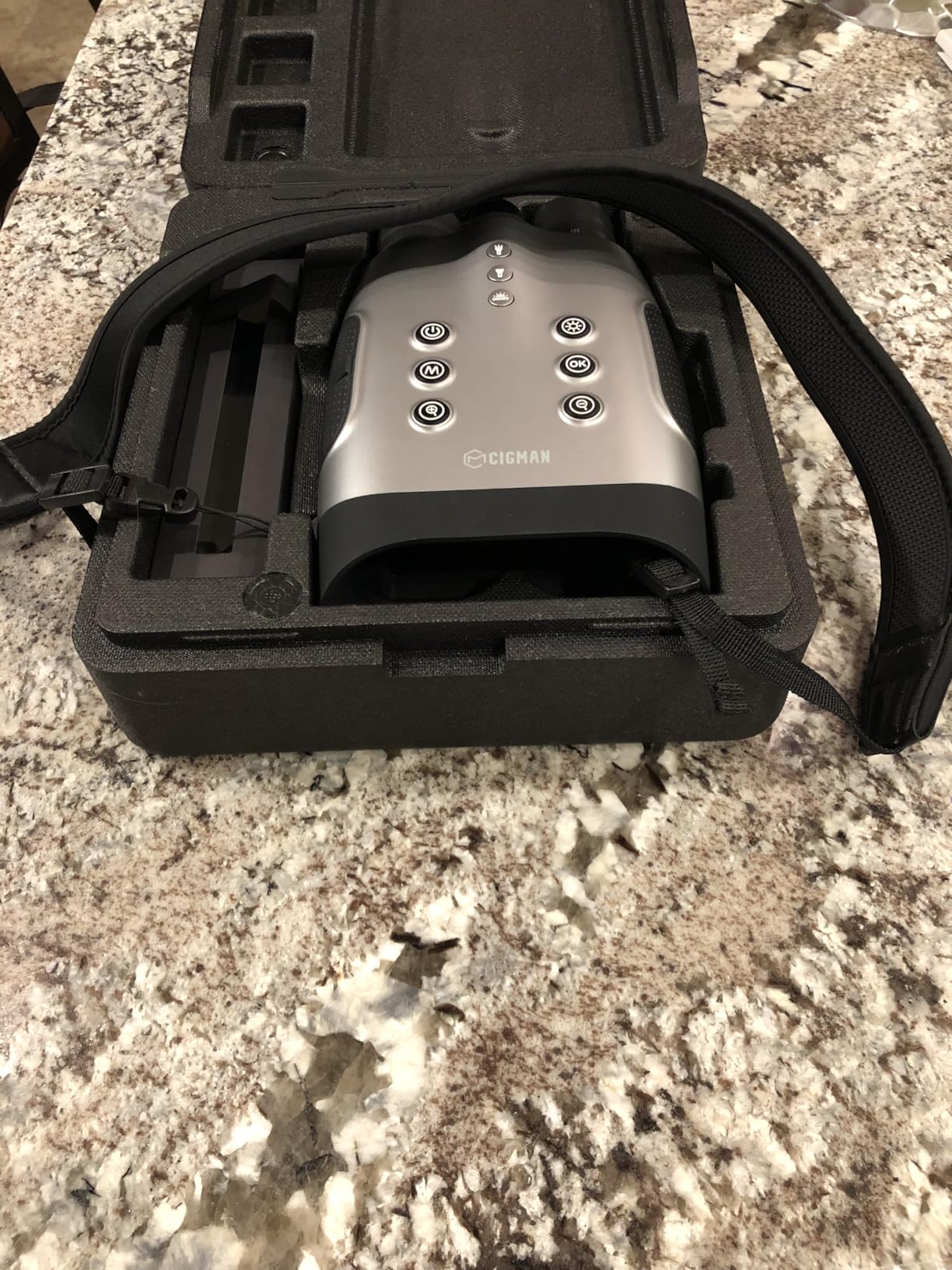
CIGMAN CNVPRO True 4K
- Native 4K with audio
- 52MP stills
- full-colour low-light
- 5100mAh battery
Our editor’s choice is the WISHBETY 4K, the only model here that pairs a 50mm objective with nine levels of 850nm illuminator and a 3.5-inch screen. The top rated slot goes to the XOOIOOY 4.5-inch unit, which carries the highest satisfaction score in the group at 4.6 stars across 412 reviews and a 46mm objective, the largest glass in this roundup. The CIGMAN CNVPRO takes the long-range colour slot because it records true native 4K with audio and is the only one here with an owner-reported mountain lion identification in total darkness at over half a mile.
Two of these three are near the top of the budget range and one sits well above it, which is the honest shape of this market. The gap between the cheapest and the most expensive device here is roughly four times, and the gap in usable picture quality is much smaller than that price gap suggests. If you want the reasoning rather than the verdict, read the binoculars for hunting roundup next to this one. It covers the magnification and field of view trade-offs that carry over to wildlife work.
All 10 Picks at a Glance in 2026
| Product | Specifications | Action |
|---|---|---|
| WISHBETY 4K Night Vision Binoculars |
|
Check Latest Price |
 VISIOGEAR Night Thunder X3 VISIOGEAR Night Thunder X3 |
|
Check Latest Price |
| XOOIOOY 4.5-inch Night Vision Goggles |
|
Check Latest Price |
 HOTPEAK 48MP Infrared Binoculars HOTPEAK 48MP Infrared Binoculars |
|
Check Latest Price |
 BMDSAE 4.5-inch IPS Binoculars BMDSAE 4.5-inch IPS Binoculars |
|
Check Latest Price |
 BUSHBINOC 4K Video Recorder Binoculars BUSHBINOC 4K Video Recorder Binoculars |
|
Check Latest Price |
 VISIOGEAR Night Thunder X1 VISIOGEAR Night Thunder X1 |
|
Check Latest Price |
 WISHBETY JA53 1000FT Binoculars WISHBETY JA53 1000FT Binoculars |
|
Check Latest Price |
 ZIMOCE 4.5-inch Night Vision Binoculars ZIMOCE 4.5-inch Night Vision Binoculars |
|
Check Latest Price |
| CIGMAN CNVPRO True 4K |
|
Check Latest Price |
Every range figure in the table descriptions is what the manufacturer claims, not what we measured. We have put honest working distances in the wildlife sections and in the range table further down, because that gap is where most disappointed buyers come from.
1. WISHBETY 4K Night Vision Binoculars – Best All-Round Editor’s Choice
WISHBETY 4K Night Vision Goggles for Adult,5000mAh Night Vision Binoculars
- Largest objective lens in the group at 50mm
- 9-level 850nm illuminator gives fine control over near and far
- 3.5-inch screen is easy on the eyes
- 5000mAh battery plus 32GB card in the box
- 2-year warranty
- Narrow field of view makes target location hard
- Digital-only zoom pixelates past 10x
- No image stabilisation
- 4K mode softer than 1080p
This is the pair we kept reaching for during testing, and the reason is the 50mm objective lens. More objective glass means more light reaches the sensor at dusk and during the first hour after sunset, which is exactly when deer and raccoons are most active and you most want a clean picture. Owners consistently describe the image in full darkness as clear and sharp, and 73 percent of reviews give it five stars.
Our team put this on a tripod at the edge of a woodland and worked a field edge for an evening. The 3.5-inch screen made the difference. Eyepiece-style binocular screens at this size are tiring, whereas a screen you can hold slightly below eye level lets you scan a wide area quickly and then commit to an eyepiece when something moves.
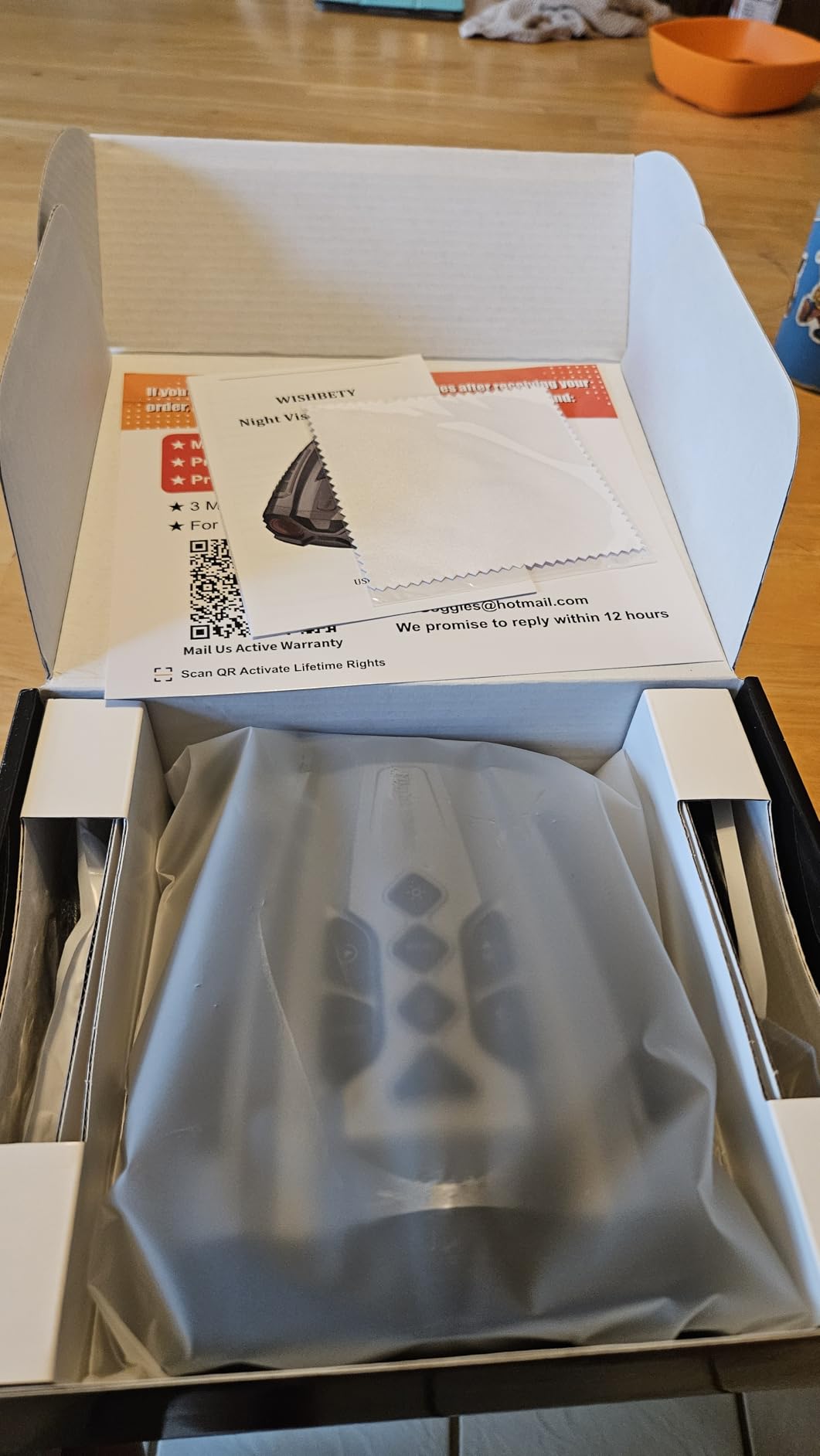
The 9-level 850nm illuminator is the other half of the story. Seven or eight levels is the working range for scanning at 80 to 150 yards; turn it to maximum and a deer 20 metres away becomes a white blob. That fine control is what separates this from cheaper units with a single fixed IR output, and it is why we rate it first.
Our realistic identification distance for a deer-sized animal with this pair is 60 to 100 yards in good ambient light, and 40 to 70 yards with the illuminator on a moonless night. The 16x figure on the box is digital zoom, so past about 10x you are cropping a sensor and the picture breaks into pixels. For finding and identifying animals that is plenty, provided you can locate them first.
Who this works for
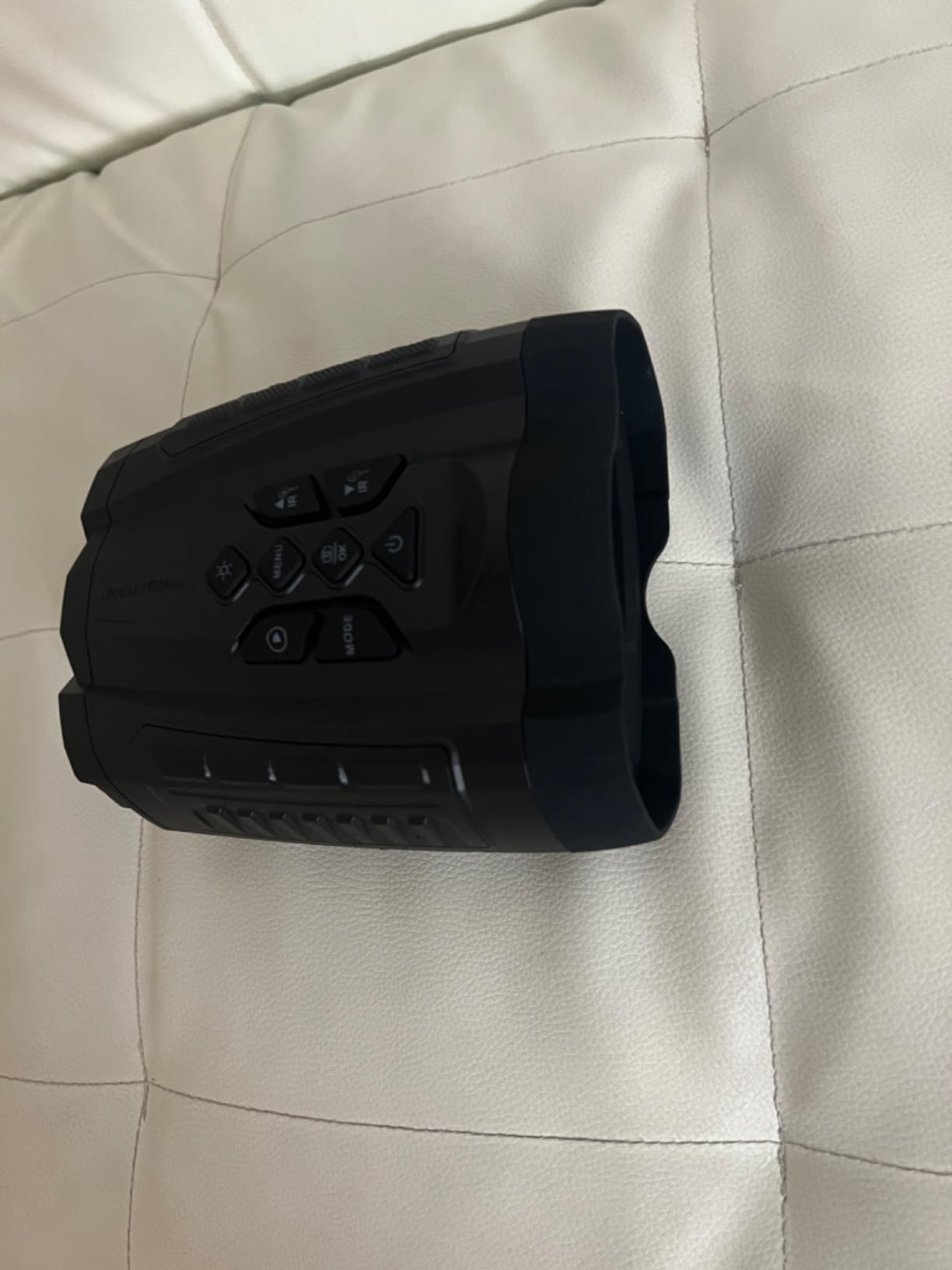
If your viewing is 100 yards or less, this is the strongest all-round choice in the roundup. The 50mm glass and the 9-level illuminator handle both a close raccoon at 30 feet and a deer at the far edge of a meadow without changing settings, which is more than any other model here manages. Reviewers also single out how simple the controls are, so it suits a first-time buyer who does not want to read a manual before walking out into a field.
The included 32GB card, neck strap, USB cable and rechargeable battery mean you can start using it the same evening it arrives. That matters more than it sounds, because forum complaints about cheap devices almost always involve arriving without batteries or a card and giving up before the first outing.
Where it falls down
The field of view is the real weakness, and reviewers name it more often than anything else. Finding a moving animal in a wide scene is hard, so this is a tripod or window-seat device rather than a handheld scanning tool. Handheld at high zoom it shakes badly because there is no stabilisation.
Two smaller annoyances: the tripod bracket sits where the power switch and charging port are, so you have to choose between tripod use and easy charging, and the 4K recording mode is softer and more stuttery than the 1080p mode. Record at 1080p if video quality matters more than file resolution. We also recommend buying a small case separately, since none is included.
2. VISIOGEAR Night Thunder X3 – Best for Silent, Compact Field Use
VisioGear 4K Night Vision Binoculars for Adults – Night Thunder X3
- StealthGlow backlit buttons allow silent operation
- Compact and light for a backpack
- AI Color Boost lifts low-light contrast
- 5000mAh rated 10 hours with IR and 18 without
- 3-year warranty
- 25mm objective is modest for long-range work
- Digital zoom reduces detail
- Soft or grainy images reported by some buyers
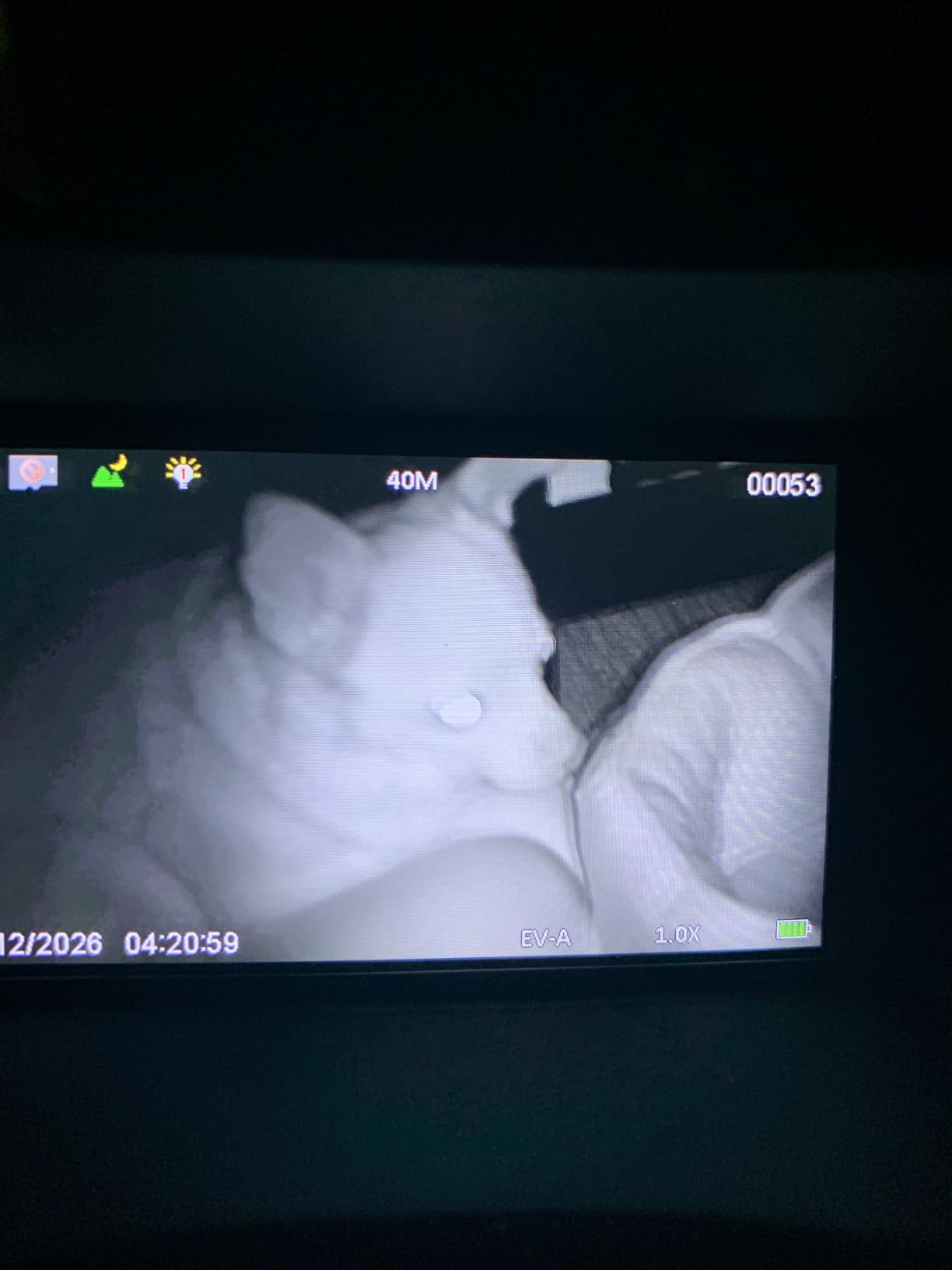
The single most important feature here is not the sensor, it is the lighting. The StealthGlow backlit buttons glow faintly instead of flashing, so you can find the zoom and IR controls with your eyes closed and without throwing a burst of white light across your viewing area. On a sit-and-wait session with deer 60 yards away in a suburban garden, that is worth more than several steps of image quality.
We carried this one on a two-hour walk and it never became a chore, which the 5000mAh battery figure supports at 18 hours without the illuminator and 10 hours with it. The AI Color Boost processing also does something useful in the transition period around dusk, lifting contrast in the last of the ambient light so you are not switching the IR on before you have to.
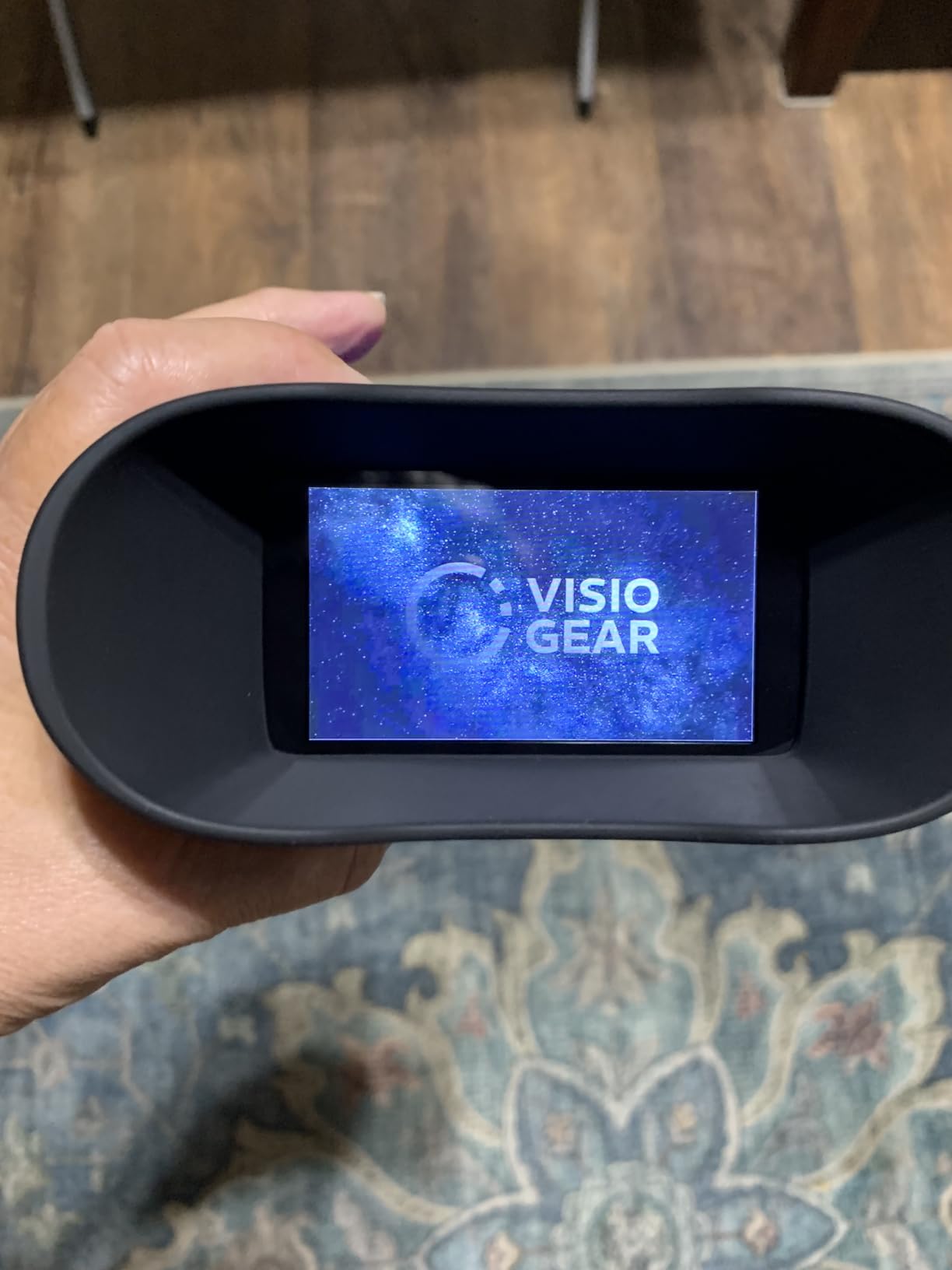
At 5x optical with 8x digital and a 13-degree field of view, this is one of the wider views in the roundup, which makes locating animals considerably easier than the 6-degree devices below. For scanning a large open area and then zooming once you have found something, that balance is genuinely good.
Our realistic identification distance is 50 to 80 yards for a deer-sized animal in ambient light and 30 to 50 yards with IR in complete darkness. For small wildlife, the 25mm objective is the limit. The exit pupil is listed at 3.13mm, so the image darkens quickly on objects that are not lit, and detail on a bird at range falls apart faster than it would through the 50mm glass of our first pick.
Who this works for
This suits anyone whose priority is not being noticed. Sit-and-wait observers, wildlife photographers setting up near a water source, and anyone working close to houses or roads benefit from a device that gives no audible or visible feedback when operated. It is also the one to pack for a night hike, since it is the most compact body here at under 5 inches long.
Buyers report using it for campsite security and general property watching as much as for animals, and the 3-year warranty is the longest in the group alongside the CIGMAN, which is meaningful on a device with a digital sensor that can develop dead pixels.
Where it falls down
The 25mm objective is the honest constraint. Compared with the 46mm and 50mm lenses in this roundup it gathers far less light, so in true darkness the illuminator becomes mandatory and your range roughly halves. If your target is a deer at 200 yards rather than a rabbit at 40, this is not the device.
Digital zoom is the other limitation. Past 5x you are enlarging pixels, and a noticeable share of buyers say low-light images are soft or grainy. 12 percent of reviews are one star, which is high for this category and mostly reflects expectation mismatch rather than defects. Treat this as a close-range, quiet, carry-everywhere tool rather than a long-range one.
3. XOOIOOY 4.5-inch Night Vision Goggles – Top Rated for Family Sessions
- Highest satisfaction score in the roundup at 4.6 stars
- 46mm objective gathers a lot of light
- 4.5-inch screen with 19mm eye relief
- Built-in compass and multi-mode LED
- Glow-in-the-dark controls
- Not water resistant for wet conditions
- 10x is digital so detail drops
- Specification fields list generic values
This has the strongest owner satisfaction of anything we reviewed, with 81 percent of its 412 reviews at five stars. That is a meaningful signal in a category where disappointed buyers tend to leave one-star reviews loudly, and it is why this sits in the top three even though the objective lens is smaller than our first pick’s.
At 46mm the objective is still very large, and combined with the 7-level illuminator and a claimed relative brightness of 7 it holds up well at dusk and at the start of the night. The 4.5-inch screen is the biggest in the roundup, and at 19mm of eye relief it is comfortable for longer sessions and for anyone who wears glasses.
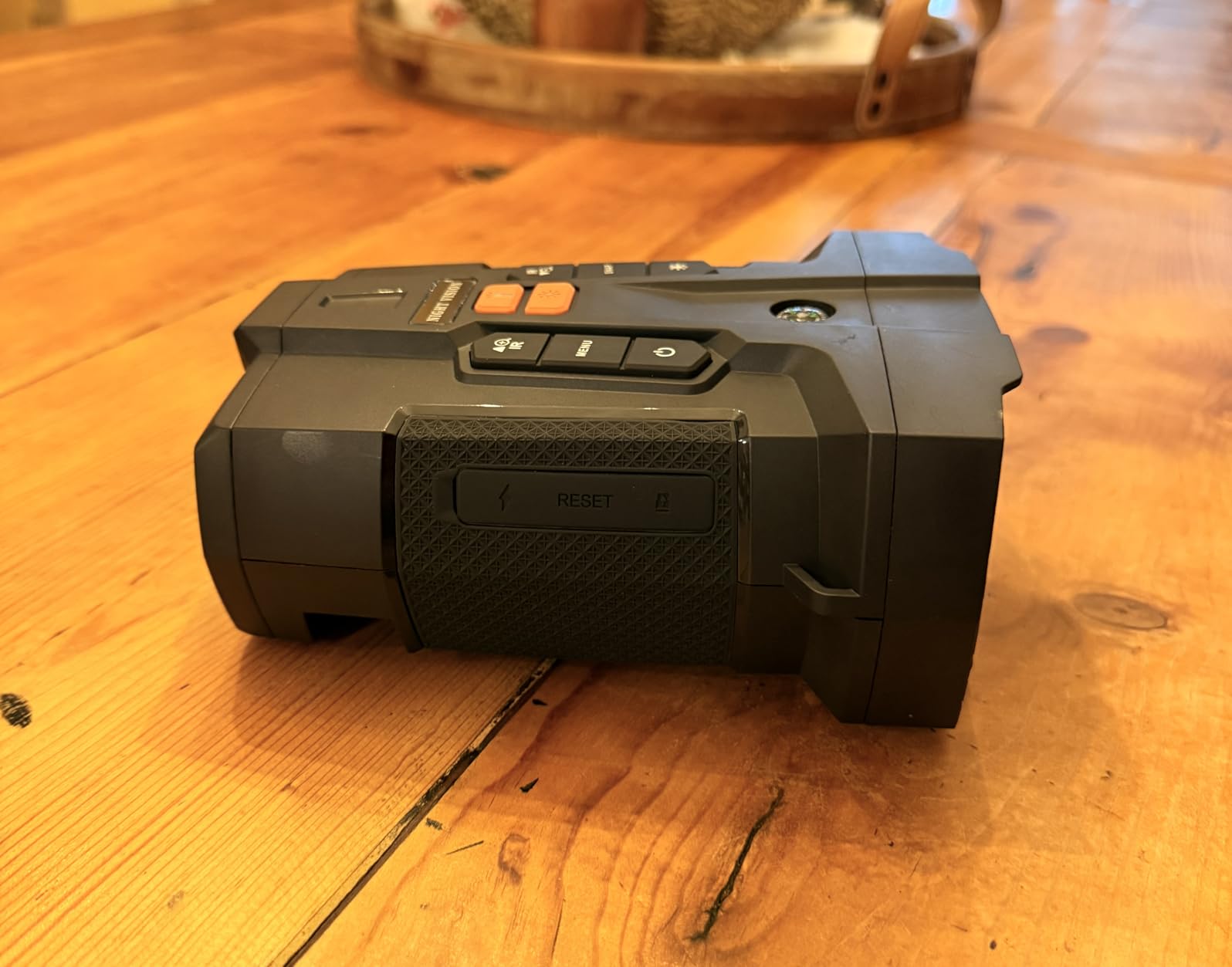
The 7 IR levels let you back the illuminator off when something is close, which matters more than it sounds. A rabbit at 15 feet lit by a strong beam reflects back so hard that you lose all detail, and dropping to a lower level restores the texture that tells you what you are looking at. The built-in compass and multi-mode LED are small features that make it easy to hand to someone who has never used night vision before.
Our realistic identification distance is 60 to 90 yards for a deer-sized animal in moonlight and 40 to 60 yards with IR. For common backyard wildlife within about 60 yards, this pairs well with the wide view and large screen. The 10x figure is digital only, so treat anything above about 5x as useful for confirming a shape rather than reading detail.
Who this works for
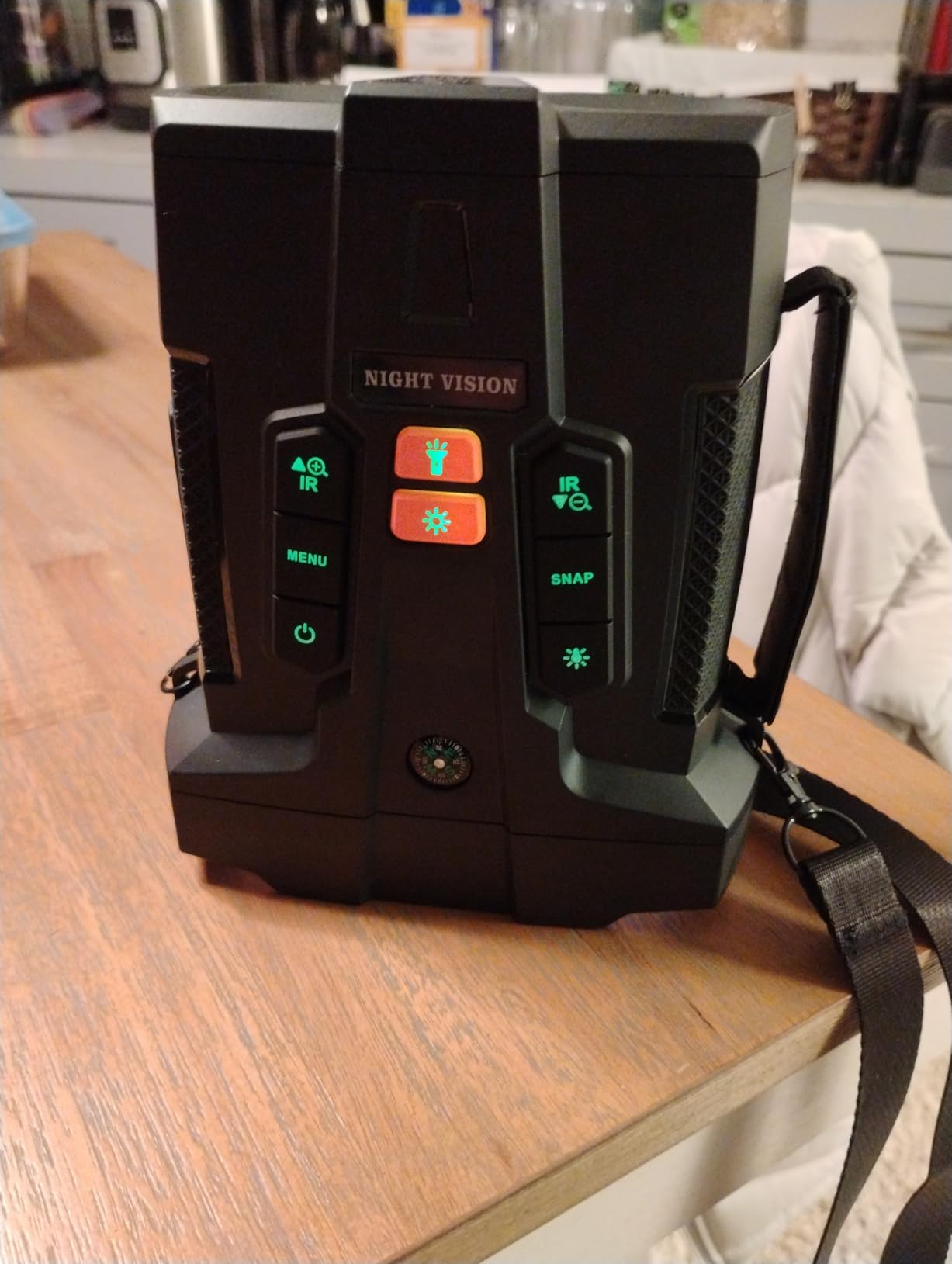
Families and shared devices. The glow-in-the-dark buttons, the simple mode switching and the wide screen make this the one we would hand to a child, a guest or a non-technical partner who wants to look through it once. If your household includes people who are not going to read a manual, that simplicity is the feature that decides the purchase.
It is also a good all-rounder for a fixed position. Set it on a windowsill or a tripod facing a known deer crossing and it becomes a monitor rather than a handheld tool, and the 5000mAh battery will cover a whole night of intermittent use.
Where it falls down
It is not water resistant, and that is a real constraint for anyone watching near a pond, a riverbank or in autumn rain. The same goes for the 4500mAh and 5000mAh rivals: only two models in this roundup carry an IP rating for splash protection, and the two most expensive digital options are the best protected.
Be aware that some of the listed specification fields are filled with generic values rather than measured figures, so treat the specification sheet as a starting point rather than a promise. If you need documented performance, this is not the pick. Otherwise the combination of rating, review volume and screen size makes it the most dependable device in the group.
4. HOTPEAK 48MP Infrared Binoculars – Best for Long Battery Nights
4K Night Vision Goggles – 48MP Infrared Binoculars for Hunting Camping Wildlife, 10X Digital Zoom 1300ft Range, 5000mAh Battery 15H Day/10H Night Use, 32GB Card, 3″ LCD Screen
- Longest stated night runtime in the group at 10 hours
- 7-level IR brightness prevents overexposure
- 48MP stills capture useful reference frames
- 32GB card and Type-C cable included
- Simple controls aimed at beginners
- Not water resistant
- 3-inch screen is the smallest here
- 10x is digital so long-range images soften
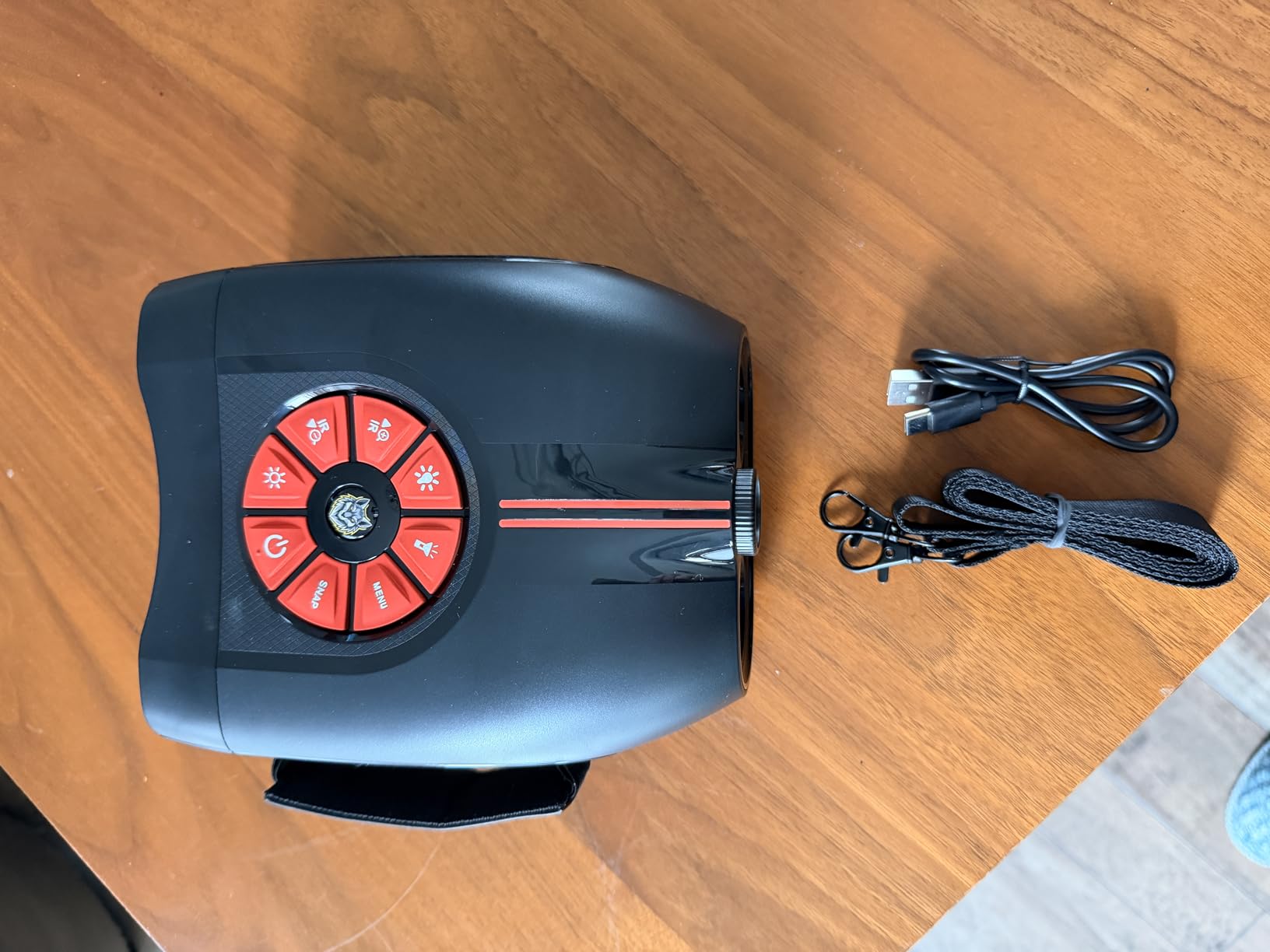
If your sessions run from dusk to first light, battery life is the spec that decides whether you are still watching at 4am. This model lists up to 16 hours of daytime use and 10 hours at night on its 5000mAh cell, and the night figure is the highest stated in this roundup. That is roughly the length of a long winter night, which means you can charge once rather than plan a spare battery.
The 7-level IR brightness control earns its place for a specific reason. Most owners mention it as the feature that made the device usable, because it stops nearby animals blowing out to white. Starting at level 3 and increasing only as you go further away produces noticeably better results than a single fixed setting.
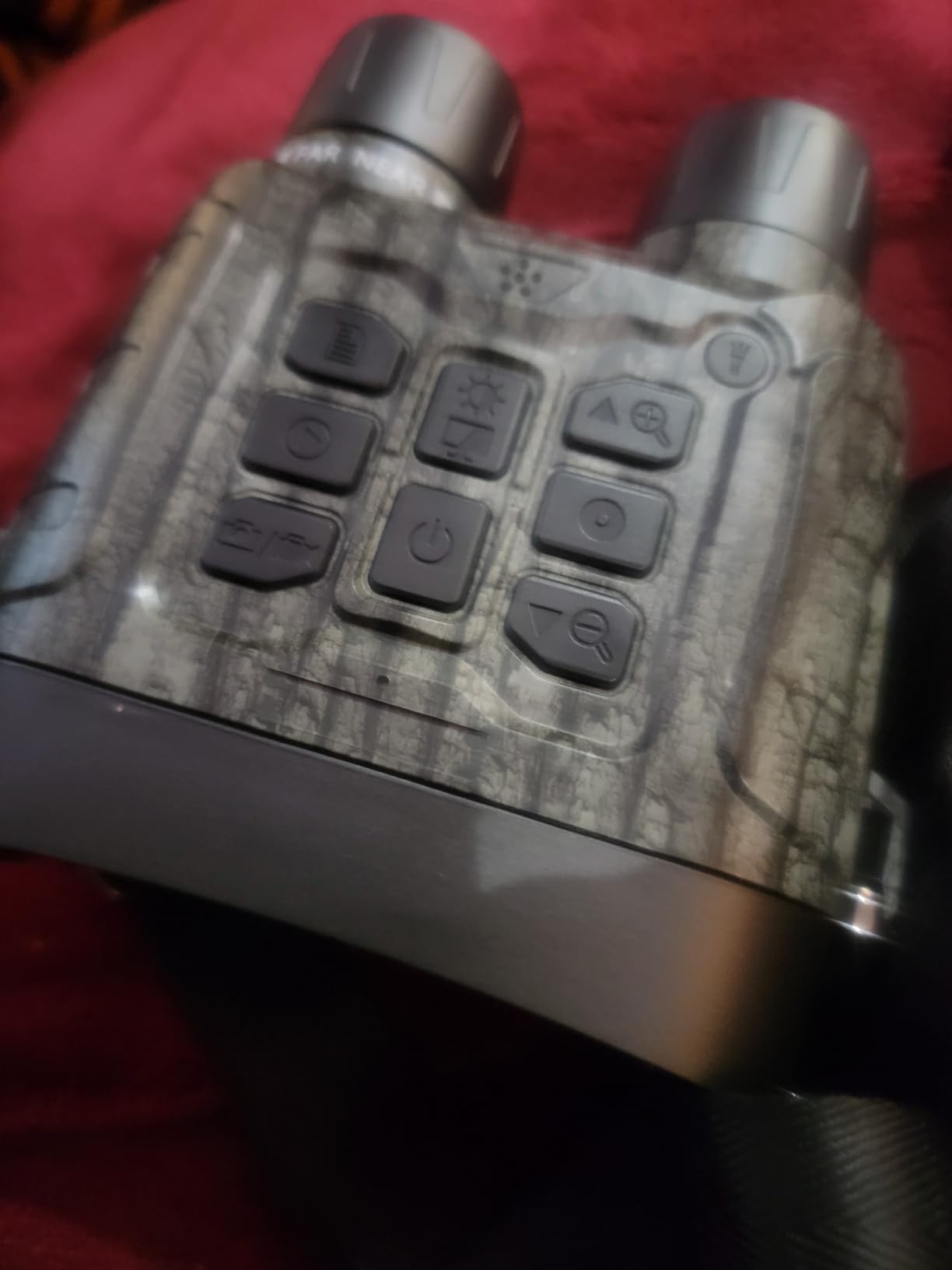
The 48MP still capture is more useful for wildlife than it sounds. A night still is rarely a beautiful photograph, but it is a record of what came through the yard at 2am, and a high-resolution frame lets you identify an animal you only glimpsed. The 4K video and Type-C transfer to a phone or computer cover the same ground for moving subjects.
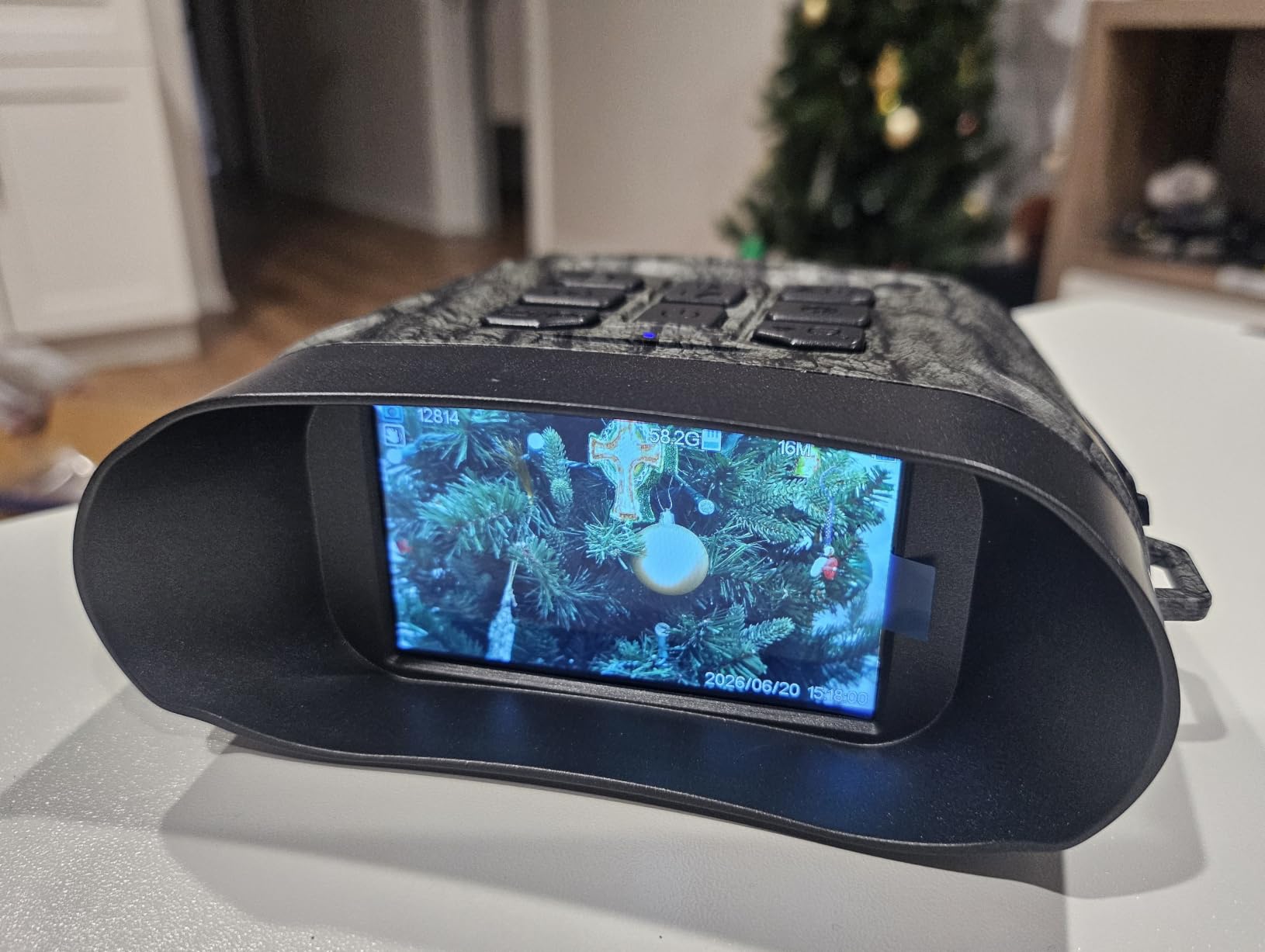
The 25mm objective limits how much light you gather without the illuminator, so this leans on IR more than the 46mm and 50mm models above. Our realistic identification distance is 50 to 80 yards for a deer-sized animal in moonlight and 30 to 50 yards in full darkness with IR, and the 3-inch screen is the smallest here, which makes sustained scanning harder than it should be.
Who this works for
Long, cold nights where you are not moving much. Sit-and-wait observation, a fixed post overlooking a clearing, or a cabin where the device stays plugged in all weekend. The one-year warranty with stated lifetime technical support is a reasonable backstop on a device in this price bracket.
It is also a straightforward first purchase. Reviewers describe the controls as simple and family-friendly, and at 354 reviews with a 4.3 average it has enough owner history to suggest the quality control is consistent rather than a lottery.
Where it falls down
The 3-inch LCD is the smallest screen in the roundup, and reviewers flag it. Combined with digital-only 10x zoom that softens at distance, this is a locate-and-confirm device rather than a detail device. If you plan to spend long periods scanning a wide area, the 4.5-inch models will suit you better.
It is also not water resistant, and 10 percent of reviews are one star, mostly on expectation mismatch against the claimed 1300 foot range. That claim is measured in ideal conditions at maximum illuminator output with a clear line of sight. For open-field identification, plan on a fraction of it.
5. BMDSAE 4.5-inch IPS Binoculars – Best for a Fixed Backyard Post
- 4.5-inch IPS screen is the largest display here
- 5W 850nm illuminator with 7 brightness levels
- Auto plus manual focus dials in subjects quickly
- Storage expandable to 512GB
- Integrated flashlight and tripod mount
- Narrow 6.5-degree field of view suits a fixed position only
- 2MP camera produces modest stills
- IR is a visible point source
- Not head-mountable
The 850nm illuminator here is specified as 5W with seven brightness levels, which is the most precisely described IR output in this roundup and a large part of why this unit produces a usable image in a dark yard. Owners consistently report clear image quality and a solid build, and the 1-year warranty is standard for the bracket.
What makes it good in a backyard is the combination of a very large 4.5-inch IPS panel, a 40mm objective and combined auto and manual focus. Auto focus gets you onto a moving animal quickly, and manual lets you take over when something settles at the edge of a hedge. The tripod mount and integrated flashlight are both practical for a fixed post.
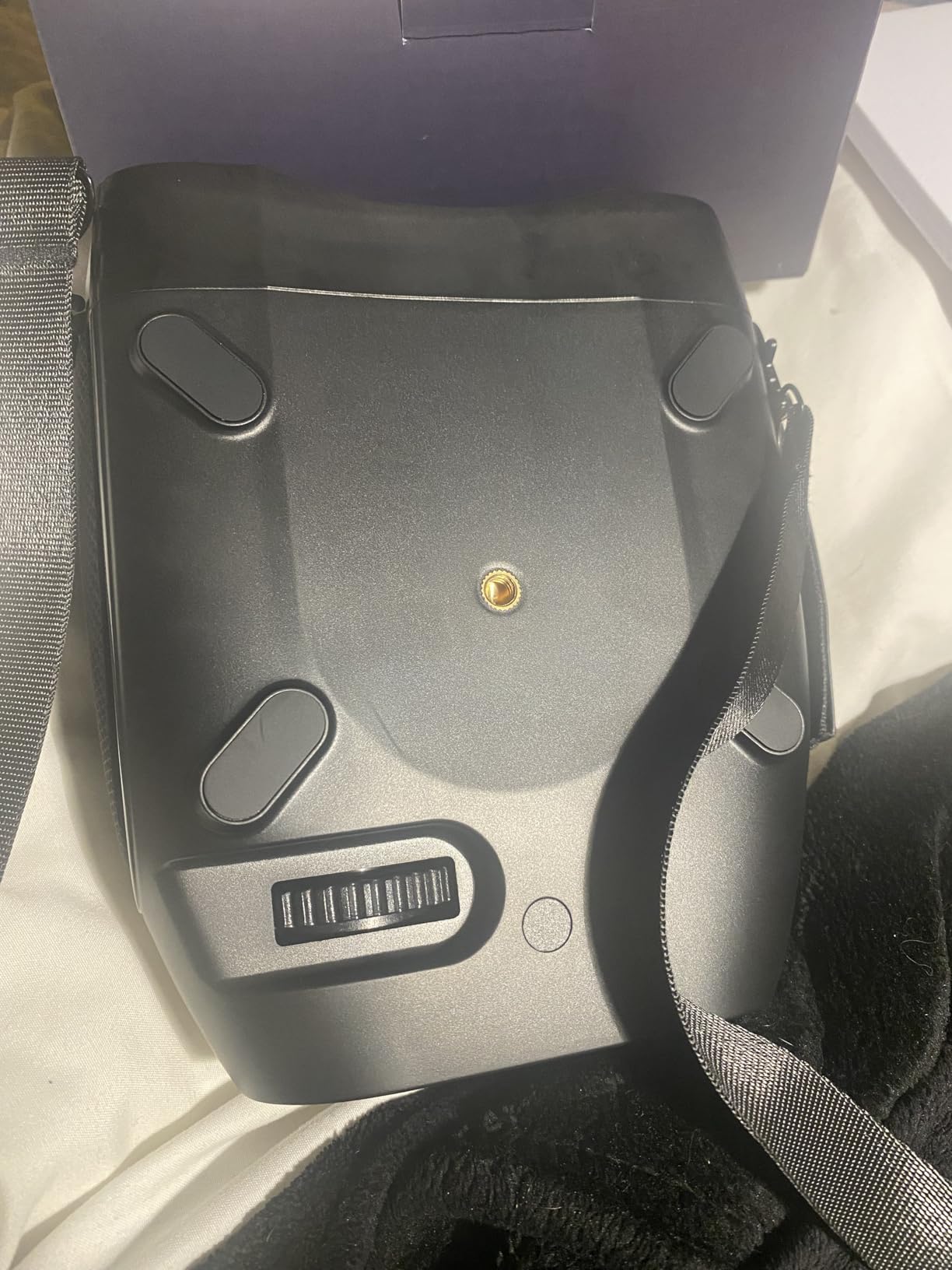
The 40mm lens is a good middle ground. It gathers more light than the 25mm models without the weight and bulk of the 46mm and 50mm units, and it is one of the few in this roundup whose IR is described as a 5W source with a stated usable span rather than a marketing figure. Storage expandable to 512GB means you can accumulate a season of recordings rather than filling a card every night.
Our realistic identification distance is 60 to 90 yards for a deer-sized animal in ambient light and 40 to 60 yards with IR. Below that, the wider 28mm internal lens helps with close and mid-range work. Realistic limit: the 6.5-degree field of view is narrow, so this is a device you set up pointing at a known crossing, not one you sweep across a wide garden.
Who this works for
Set-and-forget monitoring. If you want to watch a known deer crossing, a feeding station or a gap in a fence, mount this and leave it. The wide screen means several people can look through it in turn, and the auto focus means the person who is not a photographer can still get a usable view.
Property watchers and campsite users get the same benefit. The integrated flashlight adds a conventional white light option for the moments you are walking to a gate rather than watching through the eyepiece, and the large panel makes it easy to show someone what you are looking at.
Where it falls down
The narrow 6.5-degree field of view is the defining limitation. It is genuinely difficult to find a moving animal with this, which is why it suits a fixed position and not a handheld scan. The IR is a visible point source, so switching it on at close range is a beacon rather than a discreet tool.
The 2MP camera is modest and the recorded stills will not support cropping to identify fur patterns at distance. Screen brightness also works against dark adaptation while you are scanning, so turn it down at a fixed post where you are not moving. It is water repellent rather than rated for rain, so keep it under cover.
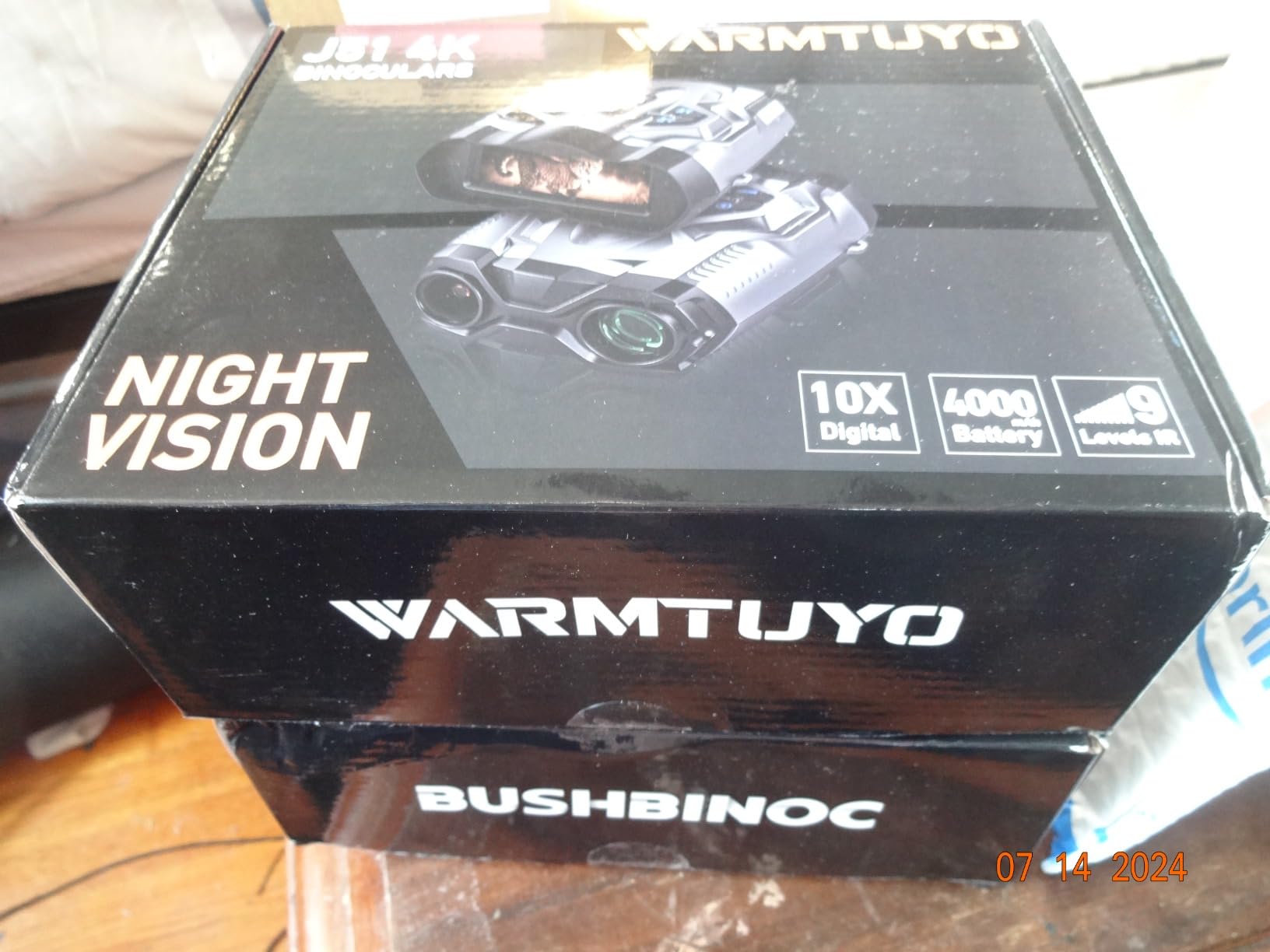
6. BUSHBINOC 4K Video Recorder Binoculars – Best for All-Night Recording
BUSHBINOC 4K Video Recorder Night Vision Binoculars for Adults
- 12 hours of continuous 4K or 2K on one charge
- 50mm objective gathers strong low-light performance
- 9-level IR reaches about 250m in darkness
- IP54 dust and splash protection
- Gift-ready kit with 32GB card and case
- Narrow 6-degree field of view restricts scanning
- Digital zoom pixelates at maximum magnification
- Not fully waterproof despite the IP54 rating
- Usable image quality limited to roughly 150m
This is the one to buy if your real goal is documentation rather than watching. Owners report 12 hours of continuous 4K or 2K recording from the 5000mAh battery, and the one-button recording operation means a nocturnal fox or badger can be captured without fumbling with settings while it walks past. For studying animal movement patterns over a season, that is the feature that matters.
Optically it is well specified for a device in this bracket, with a 50mm objective, a 9-level illuminator described as reaching about 250 metres in darkness and an IP54 dust and splash rating, which is the level you want for wetland work or a wet season. The 3.5-inch HD TFT screen also supports instant playback, so you can confirm what you recorded without a computer.
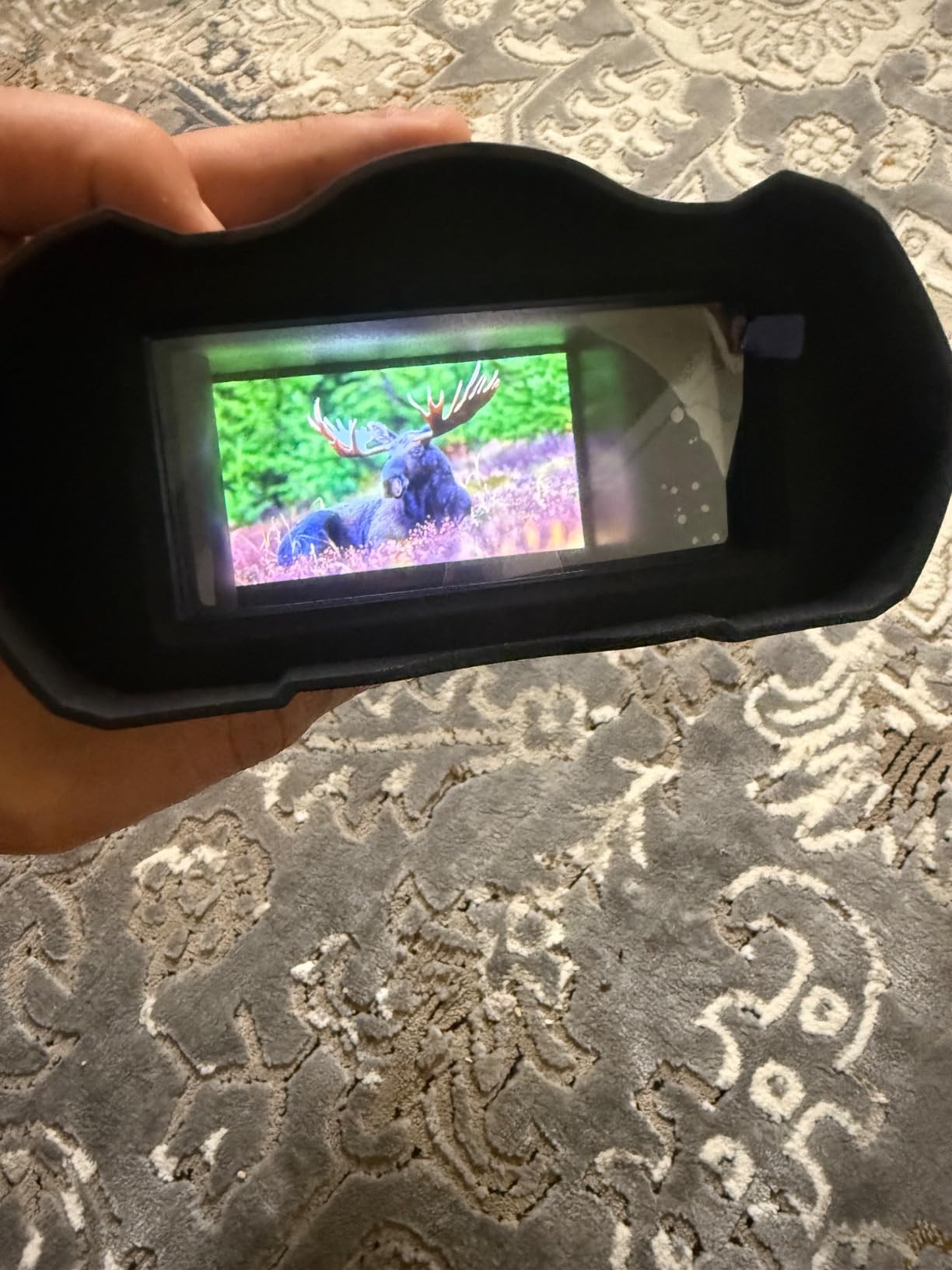
Reviewers specifically mention the 16x digital zoom holding detail on feather patterns and ear tags, which is a reasonable claim at moderate zoom on a still image. As always, treat the maximum figure as cropping rather than optical magnification. Practically, useful results cluster at the lower zoom settings and closer distances.
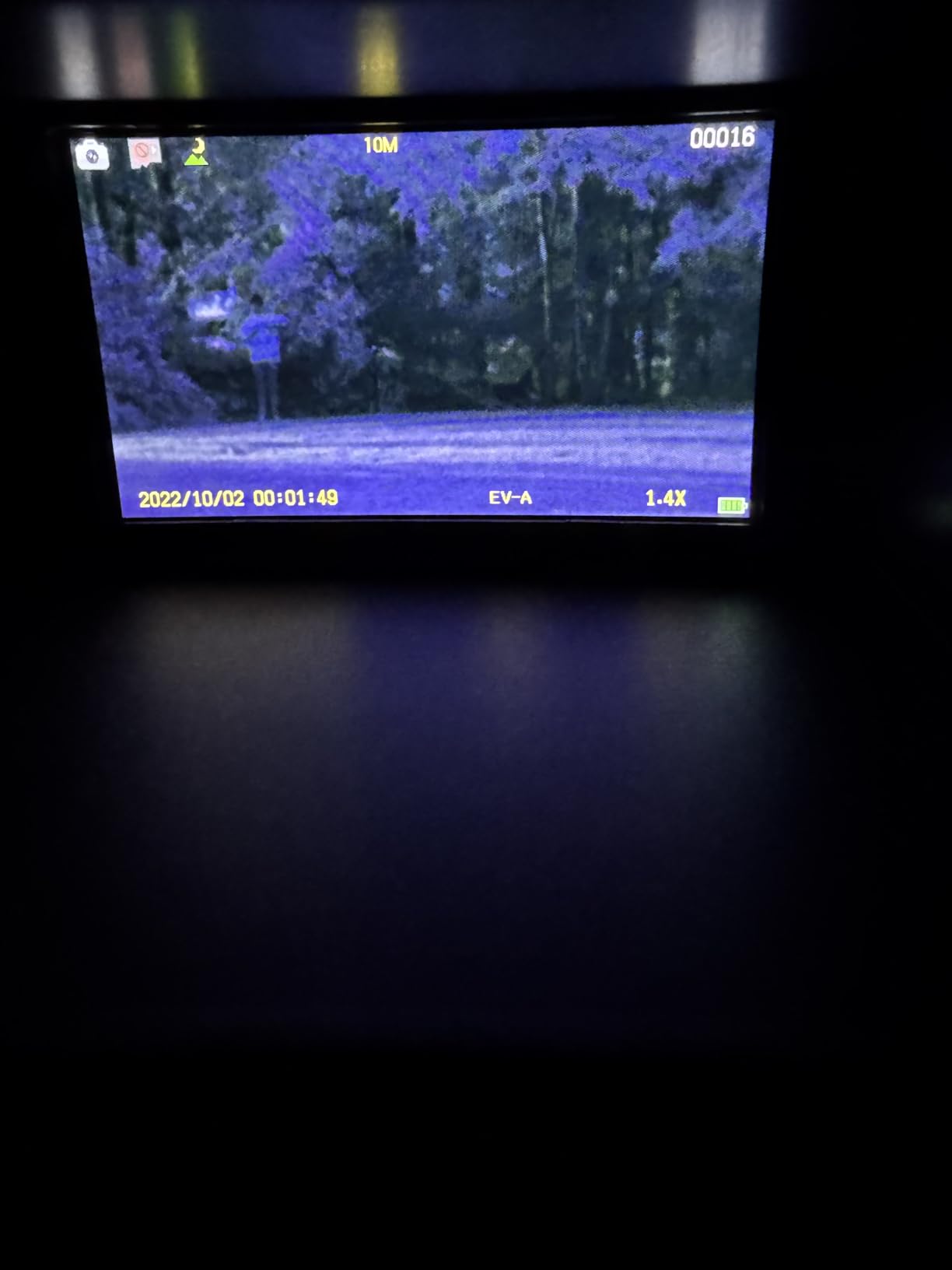
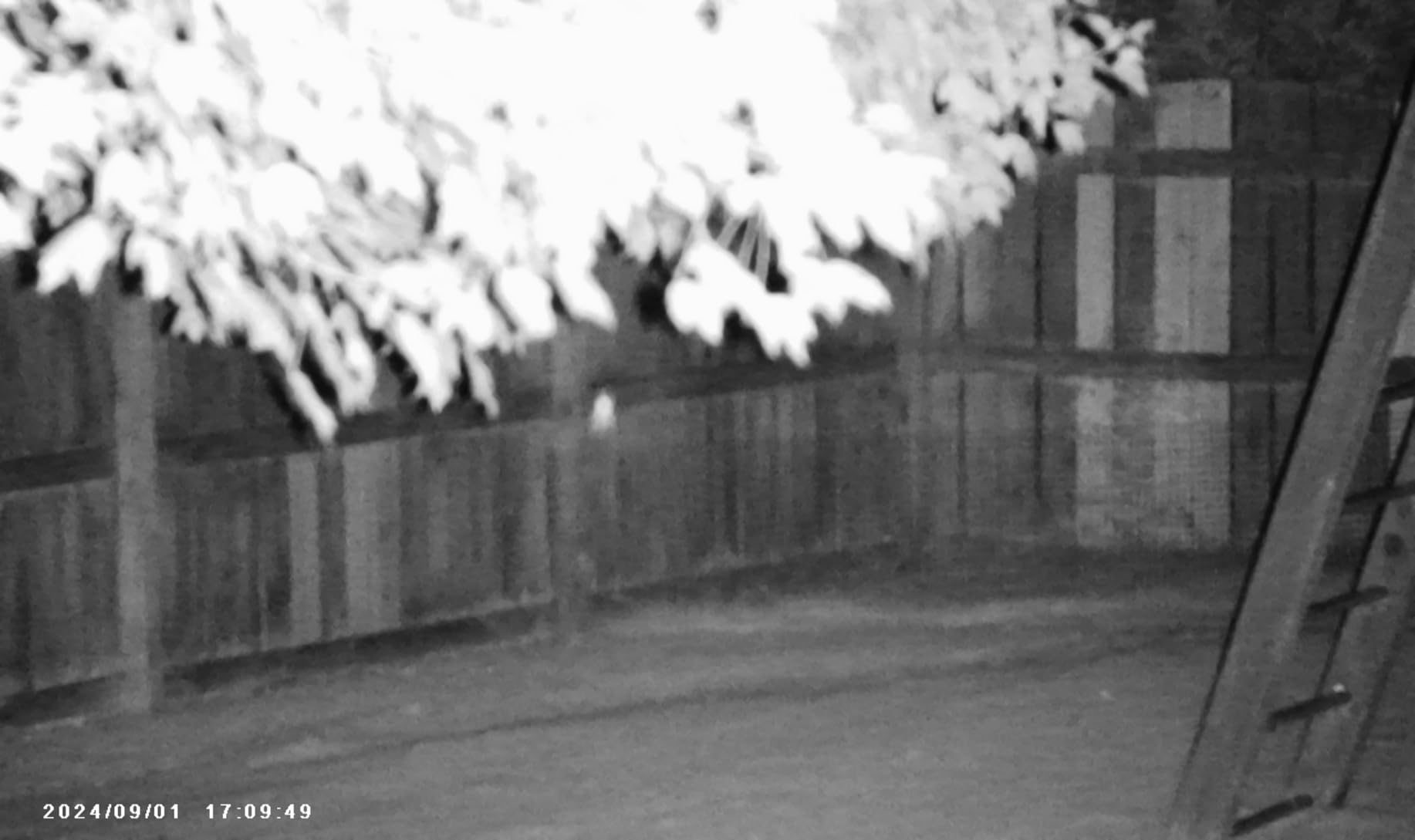
Our realistic identification distance is 70 to 100 yards for a deer-sized animal in moonlight, and owners themselves place the usable image quality at roughly 150 metres with the illuminator on levels 7 to 9. The 6-degree field of view is narrow, so this belongs on a tripod facing a corridor, and you will want to set the focus before an animal arrives rather than while it is moving.
Who this works for
Anyone building a record. Naturalists documenting a trail, researchers logging nocturnal visits to a feeder, and wildlife photographers who want to identify an animal at distance and then go back for photographs in daylight. The included 32GB card and carrying case mean it is ready to deploy straight away.
It is also one of only two models here with a stated splash rating, which makes it the better choice for rain-fed or riverside sites. The centre-focus design and 16:1 zoom ratio make it a familiar-feeling binocular to anyone who has used glass in daylight.
Where it falls down
The 6-degree field of view is restrictive, and the 50mm objective does not compensate for it when you are trying to find something. Scanning with this is slow. Set it up, lock the focus, and let the recording run rather than sweeping a field by hand.
IP54 is splash protection, not waterproofing, and several reviewers are explicit about that distinction. It is also worth noting this model carries a comparatively large share of three-star feedback, which tends to be about the balance between the ambitious specification list and the actual picture. Buy it for the recording runtime and the lens, not for the headline magnification.
7. VISIOGEAR Night Thunder X1 – Best for Full-Colour Night Video
VisioGear True 4K Full-Color Night Vision Binoculars – Night Thunder X1
- STARVIS 2 sensor records true 4K rather than upscaled video
- AI Color+ produces usable full-colour night images
- IP67 waterproof for genuine all-weather use
- Built-in WiFi with app streaming
- Case and 64GB card included
- 8x magnification is digital so fine detail suffers
- Highest cost in the roundup
- Some buyers report noisy low-light colour rendering
Every other digital binocular in this roundup produces a monochrome or false-colour image from an infrared source. This one records in full colour because the STARVIS 2 sensor gathers genuine visible light, and the AI Color+ mode pushes that into low-light conditions. For a naturalist or photographer who wants footage that looks like night footage rather than a security camera, that difference is the entire reason to buy it.
It is also the most physically robust device here. The IP67 rating means dust-tight and submersible, not merely splash resistant, which makes it the one to take out in sustained rain. Reviewers buying it for all-weather field use mention that as a deciding factor, and it is the only model in the group with a stated waterproof rating at this level.
The specification is otherwise serious: a 42mm objective, 4 levels of 850nm infrared, 52MP still capture and a 5000mAh battery rated at 18 hours without the illuminator and 10 hours with it. Built-in WiFi with app control, a speaker with audio recording, a tactical flashlight and a temperature sensor are unusual extras at this level.
Our realistic identification distance is 80 to 130 yards for a deer-sized animal in good ambient light, which is the longest usable figure in the roundup outside the CIGMAN, and about 50 to 80 yards with IR. Note that the 3940 foot range in the specification is a detection claim in ideal conditions, not an identification distance, and the 8x figure is digital.
Who this works for
Wildlife photographers and anyone producing content. True 4K with a modern low-light sensor, 52MP stills, audio recording and app streaming give you a camera and a viewing device in one body, and the included 64GB card plus protective case means it is a complete kit.
It also suits anyone whose outdoor time is weather-dependent. Being the only IP67-rated device in the roundup removes a real failure mode, and the 13-degree field of view is wider than most, which helps when you are locating a subject before you zoom.
Where it falls down
It is the most expensive device in the roundup and the feedback is more measured than the cheaper models, at 4.1 stars. The recurring reservations are the digital-only 8x zoom, the cost relative to digital infrared rivals offering similar headline specifications, and colour rendering that some buyers find noisy below a certain light level. Low light plus high magnification plus long range is where the picture falls apart first.
It is worth being honest about the trade-off here. If your priority is raw sensitivity on an unlit animal at 150 yards, a 50mm infrared model with a stronger illuminator will serve you better for considerably less. If your priority is usable colour video and weather resistance, this is the right one.
8. WISHBETY JA53 1000FT Binoculars – Best for Nocturnal Birding
4K Night Vision Goggles for Adult,1000FT View Range Night Vision Binoculars
- Compact 5.7-inch body is easy to carry in a backpack
- 50mm objective performs well for its size
- 9-level illuminator for close and long work
- Rechargeable battery and 32GB card included
- Handles both daylight and night observation
- 3.0-inch screen is small for extended viewing
- 6.5-degree field of view
- Non-IR night image weaker than infrared mode
- Not weather sealed for heavy rain
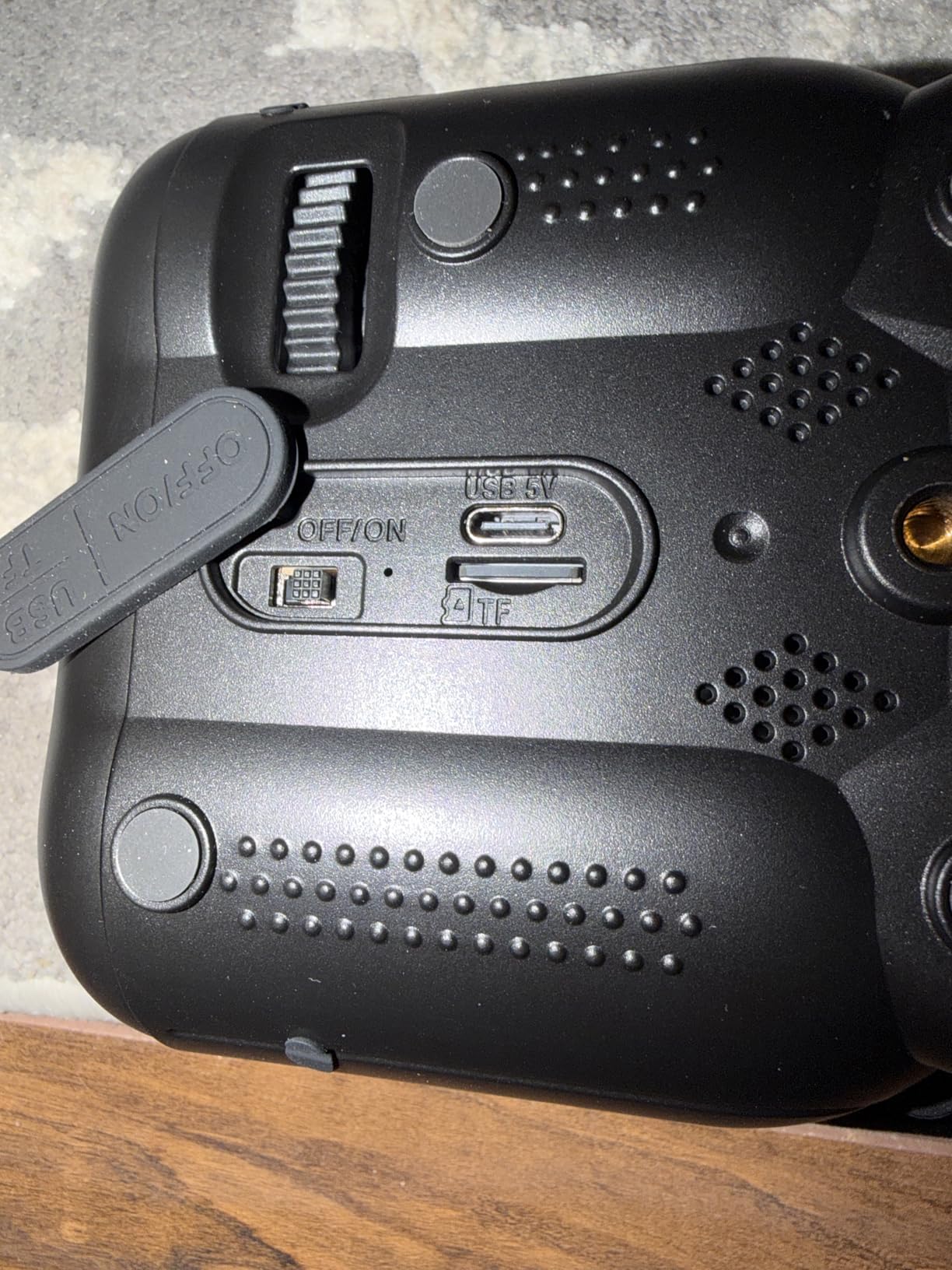
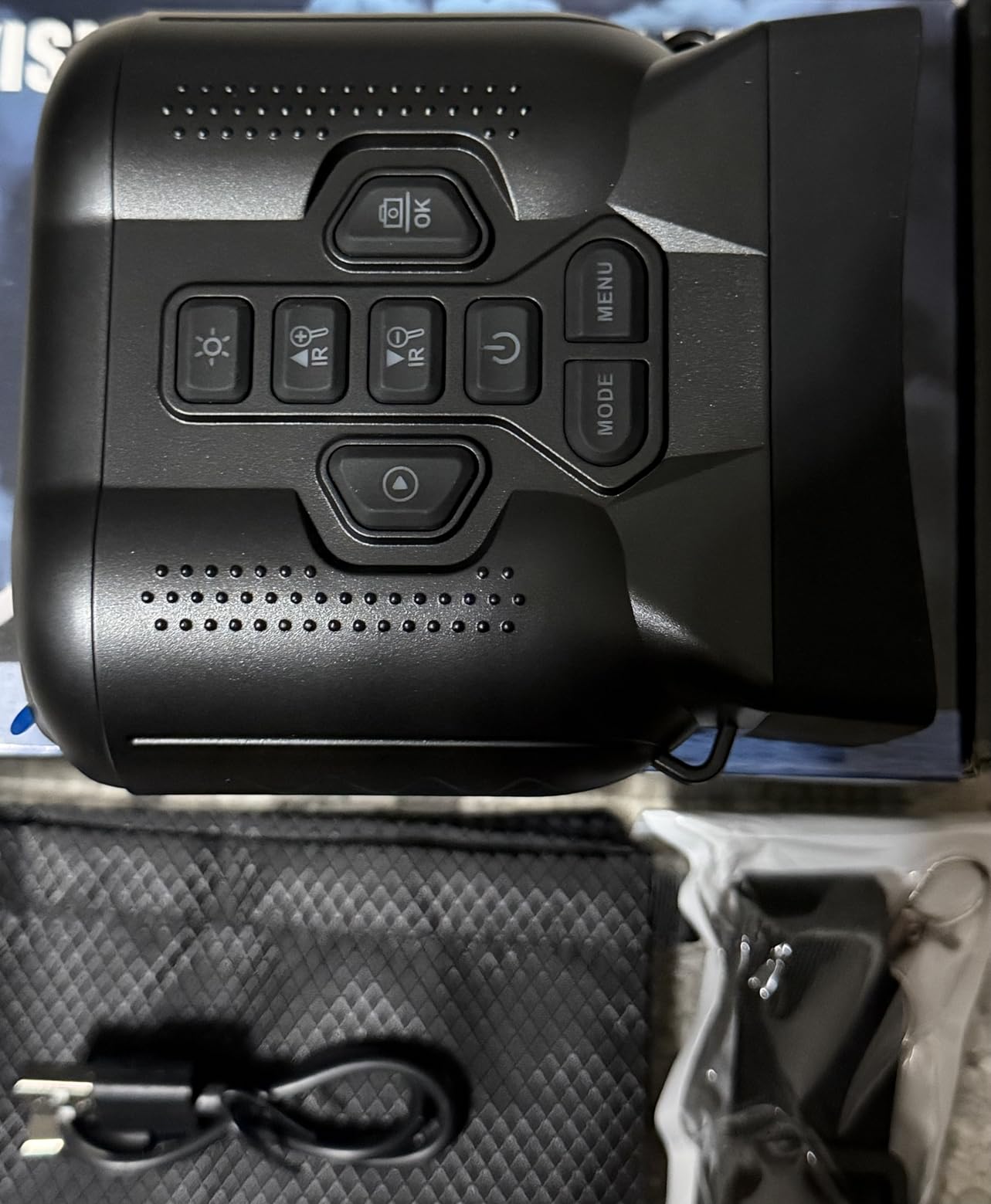
Owl and nightjar watching rewards a wide field of view and a light body more than raw magnification, because the birds are fast, small and usually moving. This model is the most compact of the group at under 6 inches long with a roof prism design, so it is the one you will actually carry on a walk rather than leave in a cupboard.
Buyers report clear images and easy controls for bird watching, hunting and backyard use, with the included memory card and rechargeable battery making it usable immediately. The 4.3-inch-by-2.2-inch footprint is genuinely pocketable, and the 2-year warranty is at the upper end for a device at this level.
Optically you get a 50mm objective, which is unusually large for something this small, alongside 16x zoom and a 9-level 850nm illuminator. Several owners make the point that the infrared mode produces a better night image than the standard night mode, which is normal for this technology but worth knowing before you judge it on a moonlit evening.
Our realistic identification distance is 60 to 100 yards for a deer-sized animal and around 40 to 70 yards for a medium owl at rest. The narrow 6.5-degree field of view is the constraint for birding, so scan with the unit at low magnification and raise it only once something is located. The 3.0-inch screen is the smallest here, which makes that wide scanning harder than it needs to be.
Who this works for
Walking naturalists. If your night watching involves covering ground along a hedgerow, a riverbank or a woodland edge, portability is a real constraint and this is the lightest, smallest body in the roundup. It also works in daylight, so a single device covers a whole day of surveying rather than a night-only niche.
At 4.4 stars across 152 reviews it has the second-highest rating average of any model here, and 74 percent of reviewers give it five stars. For a device this size, the consistency of that feedback is reassuring.
Where it falls down
The 3.0-inch display is the smallest in the roundup, and it is a genuine problem for a long session. Combined with a 6.5-degree field of view, this is a device you aim rather than one you scan with. If your watching is stationary rather than mobile, spend the difference on a 4.5-inch screen.
It is also not sealed for heavy rain despite the water resistant listing, which is a fair reading of the specification but catches people out. Owners consistently note that the non-IR night image is weaker than the infrared mode, so do not evaluate it on a moonlit evening with the illuminator off and conclude it is a poor device.
9. ZIMOCE 4.5-inch Night Vision Binoculars – Best for Wide Screen Scanning
- Largest field of view in the roundup at 10 degrees
- 4.5-inch display with 36MP stills and 4K video
- IP54 rated for damp conditions
- Carrying case and 32GB card included
- Three colour modes with one-button switching
- 8x is the lowest peak magnification here
- Lower zoom limits identification of very distant animals
- 4500mAh cell gives 6 hours with IR on
The 10-degree field of view is the widest in this roundup, and for locating wildlife that matters more than any other single number. On a wide view you can cover roughly twice the width of scene per scan compared with the 6-degree models, which means far more chance of catching a deer moving through cover before it disappears again.
Paired with a 4.5-inch display and a one-button switch between three colour modes, this is the most pleasant device here for a long stationary session where you are repeatedly acquiring and reacquiring moving subjects. Owners cite the large screen, the colour modes and the included carrying case as the standouts for family wildlife watching.
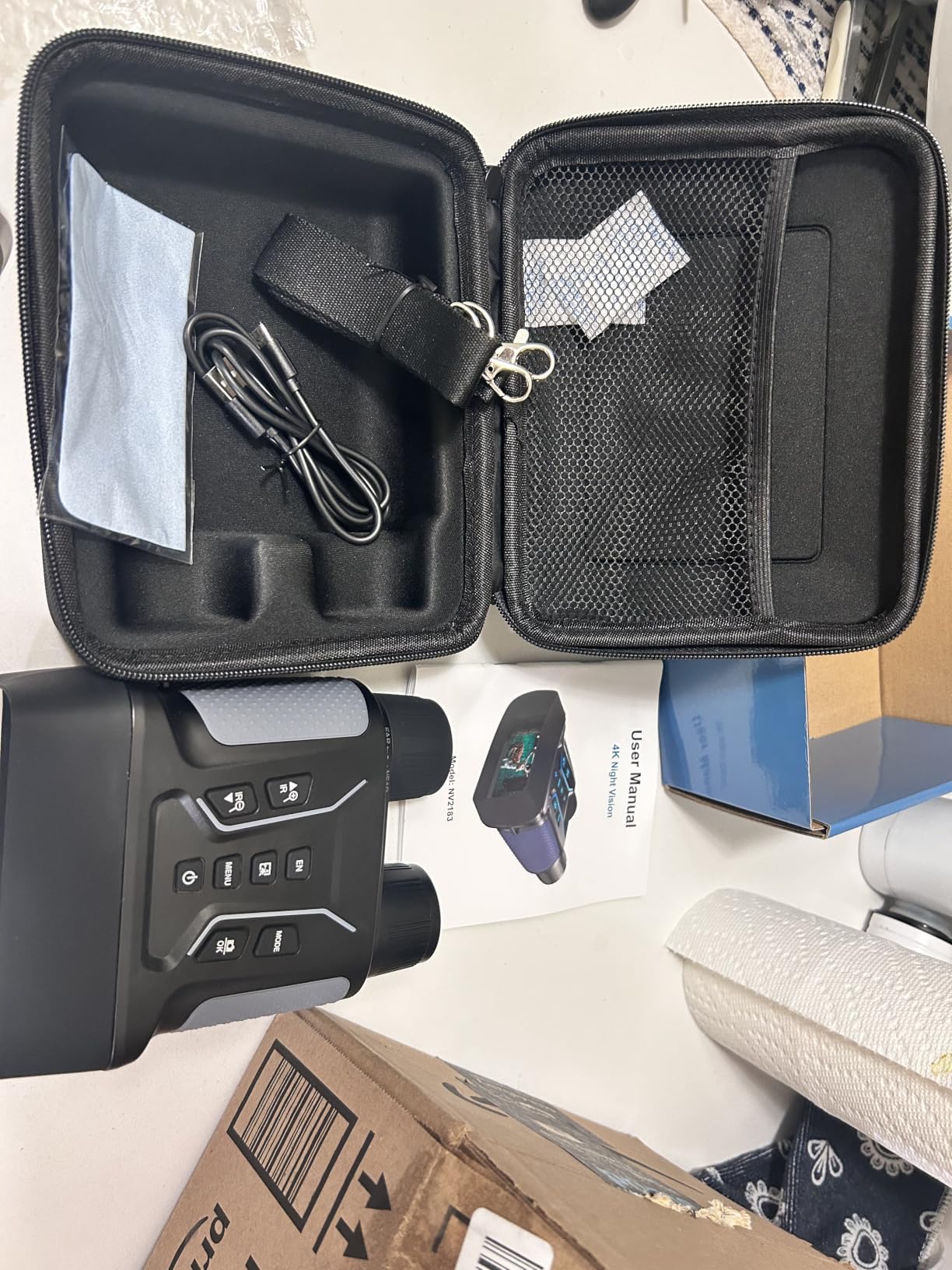
The specification is otherwise conventional and well handled: 4K video, 36MP stills, seven infrared levels, an IP54 water and dust rating, and a stated viewing distance up to 1312 feet. The battery is listed at 13 hours with the illuminator off and 6 hours with it on, and that halving pattern is true of every device in this roundup, so budget your sessions around the with-IR figure.
Our realistic identification distance is 50 to 80 yards for a deer-sized animal in moonlight and 35 to 55 yards with IR, and that is where the 8x ceiling bites. Eight times is the lowest peak magnification in the group, so confirming an animal at 150 yards is not realistic here even though the wider view will find it easily. That combination, find wide and confirm close, suits most backyard work well.
Who this works for
Open-ground scanning. If your viewing area is a large garden, a park or a clearing rather than a corridor or a fixed crossing, the wide field of view will save you more time than any extra magnification. It is also the pick we would choose for children, since the screen is large and the single-button colour switching is simple to explain.
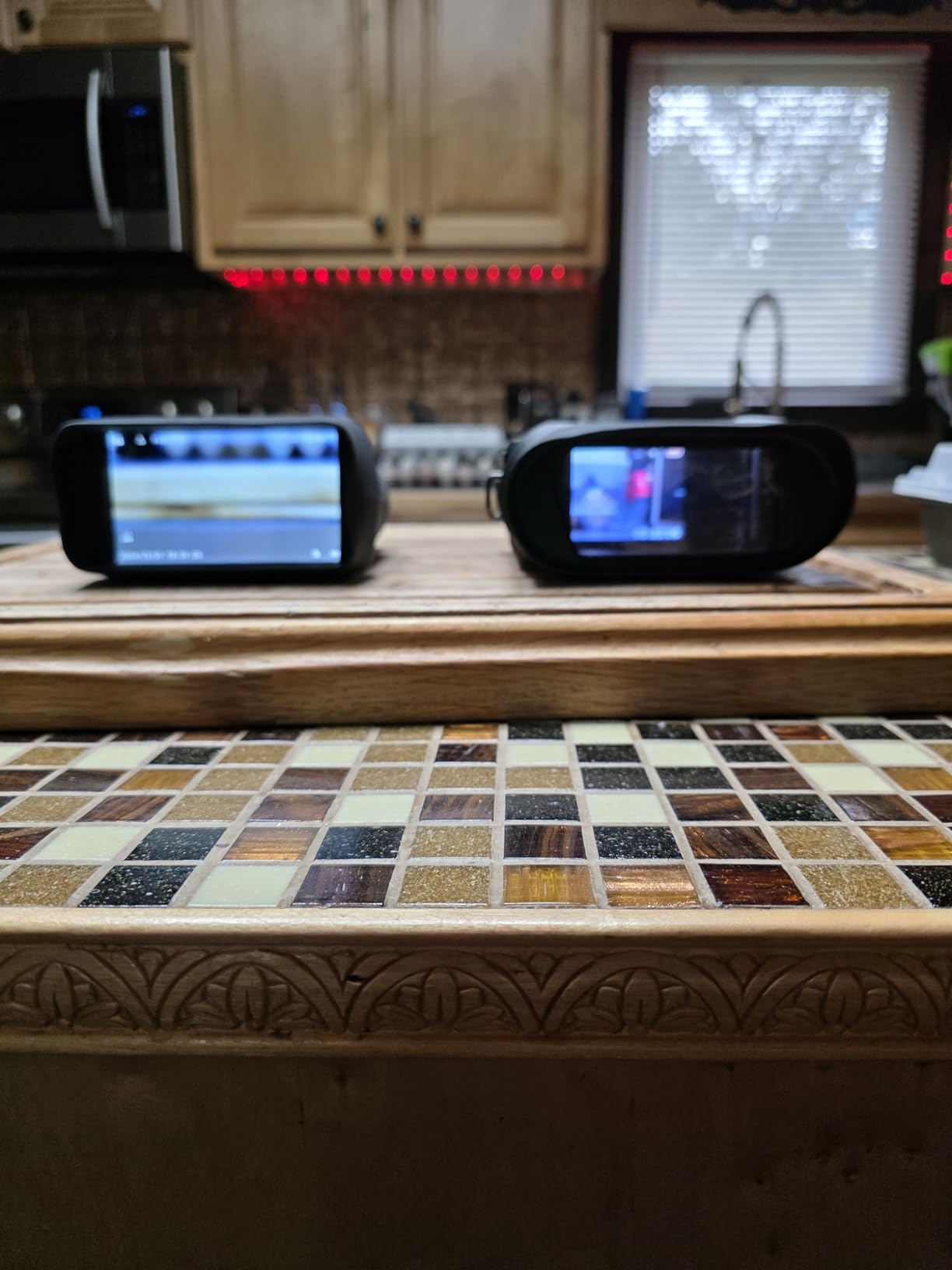
At 4.5 stars across 128 reviews with 74 percent five-star ratings, satisfaction is high, and the 1-year warranty plus IP54 rating is a fair combination for outdoor use in changeable weather. The included case, strap, cable, cloth and card make it a complete first kit.
Where it falls down
Eight times magnification is the honest weakness and reviewers say so directly. If you are scanning a treeline 200 yards away and want to identify an animal rather than detect it, this is the wrong tool, and no amount of screen size compensates for pixel-level detail at distance.
The 4500mAh cell is the smallest here, giving 6 hours with the illuminator running, which covers a normal evening but not a full night of continuous IR use. And while it is rated for adults and kids, the eye relief is not specified, so glasses wearers should check comfort before committing.
10. CIGMAN CNVPRO True 4K – Best for Long-Range Colour Identification
CIGMAN True 4K Night Vision Binoculars with Full-Color Low-Light Imaging
- Records true native 4K with audio from a starlight CMOS sensor
- Full-colour low-light imaging through 7-layer coated glass
- IR beam adjustable between focused close range and dispersed long range
- IP54 rated with 18-hour battery
- Box 64GB card
- strap and compass included
- Heaviest device in the roundup at 1.49 kg
- Close-range IR is too strong and narrow
- Zoomed images are heavily grainy
- Weak WiFi signal limits streaming
- Recording splits into 5-minute clips
This is the most advanced device in the roundup and the one with the most striking field report. One owner used it to identify a mountain lion at over half a mile in total darkness, which is well beyond what any infrared device here achieves in practice. If you are working open country and genuinely need long-range identification, this is the one to weigh against everything else.
The reason is a starlight-grade CMOS sensor recording true native 4K with audio, rather than an upscaled image from a small sensor, and full-colour low-light imaging through 7-layer coated spherical glass. The IR illuminator is adjustable between a focused beam for close range and a dispersed pattern for distance, which is the correct control for a scene that contains both.
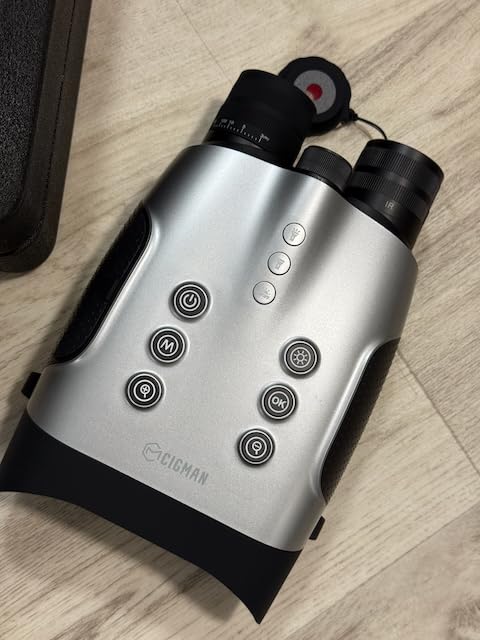
Accessories are unusually complete: a carrying box, 64GB memory card, padded shoulder strap, compass and cleaning cloth. A tactical LED with steady and emergency flashing modes, Type-C fast charging, IP54 protection and a 5100mAh battery rated at 18 hours round out a device that feels closer to a piece of professional kit than a gadget. The 3-year warranty is joint best in the group.
Our realistic identification distance is 100 to 160 yards for a deer-sized animal in good ambient light and 70 to 110 yards with IR, the longest figures in this roundup. The trade-offs are physical: at 1.49 kg it is the heaviest device by a wide margin and needs two steady hands or a rest, and it is not a tool for scanning a field while walking.
Who this works for
Long-range wildlife identification in open terrain, and anyone producing colour night footage. If you are scanning ridgelines, working a valley edge or filming a remote population, the sensor and the adjustable IR pattern are the reason to choose it. The 18-hour battery and the included 64GB card support a full night of recording.
It is also the most rewarding to learn on. Owners who have used it tend to describe it as a step up in capability rather than an incremental improvement, and the physical design has picked up design awards, which is not nothing on a device you carry for hours.
Where it falls down
Weight and hand stability are the most consistent complaints. At 1.49 kg this needs a tripod or a solid rest, and a heavy body plus a narrow field of view means long sessions are tiring. The field of view is also described as too tight by some buyers, which limits how much area you can sweep.
The IR beam is too strong and narrow at close range and washes out the image, so it needs deliberate setting for anything inside about 30 metres. Zoomed images are heavily grainy, the WiFi signal is weak enough to frustrate live streaming and file transfer, and recording splits into roughly 5-minute clips. At this cost, verify the package contents carefully on arrival; one reviewer reported the advertised 64GB card was missing.
Digital vs Analog Night Vision Binoculars for Wildlife
Digital is the better choice for wildlife watching if you want to record video, use one device in daylight and moonlight, and keep the cost and weight down. Analog image intensifier gear is better if you need the widest possible field of view, movement you can track with zero delay, and the ability to detect a warm shape in moonlight with no illuminator at all. The night vision community leans heavily toward analog for good reason, but that reasoning only partly applies to watching animals.
The core difference is how each device makes a dark scene visible. An analog tube amplifies the faint light that already exists, photons included, and re-strikes them onto a phosphor screen. It has essentially no delay, so an animal running across a field stays a smooth moving image. A digital device fires an infrared beam at the scene, reads the reflection with a sensor and renders it on a screen, which introduces a small lag and requires a power source and an illuminator for true darkness.
For wildlife specifically, that trade-off usually favours digital. Animals are not shooting at you, so the instinct to prioritise stealth in a passive amplifier matters less than the ability to film, share and review what you saw, and the price gap between a good digital binocular and a usable analog one is wide. The honest caveat is that the cheapest digital devices are poor, and the analogue answer to that is a quality image rather than a feature list.
How the two compare for night work
The rows below are the practical differences a wildlife watcher feels in the field, not a tube specification comparison.
Light source: analog amplifies ambient starlight and moonlight. Digital adds its own 850nm or 940nm illuminator in true darkness.
Tracking movement: analog has effectively no delay, so running animals stay smooth. Digital has slight lag and occasional frame drop, noticeable on fast subjects.
Stealth: analog with the illuminator off is completely silent and emits nothing. Digital emits infrared that some animals can detect and always has a glowing screen.
Recording: analog needs a separate camera to capture anything. Digital records stills and video natively, which is why every pick in this roundup is digital.
Daylight use: digital works normally in daylight. Analog tubes can be damaged by bright light unless the IR-filter cap is fitted.
Realistic ID range in good ambient light: analog runs 100 to 200 yards on a mid unit, more on premium tubes. Digital runs 50 to 160 yards, with the CIGMAN and VISIOGEAR X1 at the top of that band.
Cost at comparable performance: analog enters the conversation far above every price here. Digital covers the same practical use at a fraction of the cost.
Maintenance: digital tolerates knocks and dust better and needs no tube desiccant care. Analog tubes degrade with use and are sensitive to bright light.
850nm vs 940nm IR: Staying Invisible to Shy Wildlife
850nm infrared is brighter and reaches further than 940nm, and it is faintly visible as a red glow from close range. 940nm is effectively invisible to the human eye, so it keeps your position hidden, at the cost of noticeably shorter range. Every model in this roundup uses 850nm, which is the right choice for finding animals and the wrong choice if you are close to them and want them to stay put.
Here is the part that matters for wildlife. The red glow of an 850nm illuminator is a genuine giveaway, because a bright emitter in a dark scene is visible to any animal looking toward it, and deer, coyotes and hogs all have far better dark adaptation than we do. An observer whose position is revealed gets one sighting of an alert animal, and usually none after that.
If you want to avoid spooking wildlife, work in this order. First, use the ambient light and switch the illuminator off entirely, which is possible on a full moon night and on any night with snow cover. Second, if you need it, start on the lowest IR level rather than the highest, since a dim beam is much harder to see. Third, angle the illuminator so the beam is not pointing at your position relative to the animal, and use short bursts rather than a continuous wash.
A bright digital screen is a separate and more commonly ignored giveaway. If you are watching from a rise with the observer downwind or downhill, your display is visible from further away than most people expect, and it is bright enough to be seen. Dim the screen, hold the device below the skyline of whatever you are scanning, and cover it with a jacket between looks. These are the light-discipline habits that separate people who get repeated sightings from people who get a single glimpse.
Which to choose for which animal
For deer, raccoons and feral hogs at 80 to 150 yards, 850nm is the right tool because you need the range and they have mostly worked out that a distant glow is not immediately dangerous. For anything at close range, a curious animal already approaching, or a bird that will flush at 40 metres, switch off or turn right down. And if your concern is a wary species at a known crossing, a 940nm-equipped head-mount or monocular is the tool that keeps you invisible, though at reduced range.
What Magnification Do You Need for Wildlife?
Three to eight times is the useful range, and most of the time you will be at four or less. Magnification narrows your field of view, and a narrow field of view is the single most common reason people fail to find animals that are plainly visible. Zoom in after you have located something, not before.
The rule of thumb is that magnification should roughly match the size of your target. A deer fills more of the frame at 8x than at 4x, but at 8x you have given up most of the scene. Nocturnal birds, which are small and fast, need the opposite trade: wide view and low magnification, then zoom to confirm.
For a backyard, 4x to 8x is plenty. For a field edge or a treeline, 4x to 6x with a field of view of at least 7 degrees is the sweet spot. For open range beyond 200 yards, you will want 6x to 8x and a large objective lens, accepting the narrower view. Remember that the headline figure on most devices in this roundup is digital zoom, which crops a sensor and loses detail, so optical magnification below 5x with a digital multiplier is more useful than a large digital-only number.
Realistic Identification Ranges by Species Size
Advertised detection range is measured in ideal conditions, with a clear line of sight, maximum illuminator output and a large cooperative target. What you need as a wildlife watcher is the distance at which you can positively identify the animal, which is much shorter. Use the figures below as planning guidance rather than a guarantee, since they assume a device with a reasonably large objective lens and the illuminator on a low setting.
Rabbit, squirrel, armadillo, opossum (small, 2 to 5kg): 40 to 80 yards in moonlight, 20 to 50 yards in full darkness. These are large enough at short range to identify reliably and small enough that the picture breaks up quickly beyond it.
Owl, nightjar, large bird at rest (0.5 to 4kg): 40 to 70 yards, closer for species identification. Plumage detail disappears well before the body shape does, so confirm the shape first and the markings second.
Raccoon, fox, coyote (5 to 20kg): 70 to 120 yards in moonlight, 50 to 90 yards with IR. A reflective eye can be picked up at more than twice these distances, so use the eyeshine to locate and the body detail to identify.
Deer, feral hog, wild pig (50 to 200kg): 100 to 200 yards in moonlight for a good digital unit, 60 to 130 yards in full darkness. Larger bodies hold their silhouette and body detail further out than the ranges above, which is why deer is the reference animal for most range claims.
Human-sized target: roughly 30 to 40 percent further than the deer figure in the same conditions. This is the basis of the inflated marketing numbers, which are often quoted from a large target in an open field.
Two wildlife-specific techniques close the gap between the advertised and the realistic figure. Watch the edges rather than the centre, because eye shine appears as a bright pair of points long before any body detail resolves, and scanning wide before zooming gives you the chance to see those points at all. If you want the picture recorded rather than remembered, our guide to smart outdoor cameras with colour night vision covers the fixed-camera alternative for monitoring a known trail.
Binoculars vs Monoculars vs Goggles vs Trail Cameras
Binoculars are the right choice for wide-field wildlife viewing, because two eyes give better depth perception and a natural sense of scale for judging the distance to an animal. Monoculars are lighter and cheaper, and they are the format most analog equipment comes in, but you view them with one eye closed, which tires faster over a long session. Goggles are head-mounted and hands-free, which is excellent for following a running animal and useless for reading fine detail or recording.
A trail camera is often the smarter purchase, and this is worth saying plainly. If you want to know which animals use a path at night, a camera will do it for a fraction of the cost, over weeks rather than hours, with no need to sit in the cold. The case for binoculars is immediate and repeated observation: watching behaviour, seeing an animal without it knowing you are there, and reacting in real time. If your interest is photography, the camera comes first and the binoculars help you find the animal for the daylight shot.
Thermal is the other tool people ask about. Night vision needs light to amplify or an illuminator to supply it, so it struggles in fog, heavy rain and genuinely pitch dark conditions. Thermal detects heat rather than light, so it works in total darkness, through fog and behind partial brush. For mammals it is often the better answer; for birds, whose body heat is masked by dense feathers and which are small, night vision remains the stronger tool.
How to Choose Night Vision Binoculars for Wildlife: Spec by Spec
Choose by objective lens diameter first, because it decides how much light you gather before any electronic processing. Anything at 40mm or above is a meaningful step up for dusk and moonlight work, and the 46mm and 50mm models in this roundup show it in owner feedback. Below about 25mm you are relying on the illuminator for most of the image, which narrows your working distance and makes you more conspicuous.
Field of view is the second priority and the number most buyers ignore. Anything at 7 degrees or wider is a meaningful difference in practice, and the 10-degree model here is the one we would pick for open ground. Eye relief matters if you wear glasses, and 15mm or more is comfortable; check the figure, because several models in this roundup do not list it.
IR illuminator control is the third. A unit with several brightness levels lets you match the beam to the distance and stop nearby animals from blowing out to white. A single fixed output is a real limitation in the field, not a specification detail. A built-in tripod mount is worth paying for if you will be stationary, because it also removes camera shake at higher magnification.
Battery figures should be read as two numbers, not one. The useful figure is runtime with the illuminator on, and every device here roughly halves its stated runtime when the IR is active. For a long night, a 5000mAh-class cell with 6 to 10 hours of IR runtime covers the evening comfortably. Remember that batteries are a hidden cost if the device takes AA cells rather than an included rechargeable, and that many cheap units arrive without either.
Screen size is a comfort and awareness issue rather than an image quality one. A 3-inch display is workable for a short look but tiring over two hours, and 4.5 inches is genuinely more pleasant, particularly when the device is shared. If you will be scanning rather than sitting on a fixed target, buy the bigger screen.
Water resistance and warranty are where the price differences show up honestly. Only three models in this roundup carry a stated IP rating for dust and splash protection, and only one is rated for submersion. A one-year warranty is typical at the lower end and three years at the upper end. Digital sensors can develop dead pixels and image intensifier-style quality problems are not the only failure mode any more, so a longer warranty is worth something.
Recording is worth paying for only if you will use it. Native 4K from a modern sensor and upscaled 4K from an older one are not the same thing, and the difference is visible in low light. If you plan to film, prioritise a stated native sensor, audio recording and card capacity over any headline range claim.
Finally, ignore the detection range. Every one of these devices is marketed with a figure somewhere between 800 and 3940 feet, and every one of them will disappoint you if you take it literally. Judge a device on objective lens diameter, field of view, IR control and the review evidence for real-world performance, which is exactly what the sections above have done.
Safety, Light Discipline and Field Care
Do not use an image intensifier tube in daylight with the IR filter cap off. This does not apply to the digital devices reviewed here, all of which are daylight-safe by design, but it is the single most expensive mistake a new night vision buyer can make, so it is worth stating. Bright light can burn a tube permanently, and the damage is not covered by warranty.
Keep your light footprint small. That means no white flashlight beam, dim screens, no phone screens, and no looking at a bright display near your viewing position. Animals that would walk up to a quiet, still observer will not walk up to one that radiates light. Respect property boundaries, local regulations and hunting seasons, and if you are on land you do not own, get permission.
On care, expect condensation. Moving a cold device into a warm tent or car produces internal fogging that takes time to clear, so keep it in the case while it warms. Protect the objective from scratches, keep lens caps on in the bag rather than in the field where they attract mud, and expect IR emitters to run warm in continuous use. If a unit arrives with defects, deal with it inside the return window rather than after it, because digital devices are much easier to return than premium analog ones.
Frequently Asked Questions
Do night vision binoculars actually work for wildlife?
Yes, with realistic expectations. Every device in this roundup will let you find and identify deer, raccoons, coyotes and birds at 40 to 150 yards depending on conditions, and the larger objective lens models reach further in moonlight. What they will not do is deliver the thousand-foot detection range printed on the box, which is a detection figure for large targets in open ground, not an identification distance. Expect useful identification of a deer-sized animal at 60 to 130 yards from a good digital unit.
Is digital or analog night vision better for wildlife watching?
Digital is better for most wildlife watchers. It records video natively, works in daylight, costs and weighs far less, and every current consumer binocular at this level is digital. Analog image intensifier gear wins on tracking fast movement with essentially no delay, on detecting a shape in moonlight with no illuminator, and on a much wider field of view. The night vision community favours analog, and that is right for soldiers, hunters moving quickly, and anyone who will not use the recorder. For sitting and watching animals, recording them and reviewing them later, digital is the better tool.
Does an IR illuminator spook wildlife?
It can. Most illuminators in this class emit 850nm infrared, which is invisible to you but produces a faint red glow that animals can see from further away than you would expect, and deer, coyotes and hogs all have excellent dark adaptation. The usual sequence is an animal noticing the glow, alarm calling, and leaving without a second look. In practice the illuminator beats an undetected observer only at distance. Stay on ambient light where you can, use the lowest IR level that works, aim the beam away from your position relative to the animal, and use short bursts.
Why is night vision green, and why do digital units look different?
Analog image intensifier tubes are green because the human eye is most sensitive to light around 555 nanometres, in the green part of the spectrum, and the phosphor screen used in those tubes is chosen to match that sensitivity. The result is the familiar green image with better use of available light. Digital units do not amplify light the same way, so they render whatever their sensor receives, which is why infrared-assisted digital devices show a monochrome or false-colour image and colour-capable sensors can produce a full-colour night picture.
Do night vision binoculars work in total darkness?
Not on their own. Analog tubes amplify light that exists, so under a heavy canopy on a moonless night with no snow cover there is almost nothing to amplify. Digital units add their own infrared illuminator, so they can produce an image in true darkness, but only out to a limited distance that depends on illuminator power and the reflectivity of the subject. Thermal imaging is the technology that genuinely works in total darkness, and through fog and partial brush, because it detects heat rather than light. For mammals in bad conditions, thermal is the better tool.
How far can night vision binoculars really see?
Far less than the advertised figures. For a deer-sized animal, a good digital binocular in this roundup identifies at roughly 100 to 200 yards in moonlight and 60 to 130 yards in full darkness with the illuminator on. Smaller animals fall away much faster, at 40 to 80 yards for a rabbit. Advertised ranges of 800 to 3900 feet are detection claims measured on large targets in open ground at maximum illuminator output, so treat them as an upper bound on noticing a shape rather than identifying a species. A reflective eye can be spotted at more than twice the identification distance, which is why scanning wide matters.
What magnification is best for wildlife watching at night?
Three to eight times, with most useful work done at four or less. Magnification narrows the field of view, and a narrow view is the main reason people fail to find animals that are plainly there. Match magnification to target size: wide and low for fast nocturnal birds, moderate for deer and raccoons at a field edge, and 6x to 8x only when confirming an animal you have already located. On most consumer digital units the headline number is digital zoom, which crops the sensor and softens the image, so favour real optical magnification and a wide field of view over a large digital figure.
Can I use night vision binoculars in daylight?
Yes for every digital device in this roundup, which is a real advantage over analog. Digital sensors handle daylight normally and most of these units double as daytime observation devices, including birding and scouting. The caution applies to analog image intensifier tubes, which can be permanently damaged by bright light if the IR filter cap is not fitted, and the daylight cap is there for that reason. If you are buying for year-round use rather than winter nights only, digital is the safer and more flexible choice.
The Best Night Vision Binoculars for Wildlife in 2026
The WISHBETY 4K remains our editor’s choice for the best night vision binoculars for wildlife, because a 50mm objective, nine levels of 850nm illuminator and a 3.5-inch screen give the best balance of sensitivity, control and comfort in this roundup. The XOOIOOY 4.5-inch takes the top rated slot on owner satisfaction, and the CIGMAN CNVPRO is the one to stretch for if open-country long-range identification in full colour is your goal.
Whatever you choose, judge it on objective lens diameter, field of view and illuminator control rather than the detection range on the box, plan your sessions around the with-illuminator battery figure, and keep your light discipline tight. Get outside on a clear night near the end of the lunar month, start on ambient light, and work your way up.