
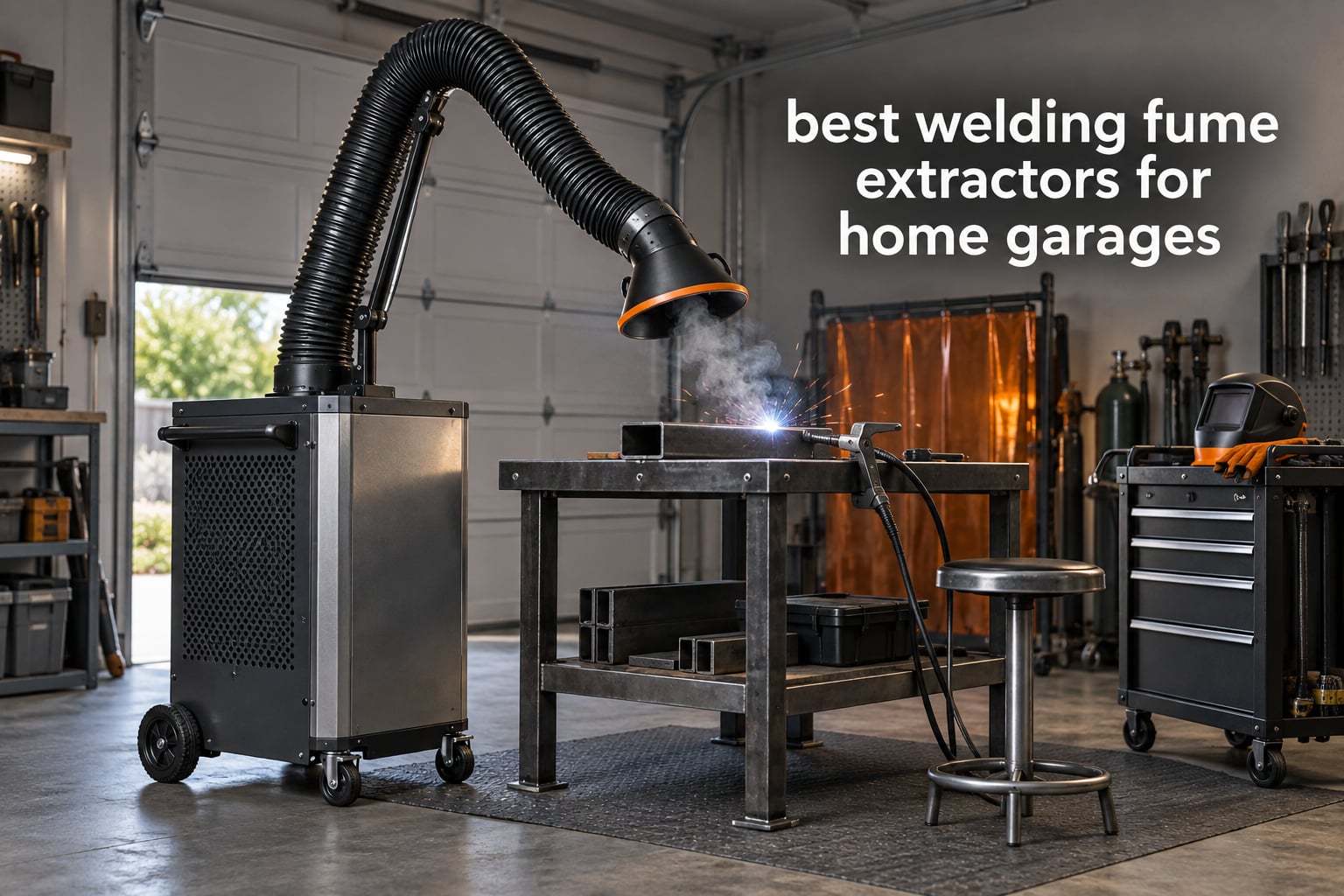
Most home garage welders do not need the industrial extraction rigs that dominate vendor pages. What they need is a wheeled, filtered unit that can sit near the bench, reach the arc with a hose, and keep the fume plume out of the breathing zone during a Saturday project. I compared ten of the highest-reviewed fume extractors in the buyable band, checked every airflow rating, filter stage, noise figure and voltage spec against the manufacturer data, and then read the owner reviews for the failure modes.
Here is the honest version of the best welding fume extractors for home garages: the FumeClear FC-100A is the best all-round pick because its three-stage stack, 100W draw and long-life carbon cartridge handle bench work in a one-car bay, and the KOTTO 52 CFM unit is the best value if you weld a few hours a week and can live with a fixed 24 inch arm. I also flag which of these are genuinely repackaged solder-fume machines, because that distinction decides whether a unit survives a MIG pass.
One thing to clear up before we get into the list. Almost everything sold online as a “welding fume extractor” for home use is a solder-fume extractor adapted for the hobby market. The hardware is similar, the target contaminant is not. Solder smoke is a low-volume rosin plume; welding fume is a hot metal aerosol plus gases, and it saturates a small carbon wheel in a few months. Read the filter stage and the capture distance before you buy, and I will call that out on every product below.
If you are still building out the bay, our guides to air compressors for garages and socket sets for home garages cover the other two tools you will reach for on the same weekend.
Table of Contents
What Is the Best Fume Extractor for Welding?
For a home garage, the best welding fume extractor is a wheeled unit with a capture arm or flexible hose, at least 150 m³/h of rated airflow, a washable pre-filter, a HEPA or electrostatic stage, and an activated carbon layer sized for a multi-hour session. The FumeClear FC-100A is our pick because it combines all five with a 100W draw that runs on a normal household circuit, and because its carbon cartridge is rated in hours rather than weeks.
The caveat matters: a genuine welding-arc extractor and a solder-fume extractor share a housing but not a duty cycle. If you are MIG welding mild steel for more than an hour at a time, a compact solder unit will run hot, sound rough and saturate its carbon early. A dedicated unit also needs the hood within roughly 15 inches of the arc to do anything at all.
Top 3 Picks for Home Garages in 2026
These three cover the realistic home-shop range: a properly staged three-filter unit, a high-volume workhorse, and a low-cost bench absorber.
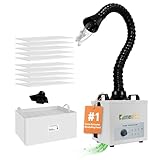
FumeClear FC-100A
- 3-stage pre-filter
- HEPA and iodine carbon
- 100W draw
- 200 m3/h airflow
- 10 spare pre-filters
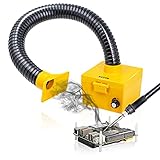
KOTTO 52 CFM Smoke Absorber
- 52 CFM airflow
- 24 inch flexible tube
- 55 dB
- 120V-240V universal supply

Antidious Fume Extractor
- Foam and activated carbon media
- ESD protected
- 57
- 000 hour motor
- spare filters included
All 10 Compared Side by Side in 2026
Every unit below is real, currently listed, and named the way its manufacturer names it. Airflow is the manufacturer’s rated figure at the intake, not a converted cross-sectional estimate, and noise is the published maximum unless noted in the review section.
| Product | Specifications | Action |
|---|---|---|
| FumeClear FC-100A |
|
Check Latest Price |
| KOTTO 52 CFM Absorber |
|
Check Latest Price |
| Antidious Bench Absorber |
|
Check Latest Price |
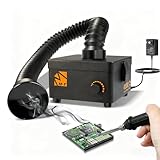 M-T MT308 80W Extractor M-T MT308 80W Extractor |
|
Check Latest Price |
 VEVOR 150W 3-Stage VEVOR 150W 3-Stage |
|
Check Latest Price |
 VEVOR 275W Dual Hose VEVOR 275W Dual Hose |
|
Check Latest Price |
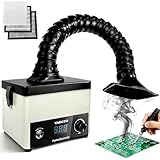 YAOCEO YC60 YAOCEO YC60 |
|
Check Latest Price |
 M-T 318 M-T 318 |
|
Check Latest Price |
 FumeClear FC-2003 Dual Port FumeClear FC-2003 Dual Port |
|
Check Latest Price |
 NLVYPRO MN04 NLVYPRO MN04 |
|
Check Latest Price |
When to Skip a Fume Extractor and Just Vent Outside
If your garage has a window or a side door within 10 feet of your bench, run 6 inch flex duct from a hood to the outside and skip the filter machine entirely. This is the consensus answer in the welding forums, and it is the right one: ducting removes the contaminant instead of trapping it, needs no consumables, and does not recirculate anything back into the room. One r/AskElectronics reply put it plainly, buy the proper filters and a generic fan, build it yourself, and if you can vent outside instead even better.
There are two situations where a filtered unit is the better buy. The first is winter welding with the garage door down, where you cannot leave a gap or a run an extension heater safely next to an open window. The second is a basement or a shop where the neighbours are close enough that blowing welding fumes at them is not acceptable.
The case against buying is real too. A home extractor is a device you have to switch on and position every single time, and the honest truth is that most people do not do that consistently. One welder described the adoption gap plainly, noting that the new student in their class has the good hoods available and still has to get into the habit of using them. Choose a unit you will leave out on the floor, not one that lives in a cupboard.
1. FumeClear FC-100A – Best All-Round Filtered Unit for a Garage
FumeClear FC-100A Fume Extractor Low-Noise & High Iodine 3-Stage Filtration
- Genuine three-stage stack with high-iodine activated carbon
- 200 m3/h rated airflow from a 100W motor
- Carbon cartridge rated in hours rather than weeks
- 10 spare pre-filters in the box
- Manufacturer replaced a failed unit for a customer
- Audible white noise even on lower settings
- Only effective with the work close to the hood
- Voltage version must match your local supply
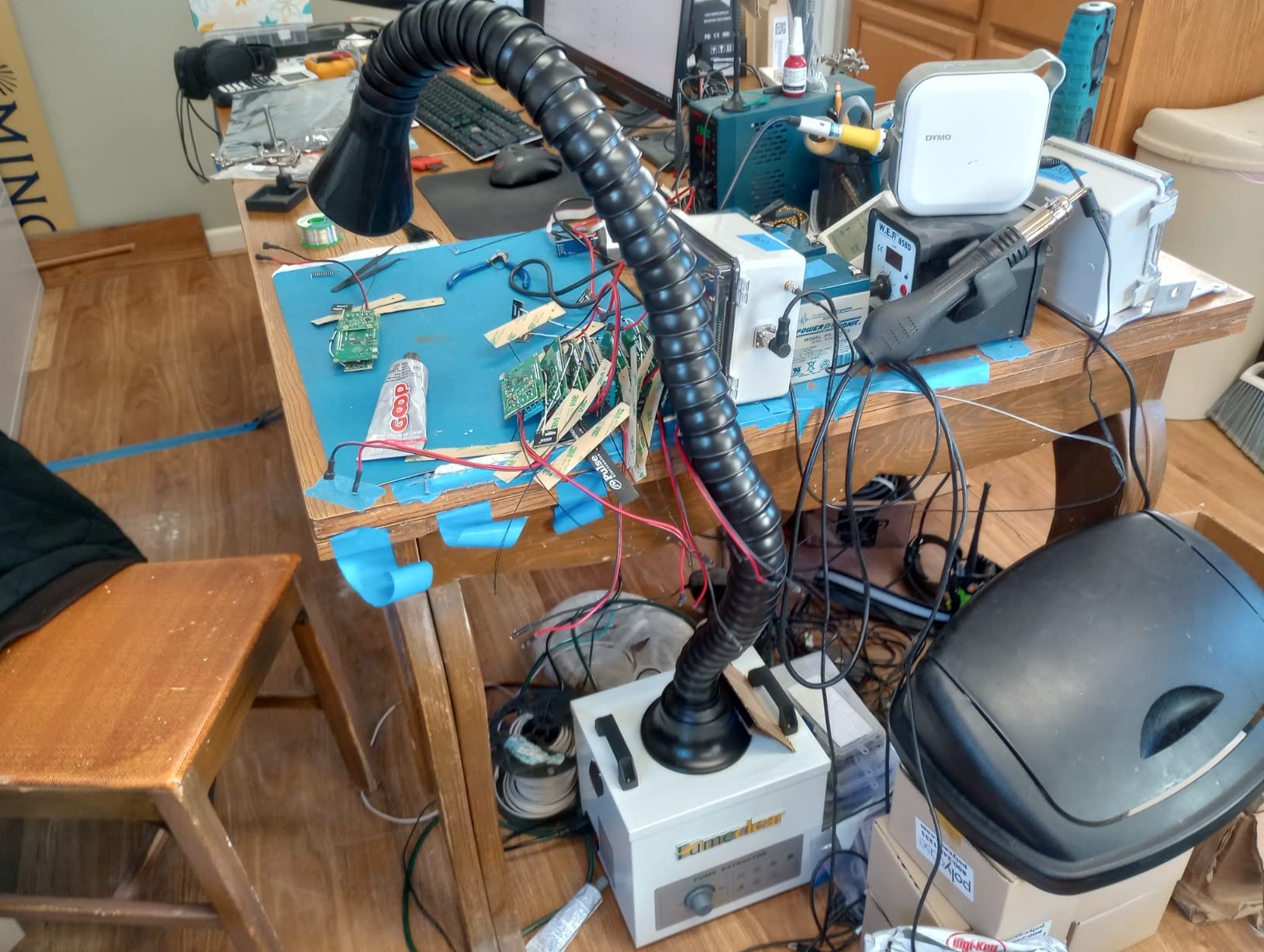
The FC-100A is the unit I would put in a one-car bay, and it is our top pick across this whole list. The 100W motor moves up to 200 m³/h, the filtration is a pre-filter cotton, then a combined HEPA and high-iodine activated carbon cartridge, and the headline number is 99.97 percent capture below 0.3 microns. That is a welding-duty filter stack at a hobby-scale price, and it is unusual to find one.
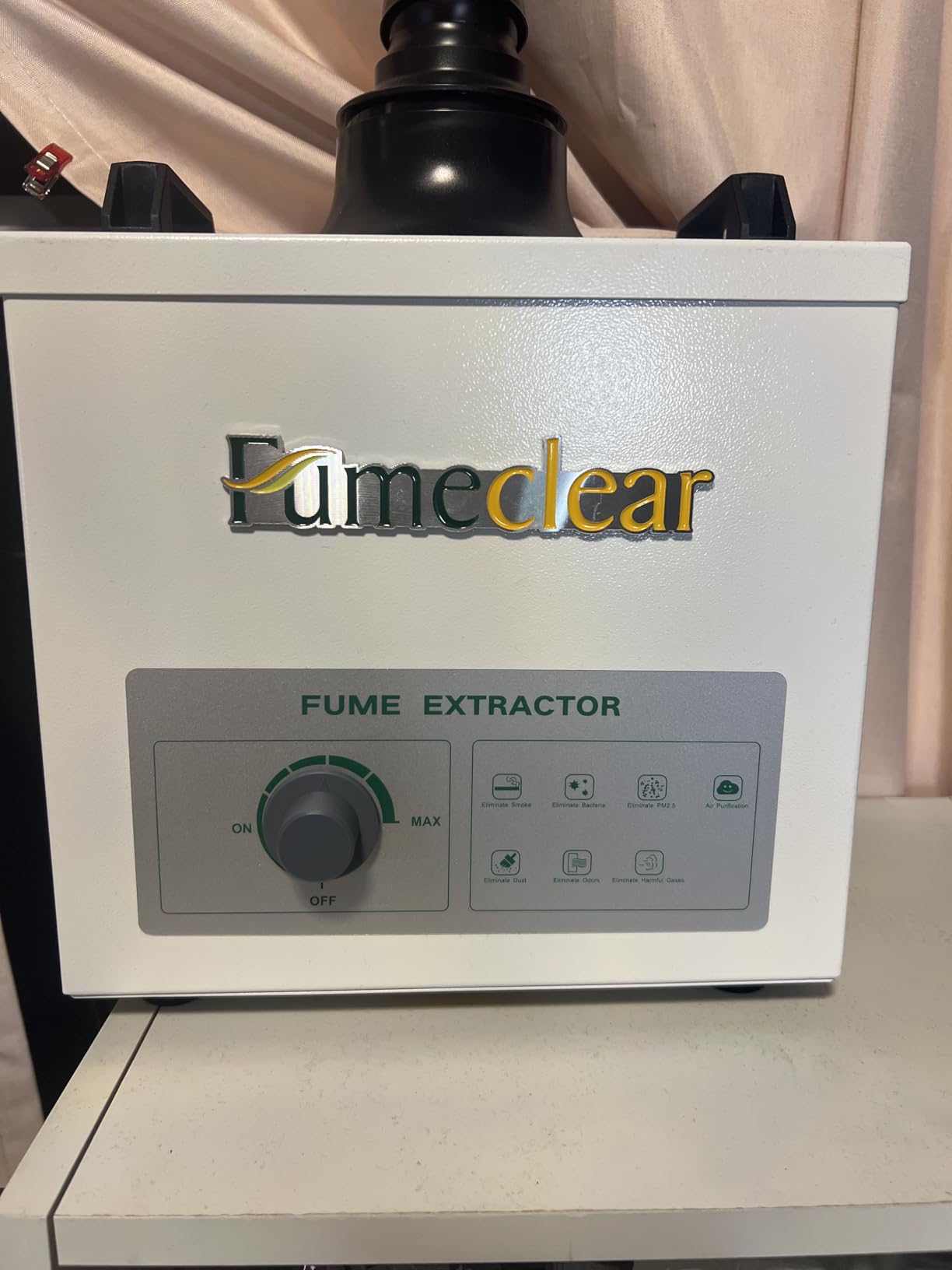
What convinced me was the consumable design. Most compact units sell you a foam disc that is finished in a season. This one ships with 10 spare pre-filters and rates the main carbon cartridge at roughly 3000 hours, so the running cost is a pack of cotton rather than a chain of carbon replacements. Owners report the filter lasting a long time and the included spares covering the first year easily.
Suction is a genuine strength: buyers pull fumes and fine dust from 4 to 6 inches at half power, and the stiff flexible hose holds its position instead of drooping, which matters more than it sounds when your hands are busy. The stiffness is also the complaint. There is no articulated capture arm, so you position the tube and leave it there. And the 10.6 by 8.7 by 10.8 inch body is compact enough to tuck under a bench, which is where mine would live.
Best for hobbyists who weld weekly in a one-car bay
The carbon stage is the differentiator. A HEPA filter stops particulate and does nothing about the gases, so an arc weld in an enclosed garage still leaves that sharp metallic taste in the air and the back of your throat. The high-iodine coconut carbon on the FC-100A is what removes the smell, and buyers of similar multi-stage units report an immediate noticeable difference in air quality once it is running.
It is also the most honest unit here about what it is. There is one report of a motor and control board failure at around six months, but the same buyer says the manufacturer replaced the unit, which is more than most sellers in this category will do.
Not for anyone who needs a long arm or a silent garage
Owners consistently report audible white noise even at lower settings, and the unit only works when the work is close to the hood. If your bench is 8 feet from where the unit can sit, this is the wrong tool. You also have to order the voltage version that matches your supply, because the 110V and 220V units are not interchangeable.
2. KOTTO 52 CFM Smoke Absorber – Best Value for Occasional Welding
- 843 reviews give a deep evidence base
- 52 CFM from a 40W motor at 125 mmH2O static pressure
- 24 inch flexible tube with an adjustable hood
- Three-speed fan lets you trade noise for airflow
- Replacement filter included in the box
- Loud enough that some owners use noise-cancelling headphones
- Carbon and foam media only
- not multi-stage HEPA welding filtration
- Filter cost adds up for heavy users
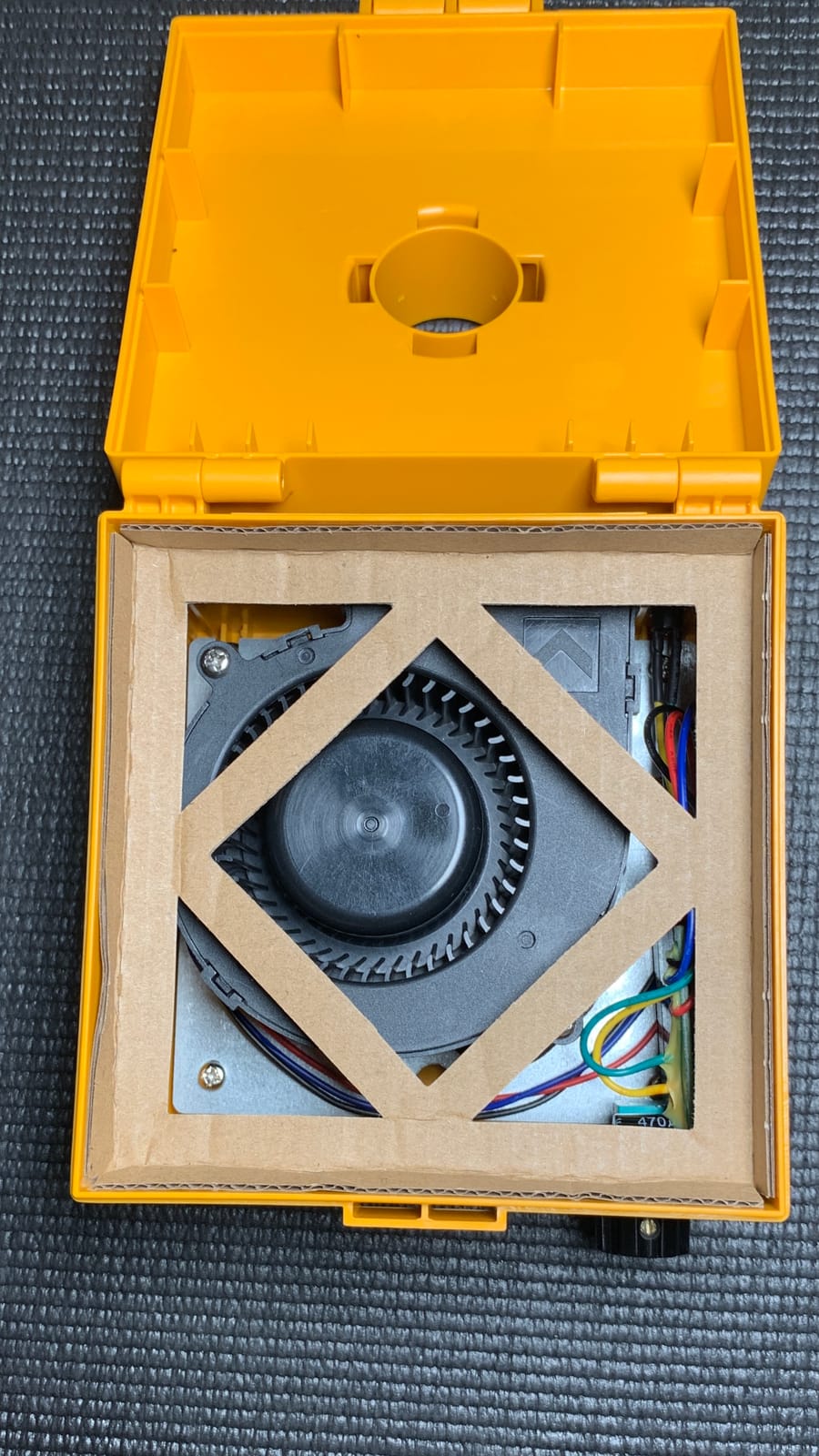
With 843 reviews, the KOTTO has more owner history than the other nine units in this guide combined, and that history is consistent. It moves 52 CFM through a 125 mmH2O static pressure rating, which is enough to capture solder smoke and light grinding dust from 5 to 6 inches away. The 6000 RPM fan and the 24 inch adjustable tube make it a genuinely useful bench tool.
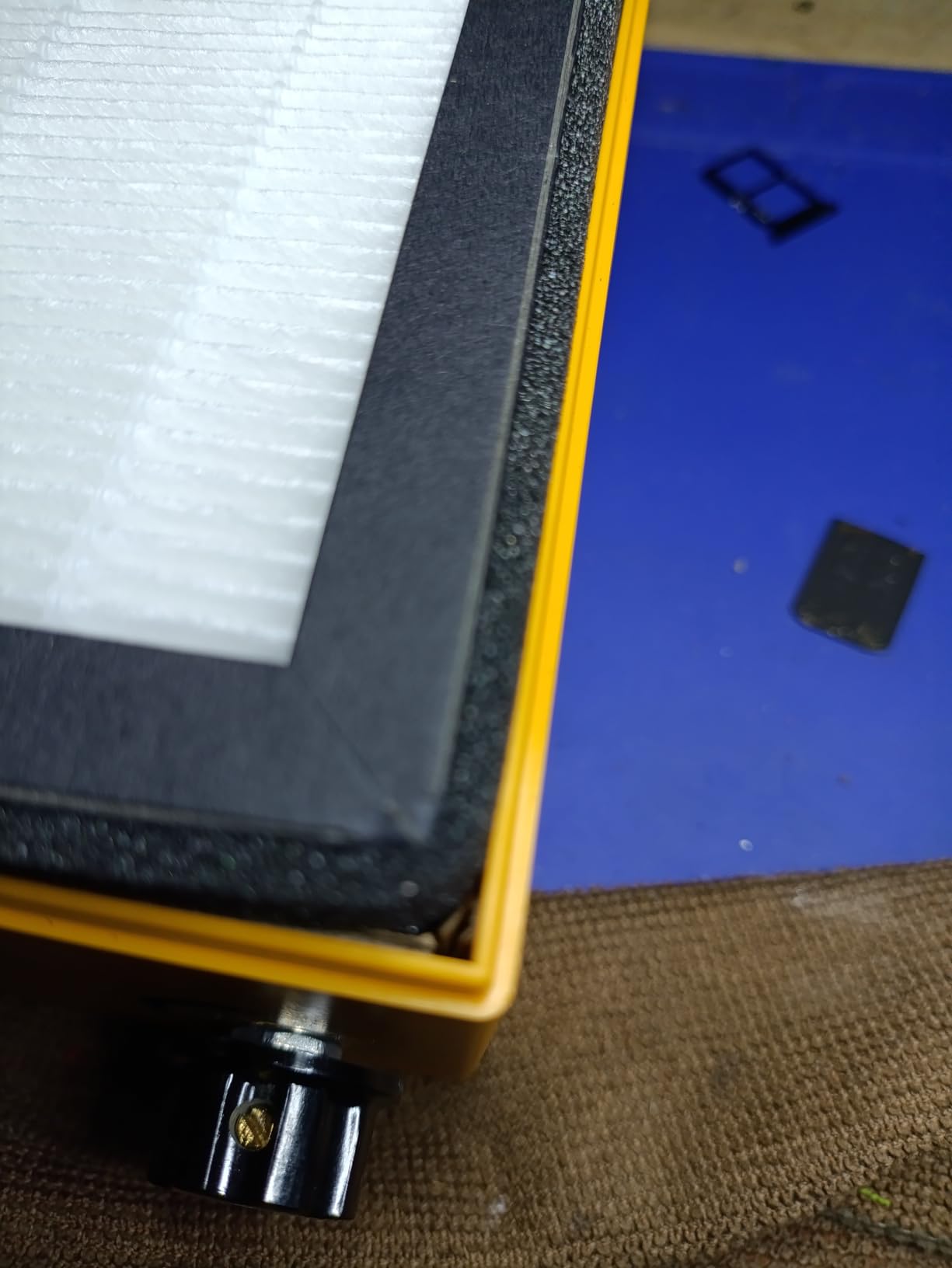
The universal 120V-240V supply is the practical hero in a garage. Many competing units ship with a fixed-voltage brick that will not work on a second circuit, and one of the recurring complaints across this category is having to match the version to your supply. This one does not care. It also weighs 3.87 pounds, so if you need extraction on the floor and then on the bench, you move it with one hand.
Buyers like the adjustable fan speed because it lets them find the point where airflow is sufficient and noise is tolerable. That matters more than the raw CFM figure, because a unit you switch off after ten minutes protects nobody.
Best for weekend fabrication and mixed bench tasks
Where the 52 CFM rating genuinely earns its place is on electronics, adhesives, and light metal finishing. For a garage welder doing short MIG passes on mild steel, this is at the edge of what it can pull from the arc, and owners are candid that it wants to be within about 6 inches. For short-duration work with a well-positioned hood, it is fine.
The 55 dB published figure is not the whole story. A number of owners describe the fan as white noise and reach for noise-cancelling headphones while it runs at speed, so plan on running it on a lower setting when you can afford to.
Not for long arc sessions or anyone sensitive to sound
The filter is basic carbon and foam, not a multi-stage welding-grade stack, so the consumable cost is the real running cost. Heavy users report the replacement cost adding up over a year. If your garage is a shared space or you weld next to a sleeping child, test the noise before you commit, because no spec sheet here will tell you how it sounds in your room.
3. Antidious Bench Absorber – Best Budget Pick for Electronics Work
- Two spare filters included
- ESD and surge protection on the electronics
- EC motor rated for 57000 hours
- Light at 1.7 lb with a body switch
- Quiet relative to ducted units
- Weak suction
- several buyers say it will not move enough air
- No hose or arm so it works only at point-blank range
- Foam and carbon only with no HEPA stage
Let me be straight about this one: the Antidious is a solder-fume absorber, not a welding fume extractor, and I would not weld a full garage project with it. What it is, is a very cheap, very quiet second unit that belongs next to the electronics bench. It weighs 1.74 pounds, the body switch is reachable, and it captures from 4 to 5 inches without blowing smoke around the workspace.
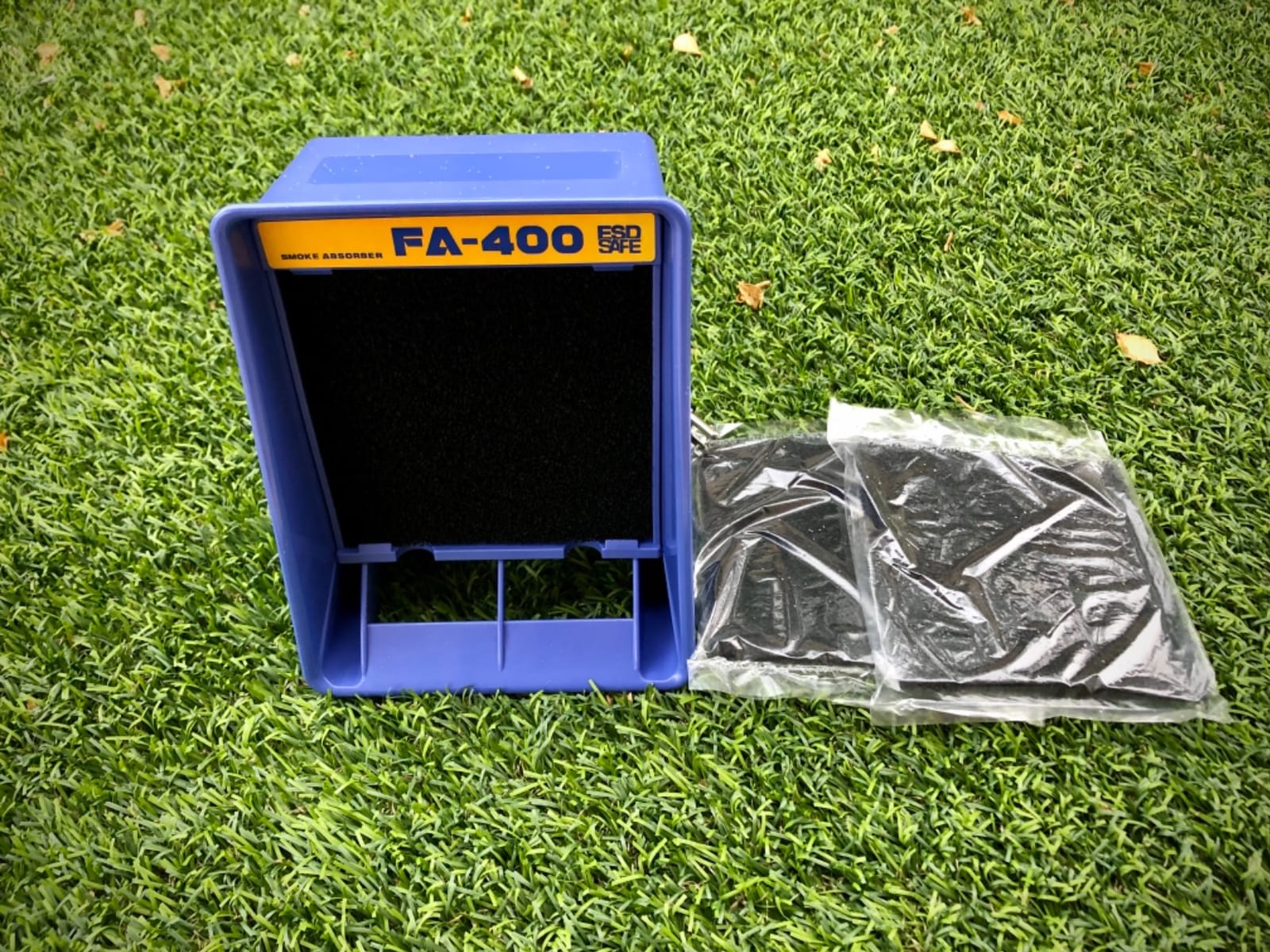
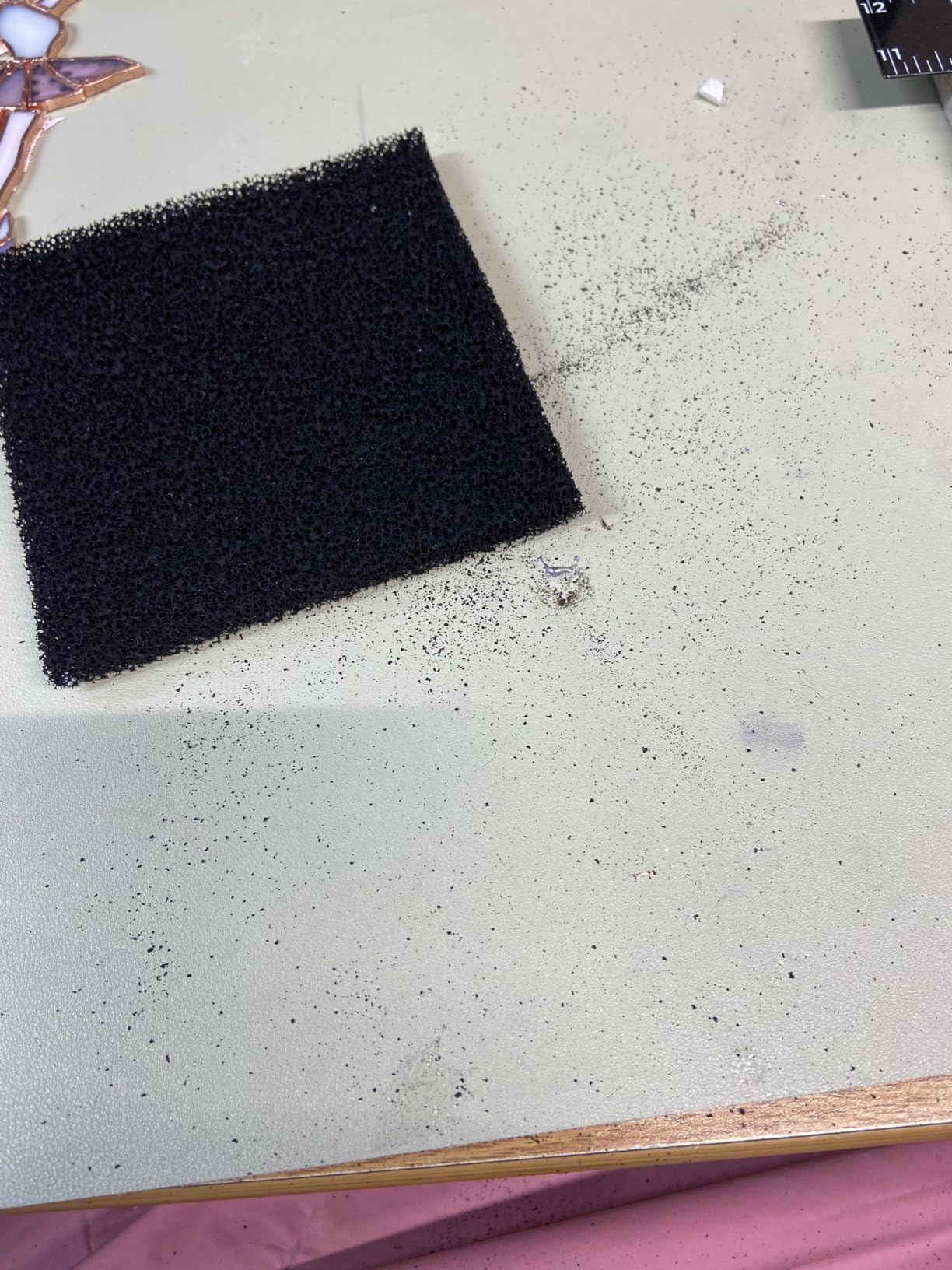
Two details make it more useful than its category suggests. The electronics carry ESD and surge protection, which matters when the unit sits next to a bench with a scope on it. And the box includes urethane foam and activated carbon filters as spares, so a unit at this level rarely goes without media.
With 369 reviews and a 4.3 average, the pattern in the owner feedback is stable: light bench work at close range is handled well, and anything beyond that disappoints. Several reviewers, including the one and two star voices, say straight out that it will not move enough air, and one suggests adding a tube adaptor to improve extraction.
Best as a second unit beside a soldering or repair bench
Owners mostly use it for soldering, glue, and small repair work rather than welding, and for those tasks the quiet operation and the compact ABS body are exactly right. The motor is rated for 57,000 hours, and it runs horizontally or vertically, so it fits awkwardly shaped bench space without complaint.
Several buyers explicitly say it should supplement room ventilation rather than replace it, which is the correct expectation. Put it near the work, turn it on, and get back to the job.
Not for arc welding at all, at any distance
There is no hose and no arm, so it only works at point-blank range, and the media is foam and carbon with no HEPA stage. If you are welding anything, buy a higher-airflow unit instead. Note also that this body occupies real bench space even though it weighs under two pounds, and a reviewer flagged the size as a surprise.
4. M-T MT308 80W Extractor – Best Multi-Task Unit for a Mixed Shop
- 168 m3/h airflow from an 80W
- 15000 RPM motor
- Three filters including a true H13 HEPA stage
- 360 degree adjustable 7-25 inch hose
- Metal housing
- works for 3D printing and laser work
- 3-year warranty
- Loud at full output
- several owners run it below maximum
- Hose fitting cross-threads and jams
- Bottom exhaust can wash air back across the bench
- Replacement filters are hard to source
If your garage does more than weld, the MT308 is the most broadly useful unit here. An 80W motor at 15,000 RPM moves 168 m³/h, which is well above the KOTTO and the Antidious, and the filter stack is a high-density fibre, carbon cotton, then H13 HEPA combined with activated carbon. That combination is rare in a compact metal housing.
One reviewer tracked particulate with a PM10 monitor during long soldering sessions and reported a measurable drop, which is the kind of evidence most listings never offer. Owners consistently single out the airflow-to-size ratio and the fact that the hose bends 360 degrees to grab smoke at the source. The universal 100-240V adapter with surge and voltage spike protection is a sensible garage detail.
The 4.0 average is the lowest of the units with meaningful review volume, and the middle of the distribution is worth reading. The complaints are design details rather than failures: a hose fitting that cross-threads, exhaust that exits the bottom, a fan that rubbed the housing on one unit, and difficulty finding replacement media. One buyer received a used unit with soot inside.
Best for shops that weld, print, engrave and sand
The 3-stage stack with a genuine H13 HEPA stage handles resin printing fumes, laser particulate and sanding dust as well as light welding, and the metal body takes heat better than the ABS competitors. The bendable hose is what makes it useful for more than one task, since you can pull it over to wherever the plume is.
If your garage is a general workshop rather than a dedicated weld bay, this is the unit most likely to earn its floor space every week instead of once a month.
Not for anyone who needs clean placement or easy filter changes
Owners report the hose-to-housing connection threads poorly and jams, which is frustrating when you are trying to aim the hood. Exhaust exits the bottom of the unit, and several buyers note it can wash air back across the bench toward you, the opposite of what you want. Replacement filters are also reported as hard to source, so check availability before you buy, not after.
5. VEVOR 150W 3-Stage – Best Airflow Class for the Money
- 332 m3/h rated airflow
- the highest in this set at a hobby price
- 47.2 inch hose that bends to any angle
- Filter-change alert beep removes maintenance guesswork
- Four swivel casters with two lockable
- Manufacturer scopes it to soldering and work within 20 cm
- 22.3 lb and tall for a compact corner
- Filter replacement every 3-6 months adds running cost
- 70 dB maximum is the loudest published figure here
The number to notice on this VEVOR is 332 m³/h from a 150W motor, which is more airflow than several units costing well over twice as much. The 47.2 inch flexible hose is the longest single tube in the list, and four swivel casters with two locking brakes mean you can park it against a wall out of the way.
The filter-change alert beep is a small feature that solves a real problem. Nobody wants to guess when a carbon stage is spent, and a machine that tells you removes the most common reason people keep running a saturated filter. The 99.97 percent efficiency claim and the three-layer stack sit above a sturdy spray-coated sheet metal shell.
I would not buy this expecting it to be a welding-arc machine, and the manufacturer does not ask you to. The listing states it suits small-scale laser work and gives its best effect within 20 cm of the source. For a garage welder with a bench-mounted position and short beads, that is achievable. For a long pass down a frame, it is not.
Best for high-volume airflow on a fixed bench position
Where this unit wins is moving a lot of air cheaply. If you are grinding, sanding, or cleaning metal in a confined bay, the airflow class and the rolling chassis are worth more than filter sophistication. The 110V operation also means it drops into a standard garage circuit without any electrical work.
Owners like the sheet metal shell for shop-floor durability, and the long hose can be positioned over a bench or a workbench without a second piece of equipment.
Not for long-reach welding or tight corners
At 22.3 pounds and 10.4 by 10.4 by 16.9 inches, it is a tall object to find a home for in a one-car bay. The 70 dB maximum is the highest published figure in this guide, and the manufacturer recommends filter replacement every 3 to 6 months, which is a real recurring cost if you use it heavily.
6. VEVOR 275W Dual Hose – Best Unit with Two Workstations
- 275W brushless motor rated up to 380 m3/h
- 10-level stepless speed control on a rotary knob
- Dual exhaust hoses let you cover two benches at once
- Four rolling wheels plus carrying handles
- Low settings are quiet enough for detailed work
- Some reviewers report the smaller chassis has no carbon layer at all
- Replacement filters are not offered by the brand
- One report of a failure at about two months
- Heaviest unit here at nearly 42 pounds
This is the most powerful machine in the group, with a 275W brushless motor rated up to 380 m³/h and 10 levels of stepless speed control. The brushless motor is the detail I would weight heavily, since it is the component that most often ends the life of a compact extractor. Stepless control also lets you find the exact airflow-to-noise balance instead of choosing between three fixed settings.
The dual exhaust hoses are the feature no other unit here offers. Each bends 360 degrees, so you can cover a welding bench and a grinding bench at the same time from one machine, and four rolling wheels with carrying handles make it movable despite the weight.
I want to be careful with the rating, though. There are only 18 reviews, and they split by chassis size rather than by function. The listing offers three chassis sizes, and the 4.1 average is dominated by the compact 8 inch variant, which means it is a poor guide to the full-size dual-hose unit you would actually buy.
Best for a two-bench shop that needs fine airflow control
Owners of the larger chassis report good value and adequate noise, and the low end of the speed range is quiet enough for detailed work such as stained glass. The 10-level control is what makes it usable in a shared space, because you can turn it down for fine work and up for a grinding pass without leaving the bench.
If you run a fabrication setup with more than one work surface producing fumes at once, dual hoses are a genuine capability that no single-hose machine in this guide can match.
Not for anyone unsure which chassis they are buying
One technical reviewer notes that the smaller chassis has no carbon layer at all, so it moves particulate without cutting VOCs, which defeats a lot of the purpose. Replacement filters are not offered by the brand, and one buyer warns explicitly against buying for that reason. There is also a single report of a unit failing after about two months with no useful support, and at nearly 42 pounds this is the heaviest machine here.
7. YAOCEO YC60 – Best for Quiet Work in a Shared Space
- Extraction arm locks rigidly in position
- Below 50 dB for a machine in this airflow class
- Digital fan speed readout for capture versus noise
- All-metal frame with heat and spatter shielding
- Wide 100-240V voltage with separately sold filters
- Filter cartridges need periodic replacement under heavy use
- Instructions thin or missing for some buyers
- One unit arrived dead and would not power on
- Not silent despite the quiet description
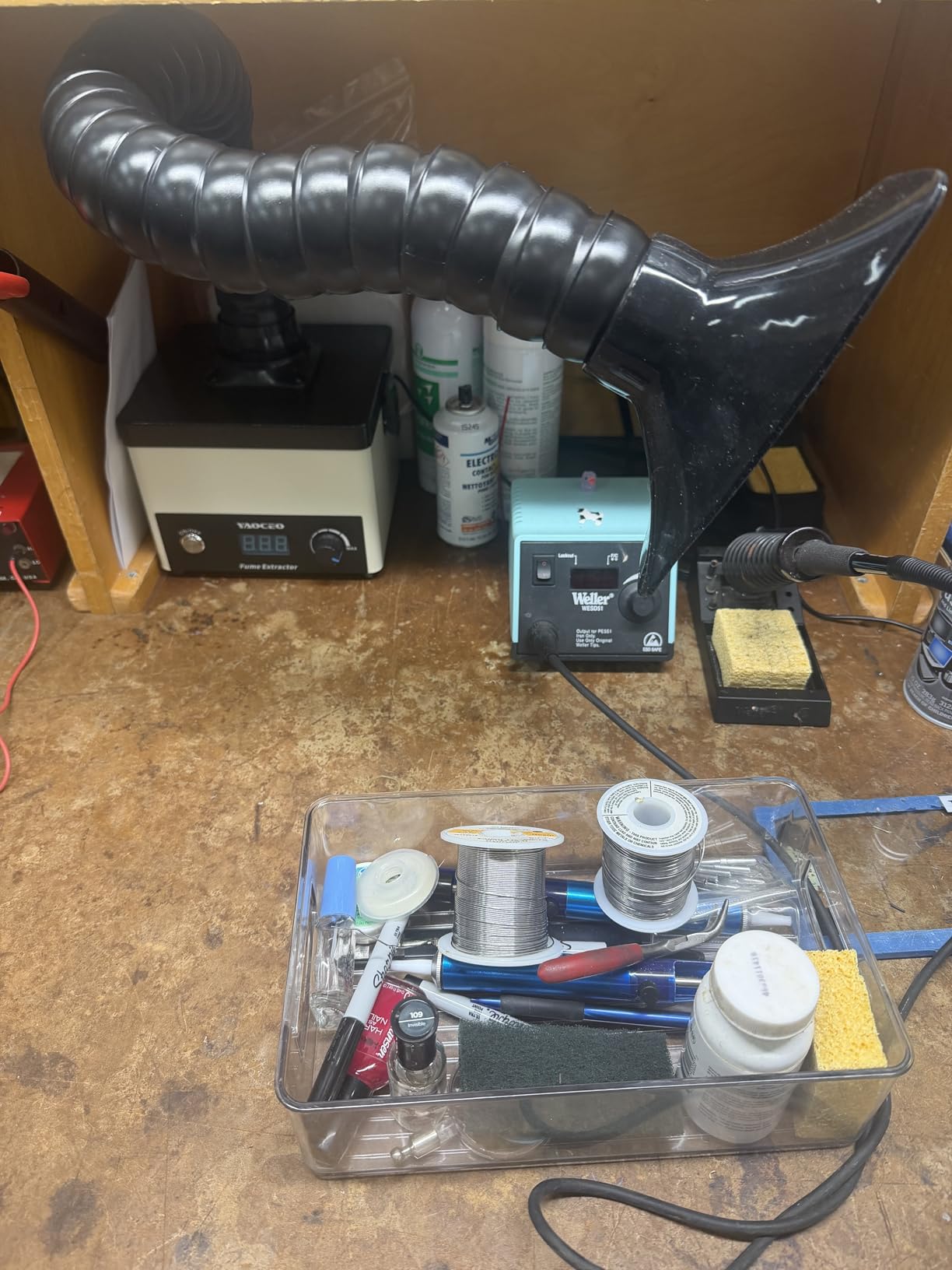
The YC60 is the one to choose if the garage is also a room you work in while someone else is in it. It is rated below 50 dB at 71 CFM, which is the quietest published figure among the units with a real HEPA stage here, and 81 percent of its reviewers name one feature as the deciding factor: the arm locks in place.
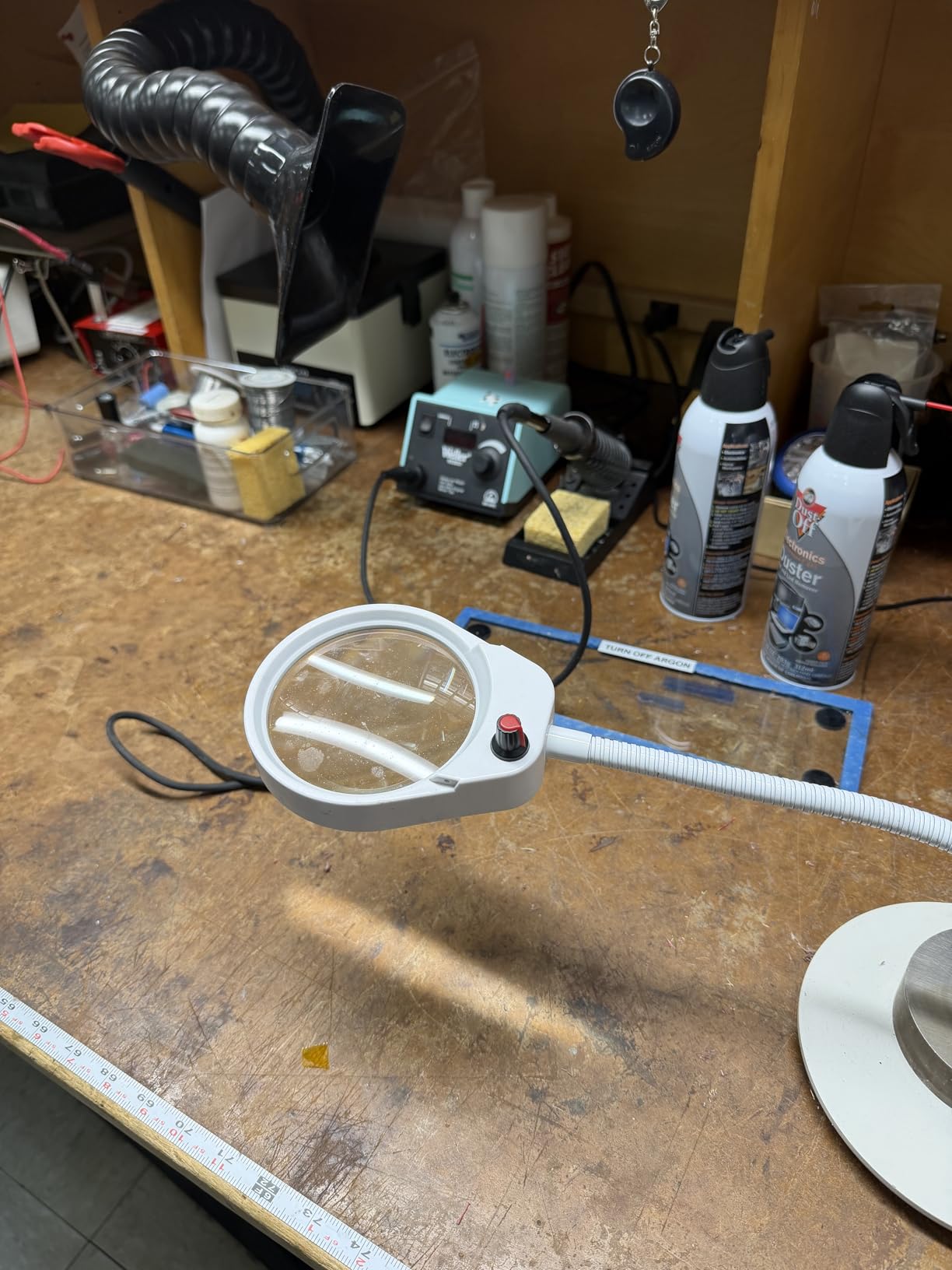
Arm rigidity sounds trivial until you have used a floppy hose. One reviewer returned a cheaper unit specifically because its hose would not stay put, which tells you how much of the perceived quality of a compact extractor lives in that one joint. The 360-degree locking, heat-resistant arm on the YC60 holds a set position indefinitely, and the digital speed display lets you dial capture against noise precisely rather than guessing between presets.
The build is an all-metal frame with heat and spatter shielding, and the motor is a 2025 brushless unit rated past 10,000 hours. Filter components are sold separately, which is a genuine advantage over several competitors on this list where the brand simply does not stock them.
Best for detailed work where noise and arm drift are deal breakers
Owners report an immediate noticeable difference in air quality from the three-stage stack of pre-filter, H13 HEPA and activated carbon, and one laboratory user specifically praises the removable hose for storage. At 8.18 pounds it moves between bench and shelf without effort, and the wide voltage support means it works on any circuit in the garage.
If you do stained glass, electronics, or fine TIG work where you need to hear and see detail, this is the airflow-to-quiet compromise that works.
Not for heavy daily duty or buyers who need long documentation
This is a new listing with 21 reviews, so the evidence base is thin. Filter cartridges need periodic replacement under heavy use, which is the main running cost, and the instruction manual is reported as thin or missing for some buyers. One unit arrived dead and would not power on, and despite the quiet framing it is not silent.
8. M-T 318 – Best Capture Reach of the Compact Units
- Rated to capture smoke from within 15 inches
- the longest working distance here
- Suction pulls fumes out of the breathing zone rather than stirring them
- Large filter relative to other desktop extractors
- Laser-welded metal housing with a quiet low setting
- Variable-speed motor struggles to start below full power
- Rear exhaust and a short hose limit desk placement
- Replacement filters hard to source from third parties
- Measured noise above the 60 dB listing claim
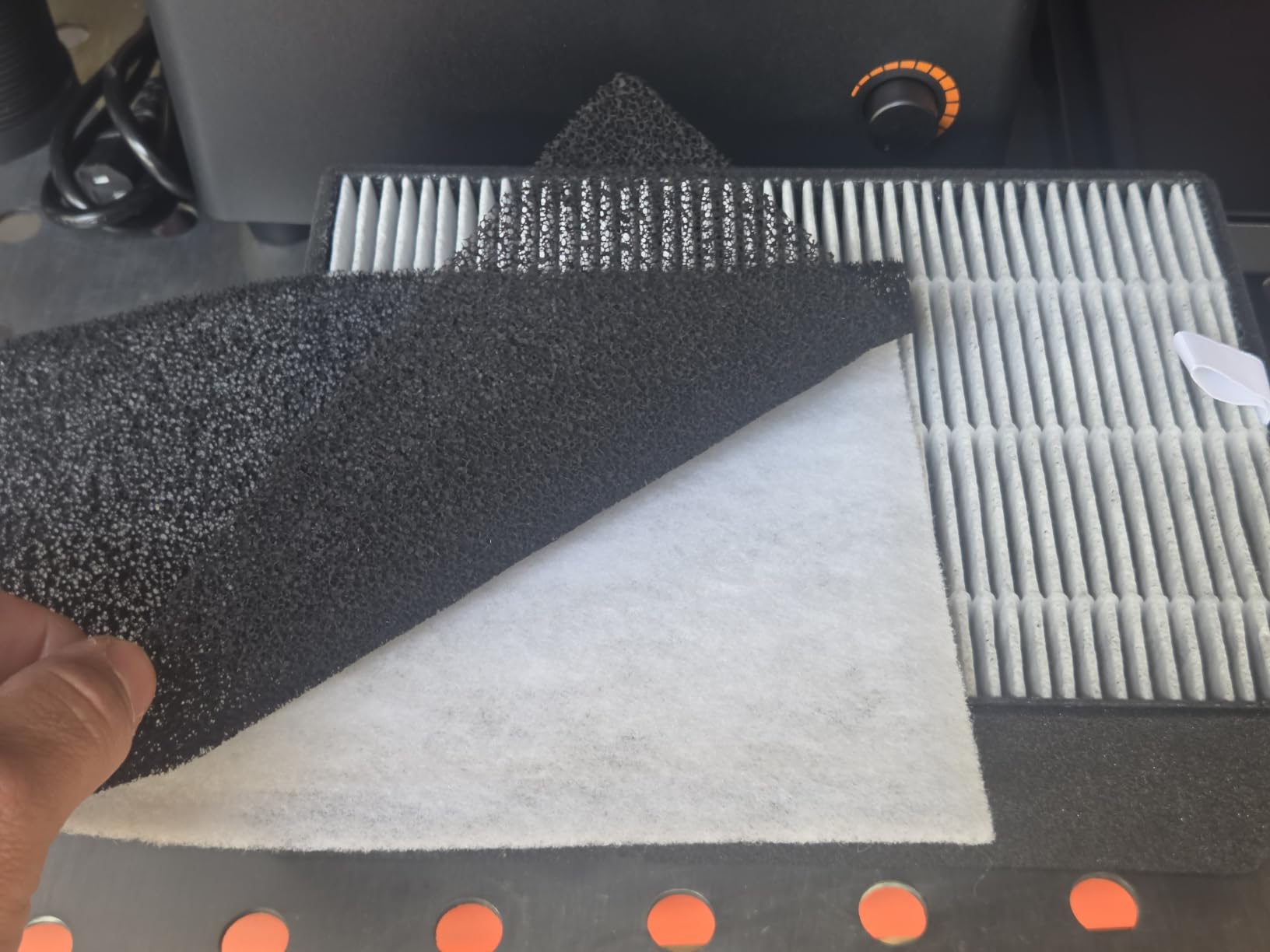
The M-T 318 is specified for a 15 inch working distance, and no other unit in this guide claims that much reach from a desktop footprint. A 26,000 RPM motor delivers 216 m³/h through a pre-filter, a True HEPA stage and activated carbon, and the 360-degree tube is built with rigid folding rings so it locks into a shape instead of springing back.
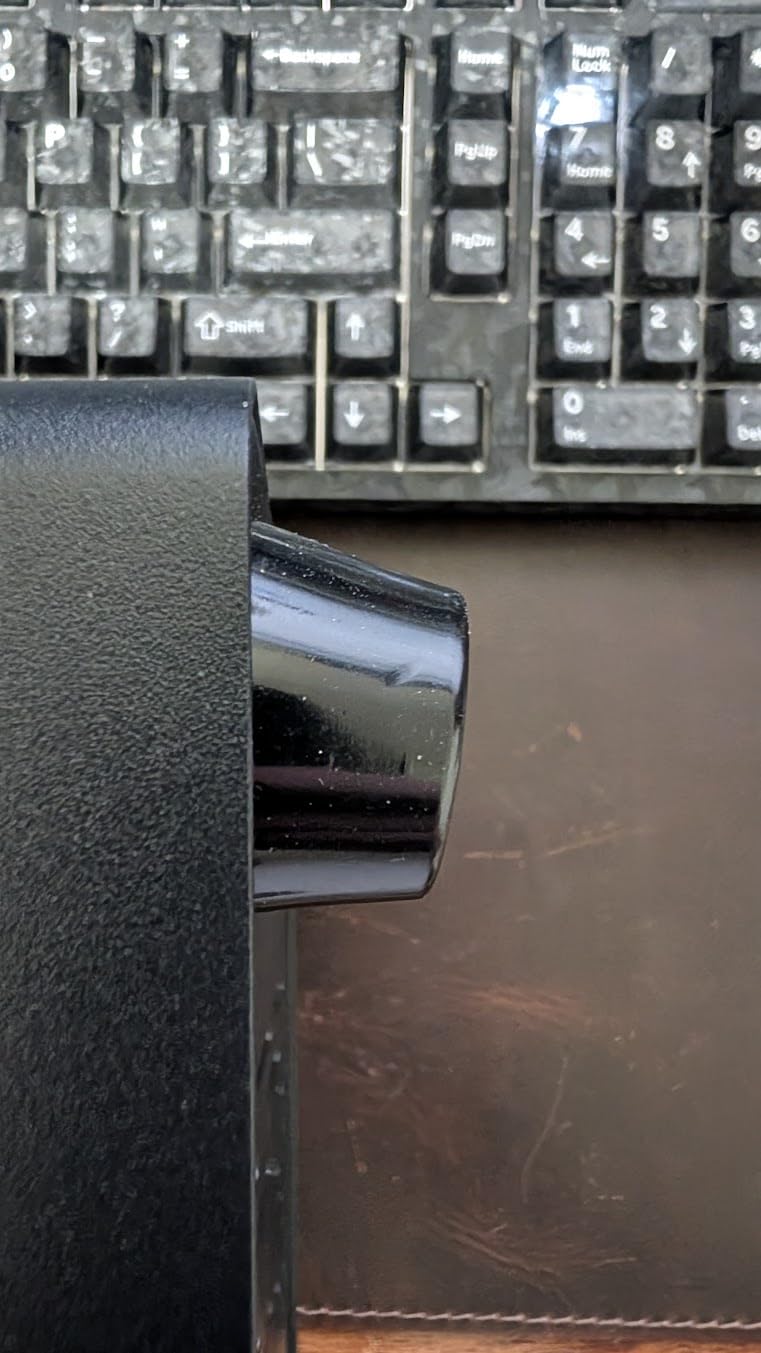
That reach changes the maths for a garage. Most of the units in this category are honest only at 5 or 6 inches, which means your head has to be close to the hood. One owner of this unit describes the suction as genuinely pulling fumes out of the breathing zone rather than stirring them, and a teacher reports that the large filter let her stop venting her classroom through a window, which is a real capacity test.
I would treat the 4.4 rating as thin evidence, because there are only nine reviews. Two of them are unusually detailed quality-control reports, and one measured noise above 75 dBA at full power against a 60 dB listing claim. Specific, repeated complaints deserve more weight than a favourable average at this sample size.
Best for work where the hood cannot get close to the arc
The 15 inch working distance is what makes this the pick for anyone welding on a bench where the unit sits on a shelf behind them rather than in hand. The tube holds position, the housing is laser-welded metal at 10.83 by 7.28 by 9.17 inches, and the low setting stays quiet enough for small work. Variable speed also helps avoid losing heat in a cold garage.
If your pain point with a compact extractor has always been the 6 inch constraint, this is the unit that addresses it without a wheeled chassis.
Not for anyone who needs accurate noise figures or easy starting
Owners report the variable-speed motor will not start below full power, so it has to be spun up at full output and then turned down, which is annoying if you are trying to keep noise low. The rear exhaust and a short hose limit how you position it on a desk, replacement filters are hard to source from third-party sellers, and one unit arrived with a bent base plate that needed assembly.
9. FumeClear FC-2003 – Best for Two Inlets at Once
FumeClear FC-2003 Dual Ports Fume Extractor for Remote Control Low-Noise
- Two air inlets running simultaneously
- Highest satisfaction of any unit in this set
- 330 m3/h on one inlet and 165 m3/h on both
- High-iodine coconut carbon rated 2000-4000 hours
- Remote control for changing settings without walking over
- Heaviest unit here at 42.2 pounds so it needs planned floor space
- Highest cost of the FumeClear models
- Capture range specified as within 15 cm
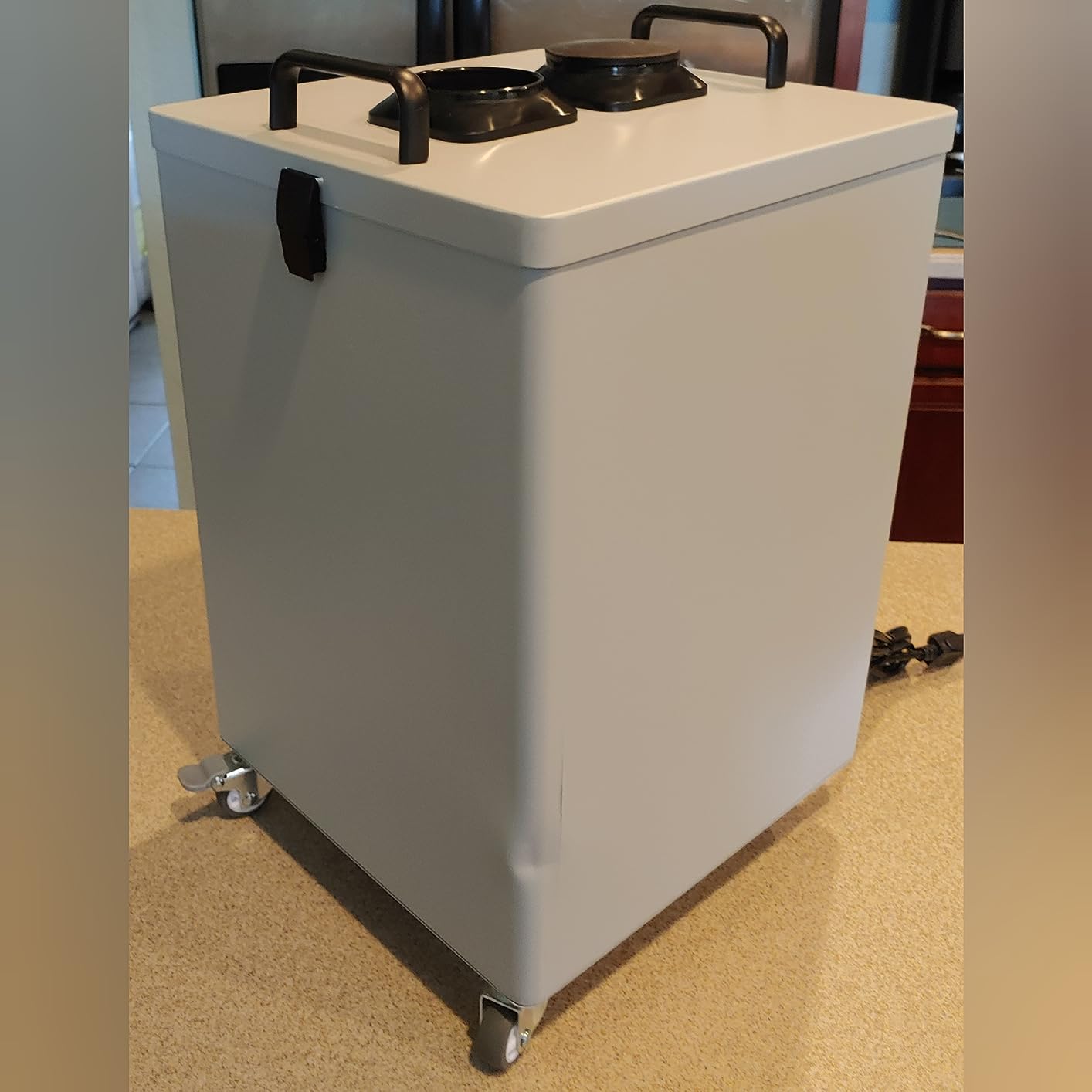
The FC-2003 is the only unit here that extracts from two places at once, and in a garage that welds and grinds on separate surfaces that is a real capability. It delivers 330 m³/h on a single inlet or 165 m³/h across both, with the same three-layer filter and high-iodine coconut shell carbon rated 2000 to 4000 hours. Ten spare pre-filter cottons are included.
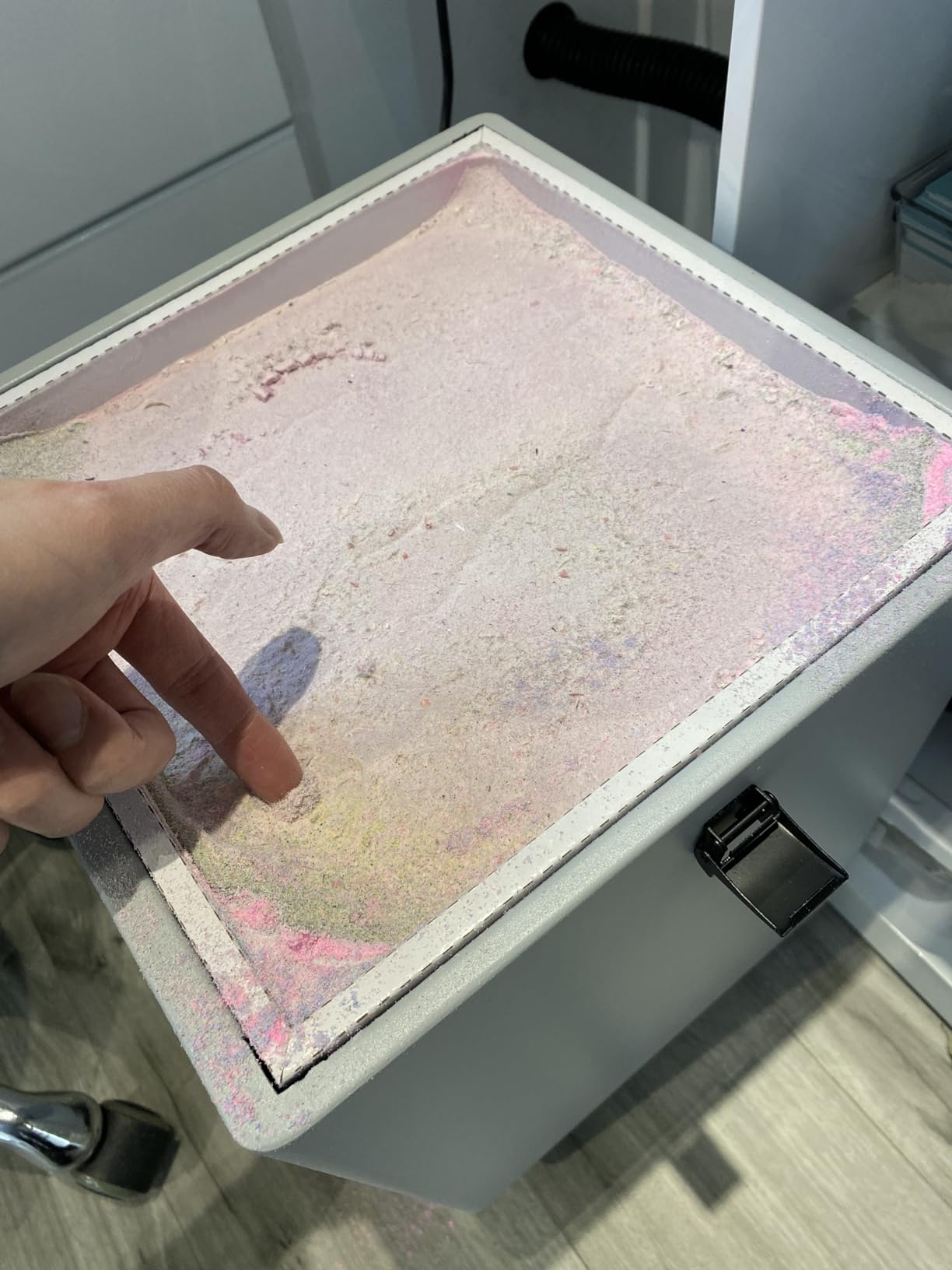
Its 4.8 rating is the highest in this guide, and with fewer than 15 reviews it is also the least proven. What is striking is the absence of complaints: 78 percent five-star and 22 percent four-star, with nothing at three stars or below, and no reported functional or durability failure. The consensus is that the dual-port layout and the carbon stage are a step up from single-port machines, and that the remote control is a convenience you notice every session.
The remote control is genuinely useful. Changing fan speed without walking across the garage to the unit is the kind of small thing that makes you more likely to turn it on in the first place, which brings us back to the habit problem that decides whether any of this works.
Best for a garage with two fume-producing work surfaces
If you weld at one bench and grind or cut at another, covering both from one machine removes the need for a second unit and the second noise source. The carbon rating in hours is the best consumable economics in this group, and the included spare pre-filters cover the first year of typical hobby use. It is also CE, FCC, ROHS and UKCA certified, with 24-hour technical support behind it.
For anyone who wants the cleanest filtration and the least guesswork about when to change media, this is the most satisfying unit here on the evidence available.
Not for a small bay or a user who moves machines often
At 42.2 pounds you are choosing a floor location before you choose a position, and you will want a plan for moving it when the garage layout changes. It is also the most expensive FumeClear model. Capture is specified as within 15 cm, so the inlets must sit very close to the source rather than reaching across a bench.
10. NLVYPRO MN04 – Best Filter Availability for Electronics Repair
NLVYPRO MN04 Soldering Fume Extractor with Dual Fan & H13 HEPA Filter, 3200 RPM Smoke Absorber for Welding, Jewelry, Electronics Repair, Low Noise, 110-240V Wide Voltage
- Replacement HEPA filter kits are actually available from the brand
- Dual 12V fans give a large filter face area for the size
- Sold metal construction reviewers call industrial grade
- Variable speed controller for near-silent low-speed running
- 110-240V wide voltage support
- Louder than the low-noise description when run up
- Weak suction unless placed very close
- Very short cord with the speed control mounted on the cable
- Sits low so it benefits from being elevated
The MN04 earns its place on a detail that several bigger units in this guide get wrong: replacement HEPA filters are genuinely purchasable from the brand’s storefront. Several competing listings fail on exactly this point, and a machine whose media you cannot reorder is a machine you will stop using.
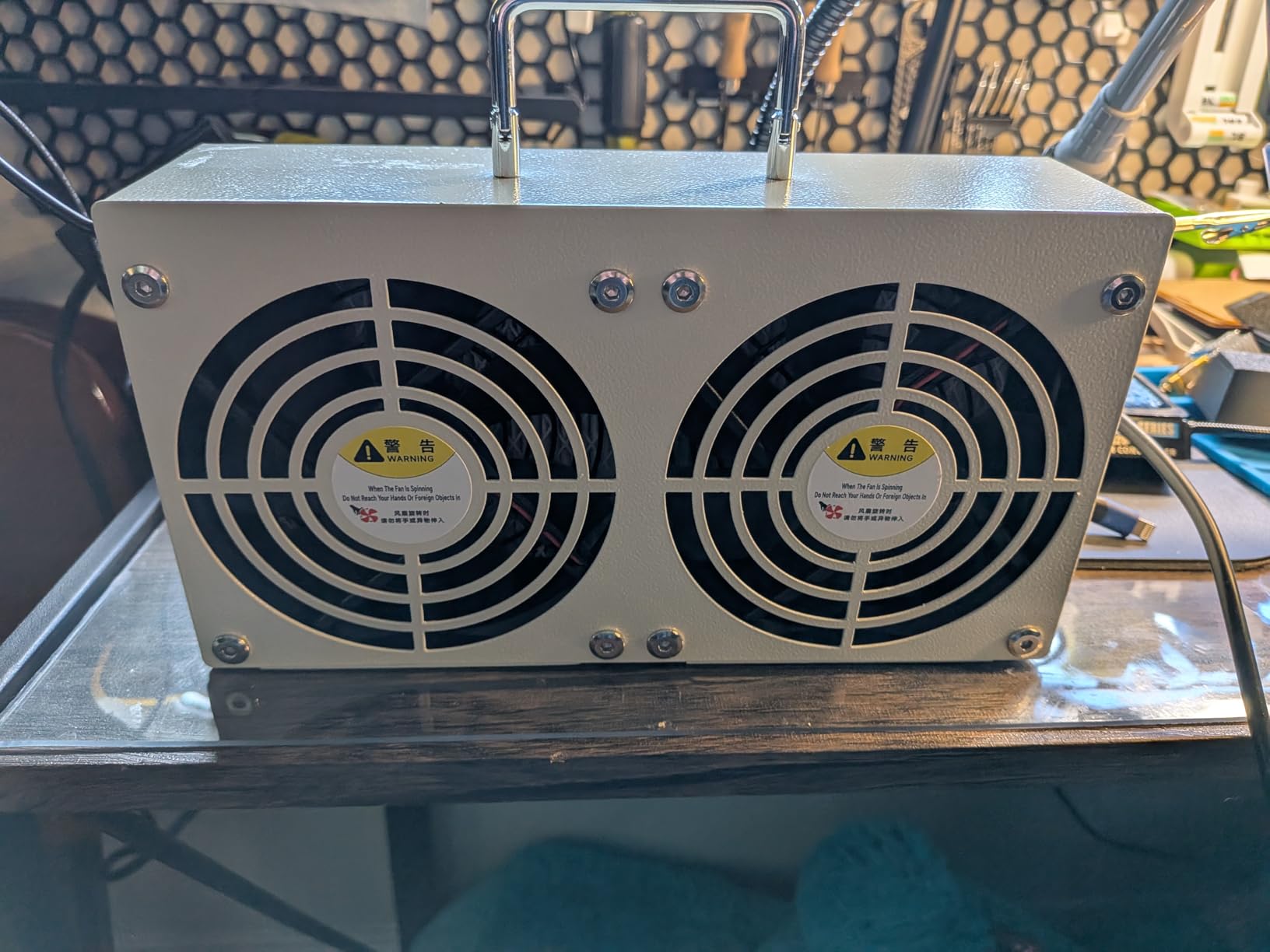
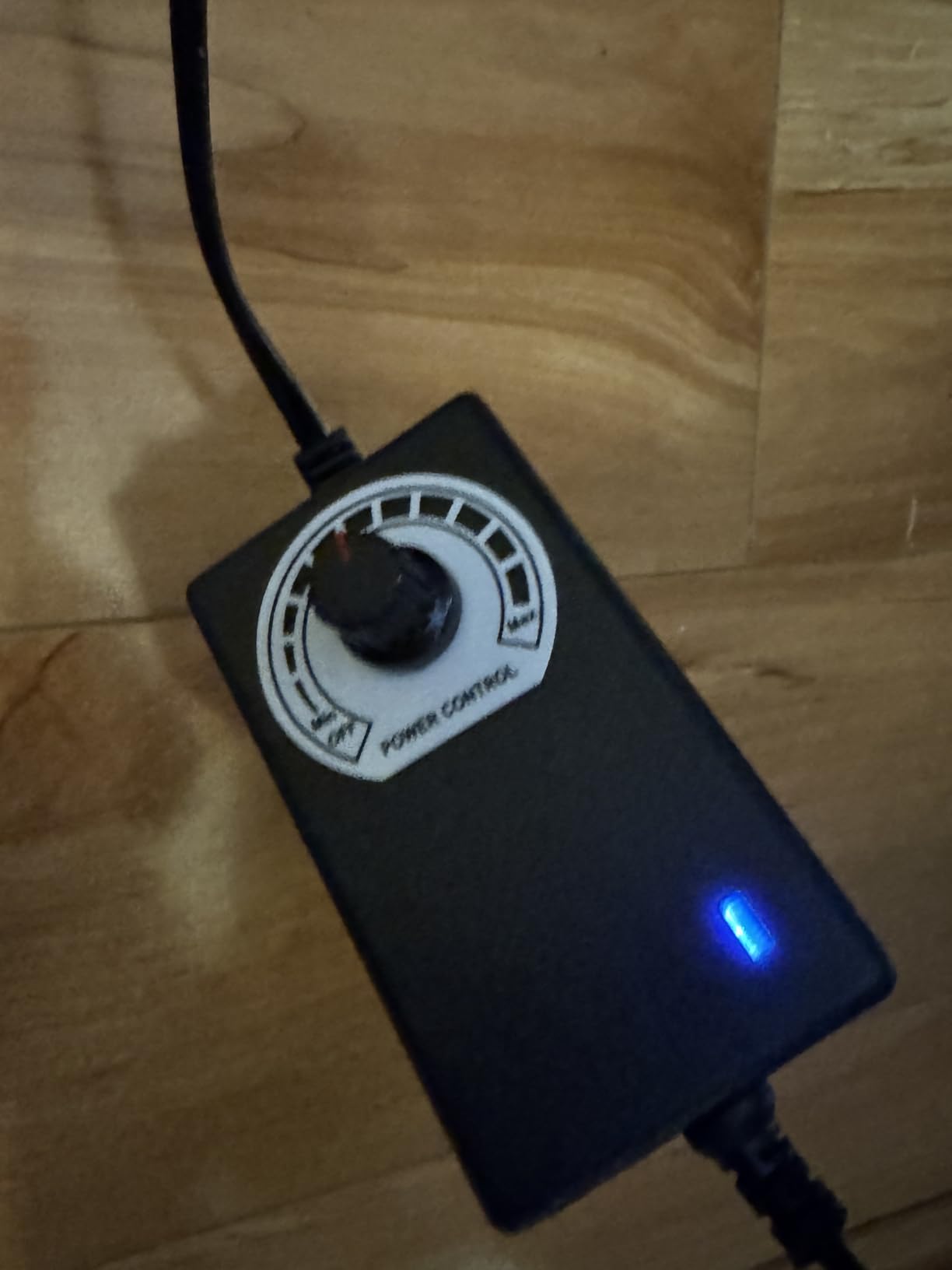
The hardware is a pair of 12V computer-style fans running up to 3200 RPM behind an H13 HEPA stage, a carbon layer and a foam pre-filter, all in a sheet metal chassis with two hinged front doors exposing the filter stack. That door arrangement gives you a large filter face for a unit this small, and the variable speed controller on the power lead lets you run it near-silently for fine work.
Two reviewers note they can run the unit from a 12V battery through the DC jack, which is not a designed use but is a genuine advantage in a garage with awkward outlets. The 110-240V wide voltage means it works on any circuit.
Best for repair benches where filter supply is the deciding factor
For electronics repair, jewellery and small-parts work, the metal build and the large filter face area make this more useful than its size suggests. Buyers call the construction industrial grade for the class, and the hinged doors make filter changes straightforward compared with units you have to unbolt.
The low-speed variable control is what you will use most. Run it low for desoldering and a solder pot, and high only when you need it, and the noise complaint largely goes away.
Not for arc welding, and not if your outlet is far away
Owners report the fans are louder than the low-noise framing suggests when run up, and extraction only works at close range. The power cord is very short with the speed control mounted on the cable away from the unit, and the body sits low, so it benefits from being elevated to catch rising smoke. One review also reports the speed control failing and a wiring short on first use.
How to Size Airflow for a One-Car Garage
Most published sizing advice is vague, so here is the arithmetic. Measure your bay: length times width times ceiling height gives the room volume in cubic feet. A typical single-car bay of 10 by 20 feet with an 8 foot ceiling is about 1600 cubic feet. Multiply that volume by the air changes per hour you want, then divide by 60 to get required CFM. At 20 air changes per hour, 1600 cubic feet needs roughly 533 CFM of filtered capacity, which is far more than any unit in this guide delivers, and that is the point.
This is why room-sized extraction is the wrong framing for a home garage and source capture is the right one. You are not trying to flush the whole bay through a filter, you are trying to stop a plume at the arc before it reaches your face. That is a capture-velocity problem measured in inches, not a room-volume problem measured in thousands of cubic feet. A unit rated at 50 to 100 CFM, with the hood 6 to 15 inches from the weld, does more for you than a large machine pointed at the ceiling.
The practical consequence: buy for capture reach and control, not for maximum CFM. The 15 inch working distance on the M-T 318 and the arm rigidity on the YAOCEO YC60 are worth more in a real garage than a 380 m³/h headline you will run at its lowest setting anyway.
While you are planning the bay layout, our engine hoist guide for home garages covers the other heavy-shop problem worth solving before the work starts.
What Each Filter Stage Actually Catches
Four stages appear across these machines, and knowing what each one does tells you whether a unit is right for welding. The pre-filter is a washable cotton or foam screen that catches spatter and coarse dust. It is a sacrificial stage, and the fact that the FumeClear FC-100A includes 10 of them tells you how quickly it loads in real use.
The second stage is the particulate trap, either a HEPA filter rated at 99.97 percent below 0.3 microns or an electrostatic plate. Both handle the metal particulate fraction, and neither does anything about gas. That distinction is the single most important thing on this page: HEPA filters stop particles, and welding produces gases as well as particles.
The third stage is activated carbon, which adsorbs the gases and the smell. A small carbon wheel is fine for solder rosin and useless for an hour of MIG on mild steel, which is exactly the complaint welding forum users raise about cheap units. The better units here rate carbon life in hours, from roughly 2000 to 4000 on the FumeClear models. The fourth stage, on some machines, is a foam or fibre layer that protects the HEPA behind it from grease and oversized particles.
Solder fume extractors occupy the same housing with one or two of these stages and no HEPA. If a listing gives you a working distance of 4 to 5 inches and a foam filter, that is what it is. If you plan to weld, you want the three-stage units in this list.
If you also want the rest of the bench sorted, our picks for the best floor jacks for home garages and the best garage flooring mats both matter more for a welding setup than most buyers expect.
Power, Noise and Placement in a Garage
Power is the constraint that decides this purchase more often than airflow. Every unit in this guide except the VEVOR 150W runs on wide-voltage supply, either a universal 100-240V adapter or a 120V-240V brick, which means no electrician and no dedicated 240V circuit in a detached building. Check the voltage version before you order on the units that ship with a fixed supply, because that mismatch is a recurring complaint in the reviews.
Noise is the other one. Published figures here run from below 50 dB to a 70 dB maximum, and owners consistently report the measured reality is louder than the number, particularly at full output. The M-T 318 is the clearest case, with a 60 dB listing claim and a reviewer measuring above 75 dBA. Practical rule: buy the unit with variable speed control and run it lower than you think you need. The YAOCEO and the MN04 are the two here built for that.
Placement is where a lot of home setups go wrong. Put the hood 6 to 15 inches from the arc, upstream of your head, and low enough that the rising plume passes through it rather than over the top. Do not rely on a long flex hose to solve distance: welders report suction falling off sharply past roughly 15 feet of hose, so a portable unit simply cannot pull hard air through 20 feet of duct. If your bench is far from a sensible unit position, ducting out a window is the better answer, which is the advice that repeats most often across the welding forums.
Finally, consider the casters and the floor. A 42 pound unit on a garage floor with a coat of epoxy and a steel lip in the doorway is a tip-over risk if you have not planned the route. Our socket set guide for home garages covers floor protection and the rest of the shop setup if you are starting from scratch.
Fume Extractor vs Respirator vs Ducting Out
Layer your protection, because each of these solves a different part of the problem. A fume extractor removes the plume at the source, which stops you breathing it in the first place. A ducted hood removes it from the building entirely, which is the strongest option where you have the option. Respiratory protection, including a PAPR, is the layer that catches what the first two miss, and welders who use one describe it as worth every penny.
What none of them replace is knowing what the fume contains. Welding on mild steel releases iron oxide and manganese; galvanised or plated steel adds zinc; stainless brings hexavalent chromium, a confirmed carcinogen; and aluminium TIG work produces a different gas load again. A single heavy exposure can trigger metal fume fever, the flu-like syndrome that shows up within a day, and cumulative exposure over years is linked to lung disease and parkinsonism-like manganism. If you weld stainless or galvanised material indoors, treat the respiratory layer as mandatory rather than optional, and check the current ACGIH guidance and your local requirements rather than relying on a blog, including this one.
Frequently Asked Questions
What is the best fume extractor for welding?
For a home garage, the best welding fume extractor is a wheeled unit with a capture arm or flexible hose, at least 150 m3/h of rated airflow, a washable pre-filter, a HEPA or electrostatic stage, and an activated carbon layer. The FumeClear FC-100A is our pick because it combines all five on a normal household circuit.
What is the best portable fume extractor?
The best portable fume extractor depends on the job. For all-round filtered performance in a garage, the FumeClear FC-100A leads with 200 m3/h and a three-stage HEPA and iodine carbon stack. For quiet detailed work, the YAOCEO YC60 runs below 50 dB with a locking arm. For a second bench unit, the NLVYPRO MN04 is compact and has genuinely available replacement filters.
How long do fume extractor filters last?
It depends on the media and the duty cycle. The better welding-grade units here rate their carbon cartridge in hours rather than weeks, with the FumeClear models rated around 2000 to 4000 hours. Compact solder-class units with a foam and carbon disc saturate far sooner, and VEVOR recommends replacing its filters every 3 to 6 months. Change the pre-filter when it loads and the carbon when odour returns.
Is breathing in welding fumes bad?
Yes. Welding fume contains manganese, iron oxide, zinc and, when welding stainless, hexavalent chromium. A single heavy exposure can cause metal fume fever within hours, and years of cumulative exposure is linked to lung disease, parkinsonism-like manganism and elevated cancer risk. A closed residential garage concentrates those fumes far beyond outdoor levels, which is why source capture matters.
What is the best tool for removing welding fumes?
Source capture is the best tool: a hood or arm placed 6 to 15 inches from the arc that pulls the plume in before it reaches you. Where the garage allows it, ducting that hood outside with flex hose beats any filter unit, because it removes the contaminant instead of trapping it. Filtered extractors are the practical answer when venting outside is not possible.
What is the best fume extractor for soldering?
For soldering, a compact unit with a 4 to 6 inch capture distance and foam plus activated carbon media is enough, and units like the KOTTO 52 CFM absorber or the Antidious bench unit handle it well. That same hardware is not adequate for arc welding, because welding fume carries a heavier particulate and gas load that saturates small carbon media quickly.
Conclusion: The Best Welding Fume Extractors for Home Garages
The FumeClear FC-100A takes the top spot in this roundup of the best welding fume extractors for home garages because it is the only unit here that combines a genuine three-stage welding filter stack, a carbon cartridge rated in hours rather than weeks, 200 m³/h of airflow from a 100W draw, and ten spare pre-filters in the box, at a weight you can move with one hand. The KOTTO 52 CFM unit is the best value for occasional work, the YAOCEO YC60 is the quiet one for shared spaces, and the M-T 318 solves the working-distance problem that limits every compact extractor.
Before you order any of them, check whether you can duct a hood outside within 10 feet of the bench. If you can, that beats every filter machine on this page, and you will spend the difference on a better welder instead. If you cannot, then position the unit where you will not have to move it every time, because the extractor you actually switch on is the only one that protects you.
These rankings reflect the 2026 model line-up and the owner feedback available at the time of writing. Check the current specification and filter availability before you buy, since this category changes fast.