
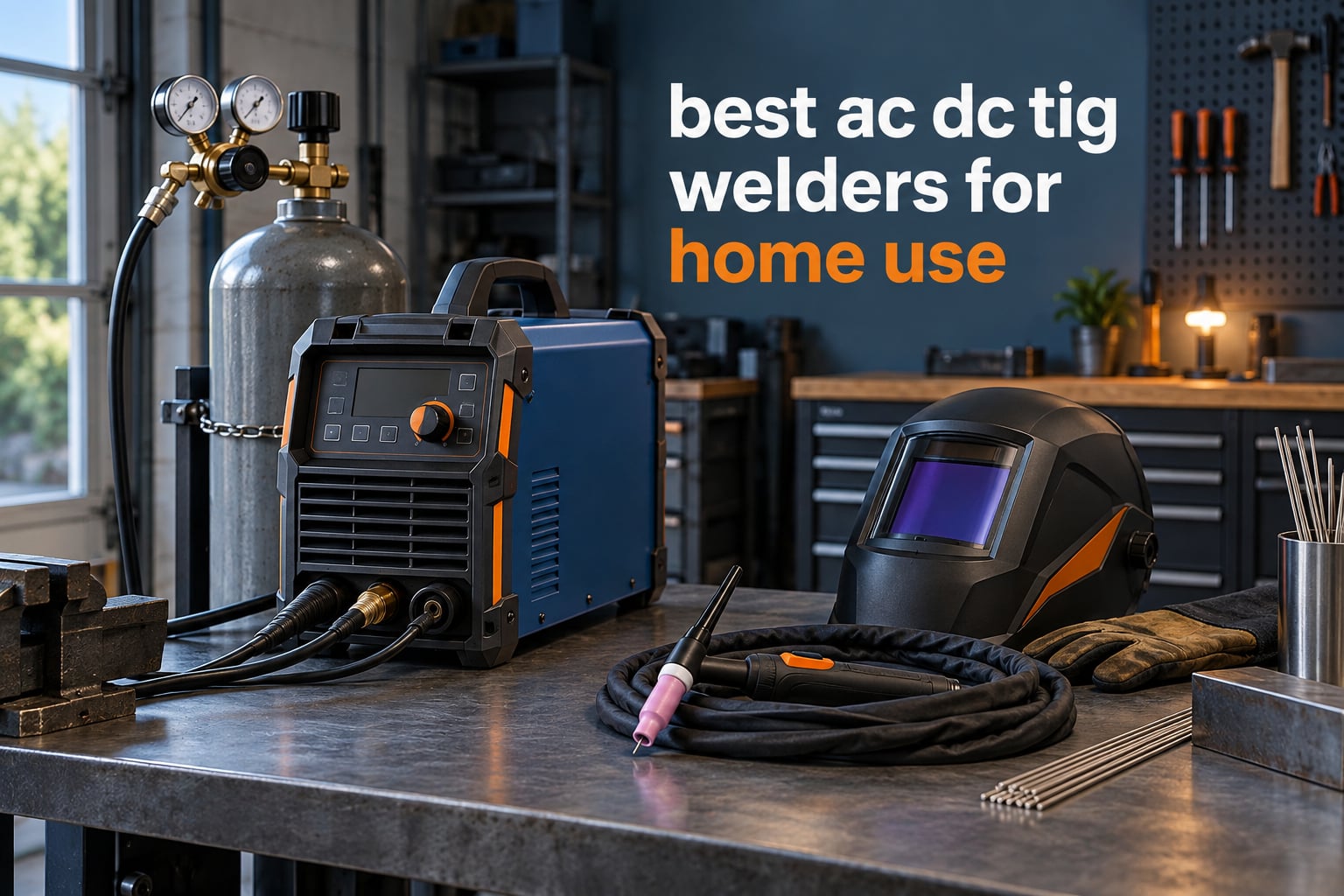
An AC/DC TIG welder is an inverter power source that runs both alternating current and direct current, so a home shop can weld aluminum, magnesium, stainless, mild steel, copper and titanium from one machine. AC strips oxide off aluminum; DC drives a deeper, cleaner arc into steel and stainless. That dual capability is the single decision point when buying a TIG welder for home use, and the gap between an AC/DC machine and a DC-only one is now small enough that skipping it makes little sense.
The PRIMEWELD TIG225X is the best AC DC TIG welder for home use overall. It holds a 4.8 star average across more than 1,400 owner reviews, ships with a genuine CK Worldwide Superflex torch rather than a knockoff, and covers 200 Hz pulse plus adjustable AC frequency in a dual 110/220V package. Seven other machines earned a place here, from a lightweight budget entry model to a feature-dense control set with square and triangular AC waveforms.
What follows is what our team found after working through the spec sheets, the owner review patterns and the practical limits of each machine. Every pick below welds aluminum and steel with one power source, runs on household power, and includes at least a foot pedal or a torch trigger path. Where a machine disappoints, we say so, because the failure patterns in this category are well documented and worth knowing before you spend money.
If your shop is still being set up, our 8 Best Elliptical Machines for Home Use guide covers the kind of home equipment budgeting that shows up in spare rooms alongside the welder. The short version here: TIG rewards practice far more than it rewards price, so buy the machine you can grow with rather than the most expensive one on the page.
Table of Contents
Top 3 AC DC TIG Welders for Home Use
Three machines stand apart from the field. The PRIMEWELD TIG225X wins on owner satisfaction and included torch quality, the Weldpro 200A wins on control depth for aluminum work, and the AHP AlphaTIG 203Xi wins on the balance of duty cycle, accessories and three-year warranty coverage.

PRIMEWELD TIG225X
- 225A AC/DC TIG and stick with pulse
- CK Worldwide Superflex torch included
- 200 Hz pulse and AC frequency control
- 110/220V dual voltage

Weldpro 200A AC/DC TIG
- 5-in-1 multiprocess with AC and DC pulse
- 0.5-200 Hz pulse frequency
- 2T/4T modes with foot pedal control
- Automatic 110V/220V detection
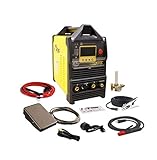
AHP AlphaTIG 203Xi
- AC/DC TIG and stick with pulse
- 110/220V with plug adapter included
- Welds 1/4 inch aluminum and 3/8 inch steel
- Three year warranty
All 8 Picks at a Glance
Every machine in this roundup runs AC and DC, welds aluminum, and accepts a foot pedal. The table below lists the core differences that actually change what you can build at home.
| Product | Specifications | Action |
|---|---|---|
| PRIMEWELD TIG225X |
|
Check Latest Price |
| Weldpro 200A AC/DC TIG |
|
Check Latest Price |
| AHP AlphaTIG 203Xi |
|
Check Latest Price |
 Everlast PowerTIG 200DV Everlast PowerTIG 200DV |
|
Check Latest Price |
 LOTOS TIG200ACDC LOTOS TIG200ACDC |
|
Check Latest Price |
 ARCCAPTAIN TIG200P ACDC ARCCAPTAIN TIG200P ACDC |
|
Check Latest Price |
 Sunstac TIG-250 TP ACDC Sunstac TIG-250 TP ACDC |
|
Check Latest Price |
 YESWELDER TIG-200P ACDC YESWELDER TIG-200P ACDC |
|
Check Latest Price |
1. PRIMEWELD TIG225X: Best Overall AC DC TIG Welder for Home Use
PRIMEWELD TIG225X 225 Amp IGBT AC DC Tig/Stick Welder with Pulse CK17 Flex Torch and Cable
- 4.8 star average across 1.4k owner reviews
- CK Worldwide Superflex torch included and widely praised as light and flexible
- Pulse and AC frequency controls handle 1/4 inch aluminum
- IGBT inverter with pulse width modulation
- Included torch consumables are basic so owners add a stubby gas lens kit
- Listed weight of 40.8 kg is the heaviest in this group
- More output than light hobby work needs
Our team put the TIG225X at the top of the list because it is the rare budget-class machine where the included torch is a genuine CK Worldwide part rather than a generic copy. Reviewers repeatedly call the Superflex torch and hose light and easy to manoeuvre, which matters more in a home garage than any menu function. The 17 Series flex head bends around tight joints without fighting you.
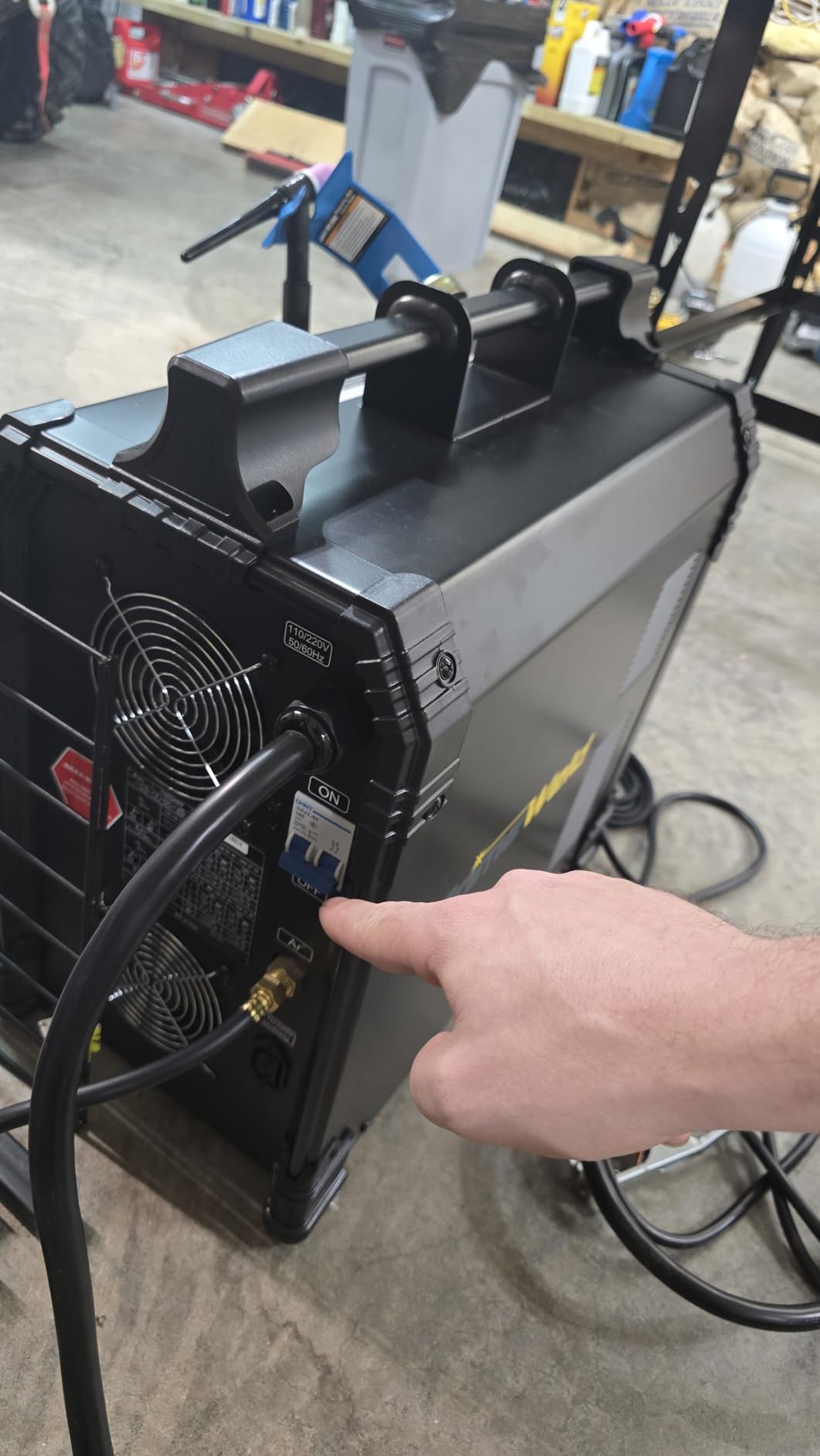
The electrical side is where this machine separates itself from cheaper imports. It delivers 225 amps with pulse, adjusts AC frequency, and runs on both 110V and 220V, so you can start in a single-car garage and move to a dedicated circuit later without buying a new machine. Owners report handling 1/4 inch aluminum and 3/8 inch mild steel, which covers everything from a 5052 aluminum gate panel to a steel trailer hitch bracket.
Stick capability is a quiet bonus. The machine handles 7018 and 6013 electrodes, so the same power source covers repair work when you are out of shielding gas or working outdoors where a breeze will disturb the argon. The 90 percent five-star share across the review base tells you the failure rate is low.
The 4.8 average is the highest in the group and the review volume is by far the largest, which makes the signal more trustworthy than a perfect score on fifty reviews. Feature requests centre on finer amperage granularity at the low end, which is a limitation shared by most 200-plus amp machines in this price band rather than a fault specific to this one.
Is the TIG225X easy to move around a one-car garage?
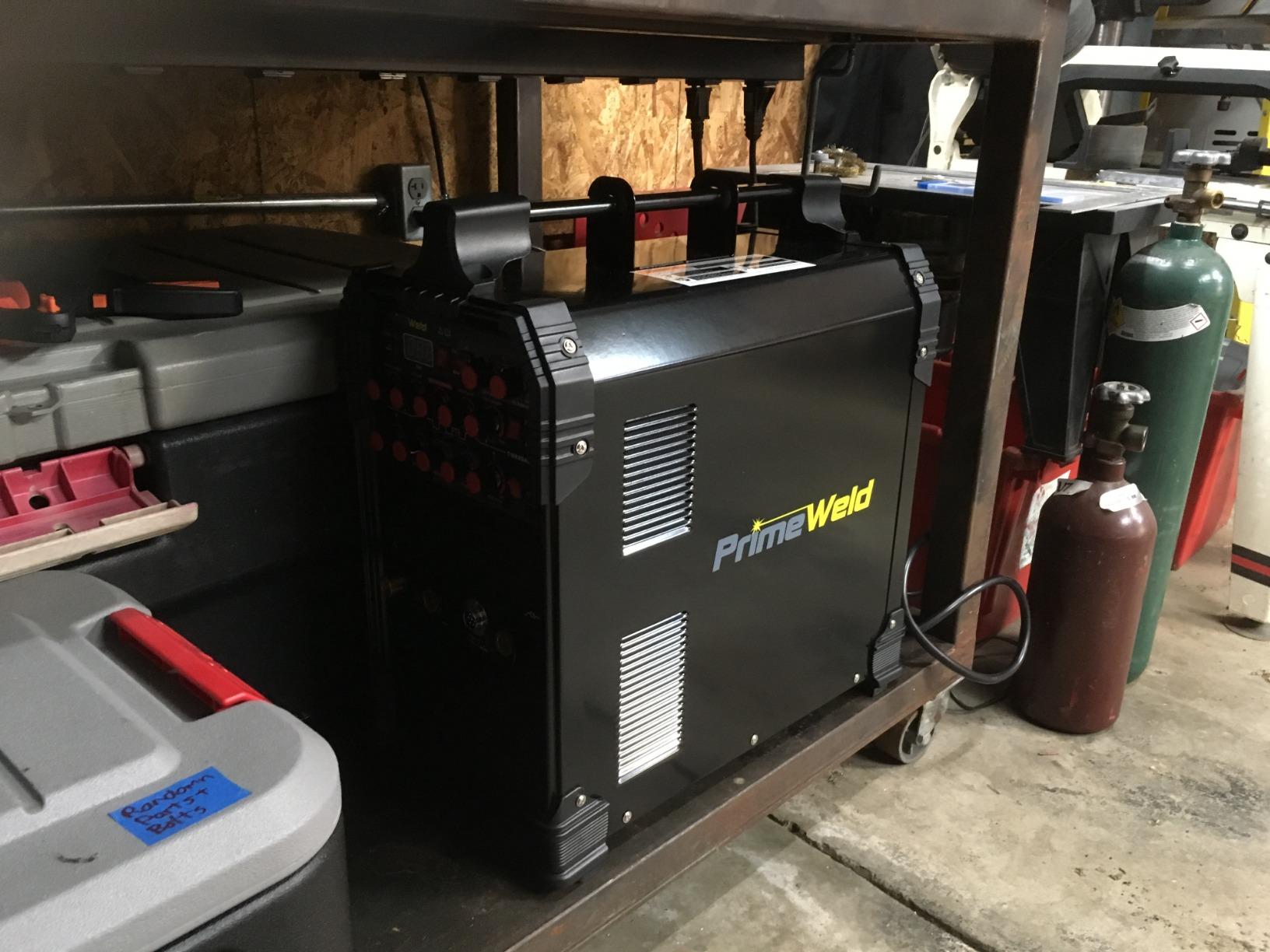
Not easily, and that is the honest drawback. The listed weight is 40823 grams, which puts it at the heavy end of this roundup alongside the AHP at 69 pounds. Plan a dedicated cart or a fixed bench position rather than carrying it between jobs.
What you get in exchange is a chassis that does not flex or shift when you push a bead on 3/8 inch steel, plus cooling headroom you will notice on a long exhaust run. If your work happens at a bench rather than on a driveway, the weight stops being a factor entirely.
Does the TIG225X hold up for stainless fabrication and general shop work?
Yes, and it pairs naturally with the included paddle foot pedal for heat control. Pulse at 200 Hz lets you control heat input on thin-wall stainless tubing, which is where DC TIG earns its keep on exhaust components and handrail work.
The one upgrade most owners make is a stubby gas lens kit, because the standard consumables in the box are basic. That is a fifteen-minute swap with an inline gas lens, and it gives you noticeably more control over the puddle on small-diameter tube.
2. Weldpro 200A AC/DC TIG: Best for Deep Aluminum Control
- Five welding modes in one machine
- Automatic 110V/220V removes manual changeover
- Full pulse control with 2T/4T for long seams
- Torch pedal flow meter clamp and nozzles included
- 61.8 pound unit is hard to move between locations
- Dense control set can overwhelm a first-time welder
- Wattage figure listed as 44 KW is atypical for a portable inverter
This is the machine to buy if aluminum is the project, not the occasional side task. The pulse controls run from 0.5 to 200 Hz with adjustable peak amperage, upslope and downslope, and 2T/4T trigger modes so you can latch the current on for a long continuous seam instead of feathering a foot pedal for four minutes straight. Very few machines at this level give you all three parameters.
Automatic 110V/220V detection removes one of the most annoying chores in home welding. You plug the machine into a 120V outlet for a weekend project and into a 220V circuit when you want full output, without touching a selector switch or wondering whether you set it correctly. The HD LED display is large enough to read through a welding helmet lens.
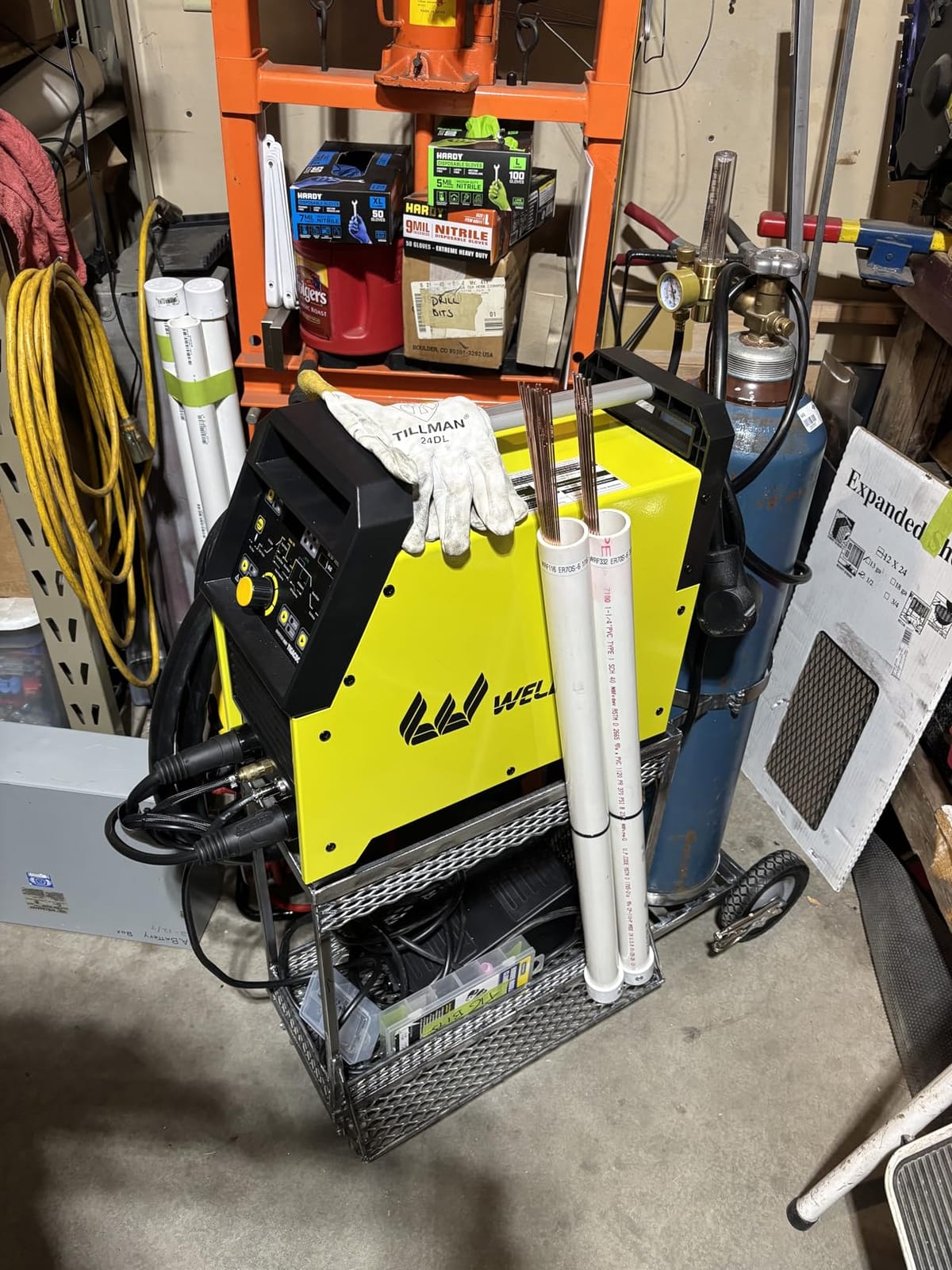
The box is genuinely full. Torch, foot pedal, gas hose, ground clamp, flow meter, tungsten and nozzles all come in, and the 17.6 by 7.9 by 16.2 inch body has a built-in carrying handle. Buyers treat this as a feature-complete step up from entry machines rather than a bare power source with add-ons.
Duty cycle is 40 percent at the full 200A output, which is a real number rather than a marketing figure and works out to four minutes of welding followed by six minutes of cooling at that setting. Plan your project around that rhythm when you are on heavier aluminum at high amperage.
Does the Weldpro 200A give enough control for aluminum tube and pipe?
Yes. Adjustable AC balance and AC frequency are exactly the two knobs that matter on aluminum, and having both under independent control is what lets you trade a wider cleaning action for a narrower, more focused arc. On thin-wall tube that means you can hold the puddle without burning through.
The 2T/4T modes matter more than most buyers expect. In 4T you tap once and the machine holds your amperage, which is how you run a long seam on a cylinder or a pipe without your foot creeping on the pedal and thinning the wall.
Is 61.8 pounds a problem in a home shop?
It depends entirely on whether the machine lives on one bench. If you are moving between a garage and a project site, this weight is the first thing you will resent, and it is heavier than the AHP and comparable to the PRIMEWELD.
The four percent one-star share in the reviews reflects occasional quality control and support friction rather than any systemic arc quality problem. Nobody in the review base describes a machine that will not hold an arc, which is the failure that should push you toward a different pick.
3. AHP AlphaTIG 203Xi: Best Value With a Three Year Warranty
NEW 2024 AHP AlphaTIG 203Xi Amp IGBT AC DC Tig/Stick Welder with PULSE 110/220v 3 YEARS WARRANTY
- Owners report the smoothest stick arc in this group
- High duty cycle for the price bracket
- Runs 6011 6013 7018 and 308l rods
- Rotaflex 9/17 torch is light with a bendable head
- On 120V the digital readout does not match the knob setting
- Included ground clamp is a weak point
- Minimum current of 10 amps is restrictive on thin stainless
The AlphaTIG 203Xi has the most thoroughly documented owner record in this roundup, including one long-form review that has passed a thousand helpful votes and covers stick performance, TIG, accessories and long-term reliability. That depth of documentation matters more than any spec line, because it tells you how the machine behaves after the first month rather than on day one.
For stick welding, owners describe it as the smoothest machine they have used and frequently compare it favourably against Miller and Lincoln units in side-by-side use. It runs 6011, 6013, 7018 and 308l stainless rods in both 3/32 and 1/8 gauge, and the current revision added a solid-state HV start so there is no point gap to maintain.
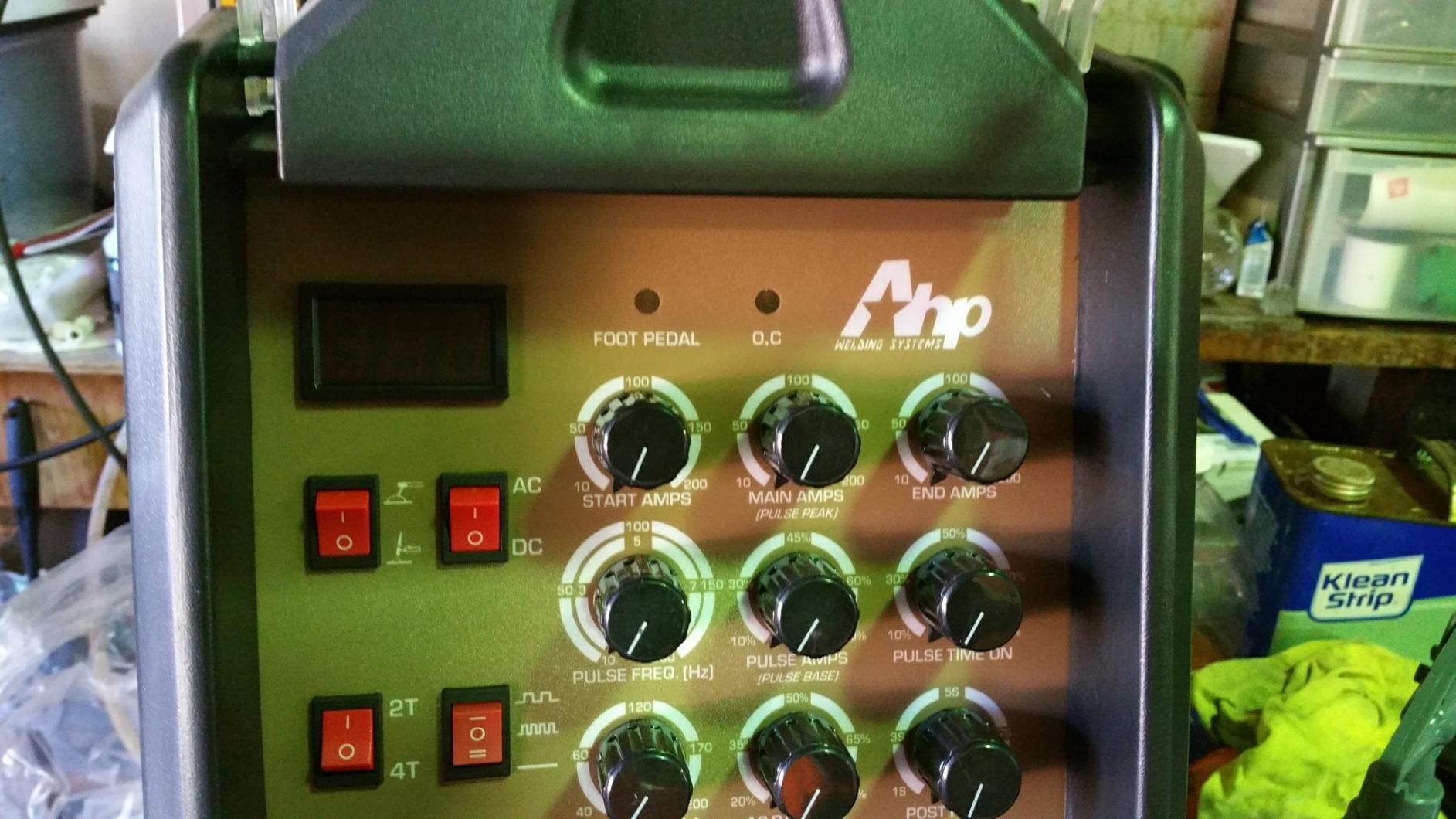
The included parts list is generous: a Nova Rotaflex 9/17 TIG torch with a bendable head, a Nova foot pedal on a 25 foot cord, a floating ball type billet brass argon regulator, an electrode holder, a work clamp and a 240V to 120V plug adapter. Duty cycle sits well above what owners get from comparable budget machines.
One long-term owner has run an AlphaTIG for years and shared it among several shops, reporting that every welder who used it liked it. That is exactly the kind of multi-year data point you cannot get from a short review window, and it is why this machine anchors the value slot.
Does the 120V behaviour make the AlphaTIG harder to live with?
Two quirks show up repeatedly and you should know about both. On 120V the digital readout does not match the knob setting, so experienced users learn to trust the knob and the arc rather than the display. Separately, output is not capped on 120V, which means thicker rod on a household circuit can trip a breaker.
Run this machine on 220V for serious work and treat 120V as the convenience outlet for light-gauge TIG and thin rod. With a dedicated circuit and the knob as your reference, neither quirk is a deal breaker.
What about the minimum current and the included ground clamp?
A 10 amp floor is restrictive if you work in very thin stainless, where you want to hold the arc below that threshold. It is fine for most tube, sheet and general repair work, but if your project list is full of 20 gauge stainless, weigh that against the Everlast in this roundup.
The included ground clamp is the accessory most likely to fail first. Several owners report copper breaking loose within months, and replacing a clamp is inexpensive compared with the machine. The torch hose is also unprotected, so route it away from hot work and grinder sparks.
4. Everlast PowerTIG 200DV: Best for Thin Gauge and Precise Work
New Everlast PowerTIG 200DV 110/220 Dual Voltage 200amp Pulse ACDC Welder
- Lowest start amperage in the group at 5A in DC TIG
- Lift start option when high-frequency start is unwanted
- Fully adjustable pre-flow and post-flow gas control
- Established brand with a real service network
- Heaviest build relative to output at 60 pounds
- Fewest reviews in the group so long-term record is thin
- Labelled 120V/240V so check your outlet configuration
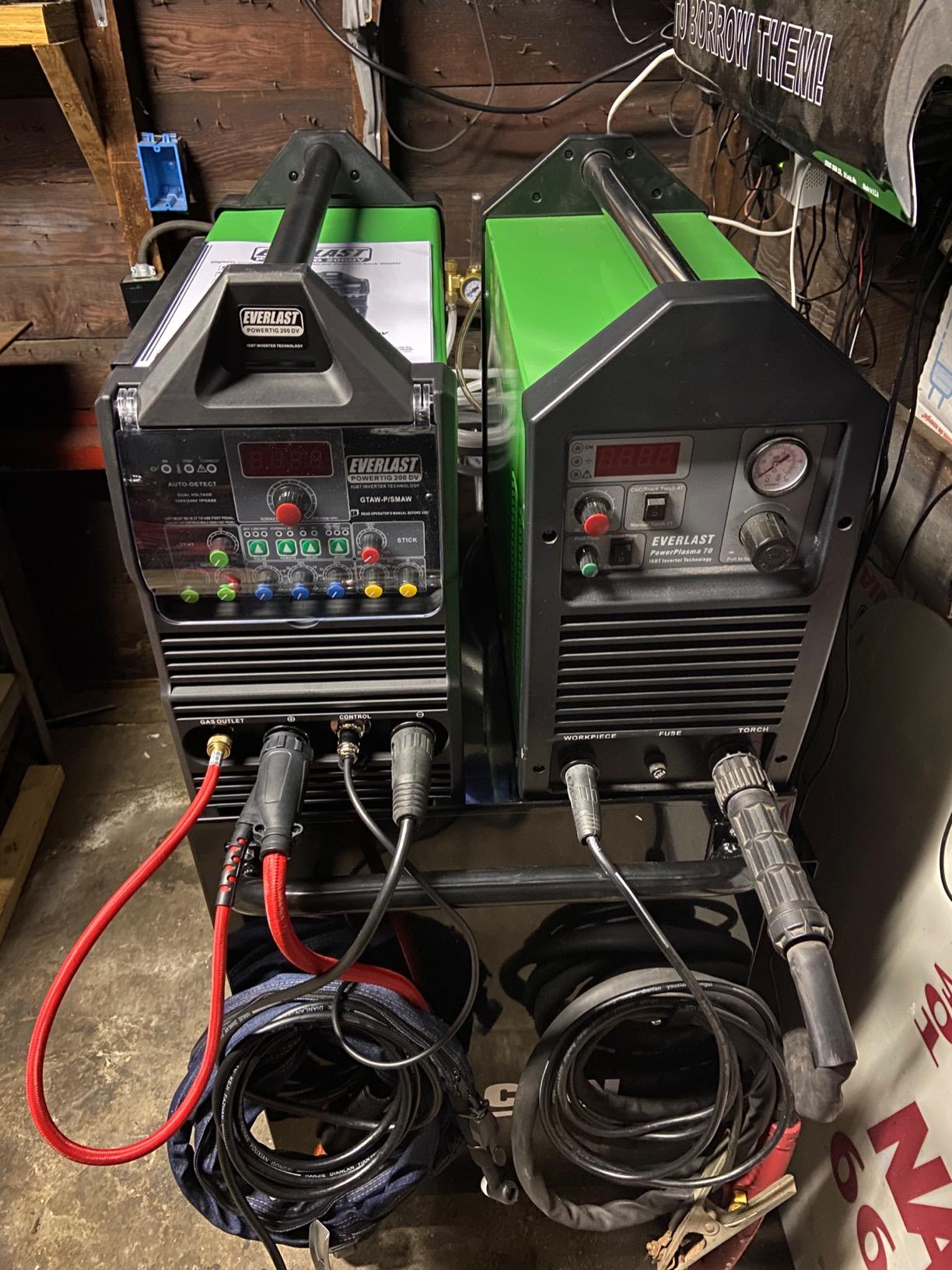
The Everlast is the choice when you are welding material thin enough that a 10 amp floor would frustrate you. It starts as low as 5 amps in DC TIG and 20 amps in AC, and it includes a lift start function so you can strike an arc by touching the tungsten to the work instead of relying on high-frequency ignition.
Lift start is worth understanding. High-frequency start fires a contactless arc and keeps the tungsten clean, but it can interfere with nearby electronics in a home. A lift start eliminates that entirely, which matters if your welder shares a garage with a computer, a shop radio or a CNC controller.
Gas control is fully adjustable on both ends of the cycle. Pre-flow sets how long argon flows before the arc strikes and post-flow sets how long it continues after you release the trigger, and post-flow is the single feature that most determines whether your aluminum welds stay clean. Any machine without it will oxidize the tungsten and dull the puddle every time you stop.
DIG arc force control helps maintain a stable arc on thin material and reduces spatter, which is exactly the scenario this machine targets. The 83 percent five-star share among its 116 reviews is strong, and the IGBT inverter is paired with a digital display for repeatable settings.
Can the PowerTIG 200DV handle the thinnest material you own?
Better than the rest of this list. A 5 amp DC TIG start means you can weld thin stainless sheet and small-gauge tube without melting a hole on the way in, and AC minimums of 20 amps still cover most light aluminum work. On very thin material the foot pedal and low minimum combine in a way cheaper machines cannot match.
If your project list is mostly decorative aluminum, thin-wall tube or small stainless fabrication, those low amps do more for your welds than any extra feature mode would. On heavy plate work the difference disappears and you are choosing this machine for the brand and the controls.
What do you trade away against a cheaper import?
Evidence. With 116 reviews, this is the smallest sample in the roundup, so the long-term reliability picture is less documented than the PRIMEWELD or AHP. You are buying an established brand with a service network and a repairable machine, which reduces long-term support risk in a way that the review count alone cannot show.
Note the voltage labelling as well. It is specified as 120V/240V rather than 110V/220V, so confirm your outlet configuration before you plan a circuit. At 60 pounds it is also the heaviest build relative to its 200 amp output in this group.
5. LOTOS TIG200ACDC: Best Budget Entry Into AC TIG
- Lowest entry cost of the eight machines
- AC square-wave output covers aluminum and steel
- Lightest 200A machine here at 37 pounds
- Foot pedal and regulator both in the box
- No pulse TIG function
- 20 percent one-star share is the second-highest here
- Older platform with a less developed feature set
The LOTOS TIG200ACDC is the way into AC TIG without spending serious money, and at 37 pounds it is also the easiest 200 amp machine here to carry. The square-wave AC output welds aluminum, stainless and mild steel, and the 10-200A AC/DC TIG range covers most home garage thickness ranges.
Both essentials arrive in the box. A foot pedal for amperage control and an argon regulator are included, which removes the two most common first-week purchases for new TIG owners. Automatic 110/120V and 220/240V dual voltage and dual frequency means it works on household power without a manual switch.
Adjustable hot striking arc current makes ignition easier on aluminum, where a cold tungsten is the usual reason a first attempt fizzles out. Published power efficiency sits at 80 percent, and the machine carries a one-year replacement warranty alongside a three-year limited warranty with US-based phone and email support.
Owners accept what they give up in exchange for the entry cost. The 70 percent five-star share is the lowest among the well-regarded units here, and a 5 percent one-star share points to more production variance than the higher-end machines in this roundup.
Will the LOTOS TIG200ACDC handle a first aluminum project?
Yes for sheet and thin tubing. Square-wave AC output handles aluminum up to the thickness a home garage typically sees, and the foot pedal gives you the heat control you need for thin-wall work. It is a legitimate way to learn TIG without a large commitment.
The square waveform itself is the quiet strength here. Many entry machines use a softer or sine-like AC output that wanders on aluminum, and square wave gives a more stable, focused arc that is easier for a beginner to control while the puddle is still small.
What do you lose by skipping pulse TIG?
Heat control on thin material. Pulse alternates between a high peak current and a low background current, so you push heat into the puddle and pull it back out in fractions of a second. Without it, your only tools on thin sheet are amperage and travel speed, which is workable but far less forgiving.
Expect to upgrade eventually. Most owners who start here eventually move to a machine with pulse and better parameter readouts, so if you know you will be doing a lot of thin-gauge work, the Weldpro or AHP will cost less over the long run than buying this one twice.
6. ARCCAPTAIN TIG200P ACDC: Best Feature Set for Travel and Trail Work
ARCCAPTAIN TIG Welder AC/DC 200A with Pulse 7 in 1 Aluminum Welding Machine
- Most welding modes of any machine in this roundup
- Deep parameter control including crater current and AC balance
- Only 26.5 pounds for a 200 amp machine
- On-demand cooling fan idles off when not welding
- Foot pedal not included and uses a proprietary aviation connector
- Several reports of freight damage on arrival
- Warranty response is the most criticized area
Nothing else here is this portable. The ARCCAPTAIN lists a 200 amp AC/DC machine with a 26.5 pound body, which is less than half the weight of most competitors in this class. If you weld at a customers house, on a farm, or anywhere that is not a fixed bench, that single number changes the shortlist.
The mode count goes further. Seven-in-one covers DC TIG, DC pulse TIG, AC TIG, AC pulse TIG on a square wave, AC pulse TIG on a triangular wave, stick and spot TIG. The triangular waveform in particular gives you a wider, more fluid cleaning action on aluminum that square wave does not offer, and having both on one dial is unusual at this level.
MCU digital control exposes upslope, down-slope, peak current, base current, crater current, post-flow, pulse duty, AC frequency, AC balance and pulse frequency. A working professional at a semiconductor equipment manufacturer described it as the best budget welder he had used, and beginners report clean results on .060 inch 5052 plate.
It welds aluminum from 0.5 to 5 mm and other metals from 0.5 to 10 mm, which is honest coverage for a home shop. The large LED display shows welding parameters clearly, and the on-demand fan means the machine is quiet when you are setting up rather than roaring continuously.
Can you realistically carry the ARCCAPTAIN to a job site?
Yes, and this is the machine to buy if the answer matters. At 26.5 pounds the body is light enough to carry with the torch and a small argon bottle, and the built-in carry handle plus compact 21.5 by 17 by 14 inch footprint make it easy to load into a truck bed.
Portability has a limit worth stating plainly. Argon cylinders are the awkward part of mobile TIG, not the machine. Plan for a smaller cylinder and a regulator sized for it, and budget for refills rather than assuming one tank lasts a full multi-day job.
What should you check the machine for before you start welding?
Arrive damage. Several buyers report shipping problems including a sliced power cord and a unit that arrived with a detached front panel, so inspect the case, the cord and the front panel before plugging anything in. Photograph any damage before you power it up.
Also plan for the foot pedal gap. It is not included and uses a proprietary XS12 aviation connector, which makes third-party pedals difficult to match. Buying through a seller with straightforward returns is the practical mitigation given how heavily warranty response is criticised in the reviews.
7. Sunstac TIG-250 TP ACDC: Best Output per Pound
Sunstac 250A Aluminum TIG Welder with Pulse ACDC Foot Pedal Control
- 250A output in a 29.8 pound package
- Seven modes including AC and DC spot welding
- Parameter memory restores settings after power off
- 300A rated work clamp and electrode cables
- Lowest rating in the roundup with a 15 percent one-star share
- AC current measurement is approximate per the manufacturer
- Foot pedal not included and torch extras are separate
The spec sheet is the argument here. A 250 amp pulsed AC/DC machine at 29.8 pounds covers more work per kilo than anything else in this roundup, and seven modes including both AC and DC spot welding give you bench versatility that larger machines skip. If you want maximum capacity without a heavy cart, nothing else compares.
Two details set it apart from bare-bones budget units. The LCD screen is readable with a welding helmet on, which small LED displays frequently are not, and the built-in parameter memory restores your previous settings after a power cut. That second feature saves real frustration when a breaker trips mid-project.
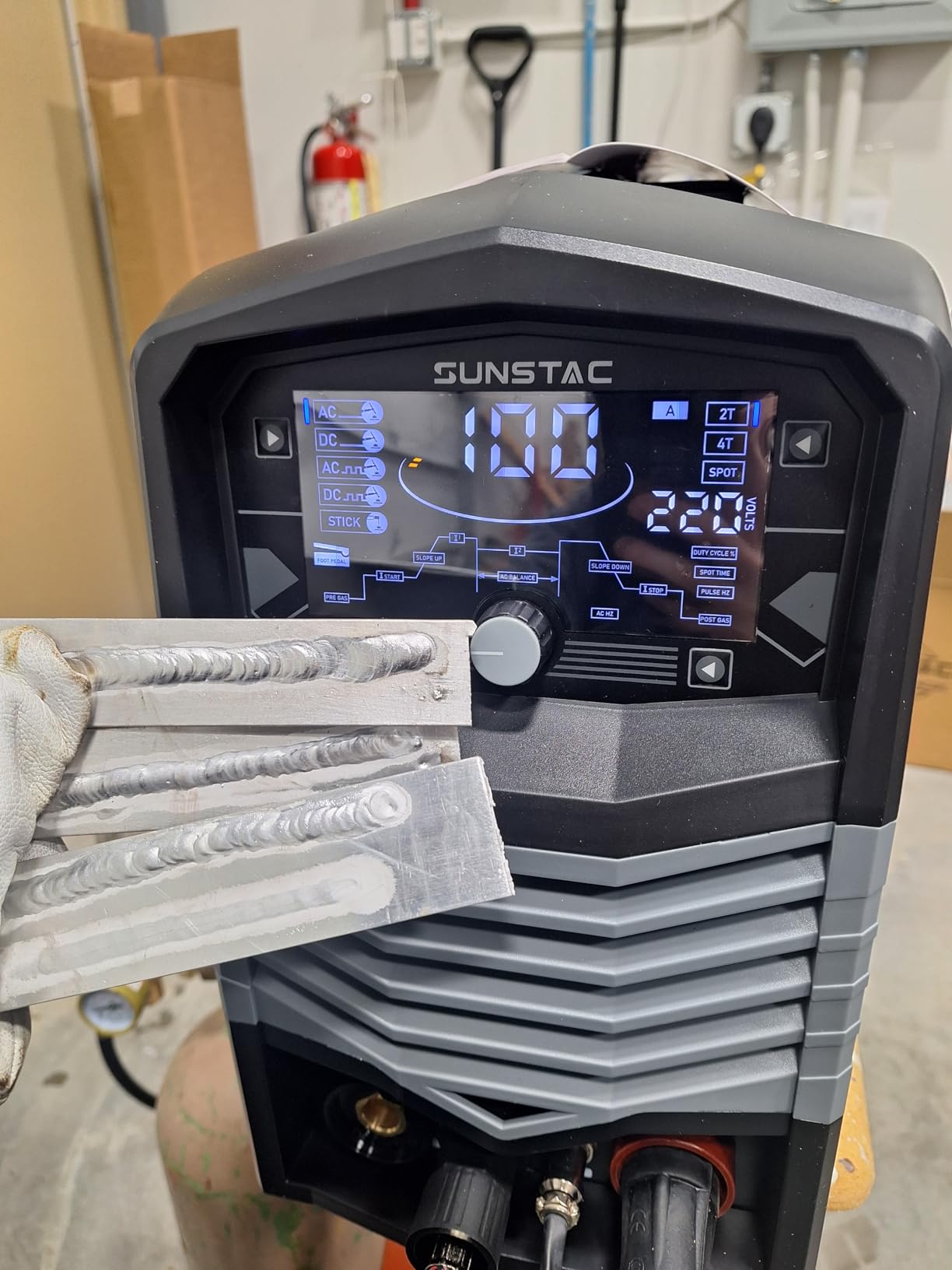
The manufacturer is also unusually candid, noting that AC mode current measurement is approximate because of the AC balance setting. That disclosure tells you something about the rest of the documentation, and it is the reason the LCD readout needs a little interpretation rather than blind trust.
Published aluminum capacity is 5/32 inch at 110V and 6/25 inch at 220V, which covers most home aluminum work including tubing and small plate. Work clamp and electrode holder cables are rated 300A at 118 inches, which is better cable than most machines at this tier ship with.
Does 250A output change what you can build at home?
More than you would think. Higher amperage headroom means thicker aluminum and steel in a single pass, which shortens long exhaust or trailer builds considerably and reduces the number of passes on heavy plate. It also leaves room to grow as your technique improves.
The caveat is that published amperage is not the same as sustained usable amperage at a realistic duty cycle. Check the duty cycle rating at the amperage you will actually use, not the headline number, before you commit to a heavy fabrication project.
Why does the Sunstac rating trail the rest of the field?
Consistency rather than capability. The 15 percent one-star share is the highest here, which points to variance in quality control rather than a design problem. Owners who get a good unit describe excellent results, and the ones who do not tend to describe early failures.
Set your expectations accordingly. Treat this as a first machine for aluminum up to 4-6 mm with a solid feature set, and buy from a seller where returns are simple. Two specs deserve a close look before purchase: the lack of a square wave output and the fact that the foot pedal is not included despite the listing referencing foot pedal control.
8. YESWELDER TIG-200P ACDC: Best for Sine Wave Aluminum Control
YESWELDER 200A AC/DC Aluminum Tig Welder TIG-200P ACDC TIG Welding Machine
- Only 16.47 pounds so it is easy to carry and store
- Full waveform selection including a sine wave option
- Sine wave gives a softer cleaner arc on aluminum
- Adjustable upslope downslope pre-flow and post-flow
- Lowest average rating here with an 18 percent one-star share
- No gas regulator or tungsten included
- Low amperage AC TIG may not trigger auto-darkening helmets
The YESWELDER TIG-200P is the only machine in this roundup that offers sine wave AC output alongside square and triangle, and that is a genuine technical advantage on aluminum. A sine wave spreads heat more gently across the puddle, which some fabricators prefer on thin material and on repair work where you want minimal base distortion.
It is also the lightest machine here at 16.47 pounds, which makes it the easiest to carry up stairs, into a vehicle or lift onto a bench by yourself. Seven-in-one operation covers mix TIG, stick, AC TIG, DC TIG, AC pulse TIG, DC pulse TIG and spot welding, with auto memory that restores settings after power off.
On the positive side, owner outcomes run to both extremes. A professional aluminum fabricator reported using it for a boat transom and keel rebuild and found it performed like name-brand machines, and owners with decades of welding experience singled out the aluminum results for the money.
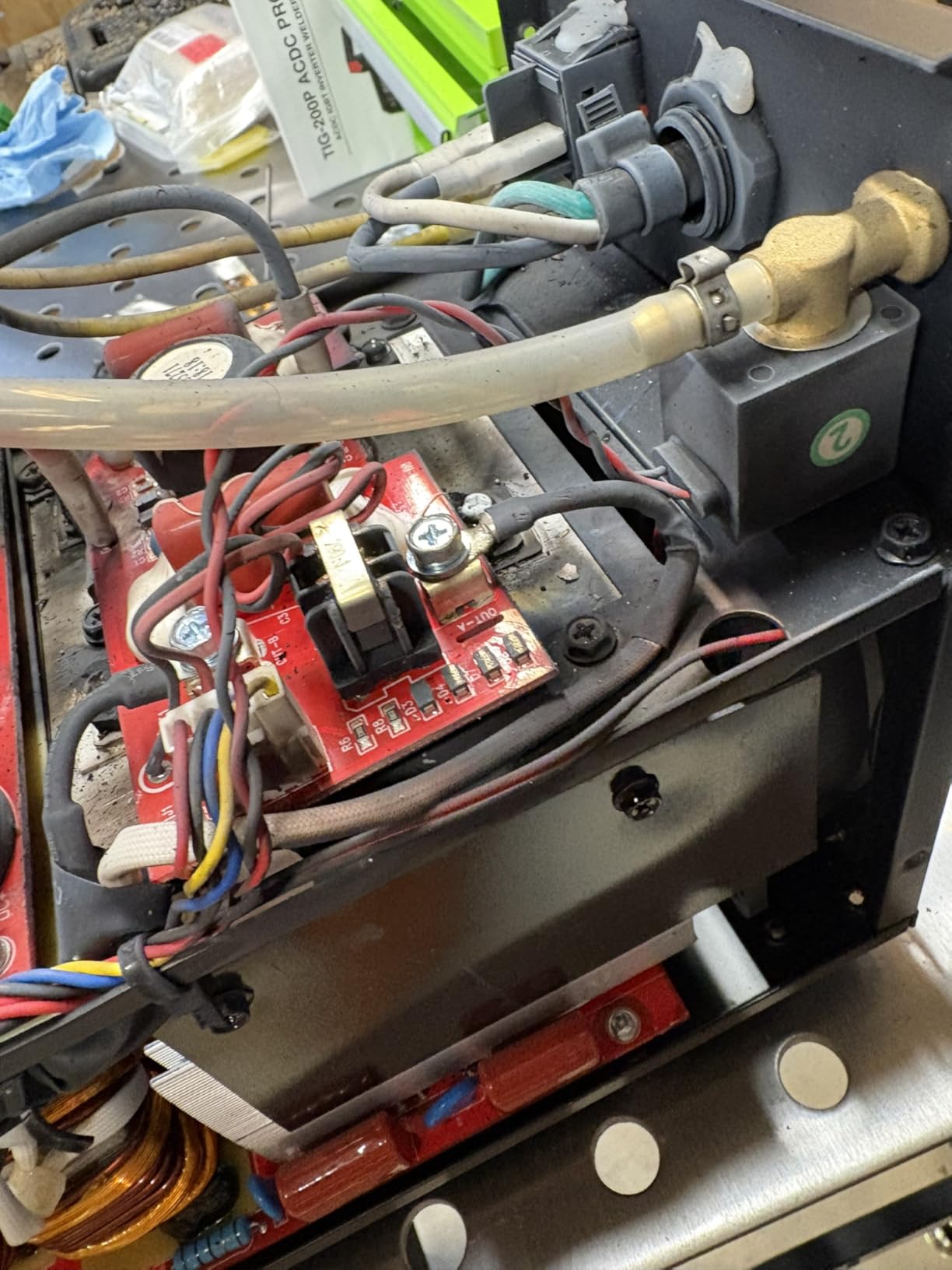
The two failure modes that pull the score down are specific and worth planning around. Some units develop an internal valve fault that leaks argon, including on new machines, and low amperage AC TIG can fail to trip auto-darkening helmets, which creates a genuine flash risk on an unshielded start.
Does the sine wave option actually improve aluminum work?
On specific jobs, yes. Sine wave current dwells less aggressively at peak, so the puddle spreads more evenly and heat spreads further into the base metal. That reduces the chance of melting through thin aluminum and reduces distortion on work you cannot clamp rigidly.
On thicker aluminum most welders return to square wave because penetration matters more. Treat sine wave as a second tool rather than the default, and the machine earns its place for having it available at all.
What safety and supply gaps should you plan around?
Two things to handle before you strike an arc. The unit does not reliably trip auto-darkening helmets at low amperage AC TIG, so use a helmet with a sensitivity adjustment or start on DC until you are confident with AC. And no gas regulator or tungsten is included, so budget for both before the first session.
The bundled WP-26 torch is also described as oversized and all-in-one, with several owners replacing it with a smaller setup. There is no base amperage setting for foot pedal control, which a professional buyer flagged as a real limitation when you want the pedal to work only above a minimum current.
AC vs DC TIG Welding: Why AC Matters for Aluminum
DC is better for steel and stainless; AC is the only option for aluminum. Both halves of that answer matter, because a home welder who picks the wrong current type for a material cannot complete the job at all. Understanding why is the difference between choosing a machine on a feature list and choosing the right one.
TIG creates an arc between a non-consumable tungsten electrode and the workpiece, with argon shielding the weld and filler rod fed in by hand. On DC, usually DCEN, current flows one way and electrons drive deep into the metal, producing the focused, deep-penetrating arc you want on stainless, mild steel, chromoly, copper and titanium. It is stable, controllable and easy to lay down.
Aluminum forms an oxide layer that DC cannot remove. AC reverses polarity thousands of times a second, and each reversal alternates between a cleaning half-cycle that scours the oxide away and a penetration half-cycle that drives heat into the base metal. Without that alternation you weld a layer of oxide and aluminum powder instead of a joint.
Three controls shape the AC arc and every machine in this roundup handles them differently. AC balance is the ratio of electrode-positive cleaning time to electrode-negative penetration time. AC frequency is how fast the current reverses, with higher frequencies producing a narrower, more focused arc and less puddle movement. Square wave holds peak current longer within each cycle, which makes the arc more stable and controllable on aluminum.
Beginners start near a balanced setting with a moderate frequency and adjust from there. Turn balance toward cleaning when you see oxide remaining in the puddle or poor wetting, and toward penetration when the puddle is narrow, dark and looks like it is sitting on top of the metal rather than melting into it.
This is why every machine we included is AC/DC. DC-only TIG machines still exist at lower cost, but if aluminum might enter your project list, buying one now means buying again later. One Practical Machinist thread on cost-conscious AC/DC recommendations made the same point repeatedly: a machine that cannot weld aluminum is a machine you will outgrow.
110V vs 220V: What Your Home Shop Actually Needs
You can run a TIG welder entirely on 110V, but output drops meaningfully and duty cycle suffers. Most machines in this roundup are dual voltage and switch automatically, which means you can start on a household circuit and move to a dedicated 220V outlet when a project demands full output.
The practical difference is amperage. On 120V input, a 200 amp class machine typically delivers somewhere in the 130-150A range, and duty cycle falls with it. That is fine for thin-wall tubing, small aluminum projects and general repair work. It becomes a problem on 3/16 inch steel or thicker, where you are waiting on the machine to cool rather than welding.
Two behaviours specific to 120V operation show up in owner reviews. On the AHP, the digital readout does not match the knob setting, so treat the knob and the arc as your reference. On the same machine, output is not limited on 120V, so thick stick rod on a household circuit can trip a breaker. On a dedicated 220V circuit both concerns disappear.
One more garage-specific consideration: high-frequency start fires a contactless arc using a high-frequency burst, and that burst can interfere with nearby electronics including computers, garage door openers and CNC controllers. If your welder shares a space with sensitive equipment, the Everlast’s lift start function is the simple answer, and shielding the leads helps as well.
Our rule of thumb is straightforward. Buy on the assumption you will add a 220V circuit eventually, but confirm your machine runs acceptably on 110V in the meantime. Every pick above does, which means you can weld this weekend and plan the electrical work separately. Our 12 Best Massage Tables for Home Use roundup applies the same planning discipline to a very different corner of home equipment budgeting.
What Actually Matters When You Choose an AC DC TIG Welder
Duty cycle is the number most people misread. It is the percentage of a ten-minute cycle the machine can weld at a stated amperage. A 60 percent duty cycle at 200 amps means six minutes on and four minutes off. The Weldpro 200A is rated 40 percent at full 200A output, which means four minutes on and six off. Compare duty cycle at the amperage you will actually use, not the headline output number.
A foot pedal and post-flow are the bare minimum. Forum consensus across welding communities is blunt on this: foot pedal and post flow are the two features you should refuse to compromise on. The pedal gives you amperage control inside the weld, and post-flow keeps argon flowing for a few seconds after you release the trigger so the tungsten and the hot metal do not oxidize. Several machines here include the pedal, so verify before you buy.
Understand 2T and 4T before you need them. In 2T mode the current is live only while you press the torch switch, which suits short tacks. In 4T mode one tap latches the current on and a second tap stops it, which is how you run a four-minute seam on a cylinder without your foot creeping on the pedal and thinning the wall.
Pulse control matters more on thin material. Pulse alternates a high peak current with a low background current, pushing heat into the puddle and pulling it back out in fractions of a second. It reduces warping on thin stainless and aluminum tube more effectively than any other single feature. The Weldpro, AHP, PRIMEWELD, ARCCAPTAIN and YESWELDER all provide meaningful pulse adjustment.
AC balance and AC frequency decide your aluminum results. Every machine here offers both, but the ranges differ. Look for a machine with independent AC frequency adjustment if you will do a lot of aluminum, because the frequency sets arc width and the balance sets how aggressively the oxide gets cleaned. The ARCCAPTAIN goes furthest with square and triangular AC waveforms in one machine.
Tungsten and gas are part of the purchase decision. Use 2 percent lanthanated tungsten for AC/DC work, in 3/32 inch for thin material and 1/16 inch for heavier plate. Grind it on a dedicated wheel and keep it dedicated to your machine so no steel or brass contamination creeps in. Pure argon is the shielding gas for almost every home TIG job.
Support quality is the real difference between import brands. Veteran forum users put it well: the machines work great when they work, and the big difference is the customer service behind them. US-based brands such as Everlast and AHP offer a service network and multi-year warranty terms, while some marketplace sellers route warranty claims through a broker. If you cannot find a local repair path, factor that into the choice.
New versus used deserves a honest look. Used Miller Syncrowave, Hobart Tigwave and similar American-made transformers come up constantly in buying advice threads, valued for repairability, resale and decades of service life. A refurbished older machine with a foot pedal and post-flow can be a smarter buy than a new budget unit, provided the torch and cables are in good condition.
Consider whether MIG should be your first machine. A hobbyist who mainly wants to build with mild steel will get results far faster on a MIG welder, which is more forgiving and much faster on thick material. Choose TIG when aluminum, thin-wall tube, visible workpieces or repair precision is the point. Plenty of owners weld both, but start with the process your projects actually need.
The Costs Nobody Puts on the Spec Sheet
A TIG welder is the cheapest part of a TIG setup. Beyond the machine you need shielding gas, a regulator with flow control, tungsten, filler rod, a helmet and eventually a better torch and pedal. Budget for these on day one rather than discovering them one frustrating afternoon at a time.
Argon arrives in large cylinders and refills are far cheaper than exchanging tanks, so find a local supplier early. Many cylinders in this class ship with a cheap regulator, and a proper flowmeter with a float ball makes gas coverage visible instead of a guess. Tungsten is inexpensive per stick but consumed with every session, and 2 percent lanthanated is the only type you need for AC/DC work.
Filler rod is the other consumable people forget. 4043 rod suits general aluminum work and is easier to feed by hand than 5356, which is stronger and preferred for structural joints. A welding helmet with a shade rating appropriate to your amperage is non-negotiable, and on one machine in this roundup the helmet interaction itself is a known safety concern at low amperage AC.
The same budgeting discipline we apply to 10 Best Soda Makers for Home Use applies here: count the accessories before buying the headline item. Most owners also replace the included pedal and torch within the first year, so build that into the plan rather than treating it as a surprise.
Frequently Asked Questions
What is a good TIG welder for home use?
A good home TIG welder runs on 110V household power, welds both aluminum and steel on AC and DC, and includes a foot pedal with adjustable post-flow gas control. The PRIMEWELD TIG225X is our top overall pick, with the AHP AlphaTIG 203Xi offering the strongest value and the LOTOS TIG200ACDC covering the lowest-cost route into AC TIG.
What is the best AC/DC TIG welding machine for beginners?
The AHP AlphaTIG 203Xi is the best AC/DC TIG welding machine for beginners because it includes a torch, foot pedal, argon regulator and work clamp in the box, welds 1/4 inch aluminum and 3/8 inch mild steel, and carries a three year warranty. For the widest feature set, the Weldpro 200A adds 0.5-200 Hz pulse control with 2T and 4T modes.
Is AC or DC better for TIG welding?
DC is better for steel, stainless, chromoly, copper and titanium because it gives a focused, deeply penetrating arc. AC is required for aluminum and magnesium because the current reverses polarity and the electrode-positive half cycle scrubs the oxide layer off the surface. A home welder who expects to touch aluminum needs an AC/DC machine rather than a DC-only unit.
Can you TIG weld on 110V?
Yes, all eight machines in this roundup run on 110V, and dual voltage models switch automatically between 110V and 220V. Expect lower output and shorter duty cycle on 110V, typically somewhere in the 130-150A range for a 200 amp class machine. On 120V the AHP readout does not match its knob setting, and output there is not capped, so a dedicated 220V circuit is worth planning for.
Do I need a foot pedal for TIG welding?
Yes, treat a foot pedal and adjustable post-flow as bare minimum requirements. The pedal lets you control amperage inside the weld rather than only at the torch switch, and post-flow keeps argon running after you release the trigger so the tungsten and hot metal do not oxidize. Welding forum veterans consistently describe trying to learn without both as far more annoying.
Which AC DC TIG Welder Should You Buy
The PRIMEWELD TIG225X is the best AC DC TIG welder for home use, with the highest owner rating and by far the largest review base in the group, plus a genuine CK Worldwide torch that most competitors cannot match. Choose the Weldpro 200A when aluminum control depth matters most, the AHP AlphaTIG 203Xi when you want the most complete box and a three year warranty, and the ARCCAPTAIN when you need to carry the machine off the bench.
Whichever one you pick, budget for argon, a flowmeter, lanthanated tungsten, filler rod and a proper helmet before you start. Buy from a seller with straightforward returns, run coupons before you run a real project, and remember that helmet time teaches more than any machine. Check current pricing on the picks above and get your first one running this 2026.