
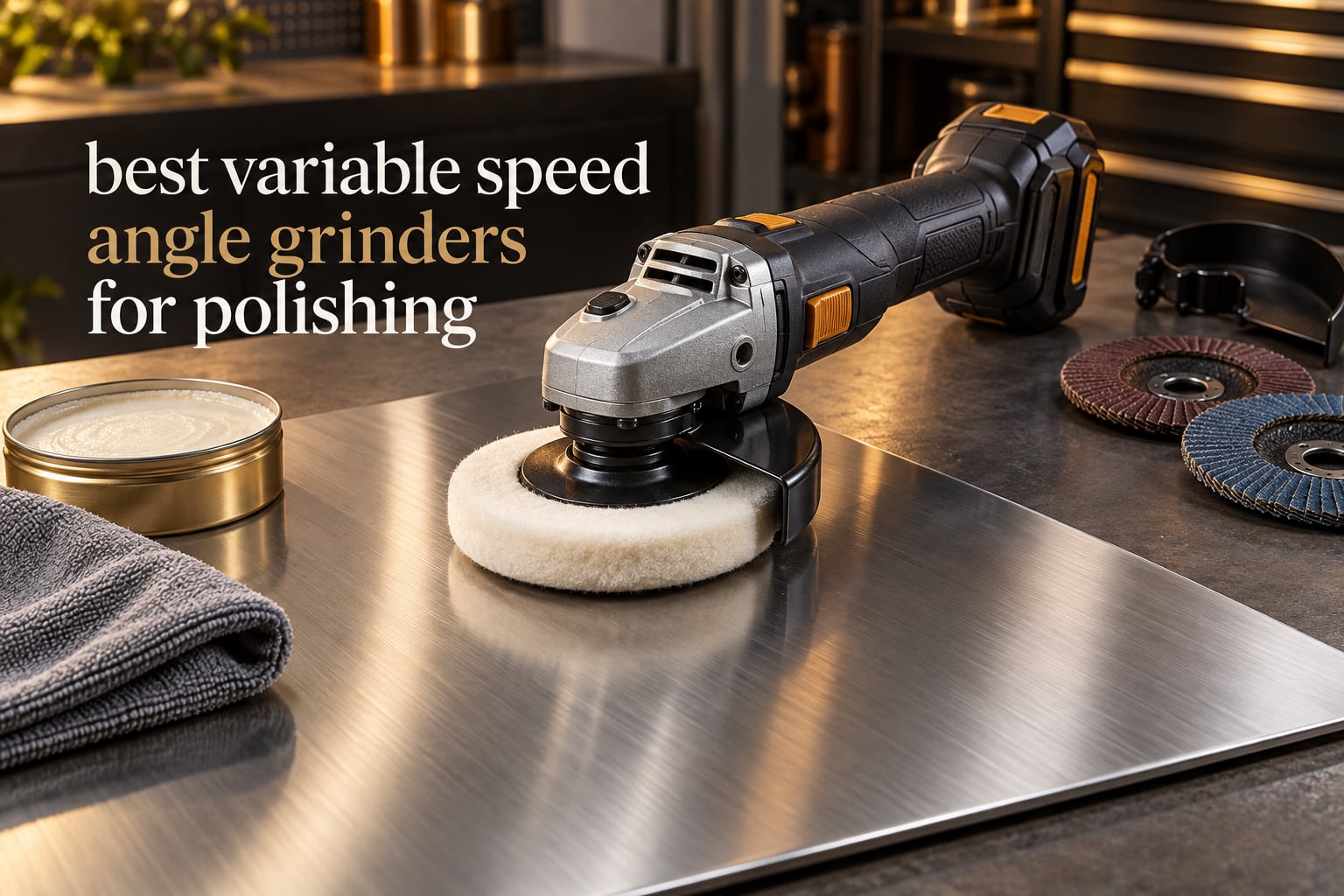
Yes, you can use a variable speed angle grinder as a polisher. Dial the wheel down to roughly 2,800 to 4,000 RPM, fit a backing pad with a felt, wool or microfiber layer, and the same tool that cuts rebar will finish stainless, aluminum and chrome without burning the work. Speed control is the single feature that separates a usable polisher from a workpiece-ruining machine.
That is also why so many grinders that look identical on a spec sheet behave completely differently at the wheel. A tool that spins at 11,000 RPM with no way to slow it down generates heat faster than any pad can dissipate it, smearing compound, discolouring thin-gauge metal and heat-streaking stainless in seconds. Those failures cannot be undone, which is the number one complaint forum users raise about fixed-speed tools.
This guide ranks the best variable speed angle grinders for polishing in 2026 by the number that actually matters for polishing work: how low the wheel goes. Each pick also carries a real rating, a real speed range and an honest list of drawbacks. We looked at no-load RPM, the lowest speed setting, brake behaviour, motor type, weight, switch design and the accessory support you get for polishing pads, then cross-checked owner feedback for heat, vibration and durability complaints.
If you are new to grinding and polishing, read the polishing cloth and pad guide alongside this one. Metal finishing uses the same compound-then-pad logic as wood and cue work, just at far higher speed.
Table of Contents
Top 3 Picks for Variable Speed Angle Grinders
These three lead the list because each one pairs a genuinely low speed floor with a brake and a motor that holds its RPM under load, which is exactly what a polishing pass demands.

Milwaukee 2888-20 M18 FUEL
- 5 speed settings
- 3500-8500 RPM
- Motor brake stops wheel in 2 seconds
- Accepts 4.5 and 5 inch wheels

Milwaukee 2889-20 M18 FUEL
- 5 speeds from 3500-8500 RPM
- Rapid-stop brake in under 2 seconds
- Tool-free guard and accessory changes

DEWALT DWE43214NVS
- Brushless motor
- no brush changes
- Electronic kickback brake
- Variable speed with 2-stage paddle
At a Glance: The Best Variable Speed Angle Grinders for Polishing
Every tool below is genuinely variable speed, which rules out a lot of grinders that appear on competitor lists. Here is the short version of who each pick suits.
Milwaukee 2888-20 M18 FUEL – the best all-round choice for polishing, with a 2-second motor brake and a 3,500 RPM bottom setting.
Milwaukee 2889-20 M18 FUEL – the same platform with tool-free accessory changes and a guard that adjusts without tools.
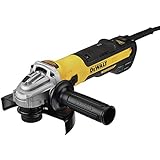
DEWALT DWE43214NVS – corded brushless power with an electronic kickback brake for shop work.
DEWALT DCG410VSB – cordless, light, and documented by owners as a solid marble and stone polisher.
Metabo HPT G12VE2 – six speeds, a brushless motor and a slim grip that stays cool at low RPM.
DEWALT DWE43240INOX – 5 to 6 inch capacity and slide-switch comfort for long dusty sessions.
SHALL 4-1/2 Inch 6-Speed – the best value corded option, with two tool-free guards in the box.
AVID POWER AG640 – a budget grinder with a linear 3,000 to 11,500 RPM dial for concrete and deck work.
VEVOR M3120-120-1 – 13 amps of corded torque for weld bead cleanup and demolition.
Powerbuilt 240079 – an entry-level tool whose electronic module holds the RPM you set.
| Product | Specifications | Action |
|---|---|---|
| Milwaukee 2888-20 M18 FUEL |
|
Check Latest Price |
| Milwaukee 2889-20 M18 FUEL |
|
Check Latest Price |
| DEWALT DWE43214NVS |
|
Check Latest Price |
 DEWALT DCG410VSB DEWALT DCG410VSB |
|
Check Latest Price |
 Metabo HPT G12VE2 Metabo HPT G12VE2 |
|
Check Latest Price |
 DEWALT DWE43240INOX DEWALT DWE43240INOX |
|
Check Latest Price |
 SHALL 4-1/2 Inch 6-Speed SHALL 4-1/2 Inch 6-Speed |
|
Check Latest Price |
 AVID POWER AG640 AVID POWER AG640 |
|
Check Latest Price |
 VEVOR M3120-120-1 VEVOR M3120-120-1 |
|
Check Latest Price |
 Powerbuilt 240079 Powerbuilt 240079 |
|
Check Latest Price |
1. Milwaukee 2888-20 M18 FUEL – Best Overall for Polishing
Milwaukee 2888-20 18V Cordless 4.5″/5″ Grinder w/Variable Speed (Tool Only)
- Highest rated in this group at 4.8 stars
- 2 second motor brake keeps the wheel from coasting into the workpiece
- Battery format means no cord across the bench
- Comfortable for all-day detail work
- Side handle and wrench included
- Bare tool only
- batteries and charger sold separately
- Some owners report batteries running hot under sustained heavy grinding
This is the grinder I would put in the hands of someone whose main job is finishing metal. Five speed settings from 3,500 to 8,500 RPM give you a genuine low-end to work at, which is the whole point: at the bottom of that range the pad stays on the surface instead of burning through it, and at the top it still handles weld cleanup without swapping tools.
The motor brake is what makes it feel like a finishing tool rather than a grinding tool. Owners consistently point out that the wheel stops in about two seconds or less, which means you are not dragging a spinning 4.5 inch disc across your part every time you lift off the trigger. That single feature prevents most of the accidental scratching that ruins a polished panel.
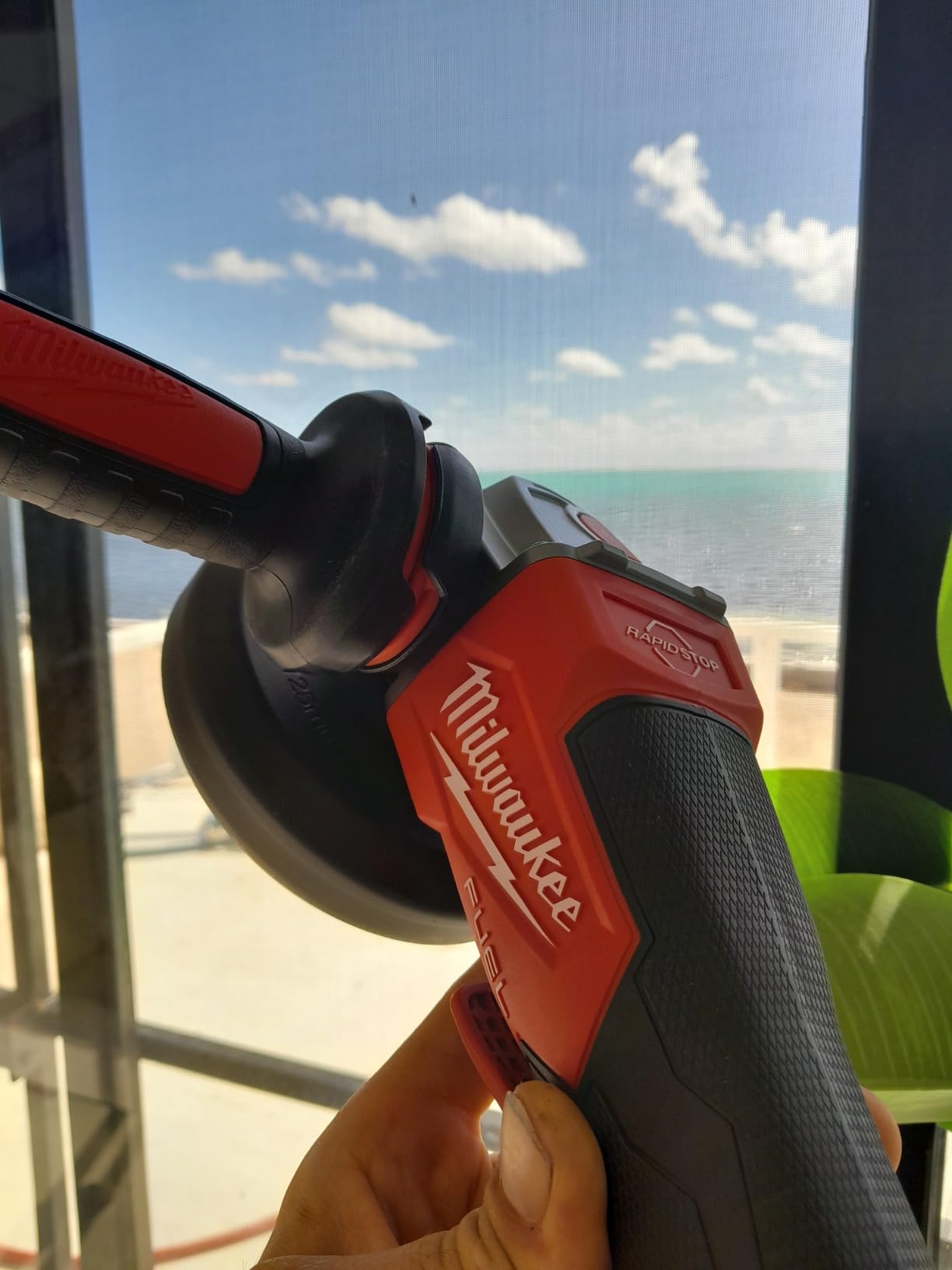
It accepts both 4.5 inch and 5 inch wheels, so one tool covers fine detail work on small parts and larger coverage on panels and rails. It is listed at 5.4 pounds and fits comfortably beside other cordless tools in a small bag. Reviewers upgrading from consumer-grade grinders frequently describe it as the tool that finally stopped failing on them.
One thing to plan for is the package itself. This is a bare tool, so if you are starting from nothing you need a battery and a charger in your budget, and we heard reports of packs running hot under sustained heavy grinding. On lighter polishing duty that has not been an issue, but it is worth knowing before a long session.
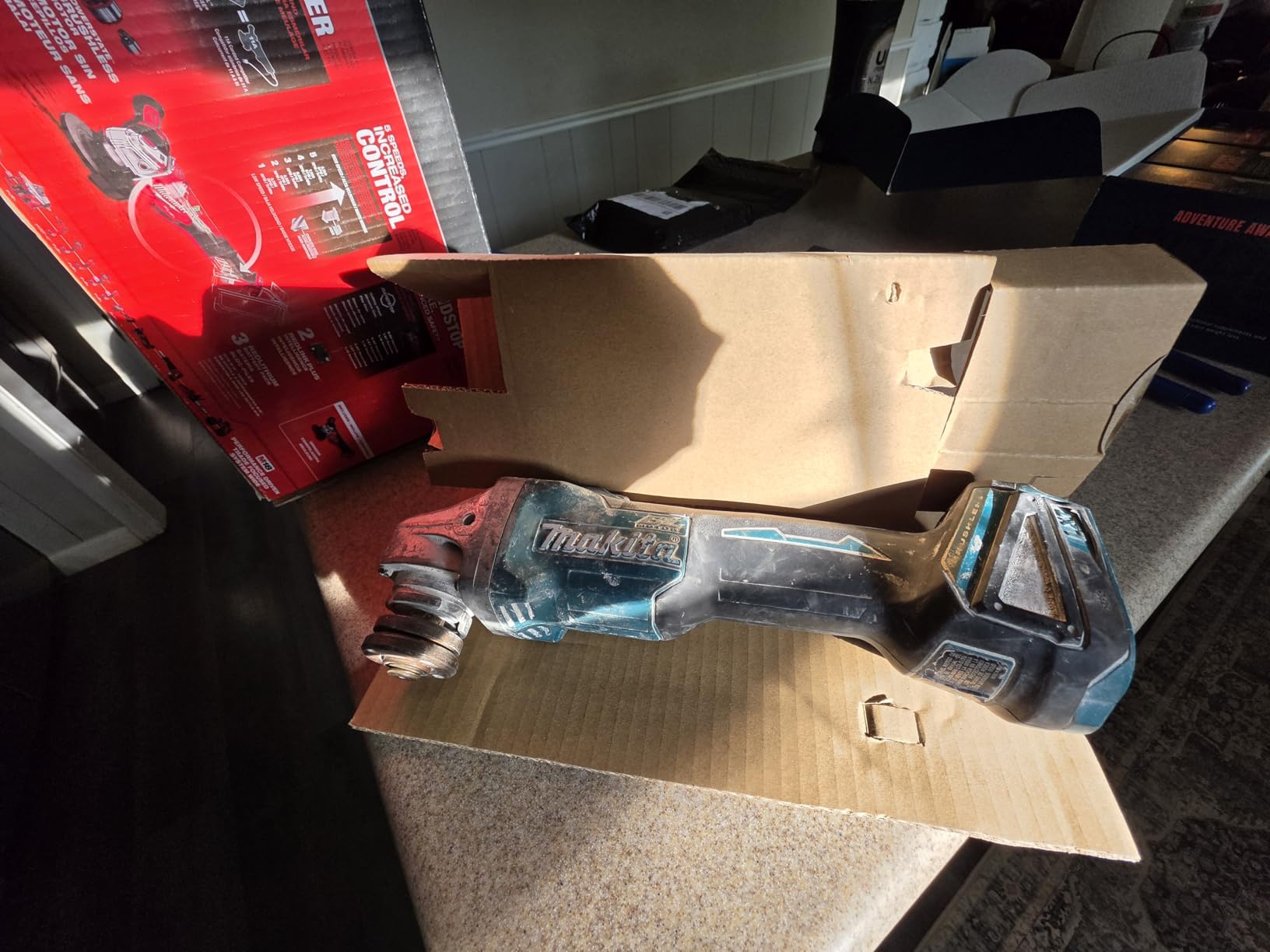
What finishing speed this grinder actually gives you
The 3,500 RPM floor is the reason this tool earns the top spot for polishing. Compound needs a few thousand RPM to spread and break down, and a spinning pad needs heat relief between passes to avoid smearing.
The 8,500 RPM ceiling is high enough for weld cleanup, flap-disc blending and light grinding, so it stays useful outside finishing work. That range is narrower than the budget corded grinders below, but for polishing the narrow range is the advantage.
Where it falls short compared with corded picks
Battery power means a finite work window on a long panel job, and swapping packs mid-finish interrupts your rhythm. Corded picks in this list run indefinitely.
Neither Milwaukee in this roundup carries One-Key app connectivity, which some buyers in the platform expect. If app-based tool tracking matters to you, check that before you commit.
2. Milwaukee 2889-20 M18 FUEL – Best Cordless Grinder for Fine Detail
Milwaukee Electric – M18 Fuel. 4-1/2 / 5 Variable Speed Braking Grind
- Rapid-stop brake halts most wheels in under 2 seconds
- Tool-free accessory change with integrated FIXTEC nut
- Tool-free guard adjustment
- Accepts standard 5 inch discs
- Quiet running with no shaft play
- Disc mount adapter has noticeable radial tolerance so discs can skip
- Some users add a spacer to bring the disc closer for finish work
- Lowest speed setting is still fast for very light buffing
The 2889-20 is the model we would choose for detail work where you change accessories constantly. The integrated FIXTEC nut and the tool-free guard mean you are not fighting a pin wrench every time the job moves from finishing to cleanup, and on a multi-step polish that saves real time.
Owners describe it as a finesse and finish grinder rather than a brute for stock removal, which matches how we use it. The slide switch with lock-on is preferred for continuous precision work over a paddle trigger, because you can feather the tool on and off without resetting your grip.
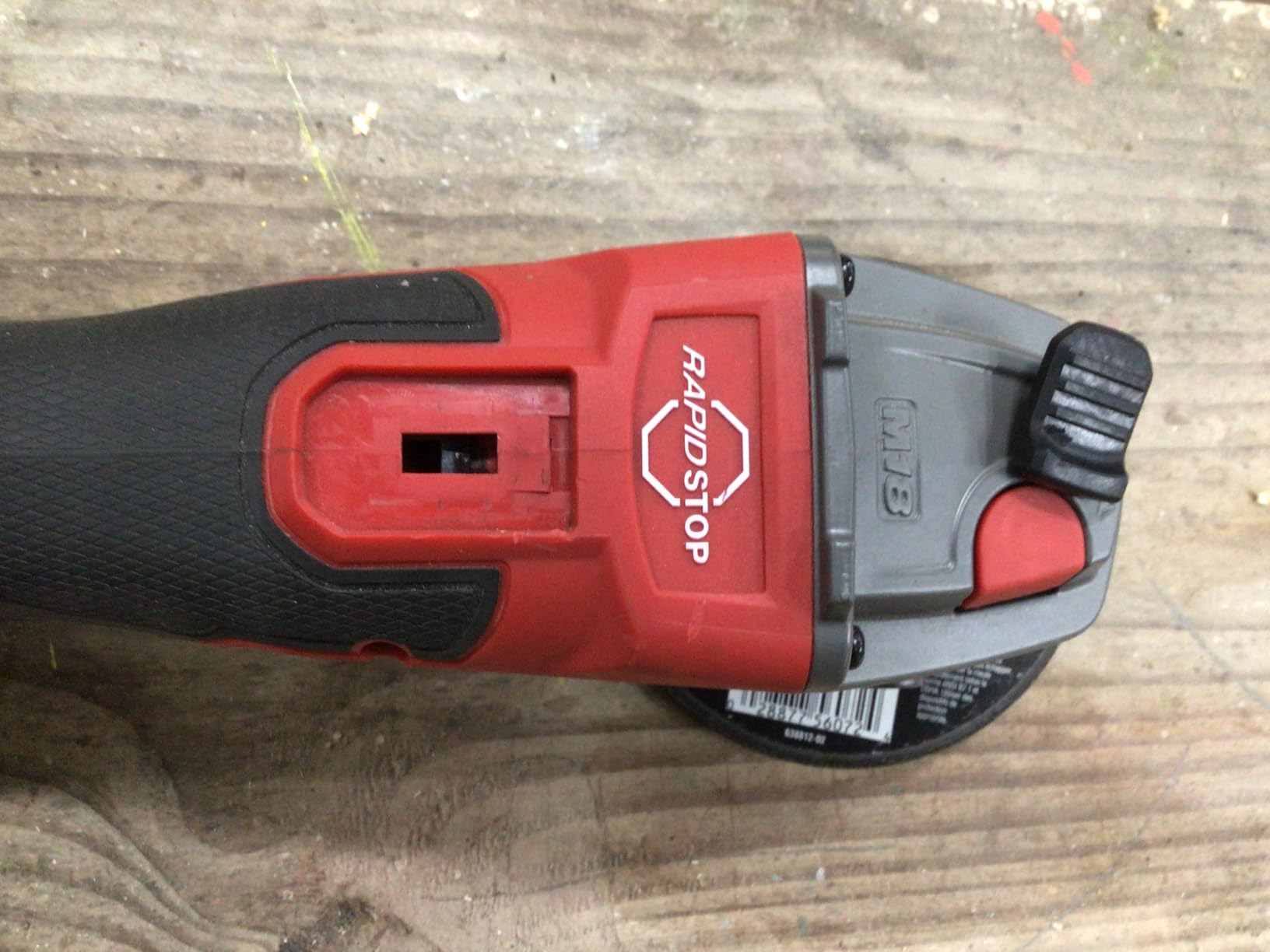
The vents have a screen to block paint dust and fines, which matters if you are polishing body panels or automotive work. The brake stopping most wheels in about two seconds is a genuine workflow improvement, not a spec-sheet nicety.
It accepts standard 5 inch discs as well as 4.5 inch wheels, so the same pad collection works. Just budget for the small mechanical reality that comes with a tool-free mount: the adapter has some radial tolerance, so a disc can sit slightly off-centre.
Why the tool-free mount matters on a polishing job
On a finishing job the wheel changes constantly: flap disc to back the surface, felt pad to carry compound, wool pad for the final cut. Making each of those changes without tools removes the biggest friction point in a long finishing session.
The FIXTEC nut and the guard release are also the two features most often described as reason enough to move up from an older corded grinder in the same fleet.
What fine detail owners wish were different
Disc centring is the most common complaint. Users report discs running slightly off-centre and skipping, and some add a spacer to bring the disc closer to the work for better finish control.
The 3,500 RPM floor is also still faster than some want for very light buffing on soft alloys. If you need a truly slow crawl, a stepped corded grinder lower down this list gives you one.
3. DEWALT DWE43214NVS – Best Corded Grinder for Shop Safety
DEWALT Angle Grinder Tool 5-inch, Variable Speed, Paddle Switch (DWE43214NVS)
- Brushless motor needs no brush replacement
- Variable speed matched to each finishing pass
- Electronic kickback brake senses pinch
- stall or bind-up
- Wheel stops in 2 seconds or less
- Integrated lanyard point for work at height
- Two-stage paddle trigger slows one-handed starts
- 6 lb corded body is heavy for overhead work
- Highest priced tool in this roundup
This is the corded pick for a fixed shop bench, and its safety package is the strongest in the group. The electronic kickback brake engages on a pinch, stall or bind-up event, which is exactly the failure that gouges thin stock and sends a disc into a worker’s leg. The mechanical wheel brake follows in about two seconds or less.
Variable speed across grinding and finishing lets you stay on one tool. The brushless motor eliminates routine brush replacement, so there are no consumables to plan for on the shelf.
Owners cite the variable speed as the practical differentiator for finish work, which is why it earns a place on this list even though it is not the lightest option. The power-loss reset no-volt release on the trigger means an interrupted power event does not leave the wheel spinning up unexpectedly on the next press.
There is an integrated lanyard attachment point for work at height, though the lanyard itself is not included. That is a small but real signal that this tool was specified with site work in mind rather than only bench work.
How the kickback brake protects your workpiece
Kickback happens when a disc binds on thin or reclaimed metal and pulls the tool back toward you. A pinch on a stainless panel can lift and gouge before the operator reacts, and the damage is permanent.
This brake cuts motor torque the moment it detects the bind-up, so the wheel stops driving into the snag. For anyone polishing thin-gauge sheet, that is worth more than any extra speed setting.
The trade-offs you accept for corded power
The two-stage paddle trigger needs two actions to activate, which some owners find slows down quick one-handed starts. Plan for that when you are moving between parts quickly.
At 6 pounds this is a heavy corded body for extended overhead or handheld panel work. The corded grinders further down are lighter, but none of them match the brake and kickback protection here.
4. DEWALT DCG410VSB – Best Cordless Grinder for Stone and Marble
DEWALT 20V MAX XR Brushless Cordless Angle Grinder, 4-1/2 in. – 5 in., Variable Speed, Anti-Rotation, Paddle Switch (Tool Only) (DCG410VSB)
- Owners report successful marble table polishing at reduced speed
- 1650 MWO brushless motor handles wheel stud cutting at full speed
- Anti-rotation system improves handling control
- Works with existing 20V MAX batteries
- Runs cooler than a brushed motor
- Paddle switch is awkward to operate with one hand
- Heavier than smaller cordless grinders
- Tool-only package and TOOL CONNECT chip sold separately
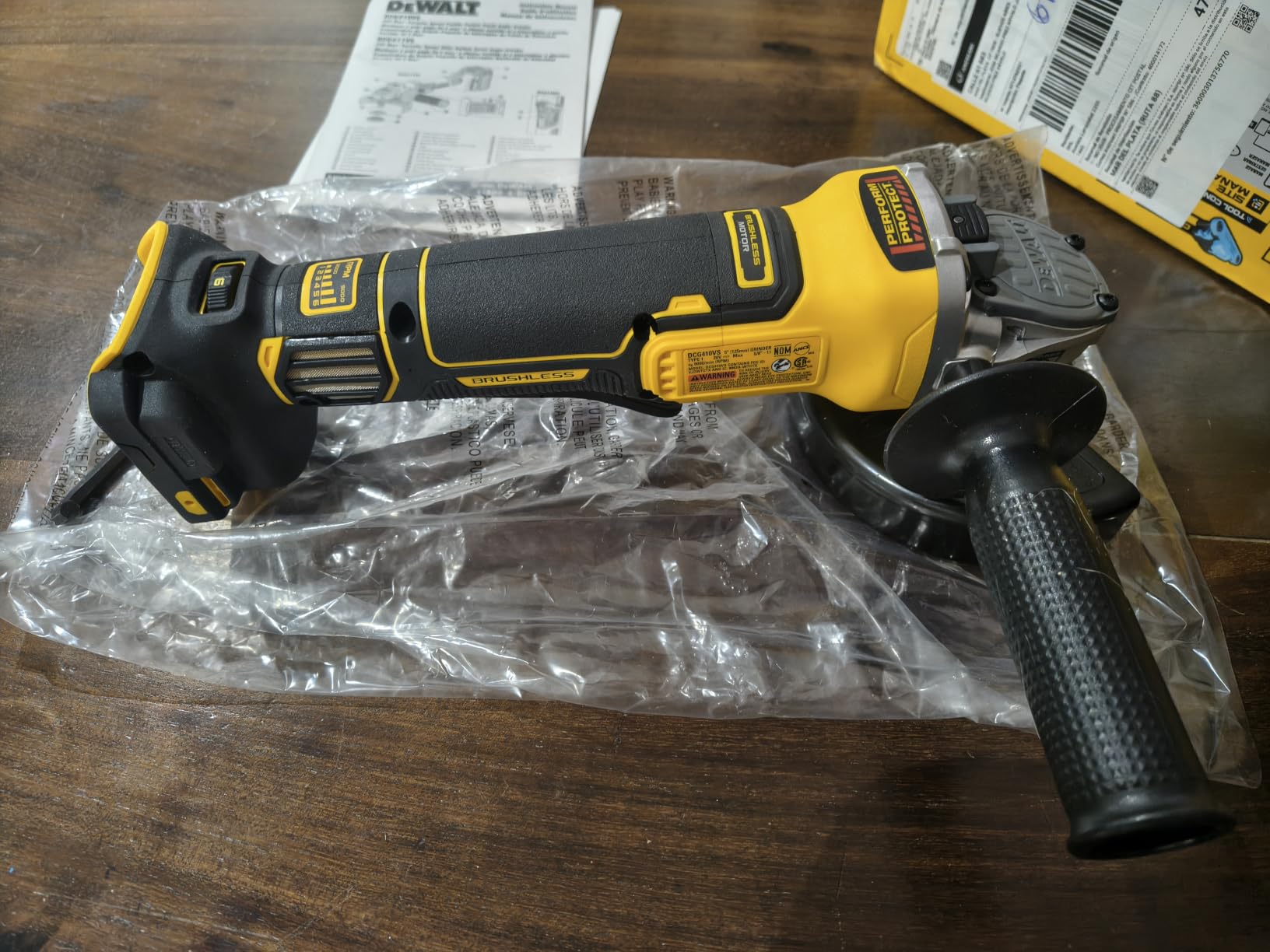
Stone polishing is where the anti-rotation system earns its place. Marble and granite work throws off uneven resistance across the pad, and a tool that resists twisting keeps the pad flat so you do not grind a dip into the surface. Variable speed then lets you take the RPM down as the compound cuts down and starts to heat.
Owners document real use on both ends of the range. One polished a marble table with the dial turned down, while others cut wheel studs at full speed, and the 1,650 MWO brushless motor handled the aggressive end without complaint.
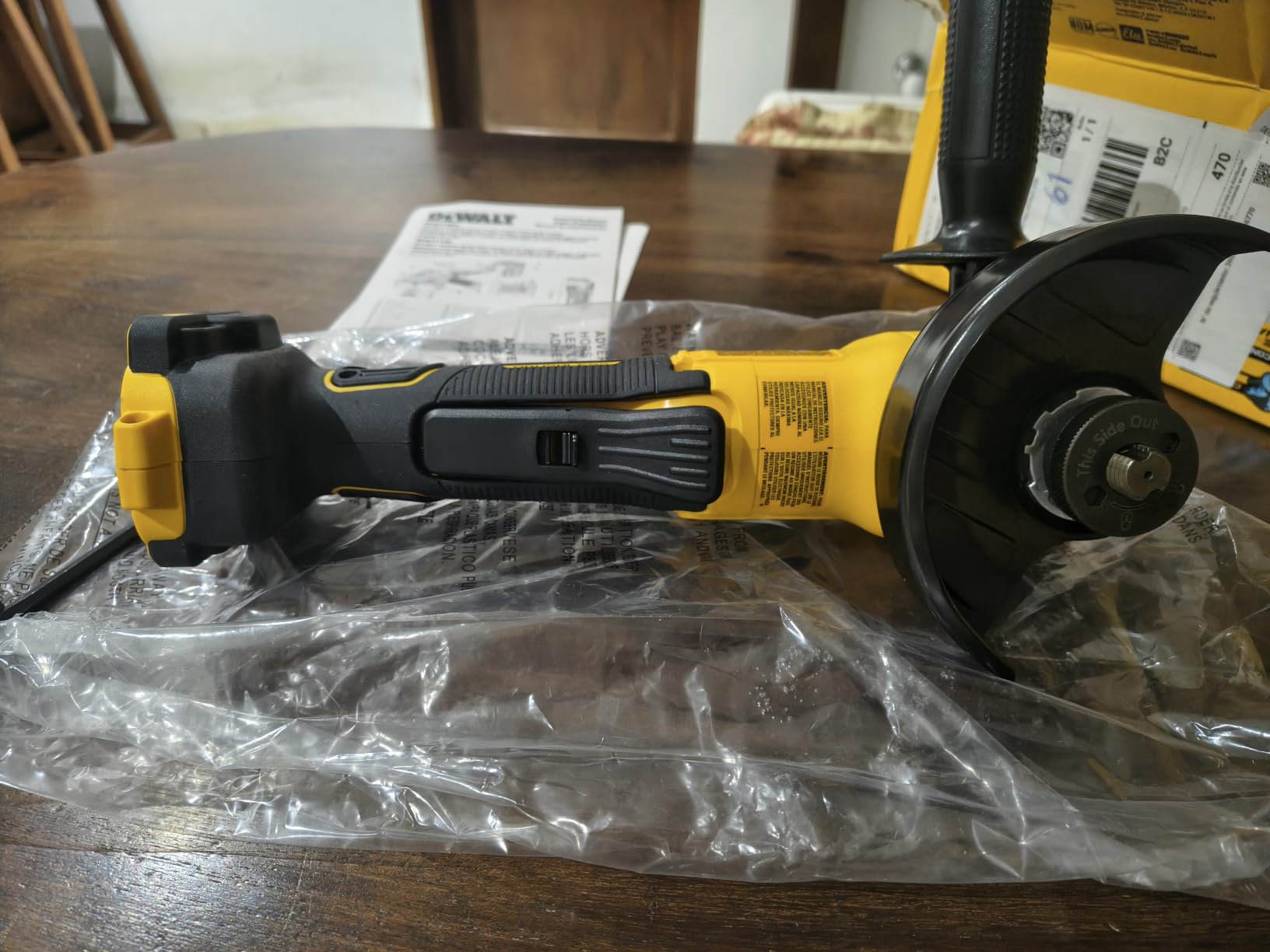
The cordless format is genuinely useful for sharpening and for elevated or off-site work where a cord is a trip hazard or simply unavailable. It works with any DEWALT 20V MAX battery, so if you already own the platform the cost of entry is just the tool.
The side handle is removable and well placed, and the overall balance gets called out in reviews. For a wet stone job outdoors, a battery tool avoids the generator question entirely, which tilers and stone workers on forums raise often.
Why variable speed matters more on stone than on steel
Stone has no thermal warning. Stainless discolours before you notice a problem, but stone simply finishes out slightly uneven or develops a swirl that shows under light. Keeping RPM low and consistent is the only way to keep the finish consistent.
At the top of the 9,000 RPM range this tool is still a capable grinder for cleanup work between stone passes, which saves swapping to a second machine between stages of the job.
What to know before buying for stone work
This is a tool-only package and the TOOL CONNECT chip is sold separately, so plan for both if you want asset tracking. Dust is the bigger consideration: most angle grinders have no shrouding, so stone and concrete work indoors needs a separate extraction plan.
The paddle switch is somewhat cumbersome one-handed, and at 4.74 pounds it is on the heavy side next to smaller cordless grinders. Neither issue stops it from doing the job well.
5. Metabo HPT G12VE2 – Best for Cool Low-Speed Finishing
Metabo HPT Angle Grinder | 4-1/2-Inch | 12 Amp | AC Brushless Motor | Variable Speed | 3-Position Side Handle | G12VE2
- Runs exceptionally cool even at sustained low RPM
- Very quiet with minimal vibration
- Ultra slim grip diameter
- 3-position side handle for narrow spaces
- Internal inverter circuit smooths generator power
- Maintains RPM under load
- Spanner is not retained on the tool
- Not built for heavy stock removal despite the 1500 W rating
- Some units arrived with a missing or misassembled guard
Heat is the enemy of a polished finish, and this grinder’s strongest reported behaviour is that it runs cool even at sustained low RPM. That makes it the pick for polishing tempered steel, where a heat spike can ruin a heat treat and the part is scrap. Reviewers use it as a finesse grinder rather than a material removal machine.
Six speed settings from the same brushless platform, a slide switch with quick off, and an ultra slim 2-13/64 inch grip diameter give you fine control at the wheel. It is described as among the most comfortable grips in the class, and at 3.8 pounds it is the lightest full-size brushless corded grinder here.

The internal inverter circuit smooths uneven generator power, which matters on job sites where a small generator feeds the whole site. Anti-kick-back shutdown on a bound wheel and zero voltage restart protection cover the two failure modes that cause surprise spin-ups.
It arrives with a wheel, guard, filter set, side handle and wrench, so you can polish on day one. Forum users consistently name Metabo as the benchmark for build quality, with the common caveat to buy the German-made units rather than the cheaper line.
What the 3.8 pound body changes on a long polish
Weight is the most common complaint about grinders in general, and several forum posters name 5 to 6.5 pound tools as the first thing they would swap out. At 3.8 pounds with a slim grip, this is the tool that most reduces hand and forearm fatigue over a full day of detail work.
The 3-position side handle lets you set the body angle for narrow spaces, which is how you reach inside a frame or cabinet without fighting the guard.
Where the honesty matters
This is not a heavy stock removal machine despite the 1,500 W rating, and reviewers say so plainly. If your work is mostly grinding and only partly finishing, you will be underusing what this tool offers.
The spanner is not retained on the tool, so disc changes take an extra moment, and a number of owners reported fulfilment issues with a missing guard or a retaining spring out of position. Check the guard on arrival.
6. DEWALT DWE43240INOX – Best for Dusty Surface Prep and Grout
DEWALT Angle Grinder, Small, 5 to 6-Inch, Variable Speed, Tool Only (DWE43240INOX)
- Variable speed makes grout removal controllable and keeps dust down
- Full power available immediately at trigger-on
- Bride stops the wheel immediately on shutdown
- Slide switch is more comfortable over long sessions
- Build quality compared well against Metabo
- Handles 5 to 6 inch wheels
- Shutoff speed range feels too limited for some polishing work
- Speed control mechanism does not tolerate dust well
- Heavy current draw stresses GFCI protected circuits
- Runs hot during extended continuous use
If your polishing work happens where there is concrete dust in the air, this is the corded pick built for it. Variable speed turns grout removal and surface prep into tasks you can control, and owners specifically credit it with keeping dust down compared with a single-speed tool. At a 4.8 rating it sits alongside the top-rated tools here even though its review count is smaller.
It is also the only pick in the group that takes a 6 inch wheel, so you get more coverage per pass on floors and large panels. The slide switch is far more comfortable over a long session than a paddle trigger, and full power is available the instant the switch is on.
Brushless motor with no brush changes, an electronic kickback brake on pinch or stall, and a power-loss reset no-volt release trigger round out a solid safety package. It ships with a side handle, hex key, inner and outer flanges and a 6 inch type 27 guard.
Owners also describe it as a sanding and finishing tool in their own words, which is the right mental model. It pairs well with the 6 inch coverage when you are finishing large flat panels rather than small parts.
When a wider wheel is the deciding factor
Surface area per pass is the reason to buy this over a 4.5 inch tool. On a countertop or a floor, a 6 inch pad covers noticeably more ground and the variable speed keeps the finish even across the wider contact patch.
The trade-off is control on small detailed parts. The wider wheel is less precise in tight corners, so this is a panel and floor tool rather than a jewellery tool.
The dust problem nobody solves for you
One masonry user reported the speed control mechanism does not tolerate dust well, and most angle grinders in this list have no shrouding at all. Plan on a respirator and either wet methods or separate extraction for indoor work.
Heavy current draw also stresses GFCI protected circuits, so some job sites need a generator, and the tool runs hot during extended continuous use. Both are reasons to take breaks on a long session.
7. SHALL 4-1/2 Inch 6-Speed – Best Value Corded Grinder
- 6-speed range from 3000 to 12000 RPM in one tool
- Two tool-free guards let you match guard type to the job
- Narrow body keeps it light in prolonged use
- Combo package includes 3 cutting wheels and 3 flap discs
- Highest review count of any pick here at 635
- Brushed universal motor with a flat 4.2 rating
- 7.5 amps is low next to the 8 to 13 amp competitors
- No brushless motor so brushes are a consumable
Of the budget picks, this one has the most reviews and the most useful speed range for finishing. Six settings from 3,000 to 12,000 RPM means the bottom of the range is low enough to run a felt pad properly, and the top end still cuts and grinds without a second tool.
The two included tool-free guards are a genuinely thoughtful detail for polishing. One is set up for grinding and cutting, the other for finishing, so you are not improvising guard position with a spindle polish in progress.
The 4-1/2 inch wheel with a 5/8-11 threaded spindle is the size most polishing pads are sold in, which makes pad and compound shopping simpler than with a smaller tool. A two-position non-slip rubber side handle and a raised spindle lock help with fast accessory changes.
Owners mainly praise the speed range and the accessory bundle. The rating distribution is flatter than the branded picks, with 9 percent one-star reviews pointing at build quality expectations typical of the value tier, so manage expectations accordingly.
What you gain by going value here
A 3,000 RPM floor is low enough to polish with and a 12,000 RPM ceiling is high enough to cut. That spread is unusual at this price point, and it is the reason this tool beats its budget rivals on finishing work rather than only on demolition.
The vent system with dust ejection helps during surface prep, and the narrow body keeps the tool comfortable for extended use, which is where light weight pays off most.
What the 4.2 rating is telling you
The brushed universal motor needs carbon brushes serviced over its life, and there is no brushless advantage on weight, heat or maintenance. If you already own a brushless tool, that is the reason to move up rather than down.
At 7.5 amps it is at the bottom of the power range, so on weld cleanup and thick material it will work harder and run longer than the 13 amp option further down. It is built for finishing and light grinding, not heavy stock removal.
8. AVID POWER AG640 – Best Budget Grinder for Concrete and Decks
- Linear 7-speed range from 3000 to 11500 RPM suits cutting and polishing
- Paddle switch with lock-on frees the index finger
- Extended body keeps the wheel further from the user
- Good results reported on concrete steps and deck coatings
- Balanced and easy to hold for prolonged detail work
- Lock-on paddle can stick or fail to release
- Brushed motor needs periodic carbon brush service
- One owner reported smoking and failure after light polishing duty
Among the cheapest picks here, this one gets the speed dial right: seven settings from 3,000 to 11,500 RPM in a linear progression. That low floor makes it usable for finishing, and owners single out the variable speed as the standout feature when controlling speed on deck grinding and concrete.
Owners report good results grinding concrete steps, flagstones and deck coatings with diamond cups, so it handles surface prep well as well as polishing. The extended body design adds clearance between the wheel and the user, which is a small safety gain on kickback-prone work.
The non-slip texturized rubber over-mold grip helps damp vibration during detail work, and owners comment on how well balanced it is to hold. An integrated spindle lock and a two-position side handle usable by either hand speed up accessory changes.
It includes cutting and grinding wheels, a lock nut wrench, the side handle and spare carbon brushes, which is a generous box for a budget tool. Spare brushes in the box matter on a brushed motor because they are a consumable you will eventually need.
Why a linear 3,000 to 11,500 RPM dial matters
Even steps mean you can predict what a setting will do. On the first pass over a panel you can count clicks up from the bottom rather than guessing, which is exactly how you build a repeatable finish.
The paddle switch with lock-on frees your index finger for long jobs, so you are not holding the trigger down with a gloved hand while also controlling feed pressure.
The switch and motor caveats are real
Sticking lock-on paddles are the most common complaint. If the paddle fails to release the tool stays latched on, and you should disconnect power before reaching into it.
The brushed motor needs periodic carbon brush cleaning and replacement, and there is at least one report of the tool smoking and failing after light polishing duty. Treat it as a backup tool rather than the one you build a business on.
9. VEVOR M3120-120-1 – Best High-Amp Corded Grinder for Weld Work
VEVOR Angle Grinder 4.5″ Electric Grinder 13A 3000-12000RPM Variable Speed
- Torque and cutting ability well above what the price suggests
- Owners report handling 3 inch thick concrete and hours of 36 grit weld grinding
- Runs smooth for a budget model
- Wide accessory bundle included in the box
- 13 amps is the highest rating in this roundup
- Trigger cannot be locked in the on position
- Side handle can loosen and the screws cannot be tightened
- Carbon brushes burned out with typical heavy use
- Some owners report failure after only a few hours
This is the pick for someone whose grinding load is heavy and whose finishing is secondary. At 13 amps and 1,400 W it has the most torque in this group, and owners report handling 3 inch thick concrete and hours of 36 grit weld grinding. Many buyers purchase two so one can stay on a cutting disc.
The speed range of 3,000 to 12,000 RPM still covers finishing work, and the 120 degree adjustable guard lets you reposition the guard for different pad and disc types rather than working around a fixed guard.
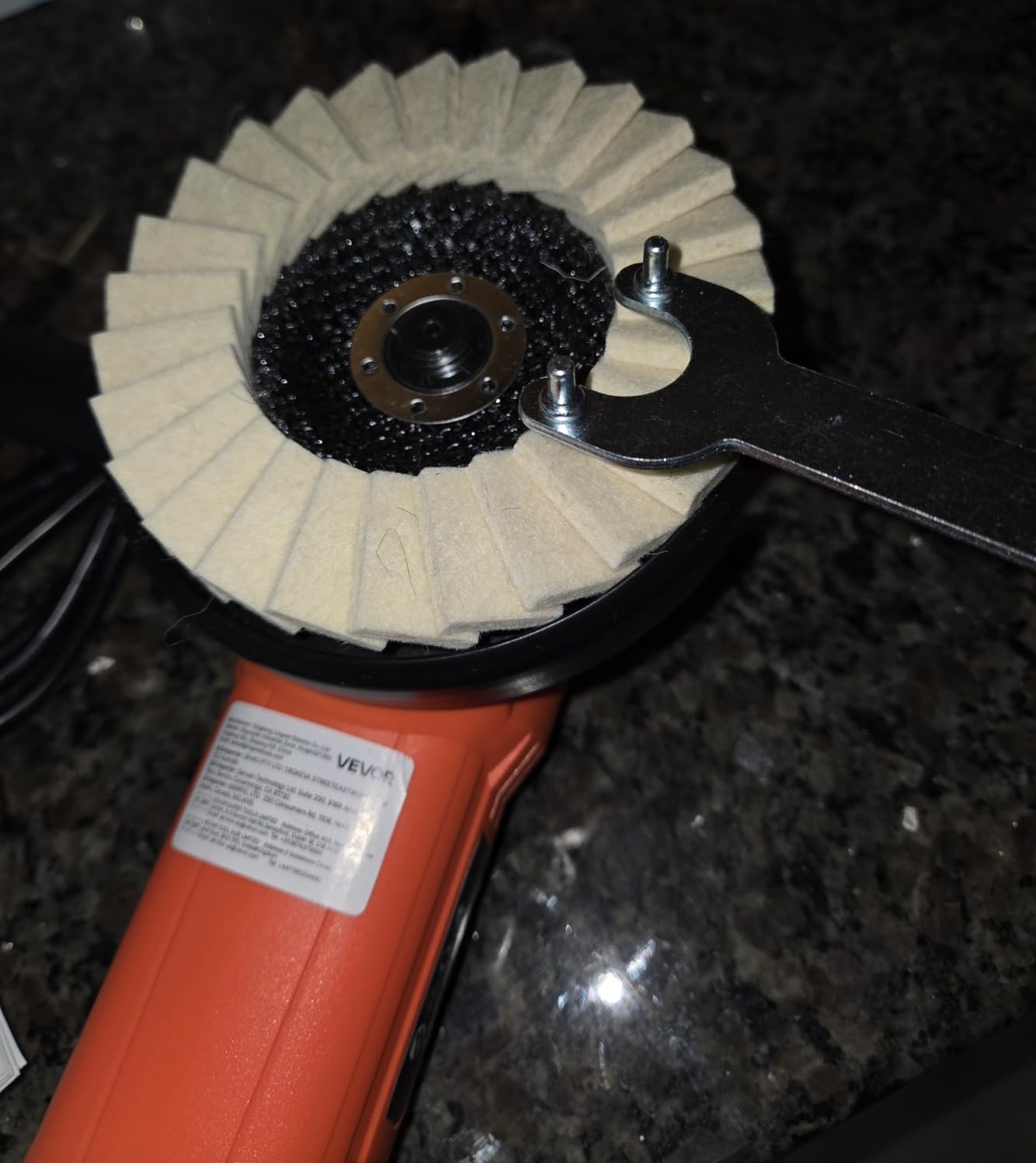
Contractors running welds and demolition work are impressed by the torque relative to the money, and the accessory bundle in the box includes two cutting wheels, two grinding wheels, two flap discs, a guard, a wrench and spare carbon brushes. It is available in 4-1/2, 5, 6 and 7 inch sizes so you can match the wheel to the job.
At 6.6 pounds this is the heaviest tool in the roundup, so it is a bench and demolition grinder rather than a handheld all-day finishing tool. That weight is also part of why it feels stable on hard material.
Where 13 amps earns its keep
Power is what lets a wheel keep its cutting depth under load instead of bogging down. For weld bead cleanup at 36 grit, hours of concrete, or any repeated stock removal, the higher rating keeps the tool working at the speed you set.
Speed control is not just a finishing feature. Being able to dial back for thin or light work is what keeps that power usable without burning the piece.
The failure reports deserve a straight answer
Durability and trigger design are the recurring weak points. The trigger cannot be locked on, some owners report the tool quitting after only a few hours, and the side handle can loosen with no way to tighten the screws.
It carries the widest one-star share of the picks here, and 4.1 reflects that honestly. If your work is hard grinding, buy it knowing it may be replaced. If your work is finishing, it is the wrong emphasis for your needs.
10. Powerbuilt 240079 – Best Entry-Level Stepped Speed Grinder
Powerbuilt 5-Inch Variable Speed Angle Grinder, 10 Amp Motor, 6-Speed Control, Lock-On Trigger, Includes Wheel, Side Handle, Wrench & Spare Brushes – 240079
- Electronic module holds the selected RPM instead of sagging under load
- Six discrete speeds from 4000 to 11000 RPM
- Balanced sub 6 lb body with a reversible side handle
- Includes wheel side handle wrench and spare brushes
- Lowest rated pick here at 4.0
- Lock-on trigger removes the ability to modulate speed with the trigger
- 4000 RPM floor is the highest in the roundup
- Most mixed owner sentiment in the group
The detail that separates this from other entry-level grinders is the electronic speed control module. Owners report that it maintains the selected RPM setting rather than drifting under load, so a speed you set at the start of a pass is roughly the speed you get at the end of it.
That matters for polishing more than it does for grinding, because consistent wheel speed is what produces a consistent finish. The six discrete speeds from 4,000 to 11,000 RPM give you clear click stops to work from.
The body is balanced under 6 pounds with a reversible side handle, so you can set the tool up for either grip. It takes a 5 inch wheel, which is the most common polishing pad size, and the box includes a grinding wheel, side handle, wrench and spare carbon brushes.
Overall sentiment is the most mixed in the set, with a high share of one-star reviews pointing at build and control concerns. That is worth weighing before you commit to it as a primary tool.
When a steady RPM matters more than a low one
Holding a set speed under load is what stops compound from cutting unevenly across a panel. If your problem is an inconsistent finish rather than a burnt one, this module addresses it directly.
The 4,000 RPM floor is the highest in this roundup, which is the compromise. It will polish, but it has less margin before the pad starts to work hard enough to build heat.
What the lock-on trigger costs you
Once the trigger is locked on, you lose the fine modulation a variable trigger gives you. That removes a small amount of control at the start and end of a pass, which is precisely where polishing finesse lives.
At 4 stars it is the lowest rated pick here, so budget for the possibility of replacing it. It is a sensible first variable speed grinder to learn on, not a long-term investment.
How to Choose a Variable Speed Angle Grinder for Polishing
Judge the lowest speed setting first. Most spec sheets quote only the top no-load speed, which is the least useful number for polishing. What matters is the floor. Below about 3,000 RPM a wool or felt pad can spread and cut compound without smearing it, and anything in the 2,800 to 4,000 RPM band is in the useful zone. The budget tools here run 3,000 RPM floors; the brushless corded picks reach higher top speeds but with the same usable bottom end.
Decide between a continuous dial and stepped settings. A stepped selector gives you discrete speeds you can repeat exactly, which helps when you want the same finish on every part in a batch. A continuous dial or trigger gives finer adjustment between passes. Both work. For production finishing, repeatable steps matter more.
Choose brushless over brushed where you can. Brushless motors run cooler, weigh less, need no carbon brushes and hold RPM under load better, which is precisely what polishing asks for. It is the single biggest quality difference in this list. The four brushed tools here are all budget options, and every one of them carries brush service as a maintenance item.
Match power source to session length. Cordless means no cord across the bench and no generator question, but it means finite runtime and a bare-tool purchase that needs batteries. Corded runs as long as the circuit does, but the heavier bodies here run 5 to 6.6 pounds and draw enough current to trip GFCI protection on some circuits.
Check the brake. A motor or electronic brake that stops the wheel in about two seconds is a finishing feature, not just a safety feature. It prevents the spinning-wheel drag that scratches finished surfaces every time you lift off the trigger.
Size the wheel to your pads. A 4.5 inch grinder uses 4.5 inch pads, a 5 inch grinder takes the most widely sold polishing pad range, and only the 5 to 6 inch tool in this list handles a full 6 inch pad. Pick the size where the pads you already own or can easily buy fit.
Check the spindle thread before you commit. Most of these use a threaded spindle with a flange nut, while the tool-free mounts save time but lock you into that brand’s accessories. Forum users raise compatibility confusion as a recurring annoyance, so check what backing pads and flange adapters you already have before choosing.
Weight is a polishing decision. Multiple forum posters name 5 to 6.5 pound grinders as the heaviest in class and the first thing they would swap out. At 3.8 pounds with a slim grip, the Metabo HPT is the pick that most reduces fatigue over a full finishing day.
Angle Grinder vs Dedicated Polisher: When the Grinder Is the Wrong Tool
A variable speed grinder is a wide-surface finishing tool. It is the right choice when you are polishing weld beads, stainless trim, castings, frames, panels up to about a foot across, or anything where you need to change from grinding to cutting to finishing in one setup.
A dedicated polisher is a random orbital or dual action polisher with a much lower speed range, a larger pad and a finish-focused head. Those tools are better for broad flat surfaces like a car body panel, a boat hull or a large tabletop, because they lay compound down evenly without the risk of burning a thin edge.
The honest rule: if you need more torque than a 10 amp motor gives you, or you need to cut stock at 9,000 RPM, buy the grinder. If you only ever polish and never cut or grind, the grinder is the more expensive way to buy that capability. The picks in this roundup are all grinders first, and all of them can finish well.
Maintenance and Failure Modes Nobody Mentions
Clear the vents. Polishing dust is fine abrasive powder and it packs motor vents faster than grinding dust because the pads make more of it. A blocked vent raises motor temperature, which is the thing you were trying to avoid.
Expect carbon brushes on the brushed tools. The four brushed grinders in this list all need brushes cleaned and replaced at intervals. Keep the spare brushes that came in the box, and treat a sudden speed drop under load as a brush warning rather than a pad problem.
A seized spindle lock is usually grease and thread damage. Do not force it. Clean the threads, check that the lock pin is engaging the spindle shoulder, and back the wheel off before you engage the lock.
Worn guard threads slip. If a guard will not hold position, stop using it for finishing until it does. A guard creeping during a polishing pass is how sparks find your hands.
Kickback on thin and reclaimed stock is the biggest reported risk. Bind a disc on thin-gauge or reclaimed metal and the tool pulls back hard. Work with the guard correctly positioned, keep both hands on the tool, and never polish a free edge unsupported.
Never position a guard so a spinning wheel points at you. For polishing specifically, the guard blocks sparks and debris, and it must sit between the work and your body, never behind the wheel.
Use eye and face protection plus a respirator. Most angle grinders have no shrouding, so polishing indoors generates airborne dust regardless of speed. Wet methods and separate extraction are the only real controls.
Frequently Asked Questions
Can you use a variable speed grinder as a polisher?
Yes, and it is one of the main reasons to buy one. Set the wheel to roughly 2,800 to 4,000 RPM, fit a backing pad with a felt, wool or microfiber layer, and apply compound lightly before each pass. Below about 4,000 RPM the pad stays in contact with the surface instead of burning through it, which is what stops compound smearing and thin metal discolouring.
Can I use an angle grinder to polish metal?
You can, but not at full speed. Stainless, aluminum and chrome all discolour and streak if you run a fixed-speed grinder at maximum RPM, because heat builds faster than the pad can carry it away. Use a variable speed model set into its lower half of the range, work in short passes, keep the pad moving, and let the workpiece cool before you change direction.
What is the difference between a polisher and an angle grinder?
An angle grinder is a high-torque cutting and grinding tool with a small wheel and speed control down to about 3,000 RPM. A dedicated polisher spins a larger pad at much lower, fixed speed and is built to lay compound down evenly. Use the grinder for welds, frames, panels and cutoffs, and the polisher for broad flat surfaces like car panels and tabletops.
What is the best speed for an angle grinder?
Match the speed to the task. Cutting metal sits near the top of the range at roughly 8,000 to 11,000 RPM, rough grinding sits in the upper middle, deburring sits in the middle, and polishing sits low at about 2,800 to 4,000 RPM. The higher the RPM on a soft pad, the more heat you generate and the more likely you are to burn or smear the finish.
Do angle grinders have adjustable speed?
Most do not, which is the main reason many people burn workpieces. A standard grinder runs at its single no-load speed. A variable speed grinder adds a dial, thumbwheel or stepped selector that slows the motor and spindle, so the same tool handles cutting at the top of the range and controlled polishing near the bottom without changing machines.
Is a variable speed angle grinder worth it?
Worth it if you finish metal at all. Forum users consistently report the pain point that fixed-speed tools burn and discolour workpieces, and those failures cannot be undone. Variable speed also lets one tool replace two, since the same machine cuts, grinds and polishes. If you only ever grind and never polish, the extra control matters far less.
Does battery powered mean less power than corded grinders?
Not in the way most people expect. A quality brushless cordless grinder produces more usable torque at the wheel than a small corded brushless model, and it does so without a cord across your bench. The real limits are runtime on long sessions and the need to own batteries. Corded models run indefinitely and are worth choosing for extended heavy grinding.
What are the disadvantages of an angle grinder?
The main ones are heat, dust and kickback. Running a polishing pad too fast burns the surface, most grinders have no shrouding so indoor work fills the air with dust, and a disc binding on thin or reclaimed metal can pull the tool back hard. Eye and face protection, a respirator, a correctly positioned guard and keeping the RPM down handle all three.
Conclusion: Which Variable Speed Angle Grinder to Pick
Pick by task type. For general metal finishing, the Milwaukee 2888-20 M18 FUEL leads this roundup with a 3,500 RPM floor and a two-second brake. For a shop that values safety on thin stock, the DEWALT DWE43214NVS pairs brushless power with an electronic kickback brake. For a full day of detail work in the hand, the Metabo HPT G12VE2 runs coolest at the lowest speed.
The best variable speed angle grinders for polishing share one trait: they slow down far enough that the pad does the work instead of the heat. Whichever one you choose, run it in the lower half of its range for finishing, keep the guard between the wheel and your body, and change pads rather than forcing more speed. That habit, more than the model, is what separates a polished finish from a burned one.
All ten picks in this 2026 roundup were screened for a real low-speed floor and verified against owner feedback on heat, vibration and durability, so you can compare them on the numbers that actually matter for finishing work.