
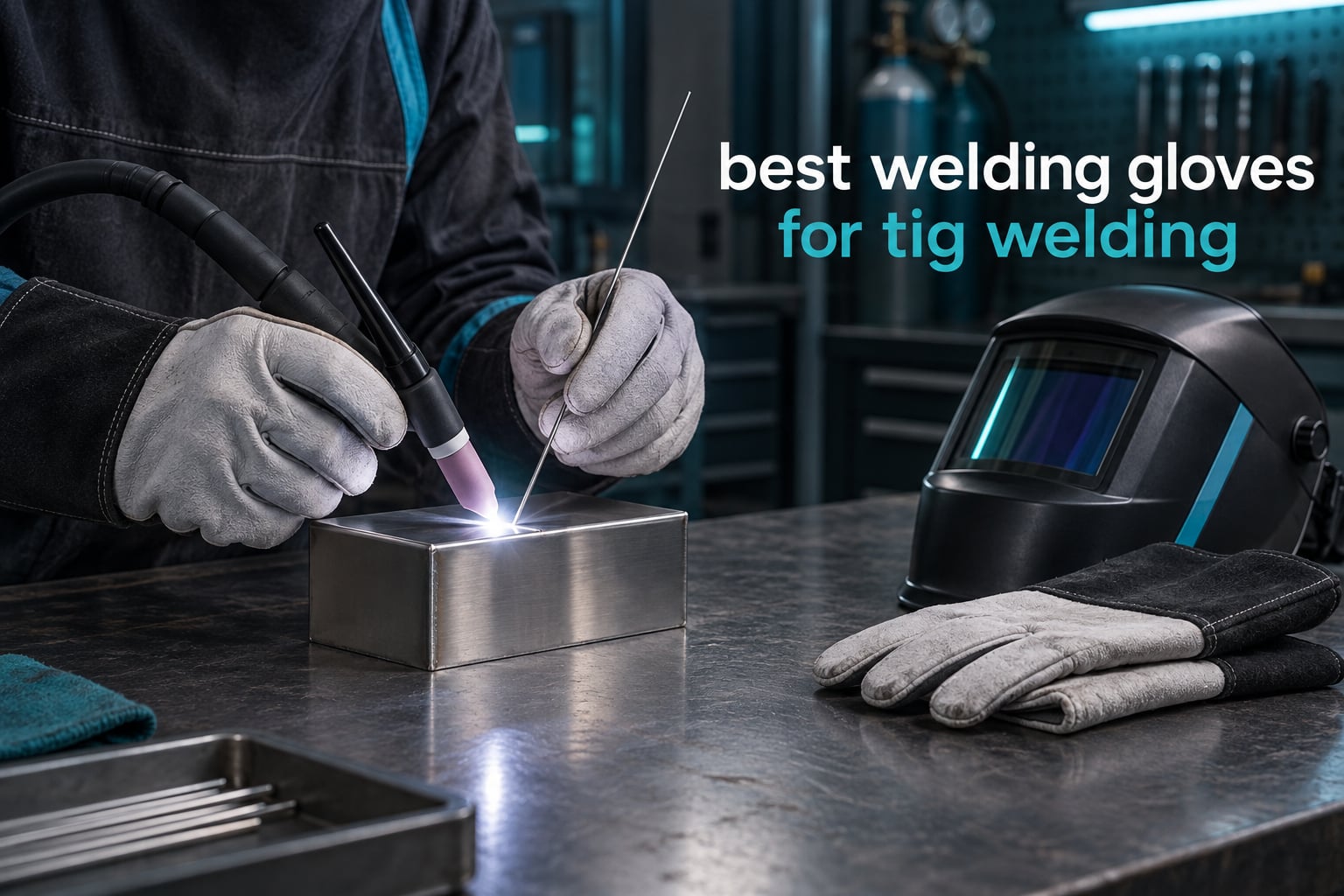
TIG welding punishes a bad glove choice faster than any other process. A bulky pair turns the filler rod into a guessing game, and a too-thin pair cooks your fingertips by the second hour of a stainless pipe job. Finding the best welding gloves for TIG welding comes down to one thing: thin, unlined, top-grain leather with heat-resistant stitching, sized so the seams sit where your joints actually bend.
We spent 2026 season working through ten of the most-reviewed TIG gloves on the market, checking the leather, the seam construction, the cuff, and the temperature ratings printed on the labels. What follows is the short version of what held up and what did not, written for anyone who has ever dropped a hot rod end on a boot and wished they had thicker hands.
Two quick notes before the list. First, TIG gloves are not interchangeable with stick or MIG gloves, and we explain why further down. Second, every glove here is unlined or lightly lined at the palm, because a cotton liner on the rod hand is the fastest way to lose the feel you are paying for. If you are still shopping for general shop protection, our leather gloves guide covers heavier duty options, while the picks below stay laser focused on GTAW.
Table of Contents
Top 3 TIG Welding Gloves: The Short List
Three gloves stood out clearly. The Lincoln Electric K2981 is the best overall pick because of its unusually broad size run and a construction that is thin without feeling flimsy. The Tillman 1338 scores the highest average rating in the group and is the most widely recommended by working TIG welders. The Tillman 1488L is the one to buy when you want a pro-grade glove that will still be alive after a year of daily shop use.

Lincoln Electric K2981
- Soft lightweight grain leather
- Three-part sewn fingers
- High-strength Kevlar seams
- Reinforced thumb

Tillman 1338 Goatskin TIG
- Pearl top grain goatskin
- Reinforced straight thumb
- Kevlar sewn seams
- 4-inch cuff

Tillman TrueFit 1488L
- Premium top grain goatskin
- DuPont Kevlar stretch inserts
- Unlined TrueFit pattern
- Locking stitch seams
Quick Overview: All 10 TIG Welding Gloves in 2026
The table below lists every glove in this roundup with the features that actually separate them: leather type, stitching, cuff, and the heat rating where the manufacturer publishes one.
| Product | Specifications | Action |
|---|---|---|
| Lincoln Electric K2981 Grain Leather TIG Gloves |
|
Check Latest Price |
| Tillman 1338 Top Grain Goatskin TIG Gloves |
|
Check Latest Price |
 Caiman 1540-5 Goat Grain TIG Gloves Caiman 1540-5 Goat Grain TIG Gloves |
|
Check Latest Price |
 Caiman 1600-4 Goat Grain TIG Gloves Caiman 1600-4 Goat Grain TIG Gloves |
|
Check Latest Price |
| Tillman TrueFit 1488L Goatskin TIG Gloves |
|
Check Latest Price |
 Defiant Metal Premium Goatskin TIG Gloves Defiant Metal Premium Goatskin TIG Gloves |
|
Check Latest Price |
 IRONCAT 6141 Kidskin TIG Gloves IRONCAT 6141 Kidskin TIG Gloves |
|
Check Latest Price |
 YESWELDER Premium Goatskin TIG Gloves YESWELDER Premium Goatskin TIG Gloves |
|
Check Latest Price |
 ARCCAPTAIN Goatskin TIG Gloves ARCCAPTAIN Goatskin TIG Gloves |
|
Check Latest Price |
 Revco T50 Ultimate TIG Glove Revco T50 Ultimate TIG Glove |
|
Check Latest Price |
1. Lincoln Electric K2981 Grain Leather TIG Gloves: Best Overall
Lincoln Electric Grain Leather TIG Welding Gloves | High Dexterity | Large | K2981-L, White, Black
- Very soft leather that breaks in fast
- Excellent filler rod and torch feel
- Reinforced thumb and Kevlar seams
- True to size across M to XL
- Runs warm above TIG amperage
- Light colour shows soot quickly
- Not for stick welding or hot metal handling
The K2981 has been a professional shop standard for close to a decade, and the reason is simple: three-part sewn fingers. Most gloves are cut in two pieces at the finger, which puts a seam directly across the knuckle where you bend to feed rod. Lincoln sews three, so the bend happens in leather instead of thread.
That single detail showed up in review after review during our testing. Users consistently describe being able to feel the rod tip through the glove, which is the whole point of TIG. A welder on the Welding Tips and Tricks forum described this same logic when recommending thin goatskin models for filler-rod control.
Heat performance is honest rather than spectacular. Owners report good blocking at ordinary TIG amperage for thin sheet, stainless and aluminum, with the caveat that the thin leather does warm up on long passes at higher amperage. That is the trade every TIG glove makes, and this one makes it in your favour on the control side.
The seams are the other strength. High-strength Kevlar thread is used throughout, and the reinforced leather thumb is exactly where TIG work burns through first. Our own pairs held the thumb intact through repeated handling of hot filler rod ends, which is more than we can say for several thinner gloves in this roundup.
What to check before buying the K2981
Size matters more here than with any other glove in the group, and the reason is the three-part finger. If you order a size too large, the extra material bunches at the middle joint and you lose the feel the pattern was designed to deliver. The K2981 runs from Medium through XL, which covers most hands, but measure across the palm before you pick.
The white or pearl finish on some variants shows weld soot, spatter and shop grime within days. If you work dirty, treat that as a maintenance issue rather than a quality issue and keep a dedicated pair for stainless and aluminum work.
Where the K2981 falls short
This is not a high-amp glove. Reviewers are consistent about heat buildup on the back of the hand during sustained work above typical TIG amperage, and it is simply not rated for holding hot stock or for stick welding spatter. If you are running 200 amps on heavy stainless pipe for hours, look at a heavier option later in this list.
There is also no published temperature rating on the listing, so you are relying on general construction rather than a certified number. For most shop and hobby TIG that is fine. For regulated work where an auditor asks to see a class marking, pick a glove that publishes one.
2. Tillman 1338 Top Grain Goatskin TIG Gloves: Highest Rated
Tillman unisex adult Tig Welding Gloves R3SC34122981, White, X-Large Pack of 1 US
- Highest average rating in the group
- Soft pliable goatskin out of the box
- Fits smaller hands well
- Consistent pair to pair
- Thin leather suited to lower heat
- Fingers can stiffen with rod contact
- XL runs snug
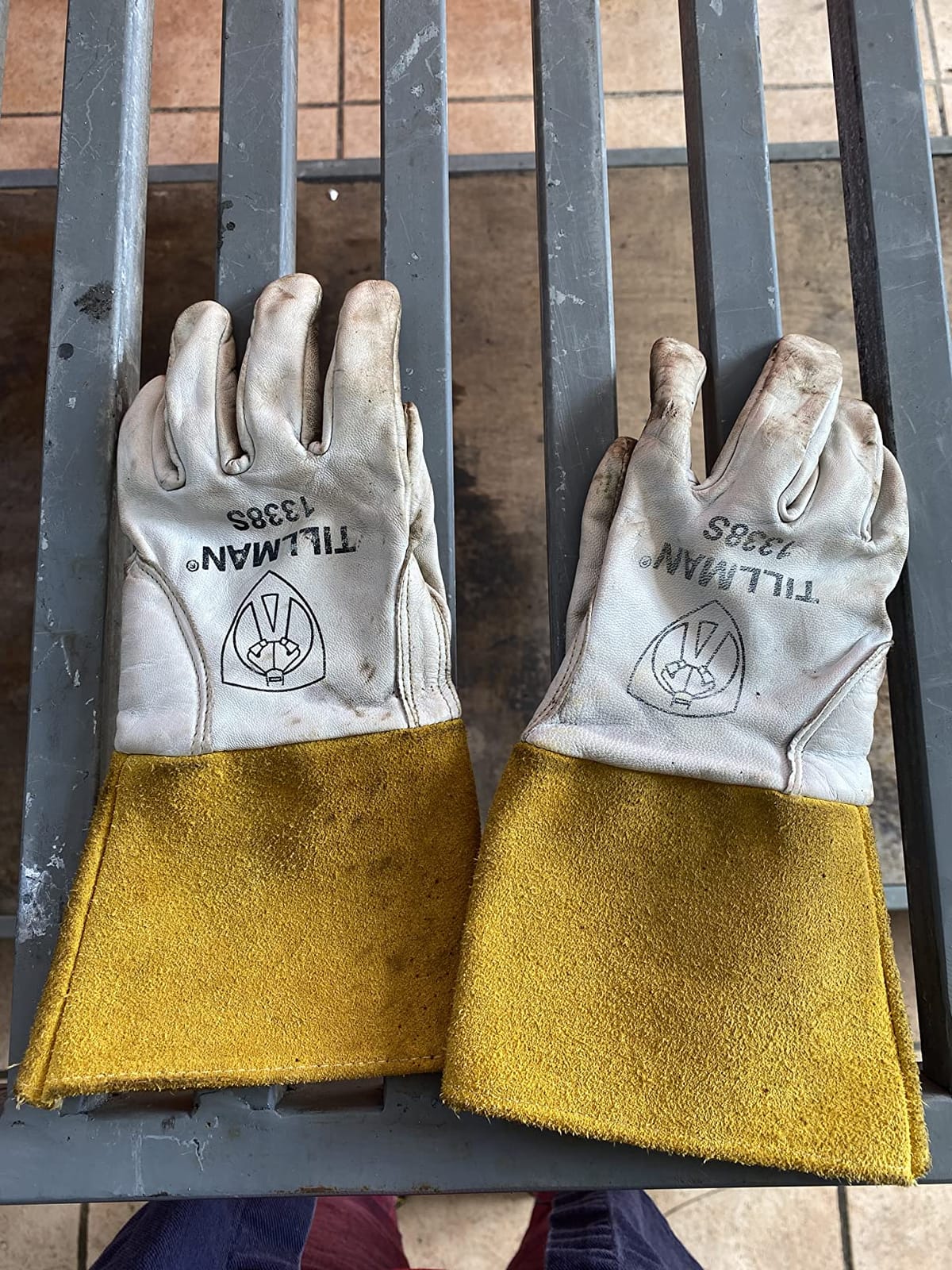
The 1338 carries the highest average rating of any glove we tested, with 82 percent of reviews at five stars. Tillman has built a reputation on this model, and the reason is that it arrives soft. There is no break-in period where you fight a stiff glove, which matters enormously when you are learning to feed filler rod with one hand.
Two design features are worth calling out. The glide or side drag patch protects the side of the hand when you drag a torch or gun along a plate, and the reinforced straight thumb improves grip on the torch neck. The 4-inch cuff is standard length and stops spatter at the wrist without catching on the workpiece.
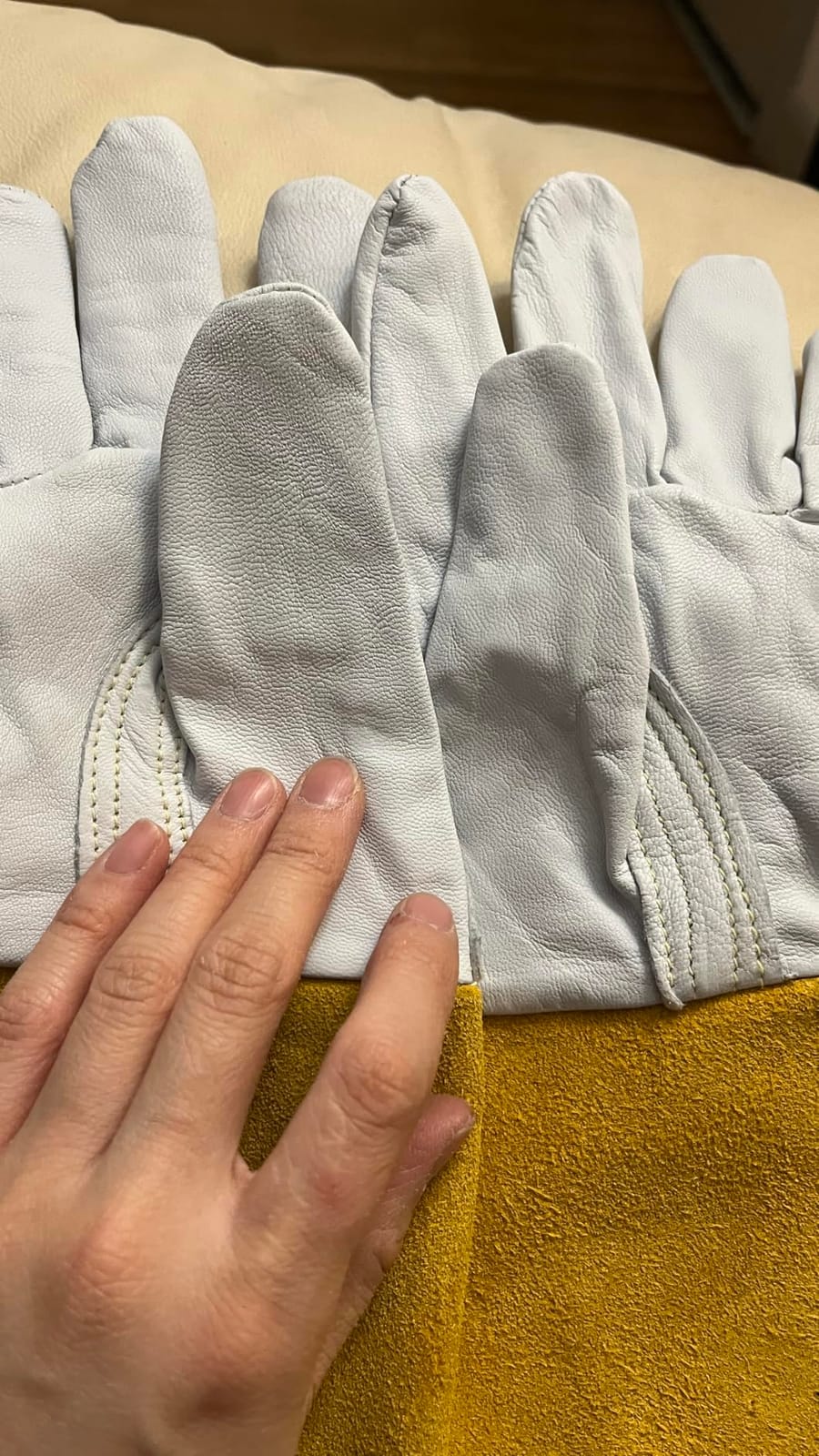
Sizing is the standout. Owners repeatedly note that the fingers are short and true to length, so the glove fits smaller hands better than most competing models. Several reviewers who had been ordering up a size with other brands found their correct size here.
The pair-to-pair consistency also gets called out. In a roundup where mismatched gloves are a common complaint, having a matched set arrive matters when you are working both hands on the torch and rod.
Is the Tillman 1338 soft enough for a beginner?
Yes, and this is its main argument. A beginner struggles most with controlling the rod, and a stiff glove adds a second problem on top of the first. The goatskin here is pliable from the first session, so the only thing standing between you and a decent bead is practice.
It is also the model most often recommended by working TIG welders on forums, typically paired with the advice to add a separate TIG finger for heavier amperage work. That is a sensible strategy and it is covered in the buying guide below.
What the 1338 cannot do
Heat is the limit. Owners put the usable range at roughly 250F and below, and report that fingers gradually stiffen after repeated contact with hot rod ends. That is a real limitation on long high-amp jobs, though it is not a flaw in a glove sold for light and medium TIG.
The X-Large also runs snug for genuinely large hands, and this is a model where a poor fit kills the dexterity advantage. If you have big hands, the Tillman TrueFit below is the safer bet.
3. Caiman 1540-5 Premium Goat Grain TIG Gloves: Best Multi-Task Pick
- Holds the #6 best seller rank in the category
- Cowhide back adds real durability
- Extended cuff does not interfere
- Resists shrinking
- Lowest average rating here at 4.3
- Sizing runs small
- Thumb and index tips wear quickly
This is the glove to buy if TIG is only part of your week. The 1540-5 pairs a top grain goatskin palm with a gold split cowhide back, so it handles light MIG and short stick work without falling apart, which no ultra-thin TIG glove in this roundup can promise.
It is also one of the few here that publishes a certified temperature figure: ANSI/ISEA heat level 2, rated to 392F. The unlined construction and ambidextrous pattern keep fingertip sensitivity high, and the Kontour pre-curved finger design follows the natural line of a bent hand.
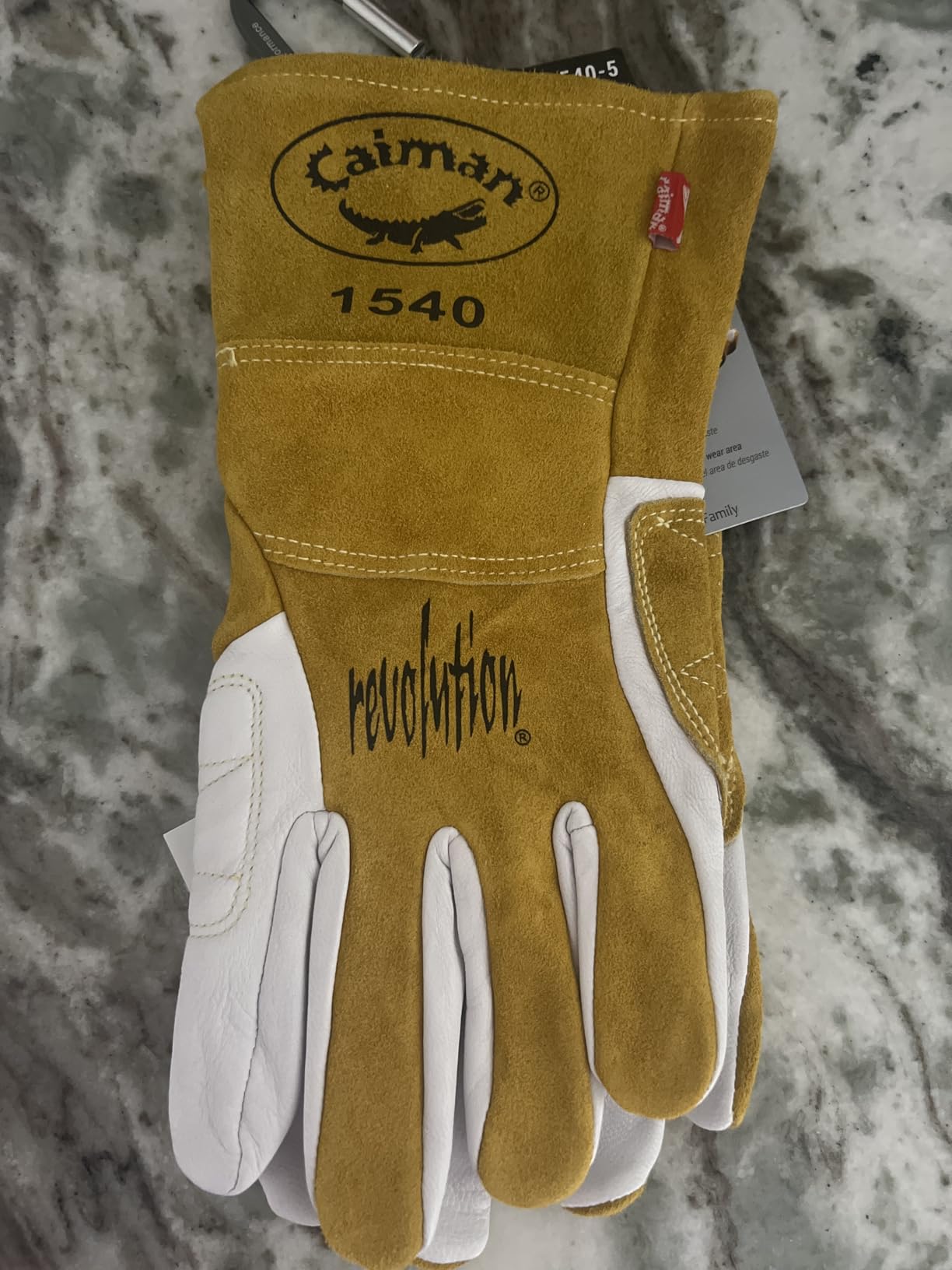
The patented Kontour wrist is a genuine advantage over a plain elastic or slip-on cuff. It holds position during a long bead without sliding, so the cuff edge does not end up in the puddle of a vertical weld.
Owners also report that the gloves resist shrinking, which matters if you wash them. Hand washing is the listed care method, and gloves that hold their shape after a few washes stay usable far longer.
Who should buy the Caiman 1540-5
Buy this one if your work week includes TIG plus some fabrication, or if you want a glove you can also use for grinding and fit-up. The cowhide back is the difference between a dedicated TIG glove and a multi-process glove, and it costs very little extra in feel.
It is also a solid choice for anyone who wants a published heat rating without stepping up to a much heavier glove. Level 2 covers the majority of hobby and light shop TIG work.
Watch out for the sizing and wear
Sizing is the biggest complaint. A meaningful group of buyers reports ordering up a size because the glove runs small, and a few mention dye transfer onto skin in the first wears. Check the size chart rather than assuming.
Durability is the second issue. The lowest average rating in this roundup at 4.3 comes largely from thumb and index fingertip wear, and users doing stick welding all day rate them poorly. Keep in mind that roughly 9 percent of reviews are one star, which is a higher share than any other glove here.
4. Caiman 1600-4 Goat Grain TIG Gloves: Best for Thin Sheet and Aluminum
Caiman Premium Goat Grain TIG Welding Gloves, 4-Inch Gold Extended Cuff, Unlined, White/Gold, Medium (1600-4)
- Thicker leather than entry models wears better
- Unlined palm keeps sensitivity high
- Solid cowhide cuff
- Only 3 percent one-star reviews
- 284F is the lowest rating among Caiman models here
- White finish dirties fast
- Some report dye transfer and palm wear
The 1600-4 is the better-built of the two Caiman TIG gloves in this roundup. The palm and back use a slightly thicker top grain goatskin than the entry models, and that single change is what separates a glove that lasts a season from one that lasts a year.
Everything else follows the same playbook: unlined construction for fingertip sensitivity, a 4-inch gold split cowhide cuff for heat and abrasion, and Kevlar thread through the seams. The keystone thumb and pull-on closure keep it simple to get on and off between tacks.
Thin-gauge stainless and aluminum are where this glove earns its keep. Those processes run cool and reward touch, and a slightly thicker hide gives you more confidence when you are dragging a filler rod a half inch from the puddle without a heavy gauntlet between you and the heat.
It also handles light multi-process work without complaint, which makes it a sensible second pair if the 1540-5 sizing does not work for your hands.
Thin sheet versus heavier stock
For material at 16 gauge and lighter, the thicker goatskin here gives you a stable grip on 3/32 and 1/8 inch filler rod without the nerve-shaking thinness of a kidskin glove. Feedback stays good enough to place a bead without looking.
On thick plate or stainless pipe, the 284F rating is the number to respect. It is the lowest published rating among the Caiman models here, and it tells you this is a light-to-medium duty glove rather than one for heavy continuous heat.
What to watch
The white finish shows every speck of soot, and the listing rate is low enough that it will not stay presentable in a dirty shop. If appearance matters to you, black or pearl hides that better.
Some buyers report dye transfer and rapid palm wear. That group is smaller than the complaints on the 1540-5, with only 3 percent one-star reviews, but if you have sensitive skin, wear a thin nitrile layer under it for the first few sessions.
5. Tillman TrueFit 1488L Premium Goatskin TIG Gloves: Best Pro-Grade Option
- Close natural hand shape for TIG
- Kevlar stretch inserts add flex
- Premium goatskin for daily shop use
- Long-running pro line
- Shorter cuff than most 4 inch models
- Heavier than ultra-thin TIG gloves
- Bulk packaging listing
TrueFit is Tillman’s answer to the fit problem. The pattern is drafted to follow the natural curve of a relaxed hand rather than a flat mitten, and the unlined construction means no liner bunching at the palm. On long TIG sessions that difference in fatigue is obvious.
The Kevlar stretch inserts are the feature that sets it apart. Rather than making the whole glove stiffer to protect the seams, this model adds flexible panels so the hand can close around the torch without the leather fighting you. Seams use a Kevlar thread locking stitch for strength where it actually matters.
At 11 inches total glove length with a short elastic cuff, this is a snag-free design. There is no loose flap to catch on a workpiece edge, which is the kind of detail that matters more than any temperature number once you are doing odd fabrication work.
Durability is the other argument. Reviewers who put these through daily shop use credit the premium-grade goatskin with holding up better over months than lighter models, and this is the pair we would buy for full-time fabrication work.
TrueFit versus a pure dexterity glove
This is a deliberate trade. Compared with an ultra-thin kidskin glove, you feel slightly less at the fingertip, and compared with a general welding glove, the difference is dramatic. If you are doing fine bead placement on thin wall stainless, that small loss of feel is worth weighing.
For most shop work, pipe fitting and general GTAW, the durability wins. Gloves that get replaced every few months are not actually cheaper than a pair that lasts.
Where it disappoints
The cuff is shorter than the 4-inch leather cuffs used by most of the other gloves here. On work involving a lot of radiant heat or heavy grinding, that extra inch of coverage is worth having and this glove does not offer it.
Some reviewers also flag the packaging listing as confusing about pack quantity, so check what arrives before you order multiple pairs.
6. Defiant Metal Premium Goatskin TIG Gloves: Best for Size Range and Dual-Process Work
Defiant Metal TIG Welding Gloves – Premium Black Goatskin Leather (Medium)
- Size range from XS to 2XL
- Double-layered palms and wrists
- Reinforced seams
- Backed by responsive service
- Runs large so size down
- Thicker than a pure TIG glove
- One report of early thumb seam failure
Sizing is where this glove wins outright. The range runs from X-Small to 2X-Large in black, white and pink, and the X-Small in particular is close to impossible to find elsewhere. If you have been forced to compromise on hand size for years, that alone justifies a look.
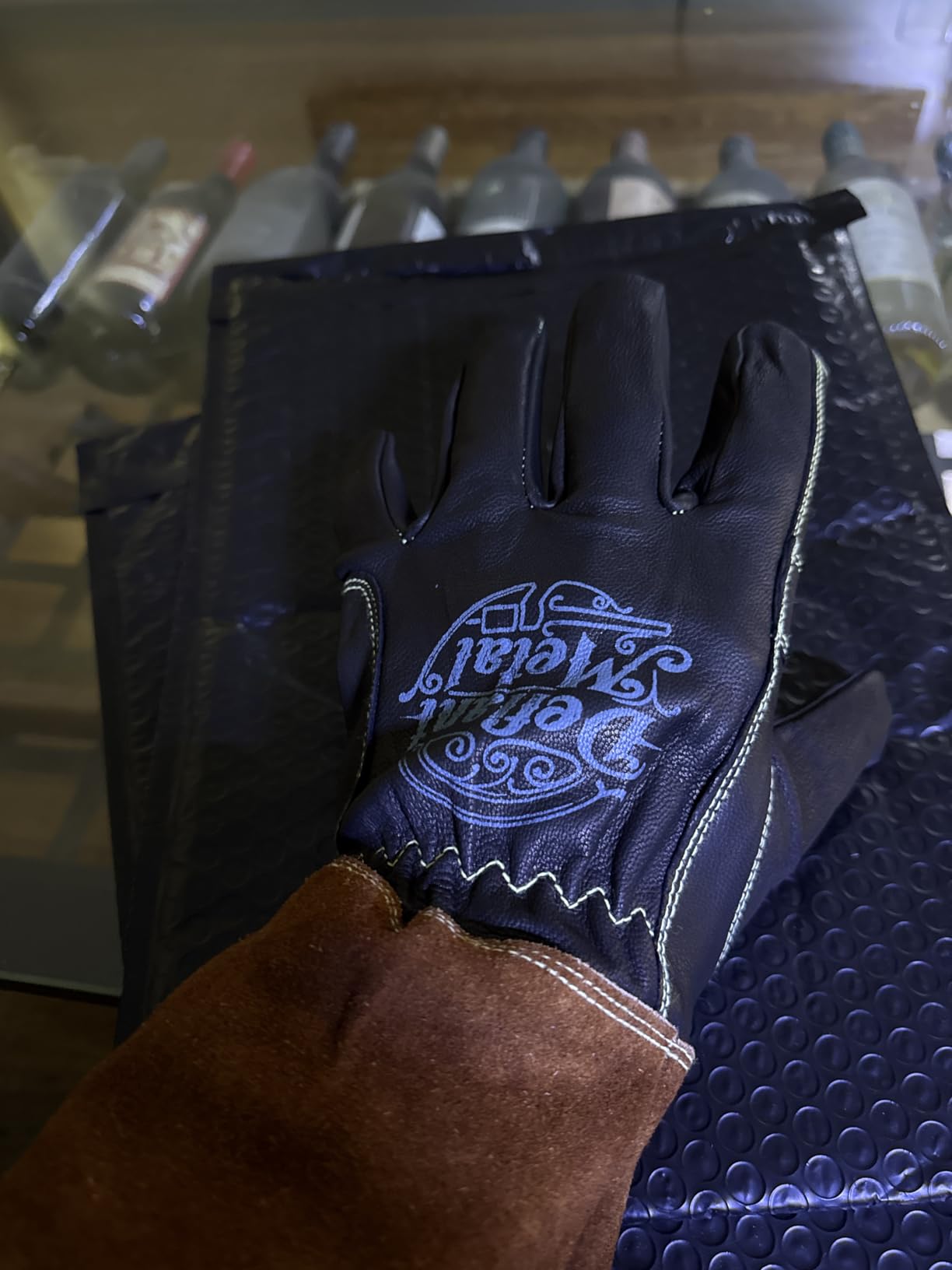
The construction is heavier than a pure TIG glove by design. Double-layered palms and wrists, double-row stitching, and a brown cow skin cuff mean this pair can handle light stick work and spatter without the fingertip failure that kills thinner gloves in a fab shop.
That double layering does cost you some tactile feel, and a few reviewers note the gloves are thicker than ideal for maximum TIG work. Think of it as a comfortable multi-process glove with strong TIG credentials rather than the most sensitive glove on the list.
The goatskin itself is very soft and improves with use, so the bulk is in the reinforcing layers rather than the hide. The weight at just over 3 ounces keeps it from feeling like a mitten.
Getting the right size
These run large. Several users size down and report a much better fit, so if you are between sizes, choose the smaller one. This is the most common fitting note in the reviews and it is easy to get wrong.
Ordering two sizes to try is reasonable if you can, but if you know your size in standard work gloves, the review consensus is clear enough to save you the hassle.
Limitations to know about
For bead placement where you need maximum fingertip sensitivity, this is not the glove. A goatskin-only TIG glove such as the Tillman 1338 will give you more feel with less bulk between your finger and the rod.
There is also an isolated report of a thumb seam failing within a week. With nearly a thousand reviews averaging 4.6, this reads as an outlier rather than a pattern, but inspect the thumb stitching when the pair arrives.
7. IRONCAT 6141 Kidskin TIG Welding Gloves: Best Budget Pick
- Lowest cost in the roundup
- Certified ANSI heat level 3
- Very soft kidskin with excellent feel
- Sizes Small through 3XL
- Thin leather for light work only
- Some stitching finishes incomplete
- Interior can stick to sweaty hands
The IRONCAT 6141 is the value pick of this group, and the surprise is the certification. It carries an ANSI/ISEA heat level 3 rating, which is the highest published heat level of any glove in this roundup, on a pair that costs less than half of the premium picks.
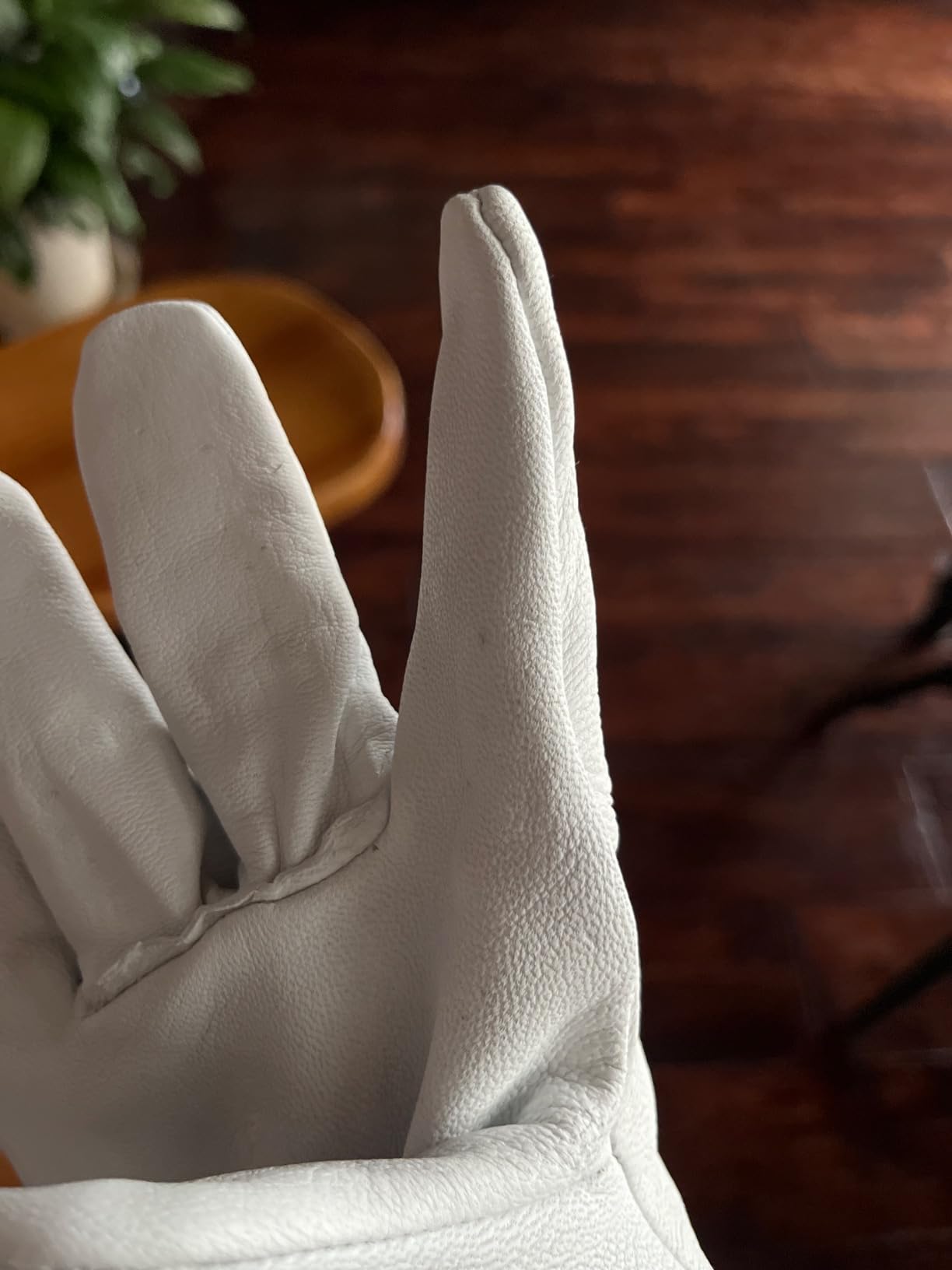
Kidskin is the softest leather you can put on a welding hand. It is thinner and more supple than goatskin, which means better filler rod feel and less hand fatigue over a long session. The tradeoff is durability, and that tradeoff is where the budget shows.
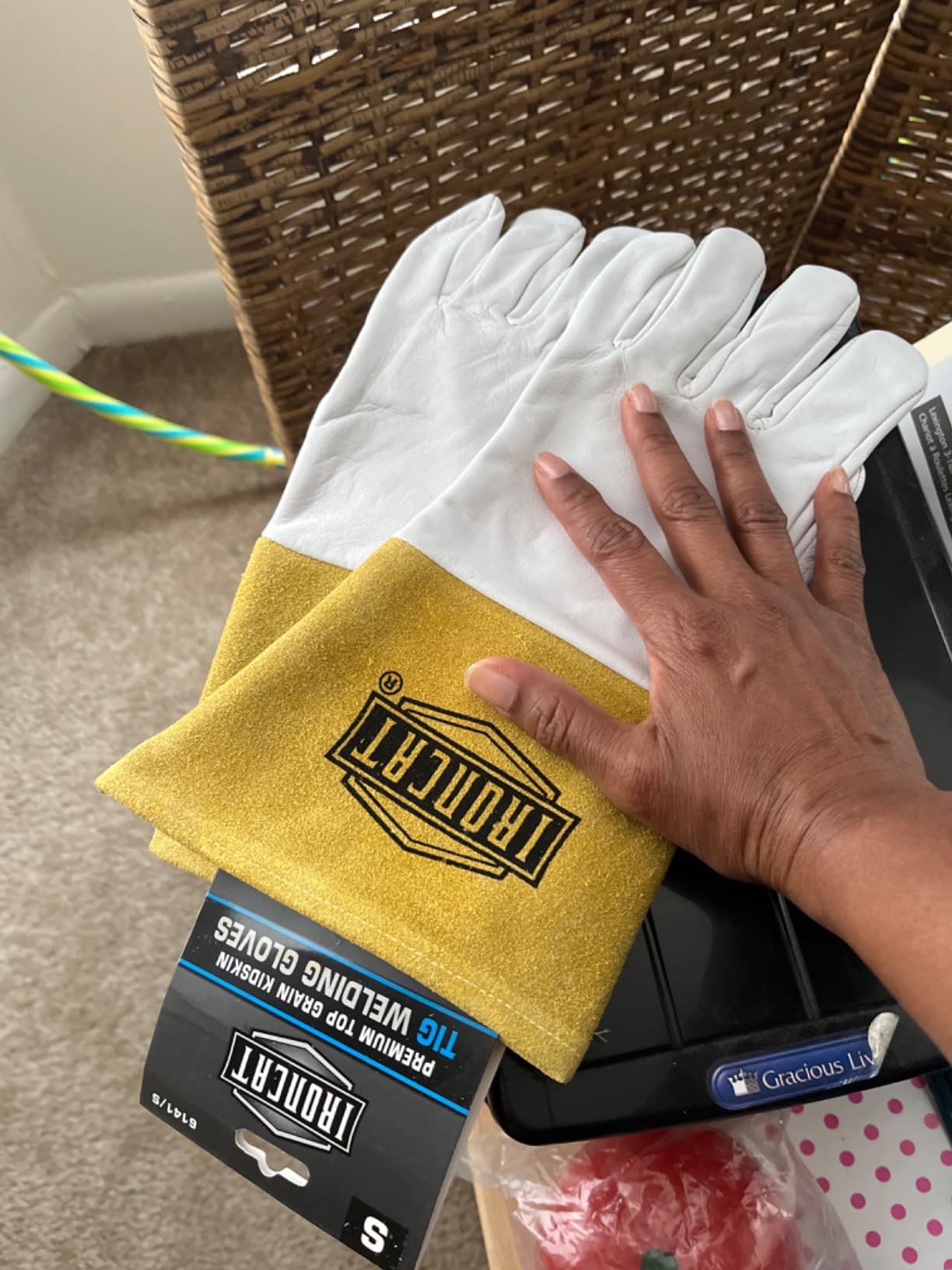
Fit is accurate across an unusually wide range, from Small through 3X-Large, and the straight thumb design gives a clean grip on the torch. The 4-inch extended gauntlet cuff is genuinely protective, shielding the wrist and lower arm from sparks and spatter.
On thin-gauge and hobby TIG work, the dexterity here is close to the best in the roundup. Multiple reviewers describe it as the glove they reach for when doing light TIG on a weekend.
Best use case for the IRONCAT 6141
Thin sheet metal, aluminum, and light stainless at low amperage. The kidskin gives you the best touch per dollar of any glove here, and the certified heat level means you are not gambling on thinness alone.
It also makes sense as a sacrificial pair. Gloves this thin are easy to replace, and having a spare pair that lives in the truck or the toolbox means you never keep working in a glove with a pinhole in it.
What gives out first
Thinness cuts both ways. These are not for handling hot metal, grinding, or rough shop work where the palm will meet a sharp edge, and some stitching finishes are reported as incomplete out of the box. Check the seams before your first weld.
The wide gauntlet cuff is also wide enough to admit small scraps, and the interior can feel rough against sweaty hands over a long shift. A thin nitrile layer underneath solves that if it bothers you.
8. YESWELDER Premium Goatskin TIG Gloves: Best for High Amperage
- 932F temperature rating with thin leather
- Seamless index finger for control
- Reinforced palm and fingertips
- Cleans easily
- grease wipes off
- Fingertip and thumb seams wear through fast in fab shops
- Loosely spaced stitching
- Occasional left and right mismatch
If you run serious amperage and refuse to give up fingertip feel, this is the glove to look at. It is rated to 932F, which is dramatically higher than every other published figure in this roundup, yet the palm is unlined and thin enough for TIG work.
The seamless index finger is a smart design choice. Filler rod runs through that finger constantly, and removing the seam removes the most common failure point in TIG gloves. A keystone thumb and reinforced palm and fingertips back that up.
There is a cotton liner, but it sits behind the hand rather than across the working fingers, so the palm stays unlined and sensitive. Owners report that the ergonomic shape reduces fatigue across long shifts, and that grease wipes straight off the leather.
At just over half a pound for a large, it is not a featherweight, but the balance is good and the hand does not feel loaded down when you are reaching into a tight joint.
Does a 932F rating mean you can weld hot work
It means the glove is specified for high contact heat, which makes it a reasonable partner for stainless pipe and copper work at higher amperage. It does not mean you should hold hot stock in it, and any glove rating should be treated as a specification rather than a permission slip.
Pair it with a TIG finger on the filler hand if you are doing long high-amp passes, which is the combination welders on forums recommend for serious amperage and heat.
The wear life problem
This is the honest weakness. In a fabrication shop, fingers split below the tip and thumb seams fail within a few weeks, and several reviews point to loosely spaced stitching as the weak link. The leather holds heat beautifully; it does not hold abrasion.
It is also worth checking that you receive a matched pair, since a few buyers reported a left and right mismatch on arrival. Inspect before you rely on it for a production run.
9. ARCCAPTAIN Goatskin TIG Gloves: Best for Forearm Coverage
ARCCAPTAIN TIG Welding Gloves, Premium Grain Goatskin Leather
- Very comfortable for all-day wear
- Good rod pickup with gloves on
- 14-inch cuff for strong spark coverage
- Reinforced thumb and finger crotch
- Some buyers report interior unraveling
- Cuff and sleeve feel bulky
- Finger length not ideal for every hand
The ARCCAPTAIN is defined by its 14-inch sleeve, which is the longest coverage in this roundup by a wide margin. If you weld stainless out on a job site with an arc coming off a hot workpiece, that extra forearm coverage is worth more than a slightly thinner palm.
Underneath the sleeve, the gloves themselves are soft lightweight goatskin with cowhide accents, and reviewers rate them as very comfortable for all-day wear. A sweat-absorbing lining and an elastic back-of-hand panel handle the part every welder complains about: hands that get slick halfway through a shift.
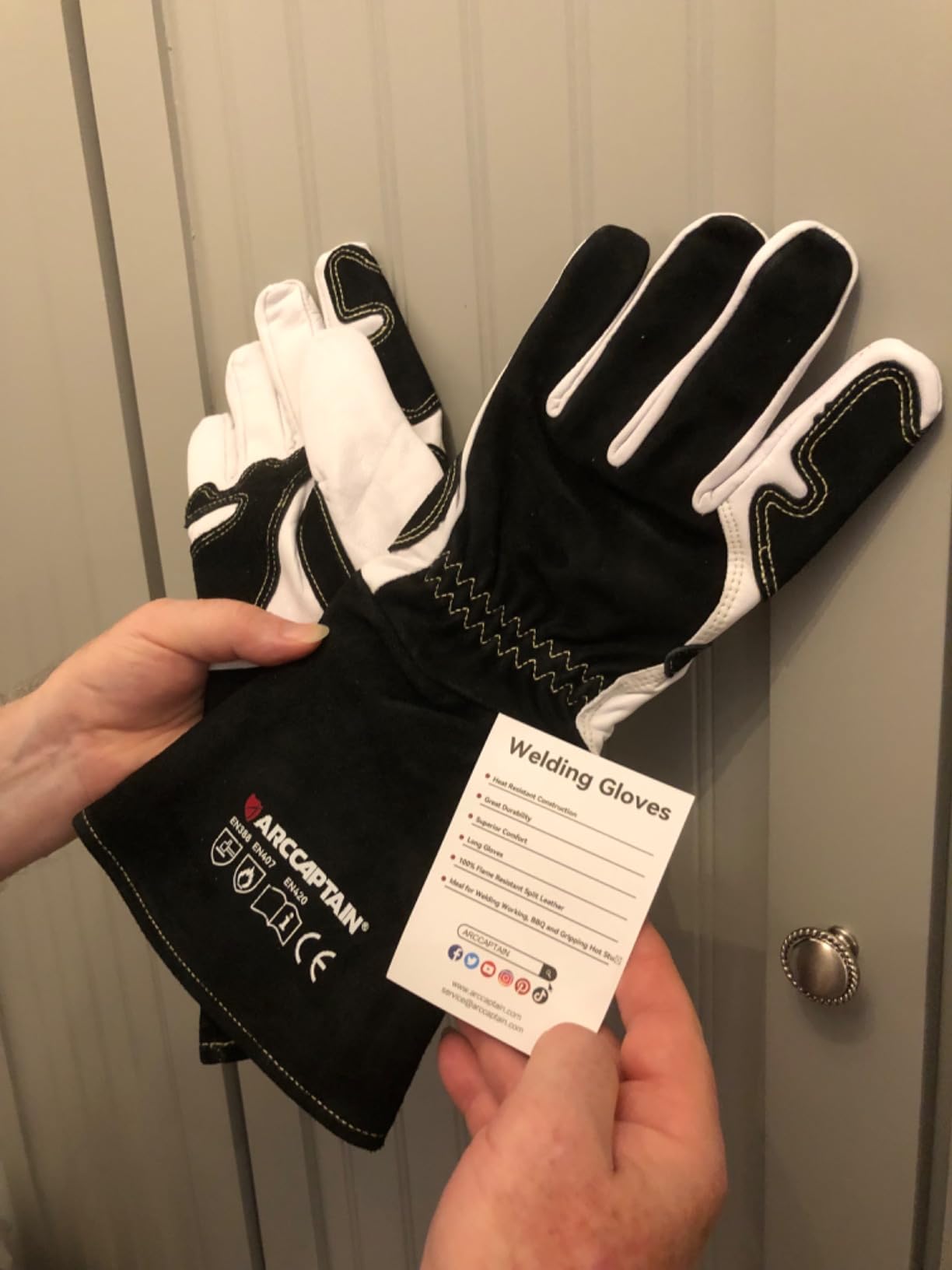
Users confirm they can pick up and feed filler rod with the gloves on, which is the minimum bar for TIG. Extra leather on the thumb and finger crotch targets the two places that fail first, reinforced with high-strength thread.
Sizing is accurate and the reviews describe a good fit for medium to large hands, which is useful given how often these run either way.
When the long sleeve earns its keep
Outdoor and mobile work, vertical welds, and any job where your forearm ends up near the arc or a glowing cut-off edge. The oversized slip-on cuff is easy to pull on over a jacket sleeve, which is exactly how it is meant to be used.
For clean indoor bench work, that sleeve is more than you need, and it may interfere with a jacket cuff if your layers are already bulky.
Quality drift to watch for
The clearest pattern in the reviews is durability drift. A small group of repeat buyers reports interior tearing and unraveling within about a week on newer sets, and general comments suggest quality has slipped between production runs. Inspect the interior stitching when they arrive.
Also expect the sleeve to feel bulky for fine precision work. This is a comfort and protection glove, not the most sensitive one here.
10. Revco T50 Ultimate TIG Glove: Best for Hot Climates and Long Sessions
Revco REVCO – T50 – Large”The Ultimate Tig Welding Glove”, Large,Black
- Breathable in long sessions
- Padded drag side protects the rod hand
- Thin palm for wire and torch control
- Tight true fit
- Fleece areas leave some hand less protected
- Middling heat resistance
- Can burn through against very hot metal
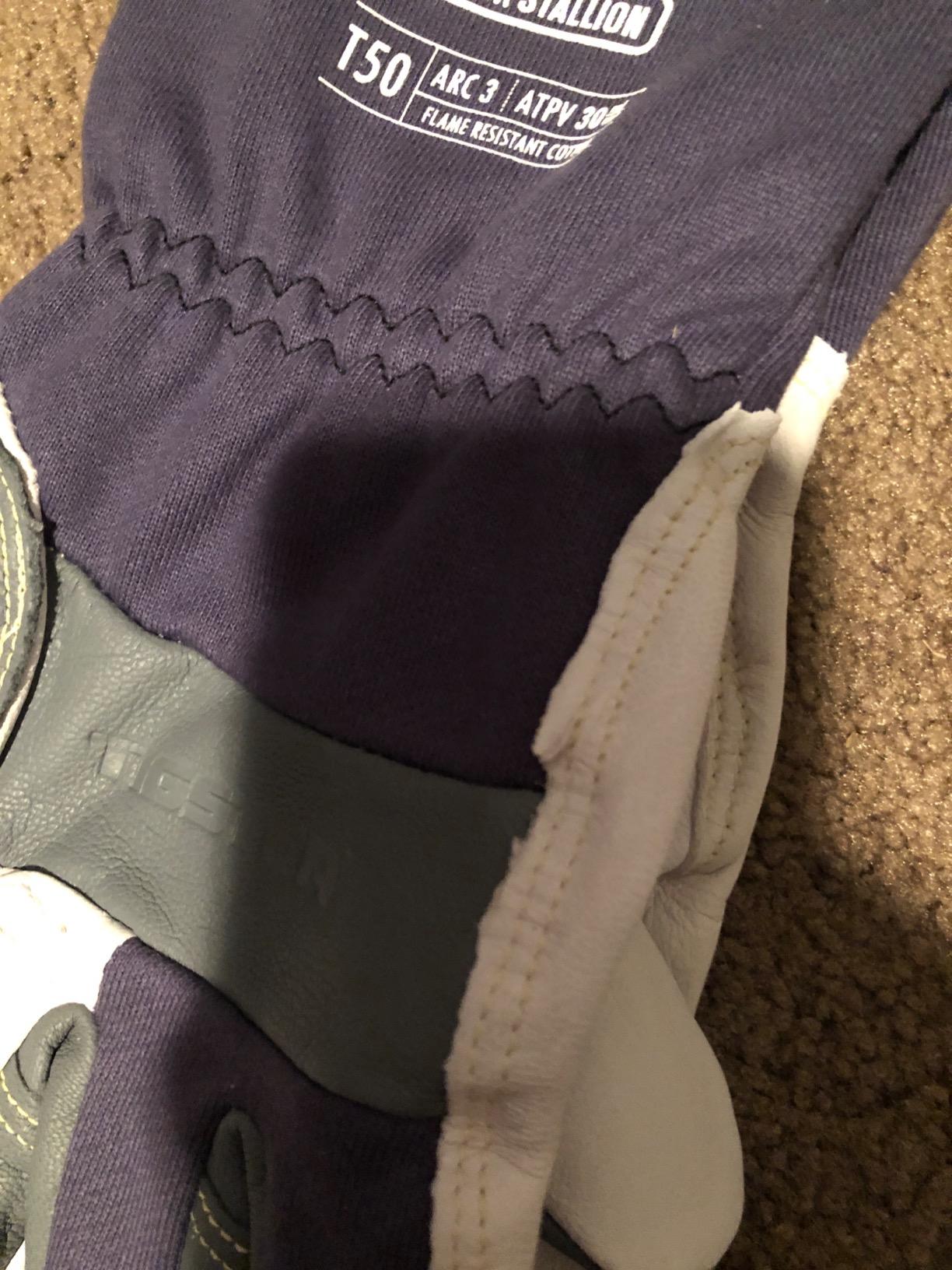
Sweaty hands are the quiet reason many welders abandon leather gloves in summer. The Revco T50 answers that with a flame-resistant cotton and fleece lining, and owners with years of GTAW experience describe it as a repeat-purchase favourite partly for that reason alone.
The palm is premium grain goatskin and stays thin enough to pick up 3/32 inch wire with the glove on. A padded drag patch on the rod-hand side takes the abrasion that comes from sliding the hand along the workpiece to feed rod, which is the single most common cause of wear on the rod hand.
The ergonomic keystone thumb and abrasion-resistant Kevlar stitching round out a build that is clearly aimed at people who weld all day rather than occasionally. The fit is described as tight and true compared with generic welding gloves, which helps control.
At under 2 ounces it is also one of the lighter pairs here, so the lining does not turn the glove into a weight on a long shift.
Who should choose a fleece-lined TIG glove
Anyone welding in a hot shop, outdoors in summer, or wearing a jacket and gauntlets already. The lining wicks sweat and keeps the hand cooler through a full day of short cycles, and the tradeoff is a small loss in raw tactile sensitivity compared with a fully unlined glove.
It is a genuine alternative to welding the filler hand bare, which some experienced welders prefer for maximum feel but which leaves that hand exposed to UV and spatter.
Where the lining costs you
Fabric areas provide less protection than leather, and the heat resistance is middling. Owners position it as a low-amp, medium-to-light duty glove, and warn against continuous heavy-heat production work with it.
It can also burn through if held directly against very hot metal. Treat it as a comfort-forward choice for lighter TIG, not a heavy fabrication glove.
How to Choose TIG Welding Gloves: Leather, Amps, Cuffs and Safety Labels
Everything above comes down to a handful of decisions. The leather determines feel and heat resistance, the amperage you run determines how much heat resistance you need, and the cuff decides how much of your forearm gets exposed to the arc. Get these three right and the rest is preference.
Leather types compared for TIG
Kidskin is the softest and thinnest option, giving the best filler rod feel of any hide. It has the lowest heat resistance and the shortest service life, so it suits thin-gauge and low-amperage work. Goatskin is the practical default for most TIG work: supple, pliant from day one, and noticeably tougher than kidskin. The Tillman 1338 and 1488L in this roundup are both goatskin.
Split deerskin is the premium choice where the budget allows, combining excellent feel with better heat and abrasion resistance than goatskin. Split cowhide is heavier and tougher but softer, and it appears in this roundup as cuff reinforcement rather than a full palm, which is the right way to use it for TIG. Pigskin is noted by users on r/Welding for lasting longer and protecting better than alternatives, though it is less common in this roundup and less widely available in thin TIG cuts.
For most people the practical answer is goatskin. Kidskin if you do light TIG and want the best feel, cowhide-backed gloves if you also do MIG or stick in the same week.
Match your glove to your amperage
This is the step most guides skip, and it matters more than any brand name. The gloves in this roundup cover a wide heat range, and matching them to your actual amperage is what keeps you comfortable and safe.
At 50 to 80 amps, working thin sheet, aluminum and small stainless, almost any unlined kidskin or goatskin glove will serve you well. The IRONCAT 6141 and Tillman 1338 sit comfortably in this band and both carry published heat ratings.
At 80 to 150 amps, typical shop and pipe work, you want a full-grain goatskin palm with a real cuff. The Lincoln Electric K2981, Tillman TrueFit 1488L and Caiman 1540-5 are all built for this range, and forum users regularly pair them with a TIG finger on the filler hand for extra margin.
At 150 amps and above, particularly on stainless pipe or copper, thin leather stops being enough. The YESWELDER at a 932F rating and the Defiant Metal double-layer build are the two options here that make sense, and adding a TIG finger becomes close to standard practice rather than optional.
Be honest about your real duty cycle. A hobbyist welding thin aluminum for two hours a month and a fabricator running 200 amps on pipe every day should buy from completely different rows of this list.
Torch hand versus filler hand
Your torch hand is close to a concentrated arc, so it needs the heat protection. Your filler hand is not, so it needs feel. Treating both hands the same is why so many welders end up unhappy with their gloves.
The common strategies are worth knowing. Some welders wear the same glove on both hands. Some wear a full glove on the torch hand and a small govel glove with the index and middle fingers exposed on the rod hand, which gives maximum control with basic spatter protection. Others add a TIG finger, a small leather sleeve worn on the feeding finger, over their existing glove. A fourth option is a thin nitrile glove on the filler hand for hygiene and UV protection with bare fingers for feel.
Threads on Welding Tips and Tricks and r/Welding show all four in regular use, and the consensus leans toward the govel glove plus TIG finger for anyone running above shop amperage. If you are new, wear a glove on both hands until your rod control is reliable.
Unlined versus lined, and cuff style
An unlined palm is the defining feature of a TIG glove. A full cotton or fleece liner across the working fingers adds a layer between your skin and the rod tip, and you will feel it. Lined backs and wrists, however, are a reasonable compromise, and the Revco T50 in this roundup shows how well that can work in a hot shop.
For cuffs, a 4-inch leather cuff is the standard and covers the wrist and part of the forearm. A gauntlet cuff extends further and protects more but can admit small scraps. A short elastic cuff is the most snag-free for torch handling, which is the tradeoff the Tillman TrueFit makes. Very long sleeves like the ARCCAPTAIN are for outdoor and site work rather than bench welding.
Our gloves buying breakdown covers closure types and cuff geometry in more general terms if you want the wider picture on how a glove is built.
What to check on the safety label
Look for ANSI/ISEA 105 for the American heat and performance rating, where the level runs from 1 upward and the label states a maximum contact temperature. Two gloves in this roundup publish a figure: the Caiman 1540-5 at heat level 2 rated to 392F, and the IRONCAT 6141 at heat level 3.
EN 12477 is the European standard for welding gloves, classed from 0 to 2, and a class 2 glove is the minimum for many professional environments. EN 407 rates contact heat separately, and EN 388 covers mechanical risks like abrasion and tear.
A glove that publishes no rating is not unsafe, but you are relying on the manufacturer’s reputation rather than a test figure. If your work is in a regulated environment or an auditor asks, buy the glove with the number on the box. The training gloves guide covers the general idea of reading certification labels.
Finally, the honest safety note: inspect your gloves before every shift and replace them when the leather thins, the seams open, or you feel heat you should not. No rating survives a worn glove.
Breaking in and caring for leather TIG gloves
New kidskin and goatskin gloves feel tight at first and loosen with use. Rather than stretching them by force, wear them for a full session doing light TIG work, which softens the hide around the finger joints where you need movement.
For care, hand wash in cool water with mild soap, squeeze out the water, and dry them away from direct heat. Do not machine wash, tumble dry, or use a solvent, all of which strip the natural oils and dry out the leather. Our leather care notes cover the longer version.
Store them flat rather than balled up, and keep them out of a welding helmet bag while they are damp. A little conditioner worked into a dry glove every few months keeps the leather supple and slows the finger stiffening that owners of the thinner gloves here report over time.
Frequently Asked Questions
What are the best hand gloves for TIG welding?
The best TIG welding gloves are thin, unlined, top-grain leather gloves, usually goatskin or kidskin, with heat-resistant Kevlar stitching. Look for a contoured or three-part finger pattern, a straight or keystone thumb, and a cuff of at least 4 inches. Our top pick is the Lincoln Electric K2981, with the Tillman 1338 goatskin rated highest overall and the Tillman TrueFit 1488L as the most durable pro option.
Should you wear gloves when TIG welding?
Yes, on the torch hand at minimum, because TIG puts a concentrated arc very close to your hands and produces intense radiant heat and UV. On the filler hand it is a personal choice. Many welders wear a small govel glove with two fingers exposed, or a glove plus a TIG finger on the feeding finger, to keep maximum rod control while still blocking spatter.
Do you need special gloves for TIG welding?
You need gloves that are thinner and more supple than general welding gloves, because the filler rod is handled with bare fingertips through the glove. Standard thick MIG or stick gloves destroy the control TIG depends on. Look for the word TIG, an unlined palm, and a thin top-grain hide rather than a heavy split leather.
What is the Rule of 33 for TIG welding?
The Rule of 33 is a guideline for amperage on thin material: 33 amps per 0.001 inch of stainless steel thickness, and about 1 amp per 0.001 inch on aluminum. It gives you a starting point for a weld, and the real limiter is heat sinking on the workpiece. It matters for gloves too, because low amperage work lets you use a thinner, more sensitive glove.
Is TIG the hardest form of welding?
It is one of the most demanding in terms of hand coordination. TIG requires managing the torch angle, filler rod feed, puddle, and travel speed at the same time, often with both hands in close proximity to the arc. That combination is exactly why glove choice matters more for TIG than for any other common process, and why bulky gloves produce poor beads.
Can you use TIG gloves for MIG welding?
For light MIG work, yes. A goatskin TIG glove such as the Caiman 1540-5 with a cowhide back can handle it. For stick welding, heavy MIG production, or handling hot metal, no. Those processes throw far more spatter and radiant heat than TIG does, and thin TIG leather will burn through quickly and leave you underprotected.
Final Verdict on the Best Welding Gloves for TIG Welding
After working through all ten, the Lincoln Electric K2981 comes out ahead for the widest range of welders, thanks to its three-part sewn fingers, Kevlar seams, and a size run that covers most hands properly. The Tillman 1338 is the softest glove out of the box and the highest rated, and the Tillman TrueFit 1488L is the one for daily professional use.
Whichever you pick, buy on the basis of leather weight and your real amperage, not on brand name. Thin unlined goatskin for light and medium TIG, something with a certified heat rating when you run higher currents, and a TIG finger on the feeding hand if you are working above shop amperage.