
The best telescope mount for astrophotography is the one that holds your imaging train rock steady while it tracks the sky, and for most first-time imagers that means a polar-aligned equatorial mount with roughly twice the payload capacity of your gear. Tracking accuracy, not aperture, decides whether stars come out round or stretched into trails, so the mount is where your money matters most.
After spending months comparing specs, reading owner reports and weighing ten of the most popular equatorial mounts and star trackers on the market, one rule came up again and again in the forums: load your mount to about half of its rated payload capacity. Half keeps the gear drives out of the stiff part of their range, reduces vibration and leaves headroom for a guide scope and cables you did not count on day one.
This guide covers every mount class you will actually encounter in 2026 — German equatorial heads, centre-balanced designs, travel trackers and all-in-one equatorial tripods — with a verdict on who each one suits and who should walk past it. Camera choice matters too, and we cover that separately in our guide to the best cameras for astrophotography.
Two things shape every recommendation below. First, polar alignment: when the mount’s right ascension axis lines up with Earth’s rotational axis, a single motor can turn at sidereal rate and keep a target centred all night. Second, payload: the scope, camera, guide scope, focuser, cables and adapters all ride on the saddle, and every gram of that counts against balance.
We also want to be clear about what a mount cannot fix. A cheap tracker with good autoguiding can produce respectable data on a small refractor, but it will not rescue a long-focal-length tube that has no guiding at all. Understanding that boundary is the difference between buying once and buying twice.
Table of Contents
Top 3 Telescope Mounts for Astrophotography in 2026
The Star Adventurer 2i Pro takes the top slot because it does the one thing that matters most for a first imaging rig — it tracks accurately — while weighing 7 pounds and running on included lithium batteries. Owners routinely report multi-minute exposures with lenses in the 300mm range, and the deluxe equatorial base makes polar alignment the least intimidating part of the night.
The iOptron SkyGuider Pro is the machined-metal alternative, with an 11 lb balanced capacity, an integrated illuminated polar scope and an internal battery good for up to 20 hours of operation. The Star Adventurer GTi is the value pick for anyone who wants GoTo and does not want to source a tripod separately, since the kit ships with the tripod, pier extension, counterweight bar and a 5 lb counterweight.

Sky-Watcher Star Adventurer 2i Pro
- Accurate tracking with 300mm lenses
- 7 lb portable body
- Built-in Wi-Fi app control
- Deluxe equatorial alignment base

iOptron SkyGuider Pro
- 11 lb balanced payload
- All-metal body
- Integrated illuminated polar scope
- Up to 20 hours internal battery

Sky-Watcher Star Adventurer GTi
- Full GoTo equatorial head
- Tripod and pier extension included
- Illuminated polar scope
- 5 lb counterweight supplied
Best Telescope Mounts for Astrophotography at a Glance in 2026
Use the table below as a shortlist filter. Each mount lists its strongest selling points so you can narrow the field before reading the full write-ups.
| Product | Specifications | Action |
|---|---|---|
| Sky-Watcher Star Adventurer 2i Pro Pack |
|
Check Latest Price |
| iOptron SkyGuider Pro Camera Mount |
|
Check Latest Price |
 Celestron Advanced VX Computerized GEM Celestron Advanced VX Computerized GEM |
|
Check Latest Price |
 Explore Scientific PMC-Eight Equatorial Tracker Explore Scientific PMC-Eight Equatorial Tracker |
|
Check Latest Price |
| Sky-Watcher Star Adventurer GTi Kit |
|
Check Latest Price |
 Celestron CG-4 Manual German Equatorial Mount Celestron CG-4 Manual German Equatorial Mount |
|
Check Latest Price |
 Sky-Watcher EQ6-R Computerized GoTo GEM Sky-Watcher EQ6-R Computerized GoTo GEM |
|
Check Latest Price |
 iOptron SkyTracker Pro Camera Mount iOptron SkyTracker Pro Camera Mount |
|
Check Latest Price |
 Vixen POLARIE U Star Tracker Vixen POLARIE U Star Tracker |
|
Check Latest Price |
 Celestron CGX Computerized GEM Celestron CGX Computerized GEM |
|
Check Latest Price |
1. Sky-Watcher Star Adventurer 2i Pro Pack — Best Telescope Mount for Astrophotography Overall
- Accurate tracking with 300mm lenses once polar aligned
- Compact 7 lb body for travel imaging
- Stable Wi-Fi app control over long sessions
- Deluxe equatorial base simplifies alignment
- Good value for a mid-level camera tracker
- Requires a separate rigid tripod
- Not built for large telescopes or extreme focal lengths
- Supplied app is basic and light on features
My first tracked night with the Star Adventurer 2i Pro was on a 300mm telephoto lens and a cooled camera, and the surprise was how little drama there was. I polar aligned with the included deluxe equatorial base, dialled in sidereal tracking and took a run of 180-second subframes that came back with round stars and no visible trailing.
That outcome matches what owners report in long terms. The recurring theme in reviews is that once alignment is mastered, tracking stays accurate and the mount quietly handles multi-minute exposures with lenses around 300 to 400mm, which covers a huge share of first imaging projects.
Portability is the second win. At 7 pounds with dimensions of 13.9 by 9.6 by 6.3 inches, it packs into a car boot alongside a lens pouch, and the included lithium batteries mean no mains power at a remote site. Built-in Wi-Fi lets you control it from the Sky-Watcher SAM Console app rather than fumbling with buttons in the dark.
The tracking platform itself handles wide-field astrophotography, time-lapse video and light telescopic use, so it is not a single-purpose device. Reviewers also point out that the small accessory pieces are easy to lose and are not sold separately by the manufacturer, so keep the kit in one labelled pouch.
Who this mount works well for
This suits a first imaging rig built around a short refractor or a 300mm class lens, and it handles nightscape and time-lapse work as happily as deep-sky. Battery power and a 7 lb weight make it the sensible pick for travel imaging where you cannot count on mains electricity.
It also suits anyone who wants a clean, repeatable alignment workflow. The deluxe equatorial base with included polar alignment scope turns a fiddly step into a two-minute routine, which matters more for image quality than most beginners expect.
Who should skip this mount
Do not buy this if your imaging train includes a long focal length telescope or a heavy camera body. The platform is not intended for large telescopes or extreme focal lengths, and pushing it there is what turns a beginner tracker into a paperweight.
Also factor in a proper tripod. A lightweight camera tripod is not rigid enough, and reviewers consistently treat the tripod as part of the purchase rather than an accessory. Budget for that before you order.
2. iOptron SkyGuider Pro — Best Metal-Built Travel Tracker
- All-metal body and precision machining for low vibration
- 11 lb balanced payload capacity
- Integrated illuminated AccuAlign polar scope
- Internal battery rated up to 20 hours
- Tracking supports 2 minute exposures with 500mm lenses
- No GoTo so targets are found manually
- Polar scope often arrives out of collimation
- Requires a sturdy tripod that is not included
The SkyGuider Pro is the one I trust when I want a tracker that feels machined rather than moulded. The all-metal body is the reason for its good reputation, because metal construction resists the flexing that shows up as periodic movement when a heavier payload swings through a meridian flip.
Reviewers report 2-minute exposures that hold up even with 500mm lenses, and a battery life in the region of 15 to 20 hours that is simply never the limiting factor on a normal night. The alt-az base covers latitudes from minus 30 to 65 degrees with plus or minus 5 degrees of azimuth adjustment, which is enough to correct most alignment errors without a wedge.
The integrated AccuAlign polar scope is the feature I use most. Because it is illuminated and built into the head, alignment takes minutes rather than an evening, and after a few sessions the routine becomes automatic. Just budget time for collimation, since owners frequently report the polar scope arriving slightly out of alignment.
At 2.2 lbs for the head, the mount itself is genuinely portable. The listed package weight of 10.1 lb reflects the full box rather than the tracker, which is the number most people find surprising.
Who this mount works well for
This is a strong second imaging mount when you outgrow a bare tracker but still want to travel. An 11 lb balanced payload capacity is enough for a small apochromatic refractor, a camera, a guide scope and a modest focuser, which covers the majority of wide-field deep-sky projects.
It also fits people who prefer manual target acquisition. Some imagers deliberately avoid GoTo because finding by coordinates and star hopping produces better framing control and a shorter setup.
Who should skip this mount
Skip it if you want GoTo pointing or if your imaging train includes an 8 inch Schmidt-Cassegrain or a long refractor. With no motorized GoTo, you will be star hopping every session, and the 11 lb rating leaves little margin for heavy accessories.
Watch two details before you buy. The included counterweight bar is short, so heavier payloads need extra weights purchased separately, and the tripod is not part of the package.
3. Celestron Advanced VX — Best Go-To Equatorial Mount for Beginners
Celestron Advanced VX Computerized German Equatorial Mount – 30lb Payload
- 30 lb payload handles solid imaging rigs
- NexStar+ GoTo with 40000 object database
- All-Star Polar Alignment and SkyAlign options
- PPEC improves tracking over a session
- 50 lb kit is hard to transport
- Hand controller setup takes practice
- Needs careful polar alignment for good results
The Advanced VX is the mount I suggest when someone wants one box that handles both visual observing and long-exposure imaging. The dual saddle accepts telescopes with CG-5, CGE-style or Vixen format dovetails, which covers most scopes people already own, and 30 lb of rated payload is real capacity rather than marketing.
What sets it apart from the bare trackers is the NexStar+ hand control. A 40,000-plus object database with guided tours means a beginner can slew to a target instead of hunting for it, which saves a surprising amount of frustration in the first year.
Two alignment routines are built in, All-Star Polar Alignment and SkyAlign, and both use the same 1-degree accuracy polarscope reference. PPEC then learns the mount’s periodic error over a training run and applies the correction permanently, which pays off most on longer focal lengths.
The 2-inch stainless steel tripod legs are a genuine upgrade over lighter bases, and reviewers single them out for the stability they add. Latitude adjustment spans 7 to 77 degrees, so the mount works in most observing locations.
Who this mount works well for
This is the pick for a family or club setup where one mount has to serve visual sessions and imaging nights. Swap a telescope onto the saddle, add a camera and guide scope later, and the same head keeps working because 30 lb is double what most mid-size rigs weigh.
It also suits anyone who wants GoTo with an internal database instead of a phone app. Hardware hand controls still work when the phone is flat, and the target list is built in.
Who should skip this mount
Do not choose the VX if you plan to image away from home. The full kit weight of 47 to 50 lb is the single most common complaint, and carrying that to a dark-sky site is a two-person job.
Skip it if your imaging train is a bare camera on a short lens. You would be carrying serious weight for a payload that a small tracker handles comfortably, and the setup time for the hand controller is wasted effort on wide-field work.
4. Explore Scientific PMC-Eight Equatorial Tracker — Best All-in-One Entry Kit
iEXOS-100-2 PMC-Eight Equatorial Tracker System Tripod and Mount for Astrophotography with WiFi and Bluetooth Compatible
- Tripod and mount bundled in one package
- Dual-axis GoTo with a large object database
- Clutched RA and dec axes aid balancing
- Sight-hole alignment through the RA axis
- Low payload limits heavier imaging trains
- Gears can bind during movement
- Thin documentation for advanced integration
The appeal of the PMC-Eight package is simplicity of purchase. The tripod and mount head arrive together, so there is no sourcing a separate base, and the dual-axis GoTo through the ExploreStars app works on Apple, Android and Windows tablets.
Underneath, it is a clutched dual-axis worm gear design with belt-driven stepper motors and a PMC-Eight control system built around eight independently operating CPUs. That architecture is why the mount slews smoothly for its class rather than lurching between targets.
The polar sight hole through the RA axis is a nice practical touch, giving usable alignment without a separate polar scope purchase. Clutched RA and declination axes also make balancing fast, which matters more than it sounds when you are swapping equipment in the dark.
Where it falls short is capacity. Owners consistently cite low payload as the limit that keeps this a stepping stone rather than a long-term platform, and the gear backlash that can bind during movement is the most common mechanical complaint.
Who this mount works well for
This suits a beginner who wants a complete, boxed-in-one system and does not want to research tripods. If you are imaging with a camera, a modest lens or a small refractor, the package covers the basics at a sensible outlay.
It is also a reasonable first GoTo equatorial for anyone who wants both visual and imaging use without buying two mounts, provided the scope you pair with it stays light.
Who should skip this mount
Skip it if you already own a heavier imaging train or plan to grow one. Low payload capacity limits heavier camera and telescope combinations, and the whole kit is bulky relative to the weight class it actually handles.
Advanced users should look elsewhere. Documentation and software support for deeper integration are limited, which makes third-party guiding setups harder to configure than on the competition.
5. Sky-Watcher Star Adventurer GTi — Best Value Complete Equatorial Kit
- GoTo tracking in a travel-friendly package
- Tripod and pier extension included
- Illuminated polar scope streamlines setup
- Counterweight bar allows heavier balanced payloads
- Wi-Fi smartphone control
- Full kit is heavier than a bare tracker head
- GoTo and Wi-Fi add setup complexity
- Not intended for heavy telescope payloads
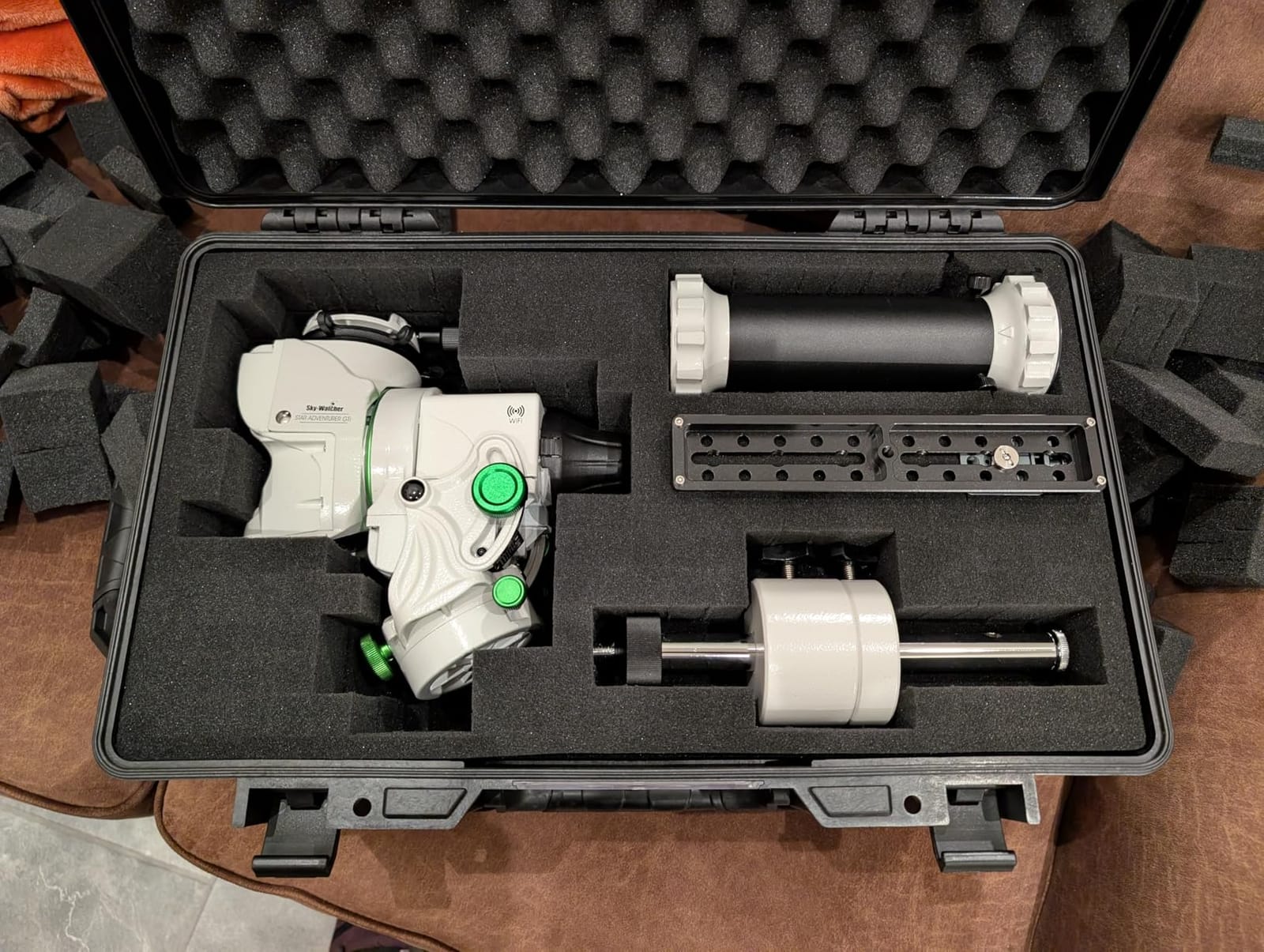
The GTi is the kit version of the Star Adventurer idea, and the difference is everything a beginner forgets to budget for. You get the tripod, the pier extension, a counterweight bar, a 5 lb counterweight and a built-in illuminated polar scope in one package.
That combination is what makes it the strongest value on this list for anyone moving up from a bare tracker. The head is a full GoTo equatorial unit, so you slew to a target from a smartphone over built-in Wi-Fi instead of star hopping, while the illuminated scope keeps alignment to a couple of minutes.
The counterweight and bar are the detail that changes capability. A bare camera tracker balances a short lens fine, but once you add a guide scope, a heavier camera and a field flattener you need somewhere to hang the mass. The supplied bar and 5 lb weight cover a camera plus a small refractor.
Multiple tracking rates are supported, so the same head handles star trails, half-rate landscape composites and normal sidereal deep-sky work. A two-year limited warranty also comes with the kit.
Who this mount works well for
This is the choice for a first real imaging mount when you want GoTo and a complete package. It suits wide-field and mid-focal-length deep-sky work with a camera and a small refractor, and it doubles as a visual mount for the same tripod.
It also suits anyone who has already bought a tracker and hit its ceiling. Adding a counterweight bar and a proper head means you keep imaging while your payload grows, and the two-year warranty reduces the risk of an early failure.
Who should skip this mount
Skip it if your priority is the lightest possible travel setup. The full kit comes in at 26 lb and is bulkier than a bare tracker head, which partly defeats the grab-and-go appeal that drew many owners in.
Also skip it for heavy telescope payloads. This head is not intended to carry a large Newtonian or a long refractor, and the extra GoTo and Wi-Fi complexity adds a learning curve if you only wanted simple tracking.
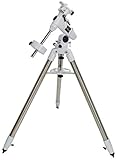
6. Celestron CG-4 Manual German Equatorial Mount — Best for Visual and Light Imaging
Celestron CG-4 Manual German Equatorial Mount with Steel Tripod
- Solid German equatorial build on a steel tripod
- 20 lb capacity suits mid-size optical tubes
- Manual slow-motion controls on both axes
- Portable at 12.5 lb
- Quick and straightforward assembly
- No motorized tracking or GoTo out of the box
- A separate motor drive is needed for automation
The CG-4 is the odd one out in this roundup because it is entirely manual, and that is exactly why it earns a place. With manual slow-motion controls on both axes, you can nudge a target in small increments and watch it stay put, which is a genuinely pleasant way to learn the sky before electronics get involved.
Construction is the strength here. The stainless steel tripod has 1.75 inch diameter legs and the head is solid metal, and reviewers consistently praise build quality and the smoothness of the slow-motion knobs. Twenty pounds of equipment capacity comfortably holds a mid-size optical tube.
Portability is unusually good for a German equatorial head. At 12.5 lb with the tripod, it is one of the few manual German equatorial mounts that a single person can carry to a dark-sky site without planning a second trip to the car.
Tripod height adjusts from 33 to 47 inches, which covers seated visual use and standing observing, and assembly is quick and straightforward with no tools beyond the supplied hardware.
Who this mount works well for
This suits visual observers who want to try a few minutes of imaging without buying electronics. It handles light cameras and small scopes, and the slow-motion controls let you make fine corrections while watching the image, which builds real skill.
It also suits anyone on a strict budget who already has their own imaging accessories. Because the mount is mechanical, there is no firmware to learn and nothing to update.
Who should skip this mount
Do not buy this for unattended or long-exposure deep-sky imaging. Out of the box there is no motorized tracking, no GoTo and no computerized control, and you would need to buy a separate motor drive to automate anything.
Skip it if you want remote imaging or live stacking from a laptop. The lack of any electronic interface makes it a visual-first tool with occasional imaging capability, not the other way around.
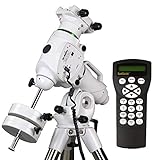
7. Sky-Watcher EQ6-R — Best Belt-Driven German Equatorial Mount
- 44 lb payload carries mid-size imaging telescopes
- Belt-driven steppers are quiet with low periodic error
- Sub-arcsecond guiding reported by owners
- Illuminated polar finderscope built in
- SynScan controller with 42000 object database
- Very heavy for field transport
- Factory grease causes stiction while balancing
- Hand controller LCD can fail in cold weather
The EQ6-R is where a lot of imagers land when they want a proper mount rather than a tracker, and the reason is the drive. Belt-driven stepper motors give quiet slewing and reduced periodic error compared with a direct worm drive, and owners regularly report sub-arcsecond guiding, with results under 0.5 arcsecond quoted in reviews.
Forty-four pounds of payload capacity on an all-metal body is the other half of the appeal. That is enough for a mid-size Schmidt-Cassegrain or a heavy refractor with a large camera, guide scope and dew control hardware, and it is roughly double what the VX offers for a similar weight of kit.
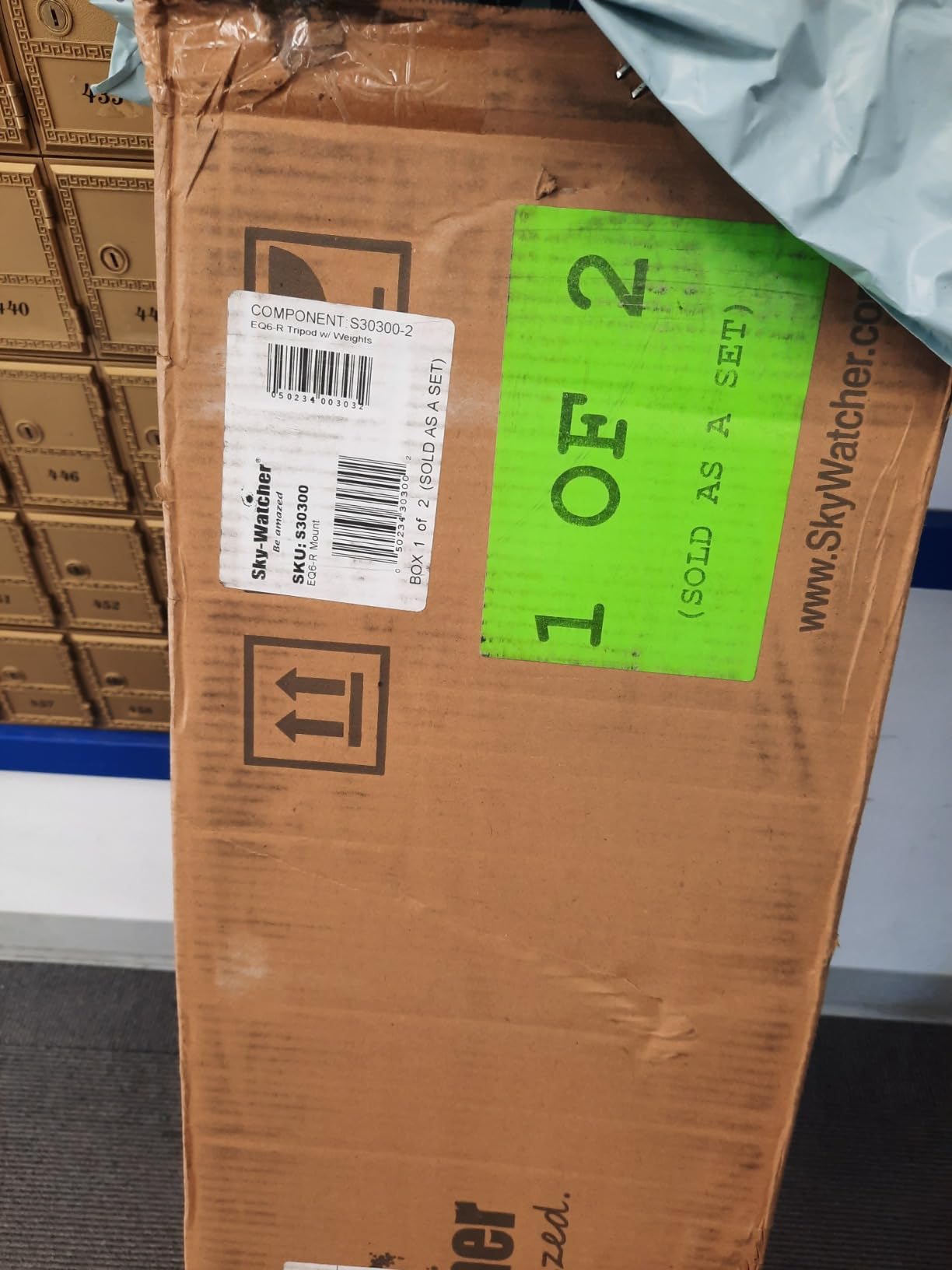
The SynScan hand controller carries a 42,000-plus object database, and a built-in illuminated polar finder makes alignment straightforward in the field. The box ships with a counterweight bar extension plus two 11 lb counterweights, a D/V saddle and a built-in carry handle.
PPEC is the feature experienced imagers use most. Once you record encoder data on a clear night, the mount permanently corrects its own periodic error, which is what turns unguided tracking into usable subframes on longer focal lengths.
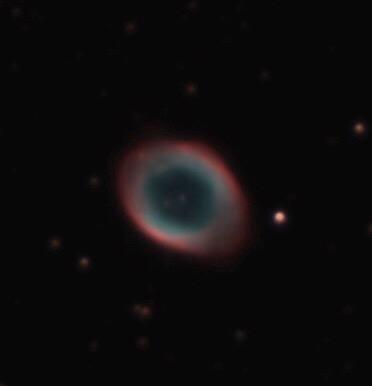
Who this mount works well for
This suits anyone who has outgrown a tracker and is imaging with a heavier optical tube. The 44 lb rating and the sub-arcsecond guiding performance make it a natural fit for mid-size Schmidt-Cassegrains, Newtonian imaging trains and long refractors.
It also suits people who value quietness. Belt-driven steppers barely register during slews, which matters if you are imaging in a back garden next to a house and want to avoid disturbing anyone.
Who should skip this mount
Skip it if you image on the move. Forty-four pounds is a serious load to lift into a car, and teardown and setup take considerably longer than a compact tracker.
First-time builders should also plan for teething problems. Factory grease can cause stiction while you balance the first few times, and the hand controller LCD has been reported as failing in very cold conditions, so keep it warm in the car on winter nights.
8. iOptron SkyTracker Pro — Best Lightweight Star Tracker for Travel
- Only 3.3 lb so it fits a camera bag
- Quiet operation on an internal rechargeable battery
- Half-sidereal rate suits nightscape compositions
- Multi-minute exposures with pinpoint stars
- Multiple fine-tuning knobs for alignment
- 6.6 lb rating means telephoto lenses need the optional counterweight
- Heavy injection-molded plastic construction
- Dovetail base is not Arca-Swiss compatible
The SkyTracker Pro is the smallest complete answer here at 3.3 lb, and it fits in a camera bag beside the lens rather than in a separate case. That changes what travel imaging is possible, because you can drive to a site and set up without pulling a tripod mount out of the boot.
It runs quietly off an internal rechargeable battery that reaches 80 percent charge in about 5 hours over micro USB, and the tracking rate options include full sidereal, half sidereal, solar and lunar modes in both north and south hemisphere configurations.
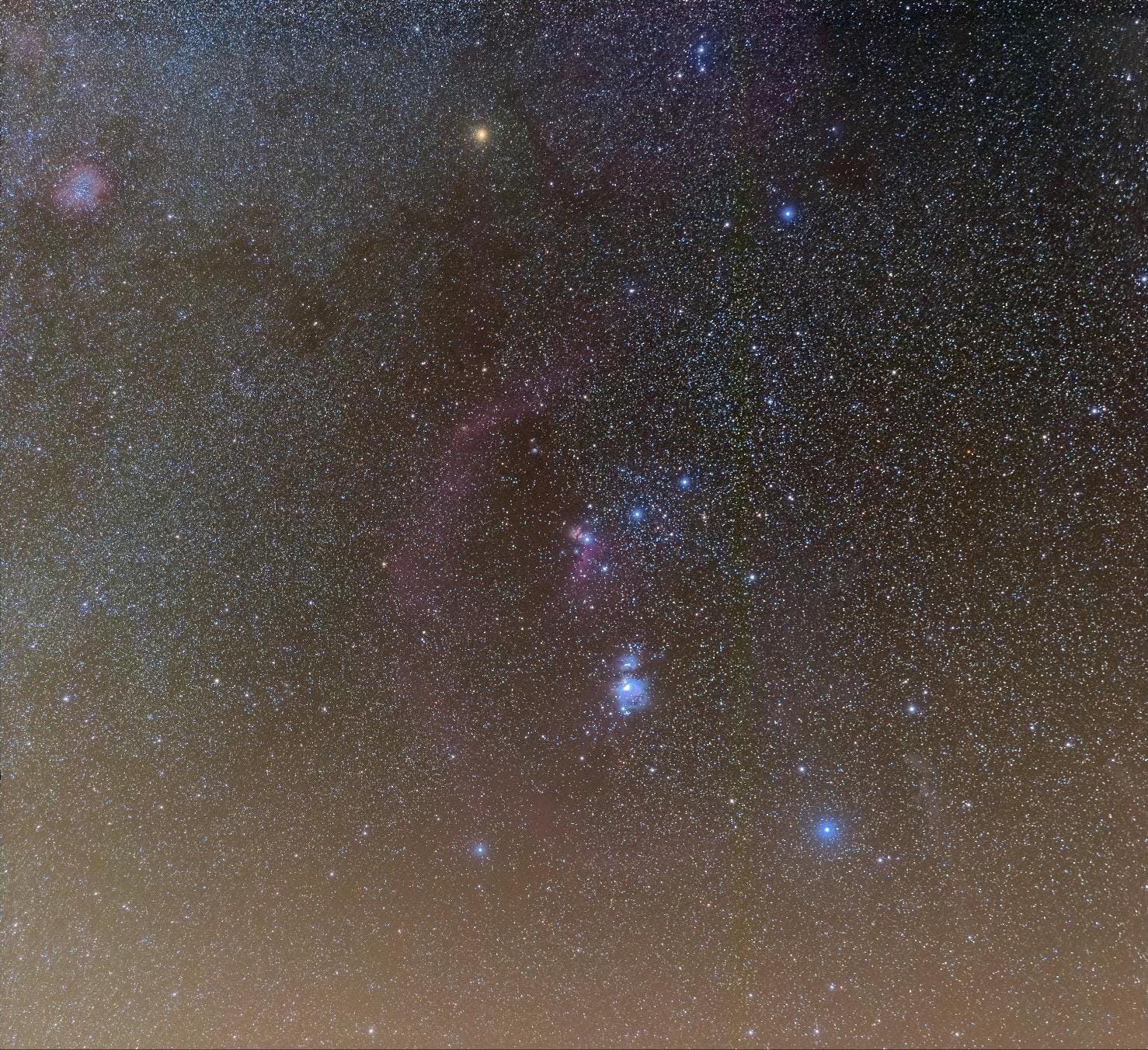
Users report five-minute trail-free exposures with wide lenses when alignment is good, and the worm period of 600 seconds with four bearings and a DC servo motor drive is the mechanical reason. Multiple fine-tuning knobs make the initial polar alignment quicker than a single adjustment screw would.
A padded bag is included, which sounds minor until you have carried a tracker through a car boot. The whole package is designed to be grabbed rather than assembled.
Who this mount works well for
This is the right pick for nightscapes and travel imaging with a camera and a wide to moderate lens. At 3.3 lb it is the easiest mount here to carry on a plane, and half-sidereal tracking gives you foreground-lit landscape compositions in a single exposure.
It also suits anyone who wants to learn the fundamentals. Manual fine alignment teaches you where Polaris sits and how the sky moves, which is knowledge that pays back on every mount you own later.
Who should skip this mount
Skip it with telephoto lenses. The 6.6 lb payload rating means heavier glass needs the optional counterweight, and the all-plastic construction plus a non-Arca-Swiss dovetail base makes it less stable on heavier setups.
You also need to buy a ball head separately, and the polar alignment app is an optional purchase. Alignment fails without a clear view of Polaris, so in an obscured site this tracker is a paperweight regardless of how good it is.
9. Vixen POLARIE U — Best Compact Tracker for Timelapse
- Exceptionally small and light for travel imaging
- Five selectable tracking speeds
- ST4 autoguiding port for advanced setups
- Smartphone shutter release control
- Handles timelapse sequences well
- Single-axis right ascension tracking only
- Modest payload for heavier camera and lens combinations
- Runs on AA batteries with no internal rechargeable cell
The POLARIE U is the smallest unit in this roundup at 0.58 kg, measuring 4.53 by 2.83 by 3.48 inches, and it is built by Vixen for people who shoot first and adjust settings rarely. Five tracking speeds give more control than most trackers of this size offer.
The feature that separates it from the other compact trackers is the ST4 autoguiding port on the right ascension axis. That single socket means you can add an external guider later and lift the mount out of purely unguided tracking without buying something bigger.
Smartphone shutter release control is a small touch that makes a real difference to timelapse work, because you can start a sequence without touching the camera. The included finder, a 0.1 inch Allen wrench and an indicator cover the setup basics in the box.
Power comes from four AA batteries or a USB Type-C external power terminal, which keeps the tracker free of internal battery aging. A limited one-year warranty applies to electronic parts and two years to mechanical parts.
Who this mount works well for
This suits nightscape and timelapse shooters who prioritise a tiny, reliable tracking head over payload. If your imaging train is a compact camera with a wide lens, the weight never becomes an issue and the pack stays small.
It also makes sense as a travel companion for Milky Way arcs and star trail sequences, where the five tracking speeds let you dial exposure length to the shutter time you need.
Who should skip this mount
Do not buy it for a heavy camera with a telephoto lens. Payload capacity is modest, and there is no internal rechargeable battery, so a full night of timelapse means carrying spare AA batteries.
Skip it for long focal lengths too. Single-axis right ascension tracking with no declination motor limits it to wide-field work, and the ST4 port only helps if you already own an external guider.
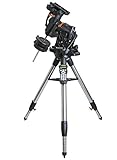
10. Celestron CGX — Best Observatory-Grade Equatorial Mount for Heavy Rigs
Celestron CGX Computerized German Equatorial Mount & Tripod, 55lb Payload
- 55 lb payload handles heavy rigs and multiple finders
- Supports very long subframes when aligned well
- Quiet slewing and an easy hand controller
- Internal cabling keeps imaging wiring tidy
- Pointing models supported in Celestron PWI
- Extremely heavy at 108 lb for remote sites
- Polar scope accessory can restrict tube movement
- Belt and gear wear reported after several years
The CGX is the mount for a setup that stays assembled. At 55 lb payload it carries a heavy telescope with a large camera, multiple finder scopes and dew control hardware, and owners with well-aligned rigs report smooth subframes of up to 30 minutes with excellent guiding.
The high-torque servo motors drive the axes through a belt, giving quiet slewing that will not wake the household, and the NexStar+ controller includes a 40,000-object database with guided tours and custom object filters. Internal cabling for remote operation is a genuine convenience for long imaging runs.
Celestron PWI software supports pointing models, so if your pier is not perfectly level or your observatory floor is uneven, the mount can be taught where the targets actually sit rather than where theory says they are.
That is what makes this class of mount observatory-grade. Capacity and guiding quality are only half of it; the ability to model systematic errors is what keeps a long-exposure session productive once the optical tube is large.
Who this mount works well for
This suits observers with a permanent setup in a garage, shed or observatory. If your rig never gets carried anywhere, the 108 lb weight becomes irrelevant and the 55 lb payload becomes the whole point.
It also suits imagers shooting long subframes on heavier telescopes, where guiding stability over three or four hours matters more than portability or price.
Who should skip this mount
Do not buy this if you ever plan to move your imaging site. At 108 lb it is impractical to carry to a remote location, and no amount of planning fixes a two-person lift through a car boot.
Long-term owners should also note reported wear. Belts and gears have been reported failing after several years of use, isolated RA drive and hand controller failures are reported, and the optional polar scope can physically interfere with the range of motion of a long tube.
How to Choose a Telescope Mount for Astrophotography
Match the mount class to your imaging style
A German equatorial mount offsets the telescope beside the RA axis and balances it with counterweights, so tracking needs only one motor. Centre-balanced designs hang the tube underneath the pivot and need no weights, which cuts moving parts but still carries counterweights in many kits. A star tracker is the simplest version of all, tracking right ascension only on a small ball head.
Alt-azimuth mounts are fine for visual work, and with a wedge they can image well, but field rotation means stars trail toward frame corners unless you frame very wide. Fork mounts handle visual observing and short exposures nicely. For long deep-sky subframes, an equatorial mount is the standard answer.
Size your payload with the half-capacity rule
Add up everything on the saddle: telescope, camera, focuser, adapters, guide scope, guiding camera and cables. Then choose a mount rated for roughly twice that figure, which leaves the gear drives working comfortably and gives you room to add equipment later.
Balance matters as much as capacity. A German equatorial head with an evenly balanced rig needs far less counterweight and holds a target better through a meridian flip than one that is fighting an offset load.
Understand polar alignment and tracking accuracy
Polar alignment is the process of lining the RA axis up with Earth’s rotational axis so a single motor can track a target all night. Most mounts ship with an illuminated polar finderscope or a sight hole for exactly this reason, and taking two minutes here saves an hour of drifting later.
How accurate are equatorial mounts in practice? A well-aligned, well-balanced mount with reasonable periodic error correction routinely guides between 1 and 3 arcseconds, and the best examples on this list reach sub-arcsecond figures. Those numbers look small until you convert them into usable exposure length at your focal length.
Treat periodic error and autoguiding as partners
Periodic error is a repeatable wobble in right ascension caused by imperfections in the gear train, and it shows up as a systematic thickening of stars at a known position in the frame. PEC learns that wobble and corrects it, PPEC stores the learning permanently on the mount itself.
Autoguiding is the software layer that reacts to what the camera actually sees, correcting drift and residual periodic error in real time. Many imagers run both, and guides like PHD2 pair with ASCOM or INDI drivers to send correction commands through the mount control system.
Plan the rest of the rig, not just the mount
A mount is one part of a working imaging train. You also need a guiding solution, a focuser or focus motor, dew control for long sessions, a power supply or battery solution, and cables that reach. Budget for those before you decide the mount was too expensive.
On camera bodies, sensor size and cooling still shape what a mount can carry, so our best cameras for astrophotography guide is worth reading before you fix a payload total.
Work out your budget tier before you shop
Below roughly the entry band you are looking at trackers and bundled kits, which suits wide-field work with a camera or a short refractor. The mid band covers GoTo German equatorial heads such as the Advanced VX with real payload capacity. Above that you enter belt-driven and heavier servo-driven territory where sub-arcsecond guiding is realistic.
Forum advice consistently suggests buying the best mount you can afford, because mount quality sets a ceiling on everything else in the train. The same discussions warn that cheaper brands vary more in quality control, so buying a known model from a brand with a serviceable reputation is safer than a bargain unknown.
Frequently Asked Questions
What is the best telescope mount for astrophotography?
For most first imaging rigs the Sky-Watcher Star Adventurer 2i Pro is the strongest all-round choice: it tracks accurately with lenses around 300mm, weighs 7 pounds and runs on included lithium batteries. Heavier telescopes need a German equatorial mount such as the Celestron Advanced VX or Sky-Watcher EQ6-R, rated for at least twice your total payload weight.
What mount do I need for astrophotography?
You need an equatorial mount rated for about twice the weight of your telescope, camera, guide scope and cables. A small refractor with a camera needs a tracker rated around 10 lb, while an 8 inch Schmidt-Cassegrain with a large camera needs 40 lb or more. Add autoguiding and dew control to that budget.
How accurate are equatorial mounts?
A well polar aligned, well balanced equatorial mount with periodic error correction typically guides between 1 and 3 arcseconds. Belt-driven models such as the Sky-Watcher EQ6-R reach sub-arcsecond figures in owner reports. Combined with autoguiding software, that accuracy sets how long you can expose before stars visibly trail.
What is the difference between a star tracker and an equatorial mount?
A star tracker is a minimal equatorial head that rotates only the right ascension axis, usually holding a camera on a ball head. A full equatorial mount drives both axes, carries counterweights, accepts a telescope and offers GoTo pointing. Trackers suit wide-field work; equatorial mounts handle longer focal lengths and heavier payloads.
Are strain wave drive mounts better than worm gear mounts?
Strain wave drive mounts generally show lower periodic error and need no periodic error correction training, while worm gear mounts are cheaper, mechanically simple and proven over decades. Neither is universally better: a well maintained worm mount with autoguiding can match a strain wave mount on a small refractor, and the deciding factor is usually payload and tracking weight for your rig.
Final Verdict on the Best Telescope Mounts for Astrophotography
The Sky-Watcher Star Adventurer 2i Pro is our pick for the best telescope mounts for astrophotography in 2026 because it tracks accurately, travels well and asks the least of a beginner. The iOptron SkyGuider Pro is the metal-built alternative with more payload, and the Star Adventurer GTi is the best value if you want GoTo and a complete package.
Move up to the Celestron Advanced VX when you need GoTo and real payload, and to the Sky-Watcher EQ6-R when your telescope outgrows 30 lb. Whatever you pick, size it to half its rated payload, polar align it every session and run autoguiding before you blame the mount for soft stars.