

A monocular is the most underrated piece of kit in a daypack. Binoculars are what most hikers reach for first, but they are twice the glass, twice the weight and a two-handed object on a steep switchback. A monocular gives you the same view down a drainage, across a meadow or up at a distant ridge with one hand free for trekking poles, and it disappears into a jacket pocket when the trail gets technical.
That reasoning shaped everything in this guide to the best monoculars for hiking. We looked at twelve monoculars with real owner feedback behind them, then sorted them by the things that actually matter on a trail: listed weight, body diameter, how the focus wheel behaves in gloves, whether the build is sealed against rain, and whether the thing fits a hip-belt pocket. We also weighed the optics, because a bright BaK-4 prism with fully multi-coated glass at dawn is worth more than raw magnification.
The category is more varied than it used to be. Alongside the familiar pocket 10×25 sticks there is now a genuine spread, from a 7.4 ounce ultralight tube to a 12×56 kit that comes with a phone adapter and a tabletop tripod. For hikers shopping in 2026, warranty coverage is another thing that has moved: two models in this roundup carry lifetime policies, and one offers a 5-year replacement window alongside lifetime repair.
If you are still building out your kit, our hiking backpack picks and hiking sandal roundup cover what to carry the monocular in and what to wear while using it.
Table of Contents
Top 3 Monocular Picks for Hiking in 2026
Three stand out. The Vortex Solo 10×25 is the dependable default at 5.6 ounces, the Nocs Provisions Zoom Tube 8×32 vanishes into a shirt pocket at 7.4 ounces, and the Bushnell Legend 10×42 Ultra HD is the optical upgrade if you are out at first light and last light.
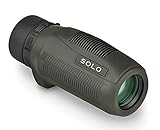
Vortex Solo 10×25
- 10x25 with 25mm objective
- Only 5.6 ounces
- Waterproof and fogproof
- Unlimited lifetime warranty

Nocs Zoom Tube 8×32
- 8x32 central focus
- 7.4 ounces
- Fully multi-coated with Bak4p prism
- IPX4 water resistance
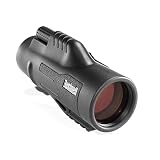
Bushnell Legend 10×42 Ultra HD
- 10x42 with ED Prime glass
- Ultra Wide Band coating
- 340 ft field of view
- O-ring sealed waterproof body
All 12 Monoculars Compared for Hiking in 2026
Every model below has a waterproof or fog-resistant claim and enough owner reviews to judge. Weight, field of view and carry hardware are the three columns worth reading twice.
| Product | Specifications | Action |
|---|---|---|
| Vortex Solo 10×25 |
|
Check Latest Price |
| Nocs Provisions Zoom Tube 8×32 |
|
Check Latest Price |
| Bushnell Legend 10×42 Ultra HD |
|
Check Latest Price |
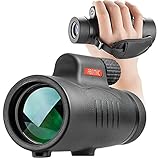 FEEMIC 8×42 FEEMIC 8×42 |
|
Check Latest Price |
 Celestron Nature 10×25 Celestron Nature 10×25 |
|
Check Latest Price |
 OXK Optics 12×56 OXK Optics 12×56 |
|
Check Latest Price |
 usogood 10×42 usogood 10×42 |
|
Check Latest Price |
 Pankoo 16×52 Pankoo 16×52 |
|
Check Latest Price |
 AYRAVIIO 10×42 AYRAVIIO 10×42 |
|
Check Latest Price |
 URBANCOAST 15×54 URBANCOAST 15×54 |
|
Check Latest Price |
 Nocs Provisions Field Tube 10×32 Nocs Provisions Field Tube 10×32 |
|
Check Latest Price |
 HURYSIN 8×42 HURYSIN 8×42 |
|
Check Latest Price |
1. Vortex Solo 10×25: The Best Monocular for Hiking Overall
- Only 5.6 ounces so it disappears into a pocket
- Waterproof
- fogproof and nitrogen purged
- Fully multi-coated optics give a clean
- crisp image
- Backed by an unlimited lifetime warranty
- Narrow 107 ft field of view limits scanning
- Fixed focus leaves no fine adjustment for near subjects
This is the one I keep in my own pack. At 5.6 ounces it is the lightest optic in the group by a wide margin, and the 2.25 by 2.64 inch body slides into a chest pocket without announcing itself. On a long day with a loaded pack, that difference is not a small one.
The 10×25 pairing is the classic pocket-monocular setup. A 25mm objective gathered a lot of light into a small tube, and because the whole thing is fixed focus there is no wheel to find with numb fingers. Owners on hiking forums repeatedly single out the rubber armor and the transferable lifetime warranty as the two reasons they stopped shopping around.
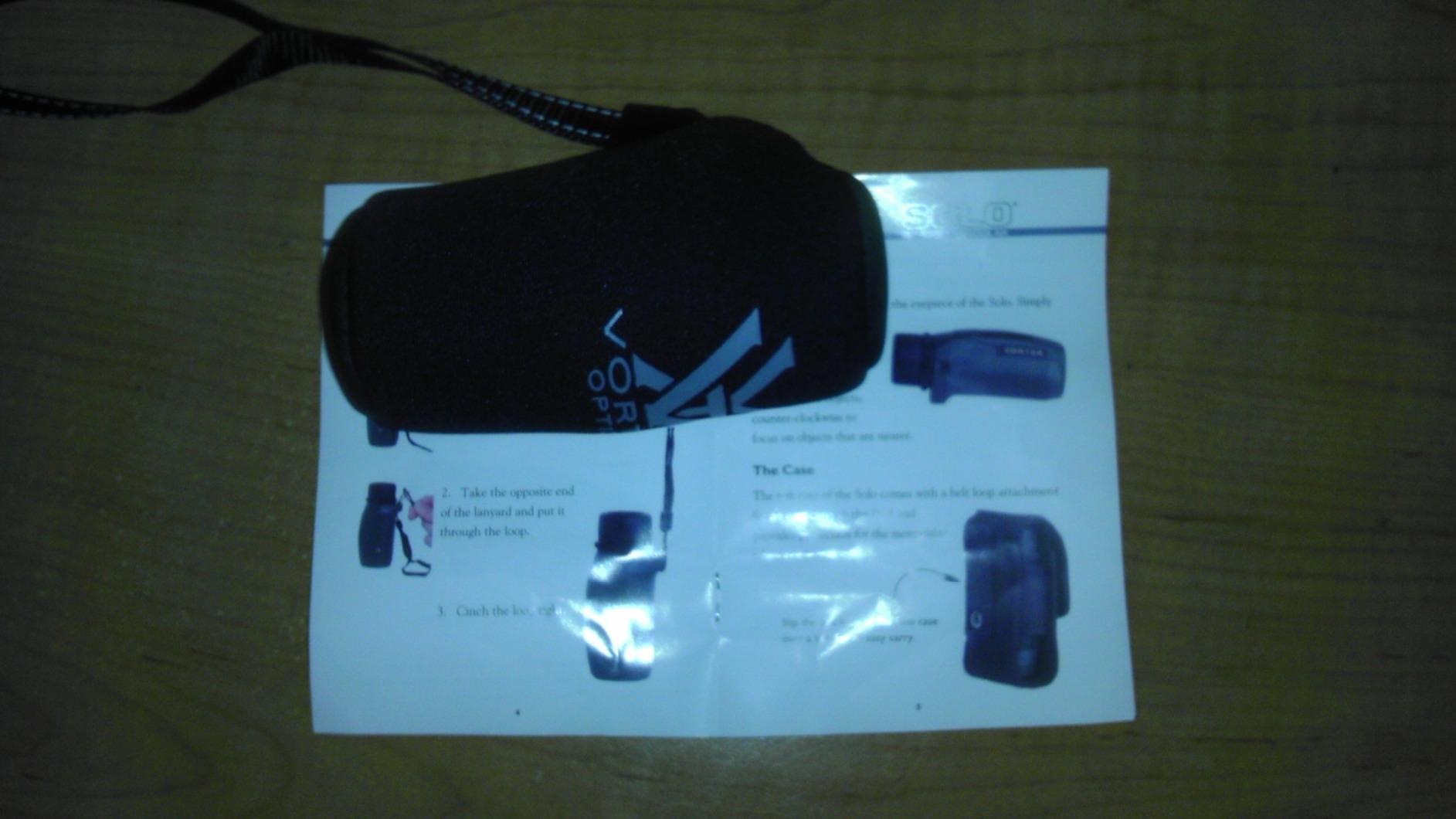
Where it gives ground is field of view. The listed 107 ft at distance means you scan a ridge in a small window and have to walk the eyepiece across a landscape to find things. If your hikes involve a lot of open-country scanning or tracking a moving bird, the narrower 8×42 options later in this list give you a much wider sweep.
Image quality is honest for the size. Fully multi-coated lenses, an adjustable eyecup that works with or without glasses, and a body that shrugs off rain. It is the best monocular for hiking if your hiking is walking, not wildlife-watching from a hide.
What you should know before buying it
The fixed-focus design is the detail people miss. Once you set the diopter, the focus is set. That is a genuine advantage for trail use, and a real limitation if you want to look at a butterfly 10 feet away without refocusing.
The adjustable eyecup is the second thing worth checking. Twist it down and glasses clear easily; twist it up and it works fine bare-faced. Owners with prescription eyewear report no vignetting once the eyecup is positioned properly.
Where it will disappoint you
If your trips start before sunrise or run past sunset, a 2.5mm exit pupil is the limit. You will see animals, and you will see them early, but you will not see them in color detail against a dark hillside.
Scanning is the other weakness. A 107 ft field of view is narrower than most people expect from a binocular, so give yourself time to find things rather than assuming they are not there.
2. Nocs Provisions Zoom Tube 8×32: Best for Ultralight Backpacking
Nocs Provisions Zoom Tube 8×32 Monocular, Bird Watching & Backpacking
- Exceptionally light and compact for backpacking
- Bright
- crisp image with color to the field edge
- Multi-stop eyecup works well for glasses wearers
- Integrated 1/4-20 tripod thread and a lifetime warranty
- 8x32 aperture is small for low light
- Less established review history than the leaders
Swiss-designed Bak4p prism, fully multi-coated, and a listed 7.4 ounces. That combination is what made this the pick for anyone counting grams. The 4.96 by 1.85 by 2.72 inch body is slim enough for a shirt pocket and the central focusing system means one thumb dial does everything.
Owners rate the 384 ft field of view at 1000 yards as the standout for birders who walk. That width lets you find a flock and keep the whole thing in frame, which the pocket 10x25s cannot manage. Around 80 percent of its reviews are five star, and the recurring theme is the grip and the eyecup rather than any specific defect.
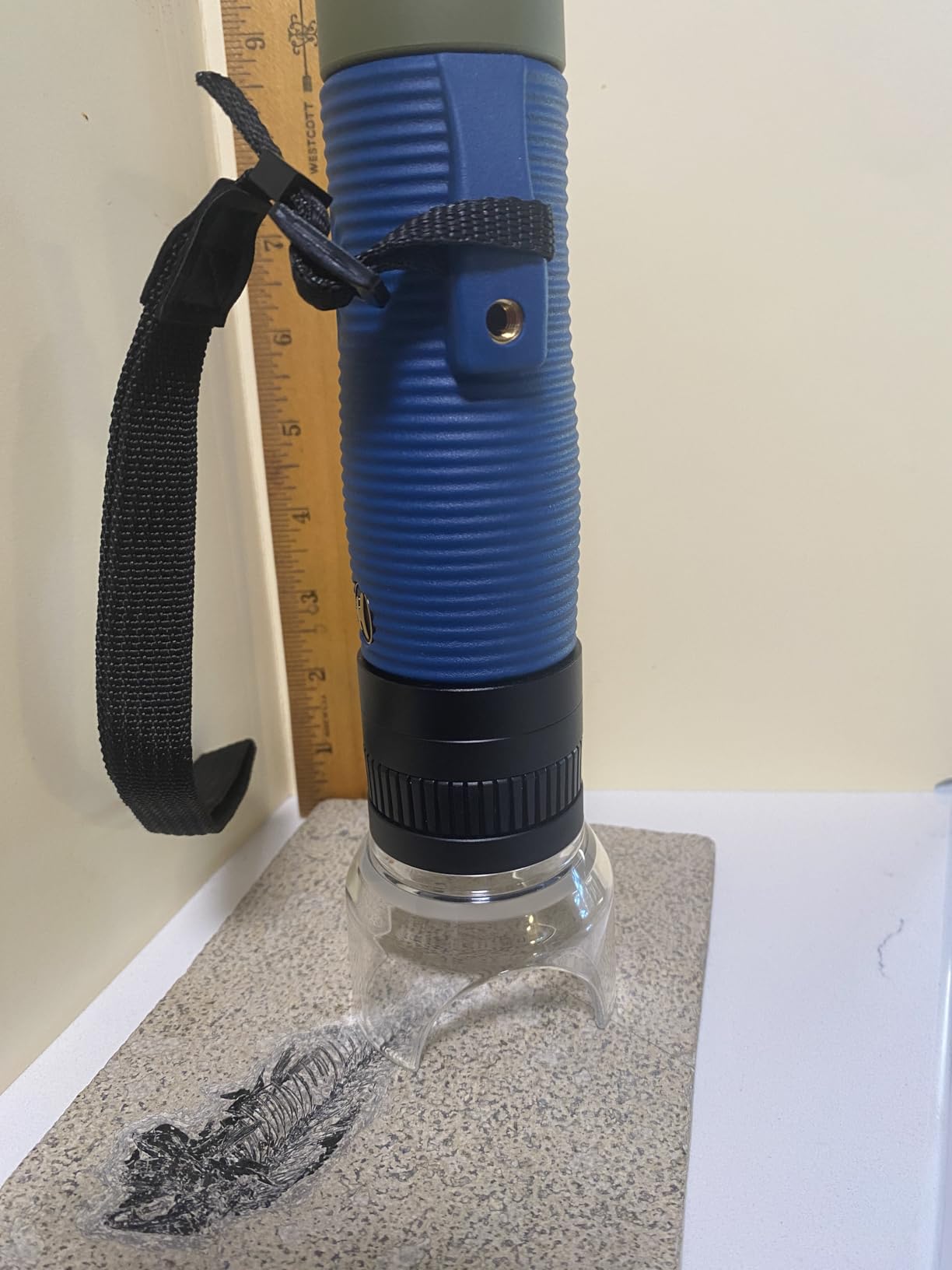
The patented Wave Grip texture and three-position eyecup are hiking-specific thinking, not marketing decoration. On a wet rock or in the cold, a grip you can feel without looking is worth real money, and a glasses wearer can dial the eyecup to the setting that keeps their glasses clear.
Be realistic about one thing: 8x is modest magnification, and an 8×32 aperture is a small one. For day hiking in good light it is the right call. At dusk it is not the tool.
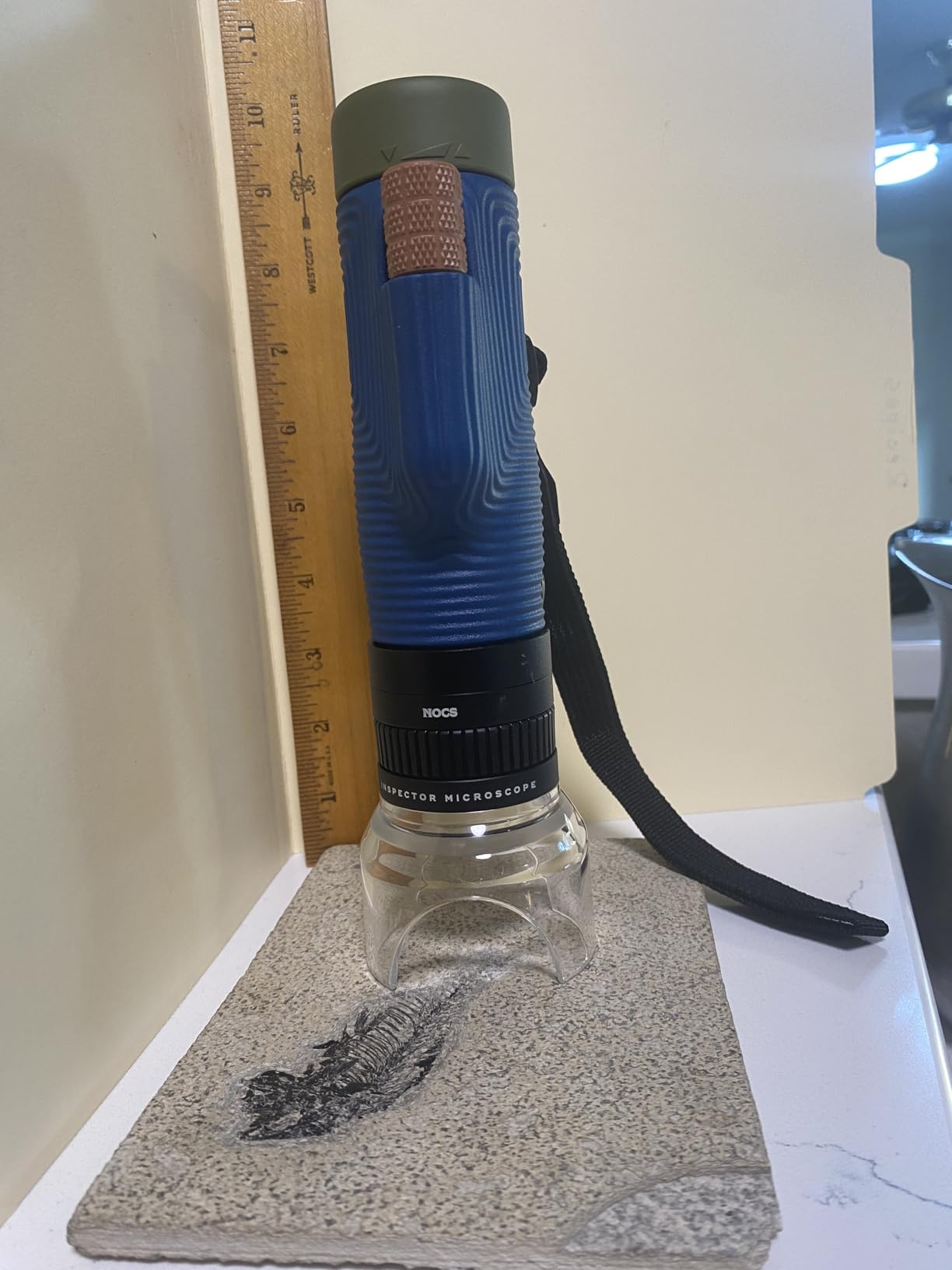
What you should know before buying it
IPX4 means splash resistant, not submersible. Rain on a ridge is fine; a river crossing that puts the tube under is not. If your routes regularly cross water, look at the IPX7 model further down instead.
It also carries an integrated 1/4-20 tripod adapter, which matters more than it sounds. A compact table tripod turns a shaky hand-held view into a steady one at zero extra cost, and it is the first accessory I would add to a kit like this.
Where it will disappoint you
The exit pupil is small, and that single fact limits everything you can do with it in low light. If a large share of your hiking happens at dawn or dusk, step up in aperture rather than up in magnification.
Its review history is much shorter than the established names in this list. That cuts both ways, though the lifetime warranty means early problems are the maker’s problem, not yours.
3. Bushnell Legend 10×42 Ultra HD: Best for Low Light and Big Views
Bushnell Legend 10×42 Ultra HD Monocular, Optical Performance for Hunting and Wildlife Observation
- ED Prime glass and Ultra Wide Band coating for clarity and color
- Good low-light performance at dawn and dusk
- O-ring sealed waterproof and fogproof body
- Fast smooth focus system and twist-up eyecup
- At about 374 g it is heavy for handheld trail use
- Premium tier pricing against budget 10x42 options
This is the one to carry if you are serious about first light. A 42mm objective with ED Prime glass and Ultra Wide Band coating is the configuration that keeps color and contrast when the light drops, and the 4.2mm exit pupil is nearly double what the pocket 10x25s manage.
Users talk about edge sharpness and low-light clarity rather than headline magnification, which is the right way to think about it. The 340 ft field of view keeps a whole clearing in view, and the fast focus system snaps from near to far without hunting. Roughly 80 percent of its reviews are five star.
The trade-off is stated plainly in the specs: 374 g. That is more than half a kilo in your hand and roughly double the weight of the pocket 10x25s in this roundup. It is a sit-down-at-the-overlook optic, not an always-on trail optic.
If your hiking is day hiking near home and your main interest is wildlife, the weight is manageable. For multi-day trips where every gram is counted, it is the wrong shape of tool.
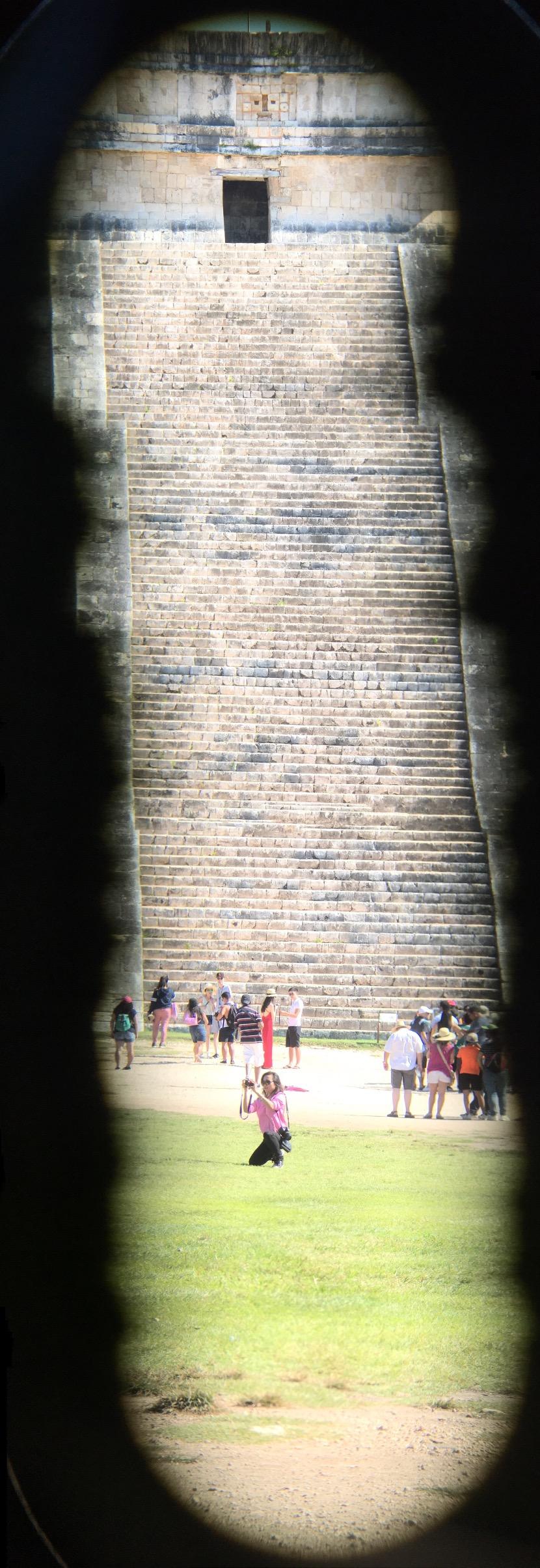
What you should know before buying it
ED glass is the reason this one is brighter and cleaner at the edges than cheaper 10x42s. If you are buying a 42mm monocular, this is the difference between a slightly washed image and a sharp one, and it is worth paying for.
There is a tripod mount on the body. With 10x handheld, a stable surface is not a luxury, it is what makes the magnification usable at all.
Where it will disappoint you
Weight, plainly. In a pack already carrying water, layers and food, another 374 g is the item most hikers end up leaving behind at the trailhead.
It also sits in the premium tier while several lower-cost options in this roundup cover similar 10×42 ground. The optics are genuinely better, but the price gap is the reason many hikers start elsewhere.
4. FEEMIC 8×42: Best Value Wide-Angle Monocular
- Bright wide field of view for quick spotting
- Lightweight and easy to hold and focus one-handed
- Nitrogen-filled waterproof fogproof and dust-proof body
- Adjustable eyecup works with and without glasses
- Focus dial turns loosely and can shift when bumped
- Included case and strap are thin and basic
- Some users report an eyecup edge intruding on the view
Eight power with a 42mm objective is the sweet spot many hikers land on, and this one hits it at a budget-tier price point. The 5.25mm exit pupil is wide enough to be usable at dusk, and the listed 360 ft field of view at 1000 yards is among the widest in this roundup.
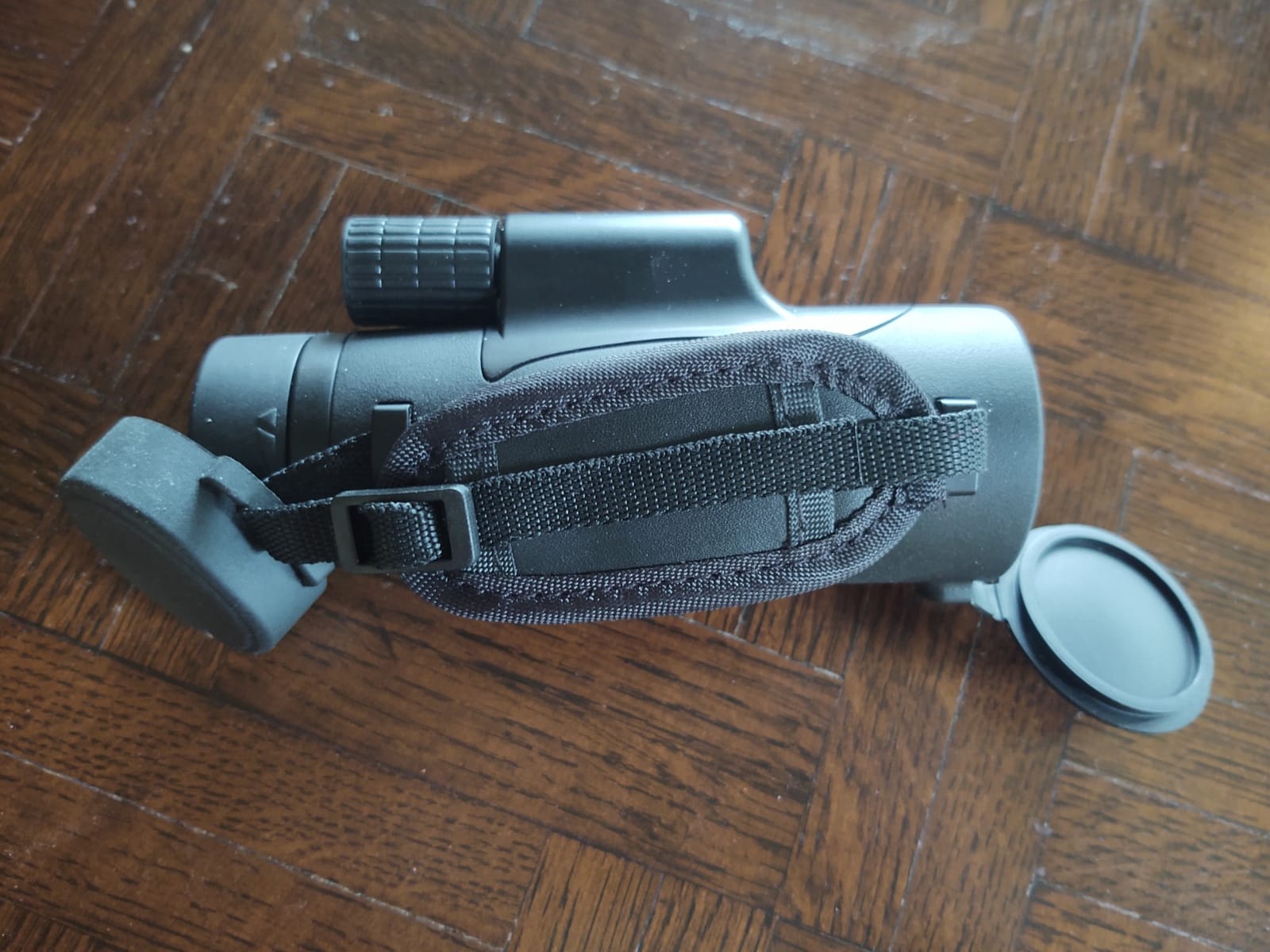
The 5.7 by 1.9 by 1.5 inch body is short enough to clip to a shoulder strap and light enough to hold for a whole afternoon. Over 3,500 reviews describe the same thing: a bright image, an easy one-handed focus, and no fuss.
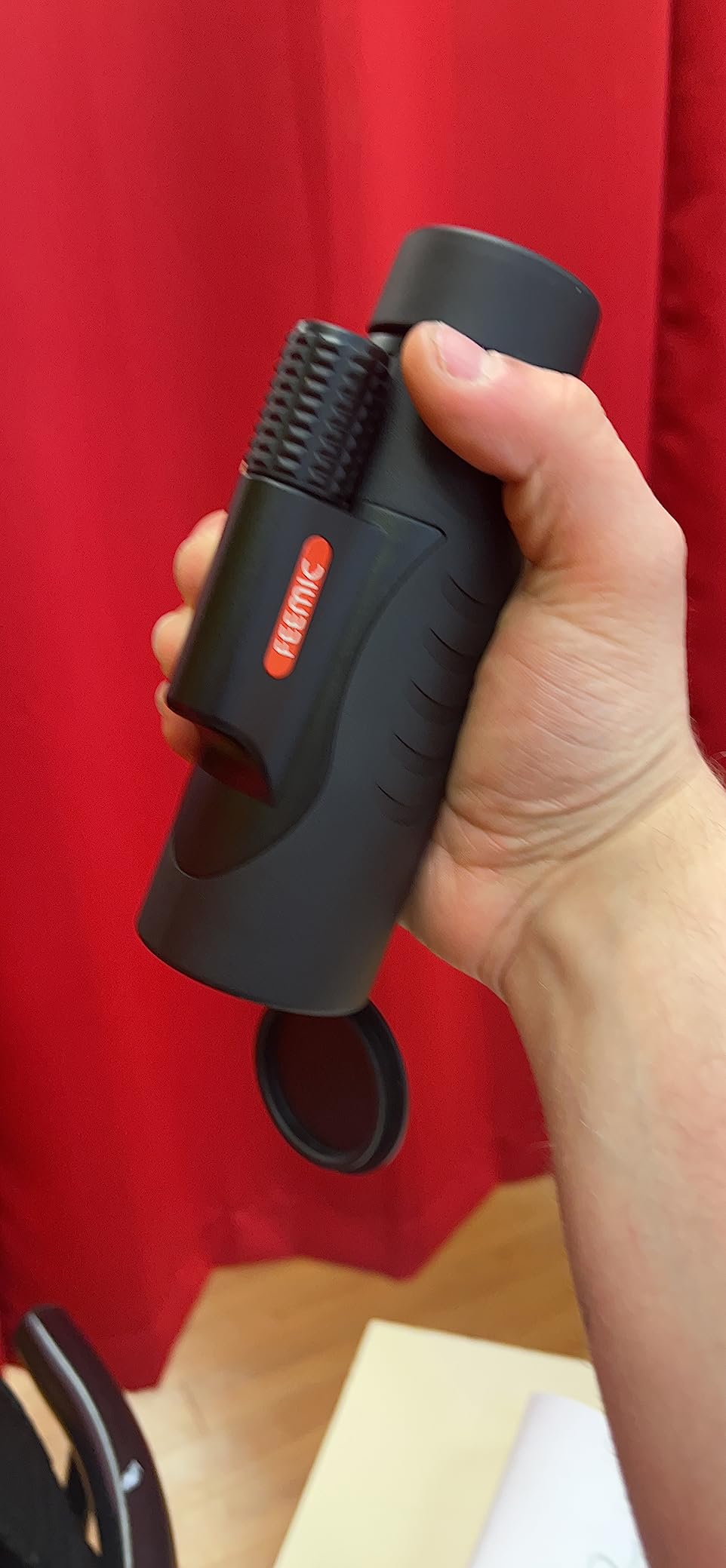
There is a tripod connector and a carry case in the box, which is unusual at this level. The case is basic, but the fact that it exists means you can toss the optic in a daypack without a separate pouch.
Owners also use it for travel and tree identification, where the wide field makes scanning quick. The fully multi-coated lenses and BaK-4 prism keep the image brighter than the specification would suggest it should be.
What you should know before buying it
The focus dial is the component to test in the hand. Reviewers report it turning loosely, which means a knock against a rock or a door frame can shift your focus. That is a small annoyance, not a failure.
The 285 g weight is heavier than the pocket 10x25s but well within reason for a day hike. Plan on a shoulder strap rather than a pocket.
Where it will disappoint you
The included strap and case are thin. If you already own a proper lanyard and a padded pouch, that is a non-issue. If you are buying cold, the accessories are the first thing to replace.
A few users report an eyecup or edge ring cutting into the field of view, particularly with glasses. Twist the eyecup down before you judge the view.
5. Celestron Nature 10×25: Best Pocket Monocular for Glasses Wearers
Celestron Nature 10×25 Monocular for Hiking and Wildlife Viewing
- Compact and genuinely pocket-sized
- Sharp
- clean optics for the price
- Focus ring is firm so it holds the selected focus
- Backed by a limited lifetime US warranty
- Focus ring is very stiff to adjust while looking through
- Narrow 5.8 degree field of view
- 10x handheld shows noticeable shake
- No tripod socket included
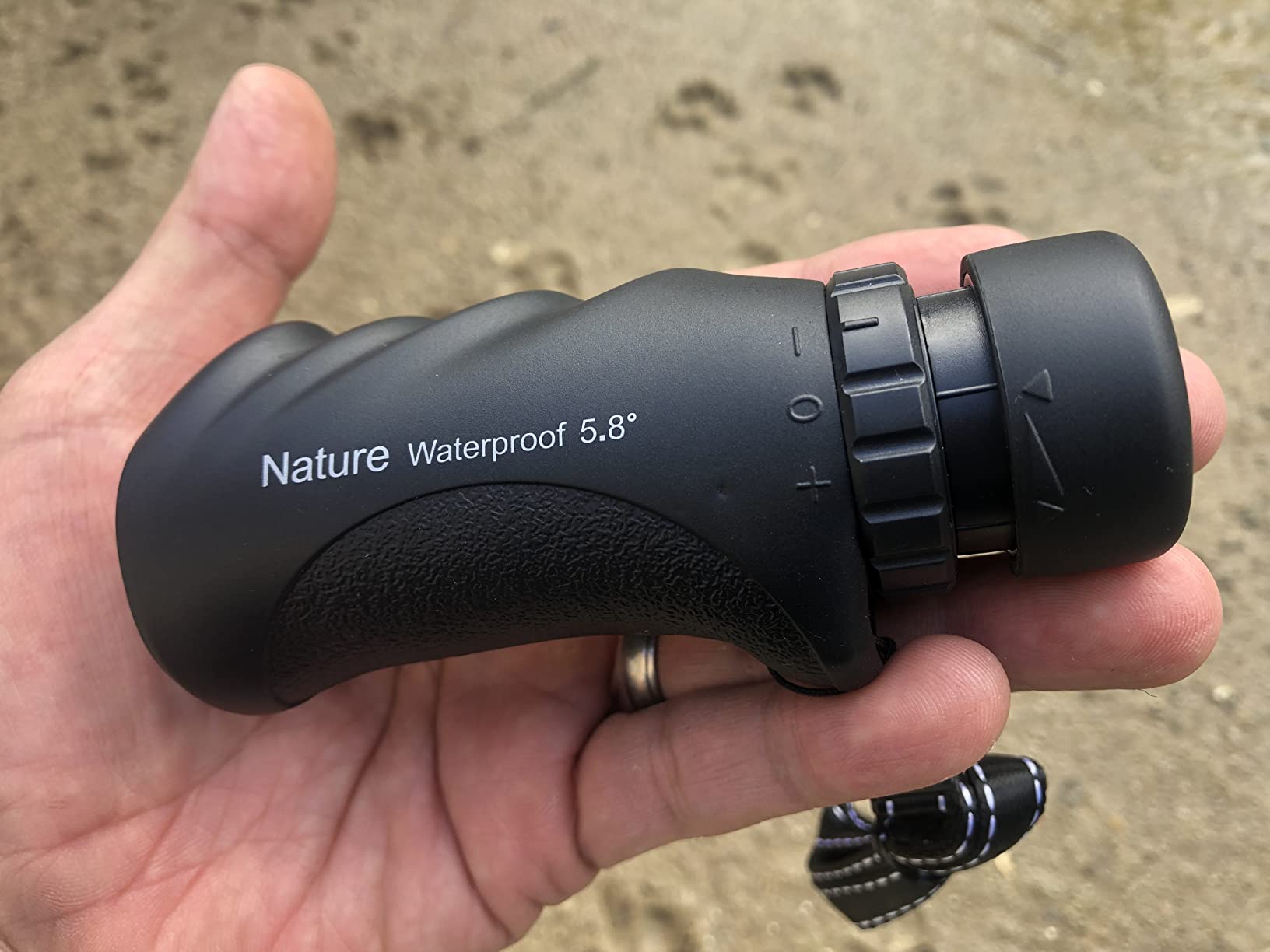
At 170 g and 3 by 3 by 6 inches, this is the model we recommend to anyone who wants a monocular that genuinely fits a pants pocket on a day hike. The rubber-armored polycarbonate housing feels solid for its size, and the BaK-4 prism gives contrast and truer color than the acrylic and BK-7 prisms used in cheaper sticks.
Reviewers put it well: clean optics, no chemical smell, and a focus ring that stays where you put it. Waterproof and nitrogen purged means a sudden shower is not a crisis. The limited lifetime US warranty is a real signal from a company that has been making optics for a long time.
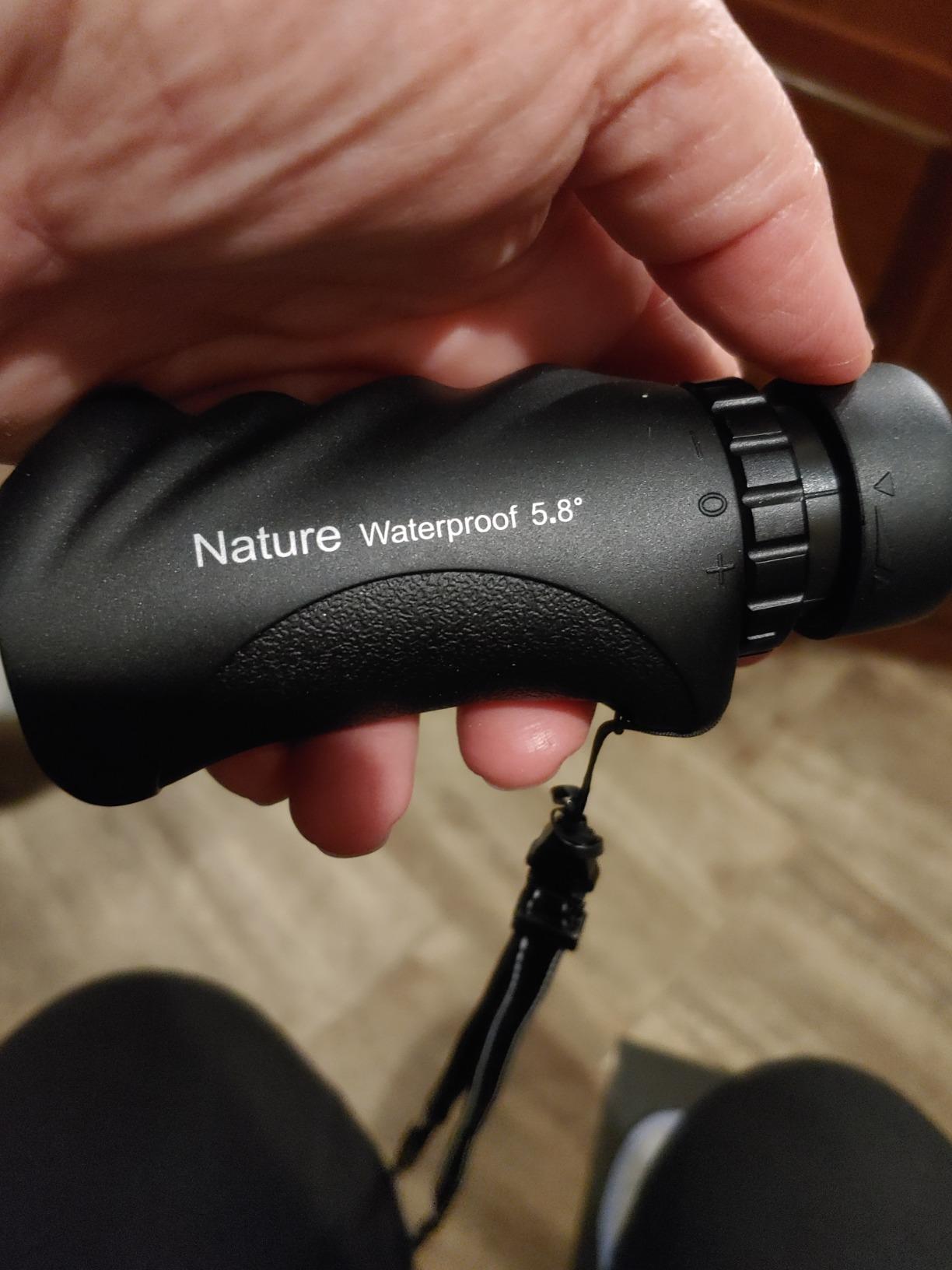
The twist-up eyecup is the glasses story. Turn it down and prescription lenses clear the whole field; turn it up and it seals correctly bare-faced. For hikers who wear glasses, that single feature is often worth more than an extra two power of magnification.
The 5.8 degree field of view is narrow, and at 10x you will see hand shake. Both are the price of a 170 g package, and both are acceptable if your use is quick identification rather than long observation.
What you should know before buying it
The stiff focus ring cuts both ways. Owners who like it say it holds focus and cannot be knocked out of adjustment. Owners who dislike it say it is hard to adjust while your eye is at the eyepiece, which is a real problem on a moving trail.
There is no tripod socket. If you want steady viewing of a distant ridge, plan on resting the tube on something solid instead.
Where it will disappoint you
Following a moving subject is difficult with a 5.8 degree field at 10x. If you are more watcher than walker, one of the 8×42 options will suit you better.
The pocket size is the trade. A 6 inch tall body is easy to carry and awkward to hold steady, so expect to prop it rather than sweep with it.
6. OXK Optics 12×56: Best Monocular Kit for Phone Photos
12×56 Monocular Telescope for Adults High Powered with Smartphone Adapter
- Large 56mm objective with BAK4 and FMC optics for a bright image
- Phone holder and adjustable tabletop tripod included
- Secure adjustable hand strap for one-handed use
- Case holds every piece in the kit
- 12x is very shaky without the tripod
- About 2 pounds
- which is heavy for handheld use
- Clarity drops at maximum zoom
- Phone mounting can produce glare or vignetting
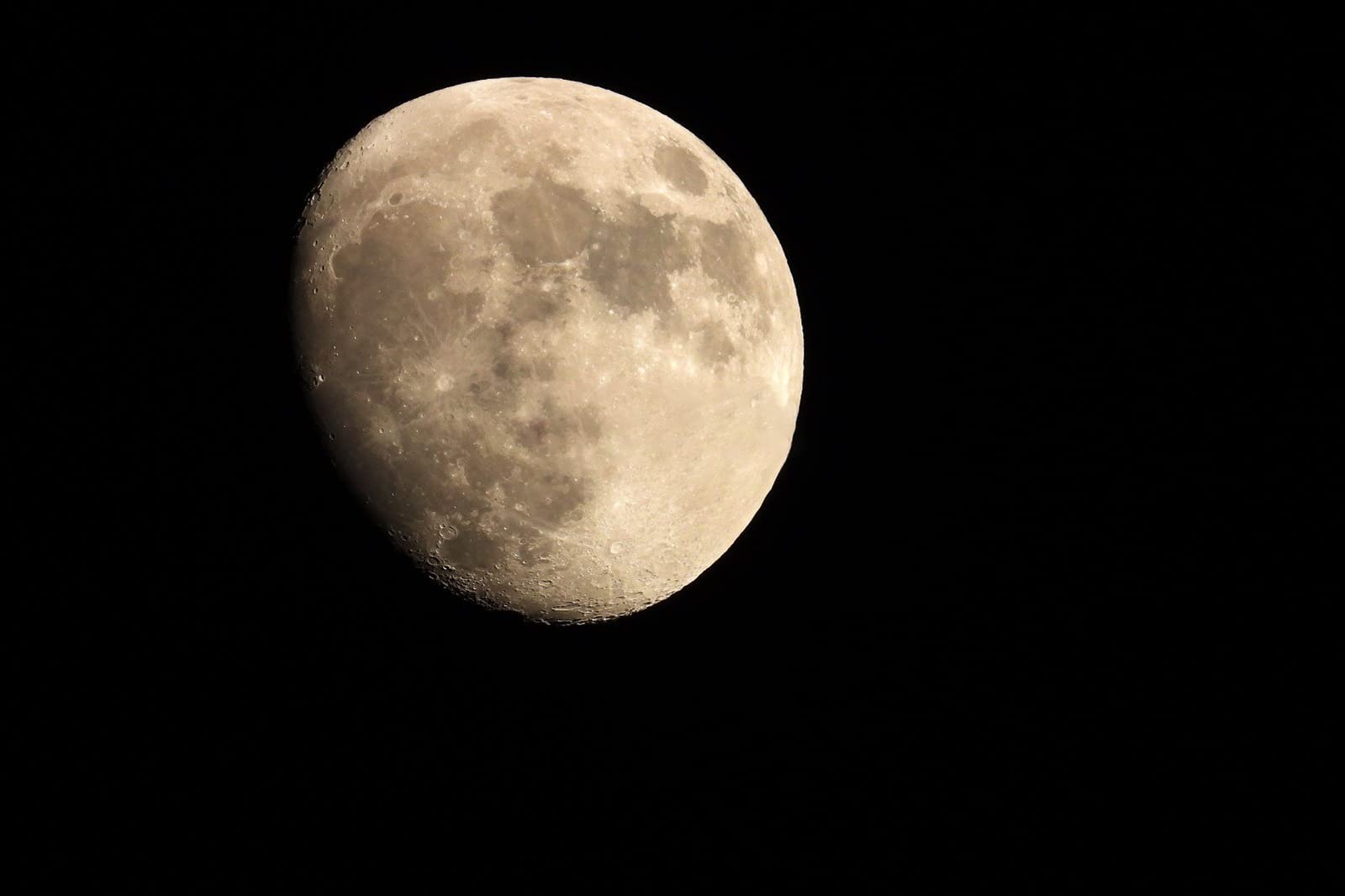
This is the only kit in the group where the accessories are the argument. A phone holder, an adjustable tabletop tripod, a hand strap and a protective travel case all ship in the box, and for a hiker who wants to photograph what they find, that removes three separate purchases.
The optics themselves are solid. A large BAK4 prism and fully multi-coated lenses produce a bright, high-contrast image, and the 56mm objective with a 25mm eyepiece gives a bigger, brighter view than anything else here. The 6.5 degree field of view is generous for 12x.

Owners consistently say the same thing about the accessories: this is a complete setup rather than just an optic. The tripod is what makes 12x usable, because handheld 12x through a 56mm tube produces an image that moves too much to trust.
Digiscoping through a phone at 12x is a genuinely useful trail capability, and the holder is the right way to do it. Expect a little vignetting on some phone sizes and a need to shade the screen from glare.
What you should know before buying it
Plan the tripod into the routine. Set it on a rock at a viewpoint and 12x becomes a serious wildlife tool. Skip the tripod and you are carrying 2 pounds for a shaky handheld view.
Clarity and field of view both fall away at maximum zoom on this model. It performs best below the top of the range, which is a common trait of high-power budget optics.
Where it will disappoint you
The weight is the headline problem. At 2 pounds, this is the heaviest monocular in the roundup by a distance, and it is not a backpacking optic.
If you are not going to use the phone and the tripod, you are carrying bulk and weight for magnification you cannot hold steady. Choose a lighter model instead.
7. usogood 10×42: Best for Close Focus on the Trail
- Compact and light enough for a jacket pocket
- BAK4 prism and FMC coating give a bright image
- Fast one-finger focus makes tracking between subjects easy
- Tripod interface and smartphone adapter compatibility
- Real magnification feels short of the stated 10x
- Lens caps fit loosely and the front cap tab snaps off
- Nylon hand strap is hard to thread
Close focus from about 3.3 yards is the spec that makes this one interesting on a trail. Butterflies, trail markers, a mushroom, a knot on a fence post, things most 10x monoculars blur. Owners use it that way and rate the result well.
At 9.12 ounces and 6.1 by 2.8 by 2.1 inches, the body is compact without being a slim pocket stick, and the rubber armor is shaped for a one-finger grip. The 22.5mm eyepiece is a large one, and users with glasses report the wide field stays clear.
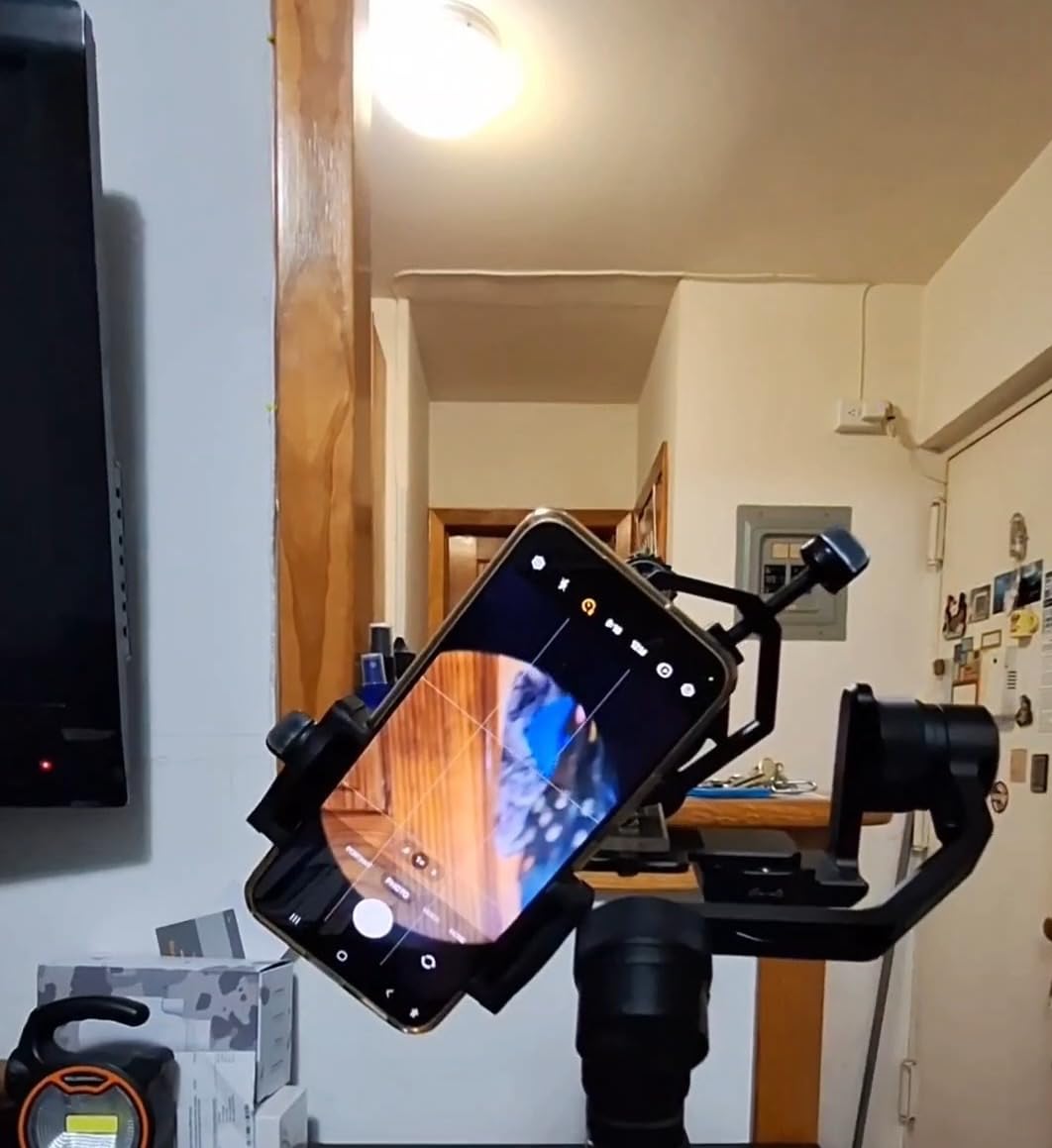
The 360 ft field of view at 1000 yards means you can sweep a clearing quickly, which is what you want when something moves. Fast one-finger focus is a trail-friendly feature that you notice most in cold weather.
For anyone with one-eye vision who finds binoculars awkward, this shape and weight work especially well. Several reviews make that point directly, and it is a real advantage over any two-barrel alternative.
What you should know before buying it
Treat the magnification figure as marketing. The most repeated theme across reviews is that the real power feels closer to 5x-8x in side-by-side use, so judge it by aperture and field of view rather than the number on the box.
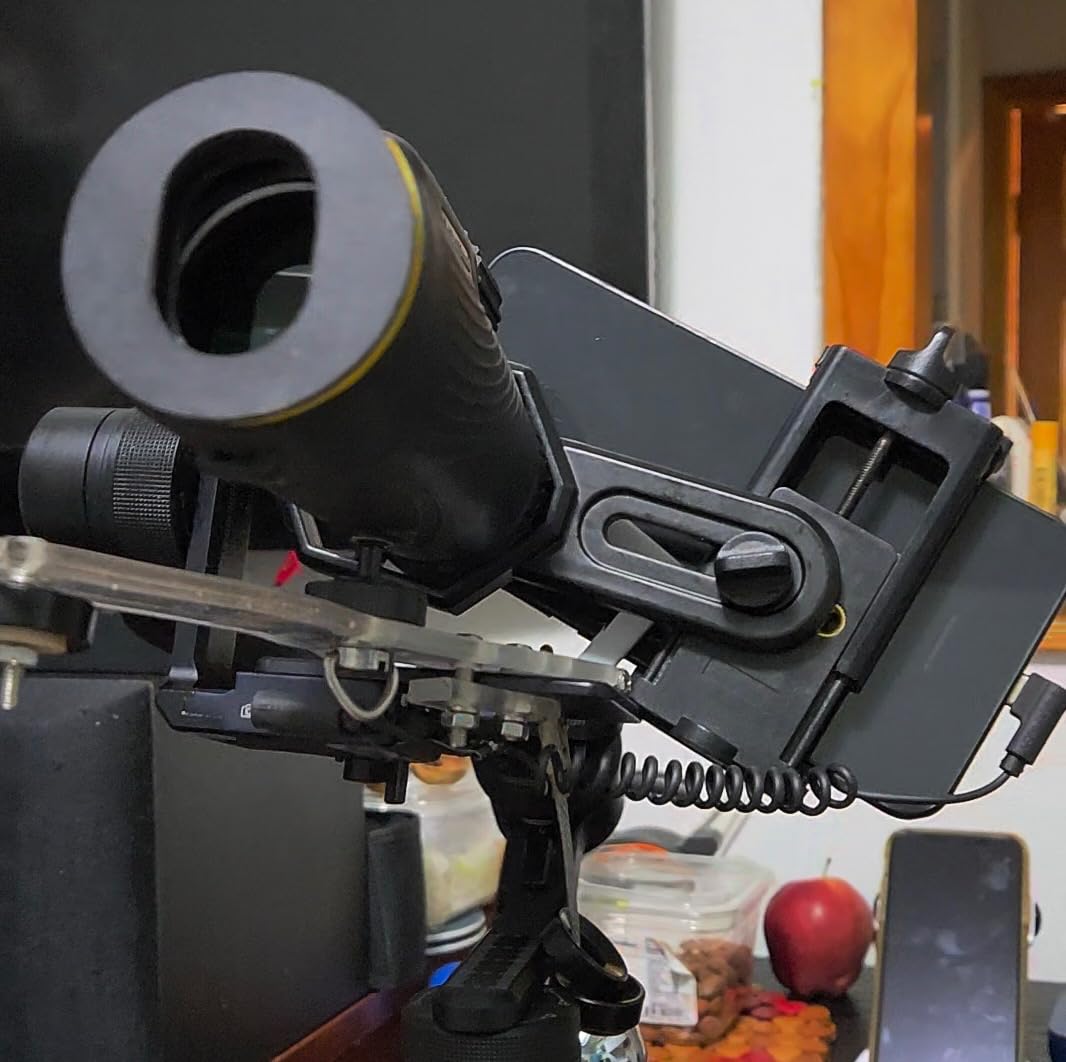
There is a tripod screw interface and stated smartphone adapter compatibility, which puts it in the same useful category as the 12×56 kit without the weight.
Where it will disappoint you
The supplied accessories are the weak point. Lens caps fit loosely, the front cap tab is easy to snap off, and the nylon strap is hard to thread through the mounts. Budget for a replacement lanyard.
Customer service and warranty replacement are reported as good, but the hardware you are actually handed is the part that needs improving.
8. Pankoo 16×52: Best for Long-Range Spotting on Ridge Lines
- BAK4 prism and fully multi-coated lens for a bright
- high-contrast image
- 16x with a large 52mm objective for bright views
- Waterproof fogproof and nitrogen-filled body
- Includes pouch straps cloth and gift box
- Narrow 5.8 degree field of view limits tracking
- Manual focus needs frequent adjustment when scanning
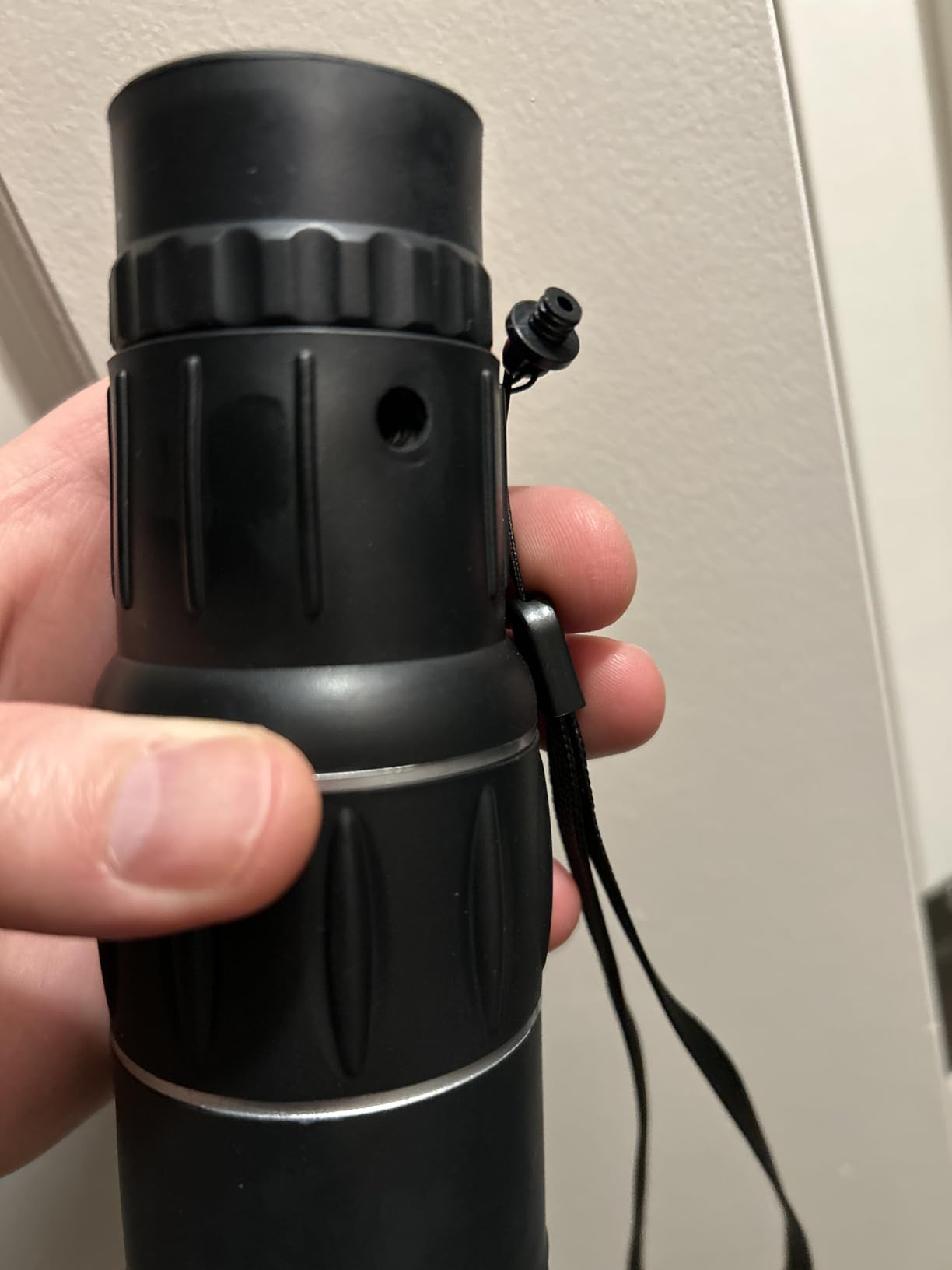
Sixteen power on a ridge line is a different tool from a pocket 10x. With a 52mm objective this one gathers serious light for the magnification it delivers, and the BAK4 prism with fully multi-coated glass keeps the image contrasty. Over 4,700 reviews describe it as a capable budget high-power optic for bird watching, hunting and general outdoor use.
Owners like the kit: pouch, straps, cleaning cloth and a box. Nothing else at this power includes a proper carry set. At 10.88 ounces it is heavier than a pocket monocular but still reasonable for a day hike.
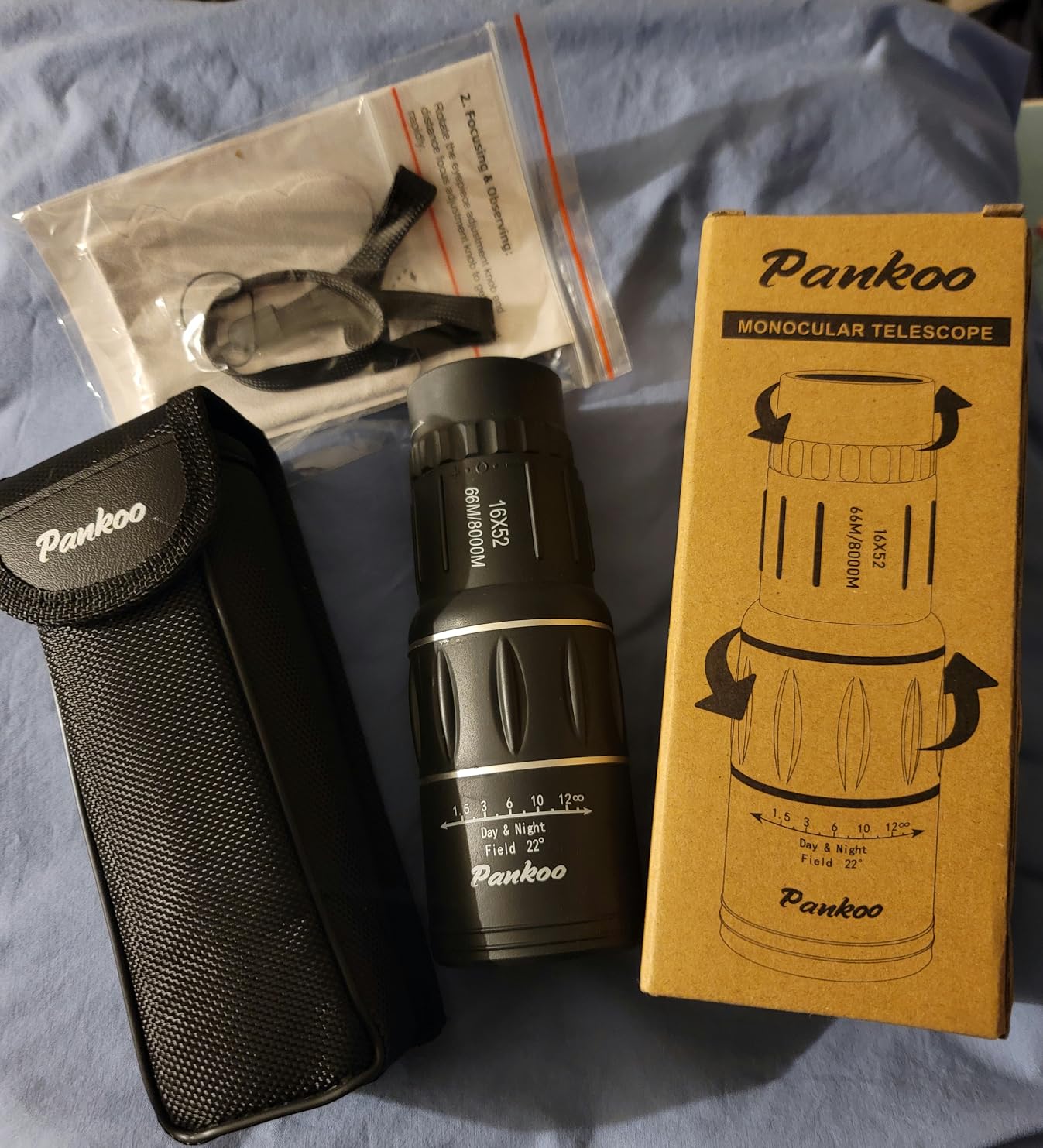
The honest test for 16x is what you do with it after you find something. Finding is the easy part. The 5.8 degree field of view means once a bird moves, you are chasing it, and at 16x handheld the shake is significant. Resting the tube on a pack or a rock changes the experience completely.
If your hiking involves scanning far valleys and picking out distant ridge lines, that is exactly the job this does. If you want to follow a bird, it is the wrong shape of tool.
What you should know before buying it
The 6.7 inch optical tube length is the main physical fact. It will not go in a trouser pocket. It will go in a daypack, a chest pouch, or a hand on a shoulder strap.
Warranty terms are listed as 90 days. That is short for an optic, and it is the one specification here that would give us pause on a long trip.
Where it will disappoint you
Handheld 16x is hard. Reviewers say so directly: steady viewing of moving subjects is difficult. Bring a small tripod or a rest point.
The narrow field compounds it. You need patience and a plan for where you will stand before you point it at anything.
9. AYRAVIIO 10×42: A Straightforward 10×42 for Gifting
Birthday Gifts for Men Dad Husband Teen, 10×42 Monocular for Outdoor/Hiking
- Lightweight and easy to carry on walks
- Clear image quality with effective magnification
- Single-hand focus that works for glasses wearers
- Storage case and cleaning cloth included
- Lens caps do not stay attached and feel cheap
- Some reviewers call the build quality low for the price
- No stated warranty
This is the option to pick when the monocular is a present, and the reasoning is practical. It arrives in a box that is presentable, it needs no setup, and the single-hand focus means the recipient can use it within a minute of opening it.
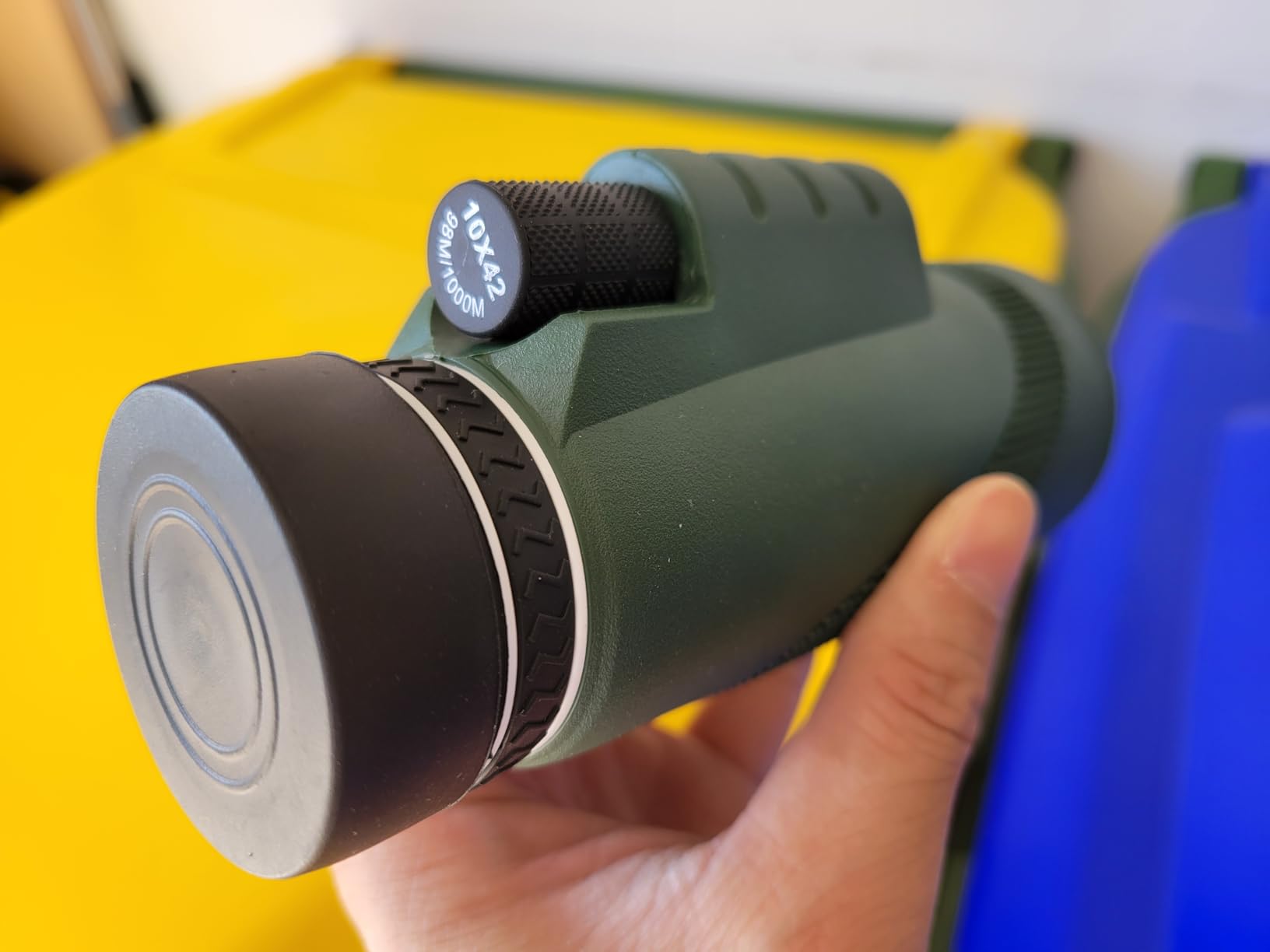
Under the surface it is a straightforward 10×42 with a BAK-4 prism, a fully multi-coated green lens, an 18mm ocular and a 2.1 arc sec dawes limit, which is a respectable resolution figure. At 10.9 ounces it carries comfortably on a walk.
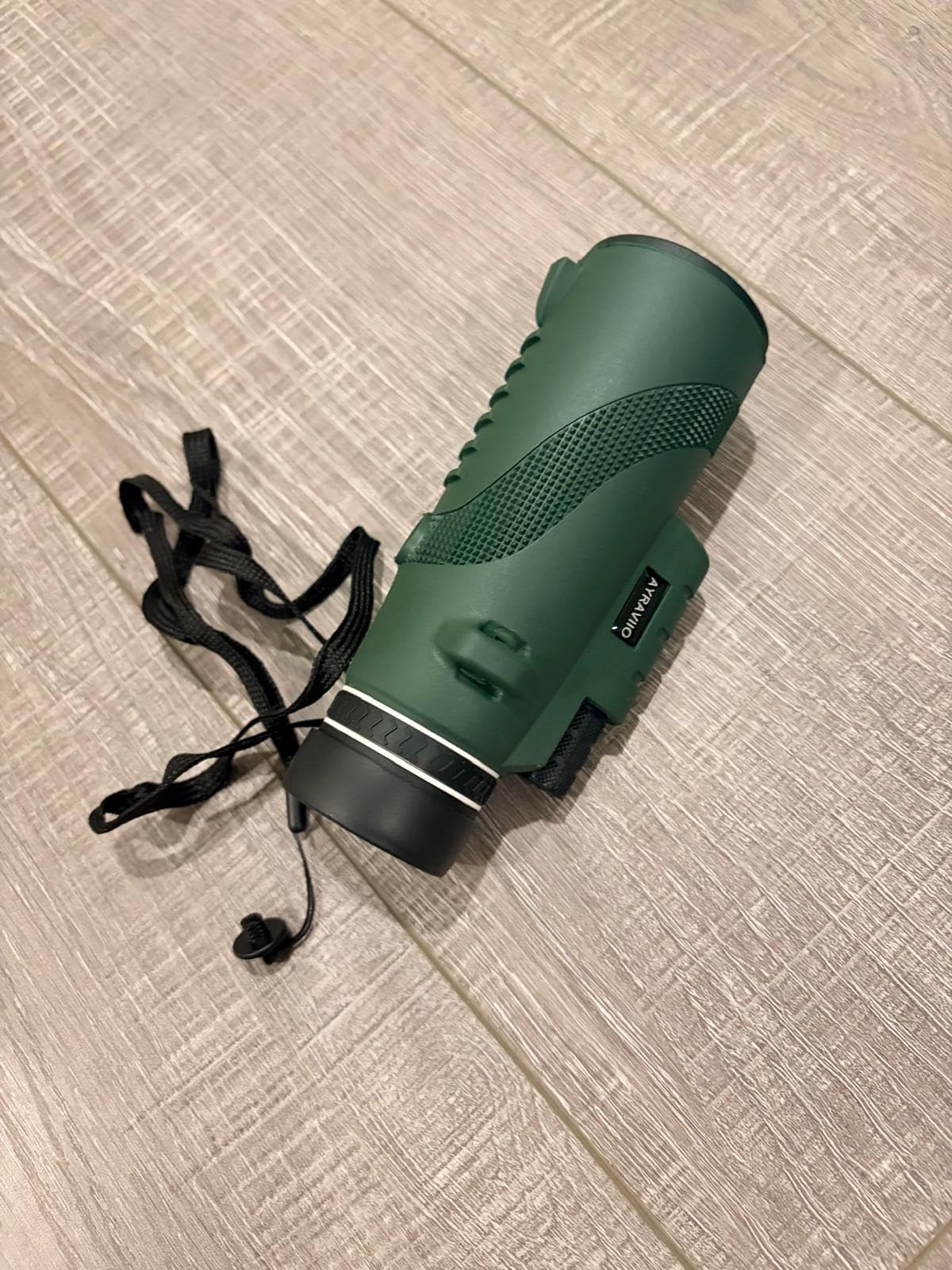
The waterproof, anti-fog and dust-resistant claim is the useful part for a new owner who will not be careful at first. A monocular that survives a first rainy season is worth more than one with better specs on paper.
Most reviews come from gift buyers, and most of them are about the recipient’s reaction. The image is clear, the magnification works for bird watching, and the eyecup adjusts for glasses.
What you should know before buying it
The body measures 2.75 by 2.55 by 6.69 inches, which is pocketable on a day hike but not on a technical scramble. Plan on a pocket or a pack lid rather than a chest pocket.
No warranty is stated on this listing. If the recipient is the type to drop things, that is worth knowing before you buy.
Where it will disappoint you
The lens caps are the consistent complaint. They do not stay attached and reviewers describe them as cheap, which is a bad first impression on a gift.
A handful of buyers rate it functional but not great value. It is a competent 10×42, not an enthusiast one, and the price sits among the better budget options here.
10. URBANCOAST 15×54: Bright Optics for Open Water and Wide Country
15×54 Monoculars for Adults High Powered, Compact Waterproof Telescope
- Clear
- sharp image with easy one-handed focus
- Compact and easy to pack for travel
- Good close focus and solid build
- Long eye relief suits glasses wearers
- Buyers dispute the stated 15x and find it nearer 6x-8x
- Lens covers are flimsy and not tethered
- No actual zoom function
- only focus adjustment
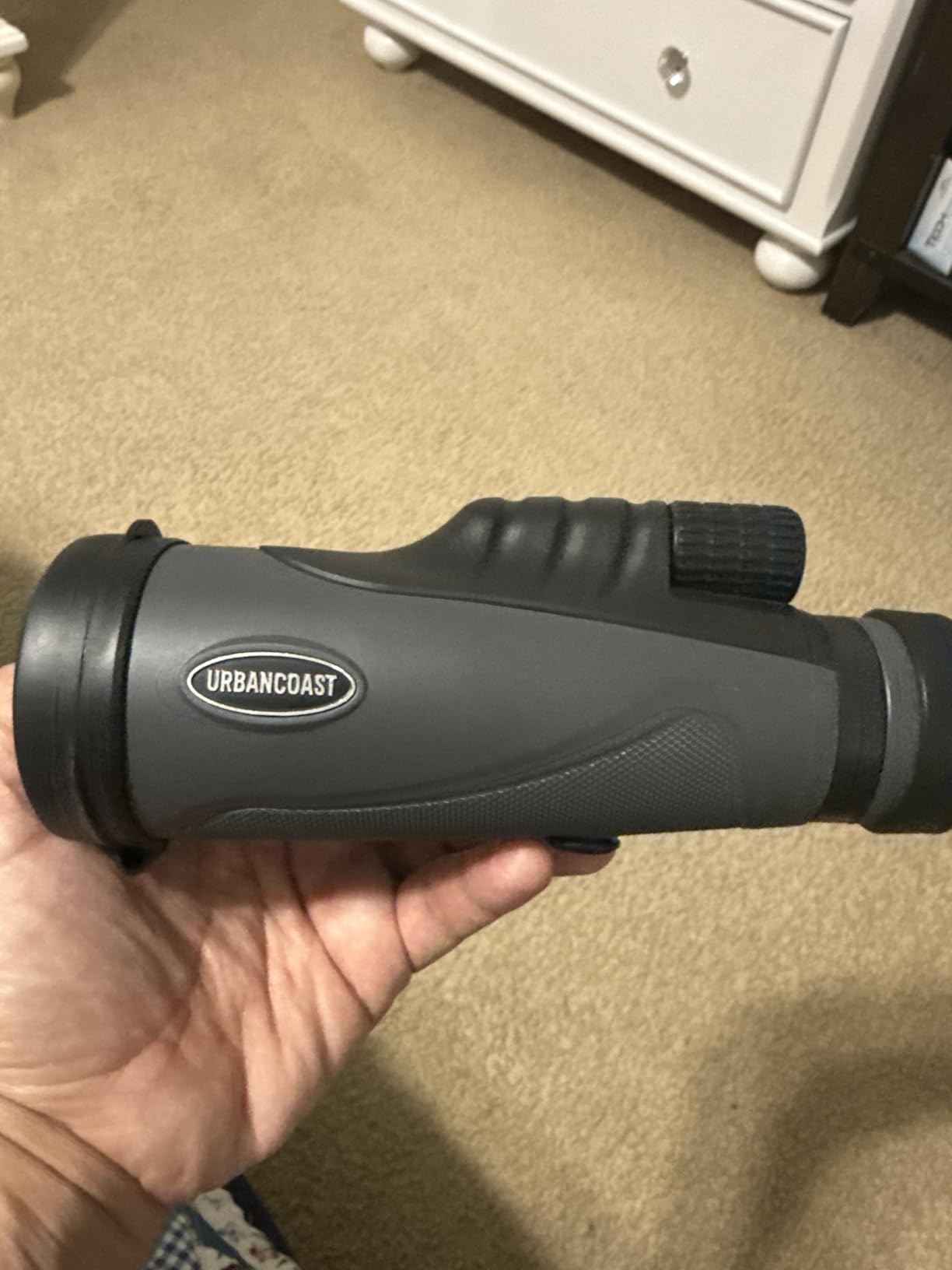
A 54mm objective is a large light bucket, and that is the reason this one looks good in the situations where a small 25mm tube goes flat. Marine users and coastal walkers mention it by name as a bright, compact optic with long eye relief that works over sunglasses.
The 354 ft field of view at 1000 yards is wide for the power class, and the smooth focus wheel with a twist-up eyecup is easy to run with a glove on. At 13.44 ounces it is a mid-weight option rather than a pocket one.
Skip the headline number. The most repeated review theme is skepticism about the stated 15x, with buyers comparing it to 8x binoculars and finding far less difference than advertised. Judge it on the 54mm aperture and the field of view, both of which are real.
Warranty terms are the strongest in the budget half of this list: one year on activation plus a free extended year of coverage. That is a meaningful difference from products with no stated warranty at all.
What you should know before buying it
Long eye relief is the feature that matters most if you wear glasses, and it is the reason this lands on coastal itineraries. Distance from the eyepiece to the eye is generous, so frames stay clear.
It includes lens covers, a lanyard and a storage bag, plus a tripod mount. That is a fuller kit than most budget monoculars ship with.
Where it will disappoint you
There is no zoom. The control is focus only, so the 15x is a fixed setting. If your instinct is to dial power up and down, this will not do that.
The lens covers are flimsy and untethered, which is a common complaint across the budget category. Retract and pocket them when you are not actively glassing.
11. Nocs Provisions Field Tube 10×32: Best Waterproof Build for Wet Climates
Nocs Provisions Field Tube 10×32 Waterproof Monocular, Bird Watching
- IPX7 waterproof and nitrogen sealed for genuinely wet conditions
- Oversized focus wheel works easily with gloves
- Close focus from 9.3 ft for near detail
- Clear
- bright optics and a grippy Wave Grip body
- Lens caps are tight and have no tether
- Field of view is narrow for scanning
- Slightly bulkier than a true pocket monocular
- Priced well above budget alternatives
IPX7 is the number to notice. Every other product in this roundup is splash-resistant or sealed for rain; this one is rated for immersion. The nitrogen sealing with a medical-grade O-ring is the anti-fog mechanism, and it is the right answer for a route with river crossings, sea spray or persistent drizzle.
The oversized focus wheel is the hiking feature. It is large enough to find and turn with a glove on, and reviewers single it out. The 333 ft field of view at 1000 yards plus a 3.28mm exit pupil gives a usable, bright view in early light.
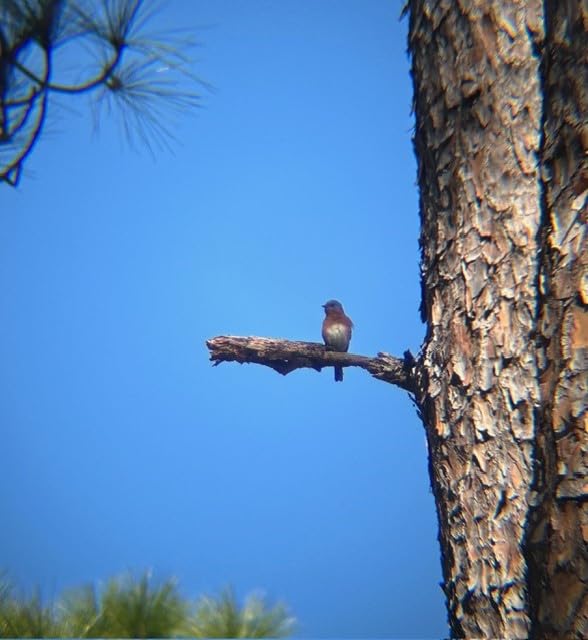
At 240 g and 5.04 by 1.77 by 2.68 inches, this is compact but not a shirt-pocket stick. Owners describe carrying it in a pocket or a side pouch and reaching for it without breaking stride, which is the behaviour you want from a trail optic.
Buyers praise build quality and brightness and often compare it favourably to the same maker’s binocular line. The multi-stop twist-up eyecup works for glasses wearers, and close focus from 9.3 ft covers close detail.
What you should know before buying it
It carries a 160mm focal length at 10×32, which is a balanced pairing: enough magnification for identification without the shake of 15x or 16x.
The Wave Grip housing is scratch-proof, which matters when the tube is clipped to a shoulder strap and knocked against rock all day. The IPX7 rating plus nitrogen sealing is the reason this one earns its slot on wet-weather routes.
Where it will disappoint you
The lens caps are the most repeated request across reviews: tether them to the body. As supplied they are tight and easy to lose on scree, which is a genuine problem in the exact conditions the optic is built for.
It costs more than the budget 10x42s, and the 333 ft field is narrow for scanning. If your hikes are dry and your budget is tight, the value here is harder to justify.
12. HURYSIN 8×42: Widest Field of View and the Strongest Warranty
- Bright
- low-light image with good contrast and little spherical aberration
- 17mm eye relief is comfortable for glasses wearers
- 8.2 degree field of view is the widest in this roundup
- 5-year replacement plus lifetime repair warranty
- Lens covers detach easily and the eyepiece cover is unattached
- No tripod or stand included
- Instructions are unclear
- Twisting the eyecup does not appear to change focus
Two things make this one unusual. The first is field of view: 431 ft at 1000 yards, an 8.2 degree sweep that is the widest here, which means a moving bird stays in frame instead of leaving it.
The second is the warranty. A 5-year replacement warranty plus a lifetime repair warranty is the most generous coverage in the lineup by a wide margin, and for a hiker who carries one optic for a decade it is worth real weight in the decision.
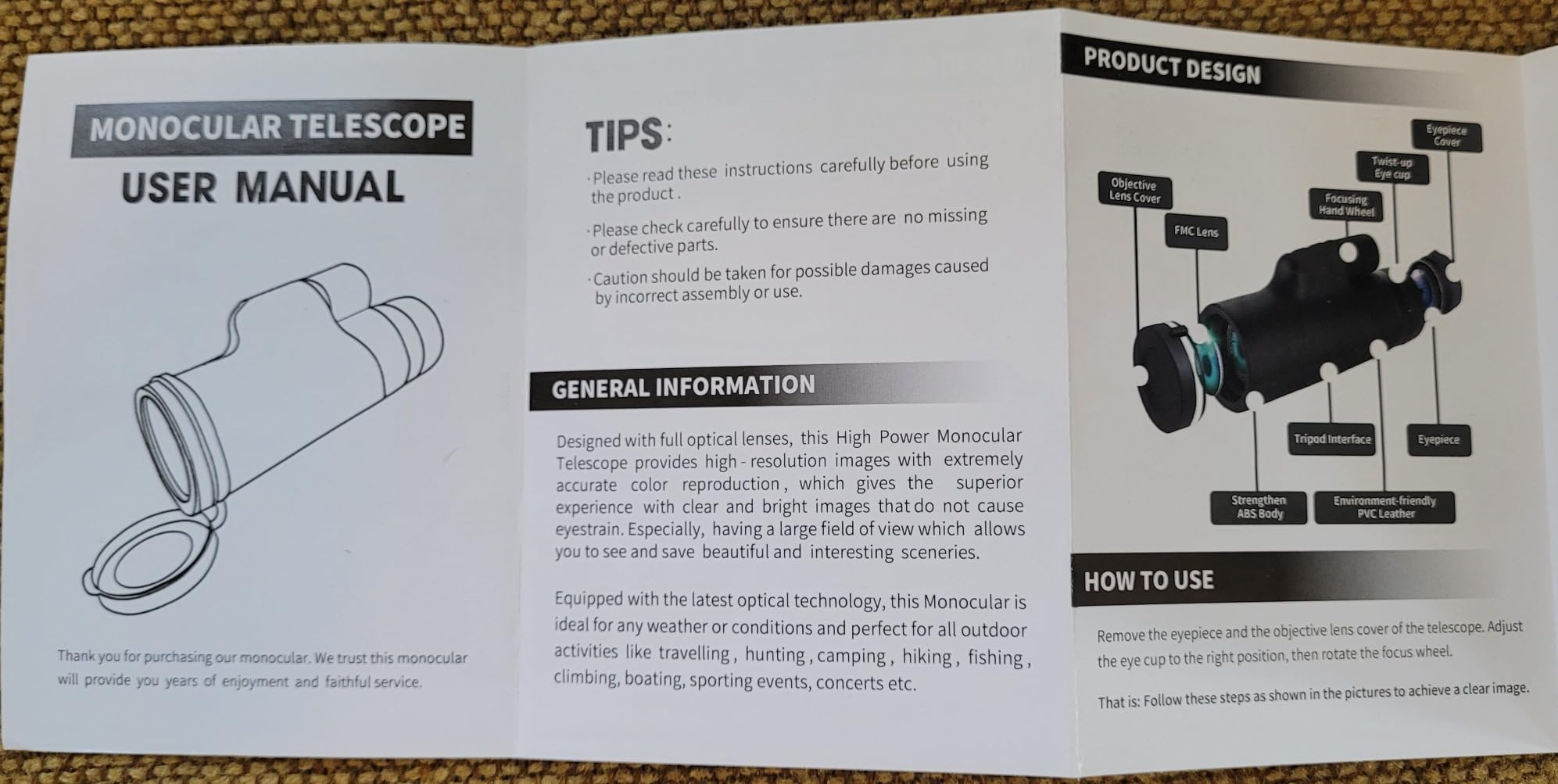
The 17mm eye relief is the other number worth checking if you wear glasses. That is a generous distance between the eyepiece and your eye, and it means frames stay clear without leaning in. At 255 g it is a comfortable one-hand carry.
International reviewers consistently praise brightness, contrast and value, with several noting good low-light performance for the aperture. The prism is BK7 rather than BaK-4, which is the one optical step down in this roundup, and it shows as slightly less contrast at the edges.
What you should know before buying it
8×42 with a 42mm objective is the configuration most suited to all-day trail use: bright enough at dusk, wide enough to scan, and low enough magnification to hold steady without a rest.
The IPX7 waterproof, nitrogen-filled build and 8.2 degree field make it a strong choice for anyone who scans open country rather than focusing on one distant point.
Where it will disappoint you
The lens covers detach easily and the eyecup cover has no attachment at all, which is the most common complaint. Bring a small tether or a soft pouch and keep the covers in it.
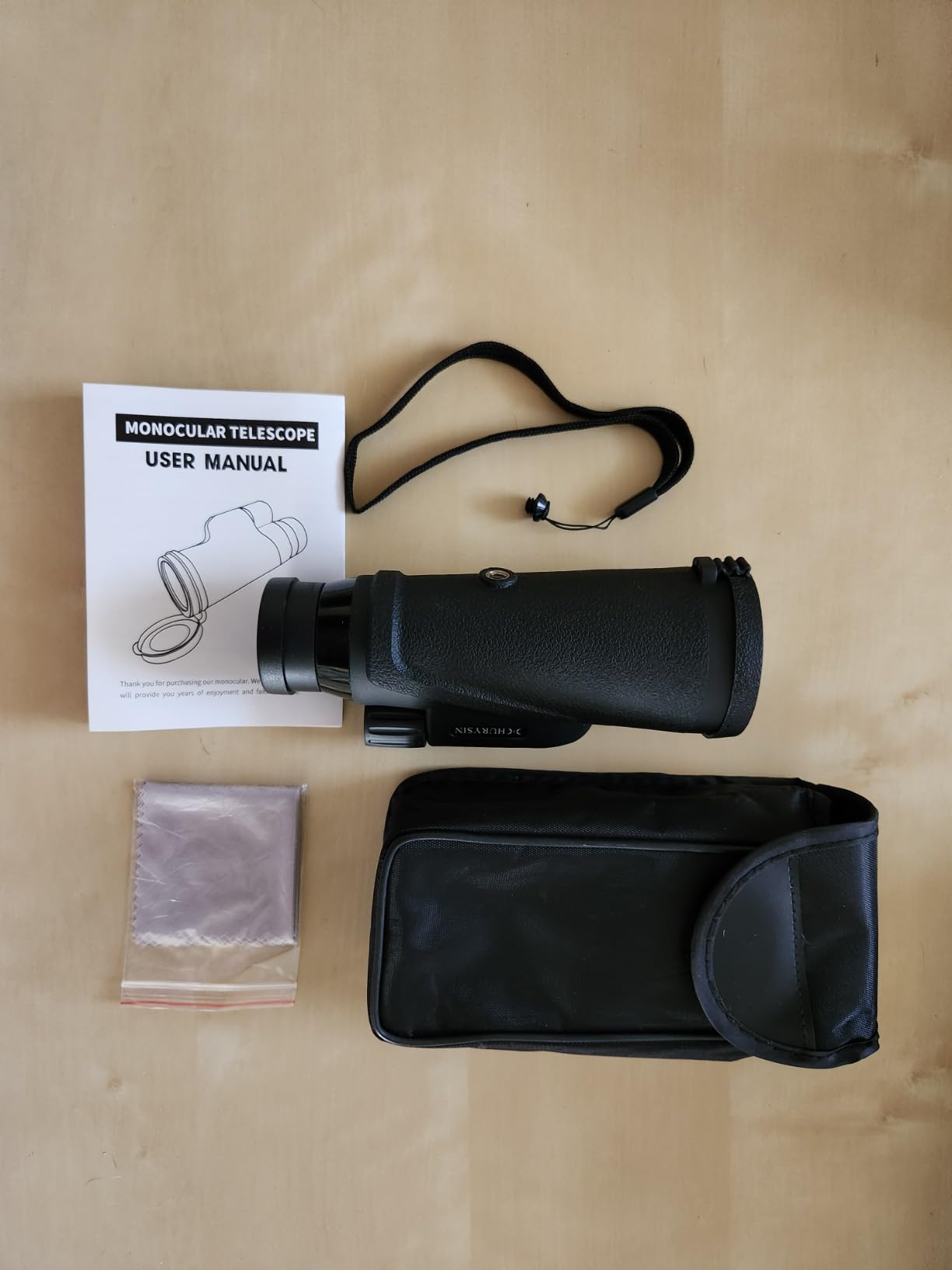
No tripod or stand is included, and the instructions are unclear. If you plan to use it on a table or a rock, budget for a compact tripod separately.
How to Choose a Hiking Monocular: 8 Specs That Matter
Start with how you will actually carry it. A monocular you leave at the trailhead because it is too heavy or too awkward helps nobody. The listed weights in this roundup run from 5.6 ounces at the lightest to about 2 pounds at the heaviest, and that single number will narrow your list faster than any optical specification.
Magnification. For walking trails, 8x and 10x are the useful range. Hikers consistently report that 10x and above amplifies hand shake to the point where tracking a moving subject becomes frustrating. Above 12x you need something to rest the tube on. If your interest is scanning wide country rather than following wildlife, choose the lower power and take the wider field of view that comes with it.
Objective lens and exit pupil. The second number after the magnification is the objective diameter in millimetres, and it controls how much light reaches your eye. Divide it by the magnification to get the exit pupil. A 25mm objective at 10x gives a 2.5mm exit pupil, which is fine in daylight and dim at dusk. A 42mm objective at 8x gives a 5.25mm exit pupil, which is the reason the 8x42s outperform the 10x25s in low light. For dawn and dusk hiking, prioritise a larger objective over extra magnification.
Field of view. Listed at 1000 yards, this is the width of what you see. Wider is better for finding things, and the difference between 107 ft and 431 ft is the difference between a sweep and a spotlight. Check the figure before you buy any pocket monocular with a 10x rating.
Eye relief. This is the distance from the eyepiece to your eye, and it decides whether you can wear glasses. Anything at or above 15mm is comfortable with frames on, and 17mm or more is roomy. The Nocs and HURYSIN models here both clear the 15mm mark; very slim pocket tubes often do not.
Waterproofing. Look for nitrogen purged or nitrogen filled plus an IPX rating. IPX4 handles rain and splash. IPX7 means immersion. For a route with river crossings, sea spray or monsoon weather, only IPX7 is appropriate. Moving between a cold start and a warm ridge is the other fogging risk, and nitrogen purging is the fix for internal fog rather than lens coatings alone.
Prism glass and coatings. BaK-4 is the better roof prism and gives noticeably better contrast and color than BK7. Fully multi-coated lenses transmit more light than single-coated optics. Extra-low dispersion glass, often shortened to ED, reduces color fringing around high-contrast edges at higher powers, and it is the main reason premium 42mm options cost more.
Focus and eyecup. A large or central focus wheel is easier to use with gloves on, and an oversize wheel is a real trail feature rather than a gimmick. A multi-stop or twist-up eyecup gives you at least two usable positions, one for glasses and one without. Fixed-focus designs are simpler and have one less thing to go wrong, which is why the Vortex Solo works so well for quick identification.
Carry and warranty. Check what comes with it: a lanyard, a case, tethered lens covers. Tethered caps are the feature hikers ask for most and manufacturers supply least, and losing a lens cap on a talus slope is annoying in a way that is hard to predict. Warranty length tells you how the brand expects the product to age, and the 5-year replacement plus lifetime repair on the HURYSIN is the strongest in this group.
Two more questions come up constantly on hiking forums. First, is a monocular worth it for a hiker who also wants to photograph? If you plan to attach a phone, check for a tripod thread and a stated adapter fit rather than buying a model that only happens to line up. Second, can these be used for stargazing? Briefly, yes: around a campfire, a wide-field model like the 8x42s will show you the brighter clusters and a few planets, but a hand-held monocular is nowhere near a telescope for anything serious.
Monoculars vs Binoculars for Hiking
A monocular wins on a moving trail. It is half the weight and half the bulk, it works one-handed with a trekking pole in the other, and it clips to a shoulder strap or sits in a pocket. Binoculars win on sustained observation, where two eyes give depth perception and a wider, steadier image, and on anything that involves judging distance.
That is the honest split. If your hiking is walking and you want to identify what is on the next ridge, a monocular is the right instrument and a pair of binoculars is dead weight. If you plan to sit at an overlook and watch a distant herd, or you hunt, binoculars justify their extra weight and you should buy a binocular.
There is one more case for the monocular: one-eye vision. Several owners across these reviews note that binoculars are uncomfortable or unusable with one eye, while a monocular is simply a monocular. The wide-field 8×42 models serve that use best.
If you already carry binoculars and want a lighter option for moving sections, choose a 25mm pocket monocular in the 5-7 ounce range. The Vortex Solo at 5.6 ounces is the clearest example. If you do not own any optics yet, a single wide-field 8×42 gives you more usable trail performance than a 10×25 and costs little more in weight.
Pair whichever you choose with the right footwear and pack for long days, and our travel backpack roundup covers the lighter options if you want the monocular to be the lightest thing you own. In cold months, add a layer from our snowshoe picks, since winter condensation on an eyepiece is unavoidable and a sealed nitrogen-purged body handles it better than an open one.
Frequently Asked Questions
Which is better for hiking, binoculars or monoculars?
A monocular is better on a moving trail: it is lighter, fits in a pocket and works one-handed with a trekking pole in the other. Binoculars are better for long observation sessions because two eyes give depth perception and a steadier, wider view. Buy a monocular for walking and identification, binoculars for watching and hunting.
What magnification is best for hiking monoculars?
8x and 10x are the most useful range for hiking. Above 10x, hand shake makes tracking moving subjects difficult, and 12x or more realistically needs a tripod or a solid surface to rest on. For walking trails, choose 8x with a wide field of view for scanning, or 10x if you want more detail on distant objects.
What is better, a 12×50 or a 40×60 monocular?
For hiking, a 12×50 is the far more usable choice. 40x is a spotting-scope class power that is impossible to hold steady by hand and shows a very narrow field of view. The objective diameter matters more than the power for light: divide the objective by the magnification to get the exit pupil, and note that many budget monoculars deliver less real magnification than the label states.
Which brand of monocular is considered the best?
It depends on the job. Vortex is the most dependable all-round choice, with a fixed-focus pocket design and an unlimited unconditional lifetime warranty. Bushnell and Nocs build the stronger optics for low light and ultralight packing respectively, while Celestron offers a proven budget-friendly pocket model. The warranty length and the listed weight usually tell you more than the brand name alone.
Conclusion: Our Final Hiking Monocular Picks
The Vortex Solo 10×25 is the best monocular for hiking in 2026 because it solves the actual problem: carrying optics on a trail without noticing them. At 5.6 ounces, waterproof and fogproof, with a fixed-focus design and an unlimited lifetime warranty, it is the one we would put in a pack and forget about.
Choose the Nocs Provisions Zoom Tube 8×32 if you count every gram and want a wide 384 ft field of view. Choose the Bushnell Legend 10×42 Ultra HD if your hikes start at dawn, and the Nocs Field Tube 10×32 if your routes cross water. Whatever you pick, buy the small tripod: it is the cheapest upgrade available to any monocular hiker.