
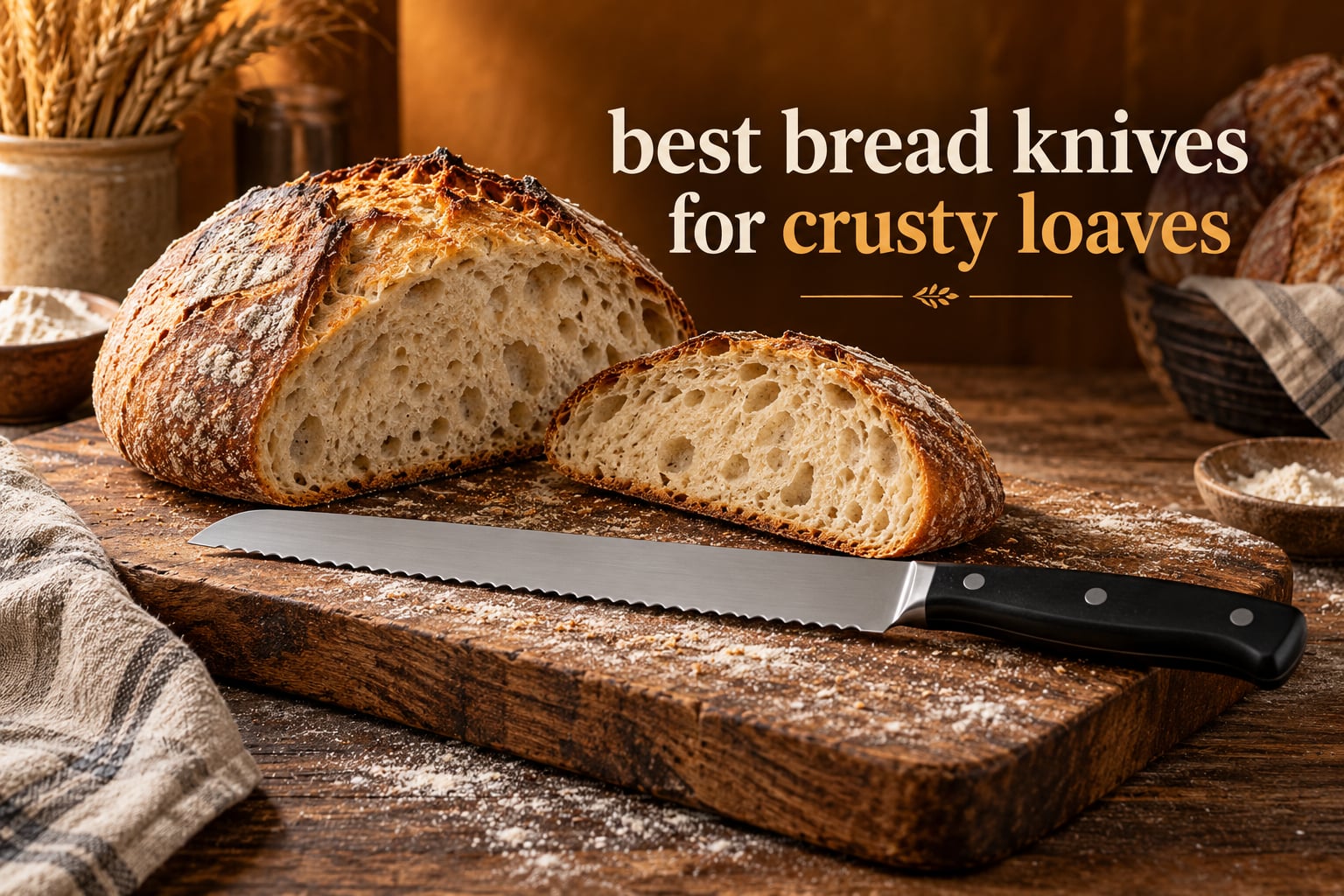
If your current knife smashes the bottom of a sourdough loaf into crumbs instead of cutting clean slices, you are not doing anything wrong. Most home cooks are slicing a hard crust with a straight-edge blade, and that mismatch is the whole problem. This guide covers the best bread knives for crusty loaves, ten options we compared side by side on bread that actually has a crust worth fighting.
We spent weeks cycling through dense country boules, tall batards, seeded rye and soft sandwich loaves, watching how each blade handles the two-part problem: entering the crust without skidding, then sawing through the open crumb without compressing it. Everything below is scored on the four things that decide whether a loaf survives the cut, and the ratings and review counts come straight from what thousands of owners report about each knife.
Three picks earned a place on the short list, and all ten appear in the comparison table so you can scan specs before reading. If you are still choosing equipment, our countertop bread machine roundup covers the other half of the home baking setup.
Table of Contents
Top 3 Picks for Best Bread Knives for Crusty Loaves

Mercer Culinary M23210 10 Inch
- 10 inch wavy edge
- One-piece high carbon Japanese steel
- 4.8 oz

imarku 10 Inch Forged Bread Knife
- Forged high carbon stainless
- HRC 53 plus 1
- Single-bevel serrated edge
All 10 Bread Knives Compared at a Glance in 2026
Ten blades, ten different answers to the same two questions: will it bite the crust, and will it stay out of the way while you saw? The table below puts every pick in one place so you can compare blade length, serration style and intended use without scrolling through ten sections.
| Product | Specifications | Action |
|---|---|---|
| Mercer Culinary M23210 10 Inch |
|
Check Latest Price |
| imarku 10 Inch Forged Bread Knife |
|
Check Latest Price |
 Tojiro F-737 9.3 Inch Hand Made Tojiro F-737 9.3 Inch Hand Made |
|
Check Latest Price |
| Victorinox Fibrox 10.25 Inch |
|
Check Latest Price |
 Piklohas Resharpenable 10 Inch Piklohas Resharpenable 10 Inch |
|
Check Latest Price |
 HENCKELS Statement 8 Inch HENCKELS Statement 8 Inch |
|
Check Latest Price |
 Shun Classic 9 Inch Shun Classic 9 Inch |
|
Check Latest Price |
 Global G-9 8.5 Inch Global G-9 8.5 Inch |
|
Check Latest Price |
 ZWILLING Twin Signature 8 Inch ZWILLING Twin Signature 8 Inch |
|
Check Latest Price |
 Wusthof Classic Ikon 9 Inch Wusthof Classic Ikon 9 Inch |
|
Check Latest Price |
1. Mercer Culinary M23210 Millennia 10 Inch – Best Overall Bread Knife
Mercer Culinary M23210 Millennia Black Handle, 10-Inch Wide Wavy Edge, Bread Knife
- Exceptional sharpness out of the box
- Cuts clean through crusty sourdough
- Textured finger points stay grippy when hands are floured
- Light enough to control on tall batards
- No blade guard or sheath included
- Ten inch length makes drawer storage awkward
- Handle is plastic rather than wood or pakkawood
This is the knife that ends the argument in most kitchens. The M23210 has a 10 inch blade cut from one piece of high-carbon Japanese steel with a wide wavy serration pattern, and that combination is the reason it handles a country boule in a single pass without the blade bogging down halfway through the crumb.
Ten inches is the sweet spot for most home bakers. It spans the full width of a batard, reaches past the center of a boule so you are not constantly re-angling the blade, and still fits on a normal cutting board. At 4.8 ounces it stays light in the hand even on a second loaf.
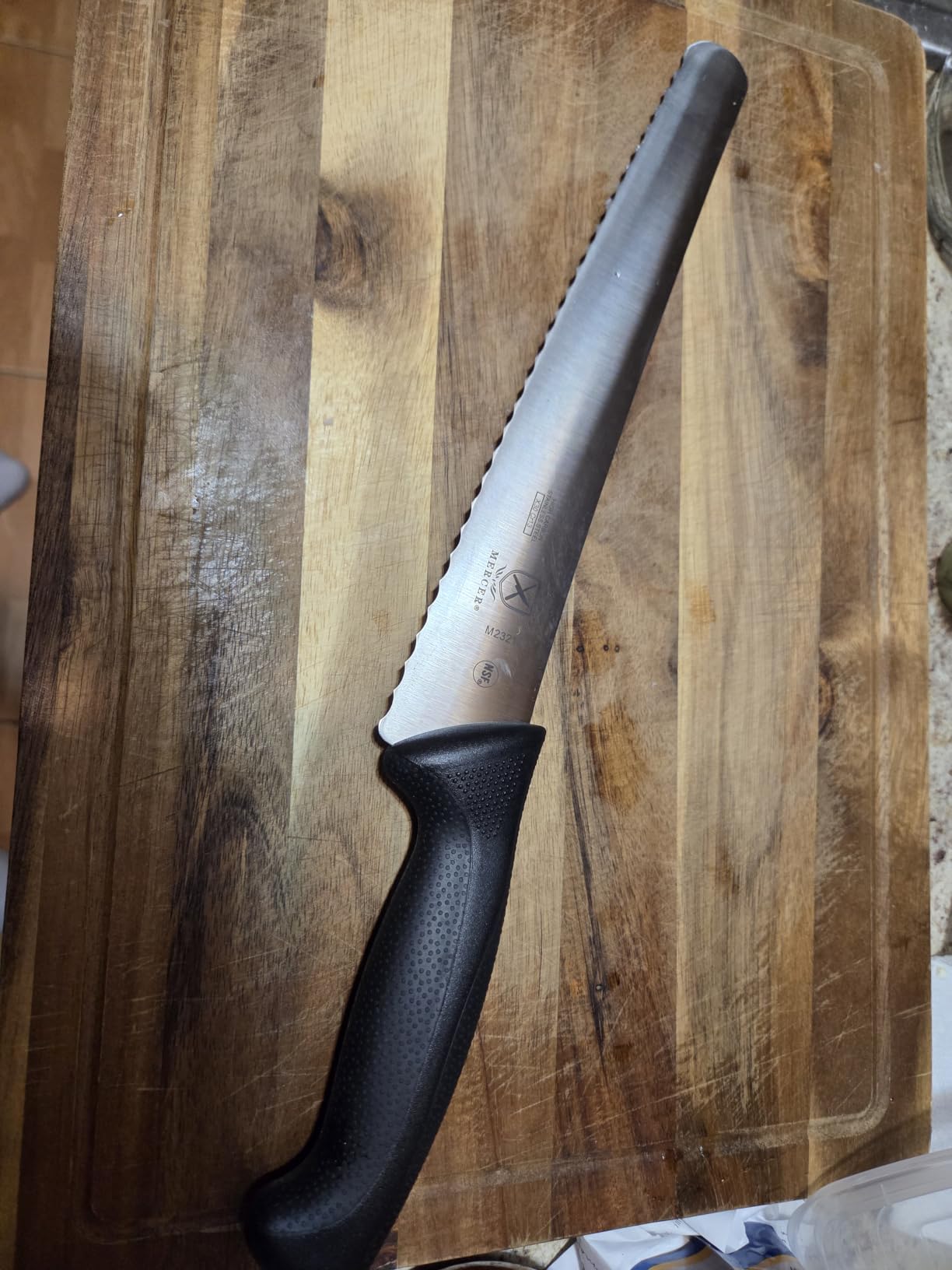
The wavy edge is the detail that matters more than the steel. Rounded scalloped teeth and shallow points alternate along the blade, so the points bite into the crust while the scallops clear crumb as they pass. That combination is why slices come out intact rather than compressed into the bottom of the board.
Reviewers consistently describe it as sharp out of the box and balanced enough for one-handed control, and the textured finger points on the handle keep a floured grip from sliding. On the negative side, the handle is molded plastic, there is no included sheath, and hand washing is required.
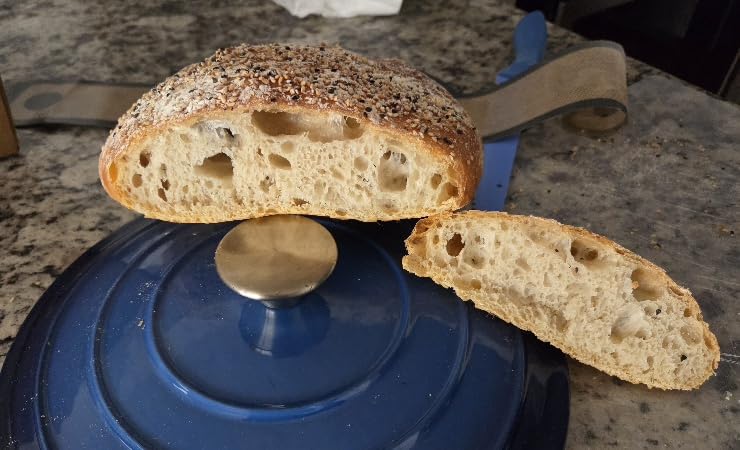
What you get right with the 10 inch blade length
Long enough to cross an entire boule in one stroke, which means fewer angle changes and less dragging of the tip through the crumb. It also gives you room to use the heel of the blade for thick end-of-loaf cuts without switching tools.
If you bake tall batards or pan loaves that are cut straight down the middle, a 10 inch blade clears the width in a single pass. Reviewers do not report flex problems with this blade, and they describe it as steady on hard crust.
Where the Mercer falls short
The handle will not please anyone who wants a wood grip, and the black molded material is the one part reviewers single out as feeling less substantial than the blade itself. It is a trade most bakers accept without thinking twice.
Storage is the practical annoyance. Ten inches plus the handle is a long object for a kitchen drawer, and there is no cover to protect the tip when it goes in a drawer with forks. The other limit is care: warm water and mild soap, then dry immediately.
2. imarku 10 Inch Forged Bread Knife – Best Forged Steel Option
- Forged construction rather than stamped
- High carbon stainless resists corrosion
- Laser-etched finish limits food sticking
- Serrated single-bevel edge handles hard crust well
- Stainless handle can feel cold or slick when wet
- Single-bevel geometry is not for every cutting style
- Heavier than the Mercer at 7.36 oz
The imarku A10 is the one pick in this lineup where the blade is forged rather than stamped, and you can feel the difference in how it behaves on a thick-crusted loaf. Forged construction removes the flex that makes cheap blades fold at the heel, which is precisely the failure that turns a good cut into a compressed mess.
The steel is high-carbon stainless with 0.26 to 0.35 percent carbon and 12 to 14 percent chromium, oil-tempered and heat-treated to HRC 53 plus or minus 1. That hardness figure is the practical part: it is the level at which the serrations resist rolling and keep their bite through repeated sawing.
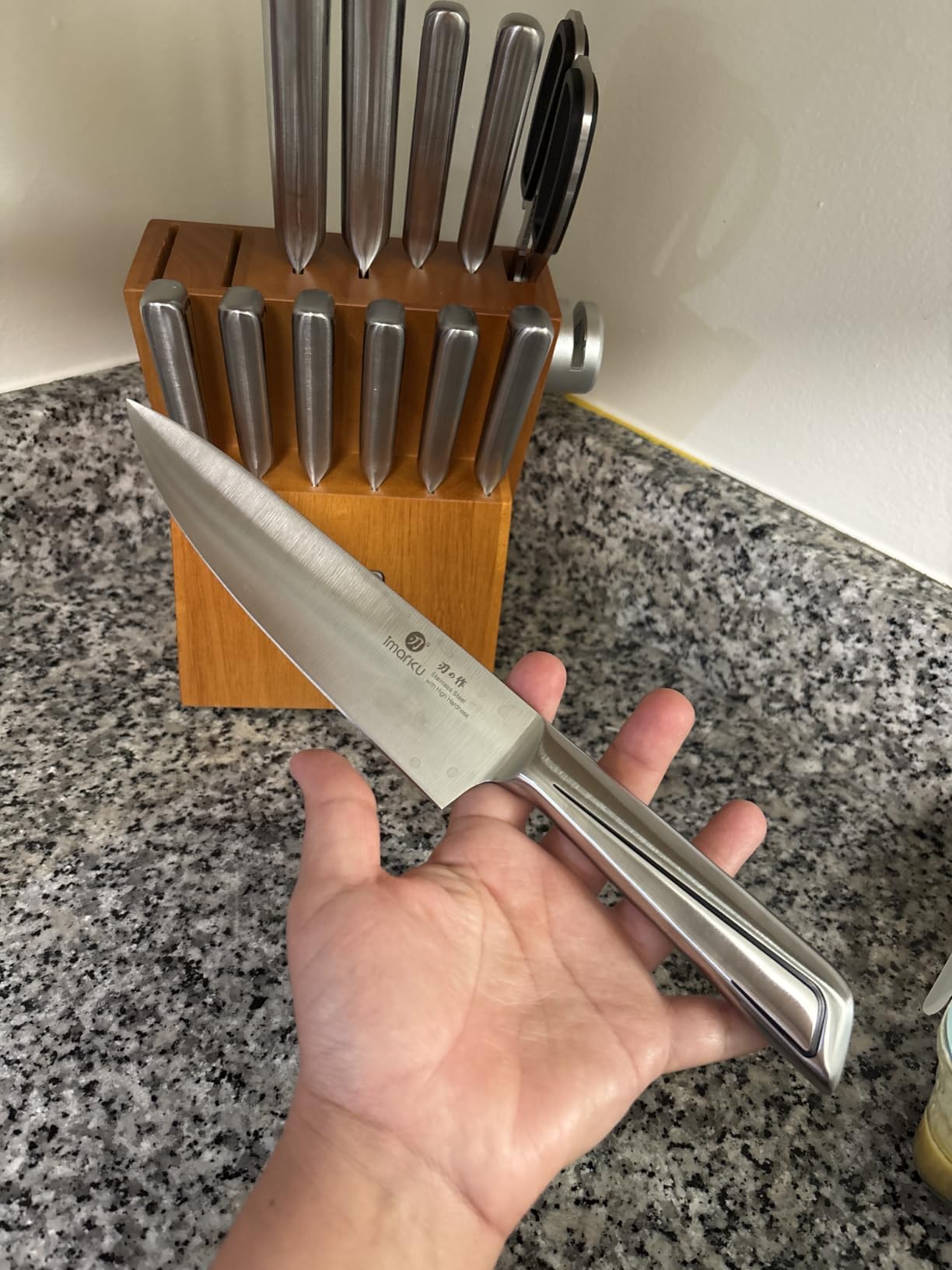
Blade length is a full 10 inches inside a 15 inch overall package, so the reach matches the Mercer while the total footprint is longer. At 7.36 ounces it carries more mass than several of the stamped options here, and that weight is where the cutting power comes from on dense rye.
The handle is 430 stainless steel with an anti-slip texture, and reviewers repeatedly note that the material takes a few weeks to get used to. The laser-etched finish is a nice touch for soft crumb, since it keeps slices from welding themselves to the blade.
Why forged construction matters on crusty bread
Stamping presses a blade shape out of a flat sheet of steel, which leaves it lighter and cheaper but more prone to flex under sideways force. Forging compacts the steel structure, so the blade resists bending when you push through a hard crust and then saw back.
That resistance matters most on the last third of a cut, where a flexing blade starts pushing crumb instead of cutting it. If your complaint is that slices are compressed at the bottom, flex is the mechanism, and this is the pick that addresses it directly.
Where the imarku frustrates people
The stainless handle is the main friction point. Users report that it can feel cold to the touch and slippery when wet, which matters if you are cutting a wet batard straight from a banneton and do not want to dry your hands first.
The single-bevel serration is efficient on one side but means the knife does not behave symmetrically for every stroke direction. Reviewers also note that balance preference varies, and at 7.36 ounces it is not the lightest tool in this roundup.
3. Tojiro F-737 9.3 Inch Hand Made – Best for Paper Thin Slices
Tojiro Japan Hand Made Bread Knife Slicer Cutter, 14.75″, Stainless and Wood – Reinforced Laminated Material
- Cuts paper-thin slices reviewers consistently praise
- Handmade in Japan with a laminated wood handle
- Light blade reduces hand fatigue on tall loaves
- Excellent value for a Japanese-made blade
- Significant flex on very hard crusts
- Single-bevel edge only
- Not full tang construction
If your priority is thin, translucent slices of crusty sourdough, the Tojiro F-737 is the one to look at. The 23.5 cm blade cuts cleanly enough that reviewers talk about slices you can see light through, and the natural laminated wood handle is the only natural wood grip in this group.
Total length is 14.75 inches with a 110 g blade, so it is lighter than the imarku or the Piklohas. That low mass is why it stays comfortable on a full miche, where a heavy knife starts to feel like work by the eighth slice.
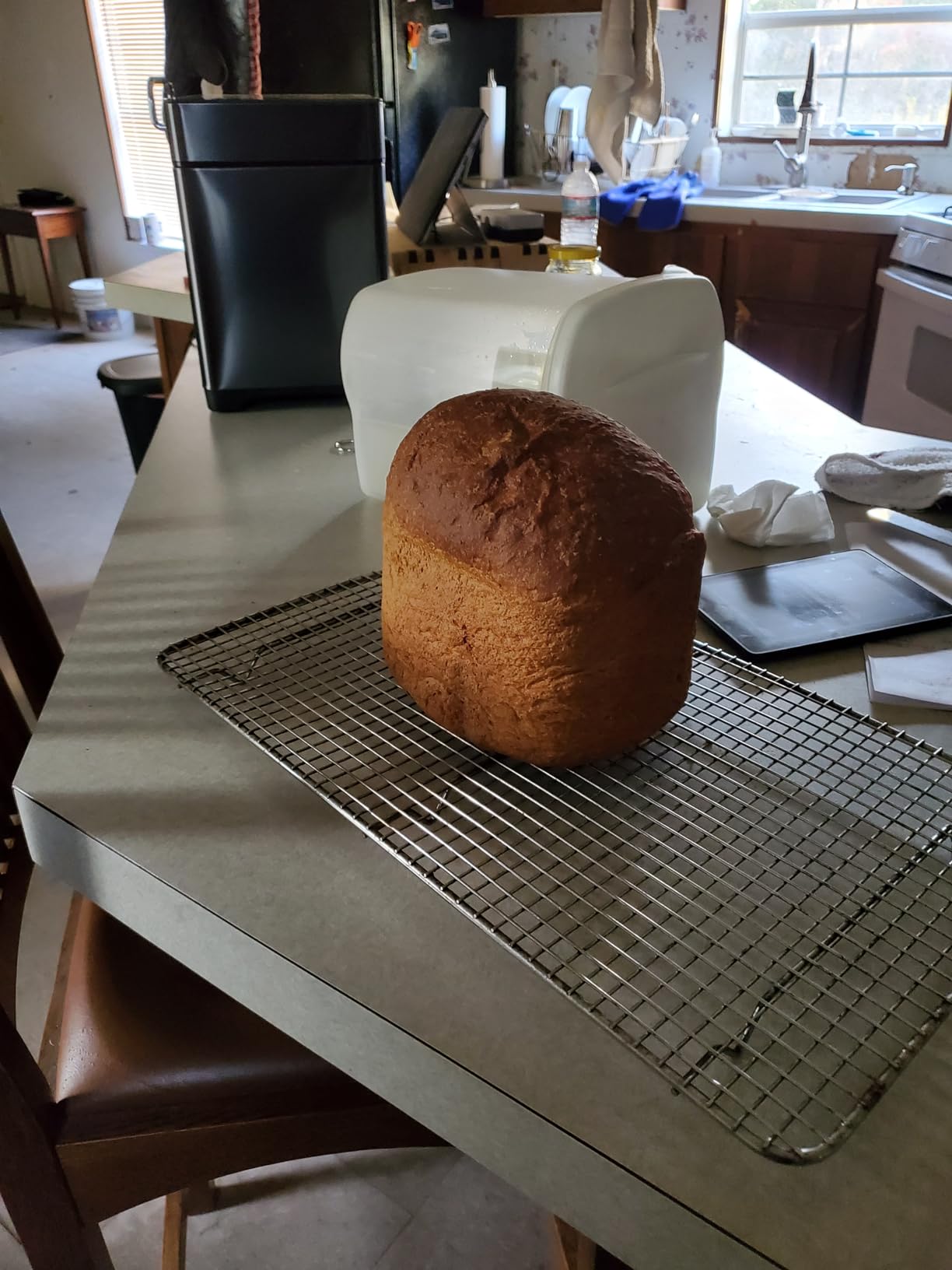
Two things to know up front. The blade is thin and flexible by design, which is exactly what produces those thin slices but also means it can flex visibly on a very hard crust. And it is single-bevel, which some listings describe as dual-bevel when it is not.
The handle carries a polymer-based sealant over the laminated wood, which is the right call for a tool that meets moisture every time it is used. There is no full tang, so the tang stops at the front of the handle rather than running its length.
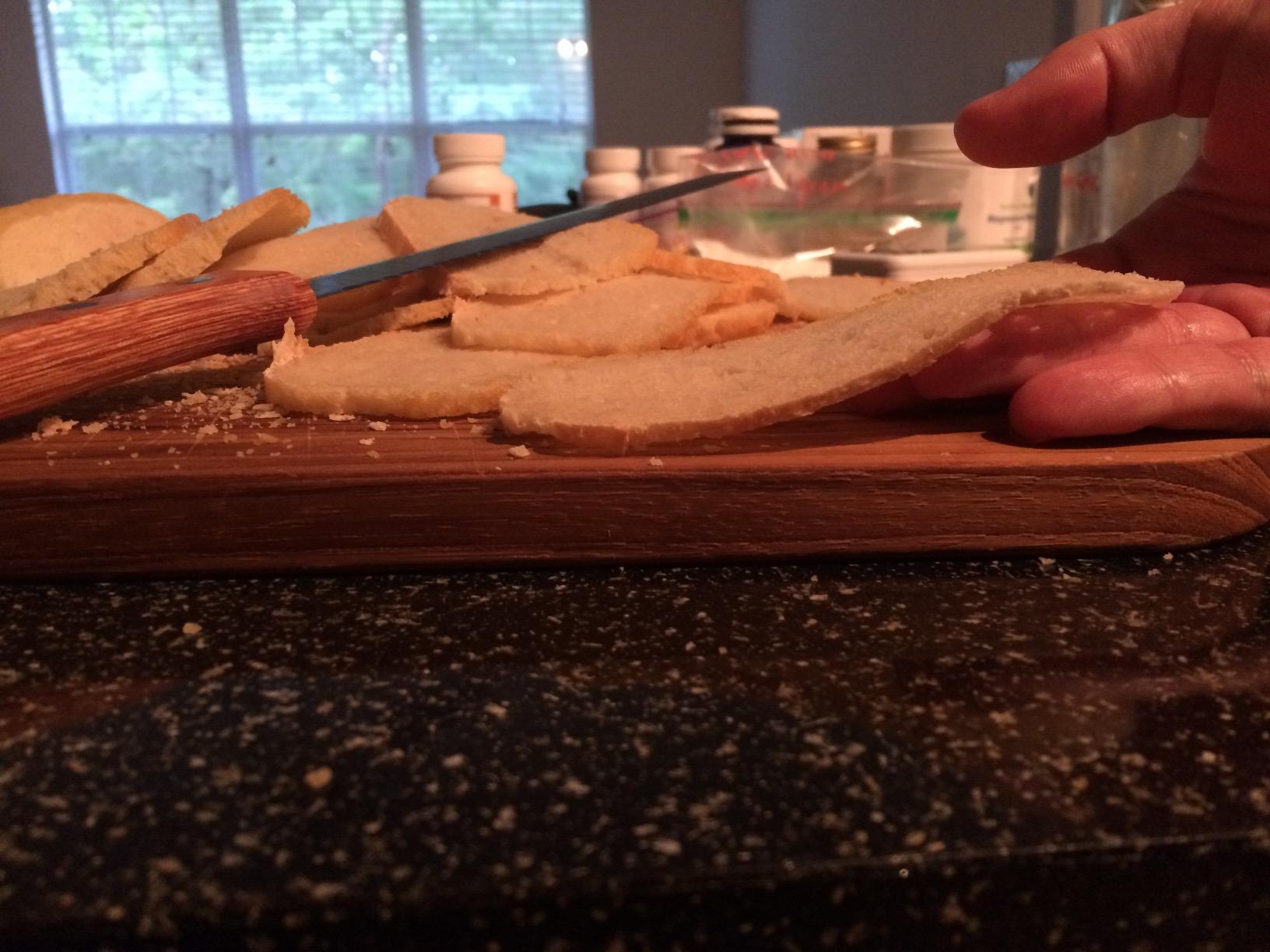
When thinness of slice actually matters
Thin slices are not just for looks. A thinner cut means more surface area exposed to butter or oil, and it is the only way to get an even plate from a wide batard cut crosswise. If you toast bread, thinner slices brown evenly instead of burning at the rim.
Crusty artisan loaves are also the case where a thin blade wins. A dense crumb gives the serrations something to ride on, so a thinner blade with shallower scallops tracks through without snagging the way a rigid blade can.
Where the Tojiro is the wrong tool
Flex is the honest limitation here. On rock-hard oven-spring crust, reviewers report the blade visibly giving under pressure, and if you have ever had a knife skid sideways on the top of a loaf, a rigid blade is safer for you.
The absence of a full tang means less leverage on the heel and no structural backup under heavy pressure. The laminated wood handle is also the part most likely to need drying after washing, since wood and standing moisture do not get along.
4. Victorinox Fibrox 10.25 Inch – Best Value Swiss Workhorse
Victorinox Fibrox 10.25-Inch Bread Knife with Serrated Edge and Black Handle
- Made in Switzerland with a lifetime warranty
- Bolsterless edge means the whole blade is usable
- Fibrox handle stays grippy when wet or floured
- Light and well balanced at 4.8 oz
- Stamped rather than forged construction
- Utilitarian handle with no decorative finish
The Victorinox Fibrox is the knife to buy when you want one tool that never needs replacing and never needs a second thought. At 10.25 inches it is the longest blade in this roundup, made in Switzerland, and backed by a lifetime warranty against manufacturer defects.
Two construction details carry most of the value. The blade is ice-tempered high-carbon stainless, which is the heat treatment that lets serrations resist dulling, and it is bolsterless so the full length of the blade works rather than stopping dead at a metal collar.
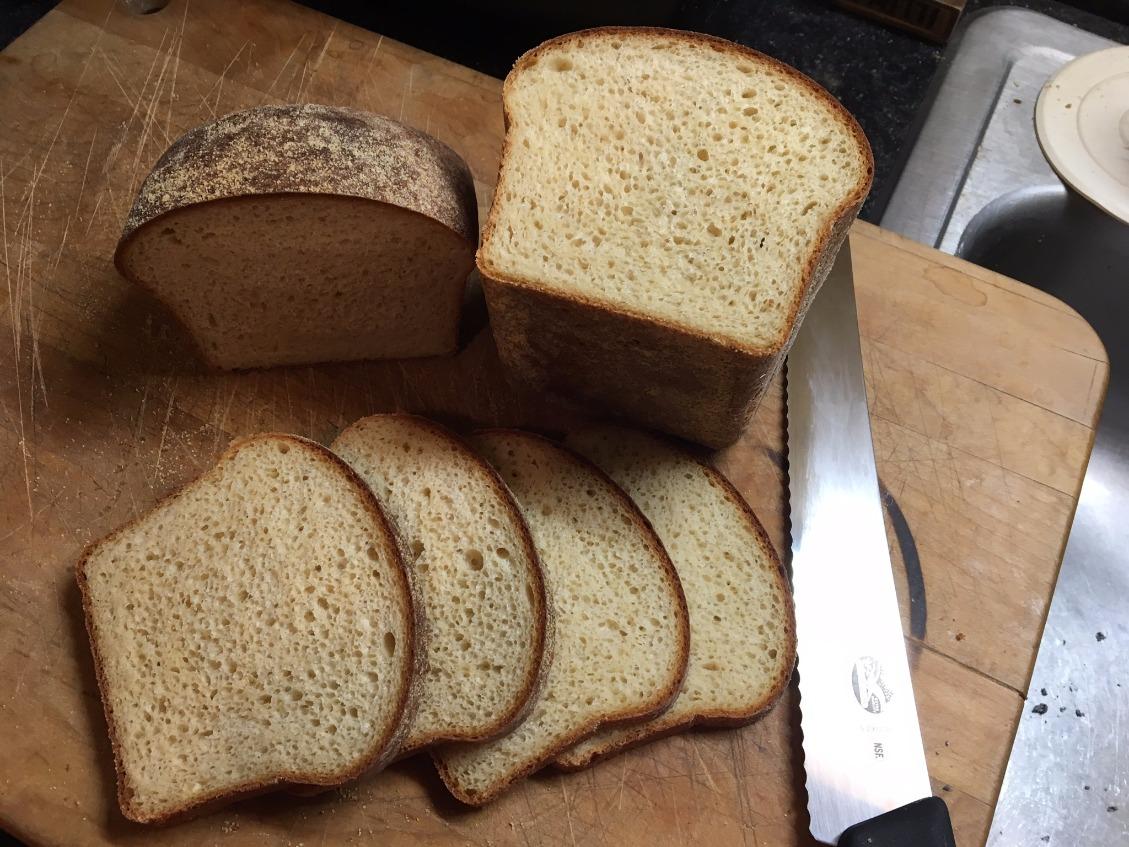
At 4.8 ounces it is among the lightest options in this roundup, and the conical ground gives a wider break point than a straight grind, which helps when the blade meets a hard crust at an angle. There is a little extra steel ahead of the heel, and you will use it.
The Fibrox handle is textured thermoplastic rubber, NSF approved, and reviewers consistently call out how well it holds when hands are wet or floured. For a baker working through three loaves in a row, that grip is worth more than any decorative finish.
Why bolsterless matters for a bread knife
A bolster is the thick collar of metal where a chef’s knife handle meets the blade. On most knives it is there to reinforce the joint, and it also means the last inch of cutting edge is dead weight that cannot slice.
Removing it gives you roughly an extra inch of usable edge right at the heel, which is the section you use for the tough cross-cut at the end of a loaf. On a long 10.25 inch blade that adds up quickly across a week of baking.
Where the Fibrox is not the answer
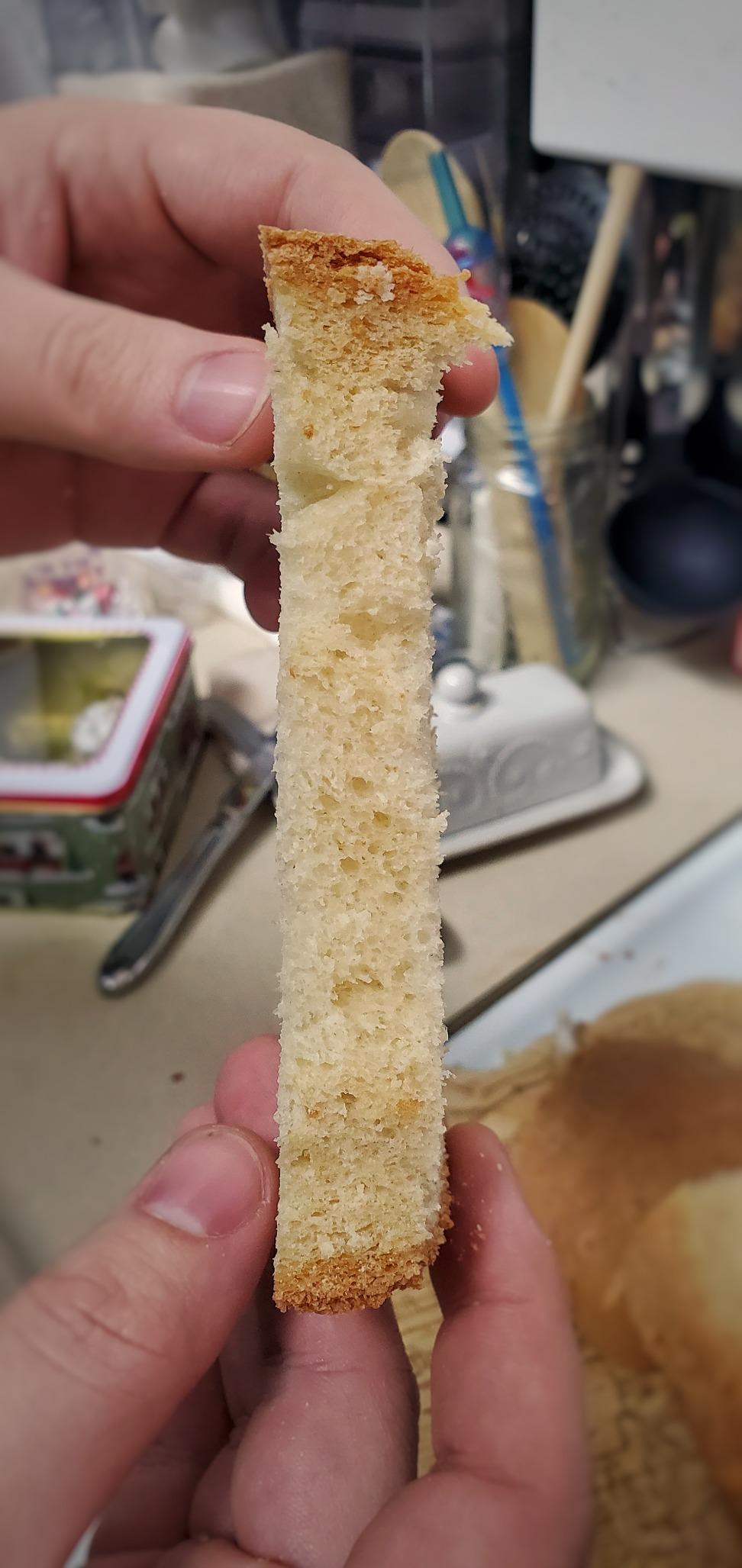
Stamped construction is the trade-off, and some reviewers mention it directly as a prestige issue rather than a performance one. If you want a knife that can be sharpened aggressively for decades, a forged blade is the better long-term bet.
The handle is also deliberately plain. It is a black textured grip with no bolster flare and no metal detailing, so if you want something that looks good on an open rack, this is not it. The finish, however, is a lifetime warranty, which few rivals at this level offer.
5. Piklohas Resharpenable 10 Inch – Best Offset Handle with a Honeable Edge
- Patented edge can be honed with a standard rod
- Offset handle keeps knuckles clear of the board
- Double-sided hollow edge reduces sticking
- Arrives in a gift box with a manual
- Heaviest option here at 15.84 oz
- Resharpening takes practice to learn
- ABS handle feels less refined than wood
The Piklohas is the most interesting design in this roundup, because it attacks the complaint almost nobody else addresses. A serrated blade that gets dull is usually a write-off, and this one is built with a patented resharpenable edge that responds to a standard honing rod.
The offset handle is the second headline feature. Your knuckles sit below the cutting line rather than beside it, so on a tall boule you can saw all the way down to the board without dragging the back of your hand through the crust.
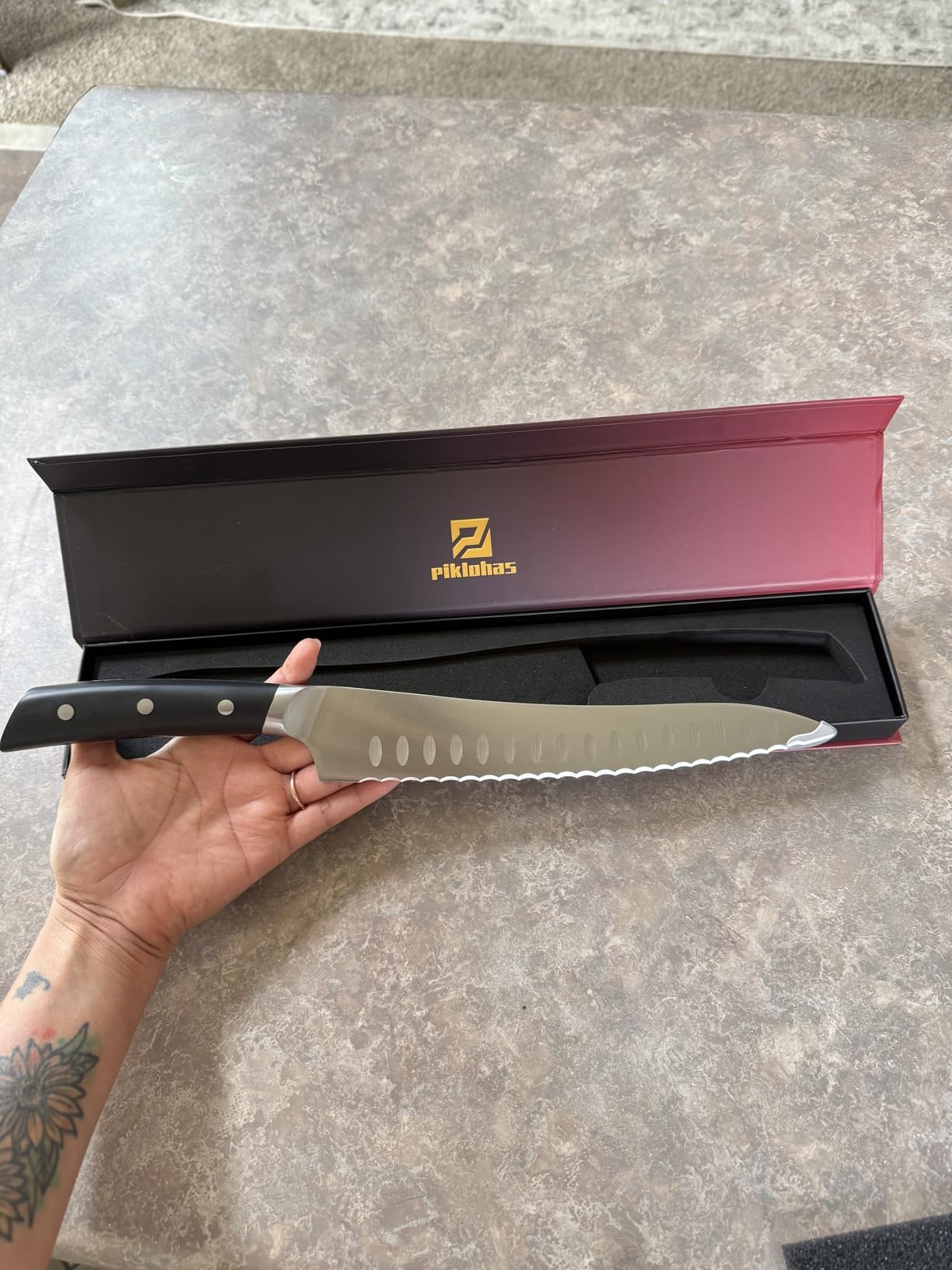
The double-sided hollow edge is the quiet advantage. Grooves on both faces mean soft crumb releases instead of packing into the scallops, and that is what stops a serrated knife from starting to drag halfway through a slice.
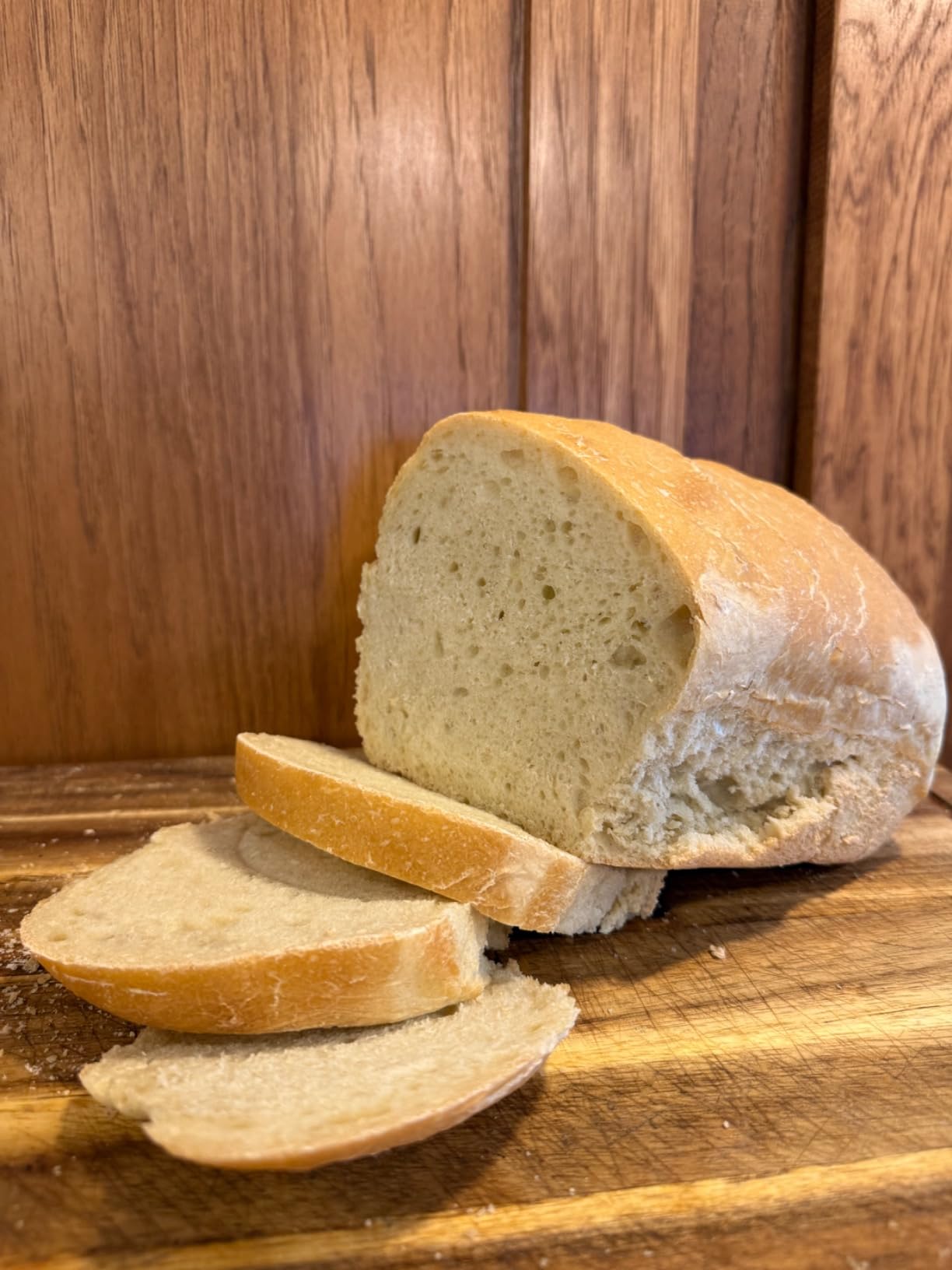
Reviews also single out the offset ergonomics and the clean slicing performance, and first-owner reports on baking forums describe it cutting straight through the crispy bottom crust that most knives struggle with. That is the exact failure mode this category is judged on.
What a resharpenable serration actually means
Most serrated knives use deep scallops that a diamond rod simply cannot follow, so dull teeth stay dull. A resharpenable edge uses shallower teeth spaced so a rod can contact each one, which means you can restore cutting performance at home for a few dollars instead of paying a sharpener.
That changes the ownership maths. A cheap serrated knife is a replace-when-dull purchase, while a honeable one is an asset. If you bake weekly and the bluntness of month four bothers you, this is the pick that addresses it.
Where the weight works against it
At 15.84 ounces this is by far the heaviest blade here, and that mass sits in the handle behind the blade. For most bakers that reads as solid and controlled, but reviewers with smaller hands note that the balance takes some adjusting.
The resharpening itself has a learning curve, and nobody describes the process as automatic. The ABS handle is also the least refined material in the lineup, and the black coating is the kind of finish that shows wear once the knife has been through a few years of daily use.
6. HENCKELS Statement 8 Inch – Best for Compact Loaves and Small Kitchens
HENCKELS Statement 8 Inch Bread Knife, Razor-Sharp, German Engineered
- Arrives razor sharp and stays sharp in normal use
- Dishwasher safe which only two picks here offer
- Light at 6.4 oz and easy to maneuver
- Lifetime warranty against defects
- 8 inch blade struggles with large boules and miche
- Stamped construction with a thin feel
- Stainless handle can be slick when wet
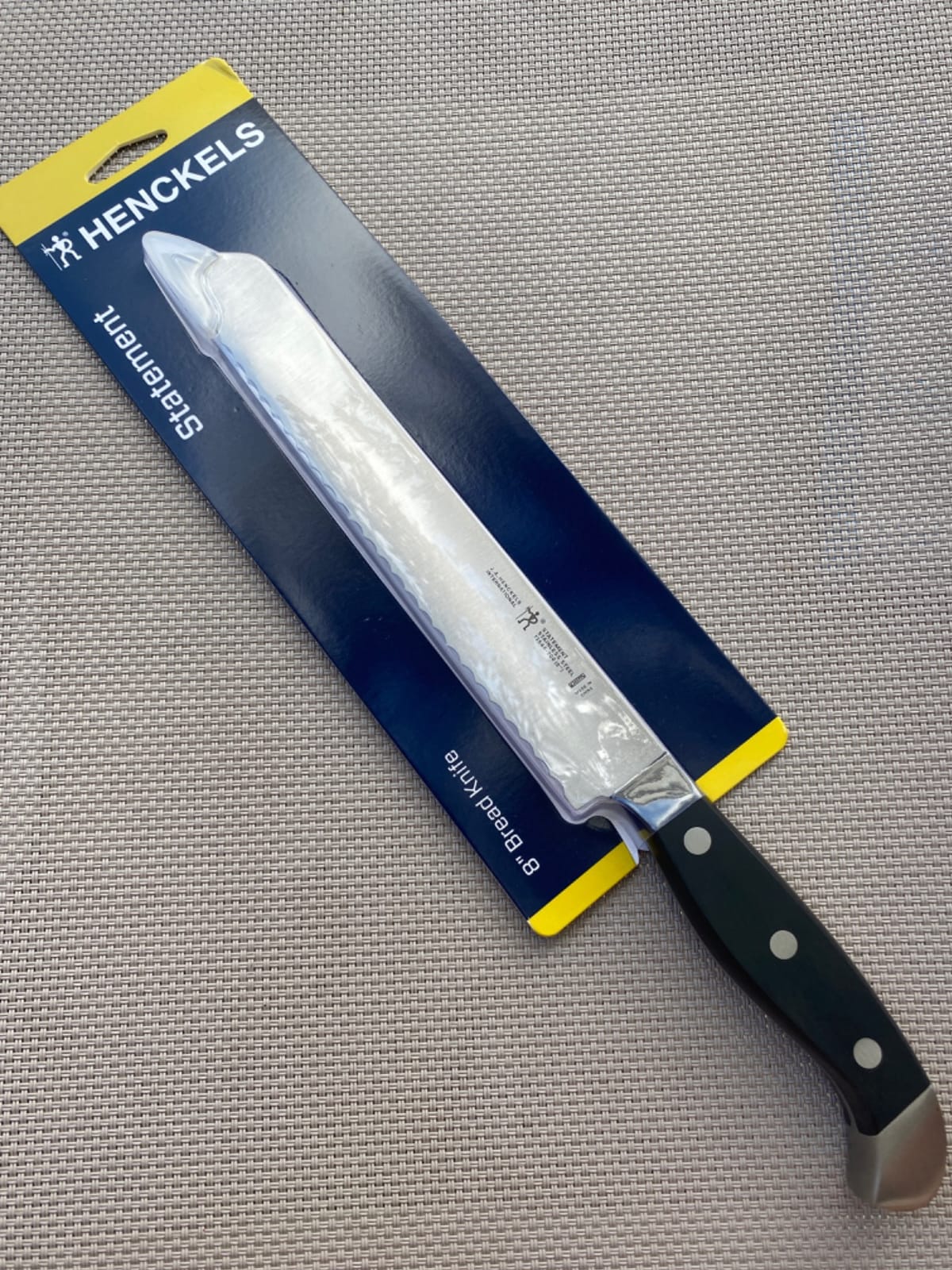
The HENCKELS Statement is sized for a soft crumb without the blade being oversized for the job. An 8 inch blade is right for pan loaves, sandwich bread, baguettes cut crosswise, and anything you slice into even sandwich portions.
It is also one of only two knives in this roundup rated dishwasher safe, which is a genuine convenience difference for anyone who does not want to hand-wash a knife every time. Hand washing is still recommended, but a cycle will not ruin this blade.
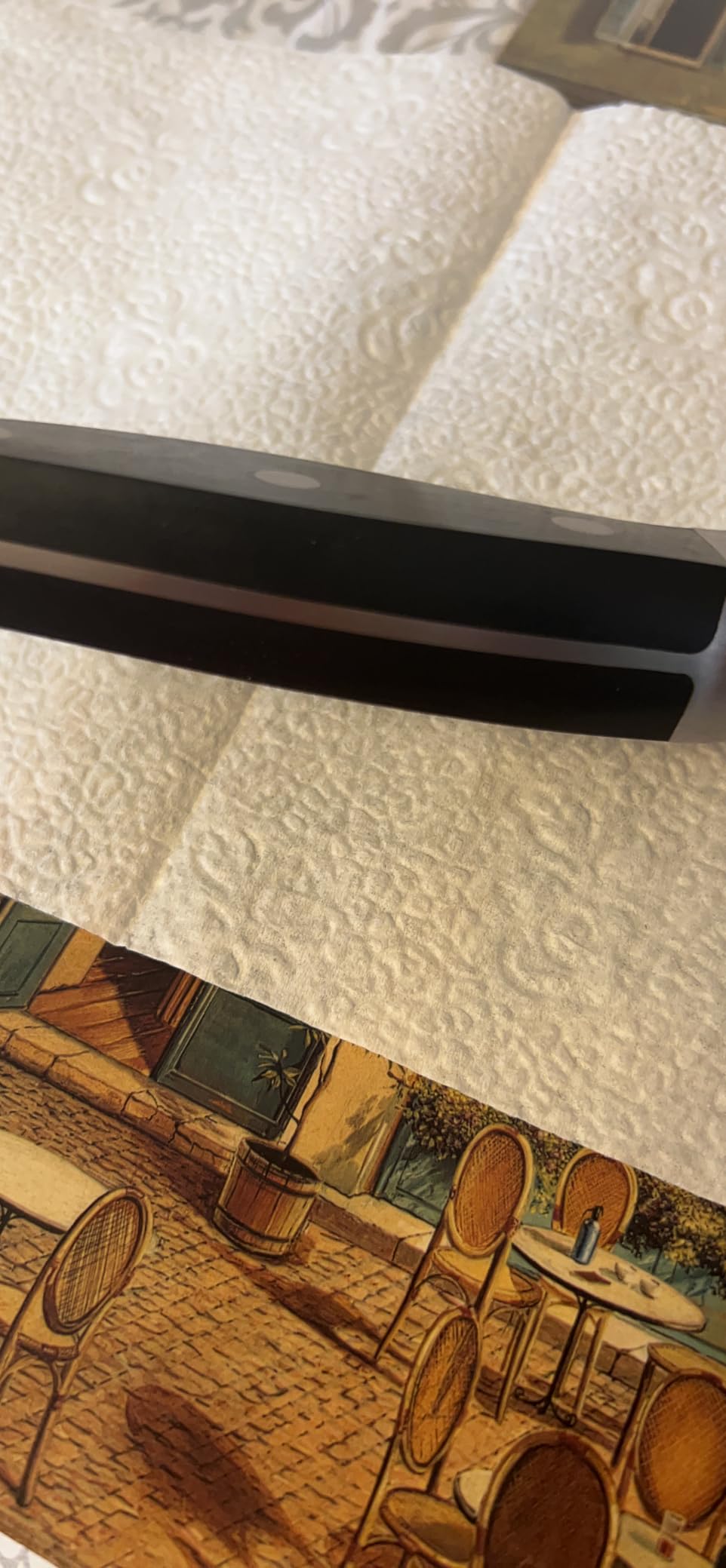
The blade is precision-stamped from a single piece with a satin finish, professionally honed, and reviewers describe it as razor sharp out of the box. At 6.4 ounces it is light enough for small hands and quick work, and the stainless handle wipes clean without absorbing odors.
The catch is length, and reviewers are direct about it. If you bake a full-size miche or a wide boule, an 8 inch blade forces you to change angle mid-slice, and that is where crumb gets torn.
When 8 inches is the right number
Blade length maps to loaf shape more directly than any other spec. Pan loaves, sandwich loaves, and a batard cut crosswise all fall inside an 8 inch span, so you get one clean stroke per slice with no re-angling and no dragging the tip through the crumb.
Compact kitchens also benefit. This knife lives comfortably in a standard drawer, where a 15 inch total package is a real storage problem, and the shorter overall length is easier to control on a small board.
Where the short blade bites back
Boules and miche are the failure case. A wide round loaf needs a long stroke to cross the center, and with 8 inches you end up sawing diagonally or stopping halfway, which is precisely the crushing motion people complain about.
The stainless steel handle is also the part reviewers flag, since it can be slippery when wet and has no contour for grip. Construction is stamped, so there is less structural rigidity under hard pressure than a forged blade provides.
7. Shun Classic 9 Inch – Best Japanese Steel Core
- VG-MAX core with 68 layer Damascus cladding
- 16 degree edge stays razor sharp
- Stiff blade with almost no flex
- Pakkawood D-shaped handle suits either hand
- Top of the price range for this roundup
- No protective sleeve included
- Pakkawood handle needs hand washing
The Shun Classic is the steel answer. Its core is VG-MAX, a Japanese high-carbon stainless hardened to a very fine edge, clad in 68 layers of Damascus and finished at a 16 degree angle per side, which is where the paper-thin first cut comes from.
Unlike the Tojiro, the Shun blade is stiff. Reviewers call out the minimal flex as the reason it powers through dense rye and thick-crust sourdough without wandering, and that rigidity is what makes the precision of the edge actually usable.
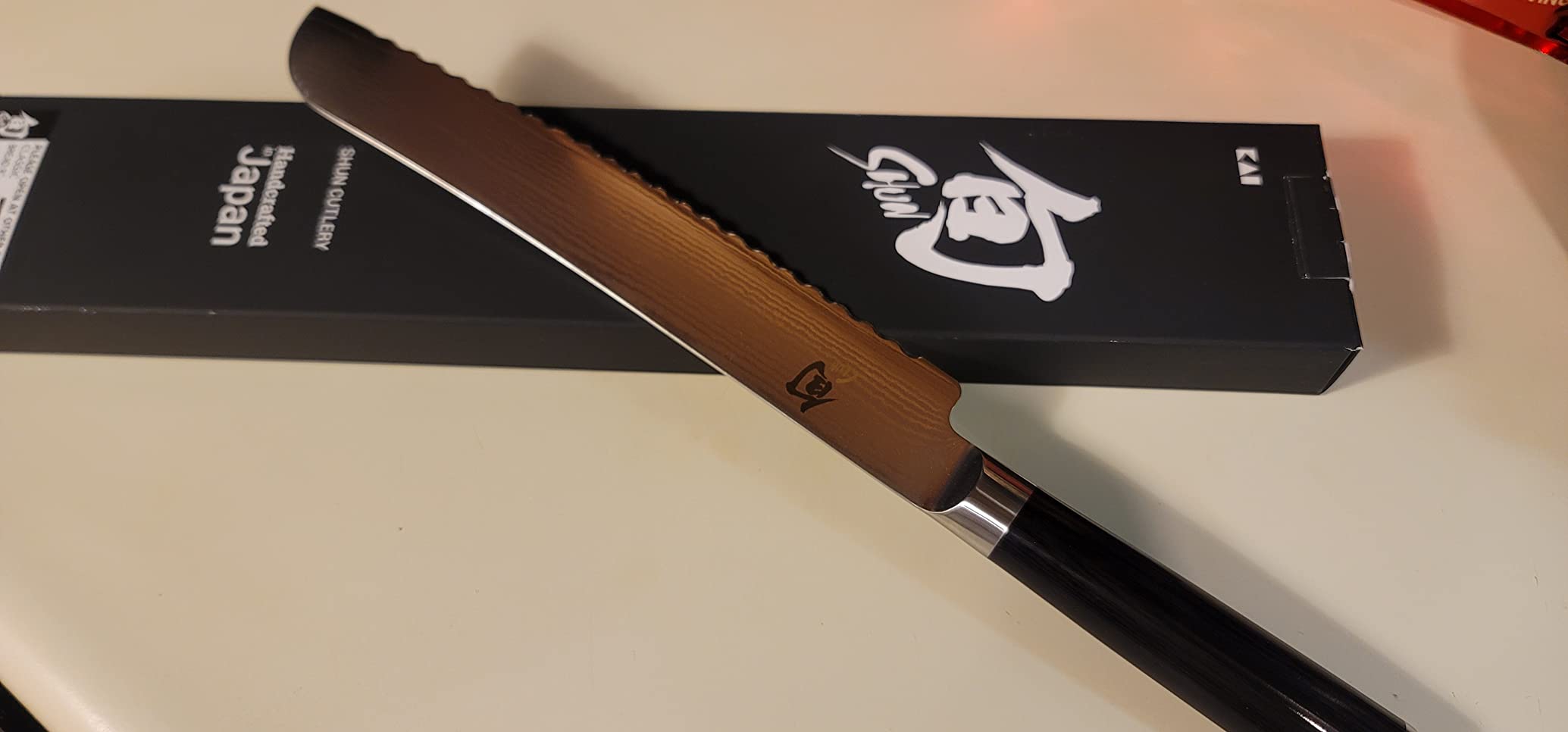
The D-shaped pakkawood handle is the underrated part. It is symmetrical enough to work for either hand, and pakkawood is a resin-laminated hardwood that will not crack or swell the way untreated wood can after a year of wet work.
Wide teeth are specified for both tender and crusty bread, so it is not a specialist blade that punishes you on a soft loaf. A free honing service is available, plus a lifetime warranty, which softens the fact that this sits at the top of the price range here.
What VG-MAX and a 16 degree edge do for you
Edge angle is the number most buyers skip and the one that decides how the blade behaves. A 16 degree bevel per side is a fine, working angle, so the first stroke enters a hard crust with almost no resistance and slices soft crumb without any drag.
VG-MAX is hardened harder than most stainless bread knife steel, which means the tooth tips resist rolling. On a wavy or scalloped edge, tooth roll is the most common cause of a knife that suddenly feels dull, so hardness is what preserves the bite over years.
Where the Shun is not worth it for you
Cost is the first honest answer. This sits at the priciest end of the roundup, and if you bake a couple of loaves a month the money is better spent elsewhere. Overpricing is a recurring theme in baking forums, and the community consensus is generally that a mid-tier blade cuts bread perfectly well.
The blade is very thin, so some reviewers have concerns about tip durability if you use the front third for something other than slicing. There is no sleeve included, and the pakkawood handle should stay out of the dishwasher.
8. Global G-9 8.75 Inch – Best for Left-Handed Cooks
Global G-9-8-3/4 inch, 22cm Bread Knife, 8.75″, Stainless Steel
- Symmetrical one-piece design works for either hand
- Dimpled handle grips well across hand sizes
- Light and precisely balanced at 166 g
- Holds its edge over a long working life
- All-metal handle feels cold to the touch
- Serrated Global edges need a specific sharpening approach
- Premium cost for stamped construction
Most cooks are handed a right-handed knife and told to cope. The Global G-9 is the pick that actually fits, because the blade and handle are one continuous piece of stainless steel with no offset to trap your knuckles as you saw downward.
That same one-piece construction removes the failure point that eventually ruins handled knives. There is no joint to loosen and no handle material to crack, and reviewers describe the balance as the standout feature, light at 166 g despite the all-metal build.
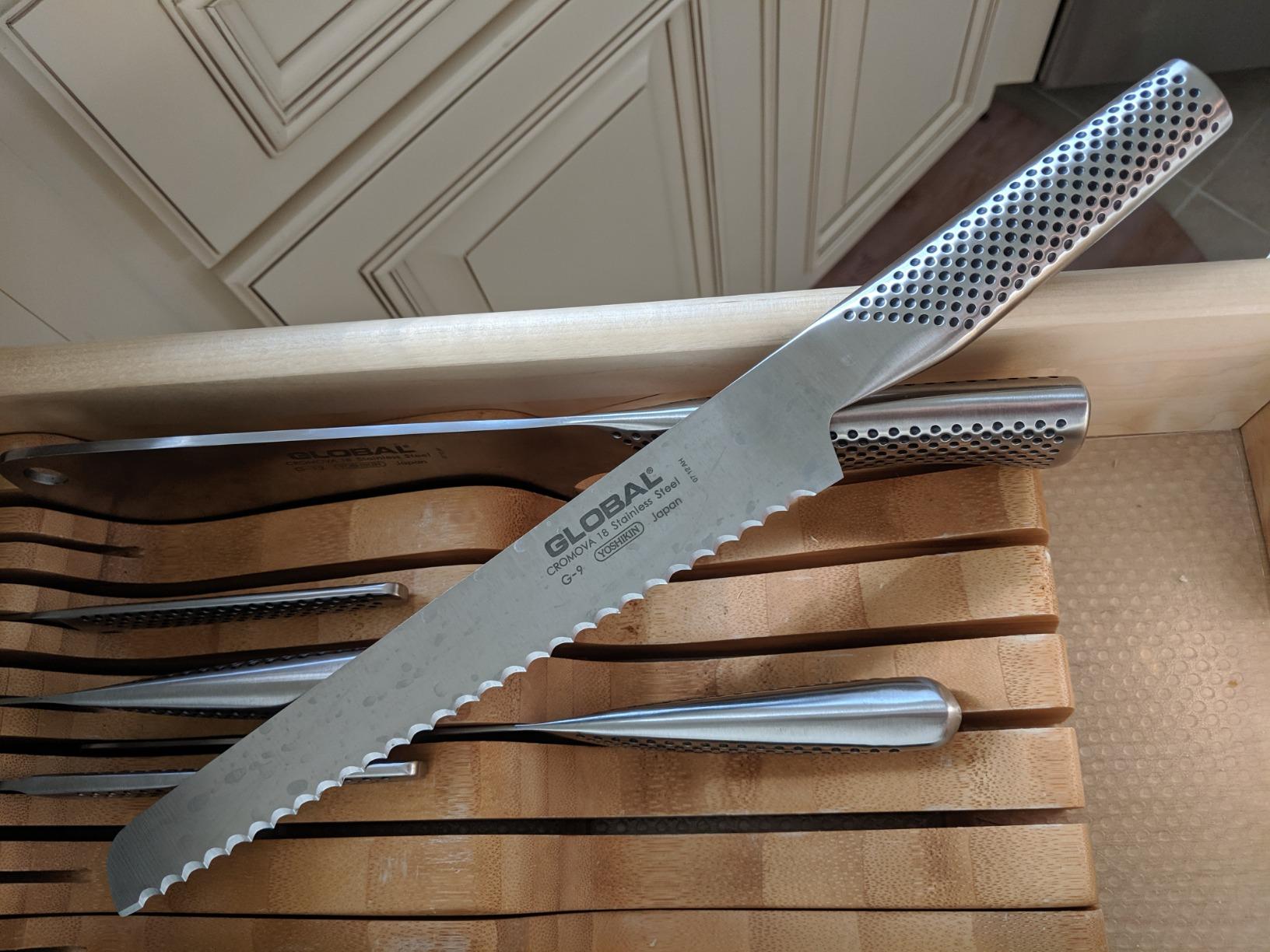
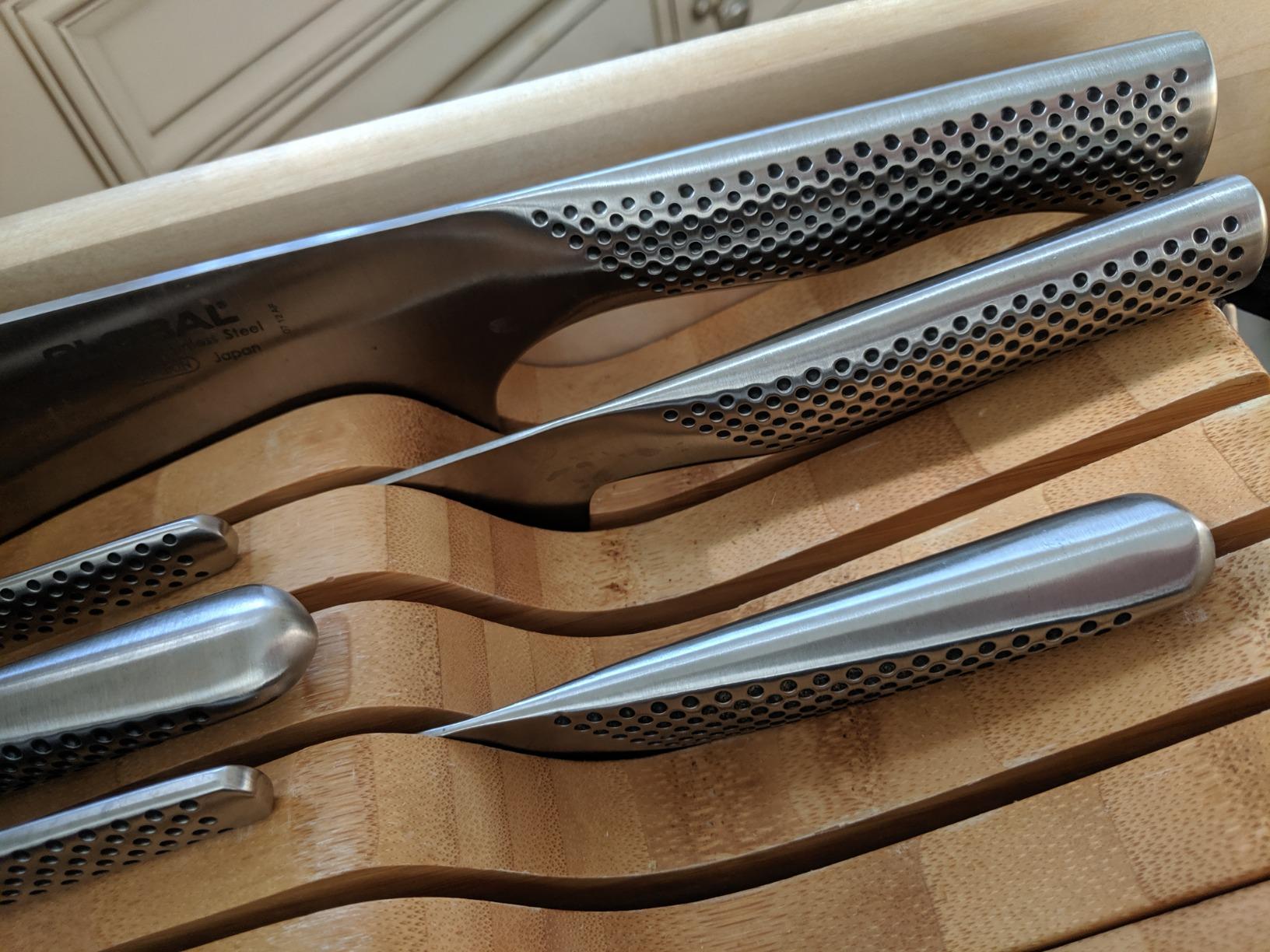
The dimpled handle is Global’s signature and it works across hand sizes, which is a real advantage if you have small hands or grip a knife differently than a knife company expects. The molybdenum and vanadium stainless is the steel that lets the edge hold sharpness over years.
Reviewers also single it out for bagels, where the scalloped teeth catch the dense crumb and give you a clean cut instead of a compressed one. Blade length is listed at 8.5 inches for an overall 8-3/4 inch package, so it sits between the compact and mid-size options.
What left-handed cooks need from a bread knife
The core problem is knuckle clearance. Most bread knives have an offset or angled handle designed so the hand sits below the cutting line on a downward sawing stroke, and that geometry is nearly always built for a right hand only.
A fully symmetrical design sidesteps the issue. With no offset, the sawing stroke is the same in any direction, and a dimpled all-metal surface gives you a positive grip whether the blade is moving toward you or away. A lifetime guarantee also covers defects and breakage.
Where the Global design is a compromise
All-metal construction feels cold, and that is not a small complaint for a knife you hold for twenty minutes at a time. There is also no traditional handle contour, so people who expect a shaped grip may find the dimples take some time to learn.
Sharpening is the practical catch. Serrated Global edges require a specific approach, and if you have never sharpened a serrated knife it is a steeper learning curve than the resharpenable design on our offset-handle pick.
9. ZWILLING Twin Signature 8 Inch – Best Lightweight German Knife
ZWILLING Twin Signature Bread knife, German Bread Knife, Made in Germany
- FRIODUR steel ice hardened to 57 Rockwell
- Hand sharpened with a laser-controlled edge
- Very light at 64 g listed weight
- Traditional three-rivet handle looks the part
- 8 inch blade is short for wide boules
- Stamped construction
- Stainless handle can be slick when wet
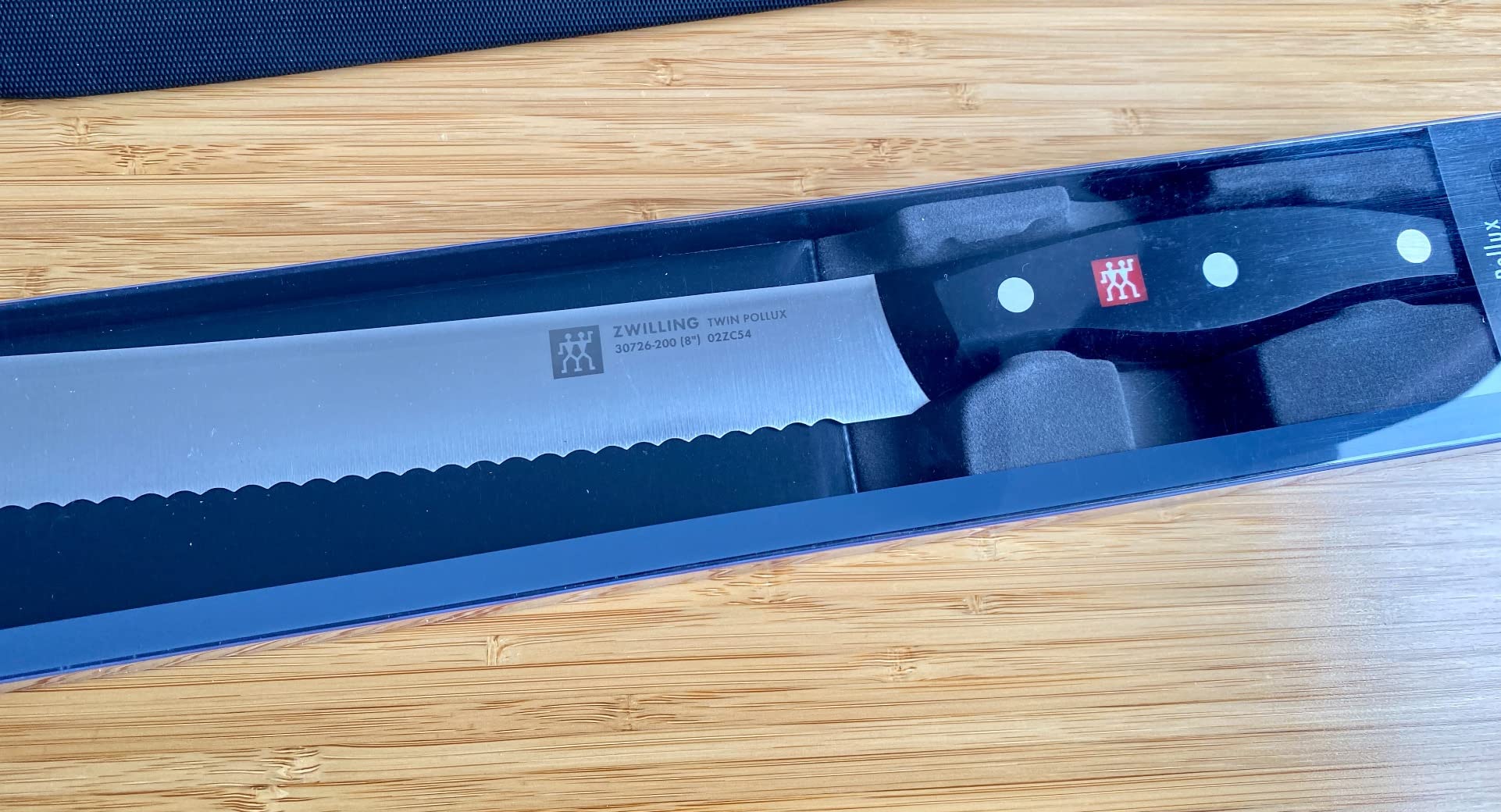
At 64 g the ZWILLING Twin Signature is the featherweight in this group, and lightness is exactly what you want when you are slicing a tall loaf straight down the middle with a downward stroke that loads the whole blade.
The steel is FRIODUR, Zwilling’s own formula, ice hardened to 57 Rockwell. That is a meaningfully harder treatment than most bread knife steel, and it is why the edge holds through dense crust rather than rolling after a few weeks.
The edge is hand sharpened and honed by skilled artisans and finished with a laser-controlled process at 15 degrees per side, which produces a cut that is noticeably clean on first contact. Made in Germany, and the three-rivet handle is the only fully traditional styling here.
Blade length is 8 inches in a 13.39 inch overall package, so it stores and handles like a compact knife. That is the same tradeoff as the HENCKELS, and the same fix applies: this is a pan loaf and sandwich loaf tool, not a miche tool.
When the lightest knife wins
Weight matters more than most buyers expect. A sawing stroke applies downward force repeatedly, and on a tall batard a heavier blade means more fatigue by the middle of the loaf. At 64 g you can cut a whole loaf one-handed without your wrist complaining.
Lighter knives also suit smaller hands and anyone with limited grip strength, which is the group electric bread knives are usually recommended to. If you already have a heavier blade, this is a genuine second-knife case rather than an upgrade.
Where the Twin Signature falls short
Eight inches is the constraint, and reviewers call it out as the trade-off at this level. Wide artisan loaves will still force an angle change, and that is where compression creeps back in.
Construction is stamped, so it will not have the rigidity of the imarku or the Wusthof under heavy pressure. The stainless handle is smooth and can be slippery when wet, and it comes with no bolster to protect the transition if you are not careful setting the knife down.
10. Wusthof Classic Ikon 9 Inch Double Serrated – Best Double Serration
- Double serrations cut both crust and soft crumb efficiently
- Forged from a single block of high carbon steel
- Double bolster gives balanced handling
- Lifetime warranty from a Solingen house
- Premium price among these ten picks
- Double serration is harder to sharpen
- Heavier than stamped alternatives
The Wusthof Classic Ikon is the only double-serrated knife here, and that geometry is the whole argument. Serrations on both faces of the blade mean the cutting edge works whether the teeth face up or down, so a slice that starts on a downward crust and exits through soft crumb keeps cutting cleanly the whole way.
Construction is forged from a single block of high-carbon stainless steel tempered to 58 HRC, which is a harder treatment than most rivals. The PEtec edge technology is specified as 20 percent sharper with twice the edge retention of a standard edge.
The double-bolster handle is the reason this knife feels solid in a way stamped competitors do not. Two metal collars lock the handle to the blade at both ends, and the POM handle is durable and hygienic at 7.04 ounces.
Wusthof is a family-owned Solingen house with seven generations and a limited lifetime warranty, which is a real long-term answer to the durability question. Reviewers treat it as an investment piece for serious bakers rather than a casual purchase.
What double serrations actually fix
On a single-serrated blade, the down-stroke bites and the return stroke drags. That is normal and it works, but on a thick loaf where the blade spends several strokes in soft open crumb, the return stroke is dead weight and the slice can tear on the way out.
A double-serrated edge puts teeth on the opposite face so the return stroke also grips. The practical result reported by reviewers is an efficient cut on every kind of bread, from a soft white pan loaf to a hard-crusted sourdough.
Where the Wusthof is not the right call
Sharpening is harder here than on the Piklohas. A double serration has more tooth edges to restore, and if you have no experience with a diamond sharpener on serrated steel, that is a real barrier to keeping it performing.
Cost is the other half. It sits among the priciest knives we tested, and at 7.04 ounces it is heavier than the stamped options without being as light as the ZWILLING. Most bakers will get excellent results from a mid-tier blade, and the honest verdict is that this one rewards a long baking life.
How to Choose a Bread Knife for Crusty Loaves
The gap between a good bread knife and a bad one is smaller than the price spread suggests, so the buying decision is mostly about matching the blade to the bread you actually bake. Six criteria cover almost everything that matters.
Serrated or straight edge for a hard crust
A bread knife is a long-bladed kitchen knife with a serrated, saw-toothed edge. The teeth bite into a loaf’s crust while the scalloped spaces between them slice the soft crumb, so the loaf separates cleanly instead of being crushed. Yes, a serrated knife and a bread knife are the same category of tool, with the bread knife being the long-bladed version built for loaves.
Serrations win on crust because they convert downward force into forward motion. A straight-edge chef’s knife on a hard crust either skids on top or lands and compresses the crumb underneath, and that is the two-part failure that makes people think they need a sharper knife when they need a different one.
You can use a straight edge on very soft bread without problems. The moment the crust is properly baked, the serration is the correct tool, and a serrated knife also handles tomatoes, melon, cake and pastry without any change of equipment.
Serration types decoded
There is a genuine disagreement about serration shape, and it comes down to what you cut. Scalloped or wavy teeth are shallow and rounded, with deep recesses that clear crumb as they pass, which is the pattern on the Mercer and the Global. They cut tender bread cleanly and resist clogging.
Pointed serrations have sharper tips spaced further apart, and they bite harder into a very hard crust. That extra bite is why some bakers prefer them on dense sourdough, at the cost of tearing softer crumb if you use the same knife for everything. Double serrations put teeth on both faces so every stroke grips in either direction, which is why the Wusthof handles a mixed-density loaf without changing technique.
None of these is wrong. The consensus that matters is that serrations close together and very fine are the ones that clog, because soft crumb packs into the gaps and the sawing motion stops. Fewer and deeper teeth keep moving through a fresh loaf.
Blade length matched to loaf shape
Blade length is the single most practical spec, and the rule of thumb is simple: the blade should be able to cross your largest loaf in a single stroke. Think of a handsaw, where a longer blade with fewer teeth per inch still moves faster through a big log than a short one with fine teeth.
For a pan loaf or a sandwich loaf, 8 inches is plenty. A batard cut crosswise needs 9 to 10 inches. A round boule wants 10 inches or more so you can start at the center and work outward. A full miche, the large round loaf some bakers make, is the case that forces people to upgrade, and it is the most common reason a short blade feels useless.
If you buy one knife, measure the widest loaf you bake and go one inch longer. That single decision prevents more crushed slices than any handle or steel upgrade.
Offset, curved or straight handle
Handle shape is about where your knuckles end up. An offset handle drops your hand below the cutting line, so on a tall loaf you can saw all the way to the board without your knuckles dragging along the crust. It is the reason the Piklohas and offset models feel so good on a boule.
A straight handle with a curved blade is the more traditional European shape. It has less knuckle clearance on a deep cut but feels more balanced in a pinch grip when you are making small cuts or trimming a loaf end. A straight handle and straight blade is the least clearance of the three.
Whichever you pick, weight matters as much as shape. A blade under 5 ounces is easy on the wrist over a long session, and anything over 12 ounces starts to need a two-handed stroke on a tall loaf.
Left-handed and bow grip options
Left-handed cooks have the thinnest selection in this category, and most of what is sold is designed for a right hand. The practical workaround is a knife with a symmetrical, one-piece handle where there is no offset to trap your hand, which is exactly why the Global fits left-handers well.
For a bow grip, where the knife is held like a saw with both hands on the handle, any of the longer blades here work since your second hand supports the spine. For a pinch grip on the handle, a thinner handle with visible bolster transitions is easier to control, and the Tojiro and Shun both suit it.
Steel, tang and construction
Steel determines how long the edge lasts, not how sharp it starts. High-carbon stainless hardened to 55 HRC or above holds its tooth tips, and ice-hardened steel such as Victorinox FRIODUR or Wusthof PEtec goes further. Forging produces a more rigid blade with less flex, which is the difference between sawing and mashing on a hard crust.
A full tang means the steel runs the length of the handle, giving you control and durability. A partial tang stops at the front of the handle. Bolsterless designs give you extra usable edge at the heel, which on a bread knife is often where the thickest cut happens.
One more thing before you buy: check the warranty. A limited lifetime warranty from a Solingen house means the blade is replaceable in a way a disposable serrated knife is not, and several picks here carry one. If your kitchen kit is still thin on fixed-blade tools, our survival knife roundup covers the outdoor end of the knife drawer.
Sharpening, Washing and Storing a Serrated Blade
You can sharpen a serrated bread knife at home, but the method depends entirely on the tooth shape. Pointed serrations can be run along a ceramic rod or a diamond sharpener with light pressure, working tooth by tooth. Scalloped or wavy serrations will not register on a diamond rod at all, which is why those knives are usually treated as replace-when-dull.
The resharpenable design on the Piklohas exists specifically to solve that, since its tooth spacing is shallow enough to be honed with a normal rod. Shun also offers a free honing service, which is worth checking on any Japanese knife you buy before you need it.
Hand wash in warm water with mild soap and dry immediately. The dishwasher is a bad idea for a bread knife, mostly because of the handle: pakkawood, ABS, and laminated wood all degrade with heat and detergent, and the serrations can be knocked out of alignment against other cutlery.
For storage, keep it out of the drawer pile. A knife block, a magnetic strip, or a sheath on the wall keeps the edge from contacting anything harder than itself. Wipe the blade dry after each use, and expect a serrated knife to stay sharp for years when the crust is dry and crumb is brushed off. If you also maintain fixed blades, our bushcraft knife reviews cover stropping and field sharpening routines that translate well to a serrated edge.
Frequently Asked Questions
What is the best bread knife to buy?
The Mercer Culinary M23210 is the best bread knife for most people. Its 10 inch wavy serrated edge spans a full boule in one stroke, the blade is one piece of high carbon Japanese steel, and it weighs 4.8 ounces. If you bake very large miche loaves regularly, move up in blade length; if you want an edge you can restore at home, look at a resharpenable serration.
Are serrated knives the same as bread knives?
A bread knife is a long bladed kitchen knife with a serrated, saw toothed edge, and a serrated knife is the broader category. The teeth bite into a loaf’s crust while the scalloped spaces between them slice the soft crumb. So yes, a bread knife is a type of serrated knife, just built longer and with deeper teeth for loaves.
What type of knife is best for cutting bread crust?
A serrated bread knife, and among them a few wide scalloped teeth cut tender crumb cleanly while pointed teeth bite hardest into a very hard crust. Double serrations grip on the return stroke as well as the down stroke, which keeps a thick slice from tearing on the way out. Avoid very fine, closely spaced serrations because soft crumb packs into them and the cut drags.
Why does my bread knife crush the bread?
Three things cause it. A blade that is too short for the loaf forces you to change angle mid cut and push down instead of sawing. A fine serration pattern clogs with soft crumb and stops biting. A press down motion with no forward sawing loads the blade straight into the crumb. A 10 inch blade used with a gentle back and forth motion fixes most cases.
Can you sharpen a serrated bread knife at home?
It depends on the tooth shape. Pointed serrations can be run along a ceramic rod or diamond sharpener with light pressure. Deep scalloped or wavy serrations will not register on a diamond sharpener and are usually treated as replace when dull. A resharpenable edge, such as the patented design on the Piklohas, is built with shallower teeth so a standard honing rod works.
What is the best bread knife for left handed users?
A symmetrical one piece design is the safest choice, because most offset handles are built for a right hand and trap your knuckles during the sawing stroke. The Global G-9 is fully symmetrical with a dimpled all metal grip that works either way. For a bow grip, any of the longer blades here will feel stable with your second hand on the spine.
The Verdict on the Best Bread Knives for Crusty Loaves
After ten knives and a lot of crumb, the result is not as complicated as the price spread suggests. The Mercer Culinary M23210 wins because a 10 inch wavy edge, a rigid one piece blade and a 4.8 ounce weight solve the crust problem and the fatigue problem at the same time, and it works for almost every loaf shape a home baker produces.
Buy the imarku if you want forged rigidity, the Piklohas if you want an offset handle and an edge you can hone, the Shun or Wusthof if a long baking life justifies the spend, and the Global if you are left handed. Skip the 8 inch options if you bake wide boules.
Whatever you choose, cut with a sawing motion rather than pressing down, and match the blade to the loaf. If you are also upgrading the rest of the setup, our outdoor wood fired bread oven guide covers the other end of the bread chain.