
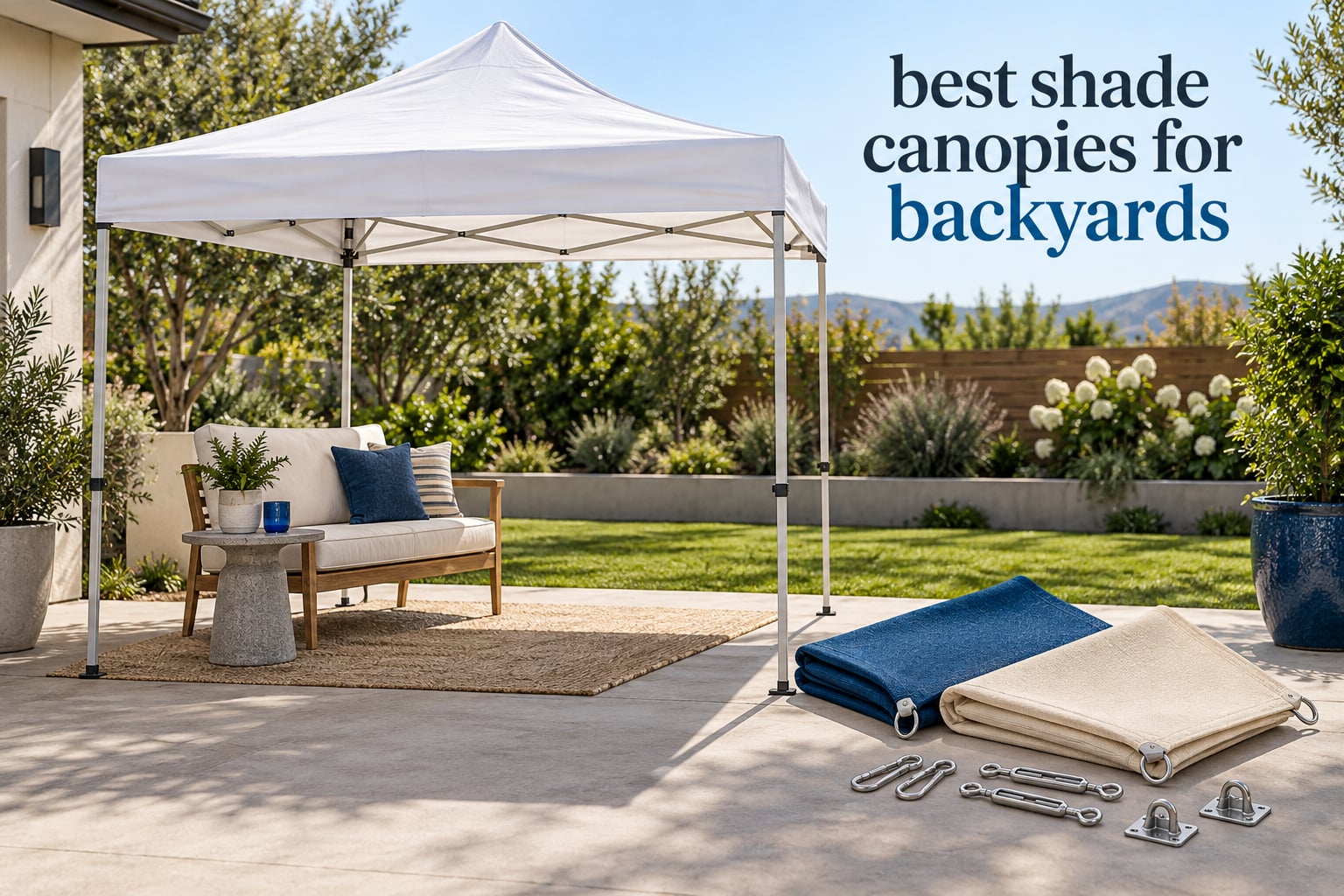
A backyard in summer is only as good as the shade over it. Direct afternoon sun turns a patio unusable at exactly the hours you want to use it, and it fades furniture, heats up the slab underfoot, and bakes anyone who sits there. A shade canopy fixes that in an afternoon, without a contractor, a permit, or a permanent structure.
We went through the specs on twelve of the most-reviewed backyard canopies currently on the market and compared them the way the real decision actually gets made: footprint against the space you are shading, packed weight against who has to carry it, fabric denier and UV rating against how much sun actually gets through, and frame wall thickness against what happens when the wind picks up.
If you want the short version, the broader shade structure guide covers pergolas and pavilions too. This one is strictly about canopies you can put up and take down.
Table of Contents
Top 3 Shade Canopies for Backyards in 2026
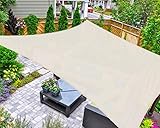
Three of these twelve earned a badge after we finished the comparison. The CROWN SHADES 10×10 wins on the combination of rating, review volume, and packed weight, and it is the one we would put up first in almost any yard. The two shade sails take the other spots because they deliver more covered square footage per pound than anything else here, and because the AsterOutdoor carries a five-year warranty.

CROWN SHADES 10×10 Pop Up Canopy
- One-push center lock frame
- UPF 50+ 150D fabric
- Wheels built into the feet

All 12 Shade Canopies at a Glance in 2026
Everything is in one place below so you can sort by the spec that matters to your yard. Coverage is the roof footprint each listing claims, packed weight is the number that decides whether one person can move it, and the last column is the fabric or frame detail that sets each one apart.
| Product | Specifications | Action |
|---|---|---|
| CROWN SHADES 10×10 Pop Up Canopy |
|
Check Latest Price |
 Eurmax 10×10 Commercial Pop Up Eurmax 10×10 Commercial Pop Up |
|
Check Latest Price |
 ABCCANOPY 10×10 Commercial Canopy ABCCANOPY 10×10 Commercial Canopy |
|
Check Latest Price |
 CROWN SHADES 10×10 with Side Wall CROWN SHADES 10×10 with Side Wall |
|
Check Latest Price |
 CROWN SHADES 10×10 Gazebo with Netting CROWN SHADES 10×10 Gazebo with Netting |
|
Check Latest Price |
 EAGLE PEAK 13×13 Pop Up Canopy EAGLE PEAK 13×13 Pop Up Canopy |
|
Check Latest Price |
 LAUSAINT HOME 10×13 Double-Roof Gazebo LAUSAINT HOME 10×13 Double-Roof Gazebo |
|
Check Latest Price |
 COBIZI 10×20 Heavy Duty Canopy COBIZI 10×20 Heavy Duty Canopy |
|
Check Latest Price |
 Aoxun 10×12 Hardtop Gazebo Aoxun 10×12 Hardtop Gazebo |
|
Check Latest Price |
| AsterOutdoor 16×20 Sun Shade Sail |
|
Check Latest Price |
| Shade&Beyond 12×16 Sun Shade Sail |
|
Check Latest Price |
 COBIZI 10×15 Pop Up Canopy COBIZI 10×15 Pop Up Canopy |
|
Check Latest Price |
1. CROWN SHADES 10×10 Pop Up Canopy – the best all-rounder
CROWN SHADES 10×10 Pop Up Canopy Tent with One Push Setup, Grid White
- One-push center lock raises in about 60 seconds solo
- Wheels built into the feet plus a storage bag
- Air vents and high peak shed water and cut wind lift
- Silver coating keeps the interior noticeably cooler
- Heavier than budget tents when loading solo
- About 6 ft clearance under the valance
- Storage cover has a learning curve to refit
This is the canopy we keep coming back to. Out of everything we compared for the best shade canopies for backyards, it hits the point where rating, number of reviews, and how much of a pain it is to own all line up. Over 11,000 reviews averaging 4.6 stars is a lot of evidence for a product that is not the lightest option.
What stands out in the spec sheet is the one-push center lock. The frame is a corrosion-resistant steel truss with hardened through bolts, rated to carry 120 lb spread across the top, and it raises from the center with no tools and no separate locking collar to lose. Owners consistently put the setup at about a minute solo, which is the difference between a canopy you actually use daily and one that lives folded in the garage.
The roof is 150D silver-coated fabric rated UPF 50+, water resistant, and flame resistant to CPAI-84. Silver coating on the interior does double duty: it reflects radiant heat back out and blocks UV, which is why owners mention the interior staying cooler than a bare white tent. Integrated air vents sit low on the roof panels, and they matter more than they sound, because trapped air under a taut canopy is exactly what creates wind lift and a puddle in the middle.
Storage is where the design earns its keep. It collapses lift-free with the fabric still attached, folds to 45 by 8.5 by 8.5 inches, and has wheels molded into the feet so you can roll the erected tent across the patio rather than dragging it. A dedicated pocket in the bag holds the four sandbags, eight stakes, and four guy ropes, so nothing ends up scattered in the grass.
What the weight actually feels like
At 36 pounds this is not a one-hand carry. Owners who load a car solo describe it as noticeable but manageable, and the foot wheels only help once the frame is up. If you are moving it twice a day, look at the EAGLE PEAK at 18 kg, which is lighter for a much larger footprint.
The more useful trick is to leave it standing and simply roll it. That is what the foot wheels are for, and it is why owners report using theirs daily through summer rather than breaking it down every evening.
Where it falls short
Clearance under the valance is about 6 feet. That is fine when you are seated at a table and awkward if you are 6 foot 2 and walking through it, so measure your tallest regular user before you commit.
The fitted storage cover is genuinely fiddly to refit, because the pegs have to line up with specific slots. Budget two minutes for it and it stops being annoying. One owner also reported two frame bars arriving bent, so inspect the frame before you rely on it in a forecast.
2. Eurmax 10×10 Commercial Pop Up Canopy – the truss enclosure
- Full truss frame built for commercial use
- All four walls zip together into a closed room
- Wheeled rolling bag with a no-tip design
- US-based seller stocks replacement parts
- 61 lb
- among the heaviest 10x10 units here
- Sidewalls and accessories are a tight squeeze back into the bag
- Slow to raise solo despite the pop-up format
If your problem is not just sun but wind, privacy, and a space that has to double as a vendor booth or a rain shelter, this is one of the most structurally serious 10×10 frames in the group. The frame is a full truss design rather than the lighter scissor-leg arrangement used by most pop-ups, and that single choice explains both the 61 pound weight and the stability.
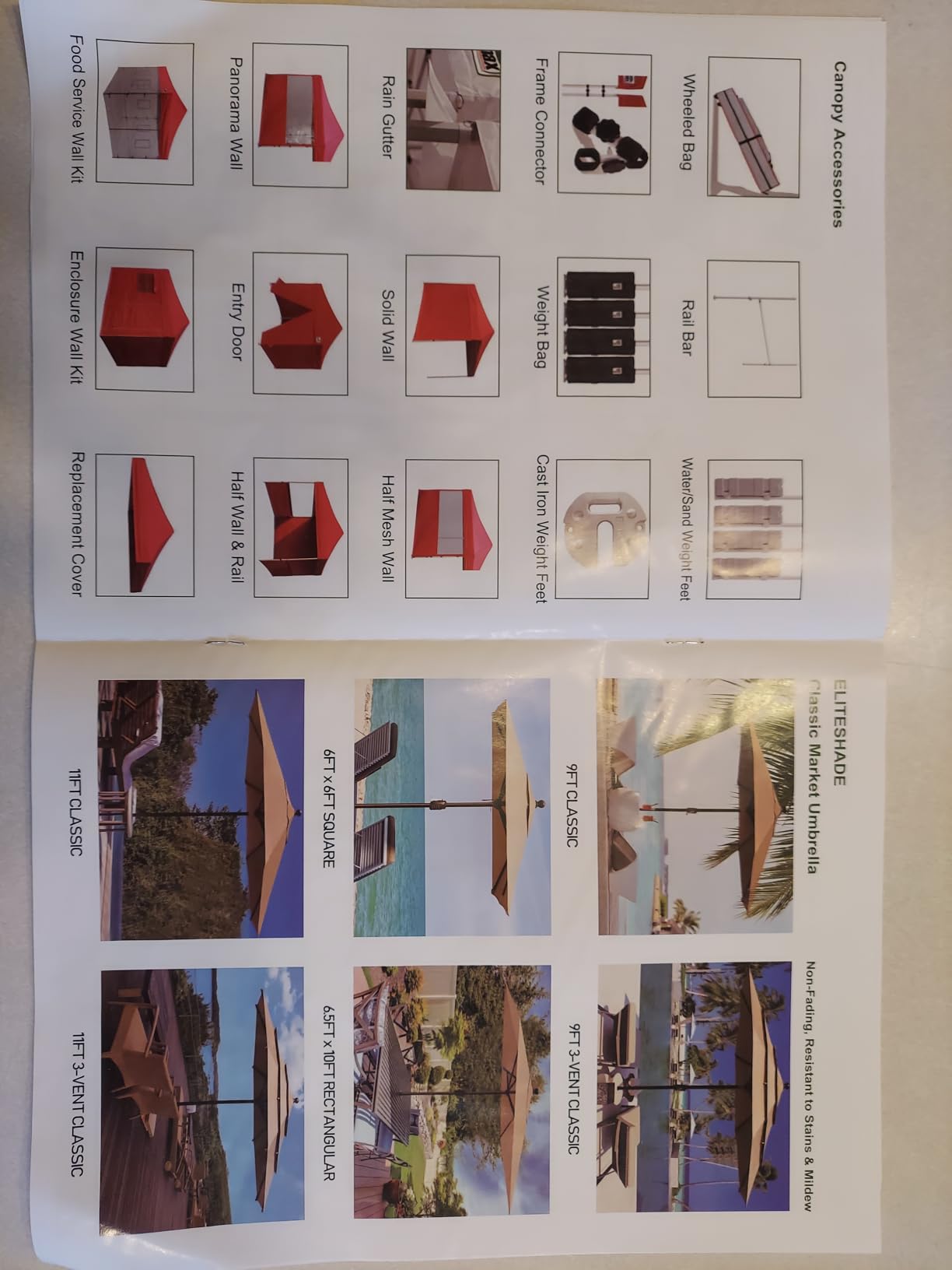
The complete package is 10×10 frame, canopy top, three removable sidewalls, one door wall with a window, four sandbags, and a wheeled tent bag. All four walls zip together, so you can fully enclose the space in under a minute once you decide you need to.
One detail worth knowing: Eurmax is a North America factory store with US-stocked replacement parts, and support is reported as responsive. On a frame like this, part availability matters more than it does on a cheap tent, because the truss is the thing you cannot cheaply replace.
The canopy top is rated UV and water resistant rather than waterproof, so it is shade and light-rain cover, not a monsoon shelter. Sandbags are included, but four is not a lot in a real gust, so budget for more if you are in an open yard.
Who this suits
Anyone running a market stall, a craft fair booth, or a party where people will be standing for hours. The enclosure turns it into a room rather than a roof, and owners who switched over from lighter brands after those failed within a season report years of vendor and market use here.
It also works as a semi-permanent summer installation if you stake it properly and leave it up. At 61 pounds you are not carrying it around daily.
Where it falls short
The weight is the whole tradeoff. 61 pounds makes it a two-person load, despite the pop-up format. The wheeled bag helps on flat ground and does nothing for getting it into a car boot.
Refitting sidewalls and accessories into the included bag is a squeeze, and solo setup is slower than the one-push designs. Plan on a second pair of hands for the first raise.
3. ABCCANOPY 10×10 Commercial Canopy – the waterproof 500D top
ABCCANOPY Commercial Pop Up Canopy Tent with Sidewalls 10X10,White
- Roof listed as waterproof
- not just water resistant
- Certified flame retardant 500D polyester with PU lining
- Three side walls plus a door wall attach fast
- Roller bag with useful storage pockets
- Noticeably heavier than the previous model
- Roller bag rivets and handles can fail and are not covered
- Sidewall loops and plastic zippers are weak points
This is the rain answer. Its roof is 500 denier polyester with a PU lining, certified flame retardant, listed as waterproof rather than water resistant, rated UPF 50+, and specified to block 99.98 percent of harmful rays. Owners report interiors staying dry through heavy rain when the unit is properly secured.
The frame underneath is a full truss with 1mm square steel legs, which is thicker than the economy frames in this class. It sets up in a few minutes with two people, no tools, three height settings, and thumb latch locks. Included are the frame, top, three removable side walls, one door wall, a roller bag, four weight bags, stakes, and ropes.
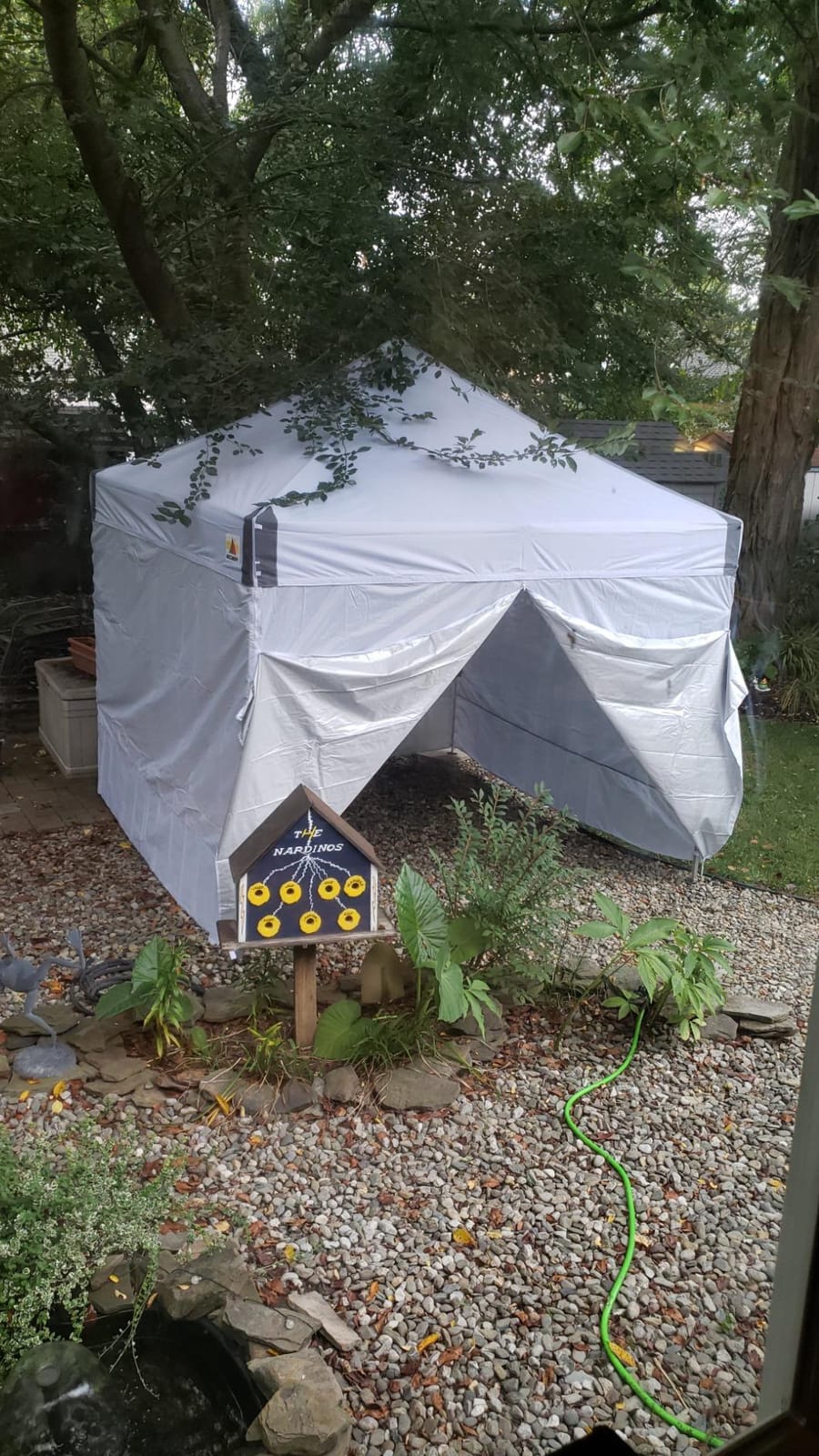
Buyers consistently frame this as a workhorse for art fairs, farmers markets, and market booths, where a frame that looks professional matters and the tent gets moved weekly. Service is reported as fast and warranty-honoring when contacted, which is not a given at this price level.
Warranty coverage is one year on the frame and six months on fabrics and accessories, so treat the fabric as a consumable rather than a lifetime component.
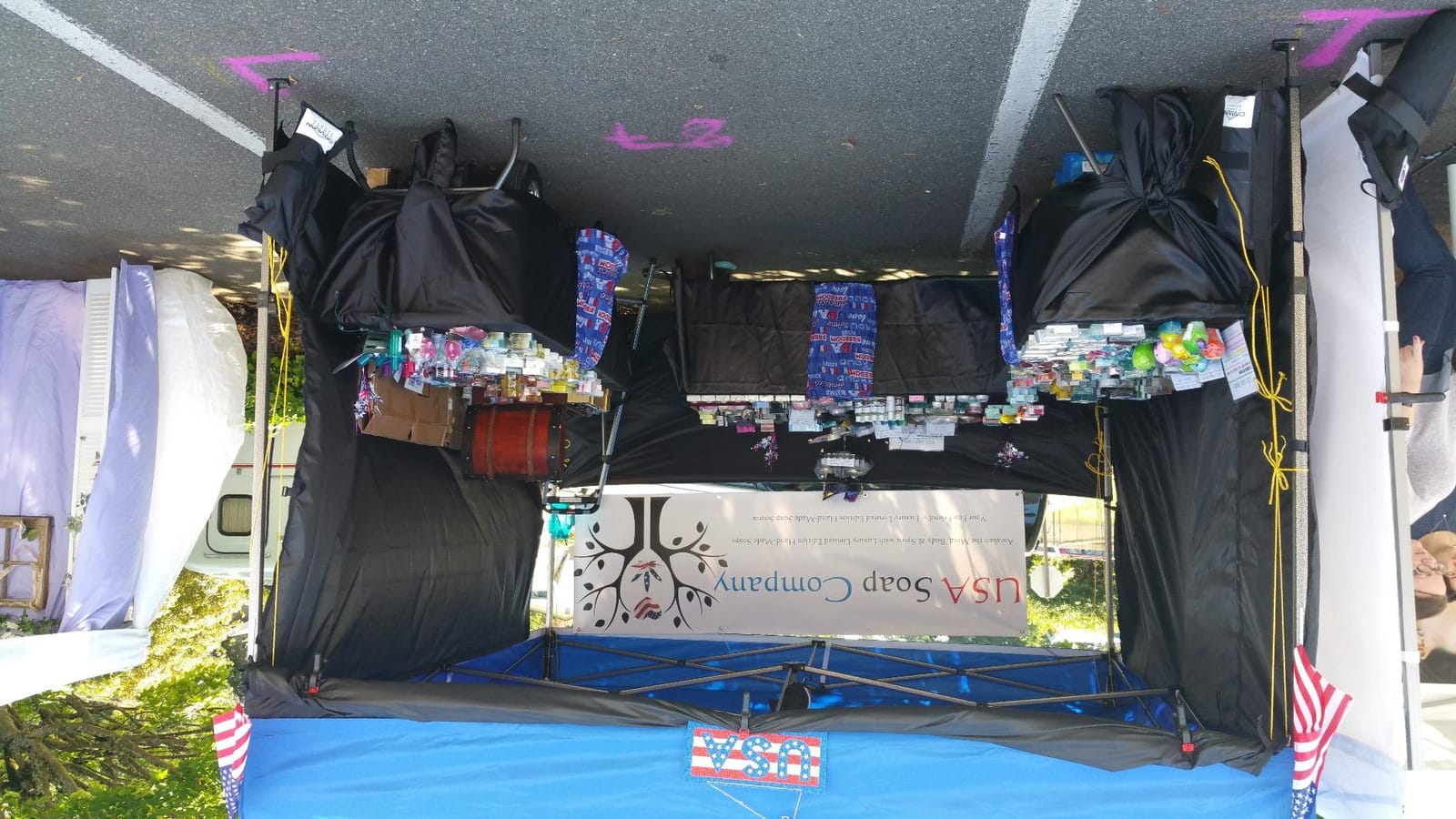
When the waterproof top earns its keep
Summer thunderstorms and a grill station under cover are the two scenarios where a waterproof top changes the product. The side walls attach with hook and loop and zip, so when the weather rolls in you can close the box in a couple of minutes rather than watching the furniture get soaked.
It is also a reasonable year-round covered workspace for a craft operation, since the fabric is flame retardant and the frame is genuinely heavy duty.
Where it falls short
Owners note it is noticeably heavier than the previous ABCCANOPY model, so solo setup is harder than the spec sheet implies. Plan for two people.
The roller bag rivet and handles are a reported weak point, and the bag is not covered by warranty. The included weight bags are also small if you are working a market that requires 20 to 25 lb holds. Assembly is fiddly on first build, with stiff legs and loose roof peak pockets.
4. CROWN SHADES 10×10 Canopy with Side Wall – for low afternoon sun
CROWN SHADES 10×10 Pop Up Canopy with 1 Side Wall, Beach Canopy Tent, White
- Same fast one-push frame as the flagship canopy
- Included side wall blocks low afternoon sun
- Foot wheels let you roll the erected tent
- Air vents cut pooling and wind lift
- 38 lb is a heavy solo load
- About 6 ft valance clearance
- Single side panel only blocks one side
This is the flagship frame with a 150D side wall dropped into the same steel truss, and for a west-facing patio that bakes until 7 pm it is a meaningfully different product rather than a minor trim. A side wall on the sun side converts a shaded roof into partial shade plus a wall, which is what actually moves the temperature under it.
Everything else matches the winner: one-push CenterLOK frame, three height settings, anti-pinch push levers, fast clip fabric attachment, UPF 50+ silver-coated 150D canopy, CPAI-84 flame resistance, and air vents in the roof panels. It folds to 45 by 8.5 by 8.5 inches, stores with the fabric attached, and carries a two-year parts replacement warranty.
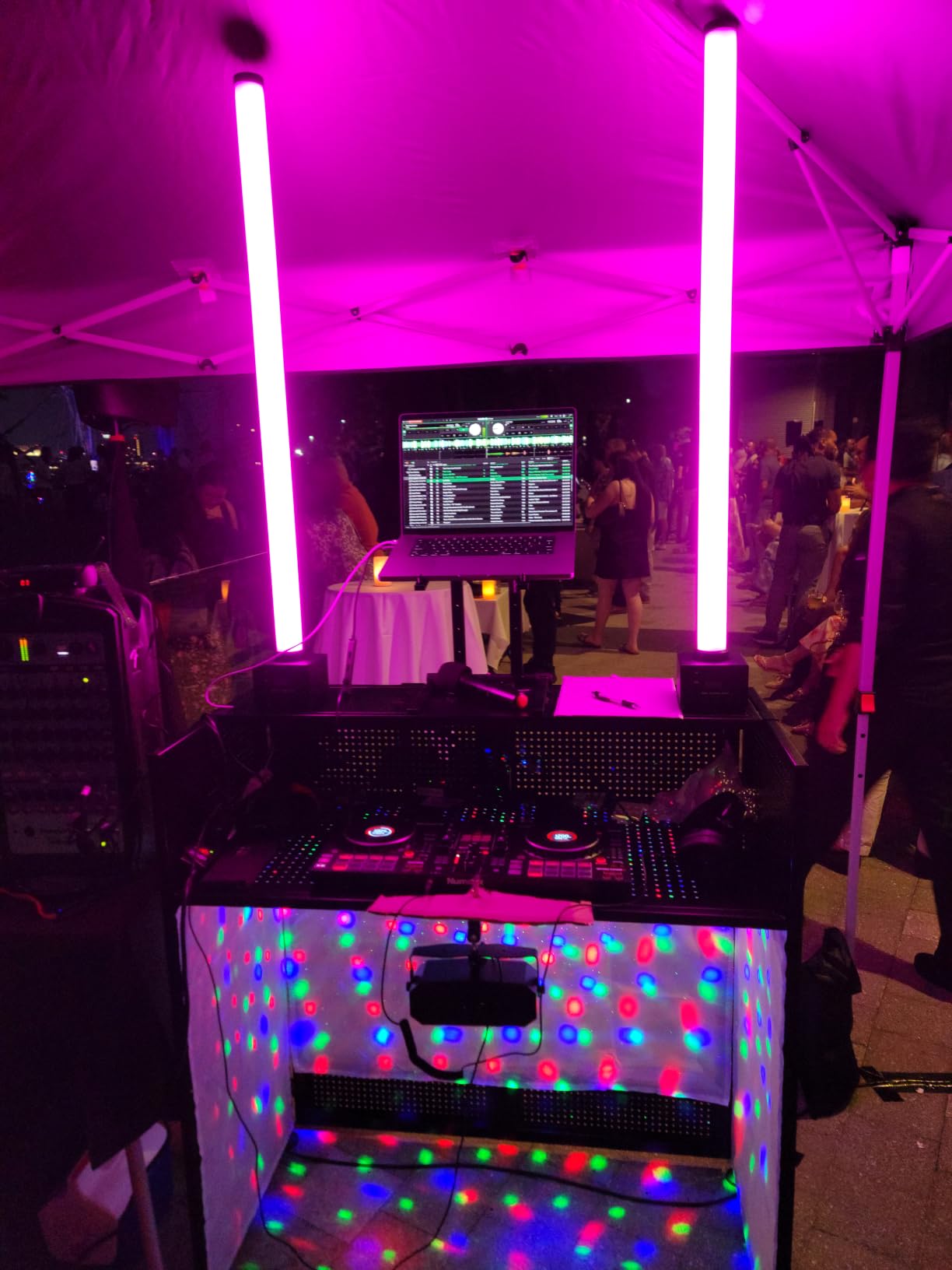
Owners rate it among the easiest pop-ups on the market, with the side wall and the wheeled feet as the two things they mention most over the bare canopy. Fabric and frame are reported to hold up well through repeated beach and market trips when anchored, which is a harder environment than most backyards.
Beach performance is not a fluke. The foot wheels mean you can roll the whole thing down a path or across grass without lifting, which is the difference between using it twice a season and using it all summer.
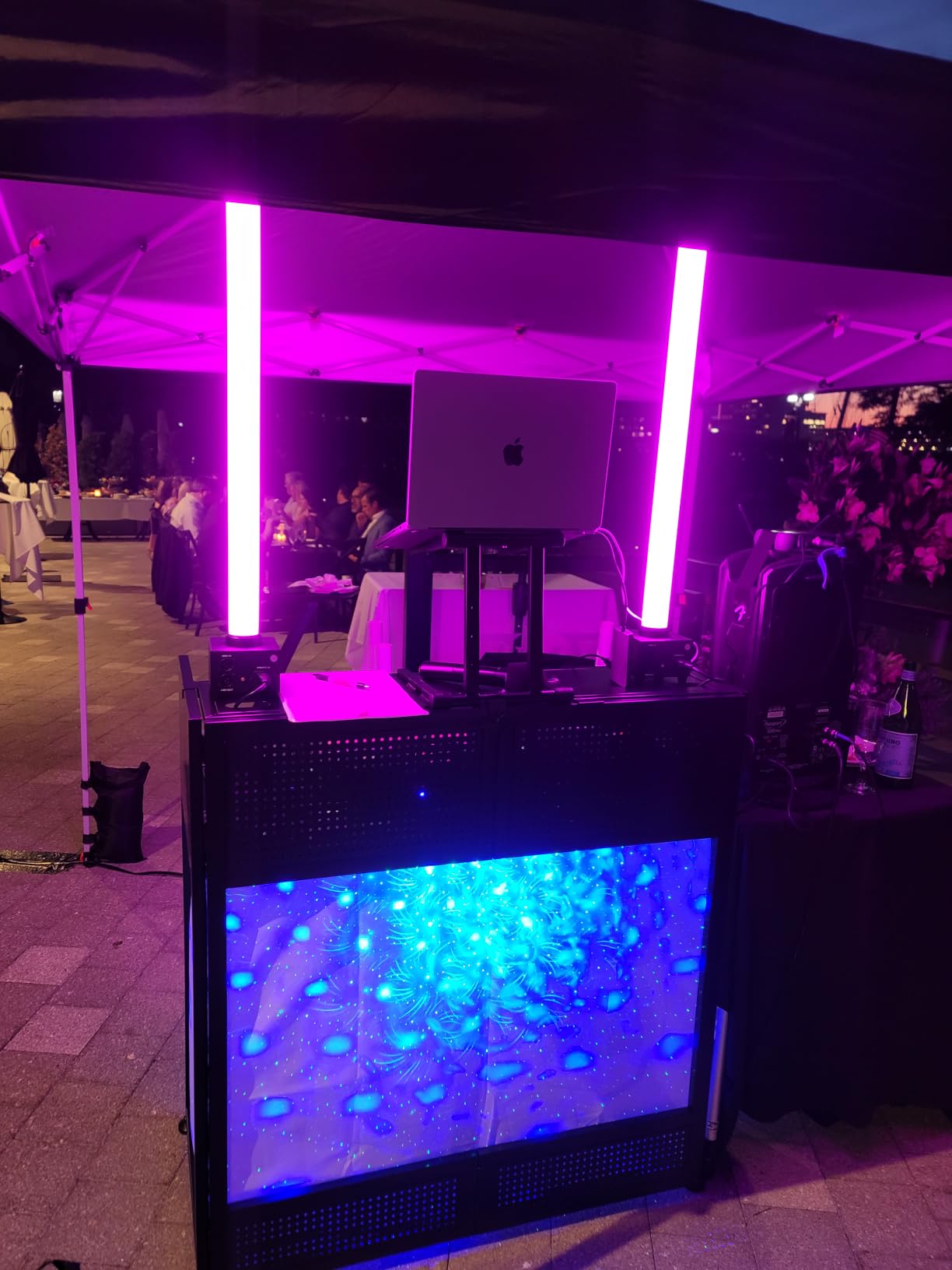
Why the side wall changes the math
Overhead shade stops direct sun. It does not stop radiant heat coming off a west-facing wall or a hot fence line at low angles, and that is usually what makes a west patio unusable. A single panel on that side interrupts the worst of it.
If your sun comes from two directions, budget for a second wall from the same family rather than hoping the roof is enough. The panel is a discrete accessory, not an integrated feature.
Where it falls short
At 38 pounds it is a heavy lift for one person to load into a car. The wheels solve moving it around the yard, not moving it up a step.
It also carries the same roughly 6 ft valance clearance as the flagship, so taller adults duck when walking under. And one panel is one panel, which is worth remembering before you assume it handles a fully exposed side yard.
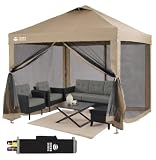
5. CROWN SHADES 10×10 Gazebo with Mosquito Netting – for bug-heavy yards
CROWN SHADES Gazebo 10×10 Pop Up Canopy with Mosquito Netting, Beige
- Netting turns it into a genuine outdoor sitting room
- Overhanging roof blocks noticeably more sun and rain
- Reported to hold in 50 mph gusts when anchored
- Easy to set up and take down solo
- Mesh snags easily and the tie strings tear
- Included securing hooks bend easily
- Thin pole and top covers nick easily
- 45.2 lb is heavy to maneuver
In Alaska, the Northeast, and anywhere with mosquitoes, the detachable mesh sidewalls with dual-sided zippers are the whole reason to buy this one. Owners say the netting genuinely changes how the space gets used, because for the first time you can sit outside at dusk without the bug problem deciding when the evening ends.
The frame is a four-way CENTERLOK system with reinforced steel legs and a bronze corrosion-resistant coating, and the tool-free single-push assembly means it goes up solo even for owners who say they are not in great shape. Fabric is 150D Oxford with a silver-coated interior blocking 99 percent of UV, CPAI-84 fire resistant. Dual auto-deploying air vents manage airflow under the roof.
One owner documented holding it in 50 mph gusts with corner buckets and the included straps. That is a proper test, and it is the reason this unit earns a place in a wind-exposed yard even though the frame is only mid-weight.
What the overhanging roof changes
The roof extends past the frame line, so coverage is wider than a flat pop-up at the same nominal footprint. Owners report it keeping out noticeably more sun and rain, which in practice means the shade reaches further toward the edge of a seating area.
It seats 6 to 8 people comfortably, so it is a sitting room rather than a standing shelter. The stability kit is complete: 8 stakes, 4 sandbags, 4 guy ropes, pre-drilled leg bases, and a wheeled storage bag.
Where it falls short
The mesh is the weak link. It is cheap, it snags easily, and the tie strings on the screens are poorly sewn and rip. The included hooks for securing the netting bend easily, so replace them before a wind event rather than after.
At 45.2 pounds it is a two-person maneuver, and one owner reported a fabric roof cracking with the center panel detaching after about 18 months. Inspect the top panel after your first high-UV season.
6. EAGLE PEAK 13×13 Pop Up Canopy – the biggest square footprint
EAGLE PEAK 13×13 Pop Up Canopy Tent, Auto Extended Eaves, Gray
- Largest square footprint in the group
- 166.4 sq ft
- seats 8-10
- Auto-extended eaves add real overhang coverage
- Light for the size and easy for one person to move
- Support ships replacement parts quickly after wind damage
- Thin legs bend in moderate wind
- Small upper vent can tear through on first setup
- Guy ropes degraded in sun within weeks
- Tie-down points are low on the leg brackets
At 166.4 square feet listed, this is the biggest square pop-up we compared, and the automatically extending eaves add overhang that tucks under a porch roof line. Straight-leg design with a telescoping three-position steel frame, and the Peak Push center lock lets one person raise it from the center with no tools.
The roof is CPAI-84 certified flame resistant and water resistant 150D oxford at UPF 50+, on a powder-coated steel frame with M5 hardened through bolts. It seats 8 to 10 people. The carry bag is 600x300D on wheels and fits most car boots, and four reusable weight bags come with it.
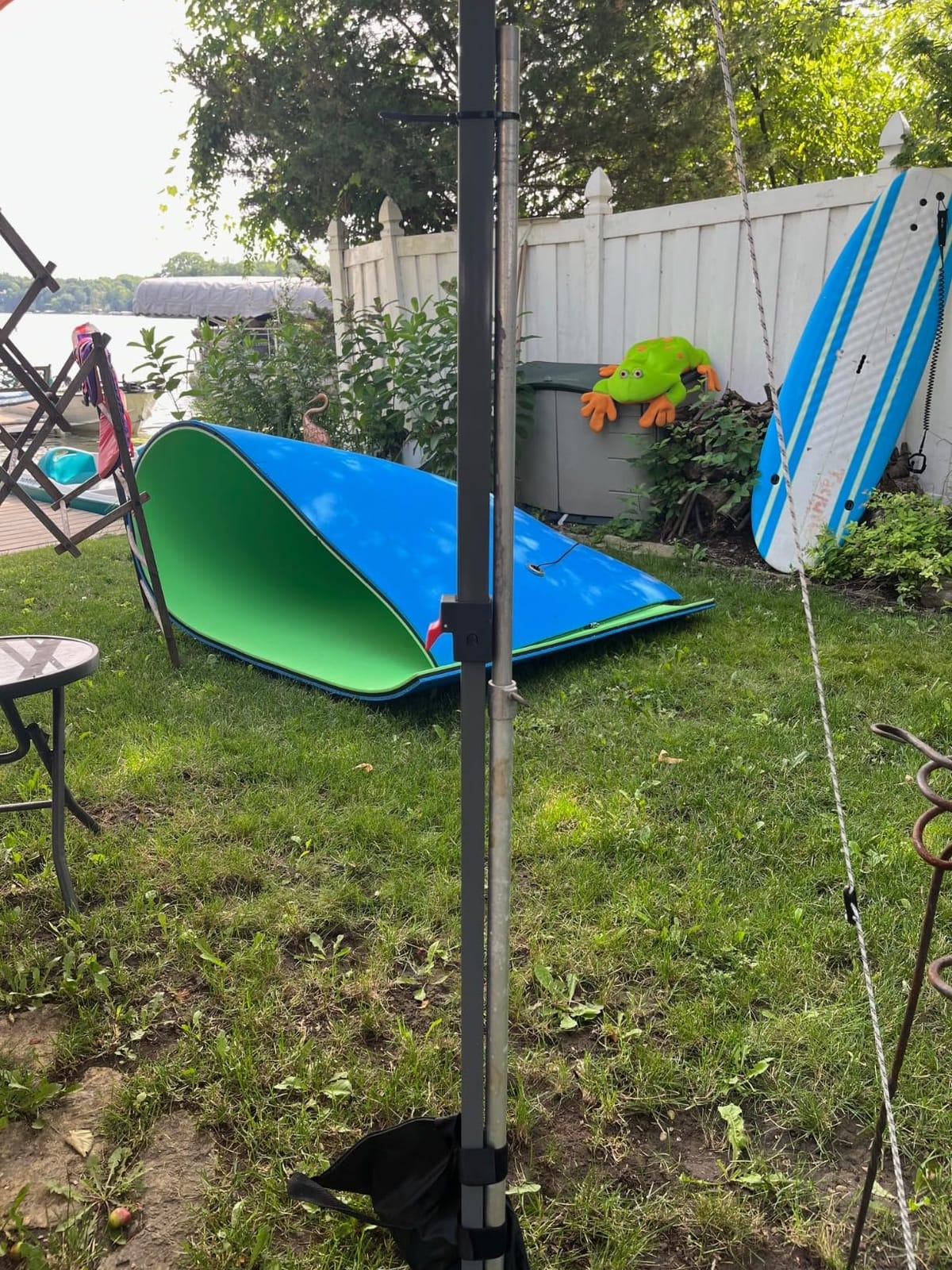
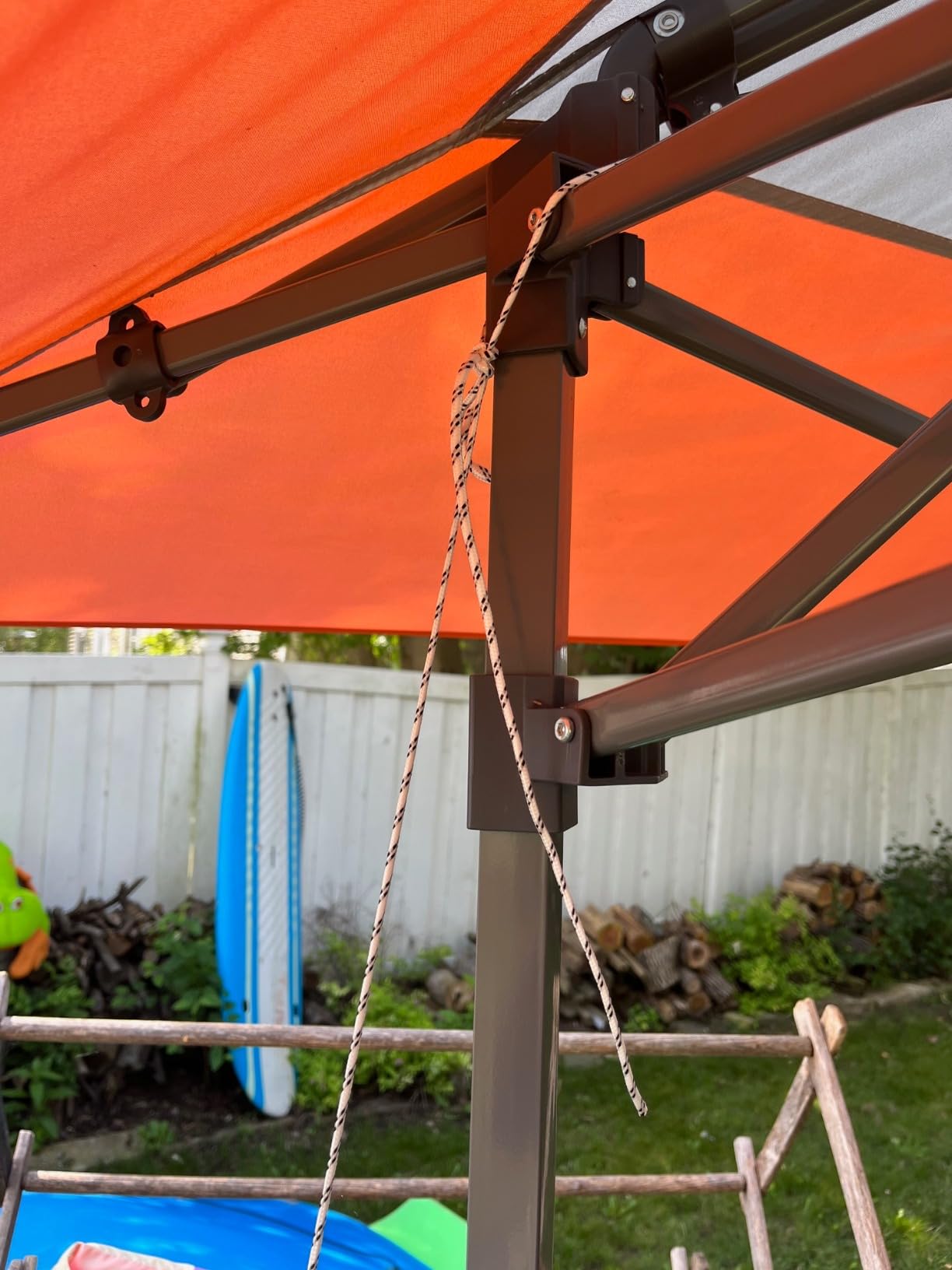
This is the rating outlier in the roundup, and the reason is wind, not shade. Owners repeatedly report thin-walled legs bending or folding in moderate wind, which collapses the scissor mechanism. The consensus workaround is conduit bracing plus corner reinforcement, after which experienced owners say it performs well.
So treat this as a good-canopy-with-a-known-flaw rather than a bad product. If your yard is open and unsheltered, choose one of the heavier truss frames instead.
When 13×13 is the right call
Square pop-ups are genuinely easier to use than rectangles under a table, because there are no corner legs to clip the dining chairs. This one fits a rectangular table with a clear walkway all the way around, which is why it shows up at large gatherings.
The 18 kg weight is also the surprise. It is the lightest frame canopy here despite being the largest square, so one person can reposition it across a lawn without the two-person lift that the 45 lb and 61 lb units demand.
Where it falls short
The small upper vent canopy can poke through an unreinforced corner during setup, and some units arrived with that flaw already. Check the vent seam before the first raise.
The supplied guy ropes degraded in sun within weeks and snapped, so replace them with proper line. Tie-down points sit low on the leg brackets, where guying can actually fold the frame up rather than hold it down, which is a real problem in gusty conditions.
7. LAUSAINT HOME 10×13 Double-Roof Gazebo – the best airflow
- Thicker-than-average tubing that survived 50+ mph gusts
- Double-tier roof genuinely cools the interior
- Netting and curtains make it private and bug-free
- Center hook and D-rings for lights and fans
- Assembly is a multi-hour job
- Canopy is genuinely hard to stretch onto the frame
- Stakes alone are not sufficient anchoring
- 103.2 lb makes repositioning a serious undertaking
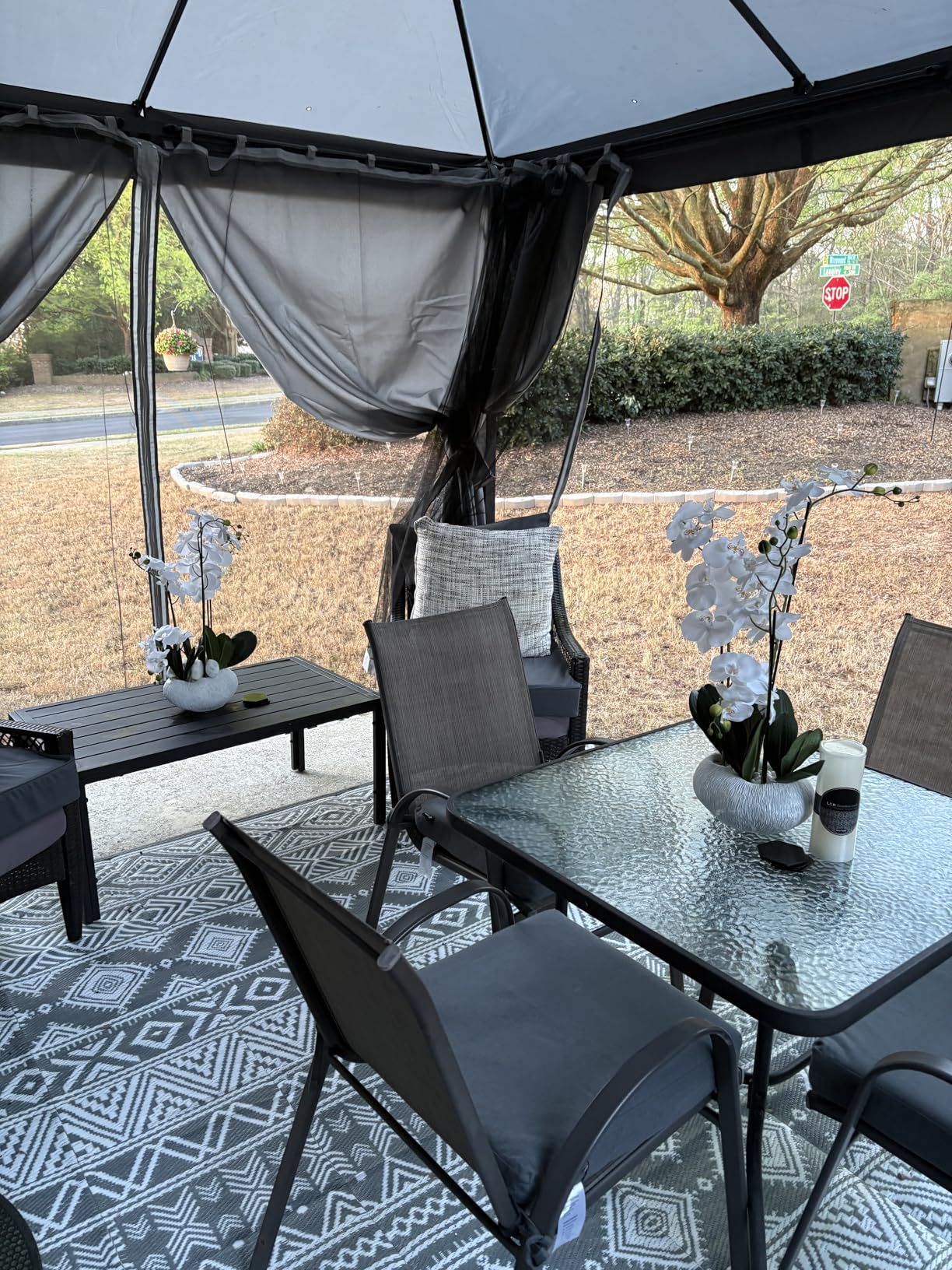
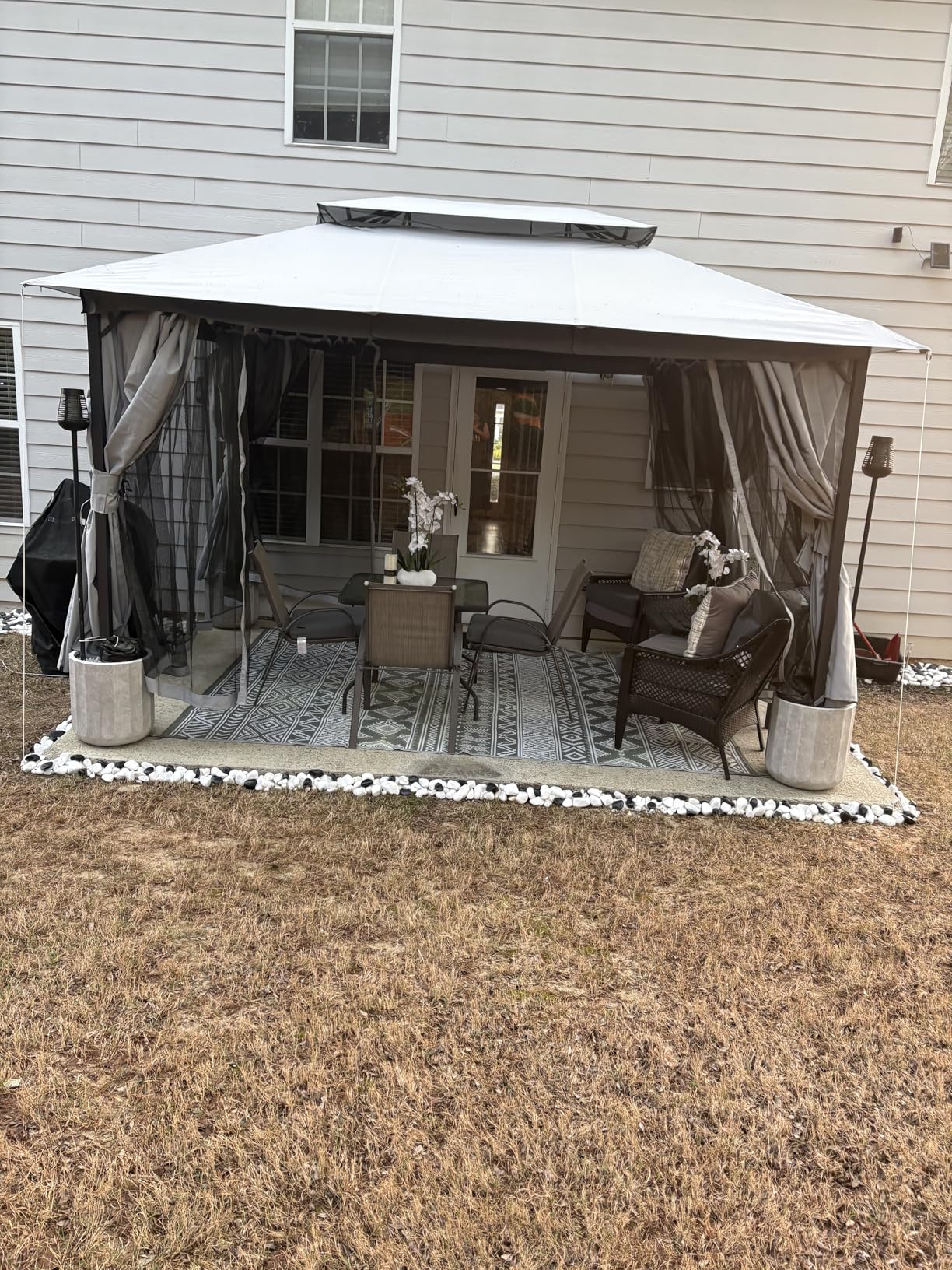
The double-tier roof is the reason to look at this one. Air enters at the lower tier and exits at the raised center, which is a real mechanical difference rather than a styling choice, and owners report the interior running noticeably cooler than under a single-roof pop-up of the same size.
The frame is 40x40mm reinforced galvanized steel with a powder-coated finish, which is notably thicker than average, and it is rated wind resistance level 6 when properly secured. One owner held it through 50+ mph gusts after bolting it to planters, and another reports multiple seasons including hail with no rust or bent pieces after a winter takedown.
Fabric is 135G polyester at UPF 50+ and 1500MM water resistance, with zippered mosquito netting, privacy curtains, and a center hook plus D-rings for a fan or string lights. Eight expansion bolts are included for hard-surface anchoring.
Important measurement note: the 10×13 figure refers to roof dimensions measured from the eaves, so the actual usable footprint is smaller. If you are sizing against a patio table, measure the footprint rather than the roof.
Service is a genuine strength here. One owner had an entire gazebo replaced after a tornado destroyed it, which is the kind of response that tells you something about the seller.
Heat is the deciding factor
In a yard that gets hot enough that you avoid the patio, airflow matters as much as shade. A double roof moves air, which lowers the felt temperature under the canopy without any equipment running.
Adding a fan to the center hook is a cheap upgrade that compounds the effect. The curtains then let you close it down at dusk, so the same unit works as a daytime shade and an evening room.
Where it falls short
Assembly is the honest drawback. The instruction sheet has 22 printed steps that owners report being closer to 45 in practice, and stretching the canopy onto the frame, especially the small top vent section, is genuinely difficult. Some units also arrived with mis-drilled or missing screw sockets.
Stakes alone are not sufficient anchoring, which means you need bolts or sand-filled planters. At 103.2 pounds, repositioning is not a casual task, so plan its location before you build it.
8. COBIZI 10×20 Heavy Duty Canopy – for carports and large patios
COBIZI 10×20 Heavy Duty Pop Up Canopy Tent with Sidewalls, Easy Up Canopy
- 1.26 inch tubing with 0.03 inch walls
- noticeably rigid
- 420D double PU coating held back torrential rain
- Sealed seams and 6 sidewalls make an enclosed room
- Folds into the included wheeled bag
- 100 lb
- the heaviest folding unit here
- Sandbags alone do not stop it shifting in wind
- Interior runs hot without misters or fans
- Setup takes over an hour with sidewalls
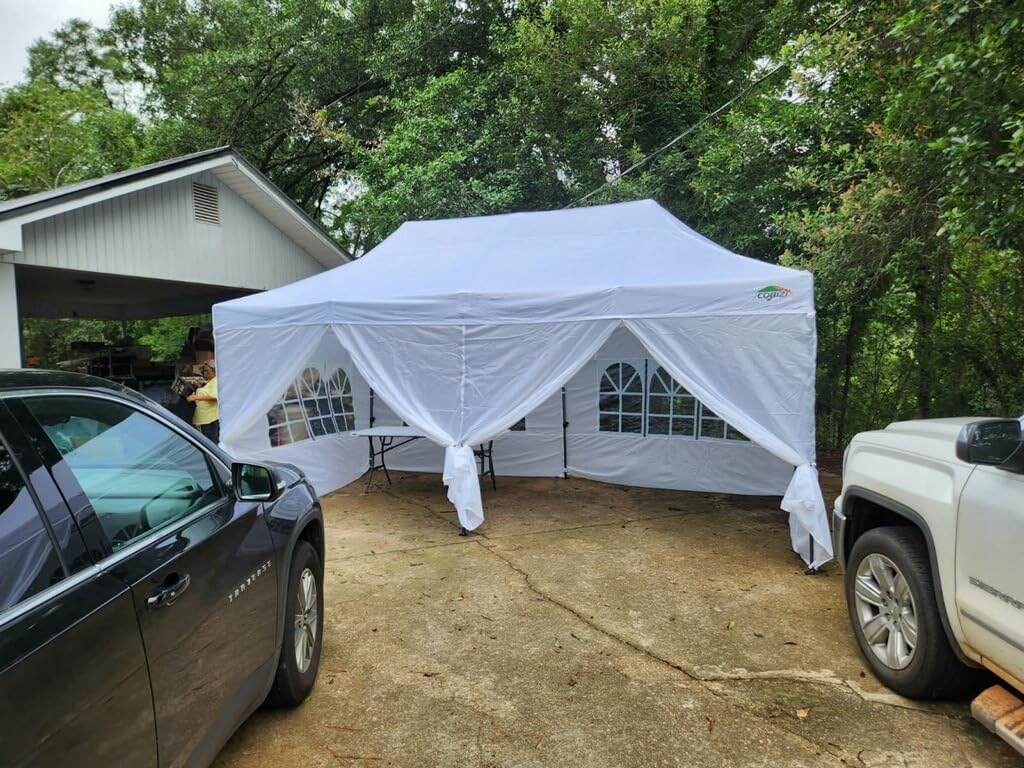
At 10×20 and 200 square feet, this covers more ground than anything else in the group that still folds up, which is why it lands on carports, camper covers, and 15×20 patios. Occupancy is listed at 12 to 20 people across three height settings of 86, 90, and 94 inches.
The frame is the headline. Full truss construction, powder coated, at 1.26 inch pipe diameter with 0.03 inch wall thickness, against 0.98 inch and 0.02 inch for most tents. The intermediate support pole holds up to 220 lb, and the whole thing is rated to wind level 4 or 18 mph with the included sandbags, ropes, and pegs.
The fabric is 420D oxford with two layers of PU coating, UPF 50+ blocking 99 percent of UV, fully sealed seams, and waterproof at 2.1 psi against 1.1 psi typical. Owners report it holding back torrential rain with no leaks. Six PU-coated sidewalls come with it, four with windows and two with zippers.
Unlike pole-assembly tents, this one folds back down and fits in the included 600D Oxford PVC-coated roller bag with three large standing wheels, which matters if you plan to move it between a patio and a driveway.
The 18 mph rating is worth reading carefully. That is a lower number than several gazebos here, and owners note sandbags alone do not stop it shifting in wind even with all four attached.
When a 10×20 is the right size
A full patio, a grill station plus a dining table, or a covered parking spot. Two hundred square feet is roughly double what a 10×10 gives you, and it is one of the few units here that can shade a vehicle without being a fixed structure.
Because it packs into a wheeled bag, the seasonal cycle is manageable: stand it over the patio in summer, roll it to the driveway when you need the space.
Where it falls short
At 100 pounds it realistically needs two people to move, and the honest expectation is that it is a two-person lift. Setup takes over an hour once the sidewalls are on.
Heat builds inside in full sun unless you add misters or fans, and customer service is the weak point here, with a reported account of a unit arriving with missing hardware and support closing the thread. Inspect the parts list carefully on arrival.
9. Aoxun 10×12 Hardtop Gazebo – the only steel roof here
Aoxun Gazebo 10×12 Hardtop Gazebo with Double Galvanized Steel Roof, Gray
- Only true hardtop in the group
- Galvanized double roof sheds heat and handles snow
- Rust and fade resistant finish
- Track-and-zipper netting slides open
- Usable as a carport
- Lowest rated in the group at 4.0 out of 5
- Assembly is 2-4 hours with 3-4 people
- Heaviest unit here at 199.5 lb
- Soft goods must come down before storms
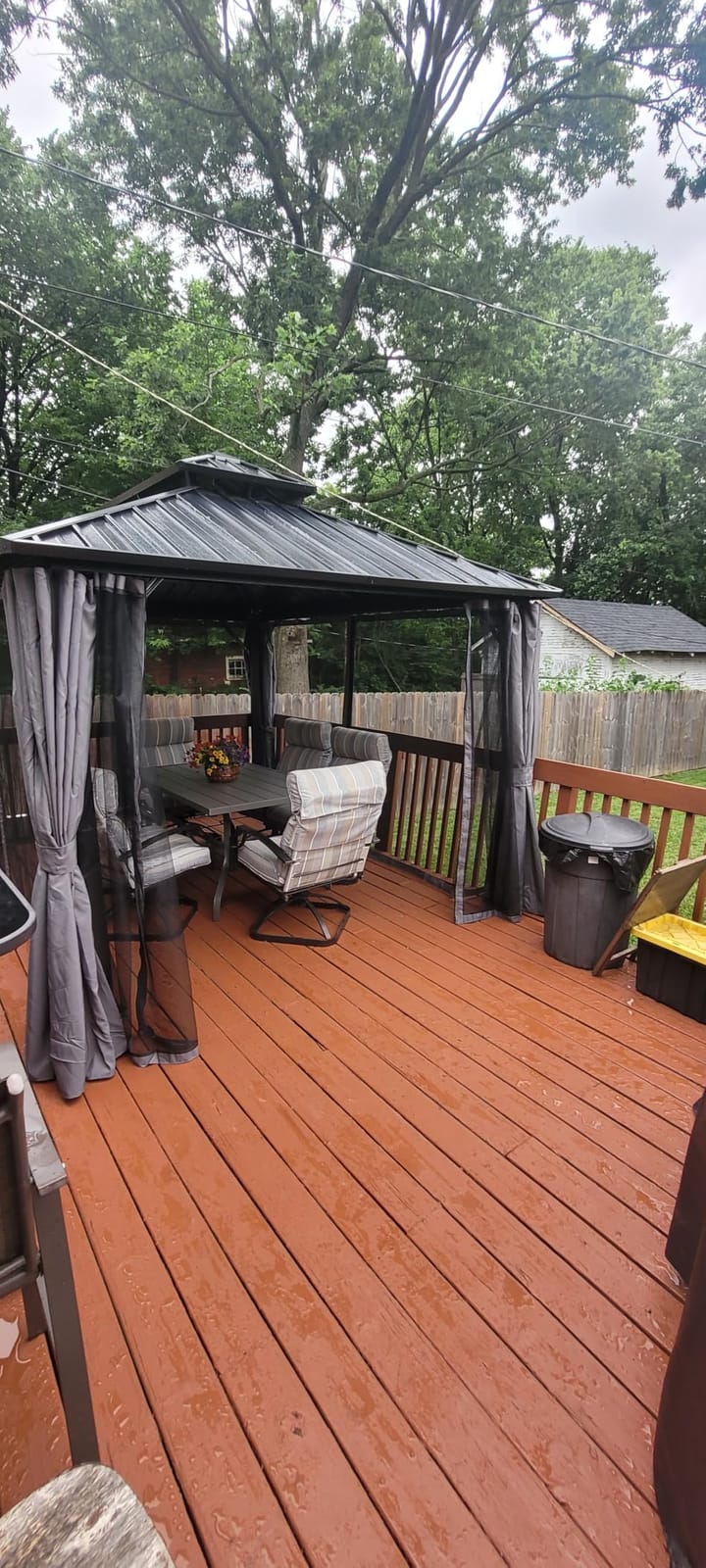
Every other canopy here is fabric. This one has a double galvanized steel roof, which changes the category entirely, because a steel roof does not need to come down before a storm and it will carry snow, shade in winter, and shed heat in July. It is rust and fade resistant, and the double top gives it genuine insulation and ventilation.
Dimensions are 10 foot by 12 foot by 9.6 feet, covering 120 square feet for 6 to 8 people, on a thick powder-coated metal frame rated wind resistance grade 7, which is 31 to 38 mph. Four ground piles and expansion screws are included, and the manufacturer specifies anchoring with one or the other.
Netting runs on a zipper and a track, so it slides open rather than being removed and refitted, and the curtains have three binding belts. Top hooks accept lights and fans. It is also listed as usable as a car parking shed.
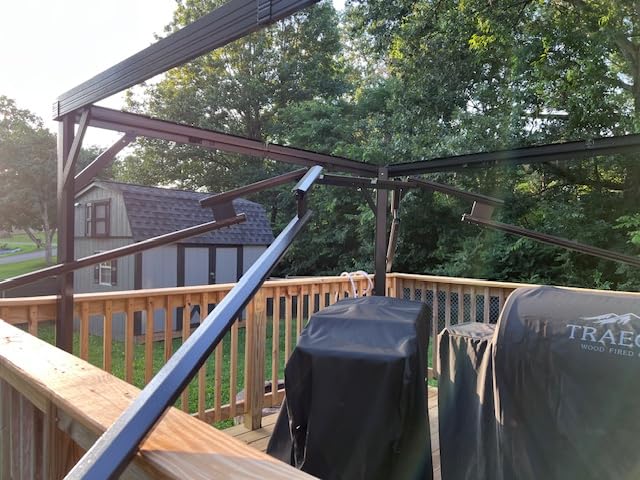
Owners like the hardtop, the sliding netting, and the fact that it stays up year-round. The reviews honestly reflect the tradeoff: it is the lowest-rated unit here at 4.0, and the reason is weight and assembly rather than quality.
At 199.5 pounds this is not a portable canopy in any practical sense. It is a semi-permanent structure you assemble once.
When a hardtop is worth it
If you want a covered outdoor room that survives winter, this is the only option in the roundup. A fabric canopy over a patio is a seasonal product. A steel-roofed gazebo is a permanent improvement, and the grade 7 wind rating is by far the highest here.
It also solves the winter storage problem entirely, since there is no off-season takedown and no fabric to store folded somewhere.
Where it falls short
Assembly is 2 to 4 hours with 3 to 4 people, per the manufacturer. That is a weekend, not an afternoon, and it is the single biggest reason people return these.
You still have to remove the canopy soft goods, curtains, and mesh screens during extreme weather even with a steel roof. And at 199.5 pounds, moving it is a professional job.
10. AsterOutdoor 16×20 Sun Shade Sail – the most coverage per pound
AsterOutdoor Sun Shade Sail Rectangle 16′ x 20′ UV Block Canopy for Patio Backyard Lawn Garden Outdoor Activities, Cream
- 320 sq ft of coverage
- more than any frame canopy here
- Weighs 185 g and folds into a backpack
- Curved sides tension the fabric and reduce sag
- Blocks 95% UV while still letting breeze through
- 5-year manufacturer warranty
- Not water resistant
- mist soaks through and rain pools
- Size is D-ring to D-ring so real coverage is smaller
- Included ropes are flimsy
- Fabric fades over months and heavy snow tears it
No frame canopy here covers 320 square feet, and only one other item in the roundup weighs as little as 185 grams. That is the entire argument for a shade sail, and for a large open yard or a patio with existing anchor points it is a genuinely compelling one. It folds into a backpack.
The fabric is 100 percent high density 185GSM polyethylene with strong stitched seams and durable stainless steel D-rings, blocking 95 percent of UV while staying breathable. The rectangle uses curved sides rather than straight ones, which improves pull strength and reduces the drooping you get with a flat-cornered sail. Manufacturer warranty is five years.
At 4.4 stars across more than 20,000 reviews, this is the most-reviewed product here, and the consensus is that it delivers excellent shade for anyone willing to mount hardware themselves. Long-term owners report three to six years of service including heavy rain and hard winds.
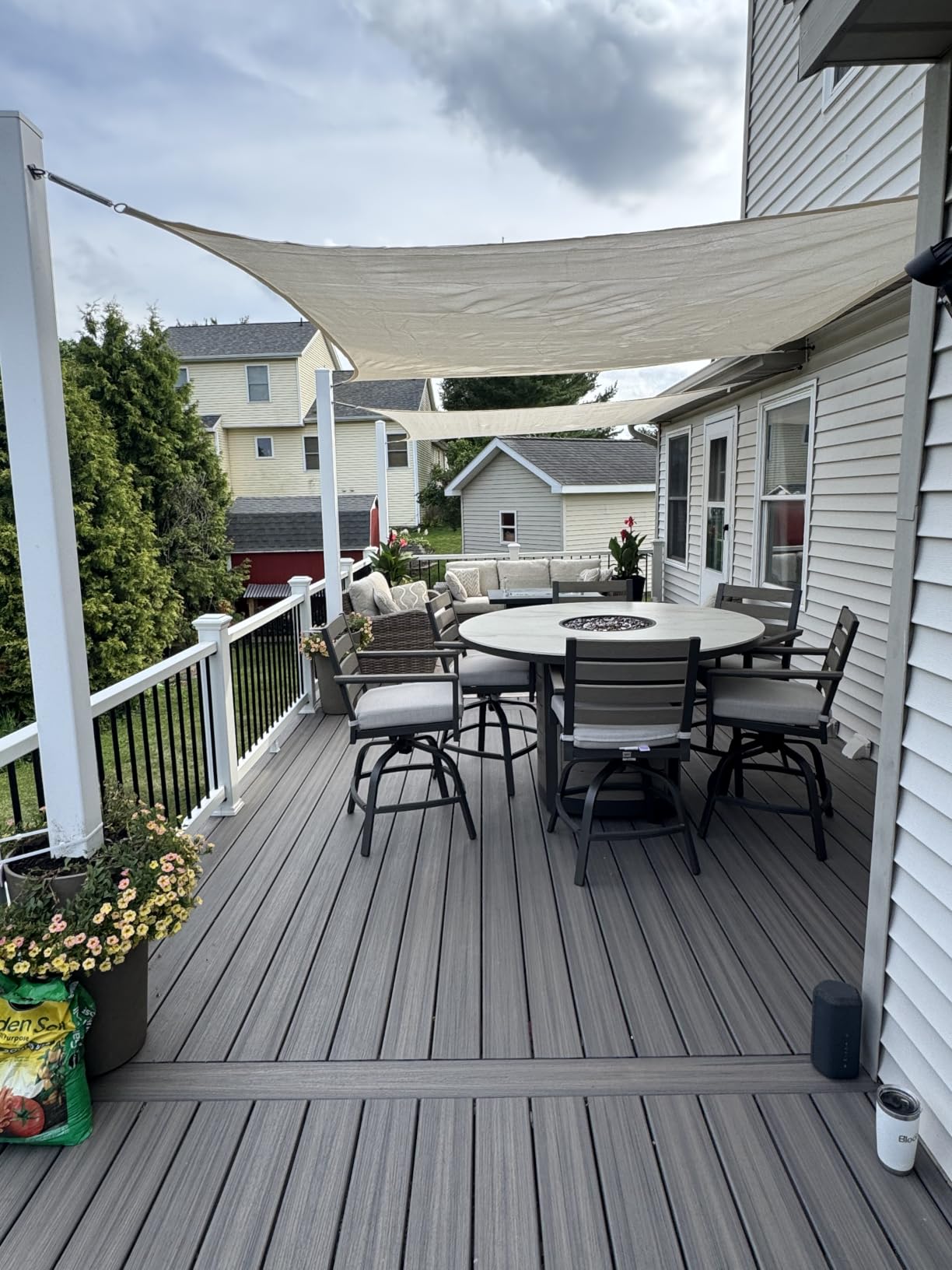
The single most repeated warning across those reviews is about measurement. The listed 16 foot by 20 foot is measured D-ring to D-ring, and you need to leave 1.5 to 2 feet for hardware between the sail and each mounting point. Buyers who skip that math end up with a sail too large to tension.
Four five-foot ropes and an instruction sheet are included, but owners recommend replacing them with quality turnbuckles, carabiners, and thicker line. Sail-specific fixing kits exist because corners work loose over a season.
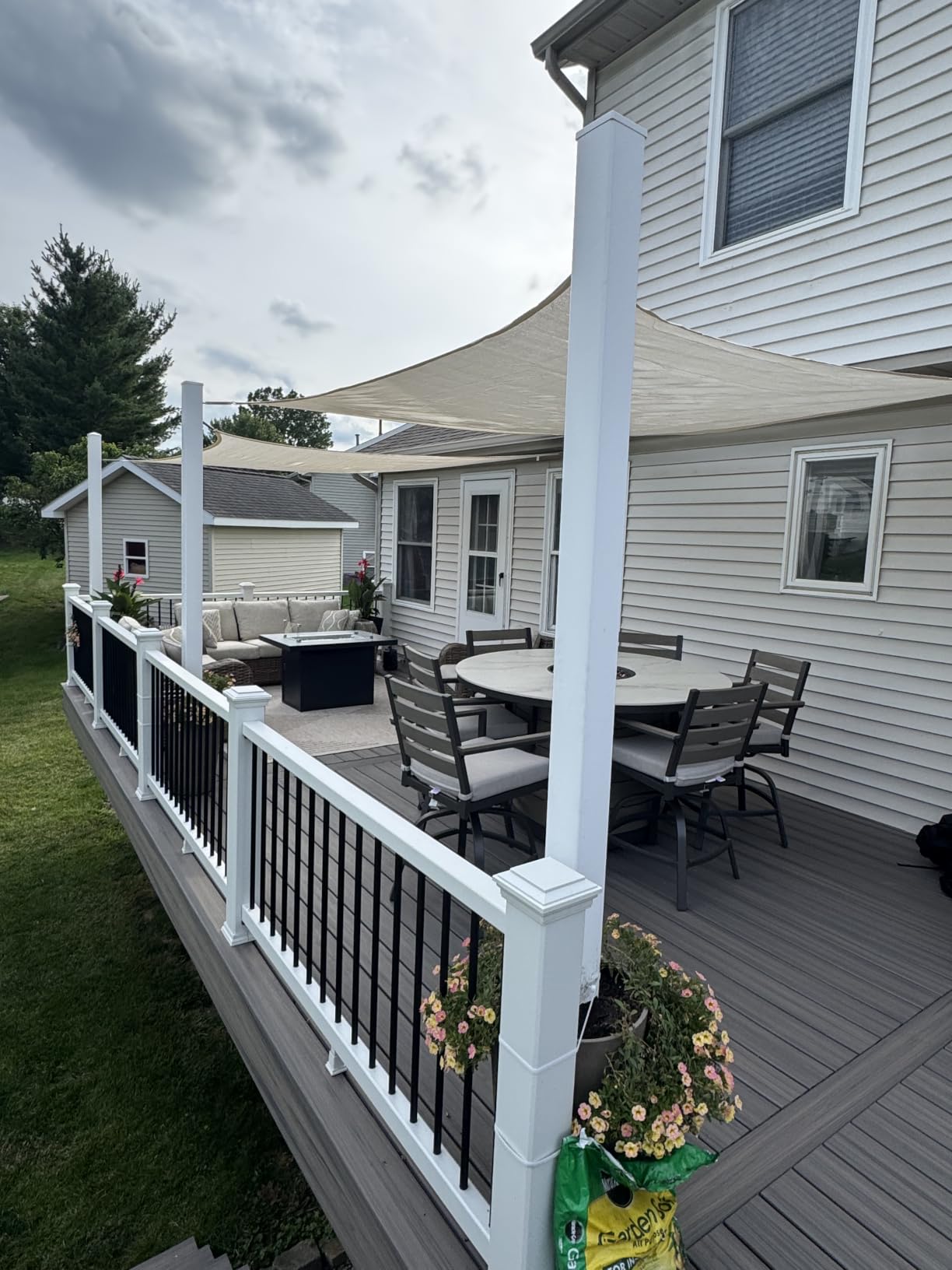
Why the curved sides matter
A rectangle with straight cut corners concentrates all the tension at four points and the middle sags. Curved sides spread the load along the edge, so the fabric pulls flatter and holds its shape longer. It is a small design choice that shows up after a year outdoors.
The five-year warranty is the longest in the roundup, which matters for a product that lives permanently mounted in full sun.
Where it falls short
It is not water resistant. Light mist soaks straight through, and heavy rain pools in the center unless one side is angled down. People consistently buy it for rain protection and are disappointed, so treat it as shade only.
It also requires mounting hardware you do not get. Turnbuckles, carabiners, or a proper line are all extra. The fabric fades noticeably over months, and heavy snow will tear it, so take it down if you get winter storms.
11. Shade&Beyond 12×16 Sun Shade Sail – the simplest real shade
- Least weight per square foot of coverage here
- Weighs 185 g and comes down in under two minutes
- Curved edges shed rainwater buildup
- Breathable so it filters light instead of blacking it out
- Very wide range of custom sizes and shapes
- Mounting hardware kit is not included
- Not waterproof and not intended for snow
- Fabric stretches so replacements measure smaller
- Sags badly if corners are not tightened diagonally
This is the simplest real shade in the roundup, and at 4.5 stars across nearly 13,000 reviews it is not a compromise in quality so much as a different job. There is no frame, so there is nothing to bend, nothing to weigh, and nothing to store except a bag the size of a loaf of bread.
Fabric is 185 gsm high-density polyethylene with well-stitched seams and stainless steel D-rings in each corner. It blocks 95 percent of UV and delivers 85 to 88 percent shade, which means it filters light rather than blocking it, so the space underneath stays bright and usable rather than cave-like. Curved edges prevent rainwater from building up.
Owners treat this as a fixture rather than a purchase. Multiple reviewers report 24/7 deployment over two to four years through storms, desert heat, and micro-bursts, and they keep buying replacements. One owner installed an 18x18x18 variant that withstood an estimated 60 mph micro-burst.
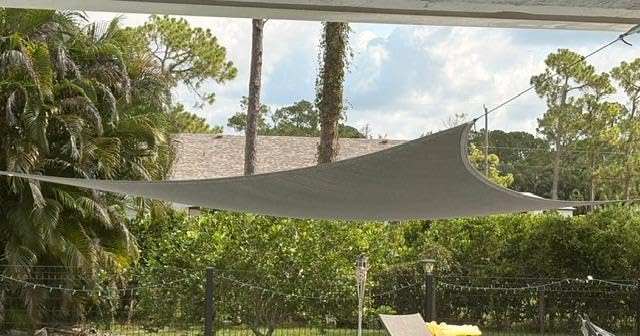
Because it comes down in under two minutes, you can actually respond to weather with it. That is a genuine advantage over a frame canopy, which is the reason forum users end up keeping sails deployed through summer.
The seller also resolves issues quickly and ships an unusually large range of standard and custom sizes, including triangle and pyramid shapes, which is helpful if your anchor points are an awkward geometry.
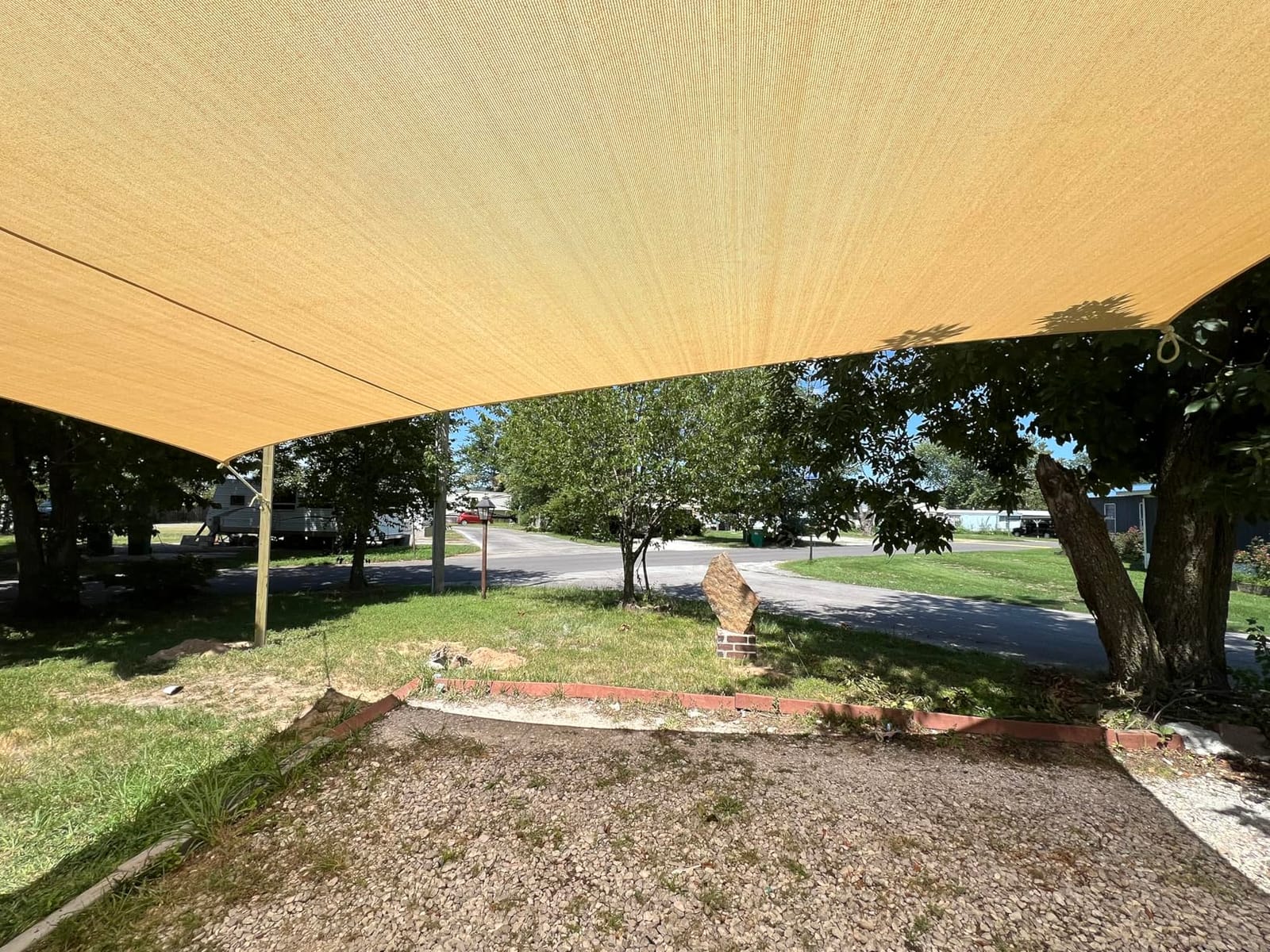
The sizing rule that decides whether it works
Size the sail at roughly 88 percent of the area you want covered, and measure D-ring to D-ring. That 88 percent figure is what leaves enough hardware gap to tension it properly. Get this wrong and the center sags permanently.
Tension diagonally, corner by corner, and never in sequence around the perimeter. Owners report permanent sag from tightening in the wrong order, and that mistake is the difference between a taut sail and a limp one after a season.
Where it falls short
No mounting hardware is included. You need to source turnbuckles, carabiners, or line separately, and a cheap fix is a mistake that shows up in the first gust.
It is not waterproof, and it is not intended to handle snow, which tore one owner’s sail. The fabric also stretches over time, so a later replacement can measure smaller than the original. Leave margin for that when you order.
12. COBIZI 10×15 Pop Up Canopy – the thick-wall frame in its class
COBIZI 10×15 Pop Up Canopy Tent with 4 Sidewalls,Heavy Duty Canopy,Black
- 0.65mm wall tubing is thicker than the standard pop-up frames in this class
- 420D double PU coating with taped seams is genuinely waterproof
- Velcro all the way around the sidewalls
- Four sidewalls convert it to a closed tent
- Plastic leg-release latches are cheap and break in setup
- No separate bag for the sidewalls
- Needs 3 or more people to erect
- Quality is inconsistent across units
This rounds out the list as the rectangle option for a rectangular problem. A 10×15 footprint with four removable sidewalls that double as zippered doors, seating 10 to 15 people, is the shape you want when the space you are covering is a long patio table rather than a square seating area.
The frame is where the money went. Top and bottom tubes are 30x30x0.65mm and the cross tube is 13x25x0.65mm, powder coated and rust proof, supporting up to 300 lb of distributed weight. One owner hung their own body weight off the frame as a stress test and saw no flex, which tells you how much stiffer this is than a standard pop-up.
Fabric is 420D oxford at 280 gsm with two layers of PU coating, UPF 50+ blocking 99 percent of UV, all seams taped and pressed, listed as 100 percent waterproof. It has three height settings with pinch-protecting thumb buttons, and it goes up in minutes without tools.
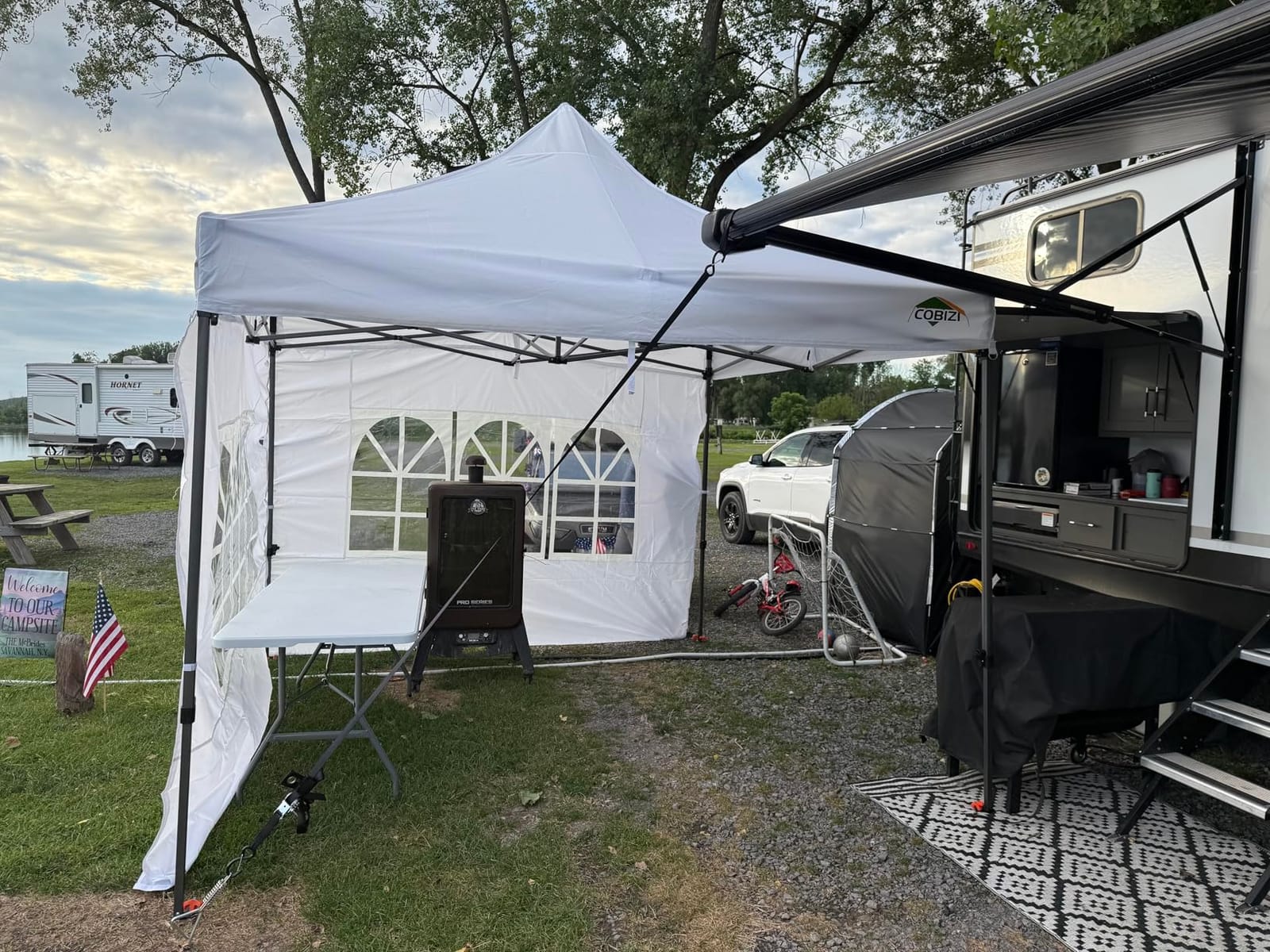
Buyers who have used lighter canopies notice the tubing difference immediately, and the taped seams mean the waterproofing claim is a real one rather than marketing copy. Velcro the full way around the sidewalls makes them quick to attach and pull off when the weather turns.
Reviewers found it stable once pegged down, with all four walls in place turning it into a closed tent. That makes it a legitimate option as a covered workshop or market booth as well as patio shade.
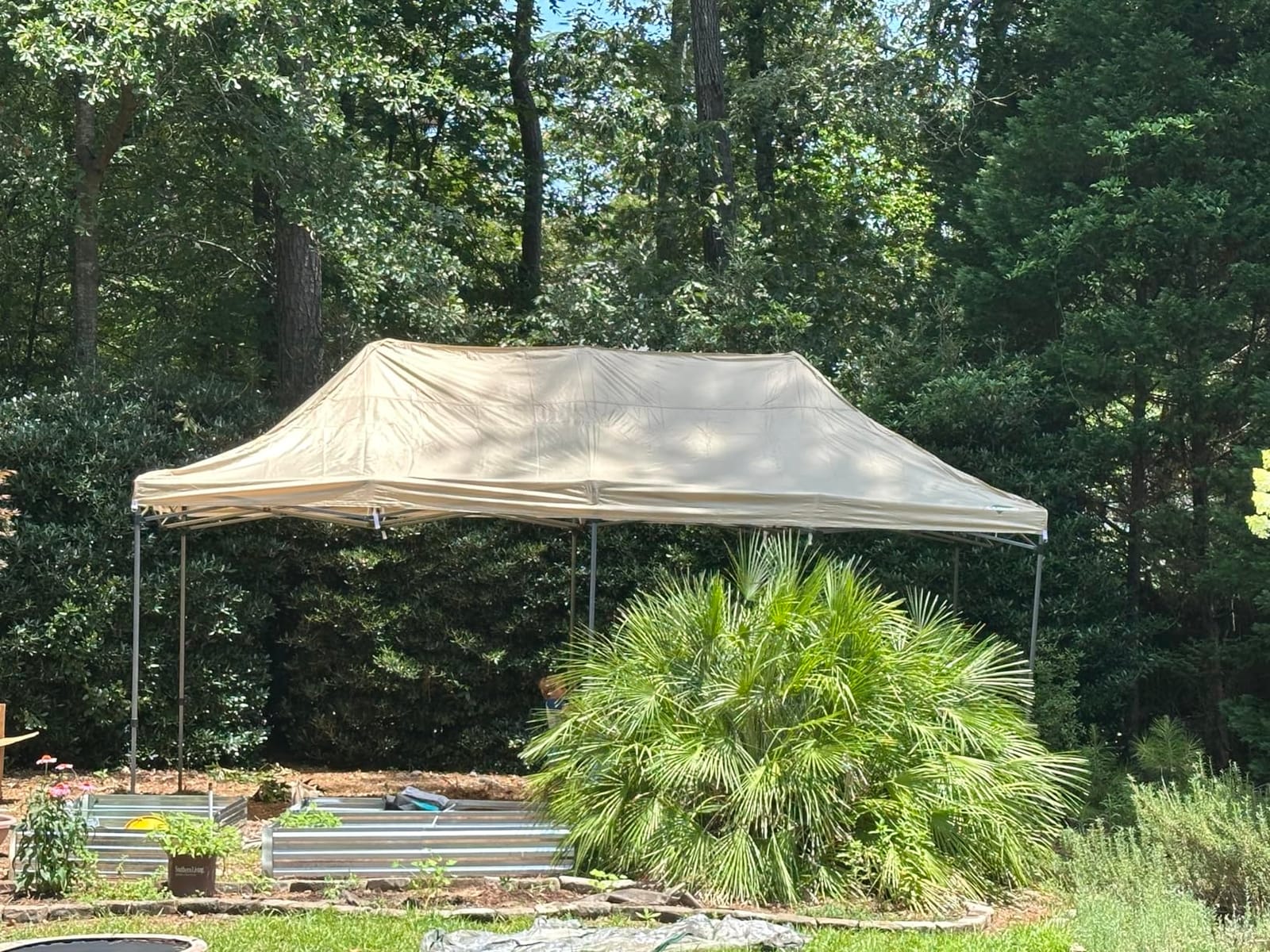
When 10×15 beats 10×10
A rectangular dining table is the obvious case. A 10×10 forces you to push chairs in at the ends, while 10×15 gives you a walkway at both ends. It also covers a grill station beside a seating area in one unit, which is a common patio layout.
At 21600 square inches, that is 150 square feet, enough for 10 to 15 people rather than the 6 to 8 a 10×10 comfortably holds.
Where it falls short
Assembly logistics are the real friction. The plastic leg-release latches are cheap and reported breaking during setup, there is no separate bag for the sidewalls so they will not fit back in the main bag, and owners advise bringing at least three people.
At 66 pounds it is a heavy two-person lift. Quality is also inconsistent, with one 10×15 unit reported breaking into three pieces after two uses and warranty support refused, so inspect everything before you rely on it.
How to Choose a Shade Canopy for Your Backyard in 2026
Most canopy disappointments come down to three things: the wrong size for the space, the wrong anchoring for the wind, and expecting rain protection from a product that only ever promised shade. Get those right and the rest is preference.
Shade sail, pop-up canopy, cantilever umbrella, or pergola? A shade sail gives the most square feet for the least money and weight but needs four solid mounting points. A pop-up canopy needs a flat, clear footprint and gives you adjustable height and optional walls. A cantilever umbrella frees the table completely and has a small base, but it must be collapsed before weather builds. A pergola is a fixed structure that needs a permit and HOA approval in many communities. Our backyard shade structures guide walks through the fixed options in more depth.
How much shade do you actually need? A dining table with six chairs wants roughly 36 to 50 square feet of clear coverage, a two-person seating nook wants 25 to 40, and a full patio with multiple zones wants 100 or more. A 10×10 gives 100 square feet, which is why it is the default for a reason, and a 10×20 gives 200. For shade sails, remember the listed size is measured D-ring to D-ring, so the covered area is always smaller than the number on the listing.
What are the drawbacks of a shade sail? It needs four anchor points, which is often the hard part. It is vulnerable to wind if it is mounted at fewer than four points, and a sail attached at all four corners moves less and generates less force than one attached at fewer. It is roughly 10 percent open, so it blocks sun and light drizzle but not real rain, and heavy rain pools in the center unless you angle one side down. It loses tension over a season and needs re-tensioning, which is why fixing kits exist. And it does nothing at night, so it is not a privacy solution after dark.
Anchor it or lose it. Wind is the dominant failure mode and it is not close. In soft soil, use the included steel stakes driven at an angle away from the frame, plus the sandbags, and attach all four guy lines. On a patio or deck, use the expansion bolts or lag bolts rather than stakes, because a stake in a paver joint is worth nothing. On concrete, sand-filled planters over each leg is the cheapest reliable option. Forum users consistently recommend anchoring to all four points, and it costs almost nothing compared with replacing a canopy that took flight.
Check the hardware, not just the fabric. Owners on multiple forums report that included aluminum fasteners fail within two or three seasons from heat cycling. Swapping the corner brackets and bolt heads for stainless steel is a cheap weekend upgrade that extends the life of the frame considerably. Pair it with the pop-up canopy guide if you want more detail on the frame mechanisms.
Fabric color and weave matter for heat. Light colors reflect more radiant heat and keep the space below cooler, which is why the white canopies dominate. Darker or tightly woven fabric blocks marginally more UV, so if sun protection matters more than temperature, a denser weave in a lighter tone is the compromise. Look for a stated UPF 50+ or a 95 percent UV block figure rather than a vague light-blocking claim.
How much can you realistically carry? Under 20 kg and you can move it solo. Between 35 and 70 pounds and you are looking at a two-person lift, which means it gets set up once and stays up. Over 100 pounds and you are building a structure, not moving a canopy. If storage is the constraint, the two sails in this roundup fold to the size of a backpack and a bag respectively.
What about shade sails specifically? If a sail is your direction, our dedicated shade sail roundup goes deeper on shapes, corner hardware, and mounting geometry. And once the shade is handled, the rest of the yard still needs work, starting with hummingbird feeders that actually get visited.
One last thing: confirm whether your community treats a portable canopy as a structure. Lightweight pop-ups generally do not need a permit, but fixed gazebos and attached covers often do, and your CC&Rs may restrict them regardless. If you rent, a canopy is often the only shade option available to you.
Frequently Asked Questions
What is the best outdoor canopy for shade?
For most backyards, a 10×10 pop-up canopy with a UPF 50+ polyester roof is the best balance of coverage, weight, and setup speed. It shades roughly 100 square feet, raises in about a minute with a one-push center lock frame, and packs down small enough for a closet. Choose a double-roof gazebo instead if your yard stays hot enough that airflow matters, and choose a shade sail if you already have four solid anchor points and want more square feet for less weight.
What is the disadvantage of a shade sail?
The main disadvantages are footprint, wind exposure, and rain. A sail needs four solid mounting points, which is often the hardest part of the job. It needs all four corners anchored to move less in the wind and generate less force. The fabric is roughly 10 percent open, so it blocks sun and light mist but heavy rain pools in the center unless one side is angled down. It also loses tension over a season and needs periodic re-tensioning.
Do canopy tents block rain?
It depends entirely on the fabric, and the listing is the only reliable source. Some tops are labeled water resistant and shed light rain only, while others use 420D or 500D oxford with double PU coating and taped seams, which are genuinely waterproof. No fabric canopy is a substitute for a hardtop in a serious storm, and any soft goods such as sidewalls, curtains, and netting should come down before severe weather.
What color canopy is best for sun and heat protection?
Light colors are better for heat, because they reflect more radiant heat back out of the covered area. For UV protection, a tightly woven fabric with a stated UPF 50+ rating blocks more than a loosely woven one regardless of color. The best compromise in a hot climate is a light-colored canopy in a dense weave with a silver-coated interior, which does both jobs at once.
How big a canopy do I need for a patio?
A dining table with six chairs wants about 36 to 50 square feet of clear coverage, a two-person seating nook wants 25 to 40 square feet, and a full patio with several zones wants 100 square feet or more. A 10×10 canopy gives 100 square feet and fits a standard table with walkway on all sides. Measure the longest side of your table and add two to three feet at each end before choosing a size.
The Best Shade Canopies for Backyards in 2026
After working through all twelve, the CROWN SHADES 10×10 Pop Up Canopy is the one we would buy first, because it has the strongest combination of rating and review volume in the group, raises solo in about a minute, and stores compactly with the fabric attached. If mosquitoes decide when your evenings end, the CROWN SHADES gazebo with netting solves a different problem and does it well.
For the largest coverage at the lowest weight, the AsterOutdoor 16×20 sail covers 320 square feet and folds into a backpack, while the Shade&Beyond 12×16 is the simplest real shade here and holds up over multiple seasons. Both need four solid anchor points, and neither keeps out real rain. If you want year-round coverage instead, the Aoxun hardtop gazebo is the only steel-roof option here, and it is a structure rather than a tent.
Whichever you pick, anchor all four corners before you need to, and swap the included aluminum fasteners for stainless steel while you have the frame on the ground.