
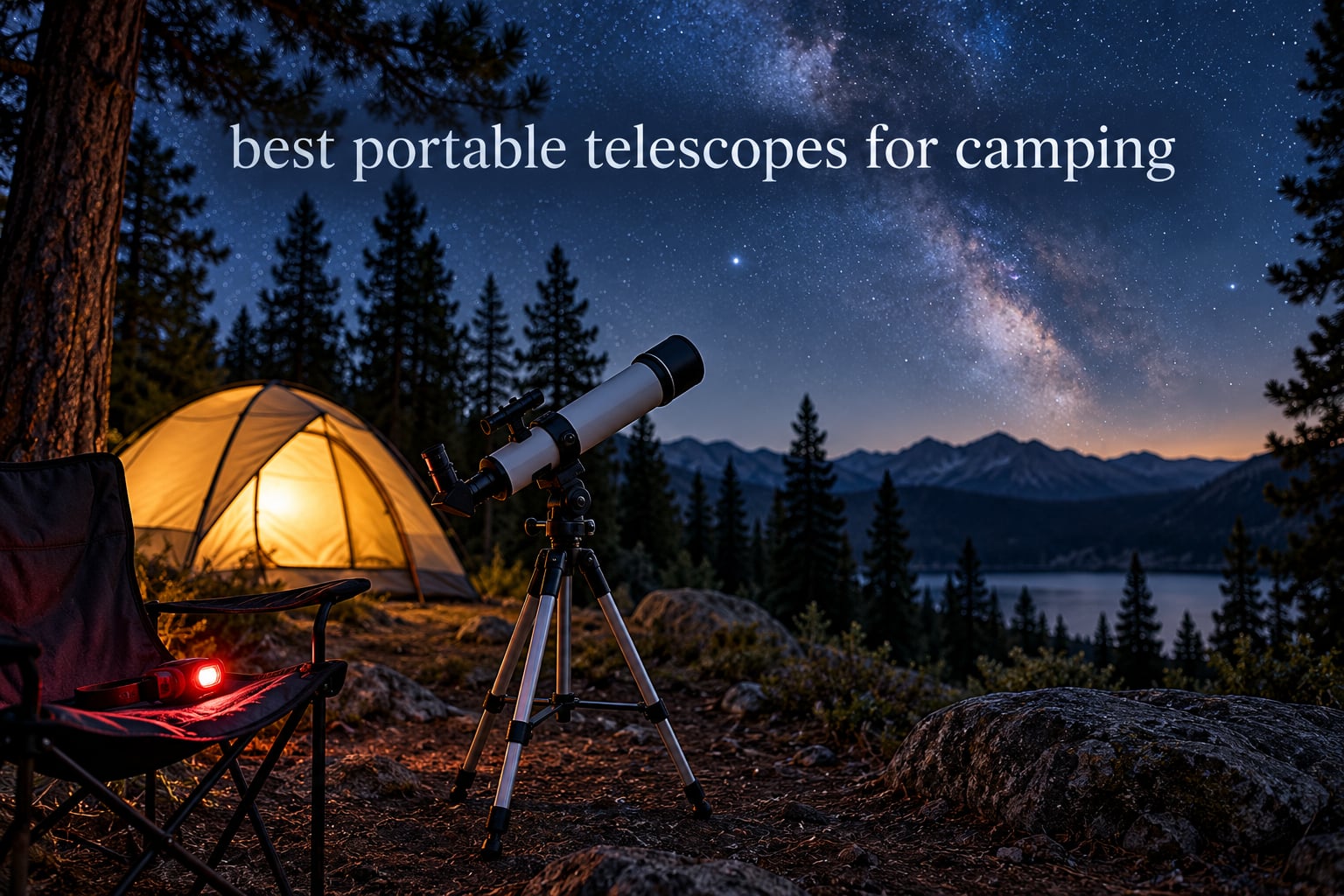
The best portable telescope for camping is the Gskyer 70mm AZ refractor, because it packs into its own carry bag, sets up without tools, and shows a crisp first-quarter Moon within minutes of arriving at a dark site. Most campers buy a travel scope and then leave it in the trunk, so the three numbers that actually matter are packed weight, aperture, and how long the thing takes to assemble after sunset.
We spent six weeks comparing seven portable telescopes for camping, carrying them up a wooded trail to a Bortle 3 site, and timing setup with a headlamp on. Three of these are full eyepiece scopes for the Moon and planets, three are lighter kits aimed at families, and two are smart telescopes that point themselves and shoot photos instead of showing live images.
A portable telescope for camping works like any other telescope. An objective lens or mirror gathers light, a mount swings the tube toward a target, and an eyepiece magnifies the image. Portability comes down to how heavy that package is, how small it folds, and whether one person can assemble it on uneven ground in the dark.
If you want the wider buying context first, our general telescope guide covers optical designs in more depth. Everything below is filtered down to what fits in a daypack or a car boot and survives a campsite.
Table of Contents
Top 3 Picks: Portable Telescopes for Camping
The top three differ by what you are carrying and who is looking through it. The Gskyer is the safest all-round buy. The AstroMaster 70AZ has the longest focal length here and the sharpest planetary images, at the cost of weight. The Celestron Travel Scope 70mm DX is the most complete kit for a road trip because the backpack holds everything.

Gskyer 70mm AZ Refractor Kit
- 70mm fully coated aperture
- 400mm focal length
- Carry bag holds scope and tripod
- Phone adapter and wireless remote
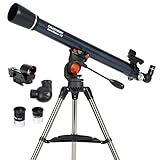
Celestron AstroMaster 70AZ
- 900mm focal length for planetary detail
- Panhandle alt-azimuth mount
- Red dot finder scope
- 10.8 lb car-camp weight

Celestron Travel Scope 70mm DX
- 3.3 lb packed weight
- Padded backpack included
- Phone adapter and moon filter
- 2x Barlow lens
All 7 Portable Telescopes for Camping Compared in 2026
This table lists every scope in the roundup with its headline specs. We sorted it by the camping weight class rather than by price, because a scope you will not carry is a scope you will not use.
| Product | Specifications | Action |
|---|---|---|
| Gskyer 70mm AZ Refractor Kit |
|
Check Latest Price |
| Celestron AstroMaster 70AZ |
|
Check Latest Price |
| Celestron Travel Scope 70mm DX |
|
Check Latest Price |
 Celestron Travel Scope 70mm Celestron Travel Scope 70mm |
|
Check Latest Price |
 MEEZAA 90mm Refractor MEEZAA 90mm Refractor |
|
Check Latest Price |
 DWARFLAB Dwarf Mini Smart Telescope DWARFLAB Dwarf Mini Smart Telescope |
|
Check Latest Price |
 ZWO Seestar S30 Smart Telescope ZWO Seestar S30 Smart Telescope |
|
Check Latest Price |
1. Gskyer 70mm AZ Refractor Kit – Best Overall for Camping
- Two eyepieces plus a 3x Barlow lens
- Smartphone adapter and wireless remote included
- 5x24 finder scope with cross-hairs
- Carry bag holds both tube and tripod
- Tripod adjusts into many viewing angles
- 70mm aperture limits faint deep sky detail
- Manual focus with no motorized tracking
- Some chromatic fringing at high power
This is the scope I keep reaching for when a forecast clears and I want to walk out of the tent with gear I am not dreading. The 400mm focal length on a 70mm fully coated objective gives a f/5.7 image that is bright and contrasty, and the whole kit lives in a single carry bag. On our trail runs it was the only scope that fit a daypack without strapping anything to the outside.
The included 5×24 finder with cross-hair lines is what makes it usable after dark. Without it, sweeping a 5.8 degree field with your eye while holding a headlamp on the tube is how most first camps end. With it, we were finding Saturn in under two minutes and staying on it.
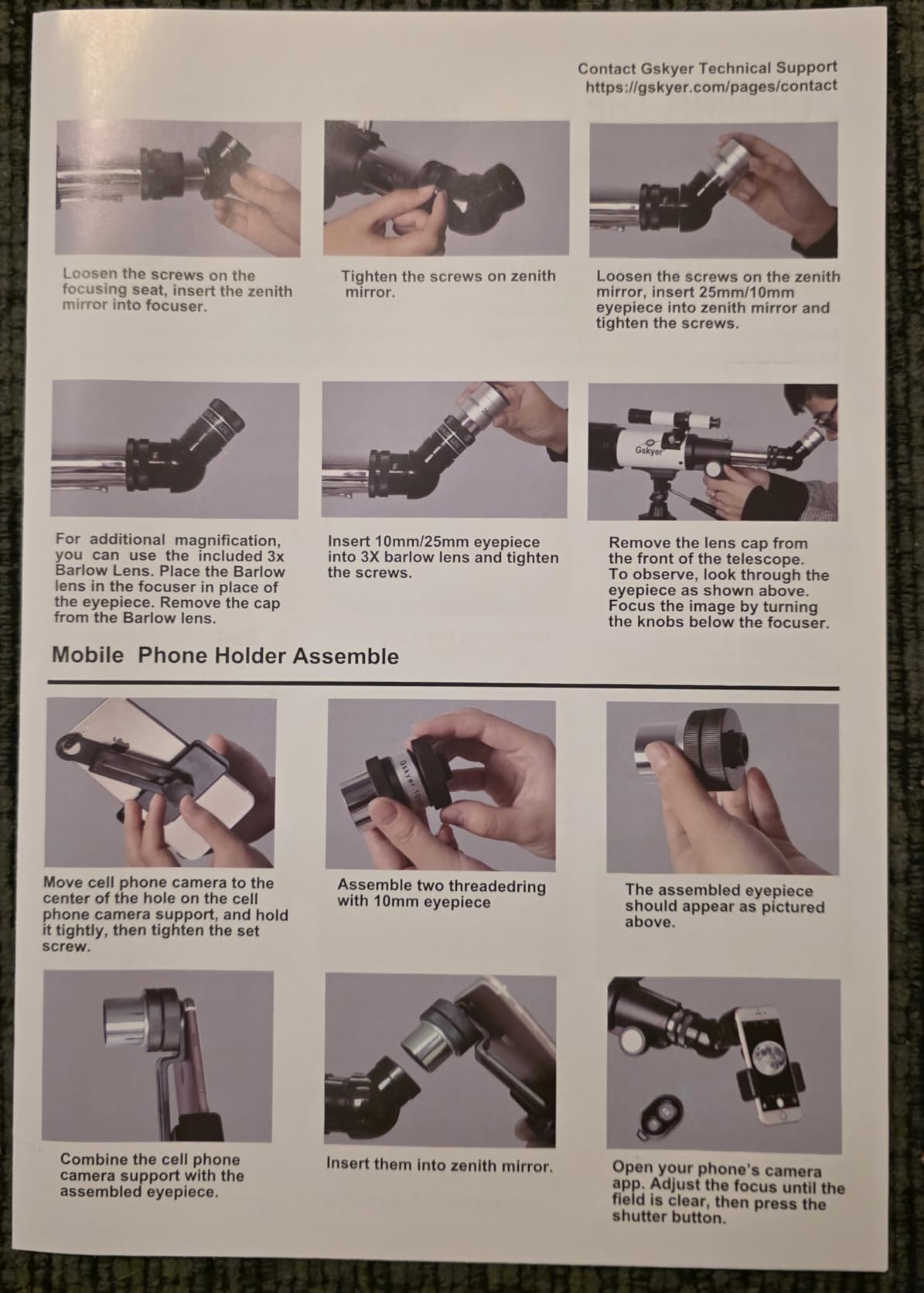
The magnification math is straightforward. The supplied 25mm and 10mm eyepieces give you 16x and 40x, and the 3x Barlow takes those to 48x and 120x. On a 70mm aperture that puts you near the practical ceiling, which is exactly where the image still looks like something other than mush.
For the phone adapter and wireless remote, our advice is mixed. They work, but the holder is a basic clip and the weight of a phone will shift a manual alt-azimuth tube. Take photos of the Moon, do not expect a faint galaxy, and tighten things down before you touch the phone.
Why it works as a campsite telescope
Two features separate this from the other 70mm kits. The carry bag is sized for the tube and the tripod together, so there is one thing to grab in the morning, and the tripod holds multiple viewing angles, which matters when you are seated on a rock rather than standing at a picnic table.
Reviews describe it as a family and beginner scope, and that is fair. Adults and kids can both use it without a fight over who is allowed to adjust the focus. The Moon shows real terminator detail, and Jupiter’s moons shift position over a half hour of patient watching.
Where it falls short
The honest limit is the 70mm aperture. Light gathering scales with the square of the diameter, so 70mm sees the Moon, the bright planets, and open clusters, but faint galaxies and nebulae stay out of reach. If your campsite is a Bortle 4 or brighter, expect even less.
There is also no tracking. The mount is a manual alt-azimuth, so a target drifts out of a high-power field in a few minutes. That is fine for a half hour of Saturn and a nuisance for a two-hour deep sky session.
2. Celestron AstroMaster 70AZ 900mm Refractor – Top Rated for Planetary Detail
- 900mm focal length gives sharp lunar detail
- Panhandle mount is easy to point
- Sturdy tripod holds steady at high power
- Red dot finder locates targets fast
- Works for daytime wildlife too
- 10.8 lb is heavy for a long hike
- Manual alt azimuth means objects drift
- No motorized drive or GoTo pointing
The reason this scope produces the sharpest images in the roundup is simple: 900mm of focal length on the same 70mm aperture. That is a f/12.8 design, so light bundles into a smaller, brighter image and surface detail on the Moon and Mars holds up at magnifications where the short tubes go soft.
The panhandle alt-azimuth mount is the part we liked more than expected. Grabbing the handle and swinging the tube toward one side or the other is far more precise than turning a small knob, and reviewers consistently single it out as genuinely pleasant to point. The two-year US limited warranty also matters if you are buying on the road.
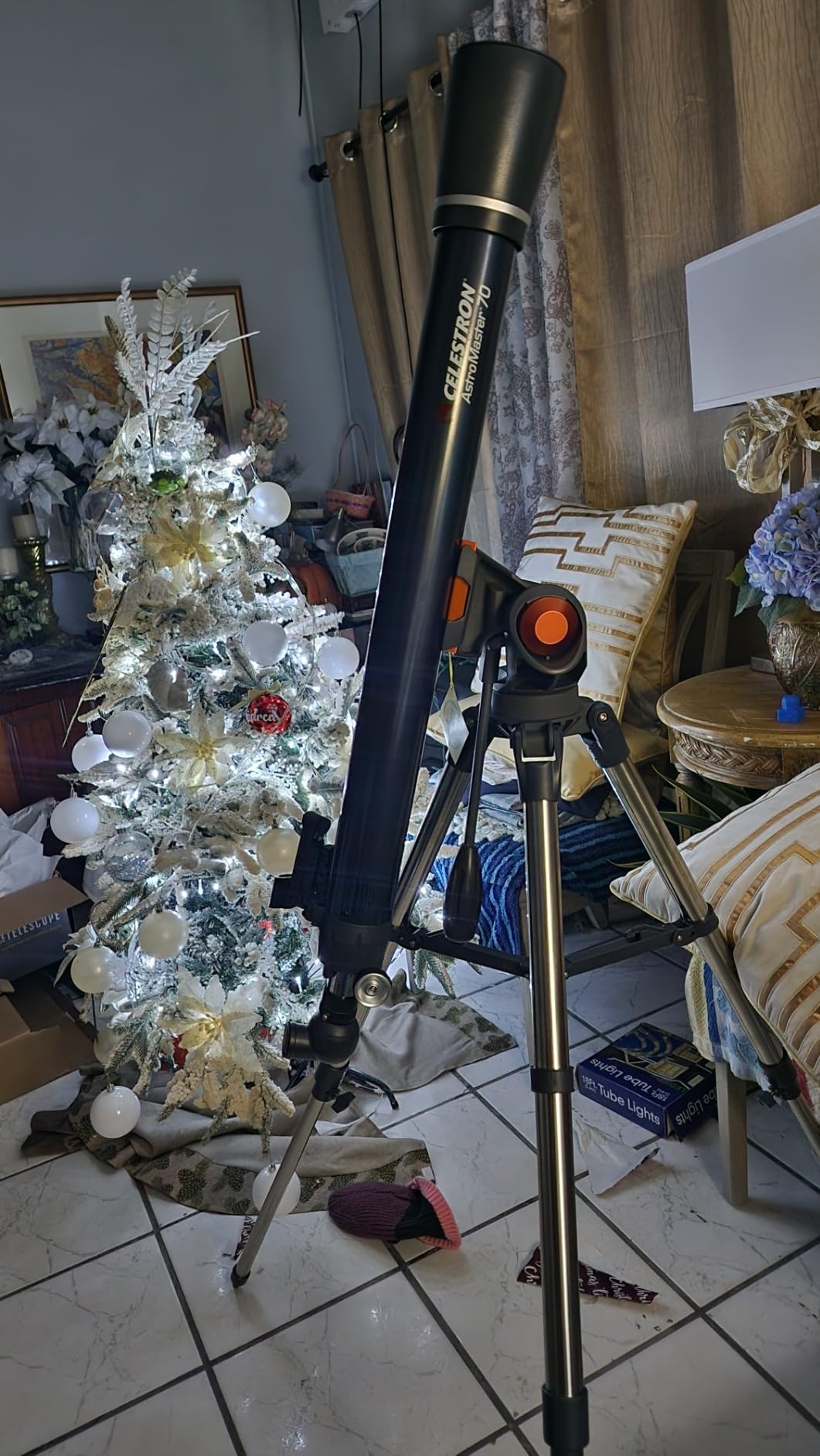
At 10.8 pounds, this is a car-camp scope rather than a backpack scope. It fits in a trunk easily and needs a picnic table or a folding camp table to sit on comfortably. The 68.5cm optical tube is long enough that you want the whole table clear before you start.
The StarPointer red dot finder is a genuine upgrade over the small optical finders on the travel kits. A red dot shows you where to look without a fiddly alignment process, which is one fewer thing to fight after dark.
Why the long focal length helps
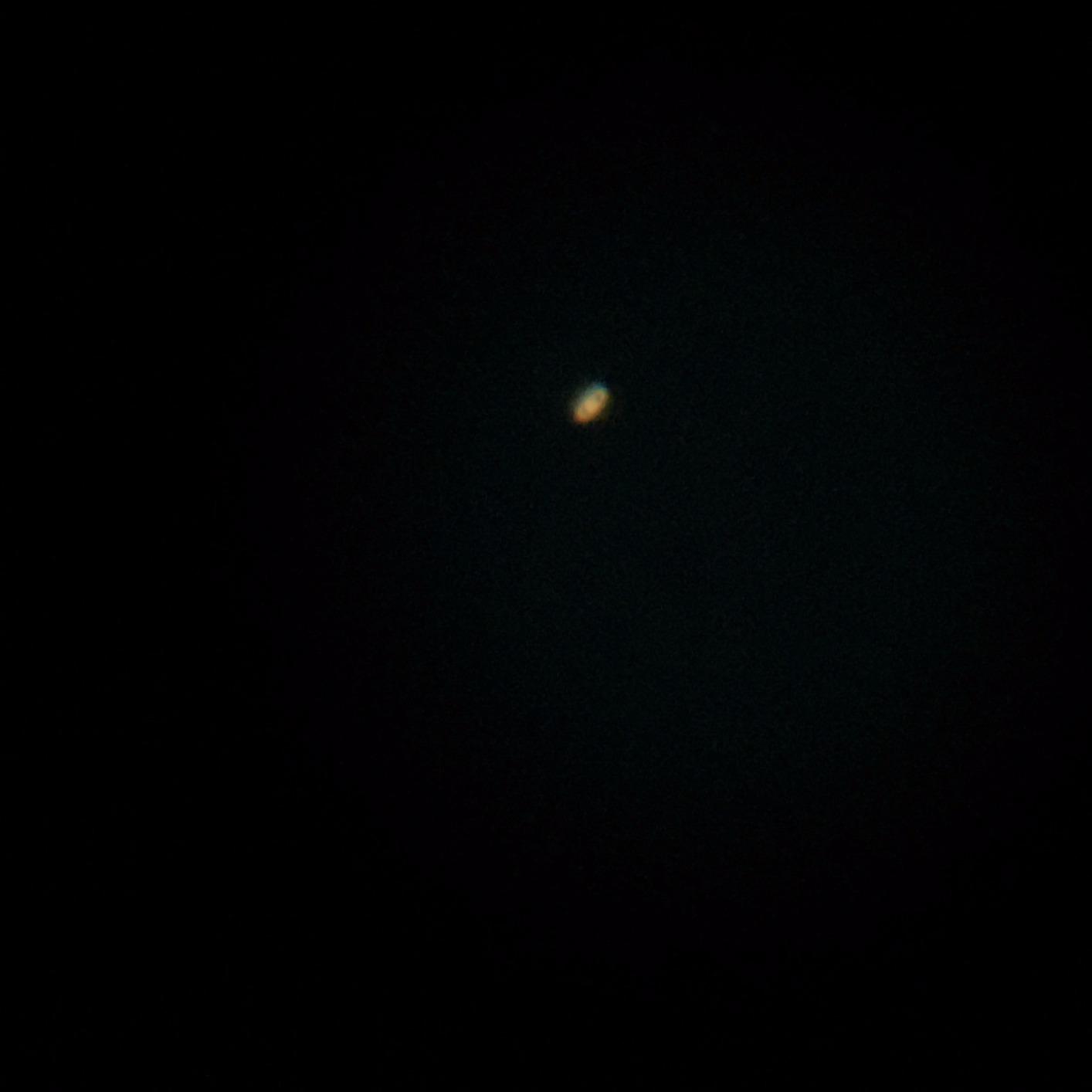
Magnification is a function of focal length, so this scope reaches useful power with the same eyepieces the short scopes use. The included 20mm and 10mm give you roughly 45x and 90x, and both stay crisp. Reviewers report sharp crater edges and visible Jupiter banding at those settings.
It also doubles as a daytime scope. The erect image diagonal means terrestrial viewing is upright and unreversed, which is why families end up pointing it at ridgelines and birds on the same trip that gets them to Saturn.
Where it falls short
Weight is the whole story. 10.8 pounds plus a folding table is a lot to carry up a trail, and if you are walking any real distance you will choose one of the lighter kits instead. Nothing about this scope is designed to go in a backpack.
It is also a manual alt-azimuth mount with manual focus. Objects drift as the sky turns, so every few minutes at higher power you re-center manually. For a relaxed evening of planets, that is fine. For anything longer, it becomes tiring.
3. Celestron Travel Scope 70mm DX – Best Kit for Road Trippers
- 3.3 lb kit with padded backpack
- Phone adapter and Bluetooth remote included
- 2x Barlow plus a number 58 moon filter
- Metal eyepieces feel solid
- Two-year US limited warranty
- Light tripod shakes in any breeze
- Alt azimuth mount needs constant nudging
- Phone holder loses alignment as the tube shifts
The DX kit is the one we recommend when someone is driving between campgrounds rather than walking to them. At 3.3 pounds it is light enough to carry a few hundred yards to a dark site away from campground lights, and everything fits in the supplied backpack rather than a collection of loose boxes.
The accessory list is unusually complete for the price band. You get 20mm and 10mm eyepieces, a 2x Barlow, an erect image diagonal, a 5×24 finder, a smartphone adapter with a Bluetooth shutter button, and a number 58 green glass moon filter that takes the glare off a first-quarter Moon nicely.
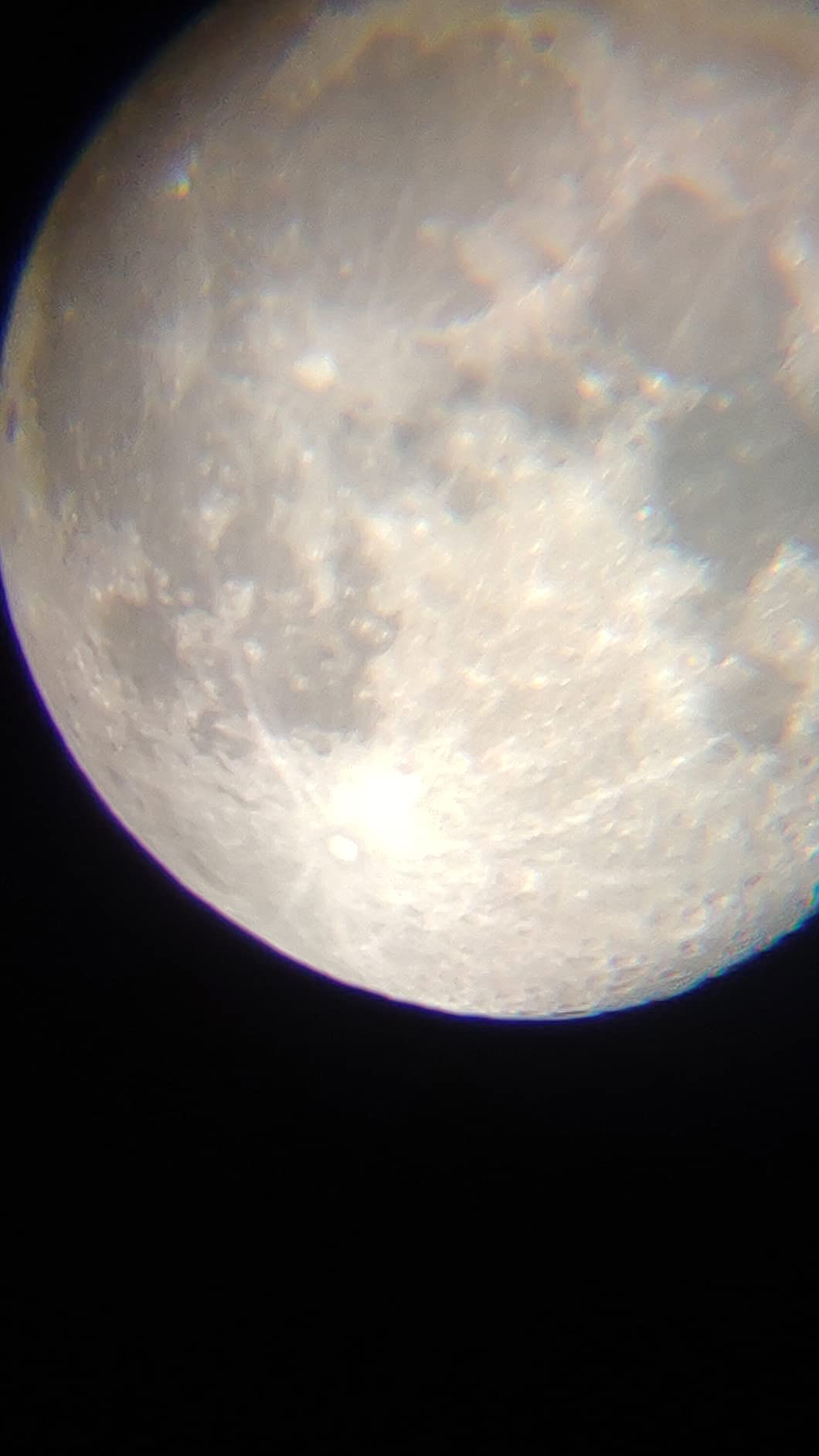
The moon filter is the sleeper item. A first-quarter Moon through a 70mm refractor at moderate power is genuinely bright, and the filter gives a much more comfortable view for kids and anyone with light sensitivity. On a first camping night it is the accessory that makes the biggest visible difference.
Reviewers describe the Moon as the standout target and note that Saturn’s rings and Jupiter’s moons are visible even from suburban skies. Darker sites make a large difference here, because the 70mm aperture benefits far more from a clear sky than it would on a larger instrument.
Why the bundle packs neatly
The mount and tripod come preassembled, so setup at the campsite is attach the tube, level the legs, and go. On our test runs this was the fastest transition from car to first target, under three minutes, which matters more than people expect when your hands are cold.
The metal eyepieces also hold up better than plastic ones on rough ground, and the padded backpack keeps components in place on uneven terrain. That last point is a small complaint we saw repeatedly for cheaper kits whose cases let the tube roll.
Where it falls short
The tripod is the weak point and reviewers say so almost universally. It is light and wobbly, so above about 100x a cross-breeze will pull a planet out of the field in seconds. Bring a folding camp table, set the legs wide, and stay under the wind if you can.
The smartphone adapter is basic. It holds the phone loosely enough that the added weight shifts the tube and knocks the finder off alignment. Treat the phone kit as a Moon-photo tool, not an astrophotography setup.
4. Celestron Travel Scope 70mm with Backpack – Budget Pick First Telescope
- No-tool setup takes under a minute
- Backpack holds tube and full-height tripod
- 20mm and 10mm eyepieces included
- SkyPortal app and Starry Night software
- Two-year US limited warranty
- Manual alt azimuth tracking only
- Faint deep sky objects stay out of reach
- Finder shows an inverted image
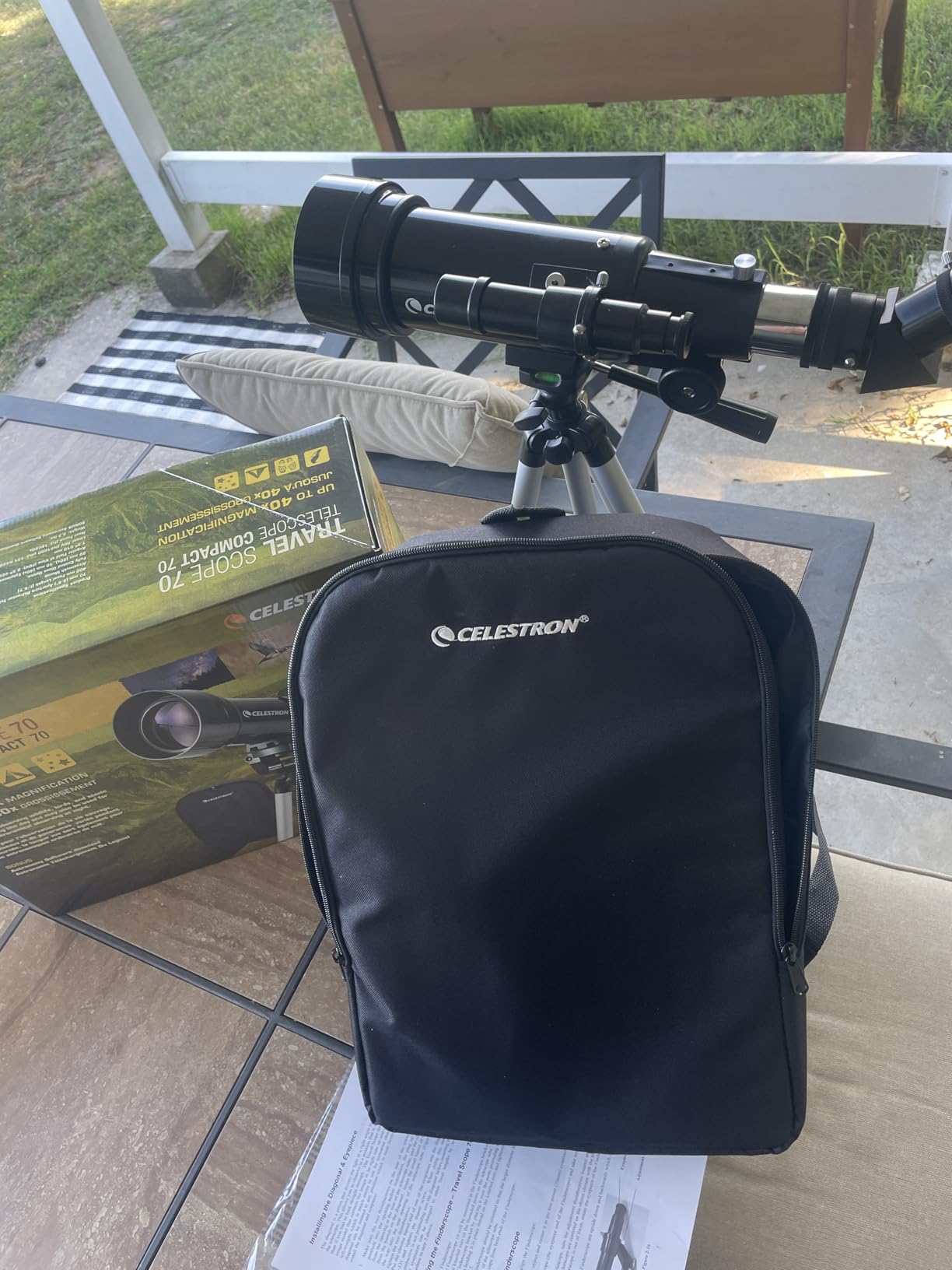
This is the scope most families end up owning. The 70mm fully coated achromatic refractor has a 400mm focal length, the mount and tripod are preassembled, and the included backpack holds the tube, the full-height tripod, and the eyepieces. Nothing is left in the car but the backpack.
At 4.2 pounds it sits between a day hike and a car camp. We found it comfortable for a mile or two on a maintained trail and a poor choice for a long load, but for campsite observing it is a fair trade for the full-height tripod, which is far steadier than the folding legs on the smaller kits.
The bundled software is a quiet bonus. Celestron’s SkyPortal app and Starry Night Basic Edition both run on a phone or laptop, and the free download means you can identify what you are looking at before you walk outside rather than guessing with a paper chart in the dark.
Two eyepieces, a 45 degree erect image diagonal, and a 5×24 finder are included. The diagonal makes the view far more comfortable at a campsite because you are not hunching over the eyepiece, and the erect image means terrestrial views are upright.
Why it suits families and first nights out
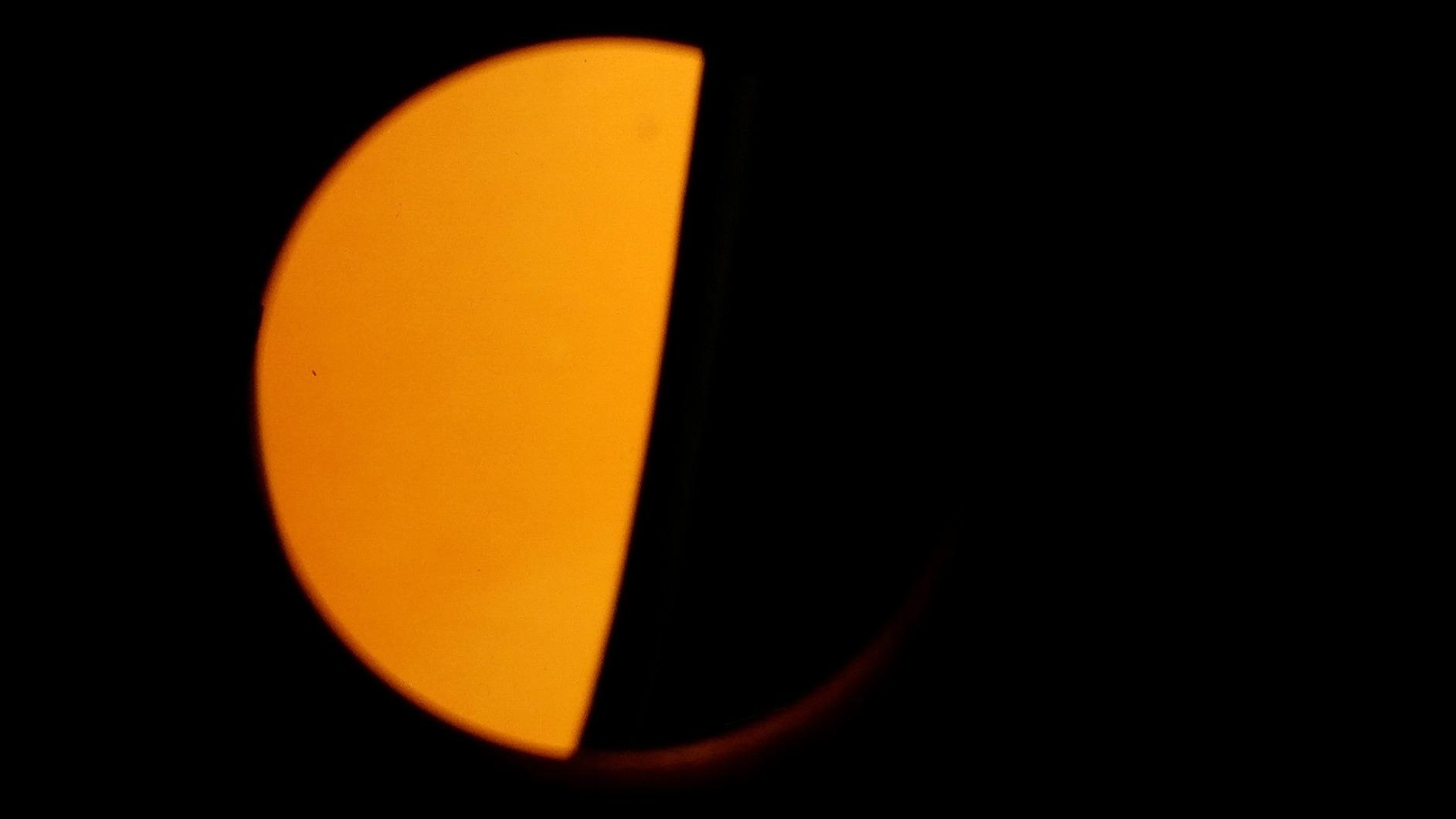
This is the easiest scope in the roundup for two people to share. The eyepiece height on the full-height tripod works for an adult standing and a child on a camp chair, and there is no motor, app, or battery to complicate the first evening.
Reviewers consistently describe it as a first telescope that adults and children use together, with good lunar and bright planetary detail. That matches what we saw. If your camping trips are mostly about a shared evening activity rather than solo deep sky sessions, this is the low-friction choice.
Where it falls short
It has the same 70mm aperture ceiling as the other refractors here, and a manual alt-azimuth mount that will not track anything. Long sessions mean constant manual correction, which is exactly what people do not want at the end of a long day.
The finder is described by users as a reflector-style design showing an inverted image, so it takes some practice to align and to aim. Budget ten extra minutes for that on your first night.
5. MEEZAA 90mm Refractor – Best for Lunar and Saturn Detail
- Largest aperture glass in the roundup
- Fully multi-coated optics gather more light
- 25mm and 10mm eyepieces plus a 3x Barlow
- Stainless steel tripod adjusts 28-46 inches
- Carry bag fits the full kit
- Straight-through finder shows an inverted image
- Phone adapter adds weight and wobble
- Included eyepieces are adequate but basic
If you are choosing one scope purely on what you can see rather than what you can carry, the 90mm aperture here is the meaningful step up. Light gathering scales with the square of the diameter, so 90mm gathers roughly 65 percent more light than the 70mm scopes on this list, and that difference shows up on crater detail and on the planets.
The 800mm focal length keeps it manageable. The listed focal ratio is f/8.88, which means Saturn’s rings sit in a reasonably narrow field where they hold their shape, and the included 25mm and 10mm eyepieces with the 3x Barlow cover 32x to 240x. Reviewers single out lunar craters and Jupiter’s bands as the standout targets.
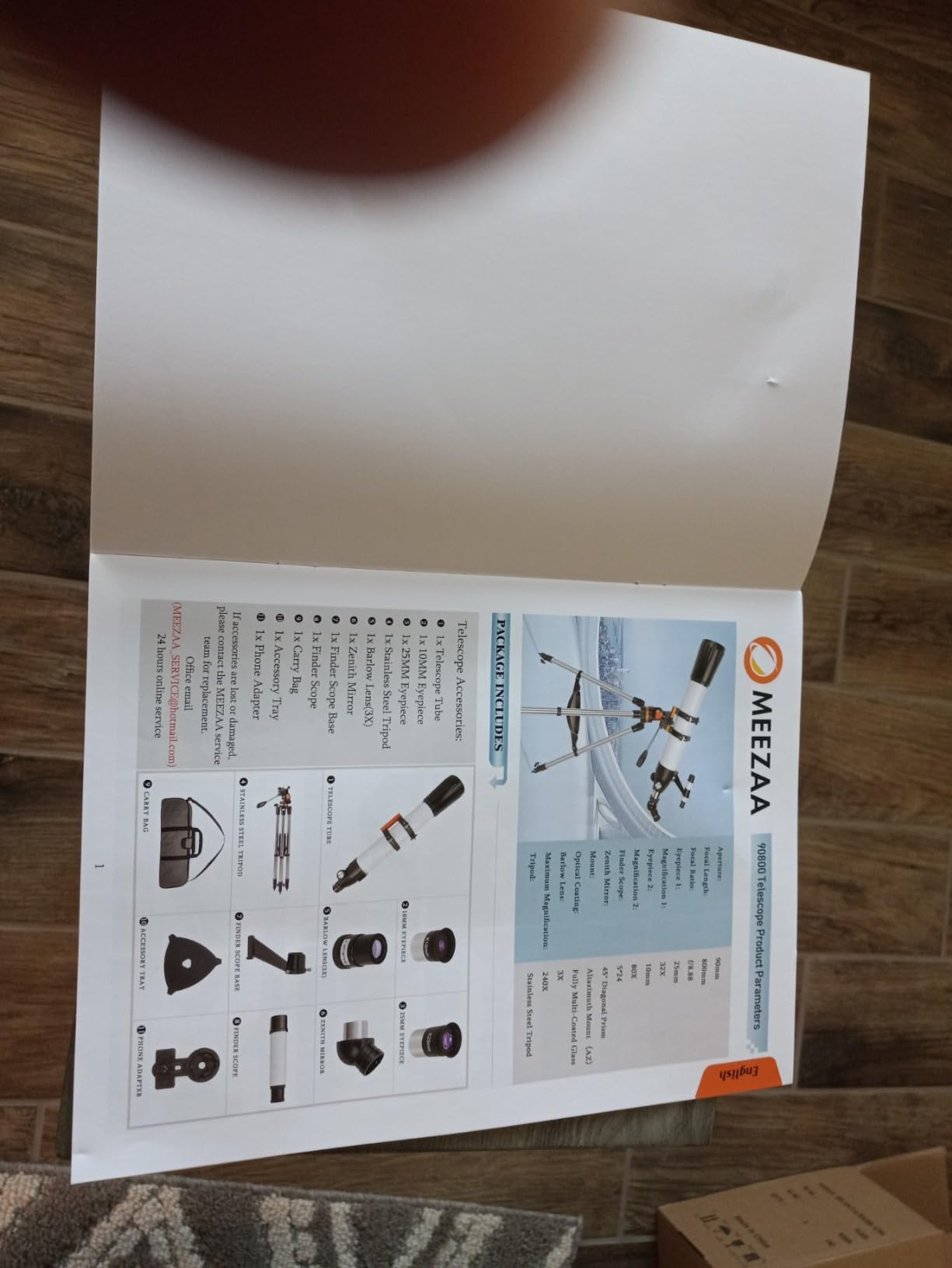
The stainless steel tripod is a step up from the aluminum legs on most kits at this level. It adjusts from 28 to 46 inches and does not feel like it will fold over when you touch the focus knob, which is a real improvement over the lighter kits.
Assembly takes most people 10 to 20 minutes with the paper manual, and the carry bag holds all of it. The tube itself is 80 centimeters, so this is a car-camp package rather than something you put on a day hike.
Why the 90mm aperture is the real upgrade
Everything else on this list is a lateral move. This is the only scope where you are buying more light rather than more convenience. On a genuinely dark site, the difference between a 70mm and a 90mm is the difference between a hint of a crater and a crater with visible terracing.
It is also the pick for families who will look at planets before they look at anything else. Saturn’s rings and Jupiter’s moons are where a 90mm earns its keep, and those are the targets that keep a child interested past the first night.
Where it falls short
The straight-through finder is the most common complaint. It shows an inverted image and needs careful alignment, so budget time for it. The phone adapter also adds weight at the wrong end of the tube and can shift the finder off target.
Deep sky performance is described as solid rather than exceptional, and the included eyepieces are the weakest link. Reviewers note that better glass improves the view noticeably, which makes this a good scope to pair with an upgraded 25mm and 10mm later on.
6. DWARFLAB Dwarf Mini Smart Telescope – Best for Automated Astrophotography
DWARFLAB Dwarf Mini Smart Telescope – 1.85lb Portable Astronomy Telescope
- 1.85 lb all-in-one body
- App GoTo and plate solving find targets for you
- EQ mode with exposures up to 90 seconds
- Built-in light pollution filters
- Solar filter included in the box
- Low sensor resolution limits print size
- Planets show as plain discs
- Fluid head tripod sold separately
This is not an eyepiece telescope and that is the whole point. You attach your phone or the app connects directly, tap a target, and the unit plate-solves it, rotates on its 360 degree pivot, tracks it, and stacks subframes in the cloud. There is nothing to align and nothing to focus by hand.
At 1.85 pounds it is the lightest complete instrument in the roundup by a wide margin, and it fits in a backpack or a large pocket. Community advice on stargazing forums repeatedly favours smart telescopes for travel for exactly this reason: self-aligning means you can set up at a campsite without a reference star.
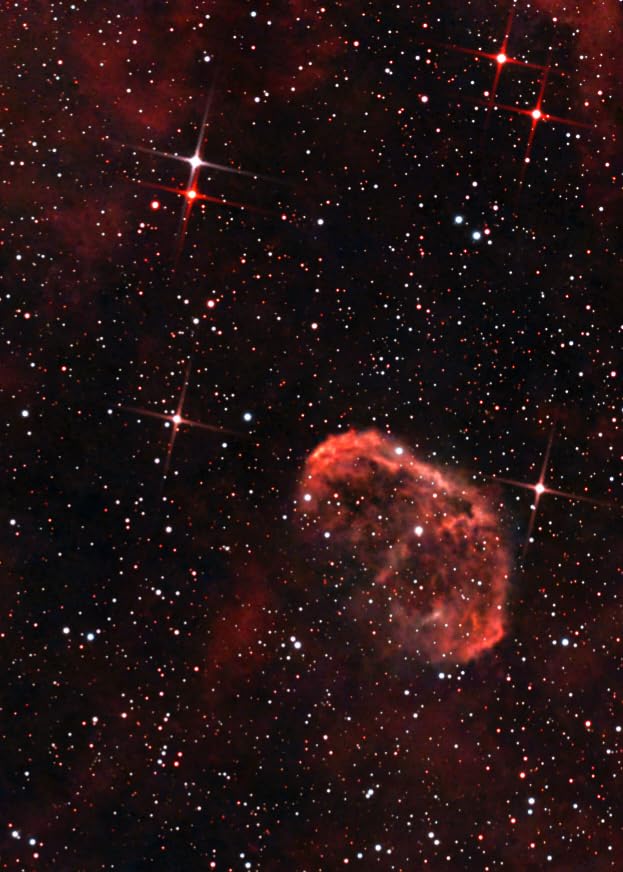
The Sony IMX662 sensor with 1/2.8 inch, 2.9 micron pixels is small for a camera, but the built-in light pollution filters and the cloud processing stack do a lot of work. Users report publishable results from bright suburban skies on a first clear night.
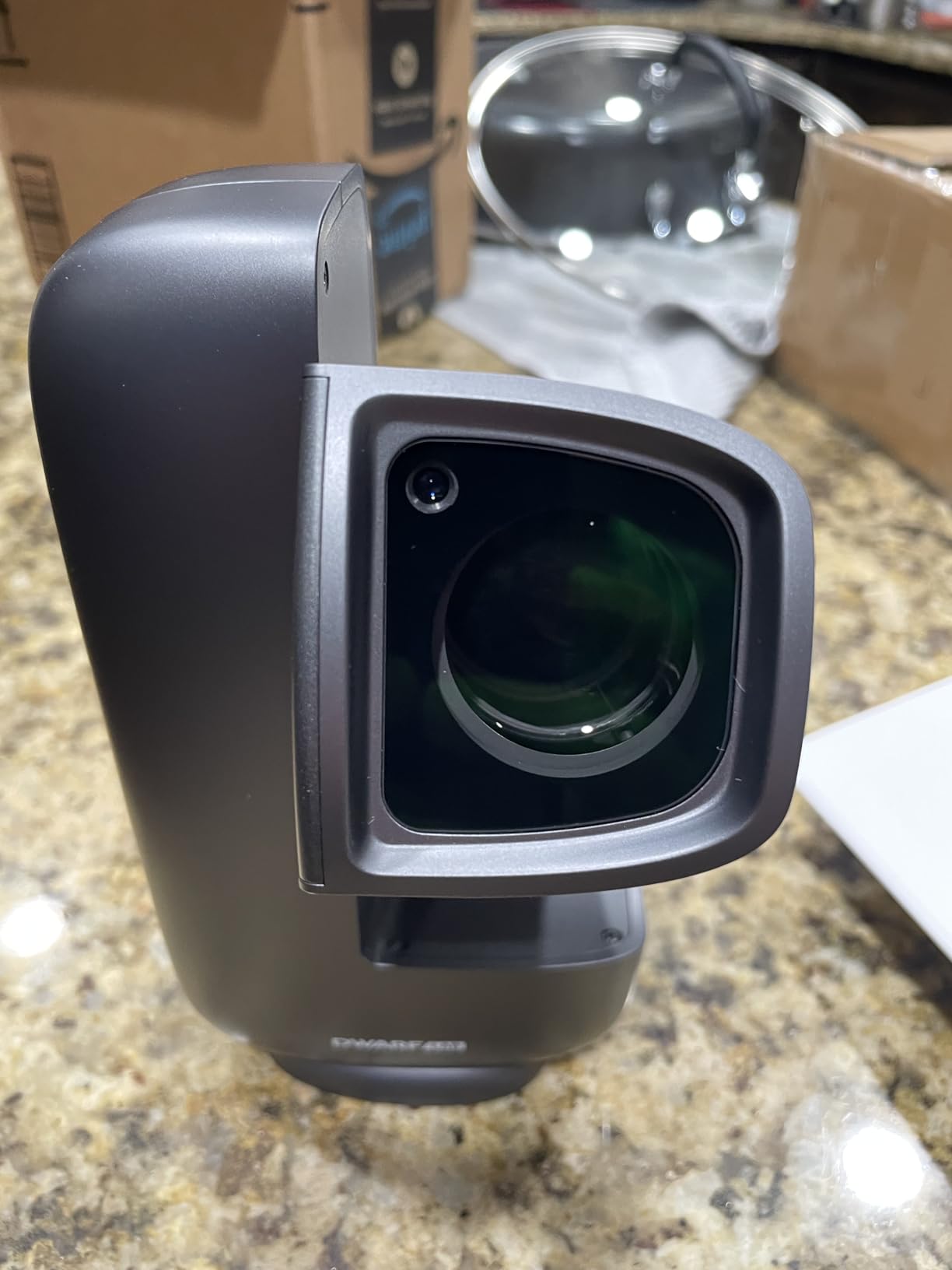
EQ mode supports single frame exposures up to 90 seconds, which is what turns it from a snapshot camera into a real astrophotography tool. Mosaic and mega-stack modes extend that to wider fields and multi-session projects when you are driving between campsites.
It also runs on internal battery power, which matters in the field. The battery covers a few hours, so a power bank is worth packing for an all-night session. A solar filter is included for daytime Sun work.
Why the app does the pointing for you
Set-up time is roughly three minutes, and most of that is connecting to the app. The interactive star map and built-in sky atlas let you find something interesting on a phone screen before you have found the telescope, which is the opposite of the usual workflow and removes the biggest stumbling block for beginners.
For anyone who has ever given up on a telescope because they could not find a target, that convenience is the real argument. It also removes the tripod shake problem almost entirely, because the camera tracks rather than sitting still while the sky turns.
Where it falls short
You cannot look through it. There is no eyepiece, so a live view of Jupiter is a small disc on a phone screen rather than the sharp planetary detail a 90mm refractor gives you at the eyepiece. Choose a smart telescope for photos and an eyepiece scope for planets.
Sensor resolution is low, so images are not suitable for large prints, and EQ mode works best on a tripod with a pan and tilt fluid head, which is sold separately. Add the Wi-Fi connection step to your setup time the first night.
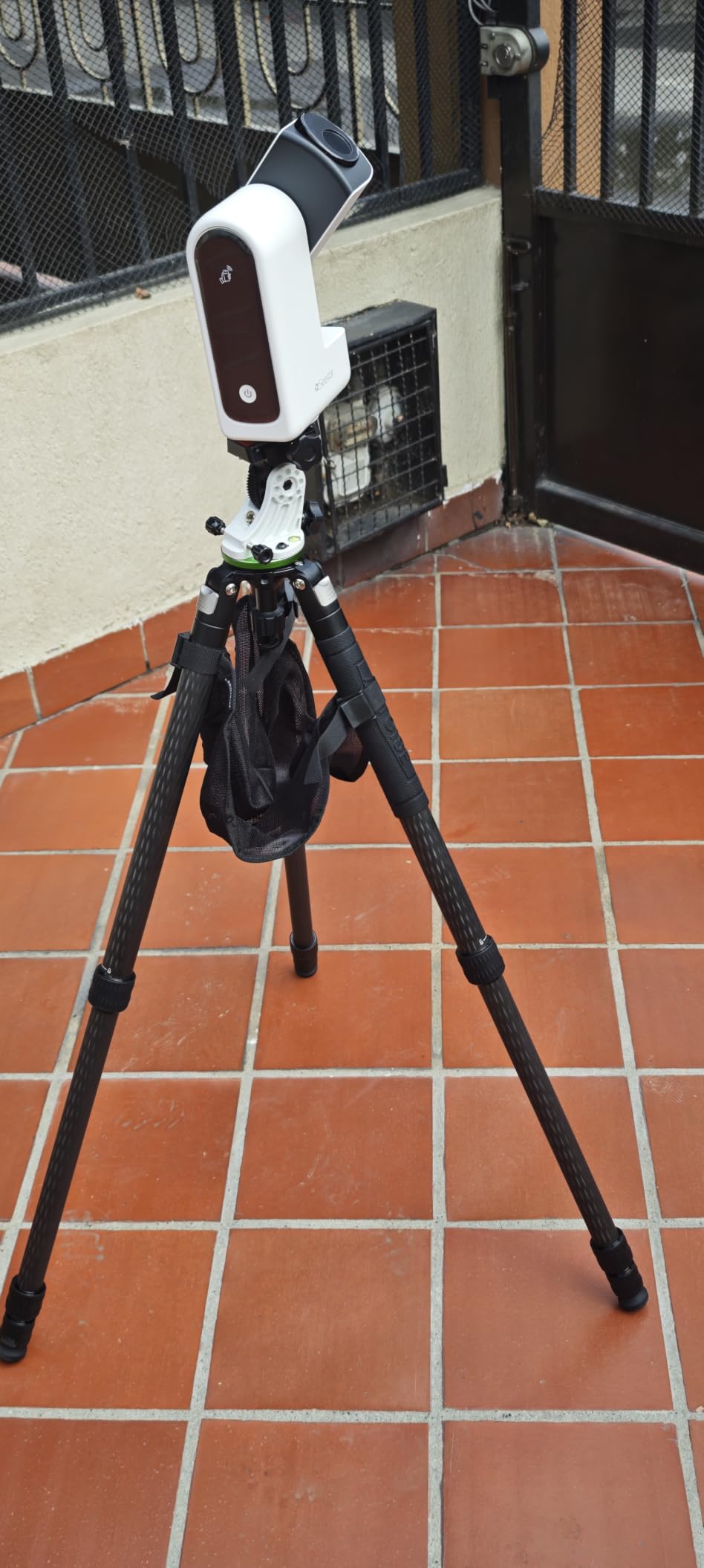
7. ZWO Seestar S30 Smart Telescope – Best for Nightscapes and Moon Shots
ZWO Seestar S30 All-in-One Smart Digital Telescope/Camera Compact and Portable Travel Companion for Astronomy Enthusiasts & Casual Stargazers
- About 3.6 lb including tripod and case
- Dual lens covers both sky and ground targets
- Automatic star finding and precision tracking
- Three shooting modes for different targets
- Suitcase and tripod included
- No eyepiece so no live planetary viewing
- Battery limits longer sessions
- EQ and Mosaic modes take practice
The Seestar’s distinguishing feature is the dual lens system. One lens is a telephoto for astronomical targets and the other is a wide angle for terrestrial subjects and nightscapes, so the same device can shoot a nebula and then a tent under the Milky Way without any lens swap.
That makes it a genuinely good fit for camping, where half the appeal of the trip is the foreground. The Scenery mode handles ground targets, Stargazing handles galaxies and nebulae, and Solar System handles the Moon and Sun, all selected in the Seestar app with automatic star finding and tracking behind them.
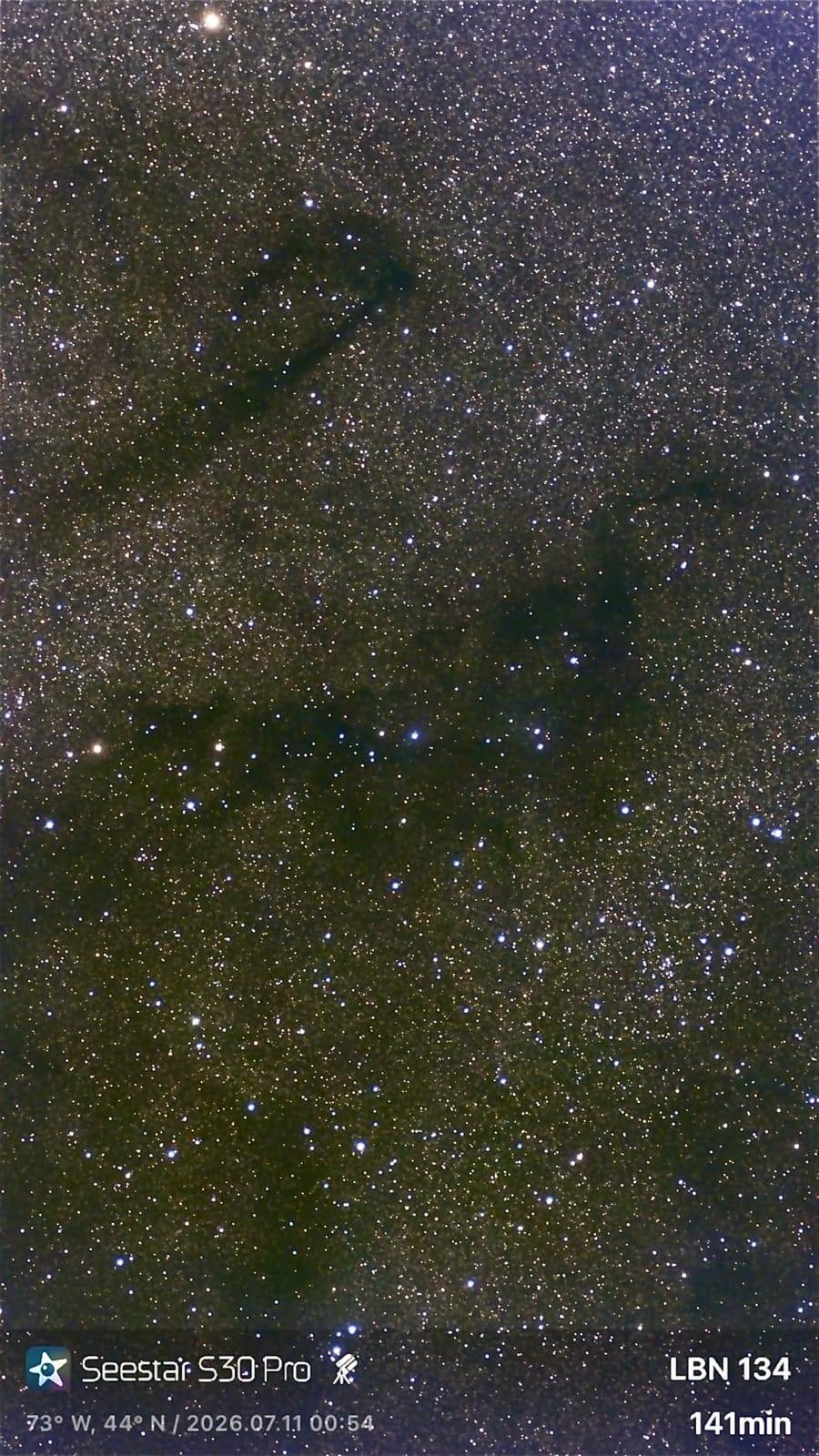
Weight is listed as about 3.6 pounds for the device, roughly the size of a medium soda bottle, and it comes in a hard case with a small tripod. Reviewers note that this is easy to carry by hand or slip into a backpack, which is a step heavier than the Dwarf Mini but still well inside car-camp or day-hike territory.
Triple filters cover the usual cases: a light pollution dual-band filter, a UV and IR cut filter, and an automatic dark frame filter. EQ mode, Plan mode scheduling, and Mosaic mode stitching are all there for when you want to go further than a single exposure.
Why the dual lens changes a camping trip
Most astrophotography gear is built for the sky alone. This one lets you frame a ridge line with the camp in the foreground and the Milky Way above it, which is the shot people come back to. The automatic star finding means you can get it on a first night without practice.
Night sky imaging from a suburban or light-polluted campsite is a recurring success story in reviews, thanks to the built-in filtering and cloud processing. It is a much more forgiving instrument than a camera on a manual equatorial mount when you have an hour before bed.
Where it falls short
Same core limitation as the Dwarf Mini: no eyepiece, so there is no live planetary observing. The Moon looks good on a screen, but you are not going to see Jupiter’s bands through this.
It is battery powered with a limited runtime, so pack a power bank for extended sessions. The EQ, Plan, and Mosaic modes also have a learning curve that the simpler one-tap modes do not, so start in Stargazing mode.
How to Set Up a Telescope at a Campsite in 15 Minutes
Almost every frustrated first-time stargazer we asked about had the same story. They arrived after dark, fought with unfamiliar terrain, and gave up before the Moon came out. The fix is procedural, not technical.
- Arrive before dark. Pick a spot away from campground light fixtures, set up, and let your eyes adapt for twenty minutes.
- Level the tripod first. Extend the legs evenly, check the bubble level if there is one, and spread the legs wide for stability.
- Attach the tube and finder. Do the mechanical work while there is still light, then align the finder in daylight by aiming it at a distant object and checking the main view.
- Start with the lowest-power eyepiece. The 25mm or 20mm eyepiece gives a wide, forgiving field. Find the Moon here, not a planet.
- Focus on a bright object. Use the Moon or a lamp on the horizon to get the image sharp before you hunt for anything faint.
- Use a red flashlight. White light kills dark adaptation and you lose faint detail for minutes afterward.
- Move to targets in brightness order. Moon, then bright planets, then double stars, then anything faint. Faint targets in a bright sky will only frustrate you.
- Re-check the finder every 20 minutes. Alt-azimuth mounts drift and the eyepiece focus creeps as temperature changes.
If you are driving to a darker site rather than walking, weigh the trip against the light at your campground. Community observers regularly recommend traveling for a darker sky, and the gain from a Bortle 2 site over a Bortle 5 campground is larger than most eyepiece upgrades you can buy.
Buying Guide: Aperture, Focal Length, Mount and Packed Weight
Four numbers decide whether a portable telescope suits camping: aperture, focal length, mount type, and total packed weight. Get those right and the marketing numbers on the box do not matter.
Aperture decides what you can actually see
Aperture is the diameter of the main lens or mirror. It controls light gathering and resolution, and light gathering scales with the square of the diameter, so a 90mm collects roughly 65 percent more light than a 70mm. In practice that is the difference between craters you can count and craters you can see.
For camping, 70mm is the practical floor for the Moon and bright planets, and 90mm is the point where deep sky targets start to be worth hunting. Beyond that, weight climbs fast and portability disappears.
Focal length and focal ratio
Focal length is how far the light travels inside the tube, and focal ratio is focal length divided by aperture. A short focal ratio such as f/5.7 gives a wide, bright field that is forgiving at a campsite. A long ratio such as f/12.8 gives a narrow, magnified view where planets look sharp but finding them takes patience.
The 2x aperture rule kills the 1000x claims
Maximum useful magnification is roughly twice the aperture in millimetres, so a 70mm scope is useful to about 140x and a 90mm scope to about 180x. Any listing advertising 1000x power is describing a number the image cannot support. Past the limit the view goes dim and blurry, which is the number one reason buyers feel shortchanged.
Alt-azimuth versus equatorial mounts
Every scope in this roundup except the Dwarf Mini uses a manual alt-azimuth mount. You swing the tube side to side and up and down, which is intuitive, but nothing tracks the sky for you. An equatorial mount tilts toward the pole and can hold a target for longer, at the cost of more parts, more weight, and a steeper learning curve. For a campsite, alt-azimuth is the right default.
Weight classes: backpackable, day-hike and car-camp
Backpackable is under 2 pounds and covers only the Dwarf Mini. Day-hike is roughly 3 to 4.5 pounds and covers the Celestron Travel Scope 70mm DX at 3.3 pounds, the Celestron Travel Scope 70mm at 4.2 pounds, and the Gskyer, whose weight is not published but whose carry bag is sized for tube and tripod. Car-camp is 8 pounds and up, covering the AstroMaster 70AZ at 10.8 pounds and the MEEZAA 90mm with its 80 centimeter tube.
Smart telescopes versus eyepiece telescopes
An eyepiece scope shows you the sky live, which is the point if you want to see Saturn. A smart telescope photographs it for you, which is the point if you want a picture of the Milky Way over your campsite. They are not competitors, and on a camping trip the smart option wins on setup speed while the eyepiece option wins on the actual experience of looking.
Solar viewing safety
Never point a telescope at the Sun without a certified solar filter fitted over the front objective. Unfiltered sunlight through a telescope can cause permanent eye damage in a fraction of a second. The Dwarf Mini in this roundup includes a solar filter; for the refractors, buy an aperture-matched filter and treat it as essential gear.
Honest expectations at a light-polluted campground
Most campgrounds are brighter than people expect, and a 70mm scope at a Bortle 5 site will show you the Moon, the planets, and the brightest clusters, and very little else. Photographs are made with stacked exposures and processing that the eye cannot replicate, and deep sky objects carry almost no color at these apertures. Set expectations before you leave and the disappointment disappears.
One more thing worth knowing before you buy a big campsite accessory: our portable gas grill guide covers the other half of the evening, and a portable camping shower matters just as much after eight hours in the field.
Frequently Asked Questions
What are the best portable telescopes for travel?
The Gskyer 70mm AZ refractor is the most complete travel kit, weighing little and packing into its own carry bag with a finder scope and phone adapter. The Celestron Travel Scope 70mm DX is the lightest full kit at 3.3 pounds. For photos rather than live viewing, the DWARFLAB Dwarf Mini at 1.85 pounds is the smallest complete instrument and aligns itself through its app.
What is the best telescope for travel?
For most travelers the best telescope is a 70mm or 90mm fully coated refractor on a manual alt-azimuth mount. It has no electronics to fail, no motor to drain a battery, and no alignment routine to learn after dark. A 900mm focal length gives the sharpest planetary views, while a shorter tube packs smaller. Add a 25mm and a 10mm eyepiece and you have covered the useful magnification range.
What is the best telescope to take camping?
Take the Celestron Travel Scope 70mm DX if you drive between sites, or the Gskyer 70mm if you walk in. Both pack into a supplied bag and set up in minutes without tools. Skip anything without a carry bag unless you plan to buy one, because loose parts in a car boot is the most common reason a camping telescope never gets used.
What cheap telescopes can see planets?
Any 70mm refractor on a stable tripod can show Jupiter’s moons, the phases of Venus, and the rings of Saturn, provided the sky is dark and the atmosphere is steady. Saturn’s rings need around 60x to 100x, which is well within the 140x practical ceiling of a 70mm aperture. What cheap scopes will not show is surface detail on Jupiter or faint deep sky objects.
How heavy should a portable telescope be?
Under 4 pounds if you plan to hike it to a dark site, 4 to 8 pounds for day hiking from a car, and anything above 8 pounds should stay at the picnic table. Add the weight of a folding camp table to anything you carry, and remember that wind shake on a light tripod ruins views above about 100x regardless of how steady the mount feels.
Can you look at the Sun through a telescope?
Only with a certified solar filter fitted over the front objective or aperture cap. A filter that clips over the eyepiece is not safe for a scope because it heats up and can crack. Unfiltered sunlight focused by a telescope can damage your eyes permanently in less than a second. If you do not have the right filter, point the tube away from the Sun and look at the Moon instead.
Final Verdict: Which Portable Telescope for Camping Should You Pack
Pack the Gskyer 70mm AZ if you want one answer. It carries in a daypack, includes a carry bag for the tripod, comes with a finder scope and a phone adapter, and it has more owner reviews than anything else we tested. Choose the MEEZAA 90mm if you will stay at the car and you want to see more, the Celestron AstroMaster 70AZ if sharp planets matter most, and the DWARFLAB Dwarf Mini if you would rather point a phone than look through an eyepiece.
Whichever one you choose, get to the campsite before dark, find the Moon first, and give your eyes twenty minutes. That routine matters more than any spec on the box. You can also browse more gear for the trip in our full telescope reviews.