
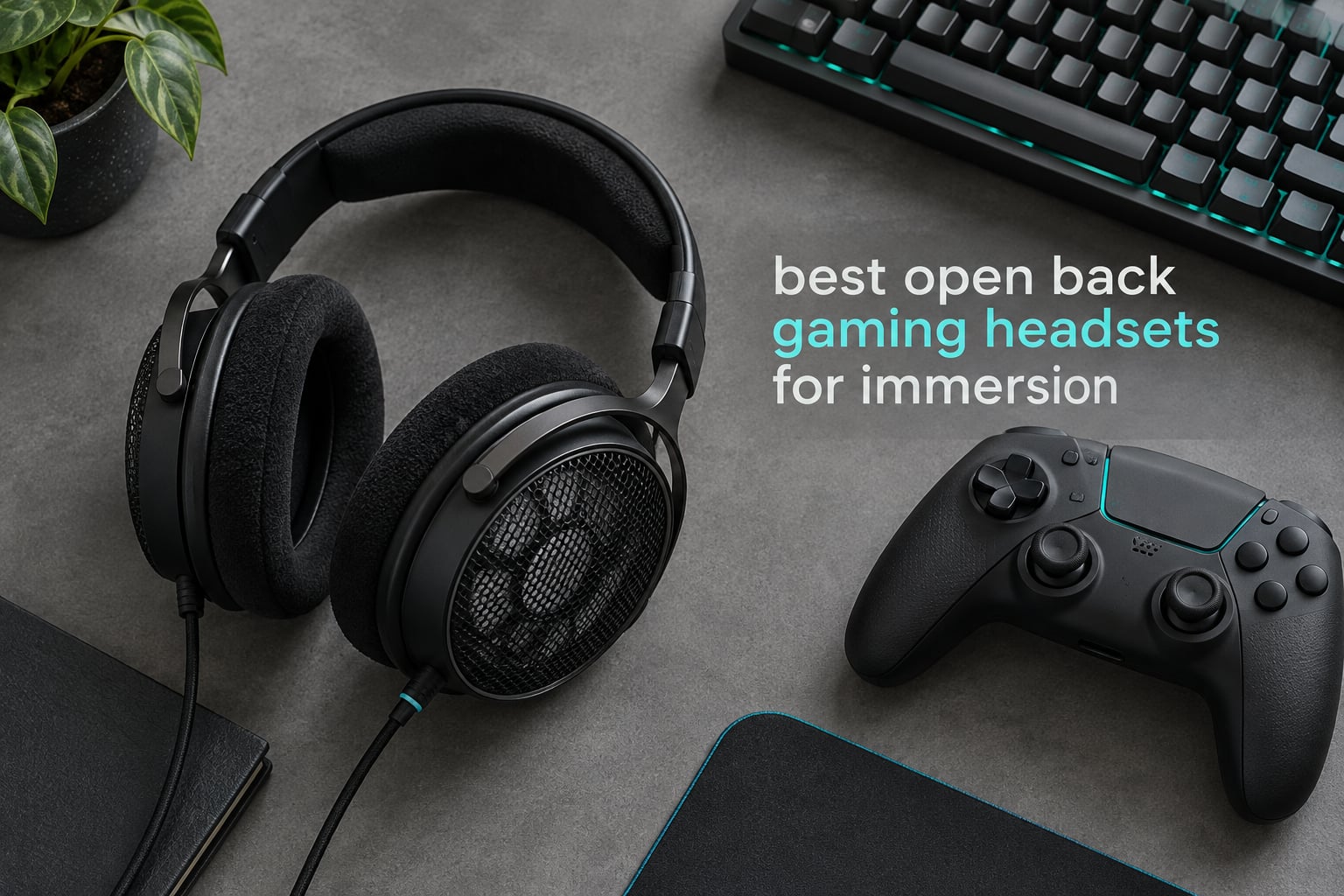
If you mostly play single-player RPGs, open worlds, survival games and horror titles, the best open back gaming headsets for immersion are the ones that make a world feel like it surrounds you rather than sitting inside your skull. An open earcup lets sound escape in both directions, so the drivers are never working against a sealed wall of air. That single design choice is why an open-back beats a closed-back on soundstage width, on the pinpoint placement of a footstep behind a wall, and on how long your ears stay comfortable in a six-hour session.
The trade-off is immediate and you should know it before you buy. Open designs have no passive isolation, so the room gets into your ears and your game bleeds into the room. Bass rolls off because the earcup cannot trap low frequencies. Most of the picks below have no microphone at all, because the classic open-back headphone was never built for team chat. If you play competitive shooters in a shared apartment, an open-back is the wrong tool. If you play alone in a room where sound leakage will not start an argument, the soundstage upgrade is dramatic and worth every one of those compromises.
We compared ten open-back models on the things that actually decide immersion: soundstage depth, imaging precision, midrange clarity on dialogue, sub-bass weight, weight and clamping force over long sessions, impedance and whether you will need an amplifier, and microphone options. The list spans entry-level planars under the reach of a laptop jack, studio references that need real amplification, and two headsets with integrated boom mics for people who want both worlds. If you want the wider category covered too, our best gaming headsets for PC guide covers closed-back options for noisy rooms.
Table of Contents
Top 3 Open-Back Gaming Headsets for Immersion

beyerdynamic DT 990 Pro
- Wide open soundstage
- Velour pads for long sessions
- 250 ohm needs an amp
- No microphone

Sennheiser HD 599
- Spacious audiophile tuning
- 50 ohm easy to drive
- Two detachable cables
- Velour pads

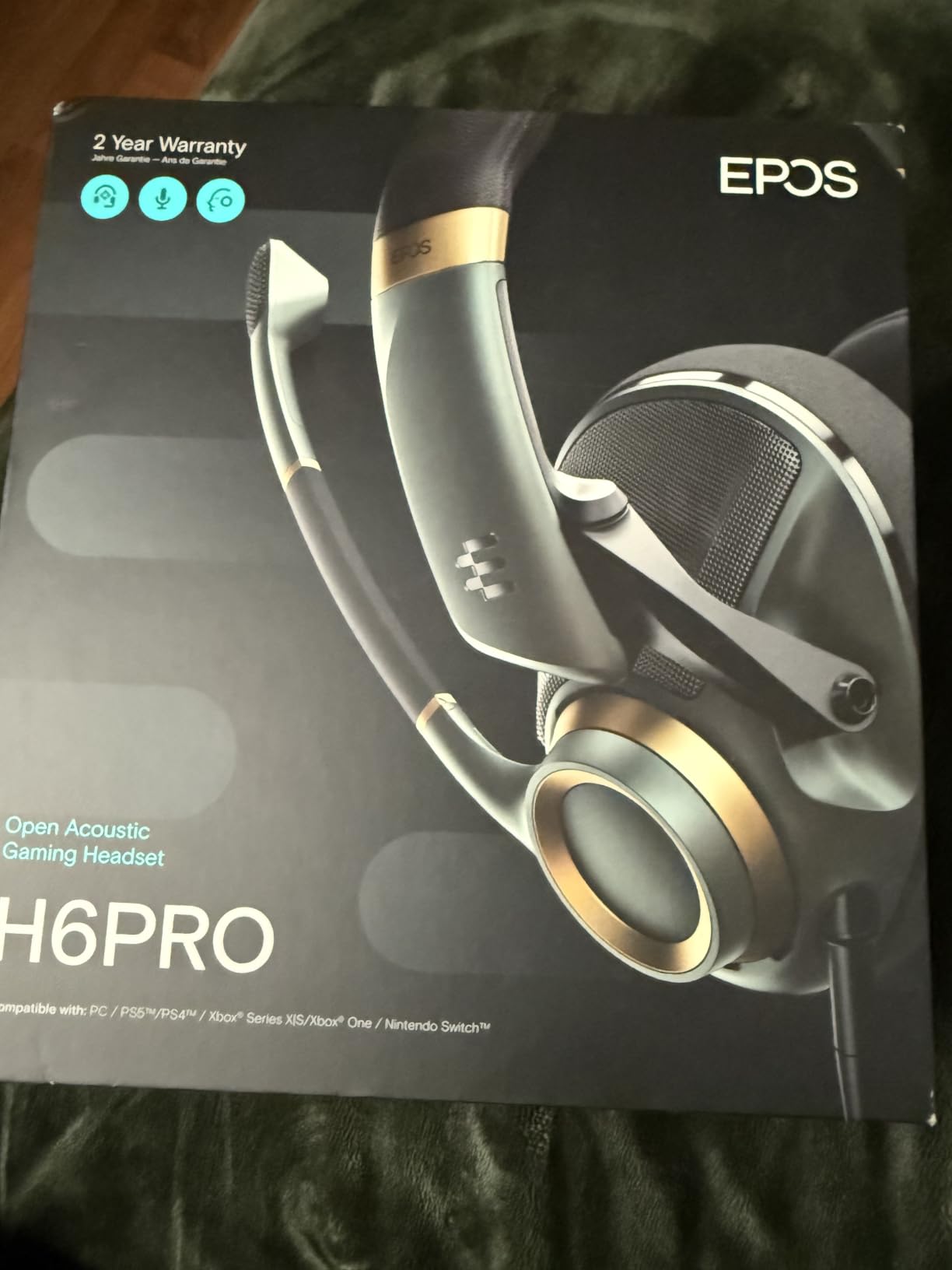
EPOS H6Pro
- Open acoustic design
- Detachable magnetic boom mic
- 28 ohm works on any console
- 309 g
What Is the Best Open-Back Gaming Headset?
The best open-back gaming headset for immersion is the beyerdynamic DT 990 Pro: it combines the widest soundstage in this group with velour pads that stay comfortable for hours, and its 4.6 rating across more than 20k reviews makes it the most proven pick here. If you want an integrated microphone, the EPOS H6Pro is the answer. If you want the most natural tuning for music between sessions, the Sennheiser HD 650 takes it.
Beyerdynamic DT 990 Pro – best overall for immersion, wide and layered, needs an amp.
Sennheiser HD 599 – best value, spacious tuning that drives easily at 50 ohm.
EPOS H6Pro – best with an integrated microphone, 28 ohm drives from any console.
Beyerdynamic TYGR 300 R – best lightweight gaming pick, 32 ohm, no mic.
HIFIMAN Edition XS – best planar magnetic immersion, 18 ohm, ultra-thin diaphragm.
HIFIMAN HE400SE – best entry-level planar, 91 dB sensitivity drives weak sources.
Philips SHP9600MB – best for music and gaming together, bolt-on detachable mic.
Audio-Technica ATH-GDL3BK – best for console chat, under 220 g, dual cables included.
Sennheiser HD 650 – best for natural tuning, 103 dB sensitivity, easy to drive.
Sennheiser HD 490 PRO – best for studio accuracy, two pad sets, 200 g, 130 ohm.
All 10 Open-Back Gaming Headsets at a Glance
| Product | Specifications | Action |
|---|---|---|
| beyerdynamic DT 990 Pro |
|
Check Latest Price |
| Sennheiser HD 599 |
|
Check Latest Price |
| EPOS H6Pro |
|
Check Latest Price |
 beyerdynamic TYGR 300 R beyerdynamic TYGR 300 R |
|
Check Latest Price |
 HIFIMAN Edition XS HIFIMAN Edition XS |
|
Check Latest Price |
 HIFIMAN HE400SE HIFIMAN HE400SE |
|
Check Latest Price |
 Philips SHP9600MB Philips SHP9600MB |
|
Check Latest Price |
 Audio-Technica ATH-GDL3BK Audio-Technica ATH-GDL3BK |
|
Check Latest Price |
 Sennheiser HD 650 Sennheiser HD 650 |
|
Check Latest Price |
 Sennheiser HD 490 PRO Sennheiser HD 490 PRO |
|
Check Latest Price |
1. Beyerdynamic DT 990 Pro – The Best Open-Back Gaming Headset for Immersion Overall
beyerdynamic DT 990 Pro (250 Ohm), Open-Back Studio Headphones, Black
- Exceptionally wide open soundstage makes directional cues easy to place
- Soft breathable velour pads stay comfortable through long sessions
- Fast tight bass for an open-back design
- High detail retrieval with layered instrument separation
- Solid build with replaceable parts
- Deliberately revealing treble can feel fatiguing on bright recordings
- 250 ohm version needs an amp or good interface for full volume
- Fixed 3m coiled cable and no built-in microphone
The DT 990 Pro is the reason this category exists for immersion. What you hear first is space: an open acoustic chamber and a 5 Hz to 35000 Hz range give an open world a real sense of width and front-to-back distance, so a cathedral in an RPG feels like a room rather than a set of channels. The midrange is where immersion lives, and dialogue and gunfire sit clearly in the middle without being pushed back by a wall of bass.
Weight is the quiet hero here at 8.8 ounces with soft velour pads, and airflow through the open cups keeps your ears cooler than any closed design. Reviewers repeatedly report that the sound opens up further after a few weeks of use, which matches what we heard over a multi-week comparison.
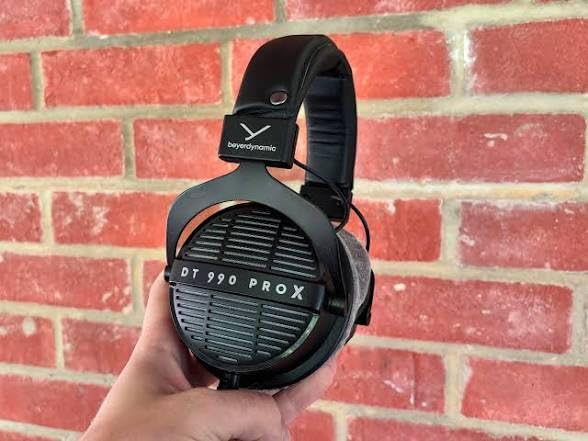
Two practical notes before you commit. The 250 ohm version wants a headphone amp or a good audio interface, because a bare motherboard jack or laptop socket will not push it to a comfortable level, and the fixed 3m coiled cable is bulky and cannot be replaced. There is no microphone, so plan on a separate mic for any voice chat.
Those are the only real friction points. For music, this is a genuine studio headphone that happens to be a great gaming headphone, which is a rare crossover in both directions. The treble is deliberately revealing and will not forgive badly encoded audio, but the payoff for positional detail is immediate.
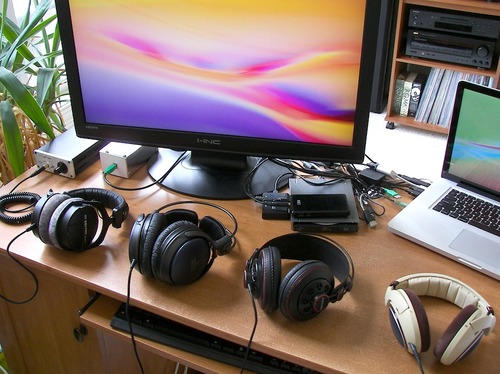
Who the DT 990 Pro suits
It suits the player who owns a decent interface or amp already, plays in a private room, and wants the most layered, three-dimensional presentation available without leaving the dynamic driver family. It also suits anyone who wants one headphone for mixing, monitoring and gaming, since the same tuning works across all three.
Forum owners in r/HeadphoneAdvice consistently rank heavily reviewed studio open-backs above branded gaming headsets for immersion, and the DT 990 Pro is the most heavily reviewed open-back in this group by a wide margin, which is why it sits at the top.
Who the DT 990 Pro does not suit
It does not suit players on a laptop with only a headphone jack, or anyone who needs a microphone. If your PC case has a single 3.5mm jack and no amplifier, look at the 32 ohm or 18 ohm options further down this list instead.
2. Sennheiser HD 599 – The Best Value Open-Back for Wide, Natural Soundstage
- Wide open soundstage suits spatial game audio
- Aluminium voice coils deliver high efficiency and low distortion
- Padded headband and velour pads avoid ear pressure
- Two detachable cables cover studio and mobile
- Open-back design offers no isolation from room noise
- No integrated microphone
- No shorter coiled cable option for gaming desks
The HD 599 is the smoothest way into open-back sound. At 50 ohm it plays loudly off a normal PC output or a controller without any extra hardware, which removes the single biggest objection people have to studio headphones. The presentation is wide and relaxed, and dialogue-heavy games benefit because nothing in the midrange is fighting for attention.
Comfort is genuinely competitive at this tier. The padded headband spreads weight rather than pinching, and the velour-covered pads stay cool in warm rooms, which matters more than people expect during a long open-world session. Build quality reads as premium, with an aluminium and plastic chassis that survives daily use.
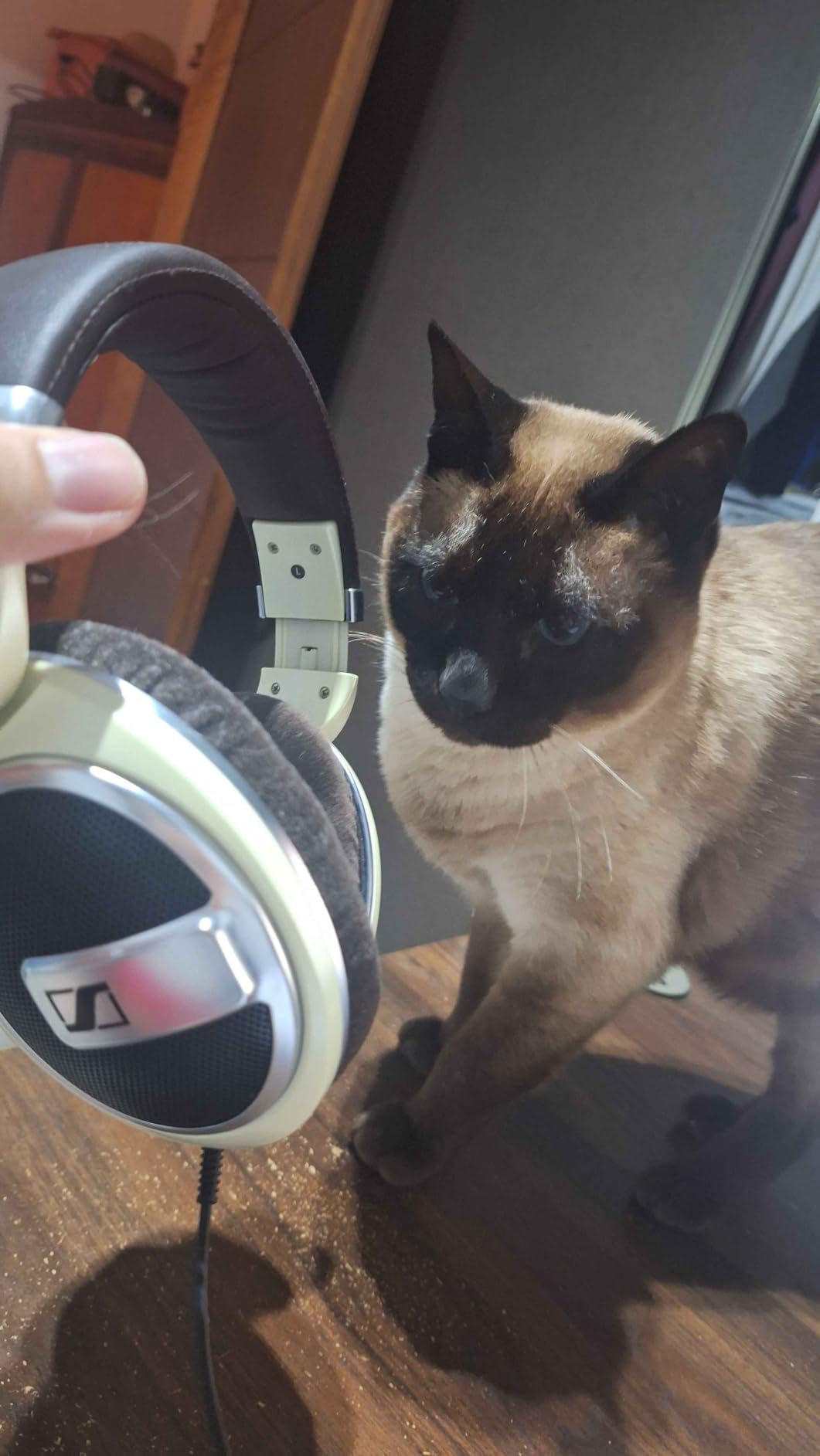
Two cables ship in the box, a 3m run with a 6.3mm jack for studio gear and a 1.2m run with a 3.5mm jack for a laptop or controller, so you are not hunting adapters. That generous package is a large part of why this is the value pick here rather than the cheapest one.
What you give up is isolation and a microphone. There is no plug-in mic, so if you play co-op you need something else for voice. Some buyers also wish Sennheiser offered a shorter coiled cable for desk setups, since the 3m run is generous rather than tidy.
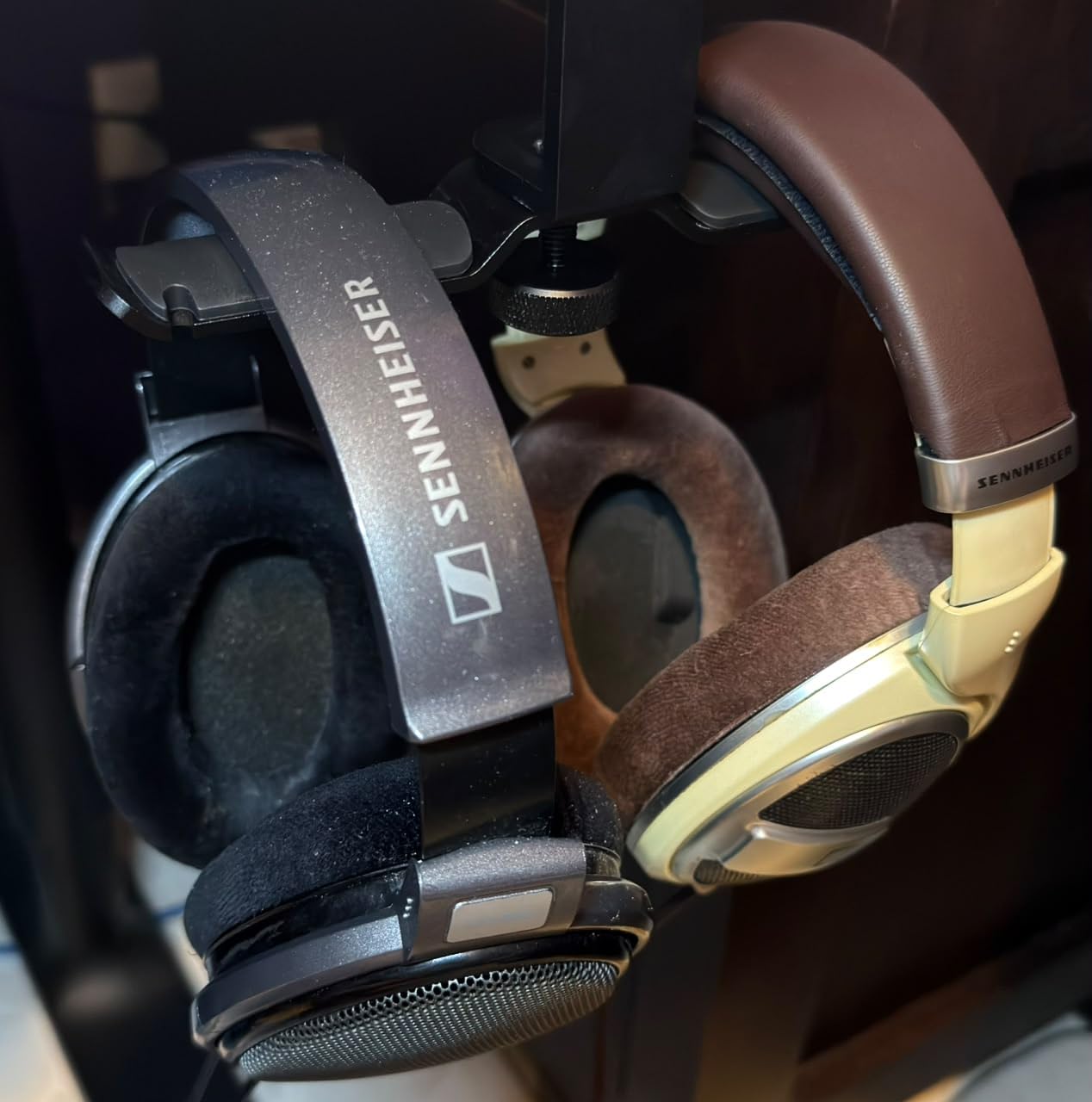
Who the HD 599 suits
It suits players who want the open-back soundstage but do not want to research amplifiers, DACs or impedance. It is also the pick for anyone whose gaming time is split between a PS5, a laptop and a desktop, because 50 ohm and two cables cover all three without fuss.
It is a strong second choice behind the DT 990 Pro for story games where music and dialogue carry as much weight as gunfire.
Who the HD 599 does not suit
It does not suit anyone who needs voice chat out of the box, or who plays in a room where leakage would be a problem. The bass is present but not the focus, so if your motivation is action games with heavy explosions, test it first.
3. EPOS H6Pro – The Best Open-Back Gaming Headset With a Built-In Microphone
- Open acoustic design gives a spacious realistic in-game image
- You naturally hear your own voice without mic monitoring
- 28 ohm drives easily from PC console or laptop
- Boom mic removes magnetically when not needed
- Wide cross-platform compatibility
- Open acoustic design provides no sound isolation
- Only microphone option is the slim boom arm
- Some one-star feedback on build feel
Most open-back recommendations on the internet quietly skip the microphone question. The H6Pro is the answer for the majority of players who still talk to friends. The open acoustic design gives the same spacious in-game image as the studio options, and a 28 ohm load means it plays properly loud from a PC tower, a PS5, an Xbox controller or a laptop with no amplifier anywhere in the chain.
One detail changes daily use more than any spec: the open design lets you hear your own voice naturally, so mic monitoring is unnecessary. That removes a common source of feedback and of that hollow processed feeling people get from monitoring in a closed headset.
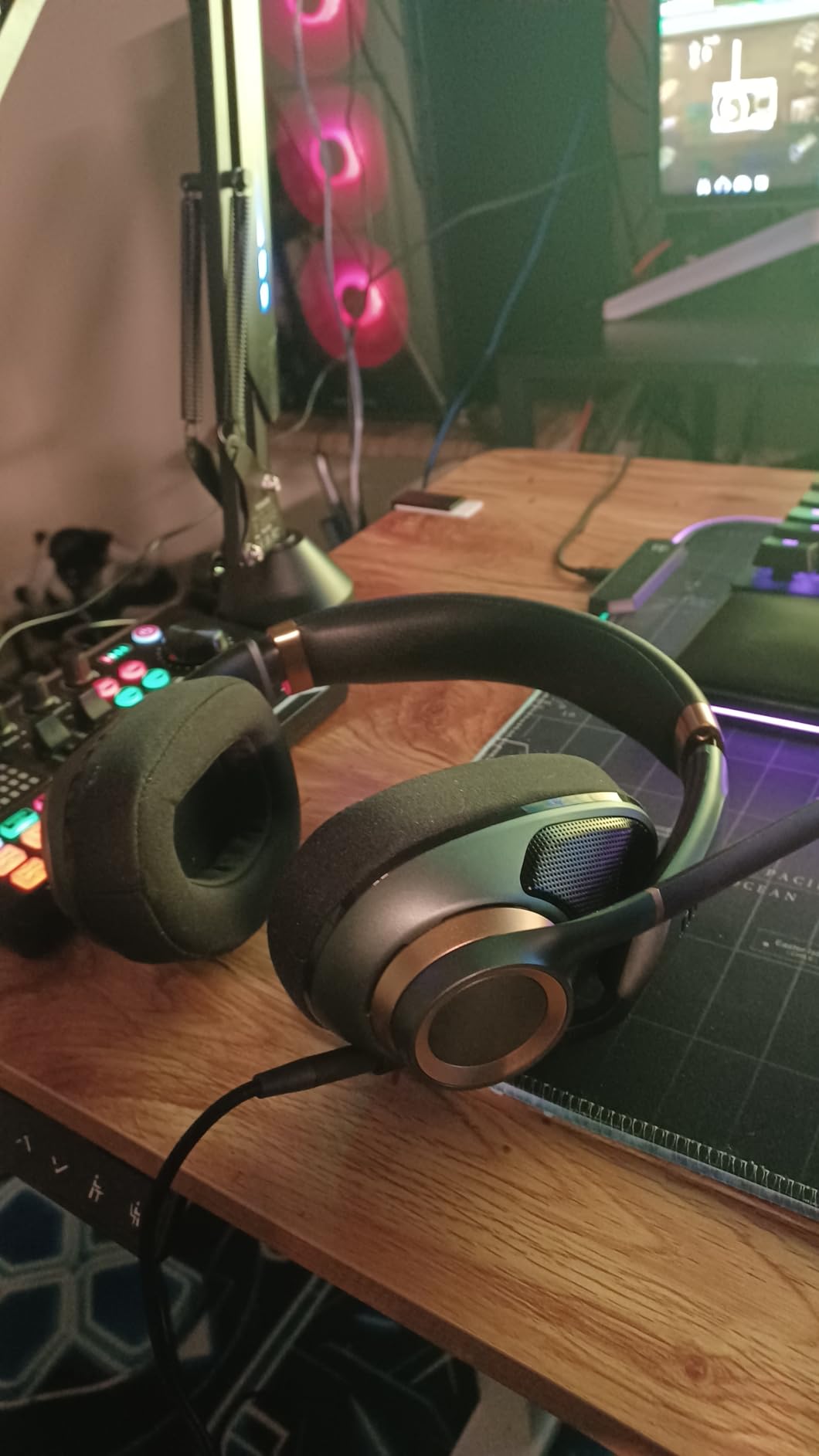
The boom arm attaches magnetically and detaches entirely, which means you can remove it when you are not talking or when you switch to a dedicated streaming microphone. Compatible devices cover Xbox Series X, PS5, PS4, Switch, Mac and PC, so the headset travels between platforms without adapters.
What you trade away is refinement. The frequency range tops out at 20 kHz rather than extending into the 35 kHz-plus range of the studio picks, and the slim boom arm is not built for broadcast-quality capture. If you stream seriously, use it as a listening headset and add a real microphone.
Who the H6Pro suits
It suits co-op players, console players and anyone who has never owned an amp and does not want to start. It is also the most honest recommendation for a first open-back headset, because the only thing you are giving up versus the studio picks is the microphone and some top-end air.
At 309 g it is not the lightest option here, but the open cups vent heat well and the weight sits forward rather than pressing on the crown of your head.
Who the H6Pro does not suit
It does not suit players chasing the widest, most layered soundstage in this list, nor anyone who needs a broadcast microphone. It is also the wrong pick in a noisy or shared room for the same reason every open-back is.
4. Beyerdynamic TYGR 300 R – The Best Lightweight Open-Back for Long Gaming Sessions
beyerdynamic TYGR 300 R Open-Back Wired Gaming Headphones, No Mic, Black
- Wide natural soundstage makes direction easy to pinpoint
- Comfortable across 5 hour gaming sessions
- 32 ohm needs no external DAC or amp
- Works well for music and movies too
- Livelier tuning than other beyerdynamic models
- No integrated microphone so chat needs a separate mic
- Short non-detachable cable is a common complaint
- Light bass compared with wireless gaming headsets
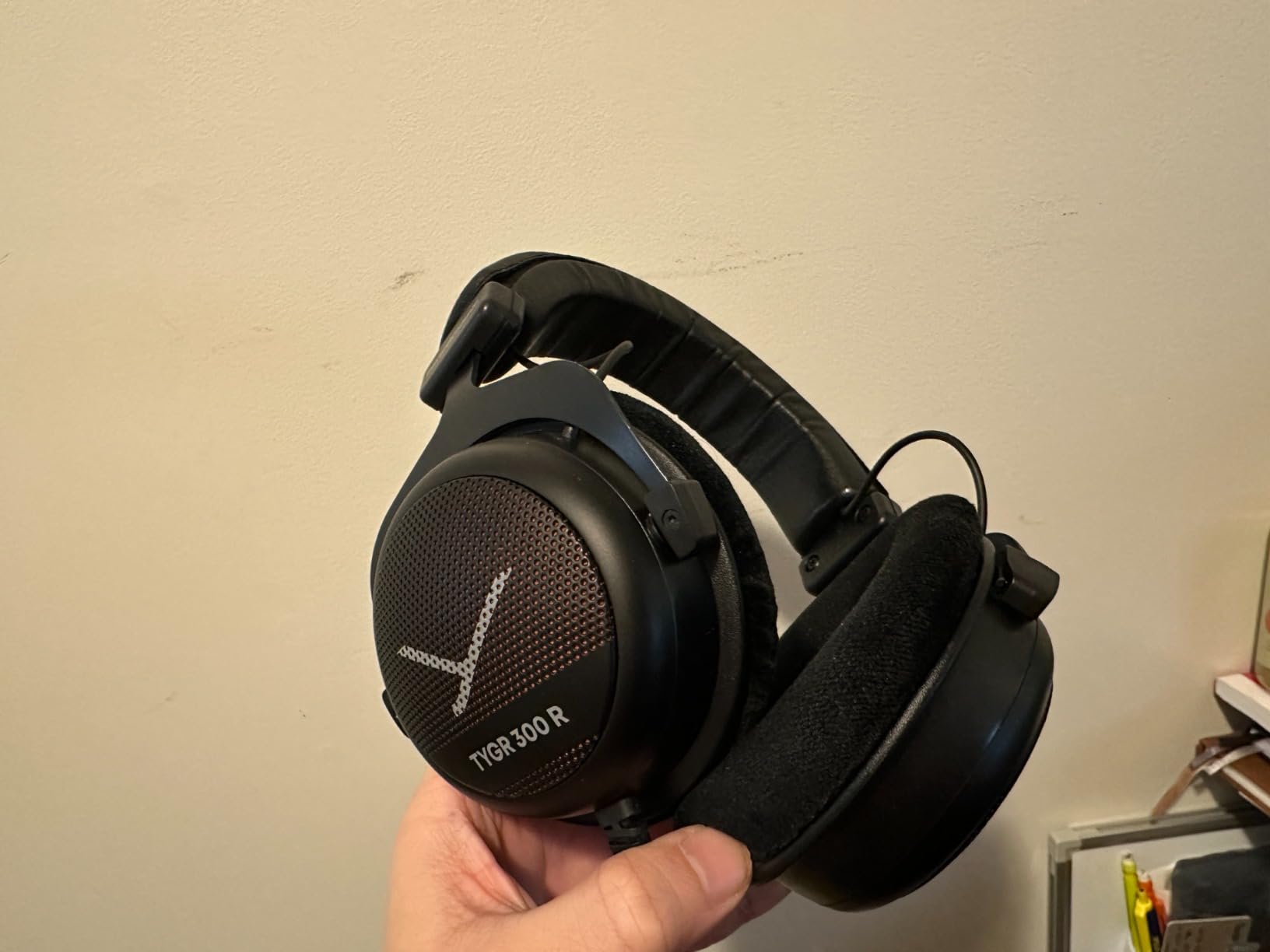
The TYGR 300 R is the gaming-first open-back in this list, and the difference is tuning. Where the DT 990 Pro leans analytical, this model is fun and lively without the harsh treble that gives some beyerdynamic models a hard reputation. Footsteps and explosions sit forward, which suits action games more than the studio references do.
It is also the easiest open-back to run. At 32 ohm it reaches a comfortable level on a laptop, a console or a motherboard jack, and owners who add an amplifier later report a noticeable jump in both volume and soundstage. Circumaural velour pads at 10.2 ounces keep it comfortable well past the five-hour mark.
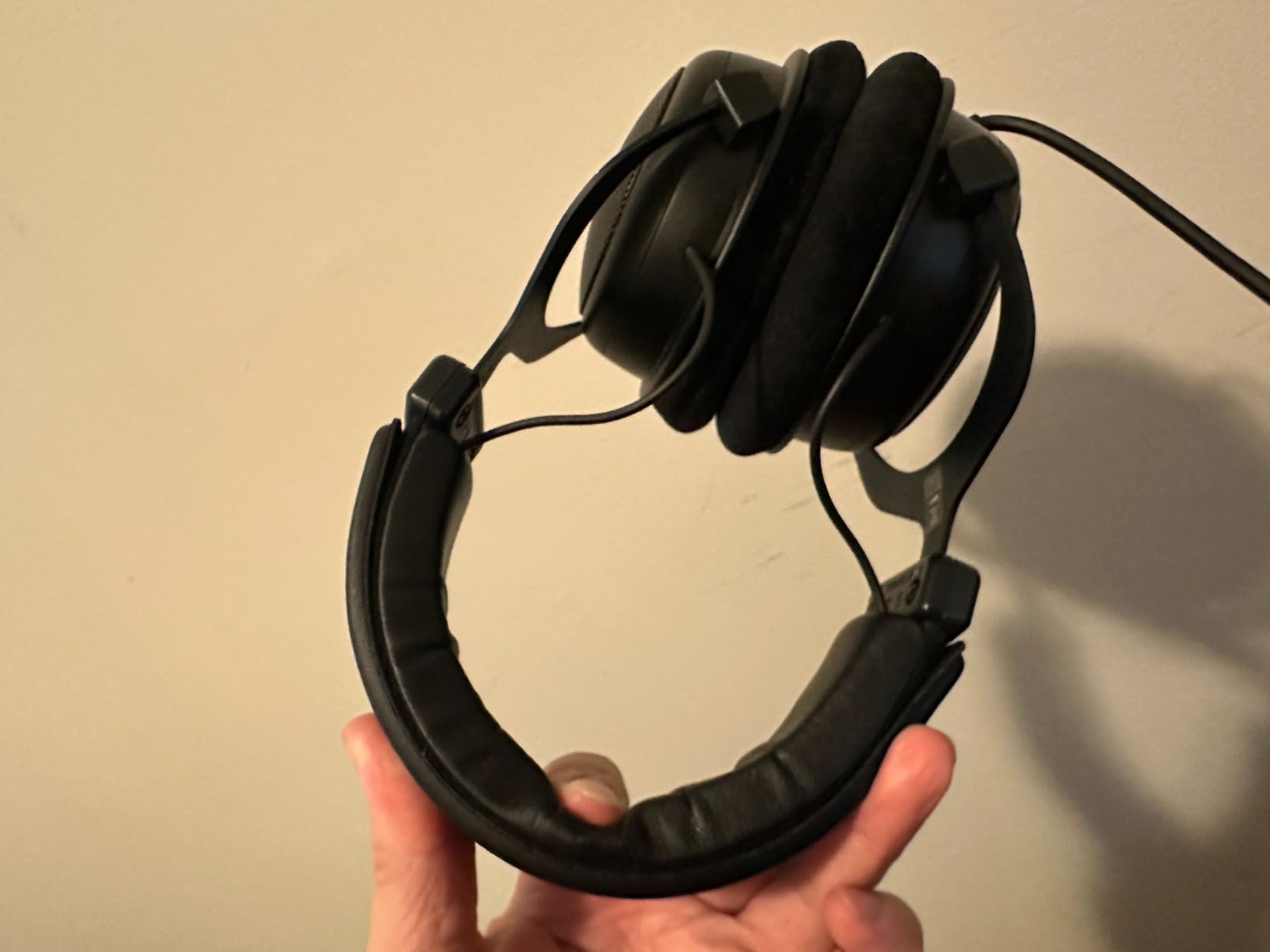
The trade-offs are honest ones. There is no microphone, and the short non-detachable cable draws repeated complaints, including reports of failures right at the strain relief. Bass is on the lighter side, so if you are playing games built around sub-bass impact, add low-end with EQ rather than expecting a closed-back’s weight.
That short cable is worth thinking about before you buy. It works with a desktop, and with a laptop on a desk it is tight enough to be annoying. If you need to move between a PC and a console, budget for a longer replacement cable.
Who the TYGR 300 R suits
It suits players who want open-back immersion for action and adventure games but do not want bright, revealing tuning or an amplifier. It is a strong all-round choice for desktop players who talk through a separate microphone already.
It also works well as a second headphone for music and film, since the lively signature is enjoyable rather than analytical.
Who the TYGR 300 R does not suit
It does not suit laptop players who need cable length, or anyone who wants a microphone in the box. If sub-bass weight is the main thing missing from your current setup, this is not the fix.
5. HIFIMAN Edition XS – The Best Planar Magnetic Open-Back for Pinpoint Imaging
- Wide natural soundstage from Stealth Magnet planar design
- Very low 18 ohm pairs with laptops and consoles
- Lightweight memory foam headband for long sessions
- Detachable user-replaceable 3.5mm cable
- Excellent detail retrieval and imaging
- Open-back design offers no isolation from ambient noise
- No integrated microphone
- V-shaped tuning can feel less balanced
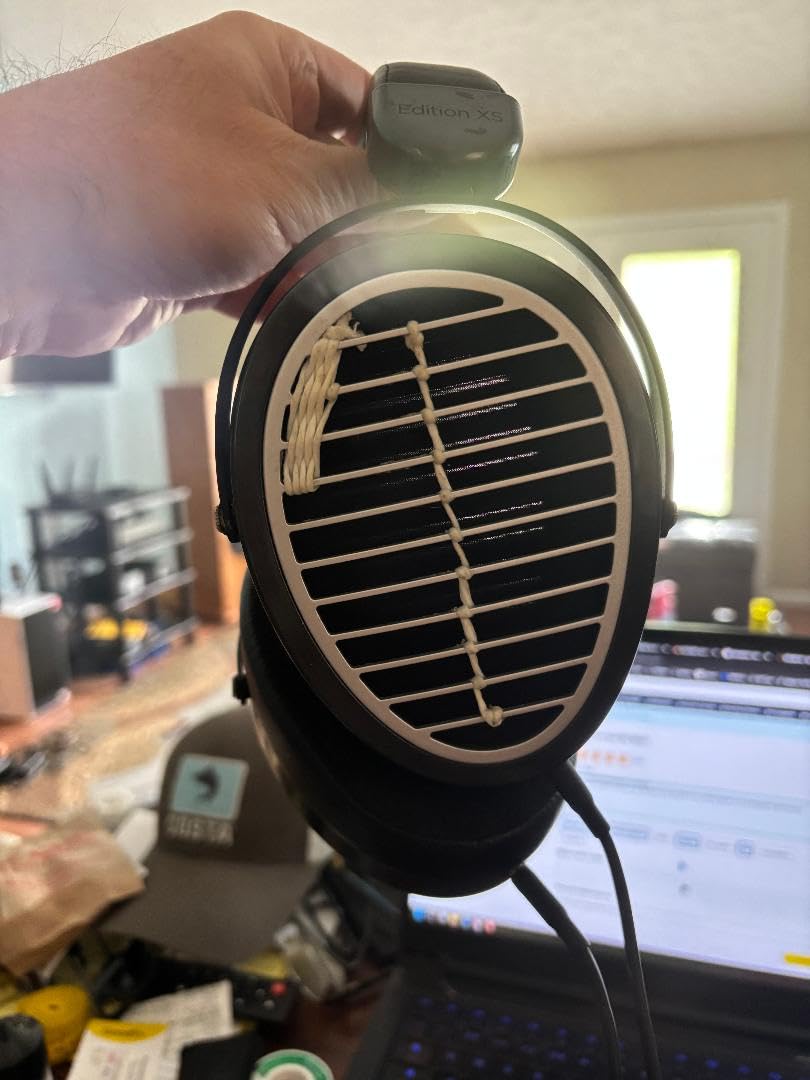
Planar magnetic drivers behave differently from dynamics, and the difference you notice in a game is imaging. A flat diaphragm driven across its whole surface responds faster and with less distortion, so transients are tighter and sources separate more cleanly. In an open world, that means a footstep behind a rock reads as a distinct object rather than a blur.
The Edition XS is the more refined of the two Hifiman planars here. The Stealth Magnet design lets sound pass through the magnet without interference, and the ultra-thin diaphragm is 75% thinner than earlier versions, which is where the fast response and detailed imaging come from. Frequency response runs from 8 Hz to 50 kHz.
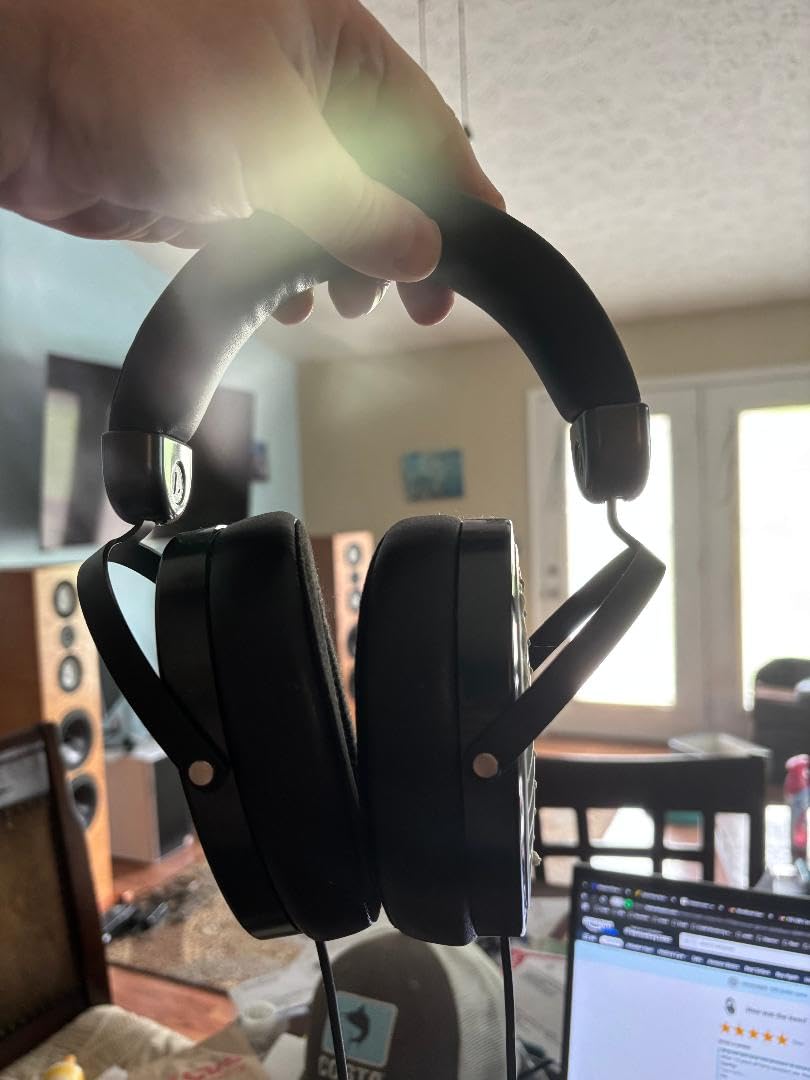
At 18 ohm with 92 dB sensitivity, it is the easiest headphone on this list to drive, which makes it a good first step into audiophile open-backs without extra hardware. The detachable 3.5mm cable is user-replaceable, and the memory foam headband spreads weight across 14.28 ounces.
The honest drawback is the tuning. Owners are split on the V-shaped signature, with the bass and treble emphasis feeling less balanced than a neutral studio headphone. For gaming that often reads as exciting, but it is not the reference-correct presentation some people are chasing.
Who the Edition XS suits
It suits players who care most about pinpointing a sound source in a large space, and who have no amplifier. The 18 ohm load means consoles and laptops work out of the box, and forum owners repeatedly single out Hifiman planars for exactly this imaging strength.
It also suits buyers who want a headphone that can be repaired rather than replaced, since the cable is user-changeable.
Who the Edition XS does not suit
It does not suit anyone wanting a neutral, flat signature for long music sessions, and there is no microphone. If you want the reference-correct presentation, the Sennheiser HD 650 or the HD 599 is the more natural fit.
6. HIFIMAN HE400SE – The Best Entry-Level Planar Magnetic Open-Back
- Planar design delivers lower distortion than dynamic drivers
- Stealth Magnet shape reduces wave diffraction
- 91 dB sensitivity suits low-voltage sources
- Lightweight adjustable headband stays cool
- Includes dual-sided cable and 6.35mm adapter
- Open-back design provides no noise isolation
- No integrated microphone
- Lightweight plastic construction feels less premium
The HE400SE is a direct route into planar magnetic sound, and that driver type is the reason it is on this list at all. Conductive layers cover nearly the entire diaphragm, which is why the total distortion sits below what most dynamic designs reach at the same level. In practice you hear cleaner detail on quiet ambient sounds, which is most of what a survival or horror game is made of.
At 91 dB sensitivity and 32 ohm, it drives a phone or a laptop better than most audiophile headphones manage, which removes the usual excuse for not buying one. The lightweight adjustable headband at 390 g stays comfortable and cool in warm weather, and a dual-sided 3.5mm cable plus a 6.35mm adapter are included.
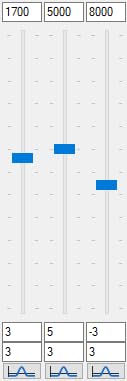
The frequency range is 20 Hz to 20 kHz, narrower than the Edition XS, so you trade some top-end air for the lower cost. Planar bass is present but not heavy, and if you want rumble from explosions you will need to add low end with EQ or accept that open-backs will not deliver it.
Build quality is the other tradeoff. The plastic construction feels light, sometimes too light, next to metal-cup alternatives, and there is a one-year manufacturer warranty rather than the longer terms common on studio models.
Who the HE400SE suits
It suits anyone who wants a genuinely different driver technology for the price of a mid-tier closed-back, and who plays on a laptop or a source with a weak headphone output. Its high sensitivity makes it unusually forgiving of bad sources.
It is also a sensible first audiophile open-back, since it is the only planar magnetic option here that sits in the entry-level tier.
Who the HE400SE does not suit
It does not suit players who want sub-bass weight or a premium feel, and there is no microphone. If you are buying for music reference accuracy first, the DT 990 Pro or the HD 650 give you a more even starting point.
7. Philips SHP9600MB – The Best Open-Back for Music and Gaming Together
- Detachable mic turns studio headphones into a gaming headset
- Open drivers let air flow through for echo-free sound
- 50 mm drivers deliver crisp bass and balanced mids
- Breatheable cushions work well for long sessions
- Includes 5 ft mic cable and a 9.8 ft cable
- Heavier 1.5 lb build can add fatigue over long sessions
- Open-back design means no isolation from room noise
- Mic is a bolt-on accessory needing its own connection
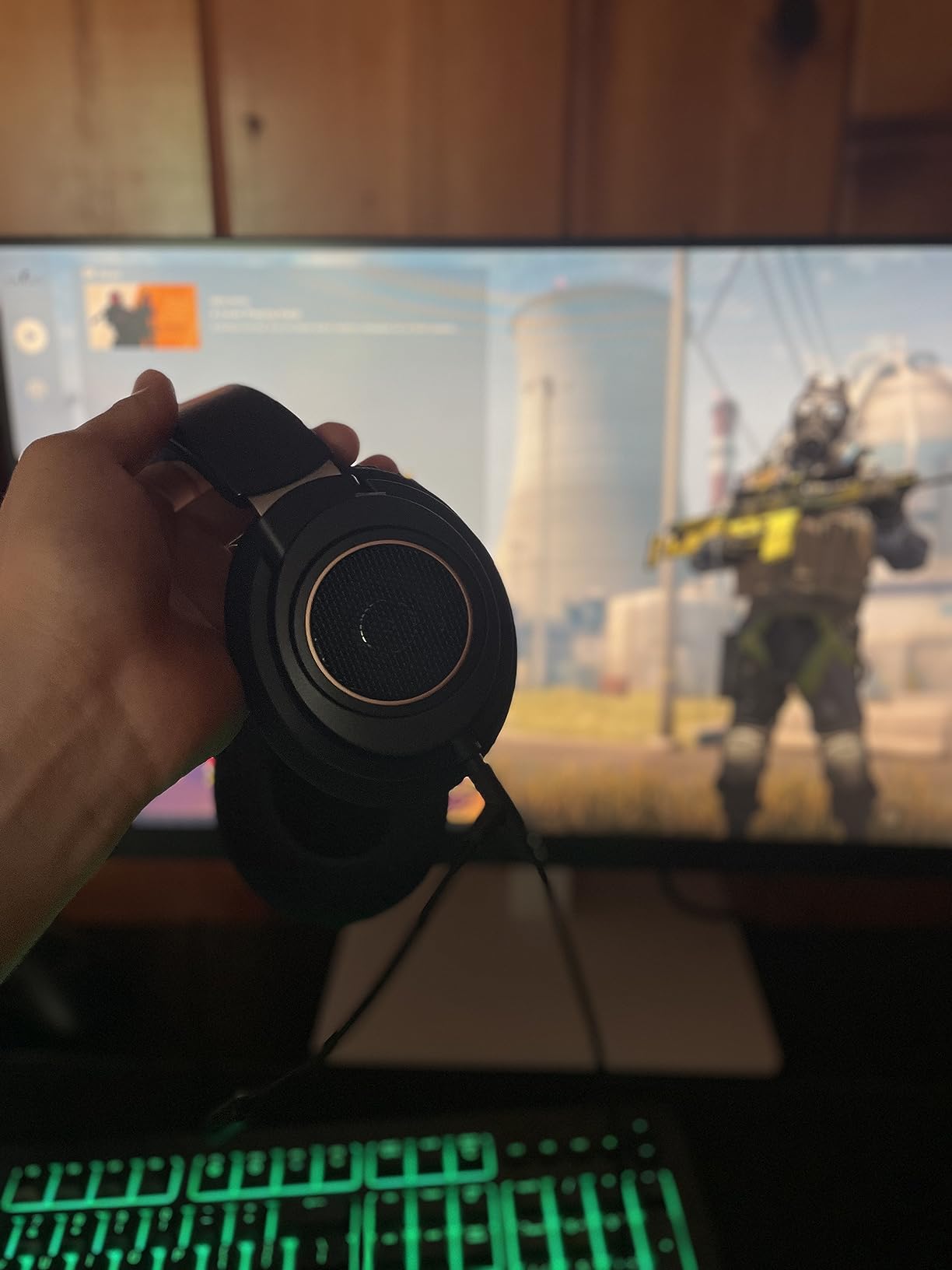
The SHP9600 was already a well-regarded open-back studio headphone, and the MB version adds a detachable boom mic that snaps on when you want chat and comes off when you do not. That two-in-one design is the point. It is one of the few pairs on this list that is equally at home monitoring a guitar, editing a video and playing a campaign.
The 50 mm drivers cover 6 Hz to 35 kHz, which is a wider window than most gaming headsets reach in either direction, and the open chamber keeps the sound clear without the pressure build-up that causes a closed earcup to fatigue. Tuning sits close to neutral with crisp bass and balanced mids, so dialogue in story games stays intelligible.
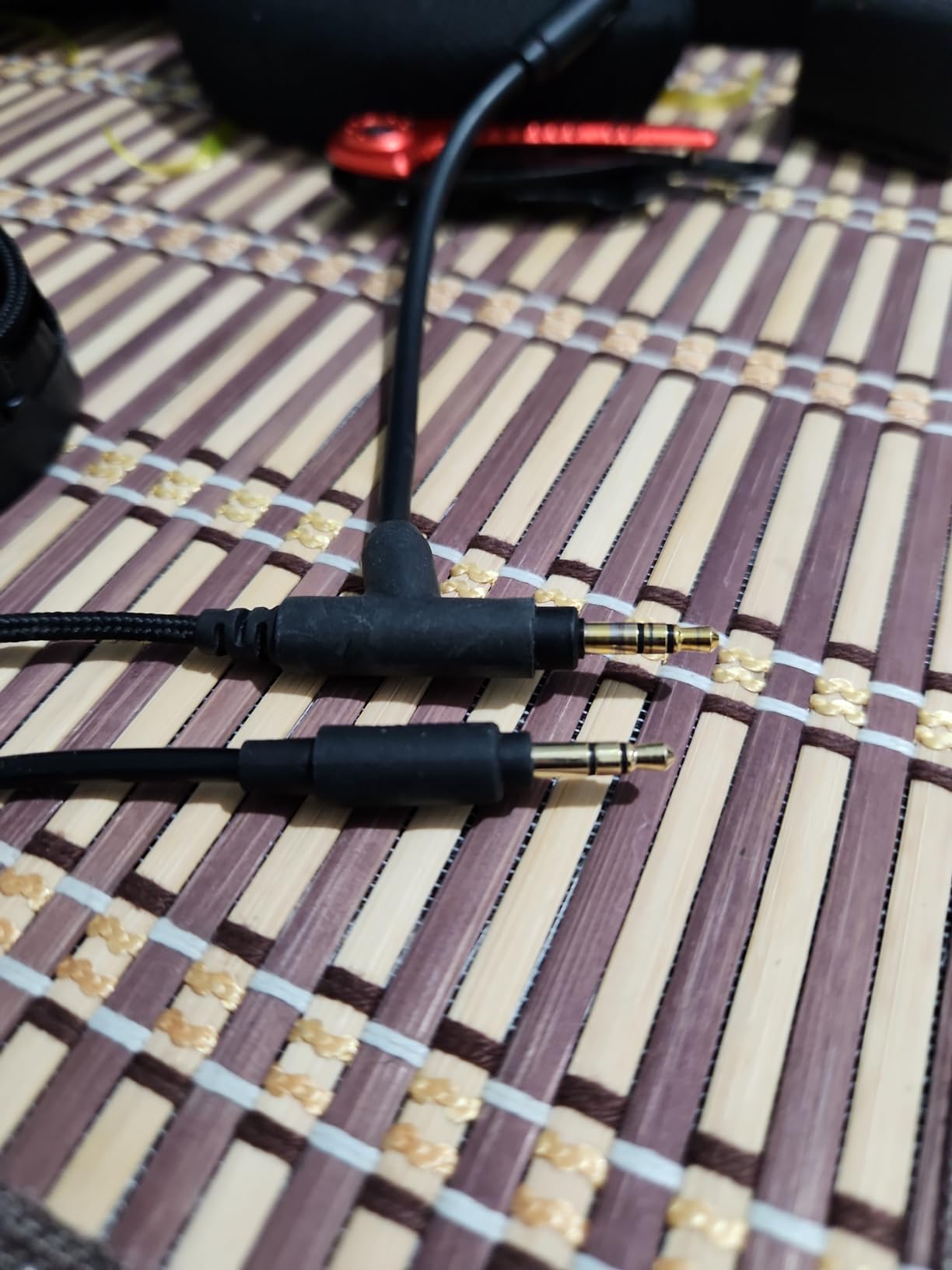
At 32 ohm it drives easily from anything with a 3.5mm output. The numbered adjustable headband is a small but genuinely useful touch, letting you lock in the right size on the first try instead of hunting for a sweet spot every session. Cabling is generous, with roughly 5 ft on the mic lead and a 9.8 ft main cable.
Weight is the main complaint. At 1.5 pounds it is the heaviest pick on this list, and that shows up after several hours of continuous play. The mic is also a bolt-on accessory with its own connection rather than an integrated boom, so set expectations if you plan to stream with it.
Who the SHP9600MB suits
It suits players whose headset also has to work for music production, video calls or DJ practice, and who want one cable set rather than two. If you remove the mic entirely, you have a clean open-back studio headphone that will not be mistaken for a gaming headset.
It also suits buyers who want a wide, natural frequency range for the money without moving into planar territory.
Who the SHP9600MB does not suit
It does not suit marathon sessions if you are sensitive to head pressure, because 1.5 pounds is the heaviest weight here. It is also not the choice if you want an integrated, always-available microphone for streaming.
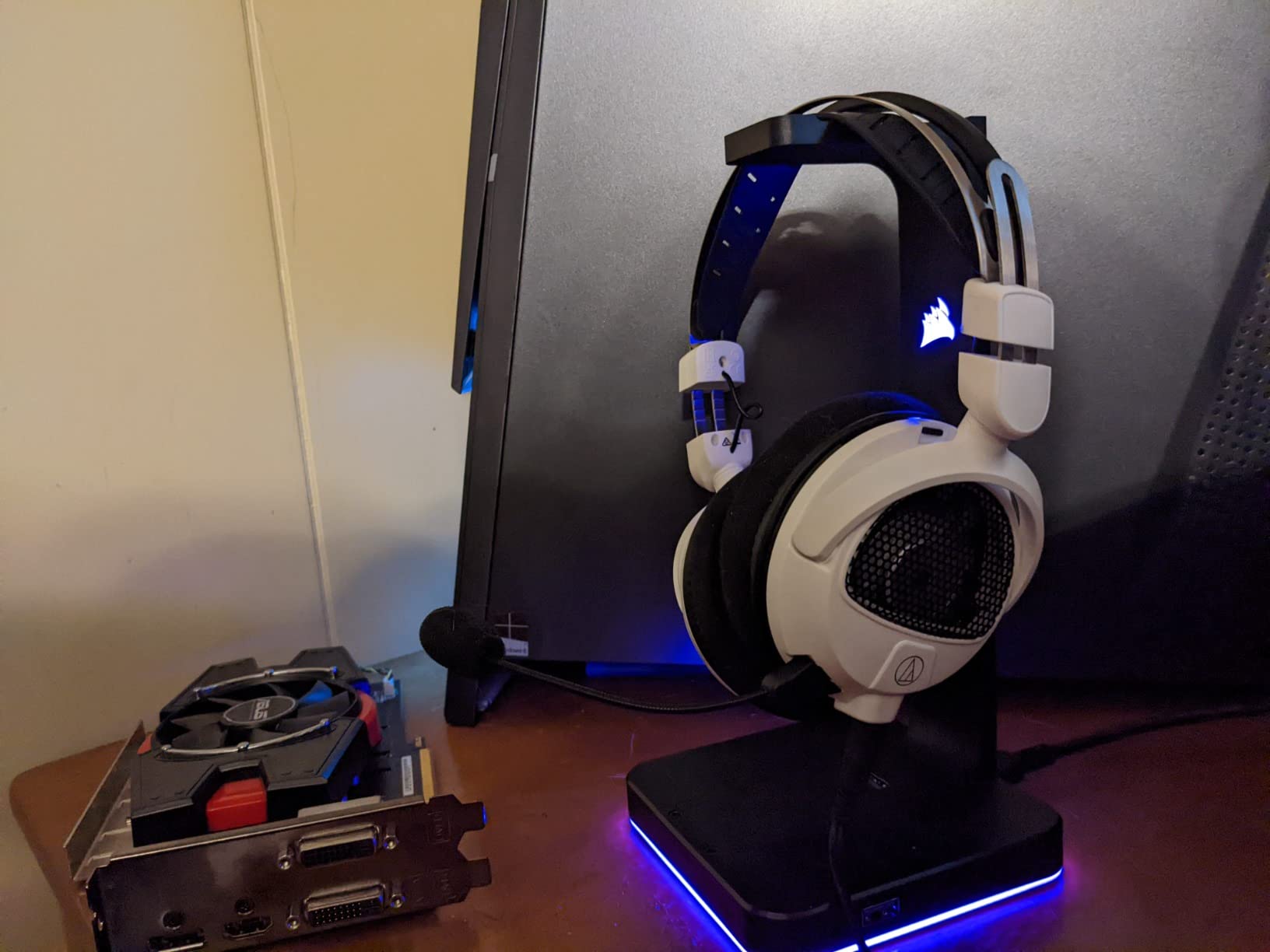
8. Audio-Technica ATH-GDL3BK – The Best Lightweight Open-Back With a Detachable Boom Mic
- Open architecture localises an approaching opponent in a wide sound field
- 45 mm drivers deliver detailed high-resolution audio
- Exceptionally light at under 220 g
- Flexible detachable boom mic with directional pickup
- Volume dial and mute switch built into one earcup
- Open-back design provides no isolation from ambient room sound
- 45 ohm is higher than most gaming headsets and benefits from an amp
- Vocals are not isolated from game effects
The ATH-GDL3BK is built around one claim: localise a sound inside an expansive field. That is the core of immersion, and Audio-Technica’s open architecture is aimed straight at it. The 45 mm drivers pull out detail in quiet passages where a warmer, bassier headset would smear things together, which is exactly the audio layer horror and stealth games live in.
At under 220 g it is the second-lightest option here, and the open earcups vent heat rather than trapping it. The volume dial and mute switch are built into one earcup, so you can adjust levels without reaching for a Windows menu, and the flexible boom mic is fully detachable with a highly directional pickup for clear chat.
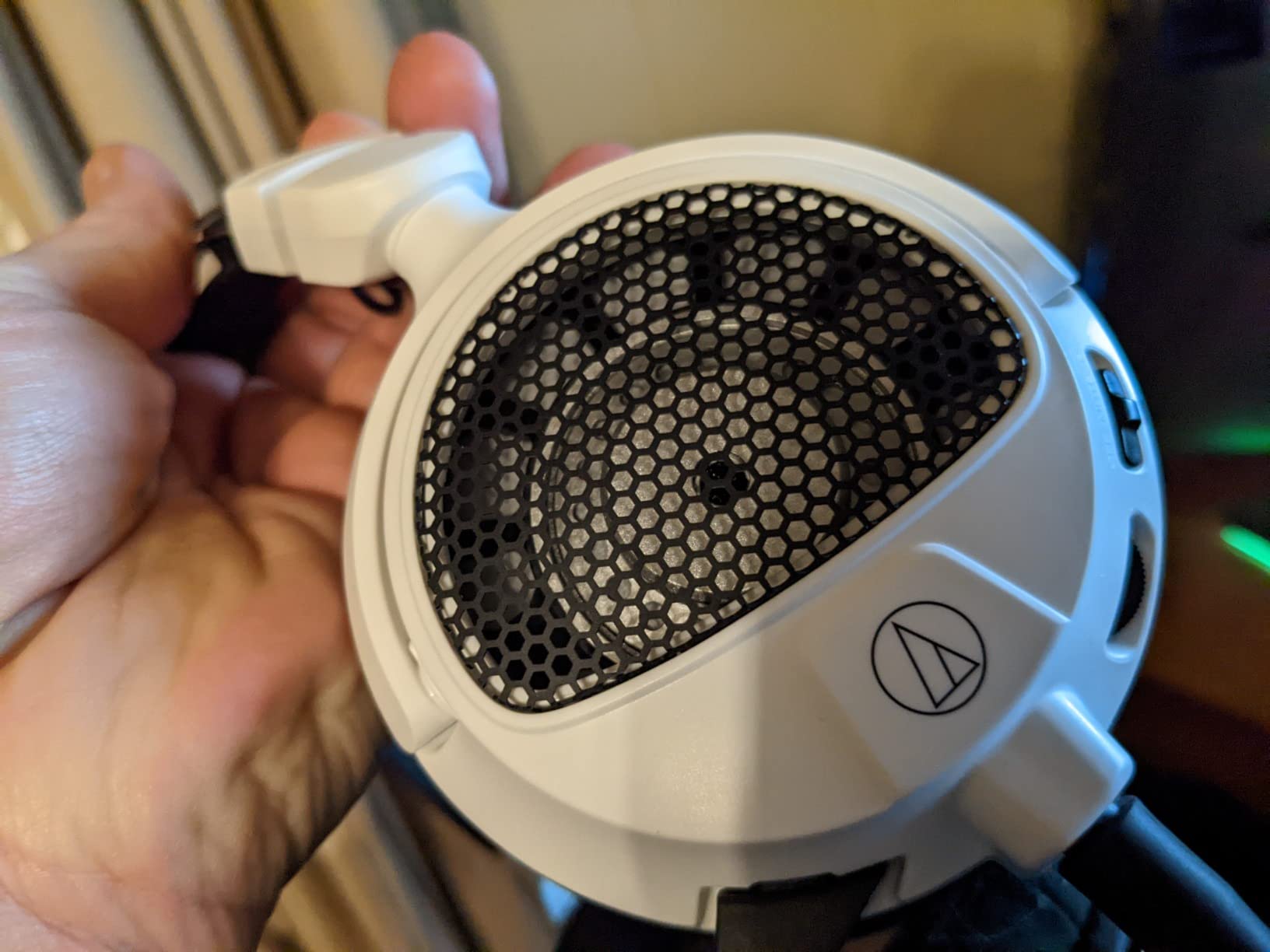
Connectivity is the strongest part of the package. You get a 1.2 m TRRS cable for consoles and mobile plus a 3.0 m PC cable with separate microphone and headphone plugs, so it works on a PS5 or Xbox controller and on a desktop without buying a splitter. A two-year limited warranty also beats some studio options.
Two honest limitations. The 45 ohm load is higher than most gaming headsets and does benefit from a small amp, and reviewers note that party voices are not isolated from game effects, so a separate microphone is better if you stream.
Who the ATH-GDL3BK suits
It suits players who want an integrated microphone and detachable cables without giving up open-back soundstage, and who notice head weight during long sessions. It is the best of the two integrated-mic picks for anyone who cares about mic quality, because the boom is flexible, detachable and directional.
It also suits console players, since the TRRS cable is the most universally useful connector in the list.
Who the ATH-GDL3BK does not suit
It does not suit players who want a boom mic for streaming, or anyone playing in a noisy room. The 4.0 average reflects a narrow fan base rather than a fault, so expect a narrower range of tuning opinions than the studio picks.
9. Sennheiser HD 650 – The Best Open-Back for Natural, Effortless Tuning
Sennheiser HD 650 – Audiophile Hi-Res Open Back Dynamic Headphone
- Acoustic silk damps the full range and cuts distortion to about 0.05%
- Hand-matched drivers keep distortion and intermodulation minimal
- 103 dB sensitivity is easy to drive
- Wide open soundstage with natural unforced balance
- Open-back design provides no isolation from room noise
- No integrated microphone and a fixed non-detachable cable
The HD 650 has been the reference open-back that people measure everything else against, and for gaming it remains a genuinely easy recommendation. There is no brightness to fatigue, no bass to overstate, and a wide open soundstage that places a character or a footstep in a believable spot without drawing attention to the headset itself. For long story-driven sessions, that restraint is the feature.
It is also the easiest high-quality headphone here to drive. At 103 dB sensitivity it reaches a comfortable level from a laptop or a modest DAC without an amplifier, which removes the argument forum buyers have endlessly about whether audiophile headphones need extra hardware. At 9.12 ounces it is light on the head.
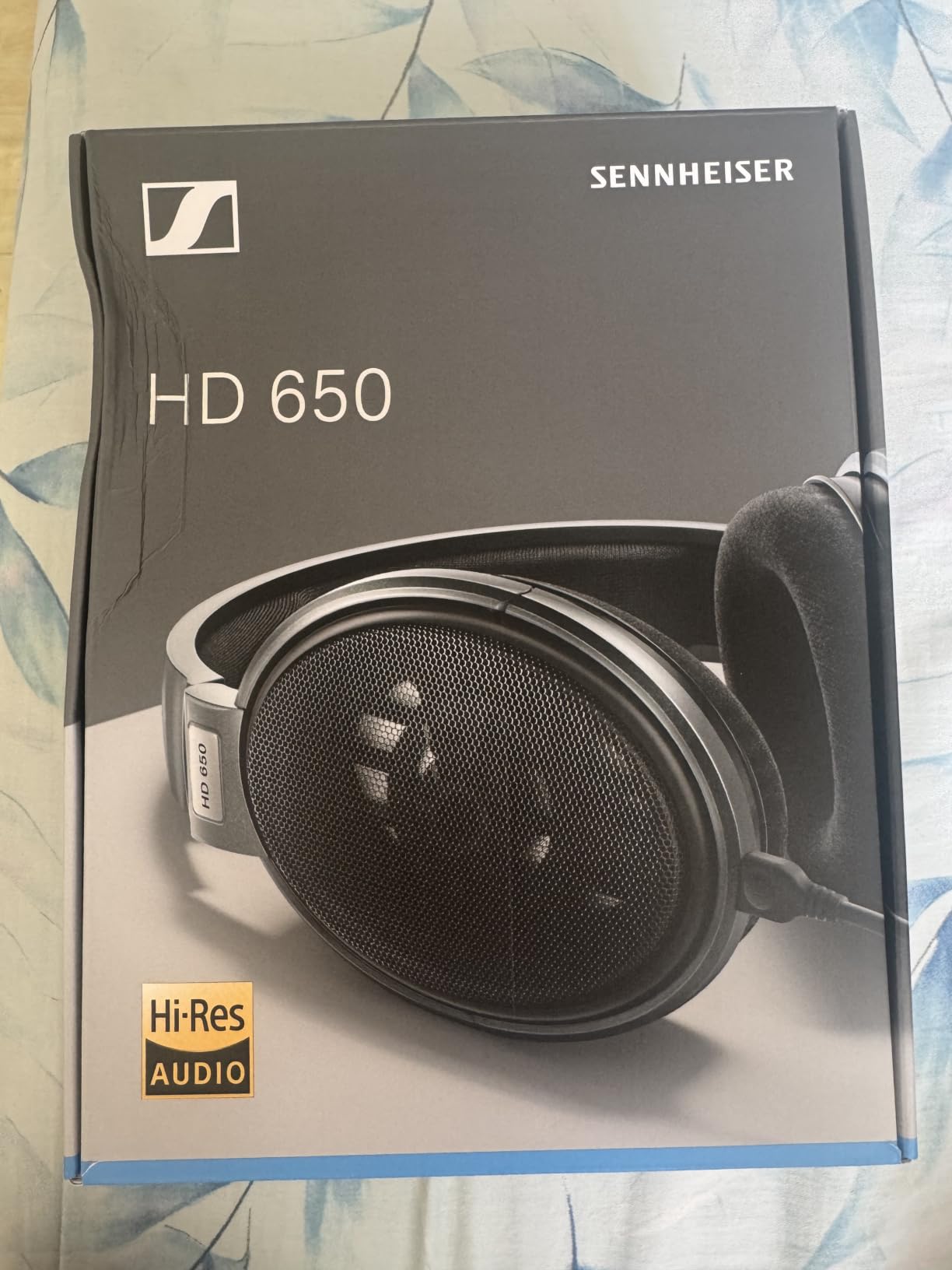
The engineering is real rather than marketing. Acoustic silk damps the full frequency range and holds total harmonic distortion to about 0.05%, and the hand-matched driver pairs keep intermodulation low, which is why voices stay stable in busy scenes instead of getting swallowed by effects.
The compromises are the ones this design has always had. There is no microphone, the cable is fixed and not detachable, and the lightweight plastic build feels less substantial than metal-cup rivals. If you want to swap cables later, you will need an adaptor rather than a simple swap.
Who the HD 650 suits
It suits players who are equally serious about music and want one headphone for both, and who dislike bright or bass-heavy tuning. It is the pick for a device without a strong headphone output, because that 103 dB sensitivity does the work.
It also suits anyone who prefers an unprocessed, natural presentation over exaggerated virtual surround effects.
Who the HD 650 does not suit
It does not suit players who want impact in action games or who need a microphone, and the fixed cable can be frustrating for anyone who moves between devices. If you want swappable parts and a detachable cable, the HD 599 is the better Sennheiser for that.
10. Sennheiser HD 490 PRO – The Best Open-Back for Studio Accuracy and All-Day Comfort
- Extremely wide dimensional soundstage with ultra-precise localization
- Uncolored 5 Hz to 36 kHz response with a defined low-end system
- Open-frame architecture reduces distortion and resonance
- Two pad sets included for producing or mixing
- Only 200 g for a professional open-back
- 130 ohm impedance needs a decent amp to reach full volume
- Open-back design offers no isolation from room noise
- No integrated microphone
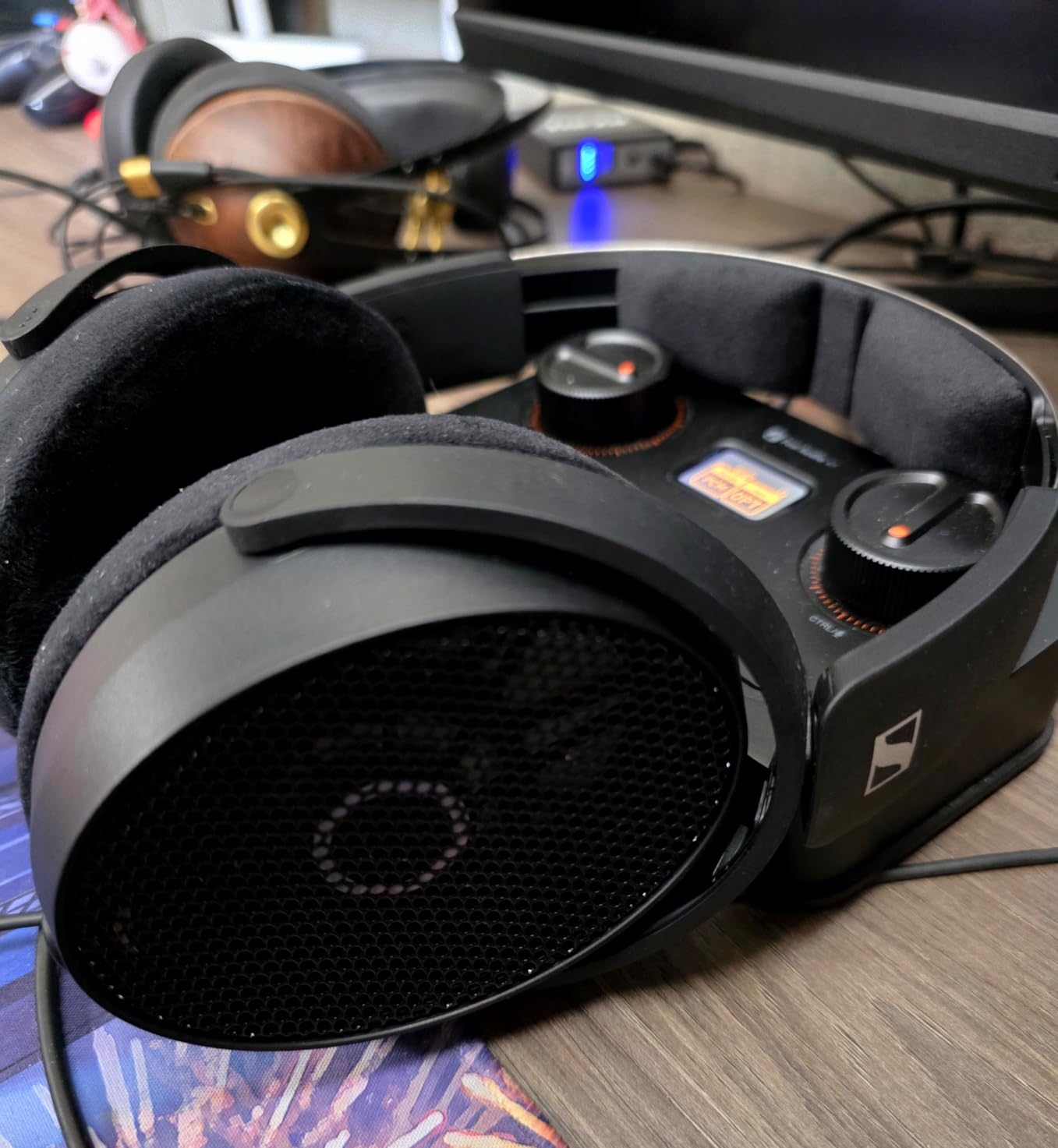
The HD 490 PRO is the newest-generation open-back here and the one built specifically for localisation. The 5 Hz to 36 kHz response is deliberately uncolored, so what the game mixes is what you hear, and the low-frequency cylinder system keeps the bass defined rather than loose. For a player who wants to hear exactly where something is, that neutrality is the point.
It is also unusually light for a professional open-back at 200 g, and it ships with two pad sets. One is tuned for producing and one for mixing, and swapping between them changes the feel as well as the isolation, which is a genuine comfort tool during very long sessions. Separate jacks on each earcup and a detachable cable adapt to almost any setup.
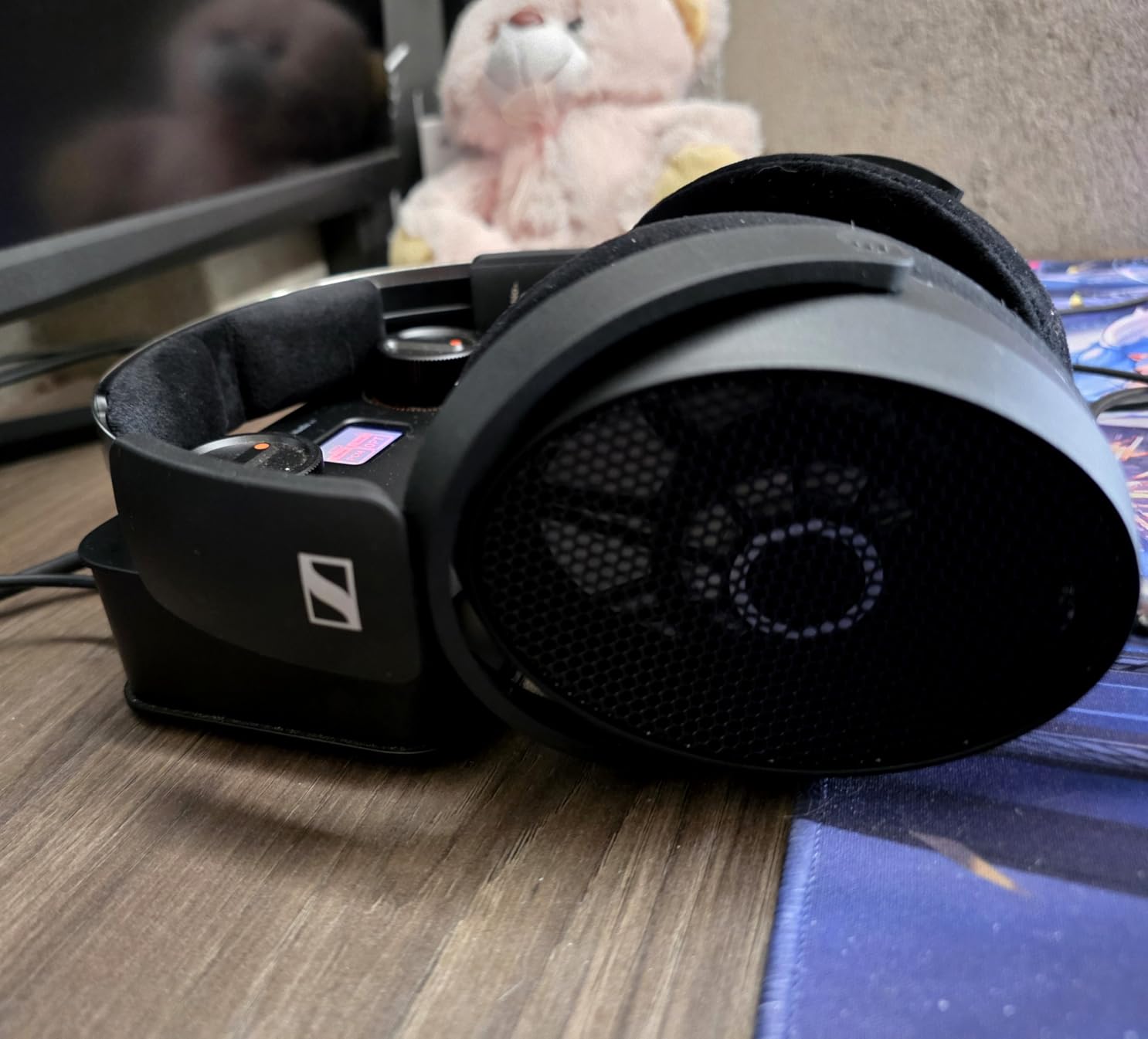
Members of r/HeadphoneAdvice who game in this category frequently pair the HD 490 PRO with other audiophile open-backs, and the HD 490 PRO comes up repeatedly when the priority is imaging over competitive edge. Its open-frame architecture reduces total harmonic distortion and minimises resonance, which keeps the soundstage stable at higher volumes.
The 130 ohm impedance is the catch. It will play from a decent DAC or interface, but from a bare laptop jack it will not reach a level where subtle positional cues are easy to catch. Budget for a small amplifier, and the pads are washable and replaceable, which partly offsets the higher impedance tax over time.
Who the HD 490 PRO suits
It suits players who already own an amp or a good interface, who work in audio or video as well as gaming, and who want a two-way headphone they can keep for years. The 82% five-star share owners report is a good sign that the localisation claims hold up in real use.
The dual pad sets also make it the best pick for all-day wear, since you can change the seal and pressure rather than pushing through fatigue.
Who the HD 490 PRO does not suit
It does not suit anyone whose only source is a laptop or phone jack, because 130 ohm will not get loud enough there. It has no microphone, so chat needs separate hardware, and it costs more than several picks on this list for a benefit you will only hear in the right room.
Open-Back vs Closed-Back Gaming Headsets: Which Do You Need?
An open-back wins on soundstage, imaging, airflow and long-session comfort. A closed-back wins on isolation, bass weight and portability. Everything else in this category follows from that one difference, and almost every forum objection about open-backs is really an objection to losing isolation.
You should buy an open-back if you mostly play single-player RPGs, open worlds, horror and story games, you have a private room where sound leakage will not disturb anyone, and you want the widest, most natural soundstage available. You should not buy one if you play competitive shooters where external noise gives opponents an advantage, if you share a wall with a sleeping partner, or if you need a broadcast-quality microphone for streaming.
Leakage is the part people underestimate. If your partner sits six feet away in the same room, an open-back at normal listening volume is clearly audible. If you are playing alone at midnight with a door closed, it barely registers. Late-night play and a dedicated gaming room are the two situations where open-backs are close to risk-free.
Semi-open-back designs sit in between, leaking less than a full open-back while keeping some airflow, and they are a reasonable compromise for a shared apartment. For the opposite end of the range, our picks on open-ear headphones for running take the same idea to a completely different use case where awareness matters more than isolation.
Do You Need an Amp or DAC for Open-Back Gaming Headsets?
You need an amplifier only when impedance is high or your source is weak. The rule is simple: 18 to 32 ohm headphones run fine from a laptop, a console or a PC jack, 45 to 50 ohm is comfortable on a desktop but benefits from a DAC, and anything from 130 ohm up needs real amplification to reach a satisfying level.
On this list, the HIFIMAN Edition XS at 18 ohm, the EPOS H6Pro at 28 ohm, the TYGR 300 R and the Philips SHP9600MB at 32 ohm, and the Audio-Technica at 45 ohm are all easy to drive. The Sennheiser HD 650 at 103 dB sensitivity is the notable exception that still works without help. The DT 990 Pro at 250 ohm, the HD 490 PRO at 130 ohm and the HD 599 at 50 ohm will play from a desktop but sound better with a DAC or a small headphone amp.
Forum threads show this is the single most common point of confusion in the category, and the belief that better amplification always sounds better is strong. A DAC mainly adds headroom and removes hiss, while an amp delivers clean volume, so the honest answer is that buying a mid-range DAC/amp combo is a solid upgrade for anything above 50 ohm and wasted money below it.
How to Enable Spatial Audio on PC, PS5 and Xbox
Open-backs give you an open, wide soundstage, and virtual surround processing gives that soundstage height and distance cues. Turning it on is a two-minute job on every major platform, and it changes the way dialogue and ambience sit around you in story games.
On PC with Windows, right-click the speaker icon, open Sound settings, choose your output device, and enable spatial sound. Windows Sonic is built in, while Dolby Atmos for Headphones and DTS Headphone:X are licences you buy separately and select from the same menu.
On PS5, go to Settings, then Sound, then Audio Output, choose your output, and set 3D Audio to On. PS5 Tempest 3D Audio is free and works with any 3.5mm connection.
On Xbox Series X or S, go to Settings, General, Volume and Audio Output, and select Dolby Atmos for Headphones or DTS Headphone:X under Headphone audio. Both require a subscription on Xbox.
In game, raise your master volume and lower the music slider slightly so dialogue and effects stay clear against a busy score.
Re-test after changes by listening for a specific cue, like a voice behind you in a dialogue scene, and confirm it moves when you turn your head. A configuration that does not change with head movement is not working.
One caution: virtual surround processing is doing the height work that an open-back cannot do physically. Keep expectations sensible and start with a moderate level, because heavy processing on an already-wide soundstage can push cues behind you when they should be above you.
How to Choose an Open-Back Gaming Headset: Buying Guide
Choose based on your room and your source before you choose based on sound. An open-back in a quiet private room with a decent amplifier is a genuinely premium setup, while the same headphone in a noisy flat with a laptop jack will disappoint on both counts.
Check impedance against your source first. Under 32 ohm means any device will drive it. Between 45 and 50 ohm is comfortable on a desktop. Above 100 ohm needs an amplifier, and the louder you play, the more the difference shows.
Decide how you talk to people. If you play co-op, you need one of the two integrated-mic options, the EPOS H6Pro or the Audio-Technica ATH-GDL3BK. If you stream, buy an open-back with no mic and add a proper USB or XLR microphone, which is the route forum buyers in the Sennheiser community recommend when moving upmarket.
Budget for weight, not just sound. Comfort is the ultimate dealbreaker. Weight here ranges from under 220 g on the Audio-Technica to 1.5 pounds on the Philips SHP9600MB, and clamping force varies more than weight does. Velour pads stay cooler than synthetic leather over a long session, and every open-back vents better than a closed one.
Understand the cable situation. A 3.5mm TRRS cable carries audio and mic together and works with PS5 and Xbox controllers. A TRS cable carries audio only, so a PC with separate headphone and mic ports needs either the included dual-plug cable or a splitter. Detachable cables are worth paying for, because a fixed cable that fails ends the headphone.
Think about the driver type. Dynamic drivers are cheaper, lighter and more forgiving of bright recordings. Planar magnetic drivers deliver lower distortion and tighter imaging, and the two Hifiman picks here show how much that matters for locating a single sound source.
Plan for music. Any of these will improve a soundtrack, but if listening is half your use case, the natural tuning of the Sennheiser HD 650 or the wide neutrality of the HD 599 will serve you better than a V-shaped gaming tune. Our open ear earbuds guide covers the wireless side for workouts, where open-back wired headphones are not an option anyway.
Fixing Out-of-the-Box Tuning With EQ
Almost every open-back on this list is analog with no companion app, which is the most common complaint in the category. The good news is that open designs respond well to EQ, because there is no sealed cavity to shift the response. You can pull a raised treble back, lift a thin bass shelf and fix a midrange spike in about ten minutes.
Windows users can use the free Equalizer APO with Peace, which applies system-wide and works with any USB DAC. For headsets that do show up in an app, SteelSeries Sonar handles the EQ inside the game rather than at the system level, which is useful if you want different profiles per title. On macOS, the built-in Audio EQ plus a parametric option covers the basics without extra software.
Two rules keep this from going wrong. Make small moves, one band at a time, and re-test with a track you know well rather than the game. And cut before you boost, because lifting a low bass region on an open-back mostly raises the noise floor the open chamber already lets in.
Frequently Asked Questions
What is the best open-back gaming headset?
The beyerdynamic DT 990 Pro is the best open-back gaming headset for immersion, with the widest soundstage and the most heavily reviewed track record in this group. It needs a headphone amp because of its 250 ohm impedance. If you want an integrated microphone, choose the EPOS H6Pro, which drives easily from any console or PC.
Are open-back headsets better for gaming?
For single-player RPGs, open worlds, horror and story games, yes. Open designs give a wider soundstage, cleaner imaging of individual sounds and cooler long-session comfort, which is what immersion depends on. For competitive shooters or noisy rooms, a closed-back is better because it isolates external sound and adds bass weight.
What is the best gaming headset for immersive gaming?
Immersion depends on soundstage width, imaging and comfort rather than bass impact or mic quality, which points to an open-back headphone. Among the picks here, the beyerdynamic DT 990 Pro leads on layering, the Sennheiser HD 650 leads on natural tuning, and the EPOS H6Pro leads if you also need a boom microphone.
Do open-back gaming headsets need an amplifier?
Only if impedance is high or your source is weak. Headphones at 18 to 32 ohm run fine from a laptop, console or PC jack, 45 to 50 ohm is comfortable on a desktop, and anything from 130 ohm upward needs a real amp to reach a satisfying volume. The Sennheiser HD 650 is the exception thanks to its 103 dB sensitivity.
How do I enable Dolby Atmos on an open-back headset?
On PC, open Sound settings, select your output device and enable spatial sound, then choose Dolby Atmos for Headphones, DTS Headphone:X or Windows Sonic. On PS5, go to Settings, Sound, Audio Output and set 3D Audio to On. On Xbox, choose Dolby Atmos or DTS Headphone:X under Volume and Audio Output.
What headset do most pro gamers use?
Most competitive players use closed-back wireless headsets, because isolation from arena noise and a clear broadcast microphone matter more than soundstage in a match. Open-backs are chosen by players who are not in esports competition. If you play both, keep a closed-back for ranked matches and an open-back for single-player sessions.
The Verdict: Which Open-Back Gaming Headset Should You Buy in 2026?
The beyerdynamic DT 990 Pro is our pick for the best open back gaming headsets for immersion, because nothing else in this group combines a genuinely enormous soundstage with velour-pad comfort over long sessions and a review history that proves it holds up. Buy an amp for it, and plan on a separate microphone.
If you want a boom mic in the box, the EPOS H6Pro is the answer. If your source is a laptop or console and you want the widest soundstage without extra hardware, the Sennheiser HD 599 is the smarter buy, and the HD 650 is the natural choice for players who want one headphone for games and music. Whatever you pick, buy it for a quiet room, because that is where these designs do their best work.