
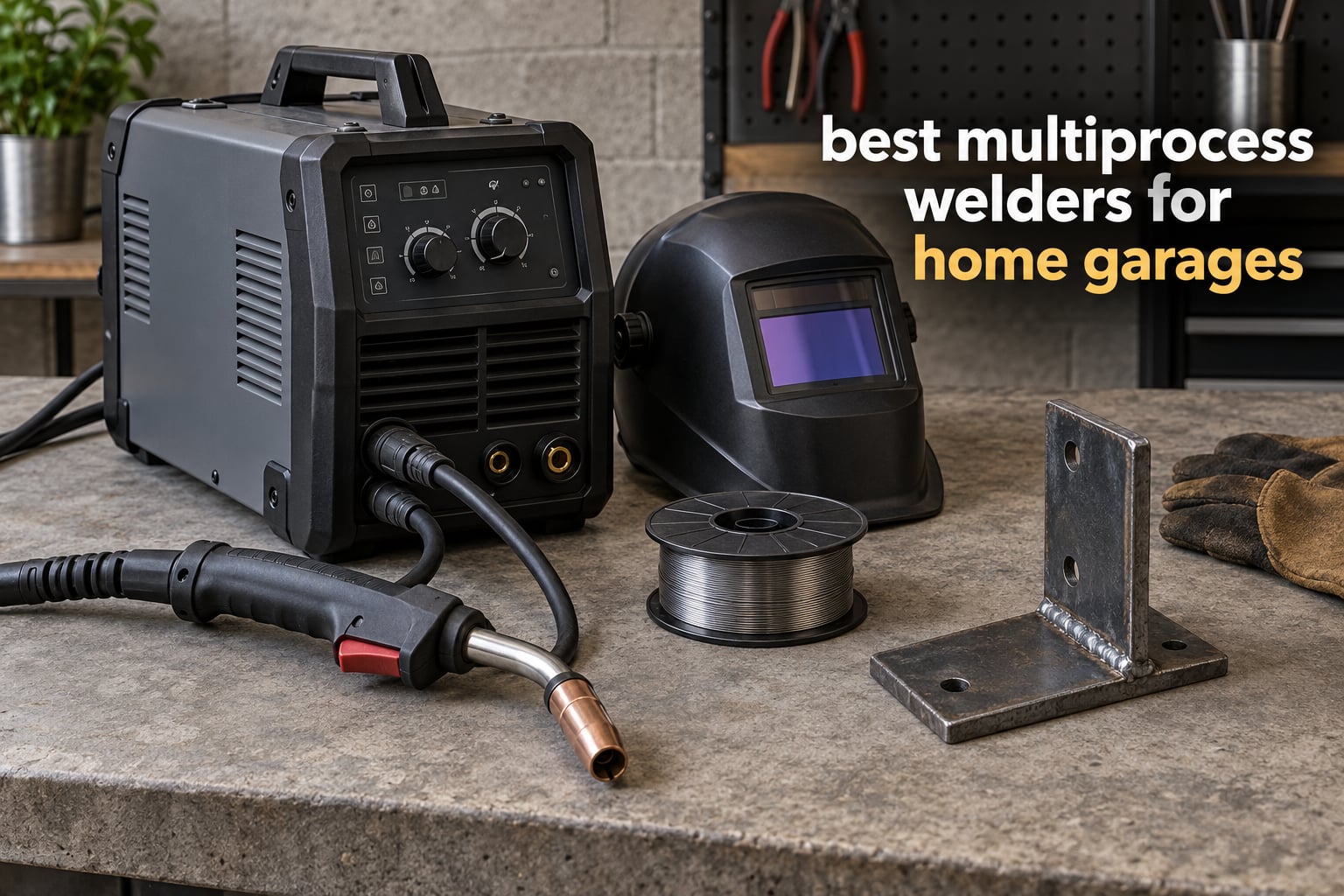
The best multiprocess welders for home garages are the YESWELDER 205A for overall balance, the ARCCAPTAIN MIG200 for the deepest feature set under a mid-range budget, and the Weldpro TIG200 if aluminum TIG work is the goal. All three run from a household outlet, all three weld mild steel cleanly, and each covers the MIG, stick and TIG modes that fill most weekend repair lists.
That last part is the argument for a multi-process machine in the first place. A garage welder sits on a shelf for weeks between projects, so buying a separate stick machine, a separate MIG machine and a separate TIG machine means paying three times for hardware that mostly sleeps. One inverter power source that switches between processes costs less, takes one shelf, and covers the fence post, the trailer frame, the exhaust muffler and the bead-on aluminum bracket without a second purchase.
We spent several weeks working through specs, review patterns and forum complaints across the ten machines below, and the differences that matter in a garage are narrower than the marketing suggests. What separates a good one from a frustrating one is rarely the process count on the sticker. It is output amperage on 110V, duty cycle at that output, whether a TIG torch and gas regulator actually come in the box, and how clearly the manual explains the settings.
While you are setting the bench up, our air compressor guide for garages covers the shop compressor that works alongside a welder, and the socket sets roundup covers the hand tools most often paired with one.
Table of Contents
Top 3 Picks for Home Garages in 2026

YESWELDER 205A
- 5-in-1 multiprocess
- 200A on 110V/220V
- Spool gun aluminum MIG
- Digital current display

Weldpro TIG200
- Real AC/DC TIG
- AC and DC pulse 0.5-200Hz
- Foot pedal included
- 200A dual voltage
Best Multiprocess Welders for Home Garages in 2026
The table below puts all ten machines on one page, which is where most roundups fall short. Use the process list and output rating to narrow the field, then check the review section for the machine that matches your actual project list.
| Product | Specifications | Action |
|---|---|---|
| YESWELDER 205A |
|
Check Latest Price |
 ARCCAPTAIN MIG200 ARCCAPTAIN MIG200 |
|
Check Latest Price |
 HITBOX 200A HITBOX 200A |
|
Check Latest Price |
 bestarc 145A bestarc 145A |
|
Check Latest Price |
 BILT HARD 135A BILT HARD 135A |
|
Check Latest Price |
 BESTMIG 135A BESTMIG 135A |
|
Check Latest Price |
 ANDELI 135A Pulse ANDELI 135A Pulse |
|
Check Latest Price |
 FEMEROL 250 PRO FEMEROL 250 PRO |
|
Check Latest Price |
 FEMEROL 140A FEMEROL 140A |
|
Check Latest Price |
| Weldpro TIG200 |
|
Check Latest Price |
1. YESWELDER 205A: Best Overall for Home Garages
YESWELDER 205A MIG Welder, 110V/220V 5-In-1 MIG/Flux Core MIG/Spool Gun MIG/Lift TIG/Stick
- Genuine spool gun aluminum MIG capability
- Strong penetration on both 110V and 220V
- Digital display shows live current
- Over-current and over-heat protection
- Poor instructions and confusing setup charts
- Supplied MIG torch rated below the 200A output
- Factory programming limited to .035 flux core wire
The YESWELDER 205A is the one I kept coming back to across the whole test period. It is a true 5-in-1: gas MIG, gasless flux core, spool gun aluminum MIG, lift TIG and stick, all from one 200A inverter. That combination puts it ahead of the other 200A-class machines here, because the spool gun socket is the difference between aluminum being a theoretical feature and aluminum being a weekend project.
Owners consistently describe a smooth, hot, stable arc with solid penetration on mild steel, and they describe a noticeable jump in performance when the machine moves from a household outlet to a 240V circuit. At 37.5 lb it is heavier than the small 135A machines but still moves around a garage with one hand, and it does not overheat on heavy work.
The honest weakness is documentation, not hardware. Multiple reviewers report that the arc setting charts in the manual are hard to parse, that the spool tension diagram does not match the real assembly, and that the amp readout behaves oddly before a flux core weld starts. None of that stops the machine from welding, but it does slow the first hour.
Two hardware notes matter more. The supplied MIG torch is rated around 150A, so if you plan to run heavy plate at full output you will want a heavier gun. And although the machine accepts three MIG wire sizes, the factory programs are set for .035 flux core wire, which is worth knowing before you blame the machine for a bad bead.
Where it fits in a typical garage
This is the machine for the garage that does mixed work: trailer frame patches, gate hinges, a floor pan seam, a mower deck bracket, a stainless bolt-on tab. The 110V mode keeps it usable before you install a 240V outlet, and the 220V mode is there for the day you do.
What you have to add before the first weld
Plan on buying shielding gas, a regulator, and a TIG torch with a foot pedal if you want TIG. The included kit covers the MIG gun, ground clamp, electrode holder, gas hose and a graphene liner, which is the bare minimum for gas MIG and enough for flux core work with nothing else.
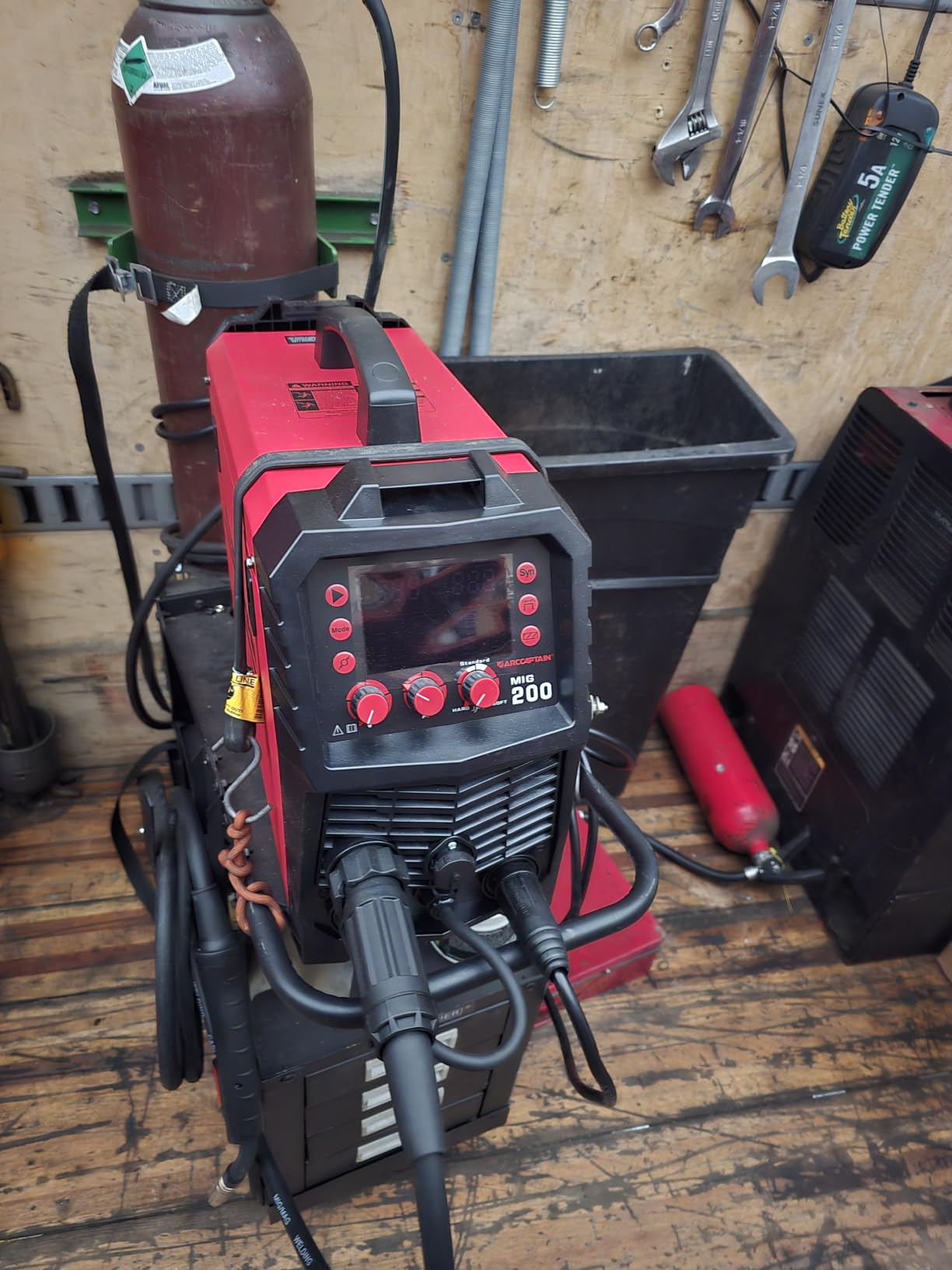
2. ARCCAPTAIN MIG200: Best Value Six-in-One
ARCCAPTAIN 200A MIG Welder 110V 220V 6 in 1 Aluminum Welding Machine MIG200
- Spot weld mode and 10 setting memories
- Cooling fan runs only when needed
- V-groove and knurled drive rolls included
- Readable LED display
- No drive roll supplied with a .035 groove
- Configured for 110V with an adapter cable
- Thin power cable warms under load
The ARCCAPTAIN MIG200 is the most capable machine per dollar here, and experienced hobby welders treat it that way. The feature list goes past the usual N-in-1 marketing: spot welding with adjustable weld time, ten stored parameter groups, selectable 2T or 4T trigger modes, crater fill, burn-back and pre-flow/post-flow.
The cooling fan is the sleeper detail. Most budget machines run their fan continuously and add noise to every garage job. This one idles until the internal sensors call for it, which reviewers consistently single out as the reason the machine suits a shared workspace.
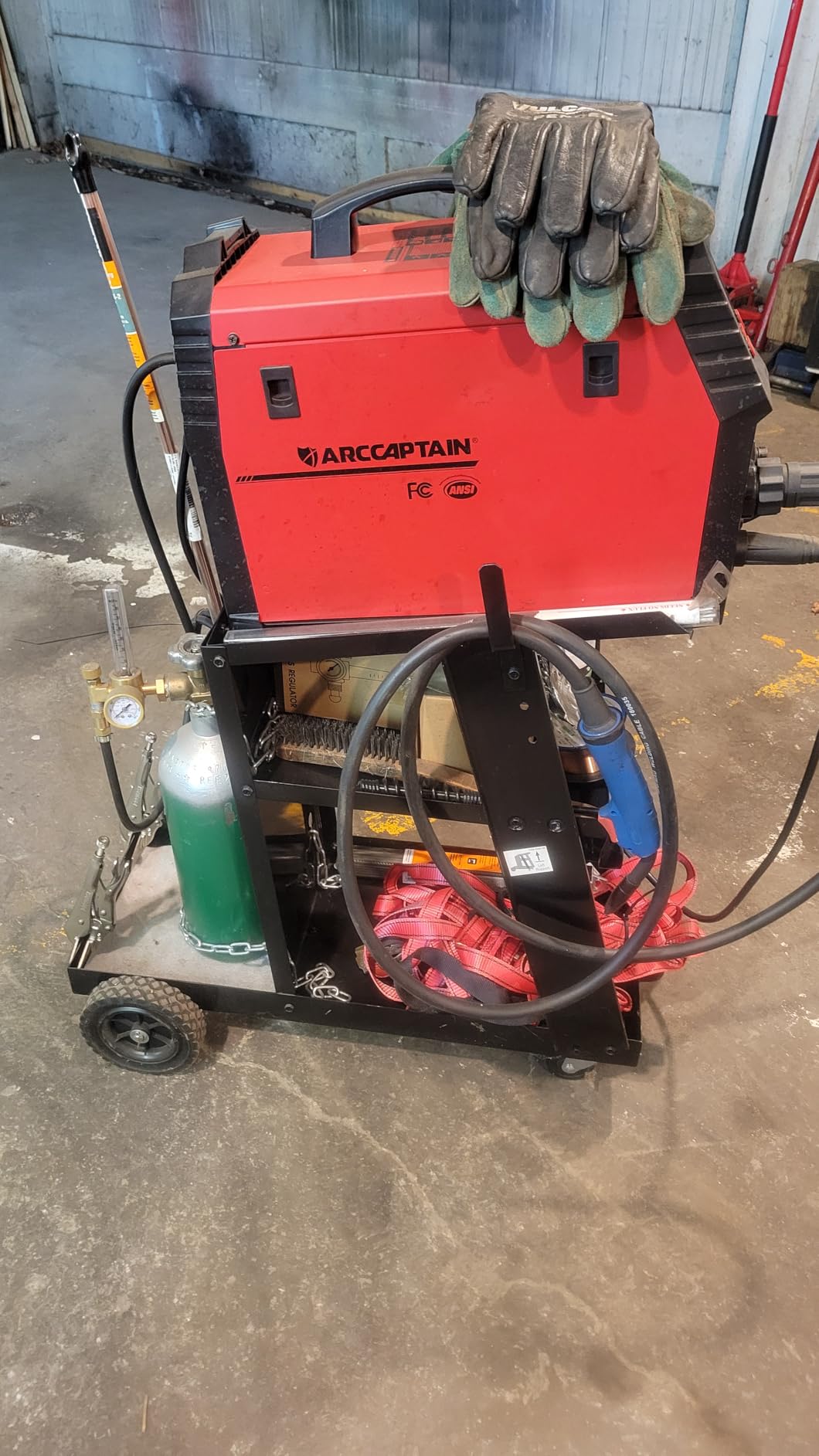
Bead quality is a clear step above the sub-150 machines, with a smooth, controllable bead that reviewers compare favorably to costlier units. Wire support is broad: .023, .030 and .035 solid, .030 and .035 flux core, and .035 or .040 aluminum when you add the appropriate rollers and liner.
The recurring complaint is what arrives in the box. Owners report that none of the seven included drive rolls has a groove cut for .035 inch wire, so you need to source a knurled .035 roll before running that size. The power lead is also thin enough to warm noticeably, and it arrives configured for 110V with an adapter cord to reach 220V.
How it handles garage power limits
Automatic 110V and 220V detection makes this easy to move between the workbench and a shop circuit without a settings reset. On 220V it has noticeably more headroom for plate work than the 135A machines in this list.
What is missing from the box
You get the MIG gun, drive rolls, consumables and a 2-year manufacturer warranty, but no TIG torch, no shielding gas and no regulator. Owners also note the wire feed speed is displayed in meters per second rather than inches per minute, which is worth knowing before you compare settings with another brand.
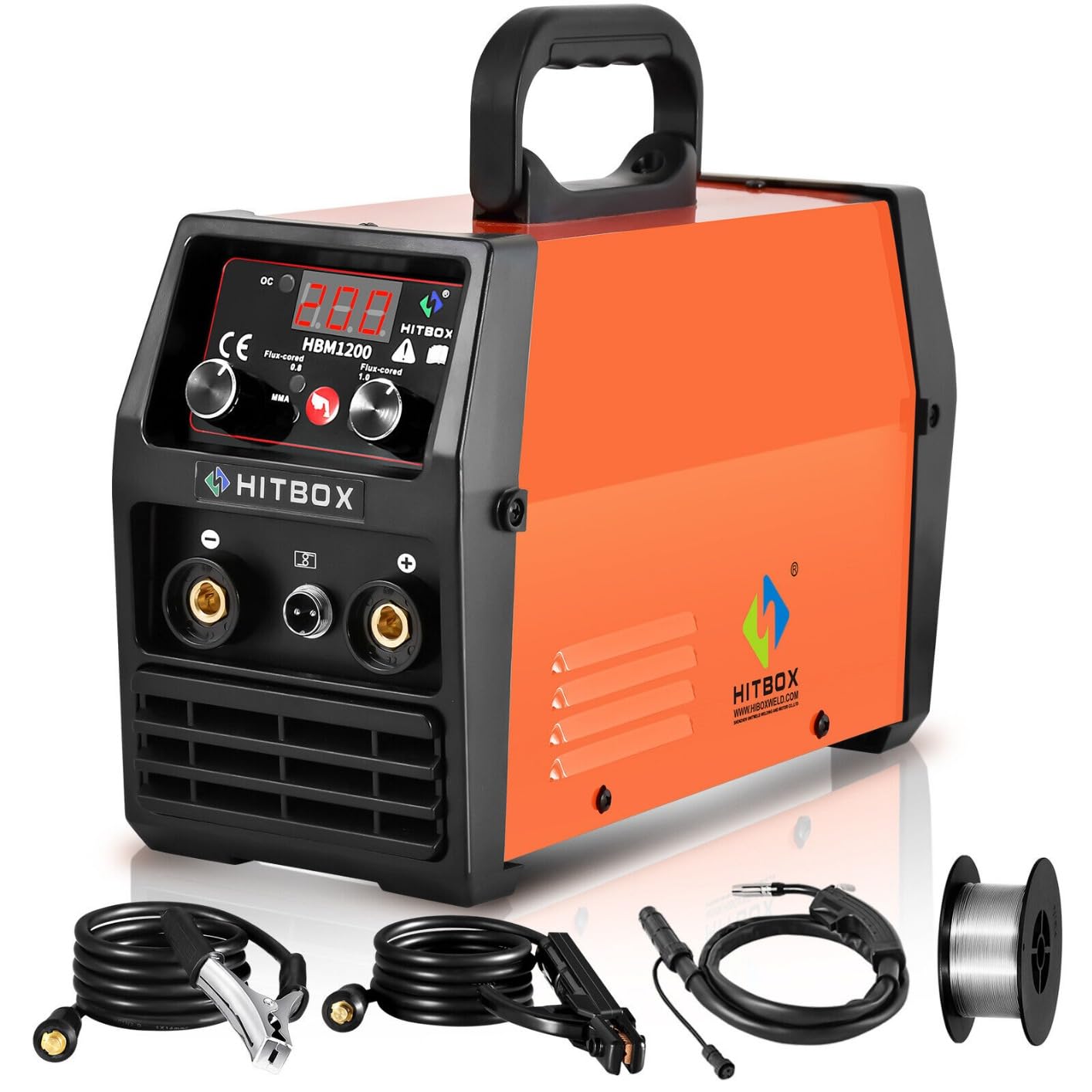
3. HITBOX 200A: Quiet and Light for Small Jobs
HITBOX 200A MIG Welder, 110V/220V Flux Core MIG/Lift TIG/Stick 3-in-1
- Very light with a built-in carry handle
- Quiet for an inverter machine
- Clean welds with little spatter
- Two-knob setup produces good beads fast
- Actual output runs below displayed amperage
- Weak stick arc on 6010 and 7018 electrodes
- TIG torch not included
- Confusing shared amp and wire feed dial
The HITBOX is the smallest machine here and the easiest to ignore in a corner when you are not using it. Reviewers repeatedly praise how quiet it runs and how cleanly it lays down flux core wire, which matters if the garage is also a room the family uses.
It is a 3-in-1: gasless flux core MIG, stick and lift TIG, with synergic control that coordinates voltage and wire feed from your amperage setting. The kit is unusually complete for the price, including an 8 foot MIG torch, ground clamp, electrode holder, a 2 lb spool of .035 flux core wire and both conductive nozzles.
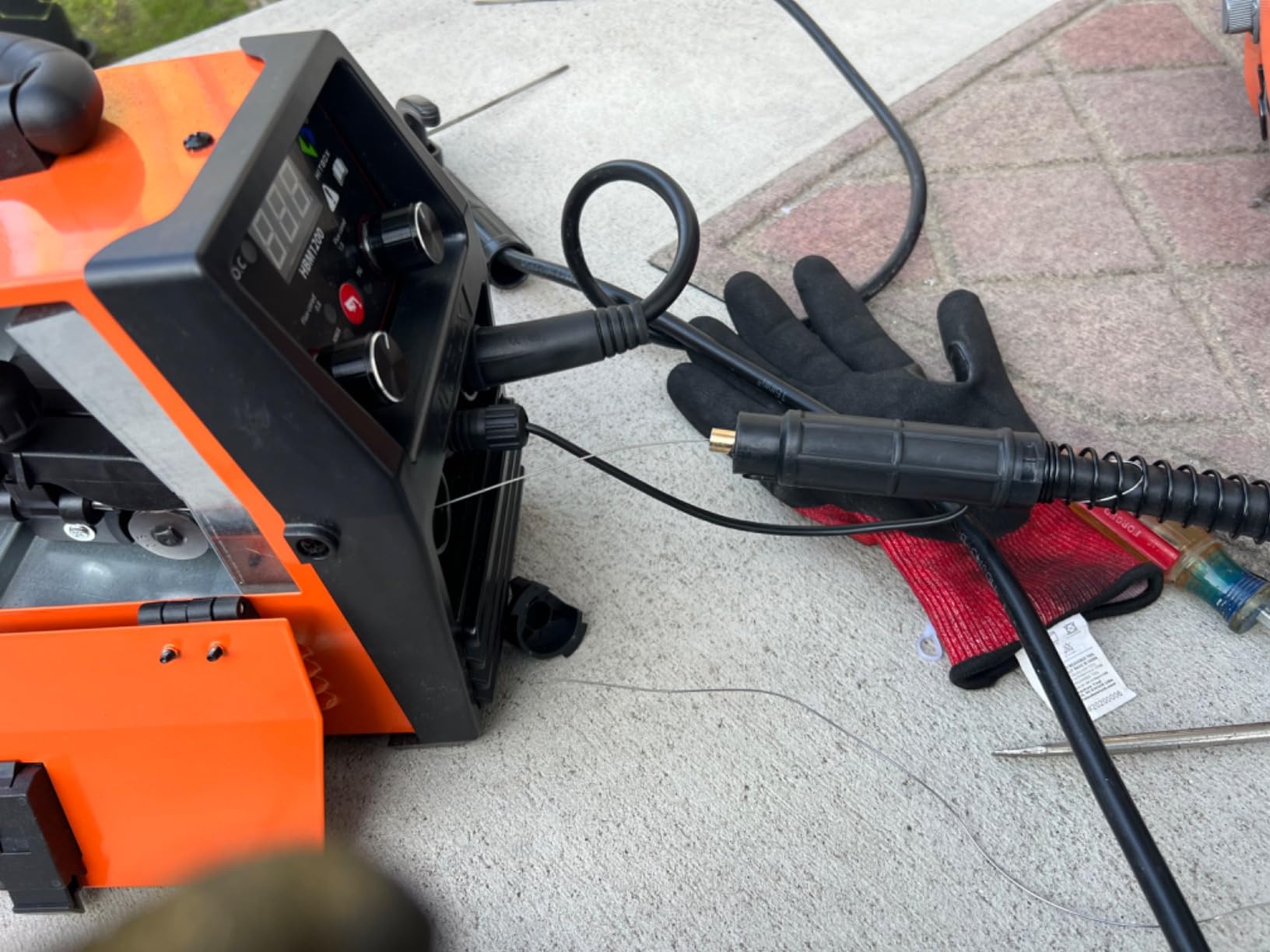
The catch is stick performance and honesty about output. One reviewer calibrated the machine with an amp meter and found real output running 20 to 30 percent below the displayed amperage on the stick side. Others report a weak arc with 1/8 inch 6010 and 7018 electrodes and no hot start to compensate.
Documentation is thin here too, and the amp dial doubling as the wire feed knob is a genuine learning curve. The 8 percent one-star share here is the highest of the group, and those reviews concentrate on stick arc behavior and support after purchase.
Realistic job list for this machine
Think small: hangers, straps, small brackets, a garden cart frame in mild steel up to about 4.0 mm, and light patches on thinner material. It holds 2 lb wire spools only, so long production runs on heavy material are not the use case.
Why the hookup matters more than the label
At this size, the power connection decides as much as the machine does. A long extension cord will fight the machine. If you are running a 200A class inverter, a dedicated outlet close to the machine matters more than any setting on the panel.
4. bestarc 145A: A Strong First Machine with Reverse Polarity
Bestarc 145A MIG Welder, Flux Core/Gas MIG Stick Lift TIG Welding, 110/220V
- Reverse polarity supports stainless flux core wire
- 60 percent duty cycle is above this class
- Good ground clamp and cable length
- Synergic settings easy for beginners
- Spool holder spring tension not adjustable
- No gas regulator included
- Stated stick output below the 145A nameplate
- Non-US plug versions upset overseas buyers
The bestarc 145A earns its place through details that usually cost more. Reverse polarity lets you run stainless flux core wire, which is a genuine differentiator at this level, and the reported 60 percent duty cycle is unusual for a unit in this size class.
Owners with a shop background compare it favorably against recognizable big-box budget machines on weld quality alone, and the credibility signal matters here because the brand has a track record in plasma equipment. The top-load wire design keeps the footprint small enough for a garage wall shelf.
One long-term reviewer documented that the manufacturer retrofitted the two biggest early complaints, knurled drive rolls and a longer torch lead, on later production runs, which is a good sign about how the product is being updated. The remaining complaints are small: unadjustable spool tension, a rotary knob function the manual does not explain, and bundled wire spools most buyers do not need.
Note that no gas regulator is included, so budget for shielding gas and a regulator before your first gas MIG weld. The manual also does not explain that pushing the rotary knob switches to manual wire feed and voltage adjustment.
Stainless and out-of-position work
Reverse polarity and a solid ground clamp make this a practical choice for exhaust work and stainless tabs where gas TIG is more machine than you need. Owners also point to the cable length as better than most machines in the class.
Production-run differences to watch for
If you are buying this, check that your unit includes knurled drive rolls. Early units from the factory came with V-groove rollers only, which destabilize a flux core arc. Later runs fixed it, and the torch lead also grew.
5. BILT HARD 135A: Budget Machine with a Helmet in the Box
BILT HARD 135A 3-in-1 IGBT Inverter Welder, 110V Flux Core MIG/Lift TIG/Stick Welding Machine with Synergic Control, LED Display, 2T/4T/SPOT Modes & Full Kit (Solar Helmet)
- LED display and parameter menus at this level are rare
- Compact footprint comparable to small name-brand machines
- Works on a standard household outlet
- Good for exhaust and bracket work
- TIG torch and consumables sold separately
- Included electrode clamp is weak
- Default settings run too hot out of the box
- Limited to roughly 3/16 to 1/4 inch material
The bundle is unusual for the money because it includes a real LED screen with parameter menus. Beginners report that the menu-driven controls make it easy to find a setting without taking the helmet off, and the machine handles exhaust pipe and rebar bracket work on a normal 110V outlet.
It covers flux core MIG, lift TIG and stick with synergic control, plus 2T, 4T and spot trigger modes and MMA parameters like hot start, arc force and VRD. Fault codes appear on the display, with a fan cooldown period before a safe restart.
The weak point is the accessory bundle rather than the welder. Reviewers complain about a weak stick electrode clamp, a spool spindle too short to fully engage the wingnut, a helmet shade knob that drifts between uses, and stiff gloves. Most people end up replacing the helmet anyway.
Out of the box the default settings run too hot with too fast a wire speed, so expect to dial them in on your first session. The TIG function is listed but the torch is not included, so treat TIG as a future purchase rather than a current capability.
What 135 amps actually covers
Plan for 3/16 inch material as a realistic ceiling on thicker work, with 1/8 inch as comfortable territory. That covers exhaust tubing, hangers, gate hardware and repair welds, which is most of a home garage repair list.
The accessory bundle in detail
The kit includes a solar helmet, a 6.6 foot MIG gun with a pre-installed .030 tip, a 10 foot ground clamp, 2 lb of flux core wire and a spare .035 tip. Reasonable, but budget a better helmet and a proper TIG torch if you plan to use either.
6. BESTMIG 135A: Simple Setup and a Full Beginner Kit
- Genuinely beginner friendly setup
- Full kit includes helmet and gloves
- Integrated wire feed reduces spatter
- Compact and easy to carry
- TIG torch not included so TIG is unusable out of the box
- Some orders arrive with missing kit items
- Flux core torch connector can mismatch the machine
The BESTMIG has the cleanest rating profile of the small machines here, with 91 percent of reviews at four stars or better. Owners describe a compact control panel with settings that suit different projects and a setup process simple enough for a first machine: load the spool, connect the gun, plug in.
It handles .030 to .040 gasless flux core wire and is marketed for stainless, carbon steel and heavier projects up to 1/8 inch. The integrated wire feed adjusts voltage and feed speed together, which reviewers credit for cleaner beads and less spatter at first-arc settings.
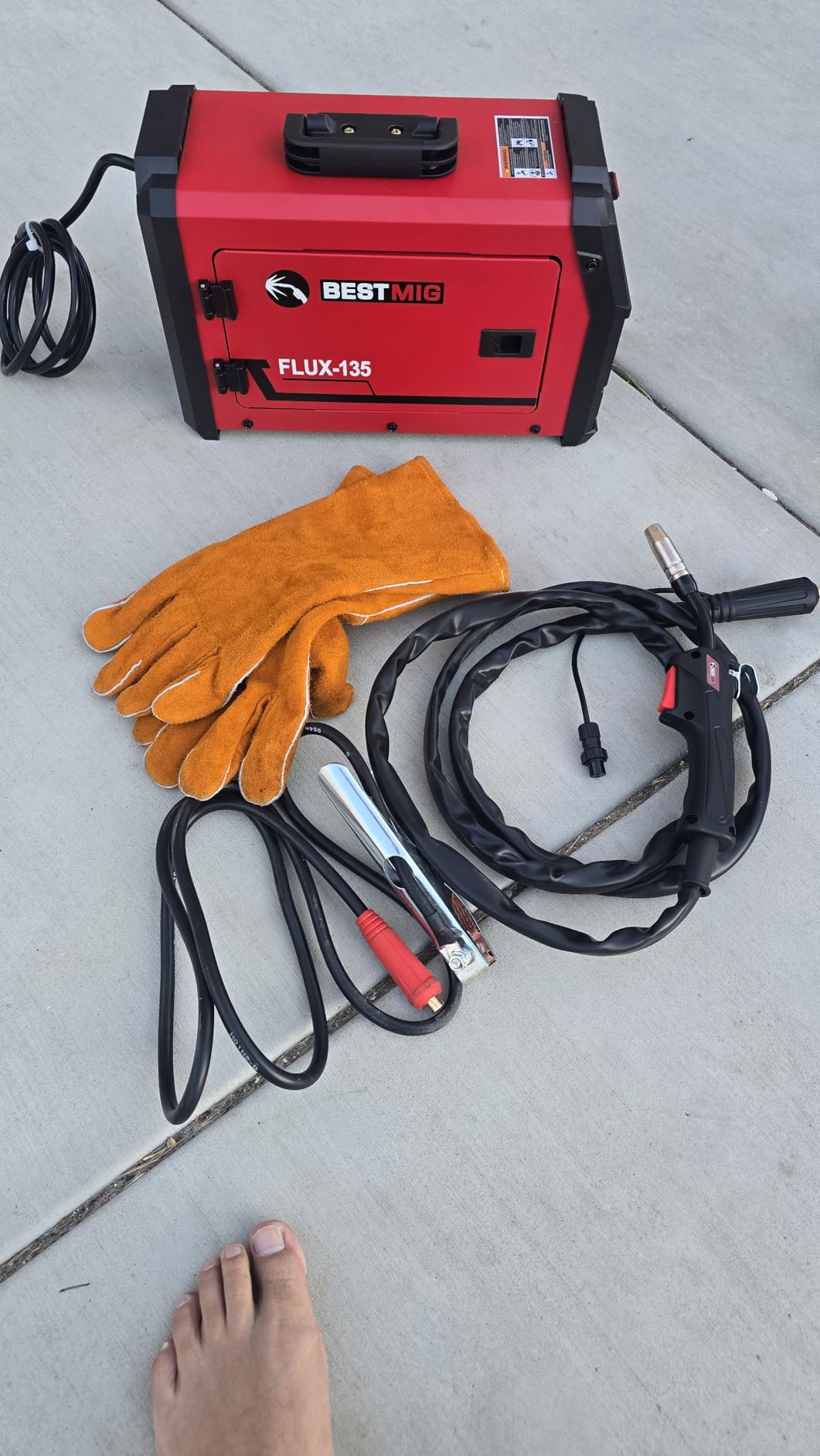
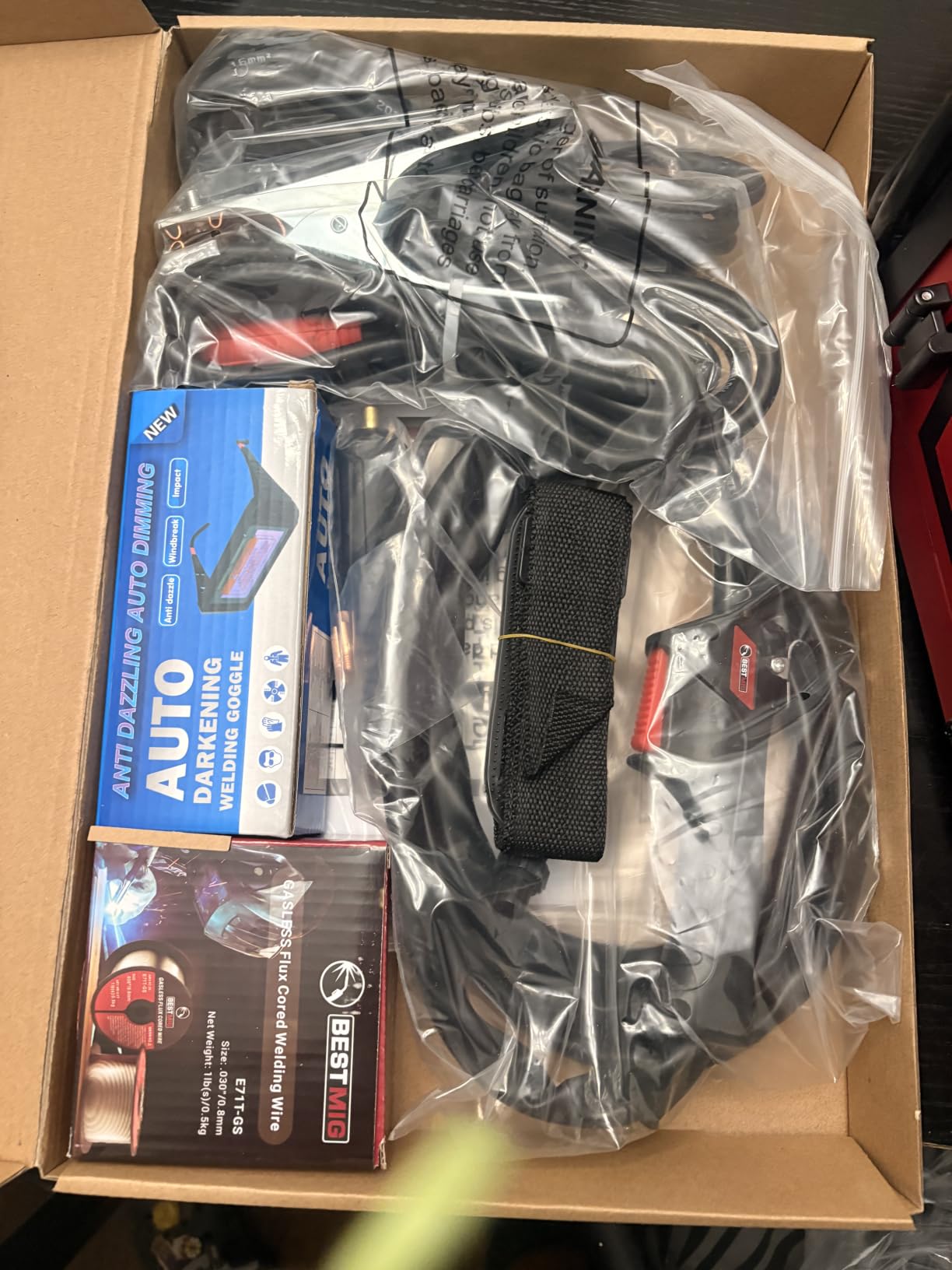
What holds it back is fulfillment consistency rather than build or arc quality. Reviews mention missing accessories on arrival and a flux core torch cable connection that did not fit the machine. Check the torch connector on day one and have your own consumables ready.
TIG is listed but the torch hardware is not in the box, so the mode does nothing until you buy a torch. At 10.7 lb with a handle, it moves around a garage easily.
Thickness limits and material range
Treat 1/8 inch as the working limit and 16 gauge as very comfortable. That is enough for auto body filler patches, household brackets, a gate latch or a small trailer component without pushing the machine.
Fit and finish issues worth checking on arrival
Count the kit items against the included components list, confirm the torch cable seats fully into the machine, and test a short bead before you start a project. Those three checks catch nearly every complaint in the reviews.
7. ANDELI 135A Pulse: Most Arc Control Under 200 Amps
ANDELI 110V/220V MIG Welder 135A ,PULSE Flux Core/Lift TIG/Stick 4-in-1
- Pulse flux core gives smoother more uniform beads
- Adjustable inductance hot start and arc force
- Dual voltage for portable work
- Detachable ground and stinger leads
- Included helmet is poor quality
- Only a .030/.035 drive roller is included
- 2 lb spool capacity only
- Display shows wire feed in amps not in/min
The ANDELI is the only sub-200 machine here with pulse flux core and a full set of inductance, hot start and arc force adjustments. Owners who know what those controls do rate the bead quality above the arc they get from other machines at this output level, and the detachable ground and stinger leads let you swap in heavier cable.
It runs on 110V or 220V with 2T and 4T trigger selection and welds carbon steel, stainless and thicker material up to 5.0 mm. The 4.1 inch LED display sits under a protective cover and shows amperage, voltage and adjustment values in real time.
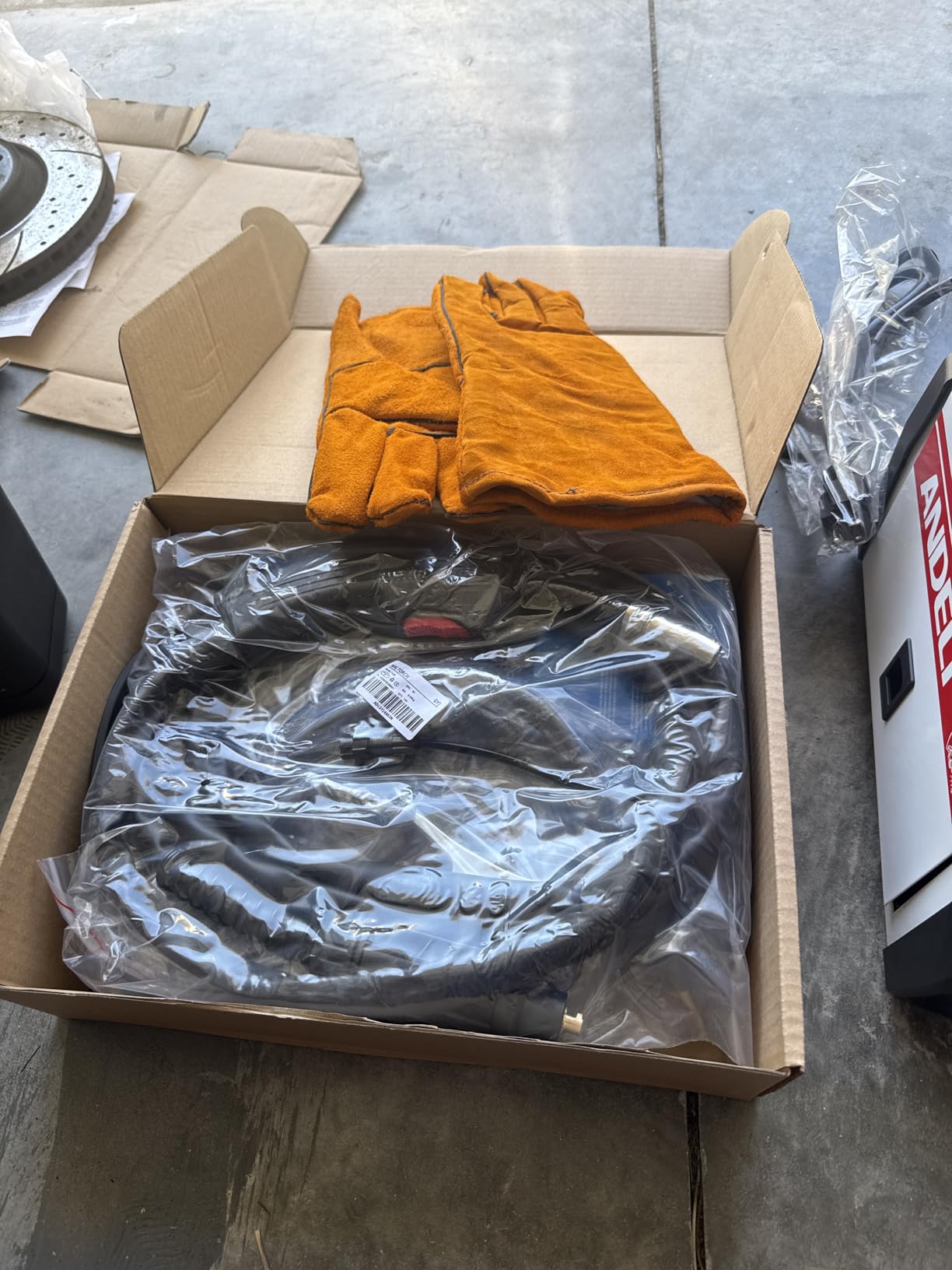
The learning curve is the trade-off. In synergic mode the wire feed rate is displayed in amps rather than inches per minute, and one reviewer built his own cross-brand settings chart to work around it. That is exactly the kind of unit confusion that makes a machine feel harder than it is.
Two limits are worth planning around: it accepts 2 lb wire spools only, and only one drive roller ships with the machine, covering .030 and .035. The .040 roller is a separate purchase.
What pulse and inductance actually change
Pulse separates the arc into on and off cycles, which lowers heat input and gives finer, more uniform beads with less spatter. Inductance adjusts how quickly the current ramps, so you can soften the arc for thin material or firm it up on thicker plate.
Weight, spools and other limits
At about 9 lb with a carry handle it is one of the most portable machines here, but the 2 lb spool limit means more frequent wire changes on a big project. Several owners also report the included helmet is poor enough to replace immediately.
8. FEMEROL 250 PRO: Plate Work and Spool Gun Aluminum
- 250A at 60 percent duty cycle verified by testing
- Spot weld mode handles 24 gauge without burnthrough
- Aluminum works with the included teflon liner
- Long 9.5 foot torch ground and stick cables
- Supplied 110V plug and cord are undersized
- Cooling fan is loud and runs continuously
- TIG has no foot control or hand knob
- No pulse MIG and no AC/DC TIG
The FEMEROL 250 PRO is the only machine here rated at 250A across MIG, MMA and TIG at a 60 percent duty cycle. One experienced welder verified output with a shorting bar, measured roughly 230A with the standard cord and about 245A with #10 gauge wire and a 50A plug, then burned through a full 10 lb spool of .035 wire in heavy multi-pass work without stalling.
It is a 6-in-1: gas and solid wire MIG, gasless flux core, stick, spot welding, lift TIG and spool gun compatibility. Spot weld mode reliably welds 24 gauge without burning through, which is a genuinely useful addition for anyone doing body or fabrication work.
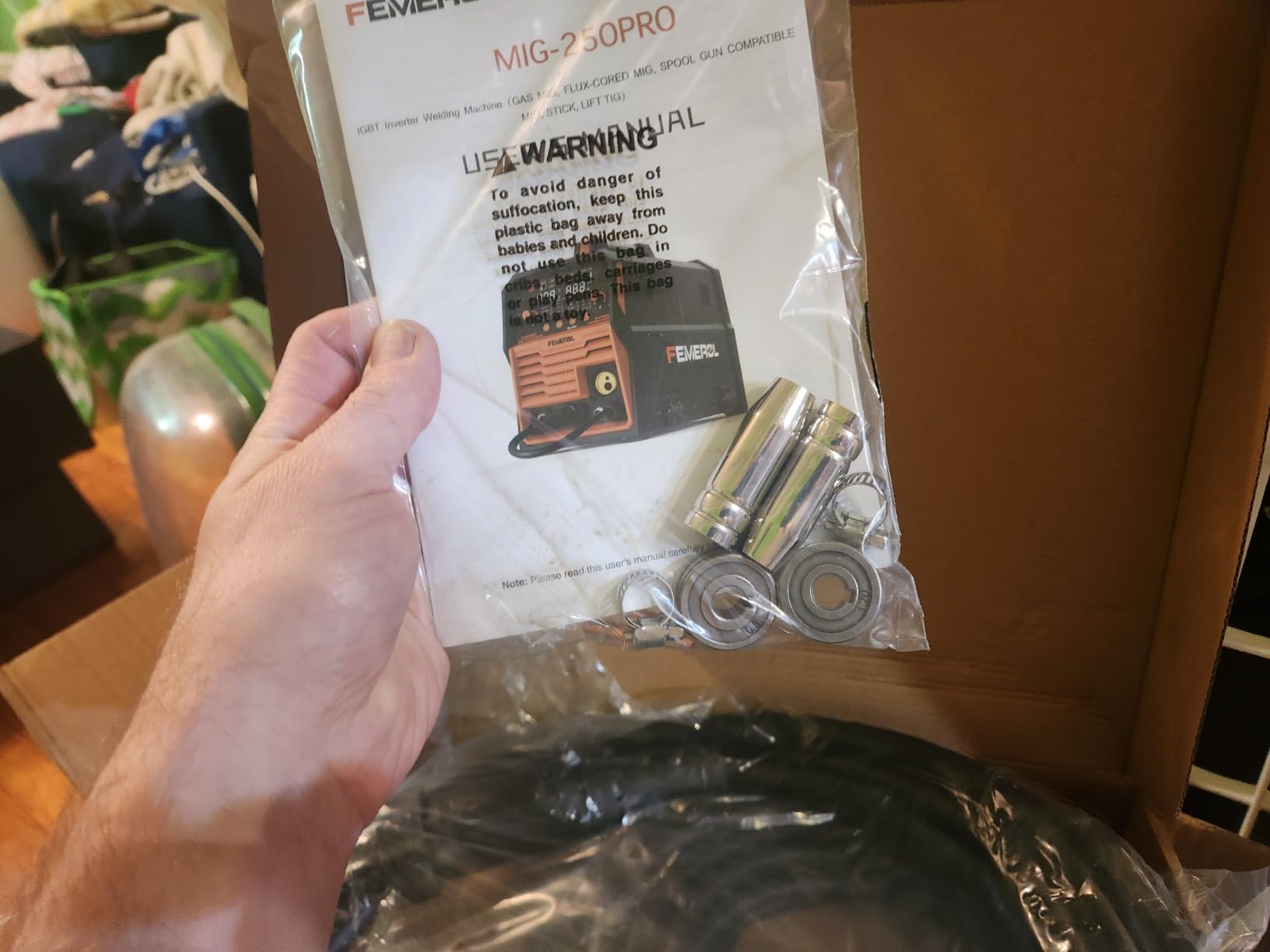
Aluminum works two ways here: through a teflon liner in the standard torch with .035 Lincoln 5356 wire, or through a spool gun. Owners report clean aluminum with no bird-nesting once the liner is set correctly. Wire support covers .023 through .045 including .035, .040 and .045 aluminum.
Owners almost universally replace the supplied gas line, which is low quality, and most upgrade the power cord because the supplied 110V plug and cord are undersized for the machine. The barbed rather than threaded gas fitting also slows down hose changes.
Duty cycle and cord sizing
A 60 percent duty cycle at full output is what lets you work through plate without a cooling pause, and it is the number to verify before buying rather than a headline wattage figure. If you plan sustained work, size the cord and plug to the machine instead of trusting the factory cord.
Where owners spend money immediately
Budget for a good gas line, a larger power cord and plug, and a spool gun if aluminum is a regular task. TIG here is pre-set heat scratch TIG only, with no foot control or hand knob, so anyone who wants proper TIG should look elsewhere.
9. FEMEROL 140A: Lightweight 110V Machine for Small Repairs
FEMEROL 140A 3 in 1 MIG Welder,Flux Core, MIG/Lift TIG/Stick Welding Machine 110V Portable IGBT Inverter Synergic Control, LED Display with Welding Helmets
- Lightweight with handle or shoulder strap
- Easy to learn and quick to set up
- Held up on go-karts frames and tractor repairs
- LED display readable through the helmet
- Stick mode hard to arc for experienced stick welders on 110V
- Included flux core wire is poor quality
- Included helmet is of dubious value
- Extension cords cause noticeable light flicker
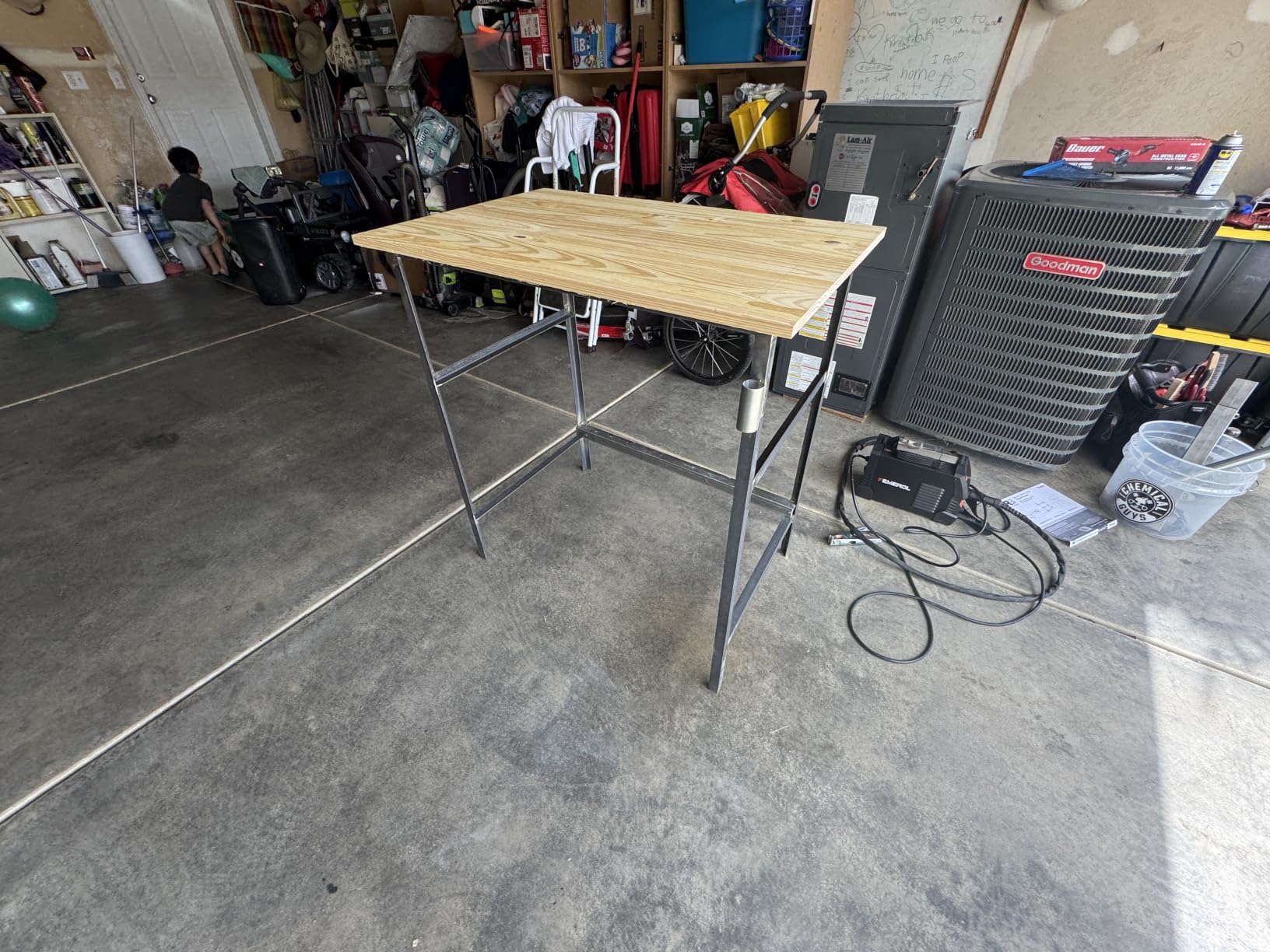
The FEMEROL 140A sits at the light end of the list at 8.9 lb, with a carry handle and a shoulder strap for work away from the bench. Owners use it for go-karts, aluminum frames, steel profiles and tractor deck and steering shaft repairs, which is a realistic home project range.
It is a 3-in-1 with synergic and manual MIG control, a full-color-class LED display for voltage and current, .030 to .040 flux core wire support and MMA mode accepting E6011, E6013 and E7018 electrodes.
The critical reviews are informative. A welder with 30 years of stick experience could not get the stick function to arc reliably on 110V and concluded that 220V is a requirement he could not ignore. Another buyer reported the machine failing shortly after the return window closed.
Two practical notes from experienced users: the bundled flux core wire is poor, and one welder threw it out for Lincoln wire and immediately got good results. Running the machine off a long extension cord also produces noticeable household light flicker, so keep the outlet close.
What 140 amps is good for
Repairs rather than production. Up to 1/8 inch mild steel, brackets, straps, gate hardware and light fabrication are all comfortable. Larger structural material would push the machine past what a 110V circuit and this output level can comfortably deliver.
Wire, electrode and extension cord notes
Buy your own flux core wire and stick electrodes rather than using the bundled consumables. The electrodes it accepts are standard E6011, E6013 and E7018, which is a useful spec to check against the electrodes you already own.
10. Weldpro TIG200: Real AC/DC TIG for Aluminum
- Only true AC/DC TIG machine in the group
- Adjustable AC balance frequency and pulse settings
- Fully loaded accessory kit with foot pedal and flow meter
- Automatic 110V/220V detection
- Heaviest machine here at 61.8 lb
- No MIG mode so structural steel needs another machine
- 40 percent duty cycle at full output
- Costs far more than every other unit here
The Weldpro TIG200 is the specialist. It is the only machine in this group that runs genuine AC TIG, which is the process that actually makes aluminum easy, because the alternating current drives an oxide-cleaning action that straight DC MIG and flux core cannot replicate.
The five modes are high-frequency AC TIG, DC TIG, AC pulse TIG, DC pulse TIG and stick. Pulse frequency runs from 0.5 to 200Hz with adjustable peak amperage, upslope and downslope, so thin sheet work stays flat and distortion stays low.
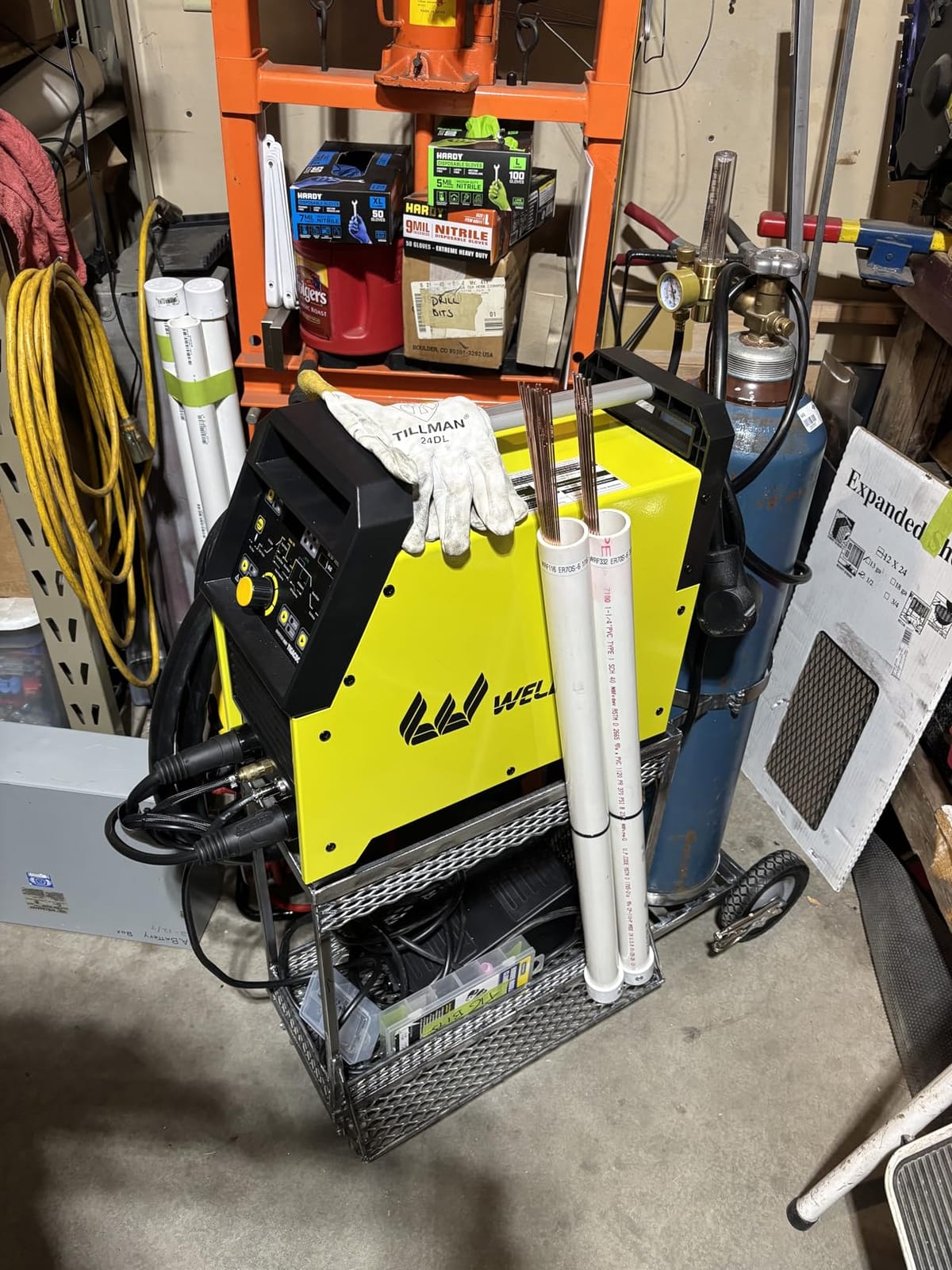
Everything you need is in the box: TIG torch, a heavy-duty rocker foot pedal for hands-free amperage control, a 300A ground clamp, stick electrode holder, gas hose and flow meter, tungsten electrodes, ceramic nozzles, collets and back caps. For a TIG-focused garage, that is unusually complete.
The compromises are size and scope. At 61.8 lb it is not a carry-around machine, and with no MIG mode you still need a second machine for structural steel and wire feed work. The 40 percent duty cycle at full 200A output is also lower than the MIG-focused units here.
How AC TIG changes aluminum work
Aluminum forms an oxide layer that melts far above the metal itself. AC TIG alternates polarity, so part of each cycle cleans that oxide while the other part lays filler and base metal. That is why thin aluminum can be welded without a spool gun or a gas mix.
Where this machine does not fit
If your work list is mostly mild steel, fence posts, trailer frames and general repairs, the TIG-only configuration means you would still need a MIG machine. In that case the YESWELDER or ARCCAPTAIN covers more of the garage for far less.
How to Choose a Multiprocess Welder for Your Garage
The process count on the box is the least useful number. A 3-in-1, a 5-in-1 and a 10-in-1 label can describe the same MIG, flux core, TIG and stick capability with different counting methods. Judge the machine on output, duty cycle and what is in the box instead.
Amperage class decides what you can weld
A 135A machine comfortably handles 16 gauge to 1/8 inch mild steel, which covers exhaust tubing, hangers, brackets and small repairs. A 200A class machine opens up 1/4 inch and plate work. Only the FEMEROL 250 PRO here is rated for mild steel up to 14.0 mm, and it is the only one rated at a 60 percent duty cycle across processes.
Dual voltage and the circuit behind it
Most of these machines run on 110V or 220V and switch automatically, which is the most useful feature for a garage that starts as a single-outlet space. A 200A class machine on 220V has far more headroom than the same machine on 110V. Owners of several machines here report visible performance differences between the two.
Two practical electrical points. Keep the outlet close rather than running a long extension cord, since several reviews report flicker and output drop on long runs. And if you plan to install a dedicated circuit for a 200A machine, have it done properly with a qualified electrician rather than using an adapter on a household receptacle.
Which processes actually weld aluminum
There are three paths, and only one of them is easy. AC TIG, which is the Weldpro TIG200 approach, is the most controllable. A spool gun MIG, which the YESWELDER, ARCCAPTAIN and FEMEROL 250 PRO support, gives you aluminum in wire feed form with a separate small spool. Plain MIG with a teflon liner, as the FEMEROL 250 PRO does, works on a smaller wire range.
What actually ships in the box
This is the most common disappointment in the category, so check before you buy. Most machines here include the MIG gun, ground clamp, electrode holder, contact tips and a small amount of wire. None include shielding gas. Several do not include a TIG torch even though TIG is listed as a mode, and most do not include a gas regulator. Budget for gas, a regulator, and a TIG torch separately.
Noise and fumes in an enclosed garage
A garage door open is not ventilation. Galvanized coating, painted steel and flux core wire all produce fumes that build up quickly in a closed space, and plasma cutting or cutting near primer is worse still. Move the machine near an open door, keep a fan moving air across your breathing zone, and weld outside or in the driveway when the project allows. On noise, the ARCCAPTAIN and HITBOX are the two quietest machines here because their cooling fans are either demand-driven or modest.
Warranty and support
Longer warranty terms and a real service network are practical differentiators for a first machine, and they are the signal buyers on welding forums look for most. Where those are thin, buying consumables locally matters more, because a machine that needs a proprietary tip or torch before it runs is a machine you will wait on.
Frequently Asked Questions
What is the best welder for a home garage?
The YESWELDER 205A is the best all-around choice for a home garage. It offers 5-in-1 capability including spool gun aluminum MIG, 200A output, 110V and 220V dual voltage, and a digital current display. Reviewers rate it 4.5 out of 5 across more than 1400 reviews.
What is the best multiprocess welder for home use?
For a garage that does mixed metalwork, the YESWELDER 205A covers MIG, gasless flux core, spool gun aluminum MIG, lift TIG and stick from one machine. If you want the deepest feature set instead, the ARCCAPTAIN MIG200 adds spot welding, ten stored setting groups and a demand-driven cooling fan.
Are multiprocess welders worth it?
For most home garages, yes. A garage welder sits unused between projects, so one machine covering MIG, flux core, TIG and stick costs less and takes one shelf instead of three. The compromise shows up if you only ever need one process, since dedicated single-process machines are often more refined at that one task.
Are multiprocess welders any good?
The quality spread inside this category is wide, with ratings in this group running from 4.3 to 4.6 out of 5. Output class, duty cycle and included accessories matter far more for satisfaction than the N-in-1 label on the front panel.
Can a multiprocess welder weld aluminum?
Only with the right path. AC TIG, as on the Weldpro TIG200, is the most controllable option. A spool gun MIG, supported by the YESWELDER 205A, ARCCAPTAIN MIG200 and FEMEROL 250 PRO, handles aluminum in wire form. A teflon liner in a standard torch works on a narrower wire range. Flux core and bare stick cannot weld aluminum.
Do I need 220V for a multiprocess welder?
No, but you will get less from the machine on 110V. Every dual-voltage machine here runs on a household outlet, and most buyers start that way. Output drops noticeably on 110V, so for sustained work on thicker material, installing a dedicated 240V circuit is worth having. Keep the outlet close rather than relying on a long extension cord.
The Bottom Line for Your Garage
The best multiprocess welders for home garages come down to three names. The YESWELDER 205A is the pick we would put on a garage bench first, because spool gun aluminum capability and a 200A output in a 110V and 220V package cover the widest range of real projects. The ARCCAPTAIN MIG200 is the better buy when feature depth and a quiet fan matter more than a factory-configured spool gun path. The Weldpro TIG200 is the one to choose if aluminum TIG work is the actual goal, and only then.
Budget for shielding gas, a regulator and a TIG torch separately, keep the power lead short, and check the amperage class against your thickest material before you buy. If you are still setting up the rest of the shop, our floor jack guide for home garages covers the other half of weekend vehicle work. These picks reflect our analysis of specs and owner feedback across all ten machines as of 2026, and the right machine is the one whose limits match your job list.