
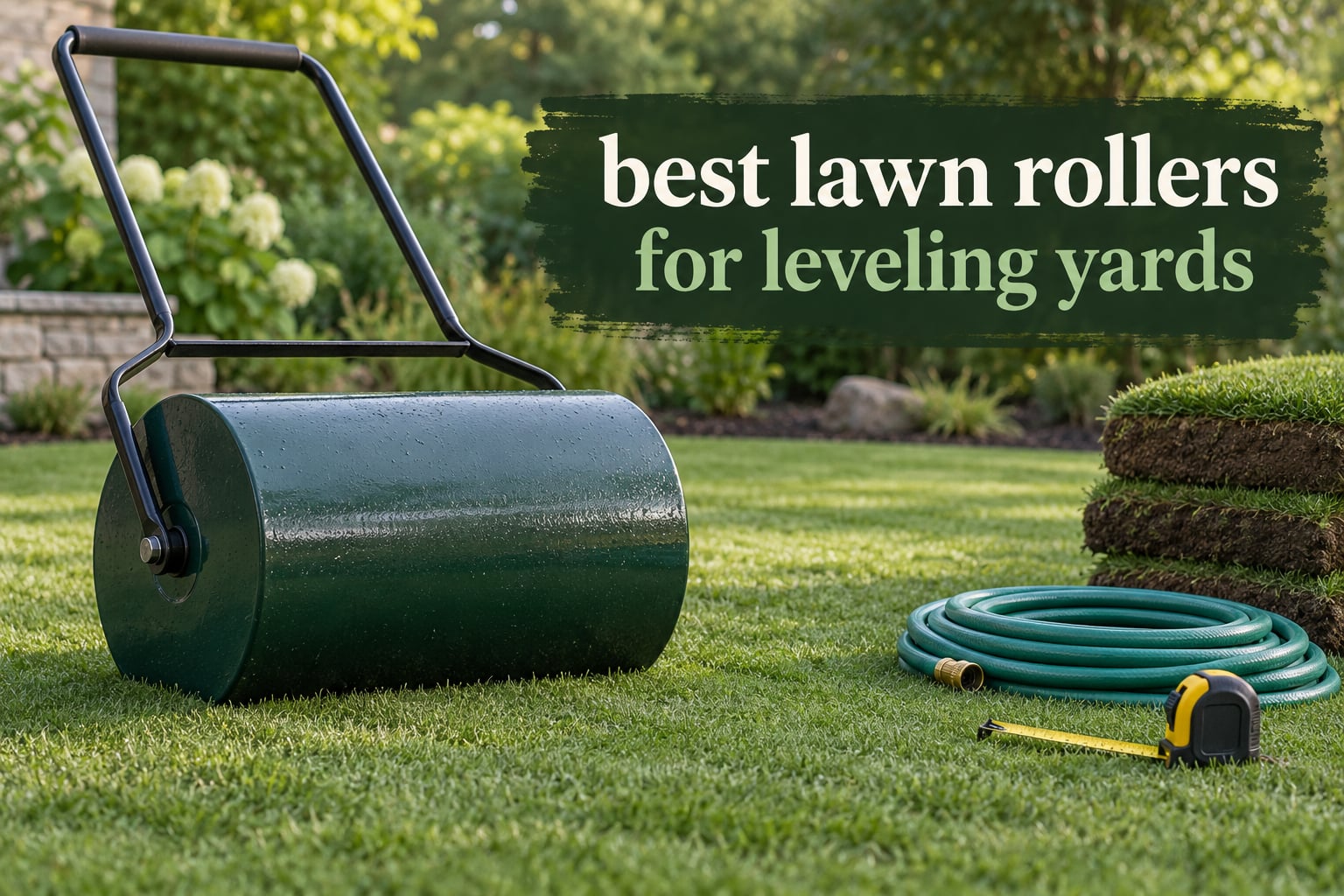
A roller smooths the surface, presses seed into soil and settles new sod. It cannot move soil that is genuinely out of grade. That is the honest answer to the question homeowners search most: lawn rollers help, partially, and the difference between a lawn that improves and a lawn that gets worse comes down to whether you are fixing a texture problem or a grade problem.
Across r/lawncare, thelawnforum.com and r/GardeningUK, the top-voted position repeats in different words: a roller compacts and cosmetically flattens, but real leveling of a bumpy yard means topdressing low spots, adding soil and re-seeding heavy. A roller is the finishing step, not the fix. One of the most-repeated pieces of advice is a sequence, not a tool: rake, level with soil, roll lightly, then water several times a day for two weeks. Skip the soil step and the roller is just pressing your existing lumps flatter.
That is exactly where the best lawn rollers for leveling yards earn their place. Once the grade work is done, a roller is the fastest way to seat sod seams, press overseeded seed into contact, knock down frost-heave bumps, and firm up ground that has been over-worked by tillers. This roundup covers 12 rollers we compared on filled weight, drum width, drum material and real owner feedback, from compact 20 inch push models to a 485 pound tow-behind for acreage. If you are aerating instead of rolling, start with our guide to rolling lawn aerators.
Table of Contents
Top 3 Lawn Rollers for Leveling Yards in 2026
Brinly 270 lb Push/Tow Poly Roller
- 28 gallon / 270 lb filled capacity
- Poly drum resists rust and dents
- Push
- pull or tow-behind in one frame
- 2 year warranty
- made in USA

Agri-Fab 18×36 Tow Behind Poly
- 400 lb filled with water
- 36 inch rolling width
- Under 50 lbs empty for storage
- 3 year limited warranty

Goplus 17 Gal Push/Tow Steel Drum
- 17 gallon / 63 L water or sand fill
- Detachable handle for push
- pull or tow
- Scraper bar and rounded corners
- Wall-mountable storage
Quick Overview: 12 Lawn Rollers Compared Side by Side
| Product | Specifications | Action |
|---|---|---|
| Brinly 270 lb Push/Tow Poly Lawn Roller 18×24 inch |
|
Check Latest Price |
 Goplus 17 Gallon Steel Push/Pull/Tow Roller 36×12 inch Goplus 17 Gallon Steel Push/Pull/Tow Roller 36×12 inch |
|
Check Latest Price |
| Agri-Fab 18×36 Tow Behind Poly Roller, 400 lb |
|
Check Latest Price |
 VEVOR 61L Sand or Water Filled Yard Roller VEVOR 61L Sand or Water Filled Yard Roller |
|
Check Latest Price |
 VINGLI 20 Inch Water Filled Push/Tow Garden Roller VINGLI 20 Inch Water Filled Push/Tow Garden Roller |
|
Check Latest Price |
 S AFSTAR 17 Gal Steel Tow Behind Roller 36 inch S AFSTAR 17 Gal Steel Tow Behind Roller 36 inch |
|
Check Latest Price |
 ARNOT 12×36 Inch 17 Gallon Push/Tow Drum Roller ARNOT 12×36 Inch 17 Gallon Push/Tow Drum Roller |
|
Check Latest Price |
| Goplus 17 Gallon Push/Tow-Behind Roller 12×36 inch |
|
Check Latest Price |
 Goplus 16 Gallon Push/Pull/Tow Roller 16×20 inch Goplus 16 Gallon Push/Pull/Tow Roller 16×20 inch |
|
Check Latest Price |
 IRONMAX 30 Gallon Water and Sand Fillable Roller IRONMAX 30 Gallon Water and Sand Fillable Roller |
|
Check Latest Price |
 Outsunny 20 Inch Push/Tow Roller, 16 Gallon Outsunny 20 Inch Push/Tow Roller, 16 Gallon |
|
Check Latest Price |
 Brinly 485 lb Tow Behind Poly Roller 18×48 inch Brinly 485 lb Tow Behind Poly Roller 18×48 inch |
|
Check Latest Price |
1. Brinly 270 lb Combination Push/Tow Poly Roller (18×24 in) – Best Overall for Leveling Yards
Brinly 270 lb. Combination Push/Tow Poly Lawn Roller with Easy-Turn Tethered Plug, 18 by 24″ – Flat Black
- Poly drum resists rust and dents
- Switches between hand pushing and tractor towing
- Very clear bagged-and-labelled assembly manual
- Made in the USA with 2 year warranty
- Tethered plug cannot be lost
- Handle joint can pinch skin on tight turns without gloves
- Rubber handle grips could fit more snugly
- Can develop a flat spot if stored full in hot weather
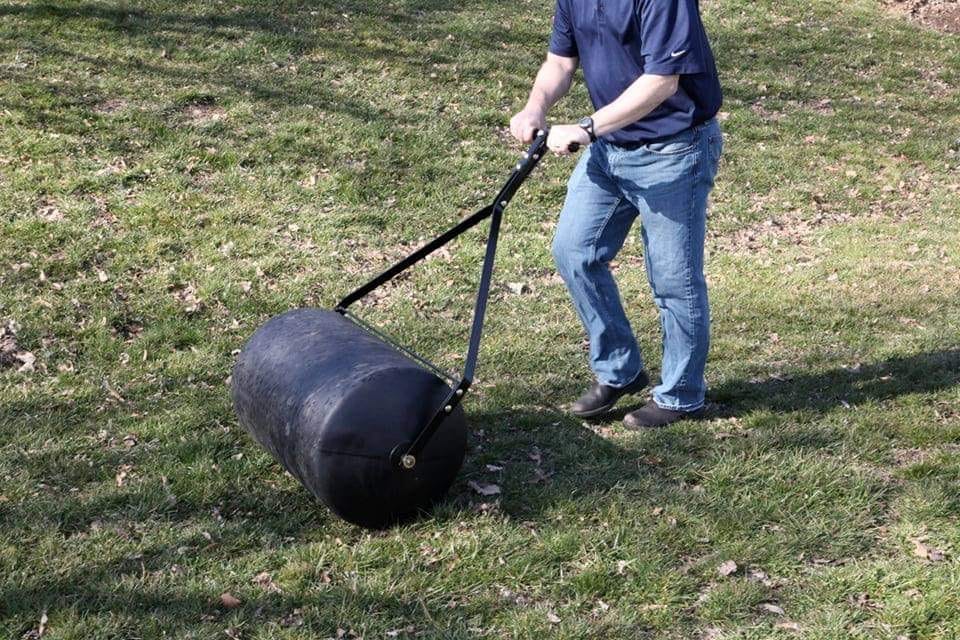
This is the roller we kept coming back to while working through the list. The Brinly PRC-242BH holds 28 gallons of water or sand for 270 pounds of rolling weight, and the 24 inch drum covers ground quickly without becoming unmanageable by hand. The handle removes with a hitch pin, so the same frame works as a push roller on a small patch and a tow-behind attachment behind a tractor on a larger yard.
What sets it apart from cheaper poly drums in this category is build detail rather than headline specs. The easy-turn tethered plug stays connected between filling and emptying, so you stop hunting for a cap in the grass. The extra-large fill opening accepts a garden hose, and the poly drum will not dent or rust, which matters if you store it outside or run over a stray rock.
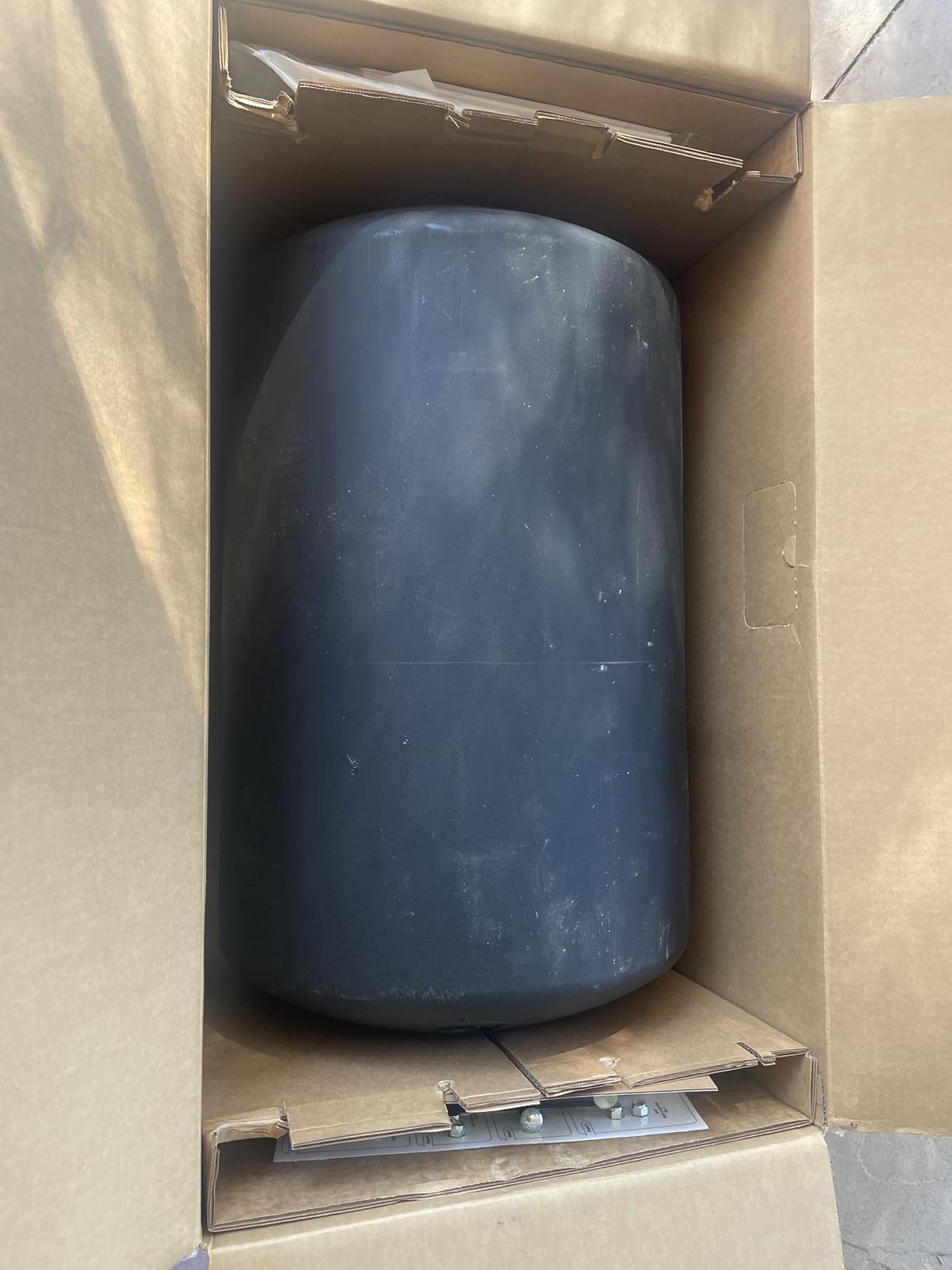
Owner feedback clusters around three things: build quality, straightforward assembly, and the ability to flip between manual and towing use without buying a second machine. Reviewers repeatedly single out the instruction manual, with parts bagged and labeled per step, as unusually clear for a product in this price band. Several also mention that Brinly customer service replaced a cracked cap chain quickly.
One caution, and it is the same caution the forums raise about any hand-push roller: the handle joint can pinch skin on a tight turn if you are not wearing gloves. It is a real complaint in the reviews, not a flaw in the drum. Budget for gloves if you are rolling around trees or along edging.
Is 270 lb enough weight for a bumpy yard?
For surface smoothing, seed contact and settling sod, yes. 270 pounds of water across a 24 inch drum applies steady downward pressure without the shearing force that tears turf when a much heavier drum turns quickly. If your problem is loose, uneven topsoil across a whole yard, no roller at any weight fixes that, and you want topdressing first.
Fill partially when you are working on new sod so the seams knit without crushing the crowns, then fill fully for a finishing pass. Sand raises the weight further and stays stable in the drum over a long session, while water is faster to add and drain.
When should you pick a different roller?
Skip this one if your yard is over half an acre and you want one pass per session rather than three. At 24 inches wide, a large property means a lot of overlapping passes, and each turn at the end of a row is another chance to scuff the turf.
It is also the wrong tool if storage space is tight and you cannot drain it, since leaving 270 pounds of water in a poly drum risks a flat spot in hot weather. Our 485 pound Brinly covers acreage faster; our 17 gallon Goplus models are easier on the wallet for seed beds.
2. Goplus 17 Gallon Steel Push/Pull/Tow Roller (36×12 in) – Best for Wall-Mounted Storage
Goplus Lawn Roller, Push/Pull/Tow Behind Water/Sand Filled Steel Sod Drum Roller with U-Shaped Handle, Yard Roller for Garden Backyard Grass, 17 Gallon/63 L, 36″x12″, Black
- Powder-coated steel frame resists rust
- Large 17 gallon capacity lets you dial in weight
- U-shaped ergonomic handle for push and pull
- Rounded edges allow smooth turns
- Hangs on a wall for compact storage
- Handle design can pinch fingers on tight turns without gloves
- Instructions show minimal detail on assembly
- Fill plug can be difficult to fully seat and remove
- Some models arrive with drum dents
The Goplus 998470996841 is the roller people describe when they say they stopped renting. It weighs 30 pounds empty, takes 17 gallons of water or sand, and rolls a 36 inch swath, which is a wide pass for a hand-pushed machine. The powder-coated steel frame is the reason it is the pick here for storage: drain it, hang it on a wall, and it is out of the way.
Steel is the tradeoff. It is heavier than poly for the same capacity and it can dent, which is why so many owners in this category report checking their drum on arrival. In exchange you get a rigid frame that tolerates being dragged behind a mower deck on gravel, and a rounded drum edge that turns without gouging the turf.
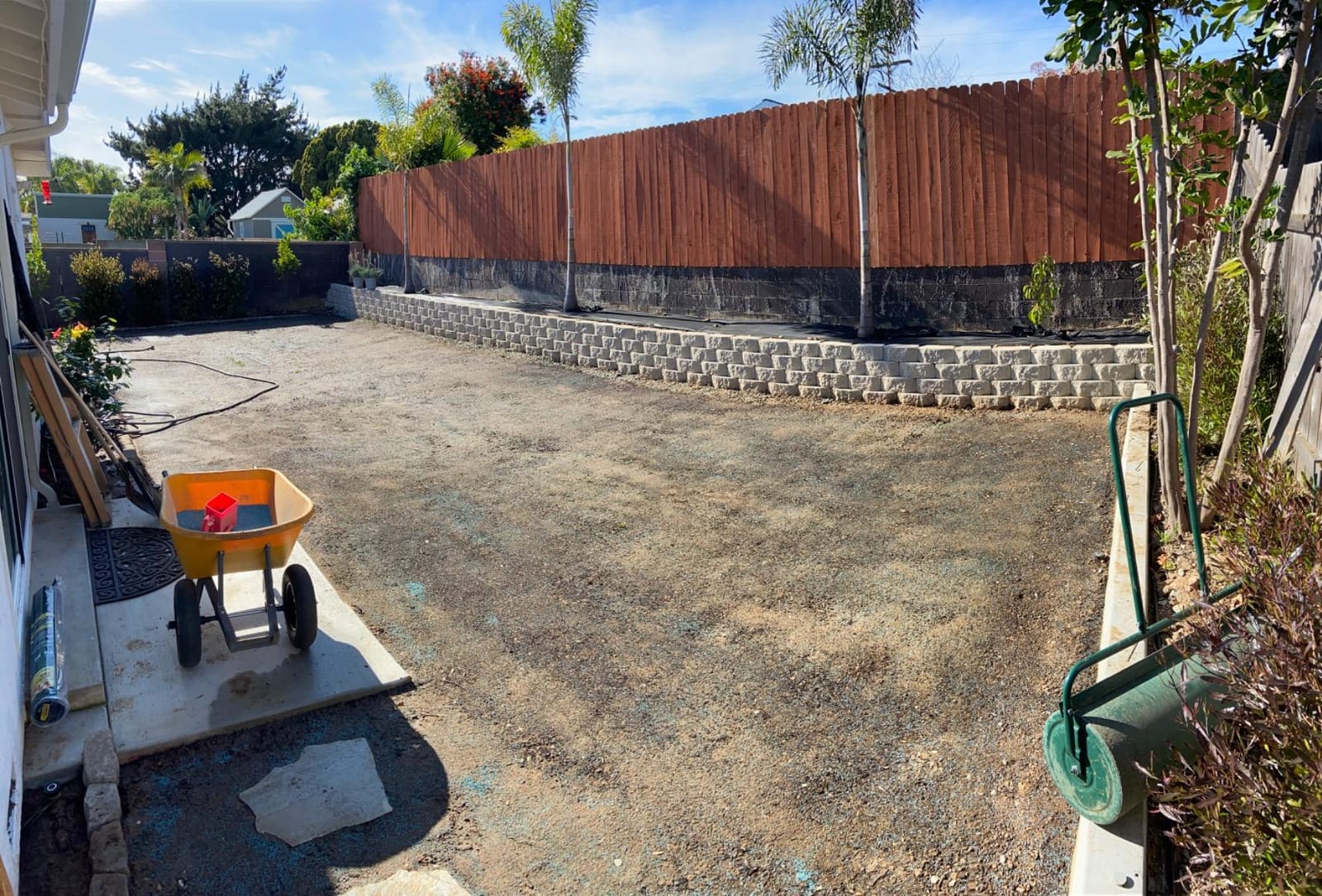
Reviewers praise the steel construction, the fill capacity and the versatility for breaking up clumpy soil. That last phrase comes up often in the reviews, and it is worth taking seriously: a heavy steel drum is a genuinely good tool for the clumpy, uneven ground that a light poly roller just pushes around.
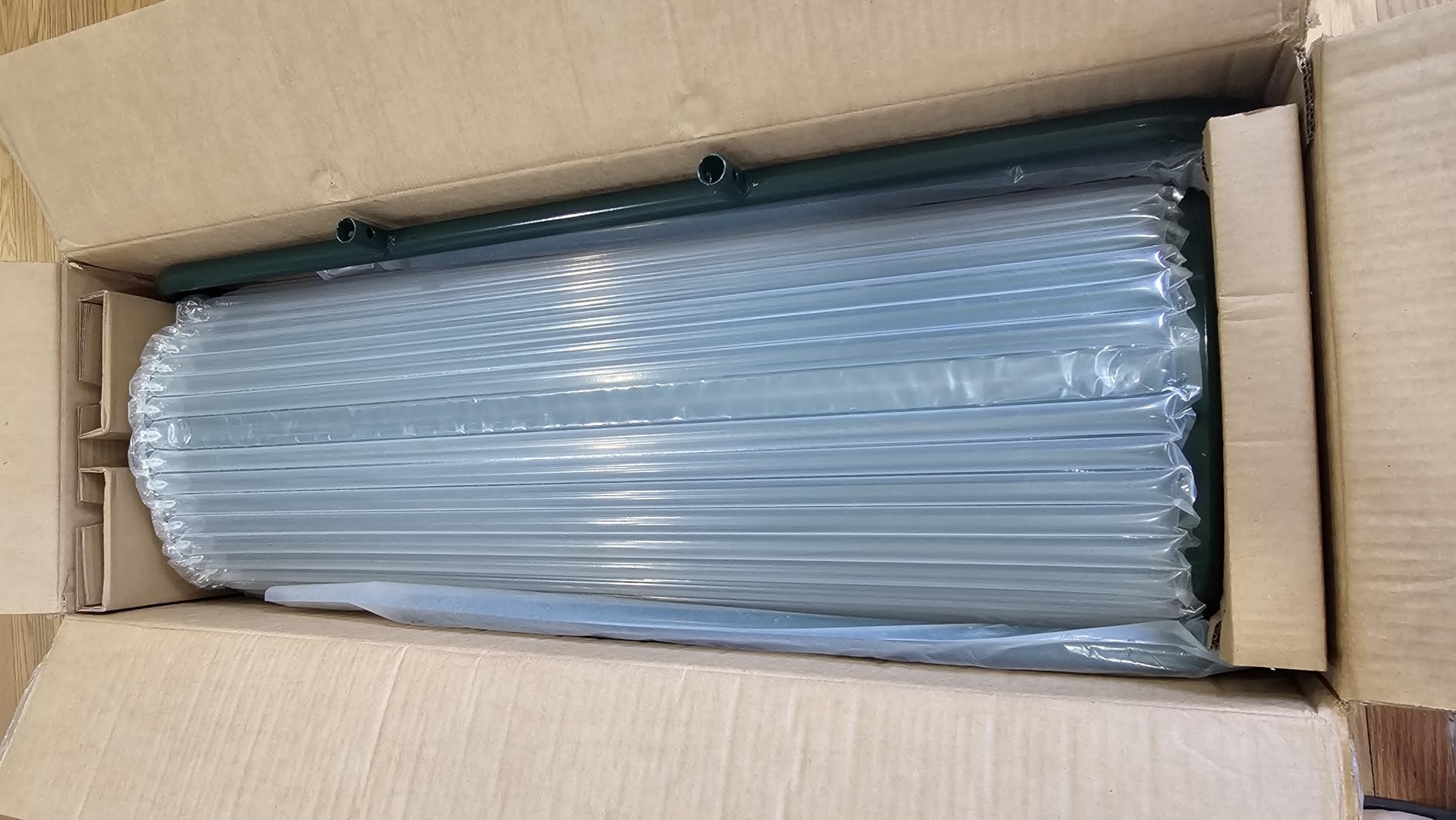
The complaints are consistent and easy to plan around. Assembly instructions are thin, the side drain plug can be stubborn to seat and remove, and a small number of buyers report arriving with a dented drum. Check the drum and the hardware against the parts list before your first pass, and buy a hose-end plug washer while you are at it.
Steel or poly: which lasts longer outdoors?
Poly will not rust and will not dent, so it wins on survival. Steel wins on rigidity and on weight per gallon, and the powder coat on this model delays corrosion considerably if you touch up chips as they appear. For most people the deciding factor is whether the roller lives in a garage or on a side wall.
Rounded drum ends matter more than buyers expect. Without them, every turn at the end of a row tears turf and leaves a visible arc. The scraper bar above the drum keeps soil from packing into the surface, which is what keeps the roll smooth rather than lumpy over time.
Is a 17 gallon drum enough for leveling a yard?
For overseeding, settling fill soil in a garden bed, and knocking down small frost-heave bumps, yes. That is roughly 150 pounds of water in a 36 inch roller, which firms the top inch or two of soil without pushing moisture out of the root zone.
For a whole residential yard that genuinely dips, no. This is a smoothing tool with a wide pass, not a grade-changing machine. The lawn-care forums are consistent on that point: correct low spots with soil, then use a roller like this to knit the new material in.
3. Agri-Fab 18×36 Tow Behind Poly Roller, 400 lb Filled – Best for Riding Mower Owners
Agri-Fab 45-0606 18″ x 36″ Tow Behind Poly Lawn Roller 400 lbs weight with water, Poly Drum and Steel Frame, with Plug. Designed for Lawn and Garden Tractors
- Widest useful roll among midsize options
- 36 inch swath cuts pass count
- Light enough empty to move by hand
- Works well for leveling fill sand and topsoil
- Made in the USA with 3 year warranty
- Some shipments arrive with missing nuts
- bolts and pins
- Printed instructions not always included in the box
- Plug can be hard to seat fully
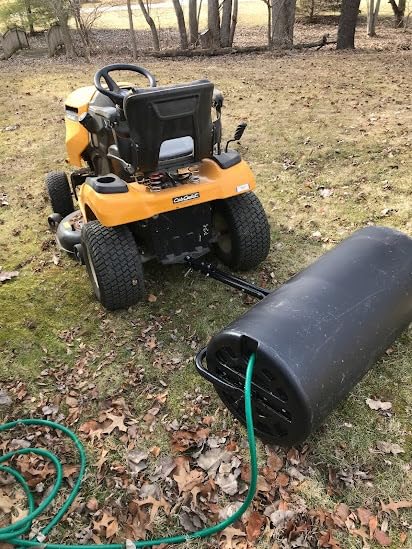
If you own a riding mower or a lawn tractor, this is the format that makes sense. The Agri-Fab 45-0606 is a pure tow-behind: an 18 inch diameter by 36 inch wide poly drum that reaches 400 pounds filled with water, with a drain and fill plug that accepts a standard garden hose. Rolling a lawn from the seat is far less tedious than walking it.
The engineering detail worth noting is the empty weight. Under 50 pounds when empty means one person can lift it into a truck bed or walk it around the garage, which is exactly the storage complaint the forums raise about all-steel rollers. Drain it after each job and it is not the 400 pound problem it sounds like.
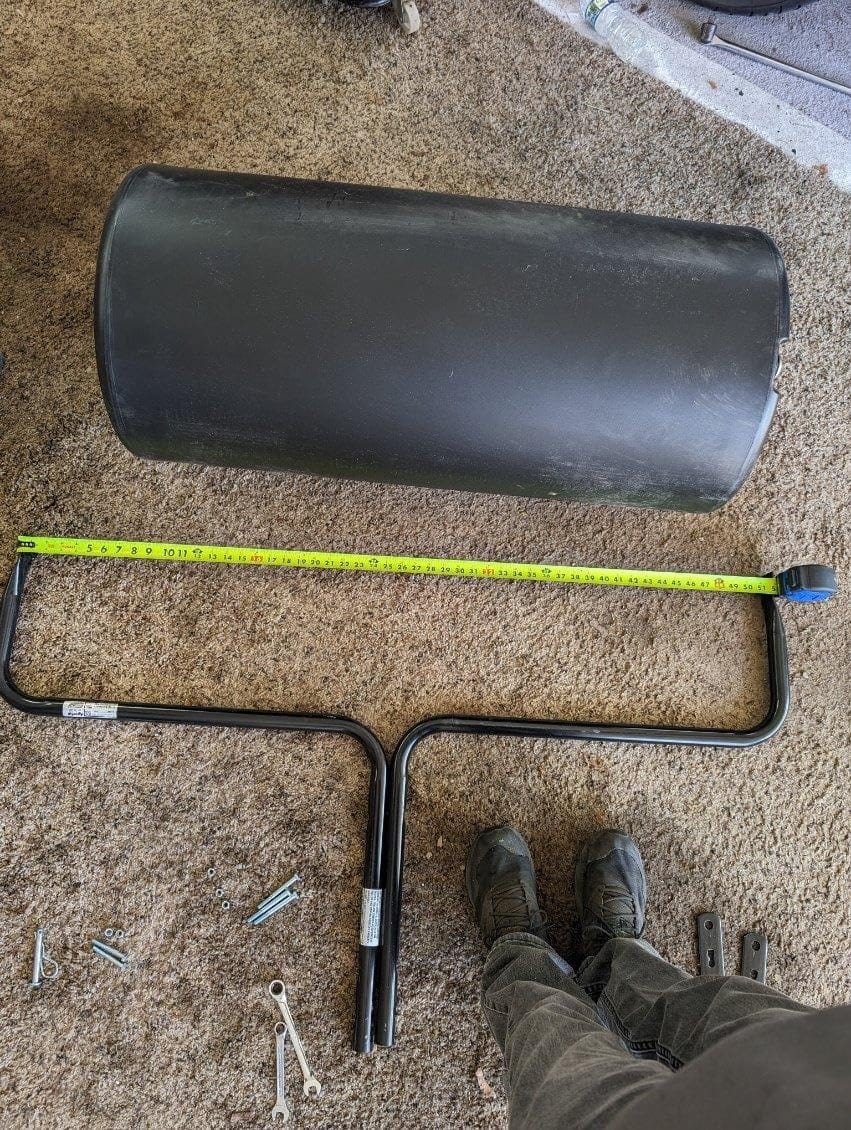
Owners report quick assembly, easy hose filling and effective flattening behind a tractor, with roughly three quarters of reviews at five stars. The poly drum is dent-proof, so unlike the steel models in this roundup it shrugs off stones and root balls without a permanent crease.
The recurring negative is packaging rather than performance: missing nuts, bolts and pins, and boxes that arrive without printed instructions. Assembly still goes quickly, but budget ten minutes to identify the hardware, and keep the hitch pin in a known place because the tow connection depends on it.
How much weight do you actually need on a lawn?
For a residential lawn, fill to somewhere around half to three quarters of capacity and adjust from there. Full drums are better suited to settling new sod and compacting fill soil than to smoothing an established lawn, where excess weight squeezes air out of the root zone and pushes water away from the roots.
Heavier is not automatically better. Reviewers who filled this one fully and ran it on soft ground noticed the machine bogging and turf taking a beating. Start moderate, do a test strip, and add water only if the surface is still springy afterward.
Who should not buy a tow-behind roller?
Skip it if you have no riding machine, or if your yard is a small city lot where a tow-behind is more trailer than tool. A 400 pound drum behind a tractor on a quarter acre is a lot of hardware for the job. Our 20 inch push rollers are faster for small patches.
It is also worth checking your hitch height and ground clearance on a mower with a low deck. The 18 inch drum diameter rolls over obstacles better than a small drum, but it will not clear a buried rock, and a stone strike is the fastest way to find out whether your poly drum has a crack you cannot see.
4. VEVOR 61L Sand or Water Filled Yard Roller – Best for Seed Beds and New Lawns
- Thickened high-carbon steel drum with double rust coating
- Sealed bearing system guards against dust and water
- Easy-turn plug with sealing rings to prevent leaks
- Smooth rolling with a metal scraper bar
- Hangs up for compact storage
- Some buyers report slower rolling over uneven ground
- Mixed feedback on how long the plug seal lasts
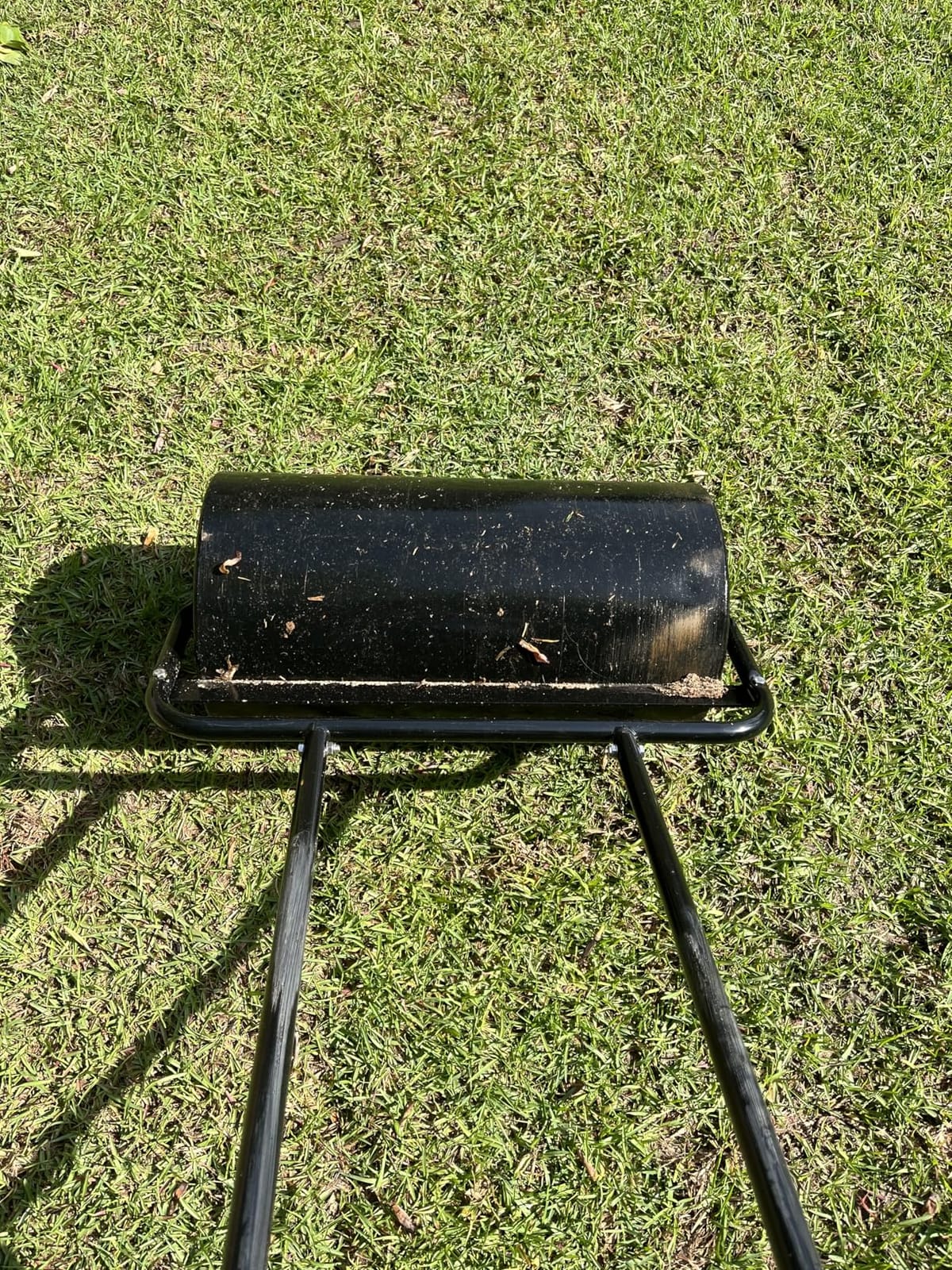
Pressing seed into soil is the job a roller does most reliably, and the VEVOR LR63-SYT is built for exactly that work. The 61 liter, or 17 gallon, drum sits in the middle of the group on capacity, but the thickened high-carbon steel drum with a double-layer rust-resistant coating is the detail that sets it apart from the budget end of the market.
Sealed bearings are the other quiet advantage. Open bearings on a lawn roller take on water, grit and fertilizer, then start to grind, and a seized bearing is a slow failure that owners often blame on the drum. Reviewers do not complain about rolling feel on smooth seed beds, which is where most of the use for this drum size sits.
Owner feedback cites strong steel construction, smooth rolling and effective seed-to-soil contact for new lawns. The easy-turn plug with high-quality sealing rings is mentioned often as a small thing that prevents a big annoyance, namely a drum that weeps water onto the driveway every time you move it.
Criticism is limited but real. Some buyers report that the roller feels slower than expected over rough ground, and there is mixed feedback on how long the plug sealing rings hold up. Both are fair reasons to test it on your worst section first rather than your lawn’s showcase area.
Is a heavier roller better for pressing seed?
No. Seed contact is a light job, and a partly filled drum presses seed into the surface without driving it too deep or compacting the topsoil. Fill to about a third for overseeding work, and reserve the full drum for sod settling and firming new topsoil.
The real gains for germination come from watering, not weight. Forum advice is consistent: after rolling, keep the surface damp and irrigate several times a day for a couple of weeks. A roller improves contact, and the watering schedule is what turns contact into germination.
What should you check before the first pass?
Check the plug seal by filling halfway and tipping the drum on its side for a few minutes. A weeping plug on new equipment is easier to fix with a replacement washer than to return for. Then run a short test strip and look at the grass behind you before committing to the whole yard.
Also look at the drum coating. Steel rollers in this class ship with varying amounts of paint coverage, and reviewers of budget models mention surface rust appearing where the coating wears through. Touching chips with exterior paint at the end of each season keeps a roller usable for years.
5. VINGLI 20 Inch Water Filled Push/Tow Garden Roller – Best Budget Pick for Small Yards
- Low cost entry into lawn rolling
- Light 21.1 lb empty weight for transport and storage
- Rounded drum ends turn smoothly
- Fast simple assembly
- 47.5 in handle suits most adults
- Smallest capacity in the group gives lighter compaction
- Lower average rating with a notable share of 1-star reviews
- Some buyers report seams and plugs that seep
The VINGLI roller is the pick for small gardens, seed beds and anyone who wants to try the technique before committing to a large machine. It weighs 21.1 pounds empty, holds 10.5 gallons of water or sand, and assembles in minutes by attaching the handle and hooking it to the drum. At 47.5 inches tall, the handle height suits most adults without a stoop.
Be clear-eyed about what 10.5 gallons buys you. Filled with water, you are dealing with a light roller, roughly 110 pounds, on a 19.5 inch drum. That is enough to press seed, flatten a small patch of fill soil and settle sod seams. It is not enough to move a stubborn yard-level lump.
Owners like the low weight, the quick assembly and the fact that it stores anywhere. The critical reviews cluster on two points: occasional seal or seam seepage, and compaction that is lighter than people expect from a filled roller. Both are predictable from a drum this size, and both are worth checking after your first fill.
If you are filling with sand, weigh it. Water gives a consistent, fast-to-adjust weight, while sand holds its weight much longer between sessions, which is convenient if you plan to roll on a schedule rather than in one long session.
Is a small roller worth buying instead of renting?
For a small yard, yes. Renting a tow-behind for a quarter acre of light smoothing costs more over a few years than owning a compact roller this size, and the machine is always there when frost heave shows up in March. For a full residential yard, renting or towing is the faster answer.
The 19.5 inch drum also means more passes. On anything larger than a generous garden bed, the time spent making overlapping rows eats the advantage of the small drum. A 36 inch model covers roughly three times the width per pass.
How do you avoid the common complaints?
Test the seams dry first, then check the drum bottom for seepage after a fill. Seepage on cheap steel drums usually comes from a drain plug that is not fully threaded, and tightening it by hand before the first fill prevents most of the problem.
Fill in stages rather than all at once if you are new to rolling. Add a third of the water, roll a test row, and check whether the surface firms up enough. Underfilling is a common beginner mistake that leads to rolling a yard twice because nothing happened the first time.
6. S AFSTAR 17 Gallon Steel Tow Behind Roller, 36 Inch – Best for Post-Tilling Work
- Sturdy steel frame that resists denting and rust
- Levels tilled dirt and presses seed effectively
- Easy to assemble and fill
- Good value compared with renting
- Rounded ends and scraper bar protect the lawn
- Hairpin retaining pins on the handle can work loose
- Push-in plug rather than threaded and can leak
- Unclear assembly illustrations
- Too heavy to push by hand when sand filled
Freshly tilled ground is the scenario this roller handles best, and it is worth understanding why before buying. Tilling breaks soil into loose clods that hold air, so a yard can look level and then settle into a bumpy surface within a season or two. Rolling after tilling knocks the clods down, and the anti-rust coated high-strength steel frame has the mass to do it.
At 17 gallons and 29 pounds empty across a 36 inch drum, this is a working tool rather than a light press. Reviewers who used it behind a tractor on garden beds and yard edges report that it does the leveling job well for the money, and several compare the result favorably to renting.
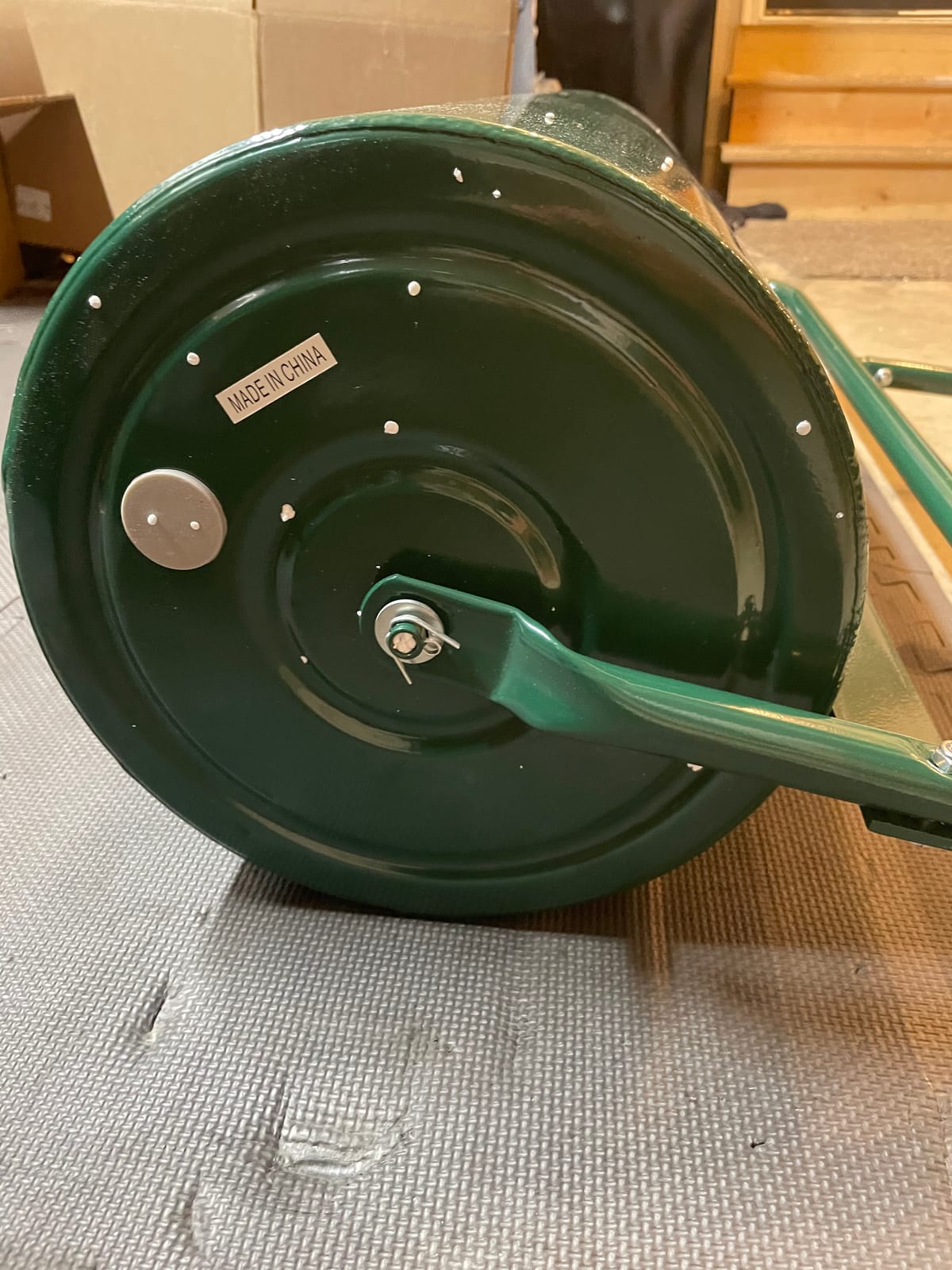
The most useful piece of feedback here concerns the fill port. This model uses a push-in plug rather than a threaded screw-in, and the plug sits away from the drum surface, which means filling to capacity with sand requires tipping the machine on its edge. Filling to about two thirds with water is far more convenient and gives most of the weight.
Second piece of feedback: check the hairpin retaining pins that secure the handle. Several owners report them working loose or going missing, and a handle pin that walks out mid-yard is a genuine hazard. Keep a spare or a large clip on the handle bracket.
Is rolling after tilling a bad idea?
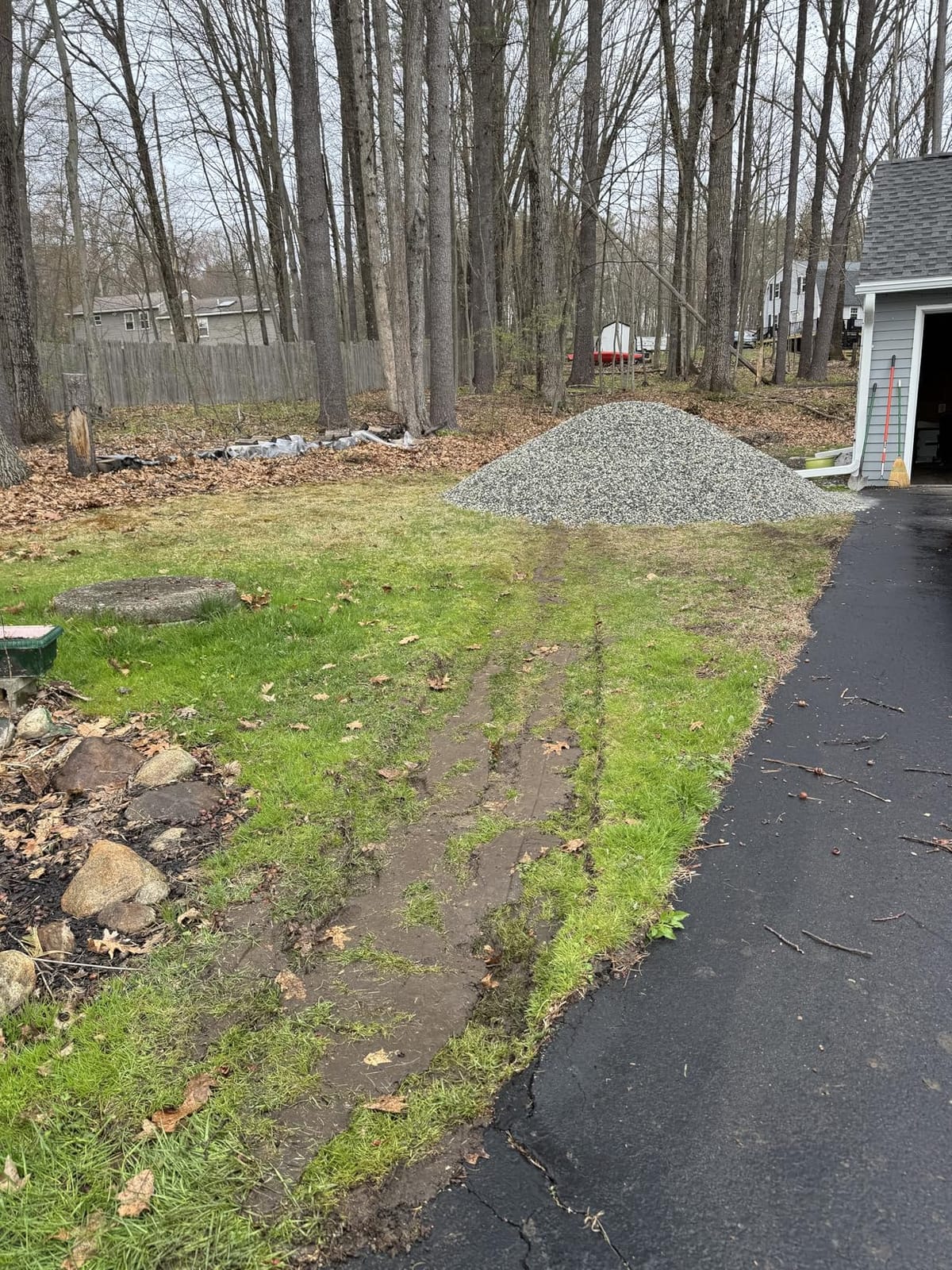
Rolling immediately after tilling is a bad idea; rolling after the soil has settled a few days is a good one. Freshly turned soil is loose enough that a heavy drum pushes it around rather than firming it, and the forums report lawns that went bumpy again within a couple of seasons. Let the tilled bed rest, water it in, then roll it light.
Better still, topdress. A layer of screened soil or compost over the low spots, rolled in afterward, fixes the actual cause. Rolling a tilled bed without adding material just compresses the problem into a hard surface.
What breaks first on a steel roller like this?
Hardware, almost always. The drum and frame are the durable parts; the pins, bolts and plug are the failure points. Owners report a range of durability that tracks with how the machine is used, with heavy towing on rough ground pushing it toward the lower end.
Check the plug seal and the retaining pins at the start of each season, and touch up coating chips on the drum. Ten minutes of that maintenance is the difference between a roller that lasts several seasons and one that ends up bent in a shed.
7. ARNOT 12×36 Inch 17 Gallon Push/Tow Drum Roller – Best for Sod Laying
- Levels a putting green and lays sod evenly
- Easy to assemble
- fill and use
- Compact enough to store when not in use
- Good weight when filled with water
- Good value for the money
- Some models leak water from the plug
- Drum arrives with dents and creases on some shipments
- Assembly instructions are minimal
- Lighter than ideal for heavy compaction
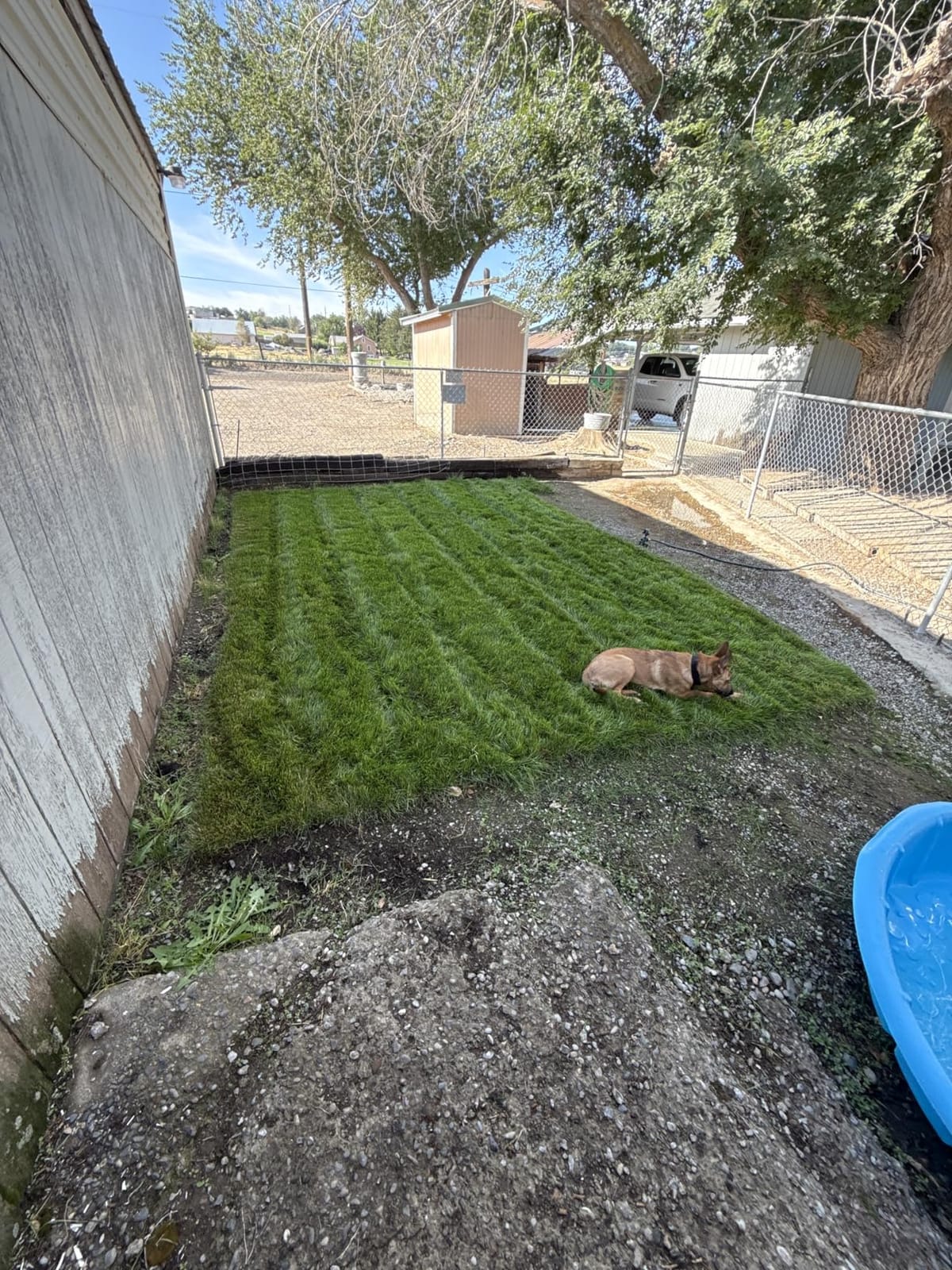
Sod work is where a roller earns its keep most visibly, and this ARNOT model shows up in reviews for exactly that. Owners report using it to lay sod evenly and to level a putting green, which is a demanding test: seams have to knit into the surrounding soil without the crowns being crushed.
Filled with water it comes to roughly 140 pounds across a 36 inch drum, which is a sensible weight for settling fresh sod. Fill partially for the first pass over the seams, then increase the fill for a second pass once the sod is seated and the soil has taken water.
The recurring complaints are arrival and sealing rather than performance. Some shipments show up with dents and creases in the drum, and a handful of owners report water weeping from the plug. Neither ruins the roller, but both are worth inspecting and addressing before you rely on it.
On a compact design, storage is a genuine plus. At 12 inch diameter by 36 inch wide, it is one of the smaller-footprint rollers that still covers a wide swath, and it is easy to move from the yard to a shed when the job is done.
When should you roll new sod?
Roll it once the sod is laid and the soil underneath is moist, not soaked. Walking on it immediately is the real mistake, because the point of the first pass is to knit the seams without pushing the sod itself out of alignment. A partly filled drum gives you that control.
Keep watering afterward. Sod that is settled but dry develops gaps at the seams within days, and no amount of rolling fixes a seam that has dried open. Forum advice is to water several times a day for the first couple of weeks.
What should you check when the box arrives?
Inspect the drum for dents and creases before you fill it, since a creased drum tracks unevenly and leaves a permanent stripe on the lawn. Run a finger along the seam, check the plug threads, and confirm the handle hardware is complete before assembly.
If the drum does arrive creased, do not try to hammer it flat. Use the roller on the section that needs it, keep the fill moderate so the pressure stays even, and rotate the drum on each pass so the crease spreads rather than cutting a groove.
8. Goplus 17 Gallon Push/Tow-Behind Roller, 12×36 Inch – Best Value Pick
- Highest average rating in this group at 4.5 stars
- Detachable handle converts between push
- pull and tow
- Heavy-duty powder-coated frame resists rust
- Scraper bar and rounded corners protect the lawn
- Wall-mountable storage
- Handle grip can tire you on long fully loaded pushes
- Some buyers want a larger drum for big properties
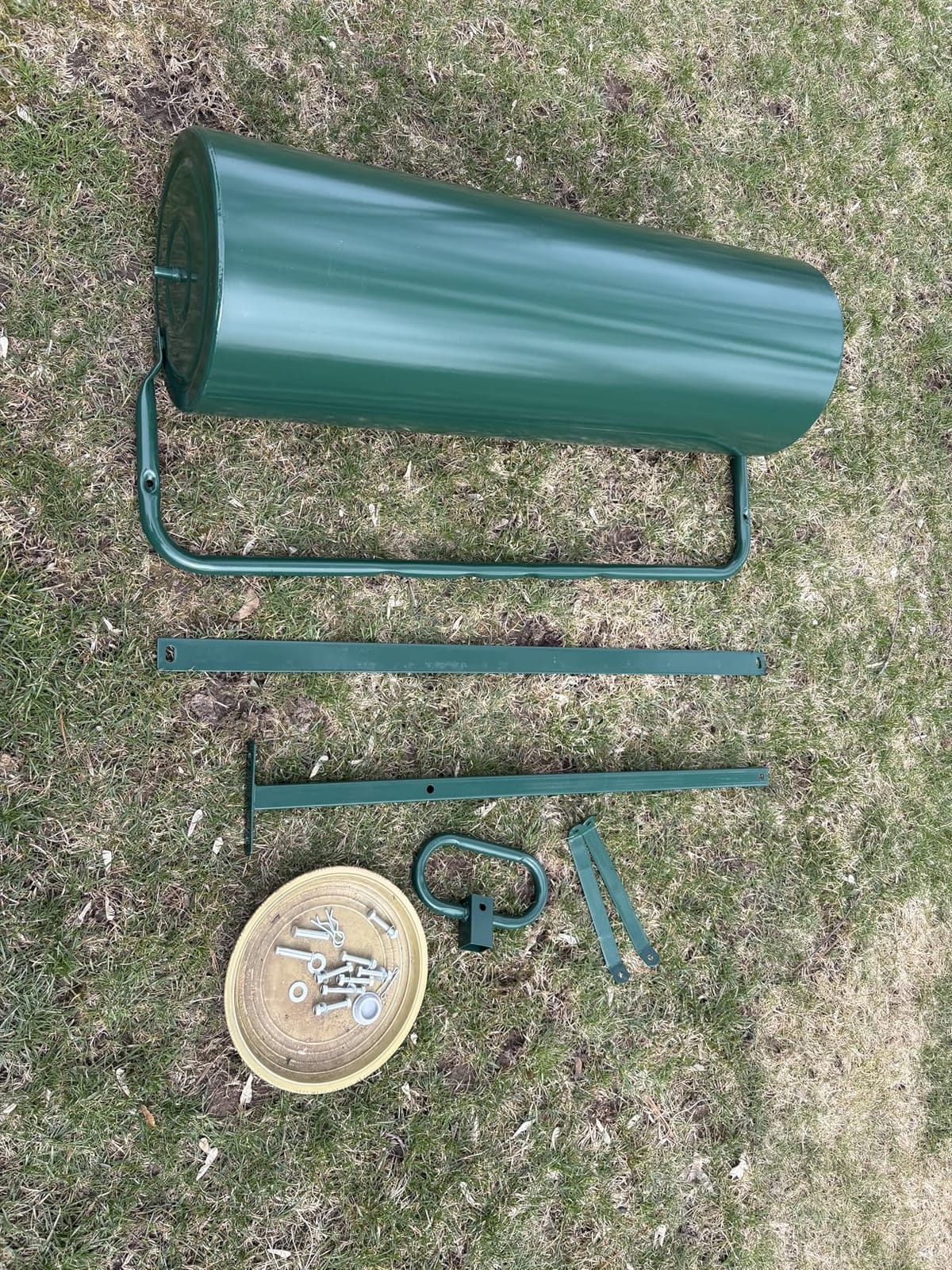
This is the one we would hand to a friend with a normal suburban yard and no tractor. The detachable gripping handle converts between push, pull and tow-behind use, the drum is 12 by 36 inches, and the powder-coated metal frame is thick enough to feel rigid rather than thin. It is also the highest-rated roller in this group at 4.5 stars across 144 reviews.
That rating is meaningful in a category where most customer scores land between 3.4 and 4.2. When the median product in a niche is mediocre, a 4.5 with a smaller review count is worth more attention than a 4.2 with a large one, because it suggests the complaints are genuinely rare rather than merely drowned out.
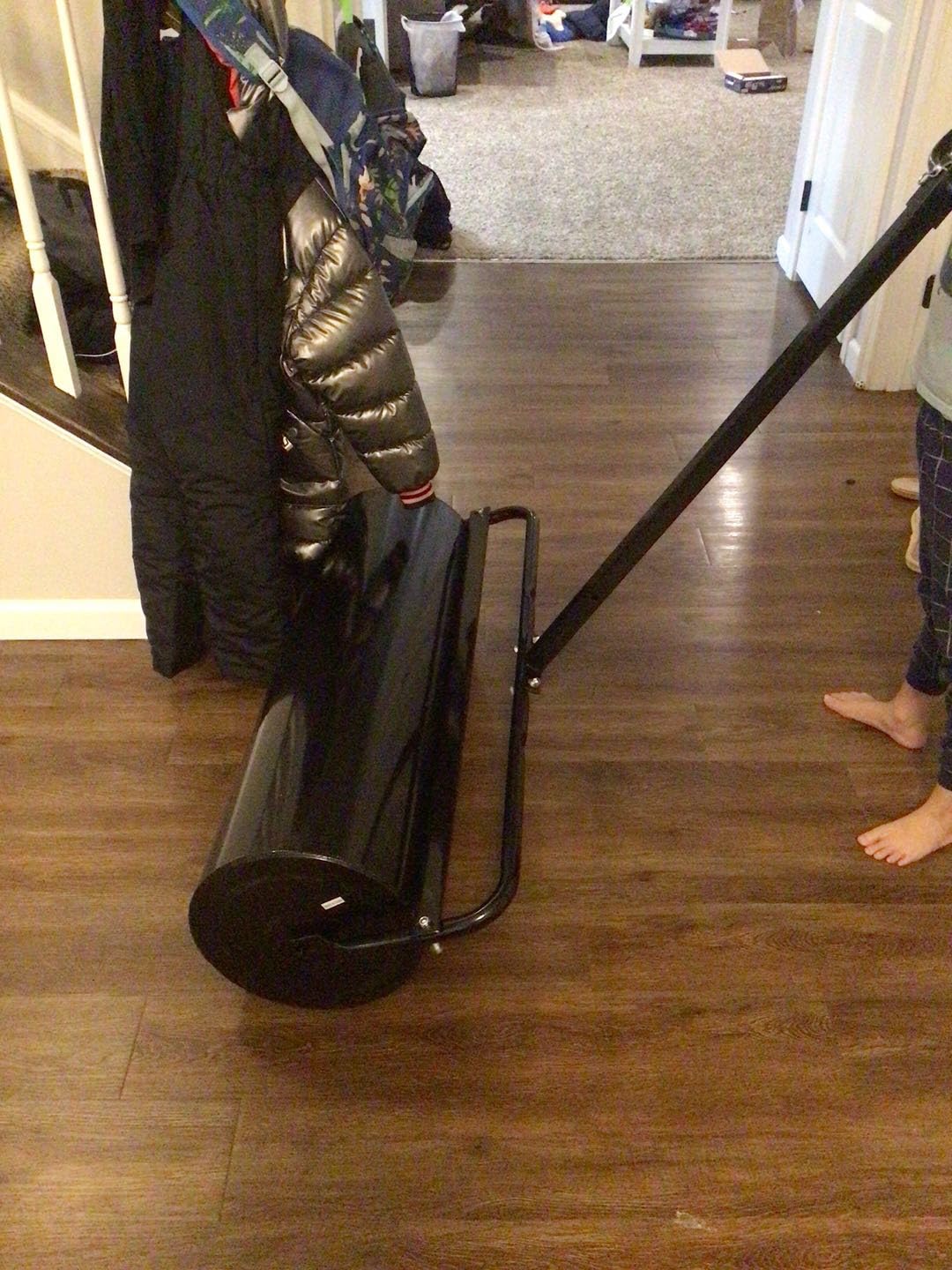
Owners praise the detachable handle, the sturdy frame and the effective leveling, and the feedback is overwhelmingly positive. The scraper bar above the drum and the rounded corners are mentioned often, and they are the two features most absent from cheaper models. A scraper bar keeps soil from packing onto the drum surface, and rounded corners are what let you turn at the end of a row without tearing turf.
The negative feedback is mild: a handle grip that gets tiring on long fully loaded pushes, and a wish among some owners for a larger drum if they own a big property. Both are design tradeoffs rather than defects.
Is a 17 gallon drum big enough for a full yard?
For a suburban yard up to about a quarter acre, yes, as long as you are smoothing rather than regrading. A 36 inch swath at roughly 150 pounds of water is a good balance between weight that firms the surface and a machine you can still steer at the end of a row.
Beyond a quarter acre, the pass count becomes the limiting factor, not the weight. Each additional pass over the same ground is another chance to damage the turf, and that is the argument for a wider tow-behind such as the 48 inch Brinly.
How much should you fill it?
Fill to about two thirds for a typical residential pass and adjust from there. Owners who filled completely and pushed long distances report grip fatigue on the handle, which is a sign you are working harder than the job requires.
Drain it fully when the job is done. The frame hangs on a wall, and a drained 17 gallon roller is a manageable object to lift. Leave water in a steel drum over a winter and you are gambling on the internal coating.
9. Goplus 16 Gallon Push/Pull/Tow Roller, 16×20 Inch – Best for Tight Spaces
Goplus Lawn Roller, 16 Gallon/60 L Heavy-Duty Push/Pull/Tow Behind Water/Sand Filled Sod Drum Roller for Garden Yard Park Grass, 16 by 20-Inch
- Compact 16 by 20 inch size is easy to push and store
- Light 21 lb empty weight for handling
- Rounded drum edges roll smoothly
- Convertible between push and tow-behind
- Removable drain plug empties seasonally
- Narrowest rolling width here so more passes are needed
- Steel drum can dent and rust over time
- Lower average rating in this group
Side yards, narrow strips between a fence and a hedge, and garden paths are where a 16 by 20 inch drum earns its place. At 21 pounds empty, this roller turns easily in confined space where a 36 inch drum would simply hit the fence, and it converts between hand pushing and towing when the space opens up.
The 16 gallon drum fills to roughly 155 pounds with water, which is a real working weight rather than a token one. The spray-treated round steel drum resists rust better than an untreated surface, and the rounded edges roll smoothly without cutting into turf at the edges of a pass.
Is a 20 inch roller too narrow for a yard?
For anything close to a full yard, yes. A 20 inch drum means covering a 20 foot-wide lawn in a single row, and every other row overlaps. Owners consistently flag the narrow width as the reason for the slower job on open ground, so match the drum to the space rather than the other way around.
For tight spaces the math flips completely. A narrow roller fits between obstacles, turns in a small area and stores in a corner of a shed. The 16 gallon capacity still gives you enough weight to do real work in a confined strip.
How do you keep a steel drum from rusting?
Drain it after every session, not just at the end of the season. Water sitting inside a steel drum against the coating is what causes the internal rust that owners report on this model and other budget steel rollers. Tip it on its side with the plug removed so the last of it drains out.
Touch up chips in the coating with exterior paint as they appear, and store it off the ground so moisture does not sit under the drum. A roller stored empty and dry on a wall will outlast the same roller stored wet in a shed corner.
10. IRONMAX 30 Gallon Water and Sand Fillable Roller – Best for Maximum Fill
IRONMAX 30 Gallons/113 L Manual Lawn Roller, Water & Sand Fillable, Black
- Largest capacity here at 30 gallons for heavy compaction
- Easy to assemble and easier to pull than expected
- Works by hand or behind a tractor with the hitch pin
- Screw-in plug design for filling
- Good value for the weight delivered
- Thin sheet steel drum dents easily over rocks and stumps
- Water plug tends to leak slightly and the o-ring is weak
- One report of the drum seam splitting under towing load
- Runs smaller than expected for a 30 gallon listing
The IRONMAX HY-4009DK is the roller to look at if your priority is maximum adjustable weight in one drum. Thirty gallons of capacity works out to around 250 pounds sand filled, with a 41 pound empty weight and a tow-behind latch and pin plus a circular push handle for hand use.
Owners are consistently surprised by how easily it pulls for its size. That is a function of the tow-behind design: you are not pushing 250 pounds, you are towing it, and the triangular handle bracing on the frame keeps the handle from folding under load. For a large open area where you want a lot of weight in a single pass, the capacity is genuinely useful.
Is 30 gallons too much weight for a home lawn?
On a healthy established lawn, frequently. That much weight across a 16 inch drum is a compaction tool, not a smoothing tool, and it is the kind of setup that produces the r/lawncare warning about rolling making a lawn worse. The sensible use is large open ground, new fill soil, and prep work, not routine passes over turf you want to keep porous.
Start with a third of the capacity and add from there. Because the drum is large, you get fine control even at full volume, and the screw-in plug is easier to work with than a push-in type when you are draining it after a sand fill.
What are the durability tradeoffs?
Thin-gauge steel, and reviewers say so plainly. Dents from rocks and stumps are the most common complaint, along with a plug that can weep and an o-ring that wears. One owner reported a drum seam splitting under towing load, which is the failure to watch for if you pull this behind a tractor at speed.
There is also a size expectation worth setting correctly. Owners report it running smaller than expected for a 30 gallon listing. Measure your storage space and your turning space before you commit, because a full drum is a wide object regardless of what the capacity figure suggests.
11. Outsunny 20 Inch Push/Tow Roller, 16 Gallon – Best for Three-Piece Storage
Outsunny 20-Inch Push/Tow Behind Lawn Roller 16 Gal Water or Sand Fill
- Solid base flattener for sod laying and reseeding
- Good build quality for the money
- Rounded edges for a manageable turning radius
- Handle detaches into three pieces for compact storage
- Adjustable fill weight for different soil
- Rust appears quickly on paint wear and inside the drum
- Side drain hole on a raised ridge leaves standing water
- Some hardware in the box did not match
- Mismatched or missing parts on a first order
Storage is the deciding factor for a lot of people, and the Outsunny 845-272 is unusually good at it. The handle detaches into three pieces, so the whole roller packs down to the footprint of the drum itself in a corner of a garage rather than occupying a wall’s width on a wall mount.
Capacity is 15.9 gallons for a maximum filled weight of 202.2 pounds, and owners report that it works as a solid base flattener for sod laying and reseeding. The rounded edges give it a manageable turning radius, which is more important than it sounds on a yard with trees and beds.
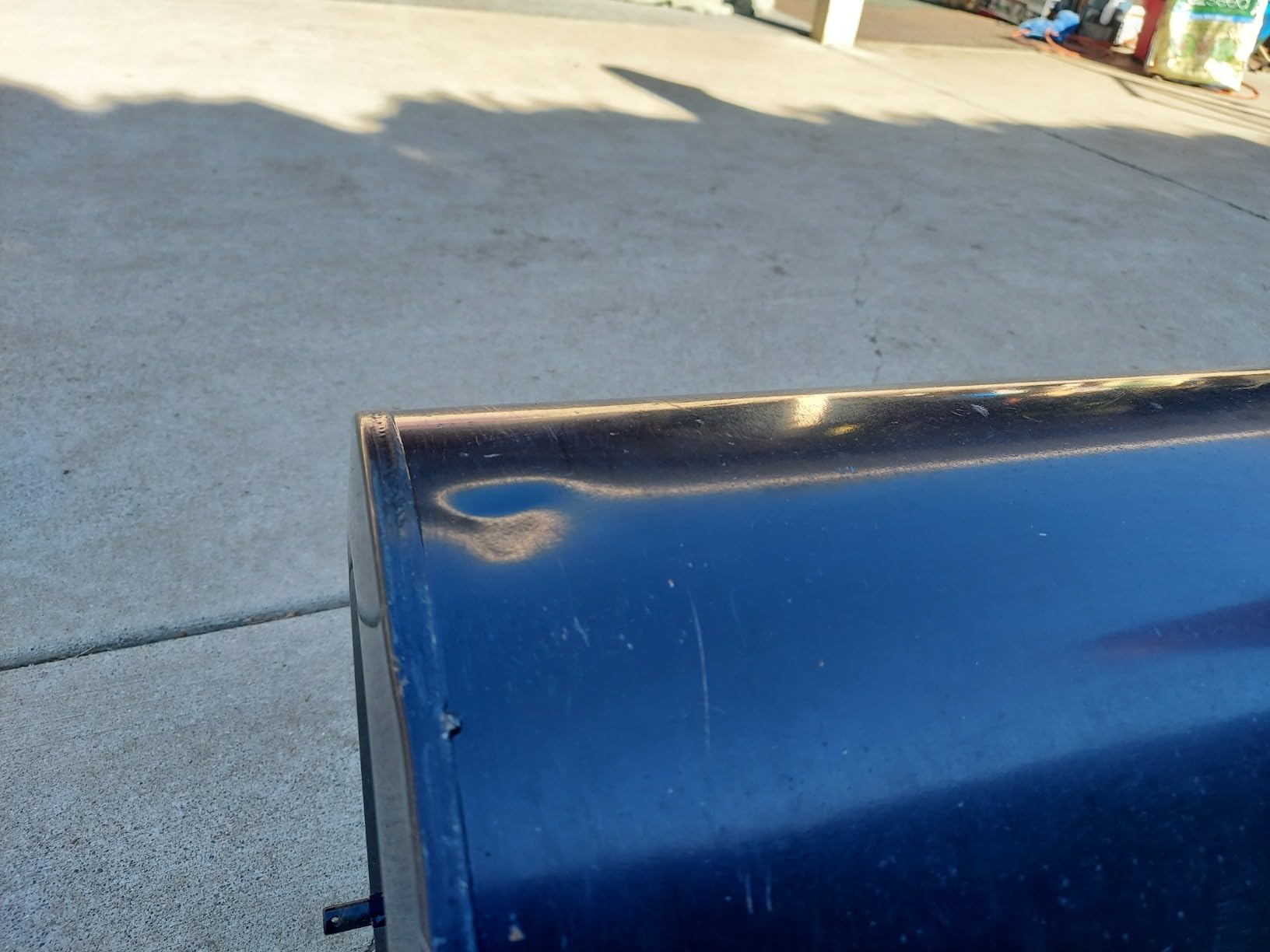
Recurring negatives are rust and the drain. Owners report rust appearing quickly where paint wears through and inside the drum, and the side drain hole sits on a raised ridge that leaves standing water in the bottom of the drum after you empty it. That standing water is the direct cause of much of the internal rust, so it is worth aiming the plug downward and checking the drum is dry before you put it away.
Hardware quality is the other theme. Some orders arrive with mismatched or missing parts, though customer service resolved at least one first-order issue. Identify the hardware before assembly rather than after you are halfway through a job.
Water or sand: which should you fill it with?
Water for most jobs. It fills in minutes with a hose, gives you continuously adjustable weight, and drains just as fast, which suits short rolling sessions and a spot of rust prevention on the drum. Sand gives you more weight per volume and holds it, which suits a long planned session on a weekend.
The 202.2 pound maximum is with sand, and reviewers who filled fully report that the drum is heavier to control than expected on inclines. On any slope, fill to about half with water instead. Slope plus maximum weight plus a steel drum is how rollers end up at the bottom of a hill unattended.
Is a 20 inch drum enough for a residential yard?
It is enough to do the job, and it is slower than you would like. A 20 inch drum on an open lawn means a lot of rows, and each row end is a turn. Pick this one if storage matters most, and consider a 36 inch drum if you want to finish in an afternoon.
It is also a good fit for owners who work in sections. Rolling the front lawn, the back lawn and the garden beds separately suits a compact machine that stores between jobs far better than it suits a single wide pass over everything.
12. Brinly 485 lb Tow Behind Poly Roller, 18×48 Inch – Best for Acreage
Brinly 485 lb. Tow Behind Poly Lawn Roller with Easy Turn Plug, 18 by 48″
- Widest roll and heaviest capacity here for large properties
- Poly drum resists dents
- rust and weather damage
- Made in the USA with 2 year warranty
- Easy pictorial manual with fastener skin pack and video
- Universal hitch pin fits most tractors
- ZTRs and ATVs
- Bulkiest and heaviest unit
- not practical to push by hand when full
- Empty drum is awkward for one person to maneuver
- Wide profile makes tight corners difficult
For a half acre or more, pass count matters more than anything else, and this is the roller that fixes it. The Brinly PRT-482SBHC-A rolls a 48 inch swath from an 18 inch poly drum, holds 54 gallons of water or sand for 485 pounds of filled weight, and comes with a universal heavy-duty hitch pin that fits riders, tractors, ZTRs and ATVs.
Owners of large yards value the 48 inch coverage, the dent-proof poly drum and a straightforward hookup to a tractor. Brinly also includes a pictorial assembly manual with a fastener skin pack and an assembly video, which removes the two most common complaints in this entire category: vague instructions and missing hardware.
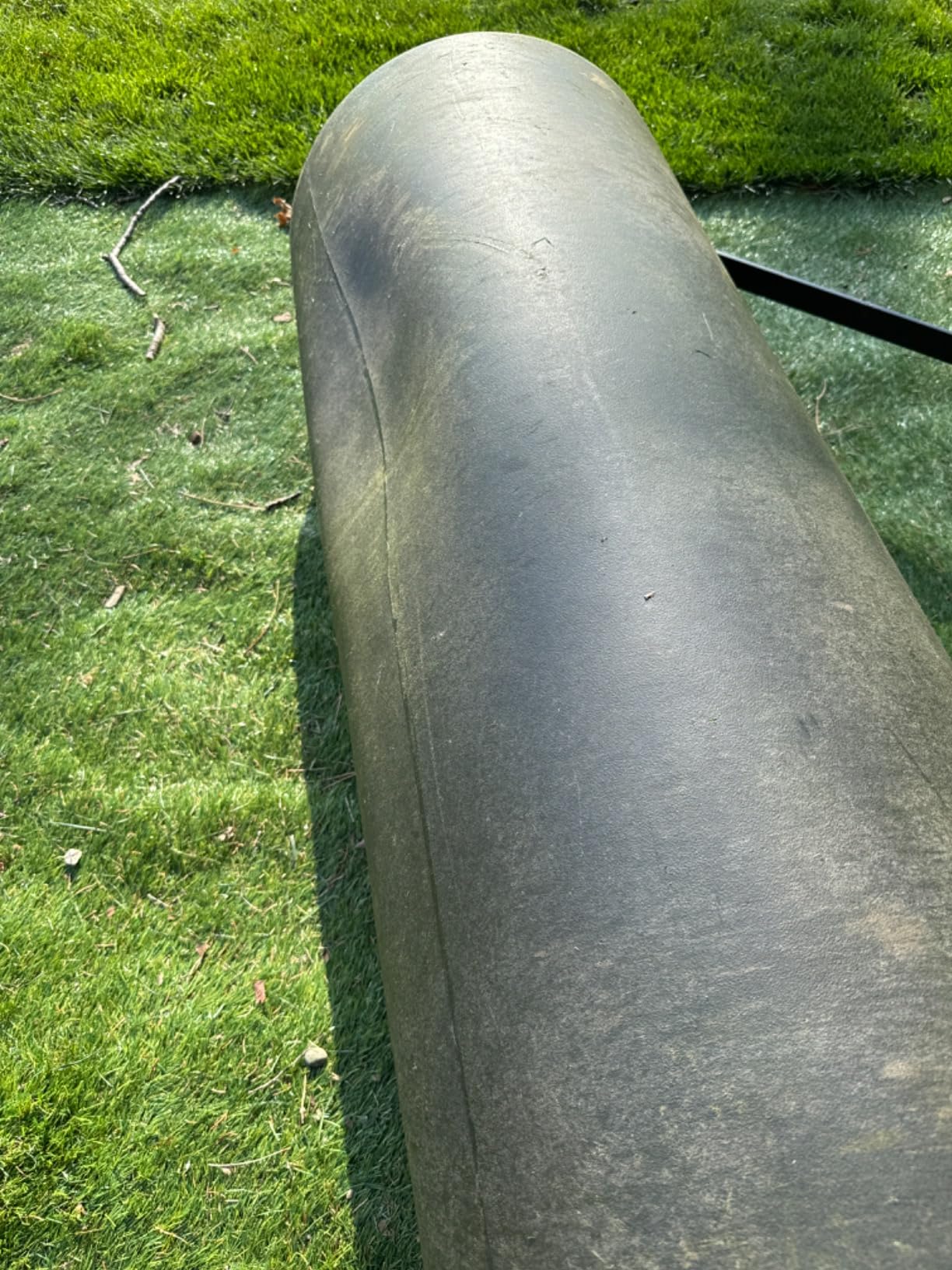
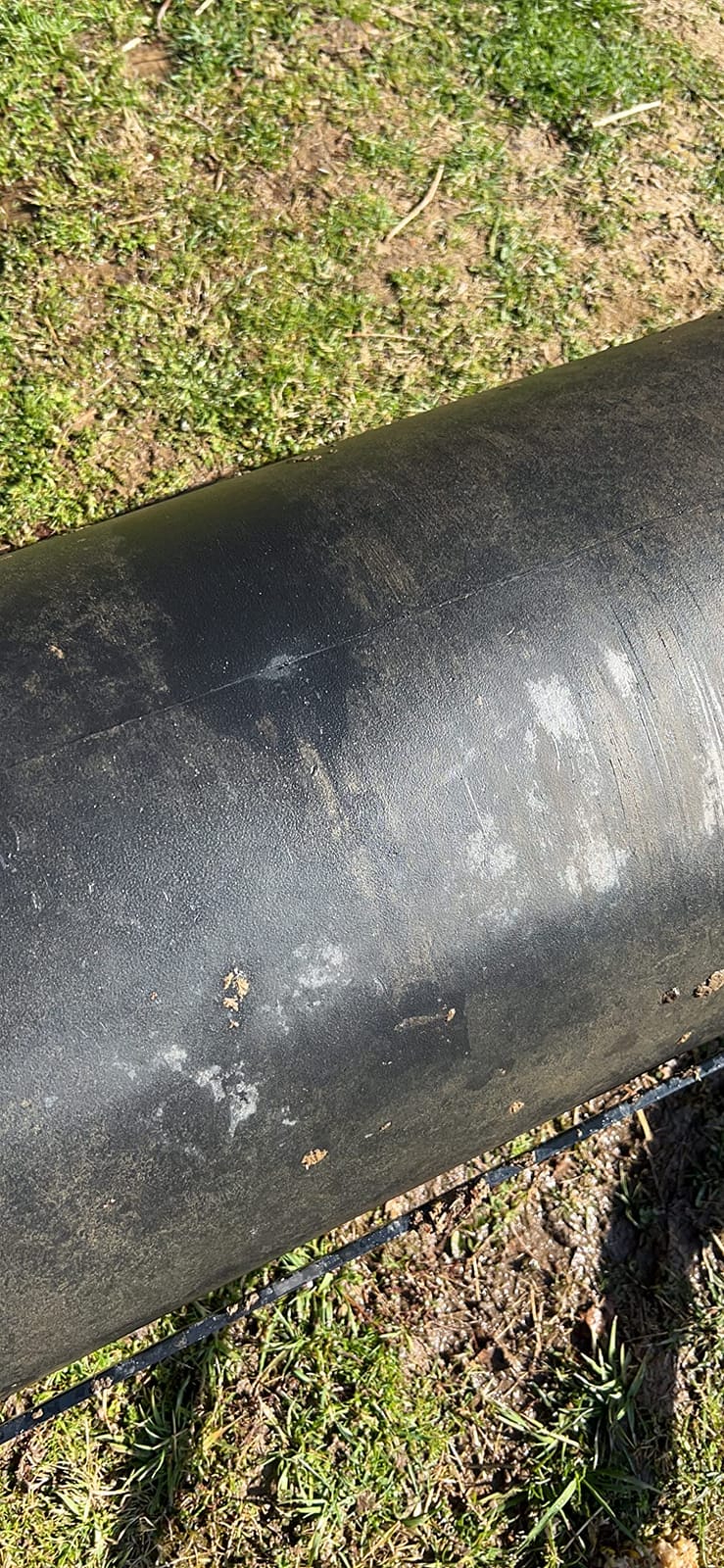
The caveat is size, and it is not a small one. This is a tow-behind workhorse rather than a hand-push roller. Owners report that the empty drum is awkward for one person to maneuver, and that the wide profile makes tight corners difficult. If you have to hand it around a corner between the shed and the yard, plan for two people or a dolly.
Storage is helped by the poly drum, which drains and hangs like the smaller Brinly. A 485 pound roller is a serious object, but emptied and drained it is a much more manageable one.
Is a 48 inch roller too wide for a residential yard?
On anything with fences, tight side yards or narrow beds, yes. A 48 inch drum cannot turn in a confined space, and you will end up rolling the open lawn and hand-rolling the edges. On open ground of half an acre or more, the width pays for itself quickly in fewer passes.
Weight is the other consideration. At 485 pounds filled, this is a machine for large open areas and heavy work such as settling large sod projects. Fill partially for a normal leveling pass and reserve the full drum for genuine compaction jobs.
How do you hook it up safely?
Check the hitch pin every time. It is the single part that fails without warning, and a roller that decouples mid-lawn at speed is a serious hazard. Owners generally praise the universal pin, but the universal claim still deserves a test pull at low speed before you start a full pass.
Match your ground speed to the load. A 485 pound roller does not accelerate, and a tractor at full throttle will push it faster than the drum can compress soil evenly, which defeats the point. Slow, steady passes at a controlled speed produce the even surface you are after.
Buying Guide: How to Choose a Lawn Roller That Fits Your Yard
Start by deciding what job you are doing, because the same question has different answers for seed, sod and surface smoothing. A roller pressed over fresh seed wants a light, partly filled drum. A roller over new sod wants moderate weight. A roller over fill soil after tilling wants the heaviest drum you can control. Everything below narrows from there.
If you are working on a neglected, uneven lawn, the order of operations matters more than the tool. Loosen and add material first, then roll. Our guide to manual lawn aerators covers the loosening step, and topdressing covers the filling step.
Push vs tow-behind: which format fits your yard?
Under a quarter acre with no riding mower, a push roller is the right answer. Wide push models like our 36 inch Goplus and Agri-Fab picks cover a small yard in a manageable session, and a detachable handle lets you tow it later if you ever get a tractor. Above a quarter acre, or if you already own a riding mower, tow-behind is faster by a wide margin because the passes multiply with the size of the property.
A 3-point hitch roller sits in a different category entirely, mounting to the back of a compact tractor for genuine working loads. None of the residential models here need one, and if your project is large enough to justify that category you are past the point where a hand roller helps.
Steel vs poly: which drum material should you buy?
Poly will not rust and will not dent, and it is lighter to move when empty. That makes poly the easier ownership choice for most people, and it is why the Brinly models sit at the top of this roundup. Steel is more rigid, carries more weight for the same capacity, and tolerates rough towing better, but it dents, it rusts if you leave water in it, and it is heavier to lift.
Choose steel if you are working on fill soil, towing over gravel, or storing the roller somewhere damp. Choose poly if the roller lives in a garage, if you will move it by hand often, or if kids or pets might be near it. The difference in empty weight is the factor most owners underestimate, and it is the difference between a roller that hangs on a wall and one that needs two people.
Water-filled vs sand-filled vs solid: what actually changes
Water is adjustable, fast and clean. Sand is heavier for the same volume, keeps its weight between sessions and is more stable in the drum, but it takes longer to load and is harder to fully remove. A solid drum gives you one fixed weight, and in this category the solid choices are almost all steel, which means you accept a heavy empty weight you cannot adjust.
Adjustability is the real advantage of a fillable roller. The same machine handles a light pass over seed and a heavy pass over new sod. That is why every fillable model here beats a solid one on versatility, and why the fill level is the single setting you will adjust most often.
Match drum width and weight to your yard size
Use this as the matching rule. Under a quarter acre, pick a 20 to 24 inch drum and a fill level around one third to half full. Between a quarter acre and half an acre, pick a 36 inch drum and fill to two thirds or more. Above half an acre with a riding machine, pick a 48 inch tow-behind and fill according to the job.
The weight rule is simpler than most guides make it sound. Roughly 100 to 200 pounds of water is the useful range for a residential lawn. Anything heavier is a compaction tool, and rolling an established lawn with one is how you get the r/lawncare complaint that rolling made the lawn worse.
When you should not roll your lawn at all
Do not roll saturated soil. Wet, squeezed soil is where compaction becomes permanent, and a roller over a puddled lawn will leave you with worse drainage than you started with. Wait until the ground is moist enough to hold together in your hand and break apart with a light touch.
Do not roll drought-stressed or dormant grass, and do not roll immediately after tilling. Rolling loose tilled soil pushes it around rather than firming it, and the bumps typically reappear within a season or two. Let the bed settle, add material to the low spots, and roll last.
Do not roll a lawn that needs core aeration. The two jobs work in opposite directions, because aeration opens the soil and rolling closes it. If the ground is compacted, aerate first, then topdress, then roll lightly as a finishing pass. This sequence is the one that the lawn-care forums keep arriving at independently.
How to Level a Lawn with a Roller: 8 Steps
Rolling works best as the last step in a sequence, not the first. If low areas need new material, add it before the roller ever touches the yard. The roller then does the one job it is genuinely good at, which is settling and smoothing what you have already placed.
Mow the lawn first. Short grass lets you see the ground and stops the drum from matting wet clippings into the surface.
Mark the low spots. Walk the yard and note every dip that bothers you, because you will forget them once the roller is in motion.
Topdress the low areas. Add screened soil, compost and sand mix to the marked spots and rake it level before you roll anything.
Water lightly. The ground should be moist enough to firm, not wet enough to squeeze. A soak the day before is right; rolling a puddled lawn is not.
Choose and fill the roller. Partly filled for seed and sod seams, two thirds or more for new fill soil. Sand adds more weight than water in the same drum.
Roll with overlap. Overlap each pass by about a third of the drum width, and roll in straight, slow lines rather than wandering curves.
Re-inspect the surface. Walk the yard from a low angle and look for remaining bumps. Fill them with material and roll again, rather than adding more weight to the same spot.
Allow recovery. Keep the surface damp for a couple of weeks, and resist rolling again immediately. Soil needs time to set around the new grade.
Two warnings about the order. Do not use extra weight to compensate for a pass you skipped, because a heavier roller on the same spot is exactly the compaction outcome to avoid. And do not roll wet, however tempting it looks after rain, since the damage from one wet pass takes a season to work out.
Frequently Asked Questions
Do lawn rollers help level a lawn?
Partially. A roller compacts and smooths the surface, presses grass seed into contact with soil and settles new sod, but it cannot correct a true change in grade. Heavy soil movement needs topdressing, soil addition or regrading first. Rolling is the finishing step that locks in work you have already done, and rolling over ground that is already out of level mostly just flattens the lumps without moving them.
What is the best thing to use to level your yard?
A lawn roller for the final smoothing pass, paired with a core aerator beforehand and topdressing mix for the low spots. That three-step combination, not the roller alone, is what actually improves a bumpy yard. The aerator opens compacted soil, the topdressing raises the dips, and the roller settles the new material into the existing surface.
What is the best tool for leveling my lawn?
Under a quarter acre with no tractor, a poly water-filled push roller around 24 inches wide. A quarter acre or more, or if you own a riding mower, a tow-behind roller with a 36 to 48 inch drum. Match the drum width to the yard so the pass count stays manageable, and fill the drum only partway for a normal residential leveling pass.
What is the best lawn roller?
The Brinly 270 lb Combination Push/Tow Poly Roller is our overall pick. It holds 28 gallons of water or sand for 270 pounds of rolling weight, converts between hand pushing and towing with a removable handle, and has a poly drum that will not dent or rust. It carries a 4.4 star rating across 474 reviews, and it comes with a two year warranty.
Is a water filled lawn roller better than a sand filled one?
Water is better for most jobs because you can adjust the weight continuously and empty it in minutes. Sand is heavier for the same volume, stays stable in the drum between sessions and is steadier over a long planned job, but it is slower to load and harder to clean out. Water for seed contact and sod settling, sand for heavy fill soil work.
Will a lawn roller compact my soil?
Yes, and that is the main risk of rolling too much or too heavy. Repeated or excessive weight squeezes air out of the soil, which reduces oxygen to roots and pushes water away. Roll lightly, once, with a partly filled drum, and only when the ground is moist rather than wet. If your lawn needs aeration, aerate first, since rolling undoes that work.
Final Verdict for the Best Lawn Rollers for Leveling Yards in 2026
The Brinly 270 lb Combination Push/Tow Poly Roller wins this roundup. Twenty-eight gallons of capacity, a 270 pound filled weight, a 24 inch drum, a poly shell that will not dent or rust, and a handle that converts from push to tow in seconds. Its 4.4 star rating across 474 reviews and a two year warranty make it the pick we would put in our own garage.
Match it to your yard. The Agri-Fab 18×36 is the better call if you own a riding mower, and the Brinly 485 lb 18×48 covers acreage in far fewer passes. For small gardens and seed beds, the Goplus 17 gallon and VEVOR 61L models do the work without a tractor.
And remember the limit that every good lawn-care source repeats: a roller settles and smooths, it does not regrade. Fix the low spots with soil, roll lightly once, water properly, and let the lawn recover. Used that way, the best lawn rollers for leveling yards are the finishing tool that makes everything else you did actually show.