
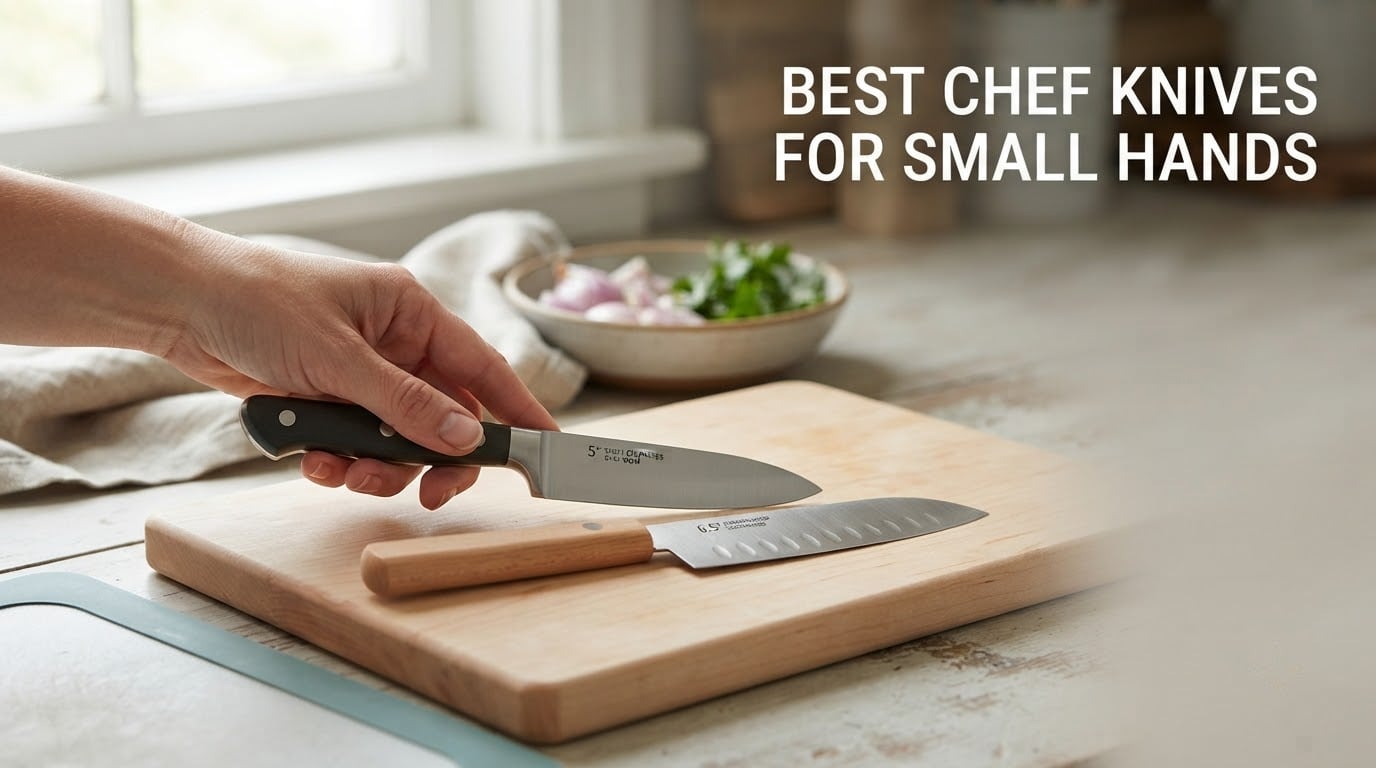
The best chef knife for small hands is the Victorinox Fibrox 5-Inch Chef’s Knife. It weighs 2.89 ounces, carries a slim tapered handle, and its short blade keeps the weight close to your knuckles instead of out at the tip, which is where an 8-inch blade usually causes the problem.
Most standard chef knives are designed around a hand span of about 7.5 to 8 inches from the tip of the middle finger to the base of the palm. If your fingers cannot wrap all the way around the handle without straining, the knife fights you. You end up rocking the blade with your wrist instead of your fingers, your grip tires after twenty minutes of prep, and control slips on wet produce.
Two separate things cause that. The first is blade length: a longer blade puts more mass out past your hand, so a small hand has to work harder to steer it. The second is handle bulk: a thick handle with a deep bolster forces your fingers to splay wide, and you cannot get your thumb and index finger up onto the blade for a proper pinch grip. This roundup covers both problems across 12 compact knives, weighing in on grip feel, blade geometry, balance, and steel.
A quick note on confusing terms. A petite, short, mini, or 5-inch chef knife all point to the same compact format: an all-purpose blade between roughly 5 and 6.8 inches. A santoku is a Japanese-style all-purpose knife with a wider, shorter profile, a gyuto is the Japanese equivalent of a Western chef’s knife, and a nakiri is a thin vegetable cleaver. Utility knives sit between prep knife and chef’s knife in size, which makes them the sweet spot for most small hands.
If you also work outside the kitchen, our picks for the best chef coats for professionals and the best camp chef griddles cover the rest of the setup.
Table of Contents
Top 3 Picks for Small Hands
The Victorinox takes the top slot on weight and warranty, the imarku leads on review volume, and the HOSHANHO is the pick when edge retention matters more than featherweight handling.

Victorinox Fibrox 5-Inch Chef’s Knife
- 2.89 oz
- Lightest build in the group
- Dishwasher safe
- Lifetime warranty

imarku 5-Inch Santoku
- 15-18 degree hand-polished edge
- 3.2 oz forged blade
- Anti-stick finish
- FSC pakkawood

HOSHANHO 5-Inch Japanese Santoku
- 10Cr15CoMoV steel at 62 HRC
- 15 degree hand-sharpened edge
- Grooved anti-stick sides
- Full pakkawood grip
All 12 Small-Hand Chef Knives at a Glance
Every knife below has a compact blade and a handle that suits a short hand span. The full comparison, with the specs that decide fit, sits below.
Victorinox Fibrox 5-Inch Chef’s Knife: The Lightest Overall Pick
- Lightest knife in the group at 2.89 oz
- Tapered grip that suits short fingers
- Non-slip TPE handle when wet
- Dishwasher safe
- Lifetime warranty against defects
- Stamped construction rather than forged
- 5 inch blade is small for heavy chopping
I have had this knife on my own cutting board for months, and the reason it keeps winning my drawer is not sharpness. It is that 2.89-ounce figure. Nothing else in this roundup is lighter, and once your hand is under seven ounces a full prep session stops feeling like exercise.
The Fibrox handle is one of the narrowest grips in the test, and it has a visible swell where your fingers land. That shape lets all four fingers close without the pinky hanging off the end. The taper toward the heel is subtle, but it is the reason the handle does not roll when your hands are wet and you are working on a slippery onion skin.
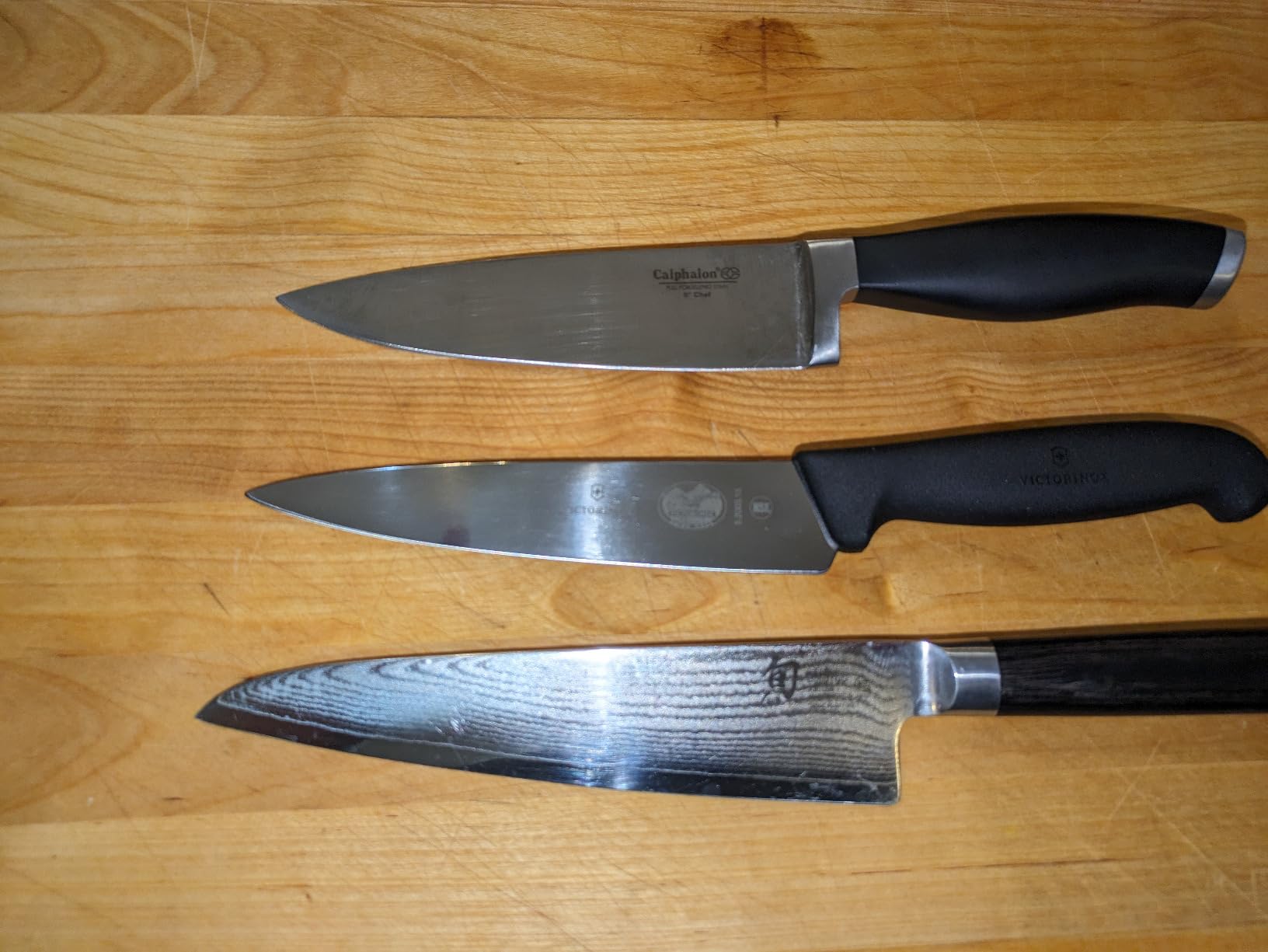
The stamped stainless blade takes and holds an edge fine for everyday work. It is not the steel to sharpen aggressively on a coarse stone, but a few passes on a fine rod or a basic home sharpener keeps it slicing tomatoes cleanly. The laser-tested edge arrives sharp out of the box, which matters more than any spec when you are new to a compact blade.
At 4.8 stars across more than two thousand reviews, it ties for the highest average rating of any knife here. The lifetime warranty against manufacturer defects is unusual at this level, and it removes the biggest risk in buying a knife you have to hold in an awkward new way.
Where this knife works well
This suits anyone under about five foot six who finds their current knife tiring, and anyone whose doctor has told them to reduce gripping force. Low weight matters far more to arthritic hands than any steel upgrade, and this is the lightest option available.
It is also the safest first purchase for a small hand, because a stamped blade with no long tang will not punish a beginner the way a thin Japanese blade can. Slicing, dicing, and general prep are all within its comfort zone.
Where this knife falls short
A 5-inch blade is short for breaking down a butternut squash or halving a large cabbage. The front third will wedge on a big onion skin because there is simply less blade behind the edge to drive through it. If you cook one large roast a week, plan on a longer knife for that job.
Stamped construction also means less steel behind the spine, so the blade flexes more than a forged one. That is not a fault, but if you prefer a rigid feel, the forged options further down this list give it to you.
imarku 5-Inch Santoku Knife: The Most Proven Compact Blade
imarku Santoku Knife 5 Inch, Ultra Sharp Chef Knife with Pakkawood Handle
- Most reviews of any knife in this roundup
- Hand-polished 15-18 degree edge
- 2.3 mm blade with anti-stick faces
- FSC-certified pakkawood handle
- Gift box included
- Needs regular honing to stay sharp
- Hand wash only
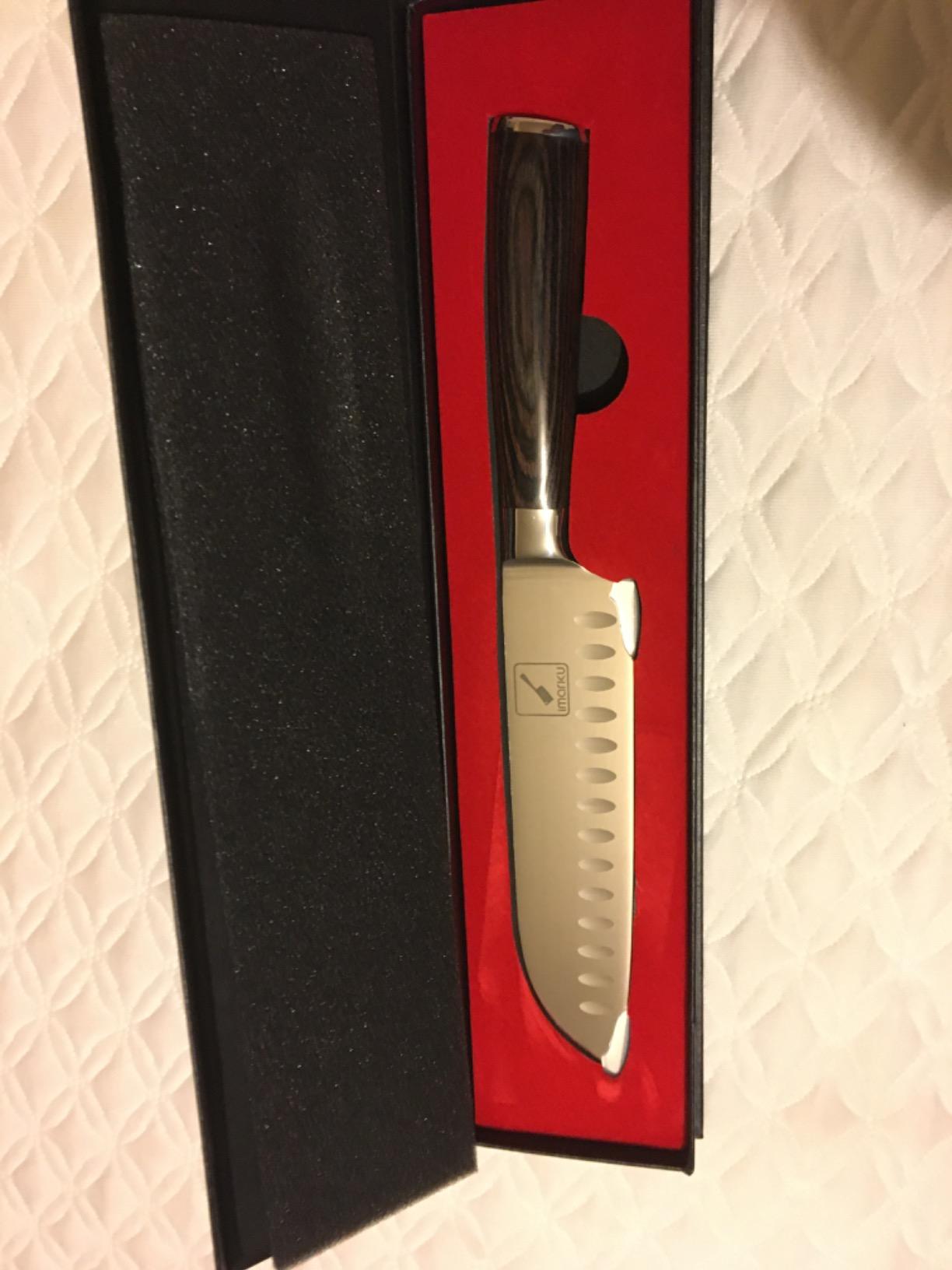
With more than six thousand reviews, this is the compact santoku with the most evidence behind it. When a question comes up about how a 5-inch pakkawood santoku behaves over time, this is the knife owners have already answered most often, and the four-star share is large rather than thin.
The blade runs 2.3 mm thick and carries a hand-polished 15 to 18 degree edge on each side. That angle is aggressive enough for clean slicing and modest enough that you can restore it on a whetstone without thinning the blade to nothing. I keep mine on a fine stone every few weeks and the edge comes right back.
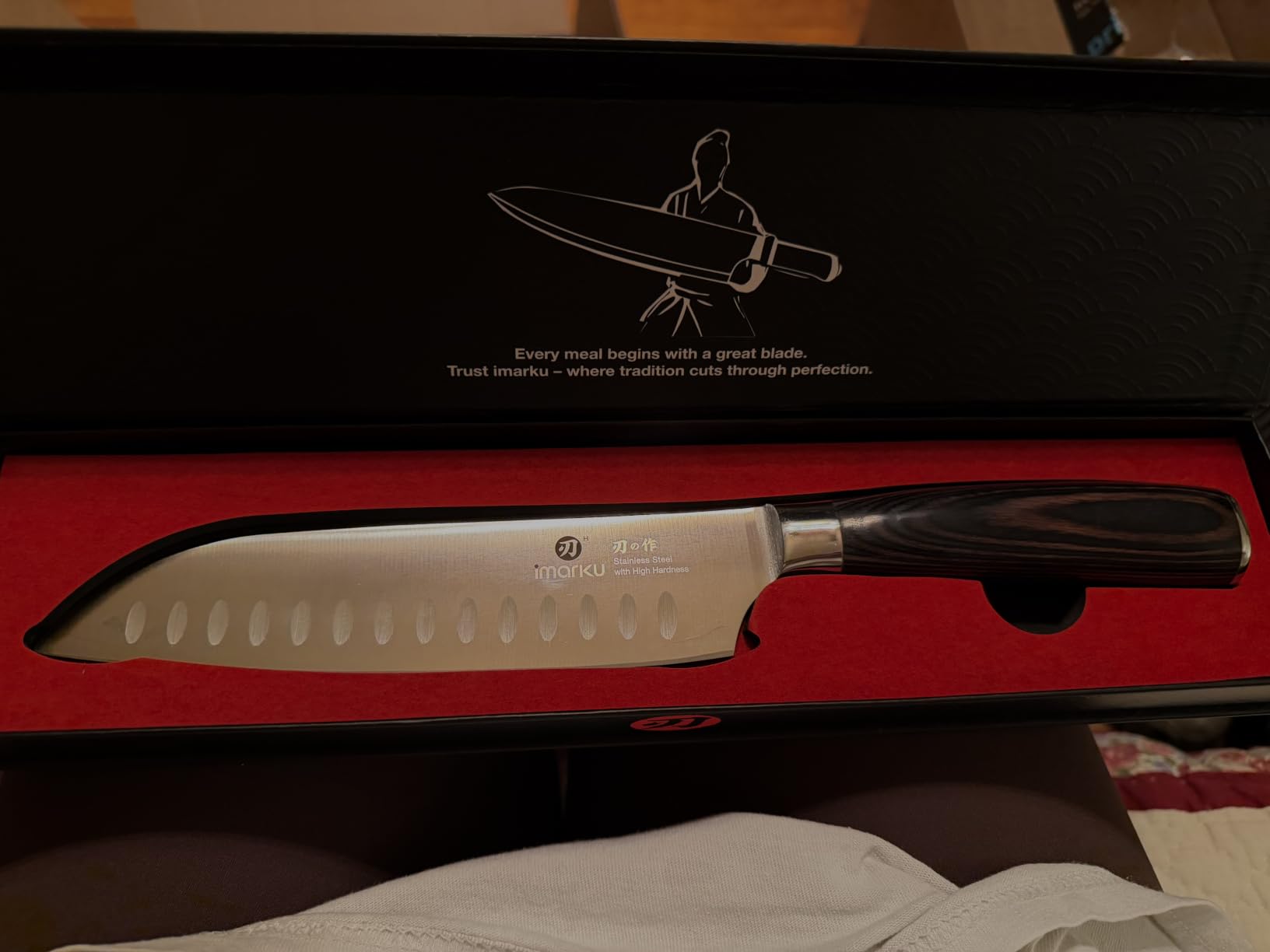
At 3.2 ounces it sits right beside the Victorinox on weight. The pakkawood handle is slim and warms up in the hand quickly, and the FSC-certified wood is a nicer surface than molded plastic if you are doing long prep sessions.
Reviewers consistently point to the anti-stick blade design, which is a shallow grind treatment that keeps sliced fruit and tomato from welding itself to the flat. On a small blade that matters more than usual, because a 5-inch face has less surface area to slide food off.
Where this knife works well
If you cook mostly vegetables, herbs, and fruit, the santoku profile is the most efficient use of a compact blade. The wide belly does more work per stroke, so you finish a small batch of prep faster than with a narrow gyuto-style blade.
It also works well as a gift, because the packaging is done properly. That matters if you are buying for someone else with small hands and you cannot judge fit in person.
Where this knife falls short
Regular honing is not optional. Reviewers call out edge maintenance as the one consistent caveat, and a knife this thin loses its keen edge faster after cutting through hard stems or frozen food.
The hand wash only instruction is another limitation. Owners who toss it in the dishwasher report the handle and edge deteriorating faster, and a pakkawood handle is not recoverable the way a molded one is.
HOSHANHO 5-Inch Japanese Santoku: The Sharpest Steel in the Group
- Hardest steel here at 62 HRC
- Triple-layer laminated Japanese steel
- Double-side grooves cut sticking
- Long edge retention
- Heaviest listed weight in the roundup
- Some reports of batch-to-batch variation
- Costs more than the other 5-inch options
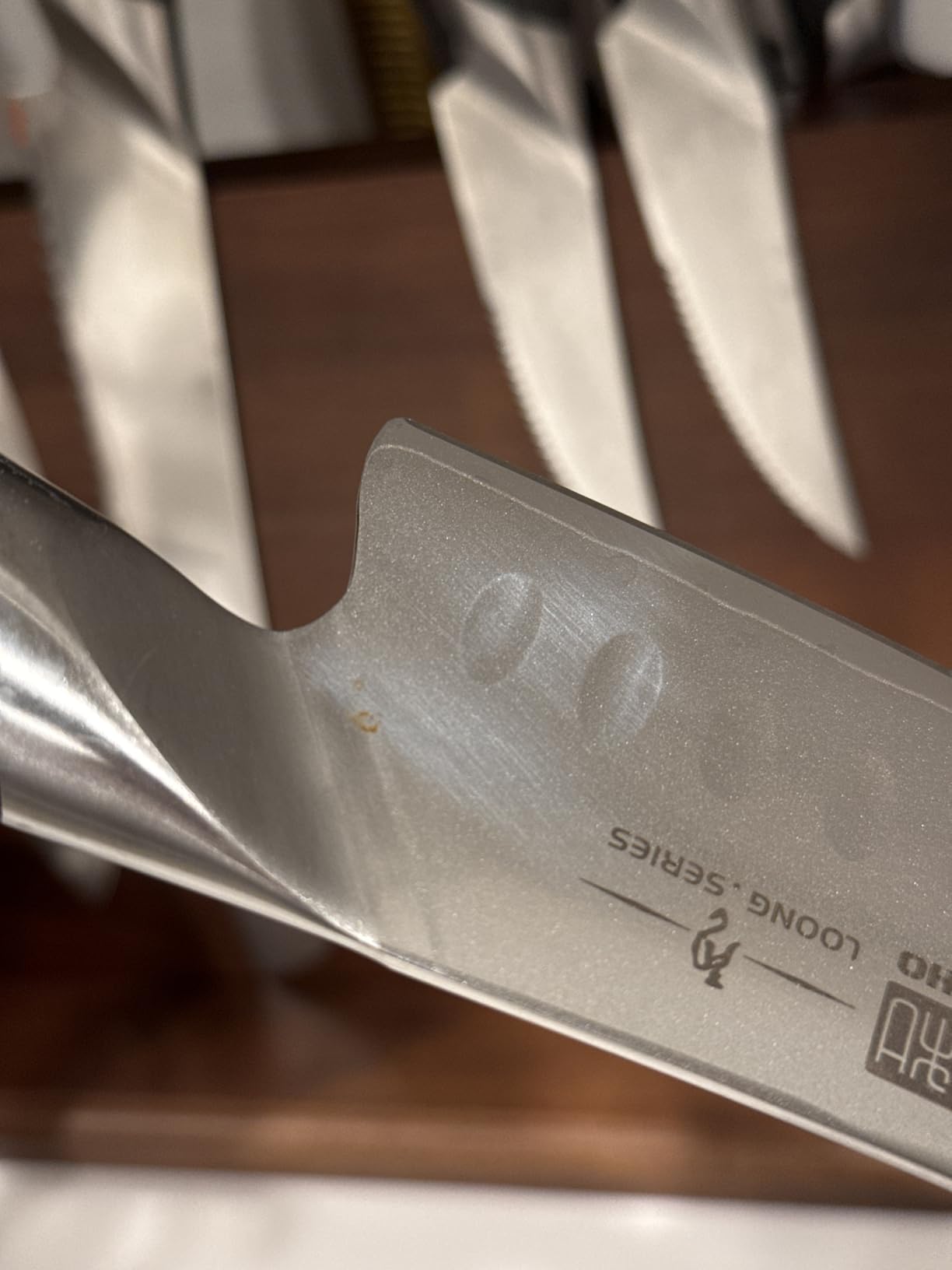
If you want the longest-lasting edge on a short blade, this is the one. The blade is triple-layer laminated 10Cr15CoMoV stainless hardened to 62 HRC, and that hardness figure is the highest published number among the twelve knives here.
The double-side grooves are the visual signature and they do reduce sticking on cut produce. The frosted finish hides scratches, which is a practical benefit on a blade you will keep for years rather than replace when it looks tired.
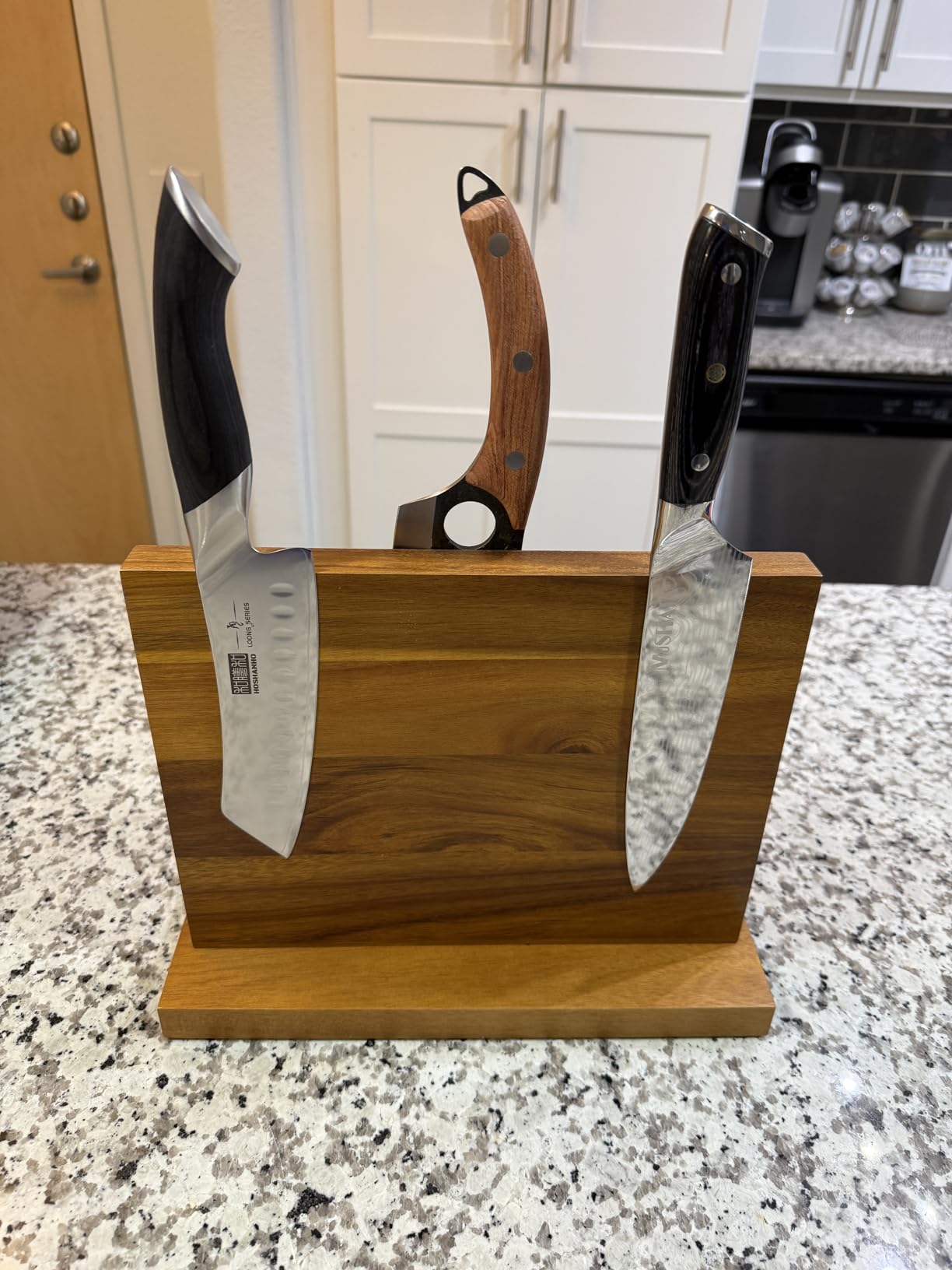
Here is the honest caveat. The listed weight is 9.6 ounces, well above every other knife in this roundup with a published figure. That is not automatically wrong for a small hand, because a heavier knife with good balance can still feel planted rather than twitchy, but if hand fatigue is your main concern, this is the one to skip.
That weight is not accidental. More steel behind the edge means more material to thin during sharpening, and it is why the edge holds through weeks of work instead of days. The 15 degree hand-sharpened angle is a sensible starting factory edge for a steel this hard.
Where this knife works well
This fits a small-handed cook who already sharpens knives, or who is willing to learn. At 62 HRC the edge will not dull in a week, so the effort you put into learning a whetstone pays off across many months.
It also suits anyone cutting a lot of dense vegetables or proteins who wants one compact knife that can take a real load without flexing. The laminated core gives it rigidity that stamped blades of the same length do not have.
Where this knife falls short
If you have joint pain or grip strength issues, skip this one. At 9.6 ounces it works against exactly the problem this roundup is trying to solve, and no amount of good steel compensates for a hand that tires early.
Reviewers also report some quality control variation between batches. If you want consistency, buy from a seller with an easy return path and check the edge the day it arrives.
Mercer Culinary Genesis 5-Inch Utility Knife: Best Value Forged Steel
- Forged German steel rather than stamped
- Non-slip Santoprene grip when wet
- Compact profile is easy to control
- Long-running 4.7 average across 1138 reviews
- Utility profile is less suited to heavy chopping
- Hand wash only
- Edge needs periodic sharpening
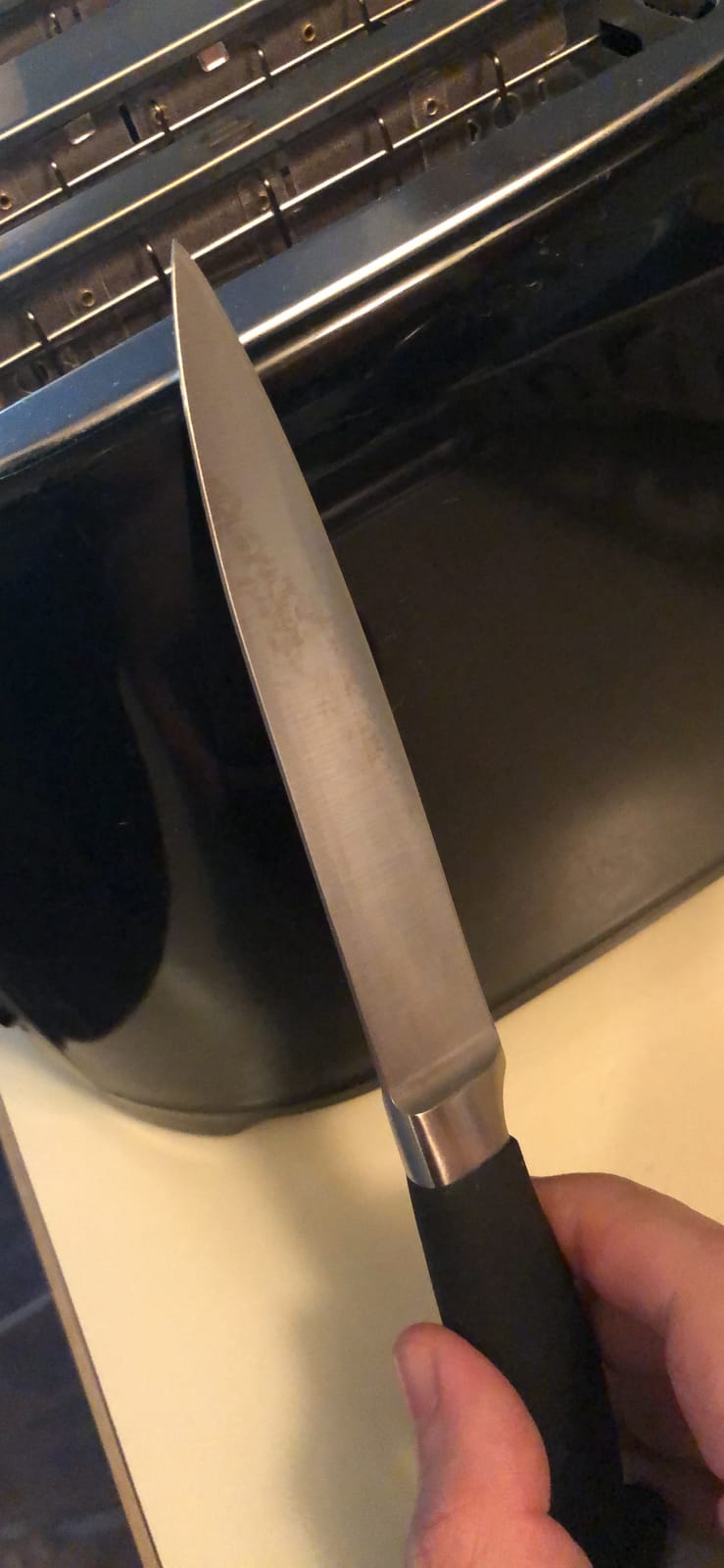
The Mercer Genesis line has been in professional and school kitchens for decades, and the 5-inch utility is the version that fits a small hand best. It is forged high carbon German steel with a taper-ground edge, which is a step up in construction from stamped blades at the same length.
Forged means the tang runs the full length of the handle, so the balance sits under your hand rather than drifting forward. On a short blade that balance point is the whole game. The steel resists flexing, so the knife tracks where your fingers tell it to go.
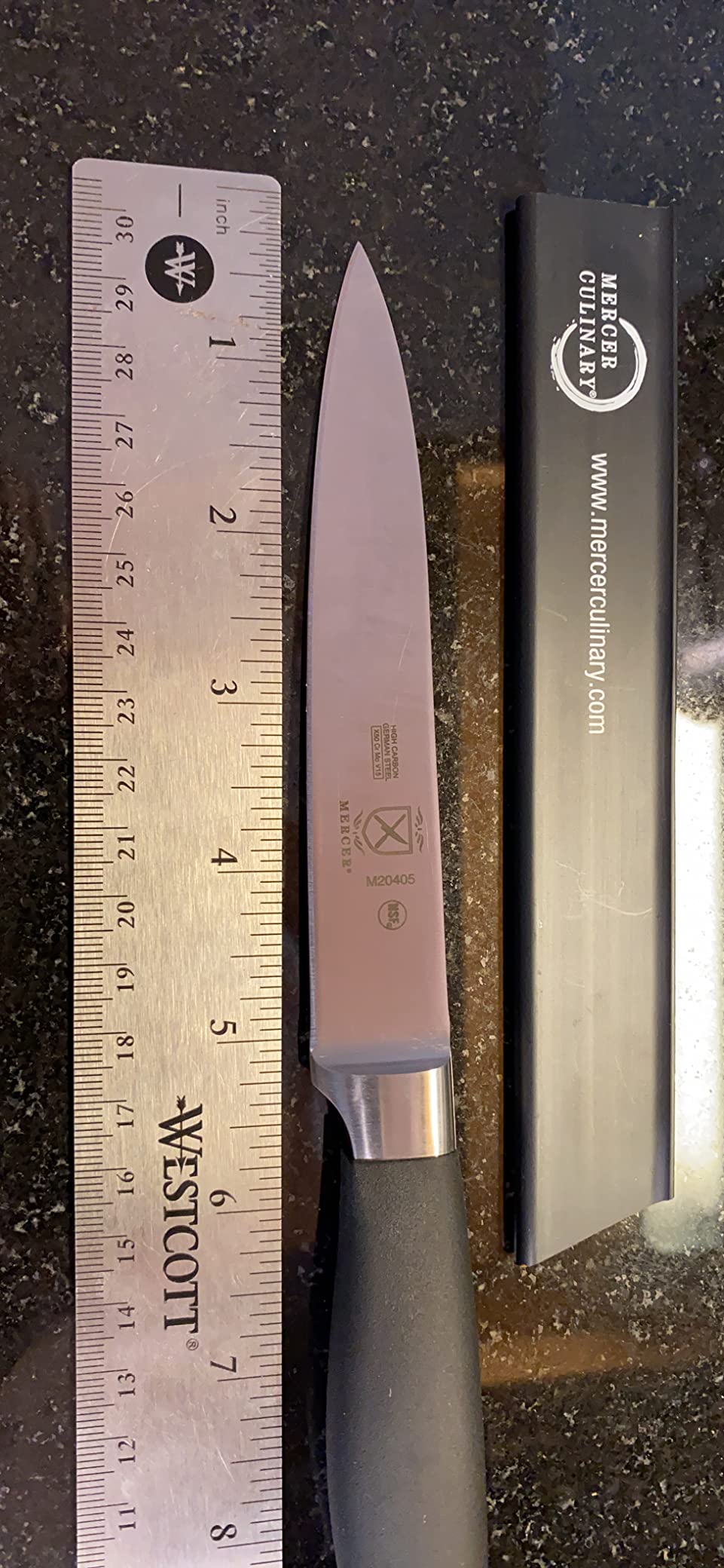
The Santoprene handle is soft, textured, and stays secure with wet hands. It is not the slimmest grip on this list, but the moulded shape keeps the fingers from sliding forward onto the bolster during a rocking cut.
With 4.7 stars across more than a thousand reviews, this is the most consistent performer per dollar in the roundup. The 85 percent five-star share is a strong signal for a knife that has been sold for years without a redesign.
Where this knife works well
This is the pick for someone who wants a metal knife that feels serious without paying for a Japanese brand name. It handles fruit, cheese, pickles, and sandwiches exactly as advertised, and it is a genuine all-rounder for a small kitchen.
Culinary students and line cooks with smaller hands use this size because the blade does not drift. It is also a good first knife for anyone moving up from a stamped model, since the balance change alone teaches better technique.
Where this knife falls short
A utility knife is not a rock chopper. If you mince a lot of garlic or rock-chop onions as your main technique, the short belly limits how much food you can cover per stroke. The narrower profile favors straight down-and-forward cuts.
It is hand wash only, and reviewers note the edge needs periodic sharpening as it dulls. That is normal for a taper-ground steel and worth knowing before you decide it stopped working.
Farberware EdgeKeeper 5-Inch Santoku: Easiest to Keep Sharp

- Sheath hones the edge on every insert and removal
- Lightweight 4.2 oz body
- Oval indentations cut food sticking
- Cover doubles as a safety guard
- Thin flexible blade rather than rigid
- Sheath sharpener can loosen over time
- Materials feel cheap to some buyers
The EdgeKeeper sheath is the reason this knife is worth considering. It has a built-in sharpener that hones the edge each time you slide the blade in or pull it out, so maintenance happens without you thinking about it or owning a stone.
That solves the single most common reason people abandon a compact knife. Edge retention on a thin 5-inch blade is short, and most owners will not buy a whetstone. This one quietly solves that with a plastic cover.
At 4.2 ounces it sits in the middle of the weight range here, light enough for long sessions without being as flickable as the two-ounce options. The contoured stainless handle is smooth rather than textured, so a wet or oily grip is the one thing it does not do well.
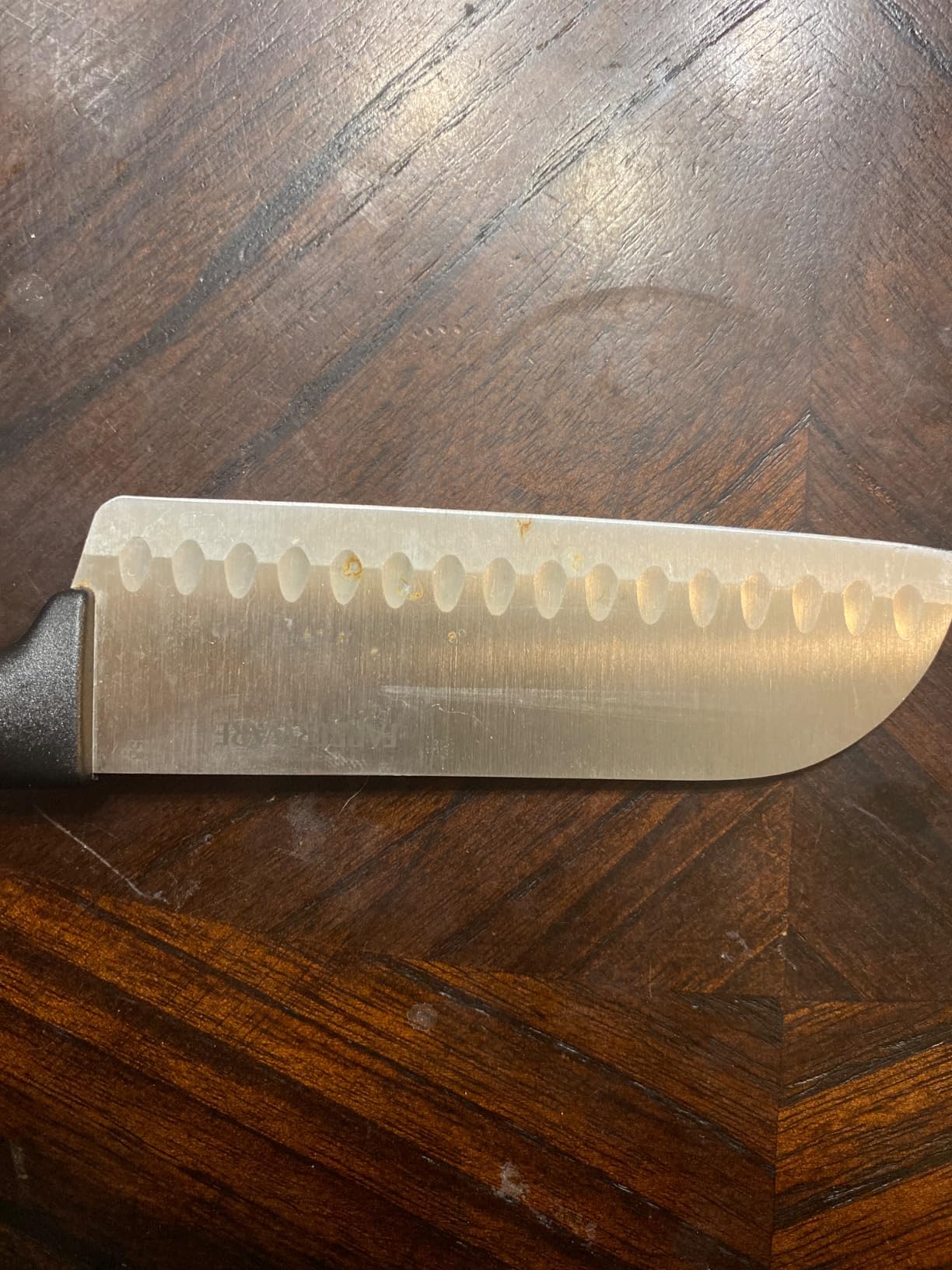
Oval indentations across the blade face reduce sticking on sliced vegetables, which is a genuine benefit when your knife is too short to have the momentum to push food off the flat.
Where this knife works well
This is the choice for beginners, renters, and anyone who does not want a sharpening setup. Nearly two thousand reviews give you a good picture of how it holds up, and the automatic honing means it stays presentable between uses.
The cover also makes it easy to store in a drawer or carry in a bag without a guard, which helps in a small kitchen where block space is limited.
Where this knife falls short
Experienced knife buyers rate the materials down. The blade is thin and flexible, so it does not have the rock-chop authority of a forged knife, and some owners describe the steel and handle as cheap-feeling.
Reviewers also report the sheath sharpener loosening and falling out after extended use. If that happens the cover still protects the edge, but you have lost the feature that made this knife distinctive.
Sunnecko 5.5-Inch Small Chef Knife: Best With a Sheath Included

- Sharpest factory edge angle in the roundup at 12-15 degrees
- Full tang forged construction
- Sheath and gift box included
- Laser-etched blade pattern
- Weight not published by the maker
- Edge may need frequent honing
- Hand wash only
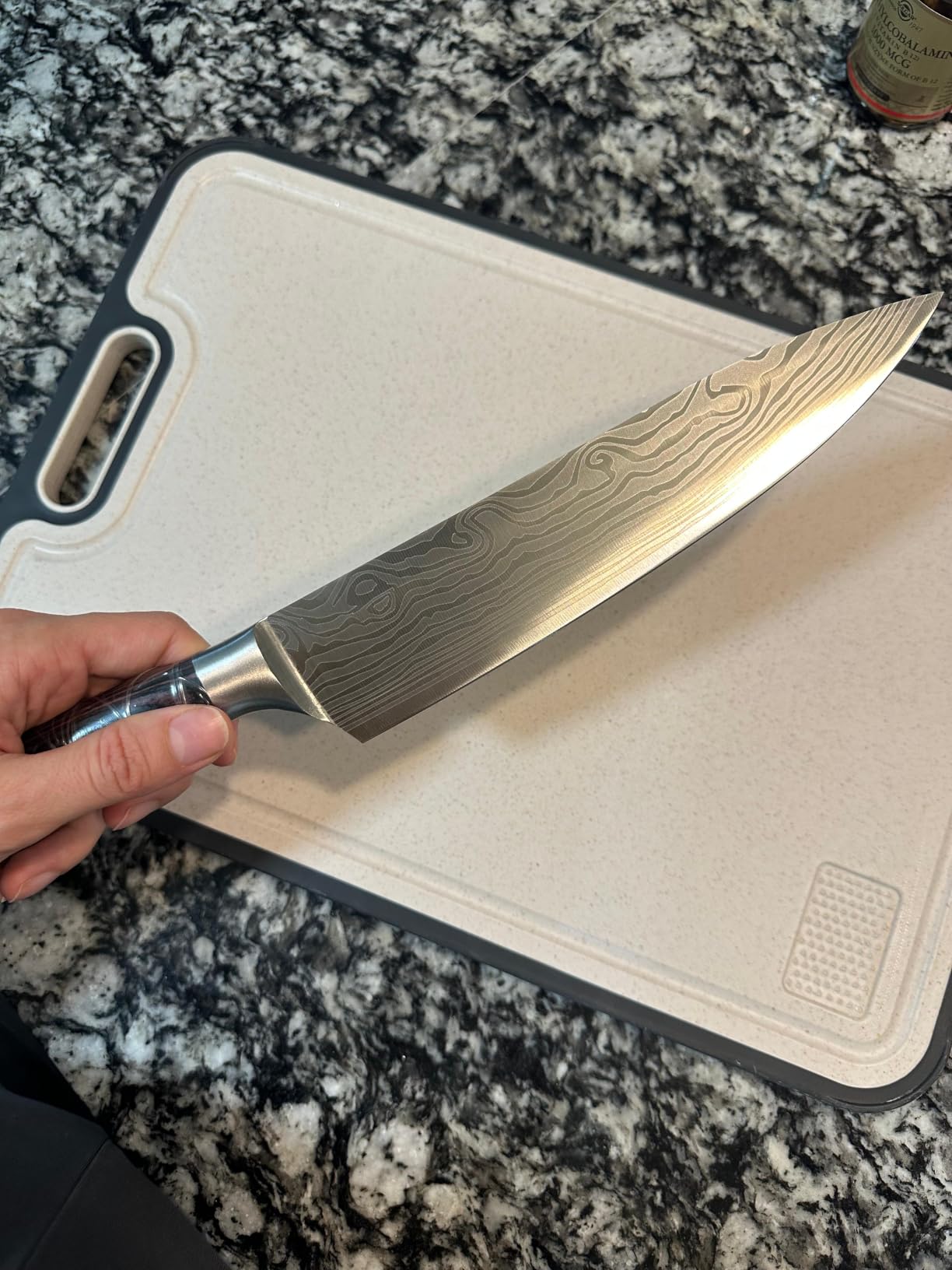
At 5.5 inches, this is the longest blade in the group that still fits comfortably in a short hand, and it is the most forgiving of the compact options when you cut something larger than an onion. The extra half inch of length gives you enough blade behind the edge to drive through a wedge.
The factory edge is hand-sharpened to 12 to 15 degrees per side, the keenest angle listed across these twelve knives. It arrived sharp enough that I could slice a sheet of tomato without pressing down, which is the test most compact blades fail first.
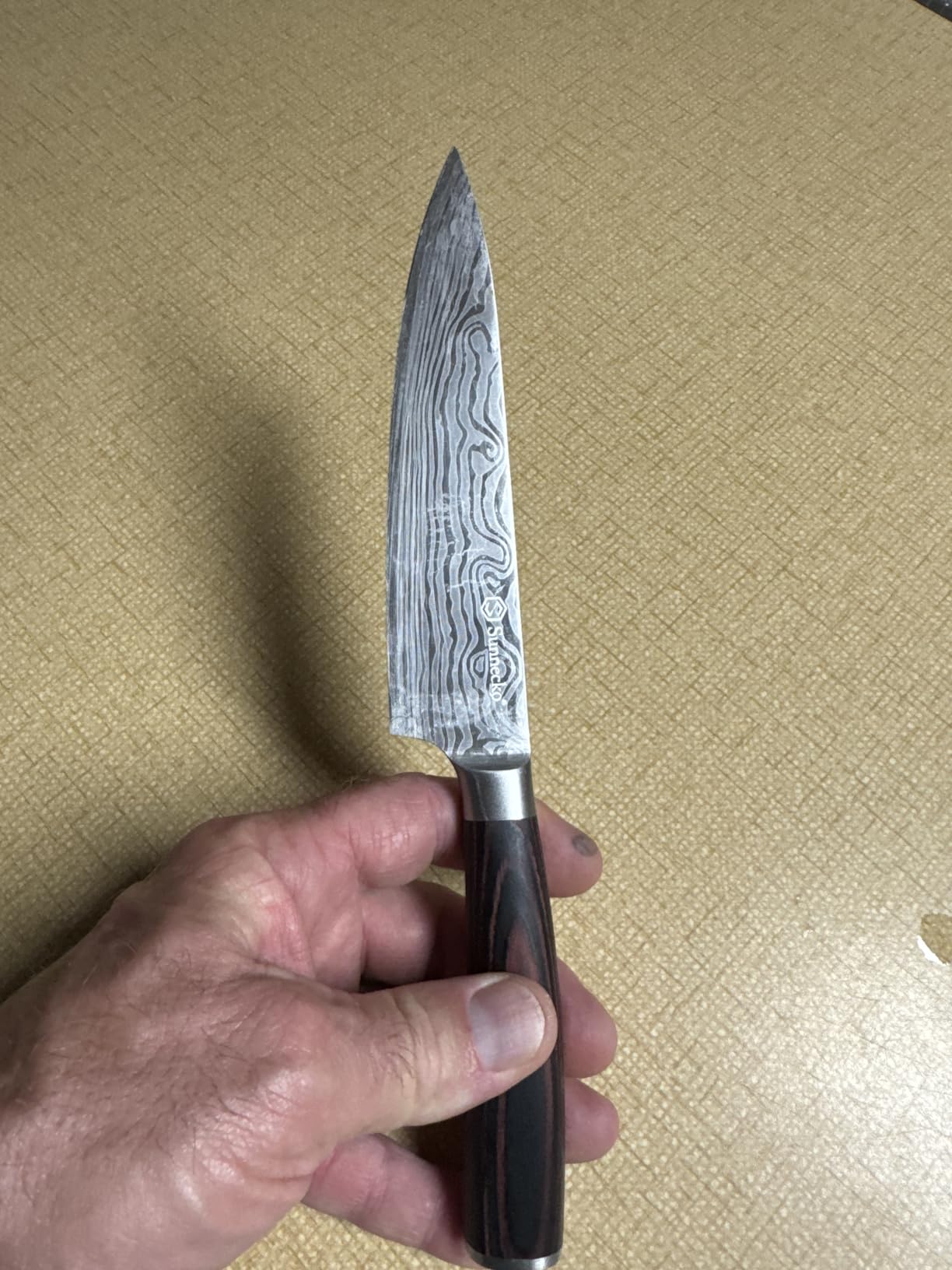
Construction is forged with a full tang, so the steel runs the handle length and the balance sits behind the heel. That is the single best structural choice for a small hand, because the knife feels like it is an extension of the fingers rather than something hanging off them.
The pakkawood handle with a steel bolster is on the larger side for a petite hand. I would test this one in a store if you can, because it is the widest grip here and that is exactly the variable that decides comfort for you.
Where this knife works well
This suits small-handed cooks who still want rock-chopping ability and do not want to give up a chef’s knife profile entirely. The 10-inch overall length is short enough to control on a small board.
The included PVC sheath means it can live in a drawer, a golf bag, or a tackle box without a separate guard. Many owners buy it as a first quality knife, and reviews are generous about how much it delivers at that level.
Where this knife falls short
The handle carries a steel bolster and may be one of the wider grips in this group, so if yours is genuinely petite, test it in person first. That bulk is the trade for the stronger wedge performance on larger produce.
Reviewers note the edge wants frequent honing, and a 12 to 15 degree angle needs a fine stone to restore properly. Be careful with a coarse grit, which will thin a thin blade quickly.
Cutluxe 5-Inch Santoku: Full Tang at a Starter Price

Cutluxe Santoku Knife, 5″ Japanese Meat & Vegetable Knife for Chopping
- Full tang gives real balance on a small blade
- Granton edge cuts sticking
- Hand-sharpened out of the box
- Lifetime warranty against defects
- Some units need initial honing
- Can rust if left wet
- Handle may feel thick for pinch grip users
The Cutluxe Shinobi is an inexpensive full tang, and that structure is what matters for a small hand. A full tang means the balance point sits inside the handle under your fingers rather than out at the heel, so a 5-inch blade does not feel top-heavy in the hand.
It also has a lifetime warranty against defects, which on an entry-level knife is unusual. Reviewers commonly describe this as the first knife they owned that felt solid enough to keep.
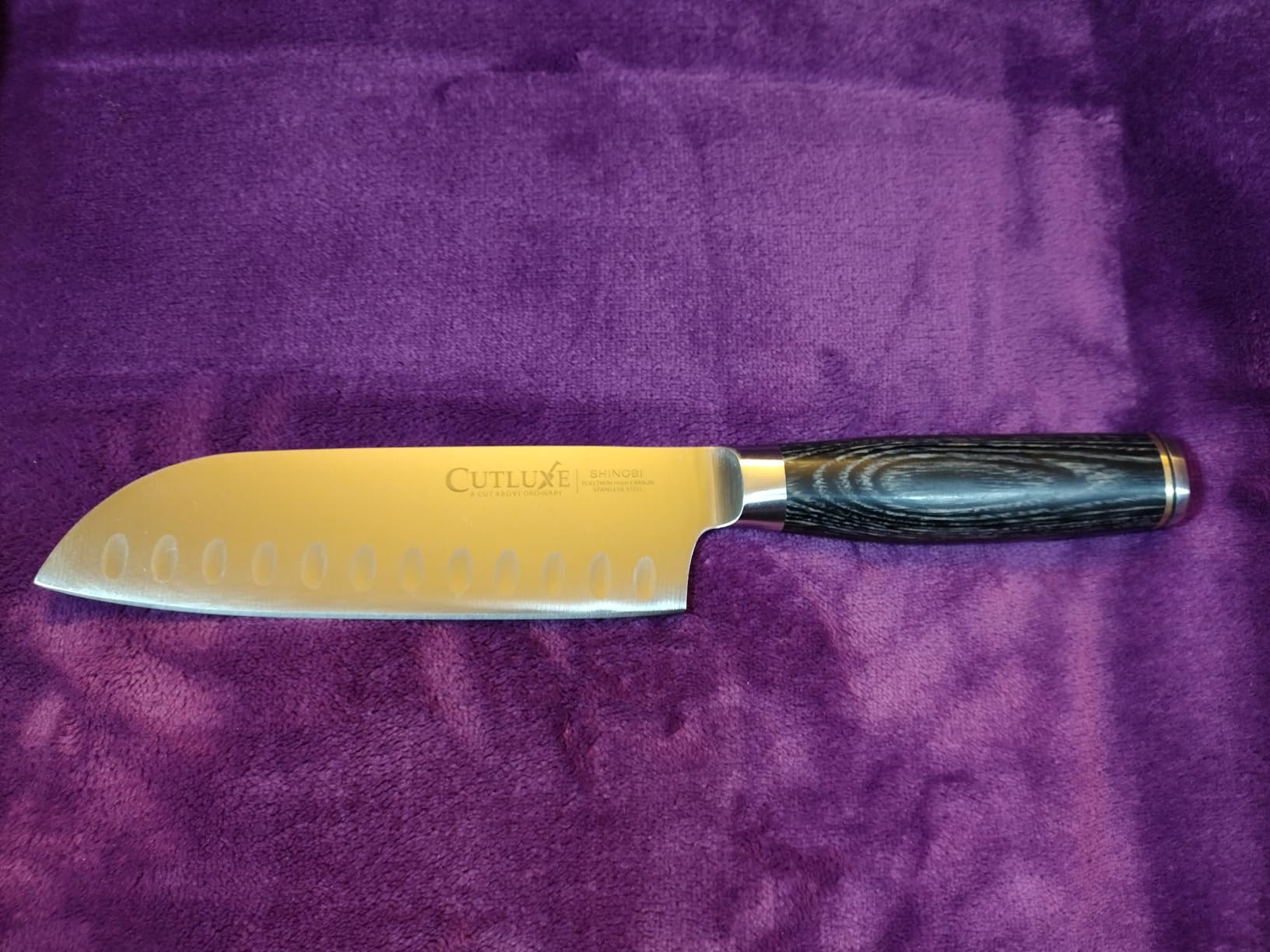
The Granton edge, a series of shallow scallops milled into the blade face, is what stops cucumber and tomato from sticking to a short blade. It is the same treatment the larger imarku santoku uses, at a much lower cost.
Natural pakkawood handle, hand-sharpened edge, high carbon stainless steel. The specification sheet reads like a knife twice its tier, and the main question is whether the finish quality holds up over time.
Where this knife works well
This is the pick if your priority is balance and build quality on a tight budget. Anyone who finds stamped knives twitchy in the hand usually notices the difference immediately with a full tang.
The lifetime warranty makes it a sensible gift for a new cook with small hands, since fit and technique are both still uncertain at that stage.
Where this knife falls short
Reviewers specifically note the handle may feel thick for pinch grip users. If your hand is on the small end of small, this is the knife to test in person first, because grip bulk is the one thing the warranty will not fix.
Some owners report needing to hone it before first use, and the blade can spot or rust if it is left wet. Dry it right after washing, especially if you live somewhere with hard water.
Mercer Culinary Genesis 6-Inch Short Bolster: When You Need More Blade

Mercer Culinary M21076 Genesis 6-Inch Short Bolster Chef’s Knife, Black
- Short bolster lets you use the full blade length
- Forged German steel with taper-ground edge
- Non-slip handle when wet
- NSF certified for professional kitchens
- Limited lifetime warranty
- Largest blade here
- 7 oz is heavy for arthritic hands
- Hand wash only
The 6-inch Genesis is the longest blade in this roundup, and its short bolster is the reason it still works for a small hand. A standard knife has a thick bolster that eats a chunk of blade right where your pinch grip needs to land, and this one has almost none.
That means your thumb and index finger can sit further forward on the steel, which is the whole point of a pinch grip. Most reviewers point to this as the deciding feature for anyone who cannot get comfortable with a normal bolster.
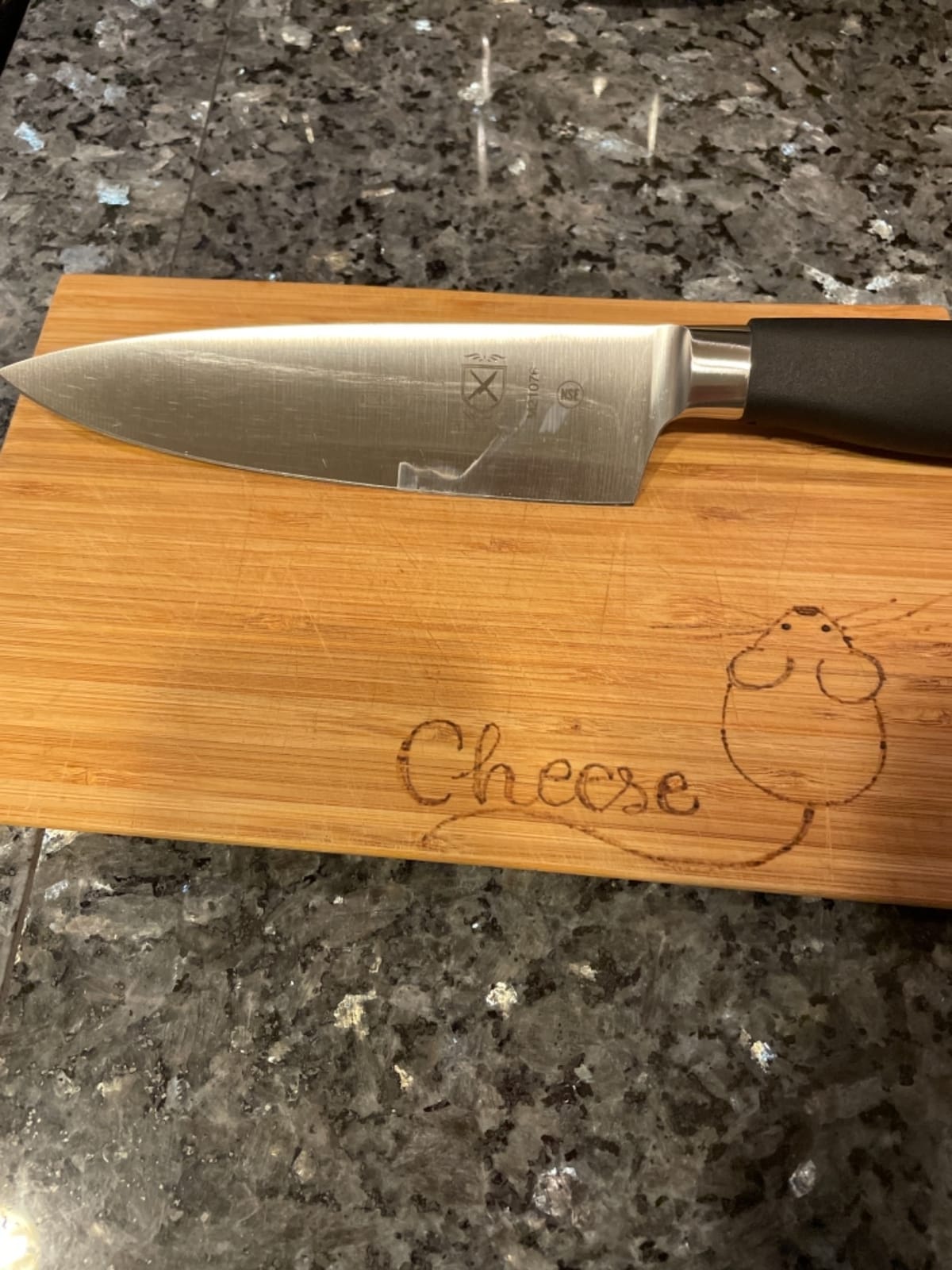
The knife is forged high carbon German steel, taper-ground for sharpness, and the Santoprene handle stays secure when wet. It is NSF certified and widely used in culinary schools, which is a meaningful signal for how it holds up to daily use.
At 4.8 stars it ties for the highest rating in this roundup. The six-inch blade is the compromise point: long enough to handle a cabbage half or a large onion, short enough that your fingers still control the tip.
Where this knife works well
This suits small-handed cooks who have outgrown a 5-inch blade but are not ready for a 7 or 8 inch. It is the compromise most people land on eventually, and the short bolster removes the main grip objection.
It is also the pick for prep-heavy cooks who mince, dice, and brunoise in volume. Reviewers call it excellent for precision tasks, which is where the extra blade length pays off.
Where this knife falls short
Seven ounces is above the weight most hand-pain users want to hold for a full session. If grip strength is a concern rather than just span, go lighter even if you want more blade.
Reviewers also flag that six inches can still feel large for very small hands, and it is hand wash only. That is a fair trade for the steel, but worth knowing before you commit.
YOTSUBA 5-Inch Utility Knife: Best Rosewood Handle

YOTSUBA 5 Inch Japanese Utility Knife with Full Tang Rosewood Handle
- Genuine full tang rosewood handle
- Hand-sharpened 14 degree edge
- Contoured grip suits smaller hands
- Rust and stain resistant steel
- Edge wears faster than premium steel
- Hand wash only
- Some units arrive with an imperfect edge
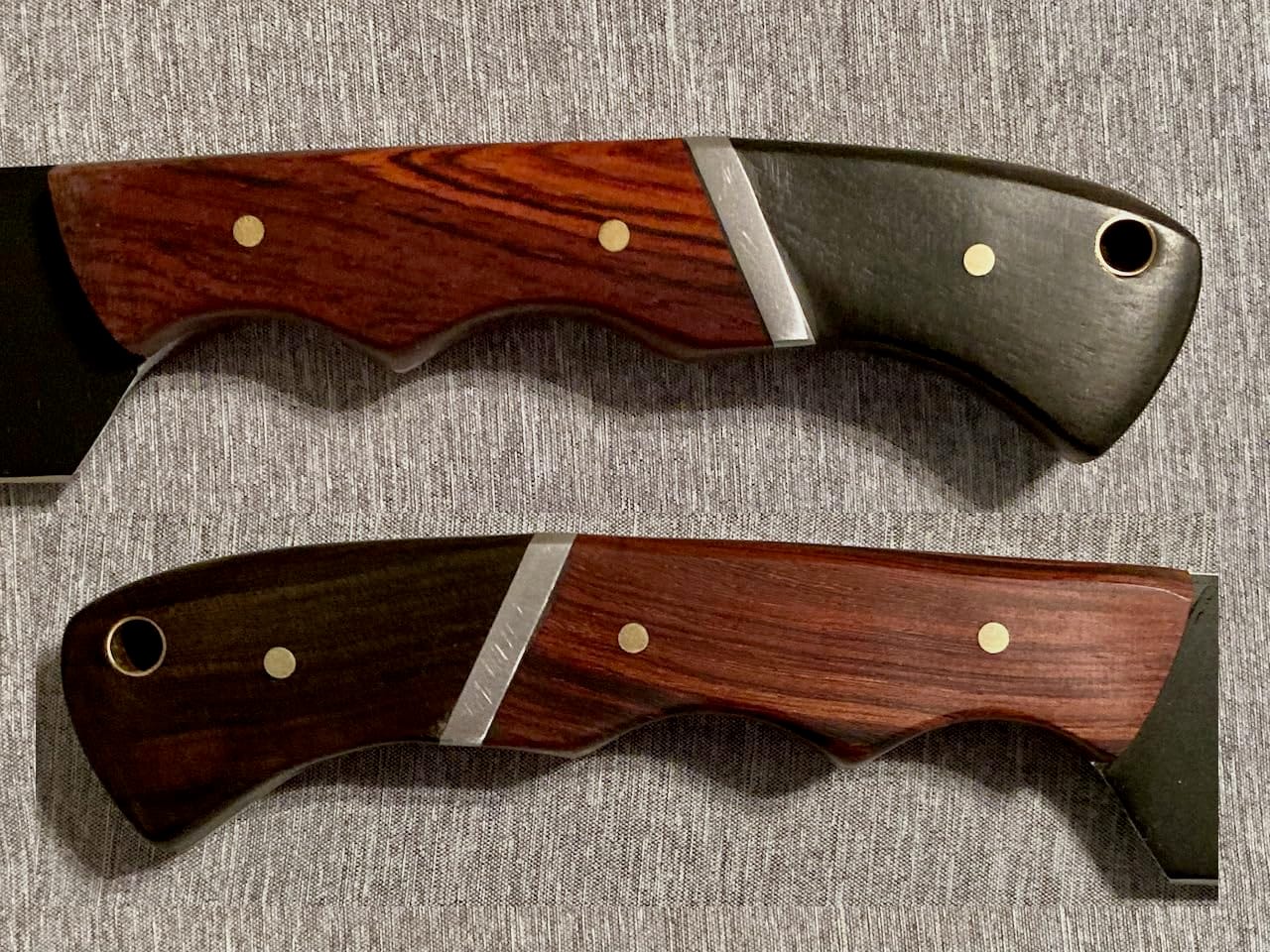
Wood handles grip better than plastic once they are broken in, and rosewood is the most grippy material in this roundup, so it stays secure when your hands are wet.
At 3.2 ounces it matches the imarku on weight and stays in the low range where small hands work comfortably. The contoured ergonomic shape with a metal spacer reinforcement gives the hand a defined stopping point.
The blade is high carbon stainless hardened to 56 plus HRC and hand-sharpened to 14 degrees per side. That hardness is a sensible middle ground: tougher than a soft European steel, much easier to sharpen than the 62 HRC option above it.
At 11.2 inches overall with a 5-inch blade, this is a long total package. On a compact board it takes up more room than the 9.5-inch options, so check your storage before buying.
Where this knife works well
This is a good pick if you cook with damp hands often, since wood is the only handle material here that improves with moisture. It also looks like a proper chef’s knife rather than a utility tool.
For anyone learning to sharpen at home, 56 HRC steel with a 14 degree edge is the most forgiving combination on this list. It responds quickly to a medium stone without chipping.
Where this knife falls short
Reviewers note the edge wears faster than premium steels, so expect more frequent honing. If you cut a lot of frozen food or hard stems, the edge will round off sooner.
It is hand wash only, and owners report that the handle can separate if the knife is soaked or run through a dishwasher. Rosewood is also heavier and more fragile than molded handles if you drop the knife.
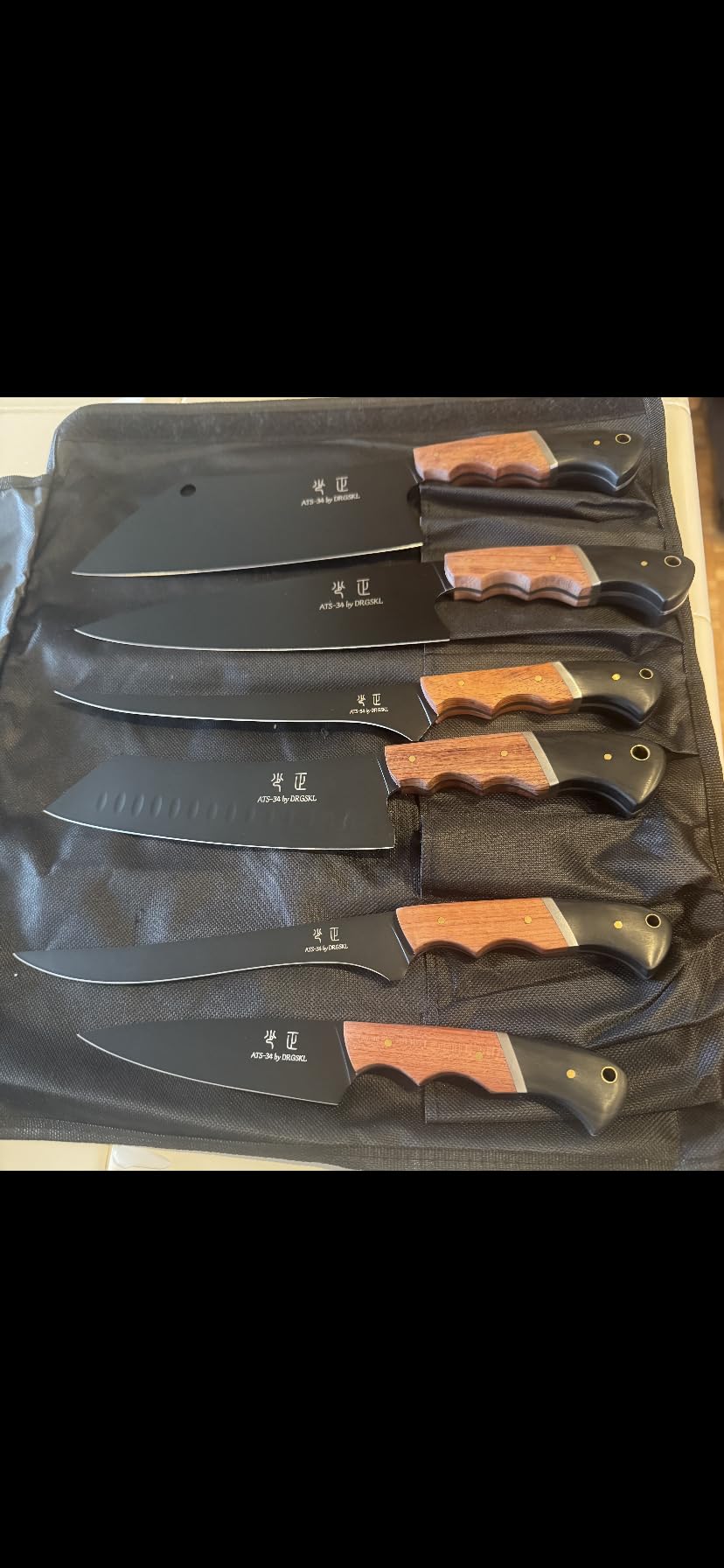
DRGSKL 5-Inch ATS-34 Utility Knife: Best Japanese Steel Per Dollar
DRGSKL Kitchen Utility Knife From Japan – Small Chef Knife 5 Inch
- ATS-34 Japanese alloy steel
- Multi-stage wet grinding for a fine edge
- Walnut handle with finger groove
- Matte coating resists sticking
- Coating can wear over time
- Weight not published
- Smaller review base than the leaders
ATS-34 is the steel most Japanese knife enthusiasts at home actually want, and having it on a 5-inch knife at this tier is unusual. It is a stainless alloy that takes a fine edge, holds it better than the unhardened budget steels, and is far less demanding than 62 HRC steel.
The multi-stage wet grinding process, which the maker calls Mizukensaku, is how the edge geometry is finished. The practical result is an edge that stays keen longer without needing aggressive stone work.
The walnut handle has a carved finger groove, which is a small ergonomic trick that helps stop the index finger from sliding forward on wet produce. Full tang construction puts the weight where your hand is already holding.
The Dual-Tech black titanium plating is both decorative and functional. It reduces visual scratch marks and keeps a soft alloy like this one from staining as quickly as bare steel.
Where this knife works well
This suits a cook who wants a genuinely sharp Japanese steel edge without committing to a wa-handle knife that needs a full sharpening setup. It is the best bridge between budget and enthusiast steel on this list.
It also works well as a gift for someone who cooks seriously but does not work professionally. The presentation is refined and the gift box is included.
Where this knife falls short
Like all plated blades, it will show wear over the years as the coating thins at the edge. That is cosmetic rather than functional, but it is worth knowing if you are the type to notice.
The review base is smaller than the other picks here, which means less long-term feedback. If you want a knife with a decade of documented use, the Victorinox or Mercer options have deeper histories.
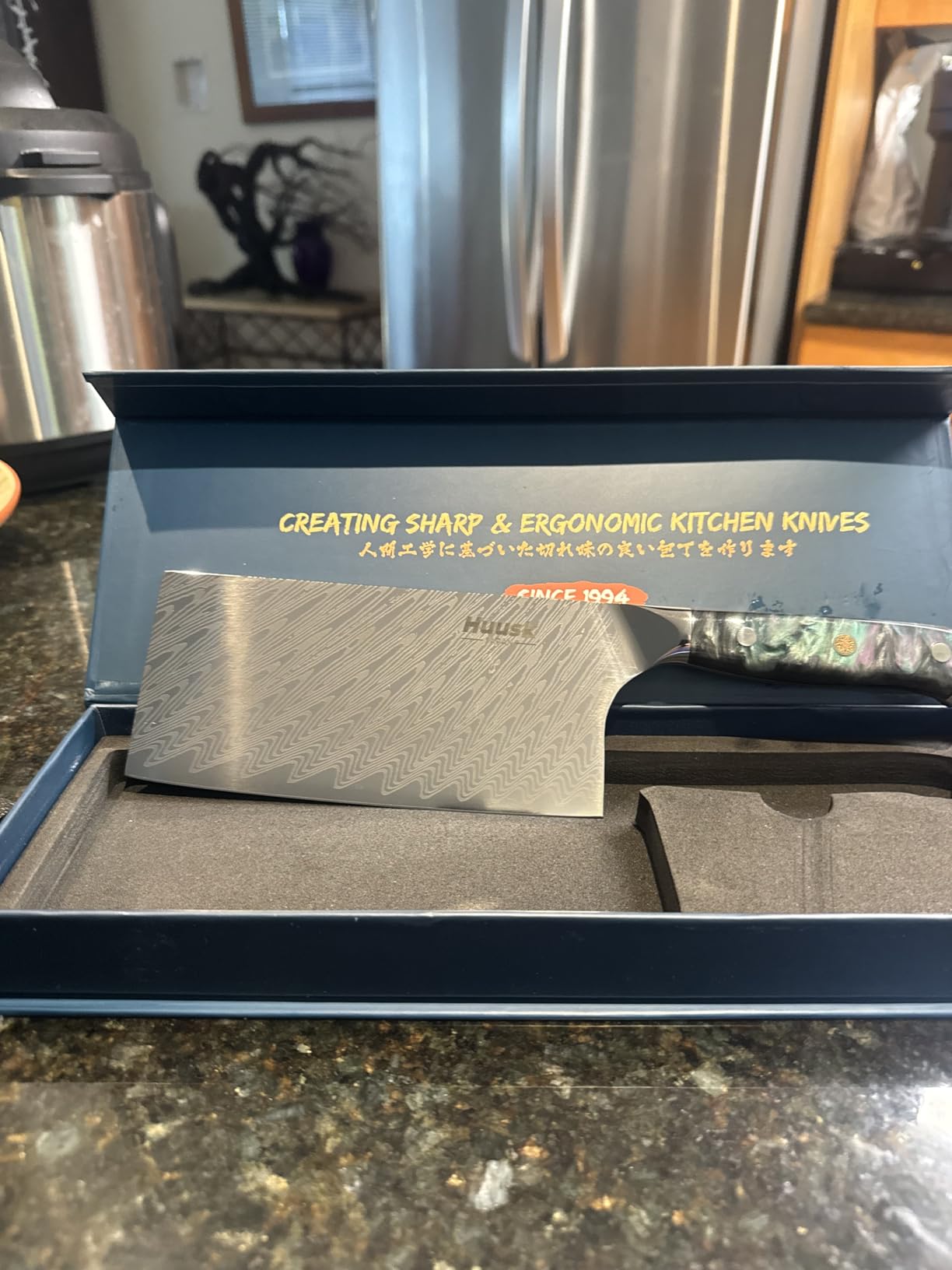
Huusk 5.3-Inch Utility Knife: A Sheathed Starter With Japanese Steel
Huusk Japanese Kitchen Utility Knife 5″ – Stainless Small Chef Knife
- High carbon Japanese stainless steel
- Hand-sharpened 15 degree angle
- Protective sheath and gift box included
- Light-feeling balance for the size
- Lowest review count in the roundup
- May need more frequent honing
- Appears to be heat-treated stamped steel
The Huusk is the entry point on this list, and the reason it is worth mentioning is the sheath. For a first knife, or a knife for a teenager learning to cook, having a cover means it can live in a drawer or a lunchbox without a separate guard.
The blade is described as high carbon Japanese stainless with a hand-sharpened 15 degree angle on both sides. It arrives sharp and it holds a working edge for everyday prep.
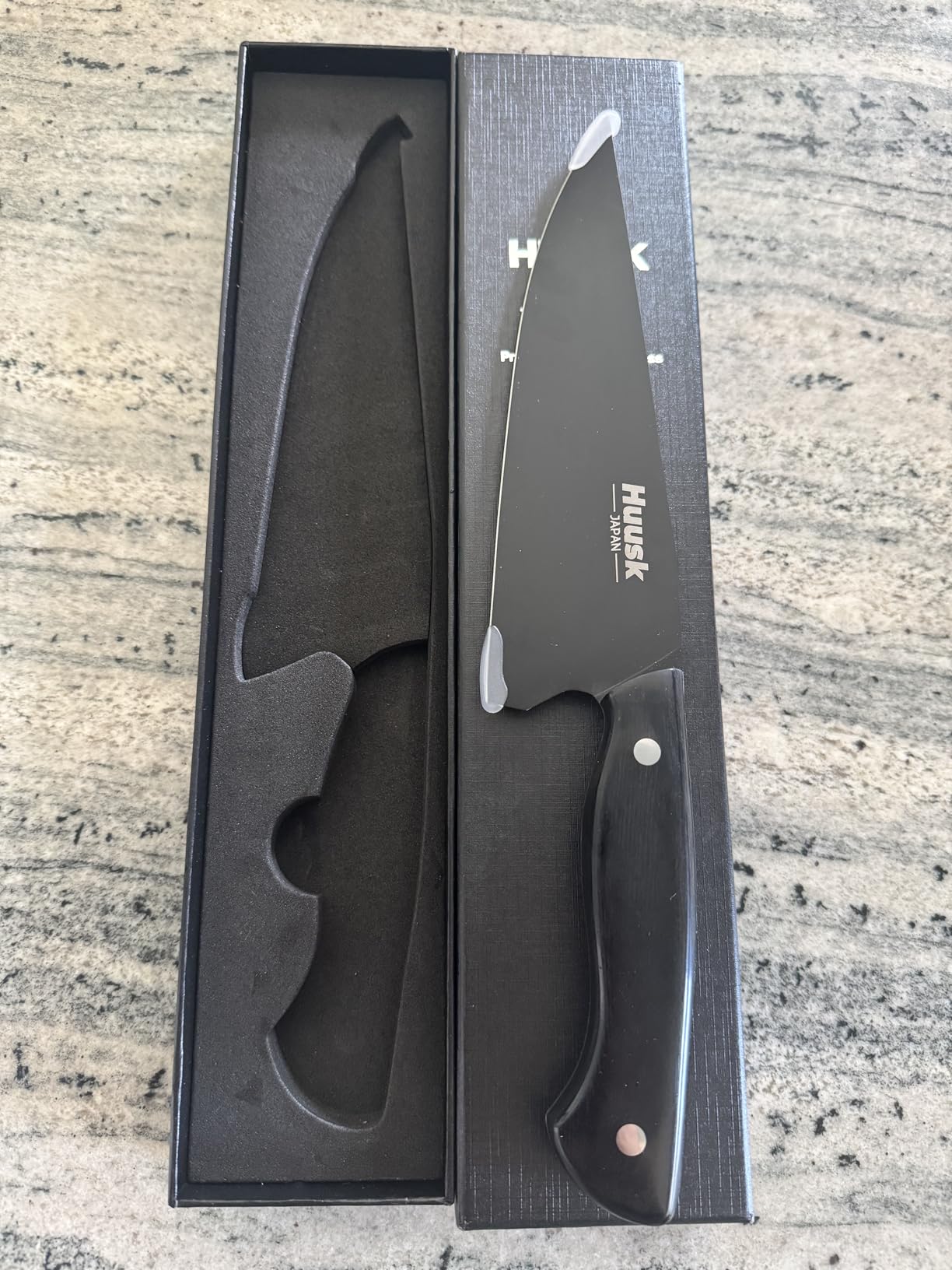
The full tang resin handle has a half bolster, which is a smaller obstruction than a full one. That leaves more steel available for your pinch grip, which is the same principle that makes the 6-inch Mercer work for small hands.
At 5.3 inches it sits in the middle of this group on blade length. The 9.45-inch overall package is compact enough for a small board and easy to control with short fingers.
Where this knife works well
This suits a first serious knife purchase on a small budget, or a gift where you are not yet sure of someone’s hand size. The sheath and gift packaging take the guesswork out of buying for someone else.
It is also a good knife for a small kitchen where drawer space is tight, because it stores flat under anything.
Where this knife falls short
It has the fewest reviews in this roundup, so the long-term picture is thinner than the alternatives. Resin feels distinctly more plastic than pakkawood or rosewood, particularly when your hands are wet.
Reviewers also note the construction appears to be heat-treated stamped steel rather than forged, and the edge needs more frequent maintenance than a forged blade of similar price.
KEEMAKE 5-Inch Utility Knife: Best for Small Kitchens

KEEMAKE 5″ Utility Knife, Ultra Sharp Paring Knife with Ergonomic Handle
- Very light at 3.52 oz
- Slim profile more agile than a full chef's knife
- Pakkawood handle stays secure when wet
- Protective sheath included
- Blade reads smaller than expected for some buyers
- Hand wash only
- Some reviewers question how long the factory edge holds
The KEEMAKE is the most compact package here at 9.37 inches overall, and it is built around the idea that a smaller knife on a smaller board is faster, not just easier. A 5-inch blade moves over a compact cutting board without your wrist hitting the counter edge.
At 3.52 ounces it is among the lightest knives in this roundup, and the forged high carbon stainless blade gives it more rigidity than its weight suggests. It tracks cleanly for push cuts and detail work.
The contoured pakkawood handle supports a confident hold during repetitive prep and, according to reviewers, stays comfortable with wet hands. The sheath covers the edge for drawer storage or transport.
Ratings here are 4.4 with 352 reviews, the lowest average in the group, and the recurring caveat is size. Several buyers expected a larger blade, so treat this as a prep knife rather than a small chef’s knife.
Where this knife works well
This is a strong choice for an RV, a boat galley, a dorm kitchen, or any countertop where a full-size knife is unwieldy. It covers fruit, citrus, stems, tomatoes, and mushrooms, which is most weeknight prep.
If your hands tire easily and you only need a small knife for small jobs, the low weight and short package do more for you than any steel upgrade would.
Where this knife falls short
It is not a full chef’s knife despite the listing. Reviewers repeatedly note the 5-inch blade reads closer to steak-knife size, and it will not handle a wedge on a large cabbage.
It is hand wash only, some reviewers dislike the country of manufacture, and a minority question how long the factory edge stays sharp before it needs a stone.
How to Choose a Chef Knife That Fits Your Hand
Blade length: the 5 to 6.8 inch sweet spot
Most small-handed cooks land somewhere between a 5-inch blade and a 6.8-inch blade. Below five inches you lose the ability to push food off the blade or push-cut a large surface. Above seven inches you are back to the weight-along-a-lever problem that started this whole search.
Most of the list sits at five inches, which is the safe default. Move up to 5.5 or 6 inches only when you routinely cut large produce, because that extra length is a real improvement in wedge performance and a real cost in control.
Handle diameter and the pinch grip
A pinch grip means your thumb and index finger hold the blade itself near the bolster while three fingers wrap the handle. It gives you precision and it is the grip professional cooks are taught to use first.
You cannot get a pinch grip on a thick handle with a deep bolster, because your fingers physically cannot reach forward. This is why short bolster and slim handles matter more than brand name. There is no single published measurement, which is why our advice is to test with your own hand before you commit.
A simple test: hold the knife in your non-dominant hand, slide your index finger up onto the steel, and see if your thumb can meet it without moving your whole hand. If you cannot get there, the knife is too bulky regardless of what the spec sheet says.
Weight and balance point
Under seven ounces is the threshold hand-pain forums keep coming back to, and the whole list was built around that line. Weight matters most for anyone with joint pain or reduced grip strength.
Balance matters even more than total weight. A 6-ounce knife balanced under your fingers feels lighter than a 4-ounce knife balanced out at the heel. Full tang construction and a short bolster both move mass back toward the hand.
Japanese versus Western style for small hands
Western chef’s knives are typically heavier with fuller handles and a bolster. Japanese styles are lighter with thinner handles, and a wa handle is deliberately sized for a smaller average hand.
The catch is that a wa handle has no bolster at all, so the balance point moves forward into the blade. Some small hands love that, some find it twitchy. A short-bolster Western design is the safer middle ground for most people, which is why several picks here use one.
Handle shape, steel, and sharpening difficulty
Round or octagonal wa handles fit a very wide range of hand sizes because there is no fixed contour. Contoured moulded grips feel nicer over a long session but fix your hand in one position. For arthritic hands, moulded non-slip grips in Santoprene or TPE tend to win.
On steel, hardness and difficulty travel together. At 56 to 62 HRC you get an edge that lasts, and you need a whetstone to maintain it. Lower hardness steels are easier to keep sharp with a rod but lose their edge faster. Pick the steel your willingness to sharpen will support.
For hand pain specifically, we have a guide on paraffin wax baths for hands, and for cooking outdoors our camp chef smoker picks cover the rest of the kit.
Frequently Asked Questions
What is the best small chef knife?
The Victorinox Fibrox 5-Inch Chef’s Knife is the best overall pick for small hands. At 2.89 ounces it is the lightest knife in our roundup, the handle is slim enough for short fingers to wrap fully, and it is the only option here that is dishwasher safe. It carries a lifetime warranty against manufacturer defects.
What is a petite chef knife used for?
A petite chef knife is the compact 5 to 6.8 inch all-purpose format, and it is used for the same daily work as a full chef’s knife: slicing, dicing, mincing, and chopping. The shorter blade keeps the weight closer to your hand, which reduces grip fatigue and gives a short hand better control of the tip.
Is Zwilling or Wusthof better?
Neither brand is designed around small hand spans. Both build heavy Western chef’s knives with full handles and deep bolsters, which is the combination that causes grip fatigue for short hands. If you want that style of construction in a size that fits, a short-bolster model from a brand like Mercer is the closer fit.
Why don’t chefs use Cutco?
Professional kitchens rarely choose Cutco for a reason that has nothing to do with build quality. Handles are fixed and riveted rather than replaceable, sharpening is a mail-in service rather than a whetstone edge, and many professional kitchens standardize on a single forged maker. It is a fine knife for home cooks who never want to sharpen it.
How do I know if a knife fits my hand?
Hold the knife in your non-dominant hand and slide your index finger up onto the blade. If your thumb can meet it without shifting your whole hand, you can do a pinch grip and the handle is not too thick for you. Also check that all four fingers wrap fully without strain and that the weight is under seven ounces.
Bottom Line on Chef Knives for Small Hands
The best chef knives for small hands share three traits: a blade under about six inches, a handle your fingers can fully wrap, and a total weight under seven ounces. Get those three right and the brand matters far less than shoppers think.
For the best overall pick, take the Victorinox Fibrox 5-Inch. It is the lightest knife here, dishwasher safe, backed by a lifetime warranty, and its 4.8 average ties for the highest rating in the group.
For the best balance of build quality and cost, the Mercer Genesis 5-Inch Utility gives you forged German steel with a full taper-ground edge. If you will sharpen knives, the HOSHANHO 5-Inch holds the hardest steel here at 62 HRC, though its 9.6 ounce weight works against anyone with grip pain.
Test the handle with your own hand before you buy. A knife you can hold properly will change your prep work more than any upgrade from a five-inch model to an eight-inch one.