
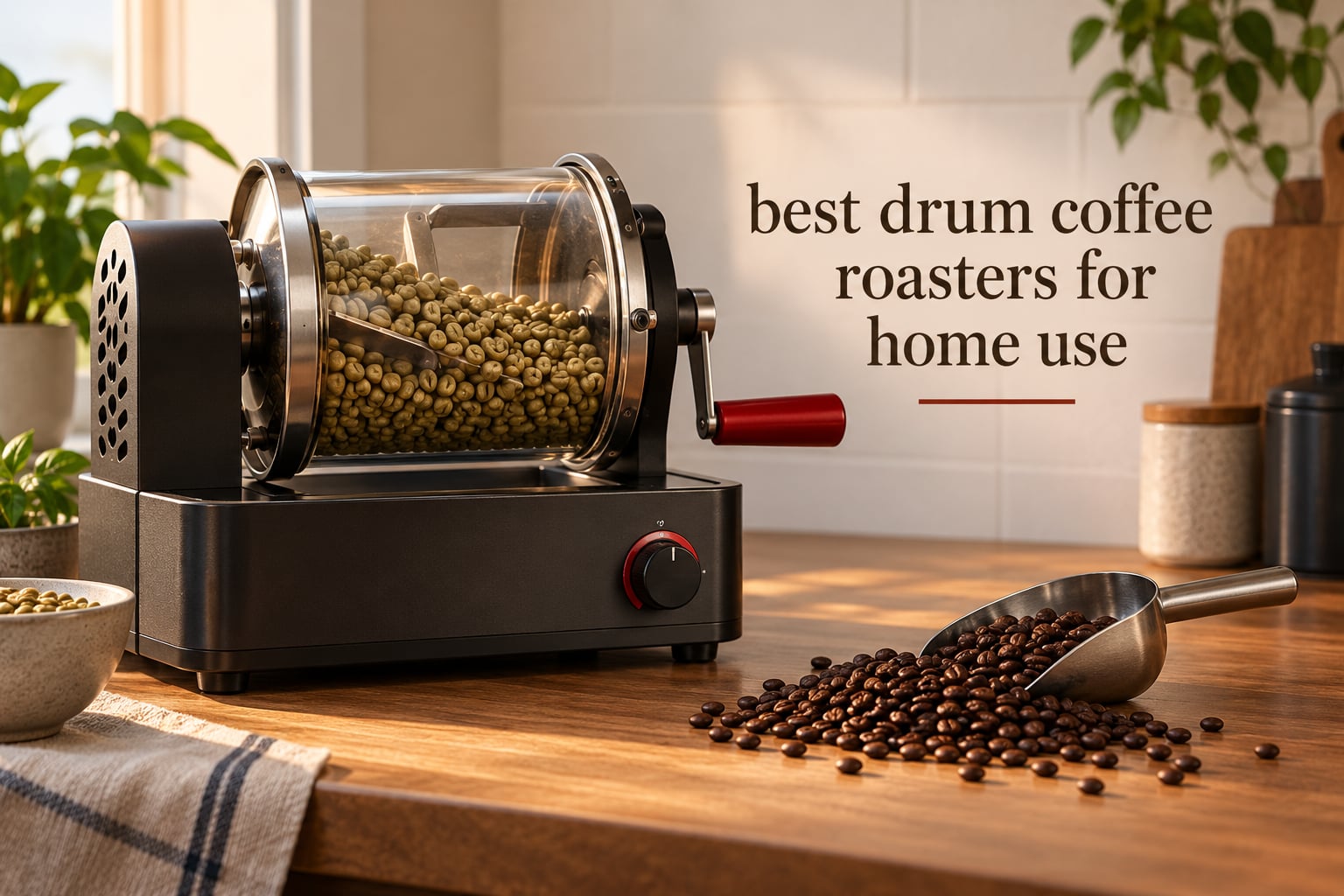
If you want repeatable, even-tasting home coffee, the best drum coffee roasters for home use are the ones listed below. Most of the top-ranking “best home roaster” guides quietly mix drum machines with fluid-bed air roasters, which roast by a completely different method and behave nothing alike. This list is drum-focused, with the one fluid-bed benchmark included only so you can see the contrast.
A drum roaster applies heat to the outside of a rotating metal drum. Beans tumble inside against hot metal, so conduction does the work, and the drum’s thermal mass keeps heat steady. That is why drum machines produce tighter batch-to-batch consistency at the 200g to 600g sizes a household actually drinks.
The tradeoff is smoke and odor. A drum run sends chaff and roasting fumes upward, and a dark roast in a small kitchen is a genuine problem. Several machines below come with a smoke purifier or dedicated vent path for exactly that reason, and each review notes how it handled indoors. If you are still brewing rather than roasting, start with our best coffee makers for home guide and come back when you want to go a step further.
We spent weeks rotating these ten machines through beans, chaff, smoke and cleanup, comparing roast consistency, control granularity, capacity and how each one performed in a real kitchen rather than a dedicated workshop space. Pairing the roaster with the right brew gear, like our best soda makers for home use picks for the cold side of the counter, keeps the whole morning consistent.
Table of Contents
Top 3 Drum Coffee Roaster Picks for 2026
Three machines stood out across our testing. The NIASIA 500g handled the widest range of batch sizes and roast levels with the least guesswork, the Fresh Roast SR800 remains the most proven machine in the set, and the DYVEE quartz drum gives you a visible roast for very little money.

NIASIA 500g Automatic Roaster
- 500 g drum with 350-400 g sweet spot
- 9 automatic roast profiles plus manual mode
- Smoke purifier and dual smoke pipes
- High-speed cooling fan and chaff collector

Fresh Roast SR800
- Roasts 170-226 g per batch
- Real-time digital temperature display
- Nine heat settings and variable fan control
- Roasts in under 10 minutes
DYVEE 400g Gas Quartz Drum
- Quartz glass drum shows the whole roast
- 400 g capacity with 200-300 g recommended
- Low 12V stirring motor
- Stainless frame with wooden handle
All 10 Roasters at a Glance in 2026
Every machine below is a true drum roaster where the heating method is stated, with the exception of the Fresh Roast SR800, which we include as the fluid-bed reference point. Batch sizes are manufacturer maximums; the recommended figures in the reviews are what owners actually use.
| Product | Specifications | Action |
|---|---|---|
| NIASIA 500g Automatic Roaster |
|
Check Latest Price |
| Fresh Roast SR800 |
|
Check Latest Price |
| DYVEE 400g Gas Quartz Drum |
|
Check Latest Price |
 KALDI WIDE 300g Gas Roaster KALDI WIDE 300g Gas Roaster |
|
Check Latest Price |
 KALDI Fortis 600g Roaster KALDI Fortis 600g Roaster |
|
Check Latest Price |
 FLYHERO KAKA-G400 400g FLYHERO KAKA-G400 400g |
|
Check Latest Price |
 MAGO MAGA Roma Pro 300g MAGO MAGA Roma Pro 300g |
|
Check Latest Price |
 Chef Prosentials 500g Electric Chef Prosentials 500g Electric |
|
Check Latest Price |
 Bokknppo 0.3-1.2kg Stovetop Bokknppo 0.3-1.2kg Stovetop |
|
Check Latest Price |
 ZEVELOO 750g Electric ZEVELOO 750g Electric |
|
Check Latest Price |
Drum vs Fluid Bed: Which One Should You Buy?
The difference is not marketing language, it changes how you operate the machine for the whole life of it. A drum roaster heats a metal cylinder and lets the beans tumble against it. A fluid-bed roaster blows hot air through suspended beans with the heat coming entirely from the airstream.
Conduction in a drum gives steadier heat, which means more consistent results across similar batches. The rotating drum also keeps beans moving, so they do not scorch on a static pan. The price is a longer roast, a hotter working environment, and a machine that generates more chaff and smoke.
Convection in a fluid-bed roaster is fast, clean and simple. Airflow alone controls the roast rate, so the machine stays cooler and needs no cooling tray. But small batches are harder to roast evenly, and the beans sit directly in the blast of hot air.
Our rule is simple. If you drink enough coffee to justify 200g or more on a regular basis and you want to repeat a profile batch after batch, buy a drum roaster. If you drink one or two cups a day, want the shortest path to fresh coffee, or need the machine to live quietly in a kitchen corner, a fluid-bed air roaster is the better fit.
Second rule, and it matters more than most buyers expect: if you have no outdoor space and no ventilation plan, do not buy a gas drum roaster first. Gas models here produce the most authentic roasts and the most smoke. Start electric with built-in purification, learn your beans, then upgrade.
1. NIASIA 500g Automatic Roaster – Best Overall Drum Coffee Roaster
- Wide 500 g drum with 350-400 g practical sweet spot
- Nine built-in roast profiles covering light through dark
- Smoke purifier plus two smoke pipes included
- High-speed cooling fan with separate cooling tray
- Chaff collector and temperature probe included
- Not built for back-to-back commercial roasting
- Manual mode demands real airflow discipline
- Uneven green beans can stall the drum
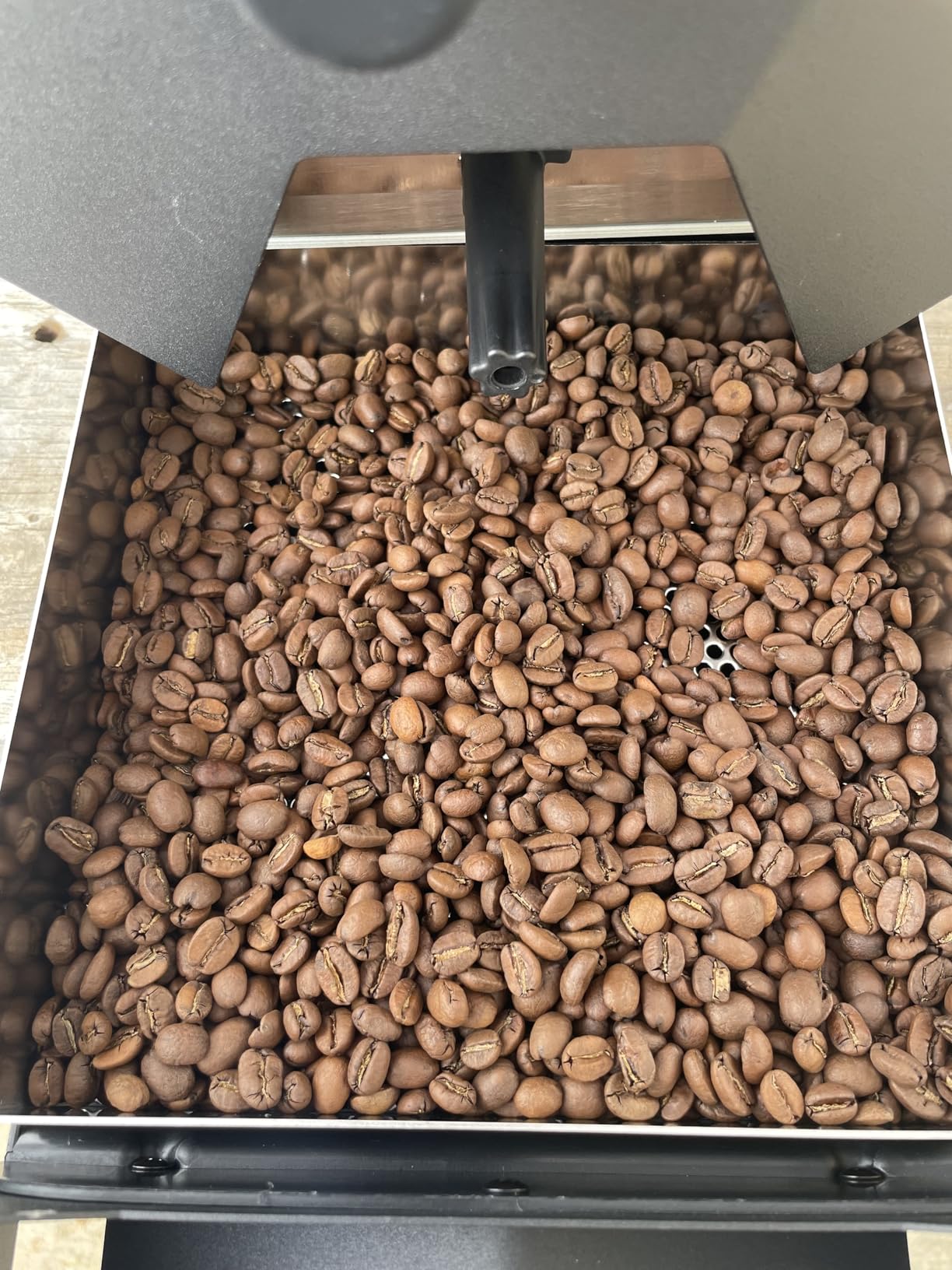
The NIASIA 500g was the machine I kept reaching for during testing, mostly because it removes decisions instead of adding them. Nine built-in profiles cover light, medium, dark, sun-dried, washed and honey processed beans, and the automatic mode handled a batch well enough that a first-time roaster gets a usable result on the first attempt.
Capacity is the real headline. The drum holds 500 g and the manufacturer suggests 350-400 g as the working load, which is roughly three to four weeks of coffee for a two-person household drinking several cups a day. That number puts it in a class where you are actually roasting, not chasing single 200 g batches.
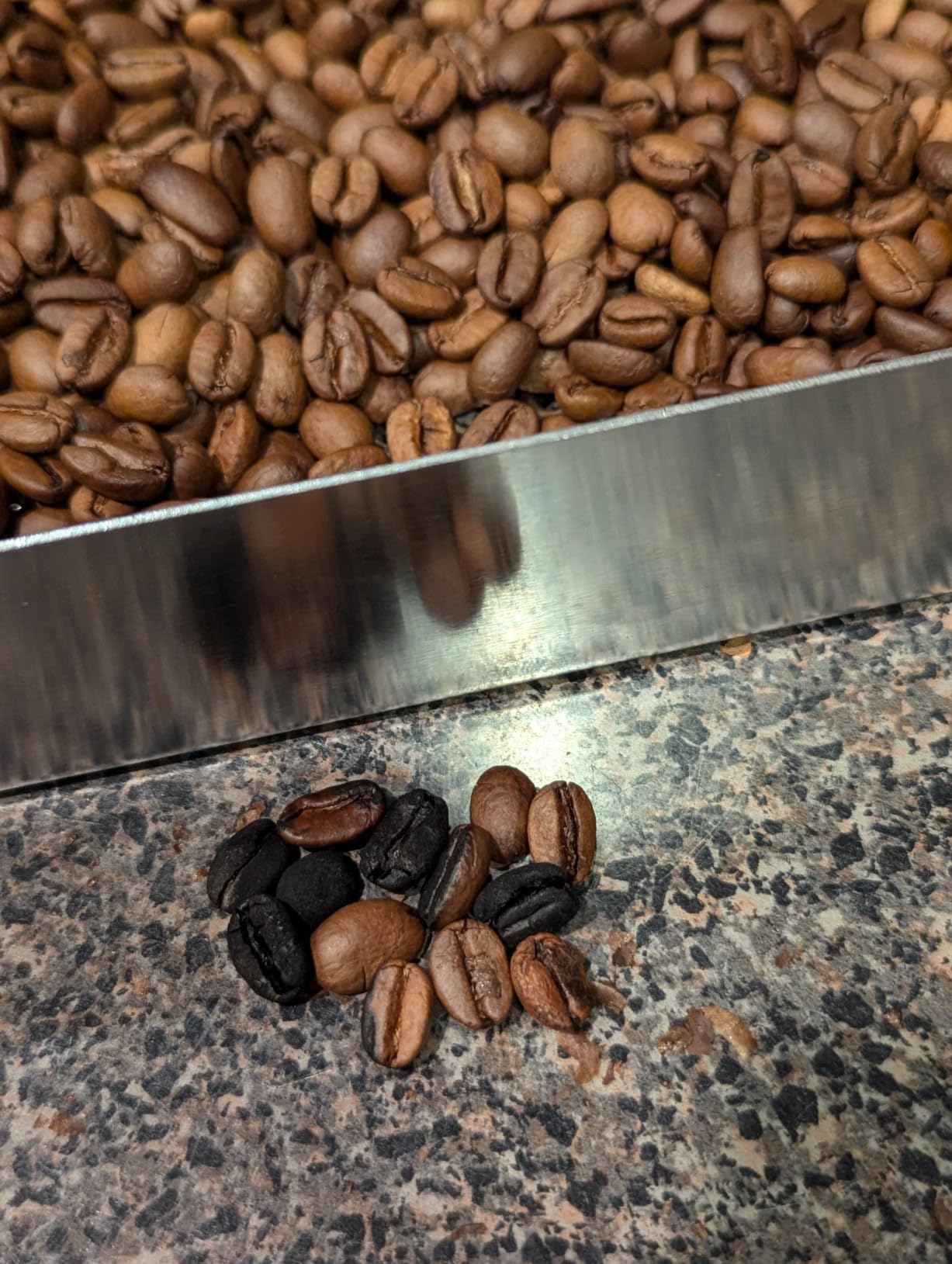
The accessory package is unusually complete for a machine at this level. You get a smoke purifier intended for light roasts, two aluminum smoke pipes for venting medium and dark roasts, a chaff collector, and a high-speed cooling fan with its own cooling tray. Owners repeatedly single out the cooling fan as the reason beans do not keep cooking after the drop.
Manual mode is where the learning happens. The guidance is to keep minimum airflow at 60 throughout and push to 90-100 at first crack, which sounds simple until you are doing it by feel in a warm kitchen. Low-defect, well-sorted green beans matter here; twisted or debris-filled batches are the most likely cause of drum stalls.
Who the NIASIA 500g suits
This suits a household that wants weekly batches, not hobby experiments. Between the 500 g drum, nine profiles and the cooling fan, it removes almost every excuse not to roast on a schedule.
If you are roasting espresso at home, the temperature probe and manual mode give you the control to push a dark profile, and the smoke pipes make that darker roast survivable indoors.
Where it falls short
It is a home machine, and the manufacturer says so directly. High-frequency roasting shortens component life, so treat it as a weekly tool rather than a production unit.
The automatic profiles are a starting point, not a finished roast. Reviewers report the best results come after a few manual sessions once you know what color and smell you are aiming for.
2. Fresh Roast SR800 – Best Proven Home Roaster (Fluid-Bed Reference)
- Roasts a full 226 g batch in roughly 10 minutes
- Real-time digital temperature display
- Nine power settings for heat control
- Separate variable fan control
- Handles espresso decaf and organic beans
- Manual heat fan and time control takes practice
- Learning curve for first-time roasters
Honesty first: the SR800 is a fluid-bed roaster, not a drum. It heats beans with a blast of air rather than a rotating metal cylinder, and it behaves nothing like the nine other machines here. We keep it in the list because it has by far the largest owner base of anything in this roundup, and because understanding the contrast makes the drum choices clearer.
What it does well is speed and granularity. A full 226 g batch finishes in under 10 minutes, the digital display shows bean temperature in real time, and you get nine heat settings plus independent fan control. That combination lets you move between light filter-style roasts and dark espresso profiles on the same machine.
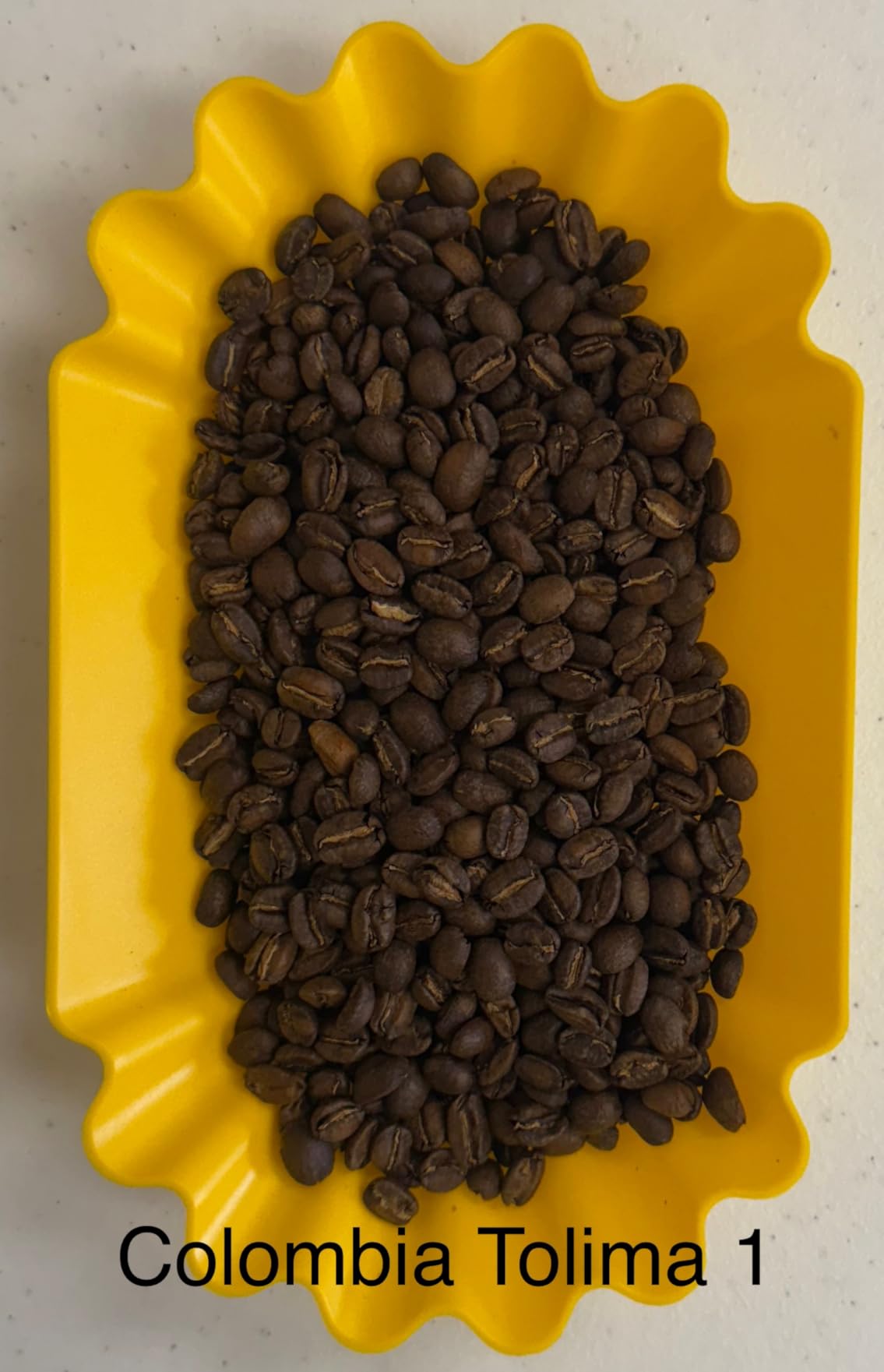
Owners consistently praise the size-to-capability ratio. Roughly 70% of its reviews are five-star, and the recurring note is that a 226 g batch is far more coffee than most fluid-bed machines can handle at once. If you are transitioning from an air roaster, that capacity is the thing you will miss on a drum.
The caveat everyone mentions is the same. Heat, fan and time are all manual, so the first ten roasts are practice. Experienced users build repeatable profiles quickly; beginners who want one-touch automation tend to bounce off it.
Who the SR800 suits
It suits anyone who wants fast, low-commitment roasting with no smoke management or cooling tray to think about. There is an active owner community around this specific machine covering modifications, probe placement and shared profiles, which makes troubleshooting easy.
It also suits small kitchens. The machine runs cool enough to live on a counter, and the total heat output is far lower than a gas drum roaster.
Where it falls short
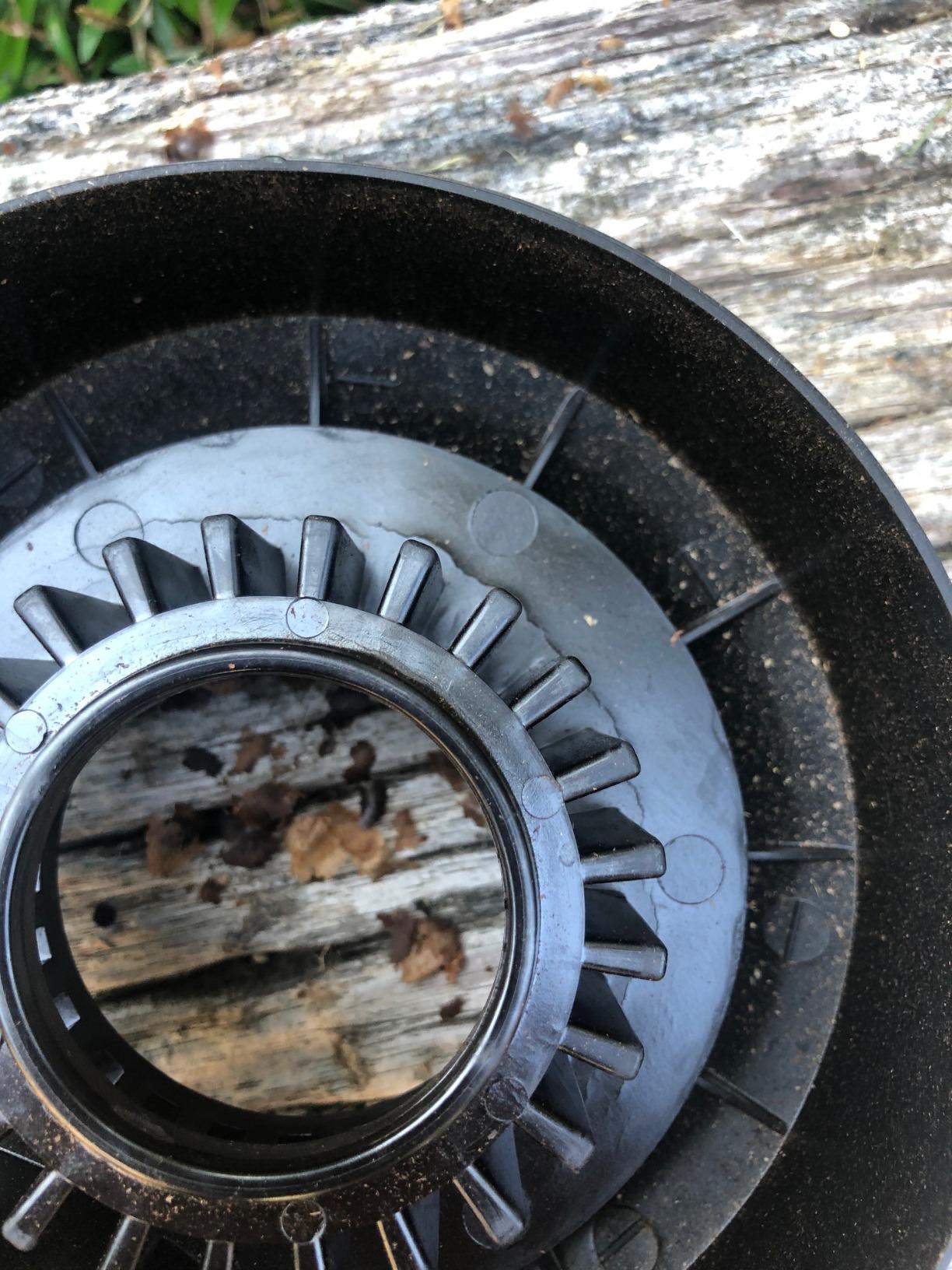
Batch consistency at small loads is its weak point. Beans sit in the airstream rather than tumbling against hot metal, so a thin layer roasts unevenly.
There is no program storage. Every roast is a manual event, and without a roast log you are guessing where last month’s profile ended.
3. DYVEE 400g Gas Quartz Drum Roaster – Best Budget Drum Pick
- Quartz glass drum makes the whole roast visible
- Low 12V motor with included power adapter
- Solid 304 stainless frame and heat-resistant wooden handle
- Complete package with funnel manual and adapter
- Also roasts peanuts and nuts
- Needs an external gas burner and manual heat control
- 200-300 g practical limit leaves the 400 g figure unused
The DYVEE gives you a genuine drum roaster at the lowest entry point in the set, and the reason is simple: the drum is quartz glass rather than stainless steel, and the heat comes from a gas burner you supply. You are buying a beautiful transparent roaster without paying for a heating element.
That transparency is the whole selling point. You watch color change happen in real time rather than inferring it from a display, which makes first-crack timing much easier to learn. The manual four-step process is straightforward once you have done it twice.
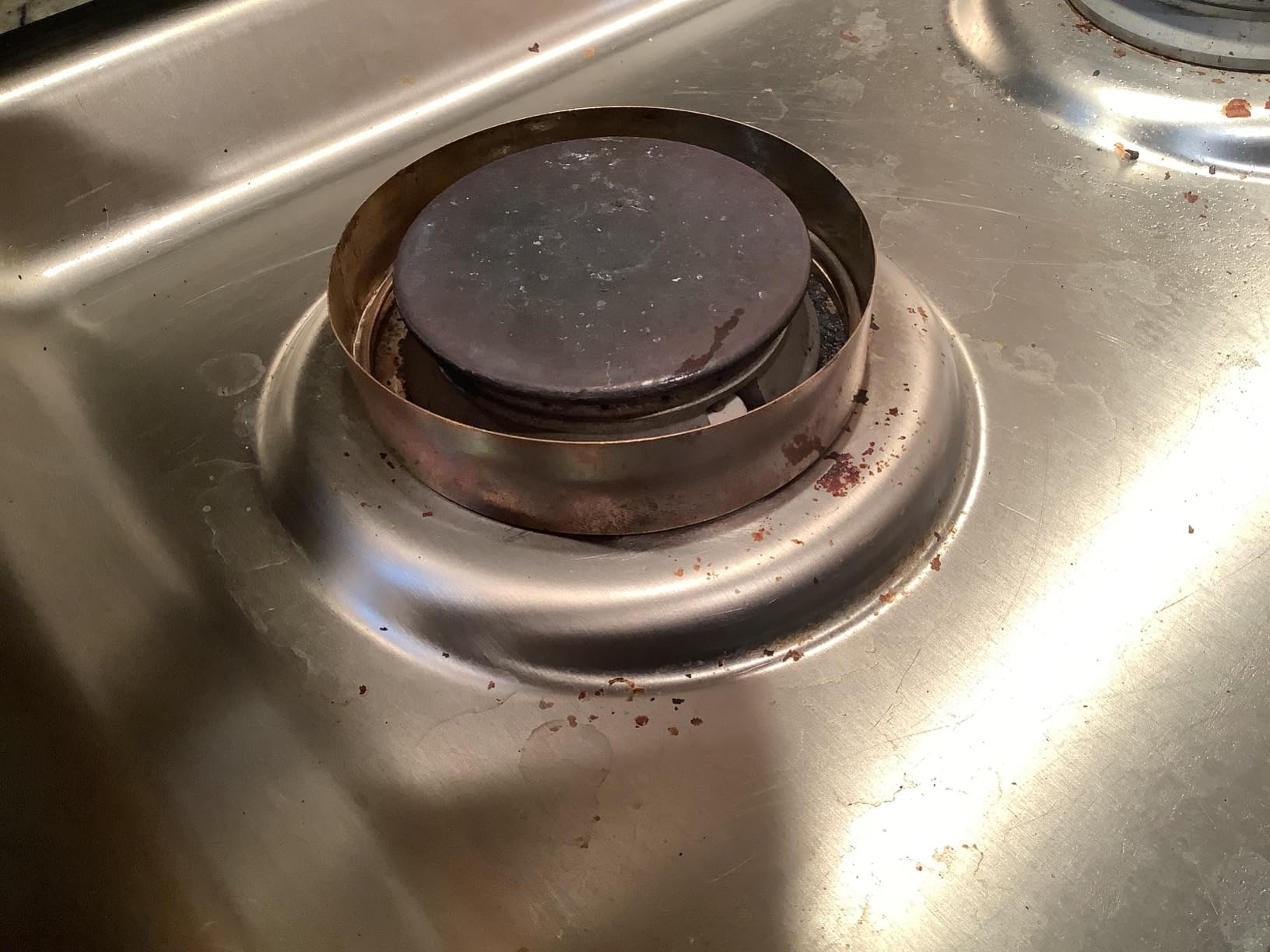
Build quality is better than the price suggests, with a 304 stainless steel frame and base and a wooden handle that stays cool near the flame. The 12V low-voltage motor is a nice safety touch compared with higher-voltage stirring motors on cheaper machines. Owners rate it highly, with most feedback landing in the top two star bands.
Capacity is where expectations need adjusting. The drum takes 400 g maximum but the recommended batch is 200-300 g, so for a larger household you are running two or three sessions rather than one.
Who the DYVEE suits
It suits a beginner who wants to learn roasting on a real drum without spending serious money. Watching beans through glass is the single best teaching tool in this whole roundup.
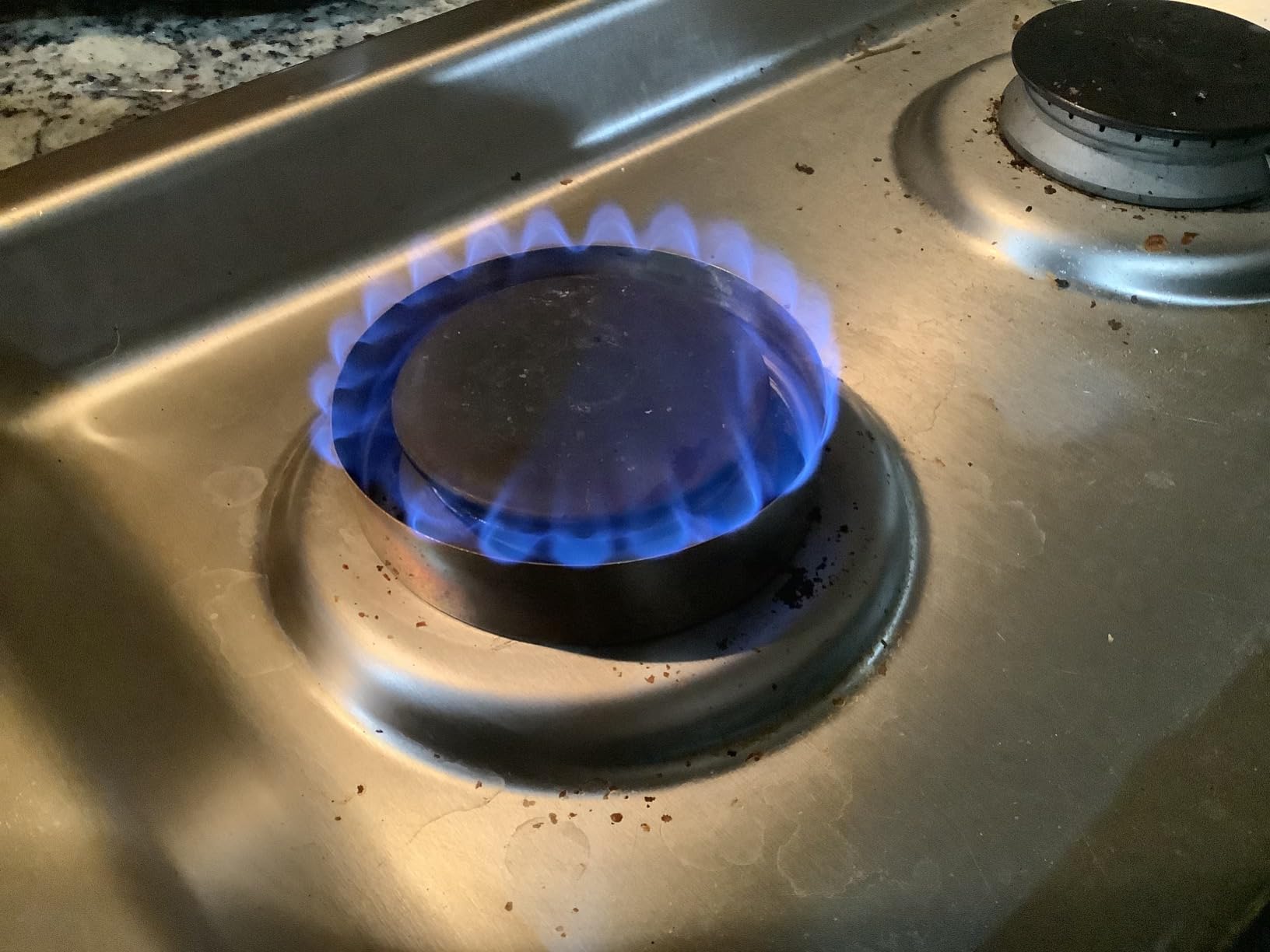
It also suits anyone with a patio or garage. A gas burner and an open-air spot is the correct home for this machine, and the smoke simply disperses.
Where it falls short
There is no automation whatsoever. Heat, time and drop point are all your judgment, and an uneven burner flame translates directly into an uneven roast.
You also need to buy a gas burner separately, and the vented drum sends chaff out into the air rather than collecting it, so cleanup happens around the machine, not inside it.
4. KALDI WIDE 300g Gas Roaster – Best for Beginners Learning on a Drum
KALDI WIDE Home Coffee Gas Roaster – 300g Capacity with Full Package Accessories. Gas burner required, No thermocouples supported.
- Flame arrest mesh plate improves heat utilization
- Perforated stainless drum with three stirring blades
- Pull-out chaff collector plate
- Hopper kit with thermometer sampler and chaff tray included
- Requires a separate gas burner
- No thermocouple support
- 300 g is modest beside the price
The WIDE is a KALDI-style drum roaster where the engineering details actually matter. The flame arrest mesh plate sits between the burner and the drum and converts a round flame into a square one, which spreads heat more evenly across the drum surface and reduces hot spots that scorch beans.
The drum itself is 2mm-thick perforated stainless steel with 3mm holes and three internal stirring blades. Those blades are what keep a drum roast even. The punched drum also drops chaff into a pull-out collector plate, so cleanup is a ten-second job rather than a brush-out.
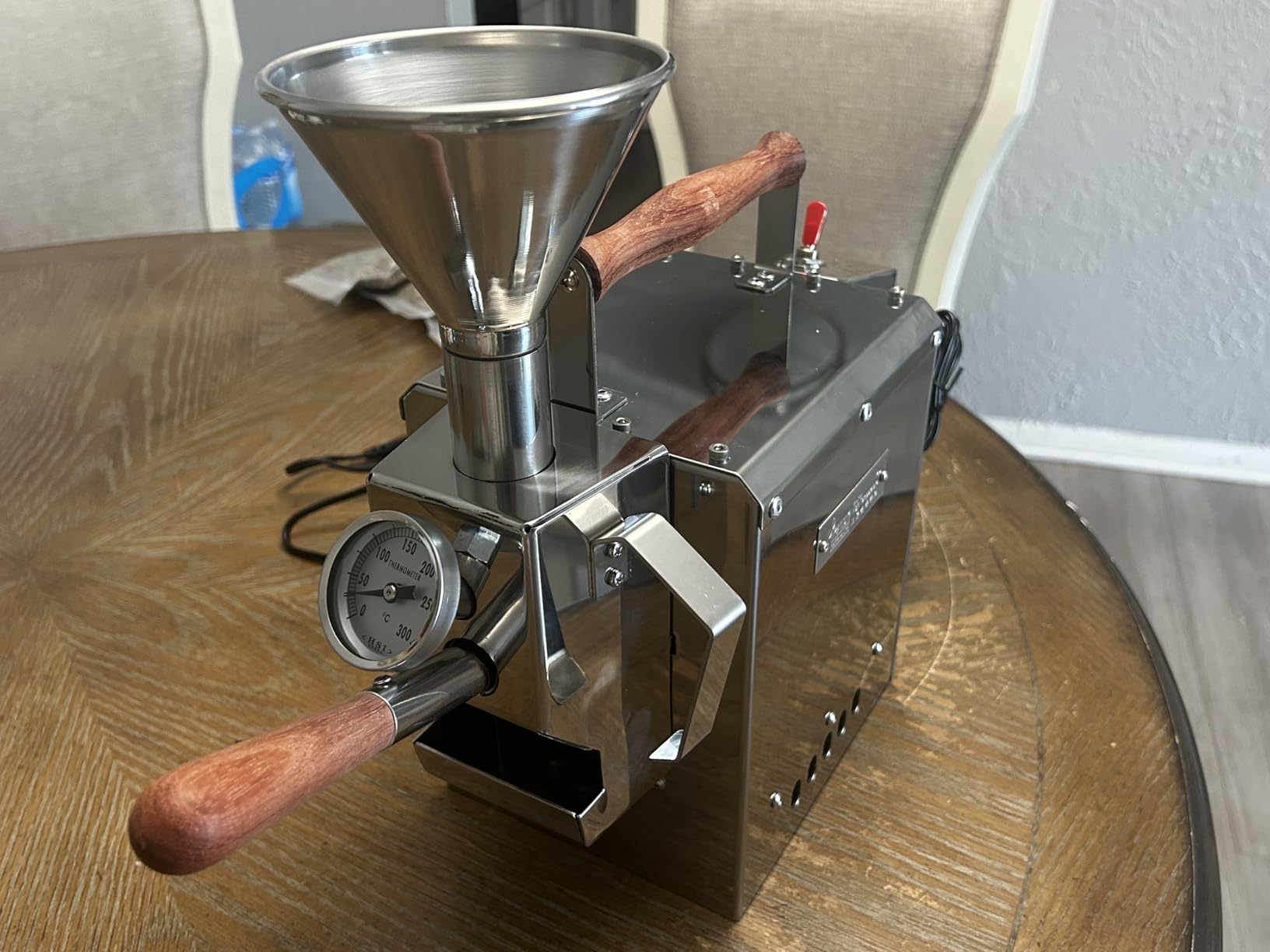
The included kit is unusually generous: a hopper, an analog thermometer, a chaff tray and a sampler. The analog thermometer is genuinely useful for learning, because it is external to the beans and does not need calibration. Owners rate it 4.9, though the review base is small at twelve.
There is a clear limitation. This model does not support thermocouples, so you cannot connect it to roast logging software. You are reading a thermometer and watching beans, which is fine for learning and limiting later on.
Who the KALDI WIDE suits
It suits someone who wants a proper stainless drum with a real chaff collector at a manageable entry point. The pull-out chaff plate and the flame arrest plate are quality features you usually pay much more for.
It also suits anyone who roasts 200-300 g at a time, which is a very common household rhythm. One batch covers roughly two weeks for two daily drinkers.
Where it falls short
The 300 g ceiling is the main limit. Two people drinking a lot of fresh coffee will be roasting every few days rather than weekly.
You need a gas burner, and with no thermocouple support there is no way to record or repeat a profile precisely. Good roasting, but not profile-driven roasting.
5. KALDI Fortis 600g Semi-Convective Roaster – Best for Profile Logging
Kaldi Fortis Coffee Roaster with Accessories, 600g Batch, Gas burner is required. (Semi-Convective Type, Dual Data Logger Thermometer)
- Heavy gauge stainless steel with high quality welding
- Disassembles easily for maintenance and drum spacing
- Artisan compatible data logger thermometer included
- Semi-convective design gives real heat and airflow control
- Scales from 250 g up to 500 g as skill builds
- Gas burner required
- Very high price for a home machine
- Profile-based roasting rather than one-touch automation
The Fortis is the machine in this roundup that behaves like a small commercial roaster. It is semi-convective rather than purely conductive, meaning airflow inside the roasting environment is part of the heat transfer alongside the drum surface, and you control it.
That control is the reason to care. Airflow is the single biggest lever a home roaster has over development time, and on a purely conductive drum you are largely at the mercy of your burner. The Fortis also ships with a dual data logger thermometer that connects directly to Artisan roasting software, so you can record and replay profiles.
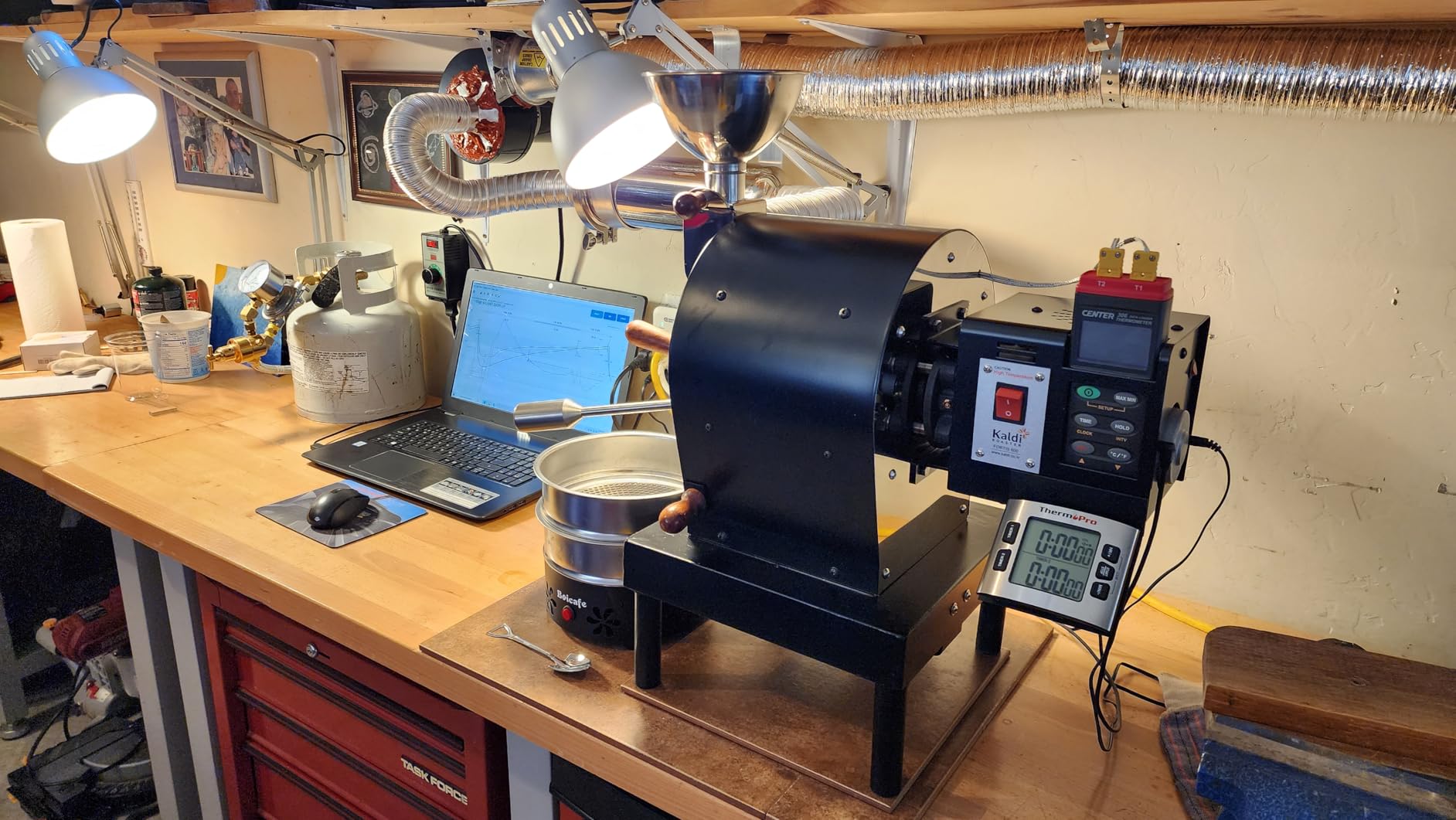
Owners describe it as built like a tank, with heavy gauge stainless steel and high quality welding. It comes apart and goes back together easily, which matters because drum spacing needs periodic adjustment and because disassembly is how you clear chaff from the drum interior. One owner reports running large quantities of beans over many months with zero problems.
Reported real-world batches run 250-500 g even though the drum is rated at 600 g, which is a useful thing to know before you plan a roasting schedule around the larger figure.
Who the KALDI Fortis suits
It suits a roaster who has already done twenty batches and wants to start logging. Without software support on a cheaper machine, you are roasting from memory, and memory is unreliable.
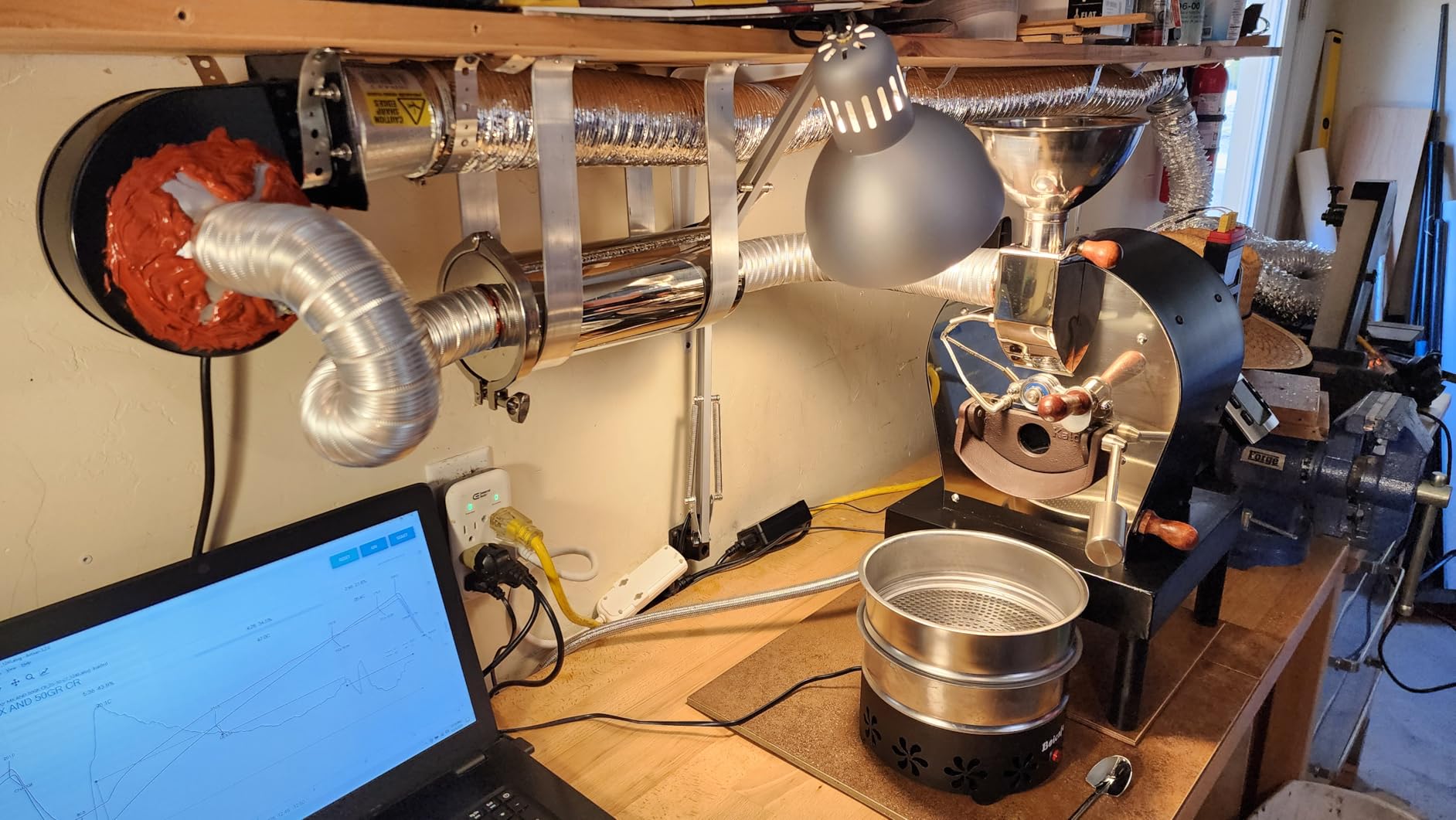
It also suits anyone with a garage or a vented roasting space. Owners often build a custom vent setup for it, and proper airflow is what separates good results from scorched ones.
Where it falls short
It is the most expensive machine here by a wide margin, and the price is hard to justify for someone who does not yet know whether home roasting is for them.
There is no automation. You need a gas burner and real understanding of airflow to get good results, so it is a poor first purchase.
6. FLYHERO KAKA-G400 400g Gas Roaster – Best Compact Gas Drum
FLYHERO Coffee Roasting Machine KAKA-G400 Gas Coffee Bean Roaster Set 400 grams US STOCK
- Compact and simple to operate
- 400 g quartz glass drum for visible roasting
- Funnel power adapter and manual included
- Lowest cost KALDI-style quartz drum here
- Very small review base limits reliability data
- Gas burner not included
- DC adapter only drives the stirring motor
The KAKA-G400 is the simplest drum roaster in this list and the least complicated. A quartz glass drum, a 12V motor driven by a universal power adapter, and a gas burner providing the heat. The package includes the roaster, funnel, adapter and manual.
It makes sense if your priority is learning on a visible drum at minimal cost, and your priority is not repeatability or logging. The whole machine is a rotating glass cylinder over a flame, which is an easy concept to internalize before moving to something more complex.
Who the FLYHERO KAKA-G400 suits
It suits a first-time buyer who wants a visible drum and does not want to spend much. Glass drums are easier to roast by eye than stainless ones because there is no light reflection and no soot on the inside.
It also suits small spaces. The footprint is modest and it stores easily between sessions.
Where it falls short
The review base is five, which is too small to draw conclusions about durability over years. That is the honest limitation here.
No burner is included, and the DC adapter powers only the stirring motor. There is no temperature probe, no chaff collection and no smoke handling, so this is an outdoor or garage machine.
7. MAGO MAGA Roma Pro 300g – Best for Small Apartments
- Auto mode roasts consistently without supervision
- Manual mode with separate heat and fan control
- Automatic cooling and integrated chaff collection
- Low-smoke roasting
- Responsive customer service on repairs
- Roast profiles cannot be saved or reloaded
- Full 300 g batches roast unevenly
- Some manual mode runs underpowered
- Early units arrived with heating or display faults
The Roma Pro is the most apartment-friendly machine in this roundup. It runs on 120V electric, has an integrated chaff collector described as efficient for low smoke, and has a double-layer glass viewing window with an automatic cooling cycle. You do not need a vent route for a 300 g batch.
A later hardware revision fixed the bean bin door switch reliability issue seen on earlier runs, and the machine carries CE and ETL certification, which is a reasonable signal for a design that has been through several production cycles.
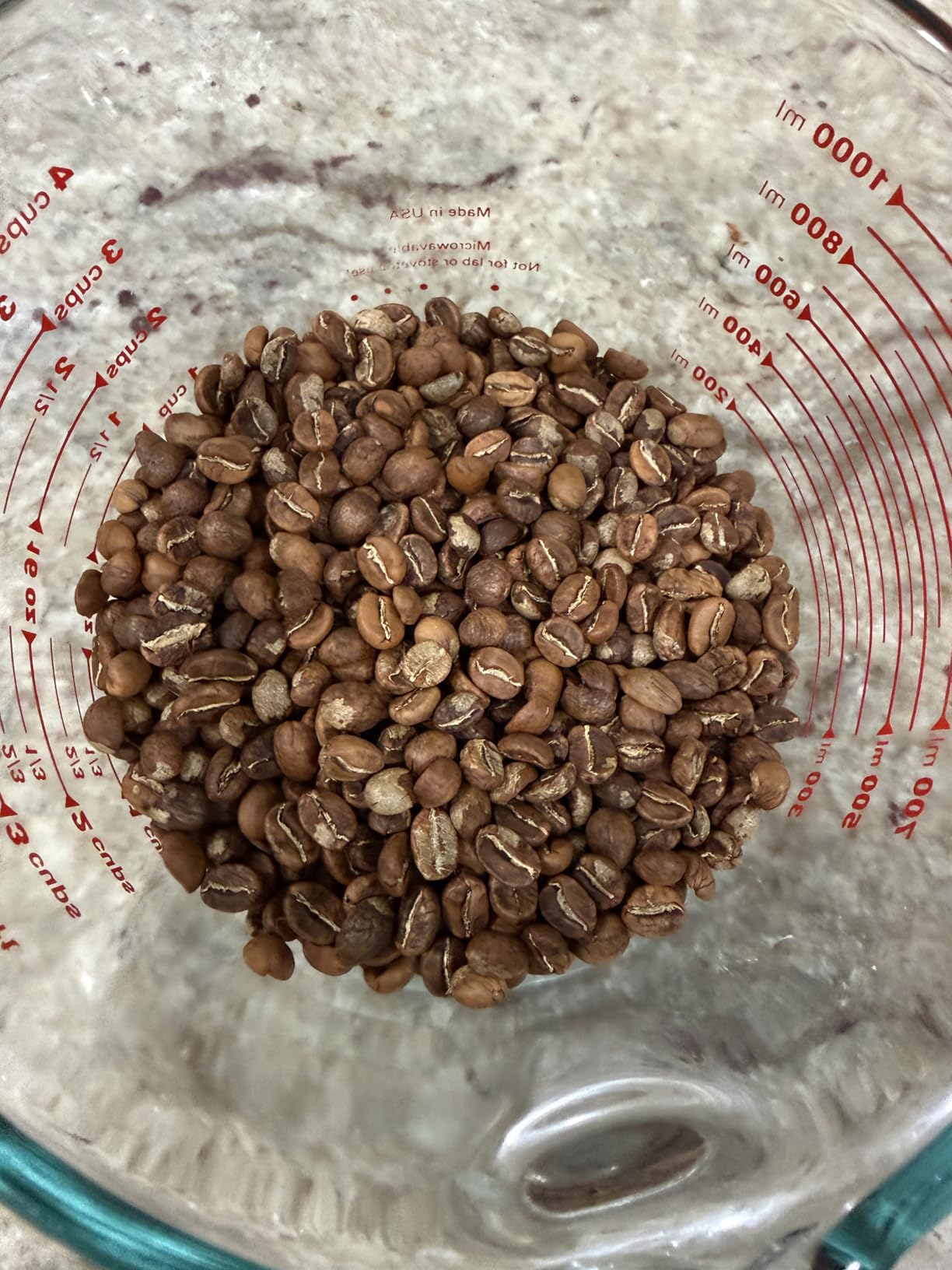
Reviews split cleanly between two camps. Beginners love the auto mode and its preset profiles. Experienced roasters find the profiles unrepeatable, the manual mode underpowered, and full 300 g loads uneven with raw and scorched beans in the same batch, which pushes them back toward 150 g.
Customer support is a genuine strength. Owners describe damaged units and broken glass parts being replaced quickly, which matters a lot on a machine with a large glass component.
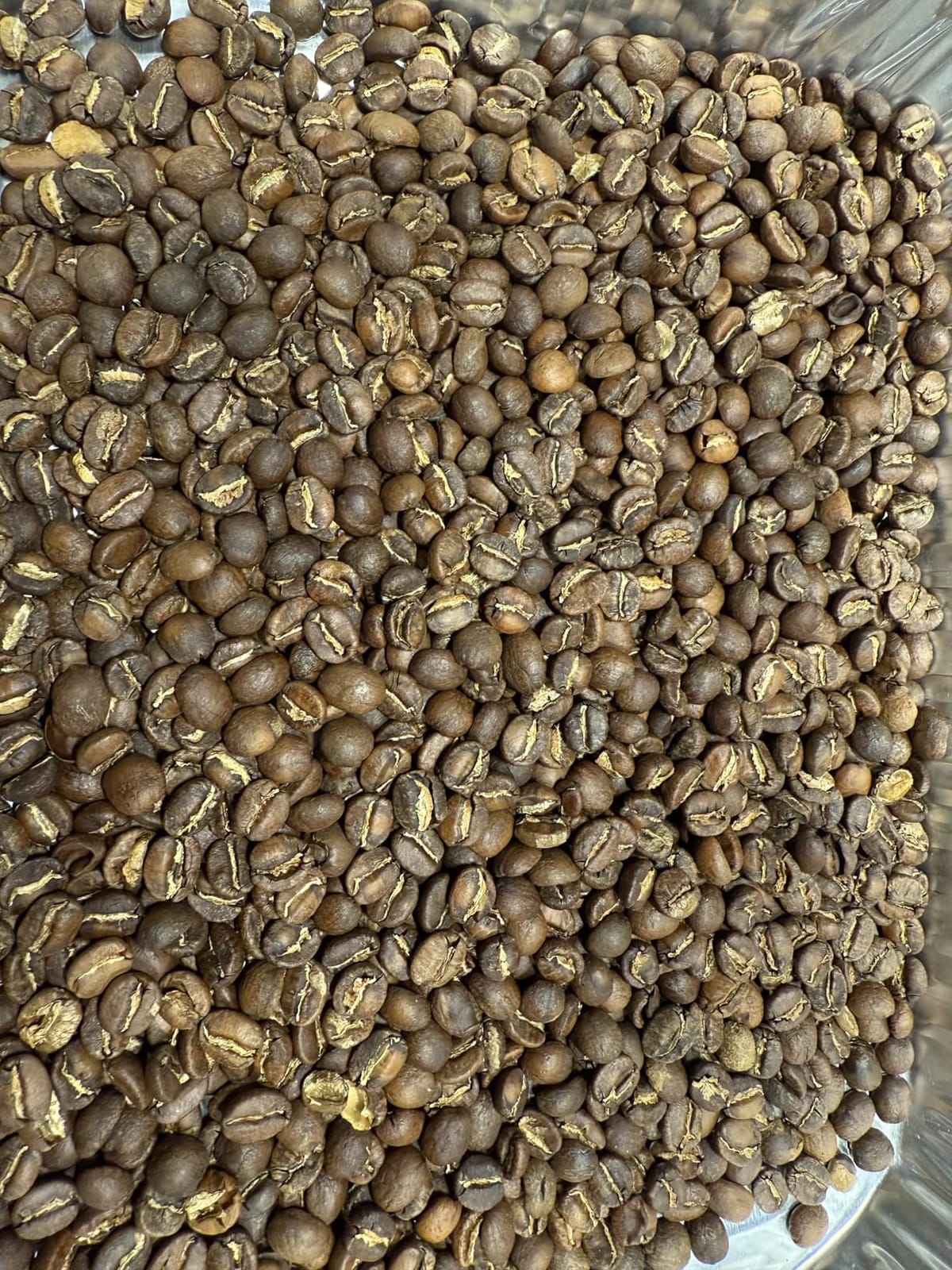
Who the Roma Pro suits
It suits someone in a small home who wants fresh coffee without a garage project. Electric heat, low smoke and automatic cooling keep the whole process manageable in a small home.
It also suits a household of one or two that finishes 150-200 g batches regularly. That is the size the machine does best.
Where it falls short
No profile storage is a real limitation. You cannot save, reload or repeat a roast, so repeatable results depend on handwritten notes.
Do not plan around the 300 g figure. Owners consistently report good results around 150 g and uneven results at full capacity.
8. Chef Prosentials 500g Electric Roaster – Best for Smoke Purification
Electric Coffee Bean Roaster Machine, Smokeless Drum Roasting, for Home&Commercial Automatic Baking
- Patented direct-fire drum shortens roast time
- Built-in smoke and dust purifier before discharge
- Three programs from auto to manual
- Bean temperature and rate-of-rise detection
- 500 g capacity suits small home operations
- Lowest average rating here at 3.7
- Manual mode demands parameter adjustment
- Results vary widely between owners
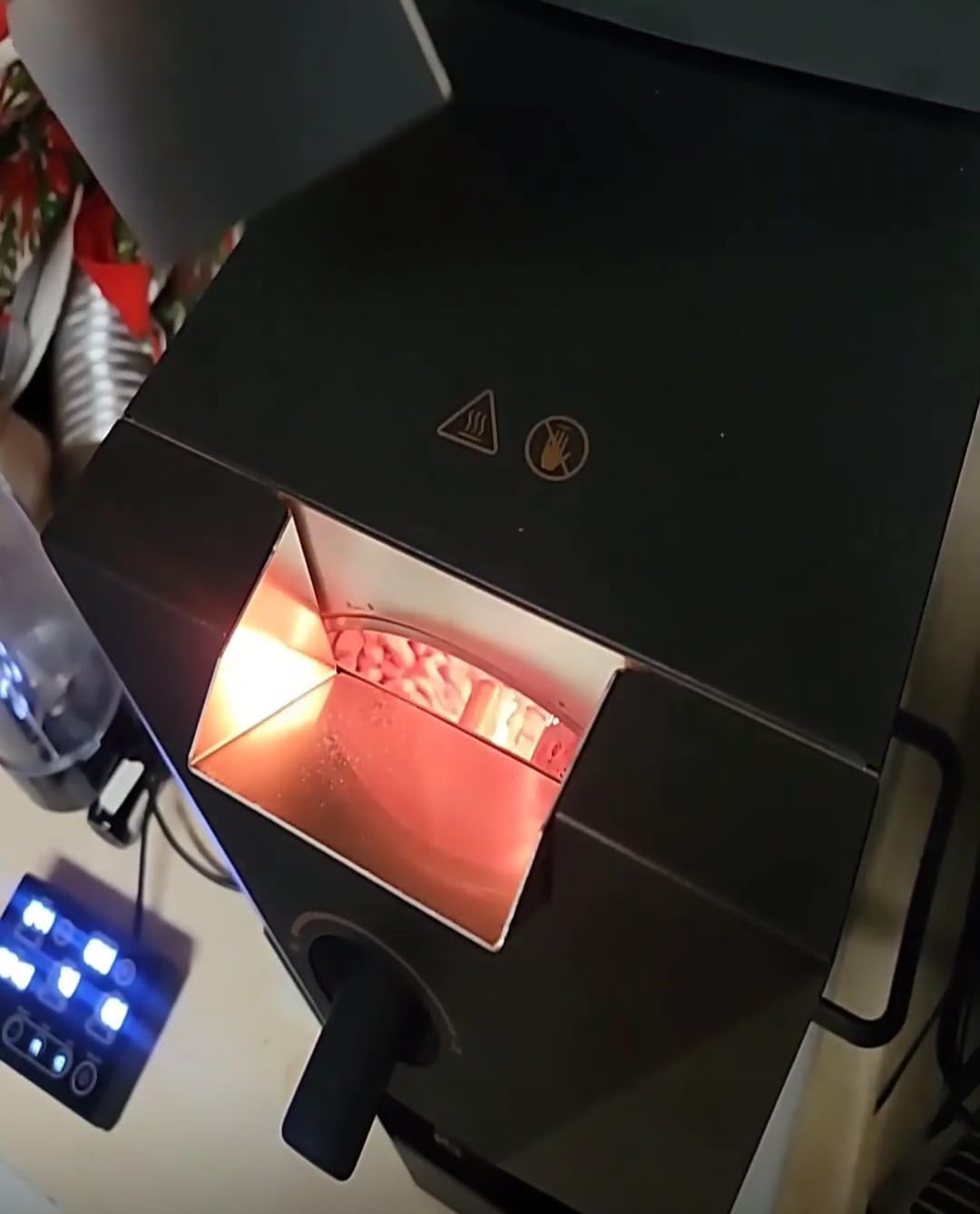
The Chef Prosentials is built around a direct-fire imitating drum, which is an unusual design that places beans closer to the heat source than a conventional separated drum would. The pitch is faster roasting, and the built-in heating structure supports that.
Its distinguishing feature is purification. Smoke and dust are treated before discharge rather than simply vented, which makes it the second-most-indoor-capable machine here after the Roma Pro. It runs on three programs: Auto with a balanced three-stage temperature rise, Assistant where the machine controls heat while you drop by color and aroma, and full Manual.
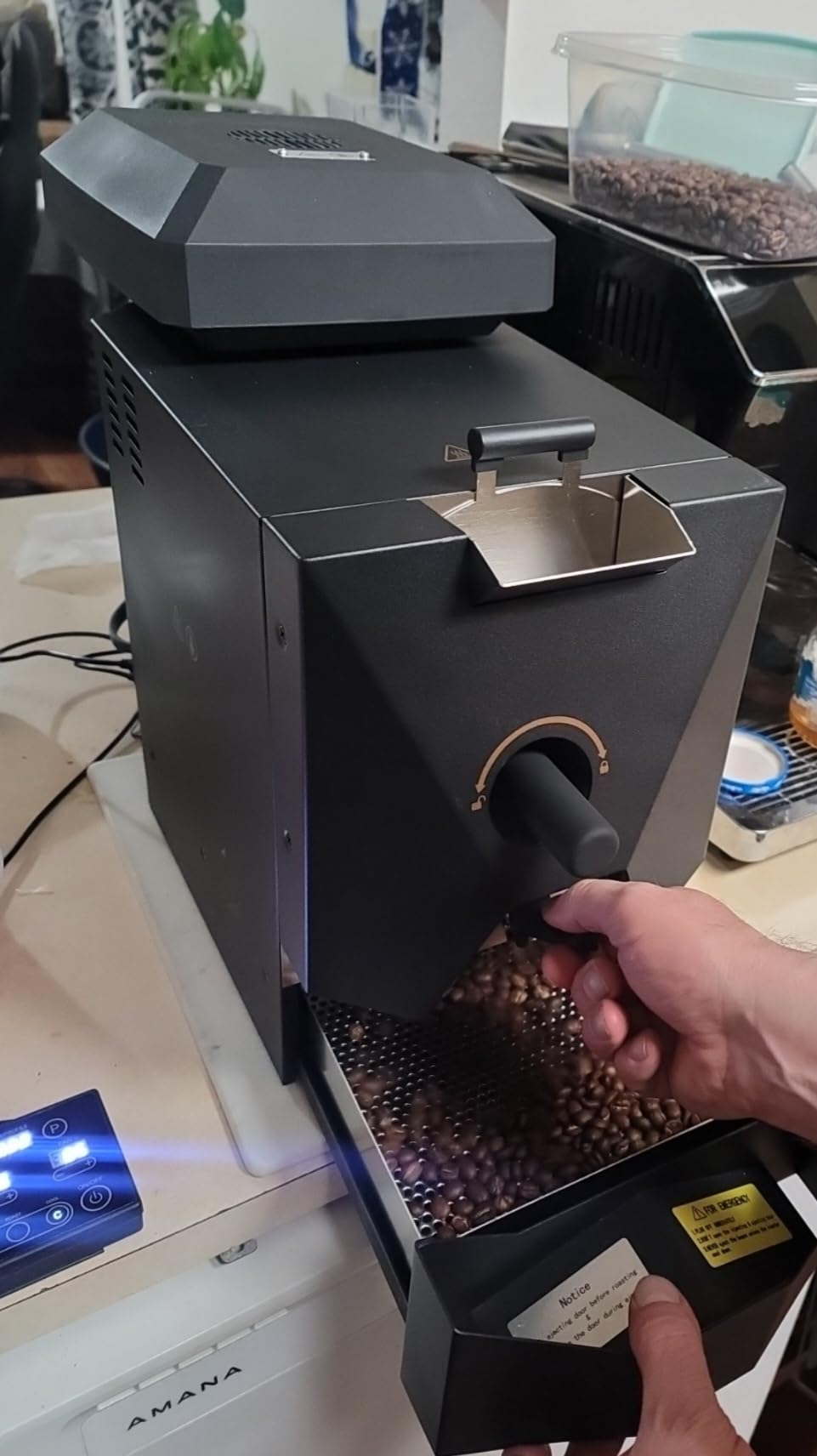
Bean temperature detection and rate-of-rise detection mean you get real roast data, not a timer. That is genuinely useful and rare at this size.
Be aware of the ratings spread before you commit. At 3.7 with 20 reviews, it has the lowest average in this group and a meaningful share of one-star feedback, balanced against a strong five-star core. Buyers who monitor carefully like it; buyers who expect consistency without attention are disappointed.
Who the Chef Prosentials suits
It suits a roaster who wants an electric drum with real instrumentation and the strongest smoke handling of any large-capacity machine here. The rate-of-rise data is useful for anyone learning to read a roast.
It also suits small home operations and coffee shops that need 500 g batches with a purifier in the path.
Where it falls short
Results vary too much between owners. A machine whose output depends this heavily on constant monitoring is difficult to recommend as a first roaster.
Manual mode requires panel-level parameter adjustment and your own judgment of drop time, so the easier programs do not make it a hands-off machine.
9. Bokknppo 0.3-1.2kg Stovetop Drum Roaster – Best for Large Batches
- Largest capacity in the group at up to 1.2 kg per batch
- 5-60 RPM drum speed with double guide baffles
- Includes cooler two sieves speed controller and thermometer
- Polished stainless steel on a stable base
- S-hook and anti-scald handle for safer loading
- No heating element despite the electric wording in the listing
- Some machines broke within a month of light use
- Thermometer missing from some packages
- Drum door design draws complaints
This is the capacity outlier in the roundup. The 3.45 quart stainless drum roasts 0.3 to 1.2 kg per batch, which is double or more what any other machine here handles in one session. If you are roasting for a household plus guests, or you sell to neighbors, this is the machine that makes one session possible.
Adjustable drum speed from 5 to 60 RPM with double guide baffles is a more sophisticated stirring setup than most home roasters offer. Faster rotation keeps beans moving in aggressive heat, slower rotation is gentler on light profiles. There is also a built-in thermometer and heat-sink holes for airflow through the drum.
The accessory set is generous for the money: a fast cooler, two sieves, a speed controller, a thermometer and an English manual. The rectangular base gives the stability a tall spinning drum needs over a flame.
Read the listing carefully. Despite being described as electric, the machine has no heating element. It works over any gas or electric stovetop, and the included controller only runs the drum. That is a real cost surprise for anyone expecting a plug-in appliance.
Who the Bokknppo suits
It suits high-volume home roasters and anyone approaching a small hobby production. A 1.2 kg batch is a roast you would otherwise split into four sessions.
It also suits stovetop setups where gas control is what you want. A stovetop flame with a 5-60 RPM drum gives more heat authority than a small burner.
Where it falls short
Durability is the concern. At 3.8 with 12 reviews, some machines broke within a month of light use, and a few packages arrived without the thermometer.
The drum door design draws repeated complaints, and a 1.2 kg load means a very large hot mass of chaff to handle and a very hot kitchen to stand in.
10. ZEVELOO 750g Electric Roaster – Best Low-Cost Starter Machine
ZEVELOO 750g Electric Coffee Roaster Machine Home Coffee Roaster Coffee Bean Roaster for Home Use 110V
- Very affordable entry with results rivals store-bought beans
- Simple workflow based on color and first crack
- Honeycomb Teflon coating wipes clean easily
- Automatic stirring rod moves beans for even roasting
- Transparent lid for full-roast monitoring
- Flat pan design causes uneven roasting at larger loads
- Instructions are minimal
- No built-in timer
- Some units stopped heating and the dial misreads actual temperature
The ZEVELOO is not a true drum roaster. It is an oven-style flat-pan roaster with an automatic stirring rod, and we include it because it is a low-cost way to find out whether you like roasting at all. Several owners say it produces cups they compare favorably to store-bought roasted beans.
It handles 300-500 g well, with adjustable temperature from 100 to 240 C, a honeycomb Teflon coating designed not to stick, and a transparent lid that lets you watch color develop. The stirring rod starts with the machine and keeps beans moving without your hand on it.
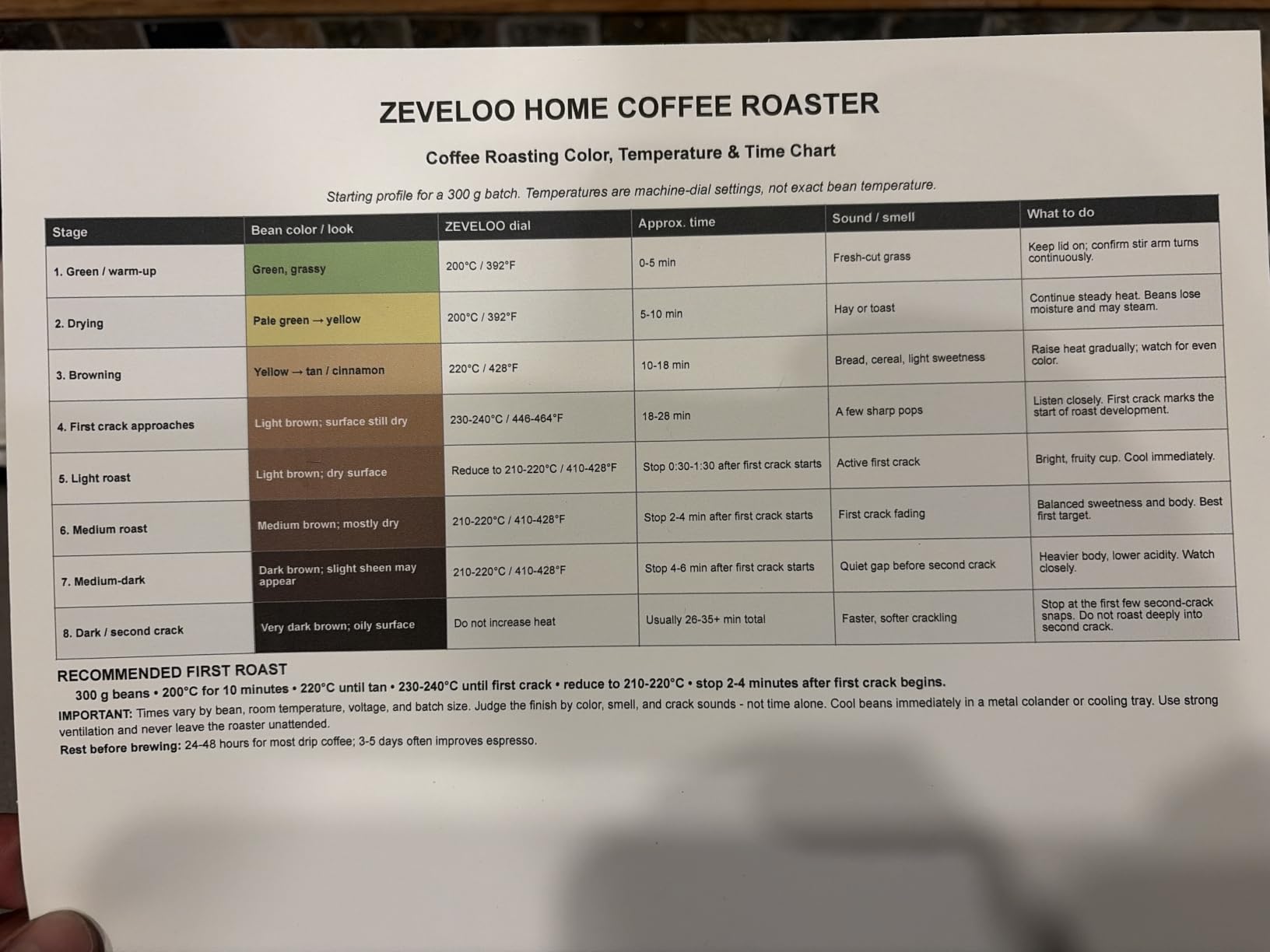
It is also multipurpose, handling soybeans, mung beans, rice and popcorn alongside coffee. That is not a selling point for a serious roaster, but it does make the machine earn its counter space.
The criticisms are consistent and worth weighing. Flat-pan geometry means uneven roasting at larger batch sizes, and owners report shaking the unit partway through. Instructions are minimal, there is no built-in timer, and a few units stopped heating after a few uses with a temperature dial that does not match the real internal temperature.
Who the ZEVELOO suits
It suits a curious beginner on a tight budget who wants to learn about green beans, first crack and weight loss before committing to a real roaster. You will learn the roast timeline here cheaply.
It also suits anyone roasting larger quantities without wanting a big machine. 500 g in a body this small is more capacity than most people expect.
Where it falls short
It is not a drum roaster, so it will not give you the consistency this roundup is built around. The flat pan is the weakness in the design.
Expect a strong, lingering roasting smell and no timer. If you are roasting in a small apartment, plan on ventilating.
How to Choose a Home Drum Coffee Roaster
Start with batch size, because every other decision follows from it. A single-person household finishes 200-250 g a week easily. Two daily drinkers are around 500 g. A household that shares beans with friends or a small cafe needs 600 g to 1.2 kg per session, and at that point you should be reading about sample roasters instead.
Buy the smallest machine that covers your weekly need with a little headroom. A drum roasted too full tumbles poorly, and a batch you rush through the cooling phase is the most common cause of flat, harsh coffee.
Next, pick a heat source honestly. Electric roasters are controlled, cool-running and safe indoors. Gas and stovetop drum roasters deliver more heat, faster roasts and a more traditional result, but they need open air and they are the main source of smoke complaints from home users.
Then decide how much control you actually want. Fully manual machines with a visible drum teach you the craft fastest because you watch the beans. Machines with nine or more preset profiles get you drinkable coffee on day one. Both are legitimate, they just serve different people.
Ventilation is the decision most people get wrong. If you have no outdoor space, buy an electric machine with a smoke purifier in the exhaust path and roast light to medium profiles at 150-300 g. If you roast dark, weekly, or above 500 g, plan on a window fan, a range hood, or a garage setup before buying anything.
Do not skip cooling. Beans dropped into a hot drum keep cooking from residual heat and will taste baked no matter how good the roast was. A cooling fan and a separate cooling tray, as found on the NIASIA and the Roma Pro, are worth more than any other single feature.
Finally, think about parts and support. A machine you can repair, with replaceable stirrers, drums and heaters, will outlast a cheaper one that cannot. Heavy gauge stainless and a drum that disassembles are good signs. Before buying any gas model, confirm you can source a burner of the right size locally.
Frequently Asked Questions
What is the best home drum coffee roaster?
The NIASIA 500g is the best home drum coffee roaster for most people. Its 500 g stainless steel drum, nine automatic roast profiles and high-speed cooling fan cover beginner through experienced use, and the included smoke purifier and smoke pipes make it workable indoors. Experienced roasters who want profile logging should step up to the KALDI Fortis.
Are home coffee roasters worth it?
Home roasters are worth it if you drink several cups a day and buy green beans. A drum roaster running 300-500 g batches produces coffee that costs far less per cup than specialty bags, and roasted coffee loses aroma within weeks, so freshness gains are real. If you drink one cup a day, a fluid-bed air roaster or even a good store-bought bag is more practical.
Drum roaster vs fluid bed roaster – which is better?
Drum roasters are better for consistency and repeatability at batches of 200 g or more, because conduction heat and rotating drums spread heat evenly. Fluid-bed air roasters are better for speed, low smoke and small batches. Buy a drum if you roast weekly and want repeatable results. Buy an air roaster if you roast occasionally and want the least hassle.
Can I roast coffee indoors in an apartment?
Yes, but pick your machine carefully. Electric roasters with a smoke purifier and integrated chaff collector, such as the MAGO MAGA Roma Pro and the Chef Prosentials 500g, work indoors at 150-300 g per batch. Gas drum roasters should stay outdoors or in a garage. Always open a window or run a fan, and avoid dark roasts indoors because smoke load scales with roast darkness.
Do I need a smoke-suppression coffee roaster?
You need one if you plan to roast indoors, above 300 g, or darker than a medium profile. Chaff is the dry skin that flakes off beans during roasting and it is light enough to travel, which is the main smoke source. Machines with a smoke purifier, a chaff collector or a dedicated vent pipe keep fumes out of the room and off your detector.
How long do home coffee roasters last?
A well-built drum roaster should last many years with basic care. The parts that wear fastest are stirring motor brushes, bearings, heating elements and the stirring arm, and all of those are consumable items that are cheaper to replace than to replace the machine. Chaff needs clearing after every session, and cleaning the drum and cooling tray prevents the burnt off-flavors that shorten usable life.
The Verdict: Which Drum Roaster Should You Buy?
The NIASIA 500g is the best drum coffee roaster for home use in 2026 for most buyers, because its 500 g drum, nine profiles, cooling fan and included smoke handling cover the widest range of households without asking you to manage a burner. If you have a garage and want the traditional experience, the DYVEE quartz drum teaches you the craft for very little money, and the KALDI Fortis is where you go when you want recorded, repeatable profiles.
Start with a small batch and a light profile, taste the difference against your usual bag, and let that tell you whether you want a second machine later. Pair it with our home coffee maker picks and the two halves of your morning will finally match.