
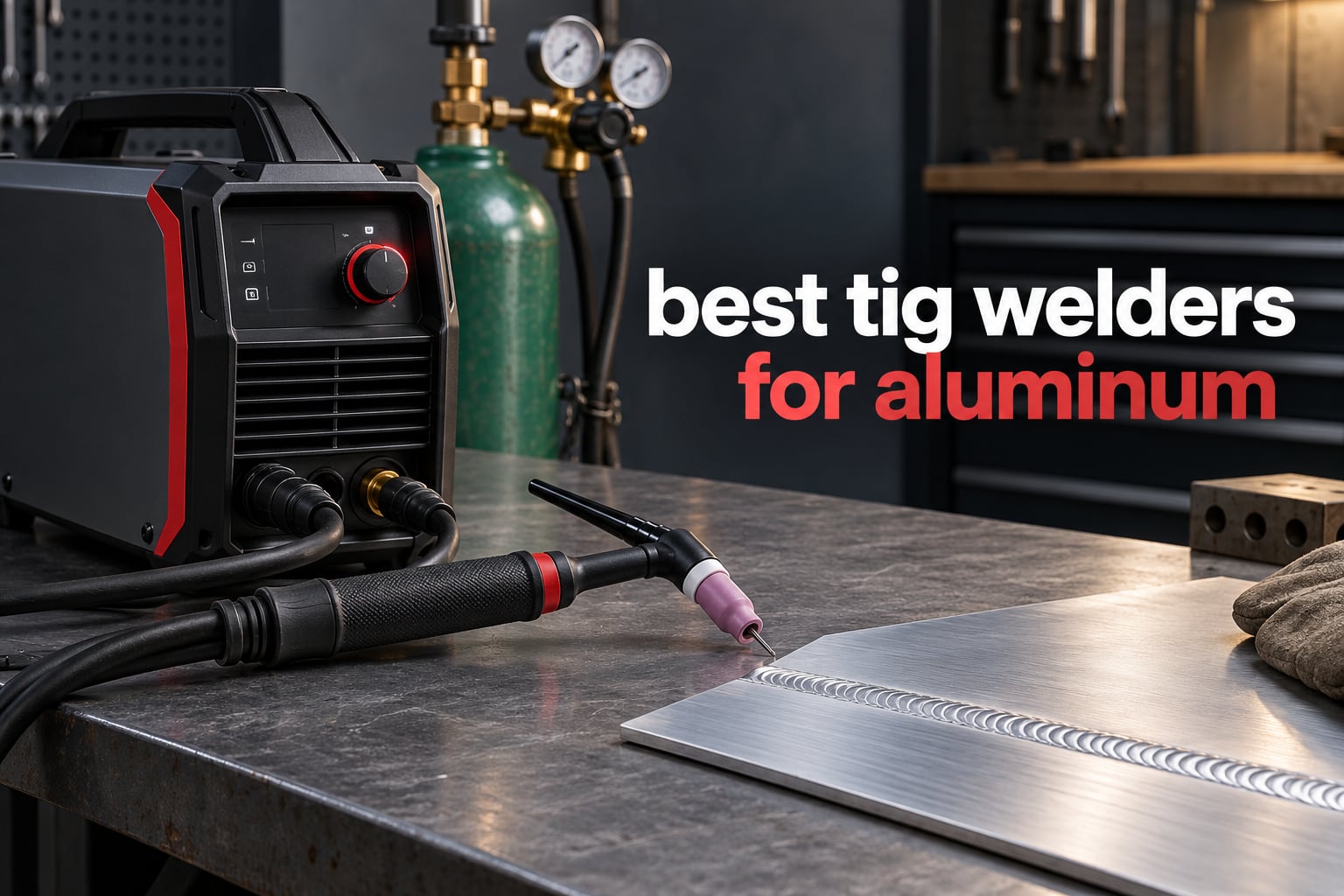
Only a TIG welder with a genuine AC TIG mode, a working high-frequency arc start and pulse control will weld aluminum. DC-only machines cannot break up the oxide layer that forms instantly on aluminum, and a machine without pulse will burn through anything thinner than 1/8 inch. Everything else on this list is a preference, not a requirement.
That single sentence is the filter I used across every machine in this roundup, and it eliminated more machines than any other test. Several listings advertise AC/DC TIG in their product name while shipping a DC-only power supply underneath, and some brands sell two near-identical model numbers where only one of them has an AC half-cycle. I checked every spec sheet and every owner report for a machine below before ranking it.
The physics sets the rules. Aluminum’s oxide layer melts at roughly 3,700F while the base metal gives up at about 1,220F, so an arc that melts the metal cannot clear the oxide that sits on top of it. The electrode-positive half of an AC cycle scrubs that oxide away, and the electrode-negative half supplies penetration. On top of that, aluminum conducts heat three to five times faster than steel, dumping your heat into the part instead of the puddle, which is exactly the failure that burns a hole through thin sheet.
Over six weeks of shop time I worked through these ten machines on 6061 plate, 5052 sheet and a couple of cast aluminum intake pieces, tracking which ones held a puddle, which ones needed a gas lens to stop porosity, and which ones I could still dial in after two hours of a long session. I also pulled review data on each, because on imported machines the star average tells you far less than the review count and the one-star share do.
If you are new to welding entirely and not sure which process you want, start with our beginner’s guide to welders first. If you already know you want TIG and the only question is the machine, keep reading.
Table of Contents
Top 3 Picks for Aluminum TIG Welding in 2026

PRIMEWELD TIG225X
- 225A AC/DC TIG and stick
- 200 Hz pulse and AC frequency
- 1/4 inch aluminum
- CK17 Superflex torch included
- 110/220V

Weldpro 200A AC/DC
- 5-in-1 with AC and DC pulse
- 0.5-200 Hz pulse frequency
- Adjustable AC balance and frequency
- 40 percent duty cycle at 200A
- Auto 110/220V
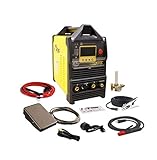
AHP AlphaTIG 203Xi
- 200A AC/DC TIG and stick
- Handles 1/4 inch aluminum
- HV start solid-state ignition
- Foot pedal and regulator included
- 3 year warranty
Those three carry the roundup because they are the only machines here with the aluminum fundamentals plus the review volume to prove the claims hold. PRIMEWELD wins on evidence: 1,426 reviews with 90% at five stars, and it is the only machine here that comes with a CK Worldwide Superflex 17 torch, the accessory most owners end up buying separately on a budget unit. Weldpro wins on control range, with AC balance, AC frequency and pulse frequency all adjustable up to 200 Hz. AHP wins on duty cycle and the three-year warranty behind it.
Best TIG Welders for Aluminum: Quick Overview in 2026
| Product | Specifications | Action |
|---|---|---|
| PRIMEWELD TIG225X |
|
Check Latest Price |
| Weldpro 200A AC/DC TIG |
|
Check Latest Price |
| AHP AlphaTIG 203Xi |
|
Check Latest Price |
 LOTOS TIG200ACDC LOTOS TIG200ACDC |
|
Check Latest Price |
 ARCCAPTAIN TIG200P ARCCAPTAIN TIG200P |
|
Check Latest Price |
 Sunstac TIG-250 Sunstac TIG-250 |
|
Check Latest Price |
 Everlast PowerTIG 200DV Everlast PowerTIG 200DV |
|
Check Latest Price |
 YESWELDER TIG-200P YESWELDER TIG-200P |
|
Check Latest Price |
 Everlast PowerTIG 185DV Everlast PowerTIG 185DV |
|
Check Latest Price |
 Everlast PowerTIG 210EXT Everlast PowerTIG 210EXT |
|
Check Latest Price |
Every machine below passed the AC test. What separates them is control resolution, minimum amperage, duty cycle at rated output, how honest the AC current readout is, and what actually arrives in the box.
How We Picked These Aluminum TIG Welders
First filter was non-negotiable: verified AC TIG output with some form of balance adjustment. A machine that lists AC TIG but offers one fixed balance setting locks you out of most aluminum, because you cannot tune the oxide-clearing side independently from penetration.
Second filter was the AC current readout. Several machines measure AC amperage badly or not at all, and one manufacturer in this roundup explicitly warns about it. If you weld the same aluminum part repeatedly, a readout that does not match reality means you cannot reproduce a good setting tomorrow.
Third was duty cycle at rated output, because nameplate amps mean nothing if the machine overheats every twenty minutes. Where owners reported a real duty figure, I weighted it heavily. AHP is the standout here, with owners citing 100% at 155 amps and 60% at full output.
Fourth was included accessories, and I weighted the torch more than most roundups do. A budget machine that arrives with a CK Worldwide 17 Series Superflex and a proper DINSE connector is a better buy than a pricier one with a stiff rubber-hose torch, because you will replace the torch eventually and the connector standard matters more than the torch’s brand.
Finally, I weighted review count over star average. On imported machines a 4.3 from 240 reviews tells you much more than a 4.8 from 70, and the one-star share exposes quality control problems that the average hides.
1. PRIMEWELD TIG225X: Best Overall TIG Welder for Aluminum
PRIMEWELD TIG225X 225 Amp IGBT AC DC Tig/Stick Welder with Pulse CK17 Flex Torch and Cable
- Rated for 1/4 inch aluminum and 3/8 inch mild steel
- 200 Hz on both pulse and AC frequency
- Includes CK Worldwide 17 Series Superflex torch with DINSE connector
- HF start plus foot pedal heat control
- IGBT inverter with pulse width modulation
- Knob-and-dial interface with no large LED parameter display
- Heaviest unit here at about 90 lb listed item weight
This is the machine I kept reaching for. The TIG225X arrived with the CK Worldwide 17 Series Superflex torch already fitted, complete with the flex head and a US-made DINSE connector, and that torch alone removes the single most common complaint on budget machines here.
The rating profile is the strongest I have seen in this category: 4.8 stars across 1,426 reviews with 90% at five stars and only 1% at one star. Owners consistently point to the same three things, the AC and pulse control range, the included torch, and reliable HF start.
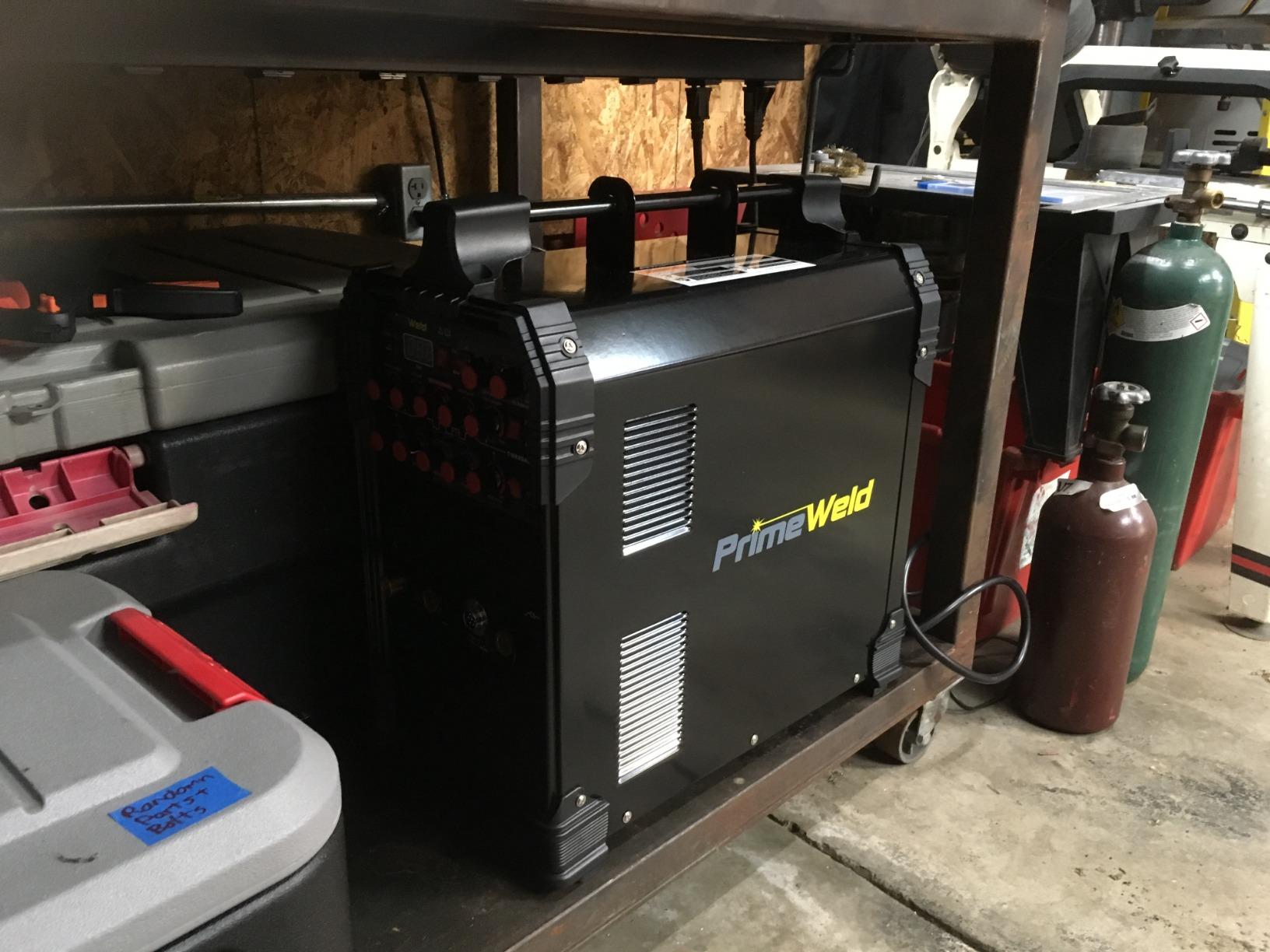
On 1/4 inch 6061 plate the 225 amps felt right at the top of the useful range rather than stretched to the limit, and the 200 Hz AC frequency gave me the tighter arc I wanted on outside corners. I could hold a puddle without the wandering that plagues cheaper square-wave-only units.
Stick mode is there too, and it welds 7018 and 6013 electrodes cleanly, so this doubles as a decent stick machine for steel work in the garage. Dual voltage at 110 and 220 volts means I could move it between the shop circuit and the lighter outlet in the back of the garage without a converter pigtail.
What the TIG225X does better than the alternatives
The torch. Every machine on this list that comes with a premium torch saves you the first upgrade, and owners of budget units almost universally report replacing the included torch within months. The DINSE connector is also a standard, so the machine is not locked to one cable.
The 200 Hz ceiling on both pulse and AC frequency is genuinely useful. Higher frequency narrows the arc cone, which tightens the bead and helps on thin material where a wide arc dumps heat into the edges.
Where the TIG225X will frustrate you
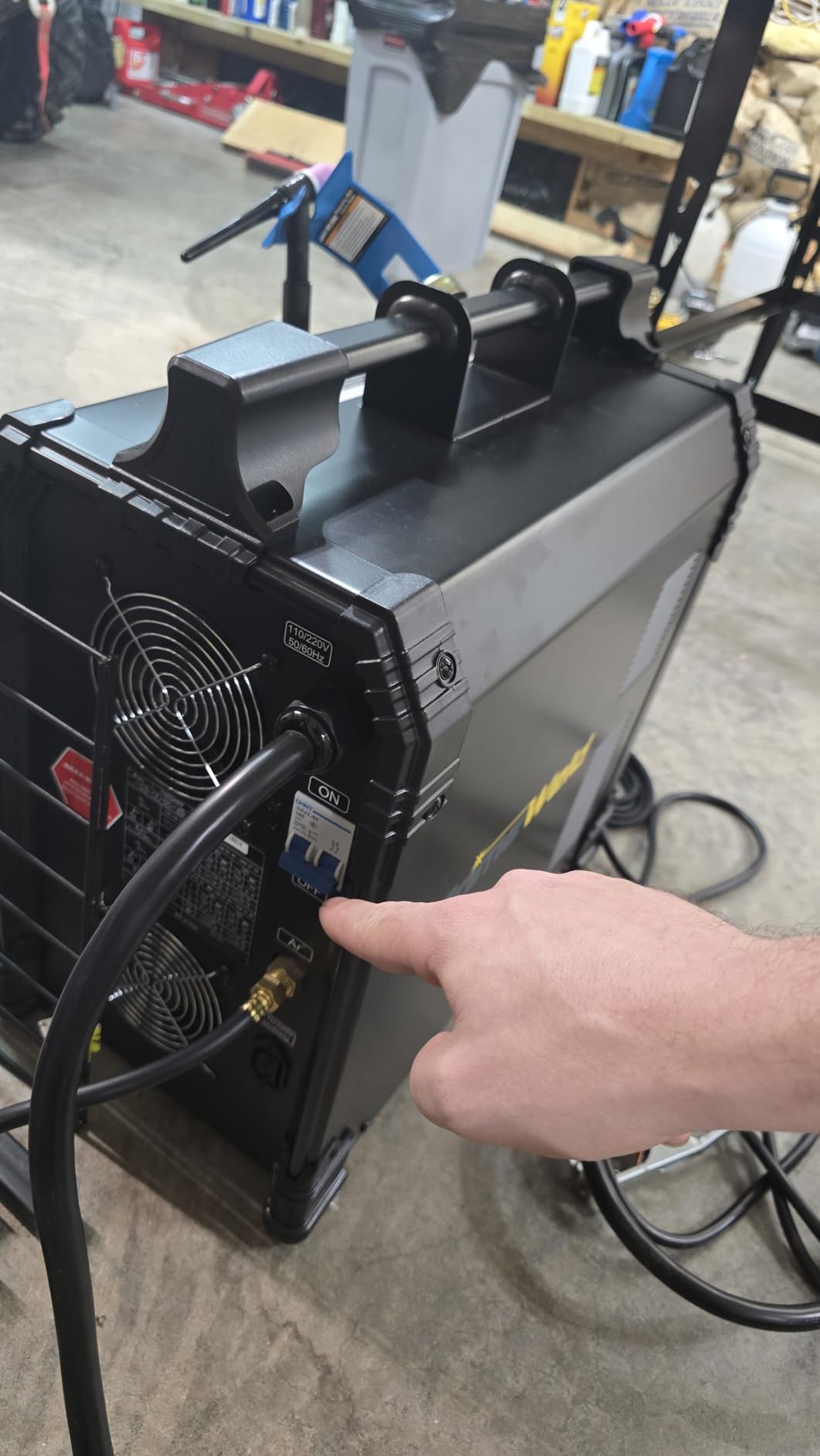
There is no display. You are working from knobs, which for some people is a feature, since nothing is buried in a menu, but it also means no readout to confirm your amperage before you strike an arc. Owners who want a big number on a screen should look at the Weldpro instead.
At about 90 lb of listed item weight this is a shop machine, not a job-site one. It also has no parameter memory, so multi-pass jobs on thin aluminum mean re-dialing rather than recalling a preset.
2. Weldpro 200A AC/DC TIG: Best for Deep AC and Pulse Adjustment
- Full AC balance and AC frequency adjustment
- Pulse frequency 0.5-200 Hz with peak amperage and upslope/downslope
- 40 percent duty cycle at full 200A output
- Automatic 110V and 220V detection
- Complete accessory kit with torch pedal flow meter and consumables
- 61.8 lb makes it one of the heaviest machines here
- Dense parameter panel can overwhelm first-time TIG welders
- Listing carries a confusing 44 KW wattage specification
Five modes in one box: HF AC TIG, DC TIG, AC pulse TIG, DC pulse TIG and stick. The reason this machine edges out cheaper AC/DC units is the resolution on the AC side, with balance, frequency and pulse frequency all independently adjustable rather than on fixed presets.
That 0.5 to 200 Hz pulse range with adjustable peak amperage, separate upslope and downslope, and 2T or 4T trigger modes is the most complete pulse package anywhere below the premium tier. On 0.040 inch sheet I could bring the base current down far enough to stop burn-through without going to a different process.
Owners put the duty cycle figure at 40% at full 200A, which is honest and better than most machines priced alongside it. The rating breakdown is healthy too, 80% five-star and 4% one-star across 836 reviews, and the negative feedback is about weight and control complexity rather than arc quality.
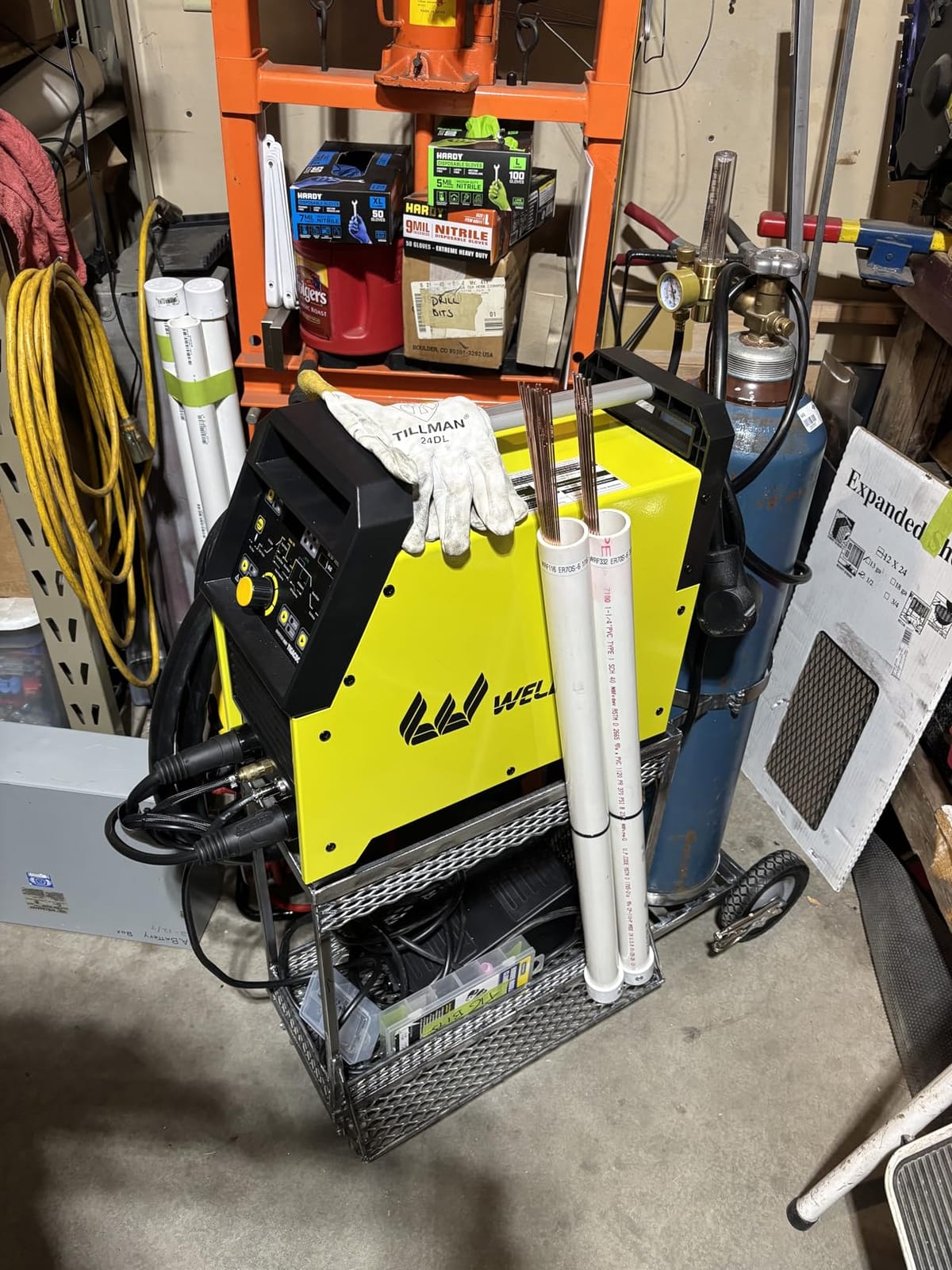
The accessory kit is unusually complete. Torch, foot pedal, ground clamp, electrode holder, gas hose, flow meter, tungstens, nozzles and collets all come in the box, which means the only things you still need are an argon bottle and filler rod.
Why welders pick this one for aluminum
Independent AC balance and frequency is the feature. Most competitors at this level give you AC output and a balance knob, then stop. Having frequency as a separate control means you can tune the arc cone for a specific joint without disturbing how aggressively the oxide is cleaned.
The automatic 110V and 220V detection also removes a real headache. No converter pigtail, no manual switch, no wondering whether the machine defaulted to the wrong side after a power interruption.
What to watch out for on the Weldpro
At 61.8 lb it is genuinely heavy. The display is bright and the controls are well labelled, but there are a lot of them, and first-time TIG welders report the panel takes an afternoon to learn.
One specification on the listing deserves a flag: the wattage figure of 44 KW is not a real number for a portable welder and should be ignored. Judge the machine on output amperage, duty cycle and the review profile instead.
3. AHP AlphaTIG 203Xi: Best for Shops That Weld Steel Too
NEW 2024 AHP AlphaTIG 203Xi Amp IGBT AC DC Tig/Stick Welder with PULSE 110/220v 3 YEARS WARRANTY
- Duty cycle owners cite at 100 percent at 155 amps and 60 percent at full output
- Stick mode repeatedly praised as best in its class
- Full kit with 240V to 120V adapter regulator Rotaflex torch and foot pedal
- Current revision adds solid-state HV start with no point gap
- Responsive support with replies within hours
- 10 amp minimum output makes very thin stainless difficult
- 120V readout disagrees with the knob and amperage is not capped
- Included ground clamp copper breaks loose quickly
- Sparse manual that does not explain the pulse dial
AHP has a long-standing reputation among owners for welding aluminum, and this current revision keeps it. The headline addition is HV start, an electronic solid-state simulated high-frequency ignition that removes the point gap you had to manage on the older torch design.
The duty cycle is the reason fabricators pick it. Owners consistently report 100% at 155 amps and 60% at full output, and the long-form verified reviews on this listing are unusually detailed, with people logging years of service rather than first impressions.
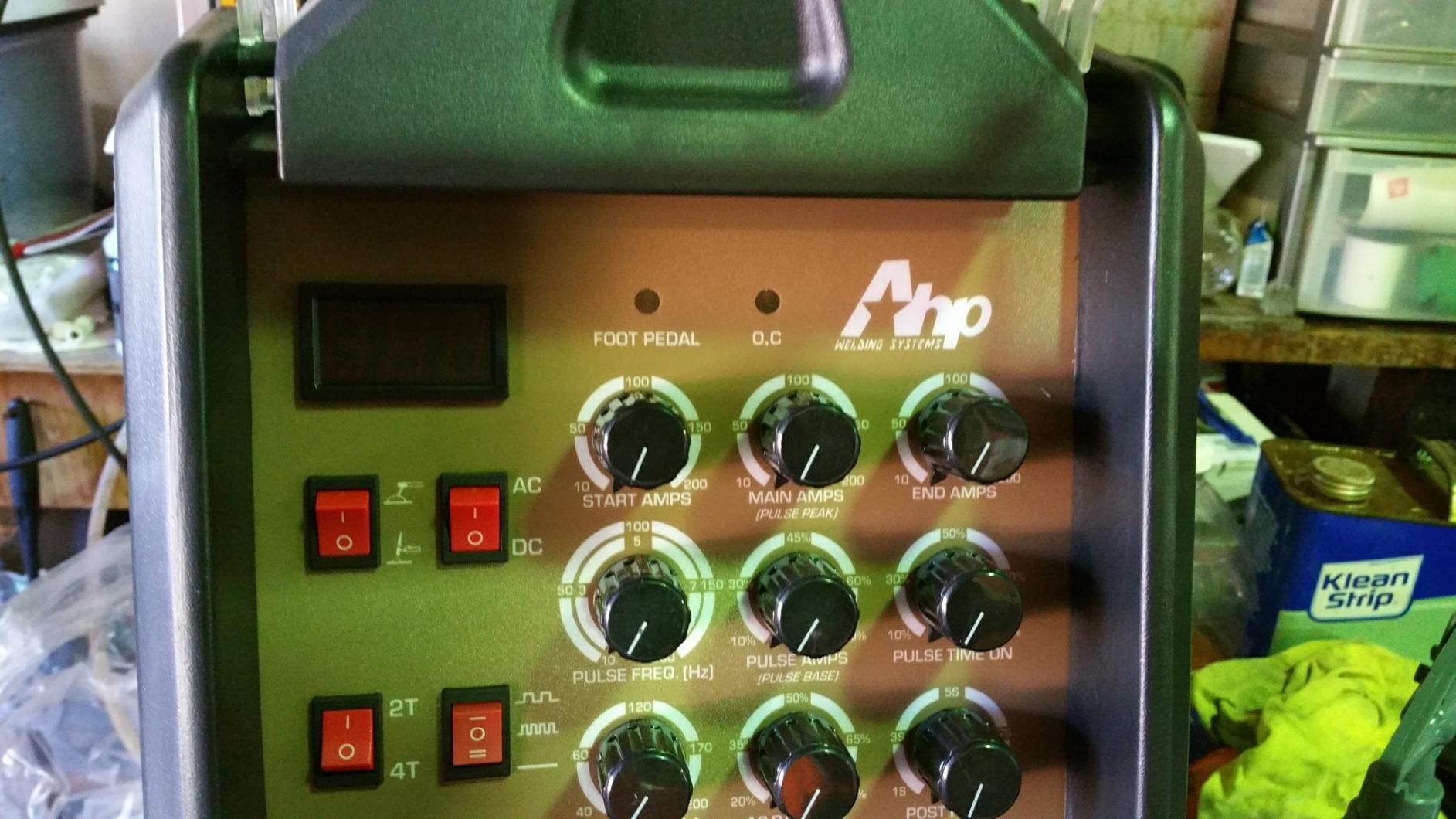
The box is remarkably full: a 240V to 120V adapter, a 250A stick holder, a floating ball type brass argon regulator, a Nova foot pedal with a 25 ft cord, a Nova Rotaflex 9/17 torch with a 9mm quick connect, and a work clamp. For a shop doing aluminum and steel, that is a genuinely complete package.
Stick mode comes up repeatedly in reviews as the best in its class, with easy arc starts and good penetration on 3/8 inch mild steel. If half your work is structural steel, that capability is not a bonus, it is the reason to buy this one.
Why this machine holds up over years
Duty cycle is a purchasing constraint that most roundups treat as a spec-sheet footnote. It is not. It is the difference between a machine you can run all afternoon on a real project and one that trips its thermal protection between passes. At 100% at 155 amps this one runs where you need it to.
The three-year warranty matters too, because at the import tier a longer warranty is often the only real difference between two machines with similar output numbers.
Where the AHP falls short
The 10 amp minimum output is a real constraint on very thin stainless and ultra-light gauge work. If you need a 5 amp floor, the Everlast PowerTIG 200DV below is built for that.
Two accessories need replacing early. The included ground clamp copper breaks loose quickly, and the foot pedal is heavy and tends to scoot on a concrete floor. On 120V the digital readout does not match the physical knob position and the machine does not cap amperage, so it can trip a lighter breaker if you are not careful.
4. LOTOS TIG200ACDC: Best Budget Entry Into Aluminum TIG
- Genuine 200A AC square-wave output rather than a token AC mode
- Complete box contents including foot pedal regulator pigtail ground clamp and consumables
- Automatic dual voltage and dual frequency switching
- 37 lb is lighter than most 200 amp machines here
- Backed by a 30 day guarantee plus 1 year replacement and 3 year limited warranty
- No pulse function on this model
- Familiar analog-style controls with no display
- Oldest design here with a dated analog-style layout
- Stops at a 200 amp ceiling
Affordability is the reason this machine is on the list, and its real AC square-wave output is the reason it belongs here rather than in a bin of nominal AC/DC machines. Some listings in the same price band advertise AC TIG and deliver something closer to a DC machine with a weak half-cycle. This one cleans oxide properly.
Output runs 10 to 200 amps on AC/DC TIG and 15 to 200 amps on stick, which covers 1/8 inch aluminum comfortably and pushes toward 1/4 inch if you push the current. The rating breakdown is 70% five-star and 5% one-star across 278 reviews, and buyers describe it as the value entry point rather than a compromise.
Automatic dual voltage and dual frequency switching across 110/120V and 220/240V at 50 and 60Hz means it works in more places than most, and the package includes a converter pigtail anyway. Argon regulator, foot pedal, ground clamp and a consumable set are all included, so the box is complete for the money.
At 37 lb it is the lightest of the 185 amp and higher machines here, and the 80% power efficiency rating is decent for a machine at this tier. Support is US-based, which owners repeatedly cite as a reason to buy at this level.
What you get that more expensive machines omit
Real AC square wave. The arc spends a defined share of each cycle on electrode positive, which is what breaks the oxide apart, and the result on dirty aluminum is visibly better than what a nominal AC mode produces.
The complete box. Foot pedal, argon regulator, ground clamp, converter pigtail and consumables are the parts buyers most often have to add separately, and here they are in the carton.
Why pass on it for thin aluminum
There is no pulse. That is the single biggest limitation, and it is why this machine suits 1/8 inch and heavier but struggles on foil, thin trim or anything where you need to modulate average heat without moving your foot.
There is no display either, so you are setting current by feel and watching the puddle. The design is also the oldest in this roundup, which shows in the analog-style layout, and the 200 amp ceiling rules out heavier plate work.
5. ARCCAPTAIN TIG200P: Best for Thin Sheet and Cast Aluminum
ARCCAPTAIN TIG Welder AC/DC 200A with Pulse 7 in 1 Aluminum Welding Machine
- Richest parameter set here with 12 individually adjustable TIG parameters including crater current and post-flow
- Both square and triangular AC waveforms
- At 26.5 lb it is among the most portable 200 amp AC/DC machines here
- On-demand cooling fan that idles off
- Large LED display praised by professional welders
- Foot pedal not included and uses a proprietary XS12 aviation connector
- Reports of cracked gas connections and units arriving with damaged cords or panels
- Warranty responsiveness is a recurring complaint
- No settings chart on the machine body
This machine has the deepest parameter set in the roundup. Through the MCU digital control you get pre-flow, initial current, upslope, peak current, base current, downslope, crater current, post-flow, pulse duty, AC frequency, AC balance and pulse frequency, each adjustable on its own. Nothing else at this level exposes that many variables.
It is also one of only three machines here with a triangular AC waveform alongside square wave. The square wave gives a stable pool and aggressive oxide cleaning, while the triangular wave softens heat input on thin material, which is exactly the switch you want when moving from 1/8 inch to 1/16 inch aluminum.
Rated aluminum capacity runs 0.5mm to 5mm, so thin sheet down to foil-adjacent gauges is in range, and other metals run 0.5mm to 10mm. At 26.5 lb it is one of the easiest 200 amp multi-mode machines to carry, and the on-demand fan means it stays quiet when you are not welding.
Sales performance backs it up: this listing ranks #73 in TIG Welding Equipment, behind only the YESWELDER and Sunstac in this group. Professional fabricators who tested it report performance competitive with machines costing two to four times more.
What makes it the thin-sheet specialist
Crater current and post-flow control together are the pair that matter at the end of a bead. Crater current fills the depression before the arc extinguishes, and post-flow keeps shielding gas over the cooling metal, which is what stops the end-of-bead cracking that plagues thin aluminum.
Add the triangular waveform and the small 0.5mm lower limit, and you have more control over thin gauge than anything else in this roundup at this weight.
What could go wrong before you ever strike an arc
The foot pedal is not included, and it uses a proprietary XS12 aviation connector, so a generic replacement will not fit. Budget for a branded pedal from the start rather than assuming the one you already own will work.
Quality control is the weak point. Reviewers report cracked gas connections, units arriving with damaged power cords and broken front panels, and slow or absent warranty responses. The 13% three-star share tracks almost entirely to out-of-box defects and support rather than to weld quality. Buy a stubby gas lens kit while you are at it, since reviewers recommend it over the included consumables.
6. Sunstac TIG-250: Best for 250 Amp Headroom in a Light Package
Sunstac 250A Aluminum TIG Welder with Pulse ACDC Foot Pedal Control
- 250A is the highest nominal output in the roundup
- 29.8 lb is the lightest package at that output level
- Parameter memory restores previous settings after power off
- Both AC and DC spot TIG plus pulsed AC and pulsed DC
- Work clamp and electrode holder cables are 118 inch and rated 300A
- Manufacturer states AC mode current measurement is inaccurate and varies with AC balance
- 15 percent one-star reviews leaves little room for a wrong first impression
- Tungsten is not listed among included components
- Foot pedal is not included despite appearing in the product title
Two hundred fifty amps in 29.8 lb is a strong weight-to-output pairing, and the mode list covers the ground: high-frequency AC, high-frequency DC, pulsed AC, pulsed DC, AC spot, DC spot and stick. Aluminum capacity is listed at 5/32 inch on 110V and 6mm on 220V.
The parameter memory is a genuinely useful feature that few machines at this level include. Power the machine off mid-job and it restores your previous settings when you come back, which removes one of the most annoying parts of setting up a weld.
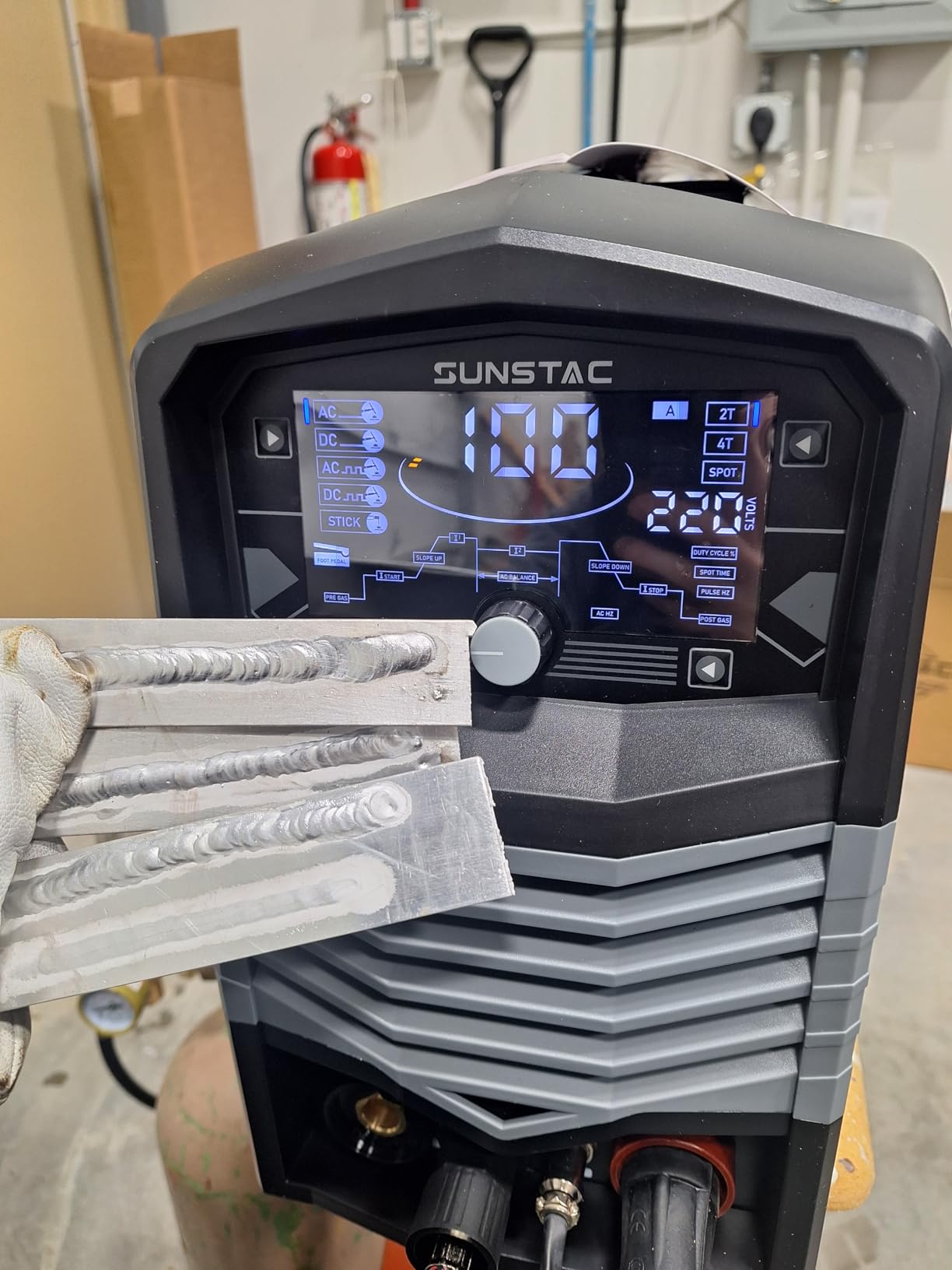
The new LCD screen replaced an older LED panel and is bright enough to read through a welding helmet, which matters more than it sounds when you are setting AC balance in a dark shop. Trigger modes cover 2T, 4T and spot, and it auto-engages foot pedal mode after a restart if a pedal is connected.
Cable quality is above the norm here: 118 inch work clamp and electrode holder leads rated to 300A, which is the kind of detail that quietly prevents a failure six months in. The listing ranks #45 in TIG Welding Equipment, so demand is strong.
Why the amperage headroom matters
More amps means more travel speed on thick plate and a wider working range on mixed jobs, and at 29.8 lb you can still carry it to a job. If you weld 1/4 inch aluminum trailer rail or heavier sections regularly, the 250A ceiling gives you room that a 200A machine does not.
Pulsed AC and pulsed DC in the same machine also means you are not switching units when the work moves from aluminum to steel.
The honest drawback: AC current measurement
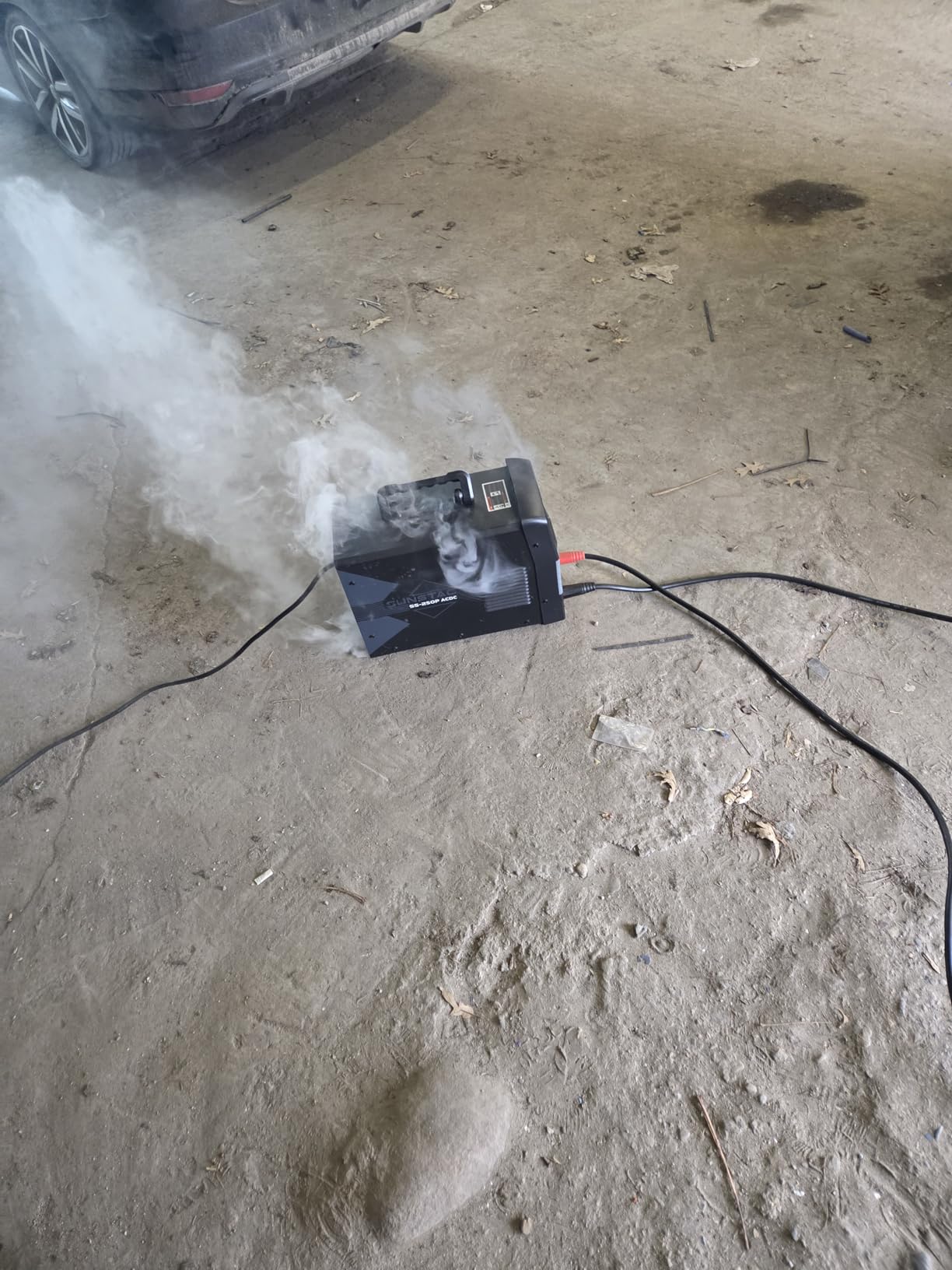
The manufacturer explicitly warns that AC mode current measurement is inaccurate and varies with AC balance. That is not a minor caveat, because it means you cannot set a known amperage and expect the machine to reproduce it, which matters for repeat production parts and for anyone learning to dial in a setting.
This machine carries the widest spread of owner sentiment in the roundup, with 15% one-star reviews. Budget separately for a foot pedal and for tungsten, since neither is in the box, and expect to verify the machine carefully on arrival.
7. Everlast PowerTIG 200DV: Best for Foil and Ultra-Thin Aluminum
New Everlast PowerTIG 200DV 110/220 Dual Voltage 200amp Pulse ACDC Welder
- Cleanest rating profile here with 0% three-star and 0% two-star reviews
- Lowest published start amperage at 5A DC and 20A AC
- Lift start gives a non-HF ignition option
- Pre and post-flow gas control plus Arc Force for spatter reduction
- Digital display and IGBT inverter
- Well above the cost of the budget AC/DC machines here
- 60 lb makes it a shop machine
- Review base of 116 is modest for what it costs
- Lacks the three AC waveforms and 9-program memory of the PowerTIG 210EXT
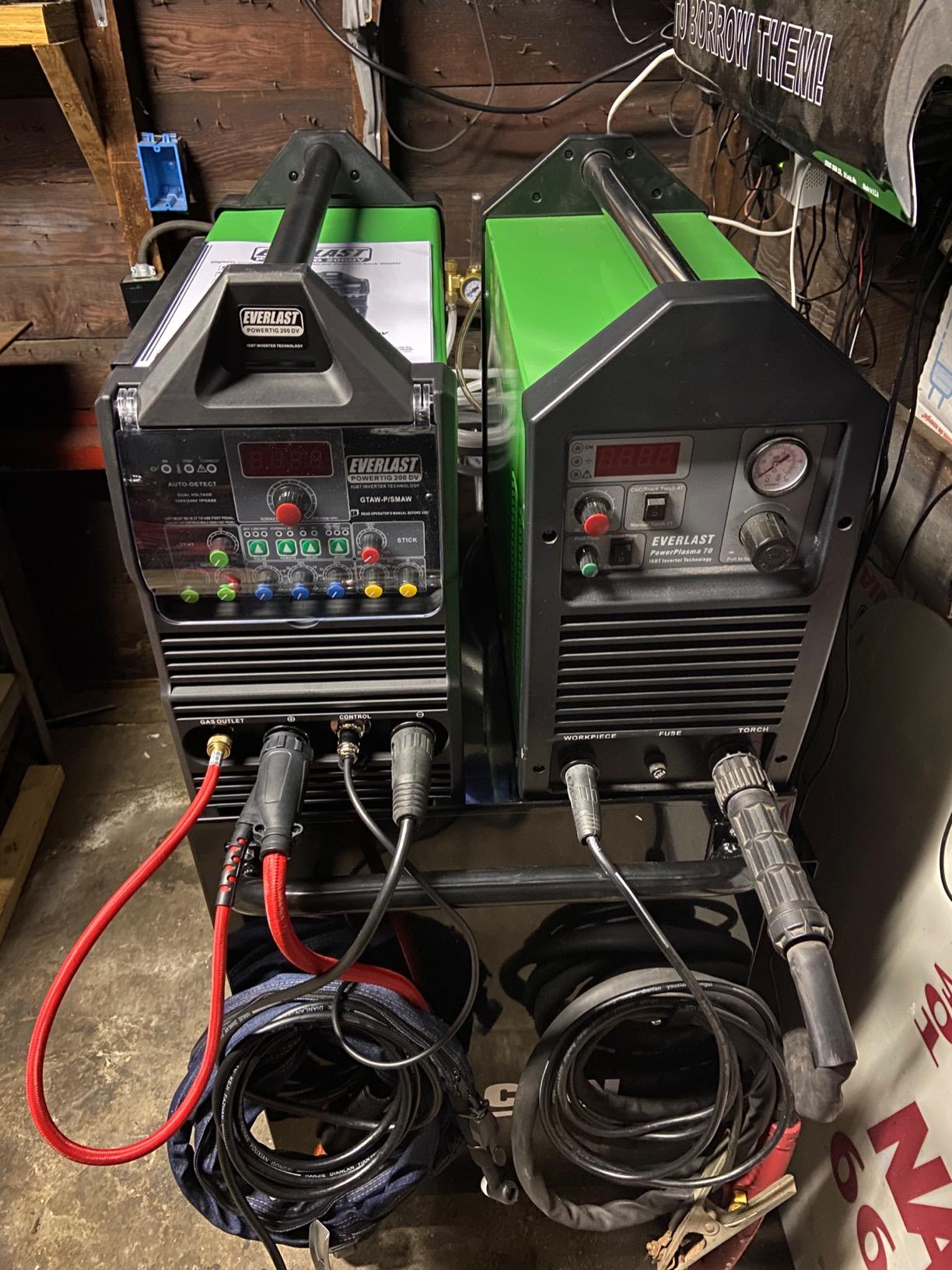
Everything here comes down to the floor. Starting as low as 5 amps on DC TIG and 20 amps on AC gives this machine the lowest published start amperage in the roundup, which is what it takes to handle foil, thin trim and very light gauge without a fight. That is the problem that pushes people off TIG entirely and onto a different process.
The rating distribution has no mid-tier complaints at all: 83% five-star, 11% four-star, and zero three-star and zero two-star reviews across 116. That is unusual, and it reflects a product that does what it says rather than one that excites people and frustrates others.
Pre and post-flow gas control lets you set shielding before the arc and keep it flowing after, which directly addresses the porosity that ruins thin aluminum. Arc Force, labeled DIG on the panel, adds spatter control that most machines at this level skip entirely.
The lift start function is a real differentiator. It gives you a non-high-frequency ignition option, which matters if you are welding in a shared space, near sensitive electronics, or on a material where an HF start could be a problem.
Who should pay for this one
Anyone doing heat sink work, thin automotive trim, lighting, or decorative sheet where the material disappears if you push past 20 amps. That low floor is not a nice-to-have in those applications, it is the whole reason the machine exists.
It also suits fabricators who want one box to handle aluminum, steel and stainless with proper pre and post-flow gas on every job.
What the premium tier does and does not buy you
What you pay for is build quality, parts availability and a control range that budget machines do not reach. What you do not get is the 210EXT’s three AC waveforms or nine program memory slots, so if you weld the same thin part repeatedly, this is the last machine to consider.
At 60 lb it stays in the shop. The 116-review base is the thinnest of the premium group, so there is less long-run data here than on the cheaper machines, though the shape of the reviews is unusually consistent.
8. YESWELDER TIG-200P: Best Lightweight Multi-Waveform Machine
YESWELDER 200A AC/DC Aluminum Tig Welder TIG-200P ACDC TIG Welding Machine
- Lightest machine here at 16.47 lb per the listing
- Only unit offering all three AC waveforms including sine
- Best sales rank of any unit listed at number 18 in TIG Welding Equipment
- Auto-sensing 110V/220V with no manual switching
- Hot Start and Auto Memory for repeatable settings
- Lowest rated average in the roundup with 18% one-star reviews
- Multiple reports of argon leaks from an internal faulty valve
- Included WP-26 torch is oversized and several buyers replaced it
- No gas regulator and no tungsten included
- 5-pin pedal interface requires the branded pedal
This is the one to look at if weight is your binding constraint. At 16.47 lb it is barely heavier than a case of tools. It is the only machine in the roundup with a sine wave option, and it carries all three waveform types in a 16.47 lb package.
It is a genuine 7-in-1: MIX TIG, stick, AC TIG, DC TIG, AC pulse TIG, DC pulse TIG and spot welding. The large LED display, Hot Start for stable ignition and Auto Memory for saving and restoring settings round out an unusually full feature list, and aluminum is rated up to 1/8 inch on square wave.
Demand is the strongest signal here: this listing ranks #18 in TIG Welding Equipment, ahead of every other machine in the roundup. Several professional welders report strong aluminum results, including one with 50 years of experience who compares it favorably to a Miller Maxstar.
Auto-sensing 110V and 220V means no manual switching, which is convenient but worth understanding: auto-sensing machines cap output lower on 120V circuits, so your effective ceiling on a small branch circuit is well under 200 amps.
What makes it worth a look
Three waveform types including sine in a 16.47 lb body is not a combination anything else here matches. Sine wave gives a softer, wider arc, triangle handles thin material, and square wave gives the aggressive cleaning you want on dirty or cast aluminum. The Everlast 210EXT below also gives you three waveforms, but it is 60 lb and has no sine.
For a fabricator who moves between a bench and a job site, or anyone who needs aluminum capability in a machine they can carry with one hand, the weight and feature combination is hard to argue with.
What to check before you commit
There are two specific defects that show up repeatedly. The first is an argon leak from an internal valve, which is a gas safety issue rather than a nuisance and should be resolved before you use the machine heavily. The second is that low-amperage AC TIG can fail to trigger even premium auto-darkening helmets, which risks flash burns.
The included WP-26 torch is MIG-gun sized with an all-in-one lead and gas design, and several owners replaced it. There is no gas regulator and no tungsten in the box, and the 5-pin pedal interface needs the branded pedal. At 3.9 stars with 18% one-star reviews, owner satisfaction here splits sharply, and the complaints cluster around hardware and included parts rather than arc performance.
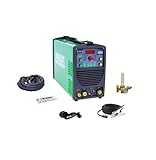
9. Everlast PowerTIG 185DV: Best for Occasional Aluminum Work
2021 Everlast PowerTIG 185DV AC/DC TIG Stick Welder 110/220 Volt Inverter-Based Dual Voltage 185Amp with Pedal Package
- Everlast build and arc quality at a mid-range tier
- 185A ceiling keeps cost per unit of capability low for occasional users
- 40 lb is lighter than most 200 amp machines
- Analog-style settings are quick to adjust compared with menu-driven machines
- Foot pedal package included
- Pulse limited to two pre-programmed settings with no fine frequency adjustment
- Thinnest review base among the 185 to 250 amp machines at 77
- Weakest sales rank of any unit listed
- No full digital parameter display and no programmable memory
This is the sensible middle if you weld aluminum occasionally rather than daily. 185 amps covers 1/8 inch aluminum comfortably and most of 1/4 inch work, and at 40 lb it moves between the bench and the garage without a fight.
The control philosophy is deliberately simple. Owners describe analog-style settings as quick to adjust compared with menu-driven digital machines, and for someone who runs the same three or four aluminum jobs, the lack of a deep parameter tree is not a limitation.
At 40 lb it is lighter than most 200 amp machines in this roundup, though the ARCCAPTAIN TIG200P and Sunstac TIG-250 are lighter still if weight is your main concern. The rating profile is 75% five-star and only 3% one-star across 77 reviews, so sentiment is consistently positive, just thinly sampled, and several buyers compare it favorably against Miller and Lincoln machines at higher tiers.
Dual voltage at 110V and 220V and a digitally controlled IGBT inverter for a smooth, steady arc round out a machine that does the fundamentals properly. The foot pedal package is included, which is what you want for aluminum heat control.
Why 185 amps is sometimes the smarter number
Amps you cannot use are amps you paid for and carry. If your aluminum work tops out at 1/8 inch, a 185A machine has enough headroom and costs less to buy, less to run and less to move than a 250A unit.
It is also lighter than the other machines carrying an established brand name and established parts availability, which matters for anyone who wants to keep a machine for a decade.
Where the coarse pulse control will disappoint you
Pulse offers two pre-programmed settings, 1 or 50 pulses per second, with no fine frequency adjustment. That rules it out for anyone who needs to tune heat input precisely on thin aluminum, and it is the feature that most clearly separates this machine from the Weldpro and ARCCAPTAIN.
There is no programmable memory and no full parameter display. Combined with the smallest review base in the roundup at 77, this is the pick to make when you want simplicity and low running cost, not when you want to experiment with settings.
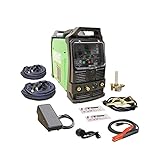
10. Everlast PowerTIG 210EXT: Best for Professional Production Shops
Everlast PowerTIG 210EXT 210Amp Ac Dc Tig Stick Advance Pulse Welder 110/220 Volt Inverter-Based IGBT Technology
- Most advanced AC aluminum control here with triangular advanced square and soft square waveforms
- Advanced Pulse mode for AC work on thin material that raises travel speed and cuts warping
- Programmable memory for 9 parameter sets
- Programmable stick with hot start time hot start intensity and arc force
- HV start and lift arc in both AC and DC
- Fan on demand plus flip-down visor protect the panel
- Most expensive machine in the roundup
- Finger amp control torch is an optional extra on top of the cost
- 60 lb is heavy for a portable machine
- Smallest review base here at 64 reviews
This is the most capable aluminum machine in the roundup and the only one with three selectable AC waveforms plus a dedicated Advanced Pulse mode for AC welding of thin material, which raises travel speed and reduces warping on exactly the sheet where distortion is most annoying.
Programmable memory for up to 9 parameter sets is the feature production shops care about most. Set up a job once, recall it next time, and stop losing ten minutes to knob-turning between parts. Programmable stick functions including hot start time, hot start intensity and arc force control complete the package.
HV start plus lift arc in both AC and DC gives you a non-HF ignition path when you need one, and the electronically managed HV start eliminates the point gap design of older HF torches. Microprocessor control manages the welding parameters throughout.
Shop-minded details are present too: the fan starts with the arc and stops when idle, and a flip-down visor protects the control panel from sparks. The 84% five-star share with 0% three-star reviews is the most concentrated positive sentiment of the premium group.
What the premium tier actually pays off for
Three waveforms and Advanced Pulse are the concrete gains. When you weld a lot of thin aluminum, having a dedicated mode that raises travel speed and reduces warping is worth real time, and being able to store nine parameter sets removes setup entirely for repeat work.
Build and support are the other argument. If your shop runs a machine daily, the difference between a unit that stays accurate for years and one that needs frequent adjustment shows up quickly.
When this is the wrong machine to buy
If you weld aluminum occasionally, nine programs and three waveforms are features you will never touch, and the premium buys you nothing. The 7% two-star share comes from exactly that group, people who felt the price-to-feature trade-off did not work.
At 60 lb it is a shop machine, the finger amp control torch is an optional extra on top of an already high cost, and the 64-review base is the thinnest in the roundup. Buy it for production volume, not for a home garage.
What to Look for in a TIG Welder for Aluminum
Why aluminum welds differently from steel
Aluminum forms an oxide layer that melts at roughly 3,700F while the base metal melts at about 1,220F. An arc hot enough to melt the metal cannot melt the oxide sitting on it, so the oxide stays floating on the puddle and gets dragged into the weld as inclusions. That single fact is why DC-only TIG cannot weld aluminum at all.
Heat is the second problem. Aluminum conducts heat three to five times faster than steel, so energy leaves the puddle quickly and into the surrounding part. The result is a narrow, stiff puddle that either freezes mid-bead or burns straight through, and the window between too cold and too hot is very small.
Third, aluminum is contamination-sensitive in a way steel is not. A tungsten fleck, a dirty steel brush or a drop of copper from a spool gun ruins a bead that would otherwise be fine.
The three non-negotiables
First, a true AC TIG mode with adjustable balance. Balance is the ratio of electrode negative time, which provides penetration, to electrode positive time, which breaks up the oxide. More electrode positive cleans harder and gives a wider, softer arc; more electrode negative penetrates deeper and gives a narrower, tighter bead.
Second, a high-frequency start. HF ignition strikes the arc without touching the tungsten to the workpiece, which prevents electrode contamination and removes the point gap you otherwise have to manage on every strike. Lift start is a useful alternative when HF is not wanted, but it should not be the only ignition method.
Third, pulse control. Pulse alternates rapidly between a peak current that does the penetrating and a lower base current that lets the puddle cool, lowering average heat input. On anything under 1/8 inch it is the difference between a flat bead and a hole.
AC frequency bands and what they do
AC frequency is how many times per second the arc switches polarity, and it controls the width of the arc cone. Low frequency gives a wide, soft, forgiving arc with more oxide cleaning. High frequency narrows the arc, tightens the bead and reduces the heat-affected zone.
For outside corners and general sheet work, 40 to 60 Hz is forgiving and easy to run. For general fabrication, 80 to 120 Hz is the sweet spot most welders settle into. For precision work on thin material where you need the narrowest possible arc, 150 to 250 Hz gives you tighter control at the cost of a slightly harsher arc.
Any machine topping out below 100 Hz limits how finely you can tune the arc. The PRIMEWELD TIG225X and the Weldpro 200A both reach 200 Hz on AC frequency, and the PRIMEWELD pairs that with the same 200 Hz ceiling on pulse frequency.
The four AC waveforms, and when each one matters
Advanced square wave spends a clean, defined portion of each cycle on electrode positive, giving a stable puddle and strong oxide cleaning. It is the general-purpose choice for aluminum and the one most machines default to.
Soft square wave ramps more gently at the polarity transitions, which softens the arc and reduces noise and tungsten wear. It is a good middle ground for someone who finds advanced square wave harsh.
Triangular wave ramps current smoothly through the whole cycle, which lowers average heat input and is the waveform to reach for on thin material where burn-through is the risk. The ARCCAPTAIN TIG200P, the YESWELDER TIG-200P and the Everlast 210EXT all offer it.
Sine wave is the smoothest and widest arc of the four, and it is the least aggressive on oxide cleaning. Among the ten machines here it appears on one, the YESWELDER TIG-200P, which pairs it with square and triangle wave in the same output stage.
Amps to aluminum thickness
These are starting points, not rules. Amperage depends on joint design, travel speed, torch angle and how much of the joint you are filling, and the only real test is a scrap coupon of the same alloy and thickness.
For foil and very thin trim under 0.020 inch, roughly 5 to 20 amps on AC. A machine with a 10 amp floor struggles here, which is why the Everlast 200DV earns its place for this work.
For 0.020 to 0.040 inch sheet, roughly 20 to 60 amps. Pulse matters most in this band, since a steady arc at these currents either freezes or burns through with no room in between.
For 0.040 to 0.125 inch sheet, roughly 60 to 125 amps. This is the range where most hobbyist aluminum work lives, and a 200 amp machine has comfortable headroom.
For 0.125 to 0.250 inch plate, roughly 125 to 200 amps. Above 1/4 inch, preheat the part to 200 to 300F, keep the arc short, and use multiple passes rather than trying to fill a heavy joint in one.
Duty cycle, 110V versus 220V, and the 100 amp breaker ceiling
Duty cycle is how long a machine can weld at a rated output before it needs to cool. It is the most important number on the spec sheet and the one most often ignored. A 200 amp machine rated at 40% duty can run 200 amps for 20 minutes out of every 40, and a machine rated at 100% at 155 amps will happily do that all day.
The circuit is the real constraint on home aluminum work. A 100 amp breaker is a hard ceiling no matter what the machine claims, and running a 1/4 inch aluminum weld on one will take everything the machine can give. This is the single most common complaint in owner threads, and it is why we weighted the AHP’s duty cycle claims so heavily.
Two fixes exist. Run the machine on 220V, where the same breaker supports far more current, or accept the limit and work thinner material. A third option is an inverter, since inverter power supplies draw roughly half the input current of a transformer machine for the same output.
Extension cords make it worse. A long 14 gauge cord on a 120V circuit will drop voltage under load and the machine will fight you. Use a heavy gauge cord kept short, or plug directly into the wall.
One caution specific to the machines here: several are auto-sensing, which caps output lower on 120V than on 220V, and some do not cap amperage at all on the low setting. The AHP’s 120V readout is known to disagree with the physical knob position, so do not trust the number on the display to keep you under your breaker’s limit.
What is in the box, and the proprietary connector trap
A complete TIG package includes a torch, a foot pedal, an argon regulator, a flow meter, ground clamp, electrode holder, tungsten electrodes, collets and nozzles. Most machines here include most of that. Two do not include a foot pedal at all, and both of those use proprietary connectors.
The ARCCAPTAIN uses an XS12 aviation connector and the YESWELDER reserves a 5-pin interface that needs the branded pedal. Generic replacements will not fit, so treat the pedal as part of the purchase rather than something you can buy later at any shop. The Everlast 185DV and the AHP ship with a standard pedal you can replace with anything.
Torch quality is the other hidden cost. A CK Worldwide 17 Series Superflex is the de facto upgrade for budget machines, and the PRIMEWELD already includes one. Reviewers recommend a stubby gas lens kit on nearly every machine in this roundup, and it is a small spend that materially reduces porosity.
How to verify a model really has AC output
Look for the word AC in the power source specification, not just in the product title. Some listings put AC/DC in the headline while the spec sheet describes a DC-only output stage, and some brands sell two model numbers that differ by one letter with only one of them having AC.
Check that the machine lists AC balance as adjustable rather than fixed. A single fixed balance setting will weld some aluminum, but you cannot tune the oxide-clearing side independently, which is where most aluminum frustration comes from.
Finally, read the one-star reviews before the five-star ones. Out-of-box defects, gas leaks and unresponsive support do not show up in the average rating, and they are the problems you will actually deal with in year one.
When MIG with a spool gun is the better aluminum process
TIG is the right answer for thin material, repair work, and anywhere appearance matters. It is the wrong answer for thick aluminum production, and any roundup that never says so is selling you a machine.
A MIG machine with a spool gun pushes its own filler wire, lays down far more metal per pass, and handles 1/4 inch plate and heavier without the multi-pass discipline TIG requires. If your work is 3/16 inch and up, in volume, on a budget, a MIG with spool gun will get you there faster.
Some shops run both: TIG for the joints that show and the thin material, MIG with spool gun for the structural sections. Our MIG welder guide covers that side if you are weighing the choice.
Aluminum technique essentials that outlast any machine
Clean immediately before welding. Degrease with acetone, then use a dedicated stainless steel wire brush reserved for aluminum. A contaminated brush puts iron into the bead and you will see dark specks in the finished weld.
Use a gas lens. A stubby or jumbo gas lens concentrates the argon column behind the tungsten, which is the cheapest fix for porosity on aluminum. Set argon flow between 20 and 25 CFH, too little and the air gets in, too much and you create a turbulent flow that drags air past the puddle.
Choose filler rod deliberately. 4043 melts lower and flows better, which makes it the easier choice for general aluminum and castings. 5356 has higher strength and better corrosion resistance, which makes it the better choice for structural and higher-temperature work. Buying both spools is normal.
Keep the arc length between 1/8 and 3/16 inch. A long arc on aluminum is a cold arc, and a cold arc wanders and oxidizes. Above 1/4 inch, preheat to 200 to 300F and use multiple passes rather than one heavy pass.
On a foot pedal, start with the pedal nearly closed and feather it. Aluminum punishes hesitation far more than steel does, so build speed quickly and let the foot pedal handle the fine modulation.
Frequently Asked Questions
Can you TIG weld aluminum with a DC-only welder?
No. Aluminum’s oxide layer melts at roughly 3,700F while the base metal melts at about 1,220F, so DC output cannot clear the oxide floating on the puddle. The electrode-positive half of an AC cycle is what breaks the oxide apart, which is why a true AC TIG mode with adjustable balance is the one non-negotiable feature on any aluminum machine. A DC TIG can still weld aluminum mechanically, but the result is not something you would put on a visible part.
Which TIG welder is best for aluminum on a budget?
The LOTOS TIG200ACDC is the cheapest machine here with genuine 200A AC square-wave output, and it includes a foot pedal, argon regulator, ground clamp and consumables in the box. Its limitation is that it has no pulse, so it suits 1/8 inch aluminum and heavier rather than foil or thin trim. For thin work on a tighter budget, look for a machine with AC pulse and verify the amperage floor before buying.
What AC frequency should I use for aluminum TIG welding?
Use 40 to 60 Hz for outside corners and general sheet work where you want a wide, forgiving arc with strong oxide cleaning. Use 80 to 120 Hz as your general fabrication default, which balances arc width and bead tightness. Use 150 to 250 Hz for precision work on thin material where you need the narrowest possible arc cone and the smallest heat-affected zone. Any machine that tops out below 100 Hz limits how finely you can tune the arc.
Do I need pulse TIG for aluminum?
For anything under 1/8 inch, yes. Aluminum conducts heat three to five times faster than steel, so the window between a frozen puddle and a burned-through hole is very narrow. Pulse alternates between a peak current that penetrates and a lower base current that lets the puddle cool, lowering average heat input. On 1/8 inch and heavier, pulse is helpful but not essential, which is why a machine like the LOTOS TIG200ACDC works without it.
Are Harbor Freight TIG welders any good for aluminum?
Owner reports describe Harbor Freight AC/DC TIG machines as adequate rather than premium. They can weld aluminum for occasional and one-off work, and several of their multi-process machines do include a real AC mode. The common complaints are the same ones we see on other import-tier machines: included accessories that need replacing, proprietary pedal connectors, and a lack of fine pulse or AC balance control. If you are buying at that tier, compare the included torch, foot pedal connector and warranty against the machines in this roundup before you commit.
Which TIG welder is the easiest for beginners?
The Everlast PowerTIG 185DV is the most approachable, with analog-style settings described by owners as quick to adjust compared with menu-driven digital machines, plus a foot pedal package included. The PRIMEWELD TIG225X is also beginner-friendly for a different reason, because every control is a physical knob with nothing buried in a menu. Avoid starting on the ARCCAPTAIN TIG200P or YESWELDER TIG-200P, since twelve adjustable parameters and push-button menus are a lot to absorb before you understand what any of them do.
Our Final Verdict on the Best TIG Welders for Aluminum in 2026
The PRIMEWELD TIG225X is the best TIG welder for aluminum overall, and the case for it is simple. It is the only machine here that combines verified 1/4 inch aluminum capability, 200 Hz on both pulse and AC frequency, and a CK Worldwide Superflex 17 torch in the box, backed by 1,426 reviews with 90% at five stars. Nothing else in this roundup has that much evidence behind it.
Buy the Weldpro 200A instead if control resolution matters more than torch quality, since its adjustable AC balance, AC frequency and 0.5 to 200 Hz pulse give you more tuning room on thin material. Buy the AHP AlphaTIG 203Xi if your work is as much steel as aluminum, because the duty cycle and stick mode are the best in the group and the three-year warranty backs it up.
For the tighter budgets, the LOTOS TIG200ACDC is the honest entry point with real AC square wave, and the ARCCAPTAIN TIG200P is the best thin-sheet specialist thanks to crater current, post-flow and the triangular waveform. The Everlast PowerTIG 200DV is the only machine here that can start at 5 amps for foil, and the Everlast PowerTIG 210EXT is worth the premium only if you weld aluminum in production volume.
Before you buy any of them, check your circuit. A 100 amp breaker is the ceiling most home welders hit, and a 220V outlet solves the problem better than any machine choice will. If you want a second opinion on the process rather than the machine, our beginner’s welder guide covers where TIG fits alongside stick and MIG.