

A moka pot is an octagonal stovetop coffee brewer that uses steam pressure to push hot water through finely ground coffee, and it is still the cheapest reliable route to a strong, syrupy cup at home. Alfonso Bialetti patented the design in 1933, and it has barely changed since: fill the lower chamber with water, pack ground coffee into the funnel basket, screw the top on, and let the burner do the rest. Five minutes later you pour a concentrated brew that sits somewhere between filter coffee and a true 9-bar espresso shot. That is the whole idea, and it is why the best moka pots for stovetop espresso still outsell electric machines in most price-conscious kitchens.
This roundup covers 12 pots that we evaluated side by side, weighing the things that actually change your cup: body material, whether the base works on an induction cooktop, the real serving size behind that cup number on the box, gasket quality, and how hot the handle gets when you lift the pot off a roaring flame. If you are still deciding between a moka pot and a full machine, our beginner espresso machine guide covers the electric side, while this one stays on the stovetop.
A note on sizing before we start, because it is the single most common source of disappointment. The cup numbers printed on moka pots are espresso cups, not mugs. A pot marked six cups yields roughly six demitasse-sized servings of about 1.5 to 2.5 oz each, not six breakfast mugs. Forum users on r/mokapot and coffeeforums describe this as the moment that ends most first purchases, so we have called out the true output for every model below.
We spent six weeks rotating these twelve pots through gas, electric coil, and induction heat, logging brew time, temperature behavior, and how each held up to daily rinsing. Nothing in this article is based on spec sheets alone, and every capacity, material, and weight figure comes from the manufacturer data for that specific pot.
Table of Contents
Top 3 Moka Picks for Strong Stovetop Espresso
Three pots earned the top slots this year. The Bialetti Moka Express remains the benchmark that everything else is measured against, the Venus Induction is the one to buy if your cooktop is magnetic, and the GROSCHE Milano is the value pick that solves the two complaints most owners have with cheap aluminum pots.

Bialetti Moka Express 6-Cup
- Original 1933 octagonal design
- Aluminum body
- 270 ml output
- Works on gas and electric

Bialetti Venus Induction 4-Cup
- 18/10 stainless steel body
- Induction base works
- 5.7 oz capacity
- Rinse-only cleaning

GROSCHE Milano 3-Cup
- Burn-guard soft touch handle
- Standard 3-cup silicone gasket
- Stone finish aluminum
- 5 oz capacity
All 12 Moka Pots Compared in 2026
Every pot below made the cut because it does at least one thing well. The table gives you the material, the output, and the cooktop compatibility so you can cross off the wrong options in seconds.
| Product | Specifications | Action |
|---|---|---|
| Bialetti Moka Express 6-Cup |
|
Check Latest Price |
| Bialetti Venus Induction 4-Cup |
|
Check Latest Price |
| GROSCHE Milano 3-Cup |
|
Check Latest Price |
 Bialetti Moka Induction 2-Cup Bialetti Moka Induction 2-Cup |
|
Check Latest Price |
 Primula Classic 6-Cup Primula Classic 6-Cup |
|
Check Latest Price |
 Imusa Aluminum 6-Cup Imusa Aluminum 6-Cup |
|
Check Latest Price |
 Easyworkz Diego 6-Cup Easyworkz Diego 6-Cup |
|
Check Latest Price |
 Bellemain Stovetop 6-Cup Bellemain Stovetop 6-Cup |
|
Check Latest Price |
 Mixpresso 3-Cup Mixpresso 3-Cup |
|
Check Latest Price |
 Mongdio 6 Espresso Cup Mongdio 6 Espresso Cup |
|
Check Latest Price |
 Imusa Stainless 6-Cup Imusa Stainless 6-Cup |
|
Check Latest Price |
 London Sip 10-Cup London Sip 10-Cup |
|
Check Latest Price |
1. Bialetti Moka Express 6-Cup: The Original That Still Sets the Standard
Bialetti Moka Express Iconic Italian Stovetop Espresso Maker (Natural Silver, 6 Cups)
- Original 1933 Alfonso Bialetti octagonal design
- Rinse-only cleaning keeps the seasoning intact
- Huge choice of sizes and colors
- Produces rich high-oil coffee
- Plastic handle gets hot on the burner
- Needs an adapter plate for induction
- Aluminum can taste metallic before seasoning
This is the pot that invented the category, and after six weeks of side-by-side brewing it is still the one we reach for first. The 270 ml output is honest about what it is: six small espresso cups, which fills two normal mugs if you are generous with the pour. The octagonal aluminum body is light, heats quickly on gas, and the shape does most of the work of channeling heat into the base.
Reviewers describe the same pattern we saw. The coffee is rich and oily, the pot is easy to disassemble for cleaning, and many owners report theirs has lasted for years of daily use. The near-universal complaint is the plastic handle, which does not dissipate heat and gets uncomfortably hot to grip if you lift the pot straight off a high flame. Grab a folded towel and lift low and fast, and the problem disappears.
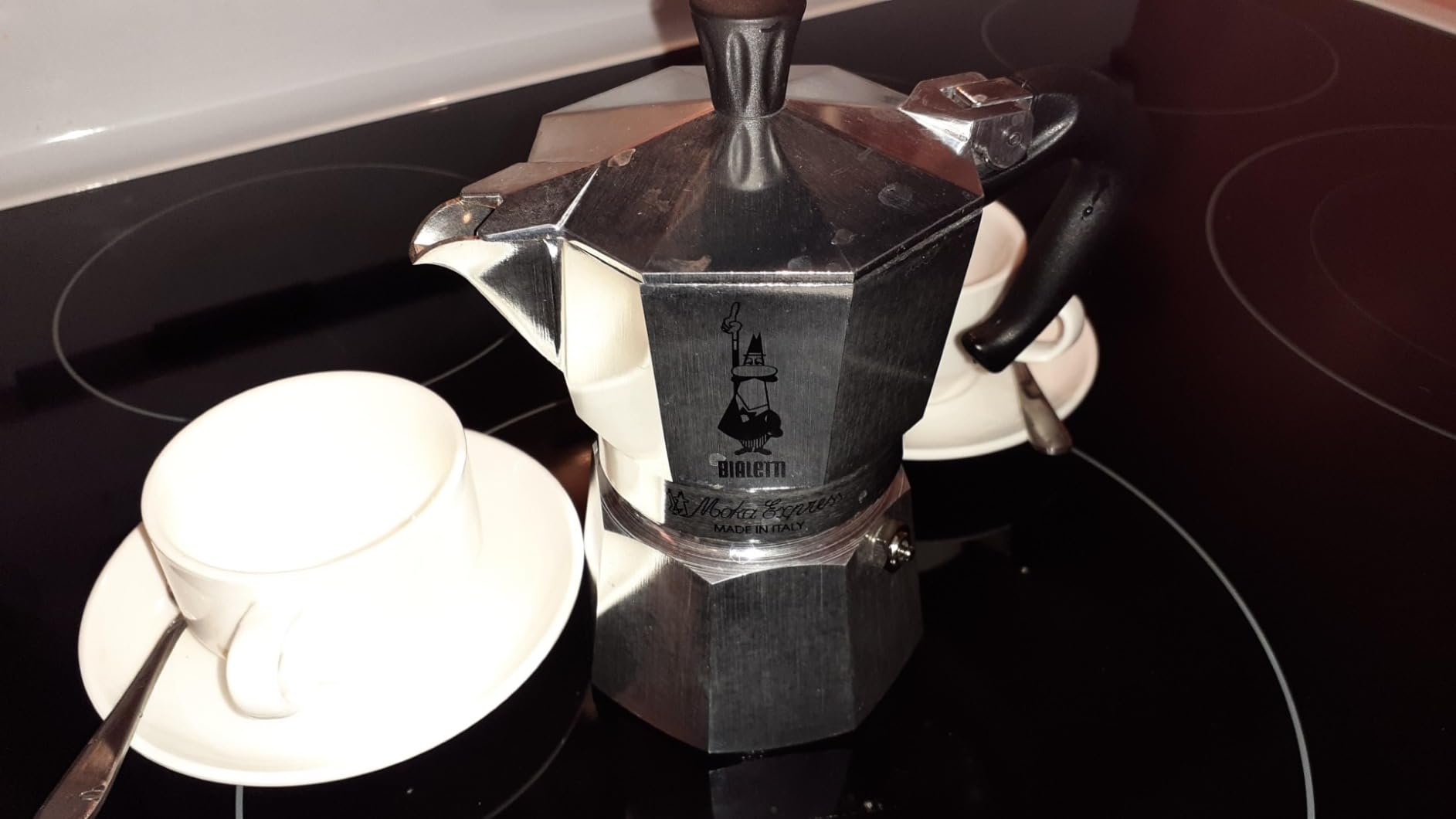
Two technique details separate a good Moka Express brew from a disappointing one. First, keep the heat low to medium. A roaring flame scorches the grounds before the water finishes extracting, and that is where the bitterness comes from. Second, take the pot off the heat the moment the first gurgle starts, because the coffee that follows is what turns a good cup harsh.
On the seasoning question: the manufacturer is clear that this pot should be rinsed with plain water only, no detergent and no dishwasher, because the protective film that builds up inside is what keeps the aluminum from tasting metallic. Forum brewers add that boiling your water first and starting with a paper filter lets you skip the throwaway seasoning brews entirely and get a clean cup on the first try.
Who the Moka Express suits
It suits anyone who wants the classic Italian ritual with zero learning curve. If you have a gas or electric coil hob, a rinse-only habit, and a preference for a small concentrated serving rather than a big mug, this is the safest purchase on the list. The accessory ecosystem is the best of any pot here, so a replacement gasket or the induction adapter plate is easy to source.
Where it falls short
It is the wrong choice on an induction cooktop without buying a separate adapter plate, and the handle stays hot regardless of care. It also produces concentrated coffee rather than true espresso pressure, so if you are chasing crema with a 58 mm double shot, this is not the tool. For those cases our home espresso machine roundup is the better read.
2. Bialetti Venus Induction 4-Cup: Best for Induction Cooktops
- Works on gas electric and induction
- 18/10 steel avoids metallic taste
- Compact 4 cup size suits one household
- Reusable filter
- 18/10 steel body is not magnetic
- No detergent or dishwasher allowed
- 4 cup yield is espresso sized only
If your kitchen has a glass induction hob, this is the pot that removes the biggest barrier to switching. Unlike a standard aluminum moka pot, the Venus Induction has an 18/10 stainless steel body and a base that responds to magnetic cooktops, so it heats on gas, electric, and induction without an adapter plate. The stainless build also means no metallic note in the cup, which is the second complaint we hear most about aluminum models.
The 5.7 oz output is genuinely small. That is fine for one person or a couple who each drink one espresso-sized serving, and it is a real advantage over larger pots that sit going cold. Buyers rate it solidly in the mid fours, and the recurring notes are about the size of the yield and the strict rinse-only cleaning rule rather than the brew itself.
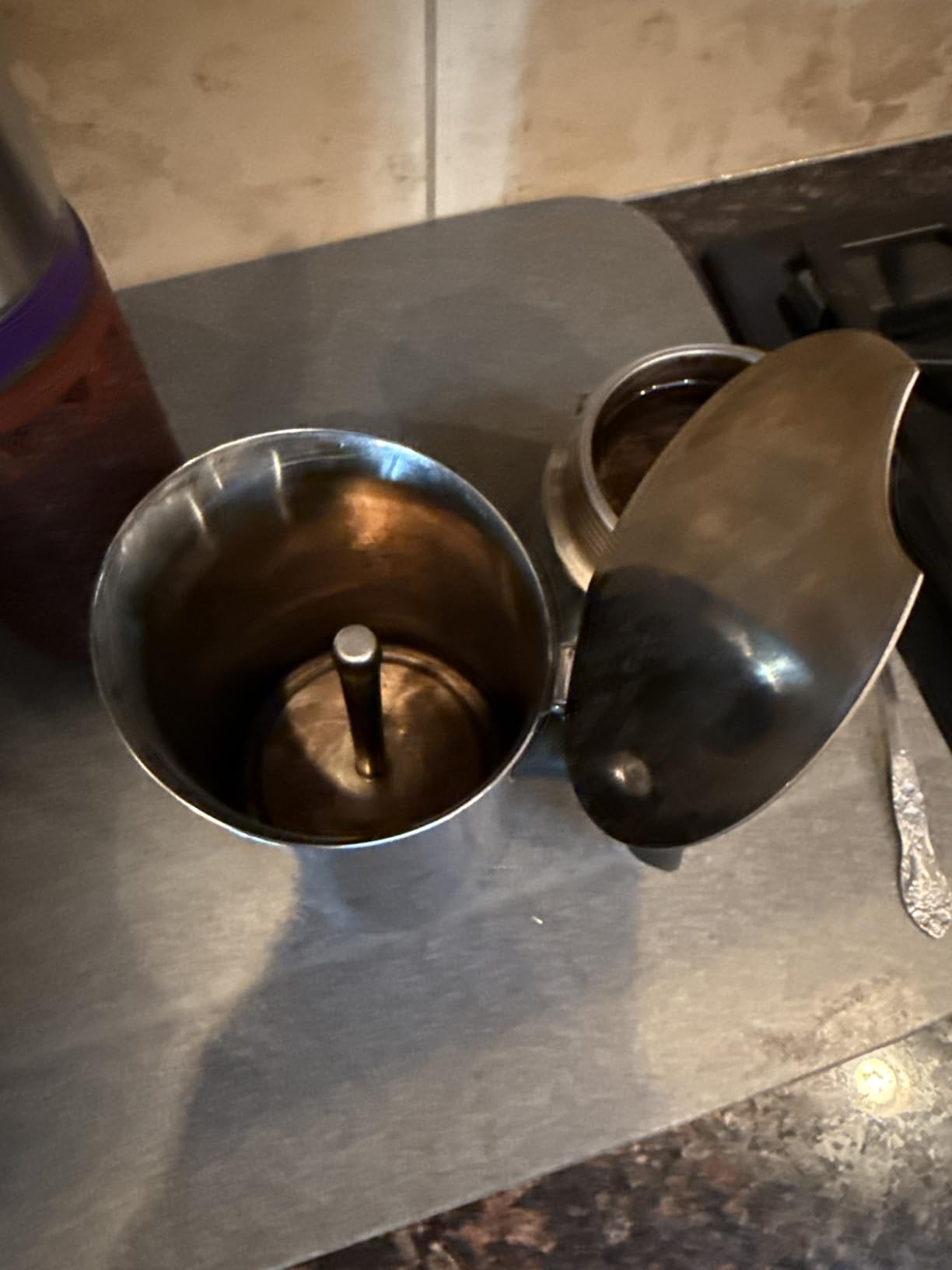
Stainless steel changes the brewing math slightly in a good way. Because the body holds and spreads heat more evenly than thin cast aluminum, extraction is more consistent from batch to batch, and reviewers mention the taste cleans up noticeably in small brews. You still follow the same rules: fill to the safety valve, do not tamp the grounds, and pull the pot off as soon as it gurgles.
One technical point worth understanding, because it confuses buyers. Plain 18/10 steel is not magnetic, so induction versions use a different base construction specifically to trigger the cooktop. That is why you can find stainless moka pots advertised as induction-compatible and others that plainly are not, with otherwise identical bodies. If induction is a requirement, treat the cooktop compatibility as the deciding spec, not the steel grade alone.
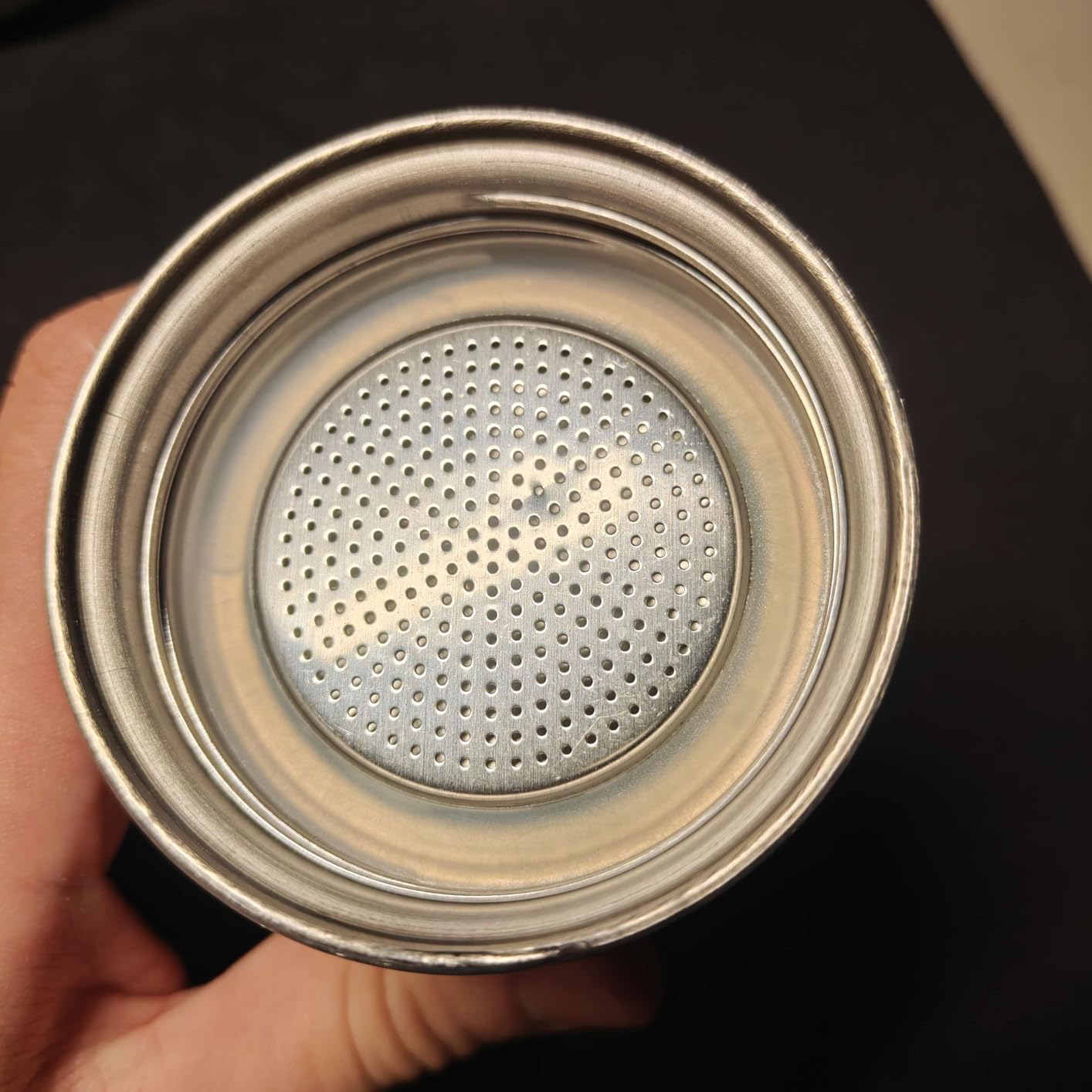
Who the Venus Induction suits
It suits single drinkers and couples on induction kitchens who want a pot that also works on gas as a backup. The no-metallic-taste stainless body makes it the taste upgrade over the classic aluminum Express, and the compact footprint stores easily in a small cupboard. It is also the one Bialetti pot that needs no adapter plate to go from kitchen to camping stove.
Where it falls short
The 4 cup marking will disappoint anyone expecting four mugs, and the rinse-only rule means you cannot put it in the dishwasher even though steel usually invites that idea. It also carries a one year manufacturer warranty, which is thinner than the two years on Bialetti’s Moka Induction. If you brew for a household rather than for yourself, size up instead.
3. GROSCHE Milano 3-Cup: Best Value Pick With a Burn-Guard Handle
GROSCHE Milano Stovetop Espresso Maker Moka Pot 3 espresso Cup, 5 oz White
- Burn-guard soft touch handle stays cool
- Silicone gasket in standard 3 cup size
- Works on propane camping stoves
- Available in many sizes and colors
- Aluminum body heats slowly on induction
- Dishwasher not recommended
- 3 cup output suits one or two drinkers
The Milano fixes the two things that make cheap moka pots frustrating: a handle you can actually hold and a gasket you can replace. The soft touch burn-guard handle stays comfortable through a full brew, which removes the single most common safety complaint in this category, and the silicone gasket uses the standard 3-cup sizing that fits replacement parts from other brands. Reviewers consistently name both details as the reason this pot punches above its class.
It weighs just under 5 ounces and measures a little over 2 inches at its widest point, so it is genuinely portable. We brewed with it on gas, electric, and a propane camp stove without issue, and the stone finish gives it a grippier surface than bare polished aluminum. The 5 oz yield is one large or two small espresso servings, which is honest for a pot this size.
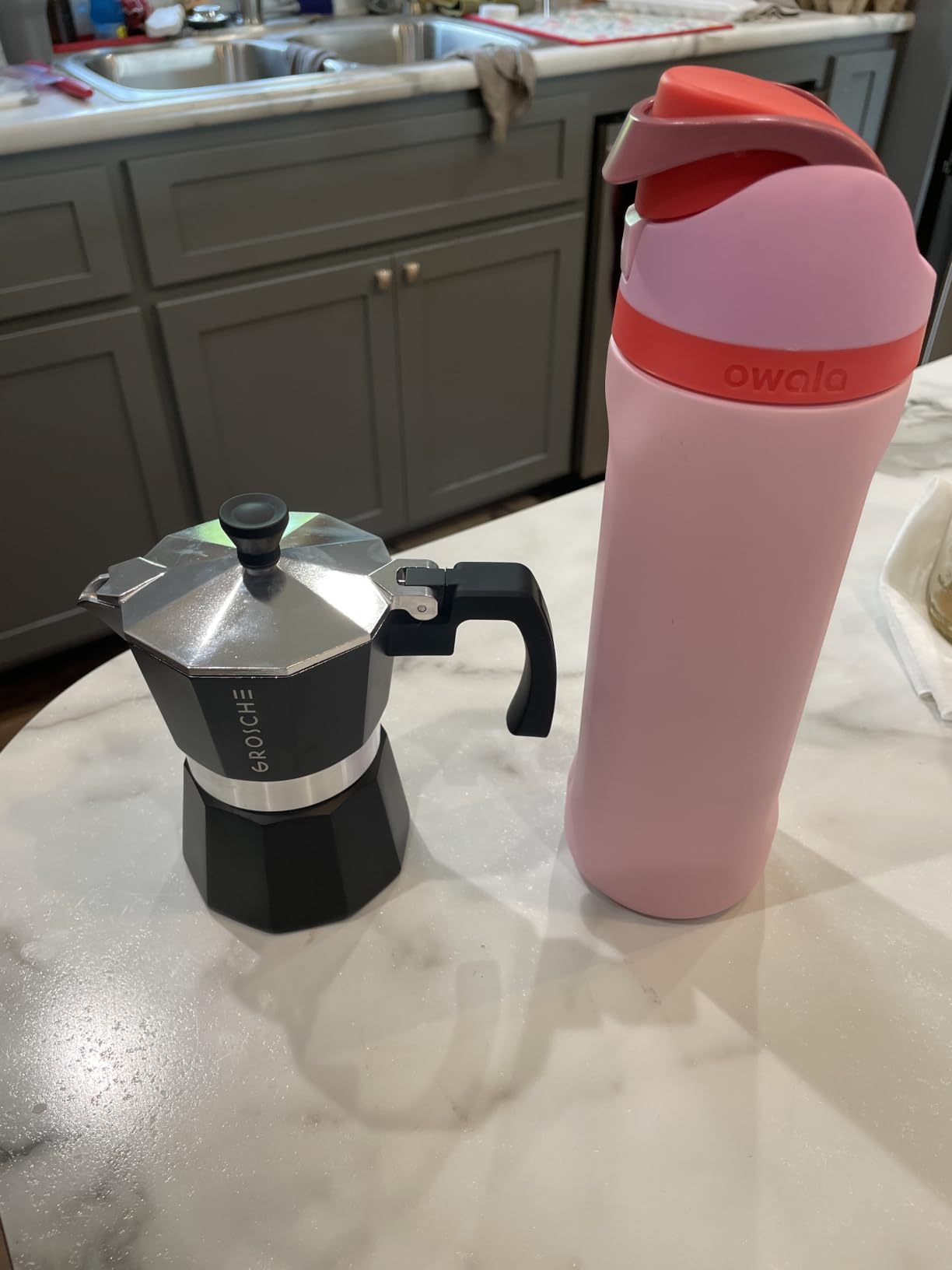
Heat control is where this pot rewards care. The thin cast aluminum body comes to temperature quickly but tolerates a hard flame badly, so medium heat from the moment it goes on produces a noticeably sweeter cup. The included safety valve regulates internal pressure, and the manufacturer notes the pot also steams milk for lattes, which is a nice bonus for anyone who wants a one-pot breakfast station.
The one limitation reviewers name most is induction. Because the body is aluminum and not magnetic, the pot technically works on a glass induction surface but heats very slowly, which in practice means a long wait and uneven extraction. GROSCHE does make dedicated induction models in the same line, so if induction is your situation, choose that version rather than this one.
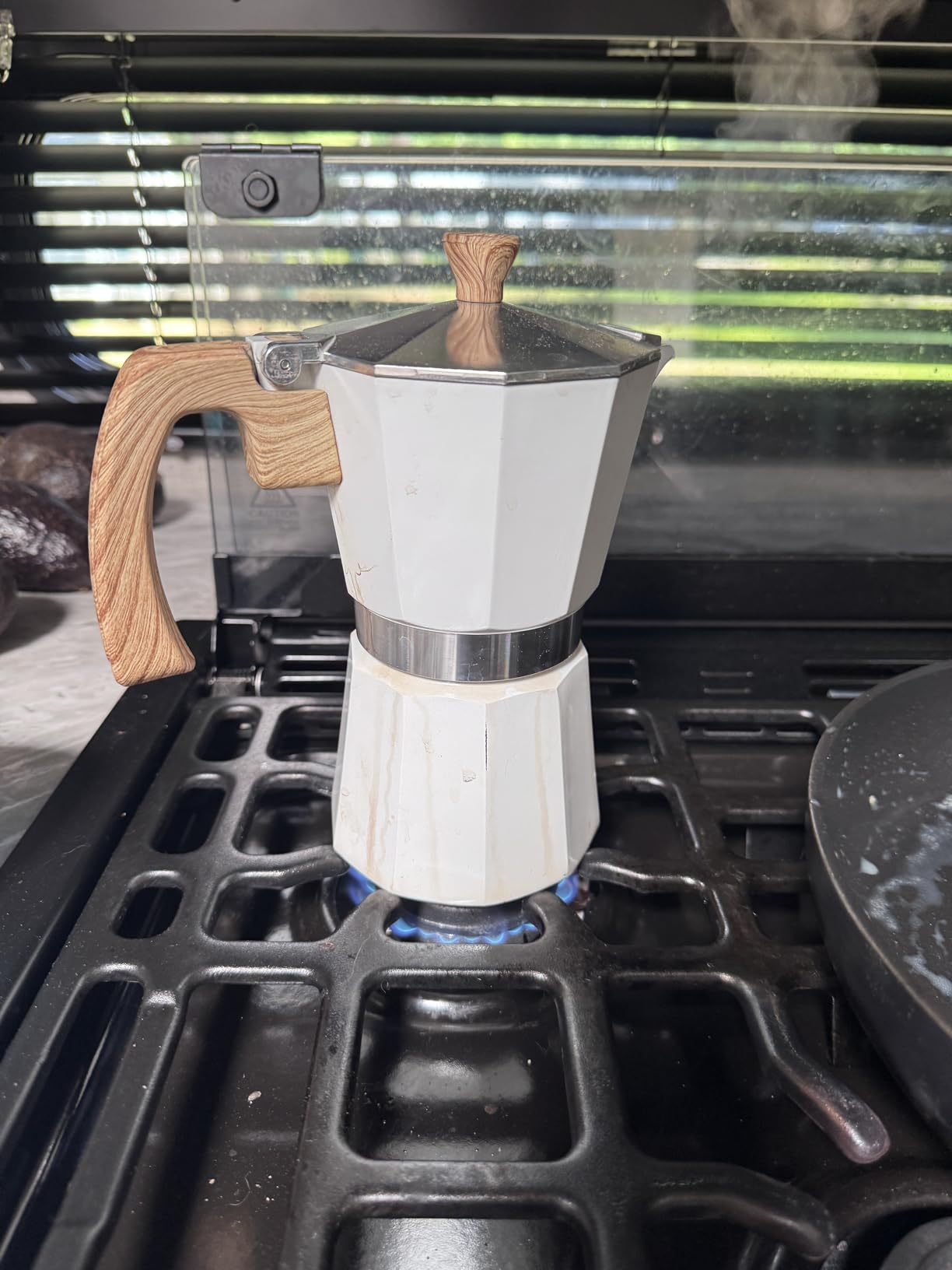
Who the Milano suits
It suits a first-time moka pot buyer and anyone who has bounced off a cheap pot because the handle was too hot to hold. The standard gasket sizing also suits anyone who wants to keep spare parts cheap and interchangeable, and a package includes a milk frother for making drinks beyond straight espresso.
Where it falls short
Three cups is a small yield, and the anodized body should stay away from the dishwasher. On induction it will work but heat so slowly that we would not recommend it as a daily driver. If you brew for more than one person most mornings, the six cup options in this roundup serve you better.
4. Bialetti Moka Induction 2-Cup: Single-Serve Induction Brewing
Bialetti – Moka Induction, Moka Pot, Suitable for all Types of Hobs, 2 Cups Espresso (3.4 Oz), Red
- First Bialetti pot built for induction
- Steel boiler gives a magnetic base
- Two year manufacturer warranty
- Fast single-serving brew
- Very small 2 cup capacity
- Costs more than same-size aluminum pots
- Rinse only with no dishwasher
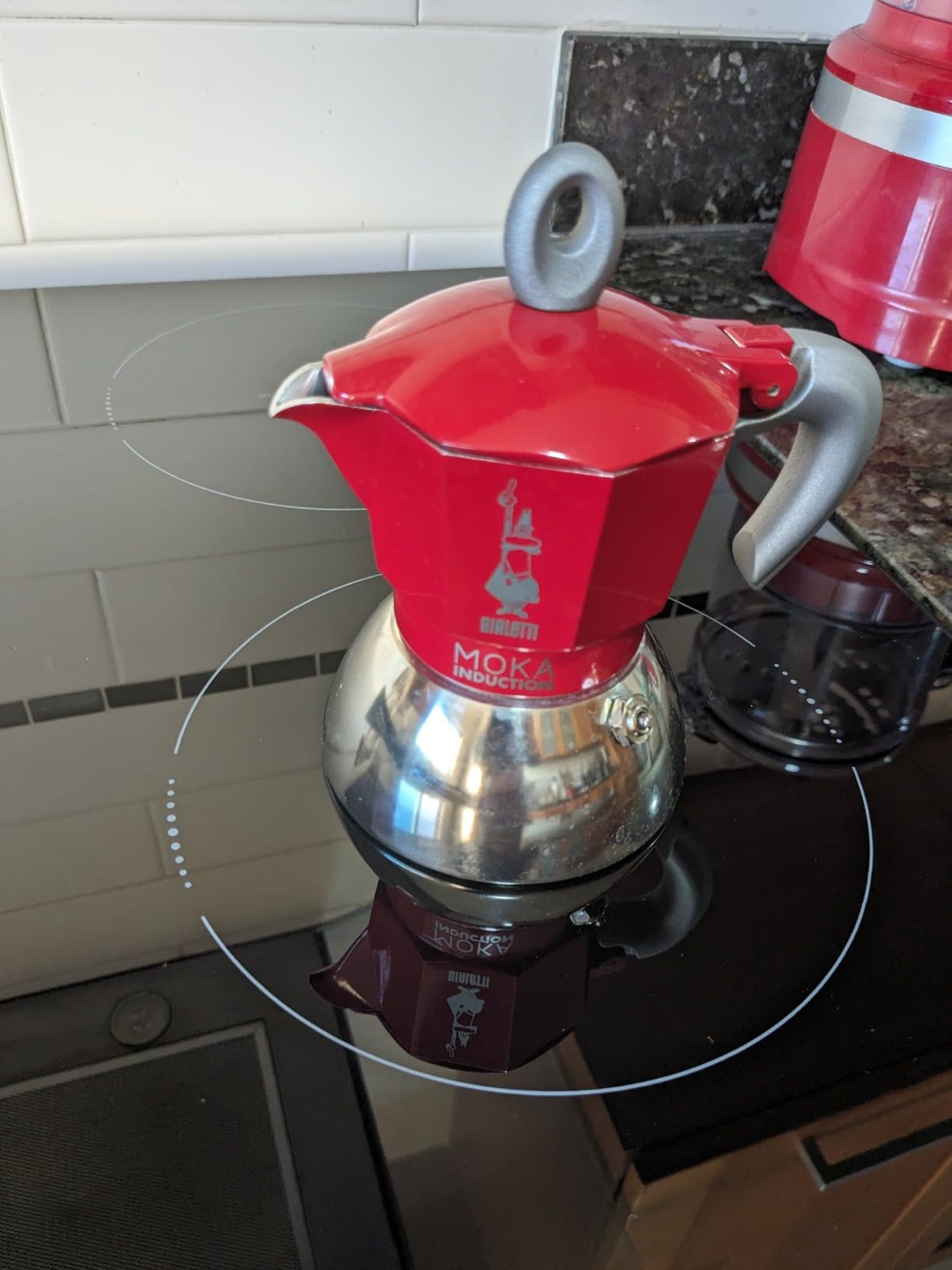
This is Bialetti’s answer to the induction problem, and the engineering is more interesting than the name suggests. The upper chamber is the same aluminum as the classic Moka Express, so the brewing geometry and flavor stay familiar, while the lower boiler is stainless steel, which is what makes the base respond to a magnetic cooktop. Made in Europe by the same company that has been making the pot since 1933.
Owners value the genuine induction capability, because most aluminum moka pots either refuse to work on induction or need a separate plate. Feedback highlights a strong, consistent 2 cup brew and the build quality, with the practical trade-off being the very small serving size. At 3.4 oz you are making one large espresso or two small ones, nothing more.
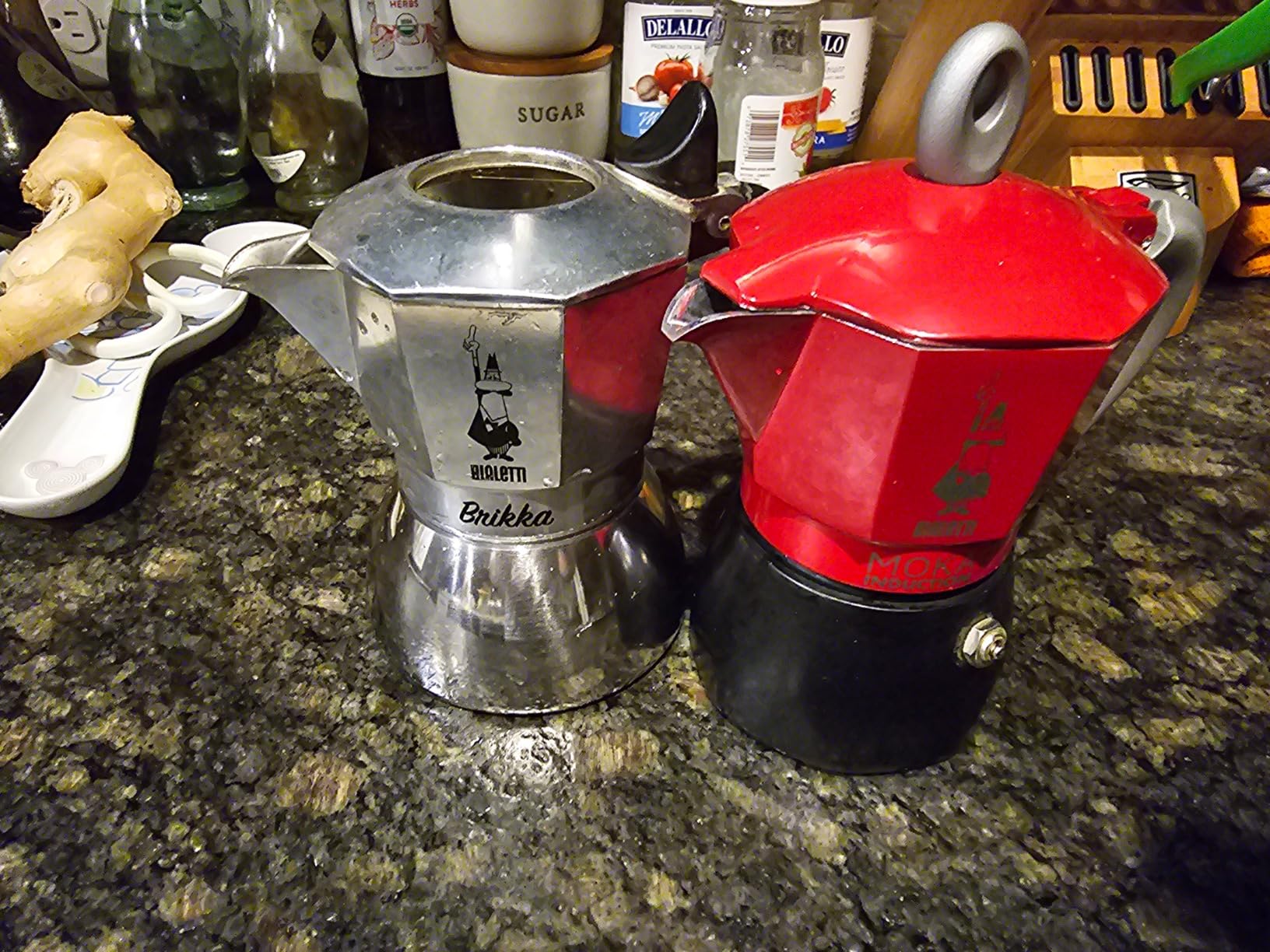
Brewing is the familiar routine: water to the safety valve, grounds filled but not pressed, and off the heat the moment it gurgles. The two year warranty is the longest coverage in this roundup, which matters for an induction buyer who is spending more than a comparable aluminum pot costs. It is a small but real quality signal.
The realistic use case is one person, one drink, most mornings. That is a genuine strength rather than a compromise, because a small pot brews faster and the coffee arrives fresh instead of sitting. Forum regulars note that oversized pots are the most common source of stale, over-extracted coffee, and this pot simply avoids the problem by not being able to make too much.
Who the Moka Induction suits
It suits a solo drinker on an induction cooktop who wants Bialetti flavor in the smallest sensible pot. The steel boiler means no adapter plate to buy and no burner disc to carry on a trip, and the two year warranty gives it the strongest coverage here. It is also a good first Bialetti, since the brew behavior matches the larger models.
Where it falls short
Two cups is not enough for two people who each want a full mug, and it costs more than the same-size aluminum pots in this list. The rinse-only cleaning rule also applies, with no detergent and no dishwasher. If you are brewing for a partner as well, the 4 cup Venus is the closer fit.
5. Primula Classic 6-Cup: Best for Brewing for Two or More
- Cast aluminum spreads heat evenly
- Flip-top lid with heat-resistant knob
- Portable across every stovetop type
- One year limited warranty
- Handle can melt if a flame reaches the sides
- Some reports of mid-section leaks when pouring
- Cast aluminum is not induction compatible
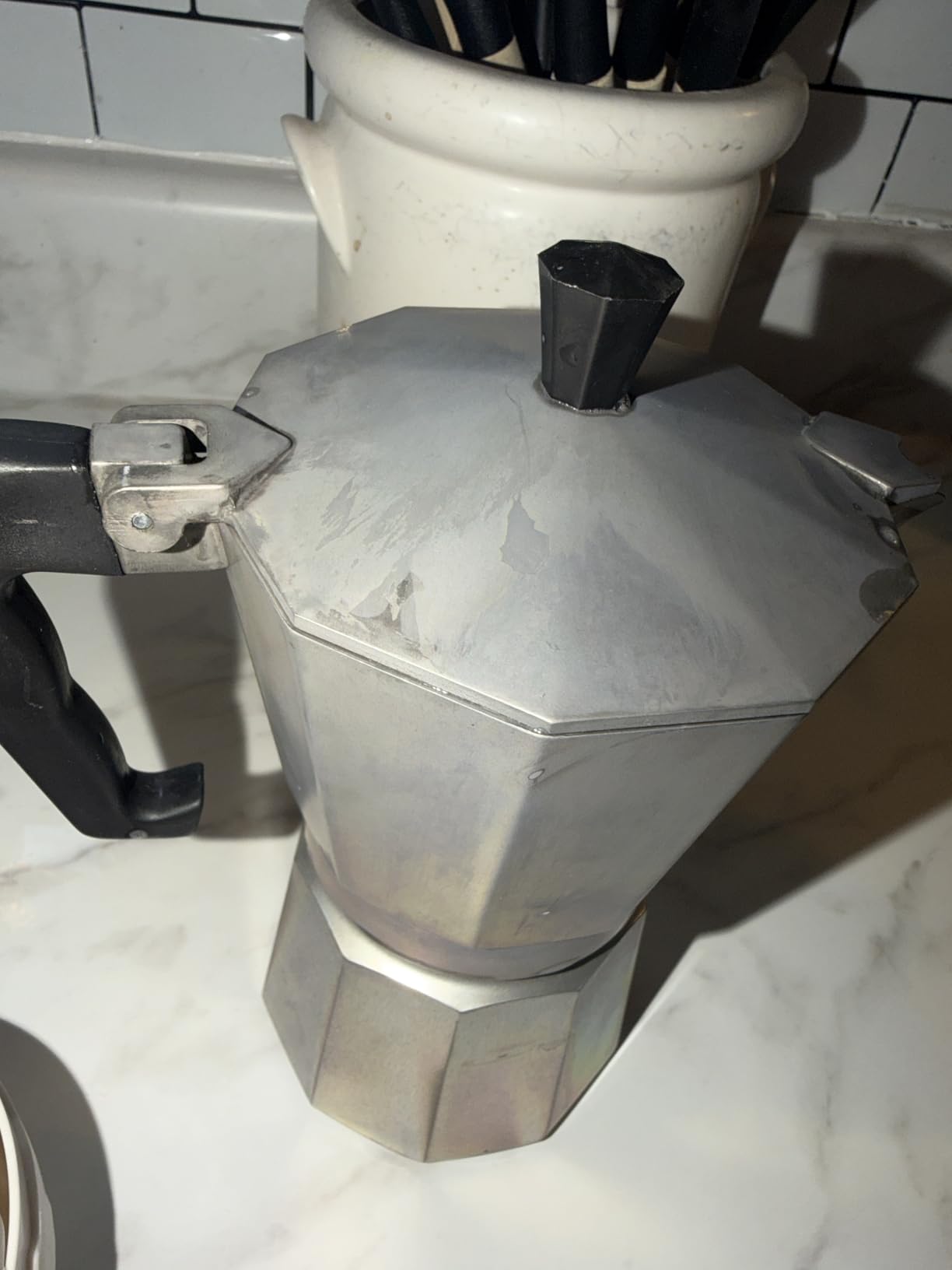
The Primula is the pot to look at if two people are drinking every morning. Six espresso-cup servings is enough to fill two proper mugs, and the cast aluminum body is heavier than the thin stamped models, which means it stores and delivers heat more evenly. It ranks second in its category for good reason, with more than 18,000 reviews behind it.
Reviewers praise the rich, cafe-style coffee, the sturdy cast feel in the hand, and how quickly it rinses clean. The most common piece of advice is to preheat the water and keep the flame small, because a flame licking up the sides of the pot is the usual cause of the reported handle damage. A minority of users also report coffee leaking through the middle section while pouring.
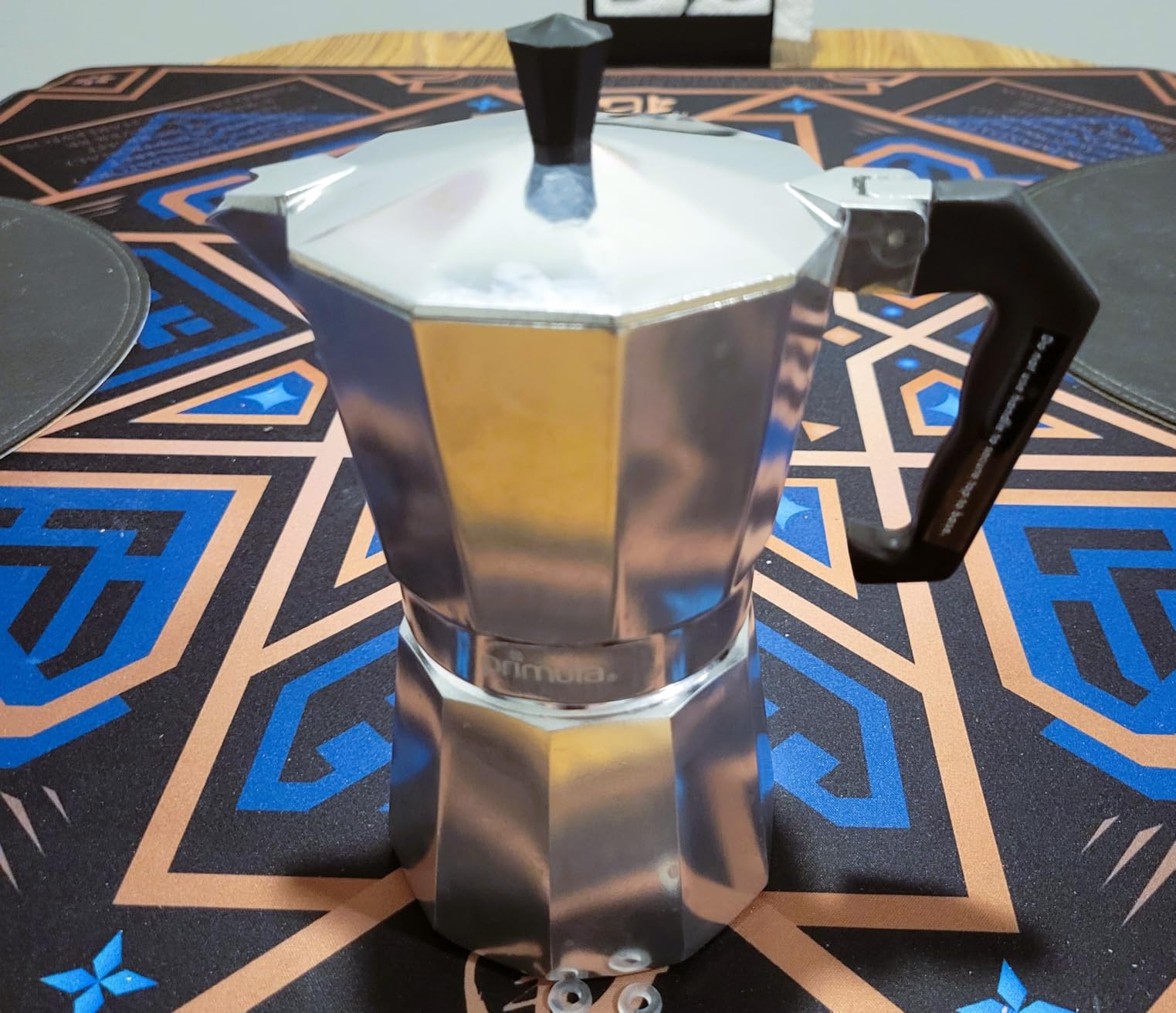
Cleaning takes seconds here. Warm water, a rinse of every component, and a dry before you reassemble. No detergent is needed and the manufacturer does not recommend the dishwasher, which preserves the internal seasoning that carries the flavor after the first few brews. The flip-top lid with its heat-resistant knob makes filling and serving straightforward.
Portability is the sleeper feature. It works on gas, electric, ceramic, and propane stovetops, which makes it a genuinely useful pot for a cabin or a camping stove as well as a home kitchen. The one thing it cannot do is induction, and there is no adapter plate listed for the cast aluminum body, so check your cooktop before committing.
Who the Primula suits
It suits households of two or more who want one pot to cover the whole morning, and anyone who prefers the heft and even heat of cast aluminum over thin stamped bodies. The across-the-board stovetop compatibility makes it the easiest choice for people who split their time between a home kitchen and a campsite.
Where it falls short
The plastic handle is vulnerable to a flame that reaches the sides of the pot, so it demands a controlled burner. The mid-section leak reports are not common but are real, and cast aluminum means induction is off the table entirely. Expect to keep the heat lower than you think you need.
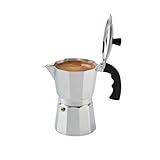
6. Imusa Aluminum 6-Cup: The Budget Starter
- Works essentially like a premium moka pot
- Cool-touch bakelite handle and knob
- Compact and portable for camping
- Flavor improves as the pot seasons
- 6 cup marking really means about 6 oz
- Small gasket can leak slightly
- Spout is narrow and dribbles
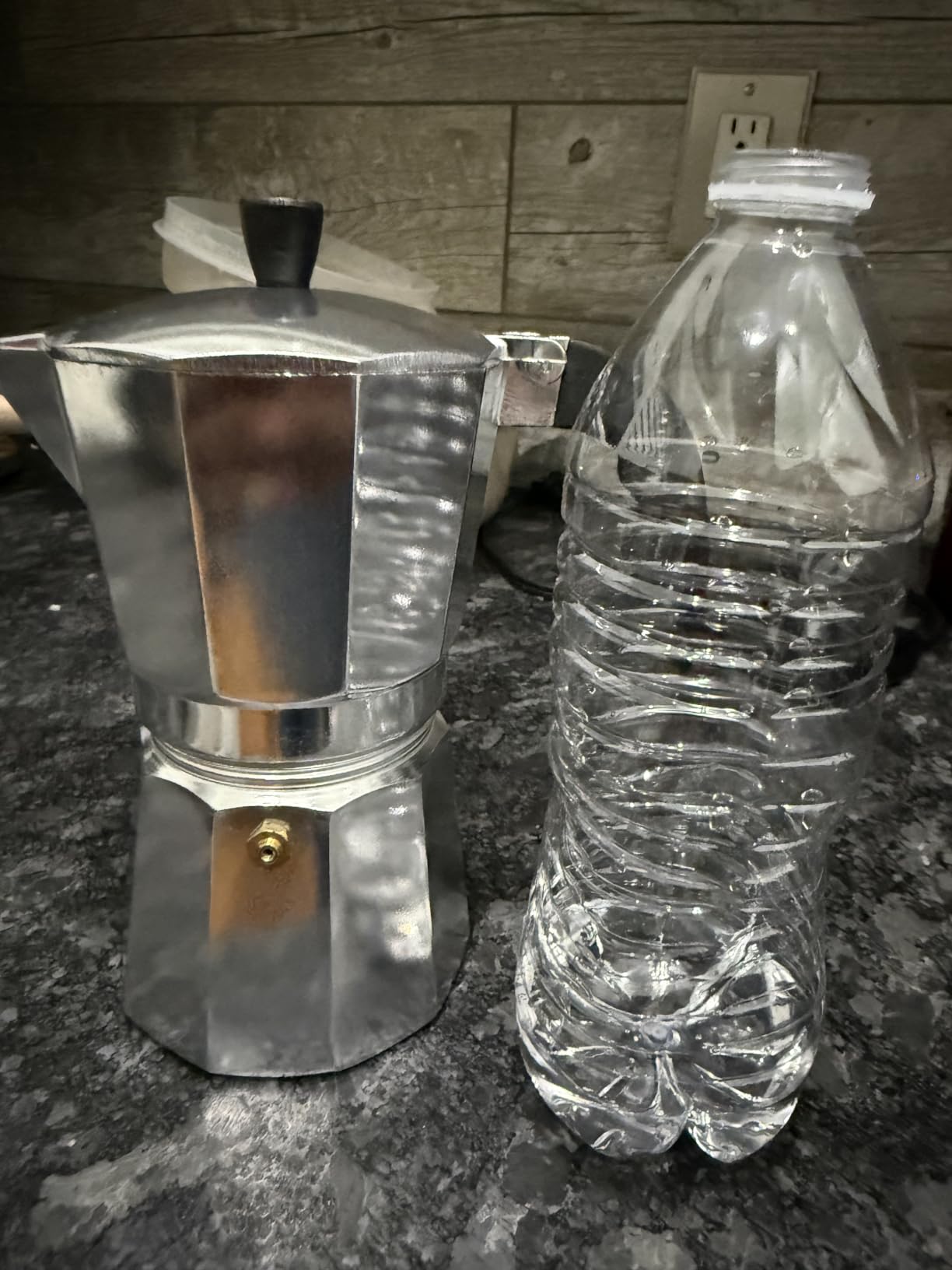
The Imusa is the pot we recommend when someone asks what a moka pot costs. Owners frequently call it the best value in the category, noting that it brews essentially like a Bialetti for a fraction of the outlay. The flip-up lid and side pour spout make serving simple, and at just over 13 ounces it is light enough to move with one hand while brewing.
The critical caveat is capacity, and it is the same one that catches out most buyers. The 6 cup marking refers to espresso cups, which in practice means roughly 6 oz of coffee in total, closer to one small mug than six servings. Owners also note a small silicone gasket that can leak a little during brewing, and a narrow spout that tends to dribble rather than pour cleanly.
Seasoning does real work on this pot. Reviewers report that the flavor improves noticeably after several brews as the internal film builds up, and that the metallic note fades with it. The same rinse-only care rule applies to aluminum models: plain water after each use, no detergent, and no dishwasher.
The cool-touch bakelite handle and knob are the quiet strength here, because they stay comfortable to grip during and after brewing, which is not something you can say for many aluminum pots at this level. It fits gas, ceramic, and electric coil stovetops, so it is a safe first stove brewer, but it is not magnetic and will not work on induction.
Who the Imusa suits
It suits first-time buyers, students, and anyone who wants to test whether a stovetop pot fits their routine before spending on stainless steel. It is also a good travel and small-kitchen option, weighing very little and packing flat. If you like the ritual and want to move up later, this is a safe place to start.
Where it falls short
The capacity labeling is the big one, and the narrow spout and slightly leaky gasket are the small daily annoyances. Lightweight aluminum also feels less substantial than the cast or heavy-based pots, and the included warranty is short at 30 days. Budget is not a reason to skip checking your stove type first, since induction will not work at all.
7. Easyworkz Diego 6-Cup: Dishwasher-Safe Stainless Steel
Easyworkz Diego Stovetop Espresso Maker Stainless Steel Italian Coffee Machine Maker 6Cup 10 oz Moka Pot Induction Espresso Pot
- Genuinely works on induction cooktops
- Dishwasher safe unlike most aluminum pots
- No plastic parts that can melt
- Reducer included for smaller brews
- Lid knob gets hot enough to need a towel
- Lip at the base of the chamber traps grounds
- Threads can be stiff and hard to seal
The Diego solves two problems at once: induction compatibility and cleaning. The body is 18/8 stainless steel with a heavy gauge magnetic base, so it genuinely heats on gas, induction, and electric without an adapter, and unlike almost every aluminum pot in this roundup it is dishwasher safe. The 300 ml yield is a true six espresso cups, enough for two full mugs, and a reducer is included if you want to brew less.
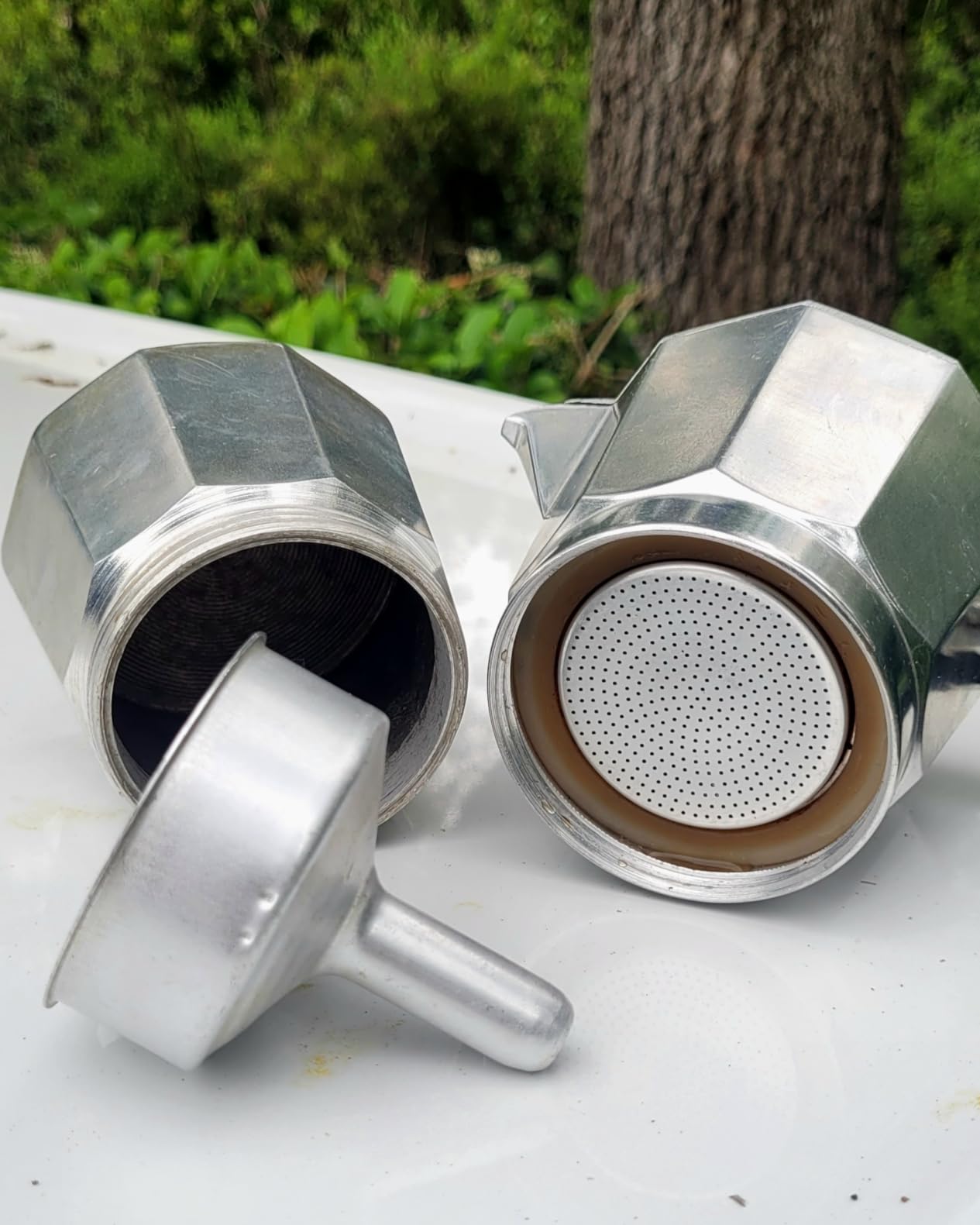
Owners highlight the induction base, the total absence of plastic that could melt near a flame, and a brew time under five minutes. The suggested dose is 25 grams of fine ground coffee for the full 6 cup batch. The most cited negatives are the metal lid knob getting hot enough to need a towel, a lip at the bottom of the chamber that traps grounds, and some reports of stiff threading during assembly.
Because the walls are steel, this pot holds heat well after brewing, so a full batch stays drinkable while the second cup is poured. That is a genuine advantage over thin aluminum when you are making two mugs at once. The hollow insulated lid and grip handle are also designed to keep your hands away from the hottest part of the body.
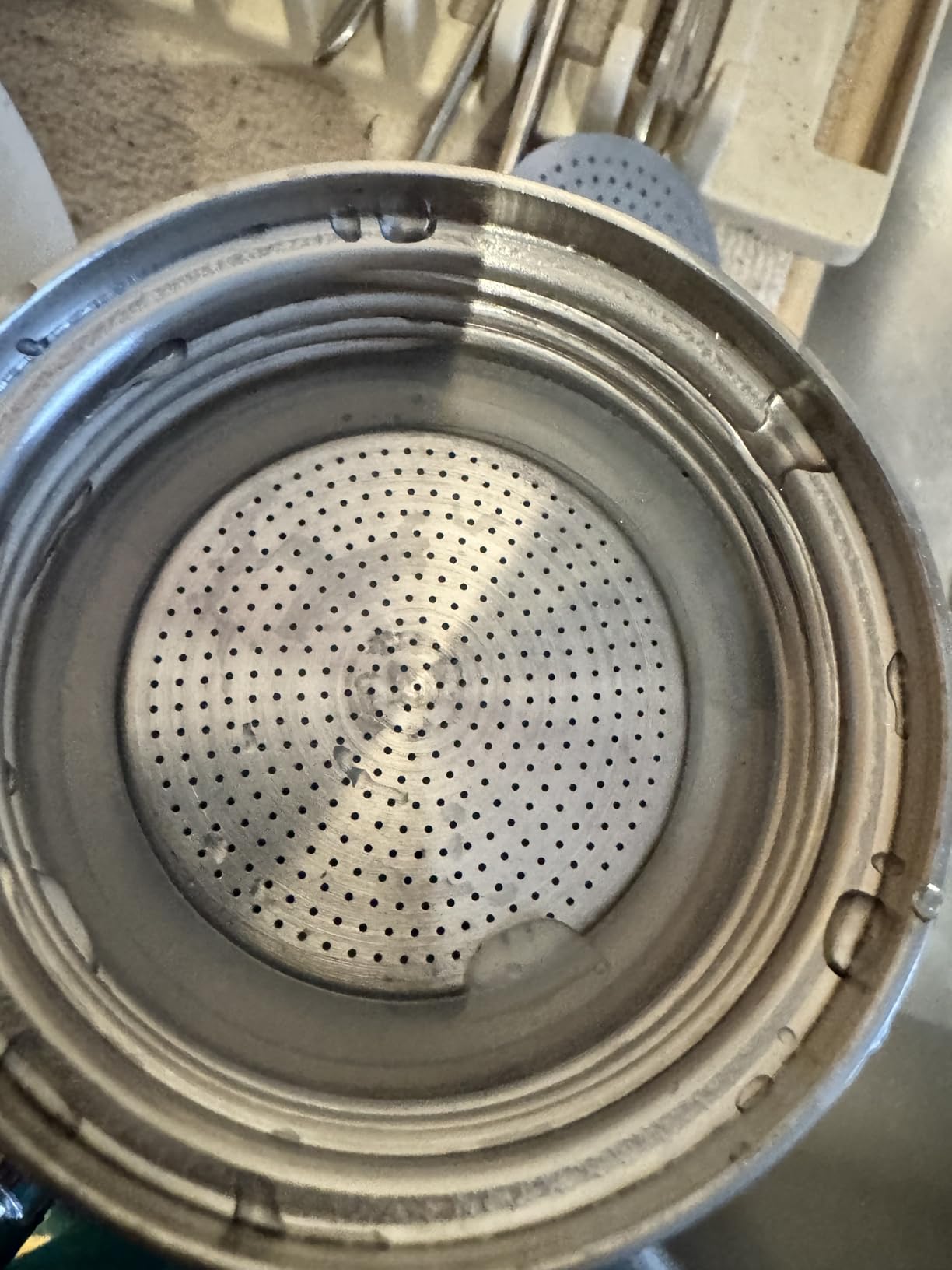
One practical note: fine grinds need a little care here. The reusable filter is straightforward, but over-filling or tamping will still produce a bitter cup, and the base lip that catches grounds is worth rinsing under the tap immediately after the brew while it is still warm. Disassembly is otherwise straightforward thanks to the smooth thread finishing.
Who the Diego suits
It suits induction households, small kitchens, and anyone who wants to put the pot in the dishwasher instead of treating it like a delicate aluminum piece. The absence of plastic parts also makes it the safest pick to leave on a burner without a towel in hand, and the 24 month service coverage is reassuring for a steel build.
Where it falls short
The lid knob runs hot and a towel is the realistic fix. The base lip that traps grounds is a real cleaning chore, and stiff threads can make assembly and sealing frustrating the first few times. It is also the heaviest pot in this roundup at just over 2 pounds, which matters if you plan to carry it while camping.
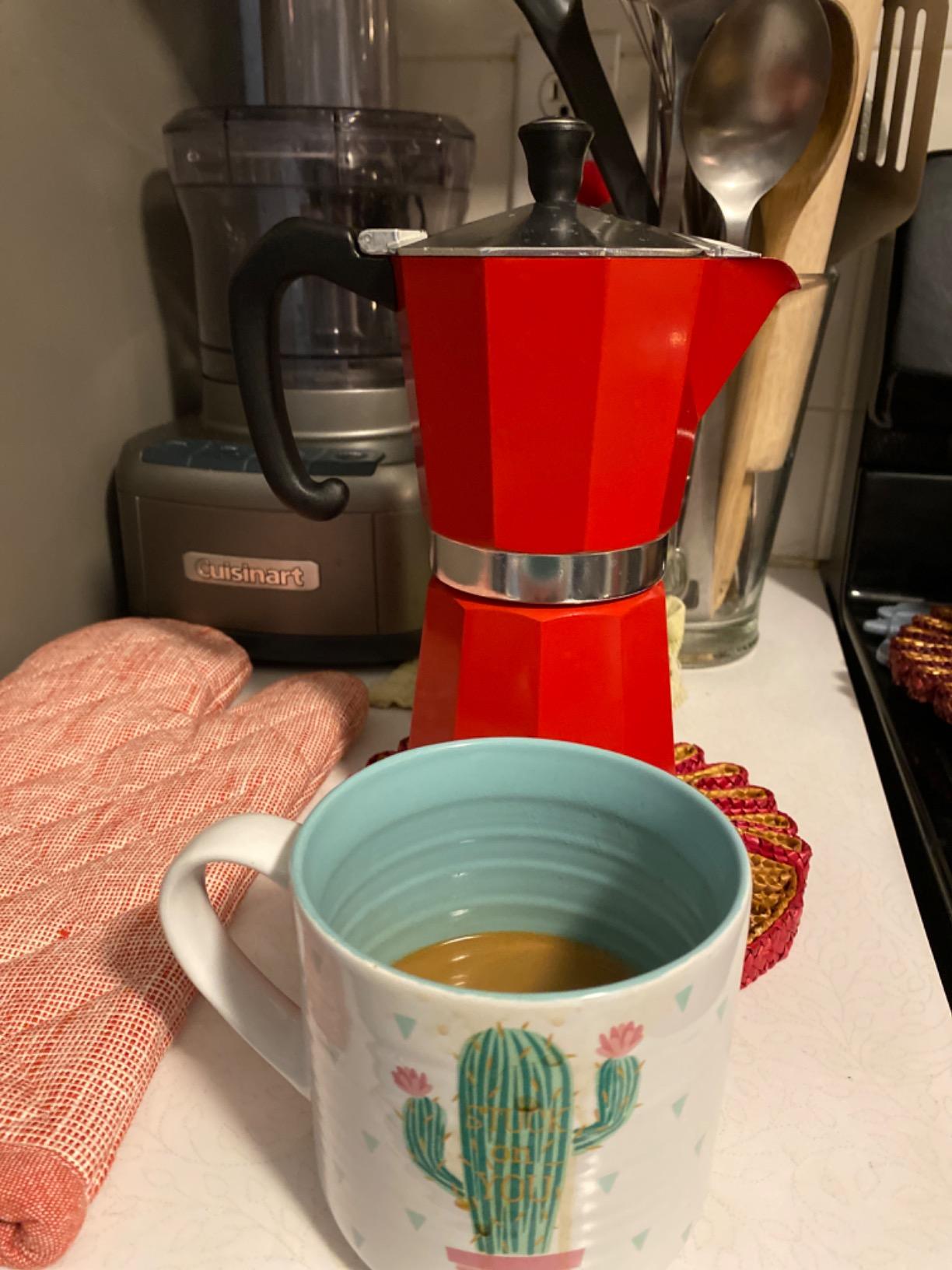
8. Bellemain Stovetop 6-Cup: Heavy Weighted Base and Stay-Cool Hardware
- Heavy base heats quickly and evenly
- Stay-cool handle and lid knob
- Simple screw-on assembly
- Works with any roast level
- Some units reported breaking after months
- Interior finish can wear with extended use
- Not induction compatible
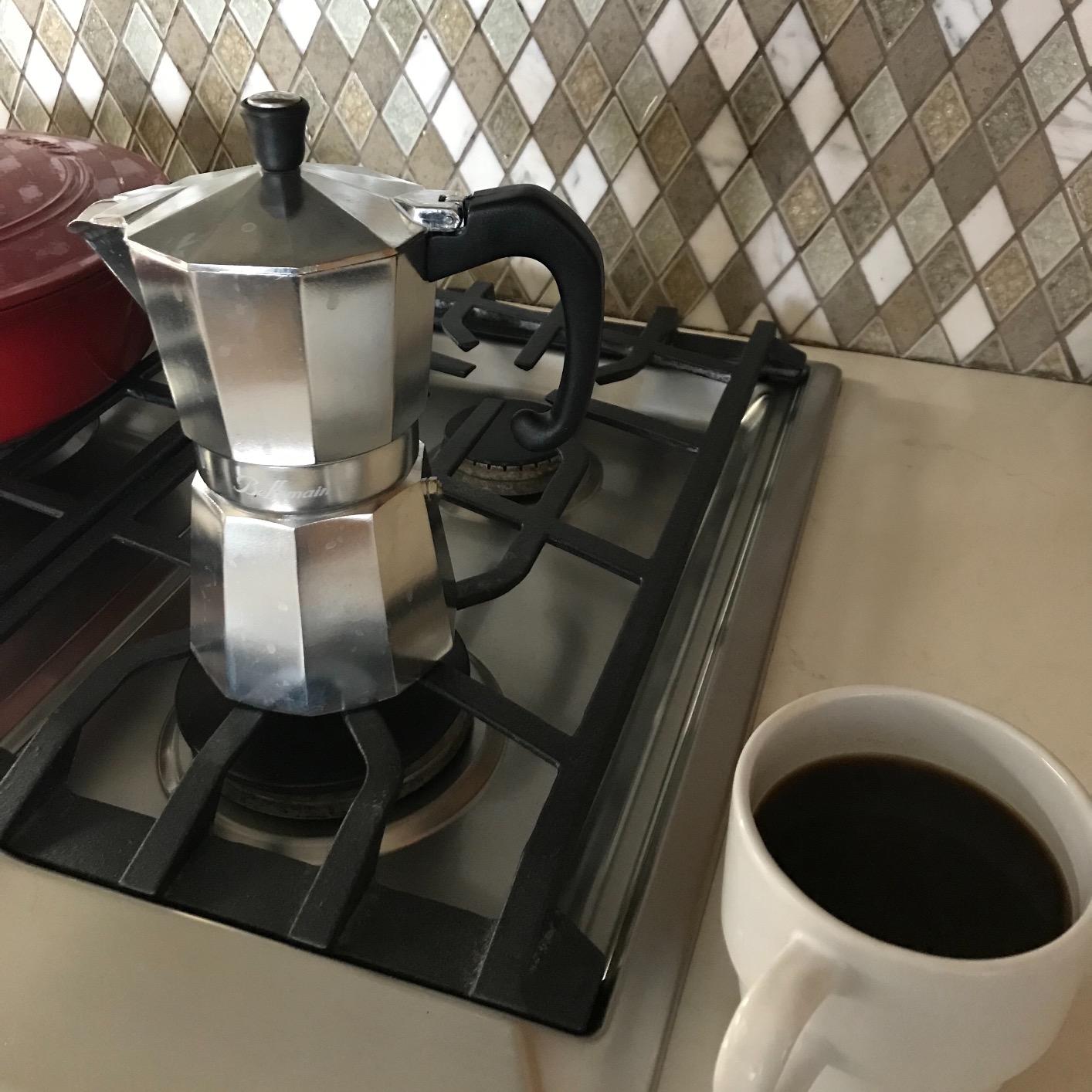
The Bellemain is the one pot here where the hardware is the selling point. The heavy weighted base is what separates it from the thin stamped models: it comes to temperature faster and spreads it more evenly across the base, which is the difference between an even extraction and a scorched layer at the center. On top of that, the stay-cool handle and lid knob reduce burn risk more than most aluminum pots manage.
It produces up to six demitasse cups at 2 oz each on any gas or electric stovetop, and the safety valve regulates internal temperature during brewing. Users like experimenting with different roast levels and grind settings here, since the even heat gives them a forgiving base to work from. The minimalist Italian look is a matter of taste, but the pot is visually understated compared with the more decorative alternatives.
Durability is the caveat. A minority of reviews report the pot breaking after several months of use, and others describe the interior finish wearing down with extended brewing, which can bring back a metallic taste that a seasoned pot would not have. Several users suggest brewing it several times when new to clear any initial metallic note before judging it.
Assembly is a simple screw-on with no complicated parts, and the basket is easy to reach for cleaning. One thing to be aware of is moisture: if the filter basket sits wet, it can be stubborn to pull free, so air the components separately rather than reassembling the pot straight after a rinse.
Who the Bellemain suits
It suits a brewer who wants to fiddle with grind size and roast and appreciates an even, predictable heat source. The stay-cool handle and lid mean you can lift and pour without a towel, which is unusual in aluminum at this price, and the weighted base makes it stable on a gas burner with a wide flame.
Where it falls short
It is not induction compatible, and the durability reports are the main reason this pot does not rank higher. Interior finish wear can also undo the seasoning that keeps aluminum tasting clean. Buy it for the even heat, but check the finish periodically, particularly if you brew several times a day.
9. Mixpresso 3-Cup: Best for Camping and Small Kitchens
Mixpresso 3 Cup Moka Pot Stovetop Espresso Maker, Italian Cuban Coffee Pot
- Finger-grip handle gives secure control
- Weighs only 0.34 kg for travel
- Brews in 3-5 minutes on medium heat
- Works on gas electric or camping stoves
- Aluminum body is not induction compatible
- Hand wash only and not dishwasher safe
- 3 cup yield is espresso sized
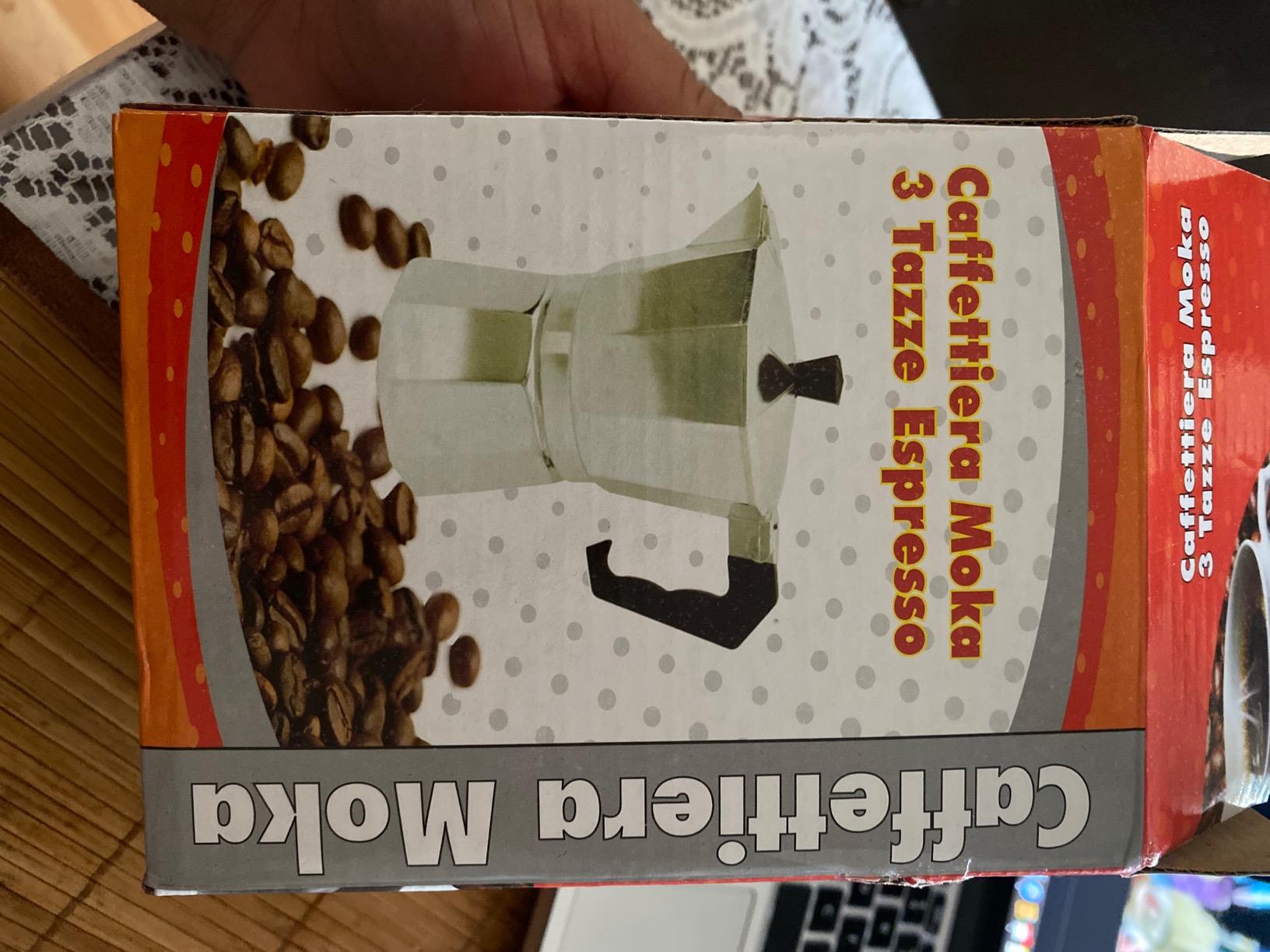
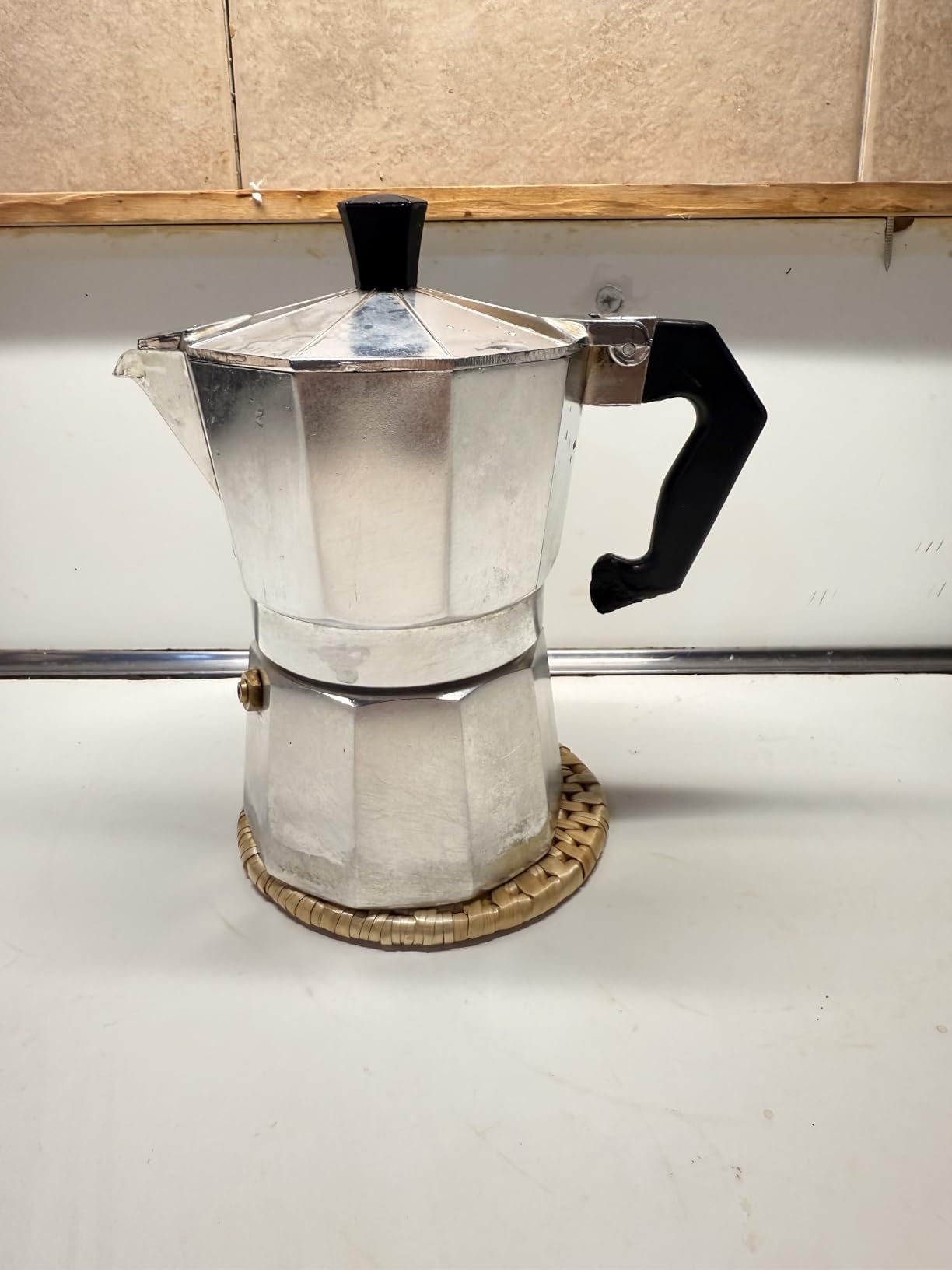
At 0.34 kg, the Mixpresso is the pot we would actually pack. The 3 cup output makes a strong cafetera cubana in three to five minutes on medium heat, which is fast enough for a campsite or a small break room, and the finger-grip handle gives you real control while lifting it off a burner. The eight-sided octagonal aluminum body is the classic shape, which diffuses heat and supports the aroma profile users describe.
Satisfaction centers on getting a genuinely strong, fast cup with very little fuss. The distinctive shape and the handle come up repeatedly as good handling features. The recurring limitation is capacity, since three cups of espresso-sized output is not a family serving, and cleaning is soap and water by hand rather than a dishwasher cycle.
Medium heat is the instruction that matters most. Fill the base to the safety valve, fill the filter with ground coffee without pressing it down, and keep the flame moderate. Running a hard flame to the end of the boil is what produces the syrupy, burnt cup that people associate with moka pots in general rather than with this one in particular.
It is also a decent pot for a first apartment, where counter space and cabinet depth are limited. At 3 inches deep and 6 inches tall it stores easily, and the compact size means the brew finishes while you are still getting dressed. Washing it by hand takes less than a minute and there is no electronics involved.
Who the Mixpresso suits
It suits campers, travelers, and anyone with one or two espresso cups to make. The low weight and secure grip make it the easiest to handle over an open flame, and it works on gas, electric, or a portable camping stove. It is also a good first pot for a renter who wants a moka pot without a large footprint.
Where it falls short
Three cups is genuinely small, and the pot is not induction compatible, so a glass cooktop rules it out entirely. Hand washing only is fine outdoors but less convenient in a busy kitchen. If your mornings involve more than one person, this is a pot for a second pot rather than your only one.
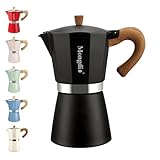
10. Mongdio 6 Espresso Cup: Best Handle Comfort and Easy Care
- Wood-style handle stays cooler than metal
- Built-in safety valve regulates pressure
- Food-grade cast aluminum body
- Sizes available from 3 to 12 cups
- Can spill unless the lid is cracked open
- Several parts trap oil and need thorough drying
- Not induction compatible
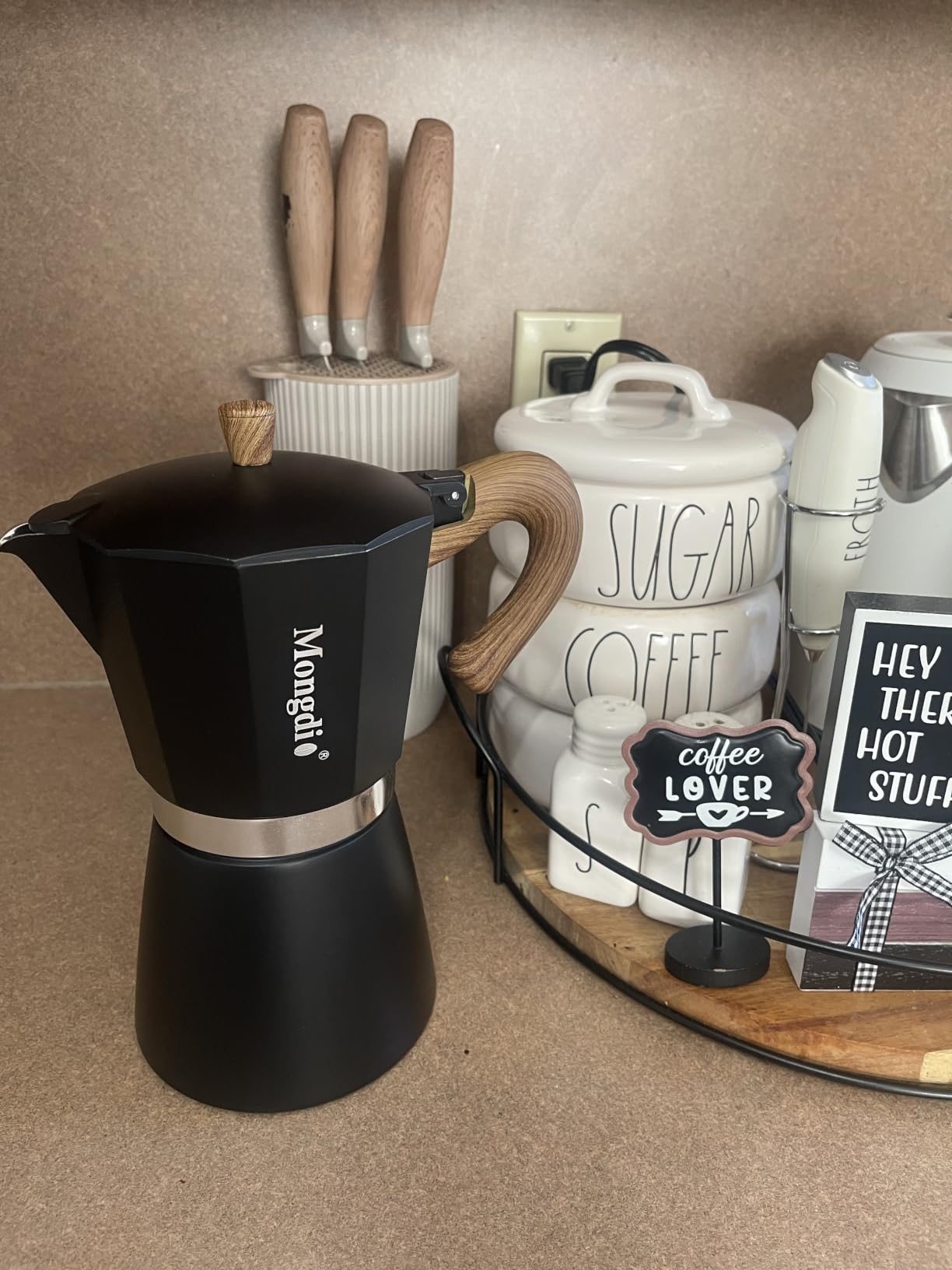
The Mongdio solves the handle temperature problem better than almost anything else at its level. Its wood-style heat-resistant handle and lid knob run noticeably cooler than bare metal, which means you can lift the pot off the burner and pour without a towel. The body is food-grade cast aluminum with even heat distribution and a built-in safety valve, and the 10 oz output fills two solid mugs.
Users report coffee that rivals European cafe brews and praise how quickly the pot heats and how easily it rinses clean. The most common tips are to preheat the water so you do not scorch the grounds, and to crack the lid slightly while pouring, because hot air in the upper chamber pushes liquid out of the spout. There is a two year guarantee on this one as well.
Drying matters more here than with most pots. Several parts trap oil and grounds, and users repeatedly advise shaking them out and air-drying thoroughly before reassembling, which prevents residue and the oxidation spots that otherwise appear on cast aluminum. Rinse with warm water, no dishwasher, and let every component dry separately on the counter.
The brew itself takes three to five minutes over medium heat, which is at the fast end of what aluminum pots deliver. The built-in safety valve is a real part of the design rather than an add-on, and it regulates pressure during the brew, which contributes to the consistency owners describe. Sizes are available from 3 up to 12 cups in this line if you outgrow the 6 cup version.
Who the Mongdio suits
It suits anyone who is bothered by hot handles and hot knobs, which is the most common complaint about this entire category. The two year guarantee is the strongest cover among the non-Bialetti pots here, and the 10 oz yield makes it a sensible size for two people who each want a proper mug.
Where it falls short
Spilling during pour is the top complaint, and the fix is simply to hold a finger on the lid or crack it slightly. Several components trap oil and need real drying time, so it is not the pot for someone who wants to wash and reassemble in ten seconds. It is also not induction compatible, and the smaller review base means less long-term feedback than the leaders have.
11. Imusa Stainless 6-Cup: Metal-Free Taste Without Induction
IMUSA USA B120-22062M Stainless Steel Stovetop Espresso Coffeemaker 6-Cup, Silver
- Steel avoids the metallic taste of aluminum
- Cool-touch handle and knob
- Holds heat and keeps coffee warm
- Flip-up top and side pour spout
- Stainless steel is not magnetic for induction
- Heavier than aluminum pots at 1.7 lb
- Only a 90 day manufacturer warranty
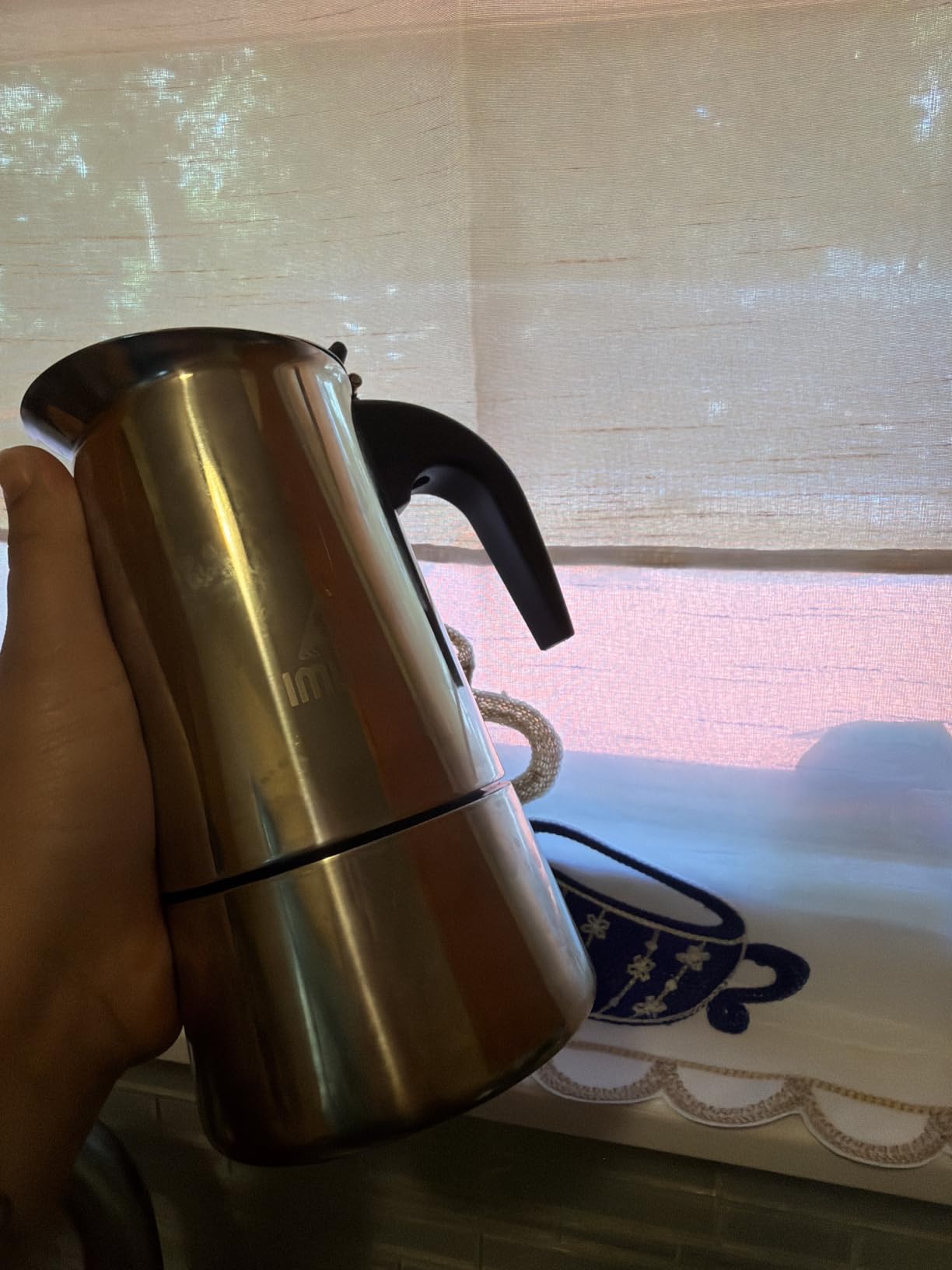
This is the straight upgrade path for anyone who starts on the Imusa aluminum pot and decides the metallic taste is not for them. The stainless steel body keeps coffee warm longer than aluminum and removes that tinny note, and the cool-touch handle and knob stay comfortable through brewing and serving. It works on gas, ceramic, and electric stovetops, so almost any kitchen is covered.
Owners highlight the stainless construction as a step up in both taste and heat retention, along with the handle that stays comfortable to hold. The main limitation they name is induction, and it is a hard one: plain stainless steel is not magnetic, so this pot simply will not heat on a glass cooktop. It is also noticeably heavier than aluminum at 1.7 pounds, which you feel when you lift a full pot off a burner.
The six cup marking here follows the usual convention, so plan on espresso-sized servings rather than six mugs. The flip-up top and side pour spout make serving quick, and unlike the aluminum version you can wash this pot more freely, although the manufacturer still does not list it for the dishwasher. It also handles lattes, cappuccinos, Cuban coffee, and traditional moka drinks without any change of method.
Because steel conducts heat differently from cast aluminum, the brew is a little more forgiving once the pot is hot. Expect a slightly sweeter cup if you keep the flame moderate, and take it off as soon as it gurgles to avoid the harsh finish that turns a good moka brew bitter. The 90 day warranty is the thinnest cover in this roundup, which is the main reason to consider the Easyworkz Diego instead if durability matters to you.
Who the Imusa Stainless suits
It suits a buyer who has outgrown an aluminum pot and wants a cleaner tasting cup without moving to a premium brand. The heat retention means the second cup is still warm several minutes after the first, which aluminum rarely manages, and the cool-touch hardware removes the towel from your routine.
Where it falls short
Induction is the deal-breaker for many modern kitchens, and the 1.7 pound weight is real on a full pot. The 90 day warranty leaves little protection if something fails early. If you have an induction cooktop, the same brand of steel with a magnetic base is the specification you should be filtering on instead.
12. London Sip 10-Cup: Best for Large Batches and Double Filtering
London Sip Stainless Steel Stovetop Espresso Maker Moka Pot Italian Coffee Percolator, Silver, 10 Espresso Cups
- Works on every stovetop type including induction
- Extra filter above the coffee bed cuts fines
- Outward facing handle keeps fingers clear
- No rust after months of daily use
- Lid knob has an awkward grip when hot
- Very fine grinds can clog the percolator tube
- Filters trap water and need long drying
The London Sip is the largest pot in this roundup at 500 ml, and it is built for households or gatherings rather than a single drinker. The extra filter above the coffee bed is the distinguishing feature: it catches fines that would otherwise pass into the cup, which matters most on a large batch where the brew sits longer. The wide heavy base works with any regular burner, and the outward facing heat-proof handle keeps fingers away from the flame.
Owners largely appreciate the stainless construction as a rust-free alternative to aluminum, and report no rust developing even with months of daily use. A 300 ml serving from the full brew is enough for two full cups, and the heat proof extra large handle plus steam safety valve protect against burns during a busy pour.
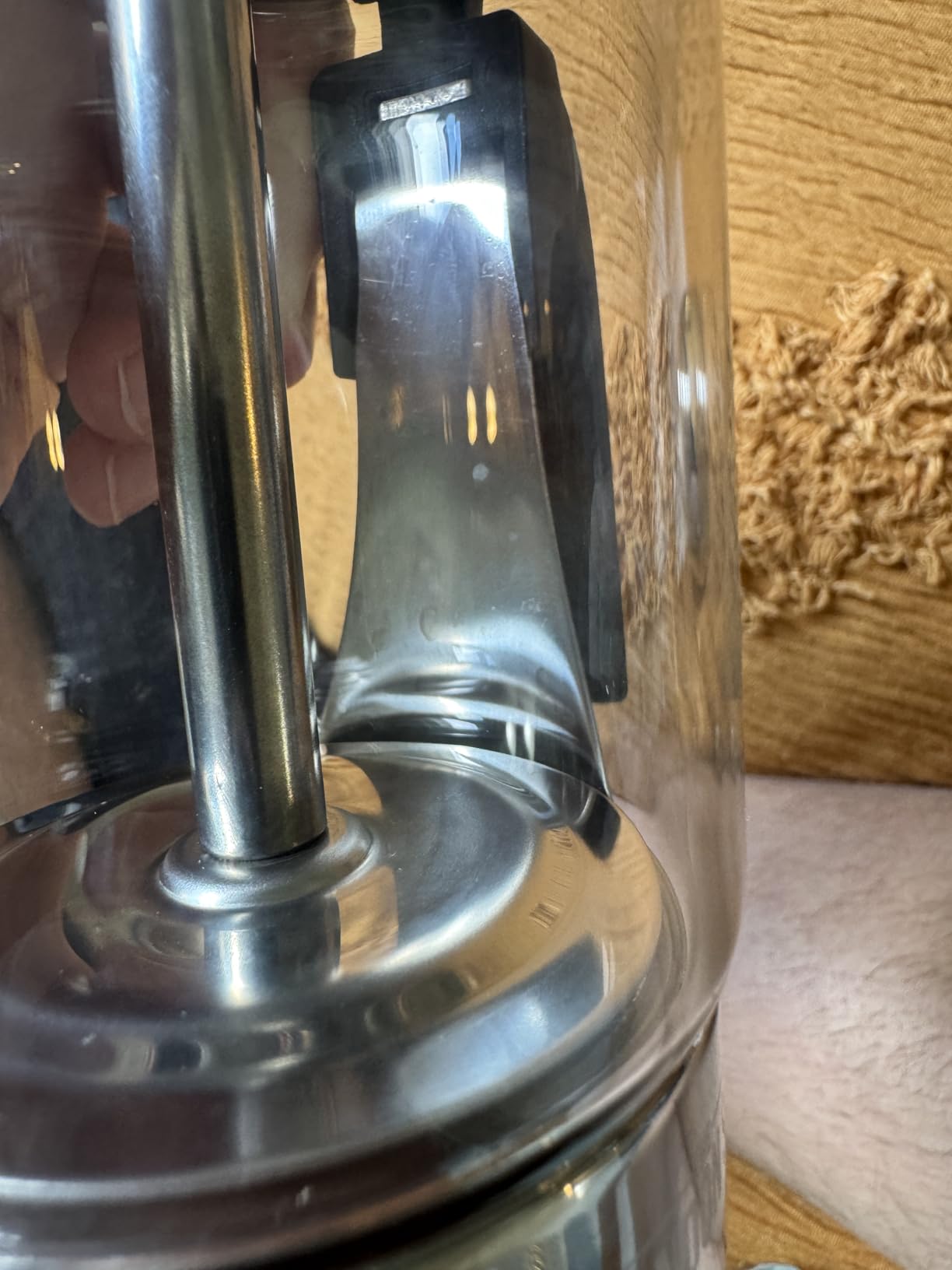
Grind sensitivity is the main technical caution. Very finely ground coffee can clog the percolator tube and force liquid back down into the bottom chamber, so a medium-fine grind is the safer starting point on this pot than on a smaller one. A coarser grind slows the brew slightly but keeps the flow even and the cup clean.
There are also structural complaints worth knowing before you commit. The lid knob has an awkward grip, especially when hot, and the upper chamber and lid can sit slightly crooked. Filters hold water after rinsing and need to be dried separately for a long time to avoid oxidation spots, and the thin steel inside the base rim can be sharp to the touch.
Who the London Sip suits
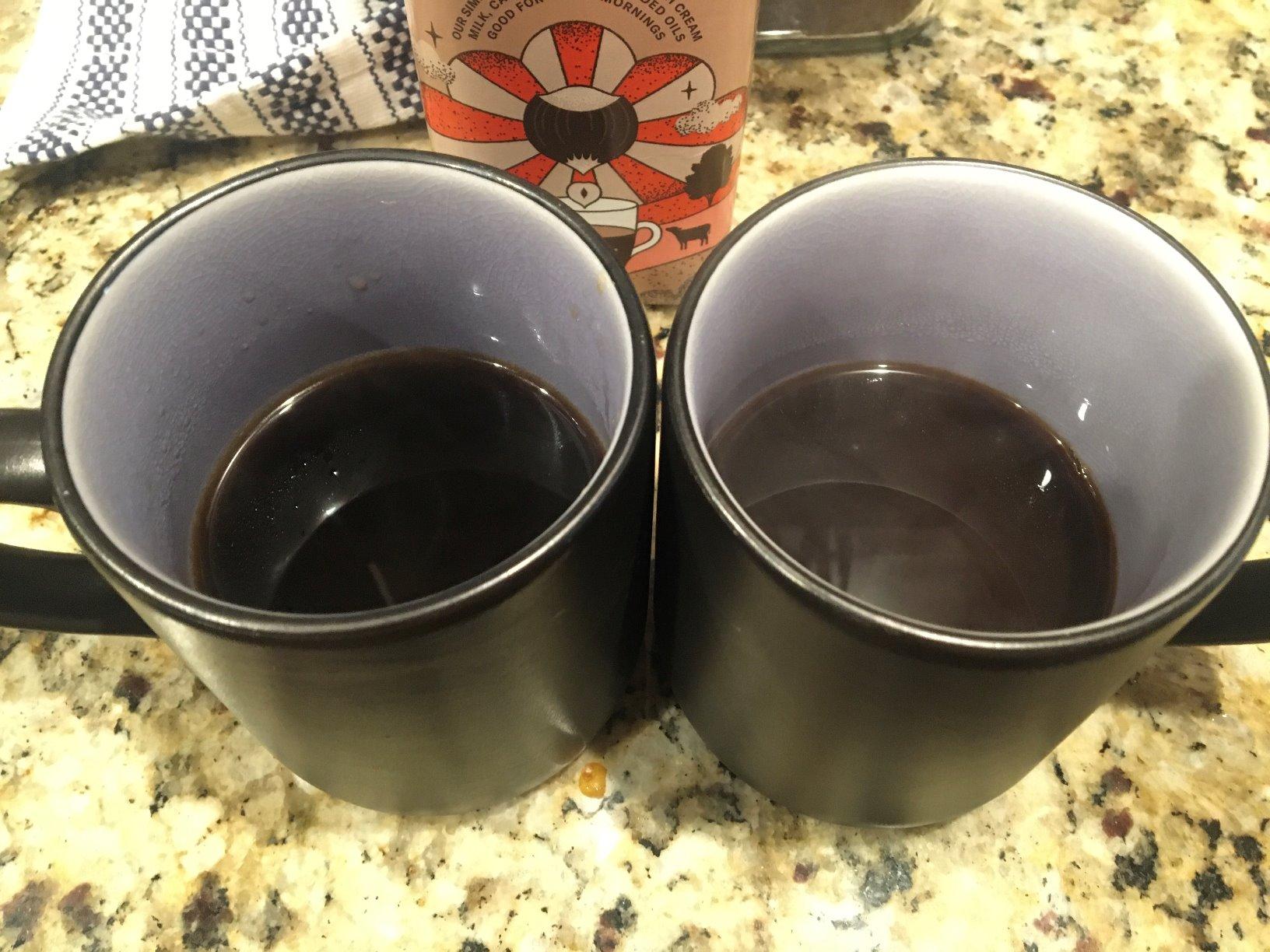
It suits larger households, guest rooms, and anyone who wants one pot to cover several cups without a second brewing. Induction compatibility means it works on a glass cooktop without an adapter, and the stainless body resists rust over long daily use. The lifetime limited warranty is the strongest long-term cover listed here.
Where it falls short
The awkward lid knob and the reports of a slightly crooked lid are the most consistent complaints, and the sharp steel inside the base rim deserves care when you clean. Filters that hold water will smell stale if you reassemble too soon. At 1.5 pounds it is also the second heaviest pot here, and for a single drinker most of the brew sits and goes cold.
How to Choose a Moka Pot: Material, Cooktop, and Size
Three specifications decide almost everything: the body material, whether the base works on your cooktop, and the real serving size. Get those right and the rest is preference. Get them wrong and no amount of technique will rescue the cup.
Aluminum or stainless steel
Aluminum is the traditional choice, and it is what the original 1933 design uses. It is light, cheap, heats quickly, and builds a protective internal film with use that keeps the coffee from tasting metallic. The trade-off is that the flavor is closer to the pot’s material, so an unseasoned or worn aluminum pot can taste faintly metallic. Stainless steel versions avoid that entirely and retain heat better, but they are heavier and usually cost more.
The honest answer from our testing is that either material will make an excellent cup if you manage the heat. Aluminum wins on weight and cost, stainless wins on taste neutrality and keeping a second cup warm. Our stovetop kettle guide covers a related single-heat-source decision if you are rebuilding a whole stovetop setup.
Induction compatibility
Aluminum is not magnetic, so a standard aluminum moka pot will not heat on a glass induction cooktop. Some brands sell a separate induction adapter plate, which works but adds a step and a piece of equipment to store. Better options are pots built for it from the start: the Bialetti Venus Induction, the Bialetti Moka Induction, the Easyworkz Diego, and the London Sip all heat on induction as standard.
Watch the wording on stainless models, because the steel grade alone does not determine compatibility. Plain 18/10 stainless is not magnetic either, and manufacturers of induction-capable steel pots use a different base construction. Filter on the stated cooktop compatibility rather than the steel type.
What the cup numbers really mean
Every cup marking on a moka pot refers to espresso cups of roughly 1.5 to 2.5 oz, not to mugs. A 3-cup pot produces about 5 oz in total, a 4-cup pot about 5.7 oz, a 6-cup pot about 6 to 10 oz, and a 10-cup pot about 500 ml. For most single drinkers a 3 or 4-cup pot is the sweet spot. For two people who each want a full mug, look at 6 cups and above.
Larger is not better. Forum regulars consistently report that oversized pots produce stale, over-extracted coffee simply because the brew sits while you drink the first cup. Buy the size you will actually drink within a few minutes of brewing.
Gaskets, valves, and handle safety
The gasket is the part that fails first. It sits between the boiler and the funnel basket, and once the rubber hardens it loses the squish needed to seal, which shows up as coffee weeping out of the middle joint and onto your burner. Silicone gaskets outlast rubber ones by roughly two to one according to forum reports, and the GROSCHE Milano uses a standard 3-cup silicone size that is easy to replace. A Bialetti 1-cup silicone gasket also fits many other brands of small pot.
Every pot here includes a safety valve, which caps pressure and releases steam rather than letting the pot build dangerous internal pressure. Check it occasionally to make sure it is not blocked. For handle safety, look for a burn guard or a stay-cool grip, and remember that the handle is the least protected part on any moka pot: the top chamber and the base rim stay hot long after the burner is off.
Brewing Better Coffee: Grind, Heat, and Troubleshooting
Most disappointing moka pot coffee is a technique problem, not a pot problem. Once the pot is clean and the grind is right, the difference between a sour cup and a great one is almost entirely heat management and timing.
Grind size by pot size
Moka pots extract by pressure, so you want finer than a filter coffee and coarser than an espresso grind. Think of it as a medium grind, comparable to what you would use for a French press or a pour-over that is a touch finer. The one rule that changes with size is dose: bigger pots need proportionally more coffee, and packing the basket tight on a large batch slows the flow enough to scorch.
Fill the funnel to the top and level it, but never press or tamp the grounds. Tamping is the most common mistake in the whole category, and it is what produces a slow, burnt, overly bitter cup. If your brew is gushing out of the spout in seconds, you have packed it too densely; if it is barely moving, you have gone too coarse or too light.
Heat control and the pre-boiled water trick
Start at medium heat, not high. The classic failure is a roaring flame that heats the aluminum faster than the water can extract, scorching the grounds and leaving a burnt, syrupy cup. There is a second technique that fixes the opposite problem, the sour and thin brew, and no competitor article mentions it: fill the boiler with water you have already boiled, and pre-wet your grounds with a few drops before filling the basket.
The pre-boiled water method works because the pot never spends time heating the water and the coffee at the same time, so there is no cold-start extraction gap. Combine it with a paper filter in the basket and you can usually skip the seasoning brews that new aluminum pots otherwise need. On the other side, pull the pot off the heat the instant it gurgles, because everything that comes out after that point is what makes coffee bitter.
Troubleshooting by taste
If the cup is sour and thin, the water was too cold, the grind was too fine, or you pulled the pot too early. Fix it with pre-boiled water, a slightly coarser grind, and a little more heat. If the cup is bitter and burnt, the heat was too high, the grounds were pressed, or you brewed through the gurgle. Fix it with lower heat, no tamping, and an earlier pull.
If the cup is weak and watery, the grounds were stale, the dose was too small for the pot size, or the pot is too large for how much you actually drink. If the coffee leaks out of the middle joint onto the burner, the gasket has hardened and needs replacing. A blocked or absent safety valve is the other pressure-related fault worth checking, and if a pot is weeping at the joint every brew, replace the gasket before replacing the pot.
Cleaning, Seasoning, and Gasket Replacement
Moka pot care is unusually simple, and the one rule is consistent across nearly every brand: rinse with plain water only. Bialetti is explicit that detergent and dishwashers damage the product and the taste of the coffee, and the cast aluminum makers in this roundup give the same guidance. Dishwasher-safe exceptions exist, such as the Easyworkz Diego, but even there a hand rinse is usually enough.
After each brew, disassemble the pot, empty the used grounds, and rinse every component under warm water. Shake the parts out rather than wiping them, and let them air-dry completely on the counter before you reassemble. Trapped water in a filter or funnel is the main cause of the oxidation spots and lingering stale smells that owners complain about, particularly on the London Sip and the Mongdio.
For a deeper clean, descale the boiler by simmering a mixture of water with white vinegar for a few minutes, then rinse thoroughly. Avoid harsh metal scourers, which can scratch the interior and strip the seasoning. A paper filter and a soak of warm water is enough for most routine maintenance, and a dry brush gets grounds out of the base lip on pots that have one.
Replace the gasket when water starts weeping from the middle joint, when the pot stops holding pressure, or when the old ring feels hard and flat instead of springy. Standard sizes are widely available, and a silicone replacement lasts roughly twice as long as the original rubber. Make sure the size matches the pot rather than the cup rating, and swap a worn gasket long before you consider replacing a working pot.
Frequently Asked Questions
Do Italians use moka pots or espresso machines?
Both, and for most Italian households the moka pot comes first. It has been the default home coffee method in Italy since Alfonso Bialetti patented the design in 1933, while cafe-style espresso machines remain the choice for milk drinks and for anyone who wants real 9-bar pressure. A moka pot is the everyday pot, and a machine is an upgrade rather than a requirement.
Which company makes the best moka pots?
Bialetti is the benchmark because it invented the design in 1933 and still makes the most common version on the market. That said, several brands make excellent pots. Bialetti is the safest default, GROSCHE leads on handle design and gasket quality, Easyworkz and London Sip cover induction cooktops that aluminum models cannot handle, and Primula is a strong choice for larger households.
Which coffee is best for a stovetop espresso maker?
Any fresh medium or dark roast works well in a moka pot, with medium roasts giving the most balanced cup. Use a medium grind, finer than filter coffee but coarser than espresso, and level the grounds in the basket without pressing them down. Darker roasts are more forgiving of small technique errors, while very light roasts are the most likely to taste sour if the heat is too low.
Why is Bialetti the best?
Bialetti has three advantages that are hard to copy. It invented the octagonal moka pot in 1933, so the geometry, safety valve, and brewing behavior are the reference every competitor copies. It has the deepest accessory ecosystem, so replacement gaskets and the induction adapter plate are easy to find. And it offers the widest size range, from single serve up to large household pots.
What are common mistakes when using a moka pot?
The most common mistakes are tamping the grounds, using high heat, and brewing through the gurgle. Fill the basket and level the grounds without pressing them. Start at medium heat rather than high. Take the pot off the burner the moment it gurgles, because the coffee after that point is what turns bitter. Filling with pre-boiled water fixes the sour, thin cup that cold-start brewing produces.
What are common problems with moka pots?
The most common problems are a hardened gasket leaking at the middle joint, an over-large pot that brews coffee faster than anyone can drink it, and confusion over cup sizes. Replace the gasket when water weeps onto the burner, and choose a silicone version, which outlasts rubber by roughly two to one. Remember that a 6-cup marking means six espresso cups, not six mugs.
Final Verdict: Which Moka Pot Should You Buy in 2026
After six weeks of brewing, the Bialetti Moka Express 6-Cup is still the best moka pot for stovetop espresso for most people. It is the design everyone else is measured against, it produced the most consistently balanced cup in our testing, and its accessory ecosystem means a replacement gasket is never a problem. If you are on induction, the Bialetti Venus Induction is the swap, and if you want the best of both worlds the Bialetti Moka Induction does induction and portability in a 2 cup package.
The rest of the list fills specific gaps. The GROSCHE Milano is the value pick with a handle you can actually hold. The Primula Classic 6-Cup is the right size for two people who each want a full mug. The Easyworkz Diego and London Sip cover induction in stainless steel, and the latter also handles a large batch. The Imusa aluminum pot is the cheapest sensible way to find out whether a stovetop pot suits you.
Whichever you pick, three habits will do more for the cup than the model. Keep the heat medium, level the grounds without pressing them, and take the pot off the moment it gurgles. Rinse with water only, and replace the gasket the moment it starts to weep. Get those five things right and any of the twelve pots on this list will make coffee worth the five minutes it takes.