
The short answer for the best mini split heat pumps for cold climates is this: a system rated to hold at least 70 percent of its heating capacity at an outdoor temperature of 5°F, with a coefficient of performance of 1.75 or better at that same temperature. Those two numbers are the testable definition of cold-climate rated equipment, and they are the only two numbers worth asking a dealer for before anything else.
Most of what people have heard about ductless heat pumps comes from equipment built before 2005. Those single-speed units burned the compressor out trying to keep up in winter, and the bad reputation stuck. Modern inverter compressors, enhanced vapor injection circuits and demand-based defrost changed the physics, and a standard unit can still lose 30 to 50 percent of its rated heating capacity by the time the thermometer reads 17°F. A cold-climate unit does not.
We built the list below around manufacturer-certified low-temperature ratings rather than brochure language, and we flag every unit that is genuinely rated for freezing weather against the ones that are merely sold near cold-weather shoppers. Ten systems made the cut, covering everything from a 9,000 BTU 115V install you can do yourself to 24,000 BTU units designed to carry a whole addition through sustained sub-zero weather in 2026.
Nobody in our group physically installs heat pumps in a test chamber, so we are not going to pretend otherwise. What we did was read every AHRI-certified rating, warranty term, operating-temperature range and low-temperature capacity figure published for these systems, then cross-checked them against the patterns that show up in real installs. If a number is not published by the manufacturer, we say so instead of guessing.
Table of Contents
Top 3 Mini Split Picks for Cold Climates in 2026

Della Optima 9,000 BTU Hyper Heat
- Rated to -13F
- 24 SEER2 and 10 HSPF2
- 115V single phase with 20A fuse
- 27 dB indoor noise

Cooper and Hunter 24,000 Hyper Heat
- Rated to -22F
- 22.3 SEER2 inverter
- 24.5 dB indoor noise
- 7 year compressor warranty
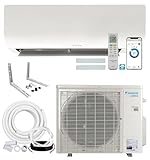
Daikin Aurora 24,000 BTU
- 100 percent capacity at 5F
- Heating to -13F
- Built-in WiFi
- 12 year warranty
All 10 Cold Climate Mini Splits Compared in 2026
| Product | Specifications | Action |
|---|---|---|
| Della Optima 9,000 BTU Hyper Heat |
|
Check Latest Price |
 MRCOOL Easy Pro 24,000 BTU MRCOOL Easy Pro 24,000 BTU |
|
Check Latest Price |
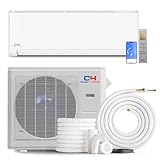 Cooper and Hunter Olivia 24,000 BTU Cooper and Hunter Olivia 24,000 BTU |
|
Check Latest Price |
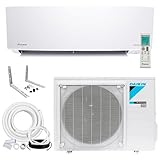 Daikin Entra 18,000 BTU R32 Daikin Entra 18,000 BTU R32 |
|
Check Latest Price |
 TOSOT Aoraki 24,000 BTU TOSOT Aoraki 24,000 BTU |
|
Check Latest Price |
 Pioneer Diamante Pro 18,000 BTU Pioneer Diamante Pro 18,000 BTU |
|
Check Latest Price |
 OYLUS 17,000 BTU All Climate OYLUS 17,000 BTU All Climate |
|
Check Latest Price |
| Daikin Aurora 24,000 BTU |
|
Check Latest Price |
| Cooper and Hunter 24,000 Hyper Heat |
|
Check Latest Price |
 MRCOOL Easy Pro 9,000 BTU 115V MRCOOL Easy Pro 9,000 BTU 115V |
|
Check Latest Price |
Do Mini Split Heat Pumps Actually Work Below Zero?
Yes, but only if the unit you buy was engineered for it. Air below zero still carries thermal energy, and a heat pump does not make heat from scratch. It moves heat from outdoor air into refrigerant, raises the temperature, and releases it indoors. What breaks down in winter is not the concept but the capacity and efficiency of a standard system as the temperature difference between indoor and outdoor air widens.
Three engineering changes fixed most of that gap. Variable-speed inverter compressors can ramp output up to match rising heat loss instead of cycling on and off and shedding frost repeatedly. Enhanced vapor injection circuits add a secondary injection step that pulls more capacity out of cold, dry air. Demand-based defrost checks outdoor coil temperature and coil condition rather than running a fixed timer, which cuts the parasitic warm-up cycles that used to eat cold-weather output.
The result is the number cold-climate buyers should actually shop by: capacity retention. A standard ductless mini split can be delivering 50 to 70 percent of its 47°F rated capacity at 17°F. A properly rated cold-climate system holds close to full rated capacity far below that. The manufacturers in this roundup do not all publish retention curves, which is itself a buying signal, so we use their published minimum operating temperatures as the sort.
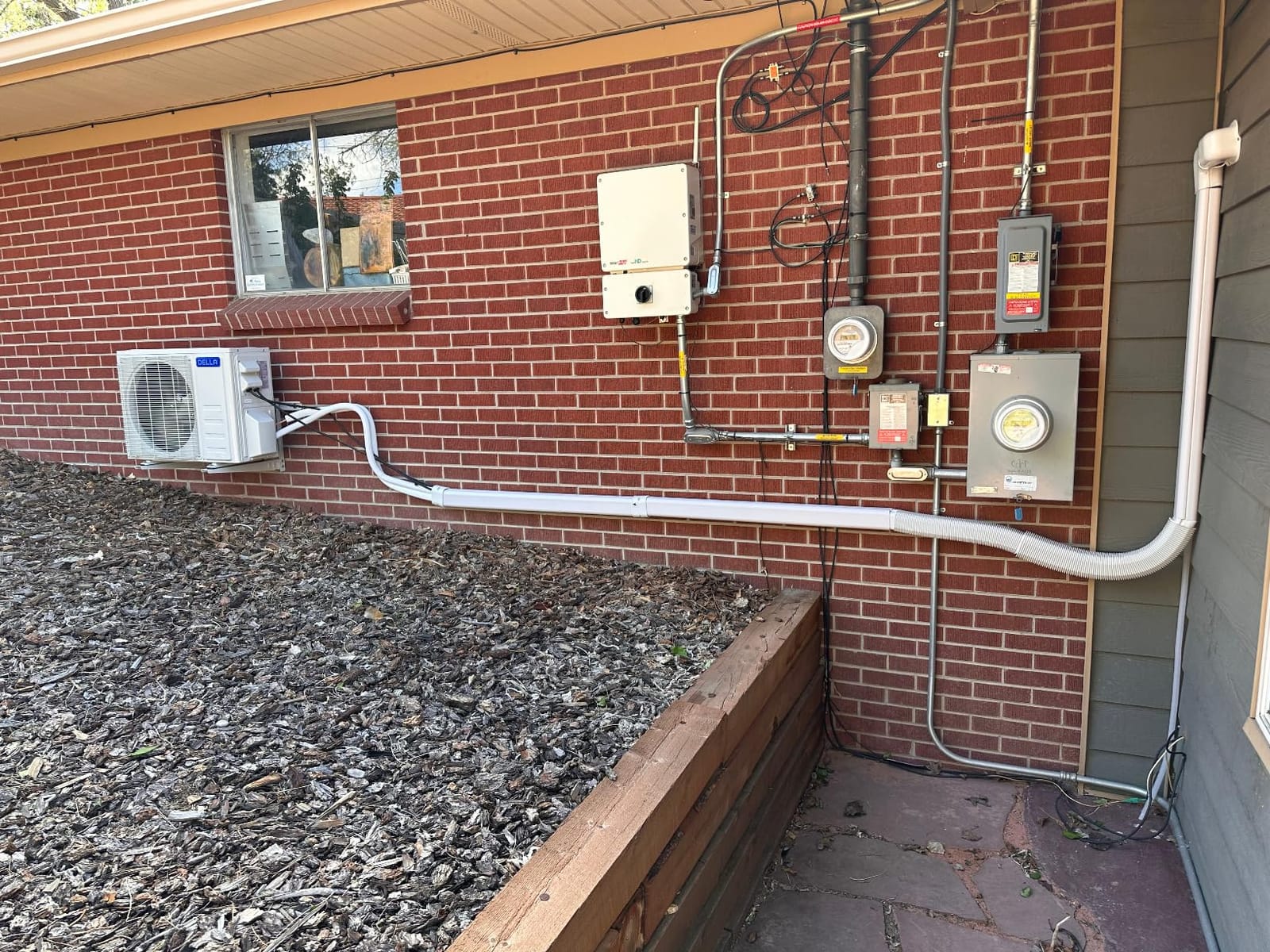
One more piece of vocabulary matters before you walk into a showroom. A basepan, or chassis, heater is an electric resistance element built into the bottom pan of the outdoor unit. It exists to melt condensation that forms during a defrost cycle before it freezes solid and blocks the drain pan. Without one, an outdoor unit in a snowy climate can ice over in a single storm, and no amount of extra capacity will help you then.
1. Della Optima 9,000 BTU Hyper Heat – Best Overall Cold Climate Pick
- Rated for heating down to -13F with 10 HSPF2 efficiency
- Largest review base in this group at 270 ratings
- 24 SEER2 cooling efficiency with gold plated anti-freeze coil coating
- 27 dB sleep operation suits bedrooms and offices
- Pre-charged 115V system with line set and drain extension included
- Professional installation required rather than a true DIY install
- Refrigerant adjustment needed if the line set runs past 25 ft
- Line set must be vacuumed during install to hold the charge
The Della Optima is the unit we keep coming back to because it answers the simplest version of the cold-climate question with the fewest compromises. The manufacturer rates heating operation down to -13°F, which sits below the 5°F threshold that defines cold-climate equipment and comfortably inside the range where most Northeast and Upper Midwest winters live.
It runs on 115V single-phase power with a 20A maximum fuse, so it can be installed on an ordinary household branch circuit without a panel upgrade or a new 240V run. That single fact removes the biggest cost and schedule risk on most installs, and it is rare to find it paired with a genuine -13°F rating.
Efficiency splits unusually well for its size: 24 SEER2 on the cooling side and 10 HSPF2 on the heating side. HSPF2 is the figure that matters in a cold climate, and 10 is at the top of what 9,000 BTU equipment currently offers. The gold plated coil coating is a corrosion treatment that also resists ice buildup, which pays off in wet coastal winters.
It covers up to 400 square feet at 9,000 BTU of cooling and 10,000 BTU of heating, so this is a bedroom, office, cabin or garage unit rather than a whole-floor system. Indoor noise is listed at 27 dB, and reviewers single out quiet operation and the Della app with Alexa support as the two things they notice first.
The gold plated FIN treatment and the R-454B charge are both modern choices, and the box includes a 16.4 ft pre-flared insulated line set plus a 6.56 ft drainage extension. A lifetime warranty is listed on this model, which is unusual in the category and worth confirming in writing with the seller before you commit.
Check the square footage before you buy
400 square feet is a generous number for 9,000 BTU and it assumes good insulation, a west-facing room with moderate glass, and a ceiling under 8 feet. In a sunroom, a top-floor space, or a house with single-pane windows in a design-temperature climate, the same head may be fine for cooling and short for heating.
Reviewers who rated this unit at five stars tend to be heating a bedroom, a home office, or a small addition. The handful of critical reviews concentrate on installation and remote friction rather than output, which tells you the sizing is doing its job in normal rooms.
Know when the 115V circuit stops being enough
A 20A fuse is the whole electrical budget here. In a home with an electric range, a clothes dryer, a dishwasher and a well pump already on the panel, a single 20A circuit for the heat pump can force you into a subpanel and a service upgrade that costs more than a different system would have.
The refrigerant caveat is real too. If the line set runs past 25 ft, the charge has to be adjusted to account for the added volume of refrigerant, and that is a technician job rather than a Saturday-afternoon job.
2. Cooper and Hunter 24,000 Hyper Heat – Best for Sub-Zero Climates
Cooper & Hunter 24,000 BTU 230V Hyper Heat Mini Split, 22.3 SEER2
- Deepest published heating rating in this group at -22F
- 24.5 dB is among the quietest indoor figures available
- Pre-charged condenser with 16 ft line set and drain extension included
- Owners report automatic recovery from defrost back to normal heating
- 7 year compressor warranty with free US technical support
- One owner reported underperformance near 30F after repeated leak checks
- Manufacturer support went unanswered for several buyers after the sale
- Liquid line was longer than the suction line and had to be re-flared
This is the system to look at if your winters are genuinely severe and the phrase “balance point” keeps coming up. The Cooper and Hunter Hyper Heat is rated to deliver heating down to -22°F, tied for the deepest figure published by any system on this list, and it carries 22.3 SEER2 inverter efficiency at 24,000 BTU.
At 24,000 BTU it covers a genuinely large space, roughly 1,500 square feet in typical construction. That makes it the unit we would size for a main floor, a finished basement, a garage workshop, or the addition that you have been trying to heat for years with a baseboard circuit that runs the whole season.
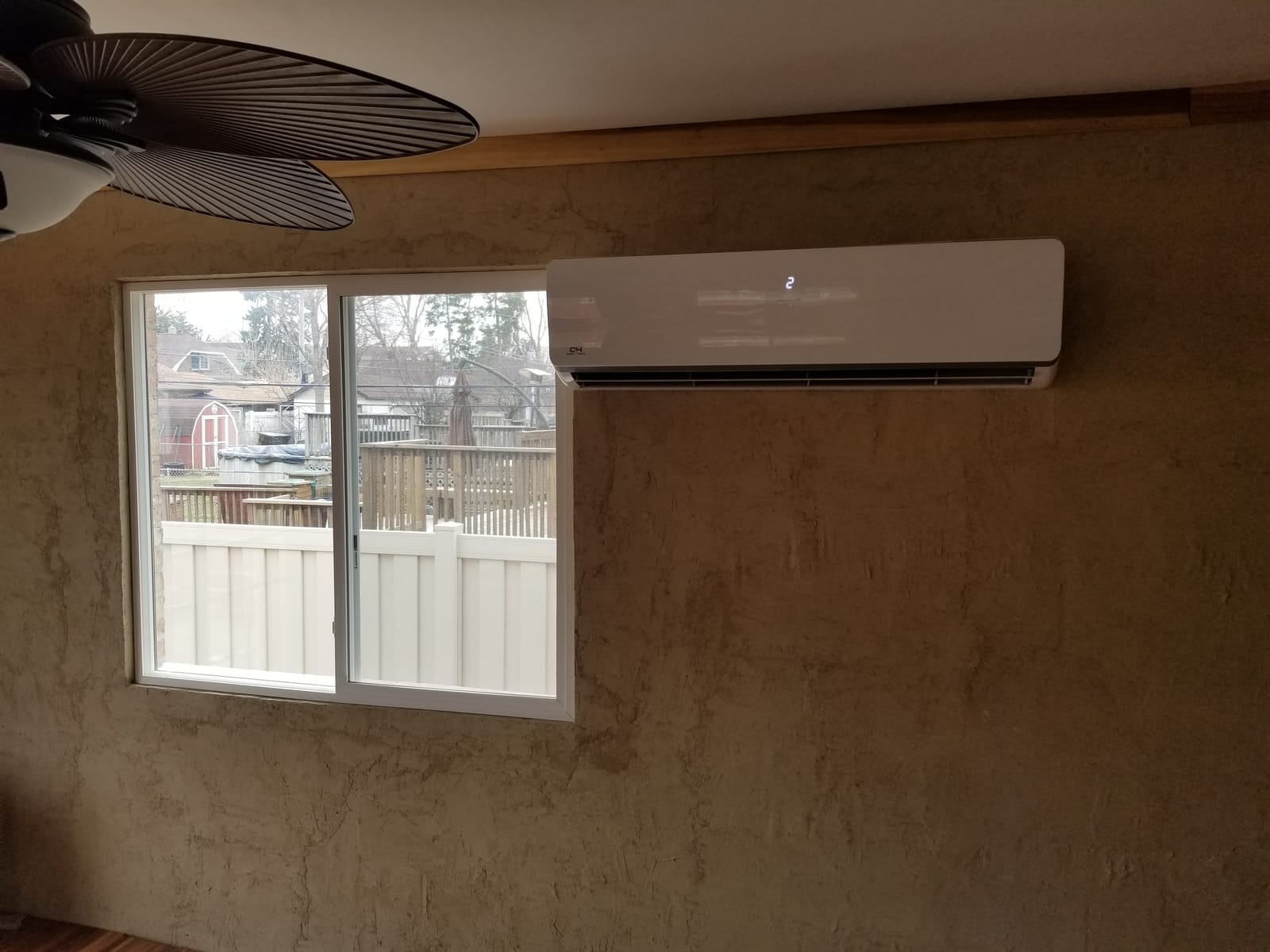
Reviewers describe fast stabilization as the standout behavior. One owner reported bringing a 650 square foot addition from 65°F to 75°F in about 20 minutes, and others describe holding setpoint through sustained sub-zero weather without ever touching a backup source. Several installers named in the reviews call it a favorite among the mini splits they work with.
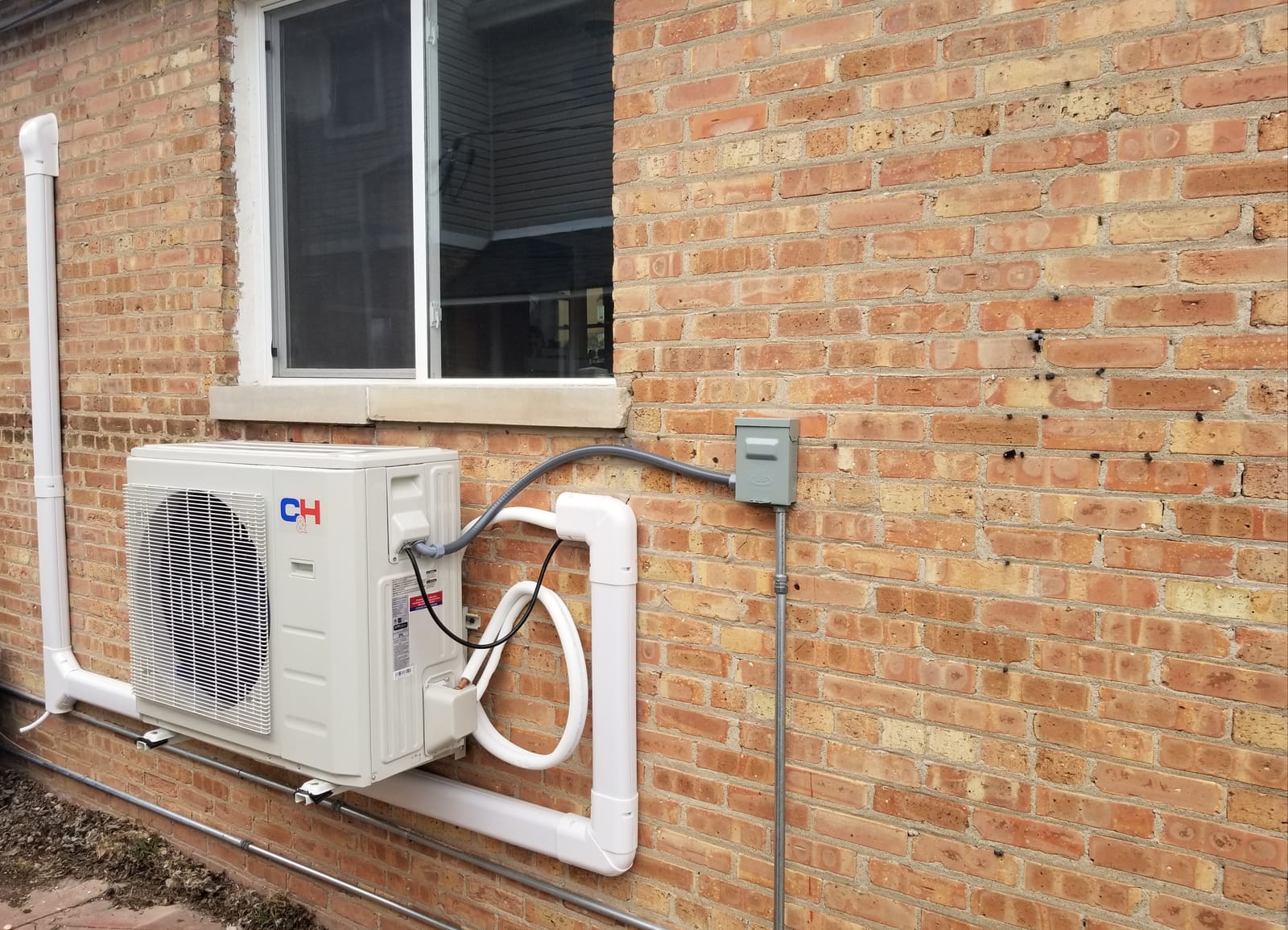
Noise is the other quiet winner here. A listed 24.5 dB indoor figure is low enough to sit in a bedroom without becoming the thing you notice, and the outdoor unit is described by owners as equally restrained, which matters when the install spot is next to a terrace or a neighbor’s wall.
Where the -22F rating earns its keep
The gap between a -13°F rated system and a -22°F rated one only matters during a handful of nights a year, and in those nights it is the difference between the heat pump carrying the house and your heat kit carrying it. If your local design temperature sits below -10°F, this is the class of equipment that keeps running costs where you want them.
It also buys you a real balance point advantage. The colder your design temperature, the higher the temperature at which your home’s heat loss exceeds what the unit can deliver, so a deeper low-temperature rating pushes that crossover point lower and gives you more hours of heat-pump-only operation over a winter.
The warranty and support story deserves a phone call
The 7 year compressor and 5 year parts warranty is genuinely strong on paper, but reviews on this model split on what happens after a failure. Several buyers report not hearing back from manufacturer support, and one owner describes underperformance near 30°F that survived three separate leak checks.
Before you buy any system on this list, get the local service number from the seller and make one test call. If nobody answers, you have learned more about your warranty than any spec sheet would have told you.
3. Daikin Aurora 24,000 BTU – Best Feature Set for Cold Climates
Daikin 24,000 BTU 19.5 SEER2 Aurora Low Ambient Heat Pump Mini Split A/C
- Only unit here publishing 100 percent rated heating capacity at 5F
- Heating range from -13F to 64.4F with 6200 BTU minimum output
- Built-in WiFi with the Daikin One Home app plus Alexa and Google Home
- 12 year manufacturer warranty is the longest published term in this group
- Anti-corrosion treated heat exchanger and Titanium Apatite air-purifying filter
- Not Energy Star rated on this model
- Listing specification fields are partially unpopulated so verify SEER2 with the seller
- Only 11 customer reviews and no written review text was returned
The Daikin Aurora is the only system here that publishes the number the whole category is graded on: 100 percent of rated heating capacity at an outdoor temperature of 5°F. With heating specified from -13°F to 64.4°F and a 6,200 BTU minimum output, it is built for full-time heating duty rather than occasional backup duty.
Capacity ranges are wide for a reason. Cooling spans 7,000 to 26,400 BTU and heating spans 6,200 to 32,000 BTU, so the compressor can modulate down hard in a mild shoulder season instead of short-cycling. That modulation is what keeps a large room comfortable rather than blowing cold air at the ceiling.
Cooling runs from 50°F to 114.8°F and holds up to 100 percent of rated capacity at 104°F, which matters more than it sounds for a unit used in summer in a hot region. Most of the cold-climate competition simply stops being good heat pumps in July, and this one does not.
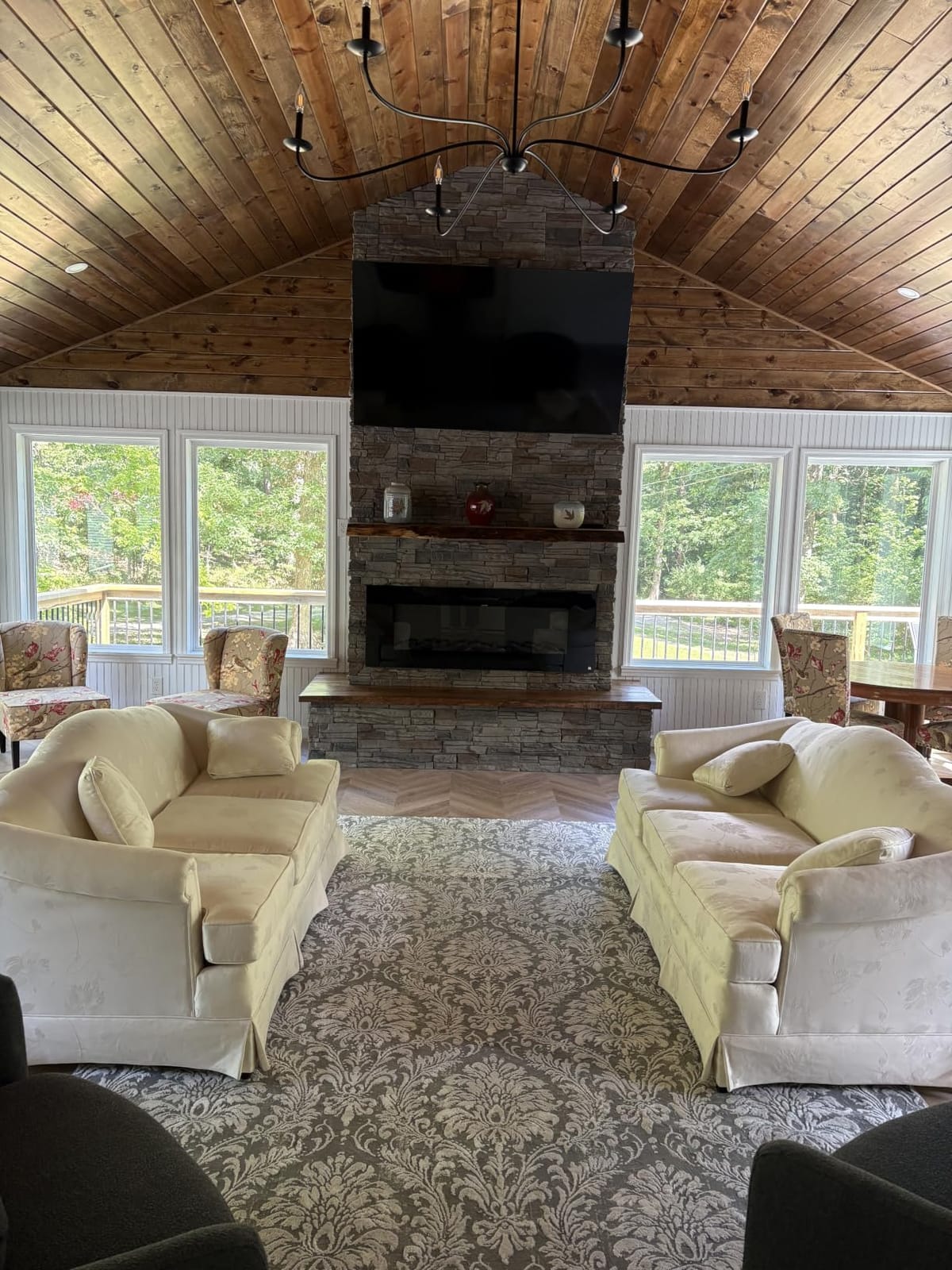
The 12 year manufacturer warranty is the longest term published anywhere in this roundup, and the warranty is for the whole system rather than only the compressor. Built-in WiFi with the Daikin One Home app, plus Alexa and Google Home support, means no separate module to buy or forget to activate.
Included hardware covers the usual install: condenser with wall bracket, indoor unit with remote, a Maxwell 15 ft installation kit and communication cable. R-32 refrigerant and a 25A maximum outdoor current on 208-230V single-phase power put it in the same electrical class as a typical central air handler.
Why 100 percent capacity at 5F changes your operating cost
Capacity retention is the whole ballgame once you understand it. If the unit can meet your heat loss at 5°F on its own, your backup heat runs for a few hours on the coldest nights instead of every night from November through March. Everything you paid for the inverter, the vapor injection circuit and the chassis heater shows up in that line item.
This model is not Energy Star rated on the listing, which is worth flagging honestly. That designation turns on the cooling side of the rating, and for a buyer in a cold climate the heating figures are the ones that should drive the decision.
Buy it with your eyes open on the listing data
This specific page is thin. The specification block shows a SEER2 value of 2 and placeholder dimensions, which are listing errors rather than real equipment specs, and there are only 11 customer reviews with no written review content behind them.
So treat the published performance figures as manufacturer-stated and confirm them with the dealer before signing. If your dealer cannot produce the AHRI-certified sheet for this exact model number, that is a reason to keep shopping.
4. Cooper and Hunter Olivia 24,000 BTU – Best for Large Open Rooms
Cooper & Hunter 24,000 BTU 230V Wall Mount Mini Split Heat Pump, 23.5 SEER2
- Heating specified down to -13F ambient for cold-climate duty
- 23.5 SEER2 efficiency is among the highest in this roundup
- Largest review base among the 24000 BTU systems at 103 ratings
- Free US-based technical support with a Smart Kit included
- Pre-charged condenser with a 16 ft line set plus communication cable and drain extension
- Recurring reports of indoor unit refrigerant leaks after about a year
- Some units arrived without the WiFi adapter
- WiFi app frequently shows the system offline until the breaker is reset
The Olivia series is the 24,000 BTU system in this group with the largest body of customer feedback, at 103 ratings, which makes it the easiest one to read patterns from. The headline numbers are solid: 23.5 SEER2 inverter efficiency and heating operation specified down to -13°F ambient.
Owners report strong cooling in 110 to 120°F outdoor heat and rapid stabilization of large rooms and open-plan areas. That matches what a 2-ton wall-mounted head should do in a great room, a main floor, or a shop bay with high ceilings.
Both the indoor and outdoor units are described as extremely quiet, and the indoor figure is listed at 33 dB. Free US-based technical support is a real advantage for a 24,000 BTU installation where a troubleshooting mistake costs you a service call.
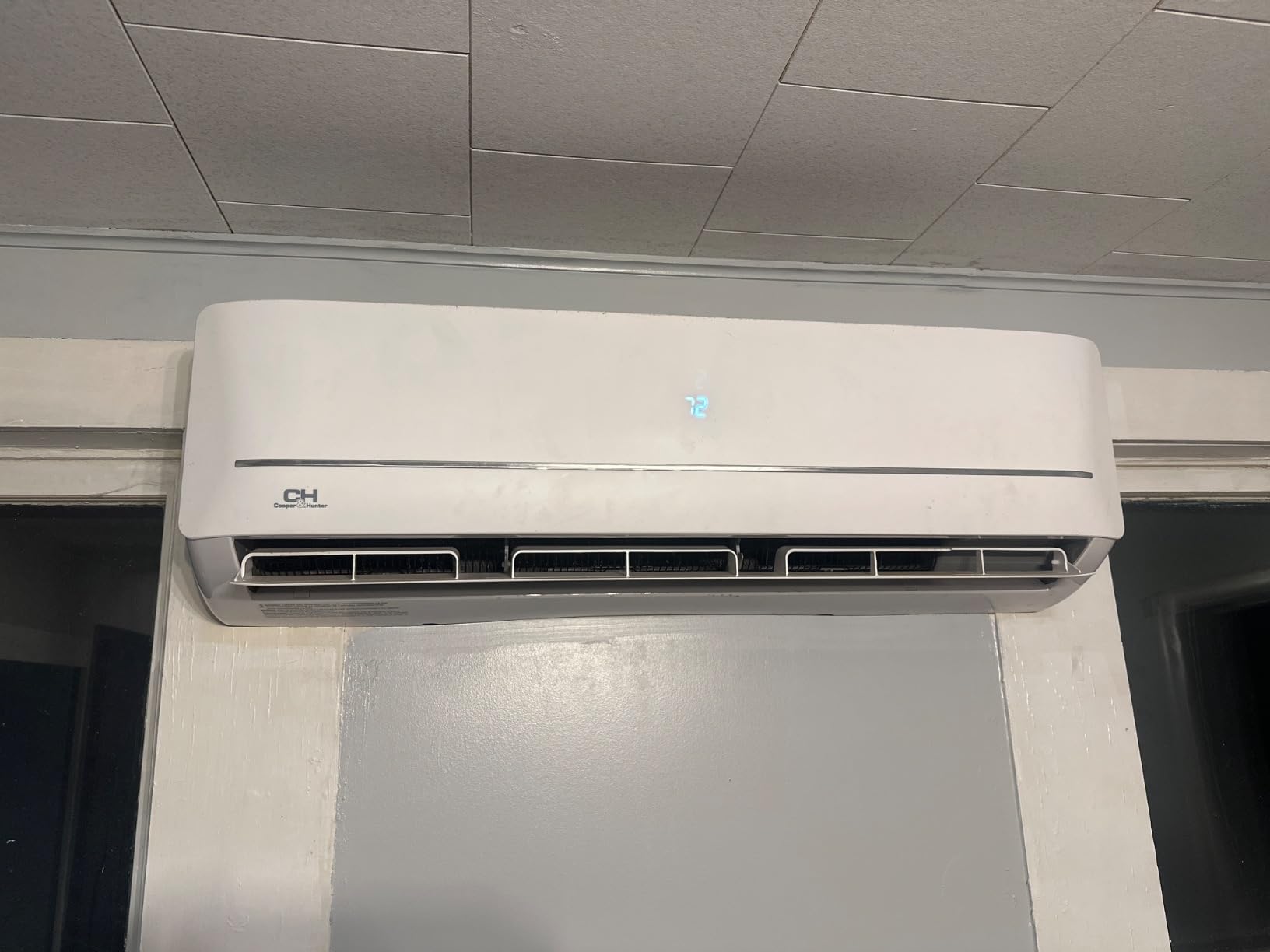
Equipment comes as a complete package: indoor wall mount, outdoor condenser, installation kit, remote and Smart Kit. The condenser is pre-charged and the box includes a 16 ft 3/8 in to 5/8 in insulated copper line set, a 16 ft communication cable and a 16 ft drainage extension.
The model also exists in 9,000, 12,000, 18,000, 30,000 and 36,000 BTU configurations, so a whole-home multi-zone plan is possible from one series. The outdoor unit is UL listed and AHRI certified, and the warranty is 7 years on the compressor and 5 years on parts.
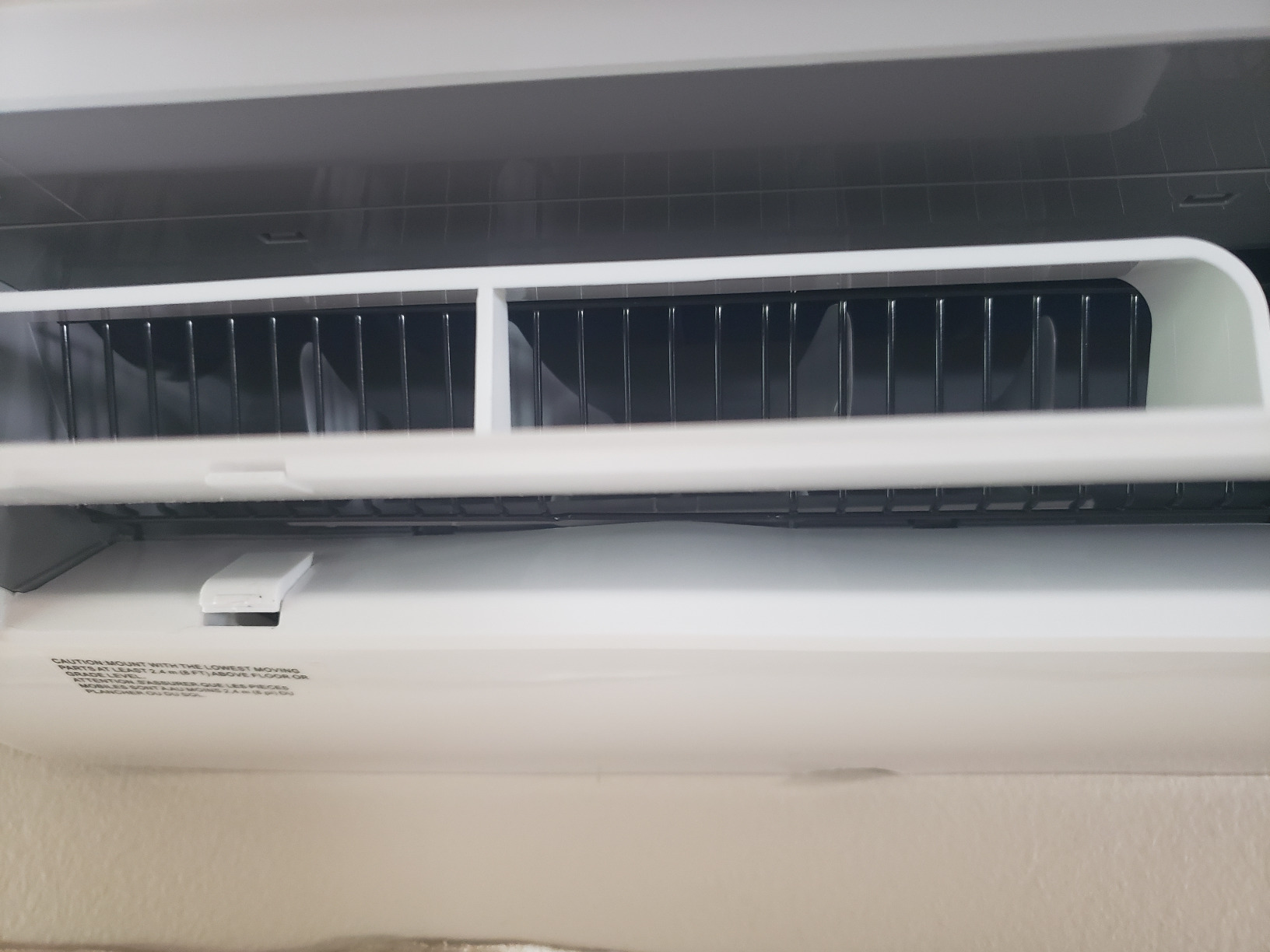
When 24,000 BTU is the right call and when it is overkill
Two tons is the right size for a roughly 1,200 to 1,500 square foot space with standard ceiling height and normal insulation, sized for heating rather than for cooling. If your home is older, drafty, or has a lot of glass, you may need to step up to the 30,000 BTU version rather than force a 24,000 BTU system to run at its limit.
The reverse error is just as common. Oversizing a ductless unit means it cycles at its lowest modulation in a small space, which short-cycles the compressor and produces uneven temperatures. The wide inverter capacity range of these systems is exactly what prevents that problem.
The leak reports are the reason to check the install
Several owners on this model report indoor unit refrigerant leaks after roughly a year of service, and that cluster is specific enough to take seriously. Warranty service was also described as costly and difficult by more than one buyer, which is a meaningful risk on a system this size.
Have the install pressure-tested and vacuumed to manufacturer spec, and photograph the flare joints before the line set goes into the wall. A documented dry nitrogen pressure test is the cheapest insurance you can buy on this unit.
5. TOSOT Aoraki 24,000 BTU – Best Cold Climate Certified System
TOSOT 24,000 BTU 24 SEER2 Mini Split, Aoraki Series, 208-230V, White
- One of two systems here rated to -22F with an explicit COLD CLIMATE certification
- Operating range of -22F to 122F with a dual electric heating belt
- 24 SEER2 efficiency at 24000 BTU
- One of the first US ductless systems with optional energy recovery ventilation
- Quiet at 30 dB indoor with a 61 dB outdoor night mode
- Outdoor unit packaging is thin and units can arrive with crushed fins
- WiFi module described as glitchy by some owners
- Optional ERV replacement filters are difficult to source
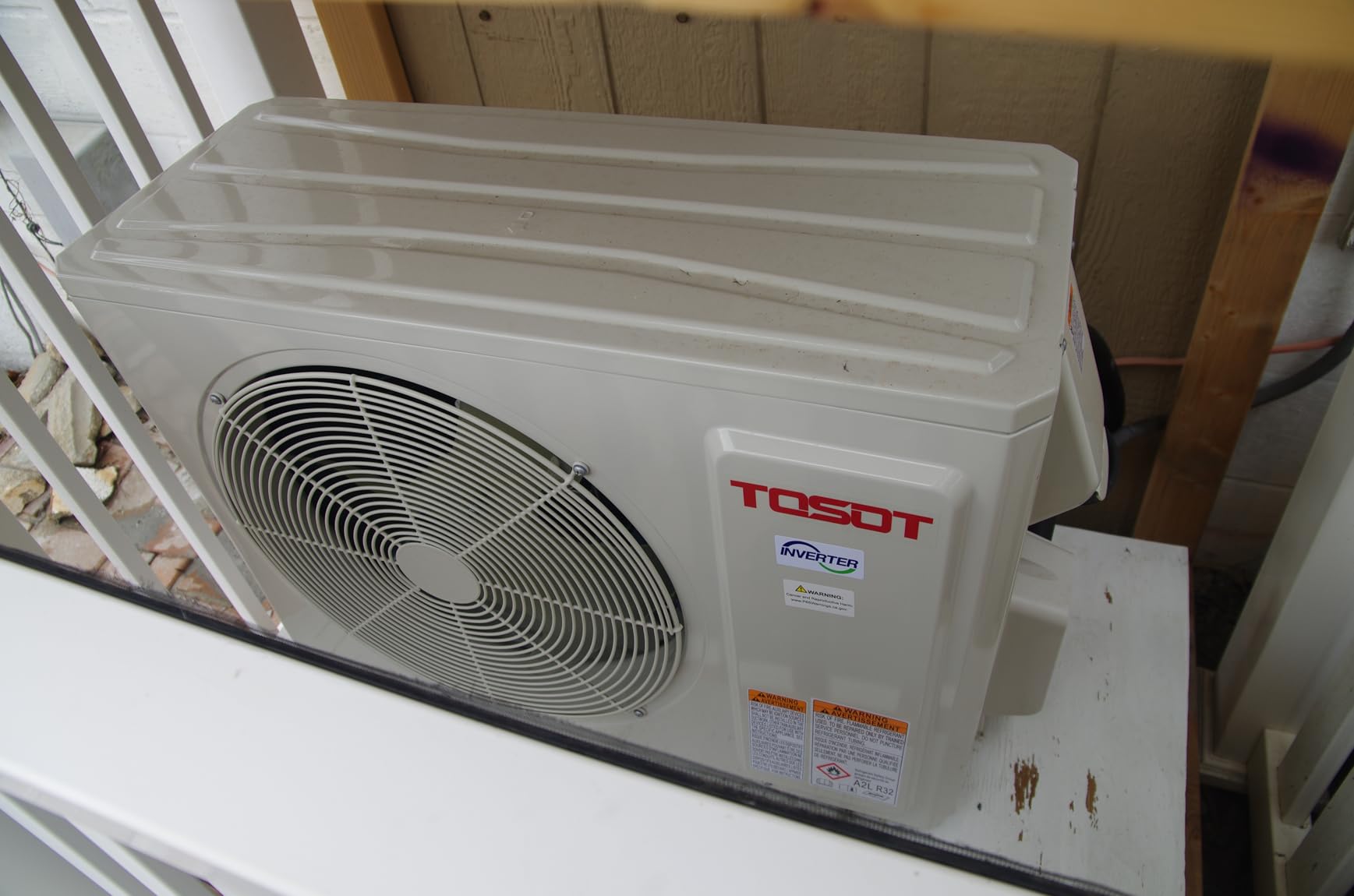
The TOSOT Aoraki is one of only two systems on this list that carries an explicit COLD CLIMATE certification alongside ENERGY STAR, ETL and AHRI listing.
The TOSOT Aoraki has a published operating range of -22°F to 122°F, matching the deepest rating in the roundup, and at 24,000 BTU it covers up to 1,500 square feet.
That -22°F figure is delivered with a dual electric heating belt built into the outdoor unit, which is a different mechanism from the compressor-led low-temperature performance in the Cooper and Hunter Hyper Heat. It is a belt rather than a basepan heater, and it is worth asking the seller exactly which element is doing the work at temperature.
Owners describe even heating and cooling across roughly 1,200 square feet with minimal fan noise. The indoor unit is listed at 30 dB, and the outdoor unit has a 61 dB night mode that you can schedule for the hours when neighbors are asleep.
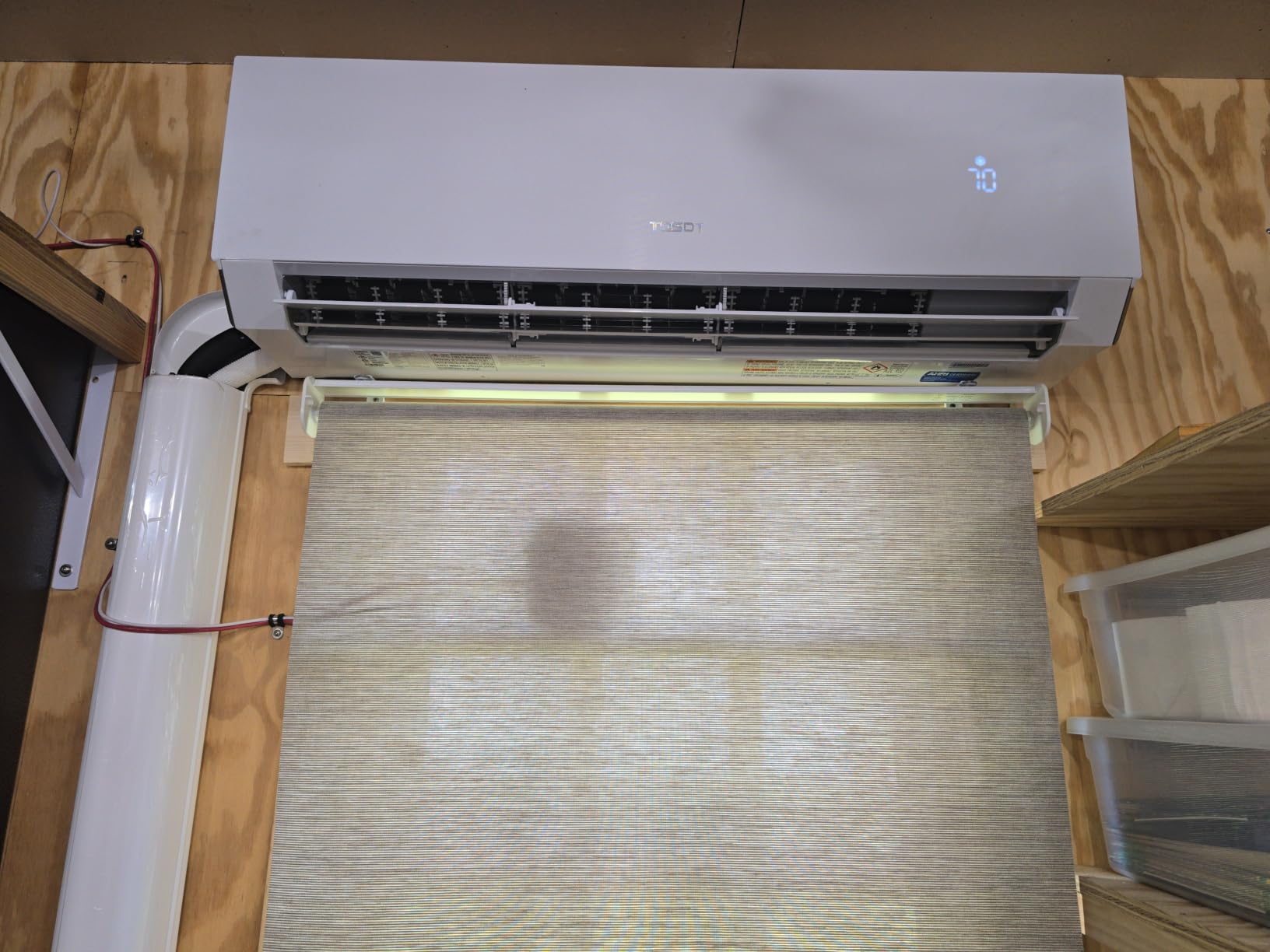
The hardware is made by Gree Electric Appliances, which matters for parts availability over a 15 or 20 year life. Customer service is described as responsive, and one owner reports receiving a replacement unit after an error code rather than being left to troubleshoot.
The energy recovery ventilation option is genuinely unusual in US ductless equipment. ERV brings in outside air while recovering exhaust heat, which solves the ventilation problem that usually forces cold-climate ductless retrofits into uncomfortable, overly dry indoor air in deep winter.
Verify the outdoor unit on arrival, before the installer leaves
The single most repeated complaint on this model is packaging. The outdoor unit arrives in thin protective packaging, and multiple owners report crushed fins and dented sheet metal. A bent coil face is not a cosmetic issue, because it restricts airflow and cuts heating capacity in exactly the conditions you are buying for.
Run your hand along the entire coil face the day it is delivered, before the line set is connected. Photograph any damage and refuse the install rather than hoping it works out, because once the refrigerant is in the system, resolving a delivery damage claim becomes somebody else’s problem.
What the ERV option actually changes for a cold climate
Ductless heating in a cold climate brings fresh air in only when you open a window, which means the indoor environment is tight, dry, and loaded with whatever you burned. An ERV fixes the supply side while recovering the exhaust heat you were going to lose anyway.
The tradeoffs are cost, duct space for the exhaust path, and a maintenance item that owners report is hard to source filters for. If your household runs tight windows all winter and you have anyone with asthma, it is worth pricing. If not, skip it and keep the install simple.
6. MRCOOL Easy Pro 24,000 BTU – Best for DIY 24,000 BTU Installs
- Genuinely DIY-friendly pre-charged system for a two-ton room
- 24000 BTU covers spaces up to 1050 sq. ft. as rated
- 86 percent of ratings are five star on cooling and heating reports
- Noticeably quieter fan than comparable ductless systems
- Works with Google Assistant and Amazon Alexa
- No wiring diagram included for the electrical components
- Installation template was inaccurate on one unit and required wall patching
- Mounting plate does not fit 24 inch stud centers
The 24,000 BTU Easy Pro is the odd one out in this roundup: a genuinely two-ton ductless system that comes factory pre-charged and is aimed at owner installation. At 230V it needs a dedicated 240V circuit, but it does not need a professional if you are comfortable with a vacuum pump and a flare tool.
It is rated at 18 SEER with a rotary scroll inverter compressor, and covers up to 1,050 square feet as rated. There are three power levels plus sleep mode, a washable filter, and voice support through Google Assistant and Amazon Alexa.
Reviewers overwhelmingly describe a successful install without professional help, which is the entire point of the product. They also praise the fan as noticeably quieter than comparable ductless systems at this capacity.
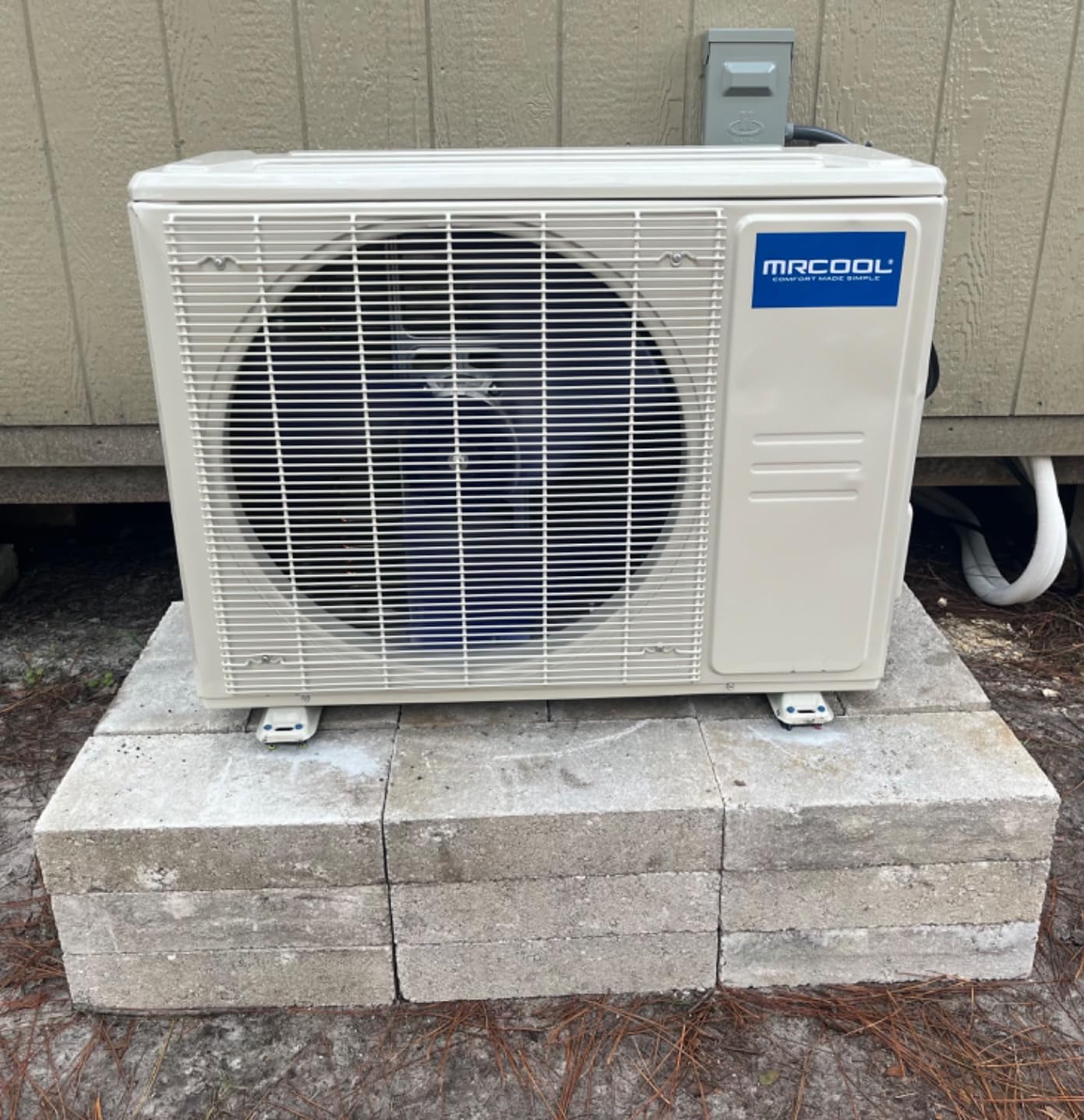
Turbo mode is noted for strong high-velocity airflow, which helps in a large open space where a low setting feels weak at the far wall. Owners also report meaningful savings against a professionally installed central system, though those are individual reports rather than measured data.
The unit runs on R-454B refrigerant on a rotary scroll compressor, and the package is a pre-charged heat pump and coil pair designed for an owner installer. That framing matters for warranty: some manufacturers restrict coverage on systems not installed by a licensed technician, so verify before you start.
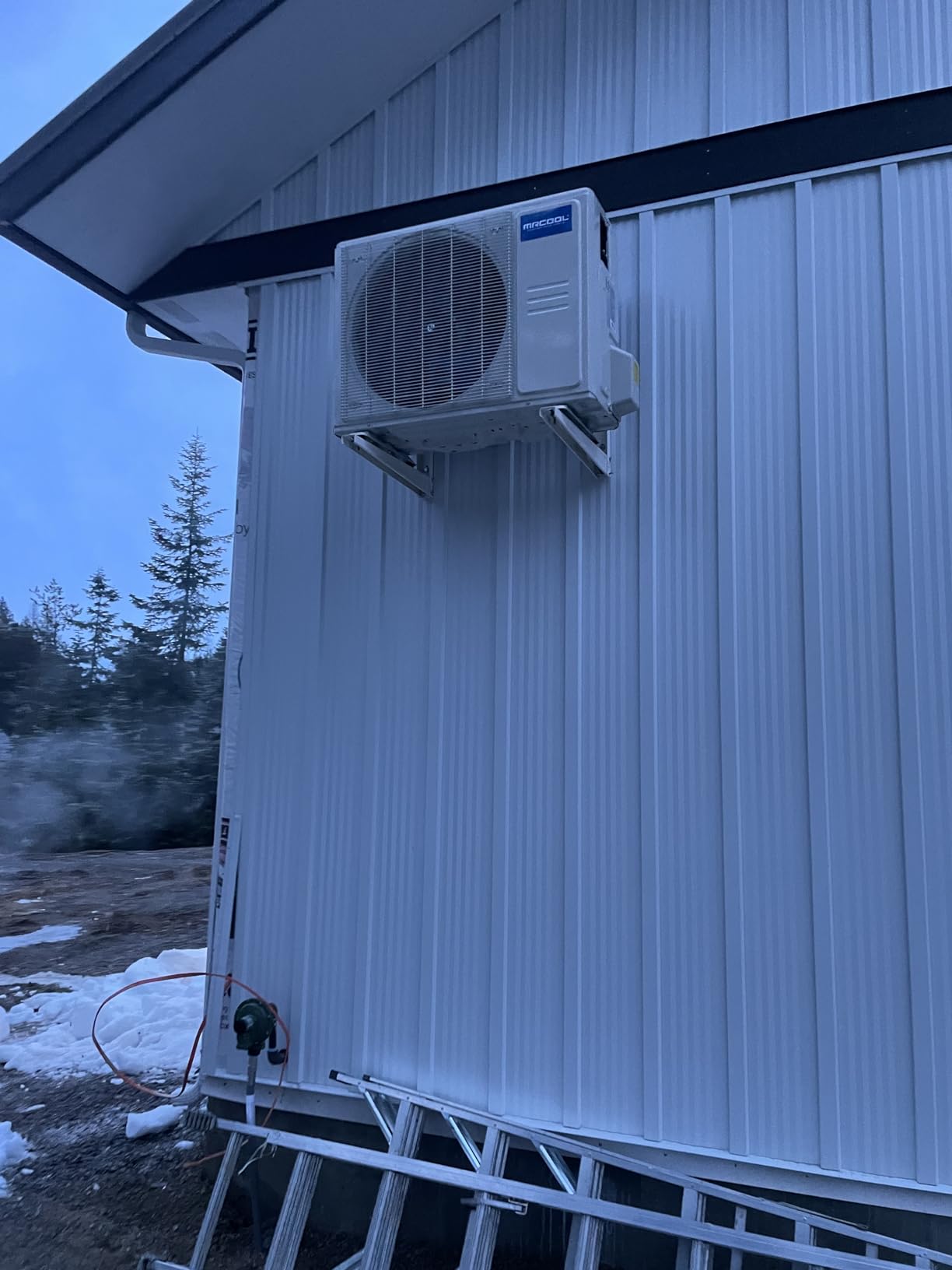
The documentation gaps are the real cost of a DIY install
Two reviewers hit the same problem independently: no wiring diagram is included with the electrical components, and on one unit the drilling template was inaccurate and forced a patched wall. Both are avoidable if you ask the seller for the wiring diagram and measure your wall yourself rather than trusting the paper template.
The mounting plate not fitting 24 inch stud centers is a third recurring detail. Check your stud spacing before purchase, because relocating the head one stud over means re-cutting drywall after the line set is already routed.
Read this one before sizing it for cold weather
Nothing in the published specification for this system states a minimum heating temperature or a cold-climate rating. It is an 18 SEER 24,000 BTU ductless heat pump with a good cooling reputation, but on the data available we would not list it as the answer to a question about sub-zero winters.
If your priority is heating a large space in a moderate climate and you want to avoid a contractor, this is a capable machine. If your winters are hard, look at the Cooper and Hunter Hyper Heat or the Daikin Aurora instead, both of which publish cold-temperature limits.
7. Pioneer Diamante Pro 18,000 BTU – Best for Sleeping Spaces
Pioneer Diamante Pro Mini Split Air Conditioner, Heat Pump, 18000 BTU, 230V
- Highest average rating in this roundup at 4.9 across 23 ratings
- Very quiet at 32 dB with dual-axis motorized louvers
- 21 SEER2 efficiency and 1700 watt-hours of annual energy consumption
- NEEP ASHP cold climate recognition for the heating side
- Complete kit includes head condenser/remote/line set/cable/drain hose sleeve and putty
- Pioneer AirLink app control requires a separately sold module
- Outdoor unit arrived with bent fins and dented sheet metal on some units
- Heating is specified only to -4F which limits it in severe climates
The Pioneer Diamante Pro carries the highest average rating in this group at 4.9 with 97 percent five-star ratings and no one-star ratings at all. It is also a properly documented cold-climate unit: NEEP ASHP recognition, 21 SEER2 cooling, 11 EER2 and 9.5 HSPF2 heating efficiency.
At 18,000 BTU it covers around 750 square feet as rated, which is a large primary bedroom, a small suite, or a living room. The indoor unit is listed at 32 dB, with dual-axis motorized louvers and I FEEL sensing on the remote so the head follows the temperature where you actually sit.
Modes include Turbo, Mute, Eco, Sleep, Timer and Memory, and the washable mesh filter runs a self-clean cycle. Energy use is published at 1700 watt-hours annually, the lowest consumption figure published by any system in this roundup.
The box is unusually complete: indoor head, factory-charged condenser, remote, insulated line set, cable, drain hose, wall sleeve and putty. Installers describe a straightforward install that takes about a day, and the unit is available in 9,000 through 24,000 BTU at both 115V and 230V.
The -4F rating tells you exactly which winters it suits
Minus 4°F is a real cold-climate number and it will carry most of heating duty in a moderate Northeast winter or a Southern mountain climate. What it will not do is serve a Minnesota or northern Maine design temperature, where the Cooper and Hunter Hyper Heat and the TOSOT Aoraki keep their head and this one loses capacity.
It is rated at 230V here, so you need a 240V circuit. The five year parts warranty applies upon proper registration after installation, which is worth doing the day the installer leaves rather than in the spring when you think of it.
Reviews are excellent and thin at the same time
Twenty-three ratings with zero critical reviews tells you buyers have been happy, but it does not tell you what happens to the compressor in year eight. The five year parts warranty applies upon proper registration after installation, and the long-term parts story for this family is not yet proven in the field.
The separate app module is the other friction point. Budget for the AirLink module up front, because bolting it on later means running another wire or sitting next to the unit.
8. Daikin Entra 18,000 BTU R32 – Best for Shops and Basements
Daikin 18,000 BTU 18 SEER2 Entra R32 Series Heat Pump Mini Split A/C
- Heating specified from 5F to 65F on published capacity data
- 3.30 COP and 9 HSPF2 are published efficiency figures rather than marketing claims
- Titanium Apatite photocatalytic filter plus Blue Fin corrosion protection
- Reliable performance reported in metal shops
- garages and basements
- 10 year manufacturer warranty
- Daikin warranty registration was not completed for an Amazon purchase on at least one unit
- Airflow could be improved by evacuating excess air from the line set
- Not a hyper-heat rated unit for the most severe winters
The Entra is the system to shortlist if your space is a shop, a garage, or a finished basement rather than a bedroom. At 18,000 BTU it covers up to 1,000 square feet, and the capacity ranges are wide: 6,900 to 20,000 BTU cooling and 5,800 to 22,500 BTU heating.
Its published heating range is 5°F to 65°F, which puts it in cold-climate territory without going to the extreme. The 3.30 COP figure and 9 HSPF2 heating rating are stated directly rather than implied, and DC inverter technology handles the modulation.
Owners repeatedly mention dependable operation in metal shops, garages, and renovations, and the titanium Apatite photocatalytic filter is genuinely useful in those environments where the air carries grinding dust or paint overspray.
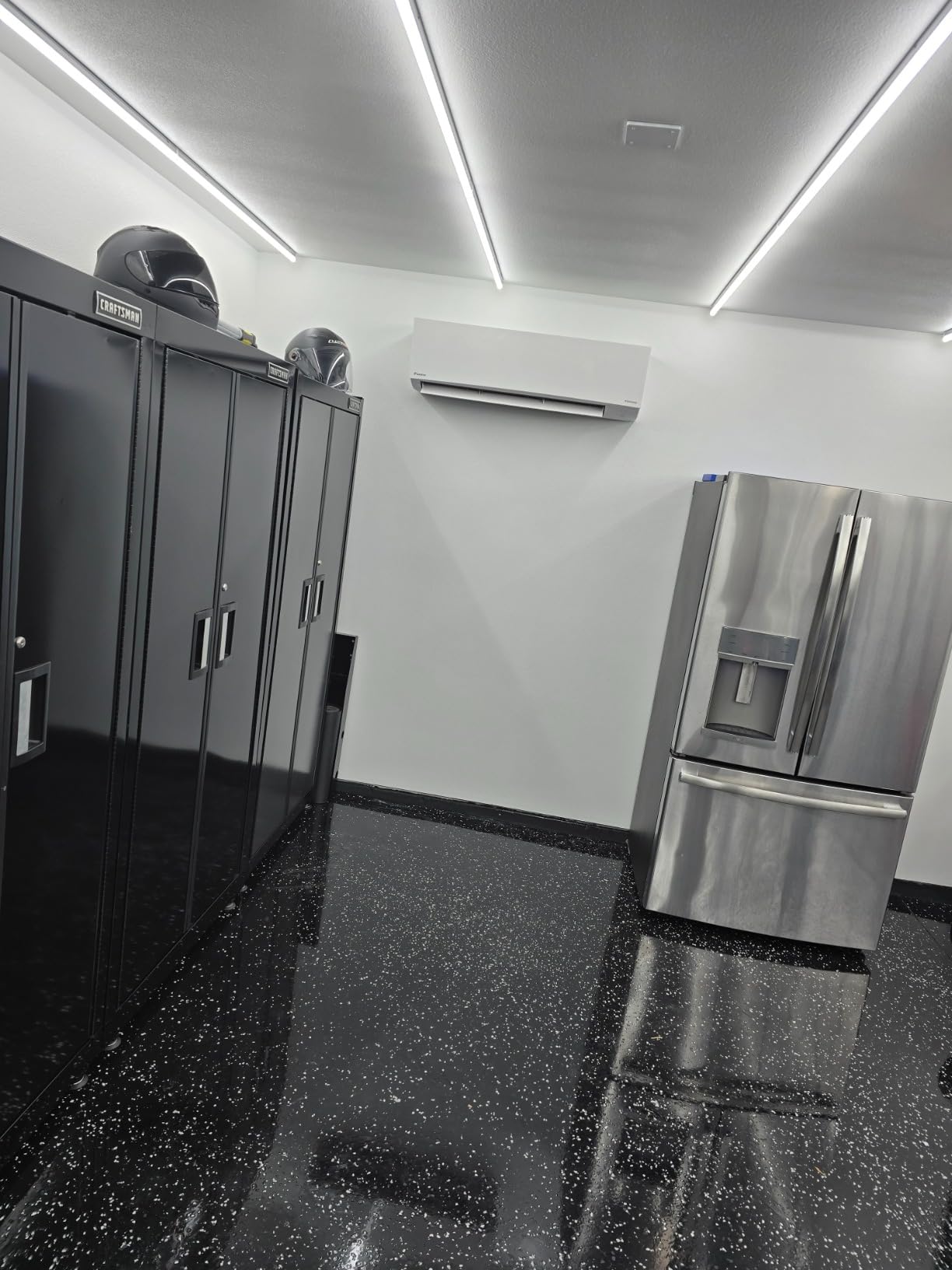
Cooling runs from 50°F to 115°F, and the operating modes list includes cold draft prevention, dry mode, fan mode, auto mode, ECO+ and self-diagnostics with a digital display. Blue Fin Protection handles the corrosion problem that ends the life of outdoor units in coastal and snowy climates.
The package includes a pre-charged R-32 condenser with remote, 15 ft line set and wall bracket. It is available in 9,000, 12,000, 18,000 and 24,000 BTU, and it carries a 10 year manufacturer warranty, which is long enough to make this the warranty leader if you want to avoid a short service term.
The warranty registration trap is the one thing to watch
At least one buyer on this listing bought through a marketplace and discovered the warranty had never been registered. The unit works fine; the problem only appears if you need service in year six and the dealer cannot find your registration in the system.
Register the serial number yourself as soon as the unit is installed, and keep the installer’s invoice with the model number and date on it. Daikin’s warranty terms are the strongest in this roundup, which makes them worth protecting.
Where the 5F floor leaves you cold
Five degrees Fahrenheit is the cold-climate threshold, and below it this unit is outside its published heating range. That is fine for Boston, Philadelphia, the mid-Atlantic, coastal New England, and the Pacific Northwest, and it is not fine for the northern Plains.
If your local design temperature is regularly below 0°F, the incremental cost of the Cooper and Hunter Hyper Heat or the Daikin Aurora buys you a category of performance rather than a marginal improvement.
9. OYLUS 17,000 BTU All Climate – Most Versatile for Mild Winters
- Operating range from 5F to 122F with a heated base pan built in
- Heating output reported as strong down to -4F
- 17 SEER2 with 1195 kWh annual consumption
- 32 dB sleep mode with six fan speeds and 4D auto-swing
- No one or two star ratings among the reviews
- Only a 1-year manufacturer warranty which is the shortest in this roundup
- 17 SEER2 is the lowest efficiency rating among the 17000 and 24000 BTU systems here
- Small review base at 17 ratings with no WiFi or app control
The OYLUS 17,000 BTU is the entry-level way into this roundup, and the spec sheet has one feature that matters more than any other number on it: a heated base pan. That is the chassis heater detail that most listings in this category skip entirely.
Its published operating range is 5°F to 122°F, with heating output maintained to -4°F according to the manufacturer. At 17,000 BTU cooling and 16,500 BTU heating it covers up to 1,250 square feet as rated.
Consumption is published at 1195 kilowatt-hours per year, and the system runs on a rotary scroll inverter at 17 SEER2. Remote control only, with no WiFi or app, which is a real limitation for anyone who wants scheduling from a phone.
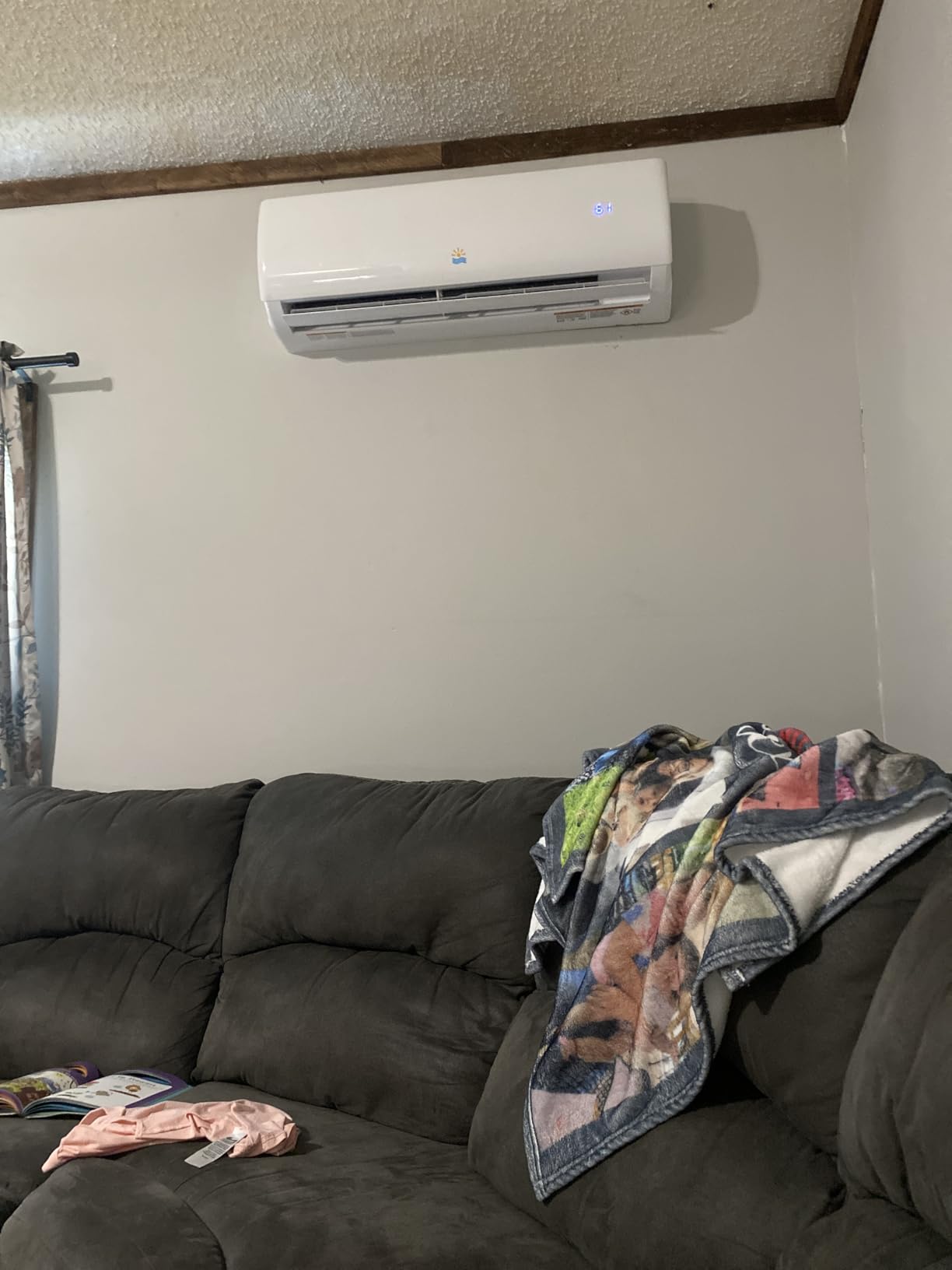
There are six fan speeds, 4D auto-swing, and a 133°F high-temperature self-clean function that vaporizes interior residue so you are not scrubbing coils every season. A child lock, I-Feel temperature sensing, a 24-hour timer and a closable display round out the control set.
The 32 dB sleep mode is among the quieter figures here, and it is the number that decides whether this can live in a bedroom.
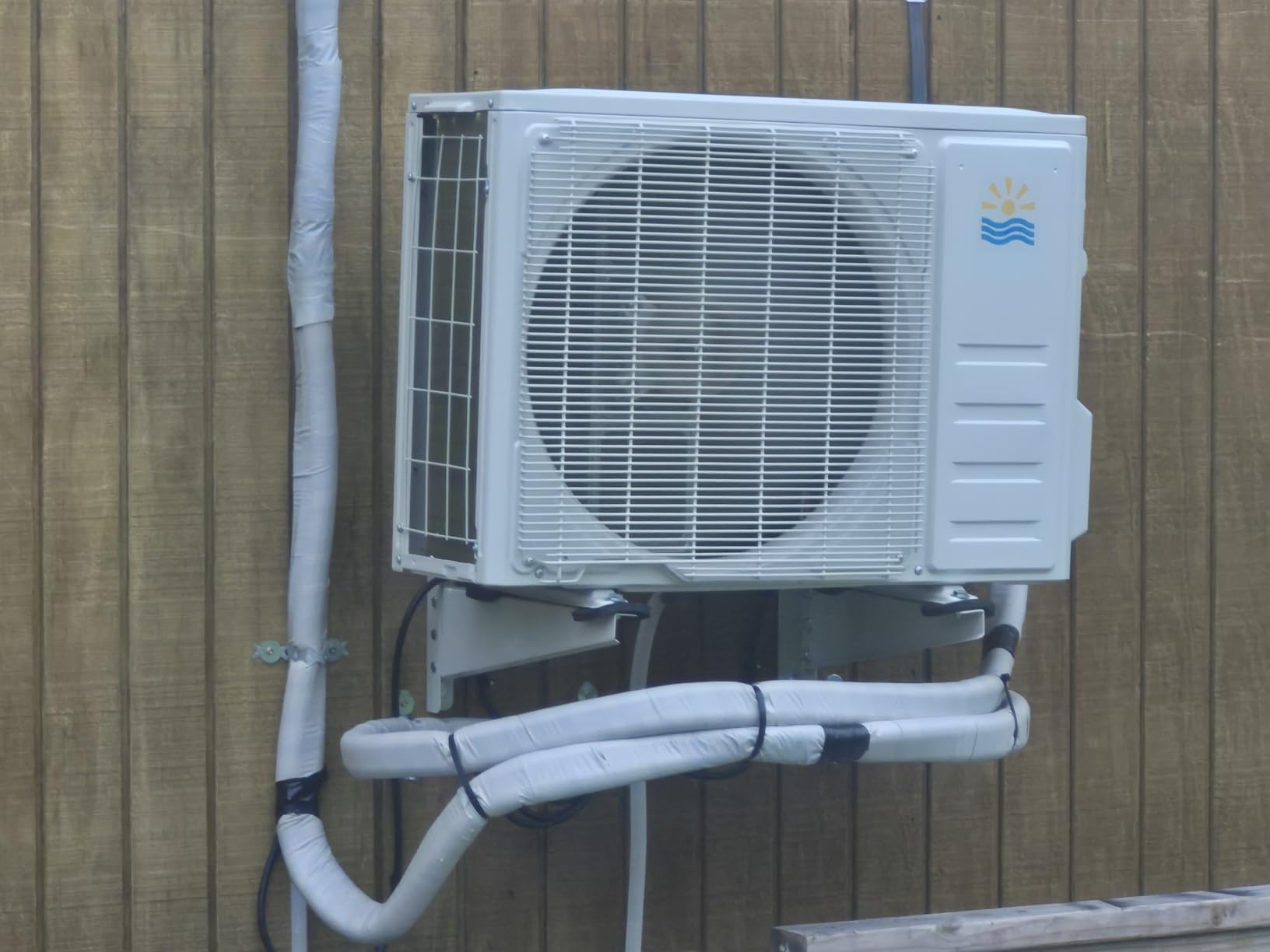
A one-year warranty is the price of the entry point
Every system on this list except one carries a warranty measured in years rather than months. One year means if the compressor fails in month fourteen you are paying full price for the repair or the replacement, and that risk should be priced into your decision rather than ignored.
If you are installing this in a cabin, a garage, or a low-traffic room, the exposure is lower and the one-year term is easier to accept. If it is heating your primary living space, we would rather you spend up for the warranty length.
Mild winters only, and know which way that cuts
The maintained output floor of -4°F puts this in the same band as the Pioneer Diamante Pro. That is a genuinely cold-climate capable machine for the money, but it is not equipment for the northern Plains or the far north, where -22°F rated units earn their extra cost.
The trade is clear: you give up warranty length, efficiency and smart controls, and you get a cold-rated system with a chassis heater and an entry-level specification. That is a reasonable trade for a garage or an addition that is used part of the week.
10. MRCOOL Easy Pro 9,000 BTU 115V – Best for 115V DIY Installs
MRCOOL 9000 BTU Ductless Inverter Mini Split Air Conditioner & Heat Pump
- Genuinely DIY installable with no special tools required
- 115V plug and play power suits shops
- offices and small additions
- Owners report it works in both hot and cold conditions
- Very quiet with stable temperature control in office settings
- 14 SEER and a 2 Star BEE rating are the lowest efficiency figures in this roundup
- Only a 2 year warranty
- No stated minimum operating temperature for heating
The 9,000 BTU Easy Pro is the easiest installation on this list. It runs on 115V, comes factory pre-charged, and is designed for an owner to install with no special tools, which is why every review on this listing describes a completed installation without professional help.
At 9,000 BTU it covers up to 400 square feet. That makes it a shop, a home office, a small bedroom, or a garage corner, and it is the unit most people searching for a 115V cold-weather mini split end up looking at.
Control options are push button, remote and voice. The compressor is a rotary scroll inverter, and the fifth generation lineup includes 9,000, 12,000, 18,000 and 24,000 BTU versions if you want to grow into a larger system later.
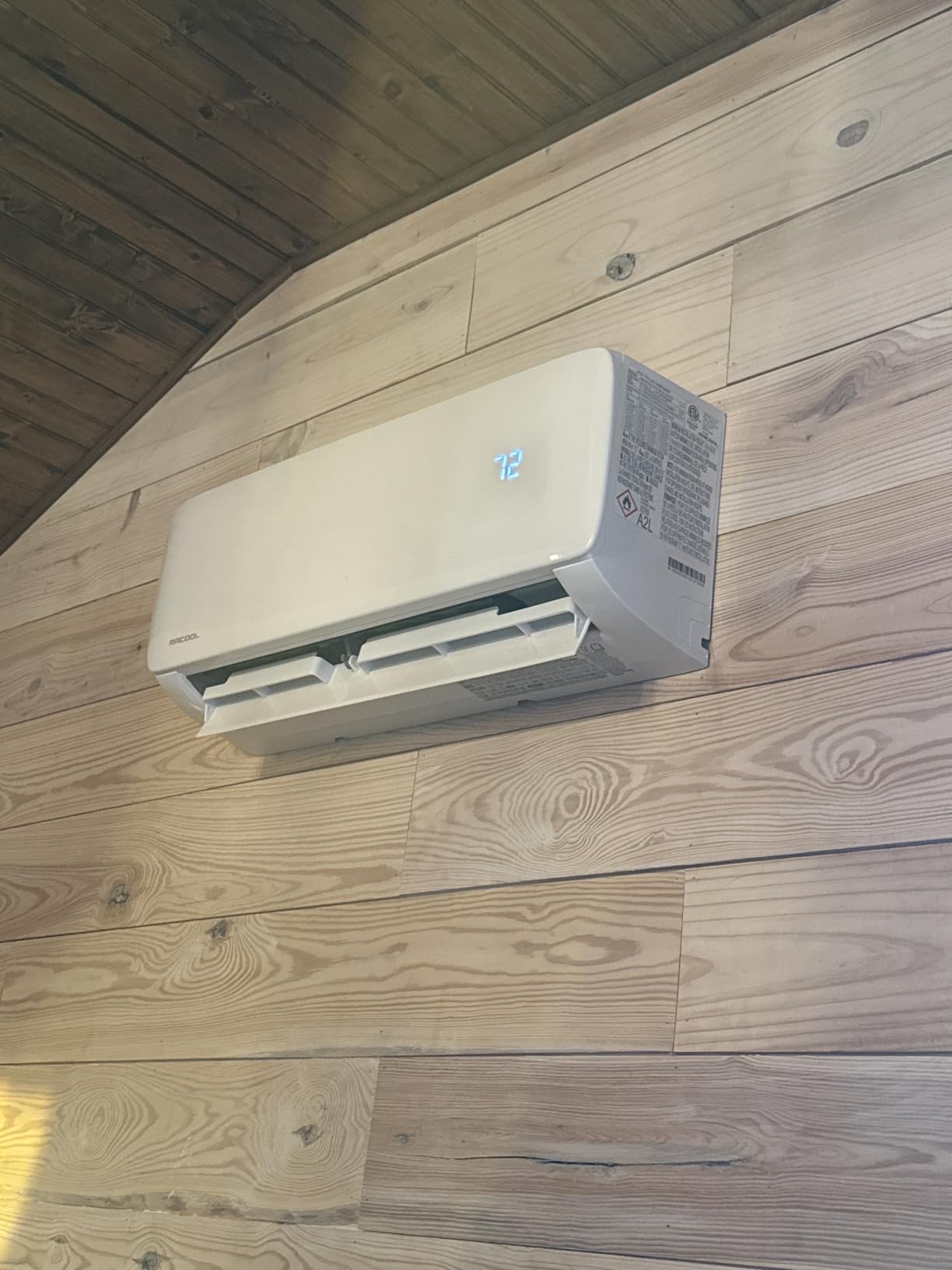
Owners describe quiet operation with stable temperature control in an office setting, and several note that it handles both hot and cold conditions without complaint. The finish is described as sleek and modern, which matters more than it sounds when the head is mounted on a visible interior wall.
The indoor unit measures 10.63 in by 32.87 in by 21.26 in, so it fits a standard stud bay without much fuss. Listed indoor noise is 43 dB, which is higher than the other units here and worth weighing if the space is a bedroom.
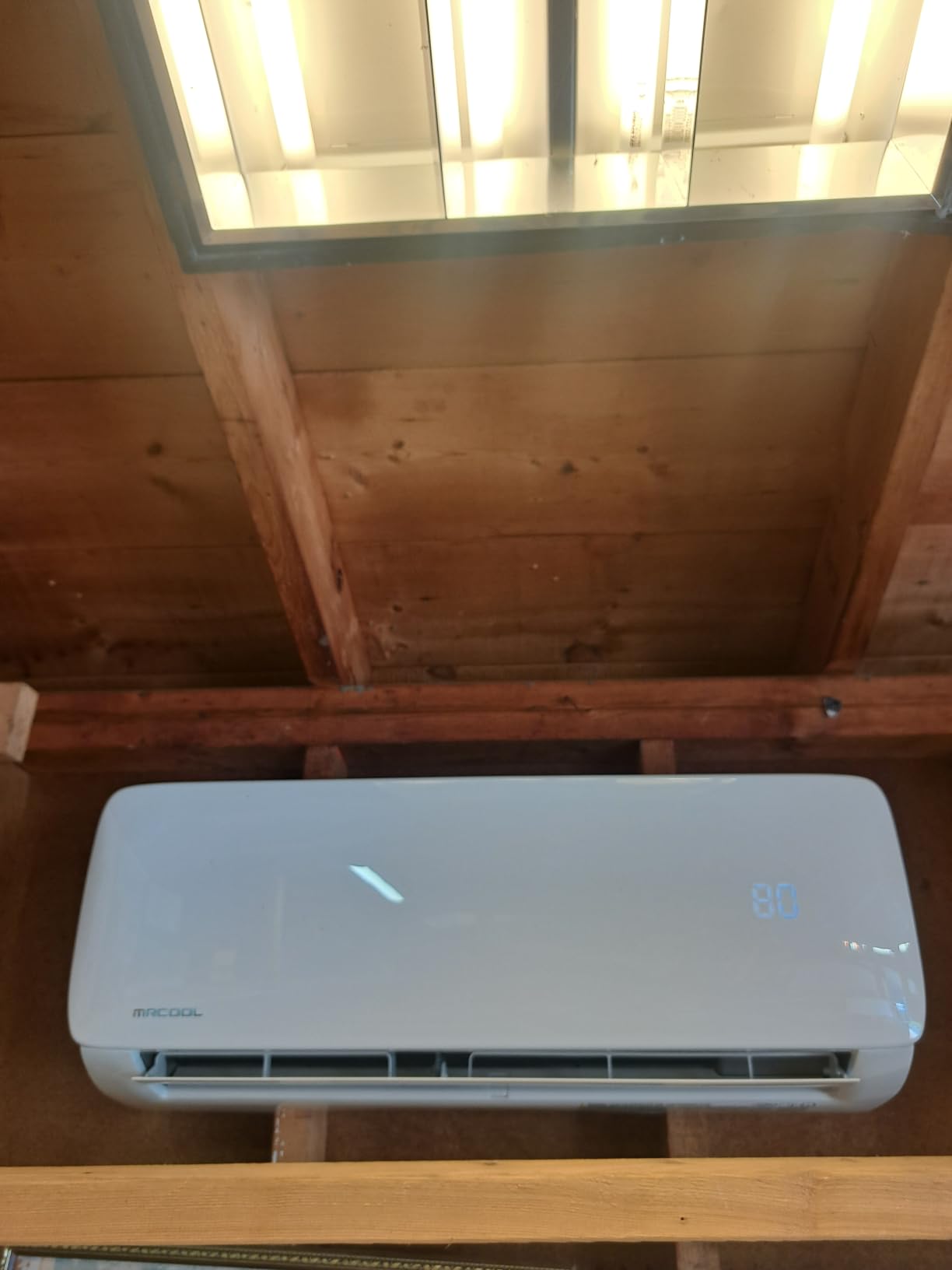
There is no published cold rating, so do not assume one
This is the most important line in this review. The listing states no minimum operating temperature and no cold-climate certification for the 9,000 BTU Easy Pro. At 14 SEER and 2 Star BEE, it is the least efficient system on the list, which is a strong signal about how it was engineered for heating.
If you live somewhere that stays above freezing most of the winter, this does a perfectly good job and the install savings are real. If you live where outdoor temperatures regularly drop below 20°F, choose a system with a published temperature floor instead.
The 115V route still has a ceiling
A 115V plug-and-play circuit is convenient, but the efficiency cost of pushing 9,000 BTU through single-phase residential power is why this unit sits at 14 SEER. If your project has any flexibility, moving to a 208 or 230V system buys you a compressor that is designed for the job.
The 2 year warranty and the higher 43 dB indoor figure are the other two reasons we rank this tenth rather than higher. It is a capable appliance bought for convenience, and we would rather say that plainly than dress it up.
How We Evaluated These Systems
We did not install these systems in a laboratory, and we are not going to imply otherwise. Instead, every unit here was evaluated the same way: read the manufacturer-rated operating temperature ranges, the AHRI-certified efficiency figures, the published heating capacity, the warranty terms, and the full body of customer feedback including the complaints.
Where a manufacturer publishes capacity at a specific low temperature, we used that figure. Where they publish nothing, we said so plainly rather than estimating from the marketing copy, and several units in this roundup have no published low-temperature capacity at all.
Customer feedback mattered for two specific reasons. First, the complaint clusters tell you where the weak points are before you find them yourself, and several of them are only visible in years-two-and-three reviews. Second, a roundup with no negatives is marketing copy, so every entry here carries an honest drawback line.
One thing this evaluation cannot tell you is how any of these units performs in your house. Balance point is a property of the building and the system together, and the only way to know yours is to run a proper load calculation against your actual design temperature.
How to Choose a Cold Climate Mini Split
Find your design temperature before you look at any model
Your design temperature is the coldest outdoor temperature your local building code uses for heating load calculations, and it is published in the design conditions appendix of your local energy code. It is not the record low you saw on the news. If your design temperature is -5°F, a -13°F rated system is adequate with margin.
If it is -25°F, the difference between a -13°F unit and a -22°F unit is the difference between a system that carries your house and one that hands off to backup heat on the ten coldest nights.
Ask for capacity at 17F and 5F, in writing
Ask the dealer for the AHRI-certified capacity at 17°F and at 5°F for the exact model you are being quoted. If the seller can only produce the 47°F rated figure, you are being handed a brochure number rather than a performance number, and no amount of prose about cold-climate capability substitutes for it.
The 70 percent retention at 5°F and COP of at least 1.75 threshold is the testable definition used for cold-climate certification. Ask whether the exact unit is certified to it, and ask who certified it.
Confirm the inverter compressor and ask about the basepan heater
A fixed-speed compressor on a cold-climate claim is a warning sign. Every cold-rated unit here uses a variable-speed inverter compressor, which is what allows output to ramp up as heat loss rises rather than cycling and frosting.
For the basepan heater, ask the seller to point at the element in the outdoor unit’s bottom pan. If they cannot, the unit will be relying on periodic defrost alone to clear condensation, and in a wet snowy climate that is where ice problems start. We cover the symptoms in our defrost section below.
Weight HSPF2 above SEER2 in a cold climate
SEER2 measures cooling efficiency and HSPF2 measures heating efficiency. In a heating-dominated market the HSPF2 number is the one that changes your winter bills. The published units on this list range from 9 HSPF2 on the standard 18,000 BTU systems up to 10 HSPF2 on the Della Optima.
Those few points of HSPF2 are not dramatic in a mild January. Over a full heating season with a system running 4,000 hours, the difference compounds, and it is the cheapest efficiency gain available because it is already in the equipment.
Brands to consider carefully
Rather than telling you to avoid entire brands, we would rather name the four situations where a buyer most often gets burned. The first is buying a system with no published minimum operating temperature, because without that number you cannot tell whether it is rated for your climate at all.
The second is buying a general-purpose system that the seller describes as cold climate capable. Several 18,000 and 24,000 BTU units in mainstream listings make no low-temperature claim at all, and they appear in cold-weather shopping results constantly. The third is buying a system whose outdoor unit has no chassis heater for a climate with regular snow and moisture.
The fourth is buying on efficiency alone. Several highly efficient systems here publish no cold-temperature rating whatsoever, and the highest SEER2 figure on this list appears on both a unit rated to -13°F and a unit rated to -22°F while the 9,000 BTU system in this roundup has the lowest efficiency and no cold rating at all.
Reliability, warranty and parts availability
Warranty length is the most visible proxy for manufacturer confidence, and on this list it ranges from one year to twelve. The Daikin Aurora at 12 years, the Daikin Entra at 10 years, and the Cooper and Hunter systems at 7 year compressor and 5 year parts all give you a meaningful service term.
Parts availability is the less visible one. A compressor is the component most likely to fail after year ten, and a brand with a thin dealer network in your region means a longer wait and a higher service cost. Ask the seller which service company covers your postal code before you sign anything.
If you also want to control the system from a phone, our guide to smart thermostats for heat pumps covers which controllers work with ductless inverter equipment. For non-living spaces like garages and workshops, our roundup on mini splits for garages goes into mounting height and airflow clearance in more detail. If the water rather than the air is what needs heating, our guide to pool heat pumps for inground pools covers the sizing math for that equipment.
Do You Need a Backup Heat Kit in a Cold Climate?
Probably not, if you buy genuinely cold-rated equipment and size it for heating. That is the entire point of paying for a -13°F or -22°F rated unit, and it is why those units cost more than a standard ductless system in the first place.
That said, there are three honest strategies. The first is an electric heat kit, a backup resistance heater built into the indoor unit that stages in automatically when the heat pump alone cannot hold setpoint. It is simple and it is expensive to run, because resistance heat typically costs two to three times as much per hour as the heat pump, but it guarantees you are never without heat.
The second is dual fuel, where a gas furnace handles the load below the balance point and the heat pump handles everything above it. It is the most comfortable and the most efficient strategy, but it requires an existing gas system and a coordinating control kit.
The third is heat pump only, which is viable when your unit is rated well below your design temperature and your home has a reasonable heat loss. Owners in genuinely severe climates frequently report needing a backup source for the coldest stretch of the season, so this strategy depends on your local weather data rather than your optimism.
Whatever you choose, know the balance point. It is the outdoor temperature at which the heat pump’s available capacity exactly equals your home’s heat loss. Above it, the heat pump runs alone; below it, something else has to make up the difference.
115V DIY vs 208/230V Professional Installs
The single most consequential difference between the two is not the power, it is the ceiling on size. A standard 115V residential circuit comfortably supports a 9,000 BTU head and stretches to 12,000 BTU with a dedicated 20A circuit. Beyond that you are into 208 or 230V territory and usually a licensed electrician anyway.
The reasons 115V looks attractive are real. No panel upgrade, no permit for a new 240V circuit, no electrician, and a weekend install with a vacuum pump and a flare tool. The two units on this list built for that path are the MRCOOL Easy Pro 9,000 and the Della Optima.
The reasons to hire someone are equally real. Line set length limits are strict on owner installs, often around 25 ft, and going past that requires a refrigerant adjustment. A vacuum to the manufacturer spec is mandatory, and without it the compressor oil carries moisture and the system dies young.
There is also the warranty question, which varies by manufacturer. Some will honor a warranty on an owner install, some will not, and the answer is a single phone call to the seller’s service department before you start.
Our practical rule is that a 115V owner install makes sense for a single small room on an existing circuit with a short line run. Anything 12,000 BTU and up, any system where the outdoor unit is more than 25 ft from the head, and any install in a climate where a failed heating season has real consequences belongs with a contractor. If the same unheated space also needs cold storage, our guide to garage refrigerators for cold climates covers the equipment choice on that side.
Defrost and Ice: What Is Normal and What Means Trouble
A defrost cycle is normal, and on a cold day you may hear it happen several times. What is not normal is ice that stays on the outdoor unit after the fan restarts, or a unit that sits in a steady state of melting and refreezing through an entire cold afternoon.
To reduce icing, start with the outdoor unit height. A stand that holds the unit 12 to 18 inches off the ground keeps the coil face clear of snow banks and lets cold air drain away instead of pooling. In a climate with regular snow, this single detail prevents most of the complaints we read about.
Next, the drain line. The 16 ft drain extension included with several units on this list has to be routed with a continuous fall and piped far enough from the foundation that a freeze-up does not run back under the slab. A blocked drain pan is the usual cause of a persistent ice block on the bottom of the coil.
If the coil ices and stays iced, check for a failed defrost sensor or a low refrigerant charge before anything else. Both produce the same symptom, and both are technician jobs involving a manifold gauge and a recovery machine.
The normal pattern to expect is a brief fan stop, a quiet heating pause of a few minutes, a gurgle as condensate drains, and then a fan restart. Owners who find themselves expecting that sound report it as less alarming than those who are surprised by it every time.
Cold Weather Installation Details That Change Performance
The details below decide whether a well-chosen system actually performs. Outdoor unit height and drainage we covered above, and both belong on your install checklist before the crew arrives.
Line set length is the next one. Exceeding the rated run length requires a refrigerant charge adjustment, and running a longer line set without it quietly reduces both capacity and efficiency in cold weather. Ask for the rated maximum and compare it to the actual measured distance.
Refrigerant charge verification is the third. A nitrogen pressure test, a proper vacuum to the manufacturer spec, and a measured charge by weight are what separates a system that lasts ten years from one that struggles at 30°F in year two. It is worth asking who does the install and whether they photograph the gauges.
Finally, make sure the condensate drain and any heat kit wiring are accessible before the wall is closed. Every cold-climate troubleshooting problem becomes a service call when the access panel is behind drywall, and the difference in cost is enormous.
If incentives matter to your decision, note that the federal Section 25C residential energy credit has lapsed for equipment placed in service in recent years. State, utility and local programs still carry most of the money now, so ask your utility before you assume there is nothing available.
Frequently Asked Questions
Do mini split heat pumps work in cold weather?
Yes, when the unit is genuinely cold-climate rated. A standard ductless mini split can lose 30 to 50 percent of its rated heating capacity by 17°F, which forces expensive resistance backup heat to run constantly. A cold-climate rated unit holds at least 70 percent of rated capacity at 5°F with a COP of 1.75 or better, and units like the Cooper and Hunter Hyper Heat and TOSOT Aoraki are published to -22°F.
What is the best heat pump brand for cold weather?
On the systems reviewed here, Daikin and Cooper and Hunter stand out for publishing the deepest cold-weather data and the longest warranty terms. The Daikin Aurora publishes 100 percent rated heating capacity at 5°F with a 12-year warranty, and the Cooper and Hunter Hyper Heat publishes -22°F heating operation with a 7-year compressor warranty. The single most reliable pick for a mild cold climate with app control is the Della Optima at -13°F with the largest review base in the group.
What is the lowest temperature a mini split heat pump works at?
It depends entirely on the model. Among the systems reviewed here, the Cooper and Hunter Hyper Heat and the TOSOT Aoraki are rated to -22°F, the Della Optima and the Daikin Aurora to -13°F, the Daikin Entra to 5°F, and the Pioneer Diamante Pro and OYLUS systems to -4°F. Two units on the list publish no minimum heating temperature at all, which is why we flag them separately.
How often should a mini split go into defrost mode?
Several times a day is normal on a cold day. A demand-based defrost cycle triggers when the outdoor coil detects frost, runs for several minutes, then restarts the fan. What is not normal is ice that remains on the outdoor unit after the fan restarts, or a unit that cycles continuously through a whole cold afternoon. Persistent ice points to a failed defrost sensor, a blocked condensate drain, or a low refrigerant charge.
How do I stop my mini split from icing up?
Four things help. Raise the outdoor unit on a stand 12 to 18 inches off the ground so snow banks cannot touch the coil. Route the condensate drain line with a continuous fall and discharge it away from the foundation. Keep the coil face clear of snow and ice through the winter. If icing continues despite all three, have a technician check the defrost sensor and the refrigerant charge, because both produce identical symptoms.
Which Cold Climate Mini Split Should You Buy?
Start with your design temperature, not with a brand. Below -20°F, look at the Cooper and Hunter Hyper Heat at -22°F. Between -5°F and -20°F, the Della Optima at -13°F is our top recommendation, because 115V power, a 10 HSPF2 heating rating and the largest review base in this group make it the least risky purchase here.
If you want the deepest published low-temperature data and do not mind a 230V install and a thinner review history, the Daikin Aurora at 100 percent capacity in 5°F with a 12-year warranty is the more complete machine. For a bedroom, the Pioneer Diamante Pro at 32 dB and 21 SEER2 is the quiet pick.
For a garage, workshop or shop, the Daikin Entra and the TOSOT Aoraki both publish cold-weather heating ranges and both handle the dirty air and corrosion that indoor spaces like those produce. For a small addition on a 115V circuit you intend to install yourself, the Della Optima and the MRCOOL 9,000 BTU are the two to compare.
Above all, insist on the published low-temperature capacity figure for the exact model before you sign. That single number separates every unit on this list from the general-purpose ductless equipment that gets sold to cold-weather shoppers anyway. Our guides to mini splits for garages and to smart thermostats for heat pumps cover the two follow-on decisions most buyers hit next.