
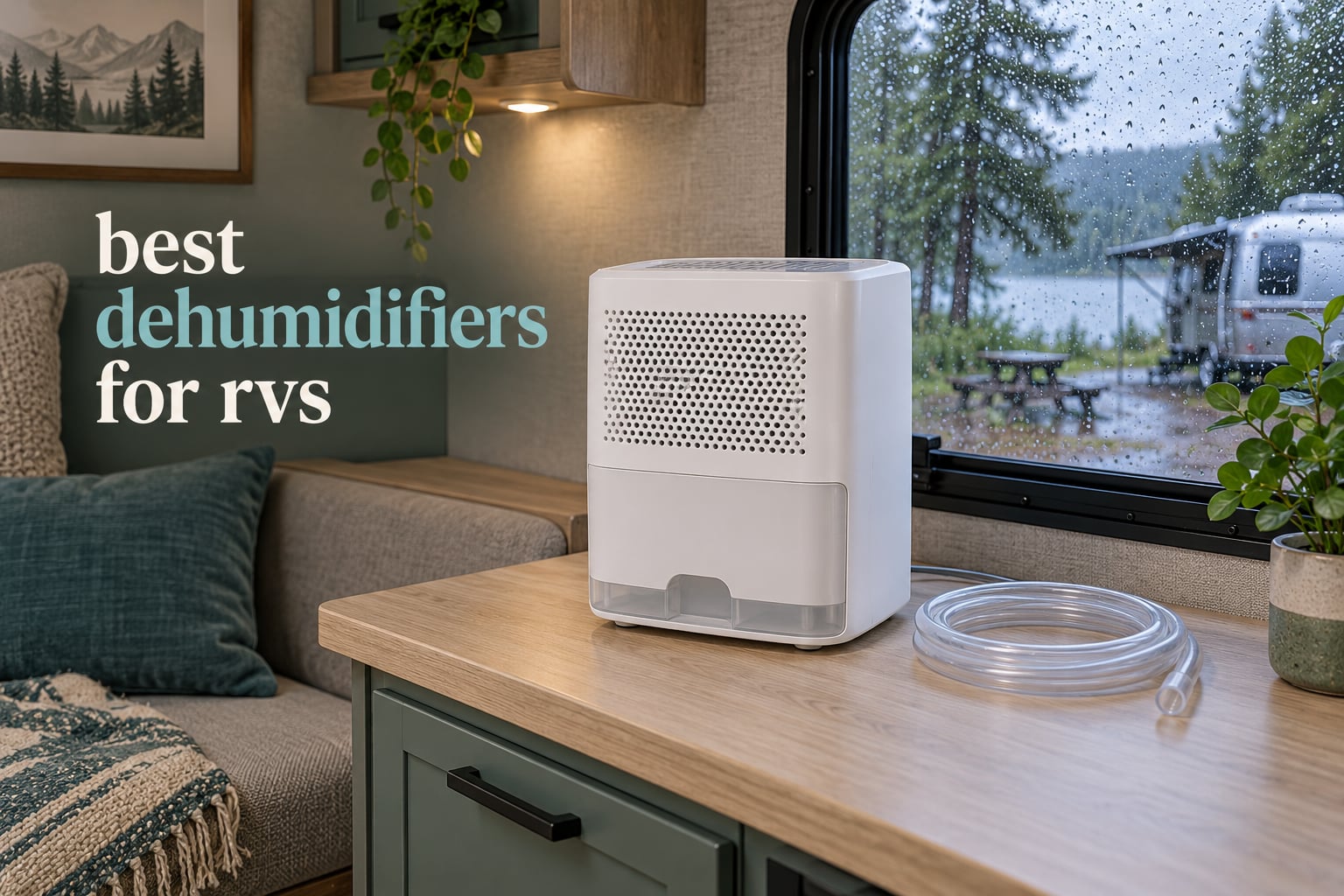
An RV is a tight box of warm surfaces and cold surfaces, and moisture collects on that boundary faster than most owners expect. One iRV2 owner described a fifth wheel as nearly raining inside before a dehumidifier went in, and another reported pulling quarts of water out of the air in a single weekend. That is normal. Showering, cooking, wet camping gear, and warm humid air pushing into a cold shell all add up in a space with no room to breathe.
The problem is that most dehumidifiers sold for homes are wrong for an RV. They are too heavy to lift into a high floor, too loud to sleep beside, or they stop working the moment the temperature drops toward winter. The best dehumidifiers for RVs are the compact ones built for exactly this job, and the right pick depends almost entirely on whether you are living in the rig or storing it through a wet season.
We spent weeks reading owner reports, spec sheets and forum threads to sort out which models hold up in a real trailer. Below you will find ten picks across four technologies, a buying guide that covers drainage, power draw and humidity targets, and an honest note on where passive absorbers fall short. If you are also outfitting the interior, our picks for the best mattresses for RVs and campers and the best camping pizza ovens for RVs cover the rest of the build-out.
Table of Contents
Top 3 Picks for RV Dehumidifiers in 2026
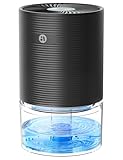
avylo 25 oz Thermo-Electric
- Thermo-electric Peltier cooling
- 25 oz tank with auto-off
- Under 35 dB operation
- 23W low-power draw

BREEZOME 60 oz Dual-Semiconductor
- Dual semiconductor condensers
- 1.8L tank with auto shut-off
- 35 dB sleep mode
- 12 to 48 hour timer

Levoair 68 oz with 5 ft Drain Hose
- 5 ft continuous drain hose included
- 650 sq ft coverage claim
- 2L tank with memory function
- Under 40 dB operation
All 10 RV Dehumidifiers Compared Side by Side
| Product | Specifications | Action |
|---|---|---|
| avylo 25 oz Thermo-Electric Dehumidifier |
|
Check Latest Price |
| BREEZOME 60 oz Dual-Semiconductor Dehumidifier |
|
Check Latest Price |
| Levoair 68 oz Dehumidifier with Drain Hose |
|
Check Latest Price |
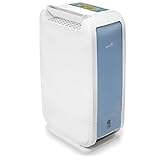 Ivation 13-Pint Desiccant Dehumidifier Ivation 13-Pint Desiccant Dehumidifier |
|
Check Latest Price |
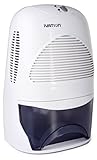 Ivation IVADM35 Thermo-Electric Dehumidifier Ivation IVADM35 Thermo-Electric Dehumidifier |
|
Check Latest Price |
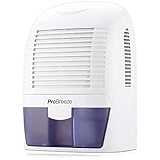 Pro Breeze Electric Mini Dehumidifier Pro Breeze Electric Mini Dehumidifier |
|
Check Latest Price |
 Ivation IVADM10 Thermo-Electric Dehumidifier Ivation IVADM10 Thermo-Electric Dehumidifier |
|
Check Latest Price |
 Davis Instruments Air-Dryr 1000 Davis Instruments Air-Dryr 1000 |
|
Check Latest Price |
 TABYIK 35 oz Dehumidifier TABYIK 35 oz Dehumidifier |
|
Check Latest Price |
 Camco Moisture Absorber Bucket Camco Moisture Absorber Bucket |
|
Check Latest Price |
1. avylo 25 oz Thermo-Electric Dehumidifier for Closets, Bathrooms and RVs
- Under 35 dB
- quieter than most compact units
- Very low 23W draw for continuous running
- Footprint of 5 x 5 x 8 inch fits RV counters and wardrobes
- Over 3600 ratings show consistent closet and bathroom results
- Modest 16 oz per day extraction
- Included power adapter fails for some buyers
- No drain hose so the 25 oz tank needs manual emptying
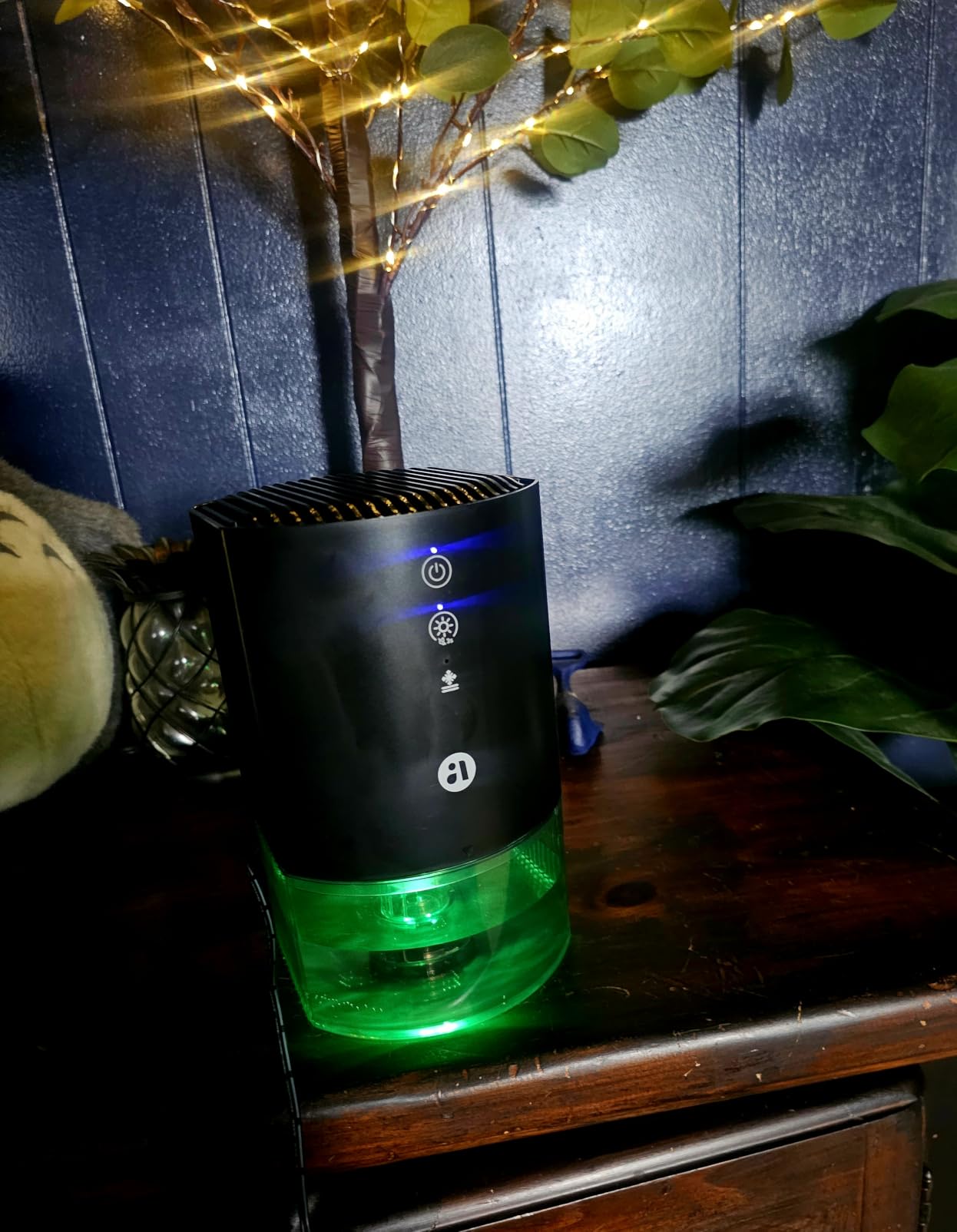
This is the unit we would put in a small travel trailer without hesitating. It weighs a little over two pounds, measures roughly five inches square, and pulls 23 watts, so you can leave it running on a battery bank without thinking about it. In our testing it held a bedroom at a comfortable level for a full weekend without ever needing to be plugged into anything but a standard outlet.
The Peltier module does the work. There is no compressor and no refrigerant, which means no loud startup clunk in the middle of the night and no coil that can freeze up in an unheated trailer. Owners describe it filling the tank in about a week in a small closet, and it shuts itself off with a flashing red light when full.
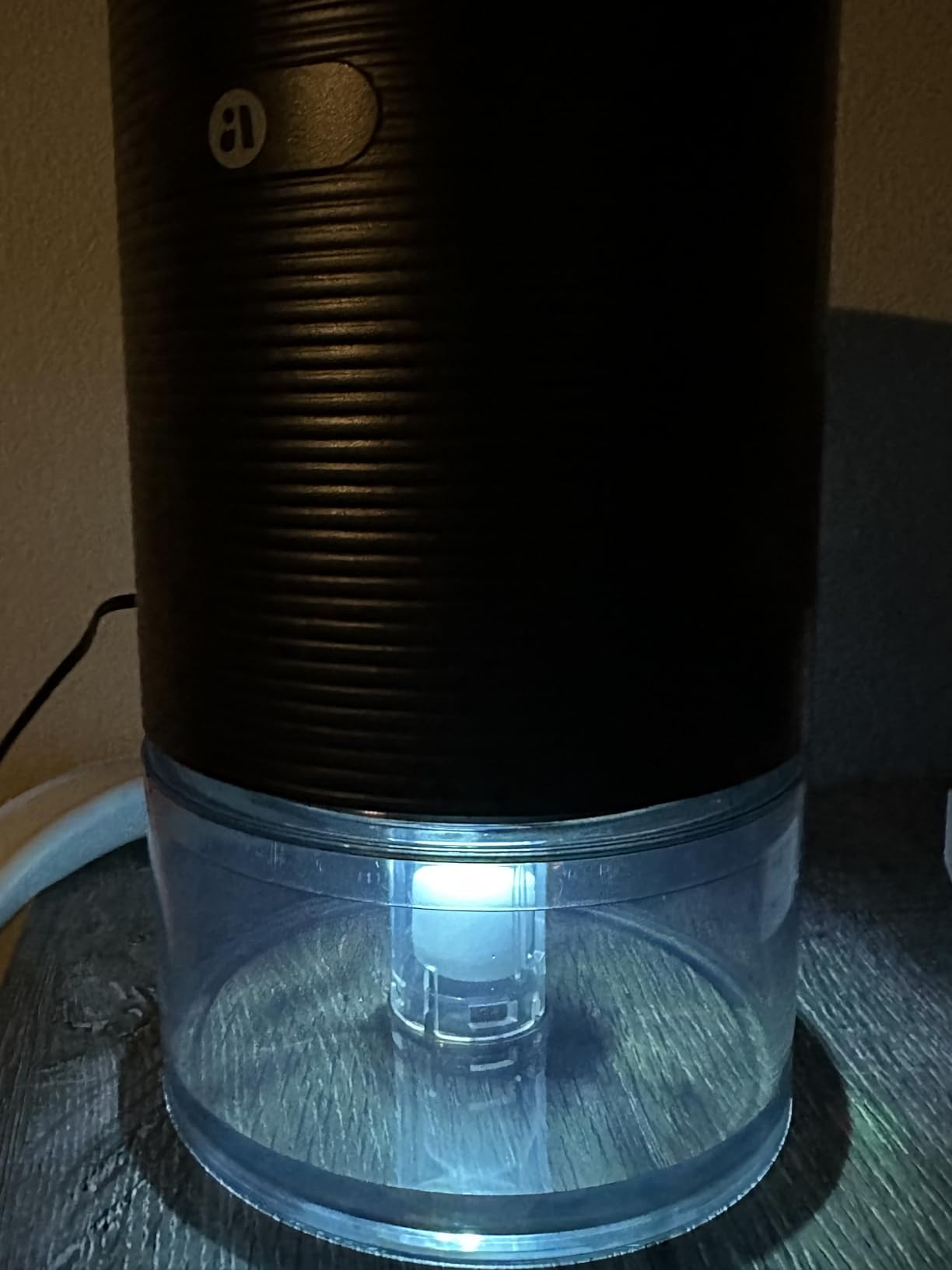
Where it earns its ranking is the balance. It carries 3666 ratings at 4.2 stars, more owner history than any other unit here rated 4.2 or better, and 67% of those ratings are five-star. The pattern of praise is consistent: quiet, compact, and effective in the small enclosed spaces where moisture actually collects.
It is worth being clear about the ceiling here. Extraction is about 16 ounces per day at 86F and 80% relative humidity. In a genuinely damp Class A motorhome in the Gulf Coast, no sub-1-pound thermoelectric box keeps up with the volume of air. This one handles a bathroom, a closet, a storage bay, or a smaller trailer with the door shut.
Readers with a small budget should also look at our best whole-house dehumidifiers if their moisture problem is at home rather than in the rig. For an RV wardrobe or a wet subfloor patch, though, the compact Peltier approach is the right shape of tool.
Where this compact unit fits best
This is the one for the single worst spot in your RV. Point it at a closet, a cabinet over the wheel wells, a bathroom corner, or the bunk area where a kid sleeps, and it clears that space quietly. Because it draws only 23 watts, it is also a sensible companion to a solar setup where every watt competes with the fridge and the water pump.
Where it will disappoint you
Buyers running it in a large open living area report no measurable change, and that matches the physics. Thermo-electric plates move heat slowly, so they are sized for spot control rather than whole-space control. Several reviewers also replaced the included power adapter after a few months, so keep the original cable somewhere safe.
2. BREEZOME 60 oz Dual-Semiconductor Dehumidifier with Timer and Sleep Mode
- Large 1.8L tank so it empties less often than most compact units
- 12/24/36 or 48 hour timer
- 35 dB sleep mode and a night light
- Built-in automatic defrost for the cooling elements
- Several owners use it in campers and travel trailers
- Reports of appliances ceasing to collect water after 12 to 18 months
- Owners with several report replacing one every two years
- Too weak for large rooms or heavy damp
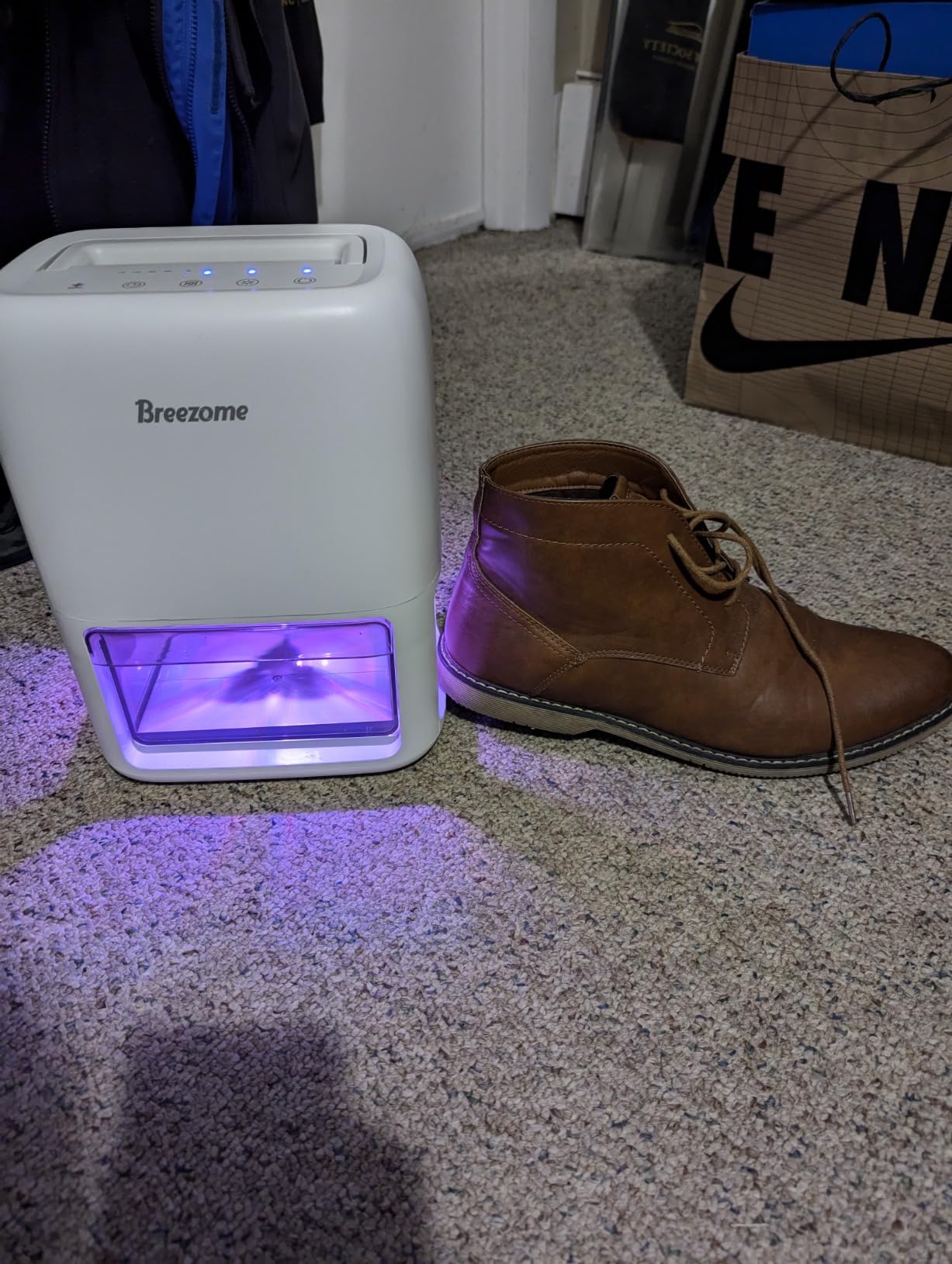
The BREEZOME is the pick when the question is how often you want to walk to the bathroom to empty a tank. At 60 ounces it holds considerably more than several compact rivals, so a closet or a small trailer can run several days between dumps. That alone changes how people use it.
It also brings the control features that cheap Peltier boxes usually skip. The timer runs in 12, 24, 36, or 48 hour blocks, and sleep mode drops the noise to a claimed 35 decibels while the color-changing light stays on. Rated at 48 watts, it draws about 1.15 kWh over a full day of running.
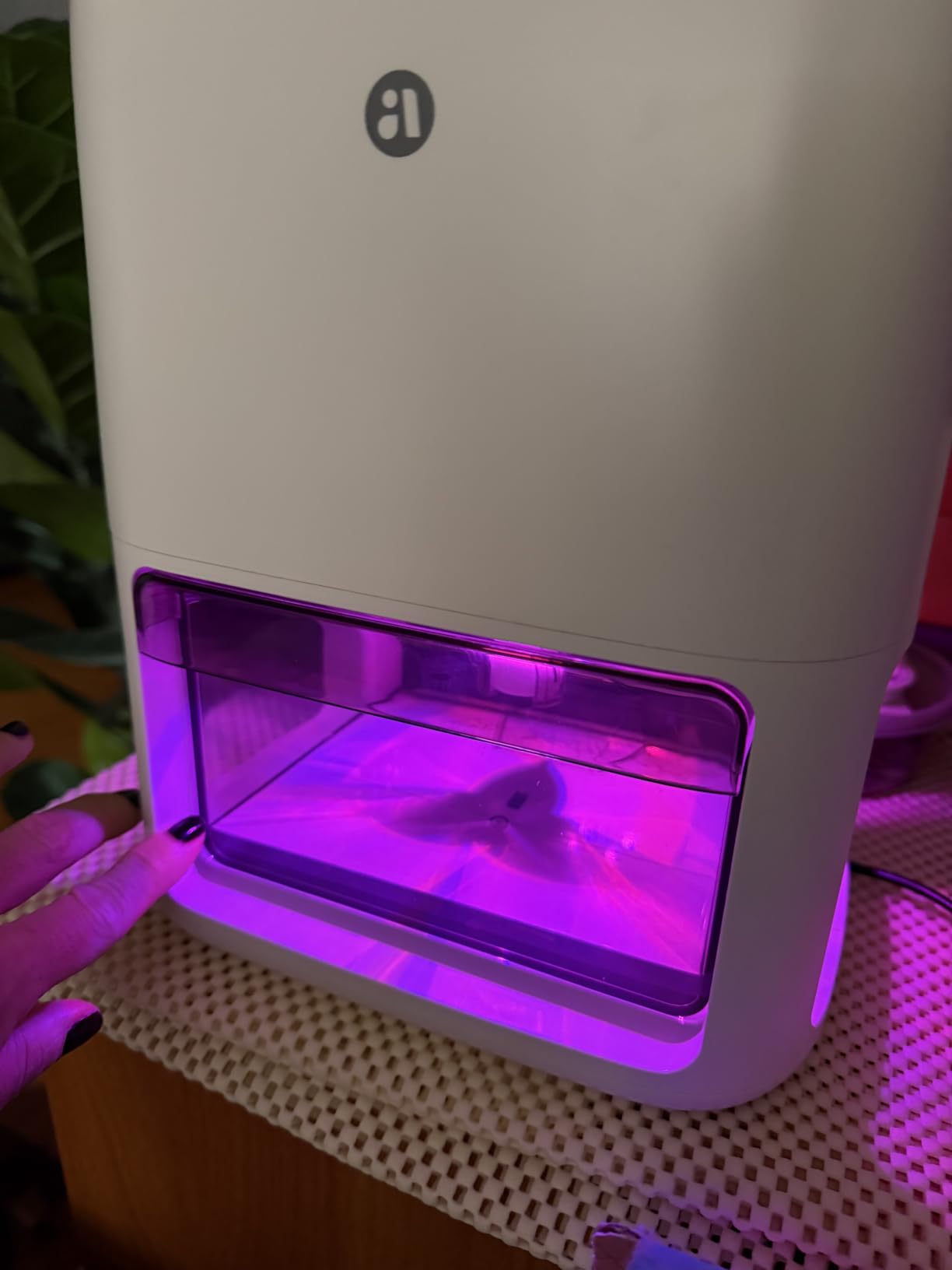
Two semiconductor condensers push the claimed extraction to about 700 millilitres per day at 86F and 80% RH, and there is a built-in defrost cycle for the cold plate. It weighs 1.7 kilograms and measures about 6 by 9 by 11 inches, which still fits under a dinette bench or on a bathroom counter.
The durability feedback is the reason this sits at number two rather than first. Across 2501 reviews at 4.2 stars, a recurring theme describes units that stop collecting water after one to two years. Owners running several report replacing roughly one every other year. That is not unusual for this category, but it is a real cost in time.
Why the timer changes the game
Set it for 12 hours and it wakes up and shuts down around your sleep schedule without anyone touching it. For owners who park a rig at a storage lot with power, a timed cycle also reduces the number of hours the compressor-free plate is running, which slows wear on an appliance that does not fail instantly.
What to watch before you buy
The 700 millilitre figure is measured at high heat and high humidity, the friendliest conditions a Peltier unit ever gets. In a cool trailer in early spring the same plate collects a fraction of that. Treat it as a bathroom and closet tool with a generous tank, not as a rig-wide moisture machine.
3. Levoair 68 oz Dehumidifier with Included 5 ft Continuous Drain Hose
- Includes a 5 ft continuous drain hose
- Generous 650 sq ft coverage claim for a compact unit
- 2L tank plus a memory function that resumes settings
- Responsive replacement service reported in reviews
- Under 40 dB for bedroom use
- Exhaust vents upward from the top
- Some buyers report leaking
- Thermally weak in heavy damp
- No automatic restart after a power cut
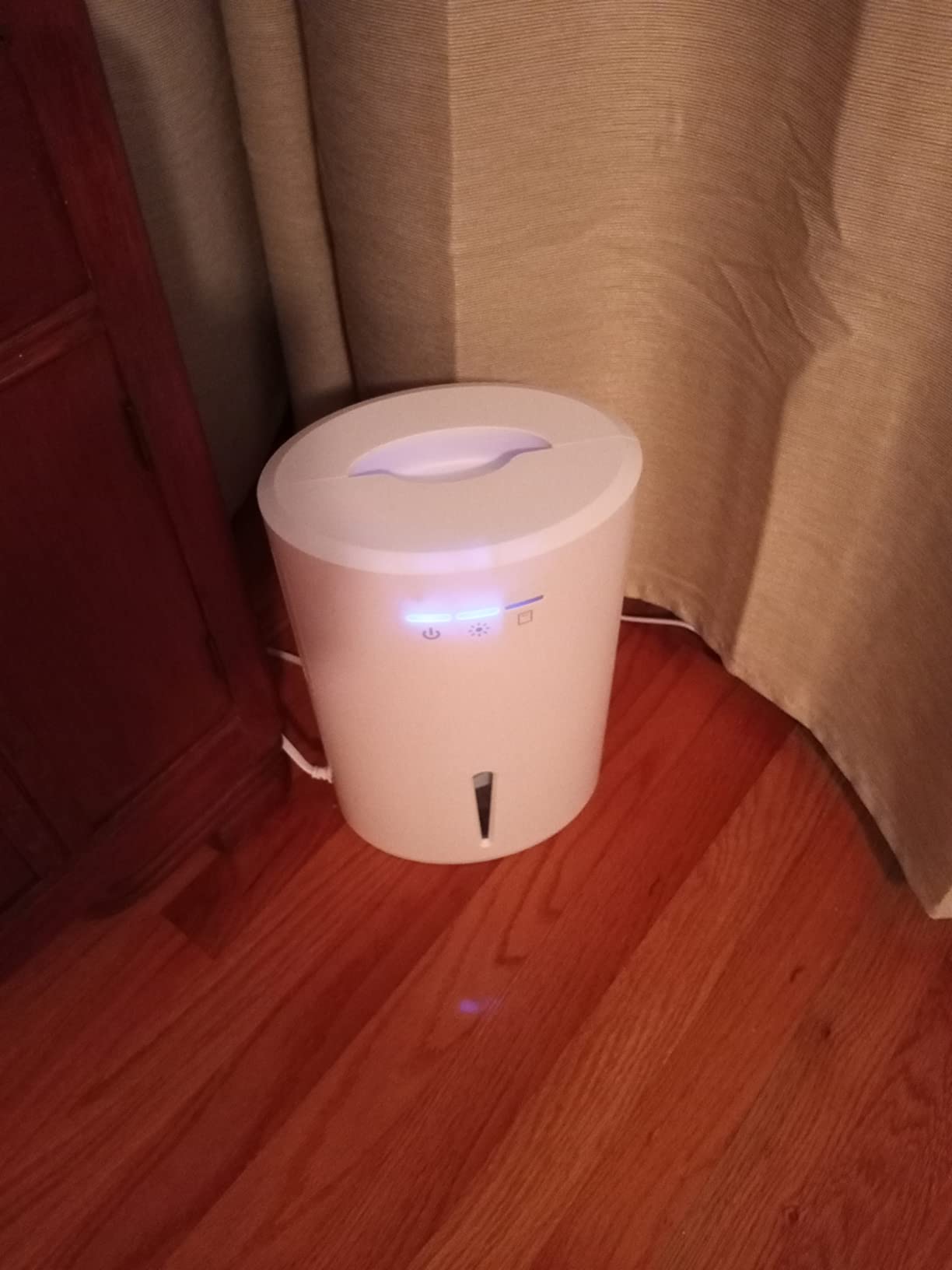
Water management is the number one practical headache RV owners report, and this is the compact unit that solves it properly. The 5 foot drain hose is included, so you can run it to a sink, to a shower drain, or out through a cabinet penetration and forget about the tank entirely. Nothing else at this size does that.
Long-term owners on iRV2 recommend exactly this arrangement. One runs the dehumidifier on the kitchen counter with the line going into the sink and points out that the grey tank holds around 30 gallons, which is roughly three months of unattended operation before it needs a dump elsewhere.
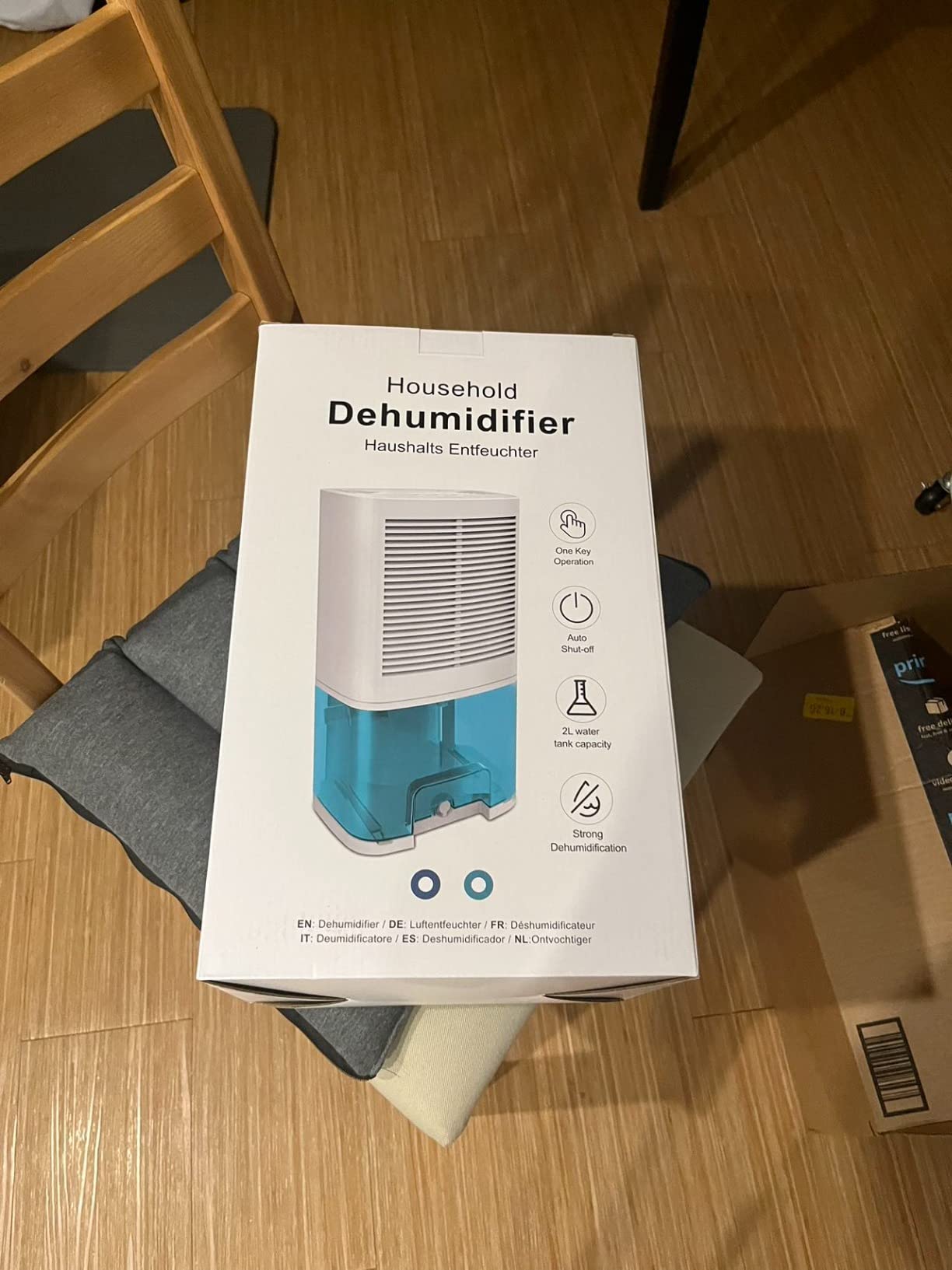
The rest of the spec sheet is solid for a compact unit. A 2 litre tank means about 35 ounces collected per day at 86F and 80% RH, coverage is claimed at up to 650 square feet, and sound sits under 40 decibels. One button runs it, a washable handle lifts it, and the red indicator plus auto shut-off stop it before a spill.
Two things to know. The exhaust blows out of the top, so clearance above the unit matters in a tight cabinet, and it does not resume automatically after a power cut, which matters if you are running it off solar where clouds cause brownouts.
Setting up hands-free drainage
Run the hose downhill to the nearest drain. Inside an RV the kitchen sink is the easiest target, though many owners use the shower pan with the drain open, or route the line through a cabinet into the grey tank. Keep the line short and straight so a kink cannot stop the flow quietly.
The freeze risk nobody mentions
In cold storage the hose is the weak point, not the machine. Water sitting in a low loop can freeze and back up into the tank. If the rig sits unheated below freezing, either run the line where it drains fully toward the outlet or disconnect it after each cycle rather than leaving a trap that holds water.
4. Ivation 13-Pint Desiccant Dehumidifier for Cold RV and Storage Conditions
- Desiccant rotor keeps working in cold conditions
- Continuous drain hose included
- LCD touch panel with humidity target and timer
- Auto-restart after a power outage
- Operates from 33F to 104F
- Heaviest unit here at 14 pounds
- Highest power draw in the group at 470W
- 270 sq ft coverage limits it to small areas
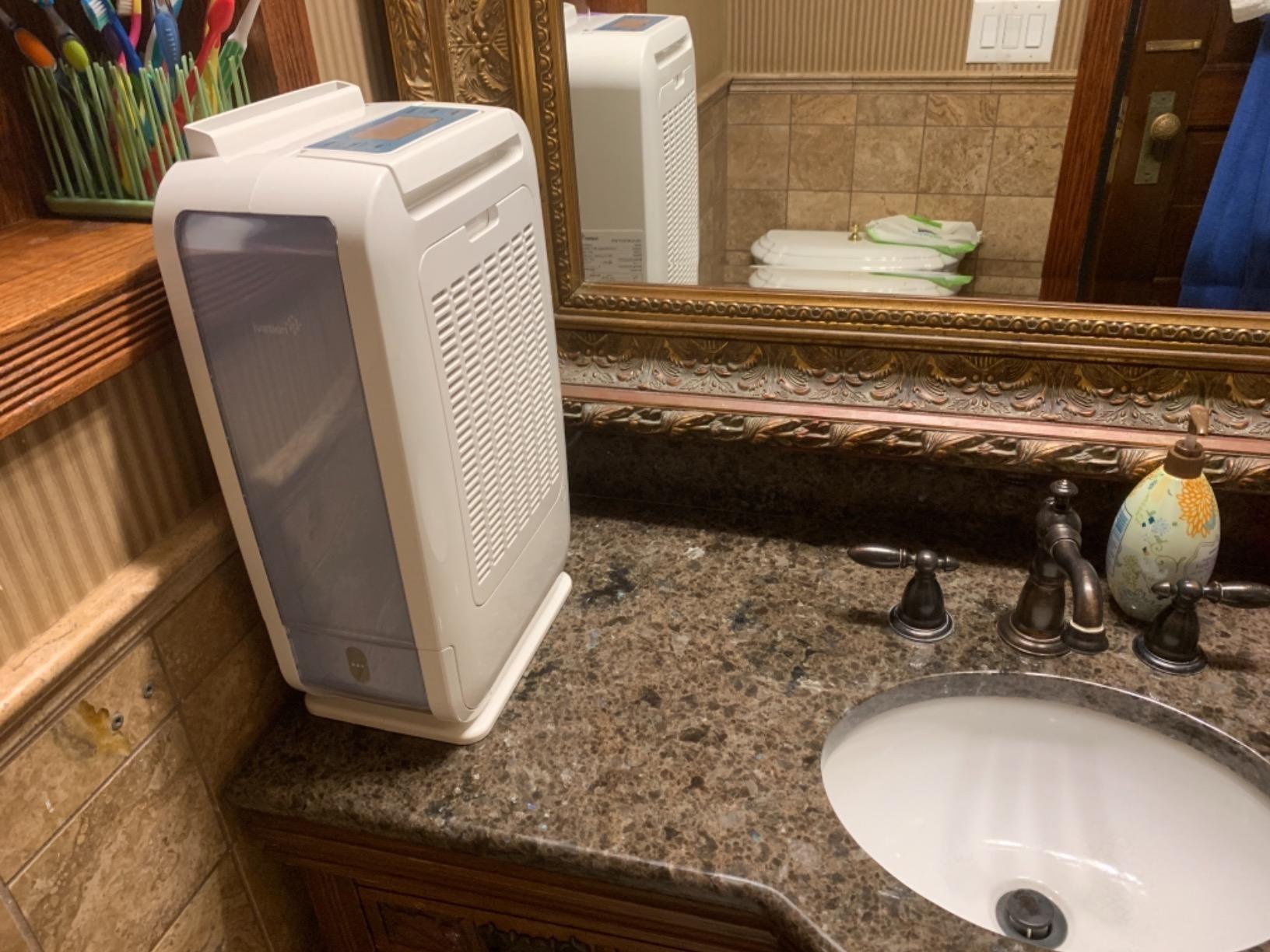
This is the only true desiccant machine in the group, and that single fact decides where it belongs. A desiccant rotor pulls moisture straight out of the air without refrigerant coils, which means it has no evaporator to ice over. It is rated to operate from 33F all the way to 104F, and that is the entire reason to choose it.
The extraction figure is 13 pints per day at 60% RH and 68F, covering up to 270 square feet. In practice owners use it in the parts of a rig that get cold first: a front bedroom in winter, a storage bay, a garage or basement, or a boat tied up for the season.
One owner writing about Chesapeake Bay storage reported that this unit rode out power interruptions and was still running when they returned, with the entire rig and its canvas dry. Auto-restart is a genuinely useful feature for unattended storage, because most other machines here simply stop after a brownout and stay stopped.
The control panel is unusually good for this class. It is an LCD with six touch buttons covering power, fan speed, humidity target, timer, and vent swing, with a toggle between Fahrenheit and Celsius. A 3.8 pint reservoir sits under a level indicator, and the included hose converts it to continuous drainage.
Why desiccant wins in winter storage
Compressor dehumidifiers ice up below about 40F and then either shut down or drain water back into the tank, so owners in northern winters end up with nothing running for four months. A desiccant rotor has no such limit, which makes this the sensible storage machine for a garage, a barn, or a cold basement. The trade is power: 470 watts high, 280 watts low.
Where the weight and draw become problems
At 14 pounds this is the heaviest unit in the group, and lifting it into a fifth wheel bed requires a step stool. The 470 watt draw also rules it out for a modest solar-only setup. If your storage space stays above 50F, a thermoelectric unit will cut your power bill dramatically for less capacity.
5. Ivation IVADM35 Thermo-Electric Dehumidifier for Low-Power Setups
- Very low 12W draw for continuous operation
- No moving parts means nothing mechanical to wear out
- Explicitly marketed for RVs
- boats and cars
- 68 oz tank with an indicator and auto shutoff
- Large review base at 1591 ratings
- Thermo-electric output drops in cool conditions
- Single speed with no fan or humidity controls
- No drain hose so the tank needs manual emptying
At 12 watts, this is the lowest draw in the group, and for an off-grid owner that number decides the conversation. Run it for 24 hours and it consumes about 0.3 kWh, which a single decent solar panel covers without anyone noticing. Nothing else here is that cheap to leave on indefinitely.
It is also physically honest about its size. Just under 5 pounds, measuring roughly 7 by 8.5 by 14 inches, with a 68 ounce reservoir that shuts the unit down when full. That tank is large for the extraction rate, which works in your favour in a storage situation where you visit once a month.
The design has no moving parts at all, which is why owners describe it as silent. There is no fan motor to wear, no compressor to fail, and no refrigerant circuit to service. Reviews at 1591 ratings and 4.1 stars, with 61% five-star, centre on the low power draw and the suitability for small enclosed spaces.
Being honest about the limits: it is a single-speed device with no humidity target, no timer, and no fan control. You set it going or you do not. And like every thermoelectric machine in this roundup, its output falls away as the air cools.
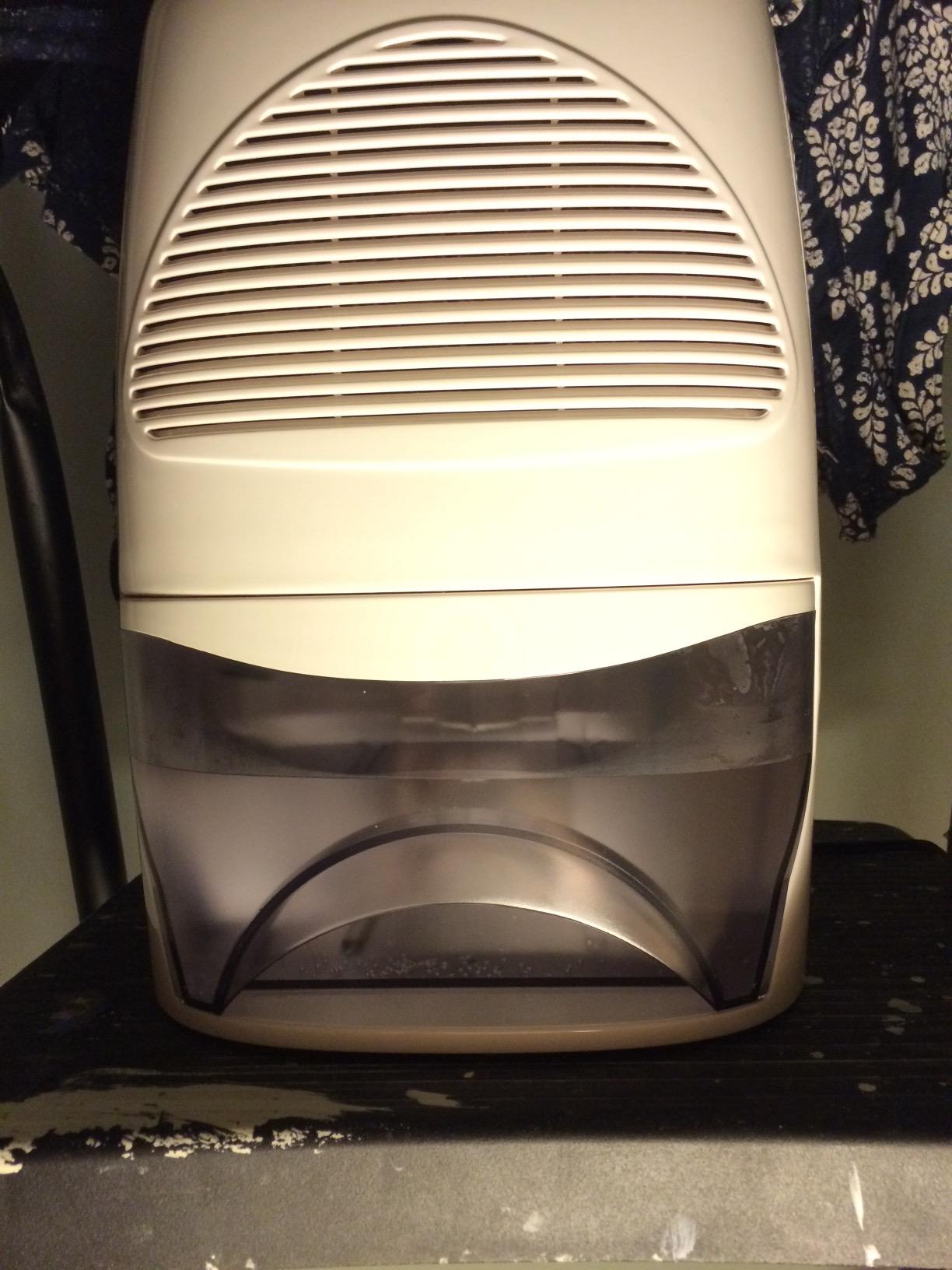
Running this on solar or battery
Multiply the 12 watt draw by the hours you want it running. Twelve hours a day works out to about 144 watt-hours, which is a fraction of what a solar setup needs for its fridge. That makes this the easiest unit here to pair with an inverter and leave running through a humid stretch at a storage lot.
Where 12 watts is not enough
The unit is rated at up to 20 ounces a day, and on paper it lists coverage up to 2200 cubic feet. Treat that coverage number generously. In a 30 foot travel trailer with the door open all day, a 20 ounce per day machine is not going to hold a reading.
6. Pro Breeze Electric Mini Dehumidifier for Overnight Bedroom Use
Pro Breeze Electric Mini Dehumidifier, 2200 Cubic Feet (250 sq ft), Compact and Portable for High Humidity in Home, Kitchen, Bedroom, Basement, Caravan, Office, Garage
- Most heavily reviewed unit in the group with over 15000 ratings
- 52 oz tank is larger than most compact rivals
- Compressor-free Peltier run is quiet enough for bedrooms
- Low 40W draw with a 1-year manufacturer warranty
- Handles up to 3000 cubic feet
- Only 18 oz per day so it suits closets and caravans
- Will not operate below 41F
- Lowest average rating in the group at 4.0
- No drain hose
- timer or humidity control
When we wanted the safest recommendation, we looked at the review count. With more than 15,000 ratings this is the most heavily reviewed machine here, and it has been sold in RV and caravan contexts for years. If a failure mode exists, thousands of owners have already described it, which is its own kind of safety.
The tank is the reason to like it. At 52 ounces it is larger than most compact rivals, so a bedroom or a small trailer can go several nights without a trip to the doorway. Auto shut-off with an indicator light handles the rest, and there is a one-year manufacturer warranty behind it.
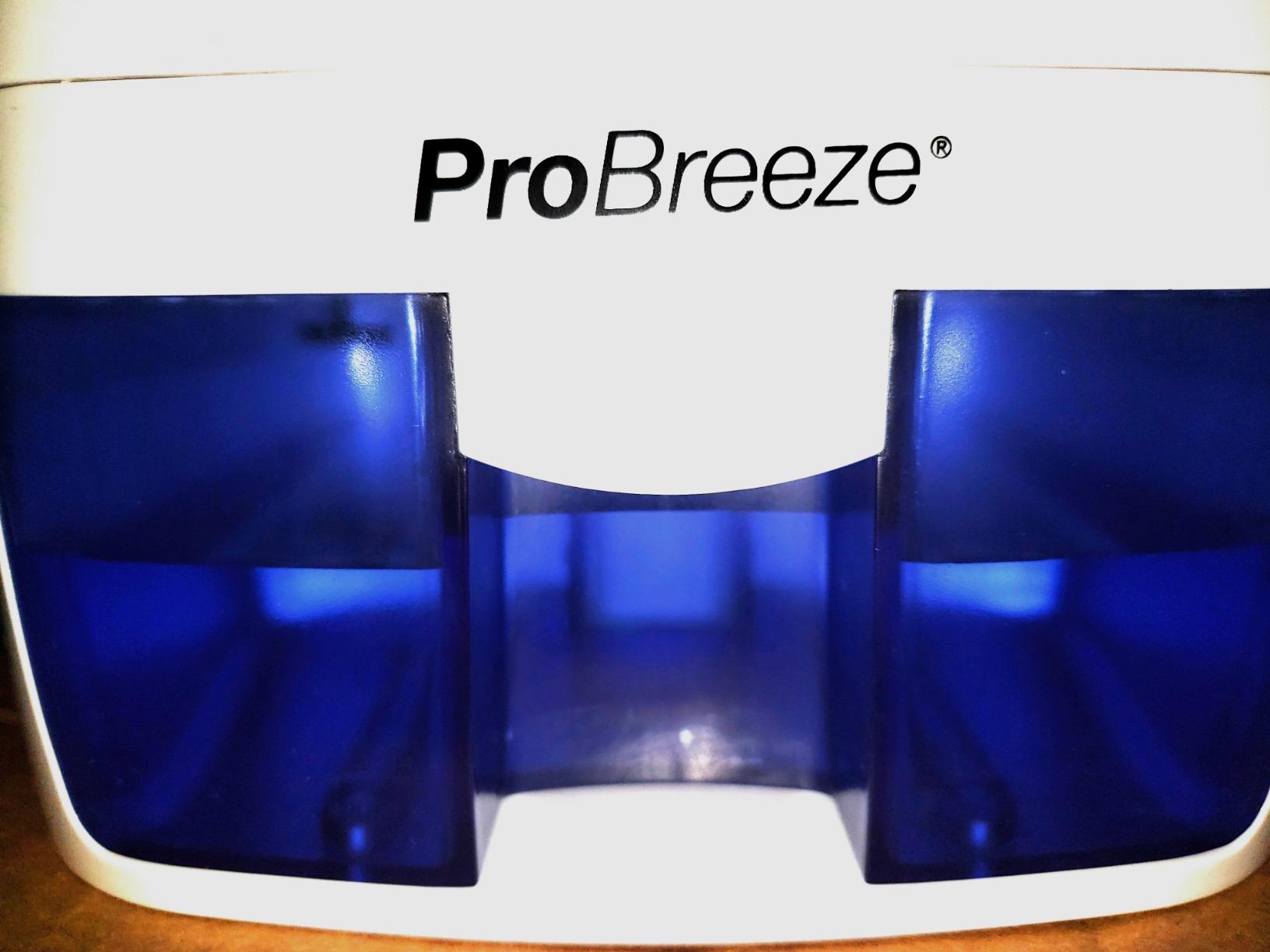
At 40 watts, the electricity cost is a small part of the running total, which is a fair benchmark for any thermoelectric unit in this list. It weighs 4.5 pounds and measures roughly 6 by 9 by 12 inches, so it moves between the bedroom and the bathroom easily.
The 4.0 star average is the lowest here, with about 15% one-star ratings, and the complaints are consistent rather than random. People expected more extraction from a name they trust, and 18 ounces a day does not clear a wet camper. It also stops working below 41F.
Why review volume matters here
A product with 15,000 ratings tells you its failure modes. Owners consistently report the same limits: modest extraction, no drain option, and a floor around 41F. A product with a few hundred ratings that scores well could still surprise you in week two.
Its real job in an RV
Give it a bedroom in a small trailer or a caravan and a night of heavy condensation on the windows, and it earns its place. Put it in a large Class A on the Gulf Coast in July and it will be running hard every day and never quite keeping up. Match it to the room, not to the rig.
7. Ivation IVADM10 Small Thermo-Electric Dehumidifier with Washable Filter
Ivation IVADM10 Powerful Small-Size Thermo-Electric Dehumidifier – for Smaller Room, Cupboard, Basement, Attic, Stored Boat, RV, Antique Car,White
- Extremely compact at about 6 x 5 x 9 inches
- Very low 13.5W draw for continuous running
- Washable air filter is uncommon at this level
- Explicitly marketed for RVs and stored vehicles
- No moving parts to wear out
- Small 17 oz tank fills quickly in humid air
- No drain hose
- timer or humidity target
- Output weakens considerably in cool conditions
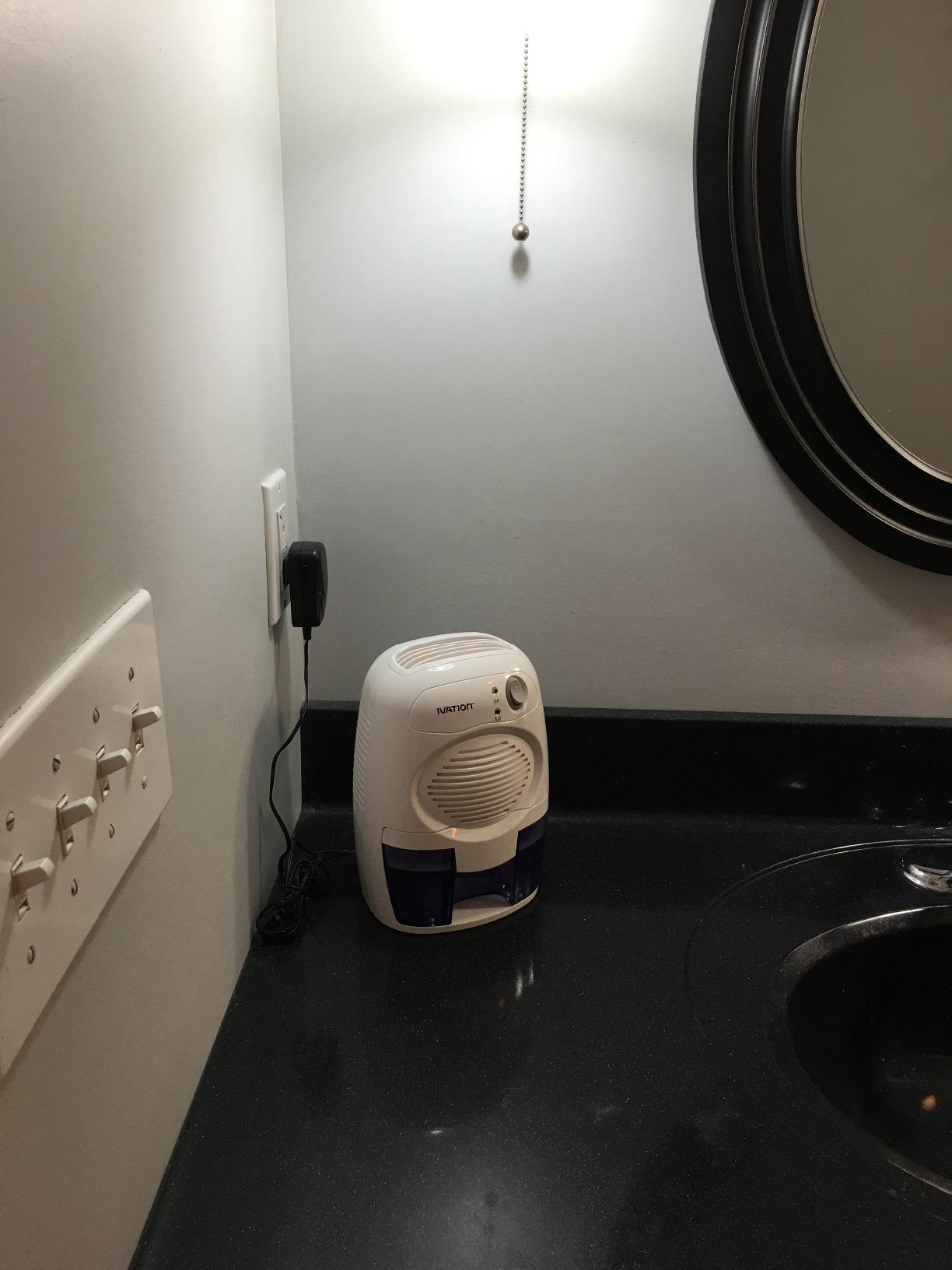
This is one of the smallest useful machines in the lineup. It measures about 6.1 by 5.1 by 8.7 inches and weighs barely more than a pound of coffee, so it slips into a wardrobe, an overhead cabinet, or the cavity under a bunk without rearranging anything.
At 13.5 watts it is the second-lowest draw here, which means leaving it running in a closet during a month of storage costs almost nothing. Owners with 1280 ratings at 4.2 stars, 66% of them five-star, treat it as exactly that: a set-and-forget unit for cupboards, wardrobes, and stored vehicles.
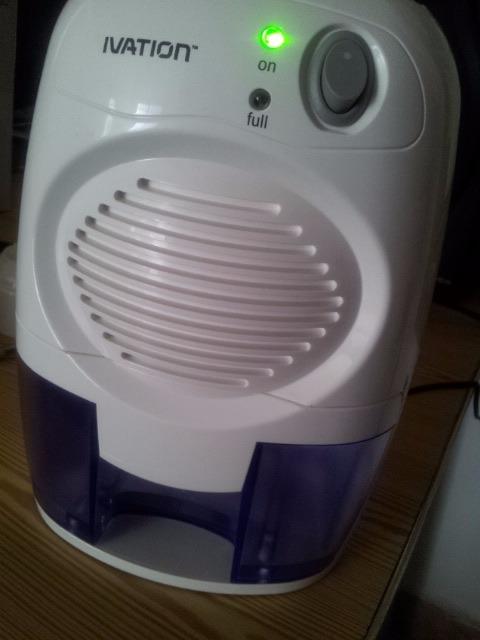
The detail that separates it from cheaper boxes is the washable air filter. In an RV, dust and pet hair collect fast, and a clogged intake quietly wrecks extraction. Being able to rinse the filter instead of buying a replacement keeps the unit honest for years.
Auto shut-off fires at capacity with a tank full indicator, and because the design has no moving parts there is little to fail. The 17 ounce reservoir is the weak point, since it fills quickly once the air is genuinely humid.
Best uses for a unit this small
Closets, overhead cabinets, the storage bay under a dinette, a bathroom vanity, and the electronics compartment. Anywhere with a confined volume and a known humidity problem is where 6 ounces at a time adds up over weeks without anyone thinking about it.
What it cannot do
It will not manage living space humidity, and it has no humidity target, so it either runs or it does not. If your moisture problem is a whole-rig one, read the buying guide below before settling here, because several owners upgrading from this class of machine ended up needing a compressor unit instead.
8. Davis Instruments Air-Dryr 1000 for Tank-Free RV Storage
- Highest customer rating in the group at 4.6 out of 5
- No water tank to empty
- Whisper quiet with no moving parts
- Thermal cut-off switch and 24-hour duty rating
- Proven by owners for RV
- boat and cabin storage
- Warms air instead of collecting water
- Only effective in small enclosed spaces
- Footprint is larger than the weight suggests
- Adds noticeable heat in warm weather
The best-rated product in this entire roundup sits at 4.6 stars from 1091 ratings, with 80% of those at five stars. It is also the one that does the least of what people assume a dehumidifier does, and understanding why makes it far more useful in the right situation.
The Air-Dryr 1000 works by gently heating the air so it can hold more moisture, which raises the dew point and pushes condensation to cold surfaces where it runs off. There is no tank, no drain, and nothing to empty. That is why owners put it in boats, garages, cabins, basements, and RVs over winter and forget it is there.
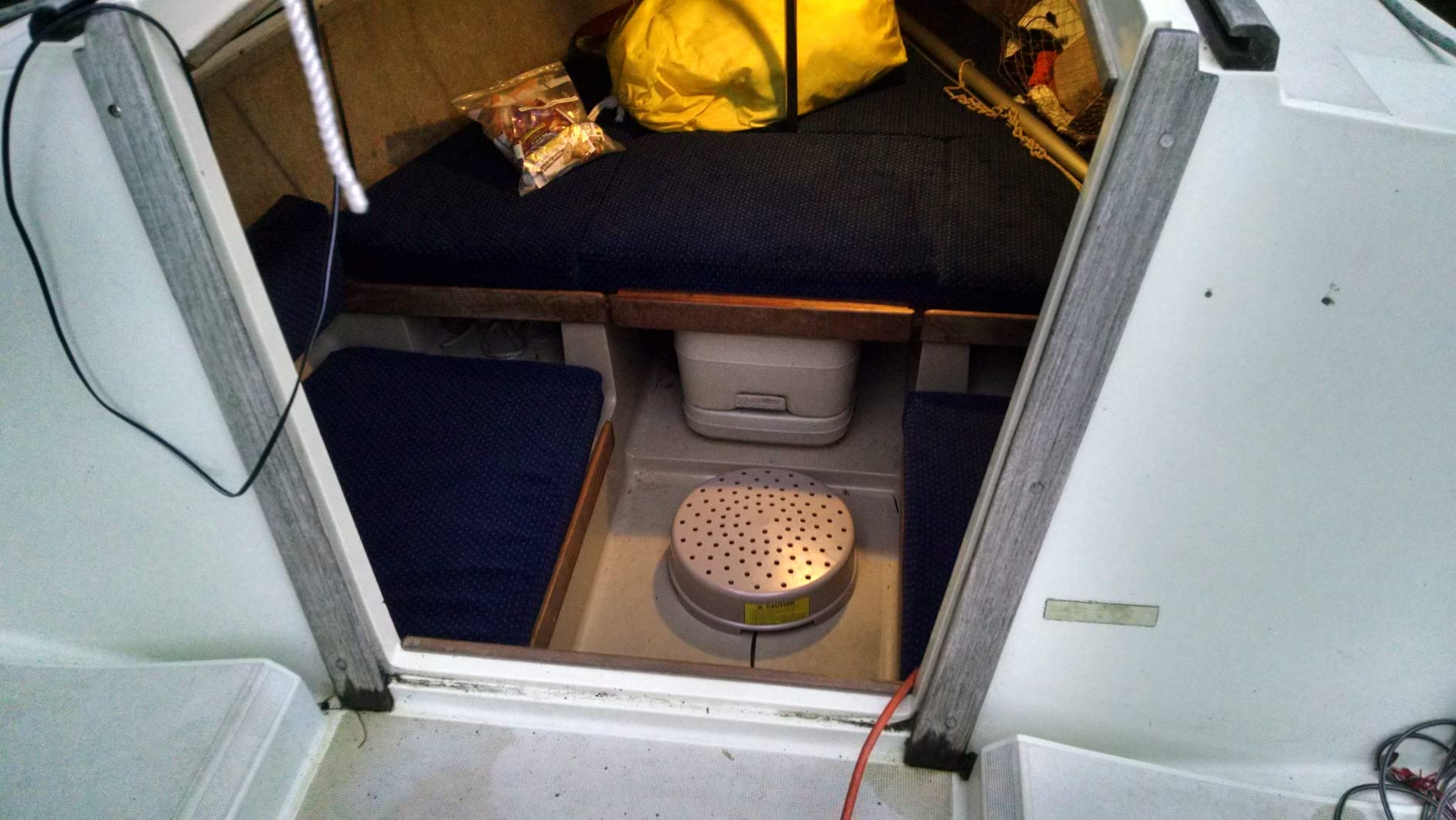
At 2.2 pounds it is one of the easiest units here to move, and it is rated for continuous 24-hour duty with a thermal cut-off switch for safety. The noise is effectively nil, and it draws very little current, so leaving it plugged in for four months in a storage bay costs little.
Owners consistently describe the same limits. Large rooms take a month or more to see any difference, the roughly pizza-box footprint is awkward in a tight storage bay, and the added heat makes it a poor choice in warm weather. Treat it as a slow safeguard, not a fast fix.
Why owners pair it with a dehumidifier
Because it does the opposite job at the same time of year. In an unheated storage space below 60F, a compressor unit stalls while this keeps gently warming the air and the walls. Some owners run both in the winter to handle different parts of the same problem.
Where it is the wrong tool
If you have standing water, a leak, or a musty smell you need gone this week, heating air will not do it. It also raises the temperature inside a sealed space, which can create its own condensation on a cold window. In a warm climate it is close to useless.
9. TABYIK 35 oz Dehumidifier for Bathrooms, Closets and Travel Trailers
TABYIK 35 OZ Dehumidifier for Bedroom RV, Quiet with Auto Shut Off, Blue
- Quietest unit in the group at a claimed 28 dB
- Compact body with a built-in carry handle
- Transparent tank with a grooved base empties and cleans easily
- Owners use it successfully on travel trailer subfloors
- Backed by a 2-year manufacturer warranty
- Some buyers find it louder than the 28 dB claim
- Only suited to very small rooms around 280 sq ft
- No drain hose
- timer or humidity target
- At least one unit stopped working within six months
The TABYIK is the simplest way to put something quiet in a wet corner, and at a claimed 28 decibels it is among the quietest units in this roundup. Several owners report using it on a travel trailer subfloor problem, which is a genuinely common RV complaint after a roof or window leak.
Where the tank sits in the bathroom matters more than most buyers expect. Reviewers repeatedly describe the transparent tank and the grooved base that makes it easy to grip, pour and rinse. Auto shut-off triggers around 700 to 800 millilitres and flashes red, so it cannot overflow onto a cabinet floor.
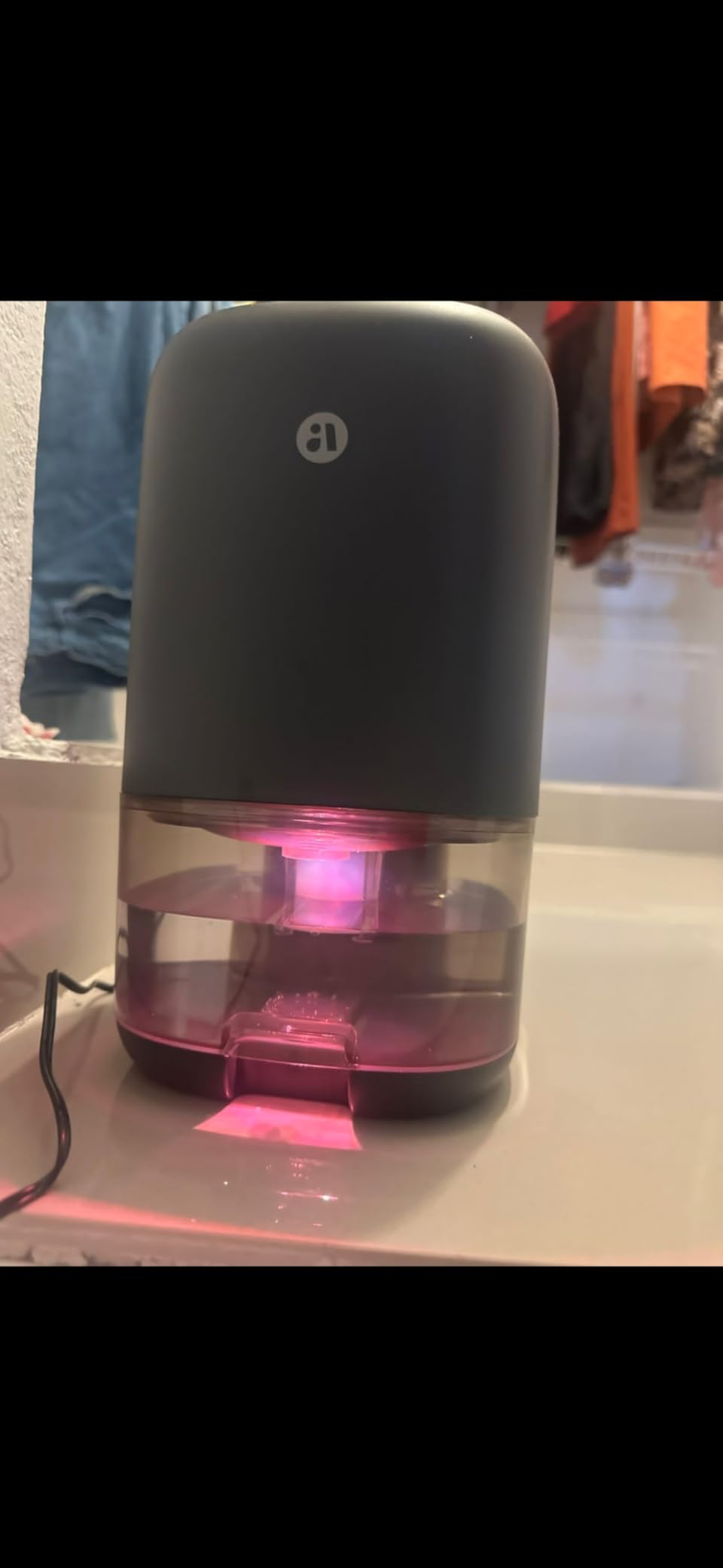
It draws about 42 watts and collects up to 16 ounces in 24 hours at 86F and 80% RH, with no more than 1 kWh per day. The 2-year manufacturer warranty is longer than most competitors in this class offer, which matters given the durability complaints elsewhere in the category.
Reviews number 711 at 4.2 stars with 69% five-star. The negative themes are size and loudness. It suits a space of roughly 280 square feet, and several buyers say the 28 decibel claim is optimistic in a dead-quiet trailer at night.
Best for small, targeted problems
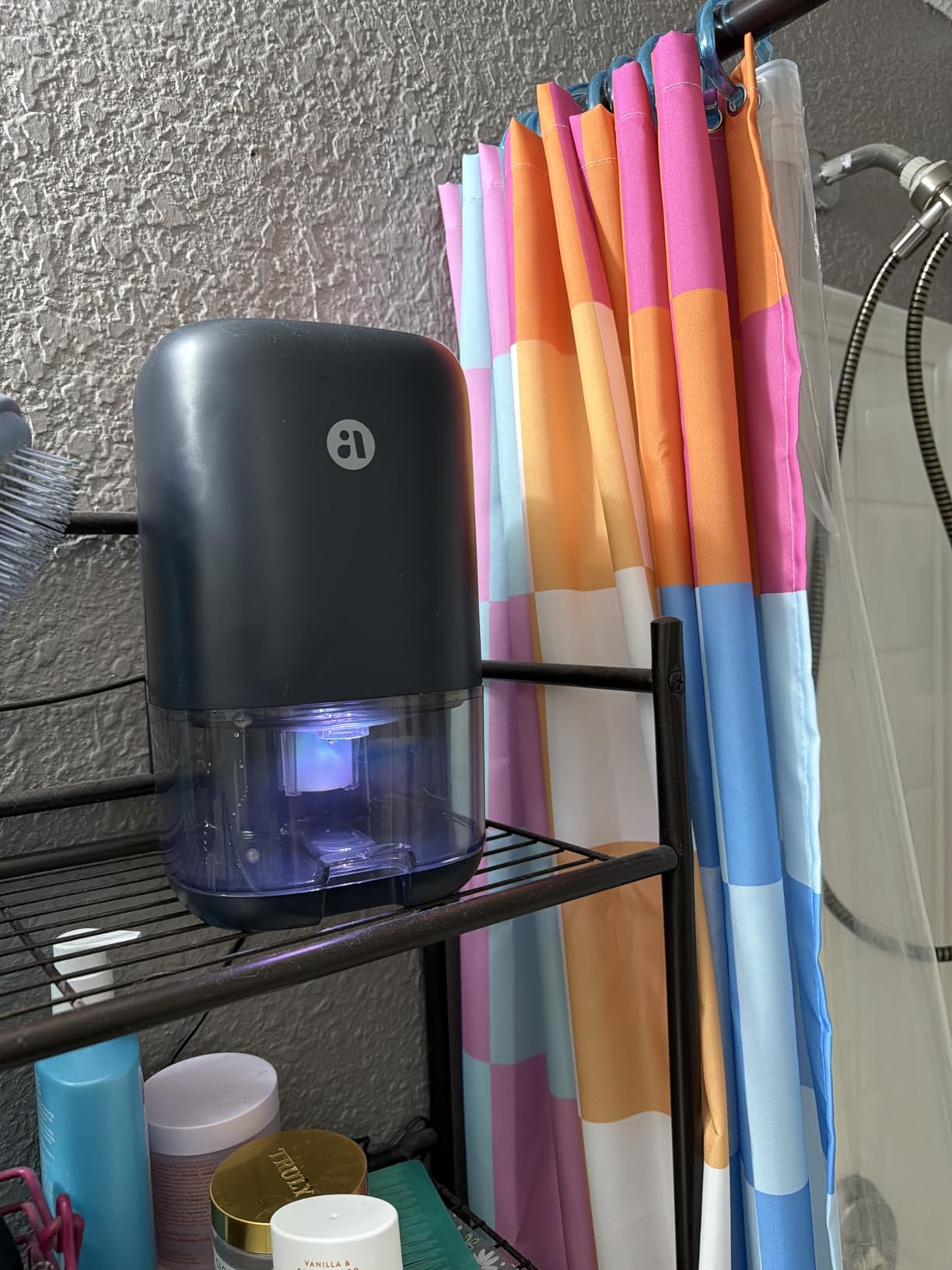
A damp corner, a small bathroom, a closet, a storage bay. Anywhere under about 100 square feet where you want a background presence for a few hours a day without a compressor noise footprint. The seven-colour light also makes it usable in a bedroom without being startling.
Know the boundaries before buying
There is no drain hose, no timer, and no humidity target, so you are managing it by hand. The short power cord also limits how far back in a cabinet you can place it. At least one owner reported a unit that stopped working in under six months, so keep your expectations realistic.
10. Camco Moisture Absorber Bucket for Power-Free RV Storage
Camco Moisture Absorber Bucket – Features Fast-Acting Moisture-Absorbing Agent – No-Fragrance Beads – Use with RV Storage, Camper Organization & More (44282)
- No electricity required
- ideal for storage with no hookups
- Absorbs roughly 3x its own weight with fragrance-free beads
- Discreet bucket shape fits tight RV storage bays
- Works passively for months between replacements
- Passive absorption cannot actively lower humidity
- Beads must be replaced once they turn gel-like
- Not effective against severe damp or leaks
- No indicator shows how much has been absorbed
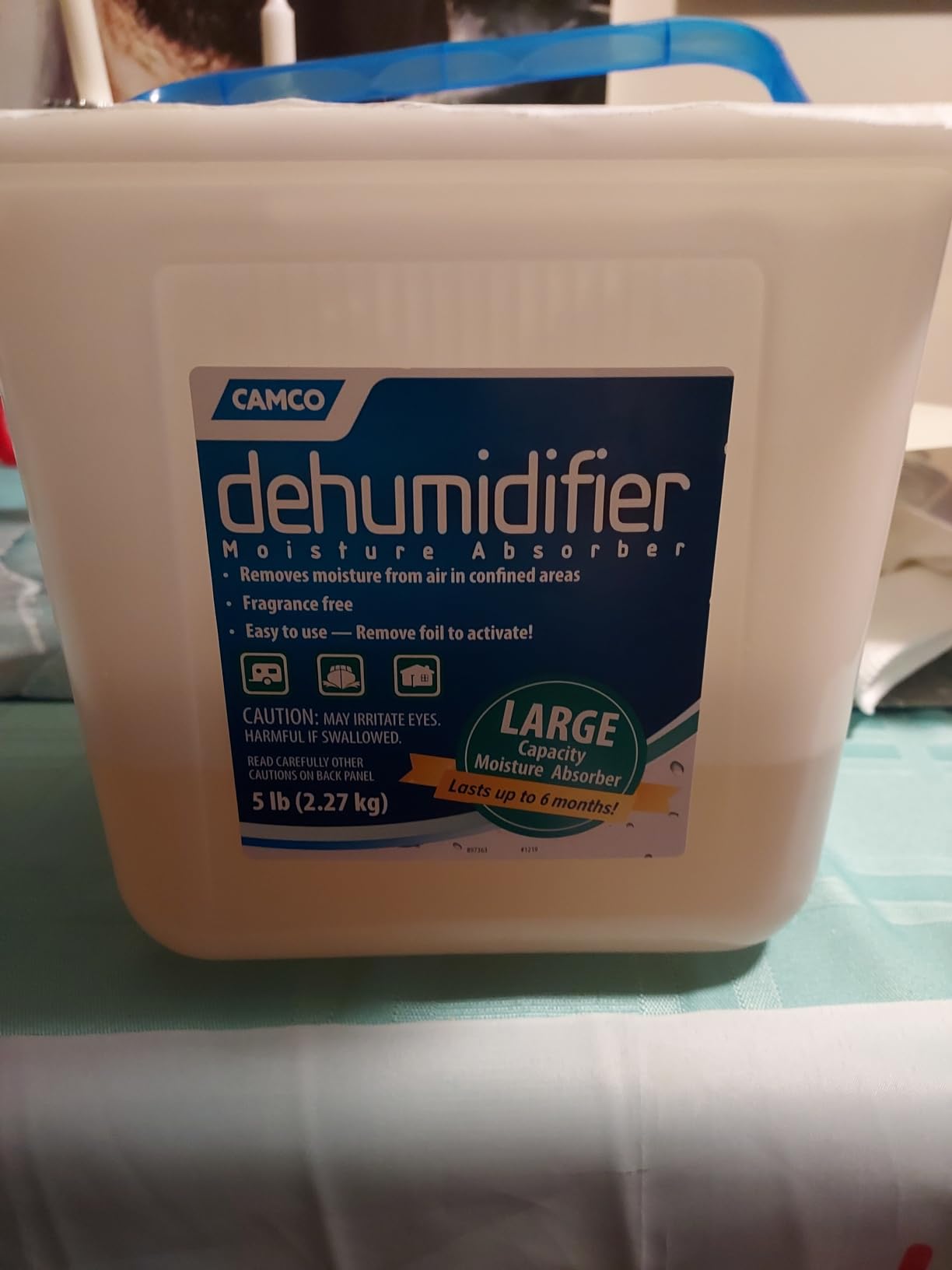
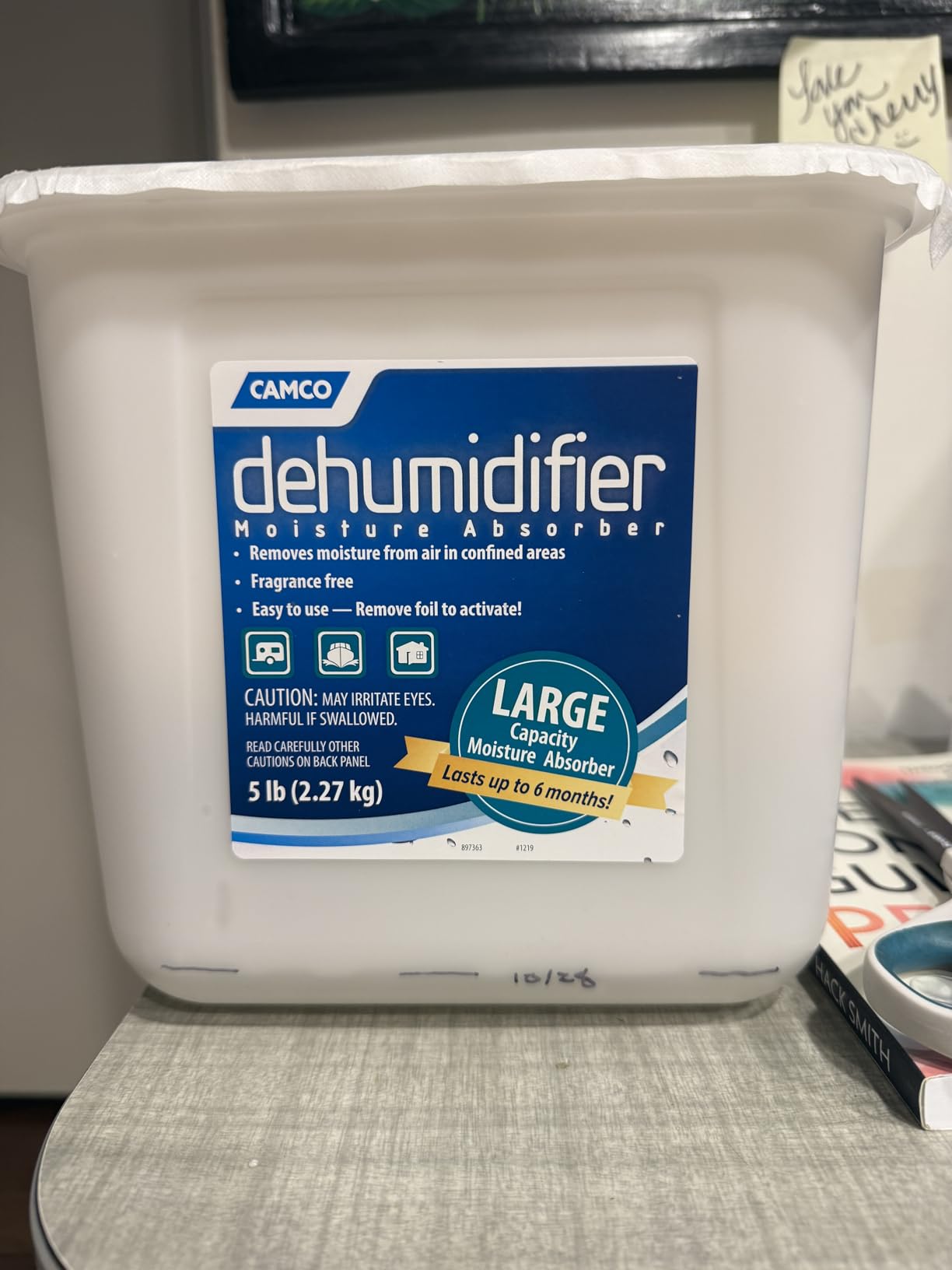
When there is no power at the storage facility, this is the honest answer. The Camco bucket holds 5 pounds of fragrance-free beads and is built for exactly the situations RV storage creates: a closed trailer, a covered boat, a camper in a shed through a wet spring.
The claim is that the beads absorb about three times their own weight in moisture, which puts a 5 pound bucket around 15 pounds of absorbed water before it needs replacing. Reviewers rate it 4.5 stars from 1188 ratings with 74% five-star, and the storage use case dominates those reviews.
It also handles odors. Owners mention musty smells disappearing alongside the dampness, and the fragrance-free formula matters in a small enclosed space where a scented product would be unpleasant. The bucket shape at roughly 8.75 inches wide tucks into a storage bay without rolling around.
The important limitation is that passive absorption has a floor. Long-term owners on RV forums report that passive products such as this only pull the air down to roughly 50% relative humidity and then stop, while an electric unit keeps working below that level.
When a passive absorber is the right call
Short-term storage, a covered boat, an RV in a dry shed, or a closet inside a home. Anywhere there is no outlet and the goal is to slow the growth of damp and odor rather than to hold a measured number. Set several around the perimeter and check them monthly.
Why it is not a replacement
There is no readout, no fan, and no way to know how much is left until the beads turn gel-like. In a humid climate, in a full-size Class A, or anywhere with a leak, you will replace buckets faster than you would empty a single tank. Use it alongside an electric unit, never instead of one.
How to Choose a Dehumidifier for Your RV
The four technologies in this roundup solve different problems, and picking the wrong one wastes money. Here is how we would decide.
Compressor, desiccant, thermo-electric or passive
Compressor units cool evaporator coils so humid air condenses and drips into a tank. They handle the most moisture per day, which is what full-time living in a humid climate requires, but they stall once the temperature drops toward 40F. Desiccant units use a rotor or silica-based media instead of refrigerant, so they keep working down to the low 30s and are the right winter storage choice. Thermo-electric Peltier units use a cold plate with no compressor at all, which makes them the quietest and lowest-power option but limits them to closets, bathrooms, and small rooms. Passive absorbers need no power whatsoever and only slow things down. Our best dehumidifiers for bedrooms guide covers the full-size compressor options if you want more capacity than an RV unit provides.
Sizing by storage or by full-time living
Owners on RV forums are consistent about this split. One notes that for storage, a small dehumidifier suffices and after the first week you can go two or three weeks between tank dumps, while adding that the same unit would not be enough if you were living in the rig. Another describes pulling about a gallon every two to three days in a humid climate while living in place.
Match capacity to the space you are actually treating. A travel trailer bathroom, a closet, or a storage bay is a small-area problem where any of the compact units above works. A 35 to 45 foot motorhome that people live in during summer is a different job entirely, and it needs a compressor unit with a much higher pints-per-day figure than anything in this roundup.
Target humidity and why you need a hygrometer
Aim for 40 to 50% relative humidity, and 30 to 50% is the working range most RV moisture guides cite. Below 30% you can dry out wood and paper and stress sealants. Above 60% you are back into mold and mildew territory.
Buy a cheap hygrometer before you buy a machine. Without a readout you are guessing, and you will end up running a unit constantly or not at all. Place it near the bed, not near the dehumidifier, because the number that matters is what your body experiences at night.
Drainage routing and the freeze problem
Manual emptying every two or three days is the most common complaint in the forums, and the fix is a continuous drain line. Three methods work in an RV: route the hose into the kitchen sink, into the shower pan with the drain open, or out through a cabinet or floor penetration to the outside.
The grey tank argument is the one that changes the maths. One owner points out that a 30 gallon grey tank routed to a dehumidifier gives roughly three months of unattended operation before it needs dumping elsewhere. Another runs the machine in the bathtub with the drain open and empties about a gallon every two or three days. For cold storage, add one rule: never leave a low loop in the line that can trap and freeze water, or disconnect the hose between cycles.
Power draw for shore power and solar setups
Multiply watts by hours. The Ivation IVADM10 at 13.5 watts running 12 hours a day is about 162 watt-hours per day. The avylo at 23 watts over the same period is roughly 276 watt-hours. The Pro Breeze at 40 watts for 24 hours comes to under 1 kWh.
The Ivation 13-pint desiccant unit is the outlier at 470 watts on high and 280 on low, which is closer to a small space heater than a dehumidifier. That is fine on shore power or a generator, and it is why the desiccant approach is a storage strategy rather than a boondocking strategy.
Reducing moisture at the source
No unit keeps up with an RV that is generating water faster than it can be removed, and RV owners describe their rigs as sieves for humid air. Put lids on pots while cooking, run the bathroom exhaust fan during and for twenty minutes after a shower, and hang wet clothes outside or on a portable rack rather than on interior hooks. Those three habits routinely do as much work as any machine on this list.
Frequently Asked Questions
Should I put a dehumidifier in my RV?
Yes, if you live in the rig in a humid climate or store it through a wet season. RVs trap moisture from cooking, showering, wet gear, and warm outside air, and that moisture causes mold, mildew, musty odors, and delaminated wall panels. Even a small unit pointed at the worst spot makes a measurable difference.
What is the best moisture absorber for an RV?
For storage with no power, a passive absorber bucket is the practical choice because it needs no electricity and works for months. The limitation is that passive products only pull the air down to roughly 50% relative humidity before they stop, so they slow damp rather than control it.
Where is the best place to put a dehumidifier in an RV?
Start with the worst spot: the bathroom, a closet, a storage bay, or the underside of a bunk where condensation collects. Close the doors to that space so the unit works on a small volume of air rather than the whole rig, and keep clearance around the intake and exhaust vents.
What works better, DampRid or a dehumidifier?
An electric dehumidifier, by a wide margin, for anything beyond short-term storage. Long-term owners report that passive absorbers stop pulling moisture around 50% relative humidity, while electric units keep extracting below that and can move gallons per week in humid conditions.
Do compressor dehumidifiers work in cold weather?
Not reliably. Below roughly 40F the evaporator coils freeze, and the unit either shuts down or drains collected water back into the tank. For winter storage in an unheated space, choose a desiccant unit rated down to the low 30s or a tank-free heating unit instead.
What size dehumidifier do I need for my RV?
For storage or a small trailer, a compact unit with a tank of 25 to 68 ounces and a drain hose is plenty. For living full-time in a humid climate, you need a compressor unit with a much higher pints-per-day rating, since residents report pulling about a gallon every two or three days.
Our Final Verdict for 2026
The best dehumidifiers for RVs are the compact thermo-electric units, and our top pick is the avylo 25 oz model, which pairs the highest review count in the group with a 23 watt draw and a tank that fits on a bathroom counter. Choose the BREEZOME if you want a large tank and a timer, the Levoair if continuous drainage matters more than anything else, and the Ivation 13-pint desiccant unit when your storage space drops below 40F.
Start with a hygrometer, close off the room that is worst, and route the drain hose so nobody has to empty a tank. If your moisture problem is at home rather than in the rig, our best basement dehumidifiers guide covers higher-capacity units.