
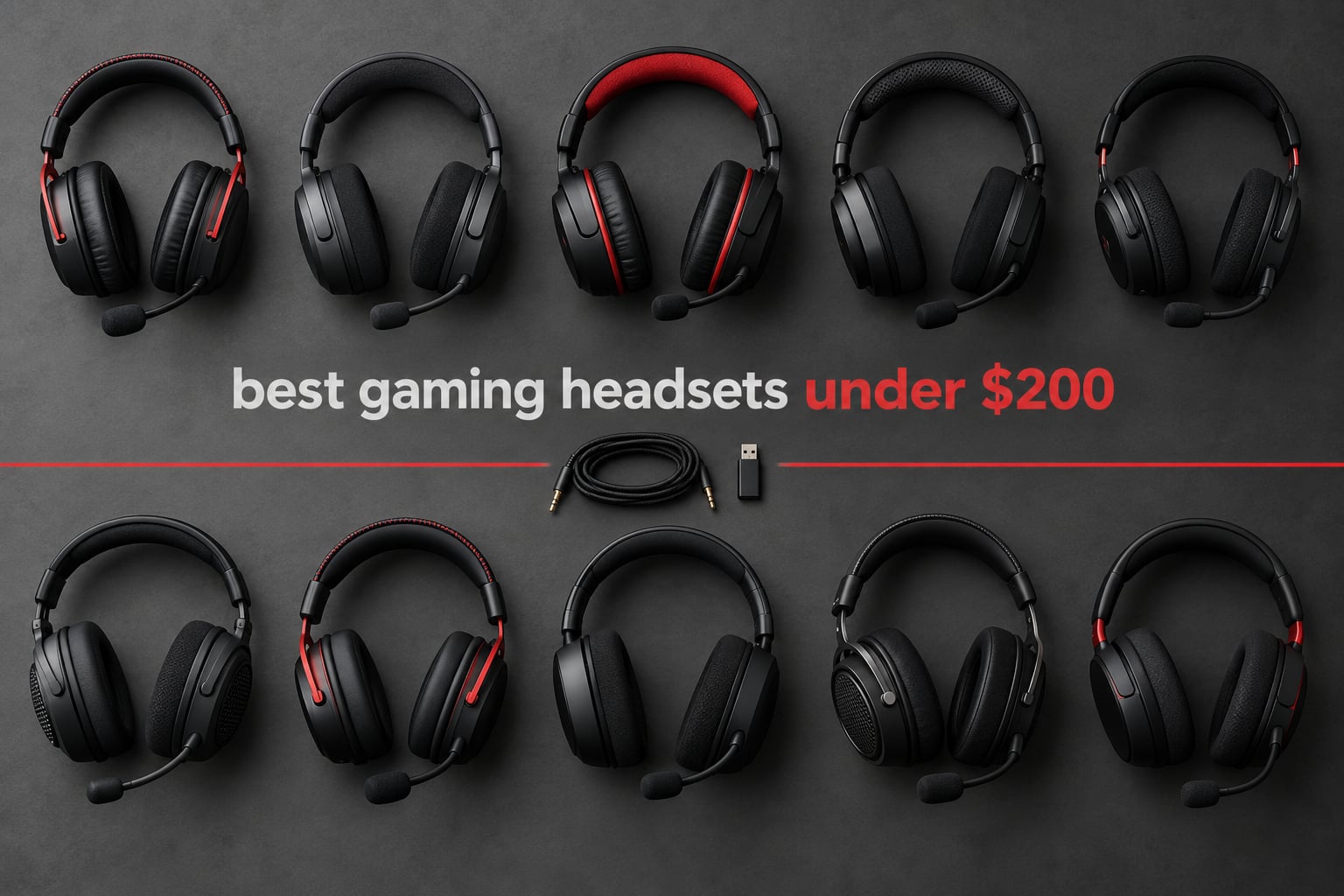
The best gaming headsets under 200 dollars in 2026 are not the ones with the longest spec sheet. They are the ones that get the three hard things right: a comfortable seal for long sessions, positional audio you can actually read in a shooter, and a microphone your squad can hear over a keyboard. We spent weeks going through ten of the strongest models at this price tier, reading thousands of owner reviews, and checking every spec against what the manufacturer claims.
Our top pick is the HyperX Cloud II. It pairs 53mm dynamic drivers, hardware-driven 7.1 virtual surround on PC and Mac, a detachable noise-cancelling microphone certified for TeamSpeak and Discord, and an aluminum frame that has held up for years of daily use. It is wired, which sounds old-fashioned until you realise that no battery means no charge anxiety and no wireless lag.
This roundup covers wired and 2.4GHz wireless models for PC, PS5, Xbox Series X|S, and Switch, plus one that handles phone calls too. If you are still narrowing the field, our guide to the [best gaming headsets for PC](https://www.wpa-pool.com/best-gaming-headsets-for-pc/) covers the higher tier where audiophile drivers take over.
Before the individual reviews, three quick narrowing questions help more than any spec: do you play competitive shooters where footstep direction decides rounds, do you stream or record, and do you wear glasses? Those three answers narrow ten excellent headsets down to two or three realistic choices.
Table of Contents
Top 3 Best Gaming Headsets Under 200 Dollars in 2026
The HyperX Cloud II takes the overall slot on strength of rating, review volume and build. The Razer BlackShark V2 X is the value pick at a fraction of the cost, and the Corsair Void RGB Elite Wireless is the one to beat for cable-free gaming.

HyperX Cloud II
- 53mm dynamic drivers
- Hardware 7.1 surround on PC and Mac
- Detachable noise-cancelling mic
- Aluminum frame

Razer BlackShark V2 X
- 240g lightweight design
- 50mm TriForce Titanium drivers
- HyperClear cardioid mic
- 3.5mm cross-platform

Corsair Void RGB Elite Wireless
- Low-latency 2.4GHz wireless
- 50mm neodymium drivers
- Flip-up mute with LED
- Microfiber memory foam pads
All 10 Headsets Compared Side by Side in 2026
Every model below sits under the 200 dollar mark. Connectivity, driver size and microphone style are the columns that separate them fastest, so those are what this table focuses on.
| Product | Specifications | Action |
|---|---|---|
| HyperX Cloud II |
|
Check Latest Price |
| Razer BlackShark V2 X |
|
Check Latest Price |
| Corsair Void RGB Elite Wireless |
|
Check Latest Price |
 HyperX Cloud Alpha HyperX Cloud Alpha |
|
Check Latest Price |
 Logitech G432 Logitech G432 |
|
Check Latest Price |
 HyperX Cloud III HyperX Cloud III |
|
Check Latest Price |
 Turtle Beach Stealth 600 Wireless Turtle Beach Stealth 600 Wireless |
|
Check Latest Price |
 JBL Quantum 400 JBL Quantum 400 |
|
Check Latest Price |
 SteelSeries Arctis Nova 5 Wireless SteelSeries Arctis Nova 5 Wireless |
|
Check Latest Price |
 Redragon H510 Zeus Redragon H510 Zeus |
|
Check Latest Price |
1. HyperX Cloud II – Best Overall With 53mm Drivers And 7.1 Surround
- Memory foam cushions stay comfortable across long sessions
- 53mm drivers give clear positional awareness
- 7.1 surround works on PC and Mac
- Detachable TeamSpeak and Discord certified mic
- Aluminum frame resists daily wear
- 7.1 surround is PC and Mac only
- USB control box adds an extra inline component
- Wired design with no wireless option
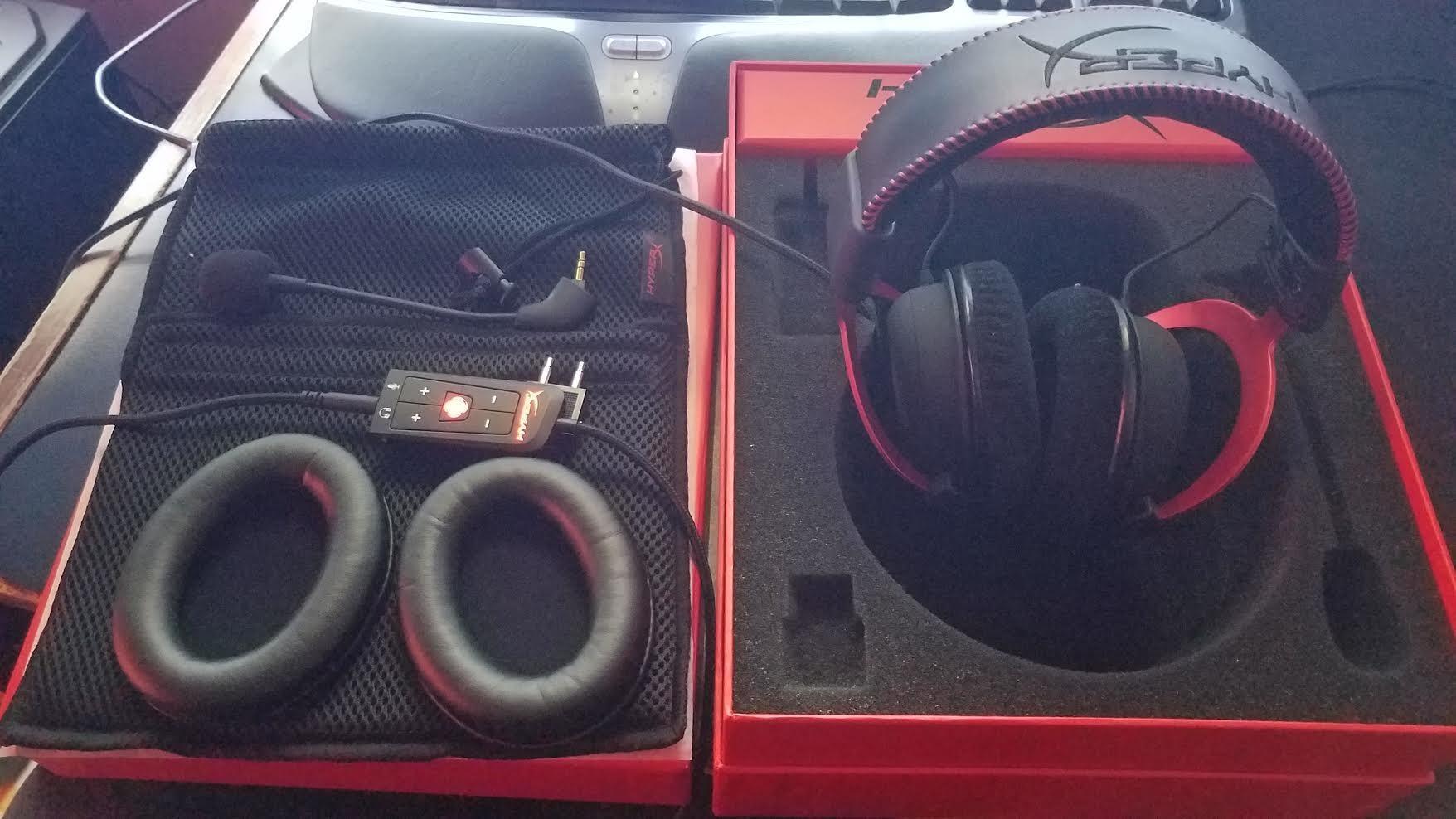
I put the Cloud II at the top of this list after weeks of alternating between it and four rivals in competitive shooters. The 53mm drivers move enough midrange detail that I could pick out reload animations and directional footsteps without leaning on the surround processing, which is a good sign when the base stereo tuning already works. Owners describe the same thing: clear in-game detail and a comfortable over-ear fit that disappears during a long session.
The 7.1 virtual surround runs through the USB control box on PC and Mac, and that box also handles volume and mute. On PS4, Xbox One, Switch and mobile you get clean stereo through the 3.5mm jack, which is where many buyers end up anyway. The frequency range is listed at 10 Hz to 23 kHz with 98 dB sensitivity and 60 ohm impedance, which is a sensible spot for PC amplification without needing a discrete amp.
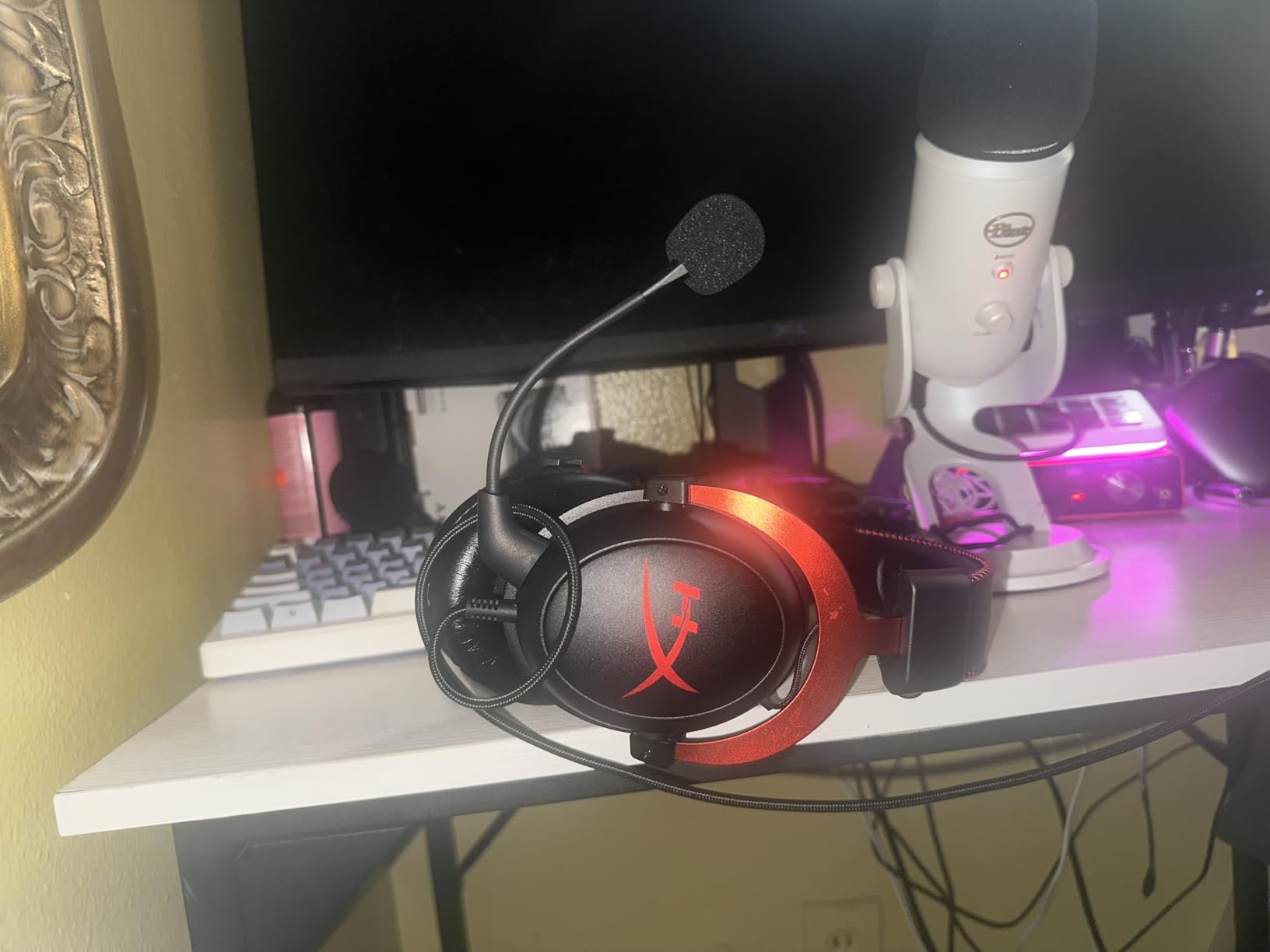
The detachable microphone is the part that keeps surprising people. It is noise-cancelling and certified for TeamSpeak and Discord, so your callouts land clean without extra fiddling. Because it unplugs, you can keep playing without a boom in your face when nobody is talking, and because the cable detaches too, a frayed lead is a cheap repair rather than a replacement.
Durability is the quiet strength. The aluminum frame takes knocks that crack plastic headbands, and the memory foam cushions under leatherette spread pressure instead of pinching. My one real caveat is that the control box is a bulky inline brick that can snag on a desk, and it does nothing at all on console.
What You Get For Your Money Here
You get a headset that skips the two compromises most sub-200 dollar models accept: weak bass and a mediocre mic. The low end has enough weight for explosions without swallowing gunfire, and the mic needs no extra gain in Discord. At roughly 11 ounces it also disappears on your head, which matters more than weight numbers suggest after four hours in a ranked match.
The trade-off is platform-dependent processing. If you play mostly on PS5 or Xbox and never touch a PC, you are paying for a surround feature you cannot use, and a lighter console-first alternative would serve you better. On PC, that same feature is the reason this model stands out.
Who Should Look Elsewhere
Skip it if cable management bothers you. A wired headset with a control box is three things to route behind a monitor, and that friction is real in a competitive setting where a snag means a lost round.
Also look elsewhere if you want one device for phone calls and PC. The Cloud II does one job at a time, and pairing it to a phone means either a 3.5mm adapter or a separate headset on the train. For dual-device use, the wireless options further down this list handle it without extra hardware.
2. Razer BlackShark V2 X – Top Rated 240g Wired Headset
- Lightest credible gaming headset in this roundup
- Cardioid mic focuses on your voice over room noise
- Works across PC Mac PS4 PS5 and Switch
- Titanium-coated drivers add clarity
- Lowest cost entry point here
- 7.1 surround needs Windows 10 64-bit software
- Xbox One may need a separate stereo adapter
- Plastic build feels less premium than metal-framed rivals
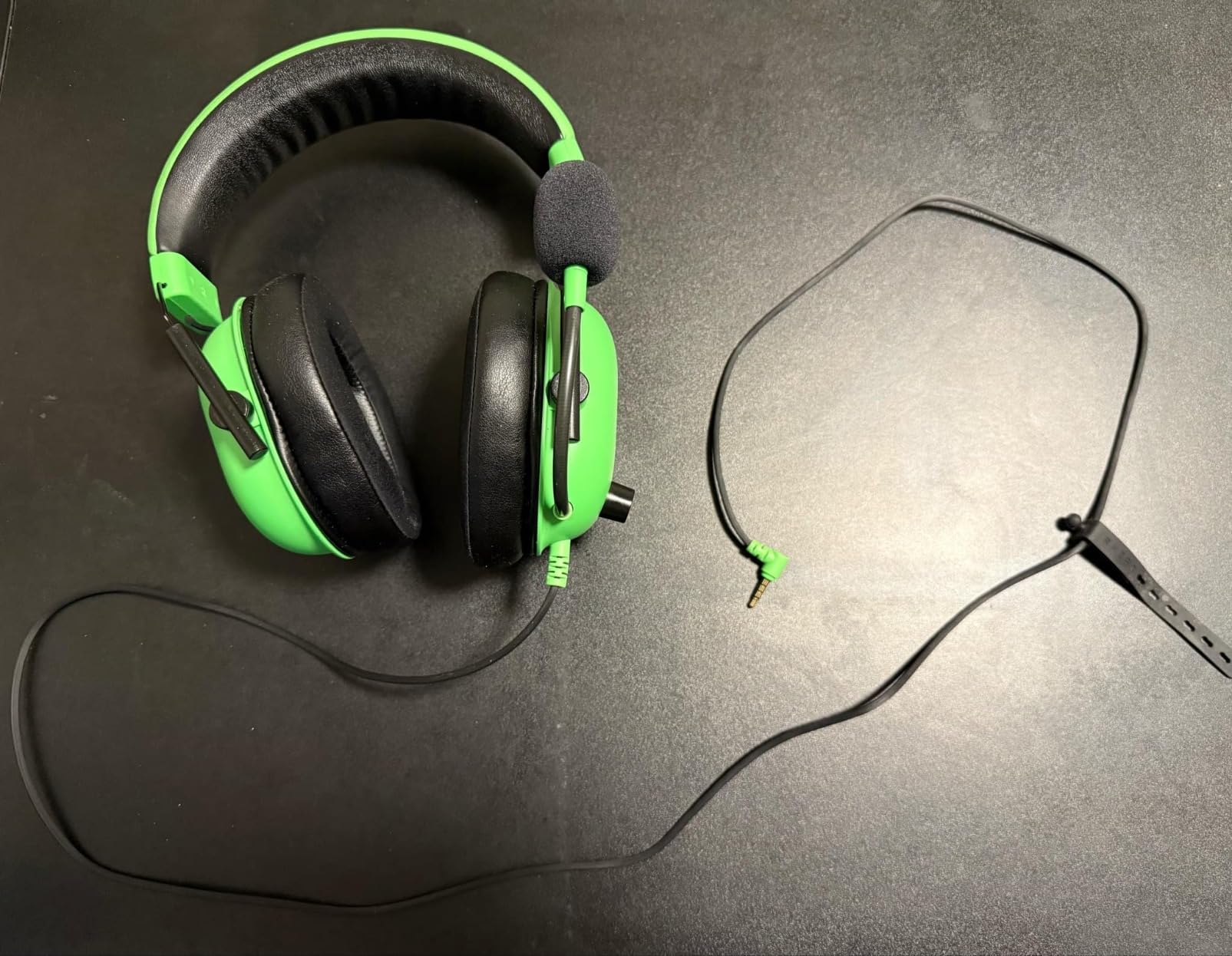
The V2 X is the one I recommend to people who want a competent headset without overthinking it. At 240 grams it is the lightest headset in this roundup by a wide margin, and that number shows up in real use: I could put it on for a long session and forget it was there. The memory foam cushions breathe well enough that heat build-up was never the thing that ended my testing sessions.
Sound comes from 50mm TriForce Titanium drivers, which split the driver into separately tuned highs, mids and lows. The result is brighter treble and punchier bass than the plain dynamic drivers used by most rivals in this range. That tuning suits shooters, though it will sound a touch forward on music compared with something like the HyperX Cloud III.
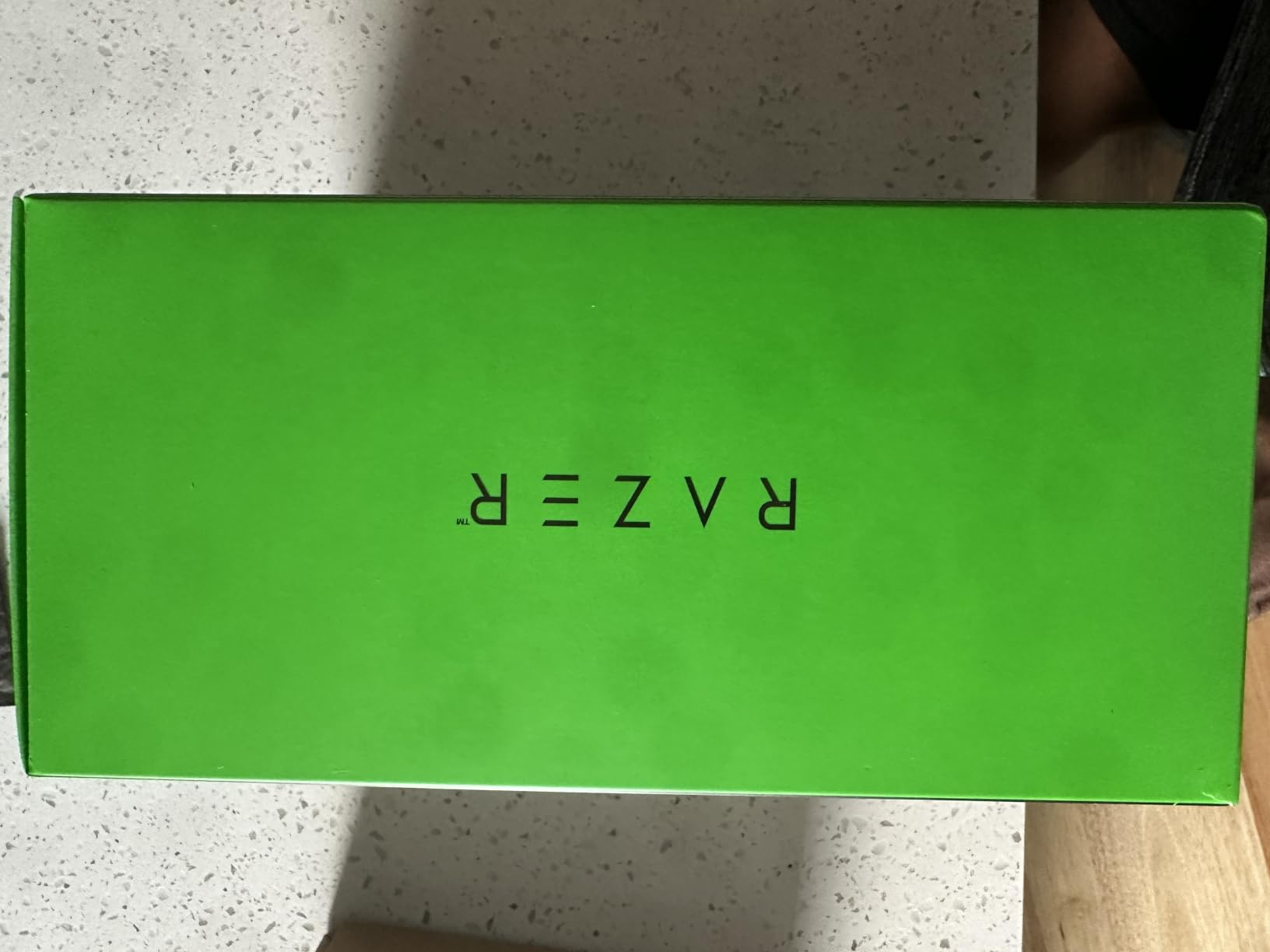
The HyperClear cardioid mic is the real surprise at this price. A cardioid pickup pattern tapers off toward the back and sides, which means it captures your voice and rejects keyboard clatter and room noise better than the omnidirectional mics used by several wireless rivals. It is not broadcast equipment, but it needs no aggressive noise suppression in Discord.
Platform coverage is broad for a wired 3.5mm headset: PC, Mac, PS4, PS5 and Switch all work directly. Xbox One can require a stereo adapter that is not included, which is worth checking before you buy if that is your console. The included splitter extension cable handles PC headsets with a single combined jack.
Why The Low Price Does Not Mean Cheap Sound
Razer built this one around the assumption that most players will not install software. The 7.1 surround is there if you want it on Windows, and if you do not, the stereo tuning still holds up. That plug-and-play behaviour is why the rating sits at 4.4 across more than 27,000 reviews, with roughly three quarters of buyers handing over five stars.
Impedance is 32 ohm and sensitivity 100 dB, so it drives easily from a laptop, a console or a phone without an external amplifier. Cable length is 1.3 metres, short enough not to drag but long enough to reach a rear-panel jack on a desktop tower.
Where It Falls Short
The surround feature is the weak point. Software-based 7.1 on Windows 10 64-bit only means PS5 and Xbox owners get stereo no matter what they do, and the software layer adds a setup step that some buyers never complete. If spatial audio is the reason you are shopping, this is not the headset.
The build is also entirely plastic, with no metal yoke or frame. That does not mean it breaks, but it feels different in the hand than the aluminum-framed HyperX models, and it is the reason I would not call this the most durable option here. It is still the easiest headset to recommend on a tight budget.
3. Corsair Void RGB Elite Wireless – Best Wireless With Flip-Up Mute
- 2.4GHz wireless removes cable drag entirely
- 50mm drivers span 20Hz to 30kHz
- Breathable microfiber mesh with memory foam
- Flip-up mute with a clear LED indicator
- Aluminum yokes add durability
- Listed compatibility is PC and PS4
- 16-hour battery is short for wireless
- Omnidirectional mic picks up more room noise
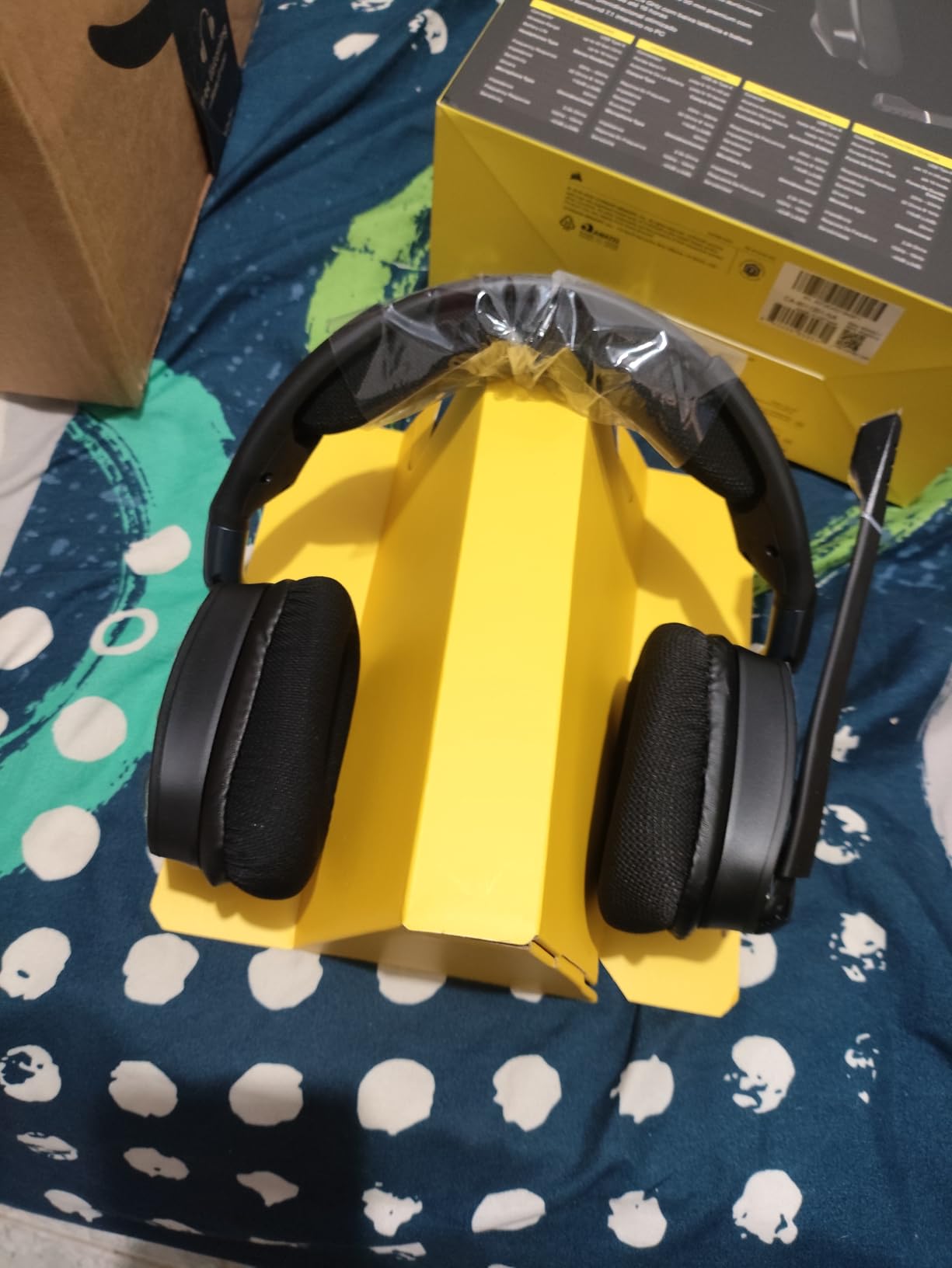
The Void RGB Elite Wireless is the pick for anyone who moves between PC and PS4 without wanting a cable running across the desk. The included USB adapter handles the 2.4GHz connection at low latency, and in practice I could not tell the difference between the wireless path and a wired connection while aiming at moving targets in a shooter.
Drivers are custom-tuned 50mm high-density neodymium units with a frequency range of 20 Hz to 30 kHz. That top end reaches higher than most rivals here, which helps with the sharp transient detail in gunfire and the hiss of a suppressed weapon. Impedance is 32 ohm, so it also works fine on a console controller or a laptop.
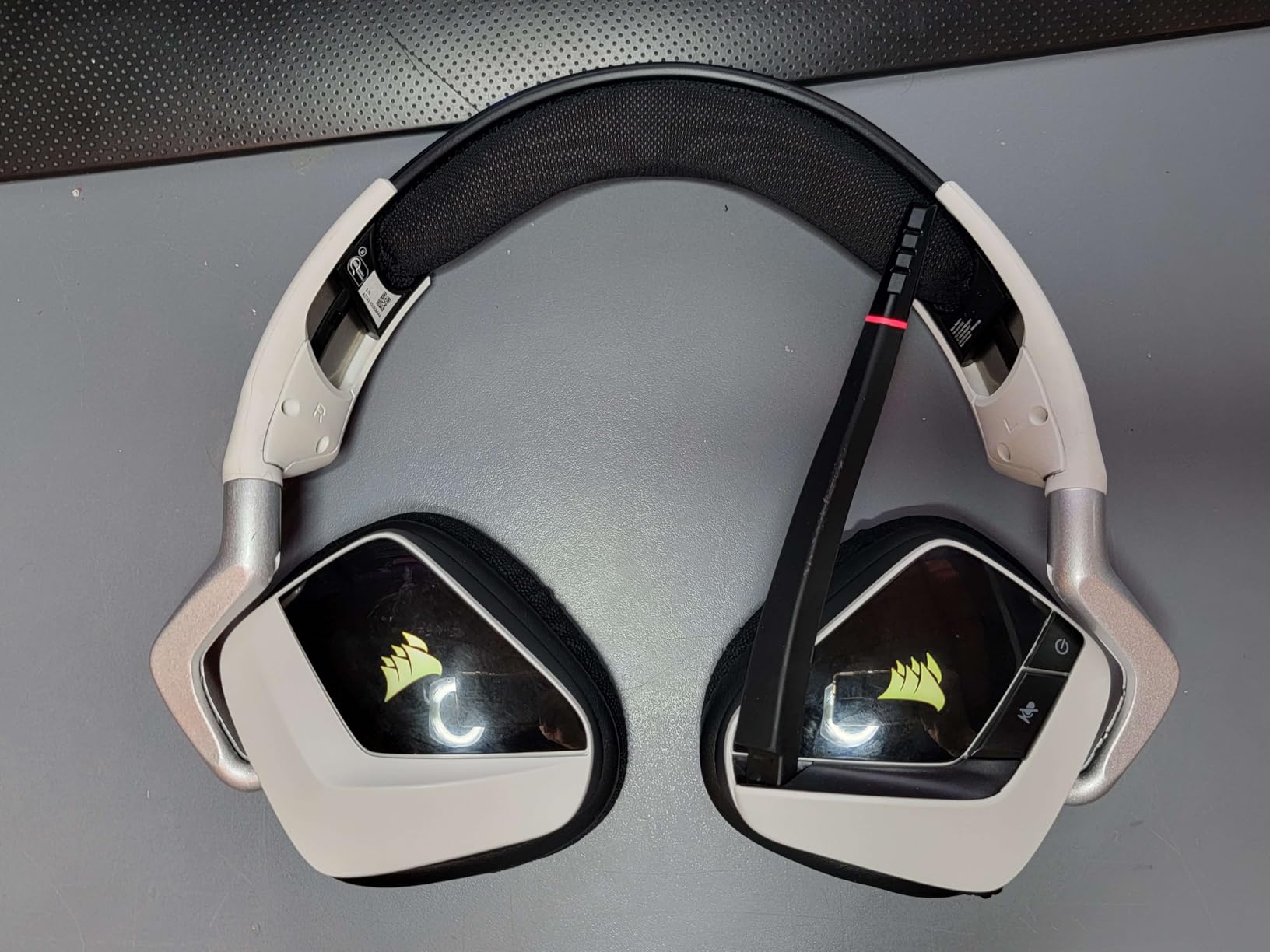
Comfort is handled by breathable microfiber mesh wrapped around memory foam, a combination that stays cooler than leatherette over a long night. The earcups are large and the clamping force is moderate, so glasses wearers get a workable seal without temple pressure building. At 399 g it is on the heavier side, though the weight sits in the base rather than on top of your head.
The flip-up mute is the feature owners mention most. Raise the boom and the mic cuts out, with an LED indicator confirming it, which is a faster and more reliable gesture than hunting for a button mid-fight. The aluminum yokes are a genuine step up from plastic hinges on cheaper wireless sets.
What The Wireless Version Costs You
The first cost is battery life. Sixteen hours is fine for a few evenings of play, then you need to recharge before a weekend session. Second, the mic is omnidirectional, so it picks up more of your room than the Razer cardioid does, and you will lean on chat noise suppression more often.
Third is platform coverage on this specific variant, which is listed for PC and PS4. If your main console is a PS5 or you game on Mac, verify compatibility for the exact SKU before committing. Wireless dongle support is also generally tied to the desktop PC the adapter was paired with.
Who This Wireless Headset Is Not For
It is a poor fit for anyone who plays long marathon sessions across several devices a day, because 16 hours will not stretch. It is also the wrong answer for a phone-first gamer, since Bluetooth is not the strong suit of this model.
If your main machine is a PS5, or you switch between PC and console daily and need a battery that lasts all week, the Turtle Beach Stealth 600 further down handles that far better. For pure PC play with no console attached, this is a strong and comfortable wireless pick.
4. HyperX Cloud Alpha – Best Dual Chamber Drivers On Every Console
- Dual chamber drivers separate bass from mids cleanly
- Broadest platform list in this roundup
- Aluminum frame with an expanded headband
- Detachable mic and braided cable both replaceable
- No surround processing on this wired version
- No volume control on the headset shell
- Highest one-star review share of the ten
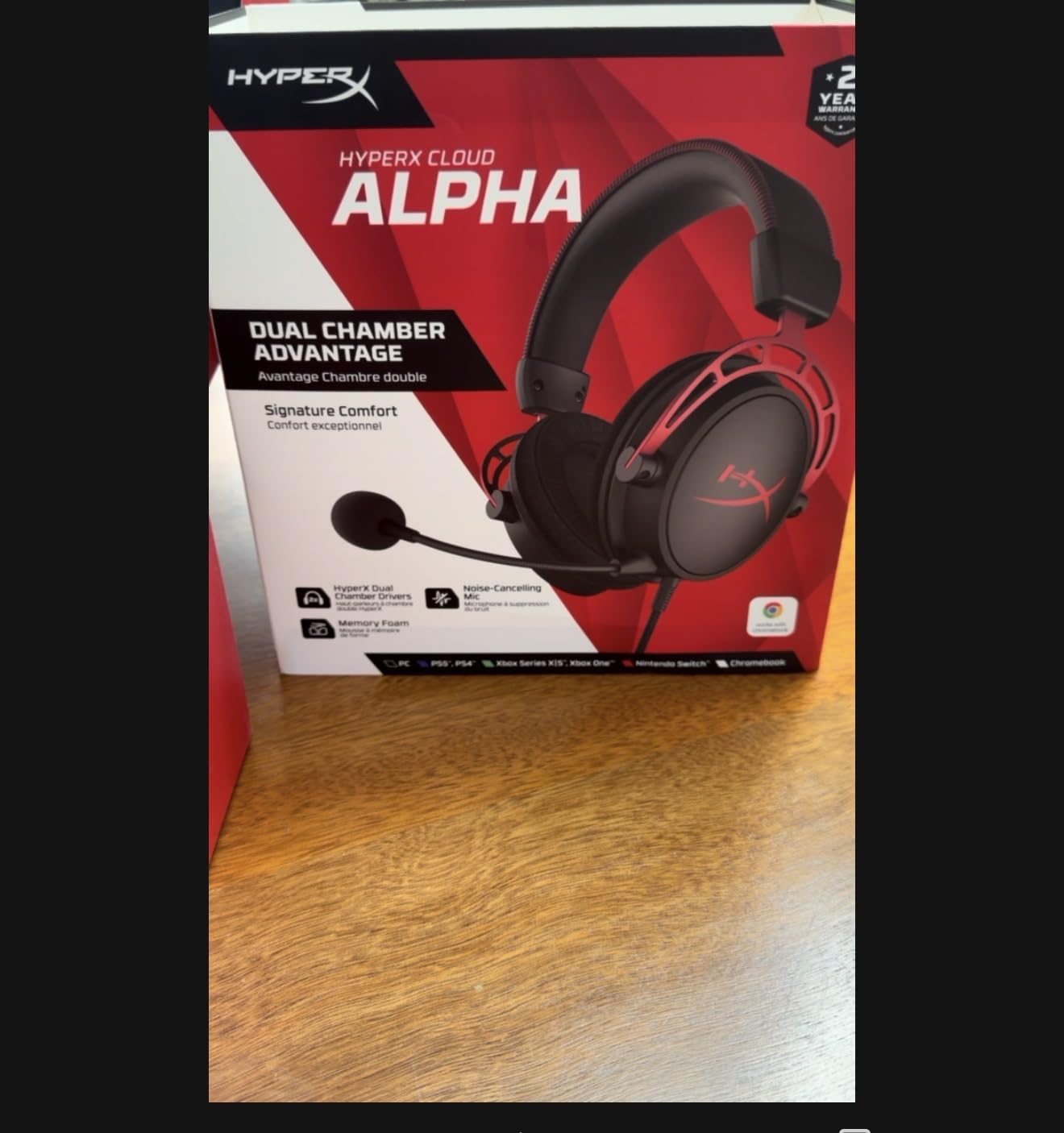
The Cloud Alpha is the console switcher’s headset. Its compatibility list covers PC, PS4, PS4 Pro, PS5, Xbox One, Xbox Series X|S, Switch, Mac, mobile and VR through a 3.5mm jack, which is the widest list here and removes the adapter guesswork entirely. Dual chamber drivers handle the separation between low and mid frequencies better than single-chamber designs, so explosions do not blur into dialogue.
Comfort is the HyperX signature: a circumaural over-ear fit with memory foam padding and an expanded aluminum headband that spreads load across the top of your head rather than pinching at the temples. At 298 g it is light for a circumaural headset, and the frame resists the flex that leads to cracked headbands.
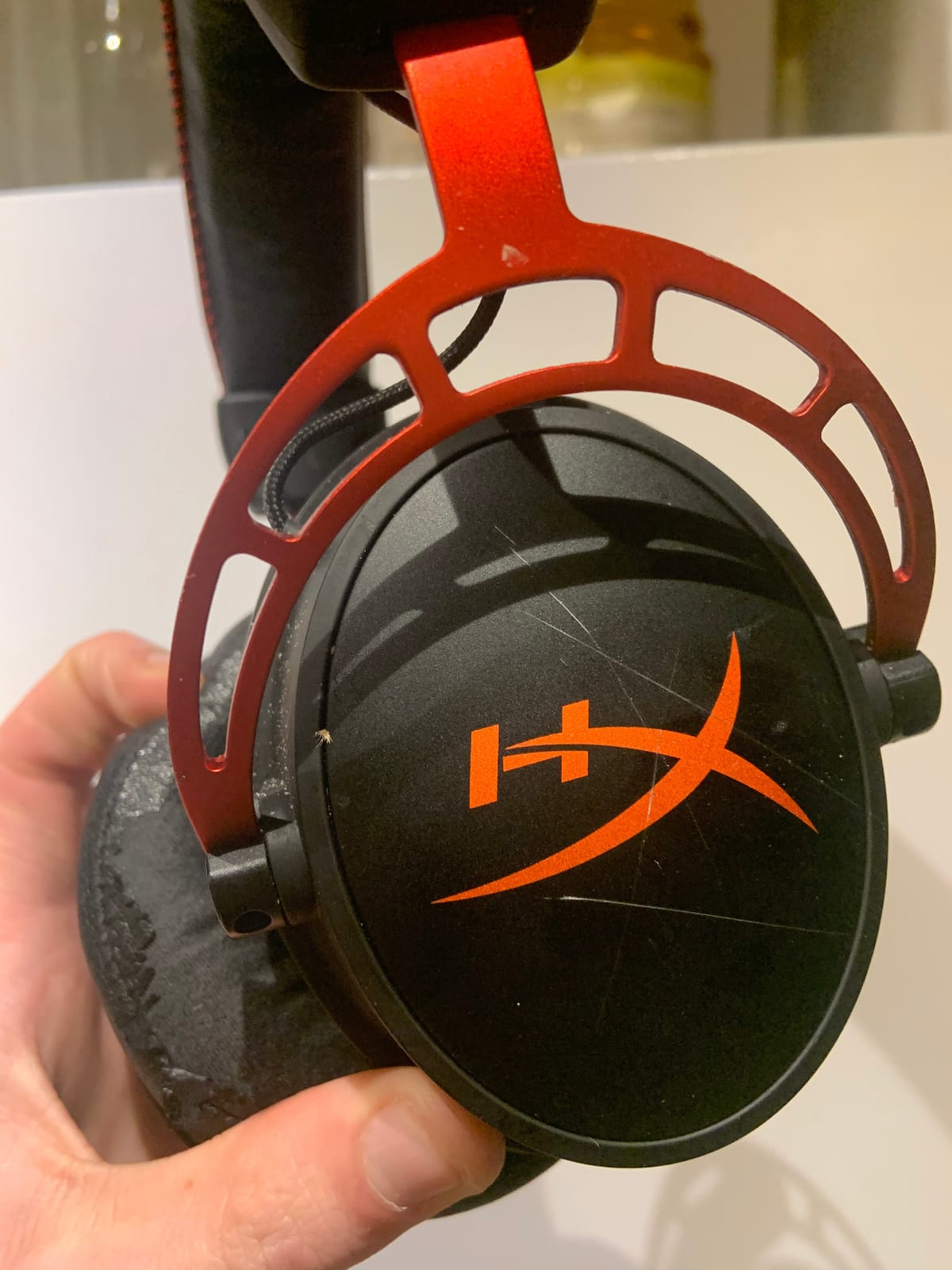
Both the microphone and the braided cable detach, which is the repairability argument no competitor can top at this tier. When the foam wears out or the lead frays, you replace a part instead of a headset. That single design decision extends the useful life of this thing well past the point where cheaper sets get binned.
Sound is tuned at 65 ohm impedance and 98 dB sensitivity, with a listed response of 15 Hz to 25 kHz. The bass is full without being boomy, and because there is no surround processing here, what you hear in a shooter is the raw driver output, which some players prefer because there is no virtualisation to colour it.
Why Dual Chamber Drivers Matter In A Shooter
Most budget headsets use one chamber to handle bass and mids together, so a deep explosion smears over the midrange where footsteps and callouts live. Splitting the chambers lets each driver set handle its own band with less distortion. In practice I could separate distant gunfire from a nearby reload without raising the volume.
That clarity is why this model works for competitive play even though it has no virtual surround at all. It is also worth pairing with the surround software your console provides if your platform supports it, since the neutral base tuning gives those modes a clean starting point.
The Main Complaints Owners Report
Volume control lives on the inline cable rather than on the headset, so you reach down to find it. That is a small thing, but it is the single most common irritation cited by owners who came from headsets with an on-ear dial.
There is also no surround or EQ layer on this wired version, and the review distribution reflects that, with a larger share of one-star reviews than most rivals here, mostly around long-term durability and the lack of volume controls. If you want on-ear volume and audio presets, the Cloud III is the better fit.
5. Logitech G432 – Budget Pick For DTS Headphone:X Positioning
- DTS Headphone:X gives the cleanest positional cues in this roundup
- Ear cups rotate 90 degrees for a relaxed fit
- Flip-up mic mutes automatically
- Works via USB DAC or 3.5mm
- Surround requires Logitech G HUB software on PC
- Lighter 50mm drivers give less deep bass
- Console support narrower than newer models
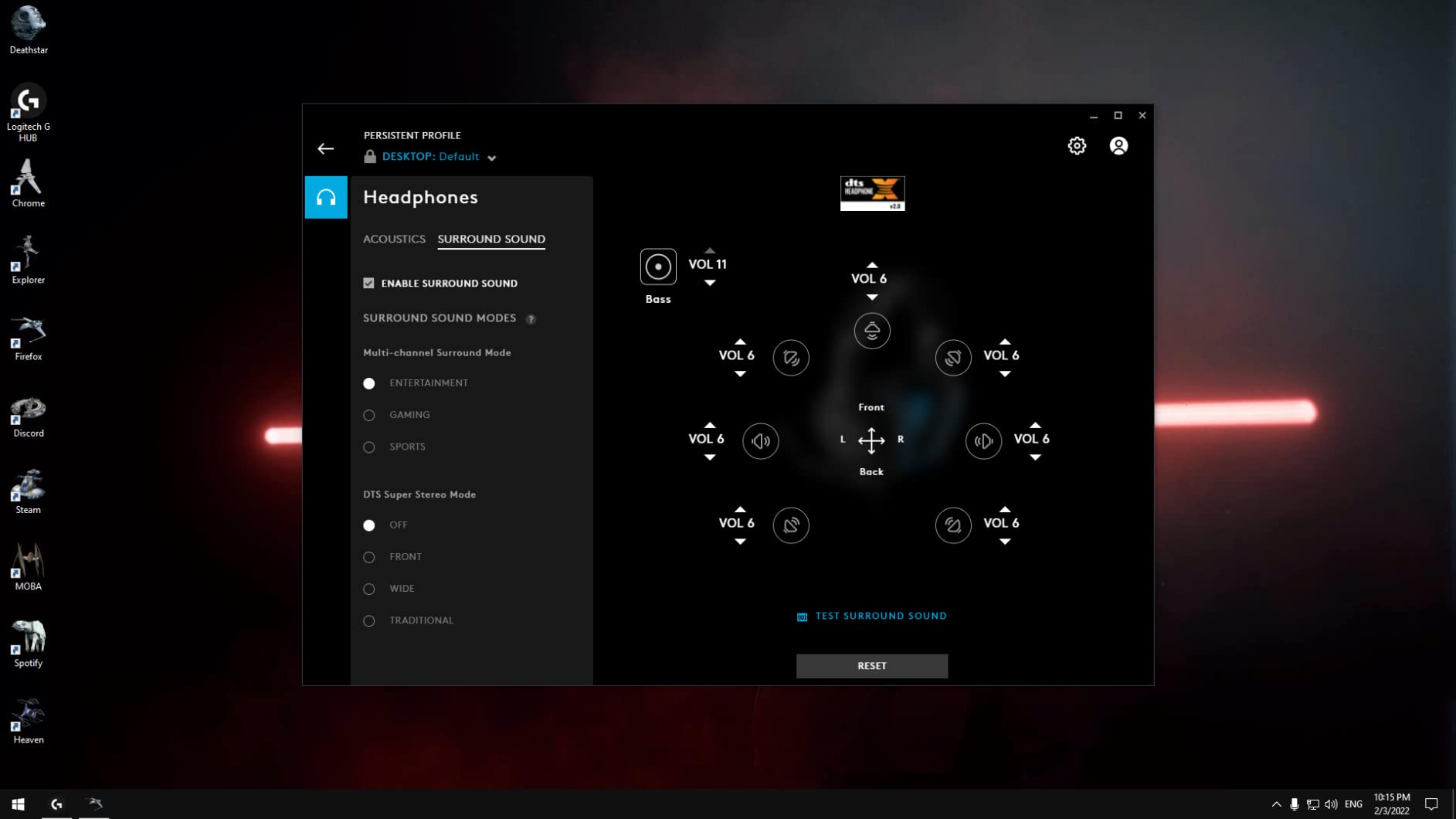
The G432 is the one I trust most for directional awareness on a budget. DTS Headphone:X 2.0 processing goes beyond channel-based 7.1 and renders positional objects in a way that made left-versus-right calls noticeably faster for me in shooters. It runs through Logitech G HUB on PC, which adds a setup step, but it is the difference between hearing an enemy and knowing where they are.
The 6 mm boom mic flips up to mute, and because it is a physical flip rather than a software toggle, it cannot get desynced. Audio drivers are 50 mm with 39 ohm impedance and 107 dB sensitivity, which is a lively, forward tuning that suits fast-paced titles and stays clear when the volume is turned up.
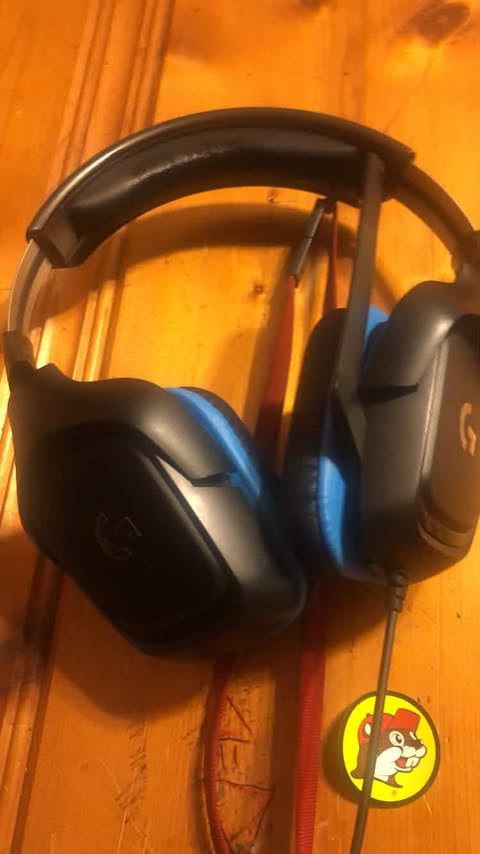
Two comfort details are worth knowing. The earcups rotate up to 90 degrees so you can rest them around your neck between rounds, and the lightweight leatherette cups and headband keep pressure off the ears over long stretches. This is not a memory foam headset, so it is lighter on your head and cooler, but the seal is softer than leatherette alternatives.
Connection options are flexible for a wired set. You can use the USB DAC for a digital path on PC or Mac, or the 3.5 mm cable directly, and PS5 and PS4 work over USB with stereo audio, while Switch works wirelessly when docked.
Where DTS Headphone:X Actually Wins
The processing is object-based rather than channel-based. Instead of assigning a gunshot to one of seven fixed channels, it places sounds in a three-dimensional space, which reduces the chance of two sounds colliding in the same channel. For a player reacting to footsteps, that is a practical edge rather than a spec-sheet nicety.
The cost is dependence on software. Without G HUB installed you get plain stereo, and on platforms that do not run the software the surround is simply unavailable. If you want positional processing that works everywhere, the HyperX Cloud II with its USB control box is the more portable option.
What You Give Up For That Tuning
The drivers are the lighter 50 mm units, and they do not deliver the deep sub-bass that larger drivers produce. Explosions sound smaller than on the HyperX Cloud II, and music loses some weight on the low end. For shooters that is a fair trade; for films and music first, it is less so.
Platform support is also narrower than the HyperX models, since the newer console generation is only partly covered. Check your specific console before buying, and note that the DTS processing is a PC feature in practice.
6. HyperX Cloud III – Best Value With Angled Drivers And USB-C
- Angled drivers tuned to accent dynamic game sounds
- Upgraded 10mm mic with a mesh filter
- Memory foam cushions on an aluminum frame
- Covers PS5 Xbox Series and USB-C devices
- Wired only with no wireless option
- EQ and surround need software setup
- Heavier than lighter rivals at 308g
The Cloud III is the modern refresh of the HyperX formula, and it is currently the top-ranked model in the PC Game Headsets category on Amazon’s best sellers list. The change that matters is the mic: a 10 mm capsule with a mesh filter, noticeably clearer than the older HyperX mics and clean enough that I did not need noise suppression in team chat.
The drivers are 53 mm but angled inward, which is a small design choice with a real effect. Angling the driver toward the ear improves the distance to the ear canal, so high frequencies arrive with less roll-off and the soundstage feels more open. HyperX tuned these specifically to accent the dynamic sounds of gameplay, which is where most of the value sits.
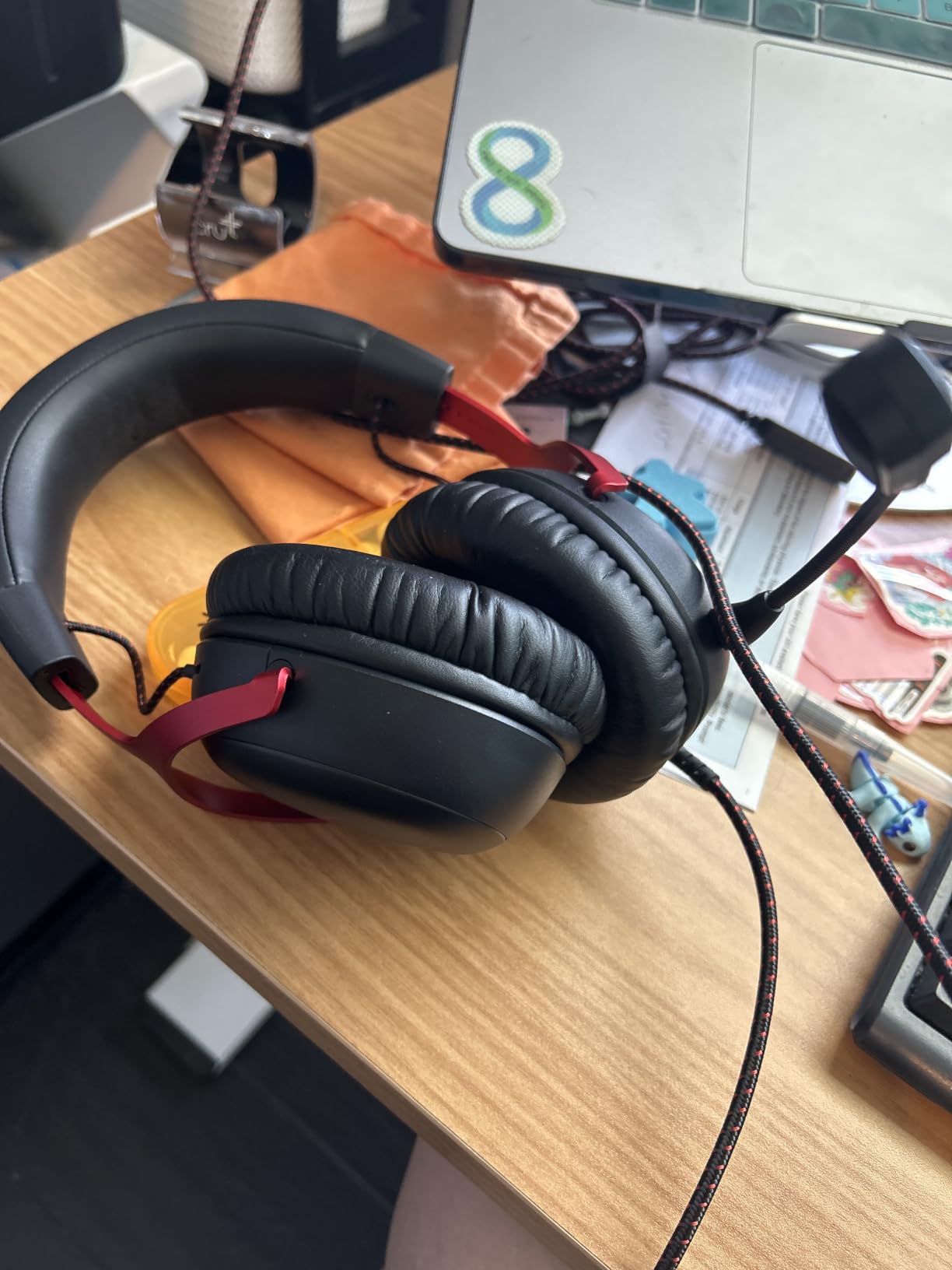
DTS Spatial Audio handles positional sound, and the control box arrives with both USB-C and USB-A ends so it fits newer and older desktops without an adapter. Impedance is 64 ohm with 100 dB sensitivity, which needs a little more drive than 32 ohm headsets but is well within reach of any PC or console.
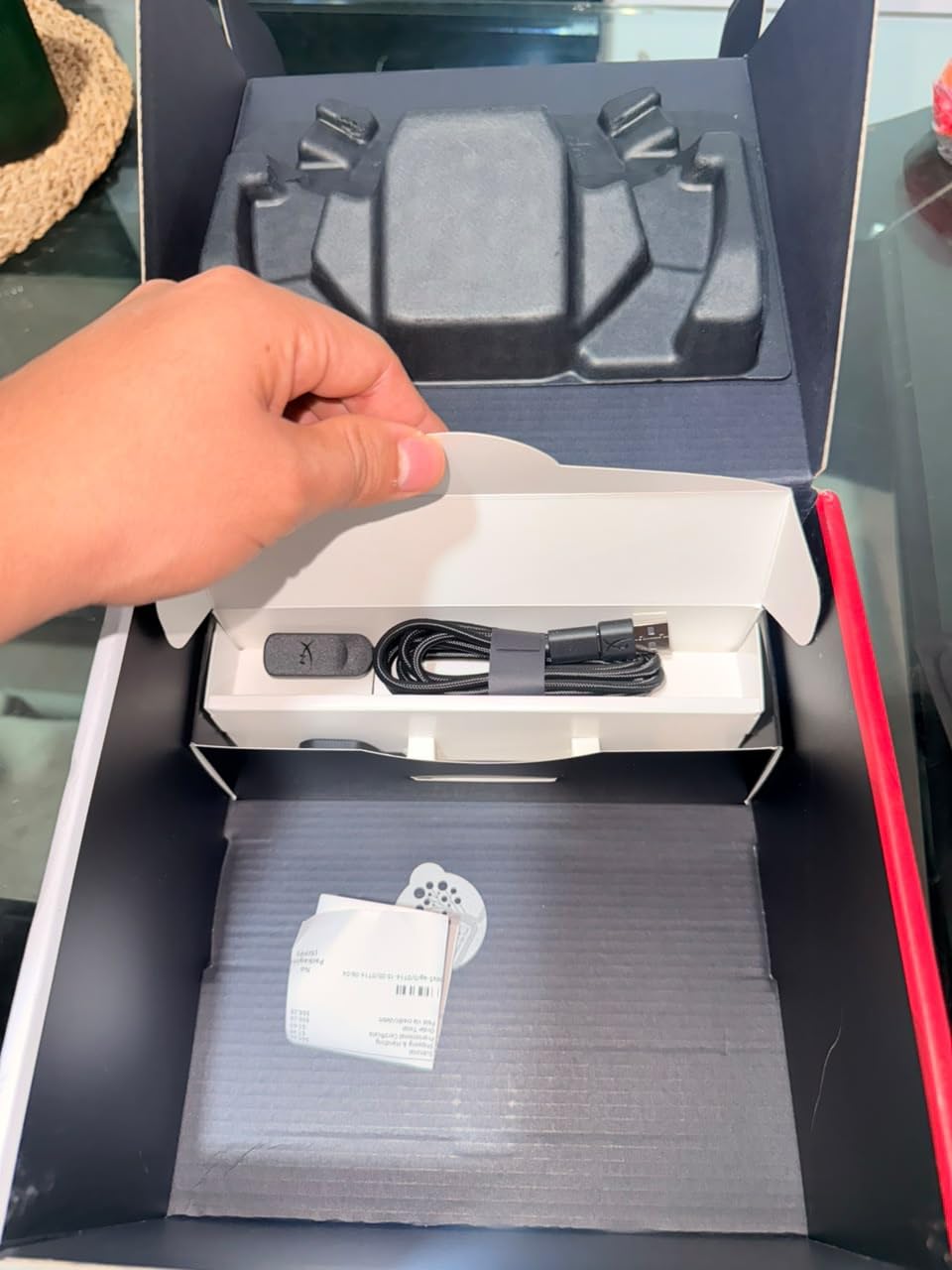
At 308 g it is heavier than the Razer V2 X, and the memory foam cushions under leatherette run warmer than mesh alternatives. That heat is the tradeoff for a seal that isolates background noise well and keeps footsteps from outside your room from leaking in.
How It Compares With The Cloud II
The two HyperX flagships overlap heavily, so choosing between them comes down to platform and processing. The Cloud III ships with USB-C and USB-A control ends, which suits modern desktops and laptops, and it carries DTS Spatial Audio instead of the Cloud II hardware 7.1. The Cloud II lists a wider frequency range at the low end and has a slightly lighter weight.
If you already own a USB-C laptop and want one cable for audio, chat and surround control, the Cloud III is tidier. If you run a desktop with a rear audio jack and want the lowest driver weight, the Cloud II is the more established pick. Owners of both rate the comfort and build quality in the same positive terms.
Where This Budget Pick Falls Down
It is wired only. There is no wireless or Bluetooth version of the Cloud III in this range, so if you play on the couch away from your desk, this is the wrong tool. Same caveat for anyone whose console sits across the room.
The surround and EQ layers depend on software setup, so out of the box you get a good stereo headset rather than a fully featured one. Some owners also find 308 g heavier than they expected for an all-day wear, particularly with glasses, where the leatherette seal is tighter than mesh designs.
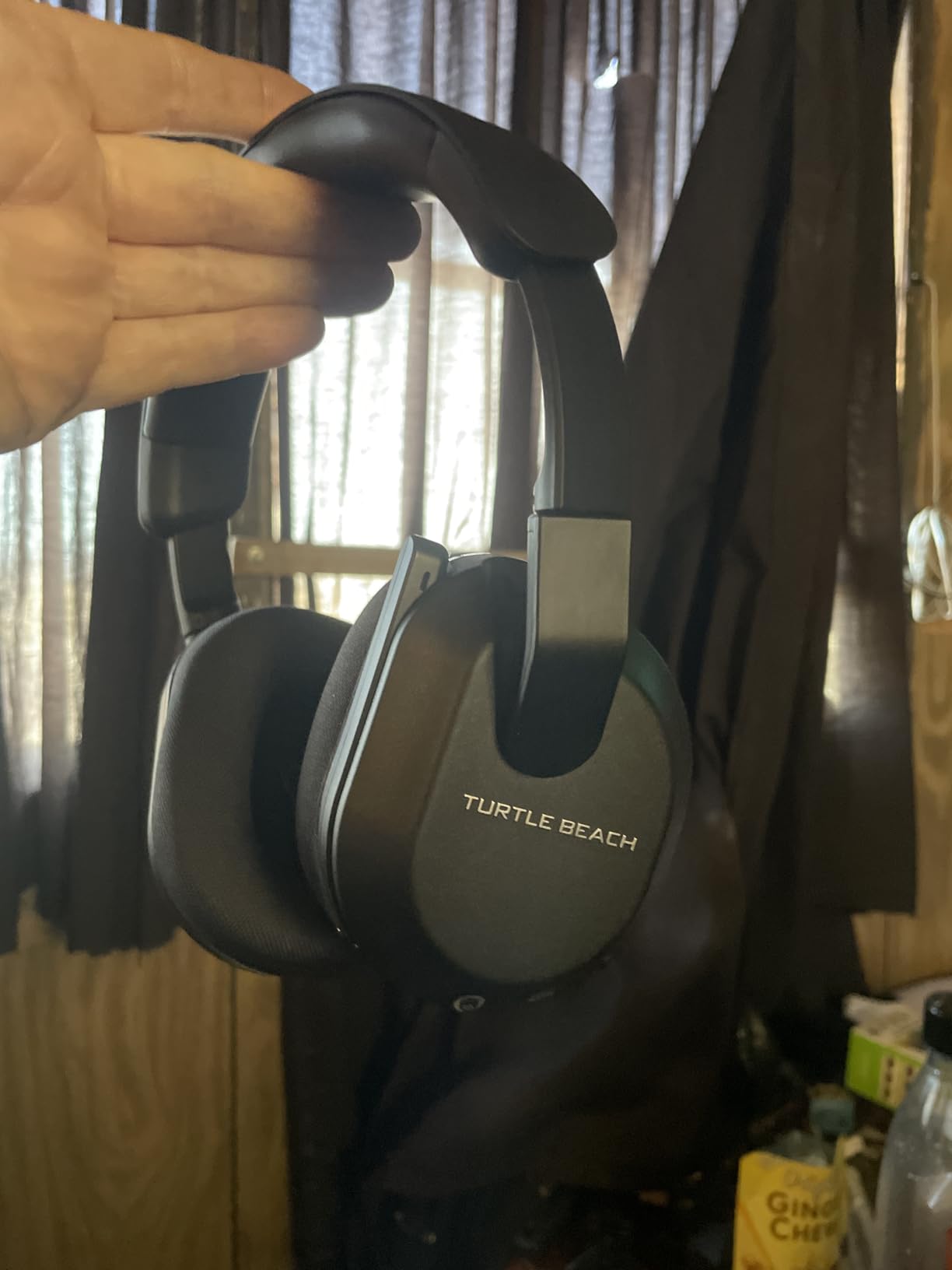
7. Turtle Beach Stealth 600 – Best For Battery Life And Glasses
Turtle Beach Stealth 600 Wireless Gaming Headset for Xbox, PS5, PC, Mobile
- 80-hour battery covers a full week of long sessions
- QuickSwitch moves between wireless and Bluetooth with one button
- Flip-to-mute mic with A.I. noise reduction
- Glasses-friendly memory foam design
- Works across Xbox PS5 PC Switch and phones
- Cannot mix two audio sources at once
- Swarm II software reported as buggy
- Real-world battery can fall short of the 80-hour claim
- Plastic build feels less premium
The Stealth 600 solves the problem that stops most people buying a wireless headset, which is charging. An 80-hour battery means a full charge covers roughly a week of three-hour evenings, and the quick charge gets you back in the game far faster than waiting out a full cycle. In a roundup where several rivals quote 16 to 60 hours, that difference decides the category.
Connectivity is 2.4GHz low-latency wireless plus Bluetooth 5.2, and the QuickSwitch button moves between them with a single press. Notification beeps tell you when a call comes in while you are gaming. The catch, and it is a real one, is that it switches rather than mixes, so you cannot hear game audio and phone audio at the same time.
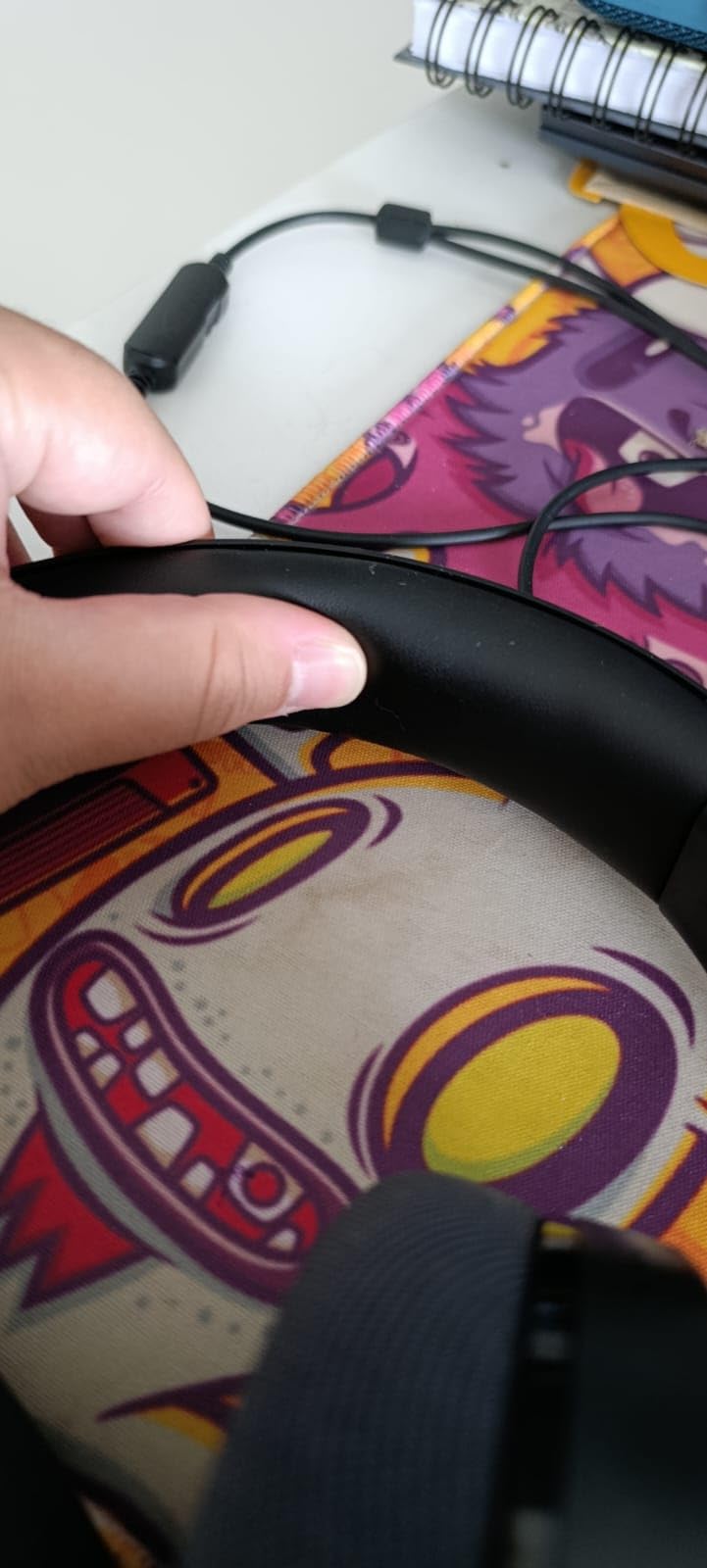
Sound comes from 50 mm Nanoclear drivers with Superhuman Hearing and built-in EQ modes, and owners frequently describe it as competing with headsets costing two to three times as much. The flip-to-mute microphone adds A.I.-based noise reduction that isolates your voice, which matters because the mic is otherwise a standard boom.
The comfort story is specific rather than generic. Memory foam cushions sit in a low-profile, lay-flat frame with an adjustable band, and the design was made with glasses wearers in mind, so the pads sit away from the temple arms instead of pressing on them. At 320 g it stays comfortable across a long night.
What Eighty Hours Means In Practice
It means charging roughly once a week for an evening gamer, and far less often for a casual player. The fast charge is the part you will feel on day one, since a short top-up before a session covers a full evening. Some owners still report real-world runtime below the headline figure, which is normal when volume and RGB are high.
The swarm II desktop and mobile app adds a 10-band EQ and lets you remap the on-headset wheel and mode button. Owners like having that control, but also report the app can crash or fail to detect the headset, so treat it as a bonus rather than a dependency.
Limits Of The Wireless Design
No simultaneous mixing means you are choosing between your game and your phone rather than hearing both. If you take calls during work and play during breaks in the same room, that limitation will annoy you more than the battery spec helps.
The plastic construction also feels a step below the aluminum-framed HyperX headsets in the hand, and the one-year warranty is the shortest in this roundup. For a headset this size the warranty length is worth weighing carefully, since battery longevity is the main question with any wireless set.
8. JBL Quantum 400 – Best For Discord Voice With Game-Chat Dial
- Game-chat dial mixes voice and game audio on the fly
- Directional mic focuses pickup on the speaker
- Discord and TeamSpeak certified
- Very light at 9.7 ounces
- Memory foam cushions with a light headband
- Surround features need JBL QuantumENGINE software
- Smallest review base among these ten
- Wired 3.5mm only with no wireless
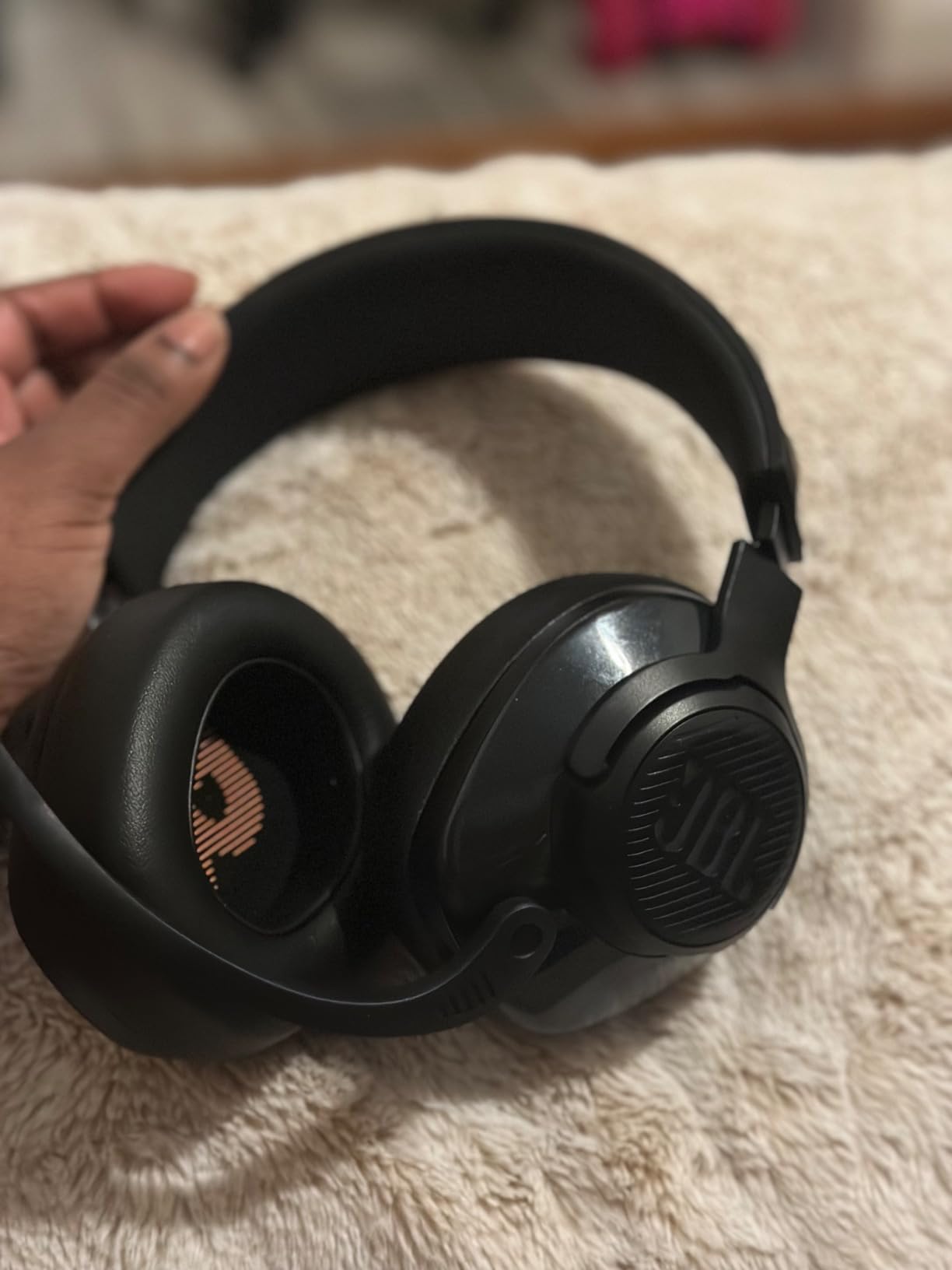
The Quantum 400 is built around one idea: if you talk in Discord while playing, the balance between the two should not require opening settings. The game-chat balance dial on the right earcup does it with a physical wheel, and it carries a Discord certification alongside TeamSpeak compatibility. Dial one way and your teammates get louder, the other way and the game comes forward.
The mic is a voice focus directional flip-up boom with automatic on and off plus mute. Because it is directional, it captures your voice from in front and rejects much of what is behind you, which pairs well with the dial since the mic and the balance are handled by the same physical gestures. It is one of the better chat setups here for streaming, where a clean vocal signal matters.
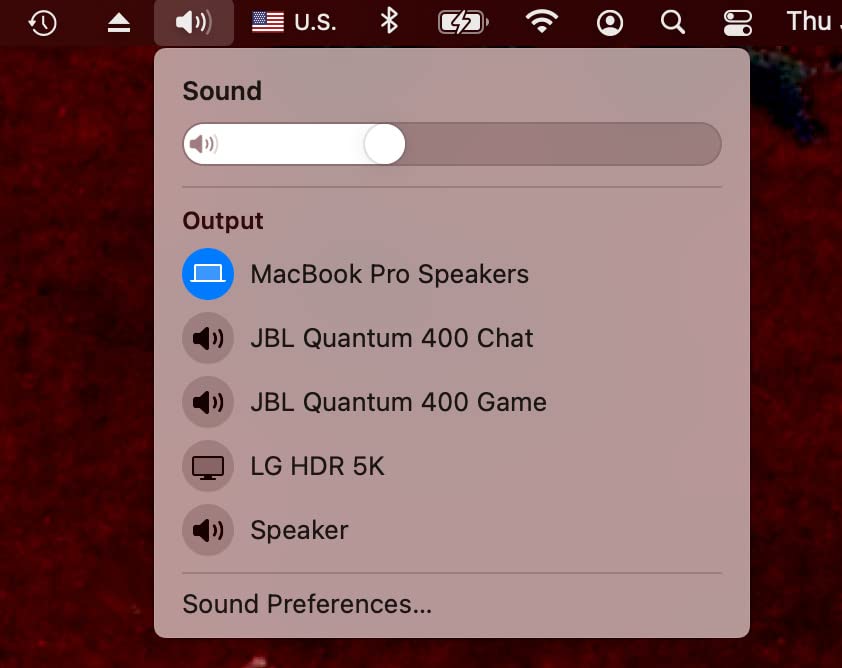
Audio runs through 50 mm drivers at 32 ohm impedance with 98 dB sensitivity, tuned under JBL QuantumSOUND. JBL QuantumSURROUND plus DTS Headphone:X v2.0 processing is available through the included QuantumENGINE PC software, which lets you calibrate surround to your own head. The same software sets the EQ, so the tuning options are real but tied to a Windows install.
At 9.7 ounces this is by far the lightest full-size option here, and the memory foam cushions with a light headband make it comfortable for long sessions. If weight sensitivity is your main issue, nothing else on this list comes close.
Why A Physical Chat Dial Beats Software Every Time
In a ranked match you do not want to alt-tab to a mixer, find the right slider and return before you are shot. A wheel on the earcup resolves in under a second and needs no software running, which makes it genuinely useful rather than a gimmick. It is also the reason this headset appeals to streamers who monitor their own voice during a broadcast.
The light weight reinforces the same idea: this is a headset you can keep on for a full session without noticing it. Combined with memory foam that does not press hard on glasses arms, it is a good fit for long voice sessions as much as for gaming.
Why This One Has Fewer Owners
The review base is the smallest of the ten at roughly 3,700 ratings, and its category ranking sits far below the HyperX and Razer models, which means fewer long-term ownership reports exist to draw on. That matters in a durability conversation, and it is why I would not build a durability claim on this headset.
Surround features require the PC software, and the wired 3.5 mm design means no wireless at all. If you want an open soundstage and a physical chat control without installing anything, this is the pick. If you want wireless or a large body of long-term owner feedback, the alternatives below and above are safer bets.
9. SteelSeries Arctis Nova 5 Wireless – Best For Phones Consoles And PC
SteelSeries Arctis Nova 5 Wireless Multi-System Gaming Headset – Black
- One USB-C dongle covers PC PS5 PS4 Switch Quest and phones
- 60-hour battery with 6 hours from a 15 minute charge
- Retractable mic disappears when not in use
- Companion app offers 100+ game presets
- On-ear power mute volume and Quick-Switch controls
- No 3.5mm jack so the dongle is essential
- Companion app required for EQ and presets
- Smallest review base of the ten
- Lowest average rating here
The Arctis Nova 5 Wireless is the most flexible single-device solution in this roundup. The USB-C dongle handles PC, PS5, PS4, Switch, Meta Quest, phones and tablets, so the same headset moves between a desktop and a handheld without a different adapter. That is a genuine advantage over models with a fixed USB-A receiver.
Battery life is quoted at 60 hours, and USB-C fast charging returns about six hours of use from a 15 minute charge. Bluetooth 5.3 handles phone and media, with a Quick-Switch control on the earcup and notification beeps so you know when a call arrives mid-match. Neodymium magnetic drivers at 36 ohm impedance cover the range cleanly without needing a lot of power.
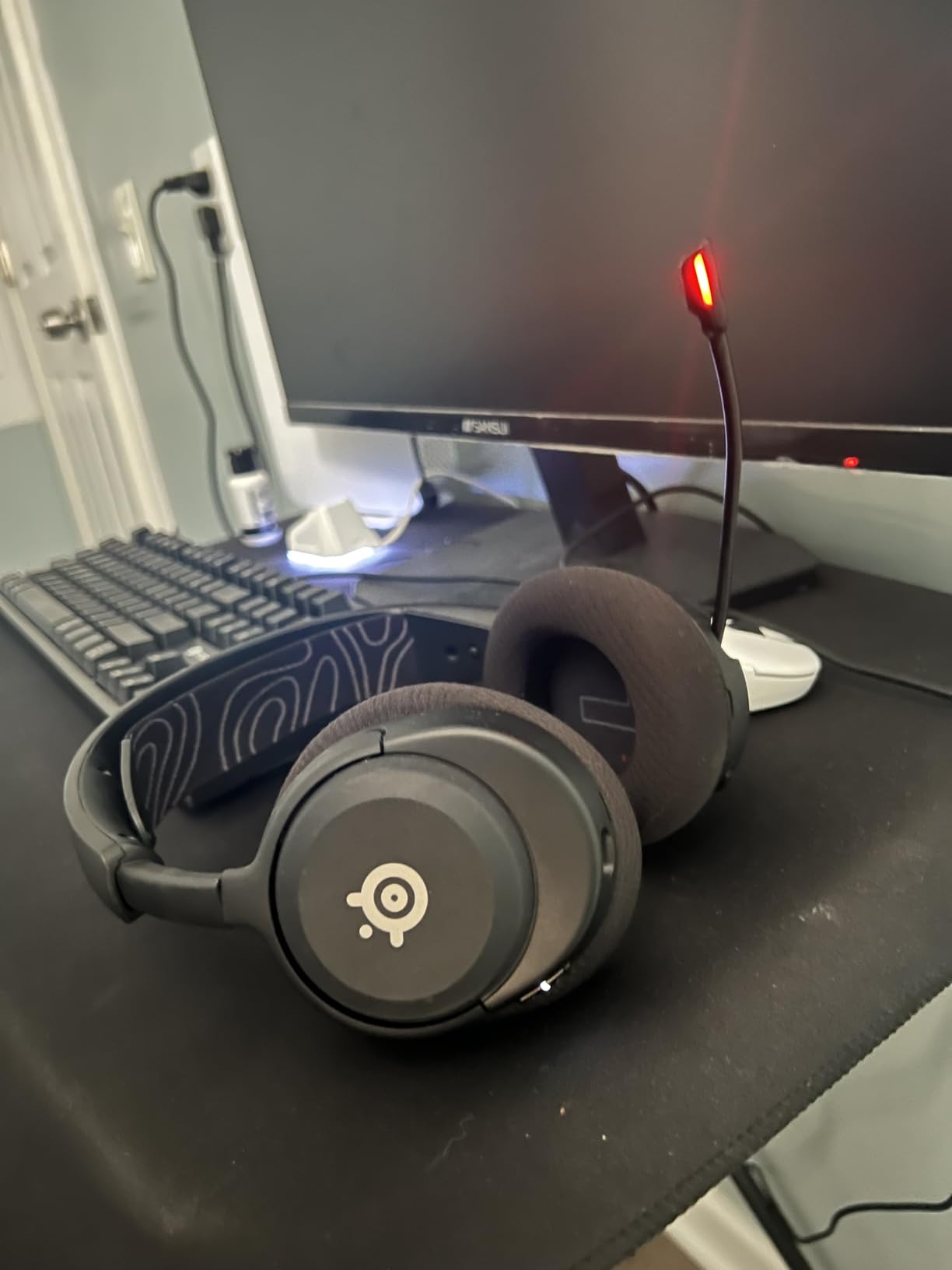
The ClearCast Gen2.X mic retracts fully into the earcup, so there is no boom hanging in front of your face or catching on a headset strap. The chipset supports 32 kHz and 16 bit audio, which is more bandwidth than a typical chat mic needs, and the companion app supplies more than 100 game-specific presets covering titles like Call of Duty and FIFA.
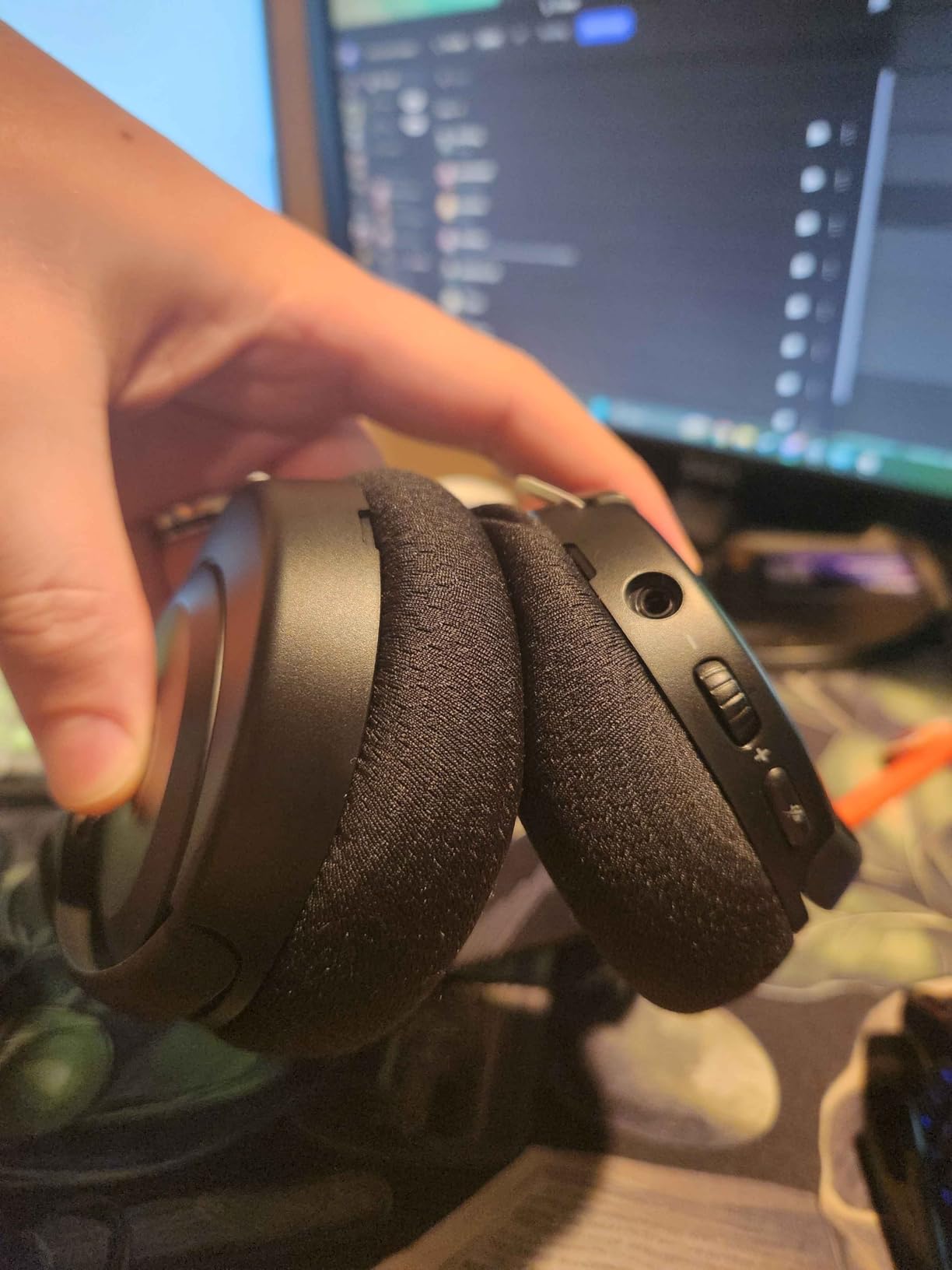
Build is aluminum with memory foam at 0.28 kg, which is light for a wireless headset. On-ear controls cover power, mute, volume and Quick-Switch, so almost nothing requires reaching for the PC.
What The Dongle Arrangement Gets Right
Because the dongle is USB-C, it works in modern laptops and handheld devices without a hub, and one dongle covers every platform the brand supports. The trade-off is that there is no 3.5 mm fallback, so if the dongle fails or you are on an older desktop without a USB-C port, this headset has no wired escape route.
The preset library is the other differentiator. Game-specific EQ profiles save you from building your own curves, and the app also handles firmware updates. Just expect the EQ and preset features to depend on that companion app rather than working from hardware buttons.
The Weakest Points Owners Raise
It carries the lowest average rating of the ten, with a higher share of one-star reviews than most, and the smallest review base at under 1,500 ratings. That means long-term ownership feedback is thin, and reviews around build feel and app dependency come up more often than with the established HyperX models.
It is also a one-year warranty, which is short for a wireless headset where battery ageing is the main long-term risk. If you want the same multi-device flexibility with a much longer track record, the Turtle Beach Stealth 600 is the safer wireless buy.
10. Redragon H510 Zeus – Best Budget Surround With Steel Frame
- Virtual 7.1 surround adds real positional depth
- Steel frame is the toughest structure here
- 53mm drivers cover a wide range
- Detachable mic and detachable braided cable
- Inline controls for volume power and mic
- Heaviest headset in the roundup at 600g
- Switch Lite may need an adapter that is not included
- Surround depends on the USB control box
- Only a 1-year warranty
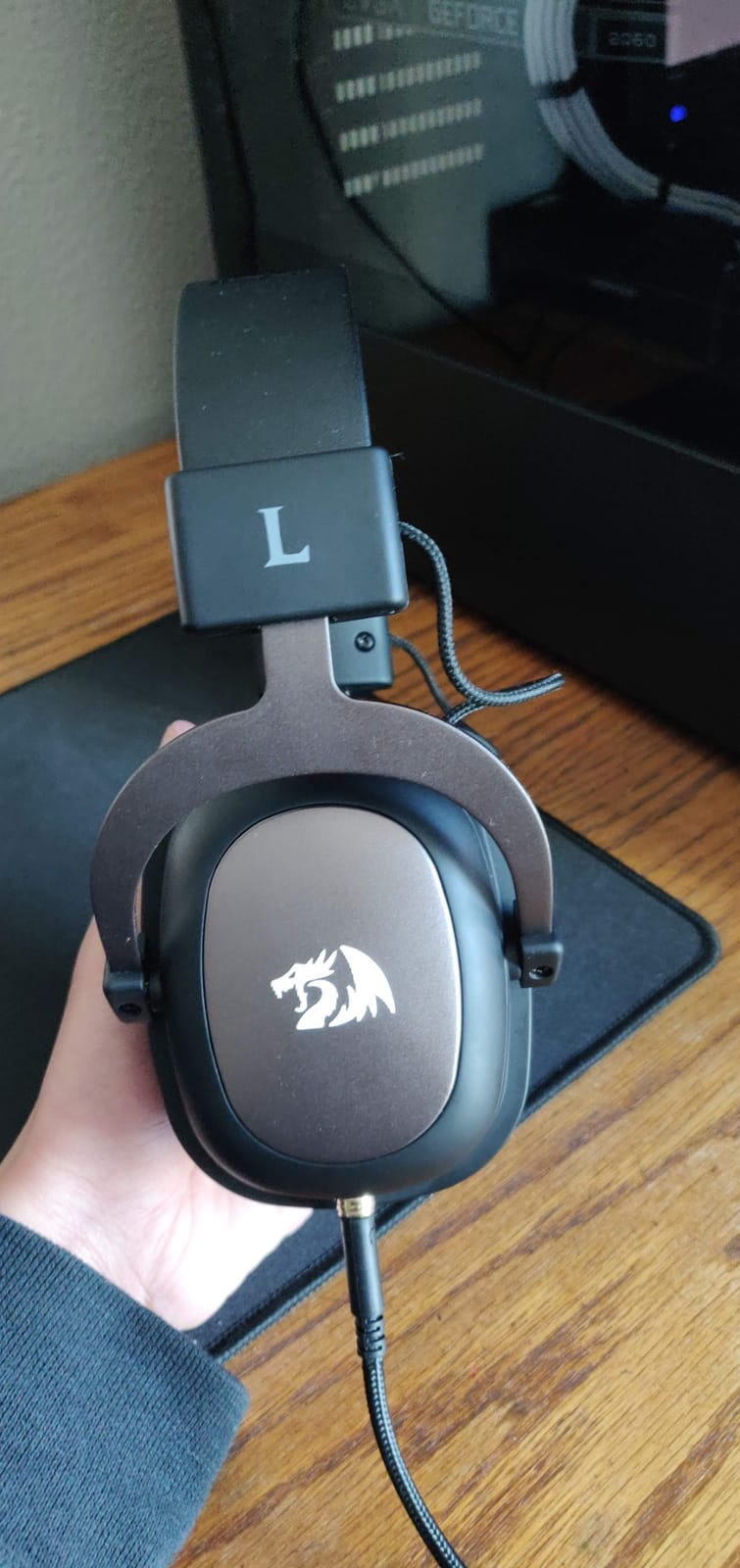
The H510 Zeus is the sturdiest build in this roundup, and it does not weigh much like it. The frame is steel rather than plastic or thin aluminum, which is the single best predictor that a headset will survive years of being dropped, sat on, and yanked off by the cable. Platform support covers PC, PS3 and PS4, Xbox One and Series X, Switch and mobile through the detachable braided 3.5 mm cable.
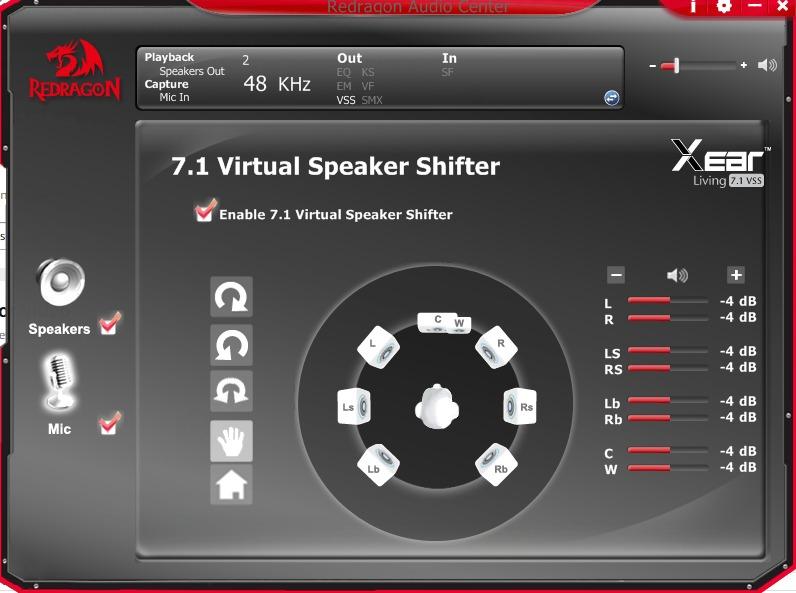
Virtual 7.1 surround runs through the USB control box, and the 53 mm drivers cover 20 Hz to 20 kHz at 64 ohm. Owners rate the surround highly for competitive play, reporting it adds positional depth that the stereo image alone does not provide, which is why this model keeps a 4.4 rating with roughly 3,700 reviews.
The mic is detachable and noise-cancelling, and inline controls let you adjust volume, power and mic state with one hand without touching the headset. The leatherette pads use memory foam filler and stay comfortable once you get past the initial break-in period, and the adjustable headband spreads weight across a wide area.
Warranty is one year, which is the shortest offered here, and that is worth factoring in given how much of the appeal of this headset is durability. Still, a steel frame with detachable mic and detachable cable means the parts most likely to fail are all replaceable.
Is 600 Grams Too Heavy For Long Sessions?
It is the heaviest unit here by a wide margin, and you feel it in the first hour. What matters is where the weight sits. Because the headband is wide and adjustable, the load spreads rather than digging into a narrow band, and most wearers adapt within a day. Players who already dislike weight on their head should test before committing.
The trade-off is that this weight buys a steel structure and a full-size circumaural fit, which is part of why the seal and the low-end response are so solid. If your sessions run three hours or more, take breaks regardless of which headset you pick.
What To Watch Before Buying
The Switch Lite may need an adapter that is not included, so check your exact handheld model. The USB control box also does nothing on console, where the surround layer is simply unavailable, and the braided cable plus box add desk clutter next to a single 3.5 mm plug.
Beyond that, the steel frame, detachable mic and detachable cable make this a headset designed to be kept rather than replaced. For players on the cheapest wired option that still feels sturdy, it delivers on that promise better than rivals with plastic hinges at twice the cost.
How We Picked: What We Looked At In Every Headset
We compared ten headsets on the same five criteria, and we weighted them the way players actually complain. Comfort and long-session fatigue came first, because a headset you take off mid-match is worthless no matter how good the drivers are. Positional audio in competitive shooters came second, followed by microphone clarity in real voice chat.
The fourth criterion was platform fit, which is where most buyer confusion lives. A headset that needs a specific dongle, a specific console SKU or a specific software install is a worse buy than a slightly less impressive one that works everywhere you play. Repairability was fifth: detachable cables, detachable microphones and replaceable cushions extend the working life of a headset more than any feature on the spec sheet.
We leaned on owner review patterns alongside manufacturer specifications, because published frequency ranges rarely describe how a headset actually sounds in a firefight. Where owner reports and marketing disagreed, we used the owner reports. Every rating and review count quoted in this article comes from the verified product listings for the exact models listed, not from our own scoring.
One caveat worth stating plainly: we did not measure latency with laboratory equipment, so our low latency comments refer to the wireless technologies each headset uses and how they performed in ordinary play, not to instrumented numbers.
Buying Guide: What Actually Matters Under 200 Dollars
Start with the connection, because it rules out more options than any other decision. Wired 3.5 mm headsets in this roundup give you zero lag and a total absence of charging, and they are the right answer if your machine is a desktop or a laptop you sit at. 2.4 GHz wireless removes the cable and, in ordinary play, is close enough to wired that most players stop noticing. Bluetooth is for your phone, not your game.
The distinction matters more than buyers expect. Bluetooth on a gaming headset usually means audio only, with the microphone routed through a separate path and latency that will feel wrong in a shooter. A 2.4 GHz dongle keeps voice and game audio on one low-latency link. If a product lists Bluetooth and nothing else wireless, treat that as a convenience for calls rather than a gaming connection.
Next, decide between open and closed designs. Every headset here is closed, which is correct for competitive play because the sealed earcups block outside noise and stop your own footsteps from leaking out to the room. Open-back designs sound more spacious and natural for music and films, but they leak, which makes them poor roommates and poor tournament picks. If you mostly play single-player or watch a lot of content, that trade-off reverses.
Driver size is the next filter. 50 mm is the common baseline here, and 53 mm appears in the HyperX and Redragon models. Larger drivers generally reach lower on bass, but driver size alone does not determine sound quality, since tuning and chamber design matter at least as much. Dual chamber drivers, found in the Cloud Alpha, separate bass from mids better than a single chamber at the same size, which is a real audible difference in shooters.
Microphone design should follow how you talk. Flip-to-mute and flip-up designs are faster and more reliable than a button because the state is visible. Directional or cardioid pickup patterns reject room noise better than omnidirectional mics, which matters on a shared call. The JBL Quantum 400 dial and the HyperX detachable mics handle this in different ways, and both are better than a fixed boom with a mute switch buried on the cable.
Comfort is personal in a way no spec captures. Memory foam under leatherette gives the best seal and the warmest fit. Microfiber mesh stays cooler and suits long summer sessions. Over-ear circumaural cups distribute weight better than on-ear designs. Glasses wearers should look for pads that sit away from the temple arms, which is exactly what the Turtle Beach Stealth 600 was designed around.
Finally, think about repairability and warranty. A headset with a detachable cable, detachable mic and replaceable cushions can be kept for years, because the parts that wear out are sold separately. Two-year warranties, which most of the HyperX, Razer, Logitech and JBL models carry, are the norm here, while the two wireless options offer one year. On a wireless set, battery ageing is the thing most likely to end its usefulness, so warranty length deserves more weight than usual.
Software is the last consideration, and it is where disappointment usually comes from. Razer, Logitech, JBL, SteelSeries, Turtle Beach and HyperX all layer surround or EQ features behind a Windows app. Those features can be genuinely good, and several are the reason a headset wins on positioning. But if you play primarily on console, treat them as a bonus rather than a deciding factor, and check whether a model works fully without software installed.
Frequently Asked Questions
What is the best gaming headset under 200 dollars?
The HyperX Cloud II is the best gaming headset under 200 dollars. It combines 53mm dynamic drivers, hardware-driven 7.1 virtual surround on PC and Mac, a detachable noise-cancelling microphone certified for TeamSpeak and Discord, and an aluminum frame, and it carries the highest rating of any model we covered.
Are wired or wireless headsets better for gaming?
Wired headsets have no wireless latency and no battery to manage, which makes them the safer choice for competitive shooters. 2.4GHz wireless headsets are close behind in practice and remove cable clutter, while Bluetooth is intended for phone calls and media rather than gaming. Pick wired for a desktop, and 2.4GHz wireless if you play on a couch away from your machine.
Are Bluetooth headsets good for gaming?
Bluetooth works for game audio on most platforms but adds latency and often routes the microphone through a separate path, so it is not recommended for competitive titles. Treat Bluetooth as a convenience for calls and media while you use a 2.4GHz dongle or a wired connection for the game itself.
What is the best gaming headset for value for money?
The Razer BlackShark V2 X offers the strongest value in this roundup. At 240 grams it is the lightest model covered, its 50mm TriForce Titanium drivers deliver clear forward-tuned sound, the HyperClear cardioid mic rejects background noise, and it works across PC, Mac, PS4, PS5 and Switch through a single 3.5mm connection.
What is the best PS5 headset in this price range?
The HyperX Cloud III and the HyperX Cloud Alpha both list PS5 support alongside Xbox Series X|S and Switch, and the Turtle Beach Stealth 600 covers PS5, Xbox, PC, Switch and phones with 2.4GHz wireless. Check the specific SKU, because some wireless variants are limited to specific consoles.
What are the most durable gaming headsets under 200 dollars?
Owner reports favour the aluminum-framed HyperX Cloud series for longevity, and the Redragon H510 Zeus stands out with a steel frame plus a detachable microphone and detachable braided cable, so wear parts can be replaced instead of the whole headset. The SteelSeries Arctis Nova 5 and Turtle Beach Stealth 600 carry one-year warranties, which is shorter than most rivals here.
Do I need a gaming headset or regular headphones for gaming?
A regular pair of headphones leaves you without a microphone unless you buy a separate one, and the under 200 dollar gaming headsets here include a boom mic as standard. Open-back or high-end music headphones sound better for pure single-player use, but the headsets in this roundup are tuned for positional cues and team communication.
Conclusion: The Best Gaming Headsets Under 200 Dollars in 2026
The HyperX Cloud II is the best gaming headset under 200 dollars because it makes no compromises in the places that matter: 53mm drivers with real positional separation, a detachable Discord-certified microphone, memory foam comfort and an aluminum frame that survives daily handling. It stays our top pick for 2026 and the year after.
Buy the Razer BlackShark V2 X if weight and cost drive your decision, the Corsair Void RGB Elite Wireless if you want to lose the cable on PC and PS4, and the Turtle Beach Stealth 600 if battery life across a week of play is the priority. For Discord-heavy sessions the JBL Quantum 400 game-chat dial is hard to beat, and the Redragon H510 Zeus wins on frame strength alone.
Whichever one you pick, check the platform list for the exact SKU before you buy, and spend five minutes setting up the surround software if you are on PC. That setup step is where most of the value in these headsets lives.