
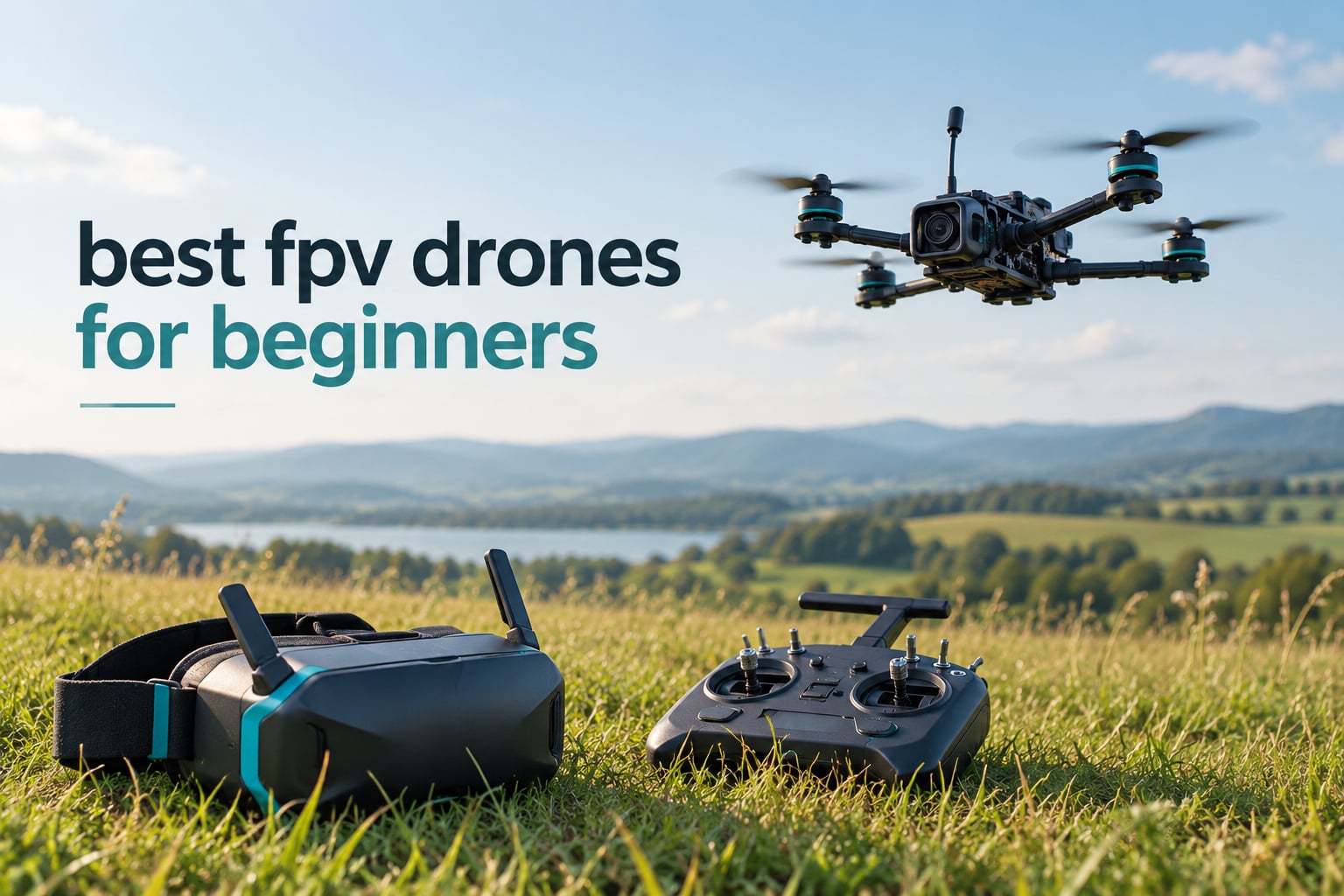
The best FPV drones for beginners are not the fastest or the smallest quads on the market. They are the machines that let a brand new pilot see through the camera, survive a clumsy first landing, and grow into something better without being overwhelmed by wiring and firmware. I spent months flying through this category, crashing through all of it, and comparing what actually survives contact with a beginner.
First, the definition. An FPV drone streams live video from an onboard camera into a pair of goggles so you fly from the drone’s point of view rather than watching it from the ground. That single change makes the hobby completely different from the camera drones most people start with, which is why our guide to drones with cameras is a different conversation.
There are three ways in. Ready-to-fly kits arrive with the drone, the controller and the goggles in one box. Bind-and-fly quads are assembled but need your own radio and goggles. DIY kits ask you to build and repair. The honest truth, echoed constantly on FPV forums, is that people who build a drone learn roughly five times as much as people who only unbox one. If you have never flown before, a simulator and a radio come before any of it.
This guide covers all three paths across eleven kits, from a 61g modular toy-grade build to a 249g 360 camera drone. If you would rather start with conventional GPS-stabilized flying, our beginner drone picks under 500 roundup is the gentler on-ramp.
Table of Contents
Top 3 FPV Drones for Beginners in 2026

DJI Neo 2 Motion Fly More Combo
- 151g with full propeller guards
- Palms takeoff and gesture control
- Goggles N3 and three batteries in the box

DJI Avata 2 Fly Smart Combo
- 155 degree FOV 4K60 camera
- O4+ transmission up to 13 km
- Built-in propeller guard
Cheerwing Syma X5SW-V3
- 720p Wi-Fi camera with app streaming
- Altitude hold and one key takeoff
- 3D flips and two speed modes
The DJI Neo 2 leads because it removes every usual beginner trap at once: no soldering, no separate radio, no battery anxiety, and obstacle sensing that forgives a first-timer. The Avata 2 takes the same idea toward better footage, and the Syma X5SW-V3 costs almost nothing to try.
Quick Overview: Best FPV Drones for Beginners in 2026
| Product | Specifications | Action |
|---|---|---|
| DJI Neo 2 Motion Fly More Combo |
|
Check Latest Price |
| Cheerwing Syma X5SW-V3 |
|
Check Latest Price |
 BETAFPV Cetus Pro FPV Kit BETAFPV Cetus Pro FPV Kit |
|
Check Latest Price |
 EMAX Tiny Hawk RTF Micro Drone EMAX Tiny Hawk RTF Micro Drone |
|
Check Latest Price |
| DJI Avata 2 Fly Smart Combo |
|
Check Latest Price |
 DJI Avata 360 Motion Fly More Combo DJI Avata 360 Motion Fly More Combo |
|
Check Latest Price |
 Antigravity A1 Standard Bundle Antigravity A1 Standard Bundle |
|
Check Latest Price |
 BETAFPV Cetus Lite FPV Drone Kit BETAFPV Cetus Lite FPV Drone Kit |
|
Check Latest Price |
 BETAFPV Meteor75 Pro Matrix BETAFPV Meteor75 Pro Matrix |
|
Check Latest Price |
 HISINGY Firefly FPV Done Kit HISINGY Firefly FPV Done Kit |
|
Check Latest Price |
 STARTFPV R8 ELRS Whoop Drone STARTFPV R8 ELRS Whoop Drone |
|
Check Latest Price |
Every kit below appears in this table in the same order as the reviews, so you can jump straight to the section you care about.
1. DJI Neo 2 Motion Fly More Combo – Best Overall FPV Drone for Beginners
- 151g weight with full propeller guards makes it easy to carry
- Palms takeoff landing and gesture control for new pilots
- Omnidirectional obstacle sensing adds a safety margin
- Bundle includes goggles motion controller and three batteries
- DJI Fly app was removed from Google Play so setup needs the DJI website
- Motion-control flying is less precise for pilots who want manual stick control
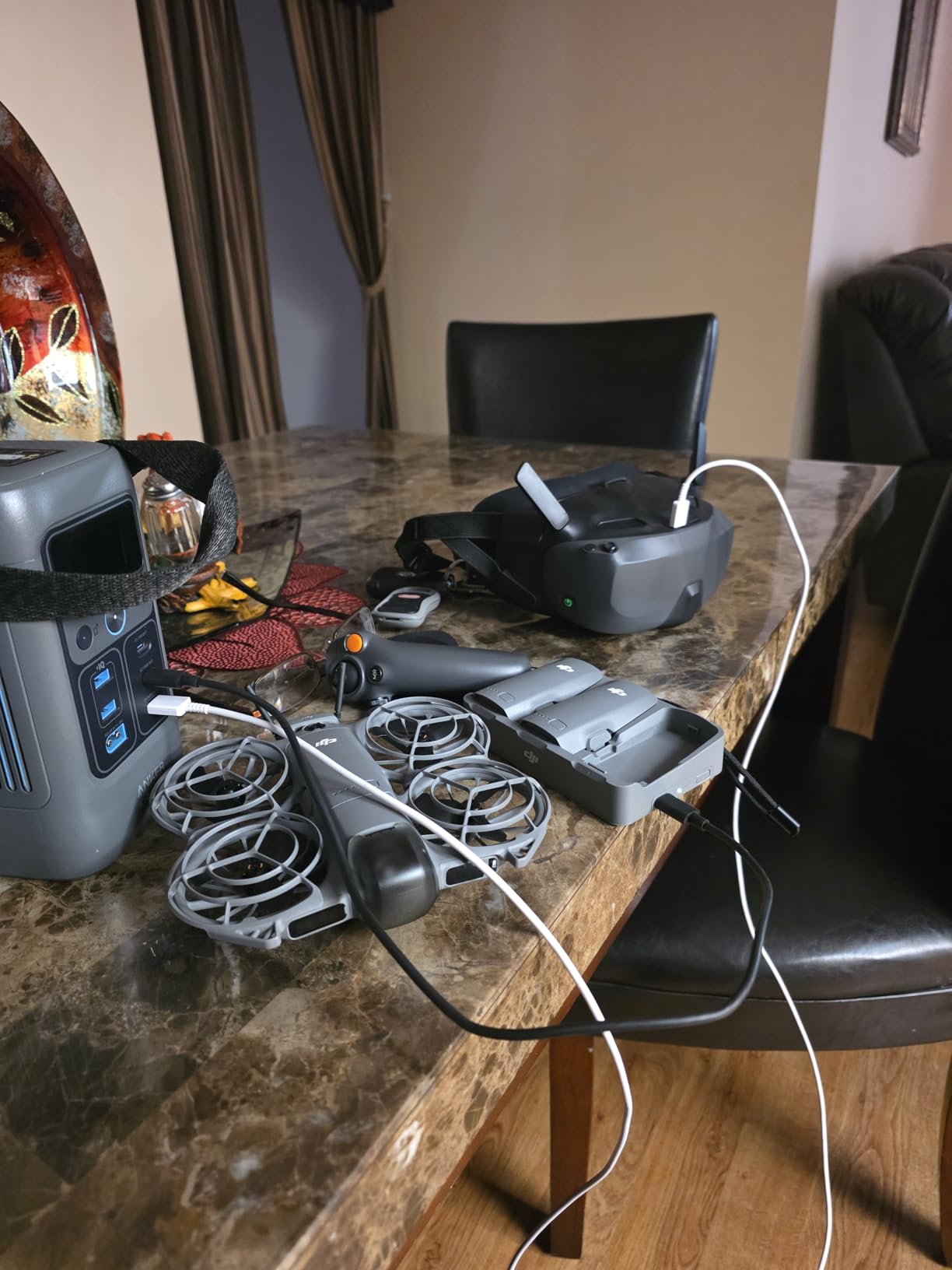
This is the kit I recommend to friends who ask me where to start. It weighs 151g, carries full-coverage propeller guards, and ships with the DJI RC Motion 3 controller, the Goggles N3, three intelligent flight batteries and a two-way charging hub. Nothing needs to be bought separately before the first flight.
The palm takeoff and landing feature removes the single most common early failure: a new pilot flicking a quad into a wall while trying to get it off the ground. Gesture control and ActiveTrack let you film yourself without flying, which sounds trivial and turns out to be the fastest way to build confidence in a new machine.
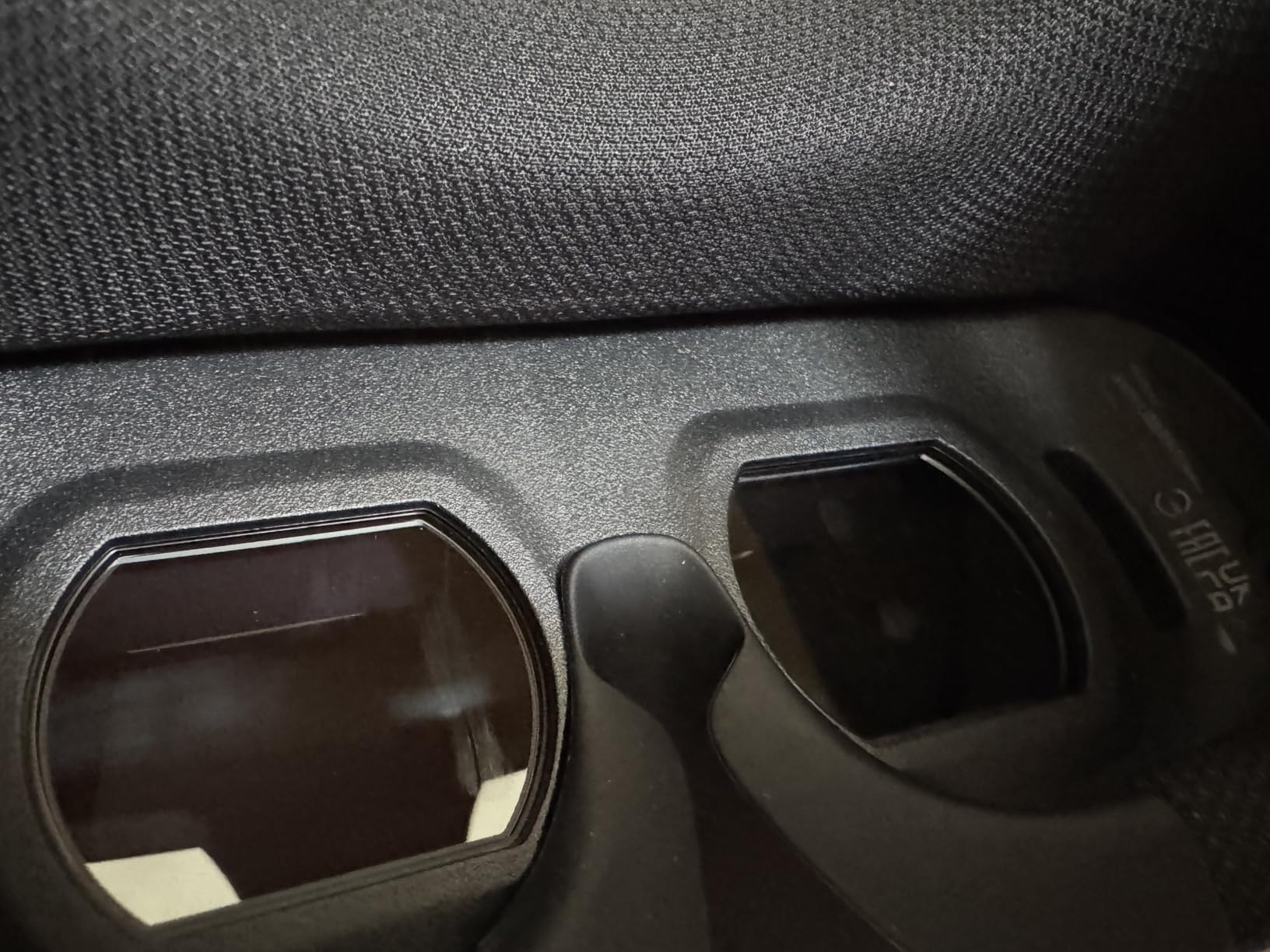
The video side is genuinely good rather than adequate. A 12 effective megapixel CMOS sensor records 4K, transmission uses DJI’s digital transceiver, and the stated maximum range is 10 km. Omnidirectional obstacle sensing means the aircraft can stop itself in front of a tree or a person, which is the closest thing here to a beginner safety net.
Two things to know before you commit. The DJI Fly app was removed from Google Play, so you download it from the DJI website and enable installation from unknown sources, which feels awkward on day one. And the motion controller is deliberately forgiving, so pilots who later want stick-based acro will need a different radio anyway.
Who this suits and what you should know first
If you want cinematic footage, safety features, and zero soldering, this is the fit. Omnidirectional sensing, a 151g C0-certified frame and ActiveTrack cover most of the reasons beginners quit. It is a stable base for a first year of flying.
The catch is that the FPV link and the controller are proprietary. You cannot pair this drone with a different radio or a different goggle system, and there is no analog fallback if the digital feed degrades in a dense area. Treat it as a complete, closed system rather than a first step toward custom builds.
Where it falls short for new pilots
Motion-control flying is less precise than real stick input, and every pilot eventually hits a wall where they want manual control. If you already know you want to learn acro mode, buy a radio instead. If you are completely new and want to see whether goggles interest you at all, the bundle format is unbeatable.
The obstacle sensing helps, but it is not a substitute for situational awareness. New pilots still need open space, a spotter, and legal airspace. Fly in a field, not over a car park.
2. Cheerwing Syma X5SW-V3 – Best Low-Cost Way to Test FPV
- Very low cost way to find out whether FPV suits you
- One key takeoff and altitude hold help new pilots
- Can be flown with the controller or the phone app
- Large review base shows how many people start here
- 720p camera is well below dedicated FPV quads
- 50 meter range and no FPV goggles included
- Plastic construction makes it less durable in hard crashes
I do not recommend this as a hobby drone. I recommend it as a twenty-minute audition. If the idea of wearing goggles and flying from a camera view feels exciting after a few flights on this, you have saved yourself a much larger mistake.
The X5SW-V3 streams a 720p feed over Wi-Fi to a smartphone app, with one key takeoff and landing, altitude hold, two speed modes and 3D flips. It weighs 4.16 ounces and has full propeller guards. The 6625 reviews on this listing tell you how many people have used it as a stepping stone.
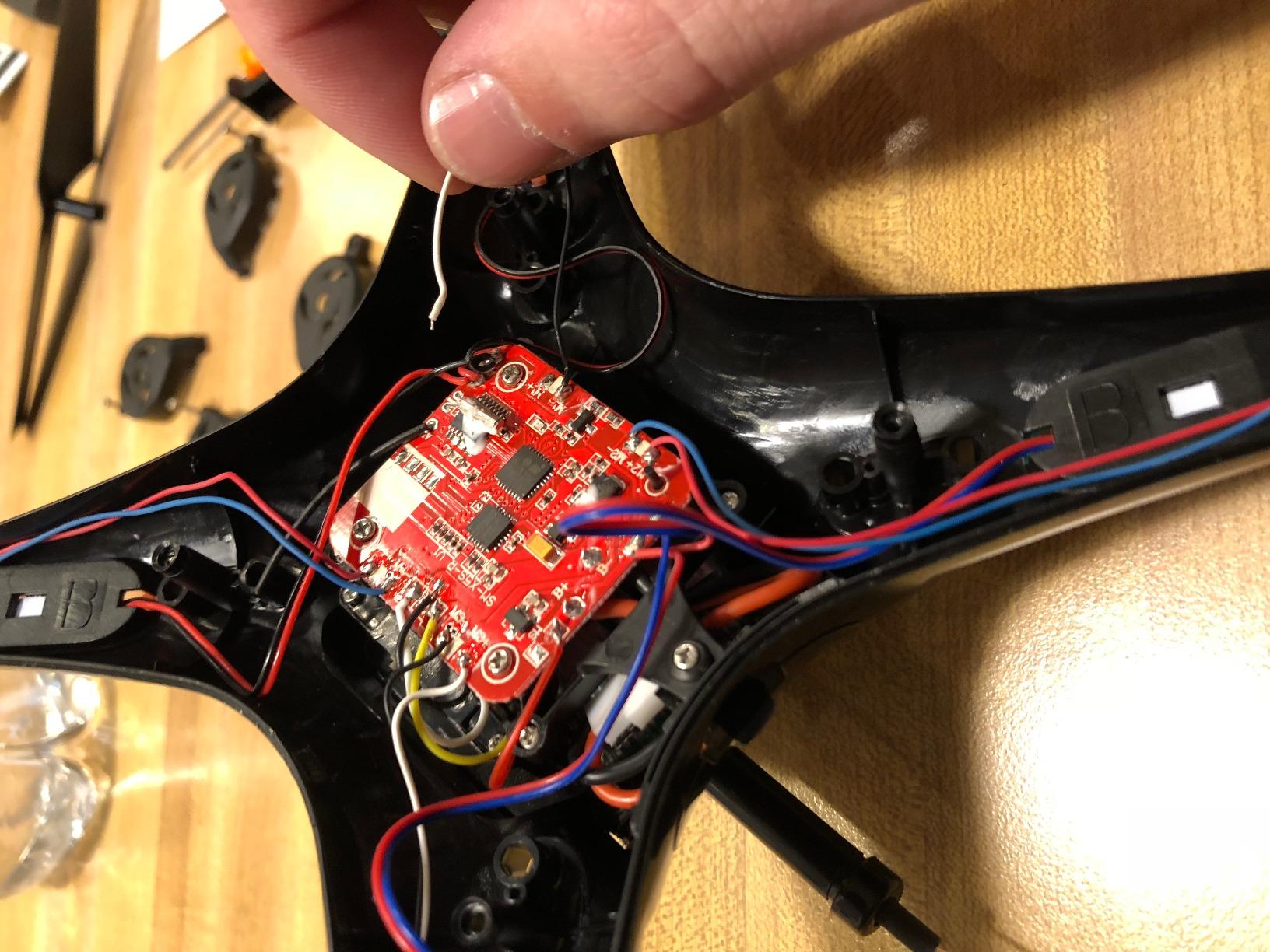
Be clear about what this is. The video goes to a phone, not to goggles. The stated maximum range is 50 meters. The listing itself calls the skill level intermediate, and it is listed under both Toys and Camcorders categories, which tells you where it sits.
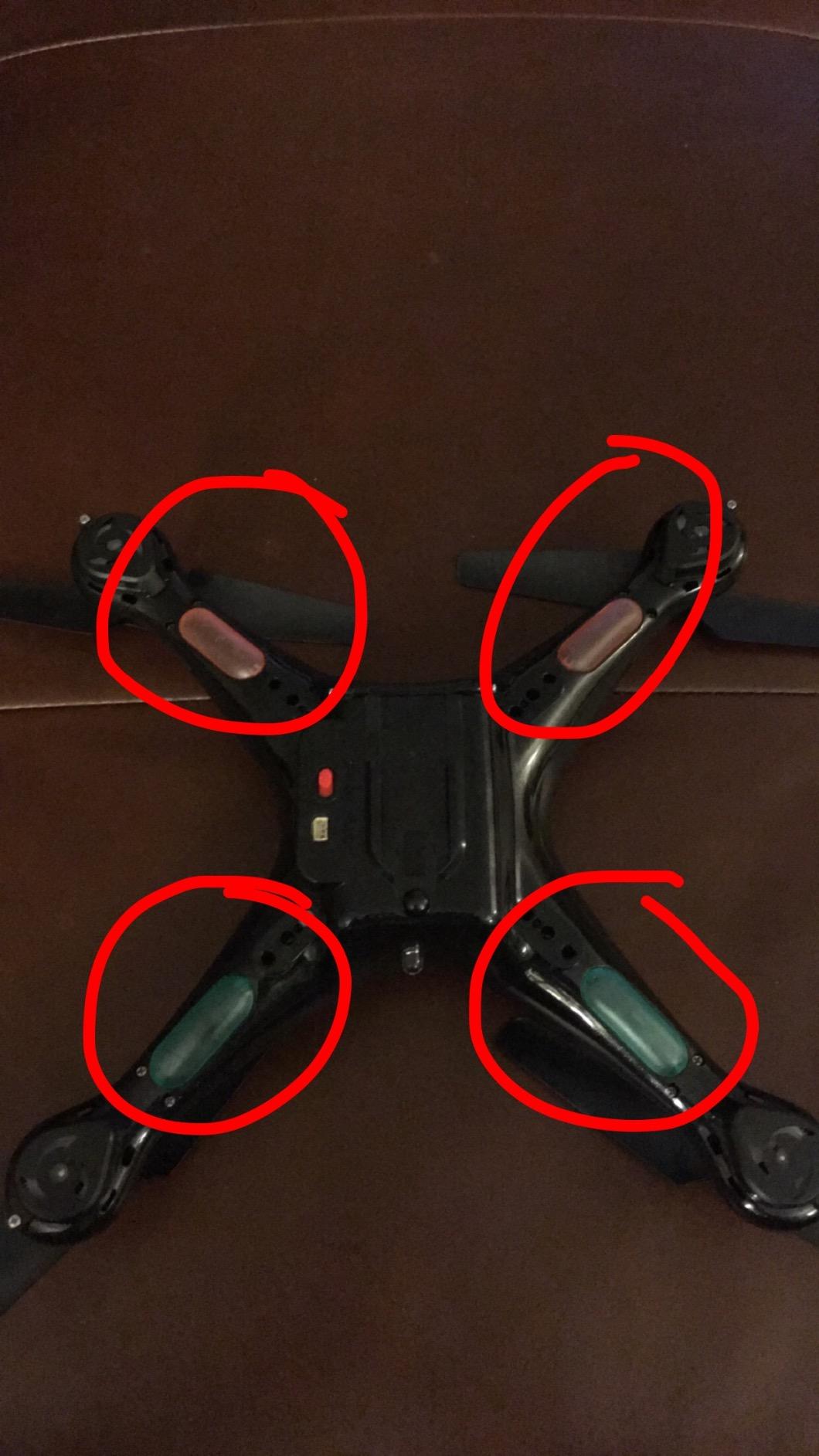
The plastic ABS body is fine for hovering and gentle flying but does not invite hard impacts. When a real FPV quad hits a wall at speed and cartwheels across a floor, you learn to fly. When this one does, you learn nothing except frustration.
Who this suits and what you should know first
This suits households flying indoors, with children who want to see a live feed from a drone, or anyone who has not decided whether FPV is worth real money. The altitude hold and app control remove almost all of the difficulty from a first session.
Decide what you are buying. Treat it as a family toy that happens to have a live feed, not as a training platform. It cannot teach you acro mode, because it has no flight modes to switch between.
Where it falls short for new pilots
The 720p sensor, 854×480 video output and 50 meter range put it far below any dedicated FPV quad. There is no analog or digital FPV link at all, so nothing you learn here transfers directly to goggles-based flying.
Crashing it repeatedly is the expected use, not a failure. When the frame cracks or the guards bend, move on rather than repairing. The repair economics only work on real FPV equipment where parts are standardized.
3. BETAFPV Cetus Pro FPV Kit – Best Indoor Training Bundle
BETAFPV Cetus Pro FPV Kit, LiteRadio 2 SE Transmitter, VR02 FPV Goggles
- Brushless whoop survives repeated hard crashes
- Three flight modes give a safe path up to acro
- Transmitter supports PC simulators so you can practise first
- Goggles batteries charger and spare props all in the box
- Roughly 3 to 5 minutes of flight time per pack and only two included
- Goggles have fixed focal length and no external antenna
- Gimbal and controller feel plasticky
Of everything I tested, the Cetus Pro kit is the one I put in the hands of beginners. It is a proper FPV experience with real goggles, a real transmitter, and a brushless whoop that has repeatedly survived being flown into furniture at full stick.
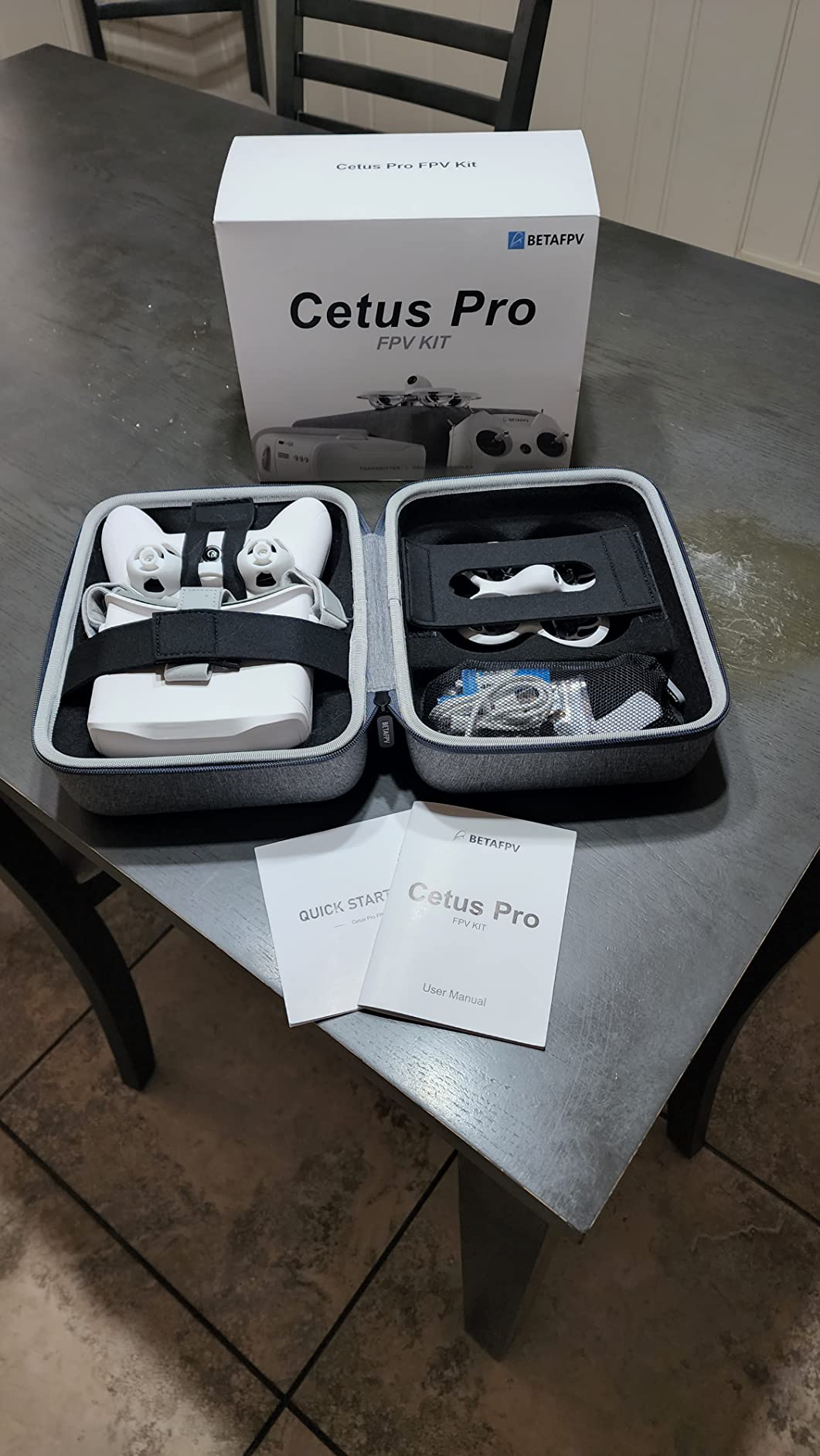
The kit includes the quadcopter, a LiteRadio 2 SE transmitter, VR02 FPV goggles, two 450mAh 1S batteries, a charger with a voltage tester, spare props and a storage bag. That is a complete system, and it is the single strongest argument for buying this over a bare bind-and-fly whoop.
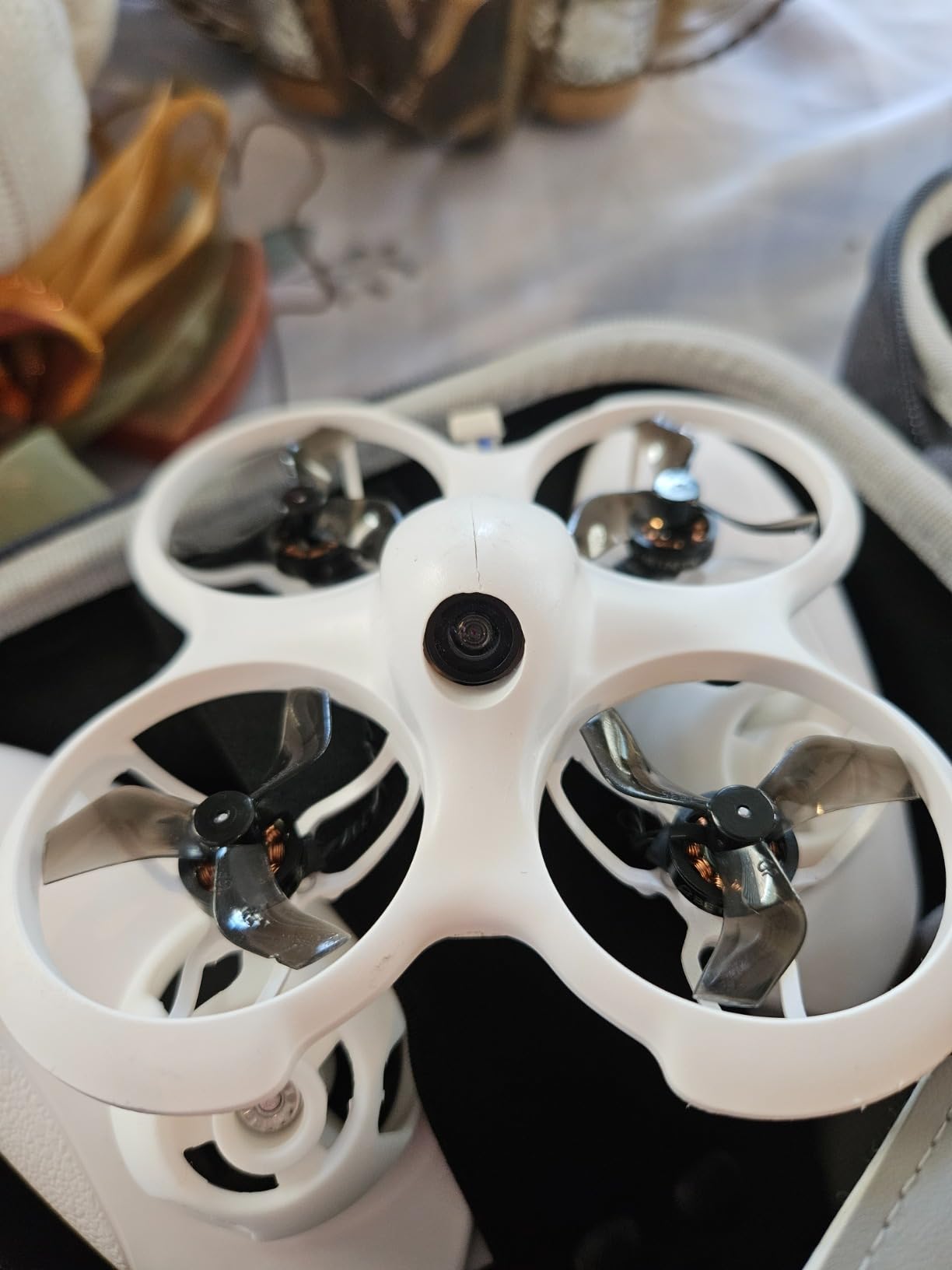
The flight mode ladder matters more than anything else here. Normal mode gives you self-levelling with altitude hold, Sport mode is faster but less assisted, and Manual mode exposes the raw acro behaviour that real FPV flying depends on. That progression is a genuine learning ladder rather than a marketing label.
Other safety features include emergency landing on signal loss or low battery, and turtle mode, which flips the aircraft over after an upside-down landing so you do not have to reach under the furniture to retrieve it. Owners often point out that the brushless motors and guarded frame tolerate water and hard impacts that would end a brushed toy.
Who this suits and what you should know first
This suits anyone who wants to learn on a real FPV link indoors before committing to outdoor flying. Because the LiteRadio 2 SE transmitter works with PC simulators, you can train on the screen for hours and then practise the same movements in your living room.
Buy extra batteries with your first order. Three to five minutes per pack means a twenty-minute session needs six or more packs, and a multi-charger turns that downtime into a fraction of what it is.
Where it falls short for new pilots
The VR02 goggles have fixed focal length and no external antenna, which limits who can wear them comfortably and caps range. The gimbal and controller feel plasticky, and the altitude hold in Normal mode has been reported by some pilots to drift backwards.
Picture quality is understood as entry-level, and that is fine indoors. Outdoors this kit is not the answer, because the drone and video system are built for close-range flying rather than open-field freestyle.
4. EMAX Tiny Hawk RTF Micro Drone – Best All-In-One Analog Starter Kit
Tiny Hawk RTF Micro Indoor Racing Drone with FPV Goggles and Controller for Beginners
- No extra gear needed because goggles and controller are included
- Real analog FPV link rather than Wi-Fi phone streaming
- Light and durable enough for indoor racing practice
- Carry case makes the whole kit easy to transport
- Analog 720p-era video quality is dated against digital systems
- Build and listing skew toward older entry-level hardware
This is the kit I recommend for anyone who wants to understand analog FPV before spending money on digital ecosystems. It is a true analog link, not phone streaming, and it comes with everything needed to fly immediately.
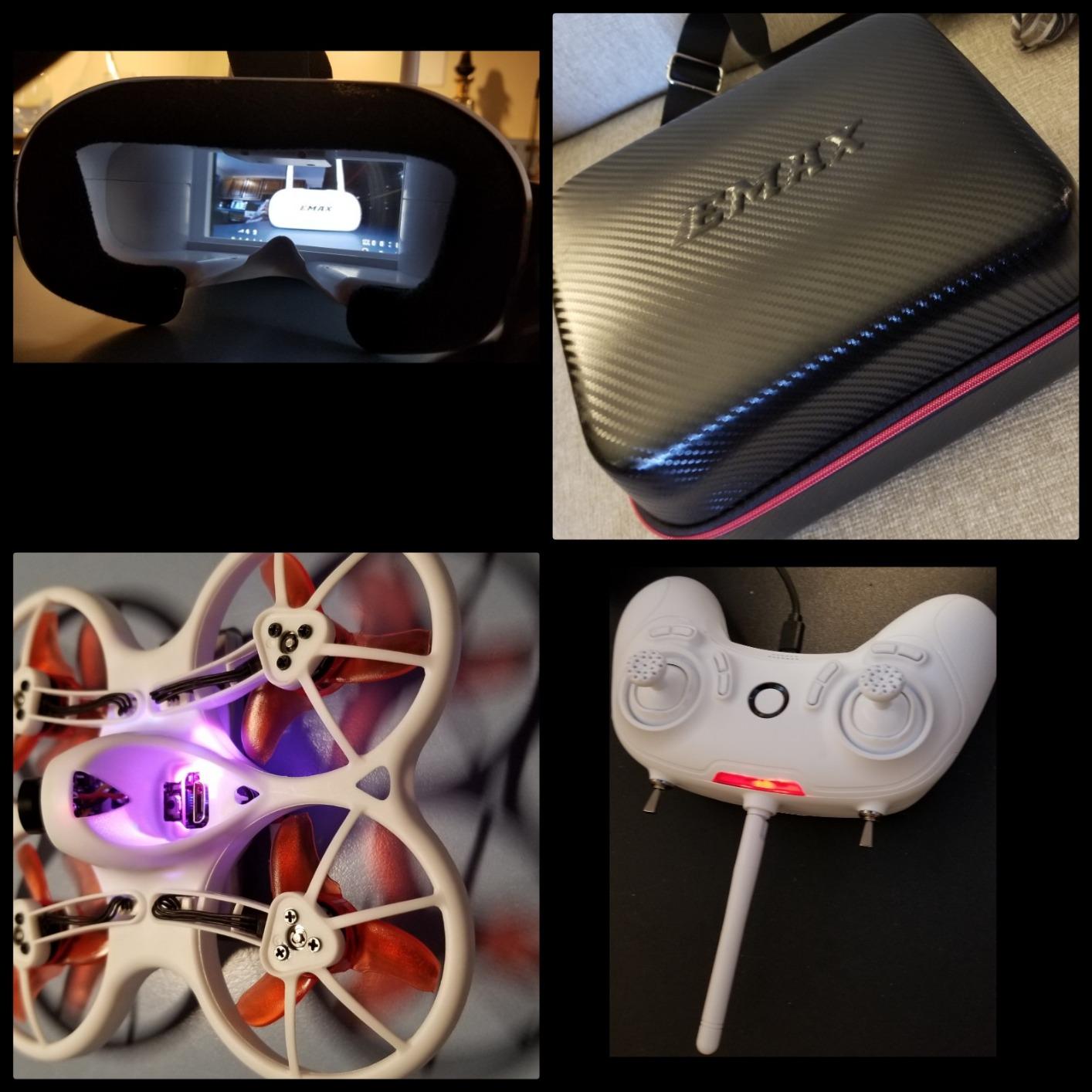
The box holds the drone, FPV goggles, a controller and a portable carry case. Control range is stated at up to 200 feet, speed up to 35 mph, and the video records at 720p. Analog video at this level is grainy, and once you have seen a digital feed you will not go back.
The argument for analog is price and repairability. Analog video systems are the cheapest way into FPV, their parts are interchangeable across dozens of brands, and almost every hobby shop stocks them. Experienced pilots often recommend analog precisely for that reason.
The catch is the ceiling. Analog cannot give you the picture quality that a content creator needs, and the hardware here is dated by design rather than by neglect. Once you outgrow it, most of what you learned transfers directly to any later quad.
Who this suits and what you should know first
This suits indoor learners and anyone who wants a complete analog system without assembling parts lists. The goggles, controller and drone arriving together means no compatibility puzzles on day one, and the carry case is genuinely useful for taking the hobby to a club or a friend’s house.
Real FPV on a budget is a good place to find out whether you enjoy the goggles experience. If the picture puts you off, you have lost very little. Most pilots who go analog report the same thing: the picture is rough, the flying is the fun part.
Where it falls short for new pilots
The video quality belongs to an earlier era, and the hardware reflects that. There is no digital upgrade path inside this bundle, so reaching cinematic picture quality means buying a new system later rather than upgrading this one.
Do not buy it expecting outdoor freestyle or racing performance. This is a trainer. Its value is teaching you to fly on a real link for a small outlay, and it is very good at that job.
5. DJI Avata 2 Fly Smart Combo – Best for Cinematic Footage
DJI Avata 2 Fly Smart Combo (Three Batteries), FPV Drone With Camera 4K
- Very easy to pick up and many first-time pilots fly within minutes
- 4K at 60 fps with a D-Log colour profile
- Goggles N3 are not claustrophobic and work over regular glasses
- Propeller guard survives tumbles in grass and on roads
- N3 goggles have non-adjustable optics which troubles glasses wearers
- No obstacle avoidance on this model
- Goggles N3 are the older model in the DJI range
If your goal is footage rather than lap times, the Avata 2 is the strongest pick in this list. The 155 degree field of view on a 1/1.3-inch sensor records 4K at 60 fps, and O4+ transmission is quoted at up to 13 km. That combination is what produces the smooth low-altitude POV shots you see in action videos.
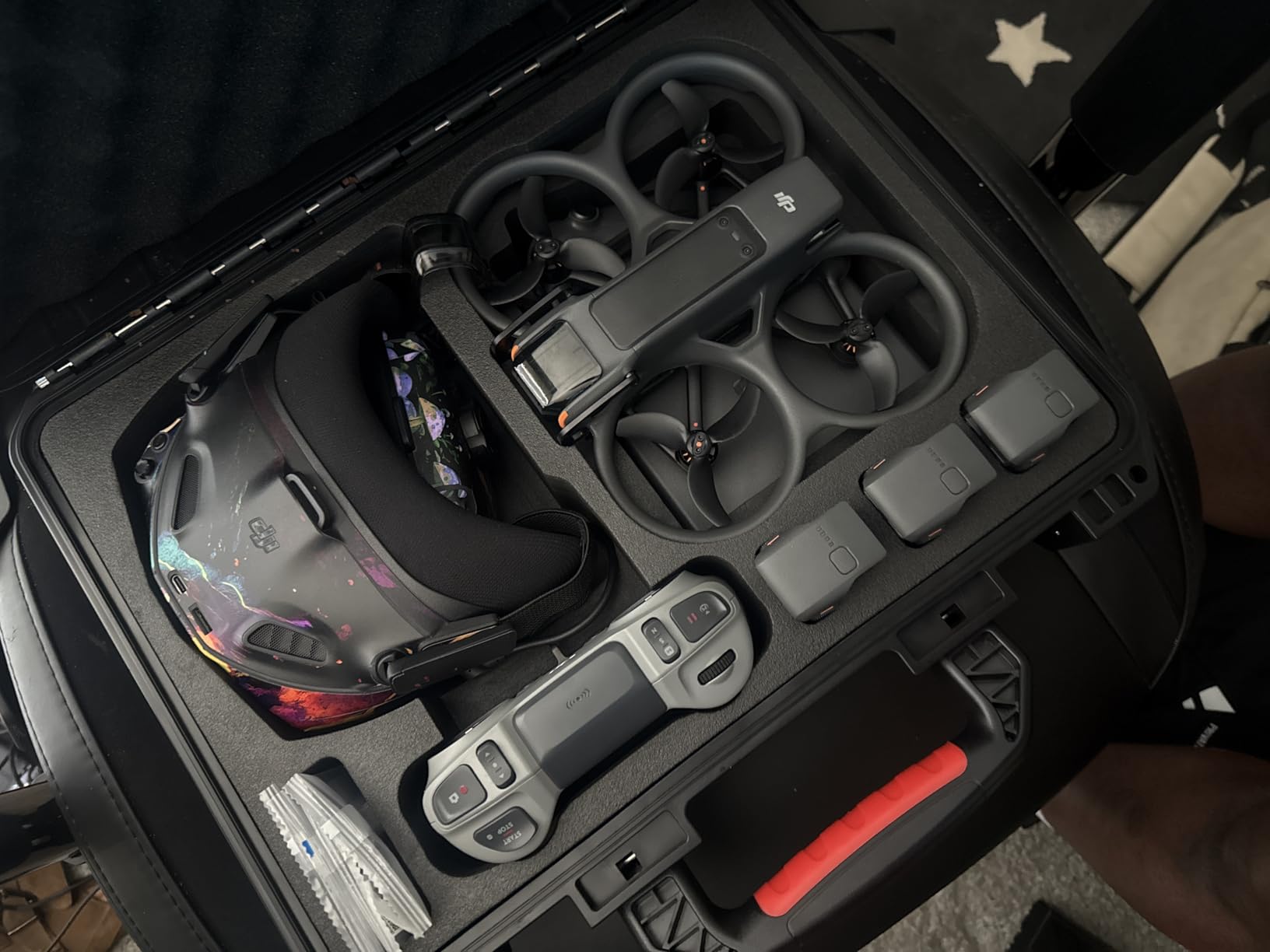
The Smart Combo includes the aircraft, three intelligent flight batteries, a two-way charging hub, the RC Motion 3 controller and the Goggles N3, plus a gimbal protector, spare props and a screwdriver. Owners consistently report flying competently within the first session.
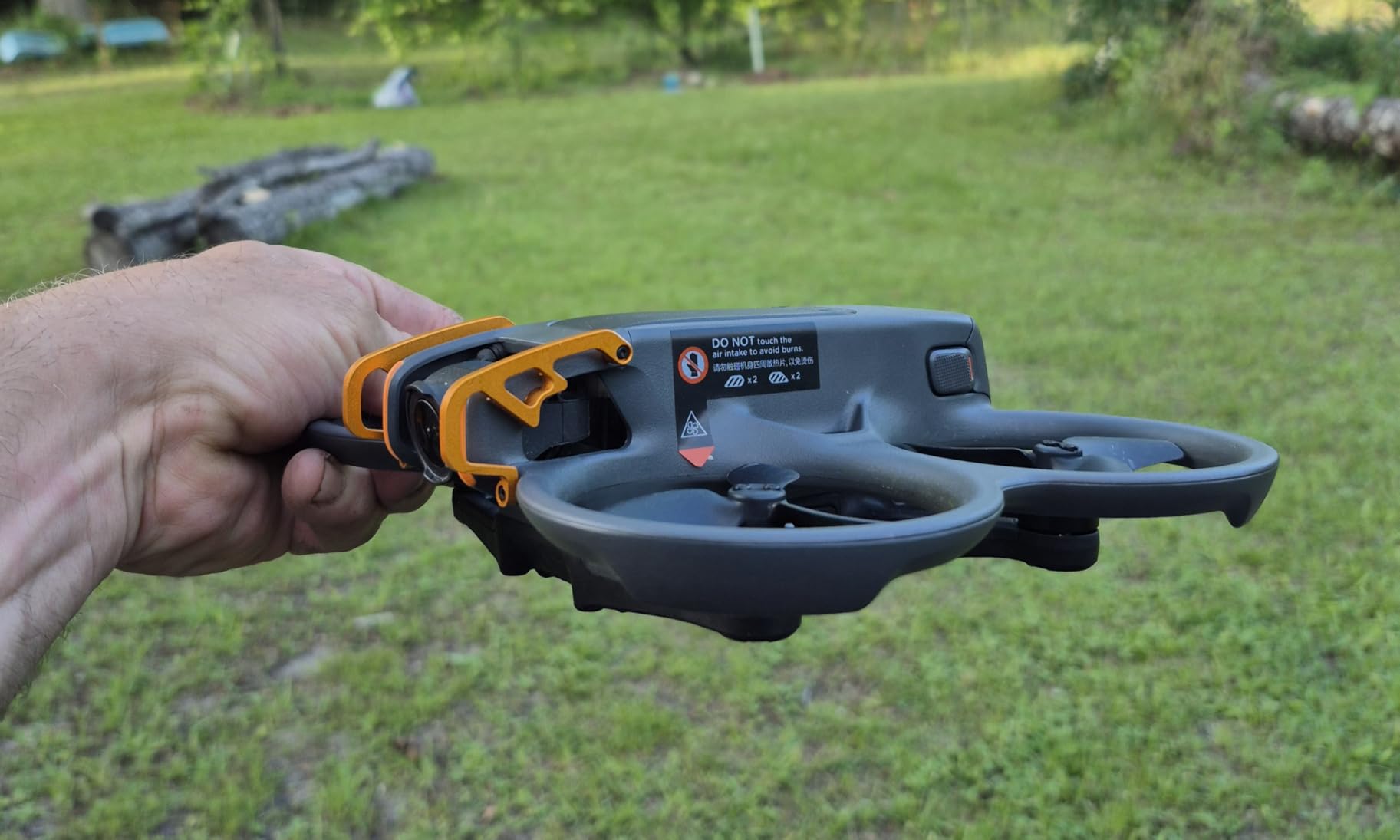
The built-in propeller guard is what makes this beginner-friendly in a way racing quads are not. Flips, rolls and 180 degree drifts are available, so a nervous pilot can make the aircraft do something impressive while learning the controls. The guard takes the punishment from grass, gravel and roads without shedding parts.
LightCut templates handle the editing side for POV content, and the D-Log profile gives you room to colour grade later. For a content creator learning to fly, that is a genuinely complete production chain in one box.
Who this suits and what you should know first
This suits content creators and anyone filming first-person footage rather than racing. The combination of a wide field of view, a large sensor and a three-battery bundle means a shoot takes less setup time than assembling the same shot on a hobby quad.
Test the goggles before you commit if you wear glasses, since the N3 optics are fixed-focus. Some buyers report flying comfortably in glasses over the headset, others do not, and the only reliable answer is a short indoor test.
Where it falls short for new pilots
There is no obstacle avoidance on this model. That is a genuine safety gap for a beginner flying near trees or buildings, and it is the single biggest difference between this drone and the DJI Neo 2.
The Goggles N3 are the older model in the range, and a fully manual stick controller is not part of the standard bundle. If you plan to move to acro flying, budget for a radio and a drone you can tune.
6. DJI Avata 360 Motion Fly More Combo – Best for 360 Reframing
- 360 capture produces reframing options no other FPV drone can match
- Switchable 360 and single lens modes make it a one-device camera drone
- Goggles N3 and motion controller keep controls intuitive
- 20 km transmission with strong anti-interference
- 360 footage is memory intensive and cropping reduces effective resolution
- Motion control suits casual flying more than precision acro
- DJI Fly app has been removed from Google Play
The idea here is simple and I like it: capture everything around you, decide the framing later. The one-inch-equivalent sensors record 8K at 60 fps in HDR across a 360 degree field, and you can reframe a single take into multiple shots in post. Nobody else in this roundup offers that.
Transmission is O4+ FHD at 1080p 60 fps with a stated range of up to 20 km. The bundle includes Goggles N3, the RC Motion 3 controller, a charging hub, a sling bag and three batteries. An integrated propeller guard and omnidirectional obstacle sensing give it more safety hardware than the Avata 2.
Switching between 360 degree and single lens modes means the same aircraft can capture a wide spherical take or a conventional 4K 60 fps single-lens recording. For someone building a content library, that flexibility is worth more than raw speed.
The trade-off is memory and workflow. 360 footage is heavy, and cropping it down reduces the effective resolution you end up with. Plan your storage and your editing time before a long shoot day rather than after it.
Who this suits and what you should know first
This suits creators who want repeatable shots without perfect piloting. Because framing happens in post, a beginner can capture usable footage even on flights that would be unfilmable in a conventional FPV setup.
At 455g with an integrated guard, it is heavier than the lightest beginner options, so expect a longer, less energetic flying style. Omni-directional obstacle sensing does most of the safety work for you during a first year.
Where it falls short for new pilots
Motion control favours casual flying over precision acro, and pilots who want manual stick input will need separate hardware. The DJI Fly app also requires a manual download from the DJI website rather than an app store install.
If your interest is racing or freestyle rather than footage, the 360 system adds weight and complexity for no benefit. Pick a lighter whoop instead.
7. Antigravity A1 Standard Bundle – Best Goggles for Glasses Wearers
Antigravity A1 Standard Bundle, 360 FPV Drone with 8K Camera for Beginners
- Goggles are lightweight with diopter adjustment so glasses wearers see clearly
- FreeMotion point-to-fly control is genuinely beginner-friendly
- 8K 360 capture plus auto reframing removes mid-flight framing
- Light and foldable at 249g so it travels easily
- Expensive relative to other FPV entry options
- Light weight makes it struggle in windy conditions
- Standard pack battery life is modest
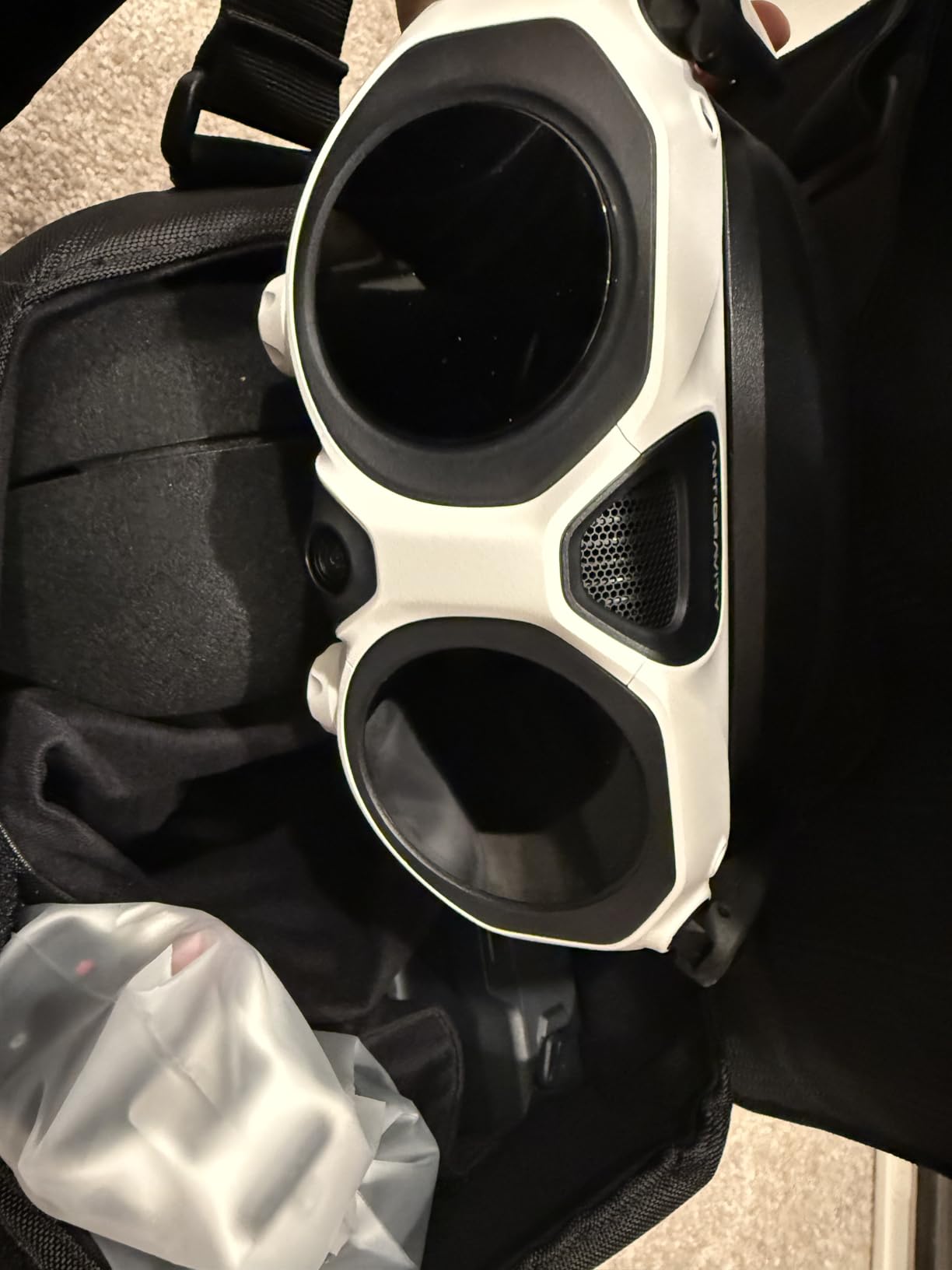
Every goggle set in this roundup has a catch for people who wear glasses. This one does not, and that is why it stands out. The Vision Goggles use 90 degree field of view dual 1-inch Micro-OLEDs with pancake optics and a diopter adjustment ring, which is rare at this level.
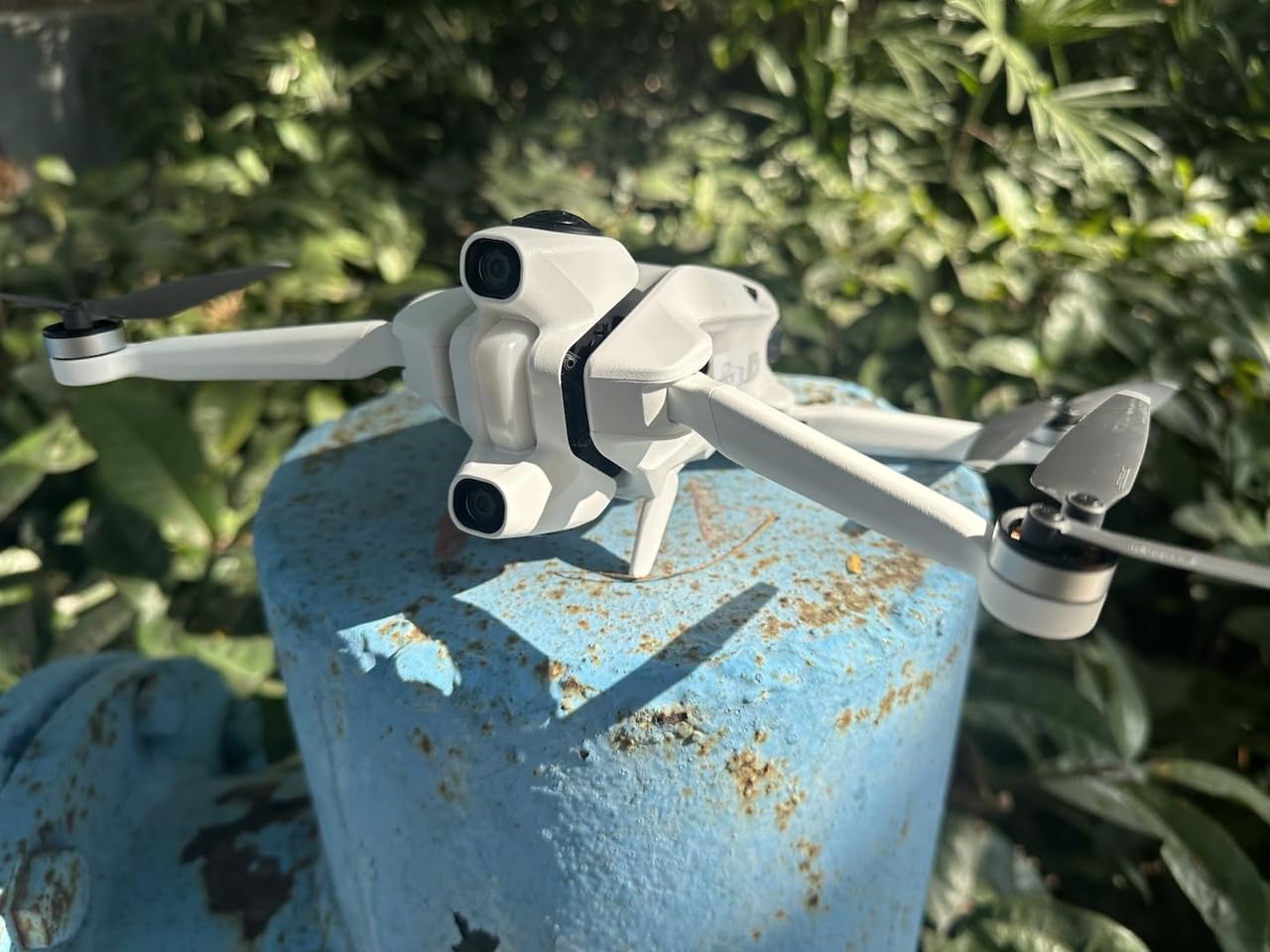
The 8K 360 capture is built on Insta360 technology, and the airframe folds down at 249g, which keeps it inside the sub-250g registration threshold in the United States. The Standard Bundle includes the aircraft, Vision Goggles, a grip motion controller, one flight battery, a carry case and four spare propellers.
Control comes in two styles. FreeMotion point-to-fly is a mode where the aircraft follows where you point, which removes the hardest part of learning for a complete beginner, while a separate FPV mode on the grip controller gives stick-like control. Sky Path and Sky Genie handle automated manoeuvres, and Deep Track follows a subject.
At this weight the airframe is closer to a foldable camera drone than a racing quad, which makes the 360 lens the point of the machine. Every shot is captured without having to stop and frame the subject, so a solo pilot gets usable footage from flights that would otherwise be thrown away.
Who this suits and what you should know first
This suits anyone who wears glasses, is travelling with a drone in a bag, or wants point-and-shoot reliability more than sport performance. Diopter adjustment removes the most common reason people cannot use FPV goggles at all.
Auto Editing 2.0 with automatic reframing and music sync handles post-production, which means a beginner can produce a finished clip without learning an editing timeline first. That is a bigger advantage than it sounds.
Where it falls short for new pilots
At 249g this is a light aircraft, and pilots report it struggles in windy conditions. If you plan to fly outdoors in anything beyond a calm day, a heavier frame behaves better.
Battery life on the standard pack is modest, and the alternative high-capacity pack is quoted at up to 39 minutes. Obstacle avoidance and auto return-to-home reduce crash risk, but the system is closed, so there is no path to custom radios or analog video.
8. BETAFPV Cetus Lite FPV Drone Kit – Best for Younger Pilots
BETAFPV Cetus Lite FPV Drone Kit with LiteRadio 1 VR02 Goggles-Mode 2
- Cheapest complete RTF FPV kit that includes goggles and transmitter
- Altitude hold and self protection help new pilots
- Transmitter supports simulators so beginners can train indoors first
- PA12 guarded frame tolerates crashes
- Brushed motors and 720p camera are the weakest in this range
- Protocol must be matched manually before binding
- Small 300mAh batteries give very short flight times
The Cetus Lite is the stripped-down sibling of the Cetus Pro, and it makes sense for two situations: a younger pilot working with adult supervision, or an adult who wants the cheapest complete RTF FPV kit with a real simulator-capable transmitter.
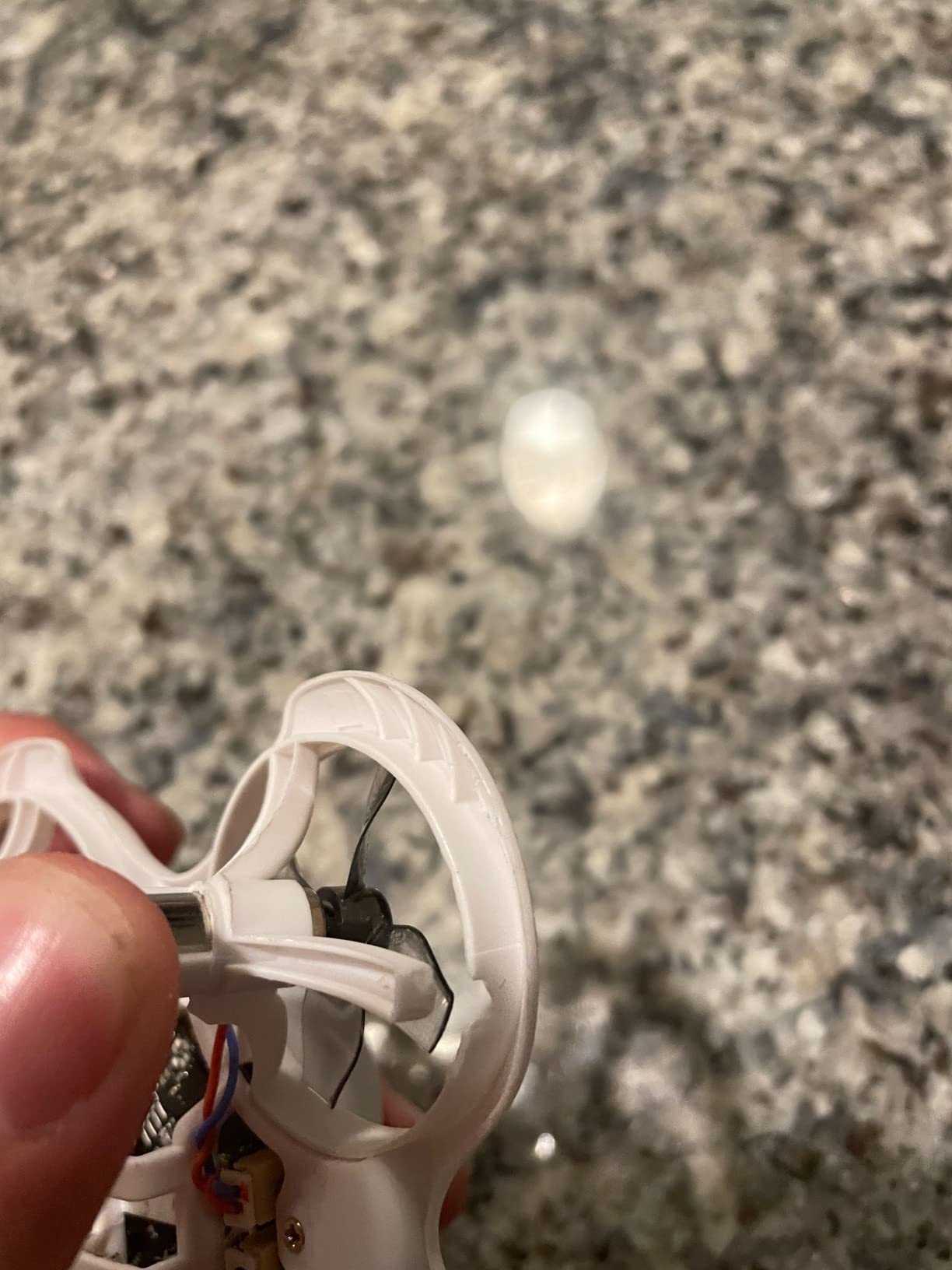
The package includes the drone, the LiteRadio 1 transmitter and the VR02 FPV goggles with a built-in VTX and camera and an OSD. Altitude hold uses a barometer and a 6-axis IMU, there is automatic motor disarm on collision, and the PA12 propeller guard frame is designed to absorb crashes.
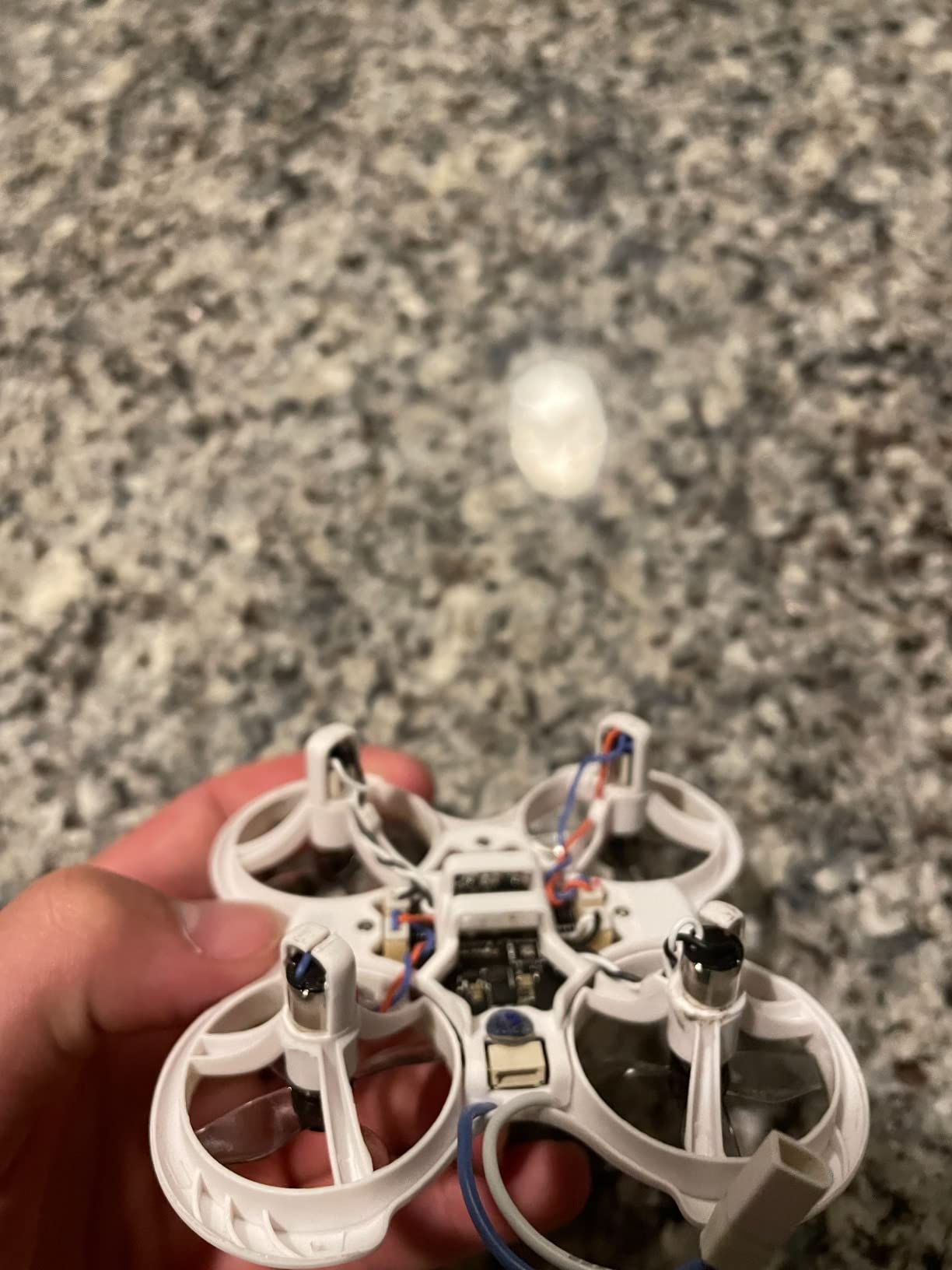
The LiteRadio 1 supports DRL, DCL, Uncrashed and Liftoff simulators and can charge while you fly, which means a young pilot can learn on a computer before risking a real room. That single feature is worth more than any of the spec sheets here for a first-time flyer.
The transmitter also offers switchable FrSky D8, Futaba S-FHSS and FrSky LBT D16 protocols. That sounds useful until you realise it means you must select the right protocol before binding, which is exactly the step that confuses first-timers.
Who this suits and what you should know first
This suits younger pilots with an adult in the room, and anyone flying indoors where a small 300mAh battery is an advantage because it limits the consequences of a crash. The guarded nylon frame and auto disarm reduce damage and surprise.
If the goal is a durable daily trainer, buy the Cetus Pro instead. The brushed motors here are the limiting factor, and they are the reason the rating sits where it does.
Where it falls short for new pilots
Brushed motors and a 720p camera are the weakest combination in this roundup. Expect slower acceleration, more vibration in the video, and shorter airborne time than the brushless kits.
The 300mAh batteries give very short flights, and the manual protocol selection before binding is a real stumbling block. With adult help it is manageable; alone it is frustrating.
9. BETAFPV Meteor75 Pro Matrix – Best 1S Whoop for Outdoor Freestyle
BETAFPV Meteor75 Pro Matrix 1S Brushless Whoop Quadcopter for FPV Racing
- Fast smooth and very durable in crashes
- Solder-free motor plugs make repairs and motor swaps easy
- Good outdoor performance with 5 to 6 minutes per 1S pack
- Tunes well in Betaflight with adjustable rates
- Bind-and-fly only so a separate ELRS radio and goggles are required
- Camera angle is aggressive for tight indoor spaces
- Occasional ESC or stripped screw failures reported
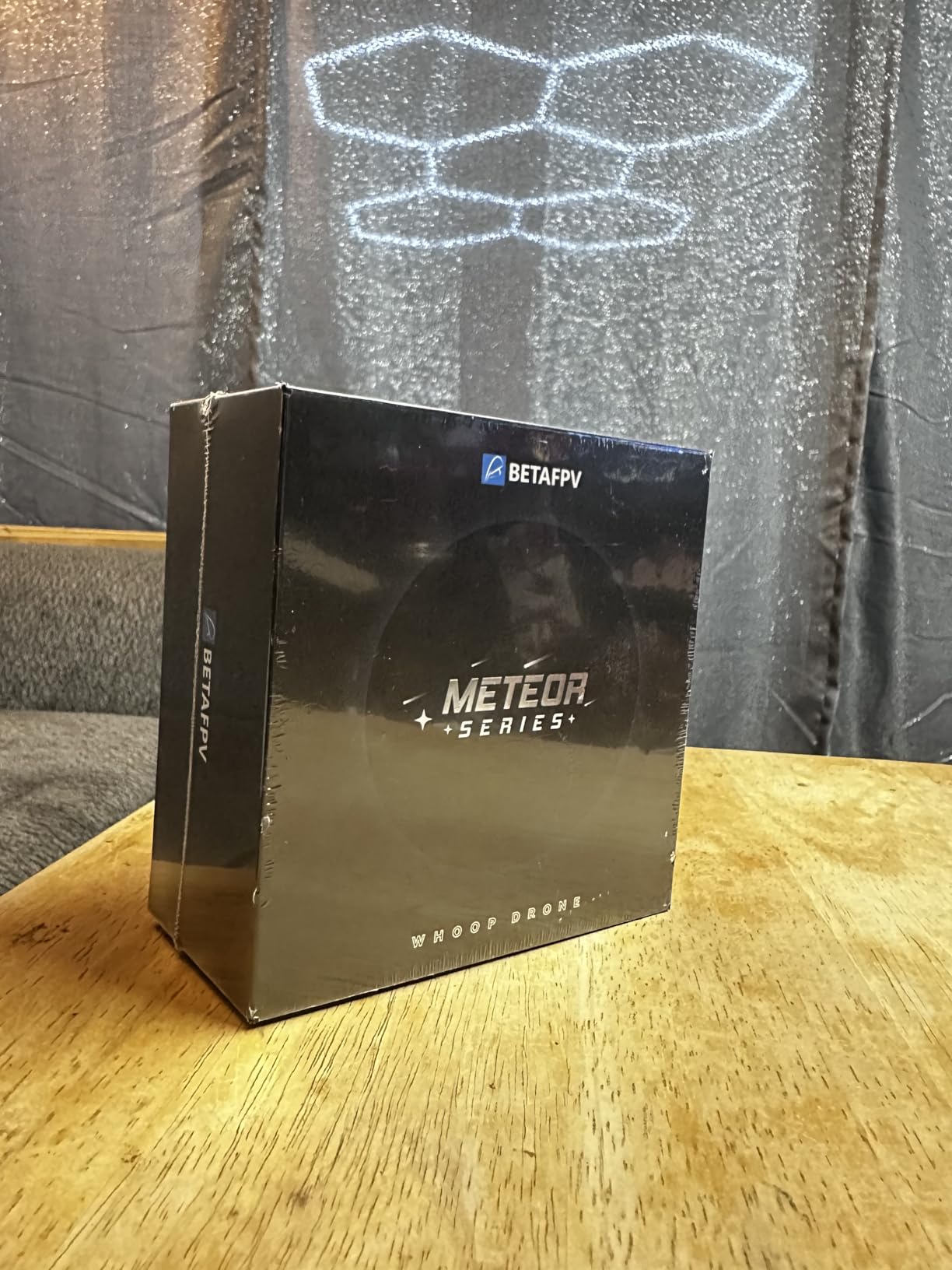
This is not a first drone. It is the first drone you buy after you have spent a season in a simulator and learned what a radio does. I include it because the upgrade path matters, and this is where many pilots end up within a year of starting.
The Meteor75 Pro is the largest 1S whoop in its class, with 1102 brushless motors, 45mm three-blade props and solder-free motor plugs. The flight stack is a Matrix 5IN1 board with a G473 processor and an integrated 5.8GHz 400mW VTX, paired with a C03 micro camera that weighs 1.45g and offers adjustable 25 to 400mW output. Flight time is quoted at up to 6.5 minutes on a 1S 550mAh pack.
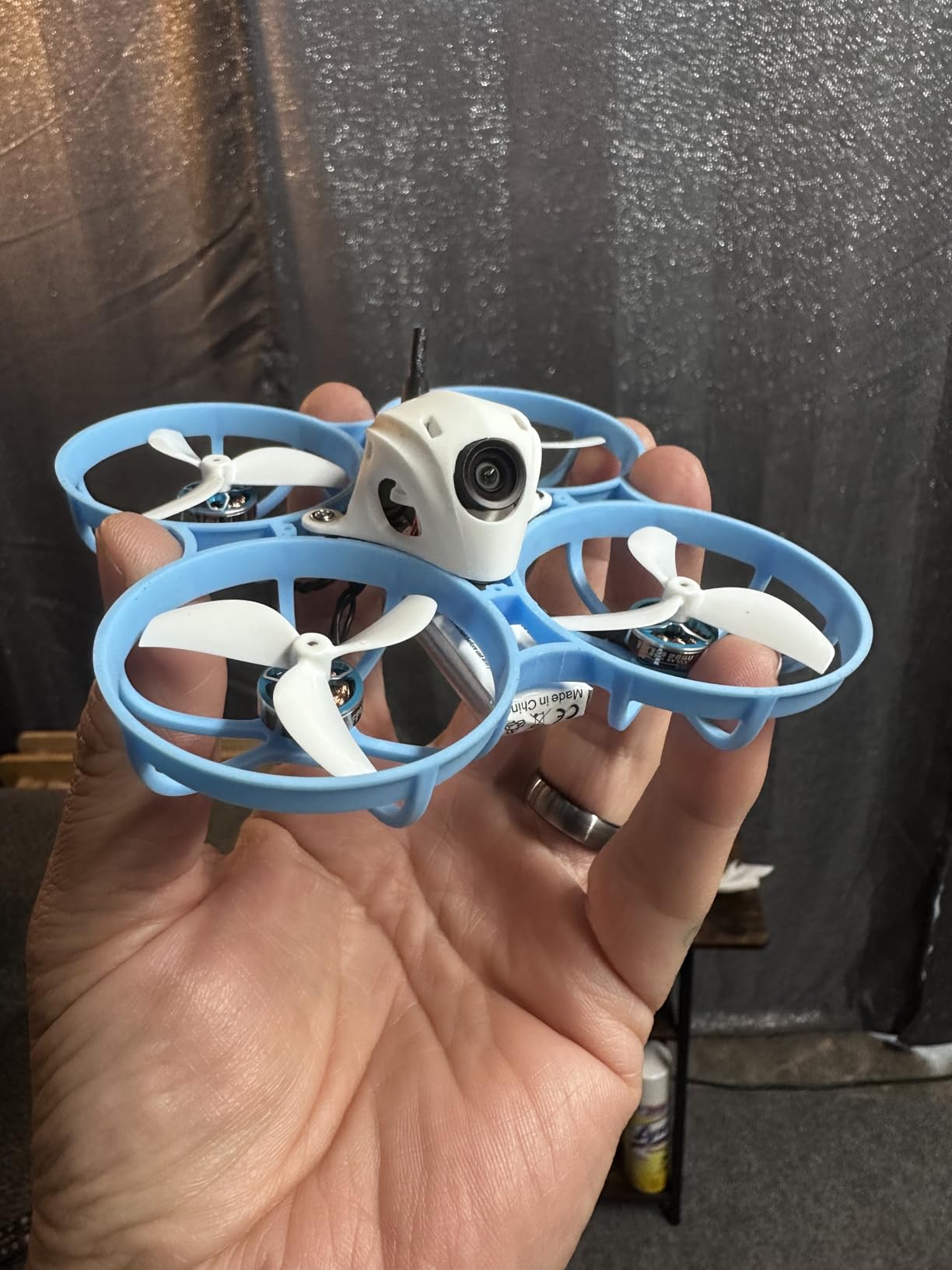
ELRS is the protocol on board, firmware V3, and the 1mm board thickness keeps it light. Pilots describe it as fast, smooth and nearly indestructible in crashes, with low voltage sag outdoors. The solder-free motor plugs mean a fried motor is a two-minute swap rather than a soldering lesson.
That last point is the real lesson of this list. Standardised connectors and replaceable parts are what separate a repairable hobby quad from an appliance. Budget for eight motors, two spare flight controllers and two spare ESCs before your first season of hard flying.
Who this suits and what you should know first
This suits a pilot who has already logged simulator hours and owns an ELRS radio and goggles. It is an outdoor freestyle whoop that handles low-altitude tricks and light crashes without damage, and the ELRS link is the modern default you will keep for years.
Choose this over a 5-inch racer if you want durability. A 1S whoop at this weight recovers from mistakes a larger quad would not, which keeps you learning instead of repairing.
Where it falls short for new pilots
It is bind-and-fly only. There is no radio, no goggles and no charger beyond the included BT2.0 unit in the box, so the true cost of entry is higher than the listing suggests if you start from nothing.
The camera angle is aggressive for tight indoor spaces, and owners report occasional ESC failures and stripped screws. Both are normal hobby-quad outcomes, but neither is something a first-week pilot should have to deal with.
10. HISINGY Firefly FPV Done Kit – Best Modular Kit for Young Builders
- Modular DIY design lets young builders customise the drone
- Altitude hold and multi-speed modes make it forgiving
- Controller works with Liftoff and other FPV simulators
- Spare parts ecosystem supports ongoing repairs
- Fiddly app-based setup and firmware upgrades
- Toy-grade video quality and stability compared with hobby quads
- Small 61g airframe is easily lost or damaged outdoors
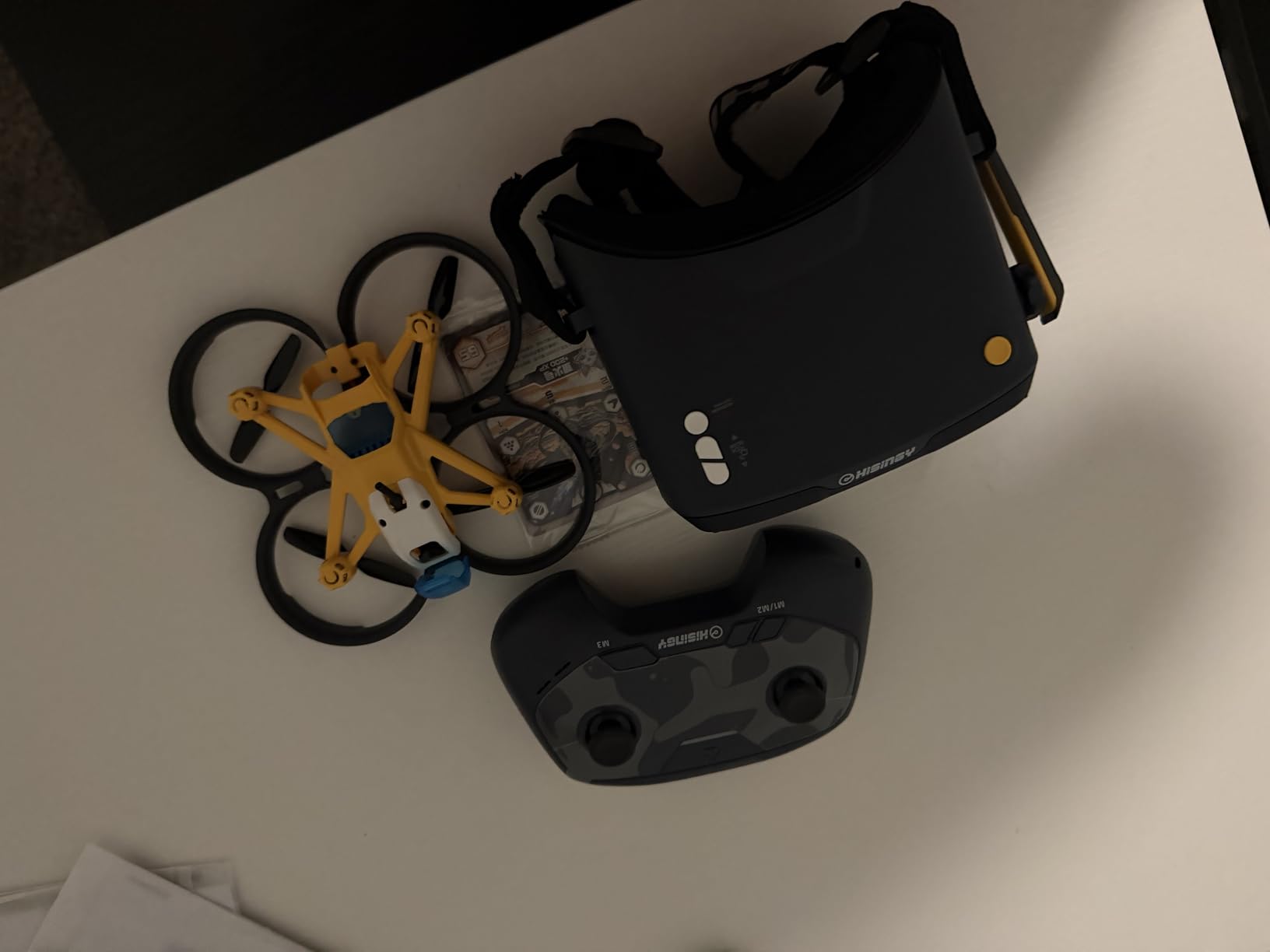
The Firefly takes the DIY idea and shrinks it. At 61g with a modular design and a range of spare parts, it lets a young builder take a craft apart and put it back together while still flying something with a live video feed.
The kit includes FPV goggles with real-time streaming, TF card recording and download of flight footage, altitude hold, an automatic emergency stop and multi-speed modes. Tuning happens through the HISINGY app with OTA upgrades, and the controller is compatible with Liftoff and other FPV simulators.
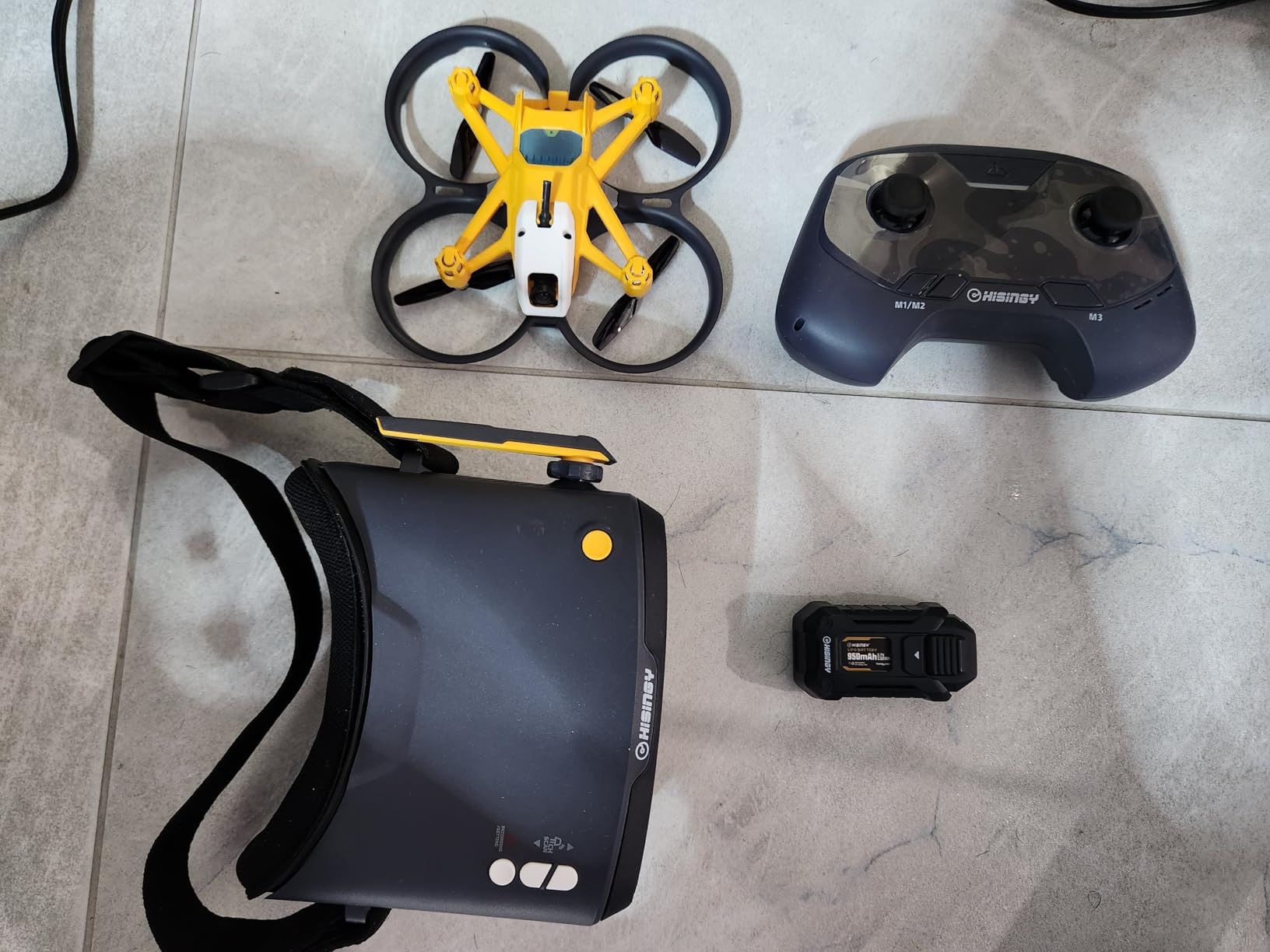
The appeal is obvious for a household with a curious child who wants to understand the electronics rather than just fly. The modular design and spare parts mean a broken arm is a replacement part rather than a discarded drone.
The compromise is real. This is a toy-grade airframe with toy-grade video and stability, and the app-based setup and firmware upgrades are fiddly enough to need an adult. Listed for ages eight and up, it works best as a supervised introduction to building.
Who this suits and what you should know first
This suits a supervised young builder, or an adult who wants to introduce a child to FPV concepts without handing over an expensive hobby-grade quad. The modular parts list is the selling point, not the flying performance.
Pair it with a simulator session. Because the controller works with Liftoff and similar software, a young pilot can learn the controls on screen before touching the real aircraft, which prevents most early crashes.
Where it falls short for new pilots
A 61g airframe is easily lost or damaged outdoors, and the video quality and stability sit well below hobby FPV standards. There is no analog or digital FPV link in the sense that pilots mean it here, so nothing transfers directly to a real FPV setup.
App-based tuning and firmware upgrades frustrate people who expected plug-and-play behaviour. If the appeal is learning real FPV, start with a BetaFPV or EMAX kit instead and come back to this one as a gift.
11. STARTFPV R8 ELRS Whoop – Best for Indoor Racing Speed
- Very fast responsive and nimble with an excellent racing feel
- Angle mode gives new pilots a manageable way to fly indoors
- Analog camera quality is good for the class with a clear signal
- Box includes two batteries charger and spare props
- Frame is fragile out of the box and can crack in crashes
- Very short 3 to 4 minute flight time per pack
- Bind-and-fly only so a radio and goggles must be bought separately
- No GPS optical flow or barometer so only assisted modes help
The R8 is the smallest and fastest thing on this list at 26g, and it is the one I would hand to someone who already has an ELRS radio and wants to fly fast through a house before they can walk calmly.
The 80mm duct-guarded frame uses 0802 20000KV brushless motors with a stated 1:4 thrust-to-weight ratio and a 38g all-up weight. The Matrix G4 five-in-one board runs an ICM-42688P gyro on Betaflight, and the built-in ELRS 2.4GHz receiver works with Radiomaster, Happymodel and Jumper radios. The 160 degree field of view is unusually wide for the class.
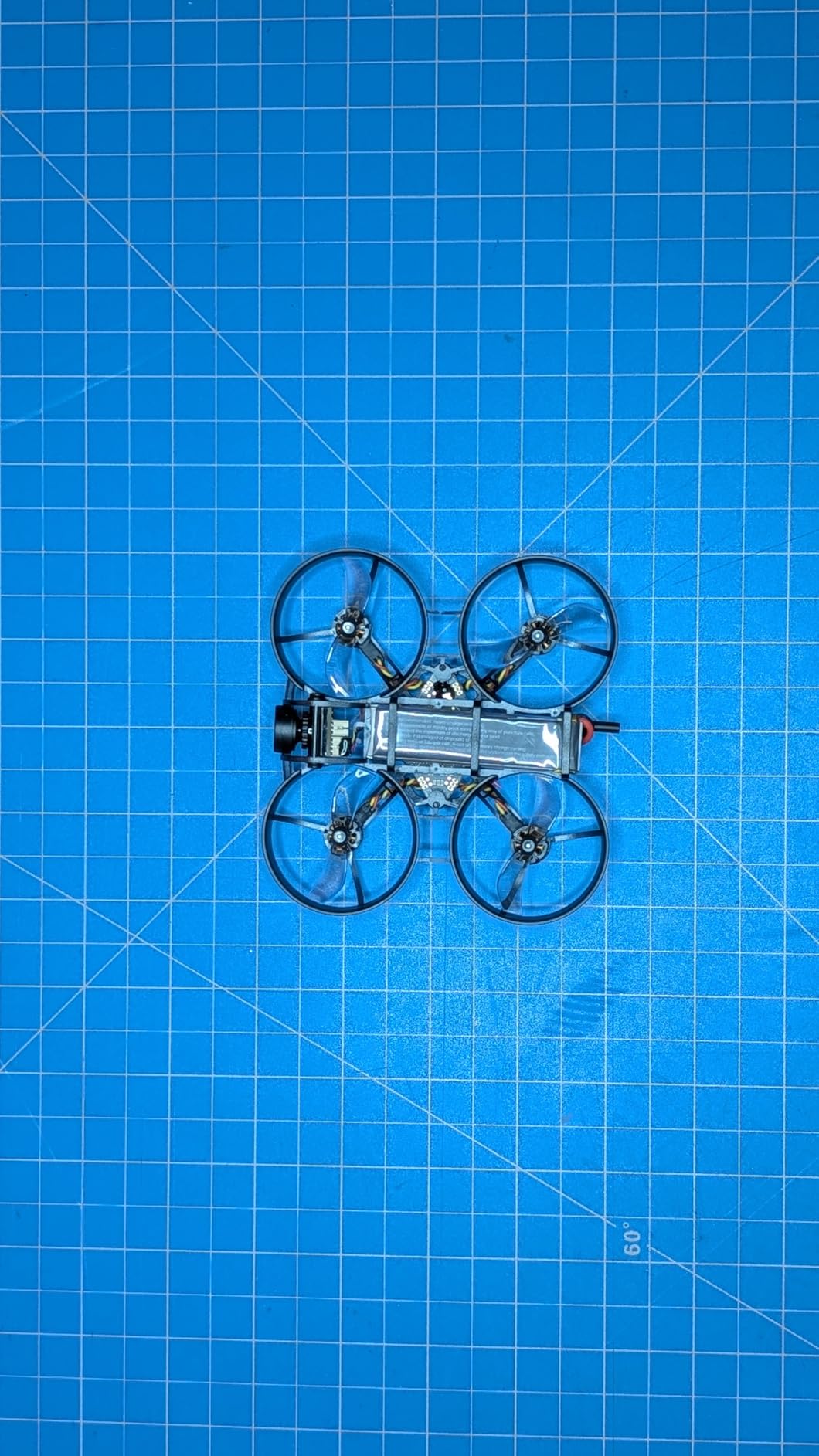
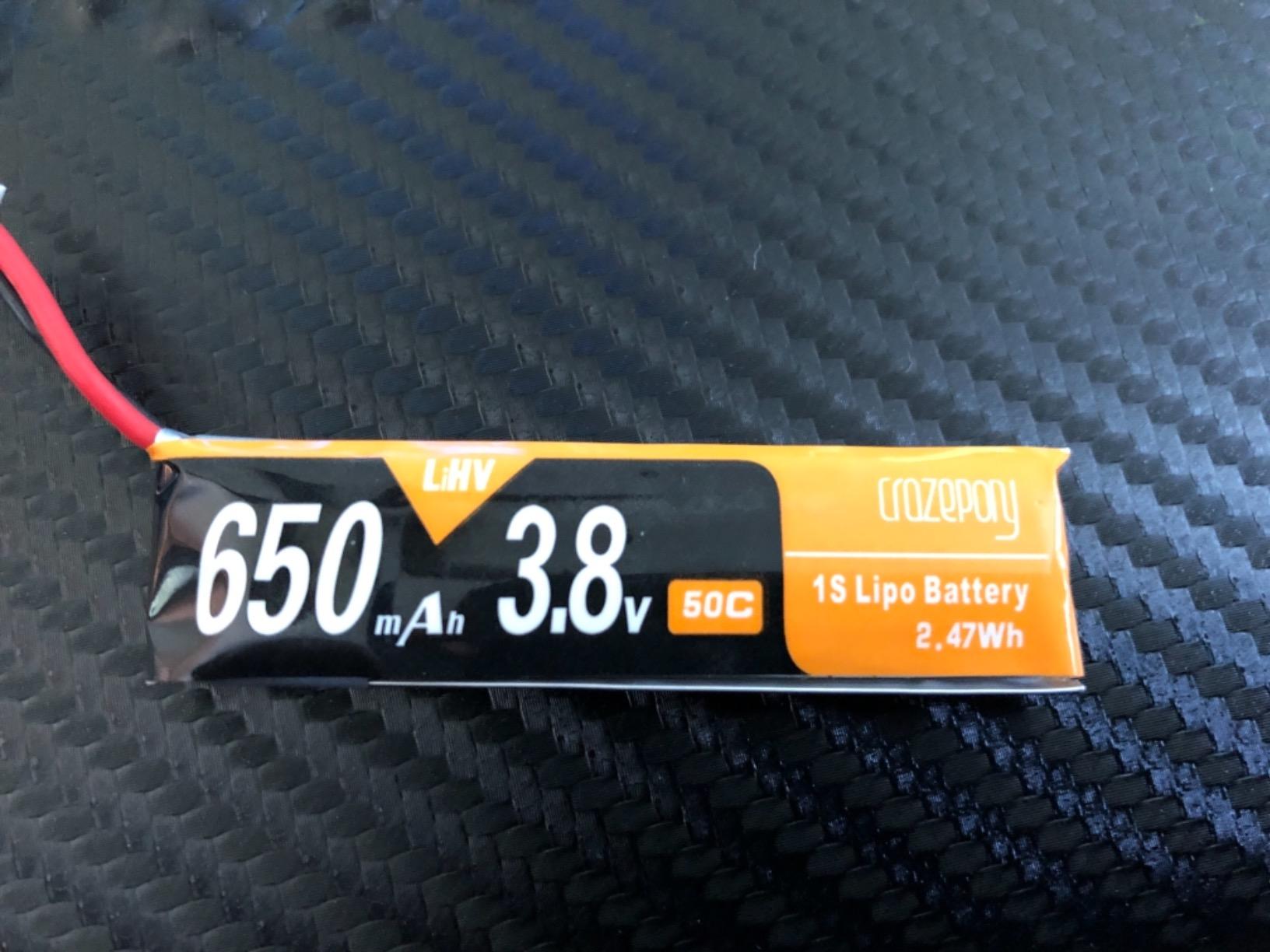
Angle, horizon and air modes plus turtle mode give a new pilot assisted flight that a pure acro whoop would not, and the BNF kit includes two 3.8V 450mAh batteries, a six-port charger, spare props and a tool kit. That charger arrangement is what makes short flights workable.
The speed is the point. Pilots describe the handling as nimble with an excellent racing feel, and the analog signal is clear for a drone of this size. Nothing else in this roundup moves like it.
Who this suits and what you should know first
This suits a pilot who already owns ELRS hardware and goggles and wants a practice drone for a hallway or a large room. Angle mode means you can fly through a house before you are ready for acro, which widens who can use it.
Understand what you are buying. The radio and goggles are not included, so this is an add-on to a system rather than an entry point into one.
Where it falls short for new pilots
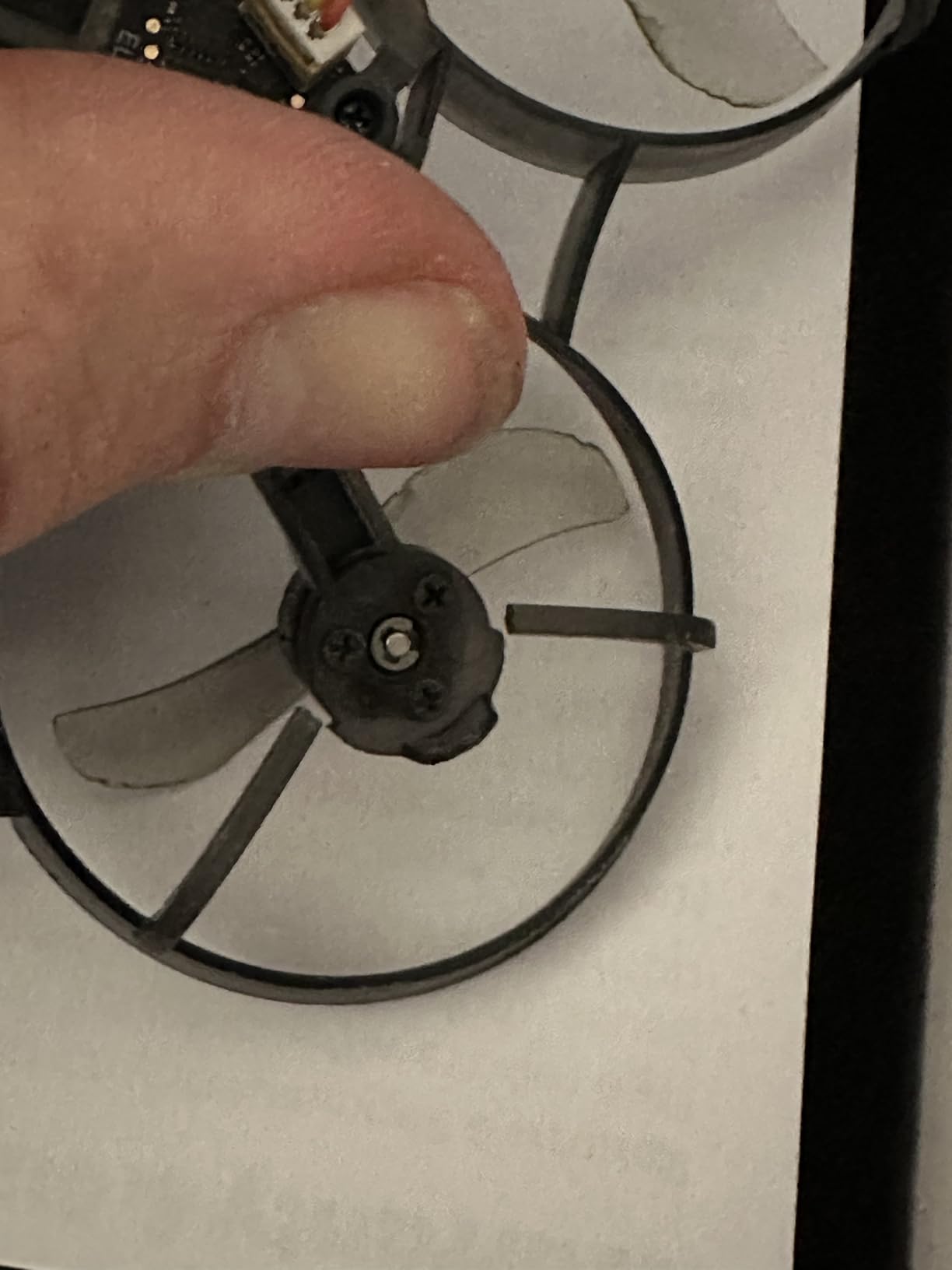
The frame is fragile out of the box and can crack in crashes, and flight time is only three to four minutes per pack. There is no GPS, optical flow or barometer, so only the assisted modes help a beginner.
With 30 reviews behind it, this is the least proven product in the roundup. Buy spare frames and extra batteries with the first order rather than after your first hard landing.
How to Choose Your First FPV Drone in 2026
Pick the format before you pick the drone. Everything else in this decision is secondary to whether you are starting from a sealed box, a partially assembled quad, or a bag of parts.
Ready-to-fly, bind-and-fly or DIY
Ready-to-fly means the drone, the controller and the goggles arrive together. It is the fastest route to a flight and the most common mistake, because the controller is usually proprietary and cannot be used on a later drone. Treat it as a complete, closed system.
Bind-and-fly quads are assembled and tuned but arrive bare. You supply the radio, the goggles and usually the batteries. This is the standard hobby path and the one with the best upgrade route, because radio and goggles carry across many drones.
DIY kits ask you to build. Forum consensus is blunt about this: if you build it, you learn far more, because you have to understand the flight controller, ESC, VTX and wiring before it will fly. If you cannot solder, pick a bind-and-fly quad with a 1S or 2S whoop rather than a bare frame.
Analog or digital video
Analog is cheap, repairable and unlimited. Every major brand uses interchangeable parts, so a damaged VTX can be replaced with any compatible unit. The picture is grainy and the range depends on antenna quality and environment, but for learning to fly it does the job.
Digital systems such as DJI’s O4+ transmission, Walksnail and HDZero give a far cleaner picture with lower latency, and several products in this roundup use them. The trade-off is a closed ecosystem, higher cost, and more expensive repairs when something goes wrong. Digital suits cinematic and freestyle flying; analog suits racing, indoor practice and keeping costs down.
Radio protocol and simulator compatibility
Protocol confusion is the most common question on FPV forums, so here is the short version. ELRS is the modern default and works with Radiomaster, Happymodel and Jumper radios. Crossfire and TBS Tracer are older Crossfire-era options. FrSky D8, ACCST and ACCESS appear on cheaper RTF kits, and Spektrum DSMX is common on conventional RC gear. A drone and a radio must speak the same protocol or they will not bind.
Simulator support is the detail that decides how quickly you learn. A transmitter with a USB connection can plug into a PC and run software like Velocidrone, Liftoff, Uncrashed or DRL, so you can practise fails, gates and split-S moves indoors before touching a real aircraft. Several kits in this roundup support this, and it is the single best reason to choose a specific transmitter.
First flight checklist and airspace rules
Before the first flight: check props for nicks, confirm the battery is charged and seated correctly, verify the video link works before arming, and open the OSD to confirm signal strength. Then walk to open ground away from people, roads and power lines. If your drone weighs over 250g, check whether you need to register it before flying outdoors.
During the flight, fly in angle or beginner mode first, stay low over open ground, and keep the aircraft within visual line of sight. Give yourself a 20 percent battery reserve before returning, because a video drone that loses link mid-flight keeps flying. After landing, remove the battery before you inspect anything, and log what broke.
Budget for repairs in advance. The most common first-year costs are props, frames, motors and camera lenses, and buying a small spare parts package on day one is cheaper than ordering parts one crash at a time. Our advice is to keep eight motors, two flight controllers and two ESCs in the drawer.
Frequently Asked Questions
What size FPV drone is best for a beginner?
Start with a whoop: a 1S or 2S duct-guarded quad between 65mm and 85mm is the standard first step. Whoops are light, tough and safe to fly indoors. Move to a 3-inch freestyle quad once you can hover, turn and recover in angle mode, then to a 5-inch racer when you are flying acro confidently.
What is the best FPV drone simulator for beginners?
Velocidrone is the most realistic on physics, Liftoff and Uncrashed are the friendliest starting points, and DRL works well with motion controllers. The important part is that your radio must be simulator compatible, which is why many starter kits ship with a transmitter that plugs into a PC over USB.
Is learning FPV drone worth it?
For most people, yes, because FPV is the only way to fly from the drone’s point of view and because the skill transfers directly into racing, freestyle and cinematic work. The catch is the learning curve, which is why simulator practice and a radio come before the drone.
What is a good beginner FPV drone kit?
A complete ready-to-fly kit with goggles and a controller is the easiest start, and the BETAFPV Cetus Pro is a strong example. If you already own a radio and goggles, a bind-and-fly whoop such as the BETAFPV Meteor75 Pro or the STARTFPV R8 is the better long-term investment.
What is the best FPV drone setup for beginners in total?
A workable setup is a drone, a simulator-capable radio, FPV goggles, at least six batteries with a multi-charger, spare props and a repair kit. For a closed all-in-one system the DJI Neo 2 bundle covers most of this, while an open hobby setup costs more up front but upgrades cleanly.
Conclusion
The best FPV drones for beginners in 2026 fall into two groups. If you want zero friction and footage from day one, start with the DJI Neo 2 Motion Fly More Combo. If you want a real, repairable hobby setup that grows with you, start with a complete RTF kit such as the BETAFPV Cetus Pro, add an ELRS radio and simulator hours, and graduate to a bind-and-fly whoop.
Whichever route you take, buy spare batteries and spare parts on the same order, practise in a simulator before the first real flight, and check the airspace rules for your area before you go outside. The best FPV drones for beginners are the ones you can crash cheaply and fix yourself. Use the buttons above to check current details, and start with twenty simulator hours.