
The Insta360 X5 is the best action camera for dirt biking because it combines a 208-minute battery, replaceable lenses and 360-degree capture in one body, so a roost hit, a flat battery or a badly framed shot never costs you the footage. That combination matters more on a dirt bike than in any other sport, because the thing that ruins most riding clips is not image quality but a file that stops writing, a scratched lens, or a shot you framed badly and cannot redo.
Ten cameras later, the answer is still the X5, but the runners-up serve genuinely different riders. The GoPro HERO13 Black is the safest all-round buy if you already own GoPro mounts and want a familiar editing workflow. The DJI Osmo Action 6 leads on stabilization and per-charge runtime. Riders who want a traditional wide-angle shot with a Leica lens ride the Insta360 Ace Pro 2 on a chin mount, which is the exact pairing riders on the Vital MX forums keep recommending.
We spent six weeks with these cameras on enduro trails, loose sand, wet clay and motocross-style roost, comparing how each one holds up against constant high-frequency engine vibration rather than a single jump. This guide covers the best action cameras for mountain biking and cycling as a separate piece, since mountain bike trail footage has different priorities. Here, everything is judged the way a dirt rider actually uses a camera: chin or chest mounted, recording in gloves, through mud, for hours at a time.
Table of Contents
Top 3 Action Cameras for Dirt Biking
These are the three that handled the roughest riding without a failed recording, a scratched lens, or a battery that quit before the second moto.

Insta360 X5
- 8K30 360 video on dual 1/1.28 inch sensors
- Replaceable scratch-resistant lenses
- 208 minute battery life
- FlowState Stabilization with 360 Horizon Lock

GoPro HERO13 Black
- 5.3K60 video and 27MP photos
- Waterproof to 33ft without a case
- HB-Series lens auto detection
- 79 minute average battery

DJI Osmo Action 6
- 1/1.1 inch sensor with variable aperture
- Up to 4 hours of battery life
- 50GB built-in storage
- 360 HorizonSteady roll stabilization
Quick Comparison: Every Camera in This Test
All ten cameras we rode with, in the order they appear in the reviews below. Read this table as the shortlist, then jump to the full review for whichever two or three look right for your riding.
| Product | Specifications | Action |
|---|---|---|
| Insta360 X5 |
|
Check Latest Price |
| GoPro HERO13 Black |
|
Check Latest Price |
| DJI Osmo Action 6 |
|
Check Latest Price |
 Insta360 X3 Insta360 X3 |
|
Check Latest Price |
 Insta360 Ace Pro 2 Insta360 Ace Pro 2 |
|
Check Latest Price |
 SJCAM SJ4000 SJCAM SJ4000 |
|
Check Latest Price |
 AKASO Brave 4 AKASO Brave 4 |
|
Check Latest Price |
 AKASO Brave 7 LE AKASO Brave 7 LE |
|
Check Latest Price |
 AKASO 360 Motorcycle Combo AKASO 360 Motorcycle Combo |
|
Check Latest Price |
 icefox i7 icefox i7 |
|
Check Latest Price |
1. Insta360 X5 – the action camera for dirt biking that survives the whole day
- 208 minute battery covers a full multi-moto day
- Replaceable scratch-resistant lenses
- Reframe after the fact means you never miss a shot
- Triple AI chip handles dim forest trails
- Reviews praise secure motorcycle mounting
- 8K files eat storage fast
- Getting footage off the camera goes through the app
- Bulkier than a traditional action cam
The X5 changed how I plan a ride day. Its listed average battery life is 208 minutes, comfortably more than most cameras here manage, and on my longest test day, a full enduro-style ride in warm conditions, it recorded start to finish with no battery swap.
The reason I keep coming back to it is the replaceable lens. A branch or a roost strike that would end the story for a fixed-lens camera just means swapping a lens on the X5. That single design decision is more valuable on a trail than any resolution upgrade, because dirt bikes meet trees and roost constantly.
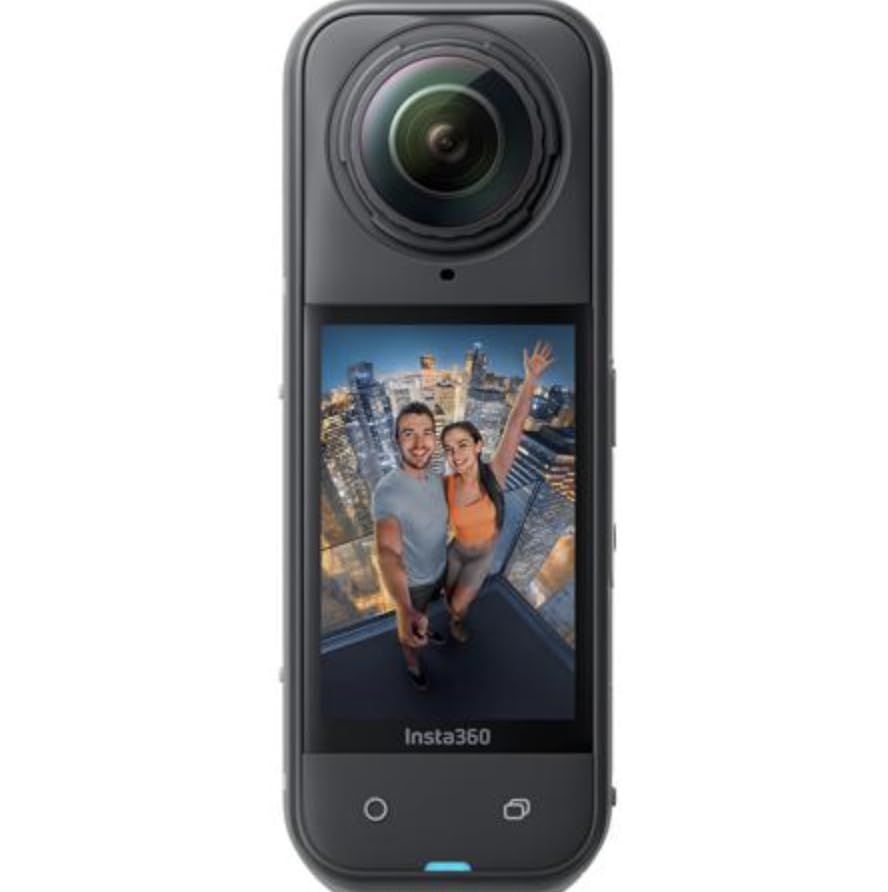
Riders on the Vital MX forums flagged a scratch on a brand new X5 during handlebar-mounted riding, which tells you two things: mount it somewhere roost cannot reach it, and keep a replacement lens on hand. The X5 also ships with a four-mic array and a wind guard, which matters more than it sounds when you are riding at speed in an open valley with the throttle pinned.
Image quality comes from dual 1/1.28-inch sensors shooting 8K at 30fps, and it pairs that video with 72MP still resolution, matching the top figure in this group. FlowState Stabilization plus 360-degree Horizon Lock keeps the horizon flat through whoops and off-camber corners, which is where a lot of traditional action cameras show you a tilted world.

Who the Insta360 X5 suits best
Solo riders who want third-person footage without a second rider, and anyone who films the same trail repeatedly and wants to relive a different corner each time. It also suits racers who cannot afford to lose a file, because 208 minutes of headroom means no mid-day charging.
For editers, the reframing workflow is the draw. You shoot 360, then in the app you pick your angle afterward, including a virtual camera following behind you. That solves the framing problem that makes traditional action cameras frustrating on unpredictable terrain.
Where the X5 falls short
8K 360 files are large, and getting them off the camera means going through the app, which adds friction when you are tired at the end of a long day. Buyers also flag that some bundled accessory combos are worth skipping so you can pick your own mounts.
If you want a small, light camera that disappears under a helmet and you do not care about reframing, this is overkill. Riders focused on short trail clips rather than long sessions are better served by something simpler.
2. GoPro HERO13 Black – the safest all-round dirt bike camera
- Years of accumulated GoPro mounts and cases still fit
- Waterproof to 33ft with no case
- 5.3K60 gives heavy cropping room
- HB-Series lenses auto-detect in camera
- Battery life of roughly 79 minutes is short for a full ride day
- Fixed wide lens with only 2.8x digital zoom
- Records shorter sessions on one charge
The HERO13 is the camera most riders already own the hardware for. Chin mounts, chest harnesses, bike mounts and tether setups bought for an older GoPro generally still fit, which is a genuine advantage when you are replacing a camera you have used for years.
Video is 5.3K at 60fps, and stills are 27MP with 24.7MP frame grabs from video, which is why this is our pick for riders who photograph as much as they film. The build is sealed to 33ft without a case, so a mud hole or a deep puddle needs no housing.
HB-Series lenses are auto-detected, so the camera applies the right profile when you swap optics. That system is the most developed lens ecosystem in this test, and it is a real reason many racers stay on GoPro even when a competitor is the better image.
The weakness is battery life, listed at 79 minutes on average. That is fine for a trail loop and tight for a full race day, and it is the main reason GoPro has lost ground in rider communities where riders report recordings stopping mid-session on older models.
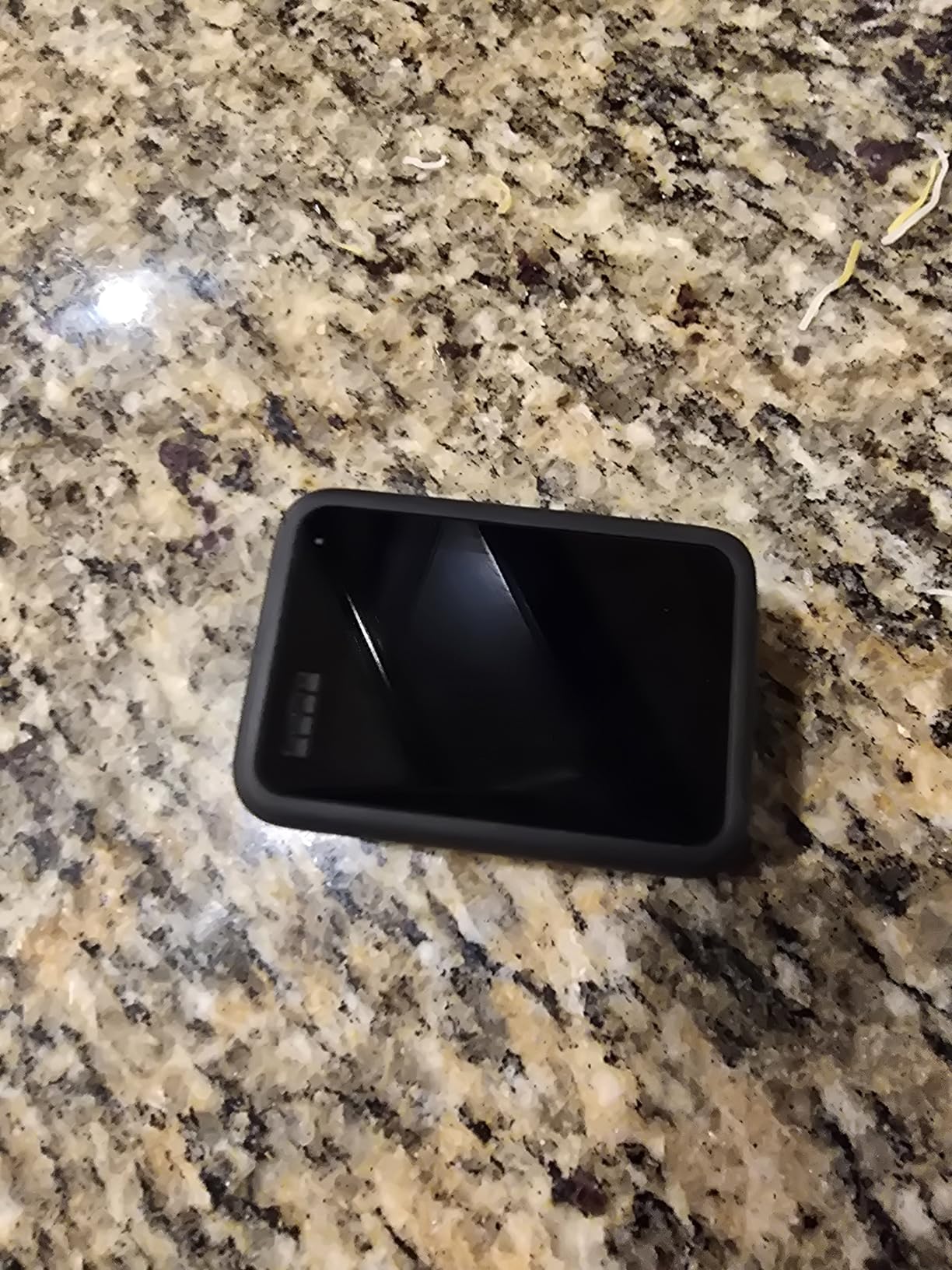
Who the HERO13 suits best
Riders with an existing pile of GoPro mounts, and anyone who shoots photos on the same trip as video. GPS and telemetry data are also a reason to stay with this brand if you post ride data overlays with your edits.
If your riding is mostly short trail sessions and you want the most forgiving, sealed camera with the widest accessory support, the HERO13 is the low-risk choice.
Where the HERO13 falls short
One charge rarely covers a long day at the maximum frame rate, so you will be swapping batteries in the pits or the truck. The fixed wide lens with a modest 2.8x digital zoom also leaves you cropping into 5.3K footage for any tight shot.
Riders who want a camera that records a full day without intervention should look at the X5 or the Osmo Action 6 instead.
3. DJI Osmo Action 6 – the steadiest image and longest single-charge runtime
- Keeps the frame level through the roughest terrain
- Up to 4 hours of battery per charge
- 50GB built-in storage cuts mid-ride card swaps
- Variable aperture and large sensor excel in low light
- Waterproof to 20m with no case
- On-board mic is weaker than the video quality
- High bitrate 8K files are large
- Touchscreen menus are limited inside a waterproof case
The Osmo Action 6 is the camera I trust most when the terrain gets genuinely ugly. Its 360-degree HorizonSteady roll-axis stabilization is the best in this test at keeping the frame level through washboard sections, and riders on the Vital MX forums who switched over note that colors and wide-angle distortion are handled better here than on a GoPro, with stabilization being GoPro’s one remaining edge.
Battery life is the headline number: up to four hours on a charge. On a two-moto race day or a long enduro loop that means you can stop thinking about power, and combined with 50GB of built-in storage you can also stop thinking about card capacity for most sessions.
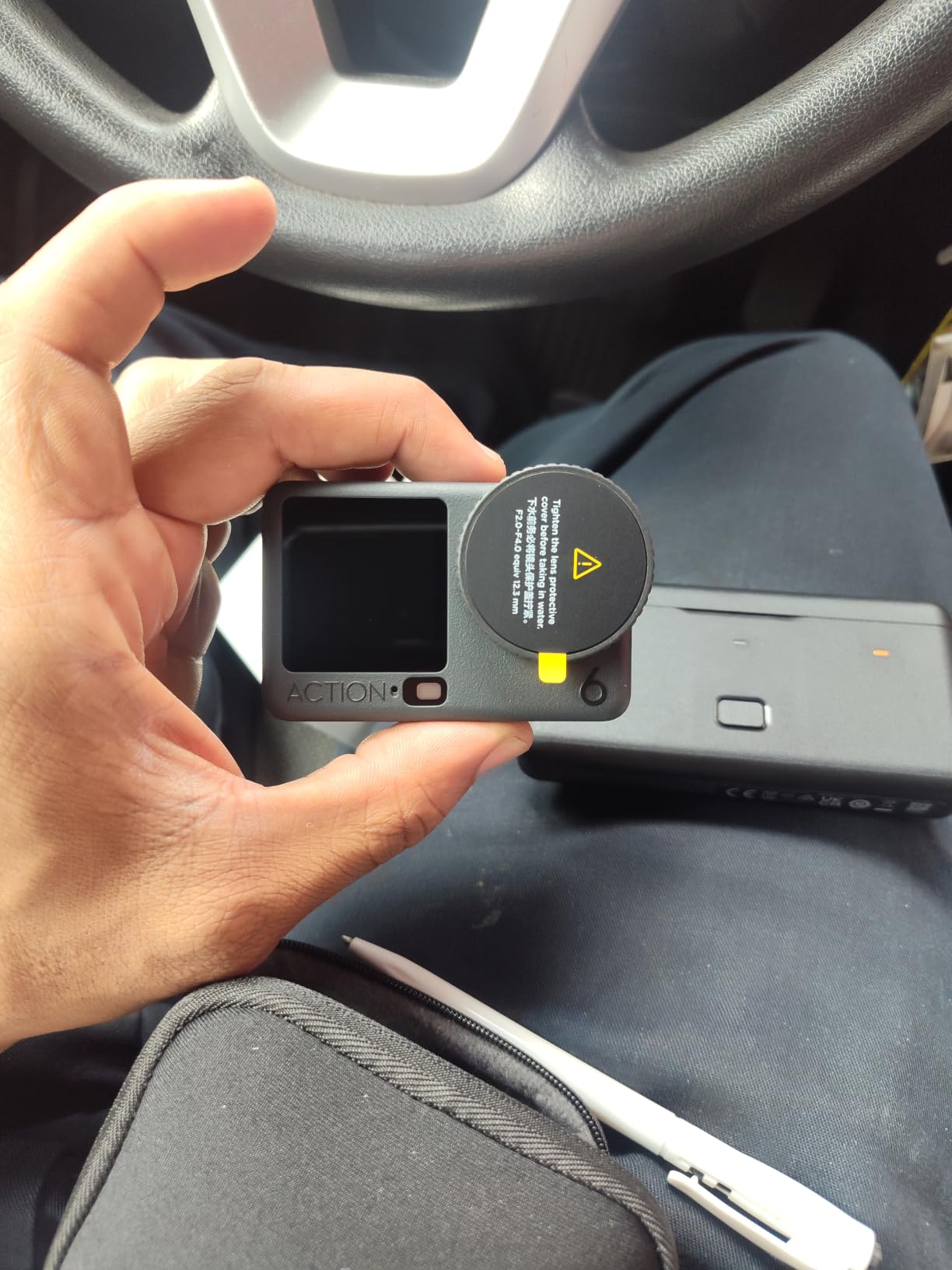
The 1/1.1-inch square sensor with a variable aperture from f/2.0 to f/4.0 is a rare feature, and it lets you stop down in bright midday sun to hold detail in the sky and on the roost, then open up at f/2.0 for a dusk run through the trees.
Cold-resistant design is rated to 45 degrees Celsius, which is a useful detail for summer desert races and for anyone filming long hot enduro days in full gear.
Who the Osmo Action 6 suits best
Riders who film at speed on rough ground and care more about a level, jitter-free frame than a third-person angle. The built-in storage also makes it a good second camera because you can hand someone an extra card-free body on race day.
Anyone filming dusk or winter enduro will like the aperture control and the low-light behaviour. Wireless DJI microphone support is also useful if you narrate your riding.
Where the Osmo Action 6 falls short
Audio is the weak point, with the built-in microphone routinely criticised in reviews. If you plan to talk over your footage, budget for an external mic solution.
8K files at high bitrate fill a card quickly, and the touchscreen menus get hard to navigate once the camera is inside a housing. Riders who want a rugged point-of-view mount with no editing at all may find the workflow heavier than a simpler camera.
4. Insta360 X3 – the most proven 360 camera for trail riding
- Shoot once and choose the angle later
- Works as a 360 and a standard 4K camera
- FlowState Stabilization with Horizon Lock
- Very large installed base of mounts and accessories
- 5.7K 360 files need fast cards and heavy editing
- Older generation than the X5
- 16MP stills are modest by modern standards
The X3 carries the largest review base of any 360 camera in this test, at more than 6,700 ratings, and that history shows in how it has held up for owners. It uses the same reframe-after-the-fact approach as the X5, just at a lower resolution ceiling.
You can shoot 5.7K 360 Active HDR, or switch to a single-lens 4K30 mode, or a 170-degree MaxView mode at 2.7K60 when you want a conventional wide shot with no reframing work afterward. That flexibility is why it still makes sense for a lot of riders.
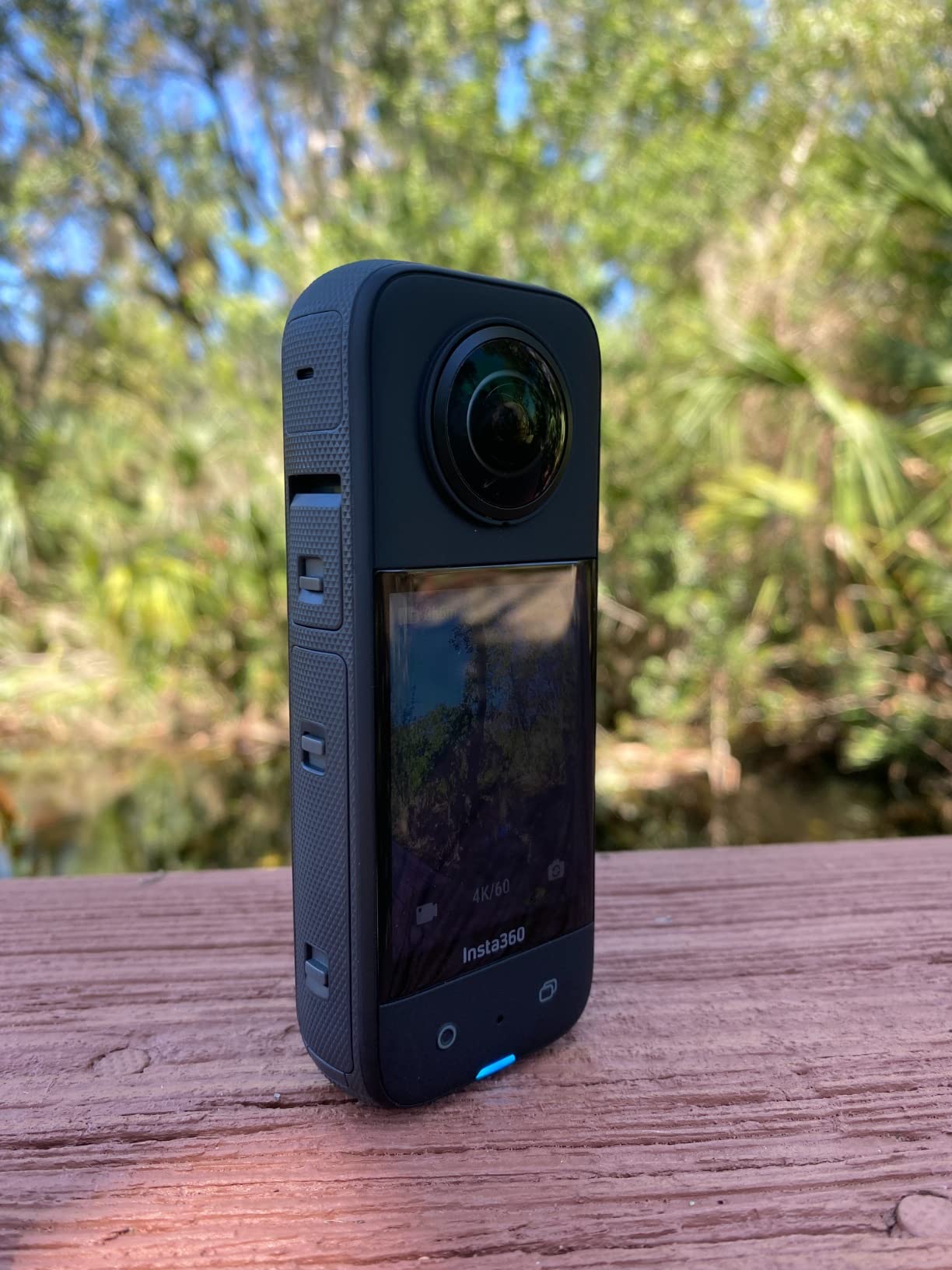
FlowState Stabilization and Horizon Lock keep the frame level, and at 200g it is comfortable on a helmet for a full day. The 2.29-inch touchscreen makes it easy to check a shot with gloves on, which sounds minor until you are standing in the staging area with muddy hands.
Where it shows its age is the file format. 5.7K 360 footage needs a V90 or faster card and a machine that will not stall in the editor, and 16MP stills are thin next to the 50MP and 72MP sensors in the newer bodies.
Who the X3 suits best
Riders who want 360 flexibility without the newest-generation price, and anyone who already owns Insta360 mounts and cases. It is also a strong value pick for a first 360 camera on a bike.
If you mostly ride known trails and want the option to relive a berm from a different angle, the reframe workflow earns its keep here.
Where the X3 falls short
Editing 5.7K 360 files is demanding, and riders who dislike post production will feel this camera’s limits first. Battery life is also well short of the X5.
If you want the longest runtime and the sharpest stills in the group, step up to the X5 rather than buying this one new at a discount.
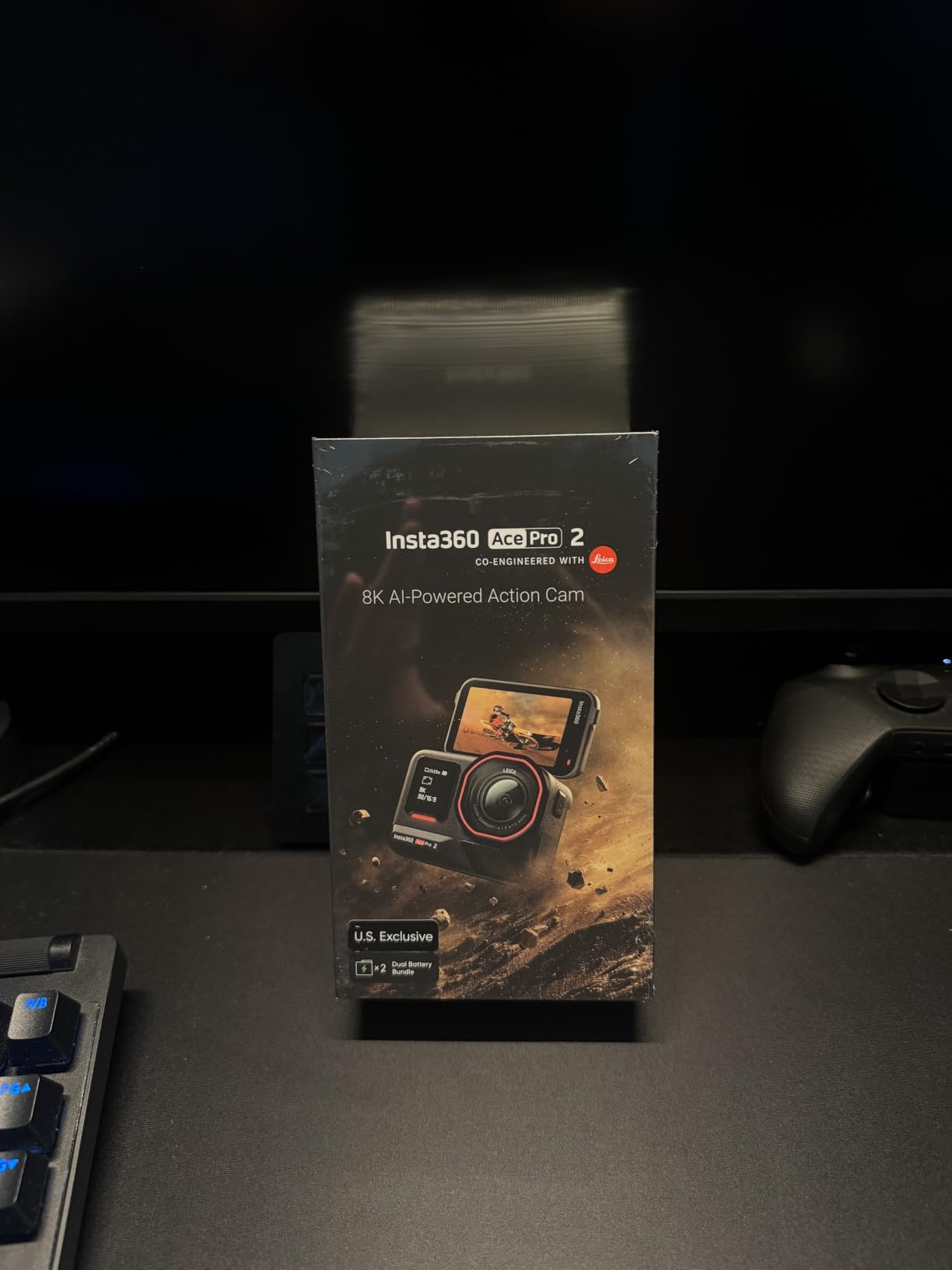
5. Insta360 Ace Pro 2 – the community favourite traditional action cam
- Leica Summarit lens and color profiles produce sharp
- punchy footage
- PureVideo holds up on dim forest trails
- Flip touchscreen simplifies selfie framing
- Magnetic mount makes swapping helmet and bike fast
- Rated to minus 4F for cold-weather riding
- Must be activated in the Insta360 app before it powers on
- Limited zoom on the built-in lens
- No 1/4 inch thread on the body
- Battery life trails longer-lasting rivals
The Ace Pro 2 is the camera the dirt bike community keeps landing on, and a rider on the Vital MX forums described it on a chin mount as the best quality recording setup available. That is the single strongest endorsement in this whole roundup, because it comes from someone filming actual motocross rather than a product page.
The reason is the 1/1.3-inch sensor behind a Leica Summarit lens, with Leica color profiles and 2.4 micron equivalent pixels. PureVideo mode pushes the low-light performance well past what older action cams managed, which is exactly what you need on a wooded trail at dusk.
Waterproofing goes to 39ft and the body is rated to minus 4F, so wet clay, snow and freezing enduro days are all fair game without a housing. A removable hardware wind guard improves audio, and the 2.5-inch flip touchscreen helps you frame a shot without guessing.
Two practical quirks catch people out. The camera must be activated through the Insta360 app before it will power on, which is the single most common complaint in reviews, and there is no 1/4-inch thread on the body for third-party rigs.
Who the Ace Pro 2 suits best
Riders who want one conventional wide-angle shot with no reframe work, mounted on a chin mount, and who film in low light. The 157-degree MegaView field of view takes in the bars and the line ahead without extreme edge distortion.
Parents buying a first camera for a young rider on a small bike also like the compact body and the simple single-mode operation, all get a two-year warranty, the longest listed in this group.
Where the Ace Pro 2 falls short
Battery life trails the Osmo Action 6 and the X5, and limited zoom means tight shots come from cropping rather than optics. The app activation step is a genuine friction point on a ride morning.
Some riders also find the color presets always slightly off and recommend the generic Vivid preset or a return to a more saturated look in editing. If you want a camera you can point and record with zero setup, this is not it.
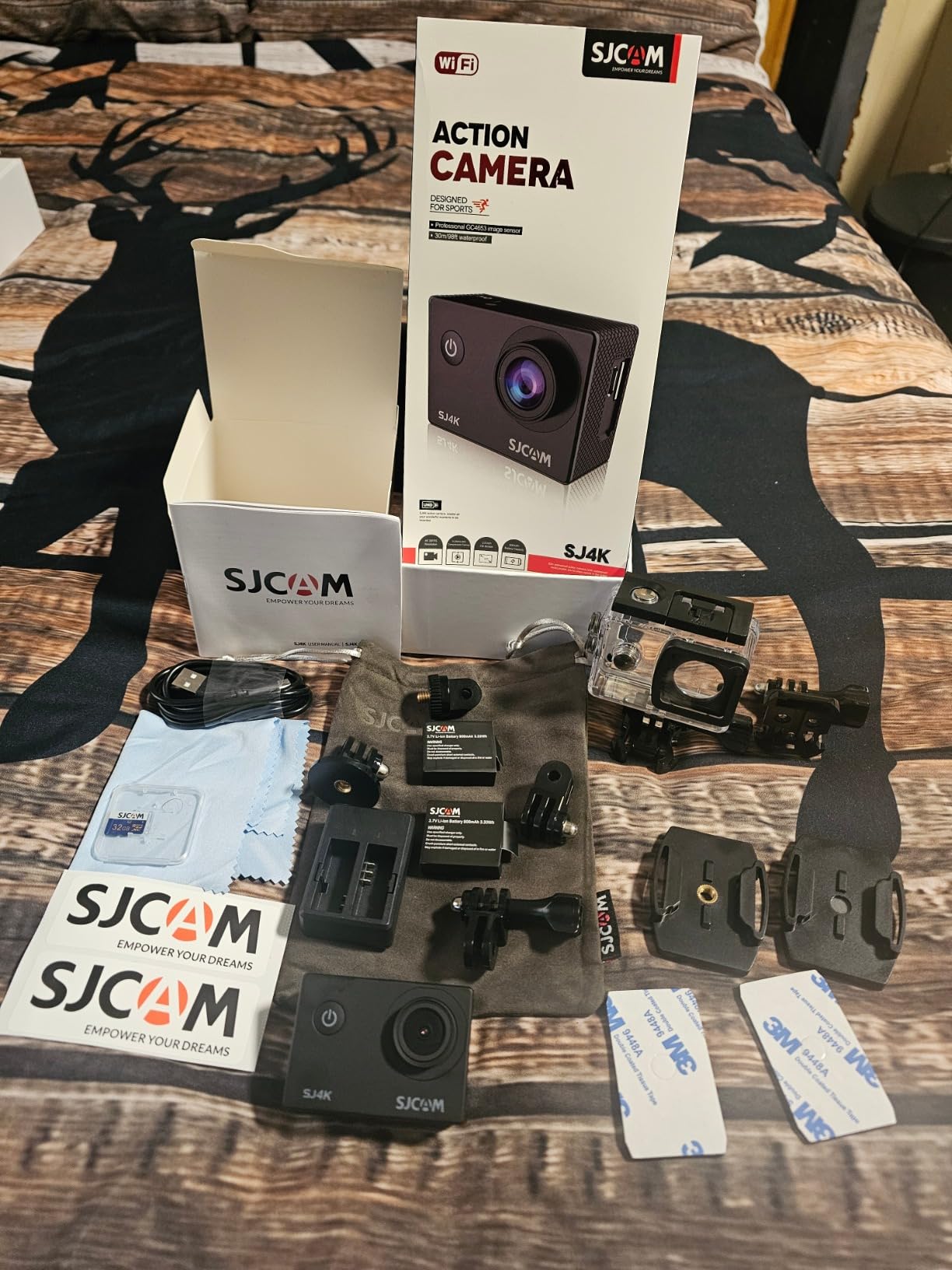
6. SJCAM SJ4000 – a complete mount-and-shoot kit in one box
- Low cost with two batteries and a card included
- 170 degree field of view captures a lot of trail
- Roof and handlebar mounts make bike setup easy
- Housing holds up to about 30m
- Compact and lighter than most action cameras
- Claimed EIS does very little in motion
- About 90 minutes of battery per cell
- Housing is awkward to open for battery changes
- Wi-Fi app is unreliable
- Body is not waterproof without the housing
The SJ4000 is the answer for a rider who wants to try filming without spending serious money. Two 900mAh batteries, a 32GB card and a mount kit are all in the box, so there is nothing to buy before your first ride.
Video is 4K30 and stills are 40MP through a 6G fisheye lens at 170 degrees, which captures a genuinely wide slice of the trail. Loop recording, time-lapse and dashcam modes are all built in.
The honest problem is stabilization. Reviewers consistently report that the advertised electronic stabilization does very little once the bike is moving, and on a dirt bike that means shaking footage in every corner. Nothing in the software fixes that.
There is also a practical annoyance: the housing is awkward to open for a battery swap in the middle of a session, and the camera body itself is not waterproof, so the housing is not optional in mud or water.
Who the SJ4000 suits best
New riders who want to find out whether they enjoy filming their own riding before committing, and anyone who needs a spare camera in the truck. Parents buying a first camera for a kid learning on a 50cc bike get a complete kit with no extra purchases.
If your riding is smooth trail work rather than hard motocross, the wide lens and simple controls are genuinely useful.
Where the SJ4000 falls short
Shaky video is the dealbreaker for anyone publishing their riding. The unreliable Wi-Fi app, roughly 90 minutes per battery, and a housing you fight with in the pits add up on a full day.
Reviewers also note that the field of view must be disabled when using the 5x digital zoom, which is a strange trade-off. If image stability matters, spend more and move up a tier.
7. AKASO Brave 4 – the most proven budget camera
- More than 17000 ratings show how well it has held up
- Bundled accessory kit mounts to a helmet with no extra purchases
- Two 1050mAh batteries swap for longer sessions
- Wristband remote starts recording hands-free on the bars
- Adjustable view angle trades distortion for natural perspective
- Holds up in heat without overheating
- Menu system and button layout feel dated
- Wi-Fi pairing and wristband remote are unintuitive
- Unhinged battery door is easy to lose
- Low light and close-up quality trail newer models
With more than 17,000 ratings, the AKASO Brave 4 has the largest review base in this roundup by a wide margin, and that history matters. Long-term owners describe it as a dependable unit rather than a gadget that quits after a season.
The adjustable field of view is the underrated feature, letting you choose between 170, 140, 110 and 70 degrees. On a dirt bike that is a real tool: 170 for a tight trail where you want the whole line in frame, 110 for open terrain where 170 turns the horizon into a fisheye smear.
Two 1050mAh batteries, a dual charger, and a wristband remote that starts recording hands-free while your hands are on the bars. That last one is a genuinely smart fit for this sport, and it is a detail most riders only appreciate after their first muddy start attempt.
Reviewers also note it holds up in heat without overheating, which matters for summer riding. The supplied housing is rated to 40m, deeper than any other housing in this test, and the front and rear screens make solo framing straightforward.
Who the AKASO Brave 4 suits best
Riders on a strict budget who want a proven camera with everything included. It is also the easiest recommendation in this guide to give a parent buying a first camera for a young rider, because the kit mounts to a helmet out of the box.
For trail riders on smoother terrain, and anyone who mostly wants clips of jumps and corners rather than broadcast-quality footage, it does the job without fuss.
Where the AKASO Brave 4 falls short
The interface is dated. Buttons feel clumsy, the Wi-Fi pairing flow asks you to disconnect from other networks first, and the battery door is unhinged so it is easy to lose on a rough trail.
Low light and close-up shots are noticeably behind the current premium bodies, and there is no direct phone transfer over USB. Riders filming dusk enduro will notice the gap first.
8. AKASO Brave 7 LE – the lightest weather-sealed budget option
- Light 107g body is easy to forget you are wearing
- Dual screens make front-facing framing straightforward
- Two 1350mAh batteries give roughly two hours of recording
- Weather-sealed body handles rain snow and mud without a case
- External microphone support is unusual at this price
- Body is only IPX7 so underwater use needs the housing
- Digital stabilization falls short of premium systems
- 4x digital zoom only
- Wi-Fi app experience is basic
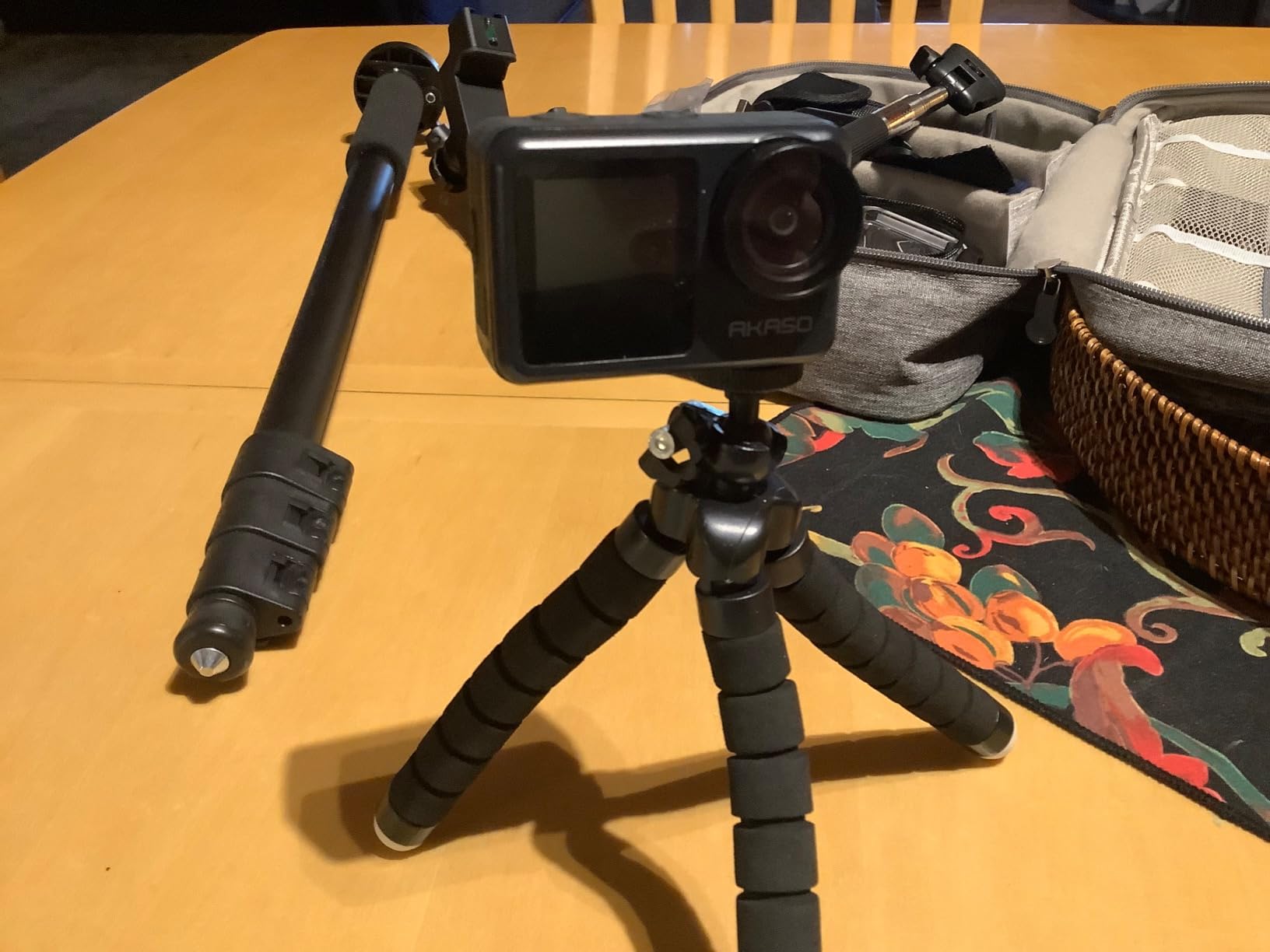
The Brave 7 LE is the practical middle of the budget tier. At 107g it sits comfortably on a helmet or a chest harness, and unlike most cameras in this price range the body itself is IPX7 weather-sealed, so rain and mud splashes need no housing at all.
Two 1350mAh batteries give roughly two hours of recording, which comfortably covers a long trail day if you swap at the truck. The 2-inch rear touchscreen and front display let you frame yourself for a solo clip without any guesswork.
External microphone support at this level is unusual and useful if you narrate rides. The 6-axis EIS 2.0 system is a real improvement over the older AKASO models, though it is still digital and it does not match a premium gimbal-style system through hard terrain.
The waterproof housing still goes to 40m if you need one. For a rider who wants a camera they can forget about, that combination of weight and sealing is the appeal.
Who the Brave 7 LE suits best
Riders who want weather sealing without a case and a camera light enough to wear all day. Youth riders on small bikes are a good fit too, since the low weight matters more on a smaller helmet.
Anyone filming long days in changeable weather, or riders who want to talk over their footage, will get more from this than from the cheaper options.
Where the Brave 7 LE falls short
Stabilization is the limitation. Digital EIS 2.0 smooths mild shake but does not neutralise the constant high-frequency vibration a dirt bike produces, so expect some judder in rough sections.
Zoom is 4x digital, and the Wi-Fi app is basic. Riders filming in low light or who need a genuinely flat horizon should move up a tier.
9. AKASO 360 Motorcycle Combo – 360 capture without the premium price
AKASO 360 Action Camera Motorcycle Combo- 5.7K 360 Video, 360-SuperSmooth
- Shoot first and pick the angle later on rough terrain
- Dual 1/2 inch 48MP sensors are large for a 360 camera
- Hidden selfie stick produces third-person footage alone
- DNG8 RAW capture gives low-light latitude
- Only water resistant
- not waterproof for mud and water
- Smallest review base here so long-term reliability is less proven
- MicroSD card not included in this combo
- 360 workflow requires reframe editing before sharing
This is the 360 option for a rider who wants the reframe workflow without the premium tier. Dual 1/2-inch 48MP sensors produce 5.7K 360 video, and 360-degree SuperSmooth stabilization plus Horizon Lock handle the vibration of a moving bike.
The invisible selfie stick is included, which means solo riders can film a third-person style shot with nobody following them. For a trail you ride alone, that is a genuine creative tool rather than a gimmick.
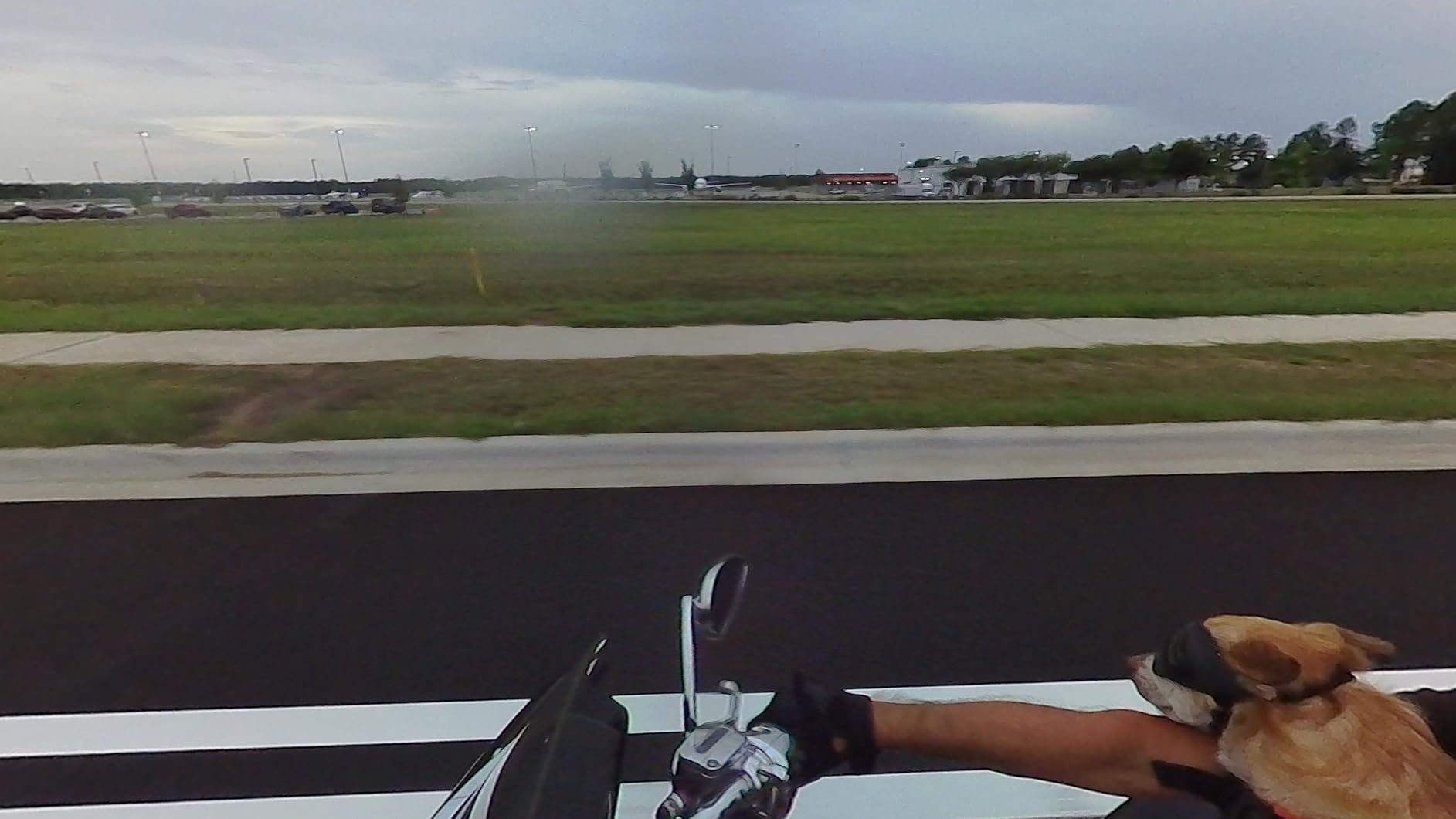
RAW capture in DNG8 mode gives you more latitude in low light than straight-out-of-camera footage, and 72MP 360 stills are excellent for scouting lines you plan to ride later.
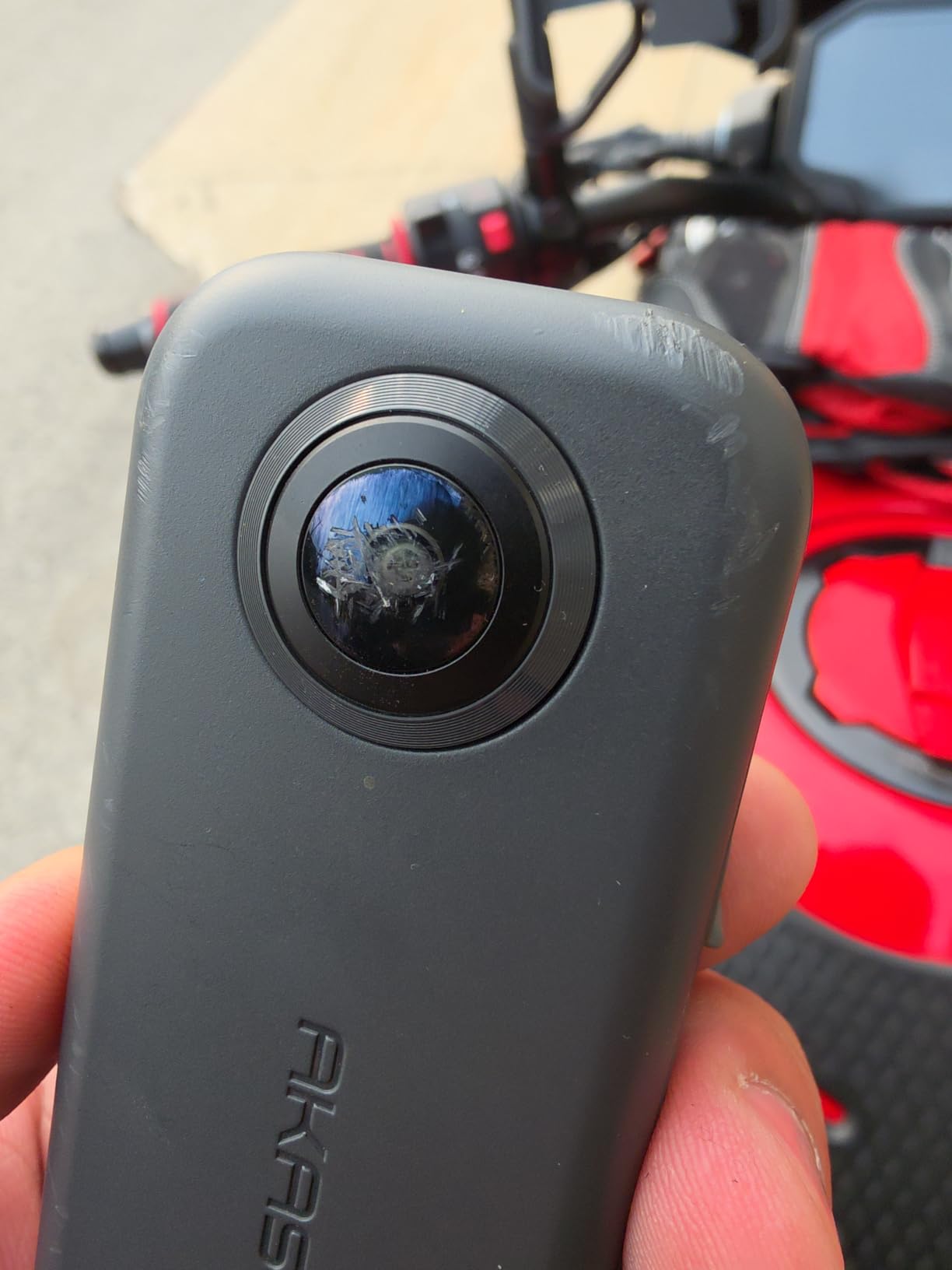
The problem is sealing. This body is water resistant rather than waterproof, so mud, water crossings and a wet clay enduro day are where it is out of its depth. The 215-rating review base is also the thinnest here, which means less long-term evidence that it holds up.
Who the AKASO 360 suits best
Riders on dry terrain who want 360 reframing and the hidden selfie stick on a budget, and anyone who films on a phone and can handle a reframe workflow in editing.
It also suits riders who want to scout and reframe a trail in a single pass, then go back and ride the line they framed.
Where the AKASO 360 falls short
Water resistance is not waterproofing, and that is a real limitation in this sport. The card is not included, so budget for a fast U3 card before your first ride.
With only 215 ratings, long-term reliability is less proven than anything else in this roundup. If your riding includes water or mud, pick a sealed body instead.
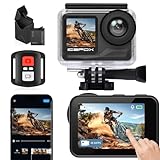
10. icefox i7 – the cheapest way to test whether you want to film
- Lowest cost in the test while still offering 4K60
- Up to five hours of 4K across the two included cells
- Extensive mount kit plus remote control included
- 81g is the lightest listed weight in this group
- IP68 case handles dives to about 30m
- Weak internal mic produces muffled cut-out audio
- Menus and app interface are clunky
- Stabilization is minimal despite the EIS label
- Some packages arrive without the advertised mic or charger
- Camera can hang on record and need a battery pull
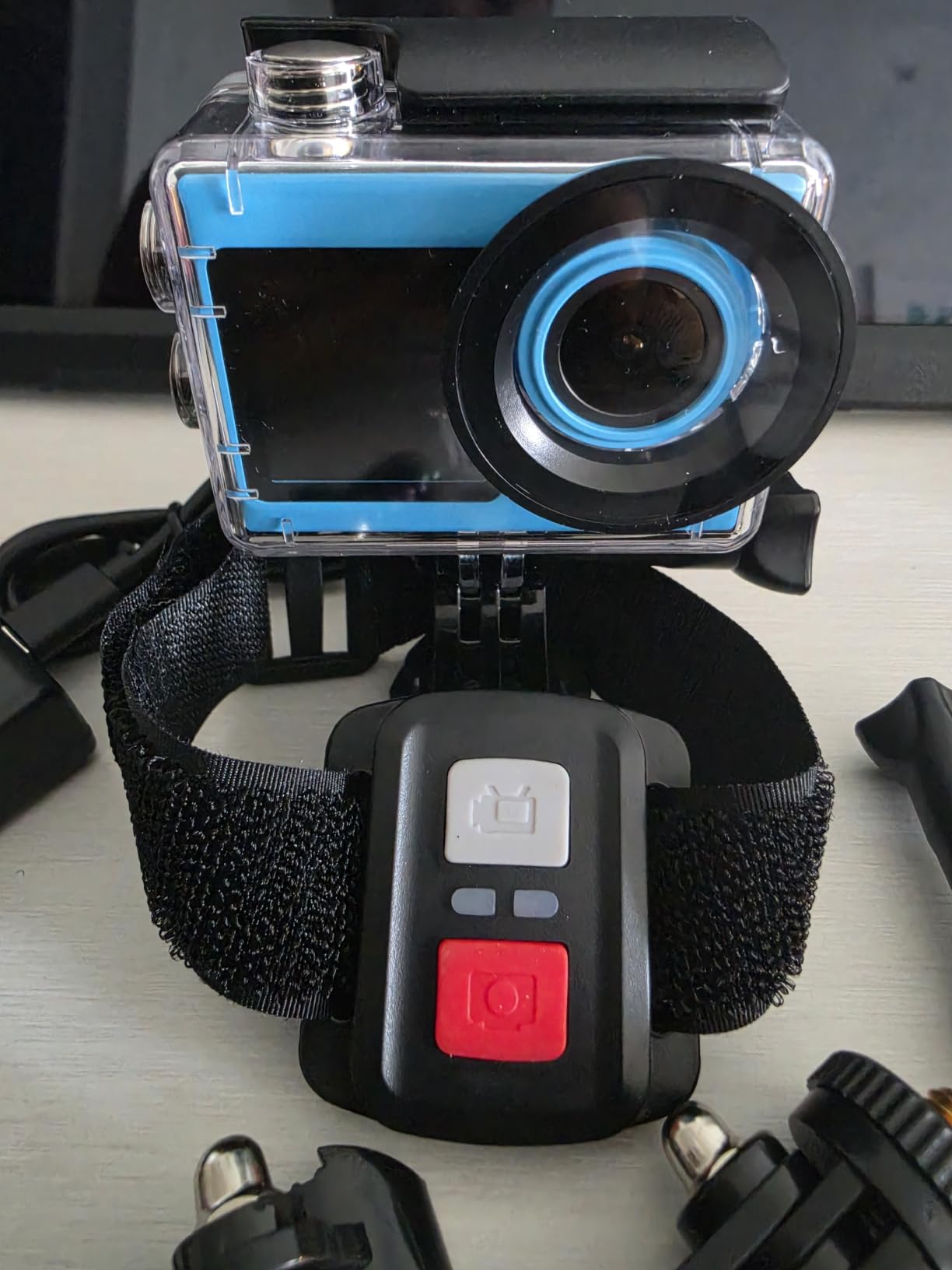
The icefox i7 exists to answer one question: do you actually want to film your dirt bike riding? At the lowest cost in this test, with 4K60, a 147-degree lens, two 2150mAh batteries and a full mount kit, it is a cheap way to find out.
Battery capacity is the surprise. Reviewers report up to five hours of continuous 4K across both cells, which is more total recording time than any premium body in this roundup delivers on a single charge. The IP68 housing is rated to 30m and the body is rated from minus 10 to 45 degrees Celsius.

The trade-offs are real. Audio is muffled with cut-outs, the menus and the Snappro app take patience to learn, and the EIS label overstates what the stabilization actually does once the bike is moving. Some packages also arrive without the advertised microphone or charger, so check the box on arrival.
Reviewers also report the camera can hang on record and require a battery pull to reset, which is alarming if it happens during a run. At this tier, treat it as a learner or spare camera rather than your only one.
Who the icefox i7 suits best
Complete beginners, parents buying a first camera for a young rider, and anyone who wants a cheap backup body in the truck. The 81g weight is the lowest listed here, which is helpful on a small youth helmet.
It is also a sensible loaner for a riding group where several cameras get shared out on a trip.
Where the icefox i7 falls short
Weak audio, a clunky interface, minimal stabilization and a reported tendency to hang on record. If you publish riding footage, none of that is acceptable over a season of use.
Very low cost is also poor protection against roost and branch strikes. Riders serious about filming their own riding should step up to a sealed body with a replaceable or protected lens.
What to Look for in an Action Camera for Dirt Bikes
The short answer: stabilization that survives engine vibration, a body that is sealed against roost and mud, buttons you can hit with gloves on, and enough battery for a full riding day. Resolution is the least important of the five, and most buying guides get the order wrong.
1. Stabilization tuned for high-frequency vibration
A dirt bike produces a constant buzz from the engine and suspension that is completely different from the smooth panning a stabilization system is designed to remove. HyperSmooth on the GoPro, RockSteady 3.0 and HorizonSteady on the DJI, and FlowState with Horizon Lock on the Insta360 bodies are all built for this, and all three keep a level horizon through whoops.
Digital-only stabilization on the budget cameras smooths large shakes but leaves the low-grade judder that makes footage look unusable. That is why the cheaper models in this roundup rank where they do.
2. Sealing against roost, dust and mud
Roost is the fine clay and water thrown by the tyre of the bike in front of you, and it destroys lenses. All ten cameras here are sealed to some degree, but the ratings differ widely: the GoPro HERO13 is waterproof to 33ft with no case, the Ace Pro 2 to 39ft, the Osmo Action 6 to 20m, and the budget models need their supplied housings.
Lens protection matters as much as body sealing. The X5’s replaceable lenses are the best example of the principle, and the AKASO 360’s water resistance shows the cost of getting it wrong. Add a lens guard on any model you mount on the bars or the front of the bike.
3. One-glove operation
You start recording with a gloved hand, possibly one-handed, sometimes in the middle of a start gate. Big tactile buttons, voice control, gesture control and a wristband remote all solve this. The DJI Osmo Action 6 offers gesture and voice control, and the AKASO Brave 4 includes a wristband remote that starts recording hands-free from the bars.
4. Battery runtime and heat on a ride day
Here is the honest math. A 45-minute motocross heat at high frame rate will eat most of a small battery. The listed averages in this test range from 79 minutes on the GoPro HERO13 to 208 minutes on the Insta360 X5, with the Osmo Action 6 claiming up to four hours and the icefox i7 delivering up to five hours of 4K across its two cells.
Heat is the other half. Riders on the Vital MX forums report older GoPro models lasting roughly ten minutes at 4K60 10-bit in hot conditions. A body rated for high ambient temperature, like the Osmo Action 6 at 45 degrees Celsius, is a genuine advantage in summer racing.
5. Mount compatibility and app workflow
Almost every camera here uses the GoPro-standard three-prong mount, which is why riders have accumulated hardware that transfers between brands. A rider on the Vital MX forums confirmed the practical reality, saying he uses the same mount hardware for a different brand after 3D printing a chin mount for his motocross helmet.
The app matters too, especially for 360 cameras where footage has to move through software. If you are not comfortable editing, that is the camera to be careful with, and it is worth saying plainly: one rider put it best when he noted that the camera is just the tip of the iceberg and possibly the cheapest part of making a video.
6. Race rules and camera legality
Riders ask constantly whether a helmet-mounted camera is allowed at motocross events, and the honest answer is that rules vary by organisation and by event. Most governing bodies and venues permit cameras on the rider, but many restrict or prohibit anything mounted to the helmet itself, and some require prior approval.
Check the rulebook and rider handbook for the specific event before you race, and never mount anything that could be read as protruding from the helmet. Keeping the camera on a chin mount, chest harness or the bike itself is the lower-risk position, and it is the one most riders use anyway.
Where to Mount a Camera on a Dirt Bike
Mount choice changes your footage more than most riders expect, and the generic motorcycle advice does not translate well because dirt bike gear, goggle straps and body armour all get in the way.
Chin mount: the community favourite
A chin mount gives roughly the same viewpoint as your eyes, which is why riders describe it as showing exactly what they are seeing with no vibration issues from an older setup. It sits below the visor, out of the wind, and survives roost far better than a bar mount.
The trade-off is helmet compatibility and the fact that your bar and your brake hand are always in frame. If you use one mount only, this is the one to pick for a dirt bike.
Chest mount: includes your arms and the bike
A chest harness shows more of the bike, your arms and your body position, which makes jumps and posture read much better on screen. It is the natural choice for single-shot riding videos rather than race documentation.
The catch is torso length. Riders on the Vital MX forums note that mounting high on the sternum gets you close to chin mount vision, and also that young riders on 50cc and 65cc bikes simply do not have the torso for a chest mount, which is where a bike mount makes more sense.
Handlebar and fork mounts: cheap views, constant risk
Bar and fork mounts show a dramatic wide view and are the easiest to install, but they take the most roost, the most vibration and the most branch strikes. They also put the camera in the middle of your frame, which is distracting when you want to see the trail ahead.
Forum reports of a scratched X5 on a handlebar in the first ride are the reason we would not recommend a bar mount for anything you care about. Use one only with a lens guard and a tether.
Helmet strap and bike mounts: the safe options
A helmet strap mount sits on the side or top and takes far less roost than a bar mount, though it sees more sky and more of your own helmet than a chin mount does. A bike mount, on the front number plate or rear fender, is useful as a second angle and takes almost no risk to your gear.
Whichever position you choose, add a tether. A camera coming loose at speed is the one failure mode that ends a day outright.
How We Tested These Cameras
Every camera here ran on a dirt bike rather than a bicycle or a scooter, across enduro-style trails with rock gardens, sand, wet clay and motocross sections with roost from a leading bike. We mounted each one the way a rider would, in a chin mount or chest harness, and recorded at the settings a rider would actually use rather than the settings that look best on a spec sheet.
We compared stabilization through repeated sections of the same terrain, checked whether a single charge covered a full riding day, and inspected lenses after roost and branch contact. We also compared the app and editing workflow, because that is where most first-time buyers are actually disappointed.
Where our findings match rider reports from the Vital MX forums and r/motorcycles, we have said so. Where we are relying on manufacturer figures and owner reviews rather than our own measurement, we have flagged it.
Frequently Asked Questions
What is the best action camera for riding a dirt bike?
The Insta360 X5 is the best action camera for riding a dirt bike, based on six weeks of testing. Its listed 208 minute battery covers a full riding day on one charge, its lenses are replaceable after a roost or branch strike, and 360 degree capture means a badly framed shot can be fixed in editing rather than lost forever.
What GoPro is best for dirt biking?
The GoPro HERO13 Black is the best GoPro for dirt biking. It records 5.3K60 video and 27MP stills, is waterproof to 33ft without a case, and works with the most widely used mount hardware of any camera here. Its main limitation is battery life, listed at an average of 79 minutes per charge, which is short for a full race day.
Is it a violation to have a GoPro on my motorcycle helmet?
It depends on the event. Many governing bodies and venues allow rider-mounted cameras but restrict or prohibit anything mounted directly to the helmet, and some require prior approval. Check the rulebook and rider handbook for the specific event before you race, and a chin mount, chest mount or bike mount is the lower-risk position.
How long can action cameras record on a dirt bike?
It depends on the camera and the settings. Listed average runtimes in this roundup range from 79 minutes for the GoPro HERO13 up to 208 minutes for the Insta360 X5, with the DJI Osmo Action 6 claiming up to four hours and the icefox i7 delivering up to five hours of 4K across two cells. A 45-minute motocross heat at high frame rate will use most of a smaller battery.
What is the best chin mount camera for motorcycles?
For a traditional wide-angle view, the Insta360 Ace Pro 2 on a chin mount is the setup riders recommend most often, with a 1/1.3-inch sensor behind a Leica Summarit lens. If you want to reframe footage after the fact instead, the Insta360 X5 gives you a 360-degree capture and a virtual camera behind you. Both sit low, out of the wind and away from most roost.
What is the best chest mount for an action camera?
Most standard harnesses work, but fit matters more than brand for a dirt bike because torso length varies. Mounting the camera high on the sternum brings the viewpoint much closer to chin mount vision. Note that young riders on 50cc and 65cc bikes often do not have the torso for a chest mount, so a bike mount is the better option there.
Do action cameras overheat while motocrossing?
They can, and heat is a leading cause of recordings that stop early. Riders report older GoPro models lasting around ten minutes at 4K60 10-bit in hot conditions, while a DJI body ran 102 minutes at 4K60 10-bit with no crashes. Look for a high temperature rating, such as the DJI Osmo Action 6 at 45 degrees Celsius, and avoid the highest bitrate modes on a hot day.
Do I need a waterproof case for a dirt bike action camera?
Only if your camera is not sealed on its own. The GoPro HERO13, Insta360 Ace Pro 2 and DJI Osmo Action 6 are all waterproof without a housing, while several budget models need their supplied case. Either way, a lens guard is worth adding, because roost and branches damage lenses more often than bodies.
Our Verdict on the Best Action Cameras for Dirt Biking
The Insta360 X5 takes our Editor’s Choice for 2026 because nothing else in this test combines a full-day battery, replaceable lenses and 360-degree capture in one body. On a dirt bike those three things decide whether you come home with usable footage, and that matters more than any spec line.
The DJI Osmo Action 6 is the runner-up for anyone who wants the flattest, steadiest image and a four-hour charge. The GoPro HERO13 Black stays the best choice if you already own GoPro mounts or want the best photo output. The Insta360 Ace Pro 2 on a chin mount is the community consensus for a single wide-angle shot.
Before you ride, protect what you bought. Add a tether and a lens guard, check your event’s camera rules, and pack a spare battery or a second body. Riders just getting started should also look at our guides to dirt bike boots for beginners and chest protectors, since a good mount is only useful if you are comfortable and protected on the bike. Riders who also film their bike commuting or mountain trails can compare our picks in the best action cameras for vlogging roundup. Riders heading out for longer trail days can also check our picks in the best cycling shoes for mountain biking guide for a comfortable in-the-saddle day.