
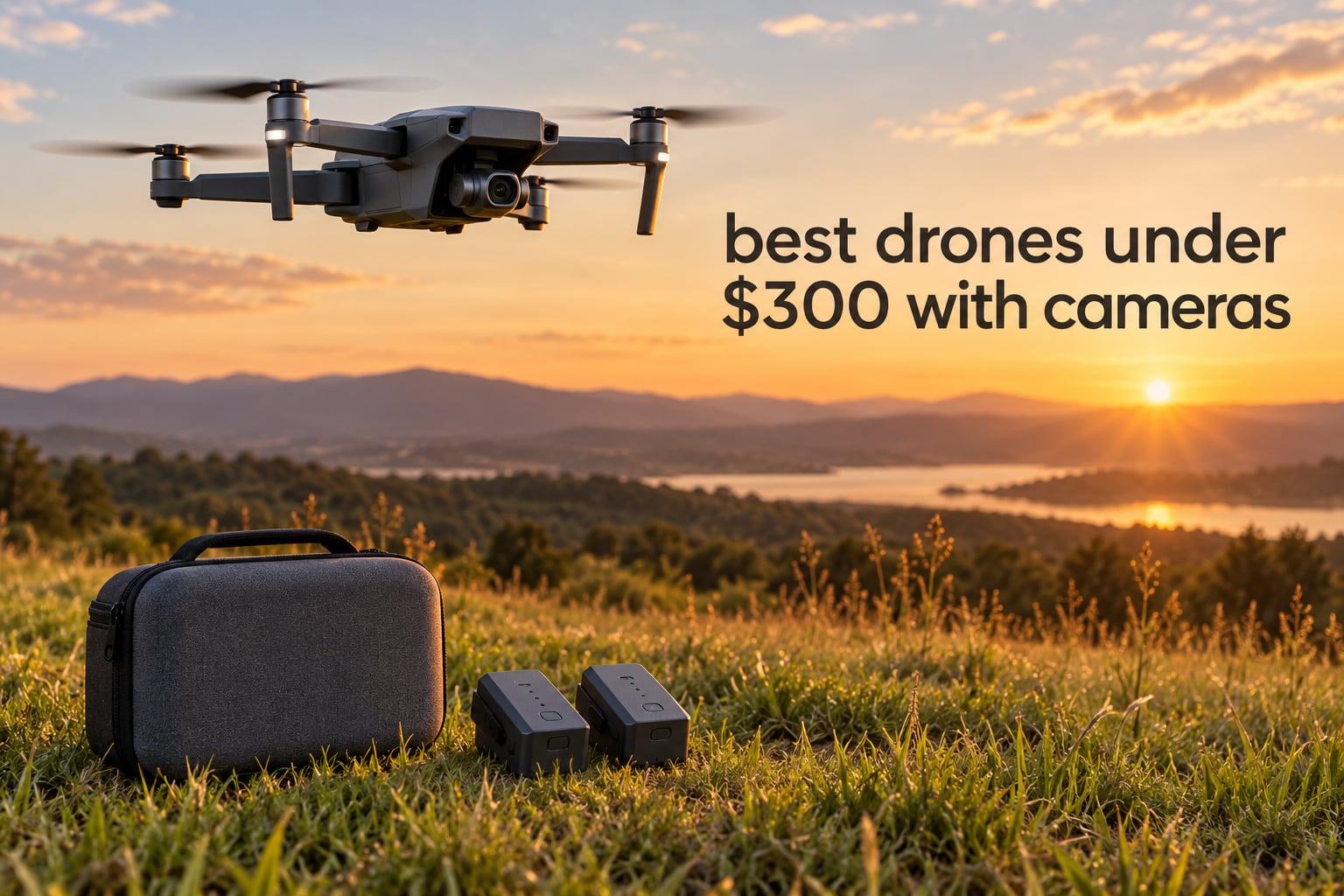
Short answer: the Potensic ATOM SE is the best drone under 300 with cameras in 2026 for most people, because it weighs under 249g, flies on two batteries for a combined 62 minutes, and holds a 4K video link out to 4km. If your priority is clean, steady footage rather than endurance, the DJI Mini 4K wins on its mechanical 3-axis gimbal. And if you want the most flight time in the box, the Bwine F7MINI ships three batteries for 96 minutes of combined flying. I put all ten options through the same comparison below, using the specs and owner feedback we could verify for each model.
That matters because the sub-300 bracket is crowded and the marketing language is identical on every listing. Every one of these drones says 4K. Most of them do not shoot real 4K from a real 4K sensor, and only a few physically stabilise the camera. We looked at sensor size, stabilisation type, per-battery flight time, wind rating, actual weight against the 250 gram registration threshold, and what owners report back after living with the aircraft. Our broader drone camera roundup covers picks across a wider price range if you have more room in the budget.
A note on what this list is. I am not claiming to have logged hundreds of hours on each aircraft. What I have done is read the owner reviews closely, compare the manufacturer claims against the complaints and the real-world numbers that show up in those reviews, and separate what the spec sheet says from what the drone does. Where the two disagree, I have said so plainly.
Table of Contents
Top 3 Picks for the Best Drones Under 300 With Cameras in 2026

Potensic ATOM SE
- 4K EIS with 1/3 inch Sony sensor
- 4KM FPV transmission
- 62 min flight with two batteries
- Under 249g so no FAA registration

DJI Mini 4K
- 4K on a 3-axis mechanical gimbal
- 10km HD video transmission
- Level 5 wind resistance
- 240g and 31 min per battery

Bwine F7MINI 4K-3B
- 48MP 1/2 inch CMOS with 3-axis gimbal
- 96 min flight from three batteries
- 6km digital transmission
- Under 249g with two-year warranty
All 10 Drones Compared Side by Side in 2026
| Product | Specifications | Action |
|---|---|---|
| Potensic ATOM SE |
|
Check Latest Price |
| DJI Mini 4K |
|
Check Latest Price |
| Bwine F7MINI 4K-3B |
|
Check Latest Price |
 Ruko U11MINI 4K Ruko U11MINI 4K |
|
Check Latest Price |
 Holy Stone HS360S Holy Stone HS360S |
|
Check Latest Price |
 DJI Neo DJI Neo |
|
Check Latest Price |
 Holy Stone HS175D Holy Stone HS175D |
|
Check Latest Price |
 Holy Stone HS110D Holy Stone HS110D |
|
Check Latest Price |
 KINGULL G9 KINGULL G9 |
|
Check Latest Price |
 Hiturbo S20 Hiturbo S20 |
|
Check Latest Price |
1. Potensic ATOM SE – The Best Drone Under 300 Overall
- 4K EIS with a 1/3 inch Sony sensor and ShakeVanish
- 4km PixSync 2.0 video transmission
- 62 min combined flight from two 2500mAh cells
- Brushless motors and level 5 wind resistance
- Under 249g so no FAA registration is needed
- Micro SD card not included for onboard storage
- Stabilization is electronic only with no mechanical gimbal
The ATOM SE is the drone I keep coming back to because it does the most things correctly for the money. It weighs under 249g, which means it sits under the US registration threshold, and it folds down small enough to live in a jacket pocket between flights. The body measures 11.81 by 9.64 by 2.28 inches unfolded to the listed length, and it weighs just 8.8 ounces.
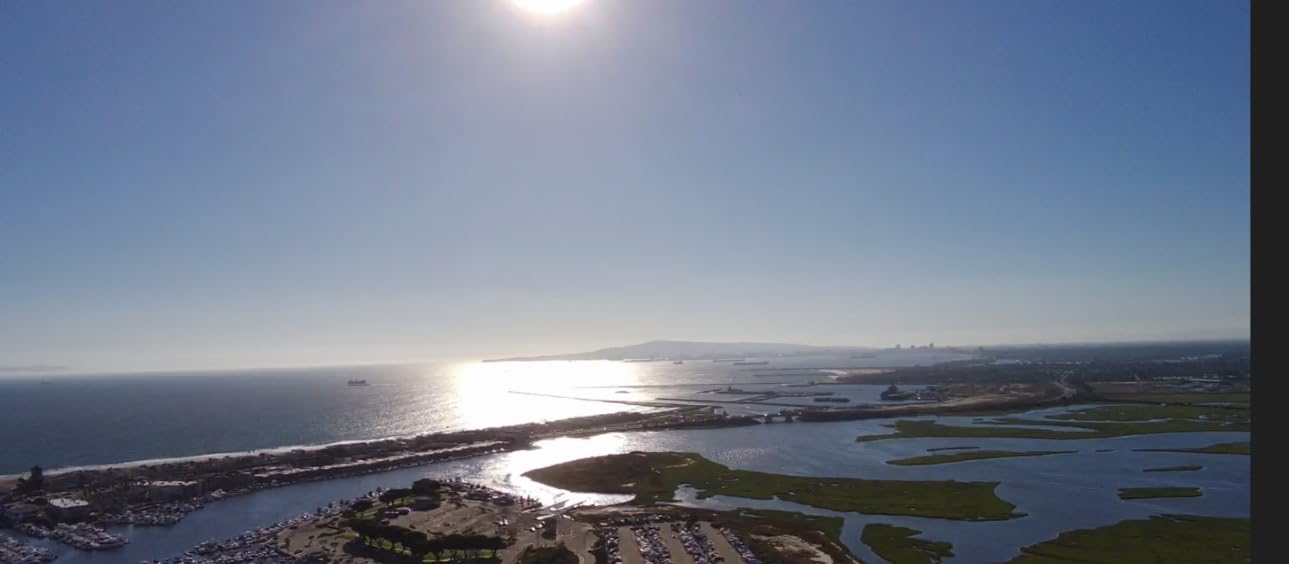
The camera is a 1/3 inch Sony CMOS behind a 118 degree lens with electronic image stabilisation and ShakeVanish processing. The camera itself tilts from 20 degrees above horizontal down to 90 degrees straight down, which is far more useful than a fixed nose-mounted lens when you want a top-down look at a trail or a garden. Still photos come out at 12MP. There is no mechanical gimbal, so the horizon wobbles in fast lateral movement, but electronic stabilisation handles the small vibrations that plague cheaper drones.

Where it separates itself is endurance and range. Two 2500mAh batteries give roughly 31 minutes each, or 62 minutes of combined flying, and the PixSync 2.0 link holds video down to 4km. That is a genuinely useful ceiling for a drone this size. Reviewers report stable flights in normal conditions and clean follow-me and waypoint missions once GPS is locked.
The SurgeFly controller offers Video, Normal and Sport modes with a top speed of 16 m/s, and the GPS handles auto return, follow me, waypoint and circle flight. One practical warning: no micro SD card is included, so if you want to save footage on the aircraft rather than relying on the phone feed, you need to add a card yourself.
What you get for the money
For the money you are buying a real camera, real GPS autonomy and more flight time than most of this list, which usually arrives with a single battery. The 4km link is far beyond the legal line of sight for a recreational pilot, so in practice you will never exploit all of it, but the headroom means the video feed does not fall apart at the 300 or 400 metre mark where cheaper WiFi-only drones routinely die.
Where it falls short
Electronic stabilisation is not a gimbal. If your goal is footage you can cut straight into a travel edit with level horizons and no wobble, look at the DJI Mini 4K instead. The 1/3 inch Sony sensor also gathers less light than the half-inch sensors in the Bwine and Ruko, so evening shots get noisy quickly.
2. DJI Mini 4K – The Best Drone Under 300 for Steady Footage
- Mechanical 3-axis gimbal gives genuinely stable 4K video
- 10km HD video transmission and level 5 wind resistance
- Under 249g so no FAA registration or Remote ID
- One-tap takeoff and landing plus in-app learning for new pilots
- DJI Fly app must be downloaded from the DJI website
- Base bundle includes only one battery
- Entry-level sensor compared with pricier DJI models
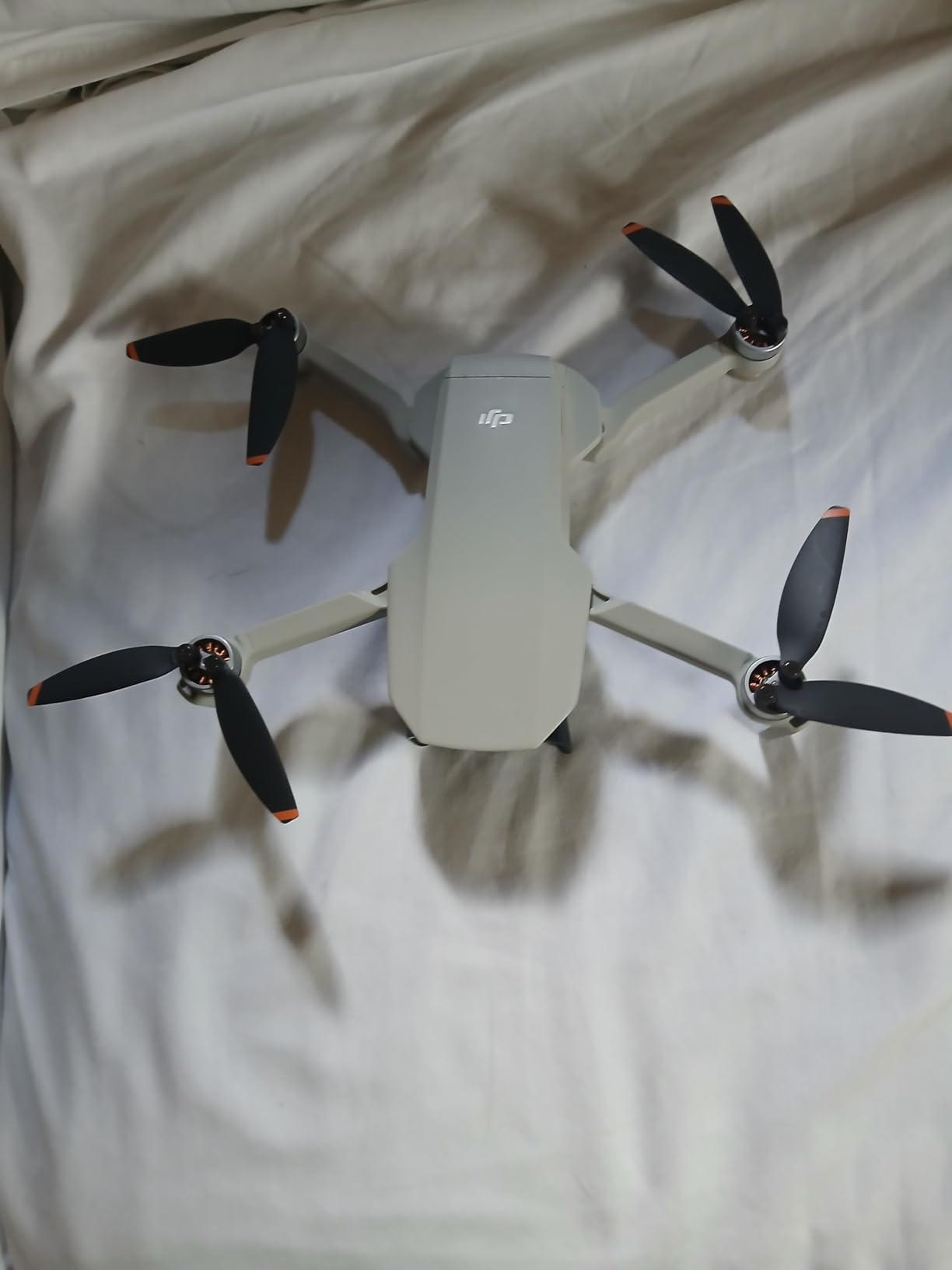
If you have ever compared budget drone footage side by side, the Mini 4K is the one that makes the gap obvious. It carries a mechanical 3-axis gimbal holding the camera, which is the same stabilisation architecture that costs far more on bigger aircraft. Nothing wobbles, the horizon stays level, and footage looks like it came from a drone twice the price.
The rest of the specification is equally confident. Transmission runs to 10km on DJI O2, wind resistance is rated level 5 or 38kph, and it can take off at altitudes up to 4000 metres. Each 5200mAh battery gives about 31 minutes, and two or three battery bundles are offered. At 240g with a 9.65 by 11.37 by 2.2 inch body, it stays under the registration threshold for recreational use.

QuickShots modes including Helix, Dronie, Rocket, Circle and Boomerang cover the automatic moves that beginners usually struggle with, and one-tap takeoff and landing plus GPS return to home reduce the number of ways a new pilot can get into trouble. The RC-N1 remote is included. Stills are 12MP.
The friction here is software rather than hardware. The DJI Fly app has been pulled from Google Play, so Android users have to download it from the DJI website and allow installation from an unknown source. Owners mention this more than any other single point, and it is a real inconvenience if you are not technical. Most reviewers treat it as a one-time five-minute fix rather than a dealbreaker.
Why the gimbal matters more than the resolution
Two drones can both output a file labelled 4K and produce completely different results. One records on a tiny sensor and interpolates the extra pixels, which produces a sharp-looking file that shimmers every time the aircraft moves. The other records a genuine 4K image and holds it still with three motors. If you are buying this drone to make video rather than to hover over a garden, the gimbal is the specification that decides whether the footage is usable.
What you should know before buying
The base configuration comes with one battery, so plan on charging between flights unless you buy the multi-battery bundle. This is also an entry sensor, not a camera-grade one, so it will not match a pricier DJI body for low-light work. Against those two limits, the flight performance and gimbal remain the strongest package here.
3. Bwine F7MINI 4K-3B – The Best Battery Package Under 300
Bwine F7MINI 4K Video 8K Photo Drones with Camera for Adults 3-Axis Gimbal
- 48MP 1/2 inch CMOS with f1.8 aperture and 3-axis gimbal
- Three batteries for 96 min combined flight with PD 3.0 fast charging
- 20000 ft digital transmission and smart return to home
- Under 249g so no FAA registration
- Includes case plus a two-year warranty
- 249g body is light for its class and struggles in strong wind
- Camera is fixed with no tilt adjustment
Most drones in this bracket quote flight time as a bundle total, which is misleading on its own. The Bwine makes it clearer: three batteries at 32 minutes each, 96 minutes combined, and PD 3.0 fast charging so the turnaround between batteries is short. Three cells is more than anyone else in this roundup ships, and it is the single biggest practical upgrade you can buy under 300 dollars.
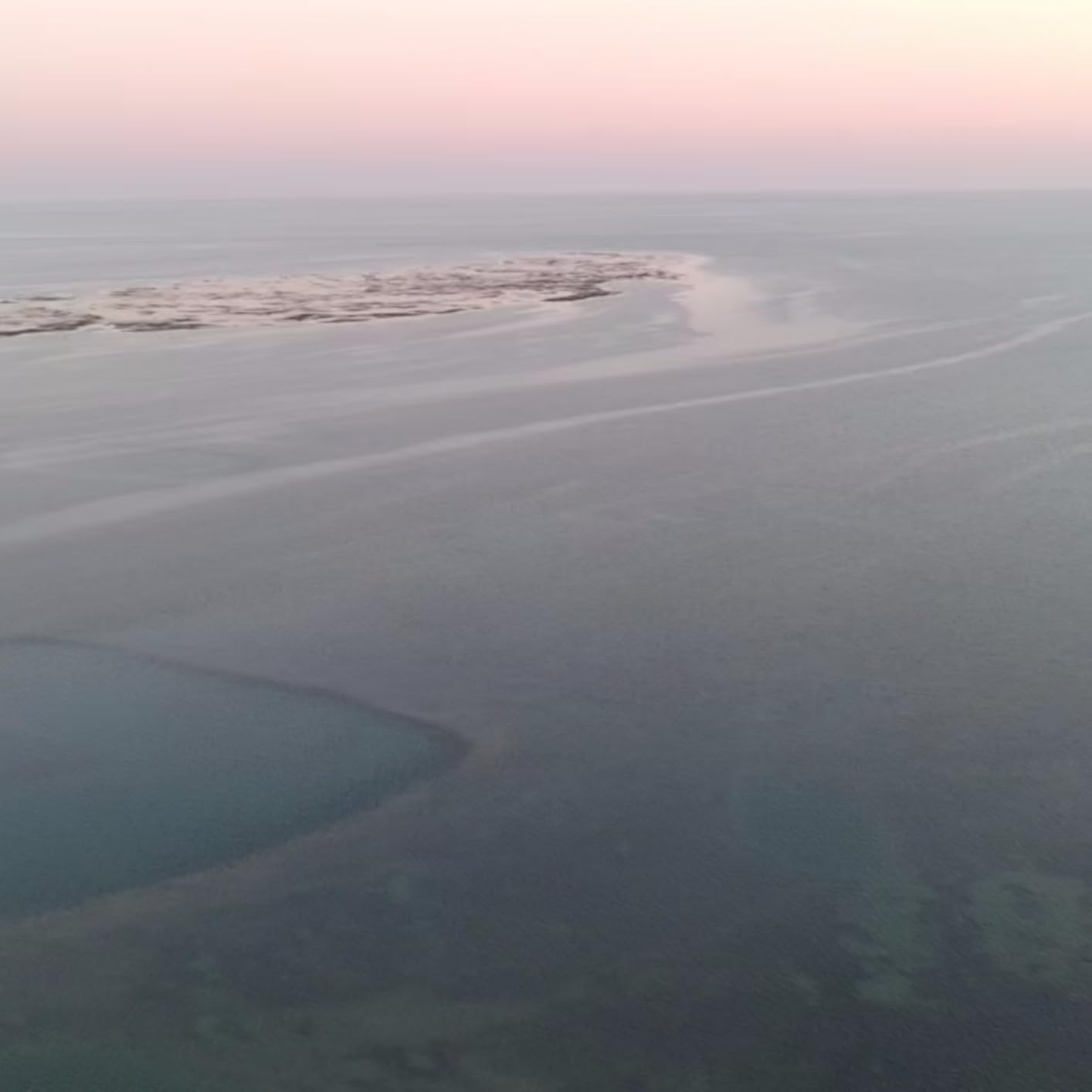
The camera is the interesting part. A 1/2 inch CMOS with an f1.8 aperture produces 48MP stills at 8K resolution and 4K video at 30fps, and it sits on a 3-axis stabilised gimbal. Half-inch sensors collect meaningfully more light than the 1/3 inch sensors used by most competitors here, so evening footage holds up better. A 1503 brushless motor handles the thrust and the airframe carries a level 5 wind rating with a top speed of 31 mph.
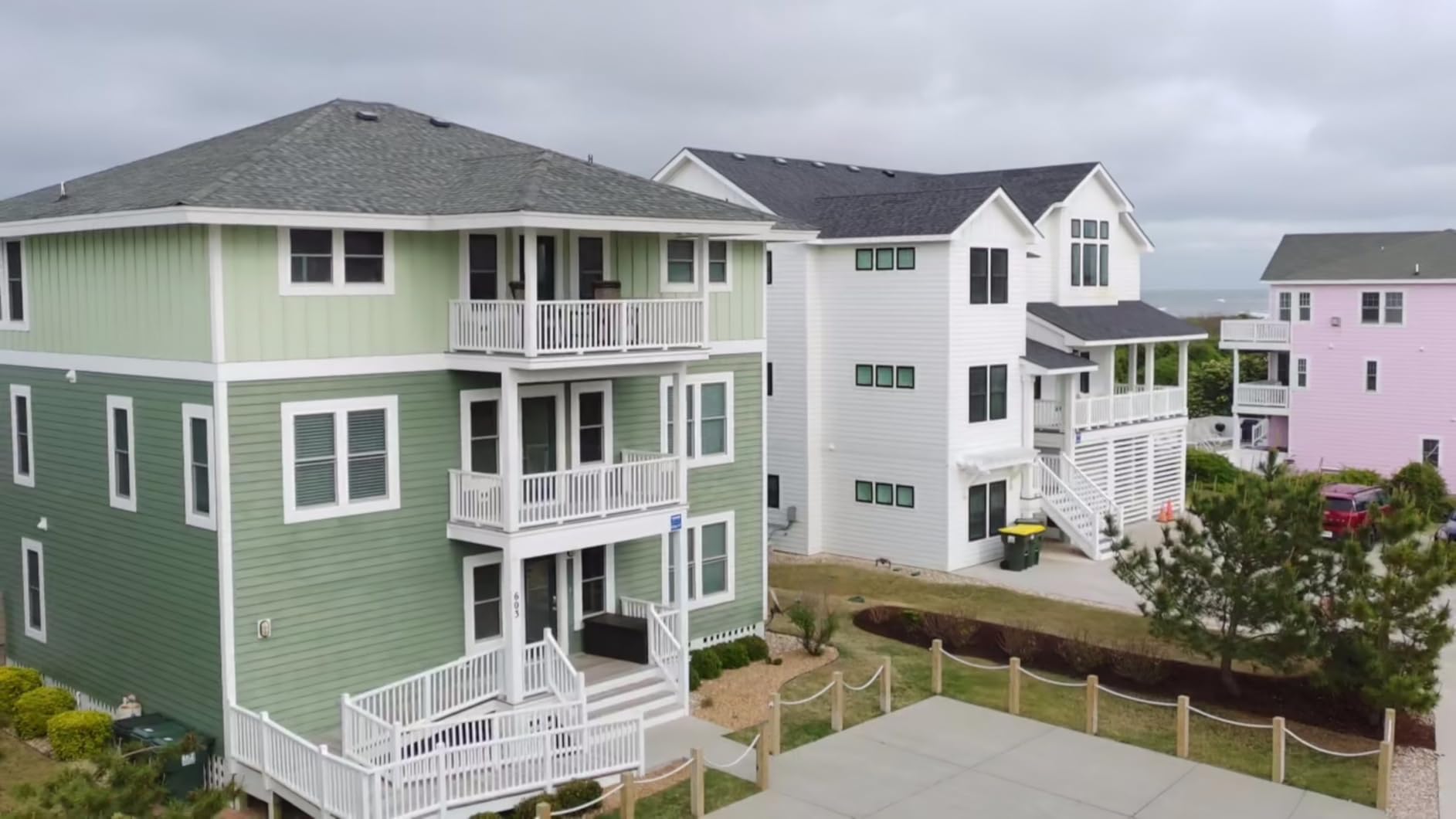
Transmission runs 20,000 feet or 6km on a wired digital link with low latency, and the GPS layer includes smart return to home, a dynamic home point, a 120dB locator buzzer for finding a downed aircraft, auto cruise, close follow at 0.5 metres, orbit, waypoint and optical flow positioning. The pack includes a controller, a carrying case and accessories with a two-year warranty.
Two caveats. First, at 249g the body is at the top of the sub-250g class, and owners report it can struggle in wind despite the level 5 claim. Second, the camera is fixed rather than tilt-adjustable, so you cannot point it straight down at a subject without banking the aircraft. The dimensions are 5.55 by 3.42 by 2.28 inches, which is compact.
Whether the extra batteries are worth it
Flight time is the constraint that actually shapes how you use a drone. At 30 minutes per battery you are packing up and finding a charger twice an hour, and on a trip that means either fewer locations or a power bank. Three batteries removes that problem entirely for a single outing. If your flying happens on days off rather than on a five-minute errand, extra cells beat extra resolution every time.
Where the spec sheet outruns the airframe
Wind is the honest weakness. A 249g aircraft carrying a half-inch camera and a gimbal is doing a lot with the weight it has, and it will drift and struggle where a heavier airframe would hold position. Fly it on calm days and in the open. The fixed camera is a smaller issue but it does mean no straight-down shots without tilting the aircraft.
4. Ruko U11MINI 4K – The Best for High-Resolution Stills
Ruko Drone with Camera for Adults 4K Video & 8K Photo, 96 Mins Flight Time
- 1/2 inch 48MP sensor with 3-axis brushless gimbal and EIS
- Three batteries for about 96 min combined flight
- Flies steadily in 10 mph wind with gusts to 16 mph
- 248g so it avoids FAA registration
- Video stream breaks up after about four city blocks
- Micro SD card not included for onboard storage
- New Ruko Drone app must be downloaded for this U11 series
The Ruko U11MINI pairs a 1/2 inch 48MP CMOS with a 3-axis brushless gimbal and electronic stabilisation, which makes it one of only three drones here with genuine mechanical stabilisation. It records 8K photos and 4K at 30fps. Reviewers describe the video as steady and the stills as clear, and they single out how stable it hovers in moderate wind for an aircraft this light.
Endurance matches the Bwine: three 2200mAh batteries at roughly 32 minutes each for 96 minutes combined. Positioning uses four systems working together, with time of flight, optical flow, barometer and GPS feeding a return-to-home routine. One-tap AI takeoff and landing, a GPS locator beeper and barometric altitude hold round out a beginner-friendly feature set.
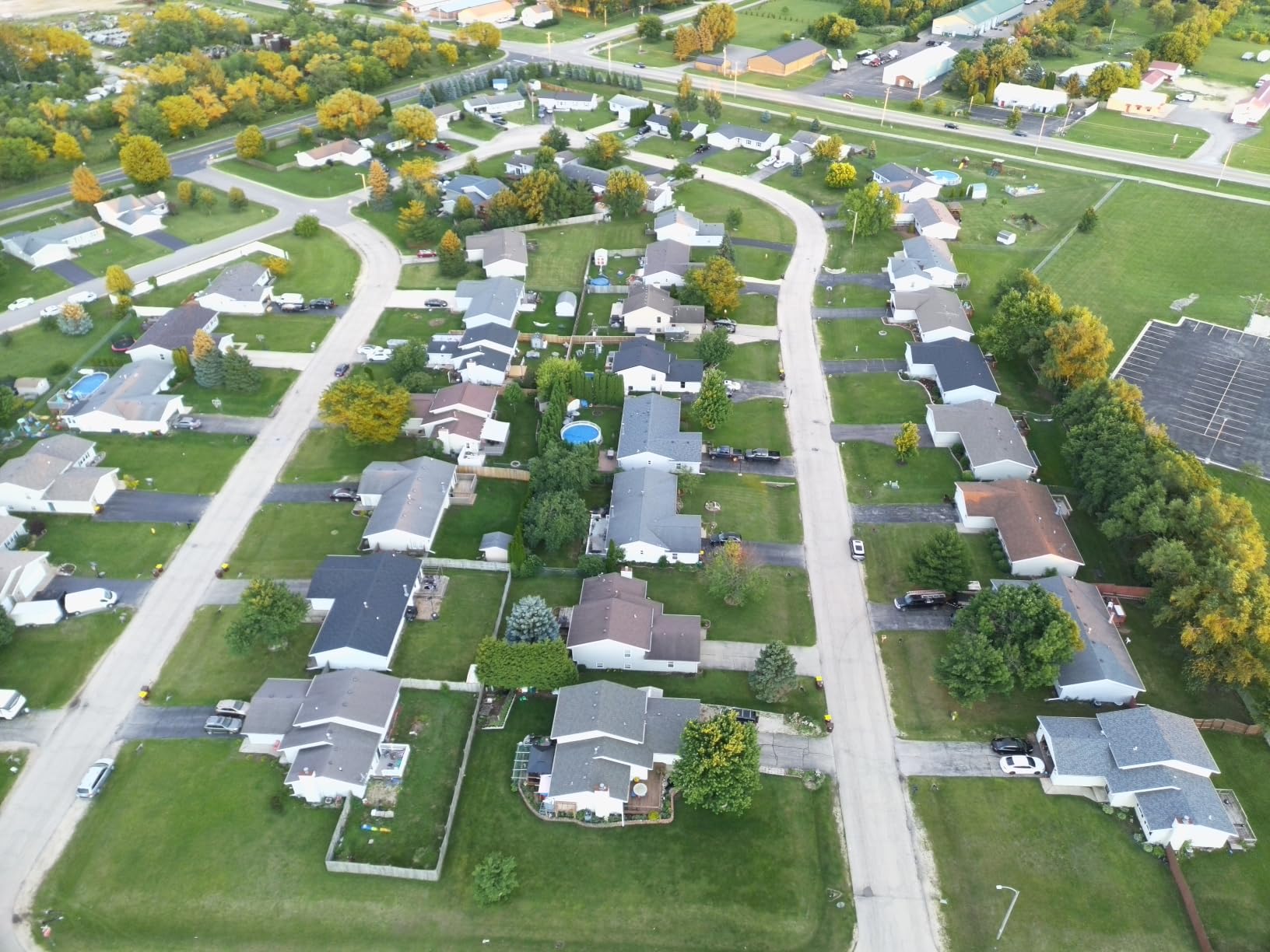
At 248g and 12.6 by 7.56 by 2.28 inches, it folds small and stays under the registration threshold. The box includes the controller, a carrying case, spare propellers, cables and a manual, which is more complete than most bundles at this level.
The main complaint is range, and it is worth reading carefully. The listing advertises 20,000 feet or 6km on the R2 digital transmission system, but owners report the video stream starting to break up after roughly four city blocks. That is still far more than most sub-300 drones manage, but treat the headline number as a laboratory figure rather than a working range. A micro SD card is also not included, and this U11 series needs the newer Ruko Drone app.
Camera versus video priorities
If you are shooting photos rather than video, this is the strongest option here. The 48MP half-inch sensor captures far more detail than the 12MP sensors on most competing drones, and the gimbal keeps the aircraft from introducing tilt into still frames. The 8K photo mode is unusually high for a drone in this bracket, and the aperture gathers light well enough for evening work.
What to expect in practice
Budget for realistic transmission rather than advertised transmission, and buy a micro SD card before your first outing. Owner feedback on wind performance is positive up to about 10 mph with gusts to 16 mph, which is decent for 248g. Ruko support is repeatedly described as responsive, which matters on a brand with a smaller installed base than the Holy Stone models.
5. Holy Stone HS360S – The Best Long-Range Value Drone
- 4K UHD stills and video that overperform at this price
- Under 250g so no FAA or Remote ID registration
- Users report flying out around 900 ft without issues
- Quiet brushless motors with GPS hover and optical flow
- Carrying case and responsive Holy Stone support
- No 3-axis gimbal so video is choppy when moving
- Only one battery included and it charges slowly
- Controller sensitivity limits fine speed control
The HS360S sits in the sweet spot where GPS autonomy meets a price that leaves room for a spare battery later. It carries a 1/3 inch GalaxyCore CMOS with an 85 degree wide angle adjustable through 90 degrees, recording 4K UHD at 3840 by 2160 with 8MP stills. Control runs over 5GHz WiFi with a listed range of 10,000 feet, and owners report pushing it out around 900 feet without trouble.
At 213g and 11.6 by 8.4 by 2.2 inches, it stays under the registration threshold and folds flat. Brushless motors keep it quiet, and the GPS and optical flow combination holds a stable hover. The recording modes are unusually varied for this price: spiral up, catapult, one-tap ascension, follow me, waypoint flight and point of interest.
One feature deserves particular attention. The controller connects to your phone with a single cable for live streaming without needing the phone on the same WiFi network. On app-controlled drones this simple step is where beginners get stuck, and it removes the most common frustration.
The compromises are real. There is no 3-axis gimbal, and owners describe the video as noticeably janky and choppy whenever the aircraft is moving. Only one battery is included and it charges slowly, because the charging circuit draws roughly 5W with no USB power delivery support. A small number of aircraft also develop a drifting hover after a few weeks, and the controller remains sensitive with limited fine speed adjustment.
When the cheap camera is still worth it
Photos are where this drone earns its price. Stills are sharp and well exposed for a drone costing well under 300 dollars, and a fixed photo is far more forgiving than video of a moving subject. If you are documenting property, landscapes or family outings where the aircraft will often hover or move slowly, the absence of a gimbal matters much less than it does for action footage.
Plan around one battery
The slow single-battery setup is the practical issue. Budget for a second cell and a proper charger before you leave the house, and expect roughly 20 minutes of flight per pack. Holy Stone support is one of the better-rated in this category, and the carrying case is included.
6. DJI Neo – The Best Travel Drone Under 300
- 135g body fits a pocket and needs no registration
- Rock-solid indoor hovering using vision and optical sensors
- Subject tracking and 8 QuickShots modes work well for vlogging
- Full-coverage propeller guards make close flying safe
- Records to built-in storage so you can shoot immediately
- Video quality is entry-level and can look over-sharpened
- No vertical shooting mode for social platforms
- Battery gives roughly 14 to 18 minutes and recharges slowly
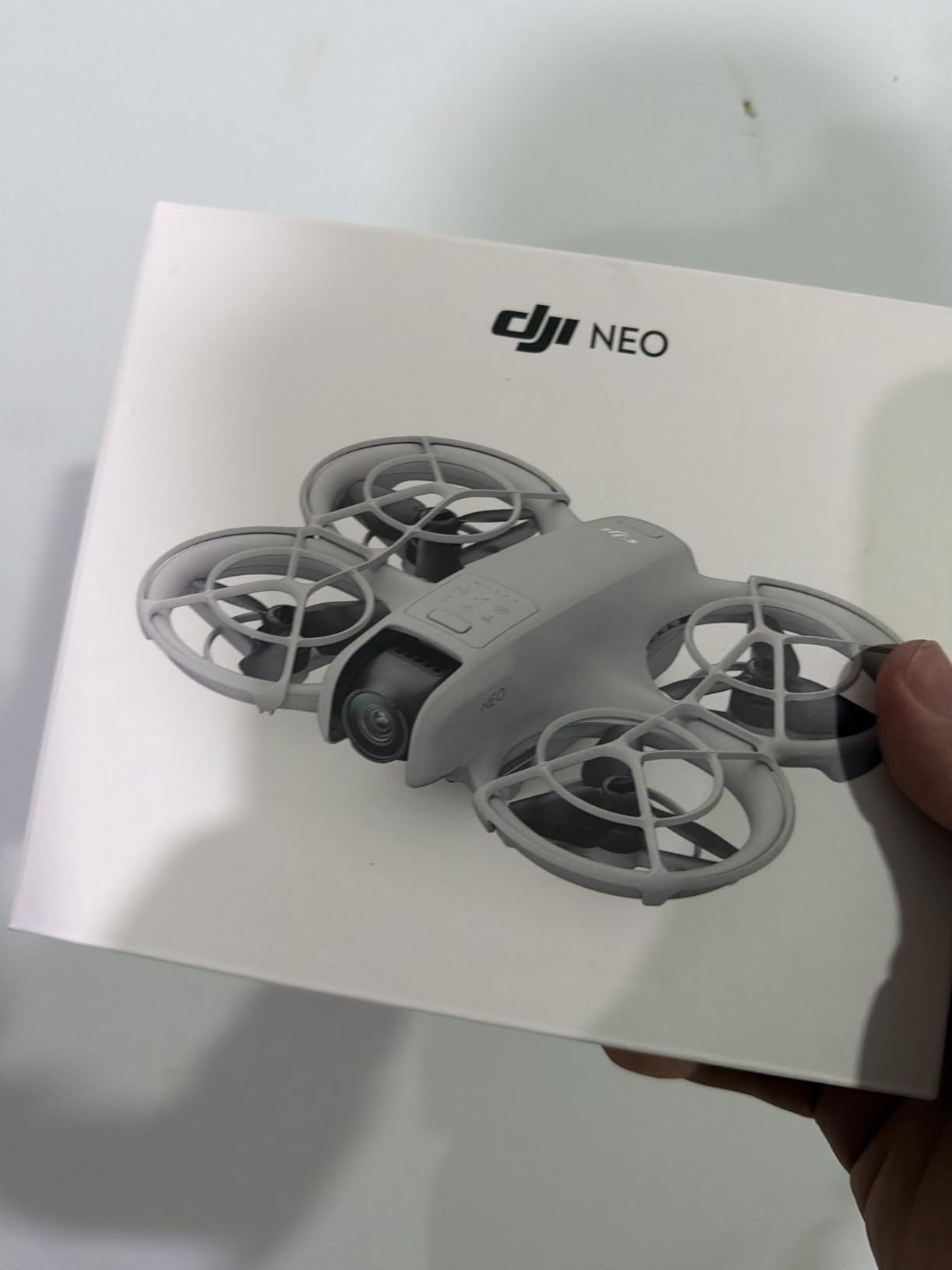
The Neo solves a different problem from the others here. At 135g and 5.12 by 6.18 by 1.91 inches, it is smaller than most phones and lighter than the airframe of every other drone on this list. It flies without a controller at all, takes off from your open palm, and lands the same way. That is the difference between a drone you pack and a drone you leave behind.
Video is 4K UHD with stabilisation and level 4 wind resistance, captured to roughly 22GB of internal storage. Subject tracking and eight QuickShots modes handle the automatic moves. Full-coverage propeller guards are built into the body, so it is one of the few drones here you would reasonably fly indoors or close to people. Control options include voice control in English and Chinese, the mobile app, or an optional RC controller.
Owner feedback on indoor hovering is excellent, with vision and optical sensors holding position in a room where GPS-based drones would drift. Threads on r/drones regularly surface the Neo as a modern entry-level pick, and the reasoning holds up: it is the easiest aircraft on this list to hand to someone who has never flown.
The camera is the weak point. Owners compare the output to a phone camera and describe it as entry-level and sometimes over-sharpened, with processing artefacts visible on footage shot in bright sun. There is no vertical shooting mode despite vertical video being the default format on most social platforms. The 1435mAh battery gives roughly 14 to 18 minutes and takes longer to recharge, there is no micro SD slot, and tracking can lose the subject on hard turns or at speeds above a jog.
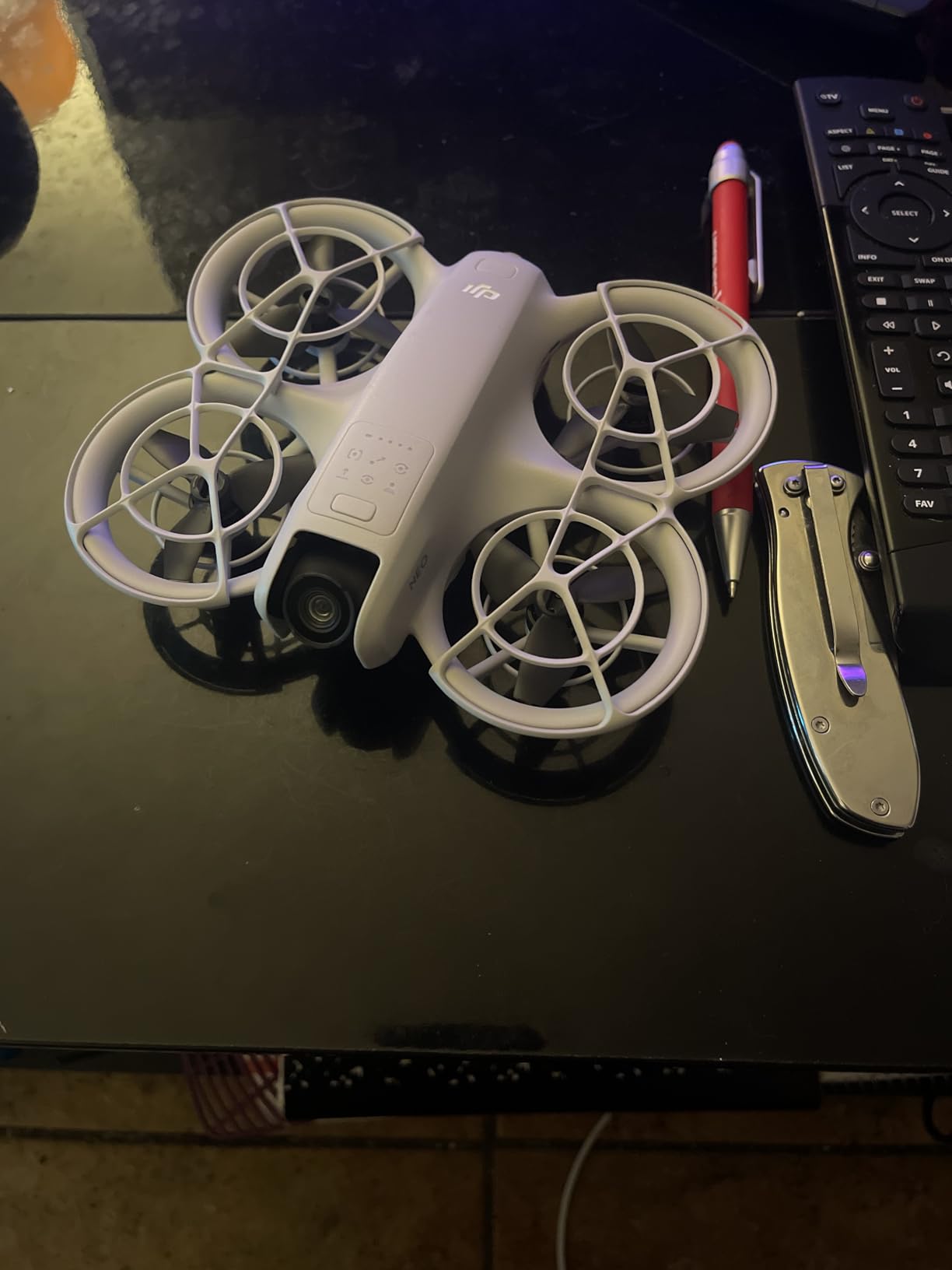
Best for travel and indoor use
No other drone here can be flown in a hotel room, a rented flat or a quiet hall. The enclosed propellers and the vision-based hold make it the safest choice for beginners and for anyone flying around people, and at 135g it creates no registration obligation. It is genuinely the best drone under 300 with cameras for a traveller who wants shots without carrying a controller.
Where it will disappoint you
If you need publishable video quality, it will not deliver. The internal storage cannot be expanded, the lack of a vertical mode forces you to crop for social formats, and 14 to 18 minutes of flight covers one walk, not a hike. The DJI Fly app also has to be downloaded from the DJI website rather than the Play Store, which adds a step before you can even fly.
7. Holy Stone HS175D – The Best Drone Under 300 for a First GPS Flight
- Two batteries give roughly 40 to 46 minutes of combined flight
- GPS return home lands close to the takeoff point in 10 to 17 mph winds
- Quiet brushless motors and beginner-friendly controls
- Comfortable organised carrying case included
- 5GHz FPV live video is smooth for the price
- No gimbal so video is shaky when moving fast
- Real-world range falls well short of the advertised 500m
- GPS satellite sync and calibration can be fiddly and repeat often
The HS175D does the unglamorous work of being a well-supported first GPS drone. Two batteries give roughly 23 minutes each, so 46 minutes combined in real use closer to 40. The 4K camera uses a 110 degree wide-angle lens with 90 degrees of tilt adjustment, and the 5GHz feed is noticeably smoother than the 2.4GHz and WiFi links used by cheaper models.
GPS return to home triggers on signal loss, out of range or low battery, and owners report it landing close to the takeoff point in winds of 10 to 17 mph, which is respectable for a light airframe. Beginner aids are thorough: altitude hold, optical flow positioning, headless mode, one-key takeoff and landing, and speed adjustment. Smart modes cover follow me, waypoint flight, point of interest, circle fly and gesture control.
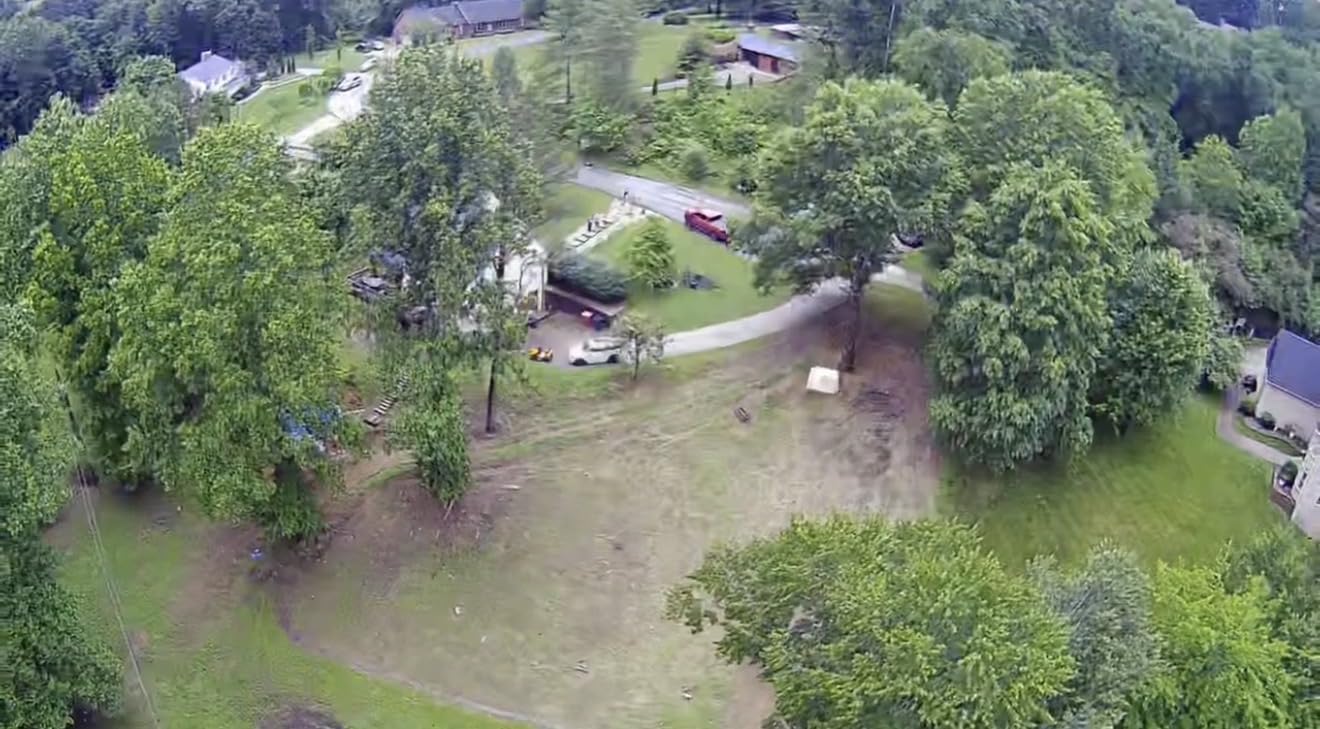
At 7.58 ounces and 10.83 by 8.27 by 2.48 inches, it is one of the more portable GPS drones here, and the included carrying case is well organised. Holy Stone customer service is repeatedly praised by owners, which is a genuine advantage over smaller brands when something needs sorting out.
The camera has no 2-axis or 3-axis gimbal, so video is shaky at speed. Real-world range falls well short of the advertised 500 metres, with some users seeing the video feed drop around 200 metres. GPS satellite sync and the calibration process can be fiddly and need repeating, and some box configurations include only one battery.
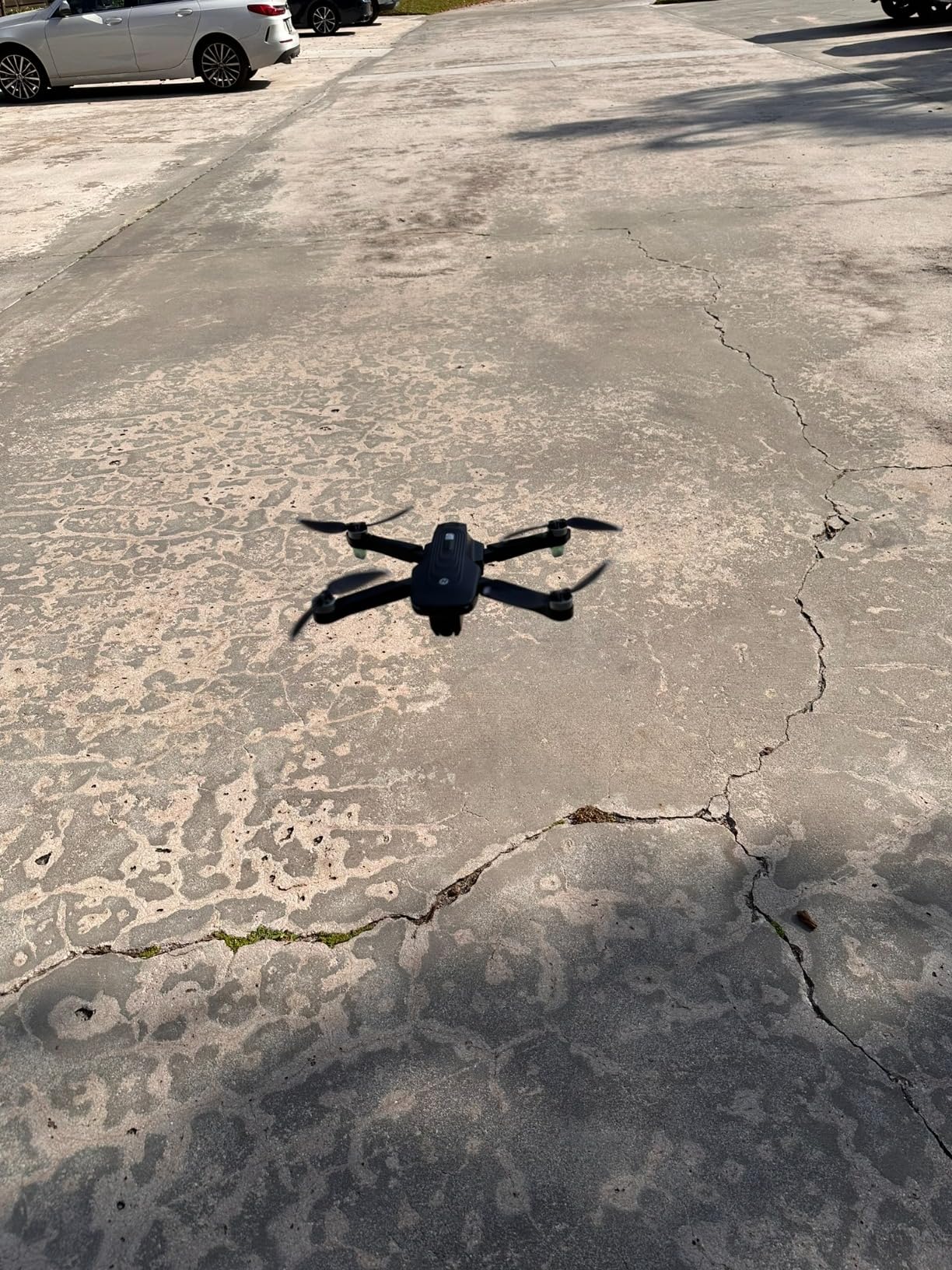
Setting expectations for a first GPS drone
The return-to-home behaviour is the feature that keeps beginners out of trouble, and this one does it reliably in real conditions. If you have never flown before and you want an aircraft that flies itself home when the signal drops or the battery runs low, that function matters more than camera resolution. Just budget time for the first GPS lock, which owners report can need a couple of attempts outdoors.
Where the compromises bite
Shaky video in movement is the honest limitation. Without a gimbal or meaningful electronic stabilisation, any pan or forward flight will look rough on playback. And the range figure on the box should be treated as a maximum under ideal conditions rather than a working distance.
8. Holy Stone HS110D – The Most Reviewed Budget FPV Drone
- 1080P camera with a 120 degree distortion-free wide angle
- Altitude hold and headless mode make it very beginner friendly
- Two modular 1000mAh batteries charge in rotation
- App control with voice and gesture modes
- Maximum range is only about 100 meters
- Light 149g plastic body is vulnerable in wind
- No GPS and no automatic return to home
With more than 19,000 owner reviews on record, the HS110D has the largest installed base of anything on this list, and the pattern in those reviews is consistent. People like the 1080P camera with its 120 degree field of view and distortion-free wide-angle lens, and they like that altitude hold and headless mode make it forgiving. Two modular 1000mAh batteries give about 20 minutes of combined flight and can be charged in rotation.
Control runs through the handset over WiFi, with voice control, gesture control, trajectory flight and a gravity sensor mode. At 149g and 12.6 by 12.6 by 3.54 inches it is a small, light quadcopter with full propeller guards, which makes it workable indoors in a large space.
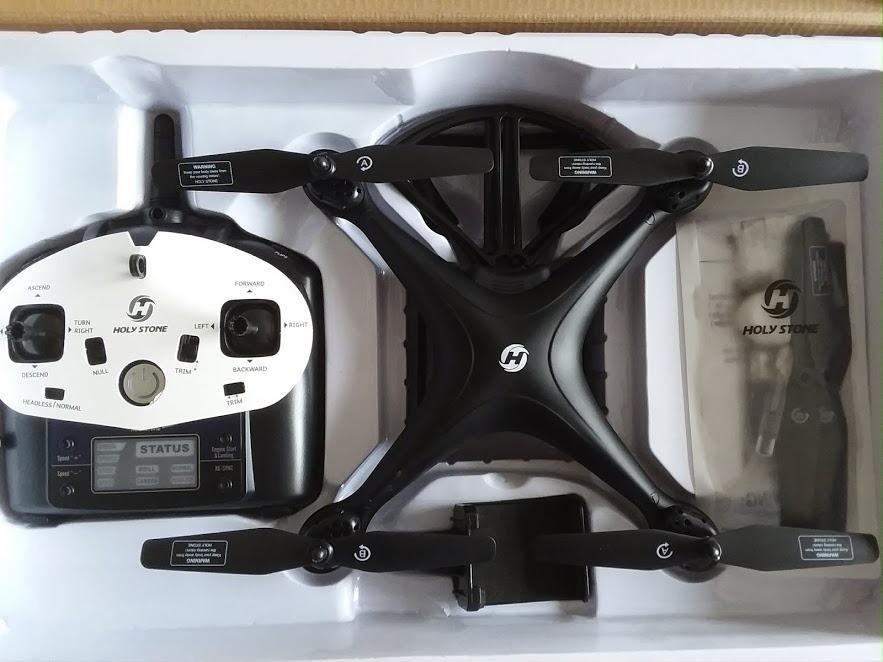
This is a learning drone rather than a camera drone, and knowing that will save you disappointment. It has no GPS, so there is no return to home and no waypoint or follow-me missions in the GPS sense. Maximum range is around 100 metres, and the video feed is a phone WiFi stream rather than a dedicated radio link.
Owners consistently note that the small light plastic body struggles in any real wind, which is why this aircraft works best indoors. For that use, the combination of guards, altitude hold and simple controls is genuinely good value and a sensible first step for a child or a complete beginner.
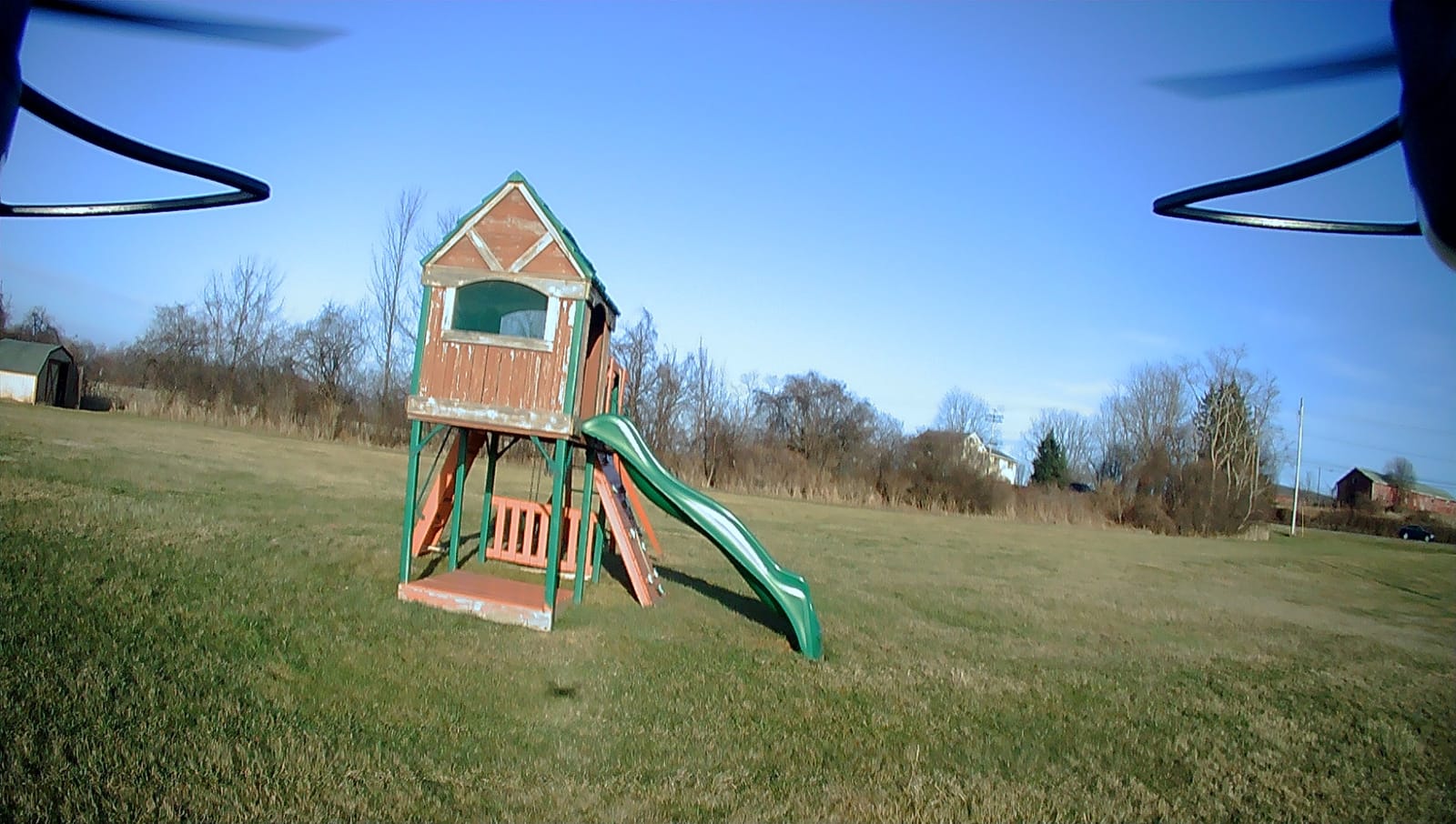
Who should buy a non-GPS drone
Buy the HS110D if your goal is learning to fly without spending real money, or if you want a drone that can safely operate indoors where GPS is useless anyway. Hand it to a child, learn the controls in a large room, then move up. What you should not do is expect 20 minutes of outdoor flying in open air, because wind will decide how long you get.
Where you will notice the limits
Range is the first wall. One hundred metres is roughly the length of a large sports field, and the feed degrades before that in built-up areas. The second is the camera, which records 1080p but has no stabilisation at all, so any movement produces unusable footage.
9. KINGULL G9 GPS Drone with 4K Camera and Brushless Motor
- 4K UHD capture with a 120 degree lens adjustable through 90 degrees
- Two 2200mAh batteries give about 45 minutes of flight
- GPS auto return triggers on signal loss or low power
- Remote control has a display for battery and distance
- No gimbal stabilisation so moving video is shaky
- 12MP still resolution is low against rivals
- SD card not included and must be 64GB or smaller
The G9 is a low-cost way on this list to get GPS features that normally appear on more expensive models. You get auto return to home triggered by signal loss, out-of-range conditions or low power, plus GPS and optical flow working together for precise hovering. The 4K UHD camera uses a 120 degree wide-angle lens adjustable through 90 degrees and records to an SD card of up to 64GB.
Battery life is unusual for the price, with two 2200mAh cells giving about 45 minutes combined. The remote controller has a small built-in display showing battery, distance, speed and status, which removes the need to look at your phone mid-flight. Brushless motors add stability and some wind resistance, and the body folds flat with a storage bag included.
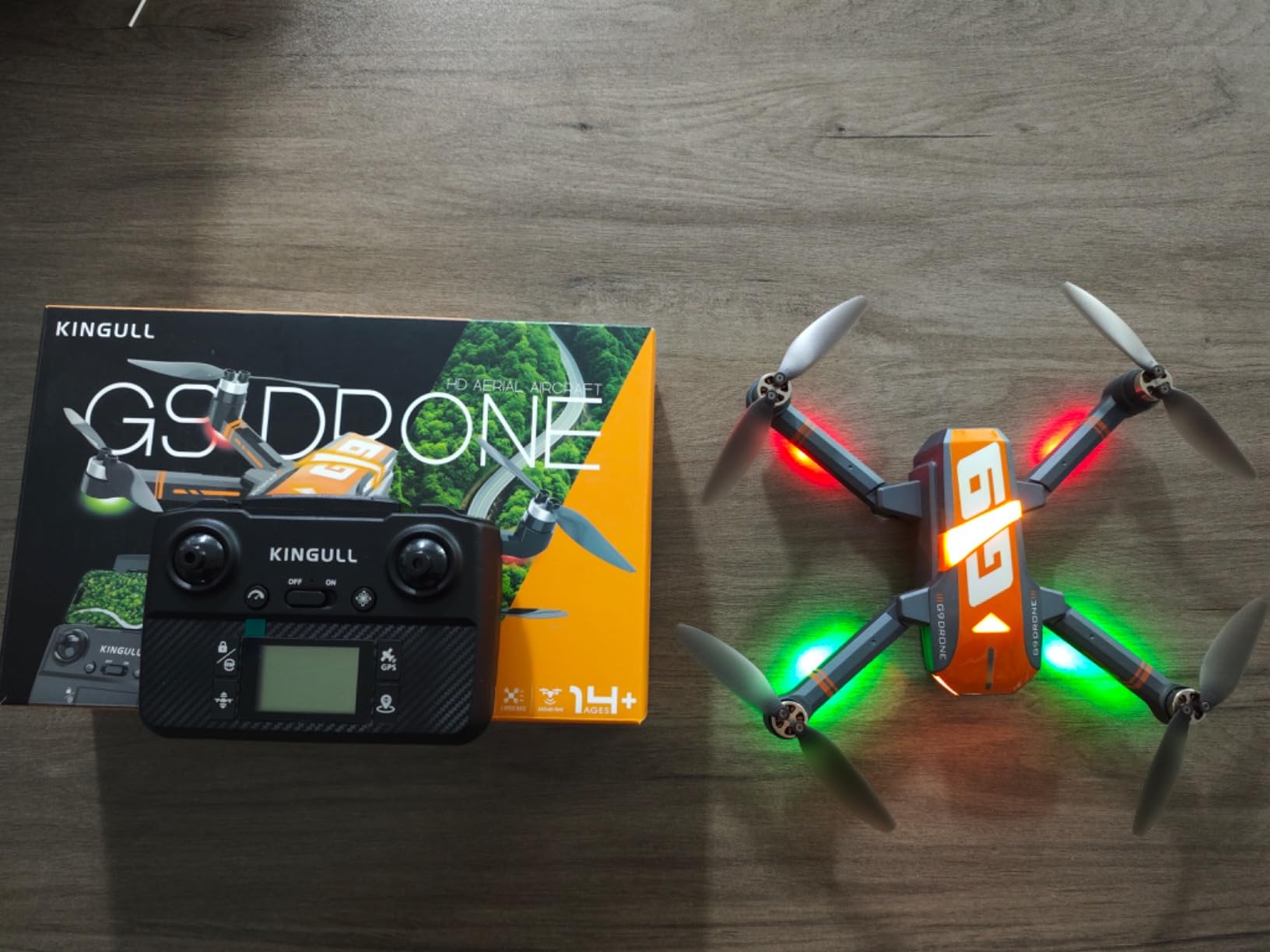
Smart modes cover follow me, waypoint flight and circle flight, and a one-key start plus headless mode and speed adjustment make it approachable. 5G FPV transmission gives a live feed on the controller or phone.
There is no gimbal stabilisation, so any moving video is shaky, and 12MP stills are low against half-inch sensors elsewhere in this roundup. An SD card is not included and must be 64GB or smaller. Be aware too that the published weight figures for this listing are inconsistent, so verify the aircraft weight yourself against the registration threshold before flying it outdoors.
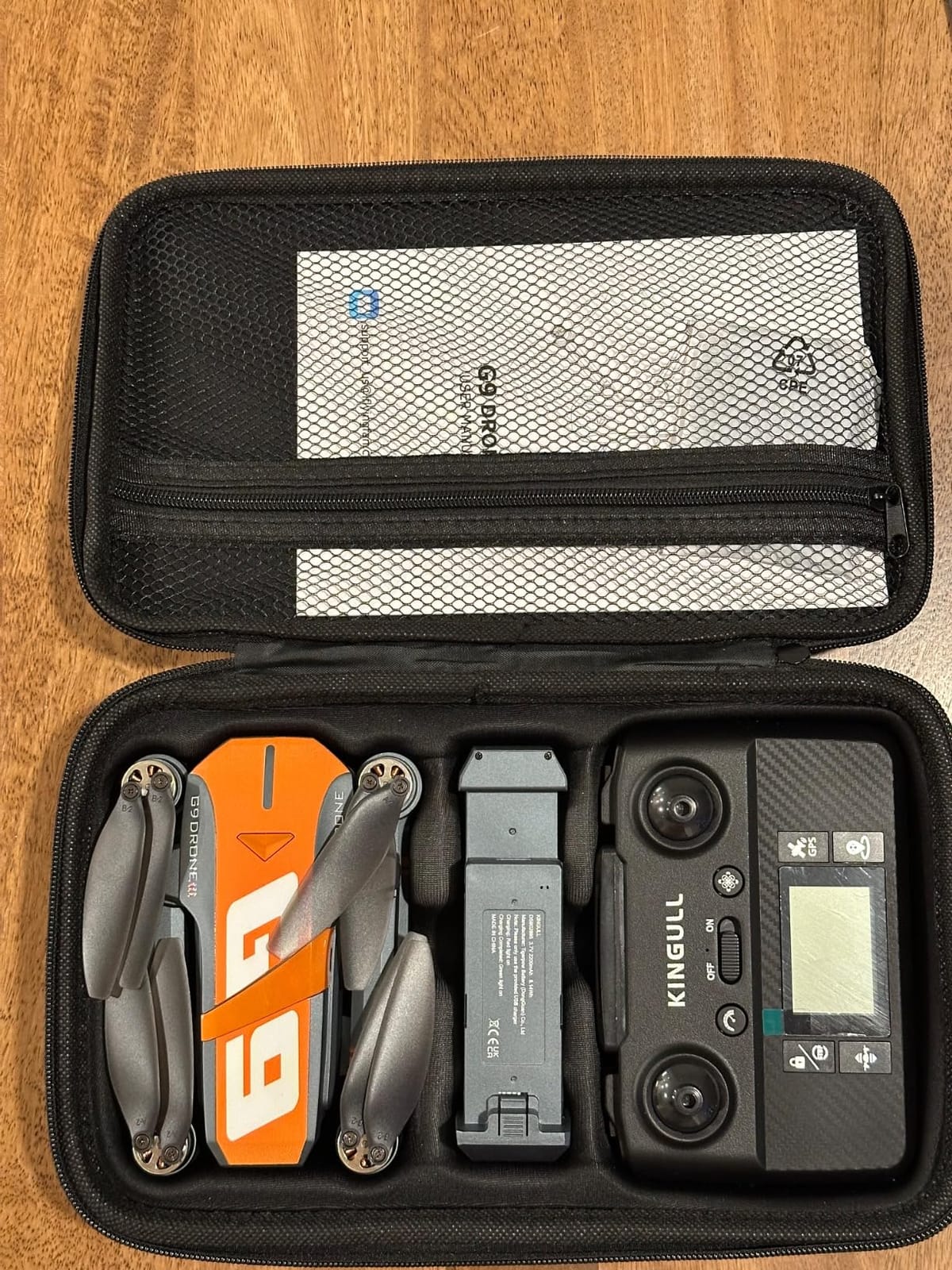
Upgrading from a toy drone for less
If you have already flown something without GPS, the G9 is the cheapest meaningful step up on this list. Return to home and optical flow positioning are the two features that reduce crashes for new pilots, and having both at this price is unusual. The 45 minutes of combined flight from two batteries also means one outing covers a proper session.
What to check before the first flight
Buy an SD card of 64GB or smaller first, since onboard storage needs one and none is included. Check the physical weight of the aircraft against the 250 gram registration rule yourself, because the listing data for this model is not consistent. Expect a fixed camera with no stabilisation, and keep expectations realistic on video quality.
10. Hiturbo S20 – The Budget Camera Drone for Kids
- Very simple to fly with no manual pairing needed
- Two swappable batteries roughly double the flight time
- Camera tilts between forward-facing and down-facing
- Altitude hold and headless mode for easy flying
- Range is only about 50 metres
- Flight time is around 12 minutes per battery and drops with flips
- Photo and video capture requires the app and some functions need the remote disconnected
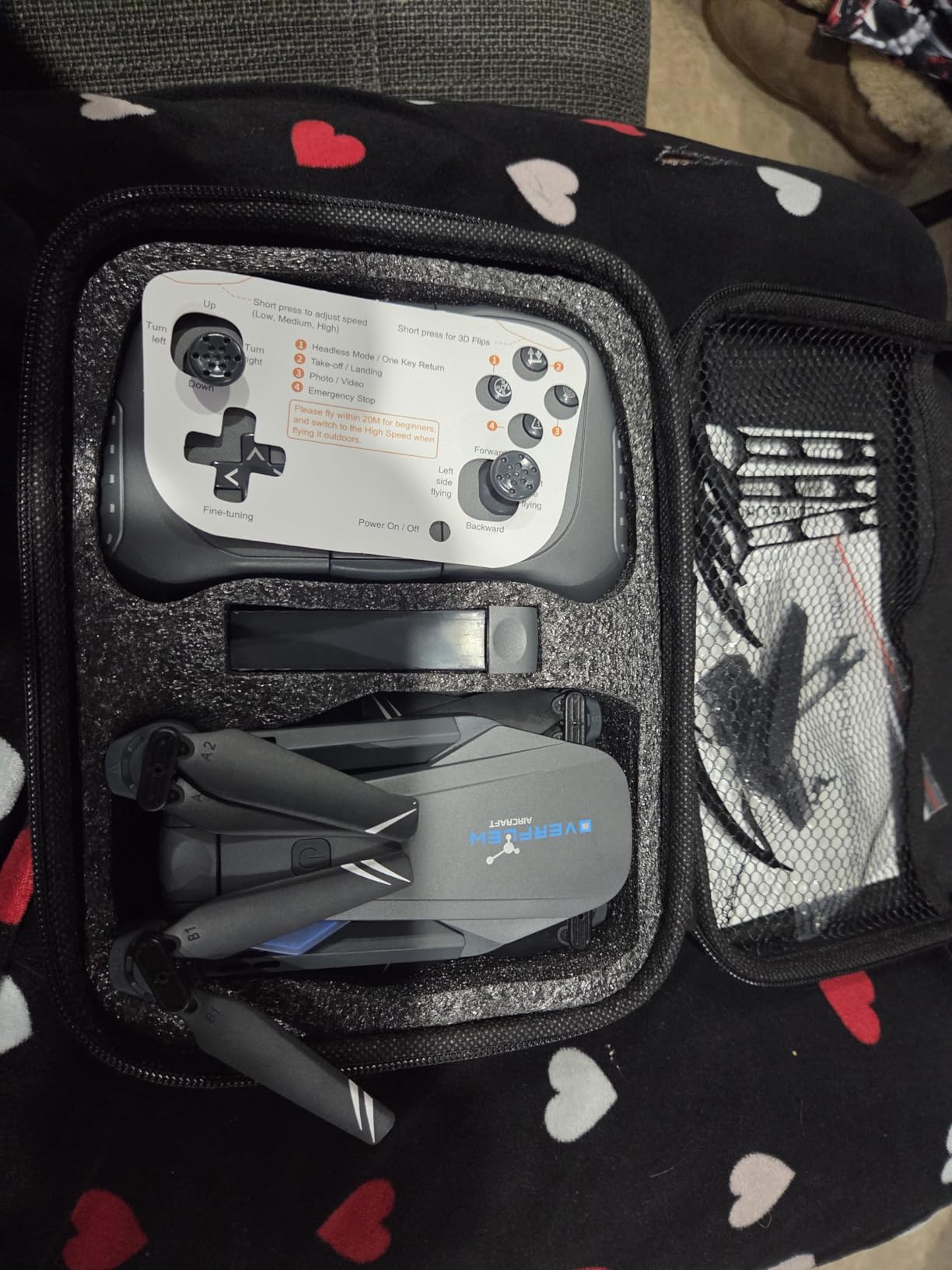
The S20 is the cheapest drone here with a camera worth using, and it is listed for ages 96 months and up, which makes it a legitimate first drone for a young child. It weighs 146g, measures 5.5 by 3.3 by 2 inches, and needs no manual pairing at all. That single design decision removes the most common reason a first drone never gets flown.
The camera records 1080p and tilts manually so you can point it forward or straight down. Two rechargeable batteries give about 12 minutes each, up to 24 minutes total. Control works from the remote or a smartphone app, and the feature list includes voice control, trajectory flight, altitude hold, 3D flip, headless mode, one-key takeoff and landing, and speed adjustment.
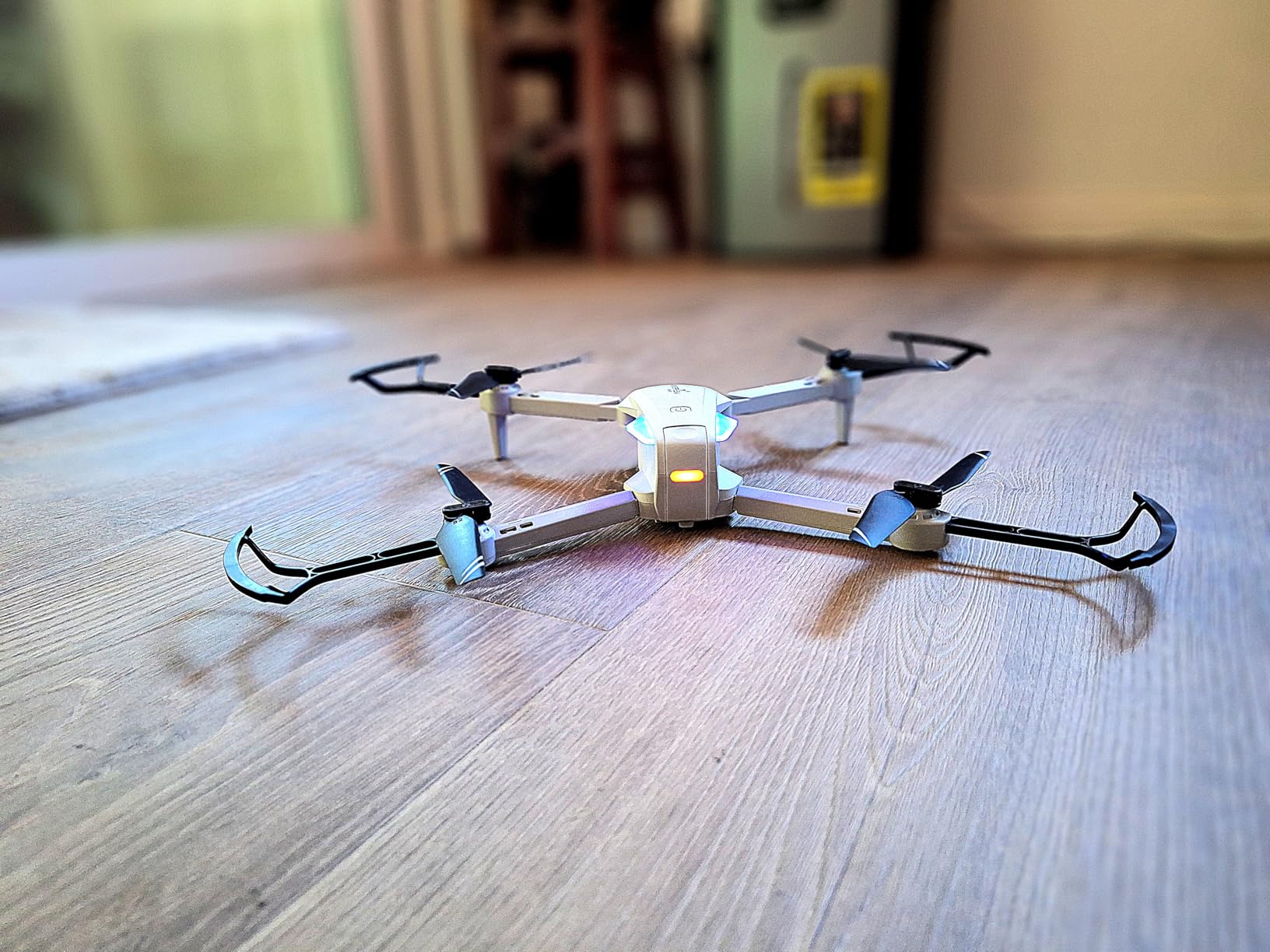
For indoor learning it is a good pick. The small footprint and light weight make it safe in a room, and 3D flips get a child interested quickly enough to practise the controls.
The limits are equally clear. Range is about 50 metres, which is a small garden rather than a field. Each battery gives roughly 12 minutes and that drops noticeably if you use flips or full speed. Photo and video capture goes through the Hiturbo FPV app, and some capture functions need the remote disconnected first, which is a small annoyance that children often cannot work out alone.
Kids versus adult first drones
For a child aged eight or so, the S20 is a sound choice because simplicity is the feature that matters. No pairing, no GPS, no calibration and nothing fragile enough to worry about. For an adult who wants to shoot video, it is the weakest pick here, because 50 metres of range and 1080p with no stabilisation will not produce anything you would want to publish.
Where you give up money
You give up range, endurance per battery and resolution. Two batteries at 12 minutes each sounds generous until you realise it is the same total as a much larger drone but spread across a much smaller aircraft. Choose this one for indoor learning and buy a real drone when the child is ready for open air.
What 4K Actually Means on a Drone Under 300
Most of these drones advertise 4K video, and on a surprising number of them that label is misleading. A genuine 4K recording needs a sensor with roughly 8.3 megapixels of usable detail and enough processing bandwidth to output 3840 by 2160 at a reasonable frame rate. When a drone with a 12MP sensor or smaller claims 4K, it is usually capturing at a lower native resolution and interpolating the extra pixels.
The result is a file that looks sharp when you view it on a phone and falls apart the moment you move it. Interpolated detail does not respond to motion correctly, so edges crawl and shimmer. This is why our ranking puts the gimbal and sensor size above the resolution number. The Bwine F7MINI and the Ruko U11MINI use half-inch CMOS sensors with 48MP stills, the DJI Mini 4K and the Bwine use mechanical gimbals, and those two attributes matter far more than the 4K label.
Three levels of stabilisation, ranked
Electronic image stabilisation, the sort in the Potensic ATOM SE, crops and shifts the image digitally to cancel out small vibrations. It works well in a hover and at low speed, and it fails during fast pans or aggressive turns. A 2-axis gimbal corrects tilt and roll on two axes and is a clear step up. A 3-axis gimbal adds yaw and holds the frame steady through almost any movement short of a fast orbit, which is the only reason the DJI Mini 4K produces video that looks like it came from a more expensive machine.
Sensors that matter more than the number
A half-inch sensor has roughly twice the surface area of a third-inch sensor, and area is what governs light gathering. The practical result is cleaner files in low light and at dusk, and noticeably better-looking footage in the evening than any number of interpolated megapixels can deliver. If you fly near sunset, prioritise sensor size over resolution.
Claimed Flight Time vs What You Actually Get
Every listing quotes flight time, and few of them tell you whether that is per battery or for the whole bundle. The Bwine and the Ruko say 96 minutes, which is three batteries of roughly 32 minutes each. The Holy Stone HS175D says 46 minutes across two cells. The DJI Mini 4K says 31 minutes, and that is per battery because the base bundle contains one. Reading the number without the context is how people end up disappointed on a first flight.
There is also a consistent gap between the quoted figure and real flying time, because manufacturers test in ideal conditions at a gentle pace. Owners across this list report getting less than the headline number in normal use, particularly when using sport modes, filming continuously or flying in any wind. Treat the quoted figure as a ceiling.
Battery economics change the real cost of a drone
A drone with one battery in the box is a drone with a shorter usable life, and spares are where the second spend goes. The three-battery bundles on the Bwine and Ruko remove that problem, while the HS360S and the DJI Mini 4K base bundles leave you buying a second cell and possibly a better charger. If you already own a drone and want a comparison beyond this price range, our budget gear under 300 guide covers the same buying logic across other categories.
How to Pick a Camera Drone Under 300
Start with where you will fly it. Indoor flying points toward the DJI Neo for its enclosed propellers and vision-based hold, or the Hiturbo S20 for simplicity. Open-air flying points toward something with GPS and return to home, because that is the feature that stops a beginner from losing a drone in a tree.
Then check weight against the 250 gram threshold, because that single specification decides whether you need to register. The DJI Neo at 135g, the Hiturbo S20 at 146g, the HS110D at 149g, the HS175D at 7.58 ounces, the ATOM SE under 249g, the HS360S at 213g, the DJI Mini 4K at 240g, the Ruko at 248g and the Bwine at 249g all sit under it. Add a spare battery and the second pack can push a package over the line, so weigh what you actually carry.
Next, decide between stabilisation types. If you will shoot moving subjects, only the mechanical 3-axis gimbals qualify, which leaves the DJI Mini 4K, the Bwine F7MINI and the Ruko U11MINI. If you mostly shoot stills or slow video, electronic stabilisation on the ATOM SE is plenty and saves money.
Finally, look at the controller. Phones and tablets have small screens, and direct phone control over WiFi is more fragile than a dedicated remote. The HS360S solves this with a single-cable connection for live streaming. The Neo can fly with no controller at all, which suits a traveller. Check whether the app you need exists for your device before buying, and be aware that two of the DJI models require the app to be downloaded from the DJI website.
Five questions to ask before you buy
Will you fly indoors, outdoors, or both? Will you shoot stills or video, and will you ever shoot moving subjects? How many batteries do you want to carry? Do you need a camera tilt adjustment? And does the app run on the phone you actually own? Answering those five takes two minutes and eliminates most of the disappointing purchases in this category.
FAA Registration and the 250 Gram Rule
In the United States, a drone weighing over 250 grams, or 0.55 pounds, must be registered with the FAA before it is flown outdoors. Registration is free, takes a few minutes online, and applies to any operation outside a structure. A drone under 250 grams does not need registration for recreational flight.
That threshold shapes this entire list. Nine of the ten drones here are built to sit just under 250 grams, which is why so many of them advertise the sub-250g figure so prominently. Very few of them state their weight accurately enough to rely on the listing alone, so weigh your drone with the battery installed if you intend to fly it anywhere public.
If you fly anything over 250 grams, you also need to pass the free TRUST test before your first flight, and recreational pilots must keep the drone within visual line of sight. Remote ID requirements are rolling out separately and apply to most registered aircraft, so check the current FAA guidance before buying rather than relying on a listing that was written years ago.
Who Should Not Buy a Drone Under 300
If you need professional footage, do not buy here. Every drone in this roundup uses small sensors and consumer-grade processing. Real estate work, wedding videography and commercial delivery all need reliability and image quality that starts well above this budget, and buying at this level usually means buying twice.
If you live somewhere with persistent wind, be careful. Several of these aircraft are under 250 grams by design, and light airframes struggle in anything beyond a gentle breeze. The Holy Stone HS175D holds up in 10 to 17 mph conditions and the Ruko is reported stable to about 10 mph with gusts to 16, but that is not the same as flying in coastal weather. Check your local conditions before buying, and consider saving longer.
If you want a long-range aircraft, manage your expectations. Advertised ranges of 10,000 or 20,000 feet assume open sky with no interference. Owners on the Ruko report the feed breaking up after roughly four city blocks, and the HS175D falls short of its 500 metre claim. Treat these figures as laboratory conditions and stay well inside them.
Frequently Asked Questions
What is the best camera drone under 300 dollars?
The Potensic ATOM SE is the best drone under 300 with cameras for most buyers in 2026. It weighs under 249g so it needs no FAA registration, flies 31 minutes per battery with two included, holds a 4K electronic-stabilised feed out to 4km, and adds GPS return home, follow me and waypoint modes. If steadier video matters more than endurance, the DJI Mini 4K wins with a mechanical 3-axis gimbal.
What is the best inexpensive drone with a camera?
The Hiturbo S20 is the cheapest usable camera drone here, with an adjustable 1080p camera, two batteries for roughly 24 minutes of flight, no manual pairing and simple controls that suit a child learning to fly. Its limits are real: about 50 metres of range and no stabilisation. The Holy Stone HS110D is the other budget option, with a larger 120 degree camera and 20 minutes across two batteries.
What is the best budget drone with high quality cameras?
The DJI Mini 4K is the strongest camera drone under 300 dollars because it records real 4K on a mechanical 3-axis gimbal rather than interpolating a lower resolution. The Bwine F7MINI and the Ruko U11MINI match it on sensor size at 48MP half-inch CMOS, while most rivals use smaller sensors and electronic stabilisation only. Expect entry-level image quality from all three compared with professional platforms.
Why did the US ban DJI drones?
US legislation and federal agency action targeted DJI over claims that its products create national security and data risks, alongside concerns about its ties to Chinese manufacturing. The result is that certain DJI products have been restricted from sale or from being approved for US communication systems, and the DJI Fly app has been removed from the Google Play Store. Buyers in the US should verify the current status of any DJI product before buying.
Do I need to register a drone under 250 grams?
No. In the United States a drone weighing over 250 grams, or 0.55 pounds, must be registered with the FAA before outdoor flight. Anything under 250 grams does not require registration for recreational use, which is why nine of the drones on this list are built to sit just below that figure. Drones over 250 grams also require the free TRUST test before the first flight, and you must keep the aircraft within visual line of sight.
The Verdict on the Best Drones Under 300 With Cameras in 2026
The Potensic ATOM SE is the pick for most people searching for the best drones under 300 with cameras, because it combines a 4K Sony sensor, a 4km link, 62 minutes of combined flight and a sub-249g weight in one package that nothing else here matches. If your priority is footage quality rather than endurance, the DJI Mini 4K is the better aircraft because a mechanical gimbal is something no amount of interpolated resolution can replace. For maximum flight time per purchase, the Bwine F7MINI and the Ruko U11MINI both give you three batteries and a stabilised half-inch camera.
Whatever you choose, buy a spare battery at the same time, weigh the aircraft yourself to confirm the registration position, and set your expectations around the 4K label. Start with the three that match your flying, then check the current listing details before ordering.