
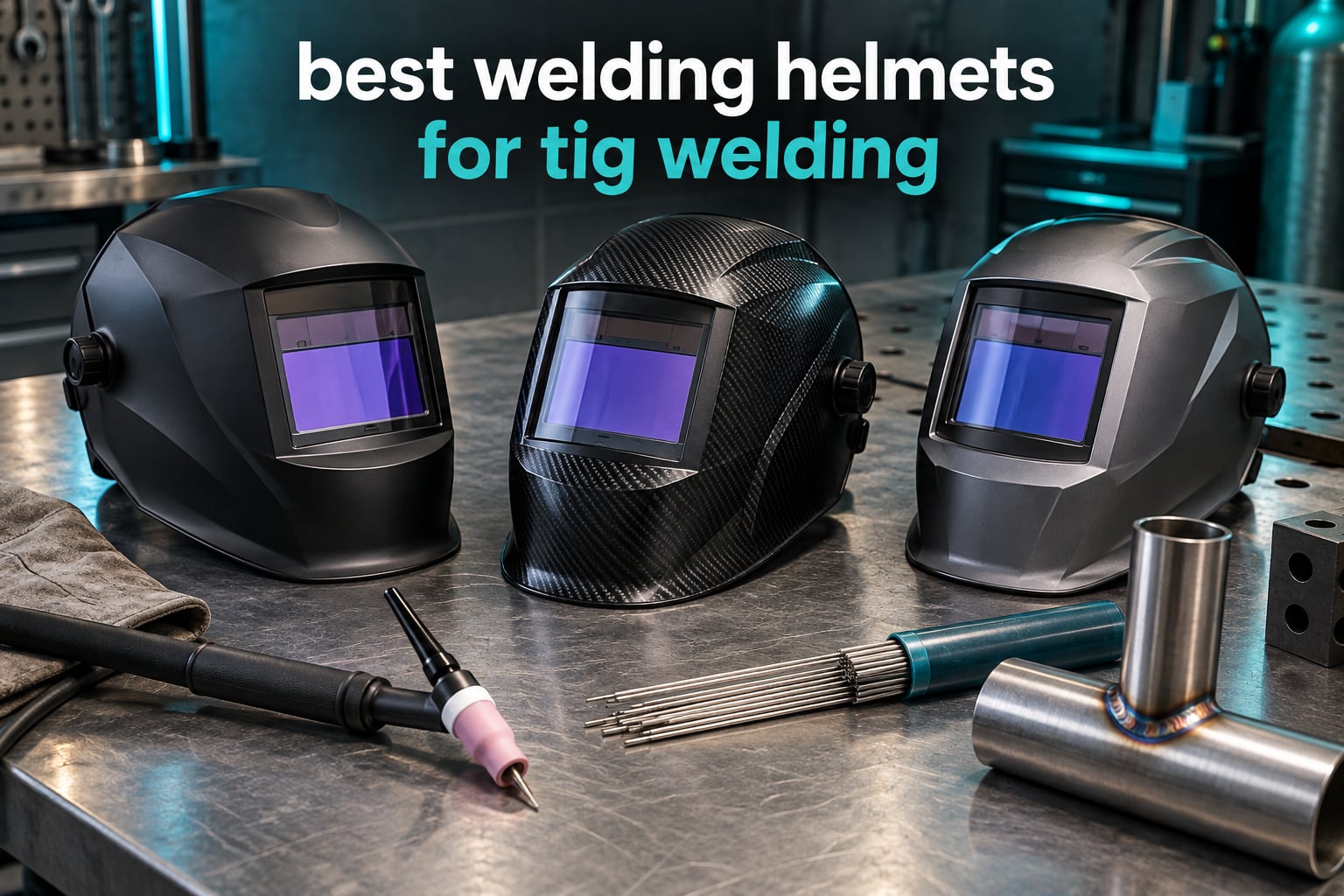
A TIG arc at 50 amps throws far less light than a MIG arc at 50 amps, and that single fact explains most of the disappointment welders hit with a brand-new helmet. Arc sensors inside the auto-darkening filter look for that light, miss it, and leave the lens sitting in its light state while you get a full-brightness flash straight at your eyes. If you have been searching for the best welding helmets for TIG welding, sensor count, published minimum amperage and optical clarity are the three numbers that actually decide the answer, and that is exactly how we sorted the ten hoods below for 2026.
We built this roundup on published specifications rather than a claimed month of arc time: arc sensor counts, viewing areas, switching speeds, optical class ratings, shade ranges, published weight and warranty terms, cross-checked against what buyers report in the reviews. Where a spec is missing from the manufacturer’s listing, we say so instead of guessing. That transparency matters here, because a helmet that is quiet about its minimum amperage is quietly asking you to find out the hard way.
Ten options cover the range: a premium 4C-lens hood from Lincoln Electric at one end, then four sensors, a light state, and dual-powered budget models with true color optics at the other. Last reviewed for 2026.
Table of Contents
Top 3 Picks for TIG Welding in 2026


All 10 Welding Helmets for TIG Welding Compared
| Product | Specifications | Action |
|---|---|---|
| Lincoln Electric VIKING 3350 |
|
Check Latest Price |
 Jackson Safety Insight Jackson Safety Insight |
|
Check Latest Price |
 Miller Classic ClearLight Miller Classic ClearLight |
|
Check Latest Price |
 ESAB Savage A40 ESAB Savage A40 |
|
Check Latest Price |
 Hobart 770890 Hobart 770890 |
|
Check Latest Price |
 MIGVAN True Color H-21 MIGVAN True Color H-21 |
|
Check Latest Price |
 TOOLIOM TL-31800H TOOLIOM TL-31800H |
|
Check Latest Price |
| YESWELDER BW-10MAXTRI |
|
Check Latest Price |
 ARCCAPTAIN LED Helmet ARCCAPTAIN LED Helmet |
|
Check Latest Price |
 TOOLIOM Solar Powered Helmet TOOLIOM Solar Powered Helmet |
|
Check Latest Price |
1. Lincoln Electric VIKING 3350 – Best Overall for Low-Amp TIG
Lincoln Electric K3034-4 VIKING 3350 Auto Darkening Welding Helmet with 4C Lens Technology, Matte Black, extra large
- Perfect 1/1/1/1 optical clarity with 4C lens technology
- Extra large 12.5 sq inch viewing area
- Reliable low-amp TIG without arc flash
- X6 headgear spreads weight
- Inexpensive standard cover lenses
- Occasional slow reaction at arc strike
- Headgear adjustment takes practice
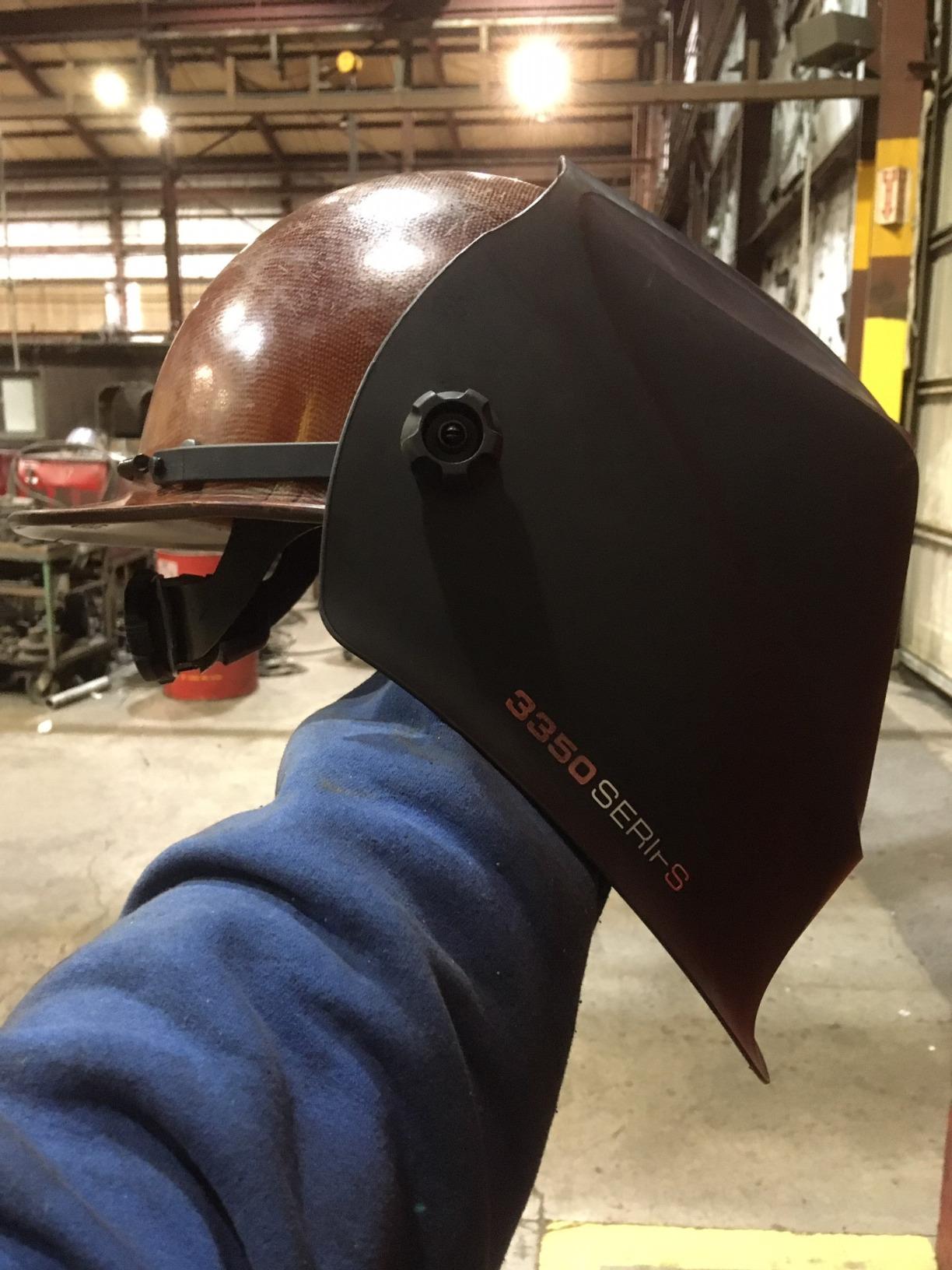
The VIKING 3350 is the one I keep reaching for when a job turns into thin material. Its 12.5 square inch viewing area is the largest in this group, and that width matters on a tube frame where the joint runs away from you. The 4C lens and 1/1/1/1 optical clarity rating mean the puddle looks like a puddle rather than a smudge, with no color cast to fool you about where the edge of your bead actually is.
Owners consistently single out low-amp TIG detection as the reason this hood stays in service. The 4.8 rating across more than 3100 reviews is not a fluke of one glowing review, and the review pattern is unusually consistent: clarity first, then headgear comfort, then lens size.
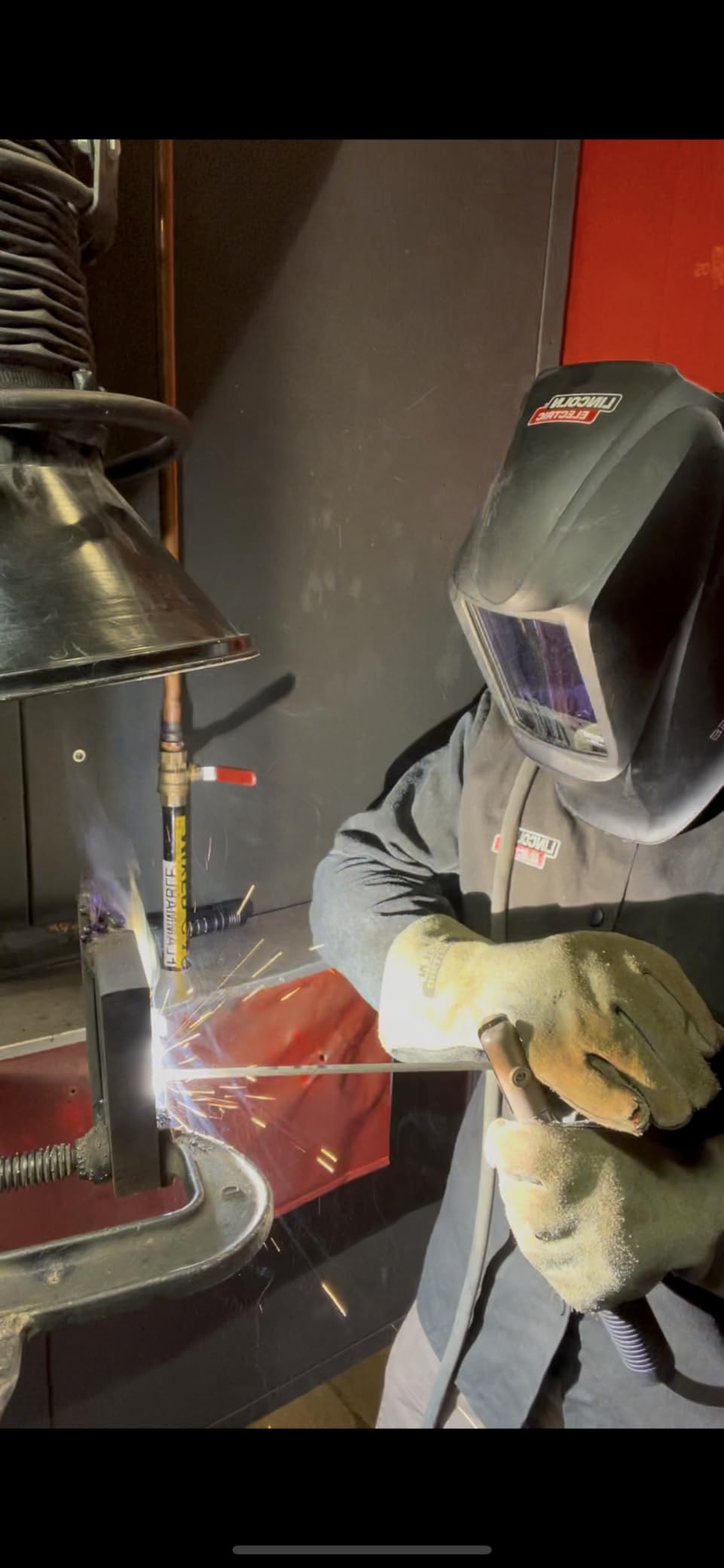
Two things keep it from being flawless. A recurring note in the reviews is an occasional sluggish reaction right at the moment of arc strike, which is exactly the instant you least want to be looking at a bright arc. And the X6 headgear, while well balanced, takes a few welds to dial in properly.
The package also matters more than it sounds. You get five outside cover lenses and two inside cover lenses in the box, plus a helmet bag, bandana and decal sheet, and the five year warranty is the longest in this roundup.
When the VIKING 3350 earns its price
Buy it if you weld a lot of thin stainless or aluminum and your sessions run long. A 1.4 pound nylon shell with the X6 headgear stays comfortable through a full shift, and the wide view means fewer head turns when you are fitting up out of position.
It also makes sense as the one hood you never have to think about. Sensor coverage is good enough that you stop bracing for a flash, and the lens shows you enough puddle detail that you can correct your technique without stopping to tilt your head.
Where the VIKING 3350 falls short
If your work is mostly 5 amp jewelry-scale TIG, the price is hard to justify next to the budget models on this list, several of which also carry 1/1/1/1 ratings. For occasional weekend work on thicker stock, this hood is more machine than you need.
The strike-delay issue is real but manageable in practice. Clean the sensors, check the battery, and give the sensitivity a turn up before your first strike of the day. Treat the first pass of the day as a warm-up strike rather than production.
2. Jackson Safety Insight – Best for Low-Amp Work Without Neck Strain
Jackson Safety Insight Auto Darkening Welding Helmet, ADF Hood – ANSI Z87.1
- Ultra-lightweight HLX shell reduces neck fatigue
- Four arc sensors work with inverter machines
- True Color tech with 1/1/1/1 optical clarity
- Digital controls with Weld Torch and Grind modes
- Ratcheting headgear with up-detent
- Light state is not especially bright
- High sensitivity can false-trigger from reflected light
- Less rugged than metal-shell helmets
Six ounces is the number that stands out. Once you put this on, the difference in neck load against a two-pound hood is obvious within about an hour, and for anyone doing fit-up work bent over a bench it is the difference between finishing comfortably and finishing sore.
The Insight carries a 3.94 by 2.36 inch viewing area, which is small next to the panoramic models further down this list. It also holds a 1/1/1/1 optical clarity rating with True Color technology and runs variable shades 9 through 13, with four arc sensors doing the detection work.
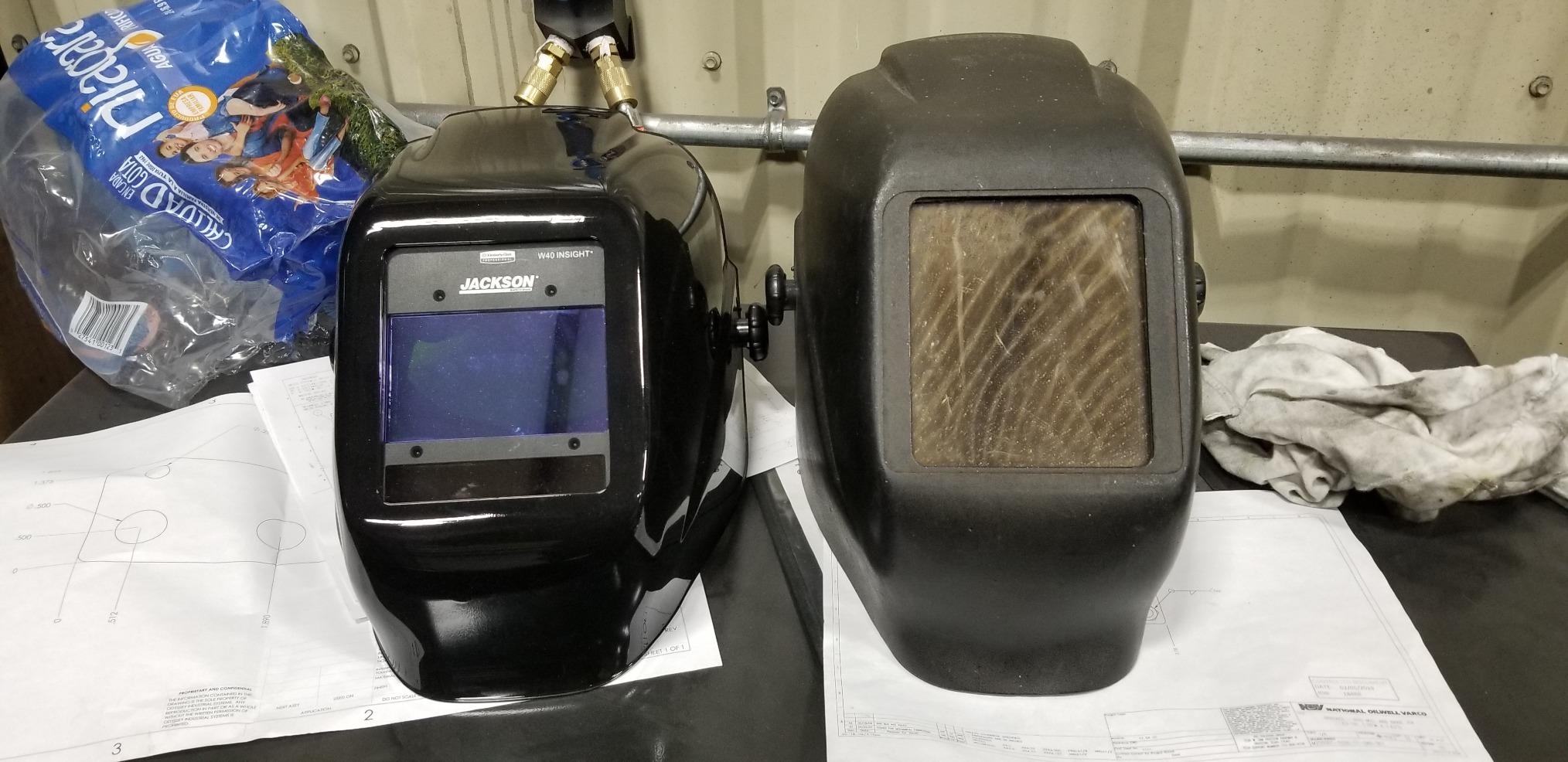
Digital controls cover sensitivity, delay and separate Weld, Torch and Grind modes, and the ratcheting headgear has a positive up-detent so it will not creep while you are crouching. Owners working fab shops, construction and hobby benches rate it as dependable, and one welding commenter specifically reports that a Jackson Insight handles low-amp TIG.
It also accepts standard front cover plates, which matters if you have a hard hat adapter or a stack of old plates already in the drawer. You are not locked into proprietary lenses.
Who this lightweight helmet suits
If your TIG work is fit-up heavy, out of position, or spread across long days with a lot of reaching and crouching, weight becomes a first-order feature rather than a comfort extra. At six ounces this is the lightest shell here by a wide margin.
Students and hobbyists get a lot of value from it too. The shade range covers the amperages most people actually run, and the sensor count is enough to avoid the two-sensor dead zones that plague entry-level hoods.
Where the Insight loses ground
The light state is dimmer than some rivals, which slows down fit-up work because you are working with the hood up and a darker resting view. Shades start at 9 rather than 8, so you have less room to lighten up for very thin material.
Buyers also report that crank the sensitivity too far and reflected light off shiny aluminum will darken the lens when there is no arc at all. That is the classic sensitivity trade-off: set it for your dimmest real arc, not for the dimmest possible light.
3. Miller Classic Series ClearLight – Best for Learning TIG
Miller Classic Series Welding Helmet, ClearLight™, Shade 8-13, Black
- ClearLight lens technology
- Rated for precision work at 5 amps or below
- Auto-on power control at arc strike
- Ratchet headgear
- Three year warranty
- Only two arc sensors
- Smaller 6 sq in viewing area
- Can struggle in bright ambient light
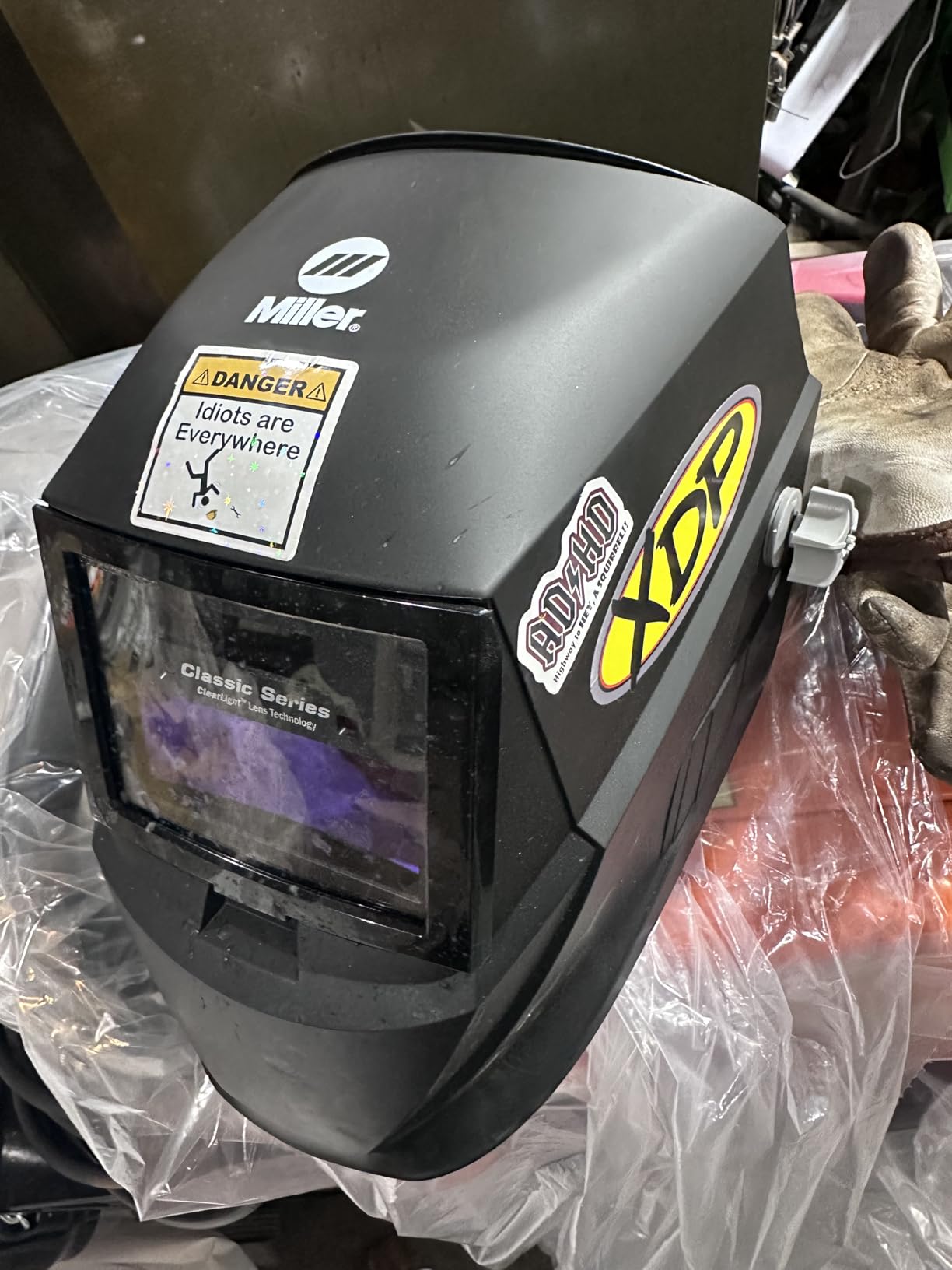
This is the hood to buy when you are learning TIG on stainless and the amperage is low. Miller rates it for precision work at 5 amps or below, which is precisely the range where beginners run thin tube, and the ClearLight lens keeps the puddle readable while you are still concentrating on filler rod placement.
The trade-off is sensor count. Two arc sensors is the lowest here, and the review pattern is consistent about what that means: it can struggle to detect a TIG arc in bright ambient light, particularly outdoors or under a shop light shining toward the work.
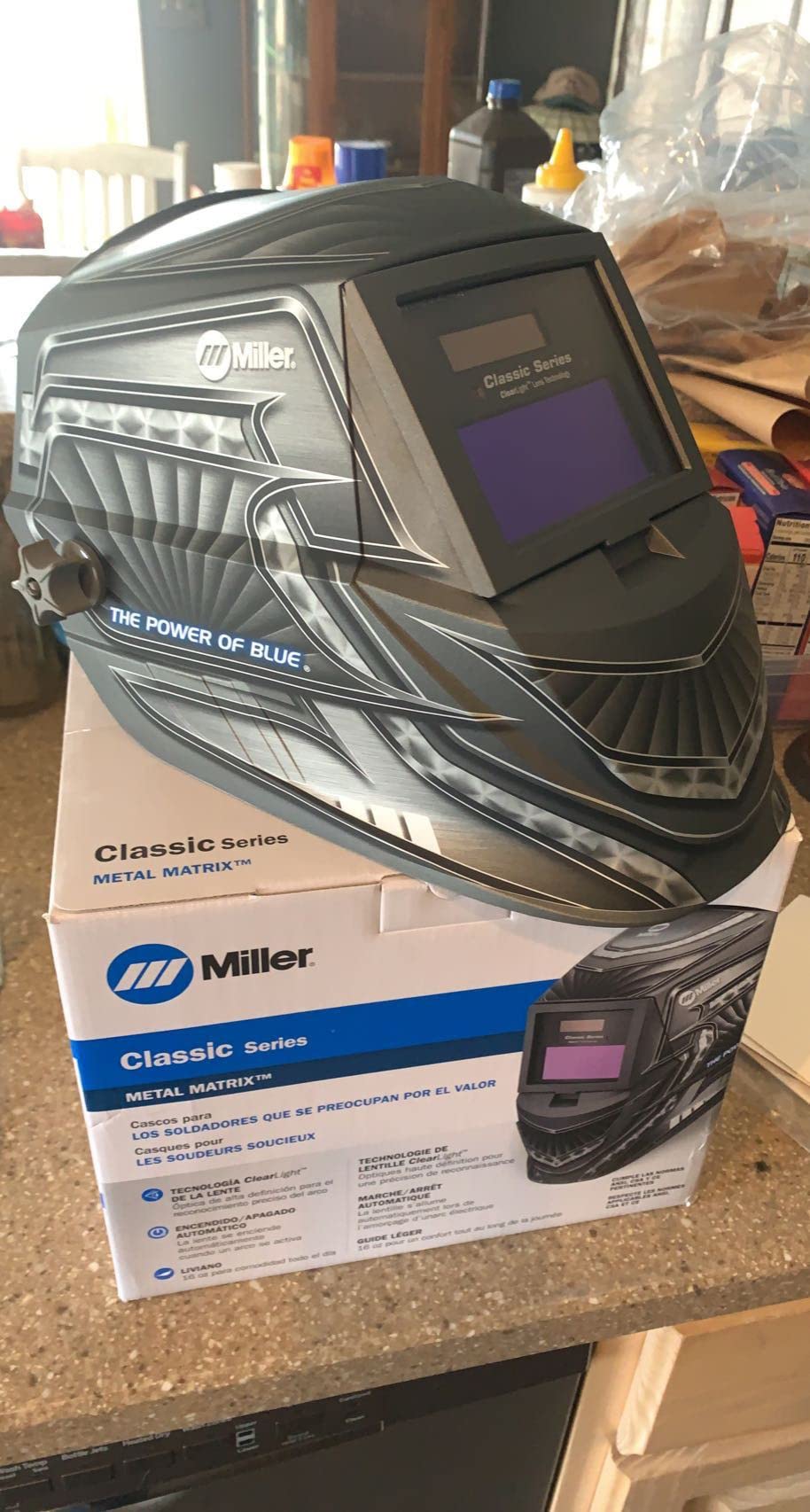
Shade coverage is generous for the money: weld shades 8 through 13, cut shades 5 through 8 and a grind shade of 3, all set with adjustable digital controls for shade, delay and sensitivity. Auto-on power control wakes the lens at the strike, so there is no on button to forget in gloves.
The three year warranty is a meaningful step up from the budget tier, and at 989 grams the shell is not featherweight but it is not heavy either.
Where the Miller Classic makes sense
Indoor bench work on thin stainless is its sweet spot. If you are inside a shop with controlled lighting, running 5 amps and under on tube or sheet, the two-sensor layout rarely gets tested and the ClearLight clarity carries the experience.
It also makes a sensible first hood for someone who will eventually want a better one, because the digital controls teach you what sensitivity and delay actually do. You learn the adjustment habits on a cheap lens and carry them to the next one.
Why some welders pass on it
Two sensors means dead zones. Get the torch angled so it shadows a sensor during an outside corner joint and the lens can lighten mid-weld, which is the exact failure TIG is known for. Four sensors would reduce that risk noticeably.
The 6 square inch viewing area is also small next to the 12.5 square inch Viking and the wide widescreen hoods in this list. If you fit up a lot of pipe, you will notice the edges.
4. ESAB Savage A40 – Best for Low Amps Per Spend
- Excellent lens clarity
- Four arc sensors for low-amp TIG
- Adjustable sensitivity helps with low-current arcs
- External grind button works with gloves
- Lightweight at about one pound
- Exterior shade knob can be knocked in tight quarters
- Smaller lens area than premium models
- Cheater lens users report double vision
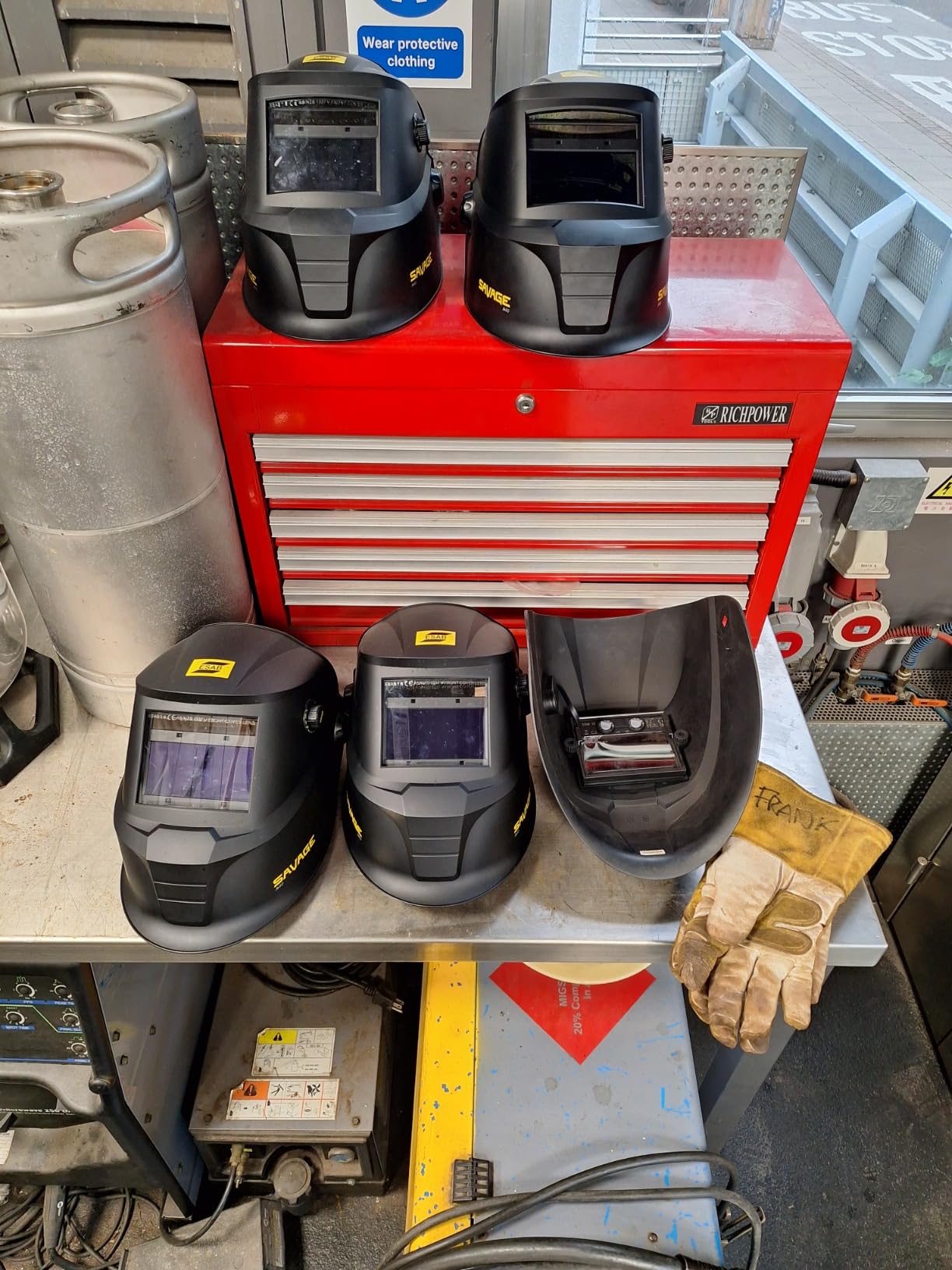
The Savage A40 is the value pick for anyone who wants four arc sensors without paying for a premium brand. The sensitivity control is specifically designed to react to darker, low-current arc light, which is the whole ballgame in TIG, and the delay control lets you decide how long the lens stays dark after the arc stops.
Owners comparing clarity against far more expensive hoods is the most common theme in the reviews, and the consensus is that the lens holds up. Beginners report that seeing the puddle clearly improved their weld quality almost immediately, which is the honest argument for this one.
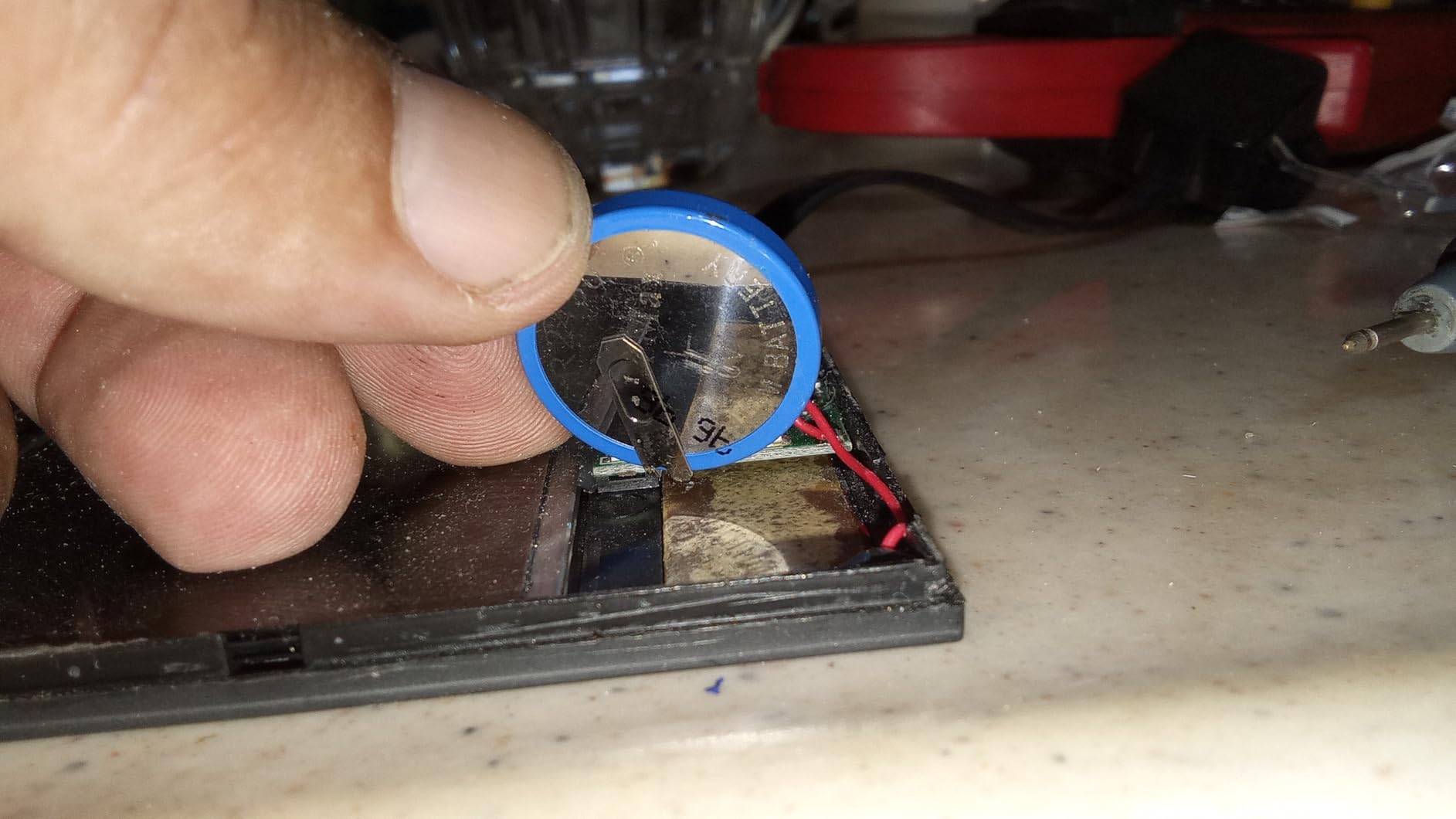
It runs on a single included CR2 lithium battery, which is simple to swap, and the external grind-mode button can be operated with gloves on, which matters when you are finishing a joint with a grinder still in the other hand.
Two details to know before you order. The shade settings knob sits on the exterior upper corner and gets knocked to extreme settings in tight quarters, and the lens area is smaller than the premium models. Some cheater lens wearers also report double vision.
Best fit for budget-conscious TIG work
If four sensors and true low-amp tuning are your must-haves, this is where the money stops mattering so much. The adjustable sensitivity is the feature that lets you chase down a 5 amp arc, and that is the same feature that is missing from cheaper two-sensor designs.
It is also a good secondary hood. Keep one on the bench for tacking and fit-up while your main helmet stays clean for production welds.
Where the A40 frustrates people
The exterior knob placement is a genuine annoyance rather than a minor nitpick, because a knocked shade setting on a TIG job means stopping to recalibrate with dirty hands.
The listed weight of 2.2 pounds is also heavier than it needs to be for a plastic and nylon shell, and the lens area will feel small if you are used to a wide-view model. Buy it for the sensors and the clarity, not for the viewing window.
5. Hobart 770890 – Best for a Wide View at the Bench
- 9.3 inch widescreen viewing area
- Four independent arc sensors
- PureColor lens gives accurate weld color
- Easy weld to grind switching
- Auto-on power at arc strike
- Analog knobs less precise than digital
- Two year warranty is shorter than rivals
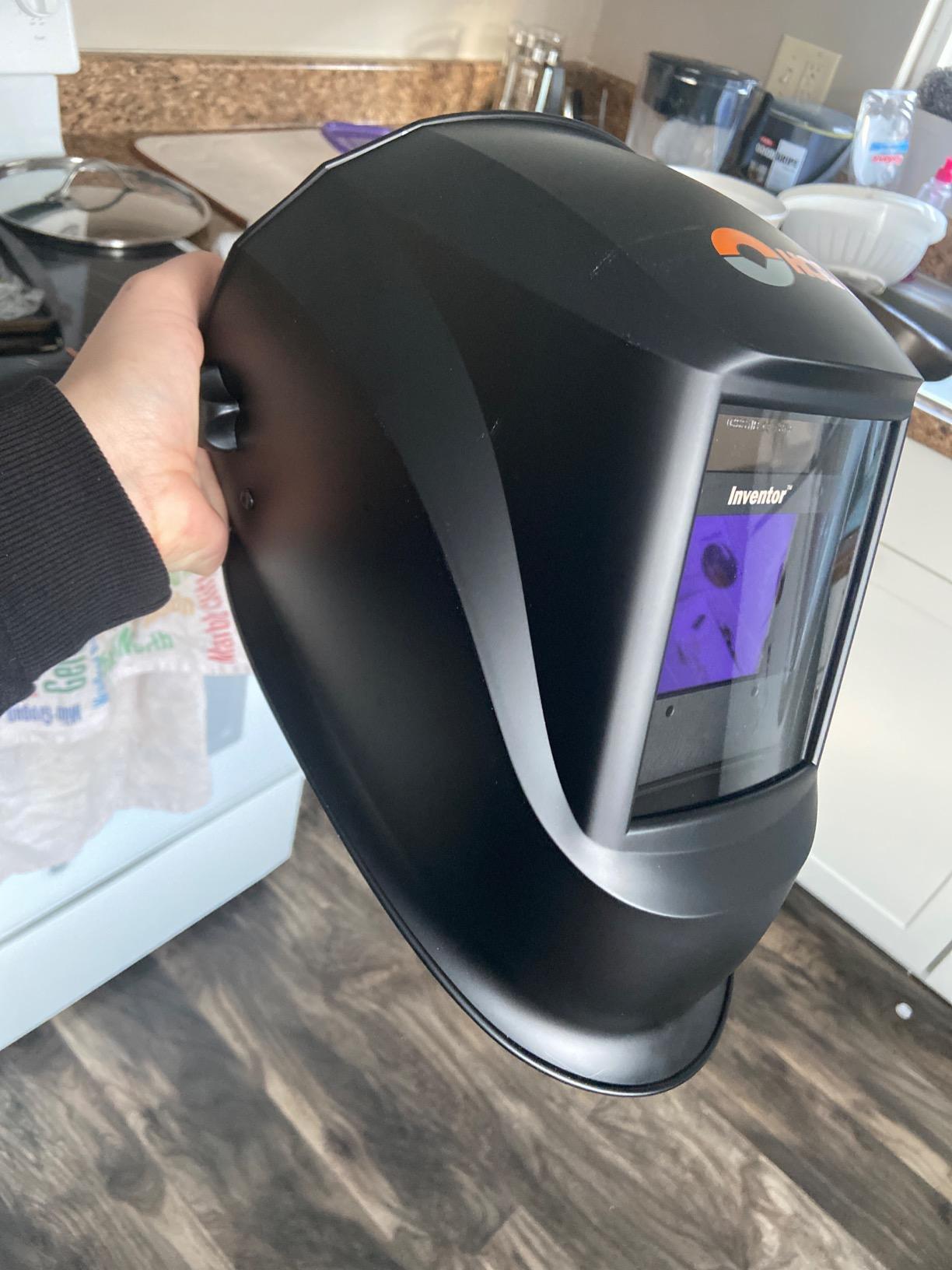
The Hobart wins on field of view. A 9.3 inch widescreen viewing area at 1.25 pounds is a rare combination, and it means you can see the filler rod, the tungsten tip and the edges of the puddle without moving your head. For out-of-position work that is not a luxury.
PureColor lens technology gives an accurately colored view of the weld, and four independent arc sensors handle the detection so a torch blocking one sensor does not immediately leave you exposed. Owners like the simple weld to grind switching and the auto-on power control that wakes the lens at arc strike.
This is the model I would pick for someone who spends hours on tube work and hates tipping their head to see around a joint. It comes with a protective lens kit in the box and a CR2 lithium battery.
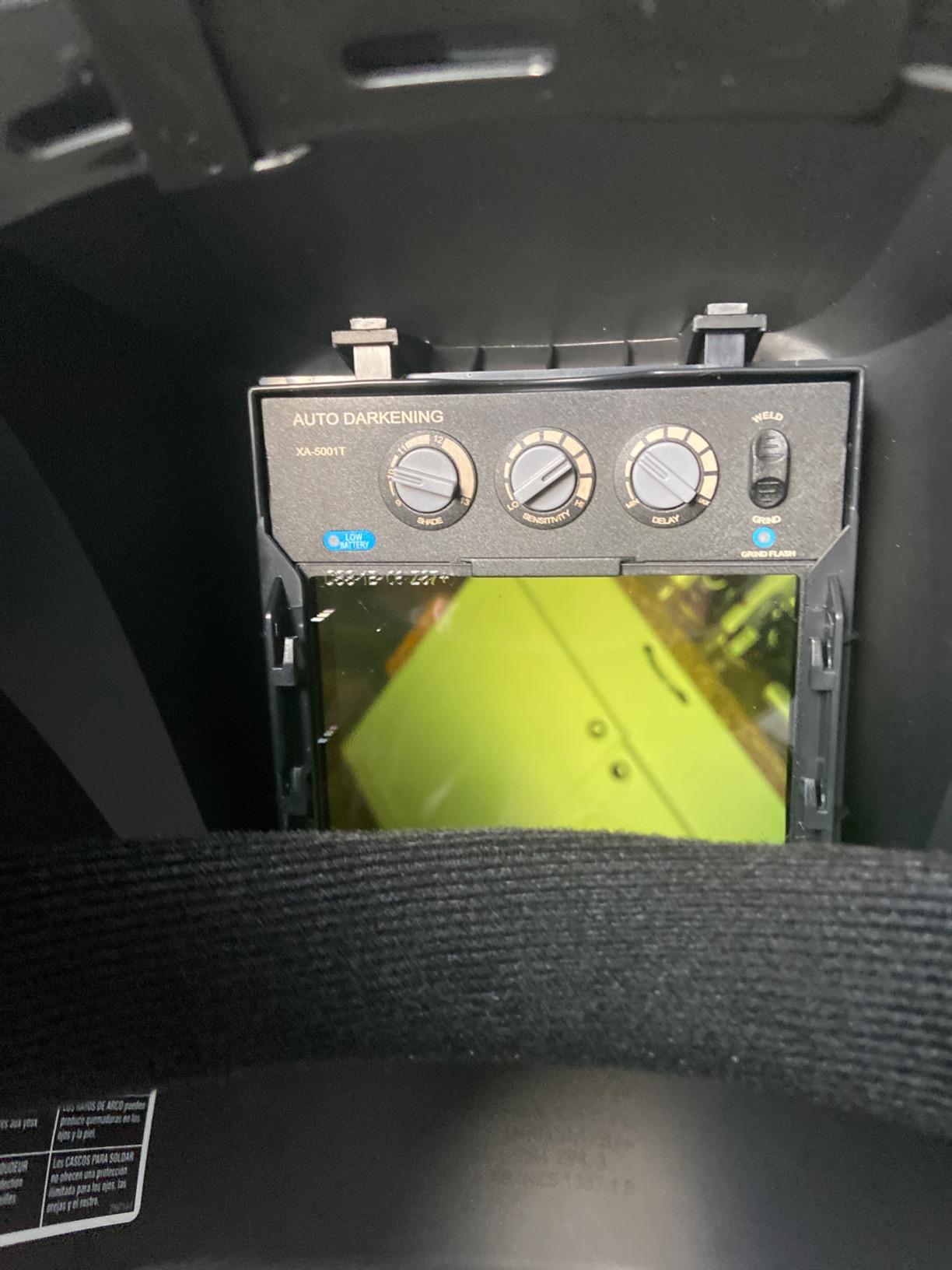
The controls are the compromise. Shade, sensitivity and delay are all analog knobs rather than digital buttons, which means you are turning a dial by feel in gloves rather than stepping through levels. For most people that is fine. For someone who wants to fine-tune delay between tack welds, it is slower.
Why the wide view pays off
Viewing area is the axis most people underestimate until they work a full day in a cramped helmet. A wider window means better hand-eye coordination on the puddle, fewer awkward neck positions, and a much better view of filler rod placement.
If you are building bike frames, exhaust work or anything with long continuous beads, the 9.3 inch widescreen pairs naturally with the PureColor rendering.
What you give up with analog controls
Knobs are not as repeatable as digital steps. You cannot jump to a stored shade, and fine delay adjustments take a few seconds of fiddling. For tacking-heavy work where you want to shorten the delay between welds quickly, that friction adds up.
The two year warranty is also the shortest of the four brand-name machines in this roundup, so treat the protective lens kit as the first thing to buy a spare of.
6. MIGVAN True Color H-21 – Best Budget True Color Hood
- Four arc sensors for low-amp TIG detection
- True color golden lens reduces distortion
- Solar plus rechargeable battery
- Replacement inner and outer lenses included
- Pivoting headgear with breathable padding
- No manufacturer warranty listed
- Auto-darkening response not as instant as premium lenses
- Slight color cast at the lightest shade
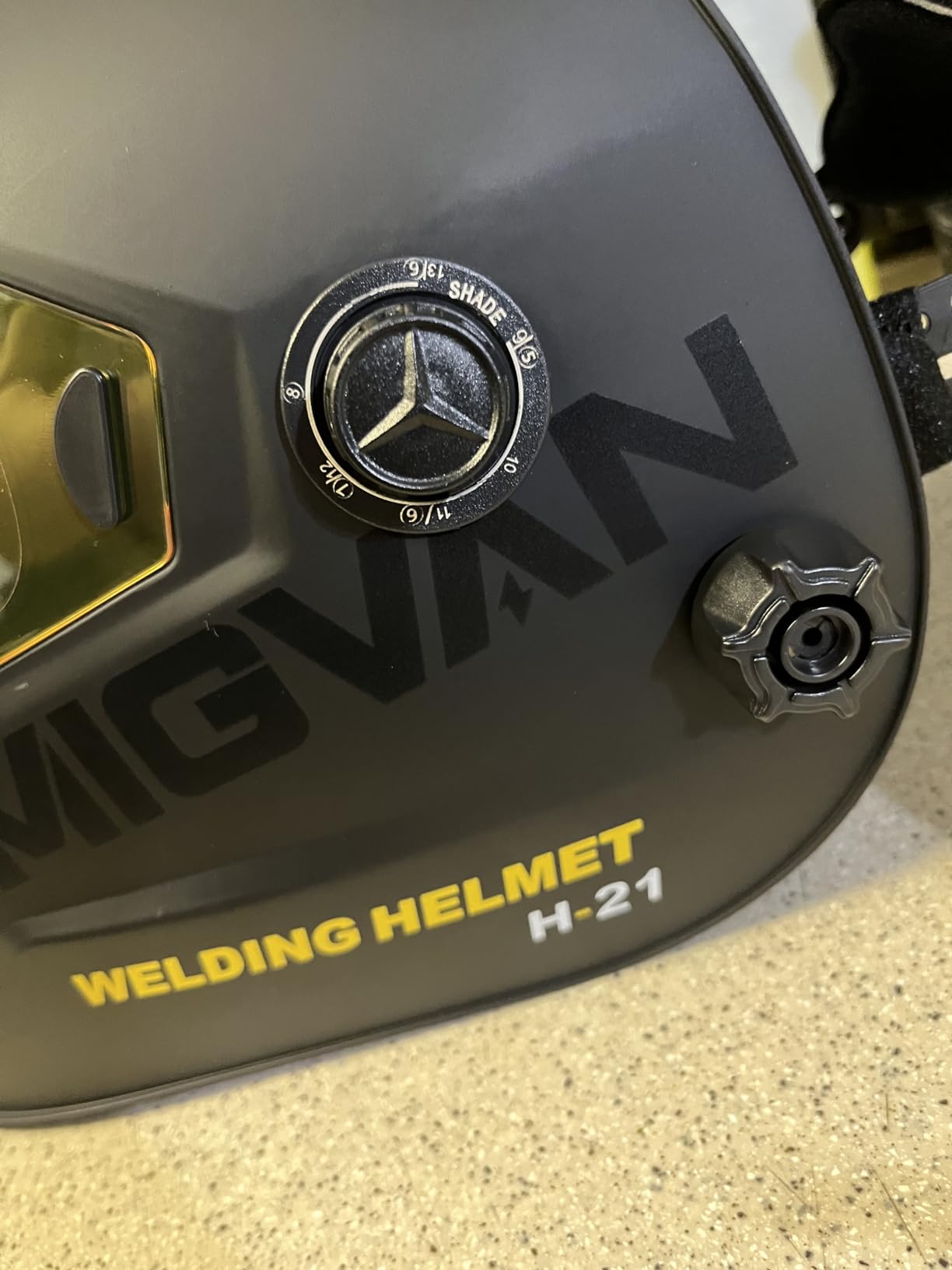
The H-21 does something most of its tier does not: it gives you four arc sensors and a true color golden lens without a major jump in cost. The sensors activate in 1/10000 seconds and switch the lens from a DIN 4 light state to DIN 5-9 or DIN 9-13 dark states, which covers TIG, MIG, stick and grind.
Dual power is the sleeper feature here. Solar energy combined with a replaceable CR2450 battery means the filter keeps working when you are welding somewhere with weak ambient light, which is exactly the scenario where a cheap hood tends to leave you unprotected.
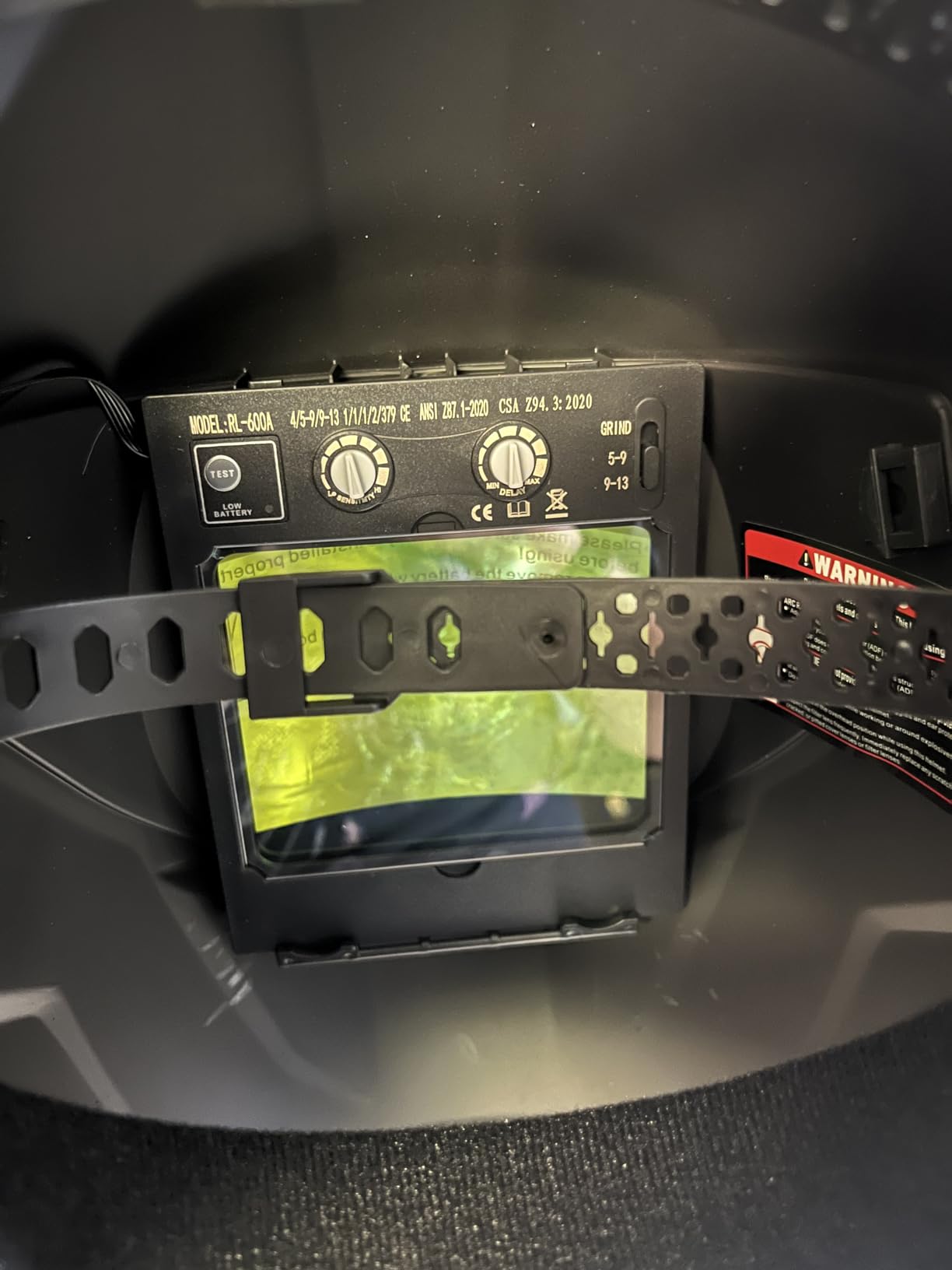
You also get two inner and two outer lenses in the box plus a storage bag, which solves the first replacement cycle before it happens. The box also states compliance with ANSI and CE standards.
Star ratings run a little more mixed than the brand-name hoods, and the most common reservations are sensor sensitivity tuning and build finish. Some owners report the auto-darkening is not as instant as premium lenses, and a slight color cast shows at the lightest shade.
Good for students and occasional TIG
If you TIG once a month on scrap or small brackets, this is enough helmet. Four sensors handle the low-amp arc, the true color lens lets you see the puddle, and the dual power removes the dead battery panic that ruins a session.
Replacement lenses in the box mean the first year of spatter damage is covered without another purchase, which is the ongoing cost that catches budget buyers.
Where it stops short of premium behavior
No manufacturer warranty is listed, so a failed control board is on you. Budget tier helmets generally do not carry meaningful support, and that risk is real if you depend on the hood every day.
At the lightest shade the lens shows a slight color cast, and if you rely on reading heat color in the puddle that is worth knowing. Fine for hobby work, less useful if you weld aluminum and judge color.
7. TOOLIOM TL-31800H – Best Large-View Helmet on a Budget
TOOLIOM Auto-Darkening True Color Welding Helmet with 3.94 x 3.66 View
- Large 14.4 square inch viewing area
- Four arc sensors for TIG and MIG
- 1/1/1/1 optical clarity with true color
- Very fast 1/30000 second auto-darkening
- Dual solar and lithium power
- Solar and battery hybrid can act up when coin cell is depleted
- Basic shell and padding
- Narrower grind mode range
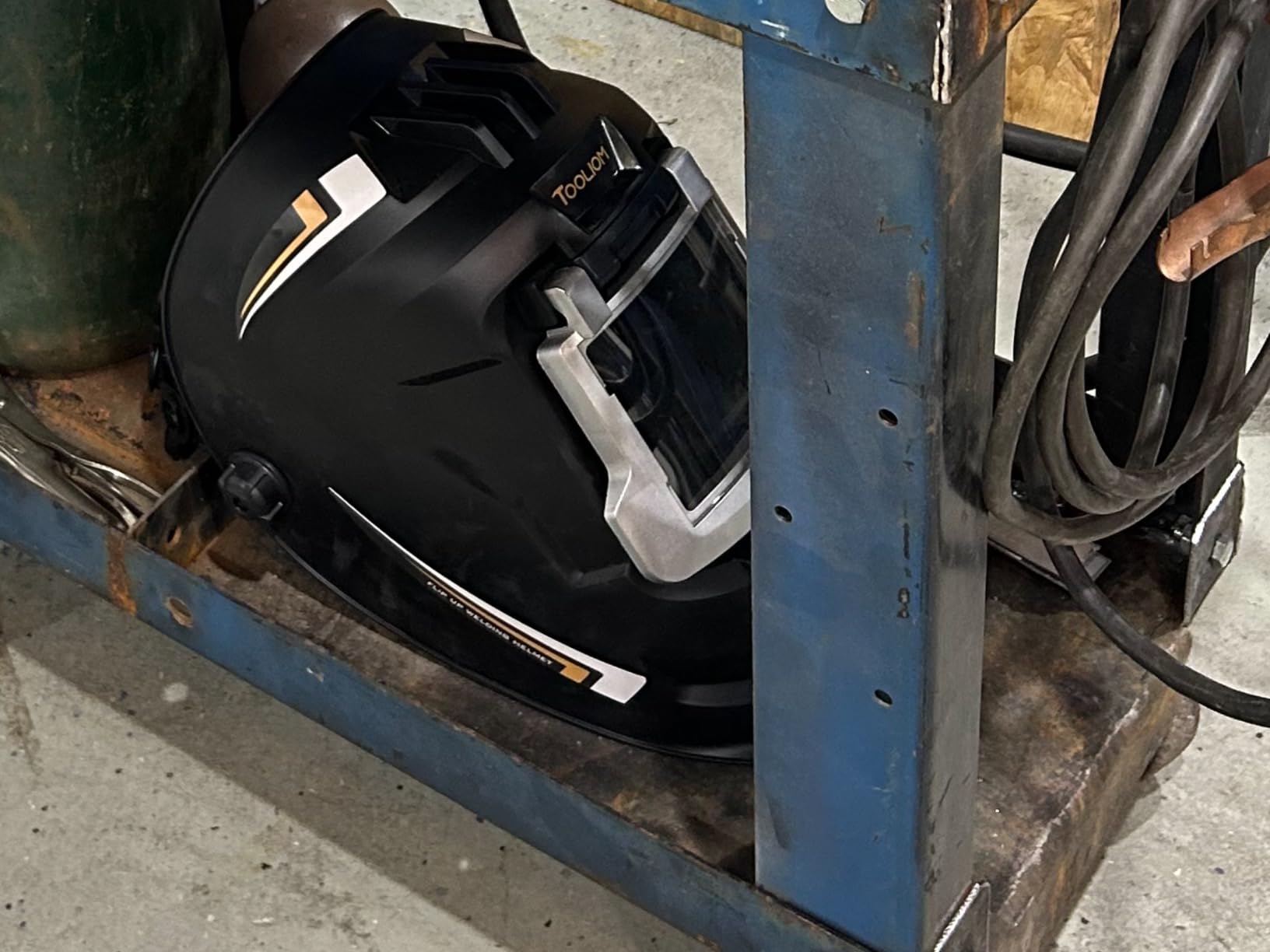
A 14.4 square inch viewing area is the largest in this roundup, larger even than the Viking 3350, and it comes with a 1/1/1/1 optical class and true color rendering. If your complaint about cheaper helmets is tunnel vision while welding tube, this is the direct answer.
The switching speed of 1/30000 seconds is at the fast end of what is available, and four arc sensors back it up. Dark state runs shade 5-9 or 9-13 with a DIN 3 light state, and sensitivity, delay and shade adjustments support Weld, Cut and Grind modes.
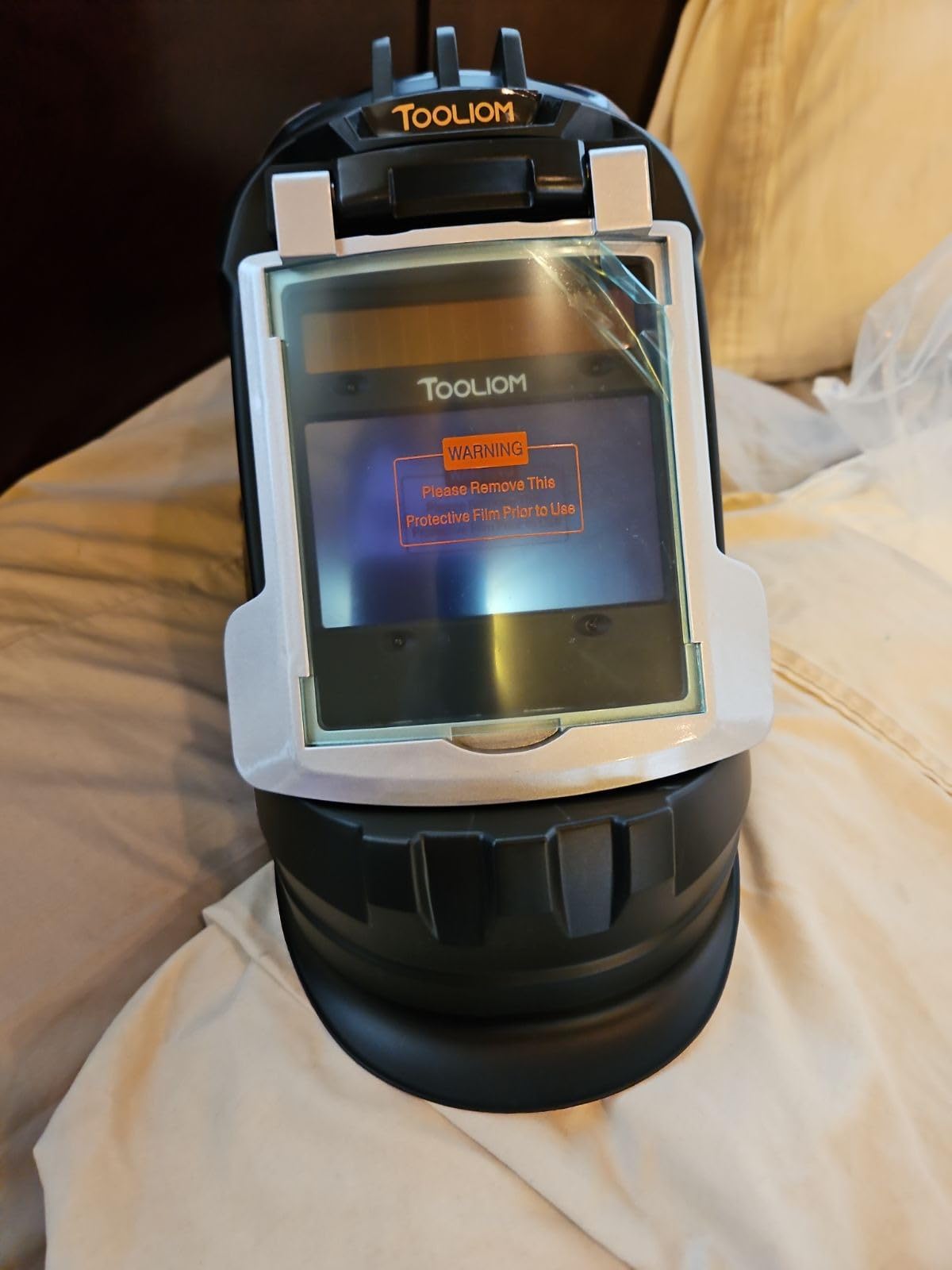
Buyers consistently point to the combination of viewing area and true color optics at this price point as the reason it rates so well. The butterfly-style shell with sweat-absorbing breathable headgear is comfortable for hobby and light shop work, and the package includes two outer lenses, one inner lens and a replaceable battery.
The one hybrid-power caveat worth knowing: some owners report odd behavior once the coin cell runs down, so replace it on schedule rather than waiting for the warning.
Where the big window helps most
Welding outside corners and out-of-position joints is where a large viewing area pays for itself. You can track both hands, the rod and the leading edge of the puddle from a fixed head position, which reduces the neck crouching that causes fatigue late in a shift.
It is also a good choice for anyone switching between TIG and fabrication work, since the shade range covers cut and grind modes too.
Where the budget shows
The shell and headgear padding feel basic next to the lenses. The optics are good, the frame is not, and over a full professional shift you will feel the difference even if the specification sheet does not.
The grind mode range is also narrower than some competing budget helmets, so if you do heavy grinding work alongside welding, check that the shade range covers your abrasive work before you settle on it.
8. YESWELDER BW-10MAXTRI – Best for a Panoramic View
YESWELDER Auto-Shade Welding Helmet, Internal Digital Control, 180° View
- True color lens far better than older green or brown lenses
- Five arc sensors for dependable detection
- 1/1/1/1 clarity with 3/4-8/9-14 shade range
- Solar plus coin cell keeps lens working in weak light
- Adjustable shade delay and sensitivity
- Shell and headgear are basic
- Sizing band can arrive misshapen
- Solar supplements rather than charges the battery
Five arc sensors is more detection coverage than anything else here, and it is the single most relevant spec for low-amp TIG. When your torch is between the arc and one of the sensors, extra sensors are what keep the lens dark instead of letting a flash through.
The view is genuinely panoramic: an 8.89 by 3.23 inch viewing area made up of a 4.25 by 3.23 inch main view plus two side views at 2.87 by 2.32 inches, at 1/1/1/1 optical clarity with true color technology. The side panels are the reason you can see the full width of a joint without turning your head.
Internal digital control is the other differentiator here. Instead of external knobs, the shade, sensitivity and delay adjustments happen through an internal digital display, and the filter auto-adjusts to arc brightness with fine level adjustment. The shade range of 3/4-8/9-14 covers MIG, TIG, stick, tack, grind and cut with gradient control.
Reviewers single out the true color lens as the standout feature, describing it as a major step up from older budget lenses, and note that you can see clearly with the hood down between welds. Replacement lenses and a lithium battery are included.
Best for sensor coverage and side visibility
If you TIG outside corners, overhead, or with the torch frequently between your face and the arc, sensor coverage matters more than any other spec. Five sensors plus the side viewing panels is the combination that reduces mid-weld lightening.
The internal digital control also makes it easy to change settings between a tack pass and a finish pass without taking the helmet off, which is a genuine time saver on complex joints.
Where the comfort falls short
The consensus in the reviews is that the shell and headgear are serviceable rather than premium. The sizing band can arrive misshapen and is not especially plush, and some users find the padding insufficient for full professional shifts.
One more detail: the solar panel supplements rather than charges the replaceable battery. Keep a spare coin cell on hand rather than assuming a day of arc light will top it up.
9. ARCCAPTAIN LED Helmet – Best for Welding in a Dark Shop
ARCCAPTAIN Auto Darkening Welding Helmet with Light, 3.94″X3.66″ Large View
- Built-in USB LED welding light with two brightness levels
- Four arc sensors for TIG MIG and stick
- Large 3.94 by 3.66 inch screen at 1/1/1/1 clarity
- Dual solar panels plus CR2450 battery
- Very light at about 1 lb
- Welding light ships uninstalled
- Only a 180 day warranty
- Flexible PP shell
- Sensitivity needs fine tuning
The integrated LED work light is the reason this hood exists as a distinct option. Two brightness levels mounted on top let you light the joint before you strike, which matters enormously in a basement, a trailer or a shop with poor overhead lighting, and it is the one feature none of the other budget models here offer.
Underneath the light, the core spec sheet is solid. Four premium arc sensors switch light to dark in 1/25000 second, the dark state runs 4/5-8/9-13, and the 3.94 by 3.66 inch screen carries 1/1/1/1 optical clarity with true color technology.
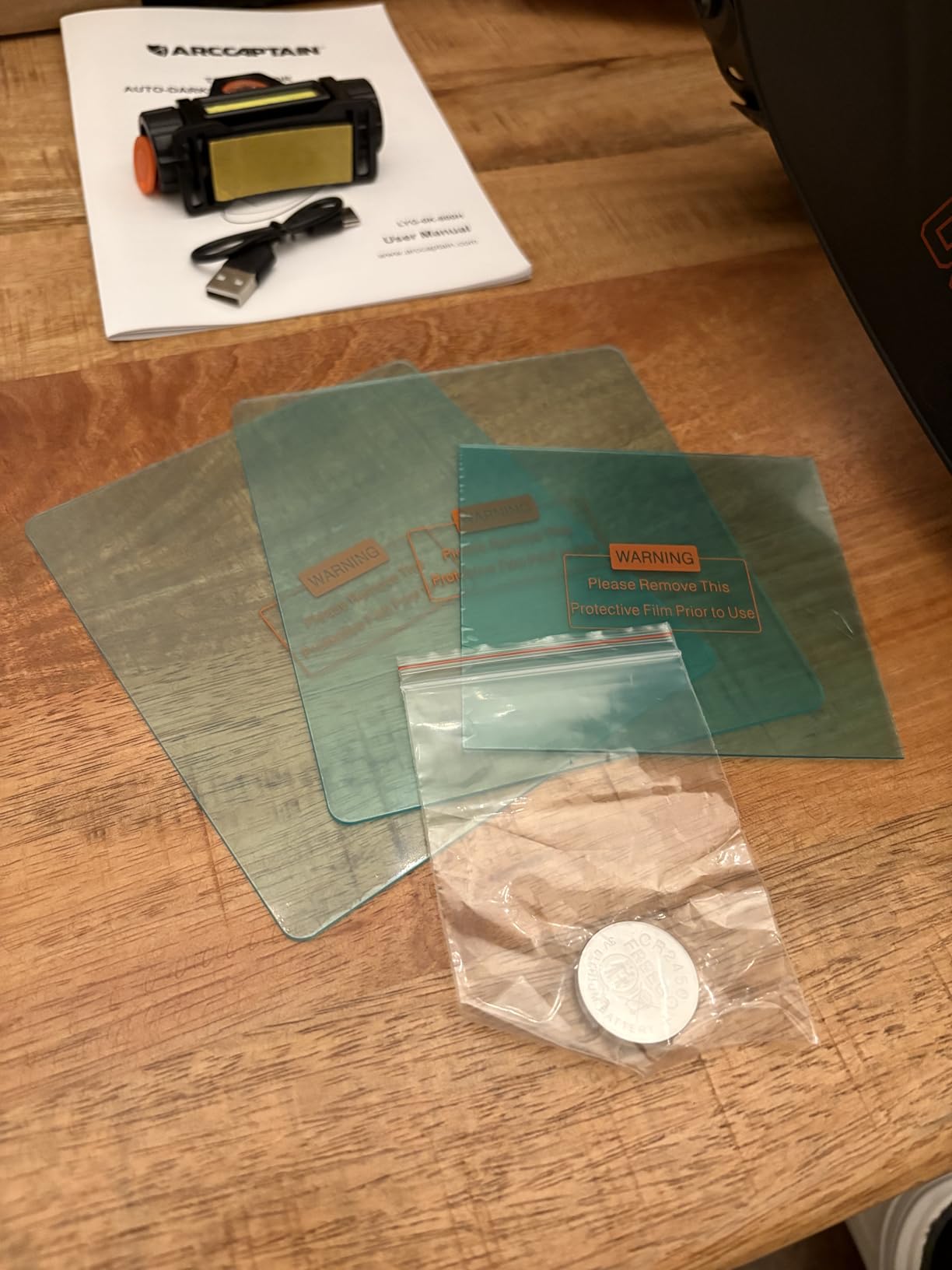
Power comes from two solar panels plus a CR2450 lithium battery, with a stated minimum current of 5 amps, and the 12-in-1 smart filter provides automatic DIN 16 UV and IR protection. Certification is listed as ANSI Z89.1, CSA Z94.3 and DIN EN 379.
Two practical notes. The welding light is not fitted to the helmet when it arrives, so you will be attaching it yourself, and the 180 day warranty is the shortest in this roundup by a wide margin.
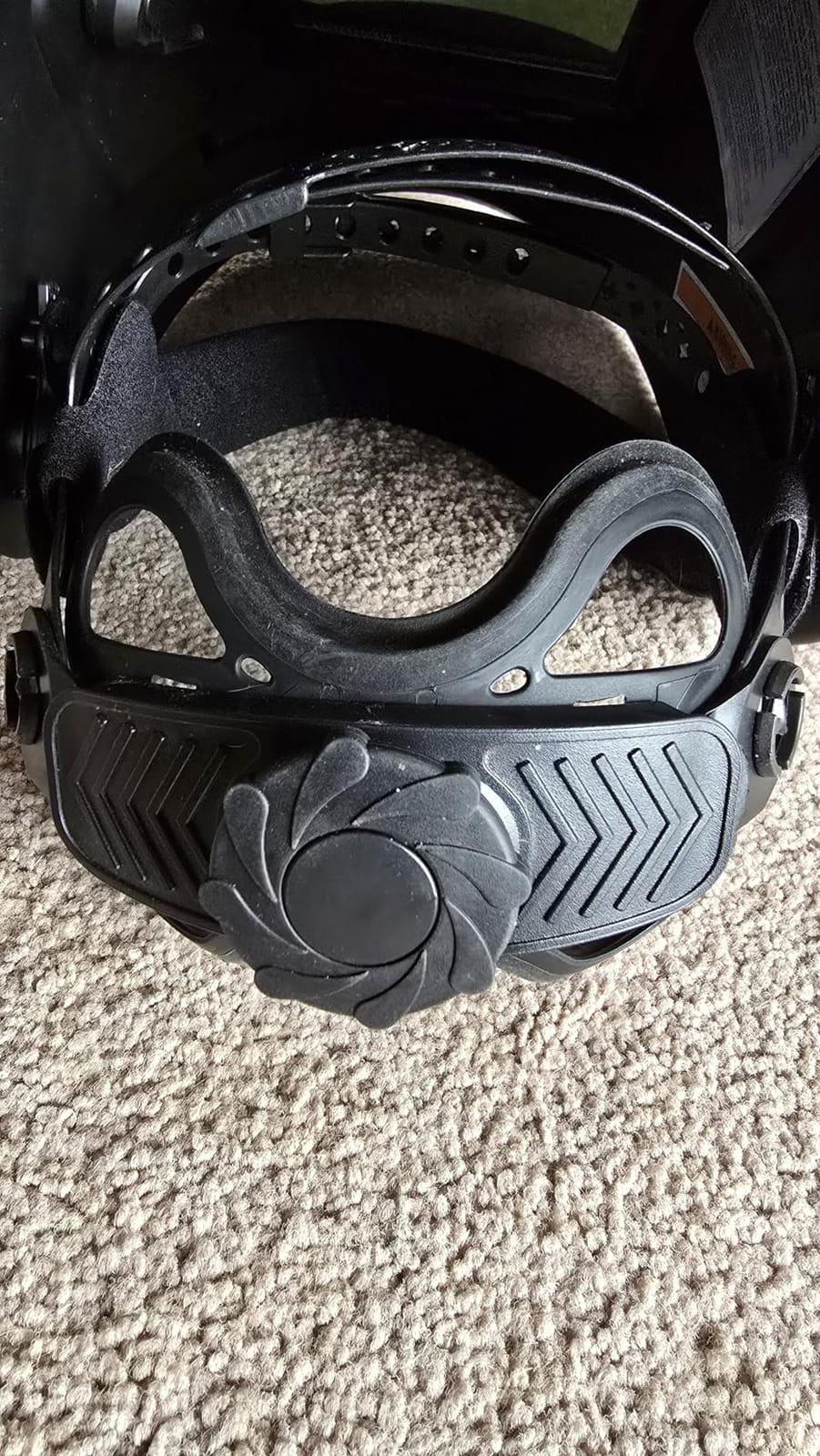
Who benefits from the built-in light
Anyone welding away from good overhead lighting gets a real workflow improvement here. Checking a joint, finding your torch angle and confirming fit-up all happen without dragging a work light into position, and two brightness levels keep it from being a gimmick.
At about 1 pound with breathable padding, it also stays comfortable for hobby and garage use, and four sensors mean it handles TIG, MIG and stick without mode switching gymnastics.
Where it disappoints
The shell is flexible PP rather than nylon, so it feels less rigid in the hand and less protective in a drop than the brand-name models. Some users also report that the sensitivity needs fine tuning to avoid nuisance darkening from shop lighting.
The 180 day warranty is the real caveat. If this is a shop hood working daily, the protection a longer warranty provides matters, and you should factor that into the decision rather than treating it as an afterthought.
10. TOOLIOM Solar Powered Helmet – Best Lightweight Helmet for Long Sessions
TOOLIOM Auto Darkening Solar Powered Welding Helmet for TIG MIG ARC with Light
- Extremely light at 1.14 lb
- 1/1/1/1 true color optics
- External grind knob works with gloves
- Adjustable headgear holds position overhead
- Low battery indicator
- Solar plus replaceable battery
- Small 3.64 by 1.67 inch viewing area
- Cheater lens slot too small for a standard lens
- Thin crown headband padding
This is the lightest credible auto-darkening option here that still claims 1/1/1/1 optical clarity, at 1.14 pounds. It also has a low battery indicator, which sounds minor until the alternative is discovering a dead cell halfway through a bead with the hood already down.
Auto-darkening runs at 1/25000 second across a DIN 3.5 to 9-13 shade range, and the external control knob switches from welding to grinding while you are wearing gloves. The blue-light blocking outer lens is there for long shifts.
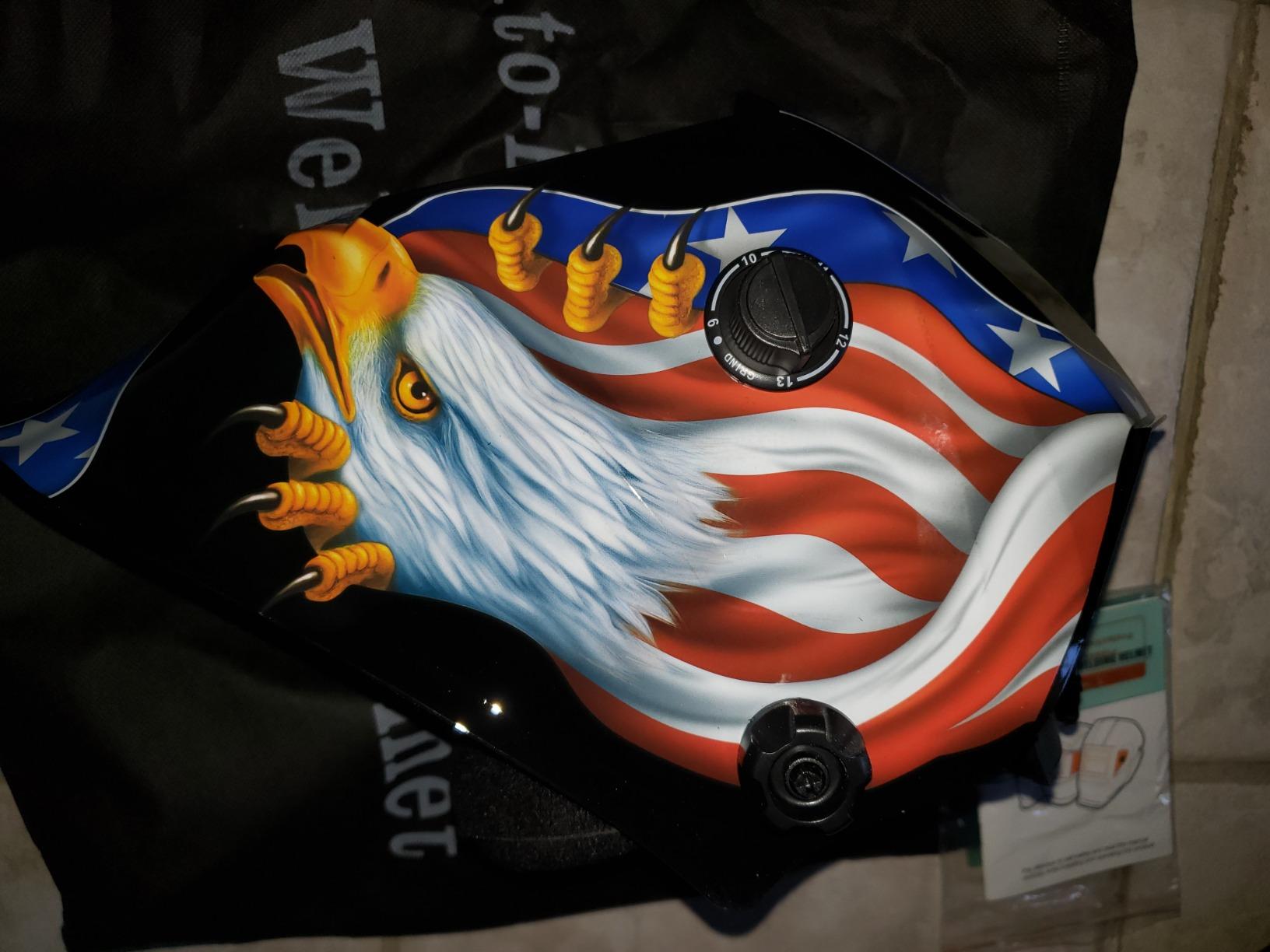
Owners describe the adjustable headgear as holding position well even in awkward overhead angles, which is a small thing until you are welding a frame in a tight shop. The package includes a replaceable battery and three replacement lenses.
The recurring complaints are all about size. The 3.64 by 1.67 inch viewing area is small next to every other hood in this roundup, the cheater lens slot is slightly too small for a standard 4.25 inch lens, and the crown padding is thin enough to notice on a long shift.
Best as a second helmet
This is where this solar powered TOOLIOM makes the most sense. A very light, very cheap second hood lets you keep your premium lens clean for production TIG and use this one for tacking, grinding and cleanup, which is where lenses get ruined fastest anyway.
For students and hobby welders working on their own arc time budget, the weight and the low battery indicator are genuinely valuable features rather than spec-sheet filler.
Where the small window costs you
A 3.64 by 1.67 inch viewing area is a real constraint on tube work. You will be moving your head to follow a bead, and on outside corners that head movement is exactly what you are trying to avoid.
The cheater lens slot will not take a standard 4.25 inch lens, so if you need magnification for thin stainless you should rule this one out. Some users also find the external shade adjustment range limited.
How to Choose a Welding Helmet for TIG Welding: 7 Criteria
TIG asks more of a helmet than MIG or stick, and for one physical reason: a TIG arc at the same amperage is dimmer and far more concentrated than a MIG arc. The welder also sits close to the work, usually 8 to 14 inches away, and the arc starts and stops constantly during tacking. Every criterion below follows from that.
1. Arc sensor count. Four sensors is the practical minimum for TIG. Two-sensor designs have dead zones, and when the torch angle shadows a sensor during an outside corner joint the lens lightens mid-weld. Five sensors give you the most margin.
2. Published minimum amperage. The figure the manufacturer will commit to tells you how dim an arc the filter will trigger on. A hood rated for 5 amps is a genuine low-amp TIG machine. Claims of down to 2 amps are worth having, but only when published.
3. Optical clarity. A 1/1/1/1 rating is the EN standard covering optical class, diffusion of light, homogeneity of shade and angle dependence. Eight of the ten helmets here claim it, so it no longer separates the field on its own.
4. True color technology. A true color lens, whether that is 4C from Lincoln, ClearLight from Miller, PureColor from Hobart or true color from the budget tier, keeps the puddle and base metal view readable without a green or brown cast. On aluminum and thin stainless this changes how you read heat color.
5. Switching speed. Anything at or above 1/25000 second is fast enough for production TIG. Slower lenses get blamed for flash during rapid arc start and stop cycles, which is the rhythm of tacking work.
6. Viewing area and light state. A larger window means fewer head movements and better filler rod placement. A brighter light state, shade 3 or 4, speeds up fit-up work where the hood is up between welds.
7. Shell, headgear and warranty. Weight matters over a full shift, and the warranty tells you how the brand expects the electronics to hold up. Lincoln offers five years, Miller three, Hobart two, and some budget models list none.
On AC TIG for aluminum, sensor behavior differs in one useful way. The cleaning action of the AC cycle makes the arc brighter and more erratic than DC, so sensors are more likely to trigger correctly, but the rapid brightness swings are harder on a slower filter. Run the highest shade you need, set sensitivity to maximum, and expect to tune delay upward so the lens does not flicker between the cleaning and cleaning-out halves of the cycle.
Budget Amazon-tier helmets are a legitimate choice for hobby and apprentice work, and our comparable roundup methodology on another helmet category applies the same spec-first approach. If you want a broader view of how we test and rank protective gear, our cycling helmet roundup uses the same structure, and our aerodynamic helmet picks apply it to fit and safety trade-offs.
TIG Helmet Settings: Shade, Sensitivity and Delay
Getting the settings right matters as much as the helmet. A perfectly capable filter that never triggers is worse than useless, and one that false-triggers in daylight will train you to ignore the lens entirely. Set it up in four steps.
Step one: fresh batteries and clean sensors. Wipe the sensor windows with a dry cloth and replace the battery before the first job of the day, not after a bad one.
Step two: set sensitivity to maximum, then back it off one level at a time. Start high so a dim arc always triggers, and back off only if the lens darkens from shop lighting or reflected light off shiny aluminum.
Step three: set shade by amperage. The rule of thumb welders use is shade 8 below 50 amps, shades 9 to 10 between 50 and 150 amps, and shades 11 to 12 above 200 amps. Higher amperage means a brighter arc and a darker filter setting, never the reverse.
Step four: tune delay for your actual rhythm. Start at roughly 0.2 to 0.5 second. For heavy tacking, shorten it to 0.1 to 0.3 second so you can see the joint between tacks. For a continuous bead, lengthen it so the lens does not flicker every time you reposition the torch.
If a lens will not darken at all, work through it in this order: battery first, then sensor cleanliness, then sensitivity, then the auto-on switch, then the internal shade setting. A cloudy or scratched inner cover lens makes everything look bad and gets blamed on the filter when the filter is fine. Replace the inner lens before you blame the electronics.
One safety point that cannot be repeated enough. Never dial below the shade your amperage requires because a darker shade feels easier on your eyes. Brighter is not safer. A lens that feels slightly light at a given shade is normal; a lens that fails to darken is not.
Frequently Asked Questions
What is the best helmet setting for TIG welding?
Set sensitivity to maximum for dim TIG arcs and back it off only if the lens false-triggers from shop lighting. Use shade 8 below 50 amps, shades 9 to 10 between 50 and 150 amps, and shades 11 to 12 above 200 amps. Start delay near 0.2 to 0.5 second, shortening it to 0.1 to 0.3 second for tacking.
Why do welders need a special helmet for TIG welding?
A TIG arc at 50 amps throws far less light than a MIG arc at 50 amps, and TIG welders sit 8 to 14 inches from the work with constant arc start and stop. A filter that cannot detect the dim arc stays in its light state, delivering repeated arc flash to the eyes across a shift.
Why do welders lose their eyesight?
Cumulative ultraviolet and infrared exposure causes arc eye and welder flash, and repeated small exposures over months matter more than one big event. Protection requires a correctly rated filter, a shade appropriate to your amperage, and clear inner cover lenses. A brighter-feeling shade is not a safer shade.
Do I need four arc sensors for TIG welding?
Four is the practical minimum. Two-sensor designs have dead zones, and when the torch angle shadows a sensor during an outside corner joint the lens can lighten mid-weld. Five sensors, as on the YESWELDER BW-10MAXTRI, give the most margin for low-amp TIG work.
Can I use a passive fixed shade 10 helmet for TIG?
Yes, for production TIG on fixed joints where you keep your head at a constant distance and the arc is not pointed at you. It will not help with fit-up, out-of-position work or any job where you move your head constantly, because there is no dark state to protect the start and stop of each arc.
What switching speed do I need for TIG welding?
At or above 1/25000 second is fast enough for production TIG. Slower lenses are blamed for flash during the rapid start and stop cycles of tacking work. Several models in this roundup run 1/25000 or 1/30000 second.
Bottom Line: Which TIG Welding Helmet Should You Buy
The default pick from this roundup of the best welding helmets for TIG welding is the Lincoln Electric VIKING 3350. Four sensors, 12.5 square inches of 4C-lens view at 1/1/1/1 clarity and a five year warranty cover more failure modes than anything else here, and the puddle detail is what you notice on every weld.
For a wide view at the bench, take the Hobart 770890. For the most sensor coverage and the best side visibility, take the YESWELDER BW-10MAXTRI. On a tight budget running indoor TIG on thin material, the ESAB Savage A40 gives you four sensors and adjustable low-amp sensitivity at a fraction of the premium tier.
Whichever one you order, set the sensitivity to maximum before your first strike and buy a spare inner cover lens with it. That single habit removes the two most common TIG complaints.