
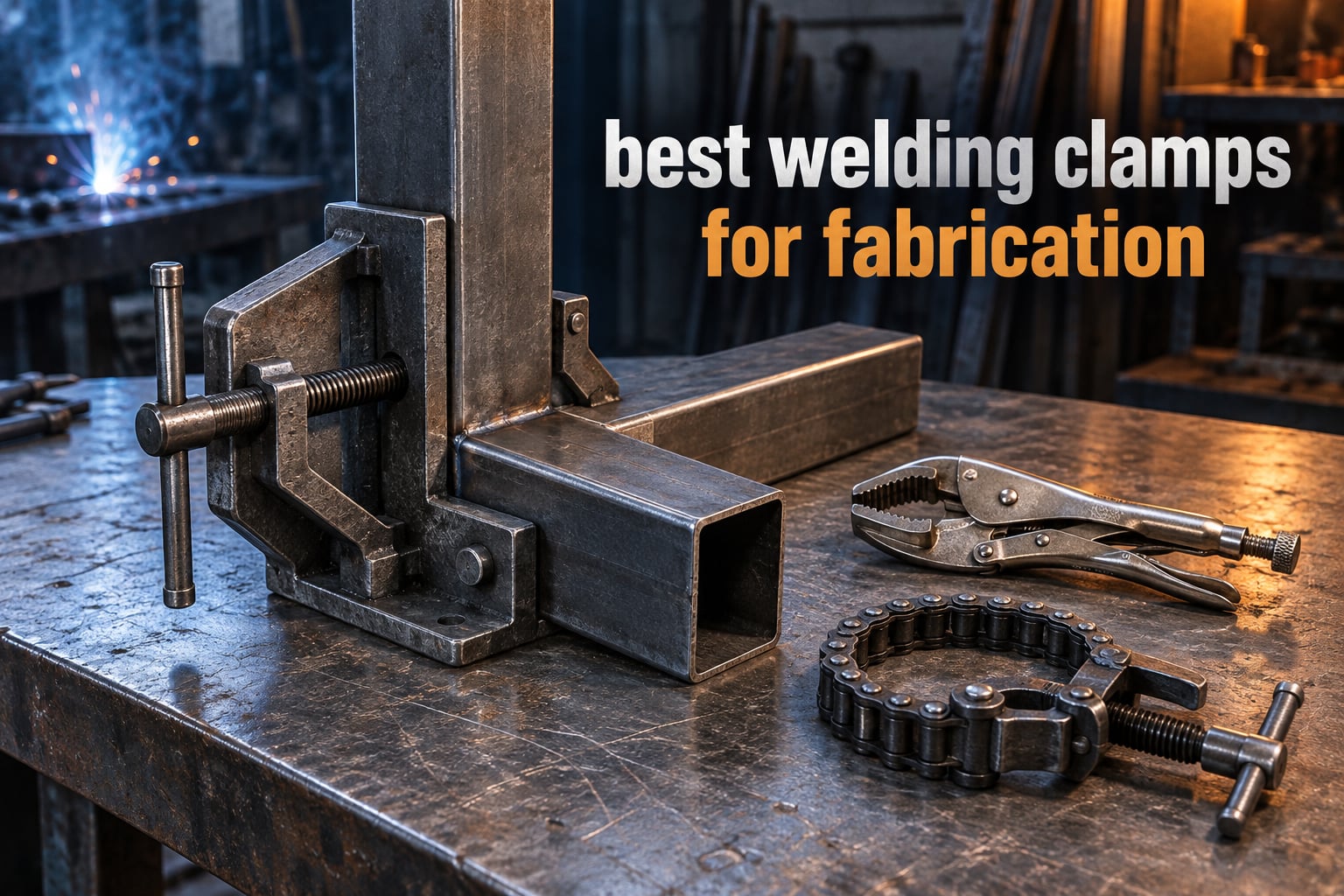
Short answer: the BETOOLL Cast Iron Welders Angle Clamp is the best welding clamp for fabrication in 2026 if you build tube frames and angle iron, because its cast iron body and swivel spindle hold a true 90-degree corner while leaving the joint open for your torch. For general sheet and panel holding in a tool bag, the IRWIN VISE-GRIP 9-Inch 25ZR is the one most shops reach for first. For pipe work, the Strong Hand CPA60 handles 2 to 6 inch butt joints that smaller clamps will not reach.
Clamps are the least glamorous tool in a fabrication shop and one of the most important. A joint that shifts half a millimeter mid-bead comes off the table warped, and warped means grinding, cutting out, or scrapping the whole part. Good clamps do three jobs at once: they hold the gap, they hold the square, and they give the metal somewhere to pull heat toward instead of letting it distort on its own.
This roundup covers 12 clamps chosen for real fabrication work rather than hobby tacking. We looked at throat depth, jaw and pad design, capacity, how the clamp locks, what it takes to live with after a few hundred clamp cycles, and what reviewers report back after real shop use. Where a manufacturer does not publish a force rating, we say so instead of repeating a number we cannot verify.
One honest note before the picks. Most welding clamps on the market, including most of the ones here, do not have a published clamping force figure. That is not a secret we are hiding, it is an industry gap. So instead of a fake force column, we lean on the measurements that are published: throat depth, clamping capacity, jaw opening, weight, and material. On a fabrication job, those are the numbers that decide whether a clamp fits the part in front of you.
Table of Contents
Top 3 Welding Clamps for Fabrication in 2026
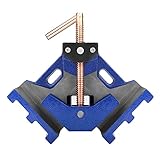
BETOOLL Cast Iron Angle Clamp
- Holds a true 90 degree angle
- Swivel spindle adapts to stock thickness
- 2.5 inch max joint passage
- Cast iron body

IRWIN VISE-GRIP 9-Inch 25ZR
- U-shaped jaw for visibility
- Guarded trigger release
- Heat-treated alloy steel
- Screw adjustable pressure

Strong Hand CPA60 Pipe Clamp
- 2 to 6 inch pipe capacity
- Quick-acting lever
- Stainless steel contacts
- Wide grip plates
Quick Comparison of All 12 Picks in 2026
The table below puts every clamp in the roundup next to the specs that actually decide a purchase. Throat and capacity figures are taken from the manufacturer listings, and the right-hand column is the job each clamp is best suited to.
| Product | Specifications | Action |
|---|---|---|
| BETOOLL Cast Iron Angle Clamp |
|
Check Latest Price |
| IRWIN VISE-GRIP 9-Inch 25ZR |
|
Check Latest Price |
| Strong Hand CPA60 Pipe Clamp |
|
Check Latest Price |
 Strong Hand PG114V Pipe Pliers Strong Hand PG114V Pipe Pliers |
|
Check Latest Price |
 VEVOR Ultra Pipe Clamp VEVOR Ultra Pipe Clamp |
|
Check Latest Price |
 Strong Hand CPL45 Pipe Clamp Strong Hand CPL45 Pipe Clamp |
|
Check Latest Price |
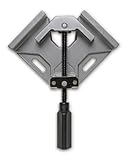 Hobart 770565 Two Axis Clamp Hobart 770565 Two Axis Clamp |
|
Check Latest Price |
 QWORK 10 Inch Flat Jaw Locking Clamp QWORK 10 Inch Flat Jaw Locking Clamp |
|
Check Latest Price |
 GOSWIFT 10-Inch Locking Sheet Clamp GOSWIFT 10-Inch Locking Sheet Clamp |
|
Check Latest Price |
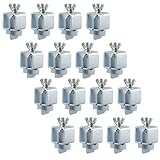 Toolly 16-Piece Butt Weld Clamps Toolly 16-Piece Butt Weld Clamps |
|
Check Latest Price |
 Klutch 4-Pc Welding Table Clamp Kit Klutch 4-Pc Welding Table Clamp Kit |
|
Check Latest Price |
 BuildPro Inserta Pliers PTT634K BuildPro Inserta Pliers PTT634K |
|
Check Latest Price |
1. BETOOLL Cast Iron Welders Angle Clamp – Best Overall for 90-Degree Tube Work
- Holds square tube
- angle iron and channel at a true 90 degrees
- Swivel spindle adapts to different stock thickness
- Open body leaves the joint clear for torch access and T-joints
- Rigid cast iron base does not flex during the bead
- 8 lb body is heavy to carry between setups
- 2.5 inch joint passage will not accept larger profiles
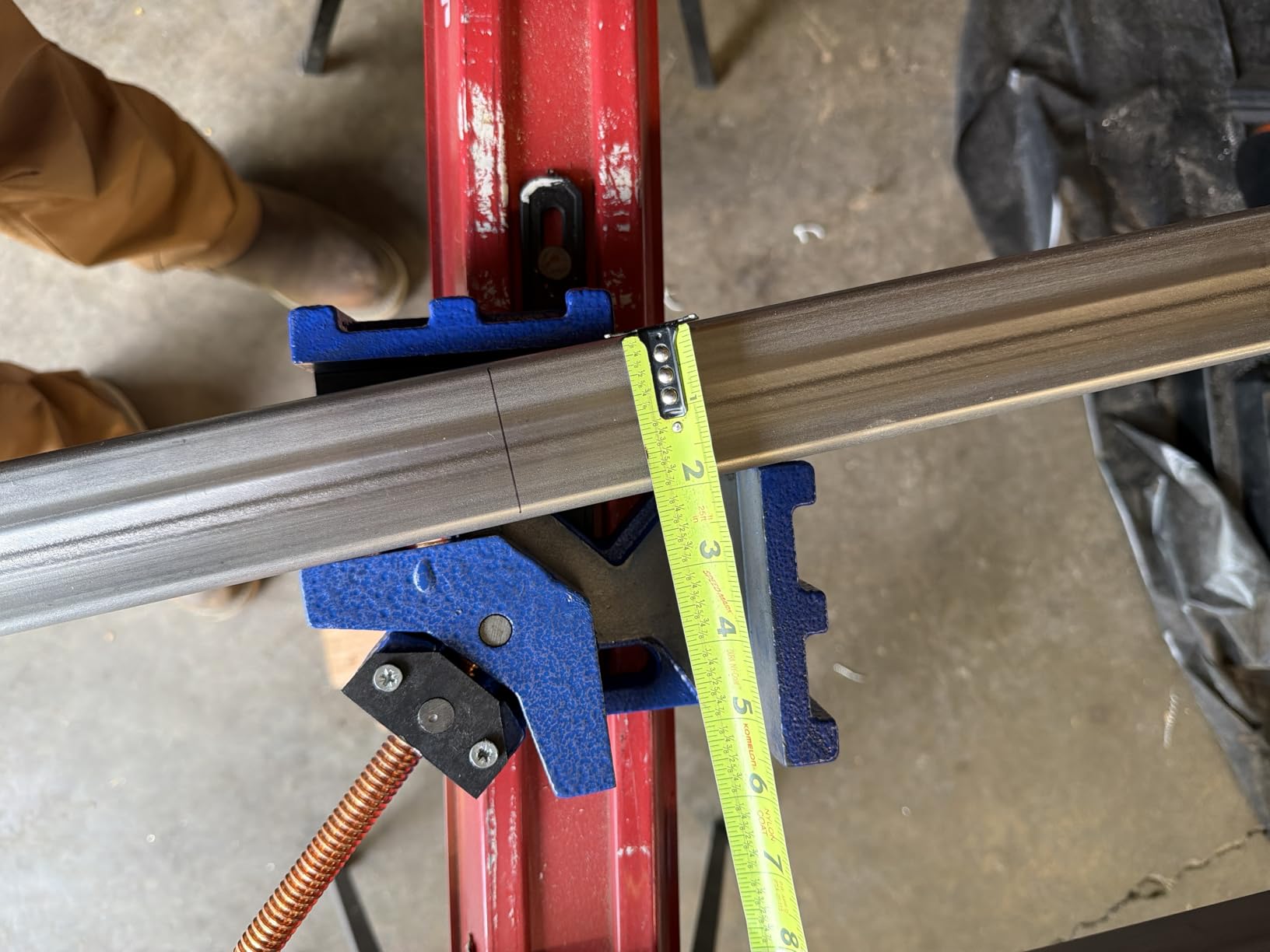
This is the clamp I reach for first on any frame job, and it is the first entry in my picks for the best welding clamps for fabrication list for a simple reason. Eight pounds of cast iron does not move. They hold a 2 inch square tube to another and stay put.
The two-way swivel mounted spindle is the part I did not expect to care about and now rely on. It adjusts the clamping block to different workpiece thicknesses automatically, so you are not re-shimming a fixed pad every time the material changes from 1/8 inch angle iron to 1/4 inch plate.
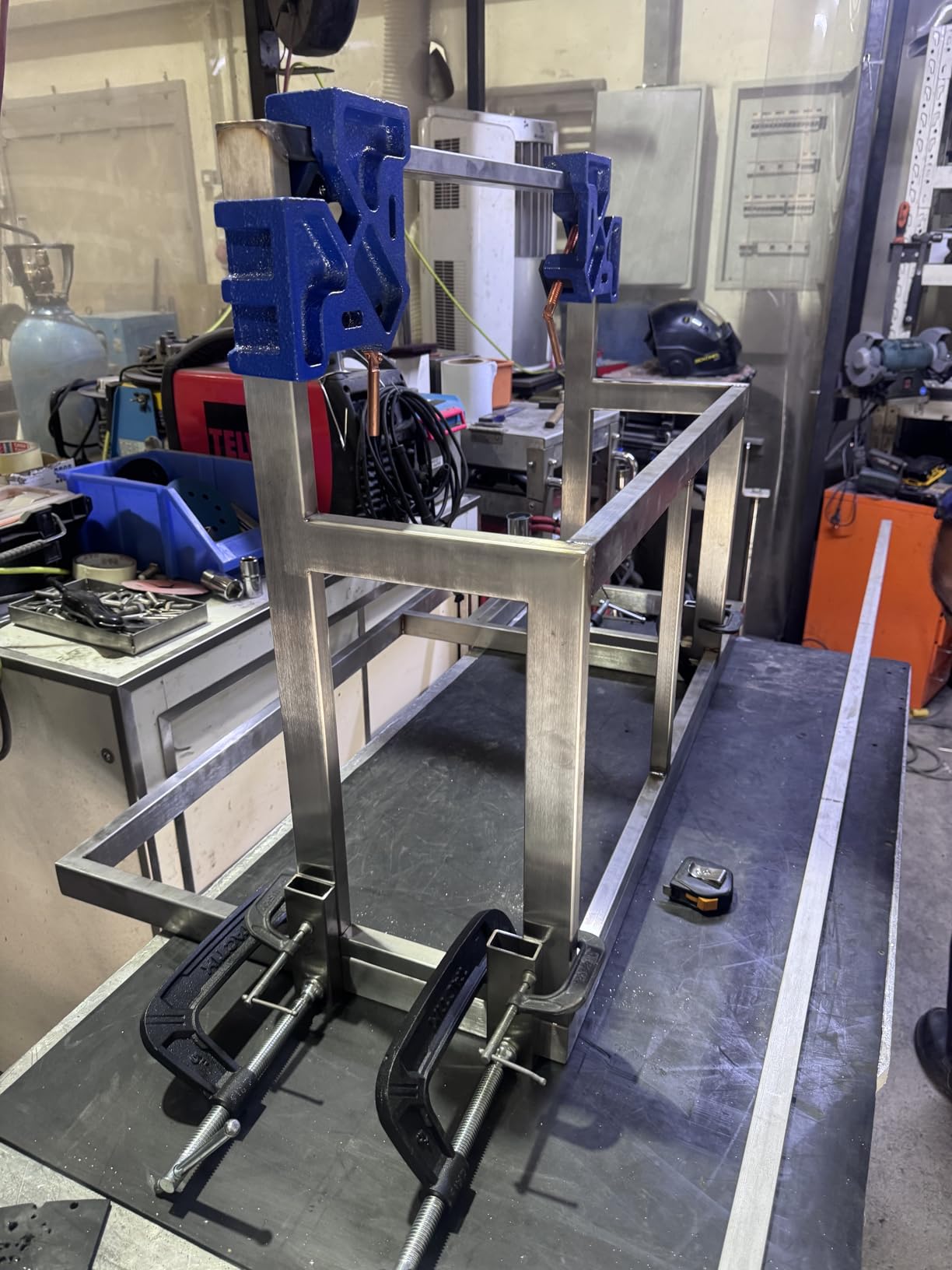
The open frame is the other thing that wins me over. There is no crossbar in the way, so you can get a torch, a MIG gun, or a grinder into the joint, and the through-way suits T-joints where you would otherwise be fighting a solid body for access. Reviewers repeatedly point out the same thing: it holds square and stays square.
Buyers also like that the cast iron simply absorbs the spatter. It is not going to deform if a stray bead lands on it, and it does not need a handle to be carried by, which is a trade you accept in exchange for the weight.
When this clamp pays for itself
It pays for itself the first time you build a square tube rack, a welding table frame, or a set of legs and cross braces. The 2.5 inch maximum joint passage covers the majority of tube and angle you will see in a shop, and the flat, rigid base does a better job than an improvised corner block braced with a pair of quick grips.
Plan your layout so the clamp sits on the outside of the joint, away from the arc and away from your walking path. At 8 lb it is a two-hand lift, and if you are climbing a ladder or working overhead you will want a lighter tool.
Where it falls short
The weight is real. On a job site where you are moving between pieces all day, an 8 lb clamp in one hand gets tiring fast, and reviewers mention carrying it around as the main annoyance. If most of your work is flat sheet on a bench, this is more tool than you need.
The other limit is scale. Once joint passage above 2.5 inches is the requirement, you are into structural or heavy box work where a lighter alloy or a purpose-built structural clamp serves better. Know your biggest joint before you buy, because the clamp you cannot fit is the clamp that sits in the corner of the shop.
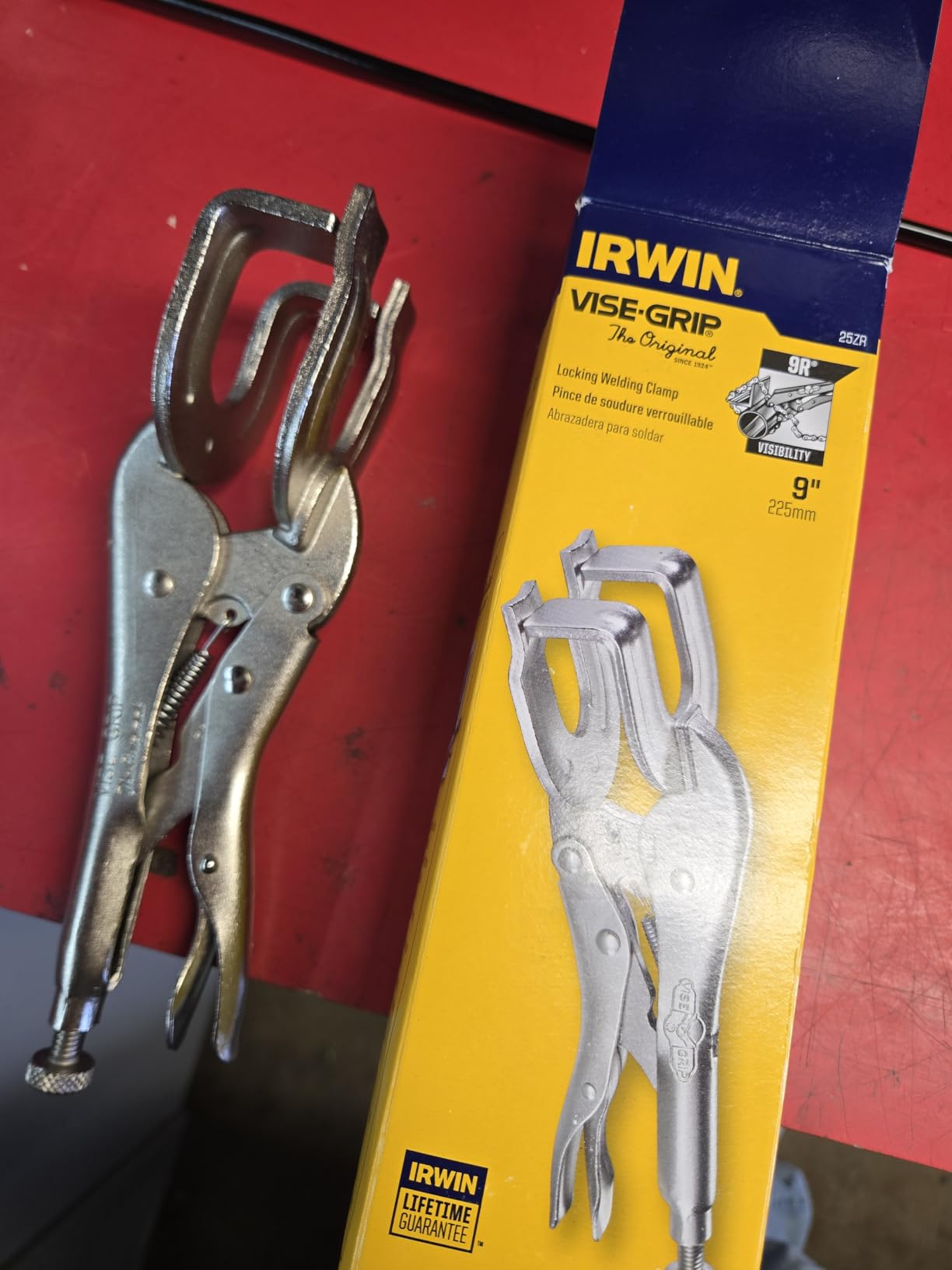
2. IRWIN VISE-GRIP 9-Inch 25ZR Locking Welding Clamp – Best All-Rounder
- U-shaped jaw opens up sight lines to the clamp point
- Guarded trigger stops accidental release mid-weld
- Heat-treated alloy steel that reviewers call indestructible
- 0.47 kg body so it lives in the tool bag
- Not a pipe alignment tool
- Guarded release takes practice to operate one-handed
The 25ZR is the clamp I have the most of, and I have the most because it does not specialize. It holds sheet to sheet, holds a panel to a fixture, holds a small bracket while I tack it, and it fits in the pocket of a tool bag. In 2026 the best welding clamps for fabrication roundups are full of specialty tools, and this is the one that keeps the job moving when nothing else fits the shape in front of you.
At 4.8 stars across 605 ratings it is tied for the highest rating in this roundup, and the pattern in the reviews is consistent: heat-treated alloy steel that does not flex, with a lock that stays put through a full weld cycle. That is a low bar to clear for a shop tool, and most cheap copies do not clear it.
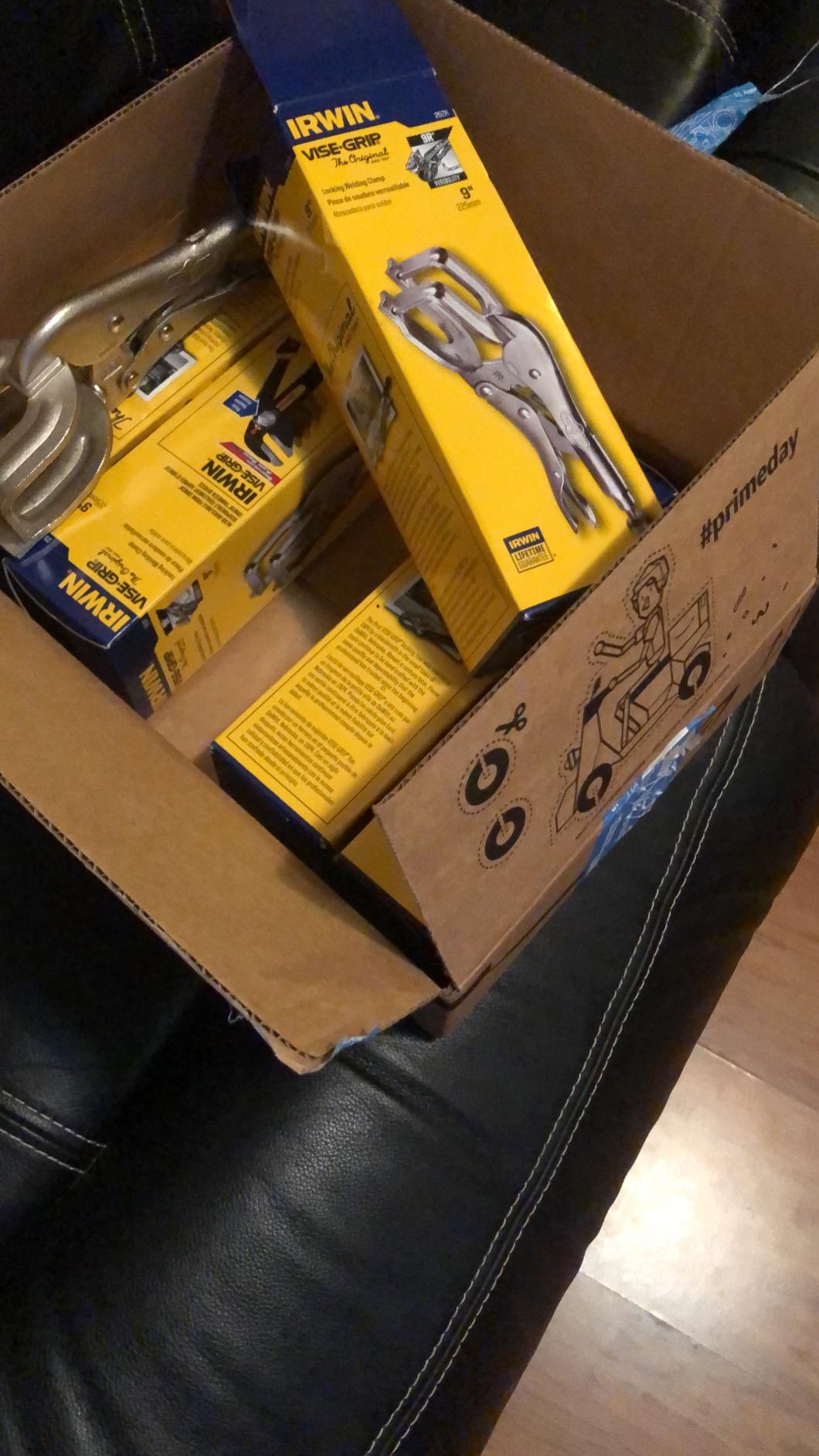
The U-shaped jaw is the detail that matters more than it sounds. It leaves a gap between the jaw and the handle so you can see the workpiece and get a grip on the part with your other hand. A flat-jaw clamp hides the contact point, and when you are trying to line up a patch panel, seeing the seam is most of the job.
The guarded trigger release is a small safety improvement that pays off constantly. On a plain locking clamp, a squeeze in the wrong moment drops the part on the floor mid-setup. The guard on this one needs a deliberate action to release, so you have to mean it.
Why it stays in the tool bag
It weighs 0.47 kg, so you can carry several without noticing. On a fabrication job where you are climbing around a frame, clipping a panel, and tack welding in three different spots, the clamp you can carry is the clamp that gets used.
The hex key hole thumb screw lets you set pressure precisely rather than squeezing until it stops. On thin sheet that is the difference between a hold and a dent, and on a finished panel it is the difference between a flush surface and a rework.
What it cannot do
It is not a pipe alignment tool. It grips, it does not center two pipe ends and hold them concentric, so a pipe butt weld still needs a proper fit-up clamp behind it. Trying to square pipe with plier-style clamps is a fight you will lose.
Some buyers also note the guarded release takes practice to open one-handed, so if you are swapping between parts constantly, work out the motion a few times before you need it in a hurry. It is also a single-point hold, so for any joint that can shift under load you want a second clamp or a fixture behind it.
3. Strong Hand Tools CPA60 Pipe Alignment Clamp – Best for 2 to 6 Inch Pipe
Strong Hand Tools, Pipe Alignment Clamp, Pipe Diameter Capacity: 2″ – 6″, Fit-Up Clamp, Quick Acting Screws, Stainless Steel Contact Adjustment Screws, CPA60
- Covers a 2 to 6 inch pipe range for repeated fit-up
- Quick-acting lever and release for production pipe welding
- Stainless steel contact screws resist wear and corrosion
- Owners report a thicker
- better-built frame
- One adjustment arm can arrive slightly out of square
- Awkward for fitting-to-fitting joints such as a 90 into a flange
This clamp also carries a 4.8 star rating, and the 2 to 6 inch capacity is why it earns the top of the pipe picks. Plenty of fit-up clamps stop at 4 inch and leave you improvising on the larger sizes, which is exactly where the fit-up gap gets expensive.
The quick-acting lever is the feature that changes the pace of a production job. You swing the lever, the clamp closes on both pipes at once, and release is a single motion. Reviewers single out the wide grip plates too, because they balance the clamp in your hands and cut the fatigue on a long fit-up session.
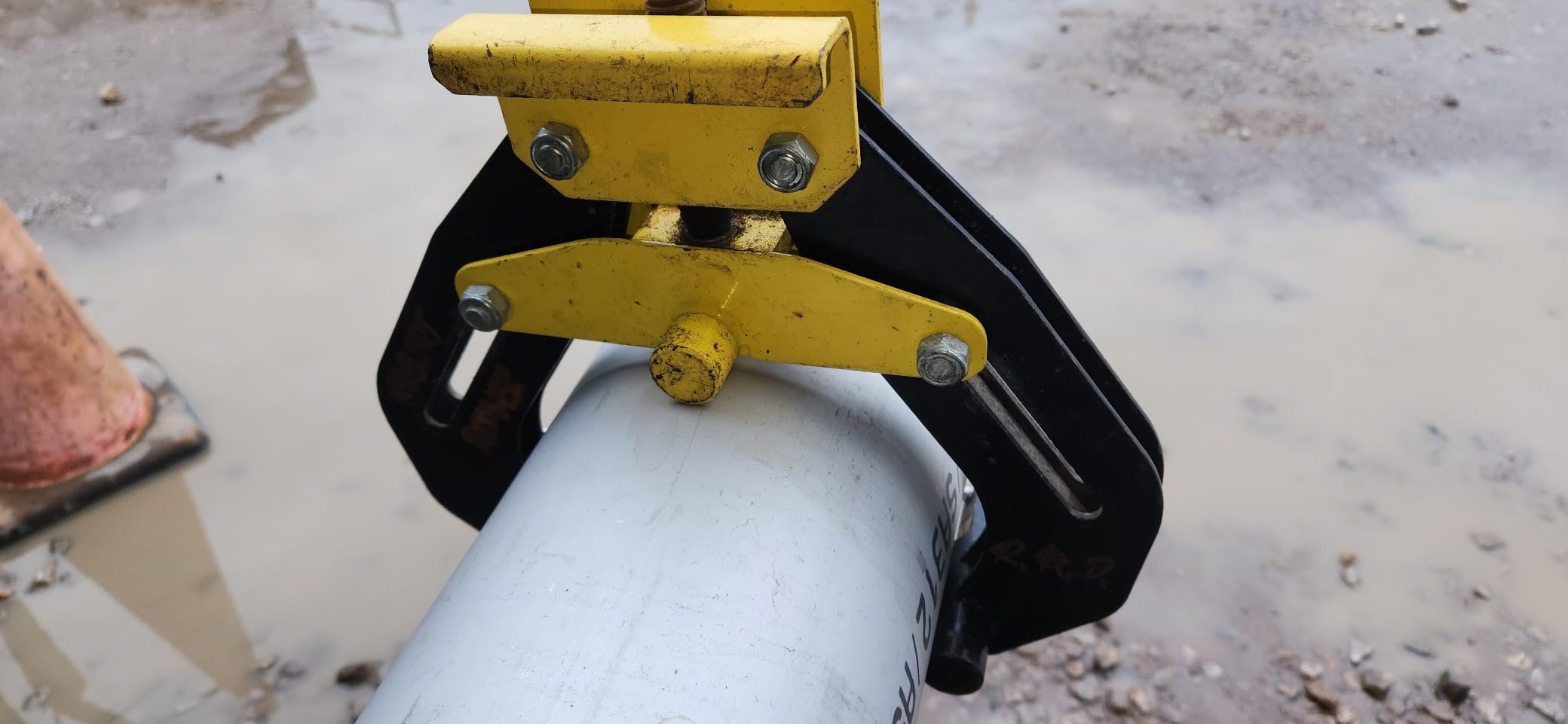
Stainless steel contact adjustment screws matter on pipe specifically. A carbon steel contact screw picks up spatter from the first joint and stops gliding, and a clamp that will not glide is a clamp you fight on every weld. Stainless keeps the adjustment smooth.
Owners comparing this against cheaper clamps in the same range consistently describe the frame as thicker and more rigid, and they report that it survives daily shop use. For a tool that sits in the heat and the dirt of a pipe bay, that is what you are paying for.
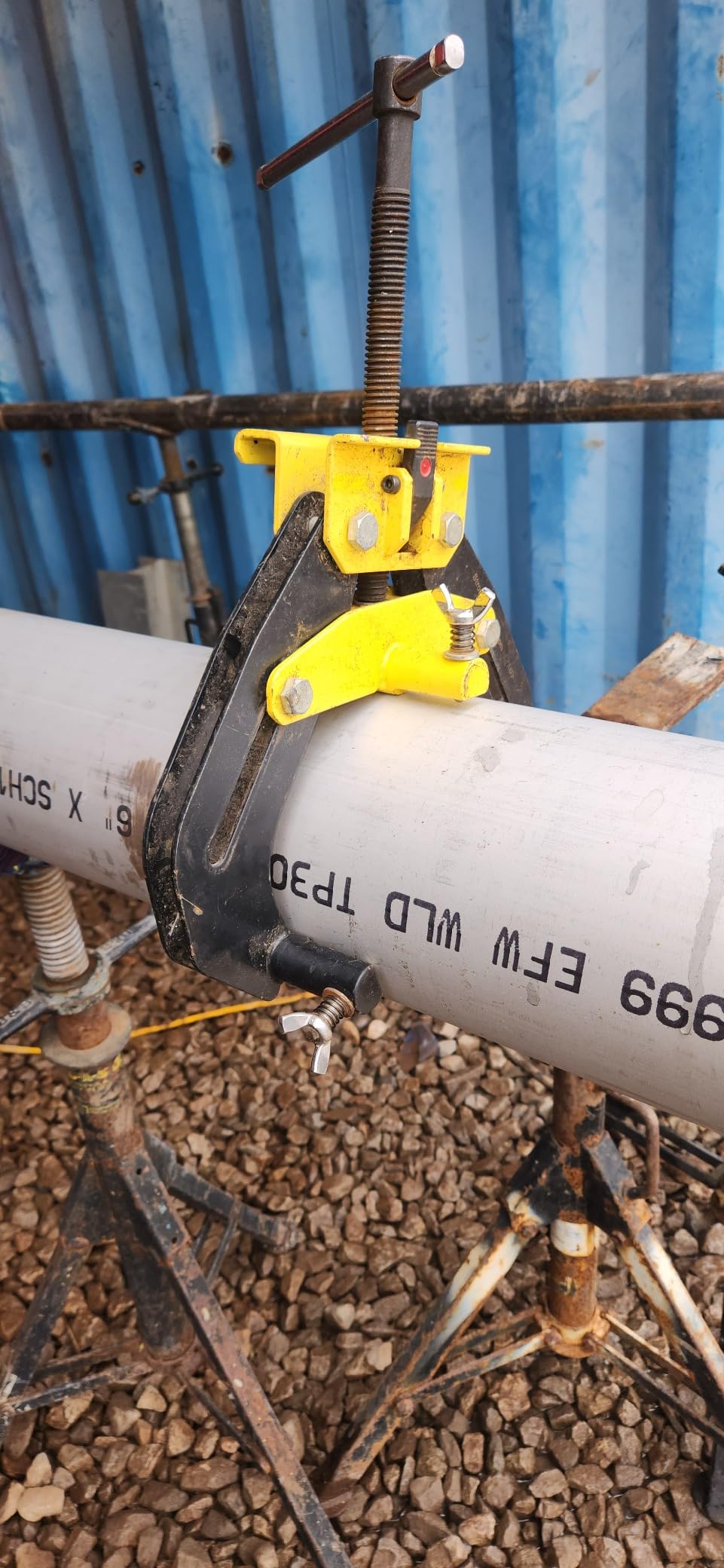
Where it earns its cost
On a butt weld between two lengths of pipe, the clamp does something a plier-style tool cannot: it centers both pieces and holds the gap while you tack. That is the difference between a joint you can weld closed and one that draws up tight as the heat pulls it.
Plan your tack sequence around the clamp. Tack near the clamp first, then work back along the joint, and keep the lever closed until the root pass is complete. The clamp is holding the alignment, not the finished weld.
Where it is the wrong tool
It is less useful for fitting-to-fitting joints, such as a 90 degree elbow meeting a flange, and a few owners note the same. The geometry is built for pipe-to-pipe and pipe-to-flange, so if most of your work is elbows and tees, budget for a different style of clamp.
At 11 lb this is a two-hand tool, and one review pattern worth knowing before you buy: an adjustment arm can arrive slightly out of square and need shimming to seat properly. That is a five-minute fix if you catch it on day one, and a wasted afternoon if you discover it mid-job.
4. Strong Hand Tools PG114V 11-Inch Pipe Pliers – Best for Exhaust and Pipe Work
Strong Hand Tools – STRONG – PG114V Strong hand Tools PG114V Pipe Pliers with Large V-Pads, 11-Inch
- Most-reviewed clamp here with 884 ratings
- 3.5 inch throat reaches into tight spots
- Large V-pads grip pipe without crushing or marring
- Adjustable top spindle takes varying pipe sizes
- Lock-off pressure feels softer than classic locking pliers
- V-pads can wear out and replacements are hard to source
- No Allen key included for the swivel head
This is the clamp that lives in an exhaust bay or a repair shop, and at 884 ratings it is the most-reviewed product in this roundup. A shop that welds exhaust and repair pipe daily will get years of use out of it, because it solves a problem no other clamp in this list addresses well: holding a short length of pipe in an awkward spot while you get a bead started.
The 3.5 inch throat depth is the spec to notice. It is deeper than the other handheld clamps in this list, and that is what lets the jaws reach around a pipe or a bracket without you leaning your body into the space.
The large V-pads are the other reason it holds. A V-jaw bites into round stock without crushing it, which matters when the part is going back on a vehicle and a flattened section means cutting the joint out again. The adjustable top spindle lets you set the gap so the same clamp works on 1.5 inch and 2.5 inch pipe.
Reviewers describe the gripping as strong on irregular shapes, which is the honest way to say it will hold a piece that is not perfectly round or perfectly square. In a repair shop, imperfect is the normal case.
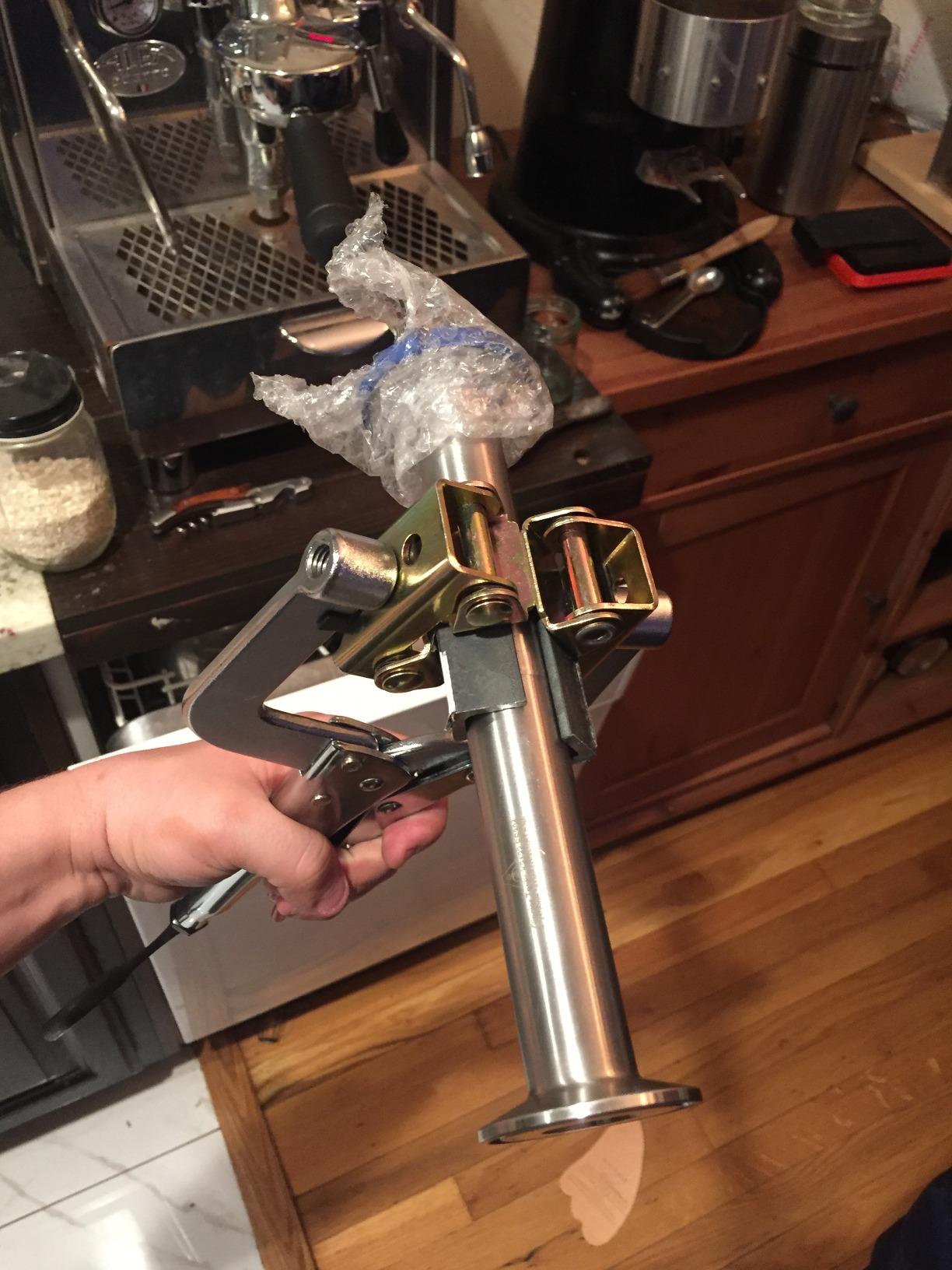
When a V-pad clamp beats a screw clamp
Reach for it when you need to hold something at a fixed point rather than pull two pieces together. A pipe stub to a flange face, a bracket to a mounting plate, a short run of tube while you set your next piece. The lock-up is instant and the jaw never marks the part.
It is also the right tool when a C-clamp would physically not fit, such as a brace running along a pipe or a repair where the only access is from one side. One clamp in that hand frees the other for the torch.
What reviewers flag
A minority of owners find the lock-off pressure softer than classic Vise-Grip locking pliers, so if you are pulling heavy structural loads, do not assume it substitutes for a screw clamp. It is a holding tool, not a force tool.
The V-pads wear over time and replacement pads are not readily available, which is the main long-term annoyance. No Allen key is included for rotating the swivel head either, a small thing you notice only when you are trying to find a hex key in a dusty shop.
5. VEVOR Ultra Pipe Clamp – Best Value 2 to 6 Inch Fit-Up Clamp
- Covers a 2 to 6 inch pipe range for repeated fit-up
- Forged carbon steel with a rust-resistant powder coat
- Quick-acting lever and gliding screws speed insertion and removal
- Handles pipe-to-pipe
- fitting
- flange and tee joints
- Frame can feel loose under heavy load
- Screw thread adjustment is slow and coarse
- Holding pins can flatten with heavy use
The VEVOR does the same job as the CPA60 in a lighter, simpler frame, and if your pipe work is occasional this is the sensible buy. It covers 2 to 6 inch pipe, which is the range most shop pipe actually falls in, and the quick-acting lever means you are not threading a screw in by hand on every fit-up.
Forged carbon steel with a powder coating finish is the right material pairing for a tool that lives near a pipe bay. Owners report that it holds up on job sites without surface rust, which matters when a clamp is stored in a van half the week.
Two details stood out to me when I looked through the specs. The smooth gliding screws are described as fast pipe insertion and removal after welding, and the two-hand operating handle gives you real control while the clamp is being positioned, so you are not adjusting it by feel alone.
It also covers the connection types that show up in real work: pipe-to-pipe, pipe-to-fitting, pipe-to-flange, and pipe-to-tee. A clamp that only handles one of those is a clamp you will work around on half your joints.
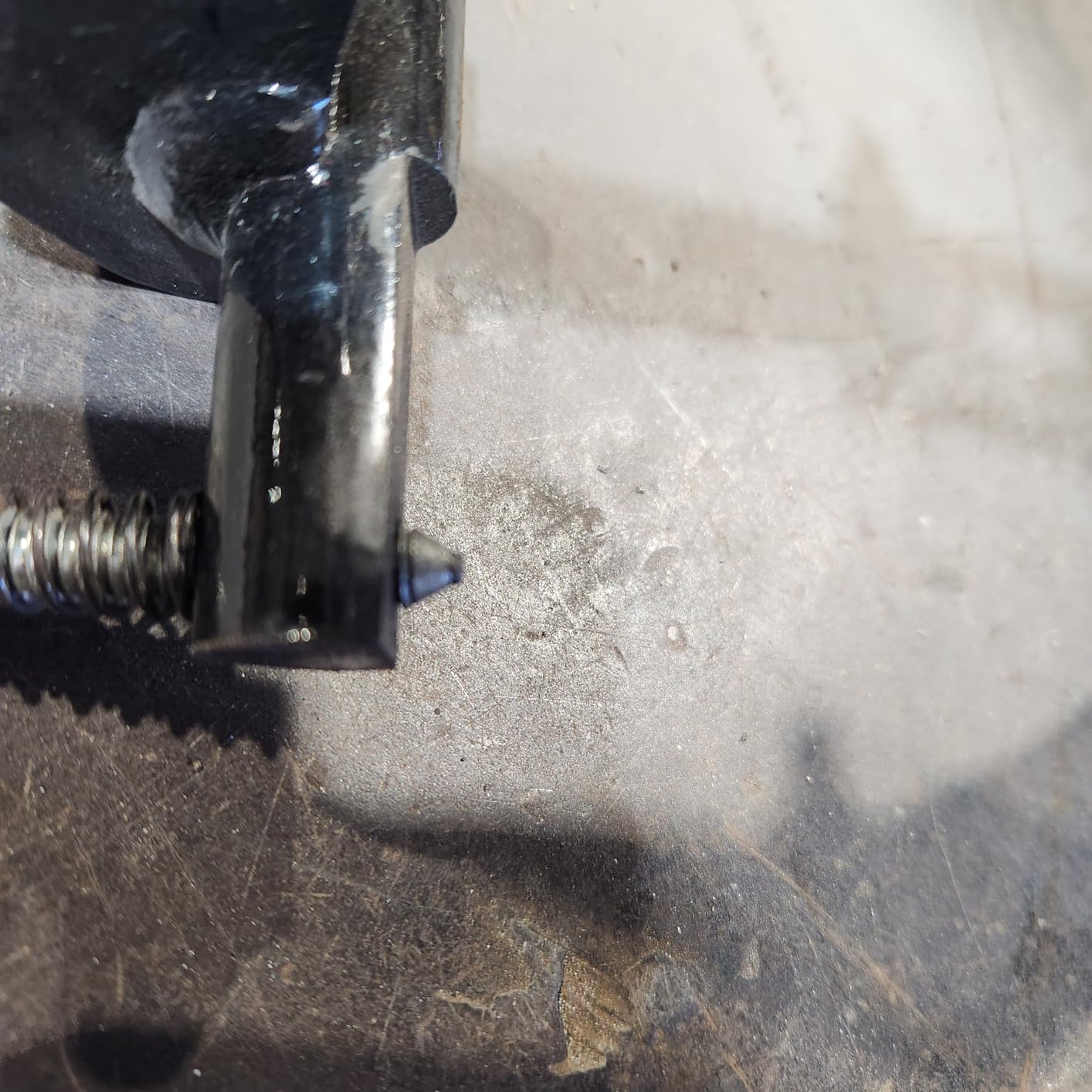
When the value pick makes sense
Buy this if pipe fit-up is a supporting task rather than the core of your business. Maintenance work, farm repair, handrail posts, a run of handrail or guardrail tube: the VEVOR covers it, and the rest of your clamp budget can go into the clamps you use every day.
It is also the easier one to learn on. Nothing about the mechanism is exotic, so a new hand on the crew can be productive with it in an afternoon rather than a week of practice.
What gives out first
Reviews point to three recurring limits, and they are worth taking seriously. The frame can feel loose or under-braced under heavy load, the screw thread adjustment is slow and coarse compared with a finer thread, and the holding pins can flatten with repeated use.
None of that makes it a bad tool. It makes it a tool for shop pipe and occasional work rather than a production cell running the same joint all day. If your pipe work is continuous, the stronger frame is worth the step up.
6. Strong Hand Tools CPL45 Portable Pipe Fit-Up Clamp – Best Lightweight Pipe Clamp
Strong Hand Tools CPL45 , Pipe Fit-Up Clamp, Pipe Welding Alignment Tools (Pipe Diameter Capacity: 2″ ~ 4″ (50~100 mm))
- Only 2.9 lb so it moves between setups easily
- Alloy steel gives rigid pipe alignment for butt welds
- Rapid repeated loading and unloading suits production tack work
- Covers 2 to 4 inch pipe plus flanges
- Limited to 2 to 4 inch diameter pipe
- Not designed for fitting-to-fitting or multi-joint assemblies
The CPL45 is the pick if you need a pipe fit-up clamp you can carry up a ladder or across a site without thinking about it. At 2.9 lb it is a fraction of the weight of the larger fit-up clamps in this list, and that changes how you work rather than just how you store the tool.
Alloy steel construction is the right call at this weight, because a clamp that flexes is a clamp that will not hold alignment. The body stays rigid through the fit-up, which is the entire job.
Where it fits in the shop
It is built for quick fit-up of round pipes and flanges for butt welding, and the design is explicitly aimed at rapid repeated loading and unloading. If you are tacking up a run of handrail posts, a stack of frame stubs, or a batch of same-size pipe couplings, you will cycle this clamp dozens of times an hour and the quick release earns its place.
It also pairs naturally with a plier-style clamp. The CPL45 centers and holds the gap while the other clamp locks the pieces so the joint does not rotate.
Where it runs out
Two to 4 inch is the whole range, so anything larger means a different tool. Owners also note it is not designed for fitting-to-fitting or multi-joint assemblies, which is fair, since the mechanism is built for a single butt joint between two round pieces.
If your pipe work sits above 4 inch, or if you are building assemblies with several joints at once, look at the larger fit-up clamps earlier in this list. If you are doing 2 to 4 inch work in a lot of places, this is the one to buy two of.
7. Hobart 770565 Two Axis Welding Clamp – Best Lightweight Corner Clamp
- Floating head and rotating spindle align square and round tube
- Also handles angle iron and channel iron
- Under 2 lb so it is easy to reposition constantly
- Consistently delivers square 90 degree corners
- Only handles 90 degree relationships
- 4.3 average rating is below most clamps in this roundup
- No swivel pad adjustment for uneven stock
The Hobart 770565 is a long-serving two-axis corner clamp from a welding brand, and it is one of the lighter corner-holding tools in this roundup at 1.9 lb. If you are tacking square tube joints in a lot of positions rather than building one heavy frame on a table, being able to move the clamp quickly is worth more than mass.
It handles square tube, round tube, angle iron and channel iron, which covers most of what a fab shop clamps at a corner. The floating head and rotating spindle screw adjust the two pieces to meet at a square before you commit with a tack.
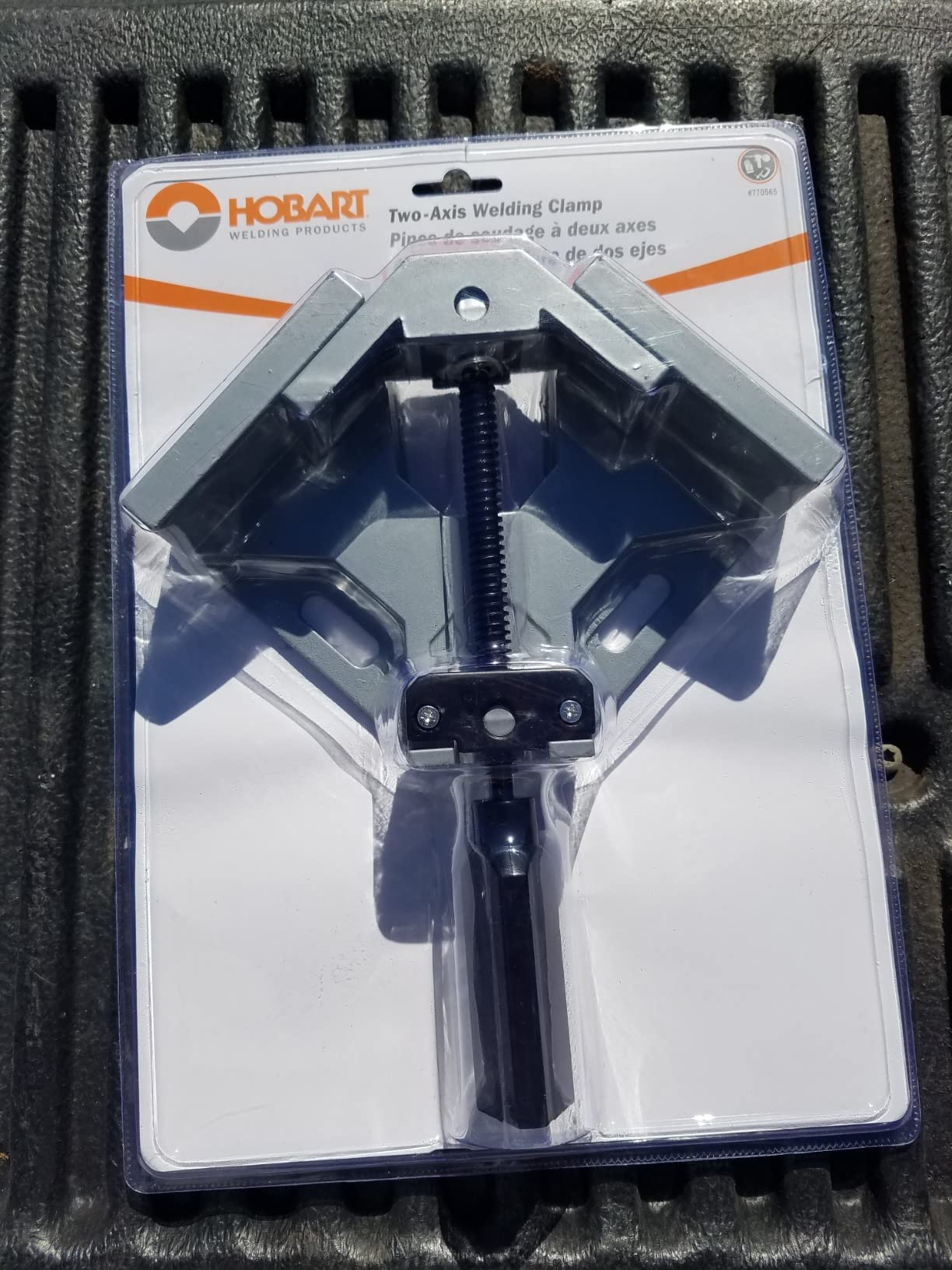
Reviewers describe it as dependable for corner holding rather than heavy structural work, and that is an accurate read of the design. It is a positioning tool that does its job quietly for years, which is a good trait for something that lives in a shop.
One owner in the reviews notes decades of use with a finish that still holds up, which is worth more than any spec on a listing. Tools that survive are the ones you never think about.
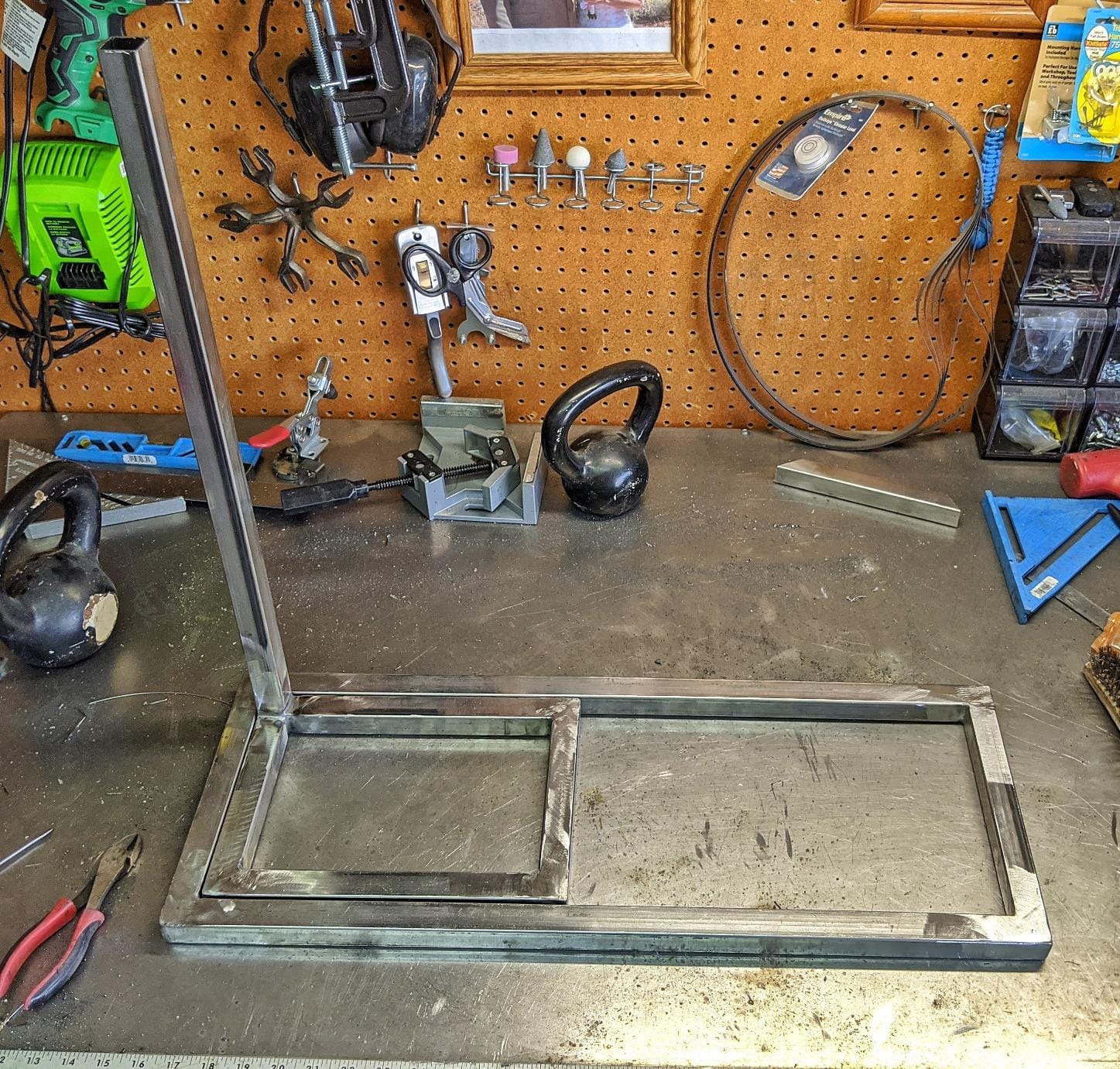
When to reach for it instead of the cast iron clamp
Reach for the Hobart when you are working overhead, on a ladder, or moving around a job. It is light enough to hold in one hand while you position it with the other, and it does not need a flat surface to sit on, unlike the cast iron angle clamp.
It is also a good second clamp. When a corner joint is carrying load, one clamp at the corner and one along the member is a stronger setup than a single heavy clamp, and having a light second tool makes that practical.
What to watch
It only holds 90 degree relationships, so the moment your joint is a compound angle or a taper, it does not apply. For anything that has to hold at an adjustable angle, you want a different style of fixture.
Its 4.3 average sits below the rest of this roundup, and the one-star share is not zero, so expect the fit-up on odd stock to take a little more coaxing than with a cast iron body. Use it for positioning and confirm the square with a straightedge before you tack.
8. QWORK 10 Inch Flat Jaw Locking Clamp – Best for Thin Sheet Metal
QWORK 10″ Flat Jaw Locking Clamp – Heavy Sheet Metal Welding & Fabrication Tool for Workshop, Auto Body & Repair
- Flat parallel jaws grip sheet without bending or marring it
- Adjustable screw knob dials pressure for thin material
- One-handed trigger release for fast repositioning
- Sold as a practical two pack for panel work
- Only rated for material up to 3.0 mm
- Limited hold-down capacity compared with a screw clamp
Sheet metal punishes a clamp that pinches. The QWORK uses flat parallel jaws instead of a V, so it holds 1.0 to 3.0 mm material across a wide flat area rather than at two points, and that is why it is the pick here for panel and auto body sheet.
The adjustable screw knob is the feature I would not skip. On thin material, a fixed-pressure clamp is either too light to hold or too heavy and pulls the panel out of flat. Turning the knob down until the panel stops flexing gives you a repeatable setup, and it makes the difference between a flush weld and a repair.
Reviewers also like that it does one-handed trigger release. Panel work means constant repositioning as you move along a seam, and a tool that needs both hands to release is a tool you set down, which breaks your flow.
It is sold as a two pack, and for panel work that is the right quantity. You rarely clamp one spot and leave it, so a second clamp doubles your working speed immediately.
Why flat jaws matter on sheet
A V-jaw on thin sheet concentrates force into two small contact points and the metal deforms around them. A flat jaw spreads the same force across the surface, so the panel stays flat and the joint closes flat. If you are welding anything that will be seen, that difference is the whole job.
It is also the right tool for holding, forming, and crimping sheet, so a shop doing body work gets two uses from one clamp. Set the pressure for the thinnest panel in the assembly and work up from there.
Where it stops
The 3.0 mm limit is firm, and it is the number to check before you buy. Anything heavier is outside what these jaws are rated to hold, and a sheet clamp is never a substitute for a screw hold-down when you need real draw.
It also has less clamp capacity than a C-clamp style hold-down, so it will not hold a heavy part down against a lifting force. Treat it as a positioning and holding tool for light material, which is exactly what it is designed for.
9. GOSWIFT 10-Inch Locking Sheet Metal Clamp – Best Low-Cost Sheet Holder
GOSWIFT 10-inch Locking Sheet Metal Clamp, Heavy Duty Sheet Metal Grip Tool, Heat-Treated Nickle Plated Welding Plier
- Flat parallel plate tips grip sheet without bending it
- Screw-adjustable tension lets you set pressure per job
- Heat-treated carbon steel with a nickel finish
- Also usable for bending and crimping
- 0.6 kg body gives less clamping authority than heavier clamps
- Flat tips only suit thin sheet metal
The GOSWIFT does the same core job as the QWORK with a simpler mechanism, and if your sheet work is occasional it is the sensible place to start. Heat-treated carbon steel with a nickel surface finish is a sensible material pairing, and 294 ratings at 4.6 stars suggests it holds up in real use.
The two parallel plate-style flat tips are the reason it belongs on this list at all. Pointed or V-shaped tips crease thin sheet, and these do not, which is the failure mode that ruins a panel.
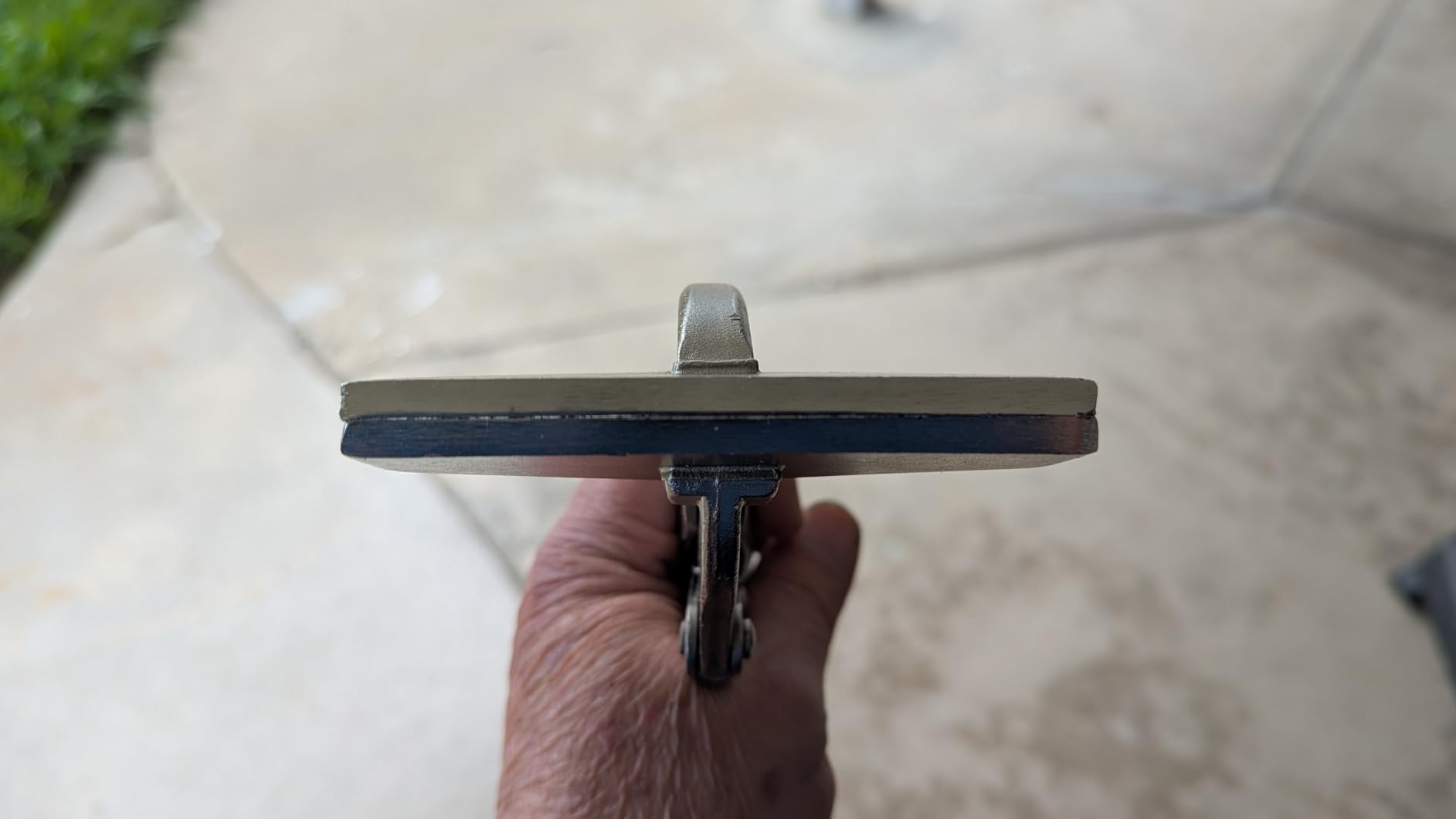
Reviewers consistently cite two things: the non-bending flat tips and the screw-adjustable tension. The second one lets you dial the pressure for the job in front of you rather than living with whatever the factory set, which is what makes it usable on more than one gauge of material.
It is also more than a welding clamp. Owners use it for bending, shaping, and crimping sheet, so if you do fabrication and fabrication-adjacent forming on a small bench, it earns its space twice over.
x
Where the low-cost pick works
It fits the bench work: holding a small panel while you tack a flange, keeping two strips aligned for a lap joint, holding a formed piece while you stitch it. At 10 inch it is long enough to reach a seam without your hand being in the arc path, which is a real safety point.
For anyone building out a first fabrication kit, it is a low-risk place to learn what adjustable pressure on sheet actually feels like before you spend on higher authority clamps.
Where it is out of its depth
At 0.6 kg it is light, and light means less clamping authority than a heavier clamp. If you are pulling two panels together against real resistance, you will notice the difference between this and a screw-driven hold-down.
As with the other flat-jaw clamps, the tips are only suited to thin sheet. Heavy plate and structural work need a clamp with a screw and a rigid frame, not plier-style tips. Know your heaviest material before you assume one clamp covers the shop.
10. Toolly 16-Piece Butt Welding Clamp Set – Best for Auto Body Panels
Toolly Butt Welding Clamps – Small Welding Clamps Auto Body Panel Clamps for Edge to Edge Welding, Pack of 16 (1 inch x 1 inch x 2.1inch)
- Fits 3/16 inch to 26 gauge sheet metal
- Holds panels level with a consistent 1 mm gap
- Small enough to carry in a pocket or tool bag
- Useful for auto body patch and floor repairs
- Small parts can slip or fall into tight body cavities
- Only holds thin gauge sheet
- not structural material
Panel repair is where a butt weld clamp earns its name. The Toolly set gives you sixteen clamps at once, which is the entire point: a door skin or floor patch has an edge maybe 30 inches long, and you need a clamp every few inches to keep both panels at the same height and the same gap while you stitch.
The winged nut is a deliberately simple mechanism. Loosen it, wedge the two panels across each other between the square body and the clamp block, tighten until firm. It takes two seconds per clamp, and at that speed sixteen of them is still faster than improvising with a few larger clamps.
The consistent 1 mm gap is the number that makes the weld clean. Owners report that holding the panels edge-to-edge at a set gap means they can weld straight through without stopping to re-space the joint every few inches, and that is where the grinding time goes away.
At 1 inch by 1 inch by 2.1 inch each, the clamps go in a pocket or a tool bag, which matters when you are working in a body cavity. Reviewers describe them as invaluable for panel work and 22-gauge material specifically.
Why a full set beats a few good clamps
Because the failure mode on a long edge-to-edge weld is progressive. If one section is 2 mm high, the next one is high too, and by the end of the seam the gap varies enough that you are grinding between tack points. Spacing every few inches with cheap clamps fixes that, and the whole set is still a small outlay next to one good hold-down.
Reviewers also note the clamps extend to give a 4 inch tall gap, which covers a deeper flange or a floor edge where the simple version would not reach.
What to watch
These are thin-gauge tools, rated from 3/16 inch to 26 gauge. They will not hold structural stock, and forcing them to will bend the clamp or crush the panel.
The most common complaint is that the small parts can slip out of position or drop into a tight body cavity if the alignment is off. Count them before you close up a panel, and keep a magnetic tray under the sill. Losing sixteen small clamps into a floor pan is a genuinely bad afternoon.
11. Klutch 4-Piece Welding Table Clamp Kit – Best for 16 mm Table Holes
- Mounts directly into 16 mm holes on a standard welding table
- Adjustable to 4 inch maximum throat depth
- Lightweight aluminum frame moves easily between setups
- ABS handles are brittle plastic and can crack
- Will not fit solid tables that have no 16 mm holes
Every table-mounted clamp in this roundup comes down to the same question: what is your hole pattern. The Klutch kit answers it for 16 mm, which is the pattern on a large share of welding tables sold for fabrication work. Four clamps in a kit means you can set a part down and hold it at more than one point before you strike an arc.
The 4 inch maximum throat depth gives it more reach than most table clamps in its size class, and the lightweight aluminum frame makes it easy to move between setups without disturbing the part you already positioned.
Owners with decades of welding in their history report that the finish is hard to beat, and that the set matches the clamps supplied with common welding tables. That matching matters more than it sounds, because standard patterns mean a replacement is a five-minute swap instead of a search.
The four-piece count is the quiet advantage. One hold-down is a starting point, four is a fixture, and the difference shows up in how straight the part comes out of the table.
When table clamps are the right investment
They are the right investment the day you find yourself re-measuring the same square more than once a week, or the day you want the part to stay put without a hand on it. Repetitive work is where a table clamp pays for itself, because the setup time drops every cycle.
Before you buy anything, confirm your table hole diameter with a caliper. Getting this wrong is the most common reason a table clamp ends up unused in a drawer.
Where it falls short
The ABS handles are brittle plastic and can crack under heavy use. The workaround owners use is straightforward, welding a nut onto the handle for a sturdier grip, and several report doing exactly that.
It also will not fit cast iron or solid fixture tables with no holes, which is a real limitation if your fixturing is cast iron top plates. And aluminum means less clamping authority than a steel clamp, so heavy plate work wants a steel hold-down alongside it.
12. BuildPro Inserta Pliers PTT634K – Best for Repetitive Table Hold-Down
BuildPro Inserta Pliers, ∅5/8″ Insert, 3″ Throat Depth, 4″ Opening, Table Mounted Clamp, Rear Crank Handle, For BuildPro Welding Tables, PTT634K
- Plier-style quick release for fast hold-down
- Patented rear crank handle adjusts pressure while locked and pre-sets the opening
- Fits standard 5/8 inch table holes
- Optional top V-pads clamp round or angled stock
- 3 inch throat and 4 inch opening limit it to smaller workpieces
- Needs BuildPro tables or a 5/8 inch hole adapter
- 4.3 average rating with a small two-star share
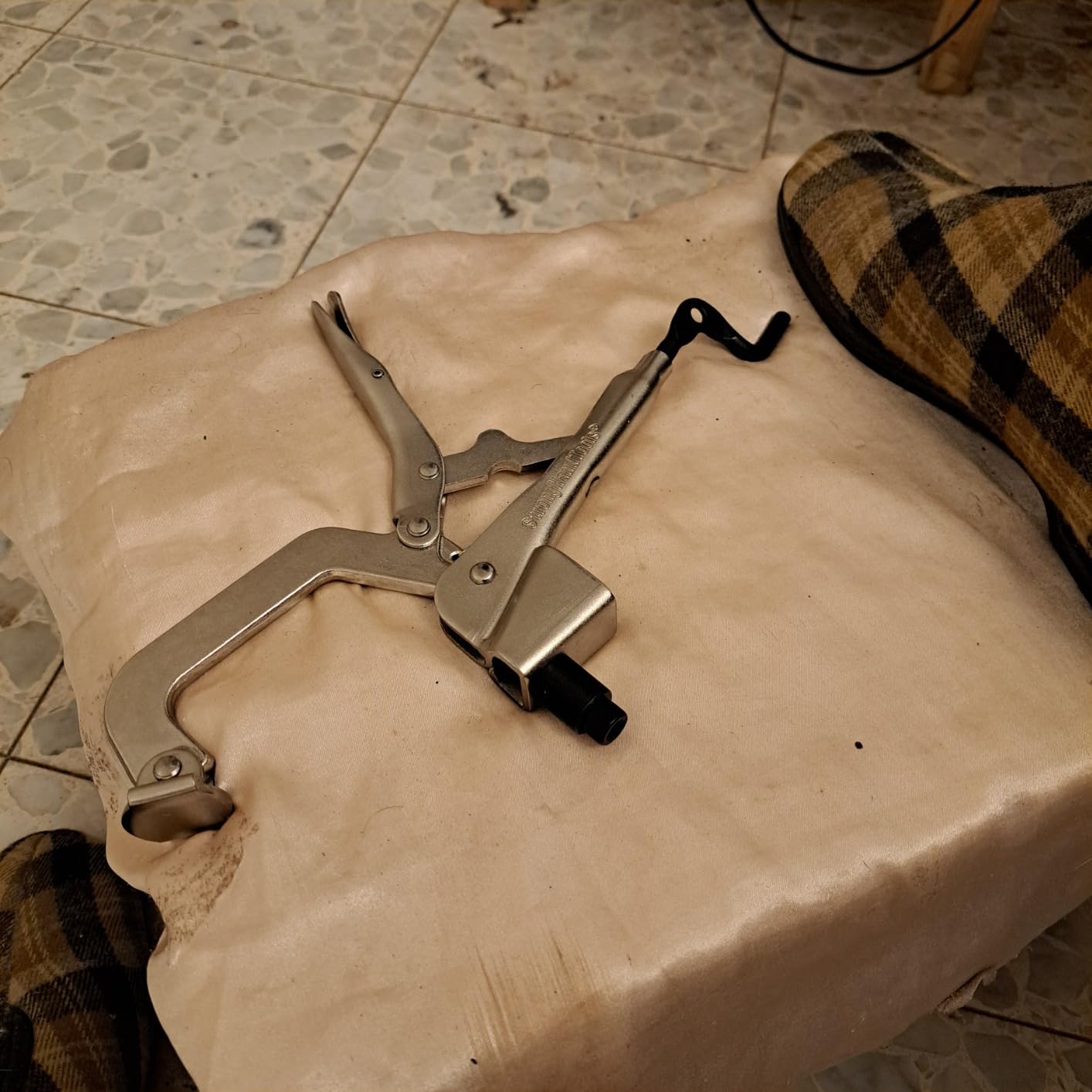
The Inserta pliers are the clamp for anyone running the same part over and over on a table. The patented rear crank handle is the feature that separates it from a basic plier clamp, and it is why it sits at number twelve rather than lower: you can set the opening once and then adjust pressure without unlocking the clamp.
That sounds like a small thing until you are welding the same bracket forty times. You squeeze the handle, check the setup, and move on. You are not re-threading a spindle with a gloved hand between every part.
It inserts directly into 5/8 inch holes, and it can be mounted on a right angle bracket, riser block, or clamping squares for elevated push-down clamping on taller workpieces. Optional top V-pads clip onto the spindle for round or angled stock, so the same clamp covers a flat plate job and a tube job.
Reviewers particularly like the crank handle for pre-setting the opening in repetitive applications, which is exactly the use case. At 1.1 lb it moves around a table without effort.
When the crank handle changes your day
Think of it as pre-setting. Set the opening for your part, drop the clamp into the hole, and every clamp in the run applies the same pressure. Consistent pressure means consistent penetration, which means the second part matches the first part, which is the entire point of a fixture table.
It is also a genuinely basic hold-down, which is a compliment. Plier-style lock and release, no adjustment points to seize, nothing to calibrate. For the shop that wants a clamp that just works, that simplicity is worth more than a wide feature list.
Where it is limited
Three inch throat and 4 inch opening cap the workpiece size, and owners flag this clearly. It is a small and medium part clamp, not something you hang across the full width of a large table.
It also needs a 5/8 inch hole pattern, either a BuildPro table or an adapter, and its 4.3 average with a small two-star share suggests some units arrive with fit or finish complaints. Check the mount on day one. If your work is bigger than the opening or your table is a different pattern, look at the wider-throat options earlier in this list.
How to Choose a Welding Clamp for Fabrication
Start with the joint, not the clamp catalog. Almost every bad purchase in this category comes from buying a beautiful clamp for a job you do not have. Write down your three most common joint types, then check each one against the five things that actually decide whether a clamp works.
Throat depth versus workpiece size
Throat depth is the distance from the jaw tip to the center line of the screw. It tells you the largest workpiece the clamp can wrap around without fouling the screw. A 3.5 inch throat like the one on the Strong Hand PG114V reaches around pipe and brackets that a shallow clamp cannot get behind at all.
Match the throat to your largest part, not your average part. The clamp only fails when you need it most, which is always on the day the big joint comes up.
Capacity versus material thickness
Capacity is the gap the clamp can open, and it is not the same as force. A clamp with a wide opening and a light frame holds a large part loosely. A clamp with a narrow opening and a rigid frame draws two pieces together hard.
For thin sheet, pressure is your enemy. Over-clamping pulls the panel out of flat and you spend the rest of the job correcting it, which is why adjustable pressure matters more on sheet than on plate. For plate and structural work, you want the rigid frame and the draw.
Jaw and pad design
Flat parallel jaws spread force across sheet and will not crease it. V-pads bite into round stock without crushing it. Swivel pads conform to angled surfaces and are the difference between a clamp that sits flat and one that rocks on a tube. Match the jaw to the material, every time.
Locking mechanism and speed
Quick-acting levers, trigger releases, and crank handles all trade raw force for cycle speed. If you run one joint all day, speed is worth more than a slightly harder clamp. If you are doing a one-off structural fit-up, draw is worth more than speed. There is no correct answer, only the one that matches your repeat rate.
Table compatibility
If you use a fixture table, the hole pattern is non-negotiable. Most clamps here fit either 5/8 inch or 16 mm, and those are not the same thing. Measure before you order, and buy a second set in the pattern your next table will use rather than adapting hardware mid-job.
Trusted welding clamp brands
The brands that come up most in shops and in buyer reviews here are IRWIN for locking clamps, Strong Hand Tools for fit-up and pipe work, Hobart for corner clamps, and VEVOR for value in the same categories. Brand alone does not guarantee a good tool, but it does tell you whether replacement pads and spindle parts exist in five years, and on a shop tool that matters.
Welding Clamp Types Explained
Corner and angle clamps hold two members at 90 degrees so you can tack and weld a true corner. The BETOOLL cast iron angle clamp and the Hobart two-axis clamp are both in this family, and the difference is mass: cast iron for a table, lightweight steel for moving around a job.
Locking plier clamps lock shut with a trigger and hold a fixed point. The IRWIN 25ZR is the benchmark, and it earns that name on sheet and panel work rather than pipe alignment. They are fast, light, and they never mar a surface with a sharp jaw.
Sheet and flat-jaw clamps are the same locking principle with wide flat jaws designed to hold thin material without bending it. The QWORK and GOSWIFT clamps are both in this class, and both are limited to thin gauge by design.
Butt and panel clamps set the gap between two edges, and they come in quantity. The Toolly 16-piece set is the example: many small clamps along one seam rather than a few large ones, which is how you keep a long edge straight.
Pipe fit-up clamps do something no plier-style clamp can: they center two pipe ends and hold the gap for a butt weld. The Strong Hand CPA60 and CPL45 and the VEVOR clamp all do this, and the choice comes down to pipe diameter and how often you repeat the joint.
Pipe gripping pliers hold round stock at a point without marking it, using large V-pads. The Strong Hand PG114V is the example, and it earns its place in exhaust and repair work where a C-clamp simply will not reach.
Table and hold-down clamps live in the fixture table holes and are the closest thing a shop gets to permanent fixturing. The BuildPro Inserta pliers and the Klutch 4-piece kit are here, and they are the two clamps on this list that pay off through repeat setups rather than one job.
Two families did not make it into this roundup. Magnetic welding clamps and magnet squares hold an angle without any physical clamp in the joint, which is fast and leaves the work completely clear, but they lose grip near the arc and can let a hot part swing. C-clamps, F-style bar clamps, and toggle clamps are the traditional answers for heavy plate and for jigs, and they remain the right choice when you need raw draw rather than speed. Neither category is represented in this roundup, so treat those as a separate buying decision.
Common Welding Clamp Mistakes and How to Avoid Them
Using too few clamps. A single hold-down controls one point. Joints distort along their whole length, so a plate clamped at one end will still move. Reviewers and shop practice agree: two clamps beat one on almost every joint.
Over-clamping thin sheet. This is the most common expensive mistake in auto body work. Tighten until the clamp stops moving, and you have pulled the panel out of flat before the arc struck. Increase pressure only until the metal stops flexing.
Clamping in the heat path. A clamp sitting in the path of the bead absorbs heat, damages the clamp, and in bad cases welds itself to the part. Keep clamps behind the joint, out of the arc, and on a sacrificial backing surface when you need a heat sink.
Leaving spatter on the pads and threads. Spatter on a swivel pad stops it conforming, and spatter in a thread makes the spindle jam or seize. Reviewers flag seized spindles as a recurring complaint across brands, not just on cheap clamps, so clean and lightly oil threads as part of your routine.
Ignoring pad loosening. Swivel pads that have been over-tightened or that have been welded to a part will no longer articulate. If a pad is not sitting flat, replace it rather than working around it, because a clamp that rocks is a clamp that slips.
Using woodworking clamps. Plastic-bodied woodworking clamps melt, deform, and can trap molten metal against the workpiece. Every one of the clamps in this roundup is all metal, and that is not a coincidence, it is the requirement.
Tacking before fit-up is true. The clamp is not there to pull a crooked joint straight. Check the gap and the square with a straightedge before the first tack, because a mistake locked in with a tack is the most expensive kind.
Frequently Asked Questions
What are the best brands of welding clamps?
The brands that come up most in shop use and in buyer reviews are IRWIN for locking clamps, Strong Hand Tools for pipe fit-up and pipe gripping, and Hobart for corner clamps. VEVOR covers the same fit-up category at a lower entry point. Brand does not guarantee a good tool, but it does tell you whether replacement pads and spindle parts will still exist in five years.
What makes a C clamp better for welding?
A welding C clamp uses an all-metal screw and rigid frame to pull two pieces together with steady force, and it resists the expansion and contraction that makes a weldment move mid-bead. Swivel pads spread that force without marking the metal, and a deep throat lets the clamp reach around structural members. On plate and structural work that raw draw is what keeps the joint straight.
What is the strongest clamp available?
Strength on a welding clamp comes from frame rigidity and screw authority rather than a published force number, and most manufacturers do not publish one. In this roundup the rigid body belongs to the cast iron angle clamp, and the widest reach belongs to the 11 inch pipe pliers with a 3.5 inch throat. For pipe fit-up, the CPA60 covers the largest diameter range at 2 to 6 inch.
What is a C-clamp used for?
A C-clamp is used to hold two workpieces in precise alignment while you weld them. It controls the gap between the pieces, holds a square or a set angle, and gives the metal a solid surface to resist thermal expansion. It is the standard holding tool for plate, structural, and frame work where you need draw rather than a quick lock.
What are the uses of a welding clamp?
Welding clamps hold pieces in alignment, control the joint gap, brace the assembly against heat-driven movement, and make repeat setups fast. Beyond welding, the same clamps hold parts for fitting, bending, crimping, and assembly work. The tool earns its place by turning a setup that is measured once into a setup that is measured never.
Are welding magnets worth buying?
Welding magnets are worth buying for angle and square work because they hold a corner with nothing physical in the joint, which keeps the work completely clear for the torch. The limitation is heat: a magnet close to the arc loses holding strength, and a hot part can swing when the grip drops. Use them for cold fit-up and tacking rather than as your only hold on a hot joint.
Can I use a clamp as a heat sink when welding?
You can, but not by clamping a bare steel clamp directly onto the part near the bead. The clamp can absorb heat, distort, and sometimes weld itself to the workpiece. The correct version is a copper or aluminium backing bar between the clamp and the part, which draws heat away without fusing the clamp to your work.
How many clamps do I need for a weldment?
Count your hold-down points rather than your joints. A single clamp controls one point, so a rectangular frame wants at least four, one near each corner, before you add clamps along longer members. Reviewers and shop practice both point to two clamps per joint as the practical minimum, and more once the part is heavy or the material is prone to distortion.
Conclusion: Building Your First Fabrication Clamp Kit
If you are starting from nothing, the best welding clamps for fabrication list in 2026 boils down to four tools that cover most shop work. Start with a rigid corner clamp for frame work, a locking plier clamp for sheet and panels, a pipe fit-up clamp in the diameter range you actually weld, and a table hold-down in your table hole pattern.
Add specialty clamps only when a job asks for one. A sixteen-piece butt clamp set pays off the day you do panel work, and a set of table clamps pays off the day you stop re-measuring the same square twice.
Take care of all of them. Clean spatter off the pads and threads, keep them off the floor of the truck bed, and oil the spindles. A clamp is a simple tool that works hard for a decade, and the ones that get treated that way are still holding metal when the cheap ones are in a drawer.