
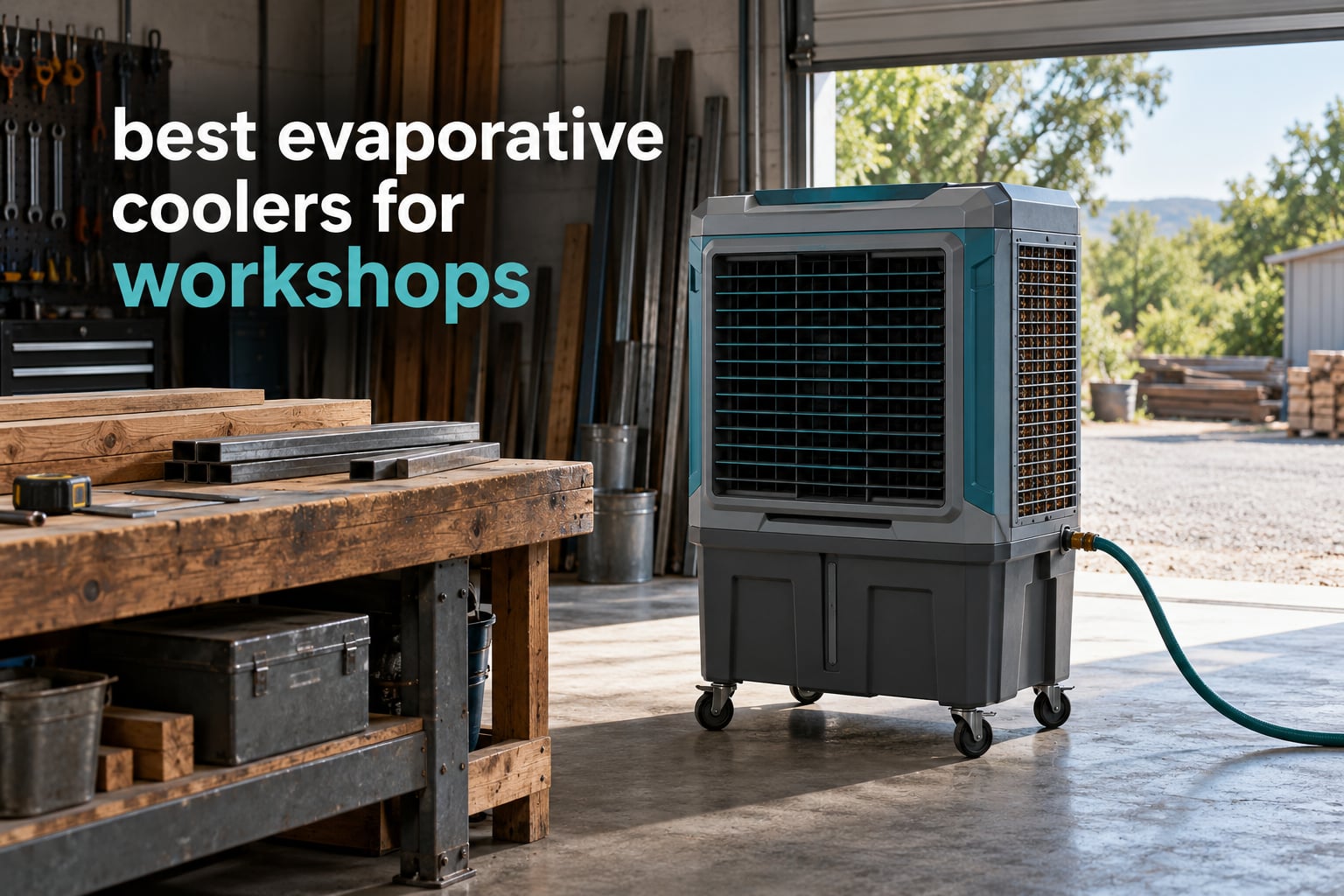
Workshop heat is stubborn. A metal building with a north-facing roller door, a saw on a stand and no ducting can sit well above comfortable levels by mid-afternoon, and the number of hours a shop owner spends in that space makes cooling a real productivity issue rather than a comfort luxury. The best evaporative coolers for workshops solve that problem with water, moving air and open vents, and they do it without the compressor, the refrigerant line or the dedicated 240V circuit that a portable air conditioner demands.
We spent time with ten of these machines, comparing airflow figures, tank sizes, published noise levels, pad layouts and electrical draw, then sorted them by how well they hold up in a working shop. Two things came up again and again. First, humidity decides everything: an evaporative cooler is a strong performer in the arid Southwest and Mountain West and a weak one in coastal or Gulf humidity. Second, the number that matters in a workshop is not the marketing CFM figure but the exhaust path you have available, because these units move air without removing it.
What follows is the complete guide, including a sizing method for workshop floor area and ceiling height, the wiring and GFCI requirements nobody mentions, a maintenance schedule for dusty shops, and an honest look at where a portable AC is the better call. If you are outfitting a new build, our air compressor picks for garages and electric garage heater guide cover the other two pieces of shop infrastructure people forget until summer or winter arrives.
Table of Contents
The Three Best Evaporative Coolers for Workshops in 2026
The short answer is that the Hessaire MC37M leads the group for most home and hobby workshops, the Hessaire MC37V is the better built machine when noise and construction matter, and the Uthfy 4800 CFM is the value route into high airflow coverage. All three run on standard 115V household current, which matters more in a shop than in a living room.

Hessaire MC37M
- 3100 CFM airflow
- Covers about 950 sq ft
- 10.3 gallon tank with hose fill
- Locking casters

All 10 Workshop Evaporative Coolers Compared in 2026
The table below lists every machine in the guide with its airflow, coverage and tank details, so you can scan the whole field before reading individual reviews.
| Product | Specifications | Action |
|---|---|---|
| Hessaire MC37M 3100CFM Evaporative Cooler |
|
Check Latest Price |
| Hessaire MC37V Mobile Evaporative Cooler |
|
Check Latest Price |
 SereneLife 12000 CFM Swamp Cooler SereneLife 12000 CFM Swamp Cooler |
|
Check Latest Price |
 Uthfy 4000CFM Swamp Cooler Uthfy 4000CFM Swamp Cooler |
|
Check Latest Price |
| Uthfy 40 inch 4800 CFM Swamp Cooler |
|
Check Latest Price |
 OEMTOOLS 3-Speed 3100 CFM Swamp Cooler OEMTOOLS 3-Speed 3100 CFM Swamp Cooler |
|
Check Latest Price |
 Hessaire MC92V 11000 CFM Evaporative Cooler Hessaire MC92V 11000 CFM Evaporative Cooler |
|
Check Latest Price |
 CAJUN KOOLING CK4500-S Evaporative Cooler CAJUN KOOLING CK4500-S Evaporative Cooler |
|
Check Latest Price |
 Hexago 7500 CFM Evaporative Air Cooler Hexago 7500 CFM Evaporative Air Cooler |
|
Check Latest Price |
 DEWALT DXACN01B Cordless Evaporative Cooler DEWALT DXACN01B Cordless Evaporative Cooler |
|
Check Latest Price |
How Evaporative Cooling Works in a Workshop
An evaporative cooler, often called a swamp cooler, pulls warm dry air through water-saturated cooling pads. As that water evaporates it absorbs heat from the air, and the air leaving the pads is cooler and more humid than the air that went in. There is no refrigerant and no compressor, which is why the electrical draw is measured in watts rather than amps and why these machines need nothing beyond a standard wall outlet.
That process has a hard ceiling. When relative humidity is already high, the air cannot absorb much additional water, so the temperature drop collapses. Shops in the Southwest and Mountain West routinely see workable conditions, while coastal, Gulf and upper Midwest locations get little benefit. A temperature reduction of 15 to 25 degrees is commonly reported in open-air testing in dry conditions, and forum users consistently attribute that result to keeping doors and windows open.
Workshops are actually a good match for the physics, because they are usually dry, ventilated and often unconditioned. Metalworking and woodworking shops also generate a lot of airborne dust, which is the one real weakness of this technology: pads get loaded with fine particles and the airflow falls. We return to pad maintenance in the schedule below.
1. Hessaire MC37M 3100CFM Evaporative Cooler – Best Overall for Workshops
- 3100 CFM suits a garage or shop up to roughly 950 square feet
- 10.3 gallon tank with float valve and garden hose continuous fill
- Locking casters make repositioning between benches easy
- Molded plastic body will not rust and drains easily for storage
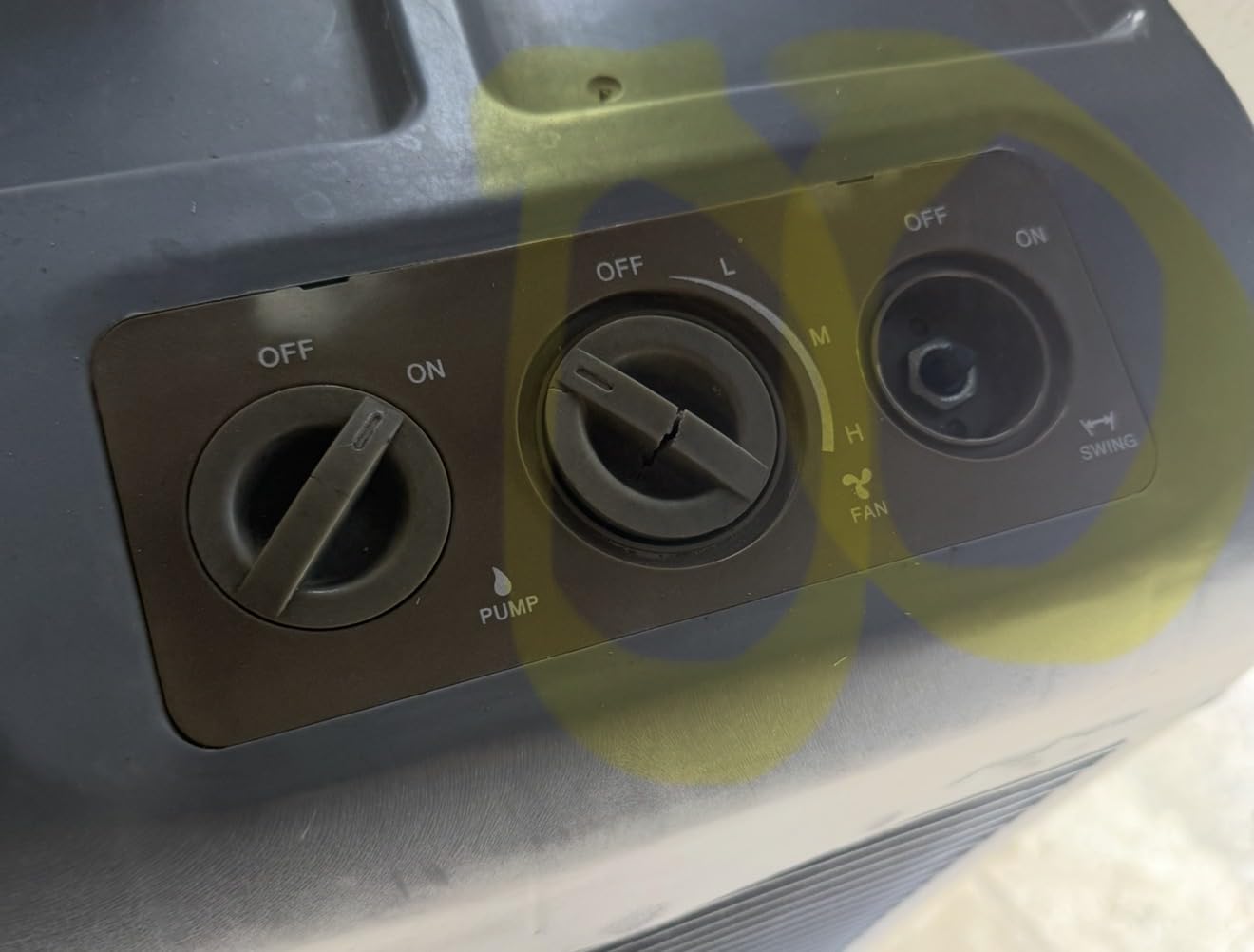
- Three speeds on simple rotary knobs
- 59 dB is loud on the higher speeds
- Uses water quickly during sustained afternoon heat
- No automatic pump shut-off when the tank runs dry
The MC37M has the deepest review history of anything we tested, and that record is consistent: buyers in hot, dry regions report a real drop in temperature and better air movement across the bench area. It is the machine we keep coming back to for a two-car garage or a single-bay hobby shop, because it does the basic job without fuss and without a complex control panel.
Airflow comes from a 3100 CFM fan pulling through a three-panel intake, and the published coverage figure of 950 square feet lines up well with a normal single-bay shop. At 250 watts the running cost is close to trivial compared with any compressor-based unit, and the whole machine draws about the same as a couple of light bulbs on high.
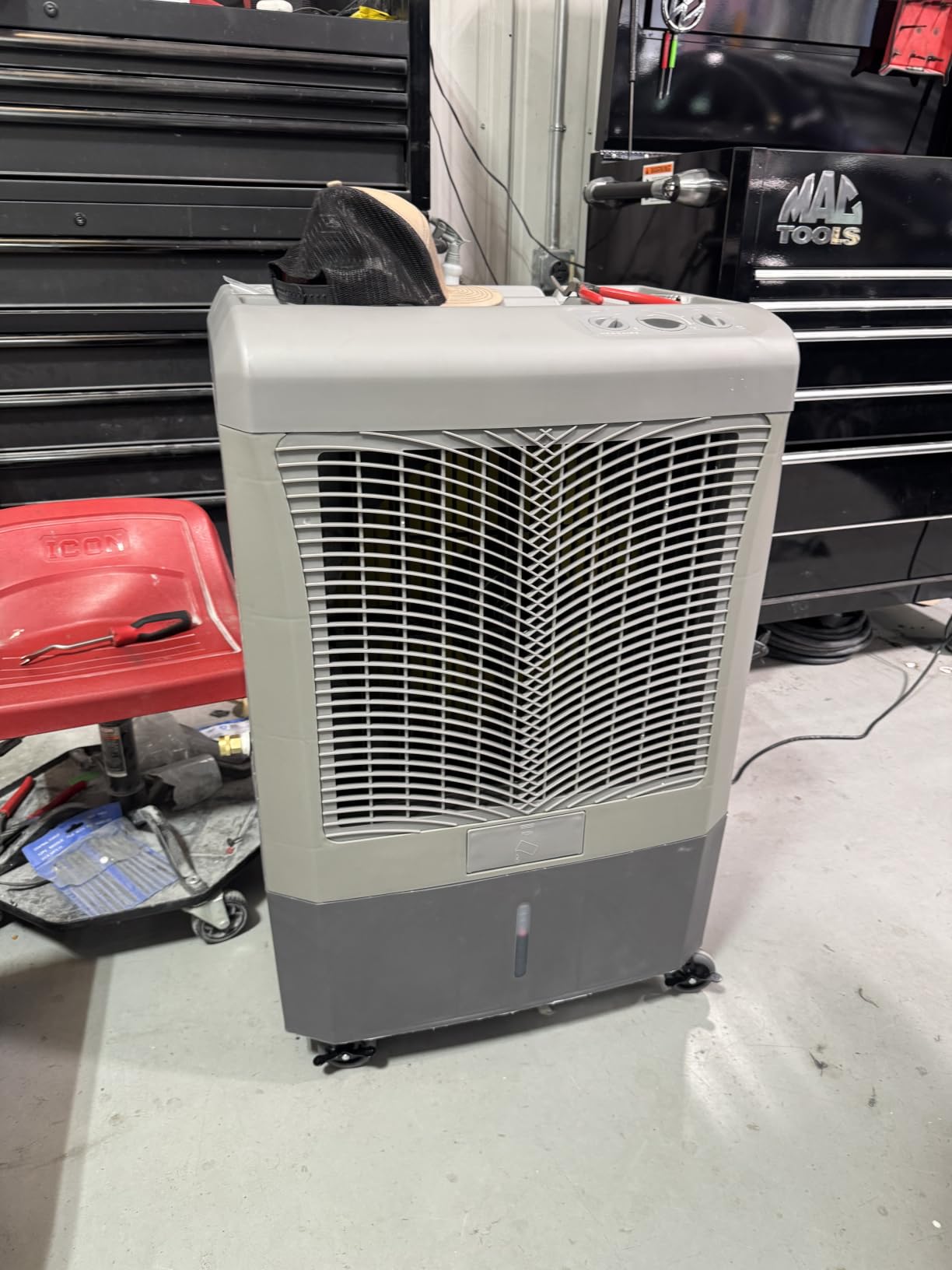
The tank is the feature that decides the day. At 10.3 gallons it holds enough water for roughly three to four hours at normal settings, and the built-in float valve plus hose adapter means you can run it all day from a spigot and stop thinking about it. That matters in a workshop because the alternative is walking to the sink mid-afternoon.
Portability is handled with locking casters on a molded polypropylene body. Concrete is not always smooth, and the wheels track better than dragging a unit across the slab, though the 39 pound weight means a threshold or a ramp will still need two people.
Will 3100 CFM actually cool a 950 sq ft workshop?
For a shop with the garage door or a side window open to move air, yes. That rating assumes cross-ventilation rather than a sealed room, so treat it as the size where you will feel the difference while working, not as a promise about every corner of the floor. Rooms above 1000 square feet benefit more from a larger fan than from a deeper tank.
Is 59 dB a problem for detailed bench work?
It depends on where you sit relative to the machine. Put it across the room on low speed and it becomes background noise you stop hearing within a few minutes. Sit at the same bench on high and you will be listening to it all day, which is why we recommend blowing air across the space rather than at your face.
2. Hessaire MC37V Mobile Evaporative Cooler – Best Built for Daily Shop Use
- 4.6 star average across 325 ratings
- Stainless steel fasteners resist rust over years of use
- Oscillating louvers spread cooled air wider
- Four heavy duty locking casters
- Continuous fill float adapter included
- Audible on high speed
- About four hours per full tank at normal settings
- Pads and tank need periodic cleaning to prevent mineral buildup
The MC37V is the same airflow class as the MC37M but with the details that only show up after a couple of summers. Stainless steel fasteners instead of plated steel, and owners in Arizona, Texas and Florida garages report the build still looks good after years of service.
Oscillating louvers are the practical addition for a workshop. Instead of a fixed cone of air aimed at one wall, the head sweeps and distributes across the working area, which reduces the need to reposition the unit when you move from the table saw to the bench.
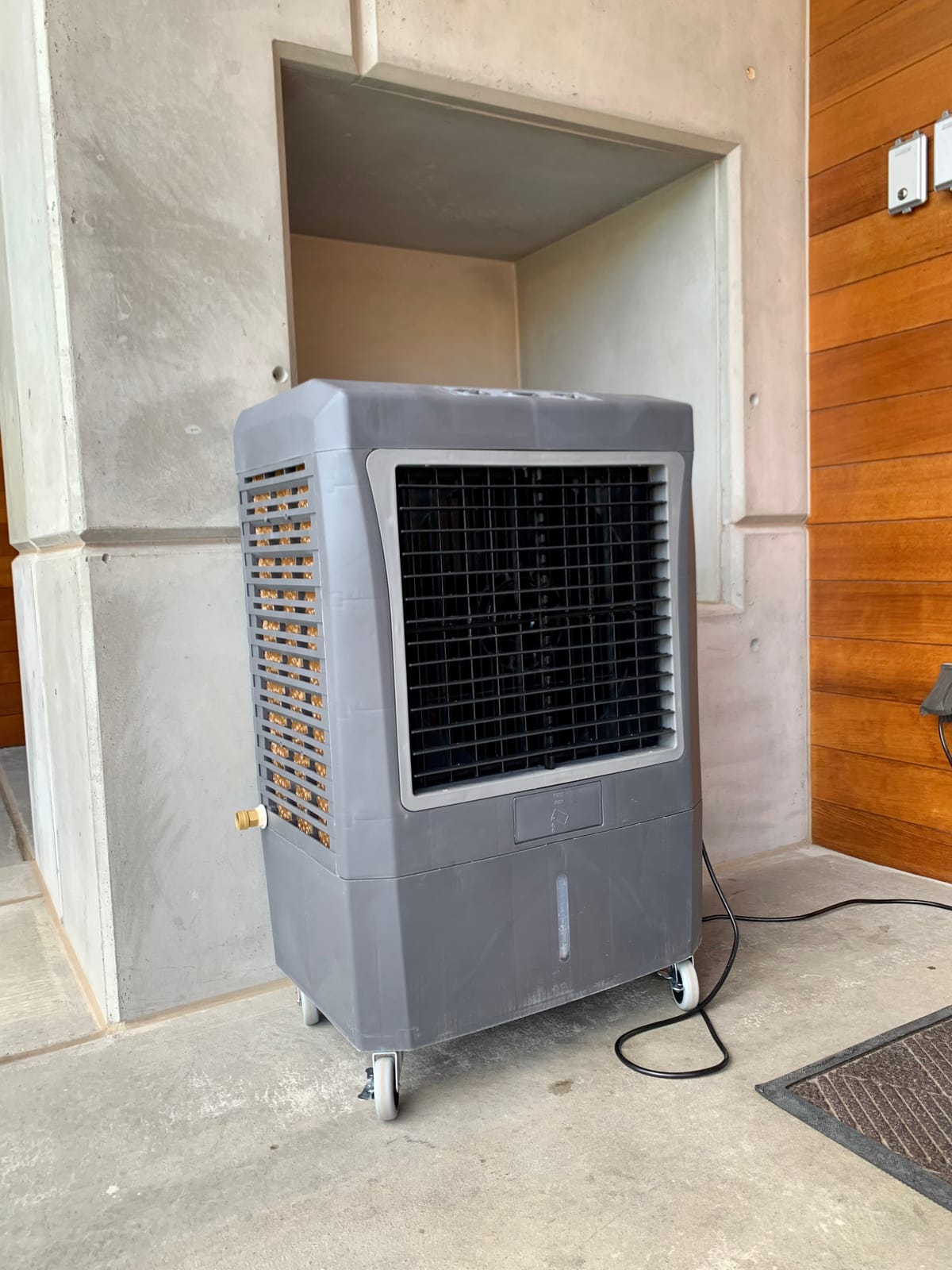
At 3100 CFM and 950 square feet of claimed coverage, this is a two-bay shop machine rather than a warehouse machine. Four heavy duty locking casters hold it steady on a concrete floor while the fan runs, and the hose-ready float adapter makes continuous fill straightforward.
The 10.3 gallon reservoir is the same as the MC37M, giving roughly four hours before a refill. In a dusty environment we would shorten that interval and clean the tank more often, because fine swarf settles in the bottom and starts to smell.
Is the MC37V worth stepping up from the MC37M?
If your shop is damp, unheated in winter or you plan to keep this running for multiple seasons, the fastener and caster upgrades are worth it. If you want the cheapest reliable 3100 CFM option and you will store it in the off-season, the MC37M covers the same ground.
Does oscillation replace cross-ventilation?
No. Oscillation spreads air inside the room; it does not remove it. You still need an opening roughly as large as the intake side of the machine, which usually means the roller door up and a side window cracked.
3. SereneLife 12000 CFM Swamp Cooler – Best for Multi-Bay Shops
- 12000 CFM is the highest airflow figure in this group
- 150 liter detachable tank cuts refill stops on long shifts
- Wi-Fi remote and touch panel with a 12 hour timer
- Two wind modes with three speeds and 60 degree oscillation
- Rolling wheels despite its industrial footprint
- 3.3 star average with a sizeable one-star share
- 69.4 pound chassis needs space and help to move
- Electronics add failure points
- Output still depends on low humidity and ventilation
This is the unit you look at when the shop is genuinely large, or when two connected bays need cooling from one machine. Twelve thousand CFM is roughly four times the airflow of a typical home workshop cooler, and the 150 liter detachable tank is the largest reservoir in the group.
Control is unusually modern for a shop cooler. Wi-Fi, a handheld remote and a touch panel give you three speeds, two wind modes, a 12 hour programmable timer and 60 degrees of oscillation. For a shop that runs on a fixed schedule, the timer means it starts before the first crew arrives.
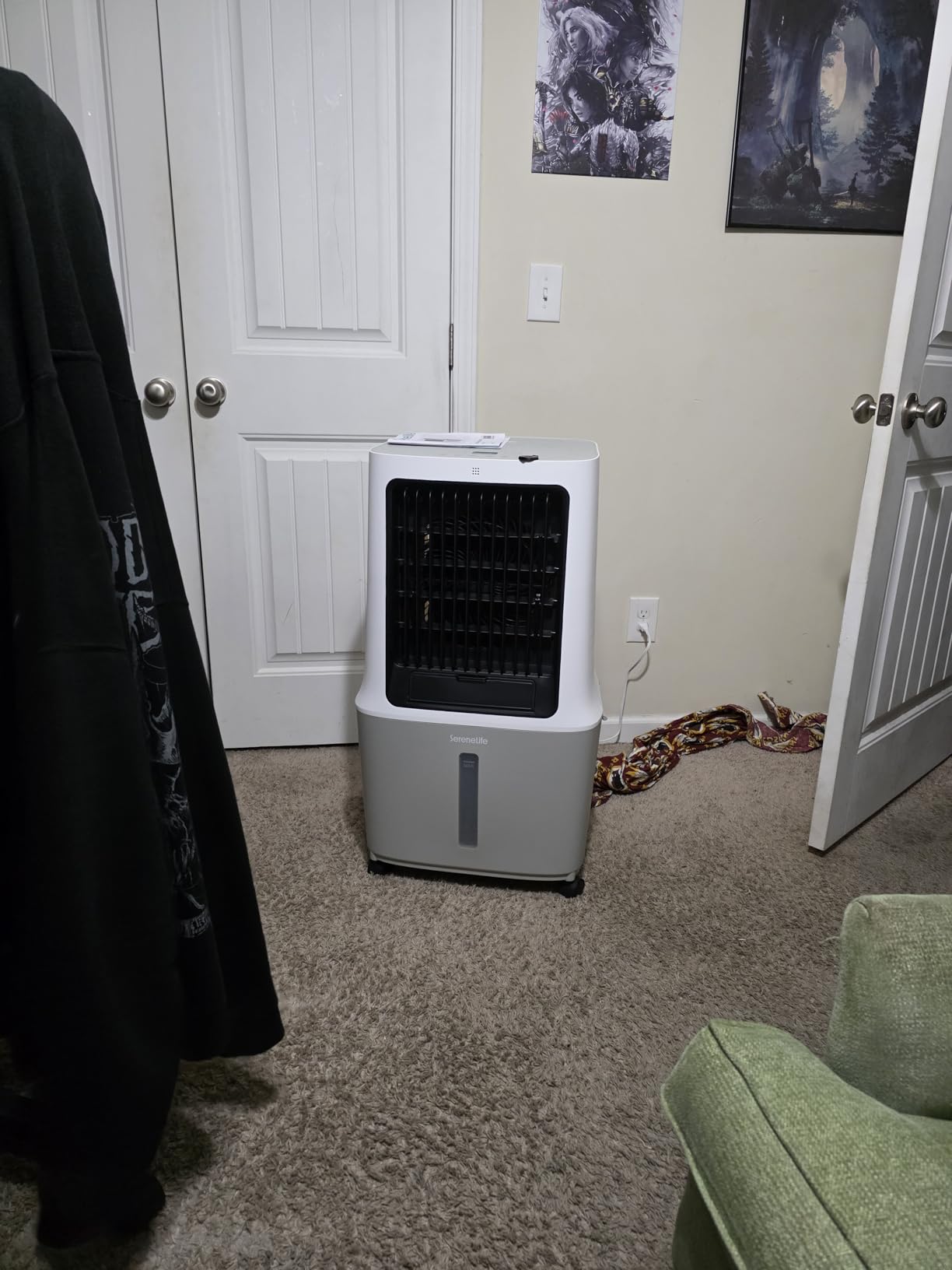
Where we would temper expectations is the rating. Buyers credit the airflow and the tank, but a significant minority report disappointing cooling relative to the headline CFM figure, which is what the 3.3 star average reflects. Airflow at the outlet is not the same as a temperature drop across a large floor.
At 69.4 pounds and 62 inches deep, this is not a machine you shuffle between benches. Plan its position before you fill the tank, and keep a clear path for a dolly.
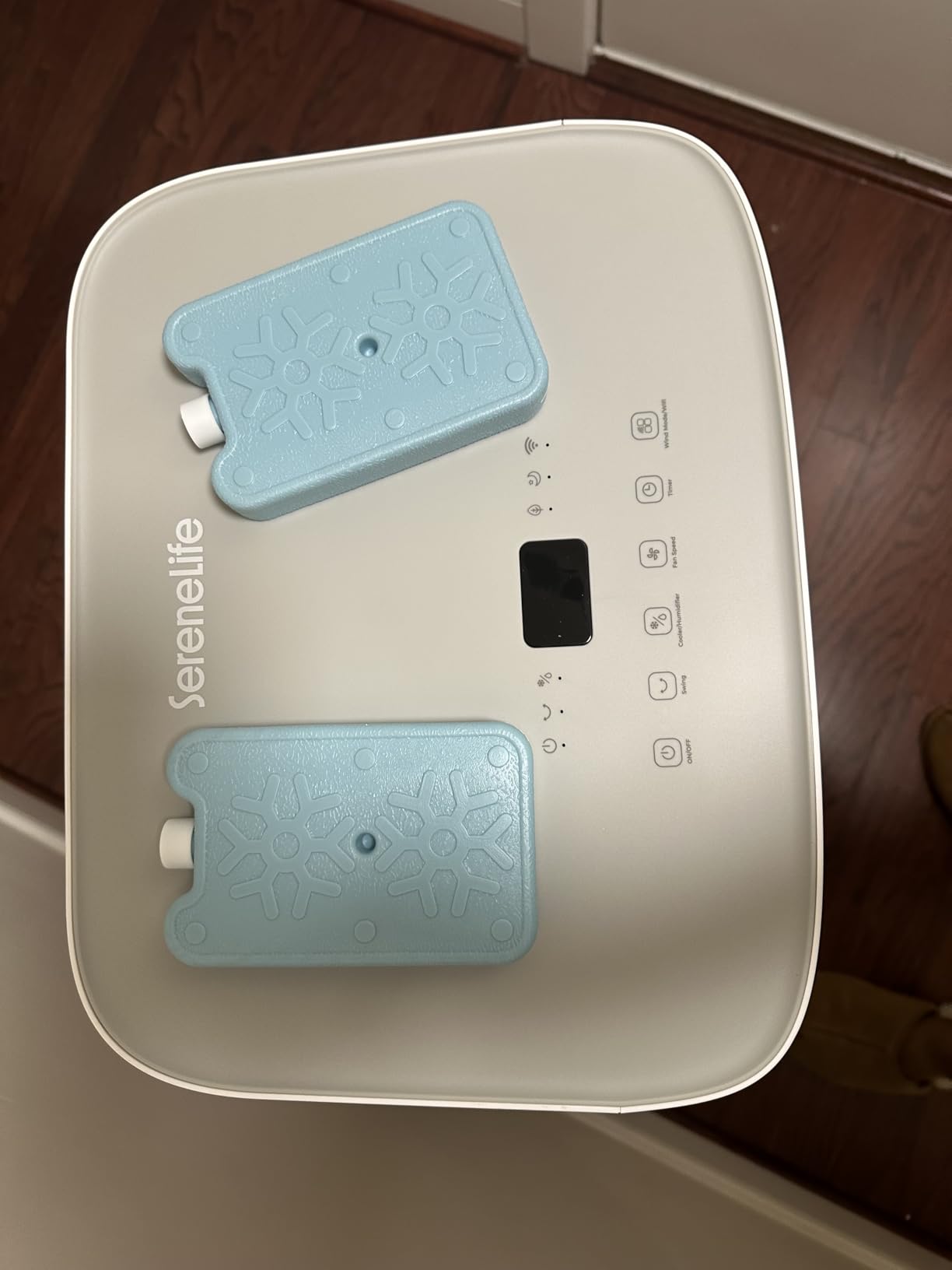
Does 12000 CFM really cover a two-bay shop?
For a large, open, well-ventilated building with dry air, yes, that is where a figure this high belongs. For a 1200 square foot room with one small window, the extra airflow will simply recirculate and you will be disappointed.
Is Wi-Fi control worth the extra electronics in a shop?
It is convenient for scheduled operation, and it lets you check the unit from a phone in a dusty room where you would rather not stand. The trade is that a control board is another component that can fail after years outdoors, and smart features on shop equipment sometimes lose connectivity after firmware updates.
4. Uthfy 4000CFM Swamp Cooler – Best for Quiet, Detail-Heavy Work
- 45 dB is the quietest published figure in this group
- Detachable 13.5 gallon bottom tank plus top fill and hose port
- Remote and panel control of three speeds and 120 degree oscillation
- Lightest unit here at 24.3 pounds
- 12 hour timer and LED ambient light
- Weak pads reduce effective airflow
- 700 sq ft coverage claim is optimistic indoors
- Pump can cut out while water remains
- Thin plastics and flimsy clamps
If your work involves listening to a sound test, trimming a joint or watching a dial, fan noise is the deciding factor. This is the quietest machine in the guide at a published 45 dB, and at 24.3 pounds it is also the easiest to move between a bench and a sofa.
Refilling is unusually flexible for this class. You can pour water in the top, attach a hose, or pull the entire 13.5 gallon bottom tank out and carry it to a tap, which is the option we prefer in a shop with a floor drain.
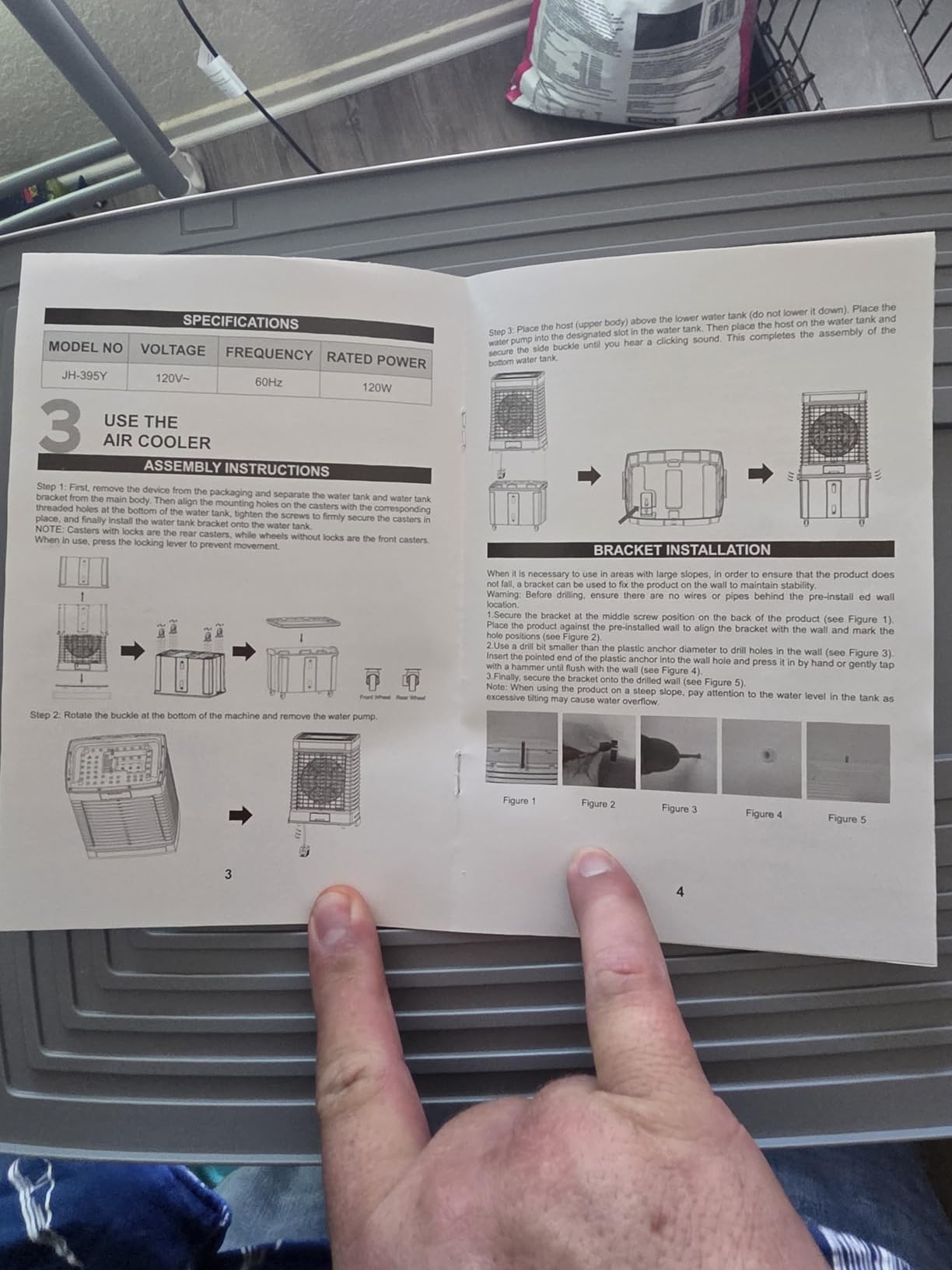
The honest problem is pad quality. Owners who measured a genuine temperature drop of roughly 10 degrees in open air like the results, but many report minimal cooling, and the 3.1 star average with about a third one-star reviews tells you the experience is polarised. Several buyers ended up moving to a higher-CFM machine.
The pump is a second concern. A number of owners report it cutting out while several gallons remain in the tank, and the thin pads, light plastics and flimsy top-to-bottom clamps are the parts we would inspect first after a year of service.
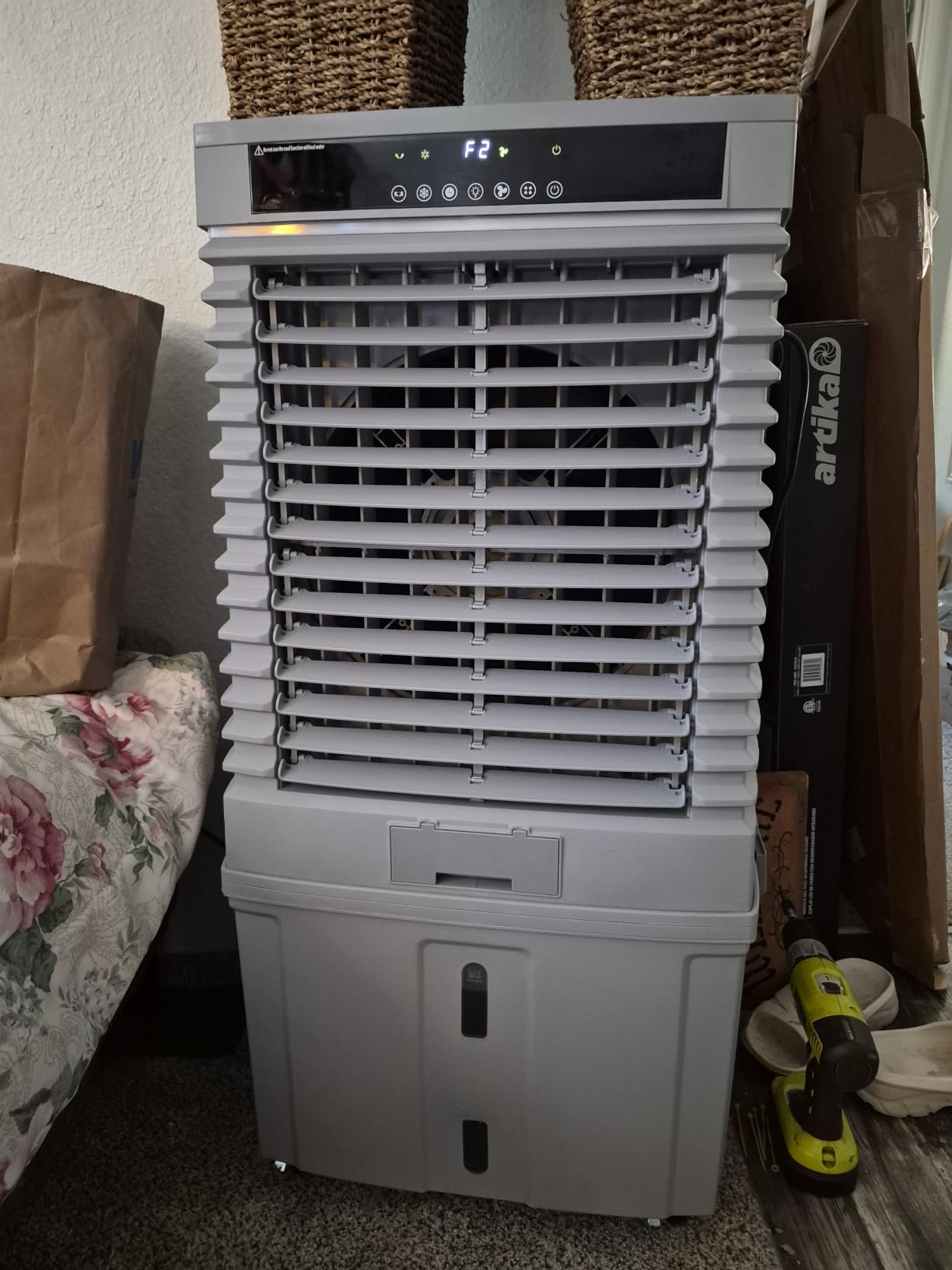
Is 700 sq ft of coverage realistic in an enclosed garage?
Only with good ventilation. Treat 700 square feet as an open-air or semi-open figure. In a sealed single-bay garage with one window, expect the number to fall well short of the label.
Does 45 dB hold up on the highest speed?
The quiet rating is most reliable on low and medium. On high, the pads and motor add their own noise, and the difference against a 50 to 55 dB machine narrows considerably. For continuous fine work, plan to run it on medium.
5. Uthfy 40 Inch 4800 CFM Swamp Cooler – Best Value for Larger Workshops
- 4800 CFM with 120 degree oscillation
- Galvanized metal frame and copper motor
- Published 50 dB noise figure
- Four caster wheels with two lockable brakes
- Works with no window installation or hoses required
- Tank needs regular topping up in sustained heat
- Output depends heavily on low humidity and cross-ventilation
- Average 4.0 star rating
- Ice curtain adds modest benefit
This one makes sense when you want more airflow than a 3100 CFM machine gives you but do not need a commercial chassis. At 4800 CFM it covers spaces up to 970 square feet according to the manufacturer, with 120 degree automatic oscillation across the floor.
The frame is the differentiator at this price point. A galvanized metal frame with a copper motor tolerates a shop environment better than the thin plastic towers, and 50 dB keeps it usable at a workbench on low and medium.
Water management is the routine task. The 11 gallon tank with manual top fill and a continuous auto-refill connection covers a normal day, but buyers in sustained heat report topping up more often than they expected. Connecting a hose solves it permanently.
The 4.0 star average reflects a machine that does the job without excelling. The composite ice curtain and three included packs add a modest extra chill near the outlet, which is pleasant within a few feet of the machine and negligible across a large room.
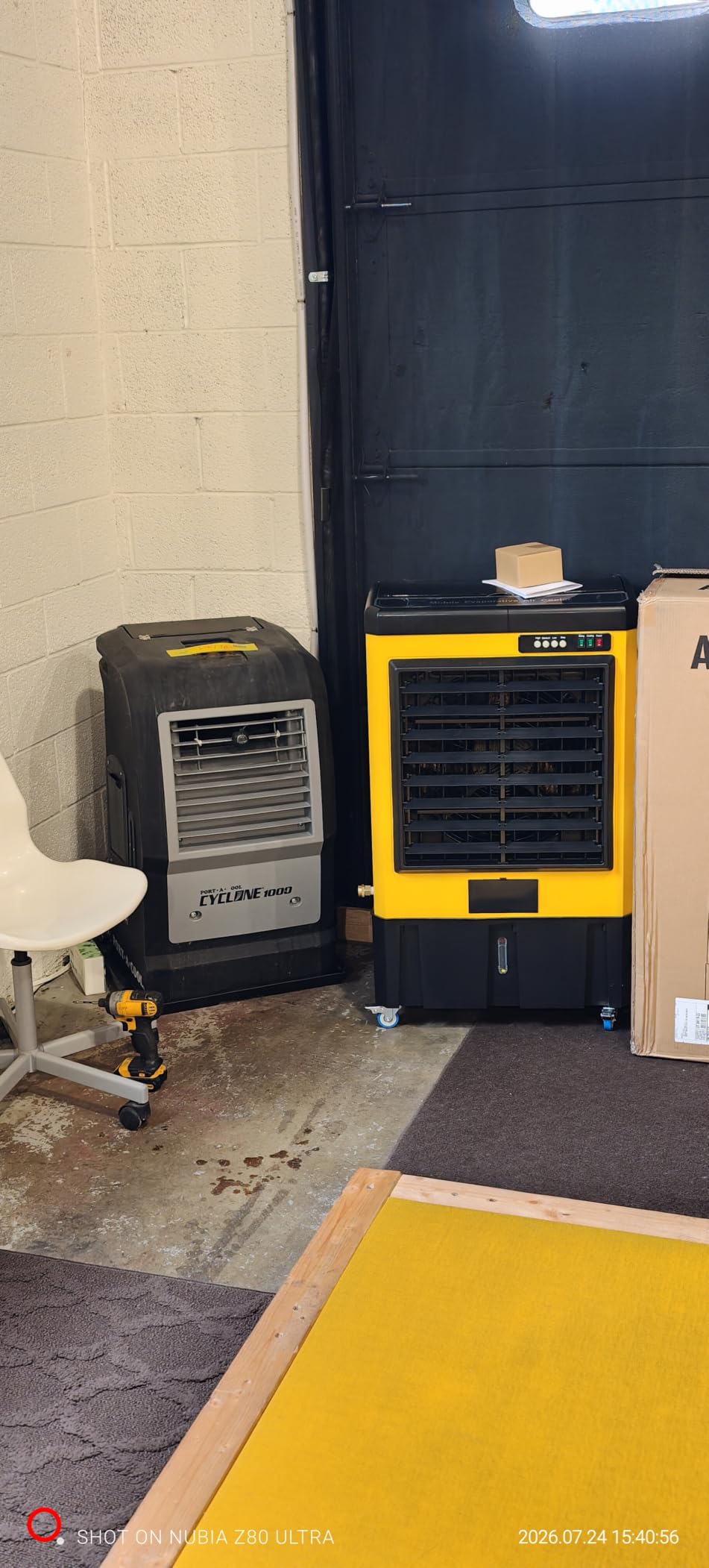
Does a metal frame actually matter in a shop?
Yes in the long run. Plastic towers crack or warp when they are bumped by a hand truck, and a metal frame with casters survives being moved around a working floor. It is one of the reasons this machine holds a 4.0 rating in a category where many rivals sit near 3.
Will 4800 CFM cover a 1000 sq ft workshop?
In dry air with the door up, that is the right class of machine for the job. Size it by door opening rather than by floor area alone, because the exhaust path limits how much air can move through the building in the first place.
6. OEMTOOLS 3-Speed 3100 CFM Swamp Cooler – Best for Garage Installations
OEMTOOLS 23968 3-Speed Portable Swamp Cooler 3100 CFM 10.3-Gal. Water Tank
- High density media panels with 80 percent more evaporation surface
- UL GFCI plug and UV resistant resin for shop use
- Built in casters and a tool tray
- Patented axial propeller distributes air well
- Three speeds on a 1/5 HP motor
- 68 dB is the loudest published figure in this group
- 41.3 pound body is awkward to reposition without wheels
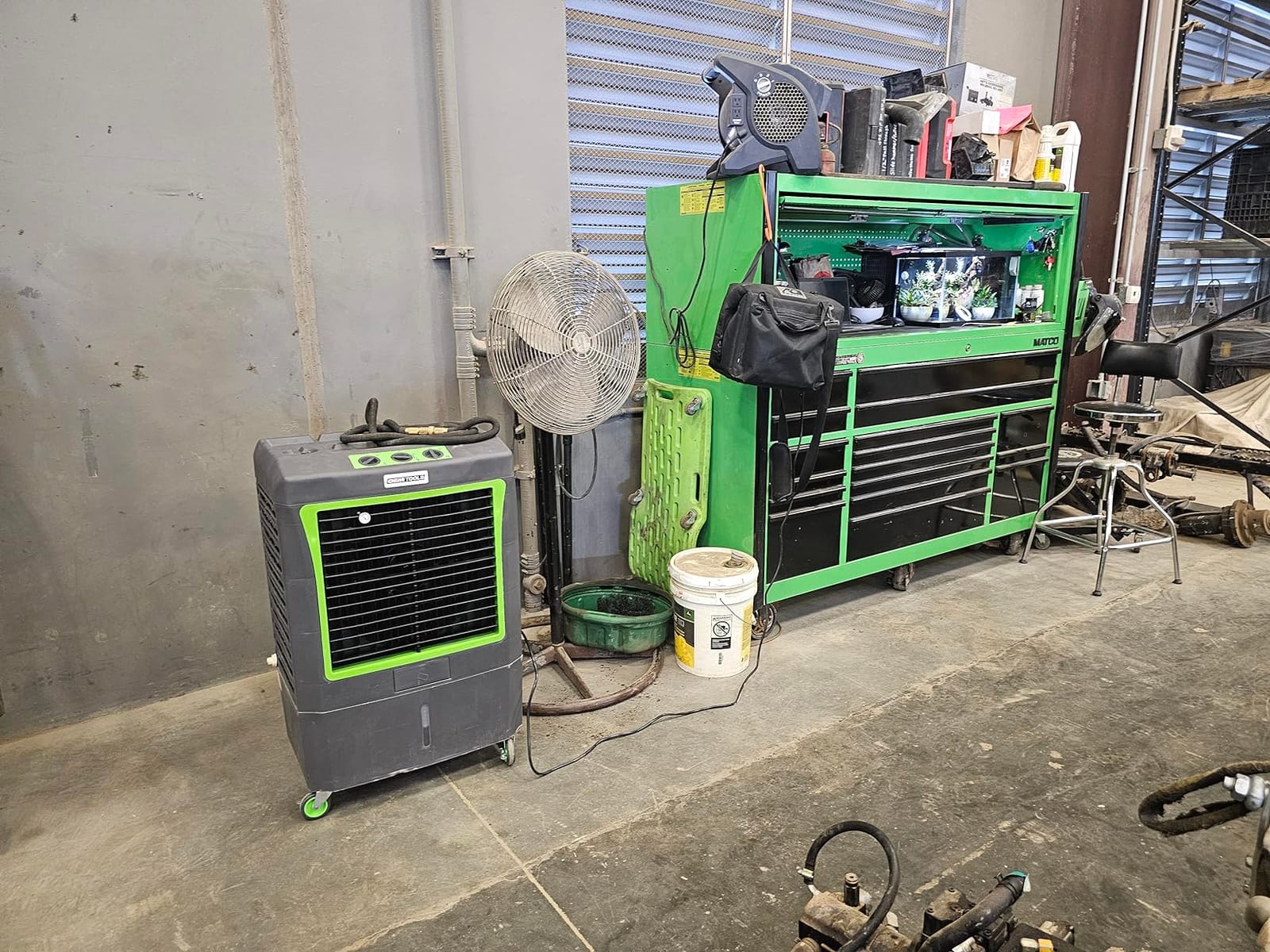
The OEMTOOLS is the one in the group we would point at for a permanent garage position. The UL GFCI plug is the detail that matters most, because concrete floors that may be damp and metal buildings that can sweat are exactly the environment where a GFCI-protected cord belongs.
Pad efficiency is the other story. High density media panels give roughly 80 percent more evaporation surface area than standard pads, and that shows up as more cooling for the same fan speed rather than just a bigger number on the box.
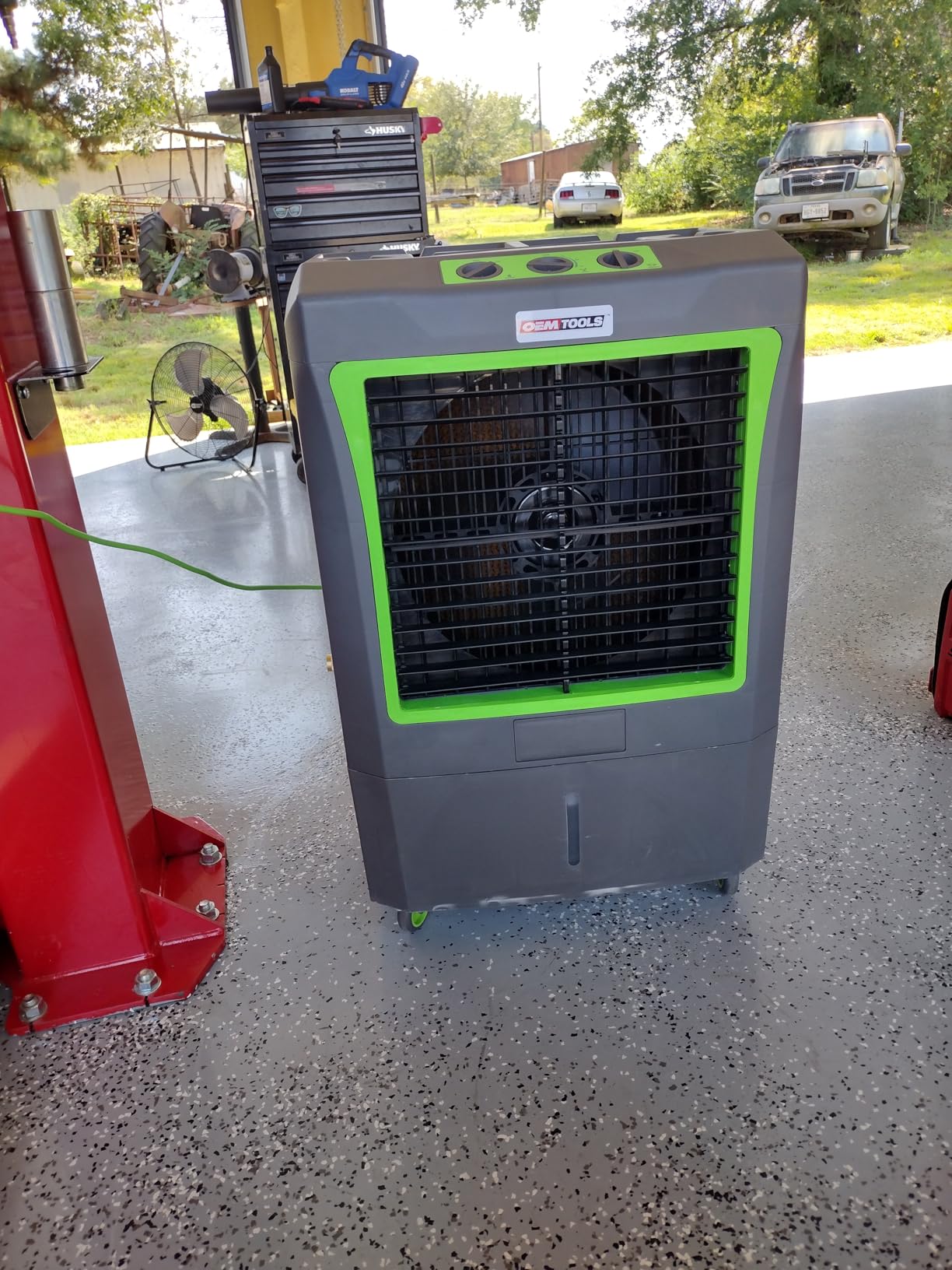
It also carries a tool tray, which is a small thing that becomes obvious once the unit is parked next to your bench. The axial propeller design distributes air across the space instead of concentrating it in a single stream.
Noise is the trade. The published 68 dB figure is the highest here, and owners note that the low speed is perfectly acceptable for shop work while high speed is best reserved for empty-room cooling before you start.
Why does the GFCI plug matter more than the CFM figure?
Because it decides whether the machine is safe to leave plugged in on a shop floor with a concrete slab and a water tank inches away. A standard two-prong plug in that setting is a poor choice regardless of how much air the unit moves.
Is 41 pounds too heavy to reposition?
On casters it is fine. Over a threshold, up a ramp or across gravel, it becomes a two-person job. Position it once at the start of the season and treat it as a fixture.
7. Hessaire MC92V 11000 CFM Evaporative Cooler – Best for 30×40 Ft Shops
- 11000 CFM with air throw felt around 25 feet
- Very low running cost for its output
- 33 gallon tank plus direct hose connection
- Independent horizontal and vertical vane control
- Used successfully in 30x40 ft unconditioned workshops
- 126 pounds is difficult to move even on wheels
- Corrugated paper media smells strongly at first start-up
- Plastic weep holes can block and dry sections
- Open housing motor can corrode in a damp shop
This is the machine for a workshop that is actually a warehouse. Owners running unconditioned shops of around 30 by 40 feet report serious cooling capacity, and several have had the same unit running for multiple seasons. The 33 gallon reservoir can be plumbed to a hose for continuous operation.
Running cost is the standout. Draw is listed at 50 to 80 watts, so a full working day of cooling costs a small fraction of what a compressor-based unit would take for the same space.
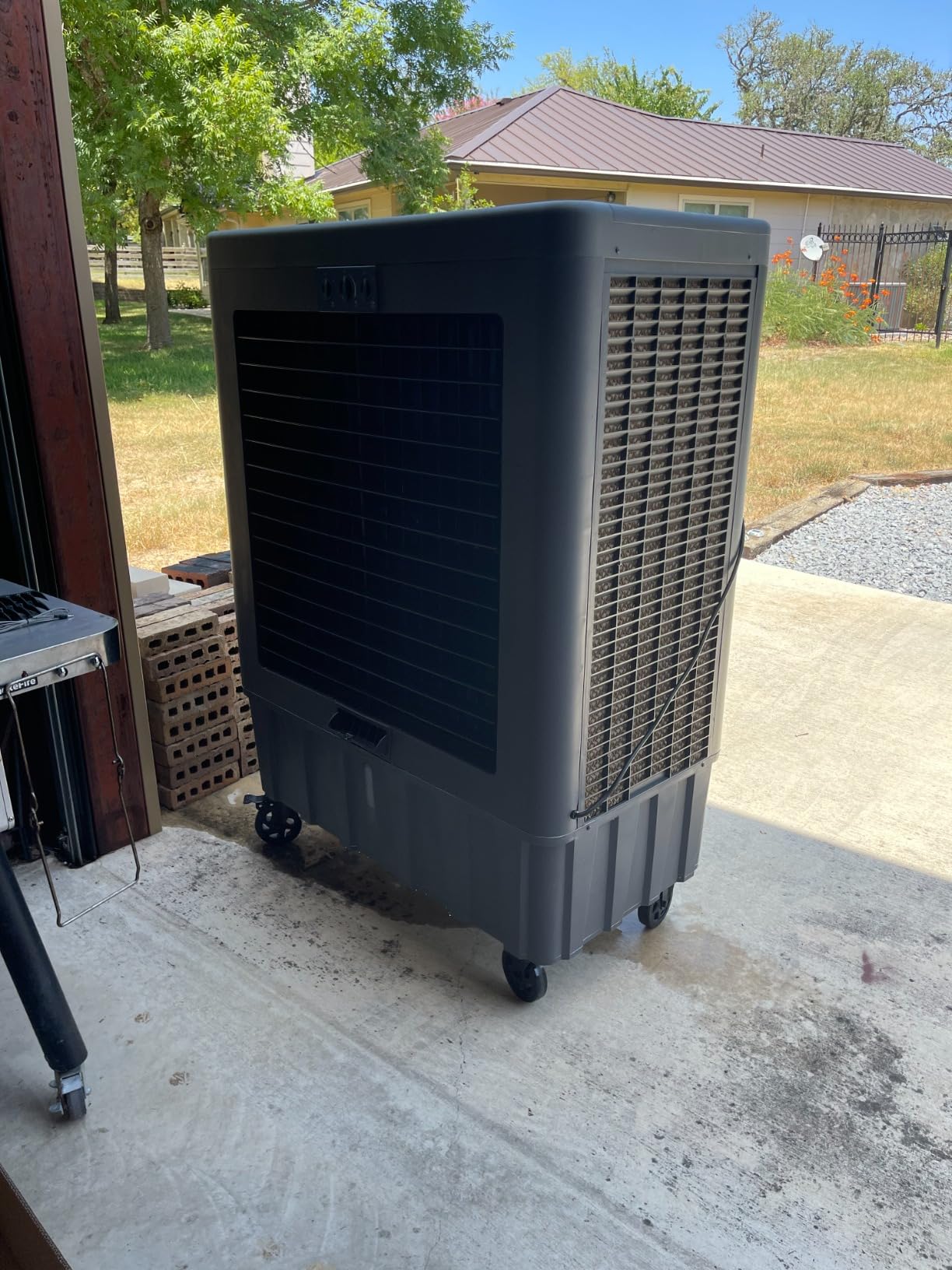
The ASDS air swing delivery and independent vane adjustment let you aim a wide, directed stream across a long building rather than diffusing it into one corner. Air throw of roughly 25 feet means you can place it at one end of a shop and still reach the far bench.
There are real setup notes. The corrugated paper media gives off a strong smell on first start-up, so run it outside or with the door wide open before you occupy the space. Check the plastic weep holes periodically, because a blocked hole leaves a section of media dry.
Can one person install an 11000 CFM cooler?
Assemble it yes, position it no. At 126 pounds you want a second person and a dolly, and you need to set it on a level floor because even water distribution across the pads depends on it.
Will the motor survive a damp workshop?
The motor sits in an open housing, which is fine in a dry building but corrodes in a persistently damp one. If your shop sweats in winter or floods occasionally, this unit belongs somewhere drier.
8. CAJUN KOOLING CK4500-S 4500 CFM Evaporative Cooler – Best for Long Shifts
- 32 gallon reservoir giving 8 to 10 hours per fill
- Latching side panel accepts ice for colder output
- Pump low water shut-down valve protects internals
- External screens block dust pollen and insects
- Weatherproof UV resistant plastic with coated metal internals
- One to eight hour auto-off timer with remote
- Only 26 ratings so far
- Huge 84 pound unit needs two people to move
- Indoor use requires dry climates or strong ventilation
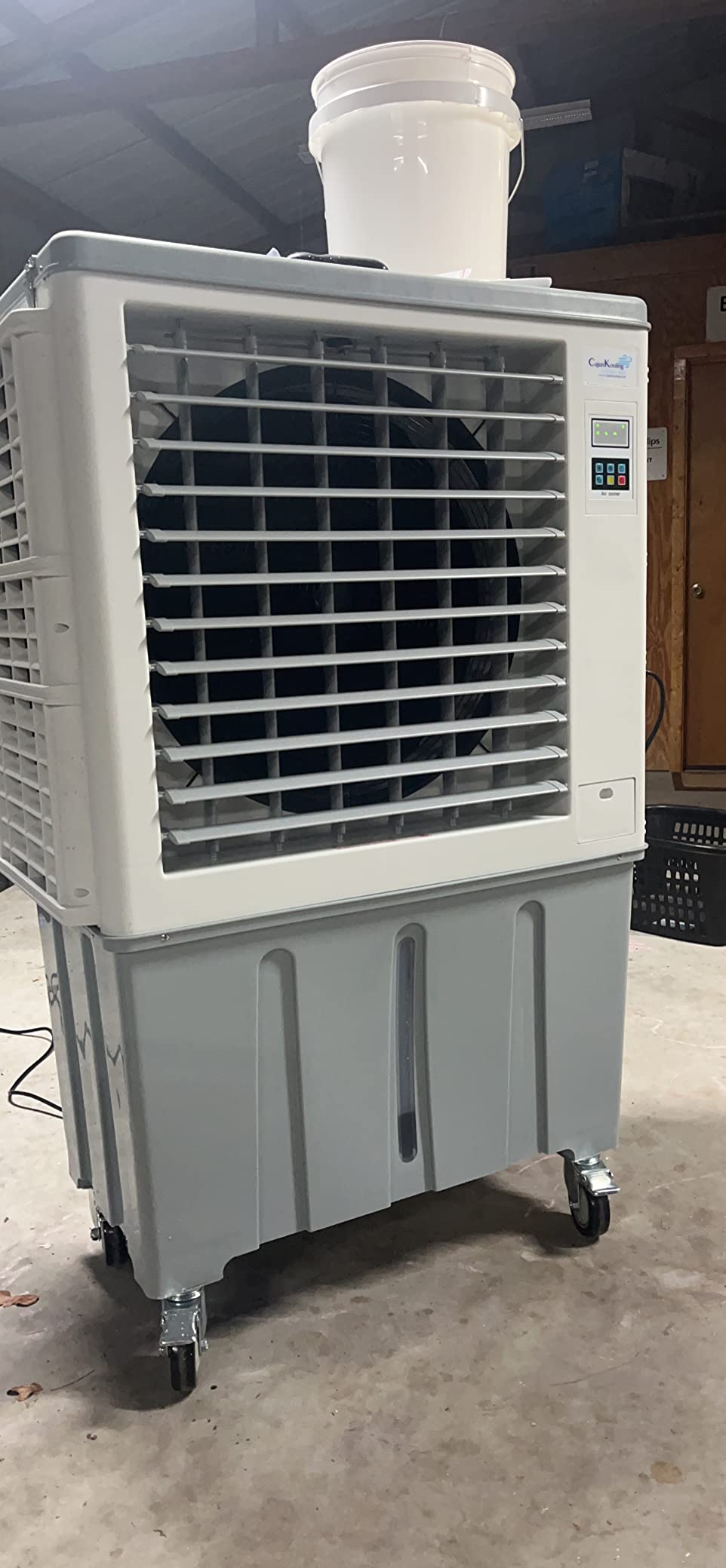
The CK4500-S is built around one idea: never interrupt the shift to refill a tank. Thirty-two gallons gives 8 to 10 hours per fill, which covers a long working day with margin, and the hose float valve lets you go beyond that by connecting a supply line.
Two workshop-specific details stand out. The external screens sit in front of the pads to catch dust, pollen and insects, which is a meaningful advantage in a woodworking or metalworking shop where pad loading is the usual failure point.
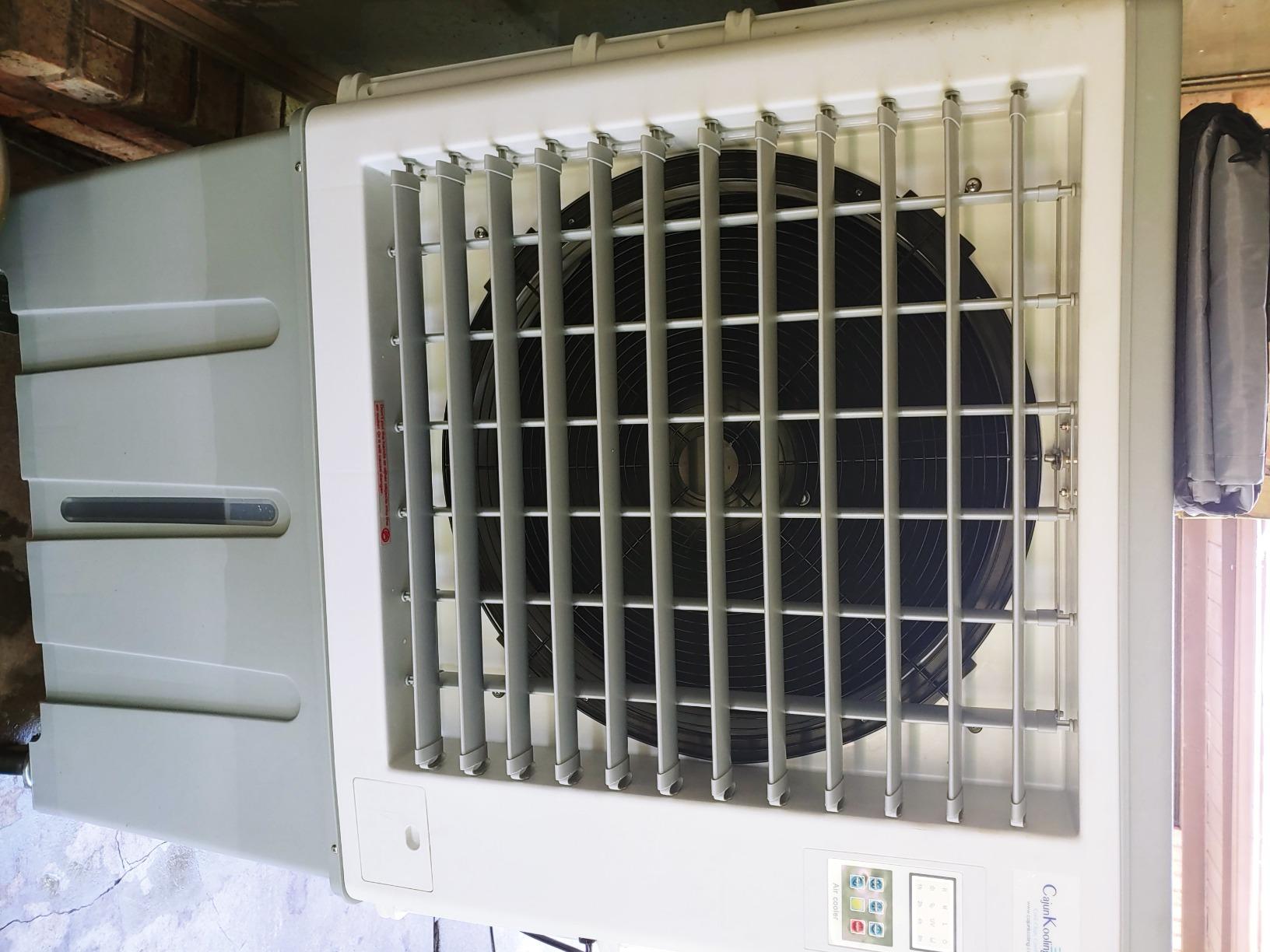
The pump low-water shut-down valve protects the internals if the tank runs down, a safeguard that removes the anxiety of leaving a cooler running unattended overnight in a hot shop.
The latching side panel is a nice practical touch. Owners open it to add ice and get noticeably colder output near the outlet, which helps in the worst afternoon hours even though it does nothing for the far end of a large room.
Is the 32 gallon tank worth the extra weight?
For shops with long or split shifts, yes. You fill once in the morning and stop thinking about it. For a weekend hobby shop, it is overkill, and you would be hauling around 32 gallons of water rather than using it.
Do the dust screens solve pad clogging?
They slow it down rather than eliminating it. In a high-dust shop you still want to pull the screens and rinse the pads on a fixed schedule, because loaded media reduces airflow long before it looks obviously blocked.
9. Hexago 7500 CFM Evaporative Air Cooler – Best for Scheduled Runs
- Adjustable airflow up to 7500 CFM on a 150 watt copper motor
- 13.2 gallon tank with top fill and hose connection
- Water shortage warning protects the pump
- 24 hour timer with panel and remote control
- 120 degree oscillation with 55 dB operation
- ETL safety listed
- 3.2 star average from only 15 ratings
- No four star ratings in the set
- Remote control batteries not included
The Hexago is the strongest candidate here for a shop that runs on a clock. A 24 hour timer means you can set the start and stop time once and leave it, which suits a shop that is cool in the morning, hot by midday and empty after hours.
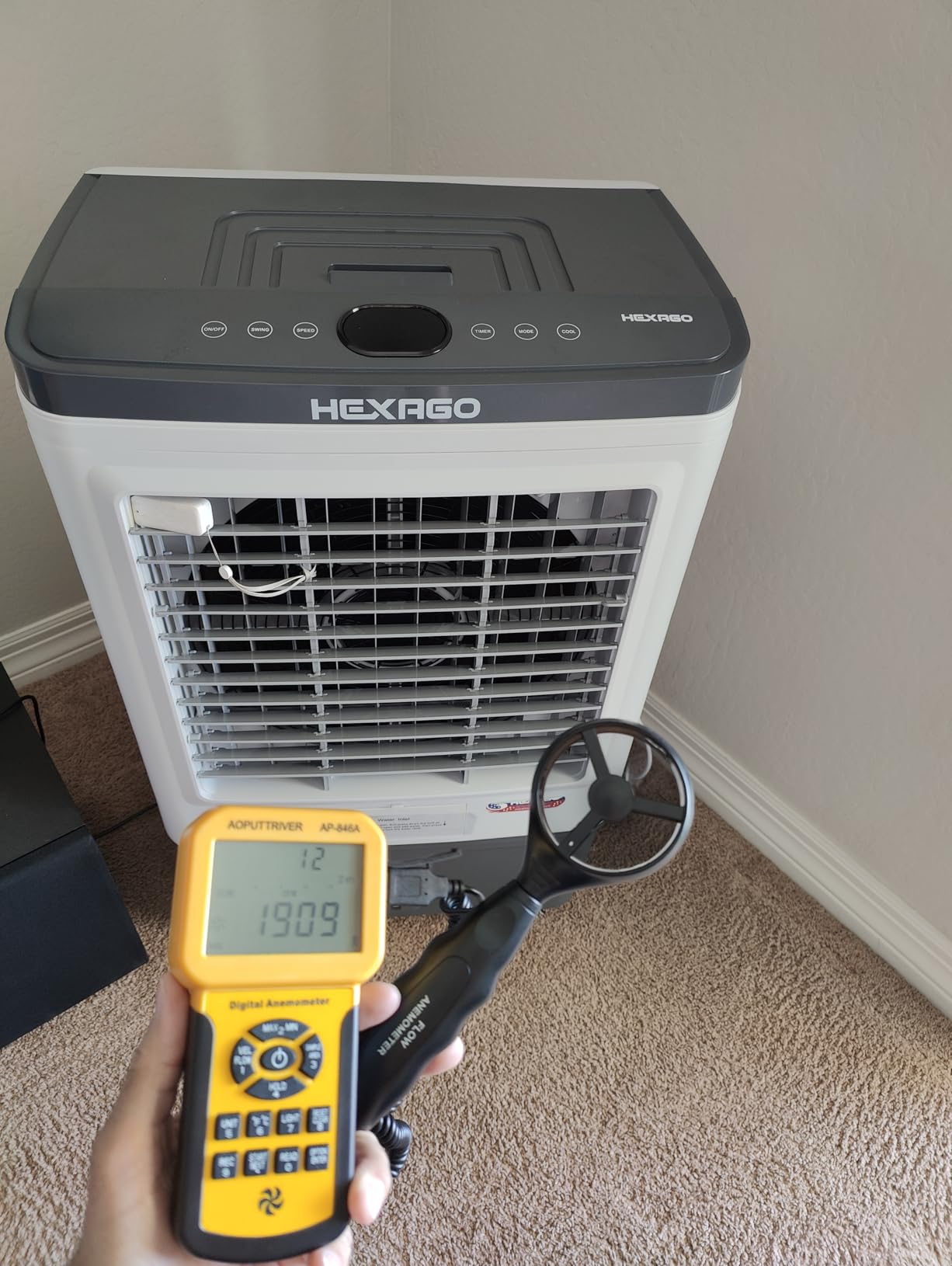
The feature set is generous for the class: three-panel intake, dual swing with 120 degree oscillation, a water shortage warning, and an ETL safety listing with a copper motor. At 55 dB it sits in the middle of the noise range here.
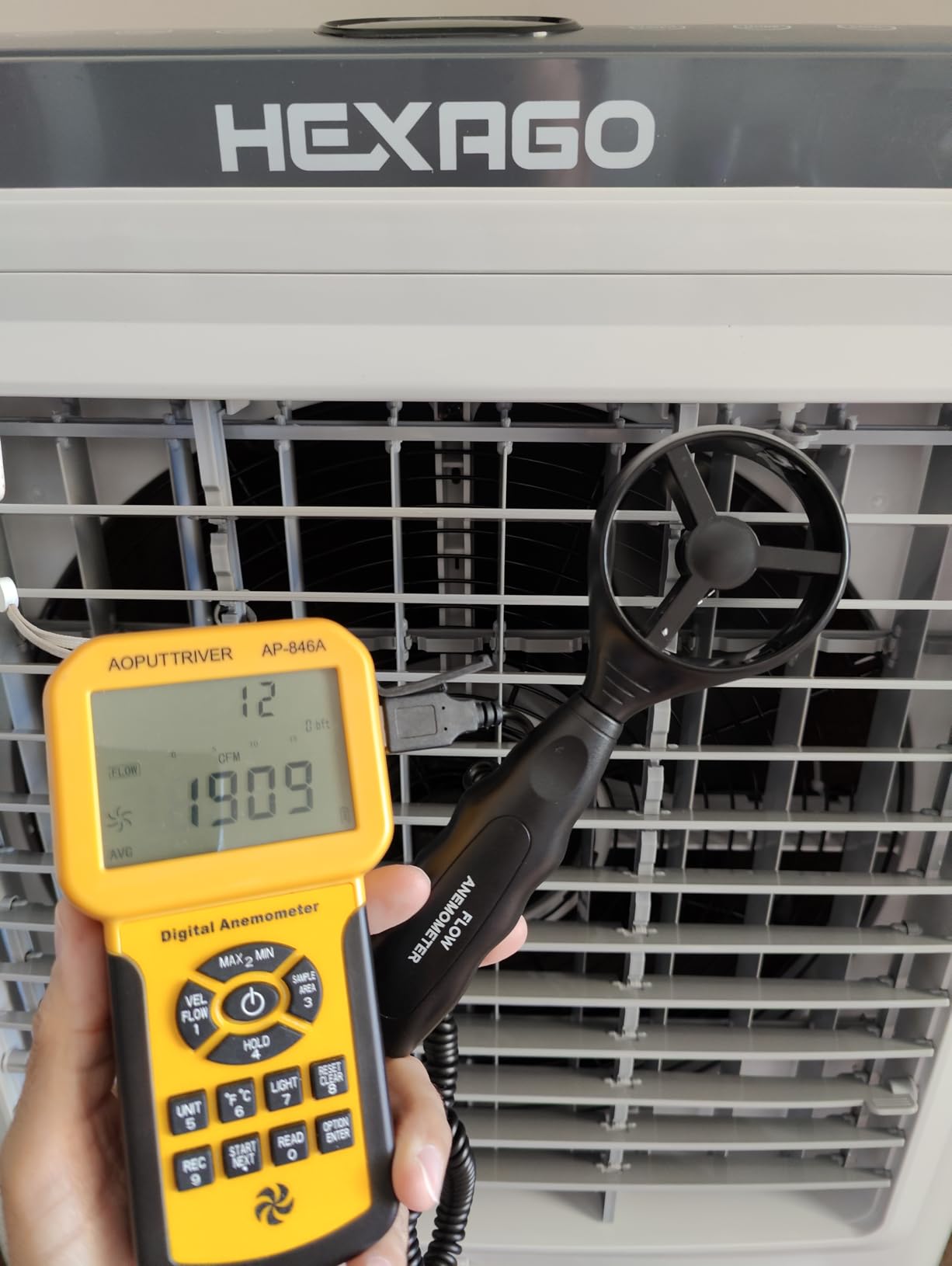
The reason we place it ninth is the evidence, not the machine. With only 15 ratings the sample is thin, and it is polarised: a meaningful share of five-star reviews against about a quarter one-star, and no four-star scores at all.
In practice that pattern means some owners get strong cooling and others get very little from the same 7500 CFM headline. Treat it as a machine to buy when the timer and controls matter more to you than a long track record.
Is a 24 hour timer useful in a working shop?
Very. Shops often need cooling from early morning until the last person leaves, and a daily timer removes a manual step that owners routinely forget. It is one of the reasons we would pick this machine over an otherwise similar rival.
Should a thin review base change your decision?
It should slow you down rather than stop you. Verify the published airflow and tank figures against the listing, buy where returns are straightforward, and expect that a machine with this little feedback history will reveal its weaknesses sooner than a well-reviewed one.
10. DEWALT DXACN01B Cordless Evaporative Cooler – Best for Cordless Job Sites
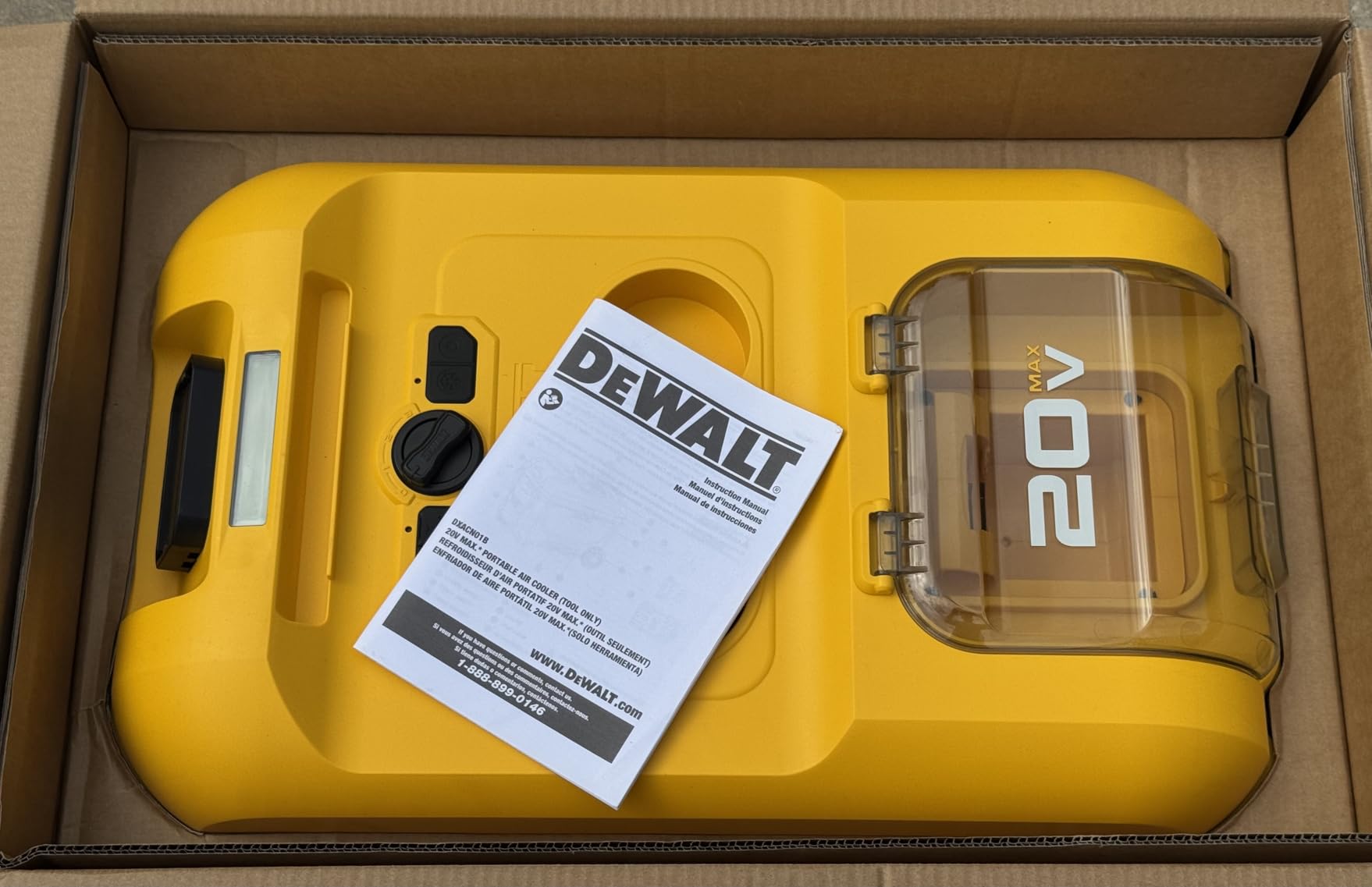
DEWALT Evaporative Air Cooler Portable Air Conditioner DXACN01B (Tool Only)
- Runs cordless on a 20V battery for up to about two hours
- Doubles as an 8 gallon ice chest for drinks and supplies
- Digital display shows live output air temperature
- Turbo Cool mode reaches temperatures as low as 53.6 degrees
- Integrated wheels handle cup holder phone tray and USB port
- Hoses and ice pack store inside the body
- Battery and charger sold separately on this tool only variant
- 8 gallon tank limits sustained cooling in large spaces
- Few reviews in full workshop settings
This one breaks the mould because it is not plugged in at all. It runs on a 20V battery for roughly two hours, which makes it the right answer for a job site with no power, a truck bed, a tent or a garage where you would rather not run a cord across the floor.
The second idea is that it is also an ice chest. An 8 gallon tank holds drinks and supplies for a hot day on site, and the digital display shows the output air temperature so you can see the machine actually doing something.
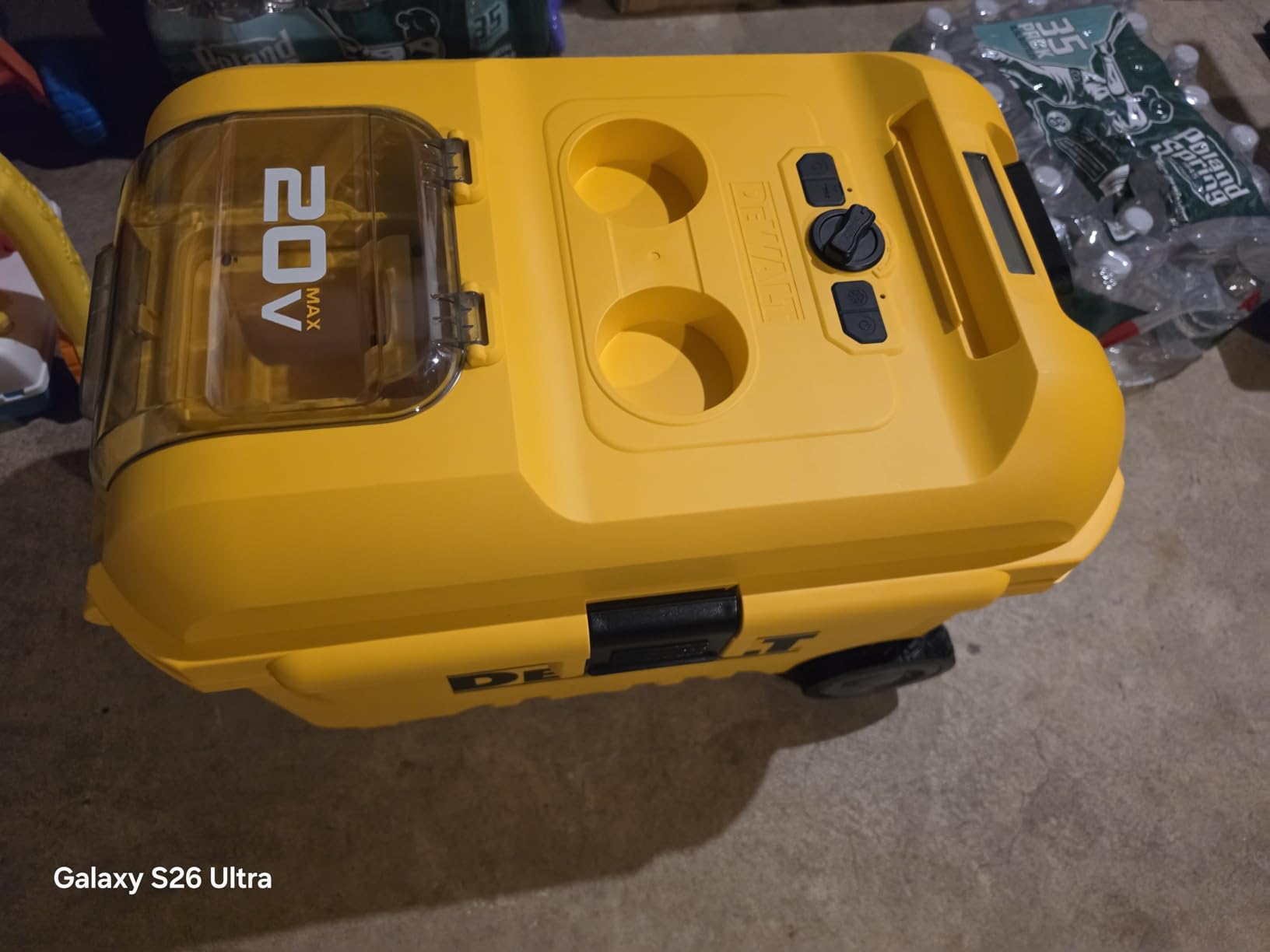
Build details suit a working environment: integrated wheels, a heavy duty handle, a cup holder, a phone tray and a USB port, with the hoses and ice pack storing neatly inside the body. The warranty is listed at three years.
The limits are straightforward. Two hours of runtime and 8 gallons of water make this a personal and spot cooler rather than something that will condition a whole shop, and the review base is still small for full workshop use.
Can a battery cooler cool a whole workshop?
No. It is built for a person, a vehicle and a small space. If your shop needs hours of cooling across a full floor, choose a mains powered unit and accept the cord.
Is the tool-only version worth buying without the battery?
Only if you already run 20V DEWALT packs, because that is the situation where it makes sense. Anyone starting from zero has to add a battery and charger before it runs, which changes the real cost of the purchase.
How to Size an Evaporative Cooler for Your Workshop
Start with floor area. Multiply length by width, then multiply by ceiling height in feet to get the room volume in cubic feet. As a working rule for a ventilated shop, target about four air changes per hour, which means dividing volume by fifteen to get the CFM you need. A 20 by 25 foot shop with a 10 foot ceiling is 5000 cubic feet, so roughly 330 CFM is the theoretical minimum, and most buyers should aim for 4000 CFM or more to feel a real difference across the floor.
That second sentence matters. The calculated number is the point at which air moves; the comfort number is what you actually buy. Cooler manufacturers rate coverage generously because they assume an open space, so plan for a machine in the 4000 CFM class for a single-bay shop and 8000 to 12000 CFM for a two-bay building or an attached warehouse.
Three workshop factors change the answer. High ceilings need more CFM than the volume calculation suggests because the cooled air settles. A dark, fully enclosed room needs more because nothing escapes. And a shop that is already hot at opening will benefit more from airflow across your body than from a lower room temperature.
Specs That Matter in a Workshop: Pads, Tank, Power and Noise
Pads. Aspen and excelsior pads move more air per square inch than cellulose, but they shed fibres and load with dust faster in a shop. Honeycomb cellulose holds its shape better and lasts longer in dusty conditions. Either way, budget for replacement: in a woodworking shop, fine sawdust will clog media in a season rather than a decade.
Tank. The rule we use is four hours of runtime per full tank for a normal working day. Above 10 gallons you gain freedom rather than cooling, which is why 32 gallon machines make sense for long or split shifts and 8 gallon machines work fine for an afternoon.
Power. Everything in this guide except the DEWALT runs on 115V or 120V at 120 to 400 watts. Draw this low is why evaporative cooling wins on running cost in a workshop. Check that the amperage on the label fits the circuit, and use a GFCI-protected outlet every time.
Noise. Published figures in this group run from 45 dB to 68 dB, and that range is decisive if your work involves sound, precision or concentration. Below 50 dB suits a shared bench; above 60 belongs across the room or in an empty building.
Ventilation and Wiring Setup for Workshops
Ventilation is the requirement that determines whether any of these machines work. Open one opening on the opposite side of the room from the intake, and make it at least as large as the intake face. A roll-up door propped a few feet is usually enough for a single-bay shop. A windowless building needs a permanent exhaust fan, because air cannot move through a sealed envelope no matter how many CFM the fan pushes.
If you add an exhaust fan, keep the duct to the cooler short, straight and as wide as possible. Forum users report that long or narrow flexible ducting kills the airflow that the CFM figure depends on, which is the single most common reason a powerful cooler feels weak indoors.
On the electrical side, put these machines on a GFCI-protected receptacle, which is standard practice for a damp floor with a water tank in the room. A dedicated 15-amp circuit is sensible for anything drawing 400 watts or more, and you should avoid extension cords on the larger commercial models. If you need heat as well, our fan-forced heater guide for workshops covers the other half of the year.
Maintenance Schedule for Dusty Workshops
Weekly. Check the water level and the pump. Look at the pads from the intake side with a flashlight, because a pad that has loaded with dust looks grey long before airflow visibly drops.
Monthly. Pull the pad screens, rinse the pads with a hose or a pressure washer on low, and let them dry fully before refitting. Wipe down the tank and check the float valve. In a metalworking shop, do the same thing more often and expect pads to need replacing each season.
Seasonally. Drain the tank completely, clean the reservoir, and run the pump dry for a few minutes to clear sediment. If you have hard water, mineral scale builds on pads and inside the pump; a cartridge pre-filter or periodic descale keeps both working. Store the unit dry, not in a damp shed, because standing moisture is what corrodes an open-housing motor.
Yearly. Inspect the casters and the latches, replace any pads that have warped or shed heavily, and confirm the tank is free of biofilm. A cooler maintained on this schedule in a dusty shop typically has its pads replaced about once a year.
Evaporative Cooler vs Portable AC in a Workshop
Choose a portable air conditioner when the shop is enclosed, when the outdoor air is humid, or when you need genuine dehumidification and a specific temperature regardless of weather. The trade is electrical: compressor units draw far more current, dump heat into the room through the rear hose, and need a proper circuit.
Choose an evaporative cooler when the building is ventilated, the climate is dry, and you want to move a large volume of air at low running cost with no installation. It adds moisture rather than removing it, which is why it feels wrong in a coastal or humid shop.
A practical middle path many shops use is both: the evaporative cooler for the open door and the benches during the day, and a portable AC for the enclosed back room where humidity and precision matter. If you also need cold drinks on site, our RTIC cooler roundup covers that side of hot-weather comfort.
Frequently Asked Questions
Which brand of evaporative cooler is best for a workshop?
Hessaire builds the most proven workshop cooler here, with the MC37M holding a 4.3 star average across more than 4,700 ratings and the MC37V rated even higher at 4.6. For very large open buildings, the SereneLife and Hessaire MC92V models carry the highest airflow figures in the group. The right brand matters less than matching airflow to floor area and having a usable exhaust path.
Do swamp coolers work in 100 degree weather?
Yes, in dry climates. Reports from users in Arizona, West Texas and Southern California show large temperature drops in 100 degree conditions because dry air has so much capacity to absorb water. The same machine does very little in coastal or Gulf humidity, because humid air cannot evaporate much additional water no matter how hot it is.
Will an evaporative cooler work in a garage?
It will, provided the garage can exchange air. Open the roller door and a window on opposite sides and a 3100 to 4800 CFM machine handles a typical single-bay space well. In a windowless garage you need an exhaust fan roughly the size of the intake, or the cooled air simply recirculates and the room barely changes.
What are the downsides of using a swamp cooler in a shop?
Four come up repeatedly. It adds humidity instead of removing it, which is wrong for some spaces. It does nothing in a sealed room because air has to leave somewhere. Pads clog quickly with woodworking and metalworking dust and need regular cleaning. And water consumption is high, with some owners reporting a gallon every fifteen minutes.
What CFM evaporative cooler do I need for my workshop?
Multiply floor length by width, then by ceiling height in feet to get the volume in cubic feet. Divide by fifteen for about four air changes per hour, then aim well above that result for comfort. A 20 by 25 foot shop with a 10 foot ceiling works out to roughly 330 CFM as a minimum, so most buyers end up choosing 4000 CFM or higher.
Do I need an air conditioner for a garage instead?
An air conditioner makes more sense if the garage is enclosed, the local humidity is high, or you need dehumidification and a fixed temperature. An evaporative cooler wins on running cost, needs no installation and moves a much larger volume of air. Many shops run an evaporative cooler for the open floor and a portable AC for an enclosed back room.
Final Verdict: Our Workshop Cooling Picks for 2026
The best evaporative coolers for workshops come down to airflow that matches your floor area and an exhaust path you already have. For most single-bay shops, the Hessaire MC37M is the pick: 3100 CFM, a 10.3 gallon tank with hose fill, 950 square feet of coverage and the deepest review record in the group. If you want the better-built version with oscillation, take the Hessaire MC37V.
Move up in size when the building grows. The Uthfy 4800 CFM covers a larger shop on a metal frame, the SereneLife 12000 CFM and Hessaire MC92V 11000 CFM handle two-bay spaces, and the CAJUN KOOLING CK4500-S is the one to buy when you do not want to stop mid-shift for a refill. For quiet bench work, the Uthfy 4000 CFM at a published 45 dB is the least intrusive option, and the DEWALT cordless model covers job sites where there is no power at all.
Before you buy, check your humidity and your outlets. In dry air with a door open, any of these will earn its place in 2026. In humid air, spend the money on a portable air conditioner instead.