
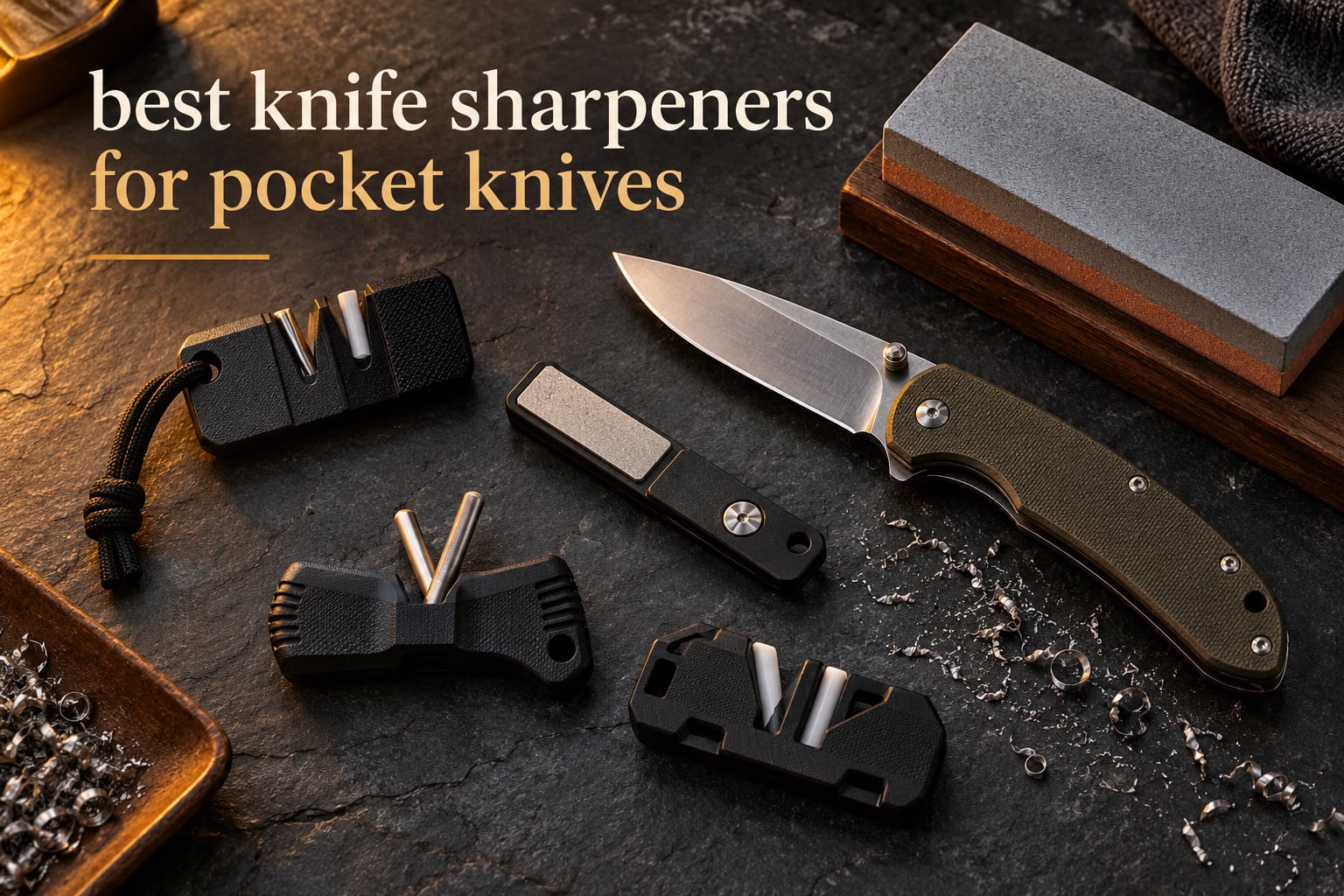
A dull pocket knife is the kind of problem you notice at the worst time. You are opening a box, cutting a rope on a backpacking trail, or slicing an apple at a desk, and the blade skates instead of biting. What makes dull cutting genuinely risky is that a blunt edge needs far more force to push through the same material, and force applied to a sliding edge is what causes slips and skinned knuckles.
That is why the best knife sharpeners for pocket knives matter more than most buyers expect at checkout. A sharp folder cuts with almost no pressure, so it goes where you aim it. The bad news is that most of the cheap tools people reach for first make the problem worse over time, particularly on the modern hardened steels that good folders are made from.
We compared 12 sharpeners across pull-through, field, whetstone, diamond stone and guided benchtop systems to build this roundup. The list covers everything from a keychain-sized tool that fits on a Swiss Army lanyard to a full five-stone bench set, so you can match a sharpener to how often you actually carry a knife. All of the picks were selected for angle control, material removal, consumable life and coverage of serrated blades, and the guide at the end explains where each one breaks down.
If you want the short version first, here is where we landed: the SHARPAL 101N is the strongest all-rounder, the AccuSharp is the fastest way to a usable edge, and the Work Sharp Guided Field Sharpener is the most capable dedicated sharpening kit. Our deeper coverage of broader sharpening setups lives in our general knife sharpener roundup, but everything below is filtered specifically for folders and slipjoints.
Table of Contents
Top 3 Pocket Knife Sharpeners in 2026
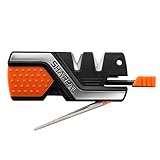
SHARPAL 101N 6-in-1 Sharpener
- Six stages in one body
- Coarse carbide and fine ceramic
- Two diamond rods for serrations and gut hooks
- Ferro rod and whistle
- 2.4 ounces

AccuSharp 001C Sharpener
- Most blades sharpened in about ten seconds
- Reversible carbide blades
- Ergonomic handle with finger guard
- 1.6 ounces
- Handles straight and serrated blades

Work Sharp Guided Field Sharpener
- 20-25 degree fixed angle guide
- Diamond plates plus ceramic rod and leather strop
- Five abrasive surfaces
- 135 g with a case
The SHARPAL 101N earned our Editor’s Choice because it is the most thoroughly proven pick here, with the largest review base in the group and six distinct sharpening surfaces in a body that still fits on a lanyard. The AccuSharp takes the value slot on speed alone, sharpening most blades in around ten seconds with reversible carbide blades. The Work Sharp Guided Field Sharpener wins the dedicated kit category because it is the only tool here that holds a fixed 20-25 degree angle while offering a full progression from coarse diamond to leather strop.
Best Pocket Knife Sharpeners at a Glance in 2026
| Product | Specifications | Action |
|---|---|---|
| SHARPAL 101N 6-in-1 Pocket Knife Sharpener |
|
Check Latest Price |
| AccuSharp Knife Sharpener with Ergonomic Handle |
|
Check Latest Price |
 Sharp Pebble Whetstone 1000 and 6000 Grit Sharp Pebble Whetstone 1000 and 6000 Grit |
|
Check Latest Price |
 Smith’s Pocket Pal PP1 Fold-Out Sharpener Smith’s Pocket Pal PP1 Fold-Out Sharpener |
|
Check Latest Price |
 Victorinox Dual Sharpener for Straight Blades Victorinox Dual Sharpener for Straight Blades |
|
Check Latest Price |
 Lansky Blademedic 4-in-1 Sharpener Lansky Blademedic 4-in-1 Sharpener |
|
Check Latest Price |
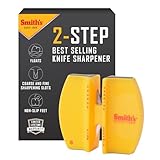 Smith’s CCKS 2-Step Keychain Sharpener Smith’s CCKS 2-Step Keychain Sharpener |
|
Check Latest Price |
 Lansky Deluxe 5-Stone Sharpening System Lansky Deluxe 5-Stone Sharpening System |
|
Check Latest Price |
| Work Sharp Guided Field Sharpener |
|
Check Latest Price |
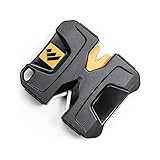 Work Sharp Portable Pivot EDC Sharpener Work Sharp Portable Pivot EDC Sharpener |
|
Check Latest Price |
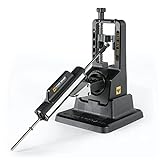 Work Sharp Precision Adjust Kit Work Sharp Precision Adjust Kit |
|
Check Latest Price |
 SHARPAL 156N Dual-Sided Diamond Whetstone SHARPAL 156N Dual-Sided Diamond Whetstone |
|
Check Latest Price |
How We Picked These Pocket Knife Sharpeners
Angle control came first. A tool that puts an uncontrolled angle on a 3-inch drop point folder will walk the bevel somewhere you did not ask for, and that is steel you can never get back. Systems with a preset slot, a physical angle guide or a fixed chassis scored higher than freehand tools, even when the freehand tool is technically more capable in skilled hands.
Second came material removal discipline. The best pull-through sharpeners on this list remove very little steel. The worst ones remove a lot, and the reason is angle drift during the stroke. We preferred tools with finger guards, guide rods or a defined stroke path, since those constrain the blade and keep the bevel where it belongs.
Third we looked at what each tool cannot do. Several products in this roundup claim to sharpen everything from scissors to fishhooks, and on serrated folders that claim deserves scrutiny. We noted which ones genuinely handle serrations and which ones just avoid the topic, because that distinction matters more to folder owners than any headline grit number.
Finally, we weighted consumable life. A carbide or ceramic element that can be reversed or replaced outlasts one that cannot, and that single factor usually decides whether a sharpener is worth owning for years. We also gave credit to tools that earn their space in a pack without doubling its weight. The same criteria apply whether you are sharpening a folder or one of the specialist tools we cover in our dart sharpener picks, since angle control is the deciding variable in both.
1. SHARPAL 101N 6-in-1 Sharpener – Best Overall for Pocket Knives
- Six sharpening and survival functions in one compact body
- Covers dull straight edges and serrated blades
- Carbide and ceramic abrasives rated for 10000 uses
- Largest review base in the roundup
- Coarse carbide sets the edge rather than finishing it
- Diamond rods suit serrations but not fine polishing
- Needs a straight stroke to avoid rounding an edge
The SHARPAL 101N is the pick we would put in the hands of anyone who asked for one knife sharpener and nothing else. It does more per stroke than any other pocket-sized tool here, because the V-notch carbide slot does the edge setting and the fine ceramic hone finishes the job in the same body. For a folder that has been in a pocket with keys for a month, that two-stage sequence is all you need.
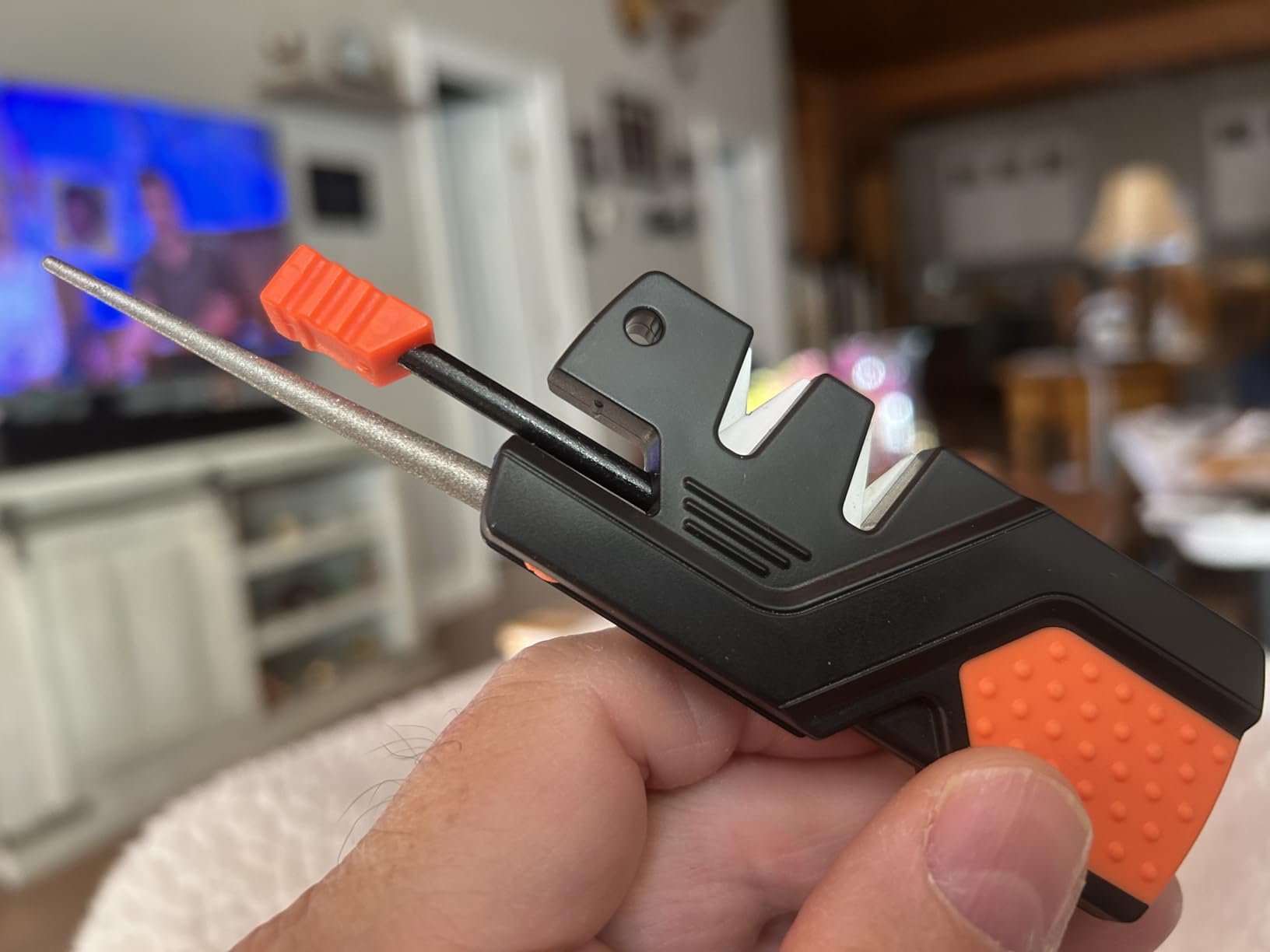
What separates it from a single-slot pull-through is the pair of diamond rods. The tapered 400 grit rod is sized to reach into serrations and gut hooks, and the grooved rod handles fishhooks. Very few tools this small address serrated edges at all, which is the most common blind spot in pocket knife sharpening.
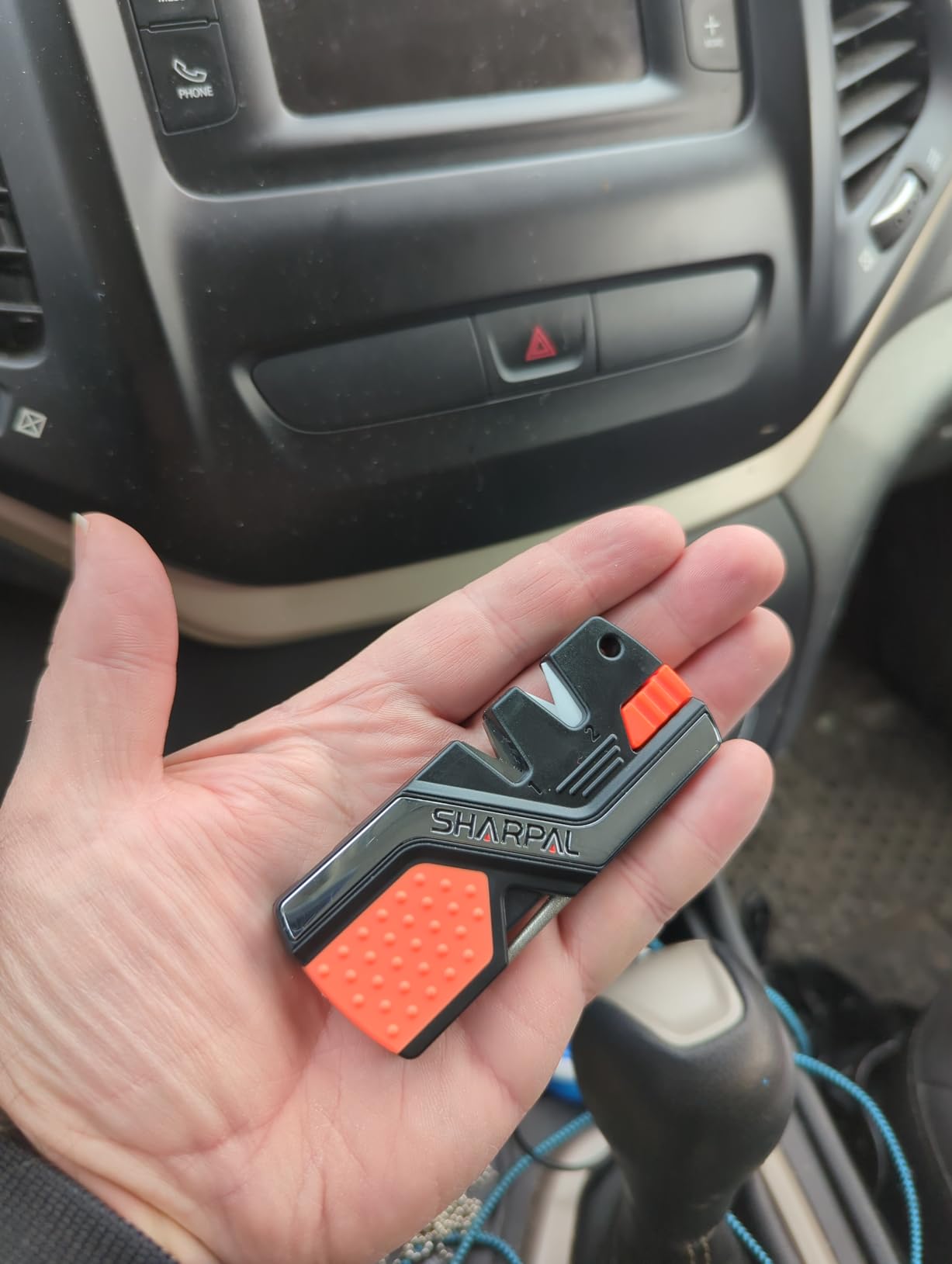
The rest of the package is survival gear rather than sharpening gear: a ferro rod fire starter and a high-pitched emergency whistle. Reviewers treat these as the reason the tool lives in a hunting pack instead of a desk drawer, and the lanyard hole keeps it attached to a belt loop or the knife itself so it is never missing when the blade finally goes dull.
Set expectations honestly and this tool performs. It carries a 4.5 average across close to 40000 reviews, which is the largest sample of any pick in this roundup. What it does not do is produce a mirror-polished factory edge. The carbide stage is an edge setter, and the ceramic stage refines.
What the SHARPAL 101N does better than the alternatives
Three things stand out. It is the only pocket-sized tool here that combines straight-edge and serration work without swapping the whole unit, and it does that while also carrying two survival functions most competitors leave out entirely.
The second is size discipline. At 2.4 ounces and 3.54 inches long, it is small enough to sit in a hunting pack or a pocket without thinking about it, which is the whole point of a field sharpener.
Where it falls short
The diamond rods are working tools rather than finishing tools. They will restore a serration to functional, but they will not leave that edge polished, and using one at the wrong angle on a fine serration can grind valleys that were never damaged.
The other limit is the fixed V-notch. Pull-through slots depend on a straight stroke, and if the knife rocks off axis mid-pull the bevel rounds. Nothing in the slot geometry prevents that, so it rewards a slow, deliberate pass.
2. AccuSharp 001C – Best Value Pocket Knife Sharpener
- Most blades sharpened in roughly ten seconds
- Reversible carbide blades double their lifespan
- Handle suits either hand
- Full-length hand guard protects fingers
- Cleans with soap and water or in a dishwasher
- Single coarse stage dresses an edge rather than polishing it
- Rocking off angle can round an edge
- Serrations get a functional edge not a full restore
Speed is the AccuSharp’s whole argument. It holds a 4.7 average across more than 28000 reviews, the second-highest rating in this group, and the consistent theme in those reviews is that the job takes about ten seconds. For a knife that just needs to be usable again before you head back to camp, that is a fair trade against anything slower.
The carbide blades are diamond-honed and reversible, which means when one face dulls you flip it and get a second working edge. Owners report five to ten years between replacements, and at that interval the consumable cost effectively disappears from the equation.
The handle is the part people notice first. It is moulded to fit either hand, and the full-length guard keeps your knuckles back from the abrasive slot when you are pushing real force through a dull blade. That guard is the reason we rate this safer than most pull-throughs, which typically leave your hand right where the slot is.
It is also easy to live with. Soap and water or a dishwasher cycle handles cleanup, which matters more than it sounds when the alternative is a stone that needs rinsing after every session.
Why this one beats cheaper two-stage tools
The 4.7 rating is not accidental. The blade quality, the reversible design and the hand guard together produce a tool where the common complaint, an inconsistent angle, is much less likely. Budget peers with the same price bracket rely on thinner components.
It is also the easiest recommendation to make for a household. The handle fits either hand, so it does not matter who in the house is doing the sharpening.
Where it falls short
There is exactly one abrasive stage, and it is coarse. That means the AccuSharp dresses an edge back to working condition rather than refining it to a fine polish. If your goal is a hair-popping edge on a small folder, this tool will not get you there.
Serrated blades are handled rather than restored. The slot will put a functional edge back on a serrated blade, but it will not restore each valley to its original height, and a badly worn serration stays worn.
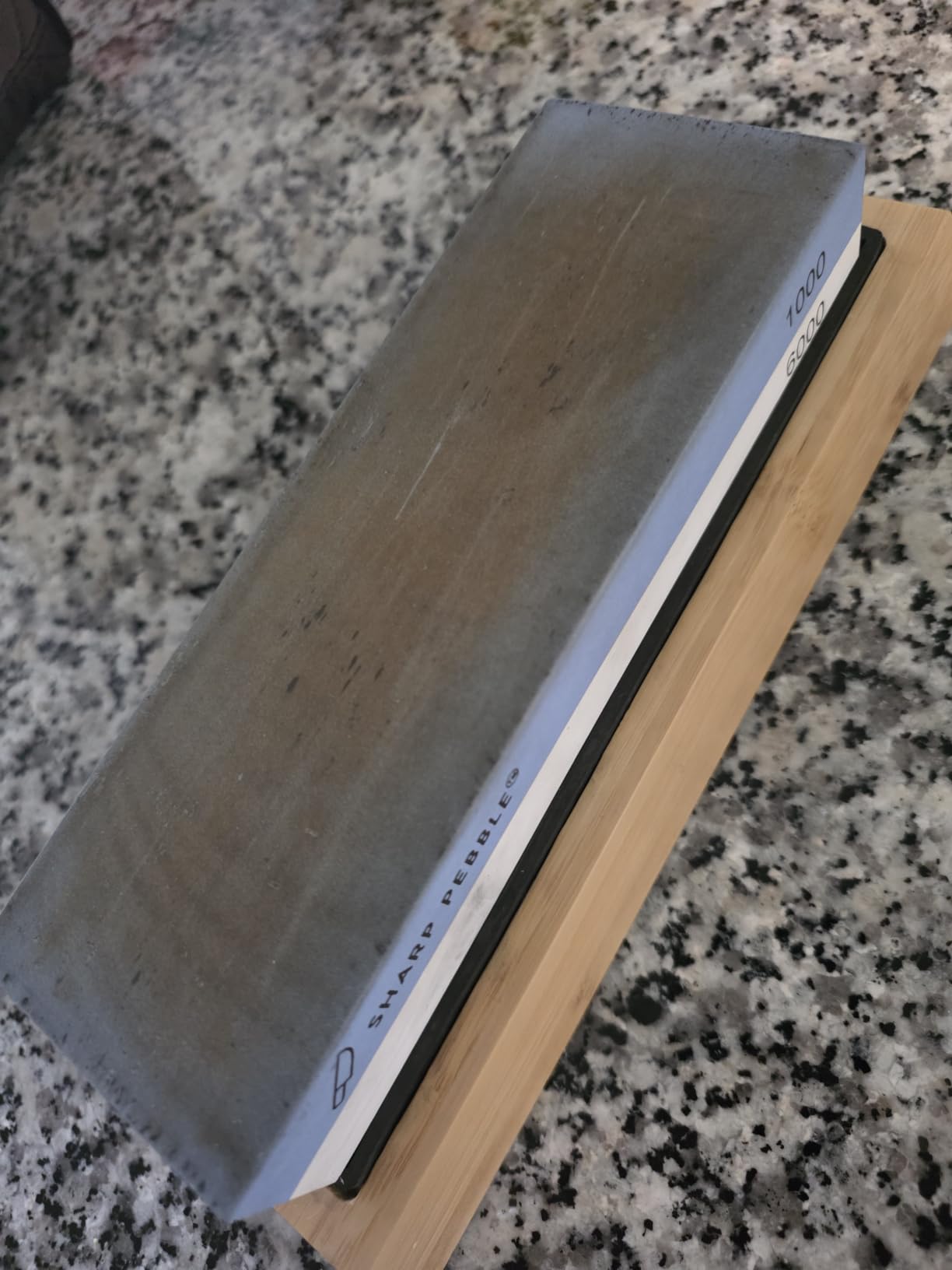
3. Sharp Pebble 1000/6000 Whetstone – Best Whetstone for Beginners
Sharp Pebble Whetstone Knife Sharpener – 1000/6000 Grit Sharpening Stone
- Angle guide removes the hardest part of freehand sharpening
- 1000 grit repairs dull edges while 6000 grit polishes
- Non-slip bamboo base keeps the stone stable
- Water based with no oil and no mess
- Handles knives scissors chisels and razors
- Real learning curve to hold a consistent angle
- Stone and knife wear together so a flattening stone is needed
A stone is the biggest step up in control from anything else on this list, and the Sharp Pebble is the version of that step most people can actually finish. The included angle guide is the reason. It holds the blade at a set relationship to the stone surface, which is the single variable that beginners cannot otherwise control, and it lets you focus on stroke pressure instead of geometry.
The dual grit covers a full sharpening cycle. The 1000 grit side repairs a dull or nicked edge, and the 6000 grit side polishes that work into a fine finish. Beginners report sharp results in around ten minutes on their first session, which is fast for a stone.
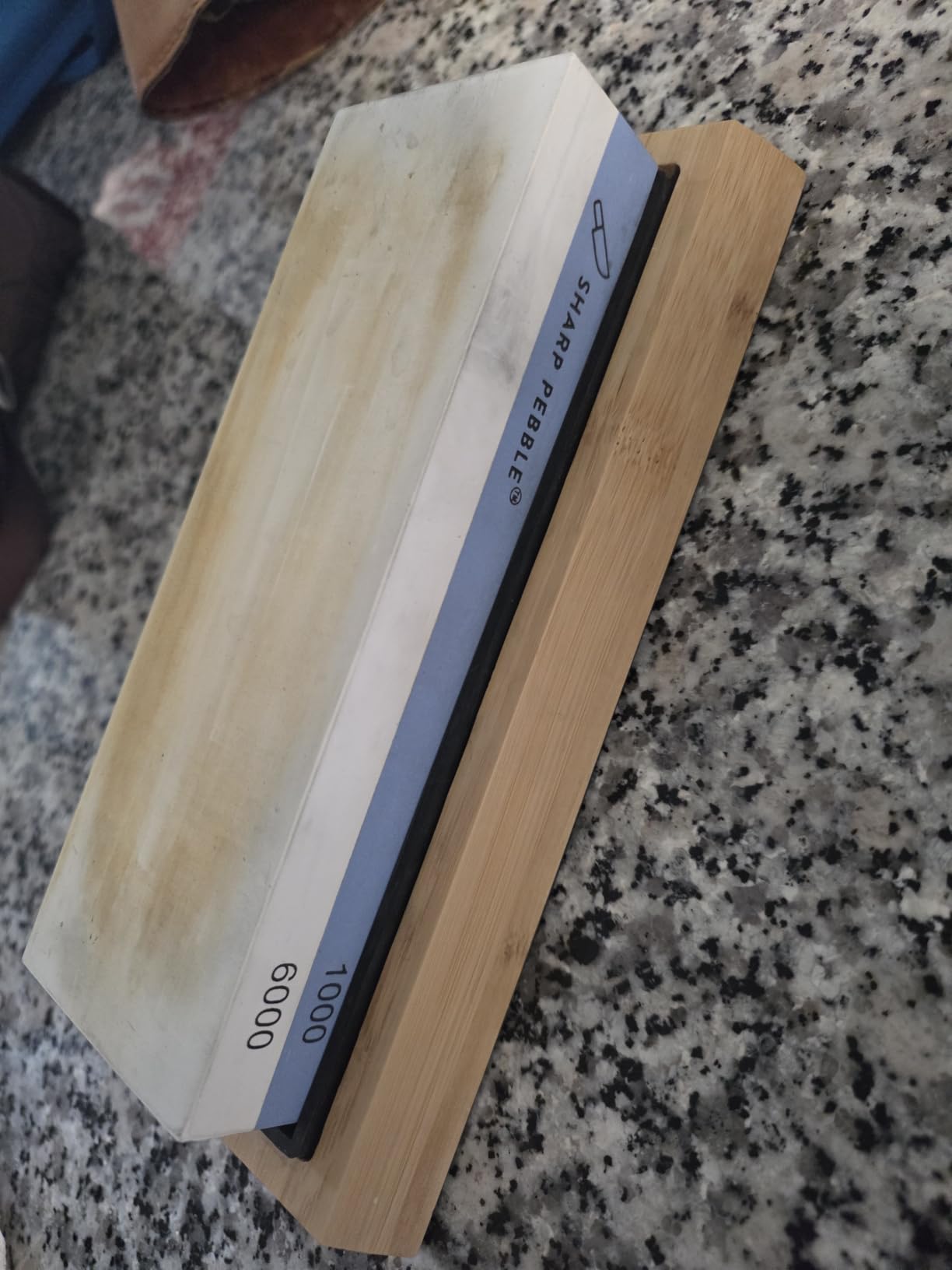
Everything about the setup is designed to lower friction. The bamboo base is non-slip so the stone does not walk out from under you mid-stroke, and because it is water based you spray it and go. No oil, no soaking, no cleanup beyond rinsing the stone.
The composite stone is also flatter and harder than a cheap whetstone of the same nominal grit, which matters more than the label. A stone that dishes quickly will not hold a consistent angle no matter how carefully you work.
What makes this the right first stone
The angle guide is the deciding factor. A bare whetstone asks you to judge an angle by eye and hold it across the whole stroke, and that is exactly the skill most people abandon. The guide reduces the job to placing the blade and drawing it through.
Water-based stones are also lower commitment than oil stones. There is nothing to buy, nothing to maintain and no ruined countertop if you spill.
Where it falls short
The guide reduces skill demands; it does not remove them. Experienced reviewers are candid that freehand angle control is still the real hurdle, and that a consistent result takes practice across several sessions.
Long-term accuracy also needs a separate flattening stone. The stone and your knife wear together, and once the surface is no longer flat, the angle drifts. Also worth knowing: essentially the same stone is resold under many other brand names, sometimes for less.
4. Smith’s Pocket Pal PP1 – Best Field Sharpener
- Preset crossed blades give a repeatable angle every pass
- Coarse carbide resets a dull edge and ceramic polishes
- Fold-out diamond rod handles serrations gut hooks and fishhooks
- Very small and light with a lanyard hole
- Carbide and ceramic stones are reversible and replaceable
- Tight fold-out rod hinge can crack if forced
- Diamond rod is aggressive if the angle is wrong on serrations
- Ceramic stones cannot be reversed once worn
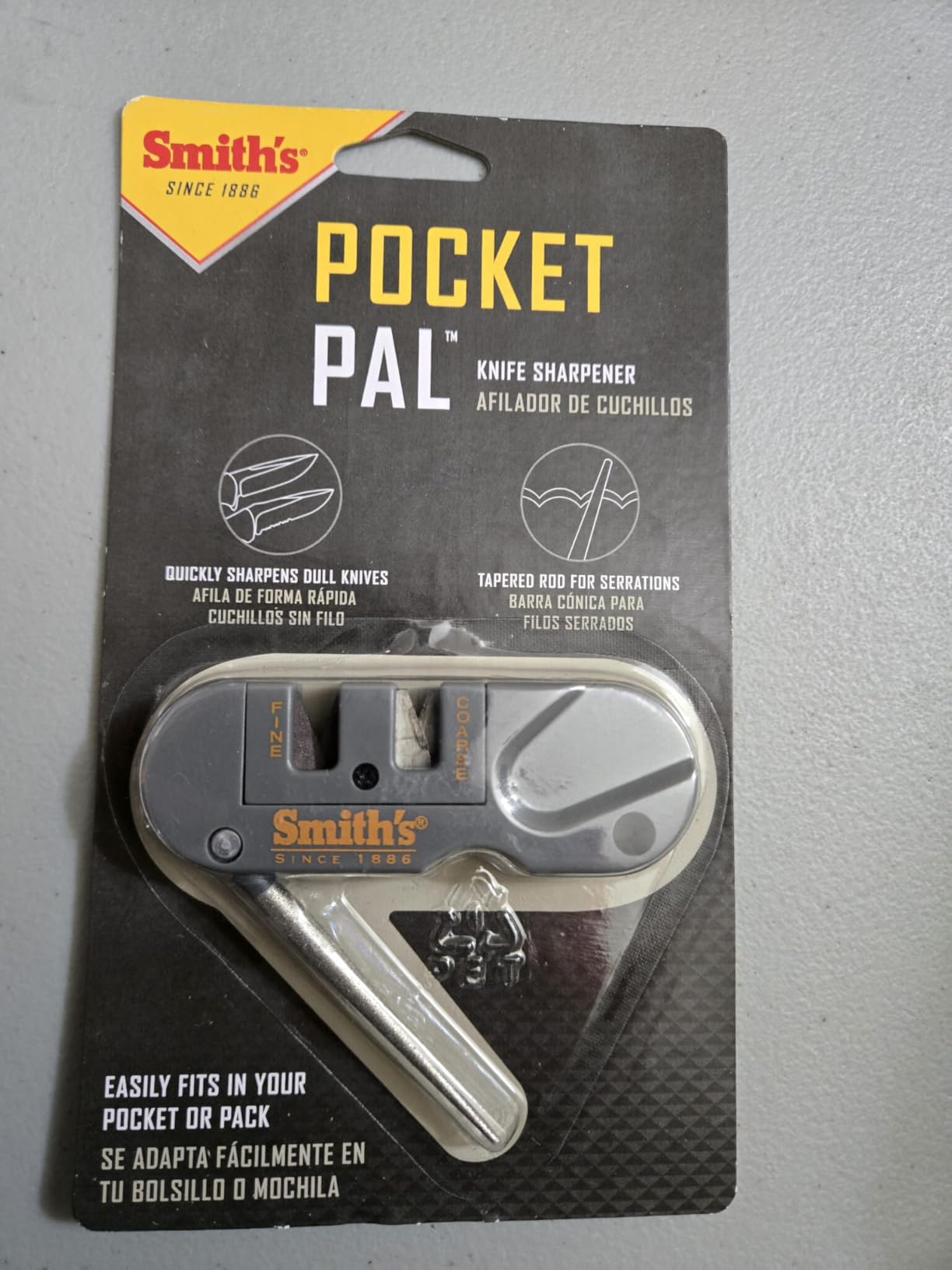
The Pocket Pal is the tool most people picture when they hear field sharpener, and after more than 22000 reviews at 4.5 stars it has earned the reputation. The preset crossed carbide and ceramic blades produce the same angle on every pass, which is what makes the results repeatable rather than a matter of how the knife happened to sit.
It is small enough to forget. At 3.24 inches long and about one ounce, it disappears into a pocket, a wallet or a keychain organizer, and the lanyard hole lets it ride on the knife itself.
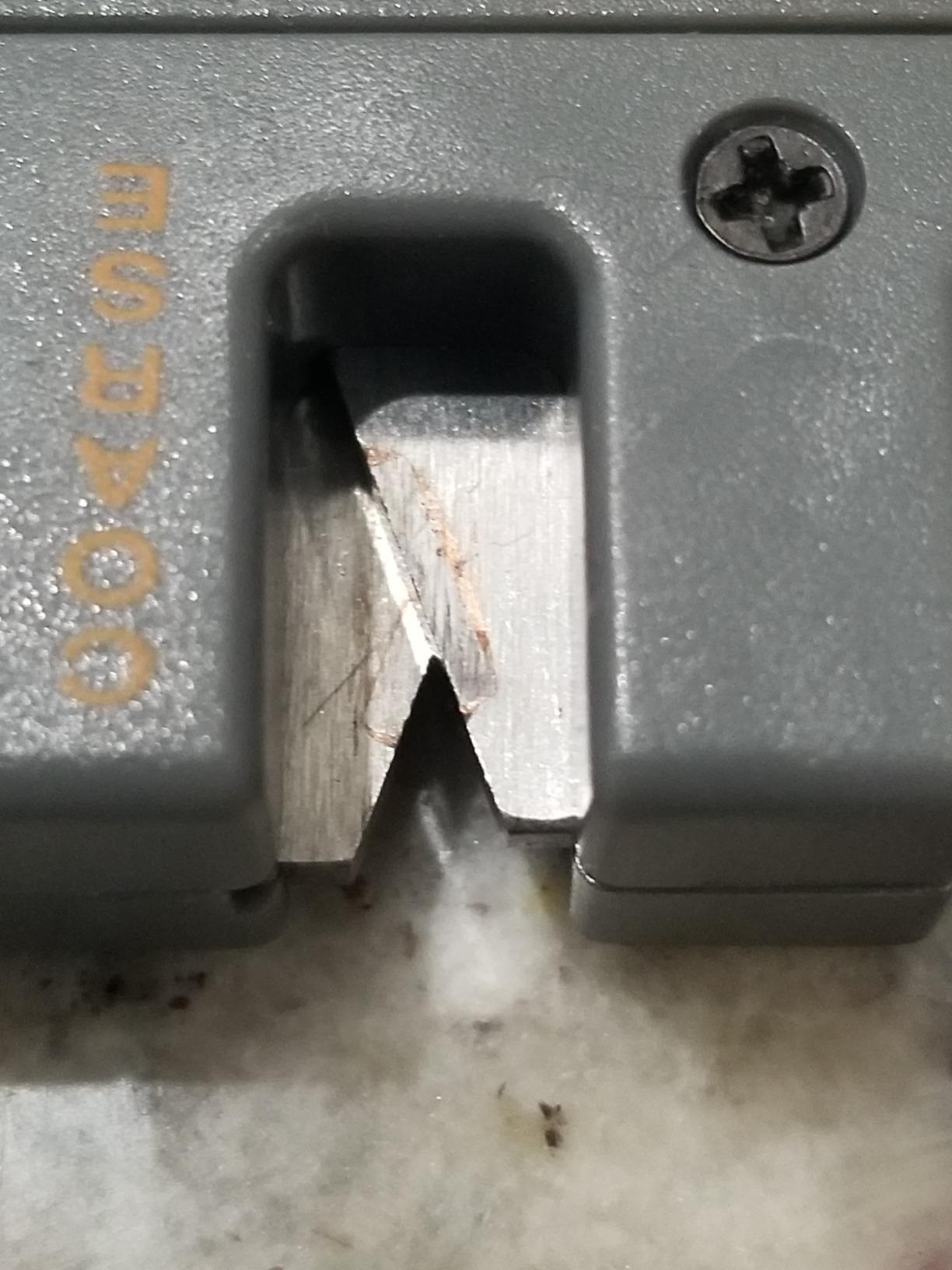
The two-stage design is honest about what each part does. The coarse carbide slot resets a badly worn edge in roughly a dozen passes, which is the situation after a season of cardboard and utility tape. The fine ceramic stones then polish that edge into something that will slice paper without tearing.
The fold-out diamond rod is what makes it more than a draw-through. Deployed, it reaches into serrations, gut hooks and fishhooks, which the slots cannot touch.
Why this beats other pocket draw-throughs
Two-stage capability in a body this small is the main advantage. Single-slot tools at the same weight can set an edge but cannot refine it, and you end up buying a stone later anyway.
Replaceable, reversible stones matter too. When the carbide dulls you flip it, and when it wears out entirely you replace the element rather than the whole tool.
Where it falls short
The most cited weakness is the fold-out rod hinge. It is tight by design, and several owners warn that forcing it open or closed can crack it, so it is worth easing the rod out rather than snapping it.
The diamond rod is aggressive relative to the slots. On a serrated edge at an incorrect angle it will grind down valleys rather than clean them, so keep the passes shallow. Separately, ceramic stones cannot be reversed once worn, unlike the carbide blades.
5. Victorinox 4.33 Dual Sharpener – Best for Swiss Army Style Knives
Victorinox Dual-Knife Sharpener Perfect for Straight Blades, Black
- Purpose-built for Swiss Army and pocket knives
- Two stages with a pre-sharpening stone and ceramic notch
- Pencil form fits a pocket or lanyard
- Ceramic discs refine without metal to metal contact
- Held at 4.7 stars across nearly 19000 reviews
- Not suitable for serrated blades
- Ceramic notch only refines so a damaged blade needs a coarser stage
- Awkward on large blades such as chef knives
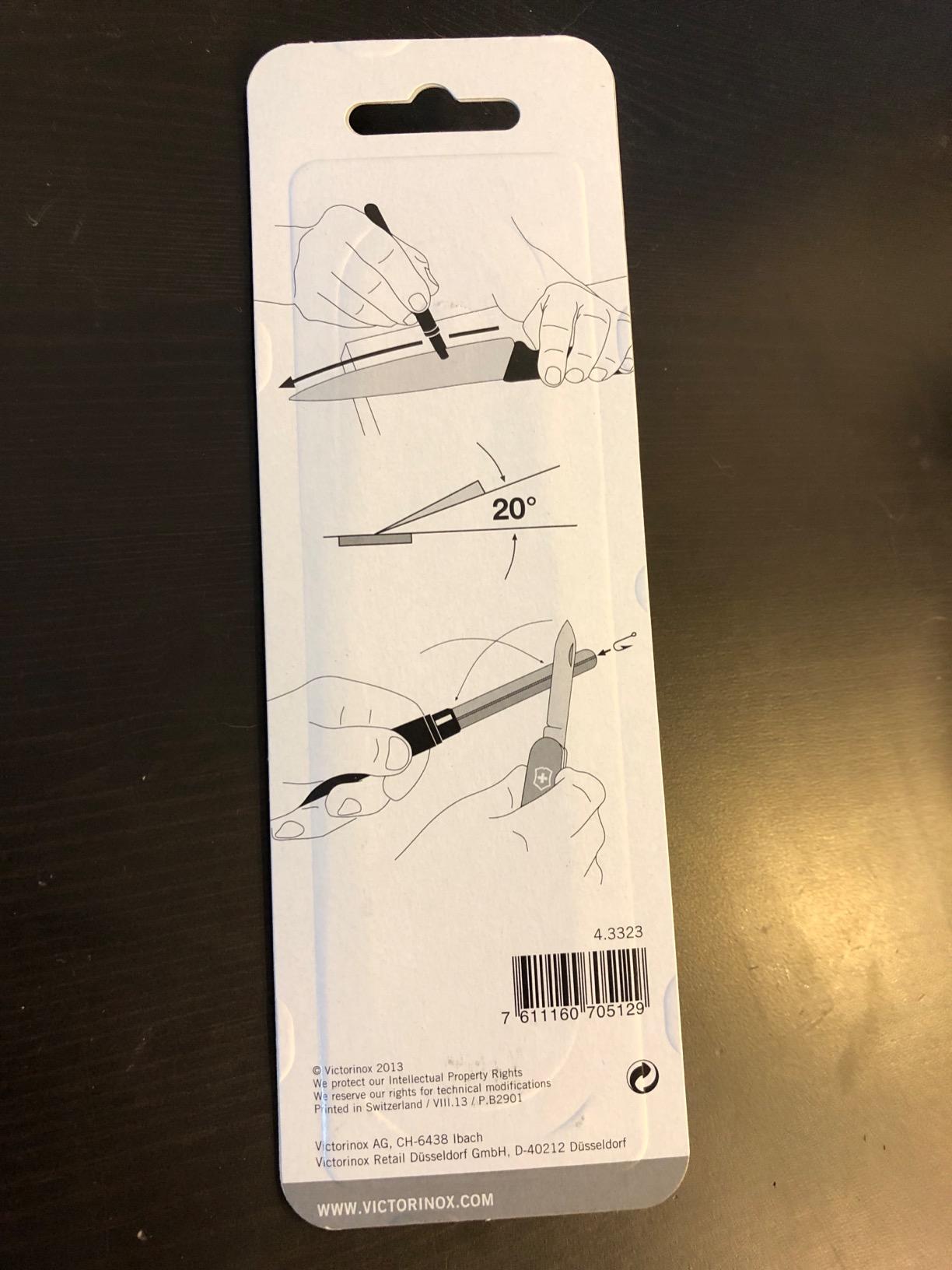
Victorinox built this sharpener around the knife it knows best. The 4.33 is pencil shaped, which is how a Swiss Army knife sits in a pocket in the first place, and it is sized and weighted to stay there at 1.44 ounces. If your folder is the pen-style Swiss Army type, this is the tool designed for it.
It holds a 4.7 average across nearly 19000 reviews, which makes it the highest-rated option in this roundup outside the Work Sharp field kit. Buyers treat it as the default companion to the knife rather than a general sharpening tool.
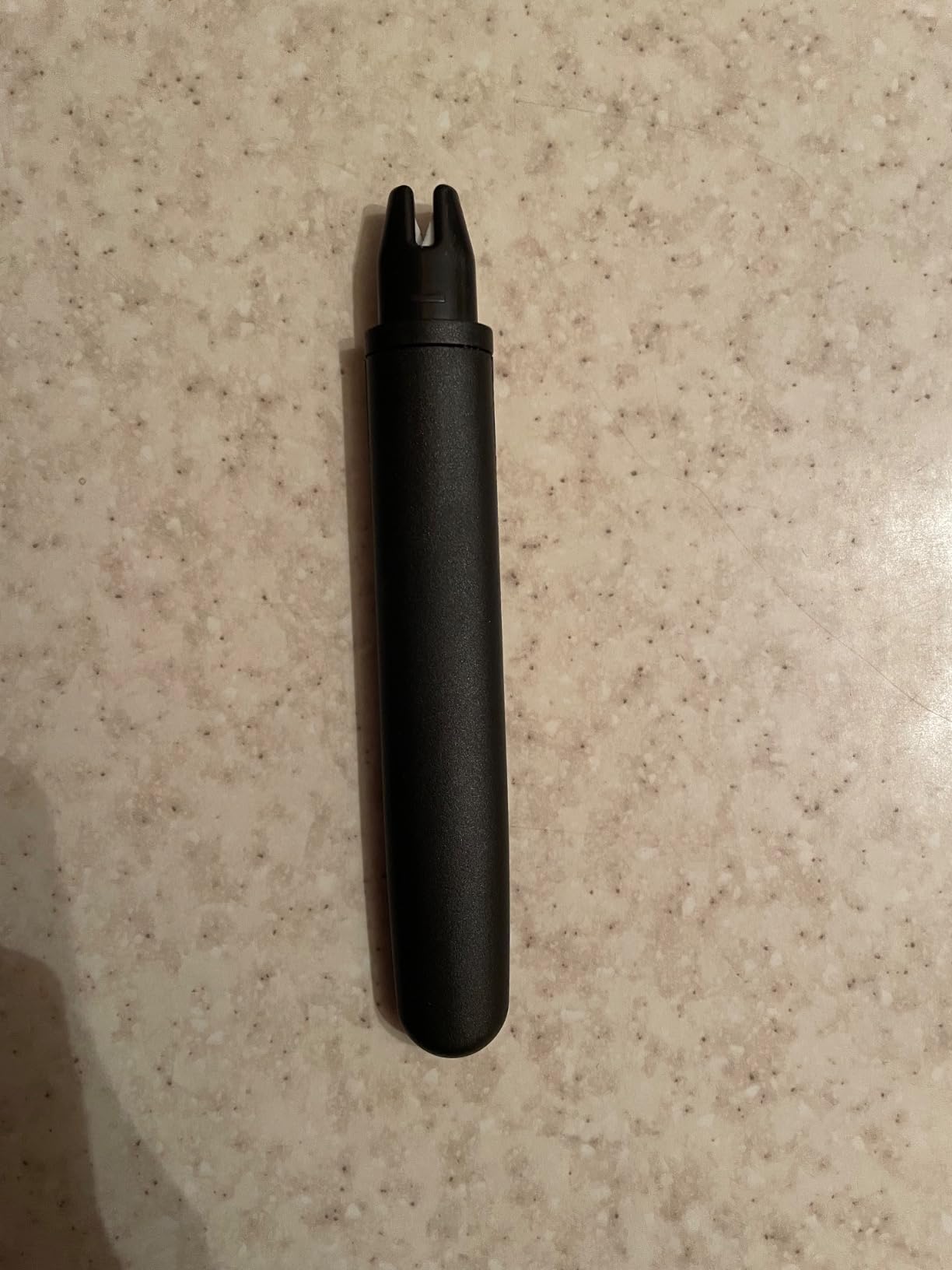
The two-stage design is simple and deliberate. A small honing stone pre-sharpens, then a ceramic notch refines to a fine edge. Because the ceramic discs never contact metal directly, they cut more gently and leave a cleaner finish than steel-on-steel stages.
The form factor is the quiet advantage. At 5 inches long and under an ounce and a half, it is the only tool here shaped to live on the knife rather than in a drawer, which is why owners tend to keep it on a lanyard permanently.
Why it suits straight-edge folders so well
The pencil form matches the knife profile. There is nothing wide or awkward about getting a pen-style blade into a pen-style slot, which is the problem people run into with larger draw-through tools on slim slippjoints.
The ceramic notch is also the least aggressive refinement stage in the roundup, which makes it a good finishing step for a delicate thin-section blade.
Where it falls short
It will not touch serrated blades. That is a design boundary rather than a flaw, but if you own a serrated folder this tool does nothing for it and you need one of the diamond-equipped options instead.
The ceramic notch refines rather than repairs. A blade with a dinged tip or a missing chunk needs a coarser stage elsewhere first. And the small format is awkward on anything large, so it is not a general-purpose knife sharpener despite being sold alongside kitchen tools.
6. Lansky Blademedic 4-in-1 – Best for Serrated Pocket Knives
- Four sharpening functions in one pocket-sized body
- Tungsten carbide restores a dull blade in three or four strokes
- Diamond rod reaches into the smallest serrations
- Metal chassis feels more durable than plastic rivals
- Ceramic serration stage only touches up worn serrations
- Diamond rod still needs a steady hand at the right angle
- Heavier at 100 g than plastic pull-throughs
Most serration coverage in this category is a marketing line. The Blademedic is one of the few tools here where it is structurally true, because the tapered diamond grid is designed to reach inside fine serration valleys that a slot or a rod cannot enter. If serrated folders are a large part of your rotation, this is the pick.
The four stages are sensible. Tungsten carbide restores a dull blade in three or four strokes, ceramic refines it, a ceramic serration stage touches up the tops of the teeth, and the diamond grid handles the valleys.
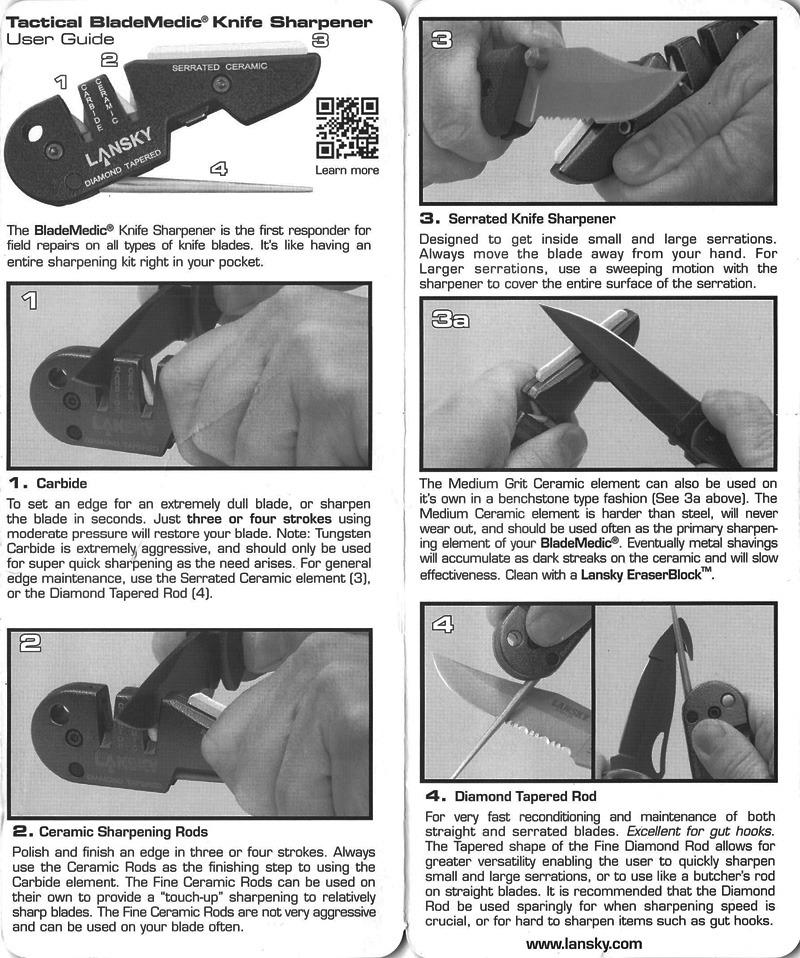
Build quality is a real upgrade here. The body is metal rather than the plastic used by most pocket tools, and the sharpening components are well anchored in it. That extra mass is why it stays steady in use instead of flexing under pressure.
The added weight cuts both ways. At 100 g it is roughly four times the heft of the plastic pull-throughs on this list, so it is a better fit for a jacket pocket or a small pouch than a trouser pocket.
Why this is the serration pick
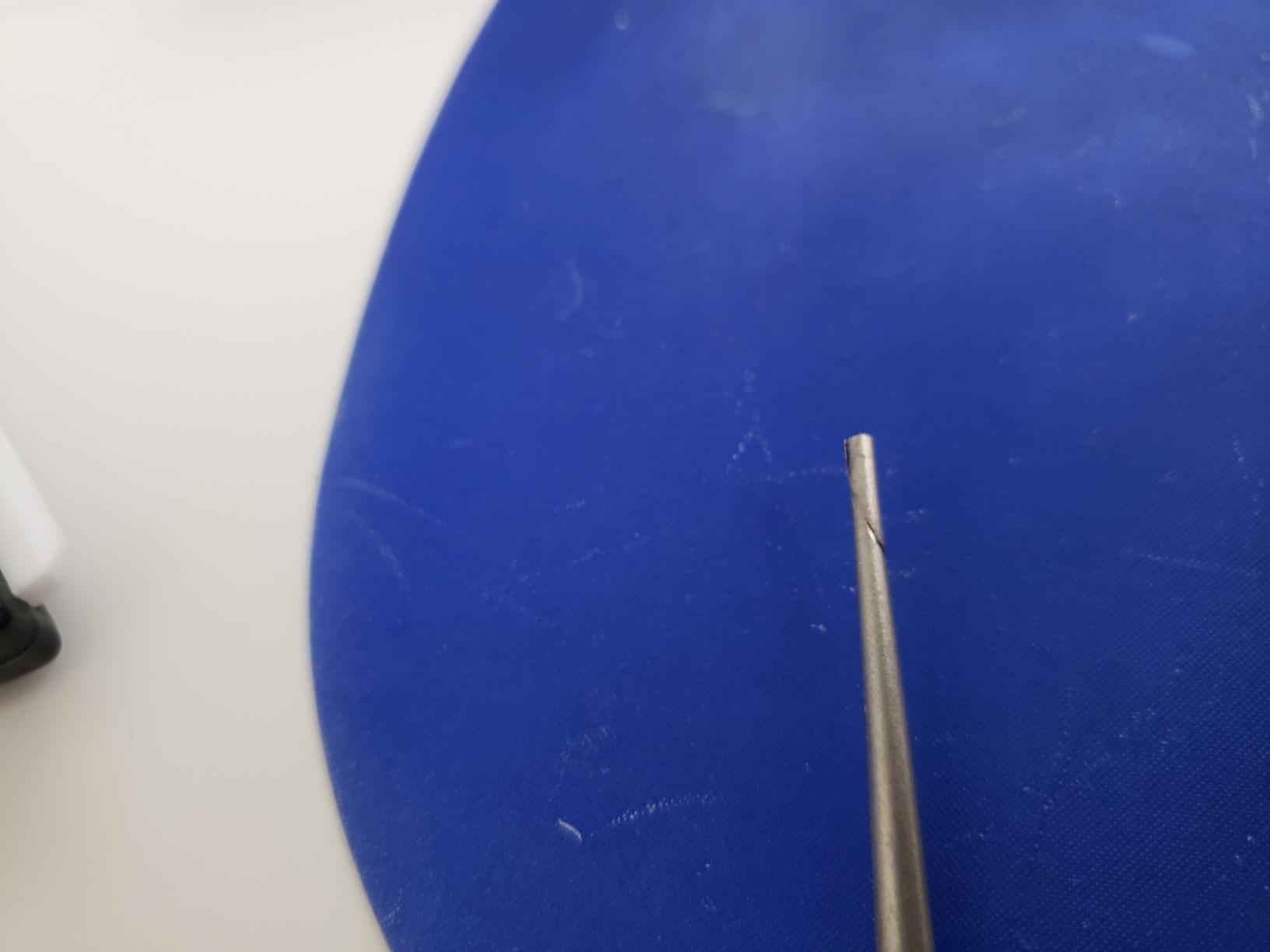
The diamond grid is the differentiator. Serrations are not a flat edge that happens to have notches, they are a row of valleys at varying depths, and cleaning those valleys requires a narrow tapered abrasive. Most slots simply cannot enter them.
Having the serration work built into the same body means you are not carrying a second tool to maintain the serrated folder in your rotation.
Where it falls short
The ceramic serration stage only touches up serrations. It cannot replace a full honing pass through the diamond grid, so treat it as a finishing step rather than the primary one.
At 100 g this is roughly four times the weight of the plastic pull-throughs on this list, which is noticeable in a pocket. And the diamond grid still needs a steady hand at the correct angle, since it has no guide of its own.
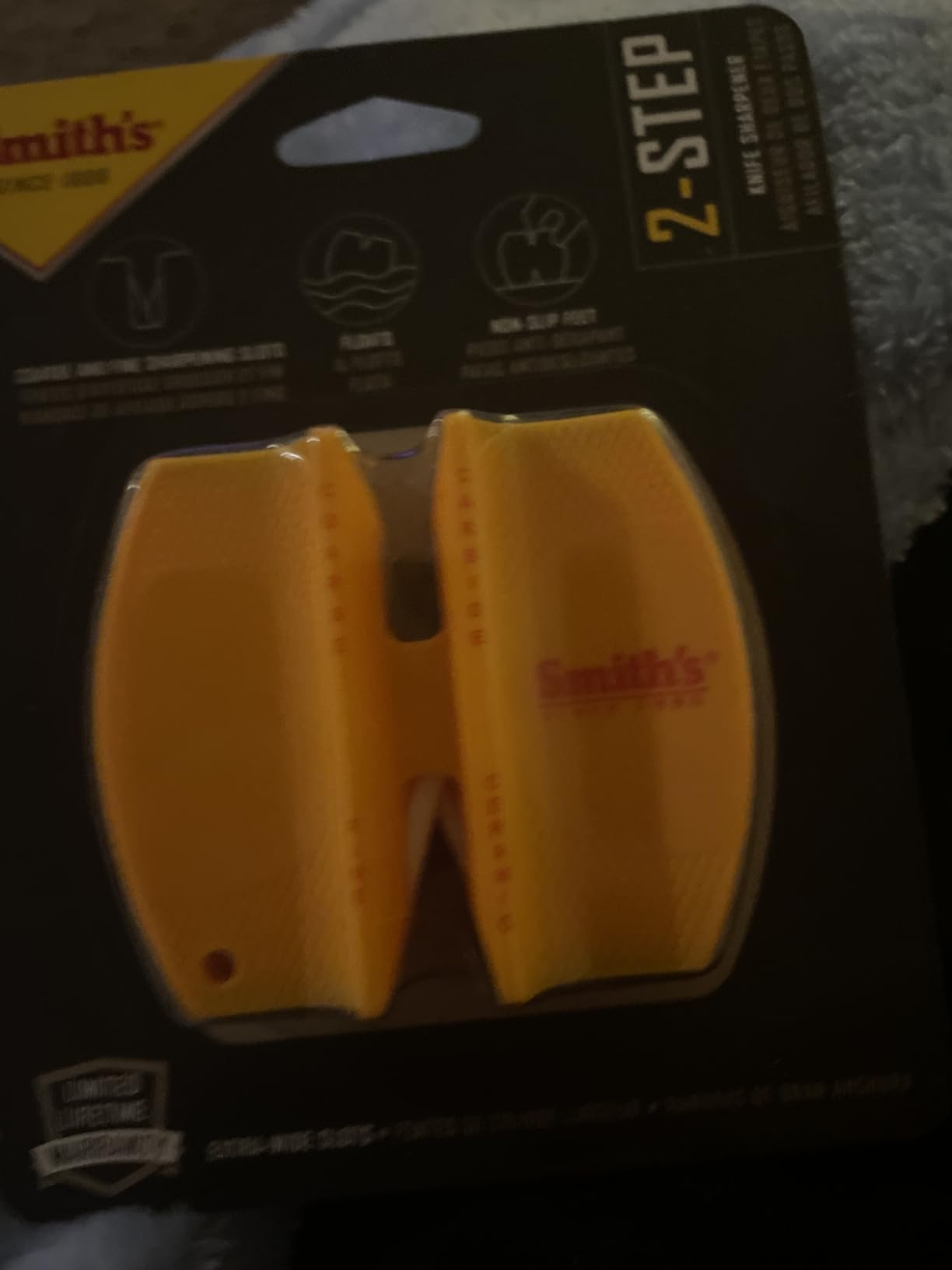
7. Smith’s CCKS 2-Step – Budget Pick
- Two-stage preset crossed blades for repeatable results
- Three to four strokes through the carbide slot
- Compact and light with a lanyard hole
- Floats in water which matters for fishing and fillet work
- Non-slip rubber feet add grip during use
- Plastic body is less durable than the metal alternatives
- Coarse stage only with no serration or diamond option
- Fixed slot angle cannot be adjusted
The CCKS is the cheapest sensible way to stop drawing a knife through a fixed-blade slot, and it earns that place by being simple rather than clever. Two stages, crossed tungsten carbide blades and crossed ceramic rods at preset angles, and no variables to think about.
At 4.5 stars across close to 17000 reviews, the ratings hold up. Three to four strokes through the carbide slot restores a very dull blade, which covers the majority of edge maintenance on a working folder.
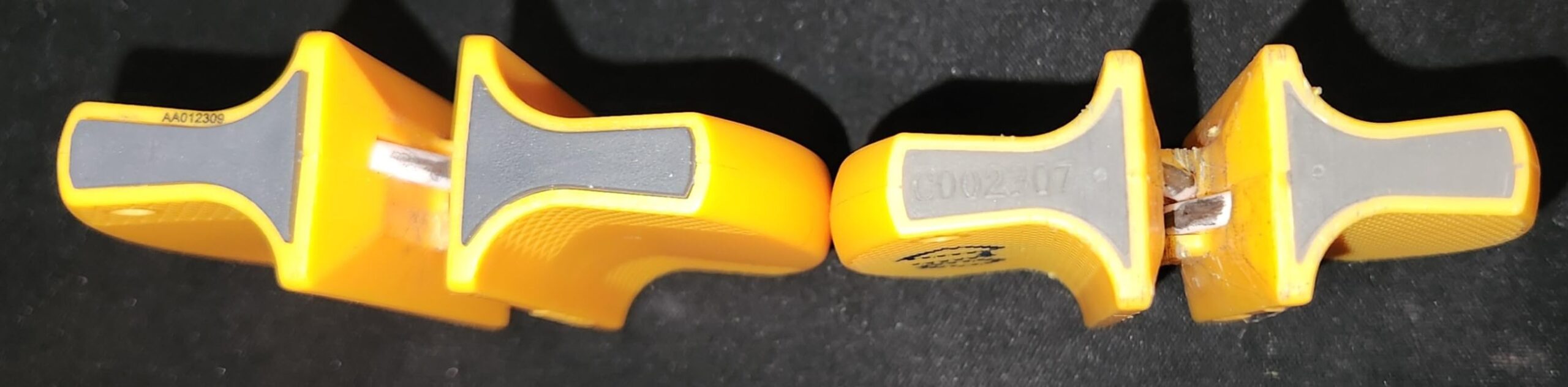
The practical details are well chosen for the use case. It floats, which matters more than it sounds when you are cleaning fish at a lake or working around water, and the non-slip rubber feet keep it planted while your hands are wet.
It is also genuinely pocketable at under two ounces and 2.71 by 2.33 inches, with a lanyard hole for keychain attachment. Cleanup is a damp cloth.
Why it makes sense as a first sharpener
It teaches the correct motion cheaply. Pulling the knife through a slot until the full length of the edge has been covered is the fundamental sharpening habit, and this tool enforces it with preset angles that cannot be set wrong.
The two stages mean it is not a single-trick tool. Coarse carbide resets, ceramic refines, so you can stay on the coarse stage only when you actually need to.
Where it falls short
The plastic housing is the obvious limit. It will not survive being dropped onto rock the way the metal Lansky does, and the fixed slot angle means it cannot be adapted to a thin or thick blade geometry.
There is also no serration stage and no diamond option at all. A serrated blade gets nothing from this tool, so owners of serrated folders should look at the diamond-equipped picks instead.
8. Lansky Deluxe 5-Stone System – Best Benchtop Stone Set
Lansky Deluxe Knife Sharpening System: 5-Stone Ceramic Knife Sharpener Kit with Honing Oil – LKCLX
- Five stones covering extra-coarse through extra-fine
- Color-coded stones with finger-grooved safety holders
- Included honing oil formulated for the stones
- Knife clamp holds a consistent angle
- Molded storage and carrying case included
- Benchtop system with no pocket carry capability
- Full kit is bulkier and costlier than a single stone
- Higher learning curve than a guided draw-through
The Deluxe five-stone kit is the most complete sharpening path in this roundup. It runs from extra-coarse through coarse, medium and fine to an extra-fine ceramic hone, which means a badly damaged blade and a routine touch-up both have a correct starting point. Most people buy a single stone and then wonder why a neglected edge will not come back.
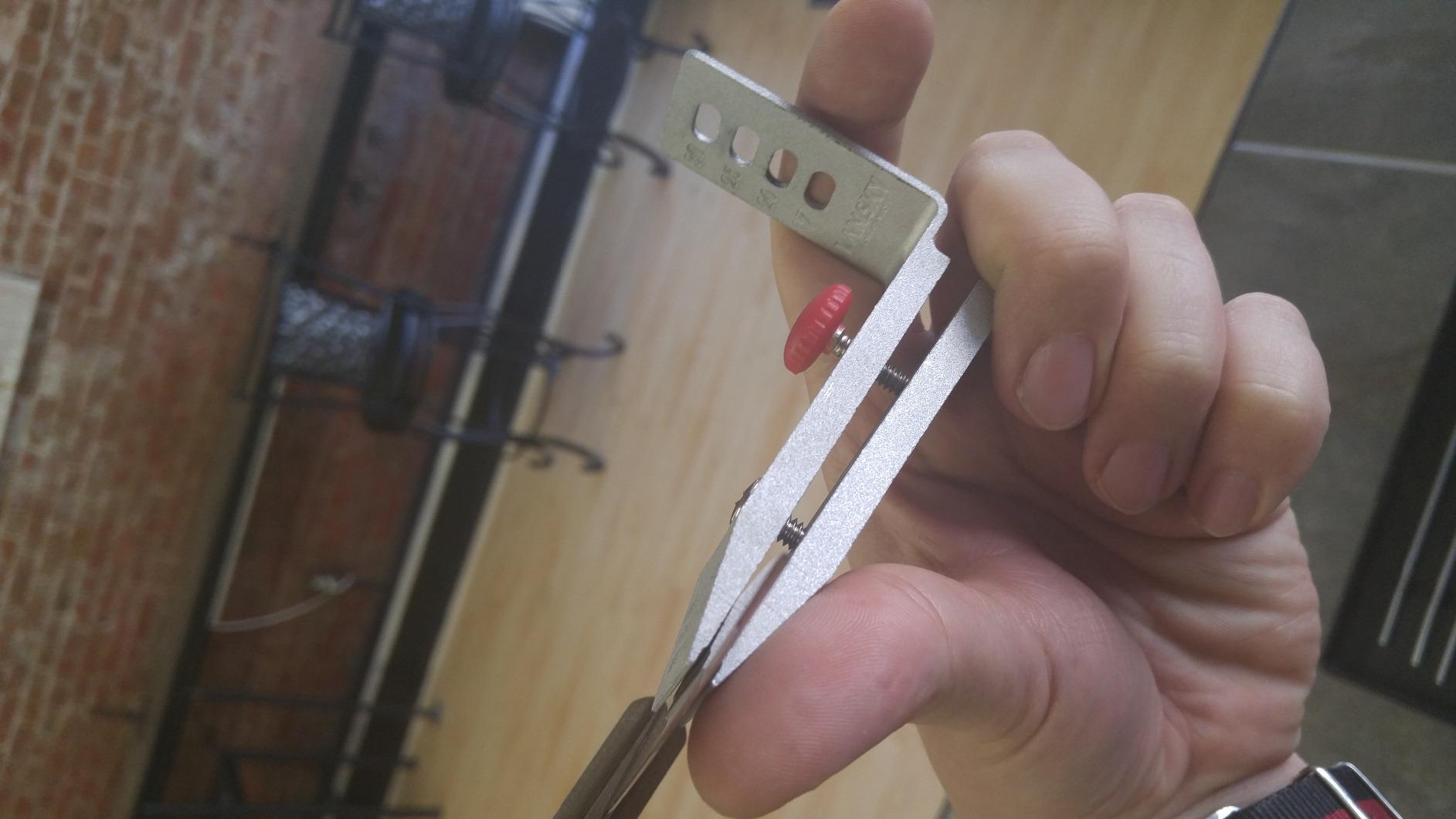
The knife clamp is what makes it usable rather than merely complete. It holds the blade at a consistent angle so you are working the bevel instead of guessing at it, which is the difference between a system and a collection of rocks.
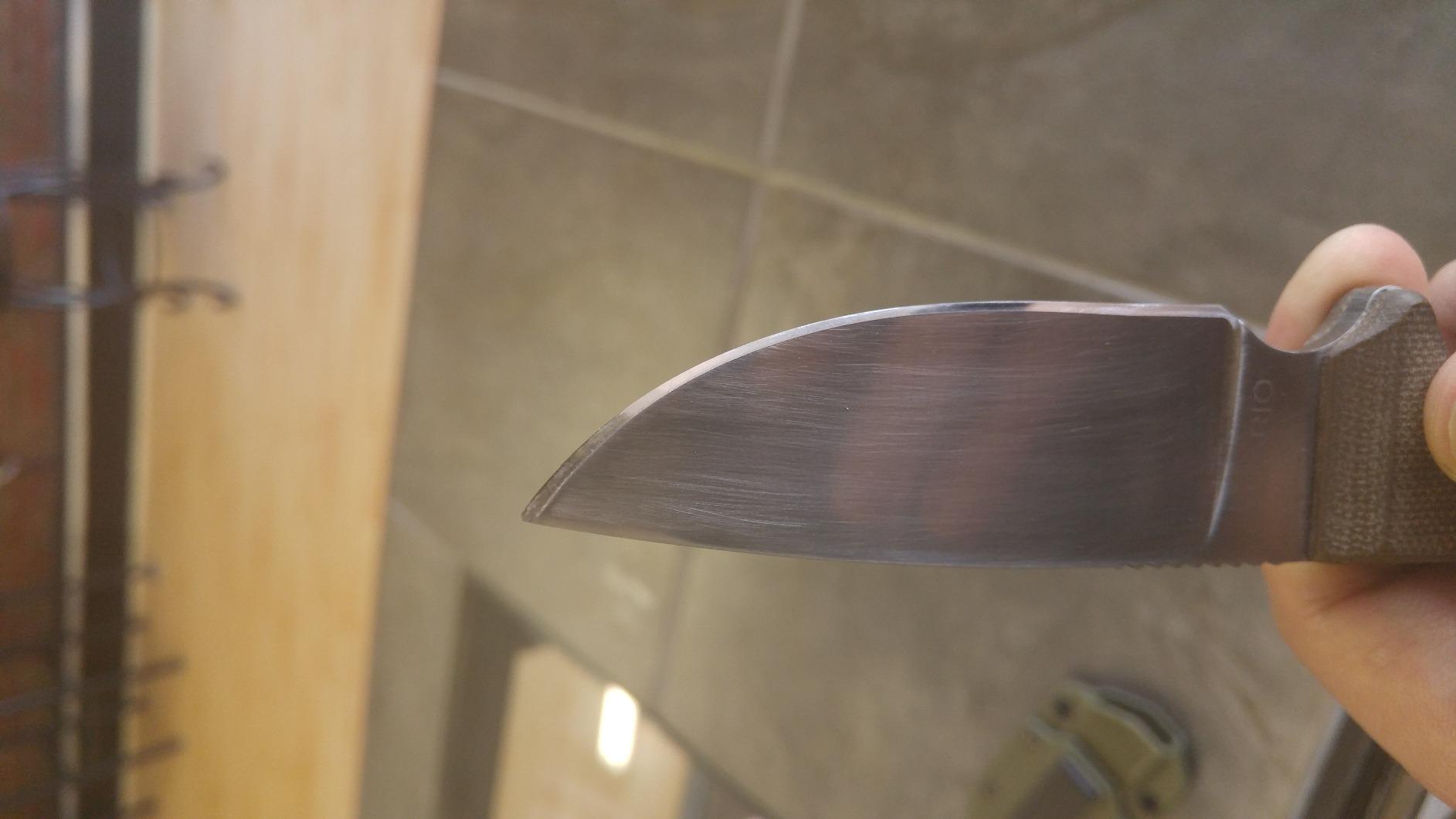
Safety details are built into the stones. Each one is colour-coded for grit and sits in a holder with finger grooves, which reduces the chance of a slip onto a wet stone. Honing oil formulated for the stones is included, so the corundum and ceramic surfaces stay flat and true.
Everything stores in a custom-moulded case, which matters more than it sounds because loose stones in a drawer chip and crack.
Why the five-stage progression earns its place
A blade that has been stored in a drawer with a dull, stained edge needs metal removed before it needs refining. The extra-coarse and coarse stones do that. Single-stone kits cannot, which is why the review base for this kit skews toward owners who sharpen kitchen and outdoor tools as well as folders.
The clamp is also the honest answer to the angle confusion that shows up constantly in sharpening discussion. You set the knife, then work both sides evenly.
Where it falls short
It is a benchtop system, full stop. At 1.1 pounds in a 10.25 by 9.75 inch case, it does not go in a pocket or a pack, so it complements a pocket tool rather than replacing one.
The learning curve is steeper than a guided draw-through, because five stages means more decisions. And compared with buying a single whetstone, the full kit is bulkier and costs considerably more, which makes it a better fit for someone who sharpens regularly.
9. Work Sharp Guided Field Sharpener – Best Angle-Guided Field Kit
Work Sharp Guided Field Sharpener, Compact Travel Knife Sharpener Tool
- Highest average rating here at 4.8 stars
- Diamond plates unscrew to reveal a broad head wrench
- Ceramic rod rotates for coarse fine and a fishhook groove
- Guided 20-25 degree angle makes results repeatable
- No tools assembly or set-up required
- Too bulky for a shirt pocket despite the field design
- Not a dedicated pocket-sized tool
- Abrasive surfaces wear with use and are excluded from warranty
If you want one tool that can genuinely sharpen a pocket knife rather than maintain it, this is the strongest option here. It carries the highest average rating in the roundup at 4.8 stars, and the reason is the fixed 20-25 degree guide that keeps the angle repeatable from one session to the next.
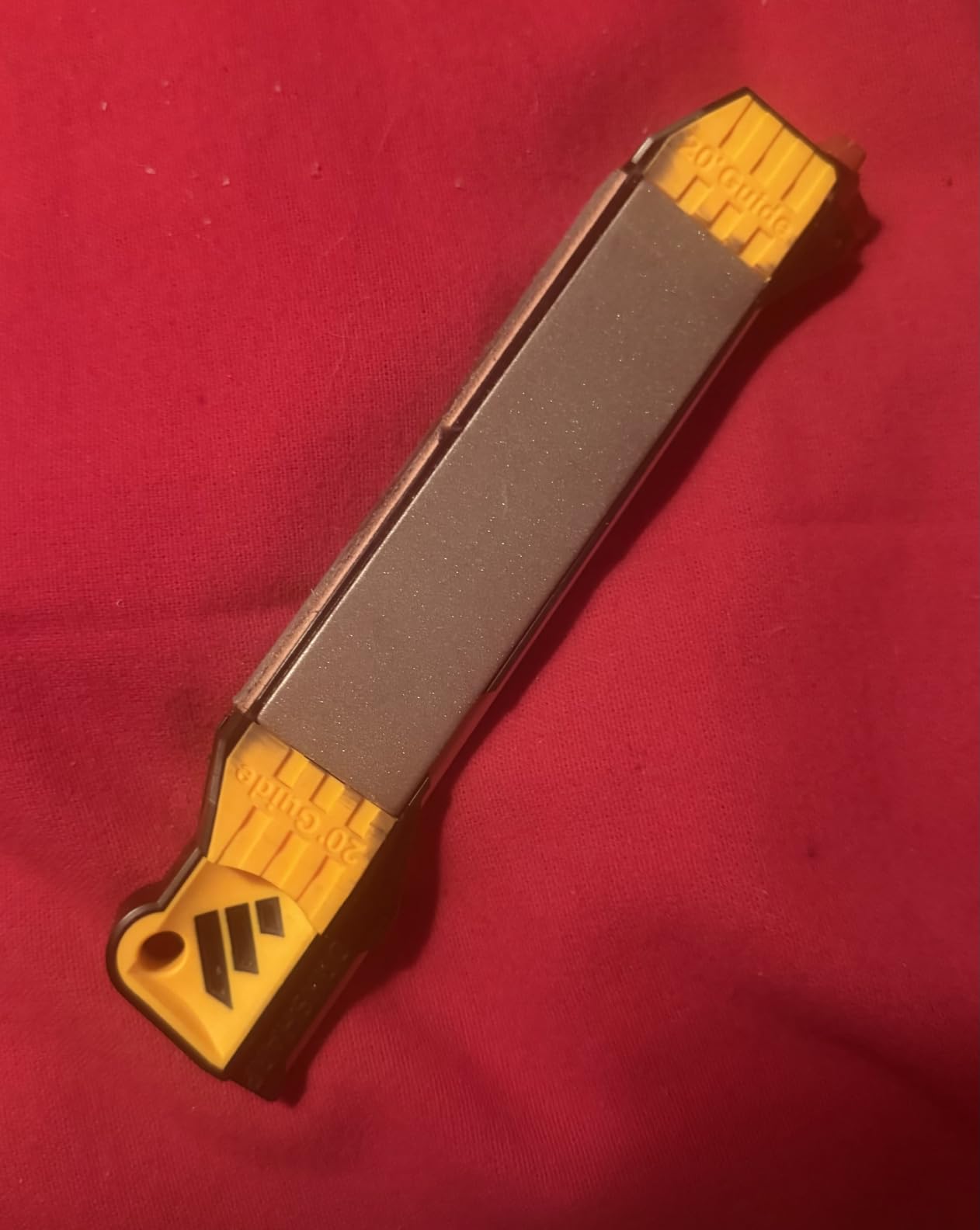
It packs five sharpening surfaces: two diamond plates, a rotating ceramic rod, a leather strop and the guide system itself. That progression lets you set an edge, refine it, hone it and then burnish it, all without changing tools.
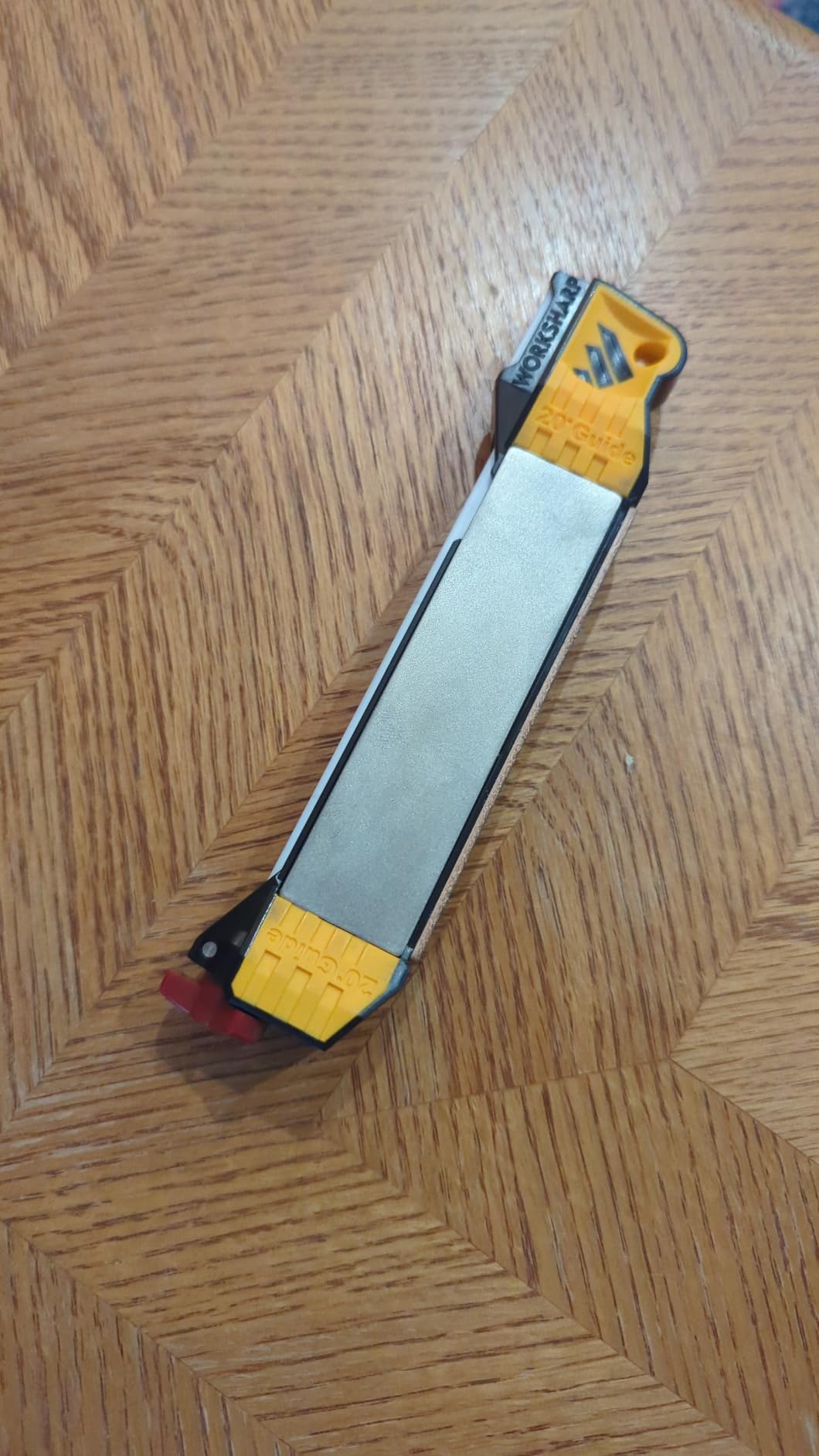
The details show real field thinking. The diamond plates unscrew to reveal a broad head wrench for faster work on a dull blade, and the ceramic rod rotates to expose coarse and fine surfaces plus a fishhook groove. There is no assembly, no calibration and no loose parts to lose.
Everything fits a molded case at 135 g. The abrasive surfaces themselves are consumables, which is worth planning for if you expect to keep this kit for years rather than a season.
Why the fixed angle guide changes the result
A fixed guide removes the variable that causes the most damage. You place the blade against the guide and the geometry is decided for you, so the strokes land on the bevel at the same relationship every time. On the modern hardened steels found in good folders, that is the difference between sharpening and slowly lowering the blade.
Because the angle is repeatable, it is also reproducible. You can come back in six months and match what you did last time instead of guessing.
Where it falls short
It is not a pocket tool, despite the field positioning. At 135 g in a 9.53 by 5.42 inch case it is a pack or vehicle item, and reviewers who expected a shirt-pocket sharpener are the ones who complain about the bulk.
The abrasive surfaces wear with use and are explicitly excluded from the warranty, so they are a consumable cost you should plan for rather than a forever tool. If your requirement is something that lives on the knife itself, this is the wrong shape.
10. Work Sharp Portable Pivot – Best Lightweight EDC Sharpener
Work Sharp Portable Pivot Knife Sharpener, WSEDCPVT EDC Black
- Pivot design follows the blade curve for a consistent angle
- Convex carbide builds a durable edge on any knife steel
- Three functions in 2.75 inches and 1.2 ounces
- Ceramic hone for quick re-sharpening of any blade
- Diamond plate for fishhooks and edge tools
- Lowest average rating in the group at 4.4 stars
- Carbide stage creates a convex rather than polished edge
- Diamond plate is mainly for fishhooks and edge tools
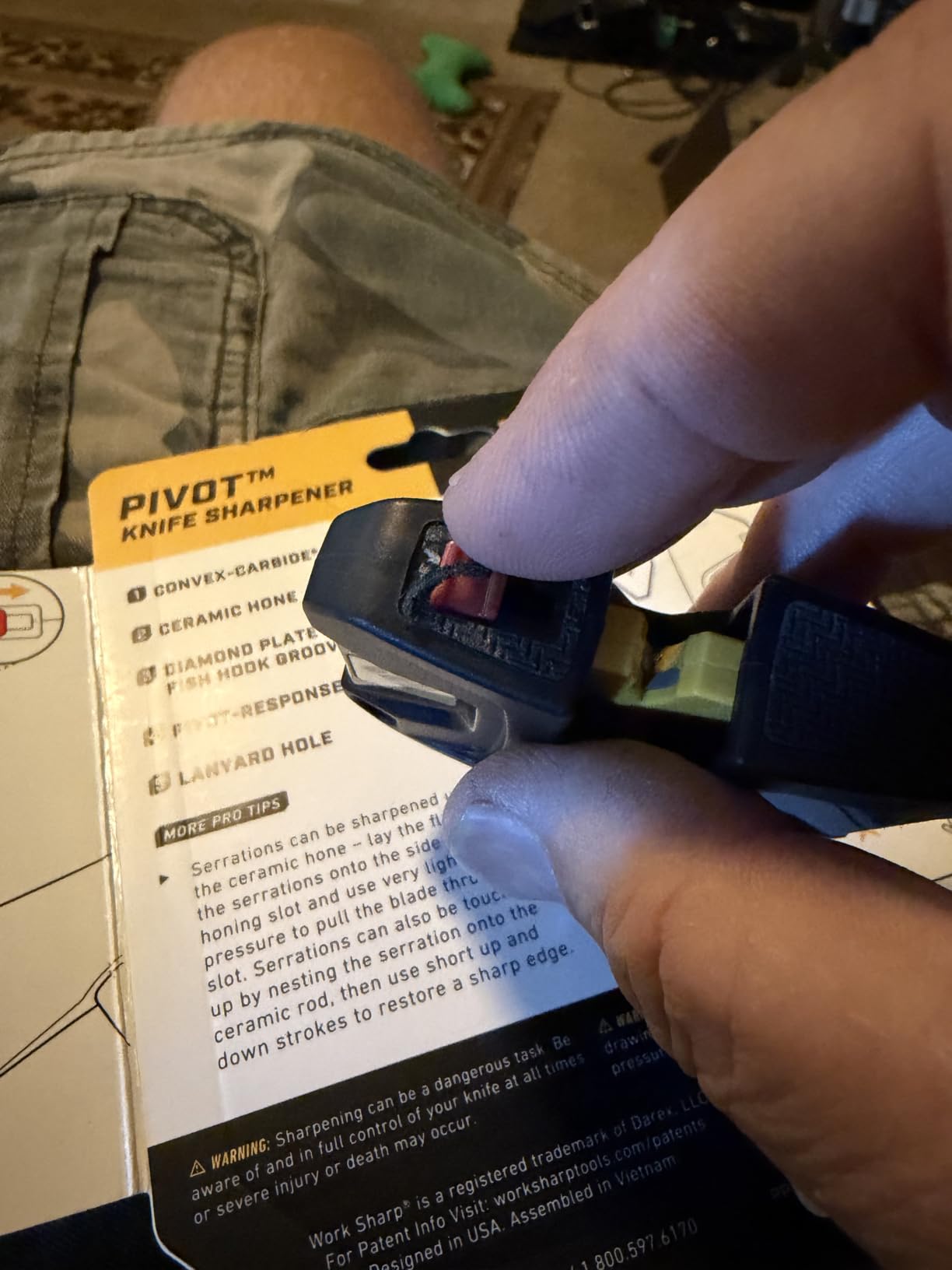
The pivot action is a smart solution to a common failure. A straight slot sharpener has to assume the blade is flat across its whole length, but a folder has a curved profile, so the angle drifts toward the tip. This tool pivots to follow the curve, which keeps the angle consistent along the entire edge.
At 1.2 ounces and 2.75 inches, it is the second-lightest serious option here, small enough to sit in a pocket permanently without you noticing the weight.
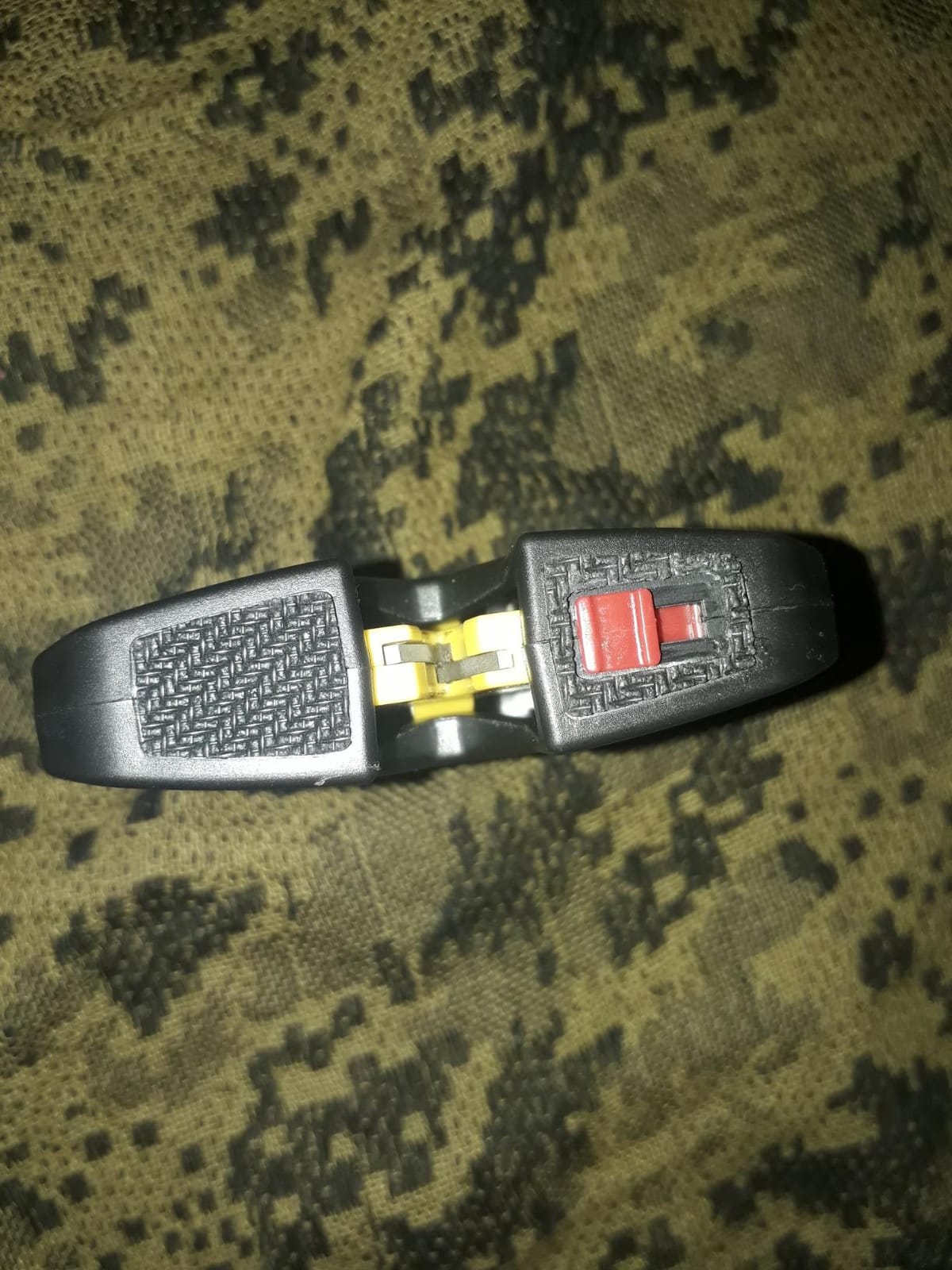
The carbide stage builds a convex edge rather than a flat one. Convex edges roll the paper instead of shredding it, they are tougher under lateral stress, and they are noticeably harder to chip, which is why many EDC users prefer them on a work knife.
A ceramic hone handles quick re-sharpening of any steel, and a small diamond plate covers fishhooks and other edge tools.
Where the pivot design earns its keep
On a curved folder blade, a fixed slot progressively lowers the edge near the tip because the blade rides higher in the slot as it narrows. The pivot removes that error, so the tip keeps the same angle as the heel rather than becoming the weak point on the knife.
That is a real advantage for anyone whose folder has a pronounced belly to the blade.
Where it falls short
This is the lowest-rated product in the roundup at 4.4 stars, with a higher share of three-star and two-star feedback than its competitors. The gap comes from expectation: buyers wanting a polished edge from a fast edge-maintenance device are disappointed by what is actually a convex, working edge.
The carbide stage also does not refine. If your goal is a fine polished edge for slicing paper, you will need a stone or ceramic stage beyond this. And the diamond plate is a minor add-on aimed mainly at fishhooks and edge tools.
11. Work Sharp Precision Adjust – Best Adjustable Fixed-Angle System
Work Sharp Precision Adjust Knife Sharpener Kit, Fixed Angle System
- Angle guided jig and clamp for faster more precise sharpening
- Adjusts from 15 to 30 degrees in 1 degree increments
- Repeatable settings across sessions
- Tri-brasive rod indexes between diamond and ceramic
- V-block clamp secures the knife consistently
- Largest benchtop footprint in the roundup
- Angle chassis and multiple stages add more steps than a pull-through
- Steep learning curve for first-time guided system users
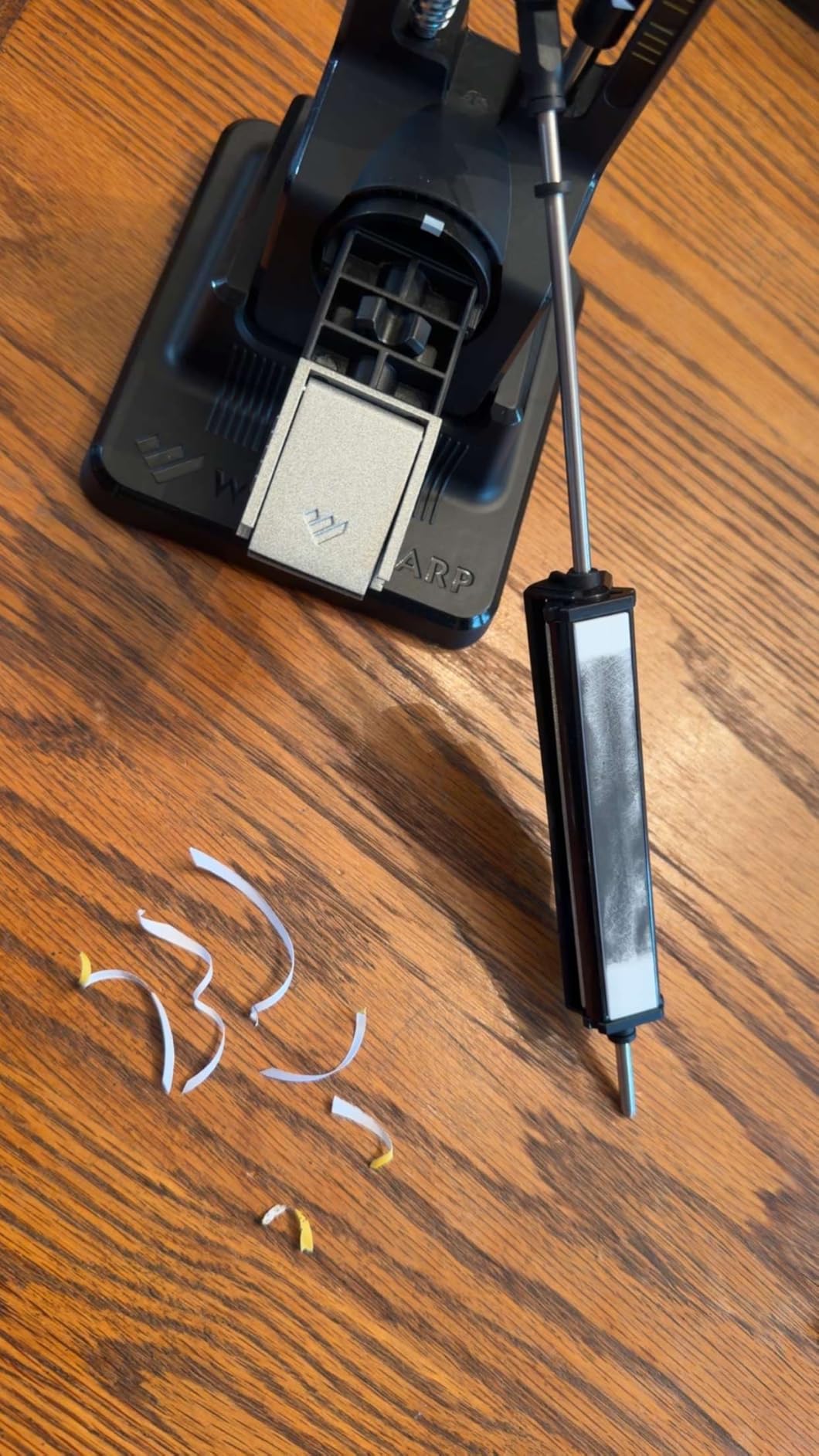
This is the only tool here that lets you choose the angle rather than inherit it. The chassis adjusts from 15 to 30 degrees in one-degree increments, which means you can reproduce an old factory edge, refine to a finer angle, or work through a damaged blade by reprofiling it. Very few consumer systems offer that range.
It holds a 4.5 average across roughly 11500 reviews, and reviewers consistently point to repeatability as the feature that justifies the cost. The setting does not change between sessions, so your edge stays consistent.
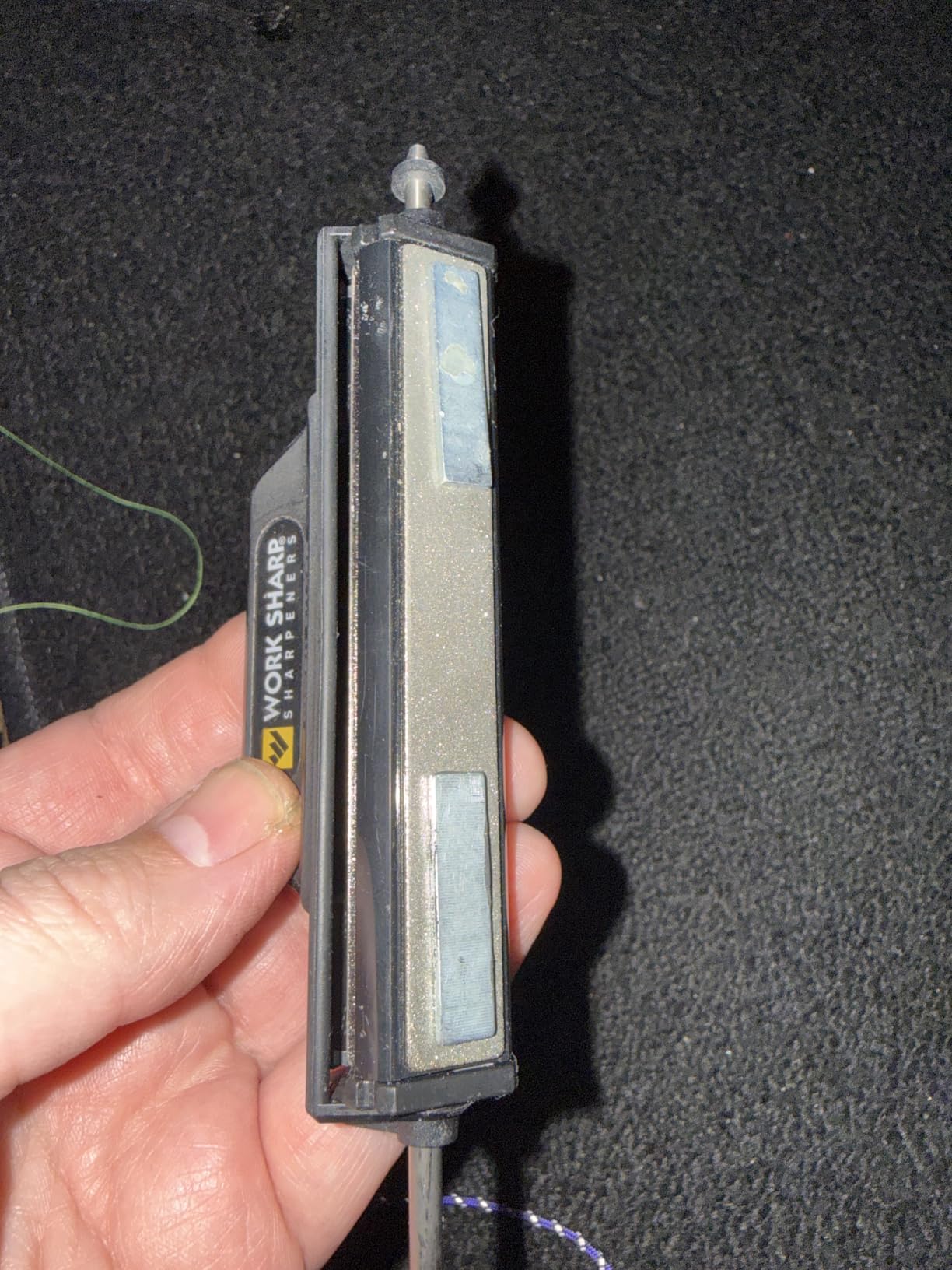
The kit is thorough. You get an angle-adjustable chassis, a benchtop base, a V-block clamp, a slide rod and a tri-brasive rod that indexes between coarse diamond, fine diamond and fine ceramic. That progression inside one rod is what makes it a full system rather than a single-stage tool.
It also handles serrated knives, which matters because the jig constrains the blade and a serration can be worked valley by valley without the angle wandering.
Why adjustable angles matter for folders
Factory edges on folders are not all the same. Some makers ship thin 15 to 17 degree edges, others run 20 to 25 degrees for toughness. Once you own a system with one-degree increments, you can match or improve on the factory angle instead of accepting whatever a fixed slot gives you.
For thinner, more aggressive edges the tradeoff is brittleness, so the practical range for daily carry folders is usually the 20 to 25 degree zone. The adjustability lets you experiment and land where your steel and your use case meet.
Where it falls short
It is the largest benchtop footprint in this roundup at 215 g and 6.5 by 9.6 inches, so pocket carry is simply not part of its design. The chassis, clamp and multiple abrasive stages also add more steps per session than a simple pull-through.
First-time users face a genuine learning curve with a guided chassis. Budget time for a first session where you are setting up rather than sharpening, and read the angle chart before you start rather than after.
12. SHARPAL 156N Diamond Whetstone – Best Dual-Grit Diamond Stone
SHARPAL 156N Double-sided Diamond Sharpening Stone, 6 in. x 2.5 in.
- Dual grit from coarse 325 for edge setting to 1200 for honing
- MirrorFlat surface gives even contact across the stone
- Sharpens dry so no oil or water is needed
- Integrated angle guide covers 14 17 20 and 25 degrees
- Cuts faster than oil or water stones
- Costs more than a basic sharpening stone
- Diamond surface is aggressive for very fine finishing edges
This stone solves the two problems that stop people using whetstones: fluid and flattening. It sharpens dry, so there is no water, no oil and no wet countertop, and the MirrorFlat surface treatment is designed to keep the face true longer as the stone and your knife wear against each other.
The dual grit covers the useful range for a pocket knife. The 325 grit coarse side sets an edge quickly after a lapse, and the 1200 grit extra-fine side hones and refines without the long sessions an 8000 grit stone would demand.
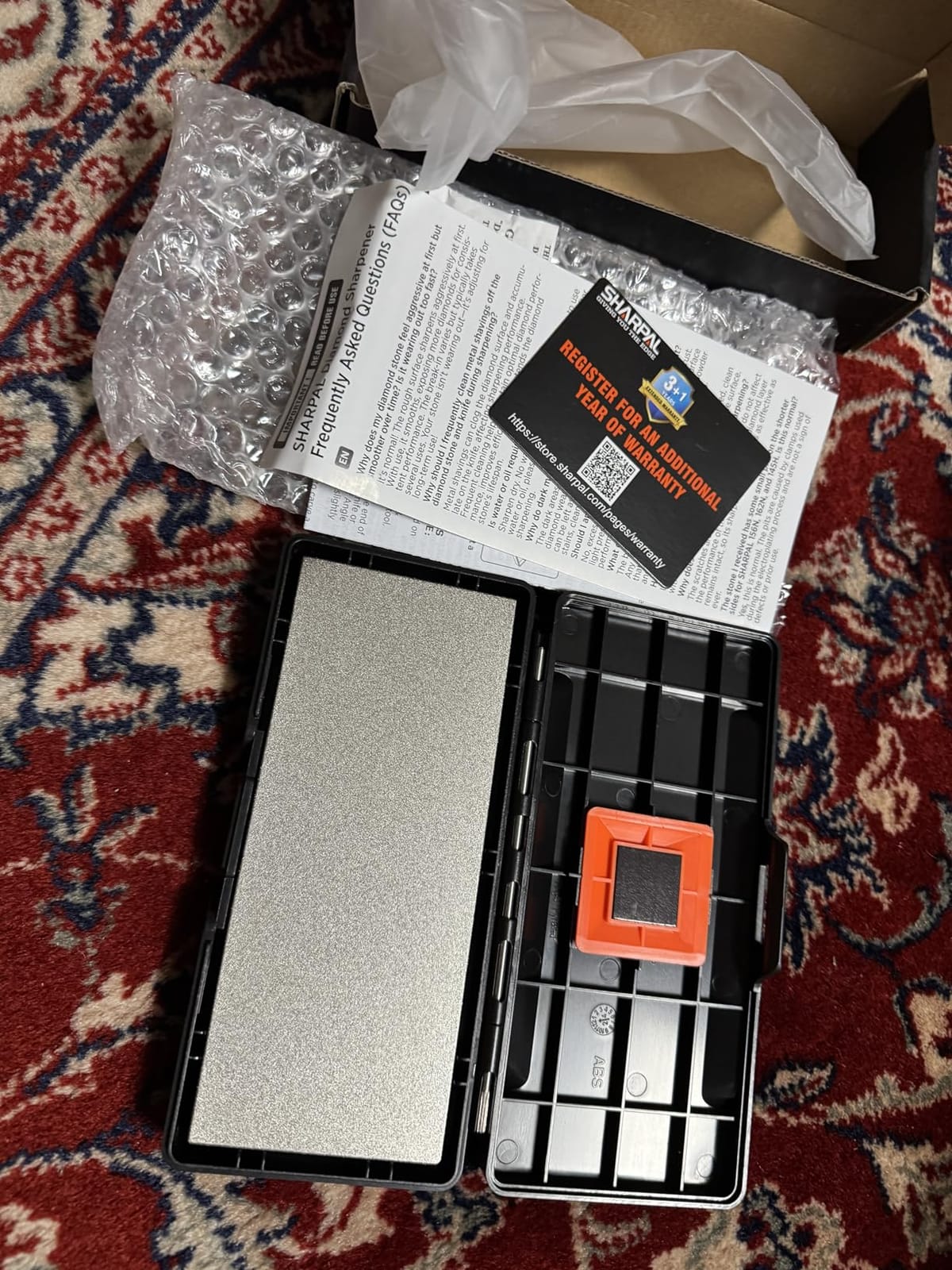
The angle guide is the piece that makes it accessible. It provides four universal angles, 14, 17, 20 and 25 degrees, which covers the range most folders are built at. That removes the single hardest variable for a new stone owner.
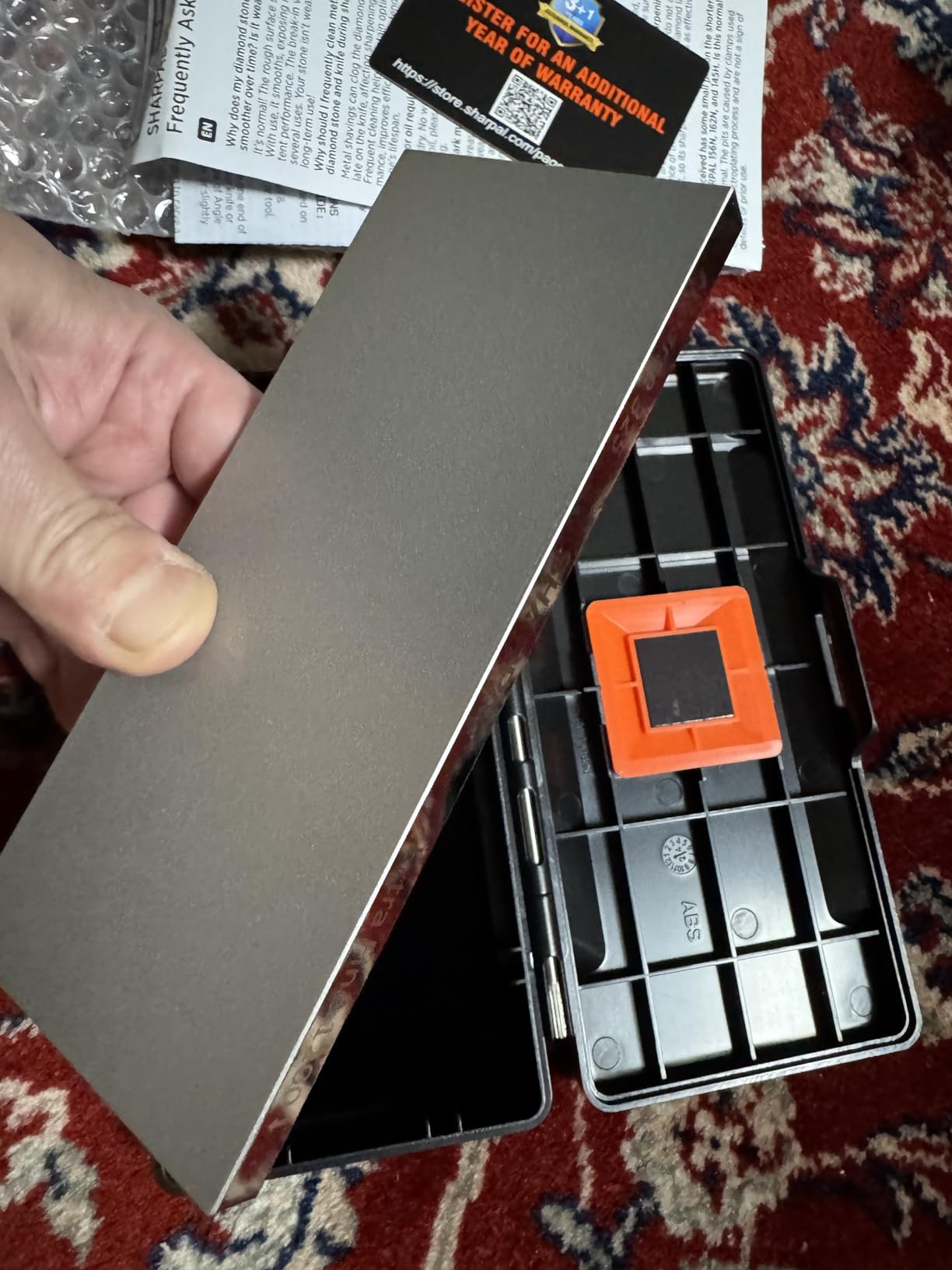
It runs at 4.7 stars across a smaller base of about 3000 reviews. Industrial monocrystalline diamonds are electroplated onto a stainless steel base, which is why the plate stays rigid enough to stay flat through repeated use.
Why diamond suits modern pocket knife steels
Diamond abrasive is the natural match for the hardened steels used in good folders. MagnCut and S35VN hold an edge longer than 1095 or 8Cr13MoV, and they also resist being sharpened. A diamond plate cuts them far faster than an alumina or corundum stone, which is the difference between a five-minute session and a half-hour one.
It also handles carbide, ceramic and cubic boron nitride, so the same stone covers tools and edge equipment in the same drawer.
Where it falls short
It costs more than a basic sharpening stone, and that difference is real if you only own one folder. If you already have a serviceable whetstone, this is a specialist upgrade rather than an entry point.
The 1200 grit extra-fine side is genuinely abrasive rather than polishing. If your goal is a mirror finish, you will still want a finer stone or a strop afterward. Also plan the surface for transit: exposed diamond plates chip if they take a hard knock in a pack.
Sharpening Serrated Pocket Knives Without Flattening Them
Serrated folders break most sharpening advice before it starts, because the rule that a sharp edge should be honed at a consistent angle assumes a continuous bevel. A serrated edge is a row of narrow gullies of different depths and thicknesses, and running a stone along it as though it were flat will crush peaks and leave valleys untouched.
The tools on this list that genuinely address serrations all do it the same way, with a narrow tapered diamond abrasive rather than a flat surface. The Lansky Blademedic uses a tapered diamond grid sized to reach into the smallest valleys, and the Smith’s Pocket Pal and SHARPAL 101N use fold-out tapered diamond rods for serrations, gut hooks and fishhooks. Those three are the reason we ranked them where we did.
A practical sequence starts with the coarse element on the cross-cutting teeth to bring the peaks back to a workable height, then switches to the tapered diamond rod and works each valley individually from heel to tip. Pull the knife through in the direction of the cut, keep the pressure light, and count passes so the treatment is the same on every tooth. Finish by running the ceramic rod across the tips at a shallow angle to smooth the peaks back to a clean apex without lowering them further.
What to avoid is any flat stone on a serrated blade. It will take metal off the thin points faster than the valleys can be cleaned, and once the peaks are gone the serration pattern is permanently flattened into something closer to a scalloped straight edge.
How to Sharpen a Pocket Knife Step by Step
This sequence assumes a straight-edged folder and works with every pull-through, field and stone option in the roundup. If you use it with a fixed-angle system, skip the third step because the guide sets the angle for you.
Open the knife fully and confirm the blade is clean and dry. Wipe the edge with a cloth and look along it in good light to find where the dullness sits, usually near the tip or at the heel.
Set the edge on its side on a stable surface with the spine facing away from you, and put a folded cloth under the handle so your grip does not let the blade roll.
If you know your factory angle, match it. A marker test works well: draw a permanent marker line along the bevel, sharpen once, and the line that remains marks the untouched part of the bevel.
Start on the coarser element and work each side evenly, keeping the blade flat and moving in the direction of the cut rather than sawing back and forth. Count strokes and match them side to side.
Remove the burr by taking two or three very light strokes on the opposite side only, then refine on the finer element with the same even stroke count.
Finish with a strop or a honing rod if the tool has one. This aligns the edge and removes the last burr without removing more steel.
Test on paper, then on the material you actually cut. If the paper tears, go back one stage rather than pressing harder.
The rule underneath all seven steps is that pressure does not sharpen. A harder push does not remove steel faster in any meaningful sense; it only risks thinning the edge past the point where it can be recovered.
What Each Sharpener Cannot Fix
Every product in this roundup carries marketing that implies broad coverage, and in practice the gaps are specific. Knowing them saves you from buying the wrong tool for a knife you actually own.
Pull-through slots cannot restore serrations to full depth, because the slot contacts the tops of the teeth rather than the valleys.
The Victorinox 4.33 does nothing for serrated blades at all, by design.
Single-stage coarse tools such as the AccuSharp can dress a worn edge back to working condition but cannot produce a refined polish.
Ceramic refining stages work only on an edge that is already sharp, so a badly damaged blade needs a coarser stage first.
Whetstones and diamond stones flatten serrations rather than cleaning them, so they should not touch a serrated edge.
Benchtop systems including the Lansky Deluxe kit and the Work Sharp Precision Adjust never travel, so they need a pocket companion.
Any of these tools will not restore a missing tip. A tip repair is a different job with different equipment.
The practical takeaway is that no single tool covers a rotation of folders well. Most owners end up with two: something small for the pocket, and something with a guide or a stone for real sharpening sessions.
Pocket Knife Sharpener Buying Guide
Start with how you actually carry a knife. If the answer is a clip in a pocket and nothing else, weight and size decide everything, and the SHARPAL 101N, Smith’s Pocket Pal or the Work Sharp Portable Pivot are the realistic candidates. If you drive, backpack or camp, the Work Sharp Guided Field Sharpener is the more capable object.
Next, be honest about serrations. If more than one folder in your rotation is serrated, a tapered diamond element is not optional. That points at the Lansky Blademedic, the Pocket Pal or the 101N. Do not buy a stone or a ceramic-notch tool and expect it to do anything useful with a serrated blade.
Angle control should drive the decision for anyone with more than one expensive folder. Preset slots give you a consistent angle without any skill. Fixed angle guides give you a consistent angle with almost no skill. Freehand stones give you total control if you have the skill to use them, and the Sharp Pebble angle guide is the compromise most first-time owners should take.
Blade steel matters less than most buyers think, and it is worth saying plainly. Softer steels like 1095 and 8Cr13MoV sharpen quickly on almost anything here. Harder steels like S35VN, D2 and MagnCut are slower on alumina stones and far faster on diamond, which is the strongest argument for the SHARPAL 156N if your rotation is high-end steel.
Finally, look at the consumables. Carbide and ceramic elements that are reversible or replaceable keep a tool working for years, while a sealed unit with no replacement path is a temporary purchase. Check whether the abrasive is covered by warranty, because most manufacturers exclude it.
One last practical note on travel. Exposed diamond plates and rods chip if they take a hard knock, so keep them in a case or wrap rather than loose in a pack. The molded cases included with the Work Sharp Guided Field Sharpener and the Lansky Deluxe kit exist for exactly that reason.
Frequently Asked Questions
How should I sharpen a pocket knife?
Clean the blade, lay it on its side on a stable surface with a cloth under the handle, and work each bevel evenly starting on the coarser element. Keep the blade flat and stroke in the direction of the cut rather than sawing. Match stroke counts on both sides, then remove the burr with two or three light strokes on the opposite side only. Pressure does not sharpen, so a harder push only risks thinning the edge.
Are pull-through sharpeners bad for pocket knives?
They are not inherently damaging, but they are unforgiving. A pull-through slot relies entirely on you holding a consistent angle, and any drift puts the bevel somewhere you did not intend on a blade you cannot replace. On cheap steel this is an inconvenience. On S35VN, D2 or MagnCut it means steel you will never recover. A preset slot with a finger guard, or a fixed angle guide, is far safer on a good folder.
What sharpening angle should I use for a pocket knife?
Most field and pocket knives ship at 20 to 25 degrees per side, which is the range we recommend for daily carry because it resists chipping. Some premium folders arrive thinner at 15 to 17 degrees for slicing, which is sharper but more fragile. Find your factory angle with a marker test: draw a permanent marker line along the bevel, sharpen once, and whatever ink remains marks the untouched bevel.
How do I sharpen a serrated pocket knife?
Use a narrow tapered diamond abrasive, not a flat stone. Start with a coarser element to bring the cross-cutting peaks back to a workable height, then work each valley individually with a tapered diamond rod from heel to tip, pulling in the direction of the cut with light pressure. Finish by stroking the ceramic rod across the tips at a shallow angle to smooth the apex. Never run a flat whetstone along serrations, because it flattens them permanently.
What is the best sharpener for buck knives?
Buck fixed-blades and folders generally use factory edges in the same 20 to 25 degree range as other working knives, so the same tools apply. For a full-size fixed blade at the house, a guided field sharpener or an adjustable fixed-angle system gives the most control. For a Buck folder in your pocket, the SHARPAL 101N or the Smith’s Pocket Pal handle both straight edges and serrations in a package you can actually carry.
Is honing better than sharpening for a pocket knife?
Honing and sharpening do different things, and most folders need both. Honing aligns an edge that is still fundamentally sharp, which takes minutes and removes almost no steel. Sharpening removes steel to create a new bevel after the edge has genuinely been lost. In practice, strop or ceramic honing after most jobs and a full sharpening pass a few times a year is a sensible cadence for a folder you carry daily.
What knife sharpener does a test kitchen recommend?
Test kitchens generally favour electric belt sharpeners, because those are the right tool for the symmetric, thick, straight-edged knives they work with daily. Those same electric units are usually wrong for a pocket knife. The motor runs hot enough to burn thin-section edges, the wheels are sized for long blades rather than a 3 inch folder, and the removal rate is far higher than you want on a small blade with an expensive steel.
Final Verdict: The Best Knife Sharpeners for Pocket Knives in 2026
After working through all 12, the SHARPAL 101N is the best knife sharpener for most pocket knives because it solves more problems in one body than anything else here. Six stages, straight-edge and serration coverage, 2.4 ounces, and the largest review base in the roundup at close to 40000 ratings. If you want one tool and you carry a knife every day, that is the one.
The AccuSharp 001C is the pick when speed is the priority, and the Work Sharp Guided Field Sharpener is the pick when you want a real sharpening session rather than a touch-up. For serrated folders specifically, the Lansky Blademedic is the only tool here whose tapered diamond grid is genuinely built for the valleys. For full control over edge angle, the Work Sharp Precision Adjust goes from 15 to 30 degrees in single-degree steps, and the Sharp Pebble whetstone is the most approachable way to learn stones at all.
Whichever you choose, the habit matters more than the tool. Hone after use, sharpen only when the edge is genuinely gone, and never let a dull blade do the work that a sharp one should be doing. Our broader sharpening coverage is in the complete knife sharpener guide, and both roundups are current as of 2026.