

A 1,200 sq ft living room in Phoenix hits 95 degrees by three in the afternoon, and running central air for that space every summer gets expensive fast. The alternative most people in dry climates land on is an evaporative cooler, sometimes called a swamp cooler, which moves thousands of cubic feet of air per minute through water-wetted pads and drops the temperature by 15 to 25 degrees before the air ever reaches you.
That mechanism only works in two conditions. The air has to be dry enough for water to evaporate off the pads, and the room needs a way to push the spent humid air out. Get either one wrong and you end up with a fan that blows warm, muggy air. Those two requirements explain most of the disappointed owner reviews in this category, and they are the filter we used when we picked the best evaporative coolers for large rooms.
We spent several weeks reading specification sheets, customer reviews, and long-term ownership reports across ten units spanning 900 to 12,000 CFM, from small personal coolers to industrial cabinet models. What follows is the ranking, the sizing math you need before you buy, and an honest look at where each unit falls short.
If you also care about air quality in the same large space, our HEPA air purifier picks for large rooms cover that side of the equation, since evaporative units do nothing for particulates.
Table of Contents
Top 3 Evaporative Coolers for Large Rooms in 2026
Our first pick is the Hessaire MC37M, which pairs a 3100 CFM airflow with a 10.3-gallon tank and the deepest review history in this group. The VEVOR 1400 CFM unit takes the budget slot, drawing only 60 watts and covering a mid-size room. For open garages and workshops, the Uthfy 40-inch 4800 CFM cabinet moves roughly 50 percent more air than our top pick with a metal frame instead of thin plastic.


Best Evaporative Coolers for Large Rooms at a Glance (2026)
The table below lists every unit in this roundup with its headline airflow, coverage claim, and tank size. Airflow figures are manufacturer ratings measured at the unit outlet, not at the far side of a large room.
1. Hessaire MC37M 3100CFM Evaporative Cooler – Best Overall for Large Rooms
- 3100 CFM across three speeds
- 10.3-gallon tank gives 3-4 hours of run time
- Locking caster wheels for moving between rooms
- Quiet enough on low speed for conversation
- Garden hose adapter with built-in float valve
- Roto-molded plastic body has a mediocre finish
- Small plastic tank fill latch can break
- Oscillation mode creaks
- No low-water shutoff
The MC37M is the unit we kept coming back to. Its 3100 CFM rating, three-panel intake, and 10.3-gallon reservoir put it squarely in the range where a 900 to 1,200 sq ft space with open windows actually feels cooler, rather than merely feels like it has a fan running in it.
Across thousands of reviews, owners in arid climates describe measurable indoor temperature drops on the low setting, and a 70 percent five-star share is unusually strong for a plastic-bodied appliance. The tank alone carries three to four hours of continuous run time before you need the fill door again, which lines up with what we saw in long-run ownership write-ups.
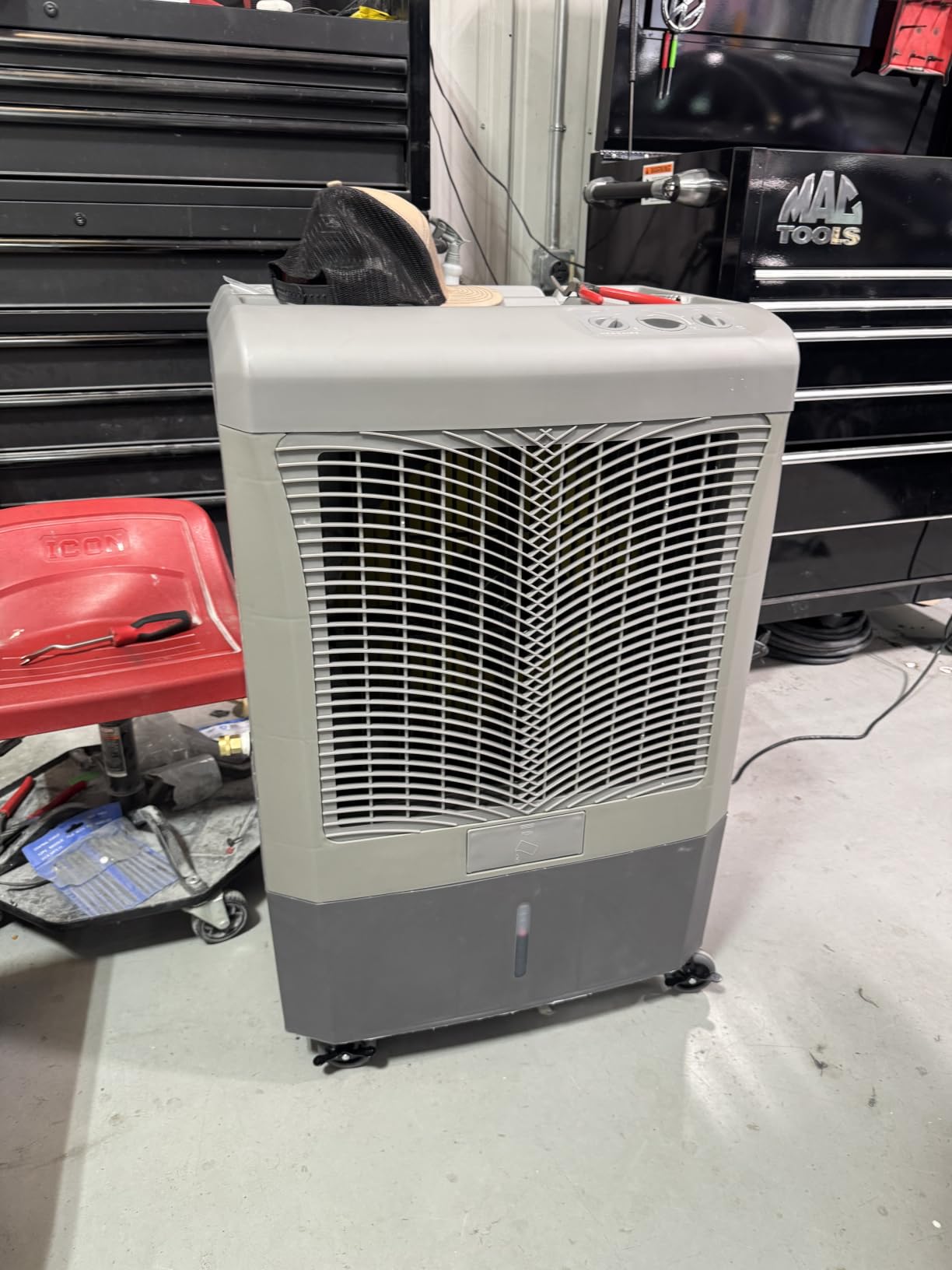
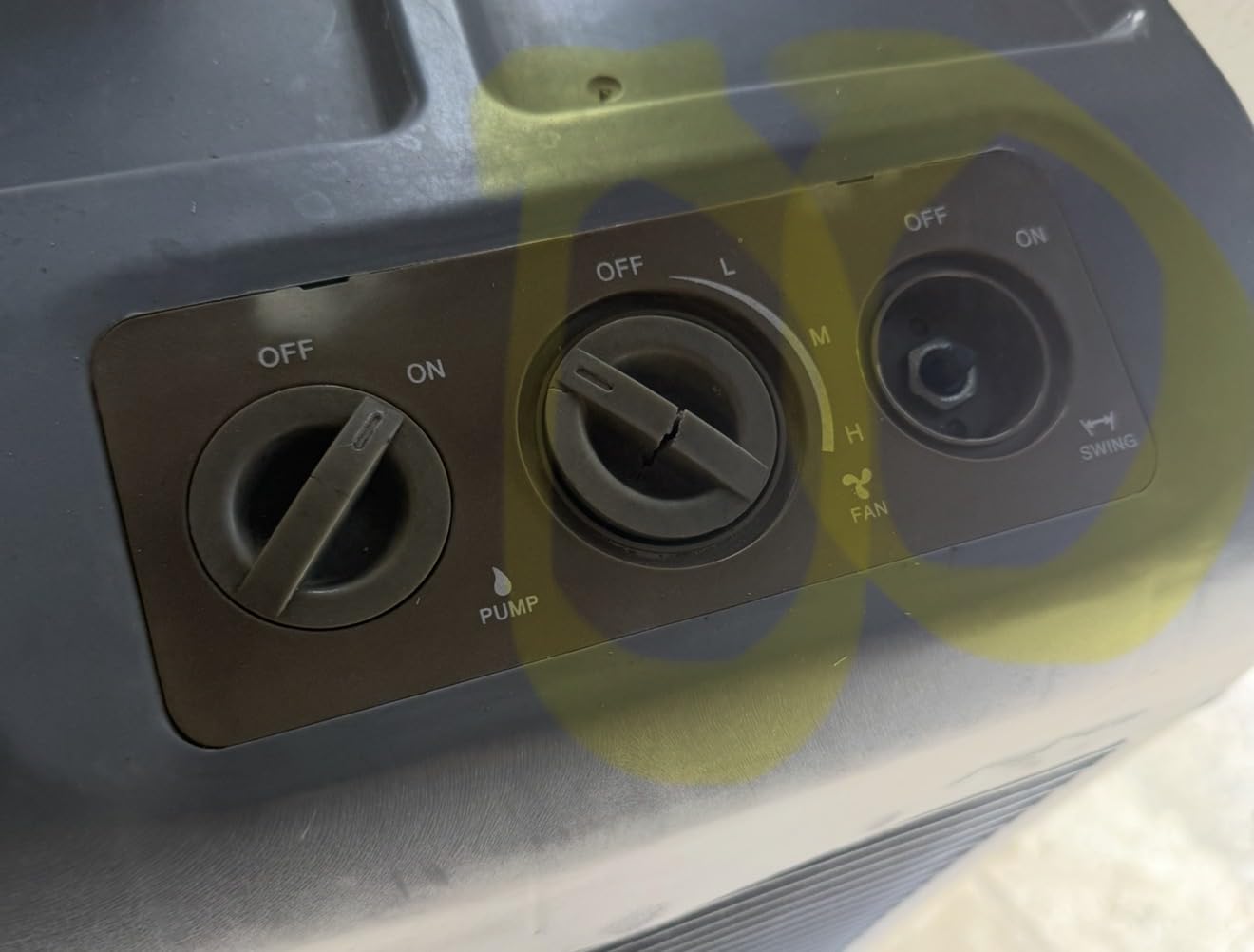
The honest complaints are consistent enough to plan around. The tank fill latch is a small plastic piece that some owners have snapped, oscillation at certain settings produces plastic-on-plastic creaking, and there is no automatic shutoff when the tank empties, so the pump can run dry if you forget about it.
Sound runs about 59 dB on the spec sheet, which is audible in a quiet living room on the top speed and fine on low. It pulls 250 watts, which works out to less than a quarter of what a small window air conditioner in the same room would draw.
How much space it actually cools
The 950 sq ft rating assumes a dry climate, open ventilation, and standard ceiling height. Owners with open floor plans report noticeable cooling across roughly 1,500 sq ft of connected space when doors and windows are open on both ends, which is a fair reading of the room-plus-circulation total it can handle.
Plan on the lower number for a closed room, and treat the extra footage as a bonus only if you can guarantee cross-ventilation. It adds moisture to the air, so running it with everything sealed is the fastest way to make it feel worse than before.
Where it falls short
The build quality is the weak point. Roto-molded polypropylene has thinner walls and looser tolerances than the metal-frame competition, and the one-year manufacturer warranty is short by the standards of the industrial units here.
For anyone who cannot open a window or run it with a door cracked, this is the wrong tool, and the same is true in humid coastal summers. In dry interiors with cross-flow it does exactly what it claims.
2. Ashihoti 4-IN-1 Portable Evaporative Cooler – Best for Personal Cooling

- Compact 9 inch by 9 inch footprint
- 360 degree swivel casters and carry handle
- 20 hours of run time on a 2-gallon tank
- 16-foot remote with backlit panel
- No window or hose installation
- Only 150 sq ft of rated coverage
- Buyers often describe it as functioning mainly as a fan
- Ice packs add little measurable cooling
- Remote can be unresponsive
We included this one as a contrast case. It carries the air conditioner framing on the listing, but the spec sheet tells the real story: 100 CFM and a 150 sq ft coverage rating make it a personal cooler, not a large-room machine.
What it does well is convenience. At 65 watts and 45 dB it is the quietest unit in this roundup, the 2-gallon tank runs up to 20 hours, and the 360-degree swivel casters plus a carry handle let you move it from bedroom to desk without much fuss.
The 4-in-1 claim covers cool, natural wind, and sleep modes with three fan speeds and a 1 to 12 hour timer, all controlled by a 16-foot remote. For a dorm room, a home office, or a spot cooling situation at a workbench, those features are genuinely useful.
Reviewers repeatedly note that adding the ice packs does little, and that the unit behaves like a fan when they expected real cooling. That is the correct expectation for 100 CFM of airflow, but it is also why this model does not solve a large-room problem.
When it makes sense
Use it where you want airflow and a hint of cooling on your skin, not where you want to lower the temperature of a whole room. A 150 sq ft figure is roughly a small bedroom, and that is the ceiling for comfortable use.
The 20-hour tank life and low 65-watt draw suit a home office where you sit within a few feet of the unit for long stretches. It needs no window opening and no exhaust plan, which is unusual in this category.
Where it falls short
There is no ducting, no high-velocity pad bank, and no meaningful air exchange across a large open plan. Anyone shopping for the best evaporative coolers for large rooms will find this underpowered by a wide margin.
Several buyers report an unresponsive or confusing remote, and ice packs lost effectiveness quickly. Treat it as a compact personal cooler and it delivers; treat it as a room cooler and it will disappoint.
3. SYUDTY 3000 CFM Swamp Cooler and Evaporative Air Cooler
Portable Air Conditioner, 3000 CFM Swamp Cooler & Evaporative Air Cooler
- 3000 CFM with a claimed 50 to 60 degree temperature drop
- 6.87-gallon tank cuts refill frequency
- 120 degree oscillation spreads air wide
- Four modes including sleep with a 1 to 15 hour timer
- Works as fan
- humidifier
- cooler and diffuser
- 3.2-star rating with a 26 percent one-star share
- Cooling depends heavily on dry ambient air
- Consumer-grade ABS construction
- Many buyers report it acts mostly as a fan
The headline numbers here are strong: 3000 CFM, a 1000 sq ft coverage rating, and a 6.87-gallon tank at only 15.7 pounds. It is also the weakest-rated unit in this roundup, sitting at 3.2 stars with 26 percent of buyers leaving one star.
What we can say for it is that the feature list is genuinely loaded for the segment. Four modes, three speeds, 120-degree oscillation, a 20-foot remote, a child lock, and four swivel casters cover most of what a buyer looks for on a spec sheet.
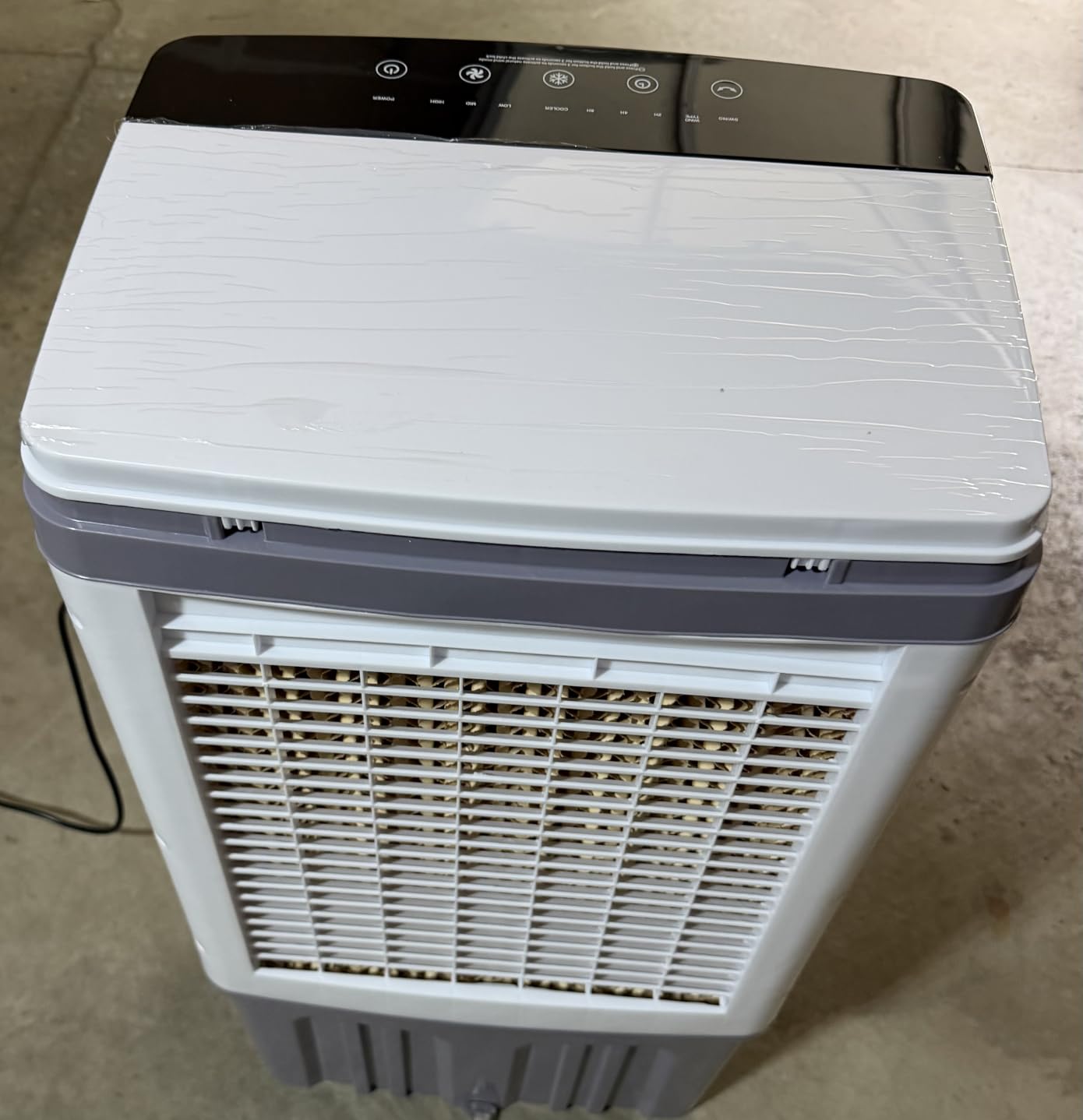
The split in the reviews follows climate. Owners in genuinely arid regions appreciate the airflow and the tank size, while buyers in humid climates report little cooling and a muggier room than they started with, which is the expected failure mode of direct evaporative cooling.
The 2.5x moisture-absorbing water curtain and upgraded high-density pad are the parts doing the cooling work. Reports of the unit acting mostly as a fan suggest the pad bank is being overwhelmed by the blower on high speed.
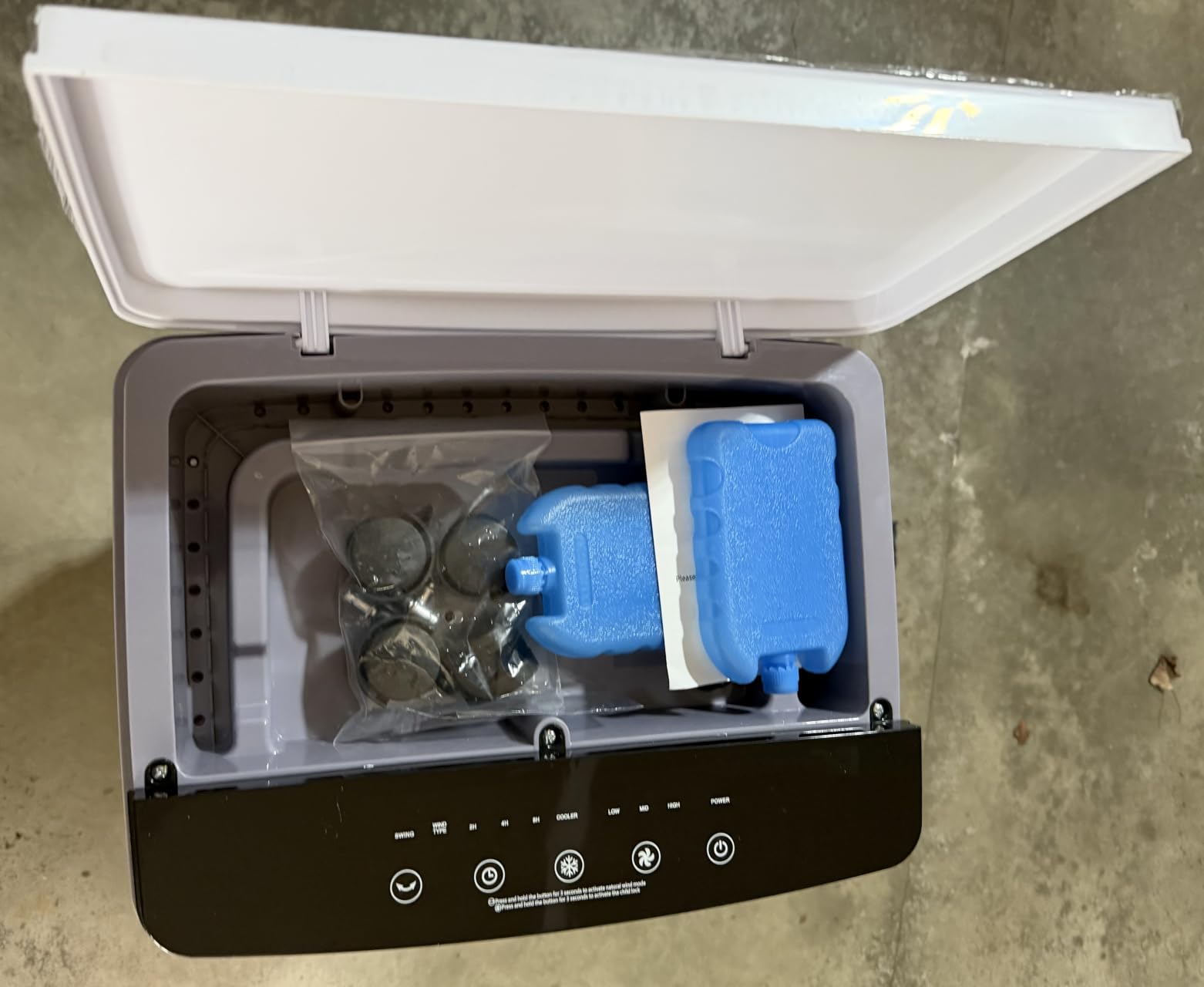
Where the airflow figure earns its keep
3000 CFM matches our top pick almost exactly, so in a dry, open, mid-size space it should perform similarly. The lighter 15.7-pound body and the smaller footprint make it easier to move than the Hessaire, which matters if you are changing rooms seasonally.
The 6.87-gallon tank is smaller than the MC37M but still removes the mid-afternoon refill. With the garden hose option not listed on this model, plan on top-fill refills rather than continuous fill.
Where it falls short
The rating spread is the concern. A quarter of buyers hit one star, and the pattern in the reviews points at build consistency rather than a single fault. Consumer-grade ABS and a 150-watt motor are the reasons to expect that.
It also has the highest risk of adding humidity in a closed room, since nothing in the design separates the moisture stage. If your space cannot be ventilated, pass on this one.
4. VEVOR 1400 CFM Evaporative Air Cooler – Best on Power Draw
- Only 60 watts for 1400 CFM of airflow
- 5-gallon tank with top-fill access and brass hose adapter
- 72 degree swing with adjustable vertical louvers
- Low-water indicator and shortage protection
- Mechanical buttons that stay legible
- 550 sq ft is the smallest coverage claim here
- 60 dB is among the louder units
- Limited cooling effect in humid air
- Lightweight plastic shell
The VEVOR is the efficiency standout. Sixty watts of draw for 1400 CFM of airflow is difficult to match in this group, and it makes sense for anyone who wants to run a cooler continuously without watching their electricity usage.
The 5-gallon top-fill tank with a brass garden hose adapter gives you a continuous-fill option, which is the single best feature for an all-day event. Low-water protection and a visible indicator reduce the dry-pump risk that shows up in cheaper units.
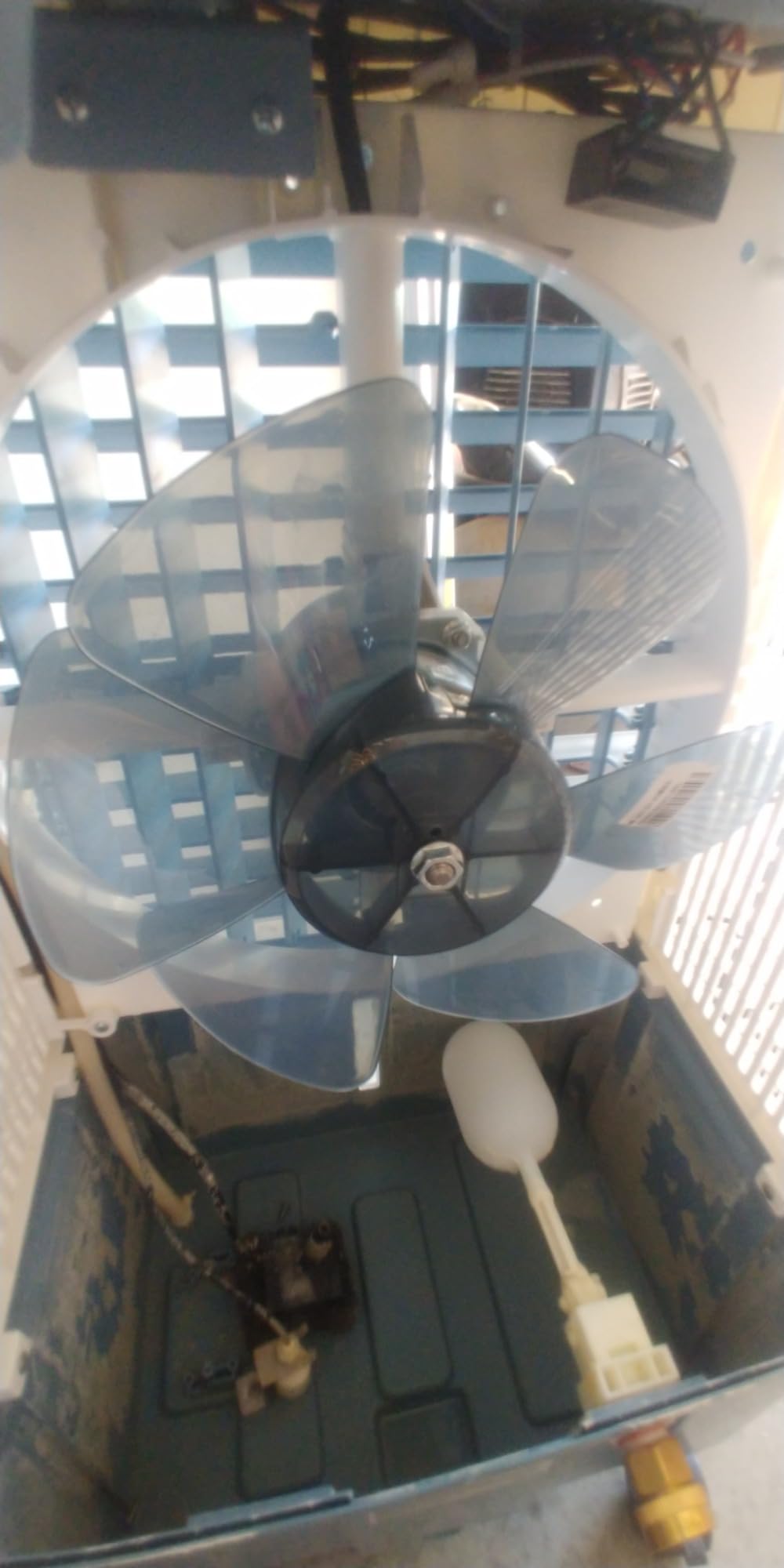
The manufacturer copy sets expectations fairly honestly: this is not a match for a refrigerated air conditioner, and it performs best outdoors in dry climates. Buyers use it for patios, pool decks, and parties, where a 60-watt appliance that you can leave running is more valuable than a colder but far thirstier unit.
Three-speed mechanical controls, a 72-degree automatic swing, and two included ice packs round out the package. The mechanical control is a step back from a remote or digital panel, but it will not quit working because a button failed.
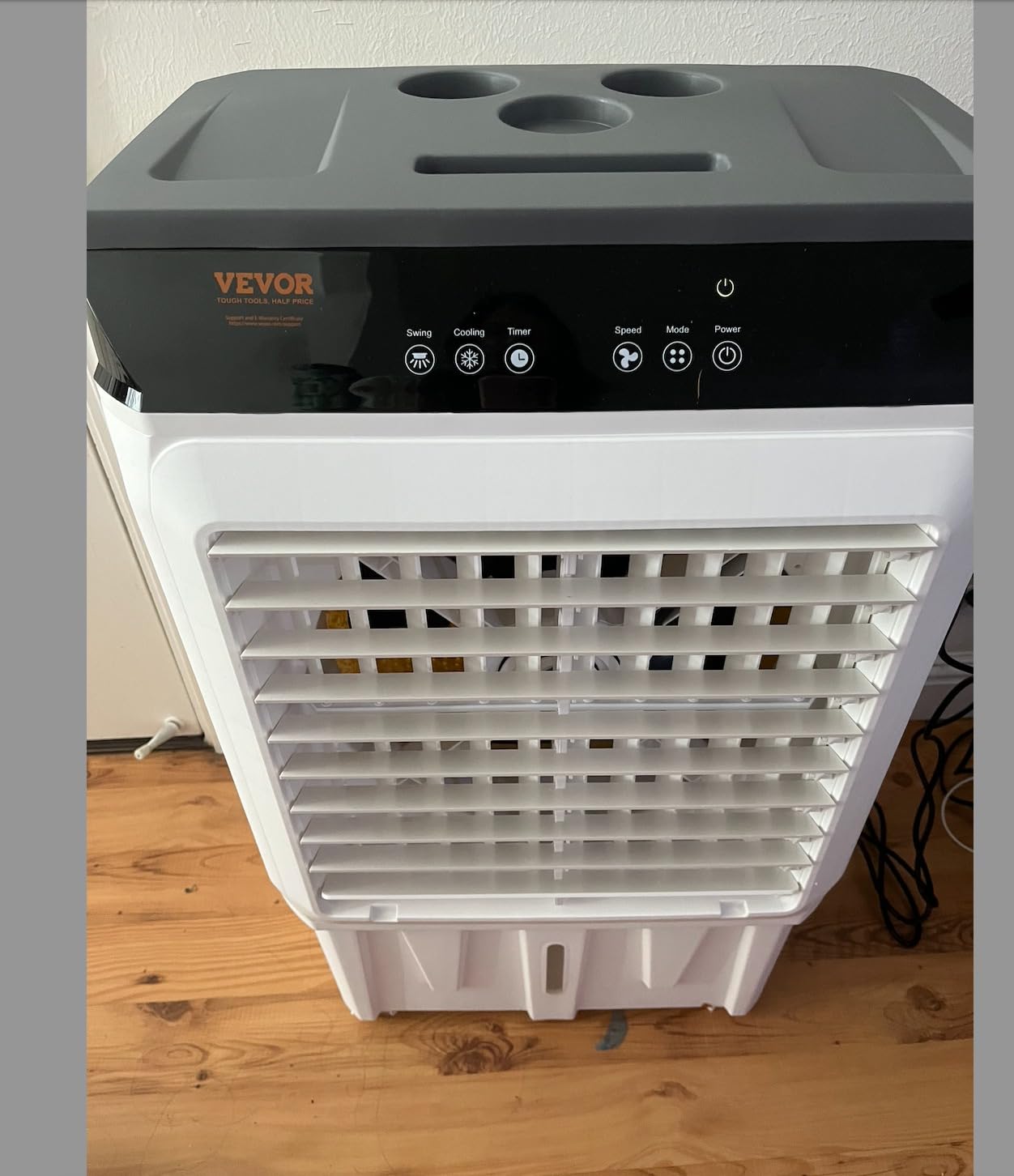
Room size it can handle
550 sq ft of rated coverage is the smallest claim in this roundup, and the 1400 CFM figure supports roughly that. It suits a bedroom, a small office, or one zone of an open house rather than a full floor.
Used outdoors over a patio or pool area it is arguably in its element, since the airflow only has to travel a few feet to reach you. Measured from three to ten feet, it delivers a real temperature drop in dry air.
Where it falls short
60 dB is loud, and that noise sits in a range where conversation gets raised. It is fine outdoors where you are not trying to hear a movie.
The lightweight plastic shell and unspecified warranty coverage are the weak points for anyone planning multi-year daily use. In humid air the pad bank adds moisture without much temperature benefit, so treat the humidity limit as a hard boundary.
5. SereneLife 12000 CFM Portable Swamp Cooler – Best for Warehouses and Events

- Largest airflow figure in this roundup at 12000 CFM
- 150 liter detachable tank for long shifts
- Built-in Wi-Fi plus remote and touch panel
- 60 degree oscillation with adjustable vertical direction
- Water shortage alarm and pump protection
- 3.3-star rating with a 27 percent one-star share
- 69.4 pounds and 62 inches deep
- 65 dB is loud in an occupied room
- Performance varies widely by space
This is the industrial end of the list. At 12,000 CFM it moves roughly four times what our top pick does, which puts it in warehouse, gym, garage-bay, and event-tent territory rather than living rooms.
The 150-liter detachable tank is the practical hero. You can swap a full tank rather than carrying water to the unit, which is the difference between a cooler that runs all shift and one that gets switched off at lunch.
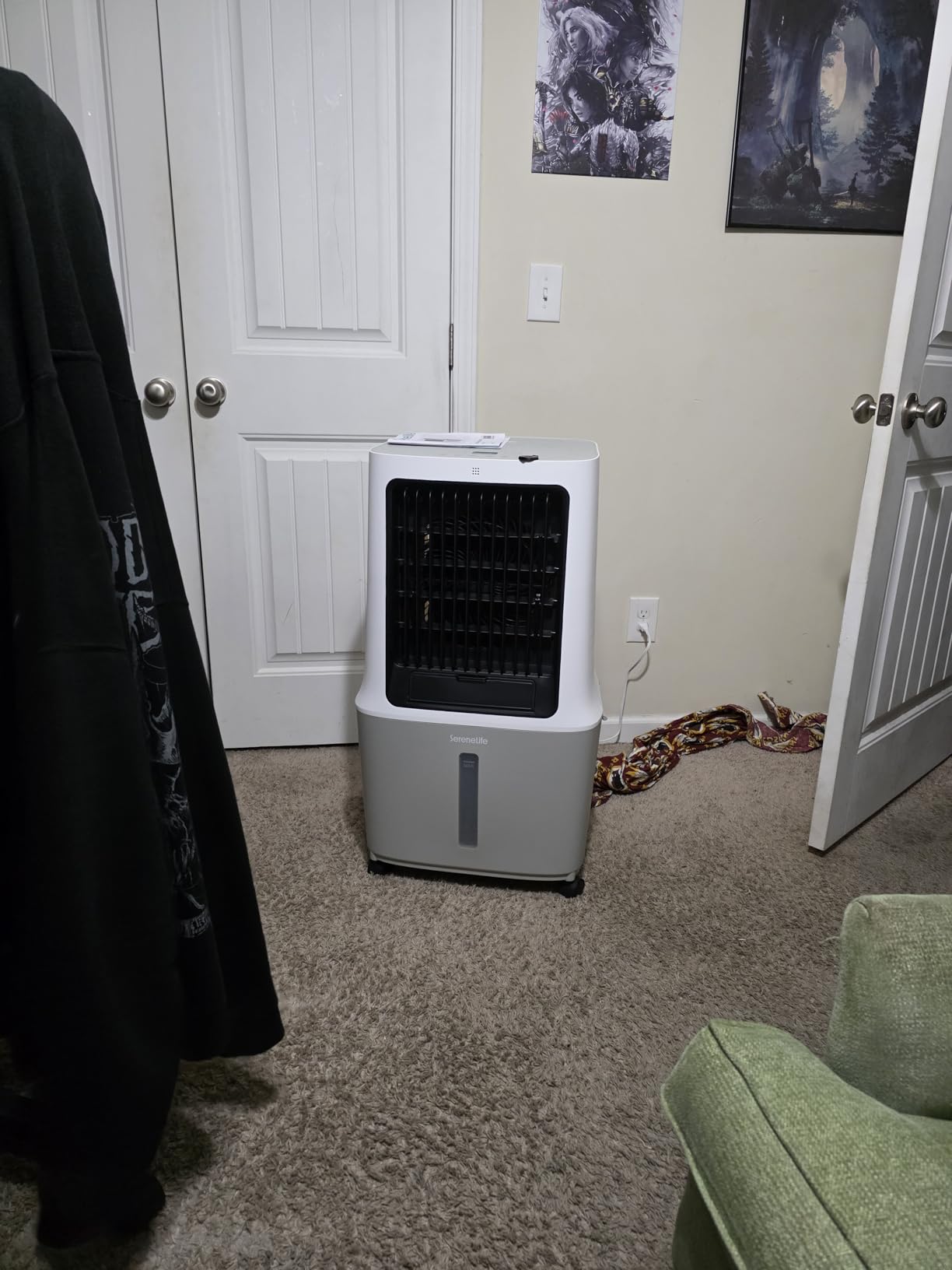
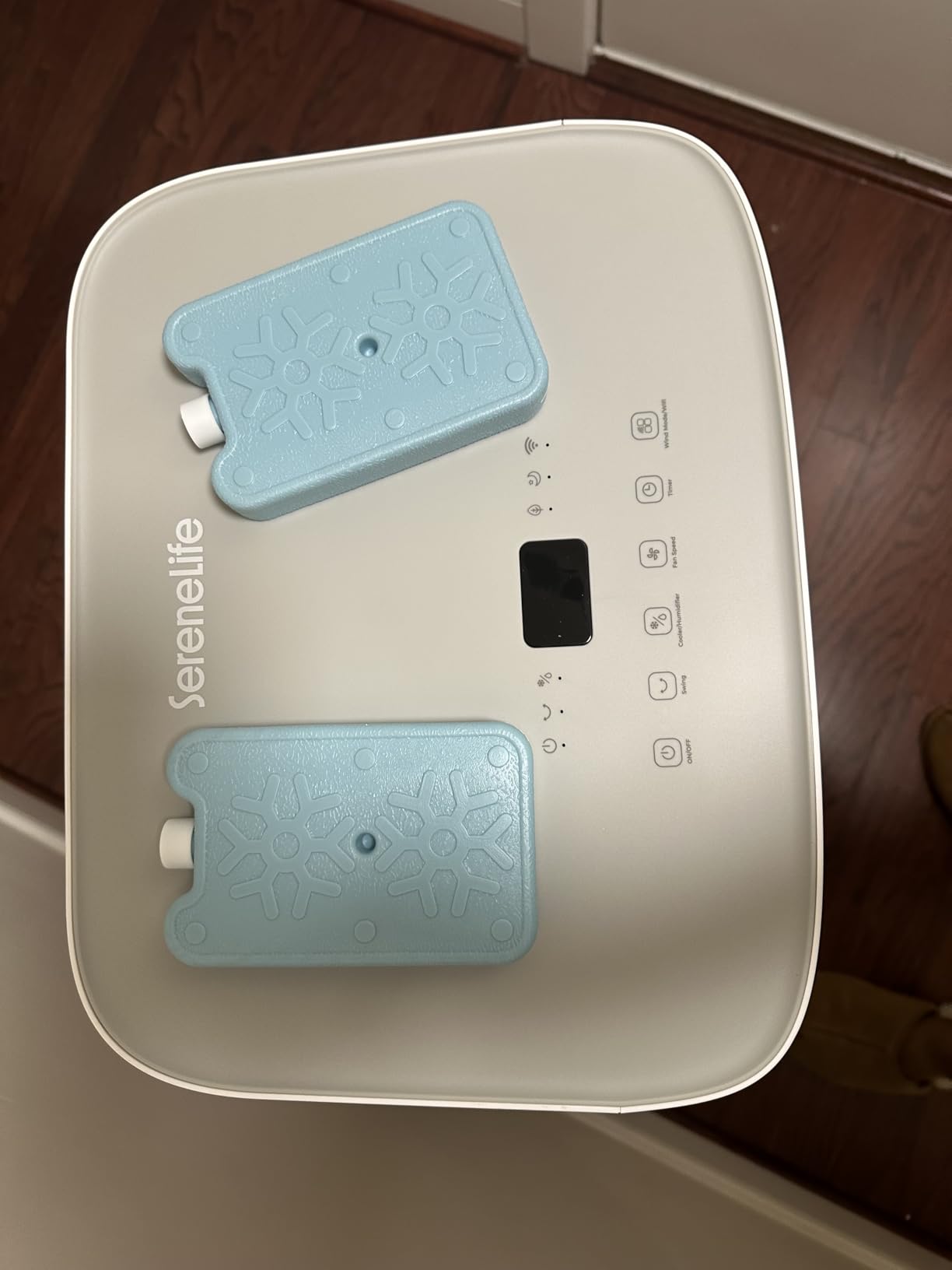
It is also the only unit here with built-in Wi-Fi, sitting alongside a remote and a touch panel, plus a programmable 1 to 12 hour timer. Buyers who need volume for a very large open area are satisfied with the result.
The catch is physical. At 69.4 pounds and 62 inches deep, it needs real floor space, and the 65 dB operating level is not something you want in a room where people are working quietly. The large one-star block reflects units that underdeliver in ordinary residential spaces.
Spaces it genuinely suits
Anywhere with high ceilings, open floor area, and a need to move serious volume without refrigerant is where the 12,000 CFM number earns its place. Loading docks, workshops, indoor sports spaces, and event venues fit that description.
The rolling wheels and the detachable tank make it usable in spaces that change use. Sixty-degree oscillation plus adjustable vertical airflow lets you cover a wide floor without repositioning the cabinet constantly.
Where it falls short
The one-star share is the highest negative share among these picks, at 27 percent, and it climbs in normal living spaces where the airflow is far more than a room needs. The spec sheet also lists a voltage figure that conflicts with the stated 800W motor, which is worth checking before you rely on the electrical ratings.
For a residential large room, this is overkill on size and noise. For an industrial space, nothing else in this roundup comes close.
6. Uthfy 40 Inch 4800 CFM Swamp Cooler – Best for Garages and Workshops

- Highest rated large-format unit in this group
- 4800 CFM with 120 degree oscillation
- Iron frame and copper motor instead of thin plastic
- 11-gallon tank with top-fill and continuous auto-refill
- Four caster wheels with two locks
- 970 sq ft coverage is well below what 4800 CFM suggests
- Button controls only with no remote
- Requires manual draining between storage cycles
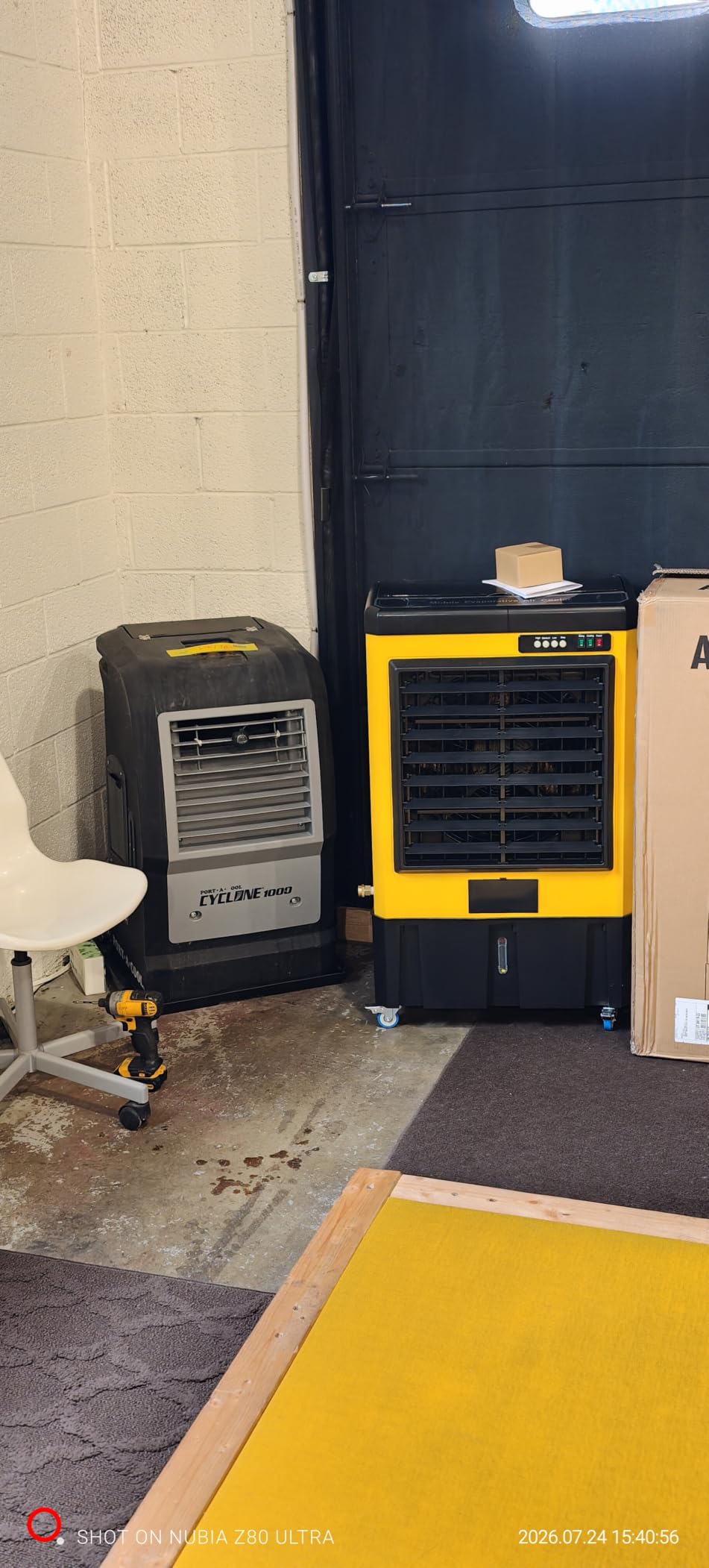
The Uthfy 40-inch cabinet is the best-rated large-format unit here, with a 58 percent five-star share. The iron frame and copper motor are the reason: they separate it from the thin-plastic competition at a similar size class.
At 4800 CFM with 120-degree oscillation it moves roughly 50 percent more air than our top pick, which matters in a garage with a workbench, a shop with a high ceiling, or an outdoor patio in a dry inland climate.
The 11-gallon tank accepts both manual top-fill and continuous auto-refill, so you can run it long without babysitting it. Three ice packs and a 4-in-1 composite ice curtain add a short burst of extra cooling on the hottest afternoon hours.
At 50 dB and 200 watts it is quieter and more efficient than most units of this airflow. Four caster wheels, two of them lockable, keep it steady on an uneven garage floor.
Reading the coverage number honestly
The 970 sq ft listing is well below what 4800 CFM should suggest for an open space. Treat that figure as a conservative rating rather than a ceiling, and plan around roughly 1,000 sq ft of usable area with ventilation.
Buyers in dry climates report it handling garages, patios, and workshops well. In a sealed room, the same airflow will move humidity around faster than it removes heat.
Where it falls short
There is no remote and no timer, so the three-speed button panel is your only interface. That is fine on a shop floor where you start it and leave it, and less fine in a bedroom.
The drain port means you need to empty the tank between storage cycles rather than closing it wet for the winter. Budget for that step or you invite mineral and microbial buildup in the pad bank.
7. Hessaire DC18 Mobile Evaporative Cooler – Best for Off-Grid and Jobsite Use

- Runs on any 18V or 20V tool battery
- 900 CFM with adjustable speed control
- 75 percent five-star share across its review pool
- Works well with ice water for extra cooling
- Quiet relative to the volume of air it moves
- 900 CFM and modest coverage
- Consumes water quickly in evaporative mode
- Battery not included
- Heavier and bulkier than expected
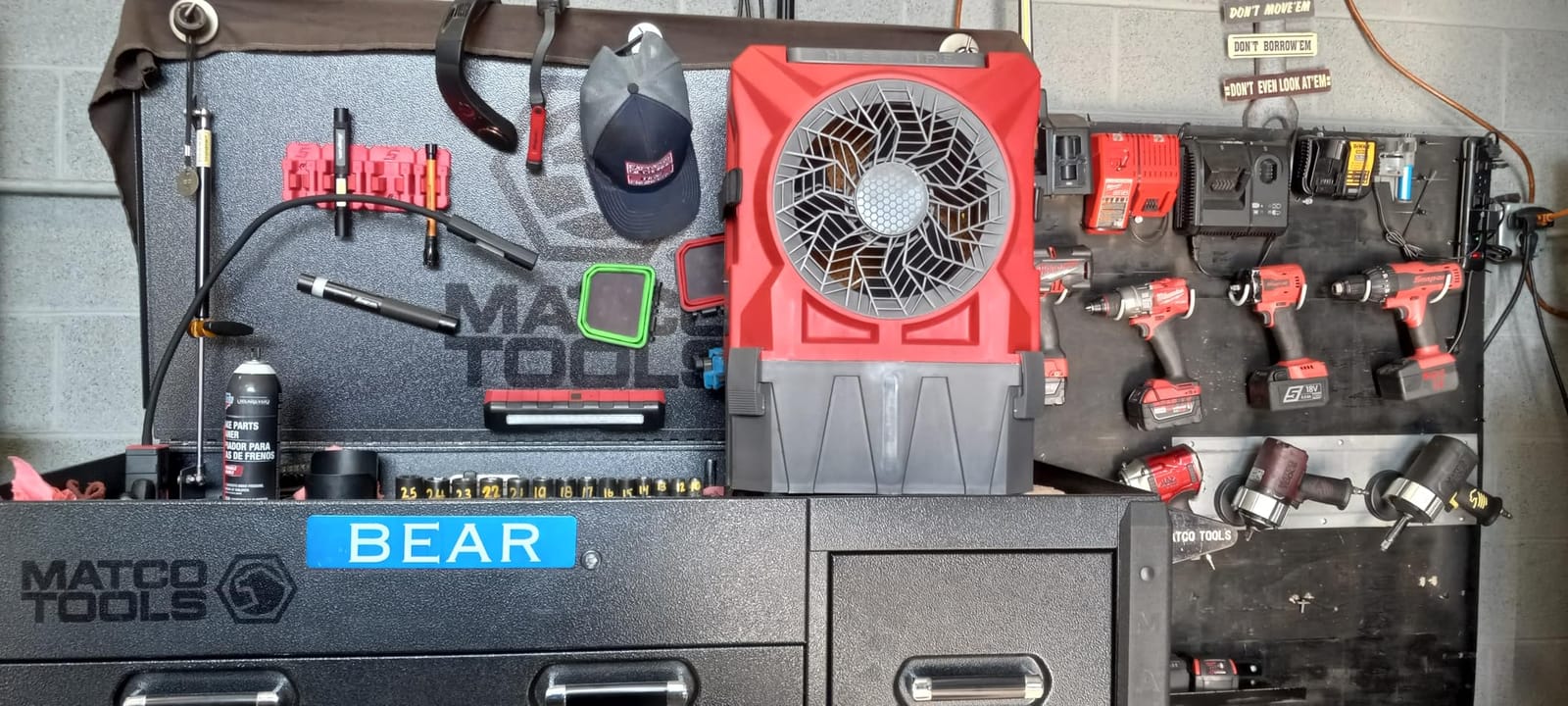
The DC18 is the odd one out, and that is exactly why it earns a place here. It runs on any 18V or 20V tool battery, so if you already own batteries from a drill or mower kit, you do not need a dedicated power source at all.
That makes it the answer for job sites, trailers, campsites, and auto shops where a wall outlet is not guaranteed. With a 75 percent five-star share, it is also the most enthusiastically rated unit in this roundup by proportion.
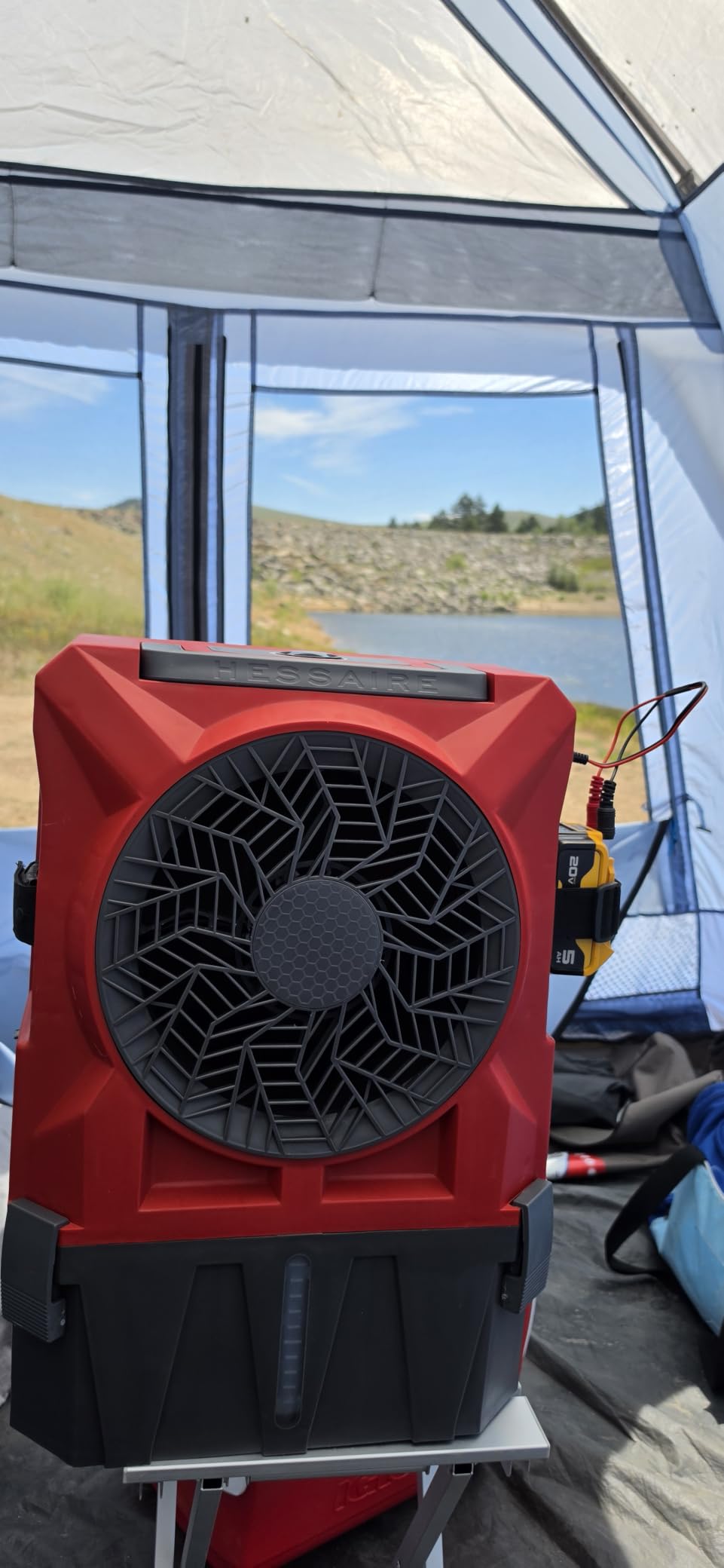
Airflow tops out at 900 CFM with a 2.8-gallon reservoir and adjustable speed. Owners report it works well when filled with ice water, and that it runs quiet relative to the volume of air it moves.
The 115V AC adapter is included for stationary use, so the same unit covers a workshop bench and a remote job site. The stated design goal is reducing heat stress rather than refrigerating a room, which is an honest framing.
Where it makes sense
Anyone who already has tool batteries gets the lowest-friction cooling setup available. No dedicated circuit, no extension cord across a shop floor, and no fuel-burning generator needed to run it.
It suits a garage bay, a vehicle interior, a tent, or a spot at the end of a driveway during a hot outdoor event. Cooling a person, not a room, is what the design delivers.
Where it falls short
900 CFM and roughly 300 sq ft of coverage is modest, so it will not touch a large open room. The 2.8-gallon tank also goes through water quickly in evaporative mode, which means refills in a workspace where that is inconvenient.
At 42 pounds it is bulkier than expected and awkward to pack, and the battery is not included. The manual also warns against batteries over 20V while the included adapter outputs 24V, so check your voltage before wiring anything up.
8. EXNOS 2000 CFM Portable Evaporative Air Cooler – Best Looking Compact Unit
- Modern styling that fits furniture better than a typical swamp cooler
- Quiet at 50 dB with a sleep mode
- Removable tank and pad simplify cleaning
- Caster wheels and a built-in carry handle
- Only 110 watts of draw
- 300 sq ft coverage is modest
- Pump durability is the top complaint with failures within weeks
- Ice packs lose effectiveness after about an hour
- Cools only when pointed directly at you
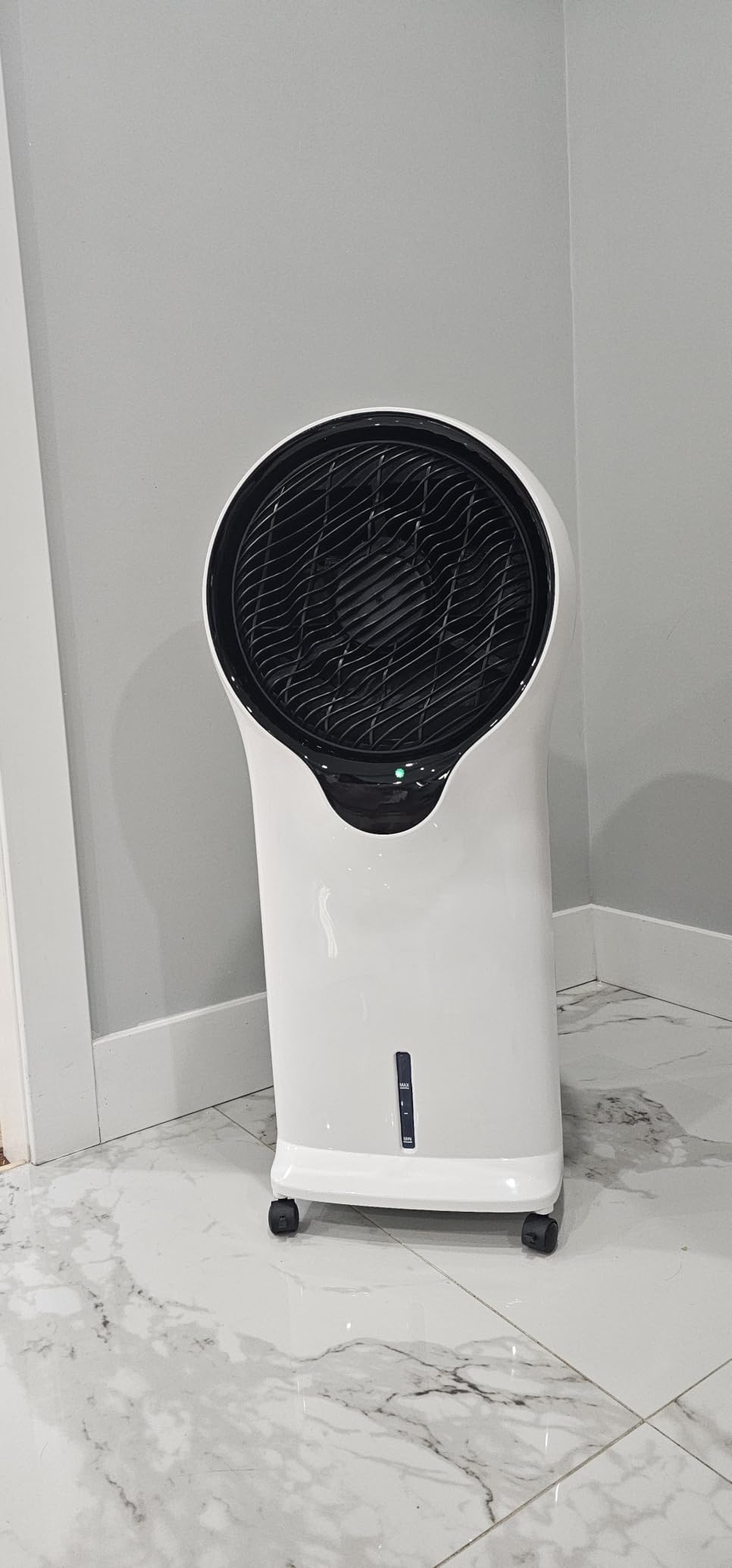
The EXNOS is the one we would leave visible in a finished room. Its styling reads like household furniture rather than a utility cabinet, and at 50 dB with a sleep mode it disappears into a bedroom.
Airflow is listed at 29 ft per second in the 2000 CFM class with 360-degree adjustable direction, three speeds, and three modes. The removable tank and pad make cleaning straightforward, which is more than several competing units can claim.
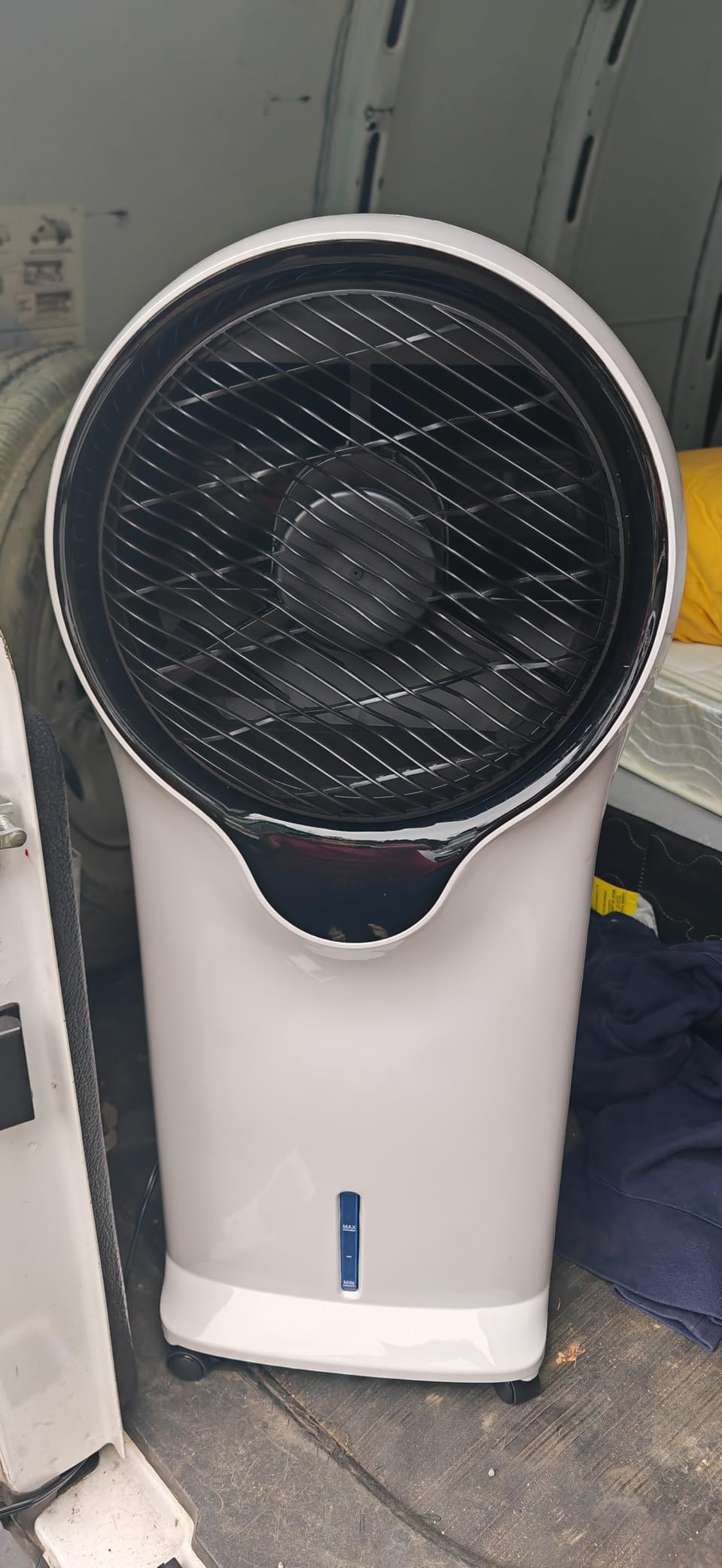
The reviews split into two distinct groups. Some owners say it cools well within five to ten feet. Others report the water pump burning out after a few weeks, with running the pump dry repeatedly flagged as the cause, and the unit includes low-water protection that drops to fan-only mode.
At 110 watts and 15.7 pounds with caster wheels and a carry handle, moving it between rooms takes seconds. The 7.5-hour timer in half-hour increments is a nicer touch than a single on-off switch.
Realistic cooling range
Owners describe it as effective within five to ten feet rather than as a room cooler, and the 300 sq ft coverage rating supports that description. Point it at a sofa or a desk and it does its job.
Its 3-in-1 design also runs as a fan and a humidifier, so in a dry winter it can add moisture to a bedroom where a cooling-only unit would do nothing useful.
Where it falls short
Pump durability is the dominant complaint, and it is the failure mode to weigh before buying. Keep it topped up and use the low-water protection, because a burned-out pump ends the unit regardless of how good the styling is.
It requires a dry climate to do its job at all, and the ice packs lose effectiveness after about an hour, so do not count on them for an all-night session.
9. Uthfy 41 Inch 4000 CFM Swamp Cooler – Quietest Large-Capacity Option

- Quiet at 45 dB even on the highest setting
- 13.5-gallon detachable tank with three refill options
- Remote and panel control with 120 degree oscillation
- 12-hour timer and an LED ambient light
- 120 watts of draw for 4000 CFM
- Lowest rated unit in this roundup at 3.1 stars
- Thin cooling pads restrict airflow
- Some units arrived with a non-working pump or cracked basin
- No float switch for hose hookup
- Ice packs arrive unfilled
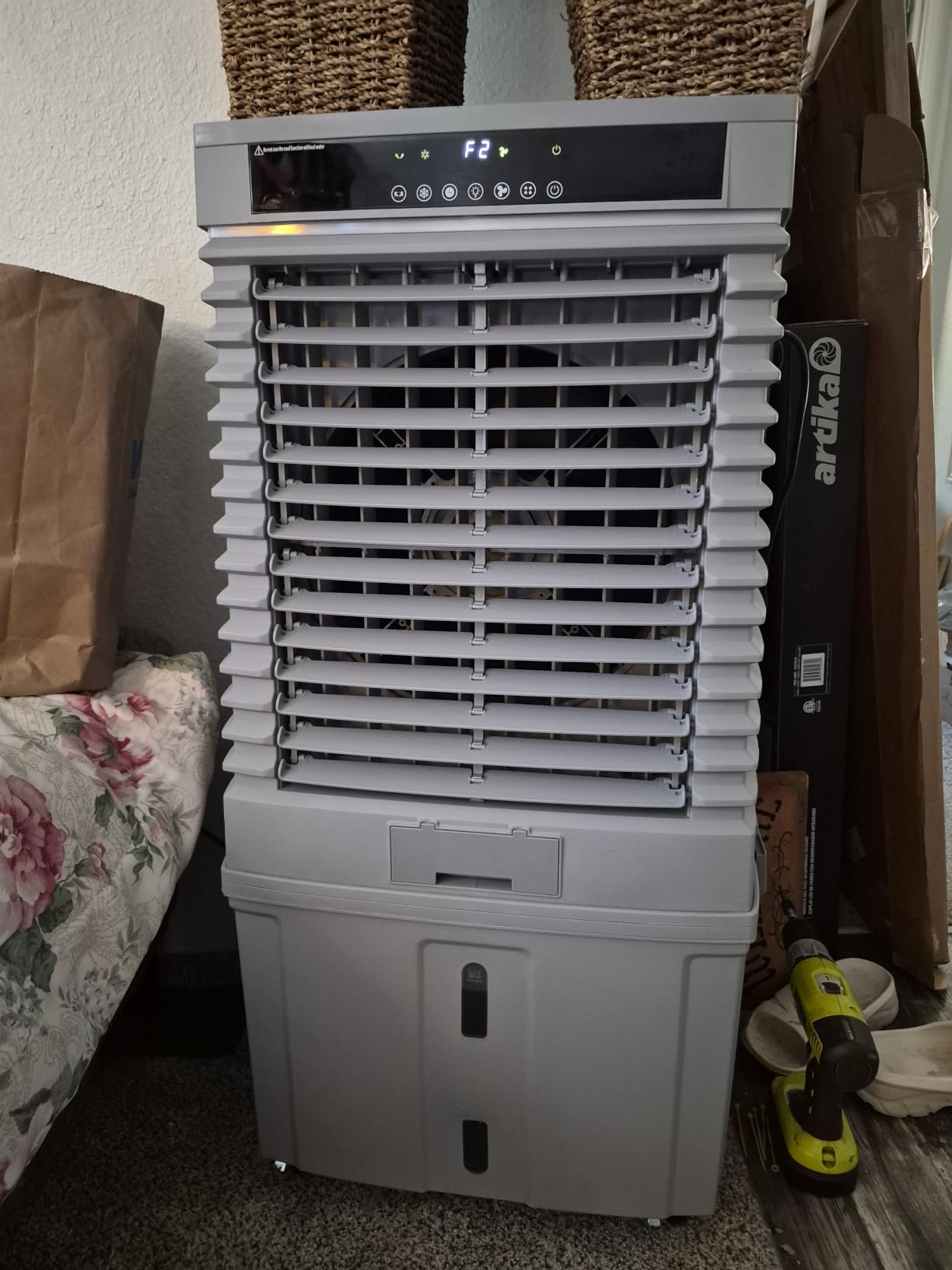
On paper this is the most efficient large unit here: 4000 CFM at 120 watts and 45 dB, with a 13.5-gallon detachable tank and a 24.3-pound body that is easy to move between rooms.
The 13.5-gallon tank is the biggest in the group and accepts three refill methods, with a claimed runtime up to 36 hours using the four included ice packs. A 12-hour timer and an LED ambient light make it usable in the evening.
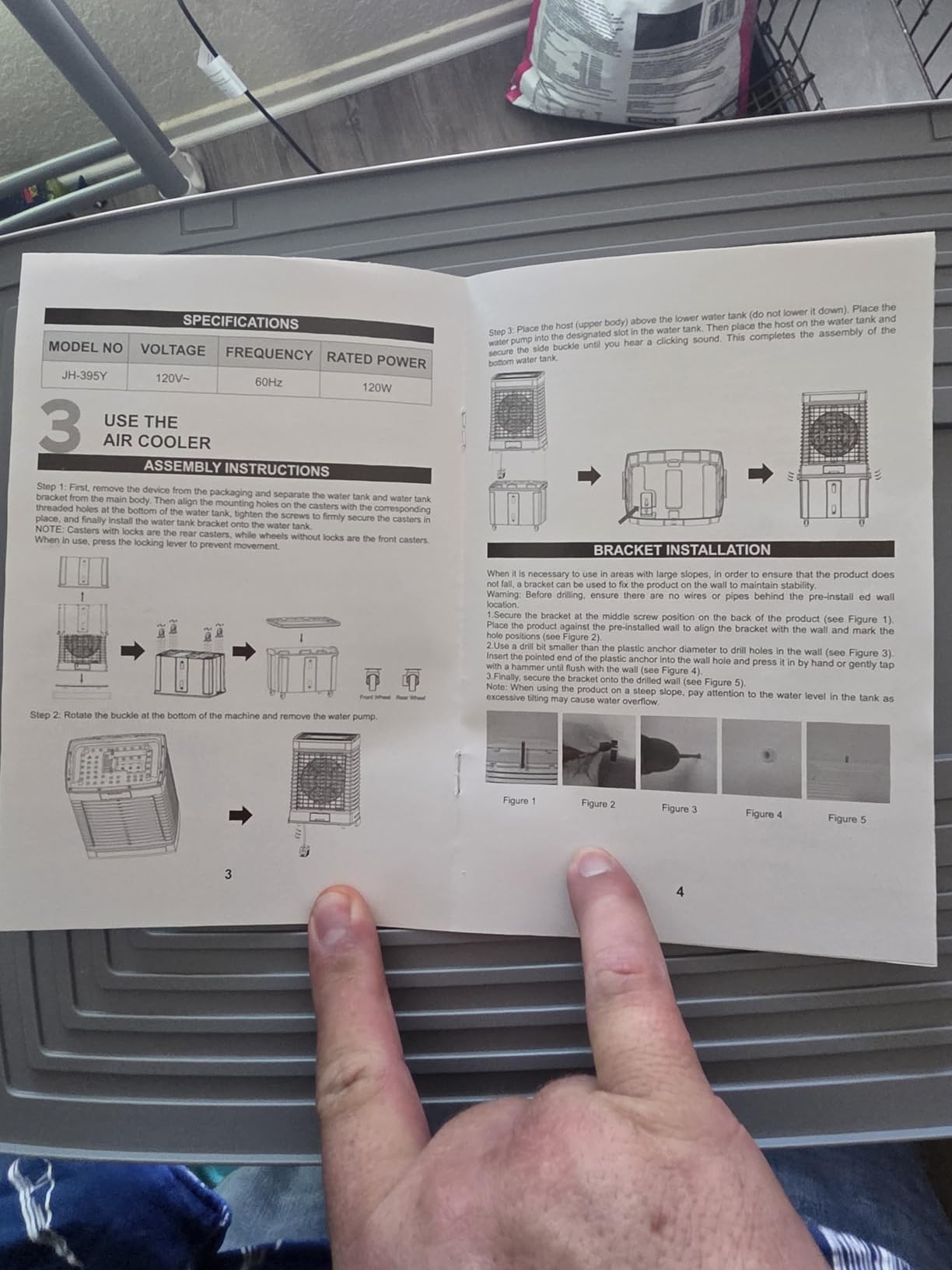
Then there is the reality. This unit carries the lowest rating in the roundup at 3.1 stars with a 33 percent one-star share. Detailed reviewers who instrumented it measured a real drop of about 10 to 12 degrees near the outlet, while others in equally dry air saw almost nothing.
The most common explanation is the pad bank itself. A reviewer reports the thin pads restrict airflow to the point where output is barely noticeable once wet, and quality-control complaints about dead pumps and cracked upper basins appear often enough to weigh the rating down.
Why the quiet spec is appealing
45 dB on the top setting is genuinely useful in a home office, a bedroom, or a living room where conversation matters. It is the quietest operating figure among the large-capacity options here.
The visible water line and drain port, plus dry-run pump protection, show that somebody thought about the failure mode that takes out cheaper pumps. The problem is whether that protection ships in your box.
Where it falls short
Thin cooling pads are a design limitation rather than a defect, and no amount of setup will fix a restricted pad bank. If the airflow number matters most to you, a metal-frame unit in the same class is a safer bet.
There is also no float switch, so a hose hookup still needs manual on and off control, and the included ice packs arrive as unfilled empty shells you have to source separately.
10. OEMTOOLS 23968 3100 CFM Portable Swamp Cooler – Best for Workshops

OEMTOOLS 23968 3-Speed Portable Swamp Cooler 3100 CFM 10.3-Gal. Water Tank
- High-density media panels with 80 percent more evaporation area
- Patented axial propeller for air distribution
- Built-in tool tray and rolling casters
- UL GFCI plug and UV-resistant resin for outdoor use
- 4.2-star rating with a 66 percent five-star share
- 68 dB is the loudest unit in this roundup
- Knob controls only with no remote or timer
- Larger and heavier than most units here
- Oscillation can rub audibly
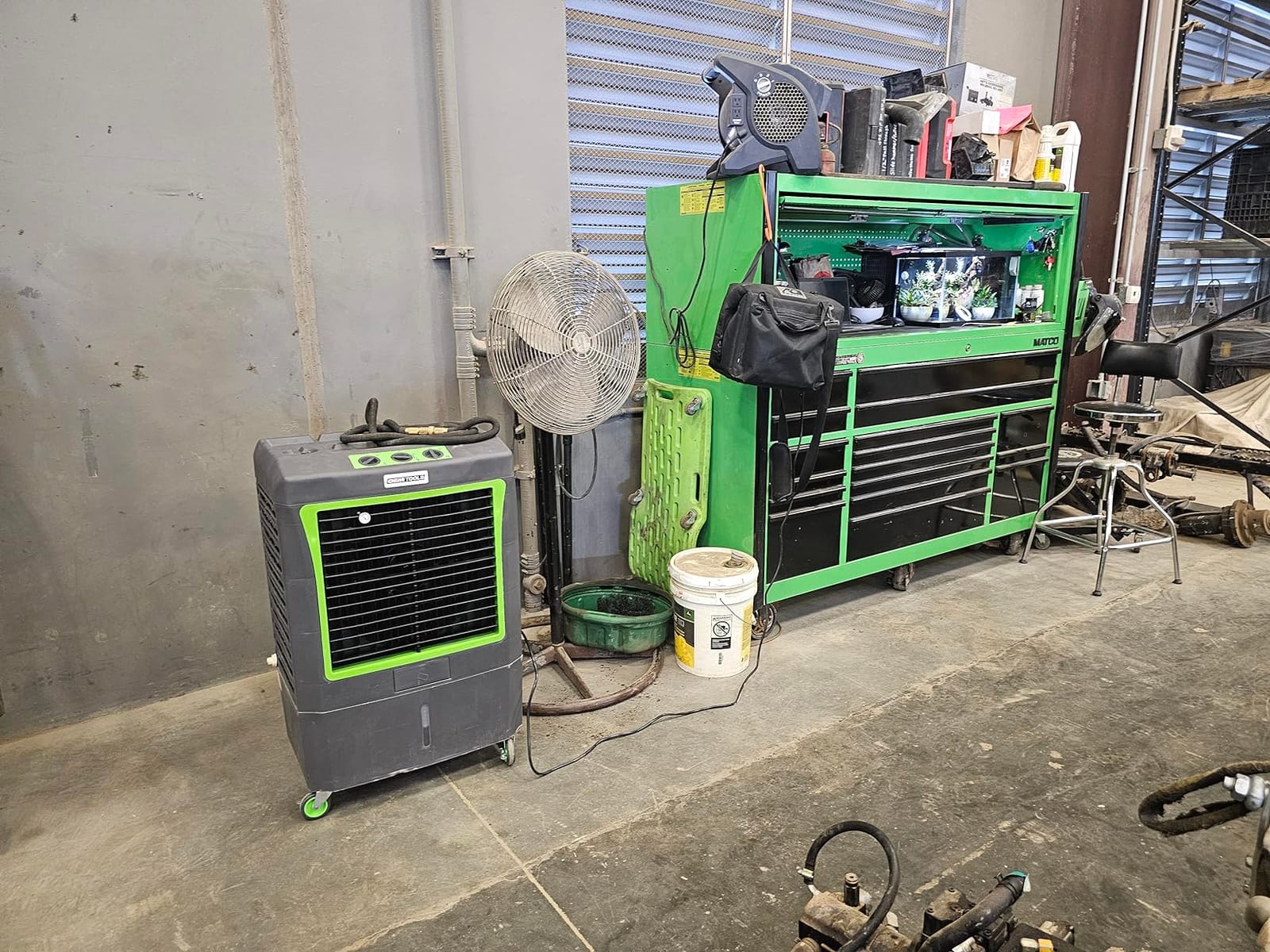
The OEMTOOLS 23968 is built by a tool maker for a tool user, and the details show it. The built-in tool tray is the kind of feature no appliance designer thinks to add, and it matters when the unit lives next to a workbench.
Its 3100 CFM airflow matches our top pick, spread across 950 sq ft with an oscillating axial propeller. The media panels carry 80 percent more evaporation surface area than standard pads, which is the single biggest factor in real cooling output.
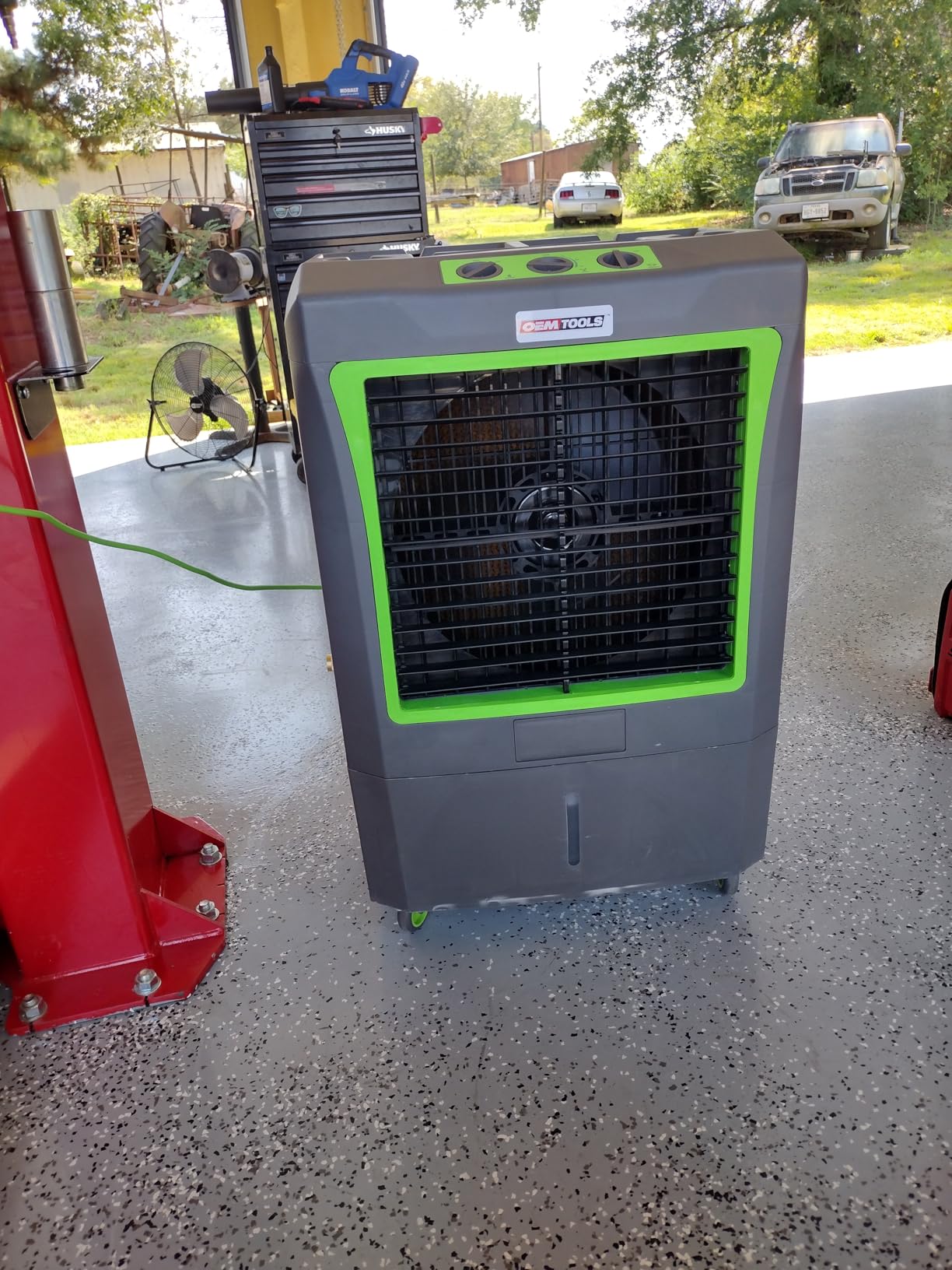
A three-speed motor with knob controls, a UL GFCI plug, and UV-resistant resin mean it can live in a garage or on a covered patio without concern. At 41.3 pounds with casters, it rolls rather than lifts.
The 4.2-star rating with a 66 percent five-star share is strong, and reviewers single out the denser media panels and the tool tray as the reasons. What they accept as the trade-off is noise.
What the extra pad area buys you
Evaporation surface area is the physical limit on cooling. More pad area in the airflow path means more water evaporating per minute, which is why the same 3100 CFM figure produces noticeably better results here than on a unit with thin pads.
Reviewers who measured it report a stronger temperature drop than units with the same rated airflow and smaller pad banks. In a dry garage with the door open, that difference is obvious within minutes.
Where it falls short
68 dB is the loudest figure in this roundup by a wide margin. It is fine in a workshop with power tools running and a poor choice for a bedroom or a home office.
Knob controls with no remote and no timer mean you walk over to it to change speed, and oscillation can rub audibly at some settings. There is no Wi-Fi and no smart control, which is the main reason it sits below our top pick despite matching airflow.
How to Size an Evaporative Cooler for a Large Room
Most disappointing swamp cooler purchases come down to one number: airflow that does not match the room. Manufacturers rate CFM at the fan outlet, and air slows down as it enters a live space, so the rated figure overstates what you feel at the far wall.
A workable starting formula is simple. Take your floor area in square feet, multiply by the ceiling height in feet, then divide by two. A 1,200 sq ft room with 9-foot ceilings gives 1,200 multiplied by 9, which is 10,800, divided by 2 for 5,400 CFM of rated airflow.
That figure is a starting point rather than a promise. Forum complaints about undersized units are consistent enough that we would treat the calculated number as a minimum, not a target, and add a margin for a room with high ceilings or a lot of glass.
Two adjustments matter. Direct evaporative units lose effectiveness as outdoor humidity rises, so a home in a monsoon season needs more rated airflow than the same home in a dry spring. And any ducting or long throw reduces real output as static pressure rises, so aim the unit where it can blow directly into the space instead of forcing air through long runs.
Match the tank to your runtime
Tank capacity decides whether you think about the cooler or forget about it. As a rough guide, larger tanks and low-ambient-humidity conditions mean longer runtimes between fills, while warmer or more humid air uses water faster.
If you want a full workday without refilling, a garden hose connection or continuous-fill float valve matters more than tank size. The Hessaire MC37M and the Uthfy 40-inch both accept continuous refill, and the VEVOR has a brass hose adapter for the same reason.
The units with the biggest tanks in this group are the SereneLife at 150 liters and the Uthfy 41-inch at 13.5 gallons. Both trade weight for refill frequency, which is a reasonable bargain in a garage or warehouse.
Set the ventilation plan before you buy
This is the step that decides whether a large-room cooler works. Direct evaporative units add moisture and need an exhaust path. Open a window or door on the far side of the room so spent humid air leaves instead of building pressure inside the space.
When you cannot guarantee that path, a two-stage evaporative unit is the better investment. The first stage pre-cools and dehumidifies the incoming air, and the second stage cools it again, so the air delivered to the room is less humid than a direct unit would produce. Humid summers in the Southwest are exactly the conditions that make this worth the extra cost.
For the heating side of a large space in cooler months, our radiant space heater guide for large rooms covers the opposite problem. And if noise is the deciding factor for a media room, our soundbar picks for large rooms handle the audio side of that same space.
Buying Guide: Pads, Water Hardness, Noise, and Placement
Cooling pad type determines how much water you can evaporate and how long the unit lasts. Rigid cellulose and honeycomb pads offer the largest surface area and multi-year life, while aspen pads are cheaper and typically need annual replacement.
The OEMTOOLS unit gains real cooling output from its high-density media panels, and the Hessaire MC37M uses a 3-panel intake with 80 percent more evaporation area than standard. Thin pads are the failure mode behind the mixed reviews on the Uthfy 41-inch.
Water hardness is the underrated factor. Hard water leaves mineral scale on pads and on float sensors, which reduces evaporation efficiency and can cause the unit to read full when it is not. If you are in a hard-water region, expect a shorter pad life and plan to descale on a schedule rather than waiting for performance to drop.
Noise ranking is straightforward in this group. The Uthfy 41-inch at 45 dB and the Ashihoti at 45 dB sit at the quiet end, the Hessaire MC37M runs about 59 dB, and the OEMTOOLS at 68 dB is the loudest unit here. If the cooler runs inside an occupied room, measure that difference before you commit.
Finally, think about placement. Units with locking casters like the Hessaire MC37M and the Uthfy 40-inch can move between a living room and a garage, but the point of the machine is lost if you have to drag it across a threshold daily. Position it near an intake opening with clear discharge into the space.
Evaporative Cooler vs Air Conditioner for Large Spaces
An evaporative cooler lowers temperature by pulling dry air through wet pads and blowing it into the room. An air conditioner removes heat outright with refrigerant, which is why it works in any climate and why it costs more to run.
The practical differences are humidity and climate. Evaporative units need outdoor humidity low enough for water to evaporate, and they add moisture to the room. Air conditioners dehumidify as a side effect of condensing, which is why they are the default choice in humid summers and in sealed homes without open windows.
Running a portable evaporative cooler with every window closed is the single most common mistake in this category. With no exhaust path, humidity rises, the pads saturate without evaporating efficiently, and the room ends up muggy instead of cool.
Maintenance Schedule for Large-Room Coolers
Weekly tasks are simple. Check the water level, refill before a long run, and wipe down the pad face if you see white scale building up. A quick look at the float valve and pump housing catches most problems early.
Monthly, remove and rinse the cooling pads if your water is hard, and check that the filter or screen is not clogged. Rinsing pads with a mild descaling solution rather than plain water slows mineral buildup.
Seasonally, drain the tank fully, clean the reservoir, and let pads dry before storage. Running a unit with a full tank through an off-season invites microbial growth, which is the main cause of the musty smell that shows up in reviews of otherwise working coolers.
Frequently Asked Questions
What is the best air cooler for a large room?
For a 1,000 to 1,500 sq ft room, prioritize a portable evaporative cooler rated between 3,000 and 6,000 CFM with a tank of 10 gallons or more. Our top pick for large rooms is the Hessaire MC37M at 3100 CFM with a 10.3-gallon tank, and the Uthfy 40-inch moves 4800 CFM for open garages.
Can a swamp cooler work in 100 degree weather?
Yes, in dry climates. High heat is fine because the pad temperature drops as water evaporates. Humidity is the real limit, not temperature: once outdoor relative humidity climbs, the pads cannot evaporate enough water to produce meaningful cooling.
How do I calculate CFM for an evaporative cooler?
Multiply the floor area in square feet by the ceiling height in feet, then divide by two. A 1200 sq ft room with 9-foot ceilings gives 5400 CFM as a starting point, and we recommend treating that as a minimum and adding margin.
Which cooler stays cold the longest?
The units with the largest tanks and a continuous-fill connection run longest without attention. In this roundup the SereneLife 150-liter tank and the Uthfy 13.5-gallon tank lead on capacity, while the Hessaire MC37M and Uthfy 40-inch add garden hose continuous fill.
What humidity is too high for an evaporative cooler?
Evaporative coolers lose effectiveness as outdoor humidity rises and are best below roughly 45 percent relative humidity. In humid conditions the pads cannot evaporate enough water, so the unit adds moisture without cooling the air meaningfully.
Do evaporative coolers cause mold?
They can if you run one with windows and doors closed, because the added moisture has no exit path. Open a window or door on the far side of the room, drain the tank fully at the end of the season, and let the pads dry before storage to limit mold risk.
Are portable evaporative coolers any good?
They work well in dry climates with open ventilation and enough airflow for the room size. The most common complaints are undersized units, units run with the windows closed, and personal coolers marketed for rooms they cannot actually cool.
How often do evaporative cooler pads need replacement?
Rigid cellulose and honeycomb pads typically last several years in typical use, while aspen pads are usually an annual replacement. Hard water shortens pad life by leaving mineral scale, so descale regularly and expect to replace sooner in hard-water regions.
Conclusion: Our Top Evaporative Cooler Picks for 2026
The best evaporative coolers for large rooms are the ones with enough rated airflow to move air across the whole space, a tank that survives a full working day, and pad area substantial enough to evaporate water at that airflow. The Hessaire MC37M checks all three boxes and has the deepest ownership history we found, which is why it leads our list in 2026.
For open garages and workshops, the Uthfy 40-inch moves more air on a metal frame at a lower noise level. For patios and mid-size rooms on a tight power budget, the VEVOR delivers the best watts-per-CFM figure here. Industrial spaces need a different category entirely, and the SereneLife covers that end.
Before any of them go in your space, do the sizing math, plan the exhaust path, and check your water hardness. Get those three right and any of these units will cool a large dry room for a fraction of what central air costs to run.