
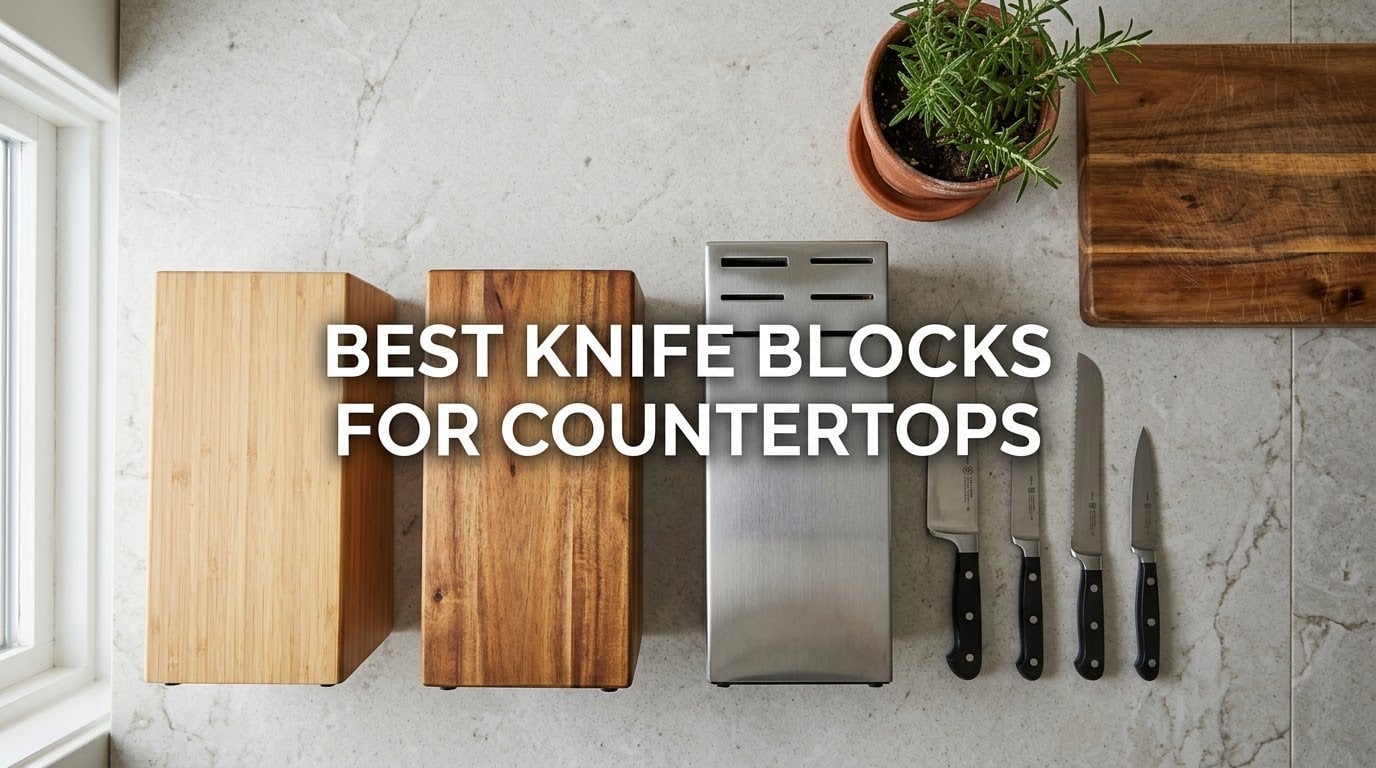
The best knife blocks for countertops are the ones that match your knife count, your blade lengths and the amount of counter you actually have to spare. A 20-slot bamboo block that stands 10.25 inches tall is a great answer in a family kitchen and a wasted hunk of counter in a galley apartment. A slim magnetic board takes almost no depth at all but needs a stretch of bare wall or backsplash to work against.
We went through the ten blocks below spec by spec: measured dimensions, slot counts, stated blade-length limits, base weight and how the blades sit inside. That matters because the complaints on r/Cooking and r/chefknives are rarely about looks. They are about slots too small for a bread knife, blocks that tip when you pull a cleaver, and boards that scratch the counter they sit on.
Here is the short version. For most people buying a first block, the Shenzhen Knives 20 Slot Bamboo block is the safest all-around answer because it takes the widest range of blades and weighs enough not to wobble. For a small kitchen, the Coninx 15 Slot Acacia block gives up nothing that matters at 5.12 inches square. If counter space is the real constraint, the ENOKING Extra Large Magnetic board is flat, sloped and far less intrusive than any slot block. All ten are sold as blocks only, so your existing knives go straight in.
Table of Contents
Top 3 Picks for Countertop Knife Storage in 2026

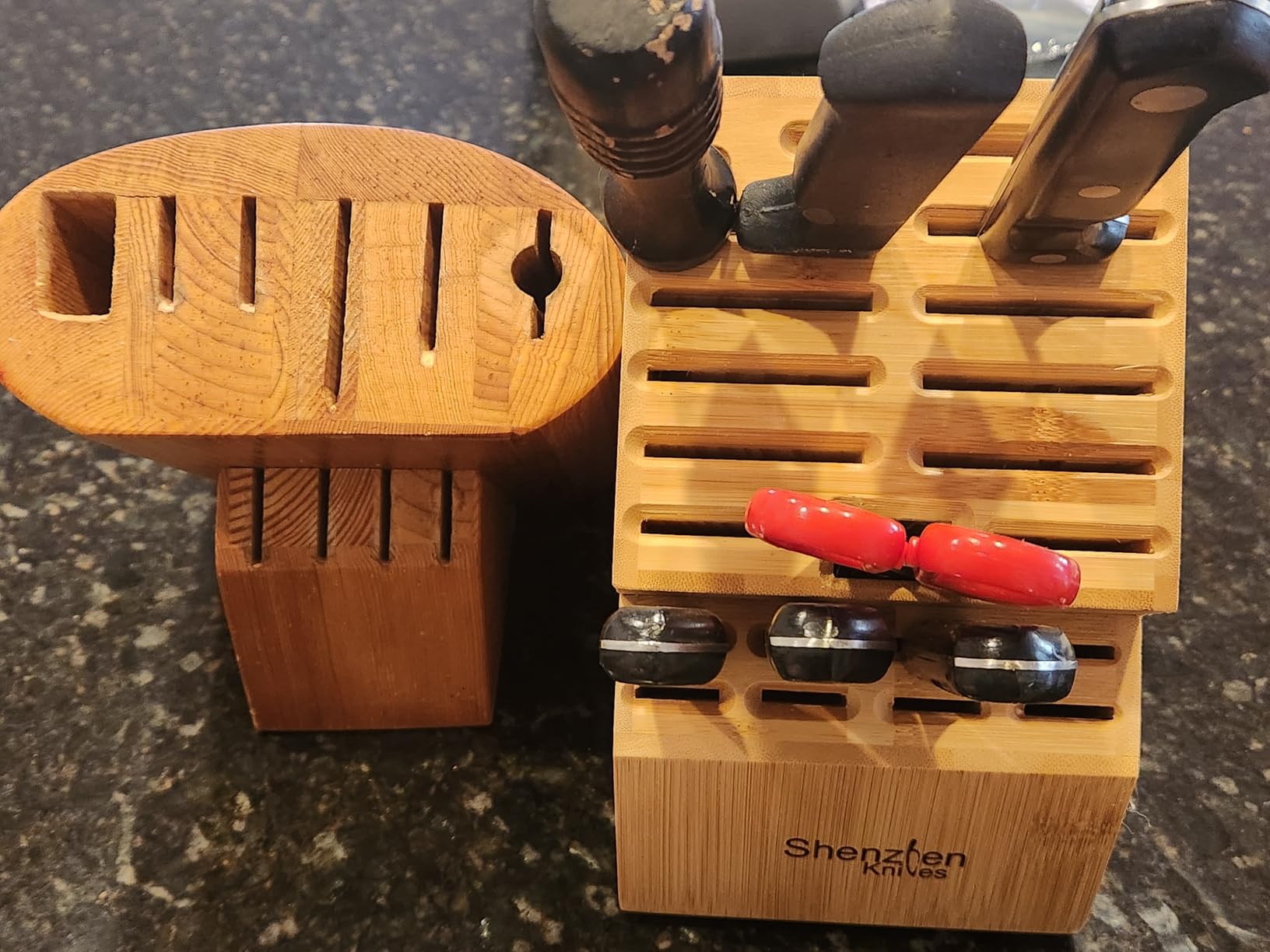
Shenzhen Knives 20 Slot Bamboo
- 20 universal slots
- Bamboo over solid wood core
- 12.25 x 5.25 x 10.25 in
- Four anti-skid feet

Cook N Home Bamboo 20 Slot
- 20 multi-size slots
- Handles 10.5 in blades and cleavers
- Stores shears and honing steel
- 10.8 x 4.8 x 9.5 in
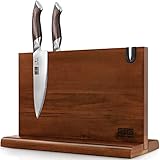
HOSHANHO Double Sided Magnetic
- Double-sided hidden magnet face
- 14 x 10 in acacia panel
- Holds 14 plus knives
- Whetstone included
At a Glance: Every Pick Compared in 2026
The table below is the fastest way to cut the field. Footprint is the number most roundups skip, and it is the number that decides whether a block works on your counter. Every dimension listed is the manufacturer’s stated item size, not an estimate.
| Product | Specifications | Action |
|---|---|---|
| Shenzhen Knives 20 Slot Bamboo Block |
|
Check Latest Price |
 Coninx Acacia Wood 15 Slot Block Coninx Acacia Wood 15 Slot Block |
|
Check Latest Price |
| Cook N Home Bamboo 20 Slot Block |
|
Check Latest Price |
| HOSHANHO Double Sided Magnetic Block |
|
Check Latest Price |
 KITCHENDAO XL Bamboo Universal Block KITCHENDAO XL Bamboo Universal Block |
|
Check Latest Price |
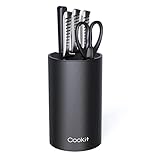 Cookit Round Universal Block Cookit Round Universal Block |
|
Check Latest Price |
 Laxinis World Stainless Steel Block Laxinis World Stainless Steel Block |
|
Check Latest Price |
 OOU Round Universal Block OOU Round Universal Block |
|
Check Latest Price |
 ENOKING Extra Large Magnetic Board ENOKING Extra Large Magnetic Board |
|
Check Latest Price |
 ENOKING 25 Slot Acacia Block ENOKING 25 Slot Acacia Block |
|
Check Latest Price |
One note on reading the numbers: manufacturers count capacity differently, and some openings are the scissors slot or the honing steel position rather than a knife. Where both readings appear in the data we have used the knife count and flagged the accessory positions separately.
Which Storage Style Fits Your Counter
Before the individual picks, there are really only five ways to store knives on a counter, and each trades off differently.
Wide slot block. The classic tiered block, and the best choice if you own a broad mix including a bread knife, carving fork or cleaver. Choose this if you want one object that organizes everything and you have 10 inches of depth to give up.
Vertical slim block. A narrow steel or bamboo column holding knives upright in parallel slots. Choose this if counter depth is tight but you still want blades out of the drawer, and if your knives are all under eight inches.
Round plastic block with a lift-off top. Detachable-top designs are the easiest to wash and the easiest to dry, which matters more than most buyers expect. Choose this if you cook with wet hands often, cook fish, or want a block you can put in a sink.
Magnetic panel or board. A flat panel with embedded magnets that blades stick to. Choose this for the smallest countertop footprint, if you pull one knife at a time rather than swapping several, and if you are comfortable with a wall-adjacent display.
In-drawer storage. Not a countertop option, but the honest alternative for a very small kitchen. Trays and sheaths keep blades flat and separated and give back every square inch. The trade is that you lose the display and reach for the right knife more slowly.
Our rule: if you own a bread knife or a cleaver, buy a slot block with a long slot. If every knife you own is eight inches or shorter, a slim vertical block or a round plastic block uses less counter than a wide tiered model.
1. Shenzhen Knives 20 Slot Bamboo Countertop Block – Best All-Around
- Widest blade range of any pick here
- Extra-deep wide-angled slots
- Hefty base resists tipping
- Four anti-skid rubber feet
- Two-tier layout keeps blades visible
- Deep 12.25 in footprint on the counter
- Sold as a block only with no knives
- 10.25 in height needs cabinet clearance
This block refuses to be picky. The slots are described as extra-deep and wide-angled, which in practice means a slim paring knife and a thick-spined chef knife both go in without forcing.
The build is a solid wood core under a bamboo veneer finish, and that core weighs about 7.85 pounds. That detail separates it from lighter blocks in the same category: when you pull a heavy blade out, the base resists shifting instead of creeping across the counter, and four anti-skid rubber feet add grip.
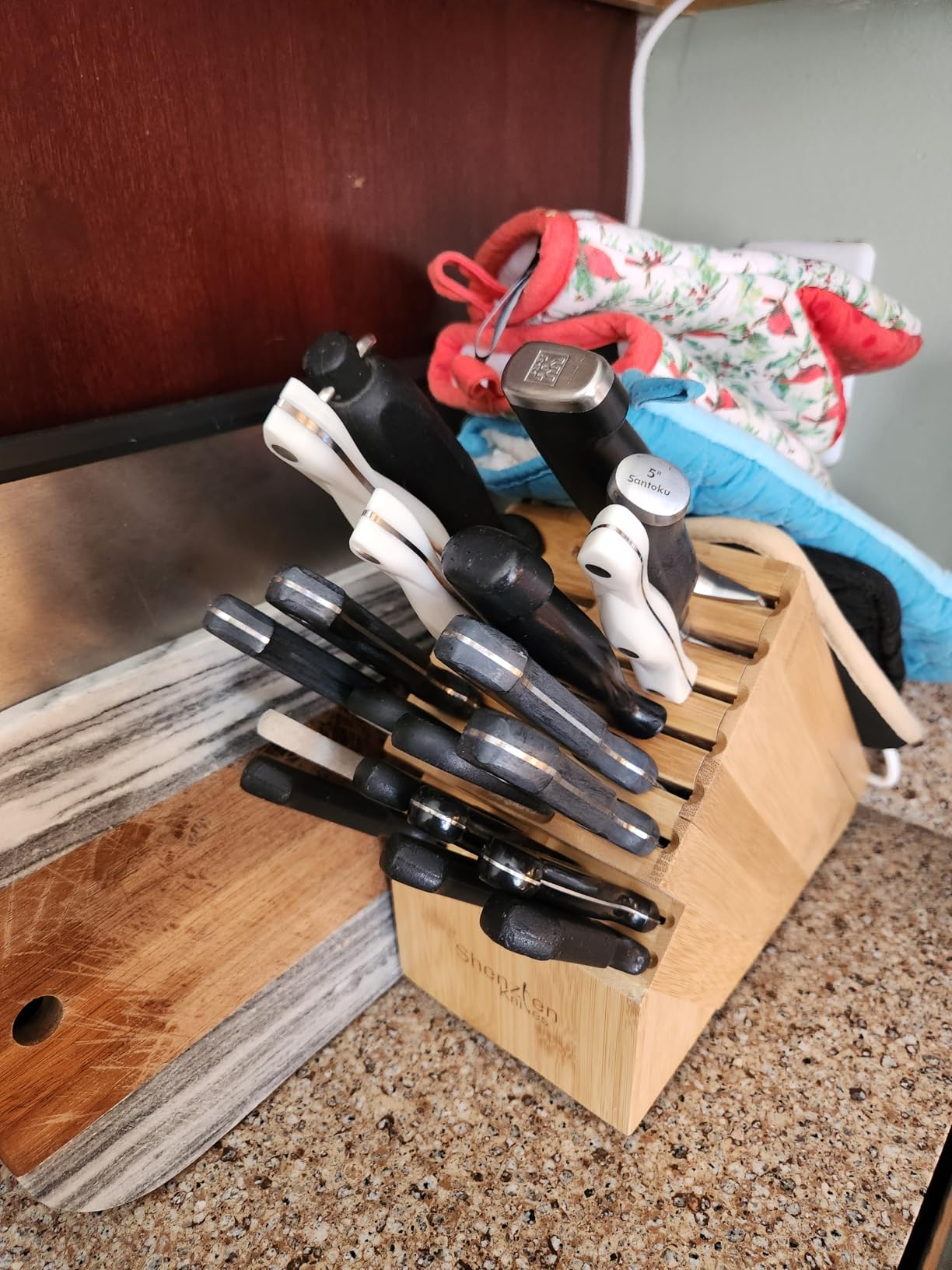
Capacity is 20 slots over two tiers, which is why reviewers describe it as fitting a full collection plus scissors and slicers. At 12.25 inches deep by 5.25 inches wide, it is the largest footprint in this roundup. On a 25-inch prep counter it is a significant object.
The two-tier layout keeps every knife visible, so you pick the right tool instead of grabbing whatever sits on top. Visibility matters more in a busy kitchen than a slim silhouette.
Check the counter depth and cabinet height before buying
At 12.25 by 5.25 by 10.25 inches, this claims a 12-inch strip of counter and needs a low cabinet with more than 10.25 inches of clearance underneath. Measure the drop from your cabinet to the surface first. If either number fails, the Coninx block gives the same construction in a 5.12-inch square footprint with 15 slots instead of 20.
Consider what you give up with a wide tiered block
Two tiers means knives sit in two rows, so the back row is less visible and slightly harder to grab without moving the front row. That is mild friction rather than a dealbreaker, but it matters when you want one knife, fast. It is also bamboo veneer over wood rather than solid bamboo, and it is a hand-wash item needing the care any wood surface does.
2. Coninx Acacia Wood 15 Slot Block – Best for Small Kitchens
- Compact square footprint for tight counters
- Slots sized for chef knives to 8 in
- Separate scissors position
- Rubberized feet stop skidding
- Each block has unique grain
- Fewer slots than the 20-slot models
- Natural wood grain varies from listing photos
- Hand wipe only
- no dishwasher
This is the answer for a kitchen where counter space is genuinely rationed. At 5.12 inches on a side and 8.66 inches tall, it is close to a square column, so it fits a back corner or the gap between a wall and a counter edge where a tiered block will not go.
The 15 slots are graduated rather than one repeated width. The largest take chef knives up to 8 inches, and a dedicated position holds a pair of scissors, so a mixed household collection sorts itself.
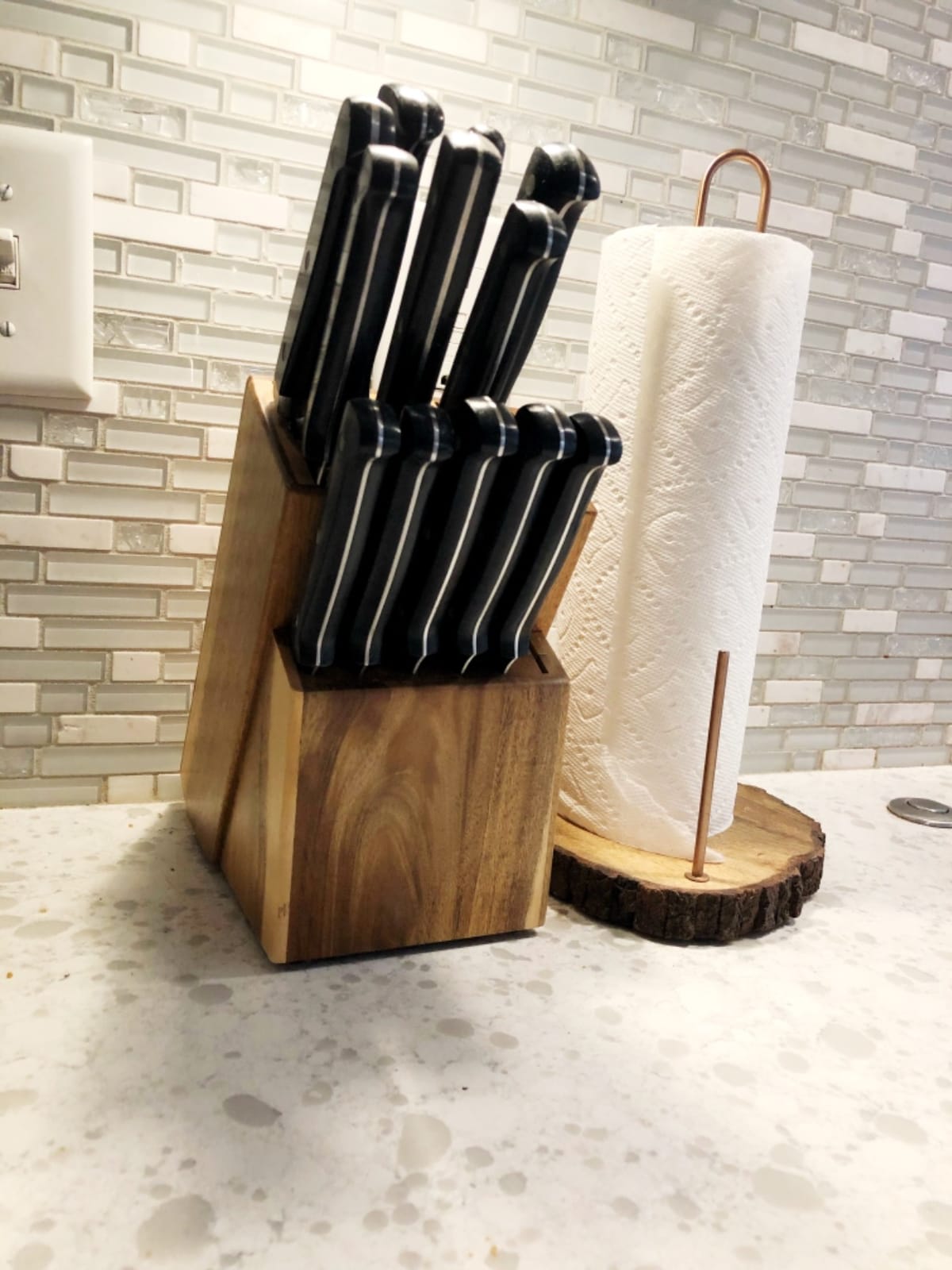
Construction is solid acacia rather than a veneer over a core, and that is where the 1.5 kilogram weight comes from. Reviewers consistently mention the rubberized feet preventing the block from skidding or shifting, which is the other complaint we hear about slim blocks in small kitchens.
The trade with 15 slots instead of 20 is that it is one tier shorter, not one tier smaller. Above about a dozen blades plus accessories, you will feel the difference.
Match this block to an eight-inch blade ceiling
The stated slot sizing covers chef knives up to 8 inches, which handles most home collections. It will not take a long bread knife or a cleaver, and bread knives are the thing people most often try to force into a compact block and regret. Measure from bolster to tip before ordering. If anything exceeds 8 inches, look at the Cook N Home block, stated to accept blades up to 10.5 inches.
Know what natural wood means for your kitchen
Acacia is a solid piece, so it wipes down without absorbing water the way MDF or veneer panels can. It also means color and grain differ from the listing photos on nearly every unit, which reviewers mention often. It cannot go in a dishwasher: wipe with a damp cloth, dry standing up, and treat with food-grade mineral oil once or twice a year.
3. Cook N Home Bamboo 20 Slot Block – Best Value for Large Collections
- Widest stated blade range at 10.5 in
- Dedicated positions for shears and honing steel
- Accepts a cleaver
- Bamboo is easy to wipe clean
- 1-year manufacturer warranty
- 9.5 in height can crowd low cabinets
- Needs to be kept dry to avoid moisture issues
- Sold as a block with no knives
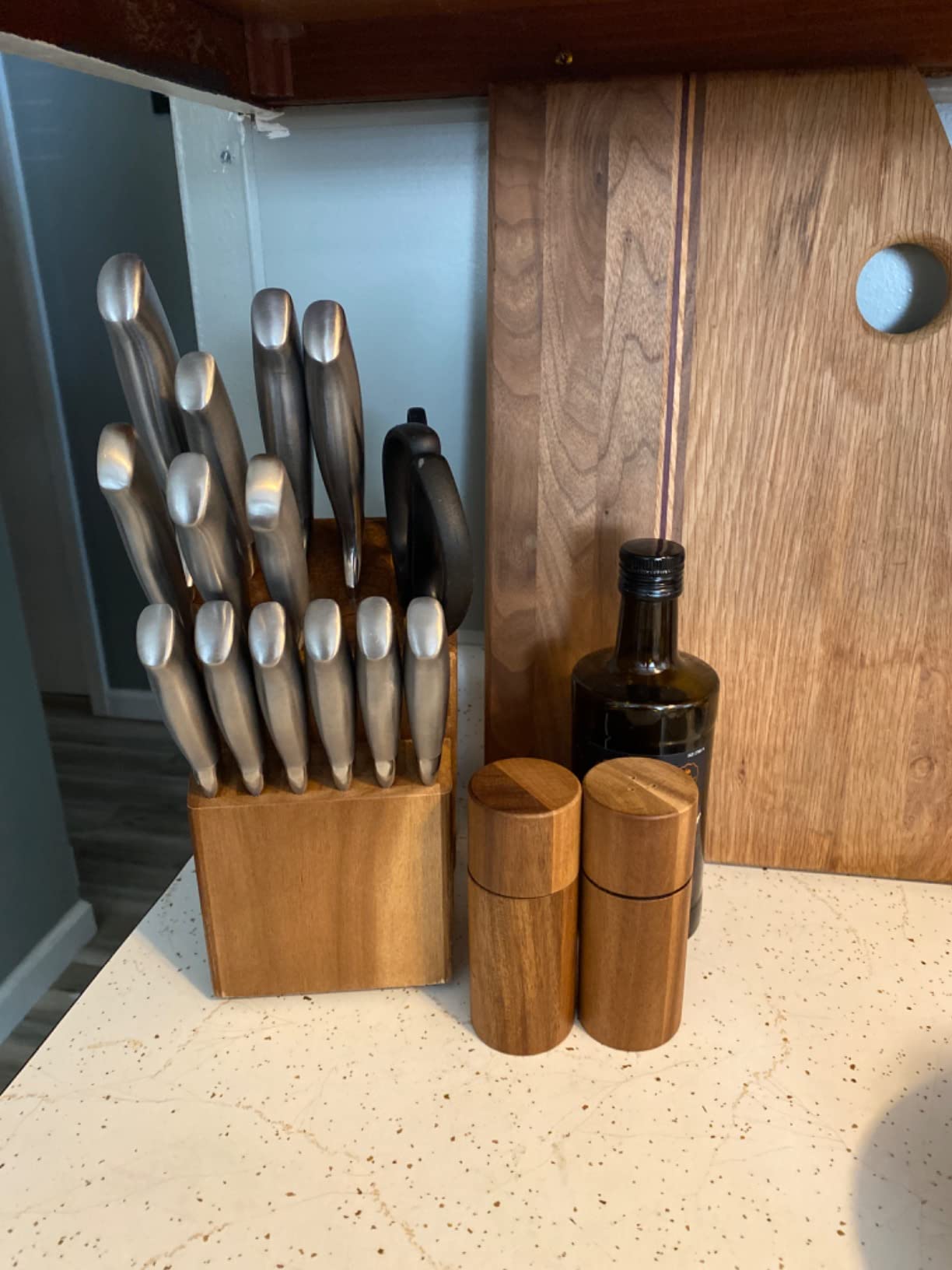
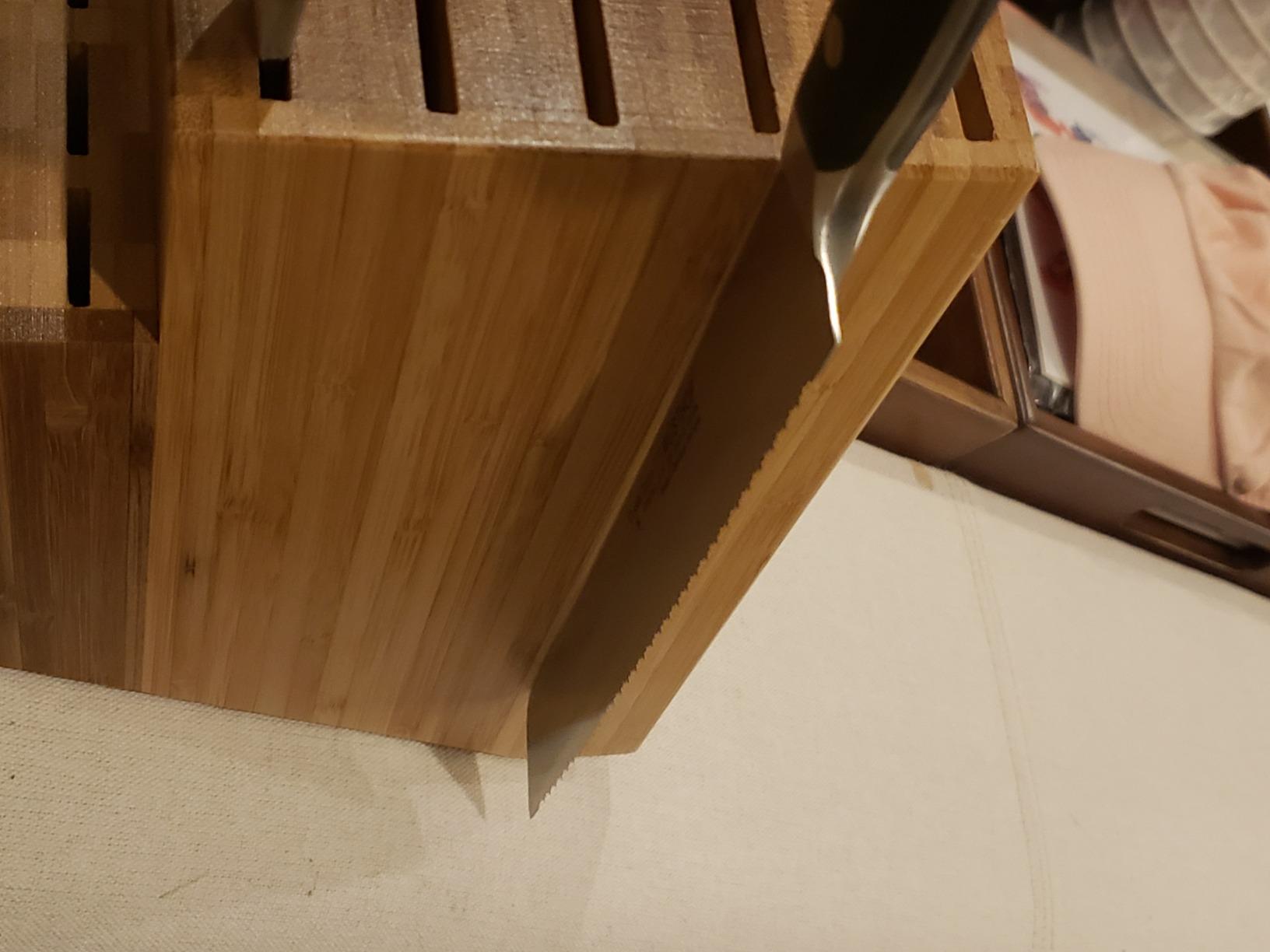
This block earns the value spot because of one number: the slots accept knives and utensils up to 10.5 inches long. That is the longest blade allowance stated by any block here, so a bread knife or slender boning knife is a normal load rather than an exception.
The layout mixes slot widths across 20 openings, with positions for kitchen scissors and a sharpening steel alongside the blades. That matters for households who already own a honing rod, because a dedicated position stops the rod leaning against a blade all day.
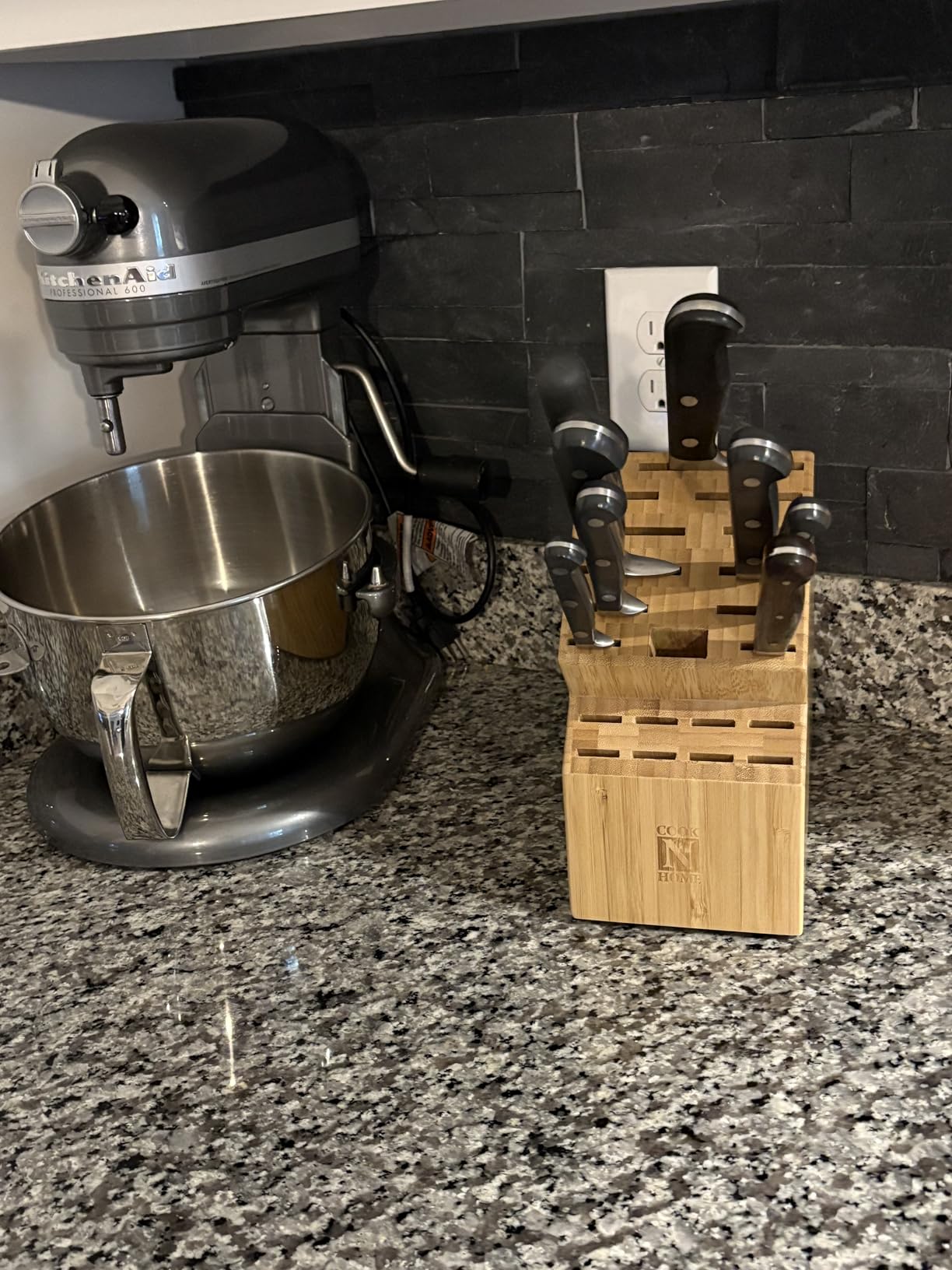
At 4 pounds with a non-slip base, it is heavier than the plastic designs but lighter than the 7.85-pound bamboo veneer core we picked first. Reviewers rate the stability well, and 5-star ratings make up 82 percent of more than 4200 reviews, with the capacity, cleaver accommodation and finish cited most often.
Watch the height against your lower cabinets
At 9.5 inches tall, this is the second tallest block in the set. Buyers in kitchens with low-hanging cabinets mention crowding as the one consistent complaint. Below about 10 inches of clearance, go with a slimmer column: the Cookit or OOU round plastic blocks stand just under 10 inches tall in a much smaller circle.
Keep it dry and it will outlast the trend cycle
The main care note is that knives should go in fully dry and the block should never sit in standing water. Bamboo is more forgiving than unfinished hardwood but still stains if a wet knife rests against it for days. It carries a 1-year manufacturer warranty, the only stated warranty in this group, and the same model comes in 25-slot and acacia versions.
4. HOSHANHO Double Sided Magnetic Knife Block – Best Magnetic Panel
HOSHANHO Magnetic Knife Block 14 x 10″, Double Sided Magnetic Knife Holder
- Any blade shape fits with no fixed slot width
- Large 14 x 10 in face holds 14 plus knives
- Whetstone sharpener included
- Non-slip pad on a 4.5 in base
- Wipes clean with a damp rag
- 14 in width needs a generous counter run
- Wood face shows wear over time
- Heaviest premium option in this group
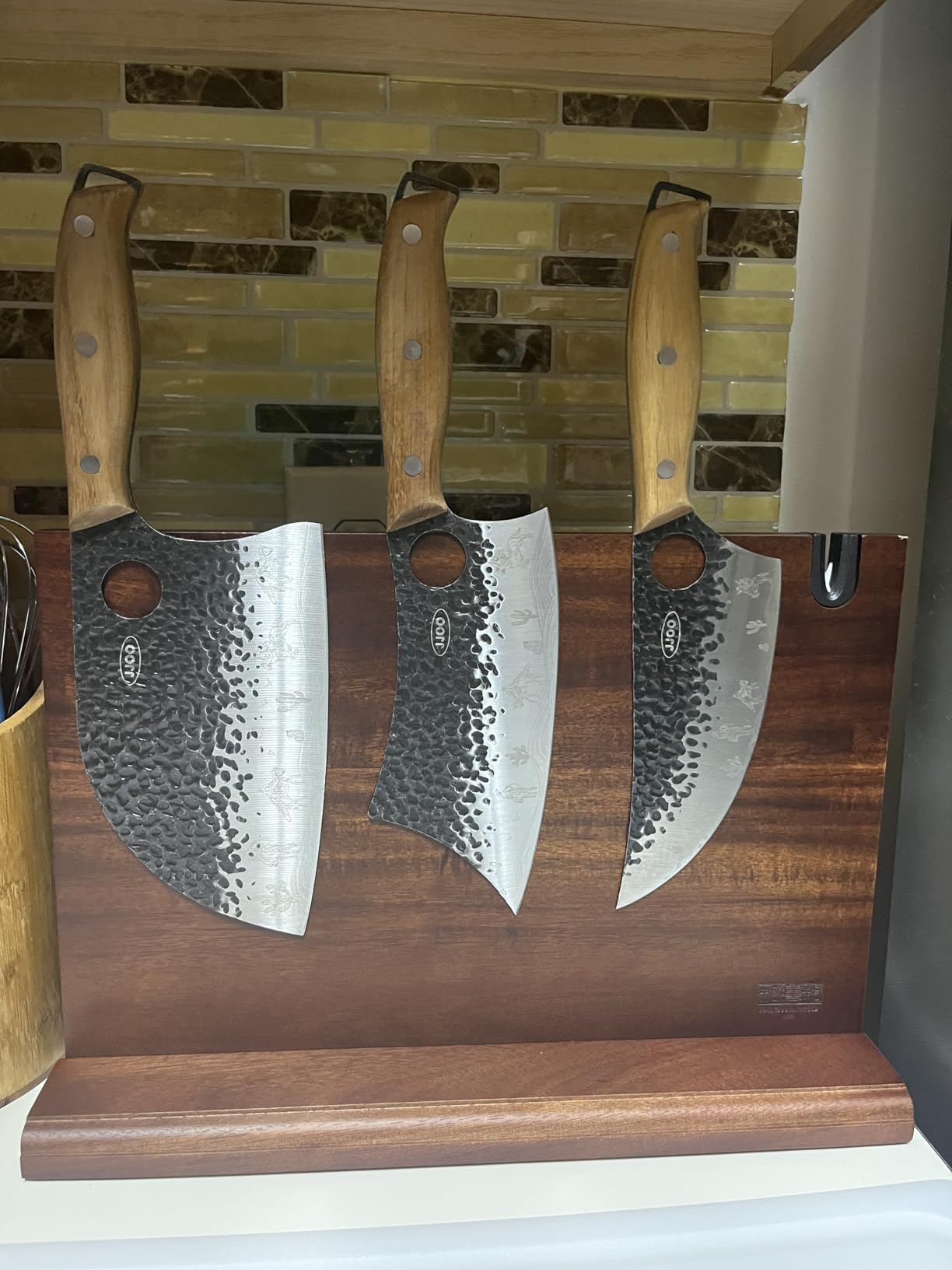
Magnetic panels solve the problem slot blocks create. There is no fixed slot width, so a paring knife, a bread knife and a cleaver all attach to the same flat surface with nothing to scrape against. If your collection is varied, that flexibility is the reason to choose this style.
This one is double sided, so you can load both faces and still reach the stated capacity of 14 knives plus accessories. The magnets are hidden behind the surface, which keeps the panel looking like furniture rather than a strip of exposed steel.
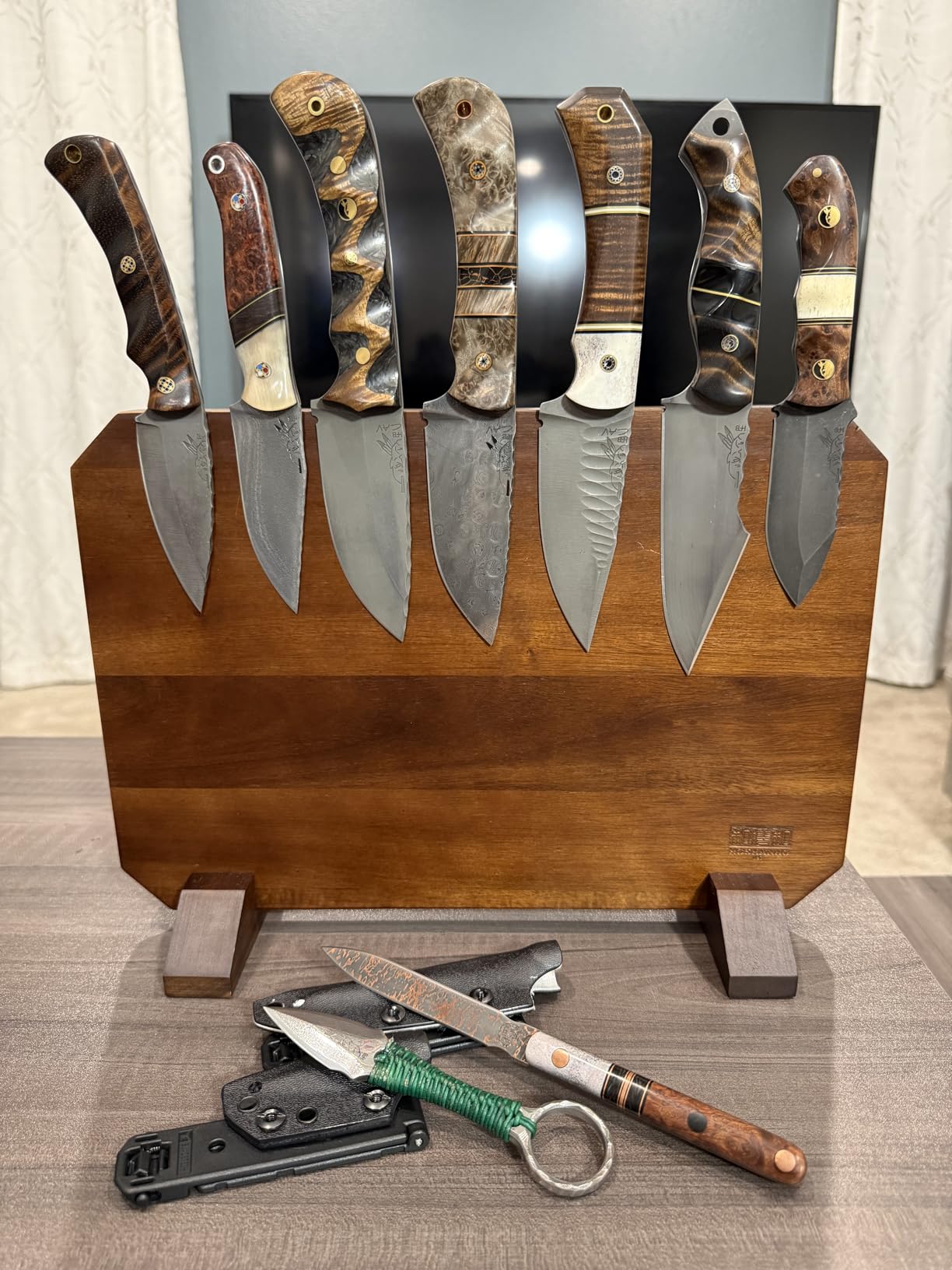
The body is acacia, described as hard and resistant to cracking, with a textured dark brown finish that wipes down with a damp rag. A 4.5 inch base with a non-slip pad keeps the stand planted while you pull a blade off the face.
A whetstone sharpener is included and the panel is boxed for gifting. Buyers rate magnet strength and double-sided capacity as the two features that justify the step up from bamboo.
Measure the counter run, because width is the constraint
At 14 inches wide, this is the widest object in the roundup and needs a clear stretch of counter roughly the length of a cutting board. The advantage is depth: at 4.5 inches the base is shallow, so it takes a strip along the back wall rather than a square of work surface. Counter length to spare but depth tight is exactly the trade you want.
Know the limits of magnetic storage
Magnets hold steel blades only, so ceramic knives will not attach. Enthusiasts on r/chefknives also caution against magnetic storage for very hard steels, treating roughly HRC 60 and above as the line where repeated magnet contact and chipping start to matter. Reviewers note that a wood face avoids the scuffing people report with bare steel strips. Keep one or two everyday blades on it and send the rest to a drawer.
5. KITCHENDAO XL Bamboo Universal Block – Best Blade Edge Protection
- Parallel slots stop blades touching each other
- Separate slots for shears and sharpening rods
- Ventilation openings speed drying
- Anti-slip feet steady the block
- Holds up to 16 knives
- 8.6 in length ceiling rules out bread knives
- Parallel slots can let small blades sit at an angle
- No cleaver accommodation
The defining feature is the double-deck parallel slot layout. Instead of staggering knives in angled rows that let blades rest against a neighbor, this block runs slots in parallel decks so each blade has its own lane. Edge-on contact is the most common way a blade picks up a nick in a block.
Dedicated positions for kitchen scissors and sharpening bars keep those tools from sharing a slot with a blade, so the protective design rather than the capacity is the selling point here.
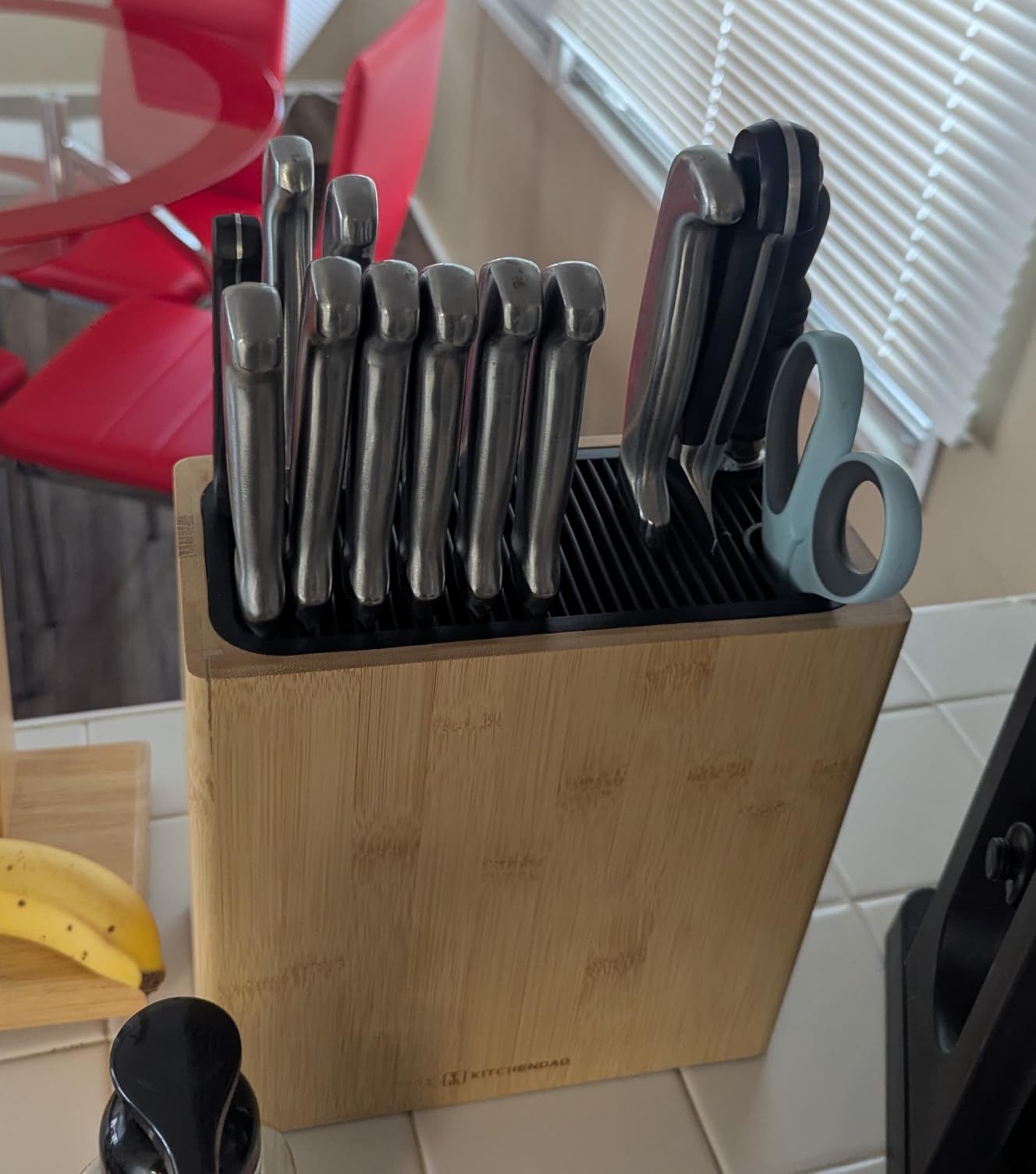
Ventilation openings cut into the body let tools dry faster after a wash, which reviewers flag as helping prevent rust. At 9.06 by 4.53 by 9.06 inches and 1.29 kilograms, it is lighter and narrower than the two other 20-slot bamboo blocks here, which is why it slips under cabinets more often than they do.
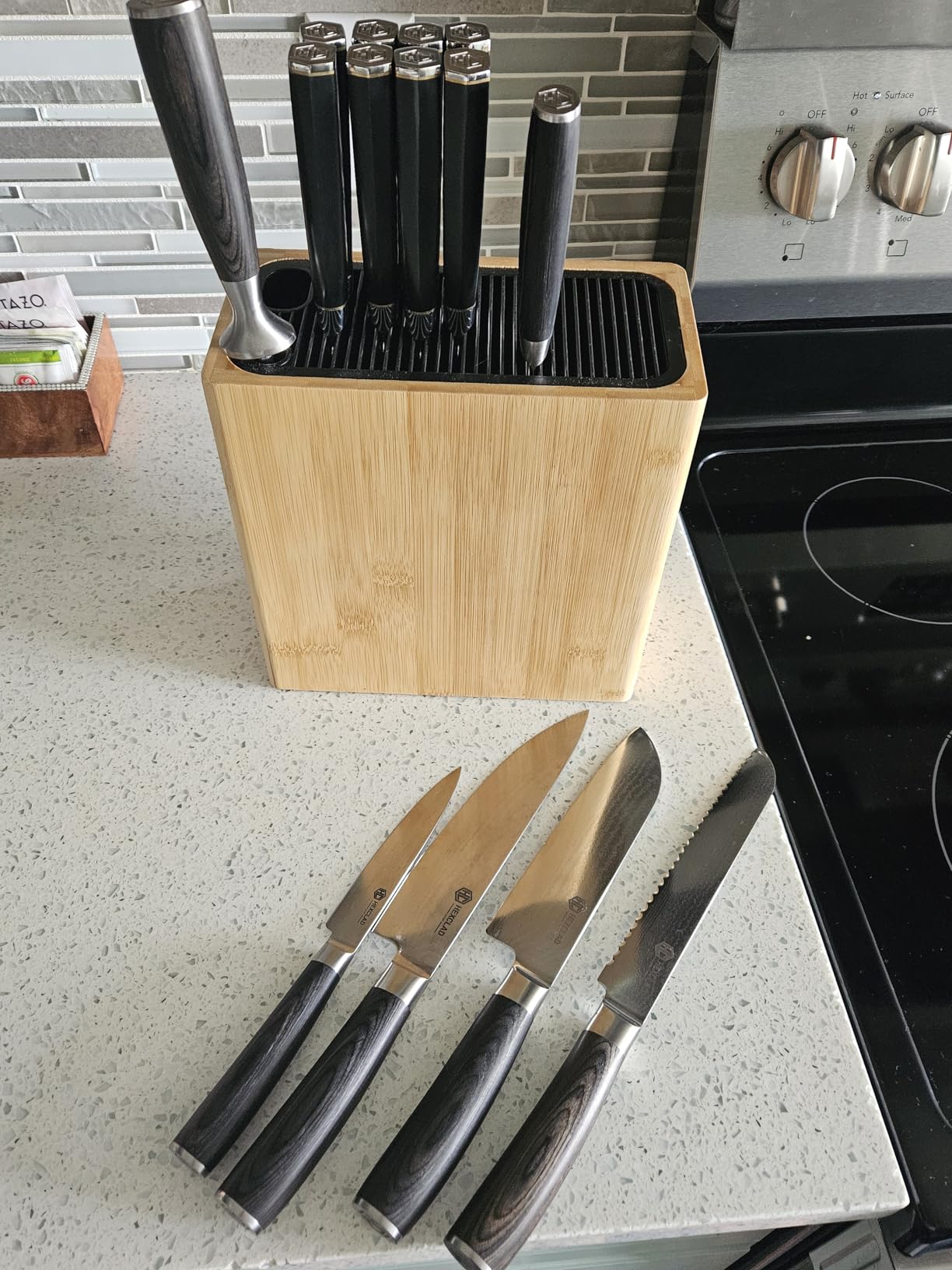
Check your longest blade against the 8.6 inch limit
The stated ceiling is blades up to 8.6 inches, a genuine limitation for some households. Bread knives and cleavers will not go in, and reviewers call that out directly. If you own a serrated bread knife, decide deliberately: a knife that lives in a drawer with a guard is better than one forced into a slot it does not fit.
Understand why small blades can sit at an angle
Because the slots run parallel rather than splayed outward, a very short paring knife can seat at a slight tilt instead of standing flat. It stays secure and it does not touch its neighbors, which is the trade this design makes on purpose. Anti-slip feet add stability when you remove a knife, which matters more on a light 1.29 kilogram body. Bamboo again means hand wiping, not a dishwasher.
6. Cookit Round Universal Block – Best for Easy Cleaning
- Lift-off top goes straight into a sink
- Knife tips never reach the base
- 14 knives in a small round body
- Weighted base protects the counter
- Doubles as a utensil bucket
- Plastic finish does not suit wood or stone counters
- 20 cm blade limit is short
- Three-star ratings run higher than rivals
This is the hygiene answer. The top lifts off and the drainage holes let water run out, so the part of a block that actually touches wet, food-covered blades can be washed and dried instead of wiped around. For anyone who cooks fish, handles raw meat daily, or hates a slot they cannot reach, that beats solid wood.
The round body is 5.51 inches across and 9.06 inches tall, so it takes almost no counter width. Capacity is 14 knives plus a scissors or sharpener position, packed into parallel grooves that keep blade faces from scratching each other.
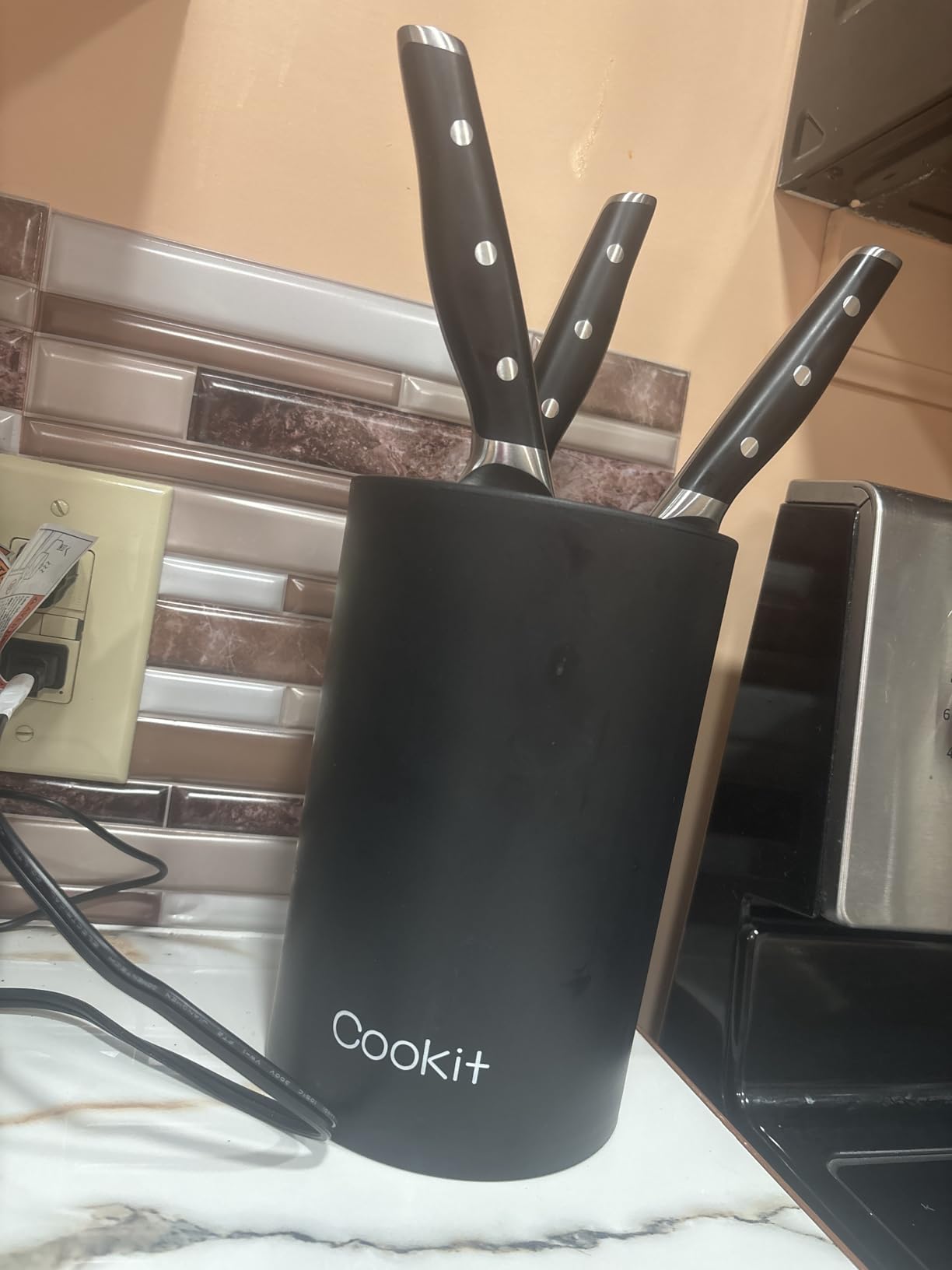
Knife tips never touch the base, so there is no point contact dulling a tip against a hard surface. A wavy inner slot pattern keeps knives standing upright instead of slanting, and a weighted base keeps the whole thing planted and off your countertop.
It is sold as a block only, which is the right call for anyone who already owns knives and does not want to accept a set they did not choose.
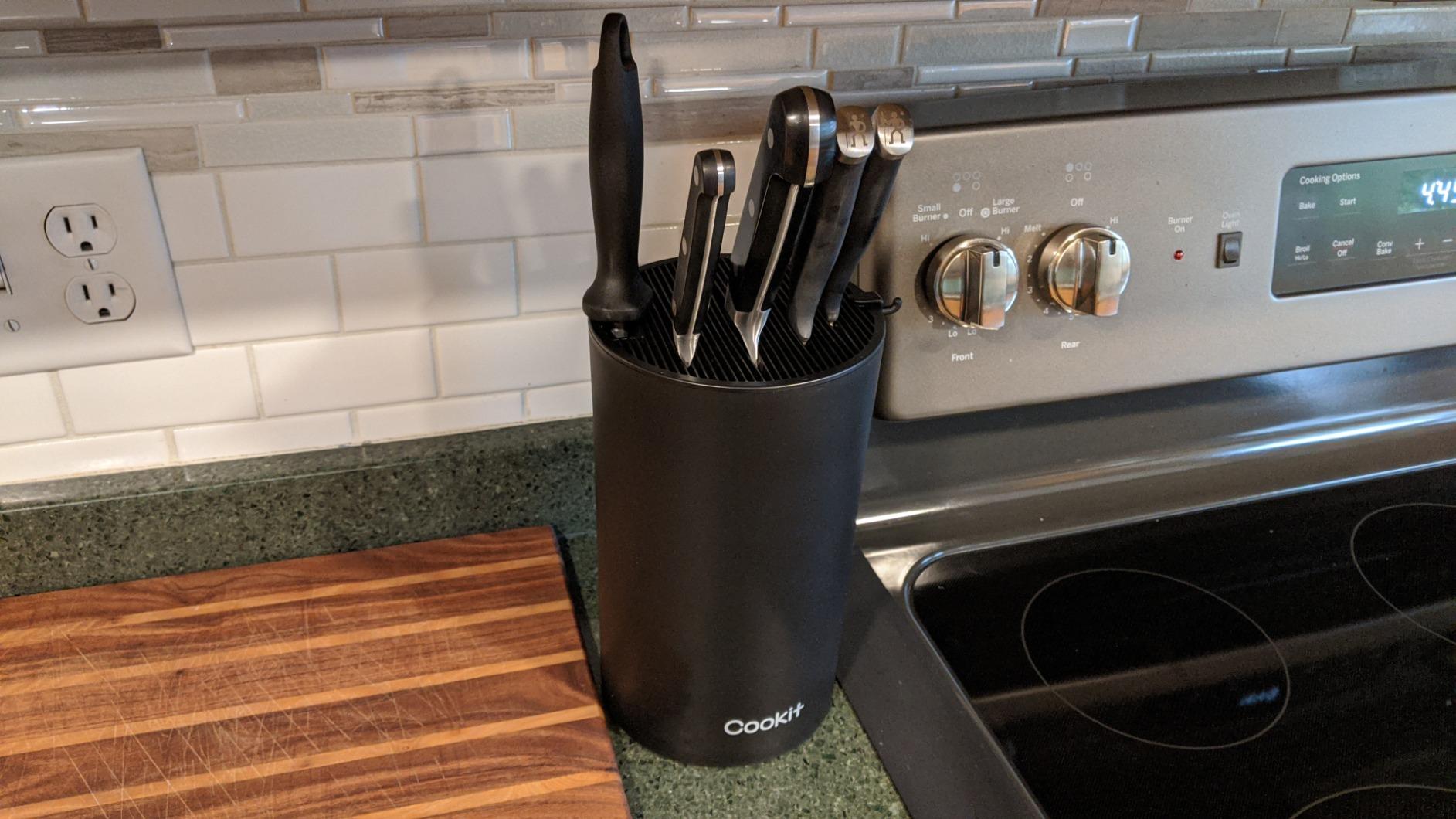
Measure blade length against the 20 cm ceiling
Stated maximum blade length is 20 cm, roughly 7.9 inches. That is short enough that many chef knives will sit awkwardly deep, and reviewers single it out as the main reservation. Round up to the OOU block for a taller column, or pick a 20-slot bamboo block if blade length varies widely.
Decide whether plastic belongs on your counter
Premium PP plastic is practical and a visual compromise. Against butcher block, stone or an integrated appliance suite it will not blend, and buyers who installed it in a wood kitchen mention the look rather than treating it as a detail. Ratings here skew slightly lower than the wood blocks, with 3-star ratings at 7 percent. Strong on cleaning and footprint, weaker on material feel.
7. Laxinis World Stainless Steel Block – Best Modern Metal Look
Laxinis World Universal Knife Block, Stainless Steel, Counter-Top Storage
- Only 4 inches wide
- saves serious counter space
- Holds 12 knives with 8 in blades plus shears
- Slot-less frame accepts every blade shape
- Weighted anti-slip base
- Steel wipes clean and has not rusted in use
- Straight slots let small knives tilt
- No accommodation for very long blades
- Fingerprints show on the finish
- Snug when full
At 4 by 4 by 9.1 inches, this is the narrowest footprint in the roundup, and in a galley kitchen that is the whole argument. A column roughly one inch wider than a switch plate holds 12 knives with 8-inch blades plus a pair of kitchen shears, close to the most any object this thin can carry.
The frame is slot-less, with no fixed-width dividers at all. Knives are gripped by the opening itself, so carving, paring, chef, bread, steak and utility blades all fit the same body regardless of shape.
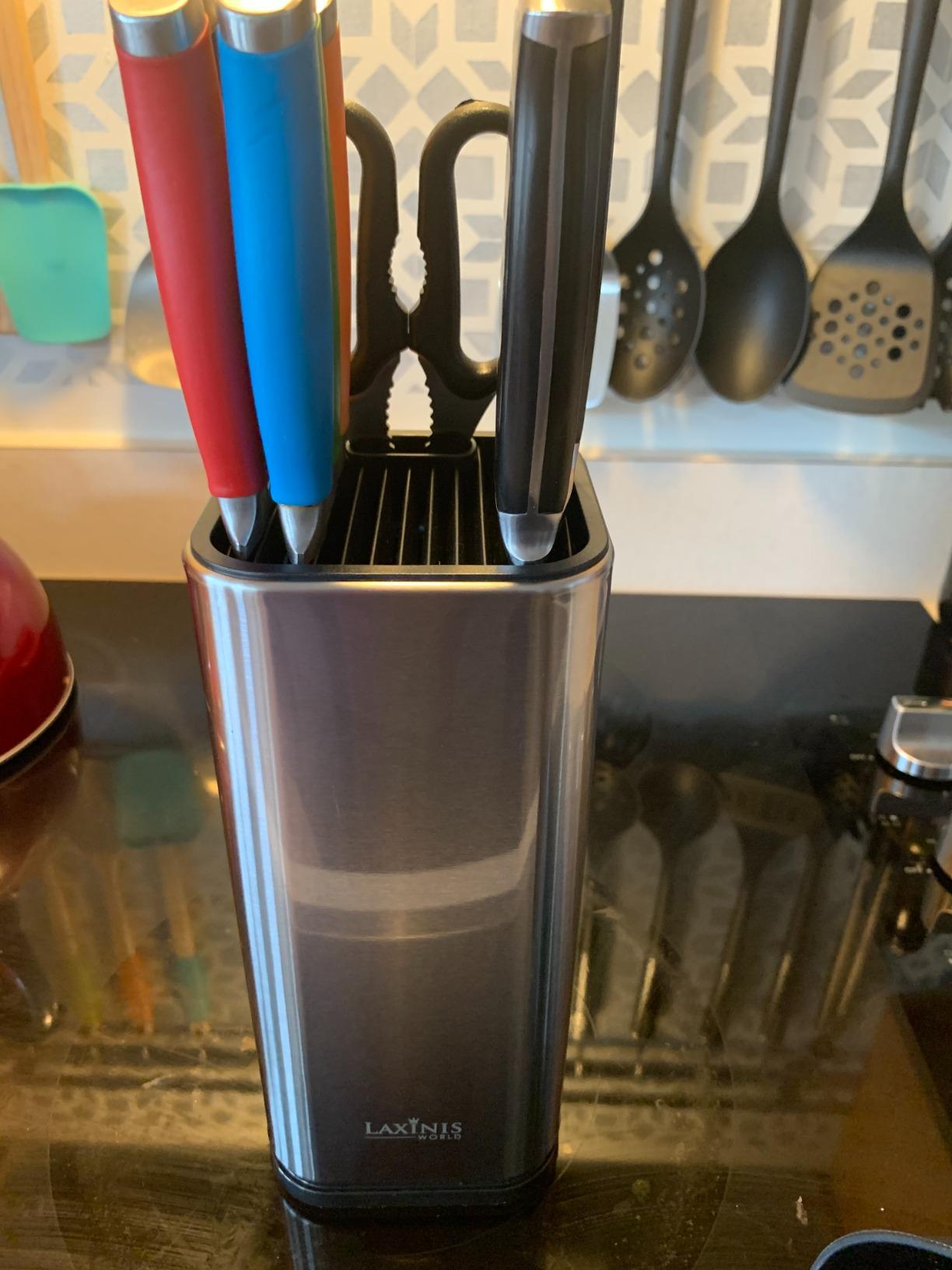
A weighted base with anti-slip feet prevents tipping when fully loaded, and a drain hole in the base helps keep the interior dry. Blade tips do not touch the block surface, and the top opening is wide while the bottom narrows, which stops a thin knife from sliding straight through.
Buyers praise the durability directly: several mention the stainless finish not rusting and wiping clean easily over months of use, a real advantage over bamboo in hard water.
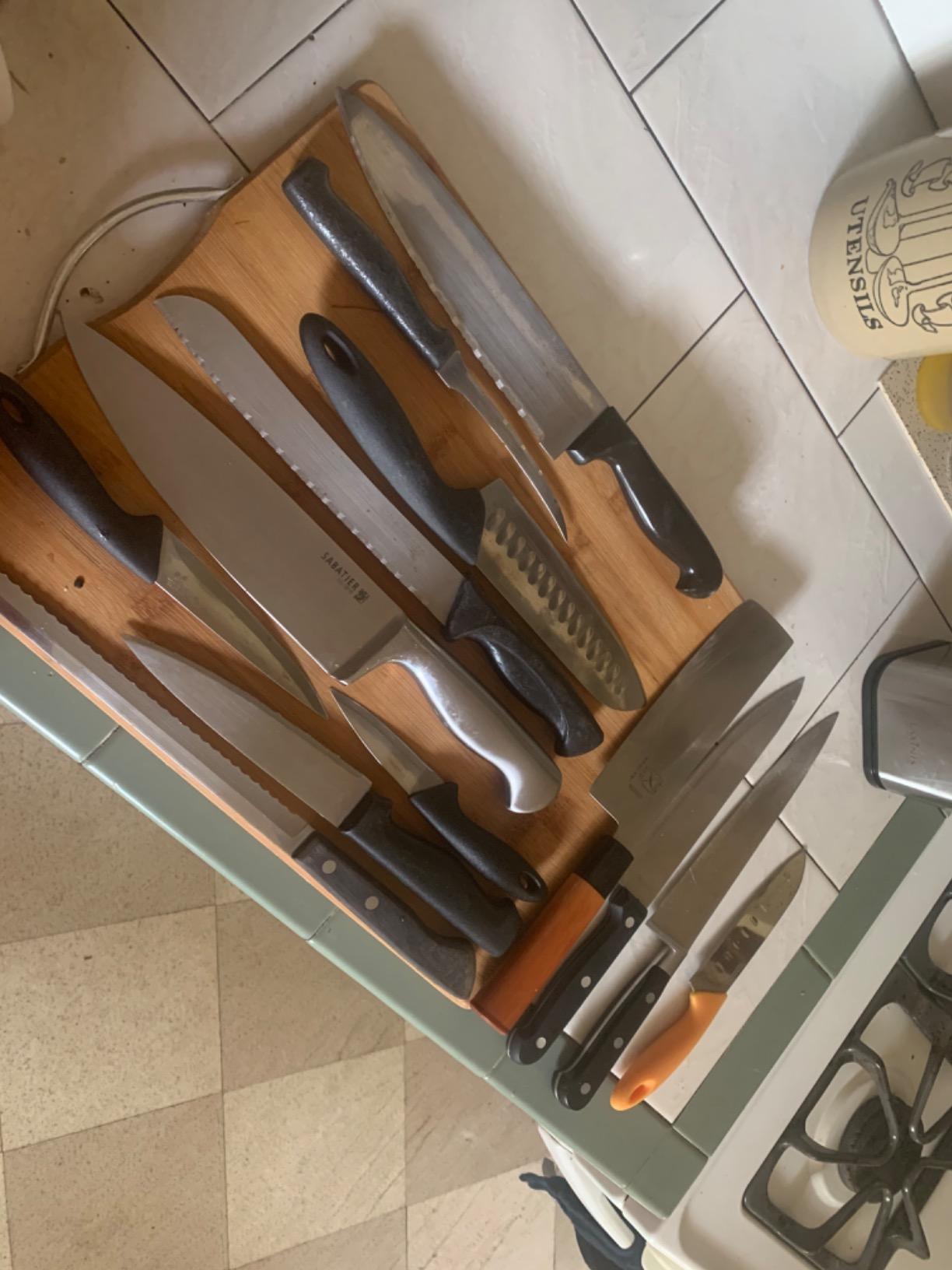
Understand the straight-slot tradeoff
Because the interior is a straight slot rather than a wavy one, smaller and thinner knives can flop or tilt forward. Several reviewers flag this as the most common criticism, and the fix is to seat the knife a little deeper. The same geometry limits very long blades, since the frame is sized around an 8-inch blade. Bread knives and long slicing knives are the ones to test by eye.
Keep the finish looking new
Stainless steel shows fingerprints fairly easily, the one cosmetic complaint owners repeat. A dry cloth after loading handles it in seconds. As the block fills, insertion can take a little force because the blades pack tightly, and that tightness is also what stops knives rattling. A reasonable trade, worth knowing if you swap knives constantly.
8. OOU Round Universal Block – Best Upright Alignment
OOU Universal Knife Block Holder Without Knives, Round Kitchen Knife Holder, Detachable Knife Storage for Easy Cleaning-Black
- Knives stand straight instead of slanting
- Removable top washes and dries fast
- Weighted base protects the counter
- Knives stay in even if overturned
- Slim modern shape fits under low cabinets
- Blades limited to 8 inches
- Top plastic flexes and does not feel premium
- One buyer received a scratched returned unit
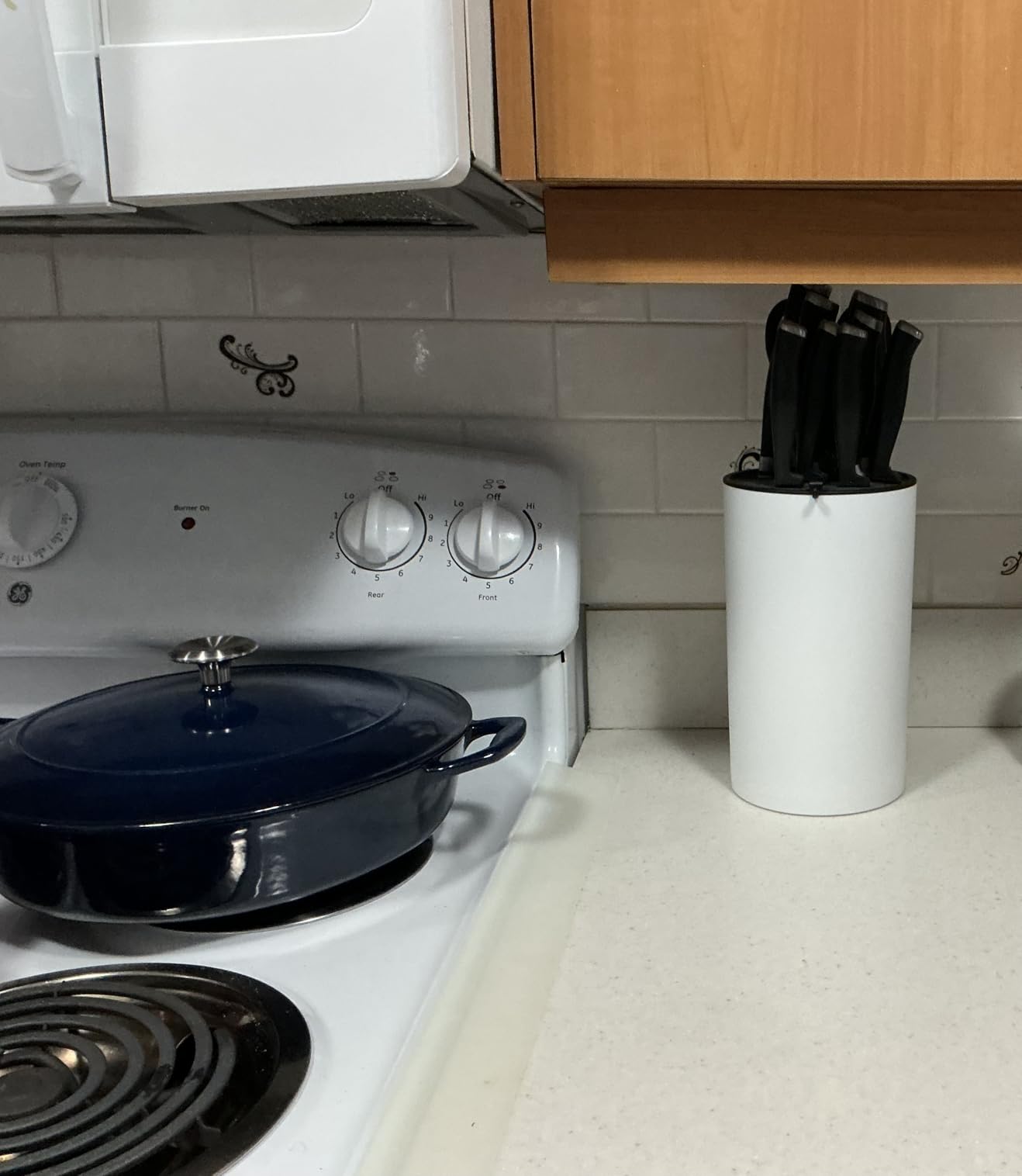
The thing reviewers praise most is alignment. Knives stand upright and straight rather than slanting the way they do in many plastic stands, and that is visible when the block sits out on the counter with 11 blades in it.
Like the Cookit, it has a removable top with drainage holes that lifts off for washing and dries quickly afterward. That is the practical reason to choose either round plastic design over a bamboo block you can only wipe.
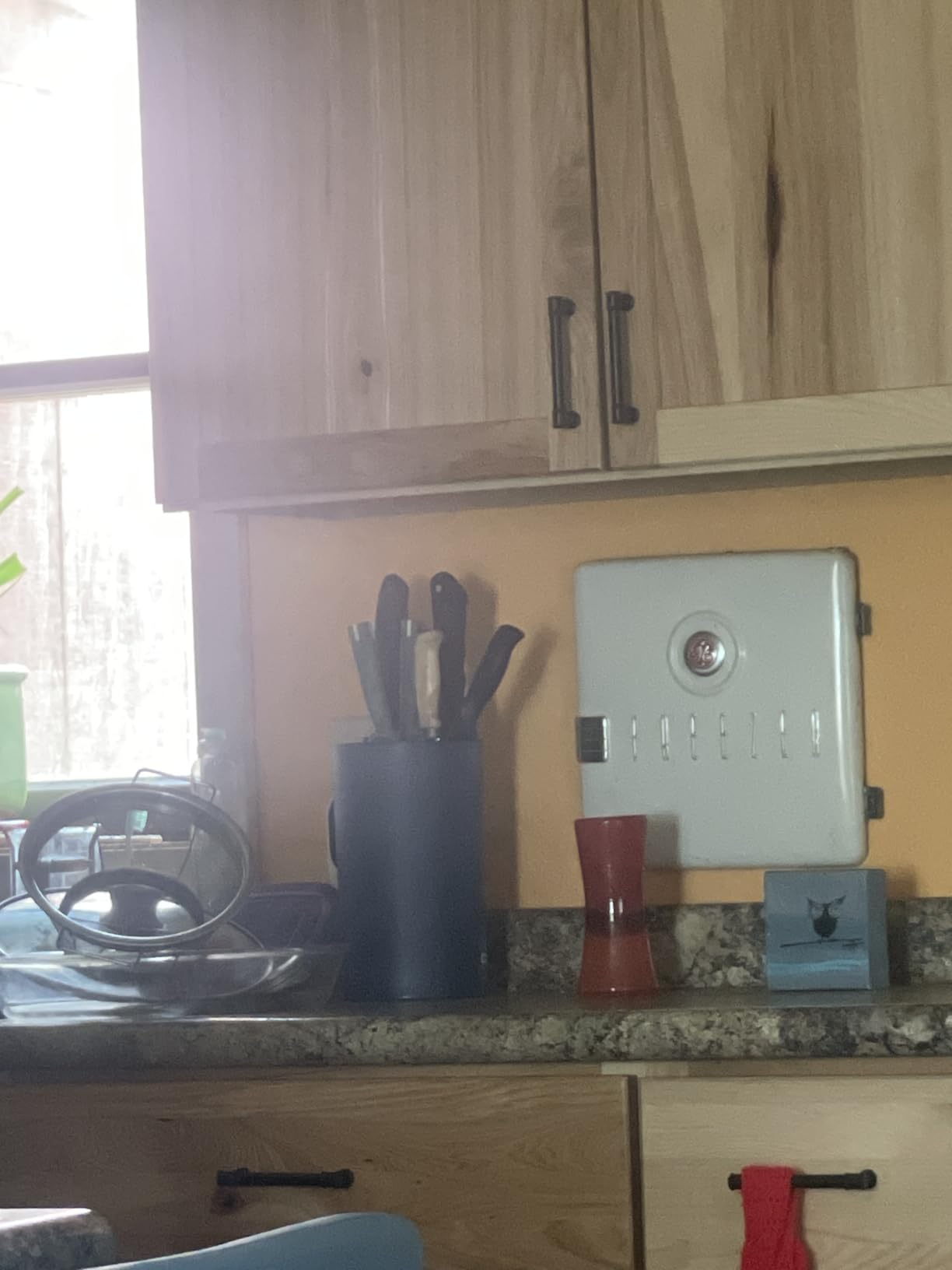
Capacity is 11 knives plus a scissors or sharpener position, with parallel slots so blades do not scratch each other and tips that never reach the base. The weighted base improves stability and protects the countertop underneath, and knives stay seated even if the block is turned over.
At 5.9 inches across and 9.84 inches tall it is one of the taller round designs here but still narrower than any tiered block, and slim enough to tuck under low cabinets.
Know the 8 inch blade limit before ordering
Blades up to 8 inches fit, and anything longer needs a different block. That limit is why a collection including a bread knife should look at the wider slot blocks or a magnetic panel instead. Knives staying put even when the block is overturned is a genuine safety plus in a home with children or a curious pet.
Weigh the plastic feel against the cleaning win
The top plastic is hard and bendable, so the slats do not feel premium in the hand, which is the consistent note in reviews and the honest weakness of this design. One buyer also received a returned unit with a scratched interior, an isolated report rather than a pattern, but worth checking on arrival. The block doubles as a utensil bucket or vase, which offsets the plastic feel if you are styling a small kitchen.
9. ENOKING Extra Large Magnetic Knife Board – Best Counter Space Saver
ENOKING Large Magnetic Knife Block, 15 * 9-In Acacia Wood Knife Holder
- Flat board returns depth to the counter
- Holds short knives and heavy cleavers
- No drilling or wall mounting
- Acacia grain looks good in the open
- Rubber feet prevent slipping
- Assembly hardware needs replacing
- Wood surface scratches with use
- Not compatible with ceramic knives
- Wood can split if you do not pilot drill
This is the pick for anyone whose real complaint is counter space. A slim double-sided board leaning against the backsplash takes depth rather than width, so the working area in front of it stays clear. The extra-large panel is 15.2 by 9 inches, with smaller variants available if your run is tight.
The magnets are triple-enhanced and hold up to 10 knives per side depending on knife size. Buyers specifically call out that short knives and heavy cleavers still hold, which is where cheaper magnetic setups tend to let go.
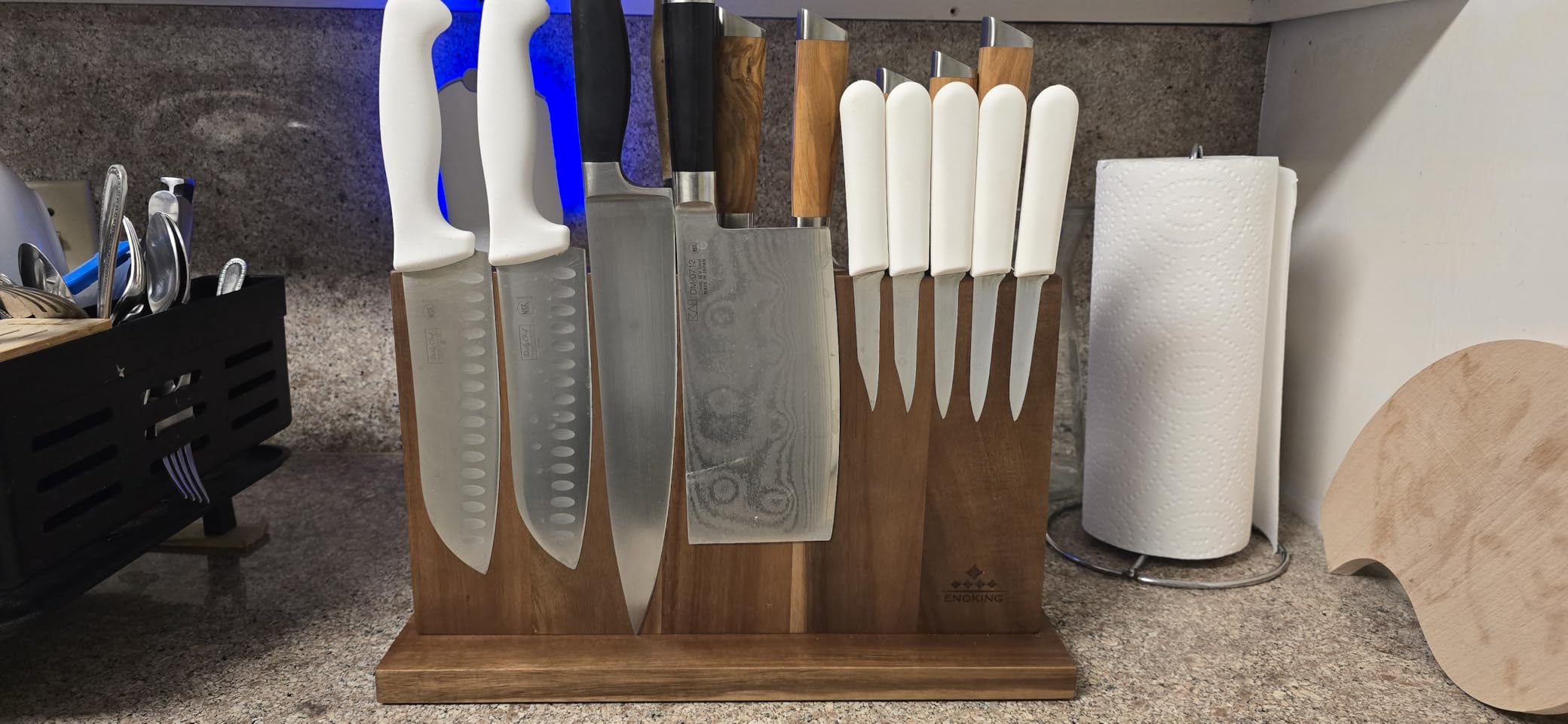
Because blades attach along the full edge of the surface rather than sitting in a slot, there is no scraping against wood and no fixed width to match. Several owners describe it as feeling safer than a bare steel strip, and the acacia grain is the reason it looks intentional on an open counter.
It needs no wall mounting at all, which matters for renters. There was a detailed thread on r/minimalism about a small kitchen with a tiled backsplash that cannot be drilled, and a freestanding board solves that without touching the wall.
Budget ten minutes for assembly
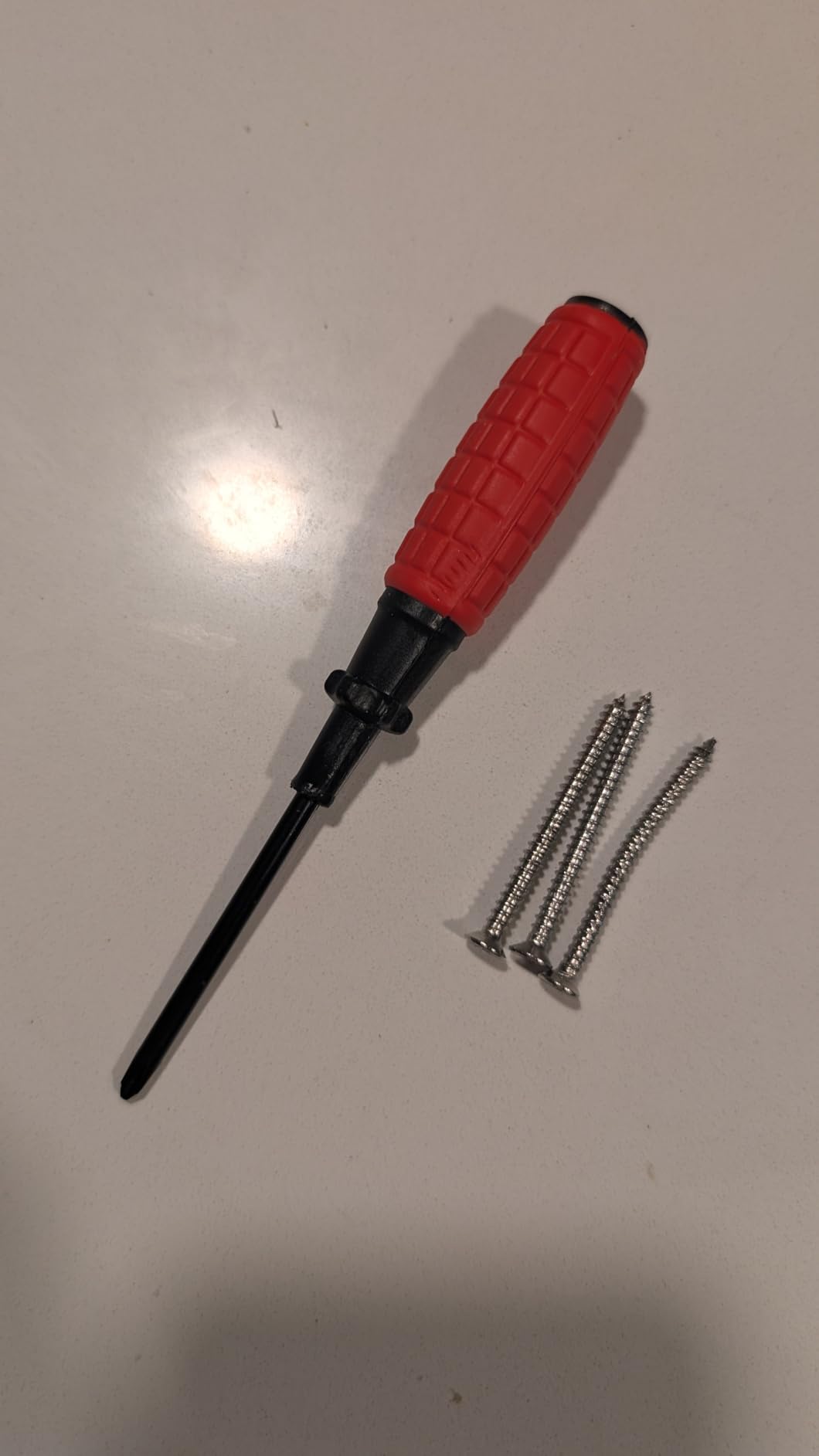
This board is screwed together, and the included hardware is the most-cited complaint in reviews. Owners describe replacing the screws and screwdriver before assembly and recommend pilot-drilling so the wood does not split. It is also the heaviest item in the roundup at 3.36 kilograms, which is good for stability and a reason to set it where you will not nudge it.
Know the ceramic limitation and the wear pattern
Magnets do nothing for ceramic blades, so ceramic knives need a different home. The acrylic finish scratches fairly quickly with use, which owners treat as a touch-up issue. If your collection is mostly Japanese steel at HRC 60 or above, take the r/chefknives advice seriously and keep those blades in a drawer with guards, using the board for the three or four knives you reach for daily.
10. ENOKING 25 Slot Acacia Block – Best for Cleavers
- Only pick here with a dedicated cleaver slot
- Highest 4.8 average rating in the set
- Horizontal angled slots cut blade wear
- Solid acacia treated with mineral oil
- Ready to use with no assembly
- Brand advises over 15 in of cabinet clearance
- Wood colour varies between units
- Needs periodic oiling
This is the block to buy if you own a cleaver. It has a dedicated 4.3-inch slot built for a meat cleaver, the one accommodation none of the other nine blocks here make, and the 25 openings hold up to 20 knives plus scissors and a sharpening rod.
The openings are horizontal and angled rather than the usual near-vertical cuts. That orientation is what buyers credit with reducing blade wear, and it makes knives easier to insert and pull out one-handed, which matters when the blade in your hand is a cleaver.
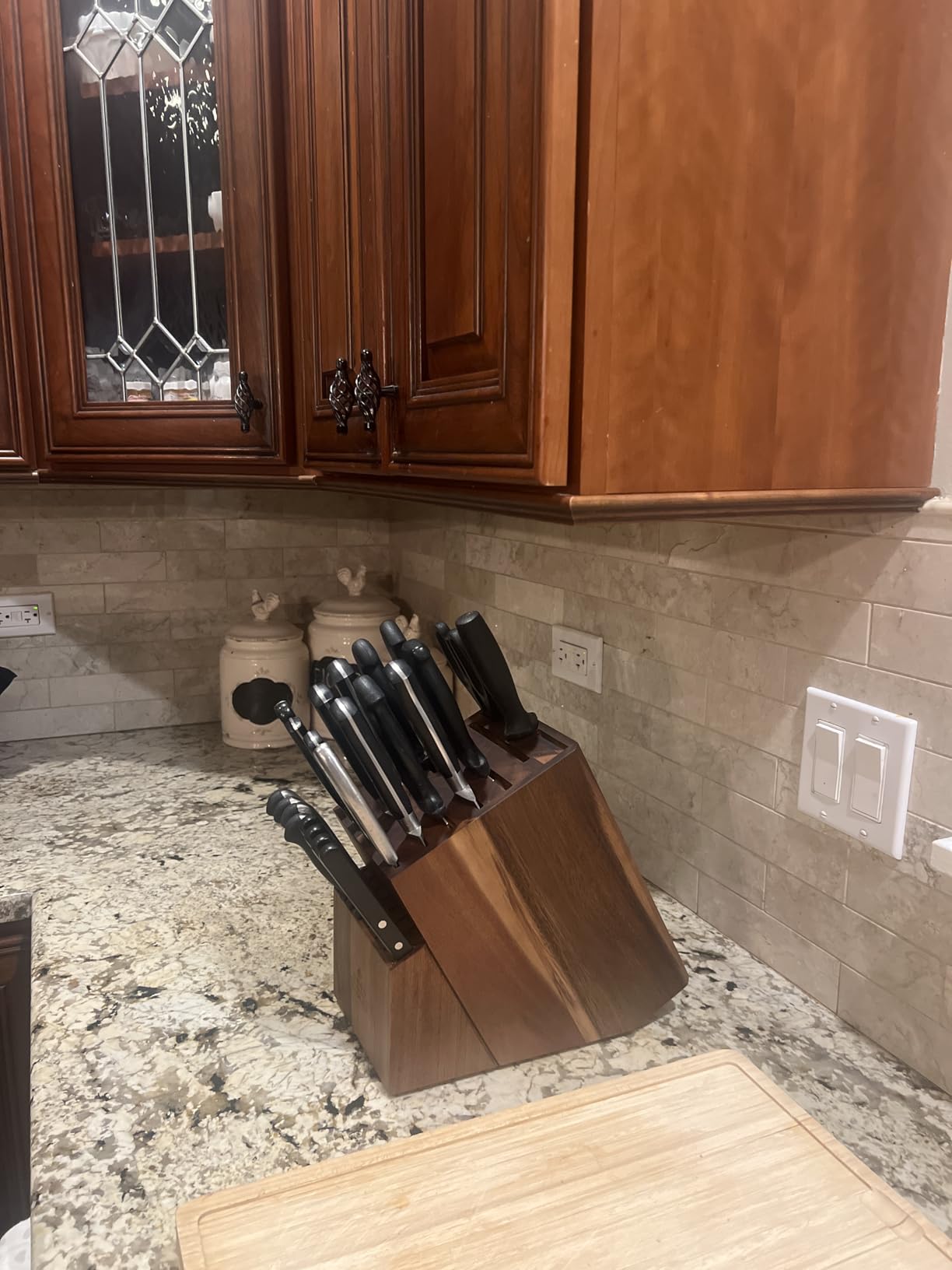
It carries the highest average rating in this group at 4.8, with 85 percent of ratings at five stars. Reviewers repeatedly cite the capacity, the cleaver slot and the fact that solid acacia avoids the metal-to-metal friction that dulls an edge.
The block is treated with mineral oil and arrives ready to use with a non-slip base and no installation. It is one of two products here from the same brand, and the two cover opposite ends of the market.
Clear the cabinet space this one demands
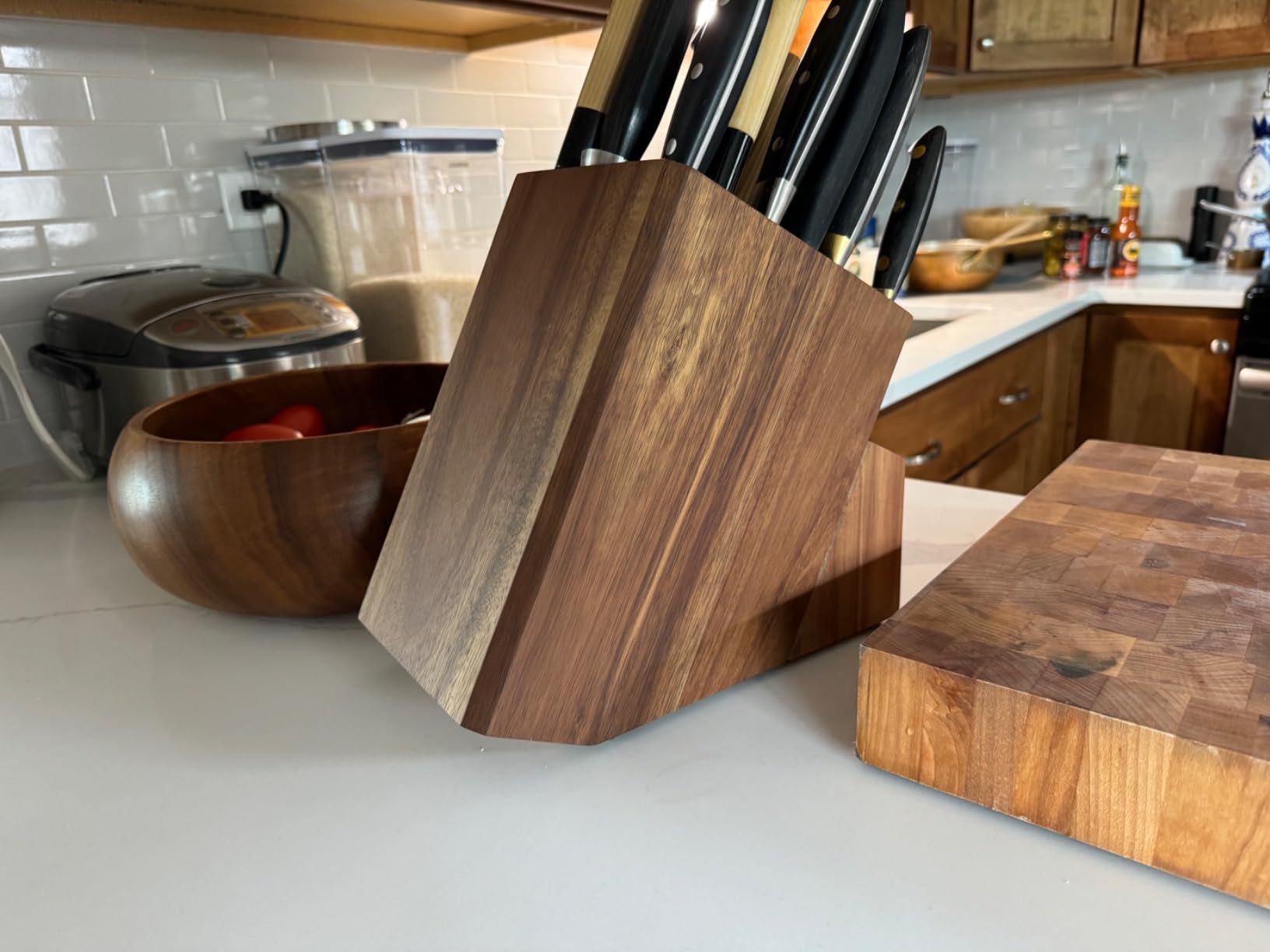
At 10.7 by 5.9 by 9.92 inches it is a large object, and the manufacturer advises more than 15 inches of clearance under your cabinets. That is higher than any other block here and the most important measurement to take before ordering. If your cabinets sit lower, the same brand’s magnetic board is the far better fit.
Plan for the wood maintenance
Solid acacia is the most knife-friendly material in this roundup and the one that asks the most of you. It needs periodic oiling or refinishing, and reviewers mention color varying between individual units. Hand wash only and wipe clean with a cloth. For a household that wants wood contact on principle and has the cabinet height to suit it, this is the most complete block we reviewed.
How to Choose a Countertop Knife Block
Six checks decide whether you will be happy with a block, and all six can be answered from a product listing before you buy.
1. Count your knives, not your slots. Three blades, three quarters of the slots on a 20-slot block stay empty and it looks like a mistake. Five blades fit anything. Eight or more, including accessories, and capacity becomes the deciding feature. Match the count to the collection: 3 to 5 knives wants a slim column, 8 or more wants a wide tiered block or a large magnetic panel.
2. Check the longest blade against the stated limit. Every block in this roundup publishes a maximum, from 20 cm on the Cookit to 10.5 inches on the Cook N Home. Measure from bolster to tip. A bread knife or a cleaver that does not fit is the most common reason people end up storing knives in a drawer instead.
3. Measure the footprint, and measure twice. Width, depth and height all matter. A 14-inch-wide magnetic panel needs counter length, while a 4-inch stainless column needs almost none. Height decides whether it clears your cabinets, and the recommended clearance on the ENOKING 25-slot block is more than 15 inches.
4. Decide whether the material suits your care routine. Bamboo and acacia are the most knife-friendly and need hand wiping plus occasional oiling. Stainless steel wipes clean, does not rust in normal use, and shows fingerprints. Plastic lifts apart and goes in a sink, but does not blend into a wood or stone kitchen.
5. Look at the base, not the styling. Weighted bases and anti-skid feet are what stop a block creeping across the counter when you pull a heavy blade. Four rubber feet on the first pick, a weighted base on every plastic and steel model here. A bare flat bottom is the version that slides.
6. Pick capacity for cleaning or for display. Every slot is a surface that traps moisture and food debris. Round blocks with lift-off tops wash clean and dry fast, and they are the right choice if you cook fish or raw meat daily. Wooden tiered blocks display better and are easier to wipe, but they need a damp cloth and some drying time.
Matching knife count to block size
Three knives, all under eight inches: a slim vertical or round block. Five knives across mixed sizes: a 15-slot block with a scissors position. Eight or more including a bread knife or carving knife: a 20-slot block with a stated blade length above 9 inches. A cleaver in the mix: a block with a dedicated cleaver slot, because a cleaver in a general slot is exactly what tips a block over.
Very hard steels above roughly HRC 60: keep those blades in a drawer with guards or a roll and use magnetic storage only for your everyday steel knives.
Where to put a block on the counter
Place it against the backsplash, away from the sink edge and out of the prep zone between sink and cooktop. Moisture from washing dishes and steam from the cooktop both shorten the life of a wood block. Keep it clear of the stove edge, since a knife block within reach of heat is a burn risk and the wood dries out faster.
If you cannot drill into your backsplash, as renters with tile often cannot, a freestanding magnetic board solves the problem without touching the wall. If you have neither counter nor wall, an in-drawer organizer with blade guards gives back every square inch, and the tradeoff is slower access to the right knife.
Cleaning and maintaining a wood block
Take knives out once a week, wipe the slots with a damp cloth and a drop of dish soap, and let the block dry standing up with the openings facing out. Dry the knives before you put them back. Once or twice a year, wipe on food-grade mineral oil to keep the wood from drying out and going grey.
If a wooden block smells musty, a rinse with a dilute vinegar solution followed by a full air dry clears it. Mold that returns after cleaning is a sign the block is holding moisture in the core, and at that point replacement is the honest answer. For any of these blocks, maintaining edge quality between sharpenings is worth pairing with our guide to the best knife sharpeners.
Frequently Asked Questions
Which brand of knife block is considered the best?
Among the blocks we reviewed, Shenzhen Knives leads on overall balance: 20 wide universal slots, a bamboo veneer over a solid wood core weighing about 7.85 pounds, and a 4.6 star average across more than 6700 reviews. ENOKING offers the widest range across two very different designs, and Cook N Home stands out for the longest stated blade allowance at 10.5 inches. The right brand depends more on your knife count and counter space than on any reputation.
What is the best material for a knife block?
Solid acacia is the most knife-friendly material because it avoids metal-to-metal contact and softens less than bamboo over time. Bamboo is a close second and lighter in weight. Stainless steel wipes clean and resists rust but shows fingerprints and can mark a blade finish over time. Plastic is the easiest to wash and the least attractive on wood or stone counters. Every one of these blocks is sold on its own, so your existing knives fit all of them.
What are the best universal knife blocks?
A universal block uses multi-size or slot-less openings that accept any blade shape instead of one fixed width. The KITCHENDAO XL fits knives up to 8.6 inches with parallel slots that stop blades touching, the Laxinis World is slot-less and holds 12 knives with 8-inch blades in a 4-inch wide frame, and the ENOKING 25-slot block takes 20 knives plus a cleaver. Universal does not mean unlimited, so always check the stated blade length limit.
Are knife blocks hygienic?
Wood blocks can hold moisture in the slots, which dulls edges and encourages bacteria if knives go in wet. Round plastic blocks with a lift-off top and drainage holes, such as the Cookit and the OOU, are the most hygienic option because the section touching wet blades lifts straight into a sink and dries fast. For any material, dry knives before storing them and wash the block on a schedule rather than when it looks dirty.
Are knife blocks outdated?
A traditional slot block is not outdated, but it is no longer the only sensible answer. A magnetic board gives back counter depth, an in-drawer organizer with blade guards gives back the whole counter, and a slim vertical column works where a tiered block will not fit. The current question is not whether a block is old-fashioned but which style suits your knife count, your longest blade and the space you actually have.
What to use instead of a knife block?
The main alternatives are a magnetic strip or panel on a wall, a magnetic block that stands on the counter, a slim vertical column, and in-drawer organizers or sheaths. Magnetic storage suits varied blade shapes and frees the most counter space but only holds steel and needs care with very hard blades. Drawer storage protects edges best and gives back all of the counter but hides your knives and slows access.
Are magnetic knife strips bad for knives?
The risk is real but specific. Bare steel strips can scuff a blade finish and leave marks, and enthusiasts on r/chefknives advise against magnetic storage for blades above roughly HRC 60 where chipping matters more. A wood-faced magnetic panel avoids most of the marking. Keep your hardest steel in a drawer with guards and use the panel for the everyday knives you actually reach for.
Where should you keep a knife block in the kitchen?
Put it against the backsplash and away from the sink edge, the cooktop and the prep zone between them. Steam and dish moisture shorten the life of a wood block, and heat is a burn risk. Check the block height against your cabinet clearance first, since several models need more than 9 inches of drop and one advises over 15 inches.
The Verdict
If you want one block that handles almost any knife and will not creep across the counter, start with the Shenzhen Knives 20-slot bamboo block. If your counter is small, take the Coninx acacia block and accept 15 slots in exchange for a 5.12-inch footprint. If you cook with wet hands or raw meat often, the Cookit round block washes in the sink and dries in minutes.
If counter space is the real problem, magnetic storage is the answer: the HOSHANHO double-sided panel for a generous run of counter, or the ENOKING board for a sloped surface that leaves your prep area clear. Both hold any steel blade regardless of shape, which removes the fixed-slot frustration entirely.
Whatever you choose, measure the longest blade, measure the cabinet drop and measure the counter run before you order. Those three numbers decide the answer faster than any brand name. Once the block is in place, keep the knives dry, wipe the slots weekly and pair it with a proper knife sharpener so the edge you stored is the edge you cut with.