
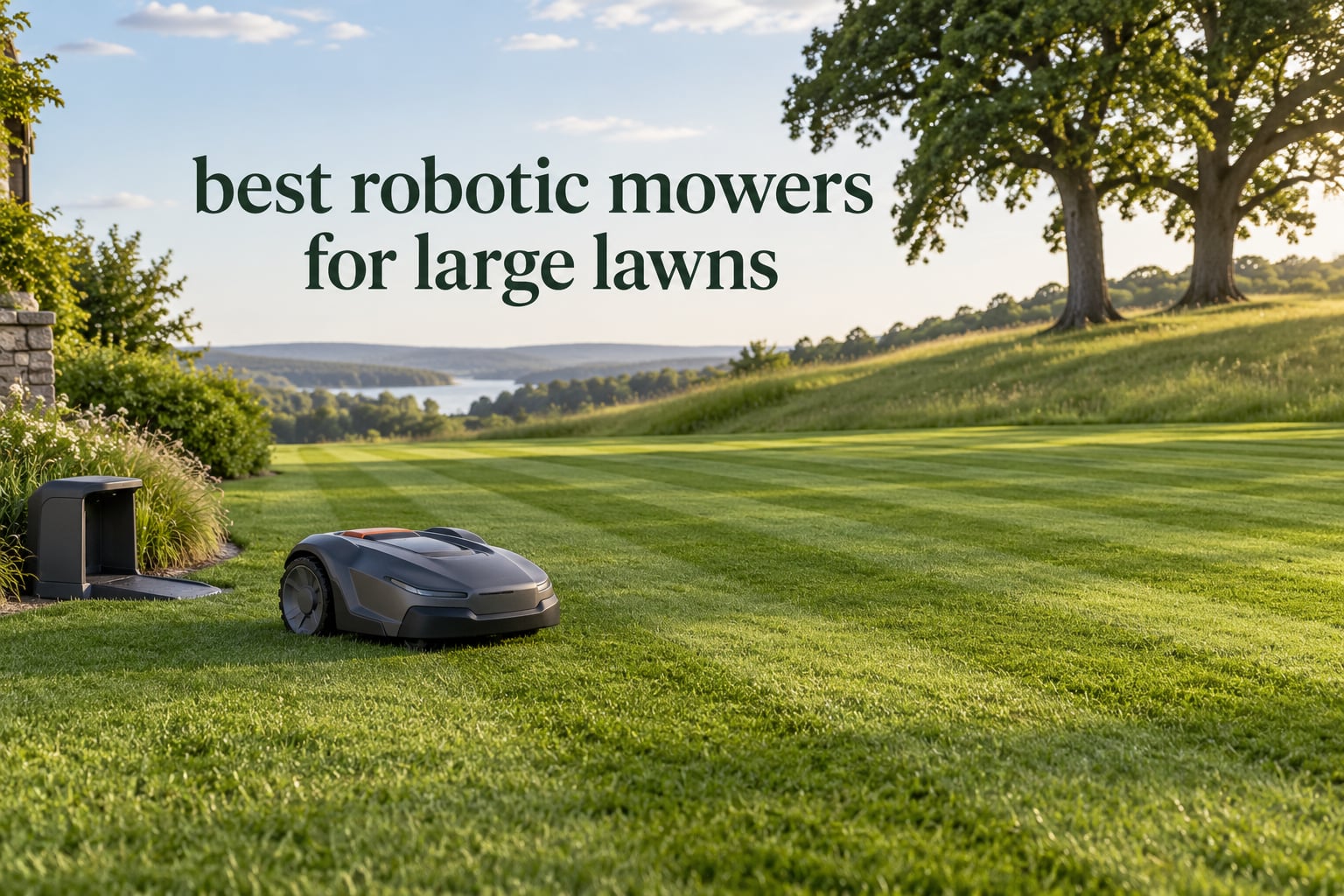
The largest robotic lawn mower sold to homeowners covers 6 acres, and it is the YARBO Pro, a 215 lb tracked machine with interchangeable modules. Yes, there are robotic mowers that can mow large areas: wire-free RTK and LiDAR models now cover roughly 1 to 1.75 acres a day, and the modular flagship class reaches 6. What most people mean by a large lawn is anything past 1 acre, which is where the half-acre machines sold for city backyards stop working. Capacity is no longer the limit; navigation is. As acreage grows, the difference between a mower that plans parallel passes and one that wanders decides whether you come home to a cut lawn or to a partly mowed field.
We spent the last several months reading every owner review on the ten large-lawn robot mowers in this roundup, comparing acreage ratings, slope capability, navigation stacks, cutting widths, battery runtimes and weights, and cross-checking each against the failure modes owners actually report. We also looked at how these machines fit into the rest of a large-property routine, including how they compare on paper to a zero-turn riding mower and how they stack up against irrigation you still have to run in summer.
A note on disclosure: the links in this article are affiliate links, and we may earn a commission if you buy through them. That does not change the ranking. We have not accepted review units for any machine listed here, and the cons below come from the least flattering reviews in each product’s feedback, not the headline ones. If a model has a thin review base, we say so instead of treating a handful of ratings as proof.
One sizing rule before you read on. Every mower here lists a reception figure and often a larger maximum, and the gap between those two numbers is the tolerance for narrow passages, steep banks and complicated lawn shapes. Size to your peak-season growth, not your average, and keep at least 20 percent headroom. A mower rated exactly to your lawn will fall behind in May and never catch up.
Table of Contents
Top 3 Picks for Large Lawns in 2026

Mammotion LUBA 2 AWD 5000HX
- 1.25 acre reception and 1.48 acre max
- 80% (38 deg) slope rating
- RTK plus AI vision under trees
- 50 mowing zones

Mammotion LUBA 3 AWD 3000
- 360 degree LiDAR plus NetRTK
- 500 m2 per hour coverage
- 80% (38.6 deg) slope climbing
- 30 multi-zone schedules
YARBO Pro 6-Acre Robot Mower
- 6 acre rated coverage
- 20 inch cutting width
- Tracked drive to 70% (35 deg) slope
- Modular head unit and mower modules
Every Large-Lawn Robot Mower Side by Side in 2026
The table below lists all ten machines in the order we recommend them. Acreage, slope rating and navigation type do most of the sorting work, but weight and cutting width decide how a 2-acre property actually feels in practice: a 215 lb tracked unit with a 20 inch deck finishes a lawn far faster than a 26 lb machine with an 8.7 inch deck, no matter how good the sensors are.
| Product | Specifications | Action |
|---|---|---|
| Mammotion LUBA 2 AWD 5000HX |
|
Check Latest Price |
| Mammotion LUBA 3 AWD 3000 |
|
Check Latest Price |
 ECOVACS GOAT A3000 LiDAR ECOVACS GOAT A3000 LiDAR |
|
Check Latest Price |
| YARBO Pro 6-Acre Robot Mower |
|
Check Latest Price |
 roborock RockMow X120H LiDAR AWD roborock RockMow X120H LiDAR AWD |
|
Check Latest Price |
 Sunseeker X5 AWD Sunseeker X5 AWD |
|
Check Latest Price |
 Lymow One Plus Lymow One Plus |
|
Check Latest Price |
 WORX WR344 WORX WR344 |
|
Check Latest Price |
 ANTHBOT Genie 3000E ANTHBOT Genie 3000E |
|
Check Latest Price |
 Mammotion YUKA 1500 Mammotion YUKA 1500 |
|
Check Latest Price |
1. Mammotion LUBA 2 AWD 5000HX for Hilly, Rough Acreage
- Combines RTK with AI vision so it keeps working under trees
- Handles ditches and rough ground that stopped older wire-guided mowers
- Precise edge cutting and clean parallel stripes
- 50 mowing zones with no-go areas
- Recognizes 200+ obstacles
- Narrow deck means a full mow can run most of a day
- Setup and mapping take real effort and app error messages are unclear
- Blade wear is frequent and it does not mulch or collect leaves
This is the machine we keep coming back to for a normal acreage property with hills, ditches and a few big trees. Four independently driven motors rated at 165 W, a 15.7 inch dual-blade deck and a claimed 80 percent slope capability give it the raw hardware to handle terrain that stops lighter two-wheel-drive units. At 41 lb it is also light enough to move over a slope without recruiting a second person.
What sets it apart is the UltraSense AI vision layered on top of RTK. Owners with mature oaks and maples report that it holds its line in shade where satellite positioning alone would drift. Reviewers also praise the stripe quality, describing cuts that look closer to a hand-mown finish than to the patchwork you get from smaller decks, and 481 reviews at 4.3 stars is by far the deepest feedback base in this group.
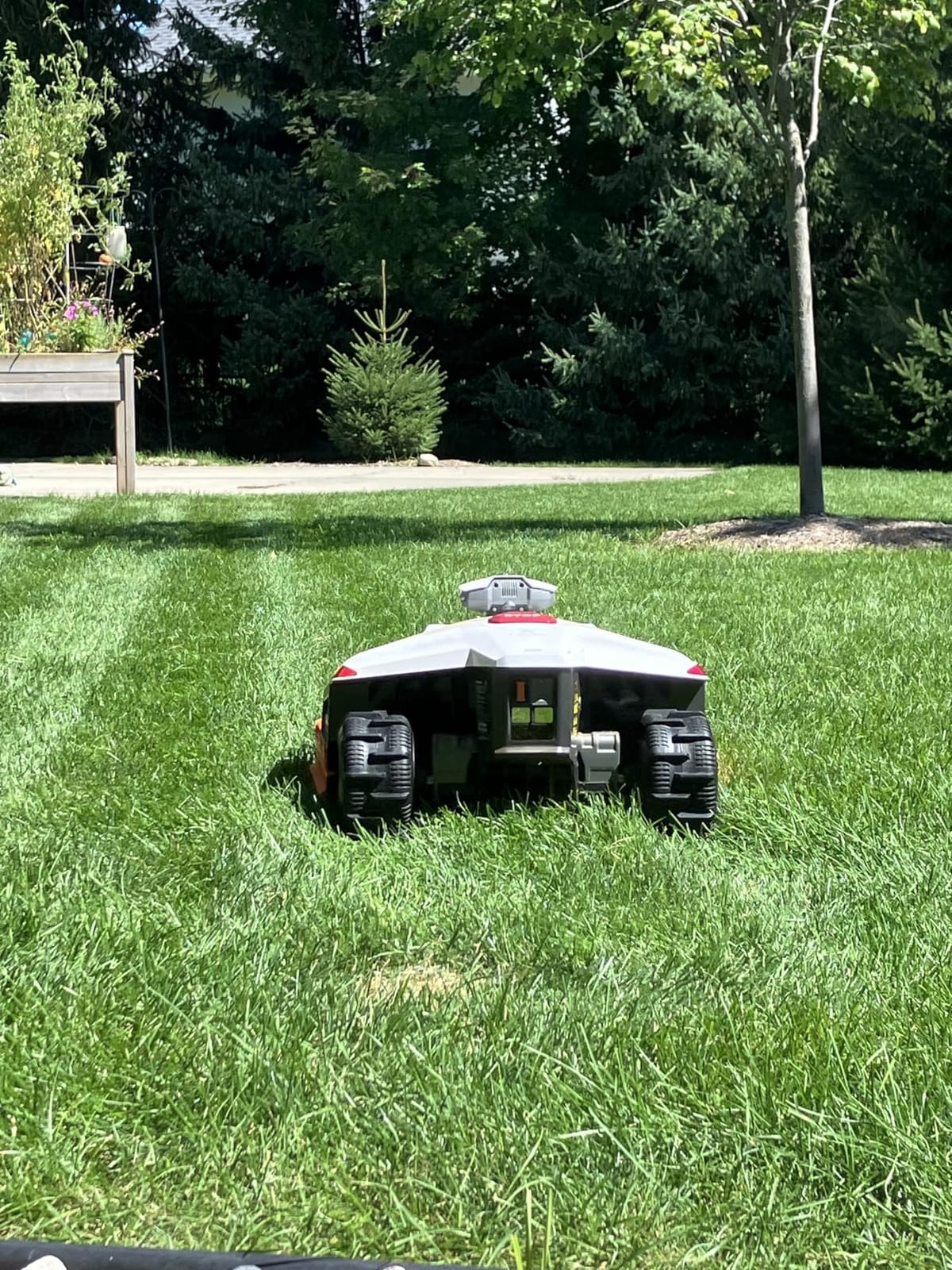
The MultiZone system handles the awkward parts of a big property well. Owners running a front lawn, a back lawn, a pathway and a no-go zone around a vegetable bed say the scheduling holds through a full season, and the parallel, checkerboard and diamond patterns let you pick a look without re-drawing the map. Obstacle recognition covers 200+ object types, which is what makes pet and kid yards workable.
Now the honest part. The 15.7 inch deck is narrower than the 20 inch deck on the YARBO Pro, so a full mow of a large lawn genuinely can take most of a day. The razor-type blades wear fast and need swapping more often than the manual implies. It does not mulch or collect leaves, so autumn still needs a real cleanup pass.
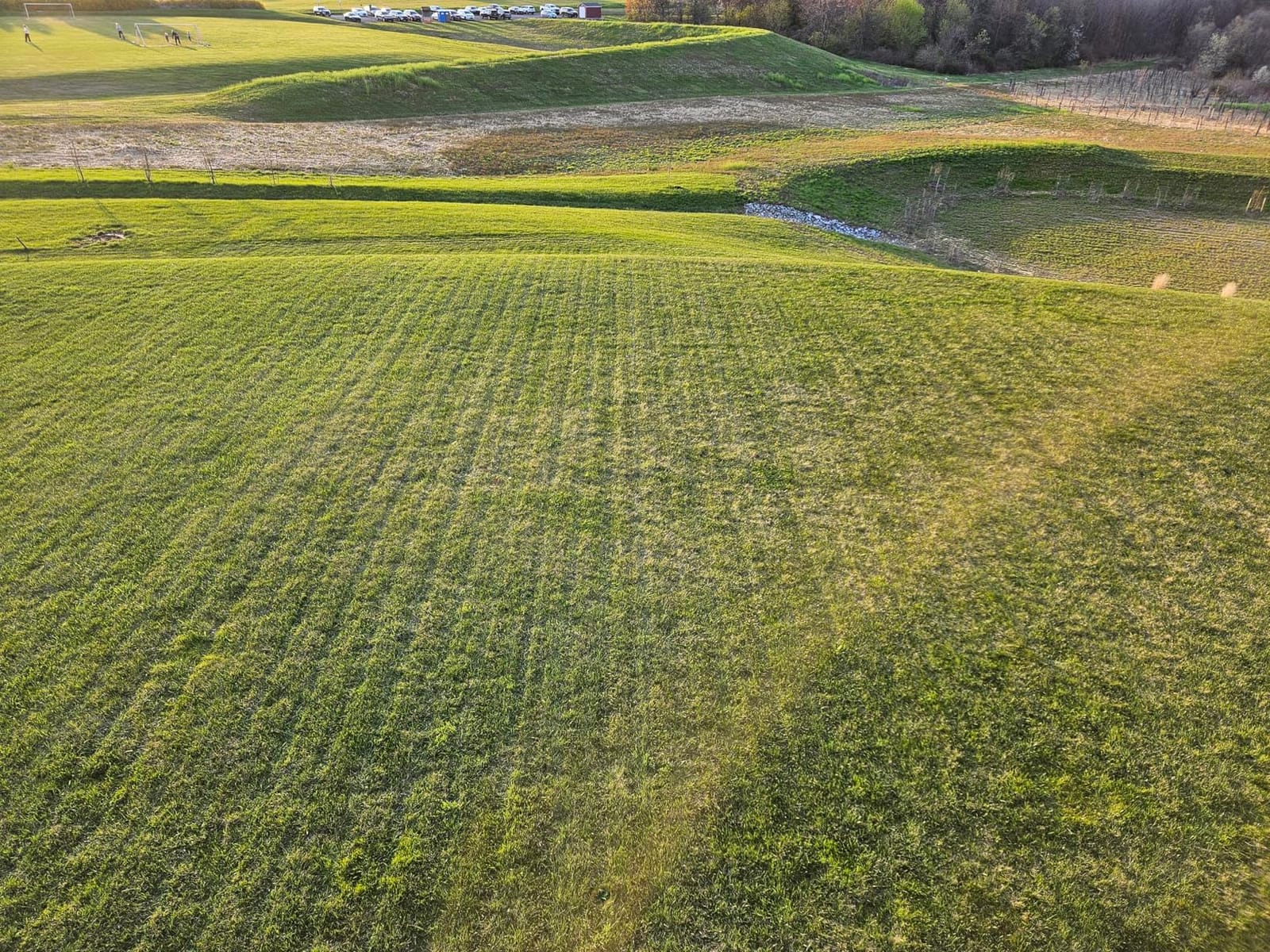
How it handles the acreage math
Rated at 13000 sq ft per charge with 1.25 acre reception and a 1.48 acre maximum, this is the first machine here that a genuine 1-acre owner can buy without planning for daily babysitting. Multi-zone scheduling lets you split the property so the mower works unattended through peak growth.
App scheduling, parallel and diamond patterns, and automatic recharge and resume mean the schedule holds without you walking outside to restart anything.
Where owners report trouble
Setup and the initial mapping run are harder than the wire-free marketing suggests, and the app’s error messages are frequently unclear. Charging contacts need to be kept clean or the machine will intermittently fail to charge on the dock.
Tight right-angle turns can tear grass, and small driveway ramps are a known weak spot. If your property is a maze of hard 90 degree corners, test that route first.
2. Mammotion LUBA 3 AWD 3000 for Precise LiDAR Coverage
- Tri-fusion LiDAR
- NetRTK and dual-camera vision keeps positioning stable
- Four independent motors and adaptive suspension step over 50 mm obstacles
- 300+ obstacle types routed around in real time
- Up to 30 mowing zones with no-go areas
- Cut height tops out at 2.7 inches
- shallower than some rivals
- Six-blade discs can bog down in very tall dense grass
The LUBA 3 is the most technically advanced sensor stack in the roundup. It fuses 360 degree LiDAR with a 230 ft range, NetRTK cloud positioning and dual-camera AI vision, which means it is not dependent on a single signal source. On a lawn with heavy canopy, a building on one edge and a base station you would rather not mount, that redundancy is the reason to pick it.
Two 165 W motors driving six-blade discs, a 12 Ah battery and a claimed 500 m²/h coverage rate put it ahead of most of the field on speed. The adaptive suspension handles 50 mm obstacles, and the upgraded AI processor identifies 300+ obstacle types. It currently ranks first in Robotic Lawn Mowers on Amazon, and the 130 reviews at 4.3 stars focus on slope performance and dependable obstacle handling.
Be clear-eyed about the sizing. This is a 0.75 acre machine, which makes it a strong choice for a large half-acre or a smaller property with difficult terrain, not for a genuine 1.5 acre lawn. The reception and maximum figures for this model sit close together, so there is little slack for narrow passages and odd shapes.
Two real limitations stand out. The cut height range stops at 2.7 inches, which is lower than some owners want on cool-season lawns, and the six-blade discs can bog down in very tall, dense grass. Several owners also report that night mowing requires a light in low-light conditions, which matters if you plan to schedule overnight work.
Where the sensor fusion earns its keep
NetRTK removes the base station from the equation entirely, so there is no antenna to site for sky view. LiDAR handles the shaded corridors where satellite signals get unreliable, and the cameras cover what both of those miss.
Owners with tree cover, narrow side yards and mixed sun and shade report the machine holds position without the drift they fought on earlier RTK-only platforms.
When a smaller machine is the right answer
With 0.75 acre of rated coverage, this is a half-acre-class machine that happens to have flagship sensors. It is a poor fit if you have already planted a new lawn you expect to grow past an acre in a few years.
The 500 m²/h rate and 175 minute runtime mean most owners finish a 0.75 acre lawn in a single session with time to spare, which is the scenario it was tuned for.
3. ECOVACS GOAT A3000 LiDAR for the Easiest Wire-Free Setup
- Dual LiDAR maps to about 2 cm precision with no wire and no RTK base station
- Covers up to 400 m2 per hour on a 32V platform
- Recognizes 200+ objects including pets and toys
- Runs very quietly and returns to the station on its own
- IPX6 body rinses clean with a hose
- Boundary mapping takes several rounds of adjustment on irregular lawns
- Slow full-lawn coverage
- One detailed 1-star review reports map drift of over a foot and a wheel motor failure
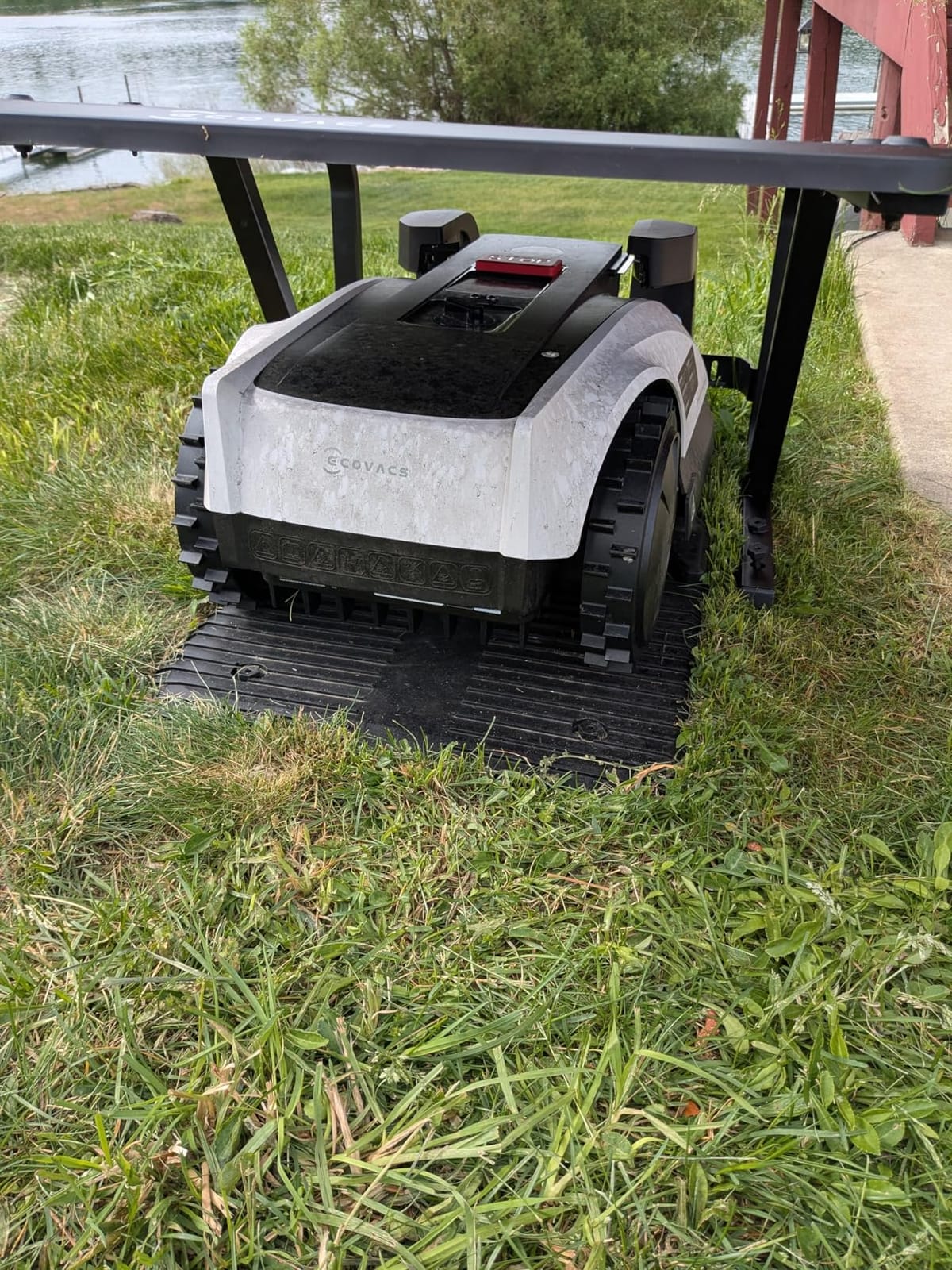
Everything about the GOAT A3000 LiDAR is about removing setup friction. There is no perimeter wire to trench and no RTK base station to site for an unobstructed sky view, which on a large property often means the difference between an afternoon and a weekend. Dual LiDAR builds the map automatically, and the body is IPX6 rated so you can rinse it off with a hose after a dusty week.
The 32V platform with dual cutting discs covers up to 400 m²/h over a 13 inch path, and AI vision plus 3D ToF LiDAR recognizes 200+ garden objects. Cut quality is described as even, and owners single out how quiet it runs, which makes early morning and evening schedules practical in neighborhoods with noise rules.
The honest caution here is the review base. Six reviews at a 4.3 average is not enough history to call anything proven, and one detailed 1-star review reports LiDAR-only map drift of over a foot, which sent the machine into a flower bed and dug trenches when it got stuck, plus a wheel motor failure and elevated early failure rates on a previous GOAT model. We are including it because the engineering is right and the approach is sound, not because the field data is deep.
Boundary and edge mapping also takes several rounds of adjustment on irregular lawns, and full-lawn coverage is slow. If your property is a clean rectangle, this is a pleasant machine. If it is a series of odd parcels joined by pinch points, budget time for map editing.
Why owners who want simple setups pick it
No wire, no antenna, no trenching. The map builds itself and the machine starts mowing, which is the entire appeal for owners who have buried cable before and would rather not again.
The hose-cleanable IPX6 body and quiet drivetrain are small conveniences that show up every week, not just at setup.
What to watch before buying
Six reviews is a thin foundation. Ask yourself whether the 400 m²/h rate covers your 0.75 acre comfortably in peak season, because the machine is rated to 0.75 acre and offers little margin beyond it.
If your lawn is heavily irregular, plan on multiple mapping passes before the boundary holds. That adjustment loop is the most common complaint in the feedback we read.
4. YARBO Pro for Six-Acre Properties
YARBO Y40 Core Robot Lawn Mower Pro, Wire-Free, 6-Acres, Four-Season Care
- Only consumer mower rated for 6 acres
- with modular head and mower modules
- Cuts comparable to a zero-turn riding mower with sharp even stripes
- Multi-terrain tracks and steel skid shoes handle mud
- stone and 70% slopes
- Triple-fusion RTK-GPS
- binocular vision and ultrasonic sensing
- Setup and boundary mapping often takes six hours or more under heavy tree cover
- Not set-and-forget: map drift and telemetry loss need periodic manual work
- Data center mount is unstable in high wind and needs bracing
Nothing else in the consumer category comes close to this. The YARBO Pro is rated for up to 6 acres, roughly 261000 sq ft, on a 20 inch cutting width, which is the only machine here that can plausibly take a multi-acre estate in a single pass pattern. The modular design separates a head unit from mower modules, and the manufacturer positions it for homes, turf farms, hotels and small golf courses.
Owners on 2 to 6 acre properties consistently describe the cut as comparable to a zero-turn riding mower, with stripes sharp enough to photograph. The patented multi-terrain tracks and all-steel skid shoes take mud, stony ground and slopes up to 70 percent. A 300W dual-motor cutting disc with redesigned grass ejection resists clogging, and you can choose razor blades for cool-season lawns or straight blades for thick warm-season grass.
Navigation is triple-fusion: RTK-GPS, binocular vision and a multi-sensor PPVS array that also detects suspended obstacles. Cutting height adjusts from 0.8 to 4.0 inches, and the machine is IPX6 rated. Over-the-air updates are frequent, and multiple owners describe customer service as responsive enough to replace defective modules outright.
This is also the heaviest machine in the roundup at 215 lb with 50 by 27 by 20 inch dimensions, and that weight shows up in ownership. Setup and boundary mapping can run six hours or more under heavy tree cover, map drift and telemetry loss mean periodic manual reconfiguration, and the data center mount is unstable in high wind without bracing. The battery is a cobalt-based lithium pack with a limited cycle life and an expensive replacement.
Who actually needs six acres of capacity
Owners with 3 acres or more, or with multiple disconnected lawn sections plus an orchard or turf area, are the only ones who get real value from this platform. Everyone else is buying capability they will not use.
The 20 inch deck and tracked drive are what make the coverage number real rather than theoretical. A 2-acre property with a riding-grade problem is the sweet spot.
The ownership trade-offs nobody mentions up front
Assembly takes at least two adults, and low ground clearance means it can bottom out on rough spots. Support ticket backlogs of several days are reported, with some buyers struggling to reach service at all.
The 120 degree unobstructed sky view needed for the Data Center Set is a real site-planning constraint. Map your property before committing, because moving that antenna later means remapping.
5. roborock RockMow X120H LiDAR for Tight Passages and Small Large Lawns
- No RTK base station needed
- 360 degree 3D LiDAR maps in minutes
- AWD with active steering climbs 80% slopes and 3.15 inch obstacles
- Dynamic suspension and floating deck stay stable on uneven ground
- Ride-on approach gives close edge cuts along paths and fences
- Smallest coverage in the roundup at 0.49 acre
- 9.49 inch deck is narrow
- so full lawns take longer
The RockMow X120H comes from a brand most buyers know for vacuums, and the sensor package reflects that engineering culture. It is fully wire-free with no RTK base station at all: 360 degree 3D LiDAR plus dual-vision mapping builds a centimeter-accurate 3D yard map in minutes, which makes it the fastest setup in this roundup on a lawn with clear sightlines.
Traction is the surprise. AWD drive with a patented active steering system handles 80 percent slopes and crosses 3.15 inch obstacles without tearing turf, and dynamic suspension with a floating cutting deck keeps it stable on uneven ground. The 3D LiDAR point cloud combined with dual-camera AI vision steps around toys, tools and debris that a camera alone would miss.
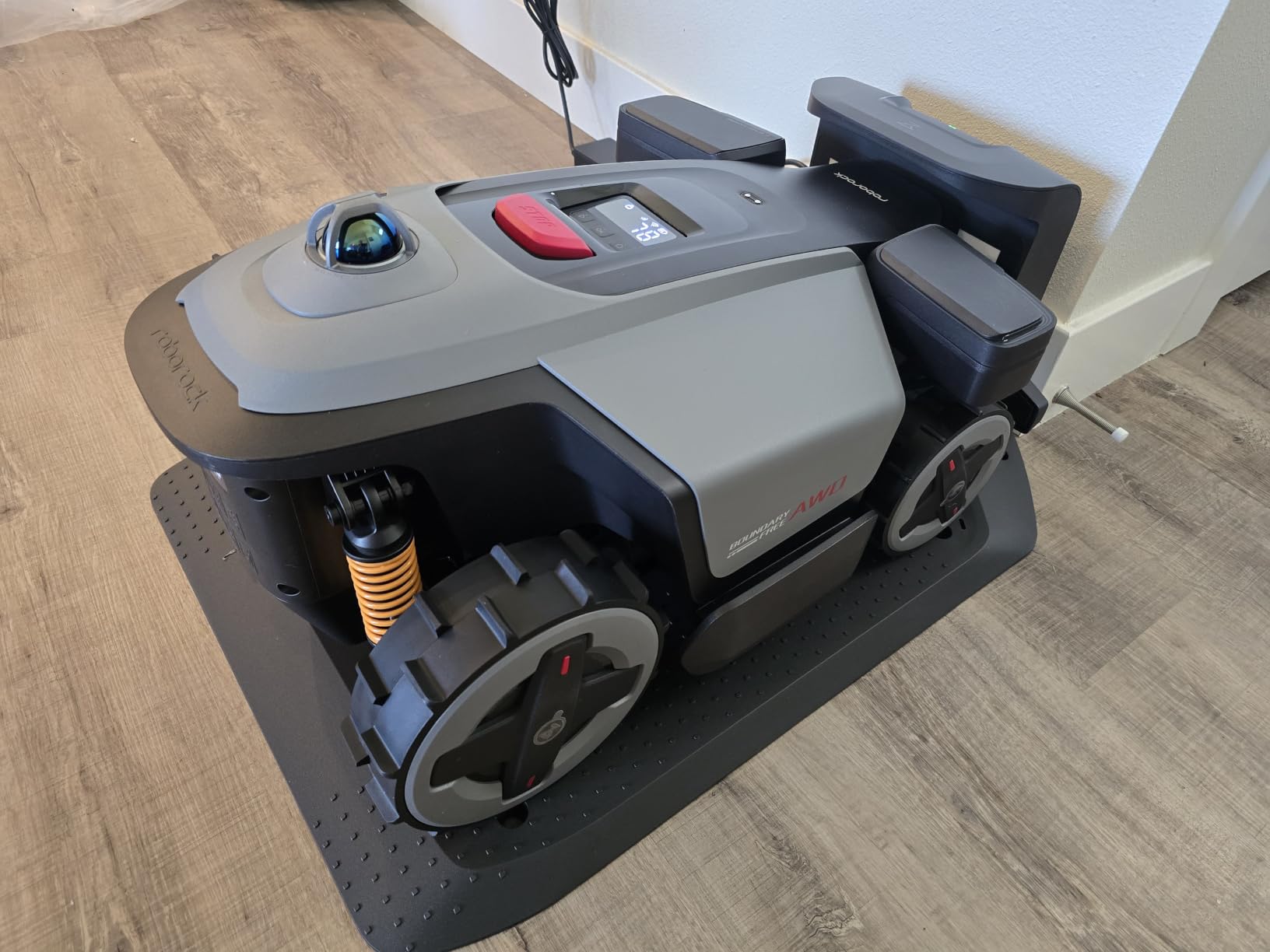
The ride-on approach with a 9.49 inch cutting width is genuinely clever: the machine overhangs its own footprint to mow close along walkways, fences and driveways, so edge work is close to finished. Cutting height adjusts from 1.57 to 3.54 inches, and three years of 4G cellular service are included with multi-zone schedules, rain sensing, IPX6 waterproofing and PIN/GPS anti-theft.
At 0.49 acre this is the smallest coverage in the roundup, and that is a hard limit rather than a soft one. The 9.49 inch deck is also narrow next to the 16 and 20 inch decks on competing models, so a full pass takes proportionally longer. At 50 lb and 4.1 stars from 54 reviews, it is a strong machine pointed at the smaller end of large.
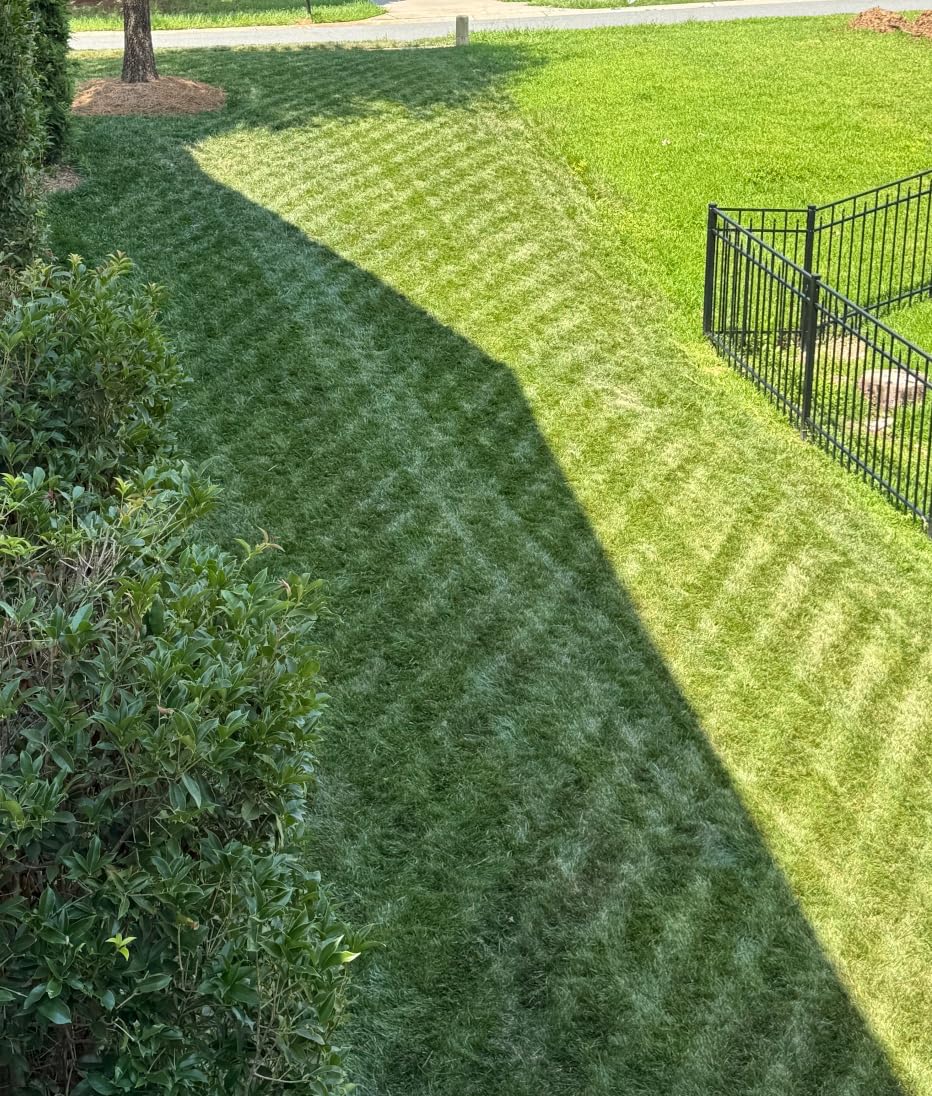
Why the narrow deck is a feature here
The ride-on geometry lets the deck overhang the wheels, which is how it gets so close to borders. On a lawn broken up by paths and hard edging, that saves a lot of string-trimming time.
Owners of 0.4 to 0.5 acre lots with tight internal passages report the combination of 3.15 inch obstacle crossing and active steering handles the pinch points well.
Where it falls short
If your property is past half an acre, this is undersized and no software update changes that. Buy the next tier up rather than planning daily rescue mowing.
The included 4G is a real advantage over brands that only offer a trial year, but confirm what happens after the three years run out before you commit.
6. Sunseeker X5 AWD for Shaded and Treed Lots
Sunseeker X5 AWD Robot Lawn Mower, RTK, Vision AI, 0.5 Acre, Wire-Free
- Mows in shade
- under trees and at night without losing position
- AWD with independent front suspension takes 30 degree slopes
- Virtual boundaries
- up to 5 maps
- smart zones and no-go areas with no trenching
- Very quiet at 60 dB and only 26 lb to handle
- Gets stuck on grass-to-sidewalk humps and small dips
- Treats tall grass as an obstacle and skips those patches
- Can lose WiFi coverage in corners of larger yards
The Sunseeker X5 carries the highest average rating of any machine here at 4.4 stars, and the reason shows in the feedback: owners of shaded, tree-covered lots like this one specifically because RTK, V-SLAM and Vision AI keep it mowing under canopy and after dark. If your large lawn is mostly trees, that positioning stack is the feature you are buying.
It is also the easiest machine here to handle at 26 lb, and the quietest at 60 dB, which makes early-morning schedules workable when a neighbor or an HOA has opinions about noise. AWD with independent front suspension takes 30 degree slopes and uneven ground far better than two-wheel-drive rivals.
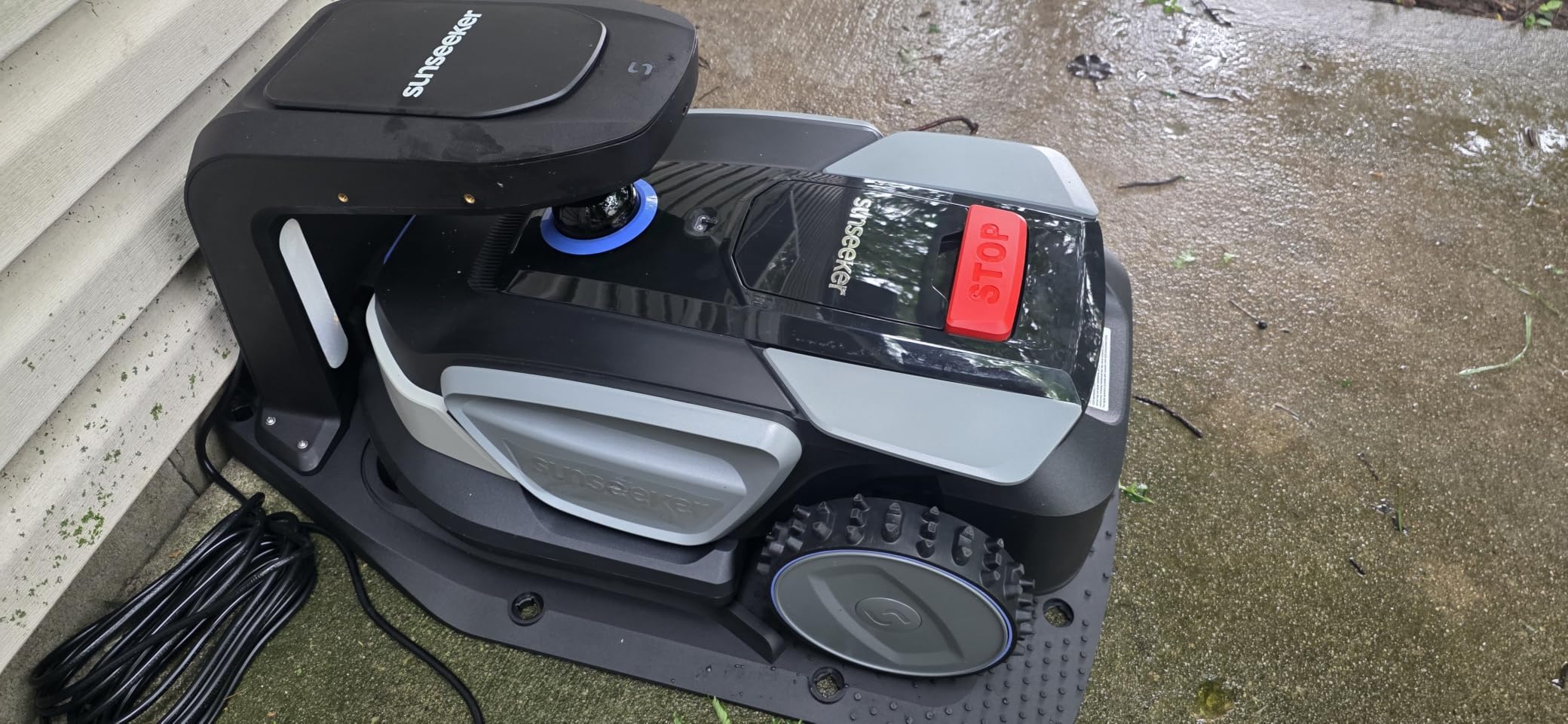
Boundary handling is genuinely wire-free: virtual boundaries, up to 5 maps, smart zones and no-go areas, with no trenching anywhere on the property. It fits through 31.5 inch passages, and the floating 8.7 inch deck follows contours for cleaner borders. There is a two-year warranty with US-based support, which is worth noting in a category full of brands with no local presence.
The failure modes are specific and worth taking seriously. It gets stuck frequently on uneven transitions such as grass-to-sidewalk humps and small dips, and it will treat tall grass as an obstacle and skip those patches until you run it again. Some owners also report losing WiFi coverage in corners of larger yards and needing extenders, and app programming is criticized as poor by a few.
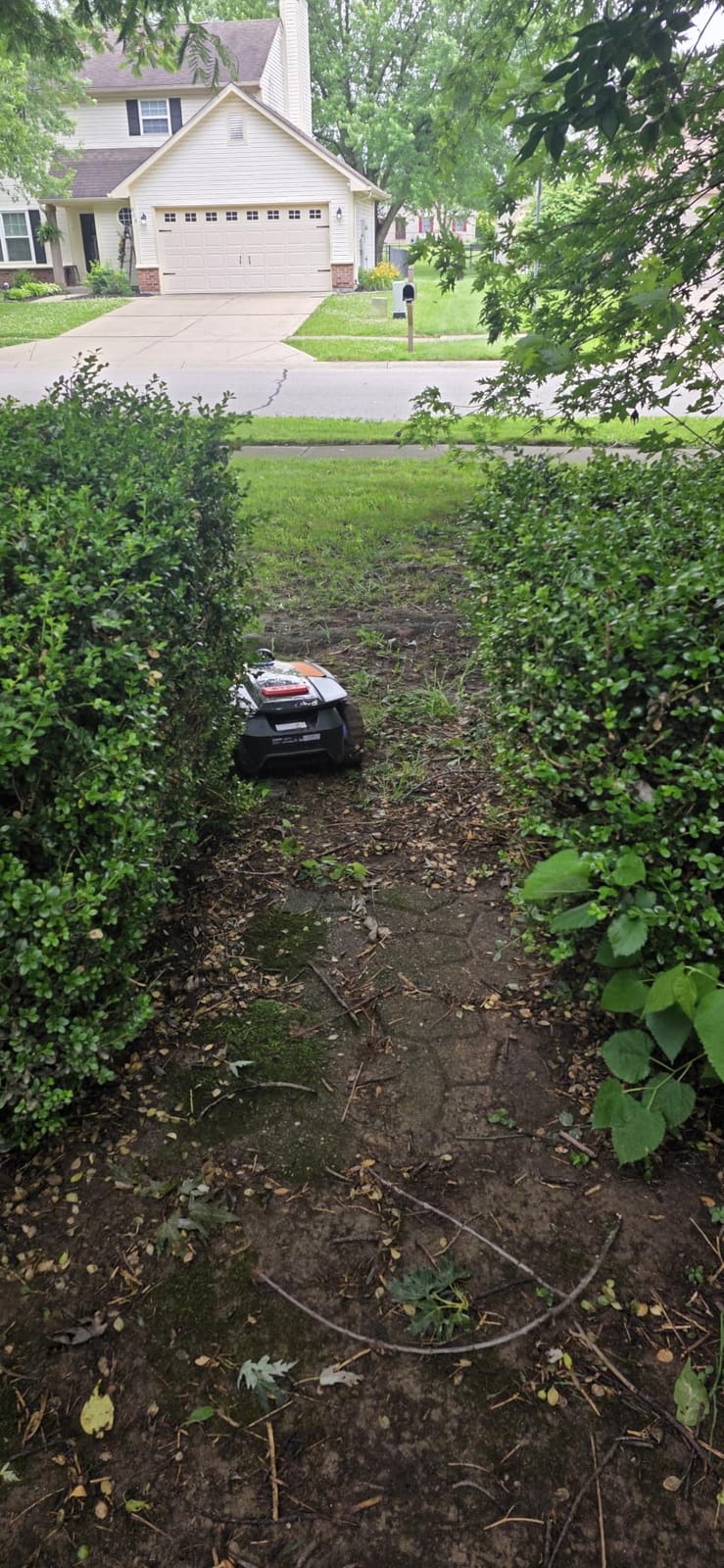
What tree cover does to the other options
Satellite-only machines drift under dense canopy, and the fix is usually relocating an antenna. A vision-led stack like this one reads the yard itself, so canopy stops being the deciding variable.
It is also the only machine in the roundup rated to work at night without complaint, which means a 0.5 acre shaded lot can be maintained while the household sleeps.
The bumpy-lawn problem
Humps and dips between lawn and sidewalk are the single most reported failure. Before buying, walk your property and note every transition, because that is where the machine will stop.
Raising cut height slightly and marking those transitions as no-go areas in the app reduces the problem more than any setting change.
7. Lymow One Plus for the Steepest Ground in the Group
- Steel SK5 blades at 6000 RPM with 1785 W peak motor give a very even no-miss cut
- Tracked drive climbs 45 degrees and crosses 2.8 inch obstacles without slipping
- Tracks spread weight and handle swampy wet ground better than wheeled rivals
- Largest daily coverage here at 1.73 acres across up to three cycles
- LiFePO4 battery rated 2000+ cycles in an A380 automotive-grade frame
- Up to 80 zones with per-zone schedules and cutting heights
- Some owners report blades stalling and leaving uncut strips
- Manufacturer support is described as weak with a dead chat link
- Heat-related faults including batteries refusing to charge when hot
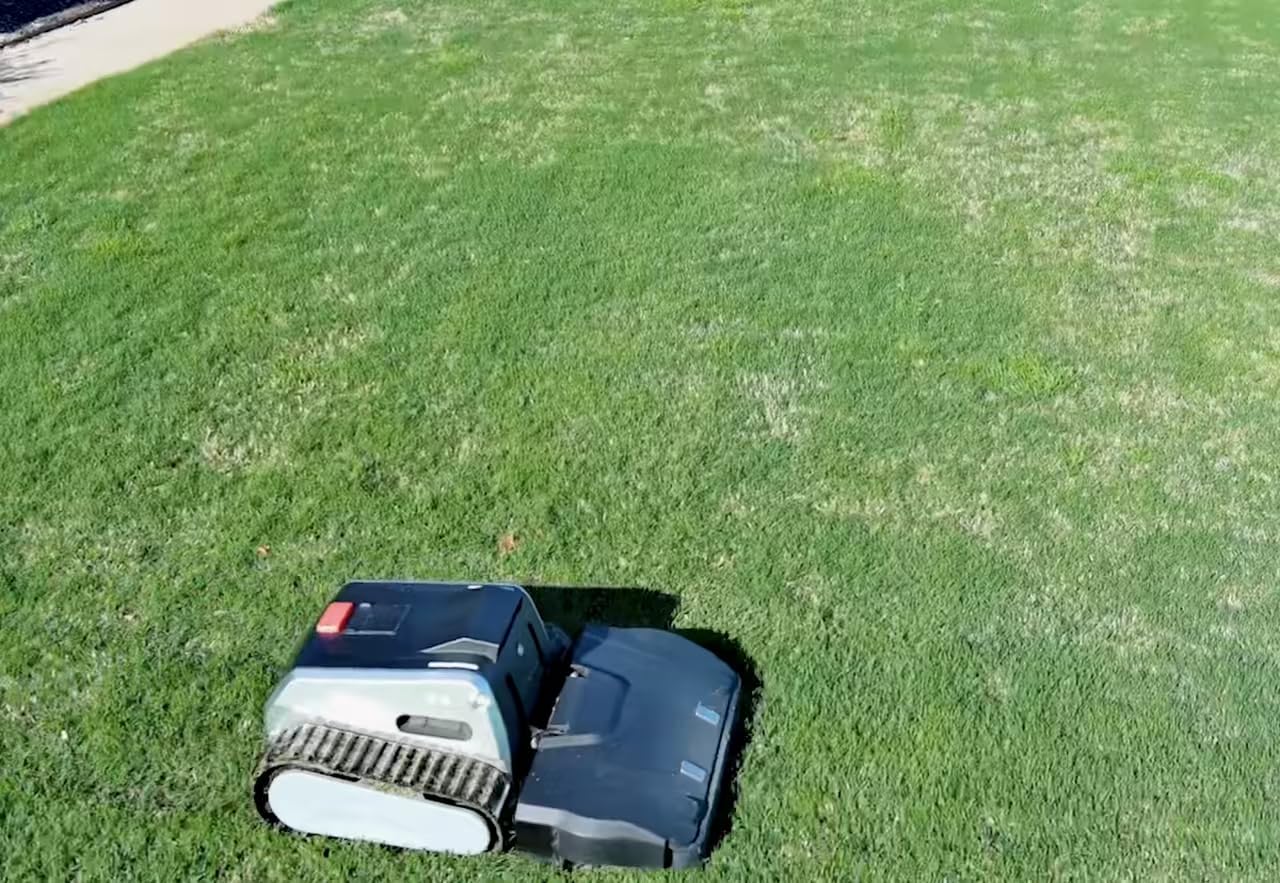
Nobody climbs like the Lymow One Plus. The heavy-duty track drive system takes 45 degrees, a 100 percent grade, and crosses 2.8 inch obstacles without rutting or slipping, and the tracks distribute weight so well that owners use it on swampy ground where a wheeled robot or even a riding mower sinks. If your large property has a hill that makes you flinch, this is the machine built for it.
It also has the largest daily coverage in the roundup at 1.73 acres across up to three cycles per day, which means a genuinely multi-zone property gets through peak growth without falling behind. The cut hardware is the most serious on the list: steel SK5 tool-steel blades at 50 HRC, a 1785 W peak motor, cyclone airflow and up to 6000 RPM across a 16 inch dual rotary deck.
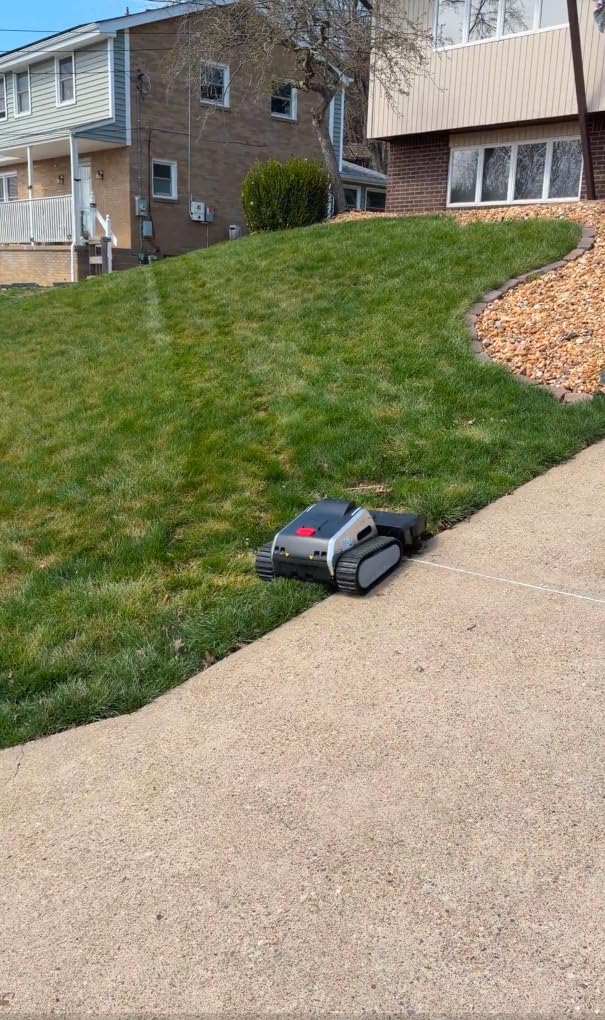
Up to 80 zones with no-go areas, per-zone schedules and per-zone cutting heights, plus a self-lifting deck for cleaning, rain pause and single-side discharge. Navigation is RTK plus V-SLAM with a wire-free virtual boundary map, and AI vision with ultrasonic handles pets, toys and garden decorations. The 15000 mAh LiFePO4 battery is rated for over 2000 cycles in an A380 automotive-grade frame with IPX6 waterproofing.
The 3.9 star rating reflects real problems, and we would not skip them. Some owners report blades stalling in tougher grass while the mower keeps moving, which leaves uncut strips. Heat-related faults show up, including batteries that refuse to charge when hot and a motor controller running hot under the deck. Support is described as weak, with a dead online chat link and no resolution for poor satellite connection. Setup takes about a day, and moving the base station means redoing the map.
What track drive actually solves
Tracks keep contact over holes and soft ground where wheels spin, so a wet week does not turn into a stuck machine. On a slope they also resist the sideways slip that pushes a wheeled mower into a flower bed.
The 2.8 inch obstacle crossing means roots, small branches and irrigation lips stop being stop events, which matters on a property that is not manicured flat.
The reliability tradeoff is real
A cluster of 1-star reviews cites blade stalls, heat faults and a product still in active development. One detailed UK review calls it the most capable mower on the market but not the most reliable, and that tension is the whole story here.
Hardware issues reported include a loose cutting deck, front wheel springs and bottom motor bearings. If you are comfortable with hands-on ownership, the capability justifies it. If you want a machine that never needs you, look elsewhere.
8. WORX WR344 for the Cleanest Borders on Uneven Ground
- RTK from the cloud needs no local antenna and no cloud subscription fee
- 4WD traction on 84% slopes with terrain-adaptive chassis and true front-wheel steering
- Cut-to-Edge and Cut-to-Zero offset blades trim close to fixed borders
- V-SLAM plus Vision AI fusion keeps it working in shaded areas
- Replaceable off-the-shelf battery and Find My Landroid GPS tracking with remote lock
- Slow at walking pace
- so a full acre needs multiple days
- RTK and NTRIP connection errors that support could not clear
- Lowest rating in the roundup with 40 percent of ratings at 1 star
The WR344 is the only machine in this roundup with true front-wheel steering, and on a large property full of borders, that is the feature that matters. Combined with Cut-to-Edge and Cut-to-Zero offset blades, it trims close to fixed edges and cuts down the string-trimming that usually follows a robotic mow. Owners repeatedly describe the finished cut as looking cleaner than faster dual-disc competitors.
Its 4WD drivetrain with a terrain-adaptive chassis is rated by the manufacturer to 84 percent slope, roughly 40 degrees, and Vision AI auto mapping produces smooth paths and fuller coverage from day one. RTK arrives from the cloud, so there is no local antenna to install and no cloud subscription fee, which is unusual in this category.
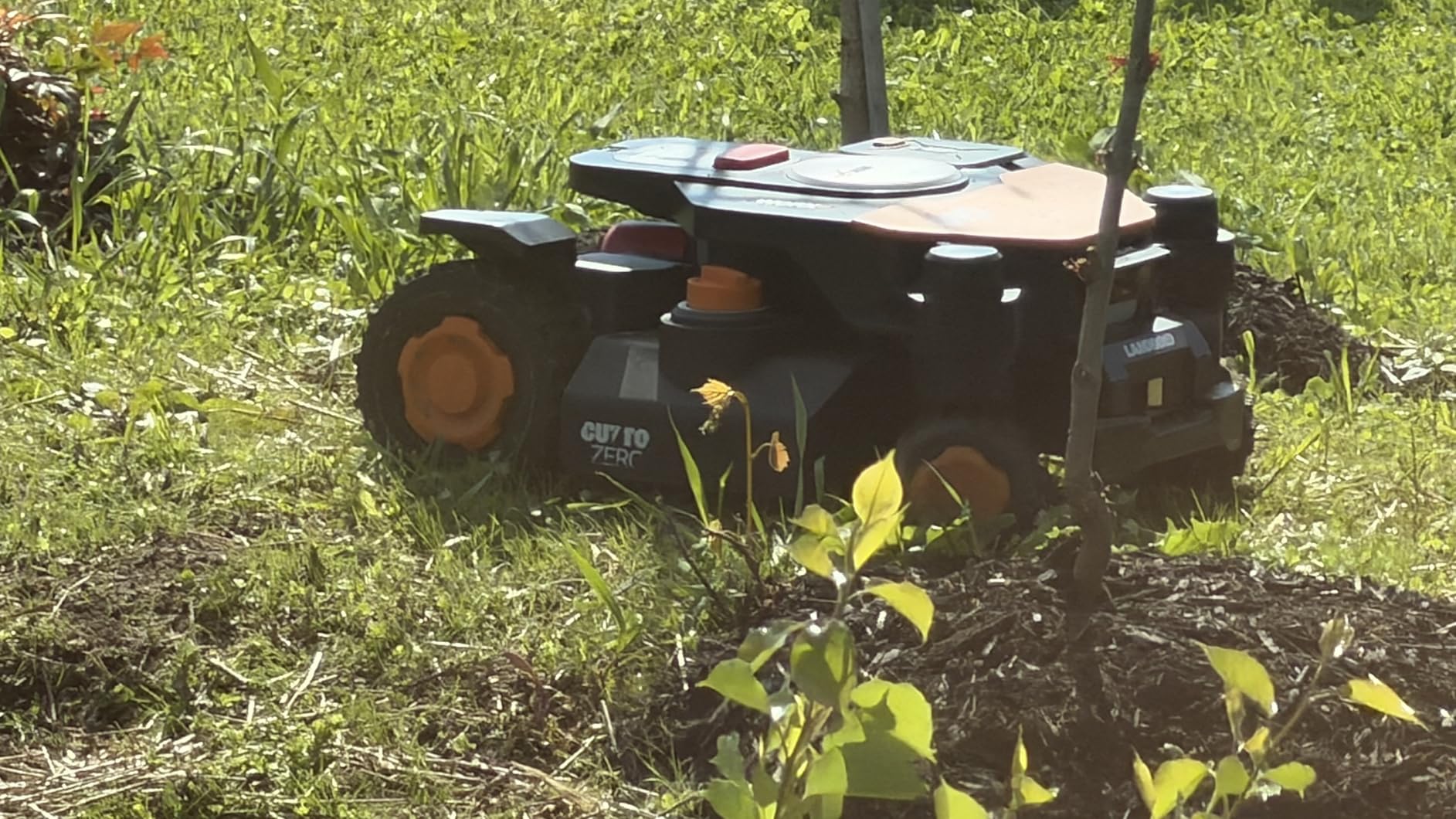
Other details owners like: an easily replaceable off-the-shelf battery, Find My Landroid GPS tracking with a remote lock, FiatLux automatic night lighting, unlimited mowing zones with custom pathways, and a three-year manufacturer warranty. Software and app have improved substantially through over-the-air updates since spring 2026.
And then the honest problem: 3.3 stars from 16 reviews is the weakest rating distribution here, with 40 percent of ratings at 1 star. The machine moves at a walking pace, so a full acre needs multiple days of mowing. Owners also report RTK and NTRIP connection errors that customer service could not clear, the mobile SIM activation step tripping people up, instances of the mower getting lost between lawn areas, support limited to weekday business hours, and early WiFi setup problems that caused returns.
Why front-wheel steering is worth chasing
True steering lets the chassis pivot into a corner and track the border instead of skidding through it. On a lawn with retaining walls, edging and hard boundaries, that is the difference between a mowed edge and a mowed almost-edge.
The offset blade design then trims the leftover strip, which is the step most robot mowers skip entirely and the reason many owners still own a string trimmer.
The 1-star cluster is not noise
Forty percent of ratings at 1 star on a 16-review base is a small sample, but it is a clear signal about connection reliability and getting-lost incidents rather than about cut quality.
Software has improved meaningfully through updates, so the experience today may differ from early reviews. Ask about current connection reports before you commit, and buy from a seller with a straightforward return path.
9. ANTHBOT Genie 3000E for the Most Coverage per Dollar Spent
- Full Band RTK plus four-eye 3D vision holds position under trees
- eaves and near buildings
- No perimeter wire
- so setup is plug-and-play once the RTK base has clear sky
- ACC auto mapping with AI boundary recognition cuts manual driving dramatically
- 300 degree camera recognizes 1000+ object types with safe distance from animals
- Handles mixed fescue
- Bermuda
- clover and crabgrass
- Best price-to-coverage ratio in the roundup
- Severe battery degradation after about a year in long-term ownership
- Leaves random uncut strips 6 to 24 inches wide that need a push mower
- Spotty 4G and WiFi with only one free year of 4G included
At 0.9 acre rated capacity, the ANTHBOT Genie 3000E delivers more coverage per dollar than anything else in this roundup, and on that basis alone it deserves a place. The dual positioning stack is genuinely serious: Full Band RTK plus four-eye 3D vision holds position under dense trees, under eaves and close to buildings where plain GPS is useless, and the 300 degree camera recognizes 1000+ object types for avoidance with a safe buffer from animals.
Setup is close to plug-and-play. There is no perimeter wire, and once the RTK base is placed with clear sky, ACC hands-free auto mapping with AI boundary recognition builds routes that need far less manual driving than competing systems. Owners with mixed fescue, Bermuda, clover and crabgrass report laser-straight lines, and the 6-blade deck, LED headlight and quiet operation all get favorable mentions.
What holds the 3.9 rating down is durability. Long-term owners report severe battery degradation after about a year, with the same area taking four to five charges instead of one. Random uncut strips 6 to 24 inches wide are a recurring complaint that needs a push mower afterward, and some units stop mid-lawn and spin in circles repeatedly, needing manual rescue. It also refuses to pass through a fully open gate between zones and has to be driven through by hand.
Connectivity is described as spotty, only one free year of 4G is included, and the RTK antenna post is weak where the ground spikes attach. App map viewing and editing is difficult, customer support responses were slow or unhelpful, and one owner reported complete failure after 31 days and four cuts, just after the return window closed.
What the value actually buys
You get a 3600 m² rated machine with 30 zones, 1000-type obstacle recognition and RTK plus vision positioning at a fraction of the cost of the flagship tier. For a first robotic mower on a 0.9 acre lot, that math is hard to argue with.
The 46 lb chassis and 25 by 11 by 16 inch footprint also make it one of the easier large-lawn machines to move for cleaning or storage.
Buy it expecting two seasons, not five
Battery fade within roughly a year is the dominant complaint, and it changes the ownership math entirely. Treat the pack as a consumable you will replace and the machine makes sense; expect a five-year battery and it will not.
The uncut-stripe problem is a quality-of-life issue rather than a failure, but plan a push mower pass after heavy growth weeks. App quality is the weakest part of the package, so budget time for manual map fixes.
10. Mammotion YUKA 1500 for Autumn Leaf Cleanup
- Only mower here that also sweeps
- collecting leaves
- twigs and clippings and self-emptying
- 3D vision plus RTK fusion stays centimeter-accurate with more than 50% obstacle coverage
- Handles 45% slopes and wet leaves after rain
- Enhanced RTK reaches up to 3 km over home WiFi or 4G
- 270 degree bumpers add physical protection on top of 100+ object recognition
- Smallest coverage in the roundup at 0.37 to 0.44 acre
- Sweeping function requires an RTK network upgrade
- Only 10 working areas and edge trimming still needed at raised borders
The YUKA 1500 is the only mower in this roundup that also sweeps. It collects leaves, twigs and clippings before, during or after mowing and self-empties at a designated spot, which on a tree-covered property removes an entire weekend of rake-and-blow work from the autumn calendar. If your large lawn is under oaks or maples, that single feature changes the value calculation more than any sensor does.
Positioning is a fusion of dual 3D vision and RTK that works independently of lighting and signal strength, staying centimeter-accurate on yards with more than 50 percent obstacle coverage. Enhanced RTK connects to home WiFi or 4G and extends signal reach up to 3 km, which helps on irregular properties. It handles 45 percent slopes and wet leaves after rain without trouble.
The deck is a dual floating design with a 12.59 inch cutting width, 1.2 to 4.0 inch dynamic height adjustment and up to 500 m² per charge. AI binocular and rear RGB cameras with a 116 degree field of view recognize 100+ obstacles, backed by 270 degree U-shaped anti-collision bumpers for physical protection. Ten mowing regions with channels, per-zone schedules, cutting modes and heights, plus no-go zones.
The limits are obvious. Coverage is the smallest in the roundup at 0.37 acre reception and 0.44 acre maximum, so this is a supplemental machine rather than a large-lawn workhorse. The sweeping function requires an RTK network upgrade, only 10 working areas are supported, and edge trimming is still needed along raised borders and in hard-to-reach corners.
Why the sweeper matters on tree-heavy property
Robotic mowers do not mulch or collect leaves, which means fall cleanup on a mature tree canopy is a separate job. A self-emptying sweeper folds that work into the same unattended cycle.
Wet leaves are the usual failure case for this kind of machine, and owners report the YUKA handles post-rain leaf loads without clogging, which is when a weaker machine stalls.
Sizing this one honestly
At 0.37 to 0.44 acre, treat it as a companion to a larger mower or a second machine for a defined zone. Buyers on a real-acre property will find it undersized within a season.
Factor in the RTK network upgrade needed for sweeping when you compare total cost, since the headline figure does not include it.
How to Size a Large-Lawn Robot Mower to Your Property
Most buyers get this purchase wrong in one of two directions: they buy a machine sized to their average lawn rather than their peak-season lawn, or they buy far more capacity than they will use. Both mistakes are expensive in different ways, and the fix is arithmetic before it is shopping.
Coverage: match peak-season growth, not average
A mower rated to exactly your lawn’s area will fall behind the moment growth peaks and will never recover the ground it lost, because it re-mows what it already cut rather than moving forward. Add 20 to 30 percent headroom on the rated figure, and read the reception number as the number that matters. The gap between reception and maximum is your tolerance for narrow passages and complicated shapes, so an irregular lawn needs proportionally more slack than a rectangle.
For scale: 1 acre is 43560 sq ft or 4047 m². The machines here cover from 0.37 acre on the YUKA up to 6 acres on the YARBO Pro, and the useful large-lawn band sits between about 0.75 and 1.75 acres for most homes. If your property is beyond 3 acres, the consumer category thins out fast and fully commercial machines are a separate purchase conversation with a different installation model entirely.
Here is the worked example nobody in this category publishes. A 1 acre lawn at 13000 sq ft per charge, mowing at typical coverage rates with overlap, requires roughly four charge-and-mow cycles to complete. Realistically that means two sessions on a normal day and three in peak season, with the machine recharging unattended between them. If you need it finished overnight in one pass, you want a wider deck and a larger battery, not a better sensor.
Navigation: RTK, NetRTK, LiDAR and vision compared
On a large lawn, navigation is everything. A randomly bouncing mower wastes hours and battery retracing ground and falls permanently behind during peak growth, while a systematically mapping mower finishes faster, more evenly and without supervision. Four approaches are common, and they are not equally good under trees.
RTK is centimeter-level satellite positioning correction, and it is the backbone of most large-lawn mowers. Its weakness is occlusion: buildings, walls and dense canopy block the signal. NetRTK, also written nRTK, delivers that correction through the cloud using built-in 4G, so no base station or antenna is needed at all, which removes the single most common installation headache. LiDAR is laser-based mapping and obstacle detection that works with no sky view whatsoever. V-SLAM is visual simultaneous localization and mapping using onboard cameras, and it is what keeps a machine going after dark.
The strongest machines in this roundup combine two or three of these rather than relying on one. The LUBA 3 fuses LiDAR, NetRTK and dual-camera vision. The YARBO Pro combines RTK-GPS, binocular vision and ultrasonic sensing. The Sunseeker X5 layers RTK with V-SLAM and Vision AI specifically for shaded lots. Single-stack machines, especially satellite-only, are the ones that generate support calls.
Terrain, slopes and traction on big properties
Do big lawns need all-wheel drive? Only if the lawn has slopes or rough ground. On flat acreage, navigation quality and battery capacity matter far more than drive type. But anything above roughly 30 percent grade needs all-wheel drive, and the claims in this category range from 45 percent all the way to 84 percent, so treat those numbers as brand claims until you test your own worst hill.
Drive type matters more than the number suggests. Tracked drive, as on the YARBO Pro and Lymow One Plus, spreads weight and resists sideways slip in a way wheels cannot, which is why those two handle wet ground and true inclines that wheeled rivals avoid. Four-wheel drive with true front-wheel steering, as on the WORX WR344, wins a different battle: cornering without tearing turf.
Dirt patches and bare ground are a separate failure mode that slope ratings do not predict. Owners report RTK and vision-equipped mowers alike struggling where soil is exposed, because there is no surface texture for the sensors to read. Map those areas as no-go zones or accept that they need a push mower.
Battery runtime and how long a large lawn really takes
Will a robot mower recharge itself on a large lawn? Yes. Every current model returns to base on a low battery and resumes automatically, so a mid-session recharge is completely hands-off. Runtimes here run from 110 minutes on the roborock RockMow X120H through 175 minutes on the LUBA 3 to 120 minutes on the YARBO Pro, and the 15000 mAh LiFePO4 pack in the Lymow One Plus is rated for over 2000 cycles, which matters more than capacity once you are three years into ownership.
Battery chemistry is worth a second look. Cobalt-based lithium packs, as used in the YARBO Pro, have a limited cycle life and an expensive replacement. LiFePO4 packs last far longer. And on at least one model in this roundup, owners report severe battery degradation inside a year, turning a single charge into four or five. Ask what the pack costs to replace before you buy, not after.
Installation: what a large-lawn mower actually costs
This is where large-lawn owners get surprised, and it is the question no competitor roundup on this topic answers directly. There are three routes, and they differ enormously.
A DIY boundary wire install is the cheapest route, and the cost scales with perimeter length rather than acreage, so a large odd-shaped property is where it gets painful. A professional dealer install costs several times more, and what you are buying with that difference is a guaranteed boundary plus a phone number to call. A wire-free machine needs no install at all, but RTK base stations need a clear sky view, and the YARBO Pro’s Data Center Set requires a 120 degree unobstructed view, which is a real site-planning constraint on a tree-covered property. Ask your dealer or seller for a written install quote either way, and compare it against the cost of one season of a recurring lawn-care visit before you decide.
Note the second reason dealer support matters. On the higher-priced machines in this category, a local dealer who will answer a phone and hold parts is worth more than a two-point advantage in a spec sheet. Husqvarna’s main competitive advantage in this category is exactly that network. Among the machines here, the Sunseeker X5 and the WORX WR344 are the ones with stated US-based support and a two- or three-year warranty.
Reliability in the real world: signal loss, tree canopy and dirt patches
Are wire-free robotic mowers reliable? Generally yes, with one caveat drawn straight from owners. RTK positioning glitches are near-universal across every brand, and in a large share of reports they clear on their own within a day or two after a reboot rather than needing any fix. Treat a positioning error as routine, not as a warranty event.
The real failure mode is signal loss under dense tree canopy or behind buildings, and it is a planning problem, not a product defect. Owners who solve it do so by physically relocating the RTK antenna closer to the area that loses signal, which means the base station is not always a one-and-done install. Survey your property for occlusion before you pick a model, and prefer a LiDAR or vision-augmented machine if the canopy is heavy.
Two more reliability items owners raise repeatedly. First, notifications: several brands do a poor job of telling you when a machine has stopped, so you find out when you go outside. Second, subscriptions: some direct-to-consumer brands moved remote control behind a paid plan after a trial period, so confirm what stays free after year one. The WORX WR344 and the roborock RockMow X120H are the clearest on this point, with a stated no-fee cloud RTK and three years of 4G included respectively.
Finally, weight and assembly. Units here run from 26 lb to 215 lb, and the heaviest need at least two adults to put together. If you plan to move the machine for seasonal storage, factor the weight into your decision as seriously as the slope rating.
Frequently Asked Questions
Are there robotic mowers that can mow large areas?
Yes. Wire-free RTK and LiDAR models now cover roughly 0.75 to 1.75 acres a day, and modular flagship machines are rated for up to 6 acres. Capacity, not concept, is the limiting factor. Match the mower’s rated acreage to your lawn with 20 to 30 percent headroom, and read the reception figure rather than the maximum, because the gap between them is your tolerance for narrow passages and irregular shapes.
What is the largest robotic lawn mower available?
Consumer robotic mowers top out at 6 acres, which is the YARBO Pro, a 215 lb tracked machine with a 20 inch cutting width and interchangeable modules. Fully commercial machines reach far larger, but those are dealer-installed units priced well above what a homeowner pays for a retail mower, and they are a different category of purchase with a different installation model.
What are the negatives of robotic lawn mowers?
The main drawbacks owners report are a high upfront cost, setup and mapping effort that exceeds what wire-free marketing implies, RTK and GPS signal loss under trees and behind buildings, poor performance on dirt patches and bare ground, edge cuts that still need a string trimmer, weak push notifications when a machine stalls, and no local dealer repair for direct-to-consumer brands. Battery degradation on some models is a genuine long-term concern too.
What type of mower is best for mowing steep slopes?
An AWD or 4WD model rated for the grade, not a lighter two-wheel-drive machine with good traction control. Anything above roughly 30 percent needs all-wheel drive, and the top robotic units claim 45 to 84 percent slope capability. For genuinely severe terrain, tracked drive spreads weight and resists sideways slip better than wheels, which is why it handles wet ground and true inclines that wheeled rivals avoid.
How big of a yard can a robot mow?
Most retail models top out between 0.25 and 1.5 acres, and premium flagships reach 2.5 to 6 acres. Any yard can theoretically be covered, but past the mower’s rating it simply falls behind during peak growth and needs mid-session recharges every day. A 1 acre lawn generally takes two sessions on a normal day and three in peak season, so plan your schedule around the cycle count rather than the acreage label.
Are wire-free robotic mowers reliable?
Generally yes, with a caveat drawn from real owners. RTK positioning glitches are near-universal across brands and often clear on their own within a day or two after a reboot. The genuine failure mode is signal loss under dense tree canopy or behind buildings, which is a planning problem you solve by relocating the base station, or by choosing a LiDAR and vision augmented machine that does not depend on satellite positioning.
The Verdict for Big Yards in 2026
The best robotic mowers for large lawns come down to one question: how much ground do you actually have, and how much of it is under trees. For most acreage owners, the Mammotion LUBA 2 AWD 5000HX is the pick, with 481 reviews behind it, an 80 percent slope rating and vision that holds up under canopy. Go to the YARBO Pro if you are past 3 acres, the Sunseeker X5 if shade and quiet matter more than capacity, and the Lymow One Plus if your terrain is severe enough to scare off everything else.
Whatever you choose, measure the property, find the worst slope, and check for signal occlusion before you order. Those three checks eliminate most of the disappointment we read about in owner feedback. And if you want the rest of the large-property routine covered, start with our guides to oscillating sprinklers for large lawns and tow-behind aerators to keep the ground underneath healthy.