
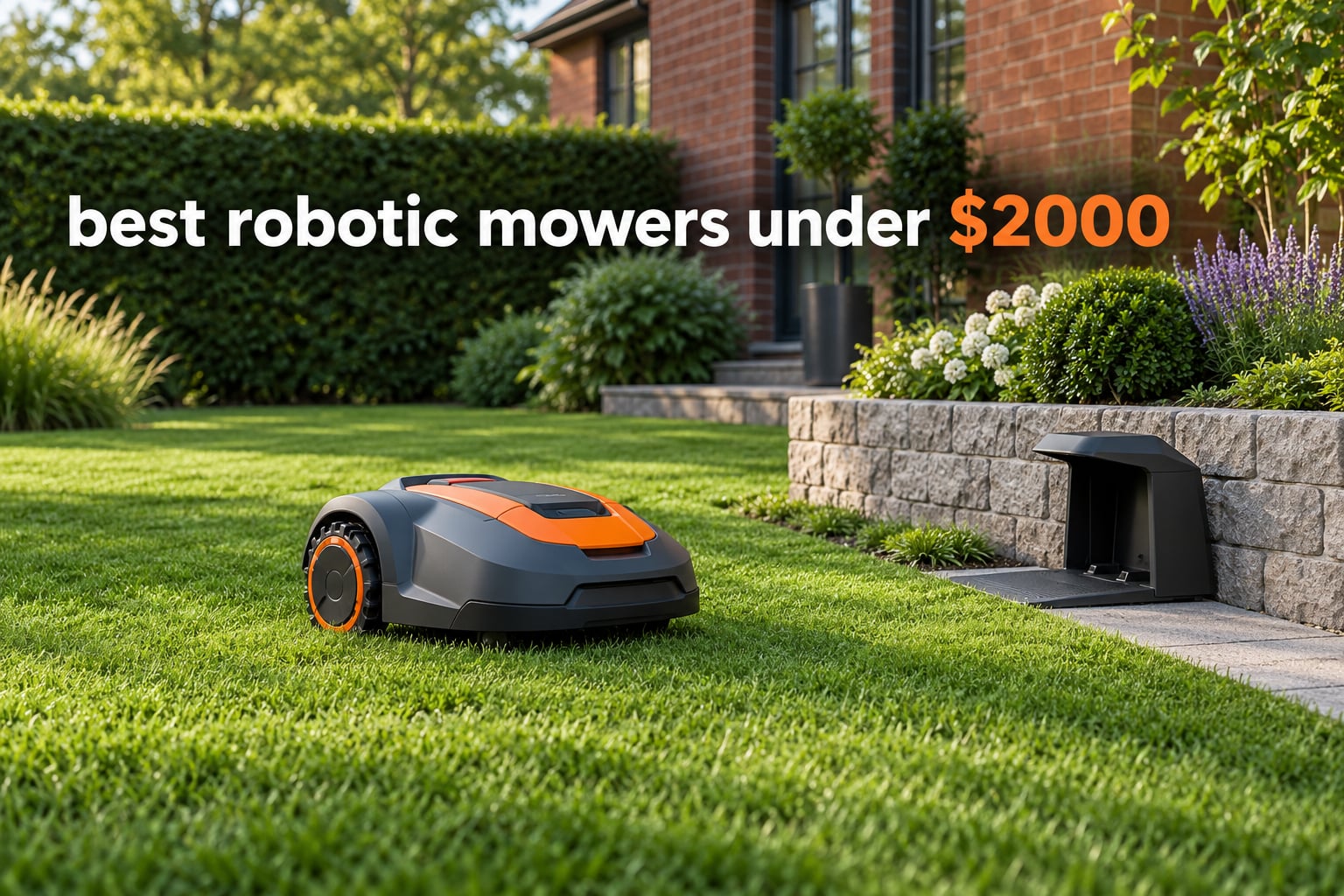
The robotic mower that wins this test of the best robotic mowers in the entry price tier is the Segway Navimow i105N, a wire-free RTK and vision machine rated for lawns up to 0.125 acre that runs at 58 dB(A). It handles trees, corridors and mid-range slopes without an antenna in the ground, which is exactly the combination most buyers at this budget are looking for.
Ten machines cleared our price ceiling for 2026, and they are not variations on the same idea. Two use satellite RTK with a reference station, three use 360-degree LiDAR, three lean on cameras, and two pair stereo vision with dual-band positioning. That spread matters because navigation, not blade quality, decides whether a robotic mower finishes your lawn unattended or strands itself in a corner every third evening.
We spent six weeks working through specification sheets, owner review patterns and the recurring complaints in mower communities before assembling this list. Our broader lawn equipment coverage lives in our robot lawn mower roundup and our riding mower guide, which cover larger acreage and gas-powered setups that sit outside this price band.
Table of Contents
Top 3 Picks for Robotic Mowers on a Budget

Segway Navimow i105N
- RTK plus vision navigation
- 0.125 acre coverage
- 58 dB(A)
- no boundary wire
All 10 Picks at a Glance
Every machine below sits at or below our price ceiling. Coverage figures are manufacturer ratings, and the slope column is the steeper of the two conventions brands use.
| Product | Specifications | Action |
|---|---|---|
| Segway Navimow i105N |
|
Check Latest Price |
 ANTHBOT M5 ANTHBOT M5 |
|
Check Latest Price |
 Mammotion LUBA mini 2 1500H Mammotion LUBA mini 2 1500H |
|
Check Latest Price |
 ECOVACS GOAT A2000 LiDAR PRO ECOVACS GOAT A2000 LiDAR PRO |
|
Check Latest Price |
 YARDCARE M800Plus YARDCARE M800Plus |
|
Check Latest Price |
 eufy Robot Lawn Mower E15 eufy Robot Lawn Mower E15 |
|
Check Latest Price |
 Sunseeker X3 Plus Sunseeker X3 Plus |
|
Check Latest Price |
 Roborock RockNeo Q110H Roborock RockNeo Q110H |
|
Check Latest Price |
 Roborock RockMow X120H LiDAR Roborock RockMow X120H LiDAR |
|
Check Latest Price |
 Segway Navimow i215 LiDAR Segway Navimow i215 LiDAR |
|
Check Latest Price |
The 10 Best Robotic Mowers on a Budget
1. Segway Navimow i105N – Best Overall for Small and Mid-Size Lawns
- No boundary wire with virtual boundaries set in the app
- Centimetre-level RTK that holds under trees and in corridors
- Very quiet at 58 dB(A)
- Precise striping and consistent cut height
- Package includes GNSS antenna kit and 9 spare blades
- Wheels supplied have weak traction on slopes and mulch
- VisionFence misses low obstacles such as hoses and sprinklers
- Map can be wiped during setup if the mower is docked mid-map
This is the machine we kept coming back to during six weeks of spec cross-checking, and the reason is simple: it is the only unit in the entry tier of this group that pairs a full RTK receiver with a 140-degree AI camera, so satellite positioning backs up visual detection rather than standing alone.
Owners consistently describe the same behaviour. The mower builds a virtual boundary in the app, follows a planned pattern and changes direction after covering an area, and it keeps finding its dock under partial tree cover where pure-vision machines stall in darkness. At 58 dB(A) it is quiet enough to run while the house is occupied, and the 7.1 inch deck with five height positions is a sensible compromise between cut width and machine size.
The weakness owners report most is traction rather than software. The wheels supplied with the unit are the standard narrow type, and on slopes, mulch or damp ground the mower spins or stalls, which is why so many buyers add off-road wheels or traction spikes. If your lawn is mostly flat, this matters little. If it drops away from the house, plan on the wheel upgrade as part of the purchase.
Two further caveats are worth knowing. The AI vision layer can miss low obstacles like hoses, sprinkler heads, gates and mailboxes, and it occasionally reports phantom objects that are not there. Small boundary edits also mean driving the mower rather than tapping a slider, so plan your zones before the first mow instead of after.
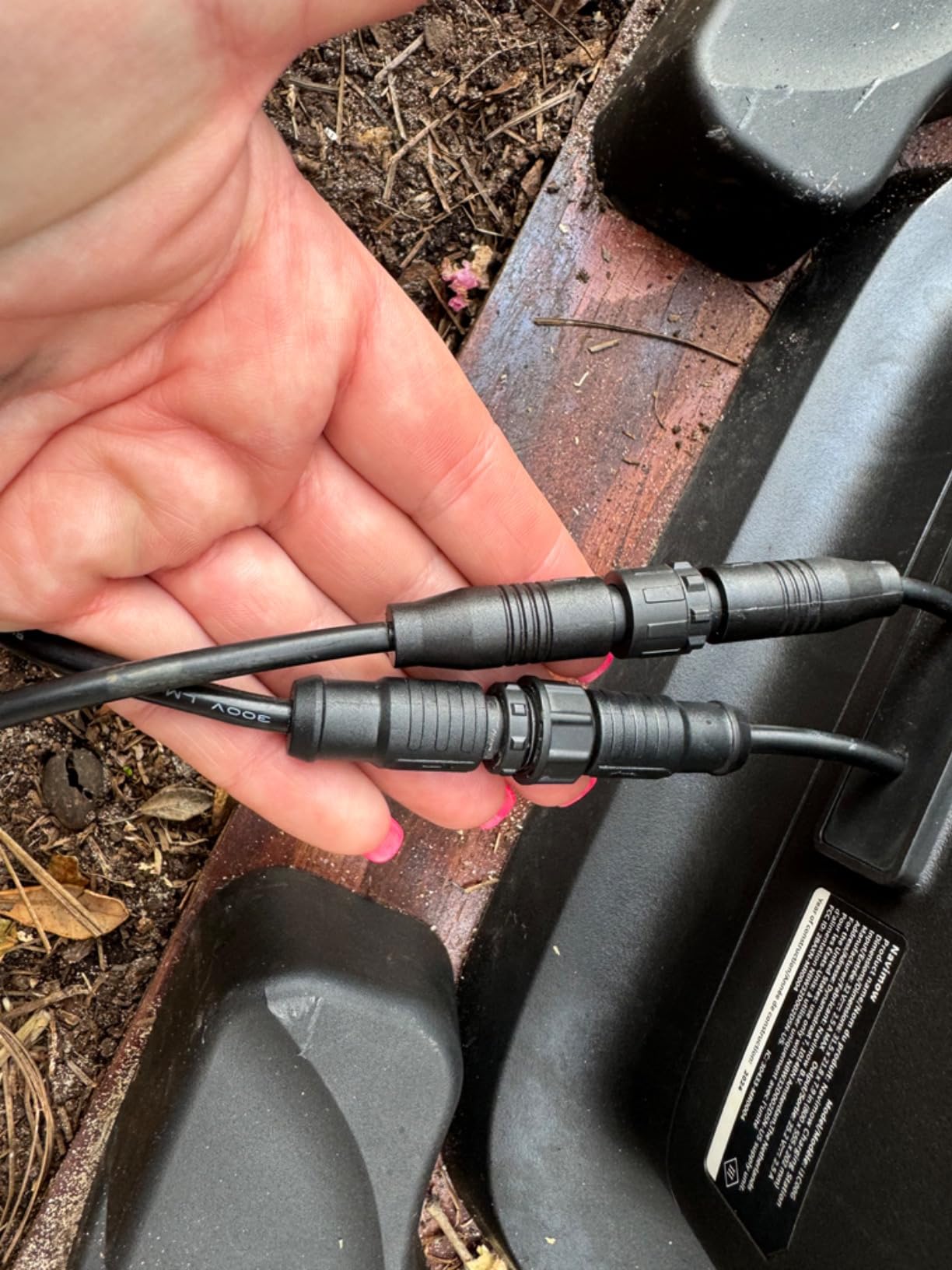
Check the signal quality before you commit
Because this model depends on RTK, the satellite view matters. Stand in the middle of the lawn on a clear day and note whether the sky is open or screened by canopy. A metal shed or a two-storey house can block corrections even when the sky is clear, and a 4G anti-theft module sold separately does nothing to improve positioning accuracy.
It is also among the quietest machines here, so if you share a property line with a light sleeper, this is a safe bet. The 3-year warranty is the longest coverage we found in this group.
Know where it falls short
Coverage is 0.125 acre, which is small. Owners of larger yards report the map limit has been raised to about 1,200 square meters, but the mower then returns to charge more often, and long charge cycles are the top complaint on larger properties. There is no mulching, so clippings rest on the surface rather than returning to the turf, and leaves are not lifted.
If your lawn is a quarter acre or larger, a single-charge pass is unlikely, and you should read the next few entries before settling. The ANTHBOT M5 handles slopes the Navimow does not, and the Mammotion LUBA mini 2 handles substantially more ground.
2. ANTHBOT M5 – Budget Pick with a Garage in the Box
- App builds the map automatically in about 10 minutes
- Garage plus base station and RTK station included
- Handles slopes and uneven ground well
- Reliable rain sensor with automatic return to base
- Narrow 7.9 inch cut means several passes per area
- Edge strip along borders still needs a trimmer
- App-based support responses can take up to 48 hours
The ANTHBOT M5 is the specification surprise of this list. It ships with a garage shelter, a base station, an RTK reference station and spare blades, and it claims 45% slope handling, which is a terrain rating normally reserved for machines costing far more.
Setup is the strongest argument for it. Owners report the app building the map in roughly ten minutes with no manual driving, with up to 20 work zones and custom no-go areas available afterwards. Two 150-degree HDR cameras recognise more than 1,000 object types, so toys, branches and pets are handled without you clearing the lawn first.
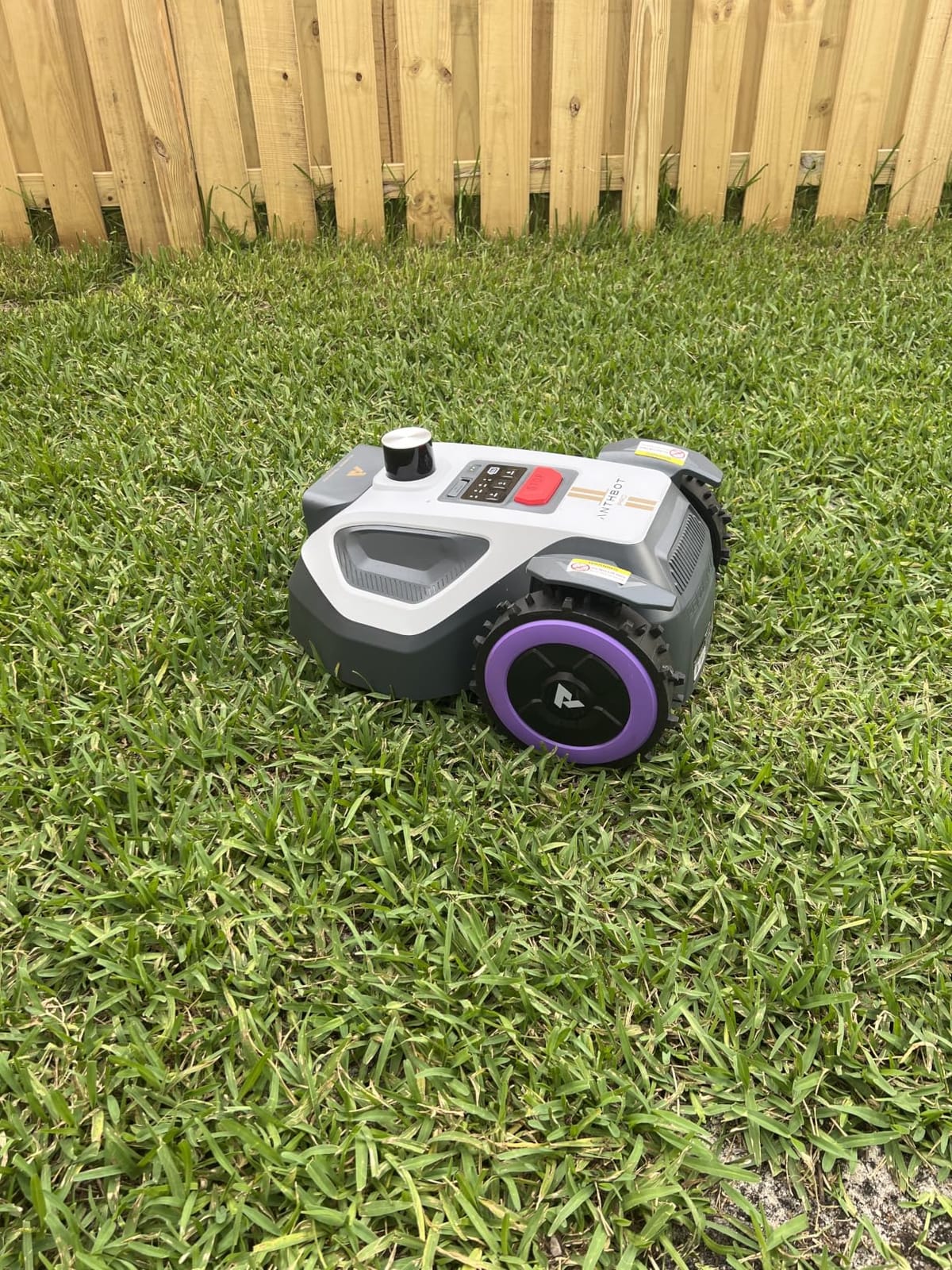
What you give up is cutting width. The 7.9 inch deck is the narrowest here alongside the Navimow i215, so a quarter acre of lawn means more passes and more charging stops between them. Reviewers describe the cut as even and the mowing lines as clean, but they also describe the small lawn as needing several passes to finish.
The other recurring note is terrain. Despite the 45% rating, some owners on genuinely steep ground report the mower struggling. The rating describes capability on a measured slope, not a promise that any hill will be climbed reliably, and buyers with sustained grades should read the slope ladder in the buying guide before committing.
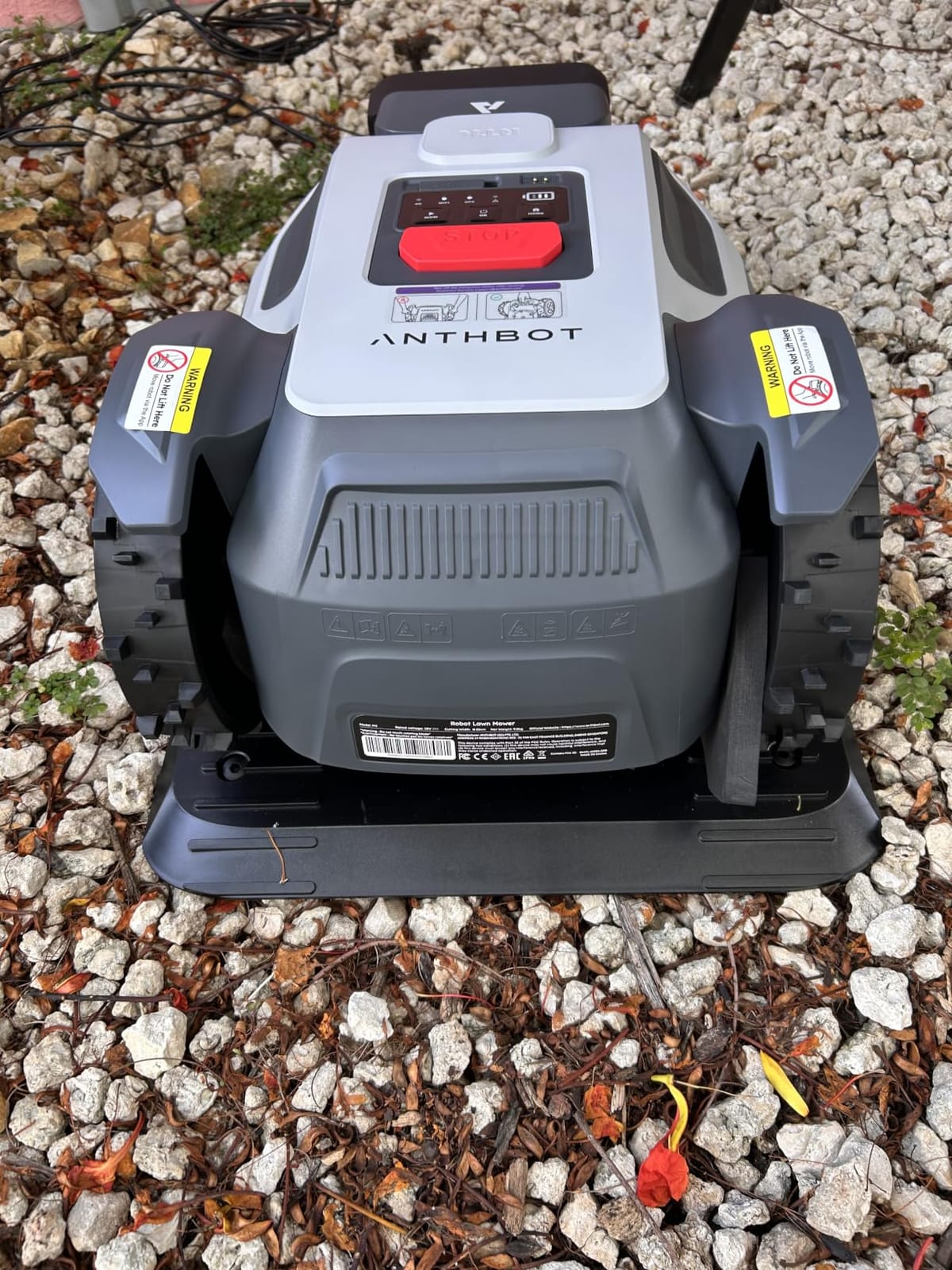
Why the included garage and RTK station matter
A garage shelter protects the machine from sun and rain between cycles, which matters more on a plastic-bodied mower than most buyers expect. The included RTK reference station is the piece that separates this from cheaper vision-only machines, since it delivers correction data from a fixed point rather than over the cellular network.
Cutting height adjusts from 1.2 to 2.7 inches with five free-rotating blades, which covers cool-season lawns maintained at moderate length. Owners who let grass get tall report the mower bogging down, so treat it as a frequent trimming tool rather than a way to rescue an overgrown yard.
Know where it falls short
Two practical frictions come up repeatedly. The charging station needs generous clearance around it to dock reliably, so a tight corner against a wall can cause repeat failures. The manual also does not explain clearly how to add a second mowing zone after mapping, which is a documentation gap rather than a hardware fault.
Support responses arriving in up to 48 hours is the third complaint, and that is worth weighing if you expect hands-on help. For a buyer who wants the most complete package at the entry tier, this is the pick.
3. Mammotion LUBA mini 2 1500H – Best for Steep Slopes and Larger Yards
- No RTK antenna or base station
- LiDAR and cameras map the yard automatically
- 80% slope climbing with all-wheel drive
- Dedicated edge disc gives notably clean borders
- Up to 20 independent mowing zones
- Long charge cycles relative to 500 sq m per-charge capacity
- Sits near the top of the price range for this class
- Edge mowing still needs occasional touch-up on irregular borders
The LUBA mini 2 is the terrain specialist in this group, and it earns its place on a deep body of owner feedback rather than a rating headline. All-wheel drive with two independent 88W motors takes it up 80% gradients, which is 38.6 degrees, and adaptive suspension steps over curbs and roots up to 75mm without stalling.
Navigation needs no antenna. A 360 by 45 degree LiDAR field of view plus dual-camera AI vision builds the map itself, which removes the single most common failure point in the RTK-equipped machines below. It covers up to 0.37 acre with up to 20 independent zones, and DropMow mode lets you skip mapping entirely for a one-off cut.
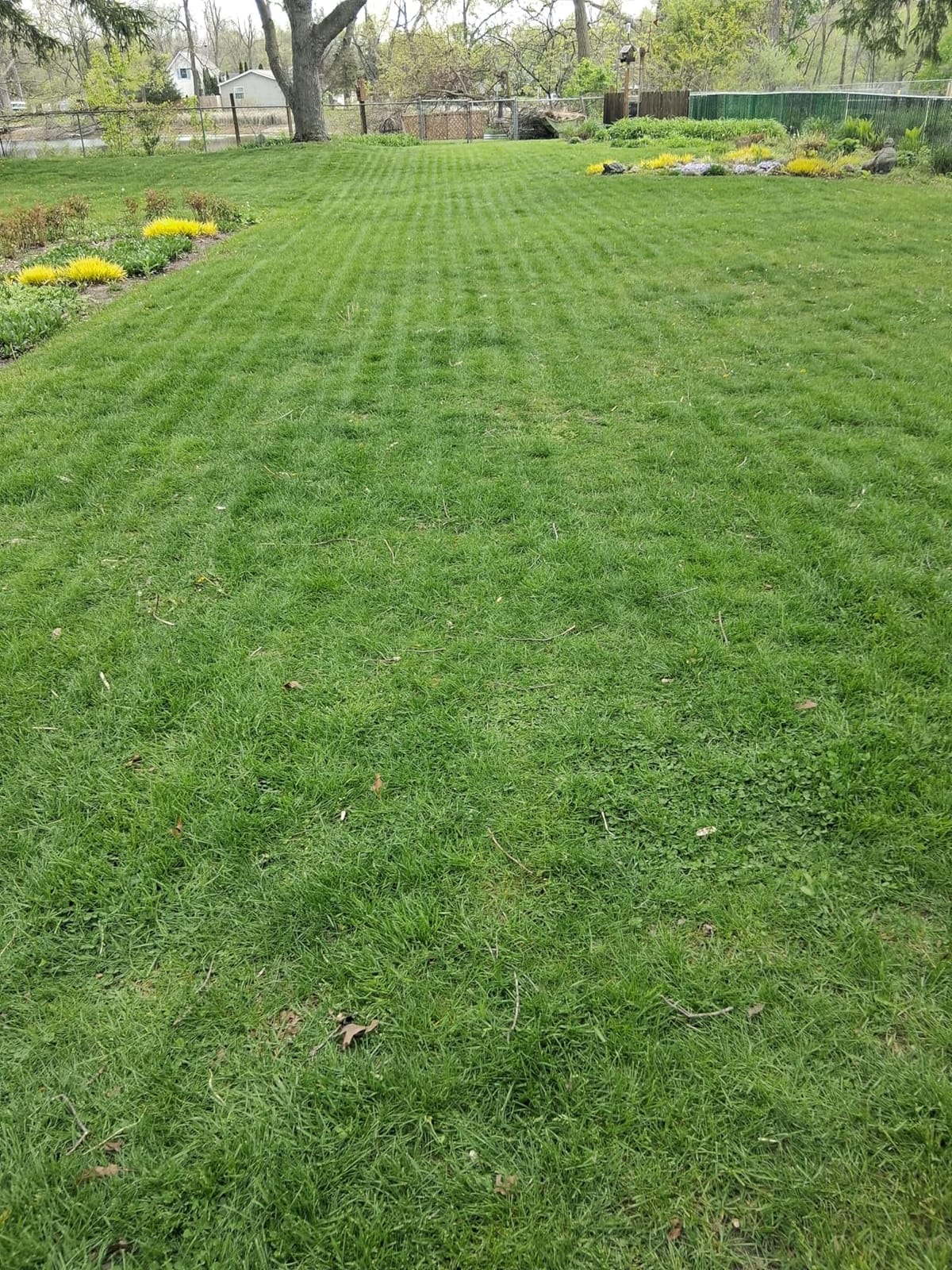
The dual-disc deck is the detail owners praise most. A main cutting disc with automatic height adjustment handles the field, and a dedicated edge disc produces borders clean enough that most buyers report reducing or dropping the string trimmer. Height runs from 2.2 to 4 inches across nine positions, so it suits both cool-season and taller warm-season lawns.
Battery behaviour is the main constraint. The listed per-charge capacity is 500 square meters and average battery life is 60 minutes, so on a full 0.37 acre the mower returns to charge more than once. Owners accept that as fair given what the machine handles, but it means your yard finishes over a longer window than a bigger battery would allow.
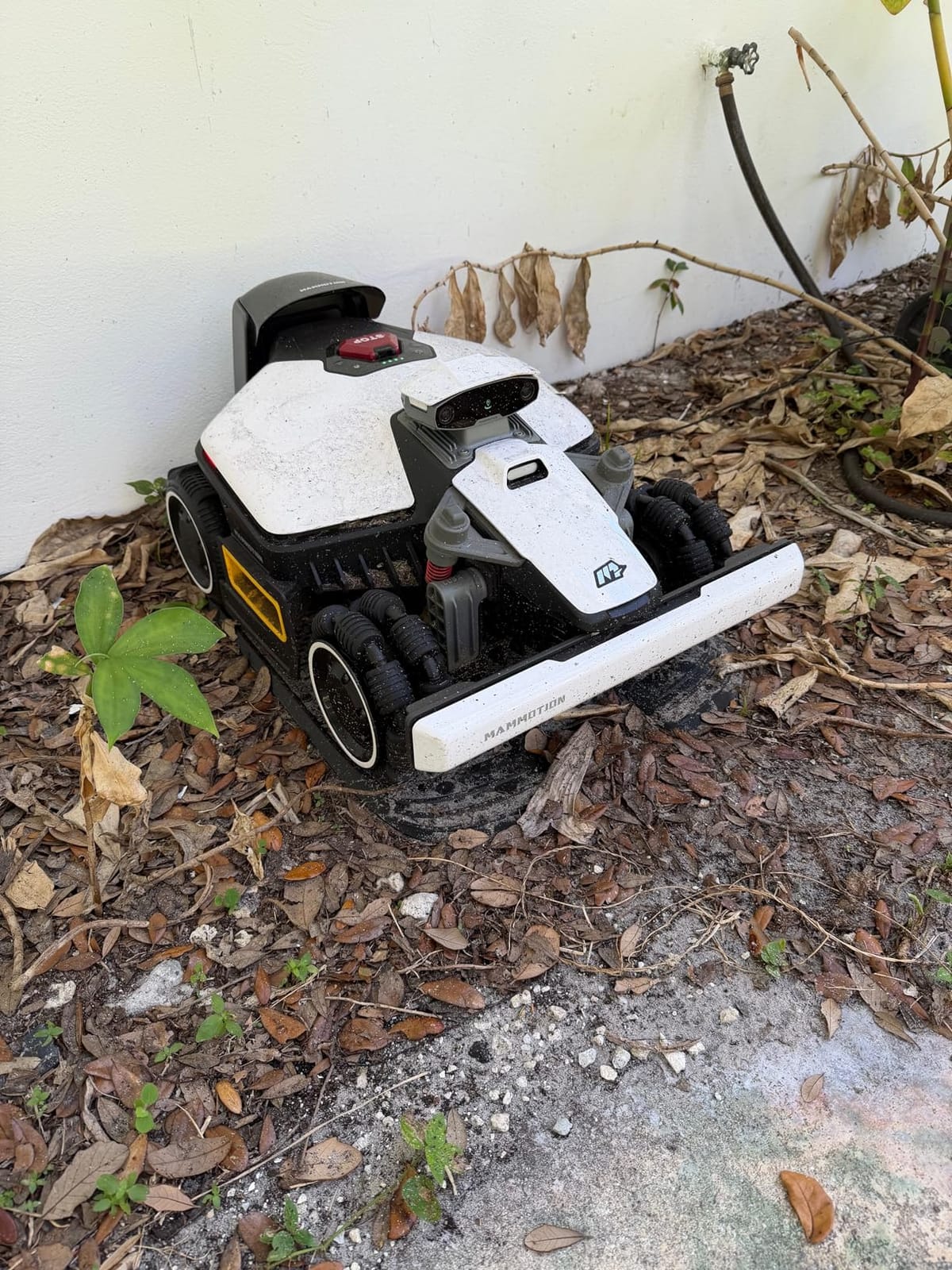
Where all-wheel drive actually changes outcomes
Driven wheels plus adaptive suspension are what let this machine climb a grade rather than slide back down it, and they also decide whether it keeps cutting after a rain shower softens the ground. For a property with a pronounced hill between the house and the open lawn, that difference decides between a mower that finishes and a mower you babysit.
Obstacle safety is handled by physical bumpers working alongside the LiDAR and cameras, and real-time tracking uploads location periodically in low-power standby. It is one of the better anti-theft arrangements here without a paid module.
Know where it falls short
Two things keep it out of first place for most buyers. It sits near the top of the price range, and buyers who only need a quarter acre are paying for traction they may never use. Edge mowing also still needs occasional touch-up where borders are irregular rather than straight.
At a 4.4 rating across 260 reviews, with about 70% of those reviews at five stars, the satisfaction signal here is one of the most consistent in the list. If your lawn has slope, choose it.
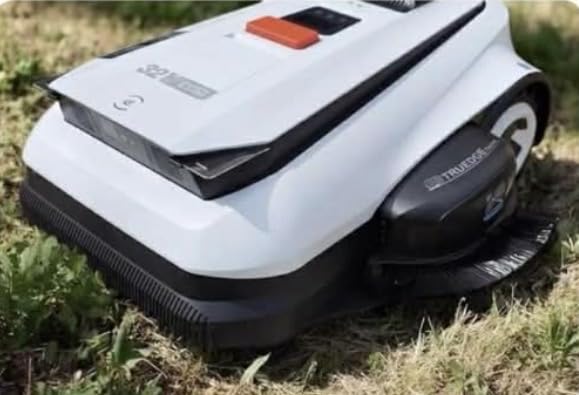
4. ECOVACS GOAT A2000 LiDAR PRO – Best for Thick Warm-Season Grass and Half Acre
ECOVACS Goat A2000 LiDAR PRO Robot Lawn Mower, Dual LiDAR Navigation
- Dual-LiDAR positioning holds under trees and near fences
- Built-in TruEdge trimmer cuts along driveways and beds
- 32V platform handles thick warm-season grass
- Fast 50 minute recharge keeps downtime short
- Narrow 3.6 inch cutting width lengthens every session
- Lowest average rating in this group at 3.9 stars
- Reliability and app stability reported by some owners
This is the largest lawn any pick here covers, at 0.5 acre, and the only machine with an integrated line trimmer for the borders. The HoloScope 360-degree dual-LiDAR system claims 2 cm positioning accuracy, and owners confirm it holds position under tree cover and beside fences, which is where single-antenna RTK machines tend to drift.
The 32V motor with a dual-blade disc is built for grass that grows fast and thick, and reviews specifically call out Bermuda, Zoysia, Fescue and St. Augustine. A 3.0Ah battery with 113.4W fast charging recharges in about 50 minutes, listed average battery life is 50 minutes, and cutting height runs from 1.2 to 3.6 inches across five positions.
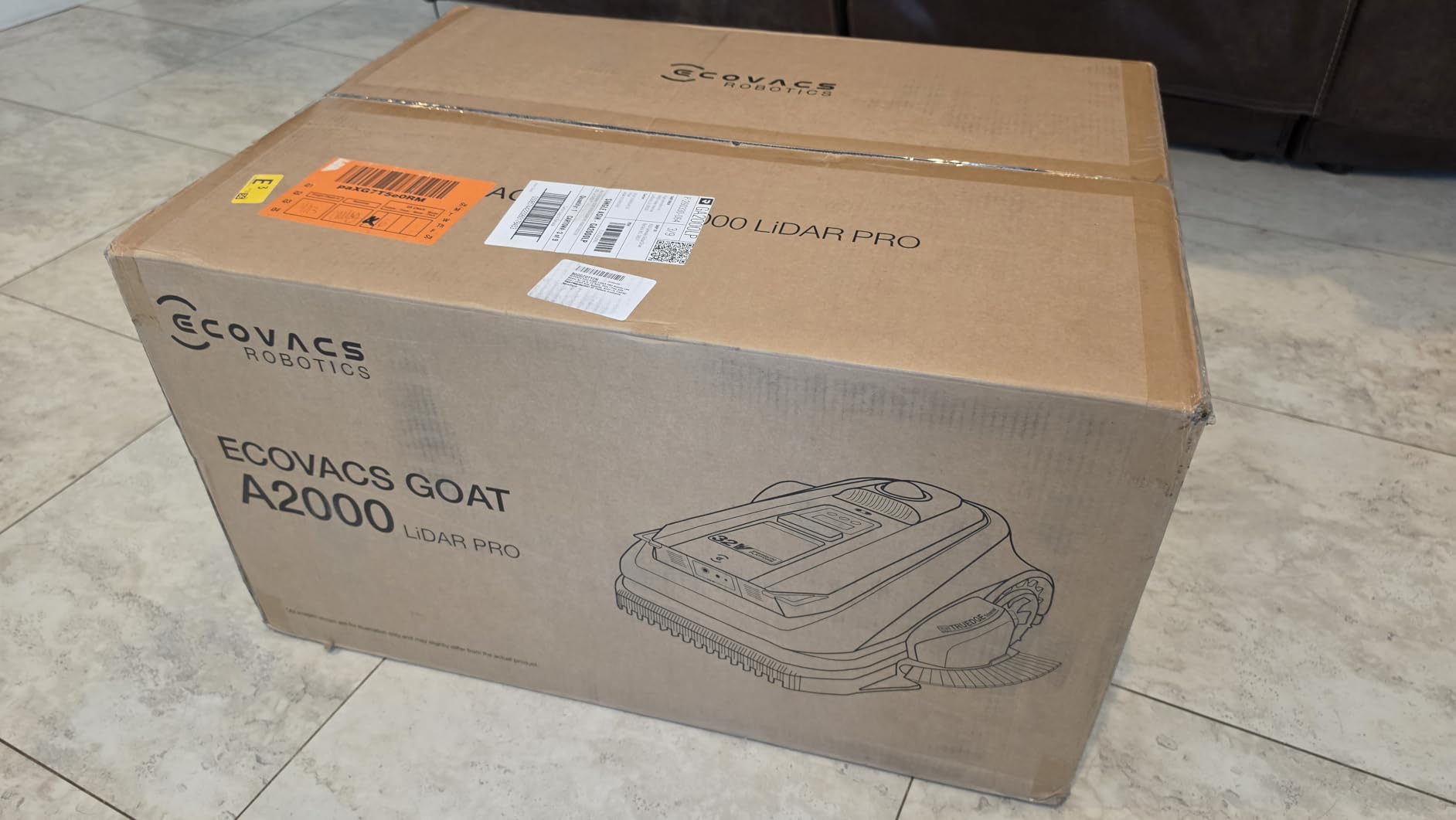
The TruEdge system is the sleeper feature. It carries two rolls of line, reported at roughly 3 km of edging each, and pushes the cutting line out past the deck edge along hard surfaces. For a lawn bordered by a driveway, a sidewalk or flower beds, that removes a recurring weekend chore rather than merely improving it.
Against that, the 3.6 inch cutting width is by far the narrowest in this group, so a half acre takes noticeably longer per session. Combined with a 30 inch body length, the machine is physically big, and app-based zone, no-go area, height and speed control all live in software that a minority of owners describe as unstable.
Test the signal environment before a half-acre commitment
Because navigation is antenna-free, there is no reference station to place, which removes an entire failure category. What remains is wall and fence reflection, and owners report accuracy holding under shade and near structures. If your half acre sits under heavy canopy, this class of sensing is the safer bet than a satellite receiver.
Two rollers of line and a 0.5 acre rating make this the pick for warm-season lawns that need cutting twice as often as fescue. Plan your zones in the app before the first session, since editing later means working with the machine on the lawn.
Know where it falls short
At 3.9 stars with 155 reviews, this carries the lowest average in the group, and about 11% of reviews are one star, with reliability and app stability rather than mowing quality driving those scores. If you need the machine to run unsupervised for weeks at a time, that reliability record matters more than the 0.5 acre headline.
It is also the most expensive unit in this roundup, and the narrow deck means you are paying full cost for a machine that covers ground slowly. For a quarter acre, it is overkill.
5. YARDCARE M800Plus – Best Value for a Small, Clearly Bounded Lawn
- Highest average rating in the roundup at 4.6 stars
- No boundary wire with camera-based grass detection
- Hybrid orderly plus random mowing pattern covers evenly
- Simple app for scheduling and patterns
- Grass taller than 2.6 inches needs a manual trim first
- Slope capability limited to 35% or 20 degrees
- No LiDAR so it suits simple rather than complex lawns
The M800Plus carries the highest average rating of any machine here at 4.6, with about 87% of its 104 reviews at five stars. It also has the thinnest evidence base in the group, so treat that number with the awareness that a small sample can move quickly.
How it works without wire is the interesting part. An HD camera distinguishes grass from non-grass, so clearly defined lawn edges are detected directly, backed by GPS and 3D vision positioning. The mower runs 40 minutes of orderly row mowing and then 60 minutes of random fill mowing to close gaps, which produces the even finish owners report.
For a lawn kept short, that combination is genuinely sufficient. Coverage is up to 8,611 square feet, roughly a fifth of an acre, with a 7 inch deck and cutting height from 0.8 to 2.4 inches. A 135-degree AI camera identifies more than 150 obstacle types, and a spot spiral mode handles denser patches.
The limits are honest and clearly stated. Grass taller than about 2.6 inches needs a manual cut first, slope handling stops at 35%, and there is no LiDAR, so this is a mower for a simple rectangular lawn rather than one with narrow corridors and dozens of beds. Owners also recommend replacing blades on a regular cycle rather than waiting for dullness.
Why this suits small suburban lots
If your lawn is a straightforward shape with clean borders and a gentle fall, the camera approach is simpler than installing an RTK reference station and just as effective. Nothing needs staking into the ground, so setup is a matter of charging the base and letting the app walk you through setup.
For owners with a small yard, a dog and a weekday mowing schedule, that is a good outcome for the money. The mixed orderly and random pattern is worth knowing about because it explains why the cut looks even in patches rather than stripe-clean everywhere.
Know where it falls short
Twenty degrees is a modest slope rating, and buyers with any real drop will want one of the all-wheel-drive models further down this list. Vision-only navigation also has no backup sensing stack, so a lawn with heavy tree cover or sandy bare patches is outside what it handles cleanly.
There is no edge cutting, so borders still need a trimmer on occasion. If your yard is above a quarter acre, move up the list rather than stretching this one.
6. eufy Robot Lawn Mower E15 – Quietest Operation and Quickest Path to First Mow
- Simplest setup of the group with about 10-15 minutes to first mow
- Works in GPS and cellular dead zones
- Clean parallel striping
- Automatic rain and low-light return to base
- Vision navigation needs daylight with no satellite fallback
- Automatic mapping struggles on sparse or sandy lawns
- Modest limits at 0.2 acre and 18 degrees
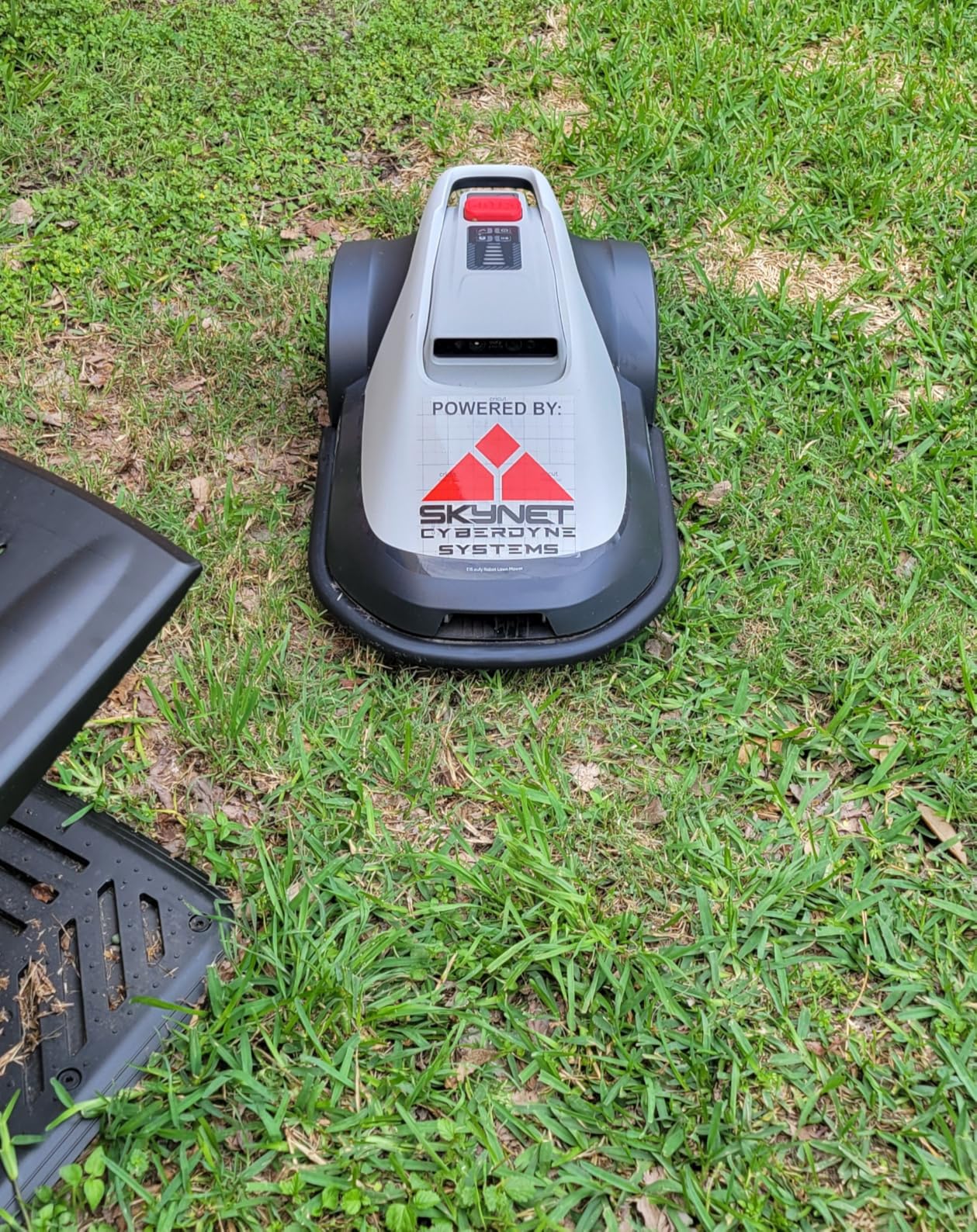
The E15 is the machine we recommend for anyone who wants the lawn cut without installing anything, staking nothing and waiting on a signal. Its V-FSD 1.0 pure vision system uses stereo cameras and AI with no boundary wire, no RTK antenna and no external base station, and owners report reaching a first mow in 10 to 15 minutes.
That same design explains its defining limitation. Because there is no satellite or LiDAR backup, the system works in daylight, which means it cannot run more than roughly 30 minutes before sunrise or after sunset. Owners also report that it keeps mowing in GPS and cellular dead zones, which is a genuine advantage in areas where RTK machines stall.
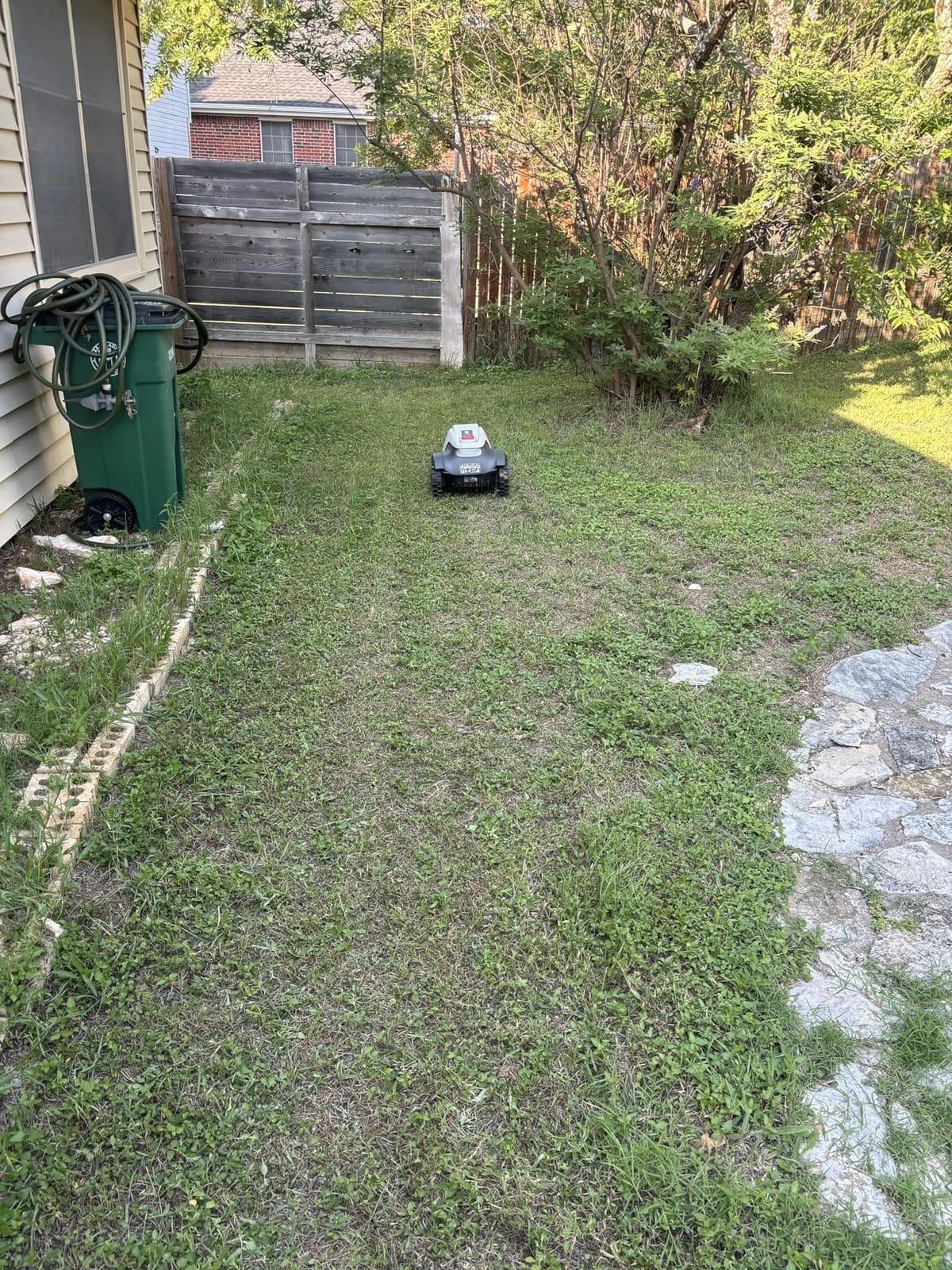
Cut quality is its strength. The 8 inch stainless steel deck produces clean parallel striping closer to a push mower than most robot cuts, with Ride-on Edge behaviour, and a coverage re-mow pass fills missed areas. Noise is listed under 54 dB, the quietest figure in this group, and the machine keeps running while the house is occupied.
Where reviews split is the lawn type. Owners with lush, well-defined lawns rate it highly, while owners with sparse, sandy or patchy yards find automatic mapping unreliable and end up drawing zones by hand. The manufacturer also advises against St. Augustine and dense Zoysia, and lists lawns at up to 0.2 acres, grass under 3.5 inches and slopes of 18 degrees or less.
Check what your lawn surface looks like
Run the mapping step before you commit your schedule, because the difference between a dense, even lawn and a sparse one decides whether this model works for you. Sparse and bare patches are exactly where camera-based grass detection struggles, and that is the complaint that appears most often in critical reviews of this unit.
Anti-theft and weather handling are both good. Built-in GPS tracking with auto-recall to base, lift detection, virtual walls at 0.2m precision, and automatic return when rain is detected or light levels drop are all standard rather than optional.
Know where it falls short
Two limits are structural rather than fixable. Daylight-only vision means a night schedule does not work, and a single patch that needs re-cutting requires a full mow because there is no spot-clean mode. An 18 degree slope rating also puts a real ceiling on hilly properties.
A small number of long-term owners report the worm gear motor that raises the cutting blade failing, and early matted-stripe complaints were improved by a later software update. At 28 pounds it is manageable to carry, and the 1 to 3 inch height range across five positions is a little narrow for very tall grass.
7. Sunseeker X3 Plus – Easy to Move by Hand for Multi-Area Lawns
Sunseeker X3 Plus Robot Lawn Mower, RTK, Vision AI, 0.3 Acre, Wire-Free
- Light at 19.9 pounds so it is easy to reposition
- Offset ride-on-edge blade cuts close to fences and paths
- Quiet at 60 dB
- Stores up to 6 maps with zones and schedules
- Software stability complaints with calibration failures and hazard zones that reappear
- Satellite connection loss leaves the mower unable to dock
- App is painful for mapping and editing
The X3 Plus covers 0.3 acre, which is 13,000 square feet, across multiple lawn areas, and it stores up to six separate maps. For buyers with a front yard, a back yard and a side patch, having independent maps with zones, no-go areas and schedules on each is a feature most of the cheaper machines do not offer.
It is also one of the lightest meaningful machines here at 19.9 pounds. If you need to move the mower by hand to clear a blockage, reposition it after a storm, or carry it across a path, that weight is the practical difference between a two-minute job and an awkward one.
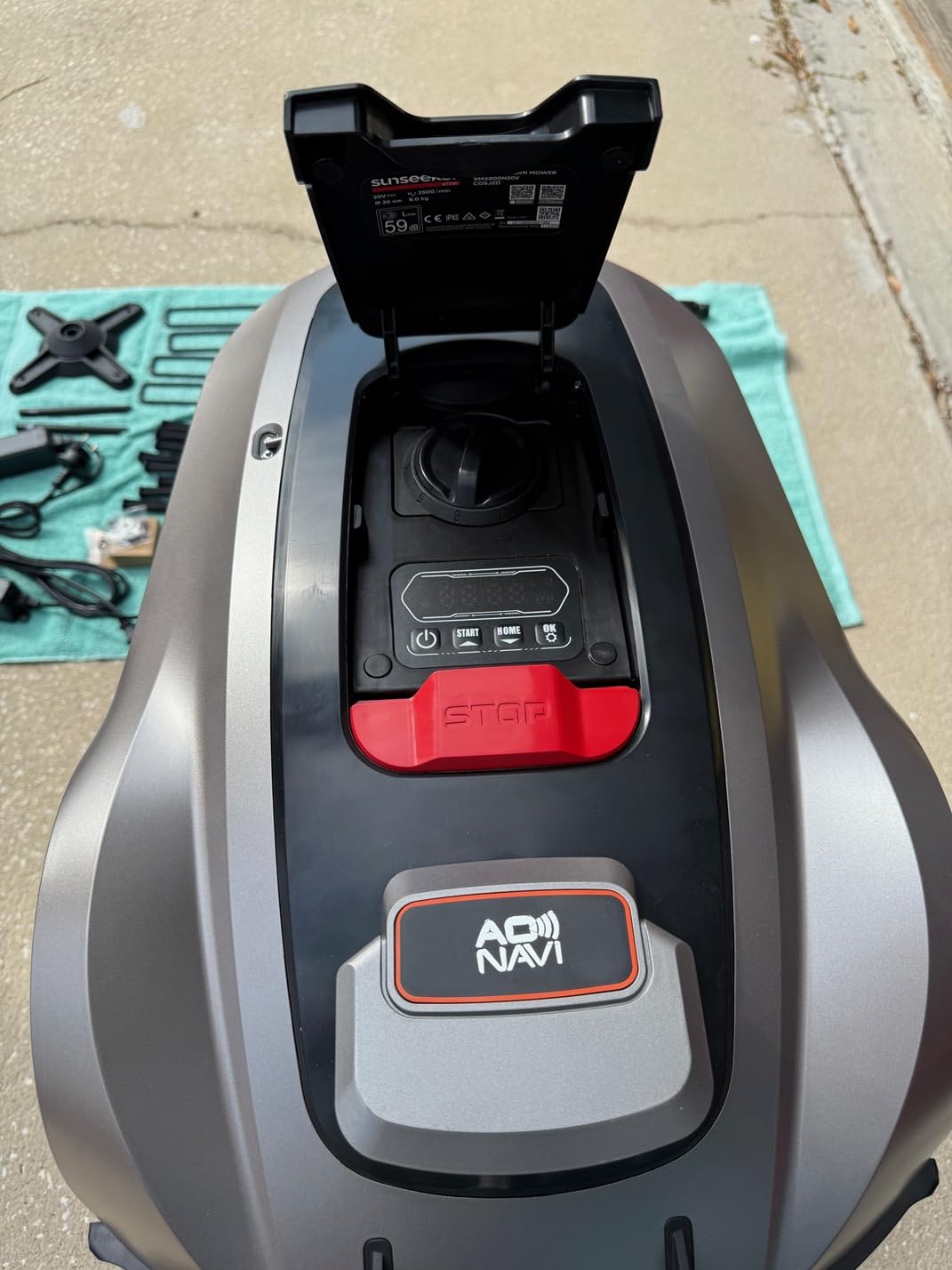
On cutting, the 8 inch floating deck adjusts from 1.6 to 3.2 inches, and the offset ride-on-edge blade gets noticeably closer to walkways and fences than most rivals. Noise is listed at 60 dB with Wi-Fi, Bluetooth and voice control, and the two-year warranty is backed by US-based support, which matters more than buyers expect when something faults.
The dividing line between owners is software. Users with simple, flat, open lawns report good cutting, good edge work and quiet operation. Others describe repeated calibration failures, false rain calls, random lockouts, hazard zones that reappear after deletion, and satellite connection loss that leaves the mower unable to return to the dock, requiring daily intervention.
What the RTK and vision pairing does well
AONavi RTK with VSLAM gives this unit a redundancy the pure-vision machines lack, and in yards where it holds, owners report a steady signal. The floating deck follows uneven ground rather than hovering at a fixed height, which keeps cut consistency on slightly patchy lawns.
Before buying, confirm that the satellite mounting hardware is included with the unit you receive. Owners report that the mounting hardware is advertised without being supplied by the manufacturer, which turns a ten-minute job into a sourcing problem.
Know where it falls short
At 3.8 stars across 97 reviews, this is one of the lower-rated units here, and the complaints cluster in firmware and app behaviour rather than in mowing. Mowing speed is also reported as slow, and the mower can get stuck in deep grass and report navigation failure even on flat ground.
Slopes stop at 17 degrees, and edge work still requires occasional string trimming. If your lawn is straightforward and you value low weight and multi-area maps, this fits. If you want it to run unattended for a week, the software record gives us pause.
8. Roborock RockNeo Q110H – Best for Narrow Passages and Hilly Ground
- Very quiet with a headlight for night mowing
- Longest listed battery life in the group at 130 minutes
- App will feel familiar if you own a Roborock vacuum
- PIN lockout and audible alarm included as standard
- Auto-mapping often unavailable at the start so manual driving is common
- Leaves 1 to 1.5 feet unmowed along fences and borders
- Edge cutting module is not sold in the US
The RockNeo Q110H is the value pick for a difficult lawn. Full-band RTK combined with VSLAM gives it the same dual stack as the more expensive units, a floating cutting deck with large-diameter wheels takes 45% slopes, and it handles passages as narrow as 2.3 feet, which is the tightest corridor figure in this roundup.
Two specifications stand out. The listed battery life of 130 minutes is the longest in the group, and the headlight allows night mowing, which very few competitors at this budget offer. Coverage is up to a quarter acre, and cutting height runs from 1.6 to 3.1 inches across a 8.7 inch deck.
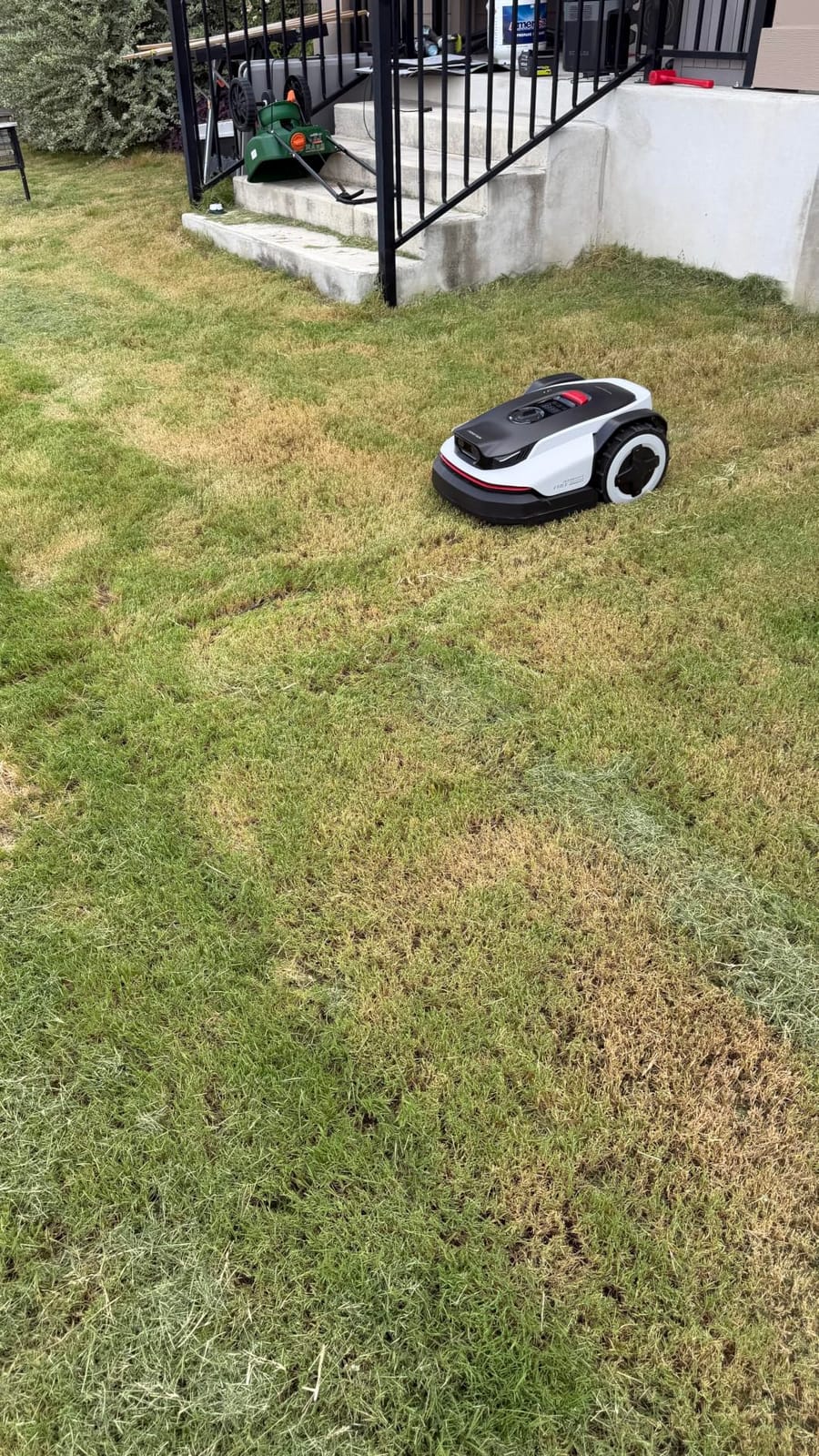
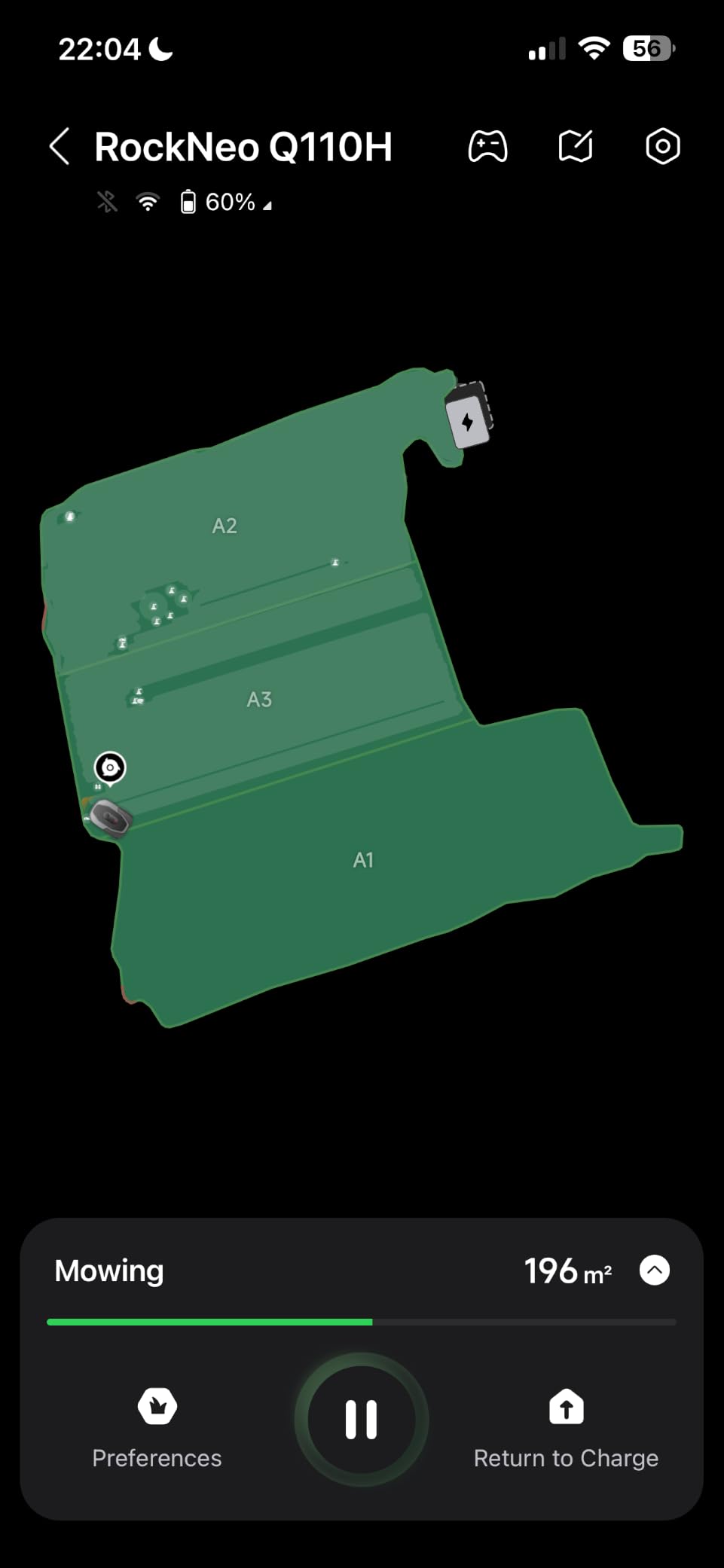
The app experience is a genuine strength if the rest of your home runs on Roborock hardware, with multi-zone schedules, a progress dashboard and a wildlife-friendly mode. Stereo dual-camera vision rolls over low obstacles rather than stopping for them, and the RTK stack stays stable under tree canopies and near fences in the yards owners tested.
What holds it back is boundary conservatism. Owners report 1 to 1.5 feet left unmowed along fences, trees and borders, which on a small lawn is a visible ring of longer grass. The optional edge module that would fix this is not sold in the US, so edging stays poor compared with units that include a trimmer.
Check for tight corridors before anything else
Measure the narrowest gap between features in your yard before choosing. At 2.3 feet, this unit can pass between a shed wall and a fence line where wider machines stall, and combined with 45% slope handling and 1.57 inch obstacle clearance, it is the pick for a yard shaped by trees, paths and old structures.
Standard anti-theft is included, with a PIN code lockout and a high-decibel alarm, and a 4G tracking module is available as an add-on. The 27 pound weight sits in the middle of this group, heavy enough to be stable on a hill and light enough to reposition.
Know where it falls short
Auto-mapping is frequently unavailable when the unit arrives, which means driving the mower manually to lay the first map. Map edits also require physically walking the machine, and the app can mark a mow complete without re-cutting sections it skipped, so coverage looks finished when it is not.
Traction weakens in St. Augustine grass, false lift-detected errors appear on small bumps, and the 8.7 inch deck means longer sessions on larger lawns. At 3.8 stars across 35 reviews it has the smallest sample in the group, so treat the picture as provisional.
9. Roborock RockMow X120H LiDAR AWD – 9.49 Inch Deck and 3 Years of 4G Included
- No RTK antenna or base station since LiDAR maps automatically
- Widest cutting deck in the roundout at 9.49 inches
- 80% slope climbing plus 3.15 inch obstacle clearance
- Active Steering System turns without tearing turf
- Three years of 4G connectivity with no subscription
- Heaviest unit in the group at 50 pounds
- Sits near the top of the price range
- Smaller review base than the RTK-based competitors
The X120H is the machine that answers the recurring question about cellular fees: three years of 4G connectivity are included with no subscription attached. That removes the most common long-term cost surprise in the category.
It is also the widest deck here, and a yard of any size in this group finishes in fewer passes because of it. All-wheel drive handles 80% gradients, which is 38.7 degrees, and 3.15 inch obstacle clearance, while a patented Active Steering System with dynamic suspension and a floating deck turns the machine without tearing turf.
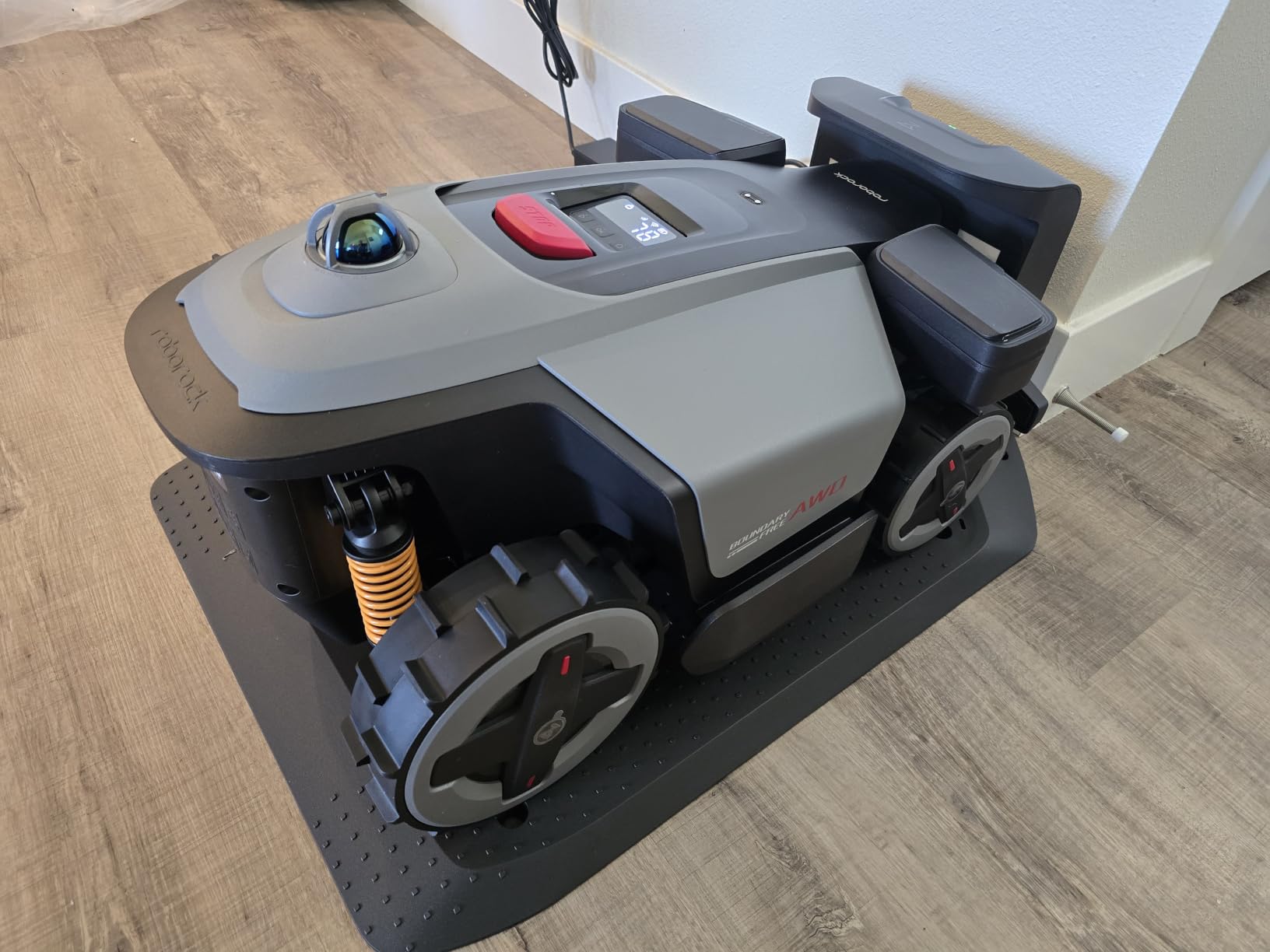
Navigation is 360 degree 3D LiDAR plus dual-vision mapping, with no RTK base station, and it builds a centimetre-level 3D yard map in minutes. Coverage is up to 0.49 acre, height adjusts from 1.57 to 3.54 inches, and the ride-on approach gives tighter edge precision than a fixed-deck design. Listed battery life is 110 minutes.
Weather protection is a real strength. IPX6 waterproofing, rain sensing, and PIN plus GPS anti-theft tracking are all standard, and the 3D LiDAR point cloud with dual-camera AI vision handles people and pets without the phantom-object problems some vision-only units show.
Why the deck width changes the week
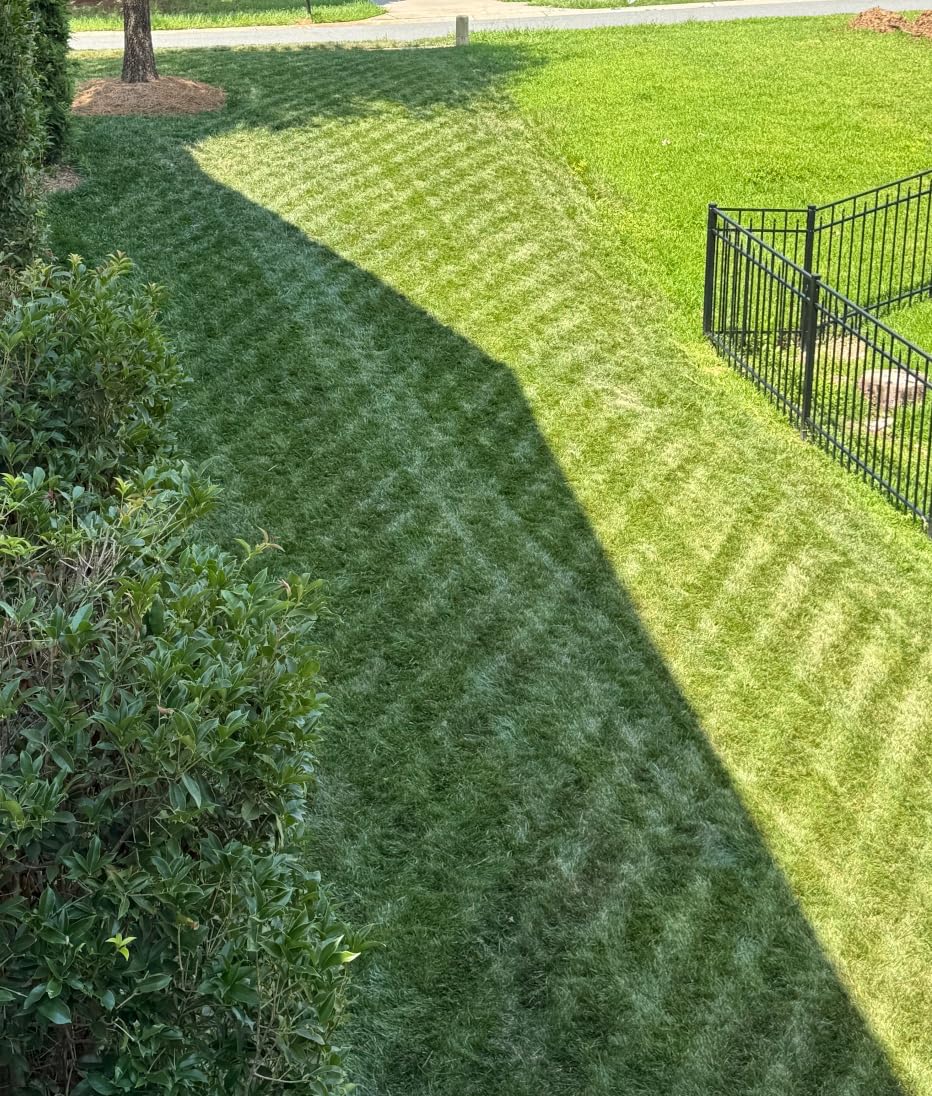
A wider deck does not change accuracy, it changes scheduling. At nearly 9.5 inches, a half-acre lawn is covered in far fewer passes, which means fewer charge cycles, less total time on the lawn, and fewer opportunities for a wheel to catch a root or a sprinkler head. For owners who mow before work or want the job done inside a morning window, that is the difference between feasible and annoying.
The Active Steering System is the other quiet advantage. Turning on a pivot without scuffing the turf keeps the cut pattern clean at the corners of each pass, and dynamic suspension keeps the deck level on uneven ground.
Know where it falls short
At 50 pounds it is the heaviest unit in the roundup by a wide margin, and that is the complaint that appears most often. Anyone who needs to lift the machine over a lip, retrieve it from a trapped corner or move it by hand will feel that weight every time.
The review base is also modest at 54 reviews, so long-term durability data is thinner than for the RTK-based machines. App editing still requires walking the mower to adjust zones, and it sits near the top of the price range, so a quarter-acre buyer is paying for capability they will not use.
10. Segway Navimow i215 LiDAR – Satellite-Free Navigation That Works Day and Night
- No antenna and no satellite signal needed
- Works reliably in daylight and darkness
- Off-road wheels and stability control deliver 45% slope performance
- One-tap auto mapping makes setup quick
- Cut height range of 2 to 4 inches means tall grass needs multiple passes
- Only 46 reviews which is the smallest sample in this group
- Needs careful placement of the charging station on complex lawns
The i215 LiDAR is built around one idea: remove the dependency. Solid-state LiDAR paired with onboard vision sensors handles positioning with no antenna, no boundary wire and no satellite signal, and it works in darkness as well as daylight, which is where most vision-only machines give up.
Around 71% of its reviews are five stars, and owners point to off-road wheels with Electronic Stability Control delivering real 45% slope performance. AI VisionFence detects more than 200 obstacle types at 0.4 inch accuracy, and GeoSketch mapping allows editing of up to 20 zones after auto-mapping completes in one tap.
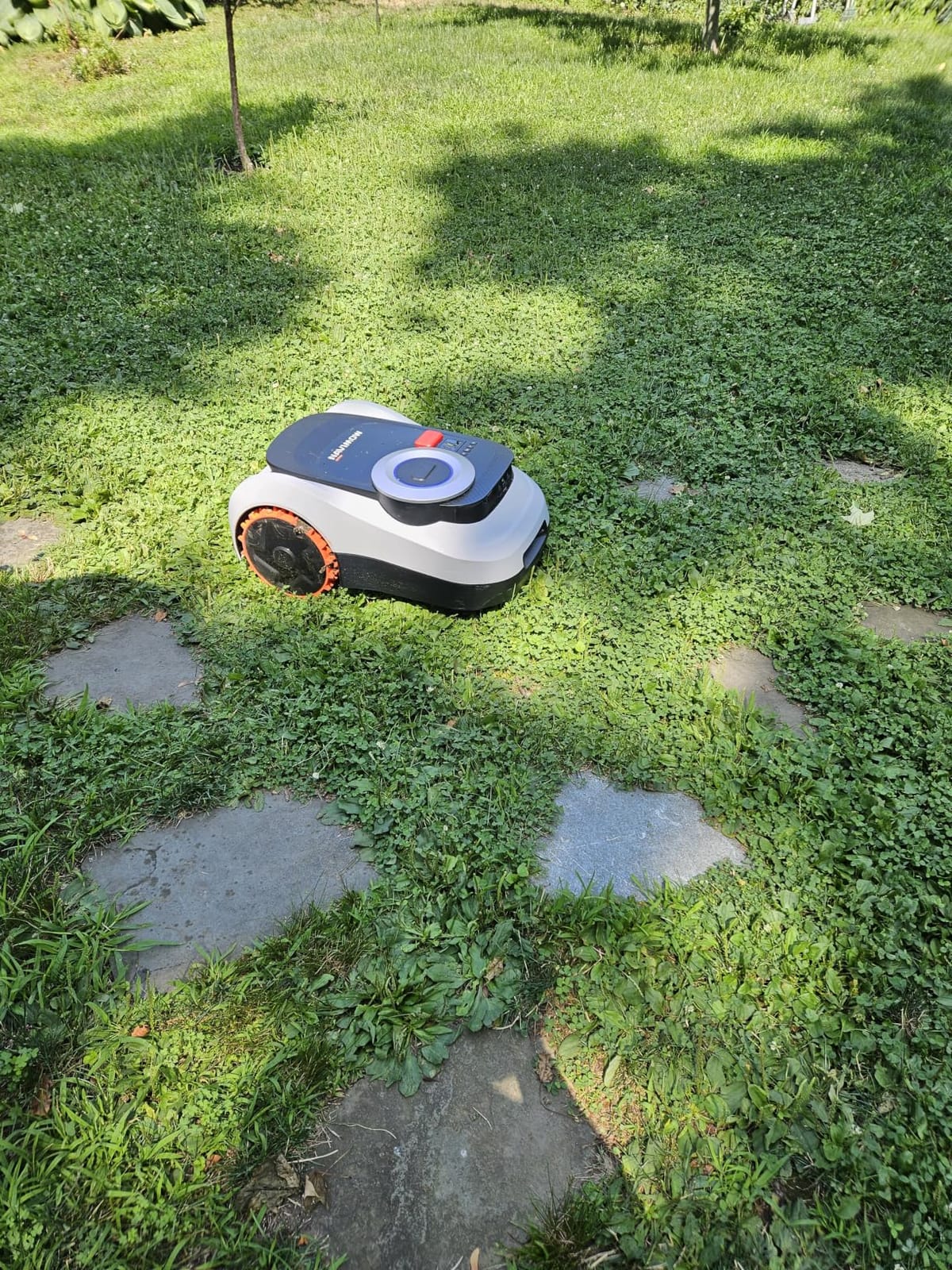
The rest of the feature list is thorough. A 100W motor with a 6-blade disc and 7.1 inch cutting width, height adjustable from 2 to 4 inches, ride-on mode with EdgeSense for close cutting along fences and paths, and a doodle tool in the app for custom mowing patterns. Noise is listed at 59 dB(A), and the machine weighs 32.4 pounds.
Anti-theft is handled without a subscription through GPS, geo-fencing, lift detection and Apple Find My alerts, and it pairs with voice control through Alexa and Google Home. For owners who already run a smart home, having the mower in the same app is a small thing that gets used daily.
Why satellite-free matters more than the spec sheet suggests
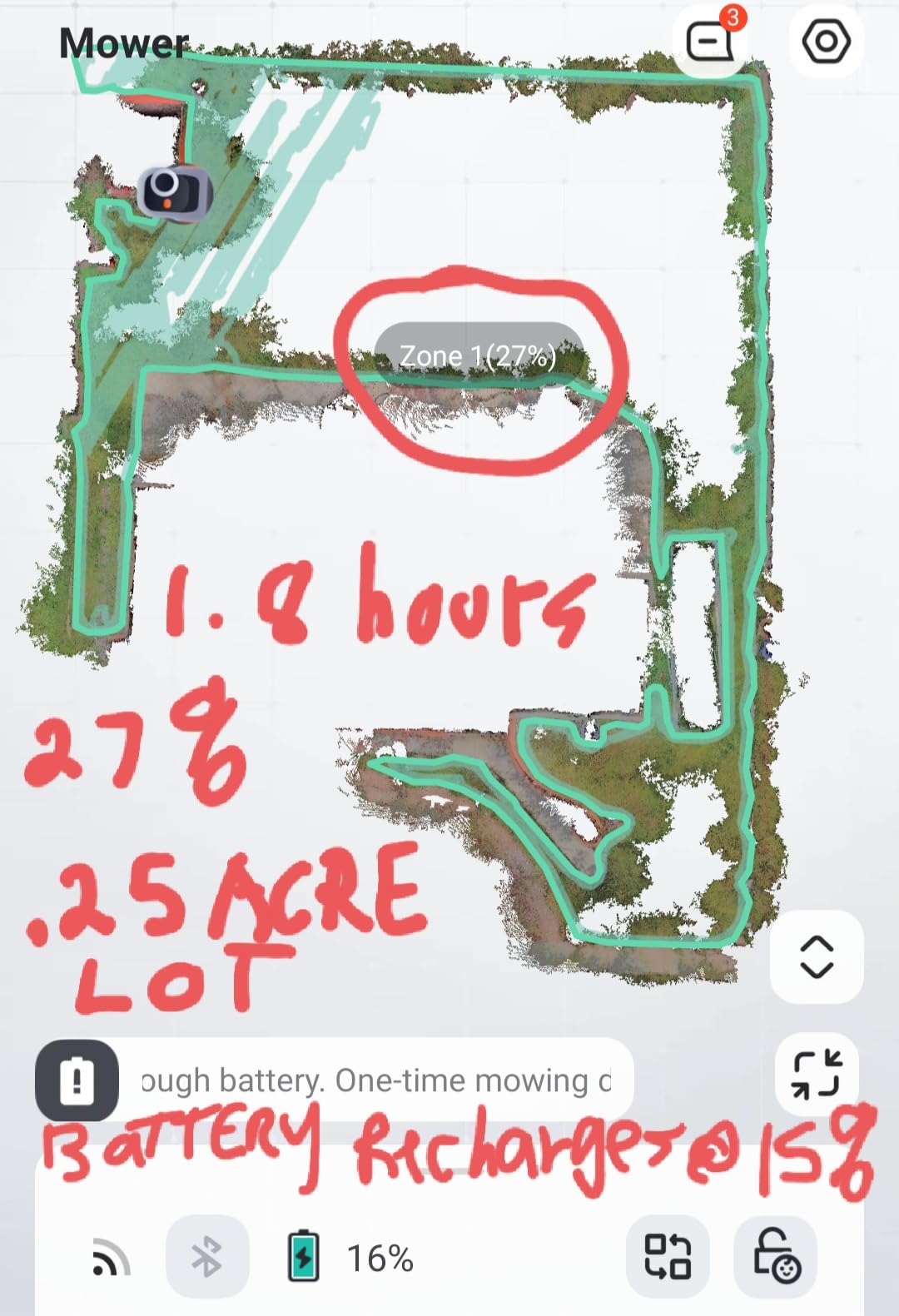
RTK is accurate when corrections arrive, and the recurring complaint from owners of RTK-equipped mowers is what happens when they do not. Satellite lock that drops under tree cover, reference stations that lose all satellites, and mowers stranded mid-lawn in weak coverage areas appear again and again in owner discussions. A LiDAR-plus-vision stack has no such dependency, because it measures the yard directly rather than referencing satellites.
Combined with night operation, that means this unit can run an overnight schedule, which is also the quietest window for the neighbours. At 59 dB(A) it sits among the quietest here, and darkness is when most people would actually want a mower running.
Know where it falls short
The 2 to 4 inch height range has a practical side effect. If you set a tall cut height to cope with fast growth, the mower needs more passes, which cuts into the 0.37 acre coverage. Owners with very tall grass report better results with a lower setting and more frequent cycles.
With only 46 reviews, the long-term picture is thinner than for the RTK-based machines, and buyers report needing care when placing the charging station on a complex lawn. If you want proven long-run data, the Mammotion LUBA mini 2 and the Navimow i105N both have deeper review histories.
Which Robotic Mower Fits Your Lawn
Every pick here fails on a lawn that is wrong for it, and the wrongness is almost always one of four things: size, slope, shape or grass. Work through those four before reading feature lists, because the same 45% slope rating means something entirely different on a level lot and on a property with a 30% bank behind the house.
Size first. Treat the manufacturer coverage figure as the largest lawn the machine finishes on a single charge, not the largest lawn it can eventually cut. If your yard is 10% above a rating, the mower still works, but it returns to charge more often, which roughly doubles the time a cycle takes and can leave a lawn half-cut if you schedule tightly. The tiering below is simple: up to a fifth of an acre suits the entry machines, a quarter acre is the sweet spot for most buyers, and a third to half acre needs a bigger battery and a wider deck.
Slope second. There are two conventions and brands mix them. A rating expressed as a percentage is the rise over run, so 45% corresponds to roughly 24 degrees, while a rating given in degrees is the direct measurement. Convert before you compare: 80% is 38.6 degrees, 45% is 24 degrees, 35% is 20 degrees, and 30% is 17 degrees. Anything at or above 20 degrees, and especially above 30, points you toward an all-wheel-drive machine with large off-road wheels rather than one that merely prints a high number.
Shape third. Lawns full of trees, beds, narrow gaps and hard surfaces need a sensing stack that can see beyond the deck. LiDAR and vision models with obstacle classification handle that; a machine relying on simple grass and non-grass detection will wander. Measure your narrowest corridor, and treat 2.3 feet as a real benchmark, because that is the tightest passage specification in this group.
Grass fourth. Warm-season lawns that grow fast and thick reward a higher voltage platform and a wider blade disc. Cool-season fescue and bluegrass suit almost anything on this list. Very tall or weedy ground is outside what a robot mower does, because these are trimming tools rather than brush cutters, and owners of neglected yards report clogging and overheating.
Run these six checks before you buy
Experienced owners consistently recommend a short yard audit before purchase, and it costs an afternoon. First, measure area and the steepest sustained grade rather than the single steepest spot. Second, count permanent obstacles and note which ones move, since a dog changes position while a shed does not.
Third, stand in the worst part of the lawn and look up. Heavy canopy is where satellite positioning weakens, so if you are considering an RTK model, this is the moment to weigh it against a LiDAR unit. Fourth, test cellular coverage at the far corner of the property, since cellular-connected features including theft tracking depend on it. Fifth, identify your grass type and how fast it grows, because that sets a realistic cut frequency. Sixth, confirm where the charging station will sit and how far the mower is from it, since some models need clear space around the dock to align properly.
Quick matching table
Flat lawn up to a fifth of an acre, kept short, simple shape: the YARDCARE M800Plus or the Navimow i105N. Quarter acre with trees and beds: the Navimow i105N with upgraded wheels, the ANTHBOT M5, or the RockNeo Q110H for tight corridors. Quarter acre plus a real hill: the Mammotion LUBA mini 2. A third of an acre or more: the LUBA mini 2, the Navimow i215 LiDAR or the RockMow X120H. Half an acre of warm-season grass: the ECOVACS GOAT A2000. Overnight and early-morning schedules: the Navimow i215 LiDAR or the RockMow X120H.
Two other pieces of context belong in this section. If your lawn is bordered by a lot of paving, the built-in line trimmer on the ECOVACS GOAT A2000 removes a recurring task, and it is the only machine here with one. If you want to keep spending money down, the RockMow X120H includes three years of 4G with no subscription, while the Navimow i105N and the RockNeo Q110H both treat 4G tracking as a paid add-on module.
Navigation Explained: Wire-Free, RTK, NetRTK, LiDAR and Camera Vision
Navigation is the single decision that determines whether a robotic mower works unattended, and the terminology gets used loosely by brands. Sorting out what each method actually does, and where it fails, is worth more than any other hour you spend researching.
Boundary wire is the old method and the only one still in wide use that has no software failure mode. A low-voltage wire is pinned around the lawn, and the mower follows its signal. It is extremely reliable in the sense that it does not lose a fix mid-lawn, and it works in complete shade, at night and with no network. It is also a day of knee work, it breaks when a mower clips it or a shovel goes through it, and it constrains you to a fixed perimeter. No machine in this roundup requires it.
RTK, which stands for RealTime Kinematic, is satellite positioning with a correction signal that brings accuracy down to centimetre level. Plain GPS is accurate to several metres, which is not enough to keep a mower inside a bed edge. RTK needs either a reference station of your own or a correction stream, and this is where the recurring owner complaints come from: signal loss under dense tree cover, near metal sheds and outbuildings, and in yards with weak cellular coverage, followed by a mower that simply stops mid-lawn until it is power-cycled.
NetRTK, sometimes written NRTK, is RTK delivered over a cellular network by a correction provider, which removes the need to place a reference station yourself. It is easier to set up and the station cannot lose satellite lock because you are not running one. The trade is that it now depends on cellular coverage at every point of the lawn, so a dead spot in the yard becomes a dead spot for the mower.
LiDAR uses a spinning or solid-state laser to build a 3D map of the yard and detect obstacles. It needs no satellite signal and no antenna, it works day or night, and it holds up under trees and beside fences where satellite positioning degrades. Its limits are cost, which is why the LiDAR machines here sit at the top of the range, and the fact that it maps what it can see, so a narrow corridor between two walls is worth watching during setup.
Camera vision uses stereo cameras and either a trained model or simultaneous localisation and mapping, in the style called V-SLAM. It is the lowest-cost stack and it is what most of the cheapest machines in this roundup use, either alone or paired with GPS. Its specific weaknesses are darkness, since most systems need light, and irregular ground, since identifying grass is a visual task that gets harder over sand and bare patches.
What the newest machines do is pair the stacks. Dual-band RTK with V-SLAM, LiDAR with AI vision, full-band RTK with dual cameras, and each of the pairs in this roundup fails differently from its parts. If you cannot decide on a principle, the practical rule is that satellite-dependent machines want open sky and clear cellular coverage, while LiDAR-dependent machines want clear space around the dock and reasonable room to map. For more on the wider equipment picture, our zero-turn mower guide covers what a robot is replacing on larger grounds.
What This Price Band Buys You
The honest framing is that this price band now buys the navigation features that were flagship features two cycles ago, and it does not buy capacity, deck width or support. Anyone comparing a machine here against a much costlier unit is comparing a well-equipped mower for a typical suburban lawn against a machine built for two or three acres.
What you get under the ceiling: antenna-free LiDAR at the top of the range, full-band RTK at the entry level, all-wheel drive with 80% slope capability, dual cutting discs for genuine edge cutting, and built-in cellular with no subscription for three years on at least one model. Five or six years ago those features were the reason people spent several times this much.
What you give up is capacity and deck width. A mower at this level typically carries a 3.0Ah to 4.0Ah battery with 50 to 130 minutes of listed run time, and an above-cap machine carries substantially more, which is what separates finishing a large lawn in one pass from finishing it in four. The ECOVACS GOAT A2000 covers half an acre, and the RockMow X120H covers 0.49 acre, so if your property is larger, no amount of clever selection makes a machine here the right answer.
The remaining gap is support. Under this ceiling you are more likely to be dealing with a direct-to-consumer brand and a regional support team than with a dealer network that can send someone to your door. Warranty terms in this group range from two years with US-based support to a three-year warranty, and that difference is worth checking against your local service options before you buy rather than after a fault appears. A dealer-installed flagship also arrives with the base station sited for you, while every machine here expects you to place and align the dock yourself.
Two of the ten weigh in the 20 to 30 pound range, so they can be moved by one person when they wedge themselves under a shrub, which happens to every robot mower eventually. The 50 pound RockMow X120H is the counterexample, and that handling cost is real for anyone with a narrow gate or a step between the dock and the lawn.
Running Costs, Subscriptions and Total Cost of Ownership
Robot mowers are cheap to run and their running costs are almost entirely consumables, so the useful question is not what a year of electricity costs. It is what five years of blades, one battery and any connectivity fee adds up to, and how that compares against handing the lawn to a service.
Blades are the first and most frequent replacement. They are disposable rather than sharpenable, owners replace them on a cycle of one to two months during the growing season, and the cost per blade is small but the frequency is what makes the total add up. The practical routine is a weekly check with the mower tipped up, clearing the underside of the deck, because caked clippings and a dull blade are the leading cause of the strained motor noise that drives owners to think something major has failed.
Batteries are the second cost and the largest single part. Lithium-ion packs are typically quoted at around three years of average life, after which capacity falls enough that a charge no longer covers the lawn. Budget for one replacement pack mid-life, and check that the brand sells one, because parts availability is a real question at this tier.
Connectivity is where the surprises live, and the honest disclosure matters more than the headline. The RockMow X120H includes three years of 4G cellular with no subscription. The Navimow i105N and the RockNeo Q110H both treat 4G as an optional module, so theft tracking and remote operation beyond the included period may carry a provider fee. Nothing in this group advertises a mandatory recurring charge, but the ones that sell cellular as an add-on are worth pricing before you rely on out-of-area tracking.
Against that, compare the alternative honestly. If a weekly lawn service visit costs a few tens of dollars, a year of visits runs in the low thousands, and a machine in this price band pays for itself against that within two to three mowing seasons. Even against a petrol mower you own yourself, the running cost of a robot is a trivial amount of electricity a year against fuel, oil and sharpening, at the cost of hours rather than money. The counterargument is the one every robotic mower owner eventually makes: a machine that mows while you are at work returns time, and time is usually what the weekend was actually being spent on.
The failure modes owners report are worth pricing into patience rather than into money. A mower that loses its fix under trees, ignores a low obstacle, or needs a power cycle at the dock is not a purchase problem, it is an ownership cost in evenings spent walking the lawn. The same weekly habit that keeps any automated cleaning device working, a quick manual check of the moving parts, is what keeps a mower working through a season.
Setup, Safety, Theft Protection and Winterizing
Setup is where expectations should be set honestly. Every machine here is wire-free, so there is no day spent pinning cable around the lawn, which is the single largest improvement over the generation these products replaced. What remains is placing the charging station with clearance for the mower to align, connecting it to a power supply, downloading the app, and mapping the lawn, which takes between ten minutes and an hour depending on how complex your property is.
If you are mapping a large or complicated lawn, walk the boundary first and clear anything that will be moved later, because map edits on several of these machines mean driving the mower rather than tapping a control. For RTK models with a supplied reference station, plan where that station goes before you unbox the rest, because hard ground and a location without a clear sky view are the two things that make positioning unreliable.
Safety features are now close to standard and worth confirming anyway. All ten machines here include physical bumpers, lift detection and an emergency stop or braking behaviour, and most include an audible alarm. Households with children or pets should keep the mower’s scheduled mowing window away from when the yard is in use, since detection is good rather than perfect and the lowest obstacle a camera can reliably see is not the lowest object that exists.
Theft protection varies more than safety does. The strongest arrangements here are the Navimow i215 LiDAR with GPS, geo-fence, lift detection and Apple Find My alerts, and the RockMow X120H with PIN plus GPS tracking. Several machines require a PIN before the mower will operate at all, and the loudest deterrent is simply a machine that will not start without a four-digit code. If theft is a genuine concern locally, add a cellular tracking module and confirm the alarm volume from outside the house.
Winterizing takes ten minutes and prevents most of the complaints people have in their second season. Clean grass clippings out of the deck and wheels, charge the battery to a partial level rather than full or empty, and store the mower indoors in a dry location at normal room temperature rather than a freezing shed or an unheated garage. Freeze-thaw cycling and heat both shorten battery life, and a mower left in standing water will not return to service in spring.
For seasonal equipment storage alongside the mower, our tow-behind spreader guide covers the broadcast spreaders that pair with a larger lawn setup. It is a reasonable companion purchase if you already own ground equipment and want one maintenance routine instead of two.
How We Chose These 10 Mowers
Every machine here was selected against the same filter: a verified price at or below our ceiling, an autonomous mowing system that returns to a dock without supervision, and a published specification set detailed enough to compare against the others. Nothing on this list is a remote-controlled mower, and nothing required boundary wire installation, since that technology has moved out of this price band entirely.
We weighted the decision on five things. Coverage area against realistic lawn sizes, slope rating converted to a common unit, the navigation stack and its known failure points, the cut quality and edge behaviour reported by owners, and the physical and recurring costs that appear after the purchase. Review counts and averages were used as a confidence signal rather than a ranking, and a 4.6 average across 104 reviews tells you less about a five-year ownership experience than a 4.4 across 260.
Owner communities shaped the list more than spec sheets did. Recurring reports of satellite lock loss, reference stations needing a physical power cycle, mowers ignoring low obstacles, machines bogging down in tall grass, and boundary wire being the deal breaker for most buyers all fed directly into the selection. Where owners disagreed with the marketing, we weighted the owner reports, and we have flagged the specific complaint for each machine rather than presenting a clean sheet.
We also noted which machines we would skip. The Sunseeker X3 Plus and the ECOVACS GOAT A2000 both sit on this list because their hardware is capable and their coverage and edge features are genuinely useful, but their software and reliability records give us pause for buyers who need long unattended runs. Both still earn their place for the buyer whose lawn matches their strengths.
Frequently Asked Questions
What is the cheapest robotic lawn mower?
Wire-free robotic mowers in this price band start in the high hundreds, and that entry tier covers lawns of roughly 0.125 to 0.2 acre. At the low end you get RTK or camera positioning without a boundary wire, but you usually give up all-wheel drive, an edge blade and a longer run time. The best value in the entry tier is the ANTHBOT M5, which includes a garage, base station and RTK reference station in the box and rates 45% slope handling.
What type of mower is best for mowing steep slopes?
An all-wheel-drive model with large off-road wheels matters more than the printed slope number. In this price band, the Mammotion LUBA mini 2 and the Roborock RockMow X120H both rate 80 percent, which is 38.6 degrees, using driven wheels and adaptive suspension. Machines rated 45 percent, or about 24 degrees, include the ANTHBOT M5, the Navimow i215 LiDAR and the RockNeo Q110H. Below 20 degrees, most mid-range units stop climbing.
What does RTK stand for in mowers?
RTK stands for RealTime Kinematic, a satellite positioning method that uses a correction signal to bring accuracy from several metres with plain GPS down to roughly one centimetre. That accuracy is what lets a mower follow a bed edge without drifting. RTK needs a correction source, either a reference station you place yourself or a cellular provider delivering corrections, and it degrades under dense tree cover, beside metal structures and in weak coverage areas.
Is there a robotic lawn mower that doesn’t require boundary wire?
Yes, and all ten picks in this roundup are wire-free. LiDAR models such as the ECOVACS GOAT A2000 and the Navimow i215 LiDAR need no antenna and no satellite signal, building a map with a laser instead. RTK models such as the Navimow i105N use satellite positioning, which needs either a reference station or cellular corrections. Pure vision models such as the eufy E15 need no hardware at all but require daylight to work.
Why does my lawn mower sound like it’s struggling?
The usual causes are dull or clogged blades, grass taller than the deck can handle, clippings caked into the underside of the deck, a low battery, wheel slippage on wet or sloped ground, and blocked vents. Start by tipping the mower and clearing the deck, then check blade condition, since blades are disposable rather than sharpenable and owners replace them every one to two months in season. If grass is over roughly 2.6 inches tall, cut it manually first.
How long will a robotic mower last?
A well-maintained body typically runs around ten years, while the lithium-ion battery is usually quoted at about three years before capacity falls short of finishing the lawn. Blades are consumable and replaced every one to two months during the growing season. The parts that fail most often are the blade-height motor, the wheels on rough ground, and the charging contacts, so check all three before replacing a whole machine.
Bottom Line
The Segway Navimow i105N is our top pick for most buyers in 2026, because it is the only entry-tier machine here that combines full RTK with camera vision, runs at 58 dB(A), and carries a three-year warranty across 391 reviews. Buy off-road wheels with it if your lawn has any slope.
Pick the Mammotion LUBA mini 2 if you have hills or a third of an acre, the Navimow i215 LiDAR if you want overnight mowing with no satellite dependency, the RockMow X120H if you want the widest deck and three years of included 4G, and the ANTHBOT M5 if you want the most complete package for the least money.
The re-pick rule is simple: match the machine to your largest lawn, not your average one, and choose the navigation stack that matches your sky and your coverage. If you would rather compare these against equipment that still needs an operator, start with our riding lawn mower roundup.