
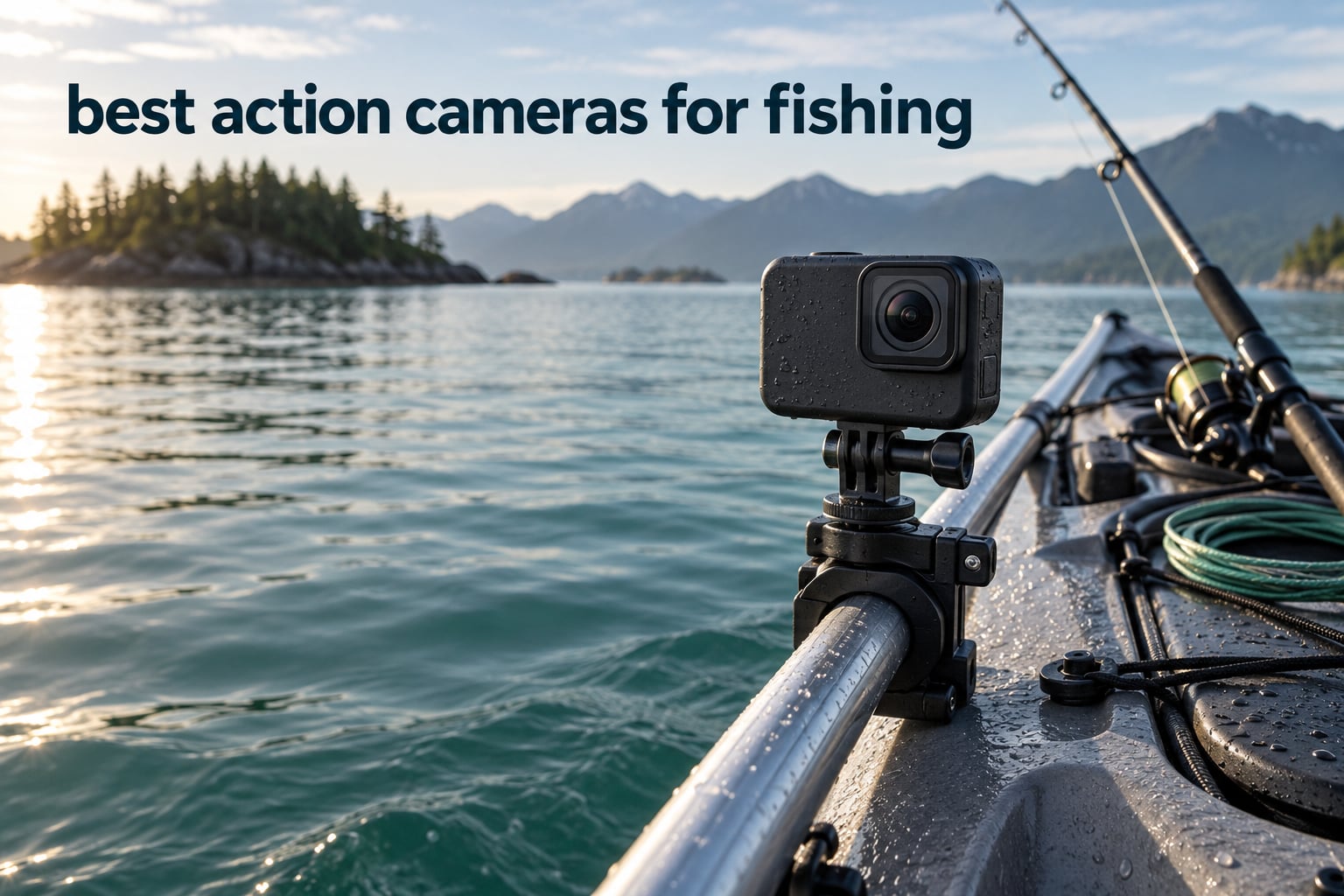
The best action cameras for fishing are the ones that survive a full day on the water without a housing, keep the horizon level when the boat is bouncing, and still have battery left when a striker finally shows up. That shortlist matters more than headline resolution: a 4K clip you actually have footage of beats an 8K clip the camera quit recording halfway through.
After working through ten current-generation bodies, the DJI Osmo Action 4 comes out on top. Its 1/1.3-inch sensor, bare waterproofing to 18m, and an Extreme Battery rated down to -20C make it the safest default for anglers filming from a kayak, a boat console or a wade.
Below that, the Insta360 X5 is the right answer if you want the whole fight in shot and will reframe in edit, and the GoPro HERO13 Black is still the easiest to mount because the two-prong ecosystem fits almost any rail, clamp or boom already bolted to your boat. If you are just starting out, our action camera guide for other sports covers the mounting basics that transfer straight to fishing.
Table of Contents
Top 3 Action Cameras for Fishing in 2026
DJI Osmo Action 4
- 1/1.3-inch sensor
- Waterproof to 18m bare
- 1770mAh Extreme Battery
- Pre-Recording up to 60s

Insta360 X5
- 8K 360 capture
- 208 min stated runtime
- Replaceable lenses
- FlowState with 360 horizon lock

Best Action Cameras for Fishing in 2026 at a Glance
| Product | Specifications | Action |
|---|---|---|
| DJI Osmo Action 4 |
|
Check Latest Price |
| Insta360 X5 |
|
Check Latest Price |
| GoPro HERO13 Black |
|
Check Latest Price |
 GoPro HERO12 Black GoPro HERO12 Black |
|
Check Latest Price |
 Insta360 Ace Pro 2 Insta360 Ace Pro 2 |
|
Check Latest Price |
 Insta360 GO 3S Insta360 GO 3S |
|
Check Latest Price |
 GoPro HERO11 Black GoPro HERO11 Black |
|
Check Latest Price |
 AKASO EK7000 AKASO EK7000 |
|
Check Latest Price |
 AKASO Brave 4 AKASO Brave 4 |
|
Check Latest Price |
 AKASO EK7000 Pro AKASO EK7000 Pro |
|
Check Latest Price |
How We Picked the Best Action Cameras for Fishing
We scored every camera on five things and weighted them, because not every spec matters equally when you are standing in a skiff at dawn. Water survival carried the most weight, then battery behaviour in cold water, then stabilization, then the mount interface, then image quality.
- Water survival, 30%. Bare (housing-free) depth rating, sealing quality, and whether the lens cover is replaceable after a fish flops.
- Cold-weather battery, 20%. Published capacity, published runtime, and the rated low-temperature limit.
- Stabilization, 20%. How the camera handles boat chop and paddle stroke, and whether horizon lock is available.
- Mount interface, 15%. Whether it fits standard two-prong GoPro hardware and track/rail systems without an adapter.
- Image quality, 15%. Sensor size, dynamic range, low-light behaviour, and still resolution.
We did not physically dunk these units for a season. Every number below comes from the manufacturer specification and from the review record on the product listing, and we say so plainly rather than implying lab time we did not spend. Where buyers and anglers disagree with the spec sheet, we note it.
First, a clarification. This roundup covers action cameras you mount on a kayak, boat, chest, hat or rod holder. It is not about underwater drop cameras lowered on a cable to watch a lure in real time. Those live sensor, display and infrared tools have almost nothing in common with a GoPro or DJI body, even though search results mix the two constantly. If you want to film a fish underwater while it is still swimming, you need a drop camera; if you want your catch, your cast and the trip that produced it, you need one of the ten cameras below.
For filming rather than just recording, the same bodies show up on our best action cameras for vlogging list, but the priority order changes: underwater clarity and cold battery move ahead of audio and reframing tools.
1. DJI Osmo Action 4 Essential Combo – Best Overall for Fishing
DJI Osmo Action 4 Essential Combo, Waterproof Action Camera Vlogging Camera
- Highest average rating in this group at 4.7 across 2348 reviews
- Waterproof to 18m with no housing
- 1770mAh Extreme Battery rated to -20C for cold lake trips
- Pre-Recording buffers up to 60s so a strike is already saved
- 10-bit D-Log M keeps highlight detail in bright sun on open water
- Still photos limited to 10MP
- Dual OSMO Extreme Battery and curved base are not in the Essential Combo
- Digital zoom only with no optical zoom
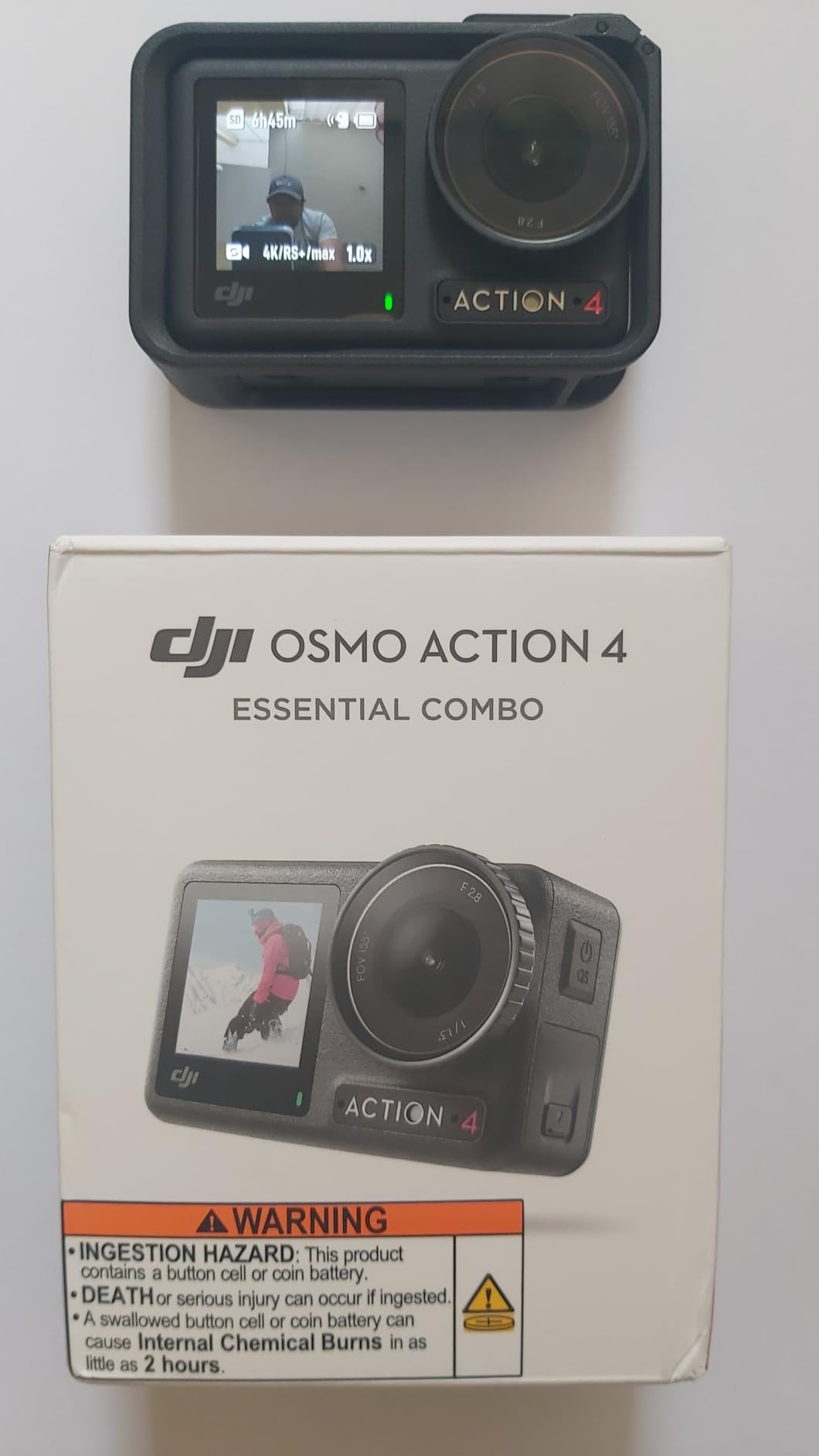
My first choice for fishing footage is the Osmo Action 4 because it solves the two problems that actually end a day of recording: water getting in, and the battery dying. It is sealed to 18m without any case, which means you can dunk it, mount it on a submerged line or just stop worrying every time a fish comes up beside the hull.
The 1/1.3-inch sensor is the largest in this group and that matters underwater, where light falls off fast and a small sensor turns to mush. Reviewers repeatedly single out low-light and underwater clarity as the standout strengths of this body, and the 155-degree field of view captures your rod tip and the water beside the kayak in one pass.
RockSteady and RockSteady+ handle boat chop, and HorizonBalancing keeps the waterline flat when the horizon tilts with a wave, which is a bigger deal on a small boat than it sounds. Owners on r/dji single out the magnetic quick-release system as the reason they move the camera between mounts without fighting adapters, and that magnetic system takes standard two-prong hardware too.
The battery is where this camera really separates itself. The 1770mAh Extreme Battery is rated to -20C (-4F) and published at up to 150 minutes, which is the difference between recording the whole morning and coming home with two hours of footage.
What you get when the pre-record buffer pays off
Pre-Recording captures 5, 10, 15, 30 or 60 seconds before you press the button. On a fishing trip that mostly consists of nothing happening, this is the single most useful mode on the camera: you can leave it running, then hit record after a strike and the hookset is already on file.
Highlight mode tags the good moments in the clip so you are not scrubbing an hour of chop later. Pair it with the magnetic mount on a chest harness and the framing problem mostly disappears, because the front screen tells you what you are pointing at.
Where the Osmo Action 4 falls short
Still photos cap out at 10MP, so if you plan to pull a lot of trophy shots of a fish out of the water, this is not the body for it. Rival GoPro bodies push 27MP, and that gap shows up when you crop a catch photo for a print or a thumbnail.
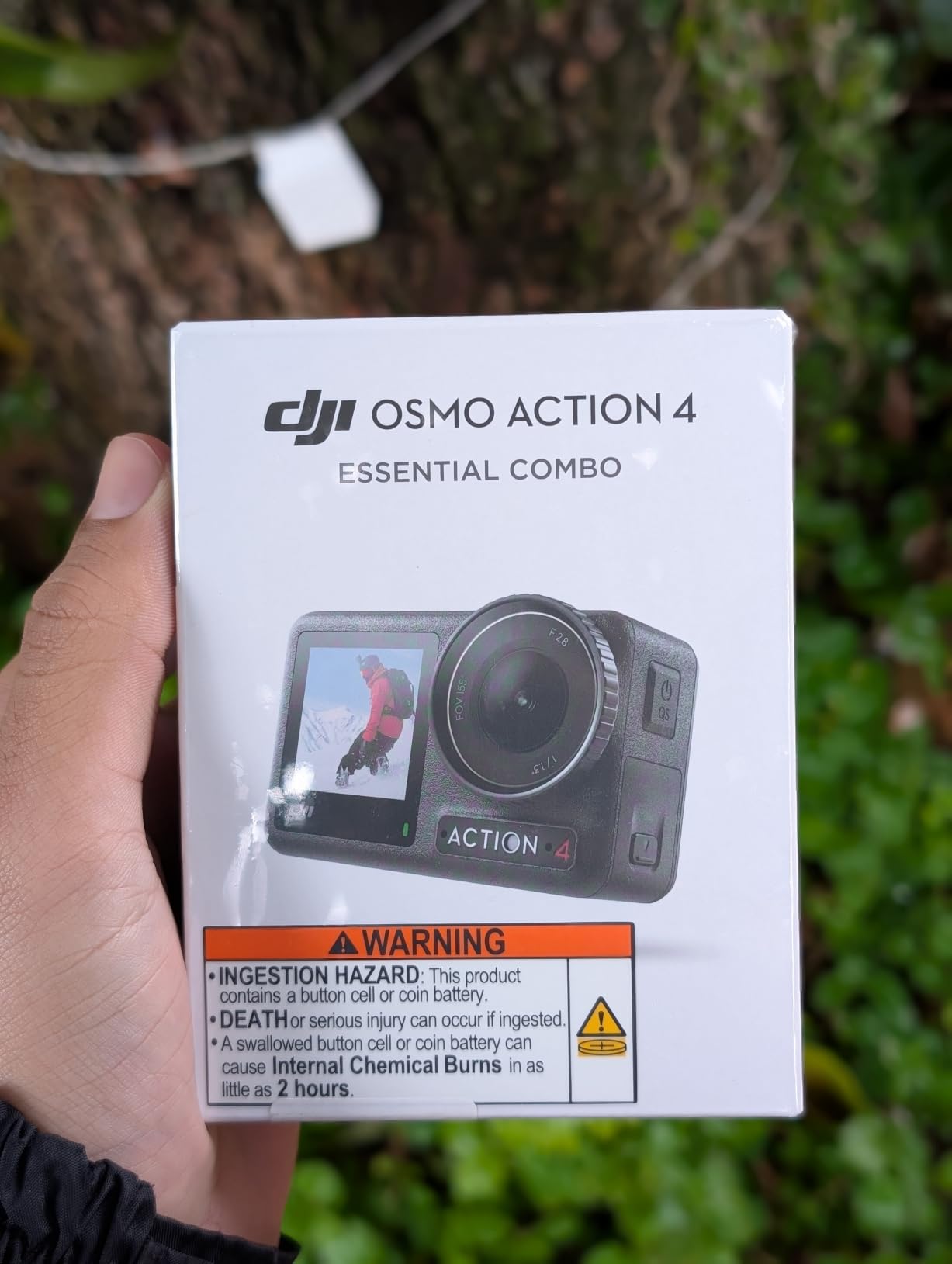
Which combo you buy matters too. The Essential Combo here includes the camera, Extreme Battery, anti-slip pad, protective frame, lens hood and a quick-release adapter mount, but not the curved adhesive base or a second battery. Grab the dual-battery bundle if you shoot a full day, and budget for a V90 microSD card because the top video modes will not write to a slower card.
2. Insta360 X5 – Best 360 Camera for Fishing
- Records the entire fight in every direction so nothing is missed
- Longest stated runtime in the group at about 208 minutes
- Replaceable scratch-resistant lenses recover from a fish flop
- Triple AI chip design improves low-light and night footage
- FlowState stabilization with full 360 horizon lock
- 8K files consume enormous card space
- Heavy post-production reframing time
- Highest price in this group
- Offloading media is tied to the app workflow
The Insta360 X5 solves a problem no single-lens camera can: a hooked fish does not care where your camera is pointing. With two 1/1.28-inch sensors shooting 8K at 30fps across 360 degrees, you place it on a mast or a boom and the entire sequence of the fight is captured no matter which way the fish runs.
Stated runtime is about 208 minutes, the longest published figure among these ten, and that is a real advantage on long offshore days. The triple AI chip design is aimed squarely at low light, which is when you are most often filming, and the 2.5-inch touchscreen makes it usable when it is mounted out of reach on a rail.
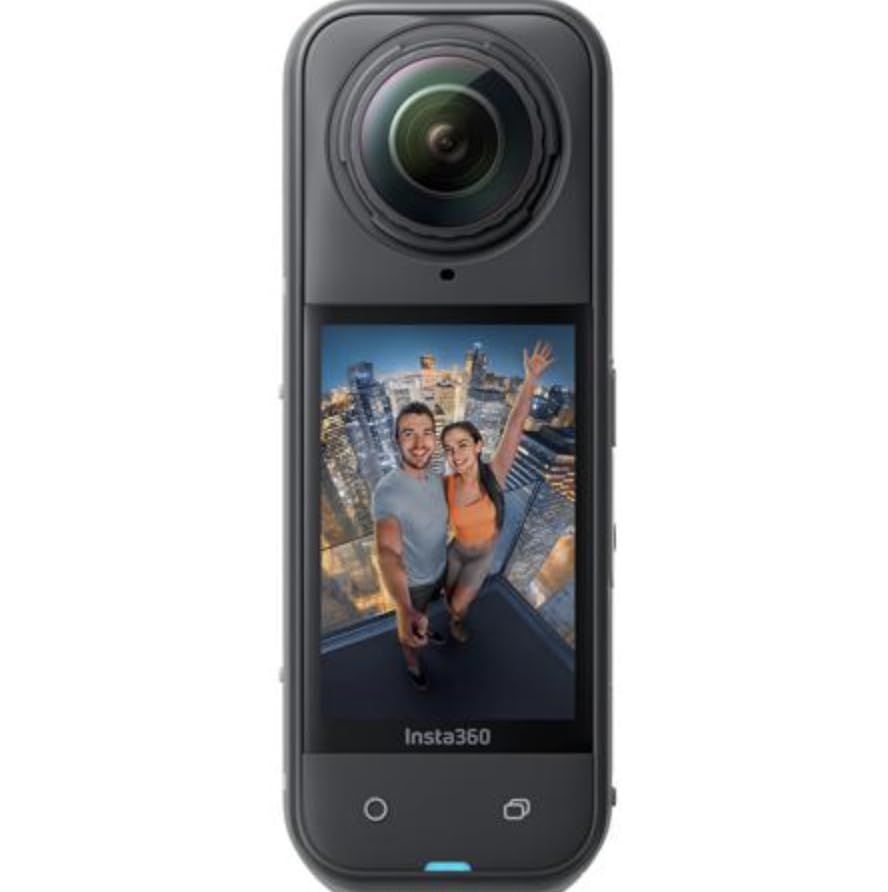
FlowState stabilization plus a 360 horizon lock is unusually valuable in a boat, because the horizon is the reference every viewer uses to judge the shot. Locked level, a rolling sea looks intentional; tilted, it looks broken.
The replaceable lenses are the fishing-specific win here. On a long day on the water the single most likely damage is a fish tail or a wave putting a scratch across the glass, and a scratched lens cover on a sealed 360 body is a cheap repair rather than a dead camera. Users also report a clear improvement in SD-card stability over the previous generation.
What the invisible selfie stick actually does for anglers
The invisible selfie stick effect re-frames 360 footage into a third-person shot with the pole removed from the image. Mounted on an extension from a kayak bow or a rod holder, it produces the classic follow-cam shot of a cast or a net job without a second operator.
The catch is time. Reframing 8K 360 footage is a genuine edit-time cost, and reviewers are candid that the desktop and mobile software carries a learning curve. If you shoot a lot but edit slowly, a single-lens camera will produce usable footage faster.
Where the X5 costs you
8K 360 files are enormous. Budget card space seriously before a multi-day trip, because a full fishing day of 360 capture will fill a card faster than almost any other mode on this list.
Media offloading is deliberately restricted without the app or cloud, so budget extra time for transfers in the field. Some bundle configurations, the Photography Grip Bundle in particular, are viewed as poor value, and the lens covers are easy to knock off, with one reviewer reporting a camera lost during a test ride. Buy the standard body and a spare lens cover.
3. GoPro HERO13 Black – Best Mount Ecosystem for Anglers
GoPro HERO13 Black – Waterproof Action Camera with 5.3K60 Video, 27MP Photo + Compatability with HB-Series Lenses
- Fits the two-prong GoPro ecosystem that most boat and kayak mounts are built around
- Water-repelling lens cover cuts flare in low sun over open water
- 27MP stills for catch photos
- HB-Series lenses auto-detect and adjust camera settings
- Hybrid image stabilization smooths paddle and boat motion
- Battery averages about 79 minutes per charge at high resolutions
- microSD card is not included
- Single Enduro battery limits long offshore trips
The reason the HERO13 Black keeps showing up on fishing boats is simple: mounting hardware. If your rail, track plate, rod-holder clamp or chest harness was designed for a two-prong GoPro fitting, this camera drops straight in. R/gopro regulars also point out the 10m bare rating as the number they actually care about, since a housing is one more gasket to fail.
Image quality is strong for a 1/1.9-inch sensor: 5.3K60 video and 27MP stills, plus frames up to 24.7MP extracted from video in the Quik app. The water-repelling lens coating reduces flare when the sun sits low over water, which on an evening bite is the difference between a clean clip and a hazy one.
Hybrid stabilization handles the constant low-frequency movement of a boat on a swell. It is not the strongest horizon lock in this group, but combined with 5.3K capture you have room to crop and reframe later, which is the practical way to fix a horizon problem in post.
At 157g the body is light enough for a hat or chest mount without a headache, and the HB-Series lens system with auto-detection means filters and lenses switch settings automatically. Reviewers rate the build quality and ruggedness highly, and the common complaints are narrow: battery runtime and the fact that no card is included.
Deciding between the HERO13 and the HERO12
Both are 10m bare, both shoot 5.3K60 and both capture 27MP stills. The HERO12 adds HyperSmooth 6.0 with AutoBoost and HDR for video and photo, and the GP2 chip brings live streaming and webcam modes, so it is the better choice if you shoot streams alongside fishing.
The HERO13 is the more current body and pairs with HB-Series lenses, which GoPro describes as a new mount standard. If your existing kit is two-prong, both work; if you are building new and want future lens options, start with the HERO13.
Where the HERO13 Black falls short
Battery life is the real constraint. Owners report around 79 minutes per charge at higher resolutions, which on a ten-hour trip means repeated battery swaps and planning your recording blocks rather than just rolling.
A microSD card is not in the box and you need a U3/V30 class card, so add that to the cost of entry. One Enduro battery ships with the camera, which is not enough for a full day offshore without spares. For most anglers the honest verdict is that image quality is excellent and endurance is a budgeting problem.
4. GoPro HERO12 Black – Best Stabilization in Boat Chop
GoPro HERO12 Black – Waterproof Action Camera with 5.3K60 Ultra HD Video, 27MP Photos, HDR, 1/1.9″ Image Sensor, Live Streaming, Webcam, Stabilization
- HyperSmooth 6.0 with AutoBoost holds steady in rough water
- HDR video preserves sky and water highlight detail
- 5.3K60 video and 27MP stills
- GP-Log flat profile for editors
- Voice control useful when the camera is mounted out of reach
- Runs hot and can shut down mid-recording in long 4K60 sessions
- Battery averages about 64 minutes
- Refuses charge from many low-wattage USB-C sources
If your filming happens offshore or in open, choppy water, the HERO12 Black is the one to look at first. HyperSmooth 6.0 with AutoBoost is the most aggressive stabilization system here, and it crops very little of the frame, which matters when your subject is a rod tip already near the edge of a wide shot.
HDR is the underrated feature for fishing. Bright sky over dark water is a brutal exposure contrast, and HDR video holds detail in both, so a fish coming up against a white sky does not turn into a silhouette.
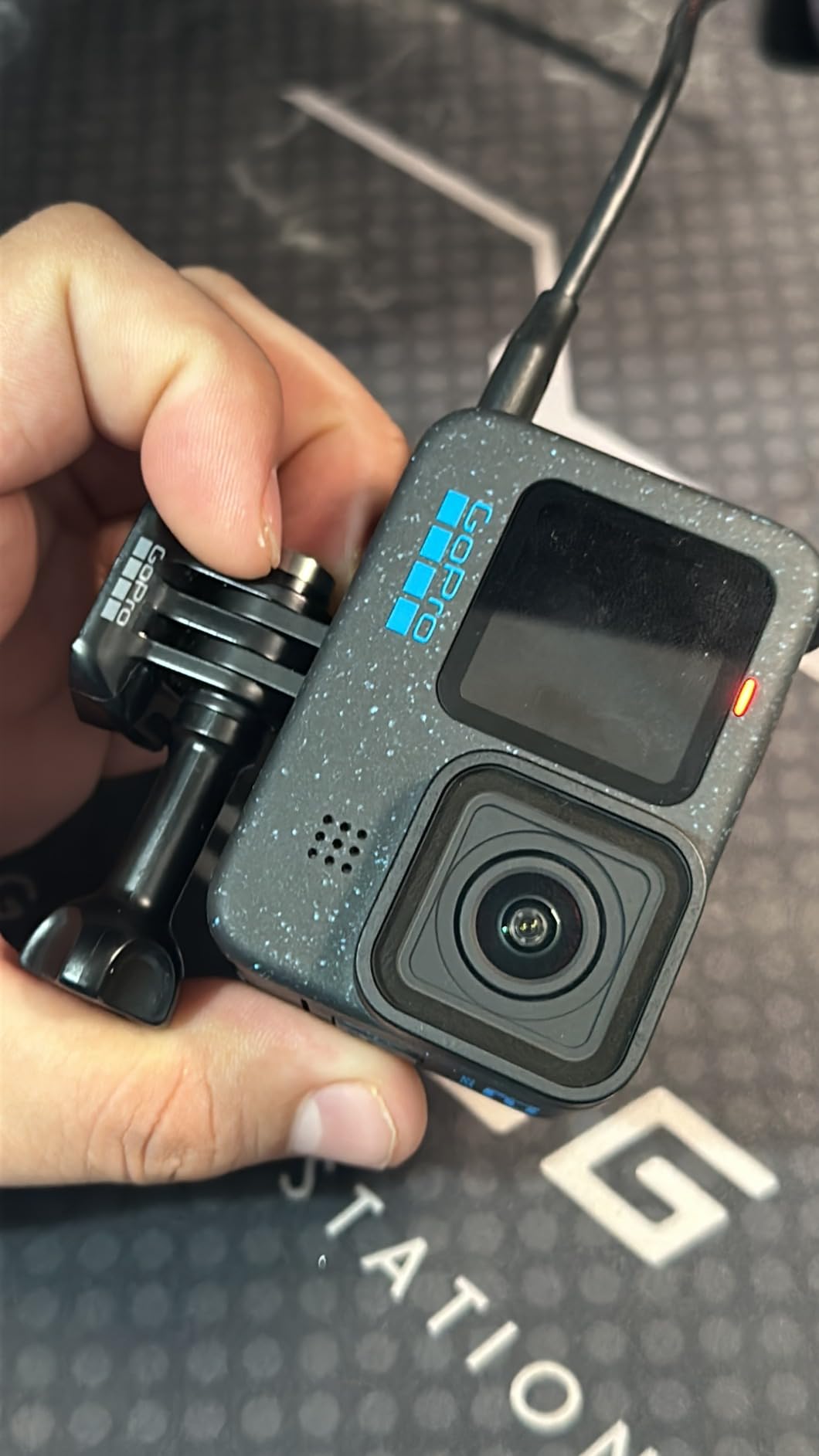
Reviewers like the image quality and stabilization enough that several use it professionally. Voice commands and Quik app control are genuinely useful once the camera is strapped to a mast or a chest harness where you cannot reach the buttons.
The trade-off is thermal behaviour. This is the most commonly reported complaint in the reviews: long 4K60 sessions push the body hot and it can shut down mid-recording, sometimes losing the file. Plan for shorter clips rather than a continuous two-hour record.
When HERO12 stabilization earns its keep
AutoBoost crops and reframes automatically to keep the horizon level, which is exactly the movement that ruins a boat clip. On a bow-mounted camera in a following sea, this is the difference between footage that plays and footage people scroll past.
GP-Log gives you a flat profile to grade later, and the 5.3K60 capture leaves room to crop a distant fish out of a wide frame without going soft. If you edit rather than just upload raw clips, that headroom is worth more than another stabilization generation.
Where the HERO12 Black frustrates buyers
Battery life sits around 64 minutes on average, the shortest published figure among these flagship bodies. You will also need a 2A power supply, which is not included, and the camera refuses to charge from many low-wattage USB-C sources while running hot at the same time.
A few buyers switched to the DJI Osmo Action 4 after running into the heat issues, and that is a pattern worth taking seriously if you plan long recordings. Zoom is weak compared with a phone, and one reviewer reported the Enduro battery described in the listing was missing from the box, so check the contents on arrival.
5. Insta360 Ace Pro 2 – Best Image Quality With a Flip Screen
- Largest sensor here with 13.5 stops of dynamic range for bright water
- Leica Summarit lens and Leica color profiles
- Waterproof to 12m and rated down to -20C
- 2.5-inch flip touchscreen makes solo framing easy
- Dual battery bundle includes two batteries
- Smallest review base in the group at 749
- Digital zoom only
- Requires a V90 microSD card for top video modes
The Ace Pro 2 pairs a 1/1.3-inch sensor with 8K30 recording and 13.5 stops of dynamic range, and the Leica Summarit lens co-engineering brings real color science rather than a cosmetic filter. On bright, reflective water that extra latitude pays off.
Waterproof to 12m bare and rated to -20C, it sits between the GoPro bodies and the DJI in depth rating, which is more than enough for a wet deck, a splash or a shallow dunk of a released fish.
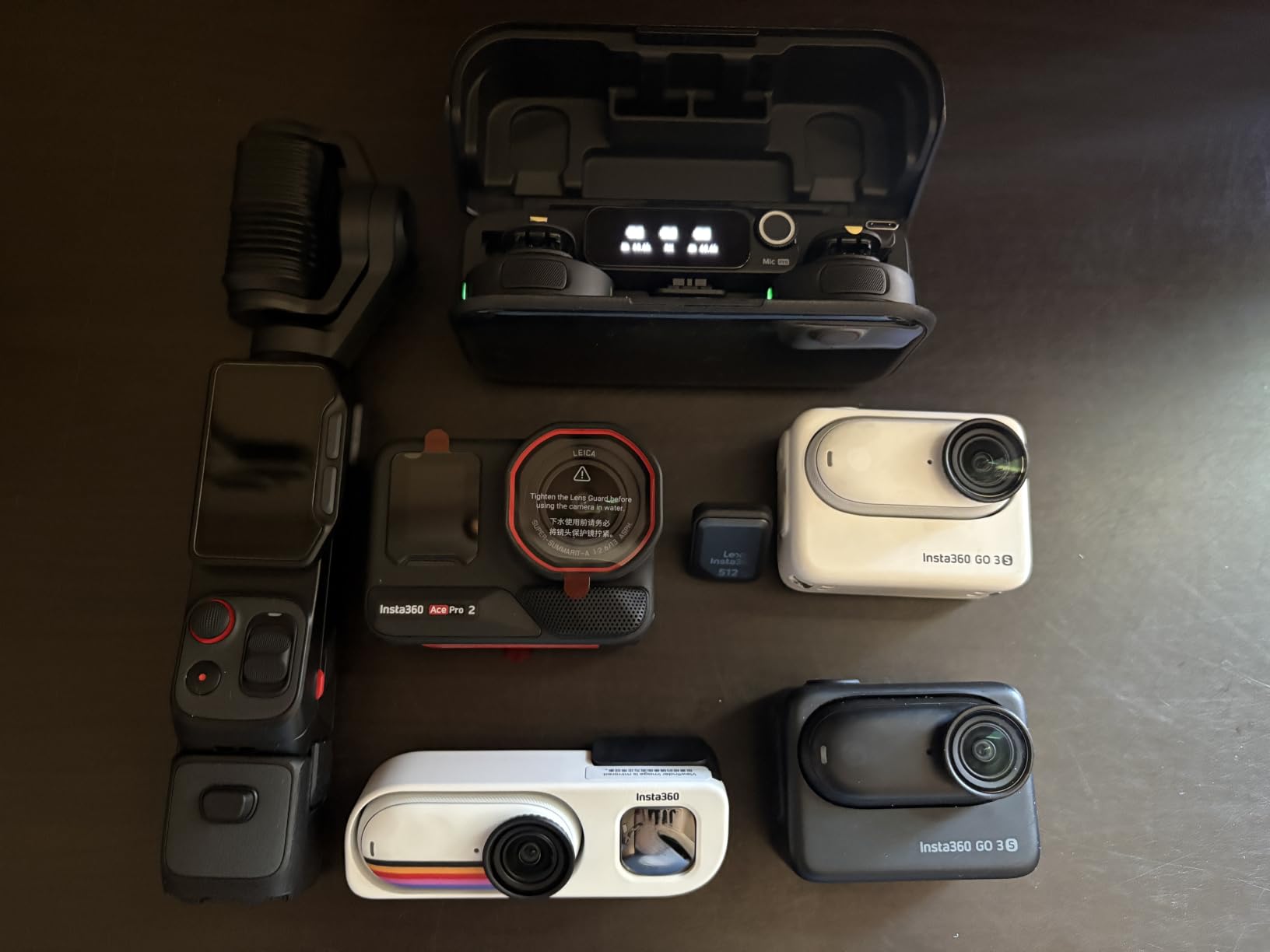
The flip touchscreen is the feature that changes fishing specifically. Mounted on a chest harness or a cap, you can flip the screen forward and see the frame while the camera is pointed at you or above you, which removes almost all of the guesswork from solo POV filming.
Dual AI chips, including a dedicated Pro Imaging Chip plus a 5nm AI chip, drive PureVideo mode for low-light capture up to 4K60 with noise reduction. A 157-degree wide lens with MegaView field of view keeps the rod and the water in frame, and FlowState stabilization smooths the ride.
Why the flip screen matters more than the sensor on a boat
Everything else on this camera is a spec you will read once. The flip screen is the thing you use every single trip, because it converts a blind POV mount into a framed shot without a second person to check the angle.
This bundle ships with two batteries, a detachable wind guard, a standard mount, a mic cap and a USB-C cable. That means your spare-battery problem is already solved, which matters given how quickly cold water drains a cell.
Where the Ace Pro 2 falls short
This is the newest camera in the group with the smallest review base at 749, so long-term durability data is thinner than the others. Buy it for image quality, not for a decade of field reputation.
4K Clarity Zoom is digital rather than optical, and the highest video modes need a V90 microSD card, which is a step up from what most people keep in a camera bag. Listings also warn that appearance can vary between production batches.
6. Insta360 GO 3S – Best Lightweight POV Camera
Insta360 GO 3S – 128 GB Black 4K Tiny Portable Vlogging Camera, Hands-Free POVs, Mount Anywhere, Stabilization, 140 Min Battery Life, 10m Waterproof, Pet POV
- 39g body fits a cap
- pendant
- rod or anywhere tight
- Action Pod has a 2.2-inch flip screen and 140-minute battery
- IPX8 waterproof body to 10m with an optional 60m dive case
- FlowState stabilization with horizon lock
- Gesture and voice control for remote start
- Action Pod is splash resistant only and must stay out of the water
- Non-replaceable internal battery and fixed 128GB memory
- Weak low light and heavy wind noise on audio
At 39g the GO 3S is the camera you forget you are wearing. On a fly-fishing stream or a long wade, a camera with a chest strap or a cap clip that weighs nothing is the difference between filming all day and putting it away after an hour.
The tiny body shoots 4K hands-free POV with a new wide-angle lens and MegaView field of view, and the Action Pod gives you a 2.2-inch flip screen, remote control and live preview with a 140-minute battery that charges while the camera is shooting.
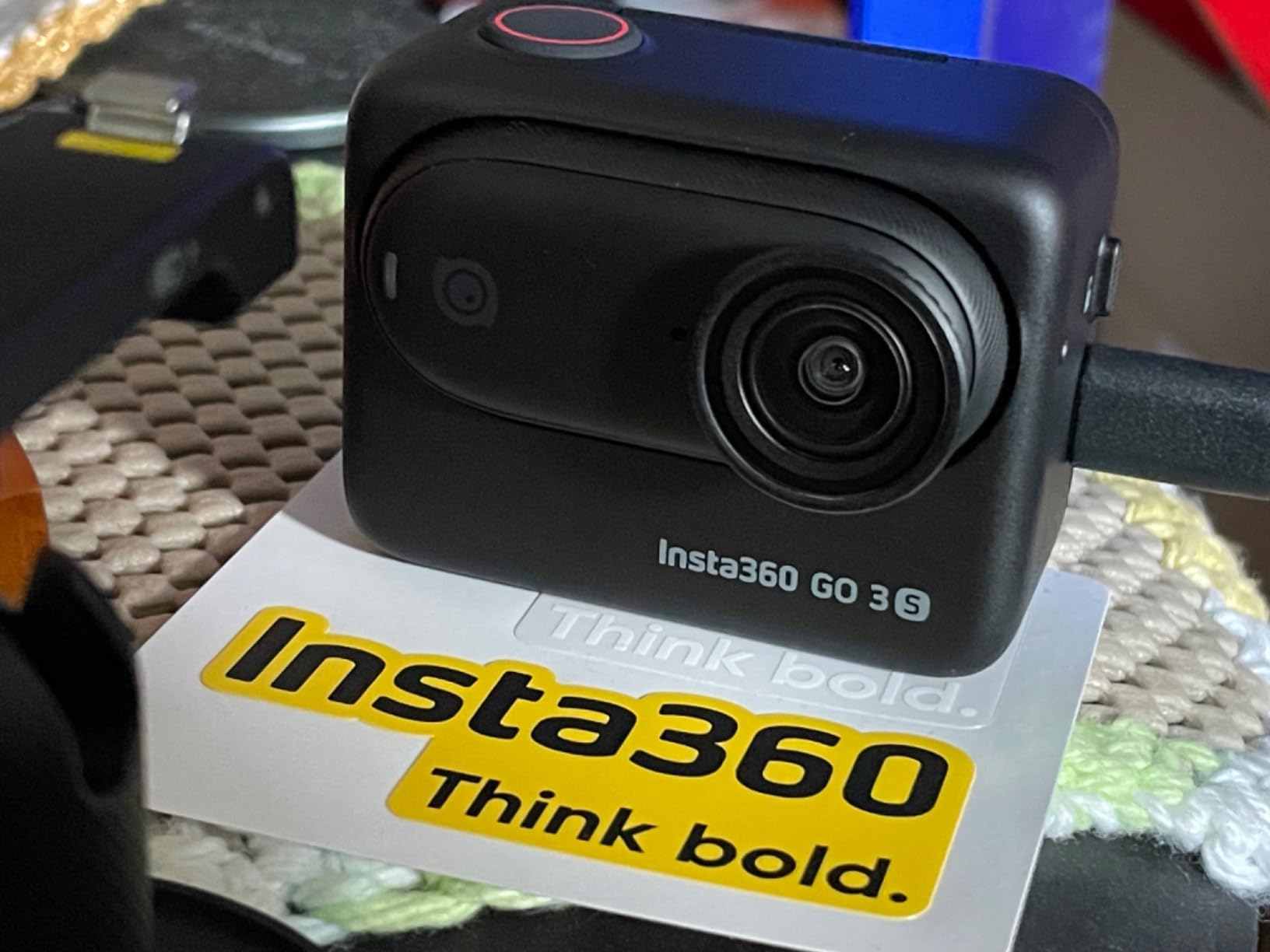
Users report it did not overheat in tropical heat, and several run it close to 135 minutes per pod charge in practice. For a day of stream footage that is genuinely workable, and the magnetic mount system with the Magnet Pendant, Easy Clip and Pivot Stand makes repositioning between the hat, the chest and the rod quick.
If you want underwater shots, the body is IPX8 to 10m on its own and takes an optional dive case rated to 60m, deeper than anything else in this list can go without one.
Where the Action Pod earns its keep on the water
The pod is not just a screen. It is a second battery, a remote shutter and a preview screen, which means you can run the camera on a pendant under your shirt and still see and control it from your wrist when a fish comes up.
Gesture Control and Voice Control let you start a clip with the fish still in the frame, and QuickCapture does the same from the pod. For catching the moment after hours of dead water, that is the whole ballgame.
Where the GO 3S runs out of road
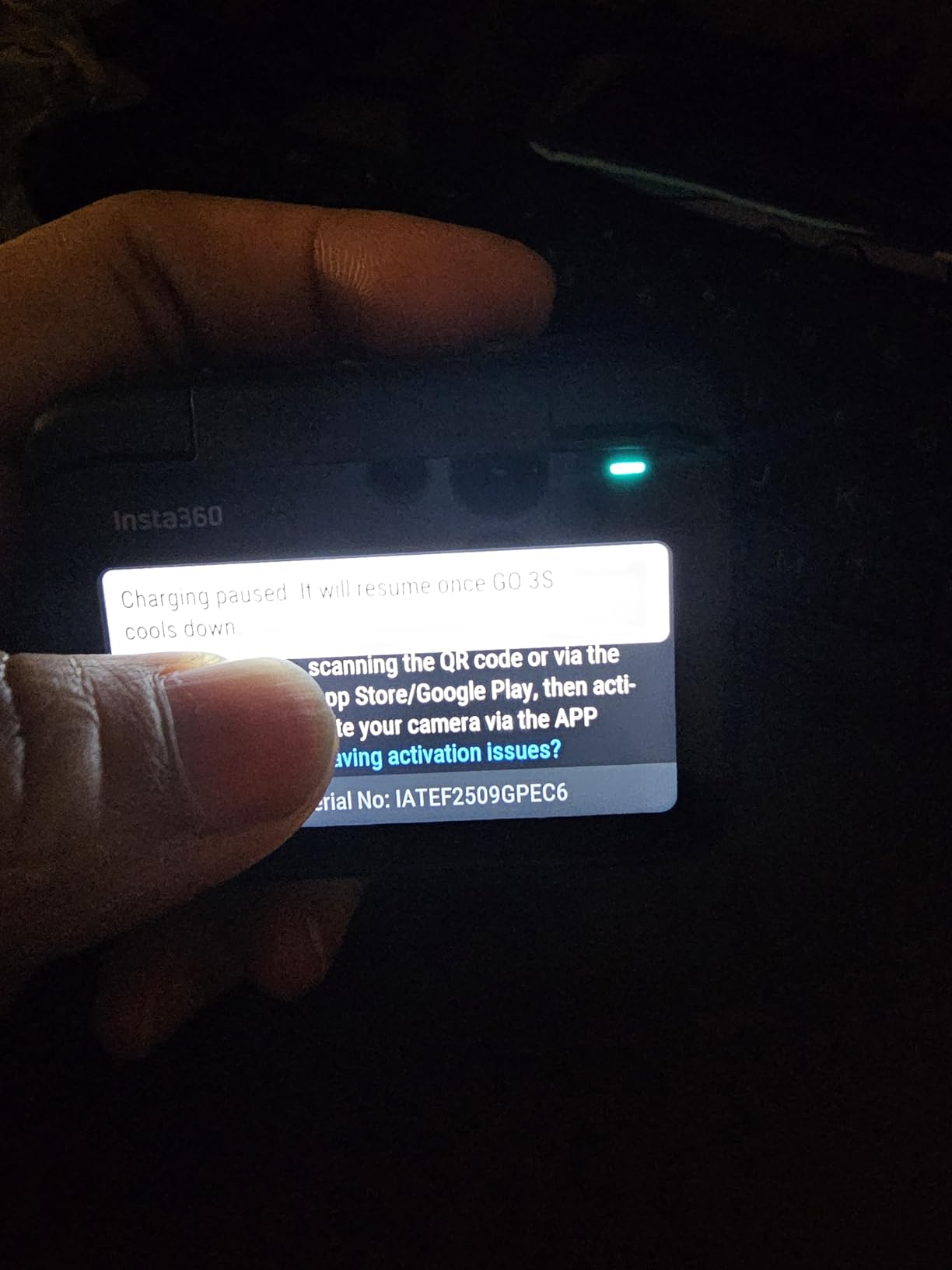
The camera body alone records roughly 30 to 60 minutes. Everything past that comes from the pod, so a full day of recording means adding a separate battery pack or planning recording blocks.
Low light is weak and wind noise on the audio is significant, which is a problem on open water where there is always wind. The pod is IPX4 only, so it must stay out of the water, and internal memory is fixed at 128GB with a non-replaceable internal battery.
7. GoPro HERO11 Black – Best Wide Framing Per Dollar
- Wide field of view captures more sky and horizon in every shot
- 5.3K60 video and 27MP stills with frames grabbed from footage
- Water-repelling lens cover reduces flare
- Full compatibility with GoPro chest
- surfboard and bike mounts
- 2.7K240 slow motion for hookset detail
- Shares the previous generation 1/1.9-inch sensor so low light is limited
- Digital zoom only
- One Enduro battery included
- E-commerce packaging variant without a retail box
The HERO11 Black is the one I keep recommending to anglers who already own a decent mount and just need a better body. It drops into any two-prong GoPro hardware, and the 1/1.9-inch sensor gives the widest field of view in the group, which on open water means more horizon and more of the rod in one frame.
5.3K60 video and 27MP stills are the core of the package, and HyperSmooth 5.0 with AutoBoost plus improved horizon lock on 4:3 footage keeps rolling water from tilting the whole scene.
Slow motion is a genuine fishing tool rather than a gimmick. At 2.7K240 you get eight times slow motion, enough to show a lure tracking, a baitfish boil or the exact frame a hookset registers, which is the sort of detail that makes a fishing video worth watching.
Reviewers consistently call it a well-regarded all-rounder, and the accessory compatibility runs deep: chest harness, surfboard and bike mounts all fit, which covers everything from a kayak deck to a rail on a flats boat.
Why wide framing helps more on water than on land
On a boat you are rarely close to the action. A wider field of view means the camera does not have to be perfectly aimed, which cuts down on missed shots when a fish surfaces somewhere you did not expect.
It also helps on a kayak, where your options for where to put the camera are limited by deck space and the fact that you are sitting low. Wide framing gets the rod tip and the water in the same shot without needing a long boom.
Where the HERO11 Black holds you back
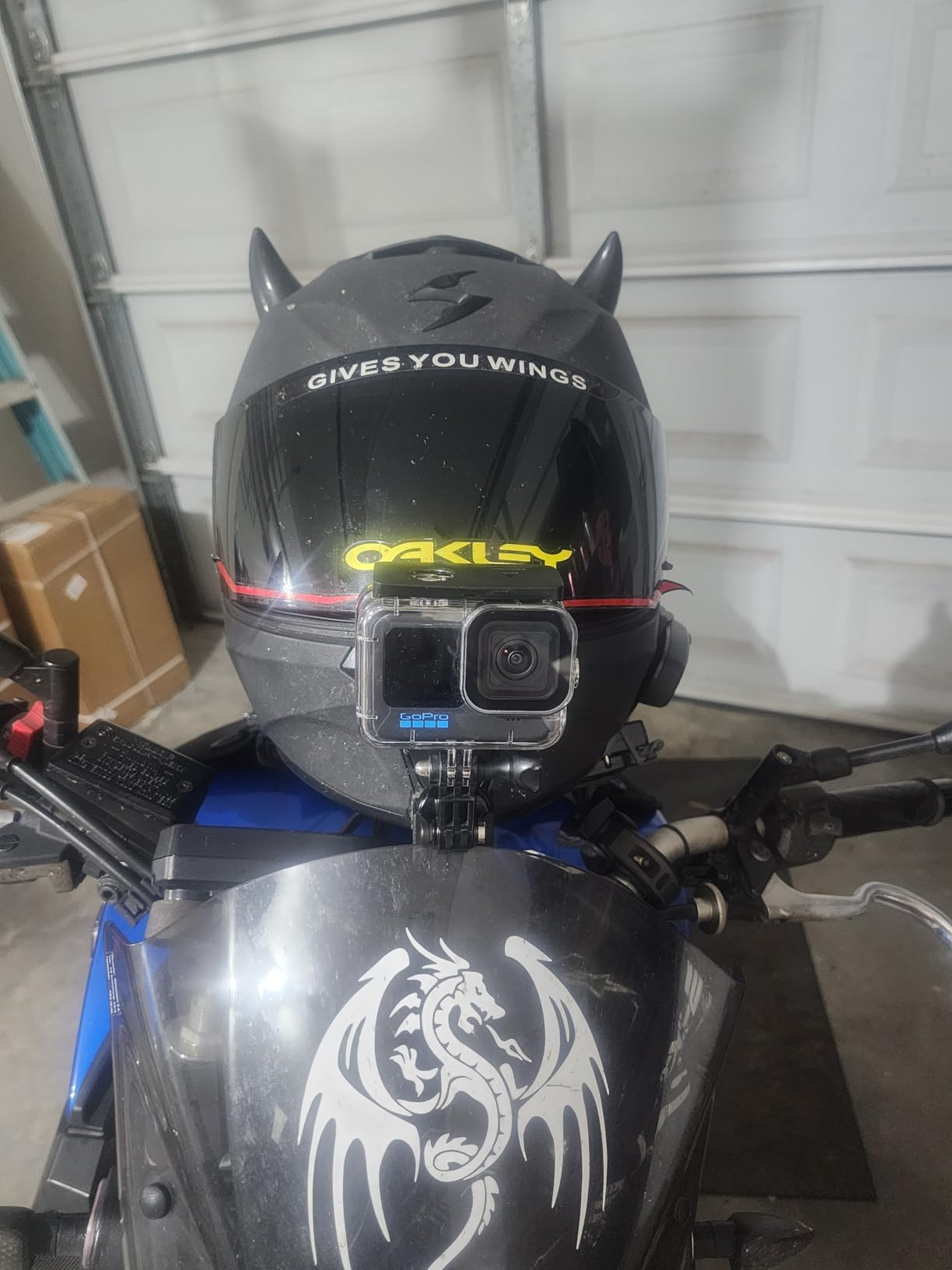
The sensor is the same 1/1.9-inch unit found in the HERO12, so low-light gains over that body are minimal. If you film dawn and dusk more than midday, look at the larger sensors instead.
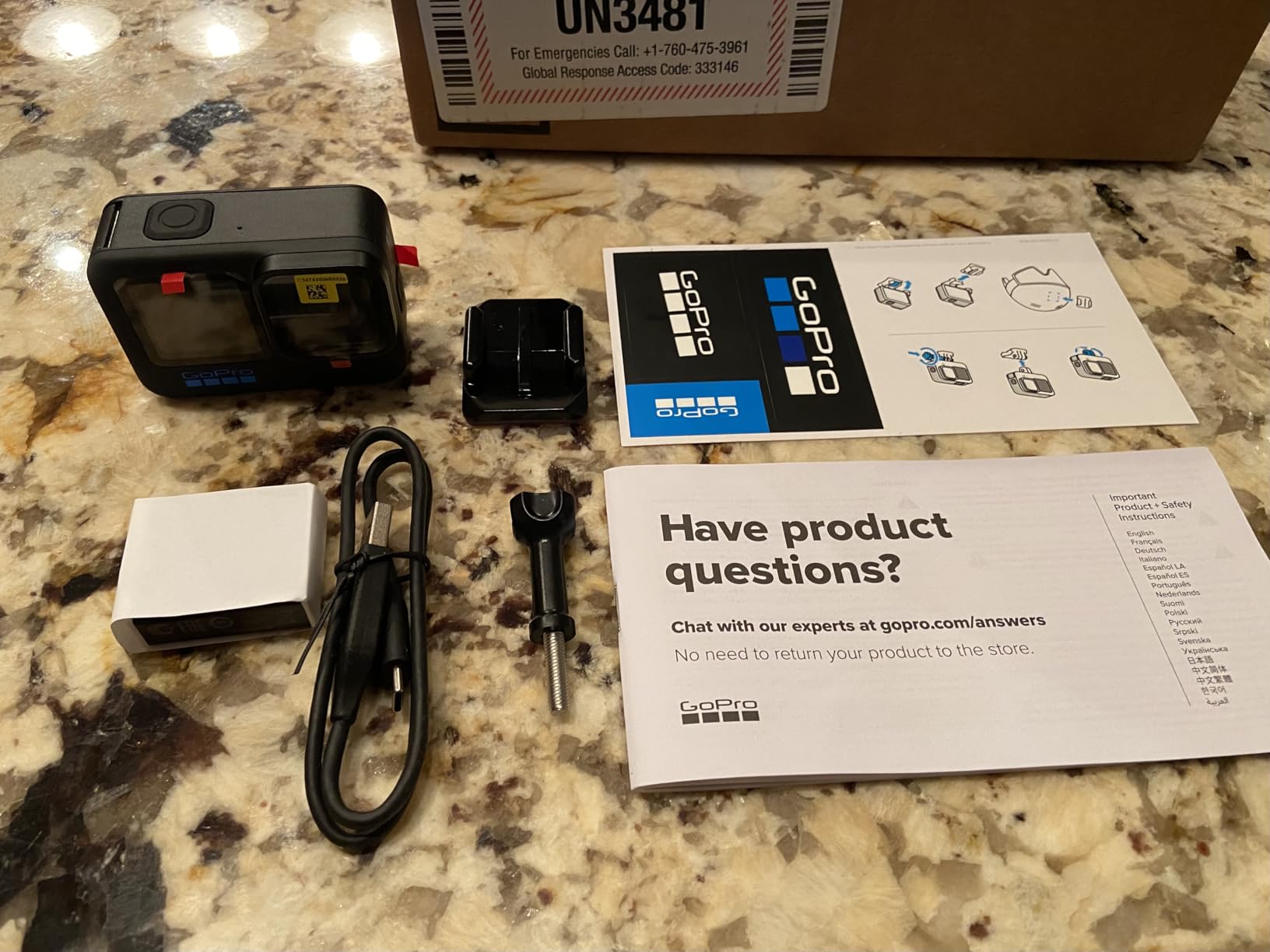
Zoom is digital only on a fixed-zoom lens, which limits your options for framing a distant fish. One Enduro battery is included so long sessions need spares, and this listing is the e-commerce packaging variant, without a retail box.
8. AKASO EK7000 – Budget Pick Bundle for Anglers
- Most reviewed camera in the group with nearly 40000 reviews
- Two batteries and a dual charger in the box
- 131ft waterproof housing included for fishing and kayaking
- Wrist remote starts recording without touching the body
- Wi-Fi app transfers footage to a phone quickly
- MicroSD card is not included
- Onboard audio is muffled with prominent wind noise
- About 90 minutes of 1080p60 per battery
- Battery door is unhinged and easy to lose
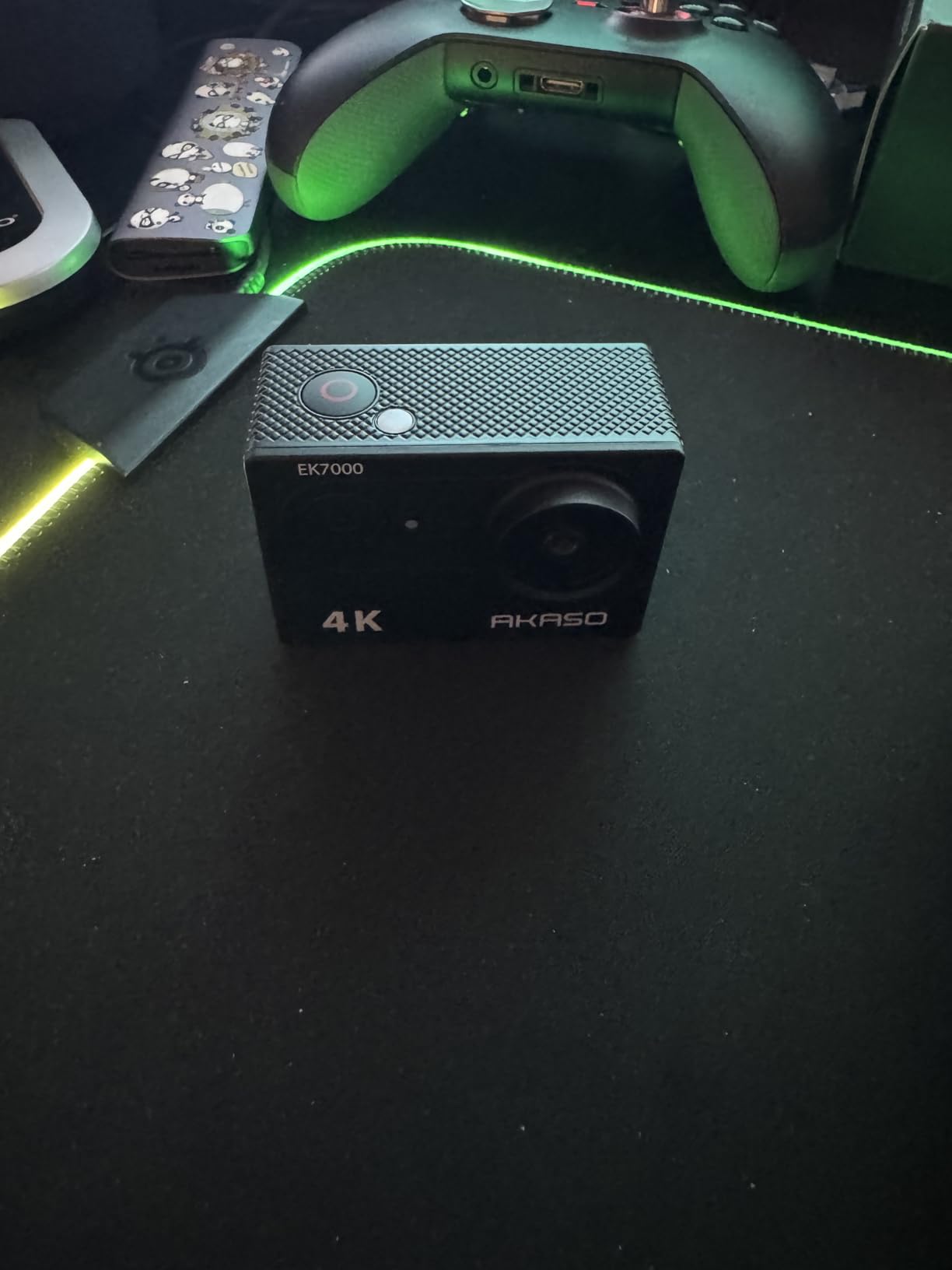
With nearly 40000 reviews, the EK7000 is the most thoroughly tried-and-tested camera on this list, and it is the one I point beginners at. The box includes two rechargeable batteries, a dual charger, a wireless wrist remote and a large mount kit, which is more than most premium bodies include.
Video is 4K30 and 2.7K30 with 20MP stills and a fisheye lens, plus built-in electronic image stabilization. The 131ft waterproof housing means you can submerge it for a release shot without buying anything else.
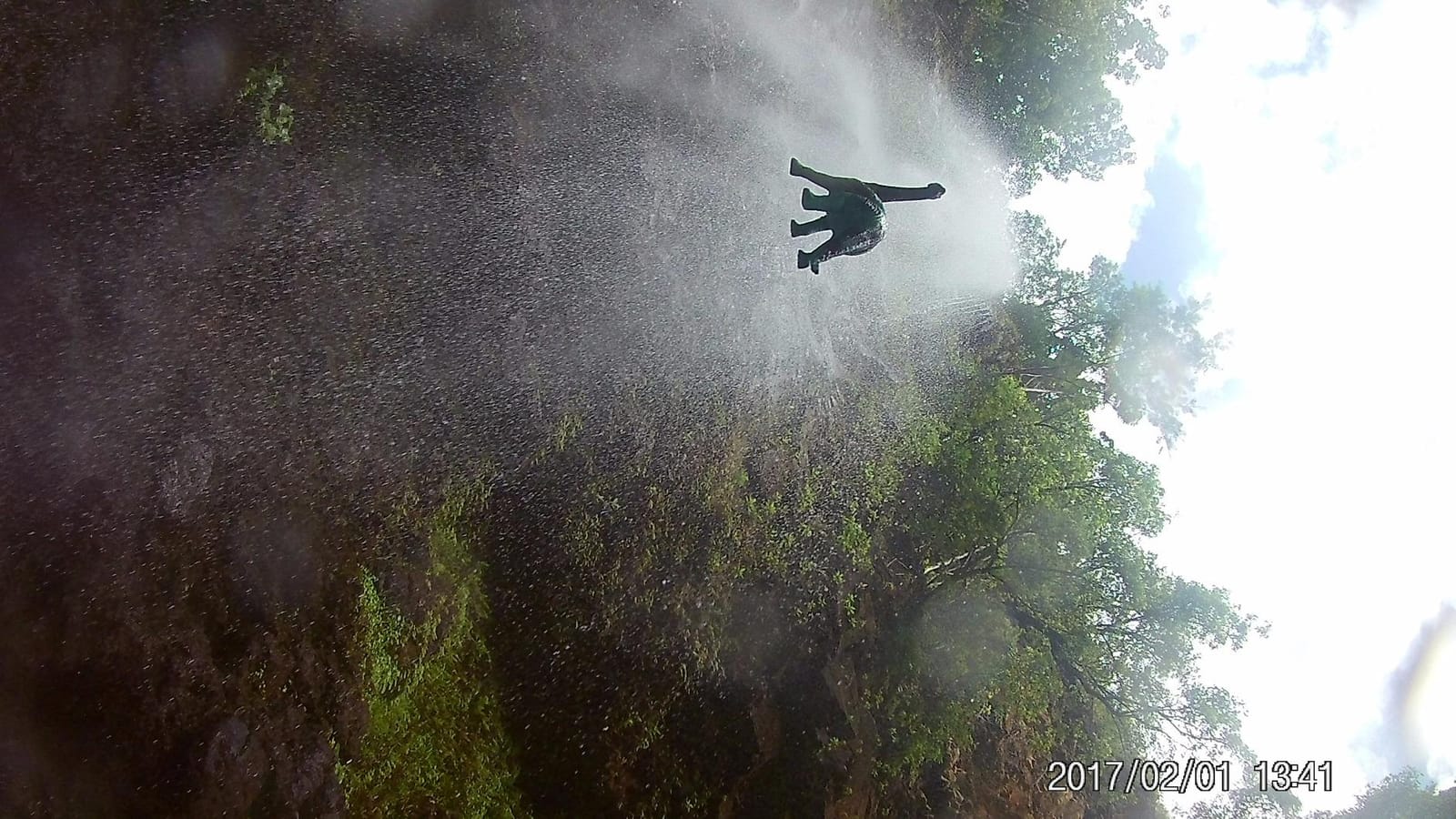
Owners mounting it to paddleboards, e-bike handlebars and kayak bows report good results, and 4x digital zoom helps frame a distant subject even if it is only cropping. The Wi-Fi app moves files to a phone without a card reader, which is handy when you are done for the day.
Understand what you are buying: this is a value camera that is good in daylight and adequate at 4K, not a low-light machine. Frame rate drops and grain climbs in dim conditions, and the listed 4K mode is the softer of the video options rather than the sharpest.
Why the wrist remote matters more than you expect
Once the camera is strapped to a mast or a rail, you cannot reach the shutter. The 2.4G wireless wrist remote solves that with a single press, and unlike the app-based remote it is dependable, which matters when a fish is on and nobody wants to dig out a phone.
Two batteries at roughly 90 minutes each of 1080p60 gives you around three hours of continuous recording from the kit in the box. That covers most single-day shore and freshwater trips without buying spares.
Where the EK7000 falls short
Audio is the biggest limitation. Onboard sound is muffled and wind noise is prominent, and external microphone support is only partial, so plan to narrate in the edit rather than on the water.
No microSD card is included, and batteries drain faster with Wi-Fi on. The battery door is not hinged, so it is easy to lose or break, and the app-based remote start and stop is unreliable compared with the wrist remote.
9. AKASO Brave 4 – Best Budget Kit With a Real Dive Housing
AKASO Brave 4 Action Camera 4K30 Ultra Hd Waterproof Underwater Camera
- 131ft housing rated to 40m held up on cold spring dives
- Four selectable view angles let you trade distortion for subject size
- Dual screens make solo mounting easy
- Two 1050mAh batteries with a dual USB charger
- Users report it never overheated in desert heat
- Muffled audio and heavy wind noise
- Unhinged battery door and a clumsy menu system
- Digital 5x zoom only
- Grainy stills above ISO 400
The Brave 4 is the budget body that handles water best, and the reason is the housing. Rated to 40m, it is a genuine dive case, and owners report it holding up on cold spring dives with no seal issues, which is the environment that punishes cheap gaskets.
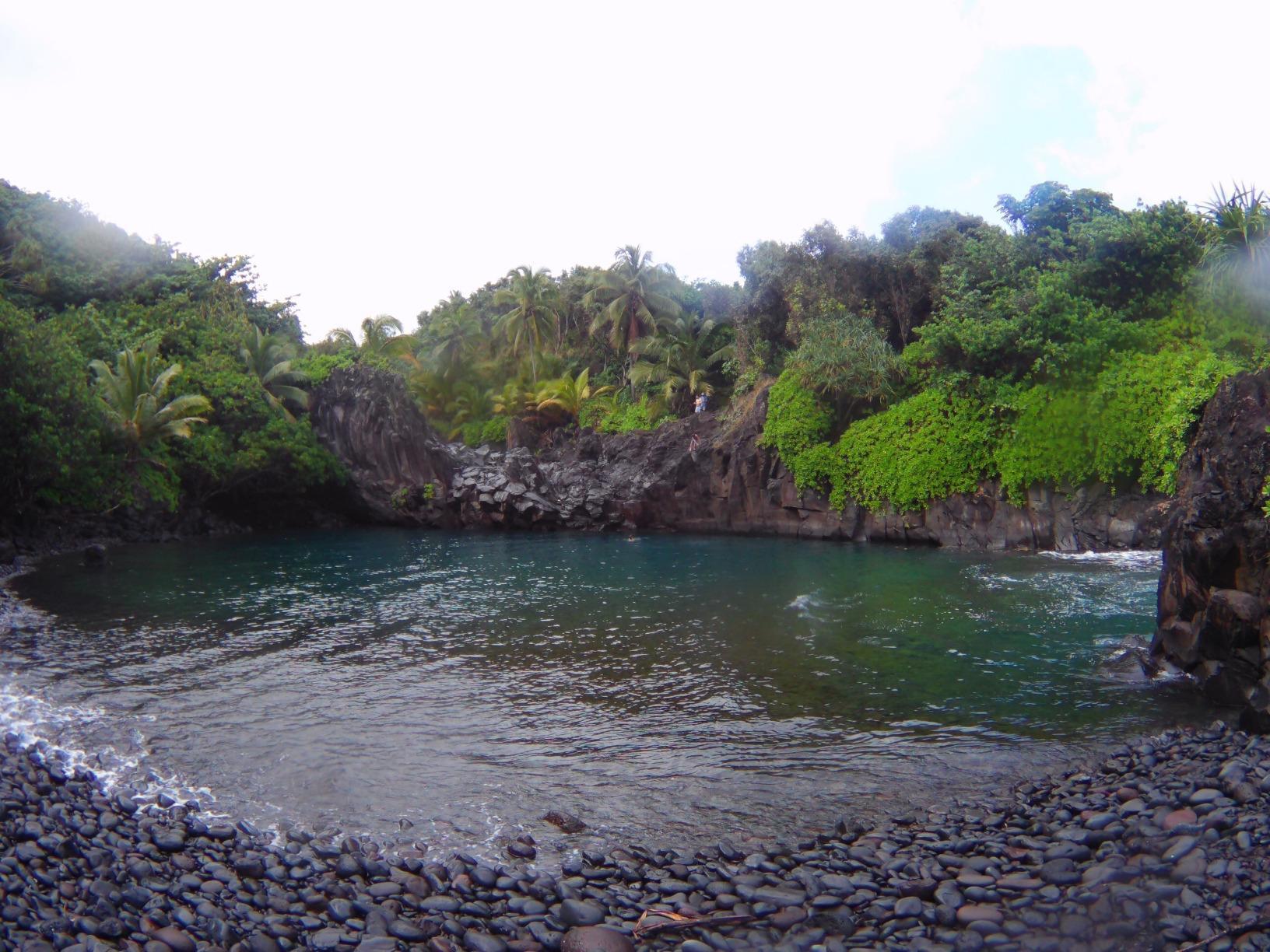
Video is 4K30 down to 1080p60 with 20MP stills, and four selectable view angles (170, 140, 110 and 70 degrees) let you choose between an immersive wide shot and a tighter framing on a fish without moving the camera.
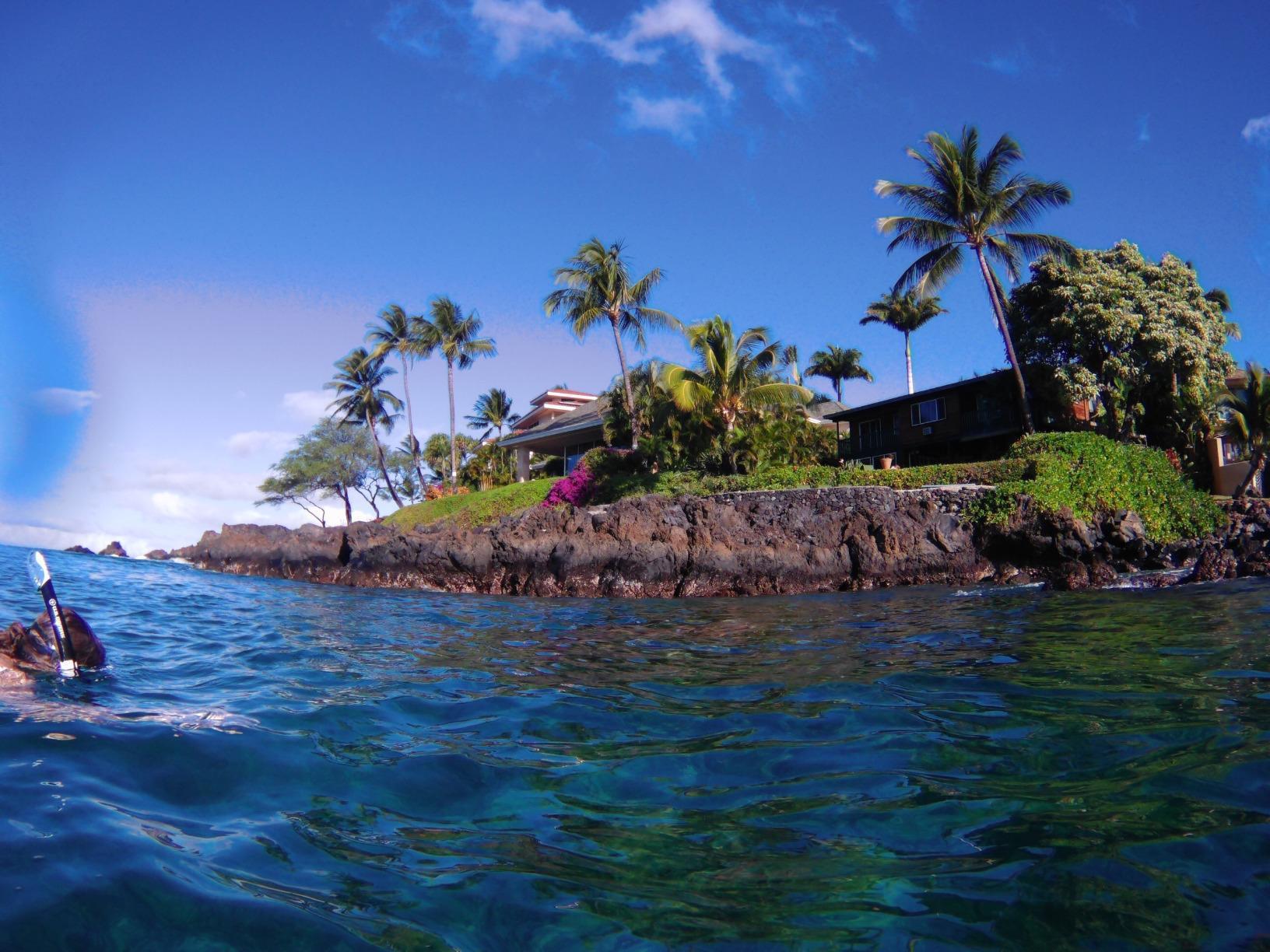
Dual screens, a 2-inch rear and a 0.96-inch front, are underrated on a boat because they make solo mounting practical. Two 1050mAh batteries rated to about 90 minutes each come with a dual USB charger, so the endurance math is straightforward.
It is a top seller in underwater photography cameras with more than 17000 reviews, and the underwater shooting mode plus adjustable angles are what reviewers praise most. Still colour accuracy is good in mixed lighting too.
Choosing a view angle for fishing footage
Use the 170-degree setting for boat and kayak overview shots where you want the whole scene, and step down to 110 or 70 degrees when you are filming a specific fish held up or working a lure close to the hull.
The narrower settings reduce the fisheye distortion that makes fish look oddly shaped and makes the water look like it is curving. On a casting shot of a shoreline, 140 degrees is usually the compromise that still feels immersive.
Where the Brave 4 feels cheap
Onboard audio is muffled with heavy wind noise and the wrist remote is not waterproof, which is a genuine problem for a fishing camera. A long-term filmer on a Bloodydecks forum thread covering GoPro 5, GoPro 7, Yi 4K, AKASO and Contour 3 made the point that colour and sound matter more to fishing viewers than headline 4K specs, and this is the camera where that trade-off is most visible.
The menu system is clumsy, the battery door is unhinged and easy to lose, there is no useful printed manual, and stills go grainy above ISO 400. It also cannot copy files to a phone over USB.
10. AKASO EK7000 Pro – Best Value With a Touchscreen
- Touchscreen at this tier is rare and lets you set settings without the app
- Two 1350mAh batteries rated to 140 minutes each
- 131ft waterproof housing included
- 170-degree view angle with EIS
- Protective case guards the lens
- Housing is not touch-capable so settings must be set before sealing
- Default underwater mode casts a strong yellow tint
- Display is hard to read through the case
- Editing app is weak
The EK7000 Pro is the budget body to pick if you want a touchscreen, because almost nothing else at this level has one. A 2-inch IPS screen means you can change resolution, check framing and review a clip without digging out your phone, which on a small boat is a real convenience.
Battery figures are the best in this tier: two 1350mAh cells rated up to 140 minutes each. That is roughly four and a half hours of recording from the kit as sold, and it is the single biggest practical difference between this and the base EK7000.
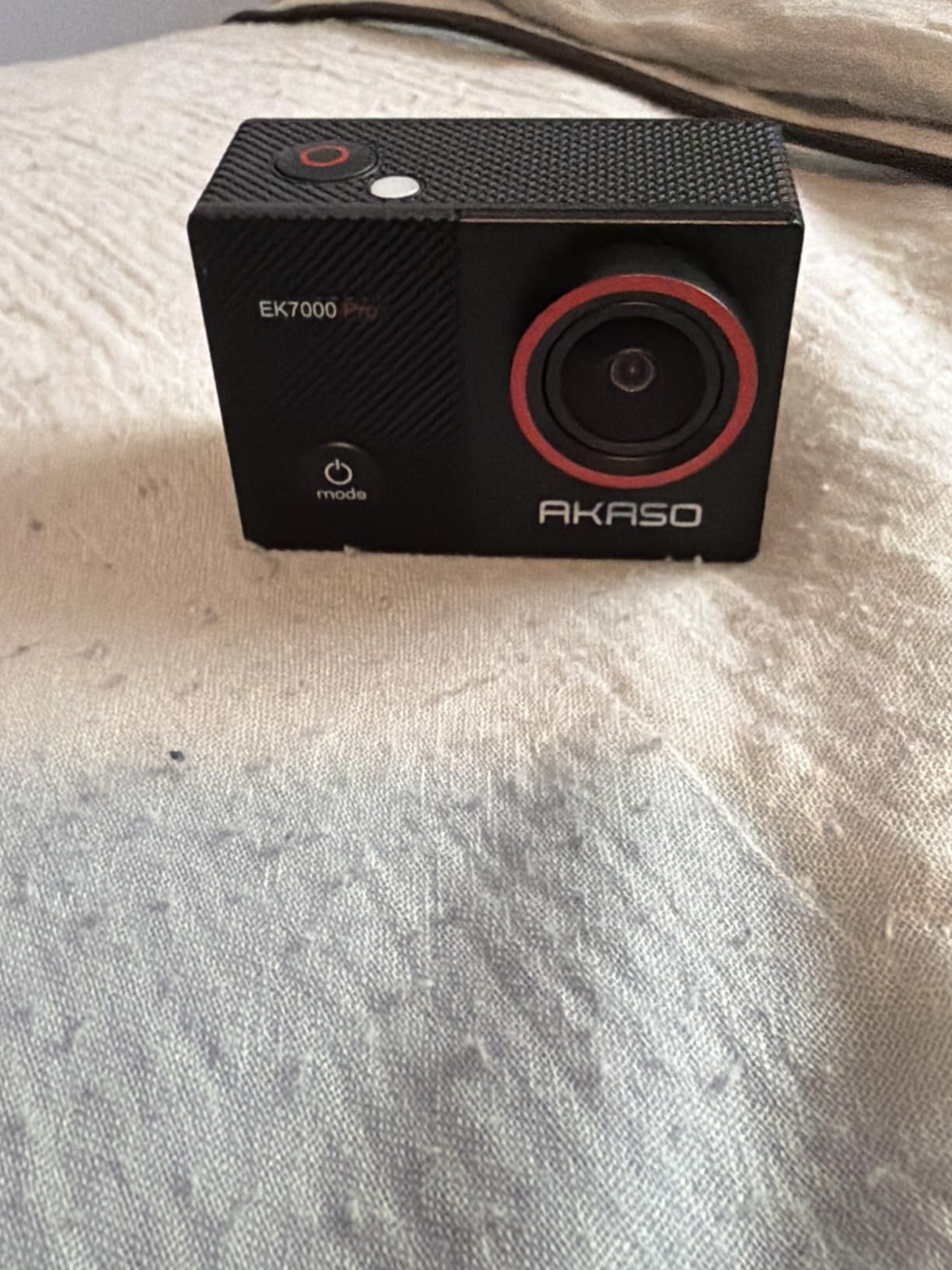
Video is 4K30 and 1080p60 with 20MP stills, a 170-degree viewing angle and electronic image stabilization, and the 131ft waterproof housing covers fishing, diving and snorkeling. Scuba divers report usable images even in poor visibility.
A protective case guards the lens, which is rare at this level and useful given that a flopping fish is the most common way an angler damages a camera. The wireless remote and helmet kit round out the bundle options.
Set the underwater mode before you seal it
The housing is not touch-capable, so anything you change underwater cannot be changed once the case is closed. Set your resolution and mode on the bench, in the housing, before it goes in the water.
The default underwater mode also casts a strong yellow tint that needs manual correction, and the display is hard to read through the case. Dives get acceptable images; plan to correct colour in the edit rather than trusting the defaults.
Where the EK7000 Pro disappoints
No underwater mount is included with the housing, so a dive or a low underwater shot needs another bracket. Despite the 5x digital zoom listing there is no actual zoom lens, so it is a crop.
Real-world battery life lands closer to the 90-minute figure whenever Wi-Fi is switched on, and the editing app is regularly criticized. Treat the footage as something you trim on a computer, not something you polish on a phone.
GoPro vs DJI Osmo for Fishing: Which One Wins on the Water
GoPro is not automatically better, and the DJI Osmo Action 4 is not automatically better either. For fishing specifically, the DJI wins on depth rating and cold-weather battery, and the GoPro HERO13 Black wins on mount compatibility. The Insta360 X5 wins on framing flexibility, at the cost of edit time.
Depth rating is the clearest differentiator. The Osmo Action 4 is sealed to 18m without a housing, the HERO13 Black to 10m. Both are far deeper than an angler will ever take them, so the real-world gap is small, but if you want to submerge the body to film a released fish at depth, the DJI gives you more room before you need a case.
Battery is where the difference actually shows. The Osmo Action 4 runs on a 1770mAh Extreme Battery rated to -20C with a published 150 minutes. The HERO13 Black ships with an Enduro battery and averages about 79 minutes at high resolutions. In autumn on a cold lake, where anglers report batteries collapsing fast, that gap decides the trip.
Mounting runs the other way. The GoPro two-prong standard is the default across kayak and boat hardware, and r/kayakfishing anglers routinely improvise rail, boom and rod-holder solutions around it. The DJI magnetic quick-release is faster to swap by hand, and r/dji owners value it for exactly that, but it is a different mechanism than most existing mounts assume.
Image quality and software split along sensor size. The 1/1.3-inch in the Osmo Action 4 is the largest conventional sensor here and holds up better in low light and underwater. The GoPro counters with 27MP stills against the DJI’s 10MP, which matters if your fishing output is as much photography as video.
If you shoot a fishing channel, the practical answer is that the Osmo Action 4 records longer and straighter, and the GoPro gives you the interchangeable ecosystem and better stills. Pick the one that matches how you already rig your boat.
How to Mount an Action Camera for Fishing
Height is the whole game. A camera at deck level frames your knees and the waterline, and a camera mounted above eye level frames the fish. Every mount decision comes down to getting the lens above the splash line and pointed at the water you are fishing.
On a kayak, the standard setup is a forward-facing mast or a track-mounted plate on the bow with a short forward extension, which puts the camera ahead of you and low over the nose where a fish coming up stays in frame. Rod-holder clamps work too, and give you a second low angle for a cast.
On a boat, the console or the T-top is the useful spot. A camera on the console sees the deck and the water beside the hull, and one on a pole above the T-top gives you the classic overhead angle. Offshore, height matters more than anything else, because the further the camera is from the water, the more splash it avoids.
For hands-free first-person footage, a chest harness is the most useful mount on this list and r/gopro users recommend one for fishing. It keeps the camera steady, points it where you look, and frees both hands for the rod. A hat clip is lighter still, which is why the tiny GO 3S works so well that way.
On a PFD strap, mount the camera high on the shoulder strap so it clears the vest and does not swing. Low on the chest, the buckle and the strap itself block the lens during every cast.
Named hardware worth looking at: the YakAttack PanFish Pro, which is designed specifically for a fishing kayak and gives you a controlled place to put a camera; and the RAILBLAZA Camera Boom 600, which extends a camera forward over open water from a track or rail. Anglers on r/kayakfishing report building DIY versions of both out of rail and boom parts, and forum consensus is that accessories are where owners of any brand get nickel-and-dimed, so buy the mount once and stop.
A final rule: tether the camera. A body that drops in a river is gone, and a thin cord from the camera to your PFD costs nothing.
Saltwater Rinse Routine and Cold-Weather Battery Plan
Salt water is the number one killer of action cameras, and corrosion is slow. The salt works into the buttons, the charging port and the gasket seat, and the camera keeps working for weeks before the problem shows up as a fuzzy lens or a dead body.
After every saltwater trip, rinse the camera in fresh water while the housing is still closed, then run it under a gentle stream for a couple of minutes with the ports pointed down. Pay attention to the microphone grille, the charging port and the seam around the lens, which is where sand and grit collect. Anglers commonly report fogging inside the lens as the first visible symptom, and rinsing before the salt dries is what prevents it.
Then dry it properly. Leave the camera and housing open on a towel away from direct heat overnight rather than shaking the water out and closing it wet. Sand in the gasket is the most common self-inflicted failure, and most of those failures are traced back to closing a housing on a wet or gritty seal.
For cold water, plan batteries rather than hope. Two spare batteries covers a normal day on the water; add a third if you are fishing below freezing, because cold collapses capacity and cold water is exactly when the battery is already working hardest. Keep spares in an insulated pocket against your body, not loose in a boat console where they sit in the cold air all morning.
For ice fishing, keep the camera in your jacket until you are ready to use it, and carry a dry bag for the return trip. A body that is warm when it hits ice water will fog on the inside of the lens as the air inside cools, so let it acclimate in the cold for a minute before opening anything.
Best Action Cameras for Fishing: Buying Criteria
Bare waterproof depth beats any case rating. A camera that is sealed to 18m with no housing is easier to use and has fewer failure points than a body that is only waterproof inside a case. Read the number as a ceiling, not a target, and remember it assumes a sealed, stationary camera. The budget AKASO bodies need their housing; the DJI and Insta360 bodies do not.
Cold battery behaviour decides how long you can film. Published runtime at 1080p is a rough guide, not a promise, and the number that matters is the rated low-temperature limit. Only the Osmo Action 4 and the Ace Pro 2 carry a stated -20C rating, which is why they top this list for autumn and winter fishing. Count two spares for a normal day and three in freezing conditions.
Stabilization should include horizon lock. Boat chop produces constant low-frequency movement, and a tilting horizon makes a good clip look amateur. Horizon balancing on the DJI, 360 horizon lock on the Insta360 bodies and HyperSmooth AutoBoost on the GoPros all address it, and the crop factor matters: a heavier crop leaves less room to reframe a fish later.
Sensor size decides low light and underwater. The 1/1.3-inch sensors in the Osmo Action 4 and the Ace Pro 2 are the largest conventional sensors here and hold detail as light falls off. The GoPro bodies use 1/1.9-inch, which is smaller but pairs with much higher still resolution, 27MP against 10MP.
The mount interface decides whether you buy more hardware. GoPro two-prong is the standard across almost all kayak and boat mounts. The DJI magnetic quick-release is faster to swap but is a different mechanism, and the Insta360 magnetic system needs its own pods. Check what your existing hardware accepts before you commit.
Storage sizing is the most underestimated factor. A full fishing day of 4K capture eats card space fast, and 8K 360 footage eats it much faster. Plan a multi-day trip around how much you can offload, and note that the Insta360 X5 deliberately restricts offloading without its app or cloud. Get more detail on the platform you will actually be filming from with our picks of the best jon boats for fishing, and if you are starting on a budget, our beginner fly fishing combo guide covers the rest of the setup.
Audio needs a plan, because wind always wins. Every camera here has wind noise in its onboard audio, and anglers on fishing forums regularly regret external microphone purchases because open wind overwhelms them. Record voiceover later, keep the built-in wind guard if the camera has one, and do not spend on a microphone you will not use.
Two features worth actively seeking out: pre-recording or loop recording, because a strike is a sub-second event that happens after hours of nothing, and a replaceable lens cover, because the most common fishing accident is a fish tail across the glass.
Frequently Asked Questions
Is anything better than GoPro for fishing?
For fishing specifically, the DJI Osmo Action 4 edges out the GoPro HERO13 Black. It is sealed to 18m without a housing against GoPro’s 10m, its 1770mAh Extreme Battery is rated to -20C with a published 150 minutes against roughly 79 minutes on the HERO13, and its 1/1.3-inch sensor holds up better in low light and underwater. GoPro keeps the advantage on mounts, since two-prong hardware fits nearly every kayak and boat mount already made.
What GoPro is best for fishing?
The GoPro HERO13 Black is the current pick. It is waterproof to 33ft (10m) without a housing, shoots 5.3K60 video and 27MP stills, carries a water-repelling lens cover, and uses the two-prong mount standard that most boat and kayak hardware is built around. The HERO12 Black remains a strong alternative if you want HyperSmooth 6.0 with AutoBoost and HDR video, though it runs hot during long 4K60 sessions.
Which is better, GoPro or DJI Osmo Action?
Choose the DJI Osmo Action 4 for endurance and water sealing: 18m bare waterproofing, a 1770mAh battery rated to -20C, and 150 minutes published runtime. Choose the GoPro HERO13 Black for the mount ecosystem and still photos at 27MP against the DJI’s 10MP, plus compatibility with HB-series lenses. For an angler recording a full cold day on a boat, the battery gap decides it.
What is the best action camera for kayaking?
The Insta360 GO 3S is the lightest option at 39g, which matters on a kayak where every gram sits on your head or chest, and its IPX8 body is sealed to 10m. For maximum framing from a kayak mast or bow mount, the Insta360 X5 records the whole fight in 360 degrees and lets you reframe in edit. The GoPro HERO13 Black is the safest general answer because it fits standard two-prong kayak mounts.
Do I need a waterproof case for an action camera?
No, not for the cameras rated for bare waterproofing. The DJI Osmo Action 4 is sealed to 18m, and the GoPro HERO13 Black and HERO12 Black are waterproof to 33ft (10m), all without any case. The budget AKASO EK7000, EK7000 Pro and Brave 4 rely on the included 131ft housing instead, so for those bodies the case is not optional. A case adds a second gasket that can leak and will not help if the port door is not closed.
How many batteries do I need for a day of fishing?
Two spare batteries covers a normal day on the water, on top of the one in the camera. If you are fishing in cold conditions or below freezing, take three, because capacity collapses in the cold and the battery is already working hard. Keep spares in an insulated pocket against your body rather than in a boat console, where they sit in cold air for hours.
Final Verdict: The Best Action Cameras for Fishing
After working through all ten, the DJI Osmo Action 4 is the best action camera for fishing overall. The combination of 18m bare waterproofing, a 1770mAh battery rated to -20C with 150 minutes published, a 1/1.3-inch sensor and a pre-recording buffer that keeps the last 60 seconds ready to go is the one that removes the most ways a fishing day can go wrong.
Pick the Insta360 X5 if you would rather capture everything and reframe later, and accept the storage cost and the edit time. Pick the GoPro HERO13 Black if your boat or kayak already has two-prong GoPro mounts and you want 27MP catch photos alongside the video. Pick the GO 3S if weight is the deciding factor, and the AKASO EK7000 or EK7000 Pro if you want a full kit with two batteries, a housing and a remote before you have spent anything on accessories.
Whatever you choose, mount it high, tether it, rinse it in fresh water after every saltwater trip, and carry more batteries than the published runtime suggests you need. Then go film the one that got away.