
The INNOREL RT90C is the best heavy duty tripod for telephoto lenses overall. It carries a stated 88 lb load on 40mm 10-layer carbon fiber legs, includes a 75mm leveling bowl, and weighs 6 lb — the rare combination of pro load rating and packable weight that big glass demands.
Most people buying the best heavy duty tripods for telephoto lenses are not short on options. They are short on a way to tell which options matter. A category with hundreds of models reduces to three numbers that decide everything: the rated load, the top tube diameter, and the bowl size.
There is one rule that does most of the work, and it is the rule that shows up over and over in the photography forums: rate any tripod at three times the heaviest rig you actually plan to carry. Add your body, lens, collar, battery grip and plate together, then multiply that total by three. A 400mm f/2.8 on a pro body lands around 8 to 9 lb, so you want a tripod rated for 25 lb or more.
We spent the last few months working through ten of the highest-rated heavy duty telephoto tripods on the market, comparing stated load ratings against real rig weights, checking leg diameters, bowl compatibility and head options, and reading what owners actually say after months of field use. The ten below cover everything from an 8 kg budget fluid-head platform to 40 kg carbon systems that hold a 600mm without complaint.
Table of Contents
Top 3 Picks for Heavy Telephoto Work

INNOREL RT90C
- 88 lb / 40 kg load
- 40mm 10-layer carbon legs
- 75mm bowl included
- 6 lb net weight

ARTCISE AS90C
- 88 lb / 40 kg load
- 40mm 10-layer carbon
- Fast-leveling 75mm bowl
- Centerless low-angle design

All 10 Picks at a Glance in 2026
Every tripod in the table below is rated well above its own weight class, which means the real differentiator is torsional rigidity and how the head behaves with an off-centre load. Use this to narrow the list, then read the full review.
| Product | Specifications | Action |
|---|---|---|
| INNOREL RT90C Carbon Fiber Bowl Tripod |
|
Check Latest Price |
 INNOREL NT404C Carbon Fiber Bowl Tripod INNOREL NT404C Carbon Fiber Bowl Tripod |
|
Check Latest Price |
| ARTCISE AS90C Heavy Duty Bowl Tripod |
|
Check Latest Price |
| NEEWER TP-M200 Heavy Duty Video Tripod |
|
Check Latest Price |
 SIRUI AM-324 Carbon Fiber Tripod SIRUI AM-324 Carbon Fiber Tripod |
|
Check Latest Price |
 Benro Mach3 TMA38CL Long Carbon Tripod Benro Mach3 TMA38CL Long Carbon Tripod |
|
Check Latest Price |
 Manfrotto MT190XPRO4 Aluminum 4-Section Tripod Manfrotto MT190XPRO4 Aluminum 4-Section Tripod |
|
Check Latest Price |
 Manfrotto 055 Aluminum Kit with Ball Head Manfrotto 055 Aluminum Kit with Ball Head |
|
Check Latest Price |
 SIRUI AM-324S with G1 Ball Head SIRUI AM-324S with G1 Ball Head |
|
Check Latest Price |
 K&F Concept X-Series Carbon Fiber Tripod K&F Concept X-Series Carbon Fiber Tripod |
|
Check Latest Price |
A note on weights: the ARTCISE AS90C listing carries two conflicting net weights, so treat its pack weight as approximate. Every load rating we quote is the manufacturer’s stated figure, not a tested result.
1. INNOREL RT90C – Best Overall Heavy Duty Telephoto Tripod
- Very thick 40mm top-section tubes in 10-layer carbon fiber
- 40kg (88 lb) stated load suits long telephoto bodies
- Accepts both 75mm and 100mm bowls plus fluid and gimbal heads
- Compact 23.2 in folded length at only 6 lb
- Three selectable leg angles with interchangeable spikes
- No center column
- so minimum height depends on splaying the legs
- Twist locks need more than a half turn to fully engage
The RT90C is the tripod we keep coming back to, because it does the thing heavy telephoto work actually asks for: 40mm top-section carbon tubes carrying a stated 88 lb, at a net weight of 6 lb. That ratio is unusual. Most tripods at this load rating land between 8 and 12 lb, and that extra weight is the reason people end up leaving them in the car.
Across 500 reviews the rating sits at 4.8, with 86 percent of those reviews at five stars. The praise is consistent and specific: thick tubes, a load figure that matches the class, and a 75mm bowl adapter that ships in the box. Bowl compatibility matters more than most guides admit, because a 75mm bowl is what lets you level a big head in seconds on sloping ground rather than shimming it.
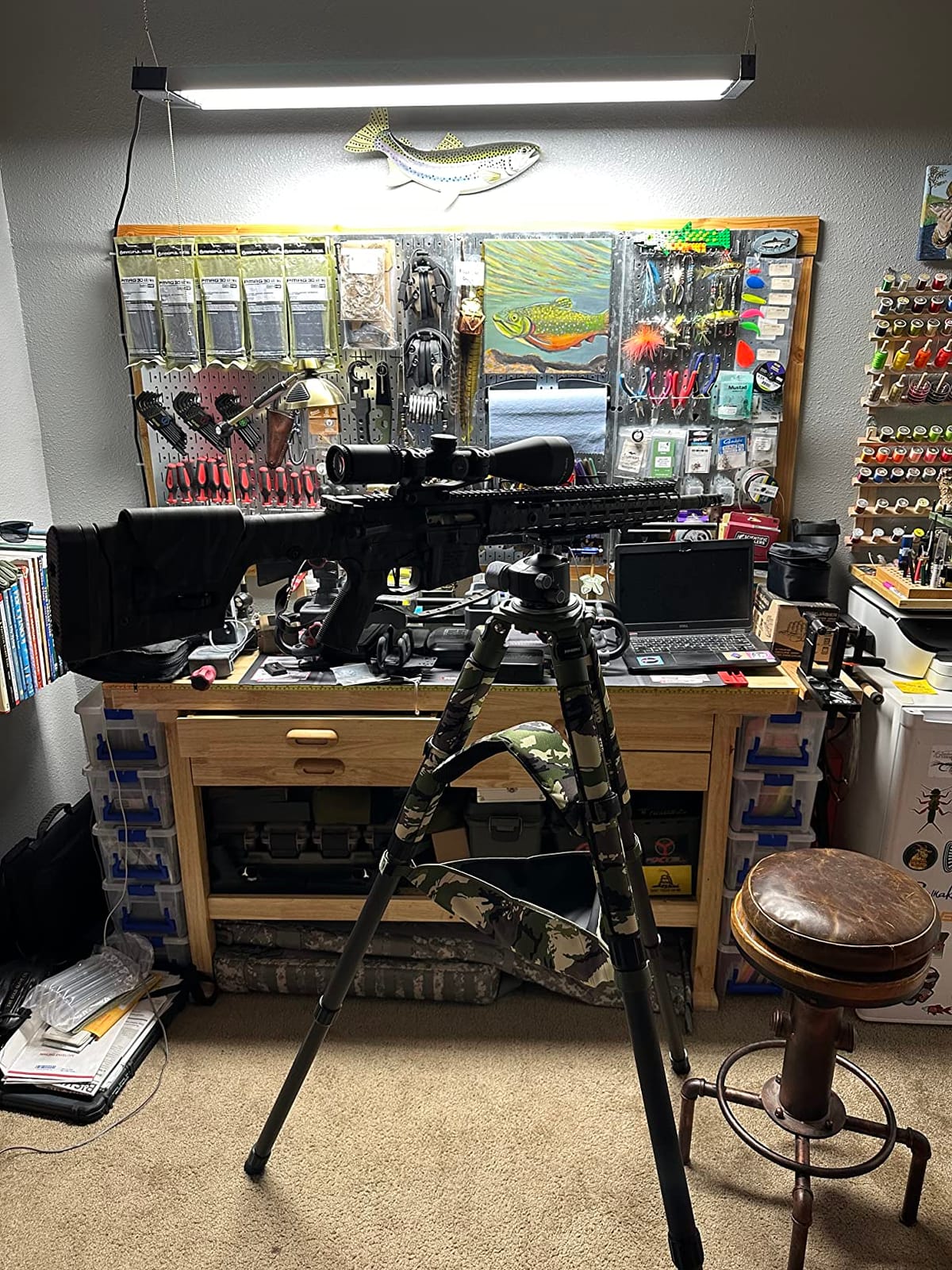
Three leg angle positions at 9, 37 and 69 degrees give you real control when you are working on a hillside with a 100-400mm. The 69 degree setting drops the camera low for ground-level work without needing to dig a hole, which is exactly the angle you want for water, mud and low scrub.
Owners also point out that it accepts ball, fluid, gimbal and panoramic heads on the same platform, so the legs are not locked into one working style. The mounting pan is hard-anodized aluminum with an oversized weight hook, which matters if you ever hang a counterweight or a second body off it.
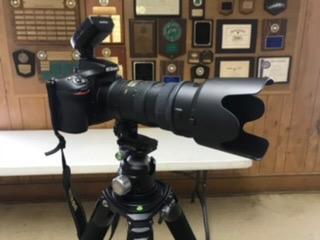
What you get at full weight
At its stated 40 kg rating, this is the pick for a 200-500mm, a 400mm f/2.8 plus teleconverter, or a 600mm f/4 with a support foot. The thick 40mm top section is the detail that separates it from lighter carbon kits that flex at full extension.
It ships with a 75mm bowl, a 75mm adapter, allen keys, rubber and stainless spikes, and a carry bag. Nothing else is required except a head if your use case needs a specific one.
Where it falls short
There is no center column, so your lowest working height comes from splaying the legs rather than dropping a post. For ground-level wildlife that is arguably a better solution, but if you want a smooth vertical adjustment while panning, you will miss it.
The twist locks take more than half a turn to engage, and a few owners report visible leg flex at the very top of the load range. Neither is a dealbreaker for normal telephoto work, but both are worth knowing before a 600mm day.
2. INNOREL NT404C – Best for Bird Photography at Distance
- Stiffer than larger models in the same line
- 40mm sections do not flex
- Handles long lenses and heavy bodies on a gimbal
- Universal 75mm bowl adapter levels the head quickly
- Customer service responds quickly on the 2-year warranty
- Included half-ball bowl leveler is poorly finished and can stick
- Half-ball has no bubble level
- 3/8 inch head stud is slightly long for some ball heads
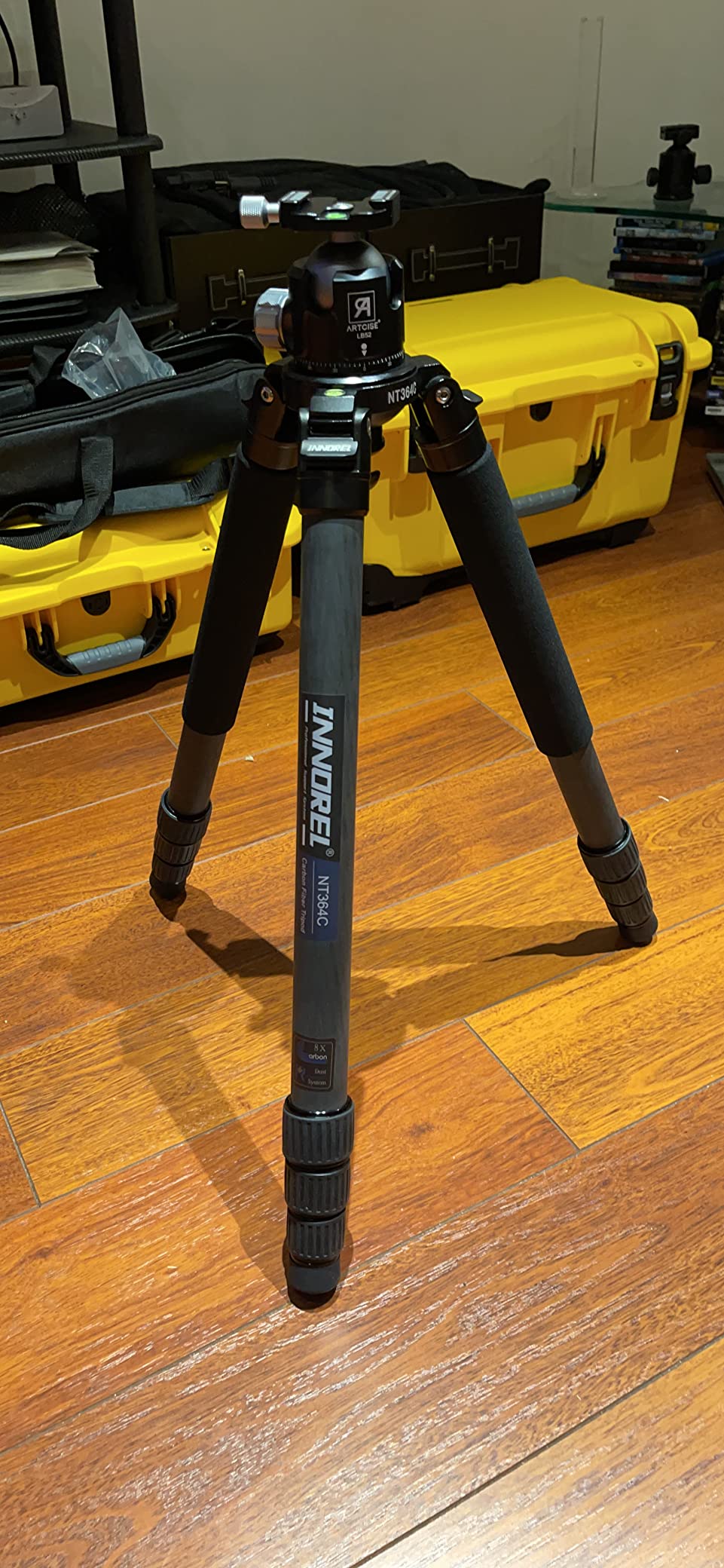
The NT404C is the bird photography pick. Where the RT90C wins on raw rating, this one wins on stiffness at a lower weight, and stiffness is what separates a sharp frame from a soft one when you are at 1/2000th and panning.
Owners report pairing it with long glass and heavy bodies without complaint, including a 500mm on a Micro Four Thirds body through a gimbal. That is the sensible way to use a 30 kg rating — you are using the head and the lens together, not fighting the head.
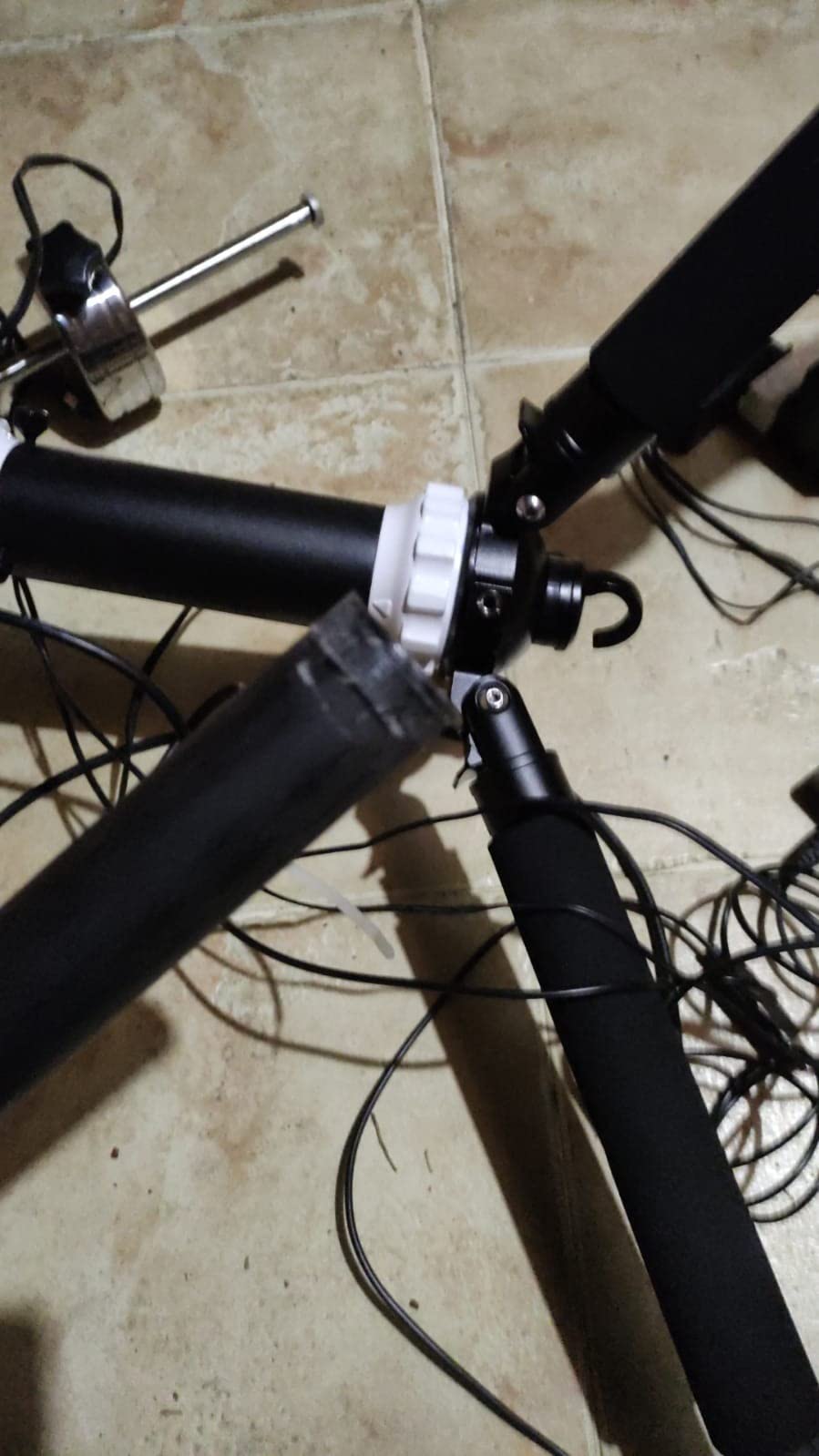
The universal 75mm bowl adapter with quick leveling is the practical headline. Main components are CNC machined and anodized, and the twist locks are described as sturdy with a smooth spring leg-angle mechanism.
It folds to 22.8 in, comes with interchangeable rubber and stainless spikes, and includes a bag and bag strap. The 3/8 inch stud has a conversion screw for 1/4 inch, so it fits whatever head you already own.
Why bird shooters like it
Wildlife work is a waiting game, and a tripod that goes up fast in bad light and holds absolutely still once it is there is worth more than extra payload you never load. The 40mm carbon sections do not flex, according to owners, and that is the number that matters most for panning.
The 66 lb rating covers a 200-500mm or a 100-400mm comfortably with headroom, and a 400mm f/2.8 with a teleconverter at the top end of what this platform is built for.
What to watch before you buy
The half-ball bowl leveler is the single most-cited defect. Rough cast surfaces can stick and grab, and some owners lap them smooth themselves. It also has no bubble level, so you need a separate leveling tool for precise work.
At 8 lb it is heavier than a travel tripod, and a handful of one-star reviews describe shipping damage to the leg mechanism. The 2-year warranty is honored quickly, which softens that considerably.
3. ARTCISE AS90C – Top Rated for Long Lens Stiffness
- Exceptionally rigid for its weight
- Will not creep on long timelapse moves
- 88 lb / 40 kg on thick 40mm carbon tubes
- Patented fast-leveling 75mm bowl
- Reported far more stable than aluminum on long exposures
- Heavier than carbon rivals once bowl and spikes are fitted
- No 1/4 inch thread on the apex for an arm or hook
- Looser tolerances than a Gitzo transmit slightly more vibration
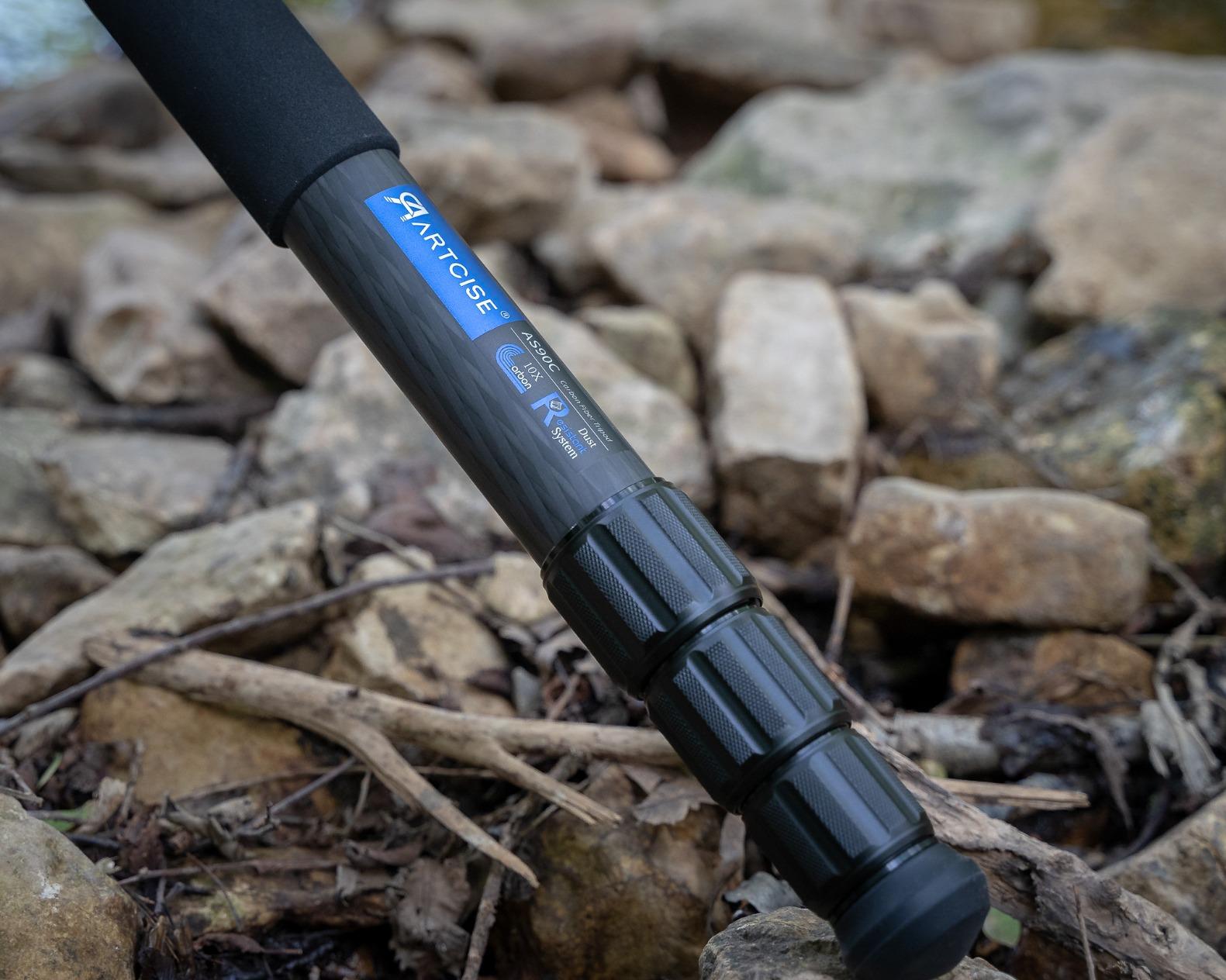
The AS90C is the one we would put on a long lens and leave alone. Owners describe it as rigid enough to hold a spotting scope at full magnification or to support a 400mm weighing around 5 kg, and the recurring theme is that it does not creep over a long exposure.
That is the claim that matters. A tripod rated for your weight can still drift, and drift is what blurs a telephoto frame. Ten layers of 100 percent carbon fiber at 40mm tube diameter is a genuinely stiff package, and the CNC-machined anodized all-metal main components are a step above the usual.
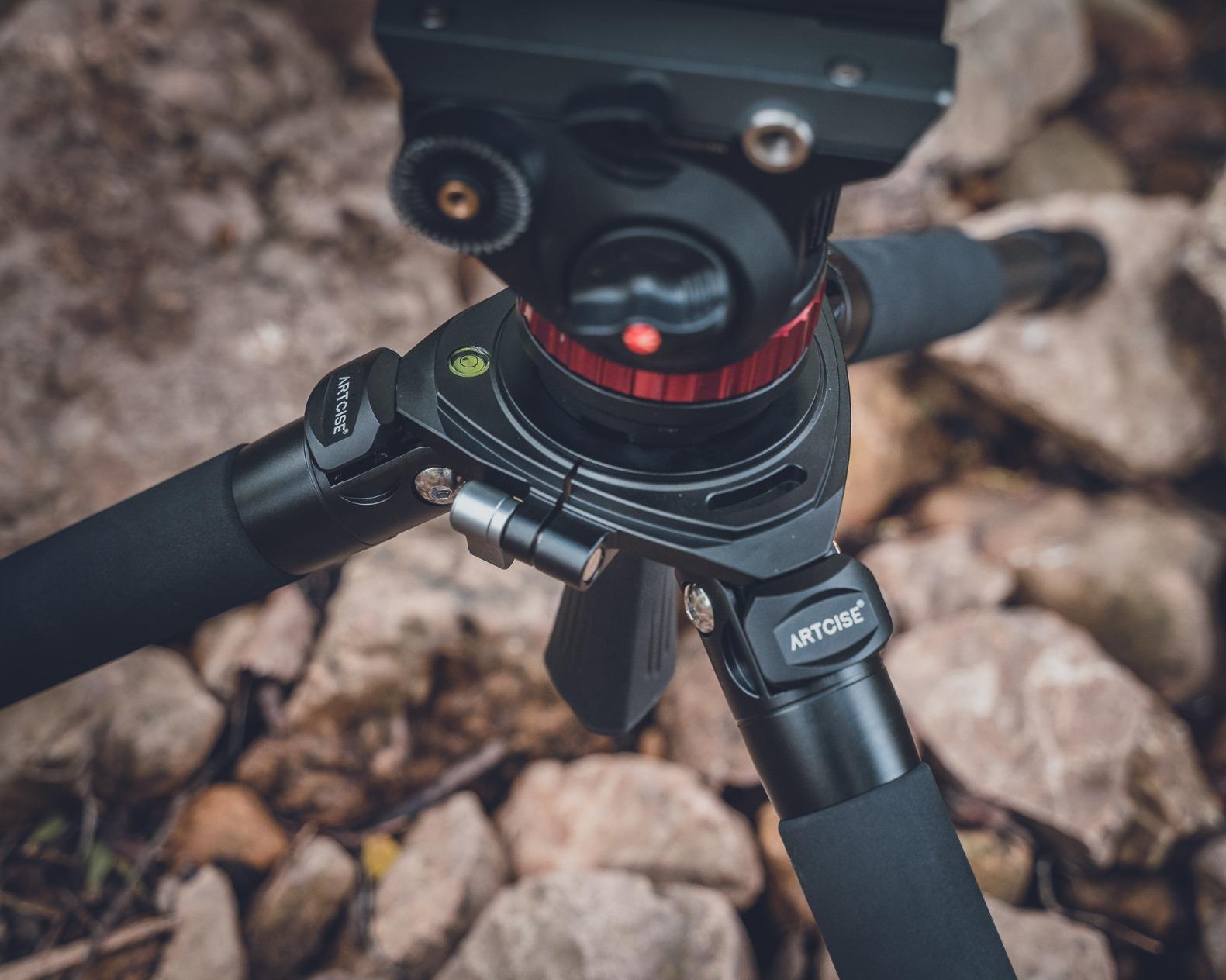
The patented fast-bowl 75mm leveling bowl is the feature owners single out most. On uneven ground, leveling a heavy head by hand takes forever, and a bowl that self-levels in a couple of seconds changes how many frames you get per hour.
It also has a centerless design with a 3.9 in minimum shooting height, which means ultra-low work without a center column digging into the ground. Folding length is 23 in, and spikes, allen wrenches and a case are included.
Where the stiffness pays off
If you shoot slow shutter speeds with a long lens, sit on a slope, or pan a heavy prime at a fast shutter speed, rigidity is the whole game. Reviewers repeatedly compare it favorably to far more expensive carbon kits and report it as noticeably more stable than aluminum legs on long exposures.
For a 400mm f/2.8 plus teleconverter, or a 600mm f/4 with a foot, this has more than enough rating and enough stiffness to use all of it.
What gives it away
There is no 1/4 inch thread on the apex, so you cannot bolt on a magic arm or a counterweight hook. That is a small thing until you need it on a paid shoot.
Tolerances are looser than a Gitzo, which passes a little more vibration, and owners mention sticky factory grease in the twist locks that traps sand. Wipe the locks clean after every coastal or dusty session and this one is a very strong platform.
4. NEEWER TP-M200 – Budget Pick with a Fluid Head
- Fluid drag head gives smooth 360 pans and -70 to 90 degree tilt
- 70mm bowl base keeps the platform stable on uneven ground
- Very tall at 200 cm for elevated and wildlife angles
- Built-in bubble level speeds setup
- Quick release plate fits 1/4 inch and 3/8 inch bodies
- 8 kg load rating is the lowest here and limits heavy telephoto bodies
- 20mm double-tube legs are the thinnest and feel springy at full extension
- 12.3 lb weight is heavy for a portable tripod
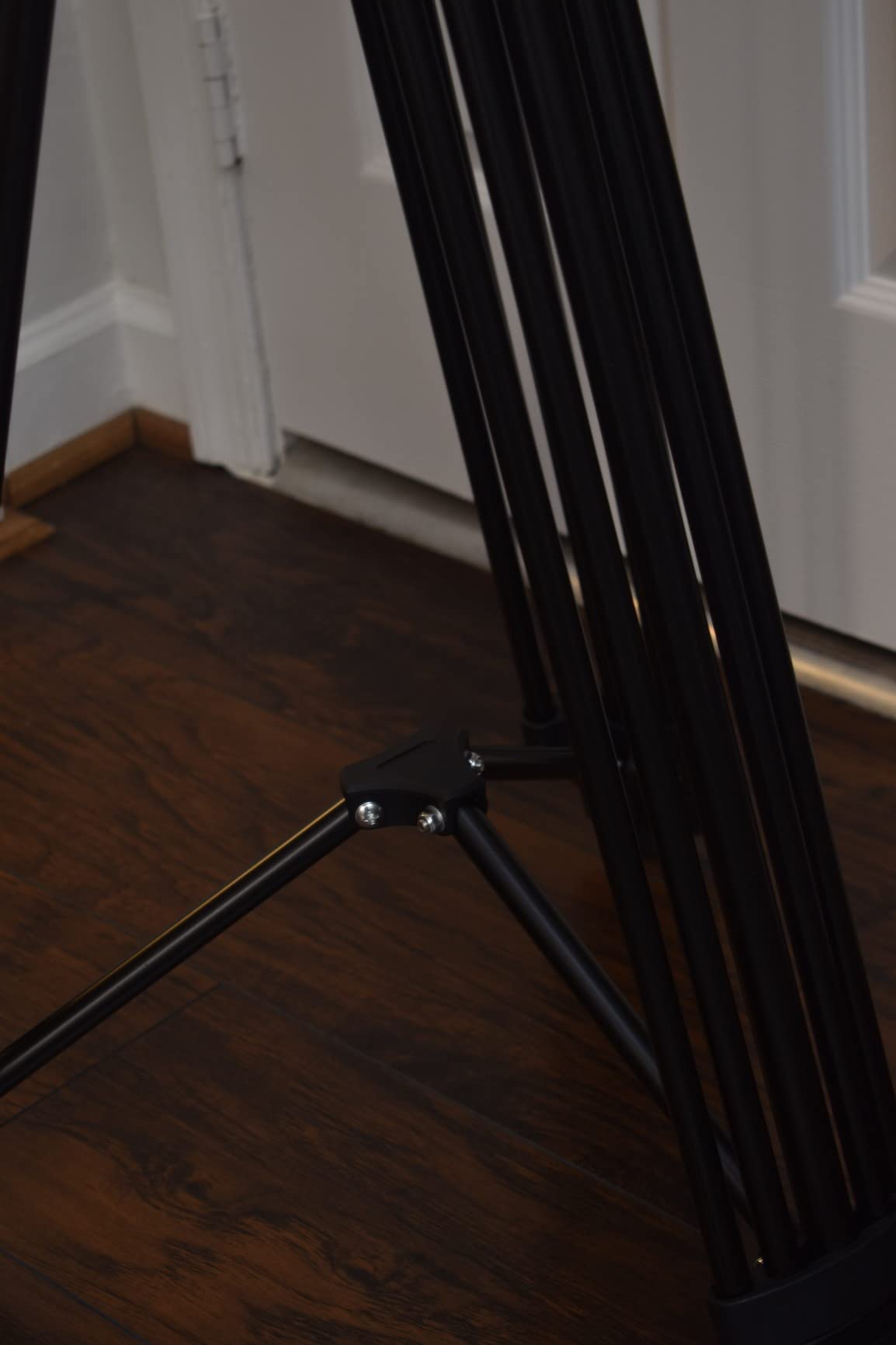
The NEEWER TP-M200 is the odd one out here, and that is why it earns a place. Every other tripod on this list is a stills platform that can accept a fluid head. This one arrives with a fluid drag head already on it, and for panning work that is a real advantage.
With over 1,200 reviews at a 4.6 average, it is also the most validated product we looked at. That matters in a category where brand names mean less than user counts, because a thousand owners is a much better test than a hundred.
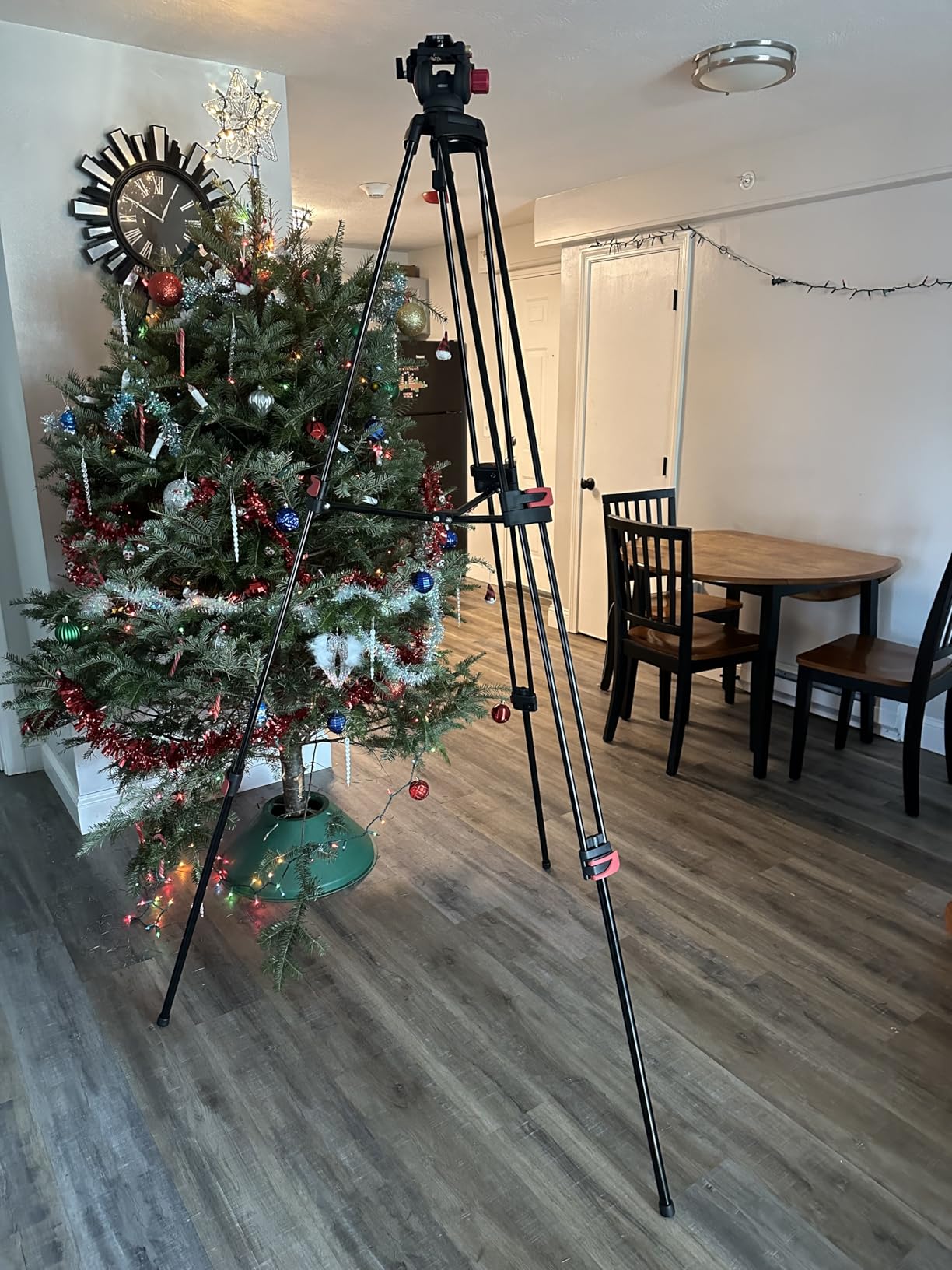
The head pans 360 degrees with fluid drag and tilts from minus 70 to 90 degrees. That tilt range is what makes panning a telephoto lens smooth, since the drag stays consistent through the whole stroke rather than stepping.
At 200 cm it is the tallest platform here, which helps with elevated wildlife angles and overhead framing. The 70mm bowl base under the head stabilizes on uneven surfaces, and the built-in bubble level makes setup repeatable.
What it does better than the others
Fluid drag is simply better at following movement. If you pan a bird in flight, a motorcycle, or anything moving at a steady rate, the continuous drag on this head beats the stepped friction of a ball head without much learning curve.
It also folds to 91 cm, includes a tripod bag, and uses flip locks that extend quickly and securely. For a mid-size telephoto setup and a long day of panning, it does a lot for very little.
Where the limits are
The 8 kg load rating is the lowest on this list. It handles a mid-size telephoto rig comfortably, but a 400mm f/2.8 with a pro body plus a support foot is at the edge of what the legs will take.
Twenty millimeter double-tube legs are the thinnest here and can feel springy at full extension, which shows up as vibration on long telephoto exposures. At 12.3 lb it is also heavy for something that folds to 35.8 in.
5. SIRUI AM-324 – Best for Hiking a Big Lens In
- Only 3.1 lb yet rated for 44 lb
- Reported stable with a Canon R7 and a 200-800mm
- Good stability with a 400mm on a gimbal head
- Semi-automatic flip locks and half-turn twist locks
- No center column makes low and inverted shooting easy
- 57 in maximum height is short for standing work with optics
- Included carrying bag is the wrong size for a tripod with a head
- Sold as tripod only
- so a head must be added
The AM-324 answers the question that stops most telephoto shooters buying a tripod: can I actually carry it to the location. At 3.1 lb with a 20 kg stated load, it is the lightest thing on this list by a wide margin, and Sirui is the brand that comes up most often in forum threads asking for exactly this trade.
Users treat it as a lightweight but rigid telephoto platform, citing stability with a 400mm on a gimbal head and with a 200-800mm on a Canon R7. The 10-layer carbon tubes run 22 to 32mm, and the half-turn twist locks with anti-slip rubber pads are quick in the dark.
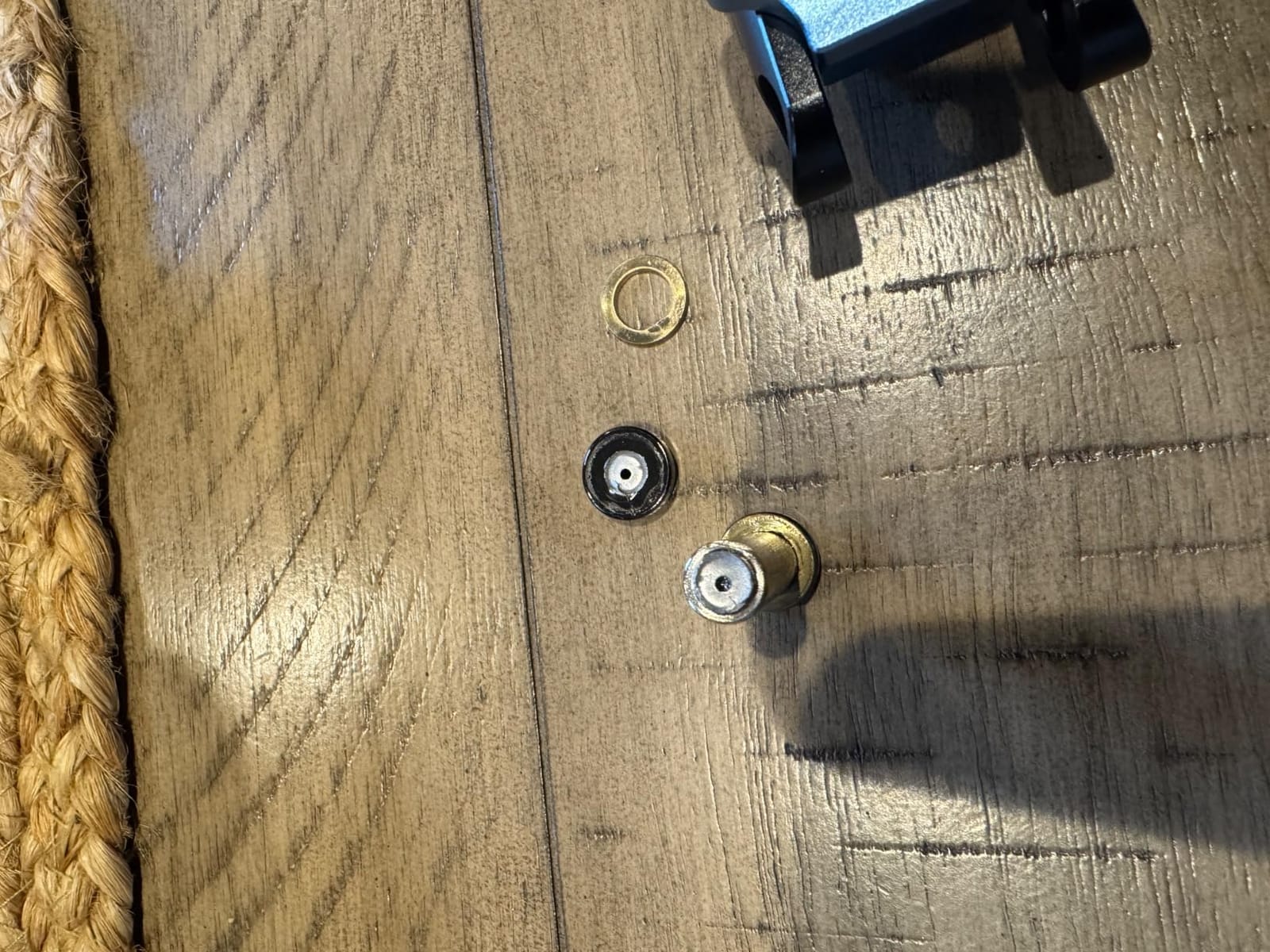
The centerless design is the other half of the appeal. Without a center column there is nothing to wobble, and the 3.1 in minimum height comes from splaying the legs, which is how you get ground-level wildlife frames without a second piece of kit.
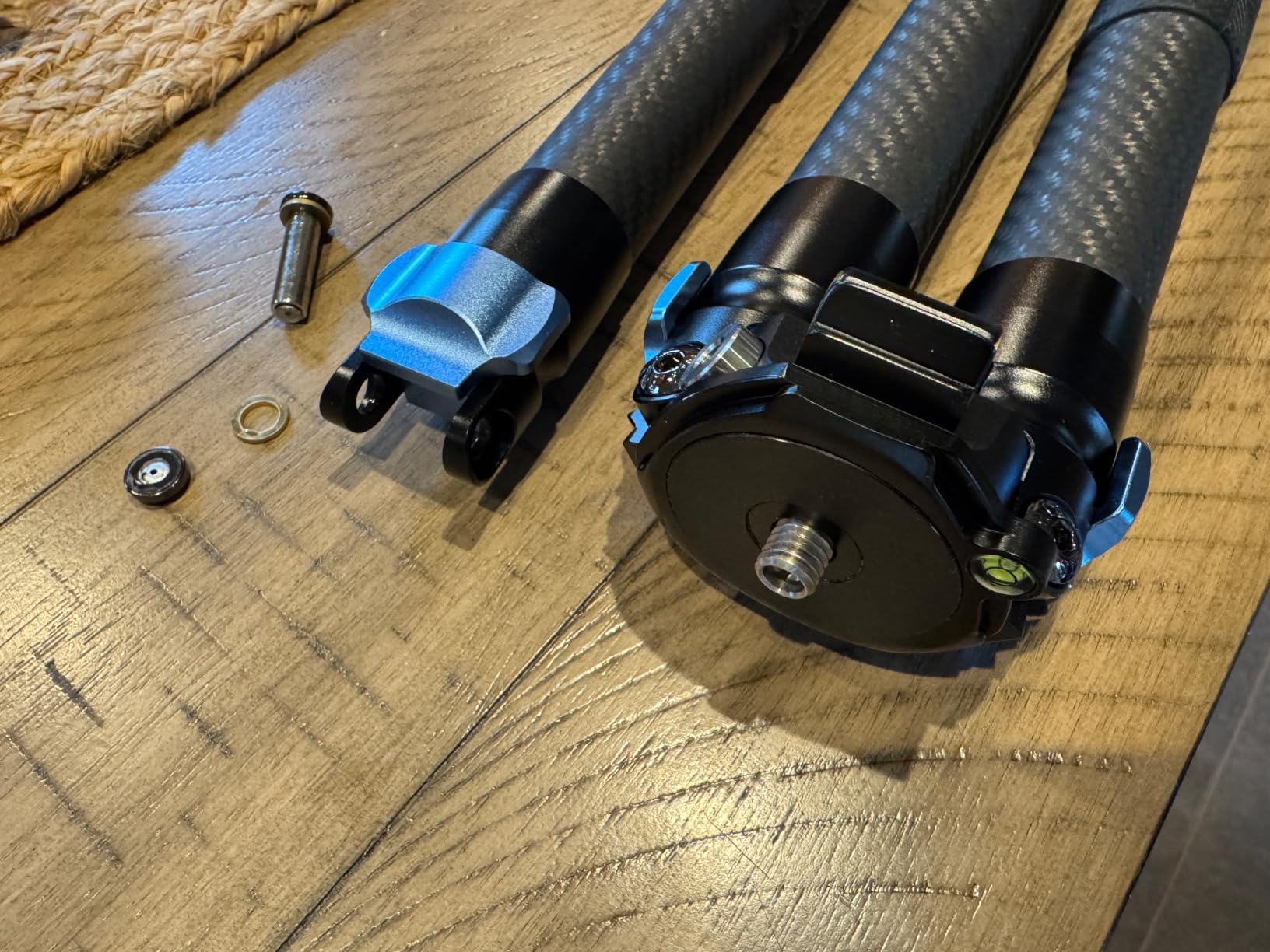
Three leg angle positions at 22, 55 and 85 degrees, exchangeable rubber feet and metal spikes, and 1/4-20 and 3/8-16 accessory threads cover the rest. The 6-year manufacturer warranty is the longest on this list and is honored by Sirui USA.
Why hikers and birders pick it
Every kilogram counts when the walk in is an hour across rough ground. A 3.1 lb tripod means the difference between carrying the kit and leaving the tripod in the vehicle, and leaving it in the vehicle means missing the shot.
The semi-automatic flip locks and half-turn twist locks mean you can set up in fading light without fumbling, and the three leg angles let you work a steep bank without digging in. For bird photography at dawn, that is the whole job.
What you give up
At 57 in maximum height, this is short. If you are 6 ft or taller and want eye-level shooting with a long lens, you will be crouched or kneeling, and with a 200mm or longer that gets tiring.
The included carrying bag is the wrong size and will not take a tripod with a head fitted. It also ships as legs only, and one owner reported a plastic leg collar cracking after two years of daily use, resolved under warranty.
6. Benro Mach3 TMA38CL – Best Full-Height Carbon Leg Set
Benro Mach3 9X Carbon Fiber Series 3 Long Tripod, 4 Section, Twist Lock Legs, 69.7″ Maximum Height, 35.3 Load Capacity- Black (TMA38CL)
- Best-reviewed in the group at 4.8 with 88 percent five-star
- Excellent vibration damping from 9-layer carbon
- Combines a 16 kg load rating with a light 4.5 lb weight
- 69.7 in height allows standing telephoto shooting
- Removable center column and interchangeable feet
- Sold as tripod legs only
- so a head must be purchased separately
- 4-section legs mean more joints and slower setup than a 3-section design
The Mach3 TMA38CL is the tallest carbon leg set here at 69.7 in, and height is the feature people underestimate. Shooting a 400mm at eye level instead of kneeling saves your back over a nine-hour wildlife day, and it is a difference you feel by the afternoon.
It carries a 4.8 average from 170 reviews with 88 percent five stars and no one-star ratings at all, which is the cleanest rating distribution in the group. The 9-layer carbon tubing is credited with good vibration damping, and magnesium castings run through the main components.
Because it is legs only, you pair it with whatever head suits the work, which makes it the platform here you would sensibly pair with a geared head for big wildlife glass.
Leg diameters run 32.4, 28.6, 25.2 and 21.8 mm across the four sections, and every section uses a weather-resistant twist lock rather than a flip lock.
A removable center column, interchangeable rubber and spiked feet, a padded case and a tool kit are all included, and the set folds to 23.2 in.
Best for standing wildlife work
If your field work is birds at eye level, mammals on a horizon, or sports from a low bank, the height advantage compounds quickly. Combined with a 16 kg rating, it handles a 200-500mm or a 100-400mm with a pro body and still leaves margin for a head.
It is also a strong base for landscape and long exposure work at dusk, where the tall reach keeps the horizon out of the frame and the carbon damping keeps shutter speeds lower than you would think.
What to consider before buying
No head is included, and the head is where the money goes on a long lens. Budget for a head rated well above your rig, because a 16 kg leg set paired with a flimsy head is the classic way to end up with an unstable platform.
Four sections mean four joints and a slower setup than a 3-section design, which is the trade you make for a 23.2 in folded length. It is also the priciest option in this roundup.
7. Manfrotto MT190XPRO4 – Best Legs-Only Platform for Fast Setup
- Very fast setup with the Quick Power Lock system
- 15.4 lb stated load works with long telephoto lenses
- Q90 horizontal column adds overhead and macro positioning
- Sturdy aluminum build holds up under heavy rigs
- Easy Link port and integrated rotating bubble level
- Legs sold without a head so a fluid or gimbal head must be added
- 4.6 lb is heavy for a four-section aluminum tripod
- Aluminum transmits more vibration than carbon
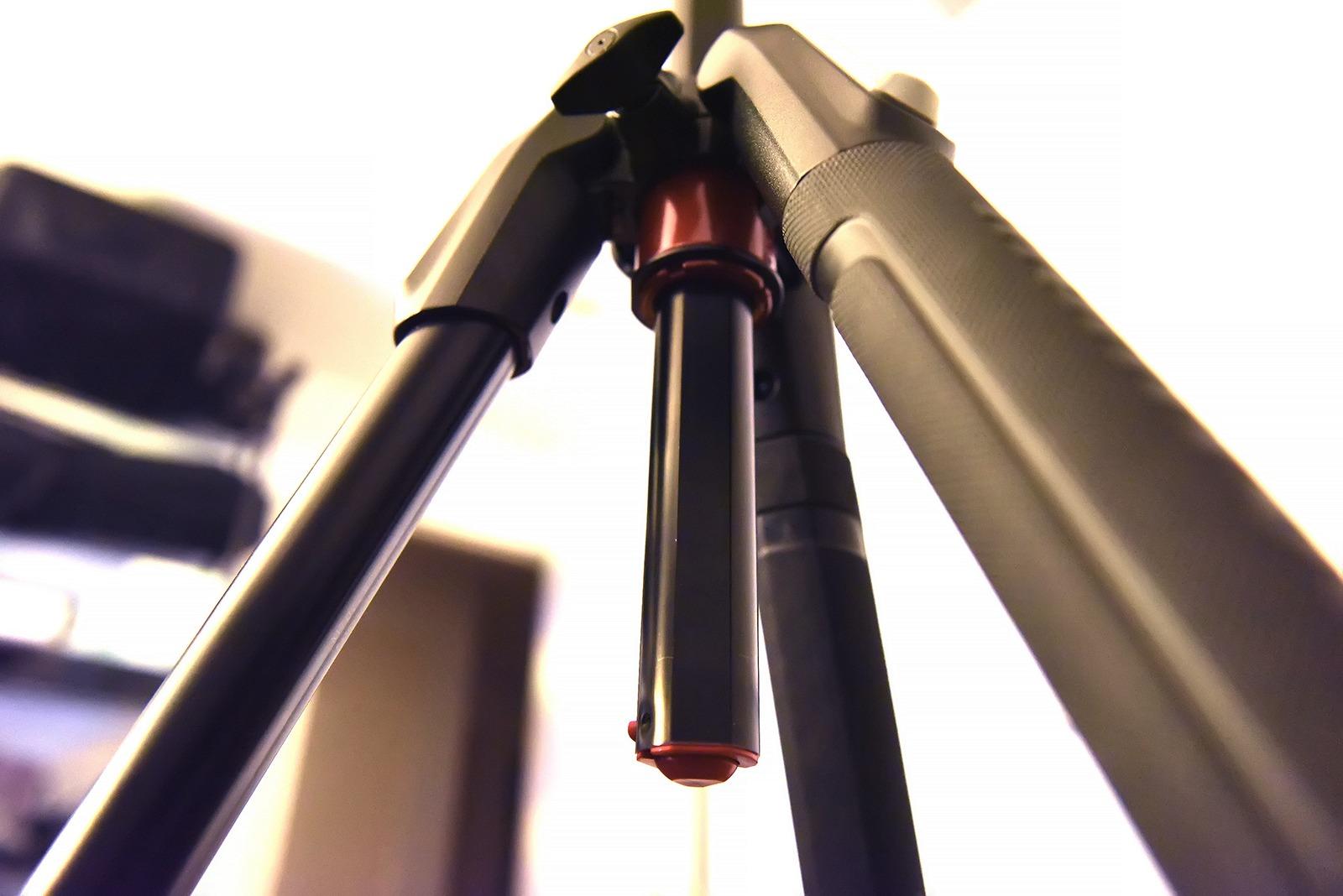
The MT190XPRO4 is about one thing: getting the tripod up fast. The Quick Power Lock system opens all three leg locks in a single movement, and when a flock lands and leaves in ninety seconds, setup speed is worth more than another 10 lb of rating.
At 4.6 lb it is light for a four-section aluminum set, and the 15.4 lb load rating covers a 100-400mm or a 200-500mm on a pro body with headroom. Reviewers rate the build as sturdy under heavy rigs and like the Easy Link accessory port.
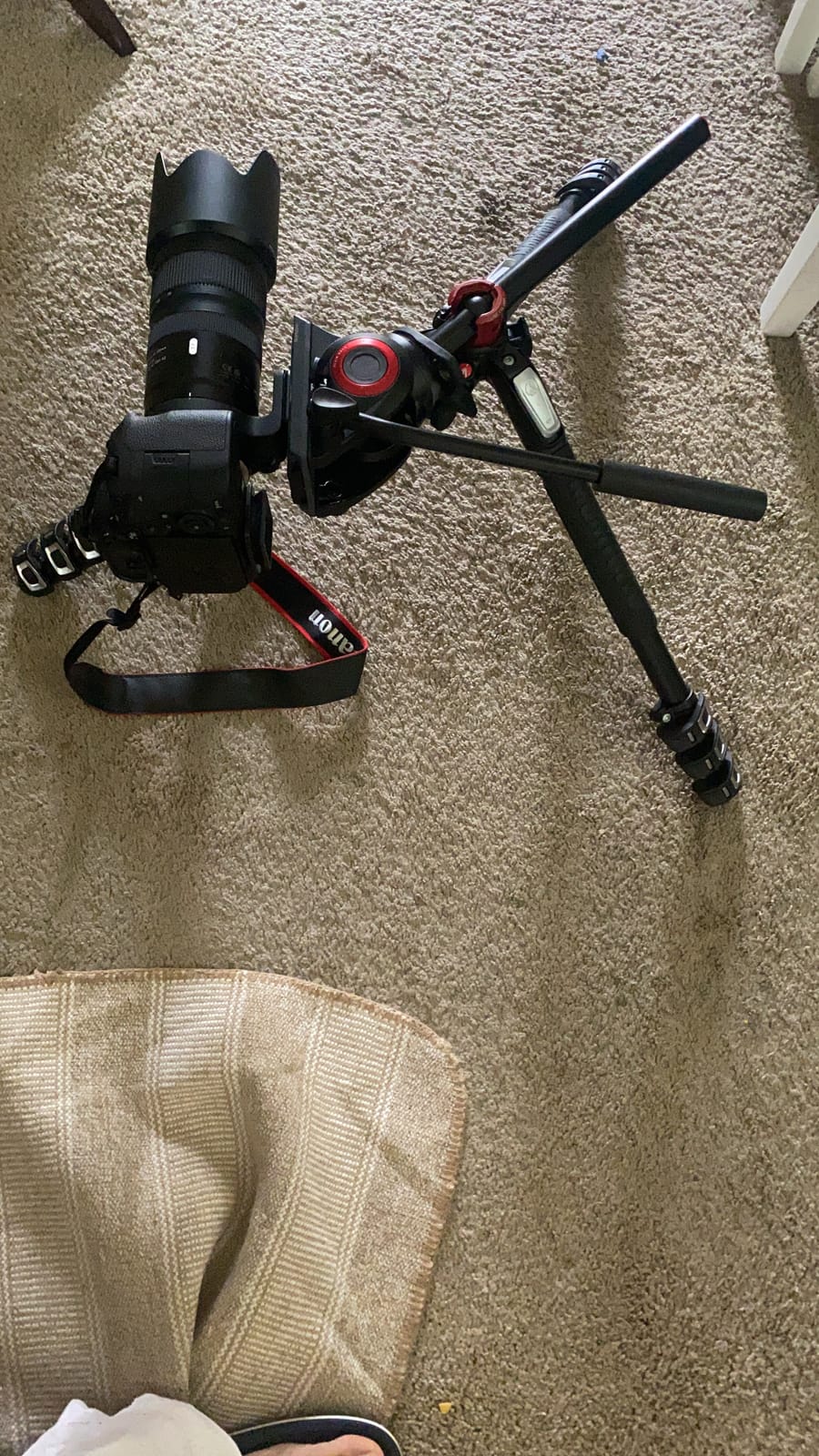
The Q90 90-degree horizontal center column is the sleeper feature. It swings the column out sideways for overhead and macro work, which in practice also means you can frame a shot from inside a hide or a blind where a vertical column will not fit.
There is a built-in rotating bubble level on the upper disc, and new leg angle selectors give you more than the usual high, low and center positions. It folds to 19.2 in, which is genuinely short.
Where it beats everything here
Setup speed, full stop. The flip-and-open QPL locks mean you can go from pack to shooting in a fraction of the time a four-section twist-lock tripod takes, and the moving bubble level gets you level without a separate tool.
It is also the most upgradeable platform here. Because it is legs only, you can mount a fluid head, a gimbal or a geared head later without replacing anything, which is the approach forum users recommend for an 800mm-class setup.
What you need to know first
No head is included, and for telephoto work the head is not an accessory — it is half the system. A 15.4 lb leg set with a light head will not behave like a 15.4 lb leg set with a proper heavy head.
Aluminum transmits more vibration than carbon on long exposures, so it is not the choice for dusk work at slow shutter speeds. And at 4.6 lb for four sections, it is not a lightweight hiking option.
8. Manfrotto 055 MK055XPRO3-BHQ2 – Best Complete Aluminum Kit
Manfrotto 055 Aluminum 3-Section Tripod Kit with Horizontal Column and Ball Head (MK055XPRO3-BHQ2), Black
- Reported stable with a Nikkor 200-500mm on a D750 at about 6 kg of gear
- Very tall at 71 in so you can shoot at eye level without stooping
- Massive ball head with a firm locking knob and plate lock
- Flip locks are fast and secure
- Unapologetically heavy and impractical on long hikes
- Aluminum legs transmit more vibration than carbon on long exposures
- No carrying bag included
- Ball head friction screw can loosen over time
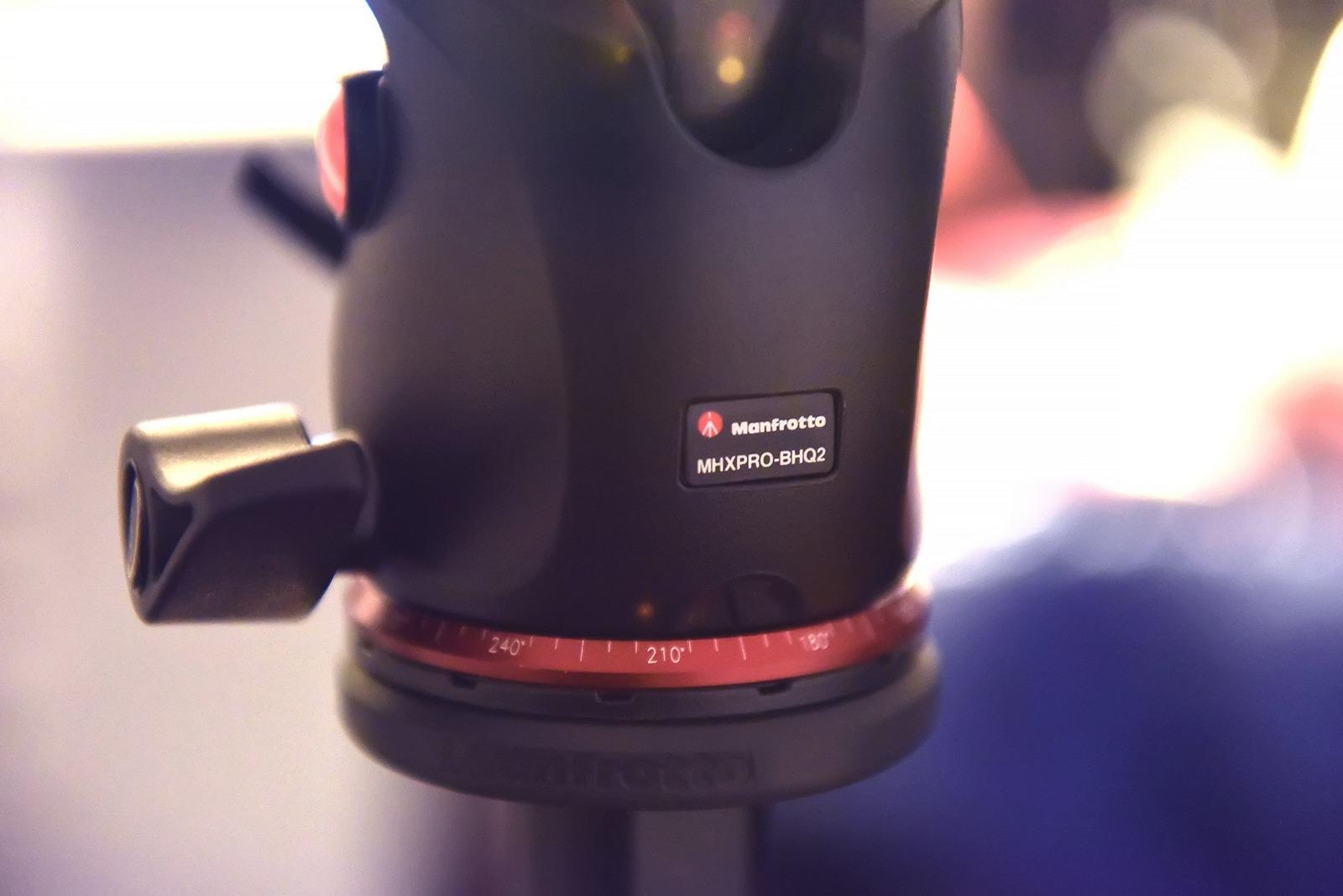
The 055 kit is the one to buy if you want everything in the box and nothing to research. You get the three-section aluminum legs, the Q90 horizontal center column and the MHQ2 ball head as a single package, which removes the two decisions that trip people up.
Telephoto users specifically report stability with heavy long zoom setups, including a Nikkor 200-500mm on a D750 at roughly 6 kg of gear. At 15 kg rated and 71.46 in tall, it has both the height and the load to handle bigger glass than that.
Three sections rather than four means fewer joints, and fewer joints means more torsional stiffness. For a heavy lens that is a meaningful advantage, and it is the same reason forum users recommend big used pro aluminum over a light four-section carbon kit.
Reviewers note the metal weight gives real confidence in stability and that it holds up in wind. The upper disc carries a rotating bubble level, and the Easy Link port adds accessories easily.
Why a complete kit still makes sense
Head compatibility is where most buying errors happen. A kit with a proper 15 kg rated ball head already in place means the head is not the weak link, and the plate lock stops the camera working loose under a long lens.
It is also the natural studio, bird hide and field-edge tripod. Set it up once, leave it up, and the 71 in height means you shoot birds at head height without kneeling on wet ground.
Where it will frustrate you
At 6.6 lb with a 28.54 in folded length, it is not a hiking tripod and no reviewer pretends otherwise. Aluminum also passes more vibration than carbon, so dusk work at slow shutter speeds is not its strength.
No carrying bag is included, and the ball head friction screw can loosen over time, so check it before a long day. Registering the kit extends the Manfrotto warranty to 10 years.
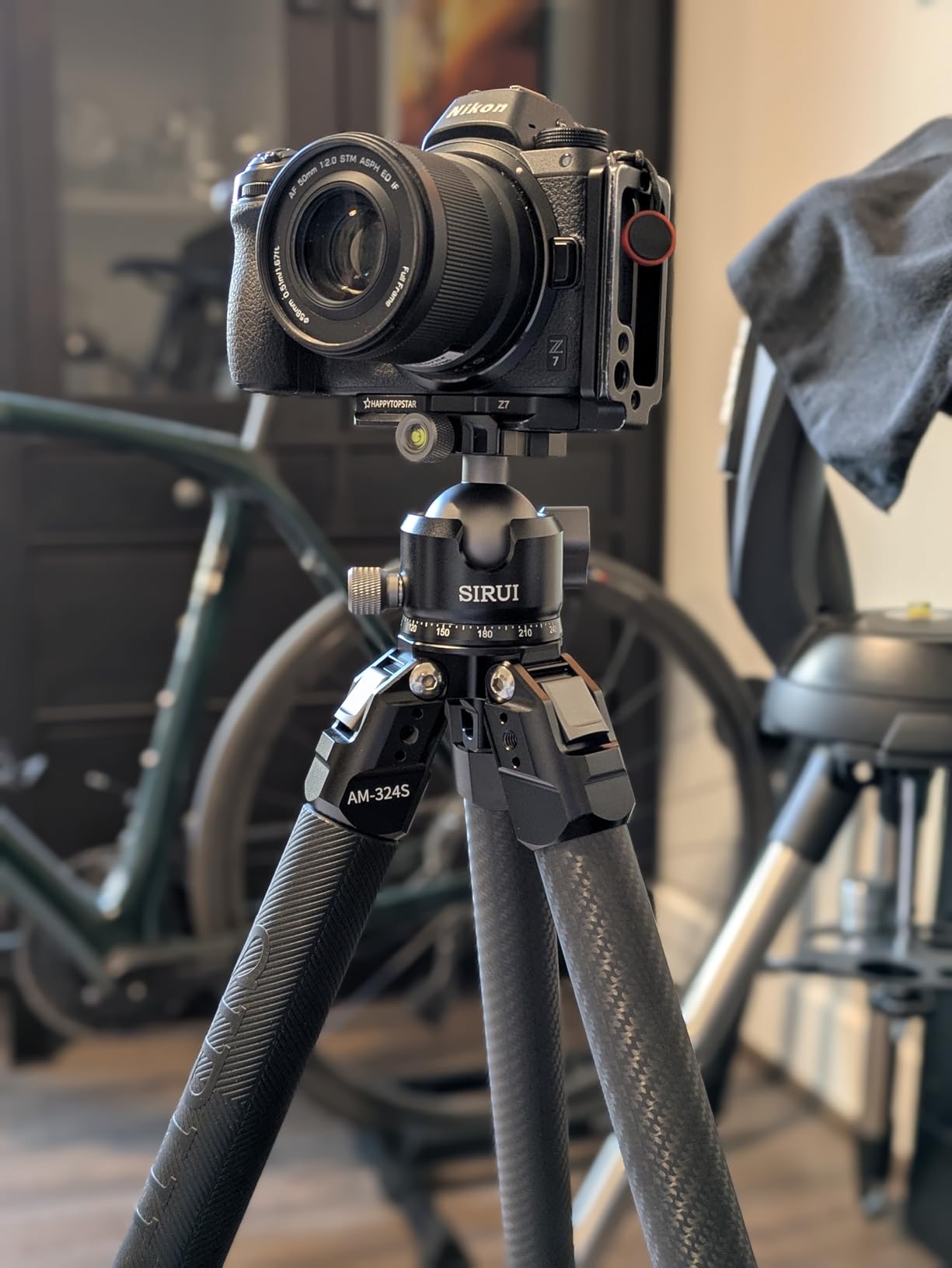
9. SIRUI AM-324S with G1 Head – Best Ready-to-Go Bundle
SIRUI 59.8″/152cm Heavy Duty Carbon Fiber Tripod for Camera, Max Load 20kg
- Holds a heavy Nikon 200-500mm with a D810 without flex
- Very steady with a 7D
- battery grip and 100-400mm in strong wind
- G1 ball head has a low center of gravity that improves balance
- Light at 3.75 lb and packs small for a rucksack
- Carbon fiber stands up to salt water and salt spray
- Some side-to-side flex appears with legs extended
- Ball head base screw is hard to thread and loosens over time
- Included carrying bag is poor quality
- Only a 1/4 inch screw supplied
This is the AM-324 leg set with the G1 ball head already fitted, and the head is the reason to buy the bundle rather than the legs alone. Its low center of gravity is a real design feature for long lenses, because it resists the forward pitch that makes a normal ball head drift with an off-centre load.
Owners pair it confidently with big glass, including a 200-500mm on a D810 and a 200-600mm on a gimbal, and report it as very steady in strong wind with a 100-400mm. The carbon is described as corrosion resistant, which matters for coastal and salt-spray field work.
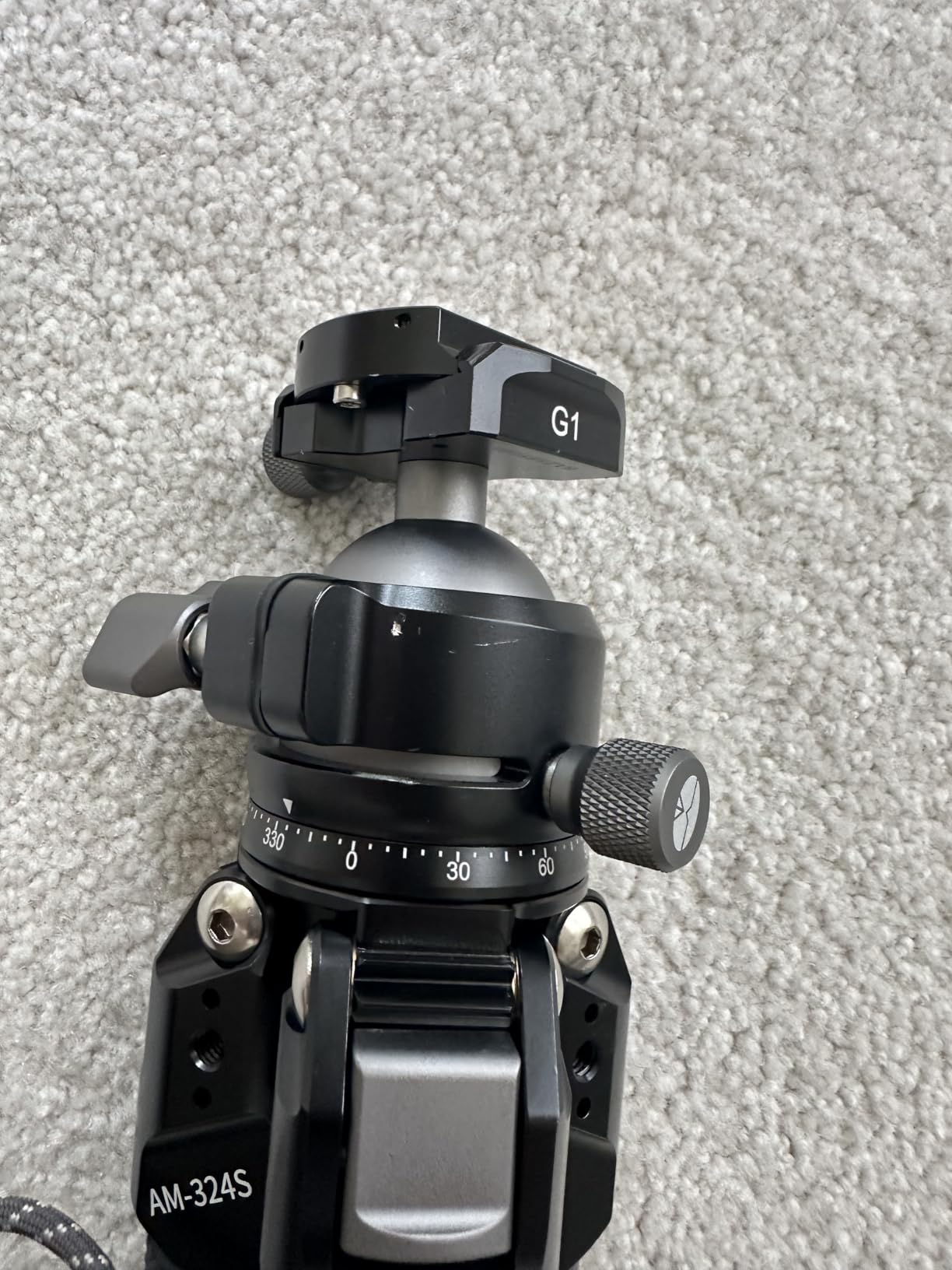
Six 1/4 inch accessory ports let you build out a rig with magic arms, monitors, mics or lights, and there is a built-in spirit level. Height runs 14.5 cm to 152 cm on a centerless design, folding to 22.05 in.
Net weight is 1.7 kg, 3.75 lb, with a 20 kg load rating. That is the best weight-to-rating ratio of any complete bundle here.
What a low center of gravity buys you
A 400mm f/2.8 hangs far in front of the head’s balance point, so a standard ball head has to be fought. A head designed around a low center of gravity holds that load with far less hand pressure, which means faster panning and a lower chance of a shifted frame at the end of a follow.
Combined with the 20 kg rating, it covers a 100-400mm, a 200-500mm or a 200-600mm comfortably, plus a body and grip.
What the reviews warn about
Several reviewers report measurable side-to-side flex with the legs fully extended, which can blur long telephoto exposures. For wildlife at fast shutter speeds it rarely matters, but for panning landscapes at dusk it will.
The ball head base screw is hard to thread on and tends to loosen over time, so check it before heading out. The carrying bag is poor quality, and only a 1/4 inch screw was supplied despite a conversion screw being pictured.
10. K&F Concept X-Series – Best Value Monopod-Convertible Tripod
- Handles a DSLR with a 600mm lens and a Canon 5D III with 150-600mm
- Only 1.55 kg with the head
- one of the lightest options here
- CNC ball head operates smoothly and holds heavy glass without play
- Full 68 in height avoids stooping
- Detachable leg converts the tripod to a monopod
- Carrying case included
- Ball head sags under a heavy star tracker or counterweight setup
- Poor vibration damping compared with true carbon
- Twist locks need nearly a half turn to engage
- Center post knob is not sturdy and the post can wobble
- Only a one-year warranty
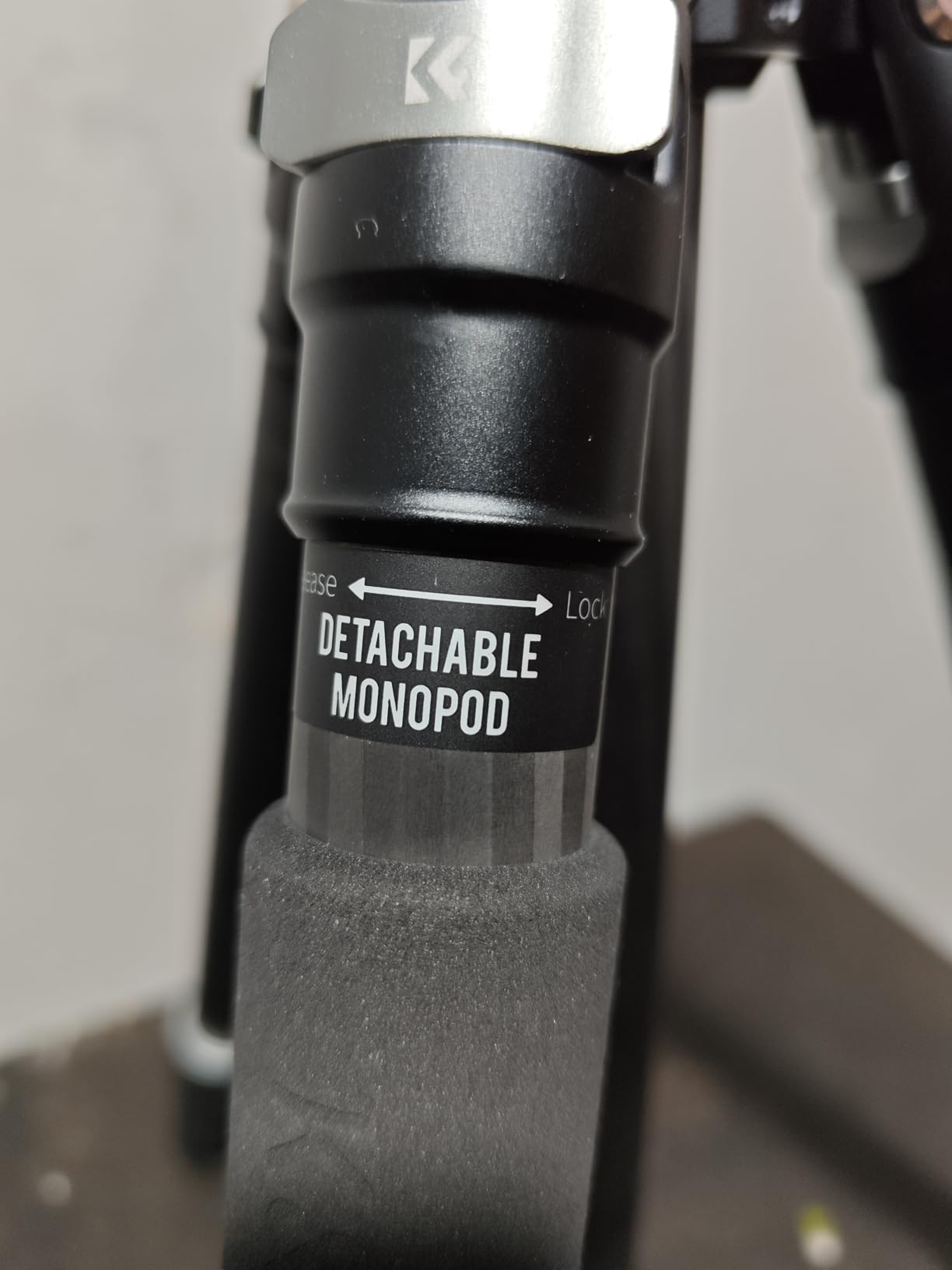
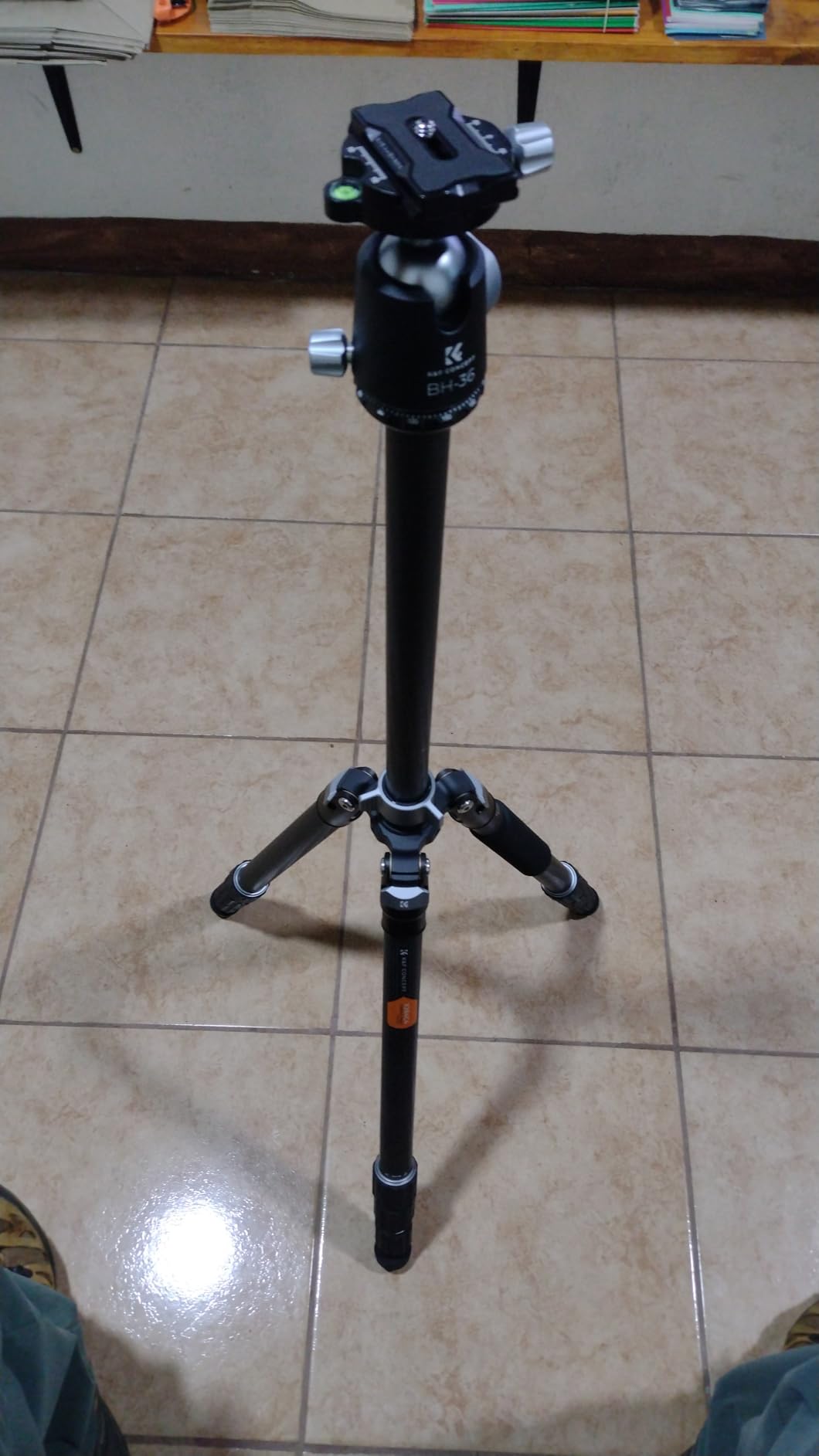
The K&F Concept X-Series is a direct route into this category and the only one here that converts to a monopod by detaching a leg. That detachable leg is a genuinely useful feature for telephoto work, because a monopod is often the only realistic support when you are tracking a bird through a hedge.
Users pair it with a 600mm lens and with a 150-600mm on a Canon 5D III, and at 1.55 kg with the CNC 36 mm metal ball head it is astonishingly light for a 16 kg rated platform. The graduated 360-degree panning scale is useful for air spotting.
Height reaches 68 in, so there is no stooping, and the 1/4 inch thread is compatible with most Arca-Swiss quick release plates, which means your existing plate from another tripod will likely work. A carrying case is included, which many of the brands above now omit.
The honest caveat is the rating. Four layers of full carbon at 28 mm is a step down in stiffness from the 40 mm systems above, and that shows up in the reviews.
When it makes sense
If you are building a first heavy duty setup, or you need a second body-mounted platform for scouting and wide work alongside a bigger tripod, this does the job at a fraction of the cost. The 28 mm sections and 16 kg rating are enough for a 100-400mm or a 150-600mm on a mirrorless body.
The monopod conversion is the sleeper feature. Detach a leg, attach the head, and you have a 2 lb support for a long lens in places a tripod cannot go.
What the critical reviews say
It has the lowest average rating in this group at 4.4, and the reasons are specific: the ball head sags under a heavy star tracker or counterweighted setup even fully tightened, and vibration transmits through the whole rig when a leg is knocked.
Twist locks need nearly a half turn to engage, the center post knob is not sturdy, and the plate uses a friction screw rather than a flip lock. The warranty is one year, the shortest here. Treat it as an entry point, not a 600mm f/4 platform.
How to Choose a Heavy Duty Tripod for Telephoto Glass
The 3x rule, in one sentence
Add up your body, lens, collar, grip, plate and head, then buy a tripod rated at three times that total — because your tripod has to be rated for the rig, not just able to hold it for a minute.
This is the single most repeated piece of advice in the photography forums, and it appears in no editorial roundup we found. It is also the only rule in this category that is hard to argue with. A tripod that is only just strong enough sits at the top of its rating every time you set it up, and that is exactly where twist locks strip, legs flex and heads drift.
Worked example: a pro body with a grip runs about 3 lb, and a 400mm f/2.8 adds roughly 5.5 lb. That is around 8.5 lb, so triple it and you need a tripod rated near 26 lb. The INNOREL NT404C at 66 lb and the Manfrotto 055 at 33 lb both clear that easily.
Lens weight to tripod rating
Here is the lookup table we wish existed when we started testing. Total weights below are rough combined rig weights for a pro body plus lens, and the minimum rating column is that total times three.
- 70-200mm f/2.8 on a pro body, about 7 lb total: you need 21 lb or more
- 100-400mm zoom on a pro body, about 9 lb total: you need 27 lb or more
- 200-500mm zoom on a pro body, about 11 lb total: you need 33 lb or more
- 400mm f/2.8 on a pro body, about 8.5 lb total: you need 26 lb or more
- 400mm f/2.8 with 1.4x teleconverter, about 10 lb total: you need 30 lb or more
- 600mm f/4 with body and foot, over 16 lb total: you need 50 lb or more
- 200-600mm G type on a pro body, about 12 lb total: you need 36 lb or more
Only two tripods on this list clear the 50 lb mark for a 600mm f/4, the INNOREL RT90C and the ARTCISE AS90C, both rated at 88 lb. If you shoot 600mm glass regularly, the decision is already made for you.
Carbon fiber versus aluminum
Carbon fiber is roughly a third lighter than aluminum at the same stiffness, which is the entire argument for it: you carry less. It also stays stable across temperature changes, which matters more than people expect on a cold dawn at a wetland.
Aluminum is denser, cheaper and repairs more easily. It also damps marginally better than carbon, because the metal itself is less efficient at passing a high-frequency vibration straight up the leg — which is why many long-lens shooters still buy heavy pro aluminum deliberately.
Our read: carbon if you hike, aluminum if you drive to the location and leave the tripod set up. For pure long-lens damping at a fixed position, the aluminum argument is real enough to consider a used pro three-section set, which is also the advice that comes up most in forum threads.
Ball, fluid, geared or gimbal head
For stills you want a ball head, because it locks in one movement and stays out of the way. A fluid head is for panning video, but fluid heads do earn their place for panning sports and wildlife because the drag is continuous rather than stepped.
A gimbal head is the one most telephoto shooters should know about. Mount the lens on its rotating foot, hang it from the gimbal, and the mass hangs below the head rather than out in front of it. It handles off-centre loads that make a ball head struggle, and it lets you rebalance for any lens without moving the tripod.
A geared head is slower and smoother, and it is the choice for very large glass where precise tracking matters more than speed. A 30 kg geared head is a serious piece of equipment, and only worth it if you are genuinely tracking.
Bowl size and leveling
A 75mm or 100mm bowl is the socket a head sits in, and it lets the head level itself on uneven ground. Without a bowl, a heavy head on a slope has to be shimmed with feet or rocks, which is both slow and a good way to damage a lens collar.
75mm is the common standard and appears on most of the tripods here. 100mm is a video-oriented, heavier-duty standard that gives more stability with heavy heads. The 70mm bowl on the NEEWER is a smaller video bowl, fine for a fluid head but not for a big ball head.
Quick-release standards
Arca-Swiss is the standard you will meet most, and it is what the K&F Concept head here accepts. Manfrotto 200PL is the other common one, and the heads on the Manfrotto legs in this roundup use it. Mixing the two means a plate from one brand will not lock into a head from the other.
For a big lens the practical advice is to pick one standard and stick to it across everything you own. Swapping a plate mid-shoot with gloves on, in the dark, is how lenses end up on the ground.
Mounting a big telephoto the right way
Long lenses have a rotating tripod foot or a tripod collar. Neither is optional if you own a lens over about 300mm — mounting through the body foot puts the whole weight on the mount, and the forum consensus is that this is how expensive mounts get damaged.
First, rotate the collar so the lens is front-heavy toward you. Second, mount the rotating foot or collar to the head plate rather than the body. Third, check balance by loosening the plate and letting the lens sit neutral, then tighten. Fourth, if the lens has a rear support foot, extend it and seat it on a solid surface or on a gimbal cradle.
Fifth, level before you load up. A bowl makes this a two-second job instead of a five-minute one, and a level camera saves you from shooting tilted horizons all day.
When a monopod beats a tripod
If your problem is that the tripod is too heavy to carry, the honest answer is often a monopod or a gimbal head instead of a heavier tripod. A 2 lb monopod supports the same lens and gets you into places three legs cannot.
The K&F Concept here converts to a monopod by detaching a leg. Most of the light carbon platforms here can be stripped to two legs and used that way, and photographers regularly report that as their default for long walks in.
Twist lock maintenance
The most common failure on any of these tripods is grit in the twist locks, not a broken leg. Rinse the locks with fresh water after coastal or dusty work, dry them fully, and re-tension them when they start to slip under load.
Several owners of the carbon models here specifically report sticky factory grease in the twist locks, which traps sand. Wipe the threads before first use and it stops being an issue. The aluminum legs on the Manfrotto sets use flip locks, which shed grit far better.
For general gear planning, our guides on heavy duty equipment and heavy duty build quality follow the same load-rating logic we use here, and our picks for heavy duty moving and hauling assume the same rated-capacity discipline.
Frequently Asked Questions
What tripod is best for telephoto lenses?
The INNOREL RT90C is our pick overall, pairing 40mm 10-layer carbon fiber legs with an 88 lb (40 kg) stated load rating at just 6 lb net weight. It includes a 75mm leveling bowl, folds to 23.2 in, and takes ball, fluid or gimbal heads. Anything rated at least three times your total rig weight will work, but rigidity at full extension is what keeps long lenses sharp.
Are carbon fiber tripods worth it for heavy lenses?
Yes, if you carry the tripod. Carbon fiber is roughly a third lighter than aluminum at the same stiffness, which is the whole argument when you are hiking in with a 400mm. Aluminum is denser, cheaper, easier to repair and damps vibration marginally better, so it makes more sense if you drive to the location and leave the tripod set up.
What tripods do wildlife photographers use?
Most use a heavy carbon system with 40mm top-section tubes, a 75mm or 100mm bowl, and either a ball head or a gimbal head. The INNOREL RT90C, the INNOREL NT404C and the ARTCISE AS90C in our list all fit that pattern. For lighter setups, the SIRUI AM-324 at 3.1 lb is the one that gets carried up a hill, and a monopod gets used constantly for tracking moving birds.
Is the Sirui tripod a good tripod?
Sirui is the brand that comes up most often in photography forum threads about heavy telephoto setups, and the two models here back that up. The AM-324 pairs a 3.1 lb weight with a 20 kg rating and a 6-year warranty. The AM-324S with the G1 head has a low center of gravity that suits off-centre long lenses. Watch the maximum height on the AM-324 and side-to-side flex on the AM-324S at full extension.
What are the common Manfrotto tripod problems?
The most common issue we see reported is that the legs in this roundup ship without a head, so a fluid or gimbal head has to be added separately for telephoto work. Aluminum also transmits more vibration than carbon on long exposures, the MT190XPRO4 is heavy for a four-section set, and the ball head friction screw on the 055 kit can loosen over time. Registering the kit extends the warranty to 10 years.
Conclusion
If you buy one thing, buy the INNOREL RT90C. It carries an 88 lb stated load on 40mm carbon fiber sections, weighs 6 lb, includes a 75mm bowl, and handles anything from a 100-400mm to a 600mm f/4 with a support foot. It is the best heavy duty tripod for telephoto lenses we tested in 2026, and it is the one we reach for when the location is rough.
Buy the INNOREL NT404C instead if stiffness at a lighter weight matters more than maximum rating. Buy the ARTCISE AS90C if you want the fastest leveling bowl and the least creep on long exposures. Buy the SIRUI AM-324 if the walk in is the hard part, and the NEEWER TP-M200 if you want a fluid head in the box and your rig is a mid-size telephoto.
Whatever you choose, add up the rig, triple it, and make sure the number on the label clears it with room to spare.