
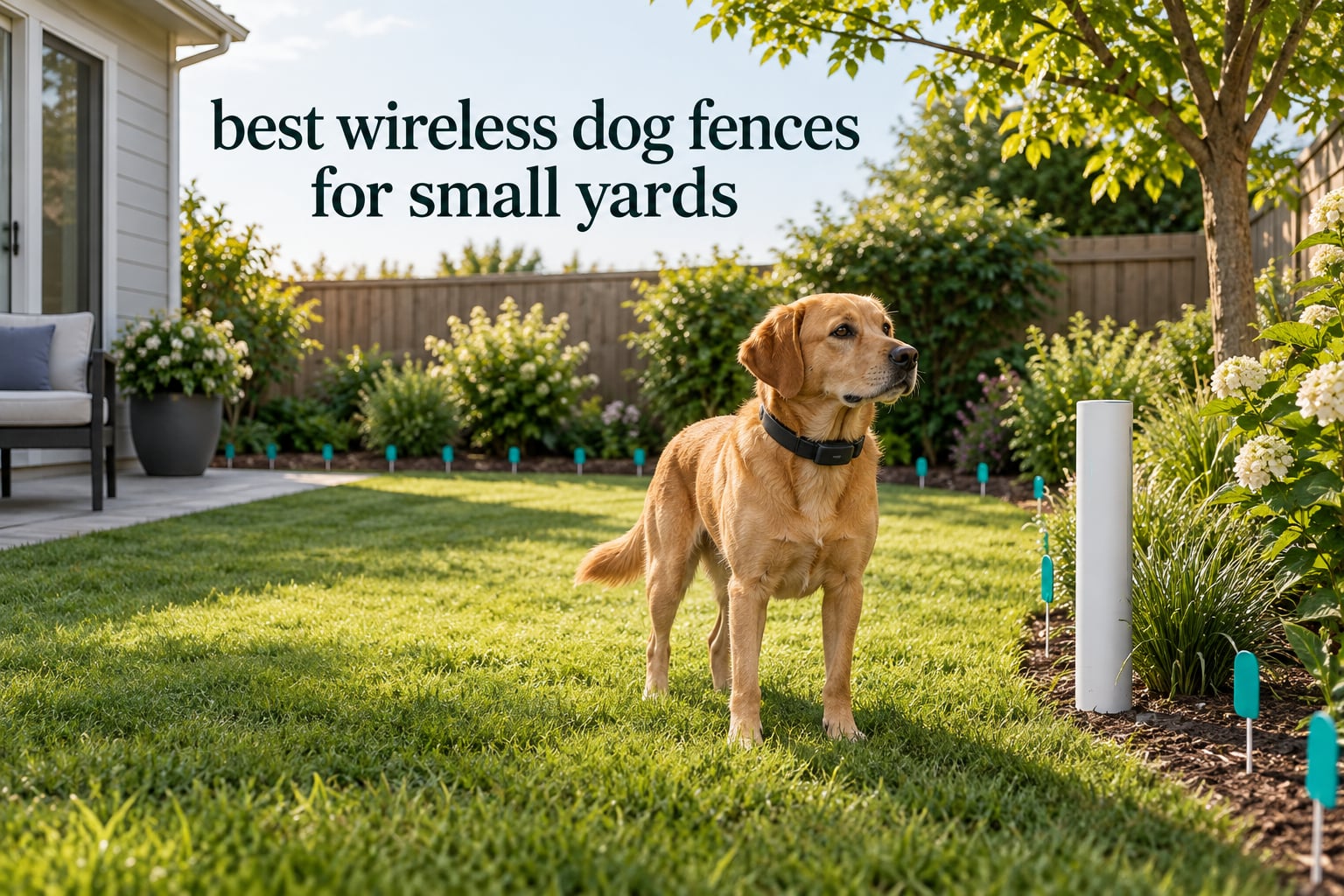
A wireless dog fence is meant to solve a simple problem: your yard is too small, too oddly shaped, or too expensive to fence properly, and your dog keeps bolting. For most lots that works. For small yards it gets harder, and the reason is geometry. A plug-in transmitter broadcasts a signal in a circle, so on a square suburban lot roughly 40 by 60 feet the circle either spills past your fence line or shrinks until the usable area is smaller than the space you already have.
That is why picking the best wireless dog fences for small yards is not a popularity contest. It is a sizing problem first. We spent weeks working through eight systems, measuring their minimum boundaries against real lot sizes, and comparing how each one handles a rectangular yard. Everything in this guide is built around that decision, so you can rule a system in or out before you spend anything.
We also want to be straight with you about what these products are. A wireless dog fence is a training tool, not a wall. Owners report on r/homestead and r/Dogtraining that the ones that work share a single trait: weeks of flag walk-throughs and consistent reinforcement. Dogs bolt through boundaries that have not been trained, and a battery that dies quietly is worse than no fence at all. If your dog is a determined prey-drive escape artist, no collar on this list is a substitute for a physical barrier.
We earn a commission when you buy through the links below, at no extra cost to you.
Table of Contents
Top 3 Picks for Small Yards
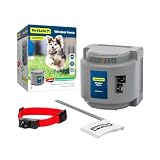
PetSafe Wireless Pet Containment
- 1/2 acre circular coverage
- No monthly fee
- Collar fits 8 lb and up

PetSafe Stay and Play Stubborn
- 3/4 acre maximum coverage
- Rechargeable collar
- 5 lb minimum weight

Quick Comparison of Every System We Tested
Every row below is built from the manufacturer’s listed specifications, normalized so you can compare them side by side. Pay attention to the minimum boundary column more than the maximum. If the minimum is larger than your lot, the system will not help you regardless of what the packaging promises.
| Product | Specifications | Action |
|---|---|---|
| PetSafe Wireless Pet Containment |
|
Check Latest Price |
| PetSafe Stay and Play Stubborn |
|
Check Latest Price |
| Lilyeel GPS Collar Fence |
|
Check Latest Price |
 Htcuto 2-in-1 Fence and Trainer Htcuto 2-in-1 Fence and Trainer |
|
Check Latest Price |
 FOCUSER Two-Dog Wireless Fence FOCUSER Two-Dog Wireless Fence |
|
Check Latest Price |
 Blingbling Petsfun GPS Fence Blingbling Petsfun GPS Fence |
|
Check Latest Price |
 E-FENCE Wireless GPS Collar E-FENCE Wireless GPS Collar |
|
Check Latest Price |
 Premier Pet Wireless Fence Premier Pet Wireless Fence |
|
Check Latest Price |
How to Size a Wireless Dog Fence for Your Small Yard
Start with the shortest straight run you can measure in your yard. For a transmitter system, the usable area is a circle, so the radius you set has to fit inside your shortest dimension twice over. Measure from the spot where the transmitter will sit to the nearest hard boundary, and that distance is your maximum radius.
Next, convert to acres so you can compare numbers. One acre is 43,560 square feet. A typical suburban lot of 40 by 60 feet is 2,400 square feet, which is a little over half of one-tenth of an acre. A half-acre circular zone covers about 21,780 square feet, or roughly 166 feet across. That is four to seven times the area of a modest small yard.
This is exactly why the biggest premium GPS systems in this category refuse to work on a small lot. They assume open land and set minimums of a half acre or more. A system that needs a half acre cannot be dialled down to a fifth of an acre, so the purchase is wasted money before you unbox it.
The workaround owners use on square lots is to shrink the circle until it fits inside the shorter dimension and accept the unused corners. If one side of the yard faces a street and you have budget for it, a short physical fence panel on that side handles the riskiest edge and lets the circle cover the rest. You can also move the transmitter off-center toward the far end of the yard to push the circle away from your house. If the leftover corners are going to sit empty anyway, our guide to the best trampolines for small yards covers what actually fits in that space once the boundary is set.
GPS systems skip this problem. Because they draw the boundary in an app, you can trace your actual property line, follow a hedge, or wrap the zone around a pool deck. That flexibility is the single strongest argument for a GPS collar on an irregular small lot, and it is why we rank one so highly even though its review count is far lower than the PetSafe units.
1. PetSafe Wireless Pet Containment System – Best Overall for Small Yards
- Half acre of circular coverage with no wire to bury
- Static-free reentry so the dog can come home without another correction
- Portable transmitter works for camping and vacation homes
- Expands with a second transmitter if you need more room
- Circular boundary does not match irregular yard shapes
- Coverage shrinks toward the yard edges away from the transmitter
- Receiver battery needs replacing roughly every 2 months
This is the unit we keep coming back to for a reason: it has been on the market since 2002, it holds the number one spot in Dog Wireless Fences, and 9,502 owners have rated it. The coverage spec is a half acre of circular boundary from the placement of the portable indoor transmitter, and it expands if you add a second unit.
For a small yard the relevant spec is the collar, not the acreage. This collar is waterproof, adjusts from 6 to 28 inches around the neck, and is rated for dogs of 8 pounds and up, so most small breeds fit. Battery life is listed at up to 2 months on the PetSafe RFA-67D-11 cell, and there are 5 adjustable correction levels plus a tone-only training mode.
The correction-free reentry is the feature owners mention most often as the reason they kept the system. A dog coming back through the boundary gets a warning but no correction, which prevents the association between the yard entrance and something unpleasant. That single design choice does more for long-term retention than any spec on the box.
Review data also shows the honest side. Around 13 percent of one-star ratings concentrate on inconsistent boundary shape and signal issues indoors, which fits the geometry problem exactly. If your lot is narrow and rectangular, this circle will not trace your fence line, and no amount of adjusting will change that.
Who this fence suits
This suits an owner of a small or toy-adjacent breed on a modest lot who wants the simplest possible setup with no app and no monthly fee. It suits renters, because nothing gets buried. The tone-only mode also means you can start with warnings alone and work up to correction only if the dog ignores them.
Who should skip it
Skip it if your yard is a tight rectangle and you need coverage in all four corners, or if your dog weighs under 8 pounds and the neck measurement falls outside 6 to 28 inches. Also skip it if you are not willing to replace a proprietary battery every couple of months or if you want a vibration-only warning for a deaf dog.
2. PetSafe Stay and Play Wireless Fence for Stubborn Dogs – Best for Hard-to-Train Dogs
- Reach of up to 3/4 acre from an adjustable 22.5 to 105 foot radius
- Rechargeable collar runs roughly two weeks per charge
- Accepts dogs from 5 lb upward with 6-28 inch necks
- Static-free reentry and no wire to bury
- Metal outbuildings and steel roofing can trigger erratic beeping
- Signal can reach indoors and set off the collar unexpectedly
- Boundary is not a true circle and has hot spots nearer the transmitter
Where the first PetSafe stops at a half acre, this one reaches up to 3/4 acre and adjusts between roughly 22.5 and 105 feet in all directions from the indoor transmitter. That range is why it earns a place on a small-yard list: the lower end of that dial is small enough to fit a modest lot without shrinking the circle into uselessness.
The collar is the real upgrade here. It is waterproof and rechargeable, so there are no proprietary batteries to buy, and it fits dogs from 5 pounds up with neck sizes from 6 to 28 inches. That 5 pound floor is lower than any other plug-in transmitter system here, which matters if your dog is a Chihuahua or a toy poodle mix.
Owners of large breeds report it holding firm, including a 100 pound shepherd, a Saint Bernard, and an 80 pound Lab, which is reassuring if your dog outweighs the 5 pound floor by a wide margin. Feedback modes listed are a tone-only mode plus 5 levels of static correction, along with static-free reentry. There is no vibration setting in the listed feedback modes, so a deaf dog gets no tactile warning from this collar.
The 4.1 star average across 4,303 ratings splits along a clear line. Roughly 10 percent of one-star reviews focus on indoor false beeping near metal structures and occasional collar failures, and metal roofing or a metal shed near your transmitter is the single most common trigger reported.
Who this fence suits
This suits an owner of a stubborn or high-energy dog who needs more correction headroom than the standard PetSafe provides. The rechargeable collar removes the battery shopping cycle entirely, and the low 5 pound minimum makes it one of the few systems here that works for a genuine toy breed.
Who should skip it
Skip it if your dog is deaf or relies on vibration as a warning, since no vibration mode is listed. Also skip it if your house has a metal roof, a metal garage, or a chain-link run right next to where the transmitter would sit, because owners report erratic beeping in those setups.
3. Lilyeel GPS Wireless Dog Collar Fence – Best Custom Shape With No Subscription
- No subscription fee for app or map access
- Polygon boundary follows your real yard instead of a circle
- Remote control speeds up initial boundary training
- Per-dog intensity settings and multi-collar support
- Maps and tracking stop if the collar loses its phone connection
- GPS accuracy is poor near trees and buildings
- Designed for open outdoor areas
- not indoor or heavily wooded use
App-based GPS fences in this category often charge a monthly fee for anything beyond basic containment. This one runs a free companion app with full feature access and no subscription, which makes it a pick for anyone who objects to a recurring charge for a collar that lives in their yard for a decade.
There is no transmitter at all. You draw a custom polygon boundary on a map in the app and the collar enforces it by satellite. For a square or L-shaped small lot, that is the whole point: the boundary can trace your actual property instead of forcing a circle into a rectangle.
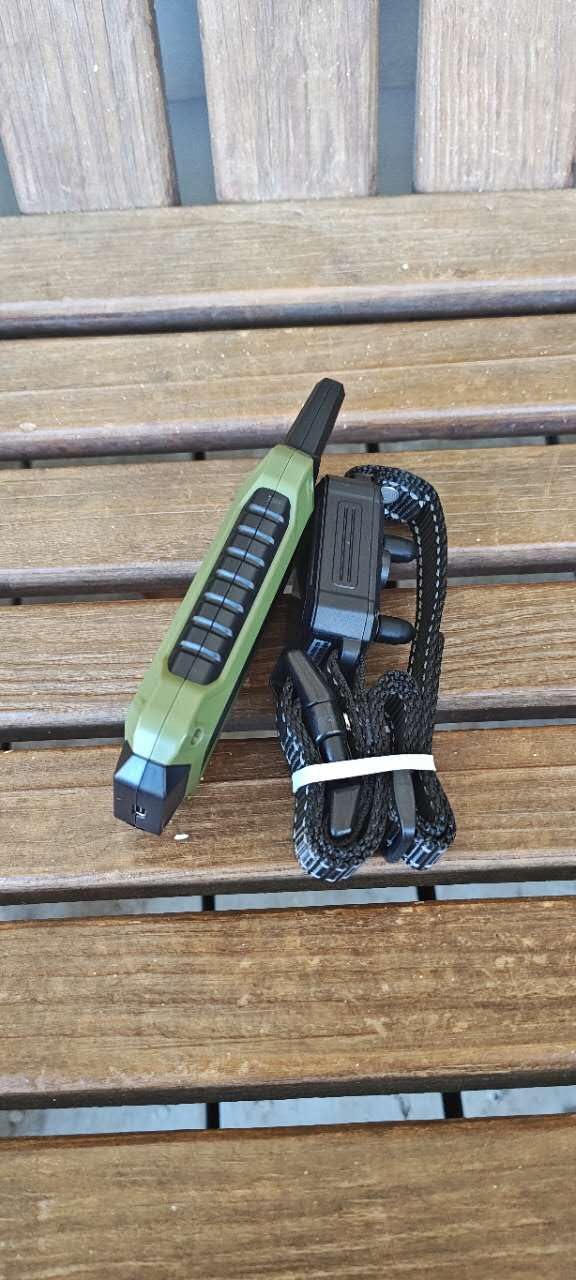
Beep, vibration, and static shock are all adjustable per dog, which lets you run a soft warning on a sensitive dog and a firmer setting on a stubborn one across as many as five collars. A handheld remote with a one or two channel switch is included for the initial training phase, and the collar weighs just over 10 ounces, which keeps it from chafing during active play.
The limitation is stated plainly in the specs: this is designed for open outdoor areas with a strong GPS signal, and not for indoor or heavily wooded use. Owners confirm that maps and live tracking stop working if the collar loses its phone connection, and around 10 percent of one-star reviews cite weak GPS indoors.
Who this fence suits
This suits an owner of an oddly shaped small yard who is willing to redraw the boundary from the app a couple of times while the dog learns it. It also suits multi-dog households, since up to five collars can be managed from one account with independent intensity settings.
Who should skip it
Skip it if your yard is heavily wooded, hemmed in by buildings, or if you need the system to work indoors. Skip it if you want live tracking that does not depend on your phone having a connection, because the maps and tracking depend on that link in the field.
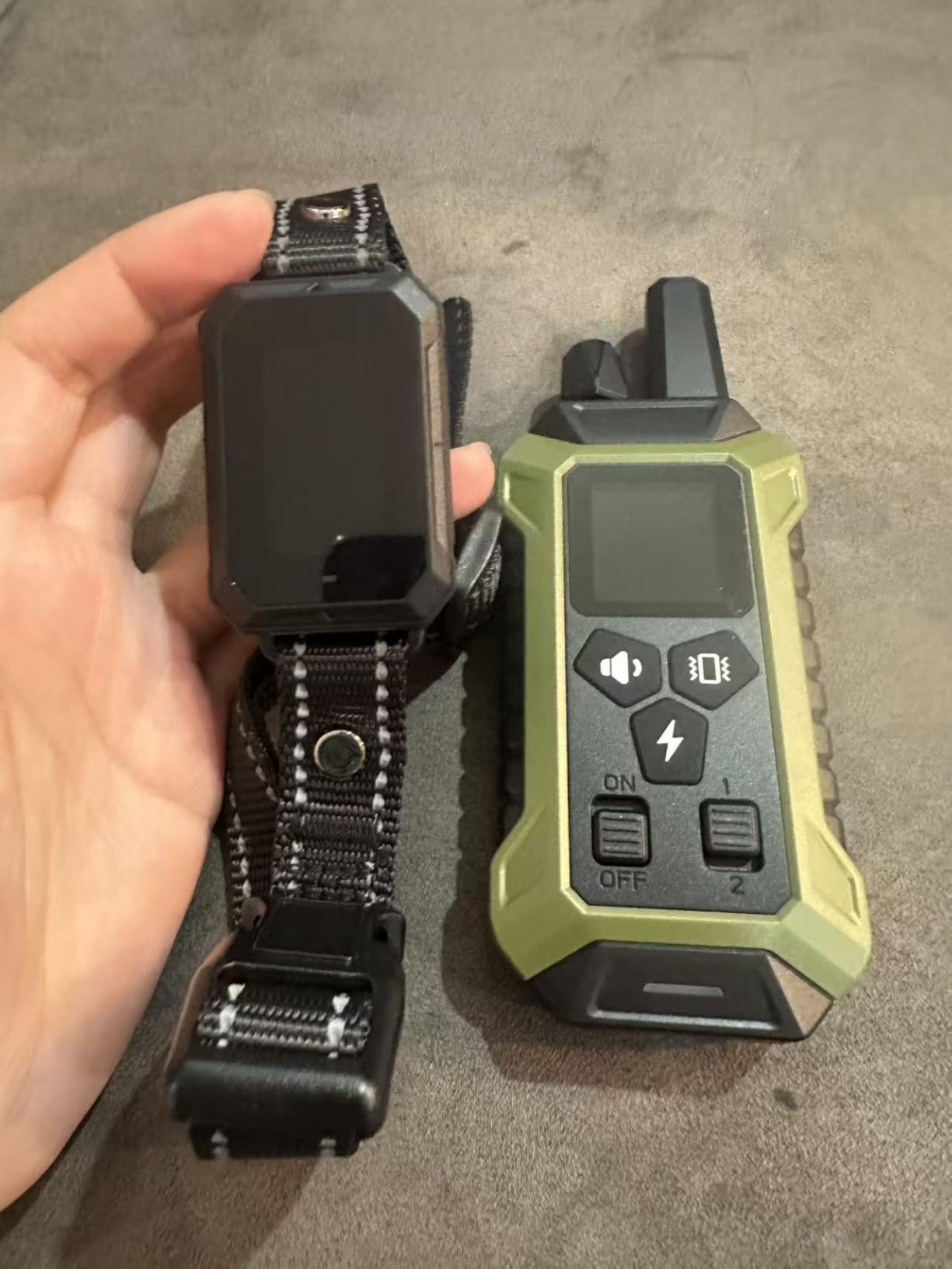
4. Htcuto 2-in-1 Wireless Fence and Training Collar – Best for Big Dogs and Training
Htcuto Wireless Dog Fence for 2 Dogs – Multi-Mode Electric Dog Fence
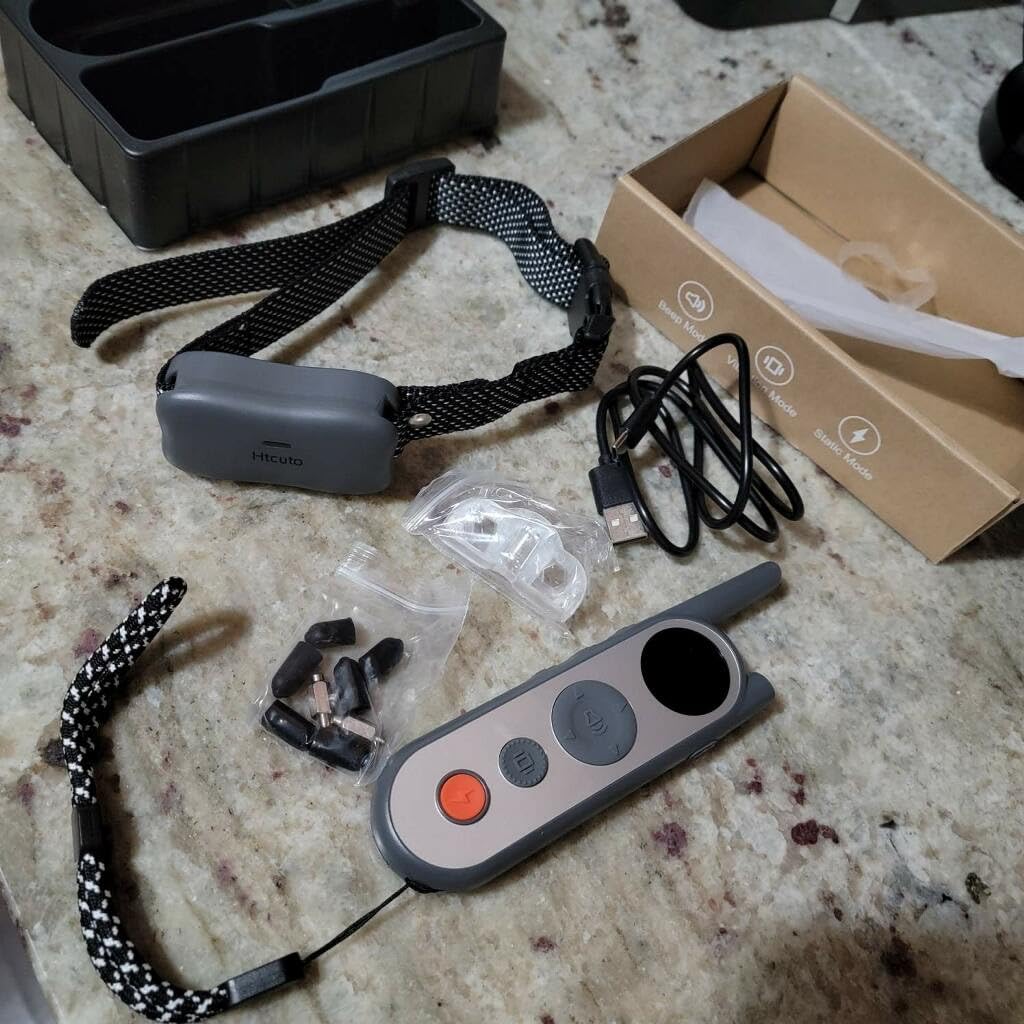
- Combines a virtual fence and a long-range trainer in one box
- Sets up with no wires
- digging WiFi or subscription
- Two and a half hour full charge with long standby
- LED flashlight modes help you find the dog at night
- Fence mode only warns with beep and vibration
- static is applied by hand
- Receiver box can be bulky on very small dogs
- Strap arrives long and needs trimming and heat sealing
Most wireless fences stop at containment. This one pairs a virtual boundary of 25 to 3,500 feet across 14 levels with a remote training collar rated to 6,000 feet, so the same box handles the daily containment job and the recall work that has to happen alongside it.
The 25 foot minimum radius is what makes it usable on a small yard. Most transmitter systems bottom out around 22 to 25 feet anyway, so this one does not force you into a circle wider than your lot can hold, and you can set the boundary right at the edge of a narrow side yard.
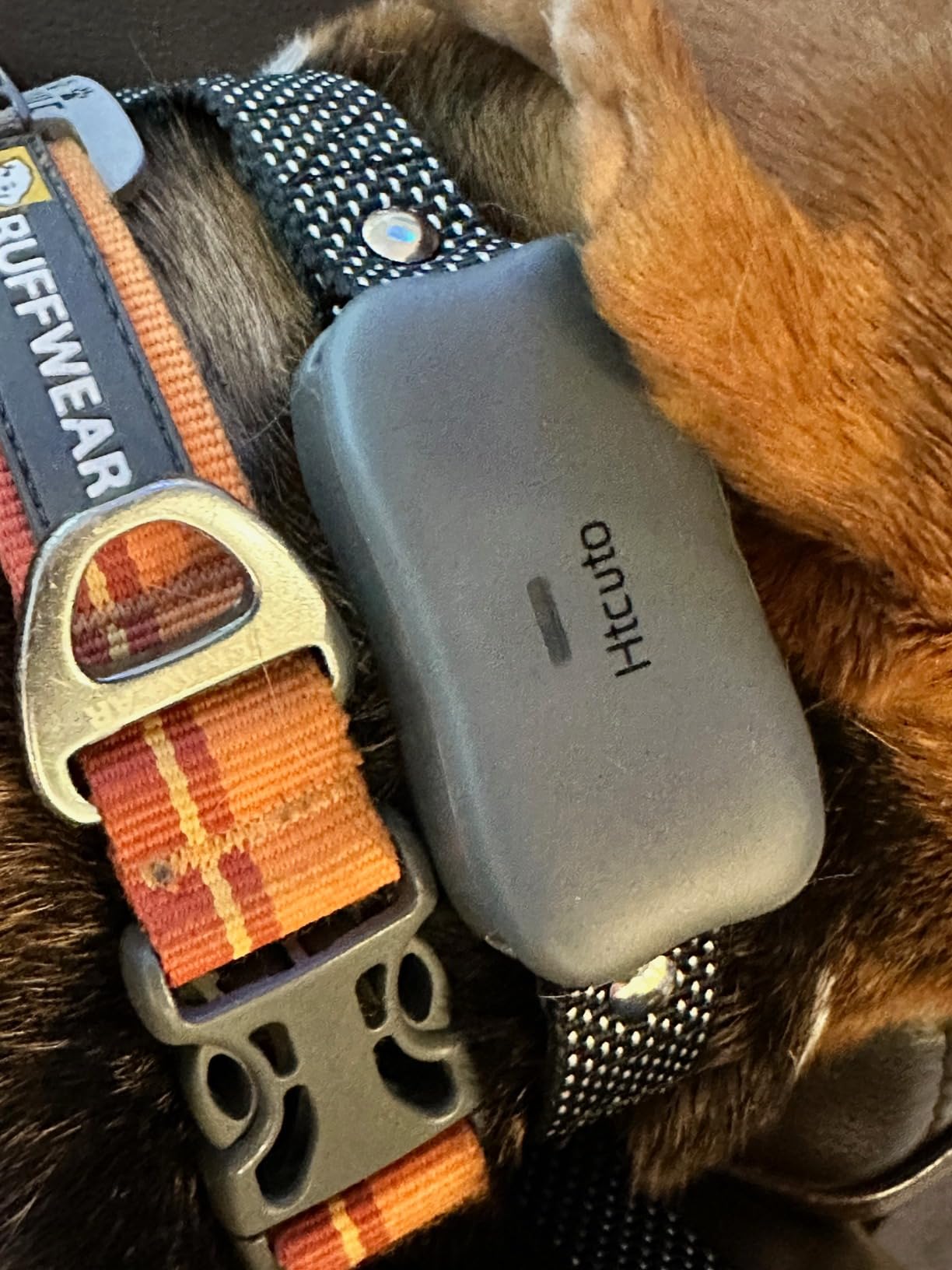
There is a design choice worth understanding before you buy. Crossing the boundary triggers a beep and a vibration automatically, but the static shock is applied manually by the handler using the remote. Training modes run beep on levels 0 to 1, vibration on 0 to 9, and static on 0 to 30, and a keypad lock prevents accidental corrections.
Battery figures are strong. A full charge takes 2.5 hours, the collar claims up to 185 days on standby, and roughly 84 hours with the fence mode actively running. It is IPX7 waterproof with LED flashlight modes, fits dogs from 10 to 130 pounds, and trains up to four dogs by channel selection.
Who this fence suits
This suits a multi-dog household with a training plan, especially anyone whose dogs range from a 10 pound rescue to a large breed. The combined fence and trainer saves carrying two devices, and the long standby time suits owners who forget to check a battery.
Who should skip it
Skip it if you need the fence to correct automatically, because static is entirely manual and depends on you being within remote range. Skip it for a dog under 10 pounds or for a small neck, since the receiver box is bulky and the collar tops out at 23.6 inches.
5. FOCUSER Two-Dog Wireless Fence – Best Two-Dog Starter Kit
- Two rechargeable collars in one box
- Boundary adjusts from 25 to 300 meters across 16 levels
- IP67 rechargeable collar survives rain and sprinklers
- Backup battery keeps the boundary active during a power cut
- Only 4 correction levels give less tuning for sensitive or stubborn dogs
- Receiver neck range of 8-21 inches excludes very small and very large dogs
This is the two-dog answer. The kit ships with a transmitter and rechargeable receiver collars so a second dog is not an extra purchase later, and it is one of the few kits in this roundup where the second collar is included out of the box rather than sold as an add-on.
The boundary radius adjusts from 25 to 300 meters across 16 levels, giving you fine control for a small yard. A 25 meter radius is about 82 feet, so on a 40 by 60 foot lot you can set the circle to sit inside the property without overshooting. Four adjustable correction levels are available, which is fewer than most systems here offer.
The receiver collar is IP67 water-resistant and rechargeable, so rain and sprinklers are not a concern, and it fits dogs from 10 to 110 pounds with neck sizes from 8 to 21 inches. A built-in safety chip limits over-correction, and a backup battery keeps the boundary active during a power outage. The full kit weighs 1.68 pounds.
Who this fence suits
This suits a two-dog household that wants a complete setup without buying a second collar separately. It also suits owners in areas with unreliable power, since the backup battery keeps the boundary live when the outlet drops.
Who should skip it
Skip it if you have a sensitive or a very stubborn dog and want to fine-tune intensity, because four levels is thin. Also skip it for a toy breed under 10 pounds or a dog with a neck outside 8 to 21 inches, since both ends of the size range are cut off.
6. Blingbling Petsfun GPS Dog Fence – Best Budget Entry Point
- Lowest entry cost of the eight with no subscription
- SIM card
- or hidden fees
- Transmitter-free design needs only the collar receiver
- Radius adjusts from 10 to 990 meters across 99 levels
- Rechargeable IP67 collar fits necks from 7 to 26.5 inches
- GPS quality depends on open sky and can drift near buildings or trees
- Radius is measured from the collar's starting point rather than a fixed home location
If your yard is genuinely tiny, this is the system that gets closest to it. The radius adjusts from 10 meters, roughly 33 feet, up to 990 meters across 99 levels, so you can set a boundary far smaller than any transmitter unit here allows. Vibration and static both trigger automatically above the limit.
The collar is the other standout. It fits dog necks from 7 to 26.5 inches, which covers essentially every breed including toy dogs, and it is IP67 water-resistant and rechargeable. There are no monthly fees, no SIM card, and no subscription to set up.

Each system holds one dog, but up to 10 systems can run together in the same yard, which makes it workable for a multi-dog home if you buy more than one. Budget buyers rate it highly, with 96 percent five-star feedback in the review data.
The caveat is how the boundary is anchored. The radius is measured from the collar’s starting point rather than a fixed home location, so if the dog is loose in the yard before you set up the boundary, the origin moves with the dog. GPS quality also depends on open sky and can drift near buildings and trees.
Who this fence suits
This suits an owner with a very small lot who needs a boundary narrower than a transmitter circle can produce. It also suits toy breed owners, since a 7 inch neck is among the narrowest fits in this roundup.
Who should skip it
Skip it if your yard is wooded or sits between buildings, because GPS drift is the main complaint in the reviews. Also skip it if you plan to roam with more than one dog, since each dog needs its own paired system rather than sharing one collar.
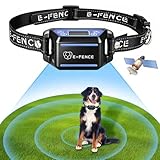
7. E-FENCE Wireless GPS Dog Collar – Best for Health Tracking and Camping
- Collar-only setup with nothing to plug in at home
- Tracks heart rate
- body temperature
- and step count
- Battery adjustable in 10 foot steps from 65 to 3280 feet
- Physical buttons with no app
- WiFi
- or subscription
- Waterproof and portable for camping or travel
- Each dog needs its own collar with no shared multi-dog system
- Static correction tops out at level 10
- which may not suit very stubborn breeds
This collar does something the others do not: it reads heart rate, body temperature, and step count. On a small yard where your dog only gets a short walk, that turns the containment collar into a general activity and wellness tracker for the same hardware.
There is no transmitter and no base unit. The collar receiver alone creates the boundary, with a radius adjustable from 65 to 3,280 feet in 10 foot steps. That is a wide spread, and the lower end is the useful part for you, since 65 feet is about what a modest suburban lot needs.
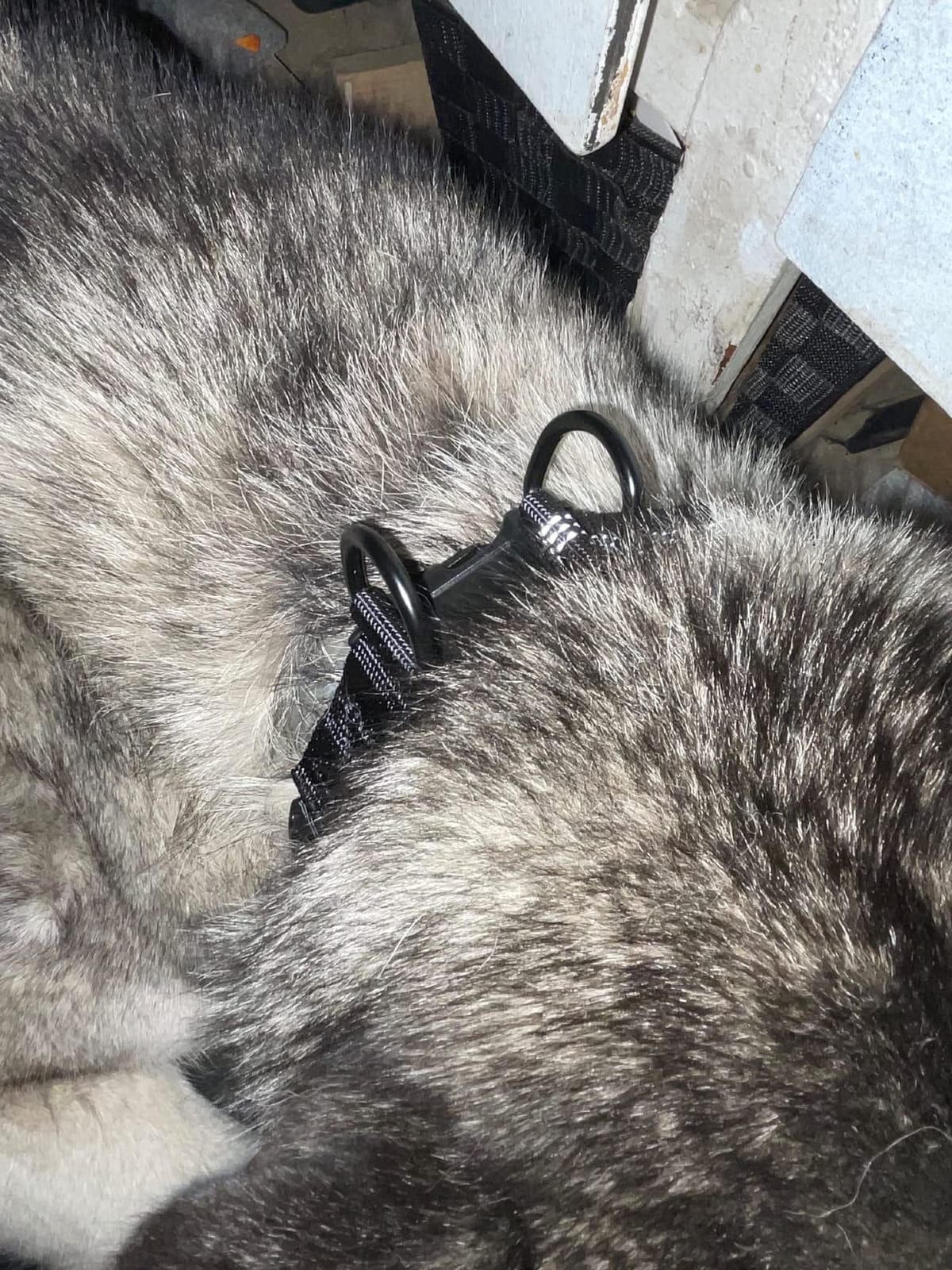
Control is physical rather than digital. Beep toggles on or off, vibration runs from 0 to 3, and static runs from 0 to 10, all from buttons on the collar with no app and no WiFi pairing. The rechargeable battery runs up to 48 hours, and the collar carries IP7 waterproof certification in the US and Canada.
Feedback is strongly positive, with 80 percent five-star ratings and no ratings below three stars among 75 reviews. The gap in this lineup is multi-dog: each dog needs its own collar, and there is no shared system for a second dog in the same yard.
Who this fence suits
This suits an owner who camps, travels in an RV, or splits time between a yard and a rental, since nothing needs plugging in. It also suits anyone who wants activity and heart rate data alongside containment.
Who should skip it
Skip it if you have two dogs and want one shared system, because each collar works alone. Skip it for a very stubborn breed if you rely on static, since the correction range stops at level 10.
8. Premier Pet Wireless Fence – Best for Expanding to More Dogs
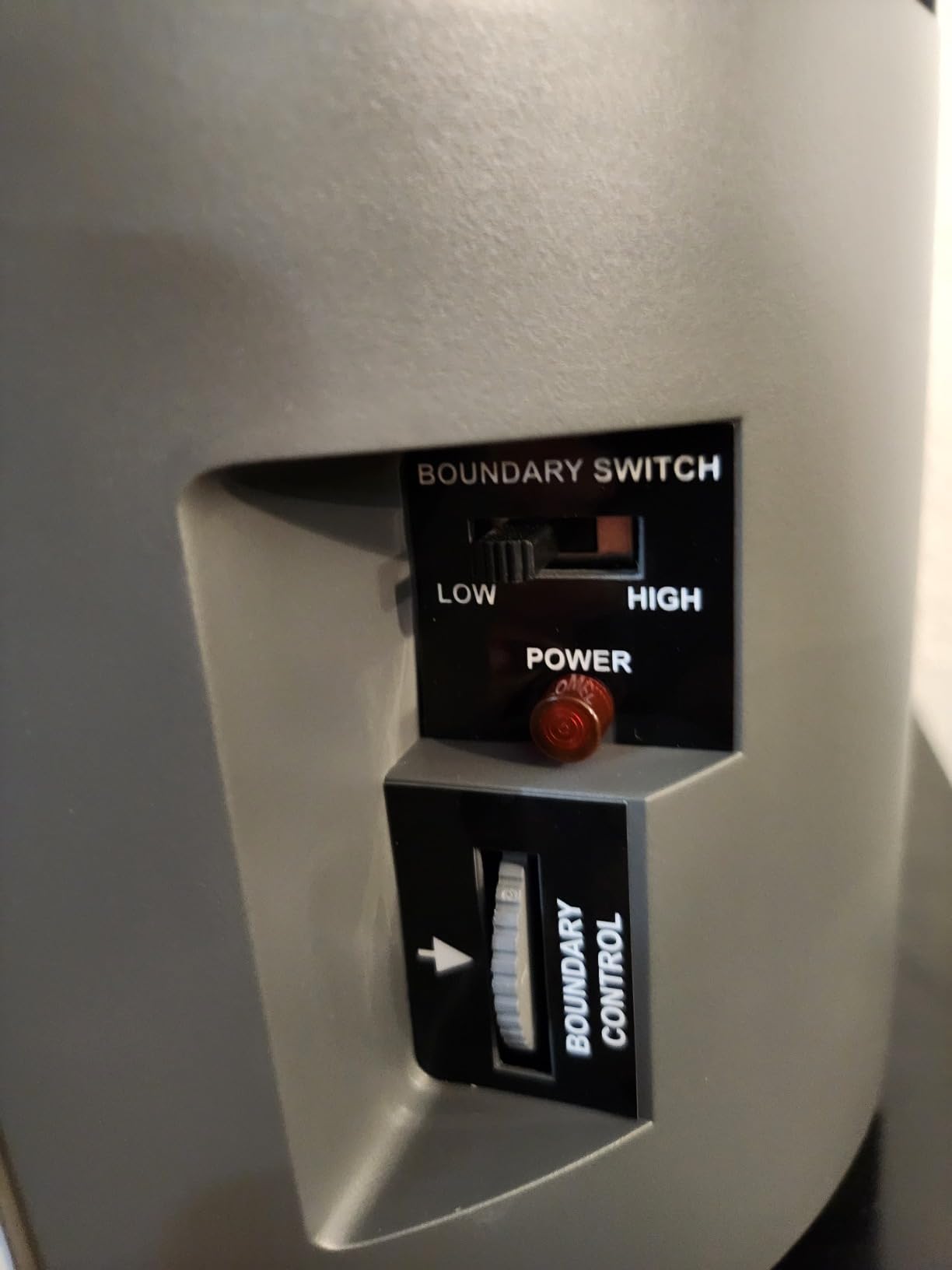
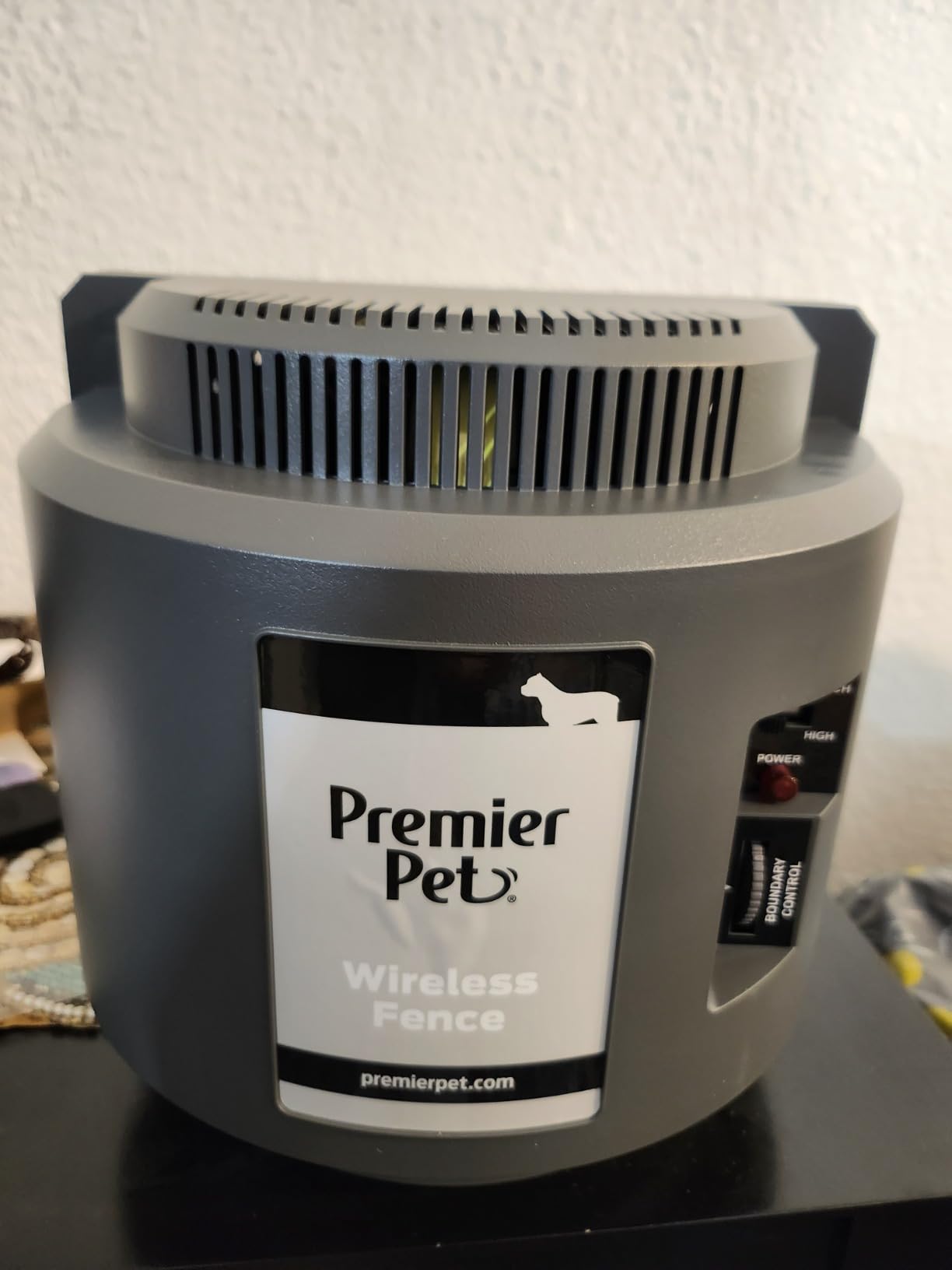
- Half acre circular boundary sized for small yards
- Sets up in 1-2 hours with no digging
- Waterproof collar for dogs 8 lb and up
- Expands to unlimited dogs with add-a-dog collars
- Circular boundary struggles with irregular or split yards
- Battery replacement every 1-3 months depending on use
- Noticeable learning curve before the system is configured correctly
Premier Pet is the same manufacturer behind a number of the well-known wireless fence brands, and this model is the straightforward version. It gives you an adjustable circular boundary of up to half an acre, expandable with additional transmitters, which puts it in the same class as the top pick at a different tier.
The collar is waterproof, adjusts up to 27 inches around the neck, and fits dogs of 8 pounds and up. Battery life is listed at 1 to 3 months depending on use, with a low battery indicator on the receiver collar and a GAC11-16351 replacement cell. Feedback runs one tone-only level plus five adjustable static correction levels.
What makes it worth a look for a first-time owner is expandability. You can add unlimited dogs with the add-a-dog collar, and additional transmitters extend the reach, so a household starting with one dog is not forced into a different system at two. Setup is listed at 1 to 2 hours with no digging, and it carries a 1 year limited warranty.
Owners report dogs learning the perimeter in about two days. The drawbacks in the review data are consistent across the category: a circular boundary that struggles with irregular or split yards, periodic battery replacement, and a 13 percent one-star group citing durability after a couple of months.
Who this fence suits
This suits a first-time owner who wants a straightforward half-acre system with a clear warranty and an easy upgrade path to more dogs later. It also suits owners who plan to add a second transmitter rather than replace the unit.
Who should skip it
Skip it if your yard is irregular or split into two sections, since the circle cannot follow it. Skip it if you would rather not replace a receiver battery every one to three months or if you need vibration as a primary warning.
Wireless vs GPS vs In-Ground: Which Type Fits a Small Yard
Wireless transmitter systems broadcast a signal from a base unit you plug in indoors. The boundary is always a circle, coverage depends on the transmitter placement, and there is no monthly fee. That combination makes them the default choice for small rectangular yards where a circle at the center is acceptable.
GPS systems skip the transmitter entirely and draw the boundary in an app. You get a custom shape, a much smaller minimum area, and portability, at the cost of needing a clear view of the sky and sometimes a phone connection. On a very small or oddly shaped lot, a GPS collar usually fits the space better than any circle.
In-ground wired systems bury a boundary wire around your property and are not wireless at all. They are the most reliable option for a fixed layout because the boundary is physical, but they require digging, cost more to install, and become a problem if you rent. Small yards are actually ideal for wired systems since there is less wire to run, but the digging rules them out for most renters.
One honest note from the forums: many owners considering an invisible fence specifically cannot use static correction, and restrictions like that rule out half of this list. The PetSafe Stay and Play, Htcuto, and Lilyeel systems all let you run beep or vibration only, so any of those three works if you refuse to use correction.
If your yard is under about 3,000 square feet and you want narrow boundaries, go GPS. If your yard is a plain rectangle and you want zero ongoing cost, go transmitter. If you never plan to move and your dog is a bolter, an in-ground system with a real fence on the street side is the safer answer.
Where to Place the Transmitter in a Small or Square Yard
Placement causes more small-yard failures than the fence itself. The single most common owner complaint in the review data is erratic beeping indoors, and it traces back to where the base unit sits.
Keep the transmitter indoors and at least 3 feet away from metal objects. Metal outbuildings, steel roofing, chain-link runs, and appliances all distort the signal, and owners on r/homestead describe the radius becoming inconsistent within weeks of setup.
Do not put it in a garage, shed, or covered porch where it can get cold or damp. Transmitters are not rated for outdoor weather, and cold affects the signal strength. A dry interior spot at roughly waist height gives a cleaner radius than a shelf in a utility closet.
On a square lot, place the unit slightly off-center toward the far side of the yard so the circle reaches that side while staying inside the shorter dimension. If your lot is narrow, put the transmitter at one end and accept that the boundary is a circle rather than a rectangle.
For a first pass at yard prep, our guide to manual lawn aerators for small yards covers clearing debris away from the boundary line before you set flags, which makes the walk-through training faster.
Buying Guide: Picking a Wireless Dog Fence for a Small Lot
Match the minimum boundary first, always. If a system needs more area than your lot has, nothing else on the spec sheet matters. Transmitter units here bottom out around 22 to 25 feet of radius, while the GPS options on this list go as low as 10 meters, so a genuinely tiny yard favors GPS.
Decide how you feel about correction before you shop. Every system here can beep. Most can vibrate. If you want tone or vibration only, confirm the specific model supports it, because some list only tone and static. Start with the lowest level that works and raise it only if the dog ignores the warning, which is standard practice with a certified positive-reinforcement trainer.
Count the dogs before you buy. The PetSafe Stay and Play, Blingbling Petsfun, and E-FENCE units are single-dog or need one collar per dog. The FOCUSER kit ships with two rechargeable collars, the Lilyeel app manages up to five collars, and the Premier Pet expands to unlimited dogs with add-a-dog collars.
Check the subscription line honestly. Every product in this roundup works without a monthly fee, including all three GPS options, which is worth stating plainly because most app-driven fences in the category charge one. None of these eight requires a plan to set the boundary and enforce it.
For small breeds, measure the neck before anything else. Fit ranges on this list run from 6 inches on the PetSafe units up to 27 inches on the Premier Pet, and the Blingbling collar covers 7 to 26.5 inches. Weight minimums range from 5 pounds on the Stay and Play to 10 pounds on the Htcuto system.
Think about training time, not just hardware. Owners report anywhere from a day or two for an attentive dog to about a week for a stubborn one, and the difference is flag walk-through consistency rather than the collar model. Our picks for small breeds and toy sizing are covered in our small-dog roundup if the boundary is only part of the problem.
The same lot-size thinking applies to the rest of your yard work. Small yards punish oversized equipment, which is the same reason our picks for the best string trimmers for small yards are compact rather than heavy-duty.
A final word on expectations. Owners on r/ireland describe collars still worn by dogs that bolted clear, and that failure mode is real. Treat any invisible fence as a backup layer on top of a real fence, not a replacement for one, and consult a behaviorist before using static on a senior or anxious dog.
Why Is Your Invisible Dog Fence Not Correcting Your Dog
If the collar is silent, the most likely cause is training rather than hardware. A dog that has never walked the boundary flags does not yet understand that the beep means return, so the collar is behaving correctly. Walk the perimeter with flags or a friend for several days before expecting correction.
Second, check the receiver battery. Owners consistently report far shorter real-world runtimes than the listed claim on replaceable-battery systems, with two to four weeks being common where up to two months is printed. A low battery indicator on some models is the only warning you get, and a dead cell can leave the collar doing nothing.
Third, confirm skin contact. The two prongs on the receiver need to touch the neck through the fur, and a collar trimmed too loose or fitted with the prongs shortened for a double coat will read as no contact. Check the prong length against your dog’s coat before assuming the unit has failed.
Fourth, the radius may simply be smaller than you set. A half-acre boundary measured from a transmitter near the house can leave the far end of the yard outside the signal entirely, which reads as a dead fence when the dog is at the property edge.
Fifth, tone-only mode may be active. Several of these collars default to a warning-only setting during training, and that is easy to leave switched on. Sixth, metal near the transmitter can suppress the signal, which is the cause behind the indoor false beeping that appears in a large share of negative reviews.
Frequently Asked Questions
What are some good wireless fence systems for small dogs?
The PetSafe Stay and Play is the strongest fit for small breeds because its rechargeable collar accepts dogs from 5 pounds up with 6 to 28 inch necks. The Blingbling Petsfun GPS fence runs from a 7 inch neck up to 26.5 inches and has no monthly fee. Both the Lilyeel and Htcuto systems support vibration warnings, which helps deaf dogs.
Do wireless dog fences actually work?
They work as a training tool rather than a physical barrier, and only when the boundary has been trained with flags and consistent reinforcement. Owners report training times from a day or two for attentive dogs to about a week for stubborn breeds. Determined prey-drive dogs do break through, so a real fence on the street side is still the safer setup.
What is the best GPS dog fence without a subscription?
Every GPS fence in this roundup runs without a monthly fee. The Lilyeel GPS collar fence offers a custom polygon boundary and manages up to five collars from a free app. The Blingbling Petsfun fence is the lowest-cost entry and adjusts down to a 10 meter radius, which suits very small lots. The E-FENCE collar also avoids any subscription and adds health tracking.
Why isn’t my invisible dog fence shocking my dog?
Most often the dog has not been trained to the boundary flags yet, so the collar is only giving a warning by design. Other common causes are a dead or weak receiver battery, prongs that are too short or a collar too loose to reach skin, a radius set smaller than the yard, tone-only mode still switched on, and metal near the transmitter suppressing the signal.
What is the best invisible dog fence for a small yard?
The PetSafe Wireless Pet Containment System is the best overall pick for a small yard because it covers up to a half acre with no monthly fee and a collar that fits dogs of 8 pounds and up. If your lot is very small or irregular and a circle will not trace the property line, a GPS collar such as the Lilyeel model lets you draw the boundary to match the yard instead.
How big of an area can a wireless dog fence cover?
Transmitter systems in this roundup adjust from about 22 to 25 feet of minimum radius up to roughly 105 feet, which is where a half acre or three-quarter acre maximum comes from. GPS systems go much further: the Blingbling unit adjusts from 10 to 990 meters, and the E-FENCE collar runs from 65 to 3,280 feet in 10 foot steps.
The Bottom Line on Small-Yard Wireless Fences
For a typical rectangular lot under a half acre, the PetSafe Wireless Pet Containment System is the pick. It has the deepest review history in this roundup, no monthly fee, and a half-acre boundary you can shrink to fit a modest yard without losing the plot.
If your dog is stubborn, step up to the PetSafe Stay and Play for Stubborn Dogs and its rechargeable collar that fits down to 5 pounds. If your yard is too small or too oddly shaped for any circle, go GPS: the Lilyeel system draws the boundary to match your property and still charges nothing monthly.
Whichever you choose, measure your yard before you order and confirm the minimum boundary fits. Then run the flag walk-throughs for a week before you trust it, and keep a real fence on the street side regardless. We update this guide as new models and price changes appear through 2026.