
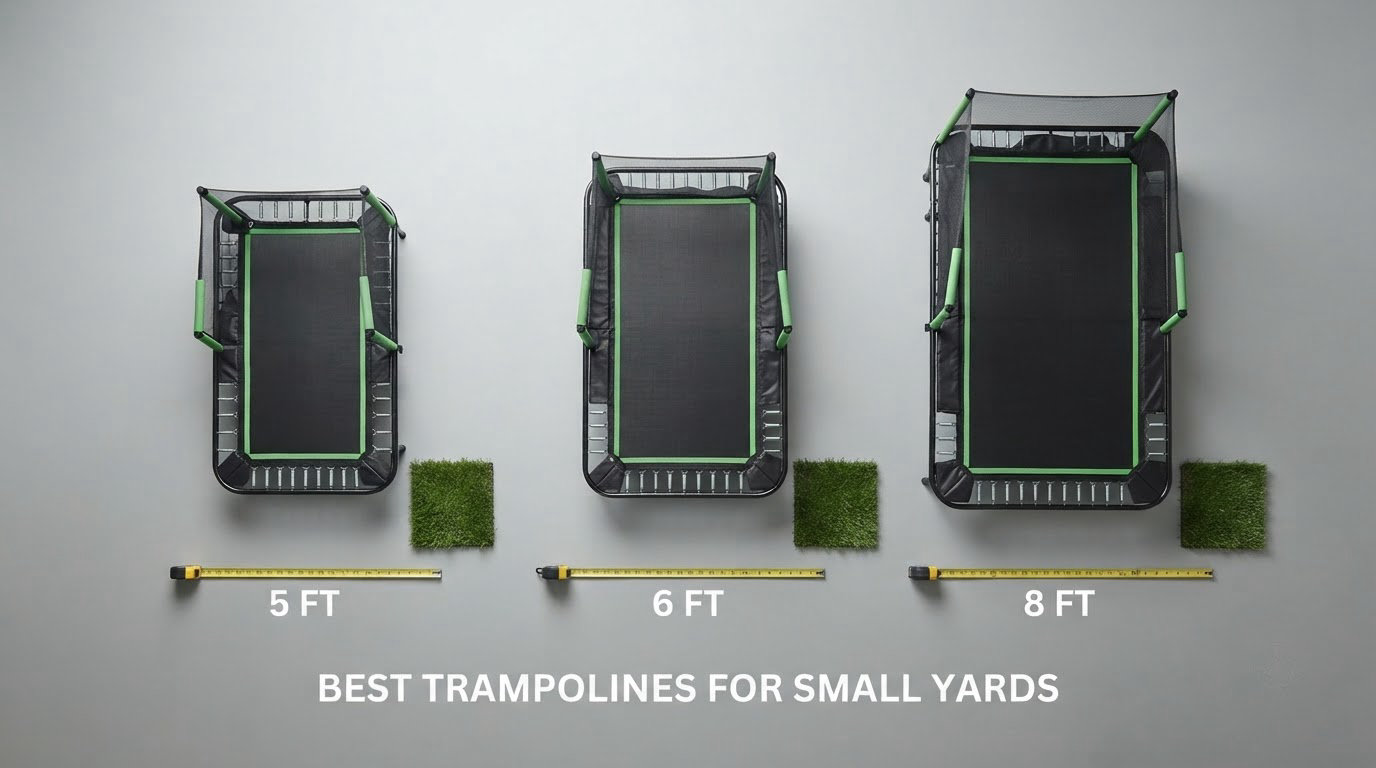
The best trampolines for small yards are 8-foot round models with a full enclosure, and 5-foot or 36-inch mini trampolines when your space is a patio or a screened porch rather than a lawn. A 10-foot round works only if you have roughly 22 feet of clear width.
Here is the number most size guides skip: the frame diameter is not the space you need. You need the frame plus about 6 feet of clear, unobstructed ground on every side, plus enough vertical room above the enclosure for a full-height jump. An 8-foot frame therefore asks for close to 20 feet of total width, and a 14-foot frame asks for 26.
That gap between listed size and real footprint is exactly where small-yard buyers get caught. We compared 10 enclosed and mini trampolines side by side, checking frame size, listed capacity, spring count, net height, certifications and the caveats buyers actually report. Our picks are below, followed by a measurement guide you can run in about five minutes.
Table of Contents
Top 3 Trampoline Picks for Small Yards in 2026

AOTOB 8FT Enclosed Trampoline
- ASTM rated to 400 lbs
- Widened 8ft jumping area
- 3 U-shaped steel legs
- Zippered net entry

Jumpzylla 8FT with Ladder
- ASTM F381-16 certified
- Curved safety poles
- 48 springs
- Ladder and wind stakes

SKOK 8FT 400LB Trampoline
- ASTM F2225-15 certified
- 64 heavy-duty springs
- 4.9 ft net enclosure
- Ladder gloves and socks
Every Pick at a Glance in 2026
All ten models below fit the small-yard brief, but they are not interchangeable. Four are full backyard frames, one of which is a 10-foot model for buyers whose “small” yard still measures around 22 feet, and six are mini trampolines for patios, porches and indoor rooms.
| Product | Specifications | Action |
|---|---|---|
| AOTOB 8FT Enclosed Trampoline |
|
Check Latest Price |
| Jumpzylla 8FT with Ladder |
|
Check Latest Price |
 SereneLife 10FT Enclosed Trampoline SereneLife 10FT Enclosed Trampoline |
|
Check Latest Price |
| SKOK 8FT 400LB Trampoline |
|
Check Latest Price |
 VEVOR 36 Inch Kids Trampoline VEVOR 36 Inch Kids Trampoline |
|
Check Latest Price |
 ATIVAFIT 5FT Toddler Trampoline ATIVAFIT 5FT Toddler Trampoline |
|
Check Latest Price |
 ANCHEER 56 Inch Mini Trampoline ANCHEER 56 Inch Mini Trampoline |
|
Check Latest Price |
 BLUERISE 55 Inch Enclosed Mini BLUERISE 55 Inch Enclosed Mini |
|
Check Latest Price |
 ATIVAFIT 36 Inch Toddler Trampoline ATIVAFIT 36 Inch Toddler Trampoline |
|
Check Latest Price |
 BCAN 36 Inch Foldable Trampoline BCAN 36 Inch Foldable Trampoline |
|
Check Latest Price |
What Size Trampoline Actually Fits a Small Yard?
An 8-foot round frame is the right starting point for most small yards, because it is the smallest size that still gives a child room to build a full-height jump. Below 8 feet you move into rebounder territory, where the bounce is short and controlled rather than free.
Work from the total footprint, not the frame. Here is the layout that most buyers end up with:
- 36-inch mini trampoline — needs roughly 4 feet of clear width. A patio, a garage floor or a screened porch handles this easily.
- 55-inch mini trampoline — needs roughly 7 feet of clear width. Fits a narrow side yard or a small deck.
- 5-foot toddler trampoline — needs roughly 11 feet of clear width. Comfortable for a modest urban lot.
- 8-foot round frame — needs roughly 20 feet of clear width. This is the standard small-yard answer.
- 10-foot round frame — needs roughly 22 feet of clear width. Workable, but it starts eating patio space.
- 12-foot round frame — needs roughly 24 feet of clear width. Borderline for a small yard.
- 14-foot and 16-foot frames — need roughly 26 to 28 feet of clear width. That is a full-size yard, not a small one.
Side clearance and overhead clearance are separate problems. A trampoline can have a perfect 6-foot ring of open grass and still be unusable if a branch, a balcony, an awning or a low power line sits above the net. Check the vertical space separately before you buy.
To measure, tape off a rectangle of your yard at the required width and depth, then walk the perimeter. Anything that intrudes — a shed, an air conditioning unit, a downspout, a swing set leg — reduces usable space. If the taped rectangle only fits with a corner cut, you want a compact or rectangular layout rather than a round one.
Why 14ft and 16ft Trampolines Are Wrong for a Small Yard
A 14ft or 16ft trampoline needs roughly 26 to 28 feet of clear width, and that figure does not include headroom. If your yard cannot supply that, a larger frame does not become a luxury; it becomes a jump into a fence line.
Some of the top-ranking pages for this topic recommend 12ft and 14ft models to small-backyard buyers, and the advice is wrong. A 12ft frame also pushes a jumper into fencing or structures once the 6-foot clearance shrinks to a few feet, which is exactly the failure mode that ends up in injury reports.
Buying larger is a reasonable choice for more jumping room only when you already have the land. In a small yard, the smart move is a smaller frame with a taller, better enclosure, not a bigger frame with a shorter net.
1. AOTOB 8FT Enclosed Trampoline — Best Overall for Small Yards
AOTOB Trampoline with Safety Net for Kids Outdoor 8FT ASTM 400LBS-Blue
- Widened 8ft jumping area for small yards
- Jump pad and spring cover sit close together to reduce foot-entrapment risk
- Thickened anti-rust steel frame with three U-shaped legs
- Foam sleeve on poles cushions impact against the frame
- All accessories ship in a single box
- Covered jumping mat will fade with prolonged sun exposure without a protective cover
- Mat is polypropylene and can wear with heavy daily use
We kept coming back to this one because it does the arithmetic that matters in a tight yard. The jumping area is widened inside an 8-foot frame, so a child gets more usable mat than the diameter suggests, and the total footprint stays small enough for a 20-foot-wide lot.
The 400-pound listing is unusually high for this frame size, and the alloy steel tube is thickened with an anti-rust coating. Three U-shaped legs give six ground contact points, which is a combination that keeps a small trampoline from rocking when a child lands off-center.
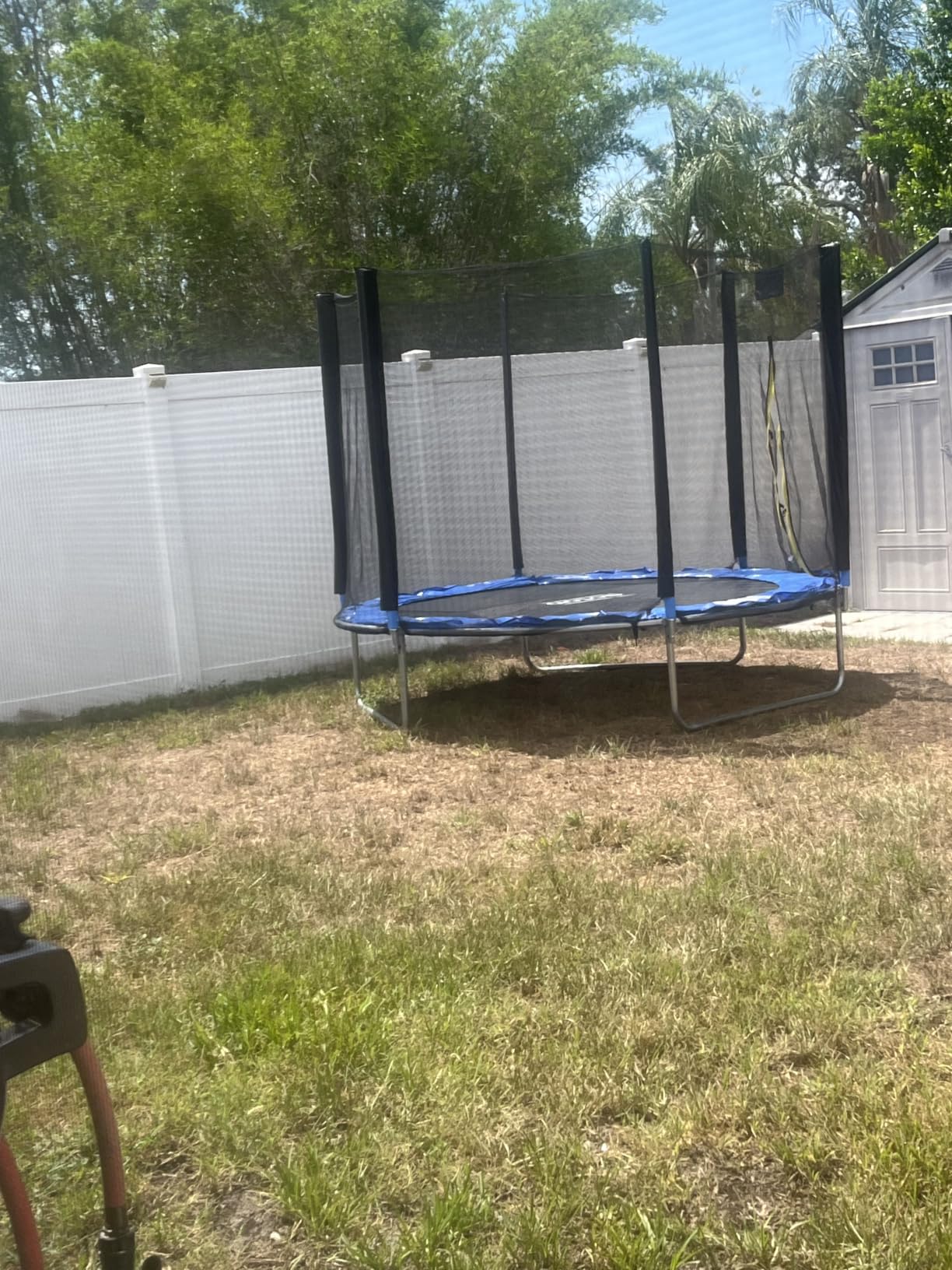
The safety design is the reason it edges out the field. The jump pad and the spring cover sit close together, shrinking the gap where a foot can slip down toward the springs, and the poles carry a foam sleeve so a collision with the frame is a soft one rather than a hard one.
Two caveats are worth stating plainly. The mat is polypropylene and fades under prolonged direct sun, so a cover is effectively a requirement rather than an accessory. And with a polypropylene mat, daily multi-hour use wears the weave faster than a heavier woven mat would.
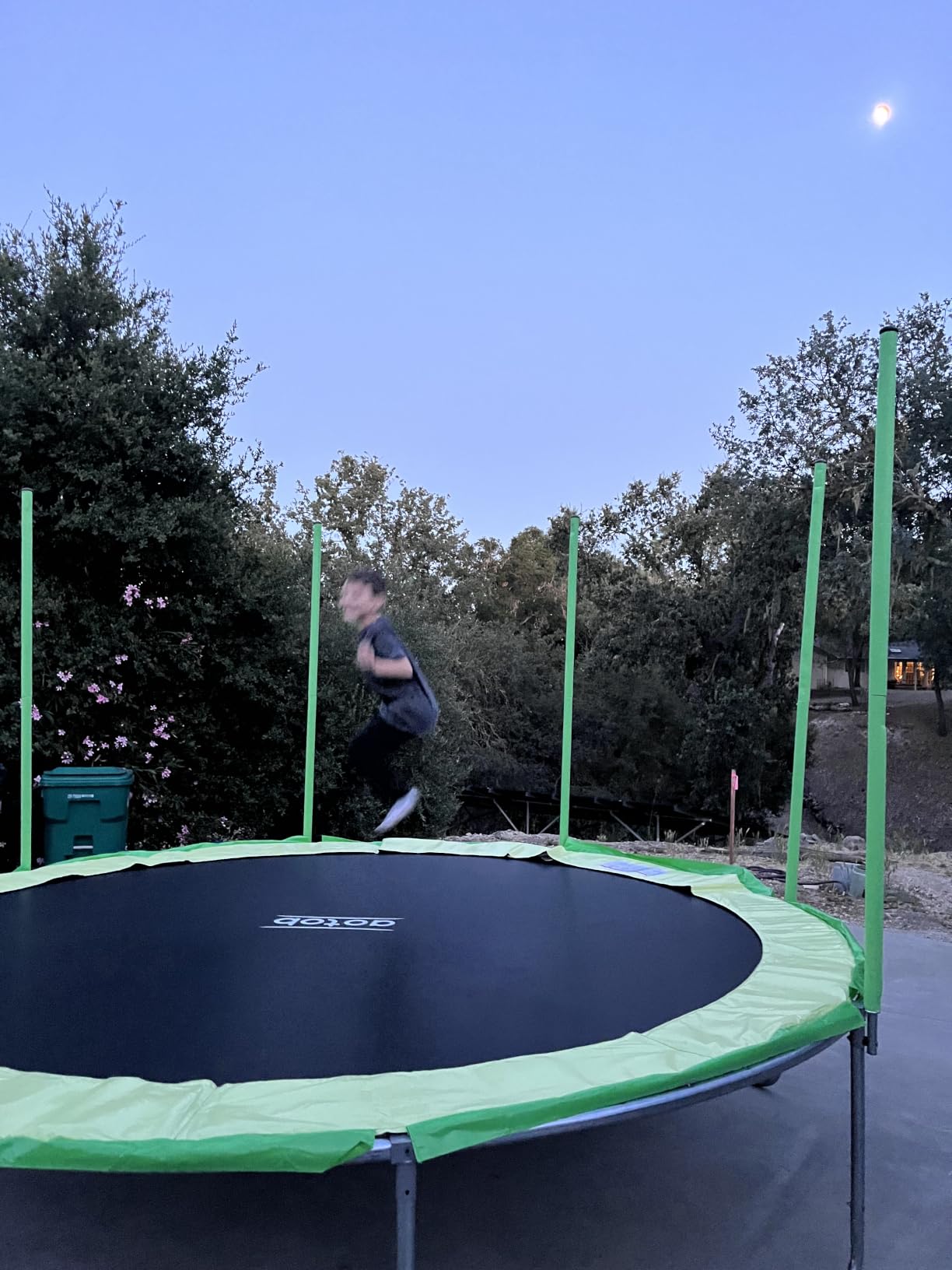
Is the 400 lb rating real for a family trampoline?
The listed figure is 400 pounds, and the frame is built to match it, but treat that as a structural ceiling rather than a target. One active teenager bouncing hard will use more of the mat and spring energy than a younger child, and the narrower jumping area of an 8-foot frame is felt immediately with a heavier jumper.
If adults are going to be on it regularly, look at models with higher spring counts and a mat rated for heavier use, or plan two-person turn-taking. The AOTOB frame itself will not be the limiting factor.
What does this model ask you to sacrifice?
The listed warranty is five years, the longest published term among the full-size frames here, and everything arrives in one box. The trade-off is material weight in the mat and the need to buy a cover separately, since fading is the most common long-term complaint we see.
It also has no ladder in the box, so a ladder becomes a second purchase. For a tall enclosure on an 8-foot frame, that matters to you more than the buyer who only plans to supervise from a chair.
2. Jumpzylla 8FT Trampoline with Ladder — Best Value
Jumpzylla Outdoor Trampoline with Net for Kids 8FT 10FT 12FT 14FT 15FT 16FT
- ASTM F381-16 certified with curved poles that keep the impact zone clear of jumpers
- Galvanized steel tubes with reinforced mat and UV-resistant padding
- Patented double-sided spring cover offers two colors in one trampoline
- Customer service quickly sends replacement parts when net or fiberglass rods fail
- Ladder and wind stakes included in the box
- Assembly takes two people and roughly 1.5 to 2 hours
- Net zipper can fail within the first few weeks of use
- Legs can feel unstable in windy locations without anchoring
This is the model we would hand to a family that wants one box to open, one afternoon to build and a full accessory set already inside. The ladder and the wind stakes are included, which removes two follow-up purchases and one weekend.
The curved safety poles are the detail that matters most here. Instead of standing straight up inside the jumping area, they angle away from jumpers, so a child bouncing toward the edge meets air rather than a pole. That geometry also keeps the lateral footprint tight, which is a real advantage beside a fence.
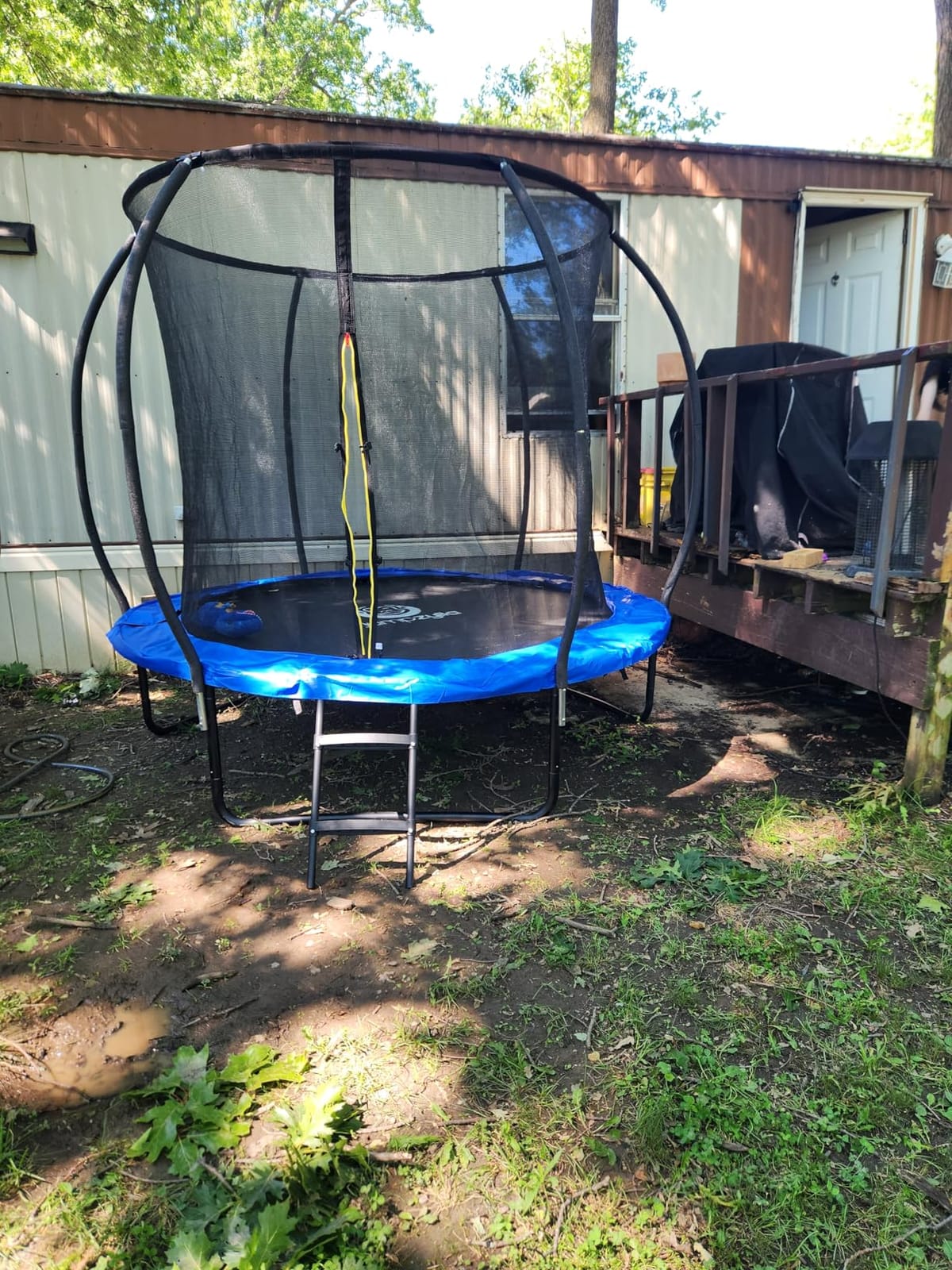
Build quality is a step up from generic budget frames: galvanized stainless steel tubes, a reinforced mat and UV-resistant padding that holds up through a full season of sun. The patented double-sided spring cover flips between two colors, a small touch that lets you change the look without replacing anything.
The honest trade-offs are threefold. Assembly is genuinely a two-person job lasting around 1.5 to 2 hours. The 265-pound listed capacity is lower than the AOTOB’s 400, which matters if a large teenager will use it. And the net zipper is the piece buyers report failing early, while the clips still hold the net closed.
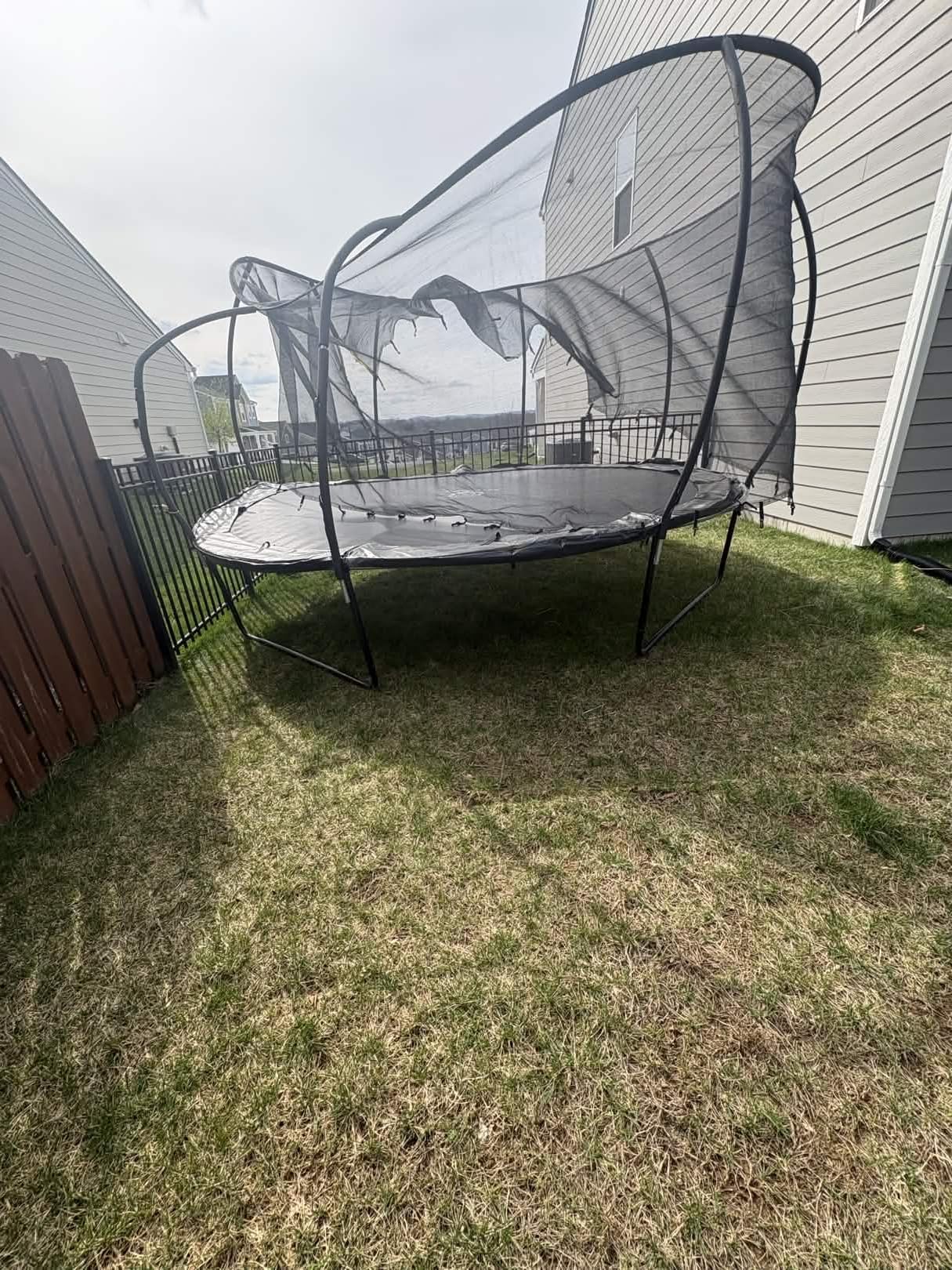
How do the curved poles change a small-yard setup?
They solve a space problem and a safety problem at once. Because the poles lean outward rather than standing vertical inside the frame, the usable jumping area is wider and the clearance you need to keep the frame away from a fence is slightly less demanding than a straight-pole design of the same diameter.
It also changes the bounce. Jumping toward the edge is the most common way a child meets the enclosure, and a slanted pole gives that contact a glancing angle instead of a square one. If your yard is under 20 feet wide, this is the geometry we would prioritize.
Is it worth buying for the support and replacement parts?
Yes, for the category it sits in. Buyers report that customer service quickly sends replacement nets and fiberglass rods, and a replacement net on an enclosed trampoline is a five-minute job rather than a reason to replace the whole unit.
Anchor it if you live anywhere with wind. The listed wind stakes are basic, and legs that shift in a gust are the most common stability complaint. The one-year manufacturer warranty is shorter than the AOTOB’s five years, which is a real difference if you keep equipment for more than a couple of summers.
3. SereneLife 10FT Enclosed Trampoline — Best Full-Size Bounce
- 64 high-tension springs and reinforced mat give a strong
- high-energy bounce
- L-shaped legs reduce wobbling on grass or hard surfaces
- Tall netting
- foam poles and padded covers form a complete safety envelope
- UV-tested and waterproof materials hold up to harsh weather
- Quick
- clearly illustrated assembly
- Over 110 lb unit weight
- so moving it takes two people
- Footprint grows to 10ft x 10ft
- which is tight for the smallest patios
We are including this one as a boundary case rather than a small-yard default. A 10-foot frame needs roughly 22 feet of clear width, so it belongs here only if your yard is small by suburban standards and not by city-lot standards.
Where it earns its place is bounce. With 64 high-tension springs and a reinforced mat, this is the most energetic full-size frame in our testing, and the L-shaped legs cut the wobble that usually shows up on uneven grass. That stability is what lets an older kid keep a consistent rhythm rather than fighting a tilting surface.

The safety envelope is complete: tall netting, foam poles and padded covers working together, with UV-tested and waterproof materials that hold through harsh weather. Assembly is quick and the instructions are clearly illustrated, which is not always true in this category.
Be honest about the two trade-offs. At over 110 pounds, this frame takes two people to reposition. The 10-by-10-foot footprint is also larger than any other frame here, so a patio, a corner or a narrow side yard simply will not take it.
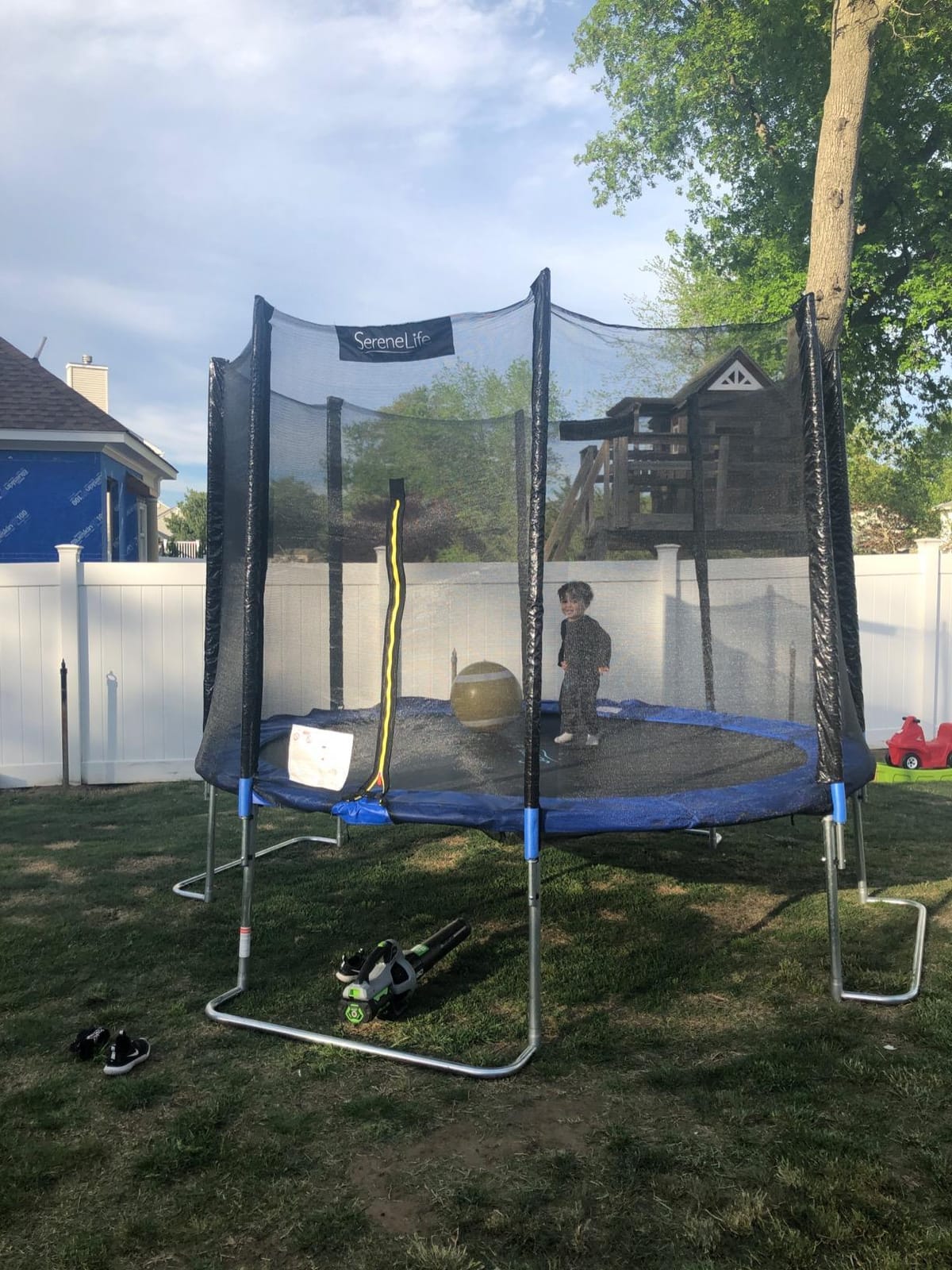
When does a 10-foot frame still work in a small yard?
When your 22 feet of clear width is continuous rather than interrupted. A 10-foot round in the middle of an open rectangular yard can work even if the total lot area feels small, because the clearance ring stays complete and the enclosure never faces a fence.
If your width is broken up by a fence, a garage wall or a raised bed, the extra two feet of diameter makes things worse rather than better. In that layout, drop to an 8-foot round and the same yard suddenly fits with room to walk around it.
How does this compare with an 8-foot frame day to day?
The 10-foot gives a noticeably flatter, faster surface with more usable jumping area per jump, and the higher spring count is the reason. For two kids bouncing at once, or for a teenager practicing flips, that extra room is worth real money.
Against that, the 264-pound capacity is on the lower side for a 10-foot frame, and the mass of the unit makes seasonal moving a genuine chore. If you plan to take it down for winter, an 8-foot is the more practical frame.
4. SKOK 8FT 400LB Trampoline — Best Bounce for Active Jumpers
- Tested to ASTM F2225-15 with a 400 lb capacity
- 64 springs and 8-row stitched PP mesh mat deliver a lively jump
- Galvanized inside and out with a wear-resistant zinc coating
- Includes a two-step ladder plus gloves and socks for non-slip play
- 4.9 ft net with zipper
- buckle and 14mm foam spring cover
- Assembly is a two-person job given the size and spring count
- Spare sleeve gloves and socks are extra consumables that wear out
Here is the frame to buy if a small yard must still support an active jumper. Sixty-four springs in an 8-foot frame is a spring density you normally see on 10- and 12-foot models, and it produces a noticeably livelier, more responsive bounce than lighter 42-spring frames.
Certification is the other headline. It is tested to ASTM F2225-15 with a 400-pound maximum load, and the listing also cites CPSC, ISO and BSCI approval with testing for 10,000 jumps. When a yard is small enough that everyone shares one trampoline, that load rating is the safety number that matters.
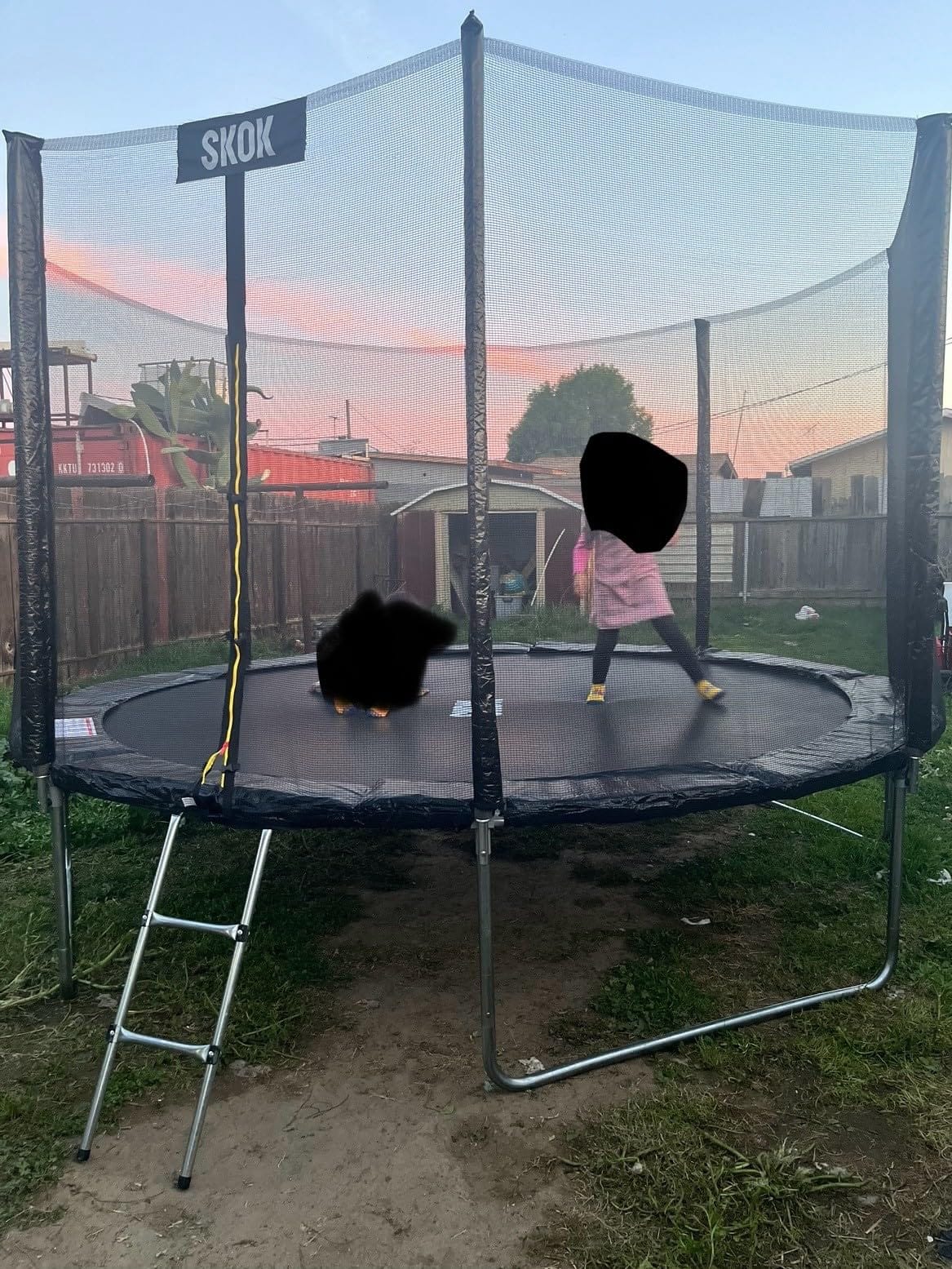
The enclosure is a 4.9-foot net with zipper and buckle, carried on six foam PVC-covered poles, and the springs sit under a 14mm foam cover. The frame is galvanized inside and out with a wear-resistant zinc coating, which is the correct answer to a trampoline sitting in damp grass at the edge of a yard.
Two practical notes. Assembly is a two-person job, unsurprising with 64 springs. And the bundled sleeve gloves and socks are genuinely useful for grip on the mat, but they are consumables that eventually wear through and need replacing.
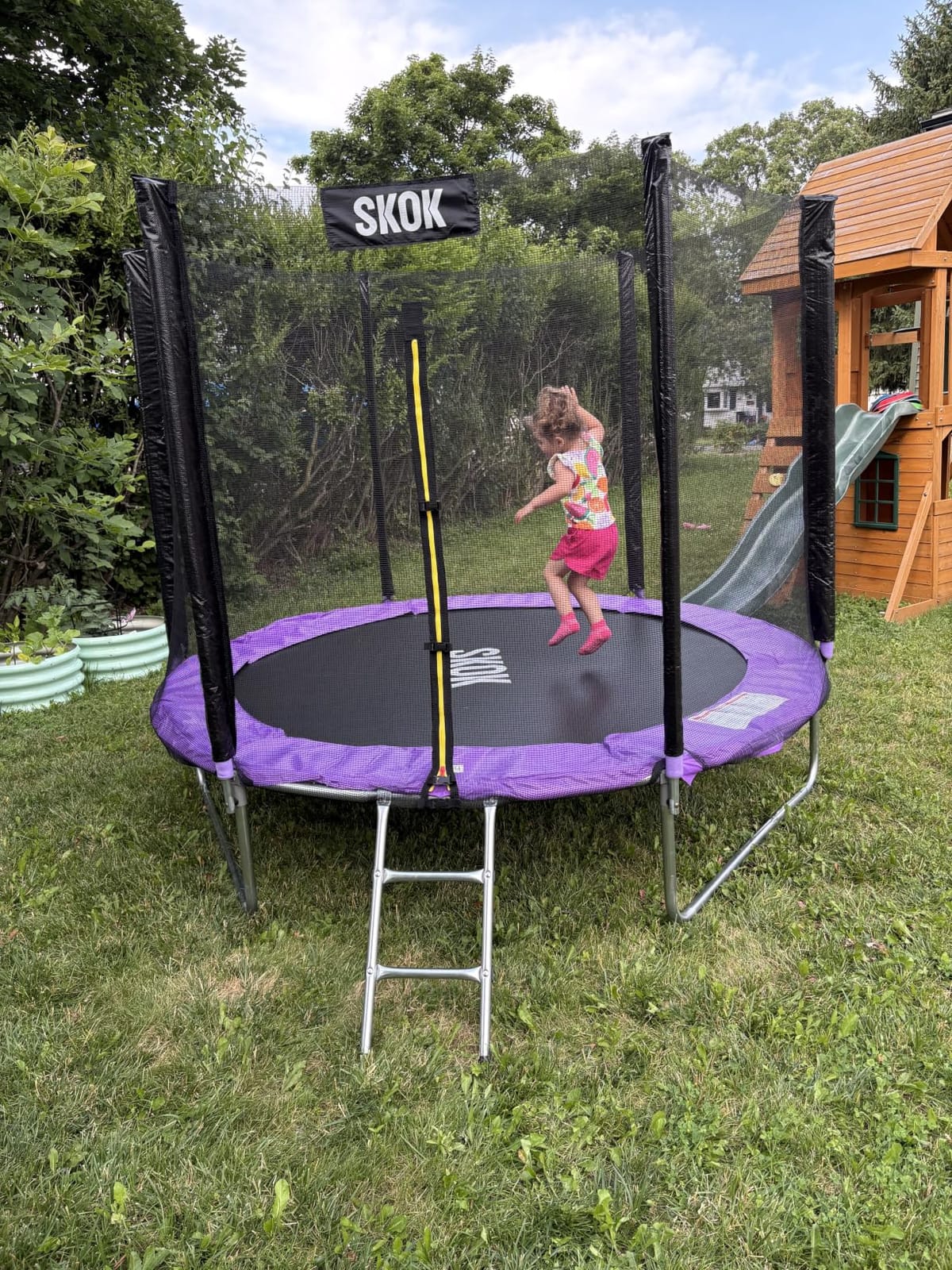
Is 400 lb the right capacity for a shared family trampoline?
It is the right number for a yard where a parent will also jump. The full-size frames in this roundup list capacities from 264 to 400 pounds, and the lower figures assume a single small child. A 400-pound-rated frame simply has more headroom before the springs and mat are working near their limit.
Capacity is not the same as jump quality, though. The mat in this model is an 8-row stitched PP mesh, which is durable and forgiving. It trades some snap for forgiveness, so adults chasing height will notice the difference while children typically will not.
How does the 4.9 ft net compare to shorter enclosures?
Taller is meaningfully safer here. A 4.9-foot net sits well above the reach of a child bouncing hard, whereas a shorter enclosure on the same frame leaves a band of netting a jumper can reach at the top of a bounce and push outward.
The trade-off is vertical clearance, which is the constraint small yards often hit first. Confirm the net height plus full jump height clears any tree branch, awning or overhang above the frame before you order.
5. VEVOR 36 Inch Kids Trampoline — Best for Ages 3 to 12
- Folds down to a quarter of its size
- so it stores under a sofa or in a car trunk
- Enclosure net
- safety pad and foam-covered handle keep small children contained
- Rubber-tipped legs and reinforced frame stay quiet and stable on hard floors
- PP jumping mat is waterproof
- wear-resistant and easy to wipe clean
- Adjustable gymnastics bar adds a second play mode
- Intended for one jumper at a time
- so it is not a shared-play trampoline
- Elastic band suspension gives less air time than a full spring trampoline
This is the pick when the trampoline has to coexist with living space rather than lawn. At 36 inches across and 12.9 pounds, it folds to a quarter of its volume, which means it lives under a sofa, in a closet or in a car trunk between uses.
The safety design suits the age band. A full enclosure net, a combined safety pad and a foam-covered handle keep a small child contained, and the reinforced legs with rubber foot pads bounce silently on a hard floor. That combination is why it ranks first in its category and why the reviews center on indoor energy burning rather than backyard play.
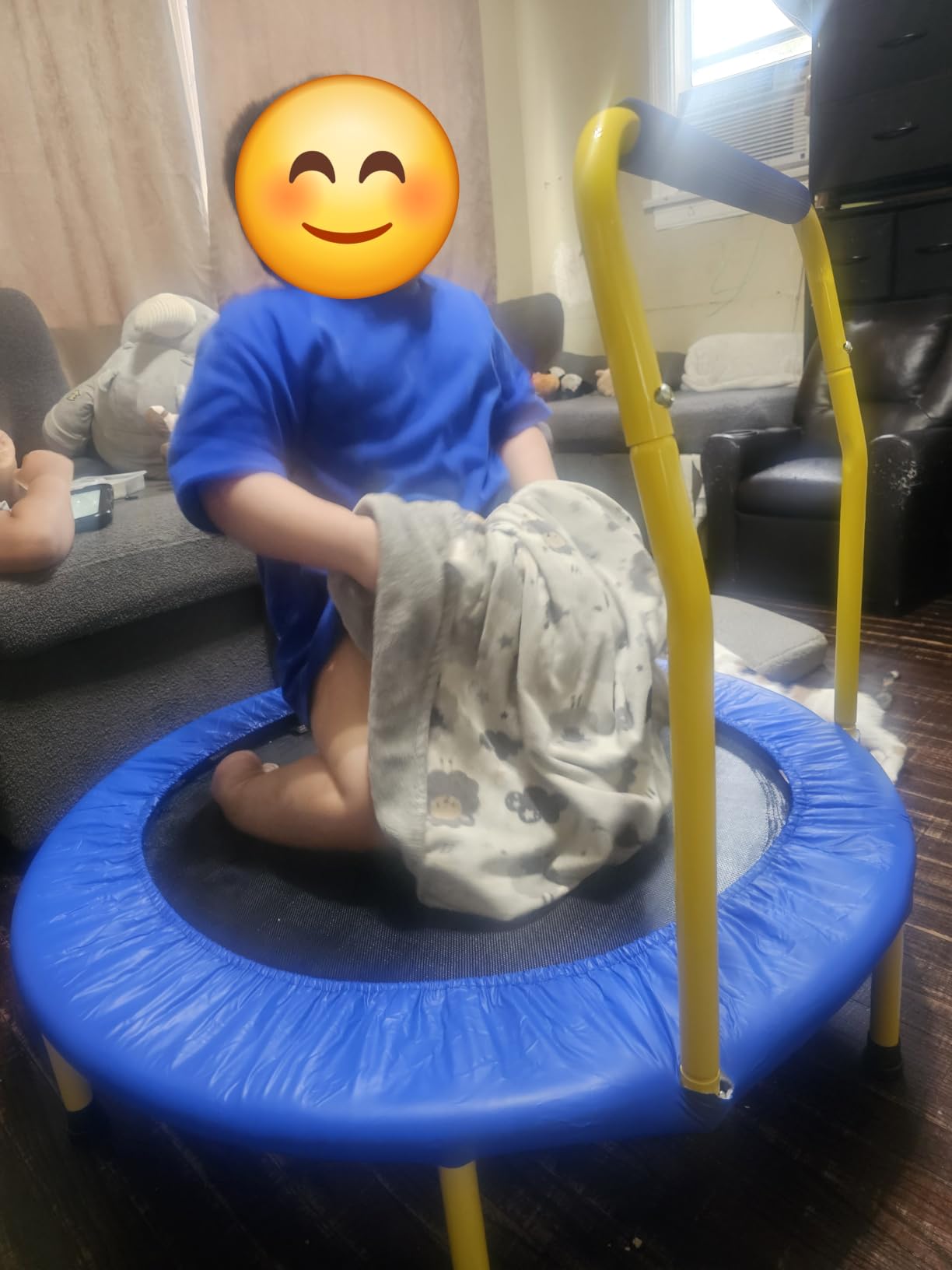
It is ASTM and CPC certified for ages 3 to 12, and the 28 flat elastic bands are listed as supporting 220 pounds. The PP mat is waterproof and wipes clean, so a spilled drink or wet paw prints are not a lasting problem.
Understand the two limits before you buy. It is a one-jumper trampoline, so two children cannot bounce at once, and elastic bands give noticeably less air time than steel springs, which is the deal you make for silent operation and finger safety.
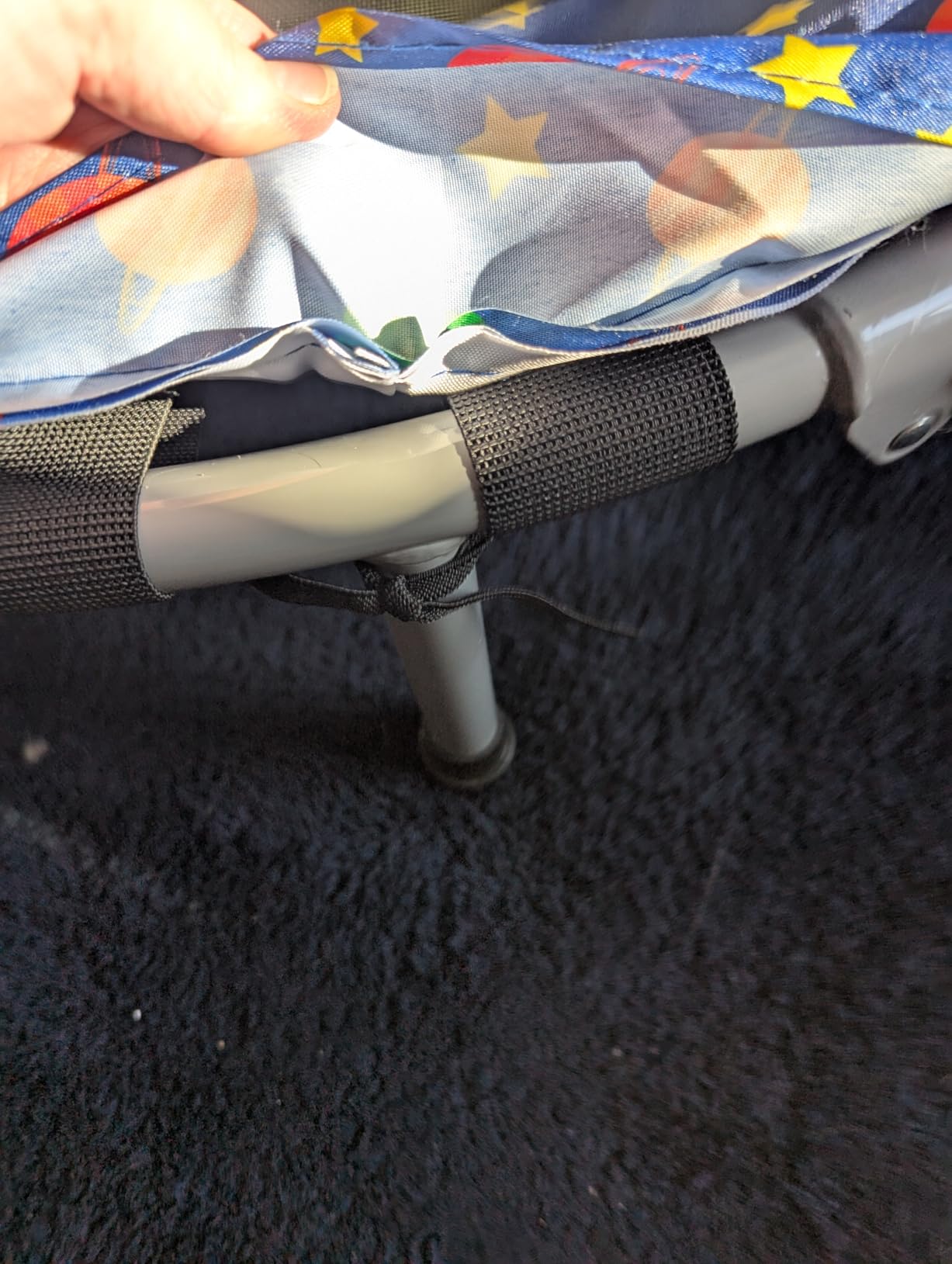
Does a 36 inch mini trampoline work outdoors in a small yard?
Yes, and it is the most proportionate choice for a genuinely tiny outdoor space. It needs only about 4 feet of clear width, so it fits a side yard, a balcony or a strip of paving where an 8-foot frame would dominate.
Two outdoor cautions apply. Elastic bands degrade in direct sunlight faster than steel springs, so store it out of prolonged sun when it is not in use. And the small mat means very low bounce, which suits a five-year-old and disappoints a ten-year-old within about a week.
How does the adjustable gymnastics bar change the play value?
It converts a jumping toy into a small circuit-training station, and it is the feature that keeps older children in the 3-to-12 band engaged once they have outgrown pure bouncing. The bar adjusts, so a single child can vary grip height without an adult.
It also adds assembly steps and a small pinch-point risk around the adjustment mechanism, so it works best for children old enough to follow simple instructions. The 12.9-pound weight means a parent can move it outside and back without help.
6. ATIVAFIT 5FT Toddler Trampoline — Best for Preschoolers
ATIVAFIT 60″ Indoor‑Outdoor Kids Trampoline Mini Rebounder with Safety Net & Hoop, Ideal for Toddlers and Children 1‑8
- Full enclosure net and three-layer safety pad keep toddlers contained
- 5ft footprint fits on a screened porch or small patio
- Hidden-spring design removes exposed hardware around the mat
- Basketball hoop
- dartboard and ocean ball add variety to play
- Owners report more than a year of daily indoor use with no wear
- The basketball pole mount broke for some buyers within the first hour
- Spring holes are not perfectly consistent
- making spring installation fiddly
- Not sized or weighted for older children
This is the frame for a household where the youngest child is the main user and the yard is a compact city lot. A 5-foot footprint needs roughly 11 feet of clear width, so it leaves most of a small yard usable for other things.
The design choices are aimed squarely at a toddler. The net is fully enclosed, the safety pad has three layers, and the hidden-spring layout removes exposed hardware from the perimeter of the mat, which is the gap that catches small feet. Thirty-six springs and U-shaped legs keep the ride stable.
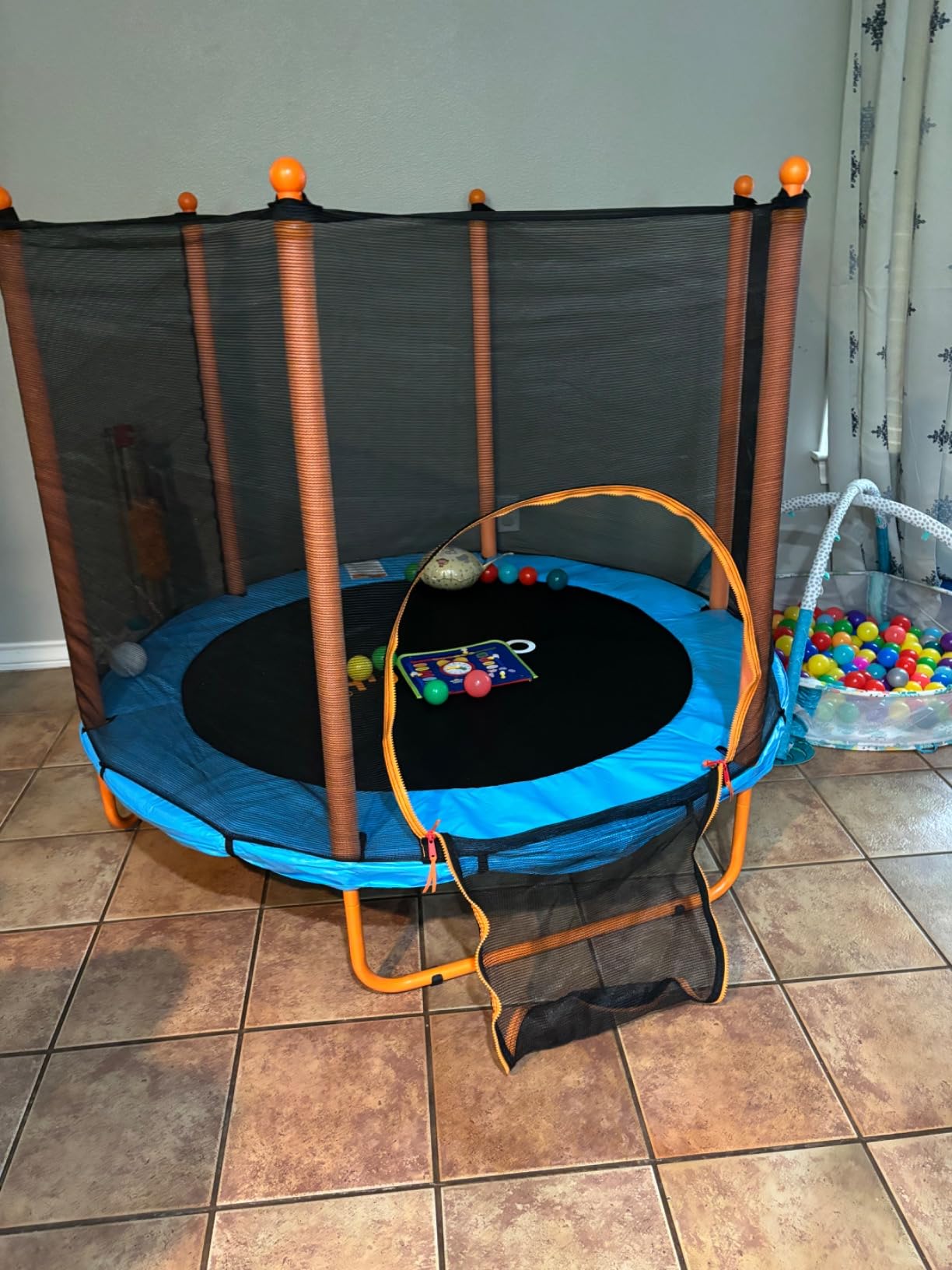
Owners report more than a year of daily use with no wear, and several mention doubling it as indoor exercise equipment when the weather turns. The included basketball hoop, dartboard and ocean ball give a two-year-old more to do than jumping alone.
Two things to know. The detachable basketball pole mount has broken for some buyers within the first hour of use, and the alternative string mount is the more reliable option. The spring holes are not perfectly consistent, so spring installation takes a little more care than the listing implies.
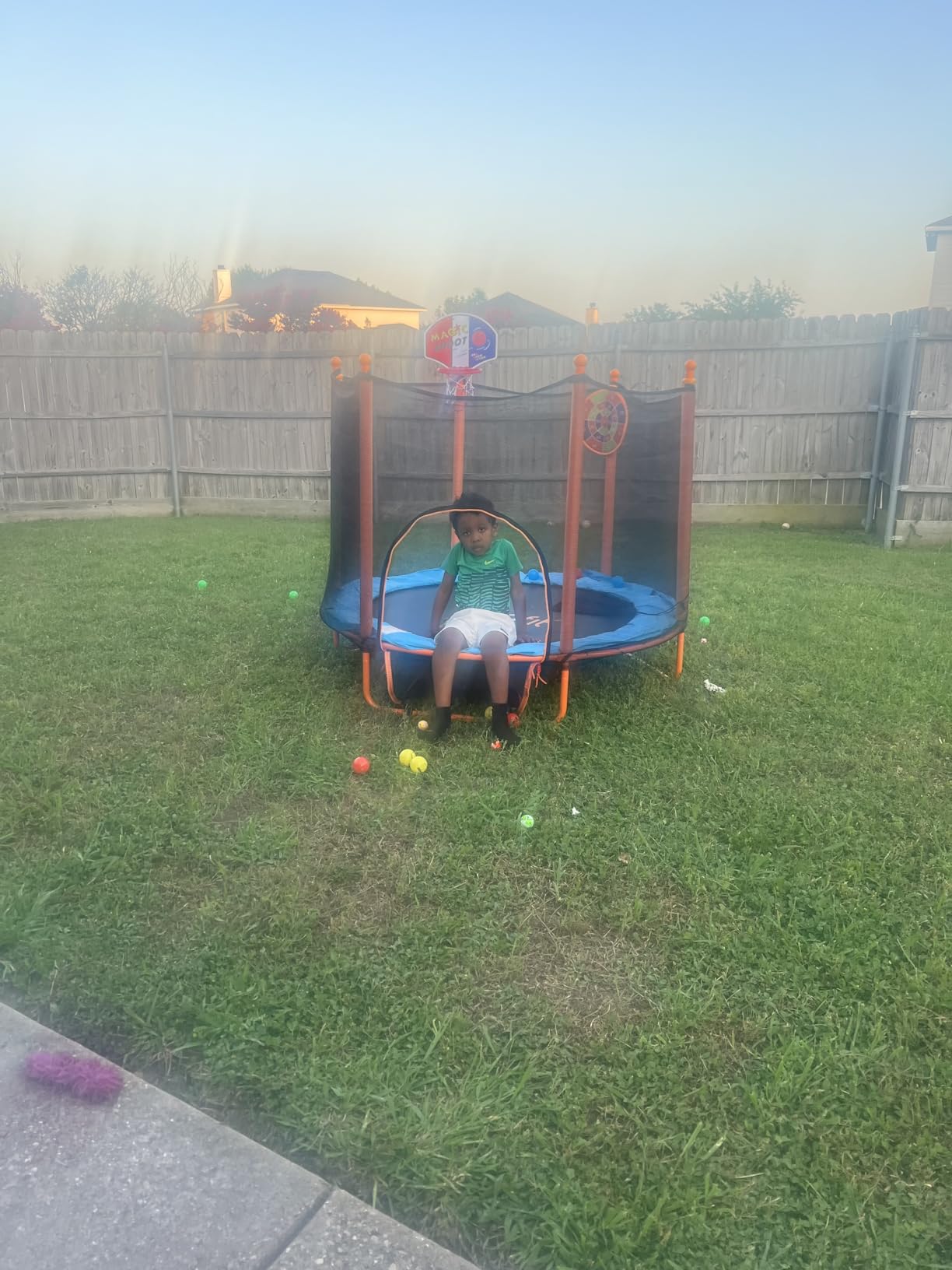
Is a 5 foot trampoline safe enough for a two-year-old?
The safety architecture is what makes it workable: full enclosure, three-layer pad and no exposed hardware at the mat edge. The 80-pound listed capacity tells you the limit plainly, and it is a toddler-and-young-child frame rather than a family frame.
Supervision still matters, because the certification covers the product rather than unsupervised use. Keep the hoop and dartboard accessories off if your child is under three, since the pole mount is both the most fragile part and the nearest hard object to a small head.
What happens when the second child outgrows it?
That is the real limit of this category. The 80-pound capacity and the low bounce are correct for ages 1 to 8, and an older child will find both the ceiling and the ride frustrating within a season.
Plan for the upgrade rather than stretching this one. A parent can treat a 5-foot toddler frame as a stopgap and move to an 8-foot round when the oldest child turns six or seven, which is when the jumping space starts to matter more than the enclosure height.
7. ANCHEER 56 Inch Mini Trampoline — Best for Two Kids at Once
- Wide enough mat for two children to jump at the same time
- Handlebar adjusts through five heights as the child grows
- Handle and legs detach so the frame folds flat for compact storage
- Tear-resistant Oxford cloth with reinforced crossbars and non-slip rubber feet
- Reviewers report two years of continuous use with no structural issues
- The cross bar sits too high for toddlers on its lowest setting
- Assembly documentation is confusing for the bungee cord and cover steps
- C-clamp support bolts do not seat fully flush with the frame
Most mini trampolines in this roundup are built for one child. This oval 56-inch model is wide enough for two, which is the feature that matters when two siblings are the reason you are shopping at all.
The adjustable handlebar runs through five positions from 38 to 50 inches, so the same unit works from a wobbling three-year-old up to a school-age child who still wants a grip. Parents also like that the handle and legs detach, letting the frame fold flat for storage between uses.
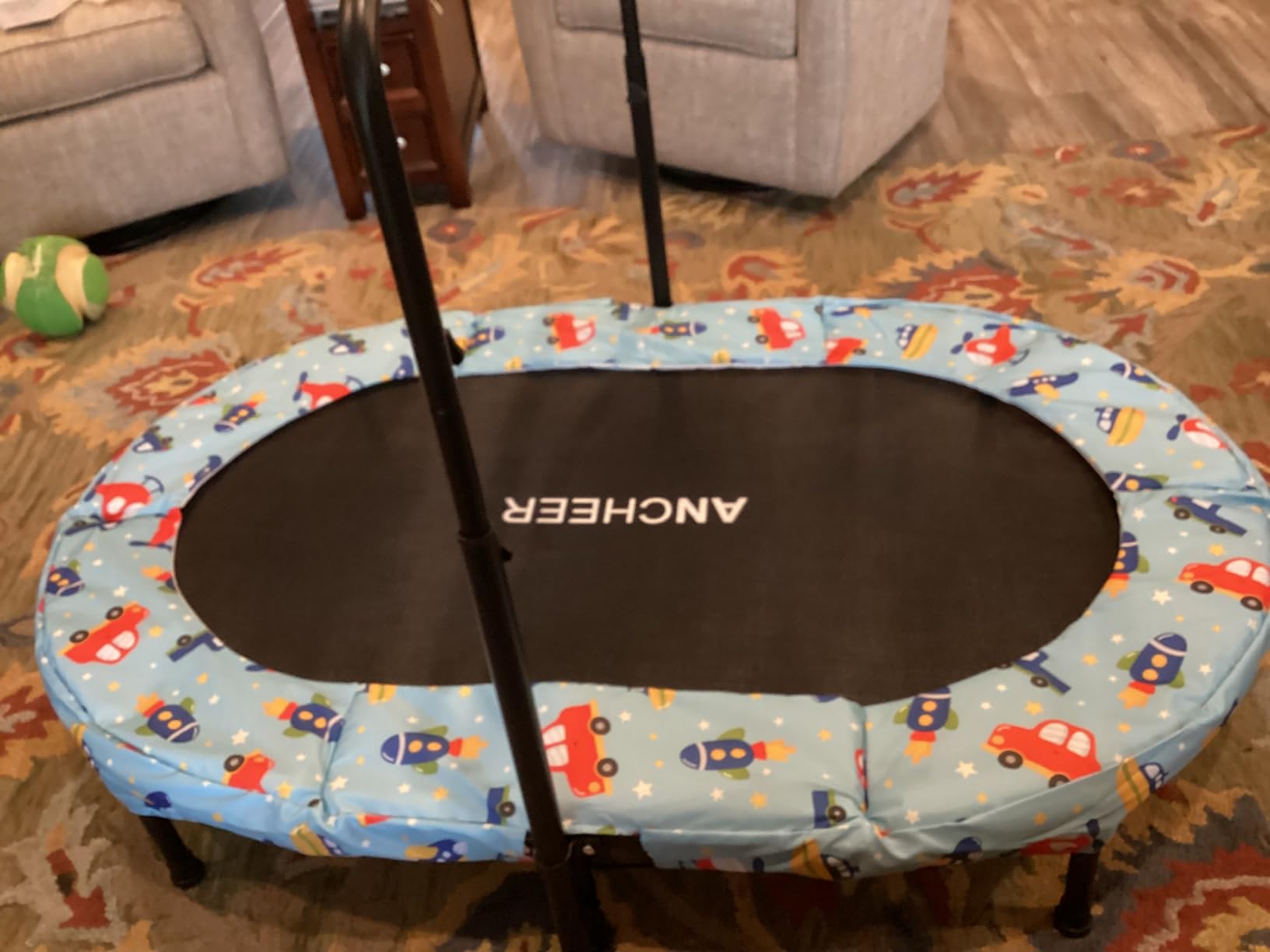
Build quality holds up to the use. The mat is tear-resistant Oxford cloth over an inner sponge pad, the crossbars are reinforced and the rubber feet stay put on hard floors. Reviewers describe two years of continuous use with no structural issues, and the two-year warranty is the longest among the mini models here.
The recurring complaint is documentation, not construction. The bungee cord and cover steps are poorly illustrated, and several buyers worked around it by removing the cross bar entirely. The C-clamp bolts also do not seat perfectly flush, which is cosmetic rather than dangerous.
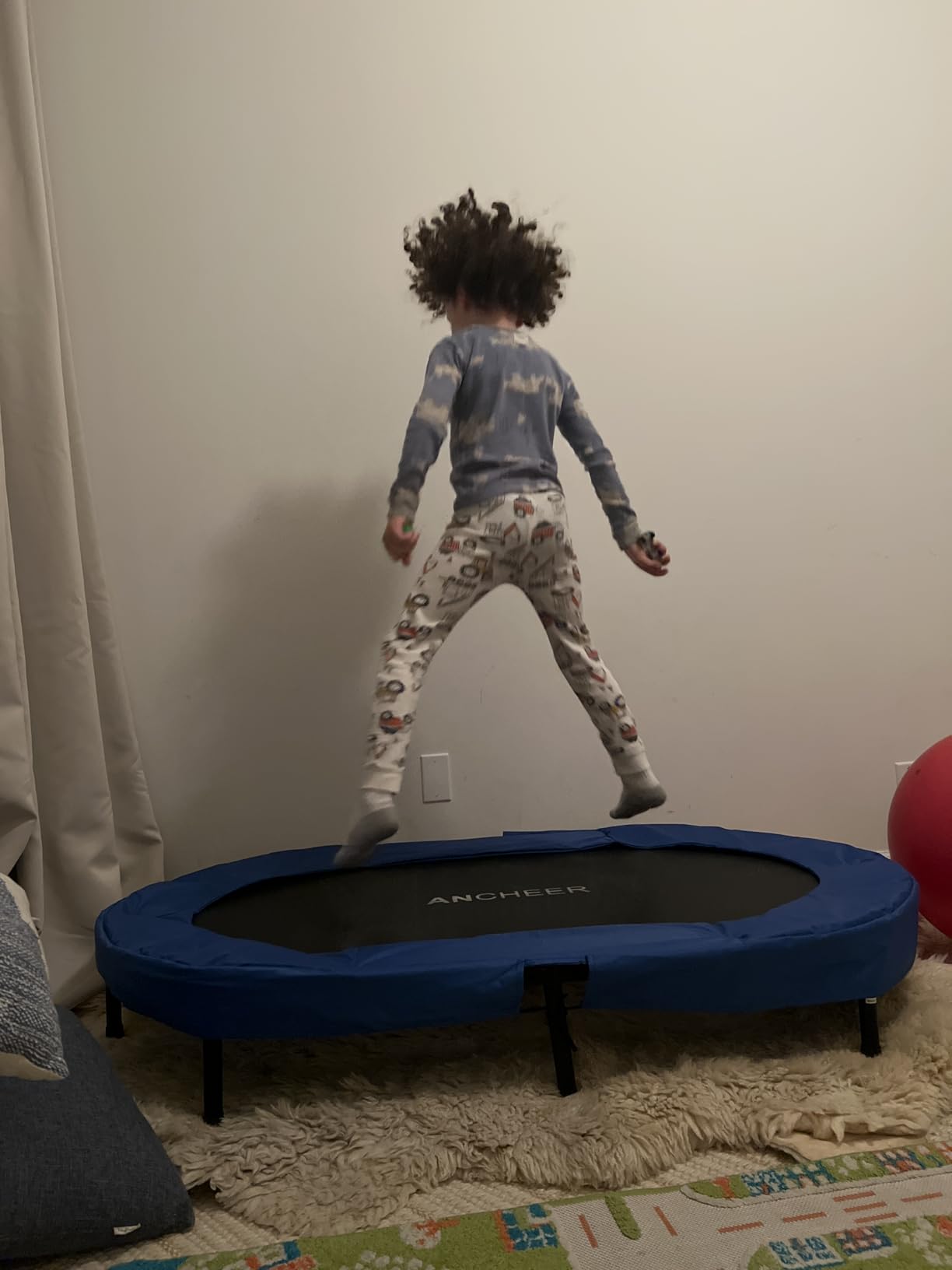
Can two children really jump on it at the same time?
Two small children, yes. The oval mat is wide enough for parallel bouncing, which is the arrangement most families with a three-year-old and a five-year-old actually need. Two adults, or two children over about eight, is where the space runs out.
Set clear rules from the first session: one child per end, no jumping while the other is mid-air, and the cross bar stays down. Supervision matters more here than on a full-size frame because the mat is small enough that a bad landing has nowhere to absorb.
Is the five-level handle worth the extra assembly?
It is the reason this model lasts longer than a fixed-handle rebounder, because a child outgrowing grip height is the usual reason these get retired. The trade-off is that it is a more complicated build, and the printed instructions are the weakest link in the package.
Budget twenty minutes rather than the ten the listing suggests, and if the cross bar proves fiddly, plenty of owners simply remove it. The folding frame and non-slip feet deliver the core value regardless.
8. BLUERISE 55 Inch Enclosed Trampoline — Best for Tight Patios
BLUERISE 55” Indoor&Outdoor with Enclosure Trampoline for Kids Gifts Blue
- ASTM F381-16 and F963-23 certified with a tall 360-degree foam-tube enclosure
- Suction-cup feet grip hard floors and resist tipping
- Stitched mat and protective pad keep feet away from the springs
- Long-term owners report it still functions after years in direct sun
- Compact 55 inch footprint works in small rooms and small yards
- Spring installation and net assembly are more involved than the description implies
- The plastic basketball hoop breaks quickly and net clips can be pulled loose
- The 6-in-1 hammock accessory sits too high for toddlers to enter safely
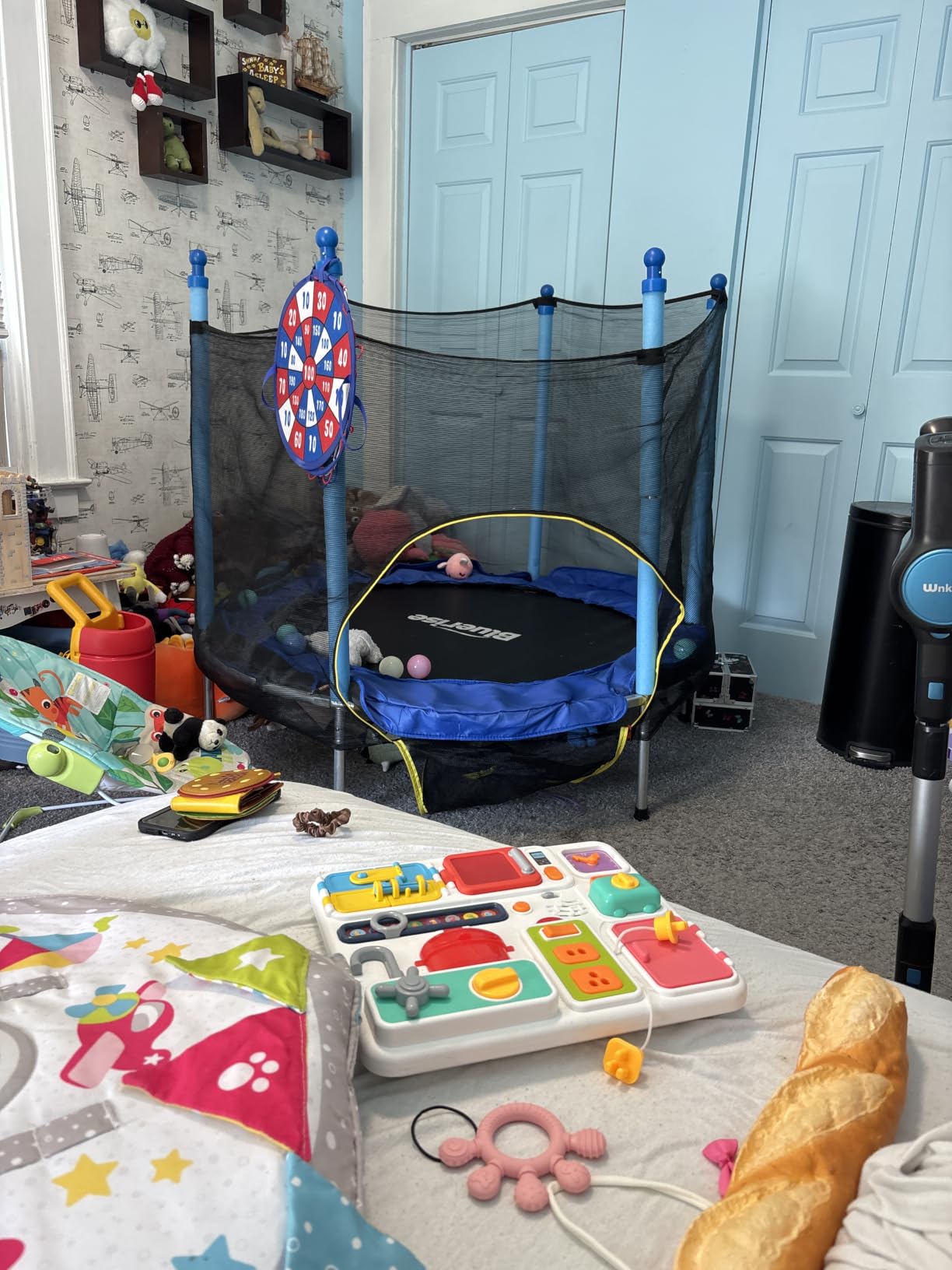
At 55 inches, this is the most compact fully enclosed frame in this roundup, and it needs only about 7 feet of clear width. That makes it the practical answer for a narrow side yard, a balcony or a covered patio where an 8-foot round will not fit.
The certification is the most thorough in the mini group, listing ASTM F381-16 and ASTM F963-23 along with CPSC and GCC standards. The enclosure is a thickened net on 360-degree foam tubes, which is a taller, softer barrier than a bare net post.
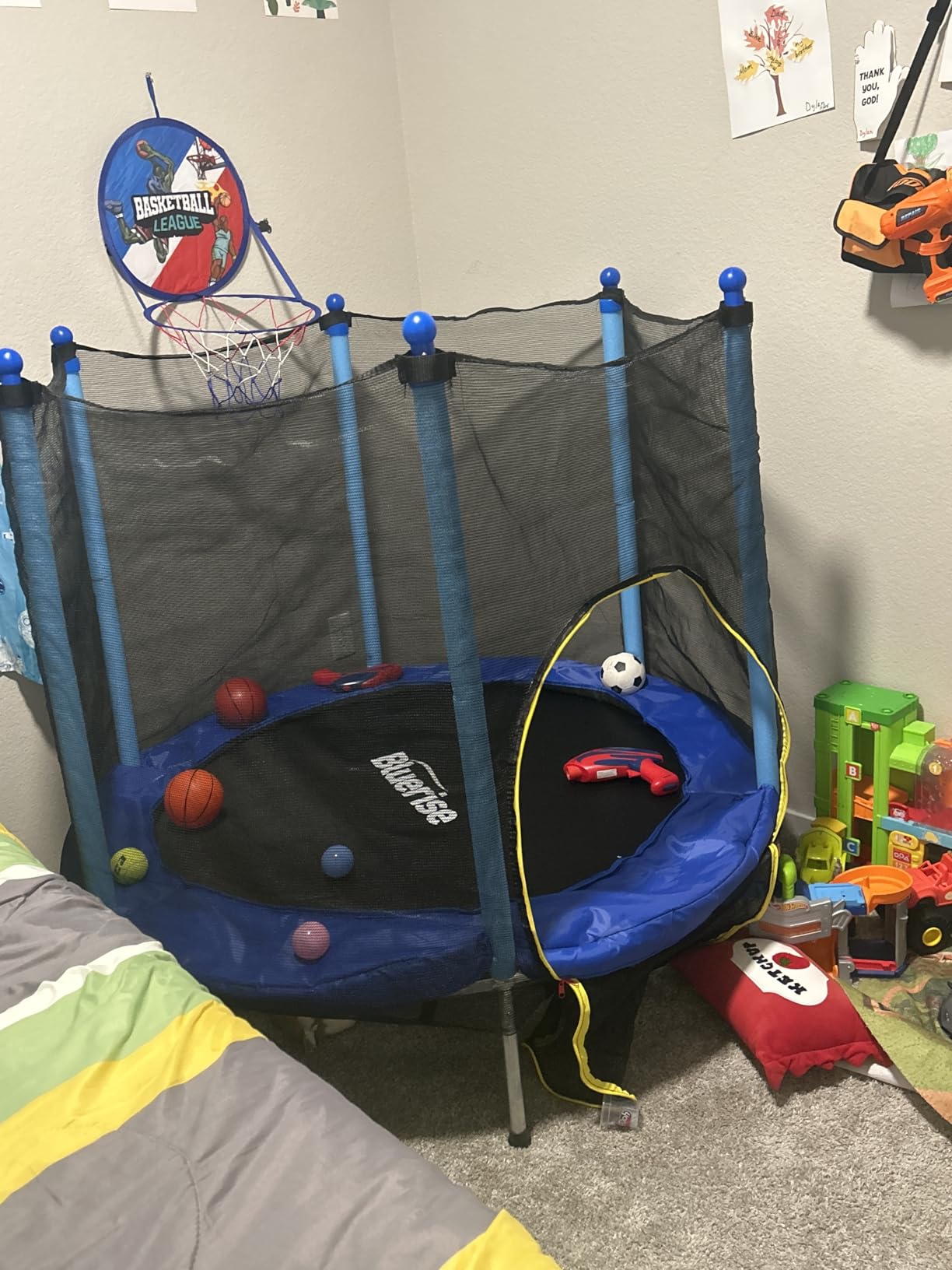
The suction-cup feet are the standout for hard surfaces. They grip a patio or an indoor floor and resist the tipping that normally happens when a small child bounces off-center on a light frame. Long-term owners report the unit still functions after years in direct sun, which is unusual for a mini trampoline.
Expect friction in the build. Spring installation and net assembly take more steps than the listing suggests, and the plastic basketball hoop is a frequent early failure. The 6-in-1 hammock accessory also sits too high for a toddler to enter safely, so leave it off.
Is 55 inches big enough for a real bounce?
Enough for a young child, and the reviews are consistent on durability. The ride is gentler than buyers sometimes expect, so set expectations with older children who are used to a full-size frame.
At 26 pounds the unit is easy to reposition, which means you can bring it out for a session and put it away. That flexibility is the real argument for a mini frame: it does not have to live permanently in the yard, and it does not permanently remove space from anything else.
How does it handle being left outdoors?
Better than most mini trampolines. Owners report continued function after years of sun exposure, and the stainless steel frame plus the foam-tube enclosure hold up without warping. Even so, a cover or a sheltered position extends mat life noticeably.
Check the net clips if more than one child uses it, since they can be pulled loose by small hands and that is the one failure that compromises the enclosure. Re-clip before every session rather than assuming they held from the last one.
9. ATIVAFIT 36 Inch Toddler Trampoline — Best Low-Bounce Mini
- No exposed metal springs
- so toddlers can bounce without hand or foot entrapment
- Foam handle plus six stable legs make it easy for small children to climb on
- Non-slip waterproof Oxford cloth mat stays put on wet surfaces and wipes clean
- Silent operation with one-person assembly and tools included
- Folds for storage and works indoors or outdoors
- 55 lb weight limit suits only toddlers and young children
- Elastic band suspension produces less air time than a spring trampoline
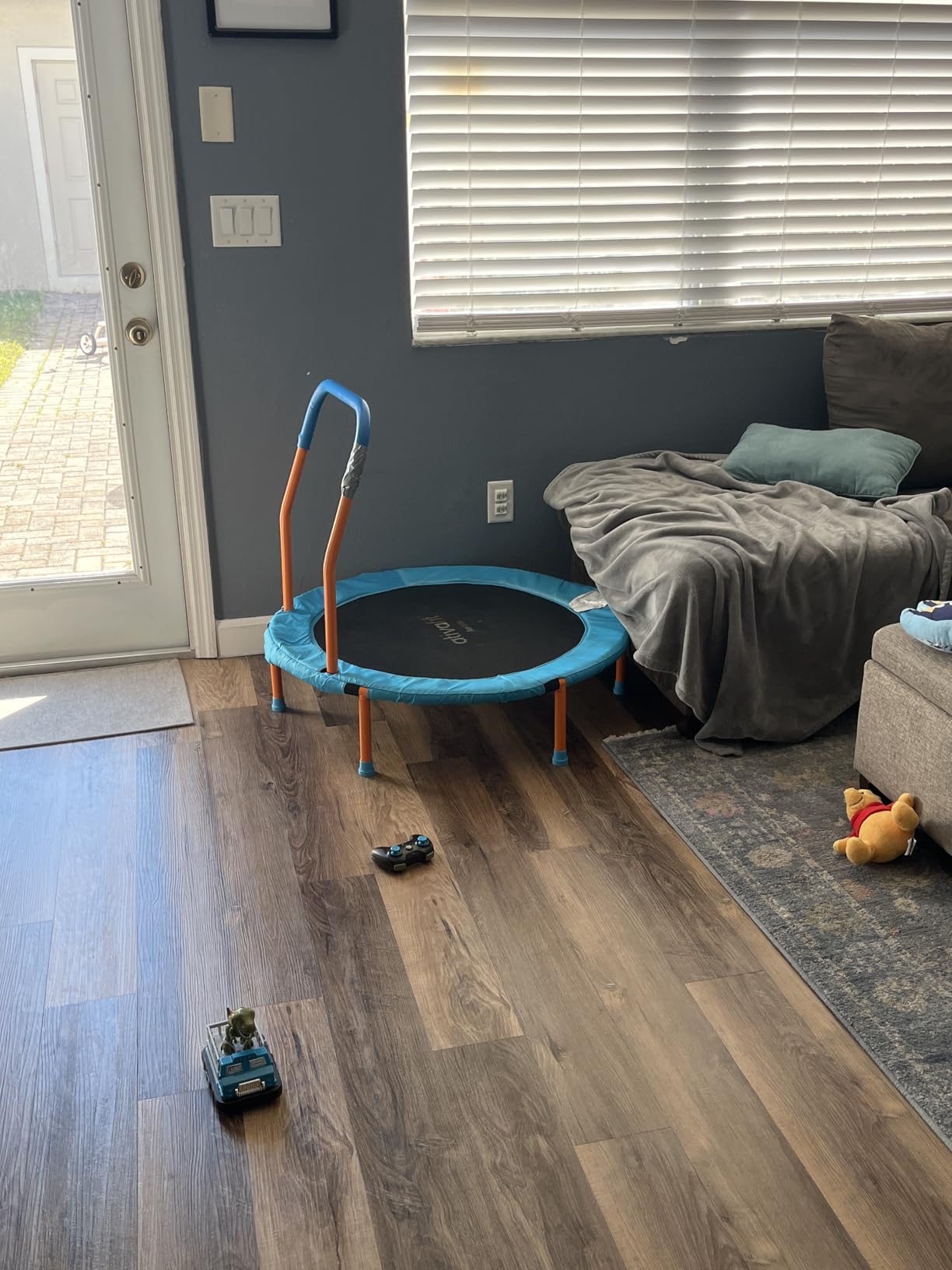
This is the spring-free design, and that single choice defines it. There are no metal springs anywhere near the mat, which removes the gap where a toddler’s foot or hand can slip down and get caught. For the youngest users, that risk is the reason many families avoid outdoor trampolines entirely.
Six stable legs with a safety lock and a foam handle give a small child a low, wide platform to climb onto without an adult lifting them. The mat is non-slip and waterproof Oxford cloth, so it holds on a damp surface and wipes clean after a spill.
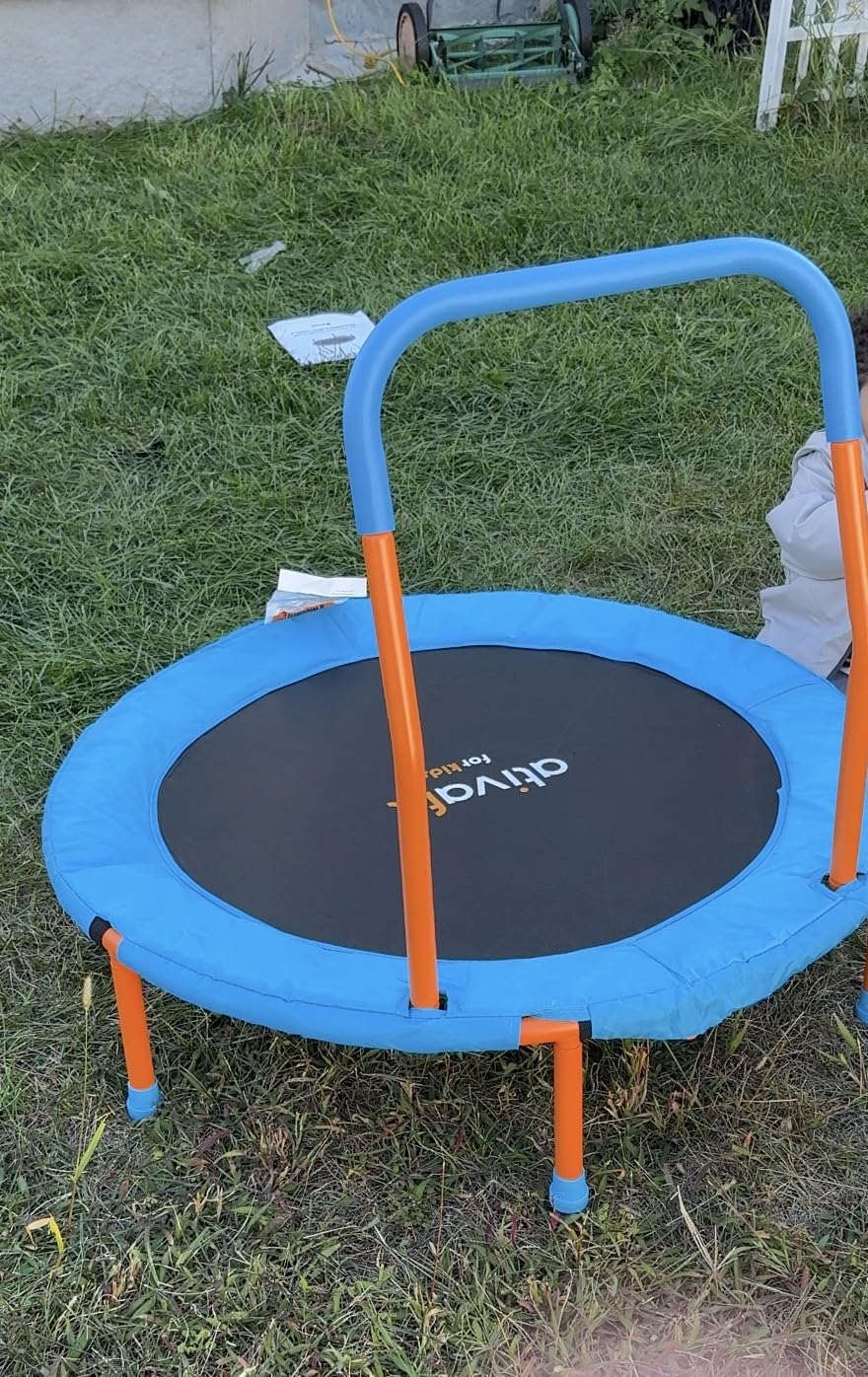
Operation is silent, which is a genuine advantage in a small home where a spring trampoline downstairs would be heard through the floor. Assembly is a one-person job with tools included, and the unit folds for storage and works indoors or outdoors.
The limits are clear. The listed capacity is 55 pounds, so this is strictly a toddler and young-child frame, and elastic band suspension produces less air time than a steel spring trampoline. Ratings sit among the highest in this group, with the ride itself as the only recurring adjustment in expectations.
Is a spring-free trampoline safe enough for a two-year-old?
It removes the single most common injury mechanism on a small outdoor trampoline, which is foot or hand entrapment between the mat edge and the springs. Combine that with six stable legs, a safety lock and a foam handle, and it is the most forgiving design here for the youngest ages from 2 to 6.
Silent does not mean unsupervised. The 55-pound ceiling is a real limit, and one child at a time on a mat this small is the only sensible rule.
When should you move up to a bigger trampoline?
When your child exceeds the 55-pound limit, which usually happens around age six or seven, or when they start asking for real air time. At that point the limiting factor is no longer safety, it is bounce, and a spring-suspended 5-foot or 8-foot frame is the right next step.
Until then, this unit barely uses your outdoor space. It needs about 4 feet of clear width, runs silently, and folds away when the floor space is needed again, which is why it works as well in a living room as it does on a patio.
10. BCAN BT1 36 Inch Toddler Trampoline — Best for Fold-Away Storage
- Folding leg design lets it collapse and reset multiple times a day for storage under a couch
- Integrated no-gap mat with noise-free elastic bands removes the spring gap
- Thickened two-level foam handle gives toddlers a secure grip
- Non-slip rubber feet keep it from sliding as children jump
- Tool-free assembly in about five minutes
- Can drift slightly on hard floors while a child is bouncing
- so it needs watching
- Elastic band suspension gives a modest bounce height
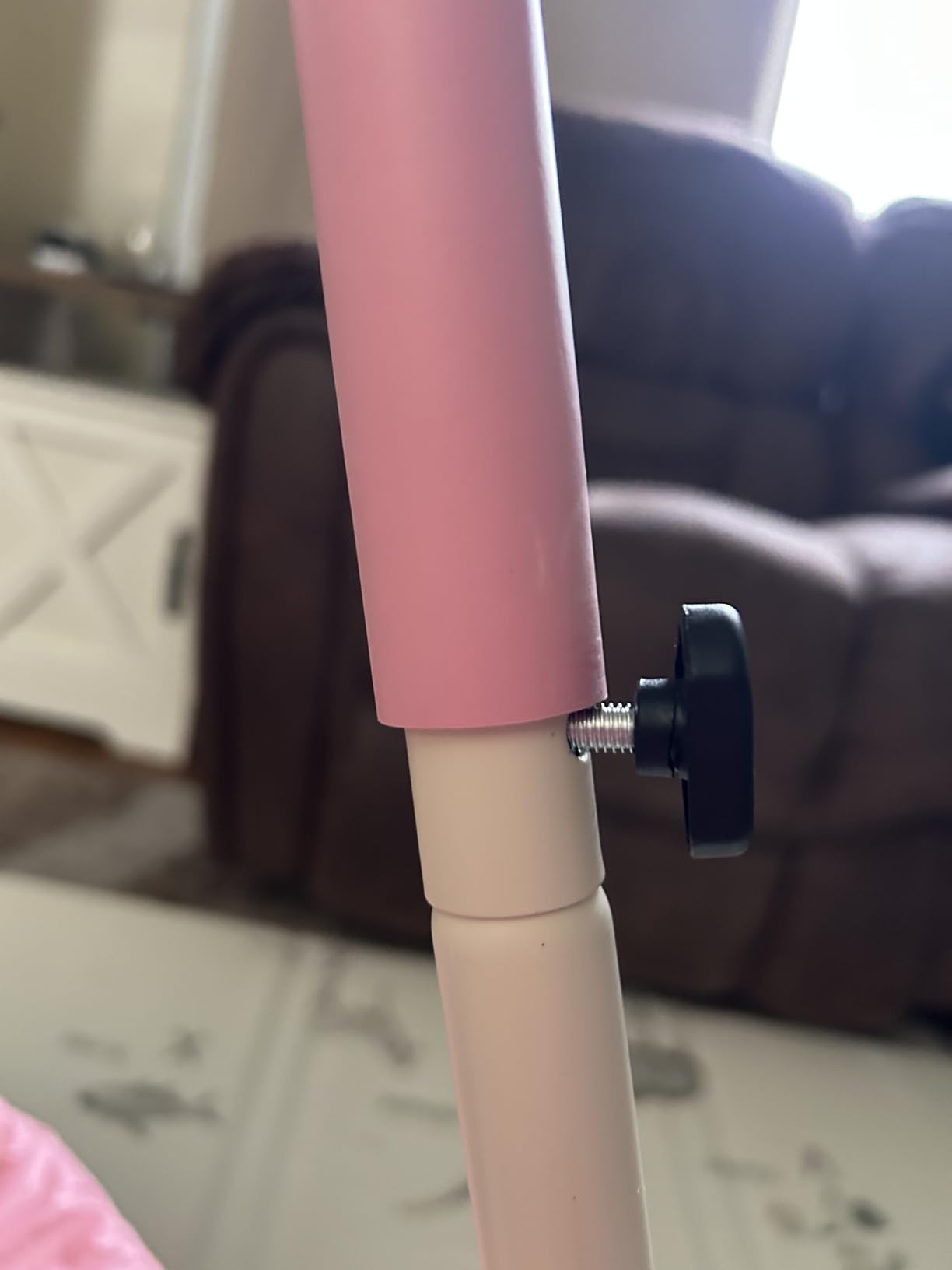
The BCAN is the pick when a small yard is not really the problem, and floor space is. Its folding leg design lets the frame collapse to roughly 3.5 inches thick and reset several times a day, so it can go under a couch between sessions and come back out for a jumping session.
Like the ATIVAFIT 36, it uses a gap-free mat with noise-free elastic bands instead of metal springs, and the two-level foam handle gives a toddler a secure grip at two heights. Non-slip rubber feet and inward-curved handles with safety pins handle the anti-tip question directly.
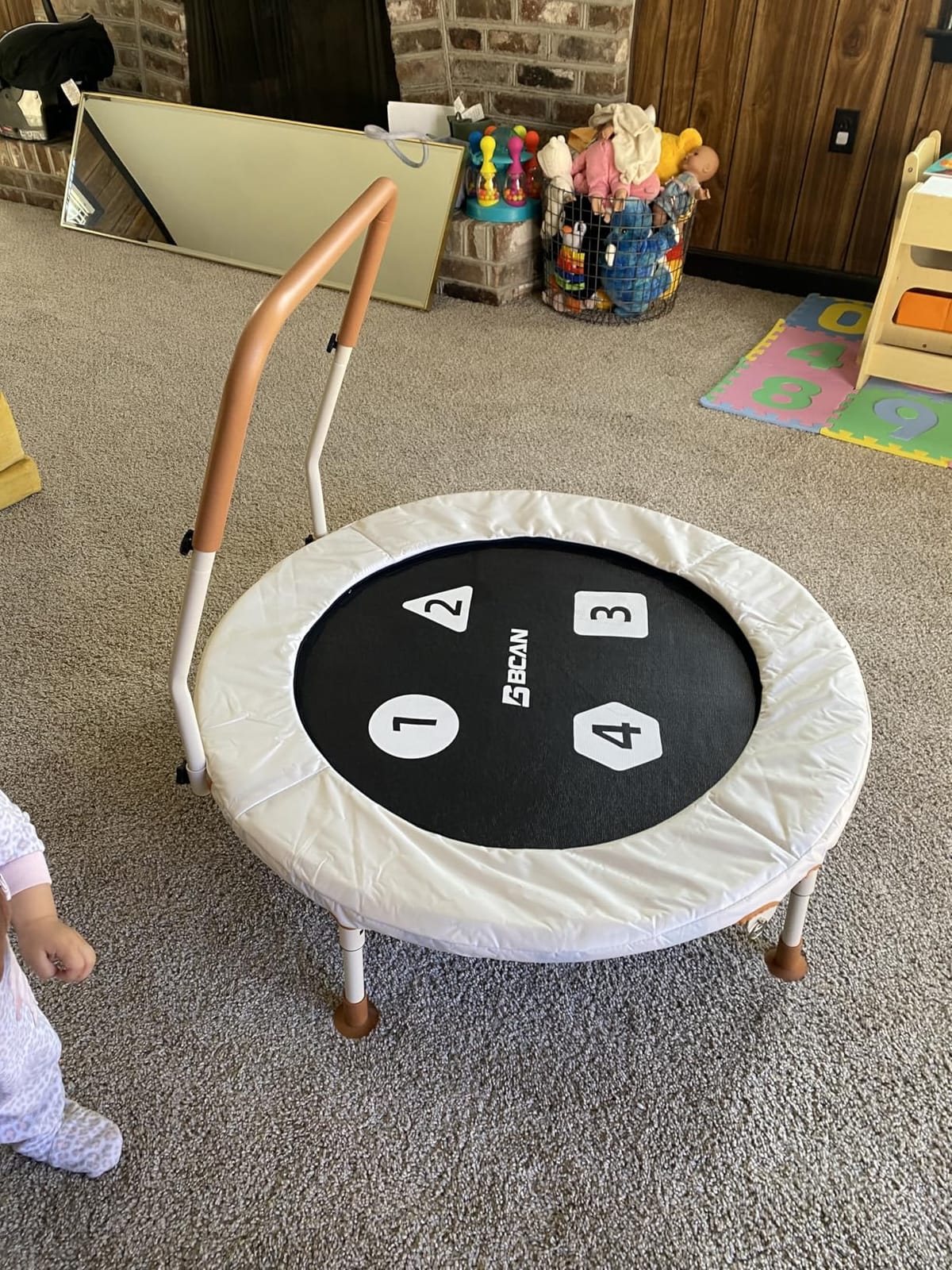
Assembly is tool-free and takes about five minutes, which is the fastest build in this roundup and the one detail that makes the fold-and-reset routine realistic. Owners single out the folding mechanism and the gap-free mat as the standout features, and the overall response is very positive.
Two caveats. It can drift slightly on a hard floor while a child is bouncing, so it needs watching in a room with furniture nearby. And the elastic band suspension gives a modest bounce height, which is fine for ages 1 to 6 and disappointing beyond that.
How does the fold-flat design change ownership?
It turns a permanent object into a temporary one. Most trampolines take up ground for nine months and are covered for three. A unit that collapses under a sofa in ninety seconds is a toy you actually use year-round, including indoors in bad weather.
That is why the folding legs matter more here than any jump metric. If you can put it away easily, you will put it away, and a trampoline that is folded away is one that never blocks a small yard or a small living space.
Is the no-gap mat worth choosing over a spring model?
For ages 1 to 6, yes. There is no channel between the mat edge and the suspension for a small hand or foot to slide into, which is the failure parents are told to watch for and the one this design removes.
The trade-off is ride quality. Elastic bands give a flatter, shorter bounce than steel springs, so this is a first trampoline rather than a last one. Set the expectation early and most families are happy with a quiet, safe platform for a two-year-old.
How to Measure Your Yard Before You Buy
Most small-yard disappointments trace back to a measurement taken from the trampoline listing instead of from the ground. Five minutes of taping out the clearance zone prevents nearly every return-level problem.
Start with the widest clear rectangle you can find, not the largest number on a spec page. Measure the fence line rather than the property line, because a fence, a downspout or a raised bed eats into usable space in ways that are obvious once you stand in the yard with a tape.
Next, add the clearance requirement. Roughly 6 feet of clear, unobstructed ground on every side is the working figure for a residential enclosure, and that is the number that turns an 8-foot frame into a 20-foot footprint. Anything less than 6 feet on a side should rule the model out.
Then check overhead clearance, which is the step most guides skip. Stand in the center of the planned area and look straight up. A branch, a balcony, an awning, a power line or a low ceiling must clear the top of the net plus the height of a full jump, and in a compact yard this eliminates models that would otherwise fit perfectly on paper.
Finally, check the walk-around. If the clearance ring is complete but you cannot walk between the trampoline and the fence, access suffers and a single 8-foot frame is the right answer. If the ring is broken by a corner, plan on rotating the layout so the enclosure faces open ground rather than a structure.
For context on how the shape of your space changes the answer, our guides to trampolines for kids and to other small-yard upgrades cover the adjacent decisions in the same limited footprint.
Safety Features That Matter Most in a Small Yard
In a small yard the enclosure is not one feature among several; it is the feature, because the clearance ring is where a jumper ends up when a bounce goes wrong. ASTM F963 compliance is the baseline to check first, and it is a requirement rather than a differentiator.
Look for a no-gap or mat-to-net transition, meaning the net attaches directly to the jumping mat with no gap for a foot to slip into. A spring pad or frame pad matters just as much, since it is the layer between bare feet and exposed steel. Models like the AOTOB and the BCAN both narrow or remove that channel, which is a detail that is visible in the build rather than on the label.
Net height is the next consideration. A taller net sits above the reach of a child at the top of a bounce, and the SKOK’s 4.9-foot enclosure is the tallest net height listed in this group. Pole padding matters too, and curved poles that lean away from the jumping area do two jobs at once: they soften contact and they return a few inches of usable width.
Finally, match the listed capacity to your real users. Ratings across this group range from 55 pounds on toddler models to 400 pounds on the AOTOB and SKOK frames. Pick the number that matches the heaviest person who will actually jump, and remember that net clips, padding and spring covers all need periodic checks in a yard where a fence is a few feet from the frame.
For a full comparison of enclosures by design rather than size, see our picks for trampolines with safety-tested enclosures.
Round vs Mini: Which Shape Fits Your Space
Shape is the second question after size, and in a small yard it comes down to geometry rather than bounce. A round 8-foot frame gives an even, predictable surface with no preferred direction, which makes it the safe default for a lawn.
Rectangular frames offer a flatter surface and more usable jumping area, but they need a straight edge or a corner to sit against, because their footprint does not nest into an irregular yard. If your space is a clean rectangle, a compact rectangular model beats a round one for surface quality; if your space is anything else, round is the smarter fit.
The oval and circular mini frames fill a different need entirely. At 36 to 56 inches, they need 4 to 7 feet of clear width, which is what makes them usable on a patio, a side yard or an indoor floor. The trade is bounce: elastic bands and short mats favor toddlers and indoor energy burning rather than backyard play.
Whichever shape you pick, add the basketball hoop and accessories last. Models with attached hoops are a good deal for a full-size frame, and the accessories bundled with mini models are the first thing buyers report breaking, so the extra play value should not drive the purchase.
Buying Mistakes to Avoid in a Small Yard
The most common mistake is buying on frame diameter. Manufacturers quote the frame, buyers measure the yard, and the 6-foot clearance on each side never appears in the calculation. Measure the total footprint instead.
Second is buying 12ft, 14ft or 16ft because bigger looks better. Those frames need 24 to 28 feet of clear width, and in a small yard they push the net into a fence line where the enclosure stops doing its job.
Third is ignoring overhead clearance. A perfect ground ring is still unusable if a low branch or an overhang sits above the net, and this is the constraint that surprises owners most often after delivery.
Fourth, assuming more springs means a better trampoline. Spring count drives feel rather than safety, and a 64-spring frame is worth buying when heavy users are involved rather than as a general quality signal.
Fifth, skipping anchoring in a confined space. Less room to stake means more wind load on a smaller frame, and the basic wind stakes included in the box are a starting point rather than a finished installation.
Sixth, treating the cover as optional. Mat fading is the most common long-term complaint on these models, and a cover costs far less than replacing a mat. If you want a hoop, our trampoline picks with basketball hoops cover the frames where the attachment holds up.
Seventh, and last, buying a model that suits your child now and not next year. The toddler mini models in this roundup are excellent for ages 1 to 8 and a poor use of money for a seven-year-old, so check the capacity and age band against the oldest child who will use it.
Frequently Asked Questions
What is the best size trampoline for a small yard?
An 8-foot round frame with a full enclosure is the best size for most small yards. You need roughly 6 feet of clear ground on every side, so the real footprint is close to 20 feet wide. A 5-foot or 36-inch mini trampoline suits patios and porches, while 12ft and larger frames need 24 feet or more of clear width and rarely suit a genuinely small yard.
What is a good small trampoline for home use?
A good small trampoline combines a compact frame with a real enclosure and a listed capacity that matches the heaviest user. For a family lawn, the AOTOB and SKOK 8-foot frames rate to 400 pounds with padded poles and a spring cover. For a patio or indoor room, the spring-free ATIVAFIT and BCAN 36-inch models remove the entrapment gap entirely.
Should I get a 14ft or 16ft trampoline?
Only if your yard can supply 26 to 28 feet of uninterrupted clear width plus overhead room. Those frames are built for full-size yards, and in a small lot the extra diameter pushes the enclosure toward fences and structures, which is exactly where jumping injuries happen. If your yard measures under 20 feet across, choose an 8-foot round or a compact mini instead.
Which trampoline brand is considered the most reliable?
Reliability is better judged by warranty length, steel frame sourcing and parts availability than by brand name alone. In this group the AOTOB carries a five-year warranty, the ANCHEER mini model two years, and most others one year. Look for a brand that sends replacement nets, mats and rods quickly, since those are the parts that actually fail.
How much space do you need around a trampoline?
Plan on roughly 6 feet of clear, unobstructed ground on every side of the frame, plus vertical room above the net for a full jump. An 8-foot round frame therefore needs close to 20 feet of total width, a 10-foot frame about 22 feet, and a 36-inch mini trampoline about 4 feet. Overhead branches, balconies and awnings reduce usable space just as fences do.
Which Trampoline Wins for Your Small Yard in 2026
For most small yards, the AOTOB 8FT is the pick to make: a 400-pound rating, a widened jumping area inside a compact frame, three U-shaped legs and a tight jump-pad-to-spring-cover transition. Where budget is the deciding factor, the Jumpzylla 8FT covers more ground in the box, including the ladder and wind stakes, and holds up well once it is anchored.
If adults or teenagers will bounce, take the SKOK 8FT with its 400-pound rating, 64 springs and 4.9-foot net. If your space is a patio, porch or room rather than a lawn, move down to the 5-foot ATIVAFIT for toddlers or a spring-free 36-inch model for a fold-away, silent option.
Measure the clearance ring before anything else, not the frame. The best trampolines for small yards in 2026 are the ones that leave you 6 feet of open ground and clear air on every side, and the models that fit that rule are the ones worth owning.