
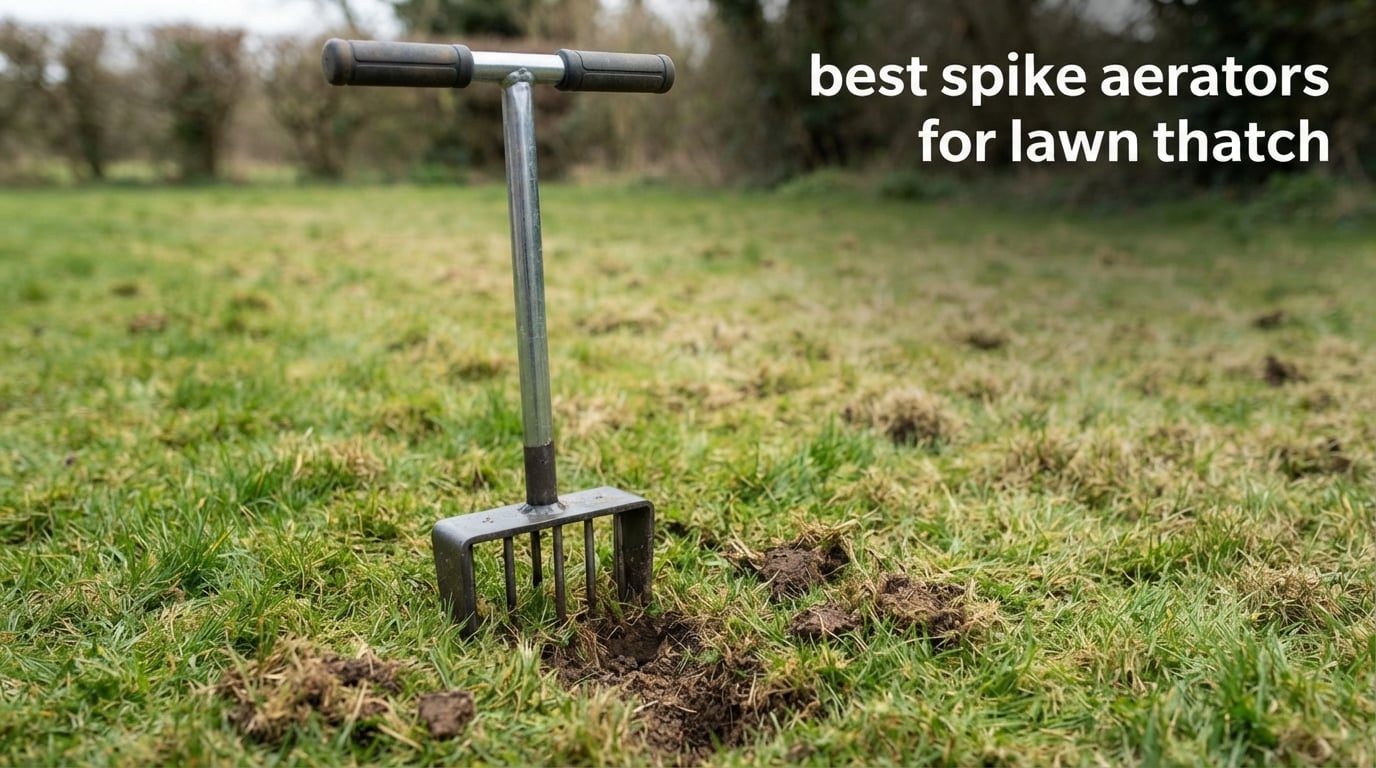
Here is the honest answer, and it matters more than any product on this list: a spike aerator punctures the thatch layer and loosens the soil beneath it, but it does not pull thatch out. Spikes make small holes and shove some thatch sideways. They are excellent for relieving compaction, opening the surface to air and water, and prepping patches before overseeding, and they are the cheapest way to deal with a spongy, compacted spot. For a genuinely thick thatch mat, you want a dethatcher or a plug (core) aerator instead.
That is the standard advice from long-time lawn keepers on equipment forums, and it is why so many people finish a spike aeration job feeling like nothing happened. The lawn looks the same, the mat is still there, and the tool goes back in the shed. Used correctly, as a supplement rather than a cure, a spike aerator is a genuinely useful and inexpensive addition to any lawn kit.
This roundup covers the best spike aerators for lawn thatch available now, from walking sandals to a 40-inch tow-behind unit for big properties. We looked at spike length, spike count, frame height, ballast capacity, steel gauge and real review patterns across twelve tools, and we kept the honest framing: these open the ground, they do not vacuum out the thatch. If you are pairing your aeration with mowing, our picks for the best robot lawn mowers and best riding lawn mowers cover the other half of the season.
Table of Contents
Top 3 Spike Aerator Picks for 2026
Walensee 15-Spike Manual Aerator
- 15 iron spikes at about 2.8 inches
- 34.6-inch cushioned T-handle
- Powder-coated iron
- Top-ranked in Manual Lawn Aerators


Suchtale 40-Inch Tow-Behind Aerator
- Ten 8-inch star tines
- 110-pound weight tray
- Galvanized steel tines
- Pin-style hitch
Best Spike Aerators for Lawn Thatch in 2026 at a Glance
| Product | Specifications | Action |
|---|---|---|
| Walensee 15-Spike Manual Aerator |
|
Check Latest Price |
| Ohuhu Aerator Sandals |
|
Check Latest Price |
 DenForste Pre-Assembled Aerator Shoes DenForste Pre-Assembled Aerator Shoes |
|
Check Latest Price |
 Jardineer 36-Inch Spike Aerator Jardineer 36-Inch Spike Aerator |
|
Check Latest Price |
 Bakulala Aerator Shoes with Dual Straps Bakulala Aerator Shoes with Dual Straps |
|
Check Latest Price |
| Suchtale 40-Inch Tow-Behind Aerator |
|
Check Latest Price |
 Colwelt Four-Spike Aerator Colwelt Four-Spike Aerator |
|
Check Latest Price |
 Saker 15-Spike Spring Aerator Saker 15-Spike Spring Aerator |
|
Check Latest Price |
 Onadak 15-Spike Spring-Assist Aerator Onadak 15-Spike Spring-Assist Aerator |
|
Check Latest Price |
 RIFPOD Auto-Clean 15-Spike Aerator RIFPOD Auto-Clean 15-Spike Aerator |
|
Check Latest Price |
 SENVERT Rolling Lawn Aerator SENVERT Rolling Lawn Aerator |
|
Check Latest Price |
 Bluesea 16-Spike Aerator Bluesea 16-Spike Aerator |
|
Check Latest Price |
Do Spike Aerators Actually Fix Thatch?
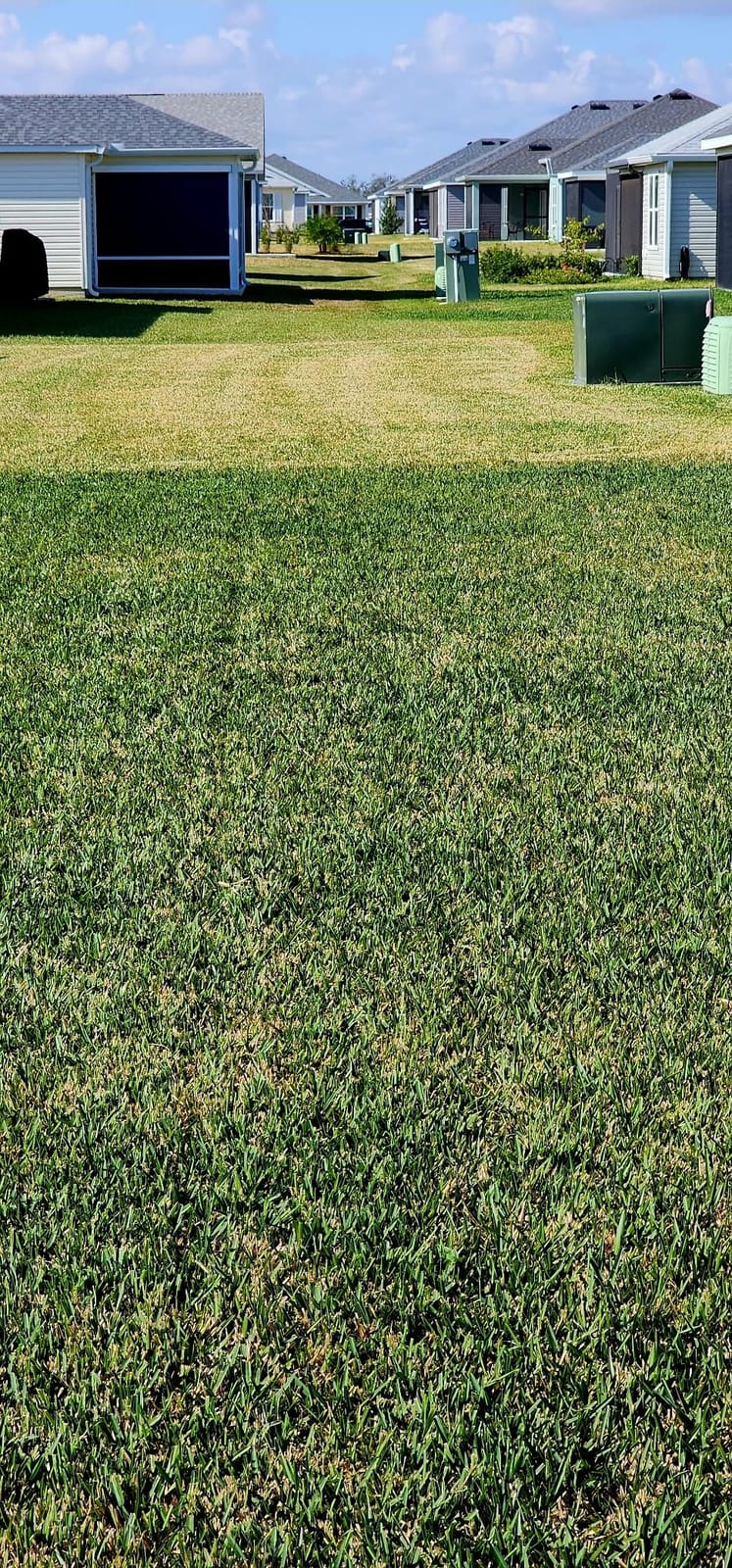
Partly. A spike aerator’s job is to punch narrow holes through the turf and the thatch mat so that air, water and fertilizer can reach the root zone. It does that well, and it is a genuine help for compacted soil. What it cannot do is lift, break up or remove the mat.
Think of four different jobs. An aerator opens channels. A plug or core aerator pulls a small cylinder of soil out, which is what actually relieves compaction over time. A dethatcher cuts and hauls away the thatch layer itself. A scarifier uses angled blades to scratch the thatch and soil surface apart, and it is the tool to reach for in spring when the mat is thick. A spike aerator sits at the gentle end of that list.
The practical rule: if the thatch mat is under about half an inch, spike aeration plus a good dethatching pass will do the job. If you can push a ruler into the thatch and it disappears past half an inch, spike tools alone are the wrong purchase. A thick mat also means grass roots are sitting in dead material instead of soil, which is why seed germinates poorly and the lawn thins out.
1. Walensee 15-Spike Manual Aerator – Best Overall Coverage
Walensee Manual Lawn Aerator Tool with 15 Iron Spikes, Garden Spike Aerator
- 15 spikes in three rows cover more ground per step
- Cushioned T-grip reduces bending and hand fatigue
- Steadier footing than strapped shoes
- Detaches for carrying and storage
- Top-ranked in Amazon's Manual Lawn Aerators category
- Not built for heavy sticky clay or whole-yard jobs
- Best results need the soil watered first
We used the Walensee GT-LCA006 through a spring thatch cleanup and it is the tool we hand to friends first. Fifteen powder-coated iron spikes at roughly 2.8 inches each sit in three rows, so a single step opens fifteen holes instead of the four or five a light-duty model gives you. That difference is what turns a spot treatment into a yard-sized job.
The 34.6-inch handle with a cushioned T-grip and a foot pedal for leverage lets you push down with body weight rather than arm strength. At 4.49 pounds it is light enough to reposition without resting it on your knee.
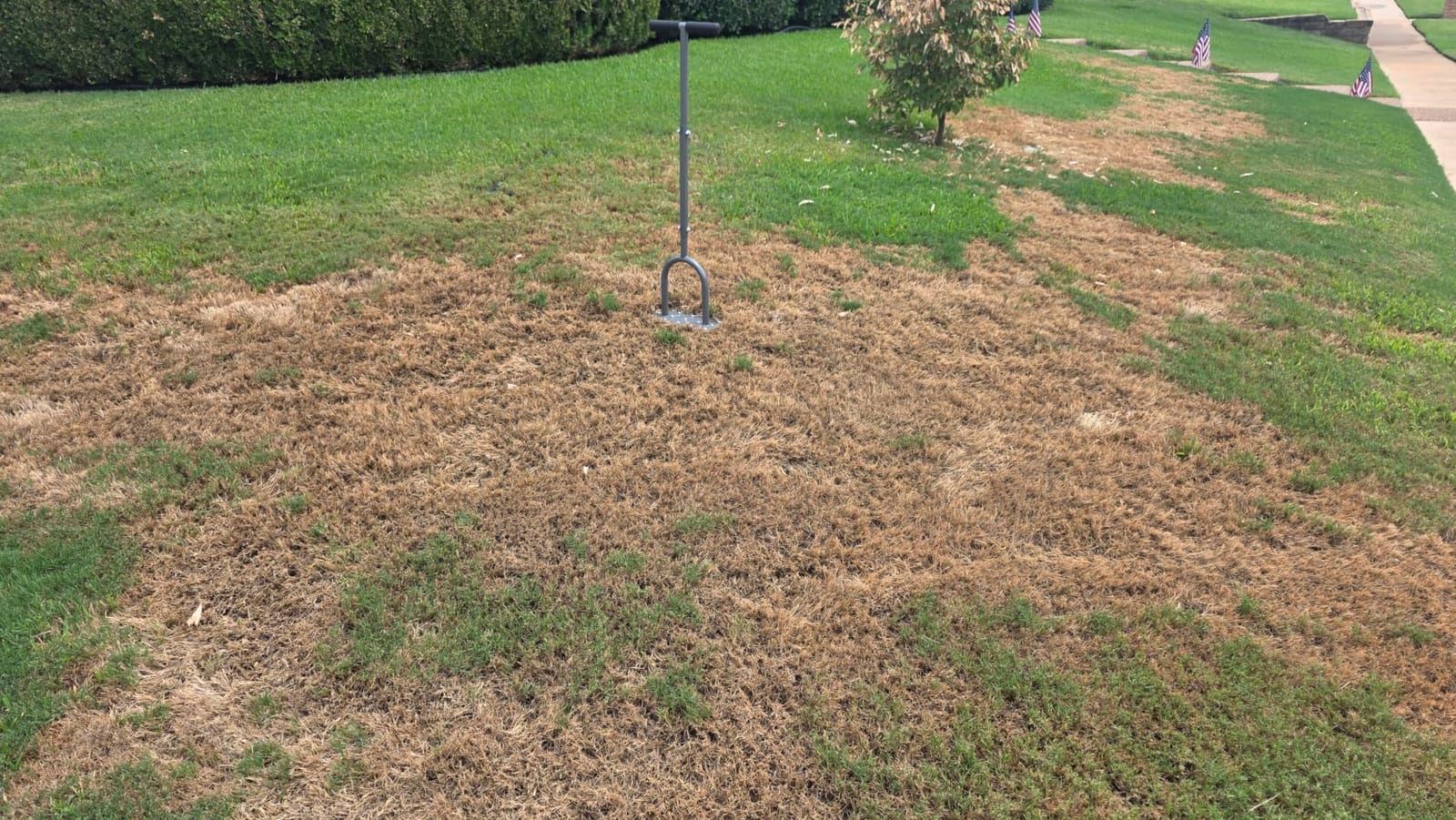
Reviewers repeatedly single out the three-row spike layout and the handle comfort, and the tool holds a 4.3-star average across more than 2,800 reviews. The detachable head is a small thing that matters in a shed, since it breaks down flat instead of standing in the corner all season.
It still pulls no thatch and no soil. Used twice a season on compacted traffic lanes, it does exactly what a spike tool is supposed to do.
What to check before you buy
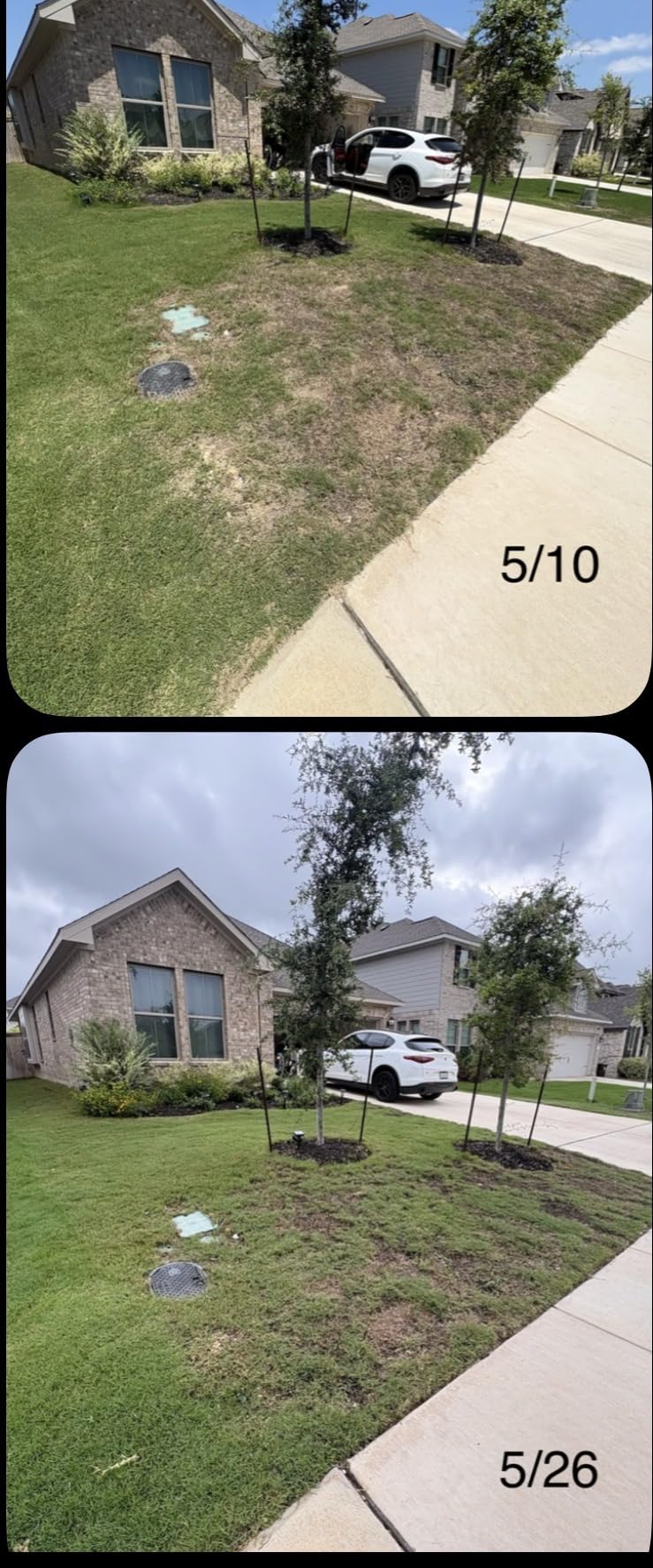
Measure your lawn honestly. Fifteen spikes at a 2.8-inch depth will handle a front yard, but it is a hand tool and you will feel it by the third pass. Owners of large properties generally pair one of these with a tow-behind unit rather than trying to cover acres on foot.
Where it falls short
Reviewers note it is not designed for heavy sticky clay, and in very dry hard ground the spikes can deflect. Water the lawn the day before, walk on it, and you will get clean penetration instead of tines bending on the first step.
2. Ohuhu Aerator Sandals – Best Low-Cost Spot Tool
- Ready to wear with no assembly at all
- One-size design fits a range of footwear
- Lightweight 1-pound build is easy to walk in
- Most-reviewed spike sandal in this group
- Only works on small high-traffic patches
- Straps can shift during longer walks
The Ohuhu sandals are the fastest way to treat a thin, worn patch by the front door or a muddy dog path. They arrive as finished sandals with hook and loop straps, so there is no assembly, no tools and no frame to store.
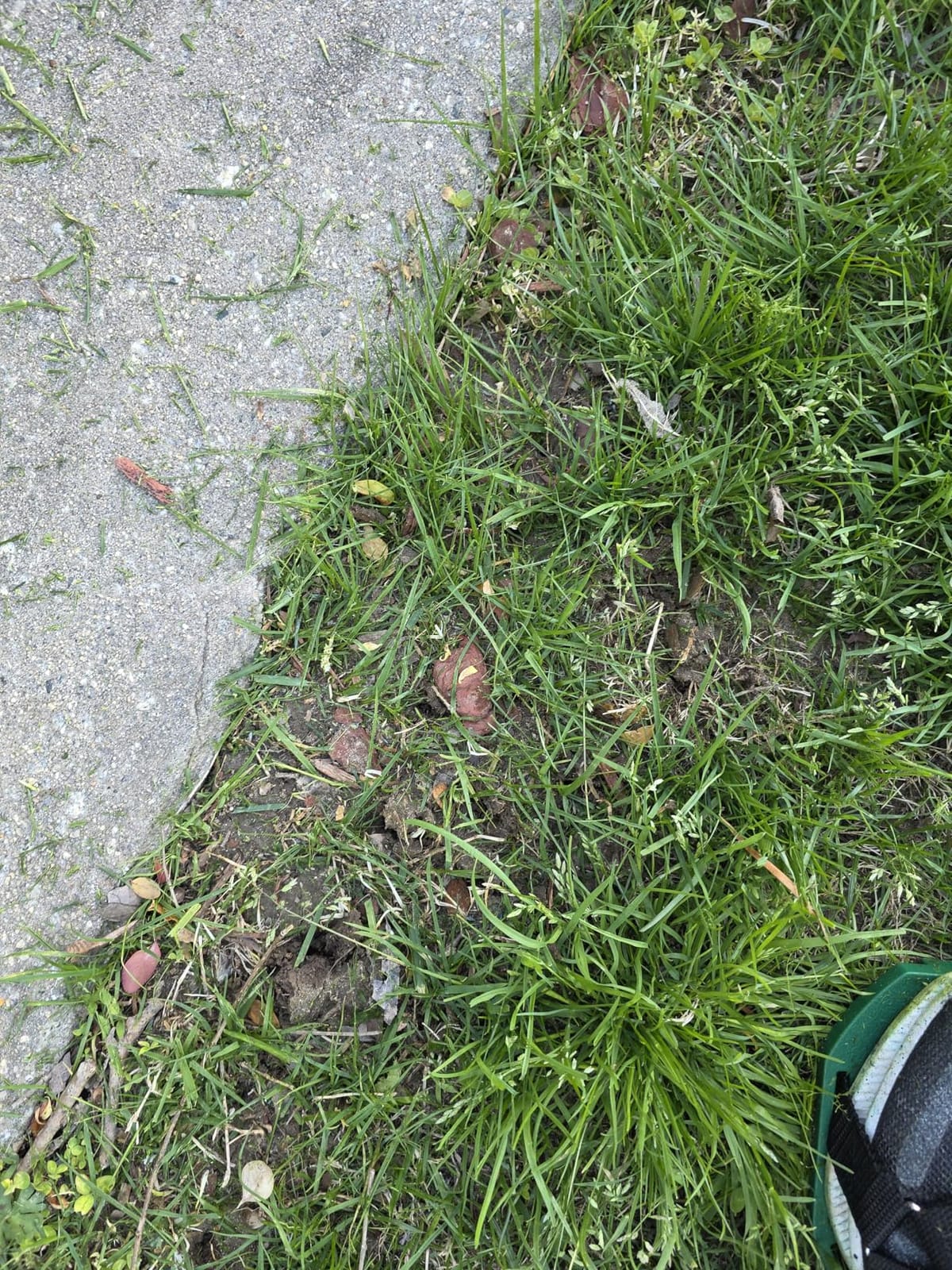
We used them on a compacted strip along a walkway and the effect is immediate where the ground is soft. You just walk the area a few times, like wearing a very aggressive pair of golf shoes.
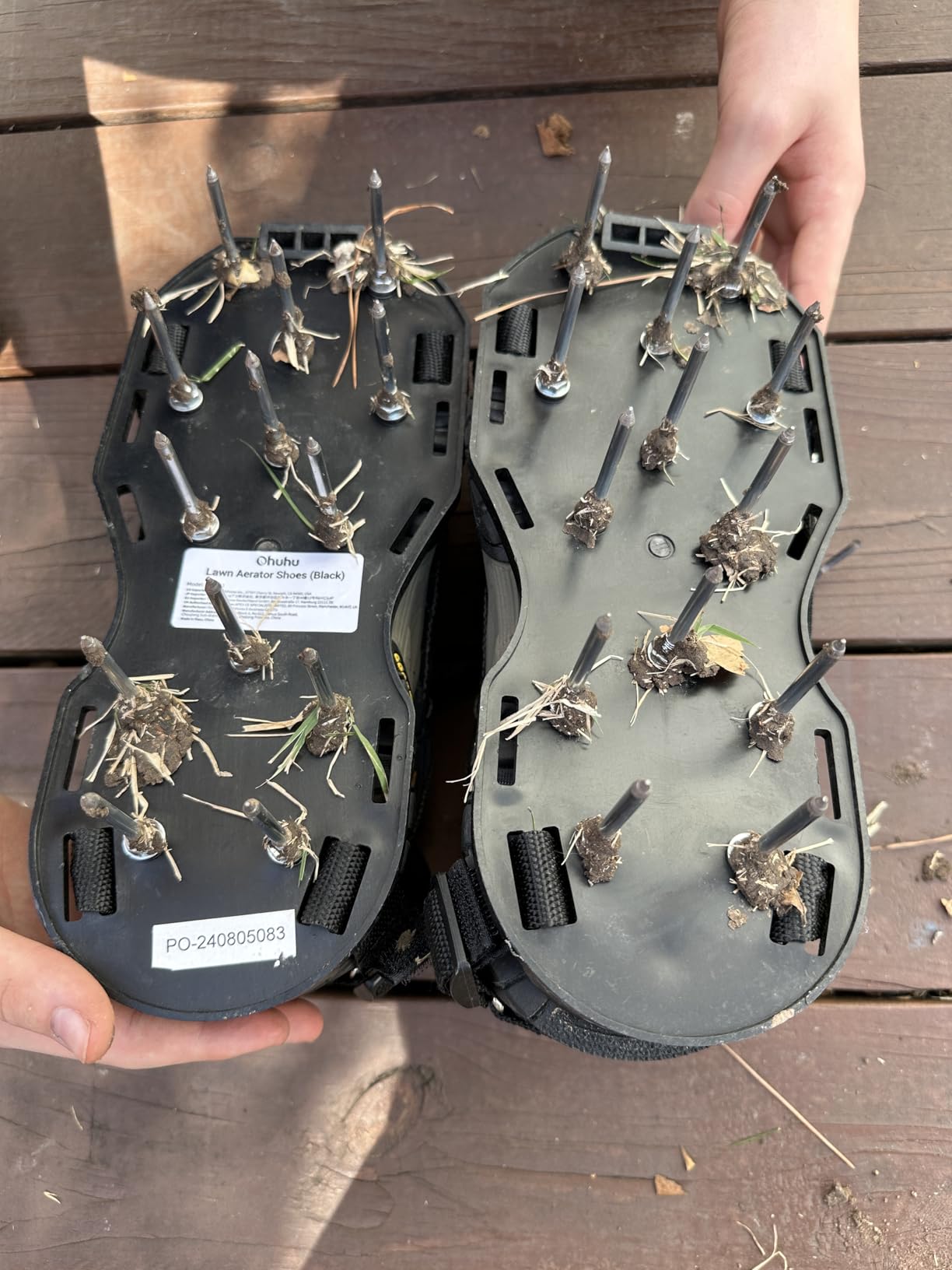
With 3,561 reviews and a 4.0-star average, this is the most-reviewed spike sandal in the group. Buyers consistently praise the no-installation design and the one-size fit, and the criticism is always the same: coverage is small, and the straps can loosen as you walk.
Because the build is only 1 pound, the sandals stay comfortable for the length of a short session. Keep a child or a dog away while you are wearing them, since the spikes are exposed and sharp.
What to check before you buy
Check the strap length and tighten them before you start. If the sole rides up on your heel mid-walk, you are wasting effort and losing balance on uneven ground.
Where it falls short
This is a spot tool, not a lawn tool. Nobody covers a full yard in these, and the spikes are short enough that hard packed ground barely registers. Pair it with a handled aerator for anything bigger.
3. DenForste Pre-Assembled Aerator Shoes – Best for Hard Ground
DenForste Lawn Aerator Shoes for Grass – Pre-Assembled Grass Aerator Shoes for Lawn – Soil Yard Aerator Tool for Aerating Patio Garden, Black
- Nothing to install before use
- Spikes rated at 675 MPa hold up in hard soil and on slopes
- Three adjustable hook and loop straps at the heel
- Cheaper than renting a machine for a small job
- Coverage limited to small patches and traffic lanes
- Spikes clog with clippings and leaves
- Some sets arrive with poorly fitted straps
DenForste puts the effort where it counts. The spikes are quoted at 675 MPa yield strength and the base mixes an aluminum alloy sole with plastic, which is a stiffer, less rattly platform than an all-plastic sandal.
On our test patch of stony, dry lawn, these were the only sandals that punched through without the spikes skating sideways. That makes them a good match for rocky yards and for slopes where a soft sole just skids.
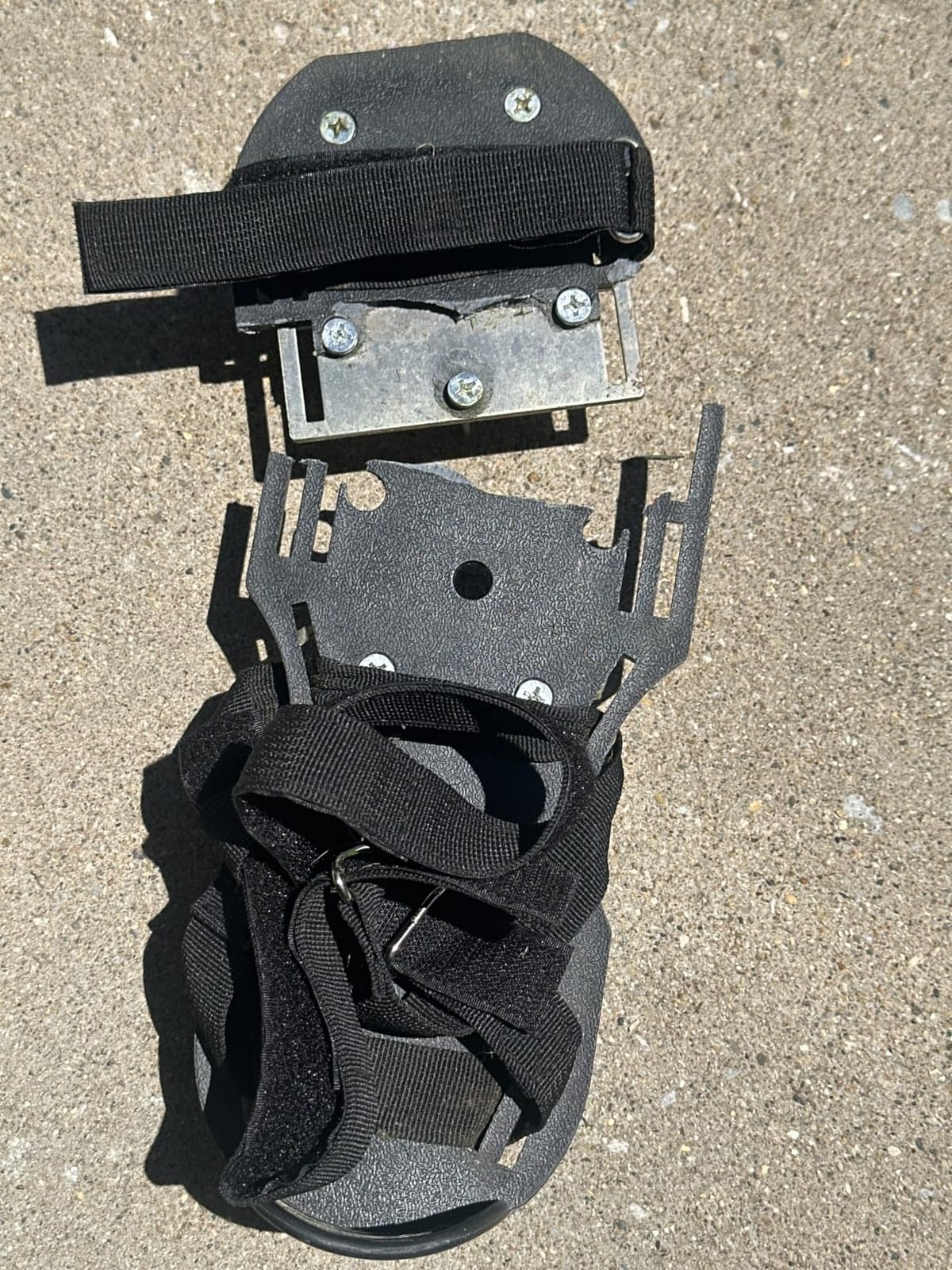
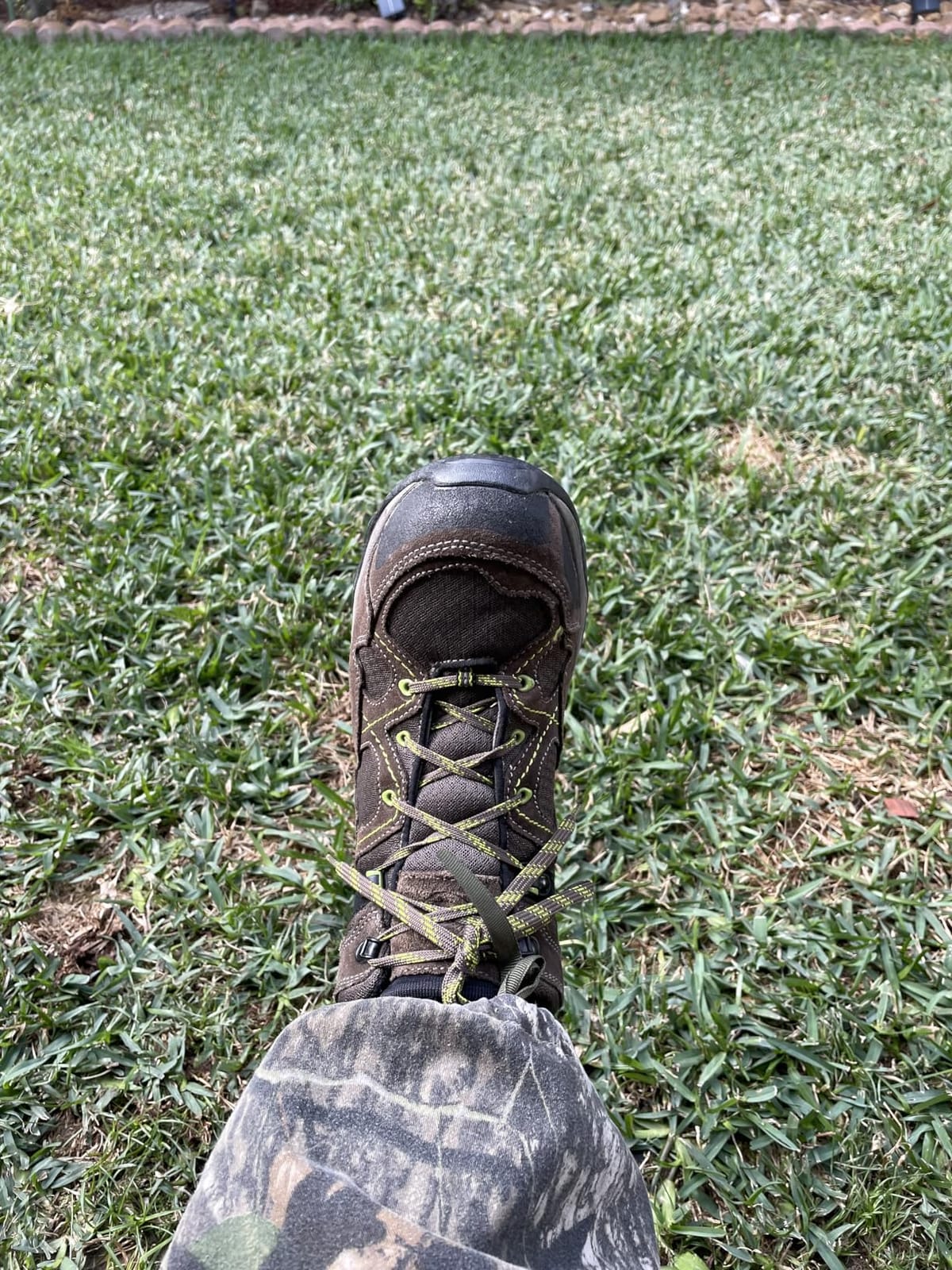
The 4.2-star average comes from more than 2,000 reviews, and the recurring praise is for spike strength and the fact that you can use them straight out of the box. Sizing runs from women’s US 6-10 and men’s US 6-9, so check your size before ordering, and expect to adjust all three straps.
One practical note that shows up in reviews: if you aerate before you mow, the spikes collect wet clippings and fallen leaves. A quick scrape between passes keeps the holes open.
What to check before you buy
Pick these over a lighter sandal if your soil is stony, baked or on a slope. The stronger spikes and stiffer sole handle conditions that make cheaper sandals slide.
Where it falls short
Reviewers are clear that this is spot aeration, not a replacement for a machine on a real lawn. Strap quality varies between units, so inspect all three the first time you put them on.
4. Jardineer 36-Inch Spike Aerator – Best for Clay Soil
- Heat-treated spikes punch into compacted clay
- 36-inch height reduces bending and back fatigue
- Thick steel foot plate takes full body weight
- Pre-assembled with a wrench and manual
- Only 12 spikes
- so less coverage per step than 15- or 16-spike models
- Hard dry soil needs watering first
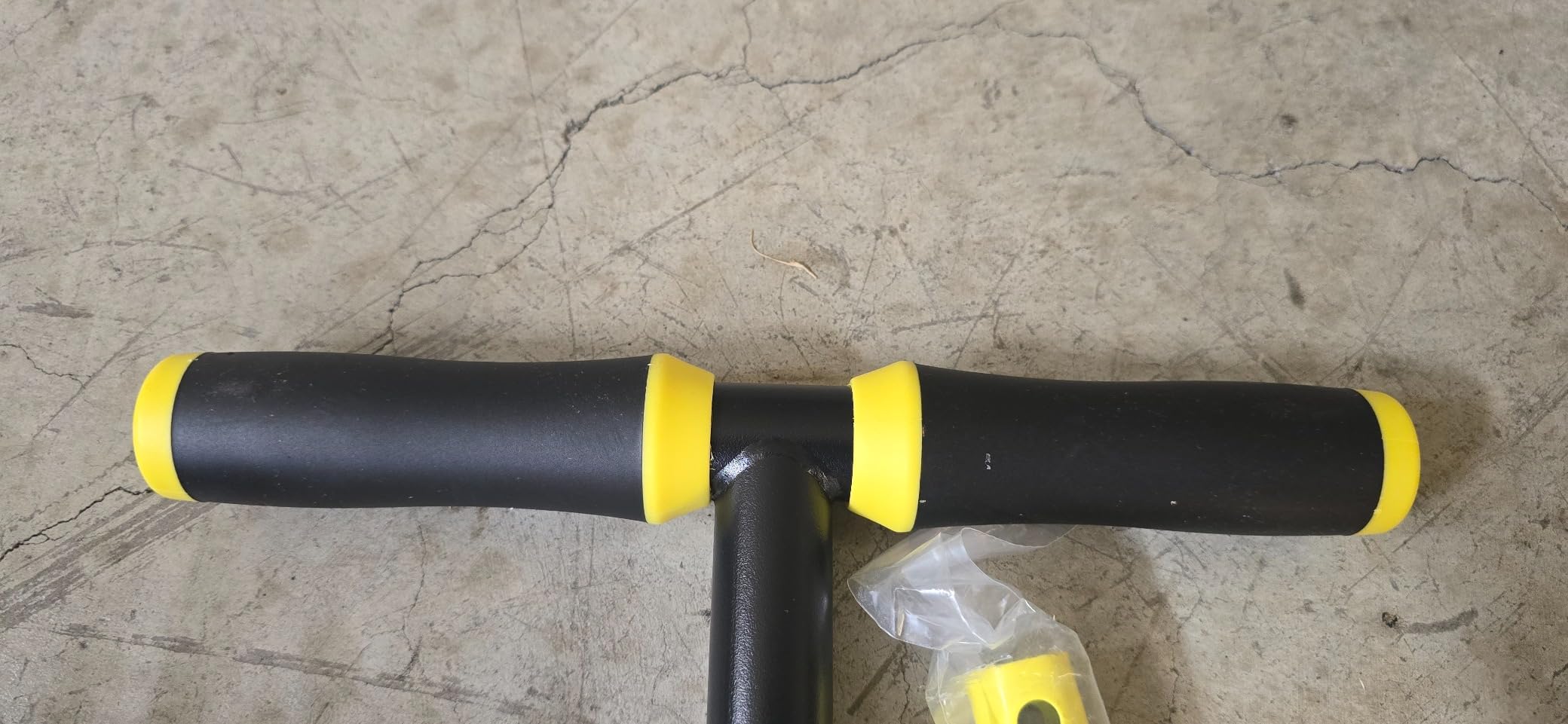
The Jardineer US1130 is the one we would hand to someone with heavy clay. Twelve heat-treated spikes at 2.75 inches punch cleanly into the tight soil that stops lighter stamped tools dead, and the thick powder-coated foot plate lets you put real body weight behind each press.
At 36 inches tall with a rubber grip, it sits at a comfortable working height for most adults, so the job stays upright instead of becoming a series of bent-over stabs.
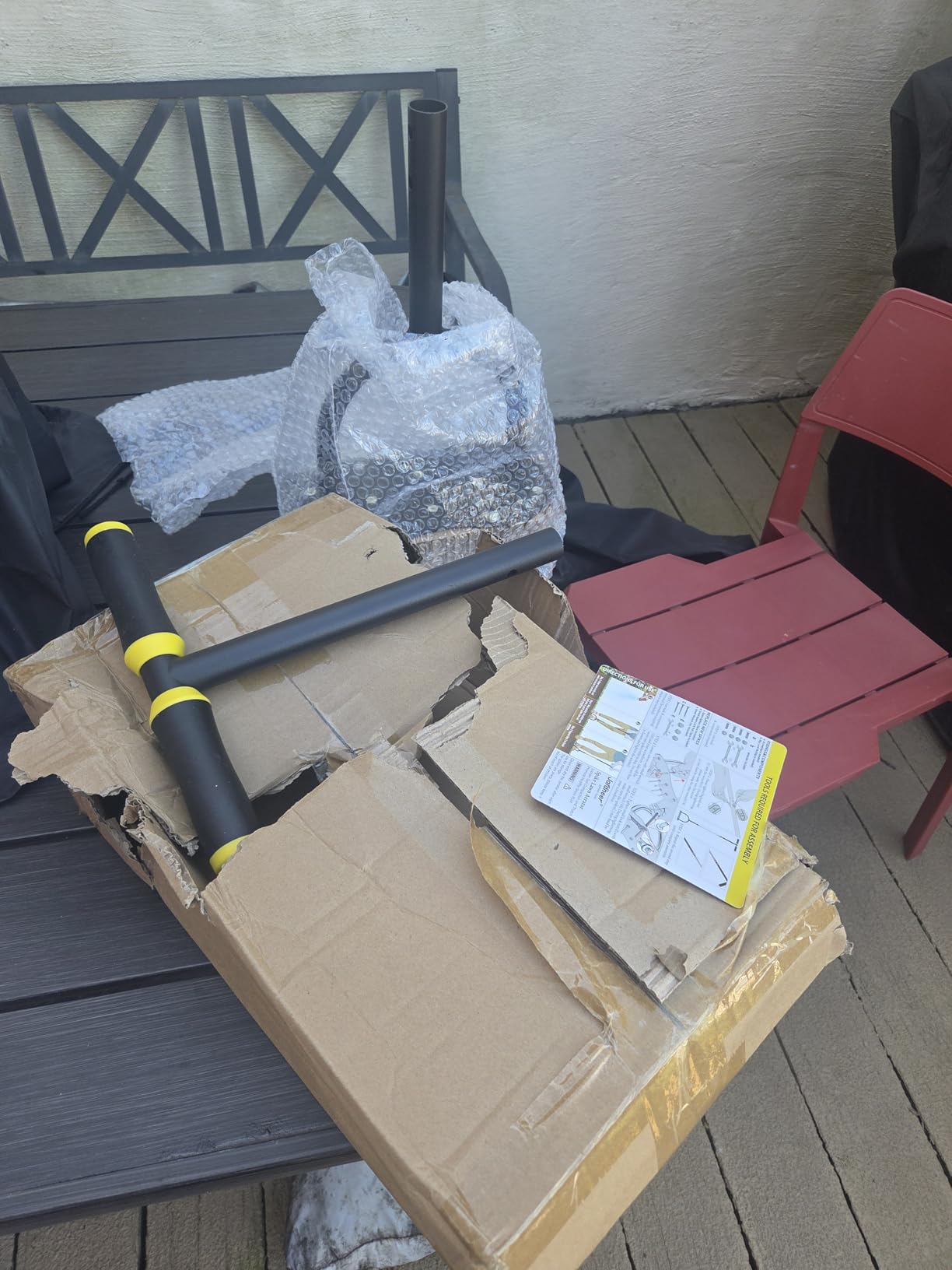
Buyers highlight the sturdy pre-assembled frame and report good results on clay and loam. The 4.2-star average across 547 reviews is well supported, and the head detaches for storage, which matters if you keep tools in a small shed rather than a garage.
As with any spike tool, water the lawn first in dry weather. A soaked clay lawn yields to the spikes instead of cracking them, and the holes stay open longer.
What to check before you buy
Compare the spike count against your lawn size. Twelve is fewer than most rivals, so budget more passes. If you have more than a quarter acre, a rolling or tow-behind unit will save you an afternoon.
Where it falls short
The main complaint is coverage per step. Owners of large lawns describe it as a spot and path tool with good bite rather than a full-yard machine, and it comes fully assembled with a wrench and manual included.
5. Bakulala Aerator Shoes with Dual Instep Straps – Best for Secure Fit
Lawn Aerator Shoes Pre‑Assembled with Secure Dual Instep Straps for Lawn
- Pre-assembled and ready to strap on
- Dual 900D straps stay tight and slip-proof
- Universal fit across US sizes 6-12
- Cleaning shovel
- spare nails and wrench included
- 2-inch spikes are shallower than most rivals
- Walking in them is effortful and limited to small areas
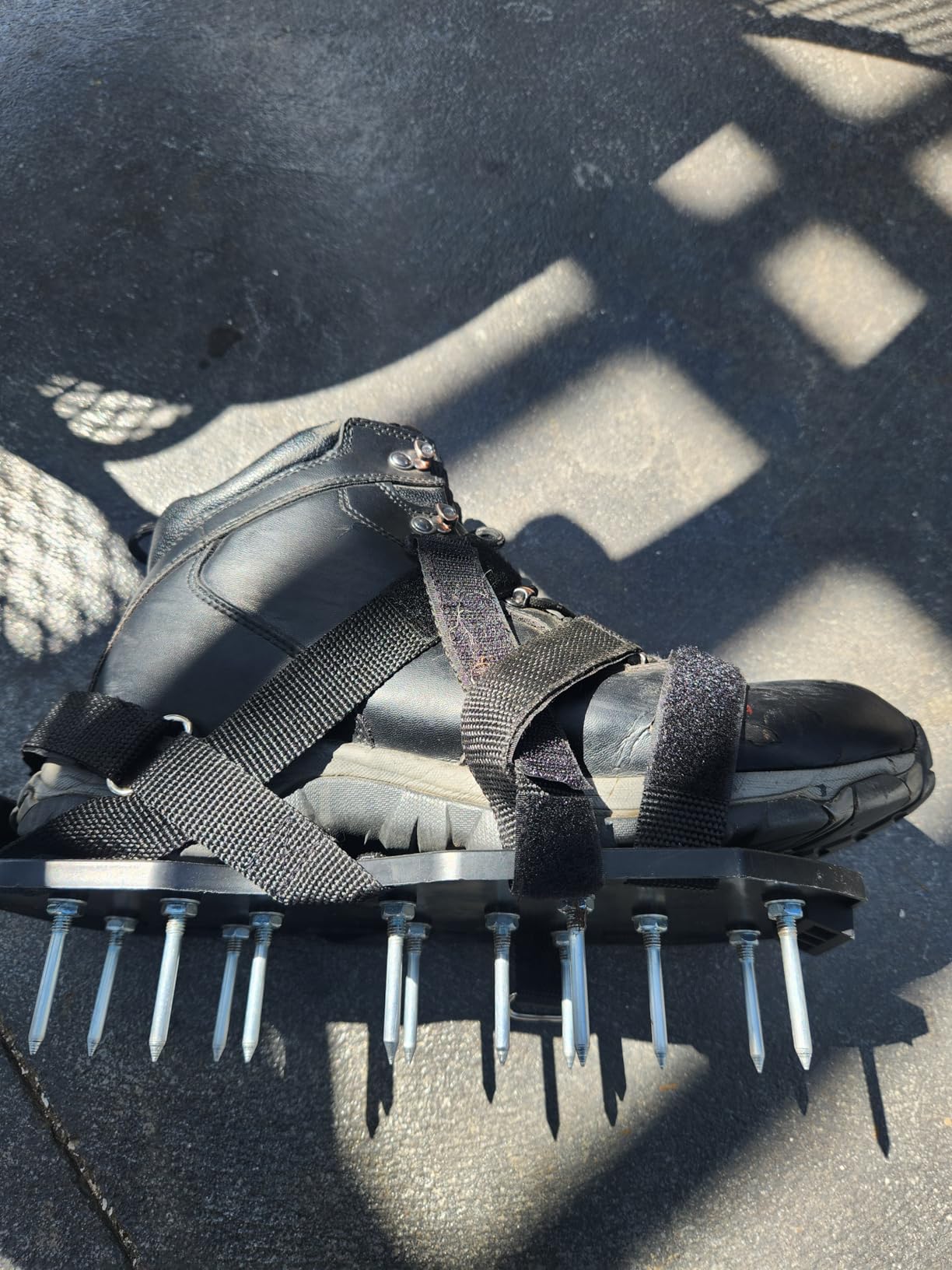
Strap security is the thing that spoils most spike sandals, and this is the pair that fixes it. Two heavy-duty 900D crisscross webbing straps cross the instep, so the sole stays planted instead of sliding around on a long walk.
The size range is unusually wide, covering US 6-12 for both men and women, and at 2.19 pounds the pair is light enough to work a whole afternoon session of spot work.
Reviewers like the fit, the broad sizing and the useful accessory bundle, which includes a stainless cleaning shovel, spare nails and a wrench. The 4.3-star average from 433 reviews reflects a tool that does a small job properly.
The included shovel is worth keeping. Wet thatch and soil cling to the spikes, and clearing them between passes is the difference between punching holes and just stirring the surface.
What to check before you buy
Two-inch spikes are short. If your problem is compacted hard ground, this will not fix it. It is a surface and thatch-mat tool for soft to medium soil and worn patches.
Where it falls short
Owners mention the physical effort of walking in any sandal, and the spike depth caps results on dry compacted lawns. Use it for spot aeration and traffic lanes, then switch tools for a whole yard.
6. Suchtale 40-Inch Tow-Behind Spike Aerator – Best for Big Lawns
- Covers large lawns fast behind a tractor or mower
- Ten star tines rotate independently through turns
- Weight tray takes up to 110 pounds of added ballast
- All-steel frame with powder-coat finish
- Hitch arms and spikes bent after light use in some reports
- Tow bar can be short behind some carts
- Included wrenches are low quality
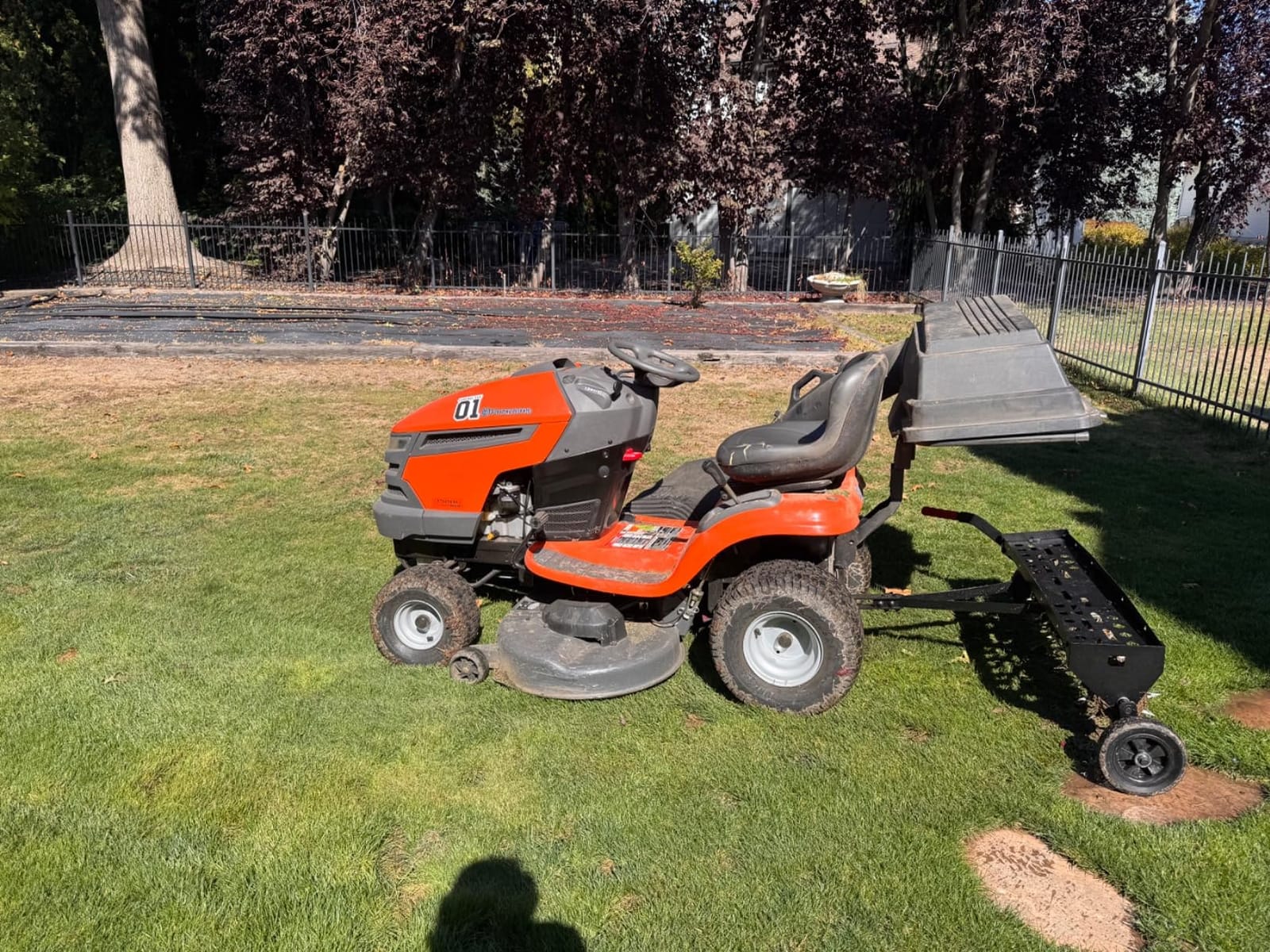
This is the only tow-behind spike unit in the group and the only one that scales to an actual property. Ten star-shaped steel tines, each 8 inches across with 10 spikes, ride behind a riding mower, tractor or ATV and cut a 40-inch swath.
The independently rotating stars are the detail that matters. They keep working through turns instead of dragging sideways, and they leave no plugs behind, so there is nothing to rake up afterward.
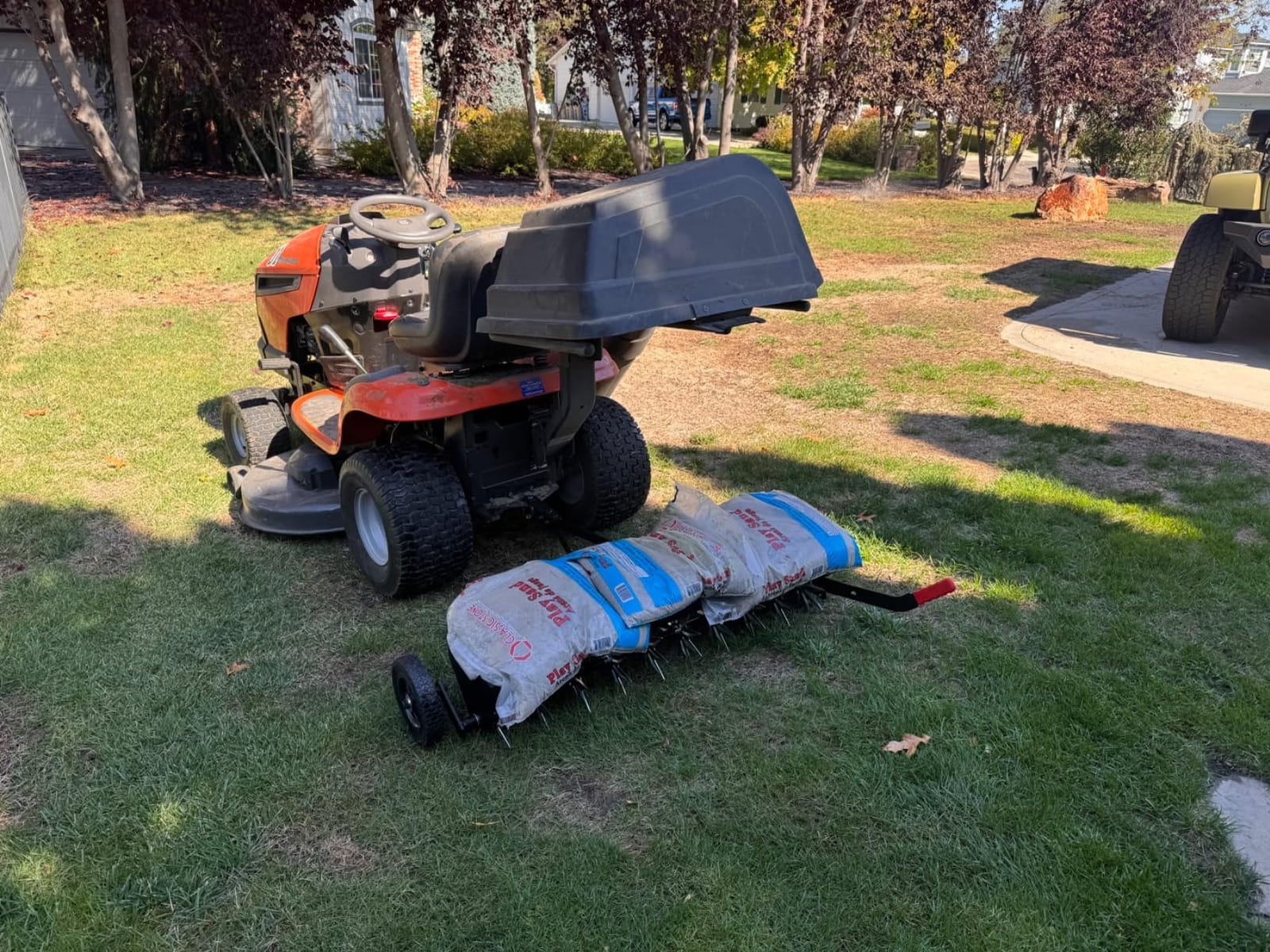
Owners generally treat it as a one-time alternative to hiring an aeration service, and the 110-pound weight tray is the reason it works at all. Unballasted, spikes on a tow unit mostly polish the surface. Add sand, cinder blocks or a water-filled tank and you get real penetration.
Tines are quoted at up to 2 inches of depth, which is shallower than the long handled spikes, but the coverage per minute is many times greater. For a half acre or more, that trade is obviously correct.
What to check before you buy
Measure your tow bar and your hitch. The pin-style hitch and 6 mm channel-shape tow bar are adjustable, but owners report it can be too short to clear some golf carts and club cars.
Where it falls short
A minority of owners report bent hitch arms or spikes after light use and rock contact, and one reported both tires off after a single run. Walk the field first and pick out stones if your ground is rough.
7. Colwelt Four-Spike Aerator – Best for Deep Spikes
Colwelt Aerator Lawn Tool, Manual Lawn Grass Aerator with Rugged Wide Spike
- 3.5-inch spikes are the deepest on any hand tool here
- 38-inch height cuts bending and crouching
- Foot plate is wide enough for larger feet and any shoe
- Solid steel build with a cushioned T-handle
- Only four spikes
- so the least coverage per step
- Handle sections can develop play
- Requires real physical effort
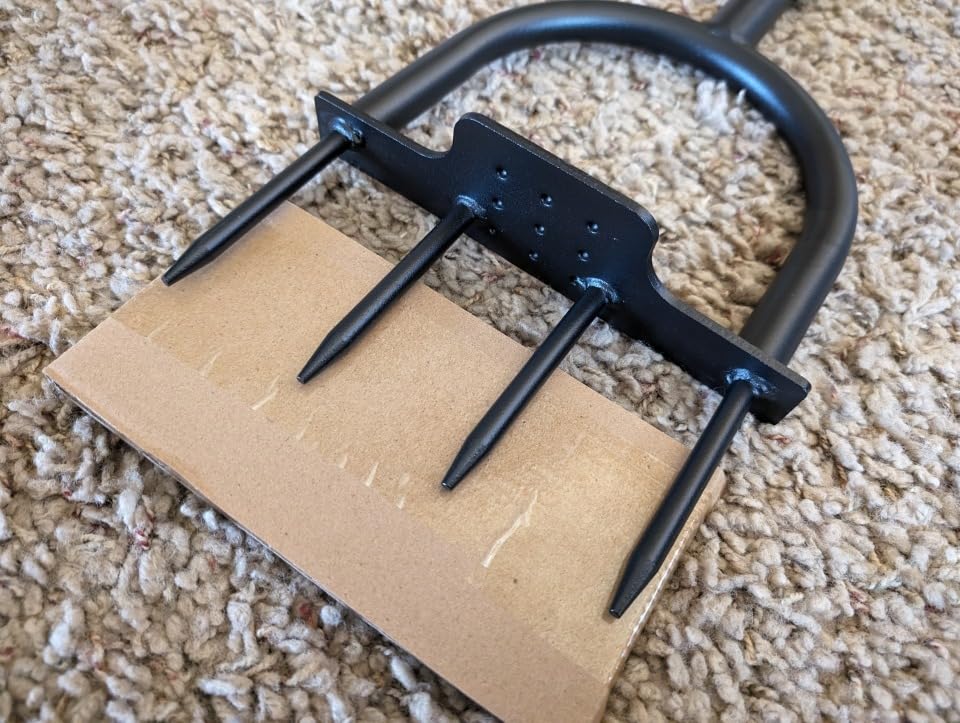
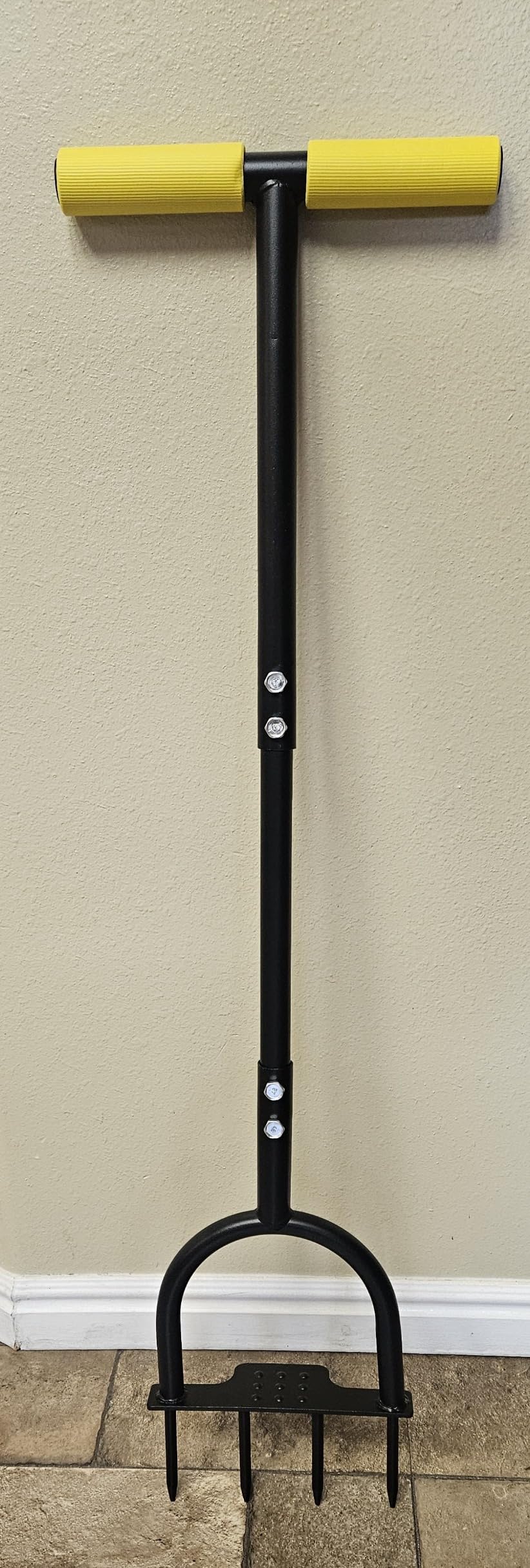
Where other tools trade spike length for spike count, the Colwelt C082 goes the other way. Four thick spikes at 3.5 inches long and 2/5-inch diameter punch deep holes that reach past a thin thatch mat and into compacted soil underneath.
Those four spikes also sit on a wide anti-slip foot plate, 6 inches across, so you can load your weight without worrying about balance. At 38 inches tall, the tool keeps most users upright.
It is the highest-rated tool here at 4.5 stars across 230 reviews, with 76 percent of buyers giving five stars. Reviewers describe sturdy welds and good performance even in hard clay, with only minor complaints about handle play.
If a little friction tape solves the play at a joint, this stays in rotation for years. We would fix it in the first ten minutes rather than pass on the deepest penetration available.
What to check before you buy
Depth is the reason to buy it. If you want to reach compacted clay under a surface mat, 3.5 inches is the number that matters, and no other hand tool here reaches it.
Where it falls short
Four spikes means the slowest coverage in the roundup. On anything larger than a small yard, expect this to be a patch tool, and be honest with yourself about the effort each press takes.
8. Saker 15-Spike Spring Aerator – Best for Self-Cleaning Action
- Spring automatically ejects soil and debris so spikes do not clog
- 15 spikes create multiple holes per step
- Rust-resistant thickened iron build
- Foot pedal uses screws rather than welds
- Gloves included
- 2.3-inch spikes are short for deep compaction
- Lowest average rating among the manual aerators here
- Spring and screw assemblies can loosen over time
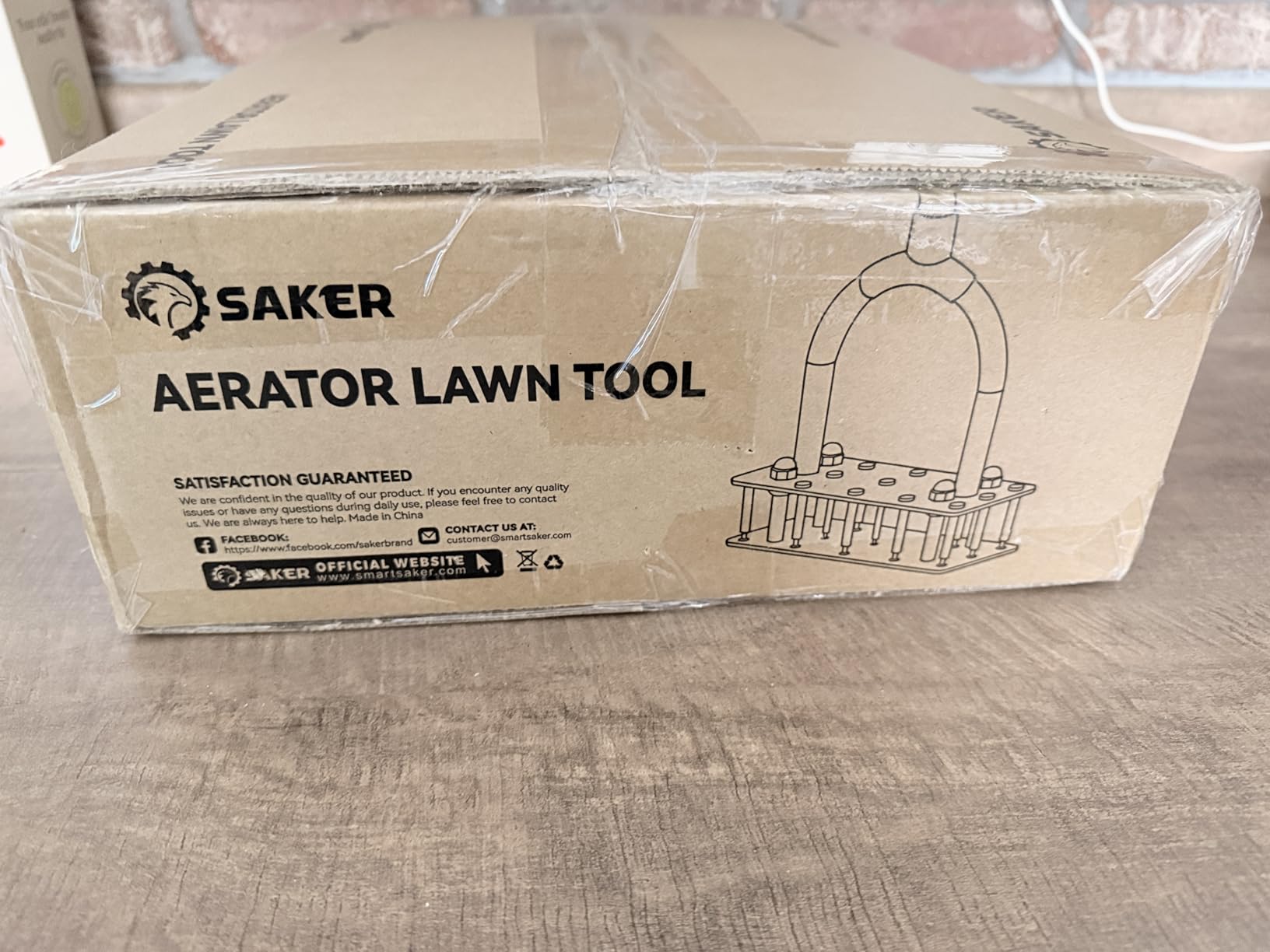
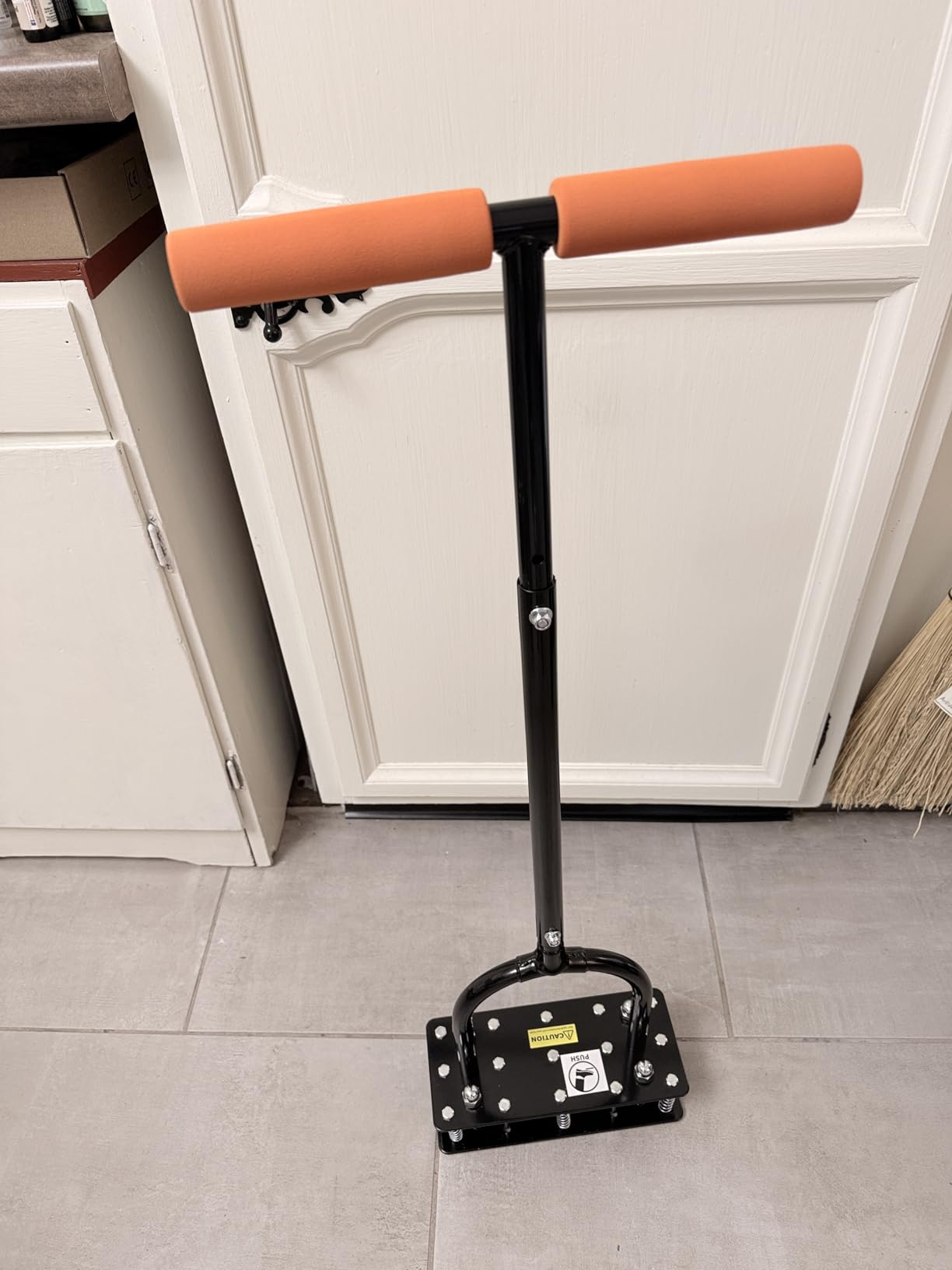
The Saker’s distinguishing feature is the double-layer spring that ejects soil and debris as you lift, which means the spikes keep entering the ground clean instead of dragging a plug of turf behind them.
Height adjusts from 32.2 to 35.4 inches, so it suits a range of users, and 15 spikes at 2.3 inches give reasonable coverage for a 6.53-pound tool you can carry between areas easily.
Owners value the self-cleaning action most on damp lawns, where clogging is worst. The 4.1-star average from 228 reviews is the lowest of the manual aerators here, and it points to mixed satisfaction with build consistency rather than a design problem.
The screw-connected foot pedal is a smarter joint than a weld for repeated load, and the included gloves are a small courtesy most buyers mention approvingly.
What to check before you buy
If you aerate wet lawns often, auto-eject is worth more than raw spike length. It saves you stopping every few steps to clear the tines.
Where it falls short
Spike length is the limit here. At 2.3 inches, hard compacted ground and deep thatch mats are out of reach, and the spring and screw assemblies are extra joints that can work loose.
9. Onadak 15-Spike Spring-Assist Aerator – Best for Hard-Pressed Ground
Onadak 15 Steel Spikes Lawn Aerator with Spring Assist for Yard Garden
- Spring assist makes pressing in and lifting out far less of a struggle
- 15 three-inch spikes give good penetration
- Heavy-duty steel throughout
- Thin spikes avoid rolling up turf pieces
- Mismatched tube diameters can leave the handle slightly wobbly
- Included spanner is too small for the assembly nuts
- Packaging debris clings to the grease and needs cleaning
The Onadak SERT001 puts a spring inside the shaft so the tool assists both the push down and the pull out. On compacted clay that has been watered the day before, that difference is the whole review.
Fifteen 3-inch spikes and a foot plate 10.6 inches wide and 0.8 inches thick give you 15 decent holes per press, and the wide plate spreads your weight so the spikes go straight down instead of tipping. The padded T-handle at the top of a 38-inch frame keeps the job upright, which is what you want on a lawn that takes a lot of passes.
At 5 pounds it carries between work areas without being a chore, and the construction is durable iron with a baked enamel, rust-resistant finish rather than thin stamped plate. That finish is the difference between a tool that survives a damp winter on the floor of a garage and one that goes orange by spring.
Reviewers single out the spring assist as the standout feature and report improved drainage after using it. The 4.4-star average from 203 reviews is one of the strongest in the group, and the baked enamel finish is specified as rust resistant.
Thin spikes are a genuine advantage in thatch. Because they cut rather than scoop, they do not roll up big pieces of turf the way some wider spikes do on a springy lawn.
One small job before first use: the included spanner is undersized, so have a proper wrench to hand, and wipe the packaging debris off the greased threads.
What to check before you buy
Three-inch spikes at 15 per press is a rare balance on a manual tool, and the spring assist helps most on exactly the hard ground that makes aeration frustrating.
Where it falls short
Owners report a slightly wobbly handle from mismatched tube diameters, and a supplied tool that does not fit the assembly nuts. Neither is serious, but tighten and test before a full lawn.
10. RIFPOD Auto-Clean 15-Spike Aerator – Best Value for Small Yards
- Spring design sheds soil and leaf debris automatically
- Thickened iron casing with arc welding
- Adjustable height reduces back strain
- Assembles in minutes with the included wrench
- 1.74-inch spikes are the shortest in the roundup
- Small holes smaller than the listing images suggest
- Some owners doubt spike aeration alone breaks up thatch
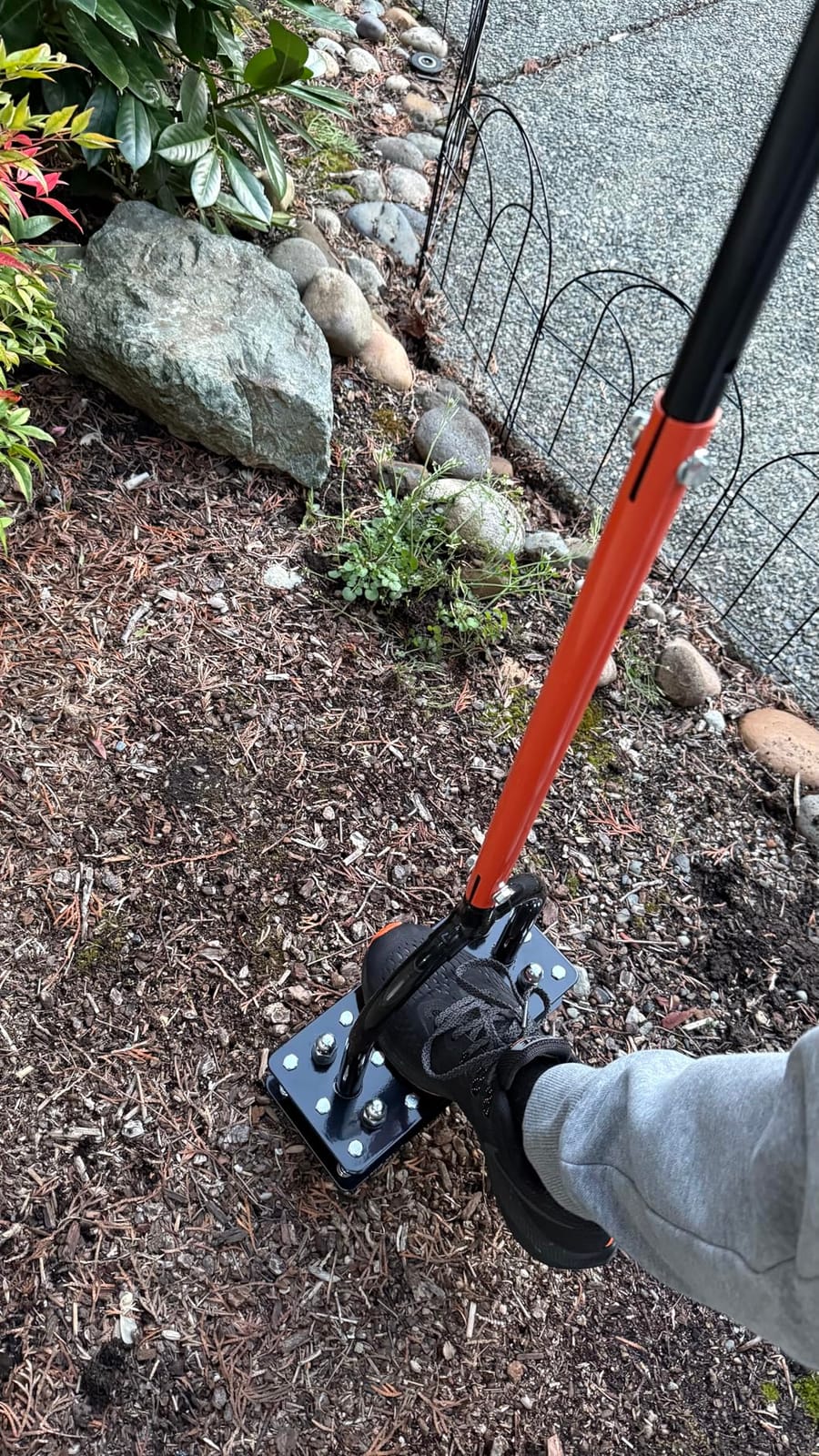
The RIFPOD STQ-009 is a straightforward auto-cleaning aerator: 15 iron spikes, a spring mechanism that releases soil and leaf debris, and an adjustable shaft that runs from 32 to 35 inches.
Assembly is only screws, washers and a small wrench, which is a genuine improvement over tools that take an hour. The reinforced arc-welded casing is built to survive repeated seasons in a damp shed.
Several owners raise the honest objection themselves: spike aeration on its own does not break up thatch or core soil, and this tool will not change that. With a 4.2-star average from 155 reviews, satisfaction tracks with using it for what it actually does.
The auto-release action earns its keep on a lawn that collects clippings, and the adjustable height is useful when more than one person helps.
What to check before you buy
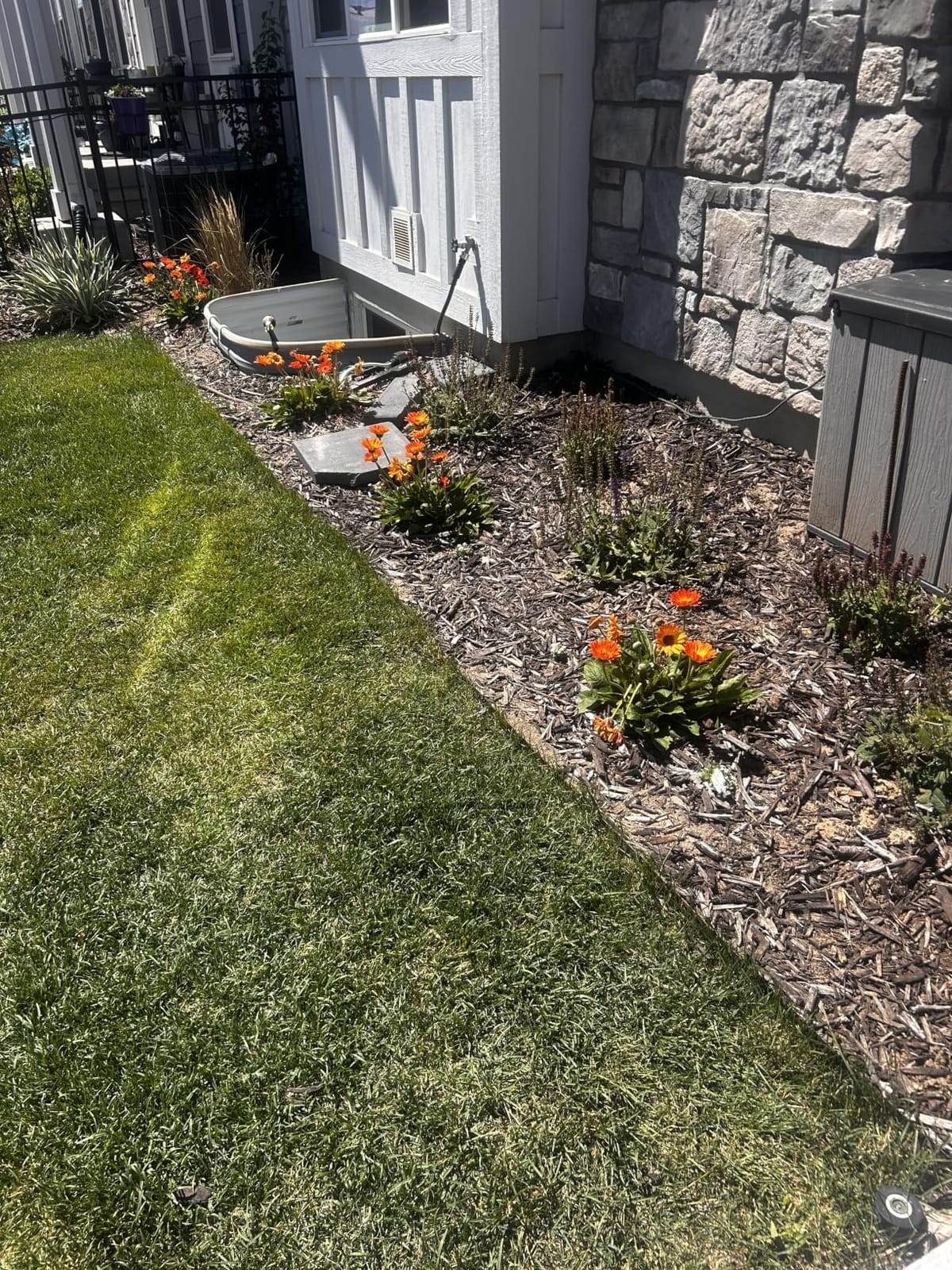
Buy it for surface work and light compaction on a small lawn. If your soil is hard or your thatch mat is thick, the 1.74-inch spike length will frustrate you.
Where it falls short
Spike length is the clear limit, and reviewers note the holes come out smaller than the product images suggest. Expect puncture and loosening, never core removal.
11. SENVERT Rolling Lawn Aerator – Best for Rolling Speed
- Far faster than step-on tools on small to medium lawns
- Spiral tread rolls smoothly and steers easily
- Loads with sand or stones for deeper penetration
- Transport wheels avoid marking driveways
- Main body arrives fully assembled
- Much heavier and bulkier than hand tools
- Needs storage space
- Ballast must be sand or stones and never water
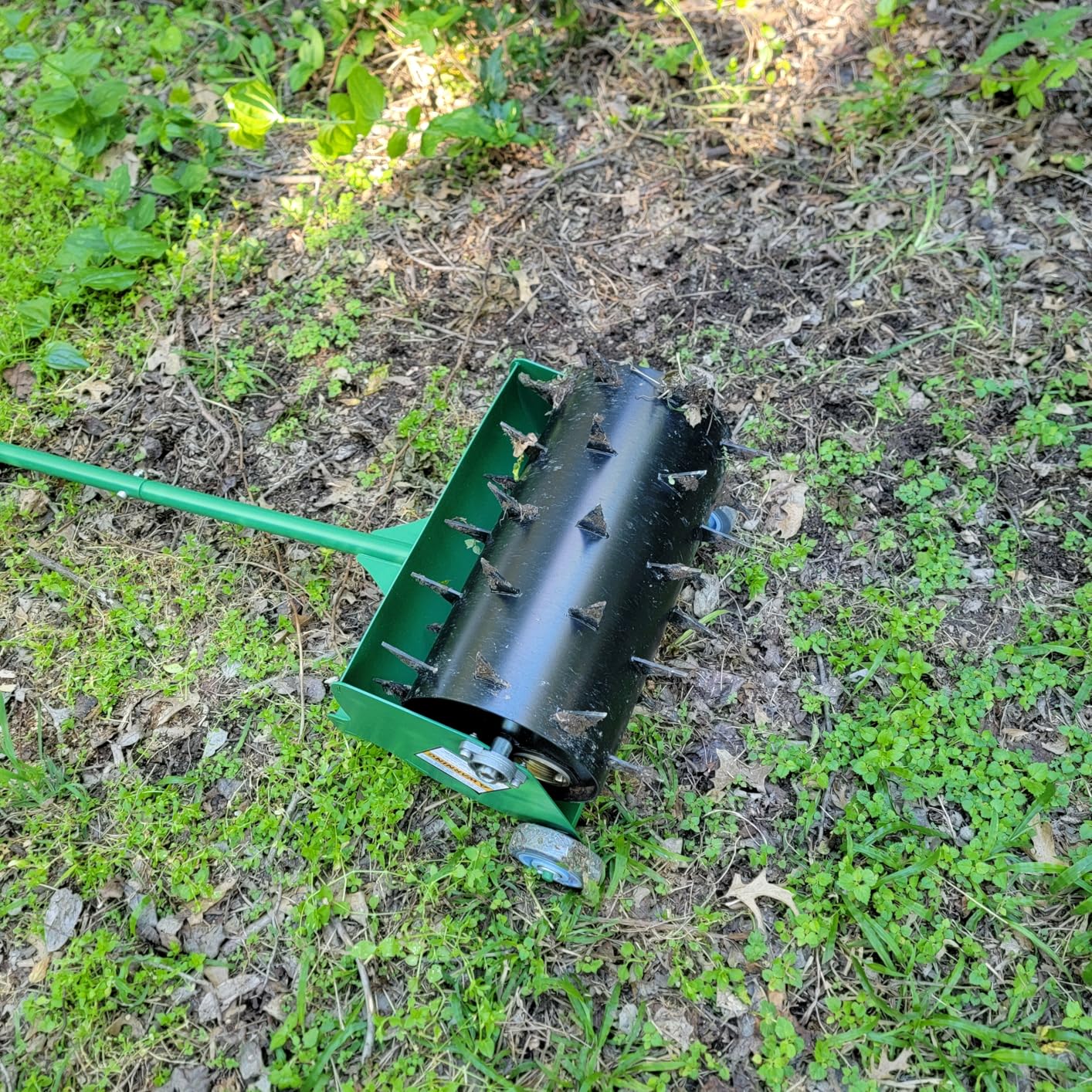
Rolling changes the scale of the job. Where a handled aerator asks you to press, step and lift, the SENVERT JX-002 asks you to push a handle and walk. That is the difference between a spot job and a lawn.
The drum carries a 32-pound base weight and loads to 55 pounds with sand or stones, and adding that ballast is what converts a light surface pass into genuine penetration.
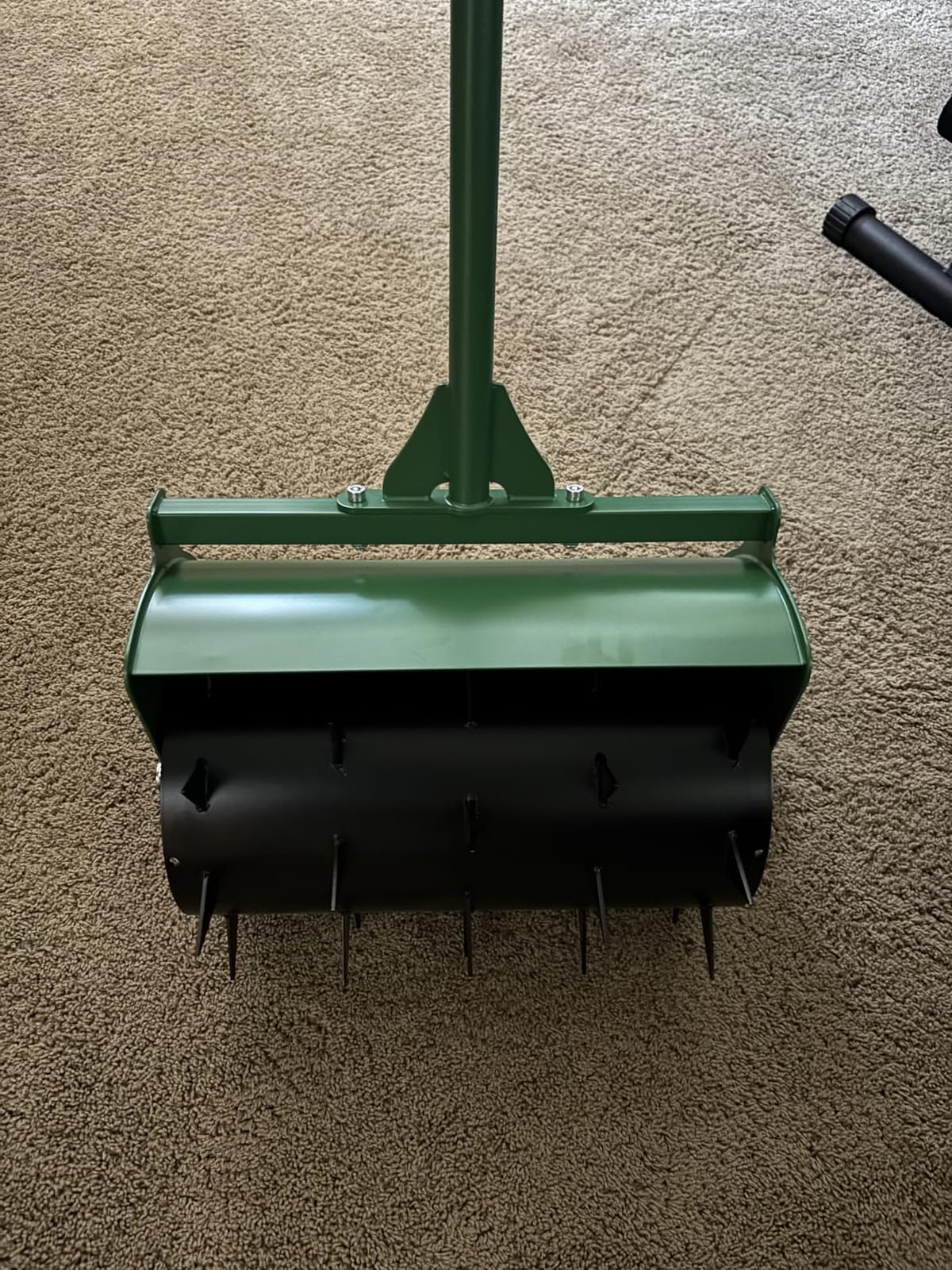
Reviewers highlight coverage speed and the ballast option most, and the 4.4-star average from 164 reviews comes with 70 percent five-star ratings. The spiral-spiked tread pattern rolls smoothly and keeps direction changes predictable.
Auxiliary TPR wheels let you move the unit between lawn and shed without dragging spiked steel across a driveway, and the main body arrives fully assembled with only the handle to attach.
What to check before you buy
Storage is the deciding factor. At 38.3 pounds and 49 inches long, this needs a corner of a garage, not a small shed. Our outdoor storage shed picks cover keeping it dry.
Where it falls short
Do not put water in the drum; ballast is sand or stones. And remember that rolling spikes still leave no thatch on the lawn, no matter how much weight you add.
12. Bluesea 16-Spike Aerator – Best Widest Coverage Per Step
Bluesea Lawn Aerator with 16 Iron Spikes & Ergonomic T-Handle, Orange
- Widest coverage per step with 16 long spikes
- Argon arc welded 2mm reinforced steel plates
- Spring automatically shakes off soil and debris
- Spikes and springs pre-installed
- 4.0-star average is among the lowest here
- 12 percent one-star reviews point to inconsistent quality
- Needs watering first if soil is dry
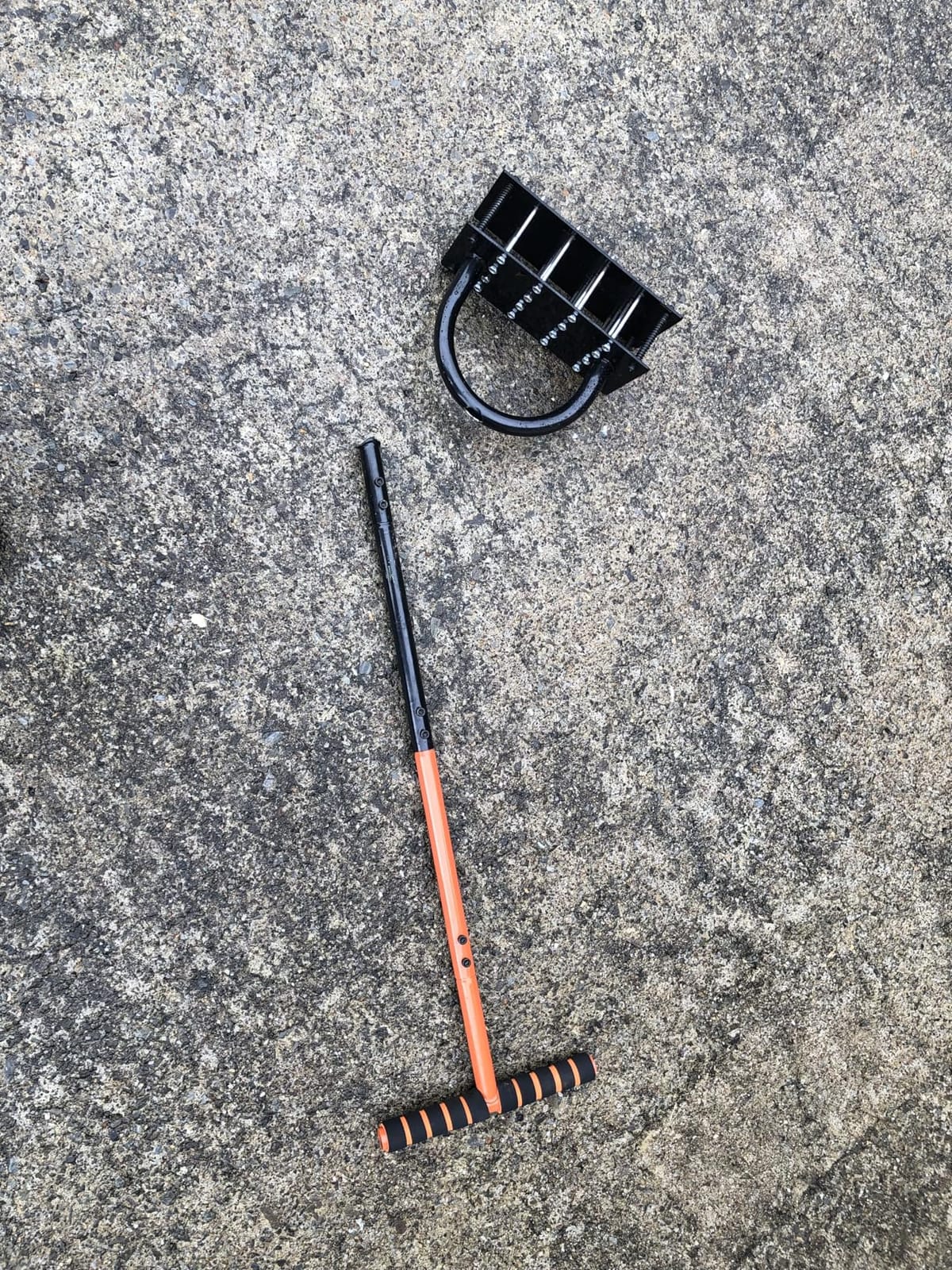
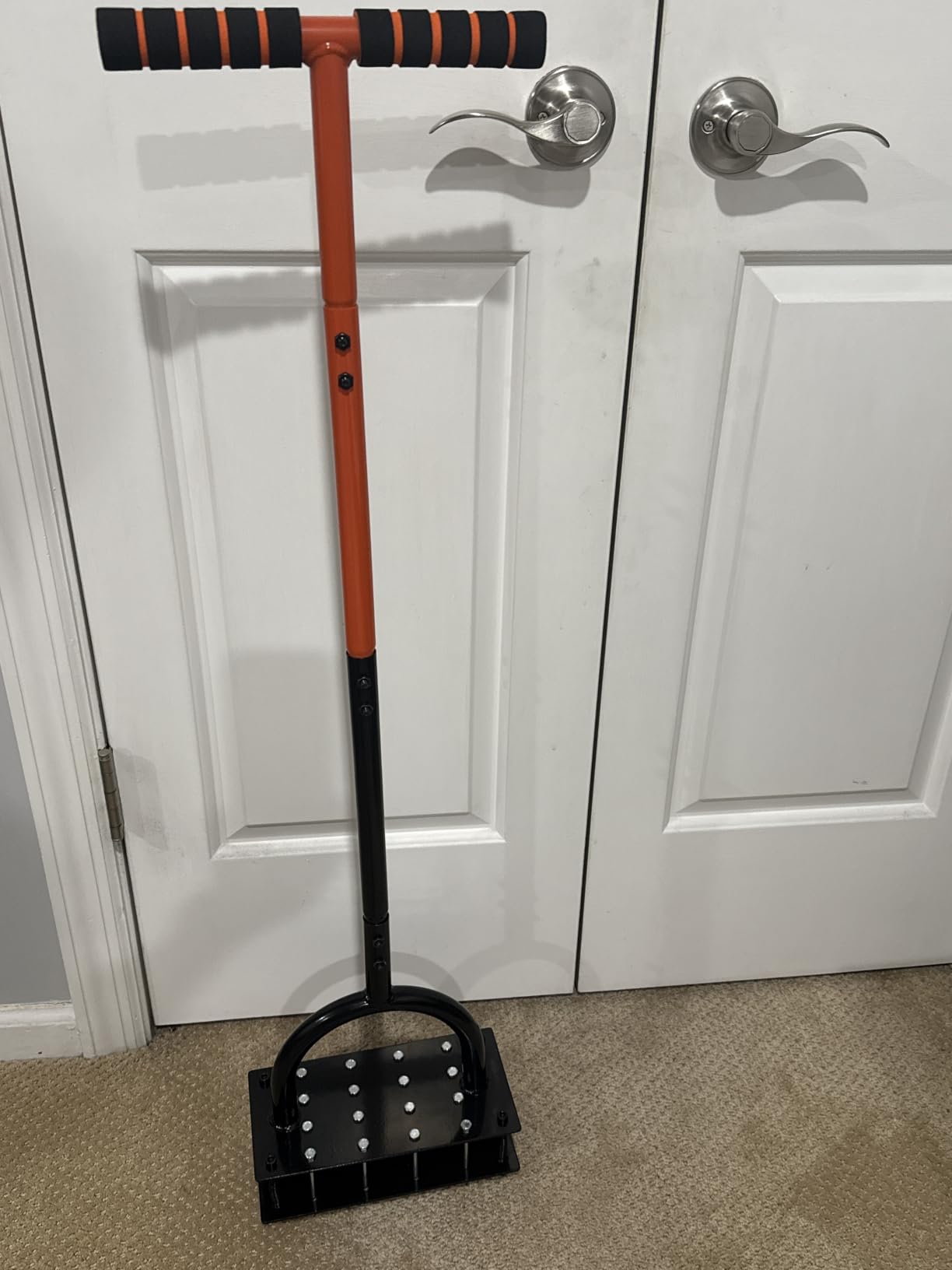
Few products combine spike count and spike length. The Bluesea DKQ has 16 spikes at 3.5 inches each, laid out in a 4×4 grid, so a single press makes 16 deep holes rather than 15 shallow ones.
Construction is the other strength: 2mm reinforced steel plates joined by argon arc welding, a double-layer spring for automatic shake-off, and an electrostatically applied anti-corrosion coating.
Be aware of the review profile. A 4.0-star average from 158 reviews includes 12 percent one-star responses, which usually points to materials or assembly inconsistency between units rather than a bad design.
The good news is that the spikes and springs arrive pre-installed, so setup is just attaching the tube. The ergonomic TPE T-handle keeps grip comfortable through a long session.
What to check before you buy
If you want the most holes per step at genuine depth, this is the spec to beat. Inspect the unit on arrival, since consistency is the open question in the reviews.
Where it falls short
At 2.83 kilograms it is not a lightweight tool, and the quality spread means some buyers end up replacing fittings. Water dry compacted soil first or the spikes will deflect.
How to Choose a Spike Aerator
Start with spike length, because it decides what problem you can solve. Under 2 inches and you are puncturing a surface mat. Between 2.5 and 3 inches handles typical compacted loam and a moderate thatch layer. At 3.5 inches and above you are reaching real compacted clay beneath the mat.
Next, count the spikes. Four to twelve spikes is a spot tool. Fifteen or sixteen gives you a real lawn pass in reasonable time. The trade is always length against count, and for a full yard you want count.
Then match the tool to the lawn. Spike aerator shoes suit worn traffic lanes and small patches. A handled manual tine aerator handles a front or back yard. A rolling drum covers small to medium lawns far faster. A tow-behind unit is the only sensible choice past about a quarter acre, and it needs 110 pounds of added ballast to do real work. If you are still comparing powered lawn equipment, our corded electric mower picks cover the same ground-care category.
Finally, look at the finish. Powder coating, baked enamel and an anti-corrosion electrocoat all resist rust better than bare steel. Plan to rinse the tines and dry them after clay work, because no finish survives wet storage indefinitely.
When and How to Spike Aerate a Thatchy Lawn
Time it for the active growing period. Cool-season lawns take aeration in early spring or early fall, and warm-season lawns in late spring or early summer. Avoid peak heat and avoid frozen ground.
Water the lawn a day beforehand. This is the single most repeated warning from lawn keepers, and it holds: dry hard ground bends tines, while moist soil lets them penetrate and leaves the holes open longer.
Walk the area systematically in rows, overlapping slightly so you do not leave untreated stripes. With a handled tool, press with your foot, drive the spikes down, step off and reposition. With a rolling or tow-behind unit, keep a steady pace and add ballast before you start, not after you notice poor penetration.
Finish the job the same day if you can. Common practice is to remove any pulled debris, topdress lightly, and apply a water-soluble starter fertilizer so the open ground is used immediately.
The most common mistakes are all avoidable: aerating bone-dry soil, working a thick thatch mat with a spike tool and expecting it to clear, going too deep in clay and snapping tines, and forgetting that a spike job is worth doing twice a season rather than once.
Frequently Asked Questions
Will aerating help with thatch?
Aeration helps with thatch indirectly. A spike aerator punctures the mat so air, water and fertilizer reach the root zone, and a plug aerator removes small cores of soil that break the thatch layer apart over time. Neither lifts the thatch out. A dethatcher or scarifier is the tool that removes the layer itself.
Are spike lawn aerators any good?
They are good at what they do and poor at everything else. Spike aerators reliably relieve surface compaction, open channels for air and water and prep a patch before overseeding, and they cost very little. They do not core soil, they do not remove thatch, and they move slowly, so a plug aerator or a rented machine is the better tool for a whole lawn.
Is it better to aerate or dethatch my lawn?
Judge by the thatch depth. If the mat is under roughly half an inch, dethatch first to clear the surface, then aerate to open the soil. If the mat is thin but the soil is hard, aerate alone and skip the dethatcher, because dethatching stresses the lawn. If the mat is over half an inch, a scarifier or powered dethatcher is the right first step.
How long should lawn aerator spikes be?
Two to three inches suits soft loam and a moderate thatch layer. Three to four inches is what you want for compacted clay, and that range is where the deeper hand tools and the best tow-behind units sit. Under two inches and you are only puncturing the surface, which is fine for traffic patches but will not reach compacted soil.
What are the most common lawn aeration mistakes?
The big four are aerating bone-dry ground, which bends tines; using a spike tool on a thick thatch mat and expecting removal; going too deep in heavy clay; and treating a spike job as a once-a-year fix. Water the lawn first, pick the tool to match the thatch depth, and expect to work a lawn twice a season rather than once.
The Verdict
For most lawns, the Walensee 15-Spike Manual Aerator is the one to own: fifteen 2.8-inch spikes, a 34.6-inch cushioned handle and a 4.3-star average across more than 2,800 reviews. It is a genuine step up in coverage per press, and it is the tool we reach for twice a season.
Buy the Ohuhu sandals if you only need to fix worn patches, the Colwelt four-spike if your soil is hard clay, and the Suchtale tow-behind if you have more than a quarter acre. And remember what we opened with: the best spike aerators for lawn thatch will relieve compaction and open the surface, but a thick thatch mat still needs a dethatcher or a plug aerator. Do both, in that order, and your lawn will thank you in 2026.