
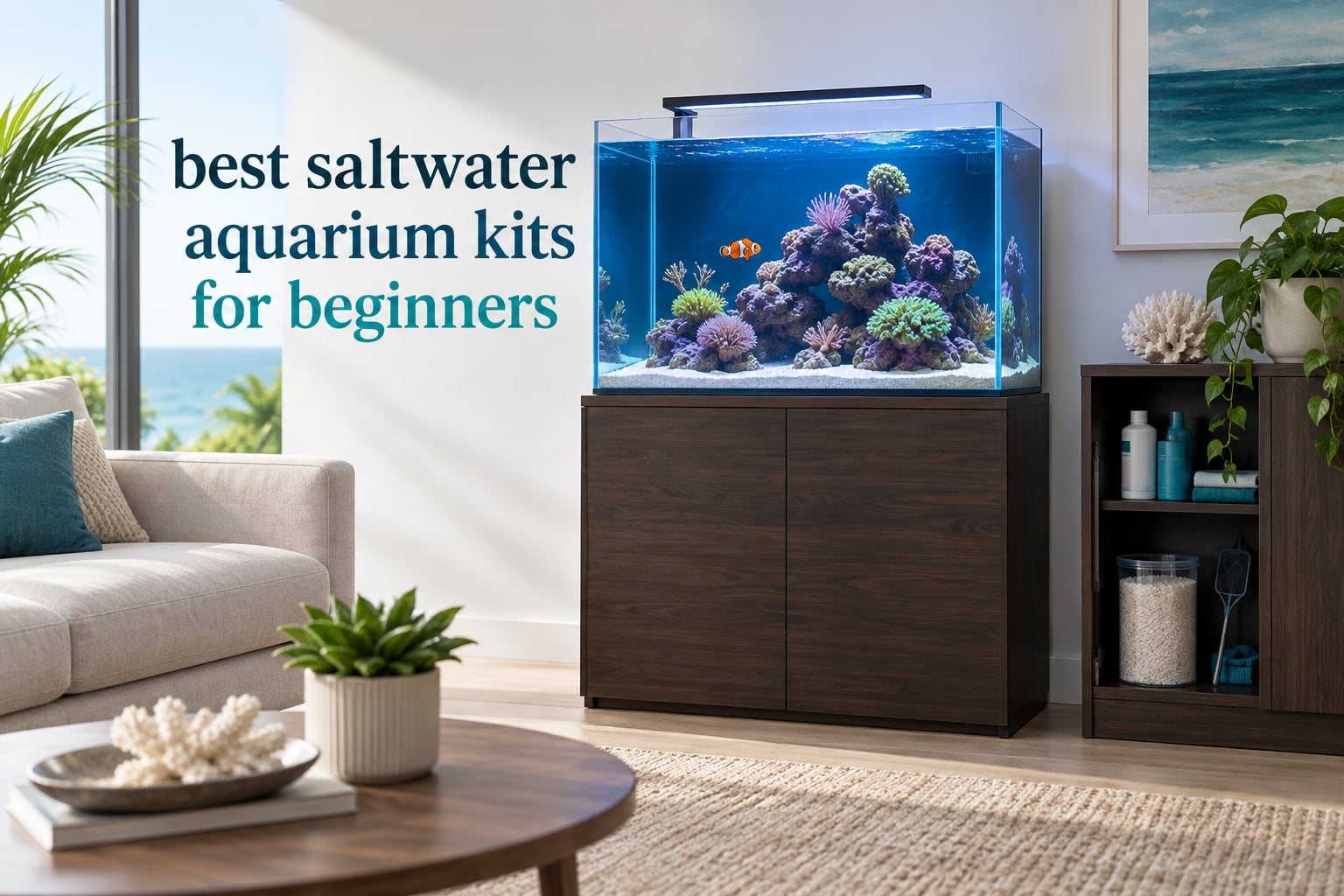
Saltwater looks forgiving from the outside. A tank of clear blue water with a clownfish hiding in rock is the goal, and any decent box seems like it gets you there. The problem is that the box on the shelf is rarely the whole system.
After weeks of comparing eight saltwater aquarium kits for beginners, spec sheets, owner complaints, and the advice that fills forum threads, one thing stood out. Every honest hobbyist says the same thing: buy a good tank, then add equipment deliberately, slowly, and in the right order. The kits that get recommended most often are all-in-one tanks with a rear filtration chamber, not plug-and-play reef systems.
That distinction matters more than any single feature on a spec sheet, so this guide breaks the eight options down by what actually ships in the box, how much room the filtration gives you, and how the tank behaves once it is running. We looked at capacity, glass type, footprint, listed unit weight, pump and lighting details, and what owners wish they had known before week one.
The picks below cover a real range, from a 32-gallon cabinet-friendly cube down to small nano tanks that fit a desk. They were last reviewed for 2026, and every rating and review count below comes straight from the current listing data.
Table of Contents
What Is a Saltwater Aquarium Kit, and What Does It Leave Out?
A saltwater aquarium kit is a tank plus a filtration compartment and usually a light and a return pump. What it is not is a working reef: almost none of these kits include a heater, a refractometer, salt mix, rock, sand, test kits, or an auto top-off system, and those omissions cost more than the tank itself.
An all-in-one, or AIO, aquarium folds a filter chamber into the back of the tank. Water is pulled up into that chamber, pushed through a media basket or filter sock by a return pump, and flows back into the display. It is simpler than a sump because there is nothing to plumb, and cheaper, but the chamber is small. Once you add a skimmer and more equipment, that space fills up fast.
Complete kit is a marketing word, not a category. Only two of the eight tanks here arrive with a light and pump together, and none arrive with rock, sand, or salt. Treat every listing here as a platform you build on rather than a plug-and-play reef.
Top 3 Saltwater Aquarium Kits for Beginners

Coralife BioCube 32
- Rear AIO filtration chamber
- Programmable 24-hour LED timer
- Three independent light channels
- 62 lb unit weight
Fluval Flex 32.5 Marine
- App-controlled RGB and white LEDs
- Three-stage filtration
- Dual adjustable outputs
- Curved front glass

UNS Dual AIO 6 Gallon
- Triple-chamber rear filtration
- 91 percent low-iron glass
- Quiet pump
- Leveling mat included
All 8 Saltwater Aquarium Kits at a Glance
| Product | Specifications | Action |
|---|---|---|
| Coralife BioCube 32 |
|
Check Latest Price |
| Fluval Flex 32.5 Marine |
|
Check Latest Price |
| UNS Dual AIO 6 Gallon |
|
Check Latest Price |
 Coralland 8 Gallon Nano Coralland 8 Gallon Nano |
|
Check Latest Price |
 Empire USA 24 Gallon Cube Empire USA 24 Gallon Cube |
|
Check Latest Price |
 Aquatop 8.6 Gallon Bow Front Aquatop 8.6 Gallon Bow Front |
|
Check Latest Price |
 Aquatop Pisces Nano Aquatop Pisces Nano |
|
Check Latest Price |
 Fluval Flex 57 15 Gallon Fluval Flex 57 15 Gallon |
|
Check Latest Price |
1. Coralife BioCube 32 Review: The Best All-in-One Saltwater Tank for a First Reef
- Compact all-in-one footprint with no sump to plumb
- Programmable 24-hour timer with sunrise and moonlight modes
- Three independent LED channels for color blending
- Quiet operation for its size
- Accessory ecosystem already built out
- Rear chambers are cramped for routine maintenance
- Stock media rack is flimsy and usually replaced
- LED output falls short for demanding SPS corals
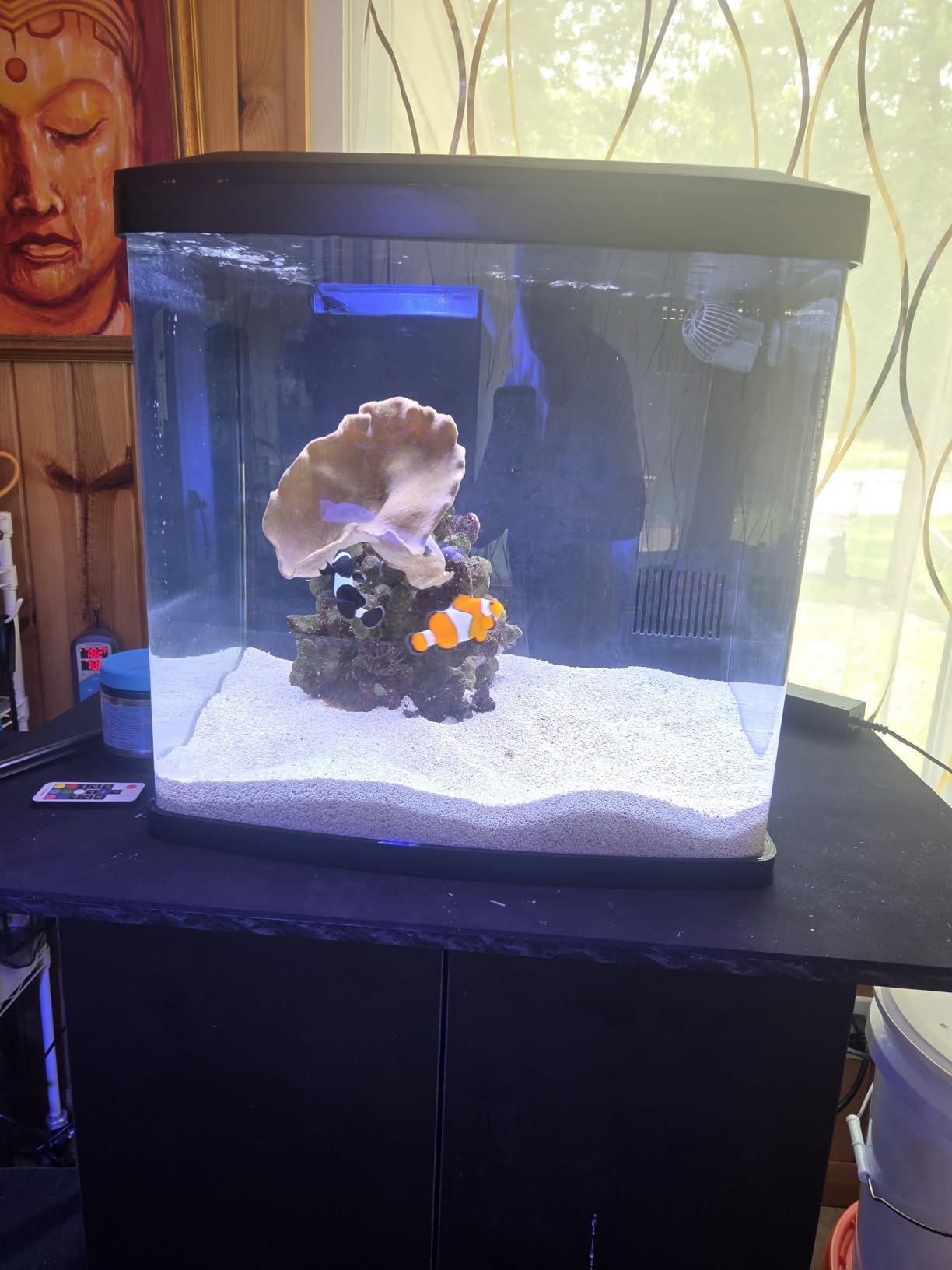
The BioCube 32 has been on the hobby scene since October 2016, and that longevity is its biggest advantage. Owners are not guessing at spare parts or searching for a setup guide because the accessory range around this tank is enormous, and the 16-gallon and 32-gallon versions share the same footprint family.
Filtration lives in a chamber built into the back of the aquarium, driven by a quiet submersible pump with dual intakes and an adjustable return nozzle. You never touch a sump, never run a hose, and never lose cabinet space to a sump box. For a first tank, removing that single decision is worth a lot.
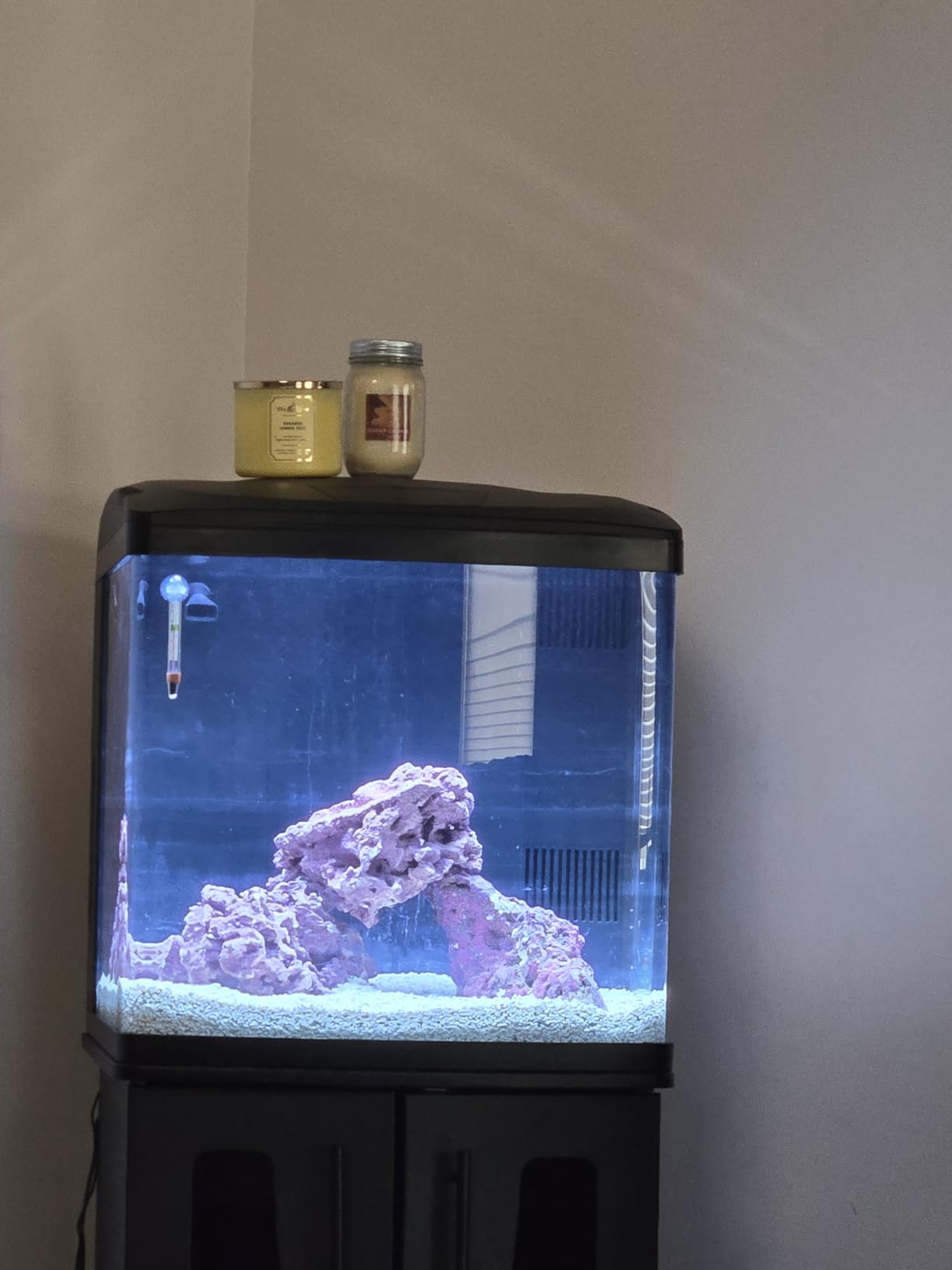
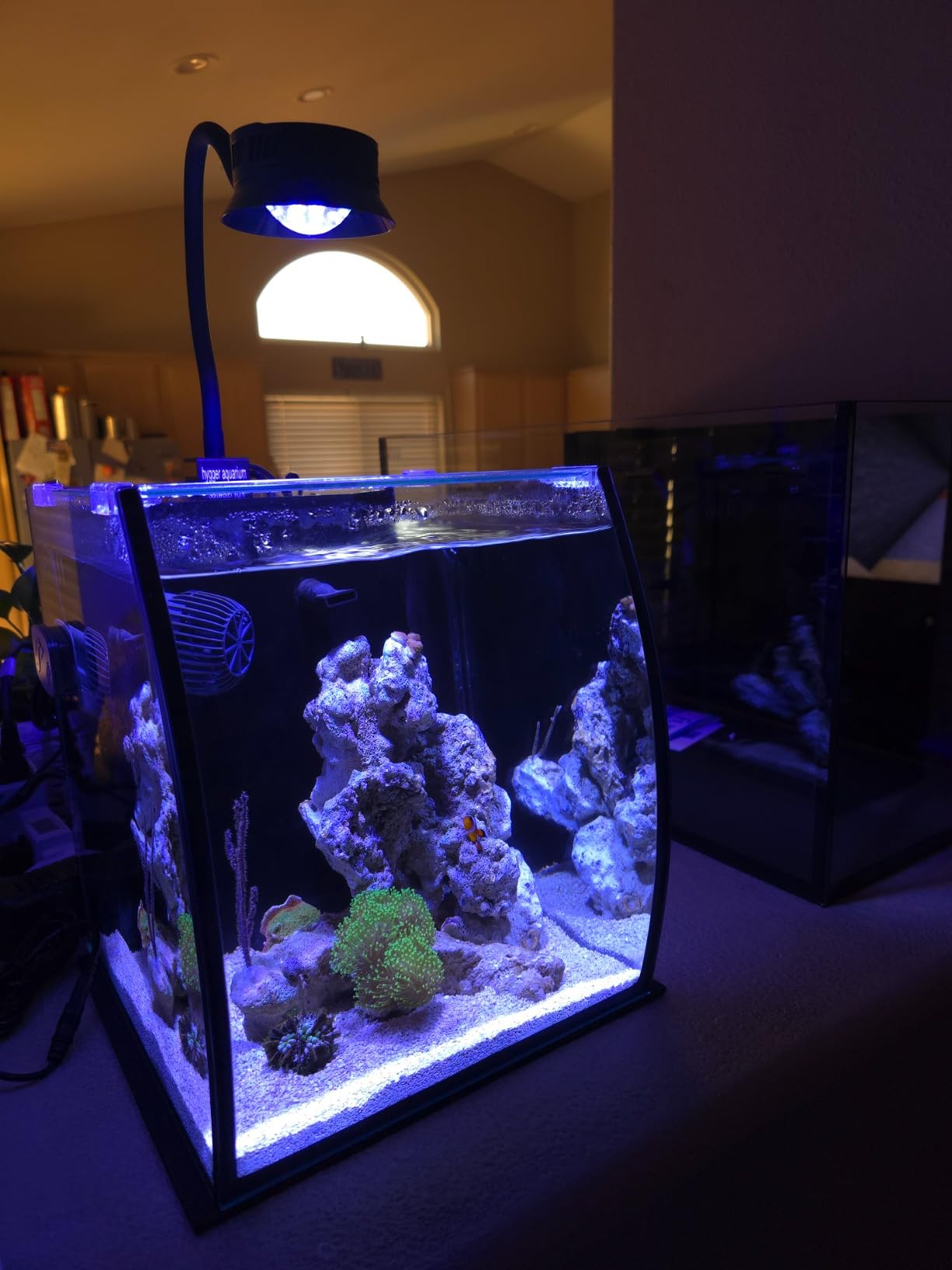
The lighting is the reason most people buy it. A 24-hour timer drives three independent LED channels for bright white, sparkling blue, and color-enhancing output, plus automatic 30-minute sunrise and sunset and 60-minute moonrise and moonset modes. For fish-only, soft coral, and many hardy LPS corals, that is genuinely enough. For SPS-level demand it is not, and owners who push it report algae issues that usually trace back to running the photoperiod too long.
The honest drawback is chamber volume. Reviewers consistently describe maintenance in the rear compartments as cramped, and most of them replace the stock media rack with a removable media basket. The lid has no piston support, so it has to be propped open during service, and the small system volume means strict weekly water changes plus a real auto top-off.
Who the BioCube 32 Fits Best
Pick this one if you want a single box that handles tank, filter, pump, and light without a sump, and you want your first reef to have room to grow. At 32 gallons it holds meaningfully more livestock and coral than a nano cube, which means fewer tiny water changes once it matures. Owners regularly note that the system is outgrown within about a year, which for a first tank reads as good news rather than a complaint.
It is also the easiest pick to expand around. Existing BioCube accessories fit directly, so adding a stronger light, a dedicated skimmer, or a wavemaker later does not mean replacing the whole footprint.
Where the BioCube 32 Falls Short
Skip it if you want SPS corals or an anemone on day one. The LED output does not deliver the intensity and spectrum those corals need, and no timer setting fixes that. It is also a poor match for anyone unwilling to change water on a schedule, since the volume punishes skipped changes harder than a larger cube would.
2. Fluval Flex 32.5 Marine Review: The Best Built and Best Lit Kit in the Range
- App control over white and RGB channels
- Three-stage filtration with oversized media
- Dual outputs let you dial in flow
- Honeycomb trim hides the water line
- Curved front glass
- Most expensive system in this roundup
- Filter compartment tightens once a skimmer is added
- Stock media needs supplementing for reef use
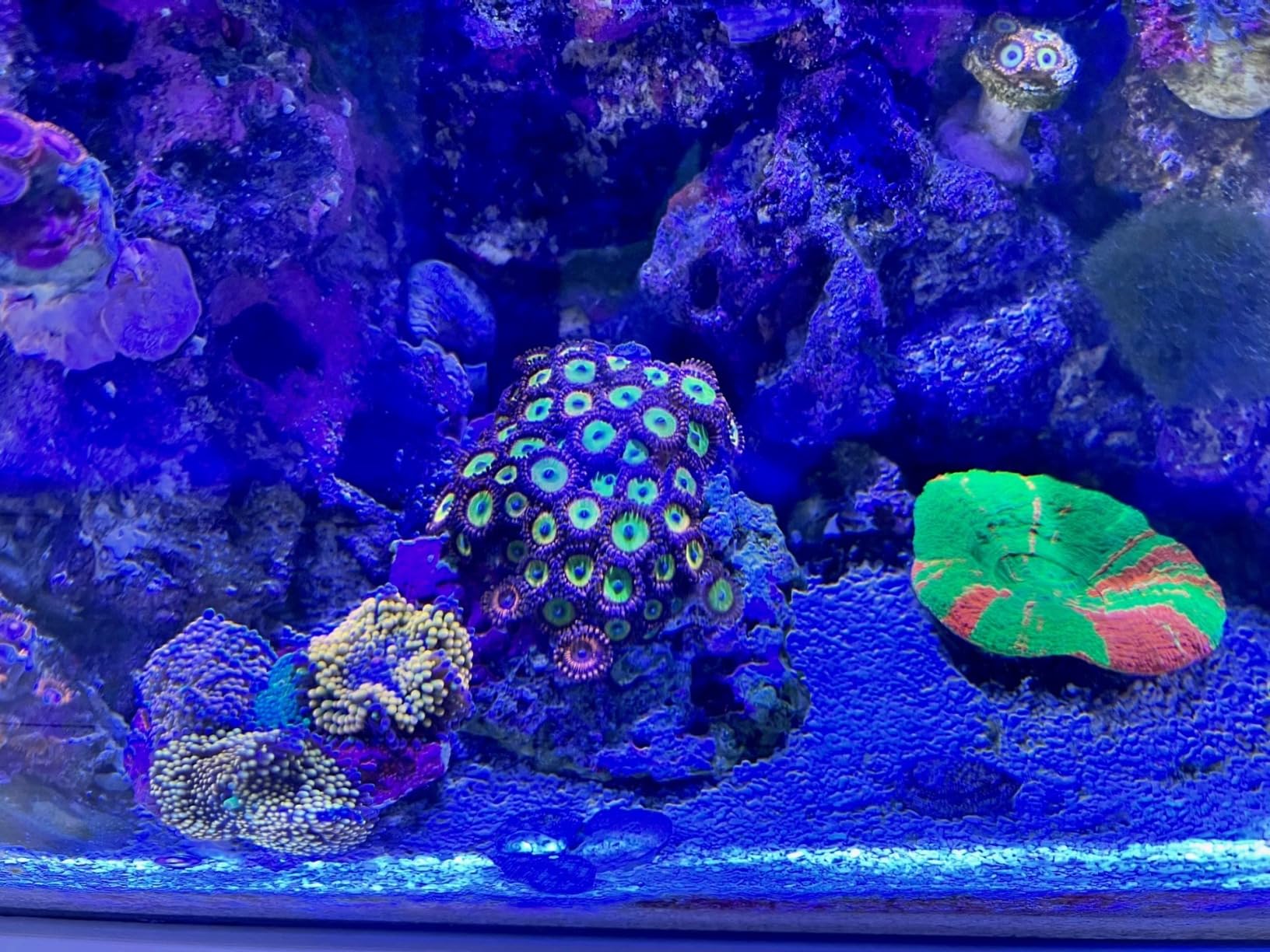
The Flex 32.5 Marine is the most refined object in this group, and it is the one that feels least like a compromise. At 123 litres with a curved front panel, a honeycomb trim wrap, and a feed-through top cover, it looks like furniture rather than equipment. Rolf C. Hagen has been building these since April 2020.
Lighting is the headline. Fully adjustable 7500K white plus RGB LEDs are controlled through the FluvalSmart app, which gives you far more control over spectrum and intensity than a physical remote. That range is why it handles more demanding lighting situations than the other bundled-light options in this roundup.
Filtration is three-stage, with oversized mechanical, chemical, and biological media in a compact footprint, plus multi-directional dual outputs so you can shape flow around rockwork instead of accepting a single jet. Reviewers praise the build quality and the trim design, and the recurring advice is consistent: budget for a skimmer, and plan for a canister filter as coral fill grows.
The Flex 32.5 carries the highest sticker figure of the eight, and at 48.75 pounds listed unit weight it is also the lightest large system here. Hose connections need modification for some setups, and the filter compartment gets crowded once a skimmer and additional equipment are living in it.
Who the Flex 32.5 Marine Fits Best
Choose it if app-controlled lighting matters to you, if you want a long rectangular footprint that suits a stand, and if you would rather buy one well-built platform than assemble a tank, a light, and a filter from three brands. Reviewers rate it highly on build quality, lighting control, and ease of maintenance.
It also handles the beginner upgrade path better than the cubes, because you can keep the tank and simply add an external canister later when the internal chamber runs out of room.
Where the Flex 32.5 Marine Falls Short
It is the wrong pick if budget is the deciding factor, because the same money buys a larger cube tank and leaves room for the gear you still need. It is also the wrong pick if you refuse to use an app, since the lighting control runs through FluvalSmart.
3. Ultum Nature Systems Dual AIO 6 Gallon Review: The Best Value Nano on This List
- Exceptionally clear 91 percent low-iron glass
- Very quiet pump in operation
- Chamber layout gives steady structured flow
- Small footprint suits nano reef or shrimp
- Many footprint options in the Dual AIO range
- Large intake opening needs a guard for nano fish
- Reservoir design in long shallow models demands a high water level
- No lid or light included so evaporation is manual
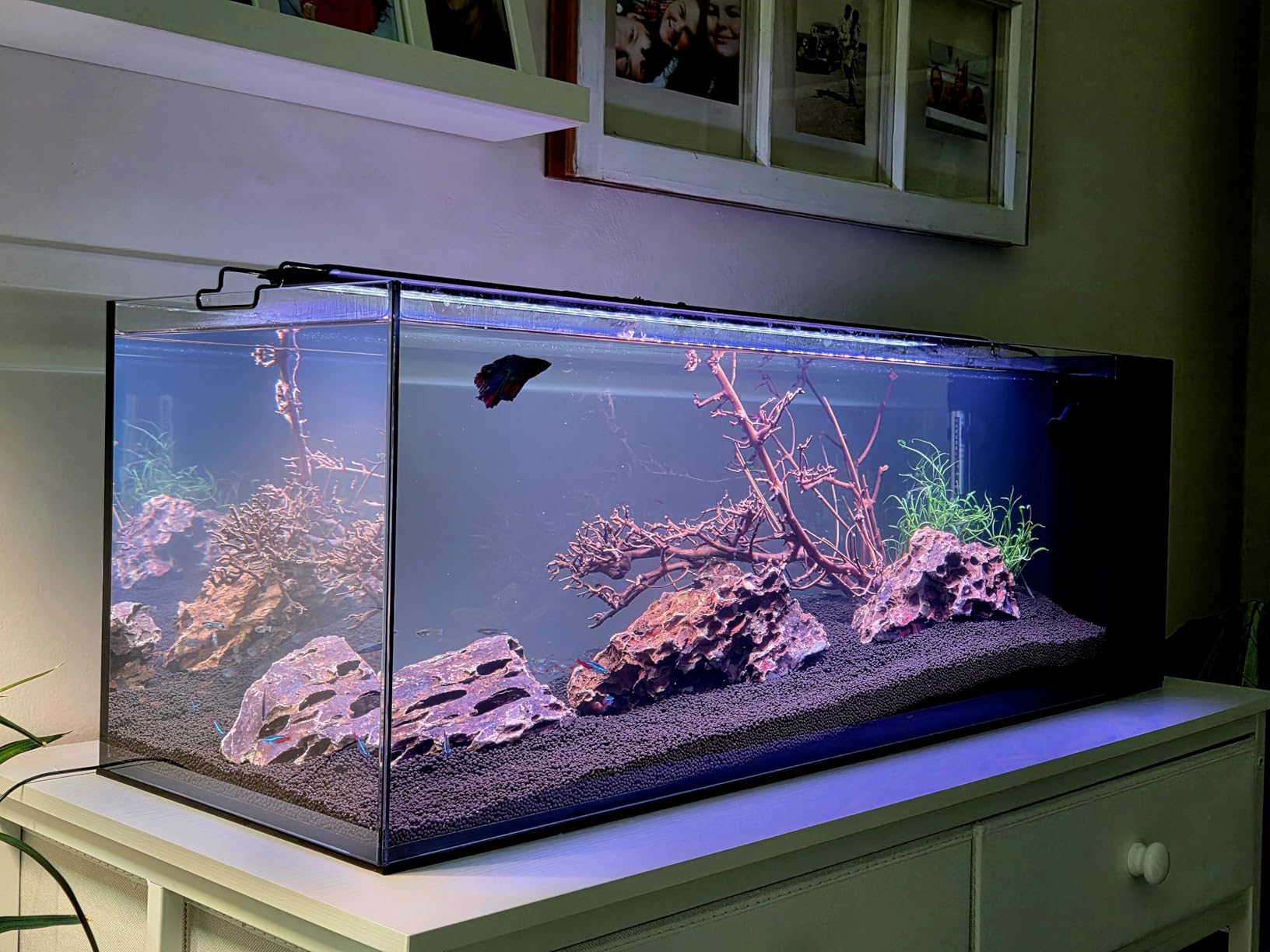
The Dual AIO 45SA is a 6-gallon rimless tank with rear filtration, and at this end of the size range it is the most convincing glass you can get. The 91% low-iron diamond glass with 45-degree precision mitered edges and unobtrusive silicone seams gives you a frameless look with real clarity. Owners single out the glass quality first, every time.
Filtration is a triple-chamber rear system with coarse sponge, specialised bio-media, and a quiet pump, and the layout provides steady flow and structured circulation rather than one dead spot. The integrated leveling mat is included, which is a small thing that saves real grief on an uneven desk.
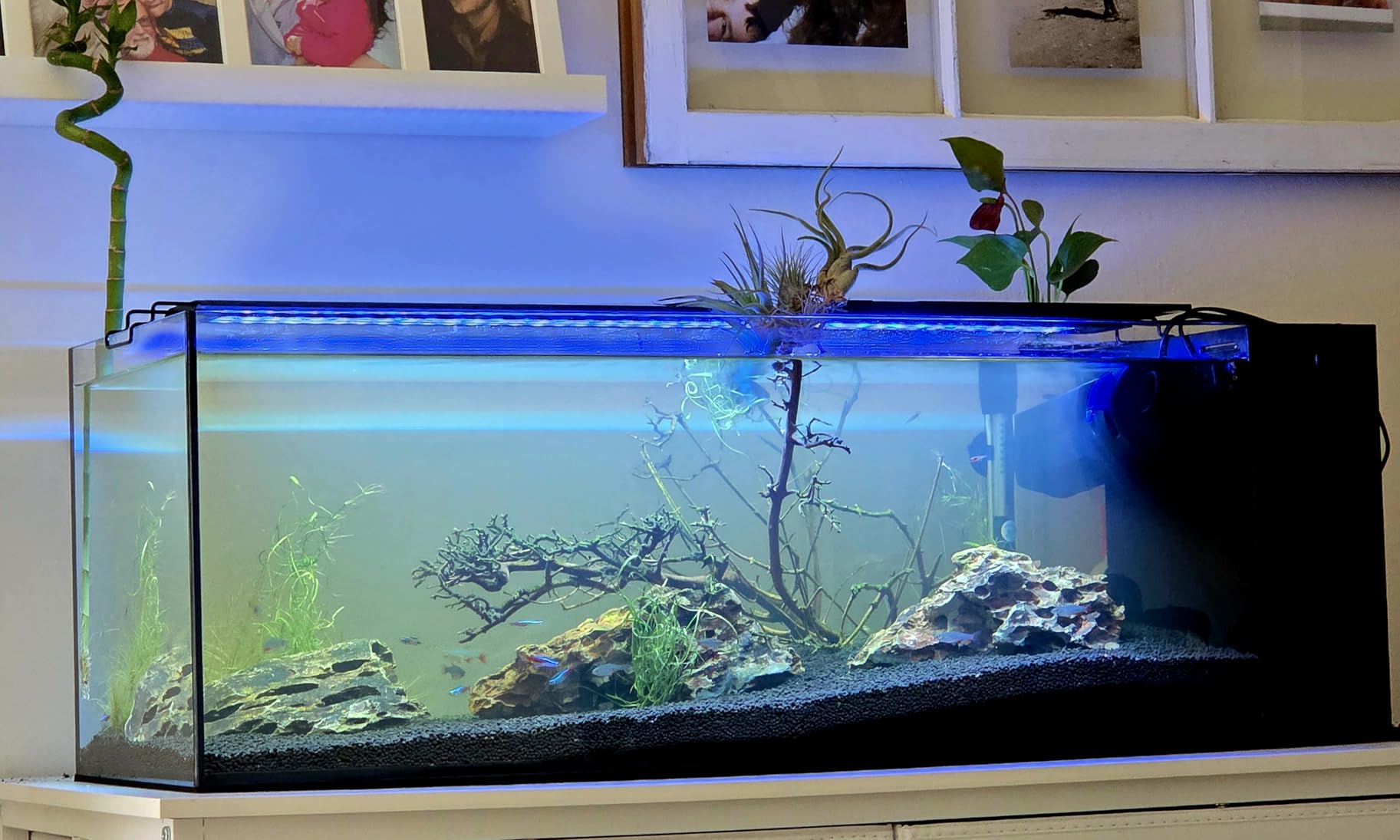
The 45SA is the long and shallow member of the family, and that shape brings its own engineering quirk. In the reservoir-style long models the water level has to sit near the top or the pump chamber can pull air, which is the single most common complaint in reviews. Adjusting flow also means removing the pump.
Two more practical notes. The filter intake opening is large relative to nano fish, so most owners add an intake guard. And there is no lid or light in the box, which means evaporation is entirely on you unless you add an auto top-off right away.
Who the Dual AIO Fits Best
This is the tank for someone who wants a nano reef, a shrimp tank, or a marine betta setup on a desk, and who values how it looks as much as how it runs. Because it works in both salt and fresh, it is also a low-risk way to test whether you enjoy the hobby before committing to a bigger cube.
For a first marine system, treat it as a practice tank rather than a display. The learning value of a nano tank is high precisely because you have to touch it every day.
Where the Dual AIO Falls Short
Skip the long shallow sizes if you plan to keep fish that stay small, because the intake and reservoir issues are structural rather than fixable. It is also a poor fit as your only tank if you want soft corals in volume, since six gallons is limited, and skipping the light means your total build cost starts from nothing.
4. Coralland 8 Gallon Nano Review: The Best Budget Nano Reef Platform
- Crystal-clear low-iron glass with clean seams
- Exceptionally well packed in triple-wall boxes
- Four rear chambers give good bubble dissipation
- Chamber sizes fit a heater and nano pump
- Low entry cost for a rimless-style nano
- Tank only with no pump light or livestock included
- Sock holder is permanently silicone-mounted
- Center divider limits fixed-mount light placement
- No setup guide in the box
What you are buying here is a very well built 8-gallon rimless nano tank, not a kit, and that distinction should shape your expectations before it shapes your budget. The display holds 5.5 gallons with 2.5 gallons in the rear sump, which is why the total number looks bigger than the display footprint suggests.
The glass is the argument for this tank. Low-iron ultra-clear glass with 45-degree angled joints and reinforced corners gives you clean seams and a clear viewing pane at a fraction of what larger rimless cubes cost. It is designed for marine fish, live rock, and soft coral systems.
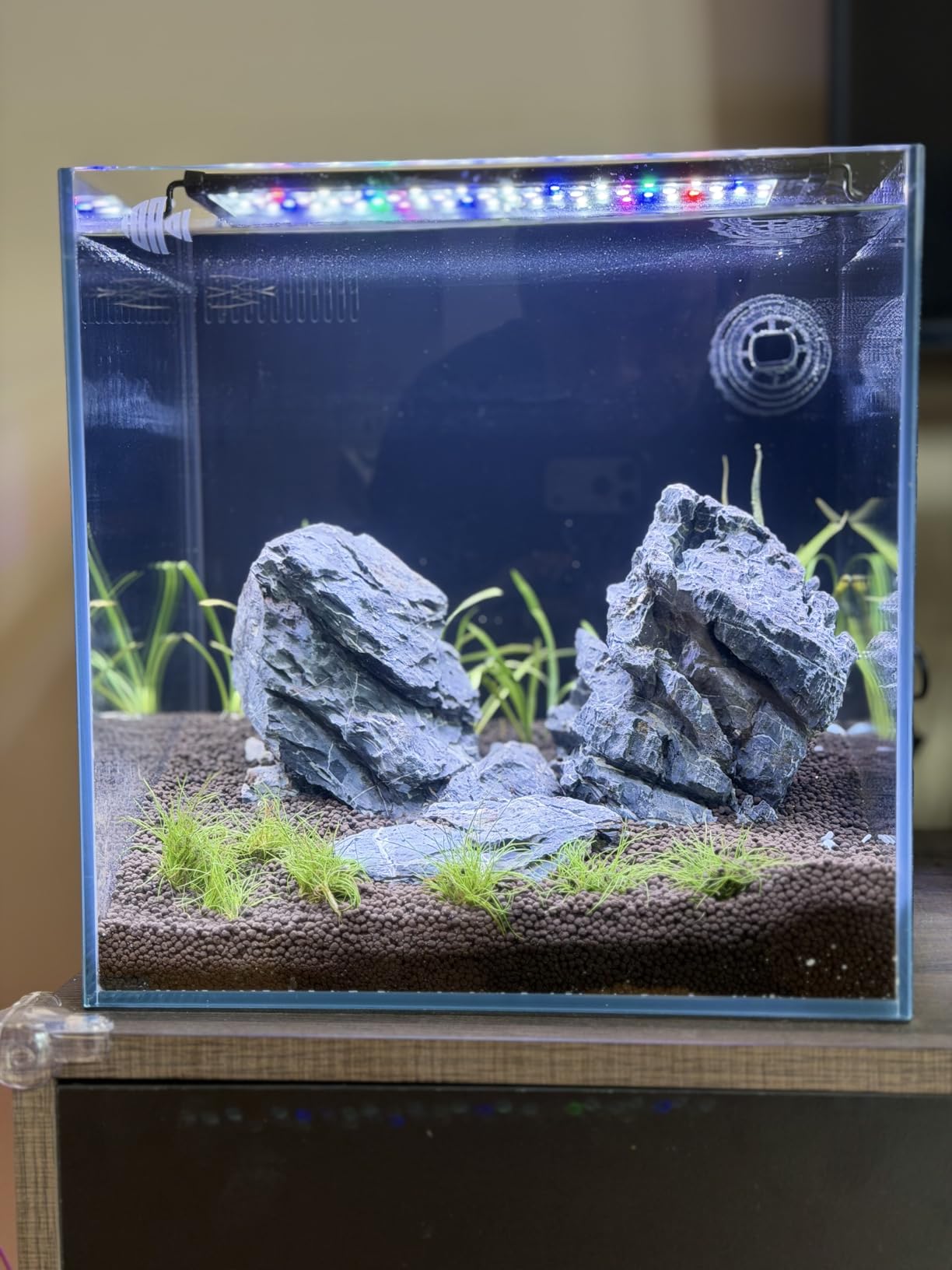
Four rear filter and sump chambers are sized for a heater, a pump, and optional equipment, and reviewers note the chamber sizes fit a heater and nano pump comfortably while giving good bubble dissipation. The return nozzle uses 5/8 inch, or 16 mm, tubing, and a rotatable outlet diffuser is included along with a felt base pad.
Three limitations stand out. The filter sock holder is permanently silicone-mounted, so you cannot swap in baskets, which removes most of the upgrade flexibility people buy a nano tank for. A center divider in the rear chamber limits where a light can mount. And there is no setup guide, which beginners find difficult.
Who the Coralland 8 Fits Best
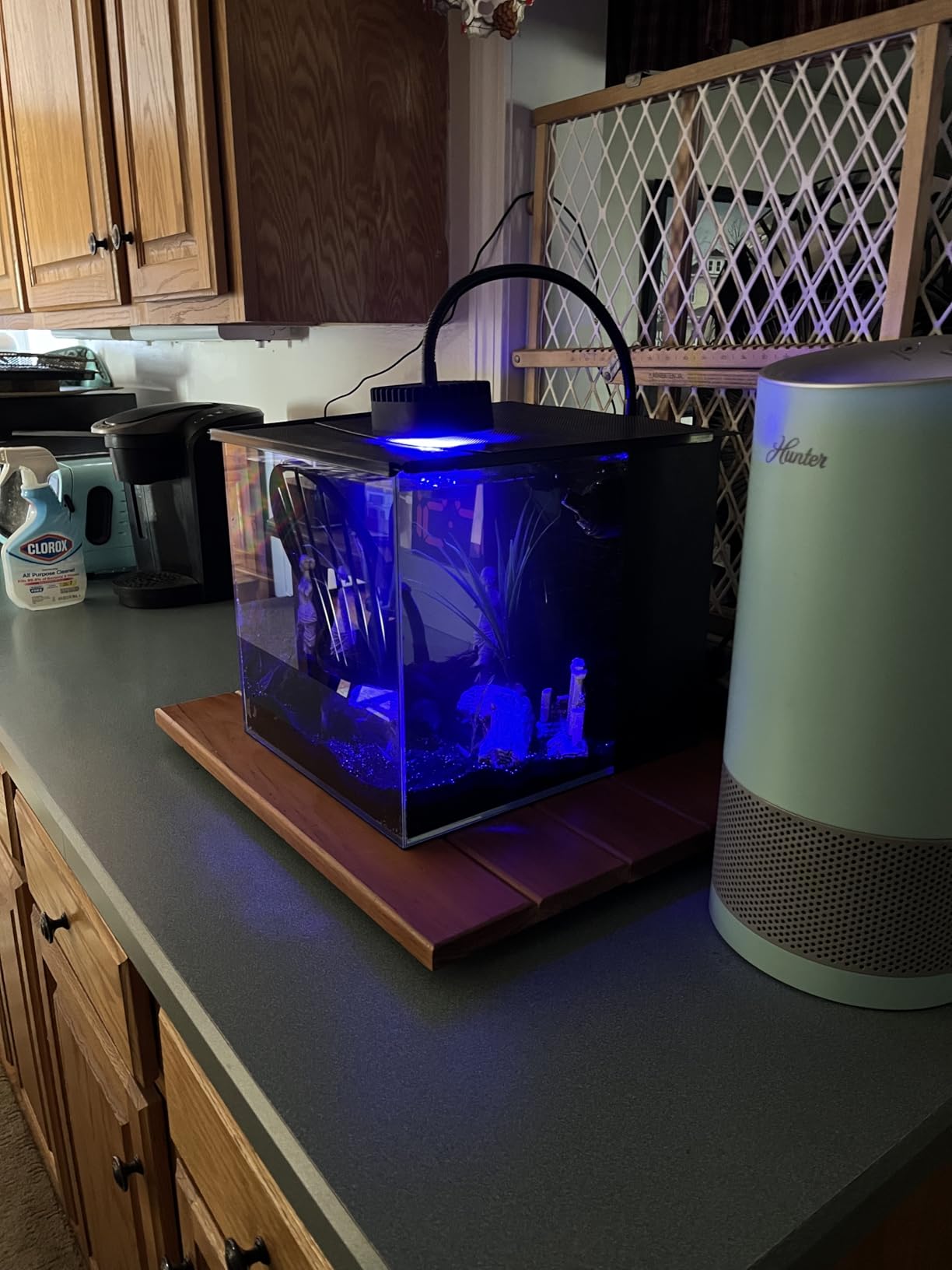
It suits a first-time marine keeper on a strict budget who already understands that they are assembling a system rather than opening a finished one. The packaging is genuinely excellent, with triple-wall boxes and foam protection, which matters when a replacement glass panel costs more than the tank.
It is also a good learner tank for soft coral and invertebrate work, where a small stable volume is workable if you commit to daily observation.
Where the Coralland 8 Falls Short
Skip it if you want anything in the box beyond glass. A tank-only purchase means sourcing pump, light, heater, salt, rock, and a guide yourself, and the fixed sock holder limits you afterward. It is also a poor fit for anyone who plans to upgrade filtration later, since the chamber layout resists modification.
5. Empire USA 24 Gallon Cube Review: The Best Cube Format for a Growing First Reef
Empire USA – 24 Gallon All-in-One Aquarium Kit, Rimless Low Iron Glass AIO Saltwater & Freshwater Fish Tank, Complete Nano Reef Tank Setup for Home or Office
- True rimless low-iron glass with an unobstructed pane
- Integrated filter and return keep the footprint compact
- A 24-gallon cube holds more livestock than nano tanks
- Cube dimensions fit standard furniture
- Works for saltwater reef or freshwater aquascaping
- Rear chamber space is limited for larger skimmers
- No top bracing so jumps and evaporation need managing
- No light or skimmer in the box
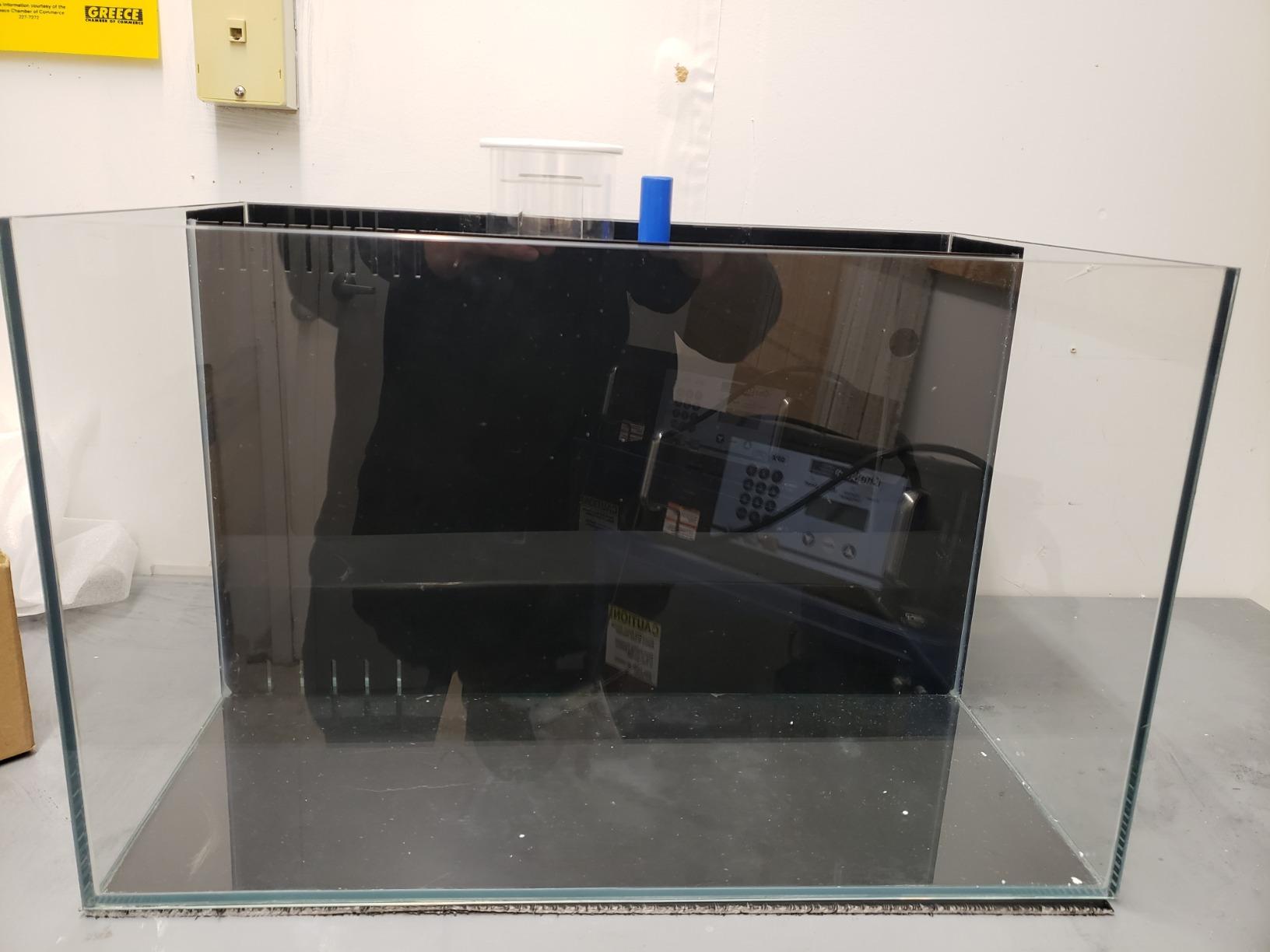
Twenty-four gallons in a cube is the format most experienced reef keepers actually recommend for a first serious system, and the Empire USA SCA-24G is a clean execution of it. Rimless low-iron glass with minimal distortion and reinforced silicone seams gives you an unobstructed viewing pane with no plastic trim to break the line of sight.
The integrated rear filtration chamber with a dedicated return system keeps the footprint at 24 by 15 by 15 inches, which is the part that matters in an apartment or an office. Cube dimensions fit standard furniture and cabinetry, so you are not hunting for a bespoke stand.
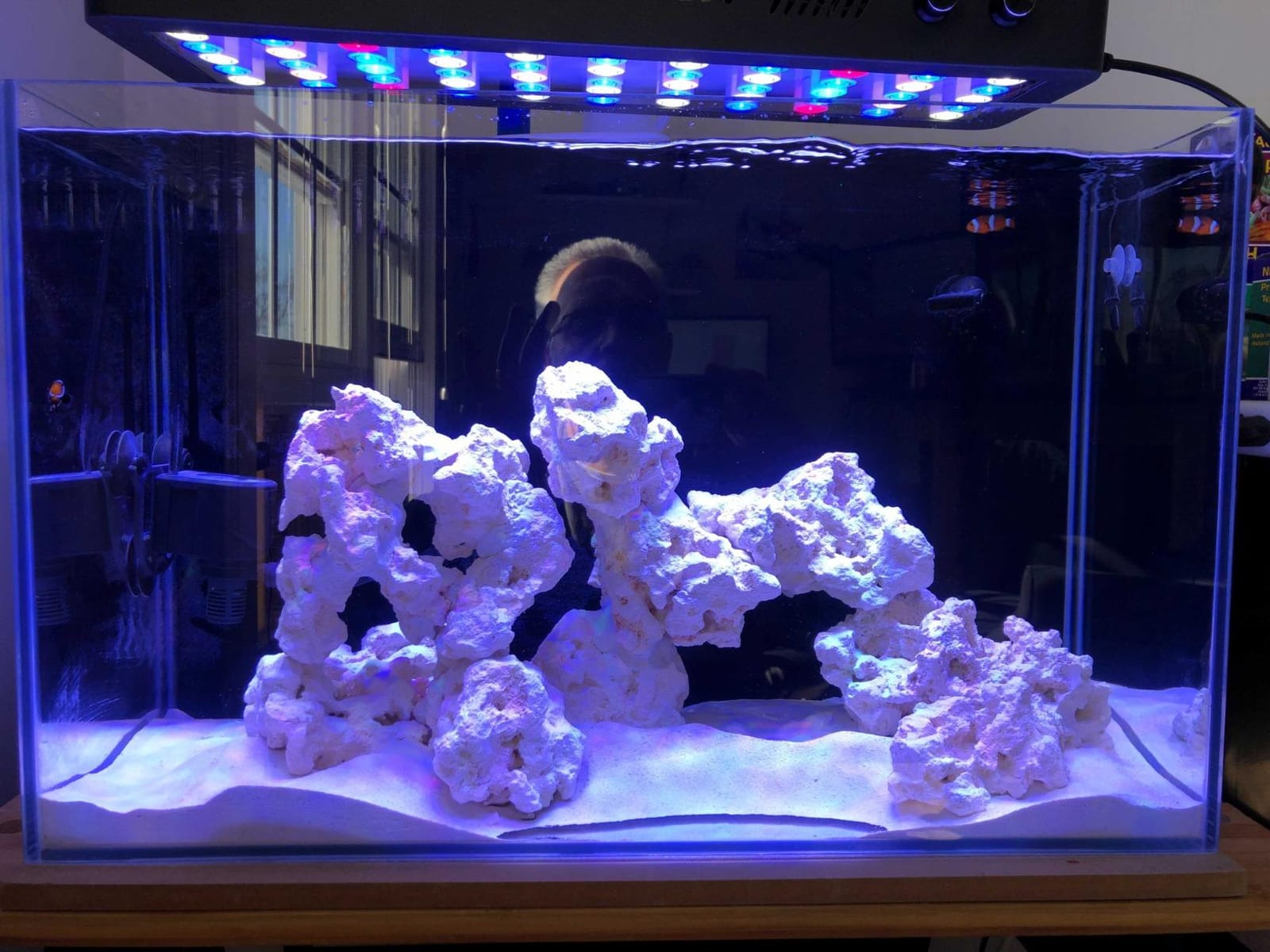
Compared with the nanos here, the advantage is stocking headroom. A 24-gallon cube holds meaningfully more livestock and coral, and the larger volume forgives a missed water change far better than five or six gallons does. Owners describe it as a well-built, attractive nano reef cube with genuinely clear glass.
The honest catches are structural. Rimless means no top bracing, so surface agitation and evaporation need managing. Rear chamber space is limited for larger skimmers, which is why most owners add lighting, a skimmer, and an auto top-off to complete a reef setup. The instruction and accessory bundle is not as complete as dedicated reef kits.
Who the Empire USA 24 Fits Best
Choose it if this is your first marine tank and you want a system you can put coral in rather than one you will replace within a year. It also works for freshwater aquascaping, so a partner or housemate who prefers fresh can share the footprint.
It is a good fit for a first anemone, though not on day one. Wait until the tank is cycled and stable before any anemone goes in.
Where the Empire USA 24 Falls Short
Skip it if you need everything bundled, since lighting, skimmer, and auto top-off are all add-ons here. It is also the wrong choice for a small desk, and the unbraced top means it is not ideal next to a busy walkway or a high-traffic spot where a jump would land on the glass.
6. Aquatop 8.6 Gallon Bow Front Review: The Best Complete Desktop Bundle
Aquatop 8.6 Gallon Bow Front Glass Aquarium Kit with Filter and LED Lighting – All in One Desktop Fish Tank, Ideal for Freshwater and Saltwater, BFK-08
- Bow front glass with beveled low-iron edges
- Pump filter pad and adjustable RGB LED in one box
- Infrared remote makes light adjustment simple
- Glass lid with mounting clips included
- Leveling pad included and rated for saltwater
- Single carbon pad filtration is minimal for a reef
- Pump flow can be too strong for nano livestock
- RGB remote lighting is not reef-programmable the way marine fixtures are
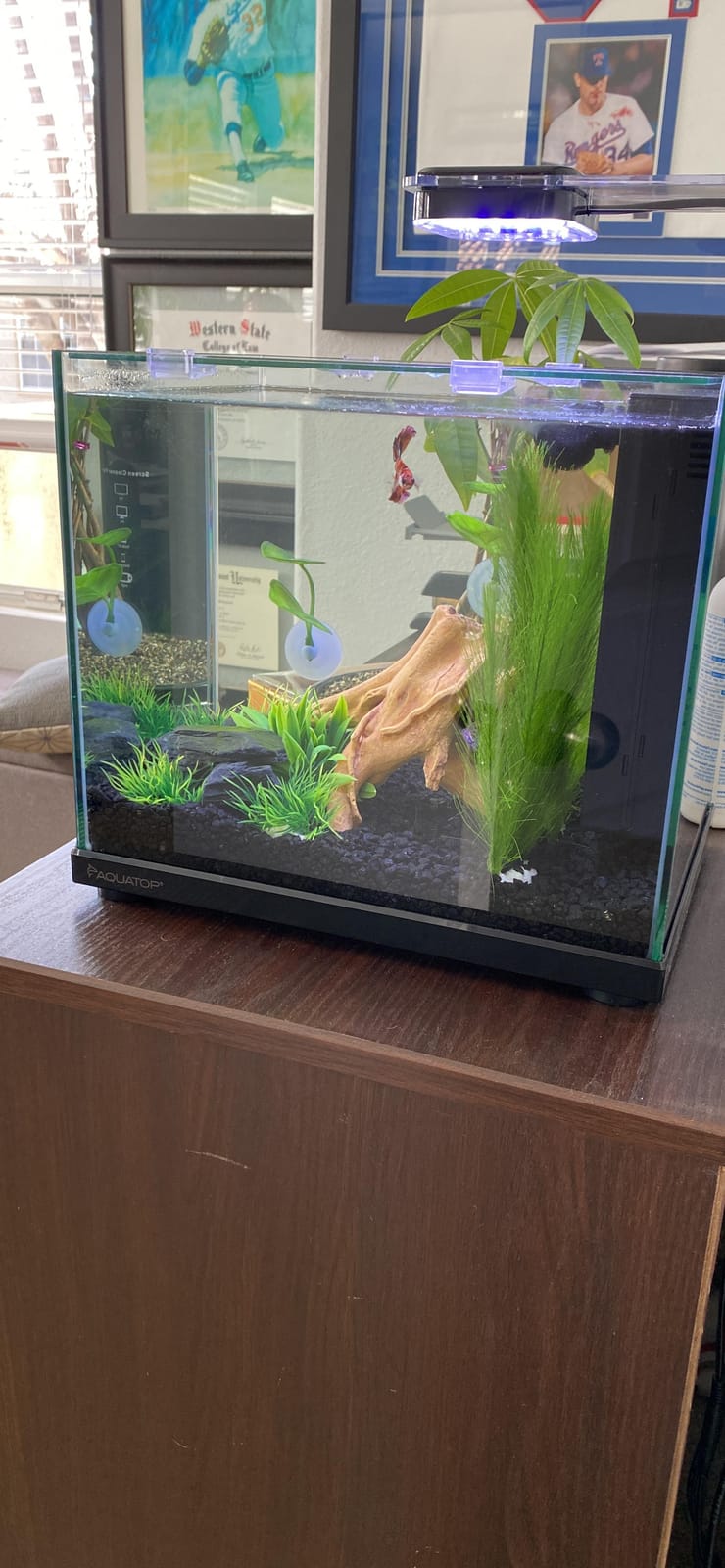
The BFK-08 is the rare nano that ships as an actual bundle. Tank, 106 GPH pump, integrated back-panel filter with carbon pad, adjustable RGB plus white LED fixture with infrared remote, glass lid with mounting clips, and a non-slip leveling pad all arrive in one box. For a first salt tank that removes an entire shopping list.
Form factor is the second argument. Bow front high-clarity low-iron glass with polished beveled edges and high-grade silicone looks modern on a desk, and the dimensions keep it compact. The whole unit weighs 16.8 pounds before water, so moving it is manageable.
Reviewers highlight the value of getting tank, filter, pump, and adjustable lighting together, plus the styling. That is the correct read: the value is convenience and completeness at the entry level, not filtration performance.
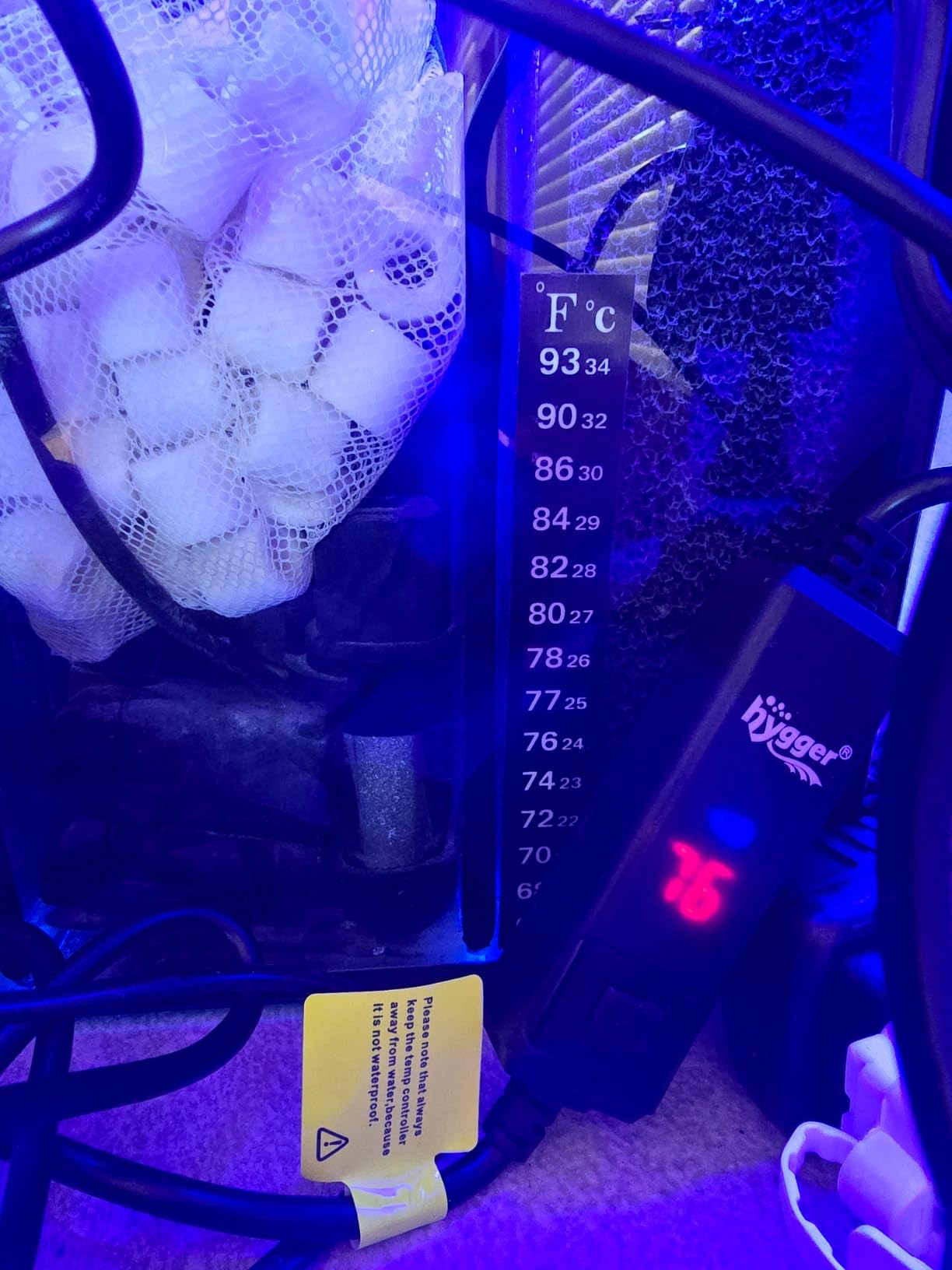
Filtration is the limitation. A single filter pad with carbon is minimal for a reef system, and the 106 GPH pump can be too strong for small nano livestock, so you will moderate flow. The RGB remote lighting is not reef-programmable in the way marine fixtures with scheduled acclimation points are, which limits what you can grow long-term.
Who the Aquatop 8.6 Fits Best
It fits someone who wants a self-contained display and does not want to make fifteen separate purchases before the tank can hold water. A small office or break-room display is a realistic use, as is a first marine tank on a counter where a lid is valued for reducing evaporation.
Because it is rated for both fresh and salt, it also works as a second tank once you outgrow it.
Where the Aquatop 8.6 Falls Short
Skip it if your plan involves soft corals or anything demanding light, since the fixture is not programmable for reef use and the filtration is a single pad. Small nano fish also need flow management you cannot dial in permanently.
7. Aquatop Pisces Nano Review: The Best Bullet-Shaped Tank for Shrimp and Invertebrates
Aquatop Pisces Bullet Shaped Glass Aquarium – Nano Aquarium Kit, for Salt & Freshwater Fish Tanks – Mechanical, Chemical & Biological Filtration
- Distinctive bullet shape looks modern and compact
- Light bracket mounts separately from the filter
- All components mount in the rear chamber leaving display space clear
- Ships as a complete nano kit for salt or fresh
- Media chambers are partly sealed so media cannot be removed or swapped
- Filter pad chamber gets little forced flow
- Pump cannot be throttled down
The Pisces is the most polarised tank in this roundup, and you should read the 3.6 rating from 72 reviews as a signal rather than a rounding error. The bullet-shaped glass design maximises viewing area for a 10.6 by 9 by 12 inch footprint, and it is sold as a complete nano kit for salt or fresh water.
One design decision is genuinely smart. The light bracket mounts independently of the filter, so the filter assembly can be swapped without disturbing the lighting. And all components mount in the rear chamber, leaving more of the display area open.
The filtration is where it falls apart in practice. The media chambers are partly sealed, so ceramic media cannot be removed or replaced, which effectively fixes what you can run. The filter pad chamber receives little forced flow because the pump draws unfiltered water, and the pump itself cannot be throttled down, which is a problem for shrimp and small invertebrates.
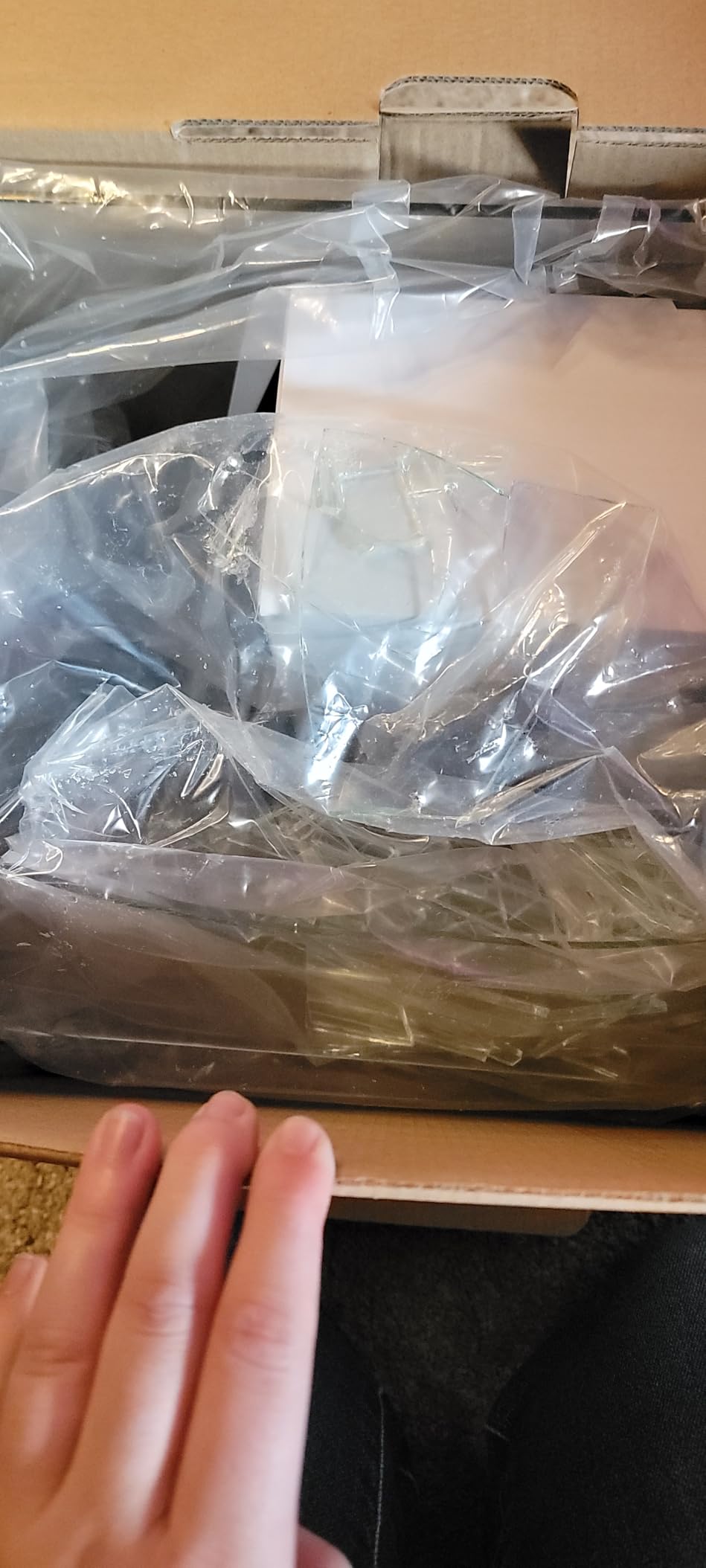
Other reported issues: the glass lid and clip arrangement is awkward to remove, there is no timer on the light, and thin packaging has led to reports of cracked glass on arrival. Owners do like the shape and the clean separation between light and filter.
Who the Pisces Fits Best
It suits someone who wants a nano tank primarily for shrimp and invertebrates rather than corals, where minimal filtration and a strong unthrottleable pump are an acceptable trade for a clean look and a small footprint. Quiet operation with very low vibration is reported on some units.
It is also a reasonable starter for a marine betta or similar single-animal display.
Where the Pisces Falls Short
Skip it if you want a reef, if you plan to change filter media as your system matures, or if you keep delicate nano fish that a fixed full-bore pump will stress. Given the reported arrival damage, we would also inspect the box on arrival and document any cracked glass immediately.
8. Fluval Flex 57 15 Gallon Review: The Most Proven Nano Starter You Can Buy
- Well-established design with a large base of owner experience
- Adjustable white and RGB LEDs with remote effects
- Honeycomb trim conceals the water line
- Three-stage filtration with oversized media in a compact footprint
- Dual adjustable return outputs
- Rear filter chamber fills quickly once a skimmer is added
- Light intensity is low for demanding corals
- Stock media needs supplementing for a reef system
With 3693 reviews at a 4.5 average, the Flex 57 has more owner history behind it than anything else in this guide, and that is a real advantage when you are new. Available since December 2016 in 15-gallon and 9-gallon versions, it is one of the most proven nano aquarium kits on the market.
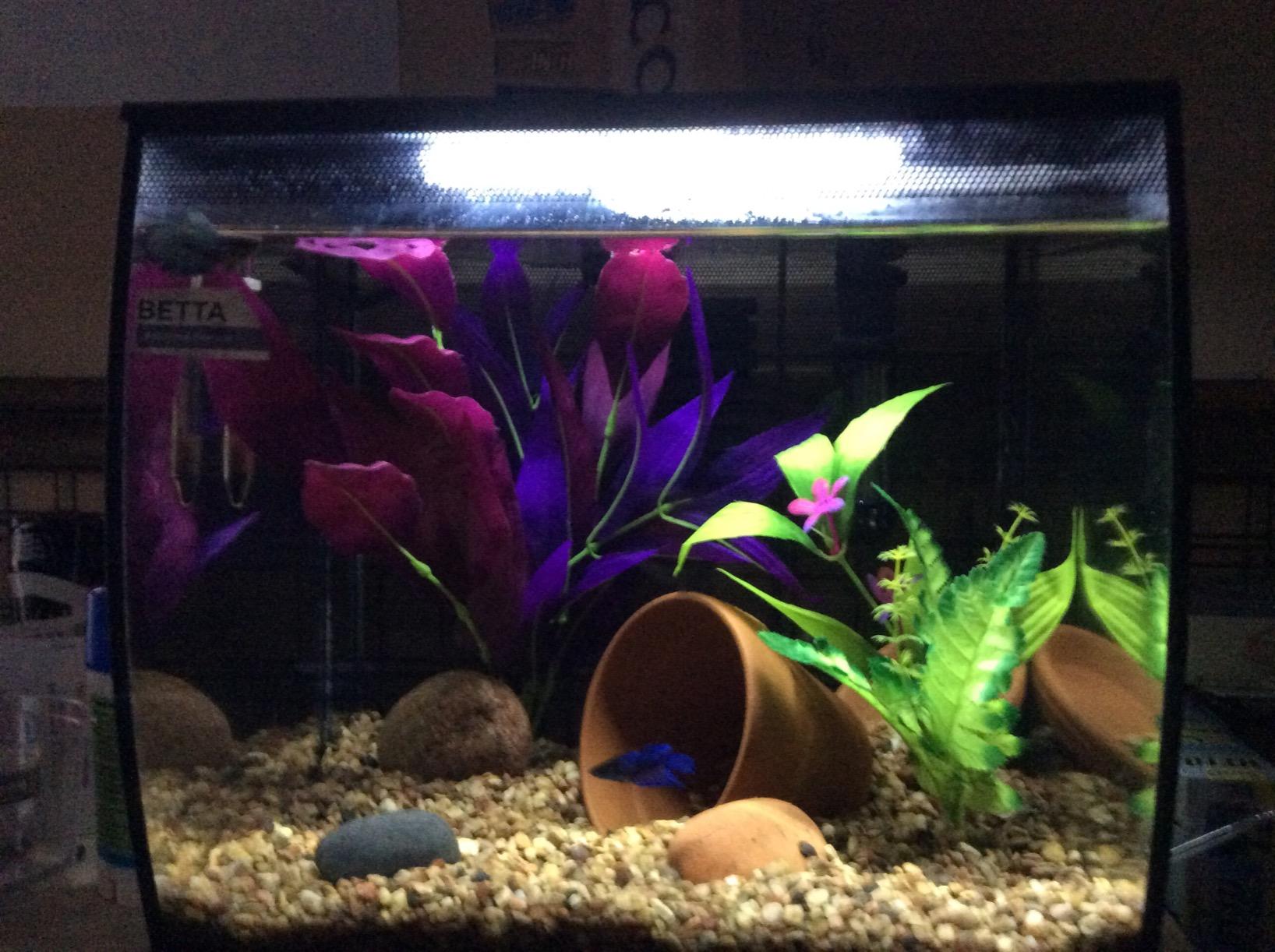
It shares the Flex design language with the larger marine kit: contoured curved front glass, honeycomb wrap concealing the water line and filter compartment, a top cover with feed opening, and three-stage mechanical, chemical, and biological filtration with oversized media in a compact footprint.
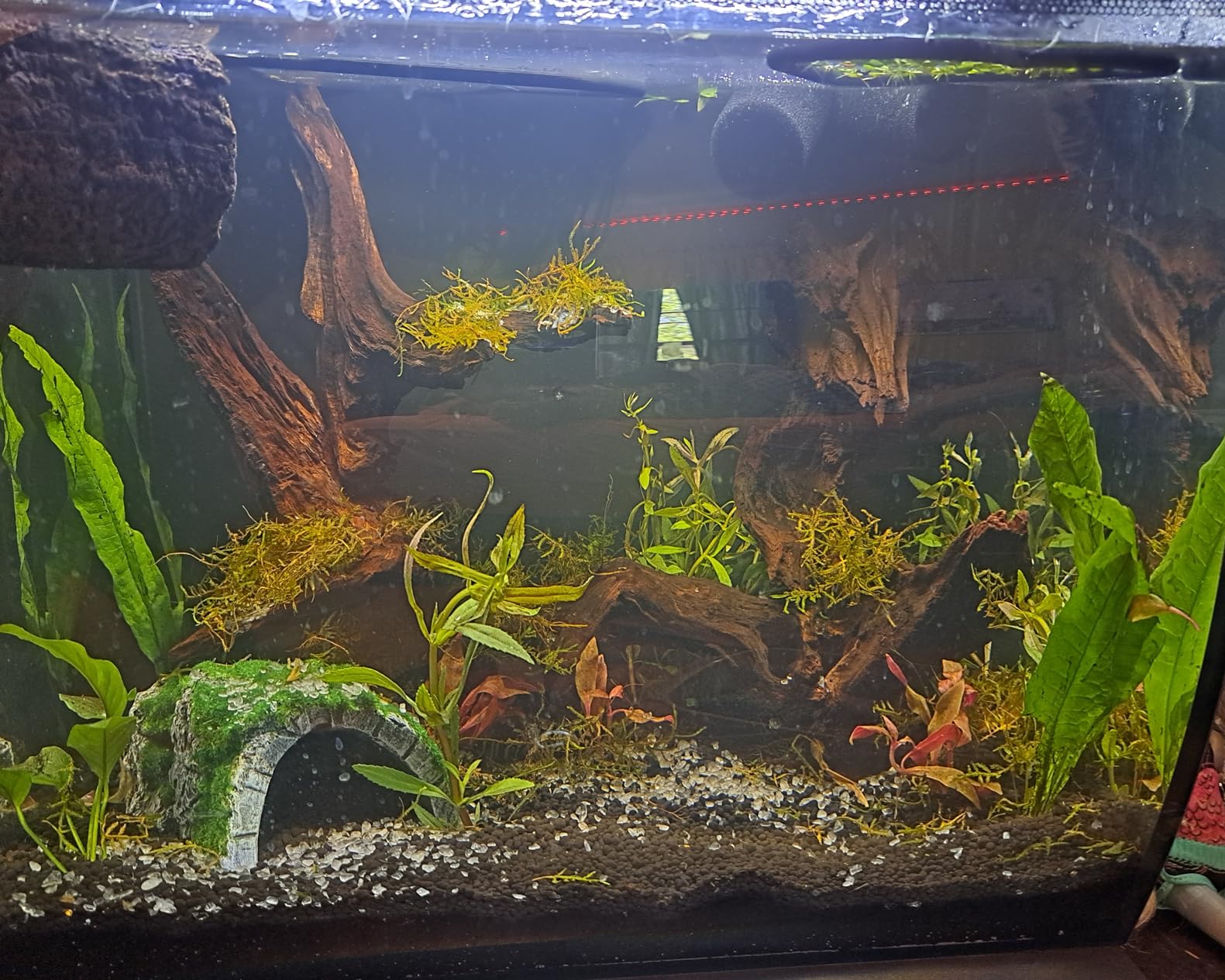
Lighting is fully adjustable 7500K white plus RGB with FLEXPad remote effects, which is a wider control surface than most bundled nano fixtures offer. Multi-directional dual outputs let you dial in flow for coral or fish, which matters more in a small tank where one jet creates a blast zone.
Owners regularly report adding a canister filter and a skimmer alongside the stock chamber, and many use it for shrimp, small fish, and light coral. Sentiment stays positive on build quality, lighting control, and ease of maintenance. The rear chamber fills up quickly once a skimmer is added, light intensity is low for demanding corals, and the included media needs supplementing for a reef system.
Who the Flex 57 Fits Best
It fits a first-time marine keeper who wants a proven, widely supported nano with a remote-controlled light and does not plan to grow demanding corals. A large installed base also means setup videos and troubleshooting answers exist in volume.
For a shrimp tank or a small marine fish display on a desk or cabinet, it remains one of the more considered options available.
Where the Flex 57 Falls Short
Skip it if you want a single tank you can grow a reef in, because the chamber fills and the light intensity is the limiting factor. At 15 gallons with roughly 125 pounds of water once filled, it also exceeds what many desks and shelves are actually rated for.
How to Choose a Saltwater Aquarium Kit: Size, Weight, and Stand Support
Salt water weighs 8.34 pounds per gallon. That single number decides whether your furniture works, and most beginners skip it. The BioCube 32 at 32 gallons means roughly 267 pounds of water alone, before glass, rock, and sand, which pushes a realistic total past 350 pounds.
Work through the ladder before you order anything. The Dual AIO 6 and Coralland 8 sit near 50 pounds of water and are fine on a solid desk. The Aquatop 8.6 Bow Front and Fluval Flex 57 at 15 gallons need a surface rated for well over 125 pounds, which rules out many particle-board desks. The Empire USA 24 cube sits near 200 pounds of water, and the Fluval Flex 32.5 is in the same range as the BioCube 32.
Match the footprint to your space, including the water you will need. A saltwater system is 8.34 pounds heavier per gallon than fresh, so a stand chosen for a freshwater tank of the same size can be the wrong choice outright.
Plan the electrical side before delivery day. Put the tank on a GFCI-protected outlet, make a drip loop at every cord so salt water cannot travel down a plug, and never put a power strip on the stand floor where salt water collects. Salt creep is corrosive and it works quietly. Wipe down the top of the tank weekly, and keep the stand interior dry.
One more check: measure your doorways and your ceiling clearance with the tank in its box in mind. A 27.5-inch cube like the BioCube 32 needs a wide path from the door to its final spot.
What to Buy After the Tank, in Order of Priority
None of these eight kits include the things you actually need to run one. Buy them in this order, and the order matters more than the individual choices.
Refractometer. A hydrometer reads too loosely for marine work. A basic handheld model with calibration solution is enough to start.
Auto top-off. Nano tanks especially will lose noticeable water daily, and topping off with salt water by hand is the fastest way to drift salinity.
Salt mix and purified water. Top-off water is always fresh, never saltwater. Evaporation removes water, not salt.
Test kits. Ammonia, nitrite, nitrate, alkalinity, calcium, magnesium, and temperature. Cycling decisions depend on the first three.
Heater. Sized for your actual volume, with a thermometer you can read without opening the lid.
Live rock or dry rock plus aragonite sand. This is your biological filtration and your aquascaping surface at the same time.
Reef light, skimmer, and wavemaker. Buy these once parameters are stable, not on day one.
Quarantine tank. Forum beginners say this is the single most-skipped item and the most expensive mistake. See our saltwater systems guide for the habit side of keeping water chemistry steady.
That list is longer than the tank box, which is why experienced keepers on beginner kit roundups repeatedly recommend treating the tank as the last purchase decision rather than the first.
Your First 90 Days: Fishless Cycling and Slow Stocking
Rushing this stage is the most common reason a first reef disappoints. Nobody needs to lose fish to prove the tank works.
Set the system up dry. Level the tank, run the pump and heater with the tank empty of livestock, and confirm your return flow feels right.
Mix salt water to 1.024 to 1.025 specific gravity. Use the refractometer you just calibrated. Salt that is mixed too strong or too weak is a hard start.
Add rock. Live rock speeds things up, dry rock is cleaner to handle. Either way you are building your biological filtration.
Dose an ammonia source to about 2 ppm. Then add nothing else. This is fishless cycling, and you are feeding bacteria, not fish.
Test daily. Watch ammonia fall and nitrite appear, then fall. When both read zero and nitrate is present, the nitrogen cycle is complete. Most people land somewhere between three and five weeks.
After the cycle, add fish slowly and in stages, waiting between additions to let the biofilter catch up with new bioload. Corals come later still, and anemones come last of all. Coral placement also depends on your light, and reef-ready on a box is a label rather than a PAR measurement, so measure or research before you buy a demanding coral.
Quarantine every new fish before it goes in the main tank. This is the most consistent piece of advice in the forum threads we read, and it costs far less than treating disease later. If you enjoy learning gear, our beginner kit testing picks cover the same method of weighing evidence before you commit.
Frequently Asked Questions
What is the best saltwater tank kit for a beginner?
The Coralife BioCube 32 is the strongest all-round choice because the tank, rear filtration chamber, return pump, and programmable LED light all ship together, and the accessory ecosystem around it is deep. The Fluval Flex 32.5 Marine is the pick if app-controlled lighting matters more to you. For small systems, the UNS Dual AIO 6 gallon and Fluval Flex 57 at 15 gallons are the most proven nano options.
What is the best all-in-one saltwater aquarium kit?
An all-in-one aquarium folds a filter chamber into the tank so you never plumb a sump. The best all-in-one options here are the Coralife BioCube 32 for bundled lighting and the Fluval Flex 32.5 Marine for app control. Neither is a complete reef kit: you still need a heater, a refractometer, salt, rock, sand, test kits, and an auto top-off.
What size saltwater aquarium is best for a beginner?
Most experienced reef keepers point to roughly 20 gallons or more for a first serious system, and that is where a 24-gallon cube like the Empire USA fits. Six to fifteen gallons works as a learning nano, but temperature, salinity, and nutrient levels swing faster in smaller water, so daily attention is required.
Are saltwater aquariums expensive to maintain?
They cost more than freshwater because you replace evaporation with fresh water rather than tap water, you need salt mix, a refractometer, a protein skimmer, and higher-quality test consumables, and livestock is generally pricier. The tank itself is often the smallest line item in the first-year budget once lighting, filtration, rock, sand, and livestock are counted.
What is the best way to start a saltwater tank?
Start with the tank and filtration as a bare platform, mix salt water to 1.024 to 1.025 specific gravity, add rock, and run a fishless cycle with an ammonia source to about 2 ppm. Test daily until ammonia and nitrite both read zero, which usually takes three to five weeks. Then add fish slowly and corals much later.
Do saltwater aquarium kits include rock and sand?
Not the ones in this roundup. Every tank here ships with glass, filtration hardware, and usually a pump and light, but none include live rock, dry rock, aragonite sand, salt mix, or livestock. Budget for those separately, along with a heater, a refractometer, test kits, and an auto top-off system.
Which Saltwater Aquarium Kit Should You Buy?
The Coralife BioCube 32 is our pick for the best saltwater aquarium kits for beginners in 2026, because it hands you a tank, filtration, a pump, and a programmable light in one box and stays out of your way. If you want better lighting control and app access, go with the Fluval Flex 32.5 Marine. If counter space rules out a cube, the UNS Dual AIO 6 gallon is a capable learner nano.
Whichever you choose, buy the refractometer and the auto top-off before the tank arrives, cycle fishless for three to five weeks, and add livestock slowly.