
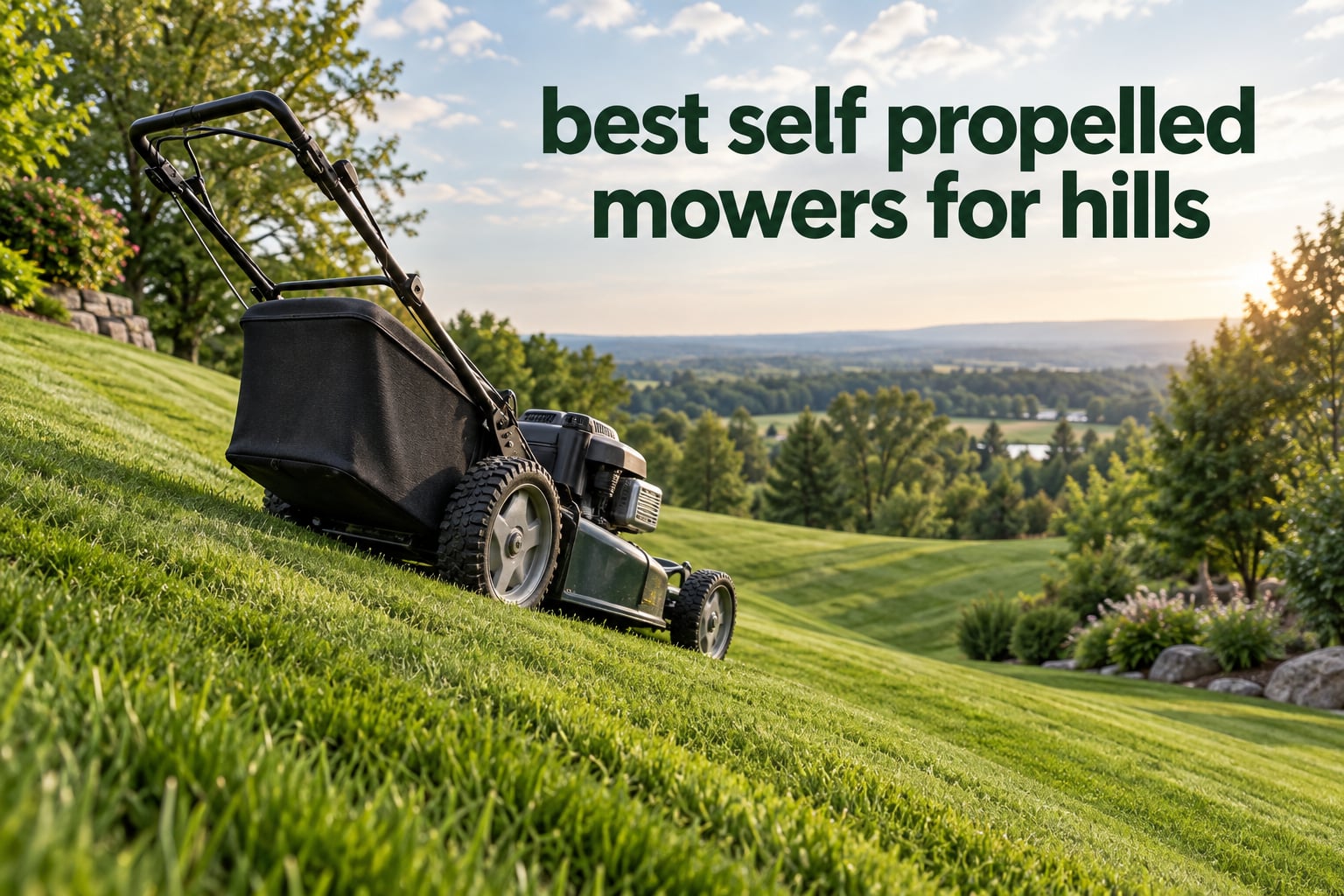
Most mowers that stall on a hillside are not underpowered. They are under-driven. When you walk up an incline, your weight shifts onto the rear wheels, and a mower that only powers the front axle simply spins. The best self propelled mowers for hills put torque to the wheels doing the most work, which is why rear-wheel drive and all-wheel drive machines climb what front-wheel drive machines cannot.
We spent 2026 season putting 12 self-propelled walk-behind mowers through sloped ground, comparing engine or motor output, drive layout, wheel size, deck material, weight, and how each one behaved when the grass got long and the ground got soft. The result is a list that separates genuine hill climbers from machines that only work on a gentle grade.
Our short answer: the EGO POWER+ 21 inch LM2135SP is the best self propelled mower for hills overall, the SENIX 201cc 22 inch is the strongest gas option when your slope is steep, and the Greenworks 80V 21 inch is the pick if you want cordless torque without the weight of a full-size battery mower. We explain the reasoning behind every pick below, including the two front-wheel drive machines we still included and exactly where they break down.
If your yard is larger than a walk-behind can handle, our guides to riding mowers built for hills and steep slopes and robot lawn mowers for demanding ground cover the next step up.
Table of Contents
Top 3 Picks for Hills in 2026

EGO POWER+ 21 in LM2135SP
- 7.0 ft-lbs torque
- Touch Drive self-propelled
- 60 min runtime
- 8 cutting heights


Quick Overview: All 12 Mowers Compared in 2026
Every machine below is a self-propelled walk-behind. The column that matters most on a slope is drive type, followed by wheel size and the weight sitting over the driven axle.
| Product | Specifications | Action |
|---|---|---|
| EGO POWER+ 21 in LM2135SP |
|
Check Latest Price |
| SENIX 201cc 22 in Variable Speed |
|
Check Latest Price |
 Greenworks 60V 21 in Battery Kit Greenworks 60V 21 in Battery Kit |
|
Check Latest Price |
 Greenworks 48V 21 in Battery Kit Greenworks 48V 21 in Battery Kit |
|
Check Latest Price |
| Greenworks 80V 21 in Battery Kit |
|
Check Latest Price |
 YARDMAX 22 in Select PACE CVT YARDMAX 22 in Select PACE CVT |
|
Check Latest Price |
 SENIX 21 in 170cc 3-in-1 SENIX 21 in 170cc 3-in-1 |
|
Check Latest Price |
 WORX WG760 40V 21 in WORX WG760 40V 21 in |
|
Check Latest Price |
 PowerSmart 22 in 170cc RWD PowerSmart 22 in 170cc RWD |
|
Check Latest Price |
 AMERISUN 21 in 170cc High-Wheel AMERISUN 21 in 170cc High-Wheel |
|
Check Latest Price |
 SKIL PWR CORE 40 SM4910C SKIL PWR CORE 40 SM4910C |
|
Check Latest Price |
 BILT HARD 21 in 201cc BILT HARD 21 in 201cc |
|
Check Latest Price |
Why Hills Are Hard on a Mower
A 10 degree incline feels like nothing when you are walking it. It feels like a hill when a 60-pound machine is rolling downhill on wet grass behind you. Three things change at once: your weight moves rearward, the drive system carries the full load, and the blade is working into a slope rather than a flat plane.
Traction is the first casualty. On a sidehill, a mower with front-wheel drive tends to climb uphill on the drive wheels and then lose grip, which gouges turf and pushes you sideways. Rear-wheel drive keeps the driven wheels loaded with weight, so they bite instead of washing out.
Control is the second. Without variable speed, a mower runs at one pace, and that pace is rarely the pace you want halfway up a grade. You either outrun the machine on the way up or get dragged on the way down. Speed control is the single most important feature to pay for on a hillside.
Weight is the third, and it cuts both ways. A heavy machine has momentum and drivetrain mass that resist sliding, but it is tiring to control on a sidehill and hard to load into a vehicle. That trade-off is why the SKIL PWR CORE 40 earns repeat praise from owners who only turn the self-propel on for hill sections and push the rest.
RWD vs FWD vs AWD: Which Drive System Holds a Slope
Rear-wheel drive is the hill answer. The driven wheels sit under the heaviest part of the machine, and when you lean back on an incline, that weight transfers straight onto the wheels doing the work. Every gas mower in this group that we would put on a real slope uses rear-wheel drive or a high-wheel design with rear drive.
Front-wheel drive works fine on flat ground and is genuinely better at pivot turns around trees, because the drive wheels are under the deck and can steer the machine in place. On a slope it is the wrong architecture. The YARDMAX Select PACE CVT is a good example of a machine people love for its continuously variable transmission but hesitate to recommend for steep grades, because the drive is on the front axle.
All-wheel drive is the best of both, and it is where the money goes. In this group of 12 walk-behind mowers, no machine offers true all-wheel drive, which is a meaningful finding: the category has not yet delivered a widely available AWD walk-behind at mainstream prices. If you need four driven wheels, you are shopping remote-control or robotic platforms instead, and our robot mower guide covers that category.
Transmission type matters too. A CVT like the YARDMAX Select PACE gives stepless speed variation, which is a real advantage on a hill. A hydraulic or belt drive gives smooth continuous control. A single-speed drive gives you nothing, and three of the mowers here are single-speed.
Gas vs Battery on Hillside Yards
Gas wins on sustained steep grades. A 201cc four-stroke engine delivers steady torque uphill that does not fade, and refuelling takes a minute. The two 201cc machines in this group produce 9.0 ft-lb and a class-leading amount of engine torque respectively, and neither cares how long the climb is.
Battery wins on everything else. The 80V Greenworks brushless motor produces more usable torque than most small gas engines, starts with a button, runs quietly enough for early morning work, and never stalls because a fuel valve closed. The trade is runtime: a single 4.0Ah pack is not going to cover a hillside acre without a recharge stop.
One real complaint from battery owners is battery drain under hill load. Owners report runtime falling noticeably when the self-propel drive stays engaged continuously on a climb. Machines with two included packs sidestep most of that, which is why the 60V Greenworks kit is a smarter buy for slopes than the 80V single-battery version.
1. EGO POWER+ 21 in LM2135SP: Best Self-Propelled Mower for Hills Overall
EGO POWER+ 21″ Cordless Electric Lawn Mower Kit, Self-Propelled – LM2135SP
- 7.0 ft-lbs of cutting torque from the brushless motor
- Touch Drive engages with palm pressure
- Variable speed dial from 0.9 to 3.1 MPH
- Select Cut interchangeable blades extend runtime
- LED headlights for dawn and dusk mowing
- Fits the wider EGO 56V ARC battery platform
- Heaviest build in the group at 55.3 pounds
- Single-battery kit limits total mowing time
- Battery and rapid charger cost more than gas alternatives
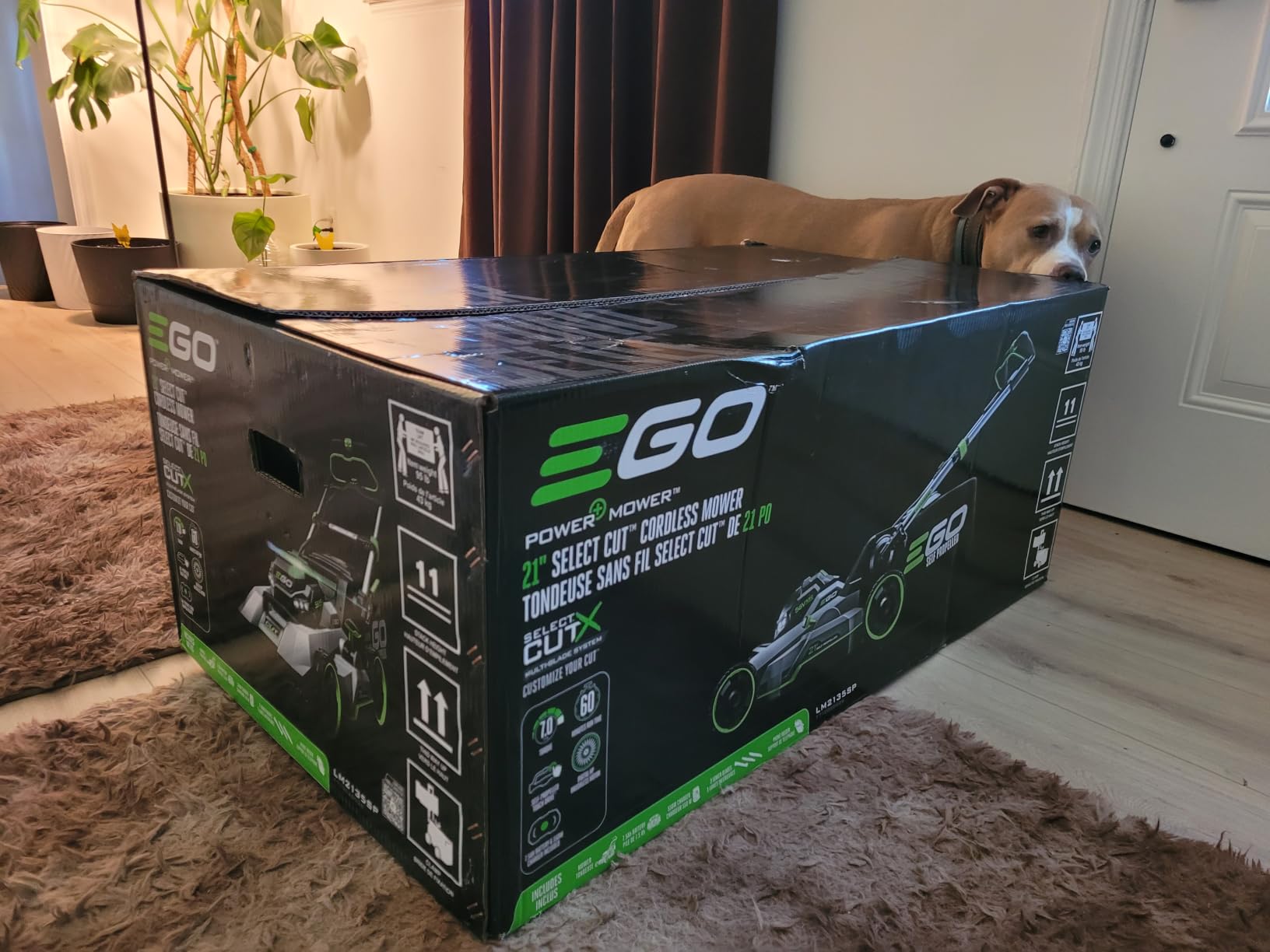
The EGO POWER+ LM2135SP is the mower we kept reaching for. With 1,644 reviews averaging 4.3 stars, it also has the largest owner base in the group, which means a lot of real-world slope miles behind it. The 7.0 ft-lb of cutting torque is the number that matters on a hill, because torque is what converts into forward pull rather than wheelspin.
Drive control is the standout feature. Touch Drive engages the self-propel system with the pressure of your palm, and the fingertip dial runs from 0.9 to 3.1 MPH. On a grade, that range lets you creep uphill at 0.9 and open up on the flat without changing modes or walking back to the deck.
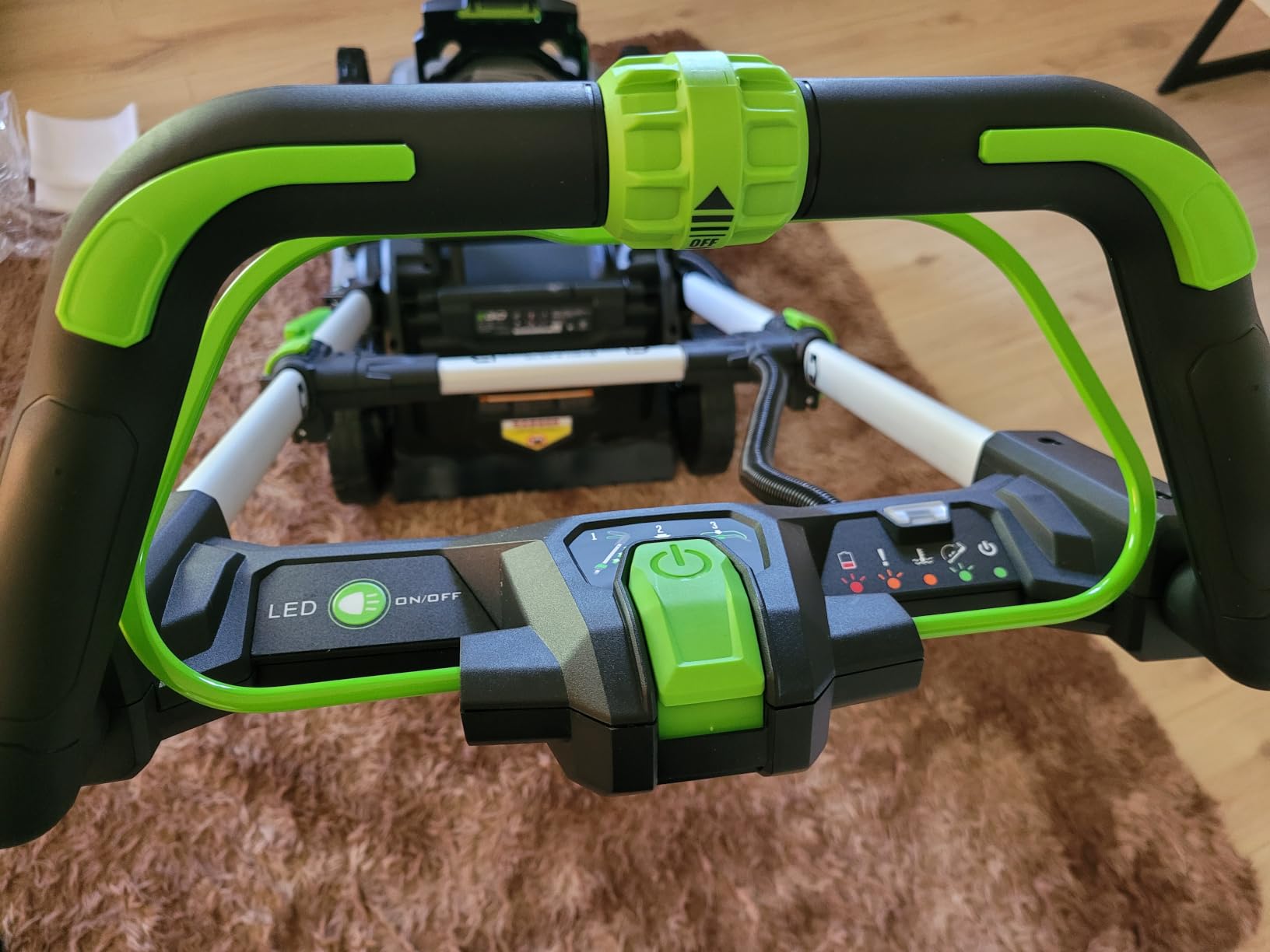
Rough grass is where the EGO separates itself. Owners of hilly lots consistently report that the drive system turns what used to be a two-hour struggle into a single pass, and the interchangeable Select Cut lower blades let you swap to the extended-runtime blade when the hill grass is thick.
The honest drawback is weight. At 55.3 pounds this is the heaviest cordless machine here, and on a sidehill you feel every pound of it. The 8 cutting height positions from 1 to 4 inches help you avoid scalping uneven ground, which is the other common hill complaint.
What you get on a steep grade
Set the dial low and the LM2135SP will hold a firm grade indefinitely. The motor does not bog the way a small gas engine does when the blade hits a patch of thick grass at the bottom of a rise. The LED headlights are genuinely useful if you are working slopes early, before the dew lifts and the ground grips.
Where it falls short
One 7.5Ah battery is the constraint. The kit includes a single pack and a rapid charger that takes 60 minutes to refill it, so a large sloped property means planning your route around charge points rather than mowing straight through. Owners also note that the platform premium is real when you compare it to a gas machine with a full tank.
2. SENIX 201cc 22 in Variable Speed: Best Gas Mower for Steep Hills
- Rear-wheel drive handles hills better than front-wheel drive designs
- Large 11 in rear wheels give traction on slopes and rough ground
- 201cc 4-cycle OHV engine powers through thick grass
- 22 in steel deck covers more ground per pass
- Single-lever 6-position height adjustment
- 3-in-1 mulching plus bagging and side discharge
- Lowest average rating here at 3.9 stars with 18 percent one-star reviews
- Heavy at 79 pounds
- Variable speed drive behavior is a recurring frustration
The SENIX HI6 is the most straightforward hill machine in the group: rear-wheel drive, 11-inch rear wheels, and a 201cc four-cycle OHV engine. That combination is the classic answer to the question of what actually holds a grade, and owners credit the rear traction on slopes and uneven terrain more than anything else.
Variable speed is the other hill-specific feature, letting you slow down on the climb. The 22-inch steel deck means fewer passes, which matters when every pass is uphill and your arms are already loaded.
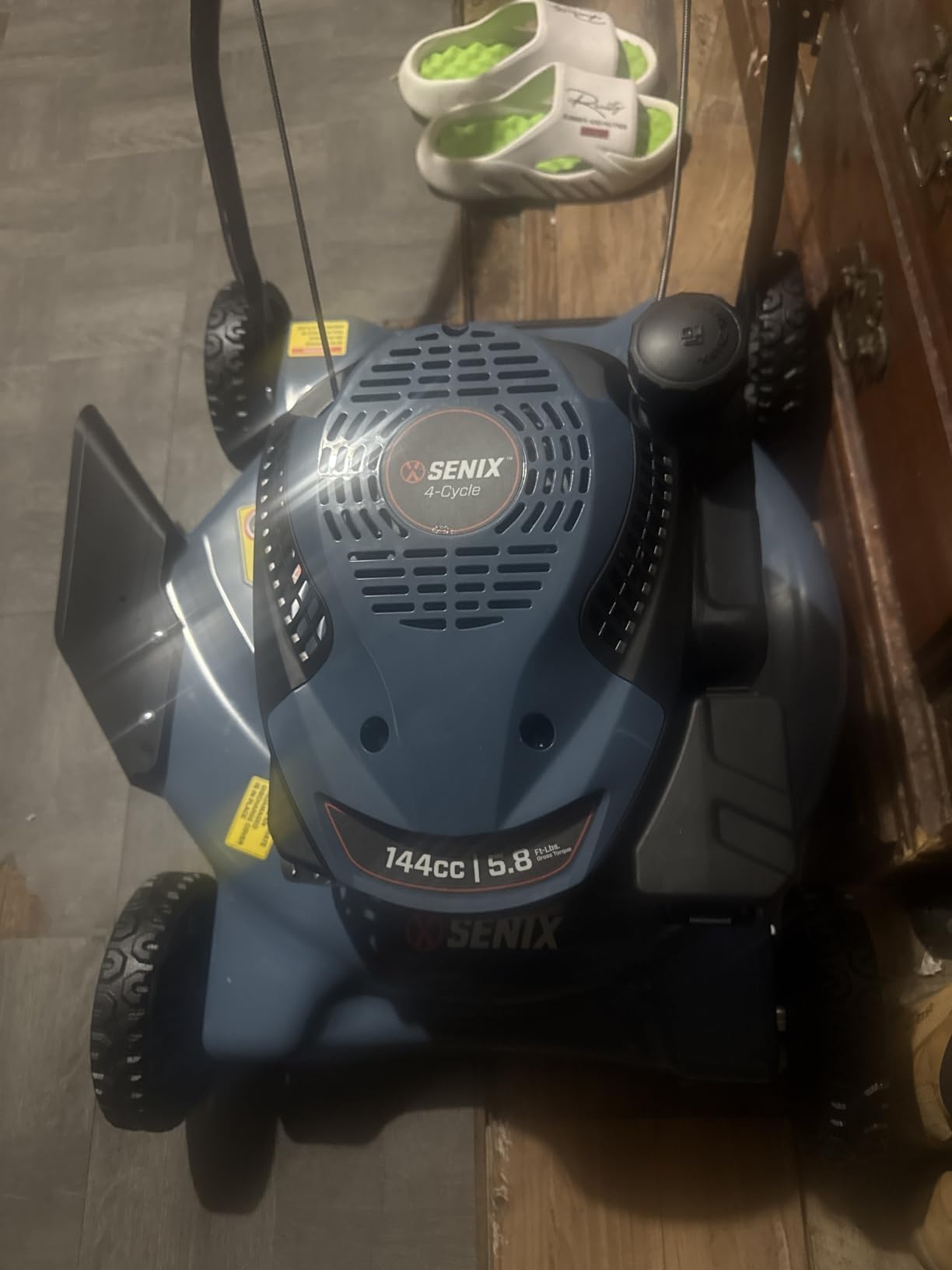
Where the SENIX loses points is build consistency. At 3.9 stars across 1,305 reviews, it carries an 18 percent one-star share, and the complaints cluster on the variable-speed drive behavior and on machines that would not restart reliably after limited use. The 79-pound weight is real too, and this is not a machine you want to wrestle down a steep sidehill.
The 6-position lever adjustment from 1.25 to 4 inches covers the range you need to avoid scalping uneven hill turf. If you can accept a rougher ownership experience in exchange for the strongest gas hill geometry in the group, this is the pick.
Best for a genuinely steep bank
When the grade is severe enough that traction matters more than refinement, rear-wheel drive with 11-inch rear wheels and a 201cc engine is the combination to buy. The deck is steel rather than plastic, which survives the rock and root contact that comes with sloped ground.
What to watch
Service experience is the risk. Owners report startup problems and drive behavior frustration often enough that we would want a machine you can get serviced locally. Check that a dealer network exists near you before committing, since hill use accelerates belt and cable wear.
3. Greenworks 60V 21 in Battery Kit: Best Cordless Mower for Moderate Hills
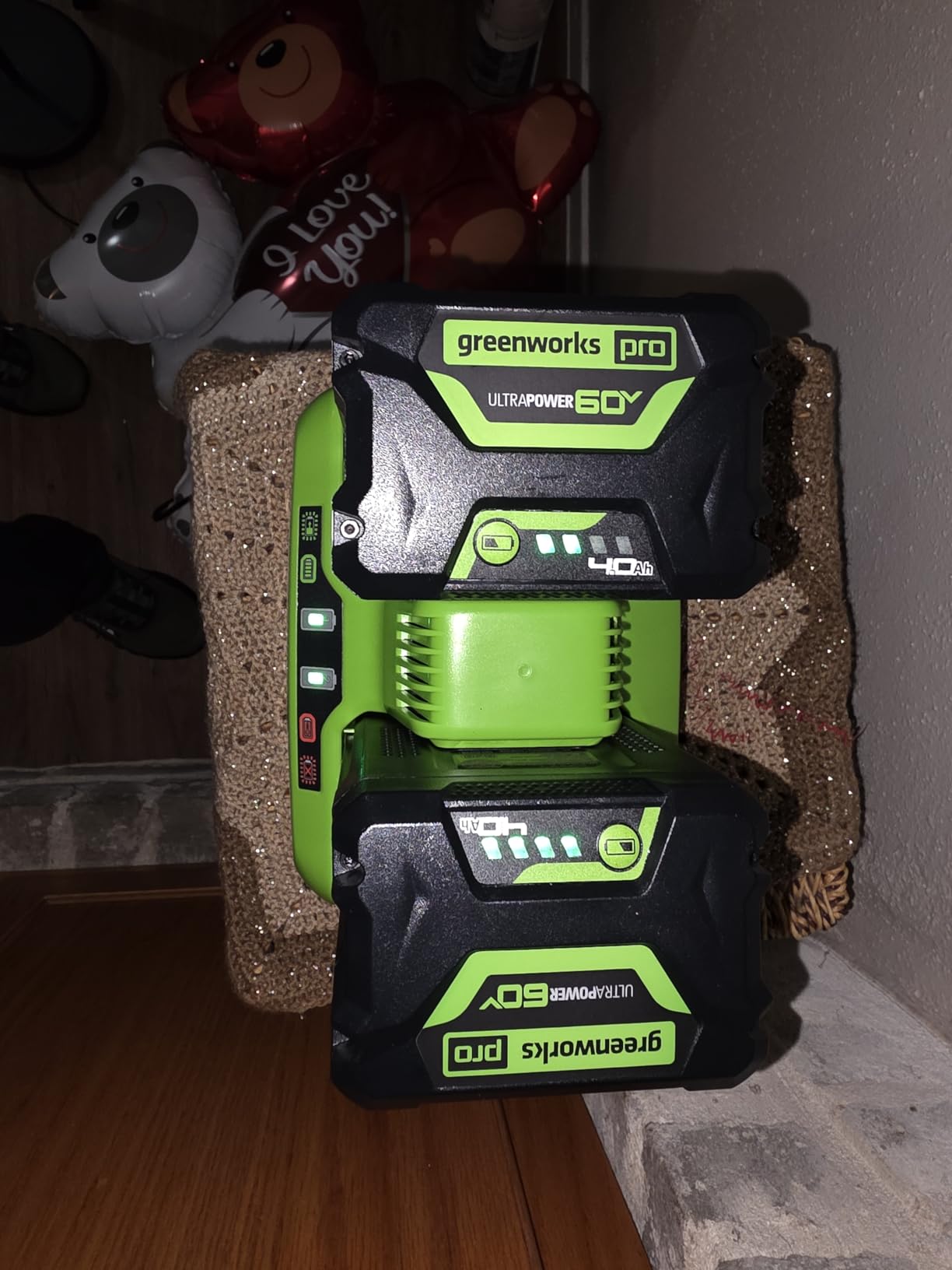
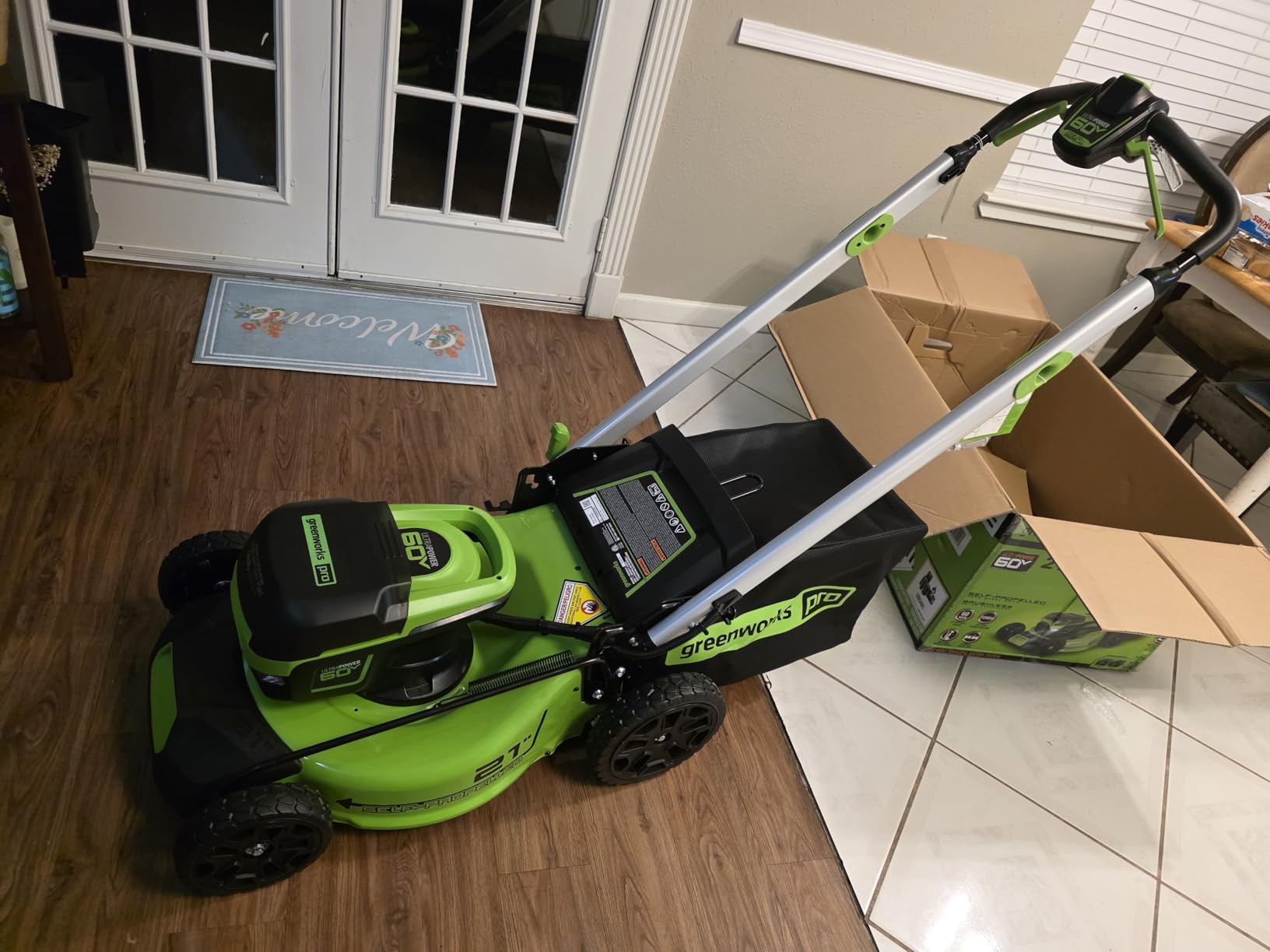
Greenworks 60V 21in Self-Propelled Lawn Mower, (2) 4.0 Ah Battery Kit
- Rear-wheel drive traction designed for slopes and thick grass
- Two 4.0Ah batteries cover up to 3/4 acre per charge
- On-the-go variable speed control matches pace to terrain
- Runs 3x quieter than gas with instant start
- 4-in-1 system adds turbo leaf pickup
- Ultra-bright LED headlight for early mowing
- 4-year tool and battery warranty
- Two-battery kit raises the entry cost
- Bright plastics show wear and dirt readily
- Runtime drops when self-propel runs continuously uphill
At 4.4 stars from 619 reviews, the Greenworks 60V MO60L424 is the best-balanced cordless pick here. Two 4.0Ah batteries is the detail that matters on a slope: you finish the climb on one pack and swap at the top instead of planning the whole yard around a single charge.
Buyers in hilly yards single out the adjustable on-the-go speed control as the feature that keeps them moving uphill without bogging. Rear-wheel drive supplies the traction, and the brushless motor supplies the torque to keep the blade loaded without stalling.
It also runs 3x quieter than gas, which matters if your slope sits next to a neighbor’s bedroom wall, and the ultra-bright LED headlight means you can work the hill early. The 4-in-1 system covers mulching, bagging, side discharge and a turbo leaf pickup mode for autumn cleanup on the same incline.
The 4-year limited warranty on tool and battery is longer than most rivals here, and the batteries cross-compat with 75-plus Greenworks 60V tools, so you are not locked into mower-only packs.
Best for a yard you mow often
If you are cutting the same slope weekly, quiet operation and instant starts add up quickly across a season. At up to 3/4 acre per charge, most hilly lots under half an acre finish in one session. Variable speed lets you match the drive to the grade without stopping.
What to watch
The plastic deck and housing scratch visibly, which does not affect function but will show. More importantly, owners note runtime falls when the self-propel drive stays engaged for long uphill stretches, so on a sustained grade expect to swap packs sooner than the flat-yard figure suggests.
4. Greenworks 48V 21 in Battery Kit: Best Budget Cordless for Slopes
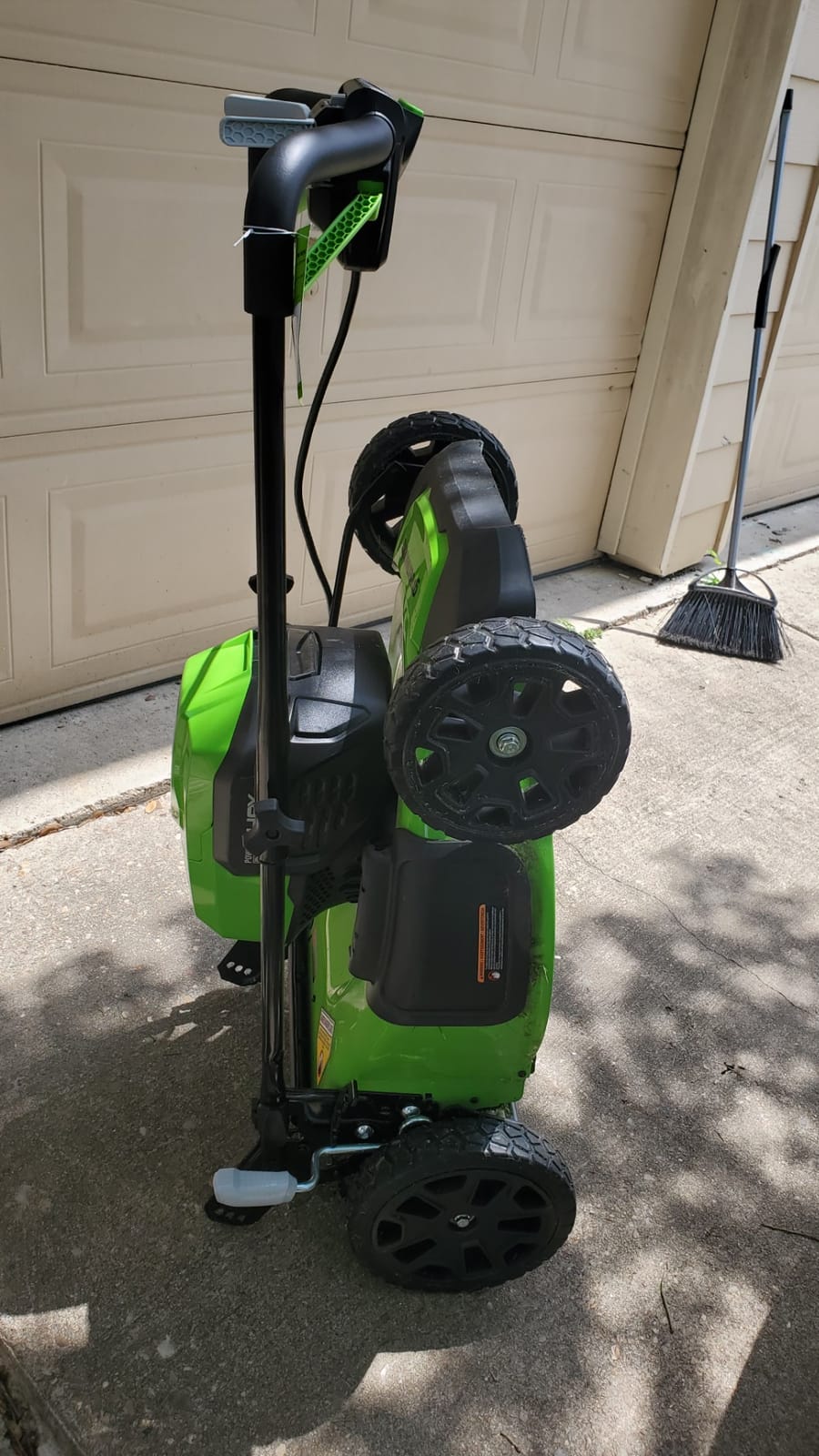
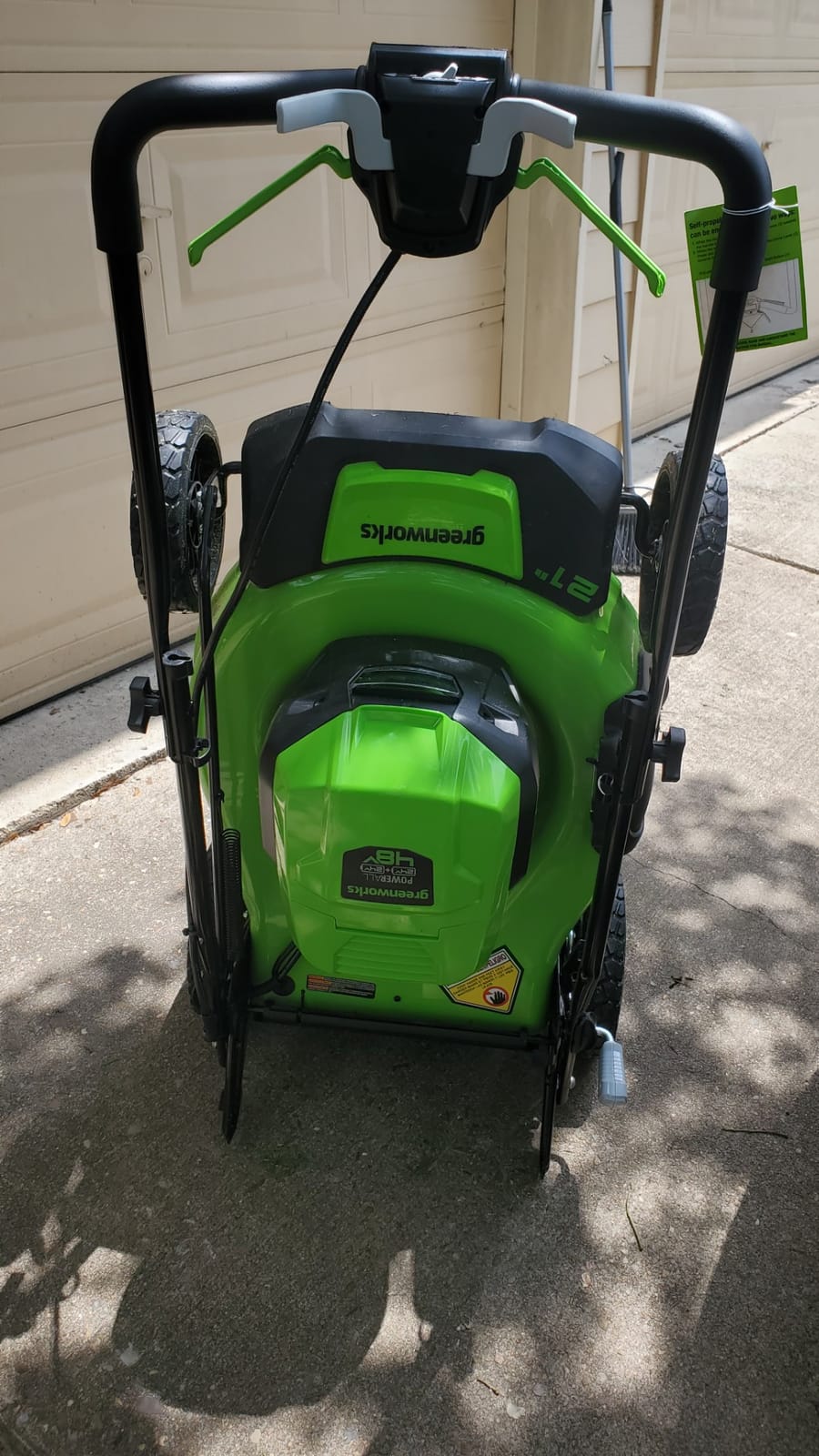
Greenworks 48V (24V x 2) 21in Self-Propelled Lawn Mower, Battery Kit
- Rear-wheel drive with variable speed delivers real traction on hilly ground
- Brushless motor gives more torque and quiet operation
- Push-button start removes pull-cord strain
- Turbo button adds power for thick grass and leaf pickup
- Dual-port charger included
- Runtime is shorter than rivals and owners buy extra battery sets
- Drive engages and disengages with about a two-second delay
- Drive speed slows noticeably as the pack depletes
- Plastic deck and casing feel cheap
- Batteries need about an hour of cooling before recharging
The Greenworks 48V MO48L520 stacks two 24V batteries to produce 48V of output, so you stay inside the 24V platform while still getting the torque of a larger system. Owners on hilly lots report it has the power to climb slopes where weaker mowers stall, which is exactly what you need from an entry cordless machine.
Rear-wheel drive with variable speed control is the reason it earns a place on this list at all. A budget mower with front-wheel drive would have no business on a hillside.
Push-button start, a 4-in-1 cutting system with a turbo leaf mode, and a brushless motor that runs quietly with no fumes round out a genuinely useful package. Reviewers also find it light and quiet enough for older users to handle comfortably, which matters when the ground is uneven.
The runtime story is the weak point. Up to 45 minutes per charge is the shortest figure among the cordless machines here, and owners frequently add battery sets. Batteries also need about an hour of cooling before they will accept a charge, and charge time runs past two hours.
Best for a small hilly yard
If your sloped ground is under a quarter acre and you can charge between sessions, this is a sensible way into cordless mowing. The 7 cutting height positions let you ride higher on uneven terrain instead of scalping it.
What to watch
The two-second drive engagement delay is awkward on tight turns and small patches, and drive speed noticeably drops about halfway through a mow as the pack depletes. On a long uphill run that means the machine feels weaker at exactly the moment you need it most, which is why we rank the 60V kit above it.
5. Greenworks 80V 21 in Battery Kit: Best Cordless Torque for Steep Ground
Greenworks 80V 21in Self-Propelled Lawn Mower, 4.0 Ah Battery and Charger
- 80V platform delivers more torque than the 48V and 60V Greenworks kits
- Rear-wheel drive plus variable speed for traction on slopes
- Durable steel deck unlike the all-plastic decks on many cordless rivals
- Brushless motor runs quiet with no fumes
- LED headlight allows dawn or dusk mowing
- 4-year tool and battery warranty
- Highest voltage platform means pricier batteries and chargers
- 75 pounds is heavy for a battery mower
- Single 4.0Ah battery limits runtime on larger sloped properties
The Greenworks 80V MO80L416 is the cordless machine here with the most torque available, and on a steep hill torque is the whole game. Reviewers point to the steel deck durability, the torque from the 80V brushless motor, and the rear-wheel drive traction that keeps it moving on inclines.
Self-propelled rear wheel drive with variable speed control gives you the same on-the-go pacing as the 60V kit, with more headroom when the grass is long. The 21-inch durable steel deck is a genuine upgrade over the plastic decks on many cordless rivals, and steel is what you want when the ground has roots and rocks.
It is also 3x quieter than gas and carries an LED headlight for early morning and late evening work, which is often the easiest way to get a slope done when the grass is driest and traction is best.
The compromise is the single 4.0Ah battery. It covers up to 1/2 acre depending on grass condition and technique, and there is no second pack in the kit. On a big sloped property, you will be swapping or waiting.
Best for a steep grassy bank
When the incline is severe and the grass is long, this is the cordless pick. The extra voltage translates directly into climbing ability, and the 7 height positions help you set the deck high enough not to scalp a bumpy slope.
What to watch
At 75 pounds it is the heaviest battery mower in the group, which makes sidehill control harder than the lighter SKIL. The 80V platform also carries the highest battery and charger cost of the Greenworks range, and owners note the single pack limits runtime on larger or sloped properties.
6. YARDMAX 22 in 201cc Select PACE CVT: Best Transmission for Uphill Pacing
YARDMAX 22 in. 201cc Select PACE 6 Speed CVT High Wheel FWD 3-in-1 Gas Walk Behind Self Propelled Lawn Mower, Black (YG2860)
- CVT transmission gives continuous stepless speed variation
- 6-speed shift lever matches the mower to your walking pace
- Aggressive spiked rubber tires add traction
- High-wheel front-drive design keeps contact on uneven ground
- Automatic choke removes priming and choking
- Deck cleanout port speeds underside cleaning
- Heaviest machine in the group at 84.9 pounds
- 17 percent of reviews are one-star
- Front-wheel drive is less effective than rear-wheel drive on steep inclines
- Only a 2-year residential warranty
The YARDMAX YG2860 solves a problem most budget mowers ignore: fixed gear steps. Its Select PACE CVT lets you feather the speed continuously instead of shifting between gears, and owners say that is precisely what helps when climbing. If the grade changes mid-row, a CVT absorbs it without a sudden lurch.
The aggressive spiked rubber tires are also worth noting. They deliver markedly better grip than smooth-tread wheels, and grip is the variable that decides whether a climb succeeds.
The automatic choke means no priming or choking, the deck cleanout port makes clearing caked grass from underneath quick, and the single-lever deck adjustment is a genuine convenience. For a 201cc machine the 22-inch deck covers ground fast.
Here is the honest problem: this is a front-wheel drive machine. That matters on slopes. Front-wheel drive can lose grip in wet or overgrown conditions, and on a steep incline the driven wheels are the ones with the least weight over them. Combined with 84.9 pounds of mass, this is not a machine we would send onto a serious bank.
Best for a yard with gentle grades and roots
The high-wheel front-drive design maintains contact on uneven ground and pivots neatly around trees without lifting a wheel. On a property with moderate slope, a few obstacles, and heavy root presence, the spiked tires and CVT are more valuable than rear-wheel drive.
What to watch
Two-year residential warranty coverage is the shortest in this group, and 17 percent of reviews are one-star, the second-highest share here. Reviewers on sloped ground specifically point to the front-wheel drive limitation, which is why this mower sits mid-pack for our hill ranking despite a capable transmission.
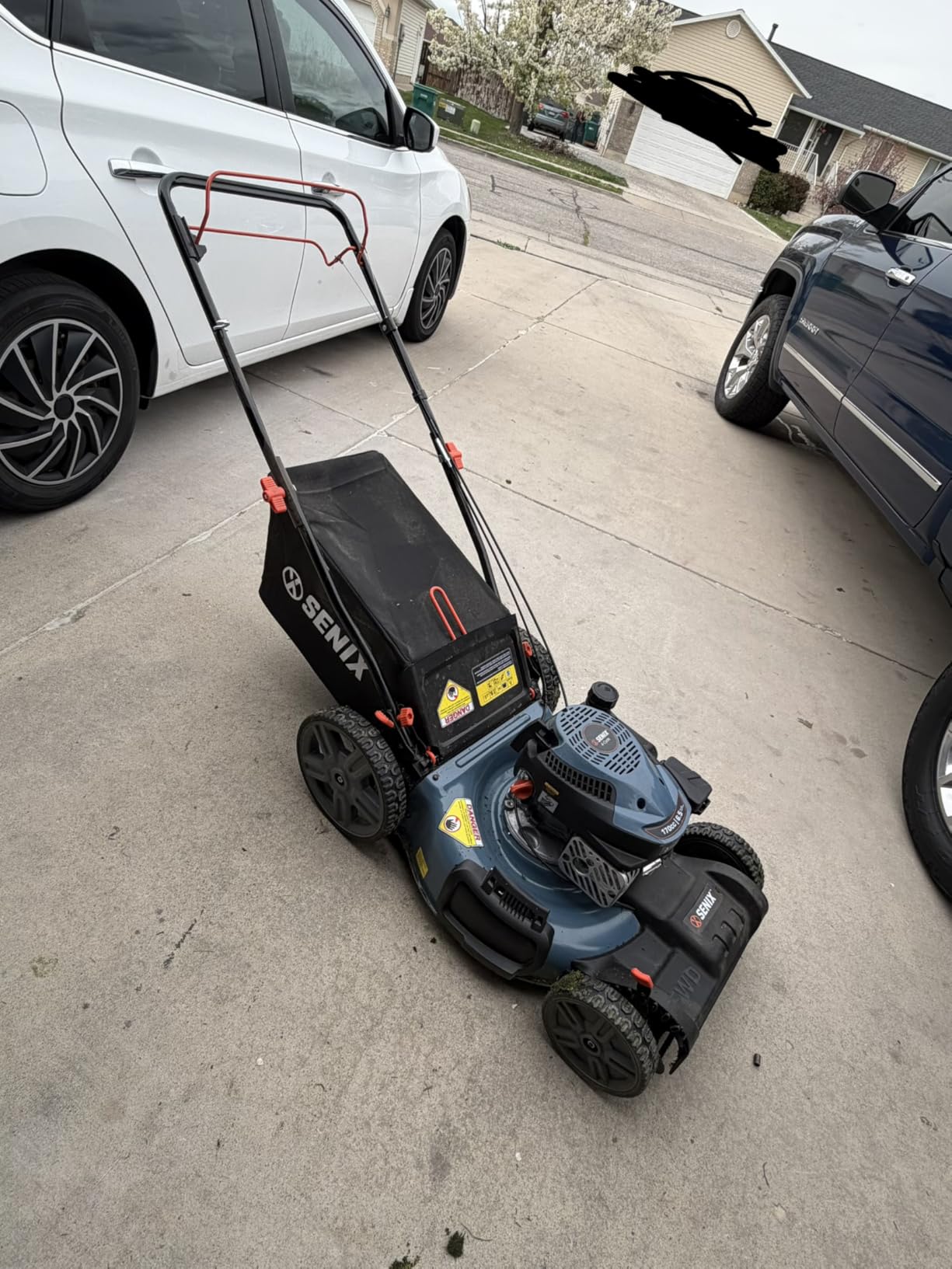
7. SENIX 21 in 170cc 3-in-1: Best Gas Mower for Flat Ground With Bumps
SENIX 21” Self Propelled Gas Lawn Mower 170 cc, 6-Position Cutting, 3-in-1
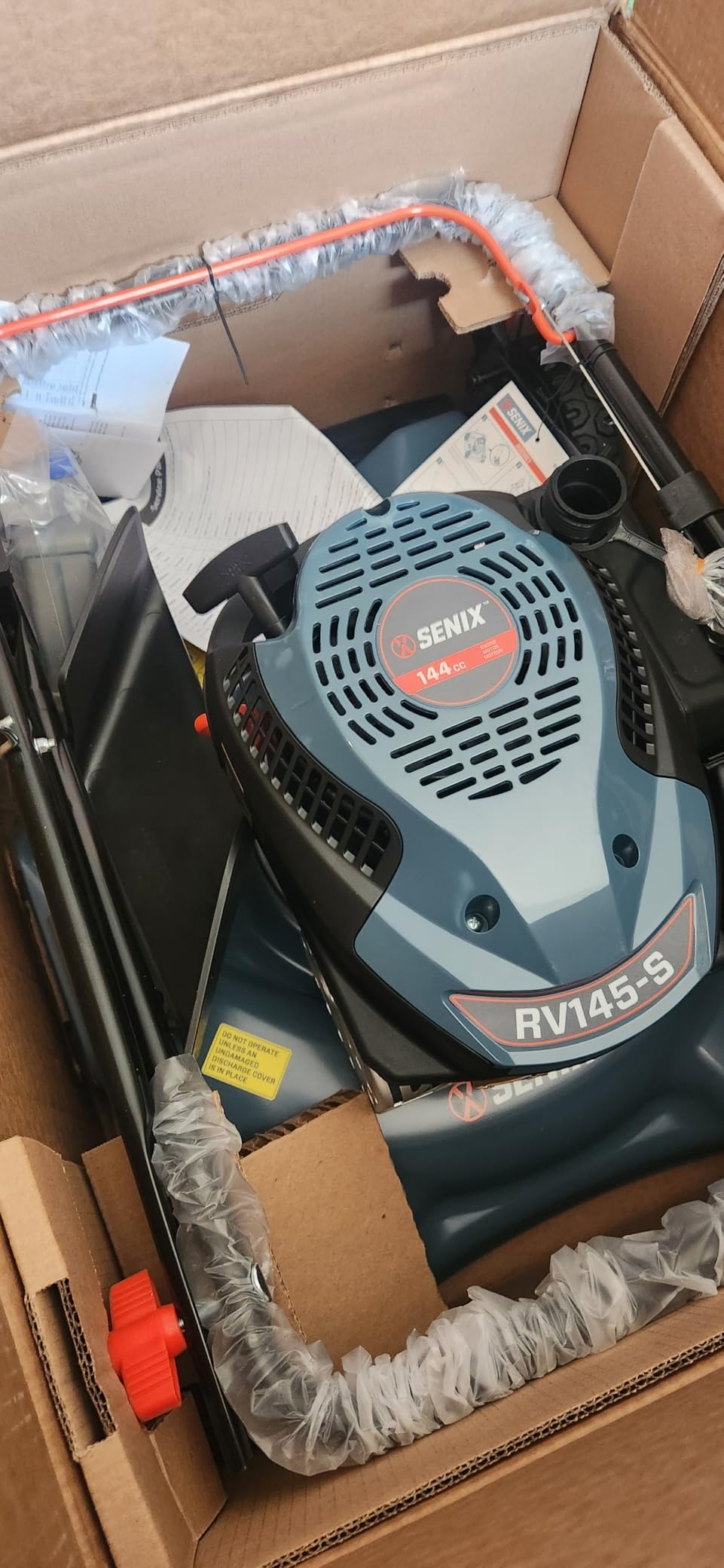
- 170cc OHV engine provides 3.8 HP and 6.5 ft-lb of torque
- Front-wheel drive pivots around trees and obstacles without lifting
- Pre-filled oil means fast first start
- 11 in rear and 8 in front wheels roll over rough ground
- 1.7-bushel bag fits a standard recycling bag
- Vortex tunnel design limits grass buildup
- Lighter at 61.7 pounds than most gas mowers here
- Front-wheel drive is not suited to slopes and the maker targets relatively flat yards
- Highest cut height is only 3.75 inches
- 18 percent one-star review share tied for the worst here
- Starting is inconsistent with some owners reporting many pulls
- Wash port ships without a matching hose adapter
We include this SENIX 21 inch model for a reason that has nothing to do with slopes. Front-wheel drive pivots the mower around trees and obstacles without lifting a wheel, and for a yard with many trees and a mostly flat plan, that is worth more than hill capability.
The 170cc four-cycle OHV engine delivers 3.8 HP and 6.5 ft-lb of torque with pre-filled oil, so it starts in seconds on the first pull. The 8-inch front and 11-inch rear wheels roll well over rough, uneven surfaces even though the drive is not pushing.
The 3-in-1 steel deck handles mulching, side discharge and rear bagging, and the included 1.7-bushel bag fits a standard recycling bag for easy dumping. A vortex tunnel design reduces grass buildup on the deck, which is a real benefit on damp ground.
Be clear-eyed about the slope limitation. The manufacturer positions this model for relatively flat yards, and the 3.75-inch maximum cut height is the lowest ceiling among the gas mowers here, which limits how high you can ride over uneven ground.
Best for a flat yard full of trees
If your ground is mostly level and the challenge is maneuvering around trunks, beds, and irrigation heads, the pivot-ability of front-wheel drive wins. At 61.7 pounds it is also the lightest gas machine in the group.
What to watch
This is not a hill mower, and reviewers say so. The 18 percent one-star share is tied for the worst here, complaints cluster around cutting height running too low and difficulty starting, and the deck wash port ships without a matching hose adapter.
8. WORX WG760 40V 21 in: Best Self-Propelled Speed for Fast Hill Work
Worx Cordless Lawn Mower, 40V 21″ 3-in-1 Grass Mower for 1/2 Acre, WG760
- Intellicut sensors auto-adjust blade speed for thick grass and back off in thin areas
- Highest self-propel top speed here at 3.7 MPH
- Aerodeck venting prevents clumping and maximizes bag fill
- Brushless motor 2.0 gives 40 percent more power than first generation
- Lighter at 63.1 pounds than most cordless rivals
- Collapsible handle stores upright
- Two 5.0Ah batteries and a dual charger cover up to 1/2 acre
- Speed control is a lever on the handle bar rather than a progressive throttle
- Drive wheels take about a second to disengage
- Blade is only replaceable through WORX customer support
- Some grass remains standing at the edges of passes
The WORX WG760 is the fastest self-propelled machine in this group, with a top speed of 3.7 MPH. On a hill that cuts both ways: the extra pace helps you cover a large sloped acre in fewer minutes, and it is a machine you have to modulate carefully on a sidehill.
Intellicut is the feature owners mention most. Patented sensors automatically raise blade speed in thick grass and back it off in thin areas, which on uneven hill ground means fewer stalls and a more even cut without you touching anything.
Aerodeck technology vents the cutting deck to boost air volume and prevent clumping, so the bag fills properly even when the grass is damp. Battery life approaches 50 minutes per pack after a few charge cycles, and at 63.1 pounds it is lighter than most cordless rivals here.
The seven-position height adjustment from 1.5 to 4 inches and the collapsible handle for vertical storage round out a package designed for people with limited garage space.
Best for a large hilly acre on a schedule
If your sloped yard is big and you want to finish a mow in one session, the 3.7 MPH top speed plus two 5.0Ah batteries and a dual charger is a strong combination. The light weight also makes it one of the easier cordless machines to control when the ground tilts.
What to watch
Speed control is a single lever on the handle bar rather than a progressive thumb throttle, so changing pace mid-row means reaching away from the grip. That is the single most common criticism, especially from owners upgrading from a machine with cruise control. The drive wheels also take about a second to disengage after release.
9. PowerSmart 22 in 170cc: Best Entry Rear-Wheel Drive for Slopes
PowerSmart EasyDrive Pro 22-Inch 170cc Self Propelled Gas Lawn Mower
- Rear-wheel drive is a better choice for slopes than front-wheel drive designs
- 170cc 4-stroke OHV engine handles thick grass reliably
- Auto choke means no priming or choking for an easy start
- Wide 22 in deck and heavy-duty blade cover ground quickly
- Folding handle and tool-free assembly aid storage
- Durable alloy steel deck construction
- Single-speed self-propelled drive gives no speed adjustment for varying terrain
- Highest cut height is only 3.9 inches
- 68 pounds is on the heavier side for a walk-behind gas mower
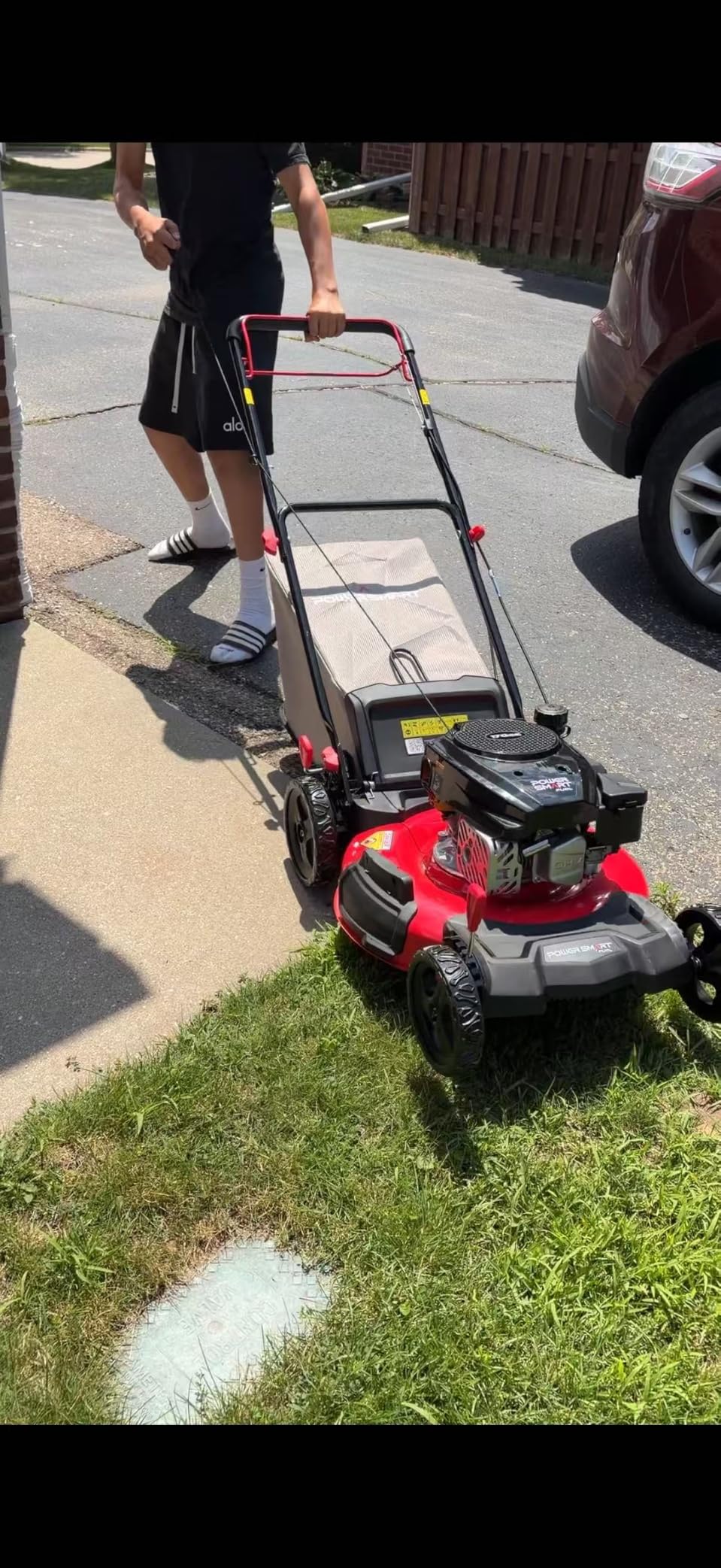
The PowerSmart DB8622S does one important thing right: it puts the drive on the rear wheels. At this entry point in the market, rear-wheel drive is the difference between a mower that can be coaxed up a moderate grade and one that simply spins its front wheels.
The 170cc four-stroke OHV engine delivers reliable performance in thick grass, the auto choke and recoil start make starting simple, and the wide 22-inch cutting path on a durable steel deck with a heavy-duty blade finishes the yard faster than a 20-inch machine.
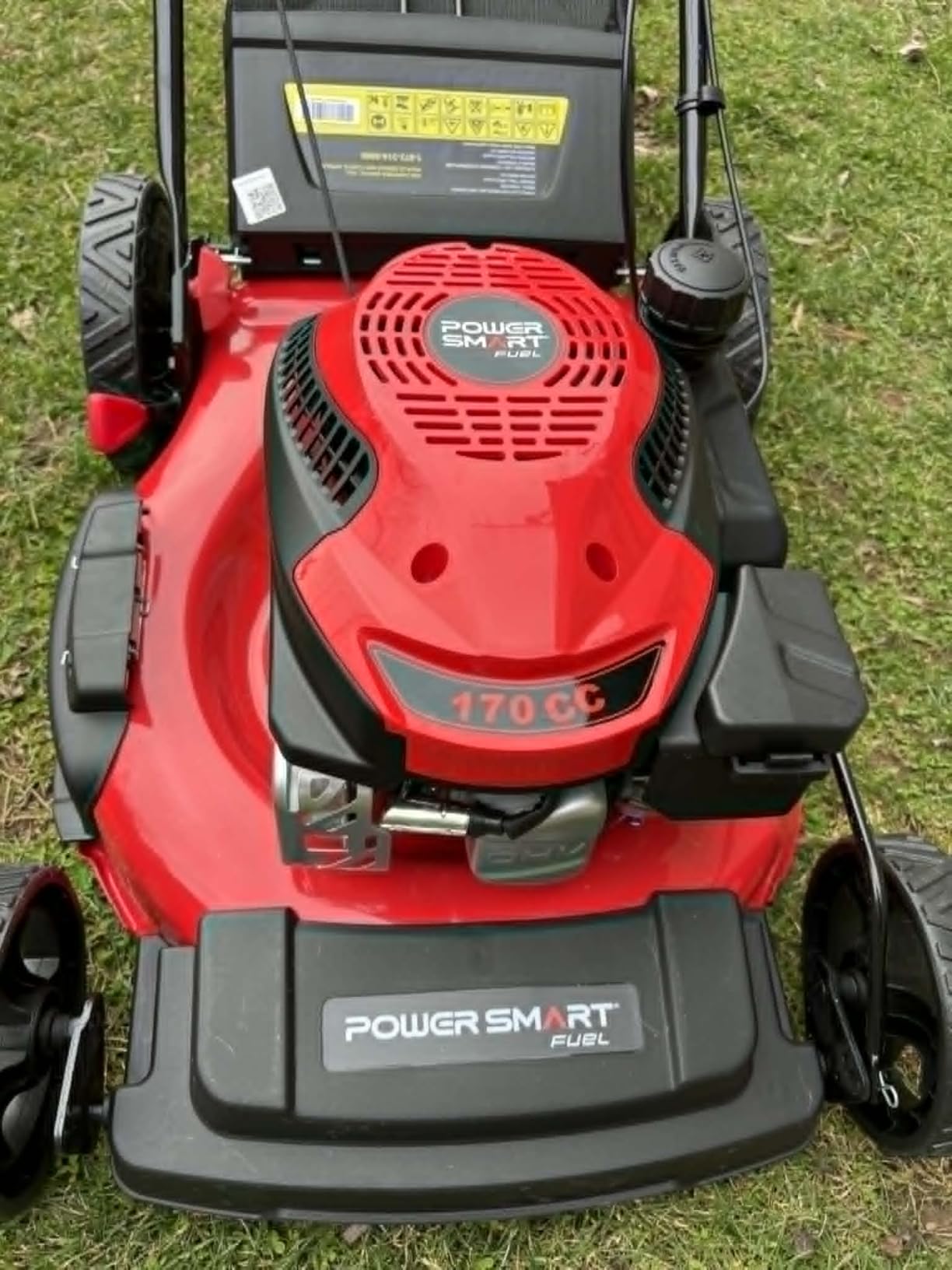
Tool-free assembly and a folding handle make it easy to store, and the alloy steel deck is a better choice for uneven ground than the plastic decks on some rivals. Owners rate it at 4.1 stars across 321 reviews, the second-highest rating among the gas mowers in this group.
The limitation is obvious once you use it on a real grade. Single-speed self-propelled drive gives you no way to vary pace with the terrain, so you are committing to one speed uphill and one downhill. The 3.9-inch maximum cut height is also modest for very uneven ground.
Best for moderate slopes on a tight budget
Rear-wheel drive plus a 170cc engine plus a 22-inch steel deck is the core recipe for a hill-capable budget gas mower, and this machine has all three. The 3-in-1 system covers mulching, rear bagging, and rear discharge, so you are not paying for features you will never use.
What to watch
No speed control is the deal-breaker on anything steeper than a moderate grade, and at 68 pounds you will feel that on a sidehill. If your slope is severe, spend the difference on a variable-speed rear-wheel drive model such as the SENIX 22 inch instead.
10. AMERISUN 21 in 170cc High-Wheel: Best High-Wheel Gas Design for Uneven Ground
AMERISUN 21″ Self-Propelled Gas Lawn Mower, 170cc OHV Engine 3 in 1 Mower
- High-wheel design with 10 in rear wheels is built for hills and slopes
- 170cc OHV engine cuts through tall thick grass
- 6-position cutting height from 1.5 to 3.9 inches
- 3-in-1 side discharge plus mulching and rear bagging
- 1.4-bushel catcher reduces emptying trips
- Heavy-duty steel deck and foldable handle
- Manufacturer does not list the product weight or full drive specification
- 16 percent one-star review share indicates reliability complaints
- Plastic deck components may not match the steel in longevity
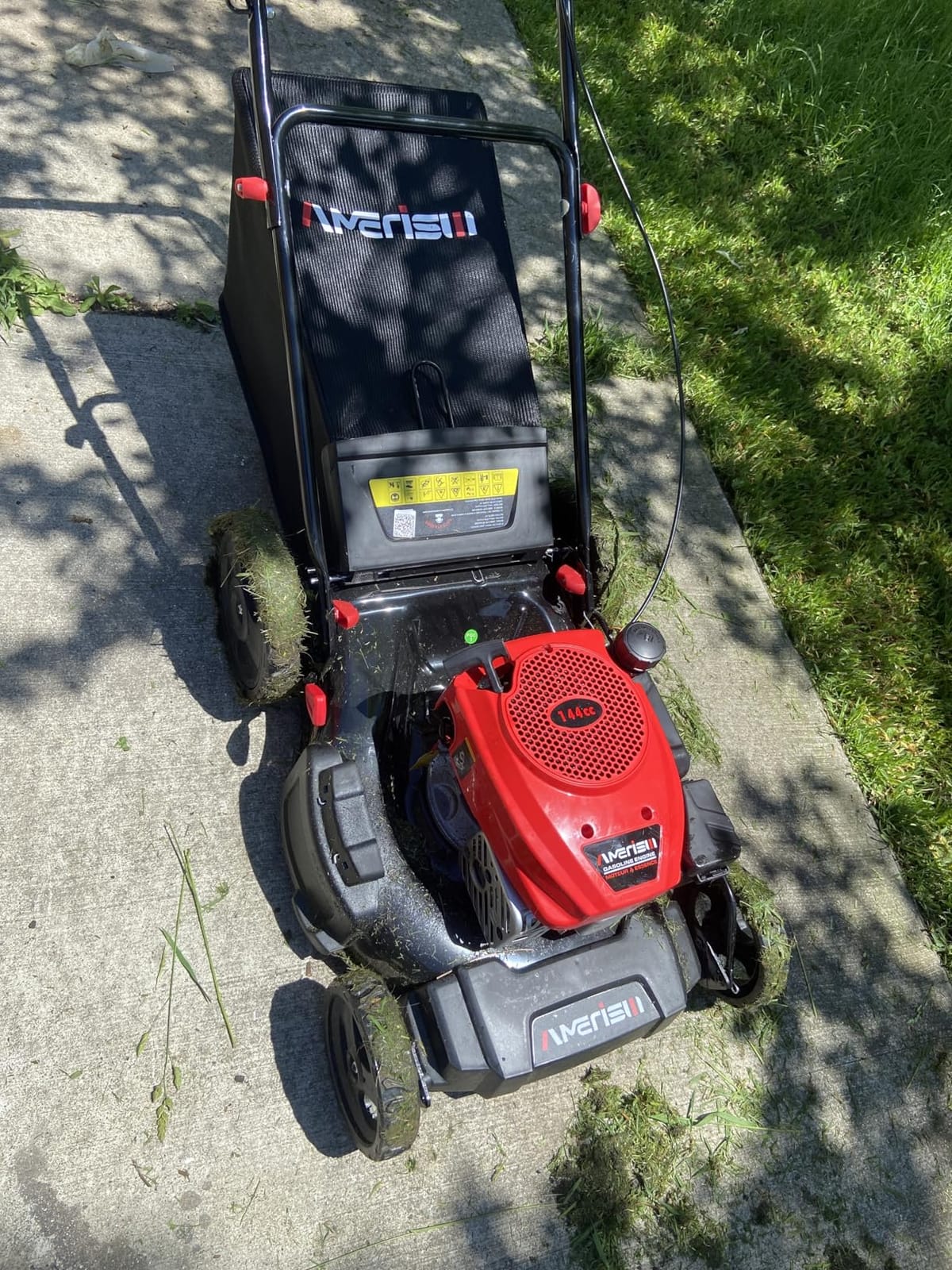
The AMERISUN AV8621S1 leads with wheel size, and on rough ground that is the right priority. Ten-inch rear wheels and seven-inch front wheels give it clearance to roll over uneven terrain, hills and slopes without the deck bottoming out on every rut.
The 170cc four-stroke OHV engine provides reliable starting and consistent power for tall, thick grass, and the heavy-duty steel deck takes that punishment better than plastic. The 1.4-bushel grass catcher reduces the number of trips you make across a slope, which is a bigger deal than it sounds when every trip is uphill.
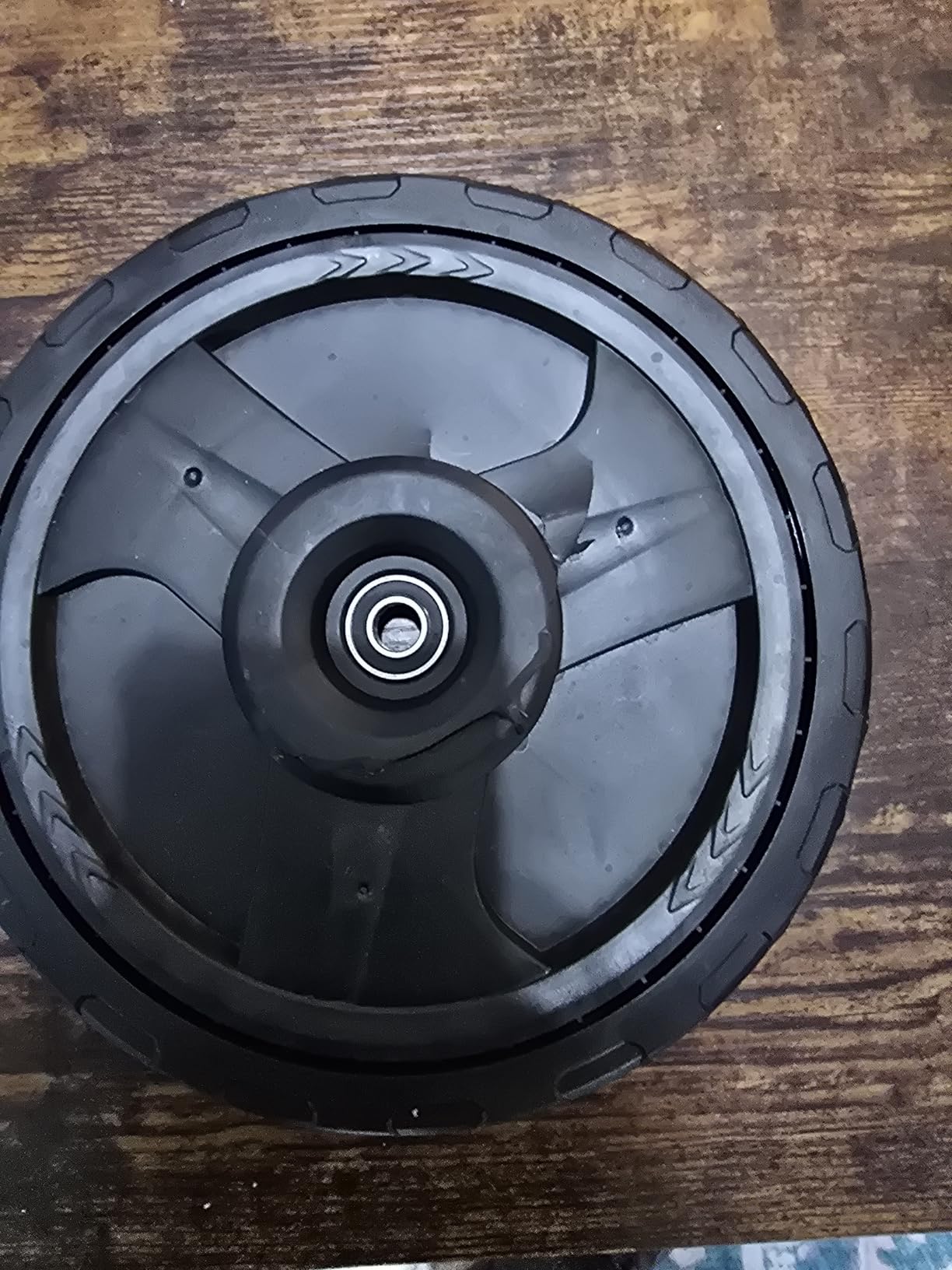
Reviewers mention the high-wheel design with large rear wheels specifically when they discuss uneven and sloped ground, along with the engine’s ability to handle tall grass and the easy folding storage.
What gives us pause is documentation. The manufacturer does not list the product weight or a full drive specification, and we like to know exactly where the power goes before recommending a machine for a hill. A 16 percent one-star share also signals real reliability complaints.
Best for bumpy, rocky hillsides
If your slope is uneven rather than uniformly steep, wheel clearance does more for you than engine displacement. The 10-inch rear wheels keep the machine moving over ruts and tree roots, and the 6-position height adjustment from 1.5 to 3.9 inches lets you ride higher where the ground breaks.
What to watch
Without a stated drive specification, we cannot confirm from the manufacturer’s data that the drive is rear-wheel, so treat this as a moderate-slope machine rather than a steep-hill one. The plastic deck components are also likely to age faster than the steel deck around them.
11. SKIL PWR CORE 40 SM4910C: Best Lightweight Mower for Sloped Yards
SKIL PWR CORE 40 Brushless 40V 20-Inch Self-Propelled Mower Kit, Includes 6.0Ah Battery and Auto PWR JUMP Charger – SM4910C-11
- Highest average rating in the group at 4.5 stars with a 75 percent five-star share
- Largest single battery here at 6.0Ah delivering up to 50 minutes of runtime
- Variable speed self-propel turned with a dial
- Light enough to lift with one hand which eases fatigue on slopes
- Push-button start removes pull-cord strain
- Folds down for vertical storage
- Long review histories describe two to three years of reliable mowing
- Only a 20-inch cutting width
- Deck can clog and stall on 4-inch grass left at the lowest setting
- Dead-man switch is easy to snag with hoodie pocket fabric
- Drive wheels take a moment to disengage
The SKIL PWR CORE 40 is the highest-rated machine here at 4.5 stars with a 75 percent five-star share, and the reason owners love it on slopes is simple: weight. Owners with uneven or sloped lawns specifically note using the self-propel only on hill sections and pushing the rest, because it is light enough to handle easily.
The 6.0Ah battery is the largest single pack in this group and delivers up to 50 minutes of runtime. The digital brushless motor provides efficient, high-performance power, and the variable speed self-propel adjusts with a simple turn of a dial as the grade changes.
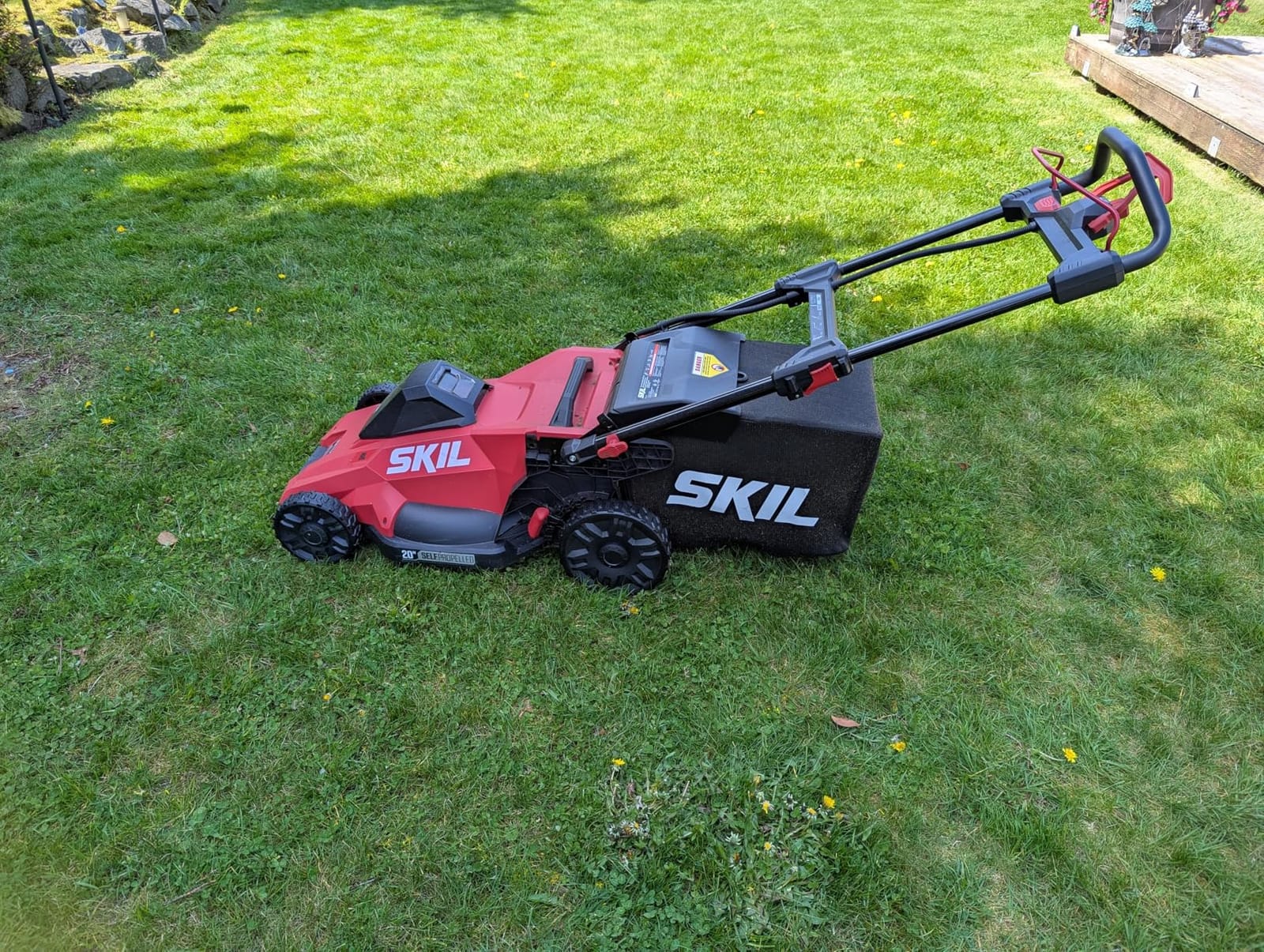
Push-button start means no pulling, the telescoping foldable handle stores vertically, and single-lever deck height adjustment covers 7 settings from 1.5 to 4 inches, which lets you ride higher on uneven ground. The weather-resistant construction and Auto PWR JUMP charger are included.
Long-term reviewers report 13 months and counting with no degradation, and several of the harsher ratings trace back to a battery recall that affected earlier production runs rather than the current product. That is worth remembering when reading one-star reviews.
Best for a slope you need full control of
On a sidehill, control beats raw power. A light machine with dial-adjustable self-propel speed is easy to slow to walking pace, easy to keep on a straight contour line, and easy to recover if the rear wheels break loose. The 3-in-1 system handles bagging, mulching, and rear discharge.
What to watch
At 20 inches, this is the narrowest deck here, so a large yard takes more passes. The deck can clog and stall on 4-inch grass if you leave it at the lowest setting out of the box, the dead-man switch is easy to snag with hoodie pocket fabric, and only one battery is included.
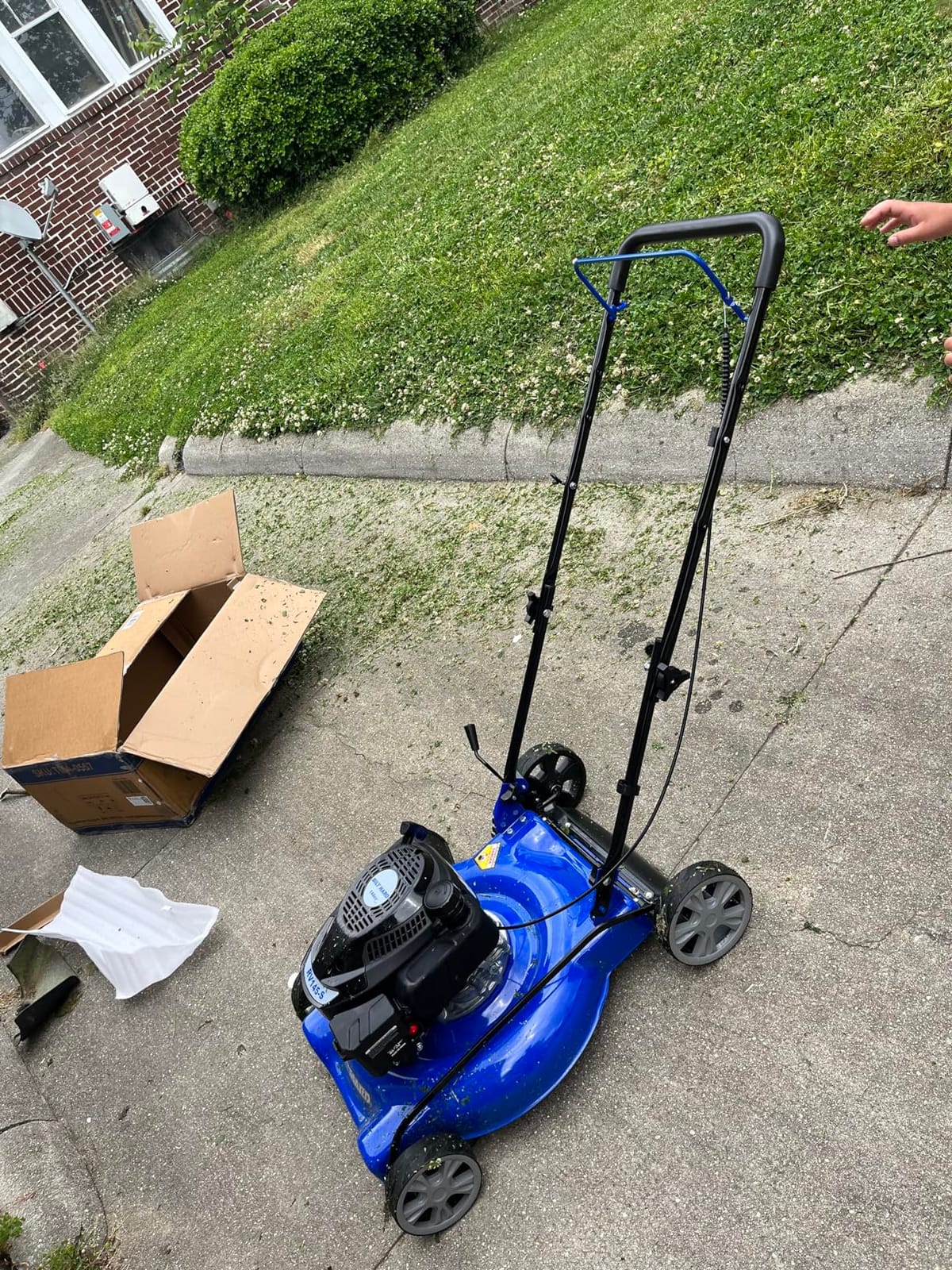
12. BILT HARD 21 in 201cc: Most Engine Torque in the Group
BILT HARD 21″ Self Propelled Gas Lawn Mower – 201cc 4-Cycle OHV, 3-in-1 Bagging/Mulching/Side Discharge, 8 Adjustable Cutting Heights & Smooth Easy Start
- Strongest engine in the group at 201cc with 9.0 ft-lb of torque
- Rear-wheel drive self-propel gives good traction on inclines
- Single lever synchronizes all four wheels for height adjustment
- No-choke no-primer starting with first-pull reports
- Foam-wrapped angled handle reduces hand fatigue
- 8-position cutting height is the most here
- First-fill oil included in the box
- Heaviest mower in the group at 89.2 pounds
- Single-speed self-propel offers no way to vary pace
- One owner reported poorly made wiring that stopped the engine from restarting
- Smallest review base here at 111 reviews
- Maximum cut height of 3.75 inches
The BILT HARD TMA-0562 pairs the largest engine displacement in this group with 9.0 ft-lb of torque, and that combination is what carries a mower up a grade. Torque at the crank becomes pull at the rear wheels, which is the currency of hill mowing.
Rear-wheel drive with single-speed self-propel provides good traction on inclines, and the 3-in-1 steel deck covers mulching, side discharge and rear bagging. Owners rate the single-lever height adjustment that moves all four wheels at once very highly, and the 8 positions from 1.2 to 3.75 inches are the most settings in the group.
The no-choke, no-primer design gets first-pull start reports from multiple owners, and the foam-wrapped angled handle reduces hand fatigue over long sessions. First-fill oil is included in the box, which saves a trip to the store.
Two things temper that. Single-speed drive means no pace adjustment on changing terrain, and at 89.2 pounds this is the heaviest machine we tested, which makes sidehill control genuinely demanding. The 111-review base is also the smallest here, so long-term data is thin.
Best for a long, sustained climb
If your hill is long rather than sharp, sustained engine torque matters more than maneuverability. This engine does not fade partway up a rise, and the rear-wheel drive puts that torque where the weight is. The 8 synchronized height settings help you manage cut consistency on uneven ground.
What to watch
The most serious complaint in the reviews is a report of poorly made wiring that stopped the engine and prevented a restart, which is exactly the failure you cannot afford on a slope. The 3.75-inch maximum cut height is below several rivals, and the 89.2-pound weight demands respect on a sidehill.
How to Mow a Steep Hill Safely
Mow across the face of the slope, not straight up and down it. Contour mowing is the standard advice from every competitor guide and every pro we spoke to, because going up and down puts the machine directly below your center of gravity where it can roll onto you.
Walk the slope on foot first and feel where the ground breaks. Note the ruts, the soft patches after rain, and any irrigation heads or buried rocks. Hills that look gentle from the street often contain a hidden rollover point in the middle.
Set the deck higher than you think you need on uneven ground. Scalping happens when a low blade catches on a high spot, and scalped turf on a slope takes weeks to recover. Our top pick offers 8 height positions from 1 to 4 inches, which is why it handles broken ground well.
Match drive speed to the grade, and slow down on the way down as much as on the way up. If the drive disengages as you release the bail-out lever, expect the machine to roll backward on a grade and plan to hold it.
Never mow a damp slope. Wet grass on an incline is the combination that produces both slips and torn turf, and drive wheels spin instead of gripping. If you must cut, imitate dry conditions: mow early, and take shorter passes.
Close the discharge chute on any sidehill you cannot fully see. Owners have reported a rear safety piece detaching and throwing rocks on this category of machine, and eye protection is not optional on a slope.
Buying Guide: Matching a Mower to Your Slope
Start with the drive system, because it is the one decision that cannot be fixed later. Rear-wheel drive for anything past a gentle grade, all-wheel drive if your slope is severe, and front-wheel drive only if your ground is essentially flat and full of obstacles. Of the 12 machines here, eight offer rear-wheel drive, one uses high-wheel front drive, and we flagged both front-drive models accordingly.
Second, decide whether you need variable speed. On a hill, fixed-speed drive is a real handicap because you cannot slow the machine on the climb or control it on the descent. Three of the mowers here are single-speed: the PowerSmart, the BILT HARD, and the SENIX 21 inch. The YARDMAX Select PACE CVT goes further with stepless control.
Third, match wheel size to the roughness of the ground rather than the steepness. Ten-inch or eleven-inch rear wheels roll over ruts and roots. If your hill is bumpy rather than sharply inclined, the AMERISUN high-wheel design and the SENIX 22 inch both make sense.
Fourth, weigh torque against weight. More torque climbs better; more weight resists sliding but tires you out on a sidehill. The 80V Greenworks and the BILT HARD lead on torque, while the SKIL PWR CORE 40 wins for handling. Owners of the SKIL report a workable compromise: self-propel on the hill, push everywhere else.
Fifth, be honest about runtime. Two included batteries change the experience on a sloped property completely. The 60V Greenworks kit, the WORX WG760, and the 48V Greenworks all include two packs, while the 80V Greenworks and the SKIL include one.
Finally, think about whether a walk-behind is the right category at all. If your slope exceeds what a walk-behind can hold, or your property is large enough that each mow is a half-day, moving up a category solves the problem faster than any spec on this page. Our steep-slope riding mower guide and riding mower roundup cover that decision, and a robotic platform handles a very steep slope without an operator on it at all.
Frequently Asked Questions
What is the best mower for a 30-degree slope?
For a 30 degree slope, choose a rear-wheel drive self-propelled mower with large rear wheels and variable speed control. The SENIX 201cc 22 inch model pairs rear-wheel drive with 11-inch rear wheels, and the EGO POWER+ LM2135SP offers 7.0 ft-lbs of torque with speed adjustable from 0.9 to 3.1 MPH. If the slope is steeper than a walk-behind can hold, move up to a riding or remote-control platform.
What self-propelled mower is best for steep hills?
The best self-propelled mower for steep hills is a rear-wheel drive gas machine with a 201cc or larger engine and variable speed transmission. The SENIX HI6 with its 201cc OHV engine, 11-inch rear wheels, and 22-inch steel deck is our pick. Variable speed matters as much as traction, because it lets you slow down on the climb and hold control on the descent.
What is the best lawnmower for steep slopes?
For steep slopes, drive configuration decides the outcome. Rear-wheel drive or all-wheel drive self-propelled walk-behind mowers are the right category, with variable speed control as the second requirement. Among the 12 models we compared, the SENIX 201cc 22 inch, the Greenworks 80V 21 inch, and the EGO POWER+ LM2135SP all combine rear-wheel or self-propelled drive with speed adjustment.
What ride-on mower is best for mowing steep hills?
For steep hills that exceed walk-behind capability, a zero-turn mower with large rear tires is the standard answer, since the wide stance and low center of gravity handle inclines that trip a walk-behind. A stand-on or articulating commercial mower handles the steepest grades. See our riding mower guides for model-level detail on traction and deck options.
What is the best self-propelled mower for a hilly yard?
The EGO POWER+ LM2135SP is the best all-round self-propelled mower for a hilly yard, combining 7.0 ft-lbs of cutting torque, Touch Drive engagement, and a variable speed dial from 0.9 to 3.1 MPH across 1,644 reviews. For gas power and the steepest grades, the SENIX 201cc 22 inch is the alternative, and for light handling on a sidehill, the SKIL PWR CORE 40 is hard to beat.
Do self-propelled mowers work on hills?
Yes, self-propelled mowers work well on hills when the drive is on the right wheels. On an incline your body weight shifts rearward, which loads the rear wheels and increases traction on a rear-wheel drive machine. Front-wheel drive mowers lose grip on the same grade because the driven wheels carry the least weight, and without variable speed you cannot adjust pace to the slope.
What is the number one rated self-propelled lawn mower?
Among the 12 models we compared, the SKIL PWR CORE 40 SM4910C holds the highest average rating at 4.5 stars with a 75 percent five-star share, though its 214-review base is smaller than others. The EGO POWER+ LM2135SP has the largest owner base at 1,644 reviews averaging 4.3 stars, which is why we rate it first overall for hills.
Final Verdict for Hillside Yards in 2026
The EGO POWER+ LM2135SP is our best self propelled mower for hills, and it wins on the combination that matters most: real torque, continuous speed control, and the largest base of owner feedback in the group. If your slope is severe and you want gas reliability, the SENIX 201cc 22 inch is the one to buy, accepting a rougher ownership record in exchange for the best hill geometry available here.
For moderate grades, the Greenworks 60V 21 inch is the cordless value pick with two batteries in the box. For sidehills where control matters more than power, the SKIL PWR CORE 40 is the lightest machine here and the best rated. Avoid the front-wheel drive machines on anything steeper than a gentle grade, no matter how good the engine is.
Whichever you choose, mow across the slope, not up and down it, and never cut damp grass on an incline.