
The Canon EOS R7 uses Canon’s RF mount, and that single fact decides everything about the best lenses for Canon R7 shooters. Every RF and RF-S lens fits the body natively with no adapter, full-frame RF lenses cover a 1.6x longer field of view than the number printed on the barrel, and older EF and EF-S DSLR glass works through the Canon Mount Adapter EF-EOS R. The R7 is a serious APS-C body with a 32.5MP sensor, so it rewards fast glass and steady optics more than a smaller sensor would.
I have shot with this body long enough to know where the compromises sit. The native RF-S line is still short, so plenty of R7 owners end up buying full-frame RF glass anyway and using the crop as a bonus. The three lenses I keep on the body most often are the RF 50mm f/1.8, the RF 35mm f/1.8 Macro and the RF 100-400mm f/5.6-8, and the twelve lenses below are the ones I would actually consider in 2026.
One number matters more than any other when you read the specs on this page. The R7 crops 1.6x, so a 50mm lens frames like an 80mm lens on full frame, and a 100-400mm behaves like a 160-640mm. That is the reason an affordable full-frame RF telephoto reaches so far on this camera, and it is the reason a 35mm prime is a genuinely useful normal lens here rather than a wide-angle.
Table of Contents
Top 3 Lenses for the Canon R7 in 2026
Quick Picks by Shooting Category
These are the shortest possible answers. Each focal length is the 35mm equivalent on the R7, which is how you should think about framing on this body.
- Everyday and portraits: Canon RF 50mm f/1.8 STM, a 80mm equivalent that weighs 5.6 oz and holds up in low light.
- One lens for everything: Canon RF-S 18-150mm f/3.5-6.3, a 29-240mm equivalent travel zoom with stabilization.
- Standard zoom for events: Canon RF 24-105mm f/4L IS USM, a 38-168mm equivalent with a constant f/4 aperture.
- Wildlife and birds: Canon RF 100-400mm f/5.6-8 IS USM, a 160-640mm equivalent that still fits in a normal camera bag.
- Wide and vlogging: Canon RF 16mm f/2.8 STM, a 26mm equivalent built for handheld video and small spaces.
- Astrophotography and interiors: Sigma 10-18mm f/2.8 DC DN, a 16-29mm equivalent at 270 g with a constant f/2.8.
All 12 Canon R7 Lenses at a Glance
| Product | Specifications | Action |
|---|---|---|
 Canon RF 50mm f/1.8 STM Canon RF 50mm f/1.8 STM |
|
Check Latest Price |
 Canon RF 35mm f/1.8 Macro Canon RF 35mm f/1.8 Macro |
|
Check Latest Price |
 Canon RF 16mm f/2.8 STM Canon RF 16mm f/2.8 STM |
|
Check Latest Price |
 Canon RF 100-400mm f/5.6-8 Canon RF 100-400mm f/5.6-8 |
|
Check Latest Price |
 Canon RF 85mm f/2 Macro Canon RF 85mm f/2 Macro |
|
Check Latest Price |
 Canon RF 24-105mm f/4L Canon RF 24-105mm f/4L |
|
Check Latest Price |
 Canon RF 70-200mm f/4L Canon RF 70-200mm f/4L |
|
Check Latest Price |
 Canon RF 85mm f/1.2L Canon RF 85mm f/1.2L |
|
Check Latest Price |
 Canon RF-S 18-45mm f/4.5-6.3 Canon RF-S 18-45mm f/4.5-6.3 |
|
Check Latest Price |
 Canon RF-S 18-150mm f/3.5-6.3 Canon RF-S 18-150mm f/3.5-6.3 |
|
Check Latest Price |
 Canon RF 75-300mm f/4-5.6 Canon RF 75-300mm f/4-5.6 |
|
Check Latest Price |
 Sigma 10-18mm f/2.8 DC DN Sigma 10-18mm f/2.8 DC DN |
|
Check Latest Price |
1. Canon RF 50mm f/1.8 STM for the Canon R7: The Lightest Daily Shooter
- Sharp rendering and smooth background blur at f/1.8
- Exceptionally light body for a fast prime
- Quiet STM focusing suits video
- 43mm filter thread keeps filters and adapters inexpensive
- No optical image stabilization in the lens
- Corner softness and coma at full aperture
- Some chromatic aberration reported
On the R7 this 50mm gives you an 80mm equivalent field of view, which puts it squarely in short-telephoto portrait territory rather than a normal lens. That framing is why it works so well for headshots, and it is also why the lens is less useful than people expect for indoor group shots. I keep it on a body for a reason: at 5.6 ounces it is the one lens I will grab without thinking.
Image quality is the surprise. Wide open at f/1.8 the center is clean and the background separation is the kind you normally have to spend real money for. The f/1.8 aperture also does the heavy lifting for indoor work where the kit zooms struggle. A seven-blade diaphragm rounds highlights slightly at full aperture, which most people will not notice in normal editing.

The trade-off is that there is no optical stabilization in the lens, so the R7’s in-body stabilization is doing all the work. That is fine for still subjects and video, and less fine for long lenses at slow shutter speeds, though at 50mm on APS-C you rarely need it. The STM motor is quiet and smooth, which matters more than most spec sheets admit for anyone shooting video.
Owners consistently treat this as the value pick of the RF lineup, and the 4.7 rating across more than 3,000 reviews backs that up. The recurring notes in reviews are the missing stabilization and softness toward the corners at full aperture, both of which show up most on a 32.5MP sensor. If you want the same framing with stabilization and macro at the same focal length, look at the 35mm below, which reaches 56mm equivalent instead.

What you gain and lose with a 50mm on APS-C
You gain a flattering 80mm equivalent, a fast f/1.8 aperture for indoor and evening work, and a body you can carry all day without noticing it. For portraits, street work and travel details it is close to an ideal match for this sensor. Canon lists it as compatible with the EOS R7 directly, so there is no adapter math to do.
You lose wide framing indoors, and you lose stabilization. Group photos at a restaurant, full-body shots in a small studio and tight architecture all need you to step back, and at 1.6x you are already standing further back than you would be on full frame. The corners also soften at f/1.8, so stopping down to f/2.8 is a reasonable habit with this lens.
Who should skip it
Skip this lens if low light is your normal shooting condition and you need stabilization for hand-held stills at slow shutter speeds, or if you shoot weddings and events where a 24-105mm equivalent or wider is the working range. It is also the wrong tool for vlogging, where you want something in the 20-30mm equivalent range and closer focus.
Skip it if you already own a fast telephoto prime, since the 85mm options below cover the same ground with a longer reach. For most R7 owners starting out, though, this is the single lens I would buy first, and it costs less than any zoom in this list.
2. Canon RF 35mm f/1.8 Macro IS STM for the Canon R7: Best All-Rounder
- Sharp with L-grade contrast and color
- 5 stops of optical IS and more with body IBIS
- 0.5x half-macro in a 35mm prime
- Compact stabilized wide-angle prime
- Autofocus can hunt at full aperture on some copies
- Purple fringing at high-contrast edges wide open
- Not a sensible choice for night sky work at f/1.8
Framed on the R7, this 35mm is a 56mm equivalent, which lands almost exactly where a normal lens sits on full frame. That makes it the most flexible prime in this roundup for general shooting, and the 0.5x magnification ratio means it doubles as a close-up lens without any adapter. Minimum focusing distance is 0.17 m, so you can fill the frame with small subjects.
The optical stabilizer gives up to 5 stops on its own and pairs with body stabilization for more, which matters on a body you may be holding one-handed. Focus is driven by a quiet STM motor. Owners frequently recommend manual focus for critical close-up work, and the same reviews note that autofocus precision varies between examples of the lens.

Where this lens shines is low light. The f/1.8 aperture plus stabilization gives you two independent ways to keep shutter speeds usable indoors, and reviewers repeatedly call the contrast and color close to what L-series glass delivers. If you shoot food, product photos or small details, the half-macro capability covers that without a second lens.
The main complaint in reviews is purple fringing on high-contrast edges when the lens is wide open, plus some autofocus hunting. Neither ruins everyday images, and both shrink as you stop down. The build is light and compact for a stabilized RF prime, and the control ring lets you make aperture changes without leaving the screen. If you need more macro reach, our guide to 12 Best Macro Lenses for Close-Up Photography covers the dedicated options.

How the 56mm equivalent shapes your framing
At 56mm equivalent you can work a small room, a market stall or a kitchen table without backing into a wall, and portraits still have mild compression. It is the focal length I reach for most when a single lens has to handle a day of mixed subjects. Compared with the 50mm f/1.8, you gain 6mm of width, stabilization and close focus, and you give up a little low-light speed.
For anyone building a two-lens kit, this prime and a telephoto cover more ground than two zooms of similar weight. It is also a natural companion to the RF 100-400mm below, since the zoom handles reach and this handles everything from 56mm equivalent inward.
Where the trade-offs show
The close focus is a bonus, not a dedicated macro setup, so working distance is tight and depth of field at 0.5x is shallow. Fast-moving subjects can outrun the autofocus, which reviewers mention specifically with children in motion. And at f/1.8 the corners are not at their sharpest, so stop down when you need detail across the frame.
It is also not the right lens for a very dark outdoor scene, where the f/1.8 aperture and one of the oldest RF optical designs work against you. Everything else, it handles cleanly, which is why it takes the best value badge here.
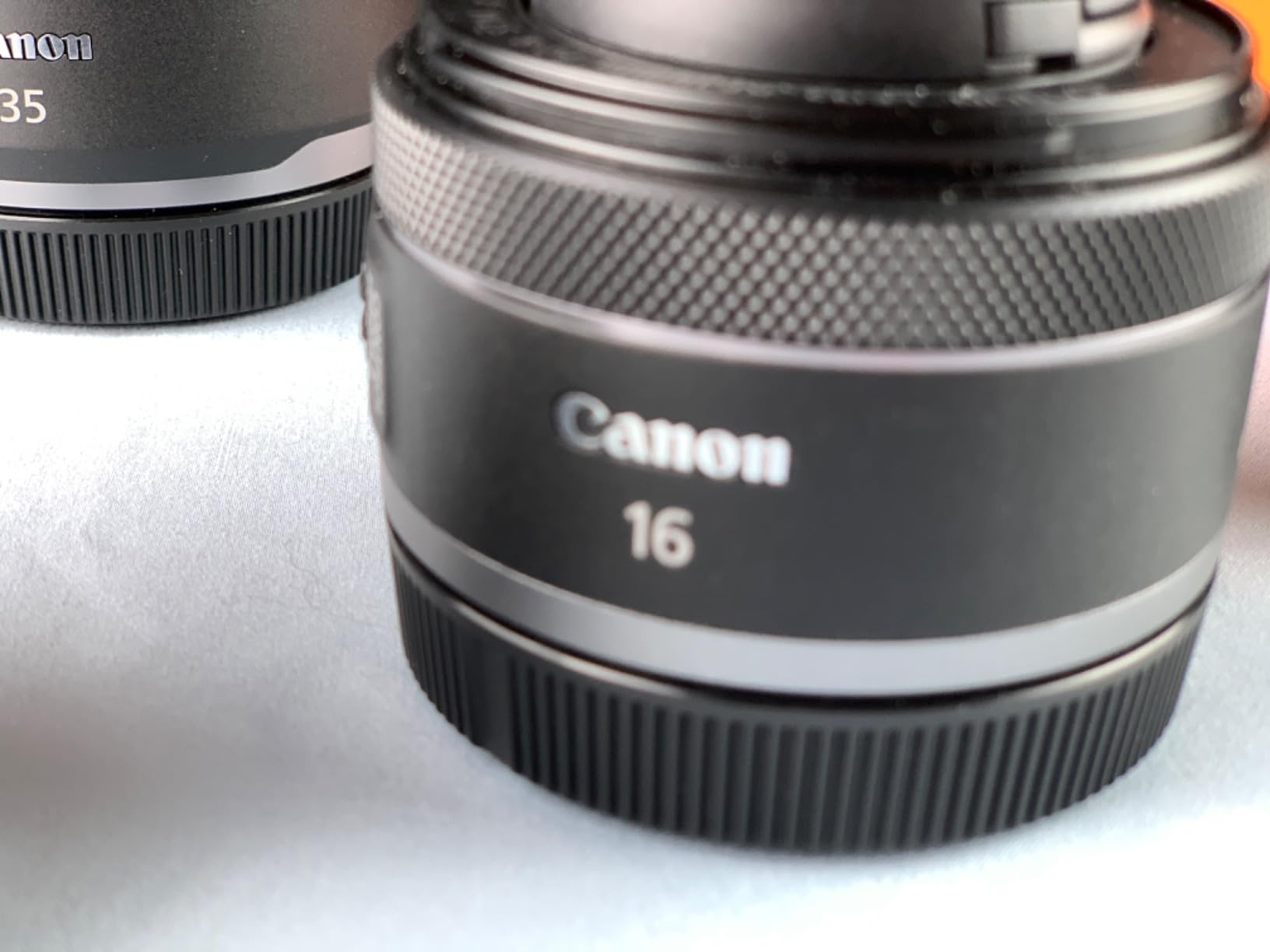
3. Canon RF 16mm f/2.8 STM for the Canon R7: Small, Wide and Built for Video
- Very small and light at 163 g
- f/2.8 keeps noise manageable indoors
- Close focus to 5.11 inches at 0.26x
- Quiet STM suits gimbal and vlogging work
- Heavy barrel distortion and vignetting in raw files
- Softer corners than the center of the frame
- Slow autofocus in dim light
- Not weather sealed and no hood included
On the R7 this 16mm covers a 26mm equivalent with a 108 degree angle of view, so it is genuinely wide without the fisheye look of a rectilinear ultra-wide zoom. At 163 g it is one of the smallest RF primes, and it is the lens most R7 vloggers end up carrying. On a gimbal or a small handheld rig the balance is easy to live with.
The f/2.8 aperture is brighter than the kit zooms and holds noise down in dim rooms, which matters when you are filming rather than photographing. Minimum focusing distance is 5.11 inches and maximum magnification is 0.26x, so you can hold a small object near the lens and still get it in frame. Autofocus is geared for smooth, quiet continuous operation during video.

Raw files need editing. Reviewers consistently mention strong barrel distortion, vignetting and chromatic aberration, all of which Canon’s in-camera corrections handle when you shoot JPEGs. The center of the frame is sharp and the color rendering is good, but the corners are visibly softer, which is normal for a lens this small and this wide.
Two practical notes. The lens is not weather sealed and no hood is included, so a rain shower or a scratchy bag is a real consideration. Autofocus also slows down in dim light, which is a limitation for indoor video. Owners still rate it highly at 4.7 across more than 1,000 reviews because there is nothing else this small and this wide in the RF lineup at a sensible weight. Our roundup of 8 Best Wide-Angle Lenses for Landscape Photography covers the alternatives with more weather protection.
Is 26mm equivalent wide enough for vlogging?
Yes for seated and walking content, and tight for anything where you want your arm’s length plus a good margin. The 108 degree angle of view is wide enough to hold a person in a small room, and the f/2.8 aperture means you can shoot at a higher shutter speed in dim light without pushing ISO as far as a kit zoom would force.
Because the R7 crops, this lens is wider than a full-frame 16mm would be, so if you upgrade later the framing will change. That is a small planning consideration and the main argument for buying full-frame RF glass if you know an upgrade is coming.
Where it falls short
Raw shooting without correction profiles is the first limitation, and corner softness is the second. The plastic construction means no weather sealing, and the lack of a hood makes flare control a separate purchase. If your work is night sky or very dim interiors, the f/2.8 is not enough and you need a different tool.
It is also a prime, so there is no zoom to reframe with. For solo creators who work in one location that is a non-issue, and for anyone moving between tight and wide framings quickly it is worth weighing against a wide zoom such as the Sigma listed below.
4. Canon RF 100-400mm f/5.6-8 IS USM for the Canon R7: Reach Without the Bulk
- Compact 4x range for the reach it delivers
- 5.5 stops of IS and 6 with an IBIS body
- Fast quiet Nano USM tracking
- 0.41x magnification at 400mm
- Slow f/5.6-8 aperture demands good light
- Focus breathing at the long end of the zoom
- Not weather sealed
This is the lens that justifies full-frame RF glass on an APS-C body. A 100-400mm covers a 160-640mm equivalent on the R7, so at the long end you are framing tighter than most 600mm full-frame lenses, and you can do it in a body that weighs 816 g. For birds, distant wildlife and field sports, that combination is hard to argue with.
Stabilization is rated at up to 5.5 stops on its own and up to 6 stops when paired with an IBIS body like the R7, and autofocus uses Canon’s fast, quiet Nano USM. Reviewers note that it locks onto moving subjects quickly and holds them. Minimum focusing distance is 2.89 ft at 200mm and magnification reaches 0.41x at 400mm for close detail.

The aperture is the compromise. f/5.6 at the short end and f/8 at 400mm means daylight and good open shade are the conditions this lens likes, and low light pushes ISO rather than shutter speed. That is the same trade-off the super-telephoto primes make, and it is the reason a bright adapted EF telephoto still gets recommended on photography forums for indoor work.
Video is the other weak point, with visible focus breathing as you zoom toward the long end. For stills it is a strong, dependable wildlife and travel lens, and at 4.6 across 891 reviews the feedback is consistent about where it fits. Owners who want more reach can step up to a super-telephoto prime, and owners who want more light can look at the adapted EF route in the compatibility section.

How much reach do you actually need on APS-C
Multiply by 1.6 and you get a 160-640mm equivalent, which puts small birds and distant mammals comfortably in frame without the weight of a super-telephoto prime. Field sports at the edge of a pitch, detail on a ridgeline and candid street work from across a plaza all sit inside that range. For anything closer, a 50mm or 35mm prime is faster and easier to carry.
The magnification figure of 0.41x at 400mm also means this lens produces usable detail on insects and textured surfaces, which broadens its use beyond birds. The 2.89 ft minimum focus at 200mm keeps working distance civil for larger subjects.
Who should look elsewhere
Anyone shooting indoor sport or evening wildlife will struggle with f/8 at the long end, and the stabilization cannot recover light. It is not weather sealed, so sustained rain is a poor test for it. And for video, the focus breathing is a genuine problem if you zoom while recording.
It is also simply heavy at 816 g, so pairing it with the R7 body and a wide prime means planning your bag. If your reach needs are modest and you shoot mostly at midday, this remains the sensible choice over a prime with a narrower range.
5. Canon RF 85mm f/2 Macro IS STM for the Canon R7: Portraits and Close Detail
- Very sharp at f/2 with smooth bokeh
- 0.5x macro with hybrid IS for close work
- Light and compact for an 85mm
- Reliable autofocus at normal shooting distances
- Focus motor is noisy
- Autofocus is slow in the macro range
- Manual focusing close in is awkward
- Not weather sealed
Framed on the R7, this 85mm gives you a 136mm equivalent, which is real portrait compression and genuine subject separation. At f/2 the background falls away smoothly, and reviewers consistently describe the rendering as close to L-series sharpness at an aperture that costs a fraction as much. At 499 g it is one of the lighter telephoto primes you can carry all day.
It is also a macro lens, with 0.5x maximum magnification and a 1.15 ft minimum focusing distance. Optical stabilization gives up to 5 stops, and a hybrid IS system compensates for angular and shift shake at close range, which is where macro work usually goes wrong without it. That combination makes this a two-job lens rather than a one-job lens.

The autofocus is the weak half. At normal distances it is accurate and dependable, and the five-blade diaphragm renders background highlights acceptably wide open. In the close-focus range the motor becomes noticeably noisy and slow, and reviewers say it is not built for fast action. Manual focusing inside roughly 0.35 to 0.5 m is difficult because the depth of field is so thin.
Everything else gets consistent praise across 718 reviews, and at 4.7 this is one of the highest-rated lenses in the roundup. Owners frequently call it the best value 85mm in the RF lineup because of the sharpness-per-cost. It is not weather sealed, so treat it as a fair-weather lens in sustained rain or blowing dust.

Is a 136mm equivalent too long for portraits?
For headshots and half-body work, no. That reach flattens facial features in a way most people find flattering, and f/2 gives you enough light to keep the shutter speed usable indoors. For environmental portraits, group frames and full-length shots you will want to step back, and at 136mm equivalent there is only so much room to work with in a small venue.
The macro half changes the calculation. A 0.5x ratio at this focal length gives you a genuine close-up of small objects, and the hybrid stabilization keeps it usable handheld. That is a differentiator against primes that stop at flowers-only close focus.
Where the limits are
Fast-moving subjects are out, because the autofocus slows down and the motor is audible on video. Very dim indoor work pushes you to f/2 and higher ISO, and the R7’s noise profile will show it. And if you need stabilization-free handheld stills of distant subjects, the reach is not the issue, the light is.
The lens is a poor fit for anyone who wants a single lightweight travel setup, since 499 g plus a body adds up quickly. For a portrait-first shooter it is a very strong core of a kit, and it pairs naturally with the 35mm macro for close work.
6. Canon RF 24-105mm f/4L IS USM for the Canon R7: The Standard Zoom to Buy
- Sharp across the zoom range
- Constant f/4 keeps exposure steady while zooming
- Fast accurate Nano USM autofocus
- 5 stops of optical stabilization
- Travel lock for transport
- Light plastic feel for an L-series zoom
- Slightly soft corners at f/4
- Occasional autofocus misses on low-contrast scenes
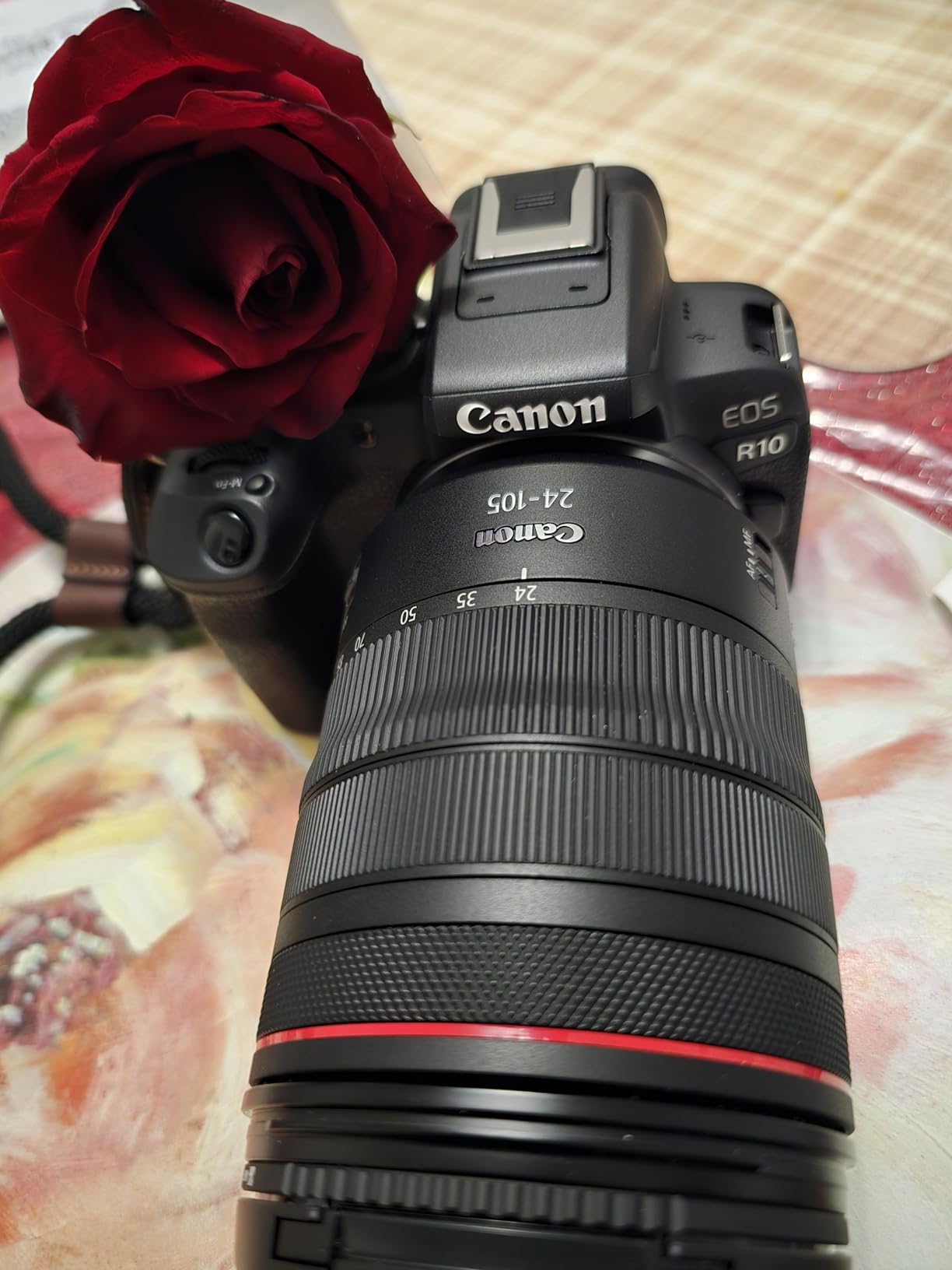
On the R7 this zoom covers 38-168mm equivalent, which is the most useful single range for travel, events and general work. The constant f/4 aperture means exposure does not shift when you zoom, which matters for video and for anyone shooting in changing light. At 1.5 pounds it is heavier than the APS-C kit zooms but still a reasonable carry.
It was the first L-series lens with Nano USM autofocus, and reviewers report fast, accurate focusing in ordinary conditions. Optical stabilization gives up to 5 stops, and a Nano AR coating handles flare and ghosting. A travel lock on the barrel stops it rotating during transport, a small detail that shows up constantly on a zoom this size.
The recurring criticism is construction. Owners consistently note that it feels light and plastic for an L-series lens, and that the corners are slightly soft wide open at f/4. A second note is autofocus occasionally missing on low-contrast scenes such as overcast sky or water, which is where contrast detection has least to work with. Neither issue is common enough to be a dealbreaker.
Across 621 reviews at 4.7, the feedback is that this is the most versatile lens owners carry. It handles travel days, indoor events and daylight scenery without a second lens, and if you later move to a full-frame body it keeps its entire range. That upgrade path is the strongest argument for full-frame RF glass on an APS-C body.
What a 38-168mm equivalent covers
It starts near documentary wide, passes through the 56mm and 80mm equivalents where most people keep a prime, and reaches into short telephoto for details and candid frames. That means one lens can carry a full trip, a small wedding or a day of street work. The crop makes both ends wider and longer, so the range is actually better suited to APS-C than the numbers suggest.
Because the aperture is fixed at f/4, low light is handled with ISO rather than by opening up, which is the trade-off against a variable-aperture standard zoom. The R7’s high-resolution sensor will show noise before a lower-resolution body would, so pair this lens with the body stabilization and keep your shutter speed reasonable.
Who should not spend on this lens
If your budget is limited, the RF-S options later in this list cover a similar job with far less weight and cost. If you need to work at f/2.8 or faster indoors, a prime like the 50mm f/1.8 will outrun this lens in low light while giving up the range. And if you rarely change focal length, a prime may be the smarter single purchase.
The case for buying it is longevity. It is the lens that survives a move to full frame, it handles video exposure cleanly, and it is the one most people describe as the lens they never take off. It also pairs in size and handling with the 70-200mm f/4L listed below.
7. Canon RF 70-200mm f/4L IS USM for the Canon R7: Reach That Stays Light
- Light and compact for a pro 70-200mm
- Constant f/4 with clean subject separation
- Fast responsive autofocus that tracks moving subjects
- Stabilization coordinates well with body IBIS
- Matches the RF 24-105mm in size and handling
- f/4 is a stop slower than an f/2.8 design
- Stabilizer mode settings take time to learn
- Hood lacks a filter window
This is the highest-rated lens in the group at 4.8, and on the R7 it covers 112-320mm equivalent. That is a genuine indoor sports and stage range, and reviewers specifically mention using it on an R7 for gym and court work at high ISO. The constant f/4 holds exposure through the zoom, which is exactly what event work needs.
Autofocus uses dual Nano USM units and reviewers describe it as fast and responsive on moving subjects. Stabilization gives up to 5 stops on its own and up to 7.5 stops when coordinated with body stabilization, which is the largest coordinated figure of any zoom here. At 695 g it is light for a pro 70-200mm, and it matches the 24-105mm f/4L in size.

The trade-off versus an f/2.8 design is one stop of light. Owners who chose this over the f/2.8 option emphasize the weight and cost savings with no meaningful loss in image quality, and several use it for indoor sports where a faster lens is not practical to carry. Subject separation and bokeh at f/4 are still clean, and sharpness and color rendering are excellent.
Two smaller notes appear in reviews. The stabilizer modes take some time to learn if you are new to the system, and the hood has no window for rotating filters while it is mounted, which matters for some ND users. This is also the only lens in the roundup listed as water resistant, so it is the safest choice in poor weather.

Is 112-320mm equivalent enough for indoor sport?
For basketball, badminton, indoor cycling and stage work from the sideline, yes, and the constant aperture is what makes it work. Because the aperture does not change, you can zoom in and out while exposure stays fixed, so your only variables are shutter speed and ISO. That is a much simpler shooting model than a variable-aperture telephoto.
The coordinated stabilization figure also matters here, because gym and auditorium lighting forces slower shutter speeds than you would use outdoors. The pairing with the R7’s in-body system is the most effective in this list for hand-held framing at distance.
When to choose a different telephoto
If you shoot outdoor field sports or wildlife in poor light, an f/2.8 design or a bright adapted EF lens gives you one more stop, and that is the difference between usable frames and noisy ones. If your reach needs exceed 320mm equivalent, the 100-400mm or a super-telephoto prime is the better tool.
For portraits, the 85mm primes below cover shorter distances at faster apertures and are easier to carry. This zoom is a specialist for distance and action, and it earns its place because it stays light enough to carry to a full day of events.
8. Canon RF 85mm f/1.2 L USM for the Canon R7: The Portrait End of the Scale
- Tack sharp from center to corner at f/1.2
- Backgrounds melt at wide apertures
- Superb low-light capability
- Blue spectrum refractive optics control purple fringing
- Faster focusing than EF 85mm f/1.2 lenses
- Very heavy at 1.2 kg
- No image stabilization in the lens
- Steep price for a general-purpose kit
- Large filter thread raises accessory cost
Framed on the R7 this is another 136mm equivalent, but the f/1.2 aperture changes what that focal length can do. Reviewers describe it as tack sharp from center to corner even wide open, with bokeh that fully dissolves backgrounds. For low light it is the fastest option in this roundup by a wide margin, and the R7’s sensor will be working far less hard for the same shutter speed.
Optical design includes one aspherical element, one UD element and blue spectrum refractive optics that reduce chromatic aberration. Minimum focusing distance is 2.79 ft and the filter thread is 82mm, so filters and adapters for this lens cost noticeably more than the rest. There is no stabilization in the lens, so body stabilization is doing the work at slow shutter speeds.
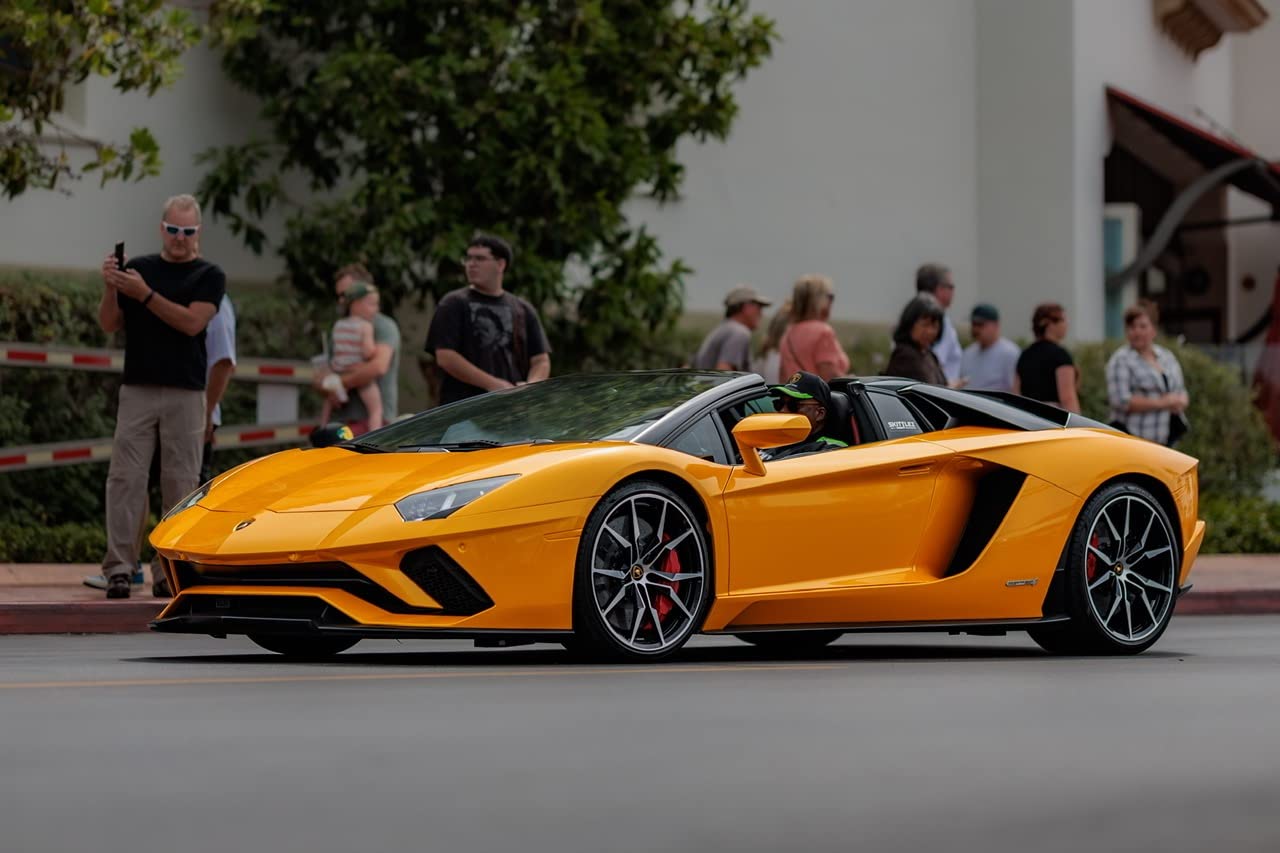
The weight is the fact of life. At 1.2 kg and a large diameter, this is a two-hand lens on a long walk, and owners building travel kits leave it at home. The other repeated note is the plastic barrel feel, which longtime EF users find a step down from the L-series lenses they came from. Focusing is faster than the EF 85mm f/1.2 lenses it replaced, which is a real improvement.
At 4.7 across 196 reviews the ratings are strong, and the review consensus is simple: this is the definitive 85mm portrait lens in the RF system, with weight and cost as the accepted price. If you shoot weddings, stage portraits or ambient-light work, the f/1.2 is the difference between a usable frame and a noisy one.
When an f/1.2 is genuinely necessary
Low light is the honest answer. At f/1.2 you can hold a usable shutter speed on the R7 in conditions where an f/2 lens forces you to raise ISO, and the high-resolution sensor makes that ISO increase visible quickly. Event venues, indoor ceremonies and night portraits are where the extra two stops of light actually change the outcome.
Second is subject isolation. At 136mm equivalent and f/1.2 the background separation is extreme, and that is a stylistic choice as much as a technical one. It works beautifully for single-subject work and falls apart for groups, where a wider lens is required.
Who should not buy it
Anyone who carries a camera on long walks, on hikes or on multi-day trips should look elsewhere. A 1.2 kg prime plus an R7 body is a heavy kit, and the 82mm filter thread means your accessory budget is higher too. The lack of stabilization also makes handheld stills at very slow shutter speeds harder than they would be with a stabilized alternative.
For most R7 owners the 85mm f/2 Macro gives a similar look with a third of the weight and far lower accessory cost. Buy this one when low light and maximum subject separation are the whole point of the shot.
9. Canon RF-S 18-45mm f/4.5-6.3 for the Canon R7: The Lightest Native Zoom
- Compact and light enough to always carry
- 4 stops of optical IS and 6 with IBIS
- Clean kit-class image quality
- Useful 18-45mm everyday range
- Slow f/4.5-6.3 aperture for low light
- Zoom ring is audible on video
- Autofocus is unremarkable
- Tops out at 45mm for portrait reach
- This listing is a renewed unit
This is the pocketable native APS-C zoom, and on the R7 it covers 29-72mm equivalent. That is a tight everyday range rather than a general-purpose one, which is the honest framing: it is built for a small camera bag, not for a trip. The standout feature is optical stabilization, up to 4 stops on its own and up to 6 with an IBIS body.
Optically it uses two aspherical elements and Super Spectra coating, and owners describe the result as clean and sharp for a kit-class zoom. Because the camera is APS-C, the lens crops automatically if you ever move it to a full-frame body, so nothing is wasted if you upgrade later.
The aperture is the limiting factor. f/4.5 to f/6.3 is fine in daylight and poor indoors, where you will be raising ISO on a high-resolution sensor. The zoom ring is also loud enough to register on video, which is a problem for anyone shooting clips, and the autofocus is described as middling rather than good.
One thing to check before you buy: this particular listing is a renewed unit with a 90-day warranty, and reviews on it are split for that reason. Some buyers report defective copies that were easy to return, others are happy. Treat condition as part of the purchase, not an afterthought. The 4.5 rating across 173 reviews reflects the lens more than the unit.
Is 29-72mm equivalent too narrow
For street work, food, family snapshots and short video clips it is enough, and the small size is what makes you actually bring it. For anything with wider framing, interiors or group shots, 72mm equivalent is the ceiling and you will feel it. The range is why the 18-150mm exists, and many owners end up buying both.
Against a full-frame 24-105mm f/4L, the tradeoff is clear: you save a substantial amount of weight and money, and you give up the range, the constant aperture and the weather resistance. That is a fair exchange for a carry-everywhere setup.
Who should pick this instead of the 18-150mm
Pick this one if you mostly stay near home or in a single location, if you shoot video and want a quiet option, or if your bag space is genuinely tight. The stabilization is the same generation on both lenses, so the smaller body is the only reason to choose it.
Skip it if low light, travel or any telephoto work is on the agenda, and consider a fast prime like the 50mm f/1.8 instead. Also weigh the renewed condition carefully against a new unit of a different lens.
10. Canon RF-S 18-150mm f/3.5-6.3 for the Canon R7: One Lens for a Whole Trip
- Very wide 8.33x zoom range in a 408 g body
- 4.5 stops of IS and 6.5 with IBIS
- Dynamic IS for wide-angle movie work
- Lead screw STM for quiet video focusing
- Variable f/3.5-6.3 aperture is dim at the long end
- Plastic construction without weather sealing
- Telephoto detail trails premium RF glass
On the R7 this covers 29-240mm equivalent, which is the widest useful range of any native lens in this roundup. Reviewers consistently recommend it as the dependable all-in-one for RF APS-C users who want reach without a second lens, and 408 g is light enough that it stays on the body all day. The 8.33x zoom ratio does most of the travelling-work argument.
Stabilization is rated up to 4.5 stops on its own and up to 6.5 with an IBIS body, and Dynamic IS adds stabilization in movie mode at wide-angle settings where the usual IS struggles. Focus uses a lead screw-type STM, which is the mechanism designed for smooth, quiet video autofocus, and that shows up in the reviews.

The f/3.5-6.3 range is the compromise. At 18mm it is reasonably bright, and by 150mm the aperture is down at f/6.3, which is where evening and indoor work starts costing you ISO on this sensor. The second limitation is rendering: reviewers say detail and contrast trail premium RF glass toward the telephoto end, so distant birds and fine textures are not where this lens shines.
Construction is plastic with no weather sealing, which matches the rest of the RF-S line. If you plan to shoot in rain or blowing dust regularly, budget for a cover. At 4.6 across 117 reviews, owners accept the slow long end in exchange for the range and the built-in stabilization, and most of them are pairing it with a fast prime.

Can one lens replace a whole kit
Almost, if you accept compromises at both ends. 29mm equivalent is wide enough for street and interiors, 56mm to 80mm covers normal work, and 240mm equivalent reaches for wildlife and details. What you give up is low light at the long end and fine detail at the same end. Many R7 owners shoot this as their walking lens and add a fast prime for anything that needs the light.
Because the lens is RF-S, it crops automatically on a full-frame body, so the range stays usable after an upgrade. That makes it a safer long-term buy than a used EF lens, even though a used EF telephoto may cost less and see more light.
Where it stops being enough
Paid event work and indoor sport are where this lens runs out. The long end is too dim and too soft for a professional standard, and the zoom ring plus slow aperture make it a poor video lens compared with a dedicated prime. It is also not sealed, so sustained bad weather is out.
For a travel-focused shooter on a budget, this is the pick. For anyone who needs one lens to be excellent at something specific, the RF 50mm f/1.8 or the RF 100-400mm will serve that subject far better than a general-purpose zoom.
11. Canon RF 75-300mm f/4-5.6 for the Canon R7: A First Telephoto
Canon RF75-300mm F4-5.6 Zoom Lens with UV Filter + Lens Cap Keeper + Cleaning Kit (4 Items)
- Compact and light for a 300mm telephoto
- Long 75-300mm reach for sports and wildlife
- Eye detection holds subjects at the long end
- Bundle adds a UV filter
- cap keeper and cleaning kit
- No image stabilization so you need a tripod or fast shutter
- Autofocus motors are slow and noisy
- Visible chromatic aberration at extreme distance
On the R7 this zoom covers 120-480mm equivalent, which reaches further than most people expect for the money. Owners treat it as a budget entry point into telephoto shooting, typically for children’s sports and casual wildlife, and they are satisfied when a tripod is used. The 4x zoom ratio gives you framing flexibility without changing lenses.
Eye detection autofocus is listed as working to the 300mm end with Servo AF and Movie Servo AF, which is the feature that keeps it usable for moving subjects. It is an RF-mount lens only, and the listing states it is not compatible with EF, EF-S or EF-M DSLR glass. The bundle includes a 58mm lens cap, a rear cap, a UV filter, a cap keeper and a cleaning kit.
There is no image stabilization in this lens, and that is the single biggest limitation. At 480mm equivalent on a body without lens IS, you need either a fast shutter speed or a support, and that is why reviewers describe the results as fair rather than good. The autofocus motors are also slow and noticeably loud, which is a problem for video and for fast action.
At the far end, visible chromatic aberration and focus softness show up, particularly at maximum distance. The f/4-5.6 range is brighter than the RF 100-400mm at the long end, which helps indoors, but without stabilization you still need the shutter speed. At 4.4 across 100 reviews this is the lowest-rated lens here, and the rating honestly reflects a beginner tool rather than a finished one.
Is a budget telephoto worth it for a beginner
It depends on what you are photographing. If your subjects are moving, far away and outdoors, a 480mm equivalent reach is genuinely useful, and this lens gives you that framing without a second body or lens. If your subjects are slow, close or indoors, you will be fighting the lack of stabilization and the slow autofocus instead.
Because it is RF mount, it works natively on the R7 with no adapter. The accessory bundle in this listing adds a filter and cleaning kit, which is convenient for a first telephoto purchase.
When to spend more instead
Move up to the RF 100-400mm f/5.6-8 if you need stabilization or faster, quieter tracking, because those two points decide most wildlife and action frames. Move up to the 70-200mm f/4L if your reach needs are shorter and your light needs are stronger, since that lens has stabilization and a constant aperture.
Skip this lens entirely if you shoot mostly indoors, where even f/4 at 300mm is not enough light without stabilization to hold the camera steady. It works best as a single, occasional tool rather than as a working lens.
12. Sigma 10-18mm f/2.8 DC DN for the Canon R7: The Wide Zoom APS-C Was Missing
- Extremely sharp with minimal vignetting
- Fast quiet autofocus that locks on quickly
- Constant f/2.8 for low light and night sky
- Very light at 270 g for an ultra-wide zoom
- Close focus at 10 mm gets near the front element
- Zoom ring rotates in the reverse direction of most lenses
- Clip-on petal hood is easy to knock off
- No lens stabilization so it relies on body IBIS
- Minor purple fringing at the wider settings
This is the third-party pick, and it is the most important Sigma RF-mount lens for R7 owners. It covers 16-29mm equivalent, which is wider than the Canon 16mm prime while also zooming, and it holds a constant f/2.8 across the whole range. That combination is exactly what a crop-sensor body was missing for wide scenes, interiors and night sky work.
Owners pairing it with an R7 or R10 describe it as sharp across the zoom with minimal vignetting, fast quiet autofocus, and little ghosting around backlit sources. At 270 g it is the lightest ultra-wide zoom in this roundup by a wide margin, which is what makes it easy to carry. The rating is 4.8, the joint highest here, across 71 reviews.
There is no stabilization in the lens, so it depends on the body’s in-body system for hand-held stills, which the R7 has. Close focus at the 10mm end gets very near the front element, at 0.26x equivalent framing that works for detail and foreground work. A petal hood and front and rear caps are included, and the lens carries a four-year warranty.
The recurring nitpick among owners is the zoom ring, which turns in the opposite direction to most lenses. It takes an afternoon to adapt to, but it is genuinely counter-intuitive for a first wide zoom. Some owners also report the clip-on hood is easy to knock off and that sealing is not complete against heavy weather, despite the water-resistant specification.
Why a third-party lens wins this category
Canon’s RF ultra-wide zoom options for APS-C have a narrow range and a slow aperture, so a constant f/2.8 across 10-18mm is a genuine step forward rather than a marginal improvement. The weight is what seals it, because an ultra-wide zoom that fits in a small bag is one you will actually use at night or indoors.
For astrophotography specifically, the f/2.8 aperture and the wide end are what matter, and body stabilization handles the shakes that a lens without IS cannot. The other uses, wide interior work, street scenes and close foreground detail, all benefit from the same two specifications.
Who should look elsewhere
Buy a full-frame ultra-wide zoom instead if you need lens stabilization, complete weather sealing or a zoom ring that turns the normal way. If you need to change focal length constantly, note that the range is narrow and heavily distorted at the wide end, which takes some getting used to for rectilinear work.
For straight-ahead video on a gimbal this is too wide on a cropped sensor unless you are shooting very close, so the Canon 16mm prime is the better video companion. For stills, though, most R7 owners who buy one Sigma lens buy this one.
RF, RF-S and Adapted EF: What Actually Fits the Canon R7
Three mount types are relevant to R7 owners, and the rules are simple. RF lenses are full-frame and mount natively with no crop switch. RF-S lenses are designed for APS-C RF bodies, which is the R7, R10, R50 and R100, and they crop automatically if you ever fit them to a full-frame body. EF and EF-S lenses need the Canon Mount Adapter EF-EOS R, and EF-M lenses are not supported at all.
Because the R7 crops 1.6x, adapted EF glass is not handicapped the way it would be on a full-frame body. A 100-400mm EF lens behaves like a 160-640mm, and a 24-105mm EF lens becomes a 38-168mm. The two costs of adapting are the extra depth of the adapter, which makes manual focus a little more awkward, and the used-market condition of the lens you are buying.
Autofocus through the adapter is reliable on this body, and that is the question most R7 owners ask. The one genuine loss is aperture: adapted EF lenses are designed to be used faster, so on a body that crops 1.6x you need a wider aperture than the lens was built around, which is why forum recommendations for wildlife keep pointing at a used EF 100-400mm f/4.5-5.6 II rather than a stopped-down prime. One r/canon thread recommending a zoom for R7 wildlife specifically favors that adapted lens for its brighter aperture over newer, slower options.
For used EF macro and telephoto glass, the same route is well trodden. r/canon users regularly point to used EF 100mm f/2.8 Macro and EF-S 60mm f/2.8 Macro as inexpensive close-up options through the adapter, and a Sigma 24-105mm f/4 in EF mount is frequently named as a strong value standard zoom, particularly on the used market. None of that glass will survive a move to a future RF body, so treat the adapted route as a value decision rather than a long-term one.
Two buying habits will save you money. First, check the mount name in the product title before anything else, because an EF lens and an RF lens look identical once mounted. Second, buy used EF glass only if you can test it, since the adapter makes mechanical condition harder to judge from the outside.
How to Choose the Best Lenses for Canon R7
The R7 makes lens choice unusually simple, because the 1.6x crop changes which focal lengths are useful. Wide angles become wider and telephotos become longer, so you can get more of both from the same lens than the printed focal length suggests. Work out the equivalent first, then choose by subject.
Here are the equivalents you will see most often on this camera. A 10mm lens is a 16mm equivalent, 18mm becomes 29mm, 35mm becomes 56mm, 50mm becomes 80mm, 85mm becomes 136mm, 100-400mm becomes 160-640mm and 600mm becomes a 960mm equivalent. Every recommendation in this list is stated that way, and the differences are what decide the fit.
Match the lens to the subject, and the subject decides the range. Wildlife and field sports want the longest, fastest glass you can carry. Portraits want 80mm to 136mm equivalent at the fastest aperture you can afford. Street and travel want 29mm to 56mm equivalent and a body you will actually take outside. Interiors and video want 16mm to 29mm equivalent and close focus. Food and product work want a short minimum focusing distance and a usable aperture at that distance.
Then check the three numbers that decide whether you will keep the lens. Aperture sets your light budget, minimum focusing distance and magnification decide whether you can shoot close, and weight decides whether the lens comes with you. The R7 body is not small, so a 1.2 kg prime is a different kind of commitment than a 163 g wide prime.
How stabilization works on the R7
The R7 has in-body image stabilization, and Canon lenses with optical IS cooperate with it. The published figures assume that pairing, so a lens rated at 4.5 stops can reach 6.5 stops on this body, and the 100-400mm goes from 5.5 to 6 stops while the 70-200mm reaches 7.5. Those combined numbers are the ones worth comparing between lenses, not the lens-only figure.
Stabilization does not add light. A stabilized f/8 lens is still an f/8 lens, and in dim conditions you will need a fast shutter speed anyway. Lenses without stabilization, such as the 50mm f/1.8, the 85mm f/1.2 and the 75-300mm, rely entirely on the body for stills, which is workable at shorter focal lengths and much less workable at 480mm equivalent.
Building a two- and three-lens kit by weight
The most common pairing I see in R7 bags is a fast wide prime plus a telephoto. The RF 35mm f/1.8 Macro at 10.88 oz plus the RF 100-400mm at 816 g gives you 56mm equivalent down to close focus, and 160-640mm equivalent up to distance, for a little over 1.7 lb of glass. That combination covers travel, wildlife and everyday work with two lenses.
For video and general shooting, swap the telephoto for the RF 24-105mm f/4L. At 1.5 lb it is the heaviest piece, but a constant f/4 across 38-168mm equivalent removes the exposure shifts that make variable-aperture zooms awkward on video. Add the RF 16mm f/2.8 at 163 g if you need a second angle or a wider view for interiors.
A three-lens kit stays reasonable if you use the RF-S 18-150mm as your base at 408 g, the RF 50mm f/1.8 at 5.6 oz for low light, and the RF 100-400mm at 816 g for reach. That totals roughly 1.4 lb of glass, or about 2.1 lb with the body, which fits a normal day pack. The weight math is the reason the small primes keep winning slots on APS-C bodies.
Should you buy full-frame RF glass on an APS-C body
For most R7 owners, yes, and the reason is reach plus upgrade path. Full-frame RF telephotos become genuinely long lenses at the 1.6x crop, and everything you buy now works unchanged if you move to a full-frame body later. The RF-S lenses are smaller and cheaper, so they make sense when weight and cost matter more than range or aperture.
The counter-argument is the RF-S line’s design intent: it is built for APS-C bodies, so an 18-45mm RF-S lens gives you the field of view an APS-C photographer wants from a smaller, lighter lens. Choose RF glass when you want reach, a fast constant aperture or a long-term upgrade path, and RF-S glass when you want the smallest workable kit.
One last check before any purchase: make sure the lens you are buying is the version you think it is. EF and RF versions of the same focal length behave very differently on this body, and several of the listings in this roundup are bundles or renewed units, which is worth reading before you commit.
Frequently Asked Questions
What is the best wildlife lens for the Canon R7?
The Canon RF 100-400mm f/5.6-8 IS USM is the strongest all-round choice, covering a 160-640mm equivalent with up to 5.5 stops of optical stabilization and fast, quiet Nano USM tracking. Its f/5.6-8 aperture is the compromise, so it performs best in daylight. If low light matters more than weight, a used EF 100-400mm f/4.5-5.6 II through the EF-EOS R adapter sees more light and is regularly recommended on photography forums.
Can the Canon R7 use EF lenses?
Yes. EF and EF-S DSLR lenses attach to the R7 through the Canon Mount Adapter EF-EOS R, and autofocus works normally on this body. Because the R7 crops 1.6x, adapted lenses give you more reach than the printed focal length suggests, so a 100-400mm behaves like a 160-640mm. EF-M lenses are not supported at all. The main costs of adapting are the added adapter depth and the fact that EF glass will not carry over to a future RF body.
What three lenses should every photographer have?
For most Canon R7 shooters the practical trio is a fast wide-angle prime, a standard zoom and a telephoto. A concrete build is the Canon RF 35mm f/1.8 Macro for 56mm equivalent and close focus, the Canon RF 24-105mm f/4L for 38-168mm equivalent with a constant aperture, and the Canon RF 100-400mm f/5.6-8 for 160-640mm equivalent. That covers street, travel, events, portraits and wildlife with about 2.1 lb of glass including the body.
Is the Canon R7 good for professional photography?
Yes, with the right glass. The 32.5MP APS-C sensor, fast subject-detection autofocus and up to 30 fps electronic burst make it a legitimate professional body for wildlife, sports, events and paid portrait work. The caveat is lenses: the native RF-S line is limited, so most professionals end up using full-frame RF glass and benefiting from the 1.6x crop. Expect to carry more weight than the body price suggests.
What is the best single lens for the Canon R7?
The Canon RF 24-105mm f/4L IS USM is the strongest single-lens answer, covering 38-168mm equivalent with a constant f/4 aperture and 5 stops of optical stabilization. It handles travel, events, portraits and daylight detail without a second lens, and it keeps its full range if you upgrade to full frame later. If you need to save weight and money, the RF-S 18-150mm f/3.5-6.3 covers 29-240mm equivalent in 408 g, at the cost of a slow long-end aperture.
Final Verdict for Canon R7 Owners in 2026
Best lenses for Canon R7 shopping comes down to one decision: how far you need to see. If portraits, street work and low light are your day, start with the Canon RF 50mm f/1.8 STM, our editor’s choice at 4.7 across more than 3,000 reviews and 5.6 oz of glass. It is the lens I recommend first, and the one I never leave the house without.
Add the Canon RF 35mm f/1.8 Macro when you want stabilization, a slightly wider view and 0.5x close focus in one package, and add the Canon RF 100-400mm f/5.6-8 when birds and distant subjects enter the picture. For one-lens travel instead, the RF-S 18-150mm f/3.5-6.3 covers 29-240mm equivalent in 408 g, and for a wide constant f/2.8 the Sigma 10-18mm f/2.8 DC DN is the pick.
Whichever way you build it, check the mount before you buy and multiply every focal length by 1.6 before you judge the framing. That one habit prevents almost every mistake R7 owners make, and it is the reason a modest lens list covers so much ground on this body.