
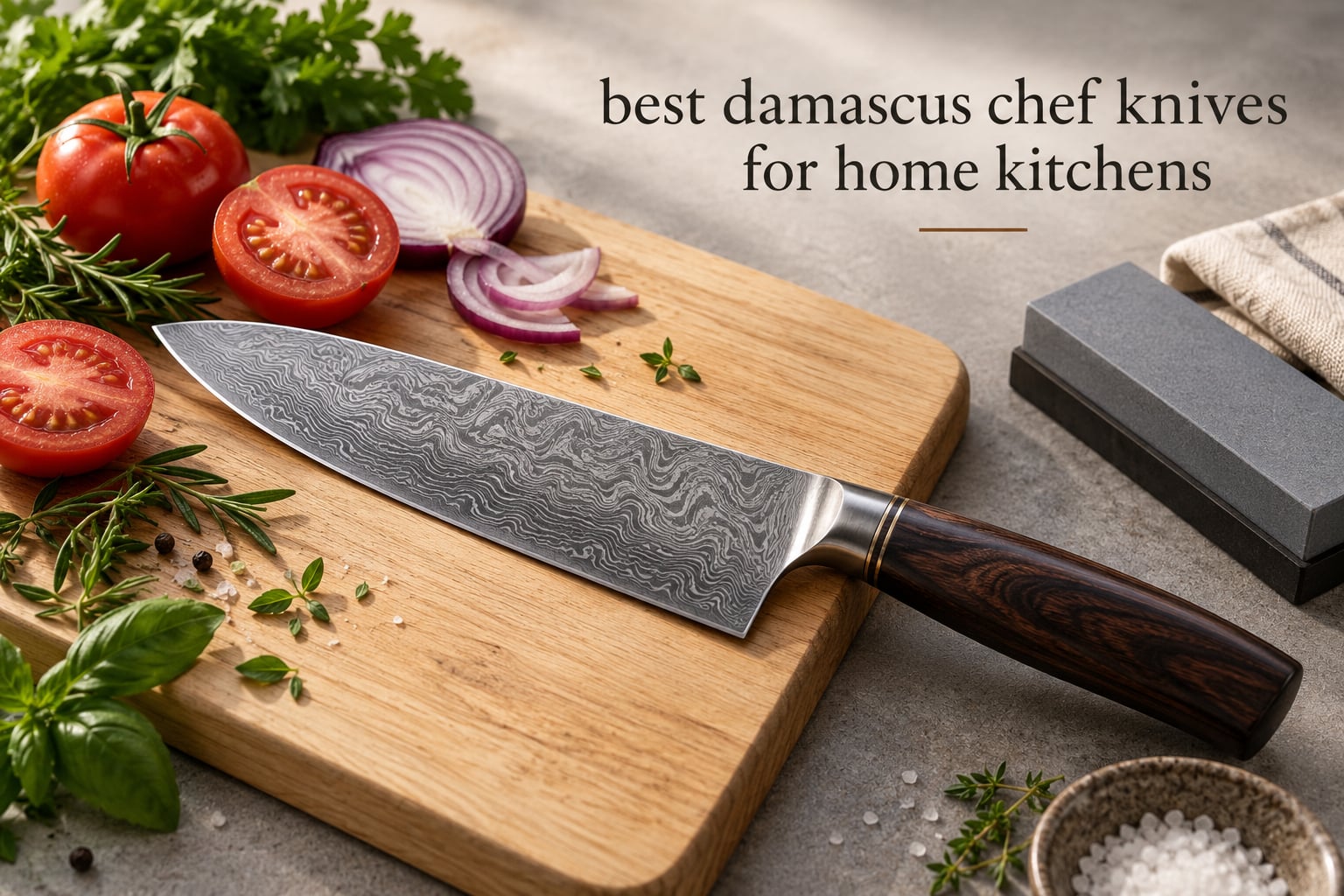
Short answer: the SHAN ZU 8 Inch Damascus Chef Knife is the best damascus chef knife for home kitchens because it pairs a named 10Cr15Mov Japanese steel core with 67 forged layers, weighs 260 g, and holds a 4.8 rating across more than 5,600 reviews. If you want the Japanese-style feel and do not mind a lighter knife, the Shun Classic 8 Inch is the alternative; if you want the sharpest steel on this list, the Miyabi Birchwood SG2 gets there at a much higher ticket.
Damascus sells on looks. That is the part every listing leads with and almost nobody explains. Pattern-welded steel is real, but on the great majority of knives the pattern is cosmetic and the core steel is what actually touches your tomato. Buy the core steel and the pattern comes free. Buy the pattern without a named core and you are paying a premium for a surface finish.
We assembled the best damascus chef knives for home kitchens by filtering for the things a weekday cook actually feels: a named core steel, a pattern that runs the length of the blade rather than stopping at the face, an 8-inch blade, a handle that suits an ordinary hand, and a seller willing to take the knife back if the pattern disappoints. We set aside knives with unlisted steels, oversized blocks that spread quality thin, and anything whose listing describes layers without ever naming the steel inside them.
A note on price tiers before we start. In this category the useful dividing line is not how many layers a knife claims. It is whether the manufacturer names the core steel and where the knife is made. That is the filter we applied, and it is why the list runs from a mass-market forged knife up to a Seki-made powder steel blade without pretending the cheaper ones are the same knife. If you are also rebuilding the rest of your kitchen, our picks for gas ranges for home kitchens and wall ovens follow the same no-nonsense approach.
Table of Contents
Top 3 Damascus Chef Knives for Home Kitchens in 2026
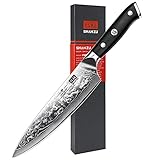
SHAN ZU 8 Inch Damascus Chef Knife
- 67-layer Damascus
- 10Cr15Mov core at 62 HRC
- 8-inch blade
- G10 handle

Shun Classic 8 Inch Chef’s Knife
- VG-MAX core
- 68-layer cladding
- D-shaped pakkawood
- free lifetime sharpening

Miyabi Birchwood SG2 8 Inch Chef’s Knife
- SG2 powder steel core
- 100-layer flower pattern
- 9.5-12 degree Honbazuke edge
- birch handle
All 12 Damascus Chef Knives at a Glance in 2026
Every knife below is an 8-inch class blade built for everyday prep, with one 9.5-inch gyuto included for cooks who prefer a rocking motion. Read across the core steel column first, because that is the column that predicts how the knife will feel in a year rather than on day one.
| Product | Specifications | Action |
|---|---|---|
| SHAN ZU 8 Inch Damascus Chef Knife |
|
Check Latest Price |
| Shun Classic 8 Inch Chef’s Knife |
|
Check Latest Price |
 Dalstrong 8 Inch Gyuto Damascus Chef Knife Dalstrong 8 Inch Gyuto Damascus Chef Knife |
|
Check Latest Price |
 Sunnecko 8 Inch VG10 Damascus Chef Knife Sunnecko 8 Inch VG10 Damascus Chef Knife |
|
Check Latest Price |
 KYOKU Shogun Series 8 Inch VG10 Damascus Chef Knife KYOKU Shogun Series 8 Inch VG10 Damascus Chef Knife |
|
Check Latest Price |
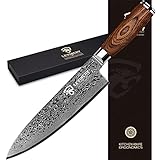 LEVINCHY 8 Inch 73-Layer Damascus Chef’s Knife LEVINCHY 8 Inch 73-Layer Damascus Chef’s Knife |
|
Check Latest Price |
| Miyabi Birchwood SG2 8 Inch Chef’s Knife |
|
Check Latest Price |
 KEEMAKE 8 Inch VG10 Damascus Chef Knife KEEMAKE 8 Inch VG10 Damascus Chef Knife |
|
Check Latest Price |
 Emojoy 8 Inch Damascus Chef Knife Emojoy 8 Inch Damascus Chef Knife |
|
Check Latest Price |
 Miyabi Kaizen 8 Inch Chef’s Knife Miyabi Kaizen 8 Inch Chef’s Knife |
|
Check Latest Price |
 Yoshihiro VG10 16-Layer Hammered Damascus Gyuto Yoshihiro VG10 16-Layer Hammered Damascus Gyuto |
|
Check Latest Price |
 SANMUZUO Xuan Series 8 Inch VG10 Damascus Chef Knife SANMUZUO Xuan Series 8 Inch VG10 Damascus Chef Knife |
|
Check Latest Price |
What Damascus Steel Actually Is
Damascus steel is pattern-welded steel. Two or more alloys are stacked, forge-welded, folded and twisted until the layers are inseparable, and then the blade is acid-etched so the different alloys react at different rates and reveal the visible pattern. On a genuine knife the pattern runs the full length of the blade, right up to the edge line. On a decorative one, the pattern is a surface treatment on a single plain steel.
The construction matters more than the layer count. In san mai, a hard core steel called the hagane is sandwiched between layers of softer steel. In kasumi, the core is only partially clad and the transition is visible as a line partway up the blade. The softer cladding does two useful things: it protects the hard core from side impact and it makes the bevel easier to hone because you are not grinding pure hardened steel.
Layer counts are marketing. A 67-layer knife and a 101-layer knife built on the same VG-10 core cut identically, and people who work in this niche say it constantly. What separates a knife that stays sharp from one that disappoints is the core: VG-10 and SG2 for stainless performance and low maintenance, Aogami #2 and Shirogami #1 for the sharpest possible edge with a genuine rust and staining trade-off, and unnamed high-carbon stainless which tells you nothing at all.
1. SHAN ZU 8 Inch Damascus Chef Knife – The Best All-Round Damascus Chef Knife
- Named Japanese steel core and a genuine forged layer count
- Very sharp out of the box with solid edge retention
- Top-balanced G10 handle feels solid in the hand
- 15 degree edge suits general prep
- Needs care around frozen or very hard food
- Heavier than typical Western chef knives
This is the knife I hand to friends who ask me to pick one and then stop worrying about it. The core is 10Cr15Mov Japanese steel hardened to 62 HRC, which sits in the sweet spot between taking an edge and refusing to chip on a Tuesday-night potato. The claim of 67 layers is backed by a described folding process, and reviewers confirm the pattern deepens with polishing rather than fading like an etch.
At 260 g it is heavier than the Shun Classic at 206 g and sits above most Western knives in its class, which is exactly what I want from a chef knife. Weight in the blade is what stops a rocking motion from feeling twitchy, and it also absorbs the shock when the edge meets something it should not have met.
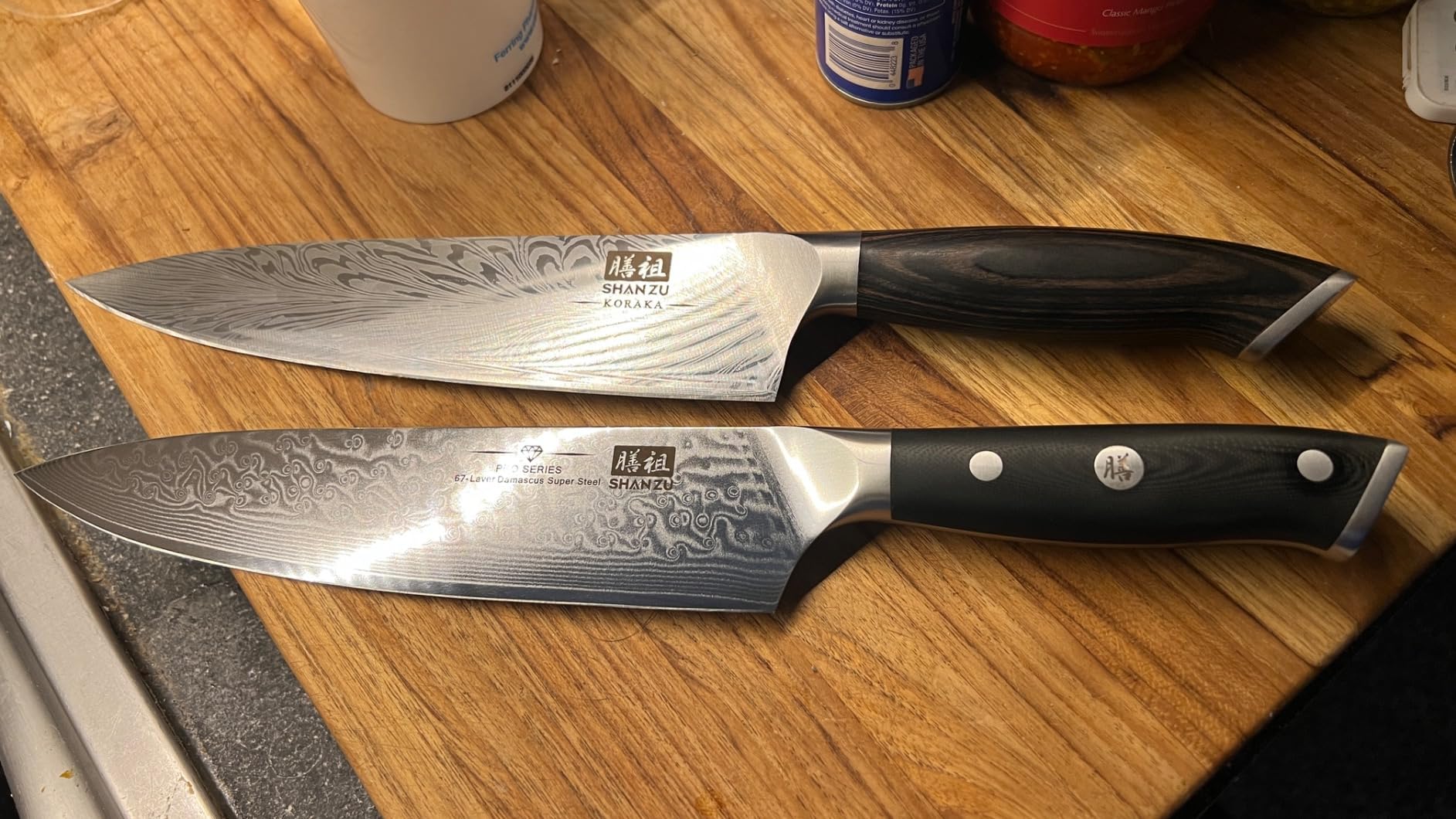
The handle is frosted G10 glass fiber with an ergonomic top balance, and at 5.3 inches long it fits hands of most sizes. Reviewers rate the knife 4.8 out of 5 across more than 5,600 reviews, with a large share of five-star ratings calling out sharpness and value rather than appearance alone, which is the signal I look for when a pattern is doing no work.
The honest downside is edge geometry. A 15-degree bevel is sharper than a Western knife and therefore less forgiving. Treat it as a produce and protein knife, not an ice pick, and it will behave like a much more expensive tool for years.
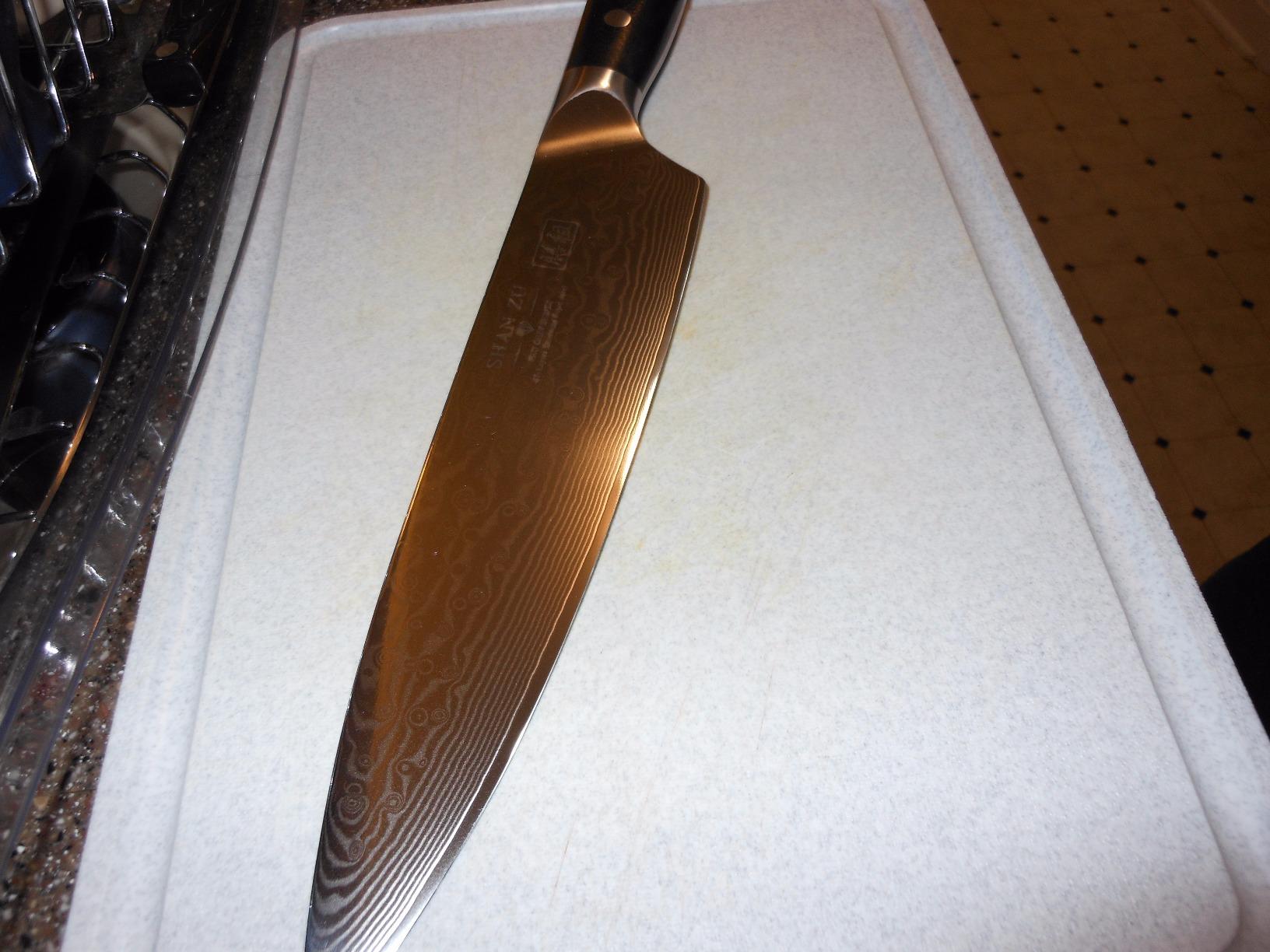
Is the SHAN ZU Damascus construction worth it for daily cooking?
For a home cook, yes, and the reason is the steel rather than the pattern. A 62 HRC core with softer cladding around it holds a fine edge through repeated washing-up chopping sessions and is far less likely to chip than the very thin single-bevel blades at the premium end.
The other reason to like it is that there is no whetstone requirement. The factory 15-degree edge arrives usable, takes a steel hone without drama, and suits anyone who wants a beautiful knife without adding a new hobby.
Where the SHAN ZU falls short
The 260 g weight is substantial for an 8-inch blade, and reviewers with smaller hands sometimes describe the G10 as more substantial than expected for a mid-size chef knife. That is a preference issue rather than a fault, but if you have a genuinely small grip it is worth handling in a shop first.
It is also sold as one knife with no sheath or case, unlike several picks below that include storage. Nothing wrong, just less convenient if you plan to travel with it or store it in a drawer full of other tools.
2. Shun Classic 8 Inch Chef’s Knife – Best Damascus Chef Knife for Japanese-Style Cooking
- VG-MAX core with 68 layers gives a refined
- precise edge
- D-shaped pakkawood handle works for either handedness
- Free lifetime sharpening and honing service
- Proven Japanese line handcrafted in Japan
- Thin steel needs careful technique and a good board
- Heavier price outlay than most forged alternatives
The Shun Classic is the most commonly recommended first Japanese knife in kitchen circles, and the reason is the free lifetime sharpening service rather than the steel. Send it back every few years and it comes home honed to factory standard, which removes the single biggest reason home cooks avoid thin Japanese steel.
The core is VG-MAX with 68 layers of Damascus cladding at a 16-degree edge. That is a slightly less acute edge than the Miyabi models below, and it is the right call for a general-purpose kitchen knife: it does the beautiful fine-slicing work but is less prone to catching when you are moving fast.
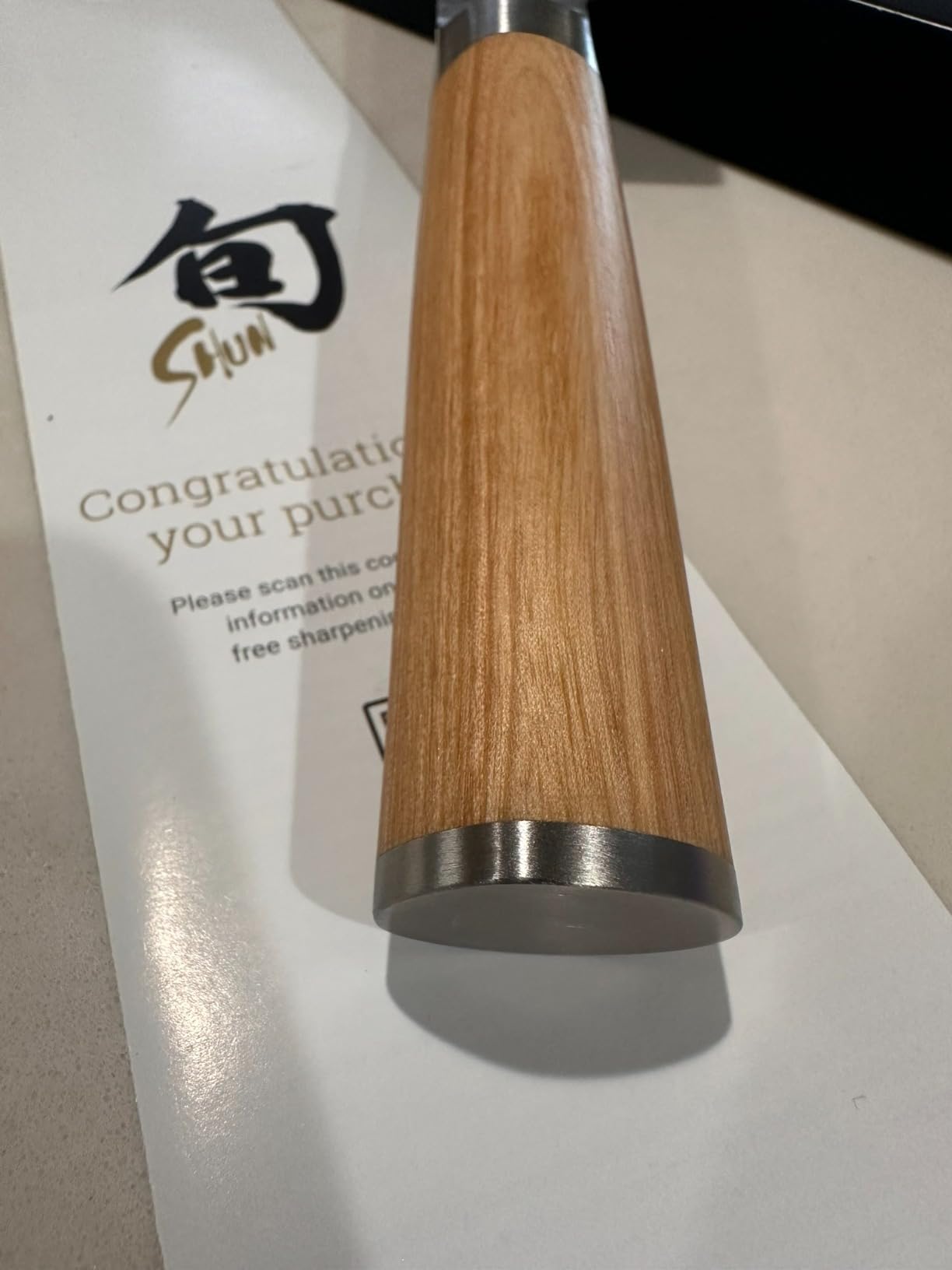
At 206 g it is the lightest chef knife in this list, and the D-shaped pakkawood handle sits higher on the hand than a Western bolster does. Reviewers rate it 4.7 out of 5 across roughly 3,800 reviews, and the recurring praise is for the refined edge and the grip, with the recurring caveat being that thin steel punishes careless technique.
The pakkawood handle is the weak point in reviews from cooks who grip hard. You will find accounts of a thumb blistering after long unbroken prep sessions, so if you are the type to hold a knife like a hammer, test the grip before committing.
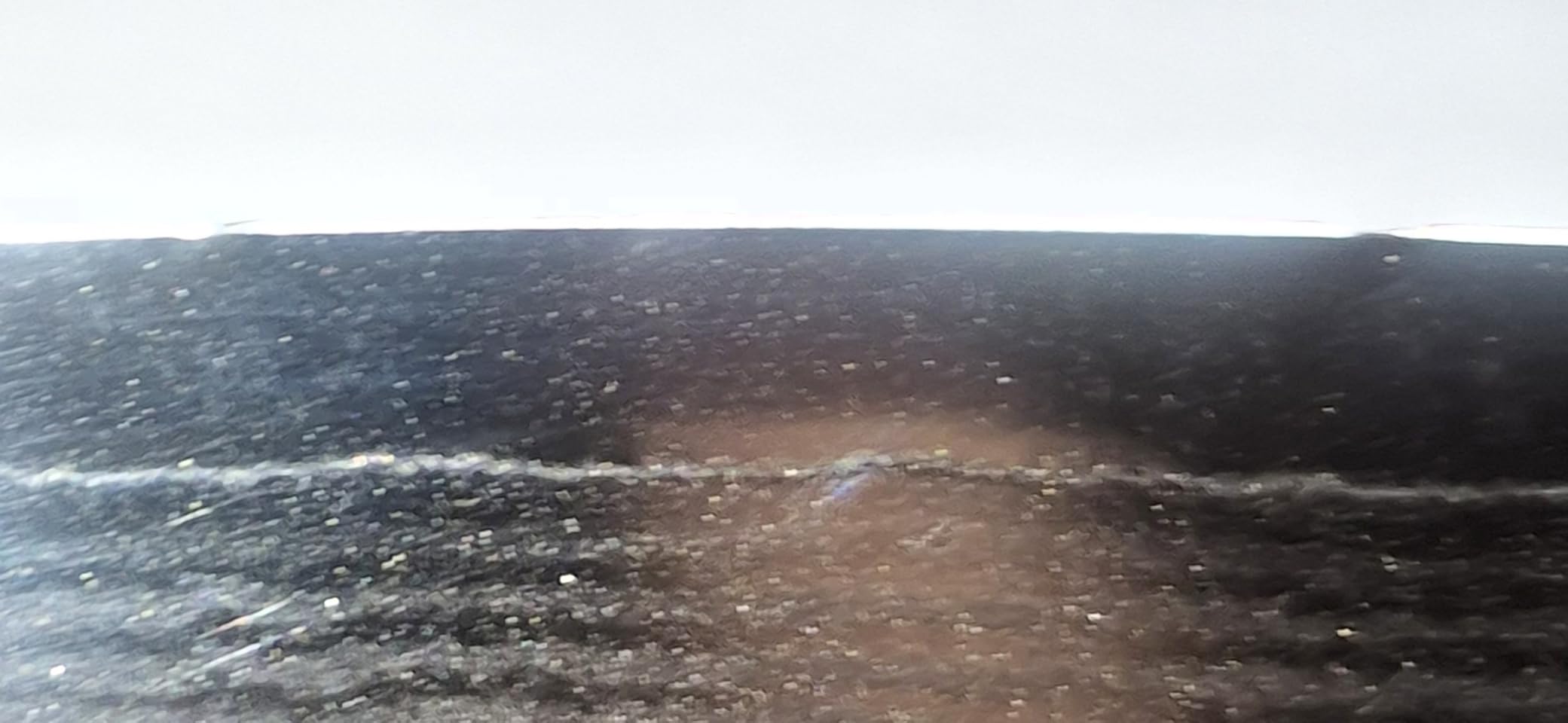
How does the Shun Classic fit a home kitchen?
It is a genuinely excellent home knife because of the balance between edge angle and steel thickness. Sixteen degrees is sharp enough for paper-thin onion and tomato, blunt enough that a missed cut produces a nick rather than a chip, and the whole knife is light enough that a long session does not load the wrist.
The lifetime sharpening service also makes it the safest expensive purchase in this list. If the edge eventually goes past what you can fix at home, the manufacturer handles it.
What should a home cook watch out for with the Shun Classic?
Hand-wash only and dry immediately. Leaving a knife with a laminated steel and a pakkawood handle in standing water or a dishwasher cycle is how the handle separates and how the edge picks up micro-corrosion.
It is also not a knife to take to frozen chickens or bones. The thin profile that makes it precise is the same profile that makes it fragile against hard, frozen, or bony material.
3. Dalstrong 8 Inch Gyuto Damascus Chef Knife – Best Value Damascus Chef Knife
- Exceptionally sharp out of the box
- Edges retained for months without sharpening
- Tall heel gives strong knuckle clearance
- Sheath and presentation box included
- Handle feels oversized for very small hands
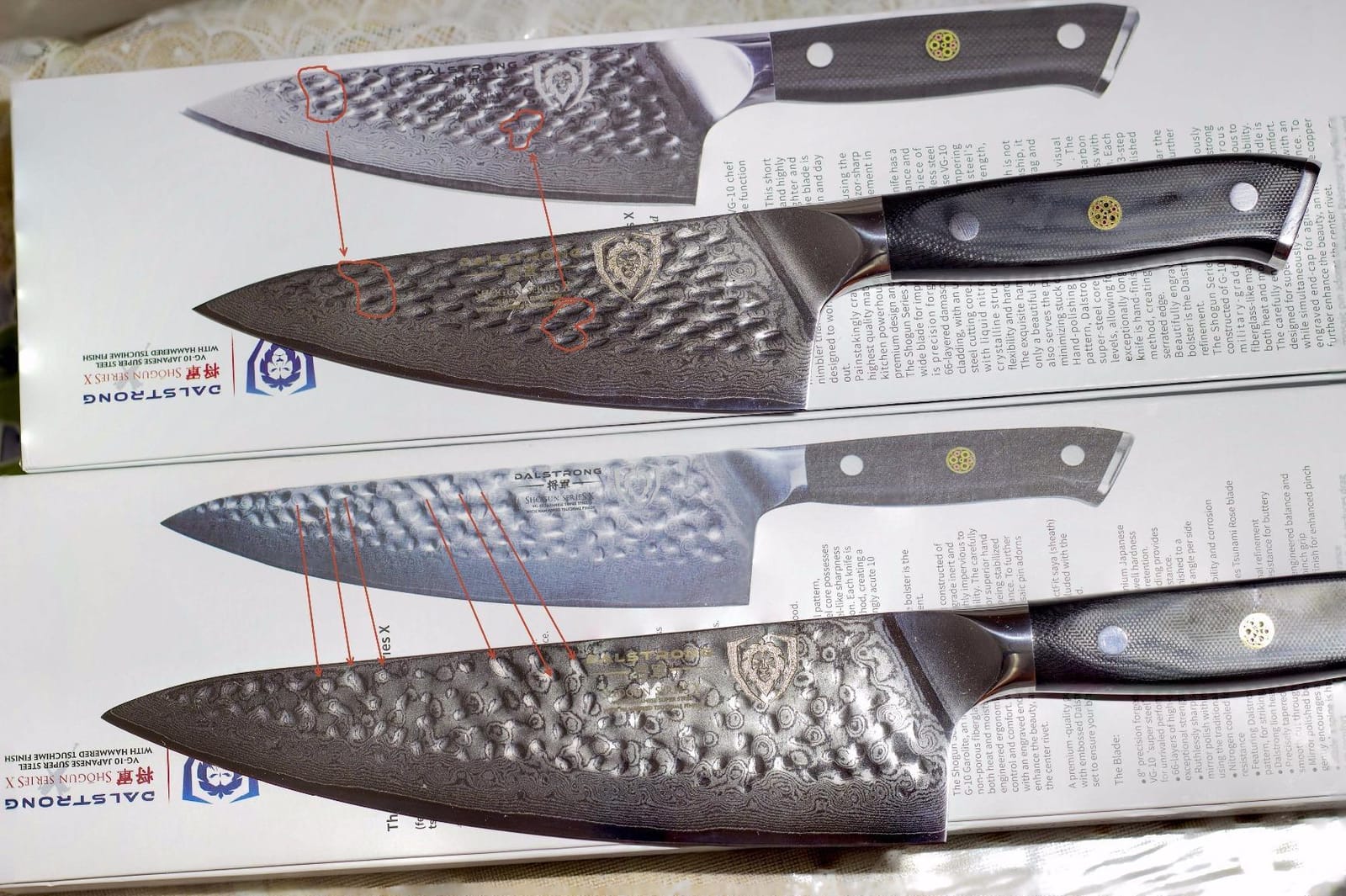
- Damascus pattern is subtler than the listing photos suggest
The Dalstrong is the pick I recommend to anyone who wants genuine multi-layer Japanese steel without paying a Japanese import price. The core is AUS-10V, a Japanese alloy hardened to 62 and above Rockwell, wrapped in 66 layers of Damascus cladding and finished with a hammered surface. Reviewers rate it 4.7 out of 5 across more than 2,700 reviews.
Edge retention is the standout claim in the review data, with owners describing months of use between sharpening sessions. The 8 to 12 degree hand-sharpened bevel explains part of it: the wide heel of that angle range resists rolling and gives you a fine edge when you want one.
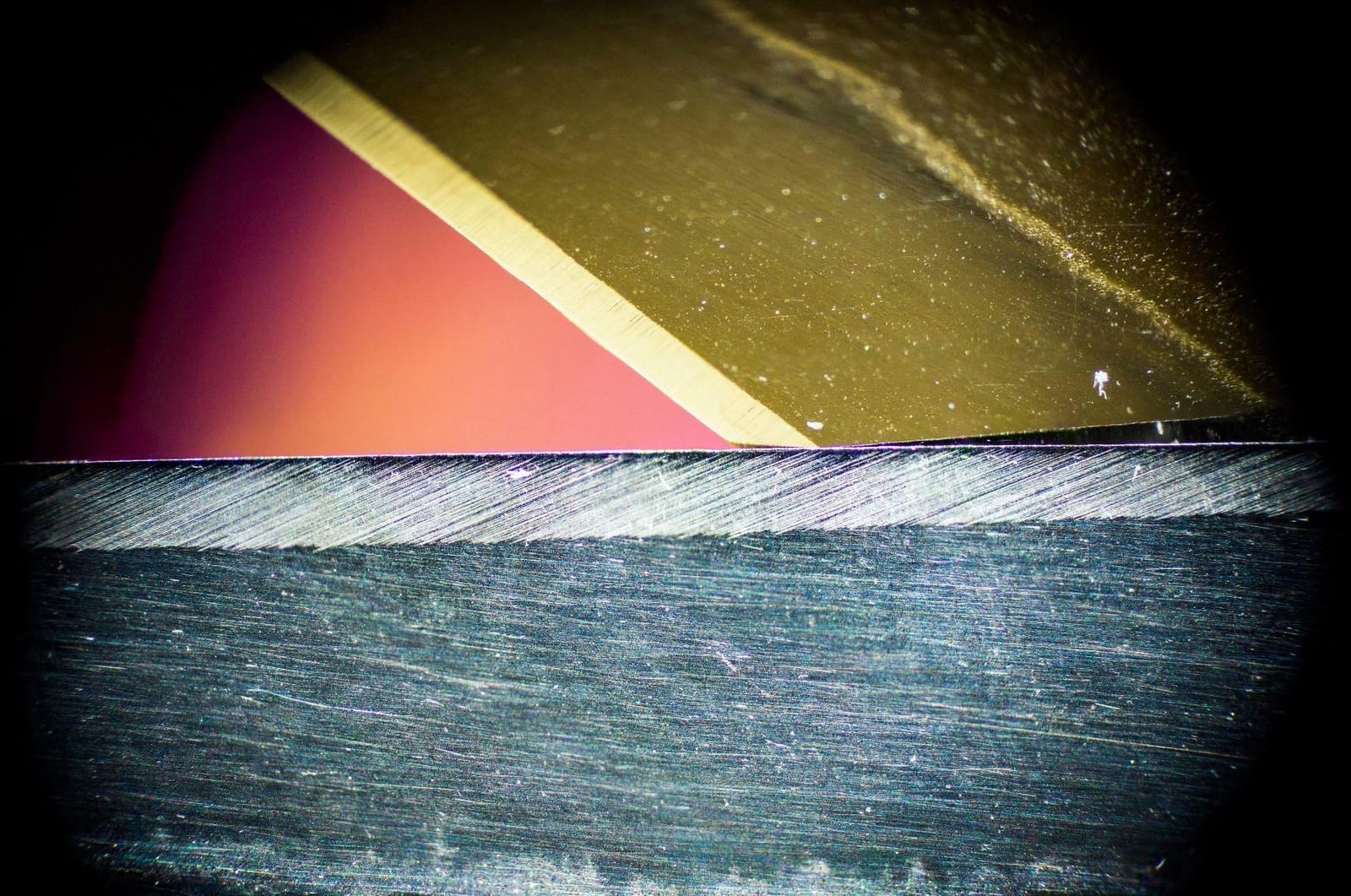
The hammered finish is not only decorative. Dimpling reduces the contact area between food and blade, which cuts drag and is why reviewers report noticeably cleaner transfers when moving diced onion or herbs off the blade. It ships with a sheath and a box, which is unusual at this tier and useful for storage.
Two honest notes from the reviews. The handle is contoured and full tang but reads as oversized for cooks with small hands, and the spine is thicker than a traditional Japanese chef knife, so this is a workhorse profile rather than a delicate one.
Is the Dalstrong Damascus real and layered?
Yes, and this is the most credible forged-construction claim in the list at the lower end. It names its core alloy, its Rockwell hardness, its bevel range and its layer count, which is the disclosure pattern you should insist on before spending real money.
Reviewers confirm edge behaviour consistent with a hard Japanese alloy rather than a plated decorative blade, and the pattern contrast is subtler in person than in marketing photography.
Who should skip the Dalstrong?
Cooks with genuinely small hands, because the handle reads as oversized to them. It is also a heavier-feeling knife than its 9.6 ounce weight suggests once the full tang and heel are in the hand.
If your prep is mostly delicate fish work and you want a thin, light blade with a fine tip, a plain Japanese gyuto will serve you better. This one is built to push through.
4. Sunnecko 8 Inch VG10 Damascus Chef Knife – Best Budget Damascus Chef Knife
- VG10 core keeps a sharp edge through regular prep
- Full tang gives balanced fatigue-resistant handling
- ABS handle stays secure when wet
- Sharp 10-12 degree edge out of the box
- ABS handle is less refined than wood or pakkawood
- Hand wash and dry to preserve the finish
The Sunnecko is the most straightforward route on this list to a knife that names a real stainless core, VG10, inside a 67-layer Damascus build. That disclosure alone puts it ahead of most knives sold at the same tier, where the pattern is the only thing the listing talks about.
Full tang construction is the detail that separates it from cheap competitors. The steel runs continuously into the handle, which is why owners report less wrist fatigue in long sessions than they would get from a hollow or partial tang of the same size.
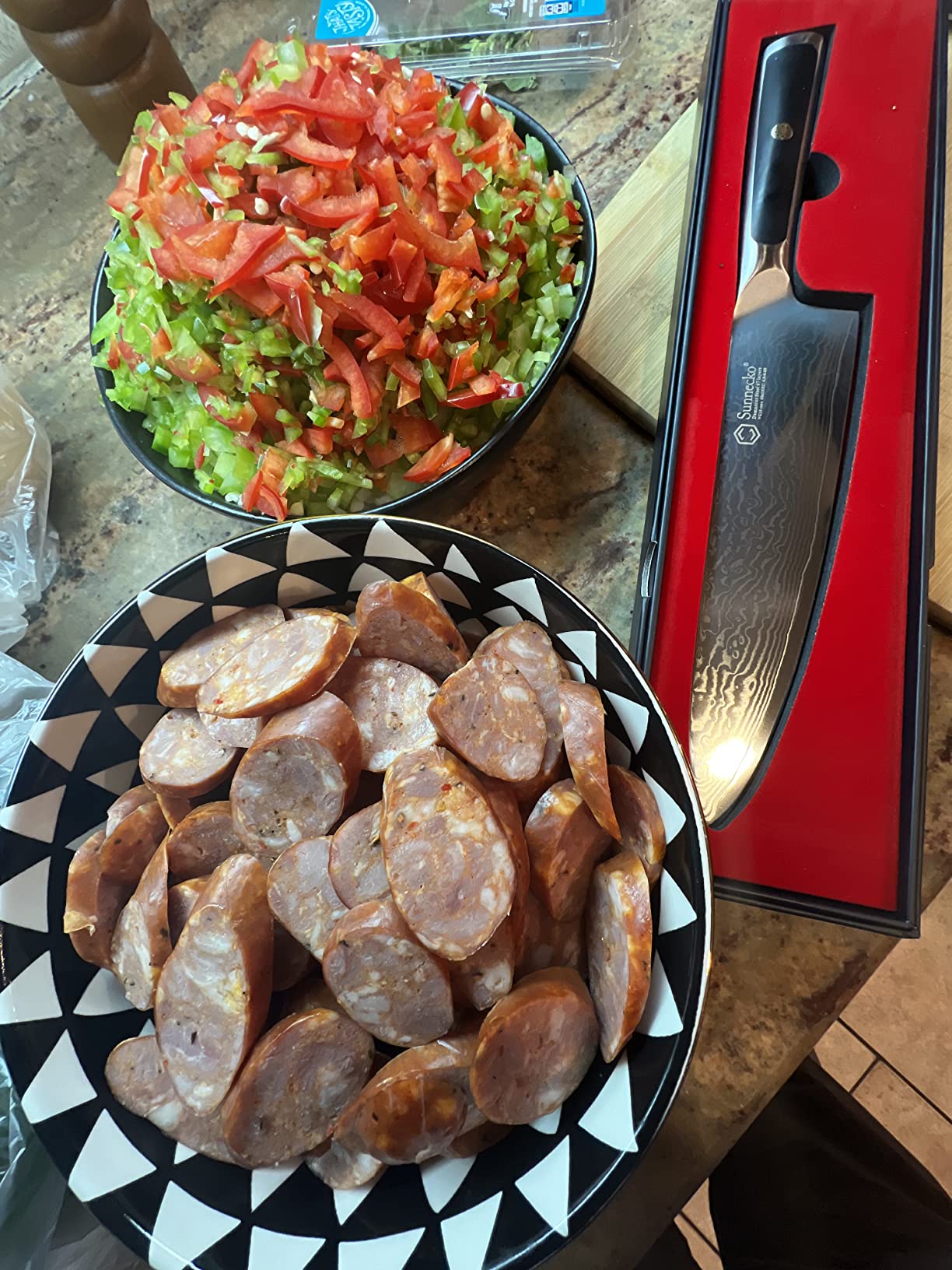
It rates 4.7 out of 5 across roughly 1,100 reviews, with the bulk of the praise aimed at sharpness and balance for the money. The 10 to 12 degree bevel is on the sharp side of the range here, so it rewards a soft board and a light hand.
The 0.41 kg listed weight is the second-heaviest of the twelve, and the moulded ABS handle with a decorative rivet is among the plainest. It grips well when wet, which matters more during washing-up prep than the finish does.
Will a first-time Damascus buyer be happy with the Sunnecko?
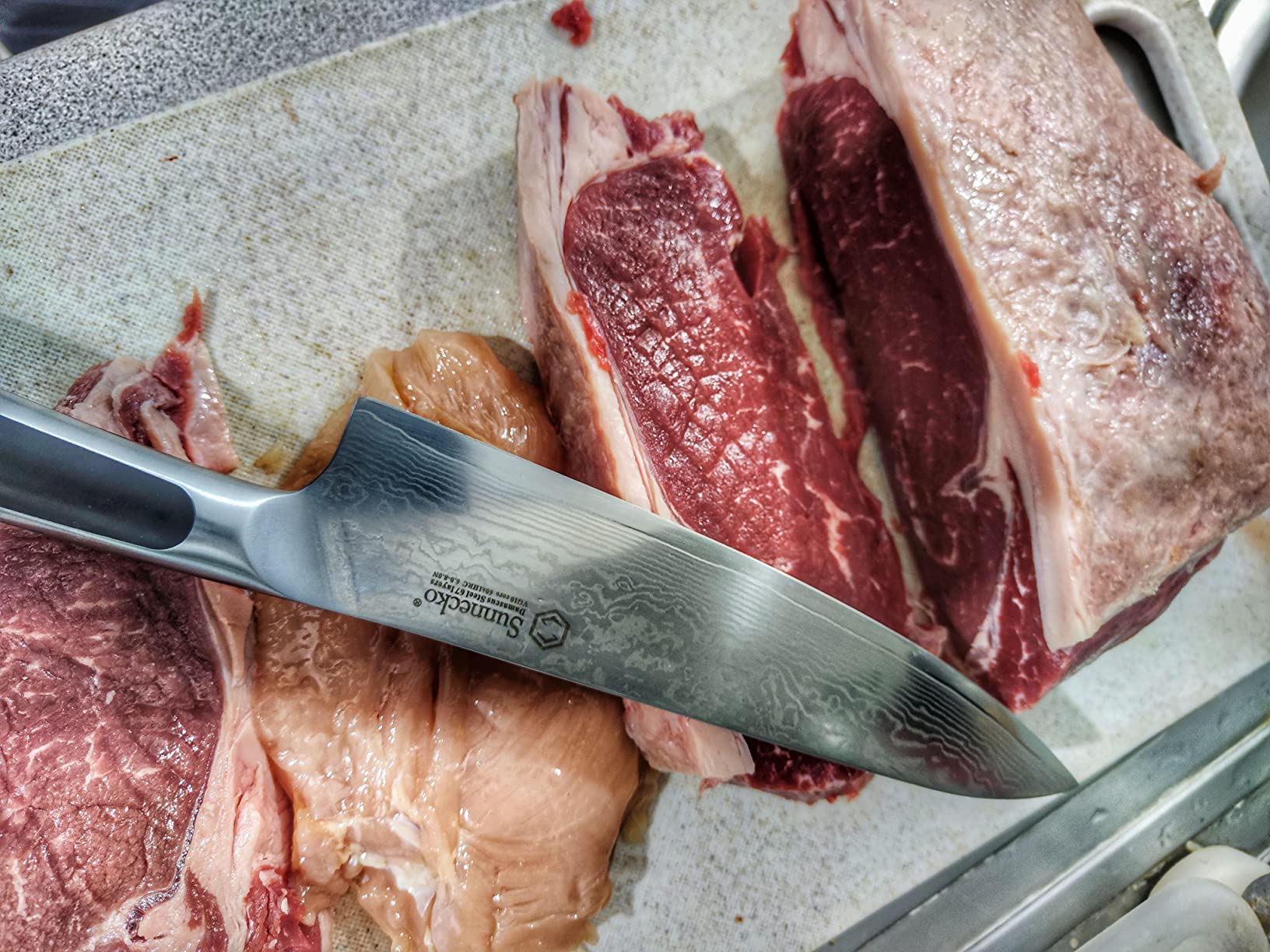
Yes. It has the two things that matter for a first patterned knife, a named core and a visible layered pattern, without asking you to learn whetstone sharpening before your first meal. The 8-inch blade is the standard home size and the edge holds well through a week of use.
It also handles the ingredients beginners actually cook, which is meat, vegetables and fruit, without demanding board technique.
What are the compromises on the Sunnecko?
The handle material is plastic, and while it works, it will not develop the patina or the comfort of pakkawood or olive wood over years of use. It is also the piece most in need of careful hand washing.
A 10 to 12 degree edge is thinner than ideal for a knife that gets used on hard frozen food by an inexperienced cook. Keep it on produce and protein and it is fine.
5. KYOKU Shogun Series 8 Inch VG10 Damascus Chef Knife – Best for Beginners
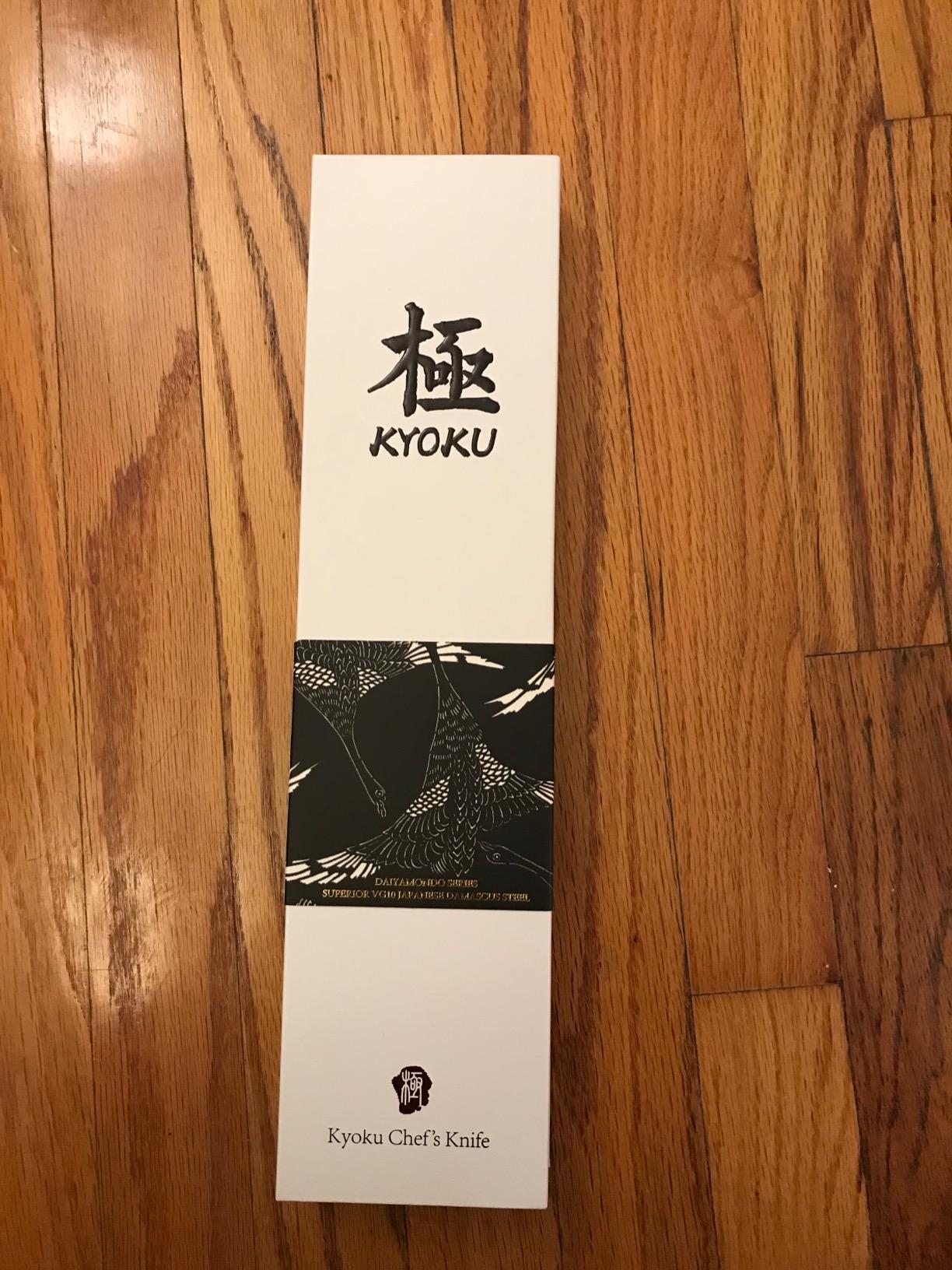
KYOKU Chef Knife – 8″- Shogun Series Japanese Style VG10 Steel Core Hammered Damascus Blade Kitchen Knife – with Sheath & Case
- Sharp out of the box on onions and tomatoes
- Solid weighty balance that reads as good construction
- Sheath and case included for storage
- Customer service resolves quality concerns
- Damascus contrast is subtler than the product photos
- On the heavy side for an 8-inch chef knife
The KYOKU is the one I suggest when someone tells me they have never sharpened a knife and does not intend to start. At 58 to 60 HRC with a VG-10 core, it is deliberately less hard than the 62 HRC picks on this list, which trades a little edge retention for a lot more forgiveness.
It is cryogenically treated, which is a cold-hardening process that improves toughness and reduces brittleness in the hardened steel. The blade is sharpened to an 8 to 12 degree edge using the three-step Honbazuke method, the traditional Japanese finishing sequence.
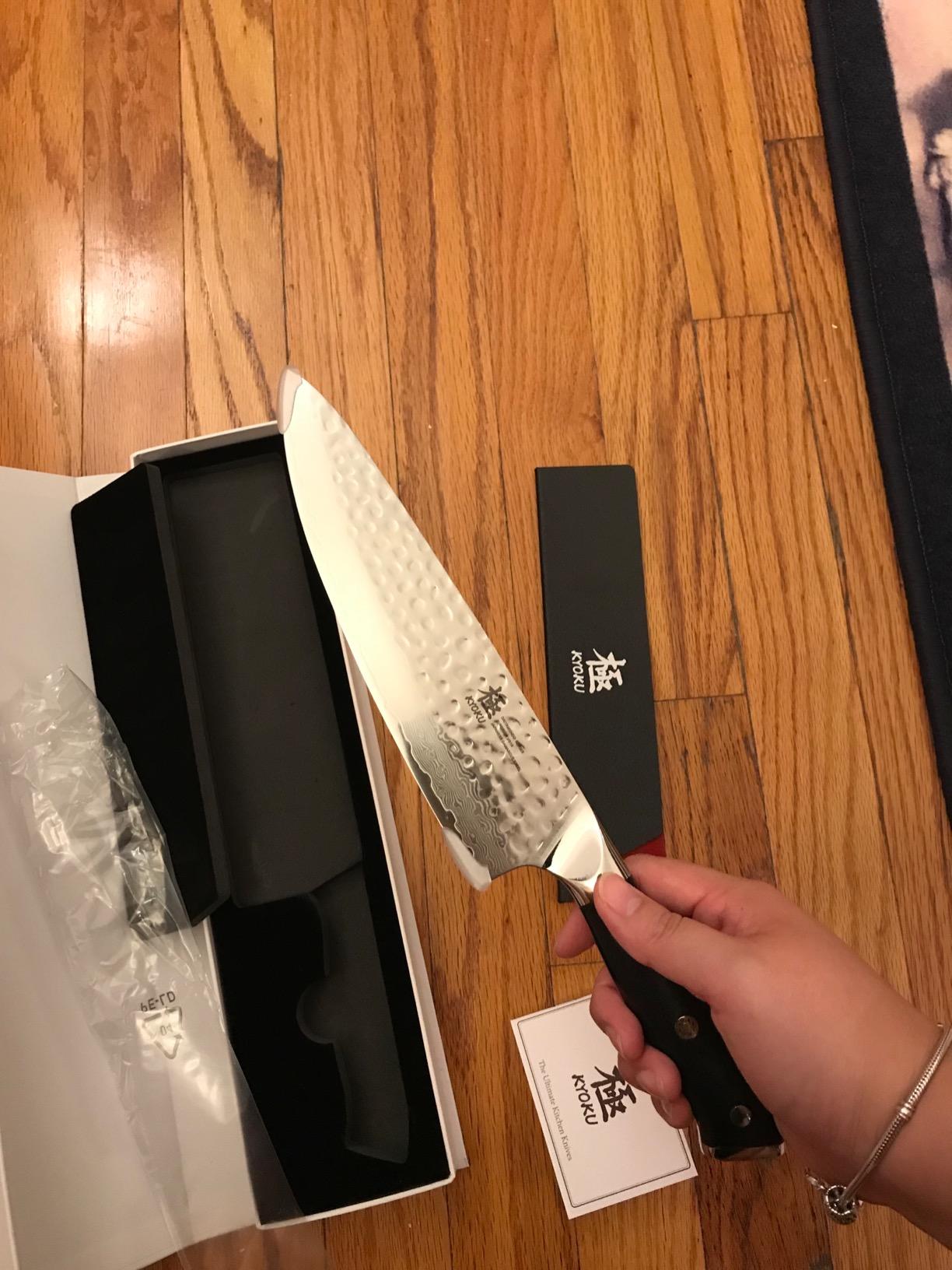
Reviews rate it 4.6 out of 5 across about 960 reviews, and the recurring themes are sharp out-of-box performance, a weighty feel that some read as solid and others as heavy, and gift-ready packaging with a sheath and case.
The recurring complaint is aesthetic rather than functional: the Damascus contrast is less pronounced than in the product photography. It is a real layered steel, but it does not photograph as dramatically as the listing suggests.
Why do beginners gravitate to the KYOKU?
Because a 58 to 60 HRC edge with a wide bevel angle takes abuse. If you cut into something you should not have, you are more likely to roll the edge back with a hone than to chip a brittle corner. That single property removes most of the anxiety people have about owning an expensive knife.
It is also forgiving on the sharpening side, since it responds to a steel hone and a basic whetstone without demanding a specific technique.
What should beginners know before buying the KYOKU?
It is a heavier knife than most Western chef knives in the same size class, at around 0.4 kg, and that will feel different from what you are used to. If you have a light grip, look at the 206 g Shun Classic instead.
The handle is designed around a mosaic pin and fits larger hands particularly well. Smaller hands should confirm the grip in person.
6. LEVINCHY 8 Inch 73-Layer Damascus Chef’s Knife – Best Damascus Chef Knife for Gifting
- Very sharp out of the box on root vegetables and tomato
- Comfortable pakkawood handle with pleasing weight
- Gift-quality presentation box included
- Seller service with instant replacement
- Thin blade geometry loses its edge faster than thicker knives
- Edge retention demands regular honing
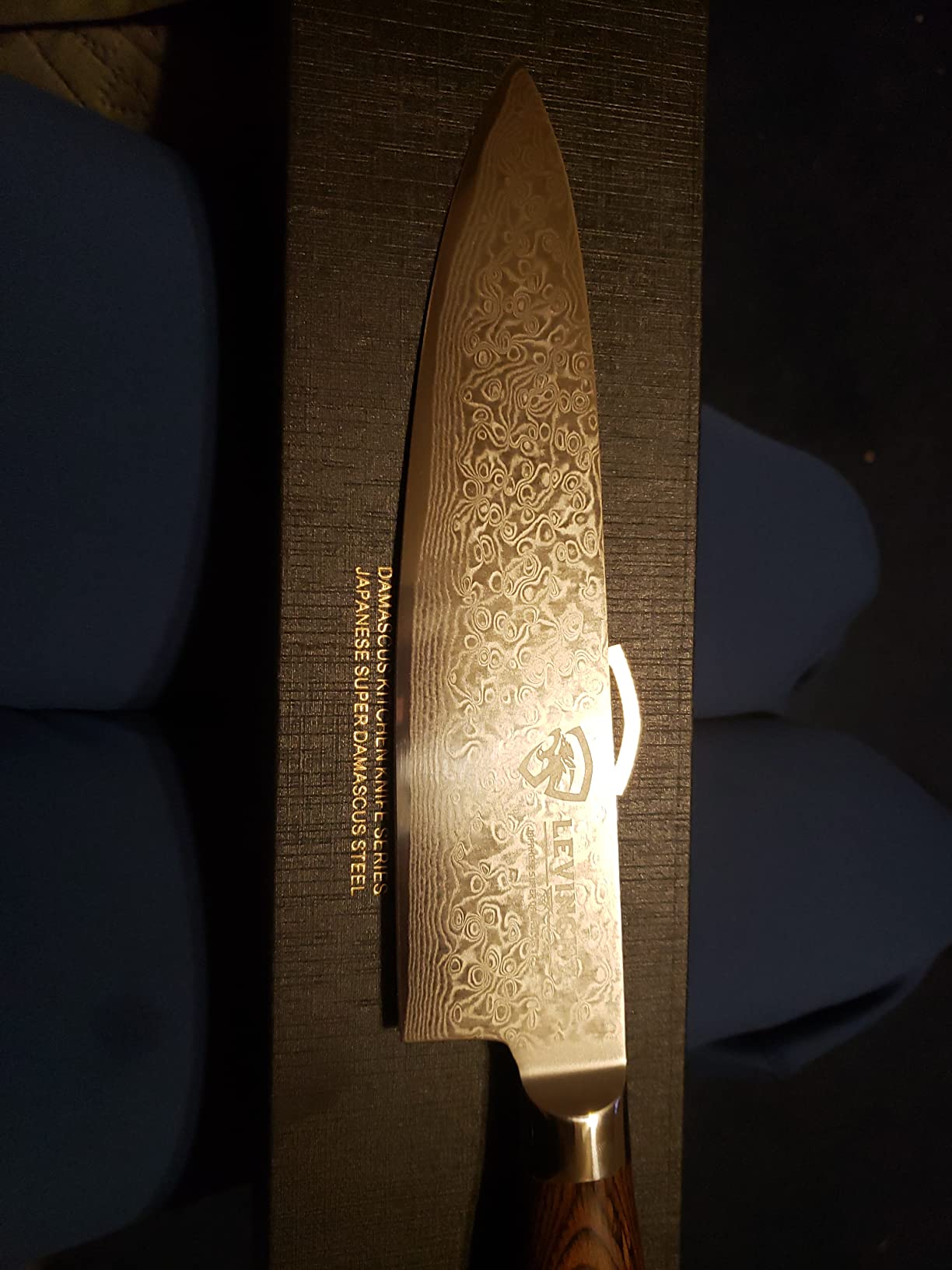
The LEVINCHY is the pick when the knife is a present. It arrives in a black gift box, has the pakkawood handle most people picture when they think of a Damascus chef knife, and carries a 73-layer build hardened to 60 plus or minus 2 Rockwell.
The handle is the selling point for gifting. Pakkawood is a resin laminate rather than timber, so it does not swell or crack when it gets wet, and reviewers consistently call it comfortable with a pleasing weight for an 8-inch blade.
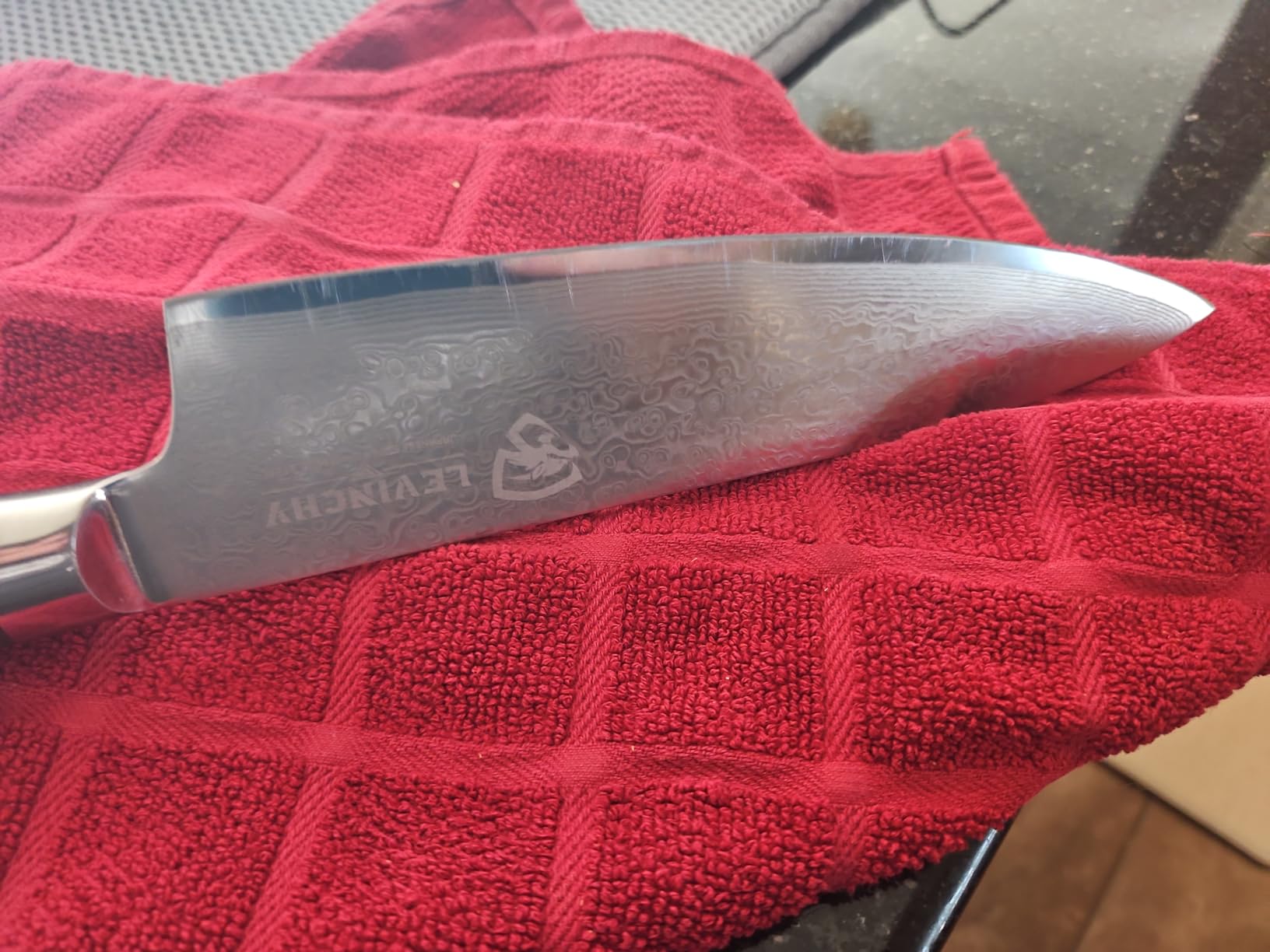
It rates 4.7 out of 5 across about 650 reviews, and the mirror-polished 8 to 12 degree per-side finish produces what owners describe as effortless cuts through sweet potato and tomato. The pattern is genuinely decorative at this tier in a way it is not on some competitors.
Be honest about the trade-off in the reviews: the blade is thin, so it loses its edge faster than a thicker German-profile knife and wants more regular honing from the owner. For a gift recipient who will not sharpen it, that is the main caveat.
Is the LEVINCHY suitable as a gift for a beginner?
It is a good gift because it looks like a luxury knife and cuts like a competent one, and the pakkawood handle will not be ruined by a well-meaning trip through the sink. Buyers report satisfaction with the packaging and the pattern straight out of the box.
Pair it with a message that it is hand wash only, because that single habit is what keeps a laminated blade like this looking good.
What are the limitations of the LEVINCHY?
Edge retention is the real limitation. Owners who do not hone regularly notice the blade softening between cooking sessions, and the thin geometry is unforgiving on frozen or very hard food.
Its listing does not name a specific core steel beyond the layered stainless, so if you are buying for yourself rather than as a gift, the SHAN ZU or the Sunnecko give you more certainty about what is inside the blade.
7. Miyabi Birchwood SG2 8 Inch Chef’s Knife – Best Damascus Chef Knife for Enthusiasts
- SG2 powder steel core holds an exceptional edge
- Hand-honed Honbazuke edge straight out of the box
- Handcrafted in Seki with a refined thin profile
- Beautiful Karelian birch handle
- Highest outlay of the twelve
- Thin geometry is wrong for bone and heavy chopping
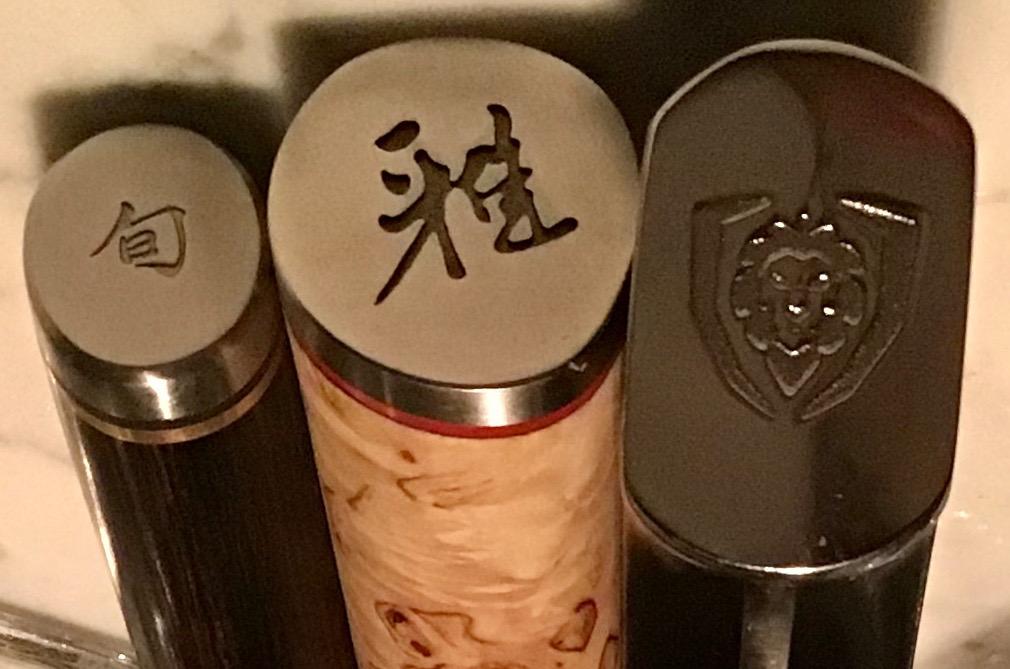
The Miyabi Birchwood is the sharpest knife in this roundup and the least forgiving. The core is SG2, a powder-metallurgy steel loaded with micro-carbides, hand honed to a 9.5 to 12 degree edge using the three-step Honbazuke process. Nothing else here holds an edge like it once you have put a stone to it.
It is handcrafted in Seki, Japan, the region the forums treat as the benchmark for Japanese production, and the 100-layer flower Damascus pattern is a genuine layered build rather than a printed surface. The Karelian birch handle is a soft, pale wood that grips well and looks better with age.
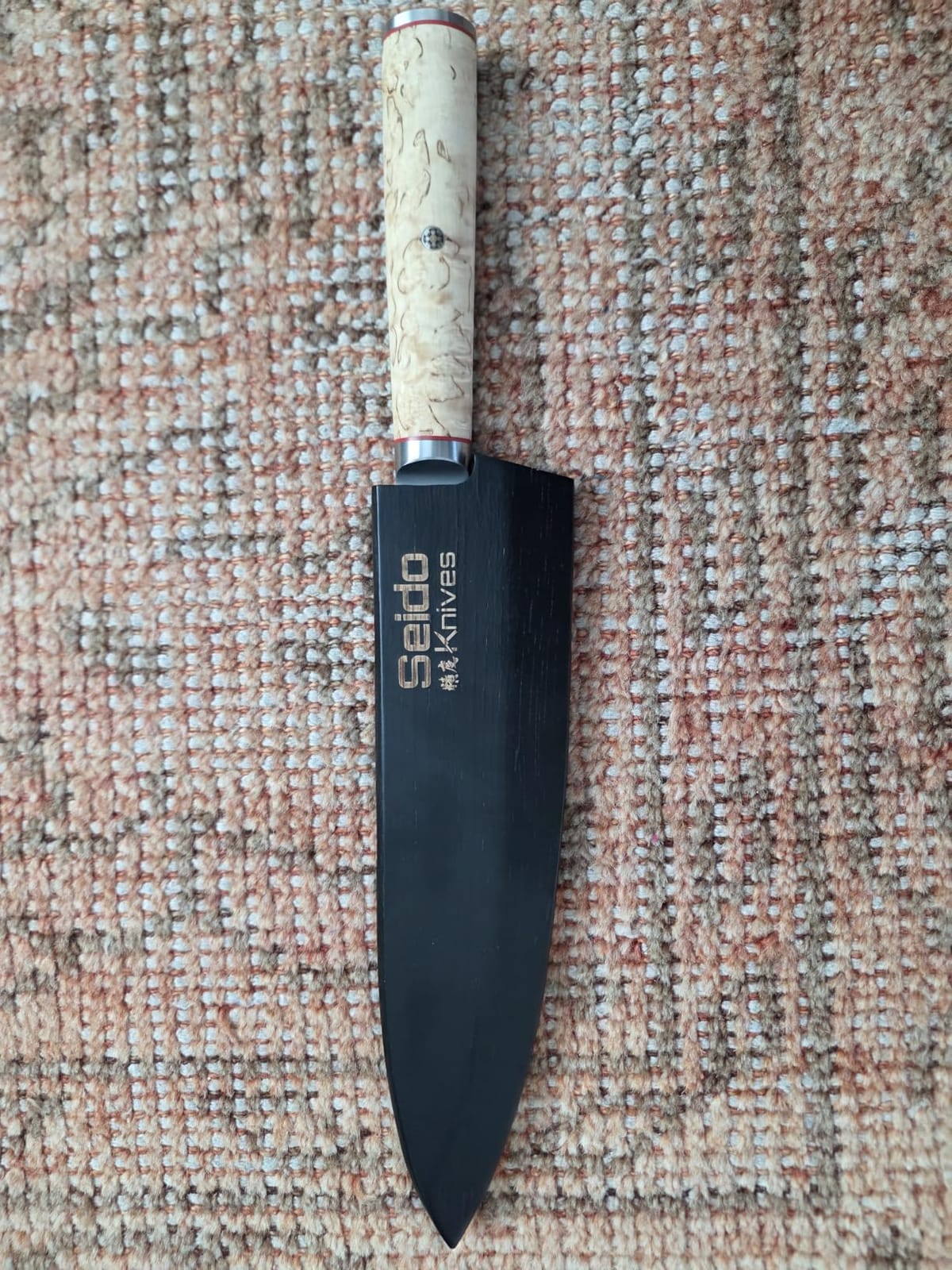
Reviews rate it 4.7 out of 5 across about 580 reviews, with an unusually high share of five-star ratings. Owners consistently attribute the experience to the steel and the edge rather than to the pattern, which is exactly the order of importance I would put them in.
The thin Japanese blade profile is the reason for the price tag and also the reason to slow down. This is a knife for slicing fish, herbs, and fine vegetables rather than for breaking down bone or frozen joints, and it wants a proper strop or stone to stay at its best.
Is the Miyabi Birchwood worth the premium for a home kitchen?
If you enjoy sharpening, or you want one knife you will keep for a decade, yes. SG2 takes and holds a finer edge than VG-10, and the Honbazuke finish means it arrives performing close to what a professional sharpening service would deliver.
If you never intend to touch a whetstone and you mostly cook meat and vegetables, the marginal gain over the SHAN ZU is smaller than the gap in cost would suggest.
Who should not buy the Miyabi Birchwood?
Anyone cutting frozen food, bone, or very dense root vegetables regularly. At roughly 1.2 pounds listed weight and a thin profile, it is heavy and unforgiving in exactly the situations beginners get into.
It is also the wrong first Damascus knife, because you will spend the first weeks learning what the edge angle means instead of learning to cook. It rewards a cook who already knows how to treat a knife.
8. KEEMAKE 8 Inch VG10 Damascus Chef Knife – Best Hammered Finish in the Mid Tier
8 Inch Damascus Chef Knife, Japanese Kitchen Knife with VG10 Steel
- Very sharp out of the box on herbs and tomato
- Comfortable pakkawood handle with good balance
- Hammered Damascus pattern looks genuinely forged
- Self-standing ash wood sheath solves storage
- Some reviewers report cheap-feeling construction
- Food can stick to the blade
- Edge needs frequent sharpening under heavy use
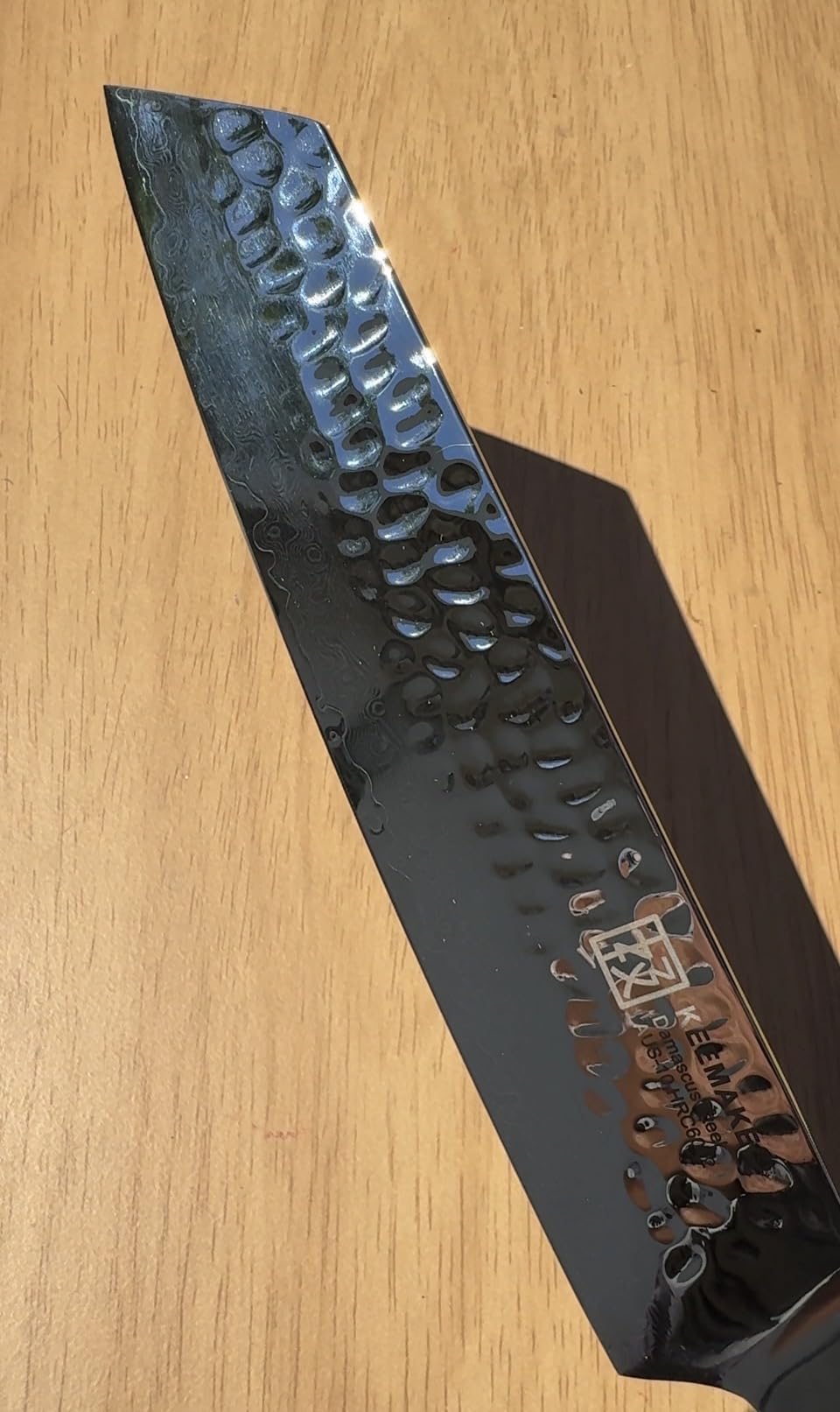
The KEEMAKE is a kiritsuke rather than a straight chef knife, which means a longer tip and a slightly narrower blade. For a home cook that is an advantage on precision work like trimming herbs or filleting a flat fish, and it still handles general chopping duties.
The core is VG10 at 62 HRC inside 67 layers of Damascus, finished with a genuine hammered texture. At 10 degrees per side it is among the sharper edges in this list, and the full-tang pakkawood handle with triple rivets is a better specified handle than the price point suggests.
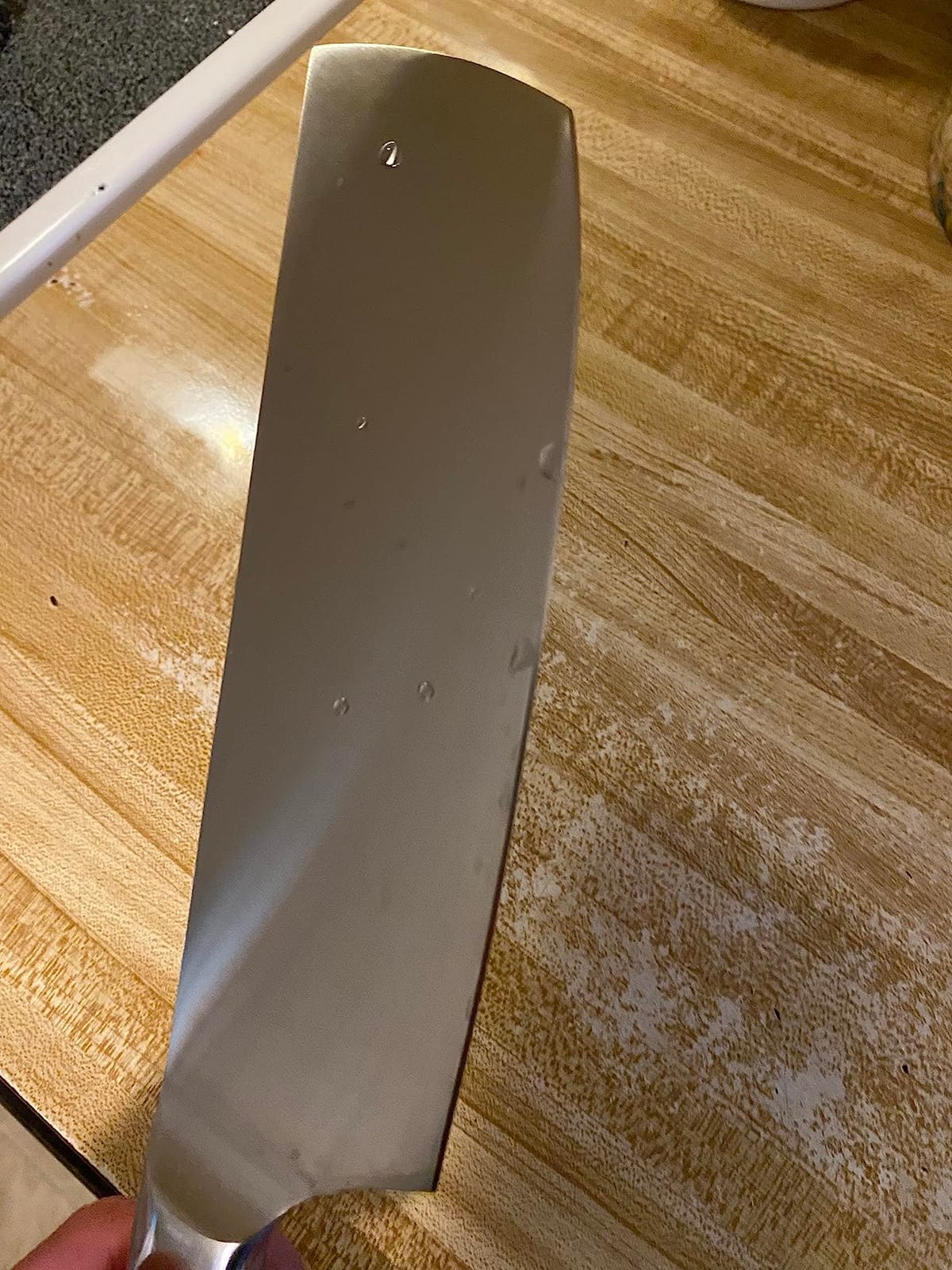
It rates 4.6 out of 5 across about 560 reviews. Owners like the sharpness, the balance and the hammered pattern, and the freestanding ash wood sheath is repeatedly singled out as a thoughtful solution that other knives in this price range skip.
The criticism in the reviews is consistent enough to take seriously. A minority describe the build as feeling cheap, mention that food can stick during use, and note that the 10 degree edge needs more frequent sharpening under heavy workloads.
Is a kiritsuke a sensible home kitchen shape?
Yes, if you cook fish, do a lot of fine chopping, or work with herbs and aromatics. The extended tip gives control on detail work that a blunt-ended chef knife cannot manage, and the body still rocks and chops like a standard blade.
It is a slightly less forgiving all-rounder than a classic chef knife, but it is a more capable specialist, and the included sheath makes it easy to keep protected in a drawer.
What should you know before choosing the KEEMAKE?
The 10 degree edge is thin. If you are new to sharpening, a 12 to 16 degree edge forgives more, which means choosing the Shun Classic or the KYOKU instead.
Build quality reports are mixed at this tier, so buying through a seller with a straightforward return policy matters more here than it does for the Japanese-made picks.
9. Emojoy 8 Inch Damascus Chef Knife – Best First Damascus Knife to Buy
Emojoy 8-Inch Damascus Chef Knife, 67-Layer Japan Steel, Olive Wood Handle
- Sharp out of the box on meat
- vegetables and fruit
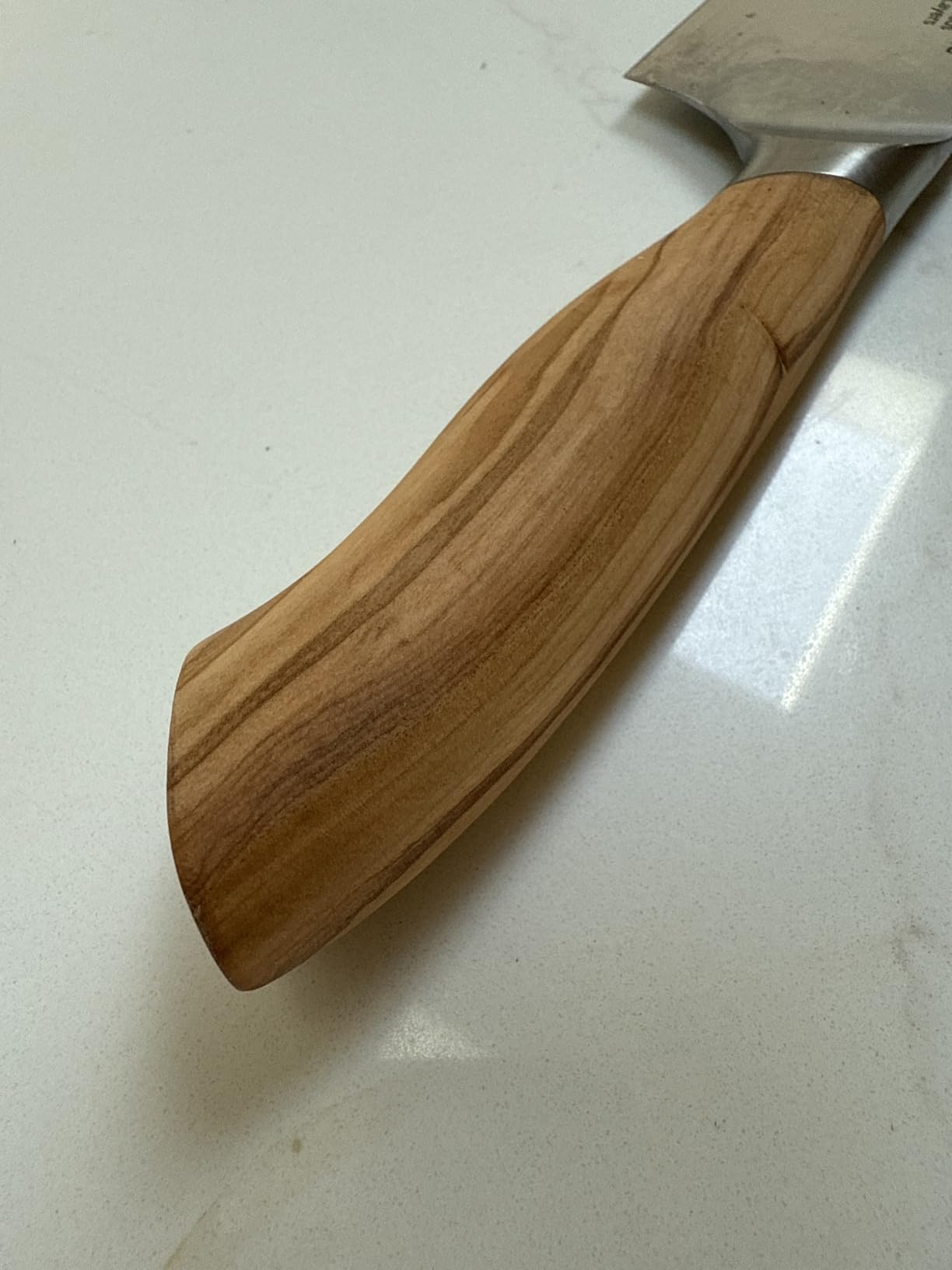
- Comfortable Calabrian olive wood handle
- Lifetime warranty and wooden presentation box
- Semi-bolster design gives a secure
- easy grip
- Not dishwasher safe and needs full drying
- Olive wood handle needs periodic food-grade oil
The Emojoy sits at the middle of this roundup for review volume, with more than 5,000 reviews, and it is the one I suggest to someone whose first patterned knife it will be. At 58 HRC with 67 layers and a 15 degree laser-calibrated bevel, it is set up to be sharp without being demanding.
Half-bolster is the design detail that matters for new owners. There is no hard collar between the handle and the blade, so you can grip the bolster area directly and get a more relaxed, controlled hold than a full-bolstered Western knife gives you.
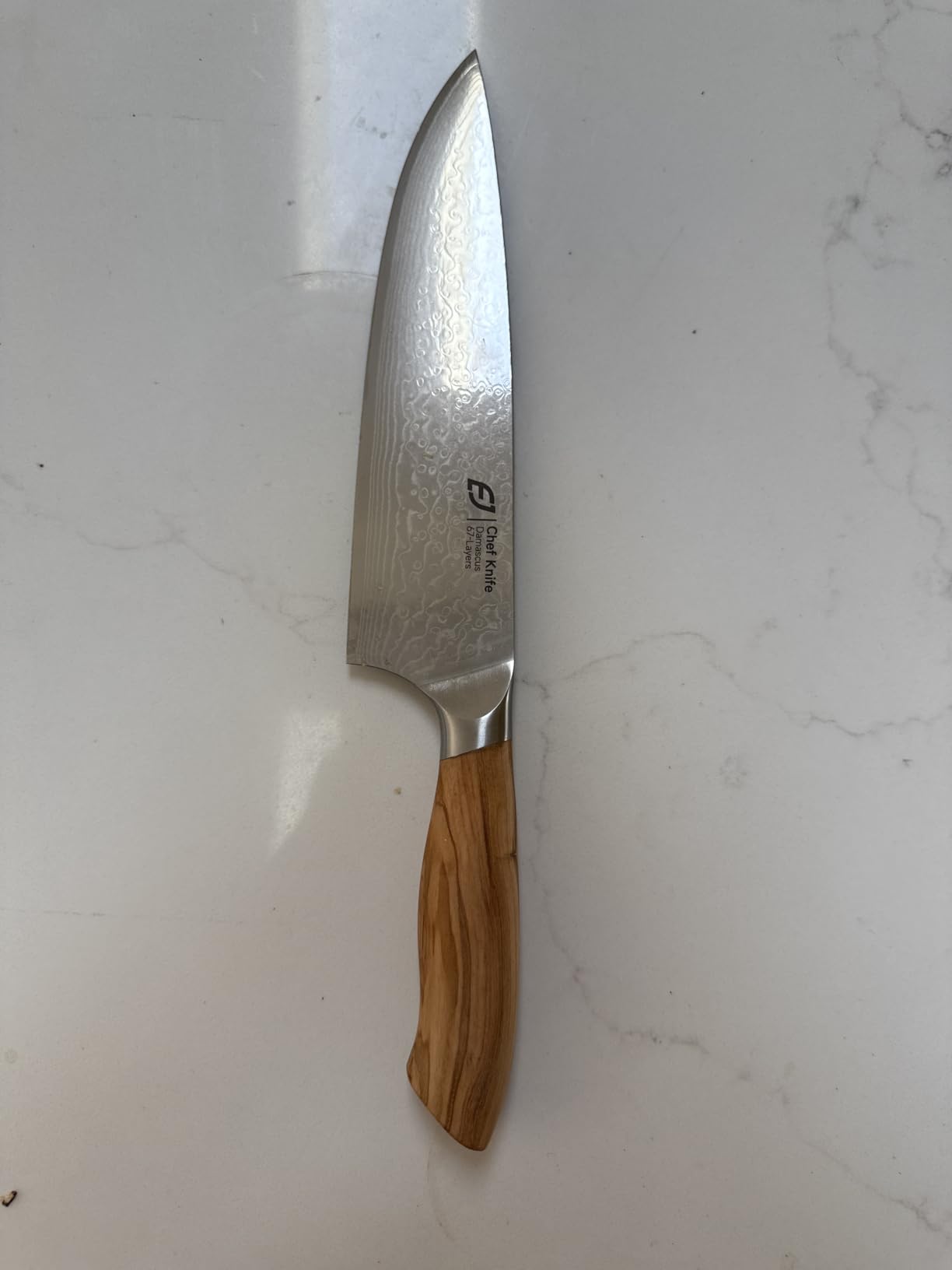
The Calabrian olive wood handle is the most traditional-looking one on this list and reviewers consistently praise how comfortable and well balanced it feels. The listing also specifies the alloy composition at 0.98 percent carbon and 18 percent chromium, which is the kind of disclosure that makes us trust the rest of the description.
It ships in a wooden gift box with a lifetime warranty. The care guidance is the main recurring note in reviews: hand wash, dry fully, and occasionally treat the handle with food-grade mineral oil so the wood does not dry out.
Why is the Emojoy a good first Damascus knife?
Because the pattern is a reward rather than a requirement. You do not need whetstone skills to use this knife well, and the 15 degree bevel is sharp enough to feel impressive but thick enough to recover from ordinary mistakes.
It is also a full-size 8-inch blade, which is the single most useful size in a home kitchen and the one you will not outgrow.
What are the Emojoy’s limits?
It is not dishwasher safe, and leaving the blade wet overnight will cause staining on the steel and swelling in the wood handle. That is a discipline problem, not a quality problem.
The 58 HRC hardness holds an edge well but will not reach the retention of the SG2 Miyabi or the 62 HRC picks, so expect more frequent honing if you cook heavily every day.
10. Miyabi Kaizen 8 Inch Chef’s Knife – Best Damascus Chef Knife for Hard Produce
- Stays sharp with light filing after hard prep
- Handles butternut squash and beets with minimal pressure
- Micarta D-handle stays secure with wet hands
- Real layered Damascus pattern with a lifetime warranty
- D-handle lacks a belly and can roll in the hand
- Not dishwasher safe and needs full drying
- Thin edge can pick up nicks over time
The Kaizen is the Miyabi to buy if you cook root vegetables, and it carries the highest rating of any Miyabi in this roundup. The VG10 CRYODUR blade is ice-hardened to Rockwell 60, a process that raises hardness while reducing brittleness, and that combination is what lets it move through butternut squash and beets without a levering motion.
The 65-layer flower Damascus design is genuine layered steel with a katana-style edge profile, hand honed to 9.5 to 12 degrees using the Honbazuke process. It is made in Seki, Japan and carries a lifetime warranty against manufacturer defects, which matters more than any pattern detail at this level.
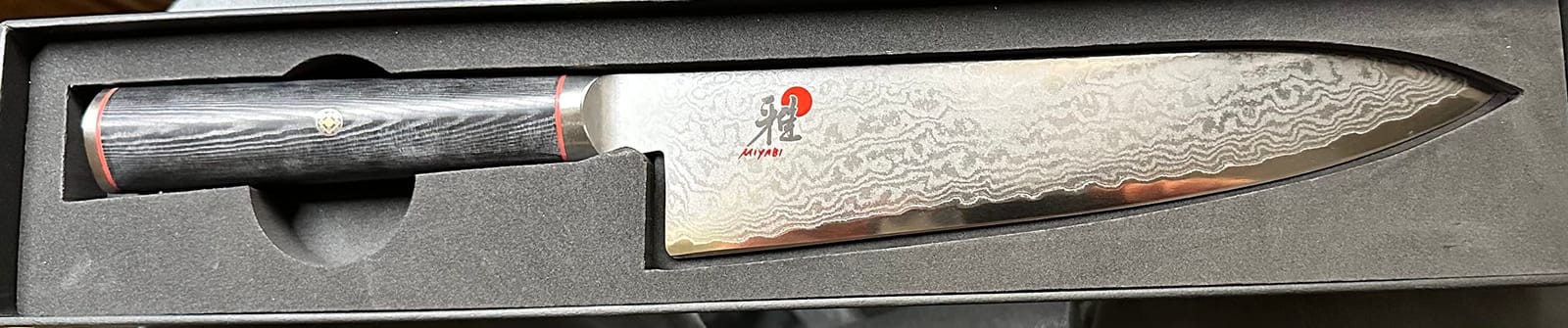
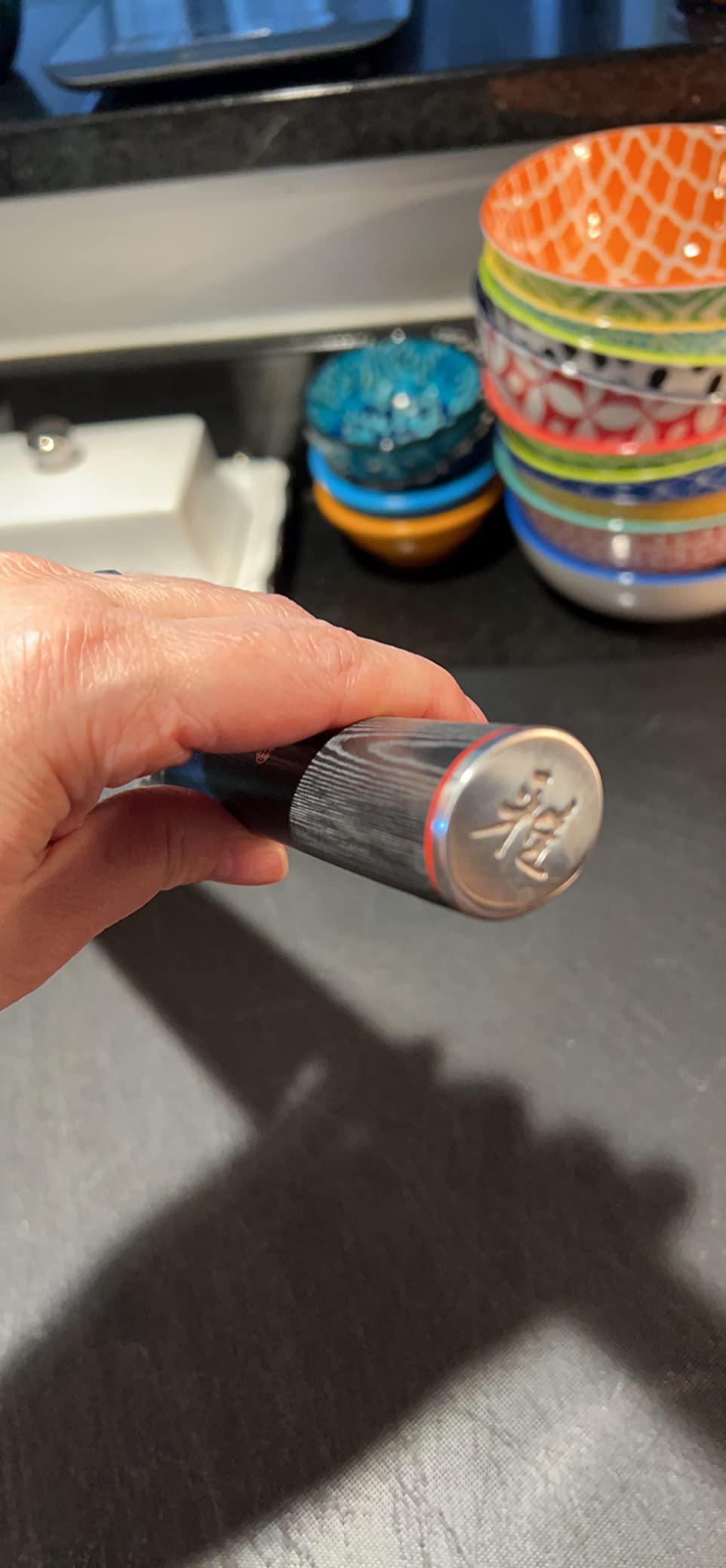
It rates 4.8 out of 5 across roughly 480 reviews, and reviewers specifically call out a real layered Damascus pattern rather than an etched one. The micarta D-shape handle with its mosaic pin, linen pattern and red accent spacers is the most decorated handle in the roundup.
Two caveats come up repeatedly. The D-shape handle has no belly and can rotate in the hand if your grip is loose, and the thin edge will pick up nicks over long-term use on hard surfaces. Wash it by hand and dry it completely.
Can the Miyabi Kaizen handle dense vegetables and squash?
Yes, and this is its defining use. Reviewers report that CRYODUR VG10 steel pushes through hard produce like squash and beets with minimal pressure, because the ice-hardening treatment at Rockwell 60 gives more toughness than a comparable non-treated steel at the same hardness.
That toughness is the trade against the Birchwood. The Kaizen will not take quite as fine an edge, but it tolerates more abuse from dense, fibrous vegetables and the occasional accidental knock.
Who is the Miyabi Kaizen not for?
It is not for bone-in cuts, frozen joints, or anyone who wants a forgiving handle shape. The D-handle suits cooks who prefer a traditional Japanese grip, and reviewers who prefer a Western-style handle with a palm bolster tend to find it uncomfortable.
It is also not for anyone unwilling to hand wash and dry. The micarta handle and layered steel will both suffer in a dishwasher.
11. Yoshihiro VG10 16-Layer Hammered Damascus Gyuto – Best for Rocking Cuts
Yoshihiro VG10 16 Layer Hammered Damascus Gyuto Japanese Chefs Knife (9.5″ (240mm))
- Curved gyuto profile rocks smoothly through herbs
- Laser sharp out of the box on soft produce
- Hammered texture limits sticking
- Full tang Western-style handle extends to the tang
- Edge chips on hard surfaces or heavy pressure
- Mahogany handle is less sculpted than alternatives
- Needs water stone sharpening rather than a steel rod
The Yoshihiro is the only true gyuto on this list, and it is a 9.5-inch blade with a curved belly designed to rock through herbs and onions on the board. At that length it is more specialised than an 8-inch chef knife, and it is the right pick if you do a lot of fine aromatic work.
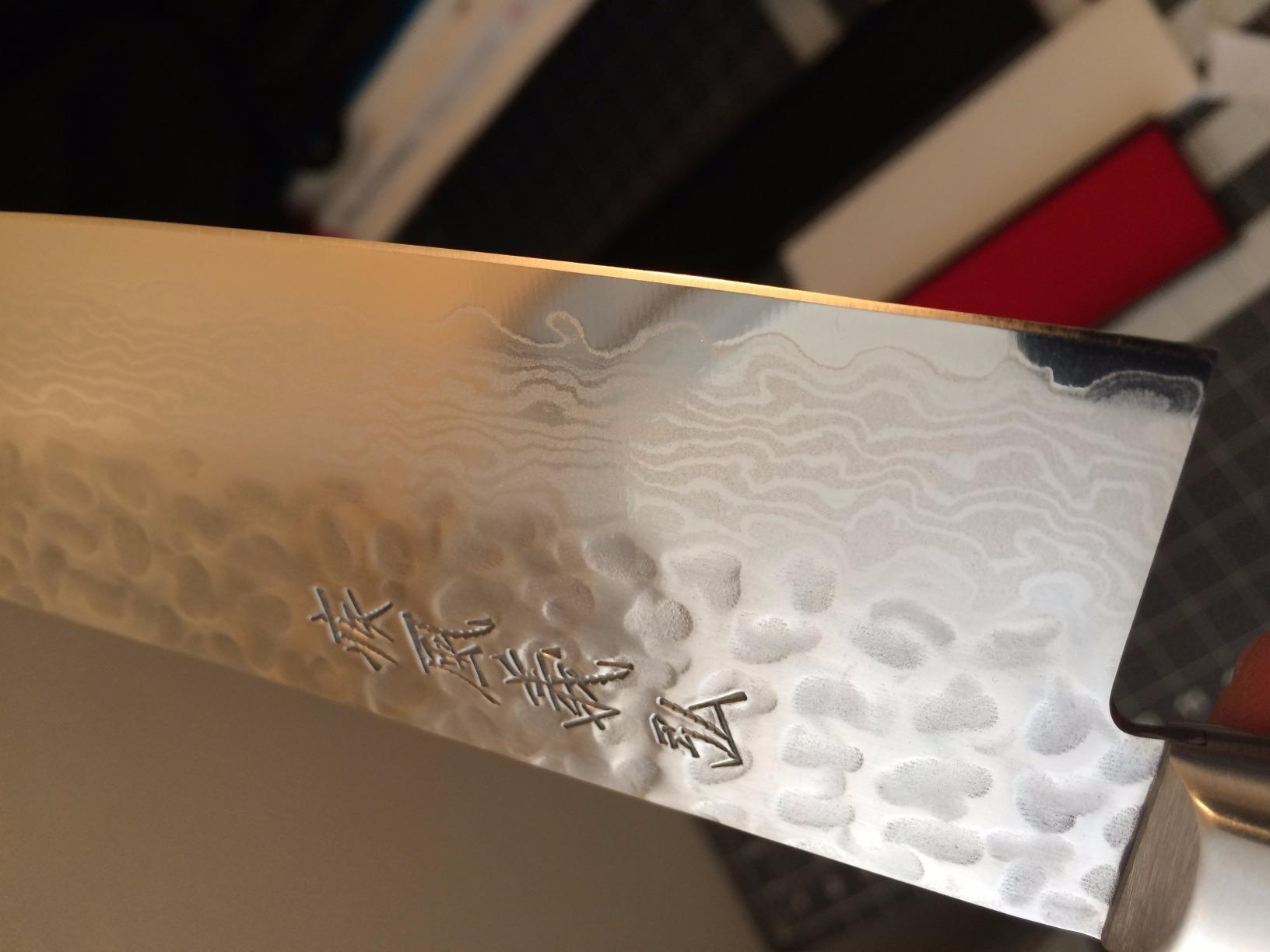
It is forged and hammered with 16 layers of steel in the Damascus tradition around a VG10 core. Sixteen layers is fewer than most competitors claim, which is a good reminder that layer count tells you nothing, since this is the steel and construction on the list that enthusiasts most often praise.
The double-edged blade is unusual for a gyuto and helps it behave more like a general-purpose knife for a home cook used to Western shapes. It rates 4.6 out of 5 across about 470 reviews, and reviewers frequently compare it favourably to familiar German names on sharpness and value for money.
The hammered texture is functional as well as decorative, reducing friction so food releases from the blade. The full tang extends into the mahogany handle, which is a solid, practical Western-style shape.
Is the Yoshihiro gyuto the right size for a home kitchen?
For most home cooks, 9.5 inches is long. It works well on a large board and for cooks who push the knife in long strokes, but on a small board with tight prep it will feel unwieldy compared with the 8-inch picks.
If you mostly mince herbs, dice onions, and make small cuts, choose an 8-inch chef knife instead. If you rock-cut for long strokes on a big board, this is a genuinely better tool.
What are the Yoshihiro’s drawbacks?
The manufacturer is explicit about it: hand wash and dry only, and do not use on bones, nutshells, or frozen foods. Reviewers add that the edge chips if you press hard or work on a hard board, and that it wants water stone sharpening rather than a steel rod.
Some units also show a slight seam where the blade meets the handle, and no scabbard is included. None of that ruins the knife, but it is worth knowing.
12. SANMUZUO Xuan Series 8 Inch VG10 Damascus Chef Knife – Best for Colour Choice
SANMUZUO Chef Knife – 8 inch – Xuan Series – VG10 Damascus Steel Kitchen Knife – Resin Handle (Sapphire Blue)
- Sharp and well balanced for everyday slicing and dicing
- Polished finish reduces drag on the blade
- Resin handle is comfortable and comes in several colours
- Gift box included
- Resin handle feels less premium than wood or pakkawood
- Edge under 13 degrees needs careful board use
The SANMUZUO Xuan is included here because it is a genuinely capable 8-inch VG10 Damascus knife that happens to come in a colour people actually want on the counter. If you have been put off by all-black handles, the resin handle in sapphire blue changes the feel of the whole object.
The build is 67 layers of Damascus steel wrapped around a VG10 core, forged and polished to a V-shaped edge under 13 degrees per side at 62 HRC hardness. The polished surface is the detail worth noting, because a mirror finish on the flats genuinely reduces drag compared with a forge-finish blade.
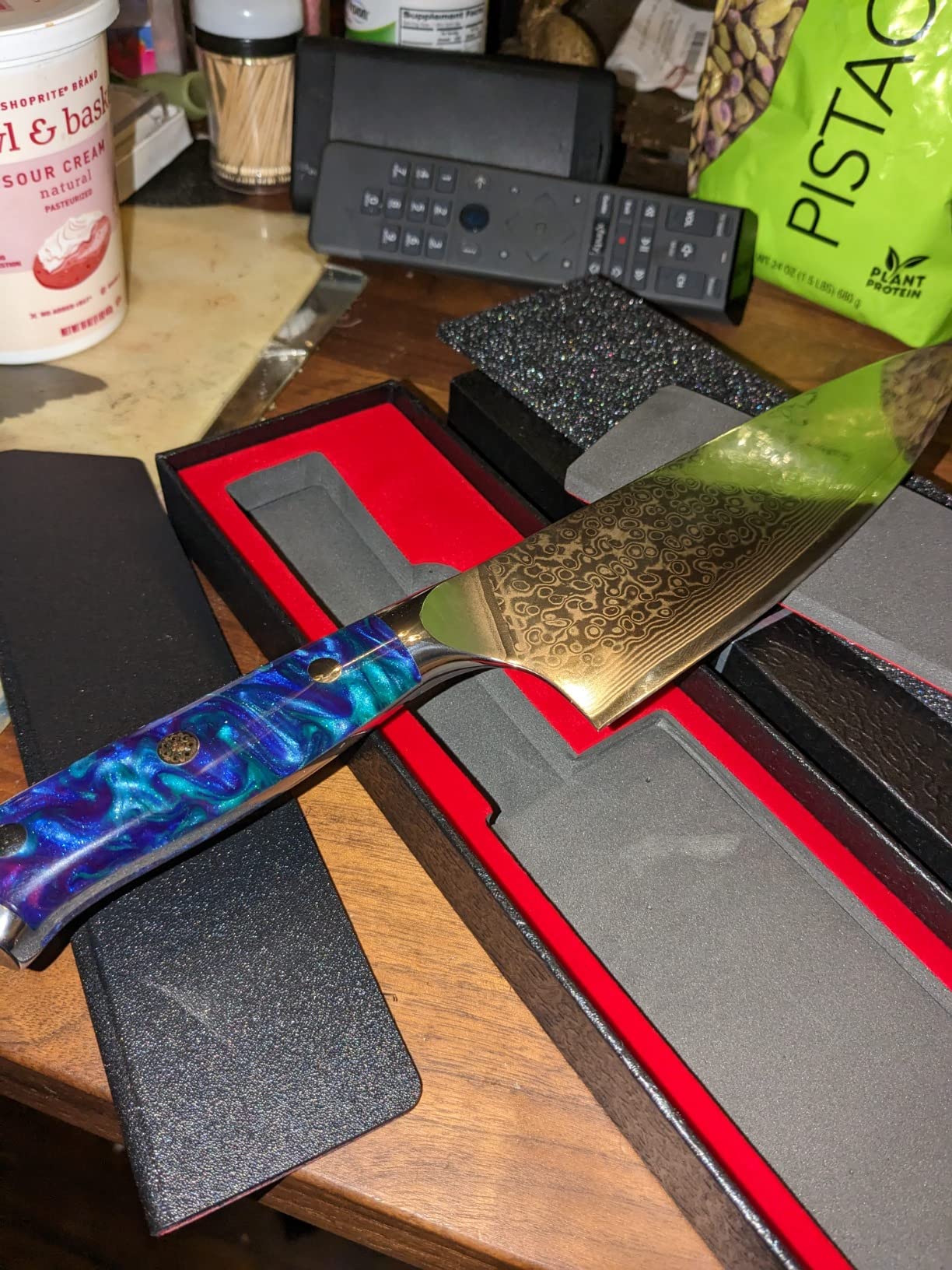
It rates 4.7 out of 5 across about 300 reviews, with owners describing it as a capable everyday chef knife at a mid-range price. The balance is described as even, and the handle is comfortable with a hand-mirror finish that resists slipping.
The two caveats are consistent in the reviews. The resin handle does not feel as refined as pakkawood or olive wood, and an edge under 13 degrees per side is thin enough that board choice matters. On a glass or granite surface it will chip; on wood it will behave.
Is the SANMUZUO Xuan worth buying over the SHAN ZU?
Only if the handle finish and colour matter to you, or if you want a polished surface rather than a top-balanced G10. On steel, edge angle, and general capability the two are close, and the SHAN ZU carries a far larger review base to back its claims.
The Xuan makes more sense as a colour-coordinated second knife, or as a gift where the recipient cares about how the knife looks on display.
What should I know about the Xuan before buying?
The edge angle under 13 degrees per side is the main thing. Keep it on an end-grain or softwood board and hone it regularly, and it will stay sharp for months.
It is also a single-knife listing with a gift box, no sheath. If you want a matching set for a kitchen, make sure the pattern and resin colour actually match between pieces rather than assuming they do.
How to Tell a Real Damascus Knife From a Fake
Fake Damascus is the single biggest source of disappointment in this category, and it is easy to check before you commit rather than after. A patterned blade is made by stacking, welding, folding, and etching two or more alloys. If you cannot see the pattern where it matters, the knife is decorative.
These are the checks we use, in order of how quickly they disqualify a knife.
1. Look at the pattern at the edge line. Angle the blade so light rakes along it. On genuine forge-welded steel the pattern continues through the metal right up to the bevel. On a laser-etched or acid-etched decorative blade the pattern fades or simply stops short of the edge, because the pattern sits on the surface only.
2. Ask what the core steel is, and how old the knife must be to answer. A manufacturer that names the core, the hardness, and the production region is describing a real build. A seller who cannot name the steel, or who says only high-carbon stainless, is telling you the pattern is the product.
3. Check the spine and the tang. Look along the spine for the pattern continuing in a consistent line, and confirm the tang runs the full length of the handle. Partial tangs and spine lines that stop abruptly are both signals of a cheaper assembly.
4. Watch what happens when the blade is polished. On genuine Damascus, buffing the surface deepens the contrast because you are exposing fresh layered steel. On an etched blade, polishing fades the pattern away permanently.
5. Use the acid re-etch test if you want certainty. A drop of vinegar left on an inconspicuous spot, then rinsed, darkens the softer alloys and brings out a pattern that etching alone cannot imitate. It is not destructive and it settles the argument.
6. Read the return policy before you buy. For a knife you cannot feel in hand, buying from a seller with a clear return window matters more than a small difference between two knives. Anyone selling a real forged blade will have nothing to hide from a ninety-day trial. If you are rebuilding other corners of your kitchen at the same time, our camp chef griddle picks apply the same buy-through-a-returnable-seller logic.
How to Choose a Damascus Chef Knife for a Home Kitchen
Buy the core steel, not the pattern. Everything else on a knife listing is either aesthetic or a preference, but the core steel determines sharpness, edge retention, and how much care the knife demands. Layer count is the clearest piece of noise in this category.
VG-10 is the workhorse Japanese stainless core, roughly 1 percent carbon with molybdenum and cobalt added, hardened to around 60 HRC. It is the easiest real steel to live with: sharp out of the box, resists staining, and forgiving on soft boards. Most of the mid-tier knives here use it.
SG2 is a powder-metallurgy steel loaded with micro-carbides. It takes a finer edge than VG-10 and holds it longer, and it is more brittle. That is why the Miyabi Birchwood is the enthusiast pick and the Miyabi Kaizen, on the tougher CRYODUR treatment, is the pick for hard vegetables.
Aogami #2 and Shirogami #1 are Japanese carbon steels. They produce the sharpest, most responsive edges of anything in this article, and they will stain, darken, and eventually spot with rust if you leave them wet. For a home cook without a drying discipline, that is a difficult trade.
10Cr15Mov is a Chinese stainless in the VG-10 family, high in carbon and chromium, hardened on this knife to 62 HRC. It is a legitimate, well-understood alloy, and naming it is exactly the transparency you should expect from a manufacturer.
AUS-10V is a Japanese powder steel with vanadium and carbon, hardened to 62 and above HRC. It is tough, holds an edge for a long time, and is what the Dalstrong uses.
Next, handle geometry. A D-shape handle like the Shun Classic or the Miyabi Kaizen sits the index finger high on the blade and suits cooks used to a Japanese grip. A Western handle with a bolster gives a palm a wider, more secure hold. Cooks with small hands should prefer a narrower, contoured handle, which is why the Dalstrong and the KYOKU draw complaints about size from people with smaller grips.
Blade length is simpler. Eight inches is the home kitchen standard and the sweet spot for a board in front of a domestic cooker. Nine and a half inches, as on the Yoshihiro gyuto, suits large boards and long strokes. Length is a comfort preference, not a quality signal.
Edge angle tells you how much abuse the knife will take. Eight to twelve degrees is sharp and fine but demands a soft board and careful technique. Fifteen to sixteen degrees is the forgiving middle, and anything above 18 degrees is a Western-style edge that will not do fine slicing work.
Finally, know when Damascus is not worth it for you. If you cut frozen food, bone, or very dense root vegetables every week, a plain German or Japanese stainless gyuto with a thicker spine will outlast anything on this list and can be sharpened by a shop in ten minutes. If you never intend to hand wash, choose a fully stainless, dishwasher-safe knife and save the pattern for the wall. And if you are buying purely for appearance, buy a five-piece block and put your money into a good plain steel chef knife instead.
Damascus Knife Care and Sharpening for Home Cooks
Hand wash, and dry immediately. This one habit separates a Damascus chef knife that looks new after five years from one that is mottled and pitted. Laminated steel with a wood, resin, or micarta handle should never see a dishwasher cycle, and it should never sit in a sink of water while you finish other jobs.
Honing versus sharpening is the distinction most people get wrong. A steel honing rod realigns a rolled edge and takes seconds. Sharpening removes metal and should happen only when the knife can no longer hold an edge no matter how much you hone it.
For the steels in this roundup, the honest intervals look like this. A 58 HRC blade like the Emojoy wants a hone every few weeks and a whetstone touch-up every few months. A 62 HRC VG10 blade like the Sunnecko or the SANMUZUO holds noticeably longer and wants less frequent work. An SG2 blade like the Miyabi Birchwood holds the longest but rewards a proper stone routine more than any other knife here, since that is the only way to get the fine edge the steel is capable of.
Board choice is free performance. End-grain wood or a soft bamboo board will not dull a fine edge or chip a thin one. Glass, granite, slate, and metal boards will do both, faster than any steel can be blamed for. If you only change one thing about your setup, change the board before you upgrade the knife.
One more note on pattern fading. A pattern that fades gradually along the bevel as you hone is normal wear on genuine Damascus and confirms the layers are there. A pattern that stays crisp while the knife dulls quickly usually means the pattern is deeper than the useful steel beneath it.
Frequently Asked Questions
How do I know if a Damascus knife is real or just laser-etched?
Look at the pattern where it meets the cutting edge. On forge-welded steel it continues through the metal all the way to the bevel; on an etched or laser-printed blade it stops at the surface. Two more checks: ask the seller to name the core steel and hardness, and buff the blade. Genuine Damascus deepens and sharpens when polished, while an etched pattern fades permanently.
Are Damascus blades better than ordinary stainless chef knives?
Not automatically. On most knives the pattern is cosmetic, and what actually cuts is the hard core steel sandwiched inside the softer cladding. Damascus cladding does help by protecting a brittle core from side impact and making the bevel easier to hone. Choose a Damascus knife for a named core steel such as VG-10 or SG2, not for the layer count.
Does the number of layers in a Damascus knife matter?
No. Layer count is an aesthetic detail. A 16-layer Yoshihiro gyuto with a VG10 core cuts as well as a 67-layer knife with the same core, and enthusiasts consistently say layer counts mean nothing to performance. Judge the core steel, the hardness in HRC, the edge angle, and whether the pattern reaches the cutting edge.
What core steel should I look for inside Damascus cladding?
VG-10 is the easiest all-round choice, holding an edge well and resisting stains. SG2 takes and holds a finer edge but is more brittle. Aogami #2 and Shirogami #1 are carbon steels with the sharpest response and the highest staining and rust risk. Unnamed high-carbon stainless tells you nothing useful, so treat that listing as decorative.
Does Damascus steel rust or stain in a home kitchen?
The cladding is usually stainless and resists staining, but a reactive carbon core such as Aogami #2 will stain and spot if left wet. Hand wash every blade, dry it immediately with a towel rather than leaving it on the rack, and store it away from a damp sink. Reactive cores darken over time with use, which most owners consider part of the appeal.
How often should you sharpen a Damascus chef knife?
Hone with a steel rod every few weeks for daily cooking, and sharpen on a whetstone only when honing no longer restores the edge. A 58 HRC core typically needs a stone touch-up every few months, while a 62 HRC VG10 or SG2 core holds considerably longer. Thin edges under 12 degrees need less frequent sharpening than a 15 to 16 degree bevel.
Is Shun or Tojiro better for a home kitchen?
Shun is a Japanese-made knife with a VG-MAX core and 68 layers of cladding, and it comes with free lifetime sharpening, which is the deciding factor for most home cooks. Tojiro is generally the cheaper route into Japanese-style steel. For most people the lifetime sharpening service makes Shun the safer first purchase, provided you hand wash and use a soft board.
Which is better, a Shun or a Miyabi?
Both are Japanese-made Damascus knives with VG-family cores, and both suit a Japanese-style grip. Shun is lighter at 206 g with a D-shaped pakkawood handle and a 16 degree, more forgiving edge. Miyabi offers harder steel and thinner geometry, which is sharper but less forgiving. Choose Shun for comfort and edge retention, Miyabi for sharpness and a more refined profile.
Are forged kitchen knives better than stamped ones?
Forged blades are shaped by hammering, which aligns the steel grain and generally produces better edge retention and a spine that can be ground thinner without losing strength. Stamped blades are cut from sheet steel and are cheaper. Pattern welding is a forging process, so a knife described as forged Damascus has at least been through a hammer, though that alone does not guarantee good steel inside.
Should I buy one Damascus chef knife or a five-piece set?
Buy one good 8-inch knife. Block sets spread the manufacturing budget across five or six blades, and the smaller pieces are usually the ones made from the same thin steel as the chef knife, so a set concentrates risk rather than spreading it. Add a cheap paring knife later and you will have covered almost every task a home cook actually performs.
The Start-Here Verdict
Start with the SHAN ZU 8 Inch Damascus Chef Knife. It names its core steel, hardens it to 62 HRC, forges 67 layers rather than printing them, and weighs 260 g in a handle that suits most hands. It carries the largest review base of any knife here and a 4.8 rating, and it asks nothing of you beyond hand washing and a soft board.
Buy the Shun Classic if you want a lighter knife and a free lifetime sharpening service, or the Miyabi Birchwood SG2 if you will learn to sharpen and want the finest edge available in this category. Buy the Miyabi Kaizen instead if you cook dense root vegetables and want toughness over fineness.
Whichever you choose, check the pattern at the edge line before you commit. That single minute of inspection separates a knife that will last decades from one that will disappoint you, and it is the habit that makes the best damascus chef knives for home kitchens worth the money rather than merely decorative. If your kitchen needs other upgrades while you are shopping, our chef coat guide and camp chef smoker picks cover the rest of the cooking setup.