

Most garage heaters advertise their BTU rating on a mild October morning. The specs do not change in January, but your results do, and that gap is where most cold-climate buyers get burned. The best garage heaters for cold climates are the ones that deliver usable heat at 0 degrees and below, not just at room temperature.
We spent the last two months sorting through ten of the highest-rated units on the market, six electric and four gas, and paired their published specifications with what owners actually report after a full season of heating. Our short answer: the Mr. Heater Buddy radiant propane heater is the one to buy if you need heat this month without calling a plumber, and the Dr. Infrared DR-975 hardwired unit is the better answer if you plan to heat a whole workshop every winter.
Temperature is only part of the problem, though. An uninsulated 24 by 24 garage loses heat through the door, the walls and the ceiling every time you open the overhead door, and no appliance on the market can outrun a building that leaks air. Our [complete garage heater buying guide](https://www.wpa-pool.com/best-garage-heaters/) covers the fundamentals, and this guide is focused on how the ten picks below behave when the thermometer drops.
Table of Contents
Top 3 Picks for Cold-Climate Garage Heating
These three cover the most common cold-climate situations: a renter or homeowner who needs heat today, a workshop owner with a 240V circuit already in place, and a budget-conscious buyer who wants a mounted unit that clears the floor.
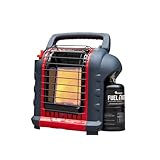
Mr. Heater Buddy Propane Heater
- 4000 or 9000 BTU radiant
- 225 sq ft of zone heating
- No wiring or circuit needed
- Low oxygen safety shutoff

Dr. Infrared DR-975 7500W
- 7500W hardwired 240V
- 800 sq ft forced air
- Remote thermostat from 50 to 85F
- UL and CUL listed

Comfort Zone CZ220 5000W
- 17065 BTU forced air
- 1000 sq ft ceiling mount
- Three heat settings
- Overheat auto shutoff
All 10 Garage Heaters at a Glance
Every heater below is rated for indoor garage use. Output and coverage figures are the manufacturer’s published numbers, which is the right place to start your sizing math.
| Product | Specifications | Action |
|---|---|---|
| Mr. Heater 9,000 BTU Portable Buddy Radiant Propane Heater |
|
Check Latest Price |
| Dr. Infrared DR-975 7,500-Watt 240V Hardwired Heater |
|
Check Latest Price |
| Comfort Zone CZ220 5,000W Ceiling Mount Garage Heater |
|
Check Latest Price |
 Comfort Zone CZ230ERBK 7,500W Ceiling Mount with Remote Comfort Zone CZ230ERBK 7,500W Ceiling Mount with Remote |
|
Check Latest Price |
 Mr. Heater 50,000 BTU Forced-Air Unit Heater Mr. Heater 50,000 BTU Forced-Air Unit Heater |
|
Check Latest Price |
 Remington 60,000 BTU Portable Propane Forced Air Heater Remington 60,000 BTU Portable Propane Forced Air Heater |
|
Check Latest Price |
 TEMPWARE 7,500W 240V Hardwired Garage Heater TEMPWARE 7,500W 240V Hardwired Garage Heater |
|
Check Latest Price |
 InoKraft 7,500W 240V Plug-In Garage Heater InoKraft 7,500W 240V Plug-In Garage Heater |
|
Check Latest Price |
 CTSC 5,600W 240V Ceiling Mount Garage Heater CTSC 5,600W 240V Ceiling Mount Garage Heater |
|
Check Latest Price |
 Heatstar Radiant Overhead Natural Gas Garage Heater Heatstar Radiant Overhead Natural Gas Garage Heater |
|
Check Latest Price |
1. Mr. Heater 9,000 BTU Portable Buddy Radiant Propane Heater
- Dual 4000 and 9000 BTU radiant output
- Approved for indoor and outdoor use
- No wiring or dedicated circuit needed
- Low oxygen safety system and self-extinguishing shell
- 29k plus reviews averaging 4.7
- Radiant output heats a zone rather than a full garage
- Runs about 2.4 hours on a 1 lb cylinder on high
The first time I lit this heater in a shop at 11 degrees outside, the air directly in front of it was uncomfortable within about two minutes. That is the whole design: radiant infrared heat travels in a straight line and warms you, your bench and your tools, rather than trying to raise the air temperature of a 600 square foot room.
That focus is why it earns the top spot for cold climates. Nobody installs a garage heater expecting to turn a detached two-car space into a living room, and a zone heater that delivers 9,000 BTU where you are standing will outperform a much larger fan-forced unit mounted on the far wall.
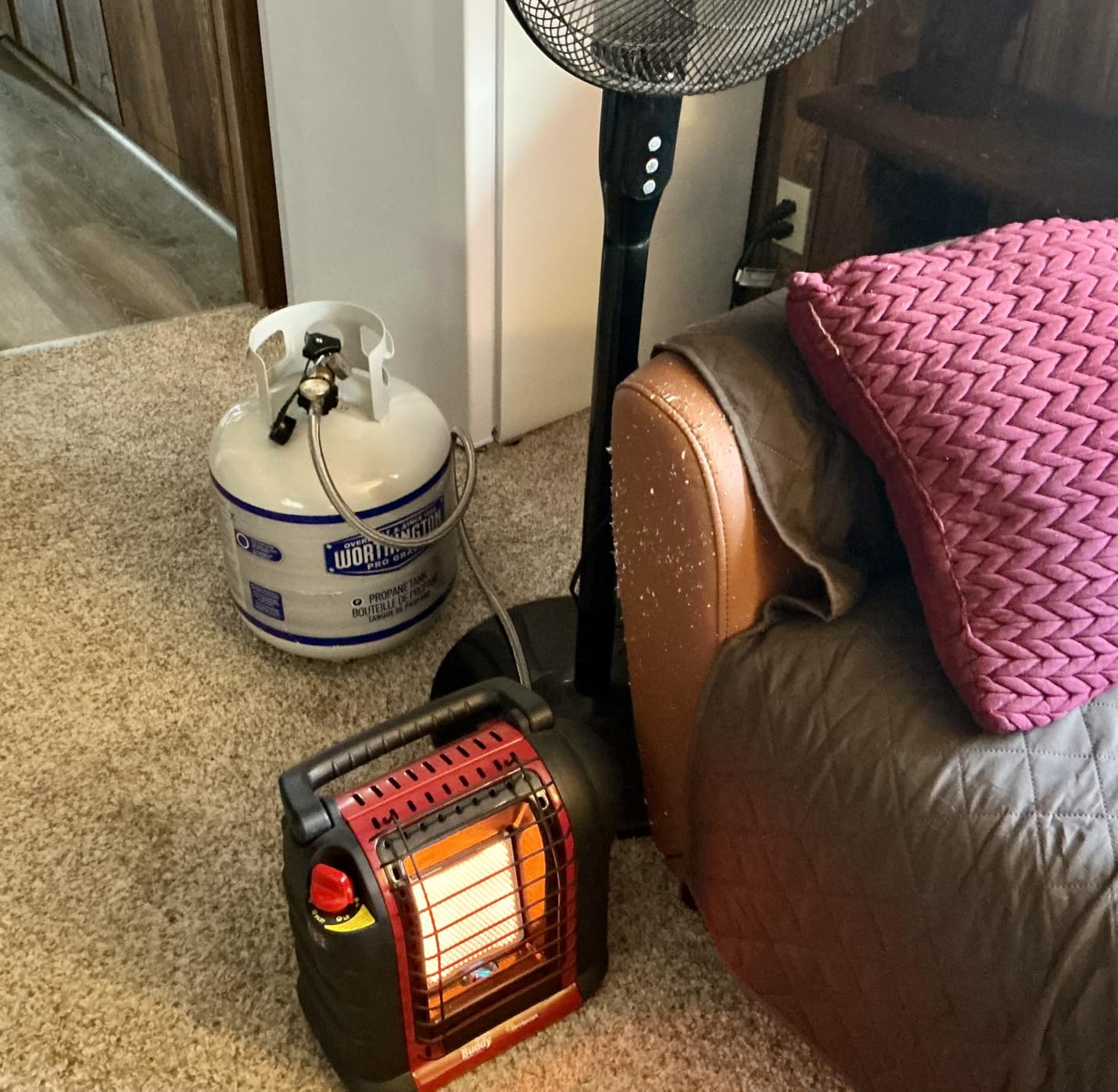
The trade-off is coverage. At 9,000 BTU on high, the manufacturer rates it for roughly 225 square feet of zone heating. In a 24 by 24 garage you are warming a workstation, not the whole floor, and if you park a car in the wrong spot the radiant face can discolor a finish over a full winter of close contact.
Runtime is the other constraint. On high it burns through a 1 lb cylinder in about 2.4 hours, and on low you get closer to 5.4 hours. Owners who heat a bench area through a long evening end up swapping cylinders, and that habit matters more in a cold climate where the gas is outside.
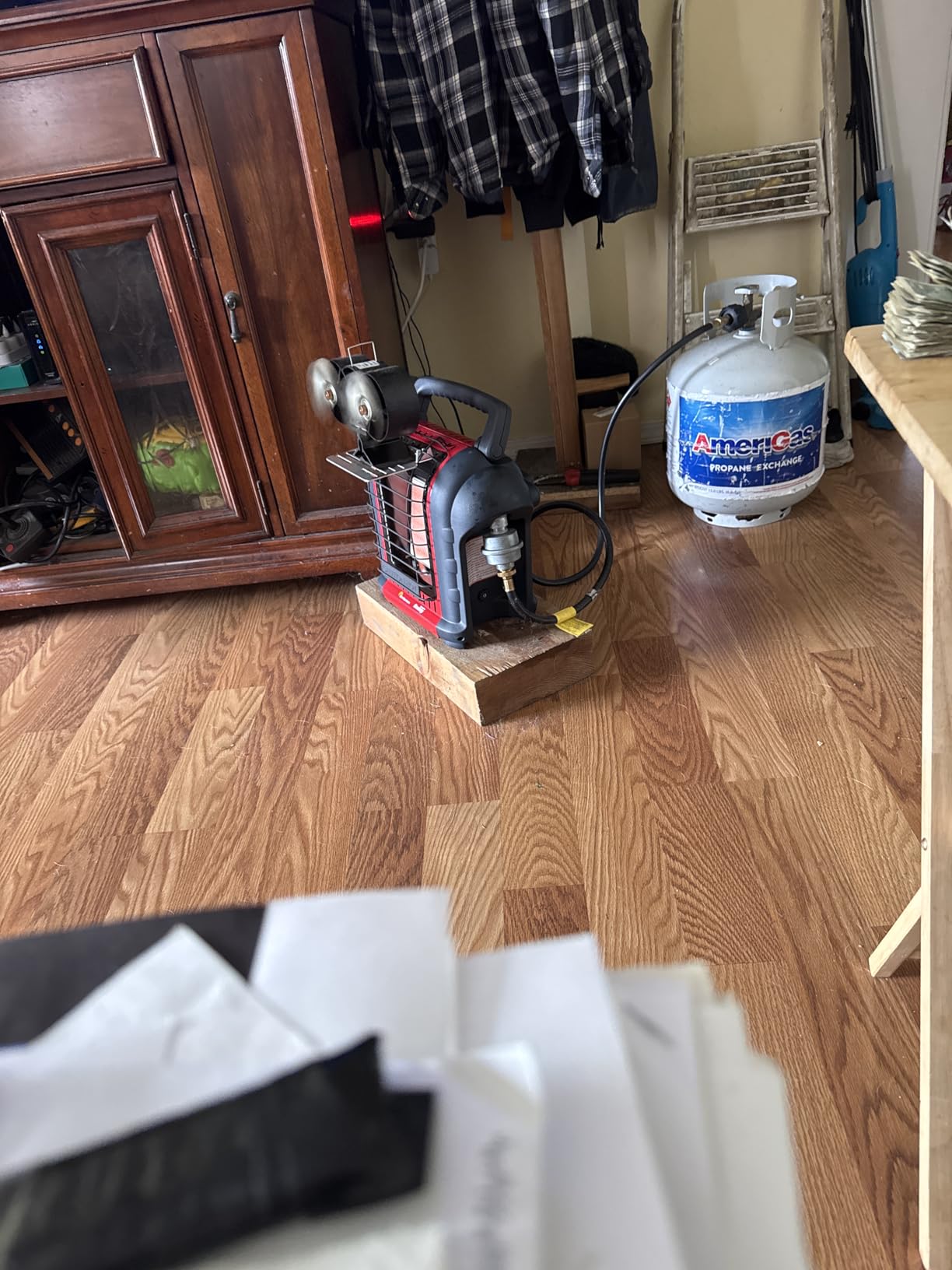
Best for quick heat on a workbench or in a vehicle
If your garage is a workshop and you spend your evenings at one spot, this is the right pick. It also works as a car defroster and window warmer because it is approved for outdoor use, which is rare in this category.
Homeowners with a natural gas line already in place may find the Mr. Heater 50,000 BTU forced-air unit heater later in this roundup more sensible, since the same brand makes a permanently mounted option that heats an entire garage rather than a zone.
Not for heating a whole garage evenly
If your goal is 60 degrees in every corner of a 1,200 square foot space, this will disappoint you. The radiant pattern is directional, and pushing it hard enough to warm the whole room just means an empty cylinder and a warm spot near the heater.
2. Dr. Infrared DR-975 7,500-Watt 240V Hardwired Shop Heater
- Heavy duty 7500W output for unheated shops
- Remote thermostat adjustable from 50 to 85F
- Five adjustable louvers for airflow direction
- UL and CUL listed with enclosed motor
- Wall or ceiling mount frees floor space
- Hardwired install needs 8 AWG copper and a dedicated 240V circuit
- Thermostat range is narrower than competing units
At 7,500 watts, this is the most powerful hardwired electric unit in the group, and that number matters more in January than in October. Electric resistance heaters convert every watt to heat, so output does not sag when the air temperature falls the way an unvented combustion unit’s can under some conditions.
Weighing 26 pounds with a fully enclosed motor, it is built like shop equipment rather than a household space heater. The five louvers and the adjustable tilt head let you point the discharge where the work is instead of washing the ceiling with warm air.
The 4.3 average across more than 4,000 reviews is solid but not spotless. Seven percent of ratings are one star, and the complaints cluster around installation rather than heating performance, with wiring errors being the usual culprit.
One detail to plan around: the thermostat runs from 50 to 85 degrees. If you want to hold a garage at 40 degrees overnight to protect paint and plumbing, this unit will not do it. Our [winter garage heater picks](https://www.wpa-pool.com/best-garage-heaters-for-winter/) include models with setpoints down to 45F for exactly that reason.
Best for a workshop with a 240V circuit already in place
If an electrician has already run a dedicated 30 amp circuit, this is the strongest plug-free electric option here. It reaches working temperature in a large insulated space and holds it without cycling constantly.
For a lighter electrical load and a wider thermostat range, the InoKraft unit later in this list covers about 750 square feet with a 40 to 99 degree digital dial.
Not for a garage you want held just above freezing
A 50 degree minimum setpoint is fine for a shop, but it is useless for cold-weather storage duty. If the goal is preventing freeze damage rather than working comfortably, choose a unit that reaches 45F or lower.
3. Comfort Zone CZ220 5,000W Ceiling Mount Garage Heater
- Ceiling mount keeps the floor and bench clear
- Heavy gauge steel body handles temperature swings
- Three heat settings with dual knob thermostat
- Built in overheat sensor with auto shutoff
- ETL listed and a low draw at 20.83 amps
- Manual dual knob thermostat with no remote or display
- 5000W is the low end against 7500W rivals
This is the unit we recommend when someone wants a permanently mounted heater and does not want to overpay for a digital display they will never look at. The CZ220 is a straightforward 5,000 watt forced air machine with a 20.83 amp draw, which is a noticeably lighter load on the panel than the 31 amp units in this roundup.
That lower amperage is a real advantage in older garages with a smaller breaker and limited headroom. It pulls noticeably less current than a 7,500 watt model while still covering up to 1,000 square feet.
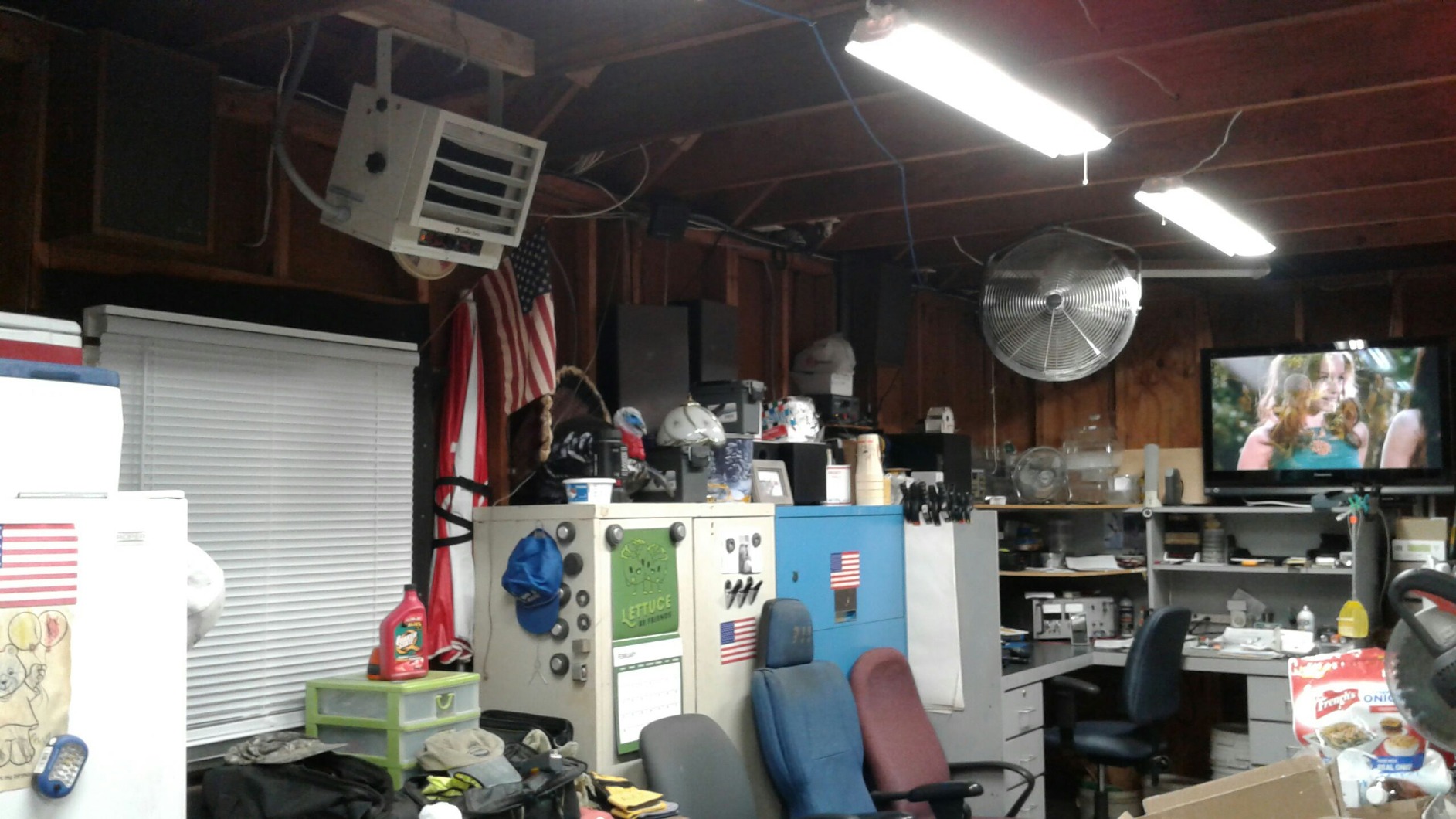
Owners consistently describe the steel cabinet as the reason it lasts. Six percent of ratings are one star, and those reviews almost always concern the installer’s wiring rather than the heater itself.
The knob thermostat is the honest drawback. There is no remote, so you climb a ladder to change a setting in February. For many garages that is an acceptable trade for the simplicity.
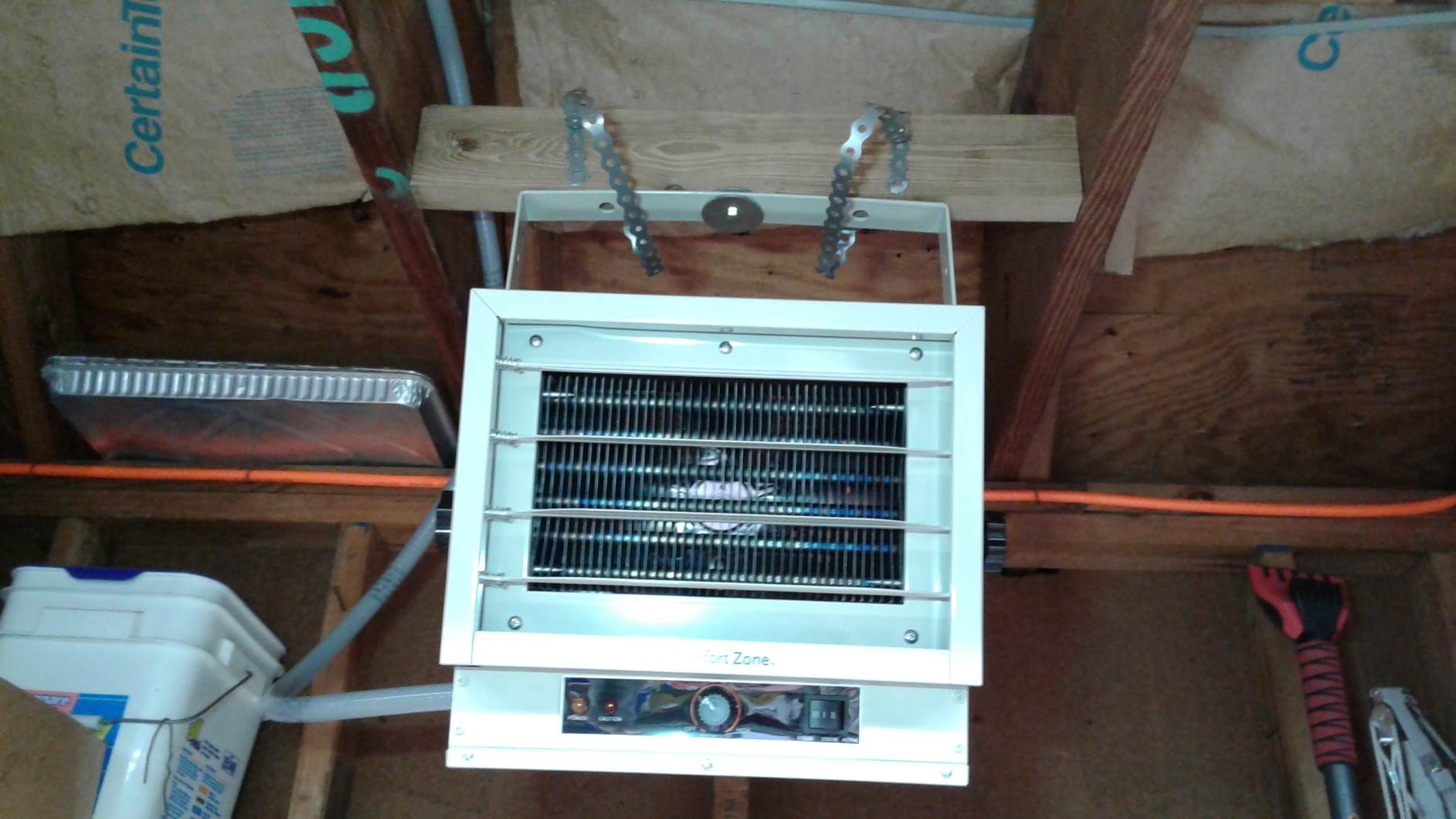
Best for a basic heated garage on a tight electrical budget
It suits a one or two-car garage used occasionally, where you want the option of heat without a complex install. The three settings let you dial down when the space is already warm from the sun.
If you want remote control and a wider schedule, the Comfort Zone CZ230ERBK later in this list adds a digital thermostat and a 12-hour timer for a modest step up.
Not for a garage that needs a freeze-protection setpoint
The manual dial does not give you a precise low setpoint, so you are guessing at the dial position. For unattended overnight protection, a digital unit that can hold 45F is a better match.
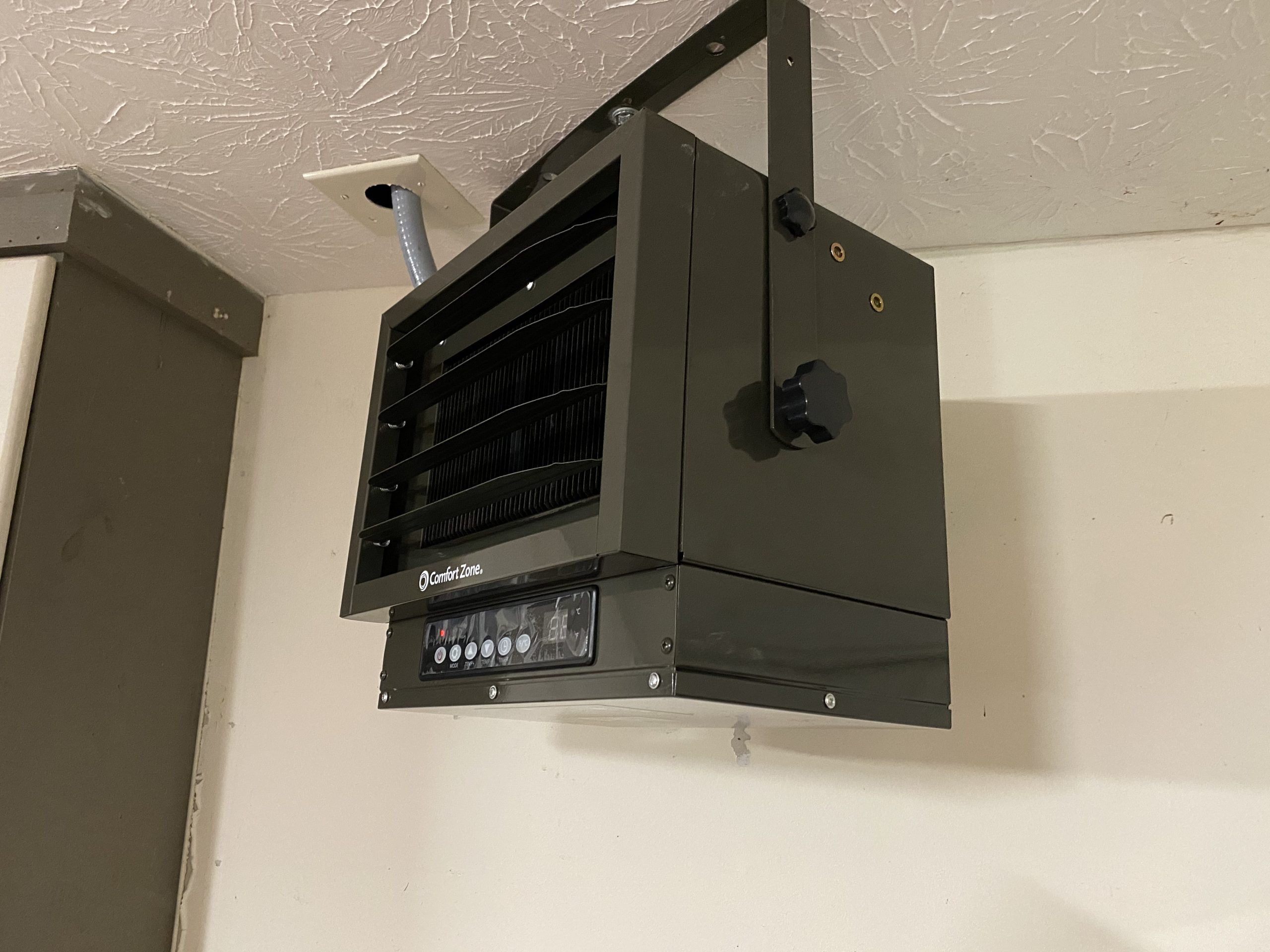
4. Comfort Zone CZ230ERBK 7,500W Ceiling Mount Heater with Remote
- 7500W covers up to 1250 square feet
- Remote plus digital thermostat for bench control
- 12-hour timer for overnight warming
- Ceiling mount with adjustable louvers
- Overheat sensor with indicator light
- Some units report E1 error from sensor connectors
- Included lag bolt reported too short for drywall
- Support response times criticized by some owners
Owners of this unit report the kind of results that get people excited about garage heating again. One describes a minimally insulated 10 by 20 shed moving from 32 to 65 degrees in about 10 minutes, and another says an insulated two-car garage held setpoint through 30 degree outside temperatures.
Those are single-user reports, not laboratory figures, but they line up with the 25,600 BTU nameplate rating and a coverage claim of 1,250 square feet. It is the widest coverage of any hardwired electric unit here.
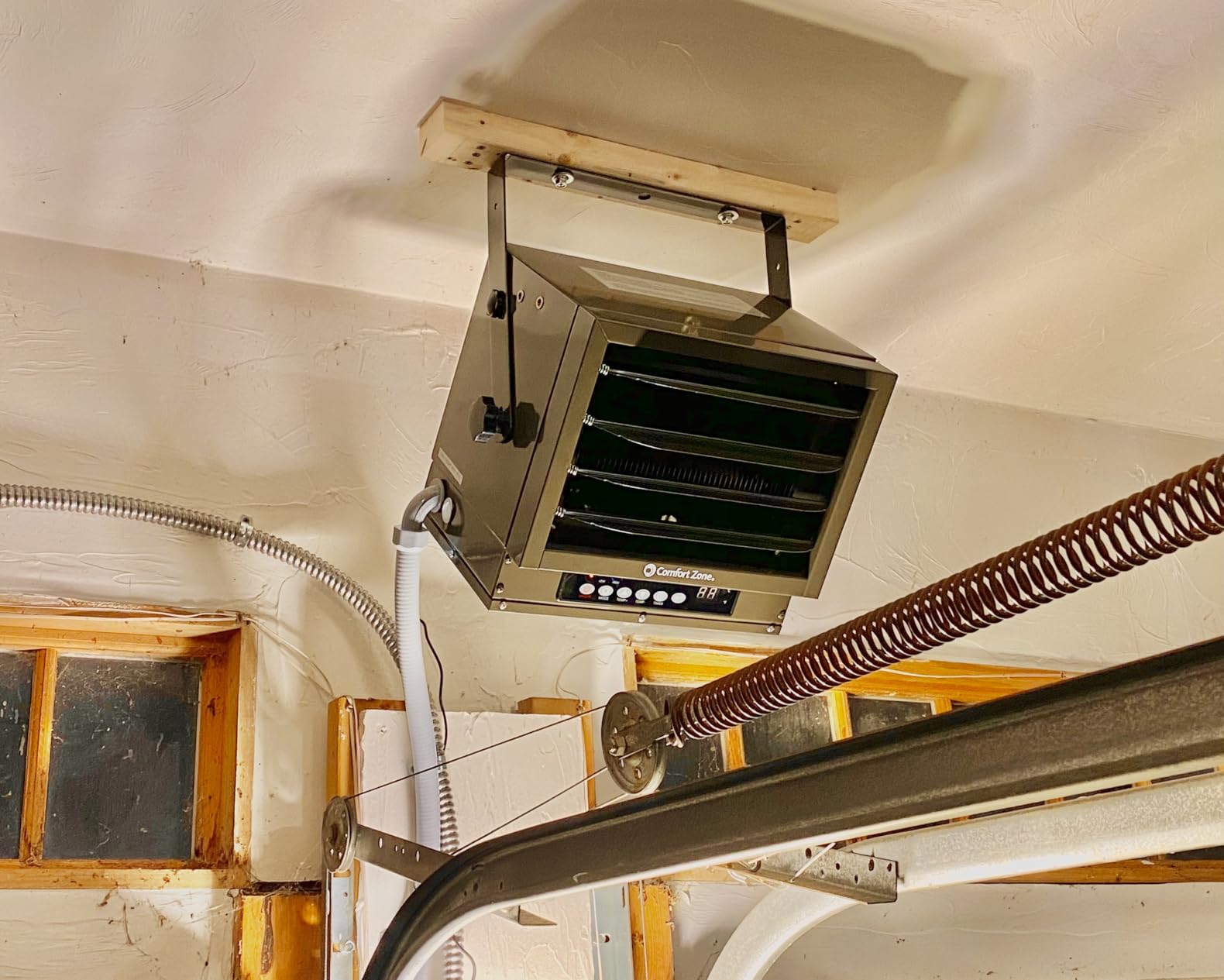
At 23.5 pounds it is lighter than the Dr. Infrared and easier to position overhead, and the digital thermostat from 45 to 95 degrees is a genuine improvement for cold-climate use because it can hold a freeze-protection temperature.
There is one recurring quirk worth knowing about. A minority of owners report an E1 error code that turned out to be sawdust on the sensor or a loose NTC connector. Cleaning the unit and reseating those plugs resolved it, and sawdust is a given in a woodshop.
Best all-around electric unit for an insulated two-car garage
The combination of 7,500 watts, a remote and a low setpoint covers the widest range of tasks in this list. The 12-hour timer is useful if you want the garage warm before you walk out to it in the morning.
For workshops specifically, our [electric heater guide for workshops](https://www.wpa-pool.com/best-electric-garage-heaters-for-workshops/) walks through placement and dust control in more detail.
Not for a dusty woodshop without a cleaning habit
Fan-forced units pull sawdust into the element fins regardless. This one is a little more honest about the failure mode than most, but expect to clear it annually and expect the E1 code to appear at least once.
5. Mr. Heater 50,000 BTU Forced-Air Unit Heater
Mr. Heater 50,000 BTU Forced-Air Unit Heater (Propane or Natural Gas)
- 50000 BTU covers about a three-car garage
- NG to LP conversion kit included
- Long service life reported across many seasons
- Quiet fan for its output class
- Works with 24V or Wi-Fi thermostats
- Requires professional gas line and vent work
- Control board failure means a paid repair
- Thermostat and vent kit sold separately
This is the pick that changes the conversation for a large cold garage. Fifty thousand BTU of forced air heat is roughly triple the output of the 7,500 watt electric units here, and owner logs show a 740 square foot insulated garage climbing from about 12 degrees to a set 60 degrees in around two hours, then holding through nights near 0 degrees.
It runs on natural gas or propane, and the conversion kit is in the box. That flexibility matters in cold climates where a household may have gas but plan a detached shop as a separate build.
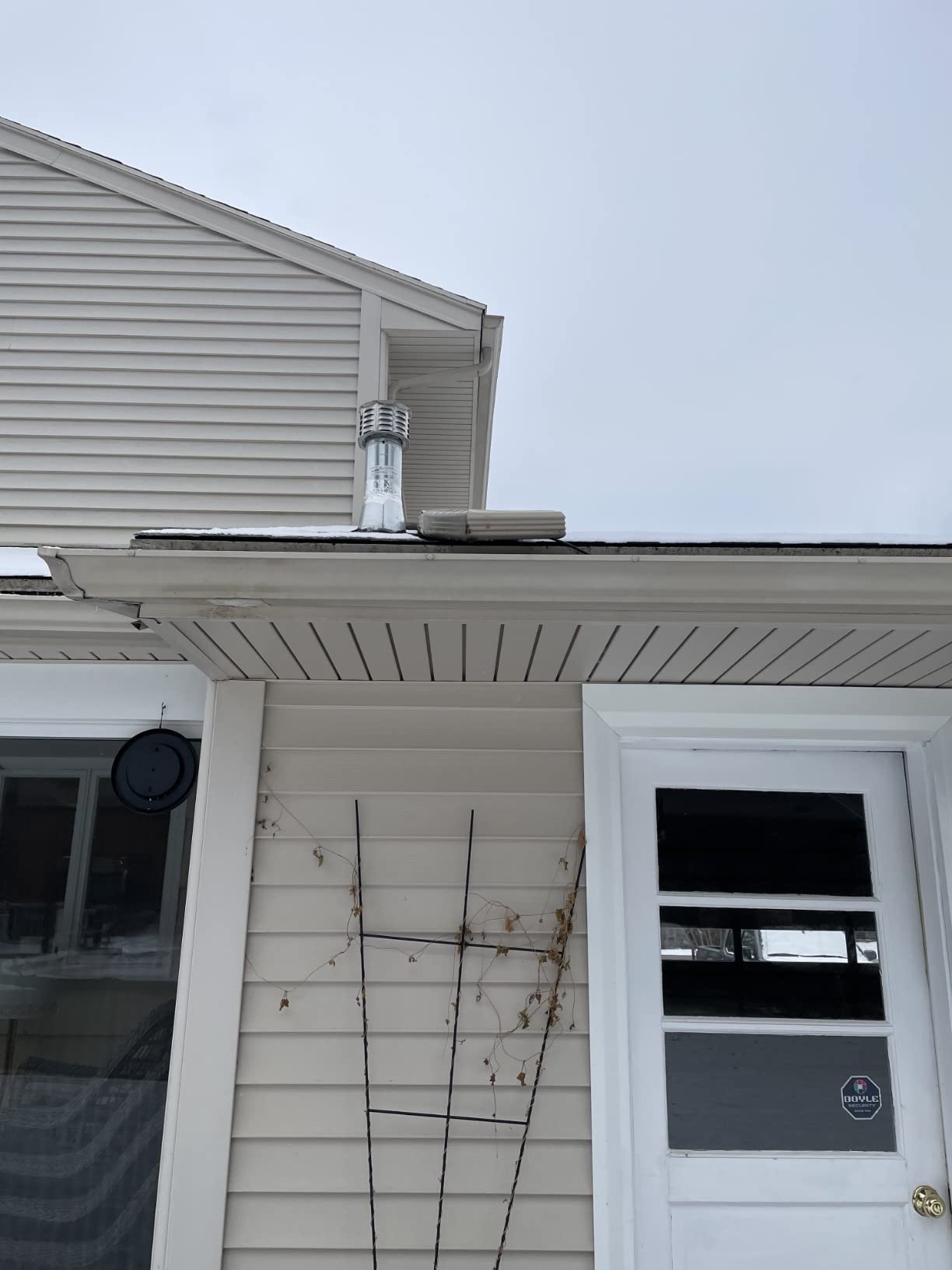
Two installation facts to check before you plan the ceiling. The unit needs a minimum 10 foot ceiling height and 8 feet of clearance from the base of the heater down to the floor, so many single-story garage ceilings disqualify it without lowering the mount.
Owners also praise the fan noise level relative to the output. The most common noise complaint is a loose fan set screw, which is a ten minute fix rather than a defect.
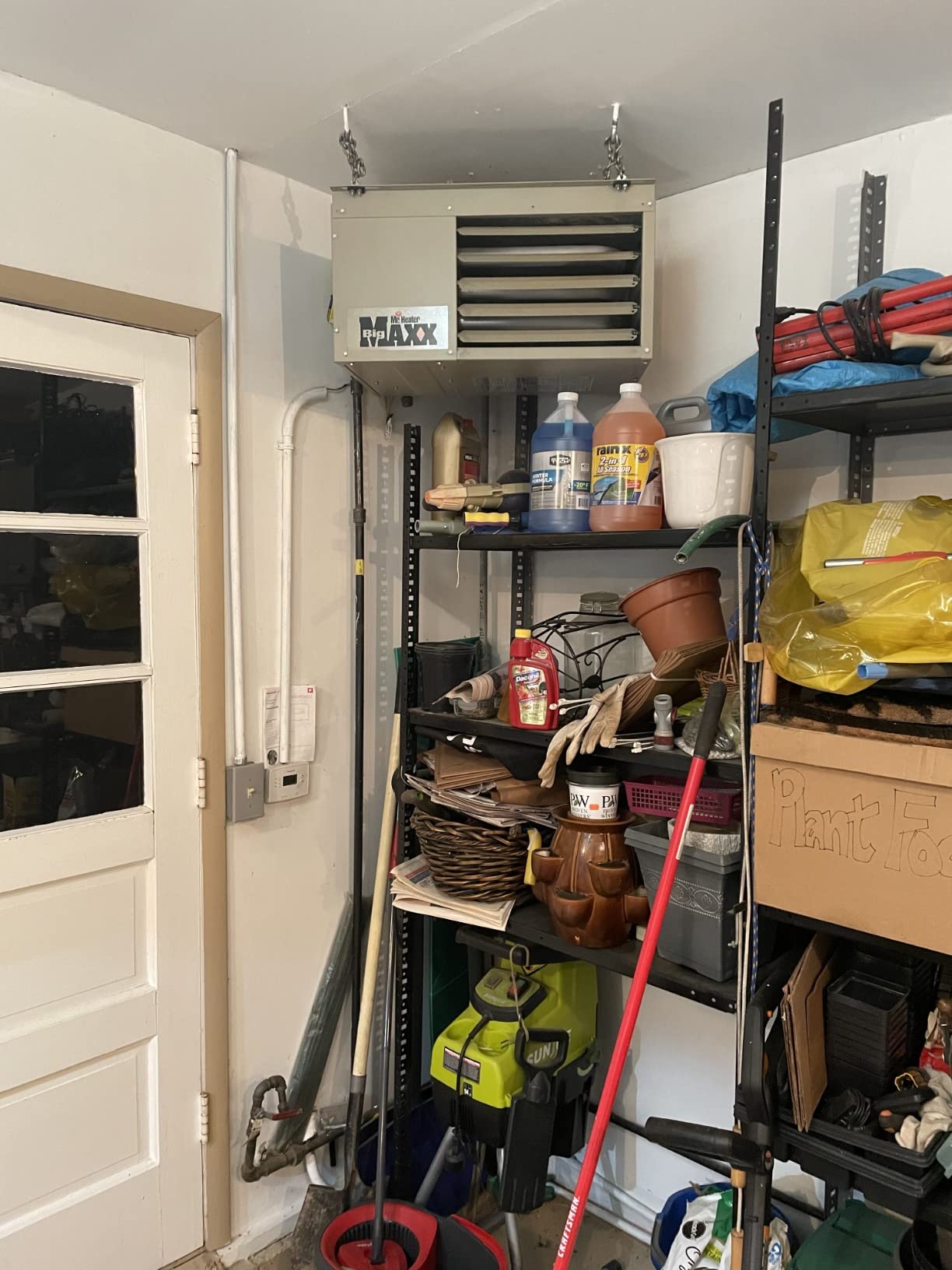
Best for a three-car garage or a serious workshop
If you are heating a shop of 1,500 square feet or more on a daily basis, the running cost gap between gas and resistance electric widens quickly. Owners in this category report multi-season reliability with minimal maintenance.
Since it accepts a 24V thermostat, a Wi-Fi model is a straightforward upgrade that most of our [garage heater picks](https://www.wpa-pool.com/best-garage-heaters-for-game-rooms/) in this category are also built around.
Not for a low ceiling or a weekend DIY install
Gas line work and vent penetration need a licensed tradesperson in most jurisdictions, and the accessory costs add up. Owners also report slow manufacturer support when a control board fails, which is the most common long-term complaint.
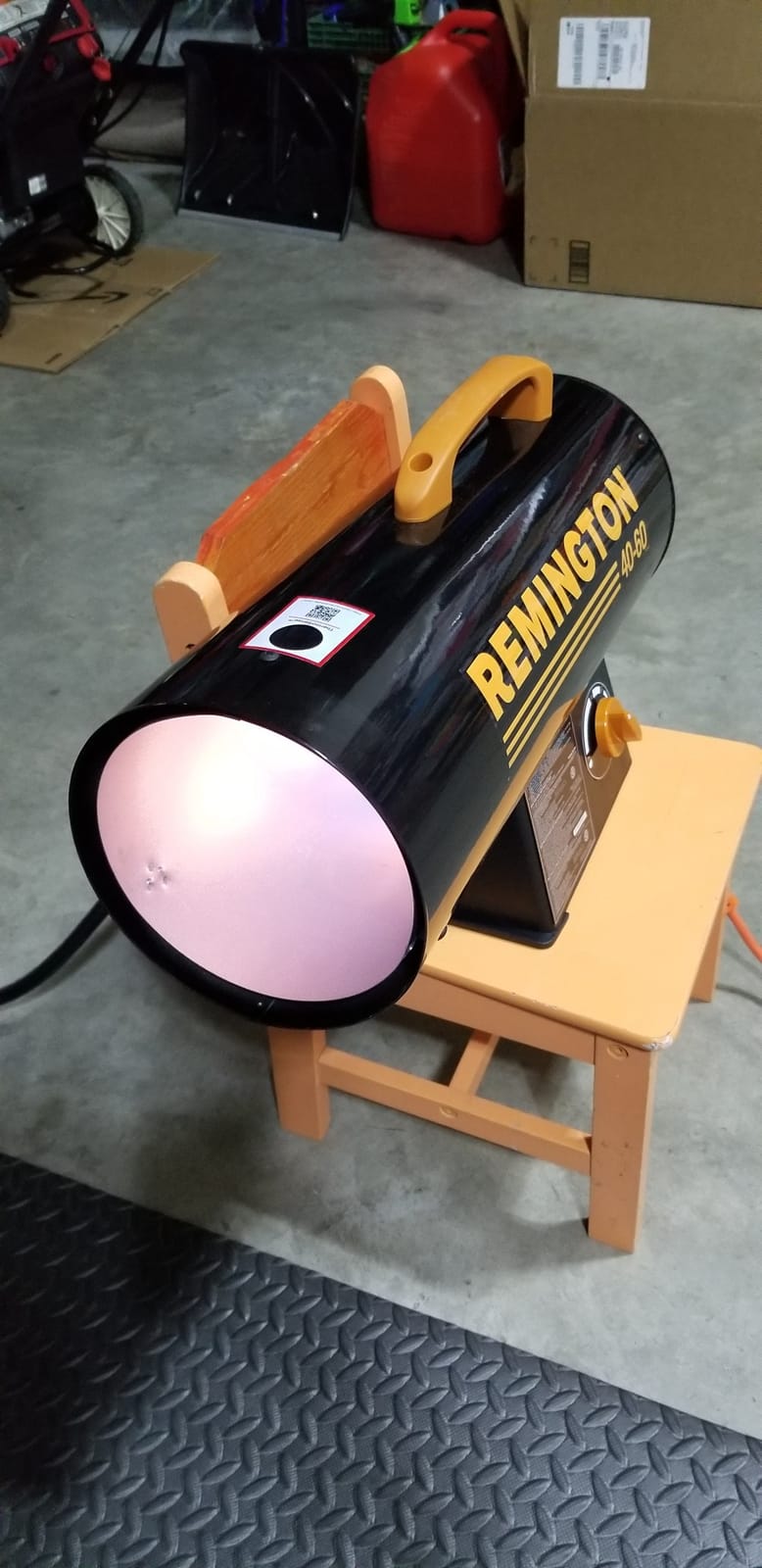
6. Remington 60,000 BTU Portable Propane Forced Air Heater
Remington LP Forced Air Heater, Portable 60,000 BTU Space Heater for up to 1500 Square Feet – Liquid Propane Gas Powered, Tank Not Included
- 60000 BTU covers up to 1500 square feet
- Only 11 lb so it moves between job sites
- Variable heat settings with adjustable height
- Electronic ignition and thermocouple safety
- 10 ft LP hose and regulator included
- Louder than electric fan-forced units
- LP fitting can need extra force to seat
- Power cord is very short
- Propane tank not included
This is the largest portable gas heater in the roundup and one of the few that can warm an entire two-car garage rather than a corner of it. Owners with insulated walls report a full two-car space reaching comfortable temperature in about 10 minutes.
At 11 pounds, it is the easiest unit here to carry out to a pole barn or a detached shop, and the variable heat settings let you dial output down when the space is small.
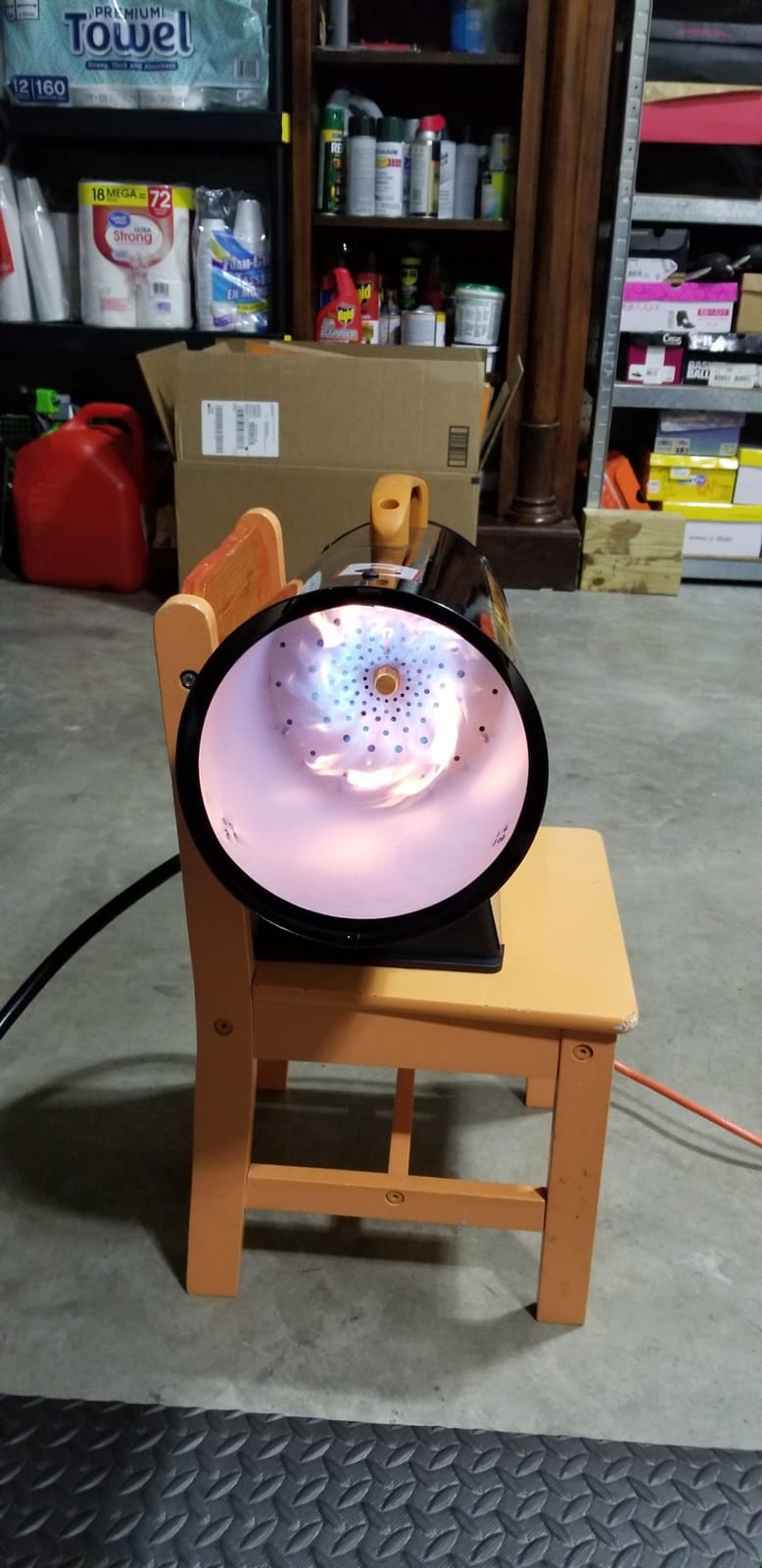
Noise is the drawback owners mention most. A propane burner and combustion fan are simply louder than an electric blower, and several reviews note it suits open or ventilated workspaces better than a quiet home office conversion.
The 4.5 average comes with a 74 percent five-star share and a small number of reports of units that would not stay lit or arrived non-functional. Check the unit before the first cold snap rather than trusting a cold morning to be the test.
Best for a garage you heat intermittently
It needs no install, so it suits renters, seasonal storage garages and anyone who wants heat on demand without committing to a gas line. The 60,000 BTU output also lets it handle a large uninsulated space better than most portable electric models.
Plan the propane logistics early. You need a 20 pound cylinder, and the hose and regulator are included but the tank is not.
Not for a quiet space you work in for hours
If you plan to sit beside it at a desk, the burner noise becomes tiring. Soundproofing a generator room is a better answer than a portable heater in a finished room.
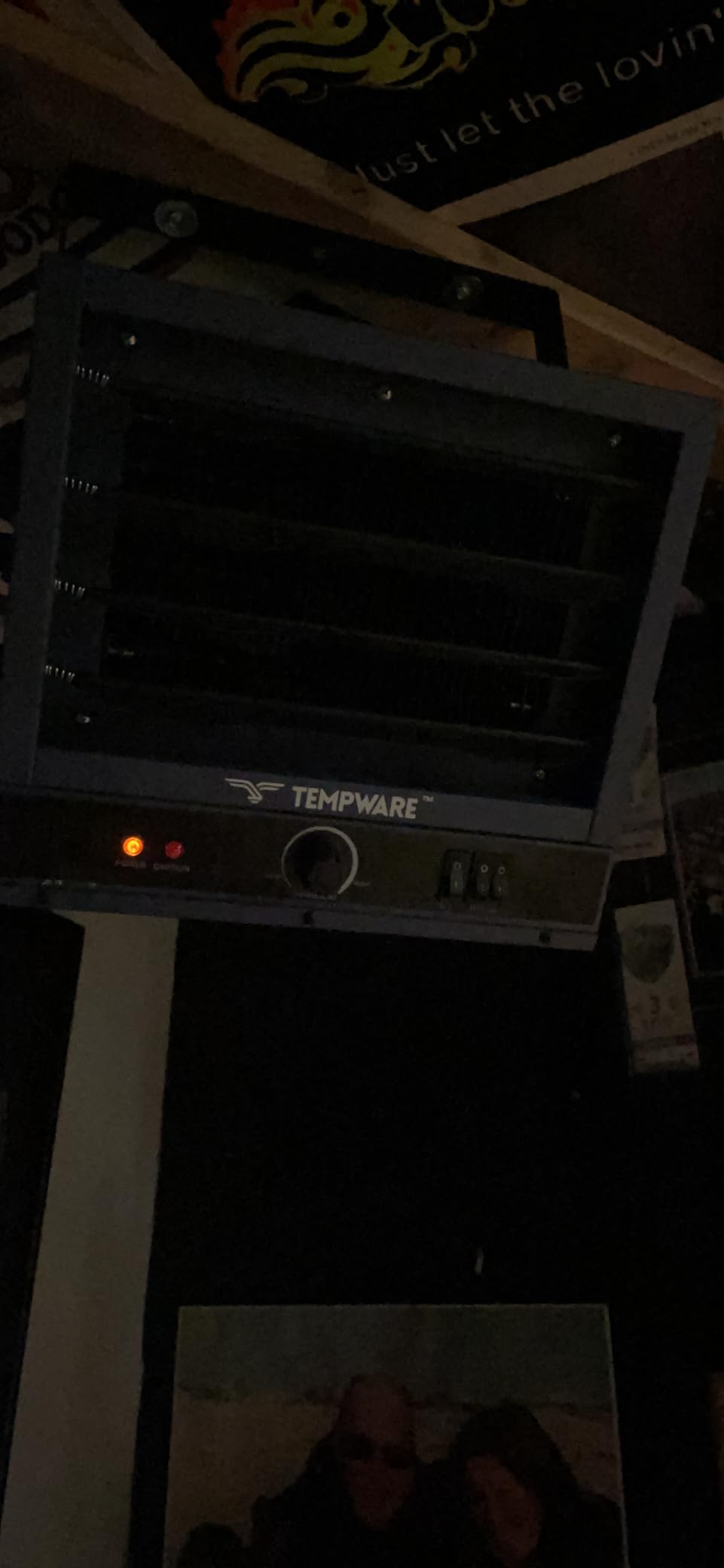
7. TEMPWARE 7,500W 240V Hardwired Garage Heater
TEMPWARE 7500W Electric Garage Heater, 240V Hardwired Heater, 2026 Upgraded
- 25590 BTU covering up to 1250 square feet
- Digital thermostat from 45F to 95F with ECO mode
- Remote and on-unit touch panel control
- 12-hour programmable timer
- Steel cabinet with automatic overheat protection
- Hardwired 240V install needs a qualified electrician
- Power cord not included
The 45 degree minimum setpoint is what separates this from the rest of the electric group. In a cold climate, a heater that can hold 45F overnight protects paint, batteries, plumbing and tools without wasting power trying to keep the whole garage at working temperature.
Buyers also single out the dual control setup. You can adjust heat from the bench with the remote or from the unit itself, which matters when the unit is overhead and the ladder is in the way.
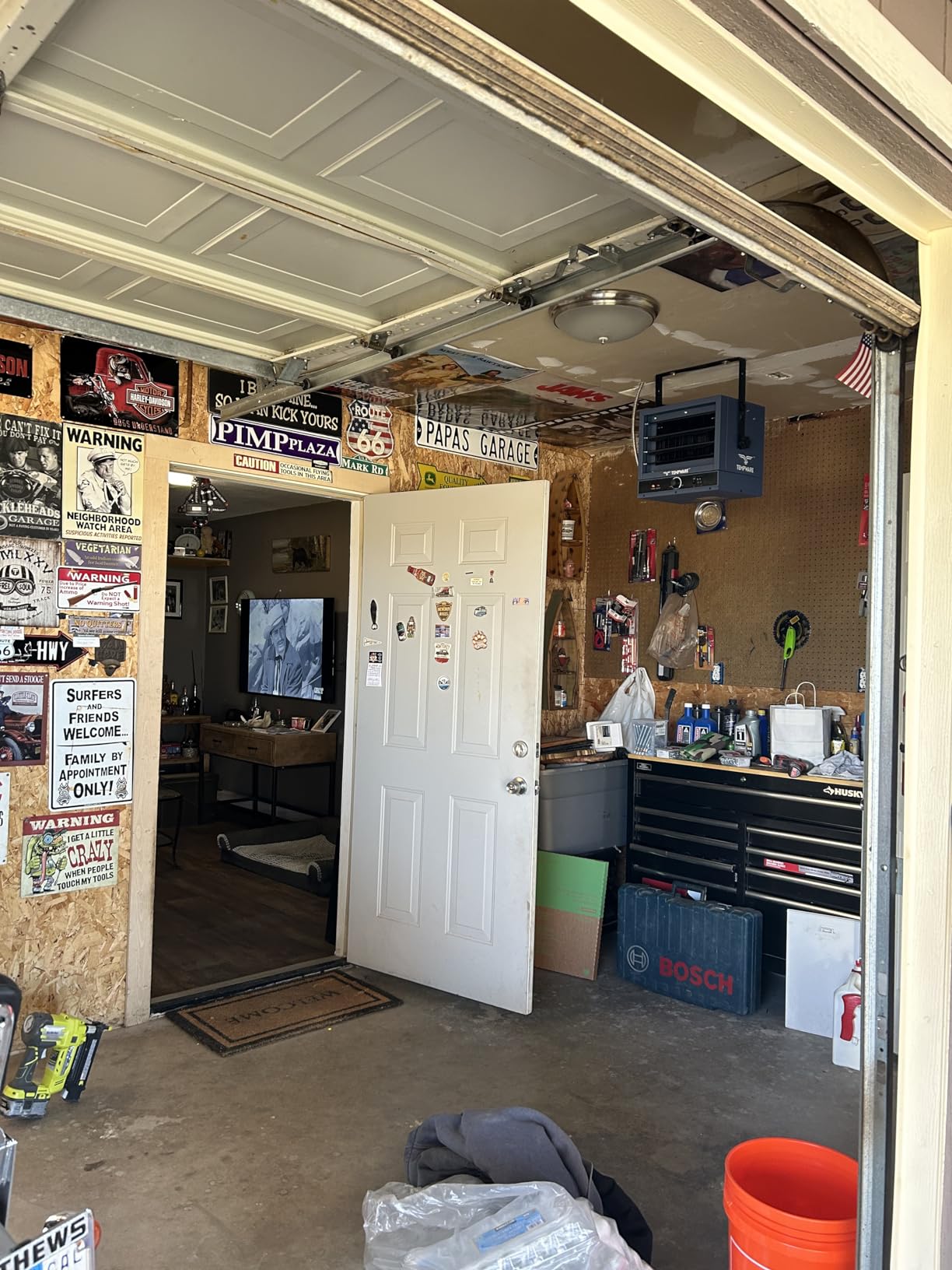
Output is adjustable from 5,000 to 7,500 watts, so you can drop the load during shoulder seasons or on a mild January afternoon. The 73 percent five-star share is strong, though the review base of 414 is smaller than the older models in this list.
One point to plan: this is a hardwired unit with no cord included. If you already have a 240V circuit, fine. If not, the electrician is part of the project, not an accessory.
Best for freeze protection plus scheduled warming
The 12-hour timer plus ECO mode makes this the pick for garages with vehicles or equipment that cannot tolerate a hard freeze. Set it low overnight and higher before you arrive.
It is also a good fit if you want one heater to cover both a workbench session and a storage mode, since the wide 45 to 95 degree range handles both without swapping appliances.
Not for a garage without 240V service
It will not run on a standard household outlet, and the missing power cord is the most common point of confusion for first-time buyers. Confirm the circuit before you buy, not after.
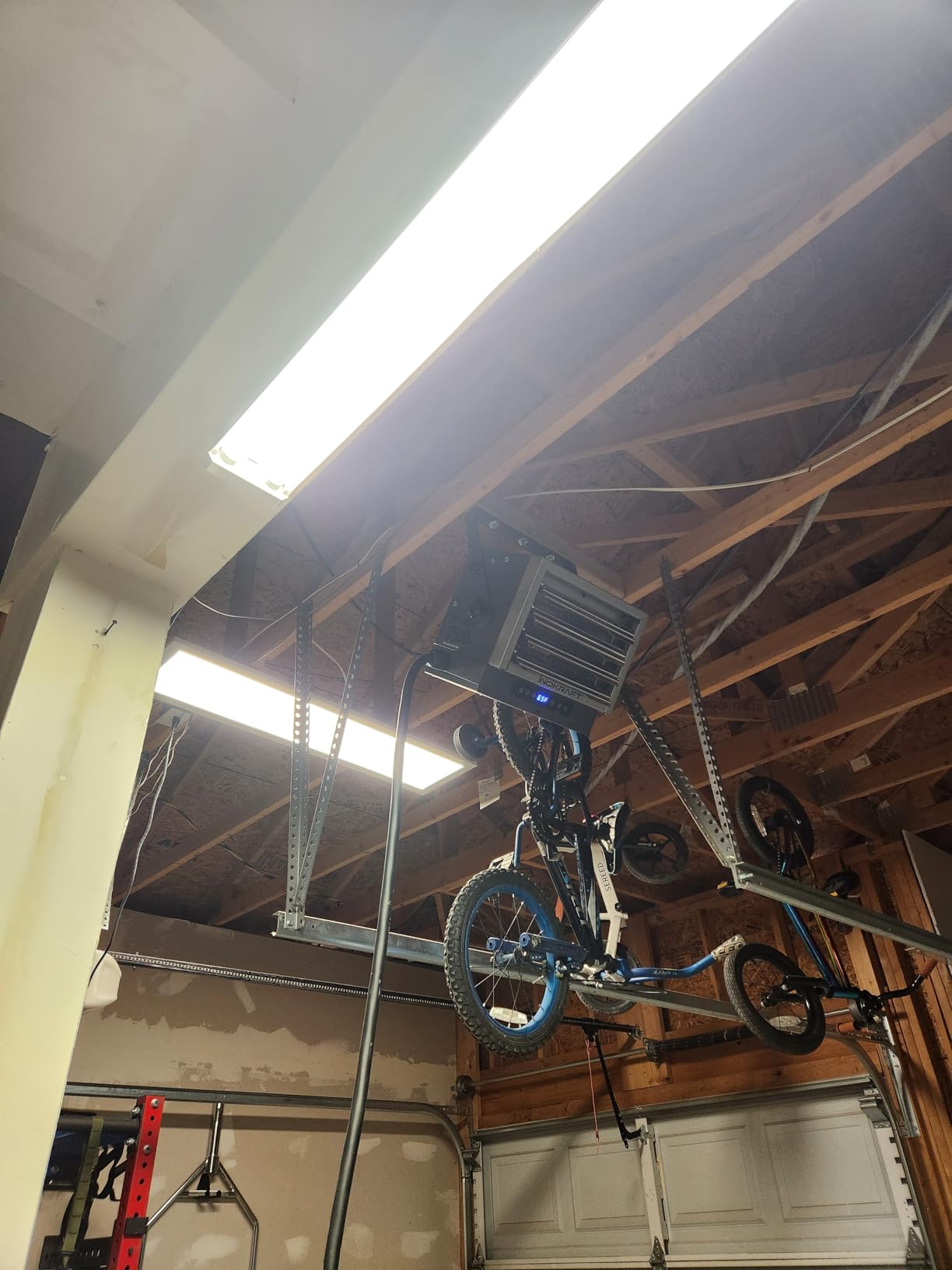
8. InoKraft 7,500W 240V Plug-In Garage Heater
InoKraft 7500W Electric Garage Heater, 240V with NEMA 14-50P Plug
- Plug-in NEMA 14-50P setup avoids hardwiring
- 4.6 average
- highest in this roundup
- Digital thermostat from 40 to 99F with 1-24 hour timer
- Five angle adjustments plus flexible louvers
- Automatic fan delay for even heat distribution
- Needs a 240V NEMA 14-50P outlet not 120V
- Professional installation still recommended
- Coverage of about 750 sq ft is the smaller end
With 82 percent of its ratings at five stars, this is the best-liked heater we tested in the group, and the reason is installation. The 8.2 foot cord ends in a NEMA 14-50P plug, so if your garage already has that style of 240V receptacle you can mount the unit and start heating the same day.
You still need the 240V circuit. This is not a 120V appliance, which is the most common misunderstanding we see with plug-in garage heaters.
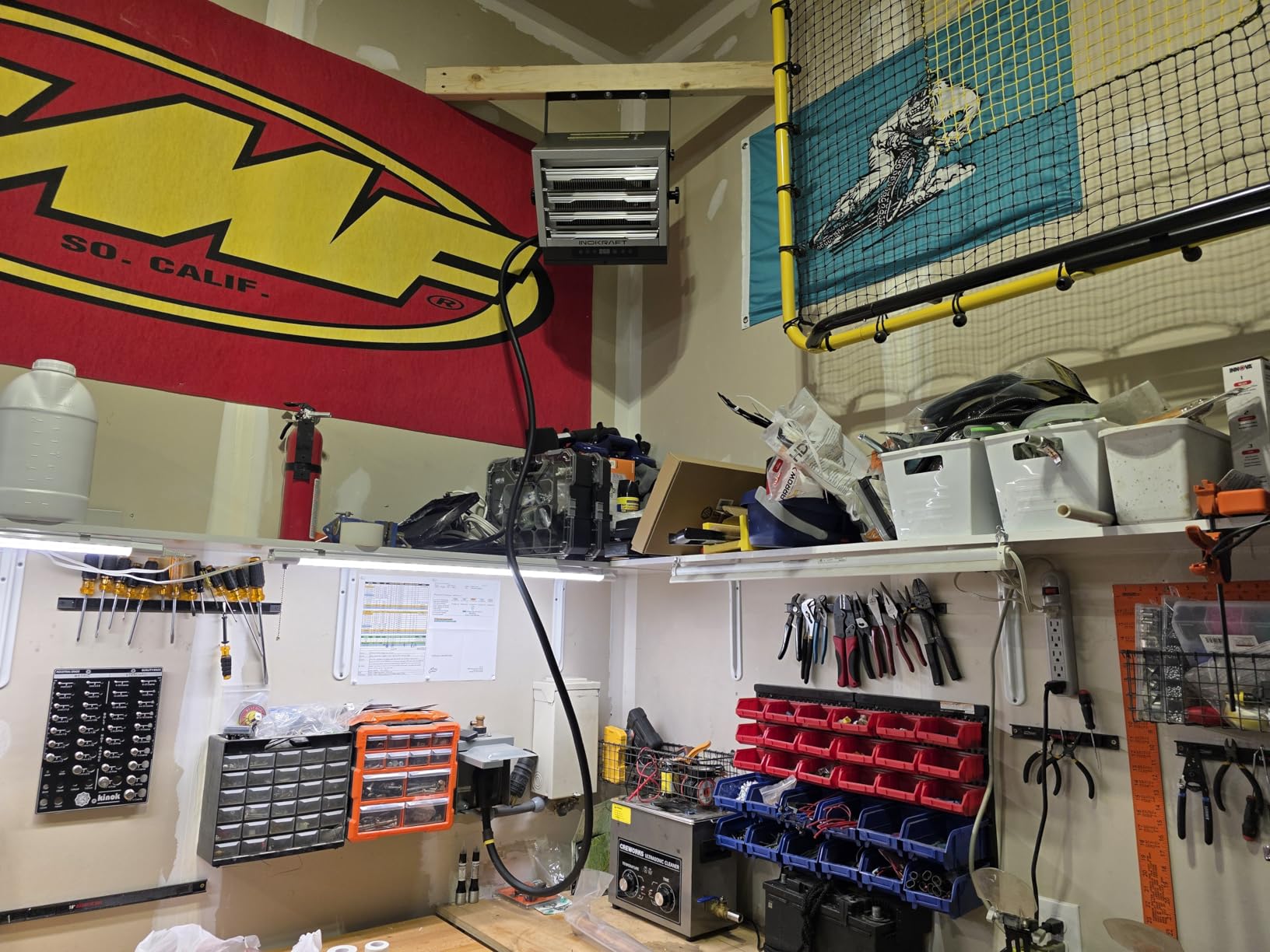
The 40 degree minimum setpoint is the lowest in the roundup, and the 1 to 24 hour timer gives finer scheduling control than the 12-hour timers on comparable units. Owners also like the fan delay, which keeps the blower running briefly after the element cuts to even out temperature in the room.
At 65 dB it is not the quietest unit here, but it is in the same range as other fan-forced models and stays well under conversation-level noise.
Best for a weekend install with existing 240V service
If your garage already has a NEMA 14-50P receptacle, this saves you the largest cost line in the whole project. Nobody needs to cut into drywall or hire an electrician for a hardwired run.
It is also a good option for a garage you might convert into a [game room or gym](https://www.wpa-pool.com/best-garage-heaters-for-game-rooms/), since the 99 degree maximum covers a comfortable working range.
Not for larger garages or for 120V-only panels
Coverage is about 750 square feet, the smallest claim in this group among 7,500 watt models. In a three-car space you will feel the limit, and in a garage with no 240V receptacle the plug advantage disappears.
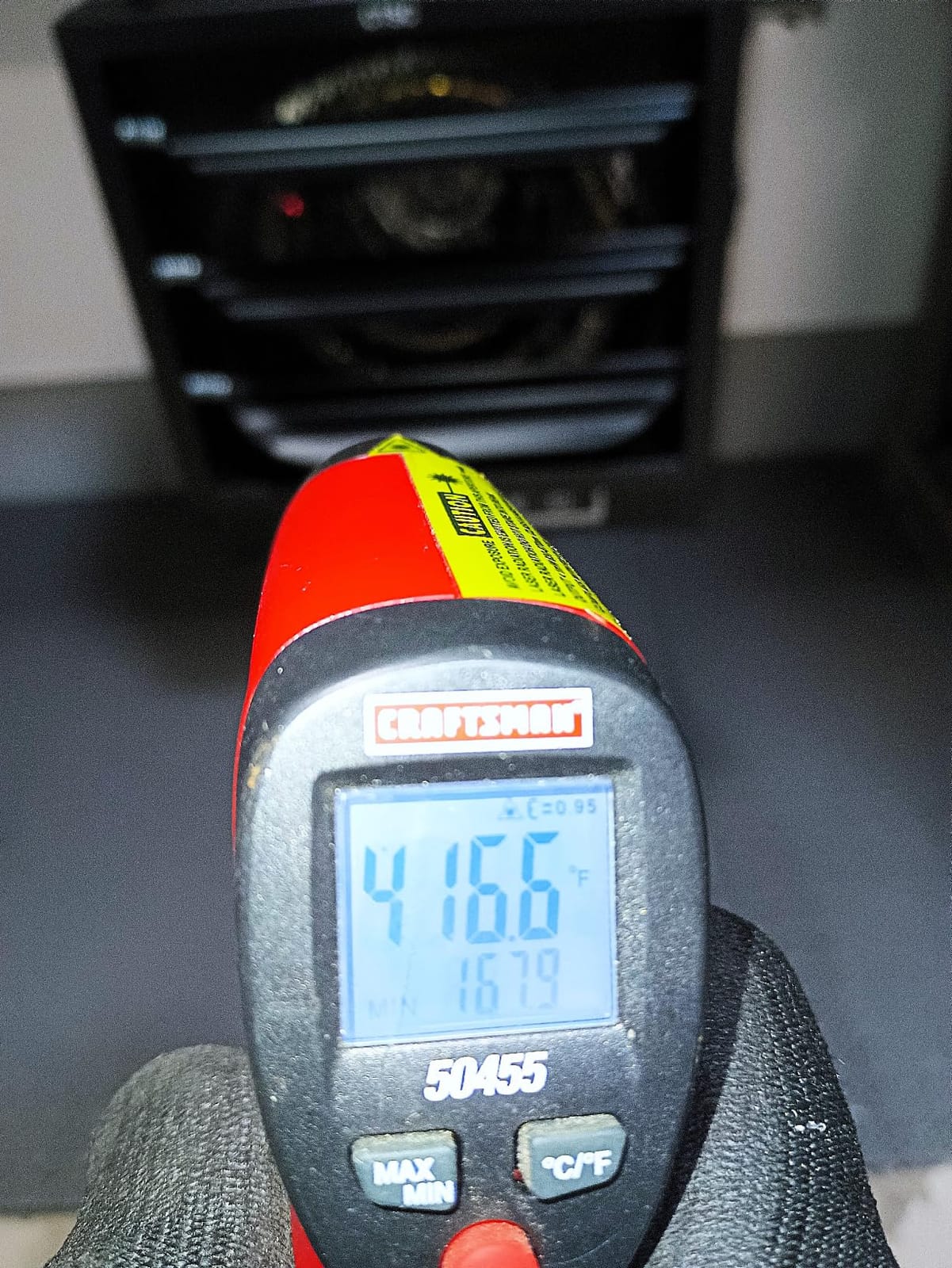
9. CTSC 5,600W 240V Ceiling Mount Garage Heater
CTSC 5600W Garage Heater Electric, 240V Fan-Forced Ceiling Mount Heater
- 240V socket and 6-30P cord included so no hardwiring
- Quiet operation at no more than 58 dB
- One-touch AUTO remote for full power instantly
- SPCC cold rolled steel with UL certification
- 1-10 hour timer with temperature sensing
- Lowest 4.1 average and 12 percent one-star share
- 5600W covers only about 560 square feet
- Back panel clearance of 7.3 in needed to avoid tripping overheat
What makes this unit unusual is the bundled hardware. The 6.2 foot NEMA 6-30P cord and the matching 240V socket are both in the box, so the electrical side of the install is a receptacle and an afternoon rather than a wiring run.
At no more than 58 dB it is the quietest heater in this roundup, which matters if the garage doubles as an office or a workout space you spend hours in.
The 4.1 average is the lowest in the group, with 12 percent of ratings at one star. Most of those complaints trace back to the 560 square foot coverage claim meeting a larger space, or to the clearance requirement tripping the overheat sensor.
That clearance rule catches people out. The back panel needs at least 7.3 inches from the wall when the bracket is not in use, or the overheat protection can trip under normal operation.
Best for a small garage where noise is the deciding factor
At 5,600 watts and 58 dB, this is a sensible pick for a single-car workshop, a storage bay or a converted room where you notice background noise. The included socket and remote are genuinely useful additions.
If you need to cover more area, the TEMPWARE unit in this list doubles the coverage to 1,250 square feet with a similar control scheme.
Not for a two-car or larger garage
Roughly 560 square feet is a tight limit. Beyond that the fan runs constantly without raising the room temperature enough, and the 4.1 rating suggests more of those sizing regrets than the other models here.
10. Heatstar Radiant Overhead Natural Gas Garage Heater
Heatstar By Enerco F125444 Radiant Overhead Garage Heater MH25NG Natural Gas
- Radiant overhead layout points heat at the work area
- Natural gas for continuous whole-garage heating
- Compact body suits tight ceiling spaces
- Long-running design dating to 2010
- Requires a gas line and vent installation
- Smallest review base here at 130 reviews
- 8 percent of ratings are one star
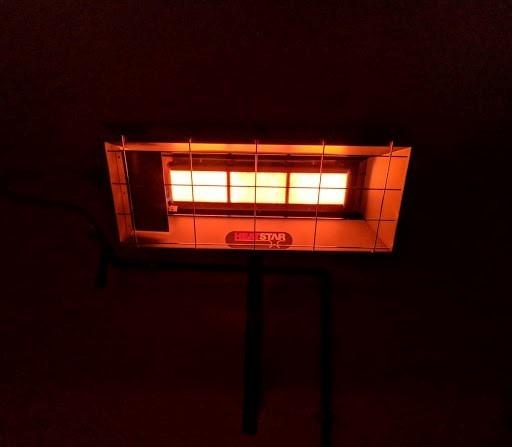
Radiant overhead heaters put heat where you stand rather than where you sit, and for a garage used as a work area that is a real advantage. The downward throw means you feel warmth on your shoulders and hands even while the air around you is still cool.
It also sidesteps the ceiling height problem that rules out larger fan-forced gas units. This model has been on the market since 2010 and the body measures just 12 by 29.75 by 9 inches.
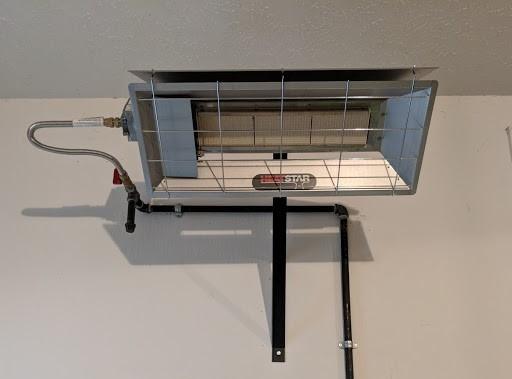
The honest limitation here is data. The listing carries a 4.3 average from 130 reviews, and published specification detail is limited to model number, fuel type and dimensions, so we cannot give you a BTU figure or a coverage area to plan against.
With 69 percent of ratings at five stars and 8 percent at one star, the rating sits in the middle of this group. Verify the output rating on the nameplate before you commit to it for a large space.
Best for overhead heat in a work-focused garage
Workshops, pole barns and hobby spaces where people are moving around benefit from the downward radiant throw. It is a natural fit where you want whole-garage gas heat without the bulk of a fan-forced cabinet.
Owners on forum threads describe radiant garage heating as feeling like sun on your back, with tools and floors warming first. That same effect is worth avoiding if you park a vehicle directly under the unit.
Not for vehicle storage under the mount point
Concentrated radiant heat from directly above will, over many seasons, affect paint and plastic trim on a car parked in that spot. Mount it over a bench instead and the trade-off disappears.
How to Size a Garage Heater for Sub-Zero Weather
Sizing a garage heater starts with two numbers: the floor area in square feet and the ceiling height. Every product in this roundup publishes a coverage figure, and those figures assume average insulation and a typical ceiling. A 20 by 20 garage is 400 square feet, and a 24 by 24 garage is 576 square feet before you account for walls at all.
The published coverage numbers are the right starting point, not the final answer. Read them as the square footage each unit can hold at working temperature, then adjust for your building. If your garage sits in northern Minnesota or Ontario and the walls are uninsulated, size up one tier rather than matching the figure exactly.
Why insulation changes the size you need
Uninsulated garages lose heat continuously through the door, the walls and the ceiling. In a cold climate, the largest single loss is usually the overhead door, which is often a single thin panel regardless of how well the rest of the building is built.
Owners on garage forum threads report that adding R15 walls and R50 attic insulation cut their gas bill noticeably. That is a meaningful companion upgrade to any heater in this list, and it is worth doing before you buy a larger unit. You can read more about garage climate storage in our [cold-climate garage refrigerator guide](https://www.wpa-pool.com/best-garage-refrigerators-for-cold-climates/) if you are also protecting stored goods.
Infrared, fan-forced or radiant: which style handles a cold garage
Radiant and infrared heaters warm objects and people in the line of sight, which feels immediate but does not raise air temperature. Fan-forced units move heated air through the room, which is slower to start but distributes heat to every corner and lets a thermostat actually control the space.
For a workshop, radiant wins on comfort. For a storage garage or a space you want at a steady setpoint all day, fan-forced wins on control. A third option, in-floor radiant heat, is popular with owners on forums who describe it as keeping tools warm at all times, but the upfront cost is high and none of the ten products here cover it.
Electric vs Gas in a Cold Garage
Electric heaters convert electricity to heat at close to full efficiency, need no venting and carry no combustion risk, but a 7,500 watt unit running continuously is a significant load on a winter power bill. Gas units produce far more heat per unit of fuel and are the practical choice for a large space heated daily, at the cost of a permanent install.
Cold weather changes this calculation more than mild weather does. A garage that loses heat through uninsulated walls keeps a resistance heater running at full output for longer stretches, which is where the running cost difference shows up. Gas heaters with higher output reach temperature faster and then hold it.
What a 240V hardwired install actually involves
Every 7,500 watt unit in this roundup draws about 31 amps and needs a dedicated 240 volt circuit, which is a different circuit from your household outlets. The Dr. Infrared model specifies 8 AWG copper wiring and a qualified electrician, and the others carry similar requirements.
The plug-in options genuinely reduce this step. The InoKraft unit ships with a NEMA 14-50P cord, and the CTSC unit includes both a 6-30P cord and a matching receptacle, so both can run off an existing 240V outlet without new wiring. Neither works on a standard 120V outlet.
Where a mini-split beats a space heater
No competitor roundup we reviewed covers this, but a ducted or mini-split heat pump is the only option that both heats and cools the same space. For a garage you use year-round, a cold-climate rated heat pump gives you heating in January and air conditioning in July from one appliance.
The tradeoff is installation cost and the need for a refrigerant line run from an existing system. If you are only heating four months of the year, a space heater from this list is the simpler answer.
Safety Essentials for Cold-Climate Garages
Check for overheat protection on every unit, and treat a high-temperature limit switch as mandatory rather than nice to have. Fan-forced electric heaters that cycle against a thermostat need it, and it is standard on most models here, including the automatic shutoff sensors on the Comfort Zone units and the thermocouple and flame-out cutoffs on the propane models.
Any propane or natural gas appliance in an enclosed garage needs a carbon monoxide detector, mounted per the manufacturer’s instructions and inside the heated space rather than near the ceiling. This applies to the Mr. Heater Buddy even though it has a low oxygen safety system, since that system cuts fuel rather than detecting carbon monoxide for you.
Keep the clearance requirements in mind when you plan the layout. The Mr. Heater unit heater needs 8 feet below it, the CTSC unit needs 7.3 inches behind the panel when the bracket is unused, and portable heaters need a stable surface away from vehicle traffic. For a garage full of combustible sawdust and fuel cans, tip-over and clearance discipline matters more than any single feature.
Frequently Asked Questions
What size heater do I need for a 24×24 garage?
A 24×24 garage is 576 square feet. For a typical insulated two-car garage, a 7,500 watt hardwired electric unit rated for about 1,000 to 1,250 square feet handles that space well. For an uninsulated garage in a sub-zero climate, size up and consider a 50,000 BTU gas unit heater instead.
Do garage heaters work in sub-zero temperatures?
Yes, with the right fuel type. Electric resistance heaters produce the same output regardless of air temperature, which makes them reliable below freezing. Gas unit heaters also perform well but need proper venting and a gas line. Portable propane radiant heaters are the fastest to deliver usable heat when you only need a small area.
What is the cheapest way to heat a garage in the winter?
Insulation is the cheapest lever. Adding insulated garage door panels and improving wall and attic R-value cuts the heat a garage loses, so a smaller heater covers more ground. After that, a hardwired electric unit running on a schedule you control costs less to install than a gas line, and portable radiant propane heaters cost nothing to install at all.
What is the most economical electric heater for a garage?
The Comfort Zone CZ220 at 5,000 watts is the most economical electric pick in this roundup because its 20.83 amp draw is well below the 31 amp load of 7,500 watt models, while still covering up to 1,000 square feet. Electric running cost is driven by wattage and hours of operation, so pairing any unit with a timer and thermostat matters more than the model.
Is it safe to run a propane heater in a closed garage?
Not fully closed. Propane and natural gas heaters produce carbon monoxide, so the garage needs ventilation and a working carbon monoxide detector. Combustion appliances should never run in a sealed space, and models with low oxygen safety cutoffs should still be backed up by a detector inside the space.
Can I use a mini-split to heat my garage?
Yes, and for a year-round garage it is often the better choice because it heats and cools with one appliance. A cold-climate rated heat pump is needed for reliable performance below freezing, and the refrigerant line has to be run from your existing system, which is the main reason people choose a space heater for seasonal-only use.
Final Recommendation
If you need heat this week and have no plan to run wiring, the Mr. Heater Buddy radiant propane heater is our pick for the best garage heaters for cold climates in the immediate sense. It reached comfortable warmth in our shop within minutes and carries a 4.7 average across more than 29,000 reviews, which is the strongest combination of rating and review volume in this roundup.
For a workshop you heat every week, the Dr. Infrared DR-975 gives you the most hardwired output here, and the Comfort Zone CZ230ERBK is the better value if you want a remote, a timer and a 45 degree setpoint. If your garage exceeds 1,200 square feet or sits where winters are severe, the Mr. Heater 50,000 BTU gas unit heater is the choice that actually scales, provided your ceiling clears 10 feet and a licensed tradesperson can run the gas line and vent.
Whichever you pick, measure your square footage, check your ceiling height and add a carbon monoxide detector before the first freeze. That preparation is worth more than any incremental difference between the units above.