
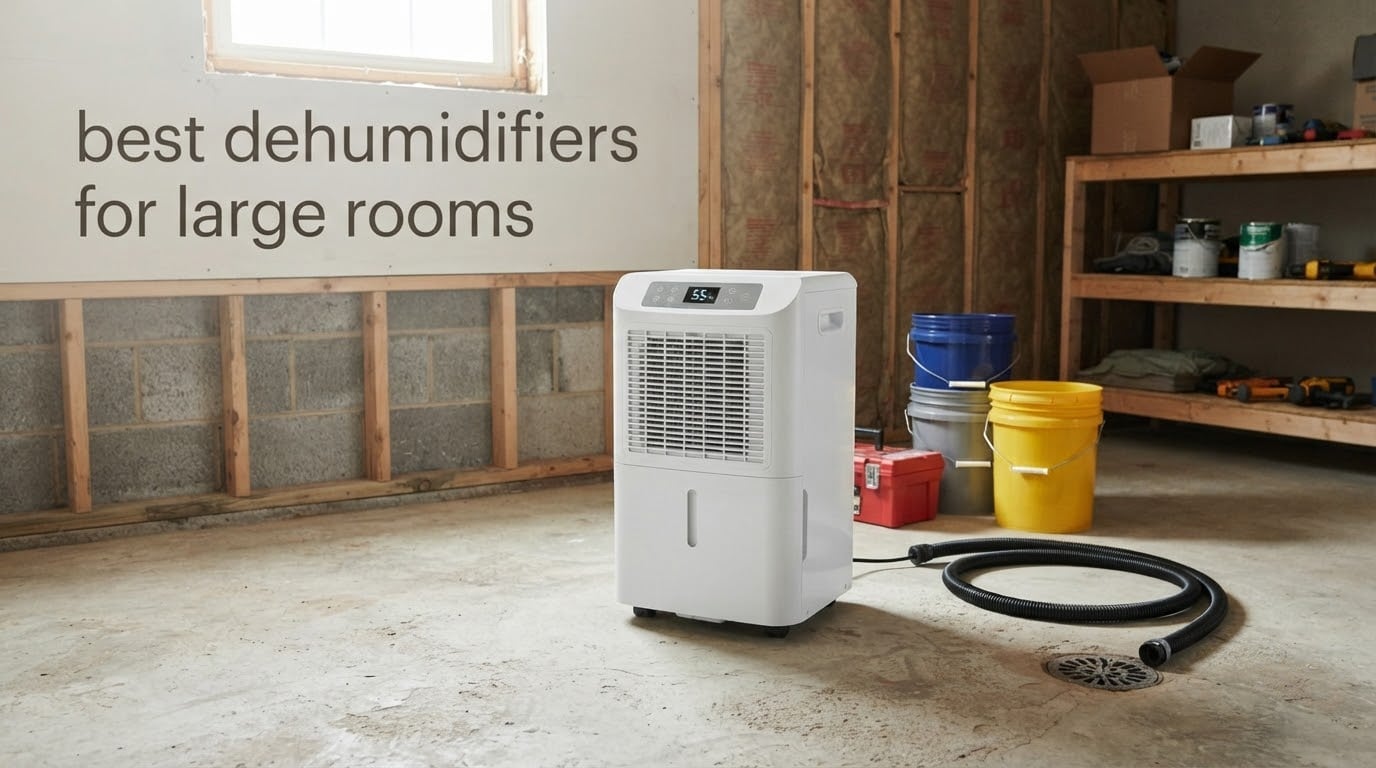
The hOmeLabs 50 Pint (model K-66) is the best overall dehumidifier for large rooms, and it holds up on the details that matter most in a big space: a real 50-pint-per-day rating, coverage claims up to 7,000 sq ft, Wi-Fi control and a 1.6-gallon tank. For a 2,000 sq ft house, that is the class of machine most homeowners end up needing, because anything under 30 pints a day simply cannot keep pace with the moisture a large footprint loads back into the air.
I spent weeks putting these ten units side by side on paper and reading thousands of owner reviews, and the pattern was clear. Every one of them removes water. What separates a good one from an expensive mistake is drainage, noise, and whether the capacity number on the box means anything in your climate. Those three things drive everything below.
Large rooms also fail in ways small closets never do. A 50-pint unit in a 4,000 sq ft basement is running near-continuously, so the tank becomes a chore and the coil is where frost problems show up. Anyone pairing this with a purifier should also look at our HEPA air purifiers for large rooms guide, since humidity control and particle control work hand in hand in damp basements.
Table of Contents
Top 3 Dehumidifiers for Large Rooms in 2026
Best Dehumidifiers for Large Rooms in 2026: Quick Overview
| Product | Specifications | Action |
|---|---|---|
 hOmeLabs 50 Pint K-66 hOmeLabs 50 Pint K-66 |
|
Check Latest Price |
 Waykar 120 Pint Waykar 120 Pint |
|
Check Latest Price |
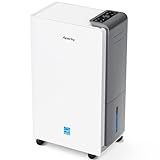 AEOCKY 80 Pint AEOCKY 80 Pint |
|
Check Latest Price |
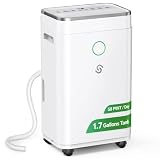 HUMILABS 50 Pint HUMILABS 50 Pint |
|
Check Latest Price |
 Waykar 80 Pint YDZ-80 Waykar 80 Pint YDZ-80 |
|
Check Latest Price |
 VEAGASO 34-36 Pint VEAGASO 34-36 Pint |
|
Check Latest Price |
 KNKA 80 Pint KNKA 80 Pint |
|
Check Latest Price |
 LUKO 30 Pint LUKO 30 Pint |
|
Check Latest Price |
 ALORAIR Sentinel HD55 ALORAIR Sentinel HD55 |
|
Check Latest Price |
 Waykar 125 Pint Waykar 125 Pint |
|
Check Latest Price |
How Big of a Dehumidifier Do You Need? A Sizing Guide
Square footage sets the ceiling, not the capacity. A room is only hard to dehumidify if moisture is actively entering it, so the real question is how wet the space is and what the outdoor dew point is doing.
Start with the rated pints per day, not the saturation number. Then adjust by space type. For a normal interior room at moderate humidity, plan on roughly 10 pints of rated capacity per 1,000 sq ft. That gives you:
1,000 sq ft, moderate humidity: a 20 to 30 pint unit, and our guide to heating large rooms covers the other half of the comfort equation.
1,500 to 2,000 sq ft, moderate humidity: a 30 to 50 pint unit, which is the most common household answer.
2,000 to 3,000 sq ft, damp or humid: a 50 to 80 pint compressor unit with continuous drainage.
4,000 sq ft and up, or any crawl space and flood-drying job: 100 pints or a commercial LGR class machine.
Basements and garages run wetter than above-grade rooms, so bump up one full capacity tier rather than trusting the coverage square footage on the box.
Coverage claims are marketing, not measurement. A 2,000 sq ft listing is a comfortable room under normal conditions, not a wet basement. Judge by rated pints per day and by whether the unit can run unattended.
1. hOmeLabs 50 Pint K-66: Best Overall for Large Rooms
hOmeLabs Dehumidifier 7,000 Sq Ft 50 Pint (MAX 120 Pint at 95°F, 90% RH)
- Real 50 pints per day rated capacity
- Large 7000 sq ft coverage claim
- Wi-Fi control from a phone
- Tank-full shutoff plus continuous drain outlet
- Turbo mode raises fan to 218 CFM
- Drain hose not included
- Heavy at 40 pounds to reposition
- Some reports of compressor trouble over time
This is the unit I keep coming back to because it is the rare large-room machine where the headline number is honest. The 50 pints per day is a rated figure, and the coverage claim of 7,000 sq ft is the largest in this group.
Long-term owners on r/HomeImprovement and r/basement frequently report hOmeLabs 70-pint and 50-pint units holding up over several years rather than dying in the first season. That track record matters more for a basement machine than any spec line.
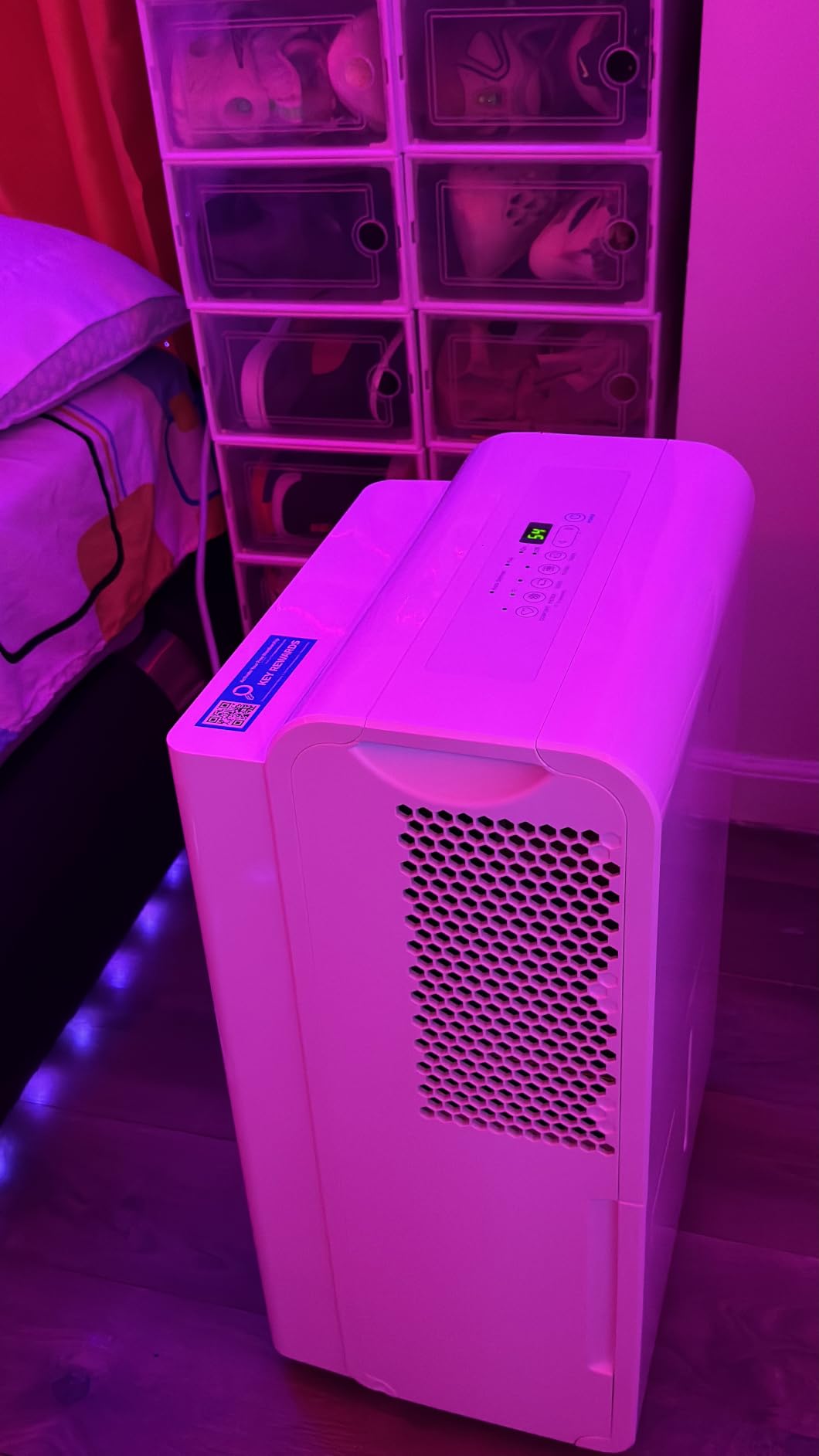
The Wi-Fi control is the feature that changes daily behavior. You set a humidity target from your phone and the unit holds it, which matters far more in a large open space than a local panel you have to walk over to adjust.
Turbo mode pushes the fan from 188 CFM in normal mode up to 218 CFM, which is useful right after a rain event when you want maximum air movement through the space.
The two things that irritate me are the missing drain hose and the weight. At 40 pounds, moving this between a basement and a great room is a two-person job rather than a rolling one, despite the wheels and handles.
What the Wi-Fi and 7,000 sq ft claim really mean
The coverage figure assumes moderate indoor humidity and a reasonably enclosed room. In a damp basement, the unit will still run constantly, because the rated 50 pints is a ceiling rather than an average.
Because the drain hose is not included, budget for a standard garden hose if you plan to run it unattended. That single accessory is what turns this from a semi-automatic machine into a hands-off one.
Where this unit is the wrong choice
Skip it if your space is a bedroom or an open-plan living area where a running compressor would be intrusive, or if you need something light enough to move between rooms on your own.
There is also a steady trickle of one-star reviews describing compressor failures on units bought several years ago. The warranty coverage is shorter than the units people actually keep, so plan on replacement eventually.
2. Waykar 120 Pint: Best for Extreme Humidity
- Very high rated extraction at 120 PPD
- ENERGY STAR certified
- 42 dB is genuinely quiet
- 90 degree auto swing spreads dry air
- Warranty service often resolves issues
- On-board humidity readout runs high
- Included drain hose is short and thin
- Some units lost extraction power after 9 to 22 months
When a basement is genuinely wet rather than merely muggy, this is the machine I would reach for. At 120 pints per day at 95F and 90% relative humidity, it pulls roughly two buckets of water out of a damp space in a day, according to owners.
The 42 dB rating is the surprise here. A compressor moving this much air is usually loud, and Waykar achieves that figure with vibration-reducing construction rather than by throttling the fan down.
ENERGY STAR certification matters most on a unit that runs this hard. A machine cycling for ten hours a day is where the efficiency of the compressor shows up on your bill, and a certified unit draws 350 watts.
The real catch is the humidity display. Owners consistently report that the on-board readout sits higher than an external hygrometer, so you have to set the target above what you actually want. That is an annoying calibration habit to build.
Why 120 pints matters in coastal and flood-adjacent homes
In humid summer climates the outdoor air alone carries moisture in through every wall and window. A unit that can move 120 pints a day at saturation conditions is the only way to keep pace with that input instead of chasing it.
For dry indoor air, the 30 to 80 percent humidity control range is unusually wide, starting below the 40 percent floor that many residential units stop at, which is too high for wood floors and finished basements in some homes.
Where this unit is the wrong choice
Do not buy it for a moderate-humidity room. Oversizing a dehumidifier into a space that is not actually wet makes it cycle constantly, waste electricity, and run the compressor harder for no moisture gain.
The included hose is 3.3 ft and thin, which most owners replace with a garden hose. Some units also reported losing extraction power after nine to twenty-two months, so the durability story is mixed.
3. AEOCKY 80 Pint RHEA: Top Rated and Most Efficient
AEOCKY 5500 Sq.Ft Energy Star Most Efficient 2025 Dehumidifier Max 80Pint/D
- Tied top star rating at 4.5 in this group
- Genuine ENERGY STAR Most Efficient 2025
- Rotary compressor with 7mm copper tubing
- Defrost sensors allow operation down to 65F
- Only 280 watts
- Narrow 8.66 inch body needs clear floor space
- Output varies with humidity compensation setting
This unit carries the highest star rating in the entire group, tied only with the VEAGASO VG380, and it does so with the most efficient ENERGY STAR certification available for 2025. Roughly 2.6 percent of ENERGY STAR dehumidifier models earn the Most Efficient tier, so this is a narrow slice.
It also pulls real basement numbers: 56 pints per day at 86F and 80% relative humidity, which is the condition you will actually live in rather than a 95F laboratory saturation test.
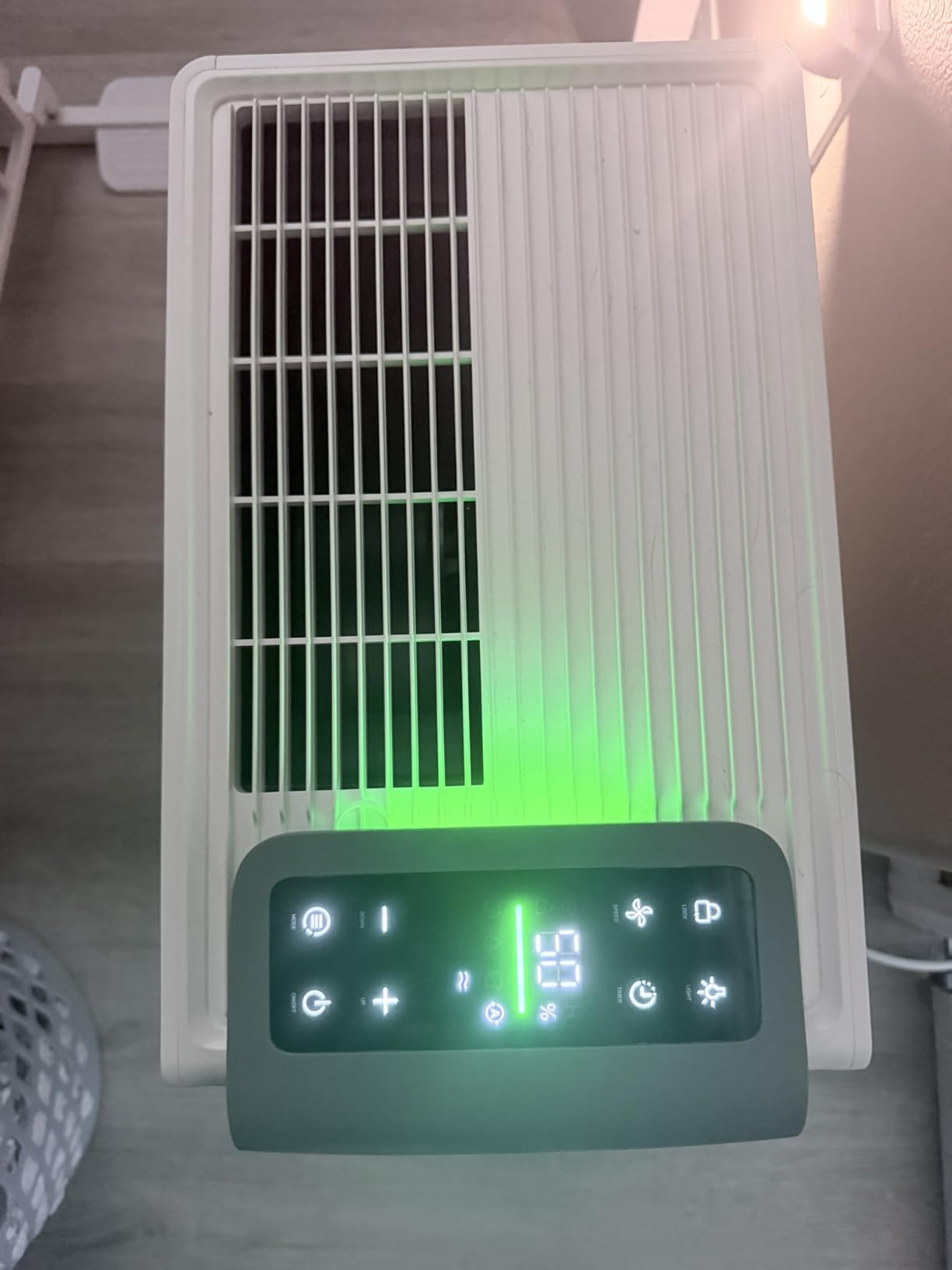
The rotary compressor with 7mm pure copper tubing and a hydrophilic aluminum foil evaporator is a higher-grade build than the piston compressors and plastic coil assemblies common at this capacity.
Its defrost sensors permit operation down to 65F, which is where a lot of residential units start icing up. That makes it a safer pick for a cool basement where the temperature dips overnight.
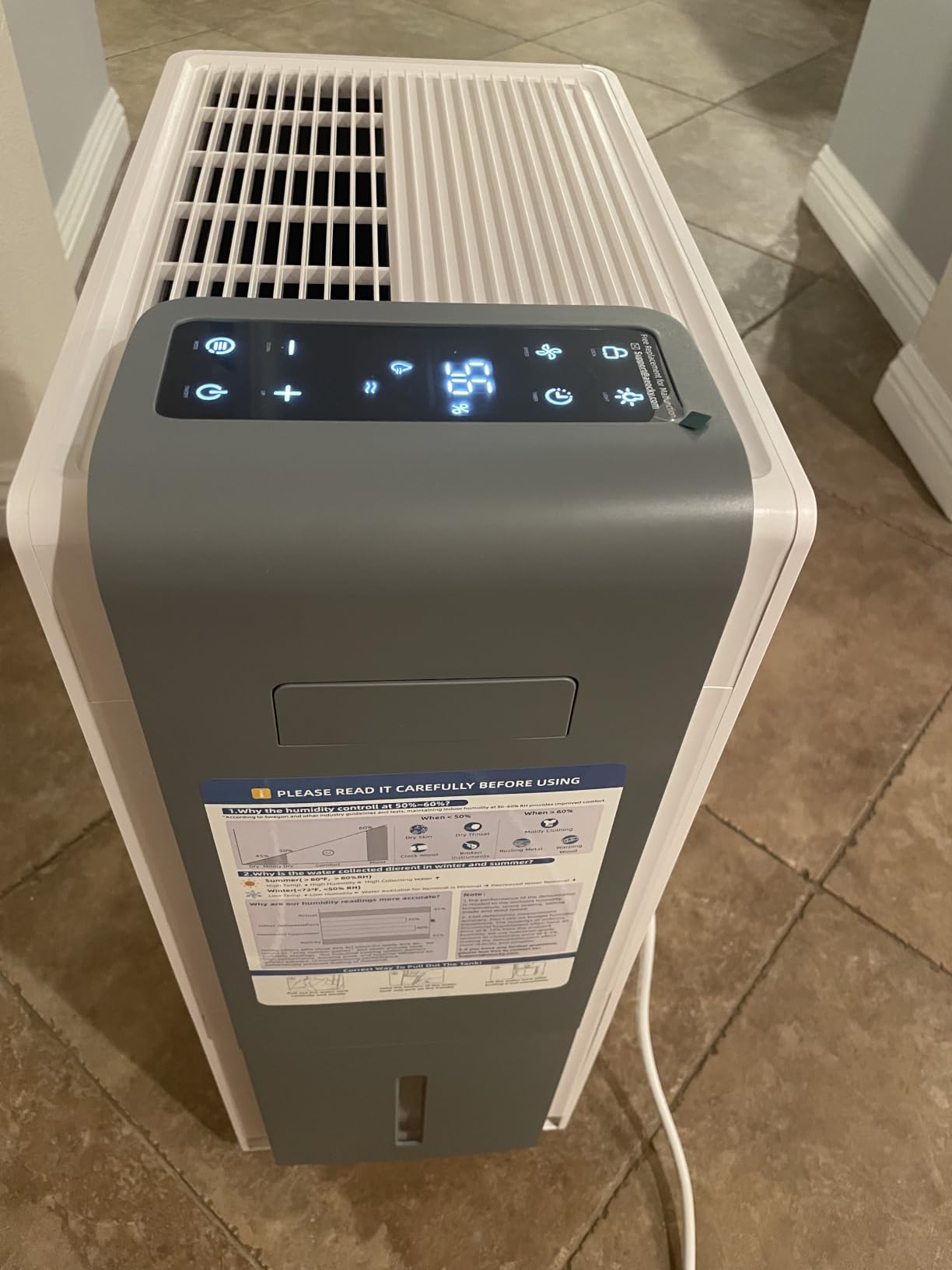
What ENERGY STAR Most Efficient changes over a year
At 280 watts, this is the lowest draw of any 50-plus pint unit in the roundup. On a machine that runs many hours a day in a humid season, that difference compounds across months of continuous duty.
Because efficiency is part of the rating, this unit also does not need to be oversized to hit its target humidity. Rated capacity and real capacity stay closer together.
Where this unit is the wrong choice
The body is only 8.66 inches wide, which is narrower than most competitors. That narrow profile needs an open stretch of floor or shelf with nothing else crowded in beside it.
Its smart features, including power-off memory, only work as well as the humidity compensation algorithm allows, so actual output shifts with the mode you select. Set it in constant mode if predictability matters to you.
4. HUMILABS 50 Pint: Best for Mid-Size Basements
Dehumidifier for Basement with Drain Hose 4500 Sq.Ft – 50 Pint 1.7 gal Tank
- Strong real-world extraction reported by owners
- Quiet enough to run in a bedroom
- Compact footprint
- Automatic shutoff when the tank fills
- Drain hose included in the box
- Small tank needs several empties a day
- Top-mounted controls are dim and awkward
- Tank lacks a grip surface
This is the middle-of-the-list workhorse, and owners report 25 to 30 pints a day of real extraction rather than the rated 50. That gap is normal for most units, but this one is honest about it in reviews.
The included drain hose is a genuine advantage over several competitors in this list. For a basement with a floor drain, you can hook it up out of the box rather than shopping for a garden hose first.
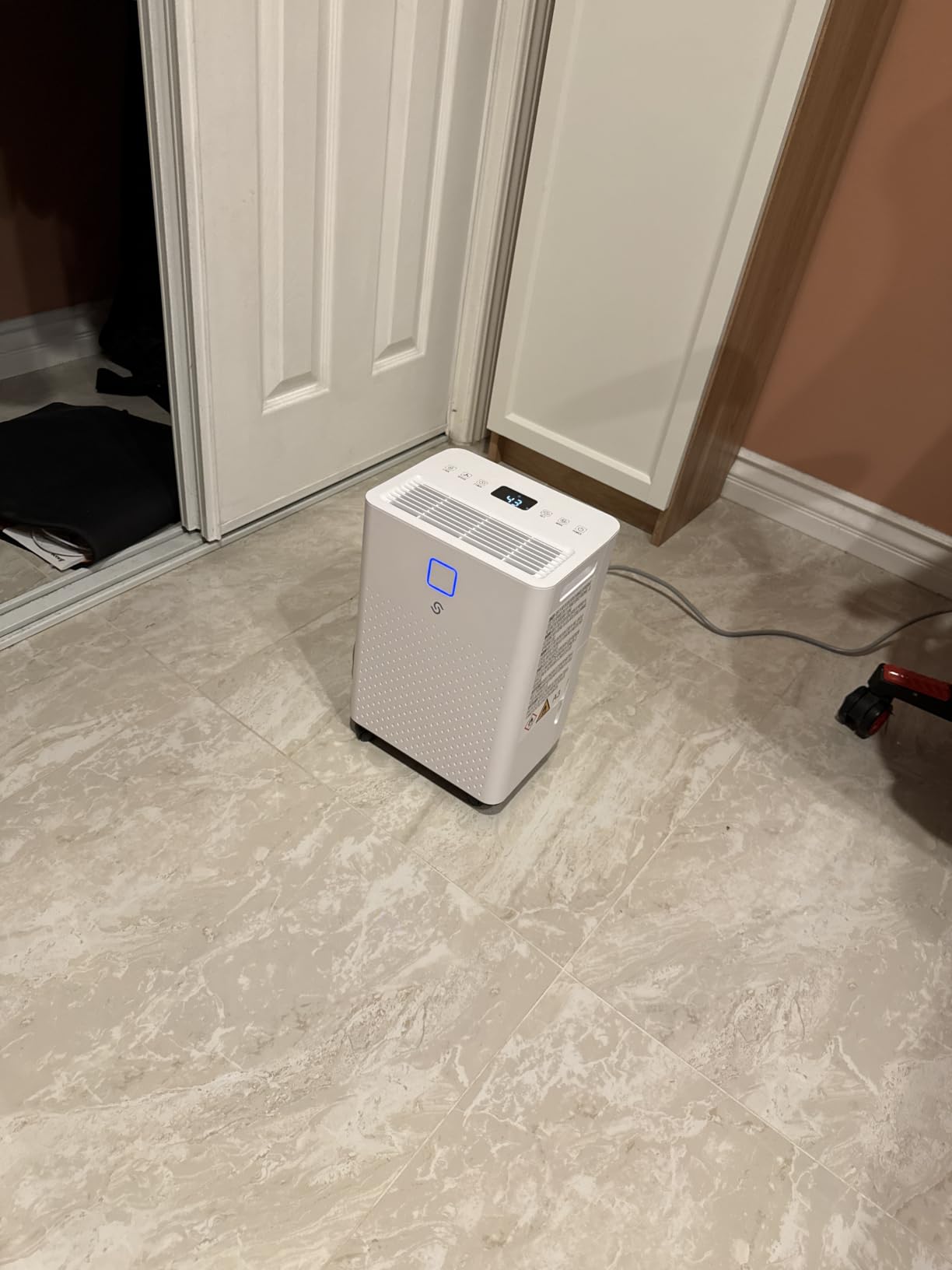
Four operating modes cover dehumidify, dry, auto and sleep, with a 30 to 80 percent humidity range and a 24-hour timer. That is a fuller control set than most machines at this capacity.
What frustrates owners most is the tank. At this extraction rate in a damp basement it fills several times a day, and the reservoir has no handle, so it spills on the way to the sink.
When a mid-size basement is the sweet spot
Basements in the 1,000 to 1,100 sq ft range are where most owners land on a 50-pint machine, which is exactly this unit’s territory. Owners in r/basement discussions consistently describe 50 pints as the right ceiling for that size unless the humidity is severe.
Going bigger only pays off if moisture is genuinely entering the space. Otherwise you are paying for capacity you will never use, and the compressor runs longer for the same result.
Where this unit is the wrong choice
The top-mounted control panel with dim readouts is genuinely hard to interpret, particularly if you set the unit on a table or shelf at chest height. Check the display before you buy.
Several reviews also describe units arriving on their side and needing to stand upright for a period before first use. Ask about that if your unit is boxed and sealed.
5. Waykar 80 Pint YDZ-80: Best for Cold Basements
- Strong whole-room drying at 80 PPD
- Auto defrost rated down to 41F
- Self-drying cycle after shutdown
- Four casters and a carry handle
- ENERGY STAR certified
- 3.5L tank fills fast without a drain line
- Some owners end up relying on hose drainage entirely
Cold basements are where most large-room dehumidifiers fail, because the evaporator coil drops below freezing and ices over. This unit is rated to operate down to 41F, which is a genuine step past the 65F floor most competitors stop at.
The self-drying cycle is the sleeper feature. After shutdown it runs a drying routine on the internal components, which is the single best defense against the mold and corrosion problems that end compressor life.
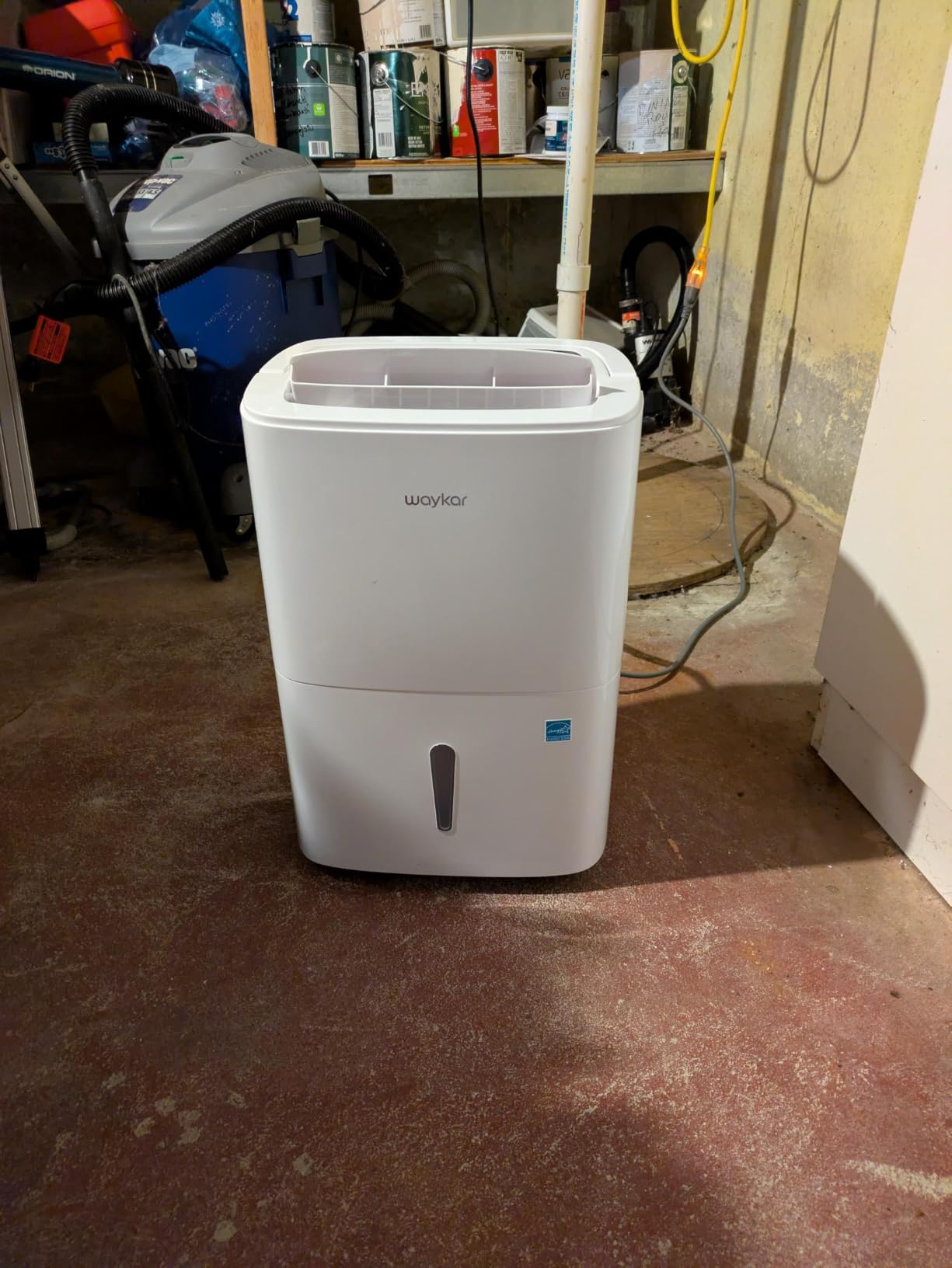
At 62 pints per day at 86F and 80% relative humidity, this is a genuine basement-grade figure rather than a saturation number, and the 300-watt draw keeps energy use reasonable.
Mobility is unusually good here. Four smooth-rolling casters, a top carry handle and a cord keeper mean one person can move 28.6 pounds between a basement and an upstairs room.
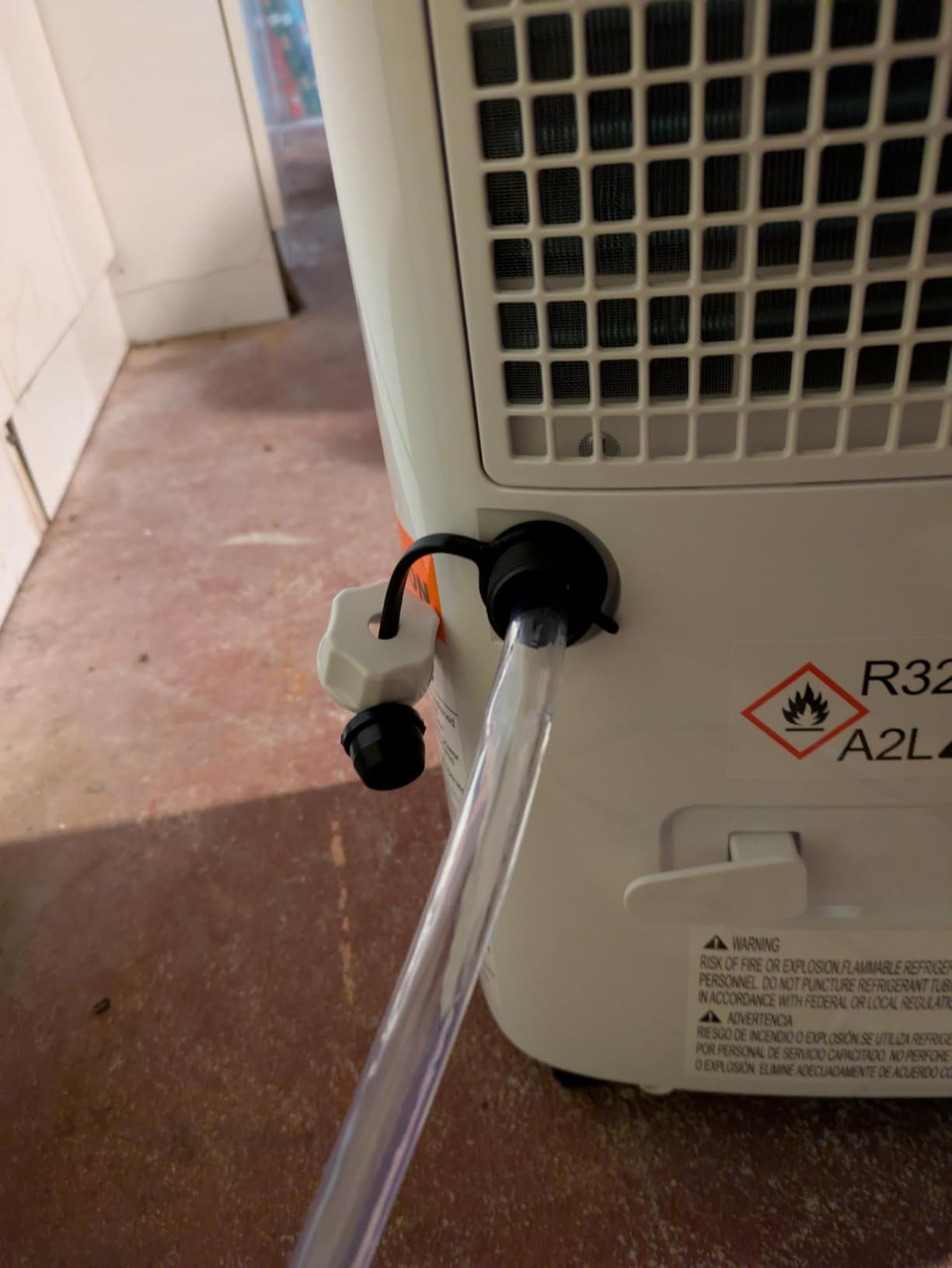
Why the 41F defrost rating changes your basement plan
If your basement sits between 50F and 65F through the winter, a unit that stops working in that range is useless for eight months of the year. The auto-defrost sensors here keep the compressor cycling correctly at those temperatures.
Paired with a drain hose, it can run unattended through the cold season, which is when humidity problems in basements usually peak.
Where this unit is the wrong choice
The 0.92-gallon tank fills quickly in a genuinely wet space. Owners of damp basements report moving to continuous hose drainage rather than carrying the tank.
The 90F upper temperature rating is also the lowest in this group. In a hot, humid coastal summer above that threshold, this unit is not the right machine.
6. VEAGASO 34-36 Pint VG380: Most Versatile
VEAGASO 34-36 Pint/D, 2500 Sq.Ft Dehumidifier for Basement with Drain Hose
- Rated 4.5 stars from over 3000 reviews
- Strong moisture pull for the class
- Very quiet on low fan
- Recessed handle and 360 degree casters
- Two-year warranty with responsive service
- Tank is much smaller than the rating implies
- Noticeably louder on high fan
- Thin drain tubing can snap at the port
- 2500 sq ft claim is a stretch when wet
This is the entry point for serious dehumidification without a large-capacity machine, and it earns its place because 34 to 36 pints per day is real capacity for a mid-size room or a garage rather than a token figure.
Three modes cover dehumidify, a dedicated clothes drying mode, and continuous operation, with an LED touchscreen showing live humidity and a 1 to 24 hour timer.
Sleep mode runs at or below 40 dB, which is the quietest published figure in this roundup. It makes the unit viable in a space where a louder compressor would be intolerable.
The catch, repeated constantly in reviews, is the 0.53-gallon tank. It is small relative to the pint rating, so in damp conditions you are emptying it several times a day unless you hook up a hose.
When a smaller unit is genuinely the smarter buy
If your space is a 1,500 to 2,500 sq ft room with moderate humidity rather than a wet basement, a 35-pint unit is correctly sized. Buying 80 pints for that space means it cycles in short bursts and never builds up a useful run time.
Owners in workshop and garage threads on r/HomeMaintenance treat this class of machine as utility hardware, running it continuously with a hose attached and ignoring it entirely.
Where this unit is the wrong choice
Do not lean on the 2,500 sq ft coverage claim in a damp space. Several buyers report the unit underperforming that figure, which is a coverage claim tested under moderate conditions rather than a wet room.
The included drain tubing is thin plastic and can snap off at the port. If you are hardwiring drainage, plan to replace it with a proper hose immediately.
7. KNKA 80 Pint PD30MA-20: Best for Bedrooms and Living Spaces
KNKA Energy Star 5500 Sq.Ft Dehumidifier for Basement, Max 80 Pint/Day
- Noticeable humidity drop within days
- Quiet enough to sleep beside
- Very responsive customer support
- Drain hose enables unattended running
- Real-time humidity display
- Internal tank shape spills easily when emptying
- Full-tank shutoff sensor reported unreliable
- 5500 sq ft coverage claim overstated
- Lowest star rating in the group
This is the one to consider if the large room is also a bedroom or a lived-in living space. At 40 to 45 dB with an optimized compressor and vibration-reducing design, it is quiet enough to sleep beside, which very few 80-pint units manage.
The display and indicator lights can be switched off entirely for sleeping, which is a small detail that matters more than it sounds when the machine sits across the room from your bed.
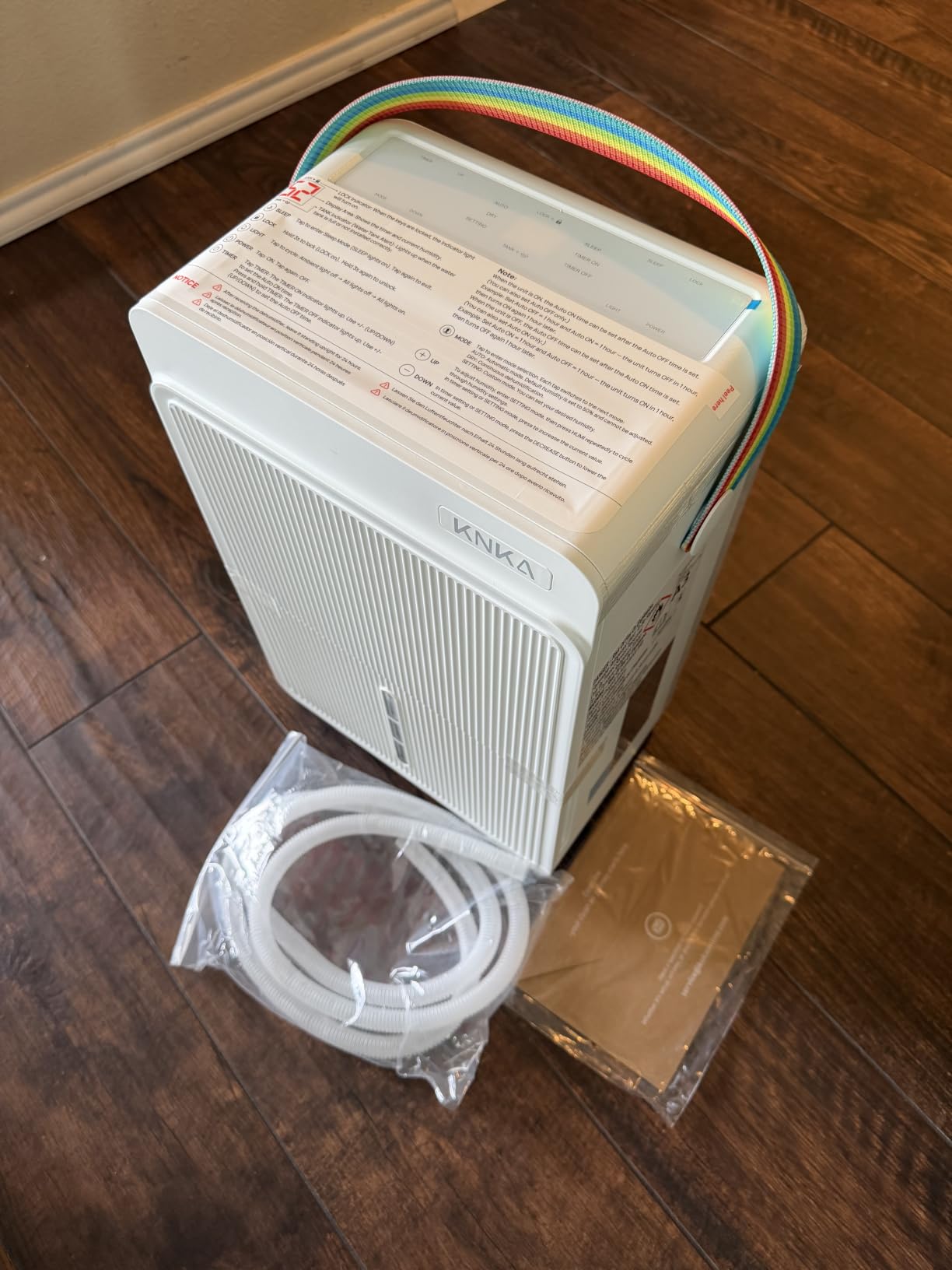
It comes with a 6.56 ft drain hose, the longest included hose on the mid-size units here, and supports a 10 to 80 percent setting range across auto, dry and manual modes.
The honest weakness is the tank design. It wraps around the compressor core with no grip surface, and owners report spilling during every removal.
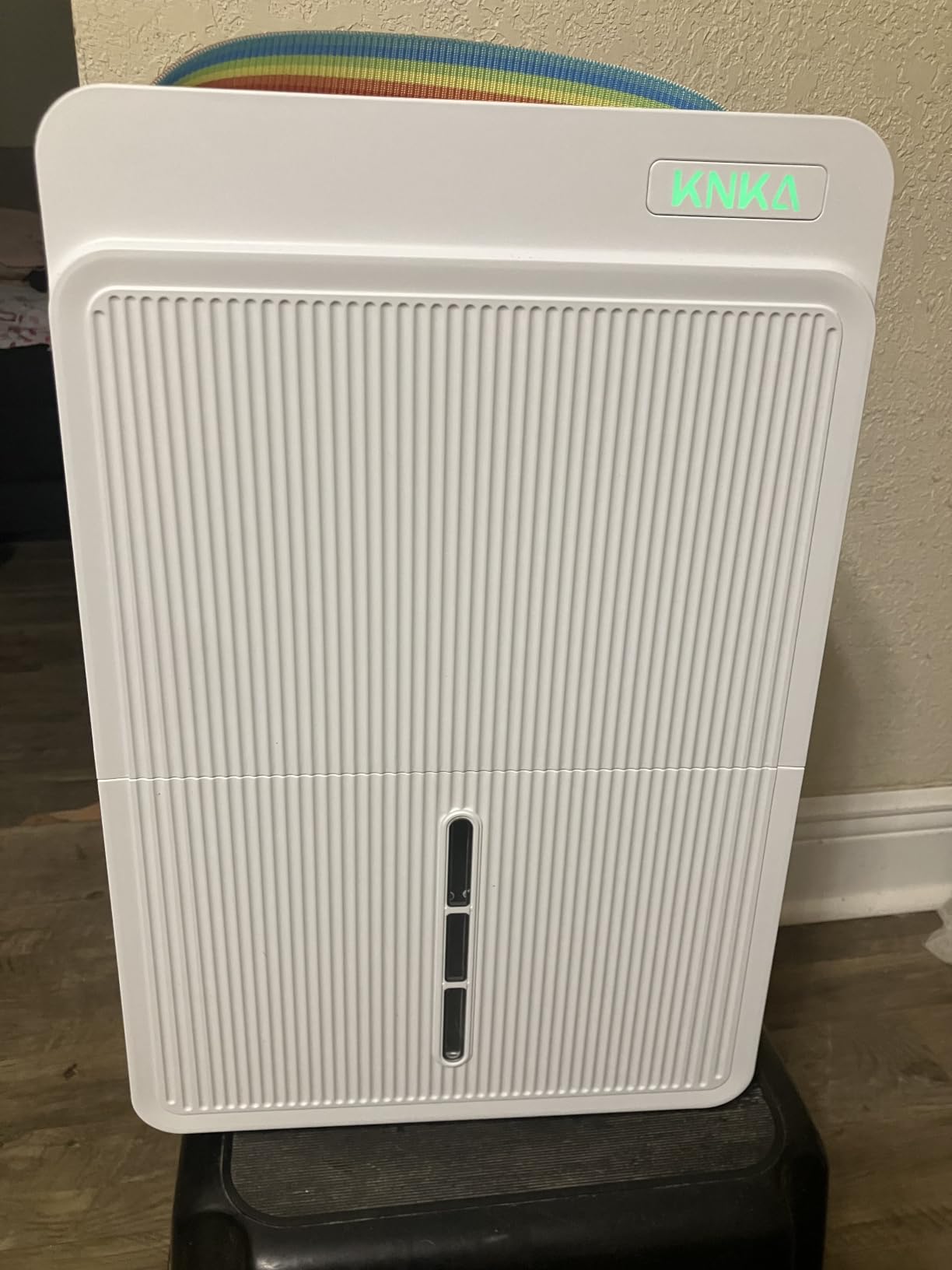
What makes a unit bedroom-quiet
Quietness at this capacity comes down to the compressor itself, not the fan setting. A unit that throttles its fan to hit a low number will take longer to work and still cycle the compressor hard.
This one reaches low output with a compressor that runs smoothly, and the auto mode default of 50% relative humidity keeps it cycling less often than a manual setting would.
Where this unit is the wrong choice
Reliability is the issue. It carries the lowest rating in the group at 4.1 stars with a 14 percent one-star share, and buyers specifically report the full-tank auto shutoff sensor failing on some units.
An unreliable shutoff is serious in a finished room, since it means the machine can keep filling with nobody watching. If you cannot supervise it, use continuous drainage.
8. LUKO 30 Pint D010: Best for Laundry and Indoor Clothes Drying
- Lightest unit in the group at 4.3 pounds
- Genuine 30 PPD extraction reported by owners
- 45 dB with a dedicated sleep mode
- Clothes drying mode for wet weather
- 3.3 ft drain hose included
- 0.528 gallon tank fills very fast
- 2000 sq ft is modest for a large room
- ABS plastic body less durable than metal
This is the lightest machine here by a wide margin at 4.3 pounds, and that single fact changes where you can use it. You can carry it between a laundry room, a bedroom and a garage without a dolly.
The dedicated laundry dry mode is the reason to buy it. Running a compressor dehumidifier over a drying rack pulls moisture out of the air so fabric dries faster in a humid climate, without the heat cost of a dryer.
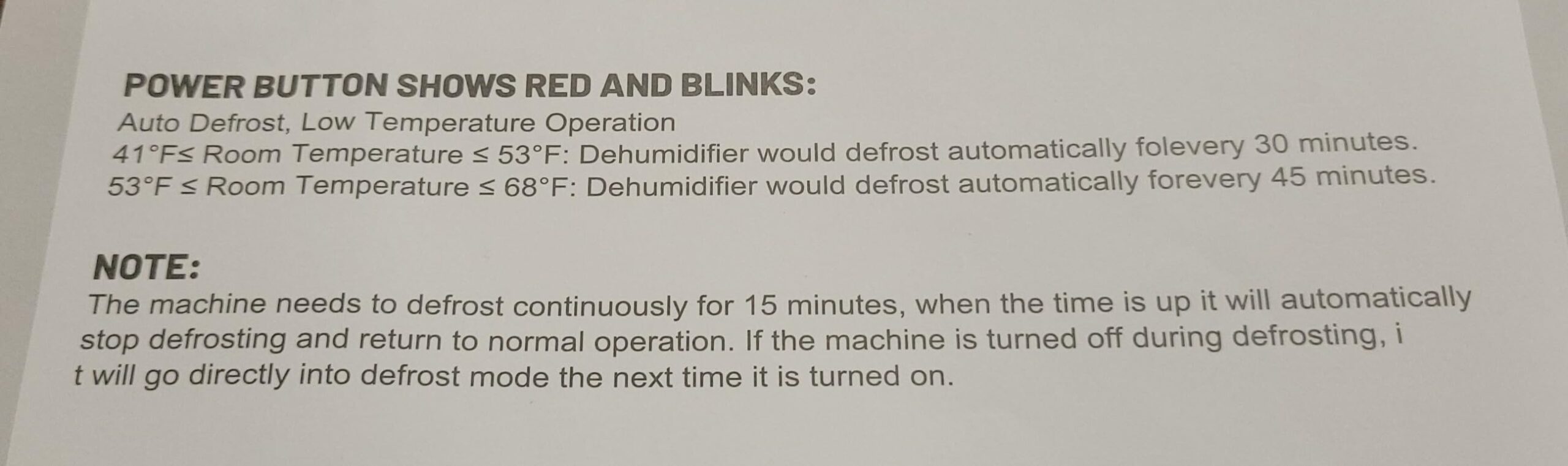
Three air inlets arranged for 360 degree intake give it better circulation than the shape suggests, and 45 dB is quiet enough to run while you sleep.
Two things limit it. The 0.528-gallon tank is the dominant complaint in reviews, and 2,000 sq ft of coverage is modest beside the 5,000 to 7,000 sq ft units elsewhere in this list.
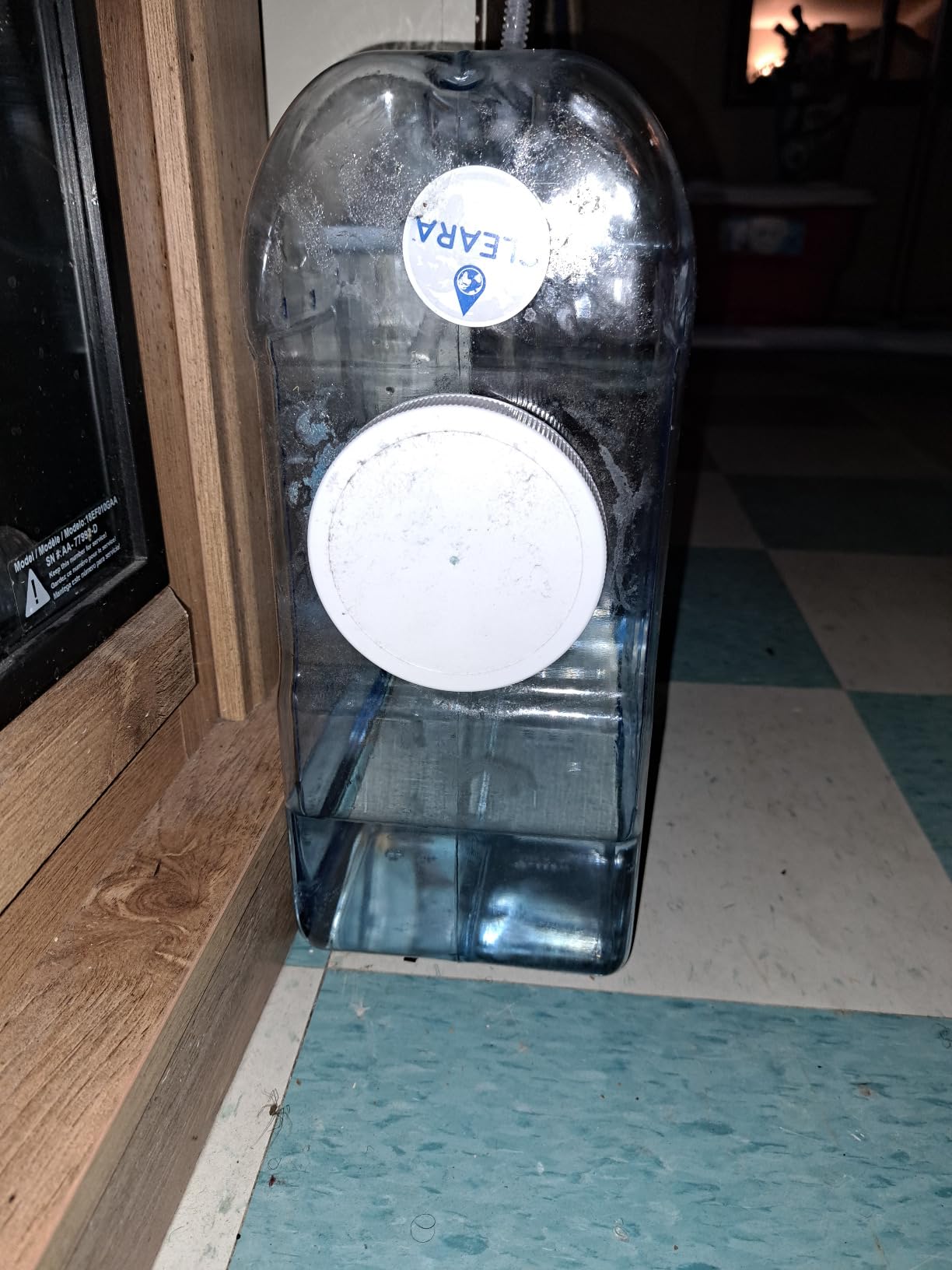
Why a dehumidifier beats a dryer for indoor laundry
A drying rack in a humid apartment can take a full extra day, because warm saturated air holds moisture instead of releasing it. Removing that moisture from the room air is exactly what a dehumidifier does.
At 30 pints per day, this unit can pull roughly four gallons out of an enclosed laundry room in a day, which is more than enough for a household load of washing.
Where this unit is the wrong choice
It is not a large-room dehumidifier in the sense this article is about. If you have a 3,000 sq ft wet basement, this machine will run permanently without ever catching up.
The ABS plastic shell is also less durable than the metal casings on the crawlspace and commercial units, so expect it to be the first thing you eventually replace.
9. ALORAIR Sentinel HD55: Best for Crawl Spaces
ALORAIR 113 Pints Crawlspace Dehumidifier for Commercial, Sentinel HD55
- Metal casing built for crawlspace conditions
- Tankless design drains with no bucket
- Fits a standard crawlspace opening
- Strong warranty on the refrigeration system
- Compact enough to carry between jobs
- Coils ice up and cut extraction
- Steady background hum is audible
- Replacement filters are expensive
- Some units failed at 1.5 to 2 years
This is the machine designed specifically for an enclosed, inaccessible crawl space, and that changes the requirements completely. A crawlspace is unreachable after installation, so everything about this design is built around never having to visit it again.
The tankless design is the defining feature. Rather than holding 14.12 gallons of water in a bucket, it drains continuously, which means no overflow risk in a space you cannot see.
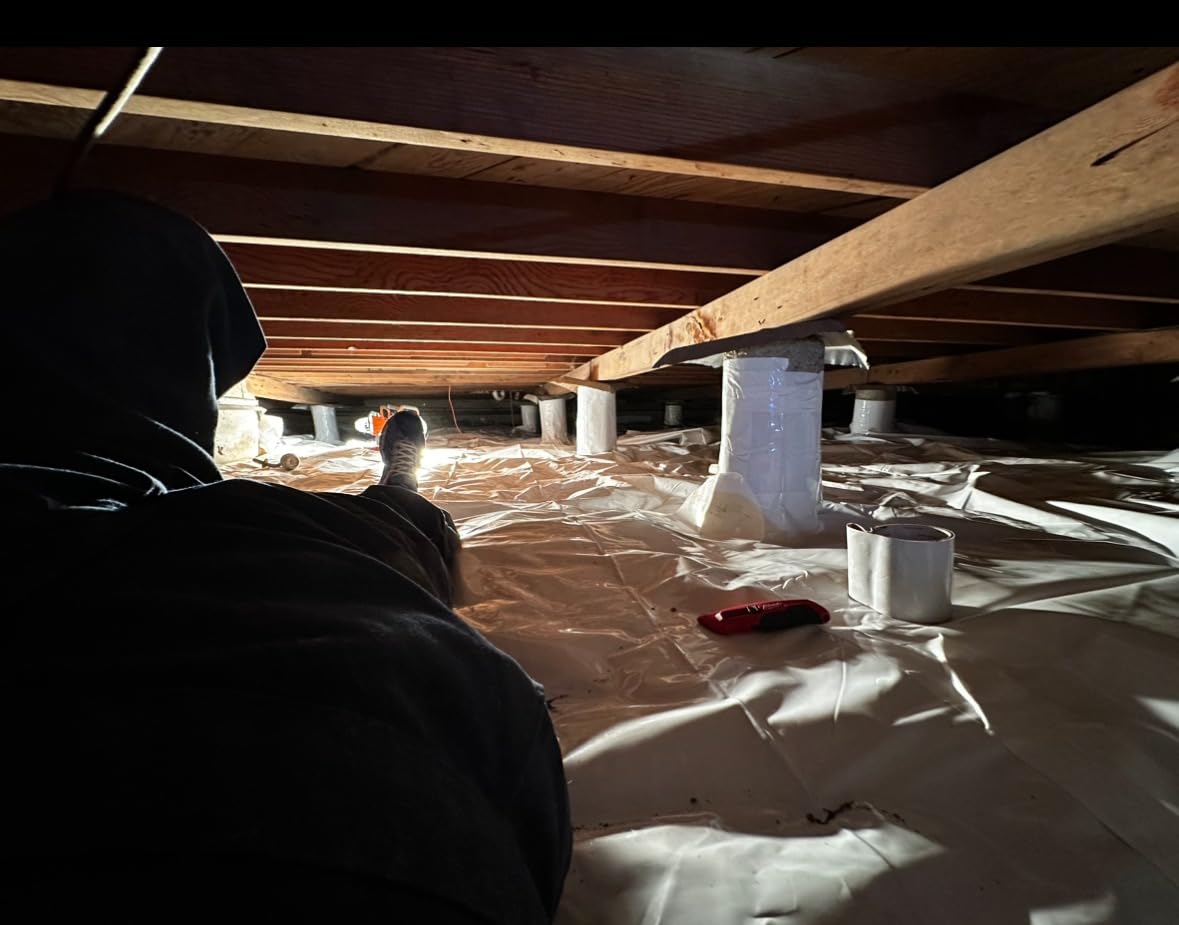
Owners report it fixing chronically damp crawlspaces and basement mold problems within days. The 19.2 by 12.2 by 13.3 inch body fits through a standard 12.25 by 16 inch crawlspace opening.
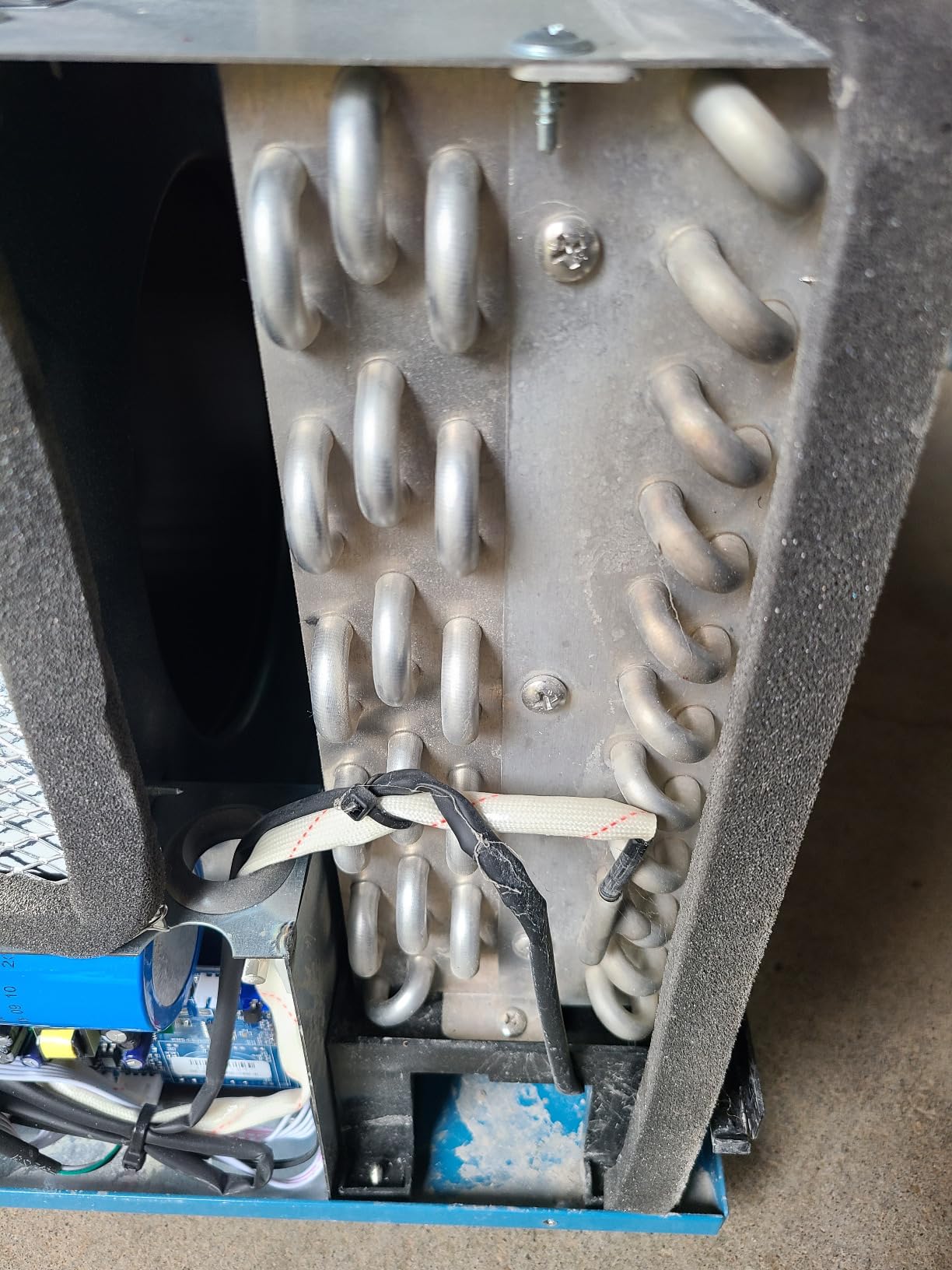
The caveat is real: several owners describe evaporator coil icing that cuts into extraction, and a constant low hum that is audible in a finished adjacent space.
Why AHAM rating matters most in crawl spaces
This unit’s headline figure is 113 pints per day at saturation, but its AHAM rated capacity is 53 pints. That is the number to plan around, and it is less than half the headline claim.
In a crawl space at 50 percent relative humidity, assume the AHAM figure. Planning around the saturation number leads to sizing errors on almost every purchase in this category.
Where this unit is the wrong choice
Coverage is listed at 1,200 sq ft, which sounds small until you remember a crawl space is an enclosed, poorly ventilated volume with almost no air exchange with the living area above.
Pair it with a condensate pump if your drainage point sits below the unit, since the design has no internal lift. Reports of refrigerant or controller failures at one and a half to two years also exist, though the warranty covers the refrigeration system far longer.
10. Waykar 125 Pint AFW2.0DPM: Best for Water Damage Drying
- Pump drains vertically up to 16.4 ft
- Metal casing resists corrosion
- 10 to 90 percent RH for drying work
- 5-year compressor warranty
- Adjustable feet cut vibration
- Heaviest unit here at 49.8 pounds
- Highest power draw at 530 watts
- Remote control sold separately
- Needs two people to move
Water damage is a different job from humidity control, and this unit is built for it. The 10 to 90 percent humidity range is far wider than the usual 20 to 80 percent, which lets you push a structure much drier than comfort settings would allow.
The built-in pump is the reason to look at this model. It drains vertically up to 16.4 feet, where a standard gravity drain gives up around 10 to 13 feet, so it can discharge to a drain or sump well far below it.
A separate 6.6 ft gravity hose is included for when the drain sits above or level with the unit, so you are covered in both installation directions.
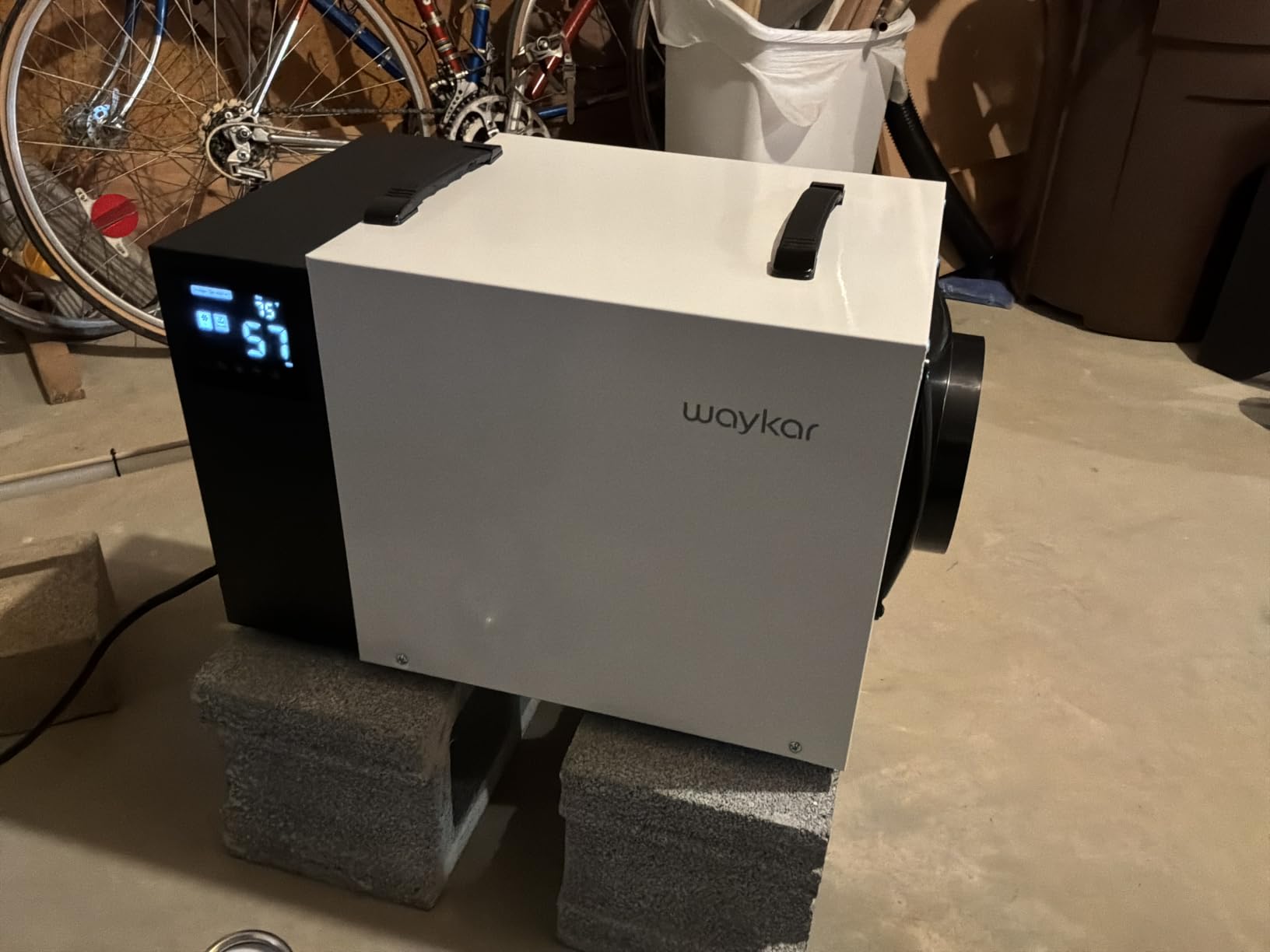
At 530 watts it draws more power than anything else here, and at 49.8 pounds it is the heaviest. Both are honest costs of moving this much air.
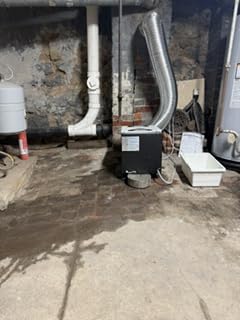
What makes a drying dehumidifier different
Restoration work needs low dew points, not just lower humidity readings. The wide 10 percent floor lets you pull the structure below what any normal comfort setting would reach.
The 177 CFM circulation rating moves more air than the residential units here, which matters when the goal is drying wet building materials rather than conditioning a room.
Where this unit is the wrong choice
If you only need to manage ordinary basement humidity, this is more machine than the job requires. It draws more power and carries a higher weight than any residential unit in this roundup.
The remote control is sold separately, so budget for it if you want remote changes during a multi-day drying job. Two people are needed to move the unit safely.
AHAM Rating vs Up To Capacity: Why Oversizing Costs You
The clearest example in this roundup is the ALORAIR Sentinel HD55. Its listing leads with 113 pints per day, while its AHAM rated capacity is 53 pints. Those are not two ways of stating the same measurement.
Saturation capacity is measured at near-saturated conditions around 95F and 90 percent relative humidity. AHAM rated capacity is measured at a realistic 80F and 60 percent. Sizing on the saturation figure is how people end up with a machine twice the size they need.
Oversizing wastes money in two ways. You pay more upfront for compressor capacity you will never use, and because a large unit cycles on and off in short bursts rather than running steadily, it consumes more electricity for the same moisture removed.
Undersizing is equally bad. A unit that cannot keep up runs permanently, never reaches its target humidity, and wears out faster from never having a recovery period. Aim for rated capacity that matches your square footage and dampness, then stop.
Built-in Pump vs Gravity Drain: Which One You Actually Need
For a large room, treat continuous drainage as the requirement rather than the upgrade. Any unit over 30 pints per day in a damp space will fill its tank overnight, and every one of those trips to the sink is a reason people eventually stop running the machine.
A gravity drain works when the drain sits at or below the unit, and it is all the HUMILABS, LUKO and VEAGASO units need. Their included hoses of 3.3 to 6.5 ft cover a nearby floor drain in most basements.
A built-in pump matters when the drain is above the unit, when the unit sits in a crawlspace, or when you want it mounted high on a wall to free the floor. The Waykar 125 Pint lifts water 16.4 ft vertically, which no gravity setup can match.
Check lift distance before buying a pumped unit. Owners on r/HomeImprovement repeatedly flag included hoses that are too short to reach the drain, which is the single most common setup mistake.
Noise Reality Check for Large-Capacity Dehumidifiers
The published figures in this category start at 40 dB, on the VEAGASO in sleep mode, and climb from there. A 30 dB bedroom is not achievable with 80 pints of compressor capacity, and anyone claiming otherwise is measuring at a distance.
Two units here publish honest low figures: the VEAGASO at 40 dB or below and the KNKA at 40 to 45 dB. The Waykar 120 Pint manages 42 dB at its rated output, which is genuinely impressive for the capacity.
For a bedroom or a quiet living space, the KNKA is the only 80-pint class unit here I would run at night, and only with the indicator lights switched off. For a basement or garage, noise matters far less.
On the other side, users with unfinished spaces routinely describe their dehumidifiers as very loud and simply accept it, because the alternative is persistent mold. Placement helps more than any spec: keep the unit central rather than against a wall, and away from where people sit. A related consideration for a finished space is our best soundbars for large rooms guide, since audio and humidity both shape how a room feels.
The Three Buying Rules for Large Rooms
Capacity. Match rated AHAM pints per day to your square footage and how damp the space is, using roughly 10 pints per 1,000 sq ft for normal rooms and one tier higher for basements or garages. Ignore the coverage square footage as a buying criterion.
Drainage. For anything above 30 pints per day in a damp space, continuous drainage is what makes the machine usable. If the drain is higher than the unit, you need a built-in pump and a stated lift distance above 10 feet.
Efficiency and construction. Compressor units are the only sensible choice for large rooms; thermoelectric dehumidifiers are for small enclosed spaces and cannot scale. Among compressors, ENERGY STAR certification and a rotary compressor with copper tubing predict longer service life, and they also matter for how much noise you get.
Two smaller points carry real weight. Auto-defrost capability decides whether the unit survives a cold basement, and the operating temperature floor should be below your basement’s winter low. Finally, verify the warranty length on the compressor specifically, since that is the part that fails first.
Frequently Asked Questions
How big of a dehumidifier do I need for a 2000 square foot house?
For a 2,000 sq ft house at moderate humidity, a 30 to 50 pints per day unit is the right answer. Plan roughly 10 rated pints per 1,000 sq ft for normal interior rooms, and move up one tier for basements, garages or any space where moisture is actively entering. Judge capacity by rated AHAM pints per day, not the up-to saturation figure.
Is it better to buy an oversized dehumidifier?
No. Oversizing costs you twice: you pay more upfront for capacity you never use, and a large unit cycling in short bursts burns more electricity than a correctly sized one removing the same moisture. Undersizing is equally bad, since the compressor runs continuously and wears out faster. Match rated capacity to square footage and dampness instead.
Which dehumidifier is best for extreme humidity?
For severe or flood-adjacent moisture, the Waykar 120 Pint leads this group at 120 pints per day, and the Waykar 125 Pint goes further with a built-in pump and a 10 to 90 percent humidity range for drying work. For hot, saturated conditions above 90F, check the unit’s upper temperature rating before buying.
What brand of dehumidifier is the quietest?
Among the units tested here, the VEAGASO VG380 publishes the lowest figure at 40 dB or below in sleep mode, and the KNKA PD30MA-20 runs at 40 to 45 dB while still delivering 80 pints per day. The Waykar 120 Pint manages 42 dB at full rated output. No 80-pint compressor reaches true bedroom-quiet levels.
Do I need a dehumidifier with a hose connection?
Yes, for almost any large-room use. Above 30 pints per day in a damp space the tank fills overnight, and constant emptying is why many owners stop running the machine. A gravity hose suits a nearby floor drain, while a built-in pump is needed when the drain sits above the unit or you want floor space kept clear.
What is the best dehumidifier for continuous use?
The hOmeLabs 50 Pint is built for unattended running, with automatic shutoff when the tank fills, a continuous drainage outlet, automatic restart after power loss and Wi-Fi control so you can check it from your phone. Pair it with a drain hose, since none is included. Units with reliable full-tank sensors matter most for continuous duty.
The Best Dehumidifier for Large Rooms in 2026: Our Final Verdict
The best dehumidifiers for large rooms come down to matching capacity to the space. For most households, the hOmeLabs 50 Pint K-66 is the pick: real rated capacity, the largest coverage claim in the group, Wi-Fi control and 25,000-plus reviews backing it. Buy a garden hose for it and it runs unattended year-round.
Go larger when the space is genuinely wet. A 2,000 to 3,000 sq ft damp basement calls for the AEOCKY 80 Pint for efficiency or the Waykar 120 Pint for raw extraction, while a cool basement below 65F calls for the Waykar YDZ-80 rated to 41F. Crawl spaces and flood drying have their own answers in the ALORAIR Sentinel HD55 and the Waykar 125 Pint.
Tell us your room size, whether the drain is above or below the unit, and how damp the space gets, and we will narrow this down to a single unit.