

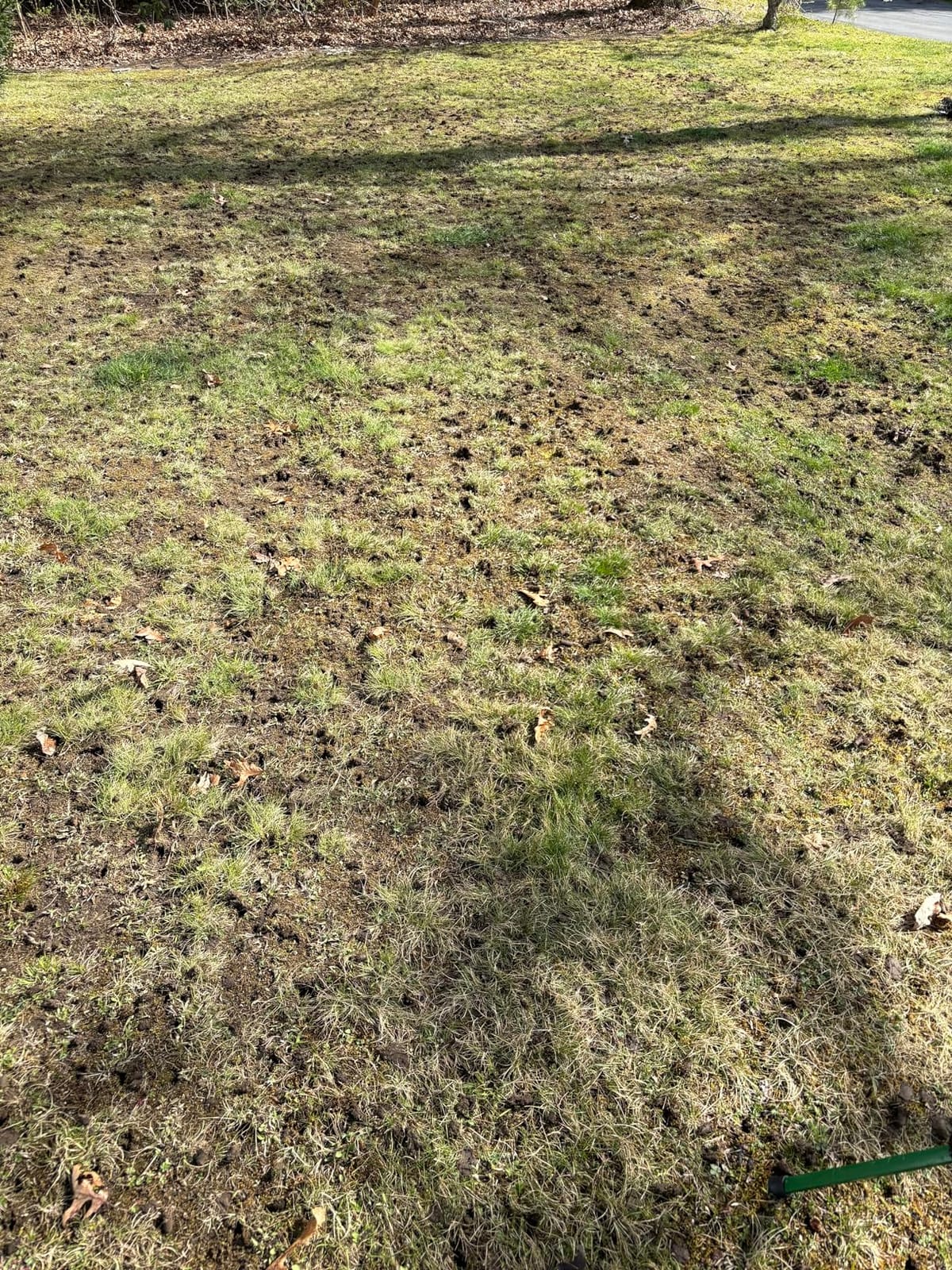
If your lawn stays soggy after rain, thins out in patches, or ignores every fertilizer you throw at it, the problem is almost always below the surface. Soil compaction squeezes out the air, water, and nutrients grass roots need, and a core aerator is the machine that fixes it. After a season of comparing designs and weighing which ones actually pull clean soil cores, here is my shortlist of the best core aerators for homeowners in 2026.
One clarification first, because most buying guides bury it. A core aerator uses hollow tines to punch into the ground and pull out plugs of soil and thatch, leaving holes that let air and water reach the root zone. A spike aerator uses solid tines that perforate soil without removing any, which does very little for compaction. If a listing never mentions plugs or cores, it is not a core aerator.
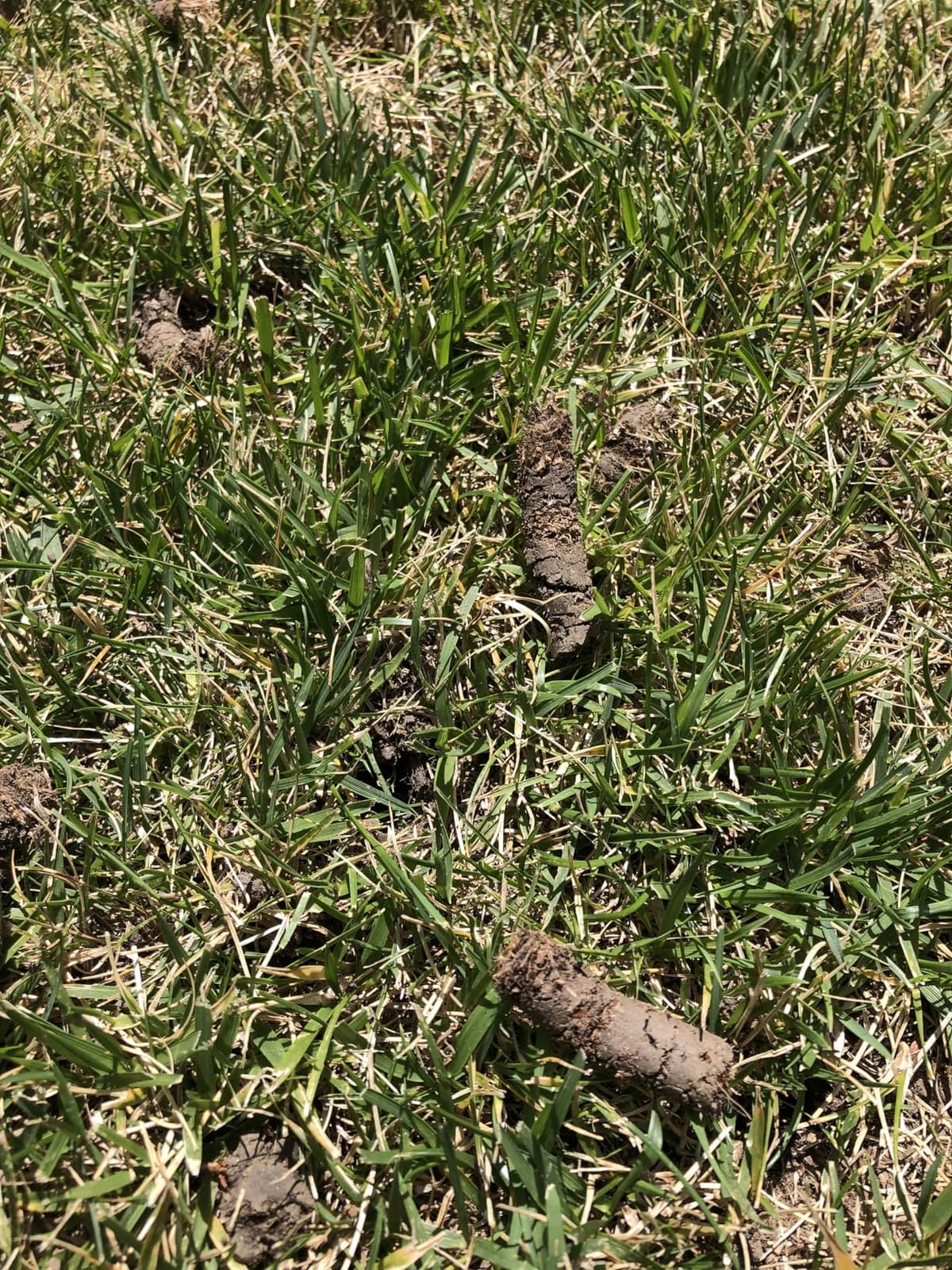
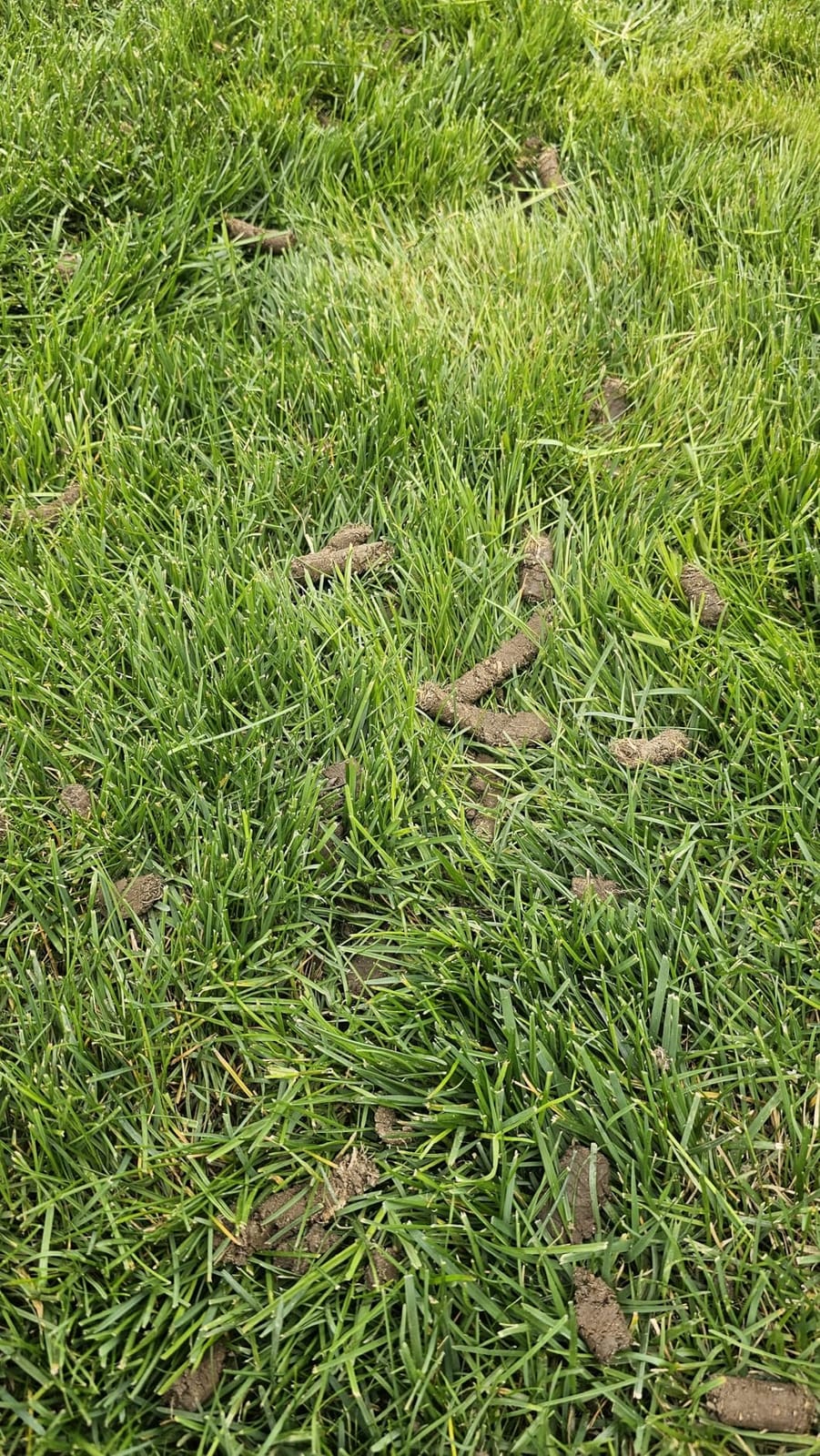
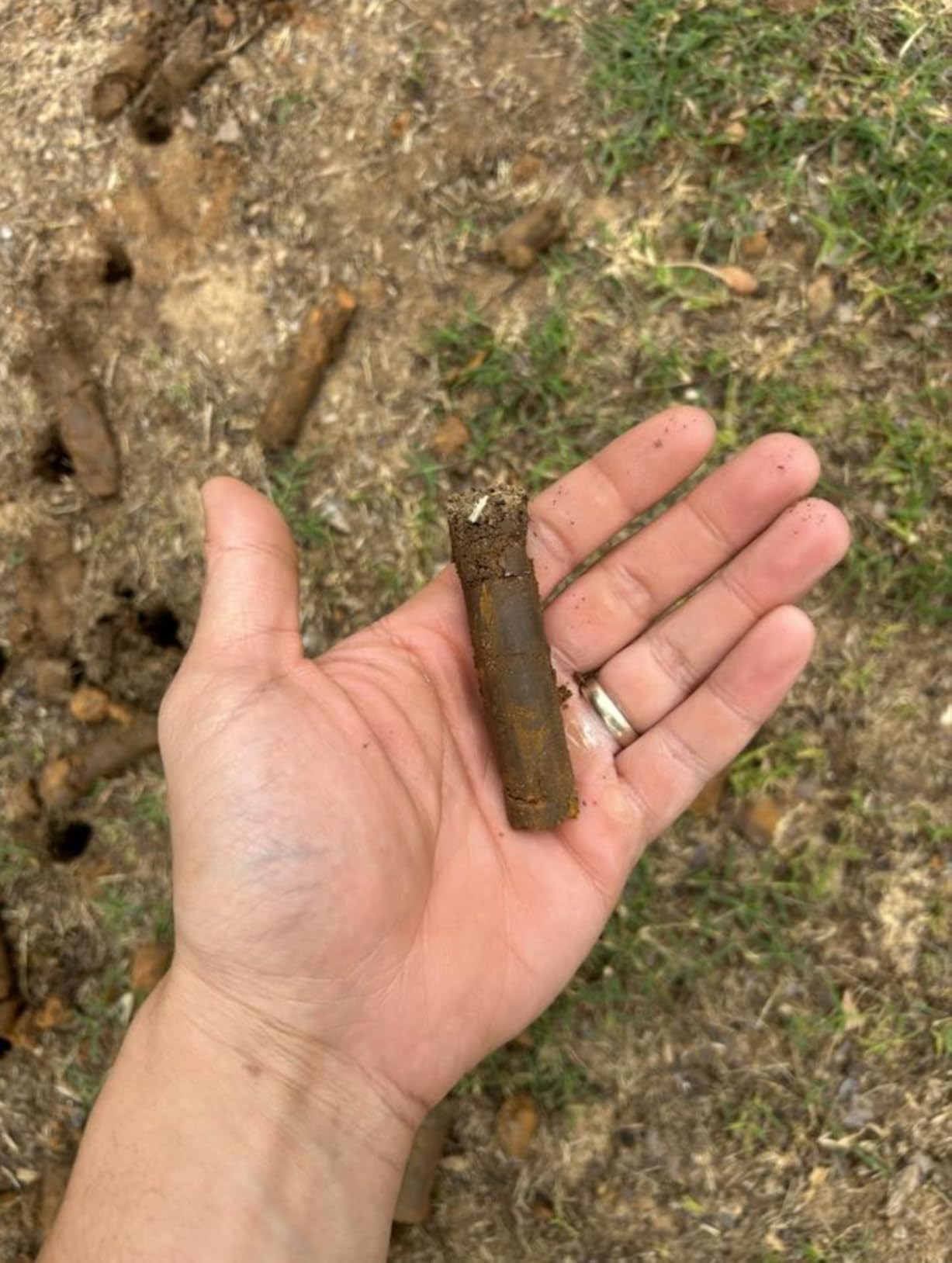
Two other things decide how well any machine works. Soil moisture is everything, because hollow tines meeting dry hard ground bend or smear while the same tines in moist soil pull a clean core on the first push. And the plugs are the scorecard: a good core is three to four inches long, holds its shape, and crumbles in your hand. If you get torn flat smears instead, the machine needs more weight behind it or a wetter day.
Table of Contents
Top 3 Core Aerator Picks for Homeowners in 2026

Yard Butler Coring Aerator
- Dual soil plugs with foot bar
- Powder-coated steel
- Long handle for back comfort
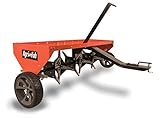
Agri-Fab 48 Inch Tow-Behind
- 48 inch width
- 32 self-sharpening knives
- 3 inch plug depth
- 175 lb weight tray

Brinly 40 Inch Tow-Behind
- 24 heat-treated steel spoons
- 3 inch plug depth
- 150 lb weight tray
- Independent rotating tine sections
The Yard Butler takes the top spot for its depth of owner history and its ability to handle spot work and small-lawn passes with no setup. The Agri-Fab is the pick if you own a riding mower and want a large property finished in an afternoon. The Brinly is the better-built tow unit, with independently rotating tine sections that take curves without tearing turf.
All 12 Core Aerators Compared Side by Side in 2026
Every machine below pulls real soil cores rather than perforating the lawn. The differences that matter day to day are tine type, core depth, how much lawn a pass covers, and how the machine travels across the yard. Two things this table cannot show you: how a machine feels in wet clay, and how much lawn you can cover before your arms give out. Both are covered in the reviews.
| Product | Specifications | Action |
|---|---|---|
| Yard Butler Manual Lawn Coring Aerator ID-6C |
|
Check Latest Price |
| Agri-Fab 48 Inch Tow Behind Plug Aerator |
|
Check Latest Price |
| Brinly 40 Inch Tow Behind Plug Aerator |
|
Check Latest Price |
 Landzie 42 Inch Hollow Tine Core Aerator Landzie 42 Inch Hollow Tine Core Aerator |
|
Check Latest Price |
 Dolibest 4 Plug Coring Aerator with Storage Tray Dolibest 4 Plug Coring Aerator with Storage Tray |
|
Check Latest Price |
 LawnVigor Non-Clogging Hollow Tine Aerator LawnVigor Non-Clogging Hollow Tine Aerator |
|
Check Latest Price |
 K.D STONEDGE Patented Rolling Coring Aerator K.D STONEDGE Patented Rolling Coring Aerator |
|
Check Latest Price |
 Xuperace Alloy Steel Hollow Tine Aerator Xuperace Alloy Steel Hollow Tine Aerator |
|
Check Latest Price |
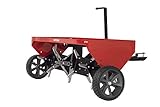 CRAFTSMAN 40 Inch Tow Behind Plug Aerator CRAFTSMAN 40 Inch Tow Behind Plug Aerator |
|
Check Latest Price |
 Hugeneroy Heavy Duty Hollow Tine Core Aerator Hugeneroy Heavy Duty Hollow Tine Core Aerator |
|
Check Latest Price |
 Zalawn 3 Non-Clogging Hollow Tine Aerator Zalawn 3 Non-Clogging Hollow Tine Aerator |
|
Check Latest Price |
 Step N Tilt V4 Core Aerator Kit Step N Tilt V4 Core Aerator Kit |
|
Check Latest Price |
1. Yard Butler Manual Lawn Coring Aerator ID-6C – The Longest Owner History
- Dual-plug coring design with a foot bar for extra downward force
- Long handle lets you work without bending
- Enormous review base for a manual coring aerator
- Powder-coated steel built for repeated seasonal use
- Slow on anything larger than a small lawn
- Cores stay on the surface until they break down
This is the one I keep coming back to, and the reason is simple: nobody else in the manual category has this many owners reporting back over years of use. My lawn has a compacted path down the middle where the kids cut the corner, and this is the tool I reach for when I want to fix one bad area rather than commit to a whole weekend.
You stand on the foot bar, drive the two plugs in, and step off. The foot bar matters more than it sounds, because it puts your full body weight over the tines instead of punching with an arm. The long handle is the other real win, and it kept my back comfortable through a full session.
Powder-coated steel is the right material for a tool that lives in a damp shed and touches wet soil every autumn, and owners confirm the frame holds up season after season. The only honest drawback is pace, since there is no engine and no wheels and every square foot is a step, a press, and a step again.
Who This Core Aerator Suits
Anyone with a small lawn, a worn path, or a few compacted patches to fix without buying a machine that needs a tractor. It is also the pick if your only question is whether core aeration does anything, since you can finish a visible patch in minutes and see the holes yourself. Knee and lower-back problems are the other group that should look here, because the foot bar transfers load through your skeleton rather than your arms.
Who Should Skip It
Skip it past a few thousand square feet, or if you are trying to fit aeration into an afternoon with a hard deadline. It is also the wrong tool for knocking loose thatch, because this machine pulls cores and no amount of foot pressure turns it into a dethatcher.
2. Agri-Fab 48 Inch Tow Behind Plug Aerator – Widest Swath for Big Lawns
Agri-Fab 48 In Tow Behind Lawn Plug Aerator with 32 Galvanized Knives and Universal Hitch
- Wide 48 inch swath covers large lawns fast
- 32 self-sharpening galvanized knives
- Weight tray takes up to 175 lbs for deeper cores
- Cantilever handle lifts it from the seat
- Requires a lawn tractor or garden tractor to pull
- Flat-free tires add rolling resistance
This is what I would look at first if you already own a riding mower and your lawn is beyond a single city lot. A 48 inch swath covers ground roughly three times faster than a push unit, and the fully enclosed weight tray lets you dial in penetration with a couple of concrete blocks.
Plug depth is listed at up to 3 inches, right in range for cool-season turf. The 32 galvanized knives are self-sharpening, so they keep cutting clean cores as they wear rather than rounding into smears, and owners on clay point to exactly that as the reason cores come out whole.
It weighs 94 pounds, which is normal for a tow unit and only a problem if you have no tractor to pull it with. This is not a machine you push across a yard on foot, and the cantilever transport handle exists so you can raise the tines from the seat rather than getting off to lift 94 pounds of steel.
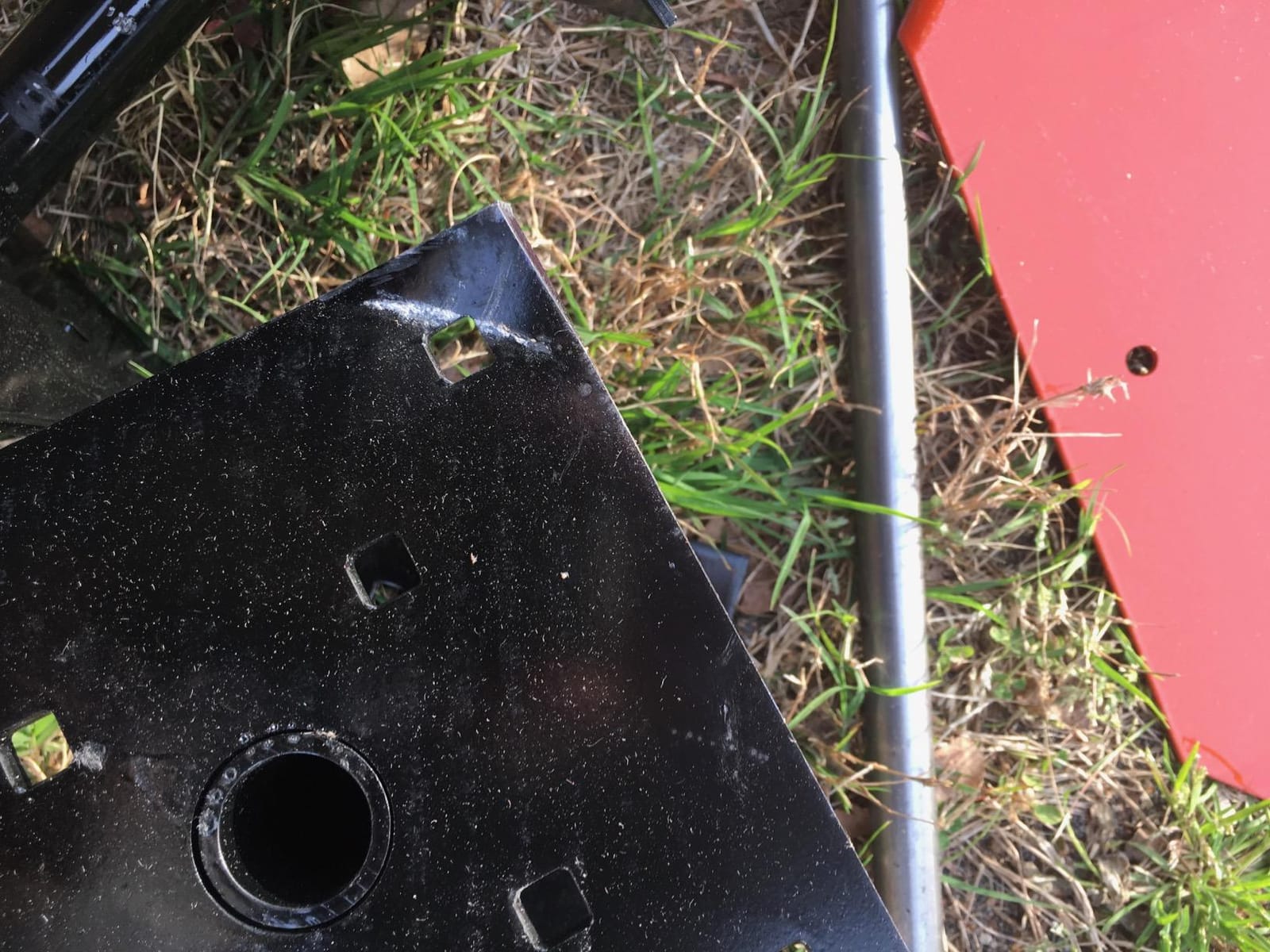
Flat-free tires never need inflating and will not go flat in the damp conditions when you will actually be using this, though they do add rolling resistance on pavement. At 35 by 60 by 36 inches, this needs a dedicated corner of the garage and it does not store vertically.
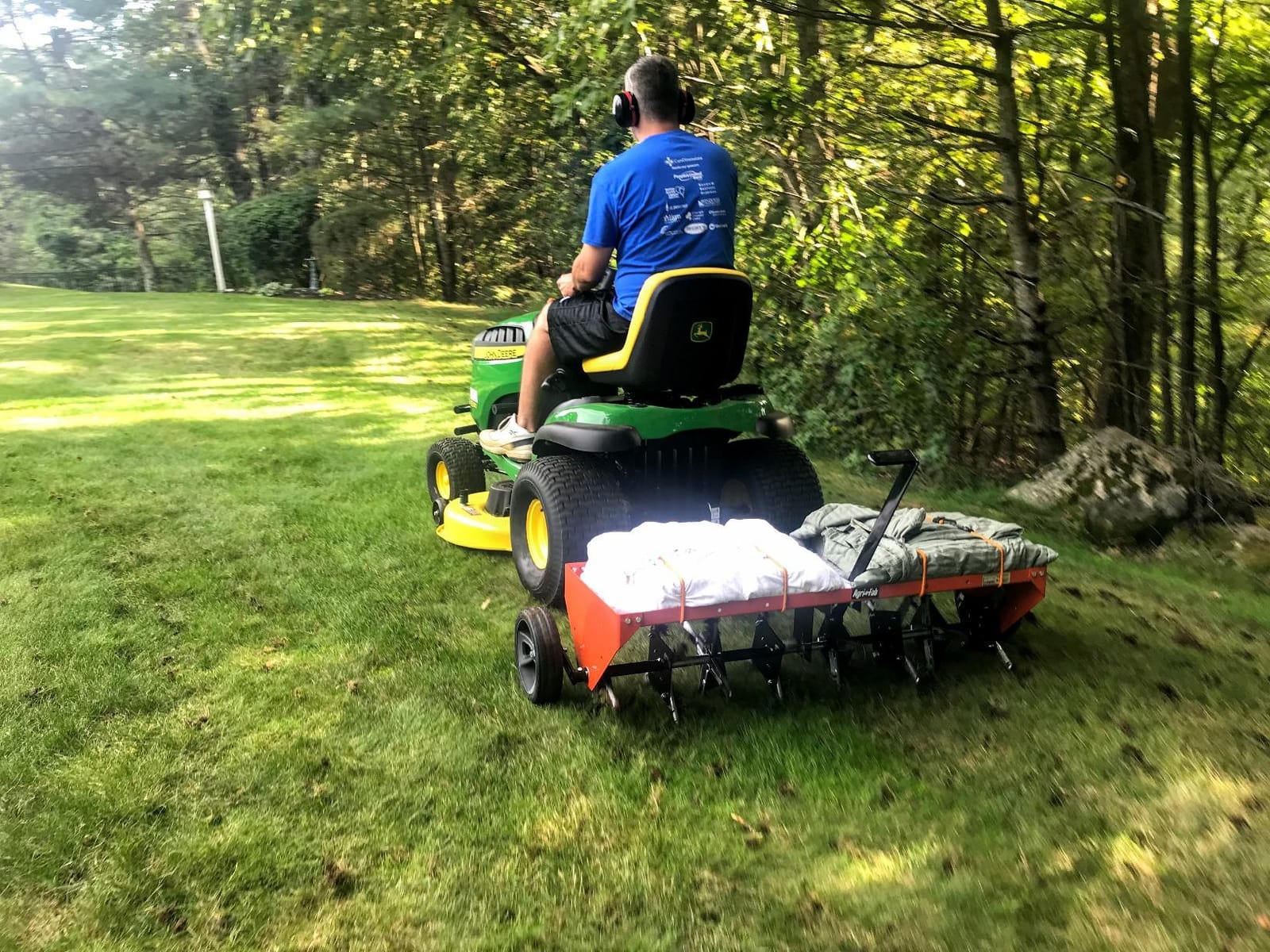
Who This Tow-Behind Aerator Suits
Owners of large properties or pasture who already own a zero-turn or garden tractor, since the universal hitch makes setup essentially attaching a pin. I would also choose it for heavy clay, because the 175 pound ballast capacity is the highest here and that is exactly what you want when the first pass comes up empty until you load the tray.
Who Should Skip It
Skip it if you have no riding equipment, or if your lawn is small enough that the tractor becomes the problem, because backing a mower around beds to tow a 48 inch unit is more fussy than the aeration itself.
3. Brinly 40 Inch Tow Behind Plug Aerator – The Better-Built Tow Unit
- Heat-treated sharpened spoons pull 3 inch plugs with less added weight
- Independently rotating tine sections ease turns and uneven ground
- Enclosed 150 lb weight tray for adjustable depth
- Single-lever transport mode
- Single-pin hitch fits tractors ZTRs and ATVs
- Requires a riding mower
- ZTR or ATV to pull
- Semi-pneumatic tires need periodic pressure checks
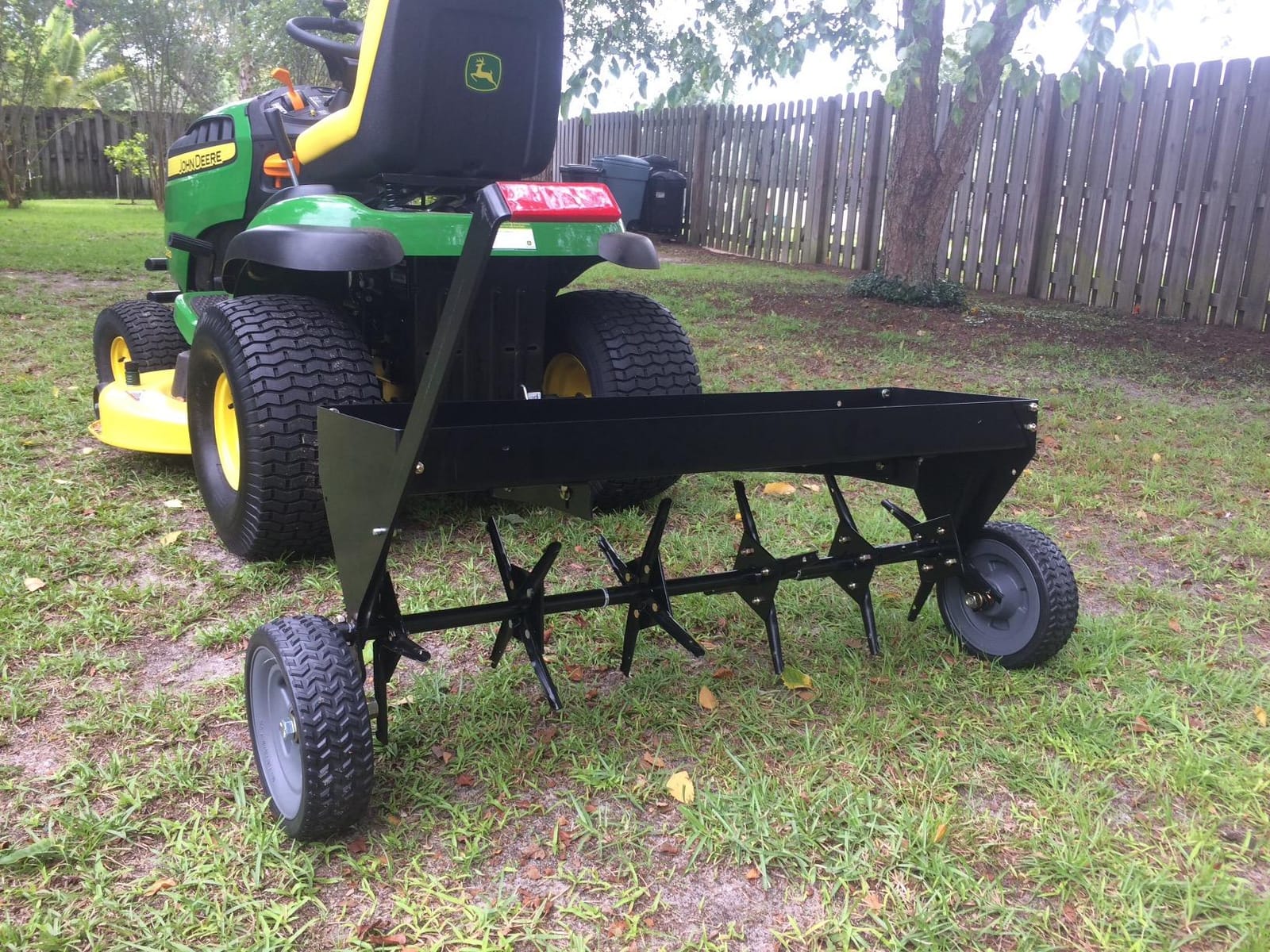
This is the tow-behind I recommend if you want big-machine results with less wrestling. The 24 heat-treated steel plugging spoons are sharpened at the tip and pull cores up to 3 inches, and owners note they do it with noticeably less added ballast than older knife units, meaning less strain on your tractor and a much easier first pass.
The detail that sold me is the three independently rotating welded tine sections. When one section is stuck in the ground the others keep turning, so you can make a turn, roll over a buried rock, or cross a driveway edge without the whole machine binding and tearing turf.
At 63.9 pounds it is noticeably lighter than the typical 90-plus pound tow aerator, which makes it easier to wrestle into position. The single-lever transport mode engages over 10 inch semi-pneumatic tires, which are tubeless at lower pressure so they resist pinching but still need a check every few uses.
The single-pin universal hitch saves real time, fitting lawn tractors, most zero-turn mowers, and ATVs, so one unit covers a mower and a quad without a separate adapter. Owners with mixed equipment call that out specifically.
Who This Core Aerator Suits
Owners with a zero-turn or ATV and a lawn of odd shapes, slope changes, or beds to work around, since the rotating sections and light 63.9 pound frame are built for maneuvering rather than straight passes on an open field. It is also my pick for anyone who wants a deep core without stacking heavy concrete in the tray.
Who Should Skip It
Skip it if all you have is a walk-behind mower, because this is a tow attachment with no handle to push it with. A very small lawn will also be over-served, and a renter with a tight storage situation will feel the weight every time the unit is not in use.
4. Landzie 42 Inch Hollow Tine Core Aerator – Best Self-Clearing Tines
- Hollow tines pop each core out on the next push
- Stainless tines resist bending in clay and rocky soil
- Arrives fully assembled with tines fitted
- Replacement tines sold separately
- Comfortable for taller users at 42 inches
- Demanding pace at roughly 750 to 1000 sq ft per hour
- Needs moist soil or tine tips can bend
- Not practical for large lawns
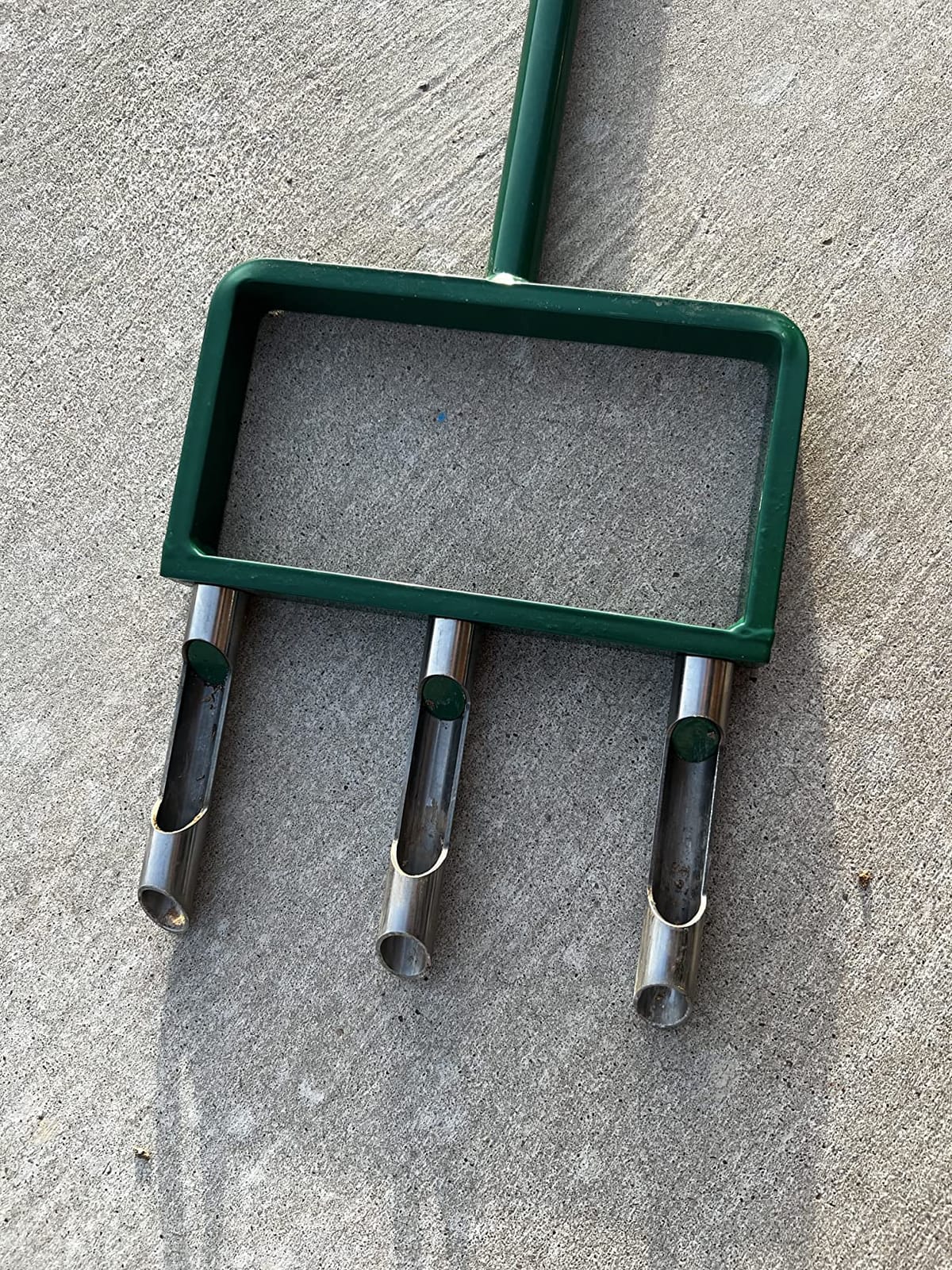
The reason I like this one is the beveled self-clearing tine design. The hollow tines push the previous core up and out on the next stroke, so you never stop to knock a plug loose with a stick, and on any manual aerator clogging is what turns a 30 minute job into an hour.
It arrives with the tines already bolted to the frame, so there is no assembly and no lost hardware. The 42 inch length is a genuine advantage if you are around 6 feet tall, because you can push almost upright instead of folding over a short tool.
Owners on clay and rocky ground report the stainless tines hold their shape and stay sharp, which is not a given in this bracket, and replacement tines are sold on their own so a worn set is a small fix.
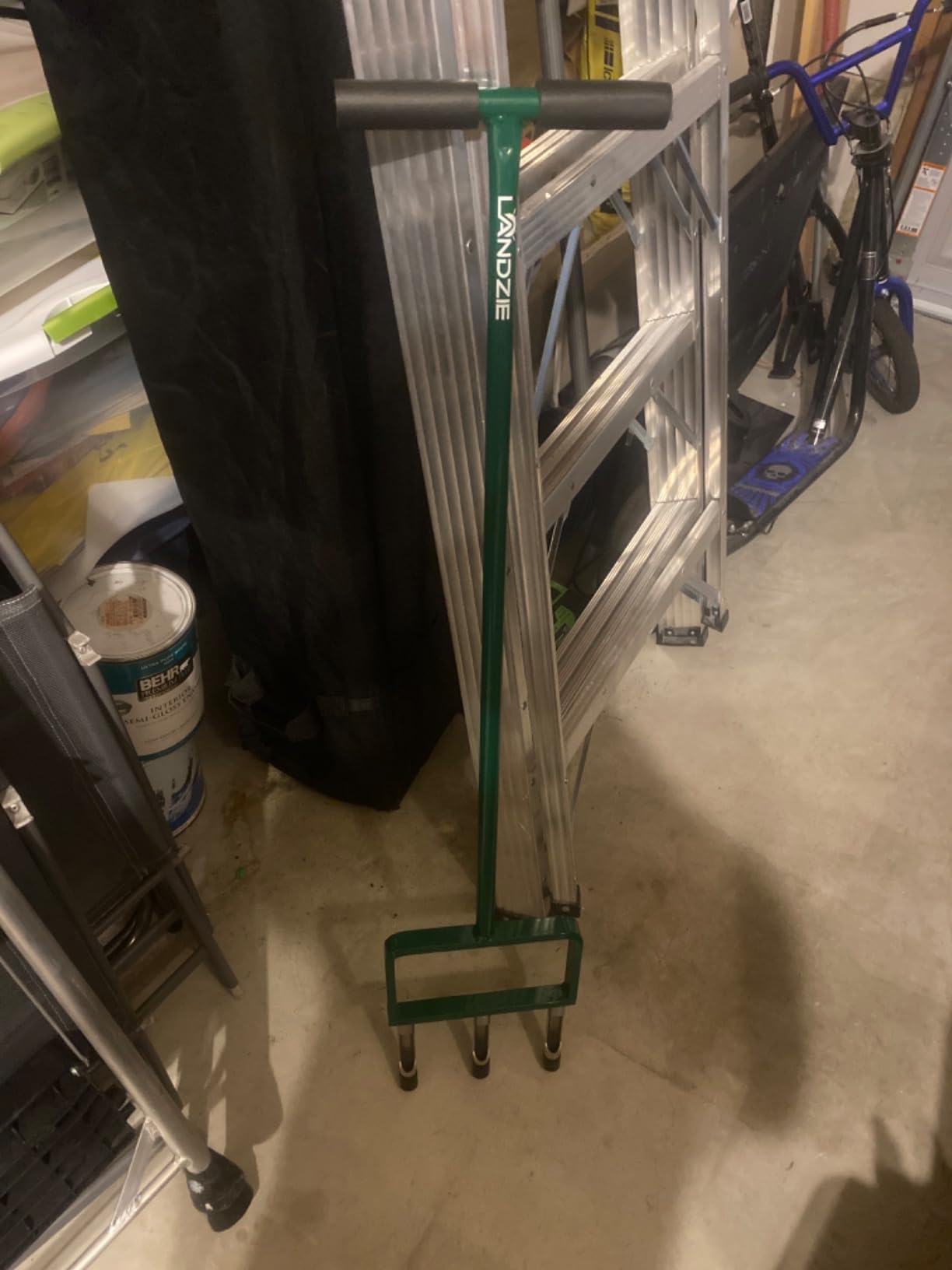
At 5.6 pounds the tool is light and the long handle does most of the work, but owners are clear-eyed that the weight comes from you, describing the pace as a workout covering roughly 750 to 1,000 square feet an hour. Soil moisture decides how it feels, and on dry caliche soil owners report the tips can bend.
Who This Manual Aerator Suits
Anyone taller than average who wants a manual tool they can stand behind, and a strong match for small clay lawns where tine bending would normally end the project. For anyone who hates stopping to unclog, the self-clearing action is a real quality-of-life upgrade. I would also treat it as a complement to a powered unit for corners a 48 inch swath cannot reach.
Who Should Skip It
Skip it at a quarter acre or larger, since even at a good pace that is a multi-day project with no motor doing the work. It is also wrong for anyone with back or joint issues, and for ground that is dry more often than wet.
5. Dolibest 4 Plug Coring Aerator with Storage Tray – Cleans Up After Itself
- SUS 304 stainless tines resist rust and bending
- Stainless tray collects plugs and saves cleanup time
- Rubber grip and raised crossbar keep shoes clear
- Two-minute assembly
- Strong value next to big-box models
- Tines clog and need clearing with the supplied tool
- Small coverage per stroke
- Struggles in dry ground
The stainless soil core storage tray is what separates this from other manual corers, and it is more useful than it sounds. Ejected plugs drop into a tray instead of scattering across the lawn, so you are not stepping on cores, not tracking mud into the house, and not raking a mess afterward.
Four SUS 304 stainless coring plugs sit on solid powder-coated steel rods, and stainless is a real upgrade in a tool that lives in wet soil. Owners with rocky yards report the tines resist rust and hold up where cheaper models have already started to bend.
It is listed at 2.81 kg, making it a two-handled stomp tool, and the soft rubber grip plus elevated crossbar exist so your shoes stay out of the plug ejection path.
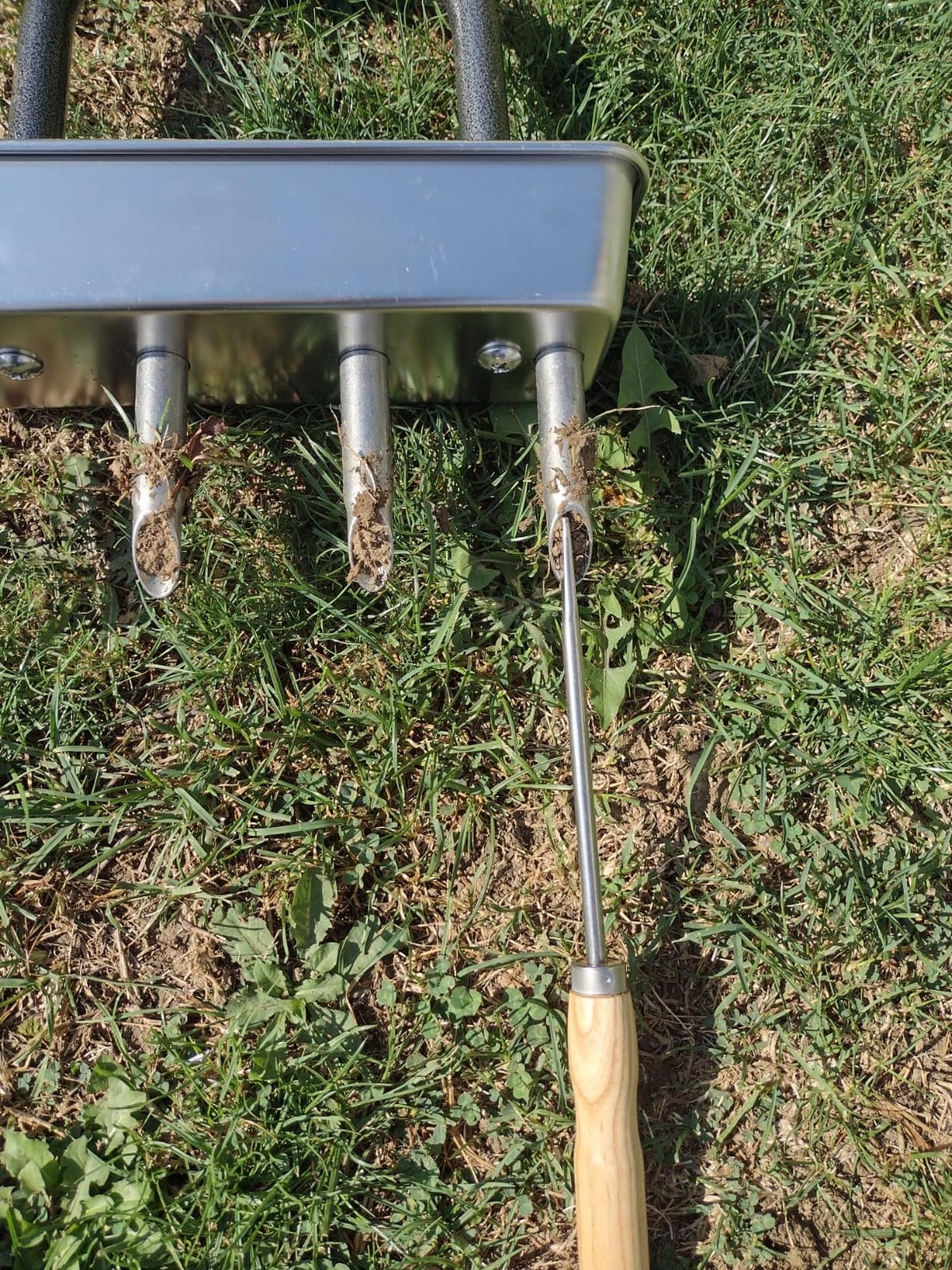
You will use the included 12 inch hand tool, because clogging is the most common complaint in reviews, particularly in wet clay where plugs stick inside the tubes. Assembly takes about two minutes, and several owners report buying a second one, which says a lot about the value against big-box equivalents.
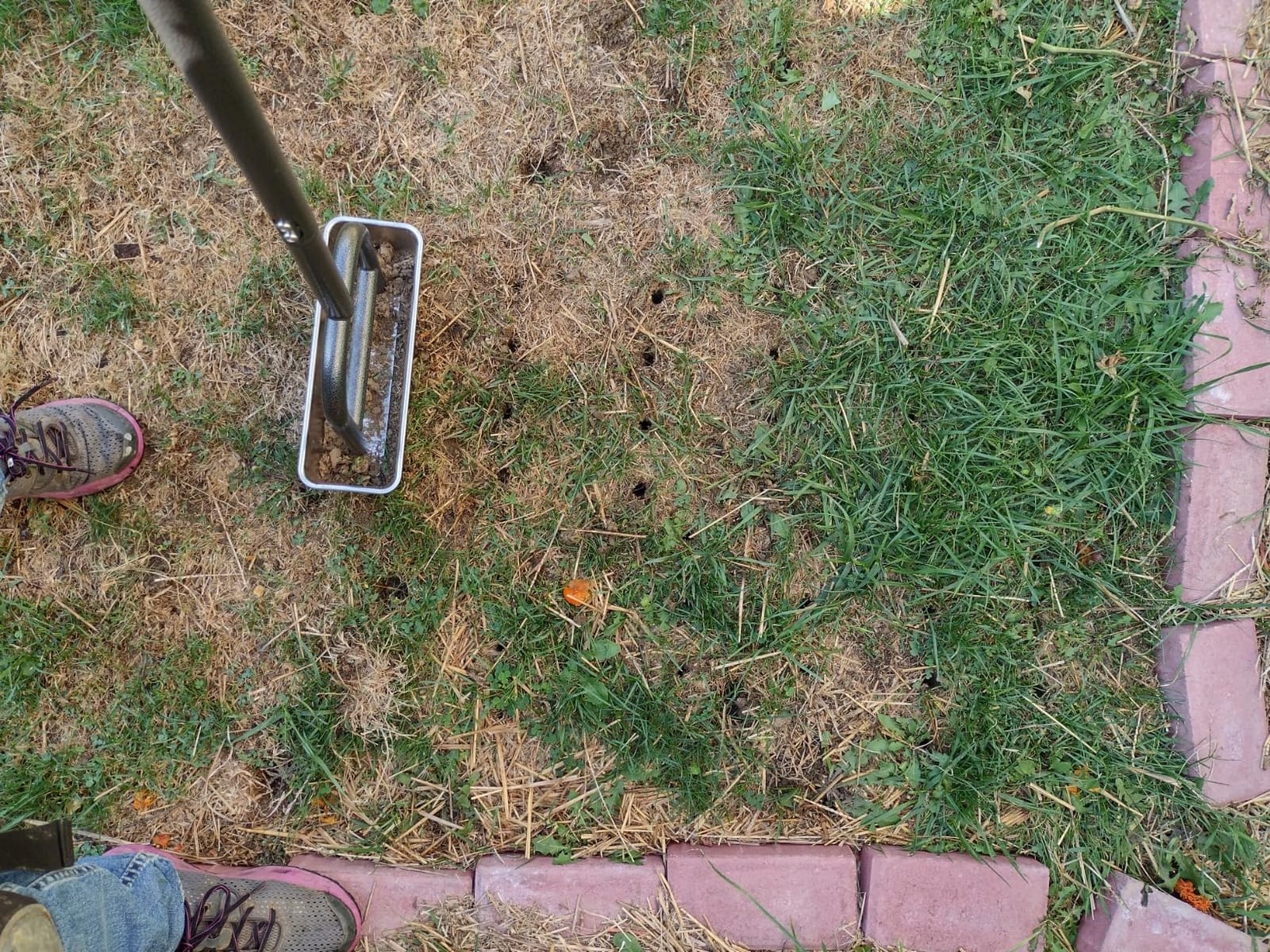
Who This Coring Aerator Suits
People who hate cleanup. If cores scattered over the lawn bother you more than the workout, the tray solves the most annoying part of manual coring, and it is good for small gardens and side yards where you want a contained job. Rocky or coastal conditions are another fit, since stainless handles salt and moisture better than bare steel.
Who Should Skip It
Skip it if your lawn is large, because four tines still cover only a foot or so per stroke. Also skip it if you are the type to water the lawn the day before: reviewers are direct that it needs wet soil, and clogged tines in clay are the most repeated negative here.
6. LawnVigor Non-Clogging Hollow Tine Aerator – Deepest Manual Cores
- Hollow tines self-eject plugs without clogging in clay
- Sharp heat-treated tines penetrate with foot pressure
- Replaceable tines plus a drain hole for storage
- Assembly wrenches feel solid rather than flimsy
- Only three tines cover a small area per push
- Loose handle grips can spin and blister
- Needs watering first
This one ranks near the very top of the manual lawn aerator category, and the reason is straightforward: the tines do not clog. The three heat-treated hollow tines measure roughly 0.9 inch in diameter with about 4 inches of reach, and white plastic inserts inside help the plug release instead of packing into a solid column.
That 4 inch reach is the deepest on the manual tools here, and it matters. Owners on heavy clay report pulling full cores out of ground where other tools only made holes, which is the entire point of buying a core aerator instead of a spike.
The build details are unusually considered. Hex and combination wrenches are included, and reviewers single them out as solid rather than flimsy, so the hardware was clearly not an afterthought.
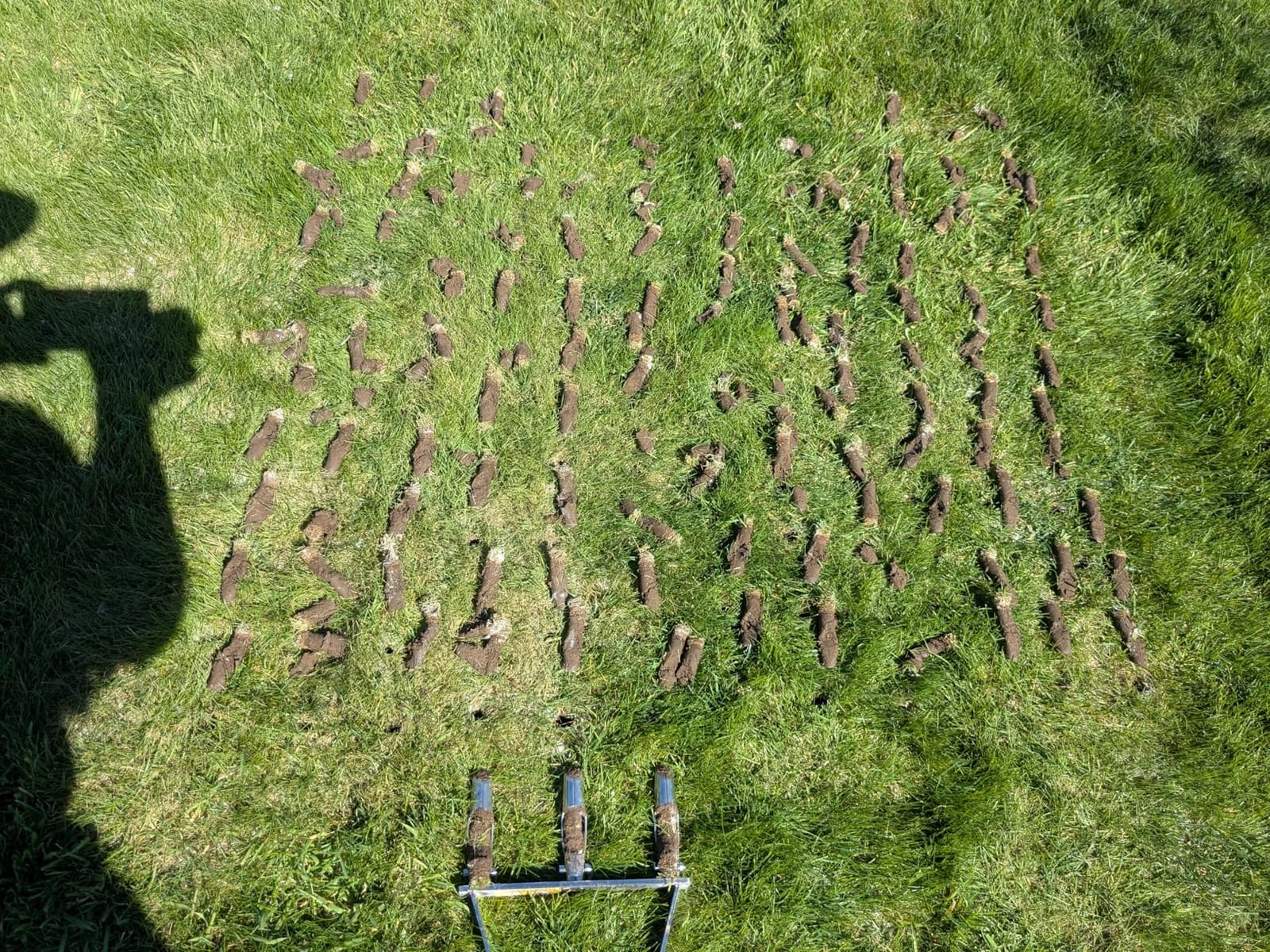
A drain hole in the base tubing lets you rinse and store it without trapping water in the tubes, and the tines are replaceable individually. The honest limitation is coverage, since three tines is a small area per push, and loose grips on some units can rotate under load and blister.
Who This Core Aerator Suits
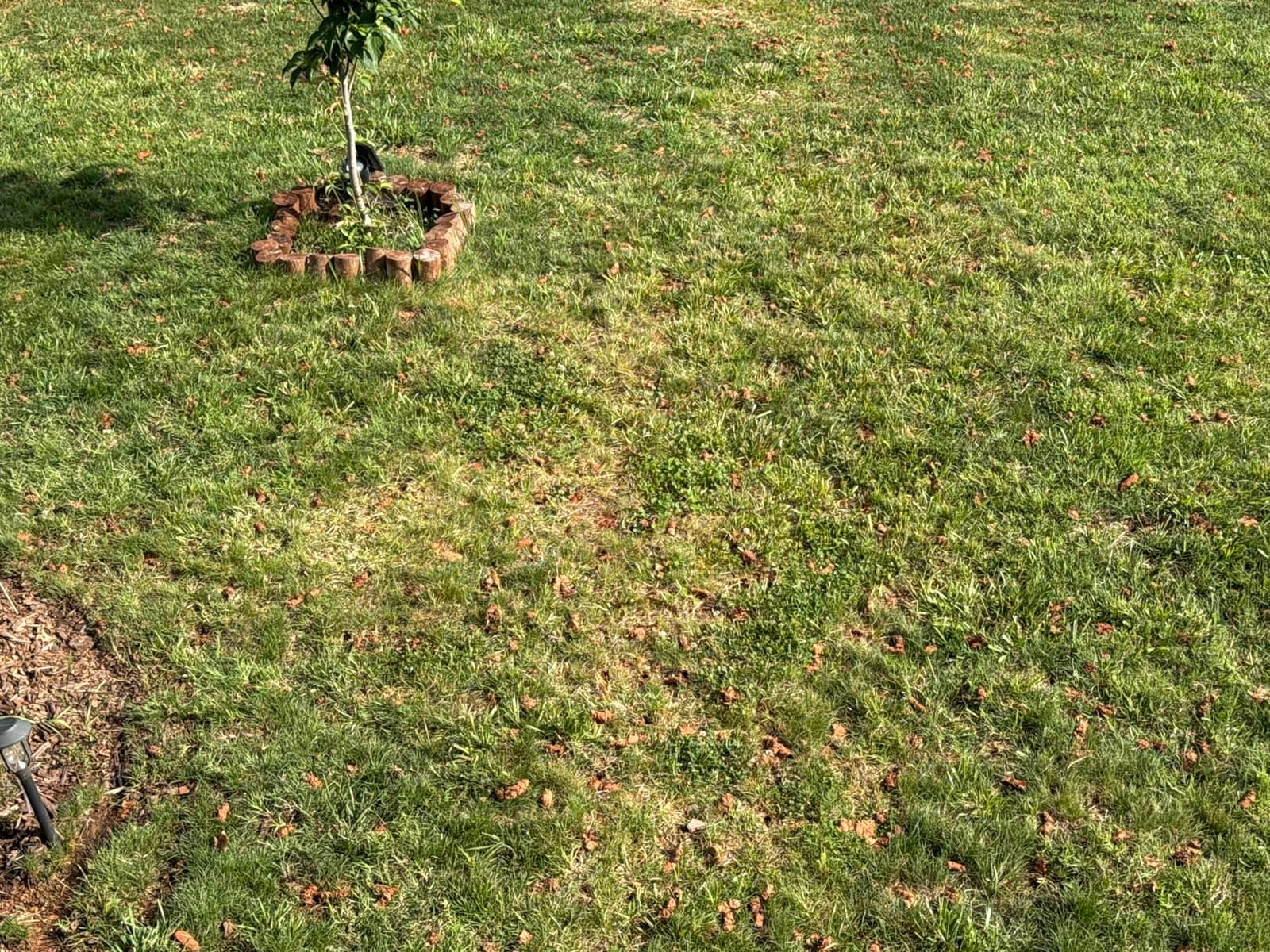
Anyone with compacted clay or hard-packed soil who wants the deepest possible manual core, since the self-ejecting tines and 4 inch reach make it the pick I would hand someone whose previous spike aerator never made a visible difference. It also suits owners whose tools live in damp sheds, because the drain hole and replaceable tines remove the two ways a manual aerator usually dies.
Who Should Skip It
Skip it if you want to finish a whole lawn in one session, because owners consistently point to the small area per push. Skip it if you will not water first, since on dry or extra hard clay you will be throwing body weight at a tool that will not go in.
7. K.D STONEDGE Patented Rolling Coring Aerator – Push It Instead of Stomping It
Patented Rolling Lawn Aerator Manual Coring Tool Compacted Soil Loosening
- Rolls as you push instead of repeated foot stomping
- Extracts real soil plugs rather than perforating soil
- Weight-balanced frame works small to medium lawns
- 43.7 lb frame is heavy to store and maneuver
- Limited long-term durability data at 167 reviews
Every other manual aerator on this list asks you to lift a foot, press, step, and repeat. This one rolls. The patented rotary action pulls plugs as the drum turns while you push forward, so you cover ground at walking pace instead of standing still and stomping.
What matters most is that it extracts cores. Rolling spiked drums simply perforate soil and can re-compact it horizontally, which is why rolling aerators attract so much criticism. This design is built to pull plugs, and that is the difference between a tool that helps and one that just feels busy.
At 43.7 pounds the frame is substantial, and that weight is doing real work, since the whole principle is that a heavier machine rolling at speed pulls deeper cores with less effort from you.
The honest drawback is that 43.7 pounds is a lot to lift into a car or wrestle around a garden bed. The review base is also the thinnest here at 167 reviews, so there is less long-term ownership data than we would like on a patented design with no replacement parts listed.
Who This Aerator Suits
Small to medium lawns where foot stomping feels like a punishment, since the push-and-roll motion is easier on shins, knees, and lower back and the weight-balanced frame keeps you at a steady pace. I would also point it at anyone disappointed by a spike-style drum, because this one genuinely extracts plugs.
Who Should Skip It
Skip it if storage or lifting is a concern, since it is the heaviest hand-pushed unit here and it is a full-bodied object to store. Skip it if you want a long track record, because 167 reviews cannot tell you how a patented frame holds up over five seasons.
8. Xuperace Alloy Steel Hollow Tine Aerator – Best Tine Release Design
Xuperace Lawn Aerator Tool, Core Aerator Lawn Tool with Alloy Steel Material, Sturdy Grass Aerator for Lawn Health Soil Yard Aerator
- Side-ejection tines released deep plugs without a clog for many owners
- Open-centered downtubes prevent common knee injuries
- Long constant-diameter tines drive deep and give uniform plugs
- Ships with quality hex hardware and threadlocker
- Costs more than comparable manual aerators
- Needs moist grass or you must rock the tool
This carries the highest average rating in the roundup, and the reason is the side-ejection ramp on the tines. Instead of a plug falling out the bottom or needing to be knocked loose, the ramp deflects it sideways as the tine withdraws, and owners across a wide range of soils report finishing passes with no clogging at all.
The open-centered dual downtubes are the second thing I would not trade. Most manual aerators put two tubes exactly where your knee goes, and sore knees after ten minutes is the common complaint. This frame leaves the leg room to move, and at 5.9 pounds you can step and press without wrestling the tool.
It is an integrally formed alloy frame rather than a bolt-together one, and the tine screws come pre-treated with threadlocker with a spare included.
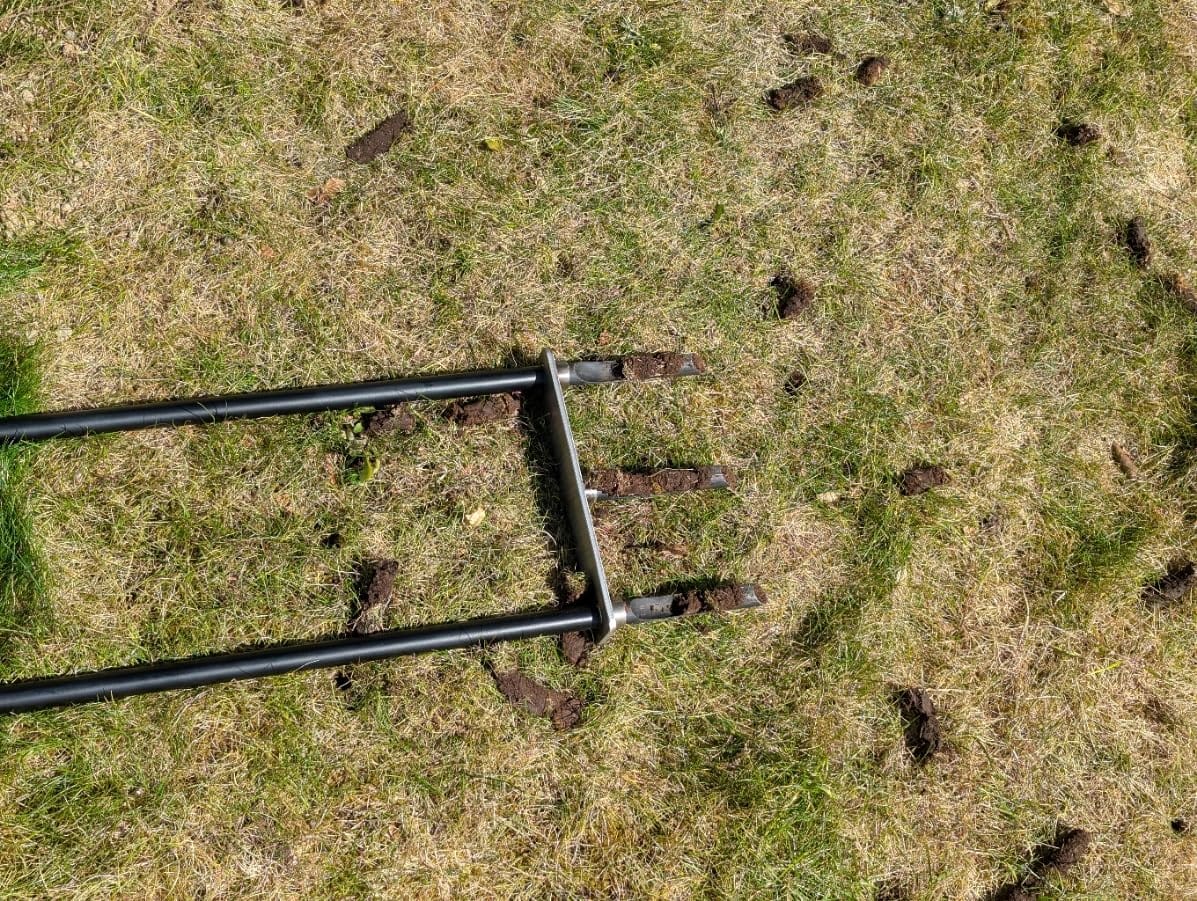
The tines are long and constant-diameter, and owners comment that they drive deep and produce plugs of a consistent size, which is exactly what you want when checking whether a machine is coring or smearing. The middle tine can be removed for harder ground. Two honest negatives: it costs roughly twice as much as comparable manual aerators, and it wants moist grass, because on firm soil owners find themselves rocking the tool and watching the side bars for movement.
Who This Aerator Suits
Anyone with knee or joint issues, or who simply does not want a session of standing on one foot. The open frame and 5.9 pound weight make it the most comfortable manual option here, and the side-ejection design means the job actually gets finished. It is also the pick for owners who care about plug consistency, and replacement tine sets are sold separately.
Who Should Skip It
Skip it on budget grounds if a manual corer is a casual occasional purchase, because paying a premium for a tool that lives in a shed nine months of the year is hard to justify. Skip it if you will not water the lawn first, since rocking a solid frame is slower and harder on the side bars than a lighter tool.
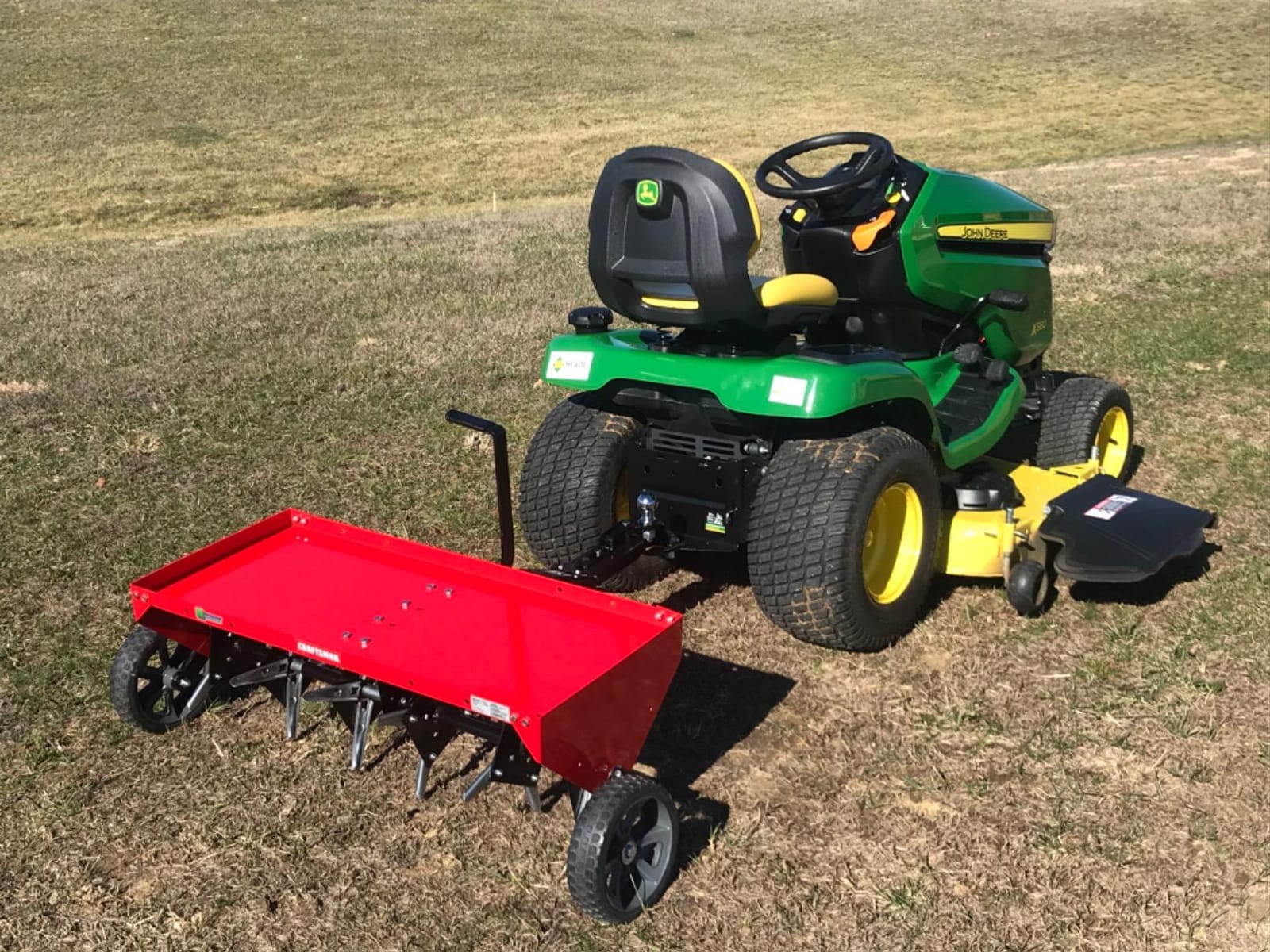
9. CRAFTSMAN 40 Inch Tow Behind Plug Aerator – Best Warranty Coverage
Craftsman 40 Inch Tow Behind Lawn Plug Aerator with 24 Galvanized Steel Coring Points and 140 lb Weight Tray
- 24 galvanized coring points pull 3 inch plugs
- 140 lb weight tray for tough compacted soil
- Stores vertically against a wall
- Flat-free tires roll reliably on lawn terrain
- 3-year limited warranty
- Requires a lawn or garden tractor to pull
- Narrower swath and smaller tray than some rivals
This is the tow-behind with a 3-year limited warranty behind it, and for a machine made of steel knives that hit rocks and clay, that warranty matters more than it first appears. Coring points wear, bend, and snap, and knowing the frame and tines are covered changes the ownership calculation.
It delivers a 40 inch swath with 24 galvanized coring points pulling plugs up to 3 inches deep. That is slightly narrower and lighter on ballast than the 48 inch competition at 140 pounds of capacity, so you may need a second pass in the same direction on softer ground.
The lift handle release system and vertical wall storage design are the features I would point out first, because a tow aerator that hangs on a wall instead of occupying a quarter of the garage floor is the difference between buying one and resenting it.
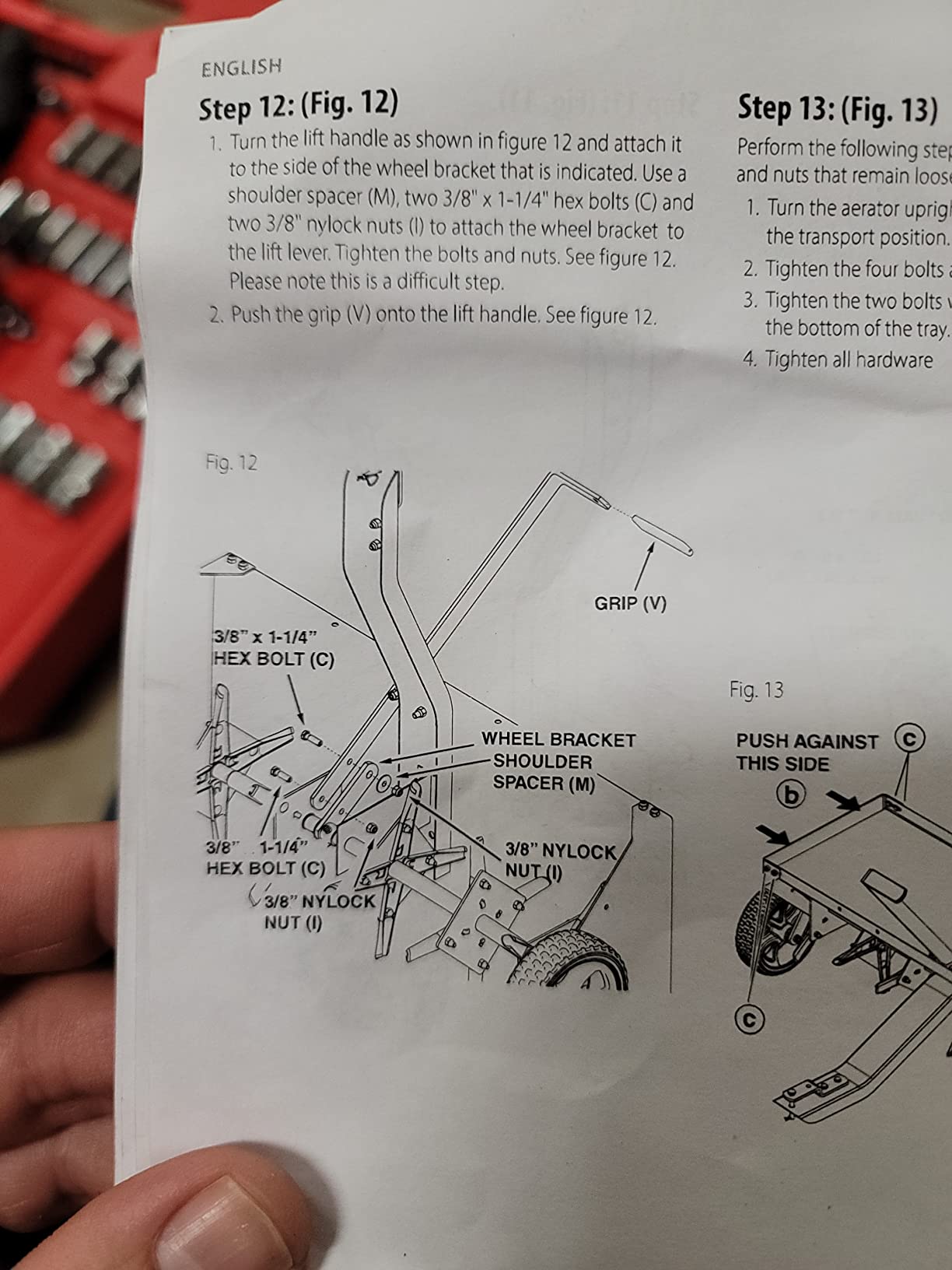
Flat-free tires mean no pressure checks and no flats in the wet conditions when you would be using it, and at 78.8 pounds the unit is lighter than most 40 inch tow aerators. Storage dimensions of roughly 50 by 38 by 24 inches confirm the vertical option is genuine rather than marketing.
Who This Tow-Behind Aerator Suits
Owners with a lawn tractor who want a covered machine and limited storage space, since the vertical wall mount plus the 3-year warranty make it a low-risk first tow-behind purchase. Flat-free tires also suit damp coastal yards or anywhere the ground stays wet, because you will not be kneeling on a tractor step with a pump the morning you want to aerate.
Who Should Skip It
Skip it if you want the widest possible swath, since 40 inches with 24 points means more passes and that difference shows up in the clock on an open lawn. Skip it if you plan to load the tray heavily, because 140 pounds is lower than some competing tow aerators and hard clay is exactly when you want every pound you can fit.
10. Hugeneroy Heavy Duty Hollow Tine Core Aerator – Lightest Long-Reach Manual
Heavy Duty Steel Hollow Tine Core Aerator for Clay Soil, Non-Clog – Blue
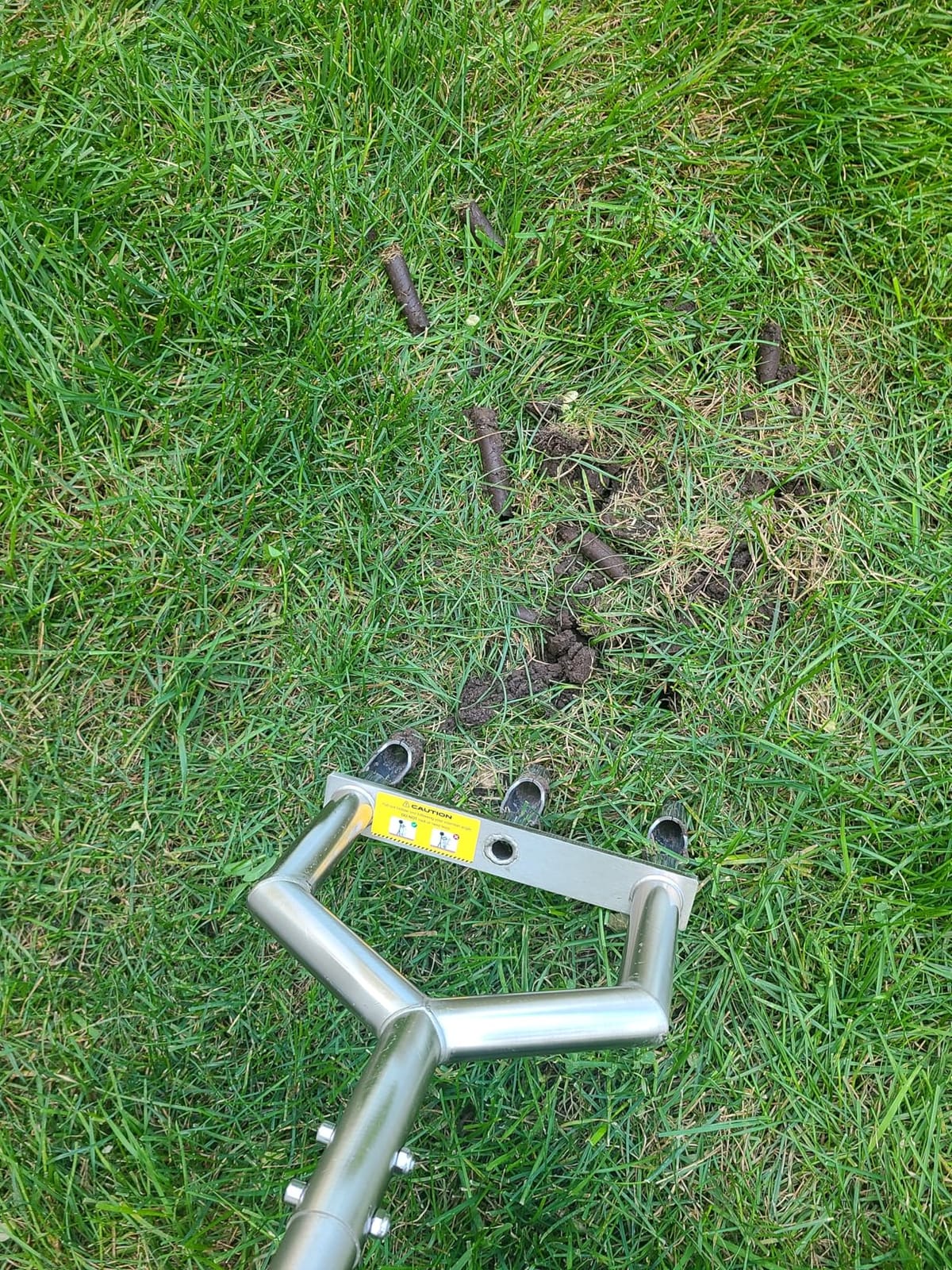
- Pulls full cores from compacted clay rather than poking holes
- Only 3.52 lb yet drives in with foot pressure
- Tines self-clear on each push
- Included assembly tools are higher quality
- Replaceable tines extend tool life
- Tine tops are not sealed and can trap debris or water
- Connection bolt can catch the inside of your knee
- Handle may arrive slightly twisted
At 3.52 pounds this is the lightest machine in the roundup, and yet owners report it pulling full soil cores out of hard compacted clay rather than just poking holes. The trick is tine size: three industrial-strength tempered hollow tines at roughly 0.98 inch in diameter and 4.3 inches long, reaching about 4 inches into the ground.
Each push ejects the previous core, so work stays continuous. The welded fork is about 8.3 inches wide with a long handle and soft rubber grip, and the whole tool assembles in minutes with the included hardware.
For long sessions this is the one I would hand to someone who tires quickly, since carrying it to a far corner is not a chore, and replaceable tines mean a bent tip is a small fix rather than a new tool.
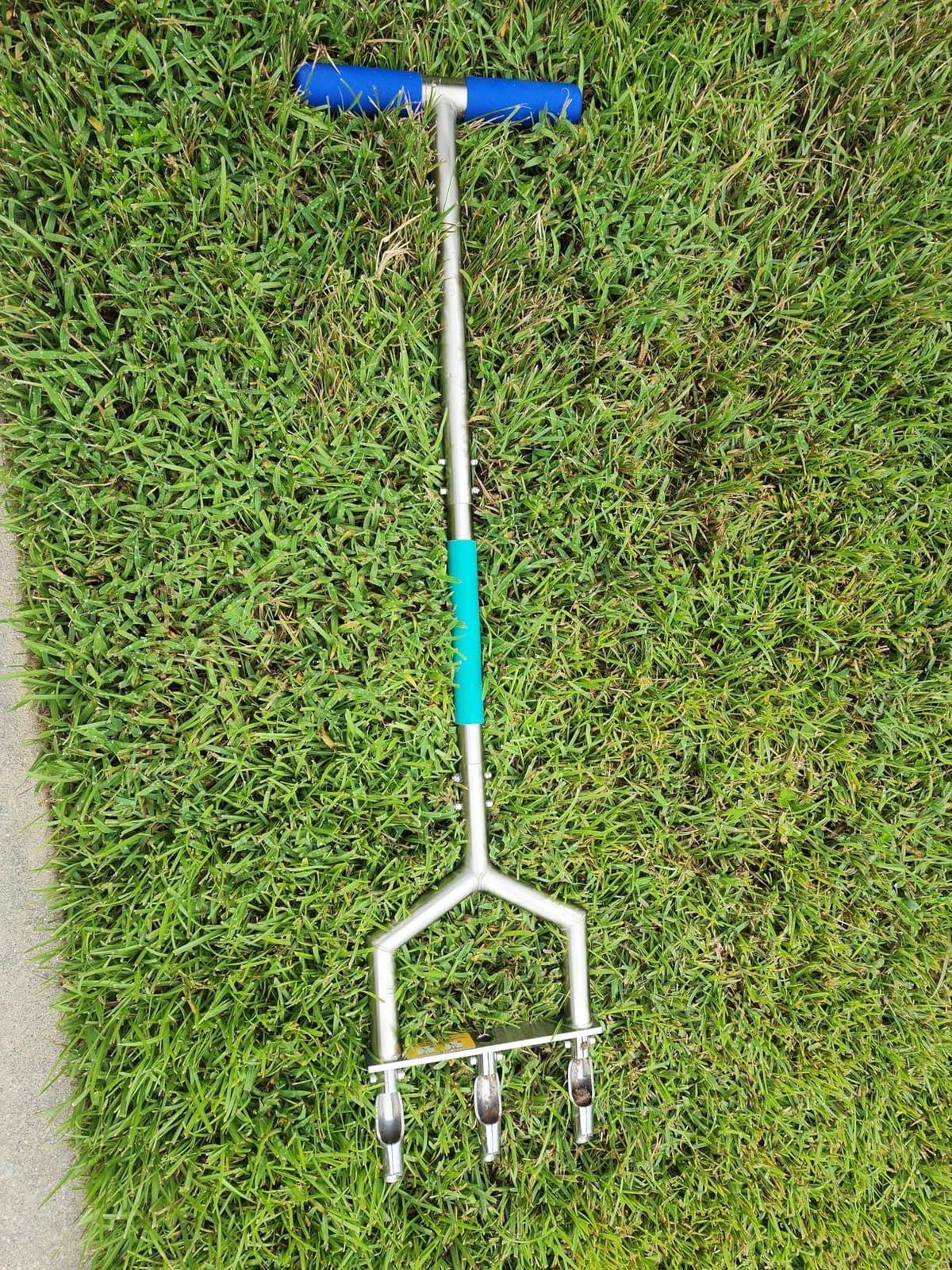
Two details are worth flagging honestly. The tine tops are not sealed, so if you hose the tool off, water and debris can sit inside the outer tubes and it needs to dry before storage. And the connection bolt and nut sit at the level where your knee lands, which a few owners noticed immediately.
The handle can also arrive slightly twisted, which sounds trivial and is not when you are pushing a tool with your body weight. It is a five minute fix, but a fix rather than a non-issue, and it needs moist soil to reach full depth.
Who This Manual Core Aerator Suits
Anyone who wants a genuinely lightweight manual tool for a small lawn or a series of patch repairs, since at 3.52 pounds it is easy to carry and easy to keep using past the point of fatigue. It is also a strong clay-yard option, since owners on compacted ground specifically report pulling full cores rather than holes.
Who Should Skip It
Skip it for large coverage, since three tines at 4 inches of reach cover a modest strip per push. Skip it if you store tools in a damp shed and will not dry them after washing, because unsealed tine tops hold water against the steel.
11. Zalawn 3 Non-Clogging Hollow Tine Aerator – Budget Pick for Spot Work
- Pulls real soil plugs up to 4 inches deep
- Anti-clog mechanism ejects plugs on every step
- Heat-treated tines and reinforced joints
- Rubber grips and balanced weight
- Semi-assembled and working in minutes
- Some reviewers report shallow welds that snapped under use
- Soil must be moist or tines struggle
- Plugs scatter across the lawn
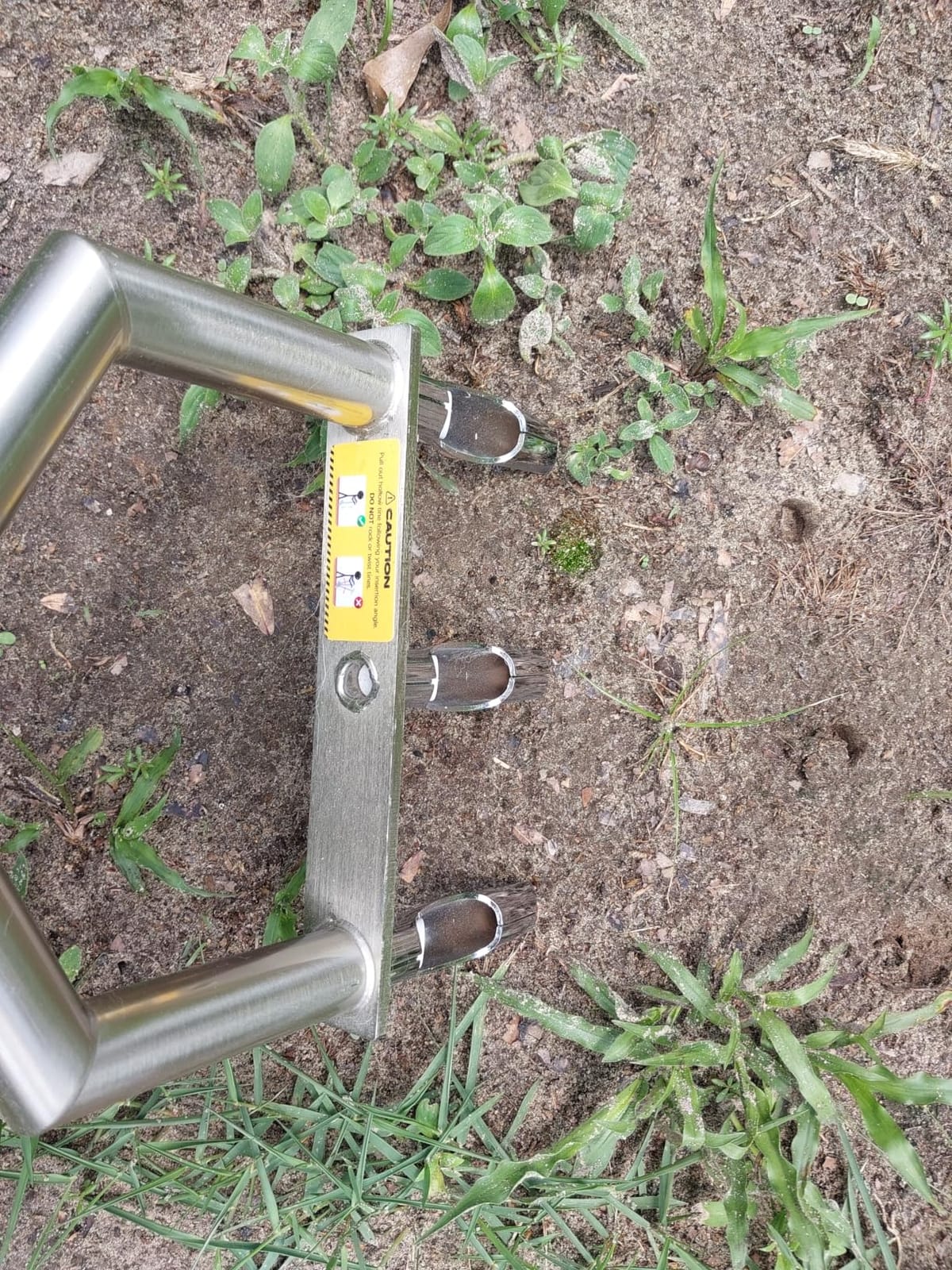
This is the value entry in the roundup, and on function it punches above its weight. Three heat-treated hollow tines reach up to 4 inches deep, which means it pulls genuine plugs rather than perforating the soil, and the anti-clog internal mechanism ejects each core as you step.
The wide, stable foot bar is what makes that 4 inch depth achievable with a manual tool, because you have a large target to stand on so body weight does the work instead of your arms. The ergonomic rubber grips take the edge off over a long session, and the tines are replaceable individually.
It arrives semi-assembled, so owners report being out and working within minutes of opening the box.
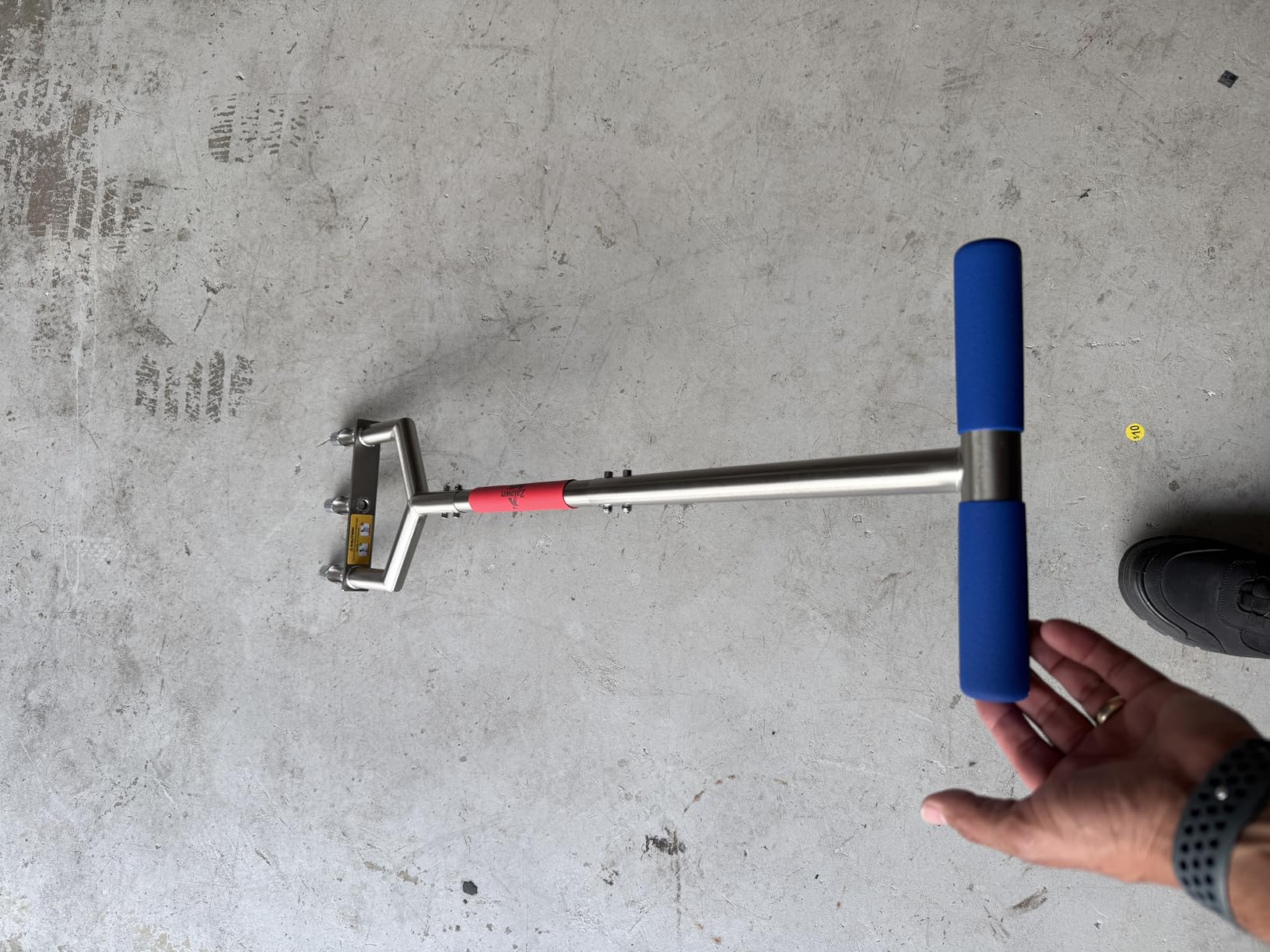
The durability concern is real and worth stating plainly: several reviewers report shallow welds at the connection joints that snapped under normal use, and that is the one recurring negative in an otherwise strong set of reviews. Plugs also scatter across the lawn rather than collecting, which is fine since they break down and return nutrients, but it is not a tidy finish.
Who This Budget Core Aerator Suits
First-time buyers who want to see whether core aeration makes a visible difference before committing to a bigger machine. For a compacted patch by the driveway or a thin spot in the shade, it does the job at the lowest outlay here, and it makes a useful secondary tool for corners a wide swath cannot reach.
Who Should Skip It
Skip it if you need durability over several seasons of hard use, given the repeated weld complaints, and inspect the joints before relying on it for a full lawn. Skip it for large lawns and for dry soil, since it needs moisture to penetrate and covers a small area per push.
12. Step N Tilt V4 Core Aerator Kit – Gentlest on Backs and Shoulders
- Step-and-tilt motion is gentler on back than stomping
- Tines rarely clog and are tapered to release cores
- Core container keeps plugs off your shoes
- Replacement tines sold separately
- Assembly instructions unclear and list wrong wrench sizes
- Finish rusts if not dried and oiled
- 21 lb frame is heavier than two-tine models
- Covers only about 200 sq ft per session
Every other manual aerator here is stomped. This one uses a patented step-and-tilt motion with a large stepping surface, and owners with back issues describe it as the only manual design they can use for more than a few minutes. You step, tilt, and pull rather than punching straight down, and the wheels plus tilted handle settle into a rhythm after a few passes.
The case-hardened tines create 3.4 inch deep holes at 0.79 inch diameter and are tapered so cores push out easily. A soil core container and remover are included, which keeps plugs out of the holes and off your shoes, and replacement tine sets are sold separately.
It is sized for operators from 4 feet to 6 feet 5 inches tall, with an 80 pound rating for one tine set and 150 pounds for two.
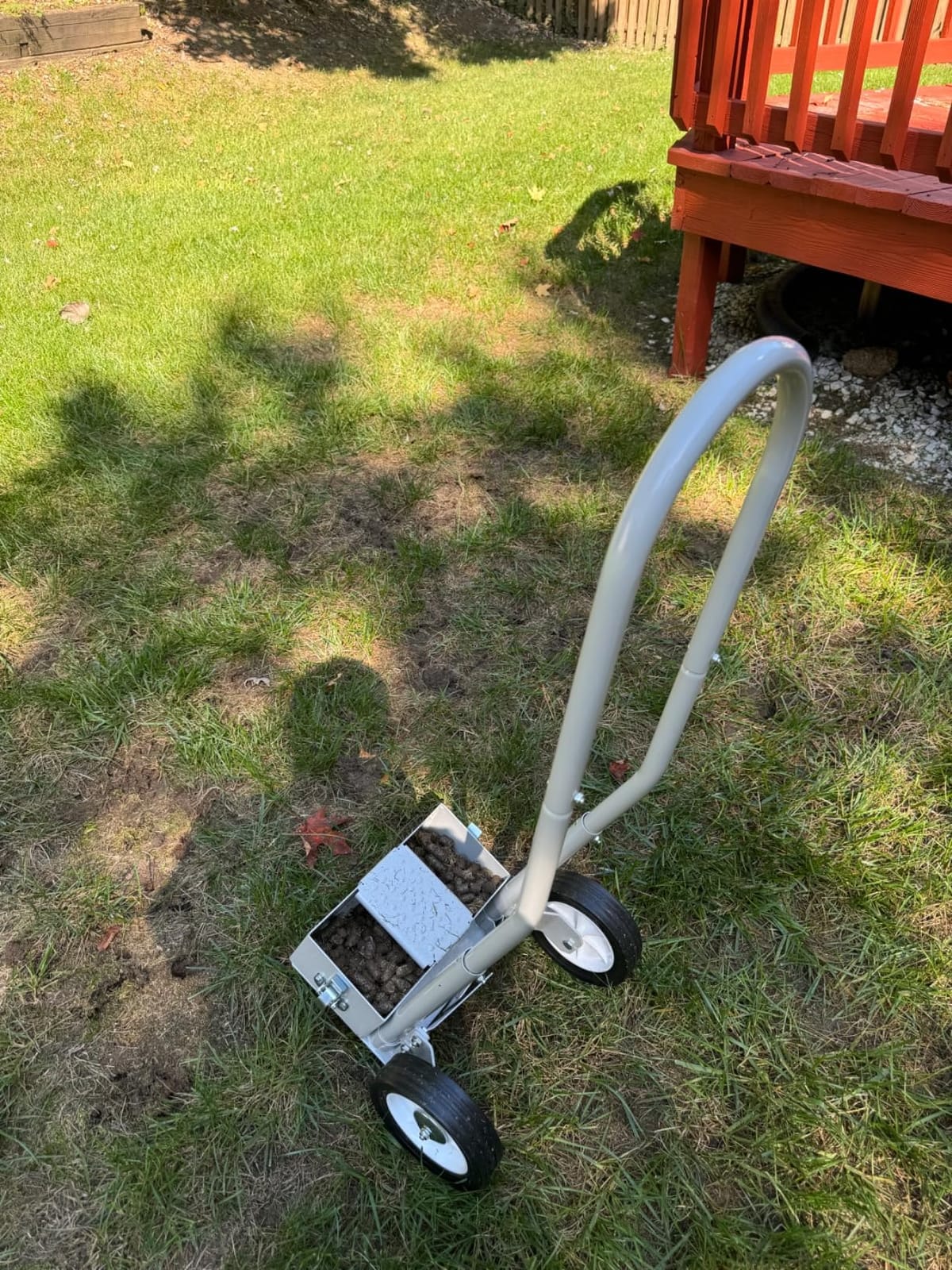
The complaints are mostly about the experience rather than the result. Assembly instructions are called out as unclear and even listing incorrect wrench sizes, so budget time before the first pass. Reviewers also note that some tines appear cold-rolled rather than case-hardened as described, and that the finish rusts if it is not dried and oiled after use.
At 21 pounds it is also a heavier and larger object than a two-tine manual model, which makes it a two-person carry rather than a grab-and-go tool.
Who This Core Aerator Kit Suits
Anyone with lower-back or shoulder problems, and any owner put off by the constant stomping foot aerators demand, since the step-and-tilt motion spreads effort across the whole leg. It is also a good fit for awkward spots, because the included container and remover make it practical under shrubs, around steps, and in narrow side yards.
Who Should Skip It
Skip it for a full lawn, since owners commonly report covering only about 200 square feet per session. Skip it if you want to be working five minutes after opening the box, because the assembly step is the most common friction point in reviews.
How to Choose a Core Aerator for Your Lawn
Start with lawn size, because it eliminates most options immediately. Under 2,000 square feet, a manual corer is right, since a powered machine is more machine than the job needs. Between 2,000 and 4,000 square feet is where renting starts to look sensible. Over 4,000 square feet, a tow-behind is the only realistic answer, and that means owning a riding mower, zero-turn, or ATV.
Core vs Spike Aerators: Why Hollow Tines Matter
Core versus spike is the most important decision, and it is easy to get wrong because products are described loosely. A core aerator pulls a plug of soil out, which physically removes material and leaves an open channel. A spike aerator pushes a solid tine through, making a narrow hole and squeezing soil sideways, doing very little to relieve compaction. On high-traffic areas that sideways squeeze can make compaction marginally worse, so if a listing never says plugs, cores, or hollow tines, treat it as a spike tool. The same logic applies across your yard kit, and we covered the right-tool question in our cordless pole saw guide for homeowners.
Manual, Tow-Behind, or Drum: Picking a Power Source
Manual hollow-tine corers win on storage and cost and lose on speed. Tow-behind units win on coverage and depth control and require riding equipment. Rolling drum designs sit in between, pushing cores as they roll, and they need enough mass behind them to work. Then check the details that decide whether a machine actually cores: tine type and length, whether the tray accepts ballast, whether tines are replaceable, and whether they clear themselves. A machine that clogs every third pass turns any lawn into a two-day project.
Buy It, Rent It, or Hire It
Renting wins when you have a decent lawn under an acre and need the machine once or twice a year. Rental units in this category are usually the powerful self-propelled or reciprocating type, which means you get a better machine than any of the twelve reviewed here for none of the ownership hassle.
Buying wins if you already have a tractor, will aerate every year, or want the machine available for overseeding the same afternoon. Owners with tow-behind units report finishing a typical residential yard in roughly 30 to 45 minutes. Hiring a service is best if you want the job done in an afternoon with nothing in the garage, but compare quotes carefully: a single r/lawncare thread cites a quote near a thousand dollars for core aeration alone on a 15,000 square foot lawn, and it is worth asking whether overseeding is bundled in without you requesting it.
Before any of those routes, locate your sprinkler heads and shallow irrigation lines, because coring over a buried line is the most common expensive mistake and entirely avoidable with a call to your irrigation contractor. If you want to clear brush and edges first, our gas chainsaw guide for homeowners covers the tool that does that job before you coring.
When to Aerate and What to Do Afterwards
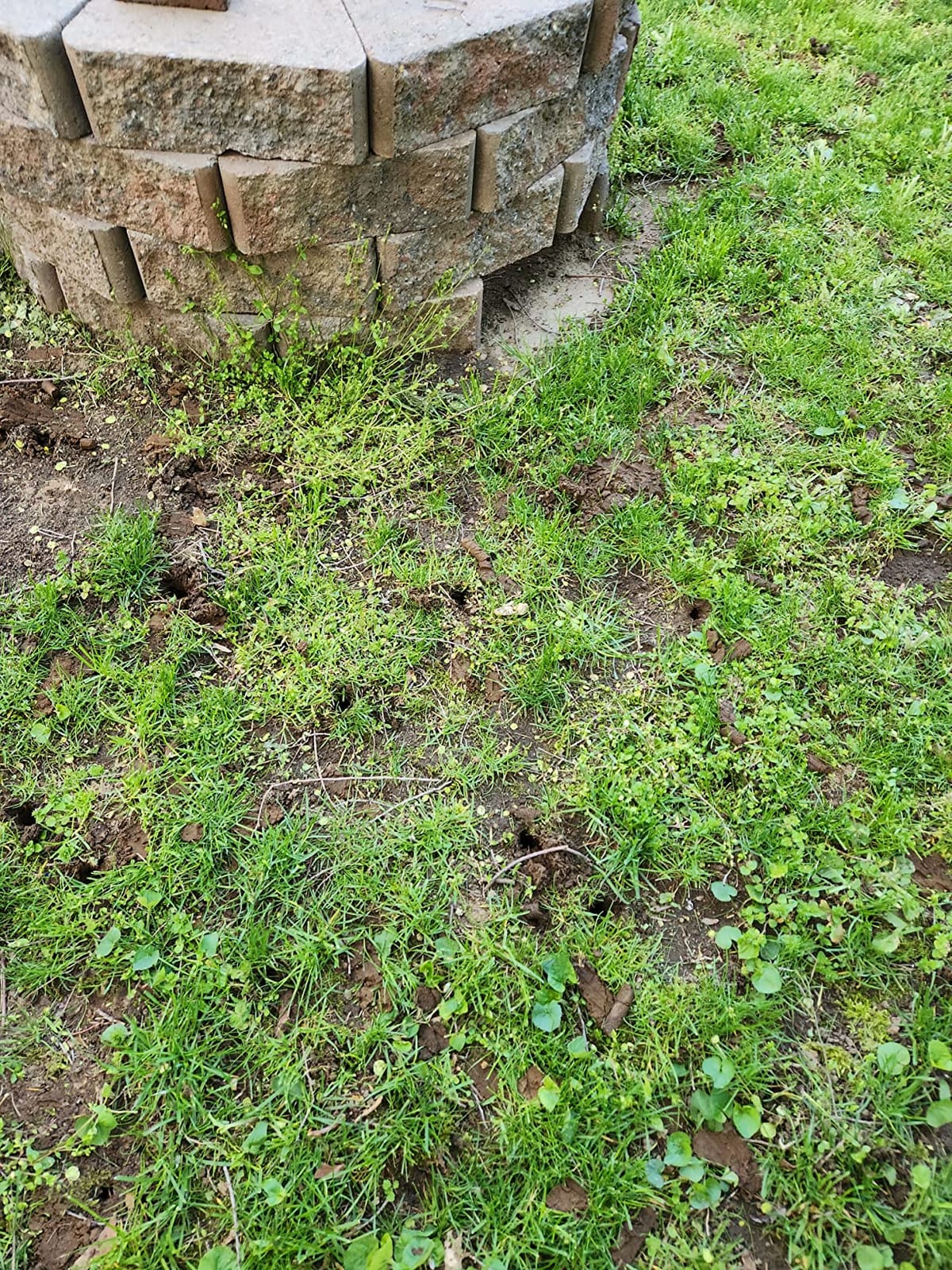
Aerate in early spring or early fall while grass is actively growing, never during summer heat or drought, and water the lawn a day or two beforehand so hollow tines pull clean cores. Then leave the plugs, because that is the point homeowners most often get wrong and raking them is wasted effort. The cores break down naturally, return organic matter to the soil, and the holes you pulled them from are already doing the work. Water lightly if you are overseeding, so seed reaches soil rather than sitting on a mat of thatch.
Finally, check your cores after the first pass. Hold one and it should be three to four inches long, hold its cylinder shape, and crumble when you break it. A smear that flattens in your hand means the machine needs more weight behind it, a second pass in the opposite direction, or a wetter day.
Frequently Asked Questions
What time of year should you core aerate my lawn?
Aerate in early spring or early fall while the grass is actively growing, and never during summer heat or drought stress. Water the lawn a day or two beforehand so hollow tines pull clean cores instead of smearing. Skip aeration if the lawn is dormant, frozen, or recently parched.
Which is better, core or spike aerator?
A core aerator is better for almost every homeowner. Core tines are hollow and pull a plug of soil out of the ground, which removes material and leaves an open channel for air and water. Spike tines are solid and just push a narrow hole, squeezing soil sideways and doing little to relieve compaction.
Is it worth buying a core aerator?
It is worth buying if you own a riding mower and will aerate every year, since a tow-behind can cover a typical residential yard in roughly 30 to 45 minutes. If you only need to aerate once a year and have no tractor, renting a self-propelled machine for a morning is usually the better economic decision.
Do I need to remove the plugs after core aeration?
No. Leave the cores on the lawn. They break down naturally, return nutrients and organic matter to the soil, and the holes you pulled them from are already relieving compaction. Raking and bagging them is wasted effort that also removes seedbed material you may want for overseeding.
How do I know if my lawn needs aeration?
Look for standing water long after rain, thin or patchy growth, areas that stay hard, and a thatch layer that feels spongy underfoot. Push a sturdy screwdriver into the ground: if it barely goes in, or needs real force, the soil is compacted. Try the same probe in a nearby flower bed, where penetration is usually easy, as a comparison.
The Best Core Aerator for Homeowners in 2026
For most yards, the Yard Butler manual coring aerator is the best core aerator for homeowners in 2026. It costs almost nothing to store, weighs under two pounds, has the deepest owner history in the category, and the foot bar plus long handle let you pull real cores without wrecking your knees. If your lawn is larger and you own a tractor, the Agri-Fab 48 inch tow-behind covers ground fast and its 175 pound tray handles hard clay, while the Brinly is the better-built tow unit for zero-turn and ATV owners.
Whatever you choose, water the lawn first, leave the plugs where they fall, and hold a core against a ruler after your first pass. That single check tells you whether the machine is coring or smearing, and it is the difference between an afternoon job and a season of wondering why the lawn never improved.