
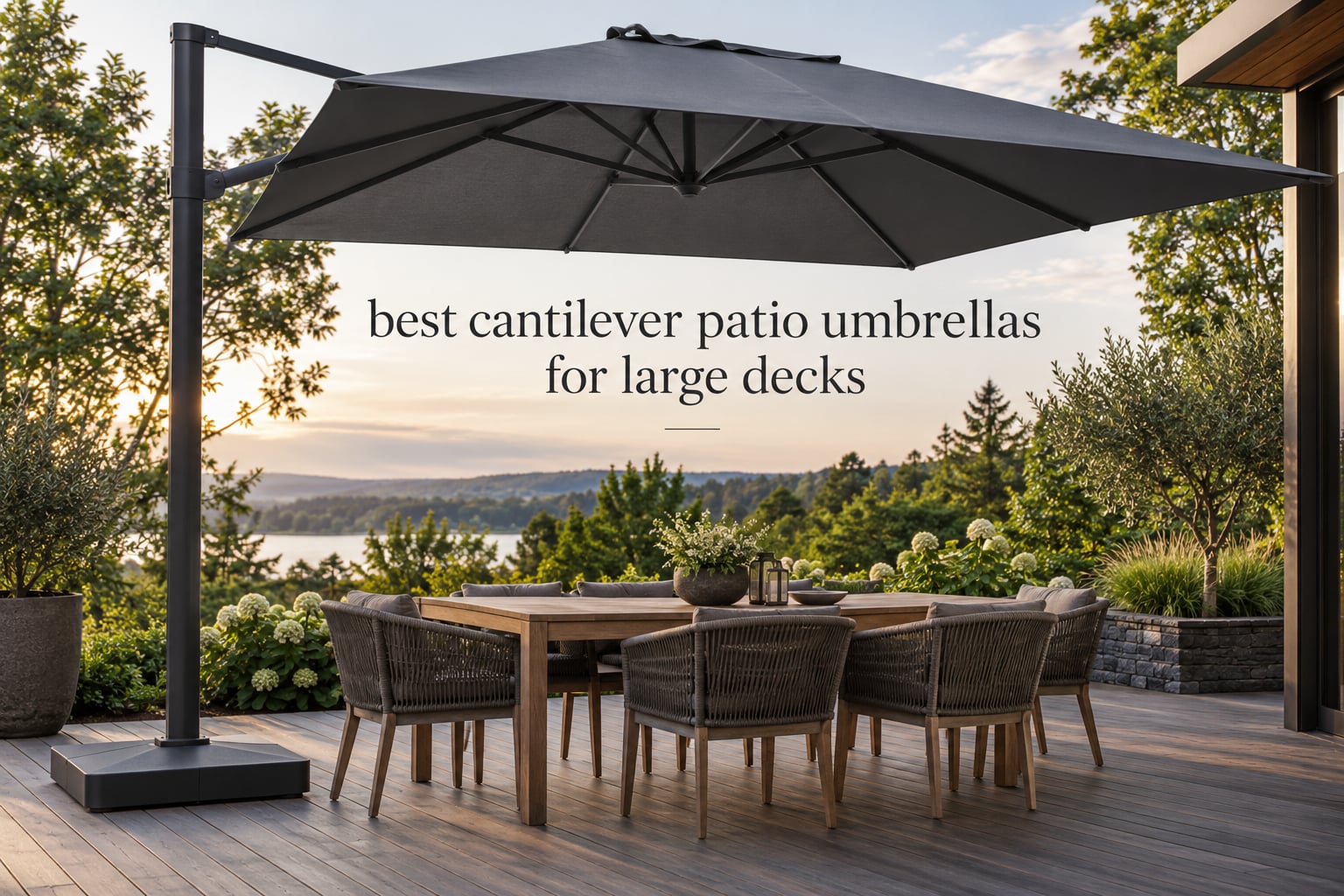
A cantilever patio umbrella is one whose pole stands at the side rather than in the center. A horizontal arm reaches out from the top of that post and holds the canopy over open ground, so there is no pole in the middle of your table, your sectional, or your fire pit, and most models rotate a full 360 degrees and tilt to follow the sun. That offset geometry is the whole appeal on a large deck, and it is also the whole problem, because an off-center load creates far more leverage than a center-pole market umbrella ever will.
We spent weeks comparing ten of them for this guide, all of them in the large-deck size band: 10×13 ft, 11 ft, and 13 ft rectangular canopies, the sizes that actually cover an eight-to-ten person dining table or a sectional plus a fire pit. The 9 ft and 10 ft round market umbrellas that dominate most roundups cannot shade that much furniture once the chairs are pulled out. If your deck is 200 square feet or larger, a rectangular cantilever in this band is the only shape that genuinely covers it.
Before we get into the picks, one caveat that catches nearly every first-time buyer: most cantilever umbrellas are sold without a base. Seven of the ten models below include only a steel cross base, which is a frame, not ballast. You will need a weighted or fillable base holding at least 200 pounds for a 10×13, and that cost belongs in your budget from day one. Our rectangular cantilever umbrella guide covers the shape question in more depth if you are still deciding between round and rectangle.
Table of Contents
Top 3 Best Cantilever Patio Umbrellas for Large Decks in 2026

PURPLE LEAF 10×13 Cantilever
- 10x13 rectangular canopy
- 240/gsm yarn-dyed polyester
- Crank tilt and 360 rotation
- Base sold separately

Sunnyglade 10×13 Cantilever
- Corner zippers resist wind
- 250/gsm PA-coated polyester
- Welded coated cross base
- 4-level tilt and rotation

LAUSAINT 11 ft with Base
- Weighted base with four sandbags
- About 308 lbs of counterweight
- 11 ft canopy with top vents
- Stainless steel frame
The PURPLE LEAF 10×13 takes the top slot because it has the deepest review history in the group and the mechanism owners actually rely on: a one-hand crank tilt handle and a foot pedal that turns the canopy through 360 degrees without anyone touching the base. The Sunnyglade earns its spot for the detail most manufacturers skip, which is long zippers on all four canopy corners so the fabric stays pinned to the ribs. The LAUSAINT is the pick that arrives with a base you fill by hand, four sandbags that top out near 308 pounds of counterweight once loaded, which removes the single biggest hidden cost from the equation.
All 10 Cantilever Patio Umbrellas Compared in 2026
| Product | Specifications | Action |
|---|---|---|
| PURPLE LEAF 10×13 Cantilever |
|
Check Latest Price |
| Sunnyglade 10×13 Cantilever |
|
Check Latest Price |
| LAUSAINT HOME 11 ft with Base |
|
Check Latest Price |
 PURPLE LEAF 10×13 Wood-Grain PURPLE LEAF 10×13 Wood-Grain |
|
Check Latest Price |
 ZLACUIU 10×13 Double Top ZLACUIU 10×13 Double Top |
|
Check Latest Price |
 Deconk 10×13 with LED Lights Deconk 10×13 with LED Lights |
|
Check Latest Price |
 MPL Shade 10×13 Double Top MPL Shade 10×13 Double Top |
|
Check Latest Price |
 MEVBC 10×13 with LED Lights MEVBC 10×13 with LED Lights |
|
Check Latest Price |
 Grand Patio 10×13 with Base Grand Patio 10×13 with Base |
|
Check Latest Price |
 ORYNTREX 10×13 Two-Tier with Base ORYNTREX 10×13 Two-Tier with Base |
|
Check Latest Price |
Two things jump out of that table. First, the fabric story: every one of these canopies is polyester, and the spread runs from 240 gsm to 250 gsm with a PU coating or a PA coating, with the PURPLE LEAF wood-grain model adding a stated UV 50+ rating. Second, the base story: only the LAUSAINT, the Grand Patio, and the ORYNTREX include something you can actually fill with ballast.
1. PURPLE LEAF 10×13 Rectangular Cantilever Umbrella
PURPLE LEAF Patio Cantilever Umbrella 10′ x 13′ Large Space for Pool Grey
- Largest review base in the group
- One-hand tilt crank works with limited grip
- Foot pedal turns shade without moving base
- UV resistant and water-repellent fabric
- Weighted base sold separately
- Top vent does not bleed pressure so canopy rocks
- Occasional shipments missing hardware
This is the unit we put at the top of the list for a straightforward reason: nothing else in this group has 2307 reviews telling you what happens after a couple of summers. The consensus is unusually consistent. Owners like the size of the shade footprint, they like the fact that the frame is aluminum from the shaft through the handle, and a recurring theme is that the crank-and-tilt arrangement is genuinely usable for older buyers and for anyone with arthritis in their hands.
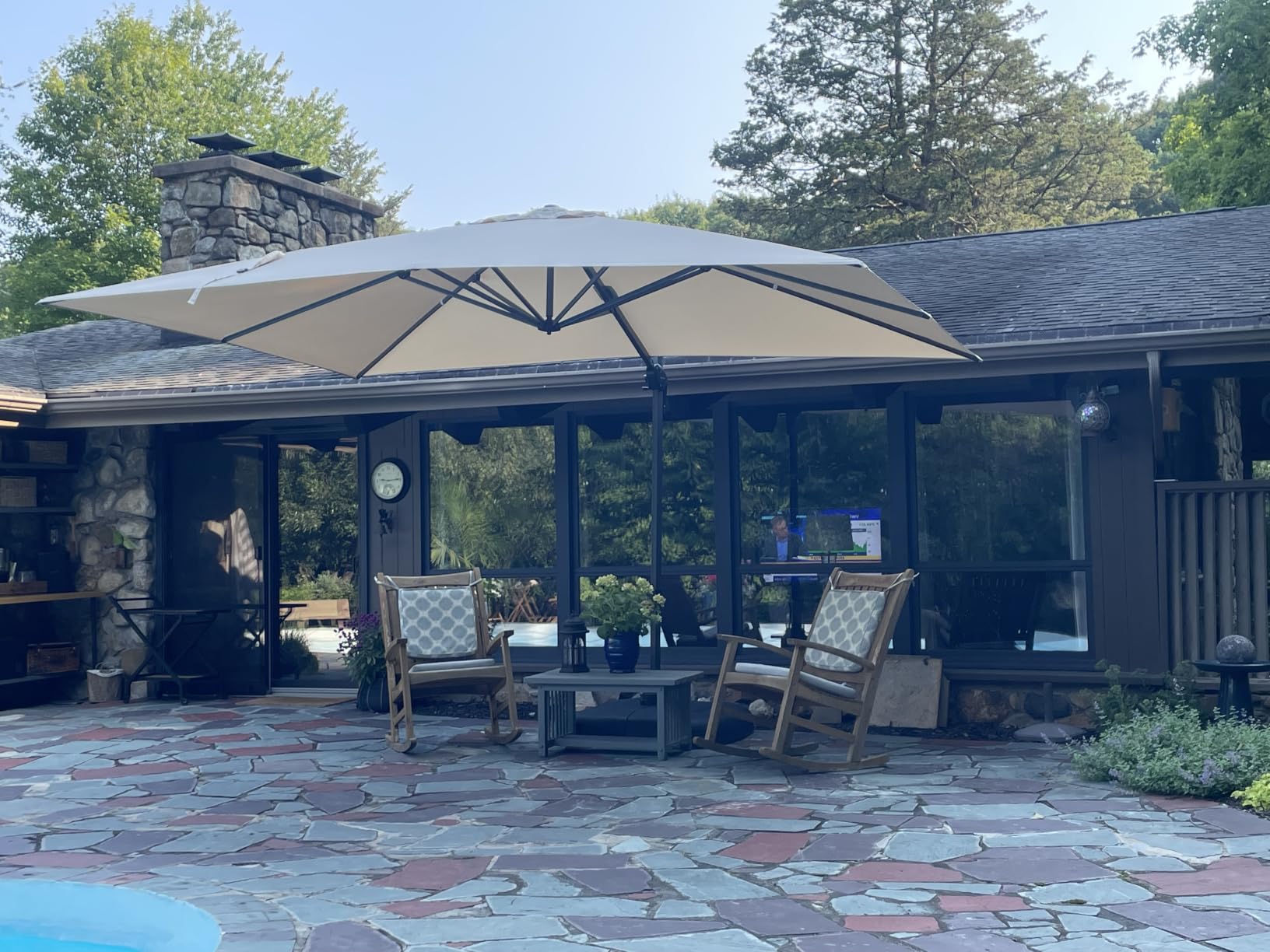
The 10×13 canopy is listed at 156 inches wide by 120 inches high, which is the real-world geometry that makes it work for a rectangular dining set. It is not a round canopy stretched flat. The rectangle means the long edge lines up with the long edge of the table, so a ten-seater gets covered without the awkward diagonal gap a square or round canopy leaves over the corners.
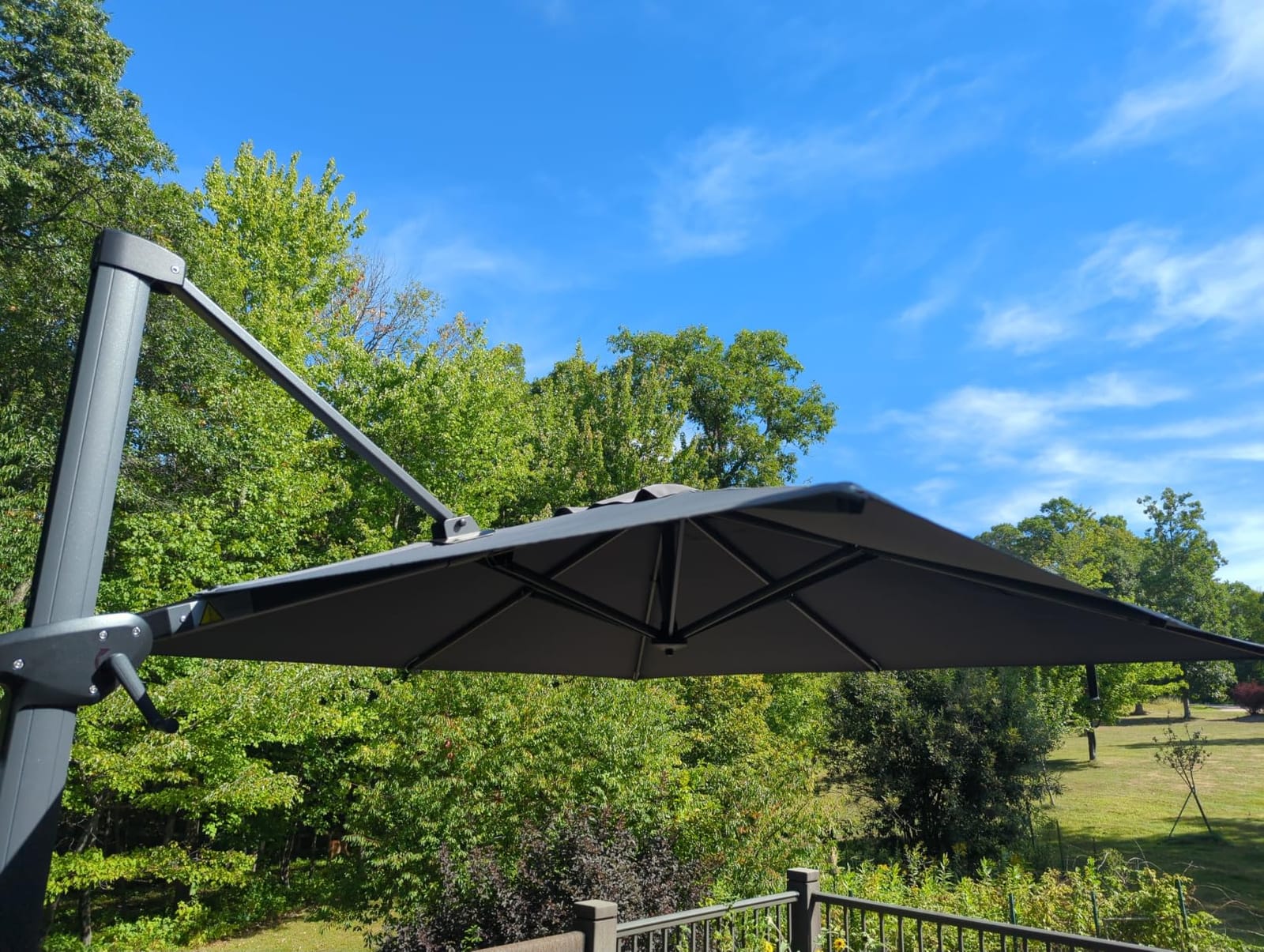
The fabric is 240 gsm yarn-dyed polyester with UV resistance, water repellency, and fade resistance baked in, carried on eight heavy-duty ribs. Yarn-dyed means the color runs through the yarn rather than sitting on the surface, so scratches and scuffs do not turn into pale streaks the way they do with surface-printed polyester. That is a meaningful difference over three seasons on a deck that gets daily use.
The honest weakness is wind. Owners report the top vent does not release pressure effectively, so the canopy rocks in a moderate breeze even when it is fully weighted. A minority of reviews also report orders arriving without the metal cross bracket or a set of screws, though PURPLE LEAF’s customer service is repeatedly praised for replacing missing parts quickly. Both of those are fixable; the rocking is a design characteristic rather than a defect.
Who this umbrella suits on a large deck
This suits anyone with a rectangular eight-to-ten person table, a sectional, or a fire pit who wants to move the shade with a foot pedal and never drag a base across the deck. It also suits households where someone physically cannot pull a lever on a heavy post, because the whole adjustment cycle is one hand on the crank and one foot on the pedal. For readers who want the mechanism explained rather than assumed, our guide to tilting patio umbrellas covers how the tilt notches work on this style of arm.
For an evening-heavy deck, pair it with string lights on the arm rather than expecting built-in lighting, since this unit has none. The 10×13 footprint is genuinely large enough to shade a sectional and a separate conversation area at the same time, which is where a 10 ft round model starts to fall short.
Where it falls short
It will not stand up without a base, and the matching weighted base is a separate purchase. Budget for that before you order, and note that a light sand-and-water base will make the rocking worse, not better. If your lot is exposed and you get frequent gusts, look at a vented double-top design instead, such as the ZLACUIU or the MPL Shade, both of which vent above the main canopy rather than through a single hole.
It is also a fairly plain grey or beige rectangle with no lighting, no cover in the box, and no fabric variety. If your deck reads as an outdoor room rather than a shaded patch of boards, a model with a wood-grain finish and a second canopy layer looks considerably more finished.
2. Sunnyglade 10×13 Offset Cantilever Umbrella
- Corner zippers keep canopy pinned in wind
- Coated fabric blocks up to 99% of rays
- Welded powder-coated cross base
- Four tilt levels plus full rotation
- Weighted base sold separately
- Should be closed in windy conditions
- Coating can crease at the arms over time
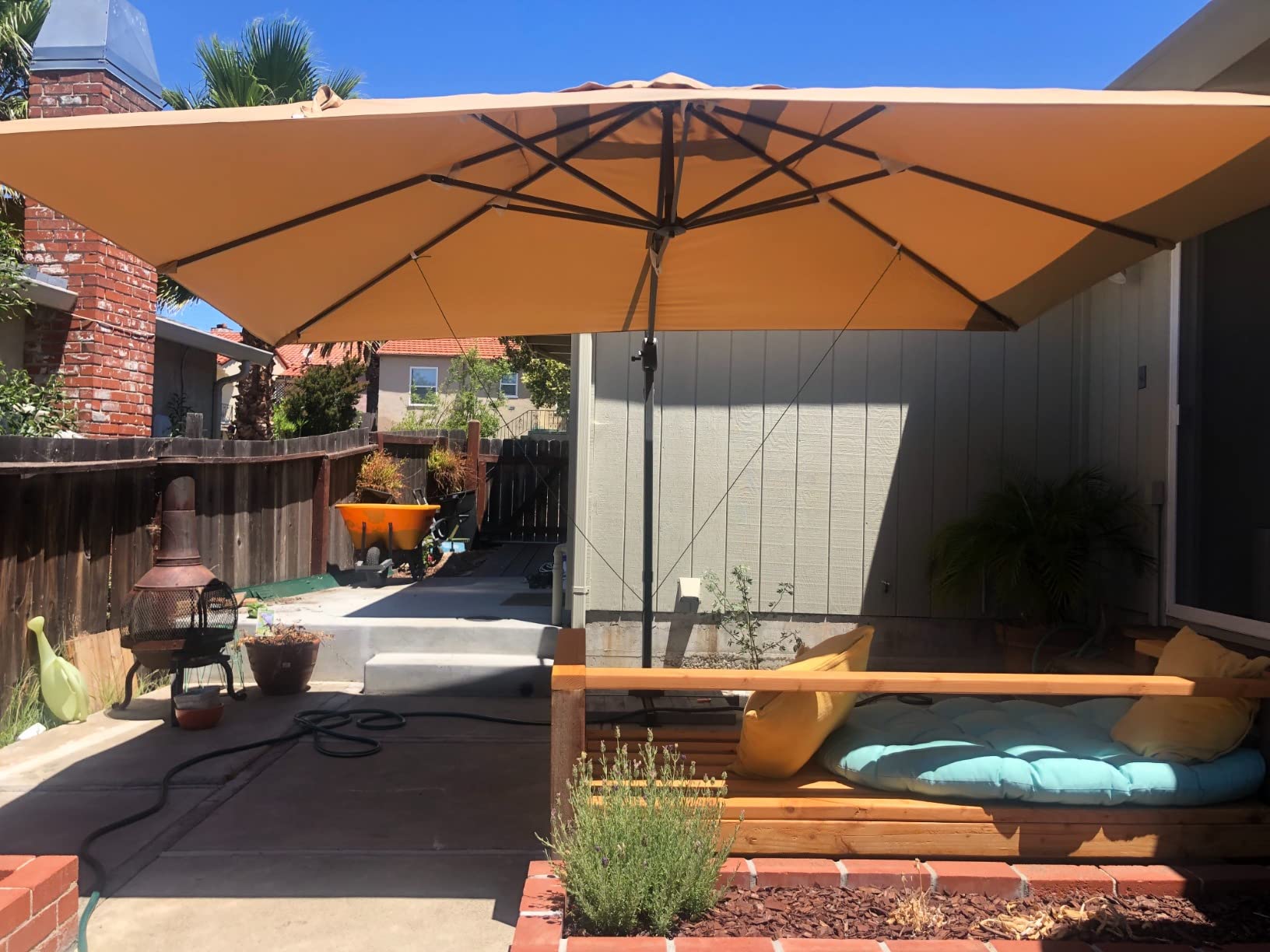
The Sunnyglade is the one we recommend to anyone whose deck sits in a wind corridor, and the reason is a small feature most brands would never call out: long zippers fitted on all four canopy corners. Those zippers let you pin the fabric to the rib tips, which removes the flutter that lifts a canopy edge and lets wind get underneath. Reviewers credit the zipper design specifically with holding the canopy secure.
The fabric is 250 gsm polyester with a PA coating, described as blocking up to 99% of harmful rays, waterproof, and fade resistant. It sits a step above the 240 gsm material in most of this group on paper. The frame is eight aluminum ribs on a heavy aluminum main pole, and the included base piece is a welded metal cross base with a powder-coated anti-rust finish rather than a stamped plate, which is a better starting structure than most.
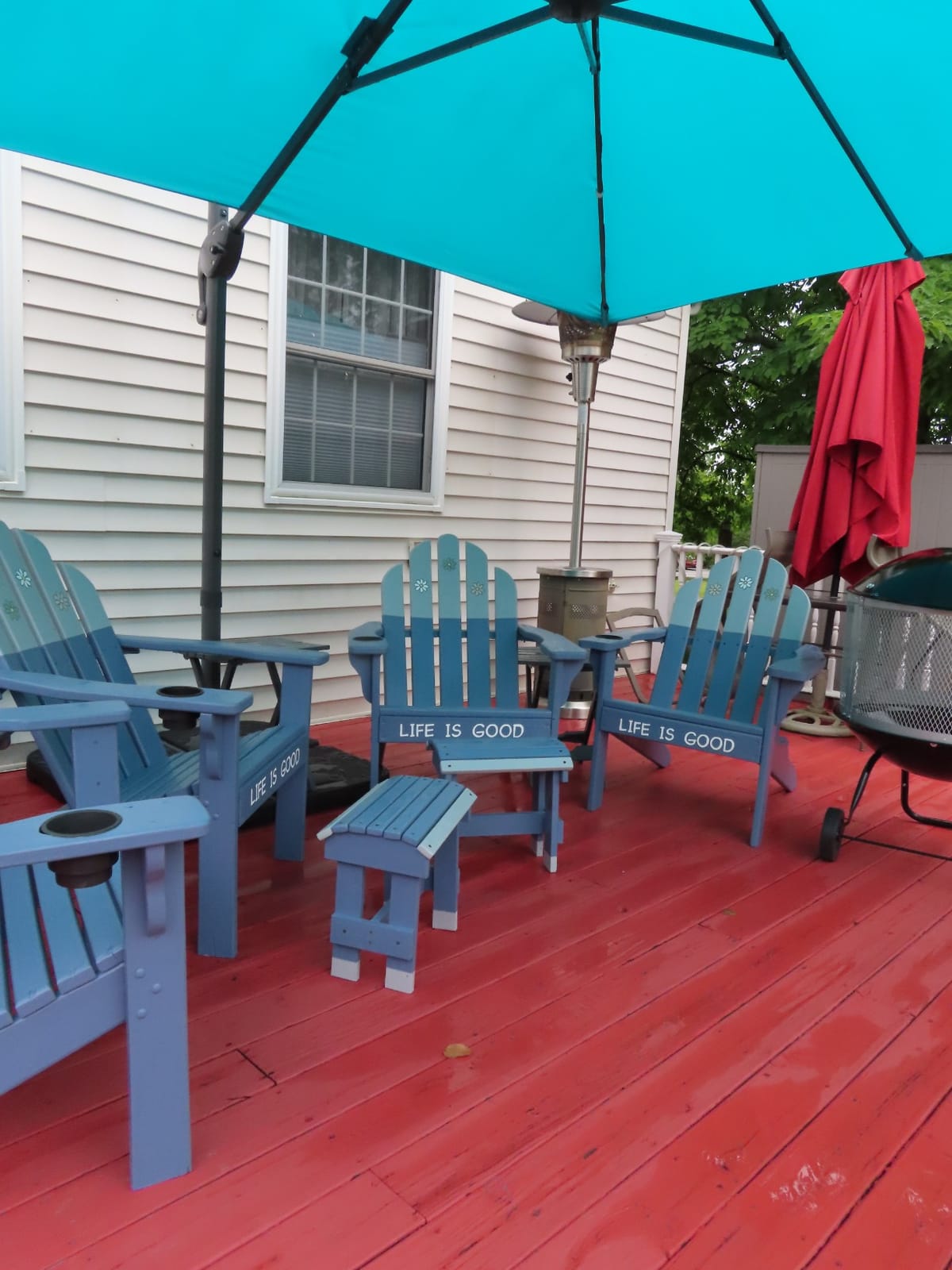
Adjustment is four tilt levels plus 360 degree foot-pedal rotation. Four levels is fewer than the seven on the MPL Shade, but for most decks four is enough to track the sun from morning through late afternoon, and the corner zippers do more for daily stability than two extra tilt notches would.
What you give up for that wind engineering is a slightly lower overall rating at 4.2 across 1861 reviews, with the scoring spread out more than the leader’s. Buyers note that the canopy should be closed in windy conditions regardless, which is honest manufacturer guidance rather than a defect, and a few mention creasing in the coating at the arm joints after extended use.
Who this umbrella suits on a large deck
This fits a deck that gets hit by afternoon gusts off open space, water, or a treeless lot. It also fits anyone who plans to leave the umbrella up through the day without walking out to check it, because the pinned corners give it a margin of safety that vent-only designs do not. If you want to cross-shop the wider wind category, our wind-resistant patio umbrella guide covers the other mechanisms that matter.
The 10×13 rectangle suits a long rectangular dining table better than a round canopy does, and the beige color is a neutral that disappears against most deck stains and outdoor furniture. It is a sensible default for a deck that is used for meals rather than for a single lounge chair.
Where it falls short
It is sold without ballast, so the stability benefit only exists once you load a proper base. Do not skip this step, because a 10×13 sail with a light base is the fastest way to turn a shade investment into a bent frame. The manufacturer guidance is to close the canopy in wind, and with a 250 gsm coated canopy that closes more slowly than a light fabric would.
The four-level tilt is also the minimum we would consider genuinely useful across a full day of sun. If your deck faces west and the low evening light is the problem you are solving, a seven-level tilt gives you more room to work. And the finish is plain, so it will not carry a design-forward outdoor room on its own.
3. LAUSAINT HOME 11 ft Cantilever with Weighted Base
- Only pick with four heavy sandbags in the box
- 308 lbs counterweight when filled
- Stainless steel resists corrosion
- Top vents and light straps included
- Loading the base takes hours
- Does not tilt side to side
- Very heavy once filled
Here is the practical headline on this one: the base is in the box. That alone changes the math for a large-deck buyer, because the weighted base is where most of the real cost hides. This model arrives with a fabric-covered weighted base and four sandbags, each rated to hold up to 35 kg, which works out to roughly 308 pounds of counterweight when everything is filled. No other model in this group except the Grand Patio and the ORYNTREX gives you that number on day one.
The frame is stainless steel rather than aluminum, which is a meaningful upgrade for a coastal property or anywhere with salt in the air. Aluminum is lighter and cheaper; stainless is heavier and far more resistant to corrosion creep. The canopy is heavy polyester with built-in top vents for airflow, and the whole assembly uses a curvy offset post with an extra rib tying back to the post for rigidity.
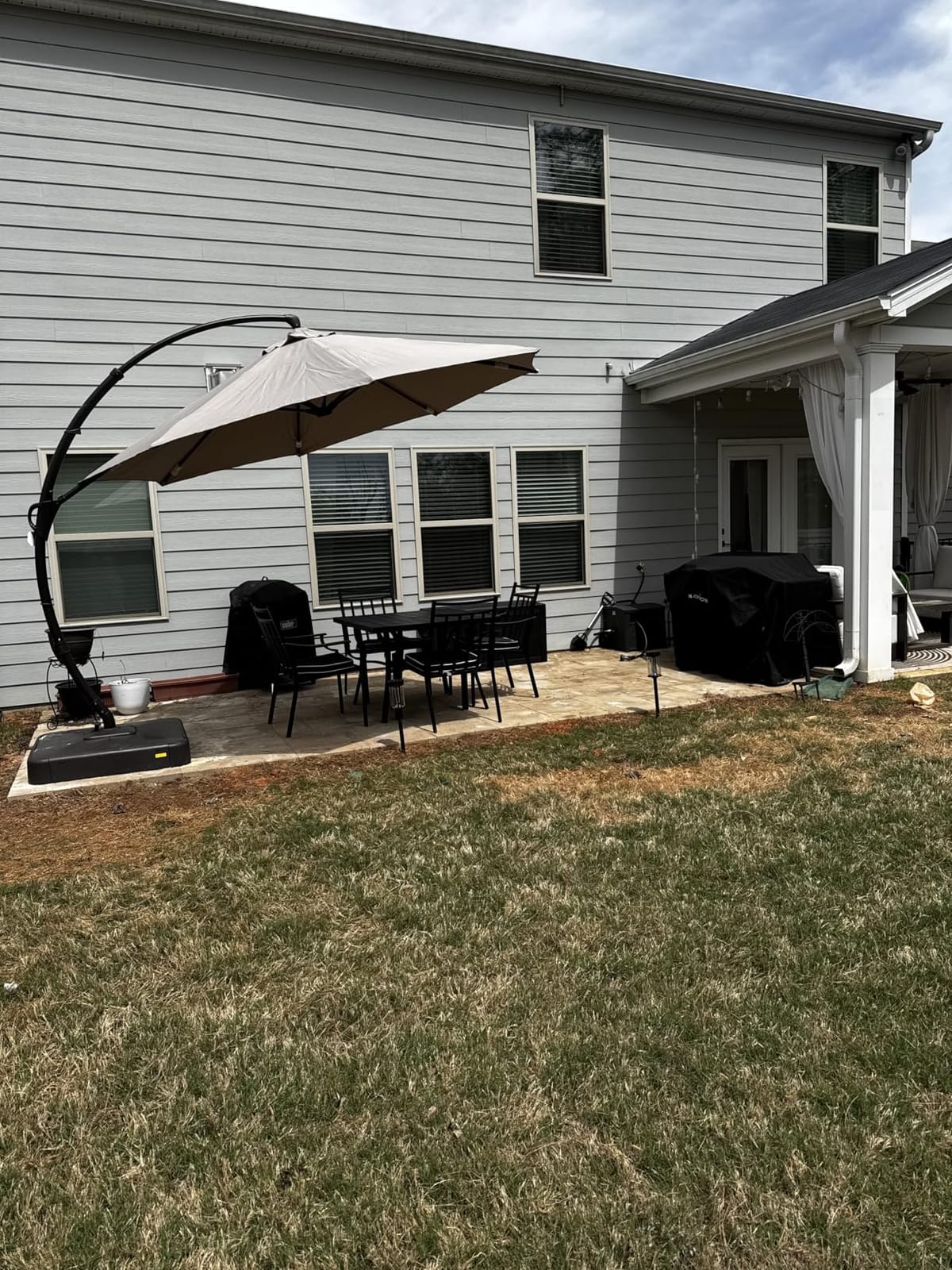
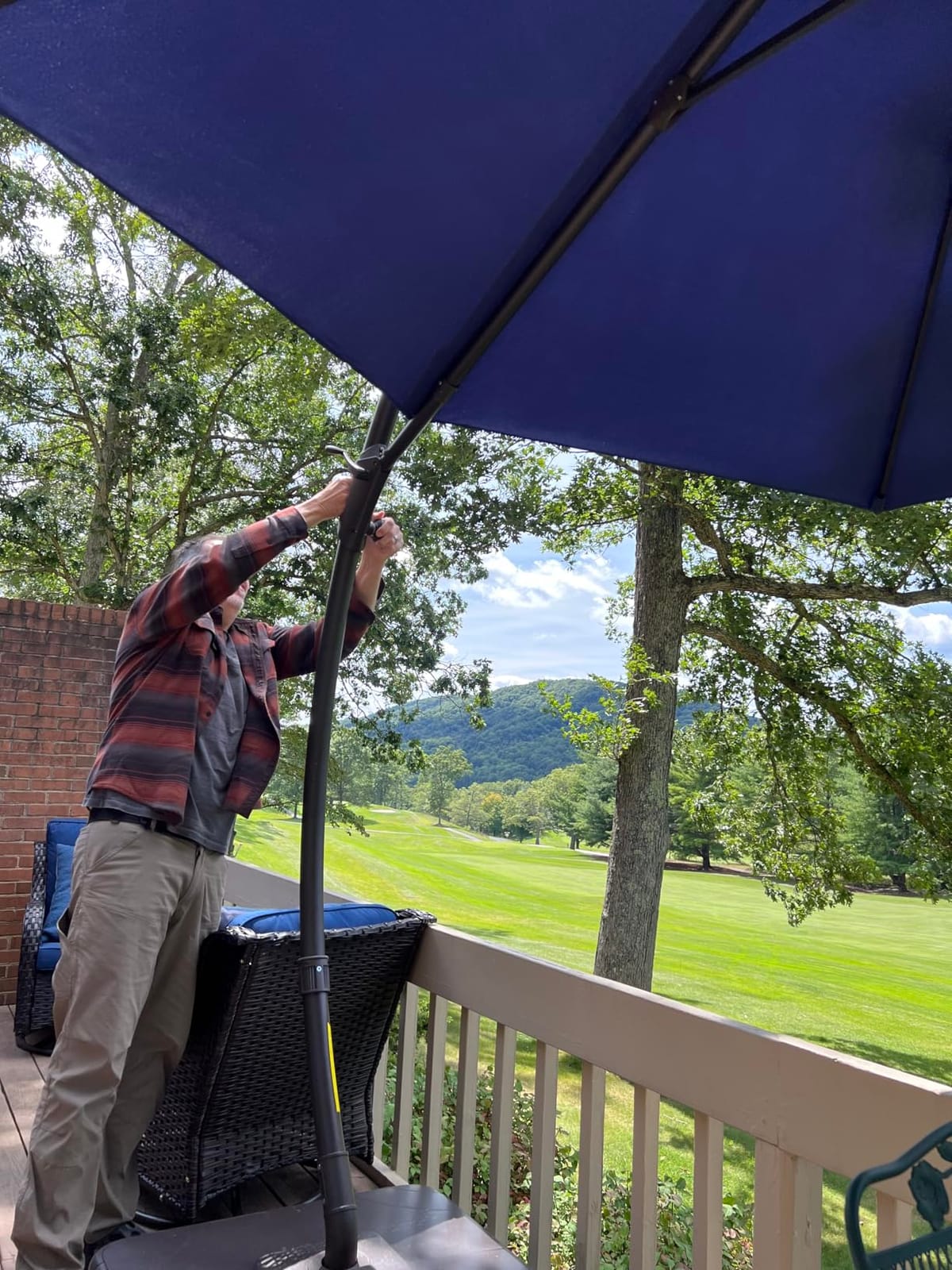
Operation is a crank lift for opening and closing plus 360 degree pedal-driven rotation. There is also a Velcro strap that mounts around the umbrella for hanging string lights, which is a small touch that matters a lot for evening use since the model has no built-in lighting. Item weight is listed at 73.8 pounds before you add any ballast.
What you trade for that complete package is flexibility, and the reviews are blunt about it. The base needs roughly 220 pounds of sand, loading it is genuinely laborious, and once filled the umbrella stays exactly where you put it. It also tilts vertically along the curved post but does not tilt side to side, so late-day sun from one direction will not be blocked no matter how you set it. Clearance under the canopy is also lower than product photos suggest, which matters if you are planning to put a fire pit or a tall dining table underneath.
Who this umbrella suits on a large deck
This is the right pick if you want a single delivered, assembled unit with no second shopping trip, and if you can accept choosing its permanent position before you fill the bags. It suits a permanent dining spot on a deck where you have already decided where the furniture lives, because moving it afterward is a real chore. The stainless frame and the 11 ft canopy also make it a sensible option for a coastal or lakeside property.
The light straps let you add ambience without a wiring project, and the near-308 pound ballast figure means you are not doing the arithmetic on how much sand to buy. For readers building a full shade setup, our general patio umbrella guide covers the market-umbrella alternatives you would be giving up.
Where it falls short
The lack of side-to-side tilt is the big one, and it is not a workaround, it is a geometry limit. If your deck’s worst sun comes from a low western angle rather than from overhead, this umbrella will not solve it and no amount of adjustment will. Combine that with an 11 ft canopy that is smaller than the 10×13 models in this group, and you are giving up a meaningful amount of shaded square footage for the convenience of the included base.
Plan the setup with at least two people and expect the filling to take hours. It is also effectively immovable afterward, so if you rent, or expect to change the deck layout next year, this is the wrong architecture. And the near-7 ft canopy height can be awkward for shorter users working the crank.
4. PURPLE LEAF 10×13 Double-Top Wood-Grain Umbrella
- Top rating at 4.6 across 964 reviews
- Double-top canopy vents above the main layer
- 8 all-aluminum poles stay firm
- 3-year fabric protection plan
- Weighted base sold separately
- Highest cost in this lineup
- Wood-grain finish suits a specific style
This one carries the joint-highest satisfaction score in the group, 4.6 stars with 83 percent of reviews at five stars, across 964 reviews. That is a meaningfully better hit rate than anything else we looked at, and it tracks with a specific design choice: a double-top canopy with a wood-grain spray finish that reads as an intentional outdoor room rather than a shade accessory.
The double-top arrangement is the technical story. A smaller second canopy sits above the main 10×13 layer, and the gap between them lets hot air escape upward and gives wind a path out of the sail. That is a real engineering advantage over a single-layer canopy with a single vent hole, and it is exactly the feature competitors mention in passing without explaining. If you want the deeper treatment, our wind resistance guide breaks down vent and double-top mechanics.
Adjustment is the most granular in this group alongside the MPL Shade: six height and angle settings with 360 degree rotation. The frame is eight all-aluminum poles with a wider outdoor umbrella tray and anti-oxidation spray paint, and reviewers specifically credit the aluminum for staying firm and reducing shaking compared with lighter frames. The fabric is 240 gsm yarn-dyed polyester rated UV 50+, water-repellent, and colorfast.
It is also one of the few models here with a stated protection plan, three years on fabric and one year on the rib structure. That is not a lifetime warranty, but it is more than most, and it changes the math if you are thinking about a five-year horizon rather than one summer. Buyers consistently note the base is sold separately, so this is a premium umbrella plus a separate base purchase.
Who this umbrella suits on a large deck
This suits a deck that is styled, not just shaded, and a buyer who intends to keep the same setup for years. It works for a commercial terrace or a restaurant patio as well as a residential deck, which is why the wood-grain finish reads as deliberate rather than decorative. The double-top also makes it the best-looking option for evening use, since the second layer catches low light differently than a single flat canopy.
Choose it when the deck is a permanent part of how you use the house, not a rental or a temporary setup. The six tilt and height settings combined with 360 rotation let you follow sun across a full day, and the aluminum frame is the least likely to shake when you do. If your other priority is fabric longevity and you are weighing acrylic against polyester, our acrylic and Sunbrella canopy guide covers that comparison in detail.
Where it falls short
It costs the most of anything we tested, and that number is before the base. Buyers should treat the total setup cost, not the umbrella price, as the comparison point against a mid-range model with a proper base, because a premium canopy with a cheap ballast is a worse system than the reverse.
The wood-grain finish is a specific look. If your outdoor furniture is contemporary or coastal-white, a spray-finished wood grain will not blend. And the double-top adds height to the assembly, which is worth checking against an overhang, a pergola beam, or a second-floor balcony if you have one. The one-year rib coverage is also shorter than the fabric coverage, and ribs are what fail in a storm.
5. ZLACUIU 10×13 Double-Top Cantilever Umbrella
- Double-top vent cuts wind pressure
- All-aluminum frame resists corrosion
- PU coating is waterproof and fade proof
- Tool-free crank and foot pedal
- Steel cross base only
- rated below 15 mph
- Two-person assembly
- Counterweight of 220 lbs advised
The ZLACUIU is the double-top design without the premium-tier price, and for a deck that is mostly concerned with wind rather than finish, that is a compelling trade. The double top vent is described as improving airflow and reducing wind pressure under the canopy, which is the same mechanism that makes the PURPLE LEAF wood-grain model more stable, offered at a much lower tier.
The frame is all-aluminum with eight thickened, reinforced ribs and an anti-oxidation spray coating, and the canopy is 240 gsm yarn-dyed polyester with a durable PU coating that reviewers describe as waterproof, fade-proof, and UV protective. The finish is grey. Operation is tool-free: a crank opens, closes, and tilts, and a foot pedal handles rotation.
What makes this worth reading carefully is the honest limitation the manufacturer publishes. The listing rates the umbrella for wind speeds below 15 mph, recommends a counterweight of 220 pounds or more, and says to close the canopy in strong wind. Fifteen mph is a lower published threshold than the 20 mph figure attached to the MEVBC in this group, and that difference is exactly the kind of detail that gets lost in a roundup.
Reviews rate it 4.2 across 402 owners, with consistent praise for canopy width relative to cost and for the vent design. The practical note from buyers is that the included steel cross base is nowhere near sufficient on its own for a 10×13 offset umbrella, and that two people should handle the assembly given the size and weight.
Who this umbrella suits on a large deck
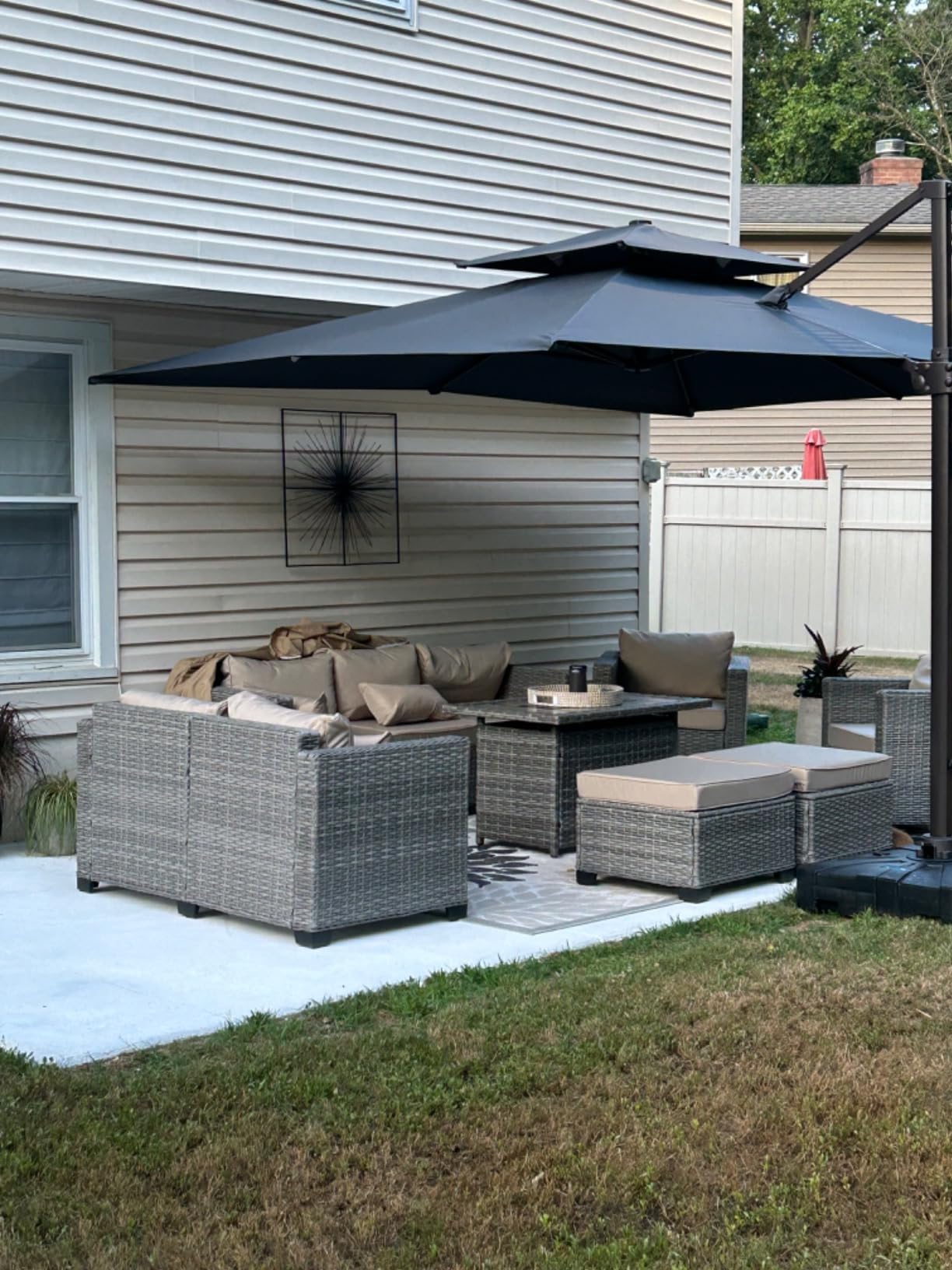
This suits a buyer who wants double-top wind engineering without paying for a wood-grain finish or a long protection plan. It is a good fit for a large rectangular deck used mostly for daytime dining, for a pool surround, or for a garden area where a wide rectangle is what you actually need. The PU-coated fabric also handles splash and drizzle better than an uncoated 240 gsm canopy.
It suits a two-person install comfortably. Assembly videos and after-sales support are provided, which matters on a unit this size where the frame is the hardest part to get right. If you are comparing shapes rather than brands, remember that a 10×13 rectangle is the right footprint for a long table and a poor fit for a single round bistro set.
Where it falls short
The 15 mph wind rating is the headline limitation and it is lower than we would want on an exposed deck. That translates to a shorter window of safe unattended use and more frequent closing, particularly on a hill or an open lot. The PURPLE LEAF wood-grain double-top is the better wind buy for the same canopy area.
It also has no protection plan, no cover in the box, and no lighting. And because the base is not included, the 220 pound counterweight recommendation is a shopping task and a hauling task, not a feature. Budget for it and plan the placement before the umbrella arrives, because these do not move easily once loaded.
6. Deconk 10×13 Cantilever with LED Lights
Deconk 10′ X 13 ‘Patio Umbrella with LED Light Outdoor Cantilever Umbrellas
- Lights on all 8 ribs plus a center light
- Three brightness modes
- No cords or wiring needed
- Cover included in the box
- Weighted base sold separately
- 200 lbs counterweight recommended
- Small fill openings on the base
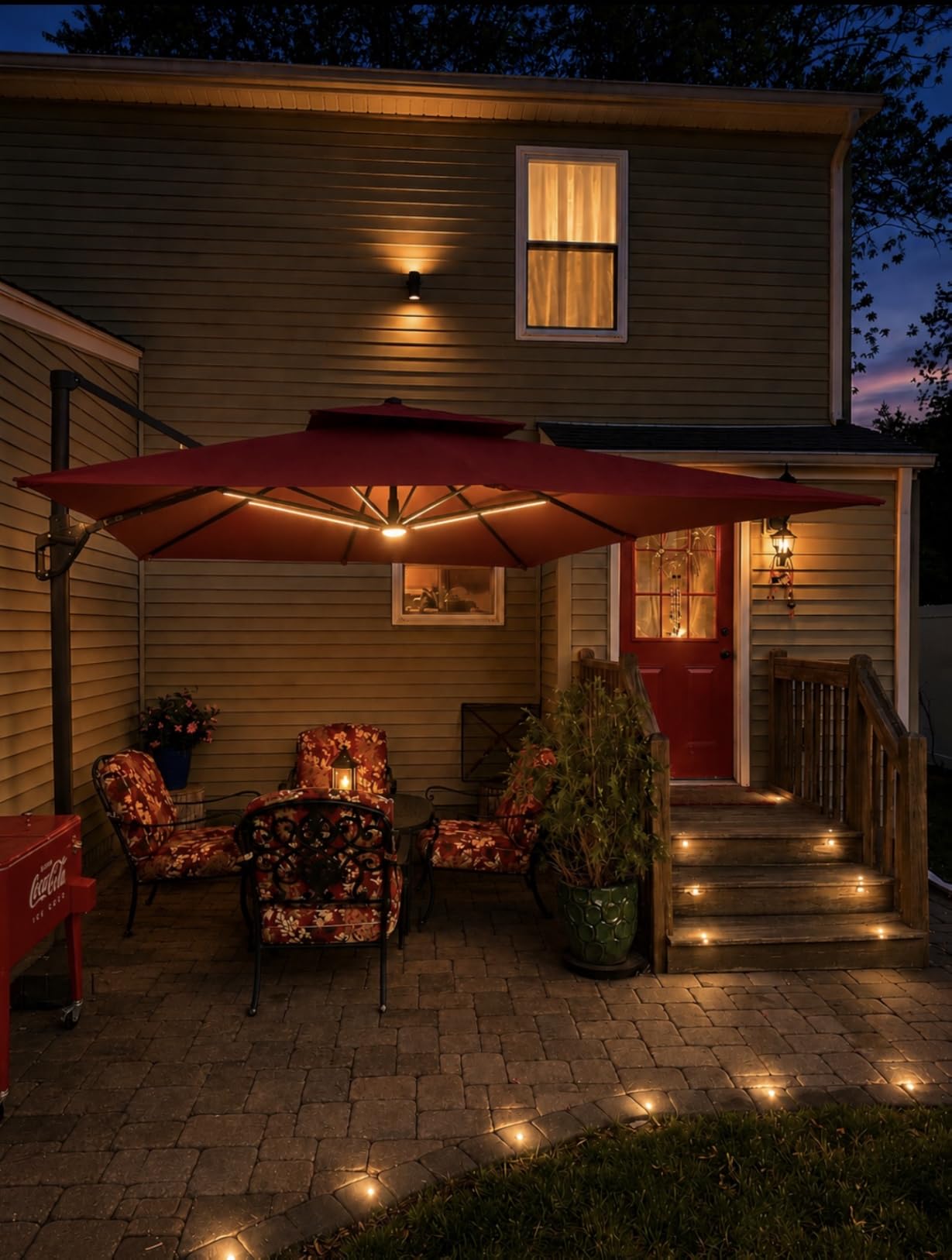
Deconk and MEVBC are the two models in this group with lighting built into the ribs, and the Deconk is the one with the higher satisfaction score at 4.6 across 292 reviews. The light system is eight heavy-duty LED ribs plus a center light, with three brightness modes and roughly four hours of runtime on a full charge. A solar panel at the top recharges the included USB battery pack, so there is no wiring to run across the deck.
That solves a real problem. If your large deck is used for evening entertaining, the alternative to built-in lights is string lights on the arm, which sag, tangle, and need an outlet or a generator. Owners say the ability to keep using the patio after dark without extension cords is the reason they picked this over a plain canopy.
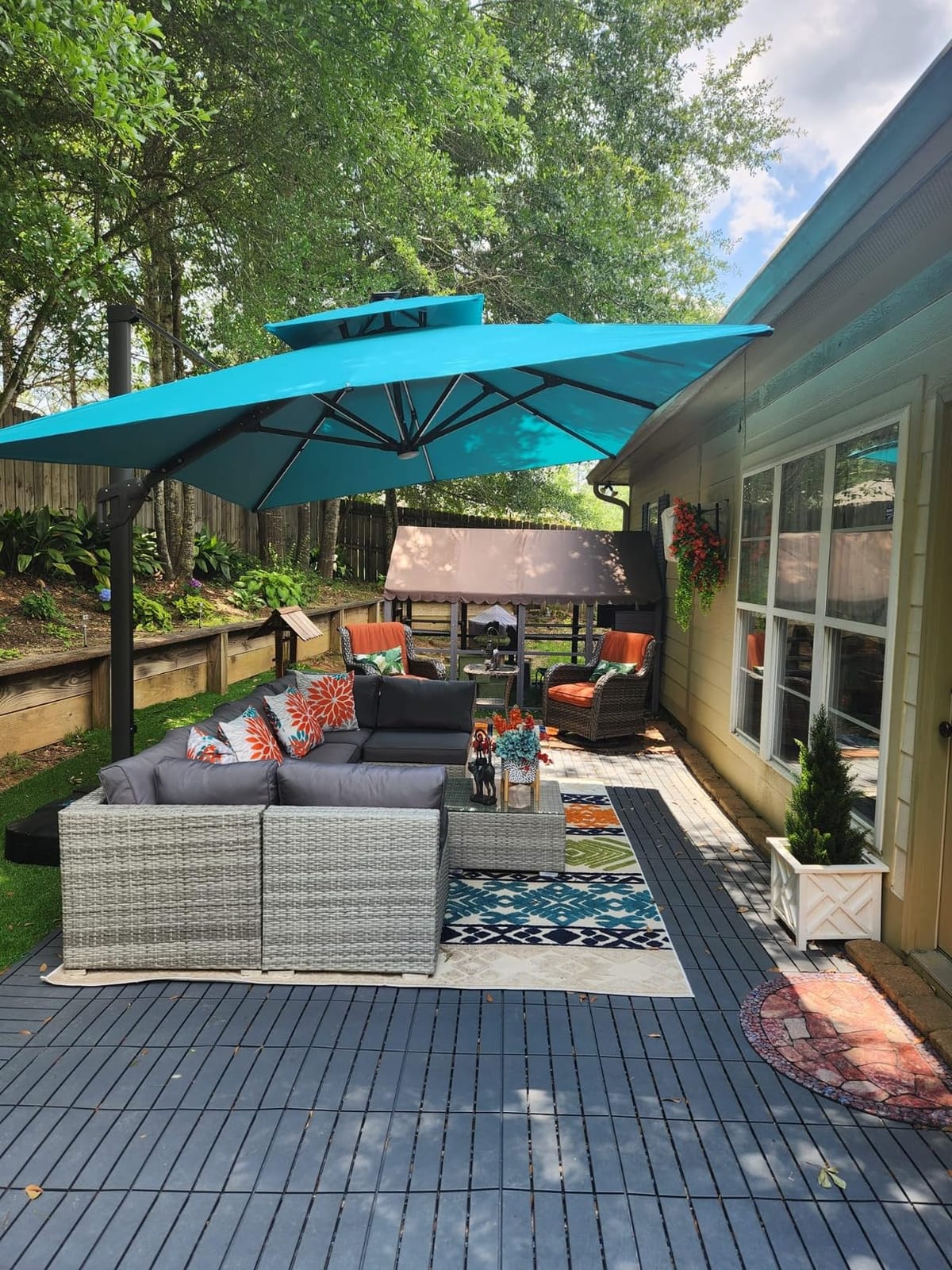
The canopy itself is a 10×13 rectangle with a double top vent for airflow and stability, carried on 250 gsm yarn-dyed polyester with a PU coating that is UV resistant and water-repellent. The structure is a thick aluminum pole with eight heavy-duty steel ribs and a triangular support frame, and a cover is included in the box, which is a genuine saving since covers are the cheapest corrosion insurance there is.
The caveat is the base again, with a recommended counterweight over 200 pounds and the fillable base sold separately. Buyers also note that with a counter-height table, the ribs need room to spread, so chairs have to be moved before opening or closing, and that the small fill openings on the base make pouring sand a slow job. The seller is praised for sending a replacement after a small rib defect, which is a good sign on long-term parts support.
Who this umbrella suits on a large deck
This is the pick for a deck that is genuinely an evening room. If you host dinner parties that run past sunset, the eight lit ribs give even coverage across the whole 10×13 footprint rather than a single bulb over the center of a table. It suits pool decks where you want to see the water at night, and it suits decks with no nearby outlet.
It also suits anyone who has already been burned by a missing cover. The included cover protects the fabric and the aluminum from overnight dew and off-season storage, and the double top vent plus the 250 gsm coated fabric handle a summer shower without drama. Two-person installation is recommended and realistically required at this size.
Where it falls short
Four hours of runtime is the honest limit, and it is per charge rather than per night. On a long summer evening that runs from sunset to midnight, you will want the canopy closed partway through or accept dimmer output on the low setting. The lights are also permanently installed, so they cannot be removed if you decide you want the plain canopy look.
Opening and closing with furniture underneath is a genuine friction point, because the eight steel ribs need somewhere to go. Plan the layout so the table can be shifted, or plan for someone to move chairs before every use. The 200 pound counterweight is still on you to source, haul, and fill.
7. MPL Shade 10×13 Double-Top Umbrella
MPL Shade 10′ X 13′ Cantilever Patio Umbrella Double Top Outdoor Umbrellas
- Seven tilt levels
- the highest published count here
- Powder-coated aluminum pole with 8 ribs
- Waterproof fade and UV resistant fabric
- Easy to raise and lower
- Rocks in a light breeze without heavy weighting
- Can be blown over without counterweight
- Underside strap casts a visible shadow
The MPL Shade’s differentiator is arithmetic: seven tilt levels, the highest published count in this roundup. On a west-facing deck where the sun tracks low across the railings in the late afternoon, that extra granularity is the difference between usable shade all evening and shade that stops when the canopy hits a notch you cannot get past.
The rest of the package is solid rather than exceptional. It is a 10×13 double-top rectangular canopy, so you get the vented two-layer wind behavior that we have seen hold up well, carried on an all-aluminum pole with eight heavy-duty ribs and a powder-coated finish. The fabric is 250 gsm yarn-dyed polyester with a PU coating, listed as waterproof, fade resistant, and UV resistant.
Operation is a new-style crank for opening and closing plus foot-pedal 360 degree rotation. A metal cross base is included, and the recommended counterweight is above 220 pounds, which is the same number the ZLACUIU specifies and a useful floor for a 10×13 offset umbrella in this class.
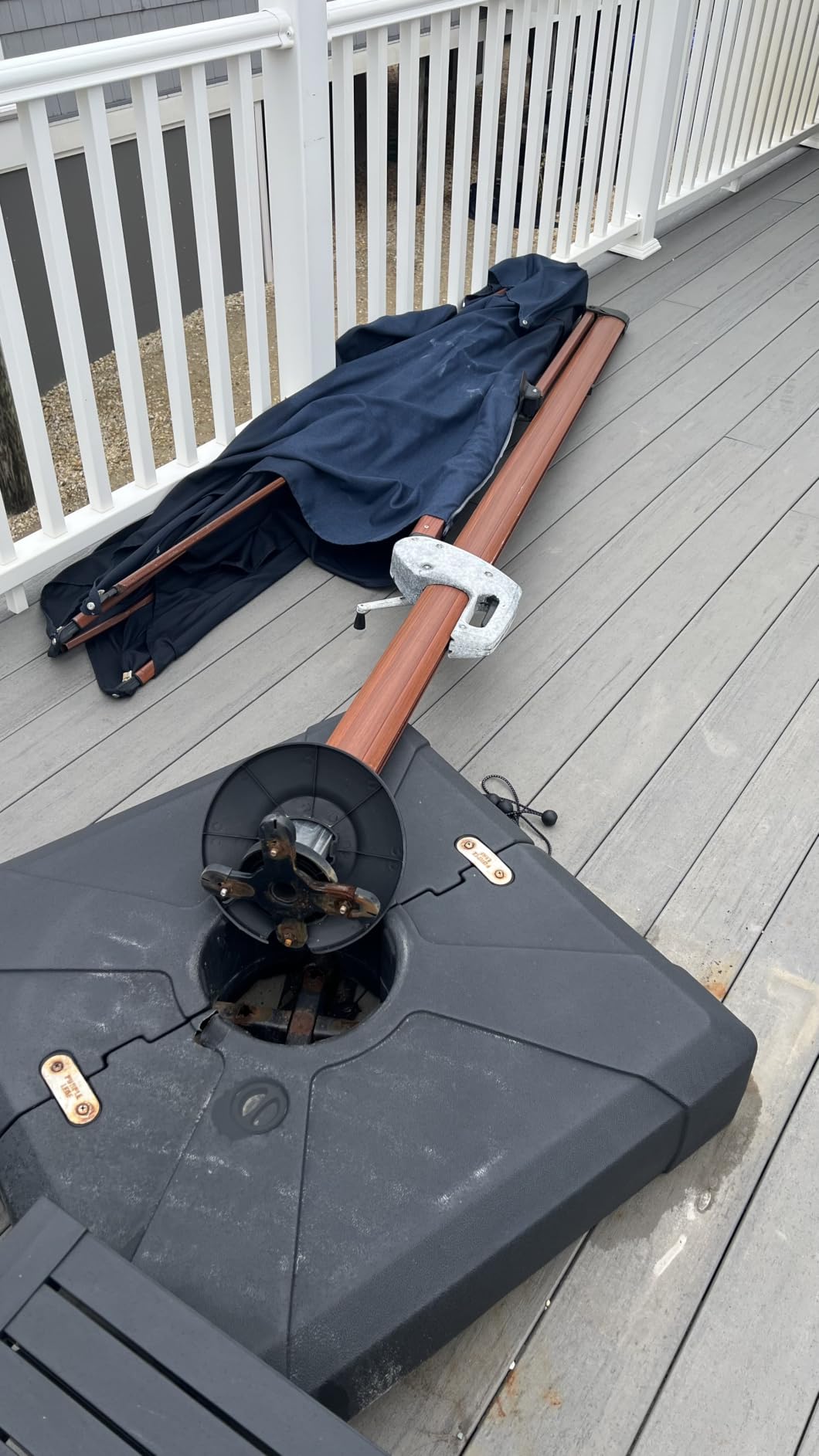
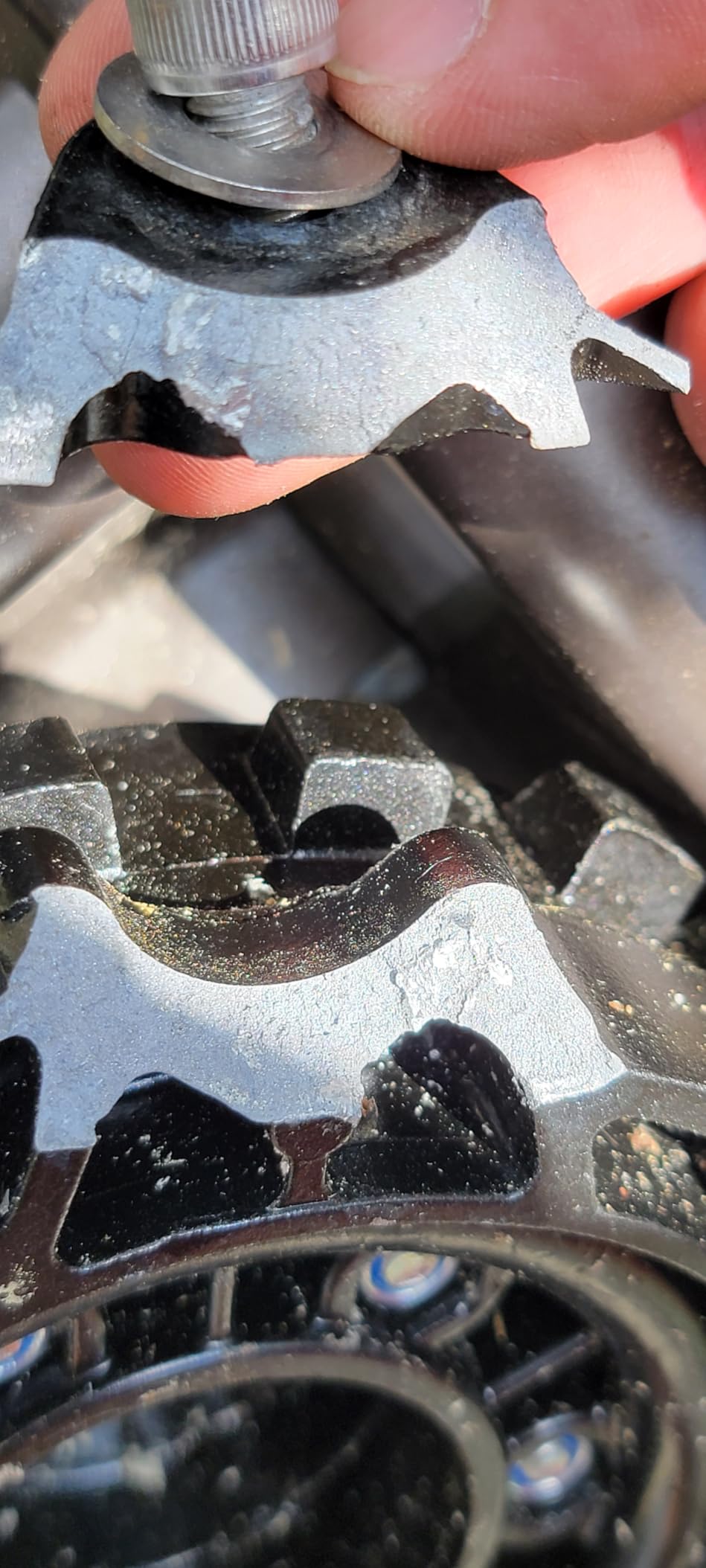
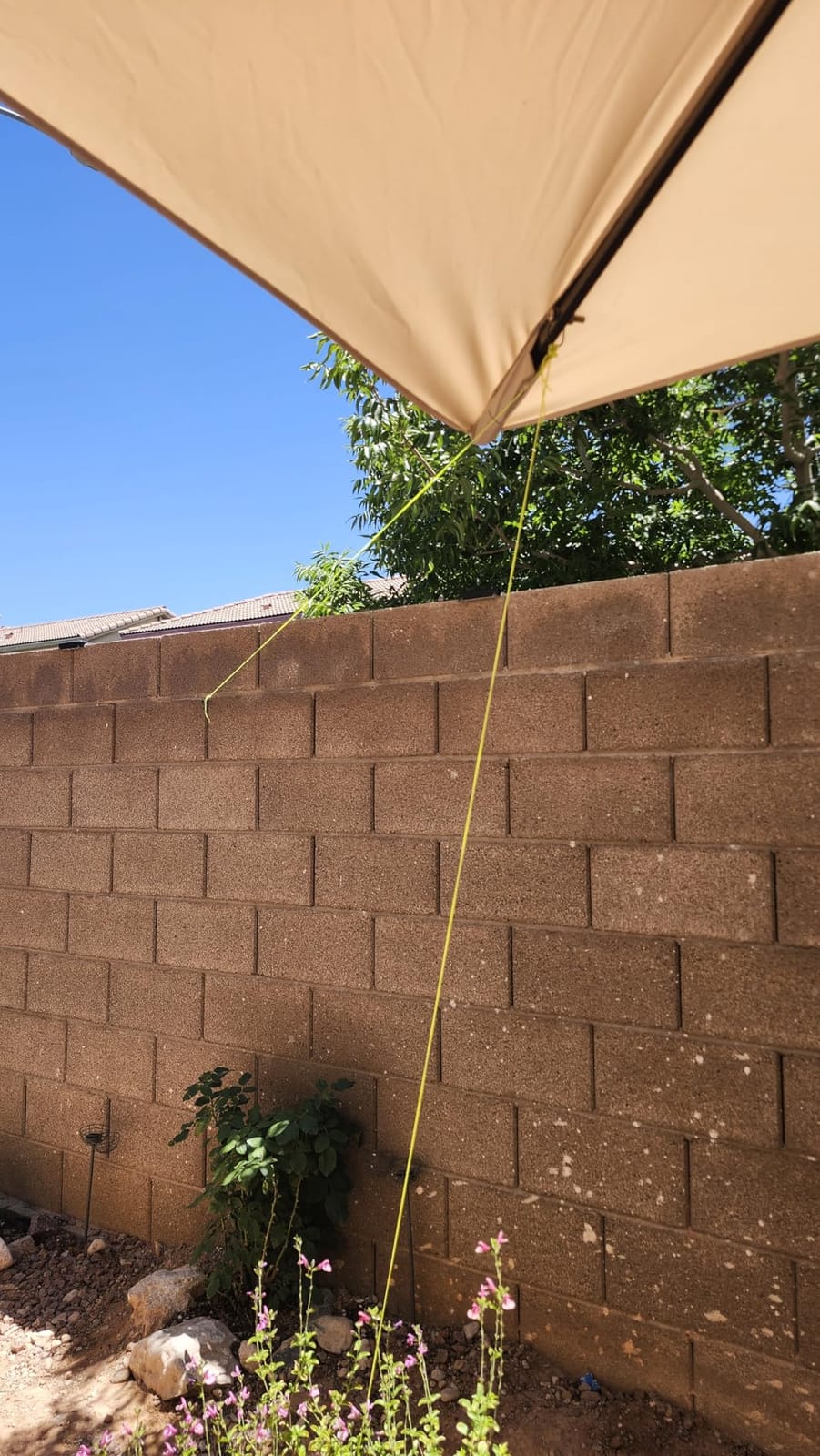
Stability is the recurring caveat and owners are direct about it: the umbrella rocks back and forth in a light breeze if it is not heavily weighted, and at least one owner reported it being blown over without sufficient counterweight. There is also a cosmetic complaint worth knowing about, since the securing strap sewn to the underside casts a visible shadow through the canopy in bright sun. One review reported a small tear in the stitching at a rib-to-arm junction, which is not widespread but is a spot to inspect.
Who this umbrella suits on a large deck
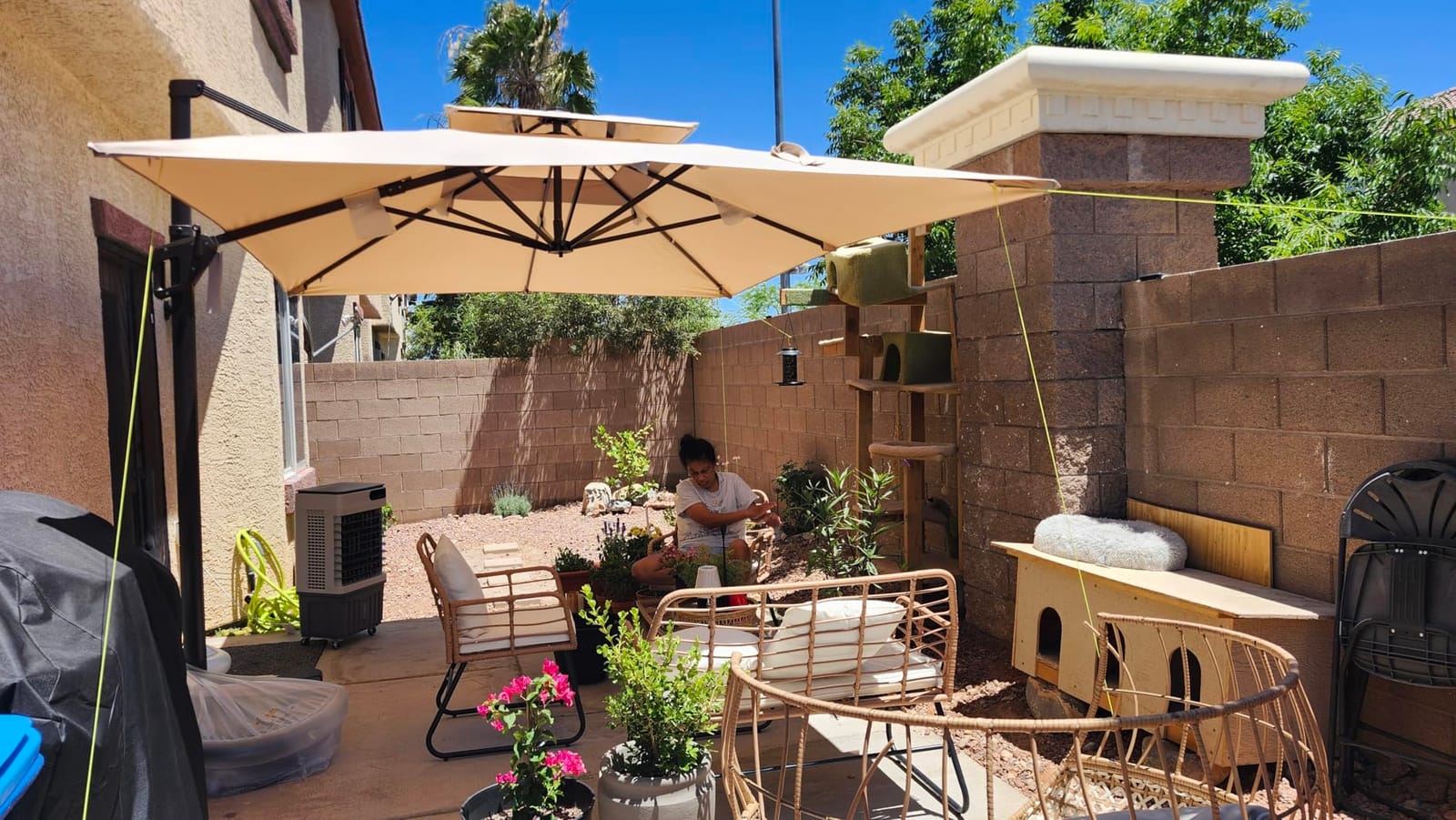
This suits a low-sun deck, a west or southwest exposure, or any situation where the sun angle changes faster than four notches can follow. It also suits owners who have already tried a tilting market umbrella and found the adjustment range too coarse, which is the specific gap our tilting umbrella roundup also surfaces.
The double-top canopy plus seven tilt levels makes this a good fit for a deck used at several times of day, from a morning coffee spot to an evening meal. The powder-coated aluminum is a sensible choice for a deck that sees rain regularly, and the unit works well on a movable wheeled base if you want to follow the shade rather than the furniture.
Where it falls short
It rocks. That is the honest headline, and the fix is entirely in the base, not the umbrella. A cross base plus casual sand is not enough for a 10×13 offset frame, and owners who skipped to 220 pounds or more report a completely different experience from those who did not.
It is also a heavy piece, so plan the position before delivery rather than after. The underside strap shadow is cosmetic but noticeable on a light-colored canopy in the middle of the day, and there is no lighting and no cover included, which leaves the two cheapest accessories still on your list. If visual polish matters to your deck, the wood-grain double-top covers that better.
8. MEVBC 10×13 LED Cantilever Umbrella
MEVBC 10 X 13 FT Cantilever Outdoor Patio Umbrella with LED Lights
- LEDs in all 8 ribs with 3 brightness levels
- Highest stated wind rating here at 20 mph
- Assembles in about 20 to 30 minutes
- Labeled parts
- no extra tools
- Canopy does not sit perfectly flat at full crank
- Canopy moves more than a small round umbrella
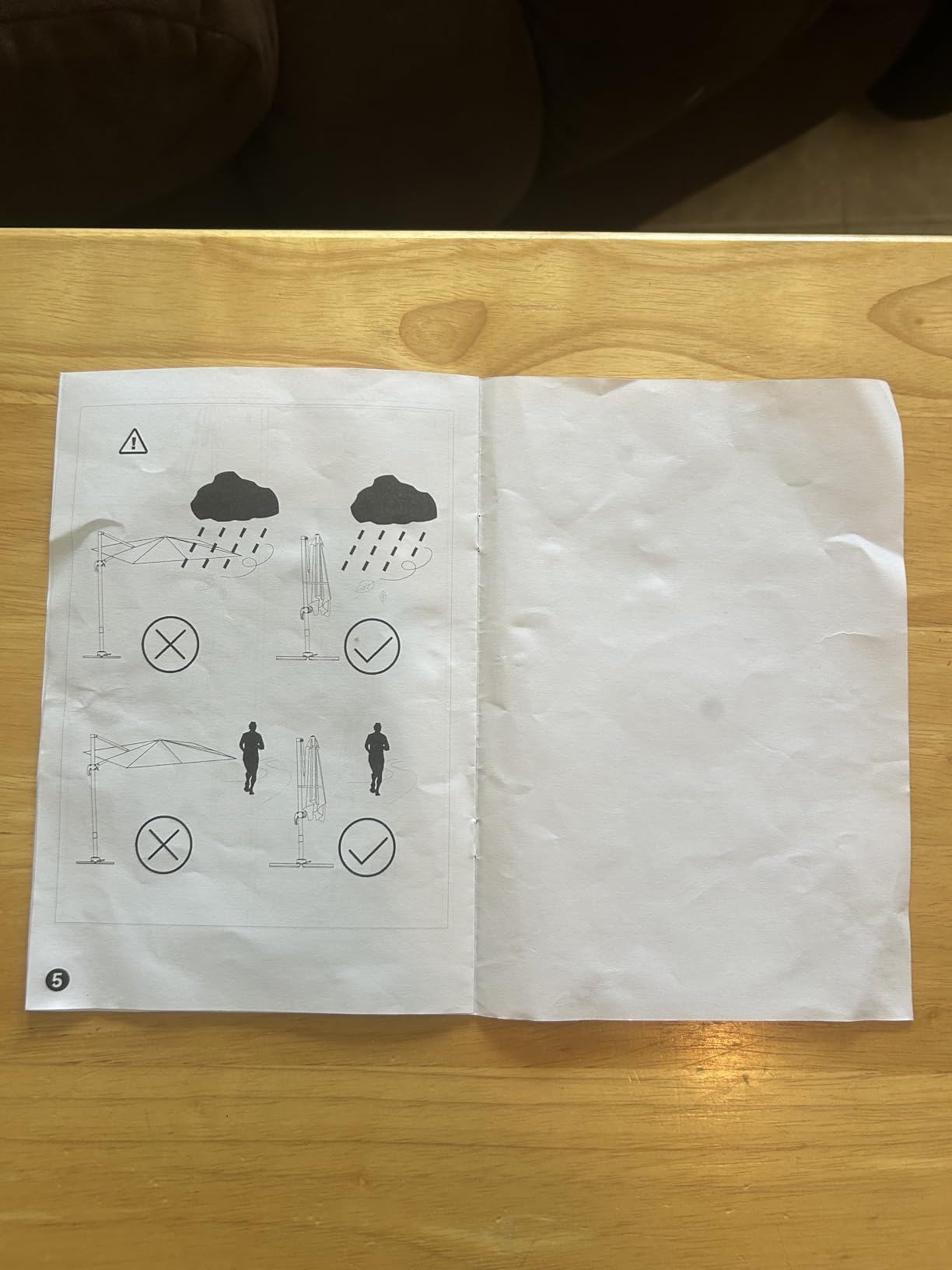
- Sketch-only instruction manual
The MEVBC is the one to pick if you want lighting and a firm published wind number in the same package. It carries the highest stated wind rating of any model we tested, rated to resist wind up to 20 mph, against 15 mph for the ZLACUIU and open-ended guidance from several others. Buyers are told to store it if wind exceeds 30 mph, which is a sensible two-tier rule.
The lighting matches the Deconk in concept: eight LED-lit ribs with three intensity settings and about four hours of runtime when fully charged. Unlike the Deconk it does not call out a center light, so the illumination is distributed along the ribs rather than concentrated overhead. A double top vent handles airflow and stability, and the canopy is 250 gsm yarn-dyed polyester with a PU coating, waterproof and UV protective and fade resistant.
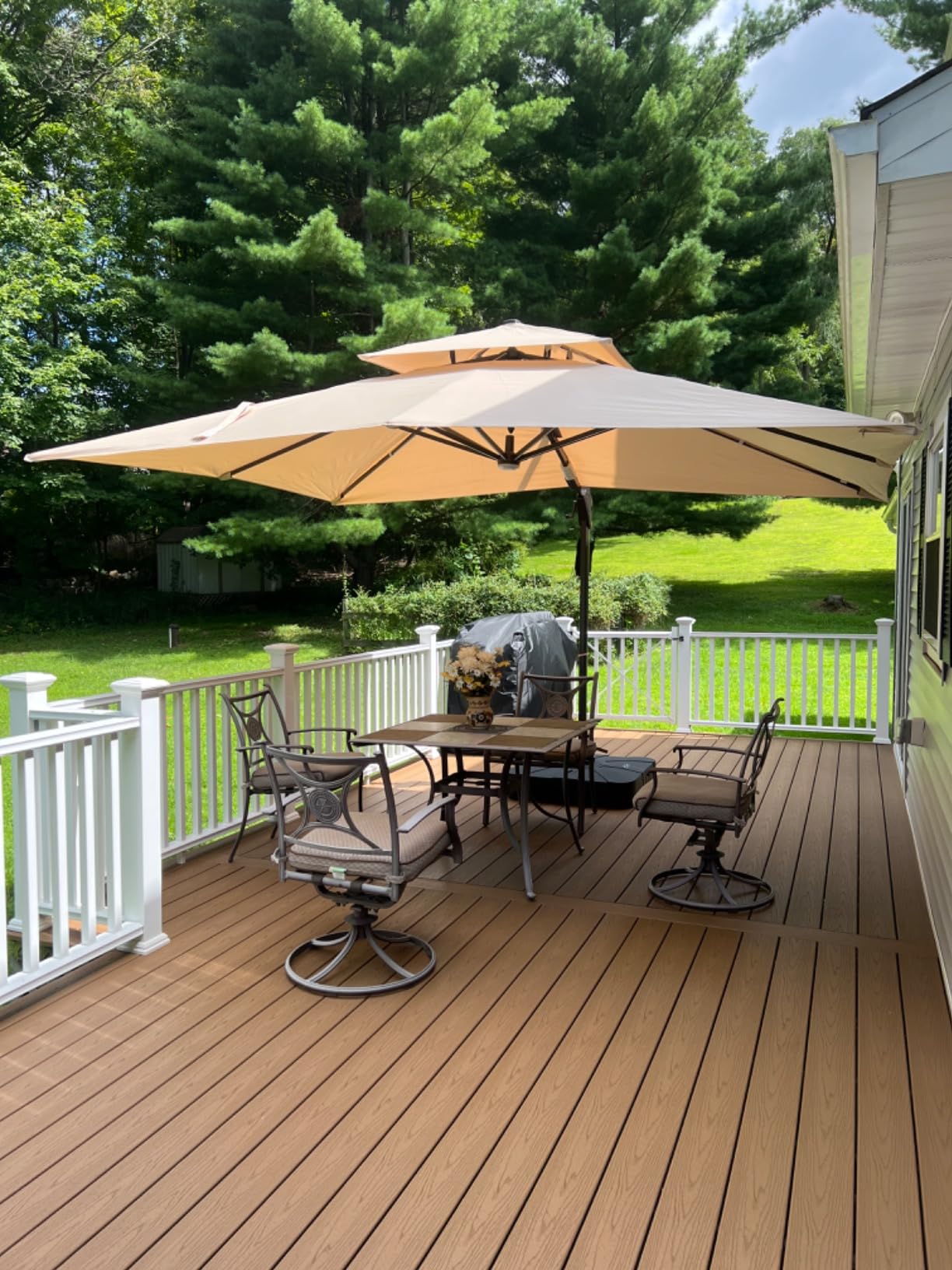
The frame is a thickened aluminum pole with eight heavy-duty ribs, and the listed dimensions are 157.5 inches wide by 100.8 inches high, which makes it the widest canopy in this group on paper. Operation is a foot pedal for 360 degree rotation with a crank and multi-position tilt. A steel cross base is included and a 200 pound weighted base is recommended but sold separately. A cover is also included.
Assembly is the quiet strength here, and reviewers specifically mention it. Parts are letter-labelled, no extra tools are needed, and the stated time is about 15 minutes for two people, with buyers reporting 20 to 30 in practice. That is a real difference at this size. The crank is smooth enough that a petite user can operate it alone, which is not true of every model in this roundup.
Who this umbrella suits on a large deck
This suits a buyer who wants an evening deck and a defensible wind threshold, and who does not want to spend a full weekend on assembly. The 20 mph rating gives you a clearer rule for leaving it up while you are at work than the softer language most of these listings use. Owners also report good results mounting it on a deck next to a gazebo, where it can swing out over the yard.
It suits anyone building the setup solo. The crank resistance is low, the assembly is tool-free, and the labeled hardware reduces the most common failure of a large cantilever build, which is a missing bracket discovered after the frame is up. The included cover handles the off-season question that owners on forums most often regret skipping.
Where it falls short
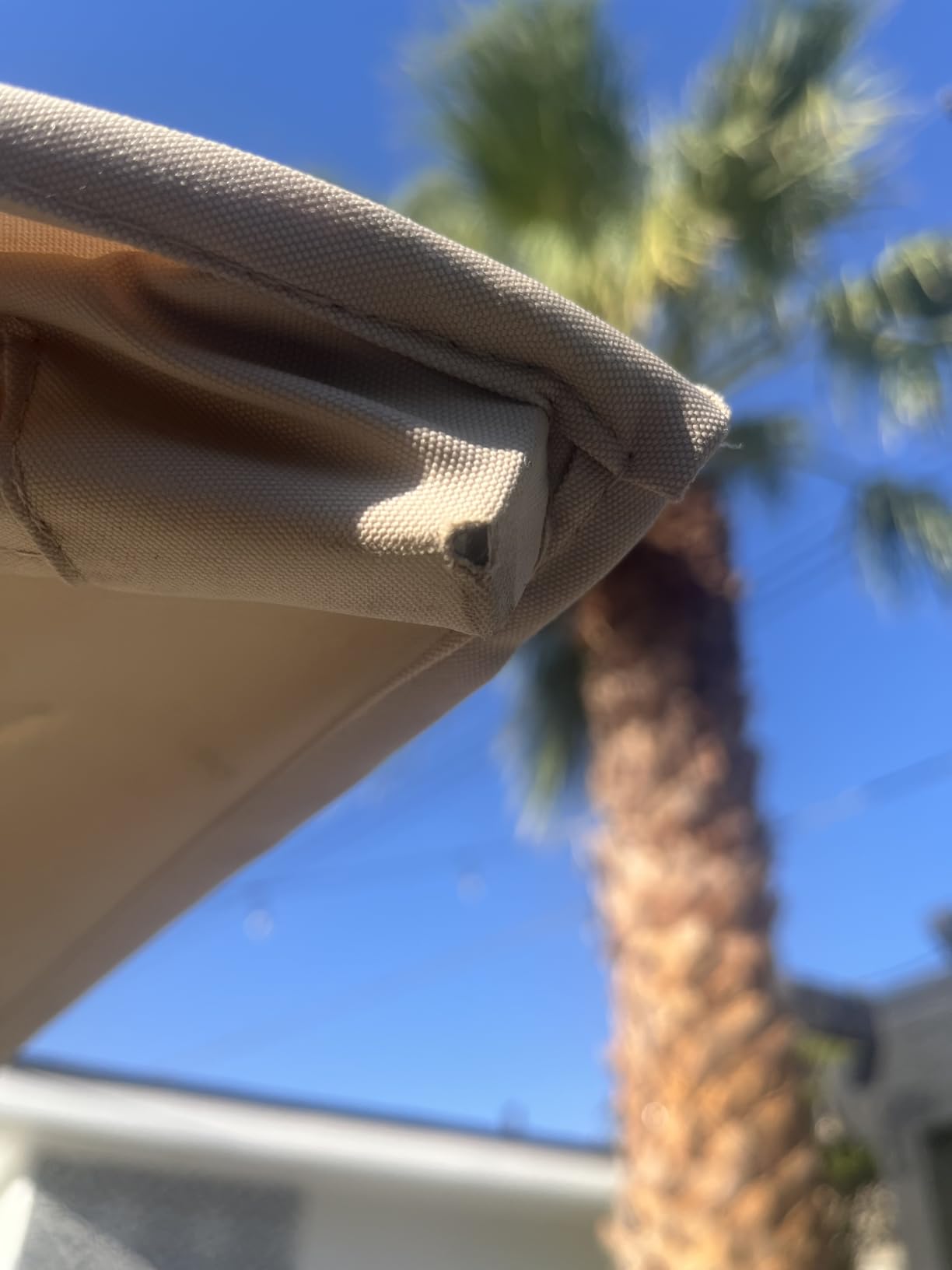
The canopy does not open completely flat at full crank height, so a slight tilt remains even at maximum extension. Owners also report the canopy flops or moves more than a smaller round umbrella would, which is the expected behavior of a large sail and is not fixed by the tilt mechanism. The instruction manual is sketch-only, so budget a few minutes with the product video instead.
One detailed review described a cover fastener shearing after about six and a half months of light use, with slow after-sales response, which is worth factoring if you are choosing on cover durability alone. And the 200 pound base is still a separate purchase, so the entry cost is not the finished cost.
9. Grand Patio 10×13 Cantilever with Base, Cover, and Wheels
Grand patio 10×13 FT Large Cantilever Umbrella with Base & Cover, Gray
- Base
- cover
- wheels
- and tools all included
- Wheeled base with locking gears
- 130 sq ft shades a full dining set
- Curved powder-coated aluminum frame
- Mobile base is large and cumbersome
- Needs 330 lbs of sand plus 44 lbs of water
- Sways in a light breeze
- Flimsy cover rod
The Grand Patio is the most complete single purchase here. The box contains the umbrella, a weighted mobile base with four wheels and two locking gears, a protective cover, and the tools, and it delivers in two packages. For a buyer who does not want to assemble a base from parts, that is worth more than any incremental canopy feature.
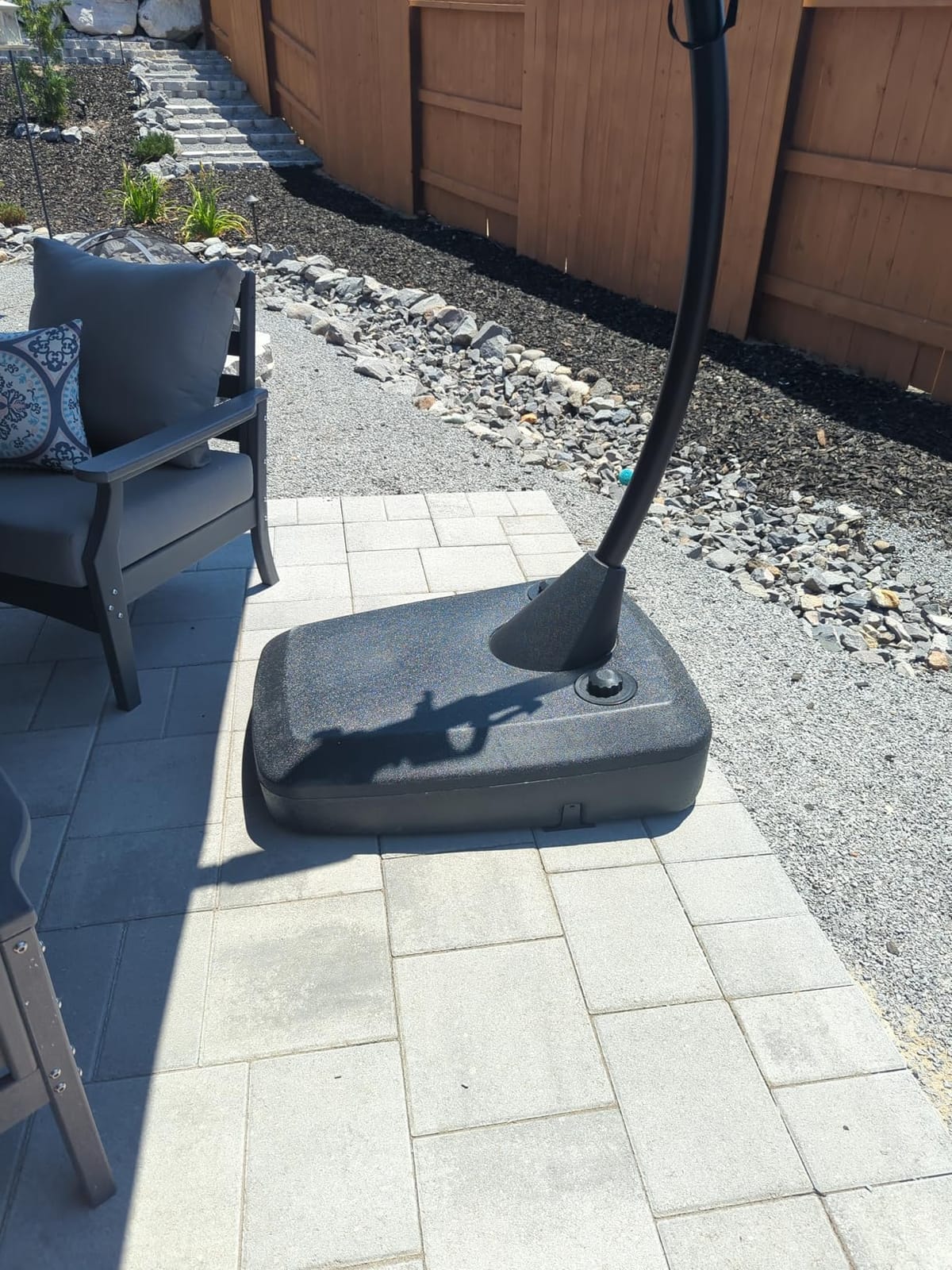
The ballast numbers are the most specific in this roundup: the base takes 330 pounds of sand plus 44 pounds of water, for 374 pounds total. That is the heaviest stated counterweight of any model we looked at, and it is the direct answer to the most common forum question about how much weight a 10×13 cantilever actually needs. Shade coverage is stated at 130 square feet, and the canopy is 250G polyester with UPF 50+ sun protection and water resistance.
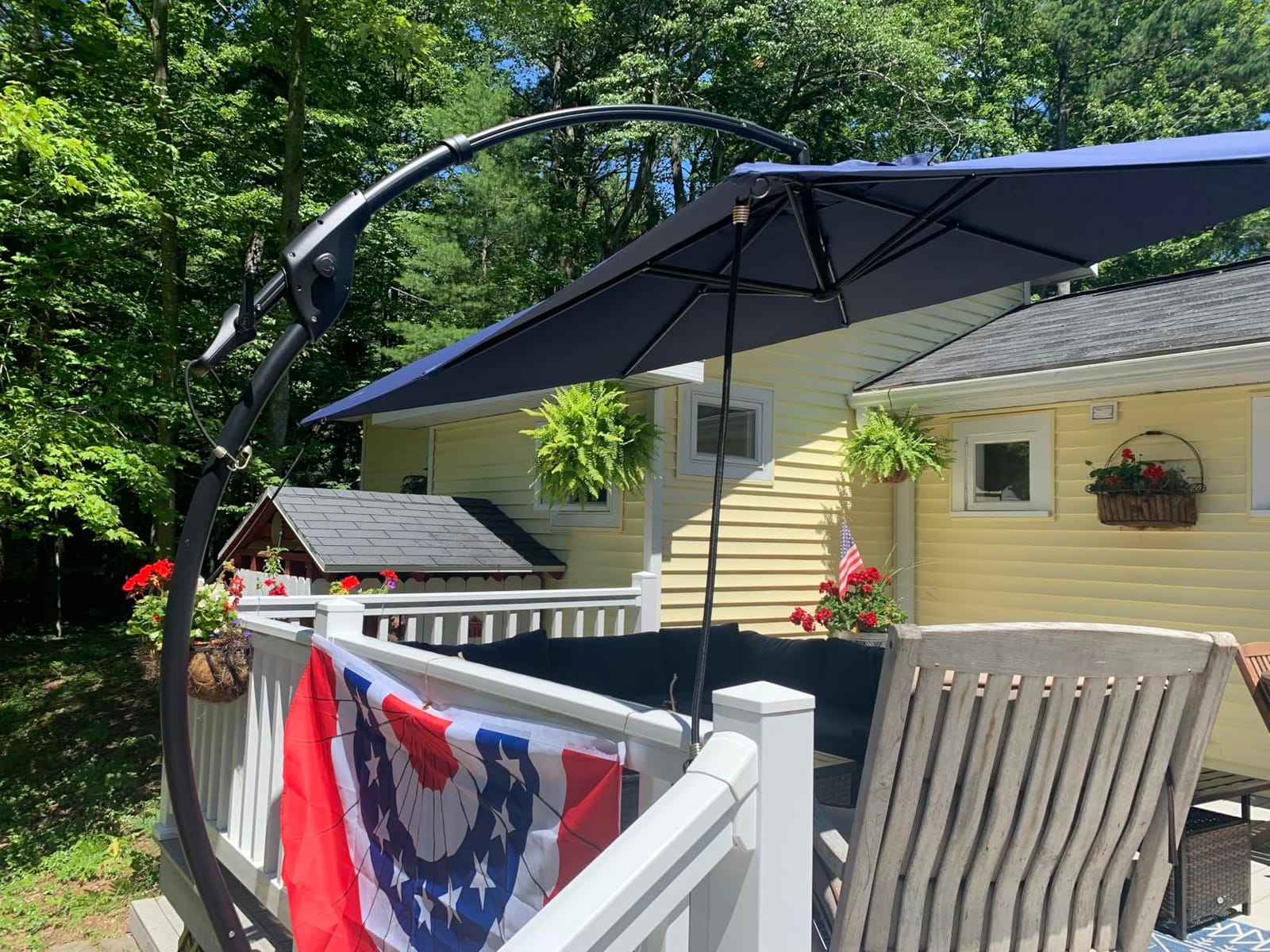
Wheels and locking gears are the underrated feature. A cantilever base heavy enough to be safe is close to immovable, so a set that rolls and then locks lets you follow the shade rather than the furniture, which is the usual compromise buyers complain about. The frame is a heavy-duty curved aluminum frame with a powder-coated finish, operated by crank with tilt adjustment, and a one-year warranty applies.
The complaints are practical. The mobile base is large and can be hard to fit on a modest deck. It sways noticeably in a light breeze without extra anchoring, and the cover rod is flimsy enough that owners describe it as bending and making the cover hard to fit over the tall frame. There are also reports of the opening and closing string breaking. Customer service is described as outstanding, including same-day replacement for transit damage, though returns can require persistence and photos of the boxed unit.
Who this umbrella suits on a large deck
This suits anyone who wants a working large-deck shade system in one order, and specifically anyone on a deck where an in-ground sleeve or deck bolts are not an option. Because the base is wheeled and lockable, it also suits a deck used for two different activities, such as a daytime dining table that becomes an evening lounge area with a fire pit. The 130 square feet covers a full dining set or a lounge grouping.
It suits buyers who want a stated coverage number rather than a marketing adjective, and who will act on the fill figure. The 374 pound total is heavy to load, so plan for bags rather than buckets and recruit help. The wheels are the reason that effort pays off: once loaded, you can still move it, and lock it where you want it.
Where it falls short
It is the only model here that publishes a shaded square footage figure, and at 130 square feet it covers a dining set or a lounge grouping without reaching the full footprint a 10×13 rectangle can deliver. Combined with an oversized base footprint, that makes this the least forgiving option on a deck that is tight or unusually shaped.
It sways in a light breeze, which is the same off-center leverage problem every cantilever has and which the Grand Patio does not solve. The flimsy cover rod and reported string breakage are quality details that undercut an otherwise well-specified package. And at one year, the warranty is the shortest here, so the value case rests on the included base rather than on long-term coverage.
10. ORYNTREX 10×13 Two-Tier Umbrella with Base Included
- Base included in the package
- 10x13 two-tier canopy vents above the main layer
- Anti-oxidation coated aluminum frame
- Works in commercial settings
- Six-gear tilt is fewer than the 7-level models
- Large and heavy
- two people needed
The ORYNTREX rounds out the base-included group, and it is the one most often bought for a commercial terrace or a restaurant patio rather than a private deck. The listing explicitly names commercial settings such as restaurants as a use case, and owners repeat that framing. The 10×13 two-tier canopy gives you the same vented double-layer geometry as the ZLACUIU and the Deconk, at a mid tier.
The frame is all-aluminum with eight heavy-duty ribs and an anti-oxidation spray coating, which is the right call for a structure that will sit through a season of service. The canopy is upgraded 240 gsm yarn-dyed polyester with a PU coating, listed as water-repellent and fadeless. Adjustment is six-gear tilt combined with 360 degree foot-pedal rotation and a crank with a handle design for opening and closing.
Buyers rate it 4.3 across 190 reviews and the sentiment clusters around the combination of a large canopy and an included base, which removes a whole step from setup. The 6-gear tilt is called smooth and sufficient for moving shade through the day, and the fabric is credited with holding up to water and sun without fading.
The main practical note is size and weight. The unit is large and heavy enough that two people are recommended for carrying and assembly, and an installation video is provided, which helps. Reviewers also point out that six tilt positions are fewer than the seven-level models in this group, a small difference that becomes noticeable only on a deck with an awkward sun arc.
Who this umbrella suits on a large deck
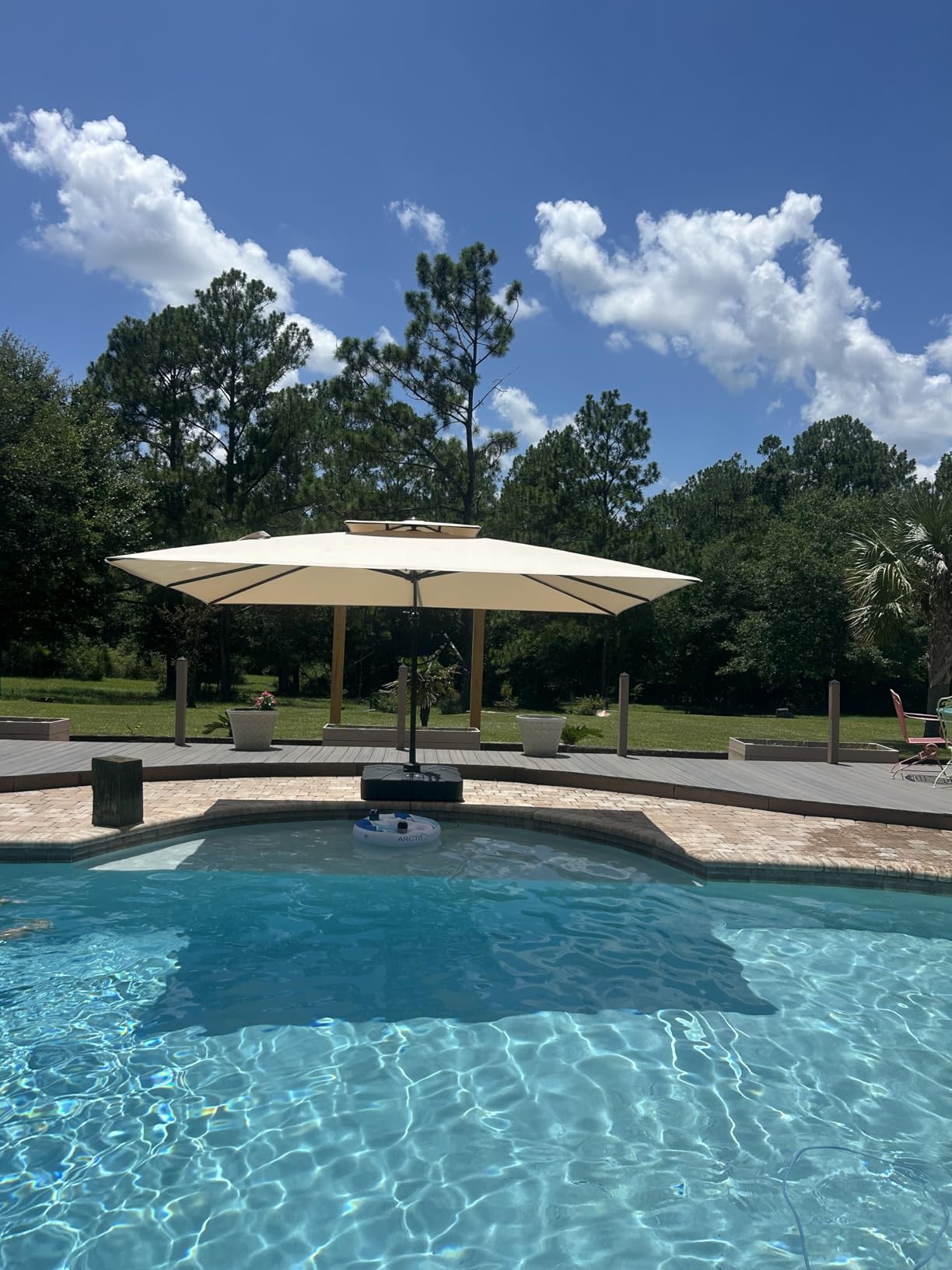
This suits a deck that will host group gatherings, a pool surround, or a garden seating area where the shade needs to cover a wide rectangle rather than a single table. The included base means you are not starting with an extra project, and the anti-oxidation coating is appropriate for a structure that stays outside through a full season without being wiped down weekly.
It suits anyone who wants six usable tilt positions and full rotation and has no need for seven. For a rectangular dining set or an L-shaped seating arrangement, the 10×13 rectangle is the right footprint, and after-sales support and an installation video are provided for a build that is genuinely awkward to do alone.
Where it falls short
Six gears is the concession here, and it is the one specification that a seven-level model in this same price neighborhood beats outright. If the low western sun is your main problem, buy the extra notch. There is no lighting, no cover, and no stated protection plan, so the accessories that protect a canopy long-term are all still on your list.
It is also simply a large, heavy object. Two people for the carry and the build is not a formality at this size, and once the base is filled the assembly will not move easily across the deck. Plan the position before delivery, particularly on a deck where the shade has to clear a rail or a post.
How to Size a Cantilever Umbrella for a Large Deck
Size the canopy to the furniture, not to the deck. Measure your seating footprint with the chairs pulled out, because the number that matters is the space people actually occupy, not the space the table occupies when everything is pushed in. Then extend the canopy footprint two feet beyond that measurement on every side. A canopy that matches the table exactly leaves the ends of the table and the feet of anyone sitting at them in direct sun.
For a large deck, the practical mapping runs like this. A four-person round bistro set needs roughly a 10 ft canopy. A six-to-eight person rectangular table needs a 10×13 rectangular. A ten-person rectangular table, a large sectional with a coffee table, or a sectional plus a separate dining table needs a 13×13, and that is the size band at the upper end of what this roundup covers. A 9 ft or 10 ft round market umbrella covers a dining set and nothing else, which is why it underperforms on a deck.
Match the shape to the furniture too. Rectangular canopies line up with rectangular tables and L-shaped sectionals, because the long edge matches the long edge. Square canopies work for square arrangements. Round canopies suit round tables and are the easiest to move the arc of shade around, but they waste area at the corners, which is exactly where a rectangular deck needs coverage. If you have not settled the shape question, our rectangular cantilever guide walks through the tradeoffs.
Finally, check the vertical geometry before you buy. Tall dining tables, a pergola beam, a second-floor balcony, and railings all reduce usable clearance. Several owners of the models here reported that under-canopy clearance sits lower than the product photos suggest, and that chairs have to be moved to open the canopy at full crank. Measure the fixed structures, not the furniture.
Base Weight and Anchoring: The Part Most Buyers Miss
Here is the number that answers the most-asked question in this category: a 10 ft cantilever umbrella needs 150 to 180 pounds of counterweight as a floor, and a 10×13 or 13×13 needs 200 to 220 pounds or more. Models with published figures go higher. The LAUSAINT lists roughly 308 pounds fully filled, the Grand Patio base takes 330 pounds of sand plus 44 pounds of water for 374 pounds total, and the ZLACUIU and MPL Shade both advise 220 pounds or more. Forum guidance ranges from 100 pounds as a bare manufacturer minimum to 374 pounds as a specific model instruction, and the reason for that spread is the canopy size.
The physics is simple enough to explain once. A cantilever loads the post off-center, so the arm behaves like a lever: the same wind force applied at the far end of the arm produces far more lateral torque at the base than a center-pole umbrella with the same canopy. That is why canopies in this category rock in a light breeze even when correctly weighted, and why the same canopy on a properly filled base sits still. More canopy means more sail area and more leverage, so base weight scales with canopy size rather than staying flat.
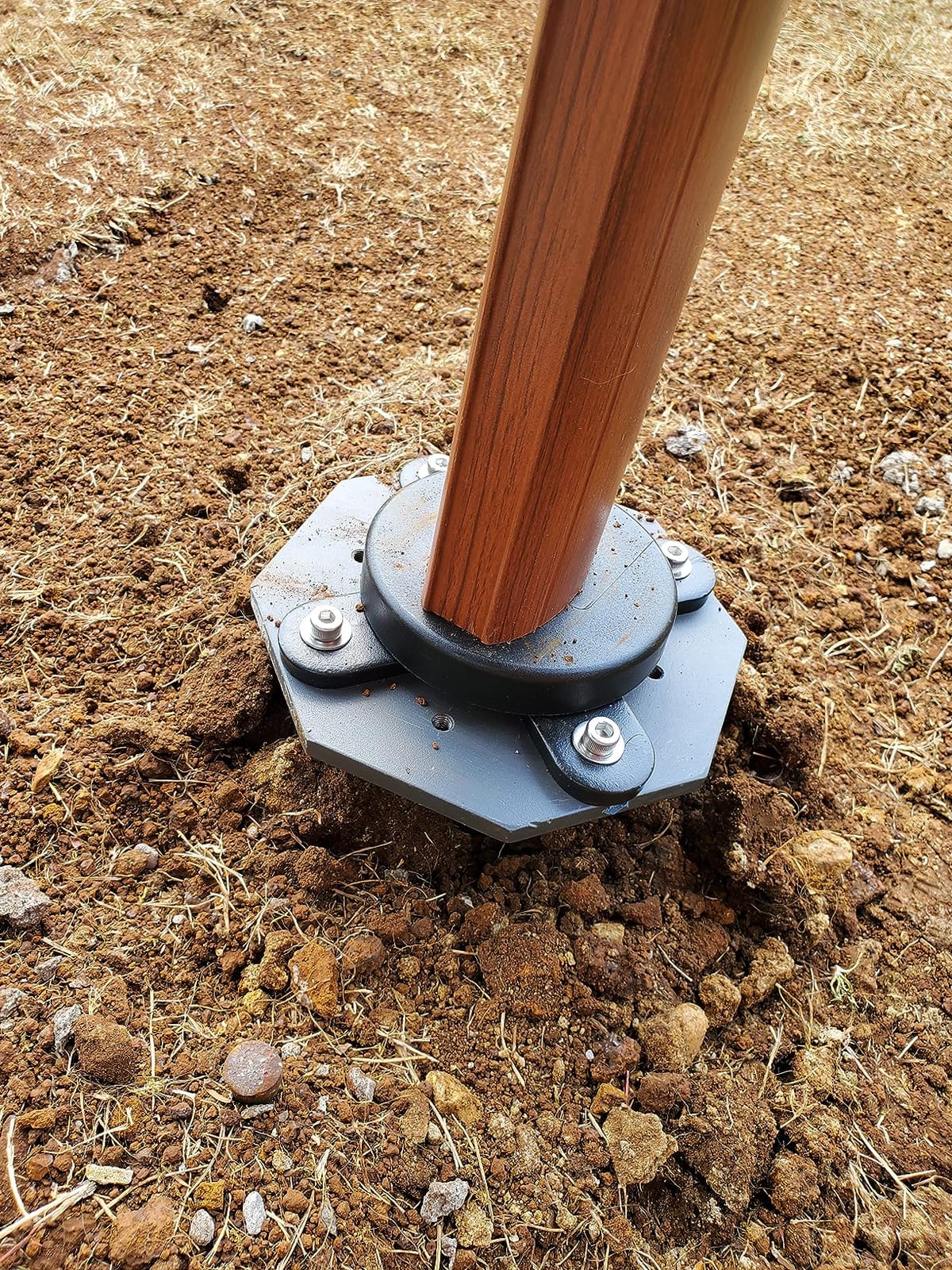
There are four anchoring approaches, and they are worth comparing directly because forum advice contradicts itself constantly. A ballast-only base is a sand-and-water fill and is the simplest, cheapest, and least permanent option, and it is entirely adequate on a flat deck with no wind exposure. A wheeled base such as the Grand Patio adds mobility but is still ballast, and only works on reasonably even ground. Deck bolts or a lag-screw platform anchor fix the post through the surface, which removes the sway problem more effectively than adding sand. An in-ground sleeve, sometimes set in a concrete sleeve at build time, is the most permanent and the most wind-resistant, and it is the right choice if you are already planning deck work.
For anyone already dealing with wind movement, the practical fixes in order of effect are: add weight to whatever base you have, upgrade to a heavier or fillable base, anchor the post with deck bolts or an in-ground sleeve, close the canopy when you leave, and reduce the tilt angle so the arm presents less profile. Owners on patio forums who added weight and anchored the post report the difference immediately, and the recurring regret in those threads is not the umbrella, it is skipping the base or skipping a cover.
One more thing nobody warns you about: a properly filled base is genuinely immovable. A 374 pound filled base is not something you slide across a deck, and the wheels on the mobile bases only help on even ground. Decide the position before delivery, and check that the base footprint actually fits where you intend to put it, because the largest bases here are the hardest to accommodate.
Wind, Vents, and Double-Top Canopies Explained
Wind resistance is built from three things, in this order: canopy venting, canopy layering, and base weight. Venting matters because a closed canopy acts as a sail, and the pressure differential across it is what tips an umbrella. A vent is an opening, usually at the top, that lets air pass through so the pressure equalizes. The catch is that a small vent on a large canopy is proportionally small, which is why the PURPLE LEAF 10×13 owners report that its top vent does not release pressure enough to stop the canopy rocking.
A double-top canopy solves that proportionally. A second, smaller canopy sits above the main one, and the gap between the two layers gives wind and rising hot air a proper exit path across the entire upper surface rather than through a single hole. The models in this roundup with double tops, which include the PURPLE LEAF wood-grain, the ZLACUIU, the Deconk, the MPL Shade, and the MEVBC, all describe the same airflow and pressure benefit. The mechanism is different from vent-only, and it is worth paying for if your deck is exposed.
Published wind thresholds vary widely and should be read carefully. The ZLACUIU is rated below 15 mph, the MEVBC is rated to resist wind up to 20 mph with a recommendation to store the unit above 30 mph, and other models give no number at all. A reasonable daily rule for this whole category is to close the canopy when you leave the house rather than at a threshold, and to treat roughly 20 to 30 mph as the outer edge of unattended use. Fiberglass ribs that flex and absorb a gust are preferable to ribs that resist it rigidly and eventually fail at the joint.
Canopy Fabrics Compared: Polyester and Acrylic
Every umbrella in this roundup uses polyester, and the spread is 240 to 250 gsm with a PU or PA coating. Treated polyester is the volume choice for cantilever umbrellas because it is light, inexpensive, and takes coating well. At 250 gsm with a coating you can expect good water repellency, decent fade resistance, and solid UV blocking, and several listings in this group state figures up to 99 percent ray blocking or a UPF 50+ rating.
The upgrade path is solution-dyed acrylic, which is what Sunbrella and Terylast canopies use. The color runs through the yarn rather than sitting on the surface, so scratches and scuffs do not expose white underneath, and the fabric holds its color far longer under direct UV exposure. Acrylic also runs cooler in heat and generally outlasts coated polyester by a wide margin. The tradeoff is cost and weight, and the fact that no model in this particular roundup ships with it. If fabric longevity is your priority, our Sunbrella and acrylic canopy guide covers the options in detail.
Olefin and standard polyester are the two budget tiers, and the practical difference shows up in fade and water behavior rather than in shade coverage. Wind it tight when you store or close it, keep a fitted cover on it through the off-season, and wipe it with a damp cloth and dry it. A cover is the cheapest corrosion and fade protection available, and it is the accessory owners most often skip and most often regret skipping.
How We Picked
We compared ten cantilever patio umbrellas, all in the large-deck size band of 10×13 ft, 11 ft, and 13 ft rectangular canopies, because that is the size range that actually covers a deck rather than a patio table. For each one we read the full specification set, then worked through the customer reviews looking specifically for the details that roundups usually skip: whether the base is included, what counterweight the manufacturer actually recommends, what the assembly really involves, and what owners report after a season of use rather than in the first week.
Every pick has a downside stated, and those come from the review data rather than from us. Where reviewers repeatedly report the same complaint, it appears in the cons list of the card and again in the section. We also weighted two things heavily that most lists treat as an afterthought: the stability picture, since an off-center frame is only as good as its base, and whether replacement parts or covers exist, since a large cantilever is a long-term object rather than a seasonal one.
Frequently Asked Questions
What is a cantilever umbrella?
A cantilever umbrella, also called an offset or parasol umbrella, has its pole mounted at one side rather than in the center, with a horizontal arm that holds the canopy out over your seating. That offset design casts shade across a dining table, sectional, or pool deck with nothing in the middle, and most models rotate 360 degrees and tilt to follow the sun.
How much weight do you need for a 10 foot cantilever umbrella?
A 10 ft cantilever needs 150 to 180 pounds of counterweight as a floor, and a 10×13 or 13×13 needs 200 to 220 pounds or more. Models with published figures go higher: one 11 ft unit lists roughly 308 pounds fully filled, and a wheeled base takes 330 pounds of sand plus 44 pounds of water for 374 pounds total. The offset arm multiplies leverage, so weight scales with canopy size.
How much wind can an offset umbrella handle?
Close and secure the canopy above roughly 20 to 30 mph. Published ratings in this category range from 15 mph on one 10×13 model to 20 mph on another, and vents plus double-top canopies extend the safe window but do not remove the limit. A practical daily rule is to close the umbrella when you leave the house rather than waiting for a threshold.
How much bigger should a patio umbrella be than the table?
Extend the canopy footprint about two feet beyond the seating area on every side. Measure with the chairs pulled out, since that is the space people actually occupy. A four-person round bistro set needs about a 10 ft canopy, a six-to-eight person rectangular table needs a 10×13 rectangular, and a ten-person table or a sectional plus dining set needs a 13×13.
How to stop a cantilever umbrella from swaying in the wind?
Five steps, in order of effect. Add weight to whatever base you have. Upgrade to a heavier or fillable base rated for your canopy size. Anchor the post with deck bolts or an in-ground sleeve, which removes more sway than adding sand. Reduce the tilt angle so the arm presents less profile to the wind. And close the canopy when you leave, which is the only step that always works.
What are the downsides of a cantilever parasol?
A parasol is the same thing as a cantilever umbrella, and the downsides are consistent across the category. The offset arm needs a much heavier base than a center-pole market umbrella, usually sold separately. It creates more lateral torque, so it rocks and sways more in wind. The footprint is large, the unit is heavy and hard to move once filled, and the total cost including base and cover is higher than the sticker suggests.
Are expensive cantilever umbrellas worth it?
The premium buys solution-dyed acrylic fabric that resists fading, heavier frames, double-top venting, and replaceable parts or a stated protection plan. A mid-tier model with a properly weighted base can still serve a deck well for several seasons. Judge the total, not the umbrella price: add the base, the cover, and the ballast, and compare that figure across the three or four models you are actually considering.
The Best Cantilever Patio Umbrella for Your Deck in 2026
For most large decks, the best cantilever patio umbrella in 2026 is the PURPLE LEAF 10×13 rectangular. It has the deepest review history in the group, an all-aluminum frame, and a one-hand tilt crank paired with a foot pedal that moves the shade without anyone shifting a base. Budget for a weighted base of 200 pounds or more, because it is not included, and hold it to the two-foot overhang rule so the canopy covers your chairs and not just your table.
If your deck is windy, the Sunnyglade 10×13 wins on the detail that matters, the corner zippers that pin the canopy to the ribs. If you want the best-looking setup and the highest satisfaction score in the group, the PURPLE LEAF wood-grain double-top adds a vented second canopy layer, six tilt positions, and a three-year fabric plan. If you want one box and no second purchase, the Grand Patio arrives with a wheeled base, a cover, and tools, and it tells you exactly how much ballast to add.
Whichever one you choose, the decision that determines whether it works is the base, not the umbrella. Two hundred pounds minimum for a 10×13, anchored to the deck if the wind is real, positioned before it is filled, and covered in the off-season. Get that right and the best cantilever patio umbrella question answers itself.