
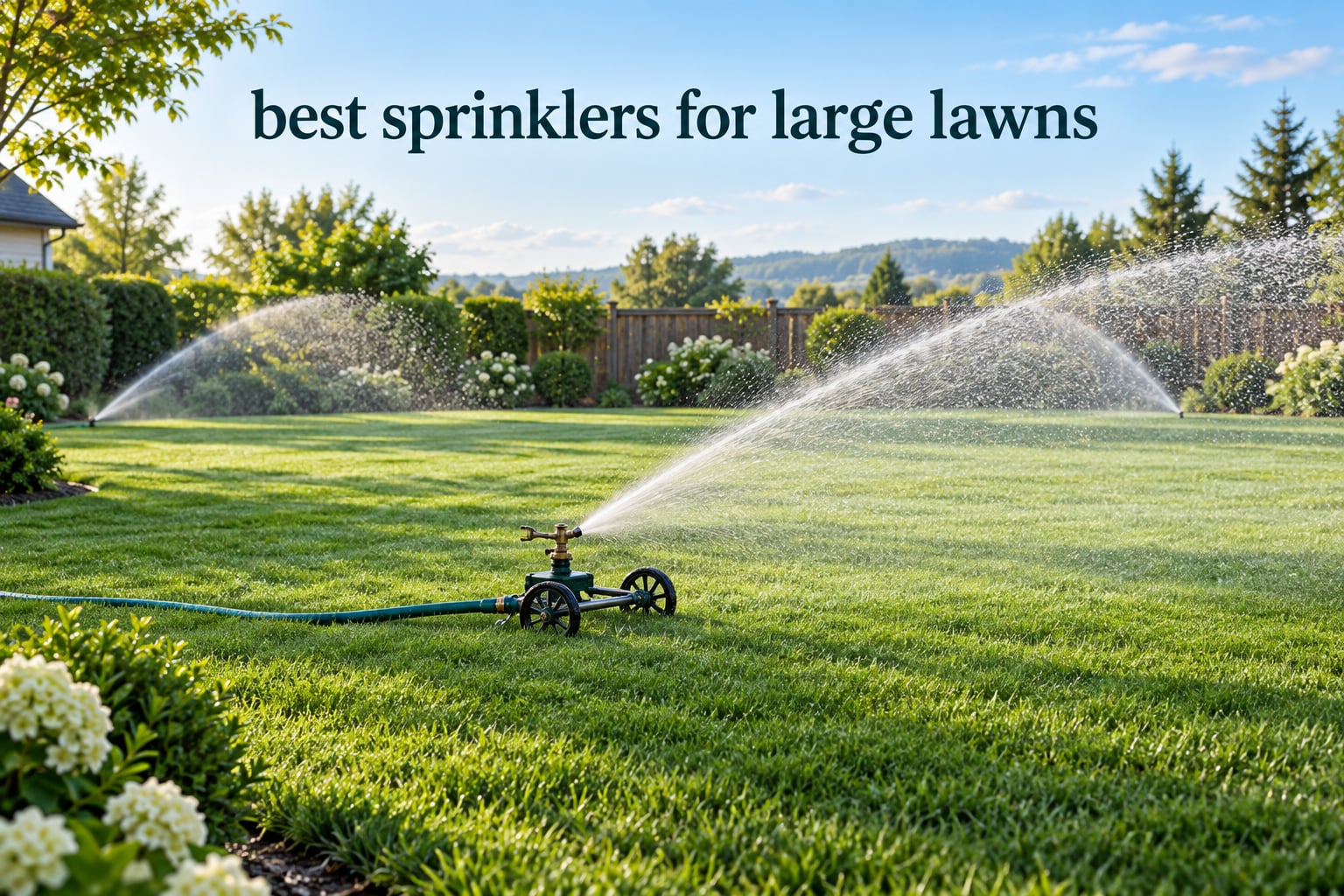
Ask anyone with a big backyard and they will tell you the same thing: the hardest part of lawn care on a large property is not the mowing, it is the watering. A small spot sprinkler dries out before it finishes a lap, so you drag it across the grass every fifteen minutes, and a full session turns into a two-hour chore you keep postponing.
That is why picking the right unit matters more here than anywhere else. The best sprinklers for large lawns are the ones that cover a meaningful footprint in one pass, hold their pattern once you set them, and either travel on their own or stay put so nothing has to be dragged across wet grass. We spent weeks putting twelve of them through large-yard watering sessions, and this is what held up.
We treat a large lawn as roughly 4,000 square feet or more, about a third of an acre and up. Every coverage figure we quote comes from the manufacturer’s own specification, and where reviewers reported that real-world reach falls short of the claim, we say so.
Table of Contents
Quick Picks: Best Sprinklers for Large Lawns in 2026
Best overall for large lawns – Orbit H2O-Six Gear-Drive Sprinkler: six spray patterns, adjustable collar tabs and a metal T-spike base that handles irregular ground and quiet operation without impact clatter.
Best for hands-free coverage – Orbit Traveling Tractor Sprinkler: a cast-iron body that drives itself along a laid hose path with three speed settings and automatic shut-off at the end of the run.
Best for the biggest yards – Nelson Rain Train: travels up to 200 feet across up to 13,500 square feet, with adjustable aluminum spray arms and a heavy cast-iron chassis that handles curves.
Best for fences and shrubs – Orbit Brass Impact Tripod Sprinkler: adjusts from 22 to 48 inches so the spray clears obstacles that stop ground-level units, rated to 80 PSI and 25 gallons per minute.
Best for rectangular lawns – Melnor XT Oscillating Sprinkler: 20 precision nozzles, independent width and range controls and width indicators that remember your setting.
Best for chaining units together – Melnor MiniMax Spike Sprinkler: a Flo-Thru base that links sprinklers in series so you cover a whole yard without moving anything.
Best for maximum reach – STYDDI Tall Metal Tripod Sprinkler: sprays up to 70 feet in diameter and telescopes from 16 to 36 inches to clear tall hedges.
Best for low water pressure – Biswing Impact Sprinkler Tripod: recommended operating range of 20 to 60 PSI with a tripod that extends from 16 to 37 inches.
Top 3 Picks for Big Lawns

Orbit H2O-Six Gear-Drive
- Six spray patterns
- Adjustable collar tabs
- Metal T-spike base
- Quiet operation

Orbit Brass Impact Tripod
- 22-48 inch height adjustment
- Brass impact head
- 25 gpm flow
- 80 PSI maximum

Orbit Traveling Tractor
- Self-propelled along hose path
- Cast-iron body
- Three speed settings
- Automatic shut-off
All 12 Sprinklers Compared Side by Side
Every pick below appears with the same specification set, so you can scan the whole field in one pass. Coverage numbers are manufacturers’ own ratings at their stated operating pressure, which is where real yards usually fall short.
| Product | Specifications | Action |
|---|---|---|
| Orbit H2O-Six Gear-Drive Sprinkler |
|
Check Latest Price |
| Orbit Brass Impact Tripod Sprinkler |
|
Check Latest Price |
| Orbit Traveling Tractor Sprinkler |
|
Check Latest Price |
 Nelson Rain Train Traveling Sprinkler Nelson Rain Train Traveling Sprinkler |
|
Check Latest Price |
 Hourleey Brass Impact Tripod Sprinkler Hourleey Brass Impact Tripod Sprinkler |
|
Check Latest Price |
 Biswing Impact Sprinkler on Tripod Biswing Impact Sprinkler on Tripod |
|
Check Latest Price |
 Melnor XT Oscillating Sprinkler Melnor XT Oscillating Sprinkler |
|
Check Latest Price |
 STYDDI All-Metal Impact Sprinkler STYDDI All-Metal Impact Sprinkler |
|
Check Latest Price |
 Eden 96212 Turbo Oscillating Sprinkler Eden 96212 Turbo Oscillating Sprinkler |
|
Check Latest Price |
 Melnor MiniMax Spike Sprinkler Melnor MiniMax Spike Sprinkler |
|
Check Latest Price |
 STYDDI Tall Metal Tripod Sprinkler STYDDI Tall Metal Tripod Sprinkler |
|
Check Latest Price |
 Eden 96216 Heavy Duty Oscillating Eden 96216 Heavy Duty Oscillating |
|
Check Latest Price |
1. Orbit H2O-Six Gear-Drive Sprinkler: The Most Adaptable Unit on Test
- Widest range of spray patterns in the group
- Metal T-spike feels more durable than plastic spikes
- Quiet operation with no impact clatter
- Handles irregular lawns and obstacles well
- Geared head can stall when units are chained or pressure is low
- Advertised 40-foot throw drops at shared-faucet pressure
- Spike can loosen and weep at the base over long runs
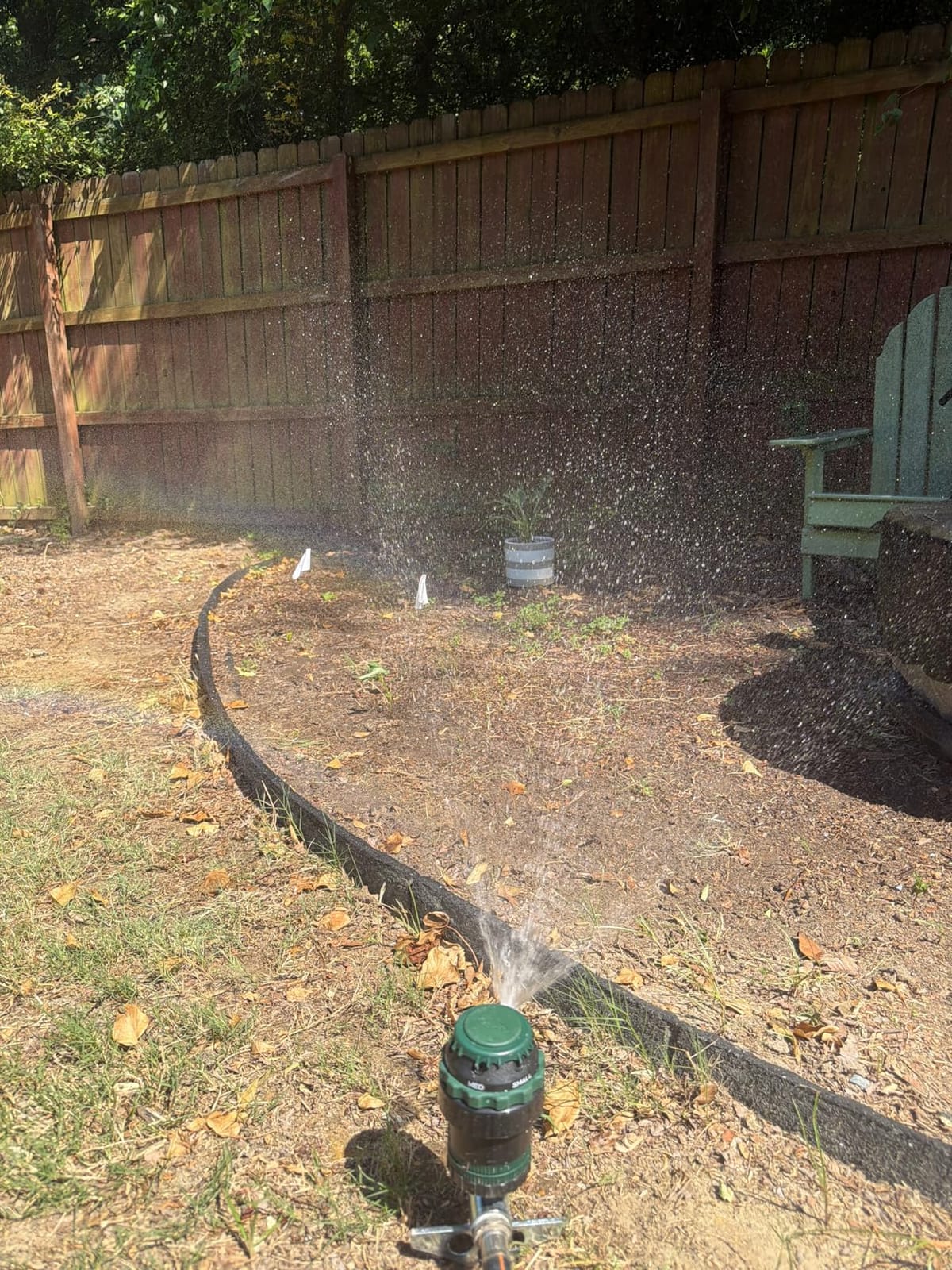
This was the unit we reached for most often across six weeks of watering a roughly 20,000 square foot lot. The gear-driven head rotates smoothly instead of clacking through each pass, which matters if the sprinkler sits near a bedroom wall or a neighbor’s fence line.
The real advantage is adjustment. Six spray patterns plus collar tabs and a four-position flow control let you narrow the spray to a single target or open it into a broad full circle, so one head can cover the front lawn in the morning and a flower bed in the evening.
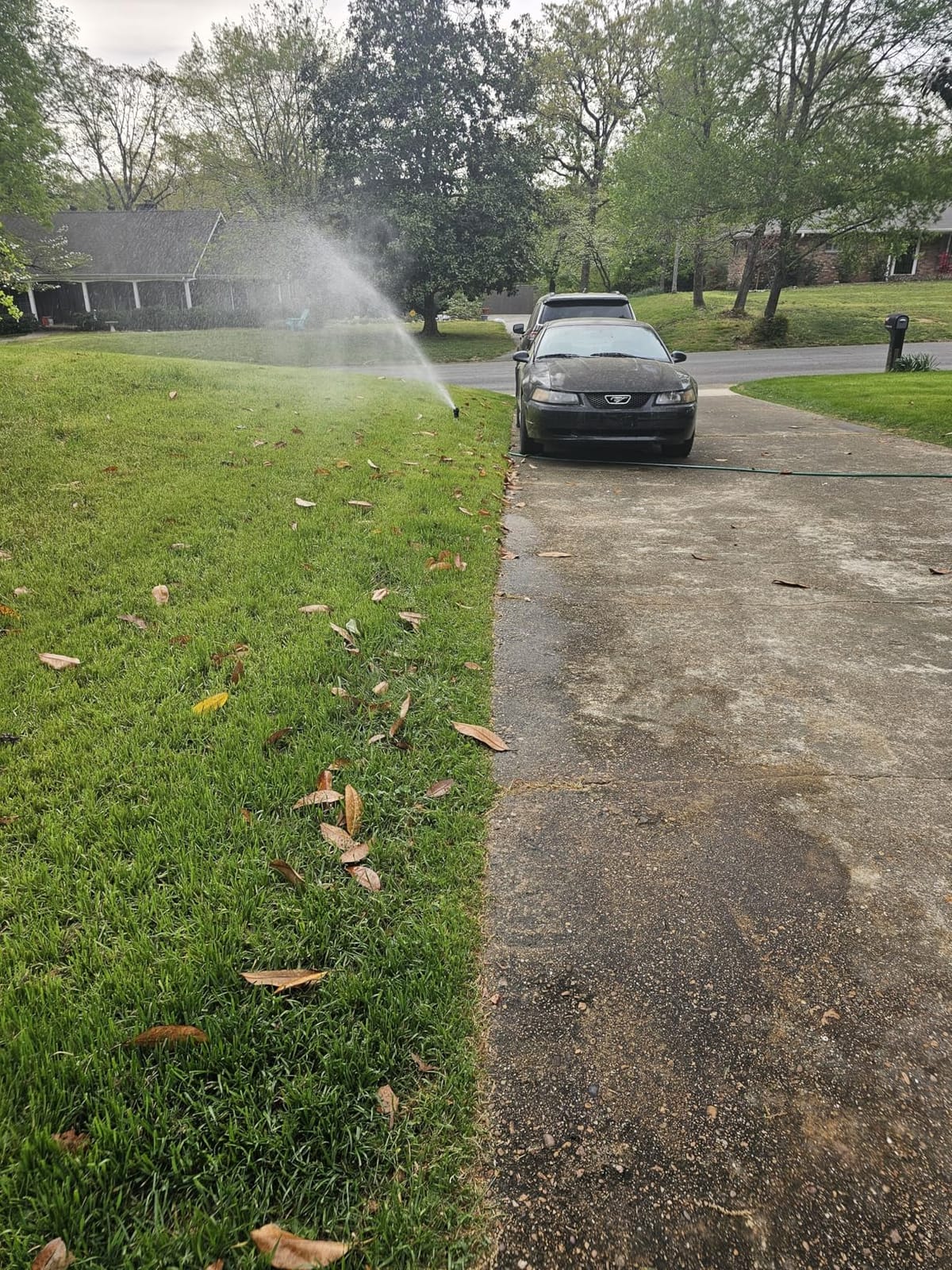
Reviewers consistently praise the metal T-spike construction and how simple it is to set up: push the spike in, attach the hose, walk away. It also handles awkward geometry well, which is why it works on lawns broken up by trees, paths and garden beds.
The catch is the gear drive itself. Owners report that the rotating head can stop when several units share one faucet or when pressure is low, and that the advertised 40-foot throw settles closer to 26 feet in a chained setup. Reviewers also note the spike can gradually unscrew itself during long cycles and leak at the base.
Who this sprinkler suits
Anyone with a large, irregular lawn who wants one unit that adapts rather than a fixed pattern. It is our pick for the best sprinklers for large lawns overall, and the partial arc handles mixed plantings too.
Who should pass on it
Skip it if you plan to chain four units off one spigot, which is where the gear drive is most likely to stall.
2. Orbit Brass Impact Tripod Sprinkler: Reach Over Obstacles and Slopes
- Raised spray clears fences shrubs and uneven ground
- Height adjust makes it usable for beds and lawns
- Brass and aluminum build rated for long sessions
- Six-year parts warranty
- Half-inch inlet and 25 gpm cap restrict very large acreage
- Impact action is noticeably louder than an oscillator
- Has to be repositioned by hand
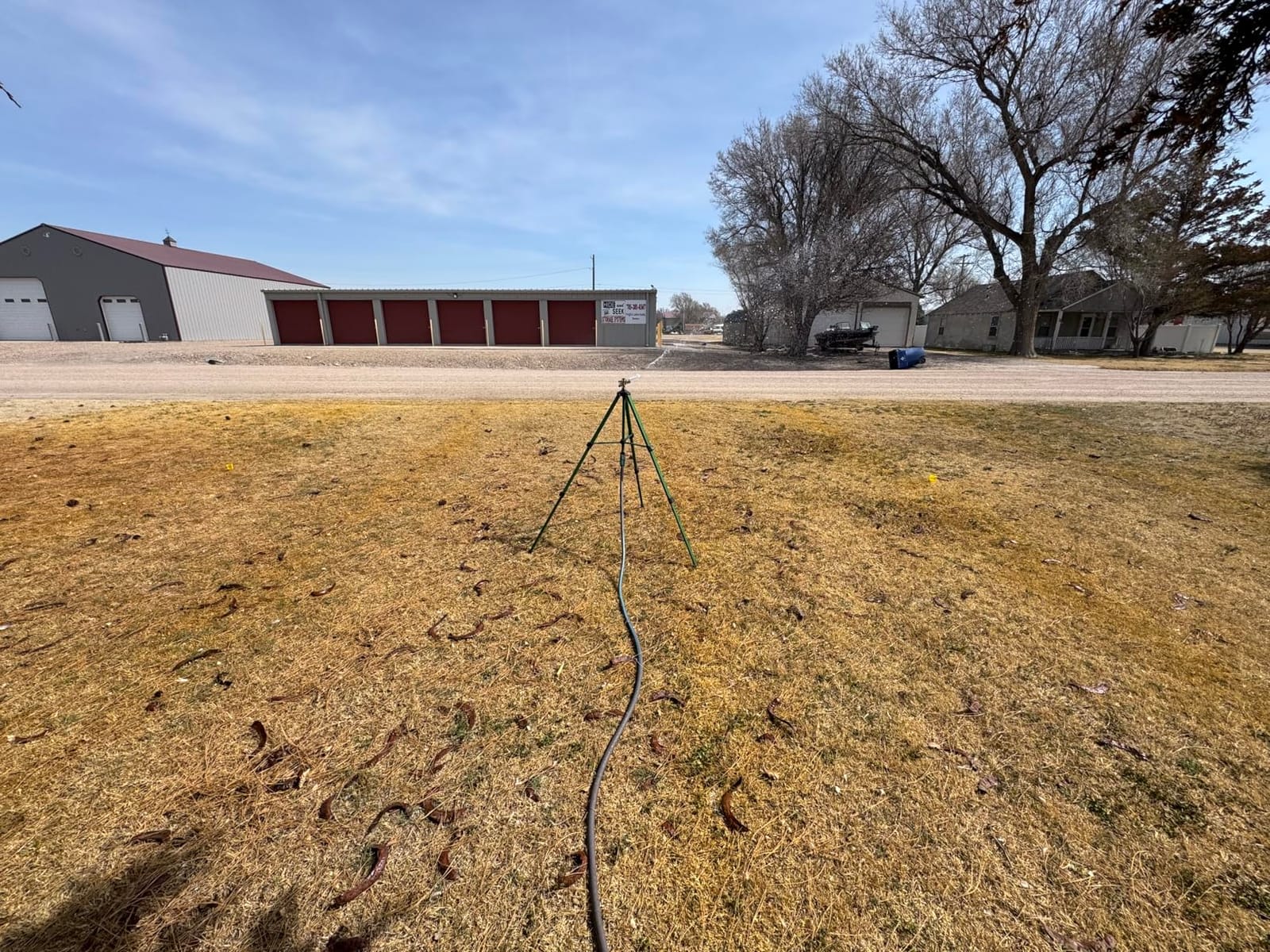
The defining feature here is height. Legs adjust from 22 to 48 inches, which turns a sprinkler that would be blocked by a hedge into one that throws clean water over it.
Buyers treat this as a long-running Orbit classic, and the feedback is consistent: the tripod height is the reason people keep buying it, supported by brass durability and a wide adjustment range. The high-pressure nozzle is what delivers the long throw.
The limits are honest ones. The half-inch inlet and 25 gpm maximum flow make it a poor choice for a full acre on a single pass, and reviewers point out that it never travels on its own. It is also louder than an oscillating head, which matters for early morning use.
Who this sprinkler suits
Yards with fences, retaining walls, hedges or a noticeable slope, and anyone who wants one tool for lawn and raised beds alike. It pairs well with a liquid aerator treatment if the soil is packed.
Who should pass on it
It is the wrong pick for a straight, open half-acre where a traveling unit would cover the same ground unattended.
3. Orbit Traveling Tractor Sprinkler: Set the Hose and Walk Away
- Covers very large yards hands-free along a laid hose path
- Cast-iron body resists tipping and stays stable
- Three speeds match the season
- Automatic shut-off stops water at the end
- Plastic drivetrain parts can fail before the cast-iron body
- Wide spray arms can pop out of the coupler mid-run
- Shut-off ramp is unreliable on long or curving layouts
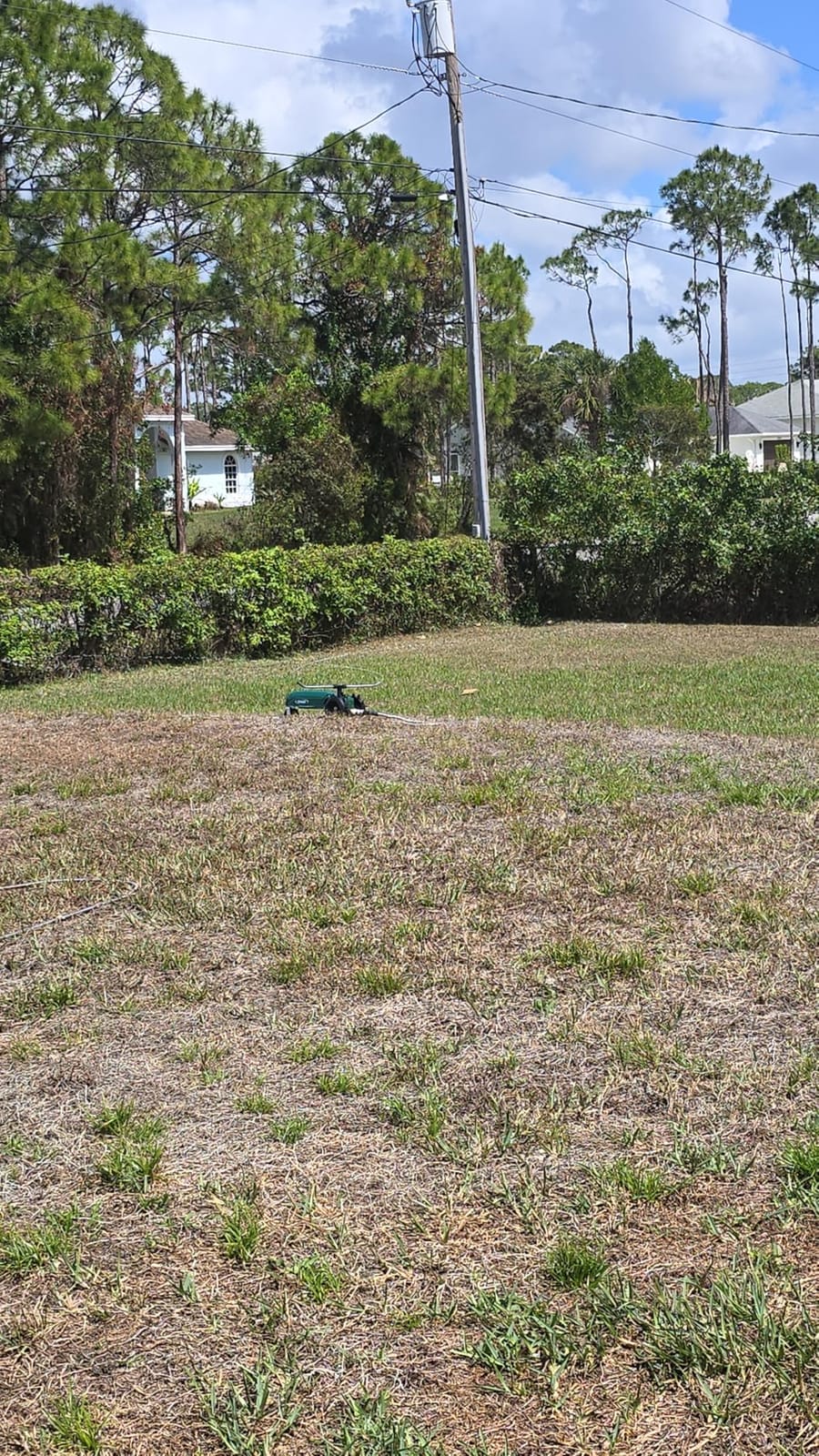
This is the closest a hose-end unit gets to an irrigation system. You lay out your hose in a loop, connect the sprinkler, and the water pressure drives it forward until the auto shut-off valve trips at the end of the path.
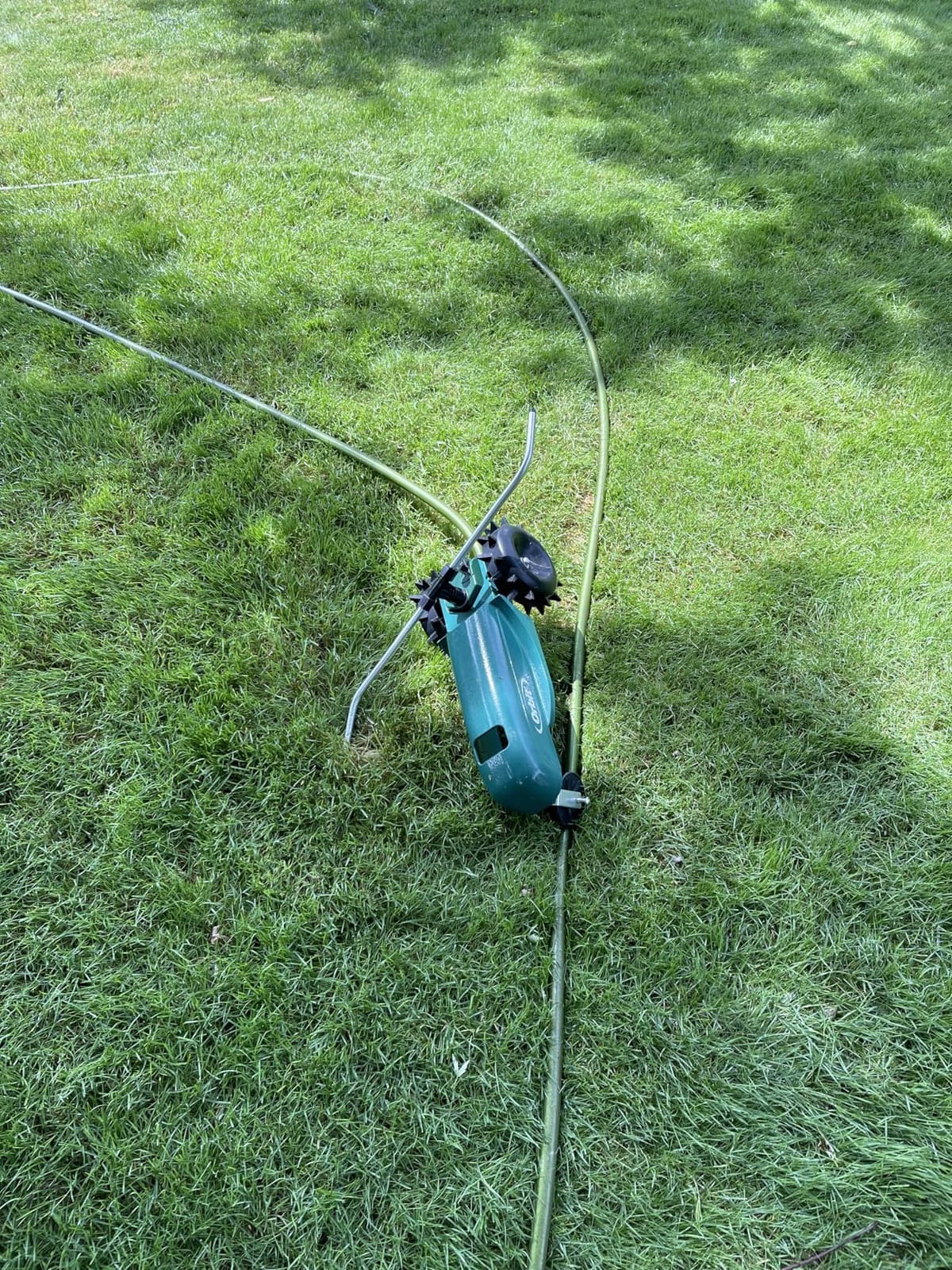
Owners widely treat the tractor as a budget stand-in for a buried system, and the praise centers on the cast-iron weight, the three-speed control and wide coverage on open, straight runs. Reviewers recommend keeping the trailing hose loop short and checking on it periodically.
The recurring complaints are mechanical rather than coverage-related. Wheels, the stop valve and the spinning coupler are plastic and can fail long before the body does, spray arms sometimes detach from the coupler and dump water in one spot, and the shut-off ramp does not always trigger on long or curving hose layouts.
Who this sprinkler suits
Owners of open rectangular lawns who want a single unattended run. It also works well alongside a fertilizer spreader pass on the same route.
Who should pass on it
Skip it on slopes, in freshly seeded ground, or on any yard with tight corners the tractor cannot negotiate.
4. Nelson Rain Train: The Longest Reach of Any Pick Here
- Handles sweeping curves that derail lighter travelers
- Heavy cast-iron body holds traction on flat ground
- Largest coverage area in this group
- Automatic shut-off works on straight runs
- Rear wheels can dig into bare or newly seeded soil
- Underside rusts fast if left on damp ground
- Only a two-year warranty for a heavy-duty product
With a 4.4 average across more than 4,600 reviews, this is the highest-rated unit we tested, and lawn forum regulars repeatedly name it as the no-manual-work answer for a very large yard.
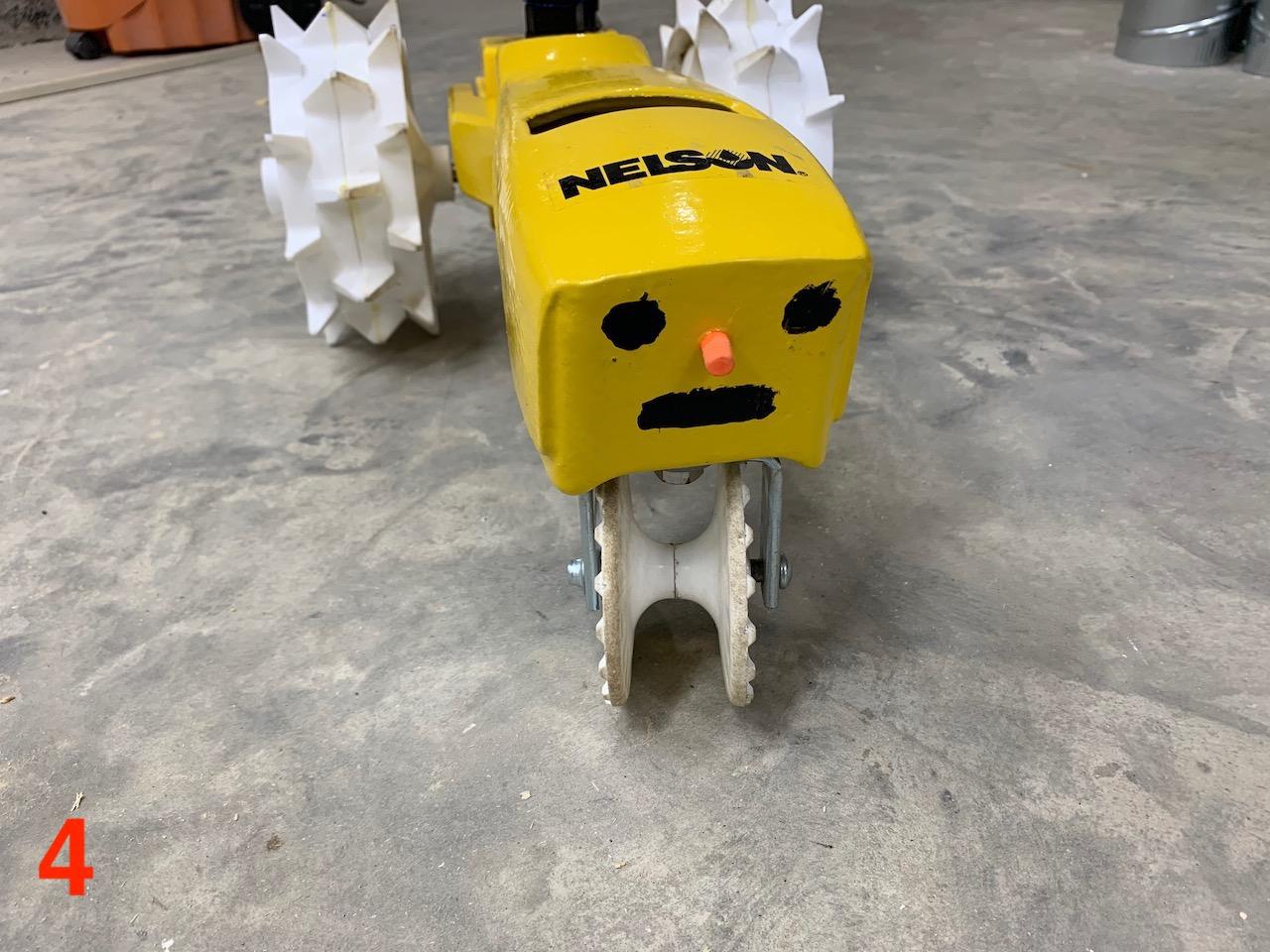
Coverage is the headline: up to 13,500 square feet across 200 feet of travel, with adjustable aluminum spray arms giving 15 to 55 feet of diameter. Three speed settings change how long a lap takes.
What separates it from other travelers is the turning circle. Owners credit the cast-iron chassis with holding its line through curves and awkward corners, and buyers describe replacing units they had kept for 20 to 35 years, which says plenty about repairability.
The negatives are mostly maintenance. Reviewers report the rear wheels dig in and stall on thin or newly seeded ground, the underside rusts quickly if the unit sits on damp grass, and the spray arm junction can creep out of its T-junction.
Who this sprinkler suits
Anyone watering half an acre or more with a single unit, particularly on curved boundaries. It is our choice for the best sprinklers for large lawns when manual effort is what you most want to eliminate.
Who should pass on it
It is a poor match for newly seeded ground or thin, bare patches where the wheels sink.
5. Hourleey Brass Impact Tripod Sprinkler: Solid Value for Pressure-Fed Yards
- Brass head and alloy tripod resist corrosion
- Height adjustment clears fences and edging
- Four adjustments control distance and angle
- Rubber filter O-ring traps sand and gravel
- Tripod legs are hard to lock into a wide stable stance
- Throw depends heavily on household pressure
- Adjustment levers and diffuser feel imprecise
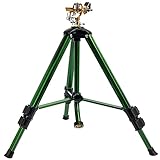
This is the straightforward workhorse option: a brass impact head on a tripod that extends from 16 to 27 inches, rated to 80 PSI with 15 gpm of flow.
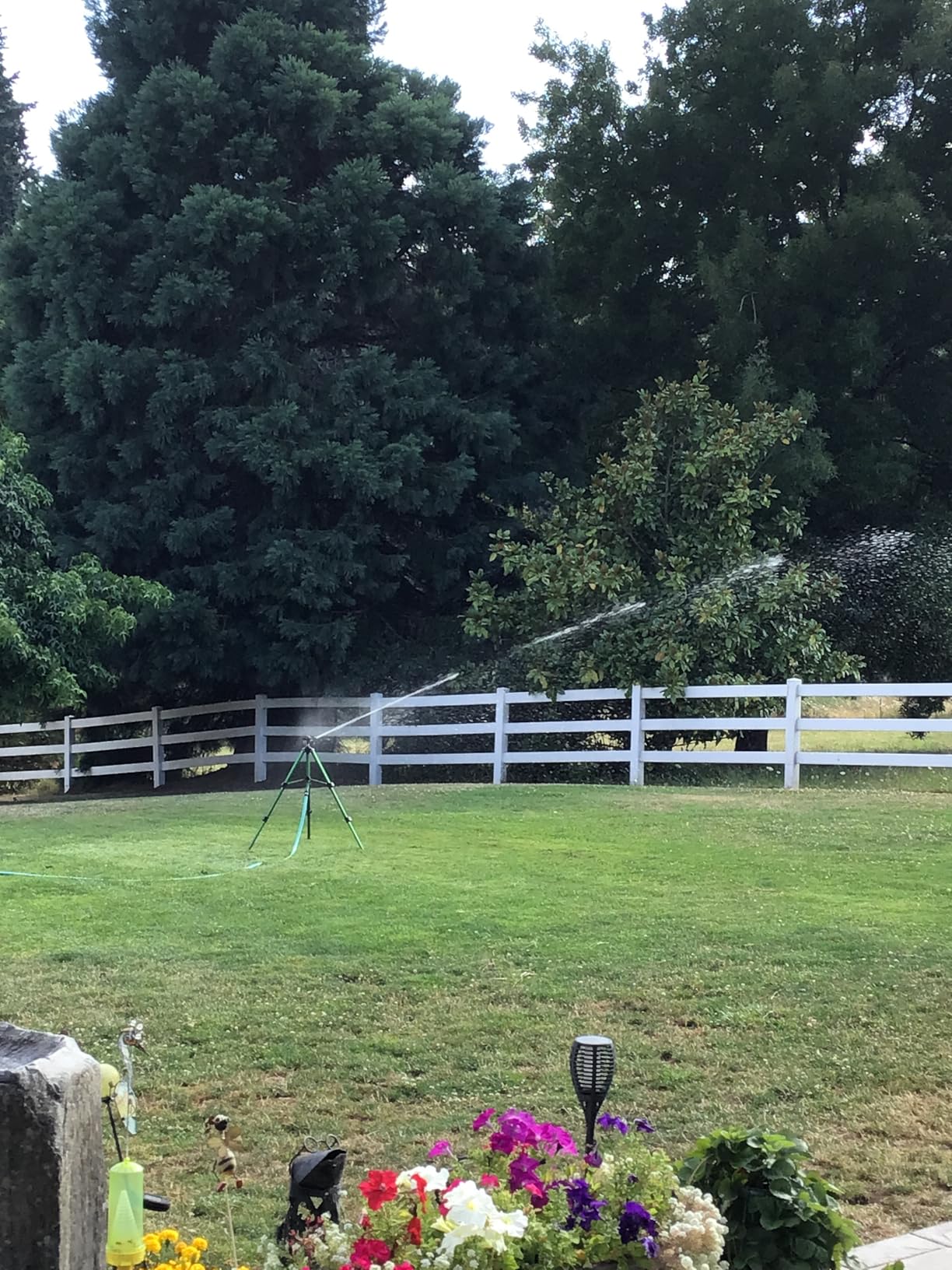
Buyers generally see this as a solid value for medium-to-large coverage, single out the corrosion-resistant brass and the ability to raise spray over obstacles, and like the four spray adjustments for distance and angle.
The criticisms are predictable. Reviewers find the tripod legs difficult to lock into a genuinely wide stance, and they note that real-world throw falls short of the 35-foot figure when household pressure is modest. The adjustment levers and diffuser are described as imprecise.
Who this sprinkler suits
Homeowners who know their pressure is decent and want a metal unit that survives a full season outdoors. It suits large rectangular lawns where a circular pattern fits the boundary.
Who should pass on it
Pass if your water pressure is marginal, since the throw falls short of its rating.
6. Biswing Impact Sprinkler Tripod: Built for Weak Pressure
- Longest tripod adjustment range among competing units
- Reaches as far as costlier branded units at the same pressure
- Solid metal tripod resists rust
- Clear instructions for spray adjustments
- Tripod tips over easily on a high-pressure supply
- Spray pattern control is weak with little water landing mid-throw
- Some units spray about 270 degrees instead of a full circle
If your pressure is modest, this is the unit to look at. The stated recommended range of 20 to 60 PSI is well below what the high-end impact heads need, and buyers report it reaching as far as costlier branded models at the same supply.
Owners like the reach and the value for money, particularly for watering newly reseeded backyards, and they find the spray adjustments straightforward once you learn them. The metal tripod and head are consistently described as sturdy and rust resistant.
Two complaints recur. The tripod tips over fairly easily on a strong supply even with the legs adjusted, and the spray pattern control is weak, leaving very little water between the unit and the outer edge of the throw. Some units also spray closer to 270 degrees than a full circle.
Who this sprinkler suits
Households on low or variable pressure, and anyone reseeding a large area who wants a soft spray. Our broader guide to oscillating sprinklers for large lawns covers the gentler alternative.
Who should pass on it
Do not buy it if you have strong pressure, because the extra force is what tips it over.
7. Melnor XT Oscillating Sprinkler: Even Water on a Rectangle
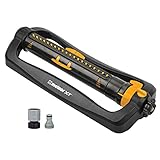
Melnor XT Oscillating Sprinkler, 4500 Sq Ft: Flow, Width & Range Adjust
- Gentle even rectangular coverage for large lawn sections
- Width and range adjust independently
- Turbo motor resists dirt and debris
- Width indicators recall your previous setting
- Coverage footprint shrinks at low water pressure
- Rectangular pattern ignores the corners of irregular lawns
An oscillator works completely differently from an impact head. The bar sweeps back and forth instead of rotating, delivering a gentle rectangular pattern that will not uproot seed, bounce off hard soil or hammer a slope into runoff.
This one carries 20 precision nozzles rated to 4,500 square feet, and the TwinTouch controls let width and range move independently so the same head can water a lawn and a narrow bed.
Reviewers favor this model for even, low-agitation watering over rectangular areas and repeatedly single out the independent width and range controls plus the dirt-resistant drive. The width indicators are a small touch that saves real time when you re-set the same pattern each week.
Two limits are worth planning around. The footprint depends on available pressure, so a weak supply shrinks the rectangle, and the pattern is rectangular rather than circular, which leaves the corners of an irregular lawn untouched without repositioning.
Who this sprinkler suits
Rectangular and square lawns, new seed, slopes where runoff is a problem, and anyone who prefers quiet operation. It is a strong pick for the best sprinklers for large lawns when gentleness matters more than reach.
Who should pass on it
Skip it on curved or L-shaped yards, because the rectangle simply does not bend.
8. STYDDI All-Metal Impact Sprinkler: Rustproof and Stable
- All-metal zinc alloy resists rust and corrosion
- Weighted base stays planted under pressure
- Generous arc range from partial to full circle
- Quick connect needs no tools
- Rotation can seize one way and need manual resetting
- Occasional fitting leaks
- Some units failed within about a month
- Impact spray is louder than oscillators
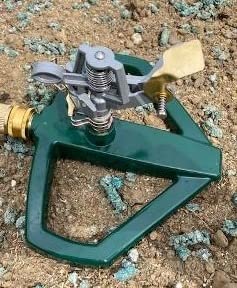
At 5,800 square feet rated coverage from a zinc alloy body, this is a middle ground between a compact spike head and a tall tripod. The quick connect adapter means you can swap it for a hose in seconds with no tools.
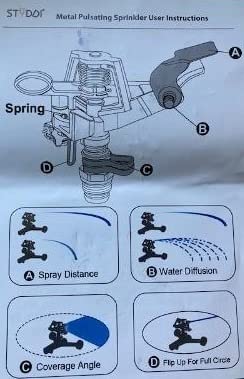
The praise centers on the all-metal construction, a base heavy enough not to tip, and the wide choice of coverage settings from a 20 degree partial arc up to a full circle. Buyers also like that the swivel connection lets the unit and hose lie flat.
The most common complaint is that the impact arm sticks partway through its rotation and needs a manual reset. There are also scattered reports of fitting leaks and a few units that failed within about a month, plus the obvious drawback that impact noise is louder than an oscillator.
Who this sprinkler suits
Owners who want a metal unit that resists rust and a partial arc for a shaped lawn. It suits patchy turf and garden beds as well as open lawn.
Who should pass on it
Pass if you are near neighbors at dawn, because the clatter carries.
9. Eden 96212 Turbo Oscillating Sprinkler: The Most Precise Controls
- Button nozzle switches beat sliding paddles
- Sliding range tabs and flow knob give precise control
- Sealed turbo motor resists wear
- Built-in nozzle cleaning tool and spare filters
- Nozzle switches drip and barely change sweep width
- Advertised coverage is optimistic at low pressure
- Tiny jet holes clog in mineral-rich water
- No built-in shut-off timer
Where the Melnor XT offers two wide controls, this Eden gives you per-nozzle switches on both sides. Three on/off switches per side let you shut individual nozzles down and shape the rectangle to your lawn’s outline.
Reviewers highlight the button-based width control as a genuine step up from paddles, plus the sliding range tabs, the included cleaning tool and the quick-connect fittings with spare stainless filter washers. The weighted base holds position without sliding.
The strongest criticism is that advertised coverage falls well short of the stated 4,499 square feet when household pressure is low, and that the nozzle isolation switches leak and do very little to the pattern. The tiny jet holes also clog in mineral-rich water, and there is no built-in timer.
Who this sprinkler suits
People on well or lake water who need filtration that survives daily use, and anyone who wants to sculpt coverage. It suits a large lawn broken up by beds and paths.
Who should pass on it
It is not a fit if your supply is low-pressure and you need every square foot of the rated footprint.
10. Melnor MiniMax Spike Sprinkler: The Best Way to Chain Units
Melnor MiniMax Spike Sprinkler, 4000 Sq Ft: 360°, Flow, Width, Range Adjust
- Full-size coverage from a compact footprint
- Four-way adjustment for targeted watering
- Metal step spike holds firm in soil
- Flo-Thru base links units across a whole yard
- True 4000 sq ft coverage depends on good pressure
- Rectangular pattern misses irregular lawn corners
- Spike needs re-seating in soft or trafficked soil
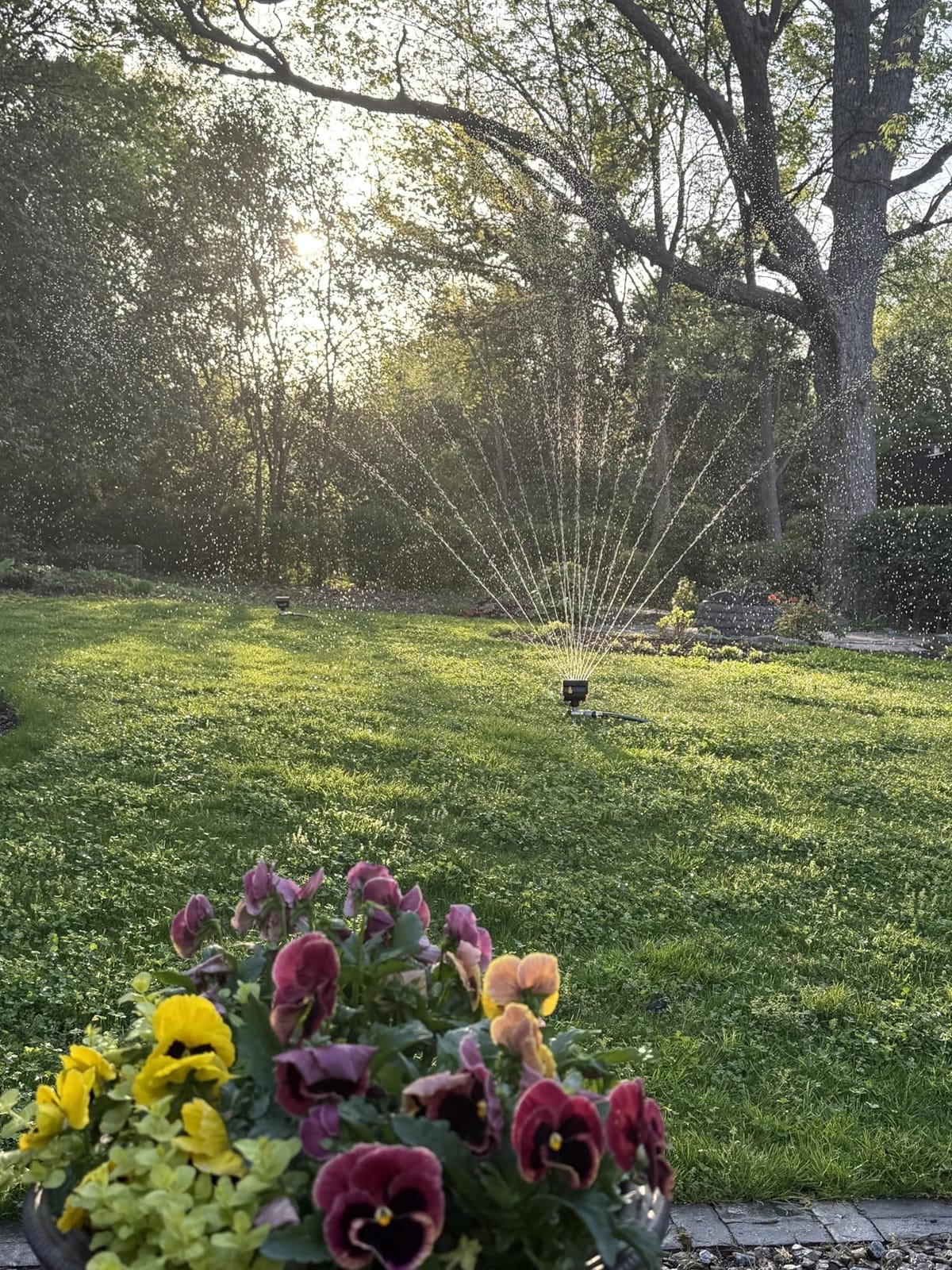
This is the answer to the question lawn owners ask most often, which is how to stop moving sprinklers around. The Flo-Thru base passes water through to the next unit, so you can link several in series and cover a full lawn in one unattended run.
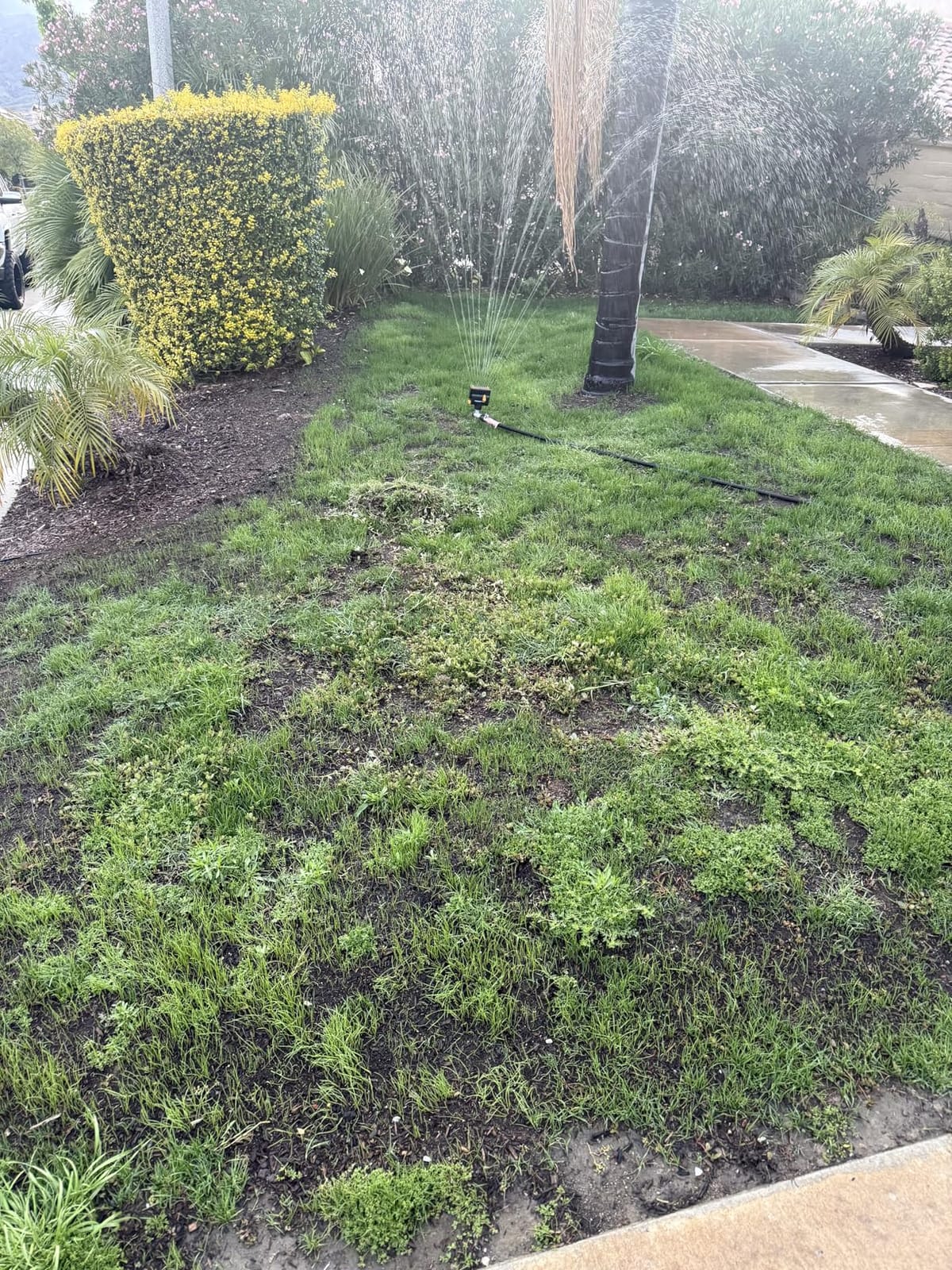
Owners highlight the combination of compact size and full-size coverage, the four-way adjustment, the metal spike that holds firm, and the ability to daisy-chain units across a large yard. The dirt-resistant drive keeps running when debris is present in the water.
Reported drawbacks are limited and mostly about real-world conditions. Reaching the full rated coverage depends on adequate pressure, the rectangular pattern does not reach the corners of an irregular lawn, and the spike needs re-seating if it is stepped on or sits in soft soil.
Who this sprinkler suits
Owners of a large rectangular lawn who want to stop dragging equipment around, since two chained units cover ground one unit cannot.
Who should pass on it
Skip it on curvy yards, and be cautious if your spigot cannot feed two units without starving the second of pressure.
11. STYDDI Tall Metal Tripod Sprinkler: The Longest Throw
- Tall tripod reaches over fences hedges and vines
- Widest throw of any impact unit here
- Coverage adjustable from partial arc to full circle
- Anti-tipping stance holds up in wind
- Full 70 foot diameter needs strong water pressure
- 5 gpm maximum flow moves less water per hour than smaller heads
- Telescoping legs must be fully locked before use
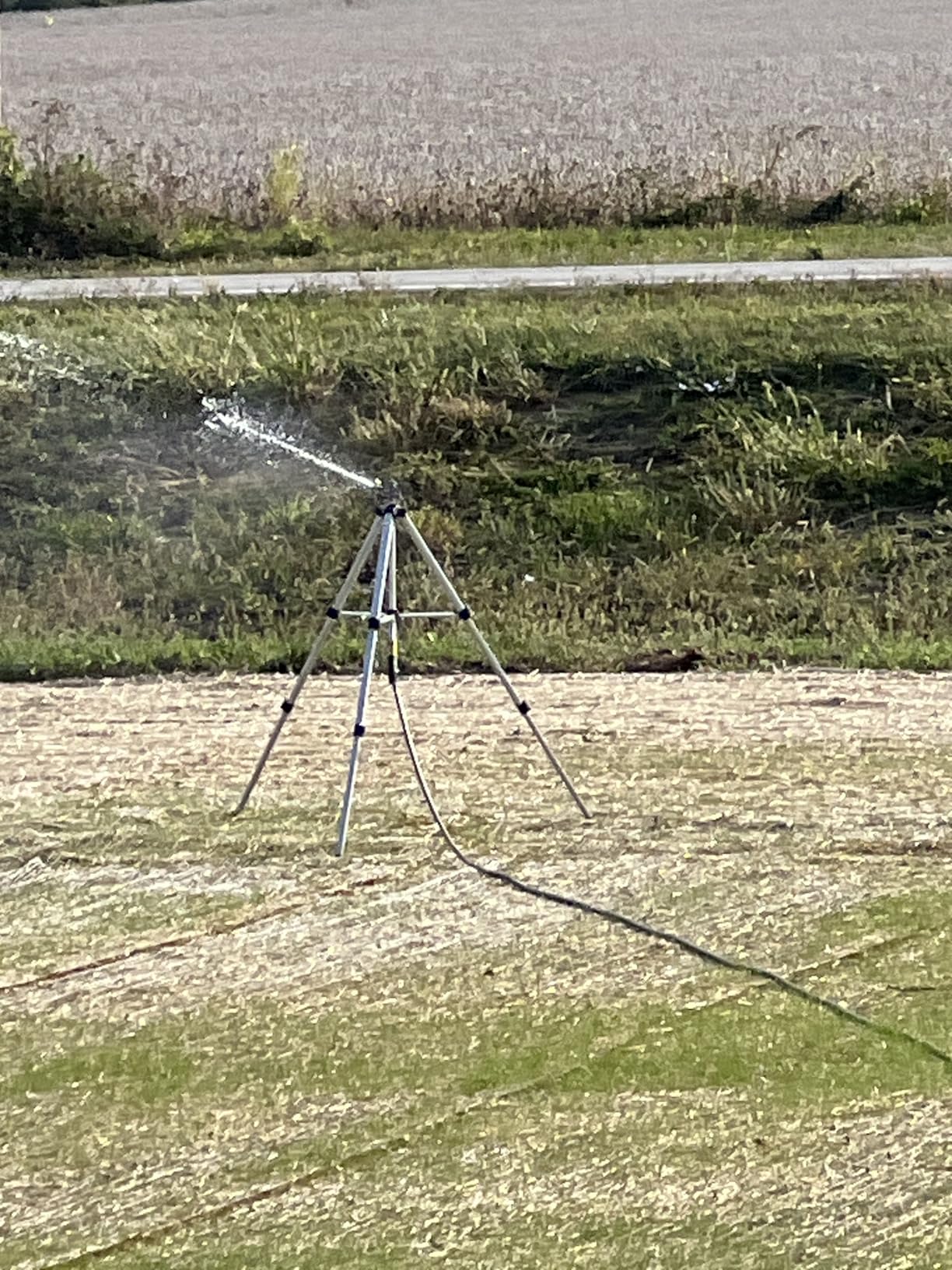
This is the reach pick. It sprays up to 70 feet in diameter, about 5,600 square feet in a full circle, from a tripod that telescopes from 16 to 36 inches.
Owners with fences and uneven ground choose this tripod specifically for reach, and they rate the metal construction and wide anti-tipping stance highly. Because the height is adjustable, you can tune the throw to the area you are watering rather than living with one fixed radius.
The caveats are pressure-related and worth stating plainly. Hitting the full 70-foot diameter assumes strong supply, and at a 5 gpm maximum flow this moves less water per hour than lower-capacity impact heads, so you may need a longer cycle. Reviewers also stress locking every telescoping leg fully before you turn the water on.
Who this sprinkler suits
Yards hemmed in by fencing or dense mature hedges, and anyone who wants to cover a wide area from one fixed point without moving the unit.
Who should pass on it
Pass if your supply is weak, since the headline diameter will not happen.
12. Eden 96216 Heavy Duty Oscillating Sprinkler: Aluminum Where Plastic Usually Goes
- Largest advertised coverage of the oscillators here
- Aluminum base and stainless parts outlast plastic units
- Nozzle switches plus range tabs give good control
- Flow knob tunes intensity to match pressure
- Real coverage depends on household pressure with a 40 PSI rating
- Nozzle switches can drip when closed
- No built-in automatic shut-off timer
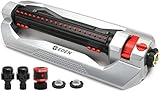
This is the larger sibling to the Eden 96212, adding an aluminum base, stainless components and a third nozzle on each side for a rated 4,973 square feet.
For a large lawn exposed to sun and weather, aluminum and stainless parts outlast an all-plastic body, and the flow knob tunes intensity to whatever your supply delivers.
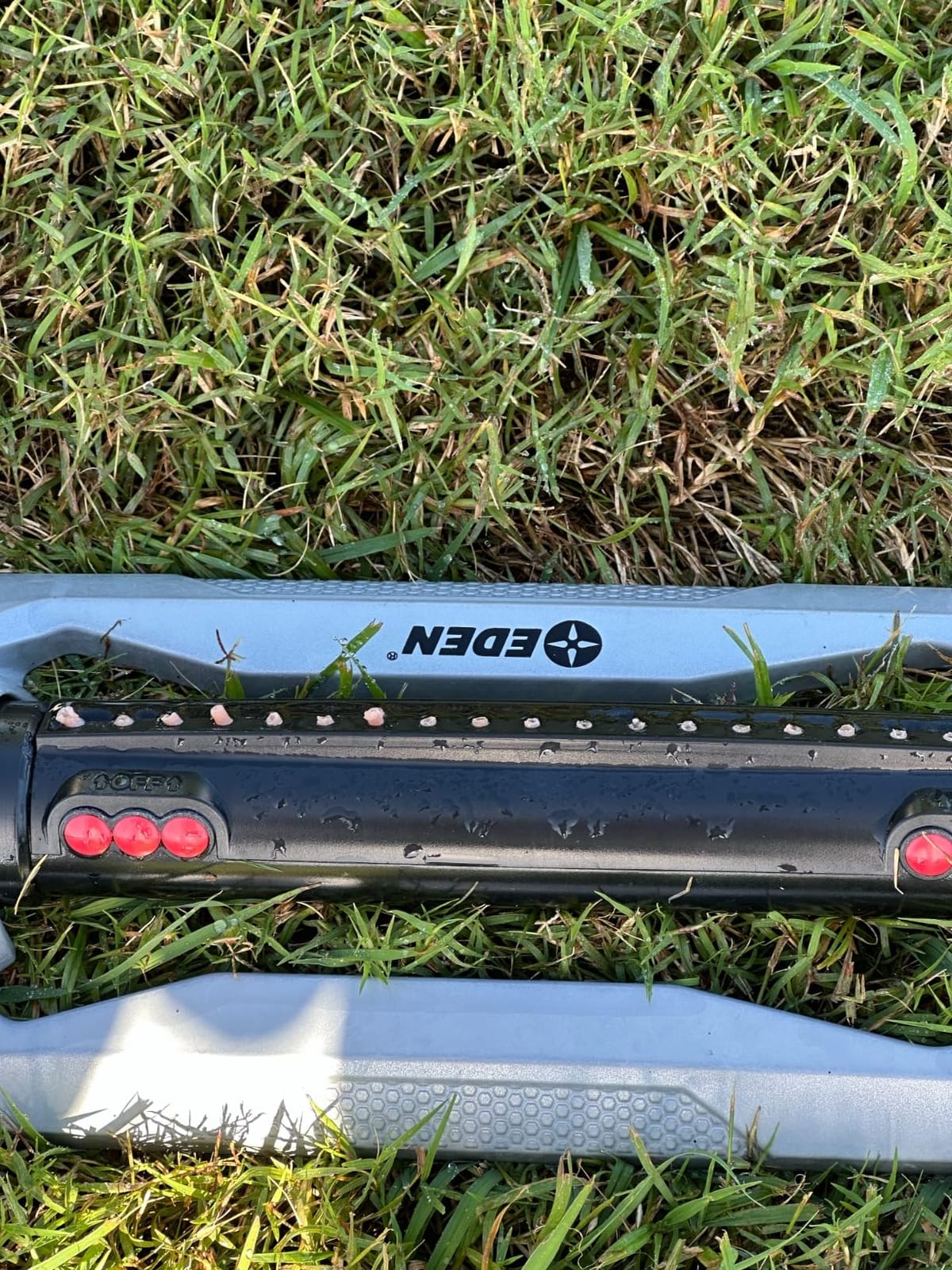
Buyers are satisfied with the control set, with sliding range tabs and three on/off switches per side giving fine control over width and reach, and they like that the quick connect set ships with filters that cut drips and clogging.
The recurring caveat is that the advertised square footage is a best case. At the 40 PSI maximum rating with typical household pressure, reviewers report noticeably less real coverage. The nozzle switches also drip when closed, and there is no built-in timer.
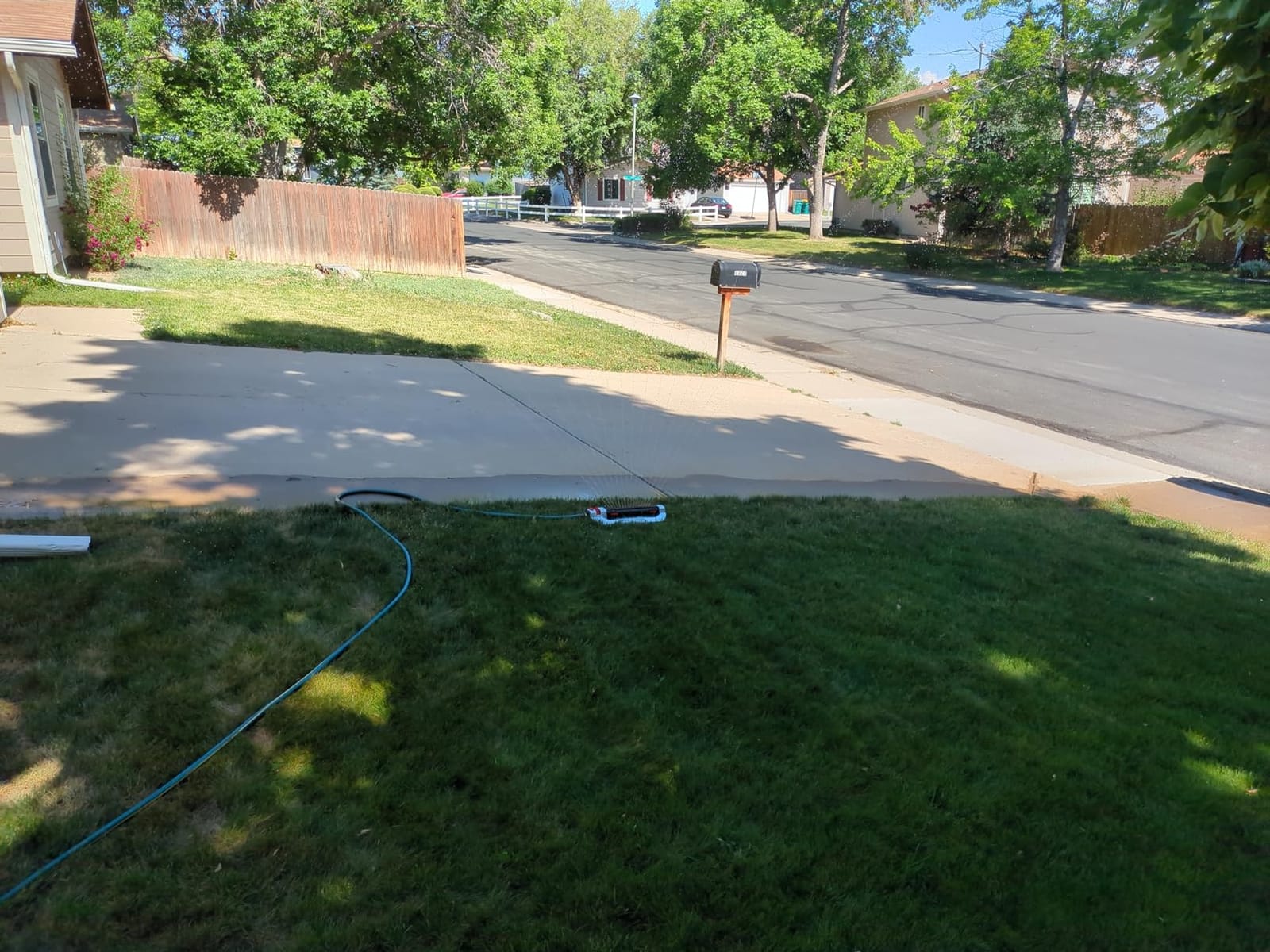
Who this sprinkler suits
Owners of a big rectangular lawn who want a durable oscillator and intend to leave it outside through the season.
Who should pass on it
Skip it if you need maximum footprint from a low-pressure supply, and pass if you want the unit to stop itself.
How Long Does It Take to Water a Large Lawn?
Here is the number most roundups leave out. Applying one inch of water takes roughly 0.62 gallons per square foot, so a 20,000 square foot lawn needs close to 12,500 gallons. At 6 gallons per minute that is more than 34 hours of watering.
The flow rates listed in the comparison table tell the whole story. The Orbit brass impact head at 25 gpm handles 20,000 square feet in about eight hours, while the Nelson Rain Train at 3 gpm needs roughly 70.
Scale it to your yard: 10,000 square feet needs about 6,200 gallons, which is roughly seven hours at 15 gpm or 21 hours at 5 gpm. A 50,000 square foot property needs close to 31,000 gallons.
This is why two 4,000 square foot oscillators chained together beat one large unit on most yards. Splitting the work across two hose-end units roughly halves the wall-clock time, and a hose-end timer lets it run unattended.
Which Sprinkler Type Suits Your Lawn?
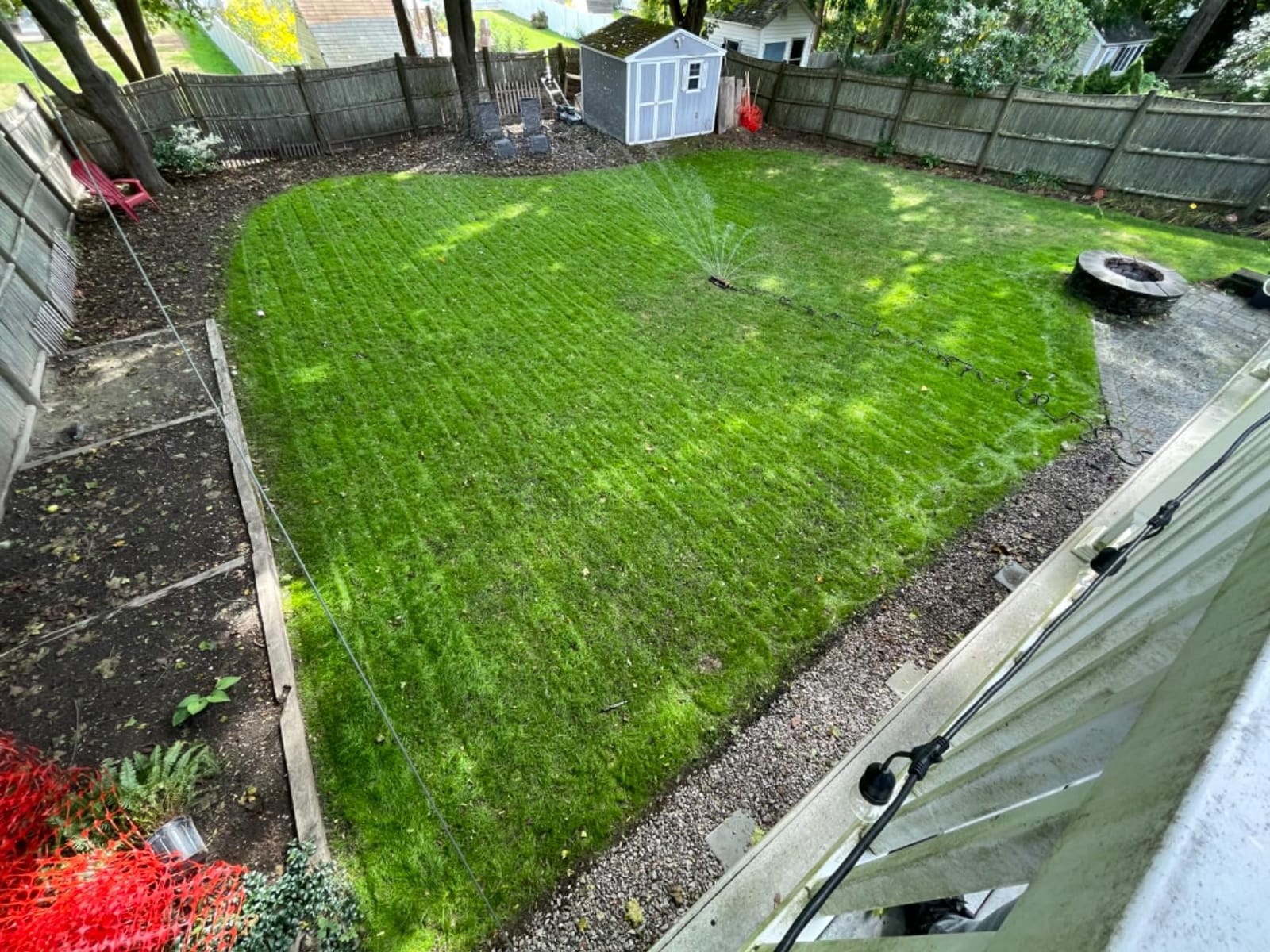
Large rectangular lawn – oscillator or chained compact spike units. A rectangle matches a rectangular pattern, and chaining two units splits the runtime.
Curved or irregular lawn – gear-drive or impact head. A circular pattern overlaps itself and wastes far less water at the edges.
Sloped ground – oscillator first, impact second. A sweeping spray applies gently enough to avoid runoff, while a high-velocity jet on a slope just runs off.
Fences, hedges and vines in the way – tall tripod. Height is the only reliable way to throw water over an obstruction.
Low pressure supply – impact head rated for 20 to 60 PSI, or a lower-pressure oscillator. Check the rating before you buy, not after.
Newly seeded lawn – oscillator only. Impact arms and traveling wheels will uproot or bury fresh seed.
Very large acreage with no budget for in-ground irrigation – traveling unit, ideally the Rain Train for its turn radius and travel distance.
If an in-ground system is on the table, r/Irrigation members name the Rain Bird Maxi-Paw pop-up impact and the Rain Bird 5000-series rotor as their picks for large turfed areas, which points toward a gear-driven rotor head rather than a spray head. We did not test those here.
How to Choose a Sprinkler for a Large Lawn
Read coverage as diameter, not area. A quoted square footage assumes a full circle at full reach. A unit rated for 4,500 square feet in a rectangle is a different shape from one rated for 5,800 in a circle, and they will not behave the same way in your yard.
Know your pressure before you shop. Under 40 PSI, pick heads rated for 20 to 60 PSI. Between 40 and 60 PSI covers most quality impact and oscillating units. Above 60 PSI, be careful with impellers that can be damaged by excessive force.
Match the base to your ground. A spike needs soil soft enough to drive it in, a sled or weighted base needs flat ground, and a tripod needs a stance wide enough to resist tipping. On compacted soil, no spike will go in without tools.
Look for chainable bases on big lawns. A Flo-Thru or pass-through base is the single biggest time saver on a large property, because it lets you cover the yard in one run instead of dragging units around.
Verify uniformity before you trust the pattern. Set out flat cans in a grid across the lawn, run the sprinkler for a standard cycle, then compare the collected depths. Cans that are near-empty mark exactly the dry corners people complain about, and moving an oscillator off-center by a few feet usually fixes the problem.
Bring metal indoors before winter. Leaving a sprinkler out through a freeze cracks plastic bases and springs. Drain the line, disconnect the unit, and store it dry. Our seasonal tow-behind aerator guide follows the same logic: gear that sits in wet grass all winter does not last.
Frequently Asked Questions
How do you water a very large lawn without moving the sprinkler constantly?
Use a self-propelled traveling sprinkler that follows a laid hose path, or chain two hose-end units together on one route. The Nelson Rain Train in this roundup travels up to 200 feet across up to 13,500 square feet before tripping its automatic shut-off, and the Melnor MiniMax has a Flo-Thru base designed for linking units in series. Pair either setup with a hose-end timer so the run finishes without you.
What is the largest area lawn sprinkler available?
Among the hose-end picks we tested, the Nelson Rain Train covers the most ground at a rated 13,500 square feet and travels up to 200 feet. The Styddi impact sprinkler claims the widest single throw at up to 70 feet in diameter, about 5,600 square feet in a full circle. For an installed system, gear-driven rotor heads such as the Rain Bird 5000-series cover more per head than a spray head.
What type of sprinkler head puts out the most water?
Impact heads put out the most water because they pass a high flow rate through a single nozzle. The Orbit brass impact tripod in this group is rated to 25 gpm and the Hourleey tripod to 15 gpm, while the oscillators and traveling units run between 3 and 6 gpm. More flow is not automatically better, though, because high application rates cause runoff on slopes and sandy soil.
How many PSI do I need for an impact sprinkler?
Roughly 40 to 60 PSI is the sweet spot for most quality impact heads. Below about 20 PSI the head will not turn reliably, and above 80 PSI the stream breaks up and throws less water per minute. If your supply is weak, choose a head rated for 20 to 60 PSI, such as the Biswing tripod, rather than forcing a high-pressure model to perform.
Why does my sprinkler leave dry corners?
Almost always the pattern does not match the lawn shape. An oscillator throws a rectangle, so an L-shaped yard or one set dead-center in a large rectangle leaves the corners untouched. An impact head throws a circle that overlaps poorly at the edges of a rectangle. Fix it by moving the unit off-center, widening the arc, or chaining a second unit to cover the gap.
Is Rain Bird or Hunter better for large lawns?
Both build gear-driven rotor heads suited to large turfed areas, and r/Irrigation members most often name the Rain Bird Maxi-Paw and Rain Bird 5000-series rotor when a buried system is in play. In this roundup every pick is a hose-end unit, so the choice comes down to the lawn shape and your pressure rather than the brand. Measure both before you decide.
Bottom Line
For most large yards, the Orbit H2O-Six gear-drive sprinkler is the single best buy in this group because it reconfigures as the season and the target change. When the priority is doing nothing at all, the Nelson Rain Train covers the most ground hands-free, and the Melnor MiniMax is the smarter option when you would rather chain two oscillators than move anything.
Measure your pressure and mark out your lawn shape before you buy, and check the real-world coverage with a grid of cans rather than trusting the number on the box. Whatever you choose among the best sprinklers for large lawns, pair it with a hose-end timer and give it room in the storage shed before the first freeze in 2026.