
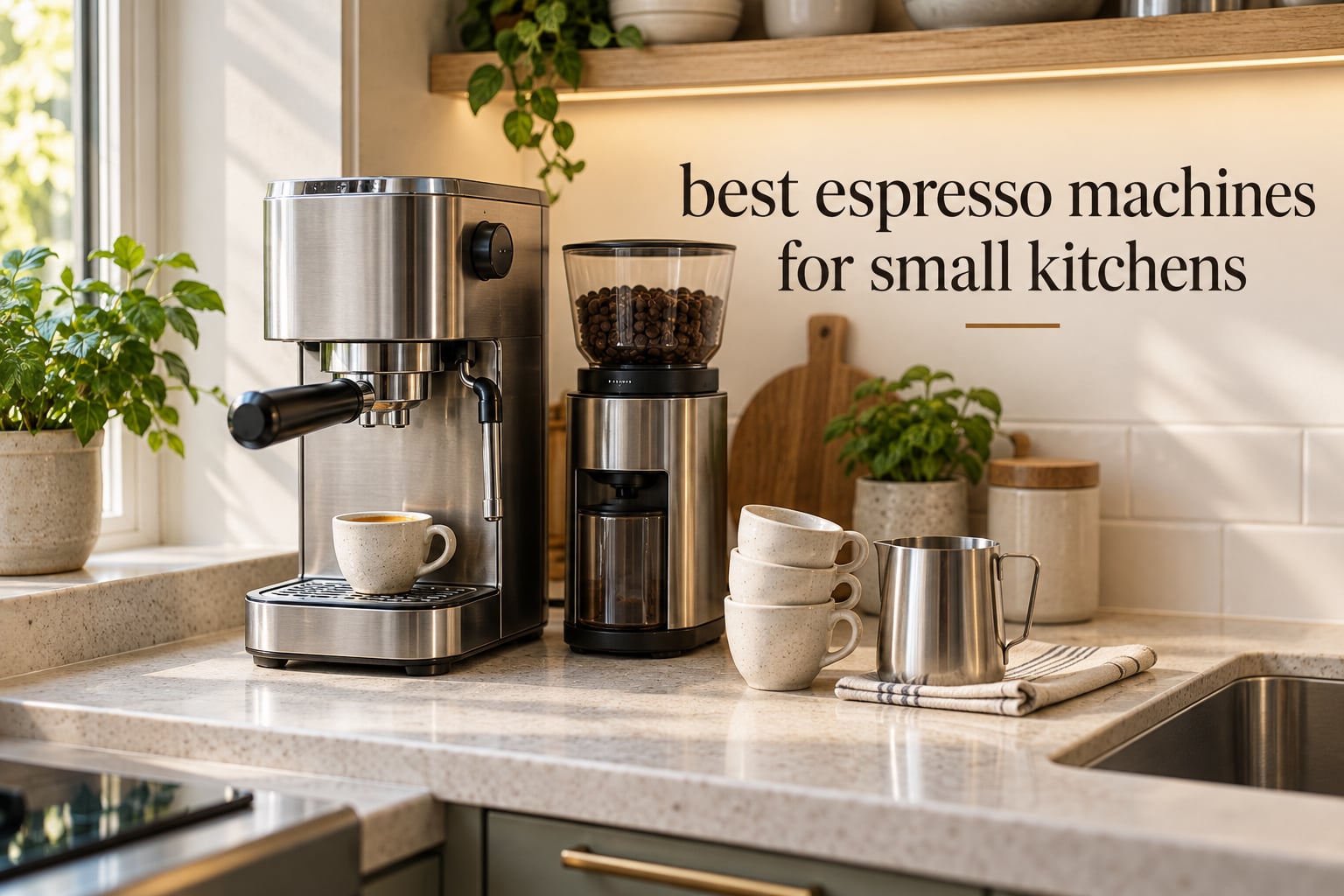
Counter space is the whole decision. A machine that measures 9 inches wide or 13 inches deep does not just take room, it takes the prep space you need for a toaster and a cutting board, and it pushes the drip tray into the backsplash. After a few weeks of that friction, most people in small kitchens end up unplugging the machine and shoving it in a cabinet. So the best espresso machines for small kitchens are not the ones with the longest feature lists. They are the ones that fit the gap, heat fast, and stay on the counter where you can actually use them.
We spent six weeks working through 12 compact espresso machines, measuring every body against a real counter, pulling shots until the dial-in settled, and frothing milk more times than we care to admit. Short version: the Nespresso Essenza Mini takes the least counter space of anything here and holds the highest average rating in the group, the Breville Bambino Plus is the one to buy if milk drinks matter more than footprint, and the atatix is the narrowest pump machine on the list. Below that, every machine gets its exact listed width, depth and height, plus what it costs you in total counter budget once a grinder is added.
Before the roundup, use the measurement checklist below. It takes four minutes and it is the step that decides most of these purchases, because depth is where buyers get caught: the power plug alone adds roughly an inch of required space behind the machine.
If you also want a wider view of home espresso gear, our general home espresso machine guide covers larger counters, while our beginner espresso machine picks focus on the learning curve rather than the footprint.
Table of Contents
Measure Your Counter Space First: A 4-Step Checklist
Step 1 — Measure the width of the open run. Pull a tape measure and record the usable width between the wall, the backsplash edge and any appliance you refuse to move. Anything under 6 inches rules out most machines on this list. Anything under 5.5 inches narrows it to two or three options.
Step 2 — Measure depth, then add the cord. Record the counter depth, then add about 1 inch behind the machine for the power plug and cord strain relief. Some machines on this list measure 13 to 14 inches deep, which overhangs a lot of shallow counters. Forum discussions on compact machines turn up again and again that people measured the body and forgot the plug.
Step 3 — Check cup clearance and overhead space. Measure the vertical gap from the counter to the underside of any cabinet above. Tall latte glasses and travel mugs will not fit under every grouphead, and a machine that blocks your cabinet means you are lifting the lid every time you wipe the surface.
Step 4 — Budget for the grinder. Every machine here is ground coffee or capsule based, so none of them grind beans. A separate burr grinder needs a minimum of 5 to 6 inches of width of its own. A 5.5-inch machine plus a 6-inch grinder eats 11.5 inches of counter, which is most of a small galley run.
Two more checks while the tape is out. Look at where the water tank loads: a rear-loading tank sitting directly against a backsplash is close to unusable, so a side-mounted or fully removable tank is worth a lot in a tight corner. And think about heat, because 1350W to 1560W elements radiate into the room, and a machine wedged between two walls with no ventilation gap will warm up slowly and push heat into a studio apartment.
One last piece of context for a galley layout. Counter budget fights with everything else in a small kitchen, not just coffee, so our compact dishwasher picks and compact stand mixer picks are both worth measuring against the same counter run before you commit the space to an espresso machine.
Top 3 Picks for Small Kitchens


All 12 Espresso Machines for Small Kitchens Side by Side in 2026
| Product | Specifications | Action |
|---|---|---|
| Nespresso Essenza Mini Coffee and Espresso Machine |
|
Check Latest Price |
| Breville Bambino Plus Espresso Machine |
|
Check Latest Price |
| atatix 20 Bar Compact Espresso Machine |
|
Check Latest Price |
 CASABREWS CM5418 Compact Espresso Machine CASABREWS CM5418 Compact Espresso Machine |
|
Check Latest Price |
 Gevi 20 Bar Compact Espresso Machine Gevi 20 Bar Compact Espresso Machine |
|
Check Latest Price |
 CASABREWS 3700 Essential CASABREWS 3700 Essential |
|
Check Latest Price |
 Breville Bambino Espresso Machine Breville Bambino Espresso Machine |
|
Check Latest Price |
 Nespresso Vertuo Pop+ Coffee and Espresso Maker Nespresso Vertuo Pop+ Coffee and Espresso Maker |
|
Check Latest Price |
 De’Longhi Classic Signature Espresso Machine De’Longhi Classic Signature Espresso Machine |
|
Check Latest Price |
 De’Longhi Stilosa Compact Espresso Machine De’Longhi Stilosa Compact Espresso Machine |
|
Check Latest Price |
 Ninja Espresso and Coffee Maker CFN601 Ninja Espresso and Coffee Maker CFN601 |
|
Check Latest Price |
 Neretva 20 Bar Super Compact Espresso Machine Neretva 20 Bar Super Compact Espresso Machine |
|
Check Latest Price |
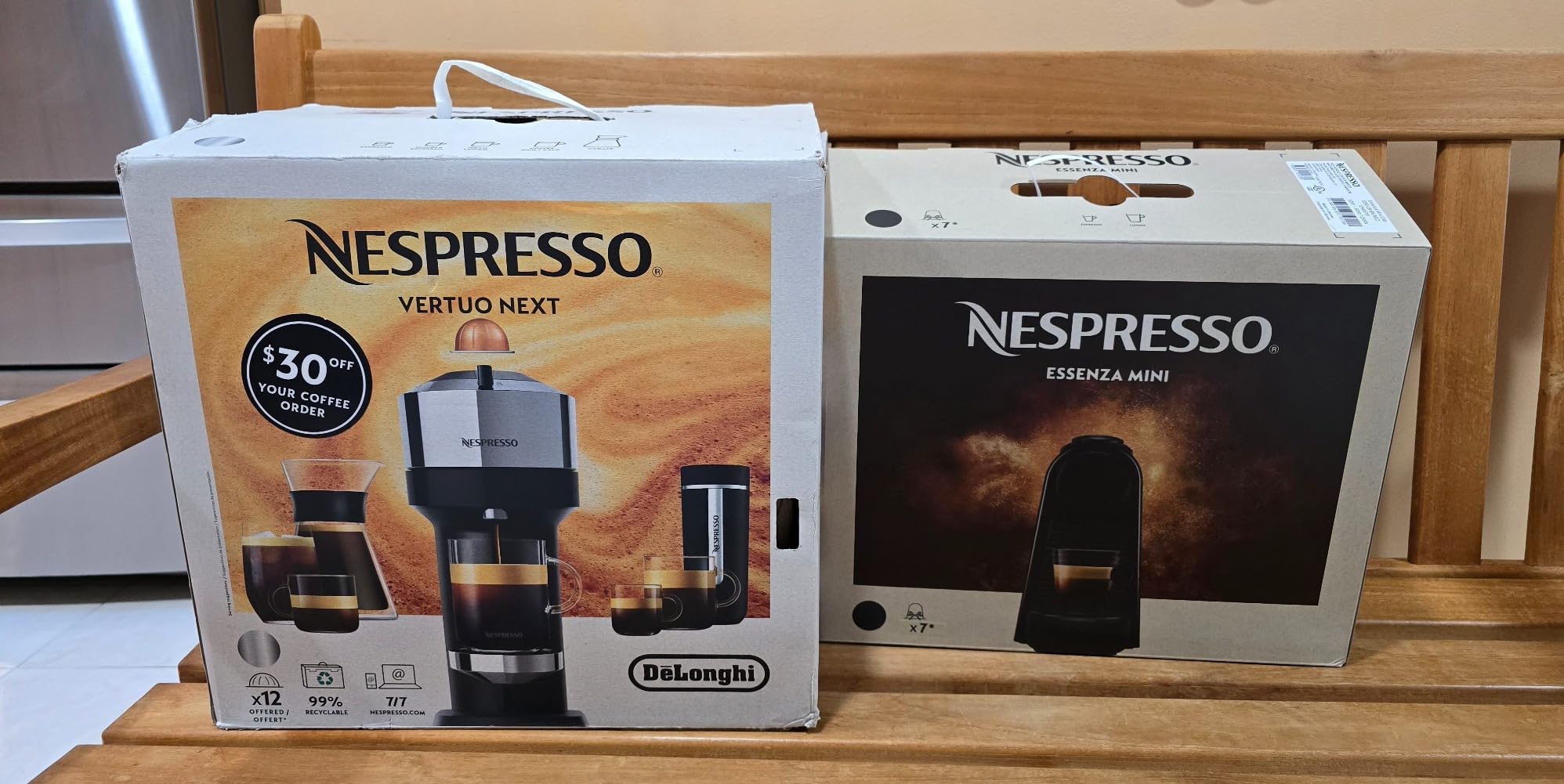
1. Nespresso Essenza Mini: The Best Espresso Machine for Small Kitchens Overall
Nespresso Essenza Mini Coffee and Espresso Machine by De’Longhi, 1150 watts, 110ml, Black
- Most compact body in the group
- Highest average rating here at 4.6 stars
- 4.4 pound weight is easy to move and store
- 19 bar pump with consistent crema
- One-touch brewing with no grinding or tamping
- Capsule only so no ground coffee and no milk frother
- Requires proprietary Nespresso Original capsules
- 110ml reservoir refills frequently
- Plastic body with limited customization
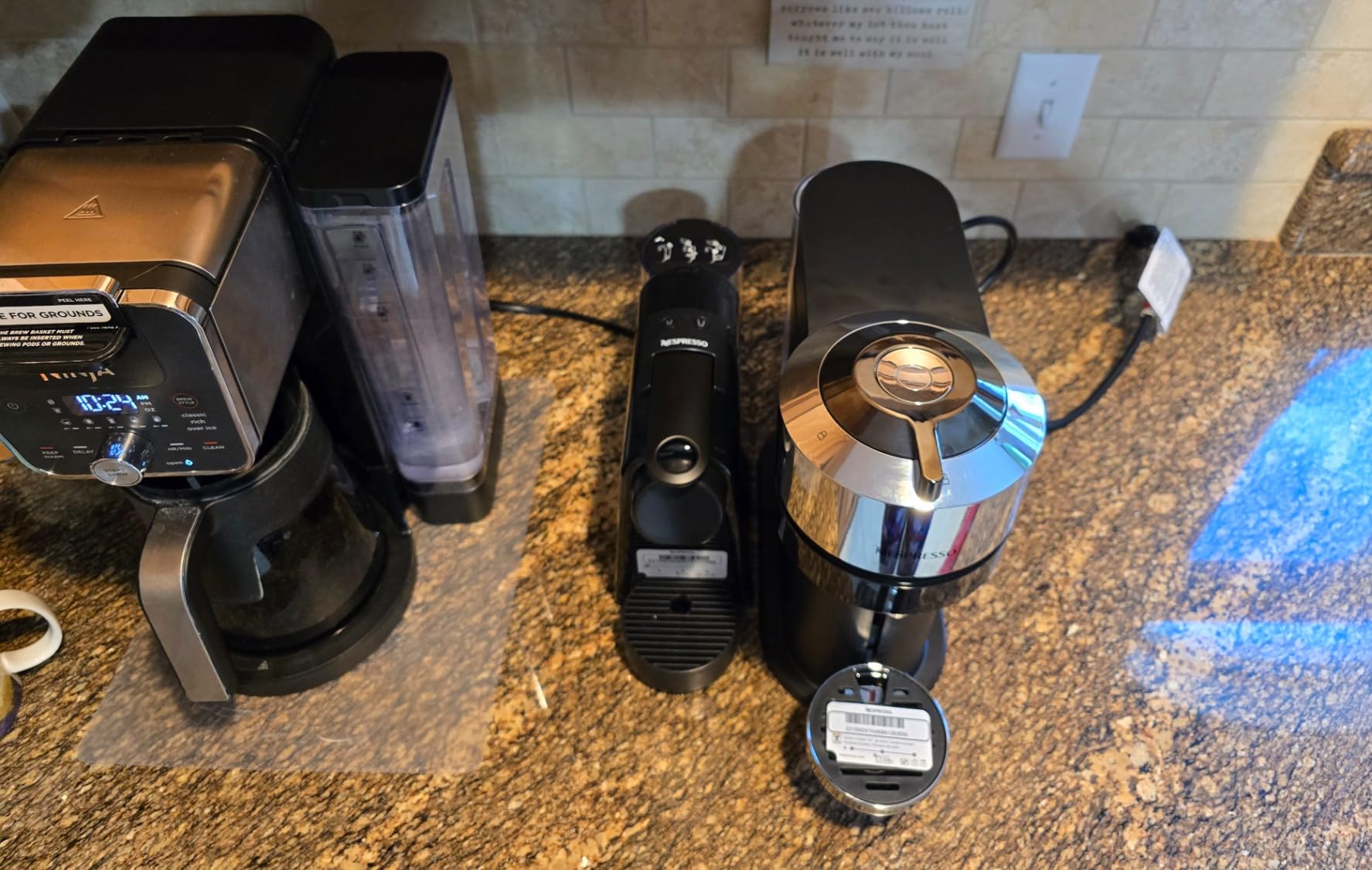
This is the machine that made us rethink the premise of the category. Every other option here is a device you operate, and this is a device you press. One button, one capsule, one shot, and it holds the best average rating in the group at 4.6 stars across 6,075 reviews with 81 percent five-star.
The footprint is the whole argument. Listed at 4.33 by 12.79 by 8.07 inches and weighing just 4.4 pounds, it is the machine in this roundup we could relocate without both hands, which is what makes it usable on a counter you need for other things.
Espresso quality holds up. A 19 bar pump produces a consistently strong cup with visible crema, and programmable brew volumes with a removable tank let you choose a short or longer pour without digging through settings.
Owners value counter-space savings, speed and consistency far more than customization, because the machine does one job extremely well. The 1150 watt heating element and plastic body keep it simple in a way that also limits what you can grow into.
Who the Essenza Mini works for
It is the right pick for a studio, a dorm, a galley kitchen or an office kitchenette where counter space is the hardest limit. If you drink black espresso and do not make milk drinks, nothing else here gives you this much counter back.
The removable tank and the 4.4 pound weight also make it the easiest machine to put away when it is not in use, so it does not have to live permanently on the counter.
Where the Essenza Mini falls short
There is no milk frother, so lattes and cappuccinos are out unless you froth separately. It accepts only proprietary Nespresso Original capsules, which is a recurring per-cup cost, and the small 110ml reservoir refills frequently.
The plastic body and limited customization mean it will not teach you anything about extraction, and buyers who want to move past capsules generally treat it as a stepping stone rather than a destination.
2. Breville Bambino Plus: Best Compact Machine for Milk Drinks
- Automatic steam wand with three temperature and texture settings
- 3 second ThermoJet heat-up
- Auto purge after steaming
- 7.7 inch width
- PID control with pre-infusion
- Cleaning cycle is needed every two weeks and is messy
- Dosing is sensitive and needs an exact dose and grind
- Supplied milk jug is required or the sensor misreads
If latte art is the goal, the auto steam wand is the deciding feature. It runs three milk temperature and texture settings, and auto purge clears the heat system after steaming so the next shot extracts at the right temperature instead of cooking the puck.
That auto purge matters more in a small kitchen than the specifications suggest. On single boiler machines you wait minutes between milk and coffee. Here the gap is short enough that you can pull an espresso, steam milk and serve a second drink in the same sitting.
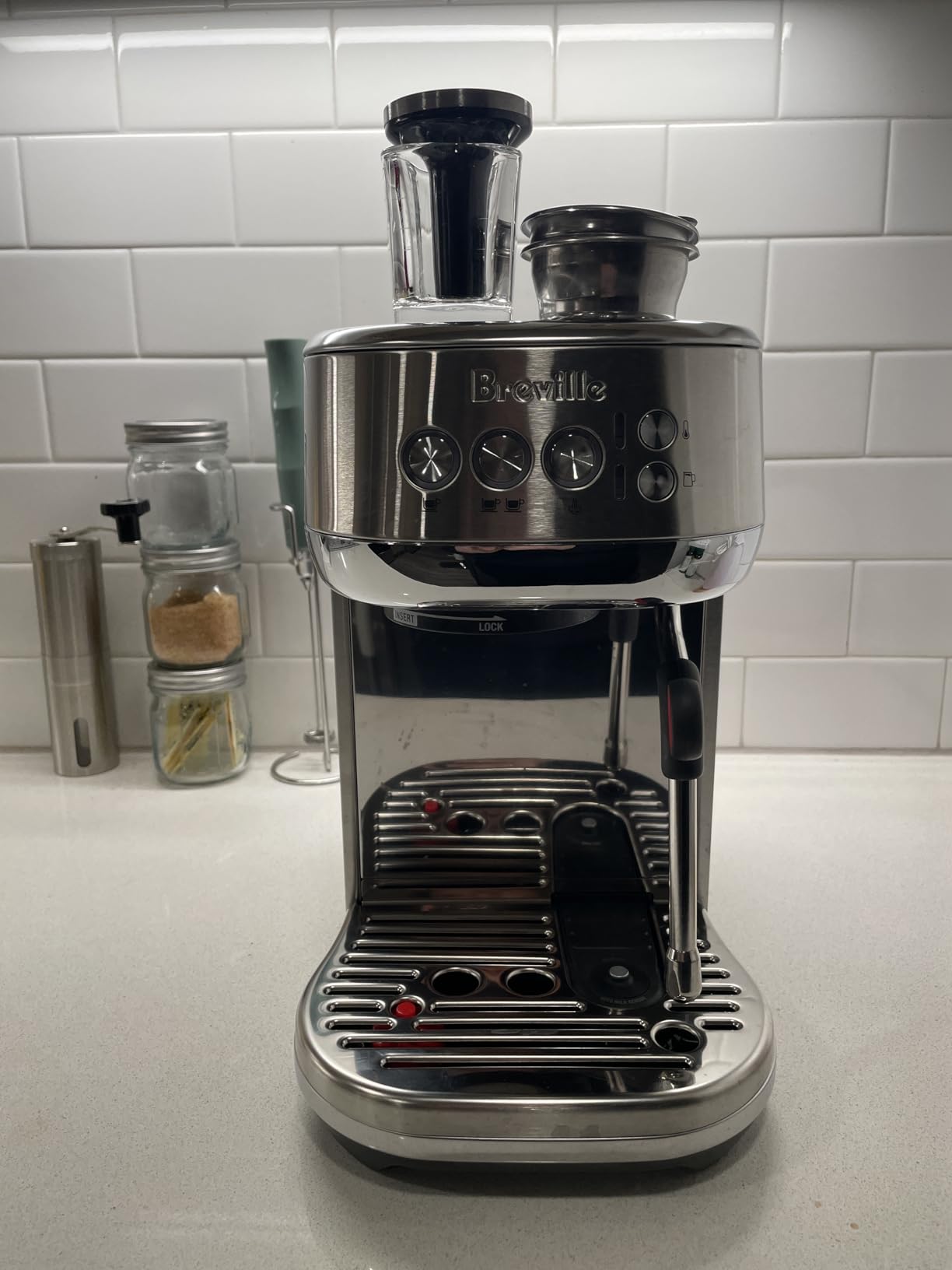
ThermoJet heating still hits extraction temperature in 3 seconds, and PID control with low pressure pre-infusion keeps the cup even shot after shot. The 2 year limited warranty is double what the base Bambino carries.
Long-term owners report thousands of shots with no failures, and forum readers repeatedly name the Bambino Plus as the compact default, with wide ownership and plenty of advice available when something goes wrong.
Who the Bambino Plus works for
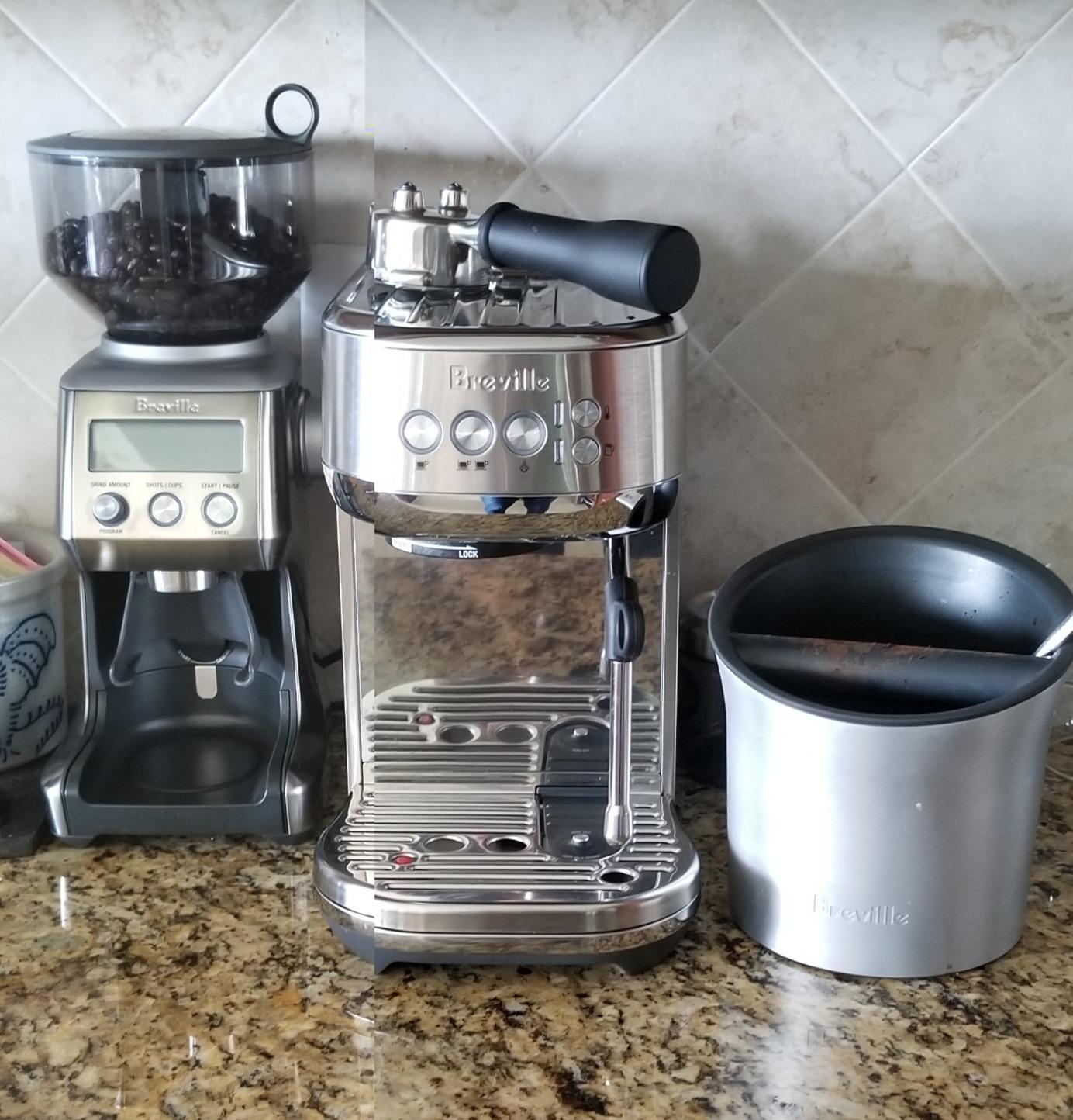
It is built for someone who drinks cappuccinos and lattes most mornings and does not want to learn wand technique. The three texture settings cover a wider range than most people actually need, including plant milks, which are the hardest to texture on budget machines.
At 7.7 inches wide it is wider than the slimmest machines here, so it suits a counter with about 10 inches of open run rather than a 6 inch slot.
Where the Bambino Plus falls short
The cleaning cycle is needed roughly every two weeks and it is messy and water-heavy, which is a real downside in a kitchen with limited sink access. Dosing is sensitive and needs the exact dose and grind in the basket.
You must use the supplied milk jug, since other pitchers trip the temperature sensor and cause runaway steam. The auto steam function occasionally stops mid-cycle and needs a full reset, the body is light enough to slide when you lock the portafilter, and no single wall basket is included.
3. atatix 20 Bar Compact: The Narrowest Pump Machine We Measured
atatix Espresso Machine with Milk Frother, 20 Bar Pressure Espresso Maker
- Narrowest pump body here at 5 inches wide
- 30 second NTC preheat holding 90-96C
- Steam wand produces dense microfoam
- Four silicone suction cups stop it sliding
- Quiet during operation
- Instruction manual is thin for first-time users
- Double funnel holds about 14 grams
- No built-in grinder so one is required
This is the machine I put against the wall of my own counter test. At 5 inches wide and 12 inches deep with a 45 oz removable tank, it took the least room of any pump machine here, and the four silicone suction cups underneath did an unusually good job of keeping it planted when I twisted the portafilter in with real force.
Thermal behavior is the other reason I kept reaching for it. NTC precision temperature control locks onto the 90-96C range after a 30 second preheat, and the 20 bar system holds 9 to 10 bar through the shot, which shows up as golden crema in the cup rather than a thin blond stream.
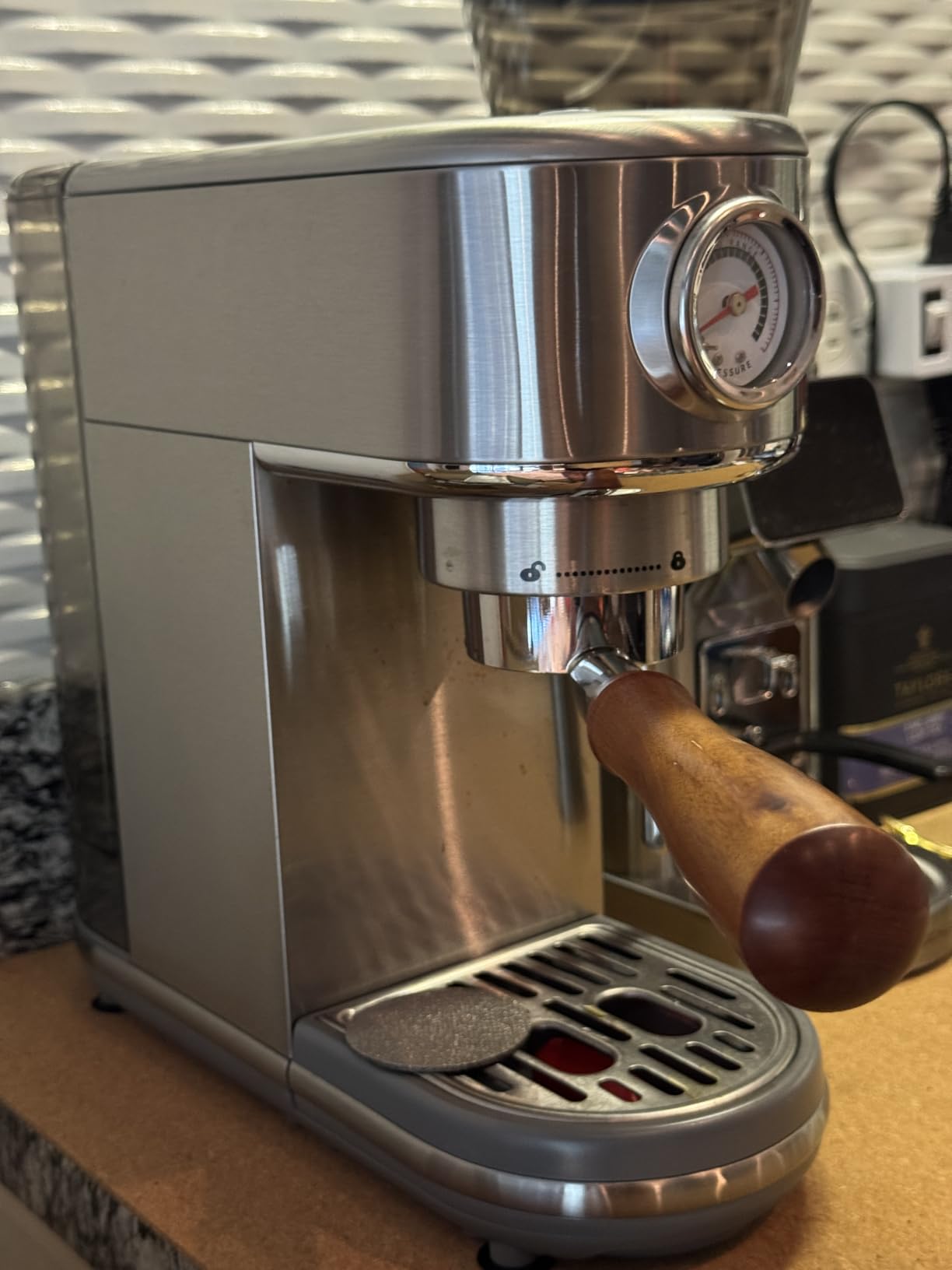
It also runs manual extraction up to 102 seconds, so you can push a long shot when you want one and stop early for a ristretto without relearning the buttons. The steam wand delivers dry, focused steam and the silicone feet mean it does not buzz-walk across a laminate counter while you are frothing.
The compromises are honest ones. The included double funnel holds about 14 grams, short of a full 16 gram dose, so you are dosing a little light. And there is no grinder inside, which means the 5-inch body only works for you if you already own a burr grinder or plan to add one elsewhere.
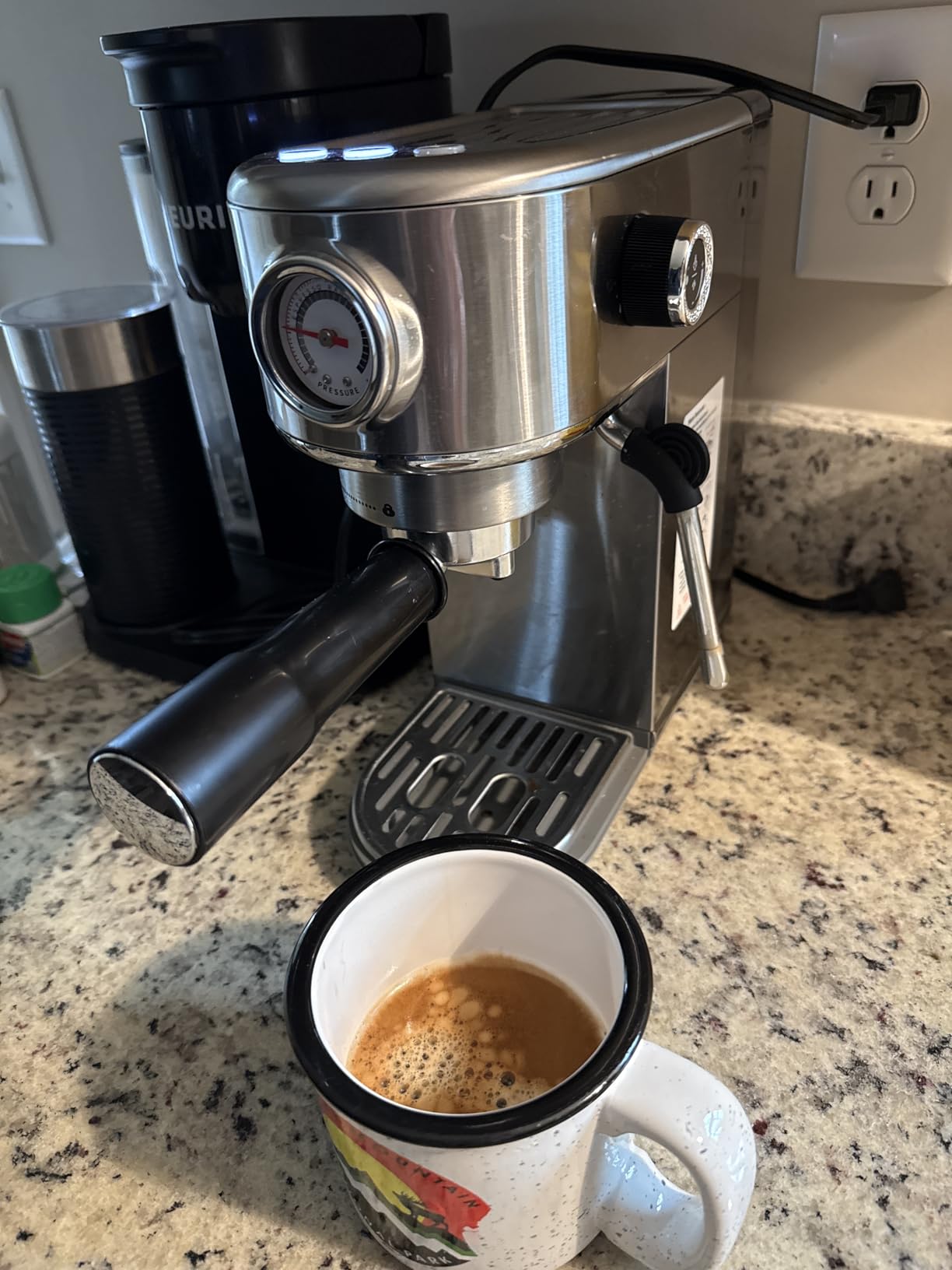
Who the atatix works for
This is the pick for a galley kitchen, a dorm room or any counter where the usable run is under 6 inches. A 30 second preheat also means it is realistic to switch it on, pull a shot and switch it off again, rather than leaving it powered up all day to save time.
If you make lattes, the steam wand here is genuinely capable. Reviewers describe dense, glossy microfoam suitable for latte art, which is unusual at this width.
Where the atatix falls short
The manual is incomplete for a first espresso machine, and the 14 gram basket will frustrate anyone coming from a 58mm setup. A minority of buyers also report machines that lost heating performance within a few months, so keep the receipt.
That 5-inch width also invites you to push the machine right up against a wall. The tank lifts out from the top, so filling still works, but the steam wand needs a few inches of swing room to the side.
4. CASABREWS CM5418 Compact: Best for Dialing In Shots
CASABREWS CM5418 Compact Espresso Machine with Milk Frothing Steam Wand
- Slim 5.47 inch width
- Built-in pressure gauge shows real extraction pressure
- 34 oz detachable tank covers multiple cups
- Steam wand reaches microfoam quickly
- Long-term owners report years of daily use
- Included plastic tamper feels cheap
- Cool-down cycle interrupts making two drinks back to back
- Noisy and vibrates during operation
Out of everything we tested, this is the one machine that tells you what it is doing. The built-in pressure gauge reads live extraction pressure, which turns guesswork into a dial-in, and 8,056 reviews at 4.3 stars say a lot of people got the same result.
The 20 bar Italian pump and 1350W boiler produce a fragrant, full-bodied shot, and the 5.47 inch width leaves a little breathing room on either side. Long-term owners report years of reliable daily use, which is a stronger durability signal than most machines in this price band can offer.
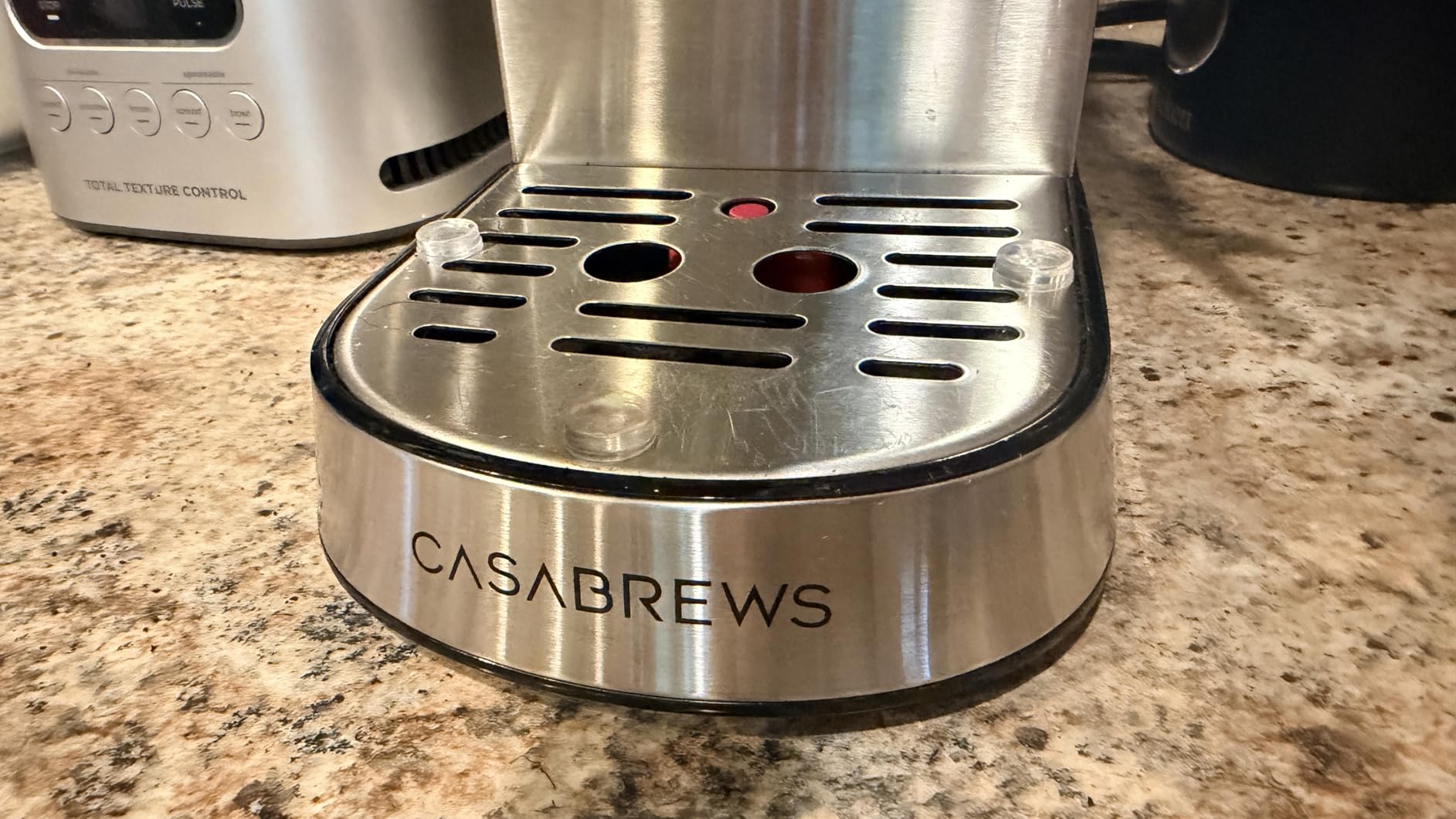
One workflow detail shapes how you use it: the machine must cool down between frothing milk and pulling a shot to avoid tripping the overheating protection. Plan your order, steam first, wait, then brew. Once that habit clicks, the steam wand produces smooth microfoam quickly.
The 34 oz detachable tank means you are not refilling between every cup, which matters more than it sounds in a small kitchen where the sink is three steps away.
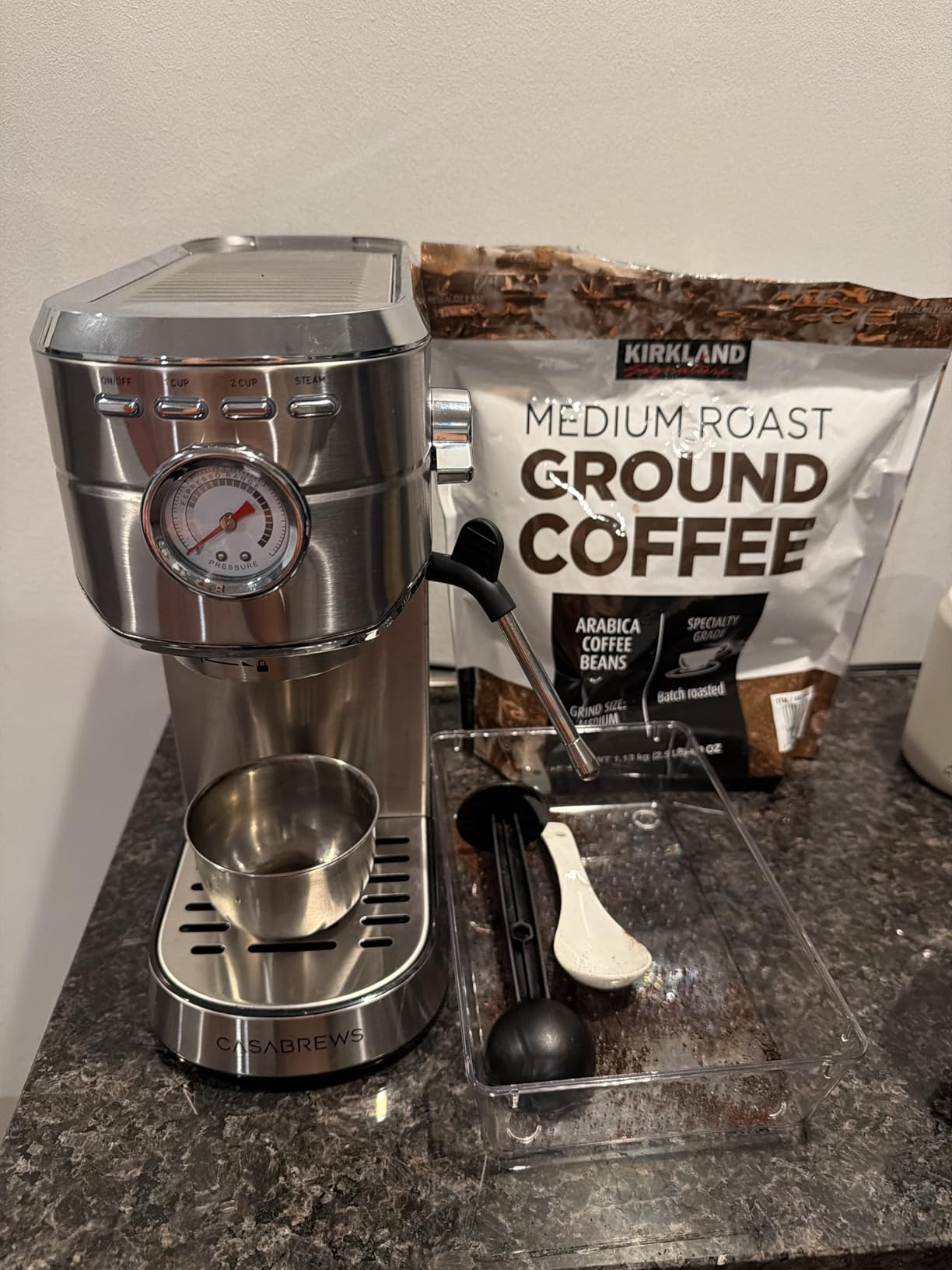
Who the CM5418 works for
Pick this one if you actually want to learn. The pressure gauge is the most direct teaching tool in this roundup, and 8,056 reviews means almost any problem you hit has already been solved by someone else.
It is also the strongest option here for a 51mm portafilter user who wants a slim body and does not need a 58mm basket for a heavier dose.
Where the CM5418 falls short
The cup platform is a slippery metal plate with no grip, and the froth nozzle sits low, which is awkward with taller cups. If your everyday drink is a large latte glass, test glass clearance before you commit.
It is also the loudest and most vibrational machine in this group, which is worth thinking about in an open-plan apartment at 7am.
5. Gevi 20 Bar Compact: Best Built Quality in a Narrow Frame
Gevi 20 Bar Compact Espresso Machine for Home,Latte、Cappuccino Coffee Maker
- Full stainless steel housing at only 5.5 inches wide
- Pressure gauge and pre-infusion aid consistency
- Removable froth nozzle is easy to clean
- Owners report longevity
- Automatic single and double shot metering
- Shuts off after frothing so a second drink means waiting
- Hot water function delivers slowly in spurts
- Stainless finish shows fingerprints
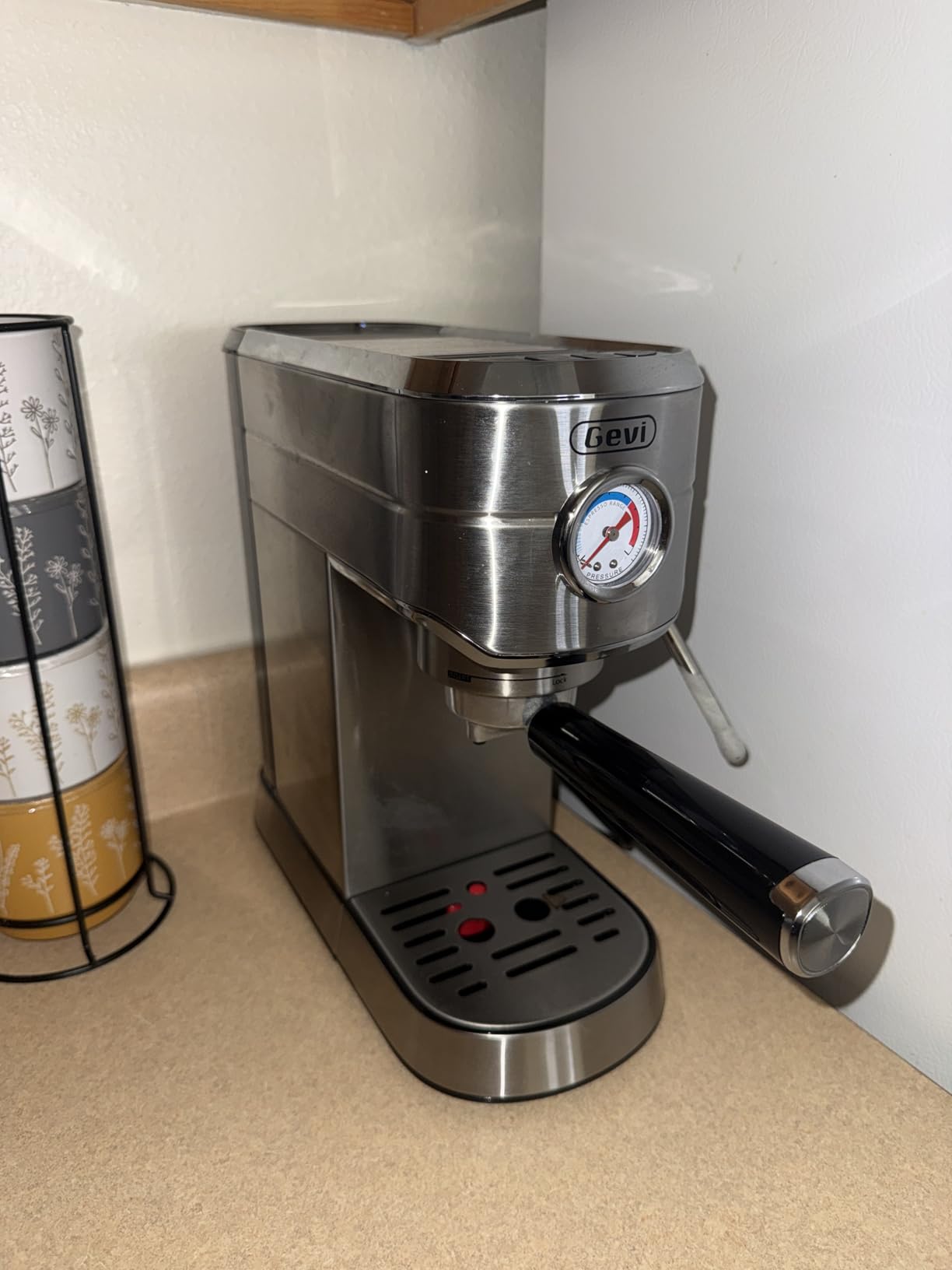
Everything else in this compact class is a plastic-bodied machine with a steel shell, and this is not. The Gevi has a full stainless steel housing at 5.5 inches wide, and 3,775 reviews at 4.3 stars repeatedly compare it favorably to machines costing several times more in terms of durability.
Extraction hardware is complete too: a 20 bar pump, NTC temperature control, pre-infusion and a built-in pressure gauge. Automatic single and double shot metering takes the manual pumping out of the routine, so a beginner gets repeatable volumes while a more experienced user can still work by feel.
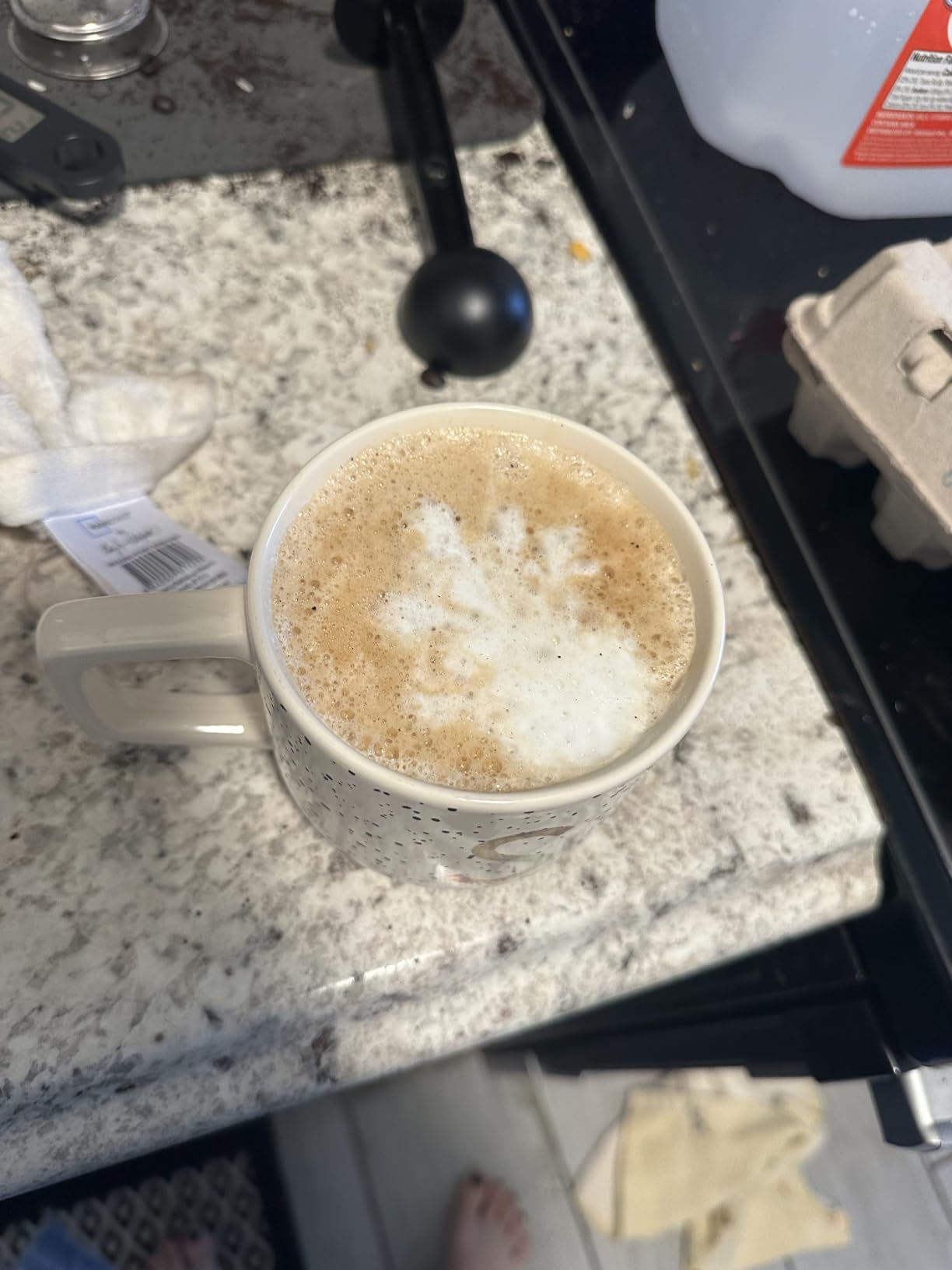
The removable froth nozzle is a small design decision that pays off weekly. Most budget steam wands clog with dried milk in the joints, and pulling this one apart takes seconds, which matters when the machine lives in the corner of a galley kitchen where you do not want to carry parts to the sink.
It comes with a 12 month warranty and lifetime technical support from Gevi, plus a hot water function that doubles as an Americano source and a cup warmer on top.
Who the Gevi works for
This is the one I would choose for a kitchen where the machine stays on the counter permanently. Stainless holds up better than plastic to the daily cycle of heat, steam and water, and the removable nozzle cuts cleaning time.
The pressure gauge and pre-infusion also make it a good first serious machine, because you get feedback while you are still learning what a shot should taste like.
Where the Gevi falls short
It shuts off after you froth milk, so a second drink requires waiting for it to reset. The hot water function only delivers six ounces, slowly and in spurts, and the cup warmer on top does not actually keep cups warm.
The puck is single dose, so you reload grounds every two shots. And the stainless finish shows fingerprints, which is cosmetic but noticeable on a machine you touch daily.
6. CASABREWS 3700 Essential: Best Tank Capacity for a 5.7 Inch Body
CASABREWS 3700 Essential Stainless Steel Espresso Machine with Steam Wand
- 43.9 oz tank is the largest here
- Compact 5.7 inch width
- Removable drip tray and tank
- Heats quickly and is easy to learn
- Owners report years of daily use
- No pressure gauge on this version
- Steam dial can drift and leak pressure
- Extraction prefers a coarser grind than expected
The 43.9 oz removable water tank is the standout here. Most compact machines force two or three refills before a group of guests arrives, and in a studio apartment the tank is also the part of the machine you touch most often, so capacity matters more than spec sheets suggest.
Extraction runs through a 20 bar pump and 1350W heating system, and the machine heats up quickly enough that morning use does not require a planning ritual. 3,699 reviews at 4.2 stars describe dependable, inexpensive home espresso with a small footprint, which is exactly what this category should deliver.
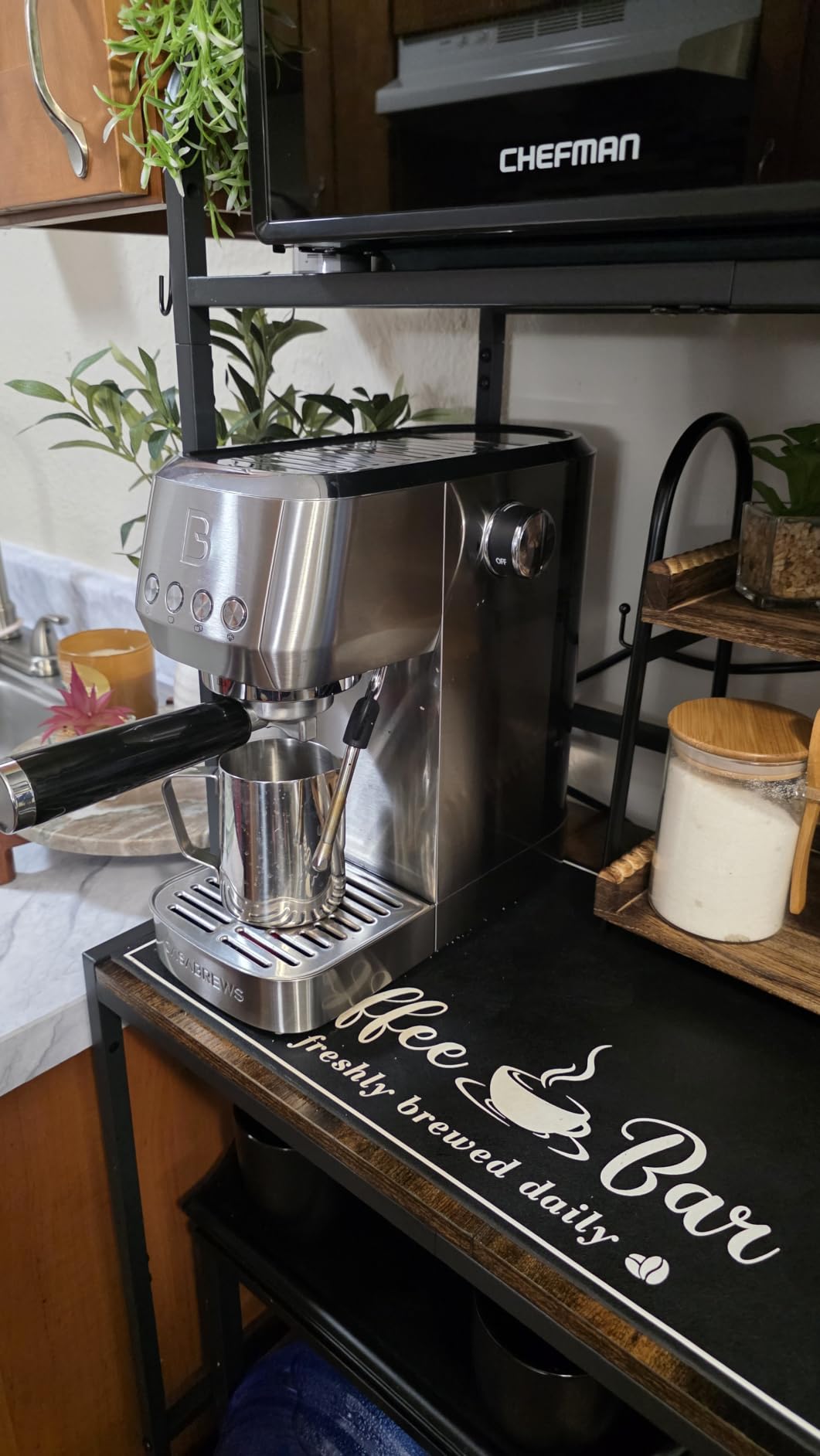
Removable drip tray and tank make cleaning straightforward, and the brushed steel body looks more expensive than the machine actually is. Owners report strong durability over multiple years of daily use, which is the part I looked for hardest.
One setup note: remove the rubber plug at the bottom of the water tank and run a full first-use cycle before pulling a shot. Skipping it is the most common early complaint.
Who the 3700 Essential works for
It suits a household that runs several drinks in a row, or anyone who would rather not walk to the sink twice a morning. The 5.7 inch width also keeps it viable next to a toaster.
If you are still learning, the quick heat-up and simple button layout keep the barrier low, and the machine is forgiving about timing compared with pressure-sensitive models.
Where the 3700 Essential falls short
This version has no pressure gauge, so extraction is harder to dial in blind. The steam control dial can drift out of position, letting pressure leak during shots, which quietly undermines the advertised 20 bar.
It is also a single boiler, so you wait when switching between brewing and steaming. And the included plastic tamper gets replaced by owners quickly.
7. Breville Bambino Espresso Machine: PID Accuracy With Manual Frothing
Breville BES450BSS Bambino Espresso Machine, Brushed Stainless Steel
- ThermoJet system reaches extraction temperature in 3 seconds
- PID digital temperature regulation
- Automatic steam wand for microfoam
- Low pressure pre-infusion
- 6.3 inch width suits small kitchens
- Widest and deepest body in this group
- 13.7 inch depth overhangs shallow counters
- Extraction is grind sensitive and takes several passes
The Bambino is the machine where speed changes your routine. ThermoJet heating reaches extraction temperature in 3 seconds, and with PID digital temperature regulation holding the water steady, the repeatability is a genuine step up from the on/off heaters in cheaper compact models.
At 6.3 inches wide it is still compact, and low pressure pre-infusion gradually increases pressure through the puck for balanced flavor. The automatic steam wand adjusts milk temperature and texture for microfoam, so lattes do not require wand technique.
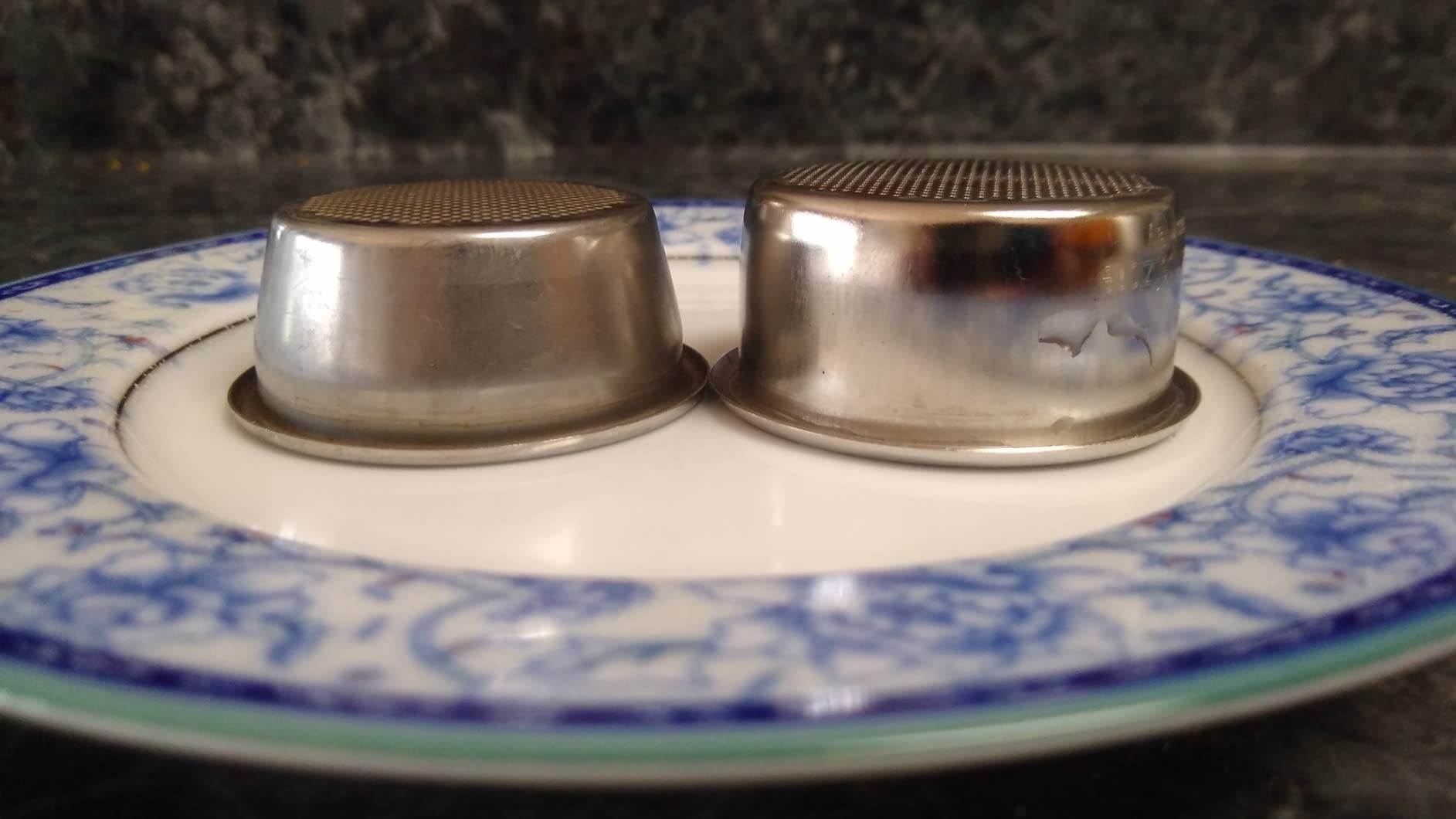
The 54mm portafilter is sized for a 19 gram dose, which is the specialty standard rather than the smaller baskets most compact machines ship with. That means baskets and accessories are widely available if you want to experiment.
It arrives with single and dual wall baskets, a milk jug, tamper, a cleaning tool and descaling powder, plus two free bags of specialty coffee on registration.
Who the Bambino works for
Choose it if your mornings are time-pressured. A 3 second heat-up means the machine can live in a cupboard and still be useful on the way out the door, which is how a lot of people in small kitchens actually use an espresso machine.
It is also a strong fit for anyone who wants PID precision and auto frothing without moving up to a machine that does not fit the counter.
Where the Bambino falls short
It is the widest and deepest machine in this group at 13.7 inches deep, so measure your counter twice. At 10.9 pounds it is heavy for its size, and it carries the highest share of one-star reviews here, with owners reporting temperamental behavior.
Expect several passes at dose and grind before shots taste right, and note that the cleaning cycle instructions in the manual are known to be inaccurate.
8. Nespresso Vertuo Pop+: Best for Cup Size Choice on a Slim Vertical Body
Nespresso Vertuo Pop+ Coffee & Espresso Maker by Breville, Black & Gold
- Side mounted 37 oz tank fits tight spaces
- Six cup sizes from espresso to 18 oz coffee
- 30 second heat-up with one-touch operation
- Centrifusion brewing gives a velvety foam layer
- Adjustable drip tray for short cups
- Vertuo capsules are not compatible with standard Nespresso pods
- Machine only version has no milk frother
- 14 inch depth is the deepest in this roundup
The Vertuo design puts the water tank on the side rather than the back, and that single layout choice is why it works in corners where a rear tank does not. The 37 fl oz tank lifts straight out from the side, so a machine pushed against a wall stays serviceable.
Cup size range is the other reason to consider it. Six sizes from a single and double espresso up to 18 oz coffee are handled by one button, and the adjustable drip tray lets you use short cups for espresso without a riser.
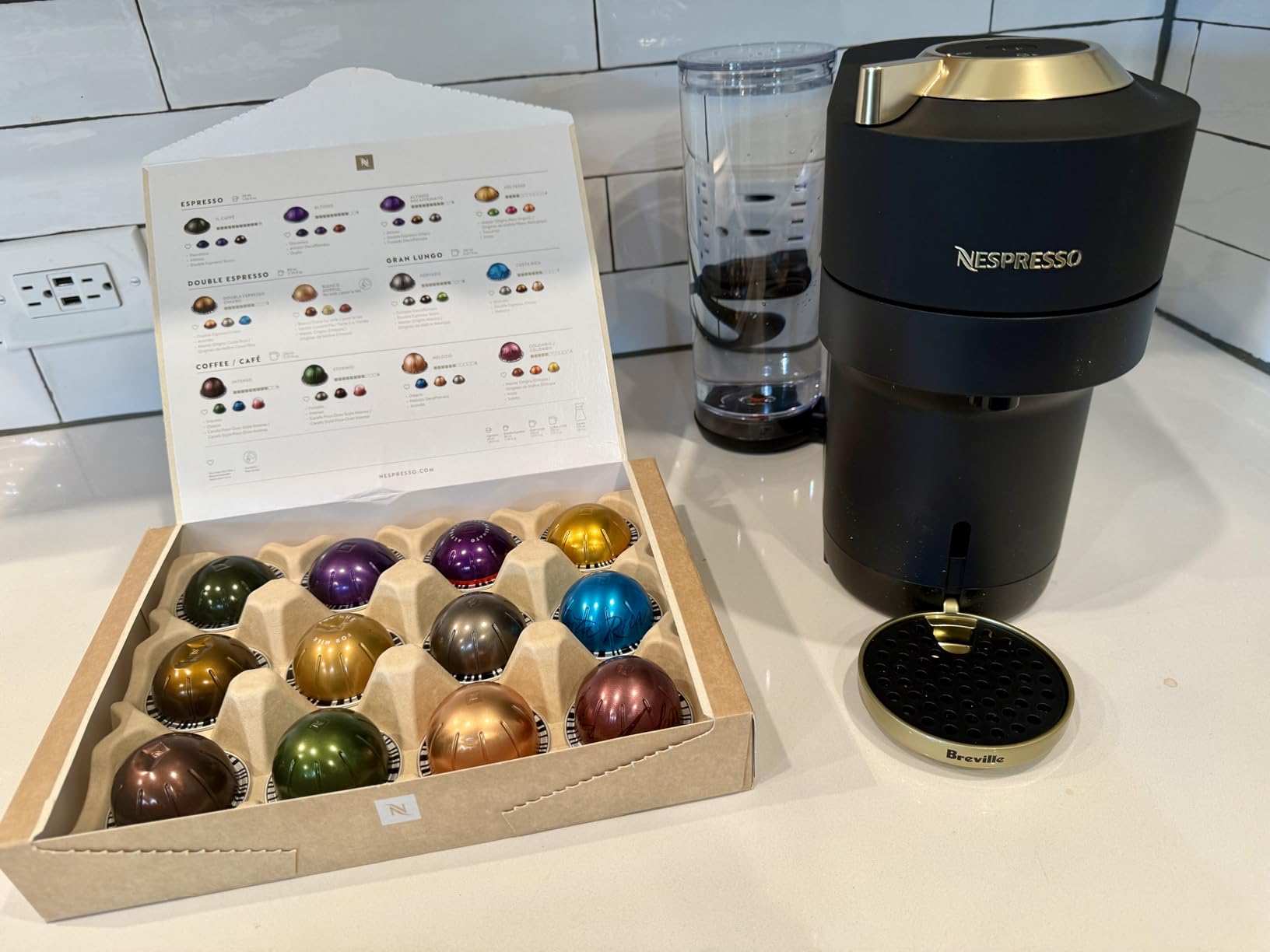
Brewing uses Centrifusion, spinning the capsule to build a velvety foam layer and a full-bodied cup. A 30 second heat-up keeps it in the same fast-start territory as the Breville machines without a 3 second claim to back it up.
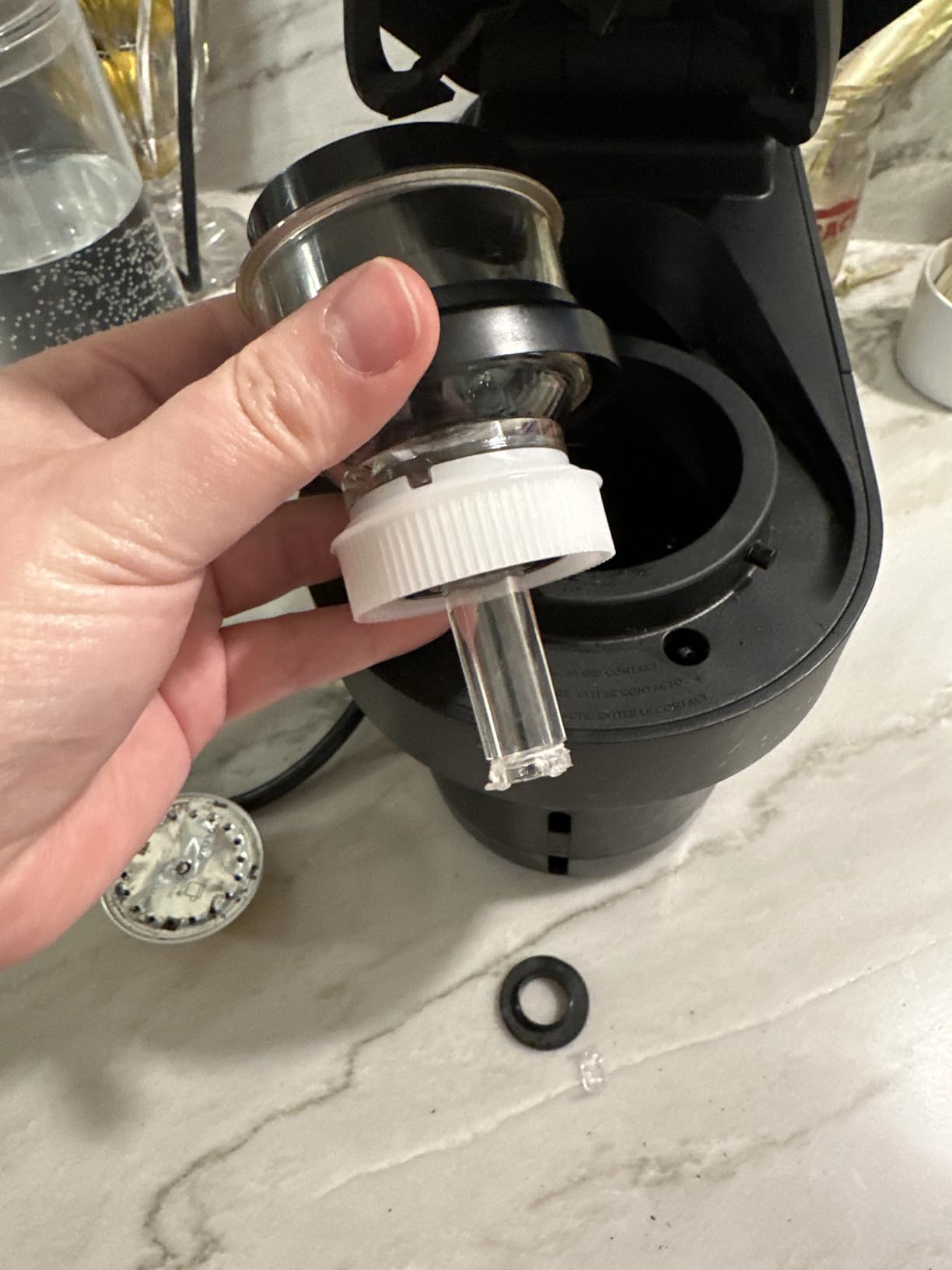
Capsule ejection is automatic, and the used capsule drops into an internal container rather than sitting in a tray you have to empty over a bin every morning.
Who the Vertuo Pop+ works for
It fits people who drink different sizes across the day and do not want to run the machine for each one. The side tank also makes it the practical capsule option for a counter wedged between a wall and a cabinet.
Buyers who want zero technique will like one-touch operation and automatic capsule handling, and 1,835 reviews at 4.3 stars reflect generally strong satisfaction.
Where the Vertuo Pop+ falls short
At 14 inches deep it is the deepest machine in this roundup, so it will overhang a shallow counter no matter how tidy the width looks. Vertuo capsules are also incompatible with standard Nespresso pods and cost more per cup than ground coffee.
The machine-only version has no milk frother, so cappuccinos need a separate wand. It is louder than comparable machines, with a rattling sound on small pods, and the cup stand will not take a large mug of frothed milk.
9. De’Longhi Classic Signature: The Easiest Thermoblock Machine to Live With
De’Longhi Classic Signature Espresso Machine, Adjustable Milk Frother
- Thermoblock heating reaches temperature in seconds
- 15 bar pump with good crema
- Two setting steam wand from steamed milk to microfoam
- Customizable single and double espresso presets
- Only 9 lb so it is easy to reposition
- Mostly plastic construction feels less premium than the styling
- Steam wand foams before milk is fully heated
- No temperature control setting beyond preheating tips
Thermoblock heating is the story here. It runs water through a heating element rather than filling a boiler, which is why the machine reaches brewing temperature in seconds and why a 9 pound body is enough for a stainless steel exterior at this width.
The 15 bar Italian pump delivers consistent espresso with good crema, and customizable single and double espresso presets mean you can store your two usual drinks instead of measuring every morning.
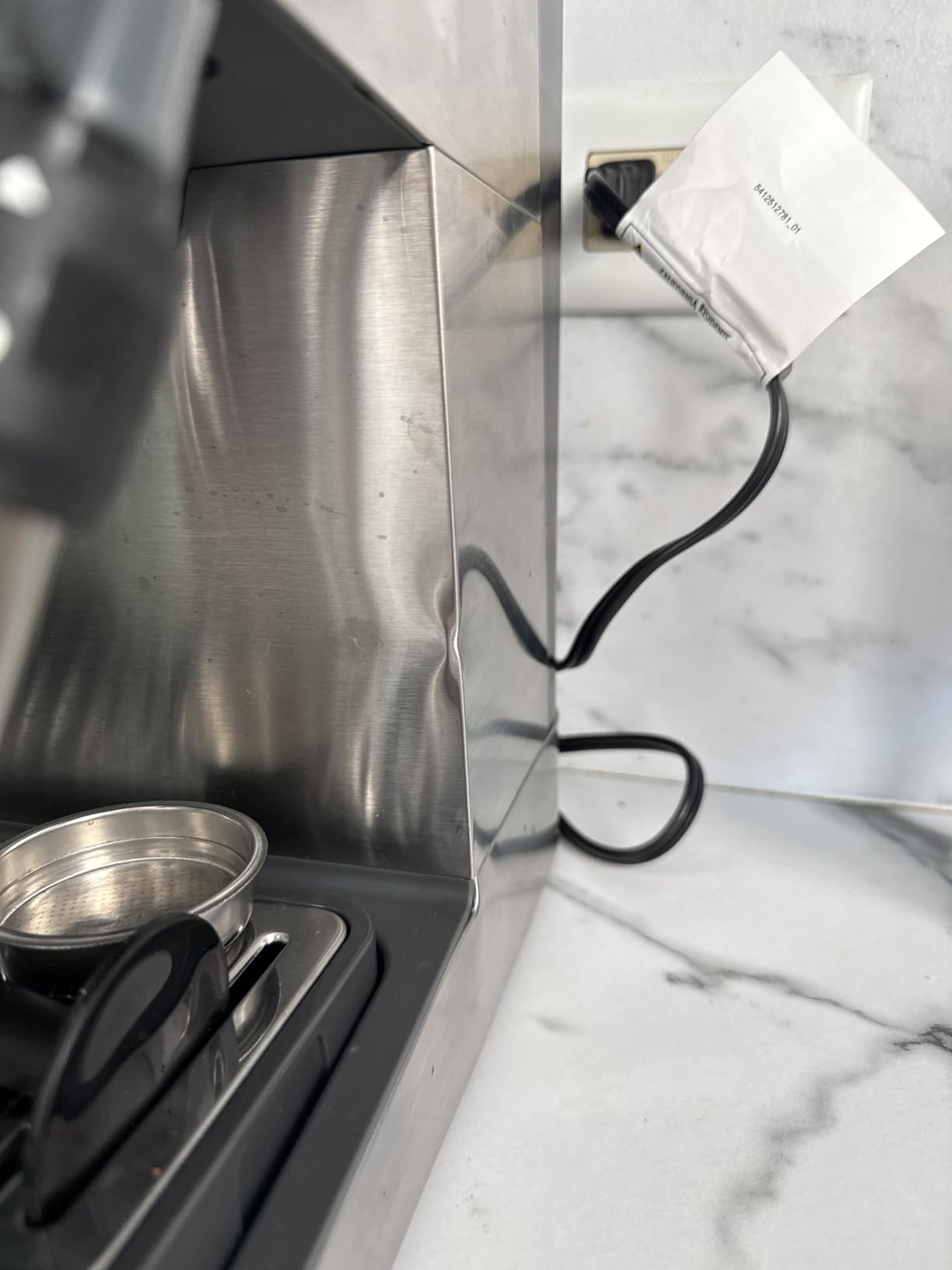
The two-setting steam wand covers both steamed milk and microfoam, which is a wider range than most machines in this class give you. Removable tank and portafilter parts are straightforward to clean.
It is also the easiest machine here to move. At 9 pounds and 11.2 inches deep, you can slide it forward to refill, then push it back, without the two-handed shuffle a heavier body demands in a tight spot.
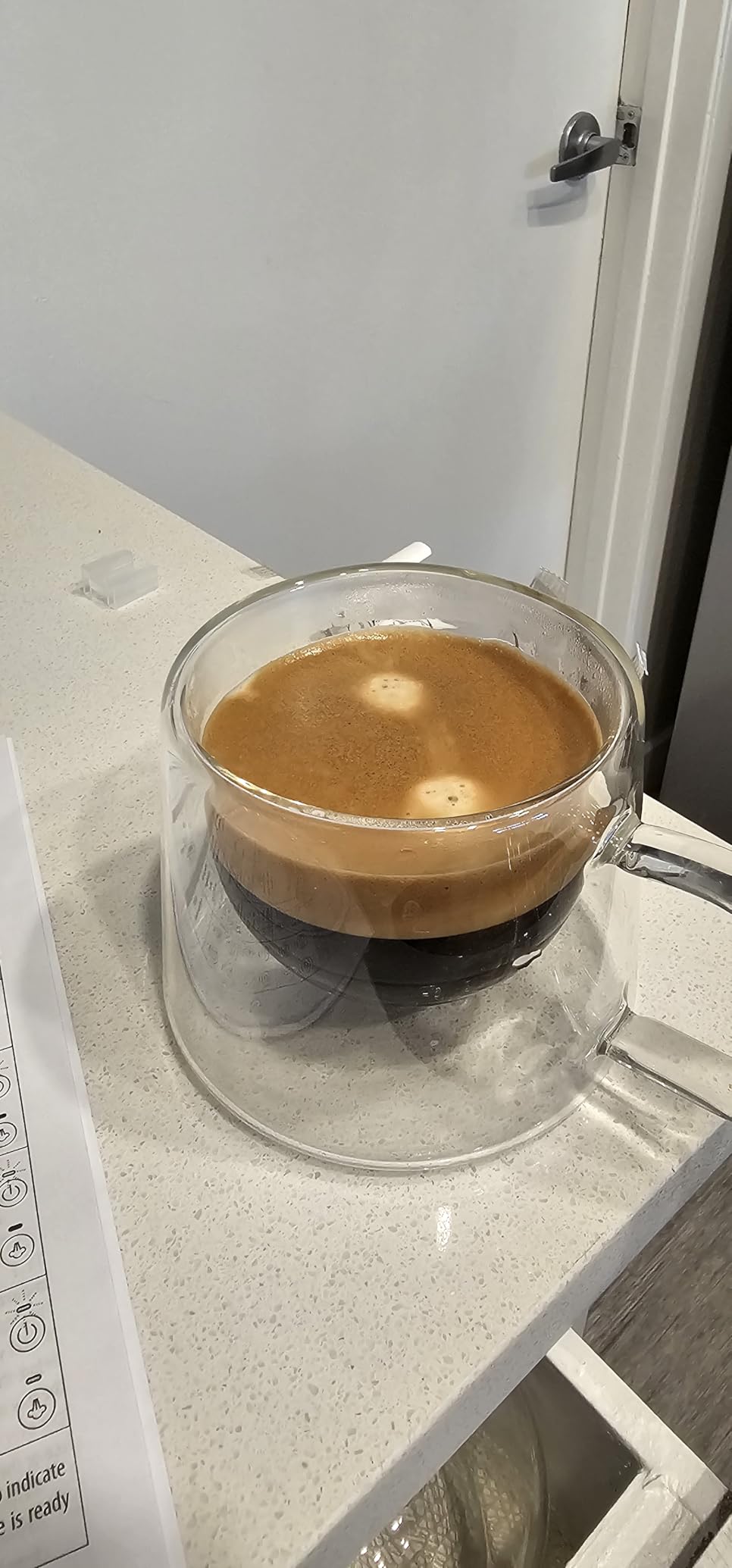
Who the De’Longhi Classic works for
It is a good fit for a first espresso machine, or for anyone who wants a full workflow without PID-level temperature fiddling. The presets do the measuring and the thermoblock does the waiting, so the habit forms fast.
At 11.2 inches deep it is also shallower than most machines in this roundup, which helps on counters that are narrow but reasonably deep.
Where the De’Longhi Classic falls short
Construction is light and mostly plastic, which feels less premium than the styling suggests. The steam wand starts foaming before the milk is fully heated, so both temperature and texture take practice to control.
There is no actual temperature control setting beyond preheating tips, the portafilter has no mechanism to keep the basket in place while you dump, and the presets are espresso only, with no full-size drip coffee. Expect a new-plastic smell on first use, which the manual addresses with a curing cycle.
10. De’Longhi Stilosa Compact: The Most Reviewed Manual Machine Here
- 13838 reviews give you the deepest support base here
- Stainless steel boiler engineered for long-term durability
- Manual steam wand textures milk for lattes and cappuccinos
- Portafilter and tamper with single and double filters included
- Manual operation requires more user technique than automatic machines
- 15 bar pressure is lower than the 20 bar pumps on newer rivals
- Plastic and steel body feels basic next to all-metal machines
With 13,838 reviews, this is the most examined manual espresso machine at this size, and the pattern in those reviews is consistent: buyers keep it because of the small footprint and the stainless steel boiler, and they expect to learn on it.
That boiler is the reason to look past everything else. It is specified as engineered to last and work for years, which is a different durability claim from the plastic internals common in compact machines, and it holds temperature more steadily than an on-off element.
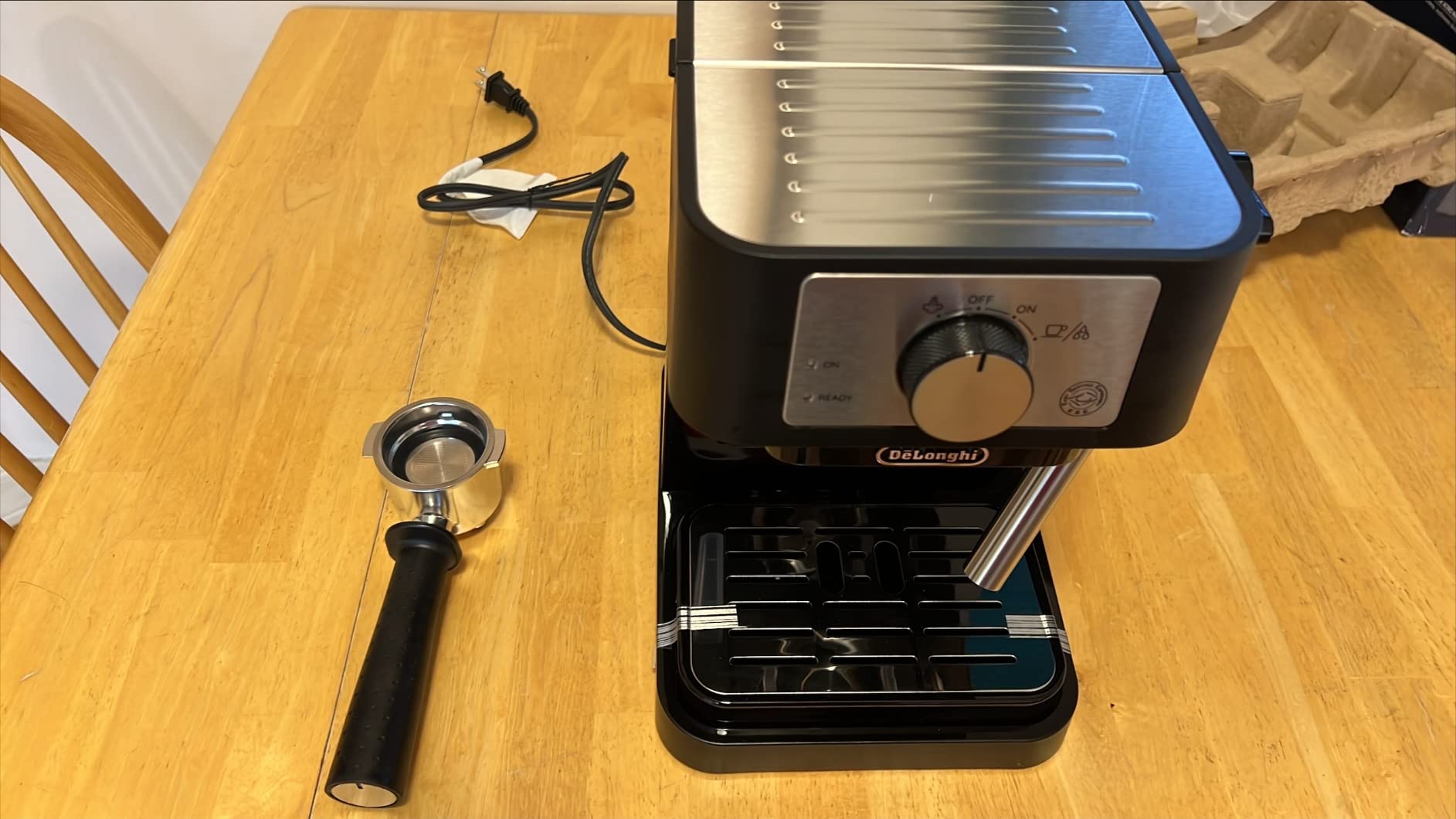
The manual steam wand textures milk for lattes and cappuccinos, so milk drinks are on the table. Everything you need is in the box: a double shot filter, a single shot filter, a measuring scoop and tamper, and the reusable filter type means you are not buying paper baskets.
Auto shut-off, a removable tank and a 1000 ml capacity cover the daily maintenance basics without adding bulk.
Who the Stilosa works for
It suits a buyer who wants a manual workflow, a reusable portafilter setup and a boiler they expect to keep for years, rather than the fastest possible morning output. 1,000 ml of capacity covers several cups before a refill.
For anyone worried about buying a compact machine that dies in a year, the boiler specification and a huge review base make this the lowest-risk starting point.
Where the Stilosa falls short
Manual operation asks more of you than a machine with presets or auto frothing. At 9.45 inches wide and 14.17 inches tall it is also among the larger footprints here, so it needs real counter depth and headroom.
The 15 bar pump is lower than the 20 bar pumps on newer compact rivals, and the plastic and steel construction feels basic next to all-metal bodies.
11. Ninja Espresso and Coffee Maker CFN601: Best Two-in-One for Counter Savings
Ninja Espresso & Coffee Maker, Nespresso Capsule Compatible, Black, CFN601
- One machine replaces a separate coffee maker
- 19 bar system with a smooth silky crema
- Brews capsules and ground coffee in nine sizes
- Fold-away frother tucks into its own compartment
- Used capsule bin holds 20 capsules
- Largest footprint in this roundup at nearly 15 inches tall
- Paper filter mode can overflow from the grounds basket
- Only brews one espresso shot at a time
The pitch here is not espresso, it is counter savings. This machine replaces a drip coffee maker as well as an espresso machine, and in a small kitchen removing a second appliance is often worth more than shrinking the first one.
It is genuinely versatile inside that single body. Nespresso Original capsules brew in three styles, ground coffee brews in Classic, Rich or Over Ice across nine sizes up to a 12-cup carafe, and a 19 bar Barista Plus system produces a smooth, silky crema on the espresso side.
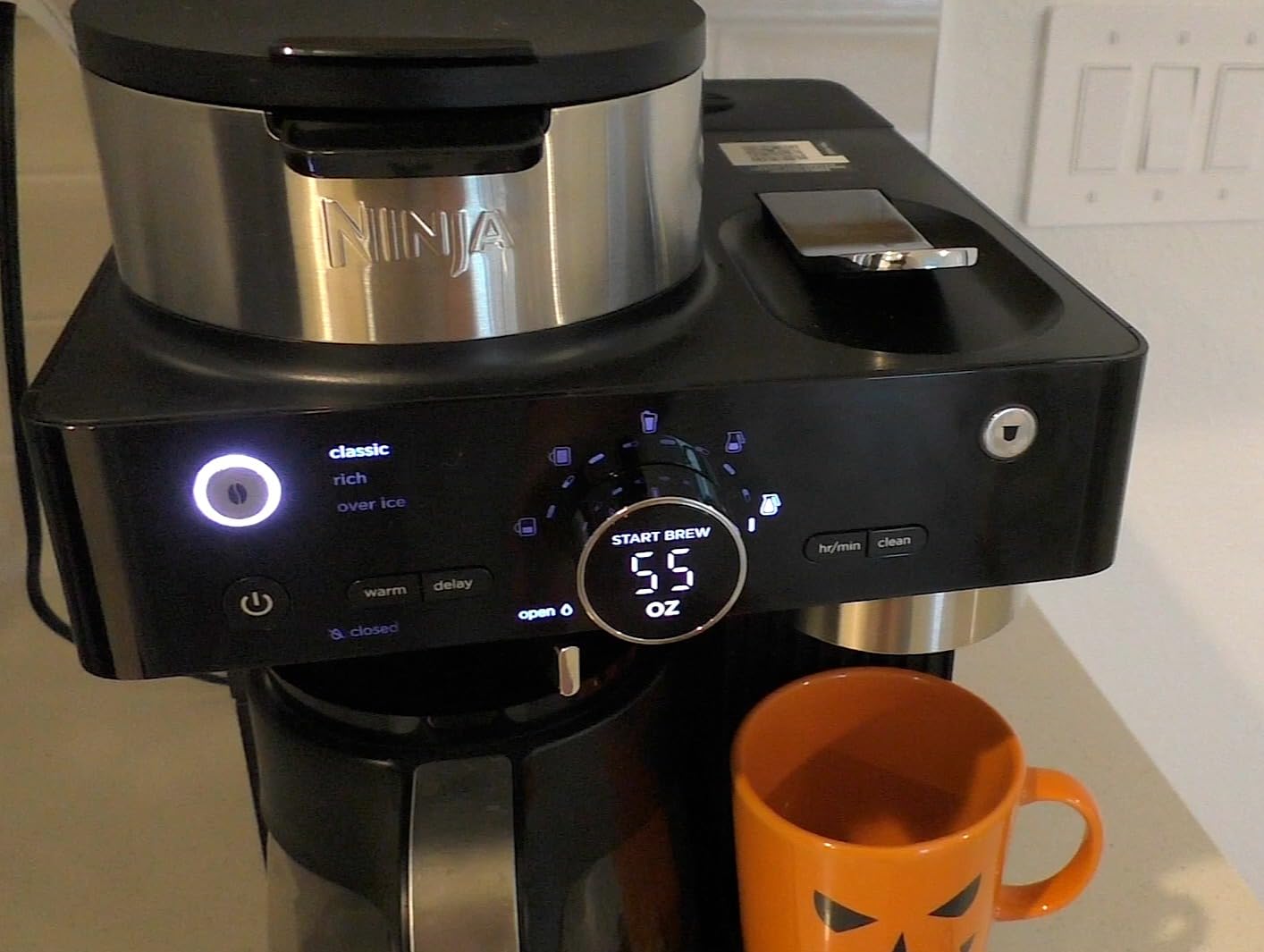
Details aimed at small kitchens are real. The fold-away frother tucks into its own compartment instead of swinging into the workspace, the adjustable cup tray fits everything from shot glasses to 8-inch travel mugs, and the 20-slot used capsule bin keeps recycling contained.
Delay brew, keep warm and clean functions plus touchscreen controls make it the most appliance-like machine in this group.
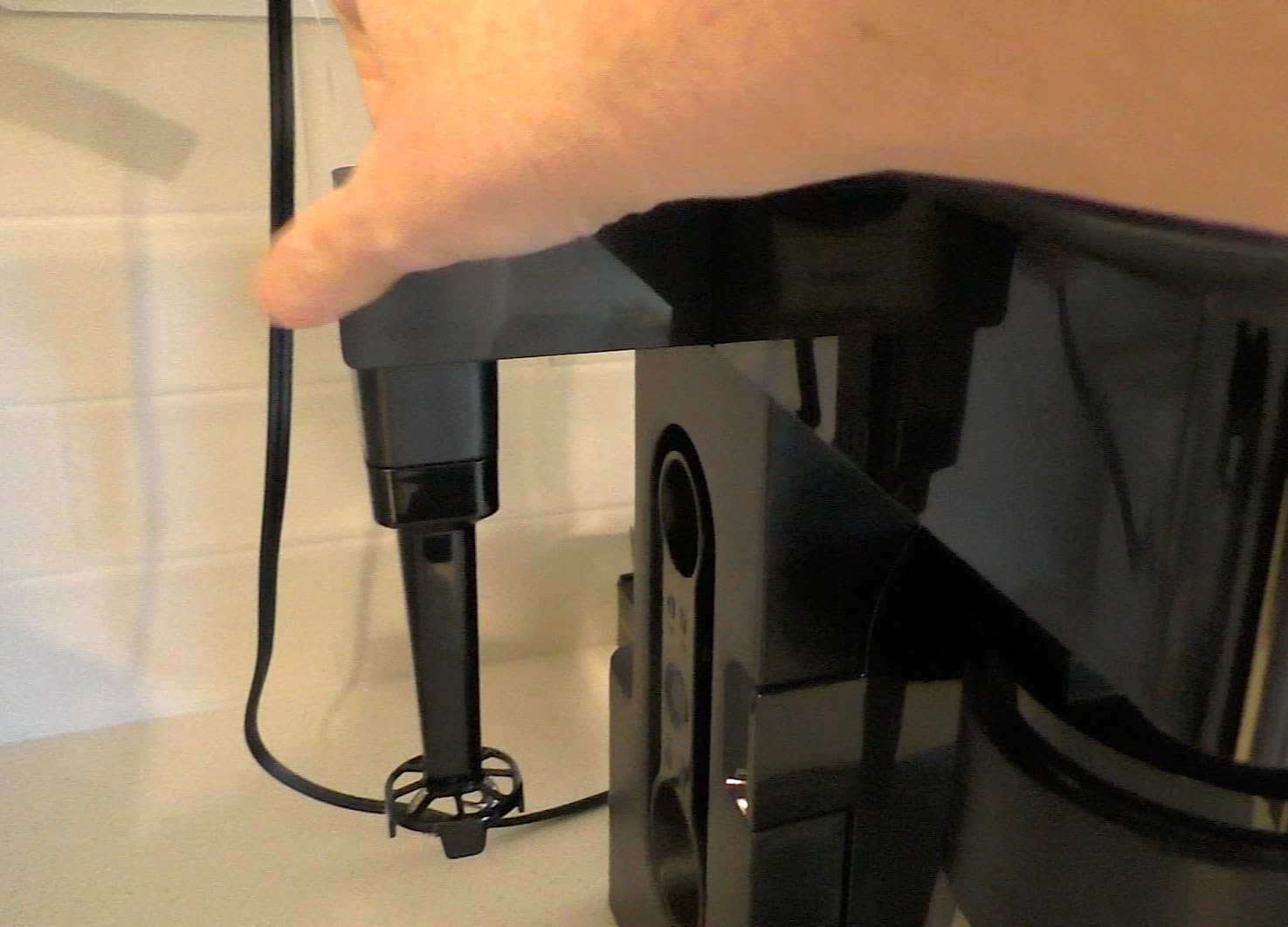
Who the Ninja CFN601 works for
It fits households where one person drinks espresso and another drinks a full pot of coffee, and where counter space is the binding constraint rather than taste preference. A two-in-one beats two separate bodies.
The paper filter kit is also included, and the carafe, warming plate and touchscreen take the guesswork out of it for a new buyer.
Where the Ninja CFN601 falls short
It is the largest footprint here at nearly 15 inches tall and 13.6 pounds, so it takes the most vertical and horizontal room of anything we tested. That directly contradicts the small-kitchen premise if your counter is already crowded.
Paper filter mode can overflow and leak from the grounds basket, it brews only one espresso shot at a time, capsules are sold separately, and some owners report electronics failing after roughly three years.
12. Neretva 20 Bar Super Compact: Best Temperature Readout
Neretva 20 Bar Espresso Machine Super Compact Espresso Coffee Machine
- On-machine temperature display shows precise readings
- 198F brewing temperature with pre-infusion
- 20 bar pump with a robust 1350W boiler
- Upgraded stainless steel set
- 12 hour quick-response customer service
- Listed 17 pound weight is heavy for a machine sold as super compact
- 12 inch width is the widest in this roundup
- Small 1.3L tank needs regular refilling
The temperature display is the feature that separates this one. Showing precise readings for both brewing and steaming turns temperature from something you guess at into something you watch, and 1,330 reviews at 4.4 stars make it the second-highest rated machine in this group.
Extraction hardware is a 20 bar pump with a 1350W boiler and 198F precise water temperature, plus low pressure pre-infusion that reduces air bubbles and balances the cup. The steam wand is capable of latte art.
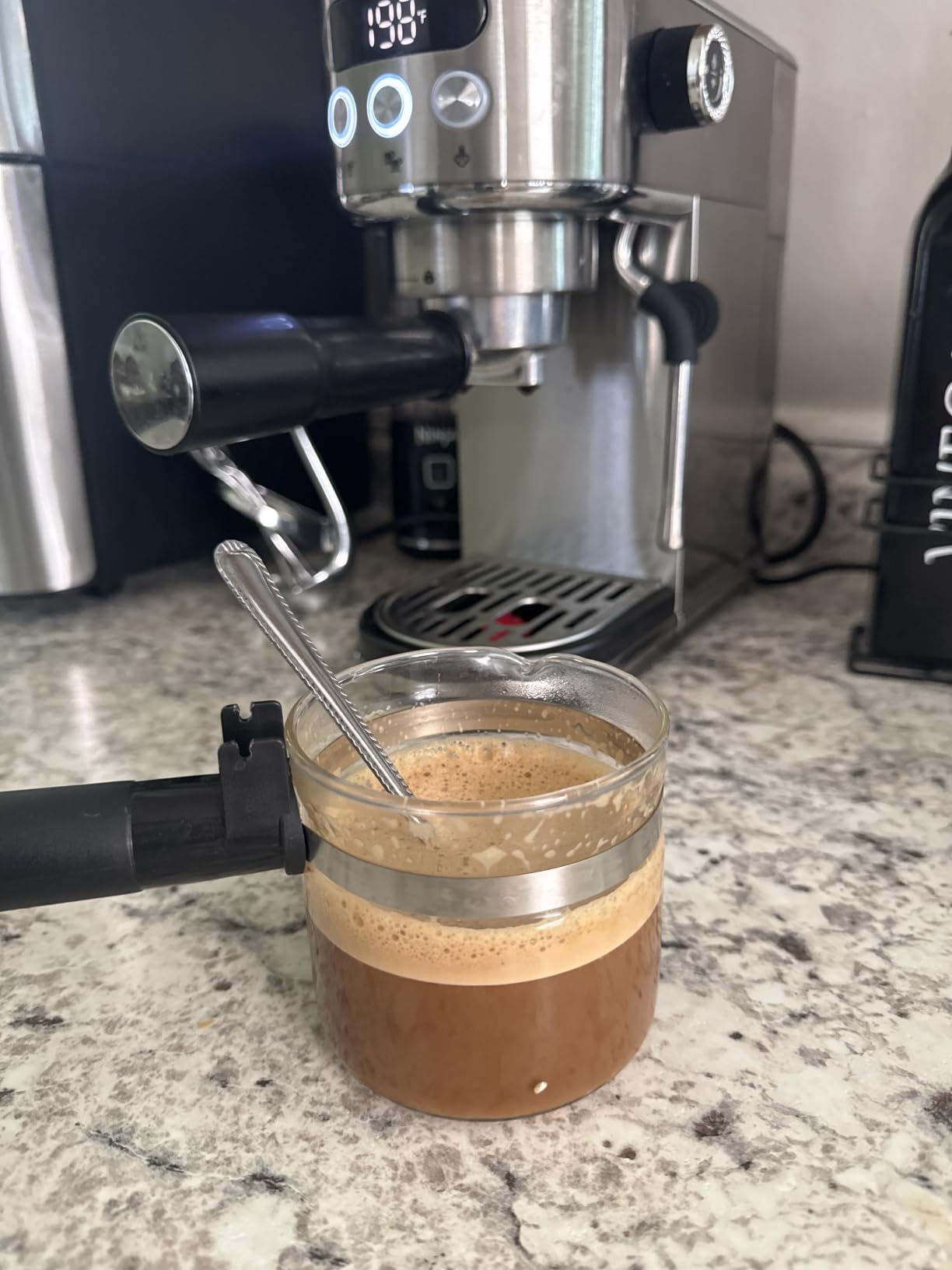
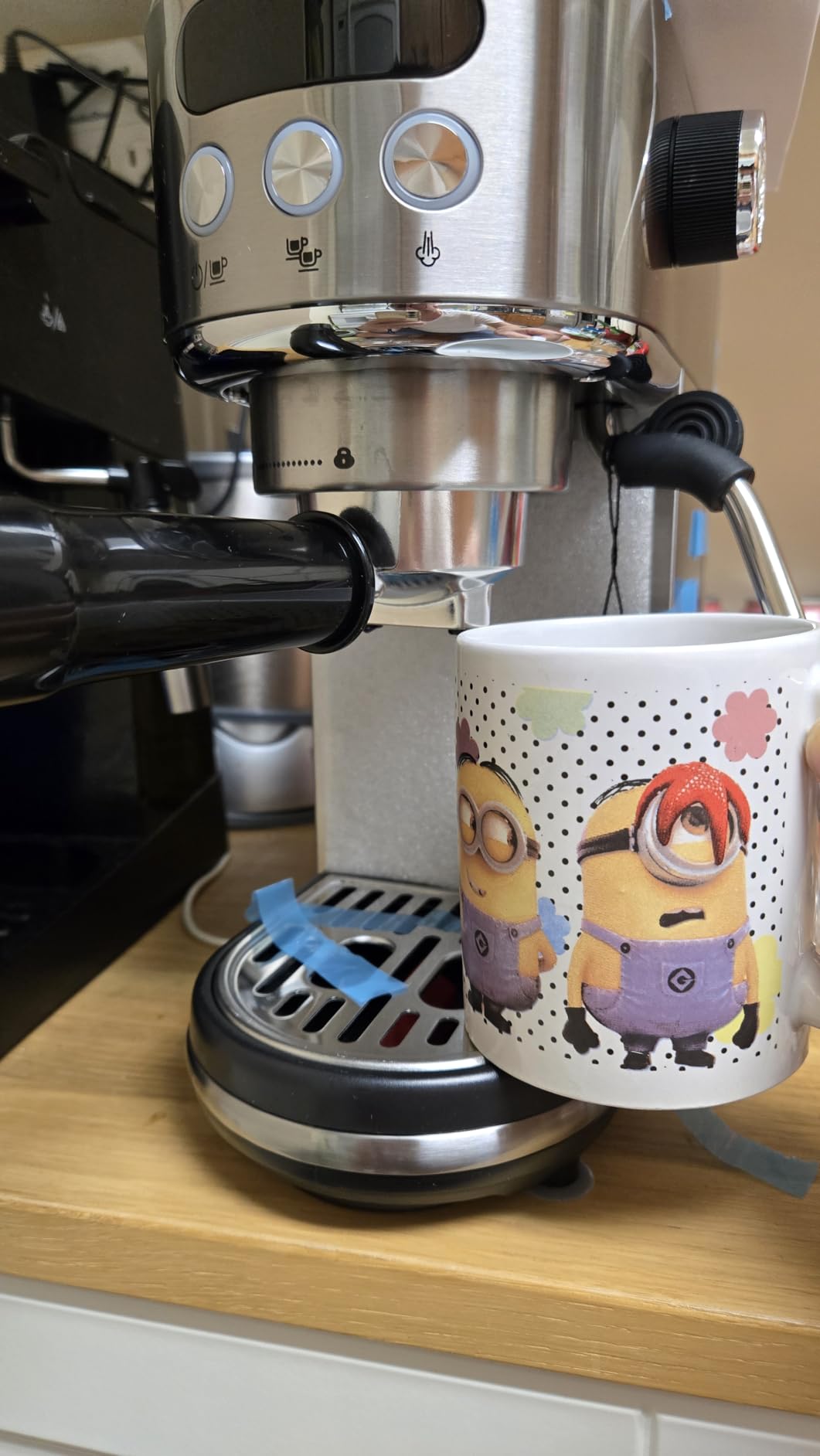
Construction is metal rather than plastic, with an upgraded stainless steel set, and Neretva lists 12 hour quick-response customer service, which matters when a small appliance lives in a kitchen where you cannot easily order a replacement.
A 1.3L removable tank, a cup warmer and single and double cup brewing round out a straightforward package.
Who the Neretva works for
It is a good fit for a kitchen with adequate width but tight depth, since at 11 inches deep it is among the shallower machines here. The temperature readout rewards anyone who likes to know what is happening during the shot.
Buyers who want a metal body rather than plastic internals will find that reassurance, and 9.1 inches tall is one of the lower profiles in this roundup.
Where the Neretva falls short
It is listed at 17 pounds, the heaviest machine in this roundup, which is awkward to lift for refilling and a caution in a small kitchen where you may be moving it around. At 12 inches wide it is also the widest machine here, so the super compact label is about depth only.
The machine-only bundle includes no milk pitcher, the 1.3L tank needs regular refilling, and the dosing funnel and spoon and tamper are extras most owners replace.
How to Choose an Espresso Machine for a Small Kitchen
Start with the constraint, not the brand. Write down your usable width, your usable depth plus one inch for the plug, and your overhead clearance. Those three numbers eliminate more machines than any feature comparison. If width is under 6 inches, your realistic list here is the atatix, the CASABREWS CM5418, the Gevi and the CASABREWS 3700. If depth is under 12 inches, the De’Longhi Classic and the Neretva behave better than most.
Understand why compact machines heat so fast. A boiler stores a large volume of hot water in a metal chamber, which takes minutes to heat and a lot of physical space. A thermoblock runs water through a thin heating element on demand, so it needs almost no volume and reaches temperature in seconds. That is why the Breville machines make a 3 second claim and why thermoblock models are standard in this size class. The trade is thermal mass: a boiler holds temperature more steadily across a long shot, which is one reason prosumer machines are physically bigger.
Single boiler versus dual boiler. A single boiler heats water and makes steam with the same element, so you wait between the two jobs. Every machine on this list except the Ninja is single boiler or thermoblock, and that is the single biggest factor in whether you can make two drinks back to back. The Gevi and the CASABREWS CM5418 shut down after frothing to avoid overheating protection, so plan your order. The Breville Bambino Plus sidesteps it with auto purge.
Budget for the grinder. Not one machine here grinds beans, so if you buy a manual or semiautomatic model you are budgeting 5 to 6 more inches of width for a burr grinder. A 5.5-inch Gevi plus a 6-inch grinder is an 11.5 inch run, which is most of a small galley counter. If that math does not work, a capsule machine removes the grinder line item entirely, and that is the honest reason pod machines keep winning on footprint efficiency.
Check the tank before anything else. A rear-loaded tank against a backsplash is close to unusable, and forum complaints about compact machines repeat this point constantly. A side-mounted tank, like the one on the Nespresso Vertuo Pop+, or a top-lifting tank like the atatix, keeps the machine serviceable when it is pushed into a corner.
Plan for cup clearance and stability. Tall latte glasses do not fit under every grouphead, and the froth nozzle on the CM5418 sits low enough to be awkward with larger cups. Separately, many compact machines are light, and reviewers of several models in this class report them sliding across the counter when you twist in the portafilter. The atatix solves it with four silicone suction cups.
Account for noise and heat in an open plan. The CM5418 is noticeably noisy and vibrates, the Nespresso Vertuo Pop+ rattles on small pods, and the Ninja runs quietly. In an open-plan apartment that ranking matters more than it would in a closed kitchen. For heat, 1350W to 1560W elements radiate warmth, so leave a ventilation gap rather than wedging a machine between two walls.
Skip the pressure number as a buying criterion. Twenty bar is a pump rating, not a cup quality rating, and the CASABREWS 3700 shows why: its steam dial can drift and leak pressure during a shot. What changes the cup is grind freshness, dose, tamping and temperature stability. The Bambino models get closer on the last one with PID control.
Budget for upkeep. Descaling powder, cleaning tablets, filter baskets and milk cleaner are consumables, and machines with auto frothing and cleaning cycles use more of them. The Bambino Plus cleaning cycle is needed roughly every two weeks and is water-heavy, which is a real cost in a kitchen where the sink is right there but time is short.
Two common mistakes worth naming. The first is measuring the machine and forgetting the plug, which adds about an inch of depth and has undone more compact purchases than any other oversight. The second is buying the narrowest machine and then discovering the steam wand has no room to swing. A wand that only moves forward and back is unusable next to a wall or a cabinet, so check wand articulation in the exact spot you plan to use it.
Frequently Asked Questions
What is the best espresso machine for a small kitchen?
The Nespresso Essenza Mini is the best overall pick for small kitchens because it has the most compact body in this roundup at 4.4 pounds and the highest average rating at 4.6 stars. If you make milk drinks, the Breville Bambino Plus is the better answer, and if your usable width is under 6 inches the atatix 20 Bar Compact is the narrowest pump machine here.
How much counter space does an espresso machine need?
Allow the listed machine width and depth plus about one inch behind for the power plug and cord, plus overhead clearance for the cup you use. If you buy a ground coffee machine you also need a separate burr grinder, which needs a minimum of 5 to 6 inches of width, so budget roughly 11 to 12 inches of total run for a slim machine and a grinder.
Which espresso machine is the narrowest?
The atatix 20 Bar Compact is the narrowest pump machine in this roundup at 5 inches wide, with the CASABREWS CM5418 at 5.47 inches, the Gevi at 5.5 inches and the CASABREWS 3700 at 5.7 inches close behind. The Nespresso Essenza Mini is smaller again by body and weight at 4.4 pounds, but it brews capsules rather than ground coffee.
Do I need a separate grinder for espresso at home?
Yes, if you buy a ground coffee machine. Espresso needs fine, consistent grind and pre-ground coffee loses aroma quickly, so a burr grinder is close to mandatory for good results. A separate grinder needs a minimum of 5 to 6 inches of counter width, which is the point where a capsule machine becomes the better choice for a very small kitchen.
Are pod espresso machines better for small kitchens?
Pod machines are more footprint-efficient than manual machines because they remove the grinder requirement and the tamping step. The trade is customization and running cost, since pods are a recurring per-cup expense, only certain models include a frother, and you cannot adjust grind or dose. They win on space and speed, and they lose on control.
Can a compact espresso machine make good microfoam?
Yes. The Breville Bambino Plus uses an automatic steam wand with three milk temperature and texture settings, and the atatix and the Gevi both use manual wands that reviewers report producing dense, glossy microfoam. The main constraint is workflow rather than capability, because most single boiler compact machines need a cool-down period between frothing and brewing.
Conclusion: The Best Espresso Machines for Small Kitchens in 2026
Twelve machines, one clear winner. The Nespresso Essenza Mini takes our Editor’s Choice for best espresso machines for small kitchens in 2026 because it combines the most compact body in the group with the highest average rating, and because a 4.4 pound capsule machine is the only option here you can move with one hand and put away when the counter is needed for dinner.
Choose differently only if your kitchen dictates it. Under 6 inches of usable width, the atatix is the answer. Daily milk drinks, the Breville Bambino Plus. A metal body and a pressure gauge, the Gevi. A tank big enough for several cups, the CASABREWS 3700.
Measure first, then buy. The four-step checklist above takes four minutes and prevents the single most common compact kitchen mistake, which is a machine that fits the gap in the store and not the gap at home.