
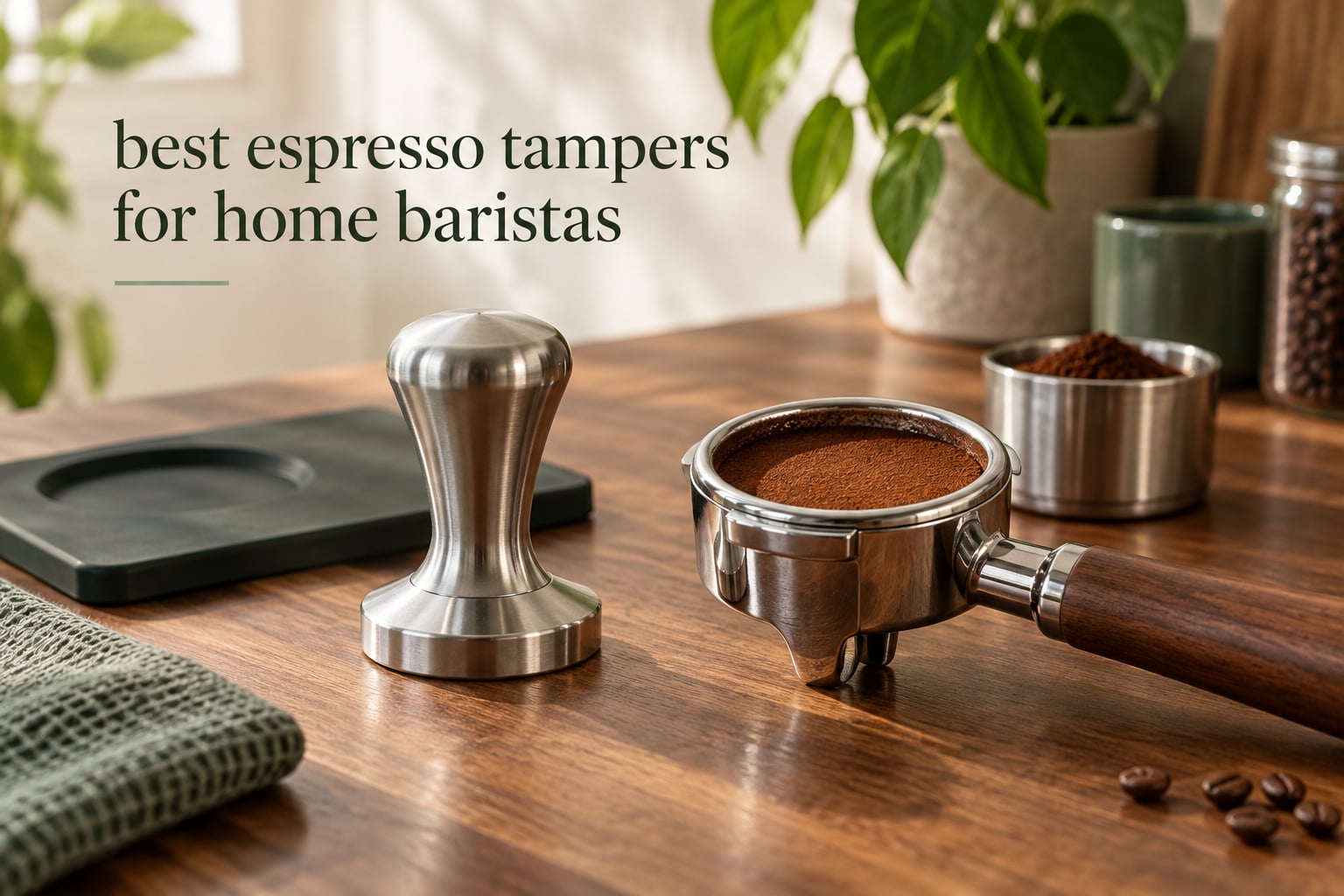
Most disappointing espresso shots are not a grinder problem. They are a puck problem, and the puck problem usually starts with the tamper that came in the machine box.
That plastic disc with the plastic handle is roughly a centimeter narrower than your basket. It leaves a ring of loose grounds at the edge, water finds that weak path, and the shot runs fast, sour, and uneven. Replacing it is the cheapest meaningful upgrade in the whole setup. Our beginner espresso machine guide makes the same point: the machine sets the ceiling, but puck prep sets the floor.
This roundup covers the best espresso tampers for home baristas in 2026. We looked at twelve that cover the real decision points: basket diameter, whether you want spring calibration or a plain weighted tamp, flat or ripple base, and how the handle fits your hand. If you want the short answer, the Normcore V4 is the one most households end up with. If you own a 51mm machine, the APTSPADE 51mm is the smarter purchase, and no amount of spring calibration will fix a size mismatch.
Table of Contents
Top 3 Espresso Tampers for Home Baristas

Normcore V4 53.3mm
- Spring-loaded 15lb/25lb/30lb springs
- Self-leveling guide
- 304 stainless flat base
- Includes matching stand

MATOW 53mm Combo
- Distributor and tamper in one tool
- Adjustable locking height
- 53mm base for Breville 54mm baskets
- Stainless steel body
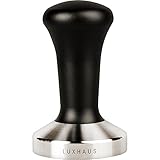
LuxHaus 58mm Tamper
- 100 percent flat stainless base
- 13.4-ounce solid weight
- Available in 49mm/53mm/58mm
- Velvet pouch and gift box
Our top three cover the three situations most readers are in. If your machine takes a 54mm Breville-style basket and you want consistent pressure without thinking about it, the Normcore V4 wins on repeatability and on the number of interchangeable springs. If you want one tool that levels and tamps so you stop skipping a step, the MATOW combo is the value pick. If you run a 58mm Gaggia, Rancilio, or Rocket and you just want a heavy flat piece of steel that works every time, the LuxHaus does that job with nothing to adjust.
All 12 Espresso Tampers at a Glance
| Product | Specifications | Action |
|---|---|---|
| Normcore V4 53.3mm Spring-Loaded |
|
Check Latest Price |
| MATOW 53mm Distributor and Tamper |
|
Check Latest Price |
| LuxHaus 58mm Flat Stainless |
|
Check Latest Price |
 Fino Deluxe 58mm Wood Handle Fino Deluxe 58mm Wood Handle |
|
Check Latest Price |
 APTSPADE 51mm Aluminum Tamper APTSPADE 51mm Aluminum Tamper |
|
Check Latest Price |
 IKAPE 53.3mm Calibrated Spring IKAPE 53.3mm Calibrated Spring |
|
Check Latest Price |
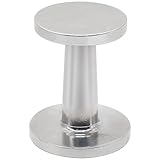 Ezebesta Dual 51mm and 58mm Tamper Ezebesta Dual 51mm and 58mm Tamper |
|
Check Latest Price |
 USEAMIE 51mm Tamper with Mat USEAMIE 51mm Tamper with Mat |
|
Check Latest Price |
 KYONANO 51mm Ripple Base KYONANO 51mm Ripple Base |
|
Check Latest Price |
 MHW-3BOMBER 58.35mm Three-Spring MHW-3BOMBER 58.35mm Three-Spring |
|
Check Latest Price |
 YMWVH 53.3mm Dual-Spring Self-Leveling YMWVH 53.3mm Dual-Spring Self-Leveling |
|
Check Latest Price |
 KNODOS 54mm Self-Leveling Walnut KNODOS 54mm Self-Leveling Walnut |
|
Check Latest Price |
Every product below is written in the same order as this table, so you can jump straight to the one that matches your machine.
Get the Basket Size Right Before You Buy
Wrong size is the number one reason tampers get returned, and no feature on the box fixes it. Buy for the basket diameter, not for the machine brand, because brands mix basket standards across their own ranges.
58mm baskets: Gaggia Classic Pro, Rancilio Silvia, Rocket Appartamento, Lelit Bianca, and most traditional prosumer machines. A 58.35mm or 58.5mm precision base is often the better match here, because a nominal 58mm tamper leaves a visible gap that lets grounds slide past the edge.
54mm Breville and Sage baskets: Barista Express, Barista Pro, Barista Touch, Bambino Plus, Infuser, and the older Duo-Temp Pro. Many listings in this category say 53mm, and 53mm does sit inside a 54mm basket, but with more play around the edge than you would like. That is why the 53.3mm and 53.35mm bases in this roundup exist.
The 53mm versus 54mm confusion: the Bowtell-style precision baskets that fit Breville portafilters are commonly sold as 53mm, and plenty of machines that people describe as 54mm take them. The safe move is to measure. A cheap digital caliper on the inside diameter of the basket or the outer rim of the portafilter answers this in seconds, and it costs less than a wrong tamper.
51mm baskets: De’Longhi Dedica and older pump models, Capresso PRO, and several compact single-boiler machines. The 51mm tools in this roundup are sized for these.
58.35mm versus 58.5mm: both are precision bases meant for nominal 58mm baskets, and the difference is small. A 58.35mm base sits a hair tighter inside a standard basket wall. A 58.5mm base can ride just over the rim of a standard basket and make contact with the wider rim of a precision basket. If your baskets are standard commercial sputniks, 58.35mm is the conservative choice. If you have run true precision baskets such as VST or IMS, check the maker’s diameter before committing.
Once you know your diameter, pick the base type. If you are still choosing a machine first, our home espresso machine roundup covers the basket standards each popular model ships with.
1. Normcore V4 53.3mm Spring-Loaded Tamper – Best Overall
- Repeatable spring pressure without guesswork
- Three interchangeable springs at 15lb/25lb/30lb
- Self-leveling guide keeps the base horizontal
- Anodized aluminum handle with matching stand
- Ranks first in its Amazon category
- 53.3mm only suits 54mm baskets so check your size first
- Spring takes a moment to reset between shots
The Normcore V4 is the tamper we recommend to anyone whose basket is 54mm and who is tired of guessing at pressure. The mechanism is a spring-loaded body that compresses to a chosen force and stops, so your wrist supplies motion rather than force. That distinction is what makes shots repeatable.
In practice it removed the last variable in my puck prep. Before it, my shots varied depending on how much coffee I had had that morning. After a few weeks, the only thing I was tuning was grind, which is how it should work. The self-leveling guide also does something subtle: it keeps the base horizontal as it descends, so a slightly tilted wrist no longer produces a slanted puck.
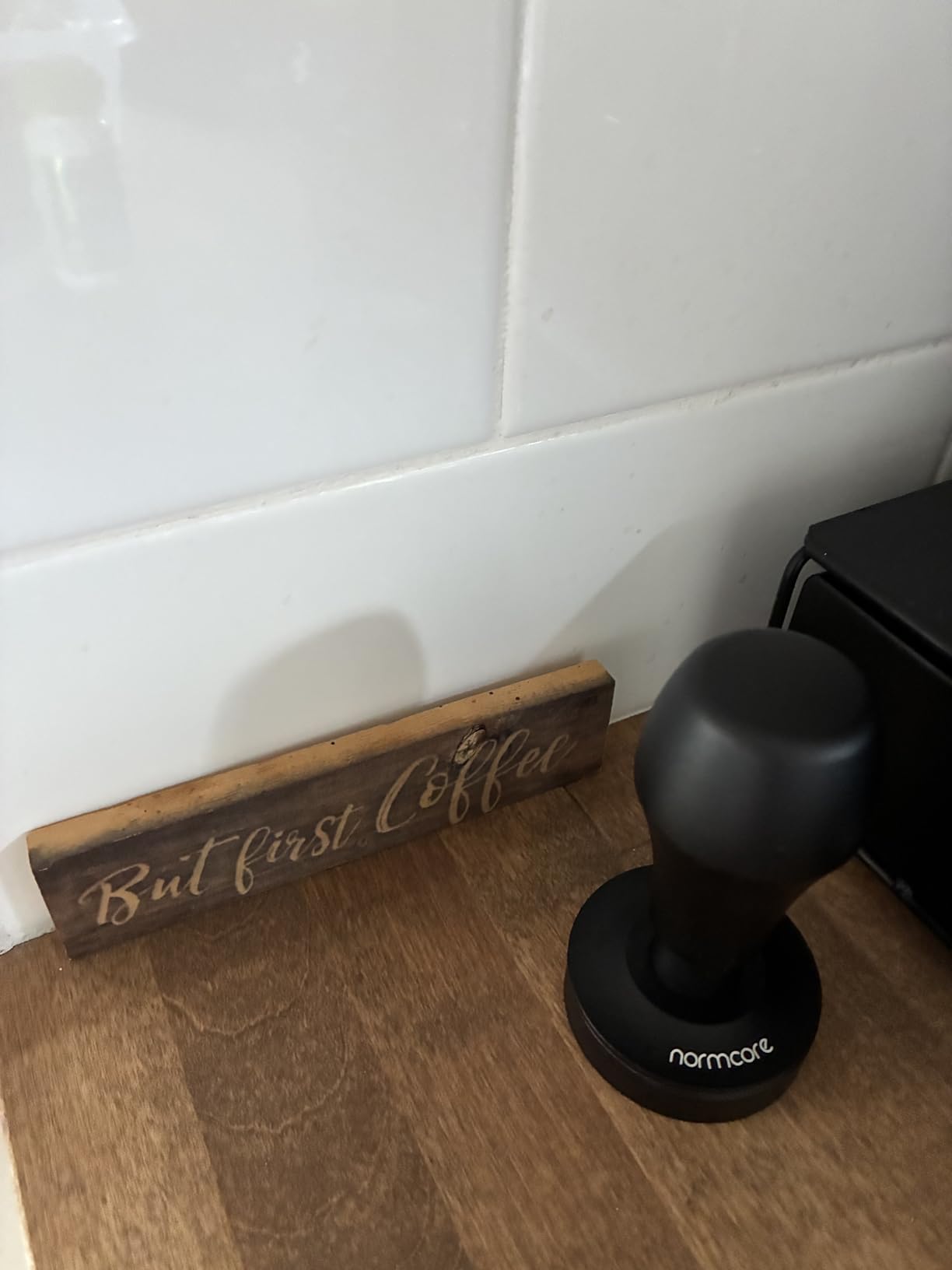
The three springs matter more than the headline number. At 15lb you are working with lighter, newer coffee and want less resistance. The 30lb spring suits darker, older beans and traditional Italian-leaning recipes. Swapping takes seconds, and over a year I found myself changing springs with the beans rather than with the mood.
The included stand is a small touch that solves a real problem. A tamper with a threaded base left face-down on a counter is a slow route to a stained worktop, and the stand keeps the ground face off the surface. It also gives the anodized handle a fixed spot, which matters in a small kitchen where counter space is contested.
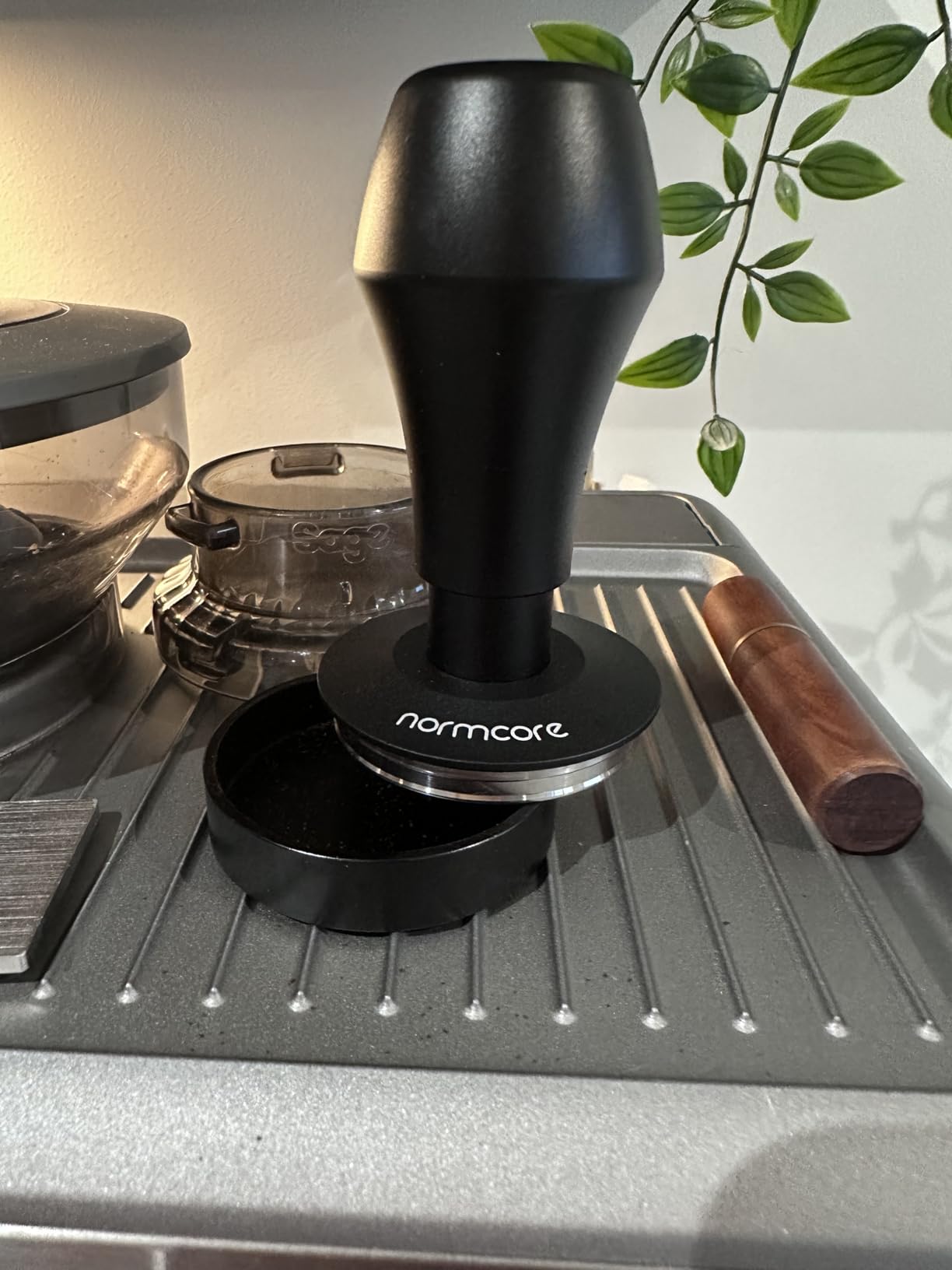
What works well about the V4 in daily use
The base is flat 304 stainless with no visible machining marks around the edge, so grounds do not catch on a lip when you lift. Lifting straight up without twisting keeps the puck intact, and a clean rim makes that lift predictable.
It also comes in a wide range of diameters on the same design, from 45.5mm up to 58mm and 58.5mm. If you ever change machines or share one with a household that runs a different basket size, you are swapping a tamper rather than rebuilding a whole setup.
Where it falls short
The 53.3mm version is a snug fit for 54mm baskets only. If your machine takes a true 53mm precision basket, the fit is looser than you would like, and the wrong diameter in the wrong machine is the one mistake this tamper cannot absorb.
Spring tampers also demand a little more deliberate hand position than a plain weighted tool. You need to set the base on the rim and press until the spring bottoms out, not to lean on it. Owners with very small hands sometimes find the tall handle more awkward than a low palm-style tamp, which is why the shorter tools later in this list exist.
2. MATOW 53mm Distributor and Tamper Combo – Best Value
- Two tools in one so fewer workflow steps
- Height locks independently on each side
- Heavy stainless build that feels professional
- Even distribution and tamping shot to shot
- Tamp side can sit above the coffee bed on lighter 18g doses
- One reviewer reported the received item did not match the listing
This is the pick for anyone whose shots still channel after they have fixed distribution with a separate tool and then dropped it. The MATOW puts a leveler on one end and a palm tamp on the other, so the two steps of puck prep happen with the same object in your hand.
Channeling is usually a distribution problem rather than a tamping problem, and this tool attacks the half of puck prep people skip. You set each side’s height, unlock, level the bed, flip, and tamp. Reviewers describe the result as a more even ring pattern on the spent puck, which is the visible sign that water stopped taking one easy path.
The independent height locks are the feature that makes it more than a gimmick. Different coffees sit at different levels in the basket, and being able to set the distributor and the tamp separately means you are not constantly readjusting one compromise setting for both jobs. It is a small piece of engineering that pays off every single shot.
Compatibility is broad for a 53mm tool, covering the Breville Barista Express, Pro, Touch, Touch Impress, Bambino Plus, Infuser, and the older Duo-Temp Pro. If any of those is your daily machine, this is the most complete workflow upgrade in the roundup for the money.
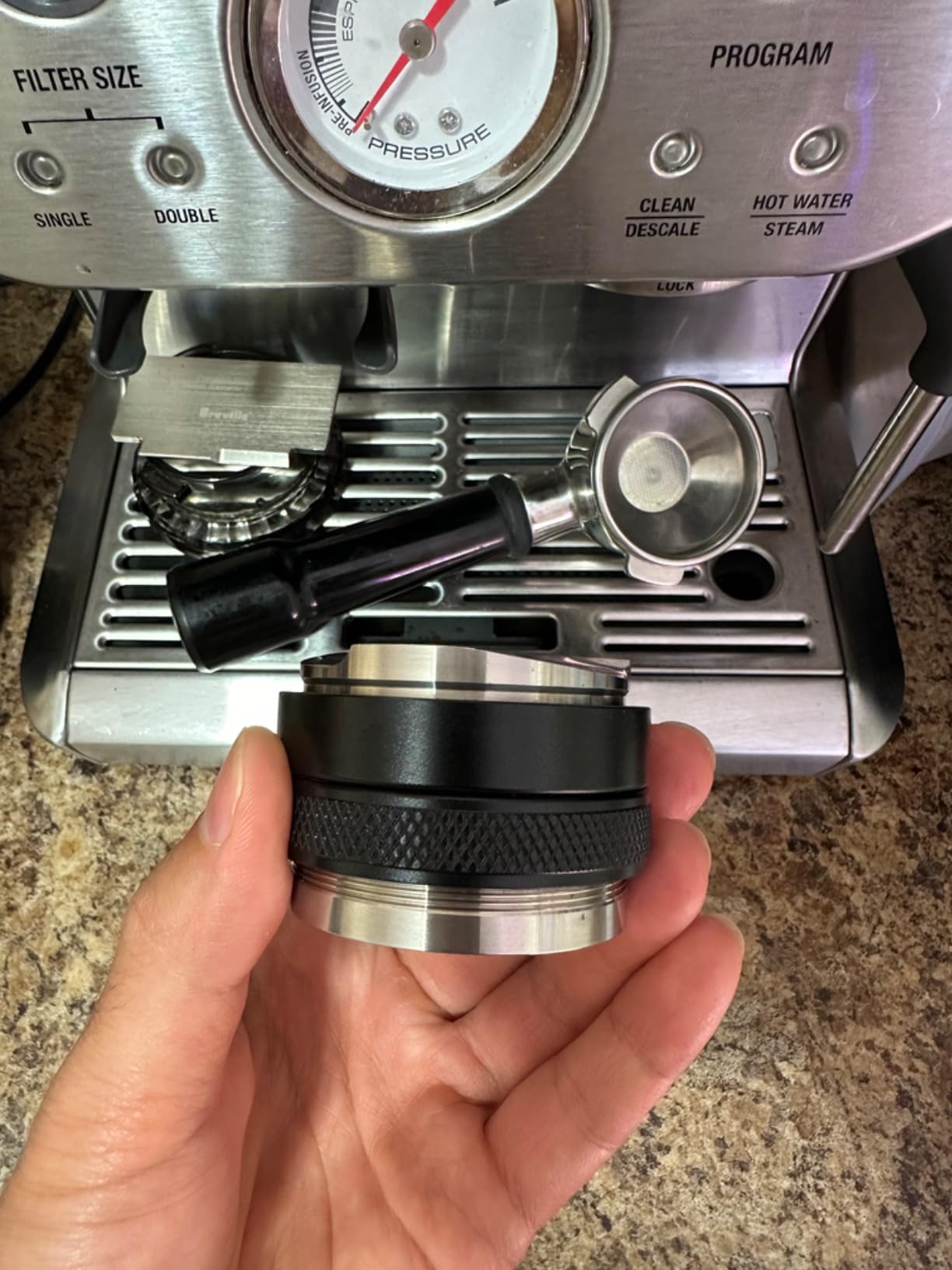
Why the combo approach helps new baristas
Beginners tamp before they distribute because the manual they read said tamp. Combining the tools makes the correct order the easy order. You cannot tamp without having leveled first, because the tool in your hand has to be flipped.
It also saves counter space in a kitchen already crowded by a grinder, a knock box, and a dosing funnel. Two tools become one, and there is one less thing to rinse between shots.
Where it falls short
On lighter doses of 18g with less dense coffee, the tamp side can sit above the coffee surface even after you adjust the height, so it lands without real compression. That is a dose and roast issue rather than a defect, but it is the complaint that comes up most often and it does need a workaround.
Because it is sized at 53mm, it is a Breville-basket tool. Owners of 51mm or 58mm machines should skip it, since a distributor that does not reach the basket edge cannot level the whole bed no matter how well it is made.
3. LuxHaus 58mm Flat Stainless Tamper – Best for 58mm Owners
- Heavy 13.4-ounce weight makes level tamping easy
- One hundred percent flat food-grade stainless base
- Reviewers report less bitterness and better balance
- Attractive velvet pouch and gift box
- Backed by a brand warranty
- You must measure the basket because 49mm/53mm/58mm versions look identical
- Fixed weight cannot be tuned to lighter roasts
If you run a Gaggia, a Rancilio, or a Rocket and you want nothing between your hand and a puck of coffee, this is the honest answer. No springs, no adjustment, no settings to learn. You press until the coffee stops moving, lift straight up, and the shot comes out the same as the last one.
The 13.4 ounces is doing the work here. A tamper light enough to barely register lets you apply inconsistent pressure without noticing, which is the single most common cause of a puck that is dense in the middle and loose at the rim. Weight you can feel in the hand is harder to overthink.
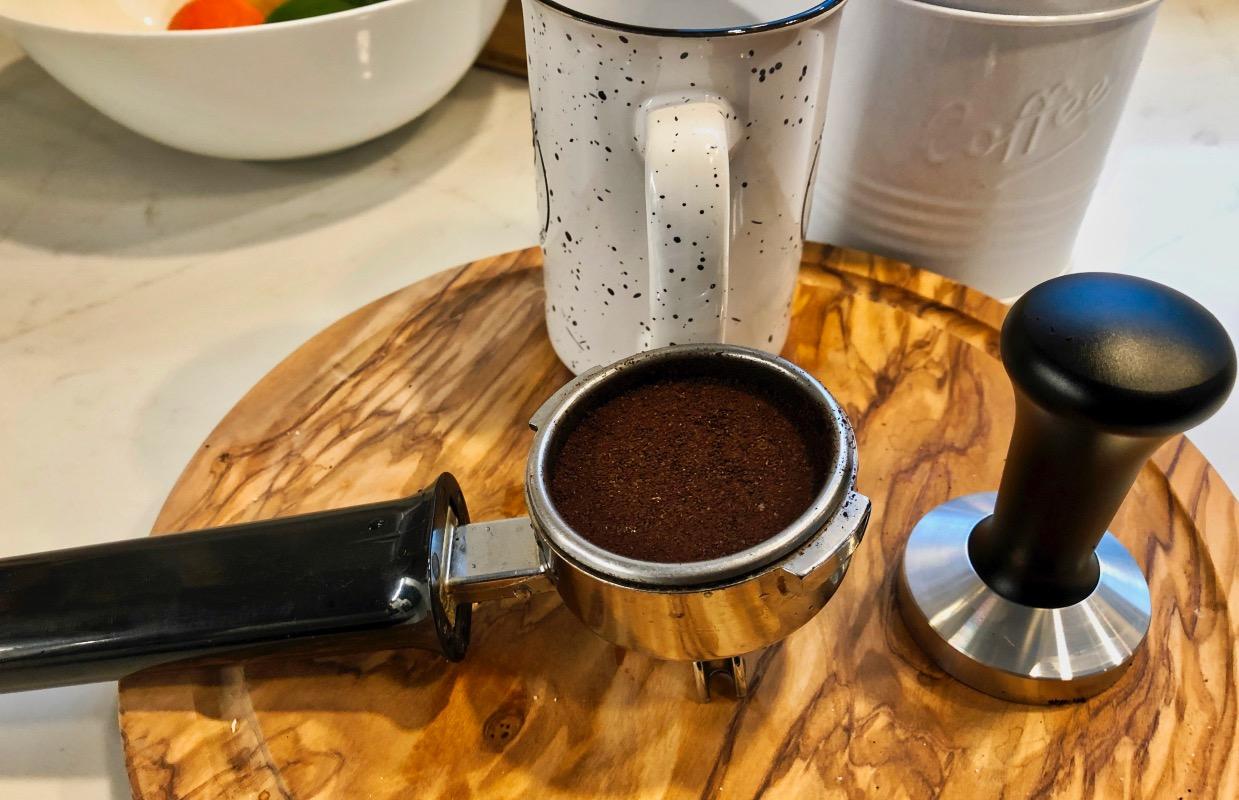
Reviews of this tool repeatedly mention the same outcome: less bitterness, better balance, and shots that do not need re-dialing after every grind change. That is what you would expect from a flat, heavy, correctly sized base. There is no mechanism to fail and nothing to maintain beyond a rinse.
The packaging is worth a mention because it is unusual at this level. A red velvet pouch and magnetic box means the tamper has somewhere to live that is not a wet corner of the counter, and it makes the tool an easy gift for someone who has just bought their first machine.
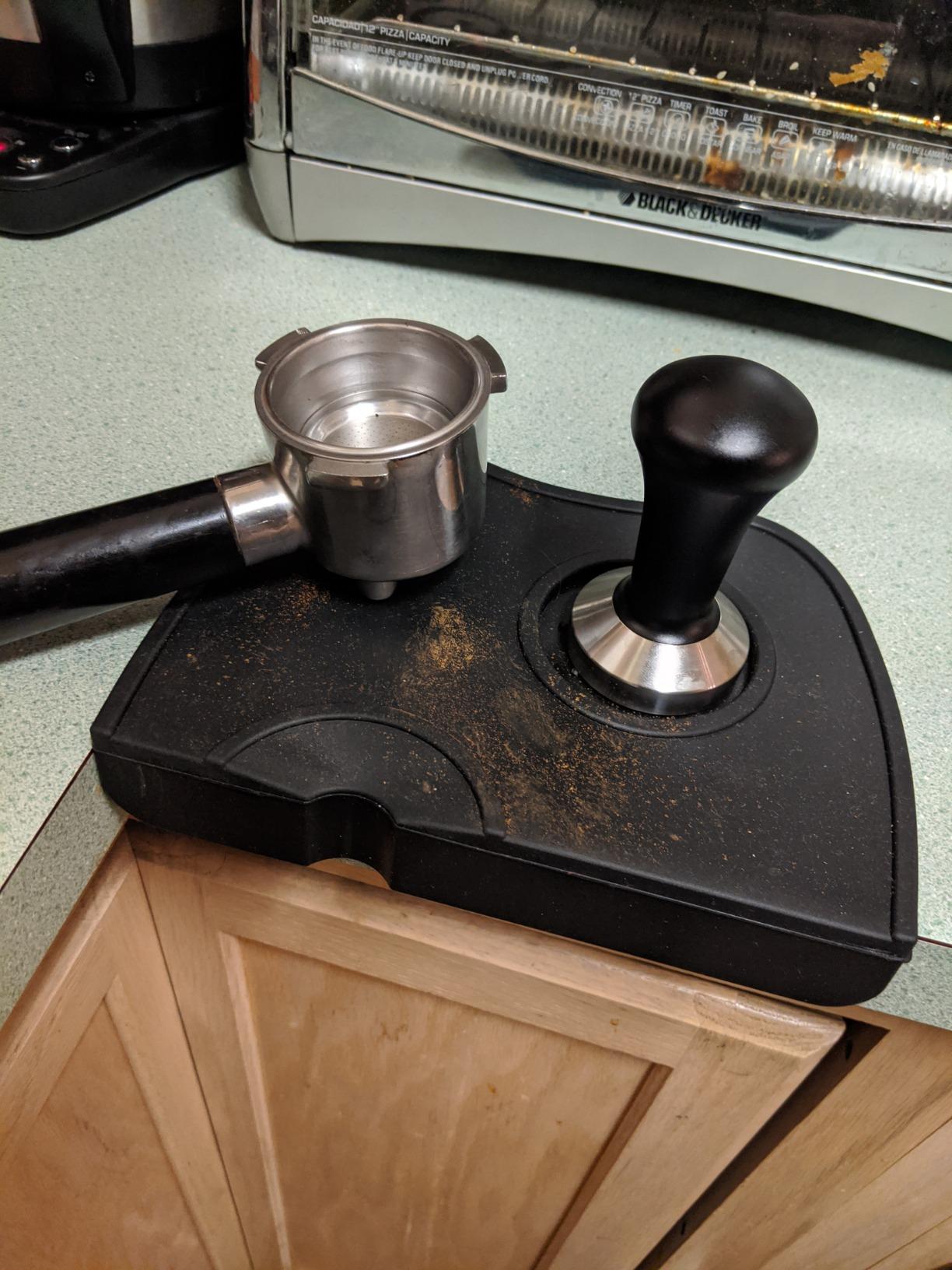
Where a plain weighted tamper beats a calibrated one
Plenty of experienced home baristas use nothing more complicated than a heavy steel disc, and on home machines they are right. If you pull two or three drinks a day and nobody else touches the portafilter, you have far fewer opportunities to vary your pressure than a cafe barista does. Consistency comes from doing the same motion the same way, not from a spring.
It is also easier to adjust by feel. Some people prefer a light touch with dark, oily beans and a firm press with dense modern coffee. A fixed-weight tool lets you feel that difference. A calibrated tool deliberately takes the decision away from you.
Where it falls short
Sizing is the thing to watch. The 49mm, 53mm, and 58mm versions look nearly identical in photos, and the wrong one is the leading cause of returns on this tool. Measure the basket first.
There is also no spring and no self-leveling guide, so it will not rescue a technique that taps the portafilter on the counter after tamping. Heavy and simple is a feature here, not a limitation, but it does mean puck prep habits still matter.
4. Fino Deluxe 58mm Wood-Handle Tamper – Best Classic Look
Fino Deluxe Espresso Tamper, 11.64-Ounce Weight, 58-Millimeter
- Solid weight with smooth seams and no sharp edges
- Dual-size options fit many portafilters
- Easy to wipe clean
- Reviewers call it a clear upgrade from the machine tamper
- Chrome finish is ruined by the dishwasher so hand wash only
- Some size variants run slightly small for larger portafilters
The Fino Deluxe is the most-reviewed tamper in this roundup by a wide margin, with more than six thousand ratings, and the reason is simple: it is a very good first upgrade. It weighs close to twelve ounces, the base is flat, and it costs little enough that nobody minds if it lives in the dish rack.
The beechwood handle with a chrome-plated iron body gives it a look that suits a countertop machine rather than disappearing into a drawer. For many people that matters, because a tool you enjoy picking up is a tool you use carefully.
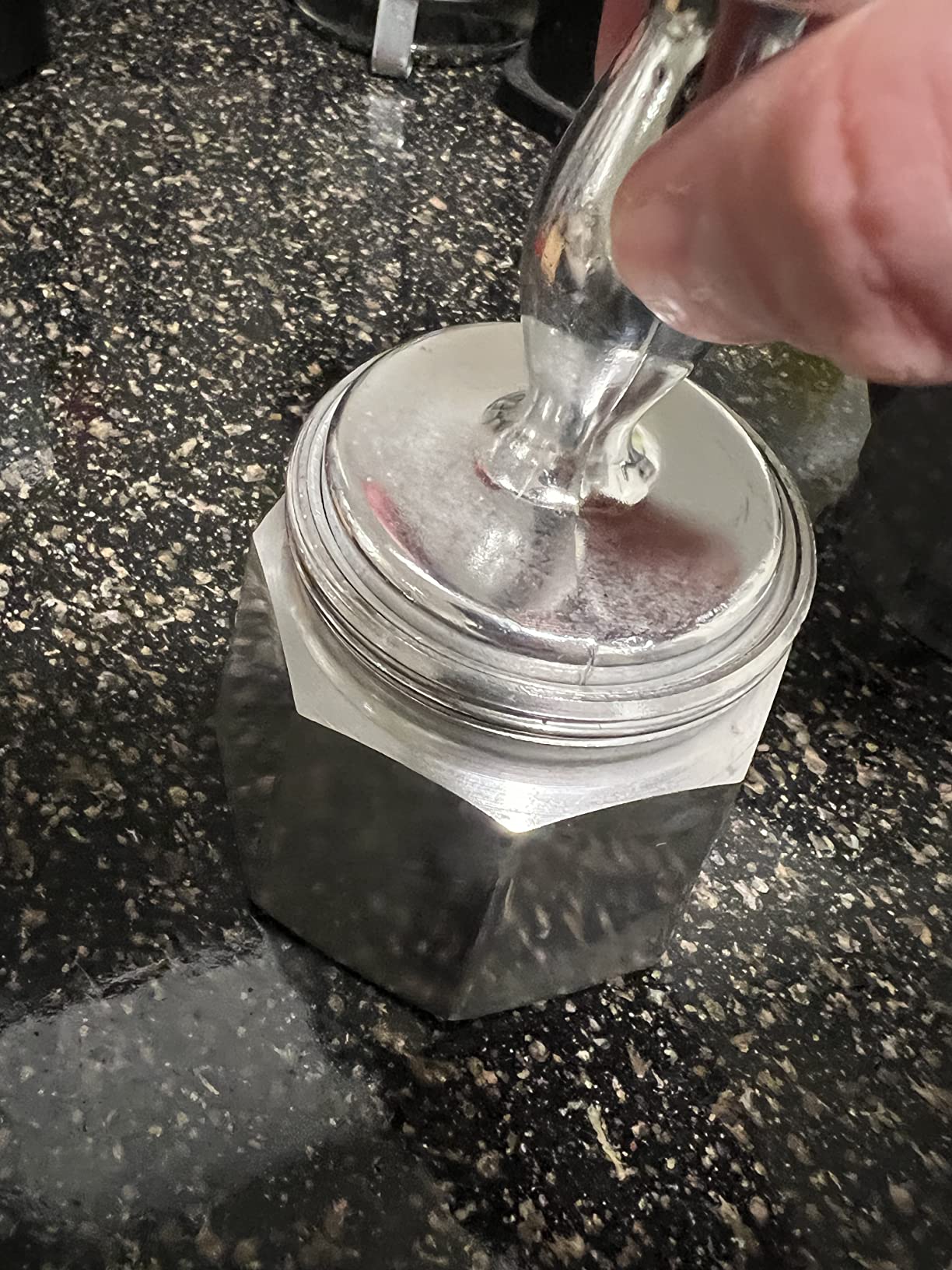
One of its features that gets overlooked is deliberate clearance above the coffee bed. The tamper is designed to leave a gap between the top of the grounds and the machine’s shower screen, which stops dampened coffee from swelling up and clogging the dispersion screen over time. It is a small design decision that shows up as better-tasting shots weeks into ownership.
Reviewers describe a smooth, seamless feel with no rough edges around the base, which is what you want pressing against a basket rim. Wiping it with a cloth after each use is the whole cleaning routine.
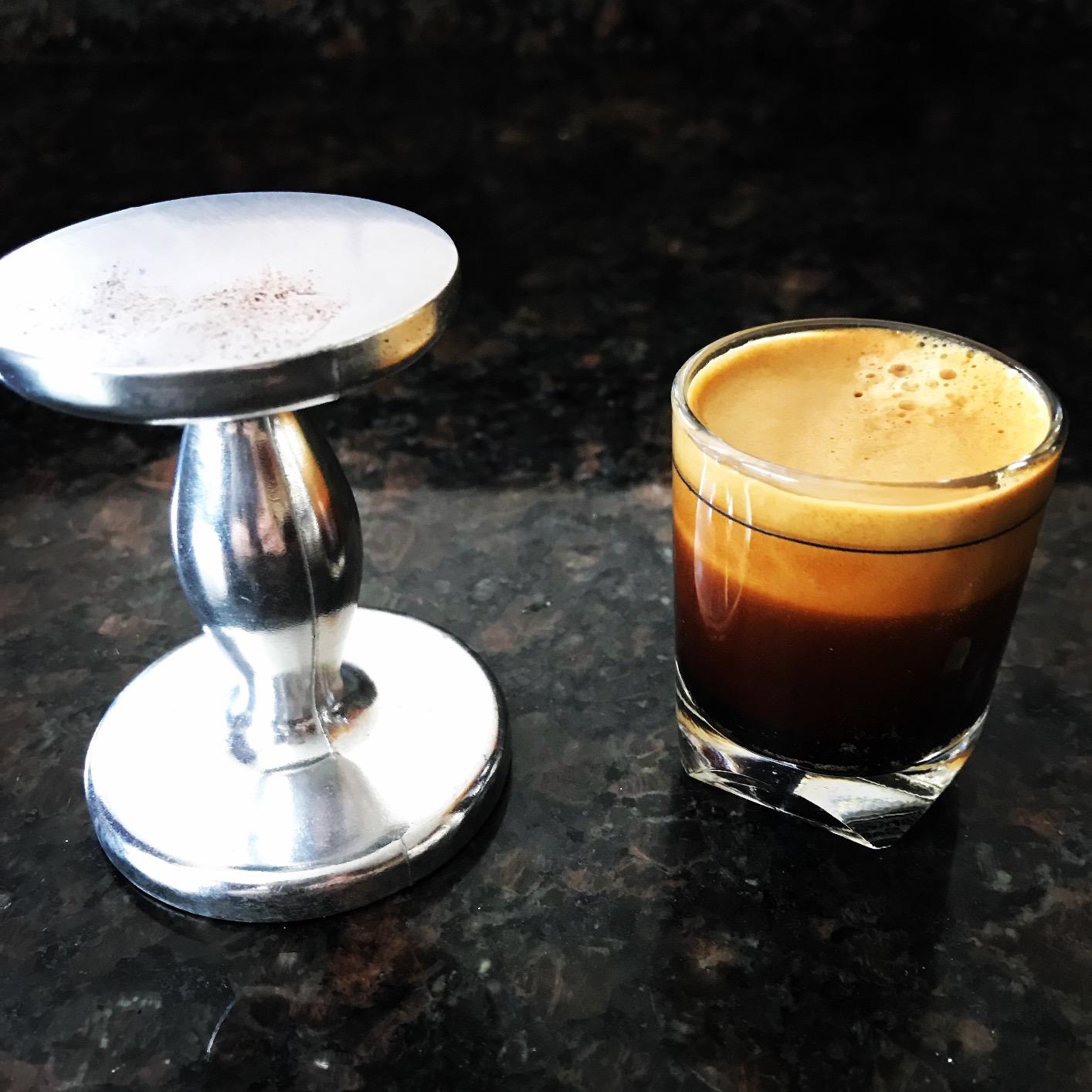
Best reasons to buy it
It solves the plastic-tamper problem cheaply and permanently. If your machine shipped with the flimsy disc, this is the swap that produces the biggest visible change per dollar in the entire setup, and nothing about it needs explaining.
The size variants cover many common portafilters in one listing, so a household with more than one machine can often find what it needs without a second purchase.
Where it falls short
The chrome plating degrades if it goes near a dishwasher. Hand washing and drying immediately keeps it looking good, but it is a real constraint that stainless-only competitors do not have.
Some buyers report that certain size variants run slightly undersized for larger portafilters, which leaves a thin ring of loose grounds at the edge. If your shots show a consistent gap, upgrade to a tighter tolerance base rather than tamping harder.
5. APTSPADE 51mm Aluminum Tamper – Best for 51mm Machines
APTSPADE 51mm Espresso Tamper, Solid Aluminum Alloy Coffee Tamper for 51mm Portafilter Espresso Machines
- Precisely sized for 51mm portafilters
- Chrome-plated alloy resists rust and corrosion
- Flat base compresses grounds evenly
- Smooth tapered handle gives a secure grip
- Recommended as a first real espresso tamper
- Fixed single size so it cannot cover a second machine
- Aluminium coating can show wear over years of use
If your machine takes a 51mm basket, this is the one to buy and the reason is unglamorous: it is correctly sized, solidly built, and has the highest average rating of any tool in this roundup. The 51mm category is badly served by listings that quietly ship a 53mm or a 58mm, so a tool explicitly built for 51mm is worth noticing.
Dedica owners are the biggest group this serves. So are Capresso PRO and several compact single-boiler machines. If that is your basket, the choice narrows fast, and this one has the review volume to back up its claim.
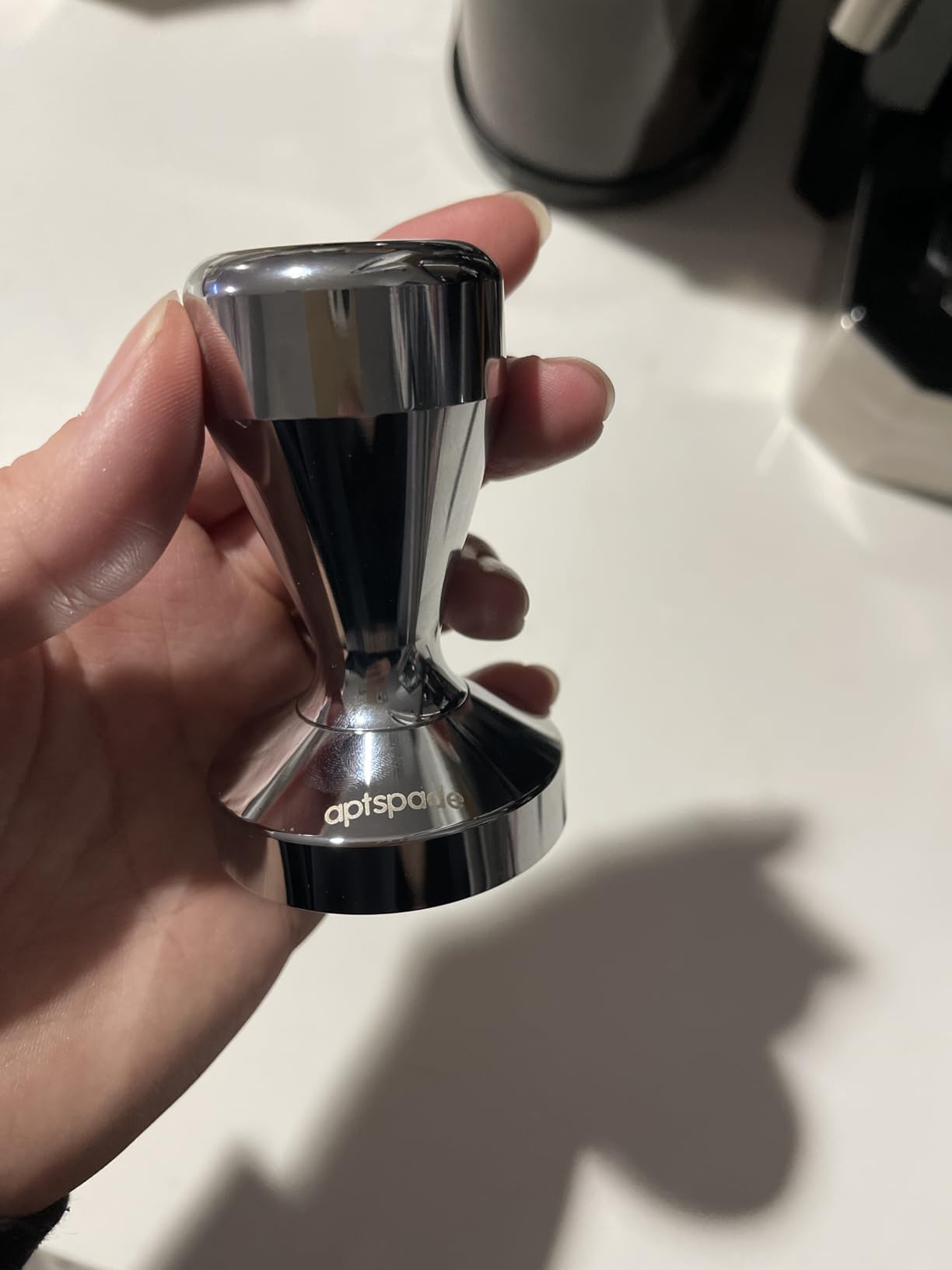
At 200 grams it has enough heft to level a puck without your wrist deciding how hard to press. The tapered handle is smooth and narrows toward the base, which gives fine motor control on the descent and makes the whole motion easy to repeat. For a new barista, that handle shape does more for consistency than any spring would.
The chrome-plated aluminum alloy finish is rust and corrosion resistant and rinses clean under a tap. Reviewers commonly frame this as the first real espresso tamper they owned, replacing a plastic one and immediately noticing flatter, more even pucks.
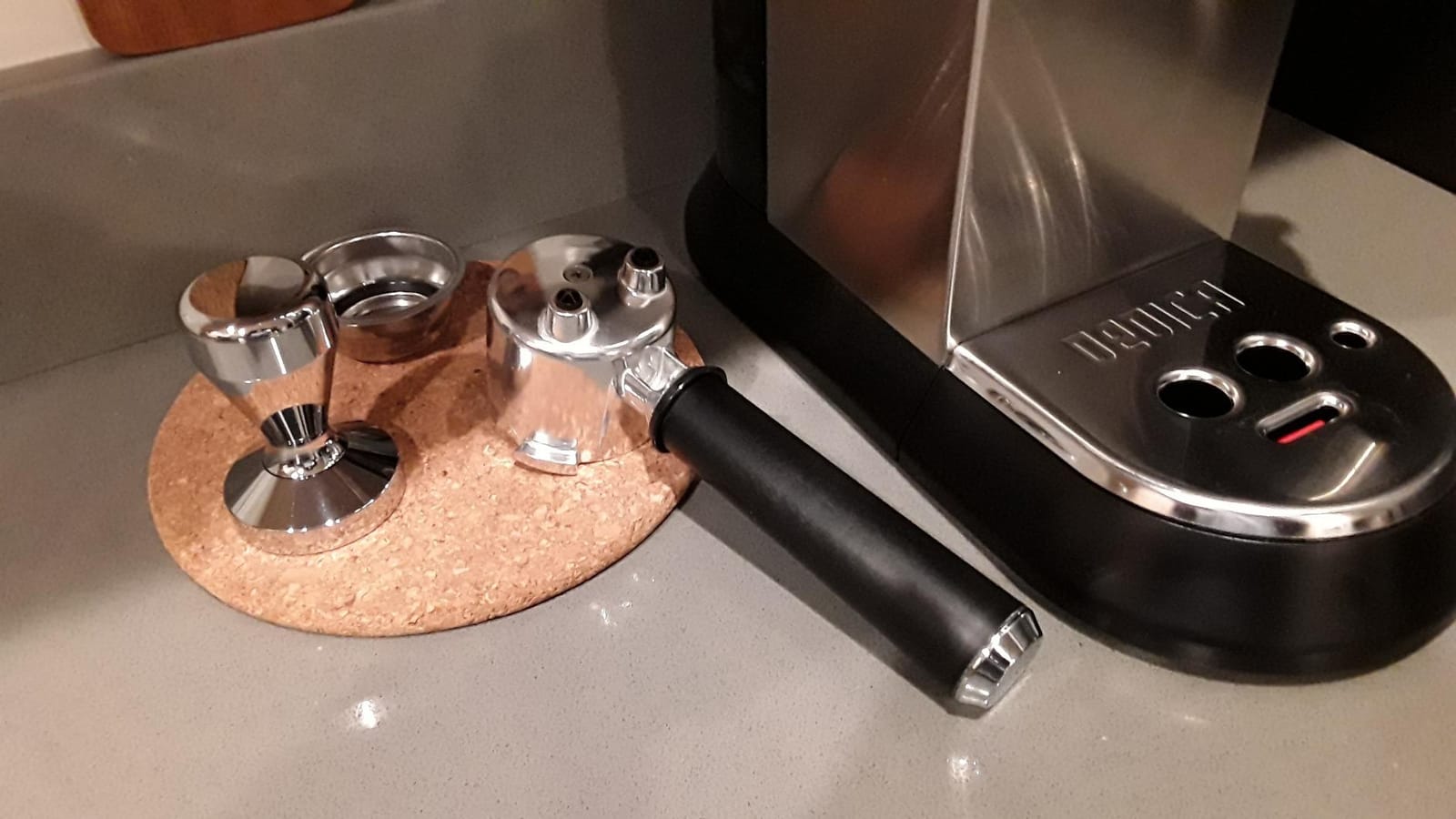
Why size accuracy matters more than features
A tamper that is a fraction too small leaves a channel around the basket wall that water will find every single time. No amount of pressure compensates, because the grounds at the edge never get compressed at all. Precision sizing is not a marketing detail; it is the whole job.
Because this is a flat 51mm base, it also works with both standard and precision 51mm baskets, and it leaves the familiar ring pattern on the spent puck that most people recognise as a well-made puck.
Where it falls short
It covers one size only. Anyone who later changes to a 58mm machine needs a second tool, which is the argument for a dual-ended design instead.
It also offers no pressure adjustment. That is fine for most people, but if you enjoy chasing very light, channelling-prone roasts you may eventually want a tool where you can vary the force rather than only the feel.
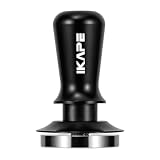
6. IKAPE 53.3mm Calibrated Spring Tamper – Best Multi-Size Calibrated
- Calibrated spring gives consistent pressure
- Food-grade stainless base resists rust
- Reported to leave a concentric ring pattern
- Wide range of diameters from 39mm to 58.5mm
- 53mm version does not fit the 54mm Sage Bambino basket
- Listed item weight of 0.017 ounces is inaccurate
The IKAPE is the calibrated option with the widest size range on the market here, from 39mm through 45mm, 49mm, 51mm, 53mm, 58.3mm, and 58.5mm. If you own more than one machine, or you change machines often, having the same design cover that many diameters is genuinely useful.
The spring is calibrated to roughly 30 pounds of tamping force, which sits at the firm end of what home setups usually want. Owners report a concentric ring on the spent puck, which is the visual signature of even compression across the whole bed.
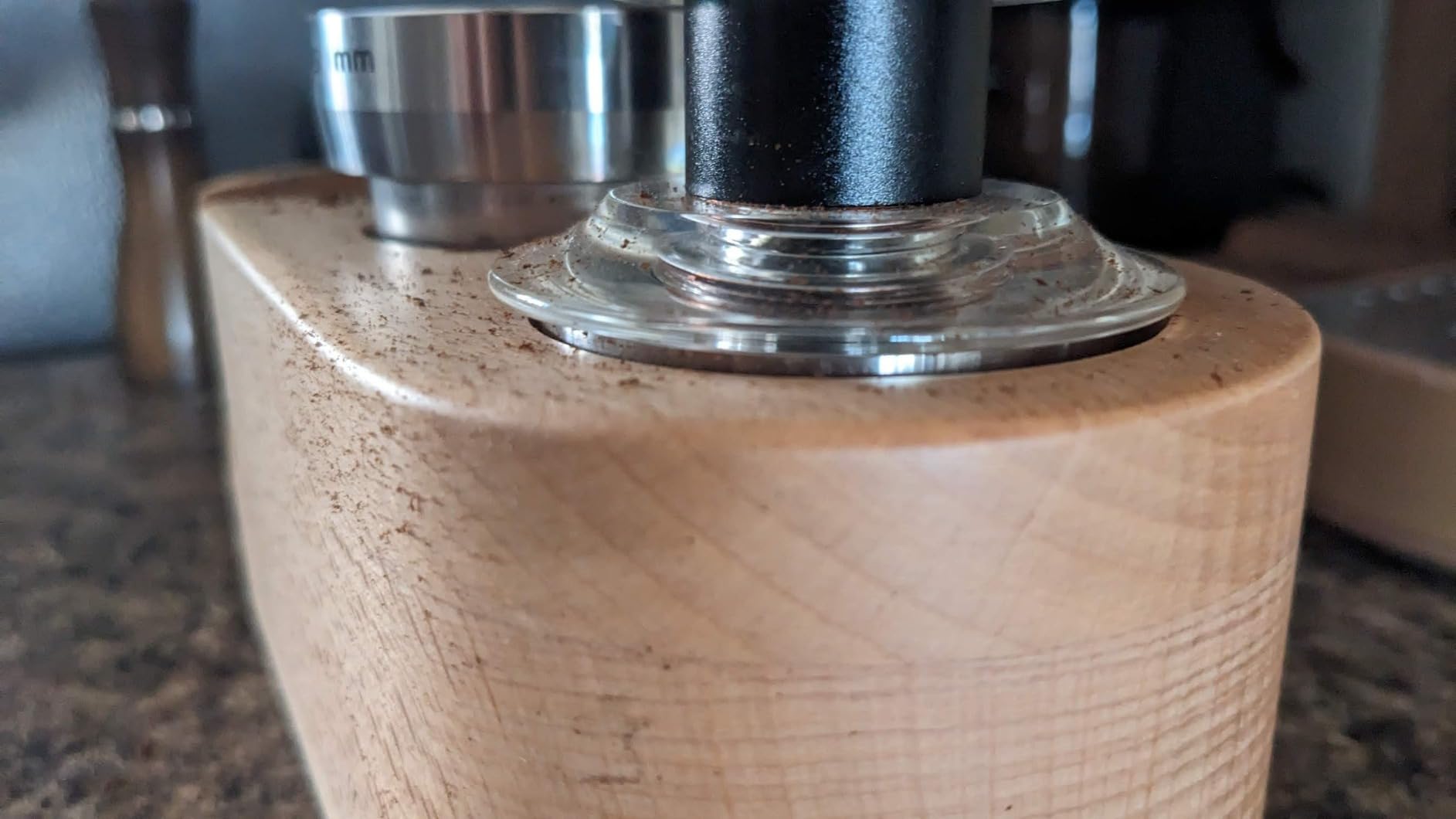
The threaded base connection is a small detail that pays off over years. Unscrewing the base lets you clean around the threads, which is exactly the place coffee oils and loose grounds hide on any espresso tool. A tamper you cannot clean is a tamper that starts tamping unevenly.
Food-grade stainless is rust-proof and takes a rinse without any special care. There is no coating to wear off and no wood to swell, so it is a good tool to hand to someone who will not read this article.
Where a single-calibration spring works
If you drink one style of coffee and buy it from one roaster, a fixed calibration is fine. You set it once and never think about it, which is the appeal. The consistency case for a spring is strongest in a household where more than one person makes drinks, since hand pressure varies far more between people than within one person.
It also suits bottomless portafilters well, because a level tamp is visible in the frame and any mistake shows up immediately rather than staying hidden inside a sputted basket.
Where it falls short
Version choice matters more here than with most tools. Buyers report that the 53mm version does not fit the 54mm Sage The Bambino basket, which is an easy mistake given the number of similar-looking variants.
There is a single spring force with no stated options, so if you want to run a lighter tamp for bright modern beans you will need another tool. The listing also reports an item weight of 0.017 ounces, which is plainly a data error and a reminder to judge it by feel rather than by the specification.
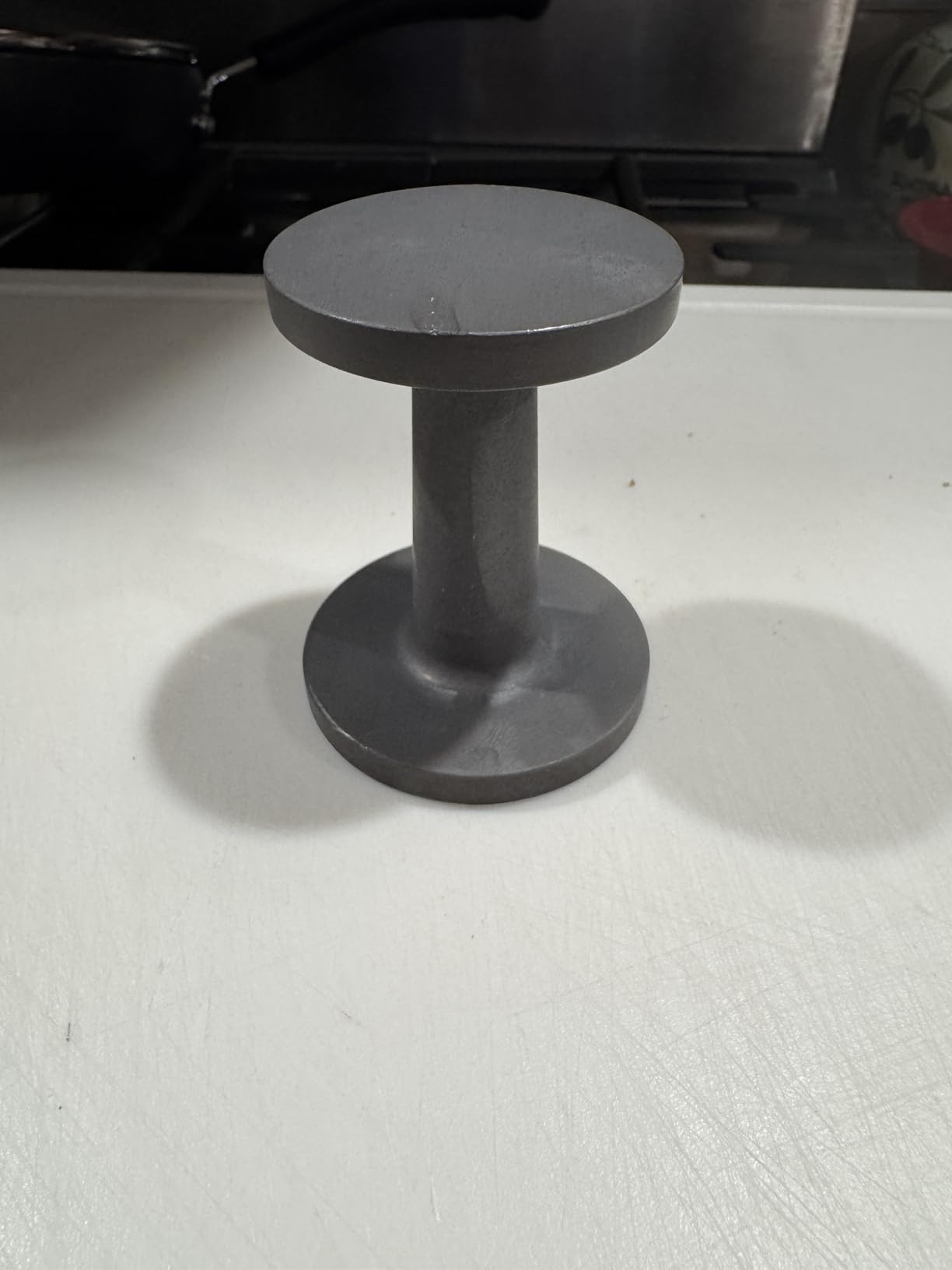
7. Ezebesta Dual-Sided 51mm and 58mm Tamper – Best Dual-Size Option
Ezebesta Dual-Sided Espresso Hand Tamper 51mm and 58mm Dual Ended Tamper Coffee Ground Press Barista Tool for Portafilter Machine
- Two basket sizes covered by one tool
- Smooth cast aluminum resists coffee acids
- Reviewers report dense level pucks
- Good value against single-size stainless options
- Aluminum rather than stainless which some buyers prefer
- Not dishwasher safe and needs hand washing
The idea here is straightforward: one tool with a 51mm end and a 58mm end, which covers the two most common home basket sizes without buying two tampers. For a household with a Dedica and a Rocket, or for someone who expects to change machines, that is a sensible bit of planning.
At 4.4 ounces it is the lightest tool here, which cuts both ways. It is easy to control and comfortable for small hands, and it also does less of the work for you than a 13-ounce weighted base. If you already struggle to tamp firmly and evenly, a heavier tool is the better place to spend.
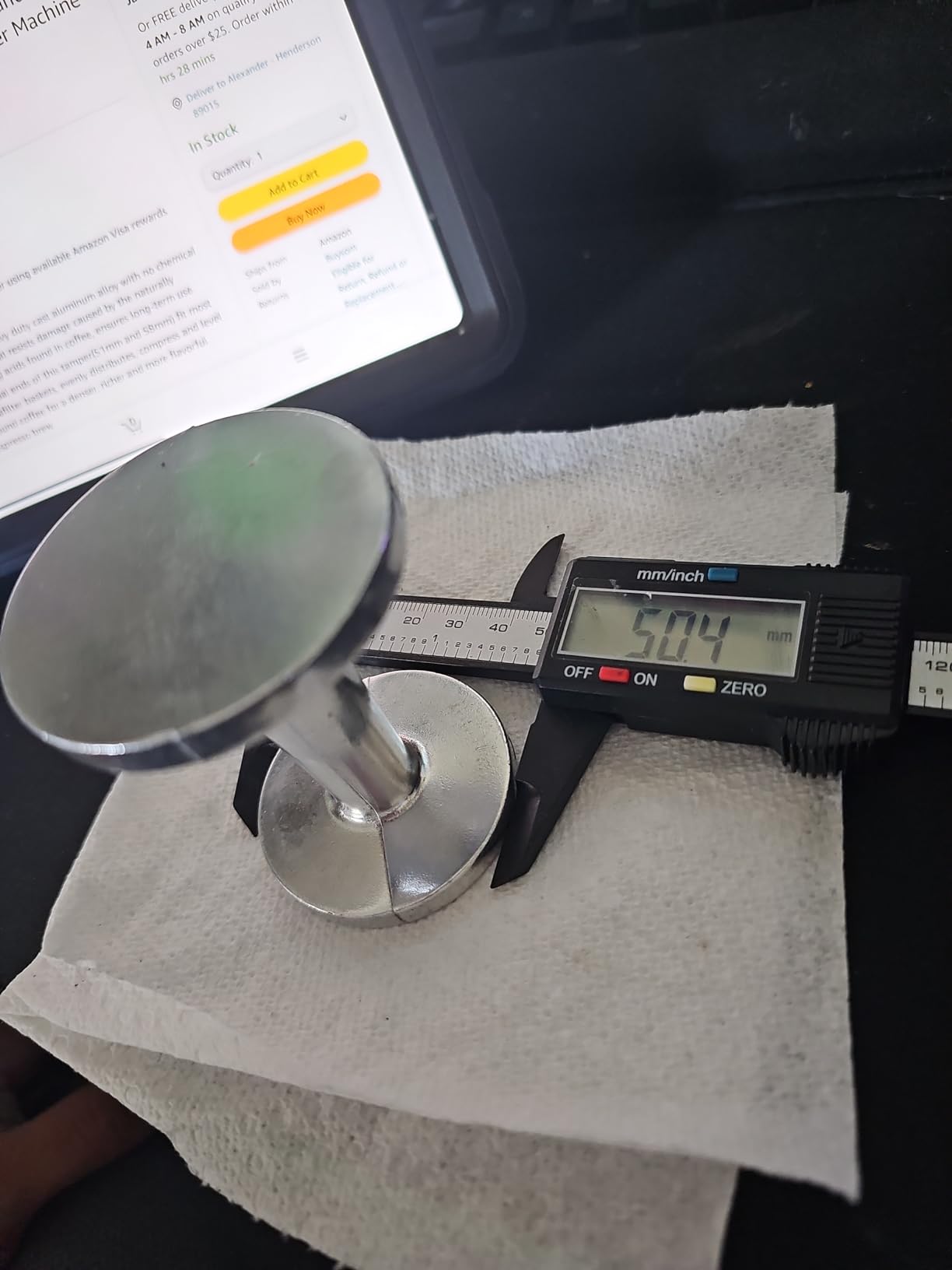
The cast aluminum alloy is uncoated, with no chemical finish to wear off, and reviewers specifically note that it resists coffee acids over time. Rinsing it under a tap after each shot is enough, and the smooth surface does not hold residue in the way textured grips can.
Reports on the resulting pucks are consistently positive, with users describing denser, level tamping and a noticeably richer brew compared with the plastic tamper their machines shipped with.
When a dual-ended tool makes sense
The case is strongest when you genuinely have two basket sizes in play. Two machines at different sizes, or one machine plus a hand grinder and an occasional guest setup, all benefit. You stop keeping tampers in drawers and losing the smaller one.
It is also a good travel-and-tidy option. One object lives next to the machine instead of a small collection of size-specific discs, which matters if your kitchen counter is the size of a chopping board.
Where it falls short
Aluminum is a softer material than the stainless bases on the tools above it. It resists acids well but will show handling marks sooner, and buyers who prefer a tamper that looks untouched after a few years tend to pick stainless.
It is not dishwasher safe, which adds a small step to your end-of-shot routine. More importantly, it stops at 51mm and 58mm, so it does nothing for a 54mm Breville basket unless you happen to be running a 58mm machine.
8. USEAMIE 51mm Tamper with Mat – Best Bundle with a Tamp Mat
USEAMIE Coffee Tamper Espresso Press with Tamper Mat 304 Stainless Steel Flat Base Wooden Handle for Coffee Grounds Barista Espresso Machines Accessory (51MM)
- Heavy solid feel that makes level tamping easy
- Stainless base resists rust and grounds do not stick
- Ergonomic polished wood handle
- Silicone mat included to catch stray grounds
- Base unscrews for cleaning
- Some 58mm buyers report a slightly undersized fit
- Weight feels light to a few users
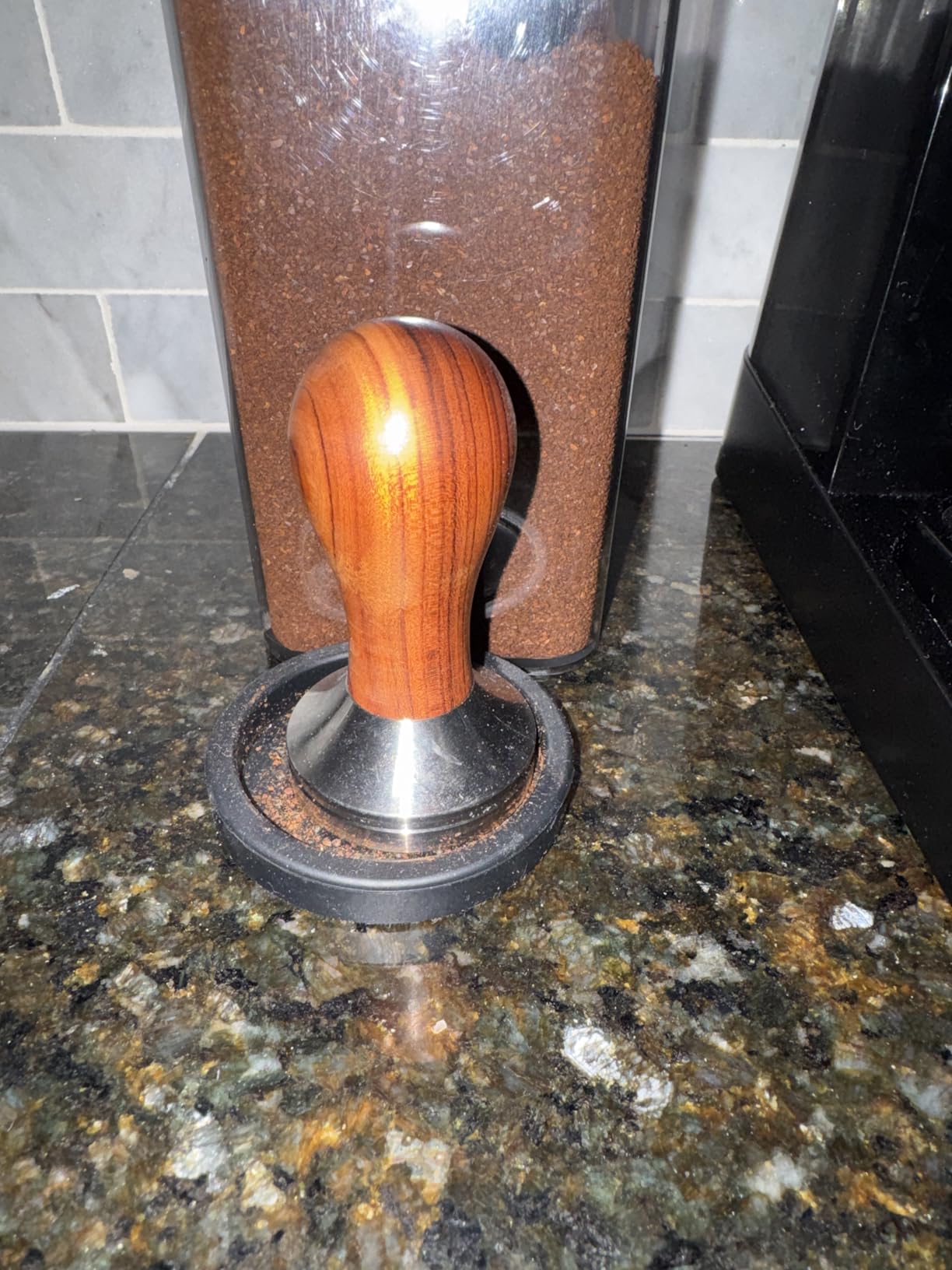
A tamp mat is a small thing that changes your counter more than you would expect. Stray grounds used to end up on your worktop every shot, and the wood-handled tamper you just wiped clean sits face-down on the same wet patch. The silicone mat included here gives the tool a home and catches the dust that falls off the rim on lift.
The tamper itself is a straightforward 304 stainless flat base with a polished solid wood handle, offered in 51mm, 53mm, and 58mm. Owners like the combination of looks and function, and several mention that grounds do not cling to the stainless face the way they do with some coated bases.
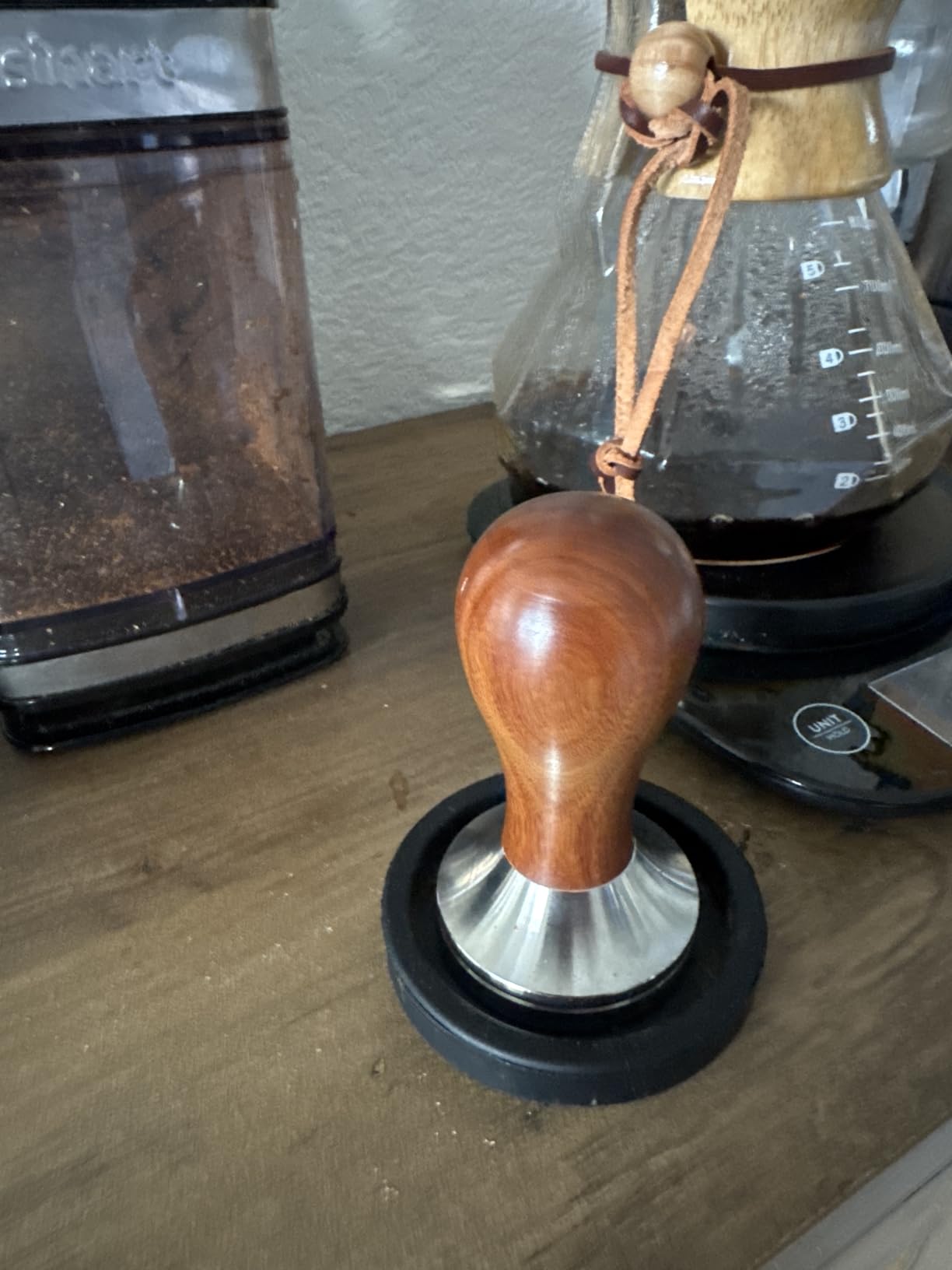
There is a stainless steel thread at the handle and base junction, which is the part that usually rusts on cheaper tools. Having it at the interface rather than hidden inside is a sign the manufacturer thought about where coffee and water actually sit.
Cleaning is simple and worth knowing before you buy: the base is dishwasher safe, the wooden handle is not. Detach the two and you have a tool that stays clean without any special routine.
Why the bundle matters for small kitchens
A mat is the cheapest way to keep a coffee station tidy, and it also protects a counter from the tamp face if the tool gets set down wet. Owners who bought this as a set tend to mention the mat more than they expected to, which is the usual pattern with bundled accessories.
The wood handle also runs cooler and less slippery than bare metal, which is comfortable during a longer session and gives the setup a more deliberate, barista-station feel.
Where it falls short
Some 58mm buyers report the fit runs slightly undersized and wish for another 0.2 to 0.4mm. If you are on a 58mm basket, read the recent reviews for your machine before committing, since that is the size where tolerance matters most.
A few users also find it lighter in the hand than they expected. At roughly two thirds of a pound it sits between the very light dual-ended options and the genuinely heavy stainless tampers, so if you want maximum stability under the palm, look at one of the heavier models instead.
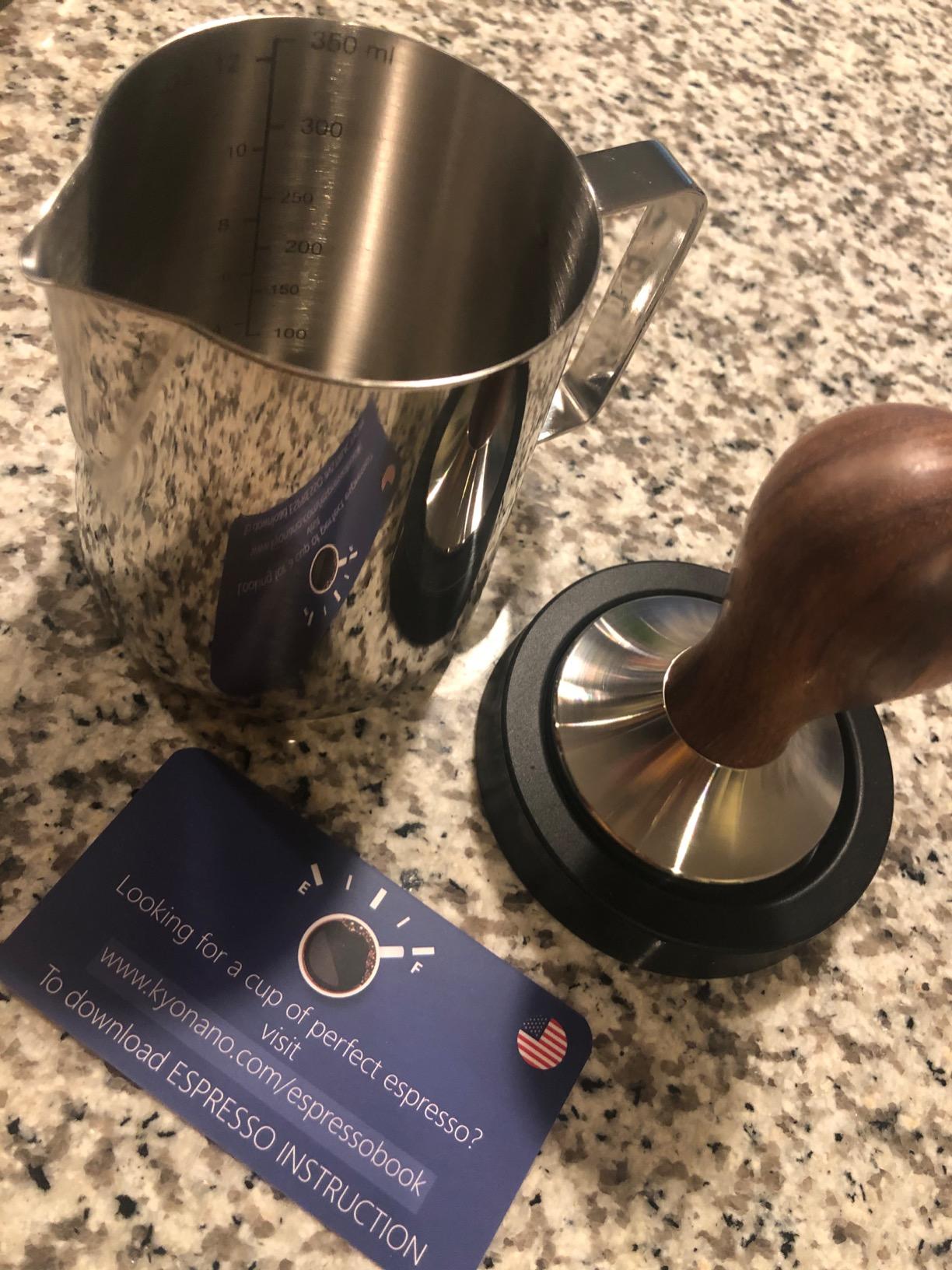
9. KYONANO 51mm Ripple Base Tamper – Best Ripple Base
KYONANO 51mm Espresso Coffee Tamper with 304 Stainless Steel Ripple Base
- Highest average rating in the roundup at 4.9
- Rippled base creates flow grooves to fight donut extraction
- Real rosewood handle feels premium
- Base rinses clean and holds no residue
- Precise 51mm fit for common 51mm baskets
- Ripple pattern imprints visibly into the puck
- Single 51mm or 58mm size with no calibration
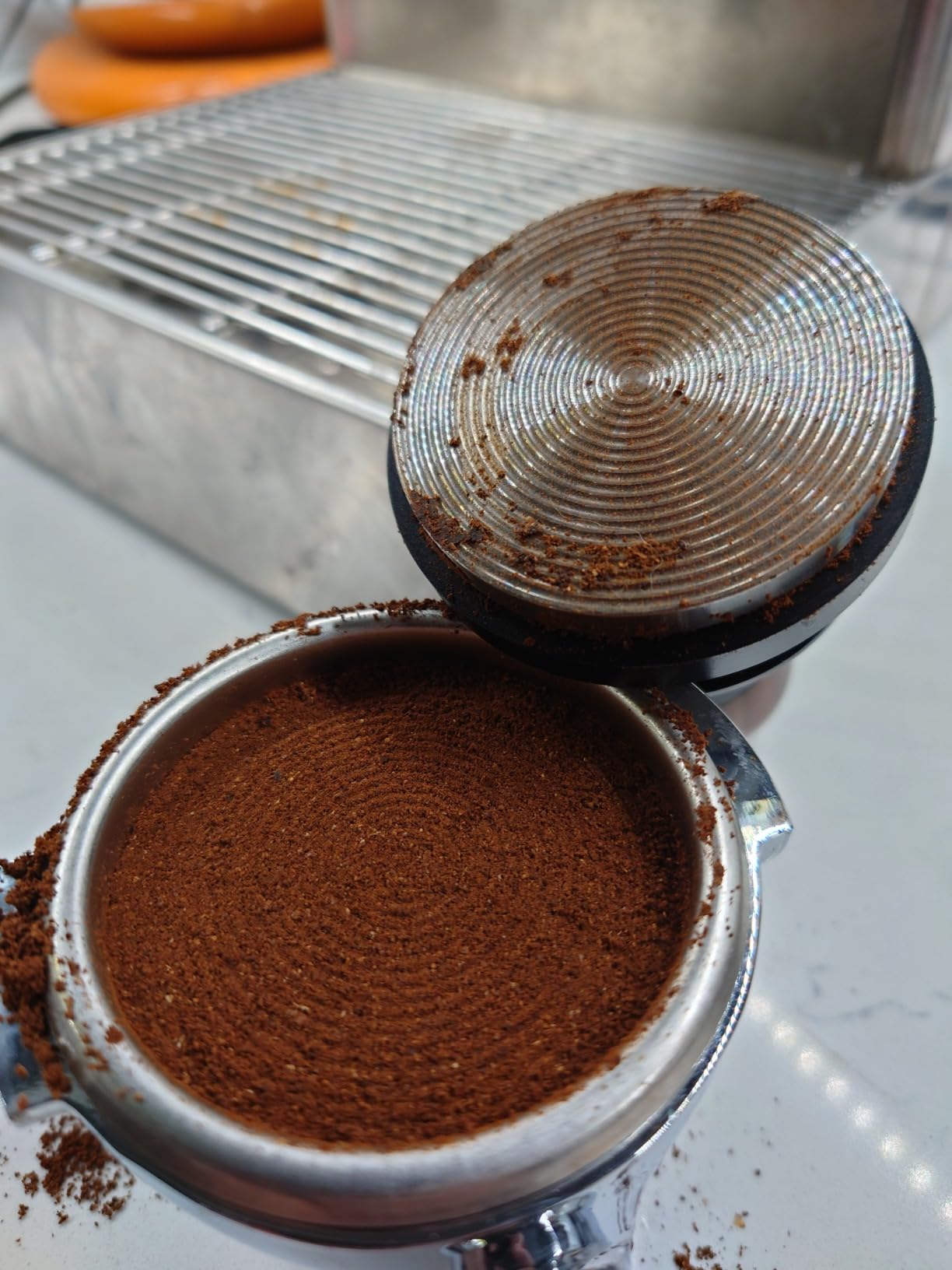
A ripple base is the opposite approach to everything else in this list. Instead of presenting one flat face, the base is grooved in concentric rings. The theory is that the grooves give water small channels so the whole puck extracts evenly rather than racing down the centre.
In the cup the effect is a less severe donut pattern, which matters most on lighter roasts that are prone to channelling. It does not rescue bad distribution, but on a well-distributed puck it reduces the pressure of water looking for the shortest path.
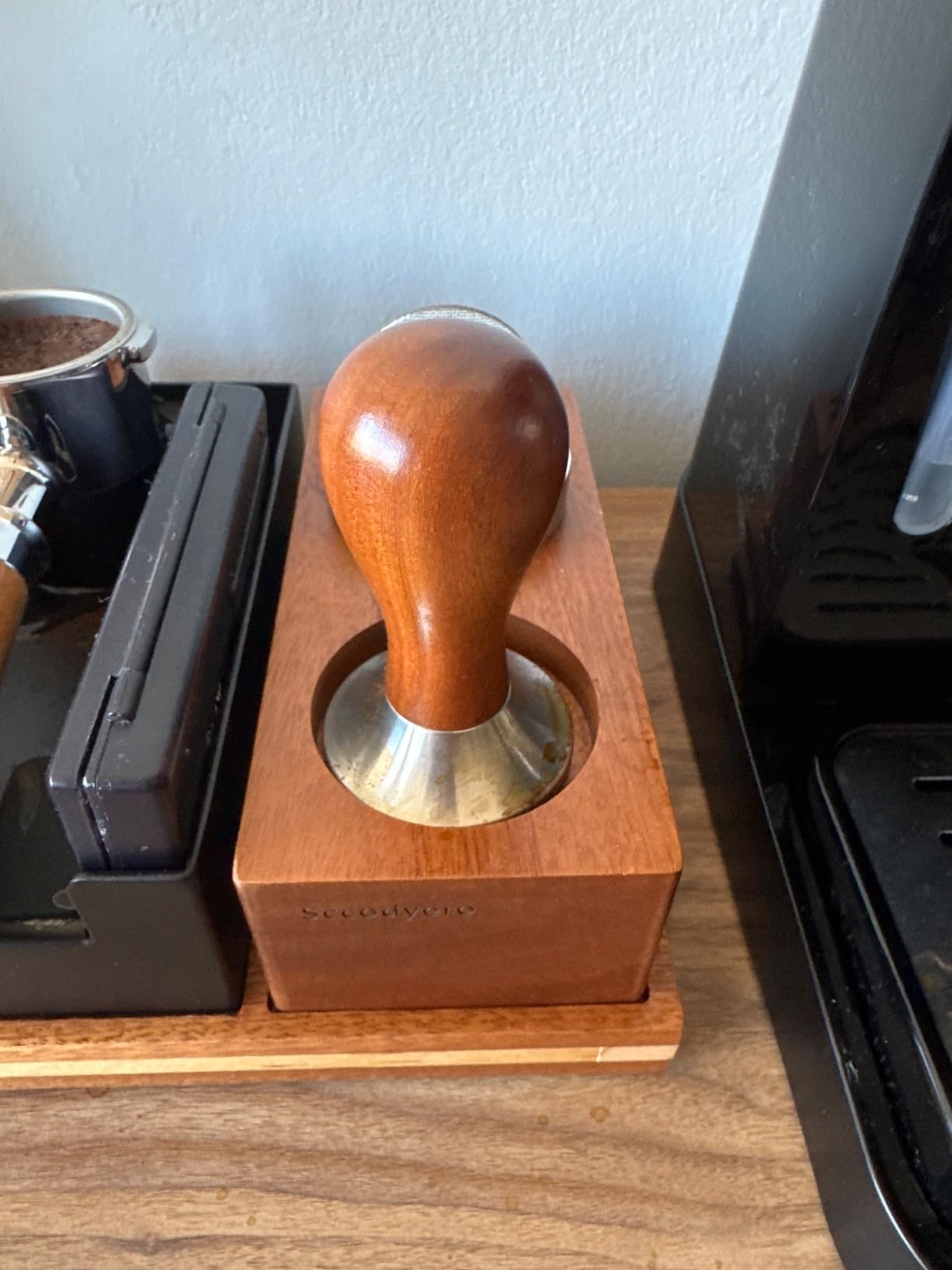
The handle is scented rosewood with no dead corners, so there is no groove for moisture to sit in. At just over ten ounces it has real heft without being tiring, and reviewers repeatedly make the point that it feels far more premium than the money suggests.
Many buyers prefer a classic weighted tamp to spring-loaded designs, and this one represents that camp well. It is compatible with De’Longhi pump machines, the Capresso PRO, and Breville 800 Series baskets in the 51mm configuration.
When ripples are the right call
Pick a ripple base when your beans are light, your dose is on the higher side, and your shots finish fast with a pale, uneven extraction. The grooves are doing something real in that situation, and reviewers of this tool credit it with preventing donut extraction in exactly those cases.
Ripple faces also stay clean easily. The grooves channel water rather than trapping coffee, and this base is reported to rinse clean without holding residue.
Where it falls short
The ripple pattern imprints a visible circular texture into the spent puck. Some people find that appealing evidence of an even tamp; others prefer the clean flat face of a traditional base. Neither is wrong, but it is a change in how your basket looks.
There is no spring and no adjustable pressure, so it will not take the variability out of your tamping force the way a calibrated tool does. It also comes in one size per listing, so double-check which one you are ordering.
10. MHW-3BOMBER 58.35mm Three-Spring Tamper – Best Sound Feedback
- Three-spring design holds a constant 30lb of pressure
- Audible click confirms the target force is reached
- 58.35mm base reduces residual grounds on the basket edge
- Wood and metal handle with a good contact surface
- Broad machine compatibility across 58mm baskets
- Heaviest and most expensive tool in the roundup
- Can fatigue smaller hands over a long session
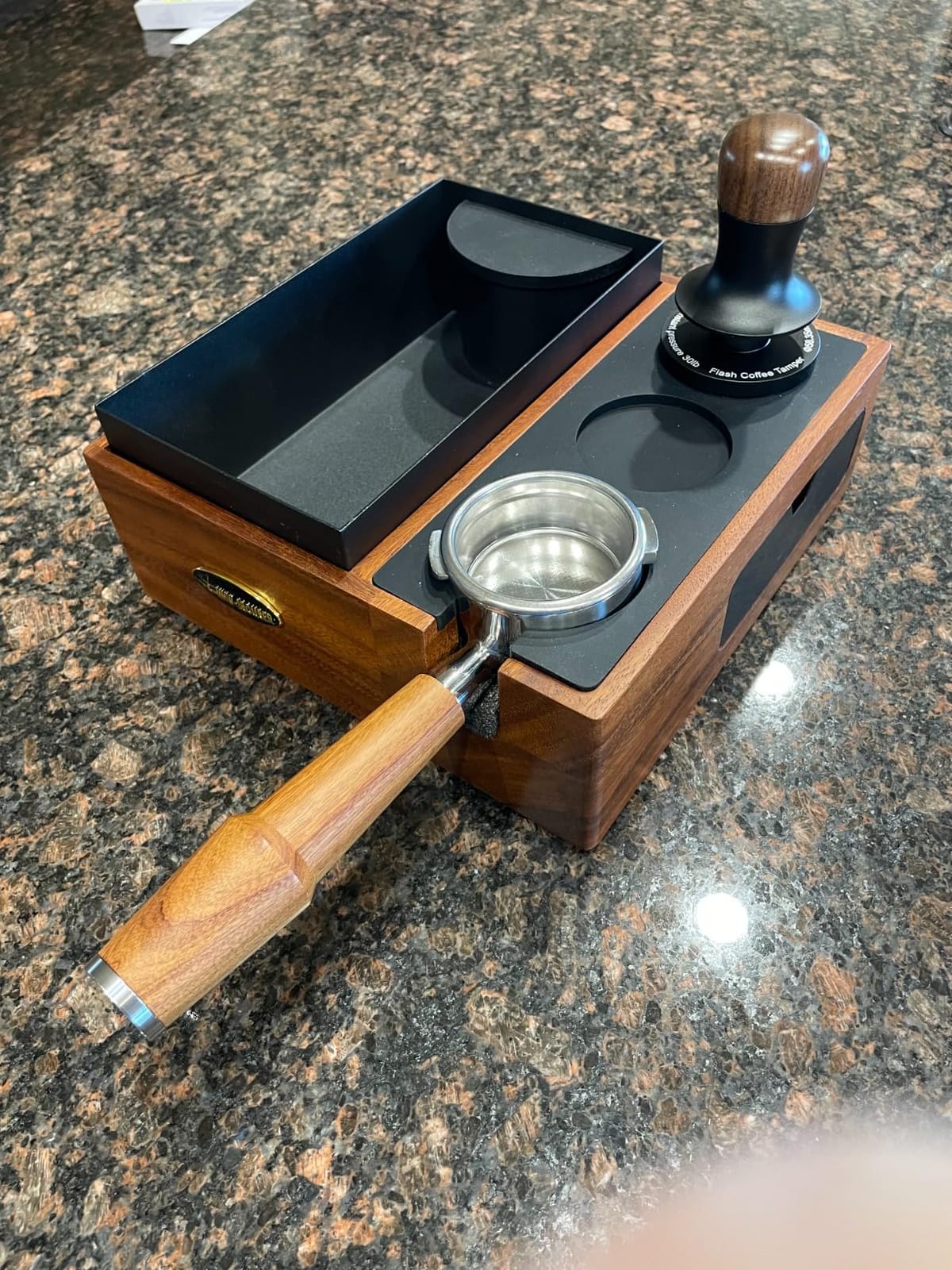
The idea that sold us on this one is the click. The three-spring arrangement holds a steady 30 pounds, and when you reach that force the tamper makes a distinct sound. A spring tamper with no feedback still leaves you estimating; this one tells you when you are there, and your hands learn the sound faster than you would think.
At 58.35mm it is also the tighter fit for nominal 58mm baskets in this roundup. A base that matches the basket wall closely leaves fewer loose grounds at the edge after the lift, which is where side channelling usually begins.
Owners point to repeatability as the reason shots came out level. Once your muscle memory knows that the click means the puck is compressed, you stop adjusting pressure shot to shot and start adjusting grind, which is the change that actually improves espresso.
Replacement springs at 15lb and 30lb are included as options, so you can soften the tamp for lighter beans or keep it firm for dark roasts. That makes the calibration adjustable without buying a second tamper.
Why sound feedback beats visual cues
You are looking at your portafilter, not the tamper, while you tamp. A click is information you receive without moving your eyes or changing your grip, which means it becomes automatic after a few dozen shots.
That matters most in a shared household. When two people tamp with different instincts, a fixed force with an audible cue produces a far more similar puck than either of them would manage alone.
Where it falls short
This is the heaviest and priciest tool we tested, and both facts show up in the hand. Owners with smaller hands mention wrist and forearm fatigue over a long session, so if your hands are small, a shorter palm-style tool is the safer buy.
It is also a 58mm tool. Compatibility covers Breville 9 series, DeLonghi, Gaggia, La Marzocco, Rancilio, Saeco, and Ascaso baskets, but nothing smaller than 58mm, so 51mm and 54mm owners should pass.
11. YMWVH 53.3mm Dual-Spring Self-Leveling Tamper – Best Self-Leveling Ripple
- Dual constant-force springs deliver 30lb every tamp
- Self-leveling action keeps the base flat
- Ripple grooves knock down high spots and fill voids
- Base accuracy within plus or minus 0.1mm
- Fits 53.3mm and 54mm Breville baskets
- Wooden handle versions have cracked within weeks for some buyers
- Handle coating peels and can block with a dosing funnel
- No click feedback to confirm pressure
- Some 58.3mm buyers report edge grounds and channeling
This combines two ideas that usually come separately: a self-leveling guide that keeps the base horizontal, and a ripple face that breaks up the contact area. The self-leveling is the part that matters most, because a tilted tamp is a slanted puck, and a slanted puck is the reason water finds one side of the basket.
The ripple base is described as knocking down high spots and filling voids, which is a fair way of saying the grooves give the grounds somewhere to go instead of resisting them. Combined with a fixed 30lb spring, the result is a repeatable tamp on a good distribution.
There were no customer photos available for this model during our review, so treat the durability feedback below as the more important thing to weigh.
What works about the design
The diameter accuracy of plus or minus 0.1mm on the 53.3mm SUS304 base is the tightest tolerance in the roundup, and for a 54mm Breville basket that is the difference between a base that centres itself and one that leaves a hairline gap.
Users report noticeably better shots than the tamper that came with the machine, and the even 30lb pressure is the most common word in the reviews. If your channeling comes from an off-axis tamp rather than from distribution, this is the tool aimed at exactly that problem.
Where it falls short
Durability is the real concern. Several reviewers report wooden handle versions cracking within weeks, and the handle coating peeling over time, which can also foul a dosing funnel that fits over the top.
Unlike the MHW-3BOMBER, the spring does not click, so you get no pressure feedback. Some 58.3mm buyers also report residual grounds at the basket edge, which means the fit on those sizes is not as forgiving as the 53.3mm version is on Breville baskets.
12. KNODOS 54mm Self-Leveling Walnut Tamper – Best for Breville 54mm
KNODOS 54mm Espresso Tamper For Breville Machines Self Leveling
- 53.35mm base fits 54mm Breville baskets more precisely than 53mm
- Self-leveling double spring compacts evenly
- Three interchangeable springs at 20lb/25lb/30lb
- Walnut body with attractive gift packaging
- Matches a wider range of espresso accessories
- Shorter review history than the established picks
- Only a 4.7 average so less long-term feedback
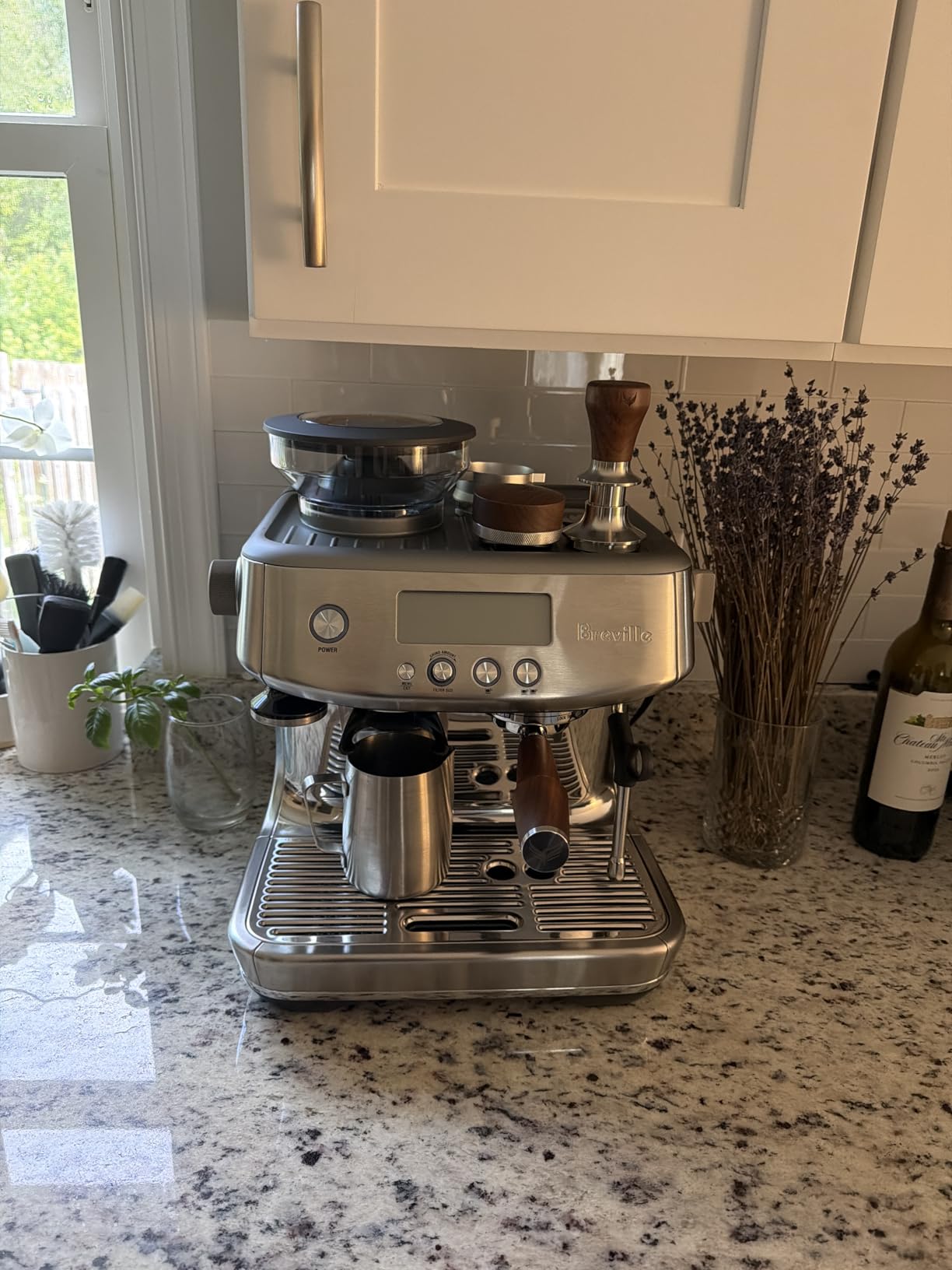
This is the most precisely specified Breville option here. Where many 54mm listings offer a 53mm base and leave you hoping for the best, this one is built at 53.35mm, which centres in a 54mm basket with less play around the wall and fewer loose grounds left at the edge.
The self-leveling mechanism uses a double spring system so the base stays horizontal as it descends, and three interchangeable springs at 20, 25, and 30 pounds let you tune the force to the roast without buying another tamper. That range is a little finer-grained than most competitors offer.
The walnut body is a genuine upgrade over plastic in the hand, and it arrives gift-boxed with a portafilter-shaped keychain, which makes it an easy present for someone who has just bought a machine. Reviewers often buy it alongside other matching tools, which is a fair signal of how the brand positions it.
Compatibility covers the Barista Express, Barista Pro, Barista Touch, Bambino Plus, Infuser, and the older Duo Temp Pro, so most Breville owners will find a listing that matches exactly what they own.
Where the extra fit precision pays off
On a 54mm basket, the difference between a 53mm and a 53.35mm base is small on paper and obvious in the spent puck. A tighter base compresses the outer ring instead of letting it stay loose, and the ring pattern on the used puck comes out more even as a result.
If your shots on a Breville consistently show a channel on one side, a precision base plus a self-leveling guide addresses both likely causes: an undersized base and a tilted tamp.
Where it falls short
The main limitation is history. With a smaller pool of ratings than the established picks in this roundup, there is less long-term evidence about how the springs and walnut body hold up over years of daily use, and that matters for a tool you keep for a long time.
It is also a dedicated single-size tool in practice, so if you run a different basket size on another machine you are buying this alongside something else rather than instead of it.
Calibrated vs Traditional Tampers: Which One Do You Need?
Calibrated or not: the honest answer
A spring-loaded tamper removes pressure from the decision, not from the job. If you are the only person who drinks from your machine and you have a consistent motion, a heavy flat base is enough and plenty of experienced home baristas use exactly that. Calibration earns its price when tamping pressure varies, whether across people in a household or across the arc of a long session with a tiring wrist.
One thread in our research asked whether calibrated tampers add anything or are just another way to spend money. The consensus there was that a good heavy flat-base tamper plus good technique is enough, and that experienced users train their pressure with a bathroom scale instead. That is a fair challenge to the category, and it is why we put a plain weighted tamper in the top three.
Flat or ripple base
Flat bases give one continuous contact area and leave a clean, flat-faced spent puck. Ripple bases cut concentric grooves that give water small paths and reduce the donut pattern, which helps most on light roasts. Neither is universally better; ripple is a tool for a specific problem, not a general upgrade.
Weight and handle fit matter more than most guides admit
Forum discussion around handle fit was the loudest theme in the enthusiast sources we reviewed. Members consistently argued that handle shape and hand size matter more than the base, and that small-handed users actively avoid large flat-top handles. Buy for how the tool sits in your palm, and try one in a shop if you can.
Weight follows the same logic. Anything in the region of a pound gives you enough mass to level a puck without effort, and going heavier mostly adds wrist fatigue. Very light tools under about five ounces ask more of your forearm than most people expect.
What cafes actually use
Professional bars overwhelmingly tamp by feel with a simple weighted tool, because they pull dozens of shots an hour and need speed and durability over adjustability. The expensive spring tampers sell well in specialty cafes where baristas are being trained and consistency matters more than a two-second shortcut, and that is where the community consensus that a heavy flat base is enough in a cafe comes from.
Which spring setting should you start on
Start in the middle of whatever range your tool offers, then move down for light, recent coffee and up for dark, oily roasts. For a tool with three springs, the middle one is a sensible starting point. Change it based on how your shots taste and how the spent puck looks, not by guesswork.
Tamping Technique in Six Steps
No tamper fixes a skipped step. This sequence takes about fifteen seconds and accounts for more shot quality than any tool in the roundup.
Distribute the bed. Level the grounds to the basket rim with a distributor, a WDT tool, or a few gentle shakes. This is where most channeling is actually born.
Groom the surface. Break up any clumps and ridges left by dosing, especially with a WDT tool if your coffee is prone to clumping.
Set the base flat on the rim. Lower the tamper straight down without twisting. A twist drags the top of the puck sideways and creates a spiral channel.
Tamp once, firmly. The old 30-pound rule is a guideline, not a law. Aim for firm and repeatable, in the region of 15 to 40 pounds, and use the same force every time.
Polish. Give the handle a light twist to leave a flat face on the puck. This is the only rotation in the process and it happens after compression.
Lift straight up and inspect. No knocking the portafilter on the counter. Tapping the side after tamping fractures the puck and is a habit enthusiasts widely believed until professionals debunked it.
Worth noting: do you need a distributor and a tamper separately? A dedicated WDT tool handles finer clumps than a leveler, and it pairs with any of the twelve tampers here. The MATOW combo above covers both jobs in one object, which is why it takes a slot in the top three.
Reading the Spent Puck: What Your Shot Is Telling You
Flip the basket over after a shot and look at the used puck. It is the fastest diagnostic tool you own, and it tells you whether the problem is distribution, tamping, or grind.
A clean hole in the middle means water found the shortest path through the centre. Grind finer, distribute more thoroughly, and check that your tamper base matches the basket wall.
One side noticeably lower than the other means the tamp was off-axis. Use a self-leveling tamper or slow the descent and keep your elbow directly over the basket.
A cracked or fractured puck means you knocked the portafilter on the counter after tamping, or lifted with a twist. Both happen at the lift, not at the press.
A dry, loose outer ring means the tamper base is too small for the basket. This is a sizing problem and no amount of extra pressure will fix it.
Water in the basket after the shot means the puck was not fully compressed, usually from too light a tamp or too coarse a grind at a low dose.
If your shots are still channeling with a good tamper, the most likely explanation is distribution. A spring cannot fix a bed that was dumped rather than spread, which is why distribution belongs at step one of the sequence above.
Frequently Asked Questions
Are espresso tampers worth it?
Replacing the tamper that came with your machine is the cheapest meaningful upgrade in an espresso setup. Those factory tampers are usually plastic and a fraction narrower than the basket, so they leave a ring of loose grounds at the edge that water finds first. A correctly sized flat base, used with a firm and repeatable motion, fixes that ring and noticeably improves balance. You do not need to spend heavily to get the benefit.
Are spring-loaded espresso tampers better?
Spring-loaded tampers are better at removing variation, not at making bad puck prep good. They deliver a fixed force so the same tamp happens every time, which matters most in a household where several people tamp or when your wrist tires over a long session. Experienced baristas using one machine for a few drinks a day often do just as well with a heavy flat-base tamper and good technique.
Is a calibrated tamper better than a regular tamper?
It depends on whether your pressure is consistent without one. A calibrated tamper caps force at a fixed level, which helps when your hand varies day to day or when more than one person uses the machine. A regular heavy tamper lets you feel and adjust the force, which many experienced users prefer because they move between light and dark roasts. Both produce excellent espresso when the size is right and the technique is consistent.
What is the difference between a 58.5mm and a 58.35mm tamper?
Both are precision bases made for nominal 58mm baskets. A 58.35mm base sits tighter inside a standard basket wall, leaving a smaller gap at the edge. A 58.5mm base rides slightly over the rim of a standard basket and matches the wider rim found on some precision baskets. For standard commercial baskets, 58.35mm is the safer choice. Check the maker’s diameter if you run VST or IMS precision baskets.
What is the most common espresso tamper size?
The most common size is 58mm, found in traditional prosumer machines such as Gaggia, Rancilio, and Rocket portafilters. The 54mm Breville and Sage basket is the second most common, used by the Barista Express, Barista Pro, Bambino Plus, and Infuser. 51mm appears on compact machines like the De’Longhi Dedica. Measure your basket with digital calipers before buying, because brand names alone are not reliable.
Is Breville 53mm or 54mm?
Both numbers are correct for different parts of the same portafilter. The basket is often sold as 53mm for Bowtell-style precision baskets, while the portafilter rim is commonly described as 54mm. A 53mm or 53.3mm base fits inside a 54mm basket with a small amount of play. Measuring the inner diameter with digital calipers removes the guesswork and takes less than a minute.
Is a flat or ripple tamper better?
A flat base gives continuous contact and a clean, even spent puck, and it is the right default for most home setups. A ripple base cuts concentric grooves that give water small paths, which reduces the donut extraction pattern and helps most on lighter, channelling-prone roasts. Ripples do not fix poor distribution, so level the bed well first. The groove pattern also imprints visibly into the used puck.
The Best Espresso Tampers for Home Baristas in 2026
The best espresso tampers for home baristas in 2026 come down to one honest rule: buy the diameter that fits your basket, then choose between a heavy flat base and a spring-loaded mechanism based on how much your tamping varies. Get that wrong order and no amount of money rescues the shot.
For a 54mm Breville or Sage machine, the Normcore V4 is the pick because it combines interchangeable springs with a self-leveling guide and a base tight enough for the basket. If you want distribution and tamping in one motion, the MATOW combo is hard to argue with. On a 58mm machine, the LuxHaus heavy flat base or the MHW-3BOMBER with its audible click are the two strongest options. On 51mm, the APTSPADE gets the sizing right and the rating to match.
Whatever you choose, spend the first week on technique rather than on gear. Distribute, level, press once, lift straight up, and read the spent puck. The tamper gets you consistent pressure; the habit is what gets you good espresso.