
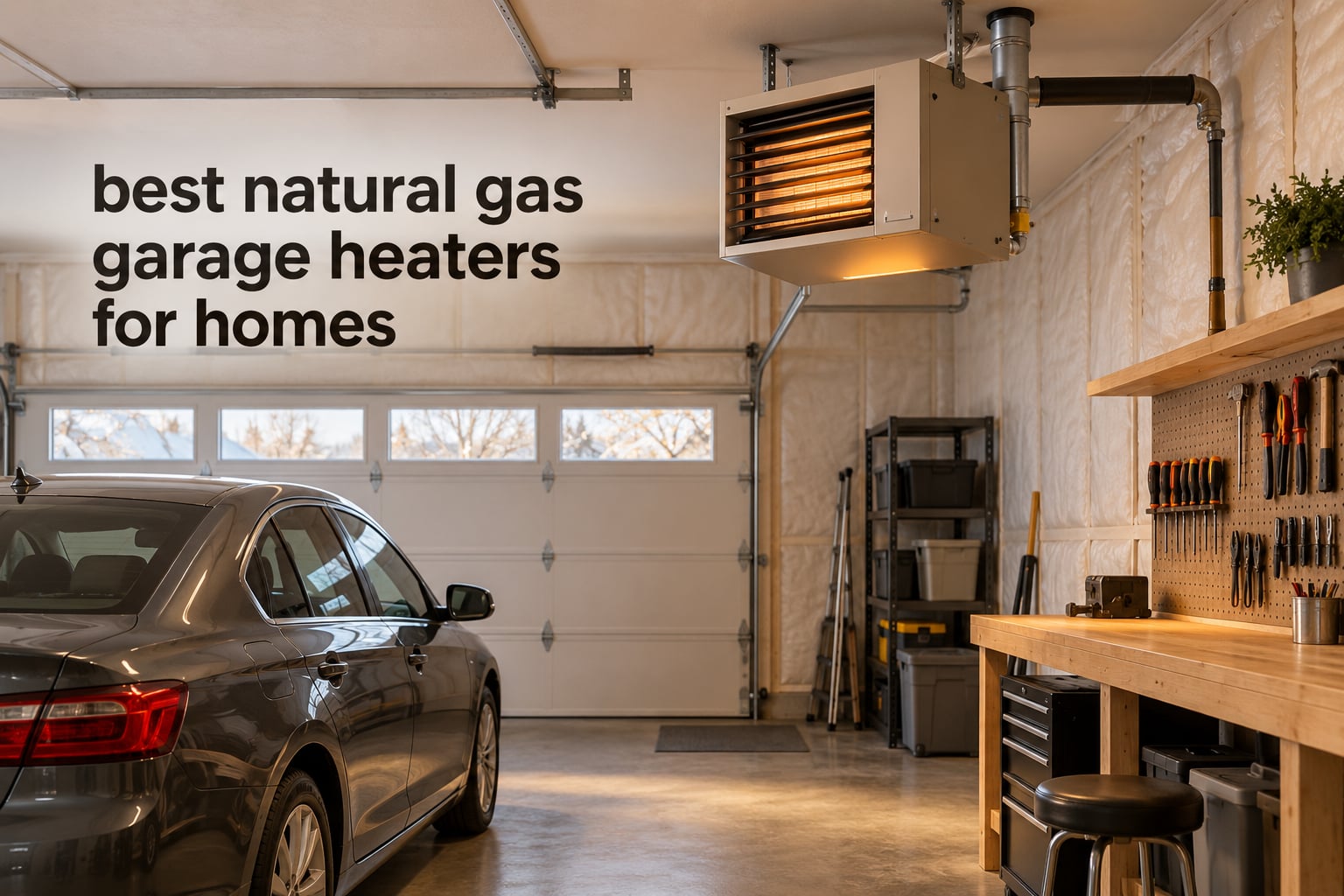
If you want the shortest possible answer, here it is: the best natural gas garage heater for most homes is the Mr. Heater 30,000 BTU vent-free blue flame wall unit, and the best choice for a large insulated garage or shop is a ceiling-mounted power-vented unit heater like the Modine Hot Dawg. Natural gas wins on running cost because a piped gas line delivers heat far more cheaply per hour than any electric garage heater, and it holds temperature through deep cold the way a portable propane unit never will.
What follows is a roundup of the 11 natural gas garage heaters that clear a real review bar, ranked by how well they suit a home garage rather than a warehouse. We looked at BTU output, venting type, garage certification, safety shutoffs, thermostat control and the pattern of complaints in buyer reviews, then sorted out which units belong in an attached garage and which only belong in a detached shop or a finished room. Every model listed carries its manufacturer model number and published BTU rating so you can match it against what your contractor quotes.
Two things shape almost every decision here. The first is that a gas line is the real barrier, not the heater. Homeowners repeatedly tell us on Garage Journal and in heating forums that they spent more on running the line from the house than on the appliance itself. The second is venting: a vented unit sends combustion gases outside and can sit in an attached garage, while a vent-free unit is indoor-rated only and is not appropriate for a space where a vehicle runs its engine. Our general garage heater buying guide covers the fuel comparison in more depth if you are still weighing natural gas against propane or electric.
We also updated this roundup for 2026, and the picture has not changed much: natural gas is the only fuel that makes whole-garage heating cheap enough to leave running for hours at a time.
Table of Contents
Top 3 Natural Gas Garage Heaters for Homes

Mr. Heater 30,000 BTU Blue Flame
- 30000 BTU
- Heats up to 1000 sq ft
- Battery ignition
- Vent free

Modine Hot Dawg 45,000 BTU
- 80 percent efficiency
- Power vented
- Garage certified
- Ceiling bracket
Those three cover the realistic range. The blue flame wall unit is the least complicated install and the most reviewed of the group. The forced-air ceiling unit is the value pick for a standard two-car garage that needs even heat across the floor. The Hot Dawg is the only one here that is purpose-certified for garages, which is exactly why it belongs in an attached space with running vehicles.
All 11 Picks at a Glance
| Product | Specifications | Action |
|---|---|---|
| Mr. Heater 30,000 BTU Vent Free Blue Flame |
|
Check Latest Price |
| Mr. Heater 50,000 BTU Forced-Air Unit Heater |
|
Check Latest Price |
 Mr. Heater 20,000 BTU Dual Fuel Blue Flame Mr. Heater 20,000 BTU Dual Fuel Blue Flame |
|
Check Latest Price |
 Dyna-Glo 20,000 BTU Natural Gas Blue Flame Dyna-Glo 20,000 BTU Natural Gas Blue Flame |
|
Check Latest Price |
 ProCom MN300TPA-B Infrared Plaque 30,000 BTU ProCom MN300TPA-B Infrared Plaque 30,000 BTU |
|
Check Latest Price |
| Modine HD45AS0111 Hot Dawg 45,000 BTU |
|
Check Latest Price |
 Comfort Glow KWN521 5-Plaque 30,000 BTU Comfort Glow KWN521 5-Plaque 30,000 BTU |
|
Check Latest Price |
 Heatstar MH25NG Radiant Overhead 30,000 BTU Heatstar MH25NG Radiant Overhead 30,000 BTU |
|
Check Latest Price |
 Rinnai FC824N Ventless Convector 24,000 BTU Rinnai FC824N Ventless Convector 24,000 BTU |
|
Check Latest Price |
 ProCom MN300HBA-B Blue Flame 30,000 BTU ProCom MN300HBA-B Blue Flame 30,000 BTU |
|
Check Latest Price |
 ProCom MN200TBA-B Blue Flame 20,000 BTU ProCom MN200TBA-B Blue Flame 20,000 BTU |
|
Check Latest Price |
1. Mr. Heater 30,000 BTU Vent Free Blue Flame: Best Overall for Home Garages
- Runs through power outages with no electricity
- Built-in adjustable thermostat
- Low-oxygen safety shutoff
- Heats up to 1000 sq ft from a wall-mounted cabinet
- Vent-free indoor rating means not for garages with combustion engines
- Blower fan kit sold separately
- Only a 1-year limited warranty
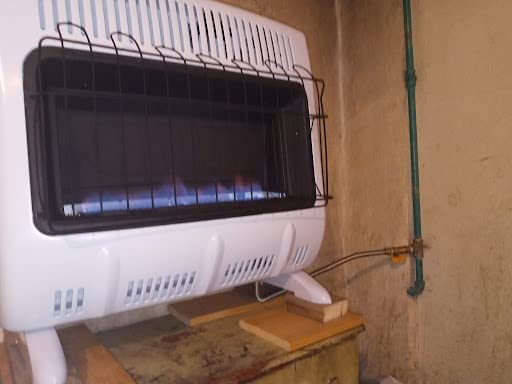
This is the unit we recommend most often because it removes the two things that scare people off: no electricity and no vent pipe. Model F299731 mounts on a wall, runs on battery-powered electronic ignition, and puts out 30,000 BTU in a cabinet that covers up to 1,000 square feet. For a standard two-car garage that is more than enough capacity.
The heater weighs 24.7 pounds and measures 30 by 13 by 28 inches, so one person can lift it into position on wall brackets that come in the box. Buyers report the blue flame ignites within seconds after the wall switch and settles into a steady burn. Most of its reviews describe exactly that experience: simple, quiet, and cheap to run.
The most common complaint in those reviews is not performance but accessories. There is no blower fan in the box, so the heat pools at the ceiling and the floor stays cold unless you add the optional F299201 fan kit. Several owners also point out that a vent-free indoor-rated unit is a poor match for a garage where a gas-powered vehicle is started, which is a code and safety issue rather than a preference.
Warranty coverage is the other soft spot, at one year limited. Enerco manufactures this under the Mr. Heater name, and the parts catalog is widely stocked, so repairability is not a concern in the way it is with a no-name import. What you give up by going vent-free is exhaust capture, and that is the trade we address further down.
What to check before you buy
Confirm that your garage has no combustion engine activity. If you start the mower inside or park a gasoline vehicle with the engine running, this unit is the wrong choice no matter how good the reviews are. The oxygen depletion sensor is a backup layer, not a licence to run an unvented burner in a work space.
Also measure your wall. At 13 inches wide and 28 inches tall, it needs clear wall space plus the manufacturer’s clearance to combustibles on all sides. In a two-car garage with two vehicles and a workbench, that wall real estate is often tighter than buyers expect.
Where it falls short
There is no blower and no thermostat beyond the built-in manual dial, so temperature control is manual and heat distribution is uneven without the fan kit. For a workshop where you sit still at a bench, that imbalance matters less. For a garage where you also want to warm a vehicle’s interior on a cold morning, it matters a lot.
Finally, the 30,000 BTU figure covers roughly 1,000 square feet under normal conditions. In an uninsulated or double-garage space in a genuinely cold climate, plan on the ceiling unit in pick two rather than pushing this one past its rating.
2. Mr. Heater 50,000 BTU Forced-Air Unit Heater: Best Value for a Two-Car Garage
- Ceiling-mounted forced air spreads heat evenly across the floor
- 50000 BTU covers about a three-car garage
- Quiet airflow with fast warm-up
- Works with 24-volt or Wi-Fi thermostats
- NG to LP conversion kit included
- Needs a gas line and vent pipe installed
- Minimum 10 ft ceiling height with 8 ft clearance
- Some units had a loose fan bushing that caused wobble
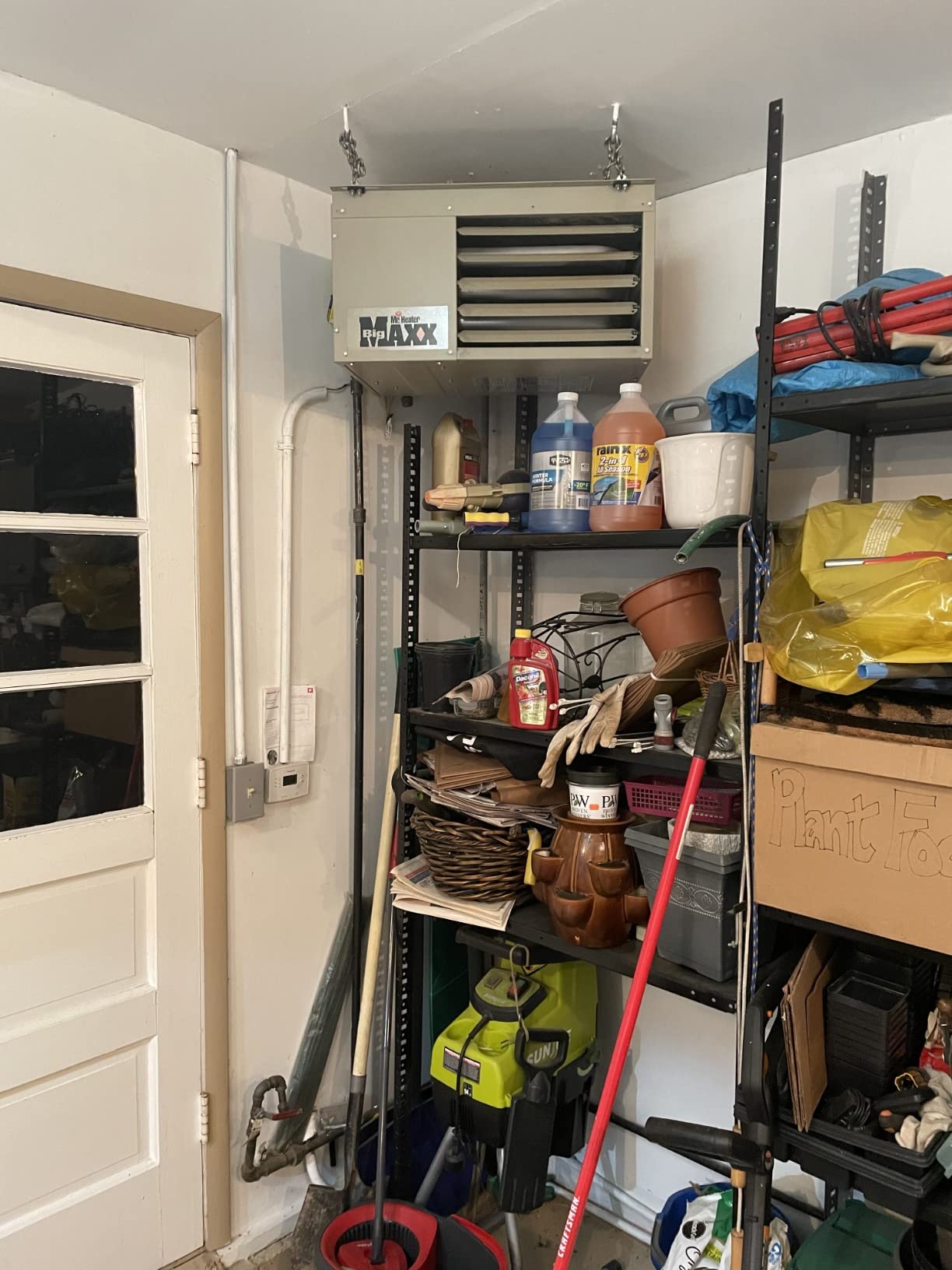
This is the pick for anyone whose garage is a real room rather than a storage closet. Model F260550 hangs from the ceiling and pushes 50,000 BTU of warm air down over the full footprint, rated to 1,667 square feet. Owners report documented temperature gains of around 10 degrees in 15 to 20 minutes once it is firing.
At 60.3 pounds and 24 by 25.5 by 13 inches, it is a substantial install that takes two people and a ladder. That is also why it earns its place here rather than the small blue flame units: it is the first heater in this roundup that treats the garage as heated floor area rather than a warm spot overhead.
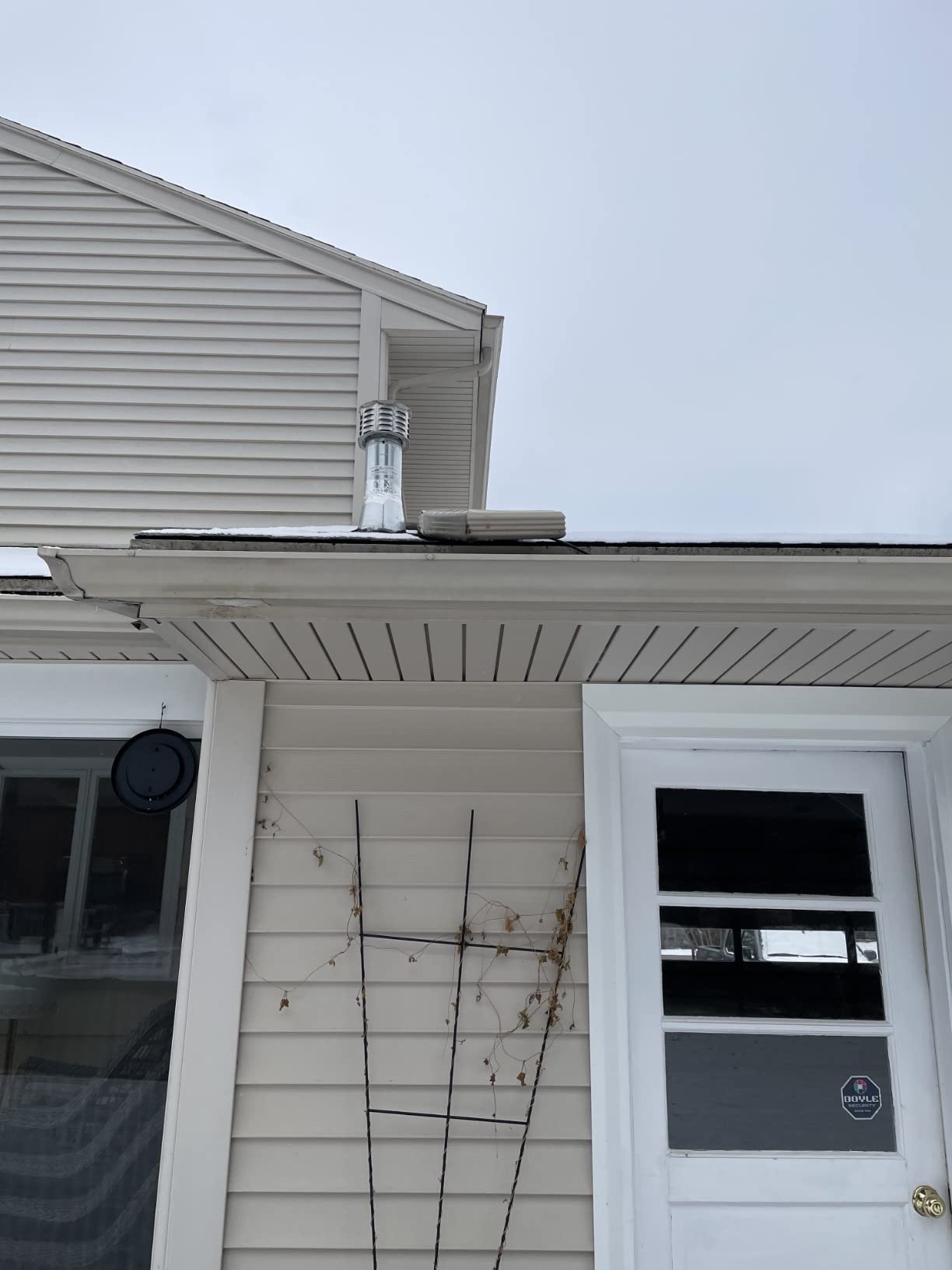
Two practical details make this easier to live with than the spec sheet suggests. It accepts standard 24-volt or newer Wi-Fi thermostats, so you can schedule the garage around your morning rather than running it all day. And the box includes a natural gas to liquid propane conversion kit, which matters if your gas line is not run yet and you want to start on a portable tank.
The recurring negatives are installation logistics and one hardware issue. Several buyers note that the vent pipe and gas line work can cost more than the heater itself, which matches what we hear constantly in homeowner forums. A few units shipped with a loose fan bushing or set screw that produced a wobble and noise, fixed by tightening or replacing the fan.
Clearance and thermostat planning
The installation rules are strict. The unit needs a minimum 10-foot ceiling and 8 feet of clearance from the base of the heater down to the floor, which puts the housing well above the door of most standard vehicles. Measure your ceiling before you commit, because a vaulted or finished ceiling can rule this model out entirely.
Decide on thermostat wiring before the installer finishes. The unit itself has controls, but the useful feature is a wall thermostat, and running that low-voltage line is much cheaper while the ceiling is open. Our guide to garage heaters for winter covers how people use zoned heating once a garage gets a thermostat.
Where it falls short
It is not garage-certified in the way the Modine is, and it needs 115V power for the blower, so a power outage means no heat. A handful of buyers also reported control board failures inside the first season that were an expensive self-repair, and some found manufacturer customer service slow to respond.
Colours vary between grey and tan between production runs, which matters if you are matching a finished ceiling. And it is an indoor unit, so the vent must terminate properly outside. Get the flue plan right during the install rather than afterwards.
3. Mr. Heater 20,000 BTU Vent Free Dual Fuel Heater: Best for Small Spaces and Backup Heat
- Runs on natural gas or propane with a fail-safe selector
- Battery spark ignition needs no electricity
- Light at 20.8 lbs and easy to install
- Built-in thermostat plus dual low-oxygen sensors
- 20000 BTU suits a small room more than a two-car garage
- Printed manual is thin
- No propane regulator adapter included
This dual fuel unit is among the smallest here at 20,000 BTU with a 700 square foot rating, and that limit defines its job. It is a good fit for a finished basement room, a detached workshop corner, or a garage bay where you want a second warm zone rather than the whole space heated.
What makes it flexible is the dual fuel design. A fail-safe selector knob switches between natural gas and propane, and the ignition is battery spark, so it needs no electricity at all. Several buyers use it exactly that way: piped gas in the garage, or a tank in a workshop without a line.
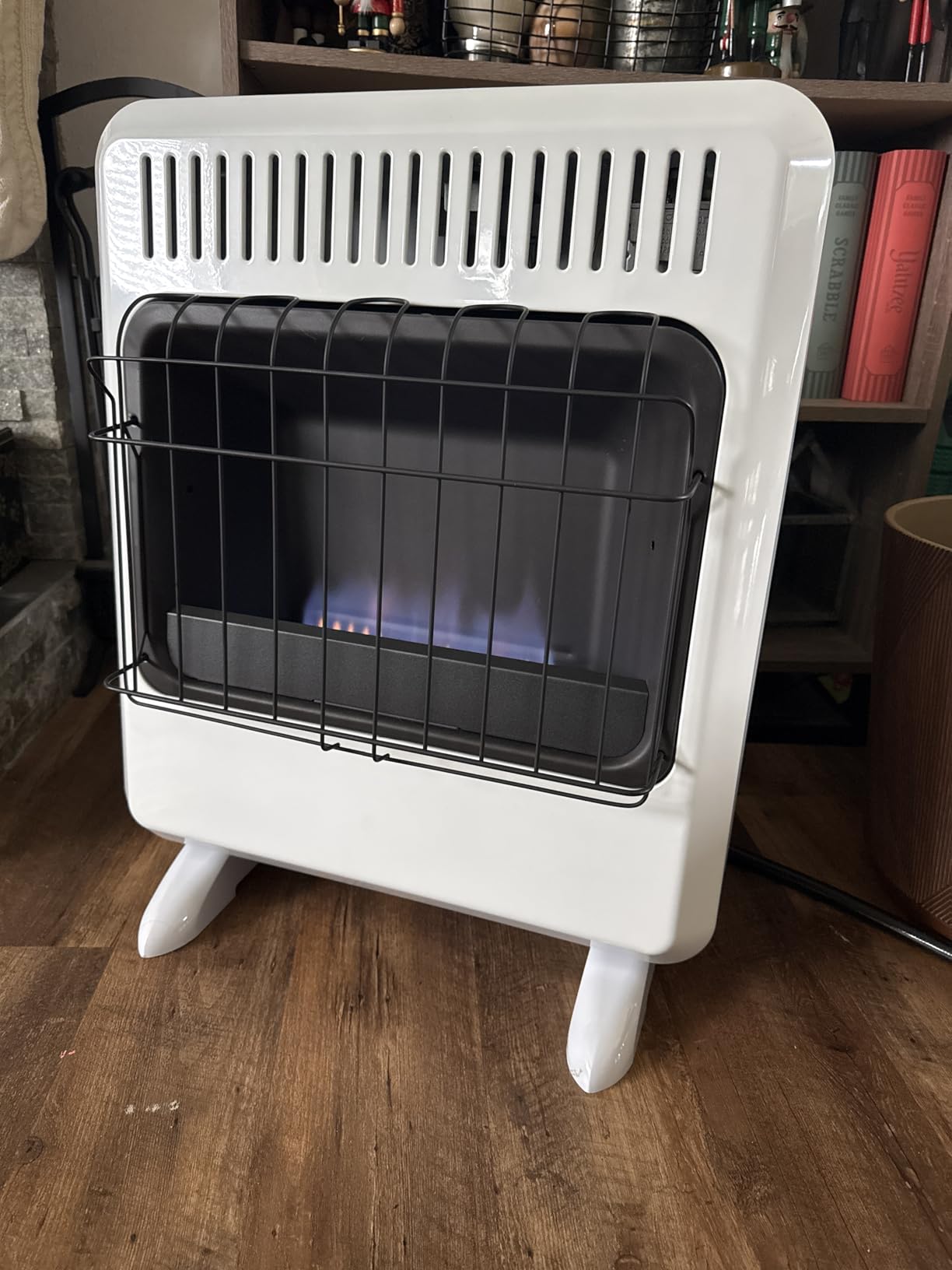
At 20.8 pounds and roughly 20 by 25 inches, this is among the easier units in the roundup to carry and mount. Wall mounting hardware is included, and reviewers consistently describe installation as straightforward. The built-in thermostat and dual low-oxygen depletion sensors are a step above the manual-control models at this output level.
The criticisms are about scope and documentation rather than function. The manual is thin enough that buyers end up watching setup videos, and the propane regulator adapter for cylinders is not included, so switching fuels means buying that piece separately.
When the smaller size is an advantage
Zone control is the strongest argument. If you heat a workshop bench area in a larger detached building, a 20,000 BTU wall unit lets you warm one corner without firing a ceiling heater for the whole volume. That shows up directly on your gas bill during the shoulder months.
It also works as garage backup heat in a space that already has a primary unit. Because it needs no electricity, it keeps working during an outage, which matters if you are winterizing a vehicle or protecting tools from freezing.
Where it falls short
Twenty thousand BTU in a two-car garage is a stretch, and buyers who try it there report the unit running continuously without reaching temperature. If your goal is a working two-car garage in a cold climate, size up to the 50,000 BTU ceiling model or the Hot Dawg.
It is also not certified for Canadian installation, which matters if your property sits near the border. And the vent-free indoor rating carries the same restriction as the other blue flame units here regarding combustion engines indoors.
4. Dyna-Glo 20,000 BTU Blue Flame Wall Heater: Best for Manual Three-Speed Control
- Variable 10000 to 20000 BTU on a three position knob
- Natural gas ready with no fuel conversion needed
- No electricity so it works as outage backup
- Quiet operation and easy ignition
- Manual control only with no built-in thermostat
- Only three preset heat levels
- Vent-free indoor unit not for combustion-engine garages
The Dyna-Glo wall unit is the simplest gas heater in the group and it does one thing well. The control knob sets 10,000, 15,000 or 20,000 BTU, and buyers describe quick warm-up with quiet ignition in both basements and garages.
It is natural gas ready out of the box, and the listing is explicit that fuel conversion is not permitted. That removes a common source of confusion and a safety error, since there is no kit to install incorrectly.
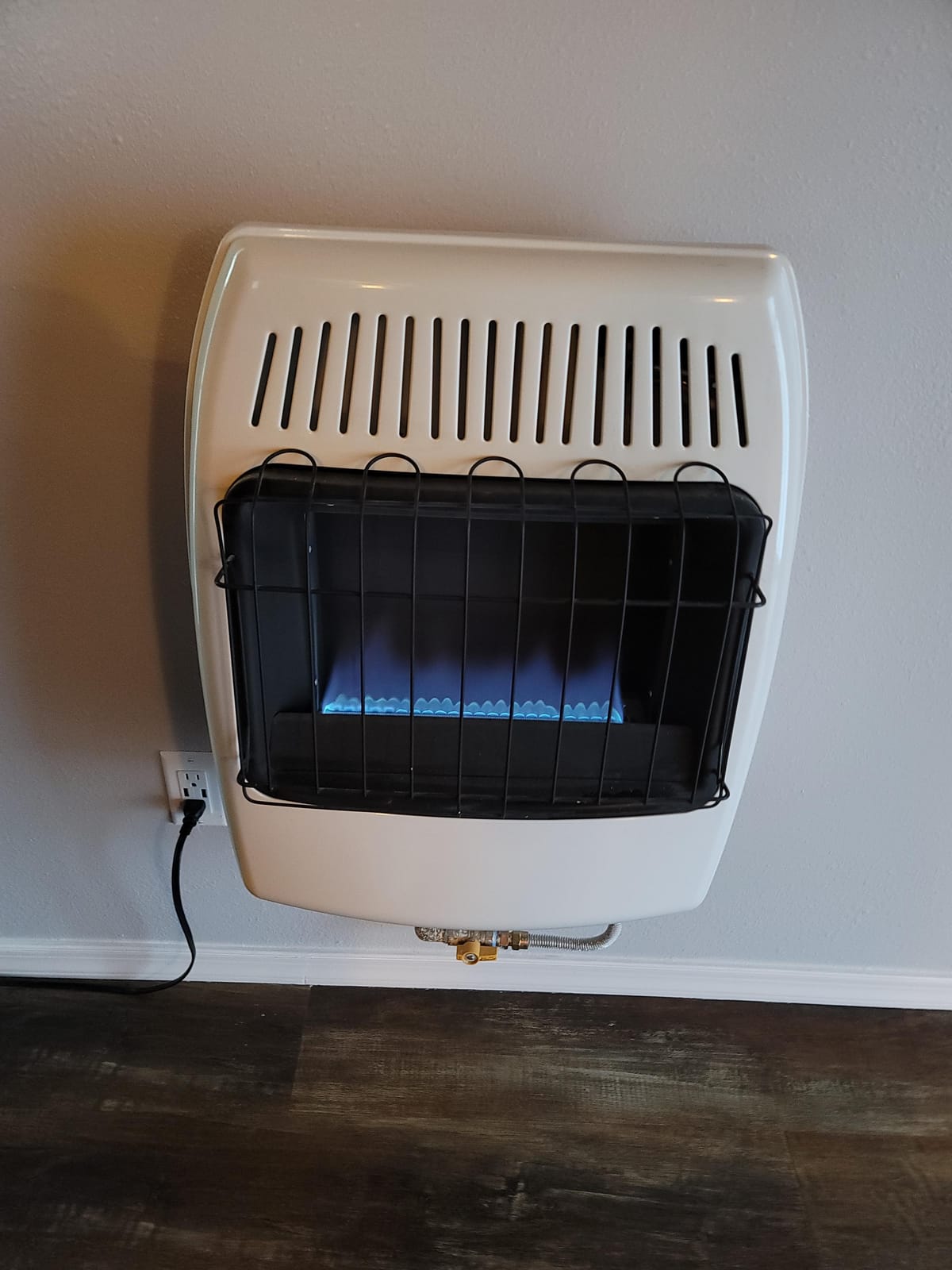
What stands out is the absence of dependencies. No electricity, no blower, no thermostat wiring, and no vent pipe. Owners like it as emergency heat for the same reason they like the Mr. Heater blue flame units: it works when the power is out and the space is cold.
At 20.2 pounds and 21 by 24 inches, wall mounting is a one-person job. The included hardware is minimal, just the item itself, so check that your wall has the framing for the bracket before you start.
Manual versus thermostat control
This is the single decision that separates it from the ProCom MN200TBA-B. The Dyna-Glo is manual, so you set a heat level and it stays there. If your garage warms up quickly in the afternoon and you want it to shut down overnight, you need a thermostatted model instead.
The tradeoff runs the other way too. A manual unit has fewer electronics to fail, and there is no wiring to run from the panel. For a seasonal garage where you fire it up on the coldest mornings and walk away, manual is often the more reliable choice.
Where it falls short
Three preset levels is genuinely coarse. Owners trying to hold a narrow temperature band report difficulty telling the low and medium positions apart, so expect to overheat or underheat rather than trim precisely.
Like the other vent-free indoor units here, it is not appropriate for a garage where a combustion engine runs. One isolated review also reported a failure after about a year, so the track record is long but not flawless.
5. ProCom MN300TPA-B Infrared Plaque Heater: Best Radiant Comfort With a Thermostat
- Built-in thermostat with high medium low control
- 30000 BTU covers up to 1400 sq ft
- Wall hardware and base feet both included
- Push-button ignition with oxygen depletion sensor
- No electricity required
- Vent-free indoor rating not for combustion-engine garages
- Negative reviews cluster around output in larger spaces
- No blower kit offered for this plaque layout
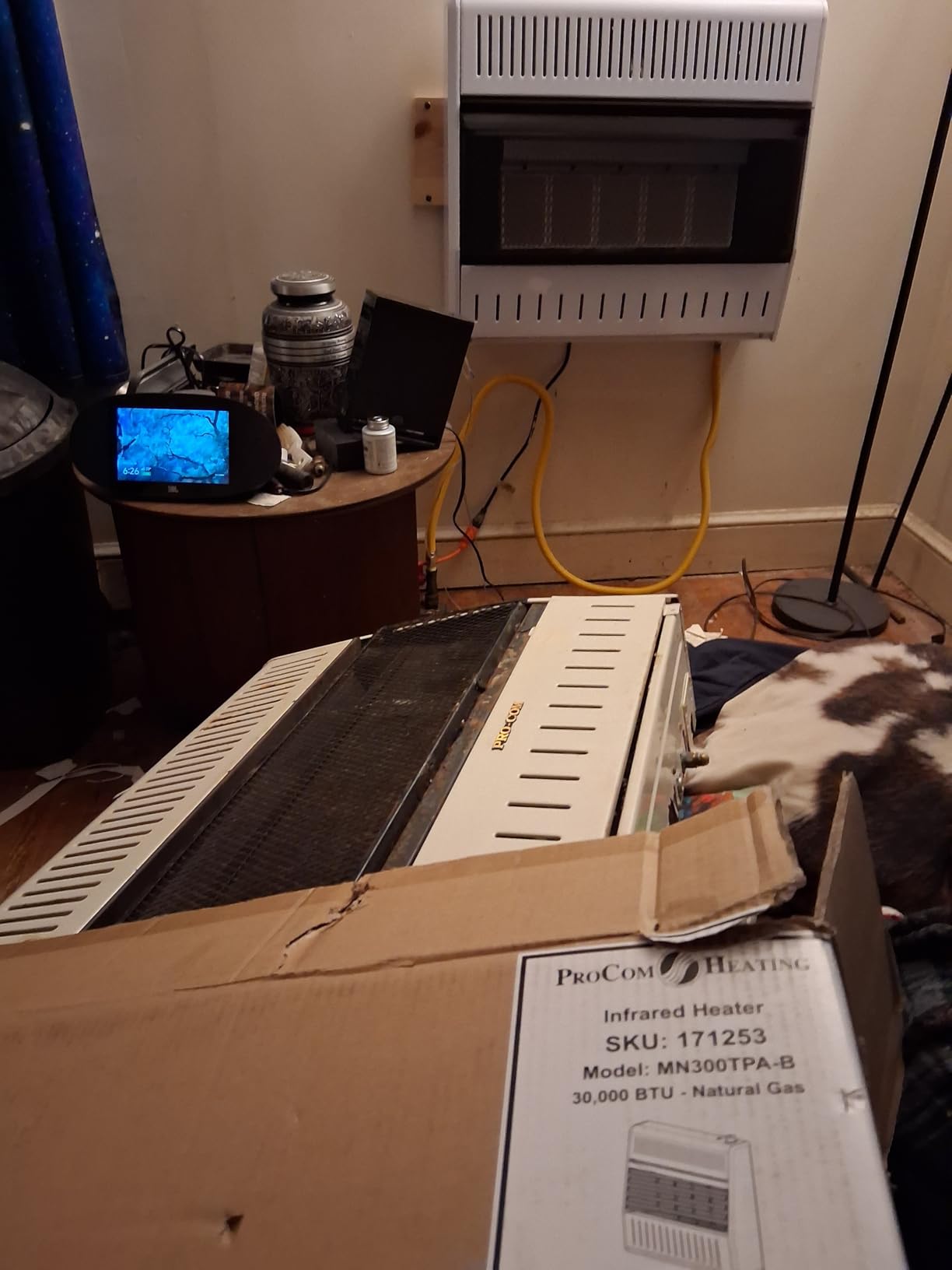
ProCom’s MN300TPA-B is the unit we like most when the garage is used as a workspace rather than a parking bay. It burns natural gas through an infrared plaque rather than a blue flame, so the heat arrives as radiant warmth at your body instead of as warm air you have to stand in to feel.
At 30,000 BTU it carries a 1,400 square foot rated coverage, a meaningful jump over most vent-free wall units, and it pairs with a built-in thermostat offering high, medium and low control, which almost nothing else at this output level includes.
The physical design is flexible. It ships with wall mounting hardware and a set of base feet, so you can hang it at chest height where the radiant pattern does the most work or stand it on the floor. Buyers report a slim, modern profile that does not look like shop equipment.
It is 15.58 kilograms, so it is a two-person lift. Push-button ignition, an oxygen depletion sensor and ANSI certification cover the safety basics, and no electricity is required, so outages do not stop it.
Radiant versus forced air for a garage
Choose radiant when you are stationary. A person working at a bench, exercising, or sitting in a man cave feels the benefit immediately because infrared energy transfers directly to skin and clothing. Choose forced air when you need the whole volume warm, including stored vehicles and the concrete floor.
This distinction matters more than most buyers expect. Radiant heaters do a poor job of de-icing a car or taking the chill out of a storage space, and they are judged on personal comfort rather than room temperature, which is why this model’s ratings sit slightly below the blue flame units.
Where it falls short
Its critical reviews cluster around heat output falling short of expectations in larger spaces, and the 4.4 star average rests on a strong but not dominant share of top ratings. If you are heating a full three-car garage, the rated area may not match your expectations of radiant coverage.
There is also no blower kit listed for this plaque configuration, so you cannot add circulation later. And like the rest of the vent-free group, it carries an indoor rating that rules out combustion engines in the space.
6. Modine HD45AS0111 Hot Dawg: Best for Large Garages and Workshops
Modine HD45AS0111Natural Gas Hot Dawg Garage Heater 45,000 BTU with 80-Percent Efficiency Grey
- The only true garage-rated unit in this roundup
- 80 percent efficiency with a power-vented exhaust
- Quiet operation suited to workshops and gyms
- Field wiring connections and knockouts simplify service
- Higher installed cost than vent-free residential heaters
- Needs 115V power so it is not outage safe
- Ceiling bracket mounting needs overhead structure
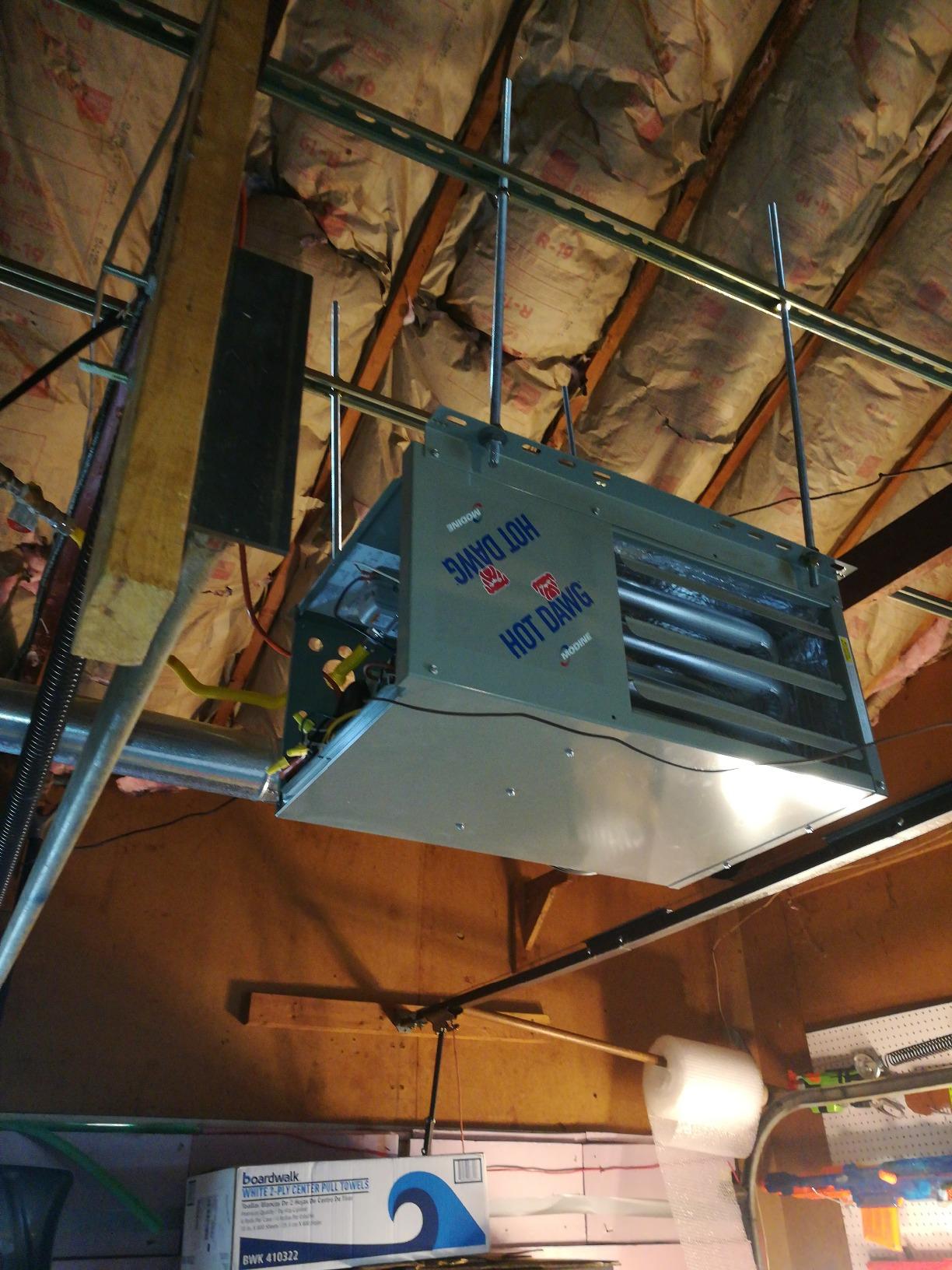
Our reference unit for this roundup is the Hot Dawg. Model HD45AS0111 puts out 45,000 BTU at 80 percent input efficiency, and it is certified for residential, commercial and industrial use, which is a different claim from the indoor space heater rating the other units carry.
That certification is the deciding factor for an attached garage. A power-vented exhaust draws combustion gases through small-diameter vent pipe to the outside, so the burner can operate in a space where a vehicle engine also runs. Low-profile grey housing at 26 by 12 by 16.5 inches blends into a finished ceiling.
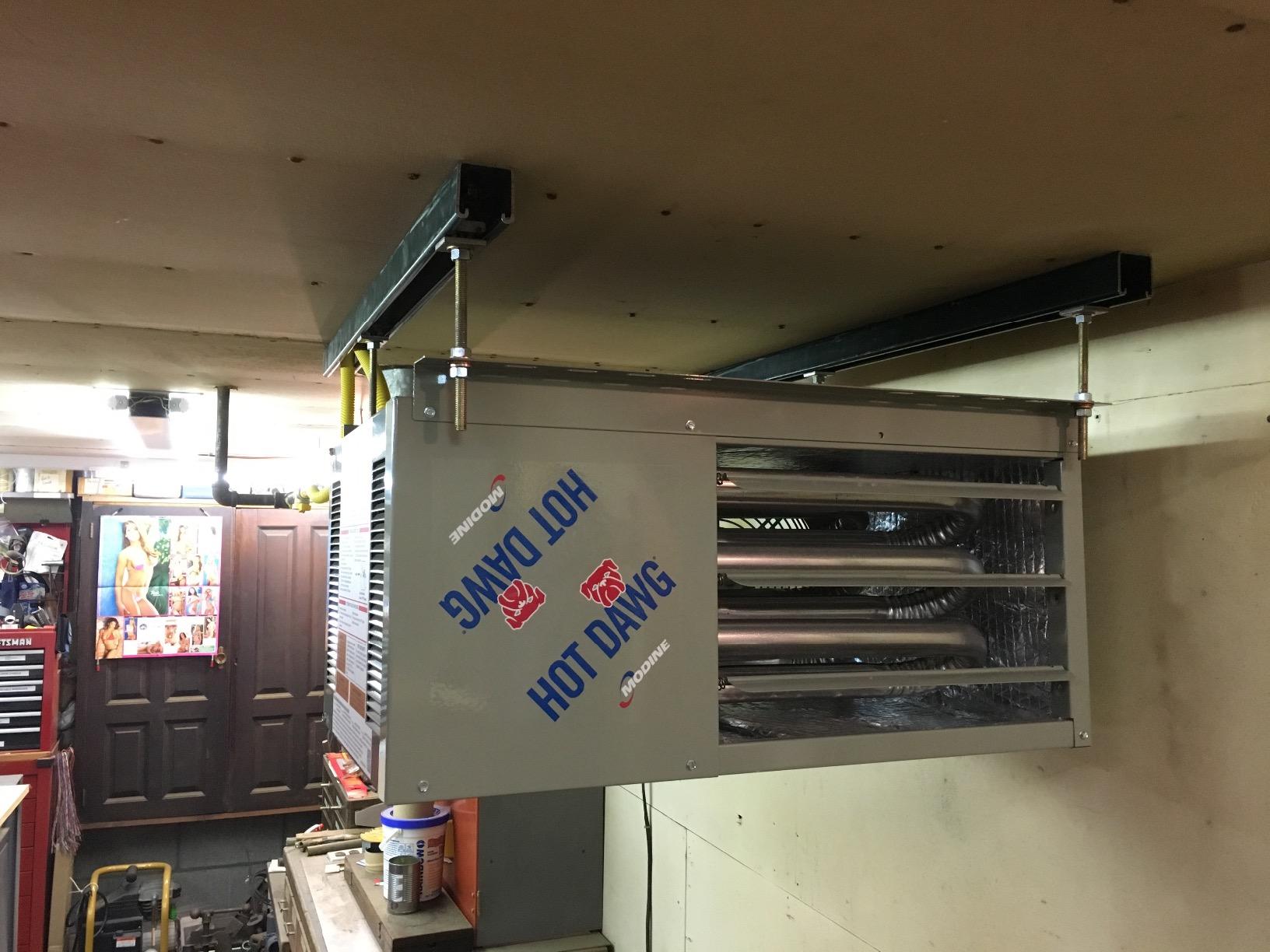
Owners rate it quietly, which is why it shows up in home gyms and workshops where conversation and concentration matter. Its 150 reviews average 4.5 stars, the highest review volume of the forced-air units here.
Installation is straightforward on paper: field wiring connections and knockouts give quick access to gas and electricity, and standard power exhaust simplifies side-wall or roof venting. At 60 pounds it still needs two people and proper overhead structure.
Why efficiency matters in cold weather
An 80 percent efficient burner converts most of its fuel into delivered heat rather than up a flue. Over a full winter of heating a garage, the gap between an 80 percent unit and a standard vent-free wall heater is the difference between heating the space and heating the flue.
It also runs at a lower vent temperature, which is kinder to vent pipe over decades of use. For anyone planning to keep the same heater in a garage for ten winters, the up-front cost difference is usually recovered well before the unit reaches retirement.
Where it falls short
It requires 115V power for both the blower and the vent fan, so during an outage you have no heat at all. That is the exact opposite of the blue flame units and worth weighing if you plan to use the garage as emergency shelter.
Its installed cost runs well above the vent-free residential heaters in this roundup, and ceiling bracket mounting needs adequate structural support overhead. Budget for the electrical run and the vent pipe in the same conversation as the heater, since all three together are the real installed number.
7. Comfort Glow KWN521 5-Plaque Heater: Best for Fine Heat-Level Control
WORLD MKTG OF AMERICA/IMPORT KWN521 5 Plaque 30000 BTU Gas Wall Heater,gray, 24.41×28.15×10.25
- Five plaque burners give the widest heat control range
- Low running cost compared with electric space heating
- Ventless design needs no duct work
- Built-in oxygen depletion sensor and flame shutoff
- No built-in thermostat on the base model
- 15 percent one-star share is among the highest in this roundup
- Not certified for installation in Canada
Where most vent-free units offer two or three heat settings, the KWN521 runs five separate plaque burners on a manual selector. That gives you a much finer adjustment of output than the three-position knob on the Dyna-Glo or the low, medium, high step on the ProCom manual model.
It puts out 30,000 BTU with a 1,000 square foot rating in a wall-mount cabinet that measures 28 by 24 by 10 inches. Owners frequently single out running cost as the main reason they bought it, describing the expense per hour as a fraction of electric space heating.
The warranty here is two years manufacturer defect only, double the one-year term on the Mr. Heater blue flame units and something to factor in for a unit that runs all winter.
The reviews here are unusually split, and it is worth being straight about why. The 4.2 star average comes with a 15 percent one-star share, but reading the negatives shows most complaints are about packaging damage in transit and the brand’s return policy rather than about heater performance.
Optional accessories expand what it can do. A floor stand and a blower are sold separately, which lets you move from wall-mounted radiant heat to a fan-assisted setup if you later decide you need air circulation.
Manual plates versus a thermostat
Five plates is genuinely finer than three settings, and it lets you dial output down through shoulder months when the garage only needs to stay above freezing. That is the use case where it earns its place.
What it is not is a thermostat. The unit holds whatever level you select until you walk over and change it, which means no overnight setback and no scheduling. If you want the garage to follow a schedule, buy a thermostatted model instead.
Where it falls short
Two limitations are worth naming directly. It is not certified for installation in Canada, so it is a US-only option, and the optional blower and floor stand are separate purchases that add cost to a base install.
The radiant plaque format also means it warms the occupant more than the room, so it is a poor choice for taking the chill off a stored vehicle. Combined with the manual control, this is a comfort heater with flexible output rather than a whole-garage solution.
8. Heatstar MH25NG Radiant Overhead Heater: Best for Bench Work Under a Ceiling
Heatstar By Enerco F125444 Radiant Overhead Garage Heater MH25NG Natural Gas
- Radiant overhead format directs heat downward where you work
- Natural gas only with no conversion ambiguity
- Enerco-built hardware with serviceable parts
- Compact footprint for overhead mounting
- Sparse listing detail with no feature bullets
- Listed weight of 1 pound appears to be a data error
- Warms the occupant more than the room air
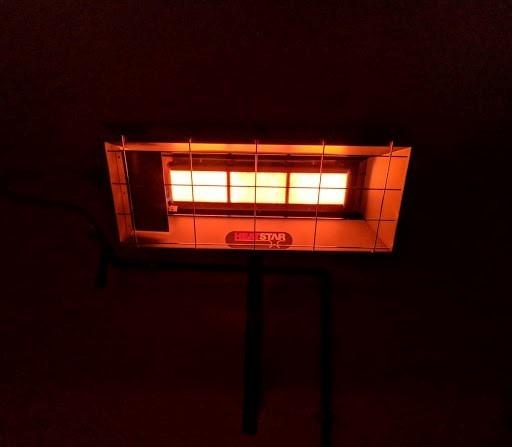
The MH25NG hangs from the ceiling and throws radiant heat straight down onto the work area, which is the arrangement many woodworkers and mechanics prefer. Sitting under it feels warm within a couple of minutes, before the rest of the garage has changed at all.
It is an Enerco-built unit sold under the Heatstar name, and that parentage is the real story. Parts for this hardware are widely available through the same catalog that supports the Mr. Heater line, so a failed component years from now is a serviceable event rather than a write-off.
Natural gas only, with no fuel conversion option, keeps the setup unambiguous. The housing is compact at 12 by 29.75 by 9 inches, which helps in a garage with limited overhead room between joists.
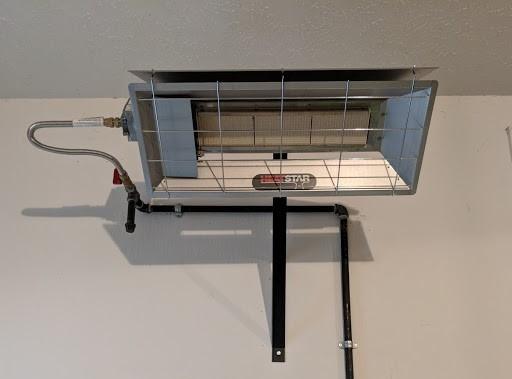
We want to be straightforward about the data here. This listing is sparse. Only two product images are available, there is no feature bullet list, and the listed weight of 1 pound is almost certainly a data error rather than a real specification. Do not use that number for anything when planning a lift.
Across 130 reviews it holds a 4.3 star average, which is typical of radiant heaters in general, since buyers judge them on personal warmth rather than whole-room heating.
Ceiling mounting and clearance
Overhead radiant units live or die on mounting height. Mount it too high and the radiant falloff means you feel little at bench level. Mount it too low and you are working around a hot surface over your head. Follow the manual’s clearance figures rather than eyeballing it.
Because the format warms downward, pair it with a plan for the rest of the space. A common arrangement is a radiant overhead unit over the bench plus a smaller vent-free wall unit for general air temperature, which costs less than running a large ceiling unit all day.
Where it falls short
It is the weakest choice here for whole-garage heating, and for anything stored. A vehicle in the cold will not benefit from a heater aimed at a person six feet away, which is the main limitation forum owners describe with radiant setups generally.
The sparse listing is the other practical issue. With no published feature bullets and a long-standing listing that has not been refreshed, you are working with less information than the other products here. Confirm the BTU rating, vent requirements and clearances from the manufacturer documentation before ordering.
9. Rinnai FC824N Ventless Convector: Best Thermostat and Warranty Coverage
Rinnai FC824N Ventless Natural Gas Heater with Programmable Thermostat
- 4.6 star average with 86 percent five-star ratings
- Programmable thermostat with self-diagnostics
- Flame failure plus overheat and oxygen sensors
- Cool-to-touch cabinet with a safety lock
- 10-year heat exchanger warranty
- Indoor residential space heater rather than a garage-rated unit
- Manufacturer recommends professional installation through its PRO network
- 24000 BTU is modest for an open garage volume
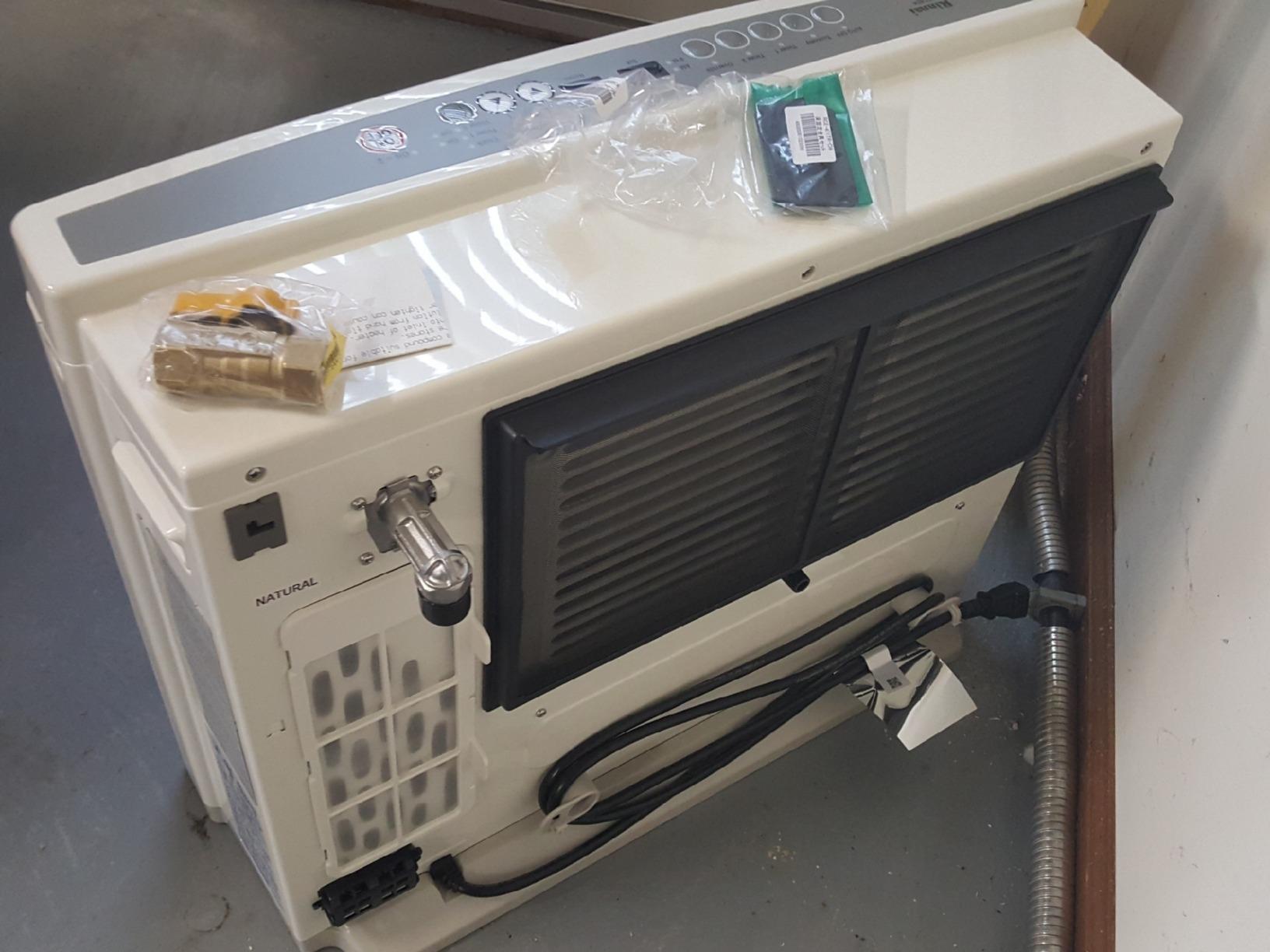
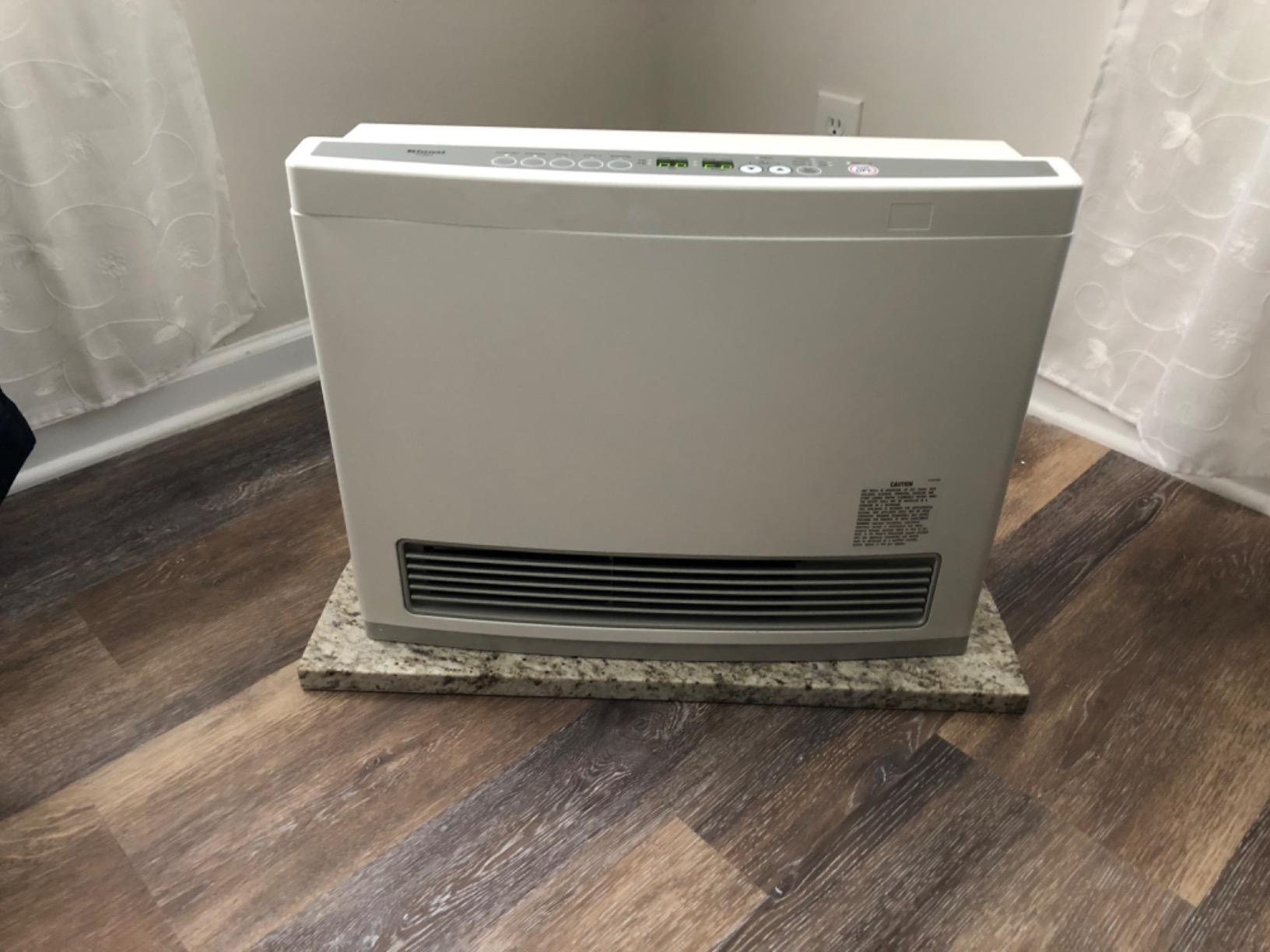
The FC824N holds a 4.6 star average across its reviews, and it is the only unit in this roundup with a programmable digital thermostat as standard. Digital adaptive control and self-diagnostics mean it learns your schedule and reports faults instead of running indefinitely on a fixed setting.
Its safety suite is the broadest we saw: flame failure device, overheat switch, oxygen depletion sensor and a tilt switch. The cool-to-touch cabinet with a safety lock is the reason it works in a room where a small child or a dog wanders.
Warranty terms here run longer than the rest of the group: 10 years on the heat exchanger, 5 years on parts and 2 years on labor.
It is also ventless and ductless, so there is no flue to run and no ductwork to install. At 26.5 pounds and 24 by 19 by 9.5 inches, it is compact for a floor-mounted convector.
Why this is not a garage heater
This is the most important caveat in the roundup. The FC824N is a residential indoor space heater, not a garage-rated unit. Its published coverage figure of 8,000 square feet reflects fan-assisted circulation in a finished room, not the open volume of a garage with a cold slab.
That makes it a strong fit for a finished basement room, a converted garage space with drywall and insulation, or a garage office that shares walls with the house. It is not the right appliance for a two-car bay where you start vehicles or work on engines.
Installation and the professional network
Rinnai strongly recommends installation by a Rinnai PRO technician, and the requirement is not decorative on a combustion appliance. That is a reasonable trade for the warranty terms, but it means the installed price includes labour you cannot easily avoid.
At 24,000 BTU it sits between the small blue flame units and the 30,000 BTU models. If you are heating a genuine garage rather than a finished room, size up to the ceiling-mounted option instead.
10. ProCom MN300HBA-B Blue Flame Heater: Lowest-Cost 30,000 BTU of Ventless Heat
ProCom Heating Natural Gas Ventless Blue Flame Heater With Base Feet – 30,000 BTU, Manual Control – Model# MN300HBA-B
- Low installed cost for 30000 BTU of ventless output
- 30000 BTU heats up to 1400 sq ft
- Push-button piezo ignition needs no electricity
- Base feet and wall mounting bracket included
- Manual three-setting control with no thermostat
- 15 percent one-star share is high for this product family
- Blower sold separately so air does not circulate
The MN300HBA-B is an economical route to 30,000 BTU of piped natural gas heat, and at 1,400 square feet of rated coverage it compares well against the other vent-free wall units on paper.
ProCom rates its output at 30,000 BTU on natural gas only, with no fuel conversion involved. Both base feet and a wall mounting bracket are included, so you can set it on the floor or hang it. Push-button piezo ignition means there is no electrical connection and no battery to maintain, which also makes it usable during a power outage.
An oxygen depletion sensor with automatic shutoff is included, and the housing is 29 by 26 by 9 inches at 26 pounds. That is a manageable lift with a helper.
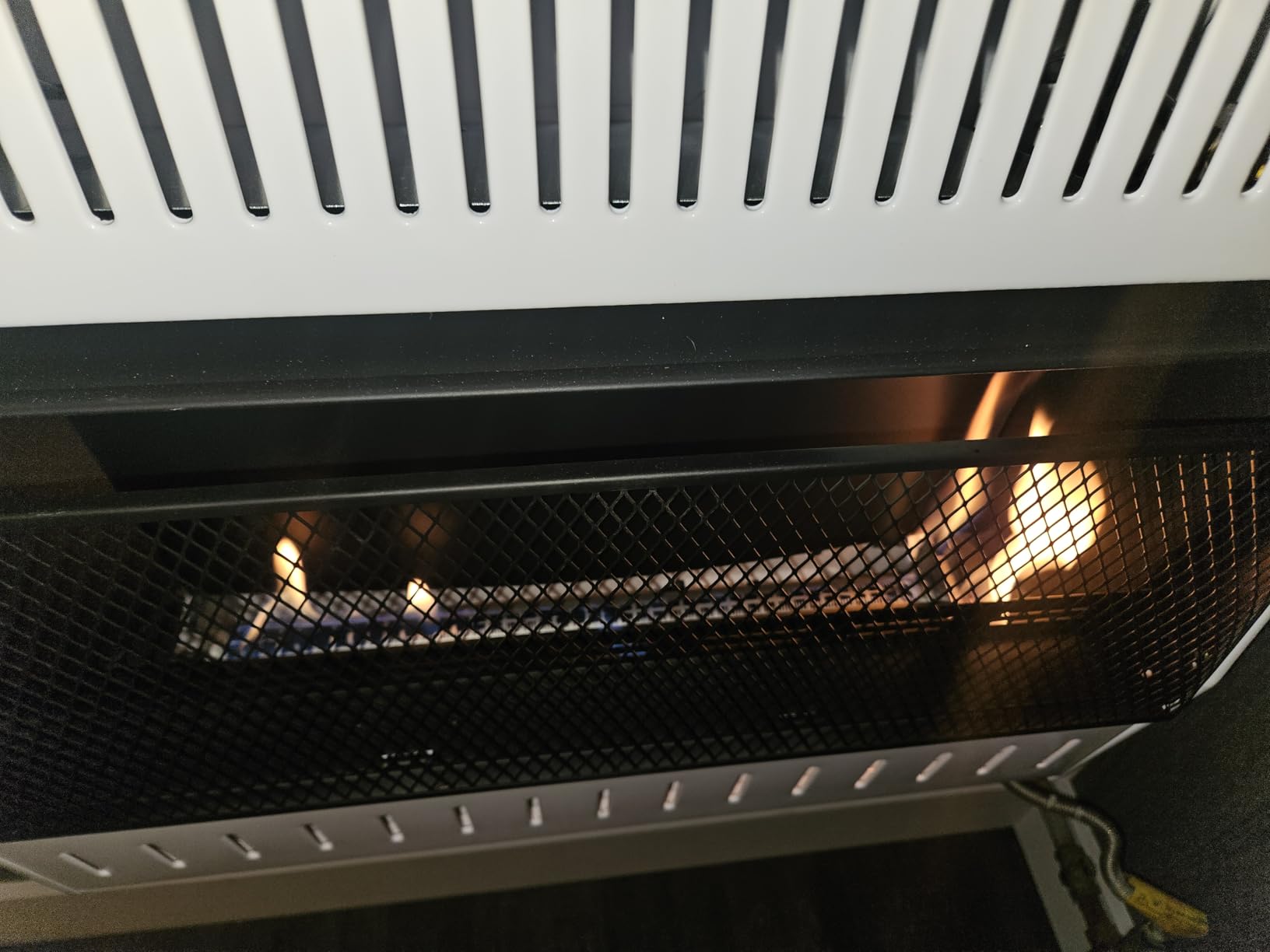
The oxygen depletion sensor does the safety work here, shutting the burner down if room oxygen drops. Combined with vent-free operation, that is the reason these units can be used indoors at all, and it is why the manual’s clearance instructions matter so much.
Reviews that like this model focus on output relative to what you spend. Buyers running a basement or a sealed garage room report fast warm-up and low fuel use over a full season of intermittent use.
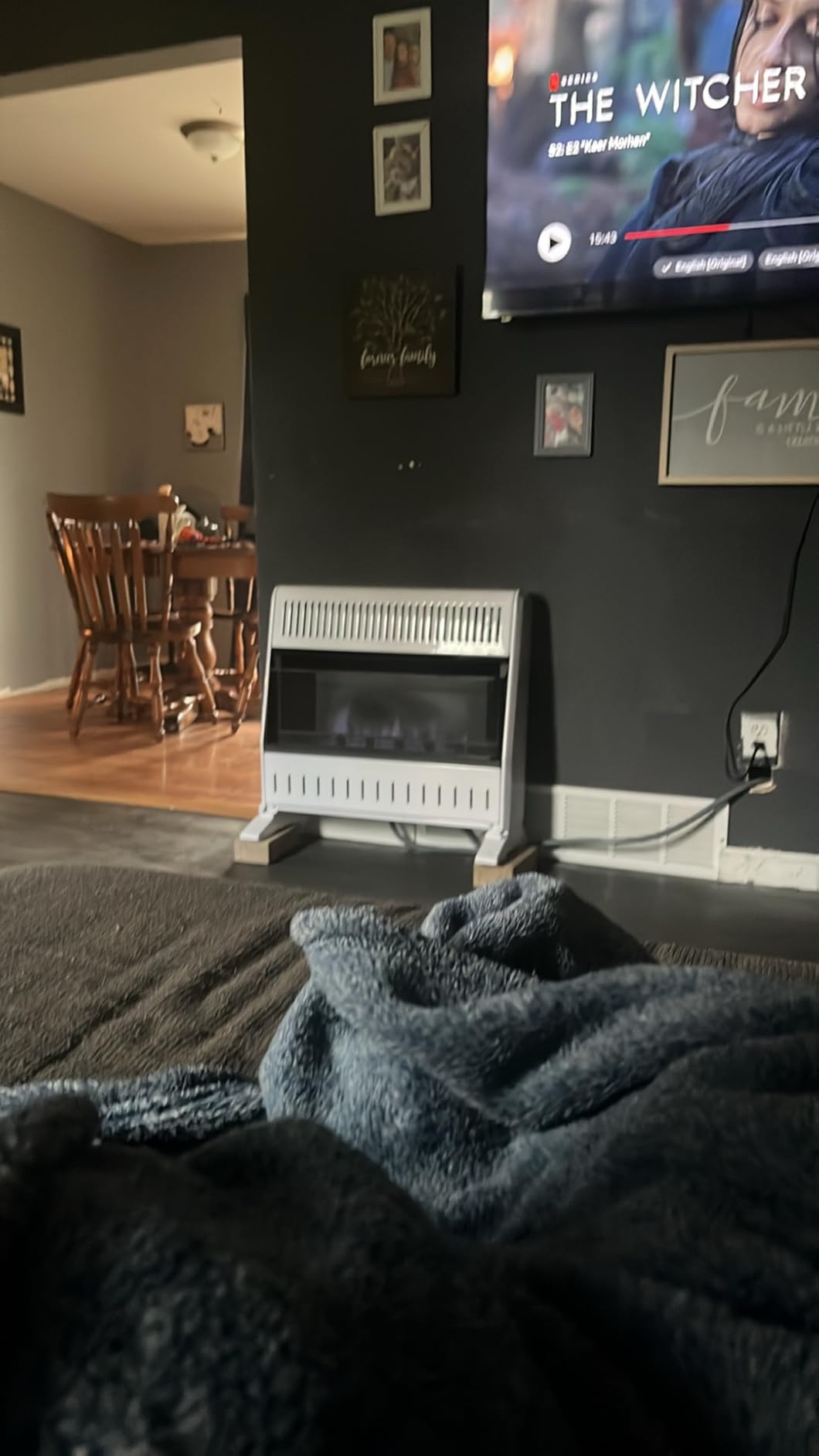
Manual control and the missing blower
The manual three-setting control is the feature you give up versus the MN300TPA-B infrared unit, which has the thermostat. You choose low, medium or high and it stays there. In a space with good insulation that is workable, but in a drafty garage the temperature will swing.
The blower is the other limitation. It is sold separately as model PF06-YJLF-B, and without it the heat stratifies at the ceiling. If your plan is whole-room heat rather than a warm zone, add it to the budget from the start.
Where it falls short
On 61 reviews, the 4.2 star rating rests on a thinner sample than the 800-plus-review ProCom infrared unit, and its 15 percent one-star share is high for this product family. Those critical reviews tend to focus on heat output falling short in larger spaces, which fits with a 1,400 square foot rating that assumes average conditions.
It also carries the same vent-free indoor restriction as the rest of the group. If a combustion engine runs in that space, this is the wrong appliance regardless of what it costs.
11. ProCom MN200TBA-B Blue Flame Heater: Best for One-Car Garages and Basements
ProCom Heating Natural Gas Ventless Blue Flame Heater With Base Feet – 20,000 BTU, T-Stat Control – Model# MN200TBA-B
- Built-in thermostat at a mid-range 20000 BTU output
- 950 sq ft rating suits a one-car garage
- Wall hardware and base feet both included
- Push-button ignition with oxygen depletion sensor
- Lower output than the 30000 BTU ProCom units
- Ventless indoor rating only
- Thin evidence base with only 63 reviews
The MN200TBA-B is the smallest thermostatted gas heater in this roundup and a natural fit for a one-car garage or a finished basement room. At 20,000 BTU with a 950 square foot rating, that output lines up well with a single bay rather than a double.
Unlike the manual-control 20,000 BTU units, it has a built-in thermostat with high, medium and low control. In our view that is the deciding feature, because it lets you hold a temperature overnight instead of running a burner at full output regardless of conditions.
It is ANSI certified, has a push-button ignition system and an oxygen depletion sensor, and needs no electricity. Wall mounting hardware and base feet are both in the box, so you can choose placement after you see the space.
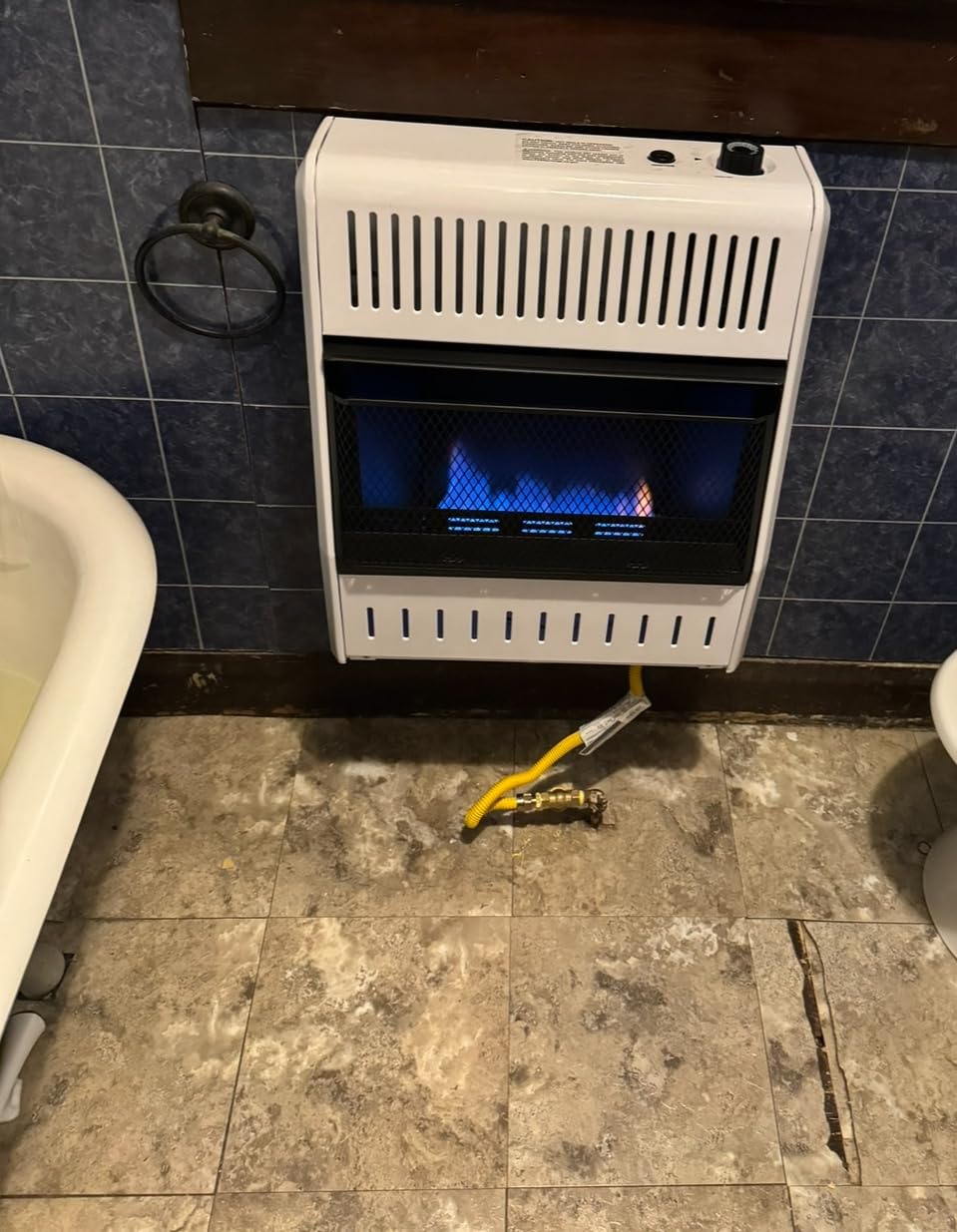
At 24 pounds and 22 by 26 by 8 inches, it is straightforward to handle and mount. The slim profile is one of the reasons reviewers single out its flexibility as a wall-mounted or freestanding unit.
The unit’s 4.5 star rating comes with a clean distribution of the three ProCom models here: 77 percent five-star and only 2 percent one-star.
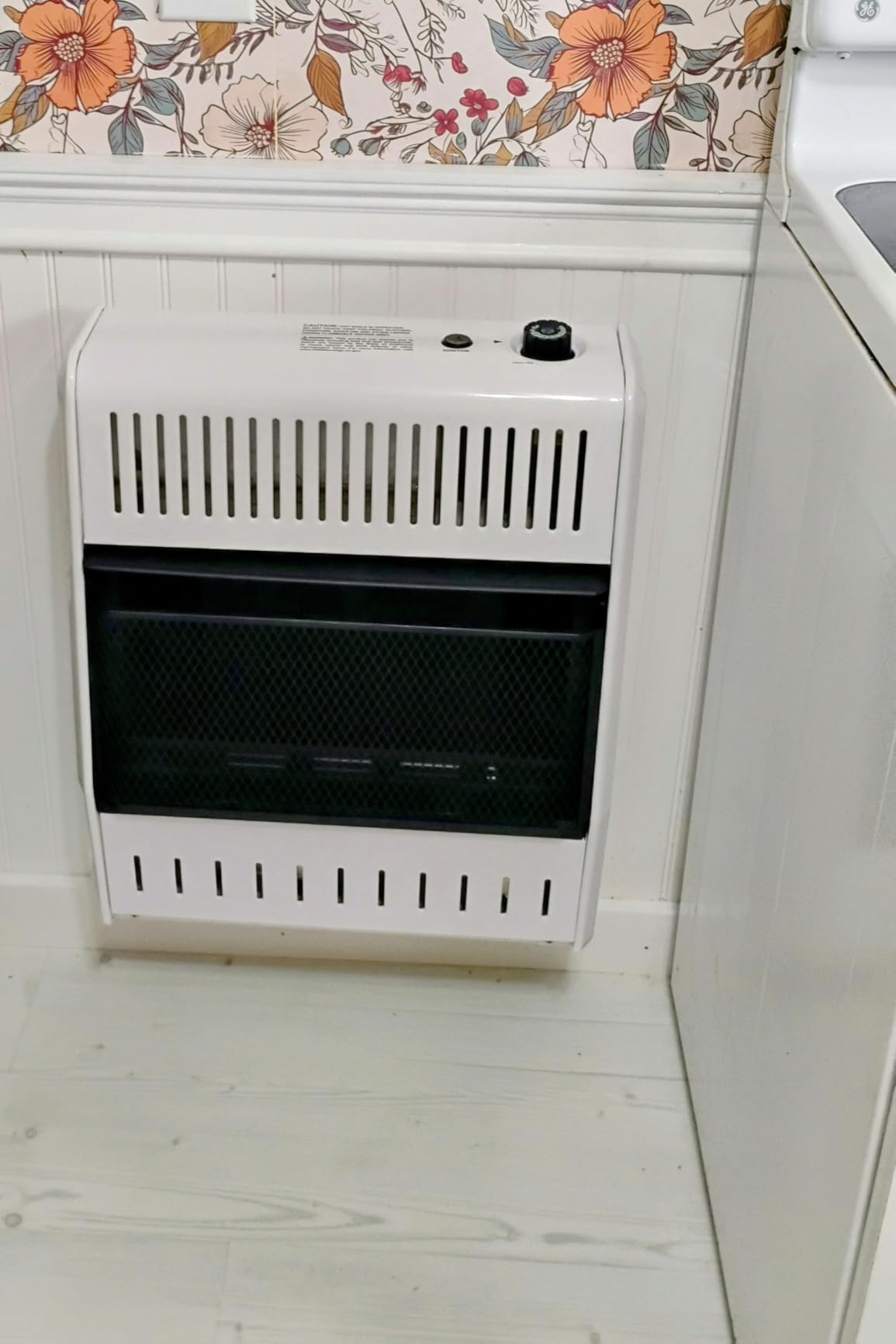
Matching output to a single bay
A one-car garage or a small workshop bay rarely needs more than 20,000 BTU, and oversizing is a real mistake with vent-free units. Running a larger burner than the space requires cycles it on and off, which shortens burner life and makes temperature control worse rather than better.
If your space is a two-car garage at roughly 480 square feet, this unit’s 950 square foot rating gives you headroom for losses through an open door. If it is a full three-car or a workshop with high ceilings, move up a tier.
Where it falls short
The thin evidence base is the main caveat. Sixty-three reviews is the smallest sample in this roundup, so the 4.5 star average tells you less about long-term reliability than the 4,469-review figure on the Mr. Heater blue flame unit.
It is also vent-free and indoor rated, which rules out combustion engines in the space, and it has no blower option to distribute air through a larger volume. Treat the thermostat and the ANSI certification as the reasons to pick it over a cheaper manual unit.
How Many BTUs Do You Need for Your Garage?
Multiply the floor area by 40 BTU per square foot for a cold-climate, moderately insulated garage. That is the baseline most sizing guides use, and it lines up with the rated coverage figures printed on the units above: a 480 square foot two-car garage needs about 20,000 BTU, while a 1,000 square foot four-car space needs closer to 40,000.
You will also see 45 BTU per square foot recommended elsewhere. That figure assumes worse insulation or a colder climate, and the honest answer is that neither number is wrong without knowing your envelope. Treat 40 as the floor and 45 as the ceiling.
Adjust from there. Step up toward 45 BTU per square foot if the garage walls are uninsulated, if the ceiling is over a conditioned space with no insulation above it, or if you live somewhere with sustained sub-zero temperatures. Step down toward 35 for a well-insulated, well-weatherstripped garage in a mild climate, and never size a vent-free unit larger than the space it sits in.
Height counts too. Workshops with 12-foot or higher ceilings lose a great deal of heat through the volume, which is why owners of large shops on heating forums report moving from a 75,000 BTU ceiling unit up to 125,000 after a first winter of falling short. Our workshop heater guide covers the electrical sizing logic if you are running that comparison.
Vented or Vent Free: Which One Is Safe for Your Garage?
Choose vented for an attached garage. A vented unit sends combustion gases through a flue to the outside, which removes carbon monoxide and moisture from the space and satisfies the code requirements that apply when a vehicle engine also operates indoors. The Modine Hot Dawg in this roundup is the example: power vented and certified for garage use.
Choose vent-free for a detached building, a finished basement room, or a sealed room with no combustion engine activity. Every blue flame and infrared wall unit in this list is ventless and indoor rated, which means the unit recirculates room air and relies on an oxygen depletion sensor to shut the burner down if air quality degrades.
Forum owners are consistent about the drawbacks of vent-free units in a working garage. The most common complaint is odour and headaches in a tight space, and the standard advice is to crack a window, which is impractical in a garage you keep closed. Separated combustion units address this properly by drawing outside air in and venting exhaust out through separate ducts, and long-time DIYers on Garage Journal recommend them specifically for attached garages.
For venting routes, roof penetration through the garage ceiling is the preferred code-compliant path for a unit burning inside an enclosed space. Side-wall venting works with a power-vented model like the Hot Dawg because the fan pushes exhaust out under positive pressure. Confirm the route with your local inspector before the installer starts.
What Installation Actually Involves
The heater is rarely the largest line item. Four things get quoted separately: the unit, the gas line run, the vent or flue, and the electrical connection. Forum consensus is unambiguous that the gas line drives the cost, particularly when the garage is detached or the existing meter is already at capacity.
Start with the gas line. A plumber runs black iron or flex line from the house, adds a sediment trap and a shutoff valve, and pressures and tests the run. That work often requires a permit, and in some jurisdictions the run length or the appliance load can force a meter or regulator upgrade, which is where costs climb quickly.
Next the vent. A vent-free unit needs nothing. An atmospheric or power-vented unit needs a flue sized to the appliance, a connector, and a terminator, plus a roof or wall penetration that has to be flashed properly. The vent diameter and slope come from the installation manual, not from rule of thumb.
Electrical comes next, and only for some units. The forced-air and power-vented models need 115V for the blower or fan, and a thermostatted install needs low-voltage control wiring back to a wall thermostat. The blue flame ventless units need nothing at all, which is their quiet advantage in a garage with no existing circuits.
Finally, permits and inspection. A gas appliance in a dwelling requires a permit in most jurisdictions and an inspection afterward. Homeowners also raise insurance questions about combustion appliances in attached garages, and the answer we hear is consistent: call your carrier before you install, tell them what you are doing, and keep the permit and inspection record.
Safety Features and Certifications to Look For
Look for a fourth-layer protection scheme, not just ignition. Every unit here has some form of flame failure detection, which shuts the burner down when the flame is lost, but the better models add more. The Rinnai FC824N is the fullest example with flame failure, overheat switch, oxygen depletion sensor and tilt switch on the same unit.
An oxygen depletion sensor is the feature that makes vent-free indoor heaters legal in the first place. It samples room oxygen and closes the gas valve when levels fall. The ProCom MN200TBA-B and MN300TPA-B pair it with an ANSI certification and a fail-safe fuel selector, which prevents operating a unit on the wrong fuel.
Check the listing marks rather than trusting a brand name. UL, CSA or ETL listing tells you the unit was evaluated by a recognized testing laboratory, and for attached garages you want a unit explicitly certified for residential and garage use rather than an indoor space heater rating.
Two installation practices matter as much as the appliance. Maintain the manufacturer clearance to combustibles on every side, and never store solvents, fuels or aerosol cans near a burner. Test the unit’s shutoff behaviour after installation so you know it works before you need it.
Where Natural Gas Falls Short
The gas line is the honest disqualifier. If your garage is detached and far from the house, the run may not be worth the money, and no heater on this list changes that. The fallback is an electric unit heater, and our electric garage heater guide covers that route in detail.
Power dependency is the second issue. Forced-air and power-vented models stop heating during an outage because the blower and fan need electricity. If you want backup heat when the grid goes down, a vent-free unit with battery or piezo ignition is the option in this roundup that keeps running.
Vent-free odour is the third. Owners of vent-free units in tight spaces report headaches and smell, and the usual workaround of cracking a window is not workable in a closed garage. If anyone in your household is sensitive to that, use a vented unit.
Installation complexity is the fourth, and it is where most DIY attempts stop. Even the simplest unit needs a properly installed gas line with a sediment trap and shutoff valve, and a hardwired appliance in a garage typically needs a permit. Our guide to other permanently installed gas appliances covers the same permit and gas-line questions that come up on water heating work.
Frequently Asked Questions
What is the best natural gas garage heater?
For most home garages the best natural gas garage heater is the Mr. Heater 30,000 BTU vent free blue flame wall unit, which needs no electricity and no vent pipe and heats up to 1,000 square feet. For a larger insulated garage, workshop, or any attached space where a vehicle engine runs, choose a vented ceiling-mounted unit heater such as the Modine Hot Dawg, which is certified for garage use at 80 percent efficiency.
How many BTUs do I need to heat a 24×24 garage?
A 24×24 garage is 576 square feet, which needs about 23,000 BTU using the standard 40 BTU per square foot baseline. Round up to a 30,000 BTU unit for an insulated garage in a mild climate, and toward 45 BTU per square foot, roughly 26,000 BTU or the next size up, if the walls are uninsulated or winters are severe. Round to a named capacity rather than a bare figure, since manufacturers list standard sizes.
Do natural gas garage heaters need venting?
It depends on the type. Vented natural gas garage heaters require a flue or vent pipe that carries combustion gases outside, and they are the correct and code-compliant choice for an attached garage. Vent free indoor-rated units recirculate room air and shut down through an oxygen depletion sensor if oxygen drops, which makes them suitable for detached buildings and finished rooms but not for spaces with running combustion engines.
Which brand of gas heater is considered the best?
For garage-rated natural gas equipment, Modine is the most established name, with the Hot Dawg line covering multiple BTU sizes and carrying residential, commercial and industrial certification. Mr. Heater, made by Enerco, leads the vent-free and forced-air home garage segment by review volume, and ProCom offers the broadest range of low-output thermostatted vent-free units. Rinnai leads on thermostat sophistication and warranty terms for finished indoor spaces.
How much does it cost to install a natural gas garage heater?
The heater is often the smallest part of the job. Expect separate line items for the unit itself, a gas line run from the house with a sediment trap and shutoff valve, the vent pipe or flue and any roof or wall penetration, and an electrical circuit if the unit has a blower or fan. The gas line is the usual cost driver, especially in a detached garage, and meter or regulator upgrades can add more. Most jurisdictions also require a permit and inspection.
What type of heater is best to heat a garage?
Natural gas is the best choice for whole-garage heat because piped gas has the lowest cost per hour of any fuel and holds temperature in deep cold. Vented natural gas is best for attached garages and workshops, while vent-free natural gas suits detached buildings and finished rooms. Forced-air unit heaters warm the air and reach stored vehicles, and radiant infrared heaters warm people quickly at a bench but do little for stored vehicles. Electric heaters suit garages with no gas line but cost far more per hour.
Are ventless garage heaters safe to use indoors?
Ventless gas heaters are rated for indoor use because their oxygen depletion sensor closes the gas valve when room oxygen falls below safe levels. That rating assumes ordinary indoor conditions and does not cover spaces where a combustion engine operates or where the unit is enclosed with no air exchange. Owners in tight garages also report odour and headaches, and the usual advice to crack a window is impractical in a closed garage. For any space with vehicle activity, use a vented unit.
Which Natural Gas Garage Heater Should You Buy?
Three inputs decide your pick. First, is the garage attached, and do you run a vehicle engine inside it? If yes, you need a vented, garage-certified unit and the Modine Hot Dawg is the only one in this roundup built for it. If no, a vent-free wall unit opens the field up considerably.
Second, what is the floor area, and how well is it insulated? Multiply square footage by 40 BTU per square foot and adjust up toward 45 for a cold climate or uninsulated walls. A standard two-car garage lands near 20,000 BTU, so a 30,000 BTU unit leaves headroom for door losses.
Third, do you want the whole room warm or yourself warm? Forced-air ceiling units heat the volume and reach stored vehicles. Radiant infrared units warm a person at a bench within minutes and leave the air behind. Vent-free blue flame models sit between the two and are the easiest to install in a space with no existing circuits.
For most households we come back to the same pick: the Mr. Heater 30,000 BTU vent free blue flame unit as the editor’s choice, because it needs no electricity, no vent pipe and no ductwork, and its 4,469 reviews make it the best-evidenced recommendation here. If your garage is larger, attached, or used with vehicles running, spend the extra on a vented ceiling unit. We have covered the wider fuel picture in our roundup of natural gas appliances for home use, and this roundup stands as our 2026 guide to heating a garage on piped gas.